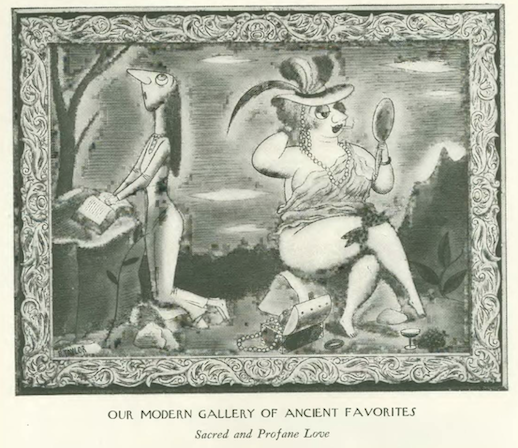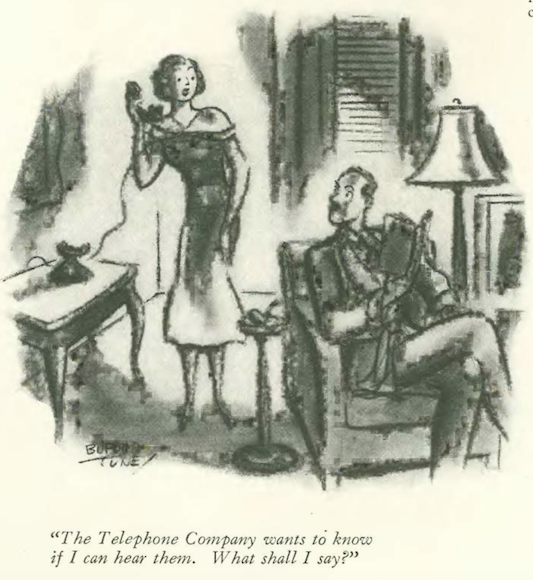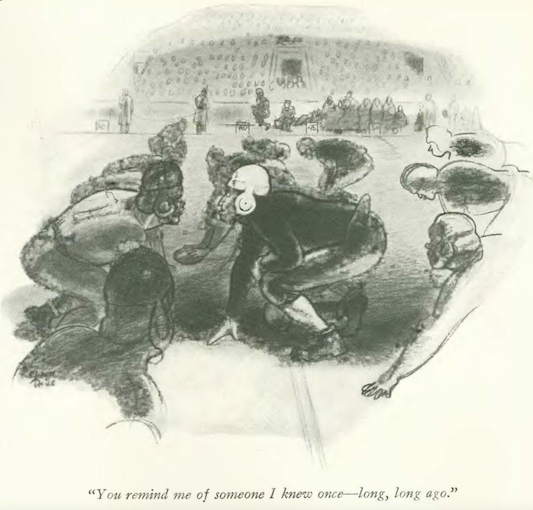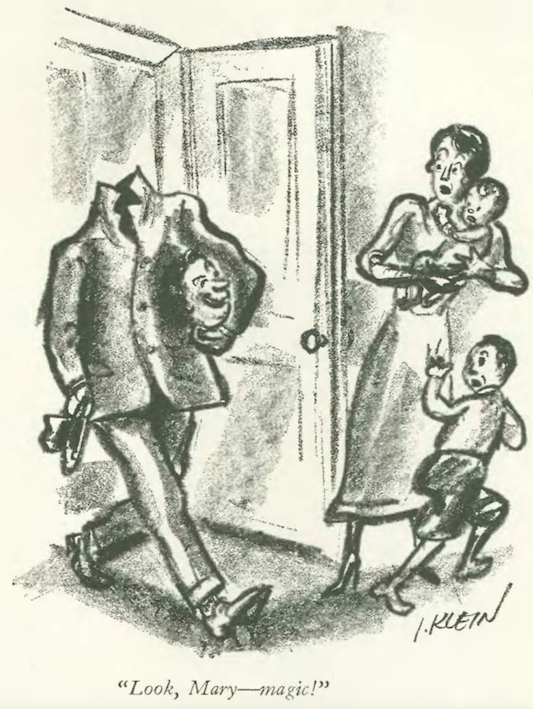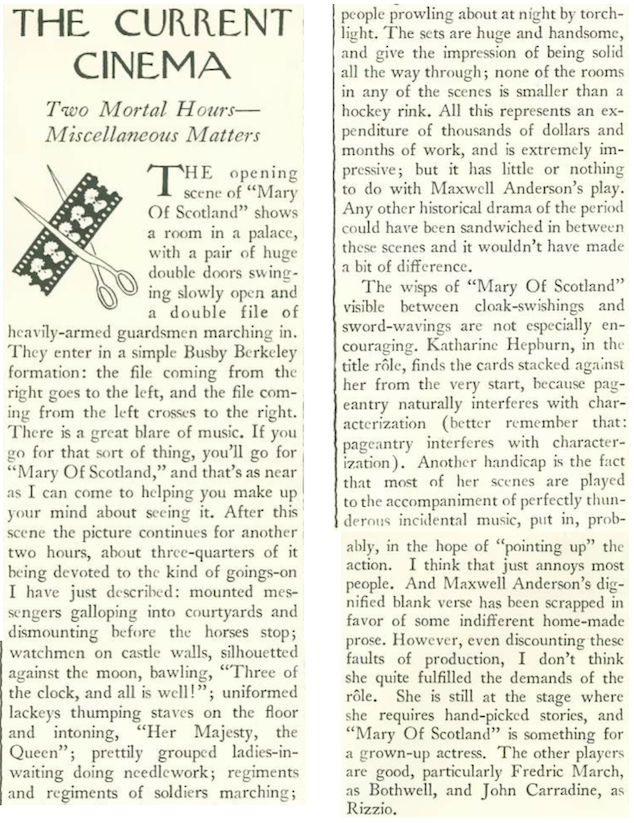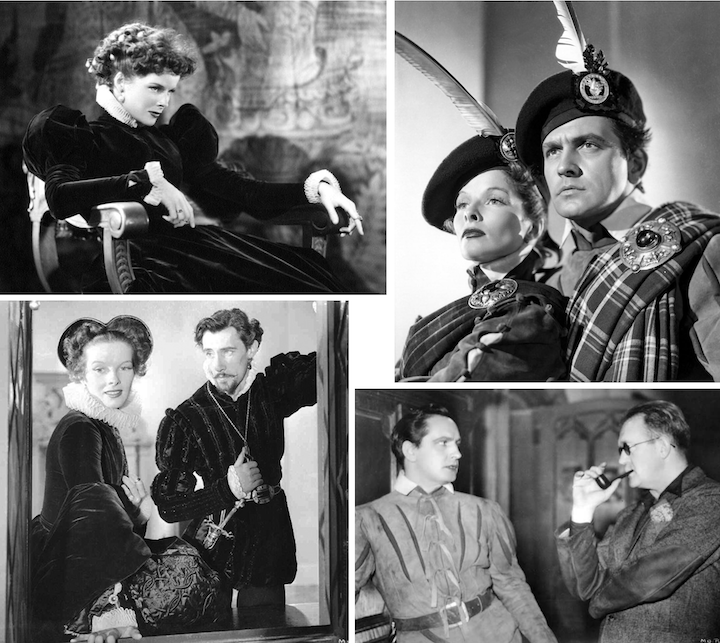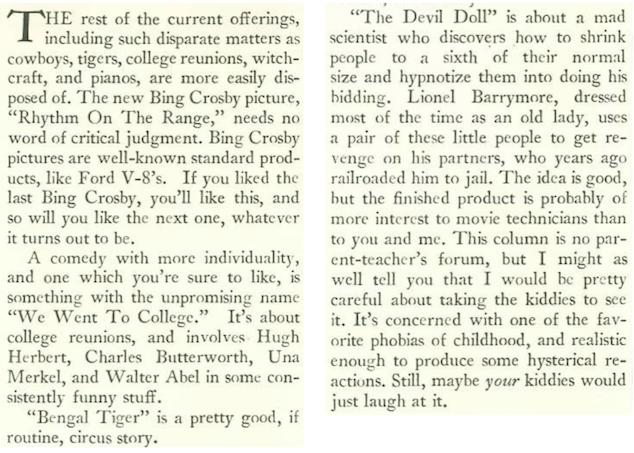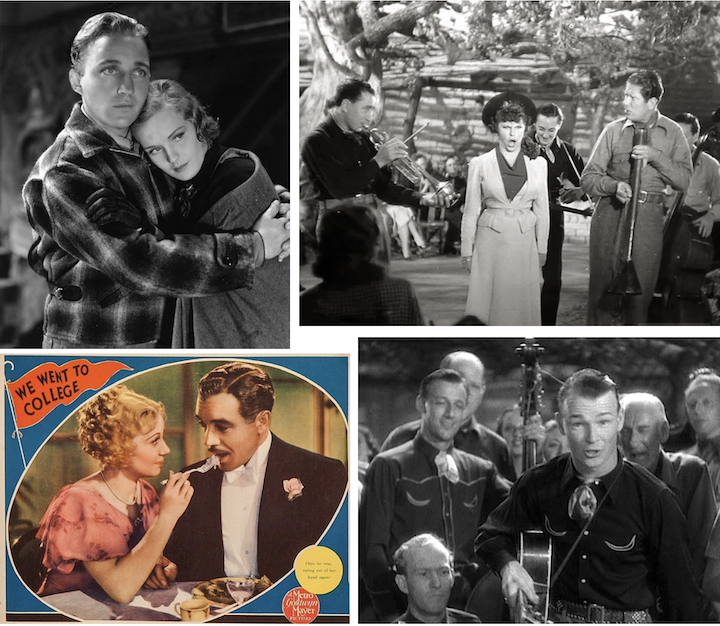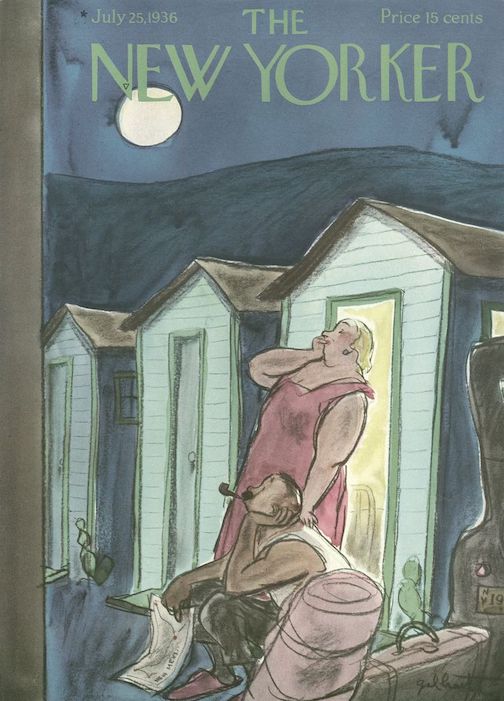
Above: A group of eight East African elephants greet visitors to the American Museum of Natural History's Akeley Hall of African Mammals, which opened in 1936. The elephants are surrounded by twenty-eight habitat dioramas. (amnh.org)
One can instantly call up a photo on an iPad of every known animal on the planet, so why are people still fascinated by dead, stuffed animals displayed in glass cases?
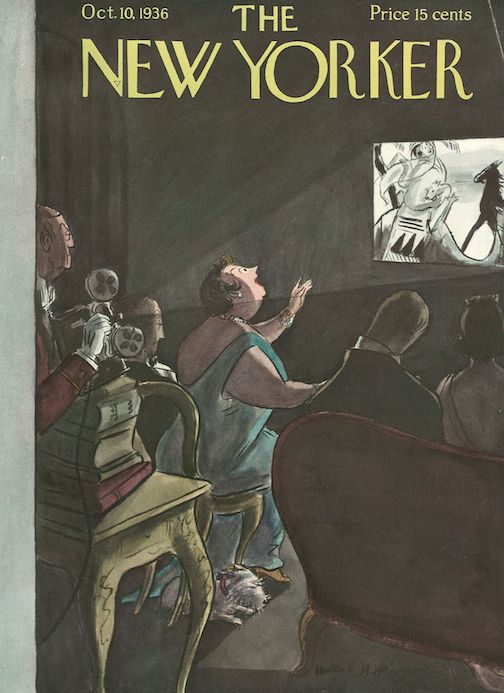
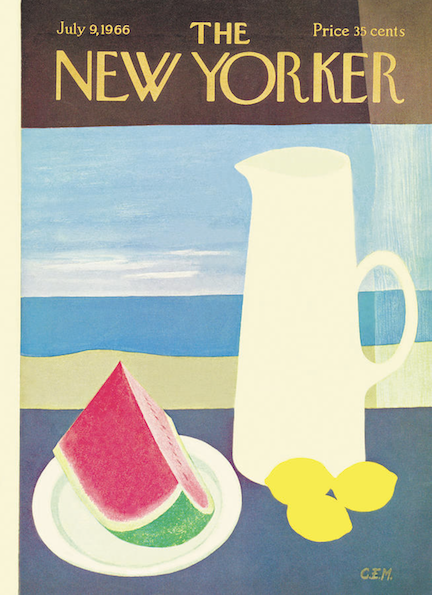
May 2, 1936 cover by William Cotton.
To be accurate, most animals on display at natural history museums are not “stuffed;” they are an art form or sorts, anatomical sculptures covered with skins, posed in meticulous re-creations of their natural environments.
Ninety years after it opened to the public, the American Museum of Natural History’s Akeley Hall of African Mammals—named for the father of modern taxidermy Carl Akeley— still dazzles museum-goers with incredibly detailed dioramas (twenty-eight in all) that depict a range of African ecosystems. Writing for “A Reporter at Large” (titled “Africa Brought to Town”), Morris Markey marveled at the lifelike displays of flora and fauna, “every twig and grain of sand the very essence of Africa…”
DEATH AND LIFE(LIKE)…Clockwise, from top left, procession of elephants in the American Museum of Natural History’s Akeley Hall; the downside of dioramas—elephants slain in 1911 that now comprise “The Rear Guard” (elephants in back) of AMNH’s procession of elephants; Carl Akeley models a taxidermied elephant circa 1921; Akeley reclining on a bull elephant he killed in 1910 on an AMNH expedition. (uconn.edu/public domain/amnh.org)GETTING IT RIGHT…Clockwise from top left: Carl Akeley with his camera, circa 1920s—Akeley contributed hundreds of specimens and images of wildlife and plants to various American museums throughout the course of his career; James L. Clark, William R. Leigh and Richard Radatz relax during a 1926 African expedition to document the flora and fauna (through photos, sketches and paintings) for reference in creating true-to-life dioramas; unidentified expedition worker prepares plaster to make casts of collections (tree bark, leaves, rocks etc.). (amnh.org/uconn.org)MARRIAGE OF SCIENCE AND ART…Clockwise from top left: William R. Leigh landscape study; expedition artists made paintings en plein air as well as from specimens brought back to their tents (below). At bottom left is Carl Akeley’s second wife, Mary Lee Jobe Akeley (1886–1966), a well-known explorer and naturalist. It was her first expedition to Africa and Carl’s last—he would die of dysentery before the expedition concluded—so Mary took charge of the expedition, and was later named Carl’s successor as adviser to the American Museum of Natural History. (Leigh landscape courtesy Gerald Peters Gallery via jamesperrywilson.wordpress.com/still images taken from a short film of AMNH’s 1926 African Hall expedition, courtesy University of Connecticut)
Markey visited with museum director Roy Chapman, who likened the dioramas to “glimpses of Africa as they might be seen from a train window…” Since this was 1936, no one seemed too concerned about the ethical implications of hunting and killing animals for museum displays. It should be noted that most animals we see in major natural history museums today were killed during early 20th-century expeditions such as Akeley’s; animals used in new displays are often obtained from zoos or sanctuaries after dying of natural causes.
OUT OF AFRICA…Still image of giraffes taken from a short film of AMNH’s 1926 African Hall expedition; the AMNH’s “Water Hole” diorama; “Greater Koodoo” diorama; Clarence Rosenkranz working on the “Giant Sable” diorama. (amnh.org/uconn.org)
There is an undeniable appeal to these artificial environments. Although our digital age offers all sorts of them, there are still kids who like to build dioramas in shoeboxes. And for those of us who grew up in 1960s and 70s, there was the thrill of opening a new three-pack of View-Master reels, each slide revealing a three-dimensional, self-contained world.
And so it is with museum dioramas. They offer a moment of wonder and calm to viewers. As the noisy world collapses around them, these displays—however artificial—might inspire in some a greater appreciation of these creatures and their fragile environments.
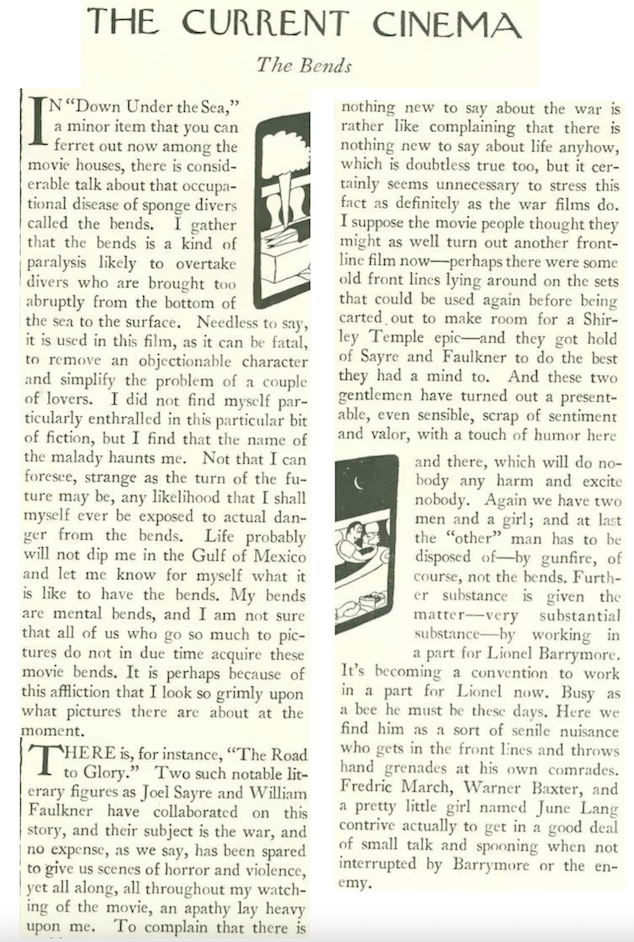
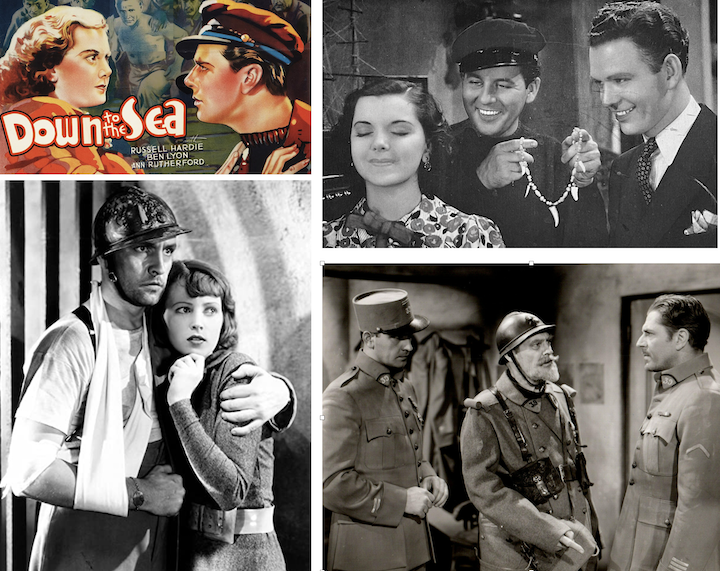
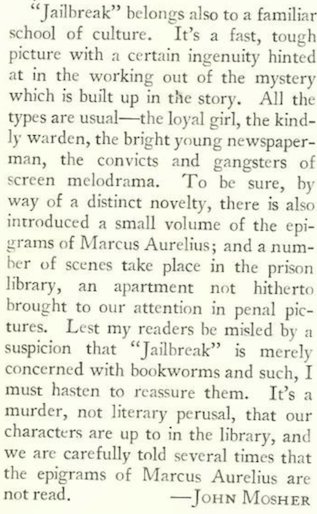
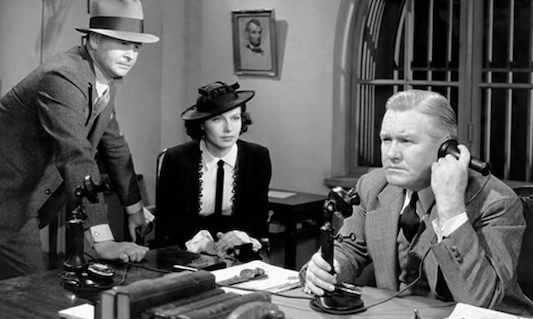
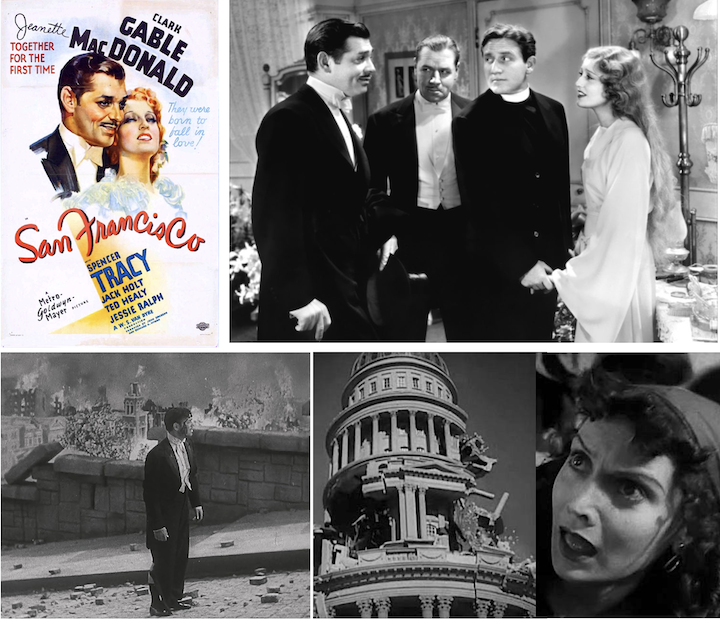
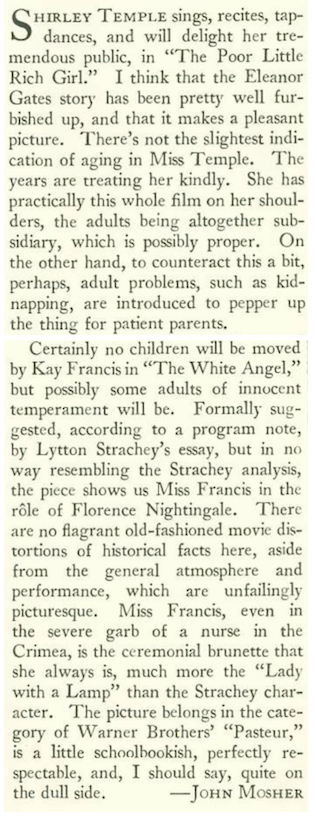
One can imagine film critic John Mosher rubbing his eyes as he pondered the reasons why Hollywood insists on making overly long movies (also lamented by critics today). He also reviewed four new films, with little enthusiasm.
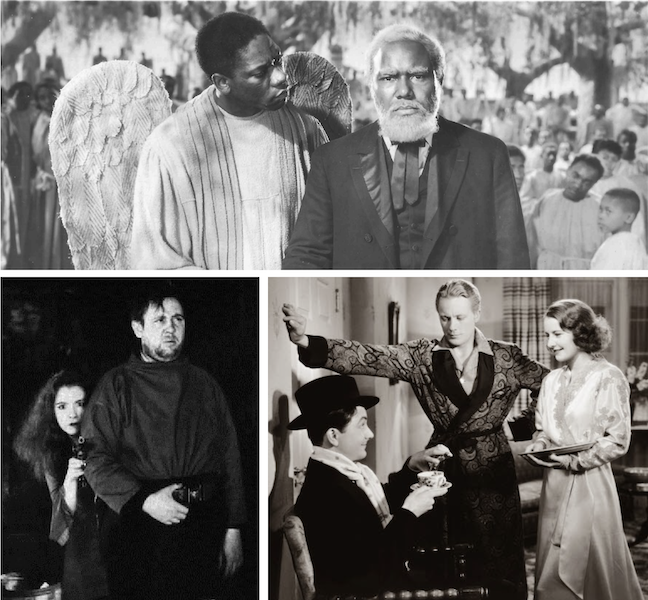
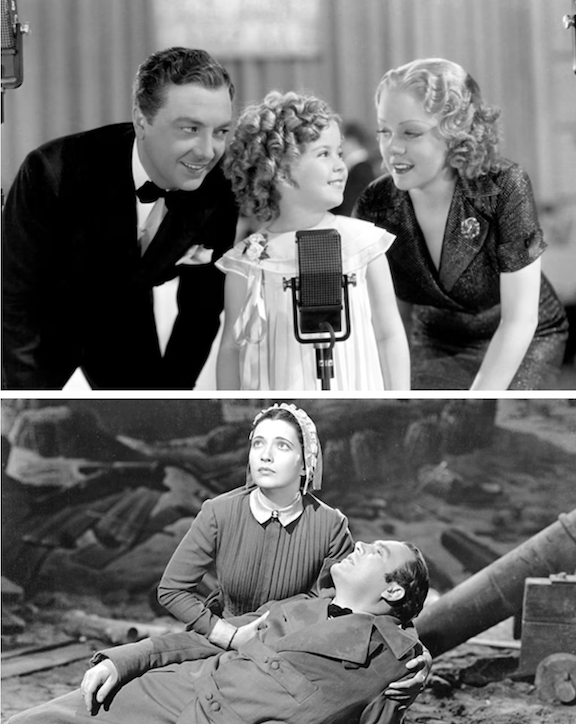
LONG IN THE TOOTH?…Clockwise from top left: Critic John Mosher seemed to imply that seven-year-old Shirley Temple (seen here with Buddy Ebsen in Captain January) was getting too old to play the precocious little healer; Douglas Fairbanks Jr. and Gordon Harker in The Amateur Gentleman; Janet Gaynor and Robert Taylor made cute in I Married a Doctor; movie poster for Lorenzino de ’Medici, which Mosher felt was best suited to Italian audiences. (letterboxd.com)
* * *
Getting Things Done
Journalist Hickman Powell filed the first part of a two-part profile of New York’s 45th Governor, Herbert Lehman (1878–1963). The first Jewish governor of New York, Lehman was a prominent liberal leader and a major philanthropist, known for implementing a “Little New Deal” that established a minimum wage, unemployment insurance, and public housing.
HMMM…William Cotton was a terrific caricaturist, but he seemed to miss the mark with this illustration of Gov. Herbert Lehman for the “Profile.” (Wikipedia)
* * *
From Our Advertisers
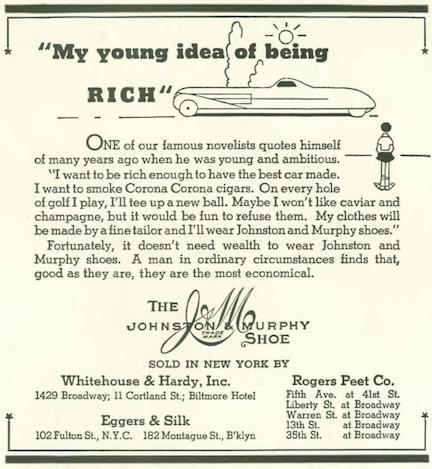
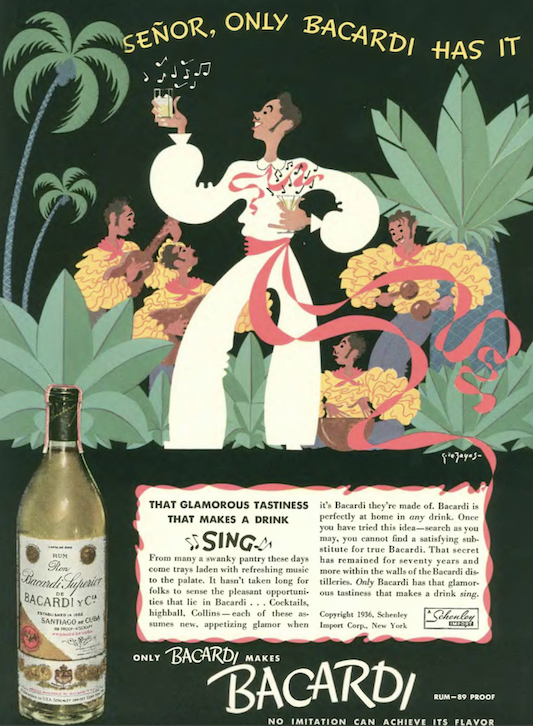
The May 2 issue was crammed with ads for women’s summer fashions, which were defined by longer, leaner silhouettes…
…and by the increasing popularity of practical sports and casual clothes…
…the makers of Cadillac motorcars continued to emphasize their lower-priced LaSalle models for Depression-squeezed consumers…
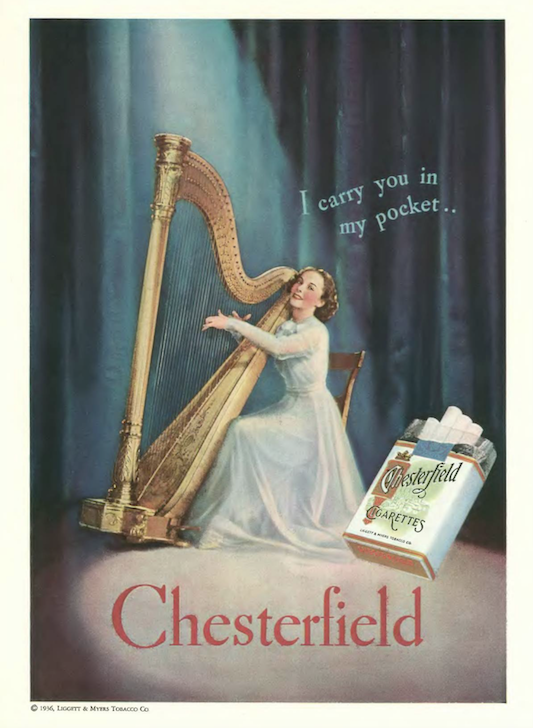
…no fashion models or health claims here, just the allure of cigarette smoke courtesy Liggett and Myers…
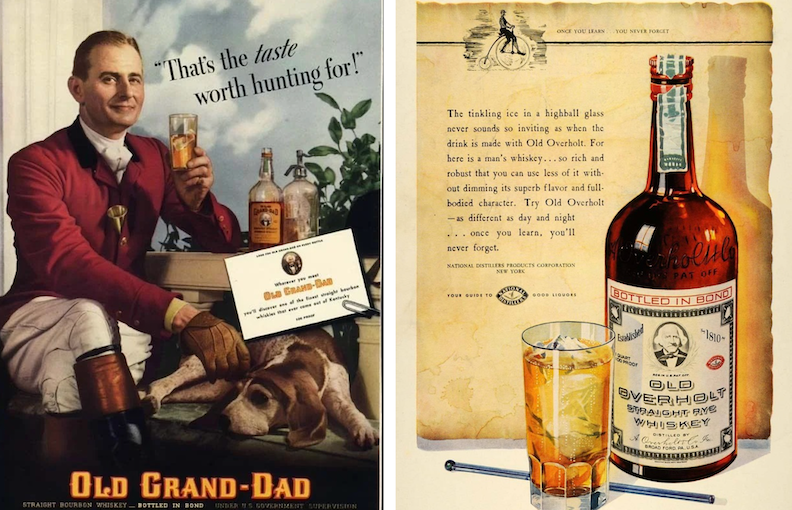
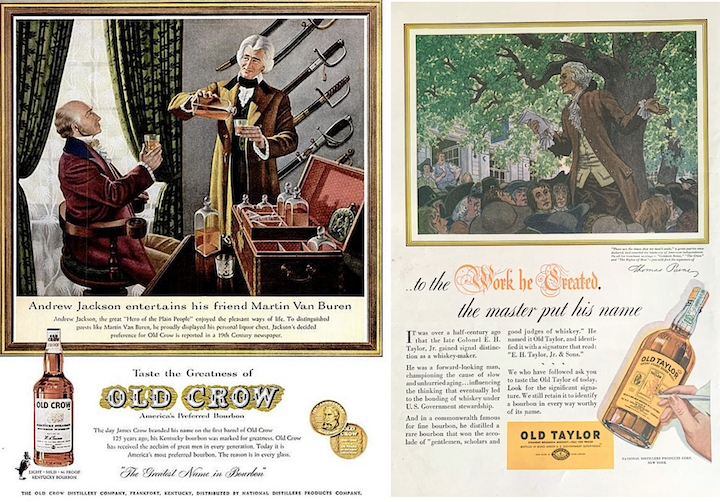
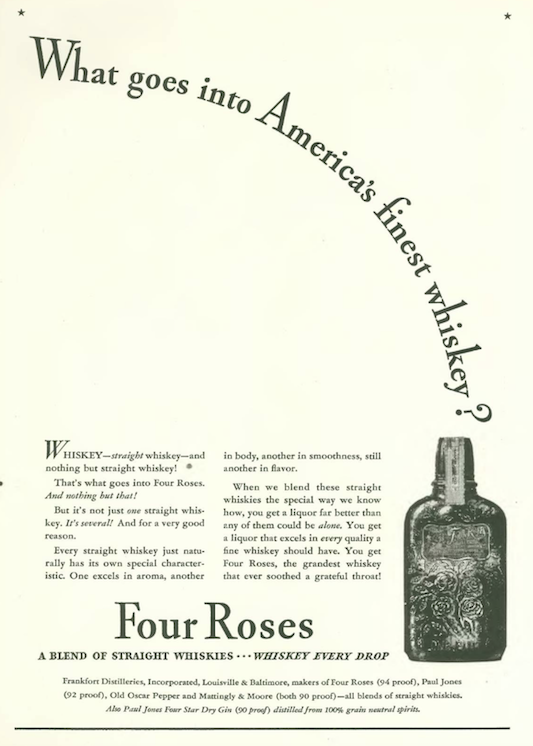
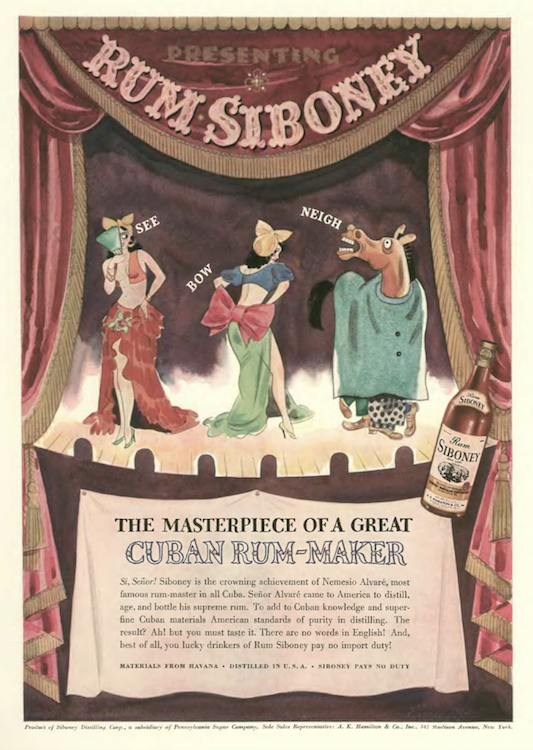
…the distillers of Old Taylor wanted you to associate their product with the timeless work of William Shakespeare…after all, who’s going to sue them over image rights?…
…on to our cartoonists…Miguel Covarrubias, whose work was featured in The New Yorker’s first issue and was frequent in those early days, lent his talents to the theatre review section with this rendering from On Your Toes…
…something else I forgot to mention in my last post, On Your Toes also marked George Balanchine’s debut as a Broadway choreographer…
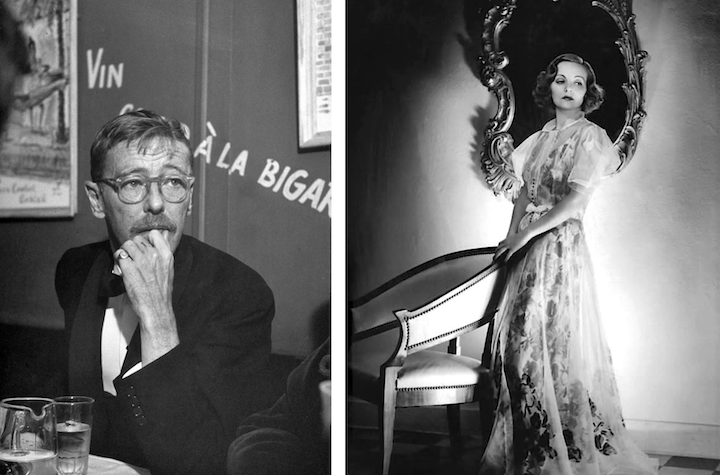
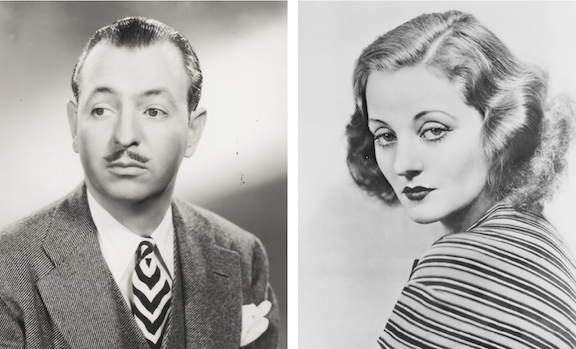
ON HIS TOES…At left, George Balanchine in 1942; at right, Tamara Geva in 1936’s Broadway production of On Your Toes. Geva, an actress, ballet dancer, and choreographer, was Balanchine’s first wife (married 1921-1926). (Wikipedia/instagram)
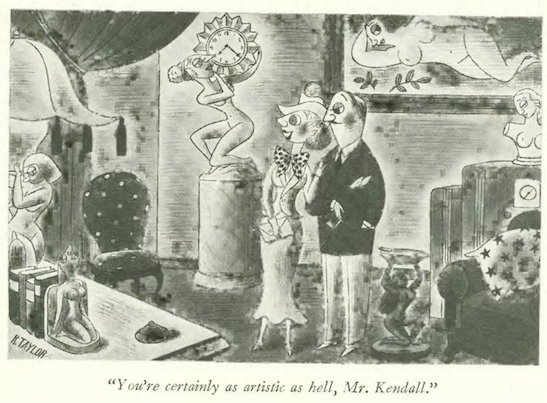
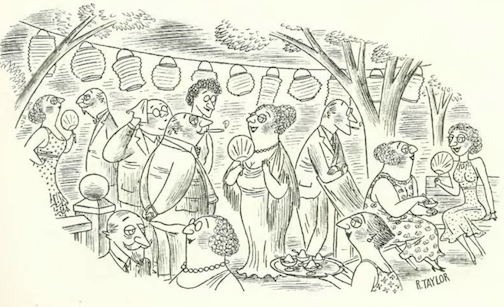
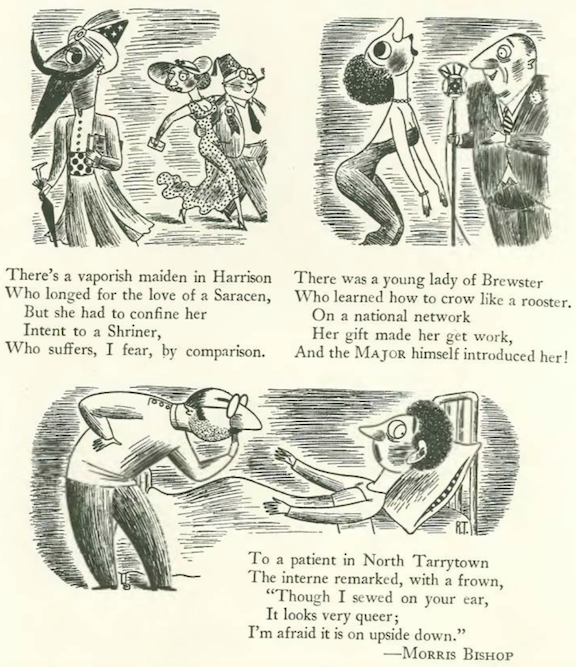
…we are seeing a lot of Richard Taylor in the 1936 issues, especially in providing spot illustrations such as this one…
…Charles Addams deployed some sarcasm on the domestic front…
…and Addams again, commenting on the fierce rivalry between the privately owned Interborough Rapid Transit (IRT) and the municipal subway systems…
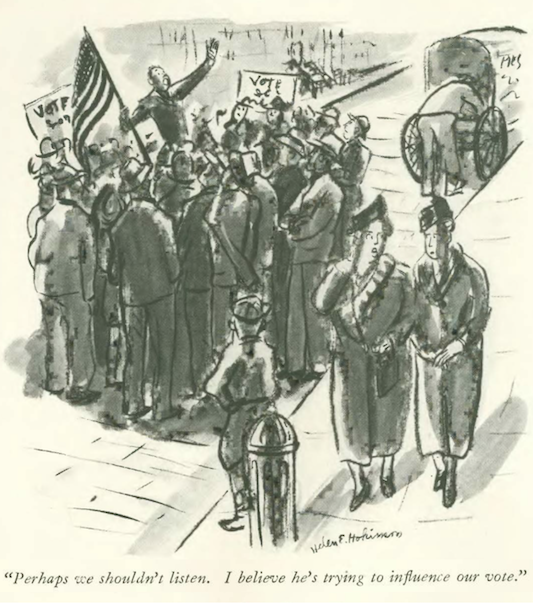
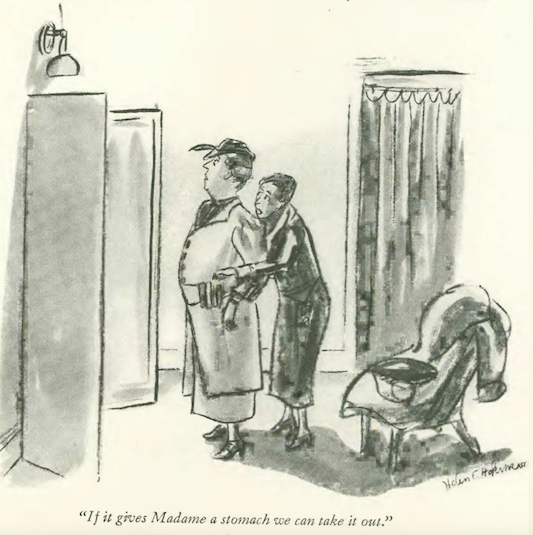
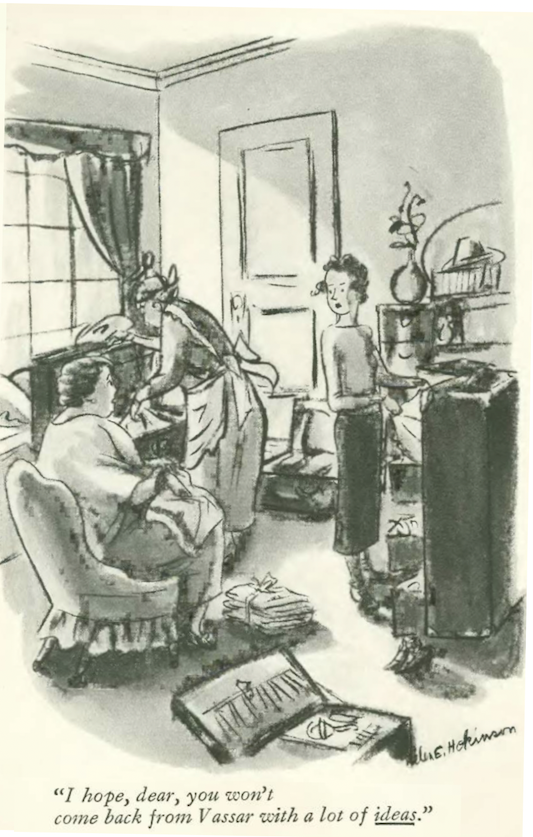
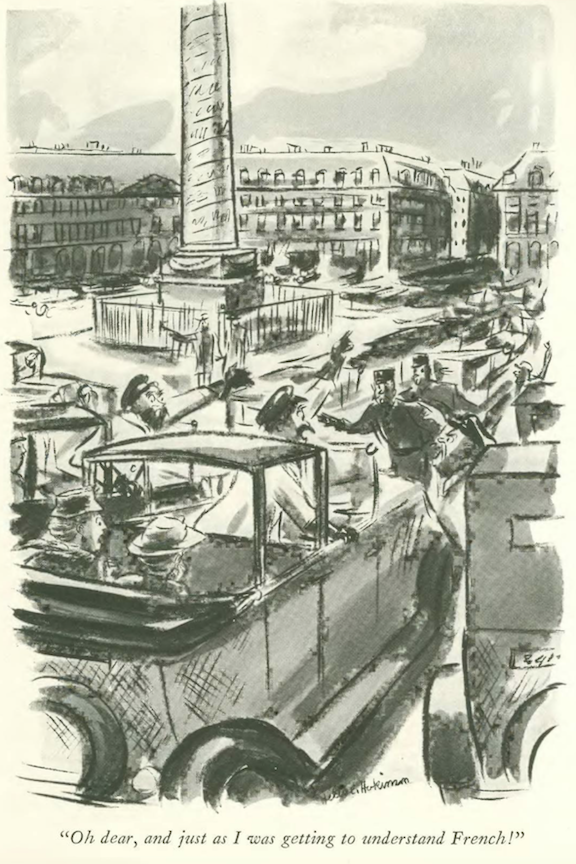
…and we have two by Helen Hokinson, having misgivings about a greenhouse variety…
…and finding a personal commitment to a can of soup…
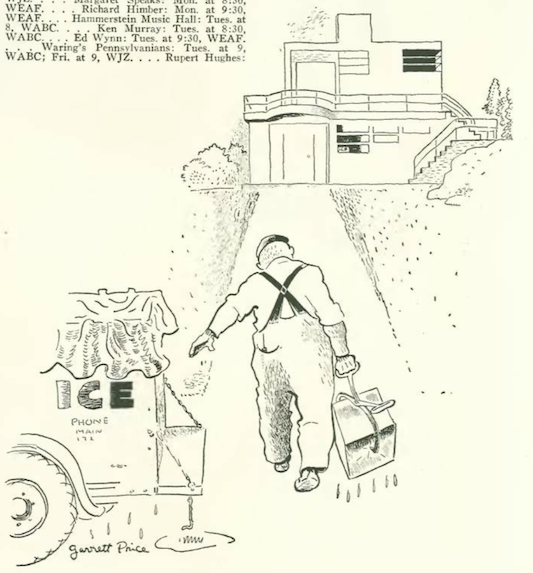
…Garrett Price had this man doing some wishful thinking…
…William Steig used a two-page spread to illustrate a day at the drugstore…
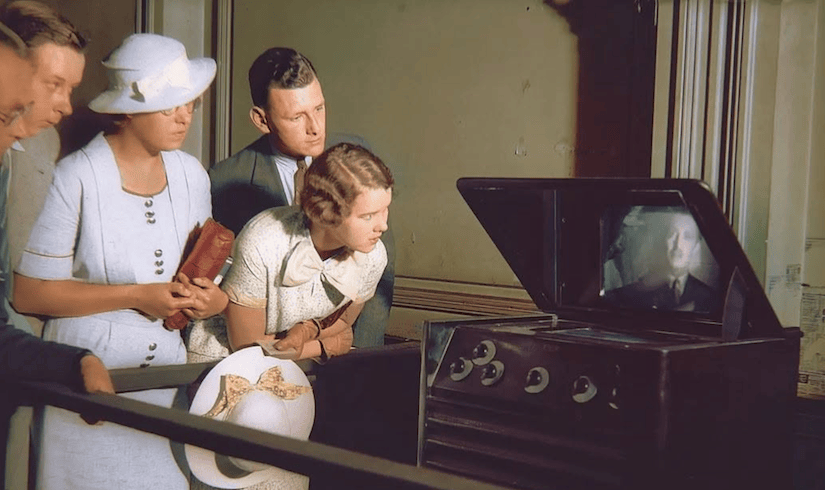
…another drawing from the group, appearing on the left-hand page…
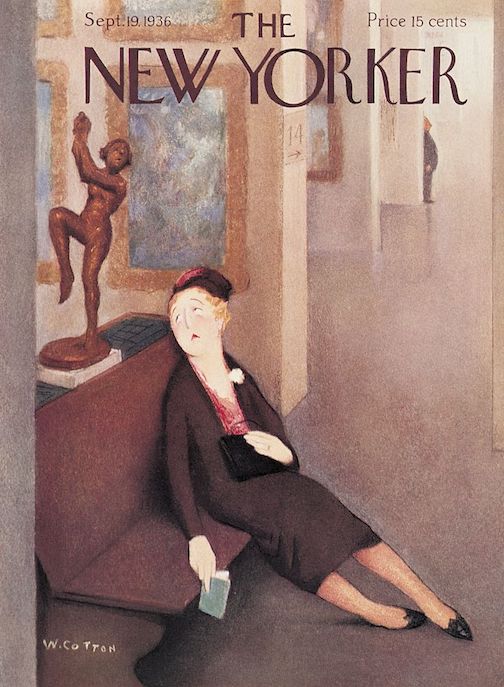
…keeping it in the family, we have one byHenry Anton Steig (William Steig’s brother)…according to Michael Maslin’s indispensable Ink Spill, Henry contributed nineteen drawings to The New Yorker from 1932 to 1936 under the name Henry Anton…this one was his final contribution…
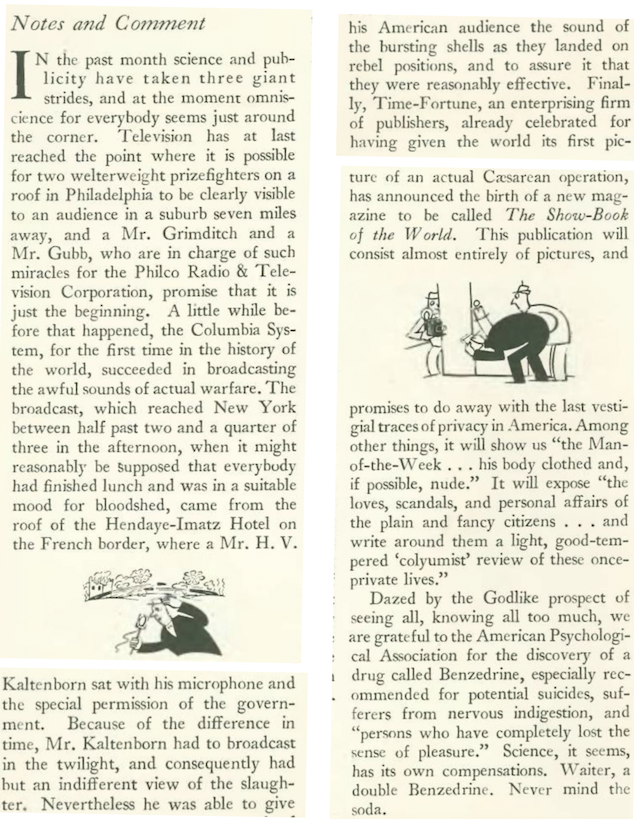
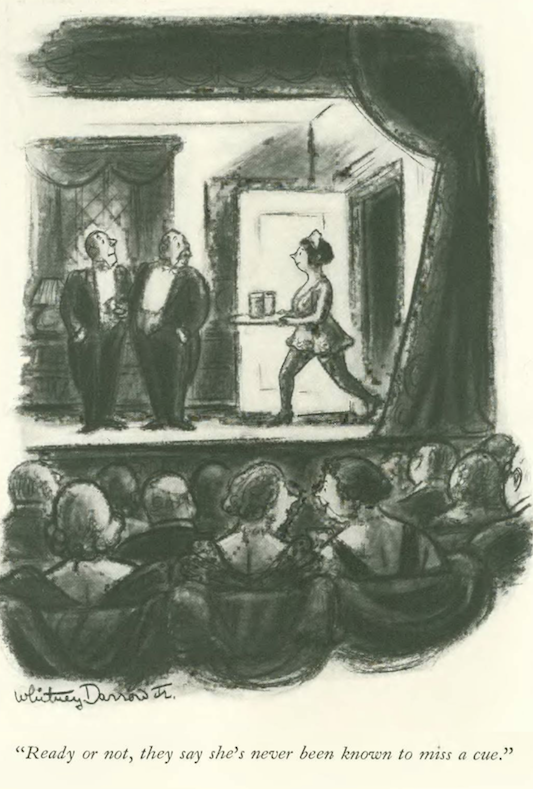
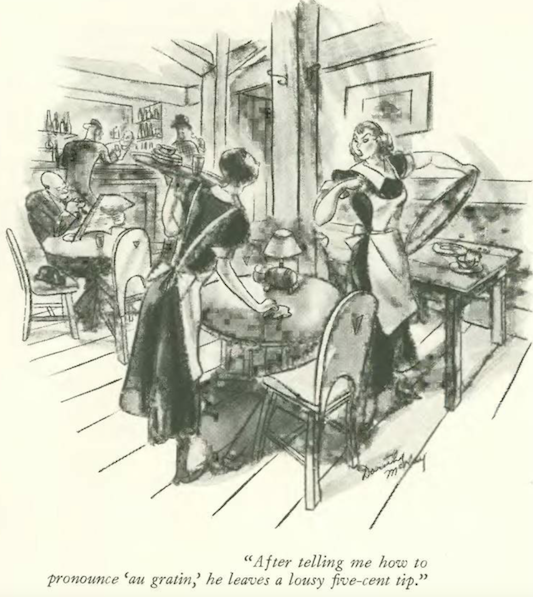
…Whitney Darrow Jr drew up this over-enthusiastic maître d’…
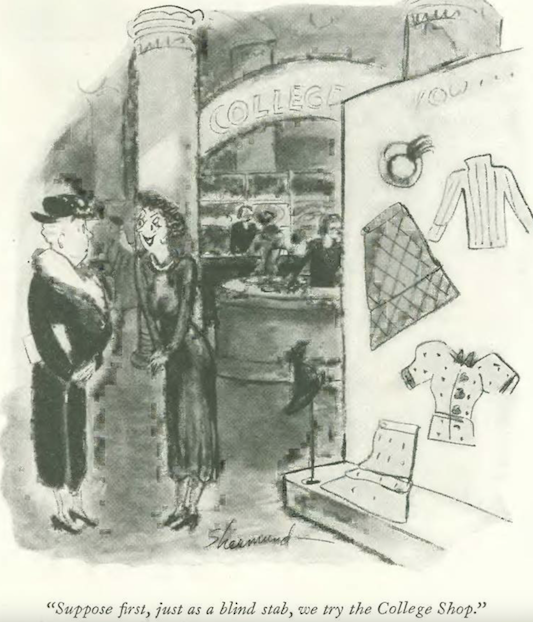
…Barbara Shermund went apartment hunting…
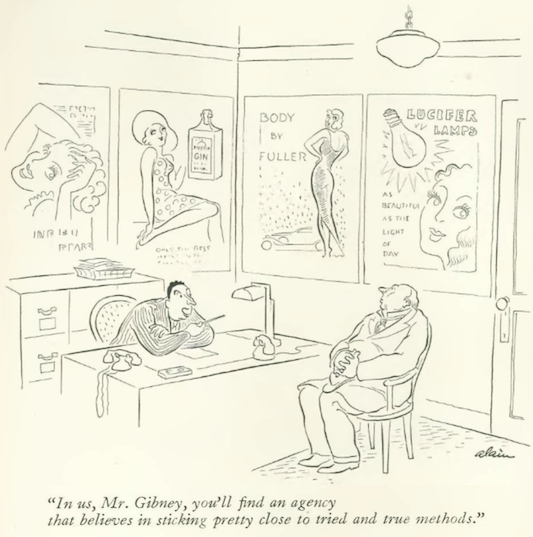
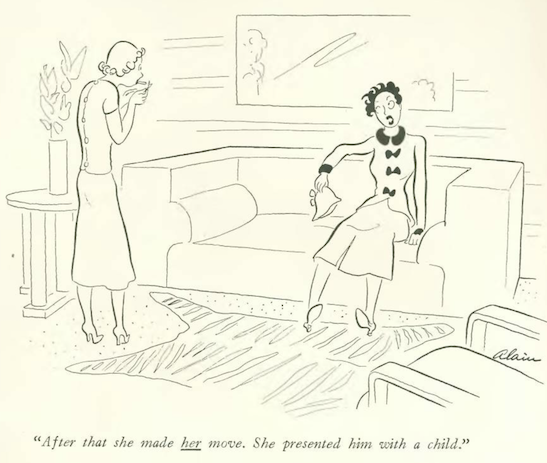
…and we close with Daniel ‘Alain’ Brustlein, and a room with a view…
Above: Detail from illustration depicting the Philippine Clipper arriving in Hong Kong to establish the first commercial air service between North America and the continent of Asia on October 23, 1936. (Otto G. Richter Library, University of Miami)
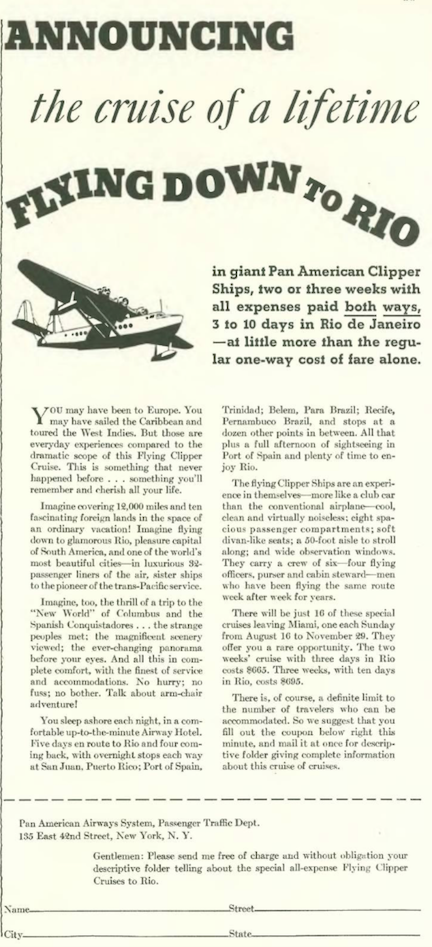
We take to the air with the April 18, 1936 edition of The New Yorker, namely via the China Clipper, a Pan American flying boat that was preparing to begin regular passenger service from San Francisco to the Philippines and Hong Kong along with its two sister ships.
April 18, 1930 cover by Rea Irvin.
Writing for “A Reporter at Large” under the title “See You in Shanghai,” Morris Markey offered an enthusiastic preview of the China Clipper, a Martin M-130 flying boat that was initially tested on a Trans-Pacific mail route laid out by famed navigator Fred Noonan (who would disappear the following year in a fateful flight with Amelia Earhart). Although Markey anticipated a summer launch, the first commercial trans-Pacific airmail and passenger service from San Francisco to Manila actually took place in October 1936, when the Hawaii Clipper made the first scheduled transoceanic passenger flight to the Philippines. The Philippine Clipper inaugurated the first passenger service into Hong Kong that same month, but it was a public relations VIP flight rather than a revenue generating one.
Here are excerpts from Markey’s report:
TAKING WING…Clockwise, from top left, carrying nearly 111,000 letters, the China Clipper passes over the San Francisco waterfront on its first airmail flight to Manila in November 1935; trading card from a pack of Player’s cigarettes; cutaway view of the Martin M-130 flying boat dubbed the China Clipper.(Wikipedia/frommers.com/Smithsonian)
Here is the flight schedule for the China Clipper’s first airmail flight to Manila in November 1935:
(messynessychic.com)
Today’s commercial aircraft squeeze passengers into about six square feet. Compare that to a Pan Am Clipper, which allotted twenty-two square feet per each passenger. They lounged on easy chairs and couches, enjoyed six-course meals served on fine china, and could even take a hot shower if so desired. Markey again:
THE ONLY WAY TO FLY if you had the means. The Clippers were divided into spacious cabins, with couches rather than airplane seats. The passenger compartments would transform at night into deluxe sleeper cabins. There was a dining salon, dressing rooms, and separate bathrooms for men and women. (messynessychic.com/Wikipedia/clipperflyingboats.com)
Talk about legroom…
(everythingpanam.com)
Writing for Messy Nessy,Luke Spencer notes this experience was only available to a select few: “…a one-way ticket from San Francisco to Hong Kong would set you back $760 in 1939 (more than $13,000 today). But despite being largely reserved for the rich and famous, the seaplanes are so evocative of the bygone era, that today, it’s hard to imagine a vintage travel poster without a Flying Clipper in it, soaring above a distant island.” Indeed, the long-gone Clipper ships live on in popular vintage travel posters such as the one below depicting Pan Am’s most advanced, largest and last flying boat, the Boeing 314. The circa 1939 illustration is by George Lawler:
(panam.org)
* * *
Don’t Step On Them
Suede shoes (aka Bucks, Reverse Calfskin) caught the attention of E.B. White, who thought this “new kind of men’s shoe” resembled a wire-haired dachshund. Suede shoes (blue ones would come later) were introduced as a preppy alternative to heavy lace-up shoes in the 1930s. They were favored (and made popular) by fashion trendsetter Edward, Duke of Windsor, who briefly reigned as British king in 1936 before abdicating the throne.
GOING CASUAL…Suede shoes offered a less formal option to men who still wanted to look stylish about town or at the club. At left is an ad from the 1940s, and at right is a one-column ad from the April 18, 1936 issue of The New Yorker. One wonders if E.B. White noticed it. (chronicallyvintage.com)
* * *
Cowboys and Elephants
The “Talk of the Town” noted the latest attractions the Ringling Brothers were bringing to Madison Square Garden, including B-grade Western film actor ColonelTim McCoy and a trio of elephants who played a rudimentary form of baseball.
NICE DUDS…American actor and military officer Colonel Tim McCoy (1891–1978) was a popular cowboy film star; he was even honored with his picture on a Wheaties box. (Wikipedia/nypl.org)
The tallest person ever recorded, Robert Wadlow (1918–1940), became a celebrity after his 1936 U.S. tour with the Ringling Brothers Circus, appearing at Madison Square Garden in the center ring, and never in the sideshow.
ON DISPLAY…The 8 foot, 11.1 inch Robert Wadlow shares a moment with Harry Earles (aka Harry Doll) behind the scenes at the Ringling Brothers Circus in 1936. During his appearance, Wadlow dressed in his everyday clothes and refused the circus’s request that he wear a top hat and tails. (reddit.com)
In addition to Col. McCoy, the circus also featured the daring high wire act of the famous Wallenda family:
IT’S A LIVING…The Wallendas performing at Madison Square Garden in 1934. (facebook.com)
* * *
Sage Advice
Dorothea Brande (1892–1948) was the author of two popular advice books: Becoming a Writer (1934) remains in print today, and her motivational Wake Up and Live (1936) sold more than a million copies and inspired an eponymous 1937 Hollywood movie.
As we’ve seen before, James Thurber relished the opportunity to satirize the writers of motivational books, and Brande’s Wake Up and Live proved to be irresistible. Here are some choice excerpts:
IDEAL FOR AN AIRPORT READ if such a thing would have existed in 1936. Above, Dorothea Brande circa 1937 and her 1936 bestseller, Wake Up and Live, which sold more than a million copies and inspired a Hollywood movie. (Wikipedia/matthewsbookshop.com)
* * *
Legacy Lines
In 1936 Stephen Vincent Benét (1898–1943) was more widely read than any American poet, but his popularity didn’t diminish the respect he received from literary critics. So no wonder The New Yorker gave him a two-page spread to publish his “Notes To Be Left In A Cornerstone.” It’s too large to reproduce here, but this is how it looked in the magazine (with great spot art by Hugo Gellert)…
A closer look at Gellert’s illustration…
…and here are the last two stanzas of the poem:
* * *
Ray Gets Rough
Ray Bolger’s long career included everything from dancing in vaudeville shows and acting on Broadway to appearing in his own television sitcom and in a 1981 Dr. Pepper commercial (dancing, of course). He is best remembered as the lovable, loose-limbed Scarecrow in 1939’s Wizard of Oz. So it was a surprise to learn that the Tony-winning actor could also play a tough guy, a turn that delighted critic Wolcott Gibbs, who penned this review of the Rodgers and Hart comedy musical On Your Toes:
I CAN SCARE MORE THAN CROWS…Ray Bolger (left) gets rough with a thug as Tamara Geva looks on in the musical comedy On Your Toes. (rodgersandhammerstein.com)
* * *
Bio Myopic
Biopics reached a height of popularity in the Thirties, with dozens of these pictures featuring major stars including Charles Laughton in The Private Life of Henry VIII (1933) and Rembrandt (1936), Barbara Stanwyck in Annie Oakley (1935), Greta Garbo in Queen Christina (1933), and Claudette Colbert in Cleopatra (1934). Paul Muni, the king of biopics, appeared in at least a half-dozen including The Story of Louis Pasteur (1936). The year 1936 also brought us The Great Ziegfeld, starring William Powell as Flo Ziegfeld, Myrna Loy as his wife, Billie Burke, and Luise Rainer as Ziegfeld’s first wife, Anna Held. Critic JohnMosher takes it from here:
DOUBLE TAKE..Ziegfeld Follies star Will Rogers was originally intended to appear in the 1936 film The Great Ziegfeld, but died in a plane crash in August 1935 before filming began. A.A. Trimble (pictured at left), was a map salesman by trade, but was also known to perform impersonations of Rogers at events like Rotarian lunches. Critic John Mosher was shocked by Trimble’s uncanny impersonation of Rogers in the film, which also featured Ziegfeld headliner Fanny Brice (right), the real one. (facebook.com/amazon.com)OSCAR-WORTHY…William Powell and Luise Rainer in The Great Ziegfeld. The film won three Academy Awards, including Best Picture, Best Dance Direction, and Best Actress, which went to Rainer. (tcm.com)
A note on Luise Rainer (1910–2014): The Austrian-American Rainer was the first person to win two Academy Awards in a row. The first was for her role as Anna Held in The Great Ziegfeld, and the second was for her role as a Chinese farm wife in 1937’s The Good Earth.
TIME WAS ON HER SIDE…Luise Rainer in 1936. (Wikipedia)
At the time of her death in 2014, thirteen days shy of her 105th birthday, Rainer was the longest-lived Oscar recipient, and the longest-lived female star from Classic Hollywood.
Mosher also reviewed Desire, a romantic crime drama that reunited the stars of the 1930 pre-code film Morocco, Marlene Dietrich and Gary Cooper.
REKINDLING THOSE SPARKS…Marlene Dietrich and Gary Cooper reunite in Desire. (video librarian.com)HMMM…Desire also featured character actor William Frawley (seen here with Cooper), who would go on to greater fame in television, playing Fred Mertz on I Love Lucy. (facebook.com)
* * *
From Our Advertisers
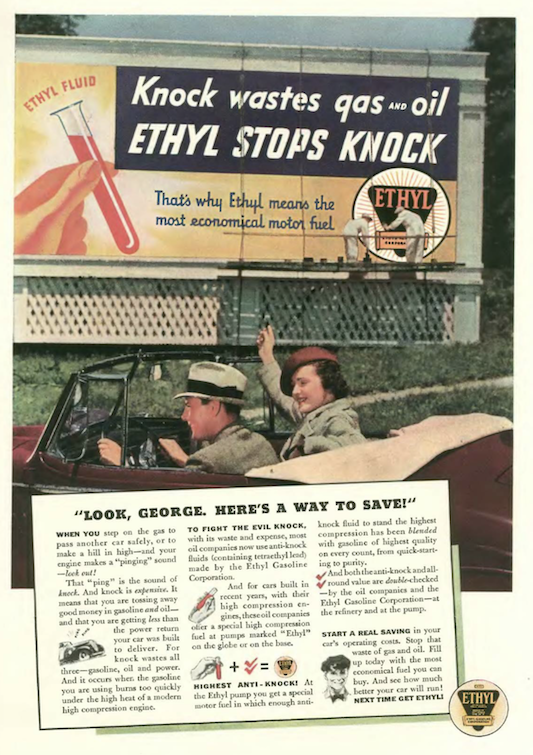
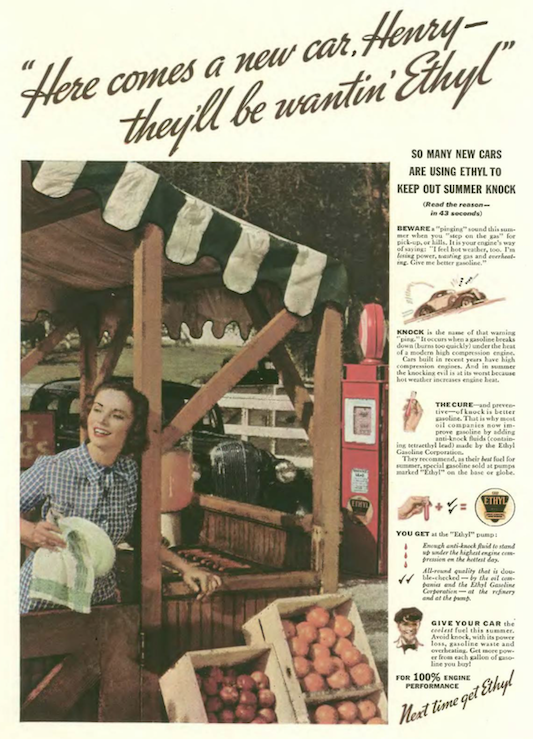
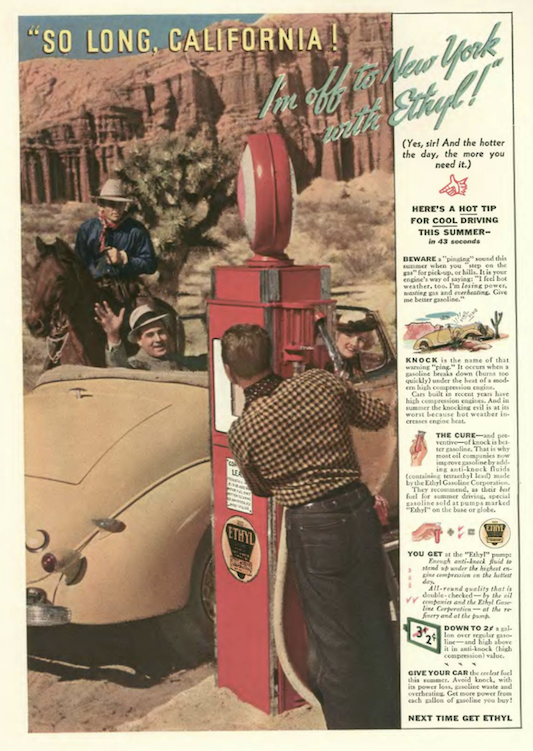
We begin with the inside front cover, where the makers of leaded gasoline appealed to homespun sensibilities with an odd juxtaposition…
…oil companies and other auto-related industries were big advertisers in The New Yorker, including the United States Rubber Company…
…which ran this back cover ad in the very first issue of the magazine, Feb. 21, 1925…
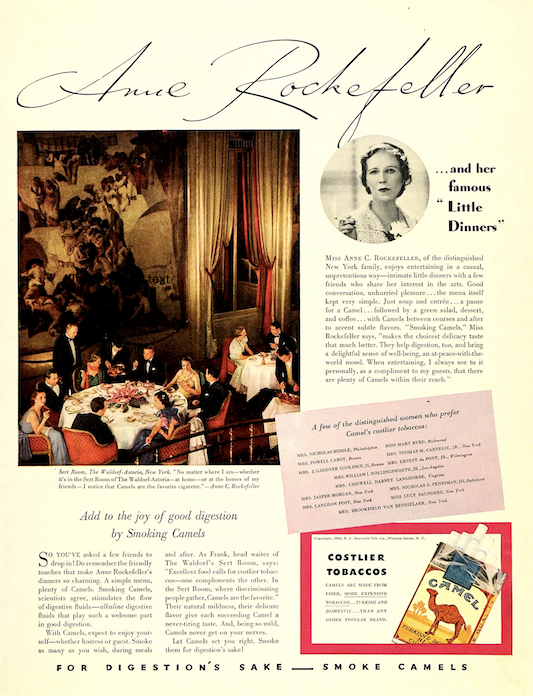
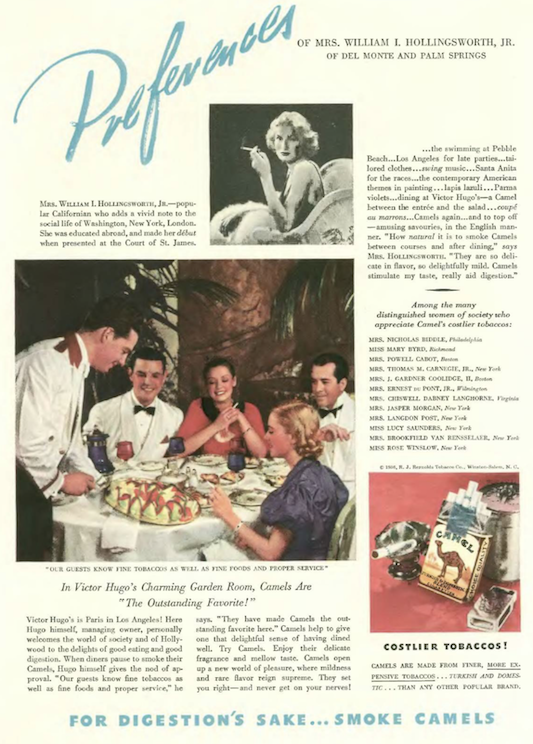
…another advertiser with deep pockets was big tobacco…R.J. Reynolds continued to make the ridiculous claim that their Camel cigarettes aided digestion…
…the makers of Old Gold stuck with sex to sell their smokes, featuring illustrations by pin-up artist George Petty…
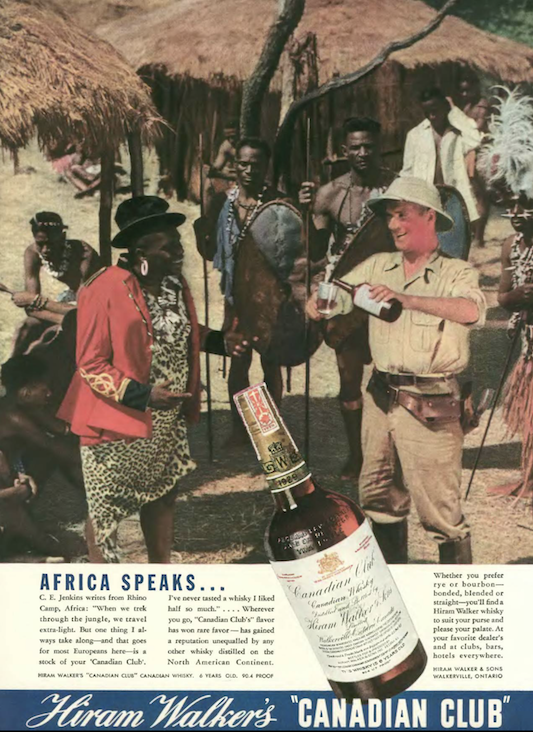
…Hiram Walker boasted the availability of their Canadian Club whiskey in “87 lands”…
…at first glance I thought this was a soap advertisement…one doubts this analogy prompted more people to pick up a case of Bud…
…the makers of College Inn Tomato Juice Cocktail continued to employ the social faux pas to sell their product…note the outraged duchess making an appearance on the right…
…Heineken established its U.S. presence in 1933, becoming the first imported beer legally sold after the end of Prohibition…
…Amer Picon called on the talents of illustrator Jon Whitcomb (1906–1988) to create this stylish advertisement…
Jon Whitcomb (1906–1988) was known primarily for his illustrations of glamorous young women, including his signature “Whitcomb Girl.” Born and raised in the Midwest, Whitcomb moved to New York City in 1934, joining with Al Cooper to found the Cooper Studio. At left, Whitcomb circa 1940s; at right, his illustration for the cover of Colliers, Aug. 23, 1941. (illustrationhistory.org)
…on to our cartoonists, we have a spot illustration by Richard Taylor to kick off the issue…
…Leonard Dove gave us a frustrated sugar daddy…
…Alain illustrated the perils of social realism…
…Whitney Darrow Jr’s butler made himself right at home…
…Ned Hilton’s harpist found a way to adapt to her surroundings…
…Robert Day required a layout adjustment for his human cannonball…
…Mary Petty took an unusual request at the soda fountain…
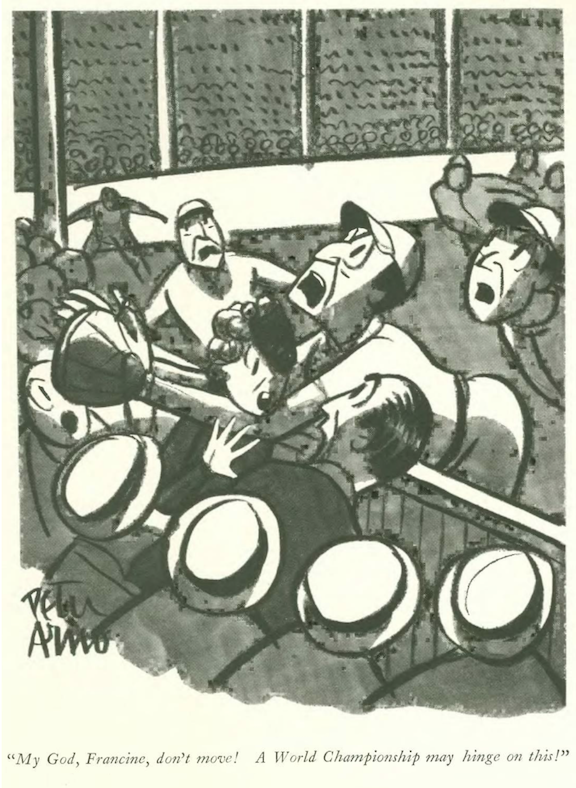
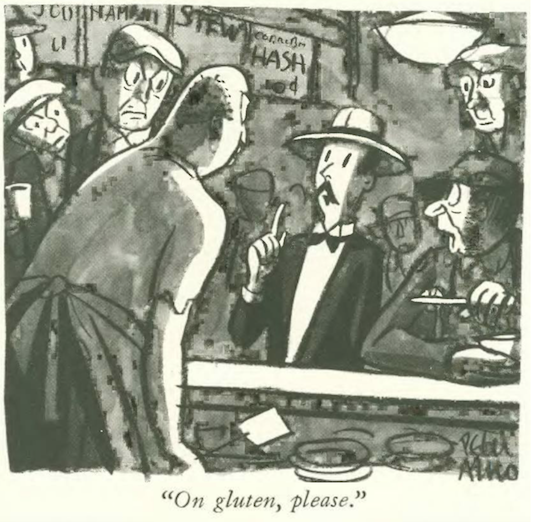
…Peter Arno diagnosed an incurable eye condition…
…Otto Soglow offered up a surprise at the automat…
…Helen Hokinson went apartment hunting…
…and we close with Barbara Shermund, and a big ask…
Above: The Morris B. Sanders Studio and Apartment is the second-oldest modern townhouse in Manhattan. Sanders designed the townhouse, located on 49th Street between 2nd and 3rd Avenue, in 1934 for his own use, and construction was completed in December 1935. (Wikipedia/docomomo-nytri.org)
Today we barely notice the tens of thousands of shiny glass buildings that populate our cities, not to mention the countless postwar houses that feature vast expanses of glass from floor to ceiling.
April 11, 1936 cover by Helen Hokinson.
In 1936 a house made of glass, especially as a structural element, seemed unlikely to most folks, if not downright bizarre. Enter Lewis Mumford, arts and architecture critic for The New Yorker, who was critical of many modern industrial trends and often promoted his ideal of human-scaled, organic design in buildings and cities. Mumford was not opposed to new technologies, such as glass block, as long as it was employed with sensitivity and good taste. Here are some of Mumford’s observations after visiting the American Glass Industries Exhibition at the Brooklyn Museum:
NEW NEIGHBOR…Morris B. Sanders’ studio and apartment at 219 East 49th Street in Turtle Bay boldly interrupted a stodgy row of brownstones. Lewis Mumford pronounced the 1936 building “very handsome.” The New York City Landmarks Preservation Commission designated the building as an official landmark in 2008. (curbed.com/Wikipedia)
The Sanders House wasn’t the first time a brownstone was replaced by a modernist building. That honor goes to another Turtle Bay-area house, just one block from the Sanders house, designed by architect William Lescaze in 1933-34.
ODD COUPLE…Designed by William Lescaze in the International Style between 1933 and 1934 as a renovation of a 19th-century brownstone townhouse, 211 East 48th Street was one of three houses in Manhattan designed by Lescaze. (atlasobscura.com/inside inside.org)
The Brooklyn Museum exhibition also included commercial examples such as one of the world’s first buildings to be completely covered in glass, the Owens-Illinois Glass Research Laboratory in Toledo, Ohio. Mumford also commented extensively on the new uses of glass in Times Square, namely the rebuilt Rialto Theatre and a Childs restaurant located next door. Excerpts:
THINGS TO COME…Clockwise, from top left, the Owens-Illinois Glass Research Laboratory in Toledo, Ohio, built between 1935 and 1936, is recognized as one of the world’s first buildings to be completely covered in glass, utilizing glass blocks for the facade; Lewis Mumford was less impressed with the use of glass by the newly rebuilt Rialto Theatre, but praised the new Childs location next door for being full of “vitality and color.” (facebook.com/dinerhunter.com)
* * *
Down on Il Duce
Last week we saw Robert Benchley’s review of the anti-war play, Idiot’s Delight. This week he reviews another play with themes that resonated in the moment, Bitter Stream. Written by Victor Wolfson and adapted from Ignazio Silone’s novel, Fontamara, the play depicted the horrors of fascism as Mussolini’s Black Shirts brutally seize an Italian neighborhood. It featured relative newcomer Lee J. Cobb as well as Frances Bavier, who twenty-four years later would portray Aunt Bee on The Andy Griffith Show. Excerpts:
TROUBLE IN SUNNY ITALY…A scene set in Fontamara Square in the play Bitter Stream, which ran for sixty-one performances at the Civic Repertory Theatre. At right, Lee J. Cobb portrayed Don Circonstantza, and Frances Bavier played the part of Soreanera. Bavier is best known for her portrayal of Aunt Bee on The Andy Griffith Show (1960-1968). (revolutions newsstand.com/facebook.com)
* * *
Sick Leave
Also last week we saw the first part of Edmund Wilson’s account of his travels in the Soviet Union. For the April 11 installment of “A Reporter at Large” (titled “Scarlet Fever in Odessa”), Wilson recounted his six-week stay in a filthy Soviet hospital. Excerpts:
WANTING OUT…Edmund Wilson couldn’t wait to get out of the “terribly dirty” Odessa hospital where he was quarantined with scarlet fever for six weeks. At left, photo by Margaret Bourke White, “In a Hospital Waiting Room, Moscow,” 1932. At right, Wilson in 1936. (nyamcenterforhistory.org/Wikipedia)
* * *
Gall in Gaul
In her Paris Letter, Janet Flanner continued to share her observations about the French mood (agitated) in the wake of the German occupation of the Rhineland.
HOW ABOUT A NICE DITTY INSTEAD?…Janet Flanner reported that there was a “near riot” when a performance at the Paramount Theater (left) included “military music.” At left, the Paramount in 1927; at right, a Popular Front demonstration in Paris, 1936. (Wikimedia/Bibliothèque nationale de France)
* * *
At the Movies
Little Lord Fauntleroy was Selznick International Pictures’ most profitable film until Gone with the Wind, and it featured one of the top child stars of the 1930s, English-American child actor Freddie Bartholomew (1924–1992). However, New Yorker film critic John Mosher was “bored to extinction” by the popular film.
SLUMMING…At left, Freddie Bartholomew and Mickey Rooney in Little Lord Fauntleroy. Rooney once said of Bartholomew: “He was one of the finest, if not the finest child stars that we had on the scene at that time”; at right, Aubrey Smith, Bartholomew and Dolores Costello in a scene from the film. (MGM/Wikipedia)
One of Hollywood’s greatest screen villains, English actor Henry Daniell, caught Mosher’s attention for his “smooth” performance as a blackmailer in The Unguarded Hour. The critic also enjoyed the thriller The House of a Thousand Candles, but was left flat by Give Us This Night.
A MANNERED SCAMP was how John Mosher described one of Hollywood’s greatest screen villains, English actor Henry Daniell (right) in The Unguarded Hour, which also starred (at left) Loretta Young and Lewis Stone. (imdb.com/facebook.com)THRILLS AND TRILLS…Top photo, Mae Clarke and Phillips Holmes in the spy thriller The House of a Thousand Candles; below, Give Us This Night was one of five films produced by Paramount that featured the popular Metropolitan Opera mezzo-soprano Gladys Swarthout, seen here with Polish opera singer and actor Jan Kiepura.(imdb.com/mabumbe.com)
* * *
From Our Advertisers
If you could afford it, a first-class salon on the Normandie sure looked like a great way to travel to France…
…this full-page ad enticed moviegoers with a quiz that promoted MGM’s The Great Ziegfeld…one of the most successful films of the 1930s, the movie won three Academy Awards, including Best Picture, Best Actress (Luise Rainer), and Best Dance Direction…
…who knows what will happen after the honeymoon, but we do know they will driving around in this swell-looking Packard 120, a lower-priced model that helped keep Packard afloat during the waning days of the Depression…
…Forstmann Woolens continued to entice buyers with their seasonal images of fine fashions…
…on to our cartoonists, we begin with the illustration for “The Theatre” section, this week Miguel Covarrubias taking over for Al Frueh…
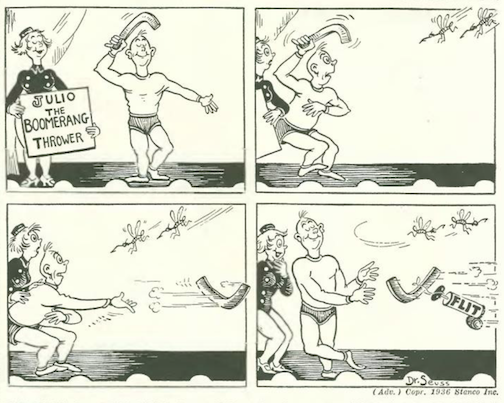
…Richard Taylor contributed this fine spot illustration…
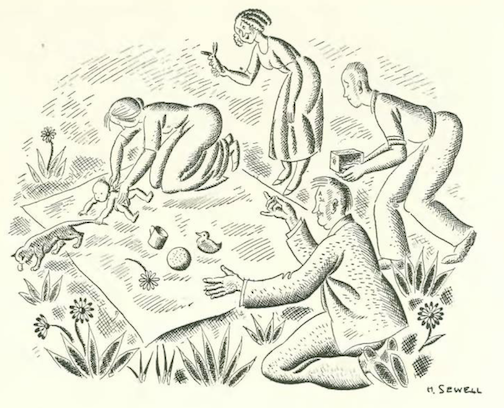
…and we have another spot by Helen Moore Sewell…
…James Thurber made an awkward introduction…
…George Price hoped for some comic relief at the theatre…
…Eli Garson found religious zeal at a street corner…
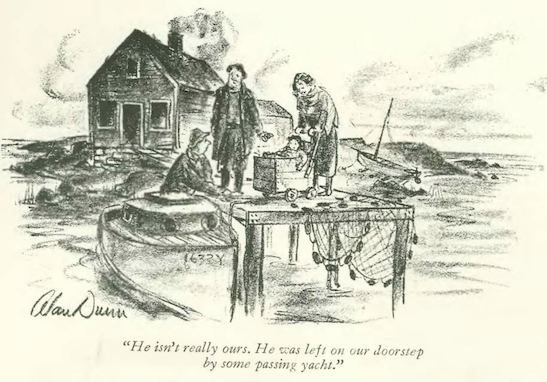
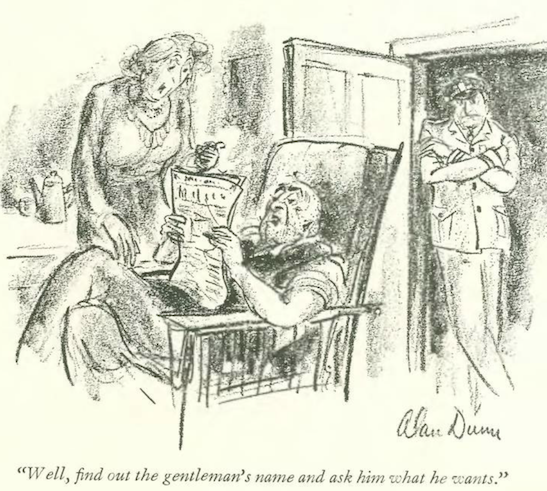
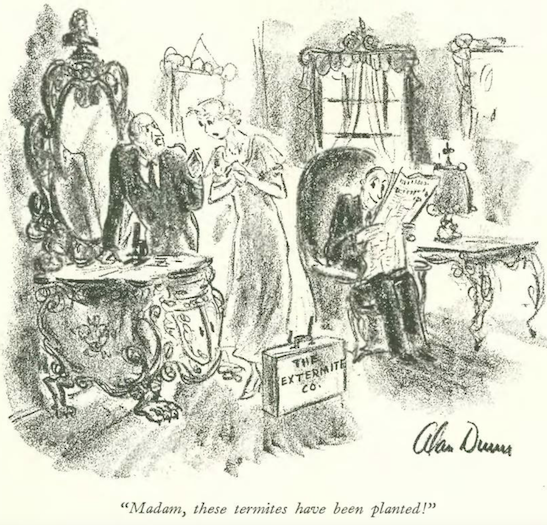
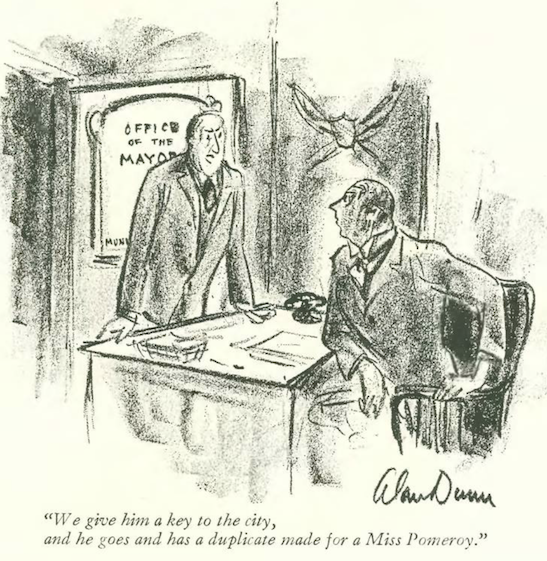
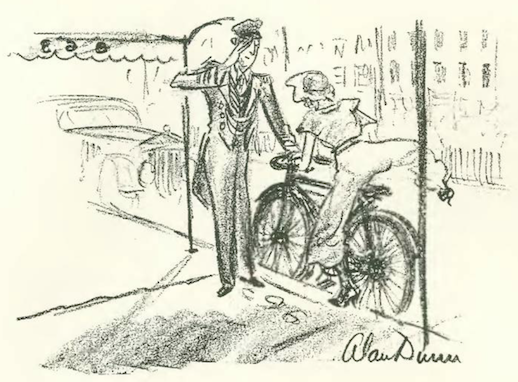
…Alan Dunn gave us a great opening line for an insurance salesman…
…Perry Barlow was inspired by bargains on Union Square…
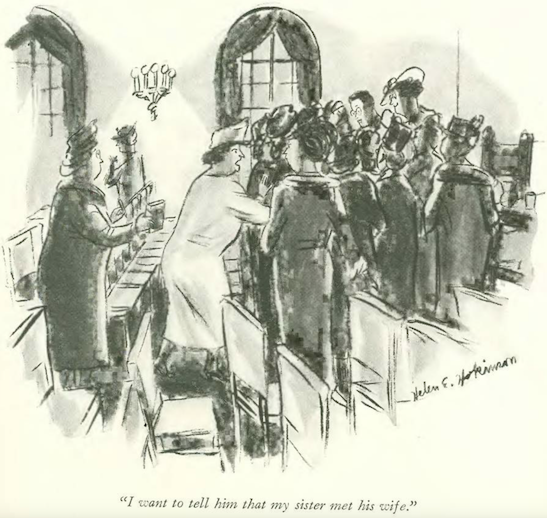
…Helen Hokinson spotted a familiar face in the crowd…
…a quickie marriage left no room for romance, per Peter Arno…
…Whitney Darrow Jr signed us off with an endorsed blessing…
Above: Alfred Lunt and Lynn Fontanne headed the cast of Idiot's Delight, a Pulitzer-Prize-winning play by Robert E. Sherwood. The anti-war play premiered at Broadway's Shubert Theatre on March 24, 1936, and ran for three hundred performances. (latimes.com)
Set against the backdrop of impending war in Europe, Robert Sherwood’sIdiot’s Delight was a timely exploration of how individuals might respond to a major upheaval. The play’s themes about the futility of war resonate as much today as they did in 1936.
April 4, 1936 cover by Harry Brown. Although he created some distinctive, whimsical covers for The New Yorker (including today’s), there is very little biographical information available on the artist. Brown created eighteen covers for the magazine from 1931 to 1937.
Presented at Shubert Theatre, the Pulitzer Prize-winning play was set at a hotel in the Italian Alps, where the guests—among them a military captain, a German scientist, a radical socialist, and a honeymooning couple—find themselves trapped by the sudden onset of world war. The cast was led by Alfred Lunt, who played a small-time American entertainer accompanied by a troupe of chorines, and Lynn Fontanne, who portrayed a mysterious Russian woman who was traveling with an arms dealer.
The Pulitzer jury called the play first-rate, full of dramatic invention and “Molierian richness.” Critic Robert Benchley heartily agreed:
FRIVOLITY AMID THE CHAOS OF WAR…Clockwise, from top left, souvenir program for Idiot’s Delight; Alfred Lunt and Lynn Fontanne in a scene from the play; playwright Robert E. Sherwood; Lunt with a chorus line in Idiot’s Delight. The New York Times critic Brooks Atkinson wrote that the play “demonstrates Mr. Sherwood’s taste for exuberance and jovial skulduggery.”(eBay.com/nypl.org/imdb.com)
Benchley concluded that the play was at once entertaining and edifying:
FORGET ABOUT IT…In Idiot’s Delight, Sydney Greenstreet (left) portrayed a doctor who, in the face of senseless war deaths, gives up on his life-saving research; at right, Jean MacIntyre (left) portrayed Mrs. Cherry, part of a young English honeymooning couple stranded at a hotel due to the sudden closing of the border. With her in the scene are Fontanne and Lunt. (radioclassics.com/Public Domain)
Sherwood adapted the play into a 1939 film of the same name, starring Norma Shearer and Clark Gable.
* * *
Earth Gazing
In his “Notes and Comment,” E.B. White mused about plans at the Hayden Planetarium for a program that would give visitors some idea of how earth would appear from a point in space. Earthlings would have to wait until 1968 to actually see a clear, color image of their planet.
THE WONDER OF IT ALL…Clockwise, from top left, the cosmosarium at the Hayden Planetarium, circa 1935; Howard Russell Butler’s attempt at an accurate portrayal of the earth for the American Museum of Natural History, circa 1920s; in 1966, Lunar Orbiter I sent back this image of Earth from the vicinity of the Moon; Earthrise is a famous photograph of Earth taken from lunar orbit by astronaut William Anders on December 24, 1968, during the Apollo 8 mission. (facebook.com/pinterest.com/NASA)
* * *
From Russia With Love
Journalist and literary critic Edmund Wilson Jr (1895–1972) traveled in Russia from May to October 1935, and later filed a couple of articles in The New Yorker detailing his travels. Writing for the column “A Reporter at Large,” Wilson described his journey by boat from London to Leningrad, finding an unexpected kinship with his Soviet cabin mates. Excerpts:
DESTINATION…Leningrad’s Nevsky Prospect 1930s; Edmund Wilson Jr in 1936. (pinterest.com/Wikipedia)
Wilson found that he preferred the company of the Soviets to a stuffy English couple who were his dining companions. He concluded:
It should be noted that Wilson, despite his Marxist sympathies, would soon become disillusioned with the Soviet experiment; his travels concluded just before the onset of Josef Stalin’s “Great Purge,” which featured the notorious Moscow Show Trials that sent millions of innocent Soviet citizens to labor camps or to their deaths in prisons.
DOOMED…During the Great Terror, which included the notorious show trials of Stalin’s former Bolshevik opponents in 1936-1938 and reached its peak in 1937 and 1938, millions of innocent Soviet citizens were sent off to labor camps or killed in prison. This image from 1936 shows defendants dressed in prison clothing during one of the Moscow Show Trials. (umkc.edu)
* * *
At the Movies
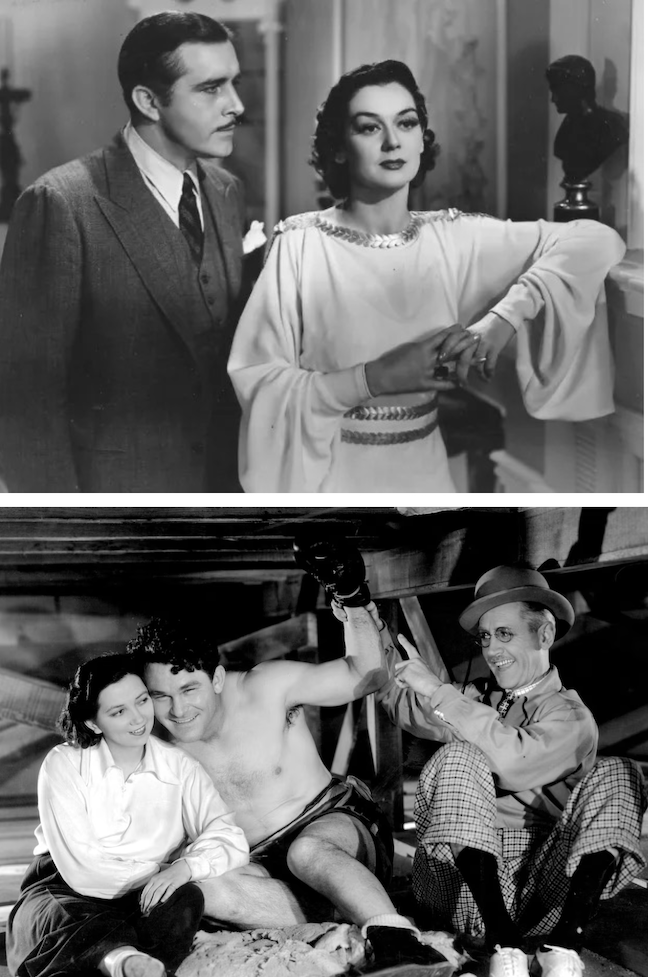
Film critic John Mosher observed that moviegoers mostly needed “thrills and nonsense” at the cinema. Thrills were not to be found, but Harold Lloyd provided the nonsense.
PUNCH LINES…Harold Lloyd (left), portrayed an unlikely middleweight boxer in The Milky Way. Above is a scene with Adolphe Menjou (center) and Lionel Stander. (obscurehollywood.net)
The “thriller” of the week was Moonlight Murder, which Mosher suggested audiences could “dismiss at once.”
DISMISSED…Katharine Alexander, Leo Carrillo and Benita Hume in Moonlight Murder. (rotten tomatoes.com)
Mosher also offered tepid reviews of Everybody’s Old Man and Sutter’s Gold, despite these films featuring a popular humorist and a respected character actor, respectively.
SAY SOMETHING FUNNY…Rochelle Hudson, Irvin S. Cobb and Warren Hymer in Everybody’s Old Man. (imdb.com)WHO AM I?…A vague narrative left critic John Mosher wondering if Edward Arnold’s character was supposed to be a “hero, villain, scamp, or fool” in Sutter’s Gold. Above, Arnold in a scene with Binnie Barnes. (film booster.com)
* * *
From Our Advertisers
Arrow Shirts rolled out a colorful array of pre-shrunk sanforized shirts and neckties just in time for the Easter holiday…
…from the 1930s through the 1950s the distinctive voice of James Wallington (1907–1972) filled the airwaves on both radio and television…here he endorses those “Sanforized Shrunk” shirts…
…French costume designer and illustrator Marcel Vertès (1895–1961) provided the art for the Antoine de Paris lipstick line at Saks…Vertès created the original murals in the Carlyle Hotel’s Café Carlyle and in the Waldorf-Astoria’s Peacock Alley… he also won two Academy Awards for his work on the 1952 film Moulin Rouge…
…Hockanum Mills announced its new line of woolens for the spring racing season…
Hockanum’s Rockville mills were shut down in 1951. Today the site is being redeveloped for commercial and light industrial uses as well as the site for the New England Motorcycle Museum. (historicbuildingsct.com)
…more claims from R.J. Reynolds regarding the gastrointestinal benefits of their Camel cigarettes…
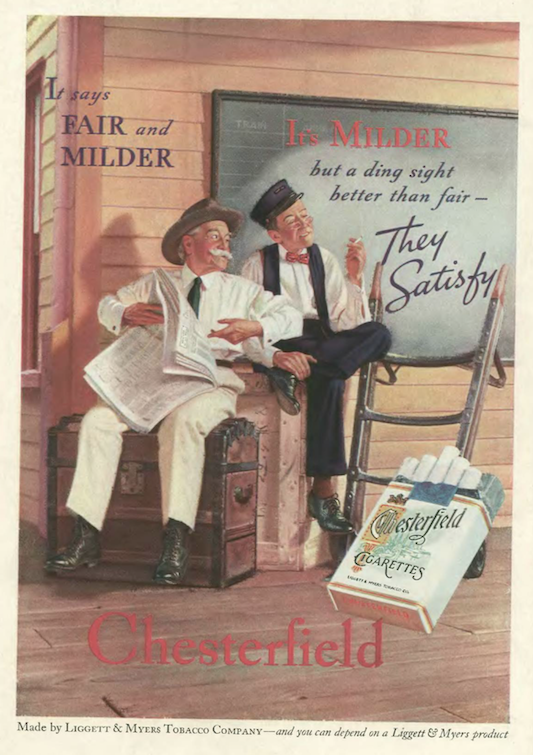
…while Liggett and Myers stuck with the pleasures of hearth and home, and a pack of Chesterfields…
…on to the cartoon section, we begin with Christina Malman…
…Richard Taylor…
…Robert Day…
…and a wonderful spot drawing by illustrator and children’s book author Helen Moore Sewell…
…who won a Caldecott Medal for her illustrations featured in Alice Dalgliesh’sThe Thanksgiving Story (1954)…
…we go shopping with Helen Hokinson in the garden section…
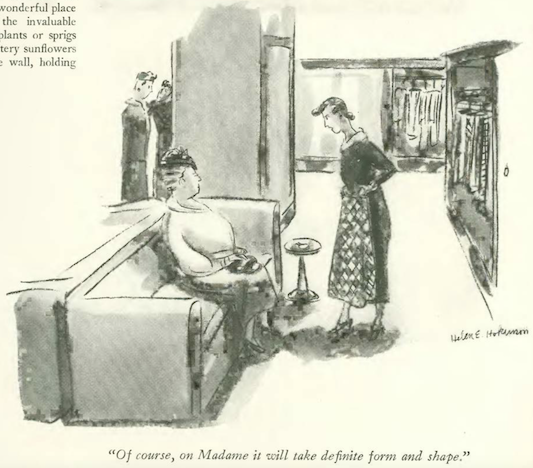
…and in the hat department…
…Mary Petty caught up on the latest gossip…
…Perry Barlow gave us a shopkeeper in need of some marketing tips…
…William Steig continued to probe the joys of married life…
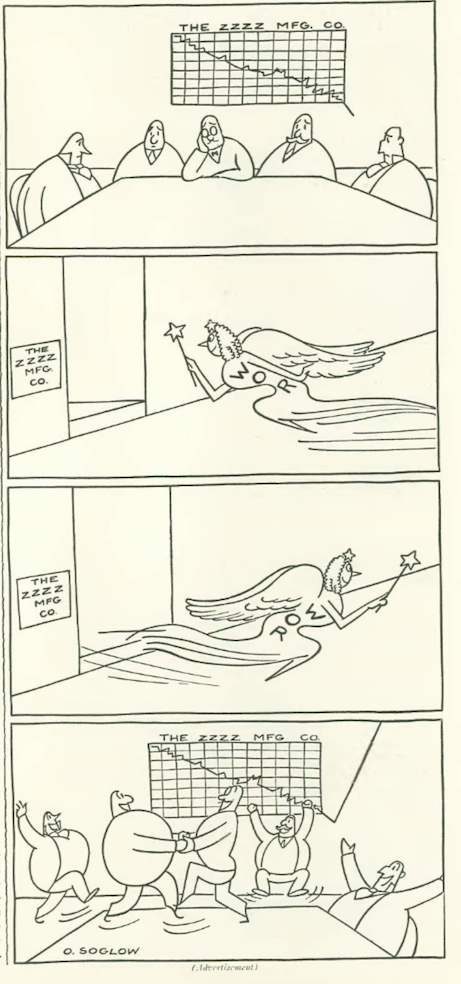
…even one’s dream world required some careful grooming, per Otto Soglow…
…James Thurber drew up a duet out of tune…
…outside of Wall Street, Leonard Dove’s titan of business was just another sugar daddy…
…and we close with Peter Arno, and strangers on a train…
Above: Although MGM head Louis B. Mayer (right) had a strong business sense, he needed Irving Thalberg's keen ability to combine artistic quality with commercial success. During his twelve years at MGM, Thalberg supervised the production of more than four hundred films. (artsfuse.org)
Born in a Ukrainian village in 1884, Louis B. Mayer grew up poor in Canada and dropped out of school at age twelve to support his family. Nearly three decades later he co-founded Metro-Goldwyn-Mayer, lured the “boy genius” Irving Thalberg from Universal, and went on to lead one Hollywood’s most prestigious filmmaking companies.
March 28, 1936 cover by Perry Barlow.
Pulitzer Prize-winning journalist Henry F. Pringle (1897–1958) looked into Mayer’s life in a two-part profile, leading with a look into the movie mogul’s ability to control his vast stable of stars (illustration by Hugo Gellert):
BOY GENIUS…Clockwise, from top left, MGM producer Irving Thalberg (seen here in 1929 with wife and actress Norma Shearer), had a knack for combining quality art with commercial appeal. Born with a weak heart, Thalberg died in September 1936 at age 37; The Great Ziegfeld was one of MGM’s top movies in 1936—it won three Academy Awards including Best Picture; Louis B. Mayer with young MGM stars Mickey Rooney and Judy Garland; Shirley Temple signing with MGM in 1941 with Mayer, Garland and Rooney. (theguardian.com/Wikipedia/facebook.com)
Mayer (1884–1957) is credited with helping to create the “star system” in Hollywood. “The idea of a star being born is bush-wah,” Mayer once said. “A star is made, created; carefully and cold-bloodedly built up from nothing, from nobody.” Mayer believed he “made” his stars, and therefore had the right to control their careers as well as their very lives. Pringle explained the predicament of actress Joan Crawford:
MAYER-MADE…Louis B. Mayer not only gave Joan Crawford a new name (she was born Lucille LeSueur), he was also instrumental in transforming her from a dancer to a major Hollywood star. Throughout her career at MGM Crawford pestered Mayer for better roles (until she finally left MGM in 1943). However, they remained friends until his death in 1957. Crawford once called Mayer “the best friend I ever had.” (Wikipedia/imdb.com)
Many stars were less forgiving than Crawford regarding Mayer’s controlling behavior. Although many male actors saw him as a father figure, women often had a very different view. A young Elizabeth Taylor called him a “monster” for his attempts to oversee her life, while Judy Garland was forced to go on diets and take amphetamines and barbiturates to meet Mayer’s punishing work schedules. Many believe this led to Garland’s lifelong addiction issues.
* * *
Water Water Everywhere
In his “Notes and Comment,” E.B. White was at a loss for words to describe the floods in the northeastern U.S. that followed a bitter winter. A combination of rain and the melting of heavy snowpack caused massive damage in the Connecticut and Merrimack River valleys as well as in the Pittsburgh area. In addition to approximately two hundred fatalities, hundreds of thousands were left homeless.
DELUGE…The flooding in Albany, NY, in 1936 (top) was part of a series of devastating floods that affected much of the northeastern United States. Below, the Holyoke Dam in Massachusetts, March 19, 1936. (South Hadley Public Library/sungazette.com)
White’s “Notes” also included an update on the “aesthetic restlessness” at Rockefeller Center, where the statues Youth and Maiden were removed from the Paul Manship-designed Prometheus fountain. The artist decided the two bronze figures did not fit well in the fountain, so they were moved to the roof garden of the Palazzo d’Italia.
EXILED…Paul Manship’s two gilded figures, Youth and Maiden, representing mankind receiving the fire, originally flanked Prometheus (top photo). In 1936 they were moved to the roof garden of the Palazzo d’Italia, but were returned to the Plaza in the 1980s. Pictured below, the six-foot statues were again moved in 2001 to the top of the Plaza staircase between the Channel Gardens and the Sunken Plaza.(mcny.org/Elisa.rolle/photo-opsblogspot.com)
* * *
Pyramid Scheme
“The Talk of the Town” commented on some unusual research conducted by Dr. A.E. Strath-Gordon, in which he used measurements from the Great Pyramid to predict the end of the Depression. Excerpts:
JUST READ THE STONES…Dr. A.E. Strath-Gordon (1873–1952) was a spiritualist, researcher, author, and lecturer on the occult and paranormal subjects. (strathgordon.wordpress.com)
* * *
Deeper South
James Thurber had some fun with novels about the Deep South that sought to employ authentic dialogue—but not as successfully as novelist Erskine Caldwell. These excerpts are the first and last paragraphs from the piece.
CRITICALLY ACCLAIMED…Erskine Caldwell’s writings about poverty and racism in his native South included novels such as Tobacco Road (1932) and God’s Little Acre (1933). Unlike Thurber’s parody, Caldwell’s writing style has been described as spare, direct and unadorned. (Wikipedia/etsy.com)
* * *
An Introduction
I didn’t know much about the novelist Leane Zugsmith until I read her short story in the March 28, 1936 edition of The New Yorker. During the 1930s she was prominent among writers who focused on the struggles of the working class during the Great Depression. “Mr. Milliner” was the eighth short story she published in the magazine, out of a total of fifteen from 1934 to 1949. Here are the opening lines:
FED UP…Writer Leane Zugsmith(1903–1969) focused on the shortcomings of capitalism in her novels and short stories, including her 1936 novel A Time to Remember, which depicted a department store strike and the rise of white-collar unions. She published fifteen short stories in The New Yorker from 1934 to 1949. (bolerium.com)
* * *
Over There
In her latest dispatch from Paris, Janet Flanner noted the growing anxiety among Parisians over Germany’s arms buildup and its re-occupation of the Rhineland.
HAIRY HEADLINES…Janet Flanner noted the anxious crowds around newspaper kiosks (unlike the quiet image above) and the boos being issued by the market women in the Halles (at passing soldiers) as war with Germany was being seen as inevitable. (tresors-de-paris.com/mattbarrett-travel.com)
* * *
At the Movies
Lillian Hellman’s drama The Children’s Hour premiered on Broadway on Nov. 24, 1934, and ran for 691 performances—but bringing it to the screen in the era of the Motion Picture Production Code (aka Hays Code) proved a bit tricky, according to film critic John Mosher. Hellman’s play centered on a schoolgirl’s false accusation of lesbianism against two of her teachers, or as Mosher put it rather delicately, “a friendship of two young women…characterized by such emotional undercurrents as are not held seemly for screen exposition.”
Hellman rewrote the play to conform to the Code, removing any mention of lesbianism and changing the dramatic focus to a schoolteacher accused of having sex with another’s fiance. It appeared in 1936 under the title These Three.
Mosher wished the film could have included Florence McGee, who portrayed the conniving student protagonist Mary Tilford in the original play. The part in These Three went instead to Bonita Granville, who at age fourteen earned an Academy Award nomination for her performance as Mary Tilford.
TWO TAKES…Florence McGee (pictured at right, seated center) portrayed the conniving student protagonist Mary Tilford in the Broadway production of The Children’s Hour. The part of Mary Tilford in the re-written film version of the play, These Three, went to Bonita Granville (left), who at age fourteen earned an Academy Award nomination for her performance. (oscarchamps.com/Wikipedia)THREE TOTALLY STRAIGHT PEOPLE…Joel McCrea, Merle Oberon and Miriam Hopkins starred in These Three, a cinematic rewrite of Lillian Hellman’s play The Children’s Hour. (quadcinema.com)
Mosher also reviewed Petticoat Fever, a “trifle” starring Myrna Loy and Robert Montgomery.
BABY ITS COLD OUTSIDE…Myrna Loy and Robert Montgomery in Petticoat Fever. Montgomery was the father of Elizabeth Montgomery, best known for her portrayal of Samantha Stephens on the TV sitcom Bewitched. (IMDb.com)
* * *
From Our Advertisers
The inside front cover advertisement belonged to the “House of Schenley,” which emphasized the purity of Kentucky’s “limestone waters”…
…the makers of Packard automobiles also appealed to bucolic sensibilities with this homespun image…
…the Easter Parade has been a New York tradition since the 1870s, when New York’s elite would walk down Fifth Avenue to show off the latest European fashions…the event was largely centered around churches like St. Patrick’s, hence the ad from its neighbor across the street, Rockefeller Center…today the event is called the Easter Parade and Bonnet Festival, a more inclusive event featuring eccentric, handcrafted bonnets…
…Lux Soap Flakes were featured in big, celebrity-filled ads in mid-century America, soap being one product (like whiskey and cigarettes) that proved to be mostly Depression-proof…
…a twelve-cylinder engine was usually a feature of top-of-the-line luxury automobiles, but the folks at Lincoln put one into their medium-priced Zephyr…the car succeeded in reigniting sales at Lincoln dealerships during the Depression…
…beginning in the late nineteenth century cigarette companies included coupons that could be redeemed for items ranging from cocktail sets to silk stockings (per this ad)…Brown & Williamson, the makers of Raleigh and Kool cigarettes, featured coupons on the back of every pack, and smokers could write the company for a free premium catalog…
…this Raleigh catalog from the early 1950s even featured toys…250 coupons could get you a “Teddy bear with plastic nose”…so keep on puffing…
…Luckies went with the glamour of flying, an experience only the well-heeled could afford…
…on to our cartoonists, we have Richard Taylor…
…and Barbara Shermund welcoming us into the issue…
…and a this nice spot from Christina Malman…
…Al Frueh gave us his interpretation of Saint Joan…
…W.P. Trent explored the deep seas…
…Helen Hokinson revealed a secret…
…Gluyas Williams was still examining club life…
…William Steig went for a haircut (across two pages)…
…Leonard Dove received some junk mail…
…George Price uncovered a spy…
…Garrett Price assessed the price of fame…
…William Crawford Galbraith continued to explore the world of sugar daddies and chlorines…
Above: Nightlife correspondent Lois Long checked out the latest clubs as well as old-time favorites in her column "Tables for Two." From left, advertisement for Restaurant Larue; Josephine Baker in 1937; and the entrance to Monte Proser's Beachcomber, an early iteration of the tiki bar that would become ubiquitous in midcentury America. (eBay.com/Wikipedia/mytiki.life)
Part three of Janet Flanner’s profile of Adolf Hitler can be found below, but it’s time to lead with something more pleasant, namely Manhattan nightlife through the eyes of Lois Long.
March 14, 1936 cover by Rea Irvin.
In her “Tables for Two” column headlined “Nostalgic Notes,” Long checked out the new Chez Josephine Baker, the garden-like delights of Restauarnt Larue, and the French-themed Le Coq Rouge.
NEW NIGHTLIFE…Clockwise from top left, ad for Restaurant Larue; 1930s postcard showing interior of Larue; Josephine Baker, proprietor of Chez Josephine Baker; ad for Le Coq Rouge; interior of Le Coq Rouge, 1930s. (eBay/Wikipedia)
Long also noted the Beachcomber Bar, which originated in the basement of an old church, and actor Dan Healy’sBroadway Room.
MAN ABOUT TOWN…Dan Healy was a well-known master of ceremonies in the Manhattan nightlife scene. He married the famed “boop-boop-a-doop” singer (and possible Betty Boop inspiration) Helen Kane in 1939—they later opened a New York restaurant together called Healy’s Grill. (whosdatedwho.com/Facebook)
* * *
Bummed Out
E.B. White (in “Notes and Comment”) referred to confessional essays published in Esquire magazine by F. Scott Fitzgerald that frankly described his struggles with alcoholism and the decline of his literary reputation. The confessional tone of the essays (three in all, published in February, March and April 1936) proved controversial at the time.
In his first essay, “The Crack-Up,” Fitzgerald famously observed that “the test of a first-rate intelligence is the ability to hold two opposed ideas in the mind at the same time, and still retain the ability to function.”
A CRY FOR HELP?…At left, F. Scott Fitzgerald in the 1930s (top), and, apparently during happier days (below, with wife Zelda); at right, the opening page of “The Crack-Up.” (esquire.com/pbs.org)
* * *
Say What?
New Yorker writers rarely missed an opportunity to poke fun of Time magazine’s unique ways with the English language. E.B. White again, in an excerpt:
TIMEWORDS…The March 16, 1936 issue of Time, and E.B. White. (time.com/imdb.com)
* * *
Dying to Know
“The Talk of the Town” made brief mention of a rumor regarding Woolworth heiress Barbara Hutton’s health. Reports of her demise were premature; she died in 1979.
HANGING IN THERE…Barbara Hutton with husband no. 2, Count Kurt von Haugwitz-Reventlow, circa 1936. Hutton married seven times, including a brief marriage to actor Cary Grant, who was husband no. 3. (whosdatedwho.com)
* * *
Part Three
Janet Flanner completed her three-part profile of Adolf Hitler by looking into the man’s mind, if that was even possible.
OBEDIENT MASSES…Nazi dictator Adolf Hitler addresses soldiers at a rally in Dortmund, Germany, 1933. (encyclopedia.ushmm.org)
Flanner also noted the Führer’s early days as an unsuccessful painter, and an odd wedding gift to his buddy Hermann Göring:
GOOSED…Top, Adolf Hitler presented a specially painted copy of Correggio’s Leda with the Swan as a wedding gift to Hermann Göring and actress Emmy Sonnemann on April 10, 1935; below, Hitler painted this watercolor during his pre-WWI time in Munich, from May 1913 to August 1914. (Wikipedia)
* * *
China Syndrome
Supporting herself as a writer for The New Yorker, Emily Hahn’s years in Shanghai, China (1935 to 1941) were tumultuous. Living in the city’s red light district, she became romantically involved with the Chinese poet and publisher Shao Xunmei (aka Sinmay Zau) and became addicted to opium. In this excerpted short essay, Hahn described her literary encounters with Shao Xunmei (here referred to as “Pan Heh-ven”) and a passel of translators.
ENOUGH OF THAT…Emily Hahn became romantically involved with the Chinese poet and publisher Shao Xunmei (aka Sinmay Zau), but ultimately left him in order to break her opium addiction. (Wikipedia)
* * *
At the Movies
Critic John Mosher did his best to stay awake during the latest fare from Hollywood…
SPECIOUS SPECTACLE…Top, from left, Louise Fazenda, Paul Draper, Ruby Keeler, Dick Powell and Hugh Herbert in Colleen; below, Wendy Barrie and Gene Raymond in Love on a Bet. (cometoverhollywood.com/imdb.com)
Mosher also commented on a film he walked out on (The Farmer in the Dell), and considered the twentieth anniversary of Intolerance, a 1916 drama that had become a “cheap amusement.”
HO HUM…Critic John Mosher walked out of The Farmer in the Dell, mostly due to boredom—above, Frank Albertson, Jean Parker, Fred Stone and Esther Dale in the romcom The Farmer in the Dell; below, scene from D.W. Griffith’s epic silent film from 1916, Intolerance. (imdb.com/cinemafromthespectrum.com)
* * *
From Our Advertisers
The folks at Hormel once again claimed the inside front cover with this array of soups featured sideways, in full color…
…the illustrator of this Lord & Taylor advertisement hoped to superimpose a pair of shoes over a woman’s face, with less than convincing results…
…the makers of Packard automobiles sent a condescending message “To The Ladies,” promising not to “bore them” with talk of mechanical features…
…a sampling of one-column ads featured, from left, the renowned Russian Eagle cafe-bar at the Sherry-Netherland, the Modernage furniture store on East 33rd, and the Milwaukee Road railroad, which offered adventure at such places as a Montana dude ranch…
…the inside back cover featured this drawing of actress/dancer/singer June Knight by Abe Birnbaum…
…Birnbaum was a terrific artist, but his portrait of Knight was not terribly flattering…this is what she looked like in the 1930s…
June Knight (1913–1987) circa 1930s. (reddit.com)
…on to the cartoons, we kick off the issue with Canadian cartoonist Richard Taylor…
…and Taylor again, striking a pose…
…Arnold Hall contributed an example of floral marketing…
…Al Frueh contributed to “The Theatre” section…
…Jack Markow did some rubbernecking…
…Howard Baer welcomed a new tax deduction to the world…
…Perry Barlow drew up impressions of a field trip to the Hayden Planetarium…
…Barlow again…
…one of Helen Hokinson’s “girls” explained herself…
…Barbara Shermund interpreted modern dance…
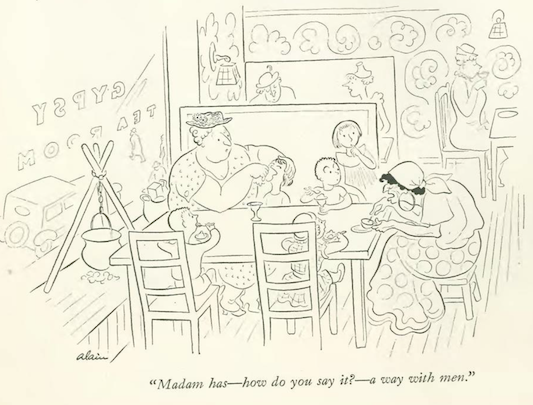
…Alain sought some dish over tea with the vicar…
…and we close with James Thurber, and a penny for her thoughts…
Above, left, Janet Flanner regards the cover of the Sept. 13, 1931 issue of The New Yorker; at right, Adolf Hitler's chosen filmmaker Leni Riefenstahl at Nuremberg's "Shovel Day" parade, 1936. (Library of Congress/Sueddeutscher Verlag)
The February 29, 1936 issue stands out from pack not only for its cover—James Thurber’s first—but also for the magazine’s first in-depth look at a man who would spark the deadliest conflict in human history.
February 29, 1936 cover by James Thurber. This was the first of six covers Thurber contributed to The New Yorker. You can see all six covers at Michael Maslin’s Ink Spill, the go-to site for all things Thurber and so much more. UPDATE: Also check Maslin’s post regarding the repeat of this cover on Sept. 4, 2023. Fascinating read!
Before we jump in…Thurber’s close friend E.B. White noted another unusual fact about this issue…
…twenty-eight years later, and a dime extra (cover by Garrett Price)…
* * *
Inside the Feb. 29 issue, The New Yorker’s Paris correspondent Janet Flanner published the first part of a three-part profile on German dictator Adolf Hitler. In this first excerpt she described the Führer’s ascetic diet and personality (caricature by William Cotton).
NAZI NUM NUMS….Adolf Hitler with one of his official food tasters, Margot Woelk, during World War II. Woelk later claimed she was the sole survivor from a group of food tasters who were summarily executed by the Red Army after the fall of Berlin. (warfarehistorynetwork.com)
Flanner described Hitler’s relationships with influential women, particularly filmmaker Leni Riefenstahl.
FRIENDS WITH BENEFITS…Adolf Hitler had influential admirers both in and outside of Germany, including, clockwise, from top left, filmmaker Leni Riefenstahl (in the white skirt described by Flanner) at the 1936 “Shovel Day” in Nuremburg; Winifred Wagner, daughter-in-law of composer Richard Wagner, in 1925; Hitler with Unity Mitford, one of six aristocratic Mitford sisters and a fanatical Nazi; Ernst Franz Sedgwick Hanfstaengl with another Mitford sister, Diana Mitford, at a 1934 Nuremberg rally. Diana as married to Oswald Mosley, leader of the British Union of Fascists, and Hanfstaengl was the son of Katharina Wilhelmina Hanfstaengl, a prominent Munich art publisher who helped finance Hitler’s rise to power. (Sueddeutscher Verlag/Wikipedia/historyreader.com)
Flanner concluded the piece with a look at Hitler’s sexuality, which seemed non-existent, and drew an ominous conclusion about his personality type.
EXPENDABLE…Ernst Röhm with Adolf Hitler in 1933. Although Hitler knew Röhm was gay, he also valued Röhm’s leadership and organizational skills, that is until his presence proved a liability. Röhm was murdered by the SS in 1934 during the “Night of the Long Knives.” (Wikipedia)
As part of a centenary series, The New Yorker’s Andrew Marantz recently looked at Flanner’s profile of Hitler, noting that she was “neither an antifascist, like her friend Dorothy Parker, nor a Fascist, like her friend Ezra Pound; she was against crude bigotry, but she was not the world’s greatest philo-Semite.”
* * *
Lamour Amour
In his “Notes and Comment,” E.B. White pointed out the challenges of expressing physical beauty over a non-visual medium like radio:
TELEGENIC…Hopefully E.B. White managed to see Dorothy Lamour on the “television waves… bumping along over the Alleghenies.” At left, publicity photo of Lamour from 1937; at right, Lamour appeared as a mystery guest on What’s My Line?, Feb. 20, 1955, seen here with host John Daly. In later years Lamour was a guest on a number of television shows, ranging from Marcus Welby, M.D. to Remington Steele. (Wikipedia/YouTube.com)
* * *
Shadow Plays
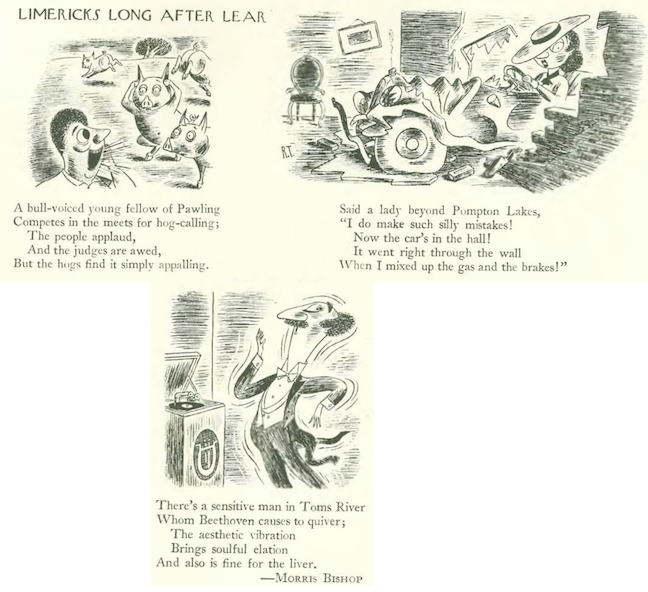
Morris Bishop (1893-1973), a noted scholar of the Middle Ages as well as a writer of light verse, offered up these lines after screening early silent films at the Museum of Modern Art. The screenings were curated by Iris Barry to showcase MoMA’s new film library and to advance the study of film as a serious art form.
TIME CAPSULES…The Museum of Modern Art was a pioneer in the study of film as a modern art form. Among the films screened at MoMA in 1936 (clockwise, from top left): famed stage actress Sarah Bernhardt as Queen Elizabeth in the Les Amours de la reine Élisabeth (The Loves of Queen Elizabeth) with Lou Tellegen, 1912; Bernhardt in the film Camille (La Dame aux camélias) with André Calmettes, 1911; Theda Bara’s 1917 take on Camille, in a scene with Alan Roscoe; Gloria Swanson in Zaza, 1923. (Wikipedia/imdb.com/YouTube.com)
* * *
A Reporter’s Chops
With so much attention given to James Thurber as a humorist, it is easy to forget that he was an experienced journalist, and that he could apply his considerable gifts as a writer to narrative non-fiction. For the Feb. 29 “A Reporter at Large” column, Thurber penned “Crime in the Cumberlands.”I can’t do it justice through excerpts, but I highly recommend giving it a read as a prime example of Thurber’s skills as a reporter.
SERIOUSLY SERIOUS WRITER…You can find both humorous and not-so-humorous crime stories (and drawings, of course) in 1991’s Thurber on Crime, edited by Robert Lopresti. “Crime in the Cumberlands” is included in the collection. (jamesthurber.org/barnesandnoble.com)
* * *
At the Movies
Not so serious were the films being churned out by Hollywood, including the Fred Astaire/Ginger Rogers toe-tapper Follow the Fleet, set to an Irving Berlin score that featured the hit “Let’s Face the Music and Dance.” Critic John Mosher was on board for the ride.
GOOD CLEAN FUN…Dance partners “Bake” Baker (Fred Astaire) and Sherry Martin (Ginger Rogers) find love during shore leave in Follow the Fleet.(Toronto Film Society)
Bandleader Harry Richman, well known in the New York nightlife scene of the 1920s and 30s, showed his acting chops in The Music Goes ‘Round…
I CAN SING TOO…Rochelle Hudson and Harry Richman in The Music Goes ‘Round. (imdb.com)
…Fred MacMurray, Sylvia Sydney, Henry Fonda and Fred Stone appeared in living color in The Trail of the Lonesome Pine–it was just the second full-length feature to be shot in three-strip Technicolor and the first to be shot outdoors in Technicolor…
LIFELIKE…Clockwise, from top left: Fred MacMurray; Sylvia Sydney; a Paramount movie poster; Henry Fonda and Fred Stone.(moviesalamark.com/imdb.com)
…the 1936 film Rhodes (aka Rhodes of Africa) featured the massive acting talents of Walter Huston and Peggy Ashcroft; not surprisingly, the subject matter of the film has not aged well…a 2015 review in The Guardianis headlined: “Rhodes of Africa: only slightly less offensive than the man himself”…
COLONIAL KLINK…Walter Huston and Peggy Ashcroft in Rhodes.(imdb.com)
* * *
From Our Advertisers
We begin with a Stage magazine ad from the inside front cover, featuring an illustration by Alexander King…
…only new-money swells would be seen doing this…old money wouldn’t dare enter the kitchen, unless they needed to sack the cook…
…on the back cover of the Feb. 29 issue you would find this elegant woman taking a break from her vanity to enjoy a “toasted” Lucky…
…we join our cartoonists, starting with this spot by Richard Taylor…
…Garrett Price got stuck over the frozen falls…
…George Price drew up a sandwich board competition…
…Al Frueh continued to illuminate “The Theatre” section…
…James Thurber posed a loaded question…
…Denys Wortman got down to some debugging…
…Carl Rose offered up another example of rugged individualism…
…Charles Addams came down to earth…
…Alain illustrated a case of jury tampering…
…Helen Hokinson demonstrated the allure of a netted hat…
…and Hokinson again, doing some early spring cleaning…
…and Barbara Shermund explored the idyll of wanderlust…
…and before we go, here is the New Yorker cover—by Helen Hokinson, Sept. 12, 1931—that was the object of Janet Flanner’s attention…
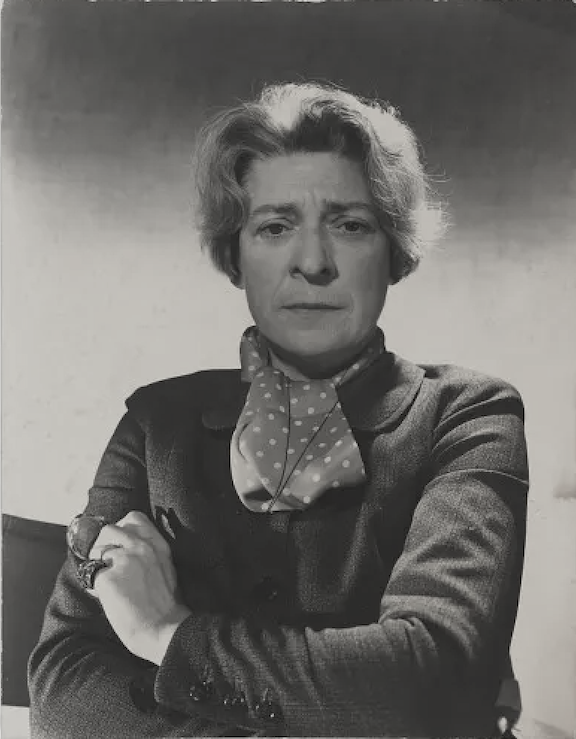
Above: Sheila Hibben became The New Yorker's first food critic in 1934. She also wrote several cookbooks, including Good Food for Bad Stomachs, a book that was suggested by New Yorker founder and editor Harold Ross. Hibben was a pioneering advocate for American regional dishes, and despised food snobbery (she wanted to banish the word "gourmet" from the English language). (Wikipedia/Amazon)
Long overdue is a look at The New Yorker’s first food critic, Sheila Hibben, who wrote frankly about the dining scene in her restaurant reviews and in her column “Markets and Menus.” Decades ahead of her time, she drew attention to America’s regional dishes, persuading readers to embrace the comforts of humble, practical recipes during the lean years of the Depression and the Second World War.
Eleventh anniversary cover by Rea Irvin, February 22, 1936.
Born Cecile Craik, Hibben (1888–1964) detested food snobbery, and through her pioneering work “persuaded housewives to be proud of their American culinary identity, to embrace traditional regional cuisines, and to reject fancier fare for the sake of fashion,” observed Meaghan Elliott in her 2021 dissertation at the University of New Hampshire.
In addition to her “Markets and Menus” column and restaurant reviews, Hibben also wrote several books including Good Food for Bad Stomachs, which was inspired by New Yorker founder and editor Harold Ross. Plagued by ulcers and discouraged by his limited diet, Ross encouraged his gastroenterologist, Sara Murray Jordan, to write a cookbook with Hibben. Good Food for Bad Stomachs was published in 1951, with a laudatory foreword by Ross, who unfortunately did not have long to enjoy the recipes, dying of heart and lung problems that same year.
DYSPEPTIC DIETER Harold Ross brought together the talents of his gastroenterologist Sara Murray Jordan, left, with his magazine’s food critic, Sheila Hibben, to publish Good Food for Bad Stomachs. (Wikipedia/The New Yorker)
Here are excerpts from Hibben’s “Restaurants” column for the Feb. 22 issue, featuring her takes on a couple of the city’s finer dining establishments, including Theodore Titze’s restaurant on East 56th and the famed fare of Charles Scotto at the Hotel Pierre:
KNOWN AS THEODORE OF THE RITZ, the German-born Theodore Titze (1879–1953) was a well-known maitre d’hotel—at left, Ralph Barton featured Titze as one of his “Heroes of the Week” in the Dec. 12, 1925 issue of The New Yorker; at right, a 1933 drawing of Titze by the cartoonist Vinzento Zito—the image refers to Titze’s 1931 departure from New York to take charge of the Castle Harbor Hotel in Bermuda. He later operated other properties in Bermuda before opening Theodore’s at 4 East Fifty-sixth Street. (wikitree.com)CAN’T MISS IT…Top, postcard image of Theodore’s Restaurant; below, ad for Theodore’s in Stage magazine, February 1938. (Etsy.com)
Hibben also wrote about the excellent fare at the Hotel Pierre, where Chef Charles Scotto, an early protégé of the legendary Chef Auguste Escoffier, reigned supreme.
CREAM OF THE CROP…At left, a page from the 1934 booklet Angostura Recipes featuring a recipe by famed Chef Charles Scotto (1887–1937). At right, undated image of the Hotel Pierre. (The Cary Collection/geographicguide.com)
From 1934 to 1962 Hibben wrote the “Markets and Menus” column, which appeared in rotation with several other columns that were tacked onto Lois Long’s weekly “On and Off the Avenue.” Here is an excerpt from Hibben’s Feb. 1, 1936 column:
* * *
Not Music to His Ears
In his “Notes and Comment,” E.B. White took issue with “the fascism of music” in public places including Grand Central Station and the Central Park skating pond.
SAD CATHEDRAL OVERTONES is how E.B. White described the organ music of Mary Lee Read, who played organ in Grand Central’s north gallery from 1928 until the late 1950s. On the day after Pearl Harbor was attacked she played “The Star-Spangled Banner;” activity on the concourse ground to a halt, causing commuters to miss their trains. She was forbidden from playing the song after that. She has also been credited with saving the life of a man who was planning to commit suicide until he heard her play a moving hymn. (marthahallkelly.com)
* * *
At the Movies
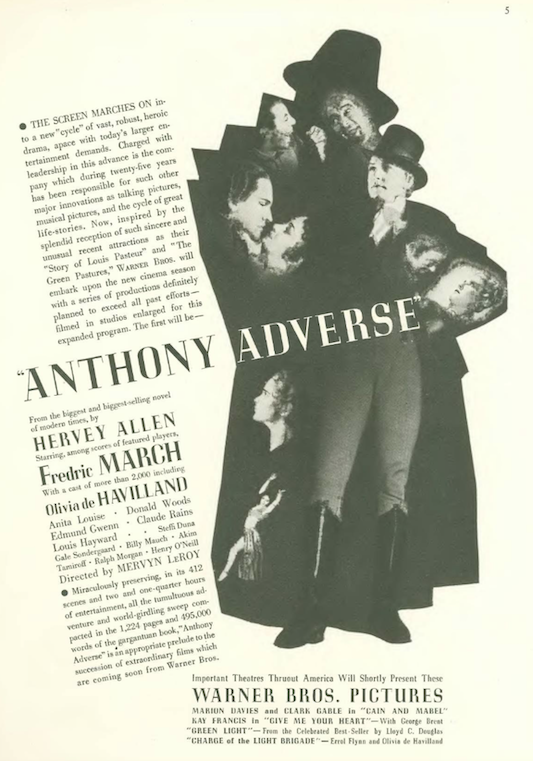
Paul Muni was considered one of the best actors of the 1930s, his talents so appreciated by Warner Brothers that he was allowed to choose his own roles, including the lead in The Story of Louis Pasteur. It was a good choice, as it landed him a Best Actor Oscar in 1936. New Yorker critic John Mosher had these observations:
HE’S ON TO SOMETHING…Paul Muni in The Story of Louis Pasteur. One of the best posters for the film was the Italian version at right, the rabid dog promising some some real drama. Muni won the Best Actor Oscar of his portrayal of Pasteur. (researchgate.net/imdb.com)
Mosher also took in The Prisoner of Shark Island, featuring Warren Baxter as a man falsely accused of complicity in the assassination of President Abraham Lincoln.
I DIDN’T DO IT…Warren Baxter and Gloria Stuart in The Prisoner of Shark Island. Moviegoers today will remember Stuart (1910–2010) in her portrayal of the aged Rose in 1997’s Titanic. Stuart’s film career would span more than seventy years, 1932–2004. (mubi.com/imdb.com)
Mosher found much to like in a Soviet film about the struggles and hardships of three childhood friends from Petrograd who become nurses to serve the cause of the Bolshevik Revolution.
SOVIET SISTERHOOD…At right, Irina Zarubina, Yanina Zhejmo and Zoya Fyodorova in 1936’s Three Women. It was released in the Soviet Union as Girl Friends (Podrugi).
* * *
From Our Advertisers
If you wanted to visit the land of the Soviet film, Three Women, you could have hopped onto this Reliance cruise to Russia as well as to the Summer Olympics in Berlin…in just a little over three years the Germans would invade Poland and these “wonderlands” would become a living hell for many…
…John Groth, who would contribute cartoons to The New Yorker in the 1940s, provided this illustration for a Stage magazine ad…
…the folks at Minnesota Valley Canning Company continued the theme of a rich man returning to his humble roots via canned Green Giant vegetables…here the man is brought to tears over “Niblets”…
…as you might recall, it was a wealthy “Major” who recently (Dec. 21, 1935) sought to rekindle lost youth through Green Giant Niblets…
…and what’s the deal with the Duchess trope found in so many ads?…she has been featured in a Green Giant ad for peas, as well as in ads for tomato and grapefruit juice…
…the magazine’s opening spread once again featured the odd juxtaposition of canned soup and high fashion…
…one-column ads in the back of the book featured illustrations by Peter Wells (at left), and William Steig…
…Book-of-the-Month Club enticed new members with a FREE copy of the Nobel Prize-winning trilogy Kristin Lavransdatter by Danish-Norwegian author Sigrid Undset…
…this colorful ad from the Bermuda Trade Development Board beckoned New Yorkers to trade “slush and chilly winds” for the pink sands of the British island territory…
…the back cover cycled back to Camel cigarettes with a lineup of fashionable debs enticing young women to join their ranks…as Camel smokers, at least…
…more one-column ads, featuring the latest in reading material…
…including the latest edition of The Bedroom Companion…it was one of those “For Men Only” books that compiled some previously published pieces with other contributions…
…the index of the 1935 edition included a number of New Yorker regulars…
…such as E. Simms Campbell…
…and Abner Dean…
LATE NIGHT READING…Clockwise, from top left, 1935 edition of The Bedroom Companion; a racy cartoon by Abner Dean; comic lyrics by Ogden Nash; a contribution by Vincenzo Zito, a well-known caricature artist who particularly favored dogs. (etsy.com)
…on to our other cartoonists, we begin with spots by Constantin Alajalov…
and Richard Taylor…
…Taylor again, a spot in the “Musical Events” section…
…and a Taylor cartoon…
…and we wonder what’s behind the curtain, with James Thurber…
…William Steig continued to probe the downsides of matrimony…
…Robert Day showed who’s in charge at the zoo…
…more club life from Gluyas Williams…
…Richard Decker was in a tight situation…
…Perry Barlow drew up two pages of scenes from Snow Trains that took thousands of skiers from Grand Central to the Berkshires and Adirondacks…
…Leonard Dove delivered a knockout punch…
…Peter Arno raised a question of initiative…
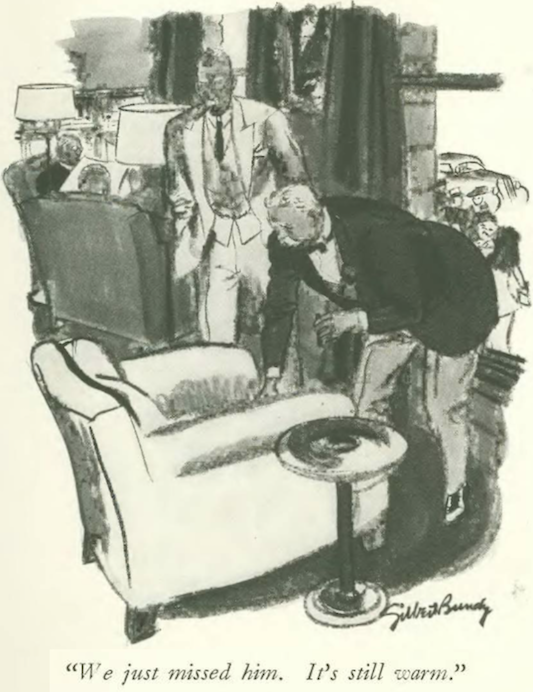
…and Gilbert Bundy sought to spice things up at Popular Mechanics…
A final note: Aside from the recurring Rea Irvin cover, this issue made no reference to the eleventh anniversary…except, on the bottom of page 57…
…a recurring column filler, “The Optimist,” appeared in Issue No. 1, and was featured in subsequent issues until Katharine Angell mercifully put an end to it.
Above: The 1936 Ziegfeld Follies premiered on Broadway at the Winter Garden Theatre on January 30, 1936 and closed on May 9, 1936 after 115 performances. (Hulton Archive)
Broadway impresario Florenz Ziegfeld Jr died in 1932, but his famous theatrical revue lived on for years with revivals including one in 1936 that Robert Benchley praised for being better than the originals.
February 8, 1936 cover by Helen Hokinson, marking the opening of the Westminster Kennel Club Dog Show at Madison Square Garden. According to Michael Maslin’s always enlightening Ink Spill, the first dog-themed New Yorker cover was Feb. 8, 1930, by Theodore Haupt (below).
Now on with the show. Brought back to life by Ziegfeld’s widow Billie Burke and theatre operators Lee and J. J. Shubert,The Ziegfeld Follies of 1936 was loaded with talent, with lyrics by Ira Gershwin, choreography by George Balanchine, and sets and costumes by Vincente Minnelli. What really brought people in was the star of the show, Fannie Brice, who was supported by cast members Bob Hope, Eve Arden, Josephine Baker, and the Nicholas Brothers, among others. Benchley wrote:
FANNIE AND THE REST…Clockwise, from top left: Bob Hope and Eve Arden performed the popular tune “I Can’t Get Started With You”; Hope with Fannie Brice in the sketch “Baby Snooks Goes Hollywood”; Josephine Baker premiered “The Conga” at the Follies, and Harriet Hoctor performed her “Night Flight.” (gershwin.com/uneicone-josephinebaker.webador.fr/libraryofcongress,org)
This ad for the 1936 Follies prominently featured Benchley’s endorsement:
(uneicone-josephinebaker.webador.fr)
Billie Burke (1884–1970) authorized Follies revivals with the Shuberts in 1934, 1936 and 1943, with the Shubert family producing a final revival in 1957. In 1936 MGM also filmed a Ziegfeld biopic, The Great Ziegfeld (which won two Academy Awards), casting William Powell as Ziegfeld and Myrna Loy as Burke. Burke wanted to play herself in the film, but at age 51 she was deemed too old for the part.
ZIEGFELD MAGIC…Florenz Ziegfeld’s widow Billie Burke kept the Follies going after her husband’s death in 1932. She is best known today for her portrayal of Glinda the Good Witch of the North in 1939’s The Wizard of Oz. (oscars.org/Wikipedia)
Fannie Brice (1891–1951) was the biggest star of the Follies and so dominated the show that when she became ill in May 1936 the production closed. Brice returned to the Winter Garden that September for 112 more performances.
Benchley also praised Call it a Day, a 1935 play by British writer Dodie Smith that ran for 194 performances at the Morosco Theatre. Benchley thought it was so good he saw it twice.
SPRING FEVER drove the action in Dodie Smith’s (right) hit comedy Call it a Day. The play chronicles a single spring day in the lives of the Hilton family, during which each member encounters unexpected romantic temptations and complications. Gladys Cooper, left, starred as Dorothy Hilton. The play was adapted to a Hollywood film in 1937. (vocal.media/Wikipedia)
* * *
At the Movies
We go from the stage to the screen, where John Mosher took in Rose Marie, a musical comedy based on a popular 1924 Broadway play. The film “repolished” the old play and used it as a framework for a series of duets between Jeanette MacDonald and Nelson Eddy.
MELODIOUS MOUNTIE…Lobby card for Rose Marie, a musical romcom about a singing Mountie and a world-renowned prima donna, joined in love by a haunting “Indian mating call.” (Wikipedia)
Mosher reviewed three other films that could have used some of Rose Marie’s cheer:
CHEERLESS FARE…Clockwise, from top: Gloria Stuart, Freddie Bartholomew, and Michael Whalen in Professional Soldier; James Stewart, Margaret Sullavan and Ray Milland in Next Time We Love; Helen Vinson and Conrad Veidt in King of the Damned. (Wikipedia/imdb.com/letterboxd.com/silversirens.co.uk)
* * *
Miscellany
I strive to keep these posts at a readable length, and (hopefully) lively and enjoyable to read, which means that I cannot include absolutely everything that appears in each issue. For example, there are a number of regular features from the sports world—ranging from major attractions like hockey and college football (no coverage yet of baseball—which for some reason Harold Ross hated—or basketball) to more niche pursuits, such as squash (below) or indoor polo. From time to time I will include these under “Miscellany” as a way to give readers a more complete picture, and to assuage my fear that I am leaving something important out. Here is a very brief snippet of a regular feature, “Court Games,” by staff writer Geoffrey T. Hellman.
RACKETEERS…At left, Beekman Pool of the Harvard Club was the 1936 singles champion of the Metropolitan Squash Racquets Association; at right, Edwin Bigelow of the U.S. Squash Racquets Association presents the National Trophy to Germain Glidden. To the far right is runner-up Andrew Ingraham, who looks a bit miffed about getting a plate rather than a trophy cup. (thecarycollection.com)
* * *
From Our Advertisers
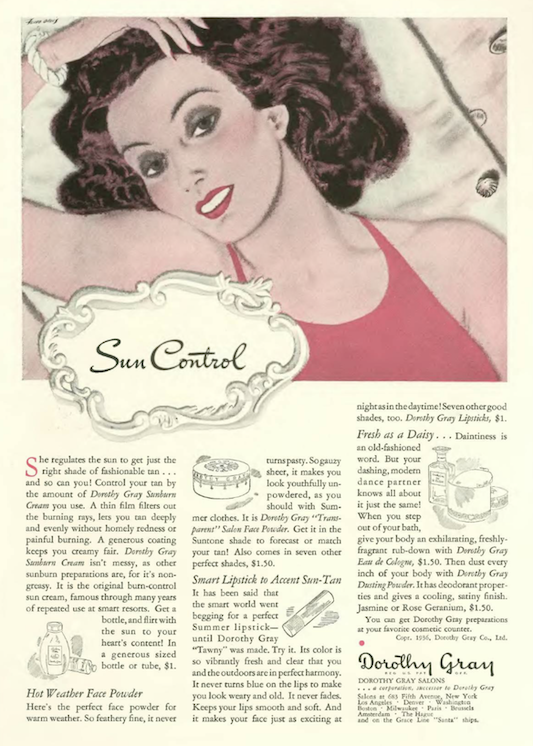
Let’s start with the inside front cover…advertisements from Dorothy Gray salons were all about the restoration of youth in older women…apparently the treatments were so successful that “Mrs. M” was a bigger attraction at a Ritz-Carlton debutante party than her society-bound daughter…note the young gents at right checking out mom, and not the deb…
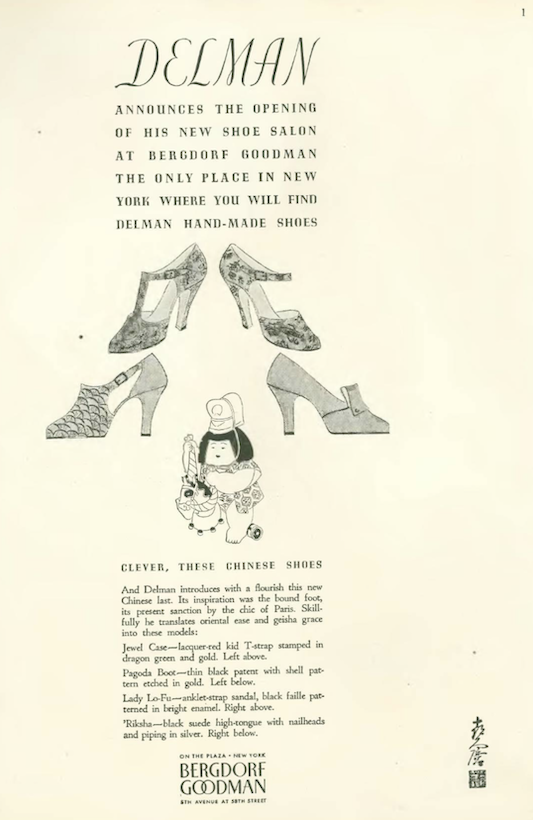
…opposite Dorothy Gray was this elegant appeal from Bergdorf Goodman…ads aimed at more refined tastes almost always featured these attenuated figures (whether they were people or luxury automobiles)…I guess I would hold onto something too with stilts like those…
…here’s a Steinway grand for less than a grand…$885 in 1936 is roughly equivalent to $20,000 or so today, but that’s still a bargain—Steinway grand pianos currently start at around $85,000…
…speaking of bargains, you could own “The Most Beautiful Thing on Wheels” (according to this ad) for a mere $615…
…and for an extra twenty-five bucks you could own a durable Dodge like the one endorsed by Roy Chapman Andrews (1884–1960), a globetrotting explorer who discovered fossilized dinosaur eggs in the Gobi Desert in the 1920s…
THE REAL INDY…Roy Chapman Andrews gained national fame as an explorer for New York’s American Museum of Natural History (AMNH). The discovery of a nest of complete dinosaur eggs in Mongolia in 1923 (above) provided the first proof that the critters hatched out of eggs. Named AMNH’s director in 1934, Andrews is thought to be an inspiration for the film hero Indiana Jones. (amnh.org/roychapmanandrewssociety.org)
…the folks at Chrysler were doing everything they could to get people interested in buying their Airflows—despite its technological advances, the car’s streamlined design (toned down in later models) was just too radical for mass market tastes…note how the ad draws attention to the work of “Artist Floyd Davis”…
…here’s a photo of Floyd Davis…
CHEERS…Illustrator Floyd Davis (1896–1966) poses in an ad for Lord Calvert whiskey, 1946. In 1943 Life magazine called him the “#1 Illustrator in America.” (Wikipedia)
…the Fisher company, makers of car bodies for General Motors, liked to emphasize the safety of their “Turret Top,” although it didn’t seem to occur to anyone that a child dangling from a car window was problematic…
…actress Lupe Vélez made the unlikely claim that flying on a 1930s airliner was “as comfortable as a private yacht”…
…ads for White Rock were among the more colorful found in the early New Yorker…
…on the back cover, Liggett & Myers tobacco company shifted gears from elegant to homespun with an ad that emphasized the high quality of Turkish leaf tobacco…
…the folks at Coty hired two New Yorker contributors, poet Arthur Guiterman and illustrator Constantin Alajalov, to promote their line of lipsticks…
…which brings us to the cartoonists, beginning with Al Frueh…
…Richard Taylor opened things up in “Goings On”…
…and George Price added this bit of action to the calendar section…
…Abe Birnbaum contributed this delightful spot drawing…
…the Westminster dog show was the talk of the town, and at Grand Central, per Perry Barlow…
…Robert Day had a fight on his hands…
…Helen Hokinson’s “girls” were out to snub the sanitation department…
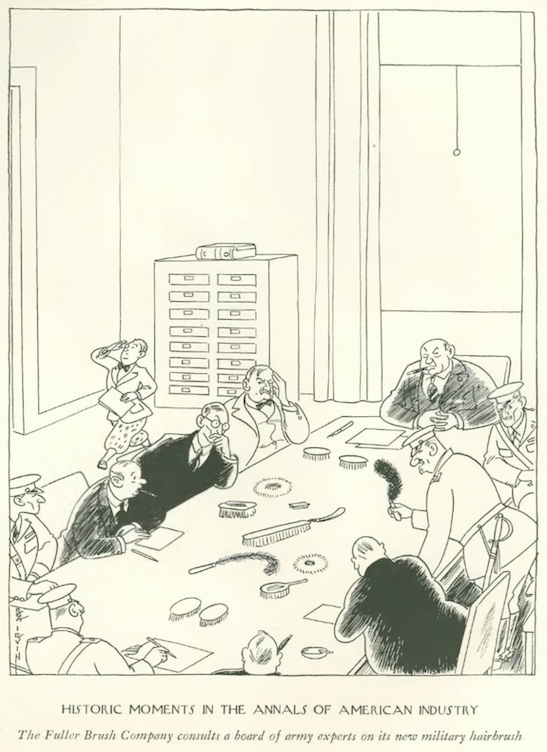
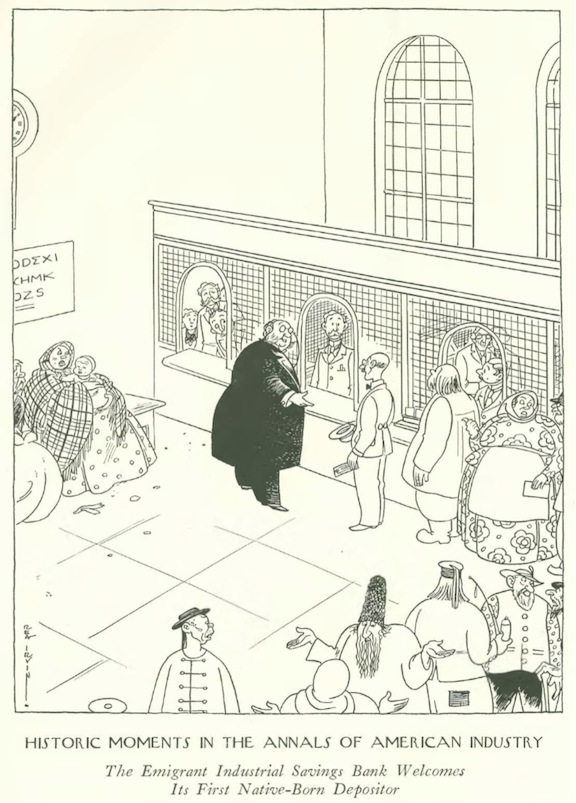
…Rea Irvin drew up the literal downfall of one business…
…Eli Garson had us seeing spots…
…Charles Addams found the Pied Piper in a Salvation Army band…
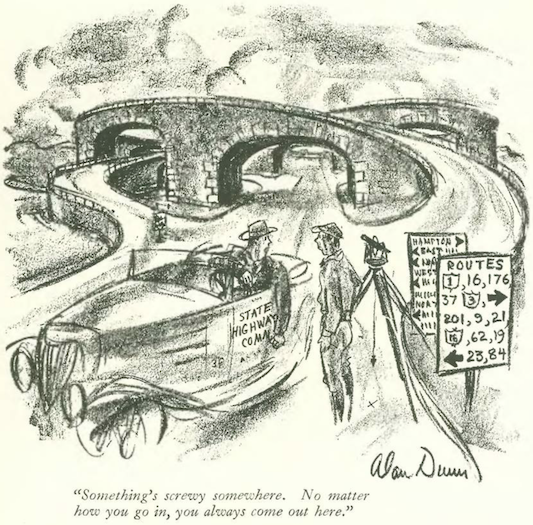
…Alan Dunn gave new meaning to “taking a detour”…
…Barbara Shermund illustrated one of the perils of cocktail parties…
…and we close with Peter Arno, and the sinister world of taxi dancers…
Above: Portrait of Georgia O'Keeffe, 1935, by Alfred Stieglitz, gelatin silver print; at right, O'Keeffe's Ram's Head, White Hollyhock-Hills, 1935. Oil on canvas. (National Gallery/Brooklyn Museum)
Over the seven decades of her career, Georgia O’Keeffe created works that did not necessarily follow the art movements of the 20th century. Critic Lewis Mumford referred to these works as “autobiographies in paint,” every painting “as enigmatic as the Mona Lisa.”
January 18, 1936 cover by Robert Day, illustrating the days before the invention of the Zamboni (in 1949).
O’Keeffe was married to art dealer and photographer Alfred Stieglitz, who exhibited her works at his “An American Place” gallery at 53rd and Madison. The couple had a complex, open relationship (Stieglitz had a number of affairs) that proved painful to O’Keeffe, and in 1933 she was hospitalized for two months after experiencing a nervous breakdown; she did not paint again until the following year. Although Mumford did not directly reference this episode in O’Keeffe’s life, he did note that “Certain elements in O’Keeffe’s biography were plainly visible” in her paintings.
PAINED PAINTINGS…Clockwise, from top left, Georgia O’Keeffe’sEagle Claw and Bean Necklace, 1934; Jack-in-the-Pulpit No. IV, 1930; Purple Hills, 1935. (MoMA/Phillips Collection/San Diego Museum of Art)
Mumford noted that O’Keeffe’s newer works revealed a “resurrection of spirit,” such as the painting of a ram’s skull, “with its horns acting like wings, lifted up against the gray, wind-swept clouds…”
GLOWING WITH POETRY AND TRUTH is how Lewis Mumford described Georgia O’Keeffe’s latest work. Clockwise, from top left: Ram’s Head suggested to Mumford “a resurgence of life and a resurrection of spirit” in the artist; other bright works included Sunflower, New Mexico 1, 1935; and Hill, 1935. (National Gallery/Cleveland Museum of Art/ Denver Art Museum)
* * *
Lights Out
In the previous issue E.B. White noted that the Edison Company was threatening to cut off electric service to the magazine’s offices due to nonpayment. This “Notes and Comment” update cleared up the matter.
THE PRICE FOR POWER…Above, an aerial view from 1926 of New York Edison’s East River Power Station at 38th Street. In 1936 it was powered by coal, which burned pungently and created problems with soot throughout the area. (tudorcityconfidential.com)
* * *
Revisiting a Pint-size Poet
“The Talk of the Town” paid a visit to Nathalia Crane (1913–1998), who became famous after the 1924 publication of her first book of poetry, The Janitor’s Boy, at the age of ten. Excerpts:
PIXIE POET…Nathalia Crane published her first poems in The New York Sun when she was only nine years old, the paper unaware that she was a child. She later became a professor of English at San Diego State University. (gutenberg.org)
The fledgling Crane received a very different New Yorker reception in 1928, when Dorothy Parker took her to task for contributing to the collapse of grammar and civilization in general. Here’s an excerpt from Parker’s Jan. 7, 1928 “Reading & Writing” column:
GRUESOME was the word Dorothy Parker chose to describe chocolate-covered olives and bad poetry. At left, Parker in 1928. At right, a contents page from The Spirit of St. Louis, a collection of one hundred poems selected from thousands in a poetry contest celebrating Charles Lindbergh’s flight across the Atlantic. (literaryladiesguide.com/ebay.com)
* * *
Order in the Court
Howard Brubaker commented on a recent ruling by the Supreme Court regarding the ongoing fight by Republicans to curtail FDR’s New Deal.
* * *
Cinderella Stories
For his Jan. 4, 1936 “A Reporter at Large” column Morris Markey visited “Major Bowe’s Amateur Hour” at NBC’s Rockefeller Center radio studios. He was so impressed by the rags-to-riches stories that he shared a few in his Jan. 18 column, titled “The Crystal Slipper.” He warned readers that the stories were “sentimental,” but not in the vein of A Christmas Carol: “Tiny Tim, asking God to bless every one, regardless, was a pious little fraud,” Markey noted. Excerpts:
Markey shared the story of a garbage collector turned opera tenor, and a wealthy debutante who was encouraged to “stay off the stage” by “Major” Edward Bowes himself.
CUT THE TRASH TALK…Joseph Rogato told the Amateur Hour audience that his job as a “garbage man” was no laughing matter, and went on to wow them with his singing voice. At left, a detail from an ad for Chase & Sanborn coffee, the show’s sponsors. At right, show founder and host “Major” Edward Bowes with the gong he used to abruptly end acts he deemed poor—he soon abandoned the practice after listeners objected. (eBay.com/Facebook)
Markey next told the story of Marguerite Ryan, the “Singing Housewife”…
FROM RELIEF TO RICHES…This Chase & Sanborn advertisement described Marguerite Ryan’s brush with fame and her deliverance from poverty thanks to her appearance on the Amateur Hour. (newspapers.com)
Finally, the story of Rhoda Chase, whom Bowes promoted as a “penniless orphan.” Born Anna Blanor, her stage name, Rhoda, was selected by a psychic, while her last name was inspired by sponsors Chase & Sanborn.
VELVET VOICE…At right, detail from a Chase & Sanborn ad that promoted Rhoda Chase as a “Penniless Orphan” who made the big time thanks to the Amateur Hour. At left, a 1944 newspaper ad for the Zombie Club in San Juan, Puerto Rico. Known as “The Blue Velvet Voice”, Chase was a radio, stage, nightclub and USO blues singer. (Wikimedia Commons/eBay)
* * *
At the Movies
Film critic John Mosher found some bright spots at the movies, praising René Clair’s The Ghost Goes West but feeling sorry for Jean Harlow in her “thankless” role in Riffraff, a film about the tuna-fishing industry.
THE FRIENDLY GHOST…Robert Donat and Patricia Hilliard in the romantic comedy The Ghost Goes West. (IMDB)FISH OUT OF WATER…Spencer Tracy, Jean Harlow, and Joseph Calleia in Riffraff, a drama about a strike at a tuna fishery. “Just why a life of tuna-fishing should be chosen as background for Miss Harlow’s vehicle I can’t imagine, but there it is,” wrote critic John Mosher. (IMDB)
Mosher didn’t know what to make of Katharine Hepburn’s latest film, Sylvia Scarlett, in which she portrayed a con artist disguised as a boy hiding from the police. Despite its major star power and George Cukor as director, the film was a flop.
Mosher also reviewed Last of the Pagans (also about a labor dispute!) and The Private Life of Louis XIV (released in Germany in 1935 as Liselotte von der Pfalz).
SHE’S A MAN, MAN…Clockwise, from top left, Katharine Hepburn and Cary Grant in Sylvia Scarlett; Lotus Long and Mala in Last of the Pagans;Renate Müller in The Private Life of Louis XIV (Liselotte von der Pfalz). Müller would die in 1937 at age 31 under mysterious circumstances. Many believe the Nazis had her killed because she refused to appear in their propaganda films. (academymuseum.org/MGM/IMDB)
* * *
From Our Advertisers
General Motors promoted their Buick Eight in a two-page advertisement that called out Eustace Tilley and reprinted a Carl Rose cartoon from the Nov. 2, 1935 issue…
…here is the original cartoon…
…with the holidays a memory and the Depression still lingering, most of the automobile ads touted economy over luxury, however Chrysler claimed you could have both with this $760 model…
…by the looks of this guy, he probably added three fingers of vodka to his pineapple juice…
…as noted before, the folks at World Peaceways pulled no punches with their anti-war appeals…
…the makers of Lux were still rolling out Broadway stars to endorse their toilet soap…(Betty Lawford, #5, was an English film and stage actress and a cousin of actor Peter Lawford)…
…the inside back cover belonged to Stage magazine…the illustration, “Amateur Night at the Apollo,” is by Alexander King…
…the Grand Central Palace was hosting the thirty-first annual National Motor Boat Show, a rare back cover not taken by a tobacco company…
…a couple of ads from back of the book…at left, an Anglophilic appeal from Miami’s Roney Plaza Hotel, and, at right, pre-revolutionary days at the National Hotel in Havana (I had a drink there a few years ago during the Obama thaw…the lobby is beautiful, a classic from another era still hanging on thanks to Canadian and European tourists)…
…William Steig continued to illustrate these one-column ads from Pilgrim Rum…
…which segues to our cartoonists…on the bottom of page 3 was this one-column drawing by Peggy Bacon…
…Norwegian opera singer Kirsten Flagstad (1895–1962) was a famous Wagnerian soprano who made a triumphant debut at the Metropolitan Opera in 1935…
Kirsten Flagstad circa 1940. (Wikipedia)
…we continue with Helen Hokinson soaking up some sun…
…Robert Day cracked the whip in the steno pool…
…originally published sideways, another look at club life by Gluyas Williams...
…James Thurber offered up a toast…
…Richard Taylor looked into an auction mystery…
…Barney Tobey gave us a friendly greeting on the slopes…
…Perry Barlow was lost in a department store…
…William Crawford Galbraith continued to probe the woes of sugar daddies…