Safari Under Glass

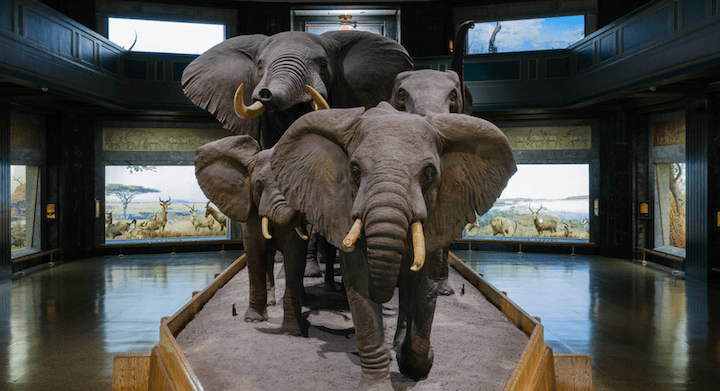
Above: A group of eight East African elephants greet visitors to the American Museum of Natural History's Akeley Hall of African Mammals, which opened in 1936. The elephants are surrounded by twenty-eight habitat dioramas. (amnh.org)

One can instantly call up a photo on an iPad of every known animal on the planet, so why are people still fascinated by dead, stuffed animals displayed in glass cases?
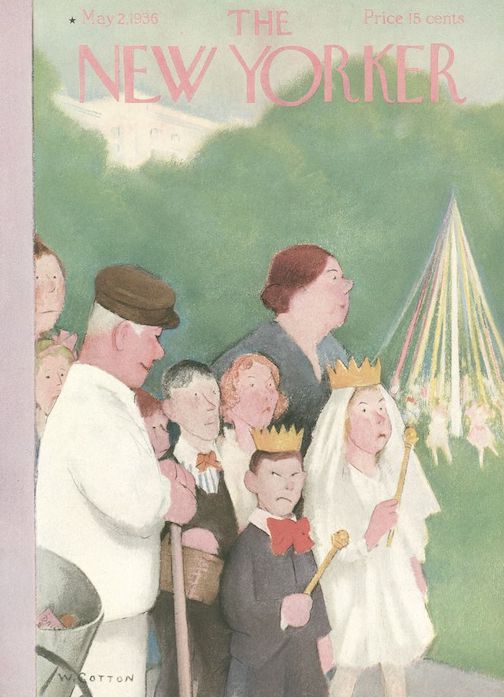
May 2, 1936 cover by William Cotton. 

To be accurate, most animals on display at natural history museums are not “stuffed;” they are an art form or sorts, anatomical sculptures covered with skins, posed in meticulous re-creations of their natural environments.

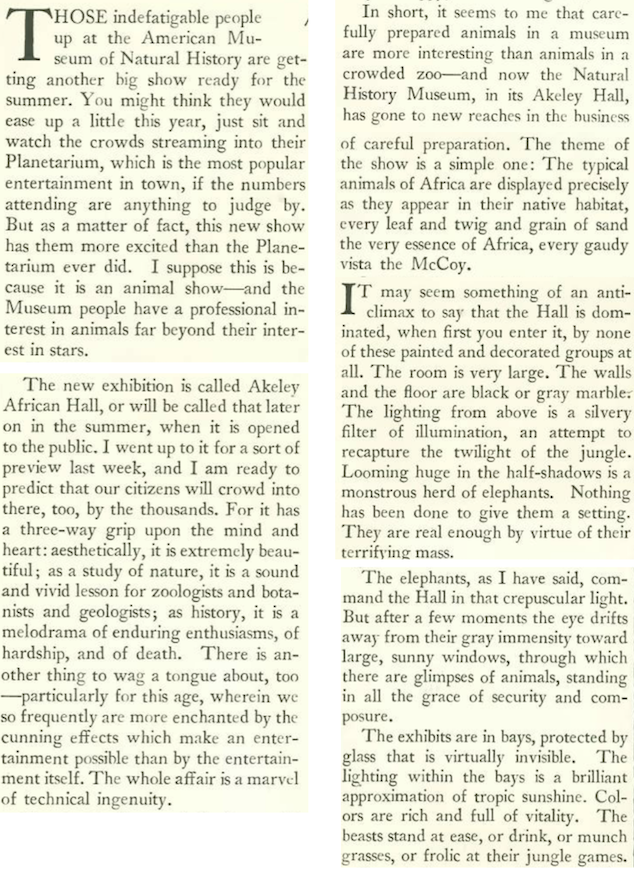
Ninety years after it opened to the public, the American Museum of Natural History’s Akeley Hall of African Mammals—named for the father of modern taxidermy Carl Akeley— still dazzles museum-goers with incredibly detailed dioramas (twenty-eight in all) that depict a range of African ecosystems. Writing for “A Reporter at Large” (titled “Africa Brought to Town”), Morris Markey marveled at the lifelike displays of flora and fauna, “every twig and grain of sand the very essence of Africa…”
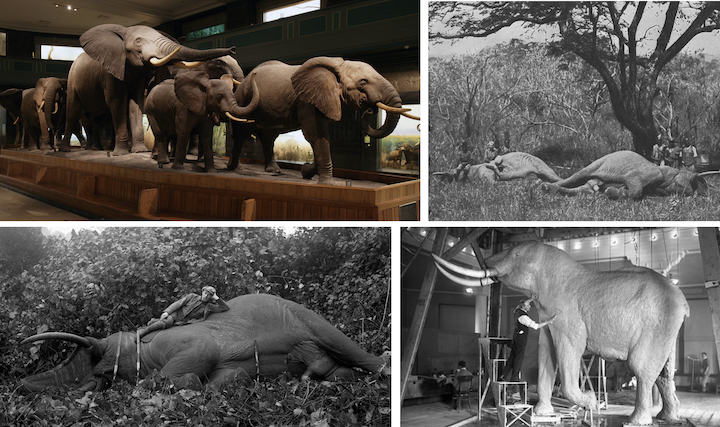
DEATH AND LIFE(LIKE)…Clockwise, from top left, procession of elephants in the American Museum of Natural History’s Akeley Hall; the downside of dioramas—elephants slain in 1911 that now comprise “The Rear Guard” (elephants in back) of AMNH’s procession of elephants; Carl Akeley models a taxidermied elephant circa 1921; Akeley reclining on a bull elephant he killed in 1910 on an AMNH expedition. (uconn.edu/public domain/amnh.org)
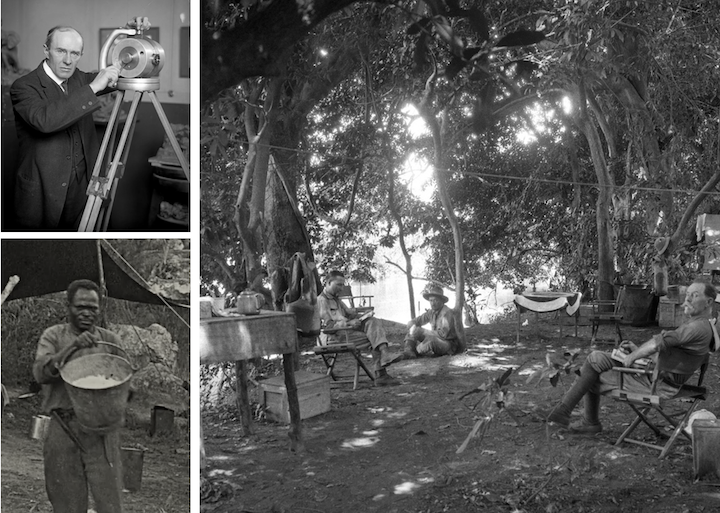
GETTING IT RIGHT…Clockwise from top left: Carl Akeley with his camera, circa 1920s—Akeley contributed hundreds of specimens and images of wildlife and plants to various American museums throughout the course of his career; James L. Clark, William R. Leigh and Richard Radatz relax during a 1926 African expedition to document the flora and fauna (through photos, sketches and paintings) for reference in creating true-to-life dioramas; unidentified expedition worker prepares plaster to make casts of collections (tree bark, leaves, rocks etc.). (amnh.org/uconn.org)
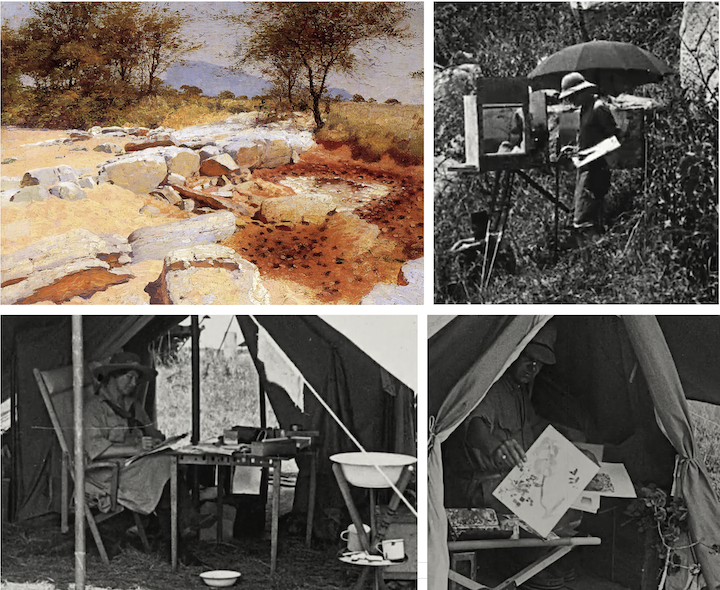
MARRIAGE OF SCIENCE AND ART…Clockwise from top left: William R. Leigh landscape study; expedition artists made paintings en plein air as well as from specimens brought back to their tents (below). At bottom left is Carl Akeley’s second wife, Mary Lee Jobe Akeley (1886–1966), a well-known explorer and naturalist. It was her first expedition to Africa and Carl’s last—he would die of dysentery before the expedition concluded—so Mary took charge of the expedition, and was later named Carl’s successor as adviser to the American Museum of Natural History. (Leigh landscape courtesy Gerald Peters Gallery via jamesperrywilson.wordpress.com/still images taken from a short film of AMNH’s 1926 African Hall expedition, courtesy University of Connecticut)

Markey visited with museum director Roy Chapman, who likened the dioramas to “glimpses of Africa as they might be seen from a train window…” Since this was 1936, no one seemed too concerned about the ethical implications of hunting and killing animals for museum displays. It should be noted that most animals we see in major natural history museums today were killed during early 20th-century expeditions such as Akeley’s; animals used in new displays are often obtained from zoos or sanctuaries after dying of natural causes.
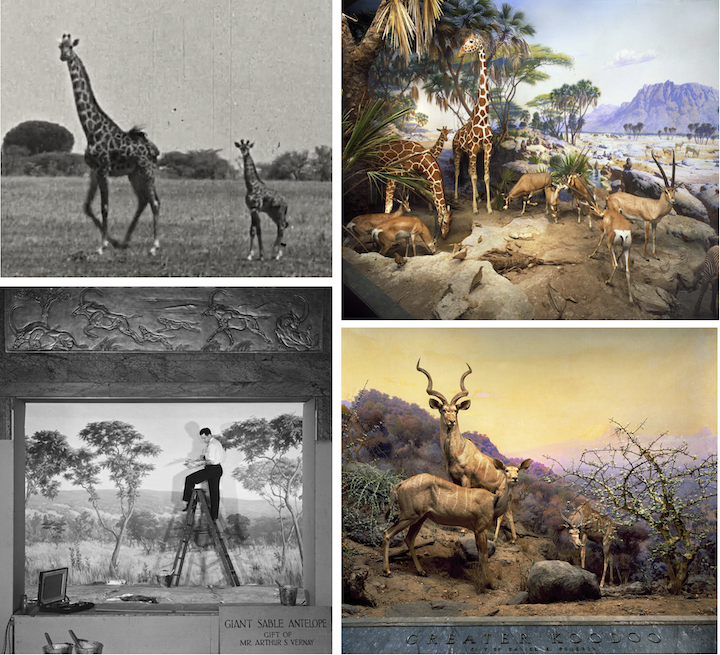
OUT OF AFRICA…Still image of giraffes taken from a short film of AMNH’s 1926 African Hall expedition; the AMNH’s “Water Hole” diorama; “Greater Koodoo” diorama; Clarence Rosenkranz working on the “Giant Sable” diorama. (amnh.org/uconn.org)

There is an undeniable appeal to these artificial environments. Although our digital age offers all sorts of them, there are still kids who like to build dioramas in shoeboxes. And for those of us who grew up in 1960s and 70s, there was the thrill of opening a new three-pack of View-Master reels, each slide revealing a three-dimensional, self-contained world.

And so it is with museum dioramas. They offer a moment of wonder and calm to viewers. As the noisy world collapses around them, these displays—however artificial—might inspire in some a greater appreciation of these creatures and their fragile environments.

(amnh.org)

The AMNH has posted a video on the taxidermy process, if you are interested.

 * * *

At the Movies

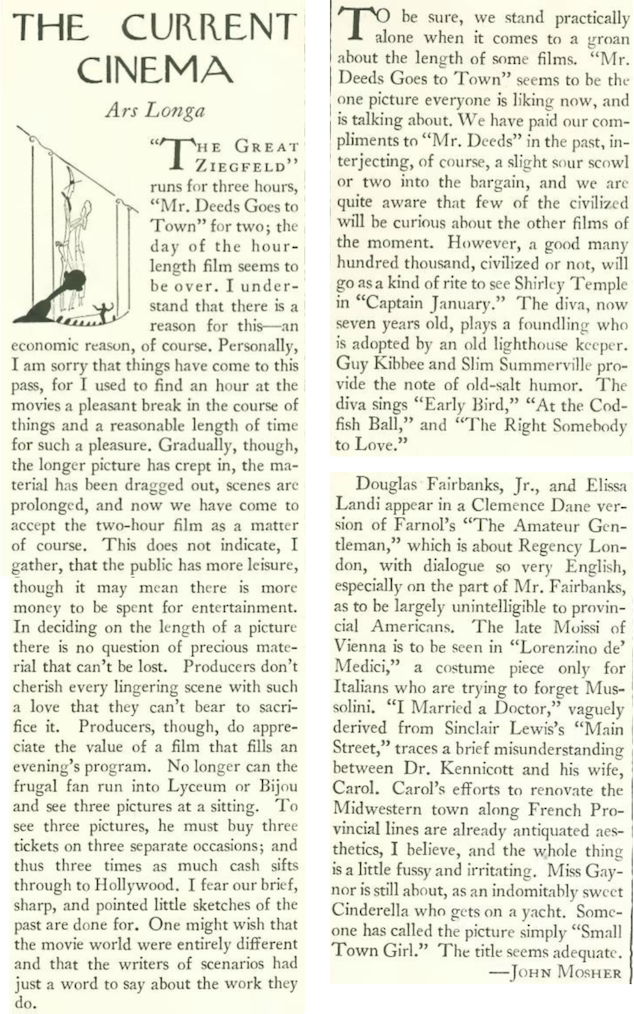
One can imagine film critic John Mosher rubbing his eyes as he pondered the reasons why Hollywood insists on making overly long movies (also lamented by critics today). He also reviewed four new films, with little enthusiasm.
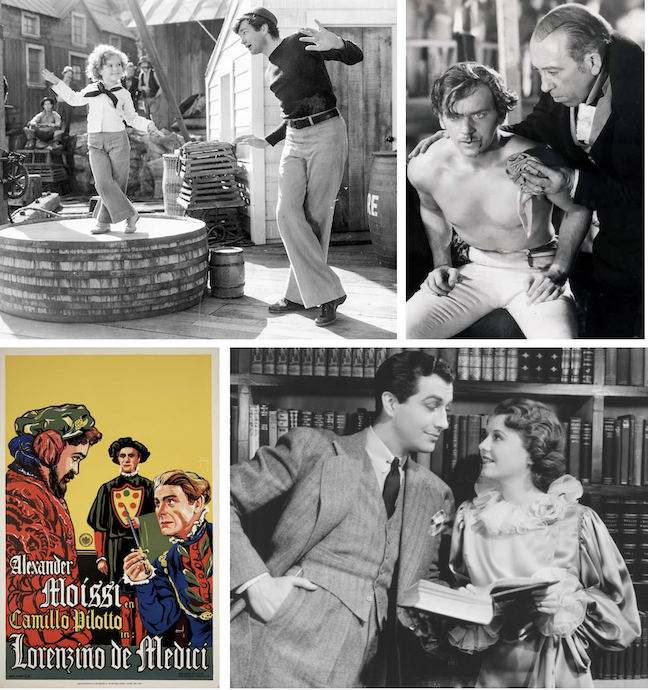
LONG IN THE TOOTH?…Clockwise from top left: Critic John Mosher seemed to imply that seven-year-old Shirley Temple (seen here with Buddy Ebsen in Captain January) was getting too old to play the precocious little healer; Douglas Fairbanks Jr. and Gordon Harker in The Amateur Gentleman; Janet Gaynor and Robert Taylor made cute in I Married a Doctor; movie poster for Lorenzino de ’Medici, which Mosher felt was best suited to Italian audiences. (letterboxd.com)

 * * *

Getting Things Done

Journalist Hickman Powell filed the first part of a two-part profile of New York’s 45th Governor, Herbert Lehman (1878–1963). The first Jewish governor of New York, Lehman was a prominent liberal leader and a major philanthropist, known for implementing a “Little New Deal” that established a minimum wage, unemployment insurance, and public housing.
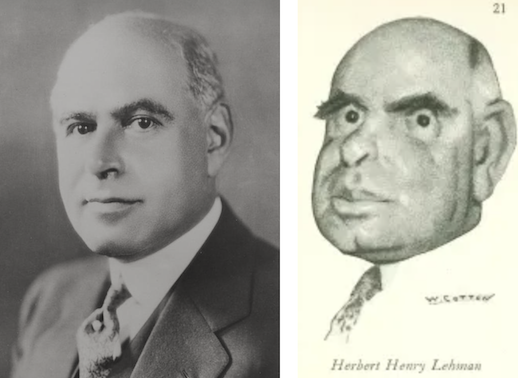
HMMM…William Cotton was a terrific caricaturist, but he seemed to miss the mark with this illustration of Gov. Herbert Lehman for the “Profile.” (Wikipedia)

 * * *

From Our Advertisers

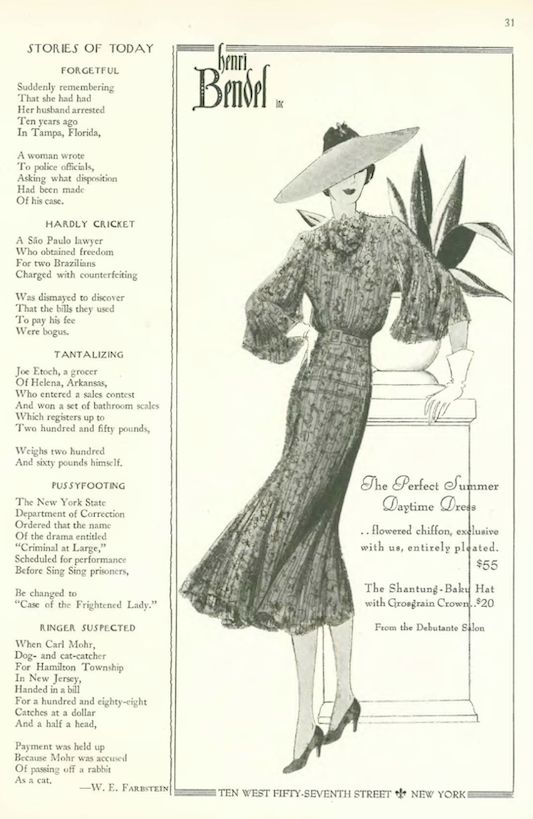
The May 2 issue was crammed with ads for women’s summer fashions, which were defined by longer, leaner silhouettes…
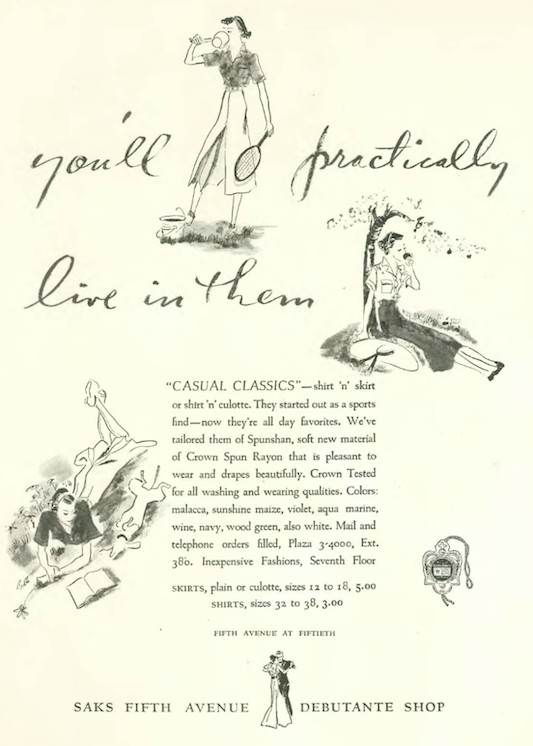
…and by the increasing popularity of practical sports and casual clothes…
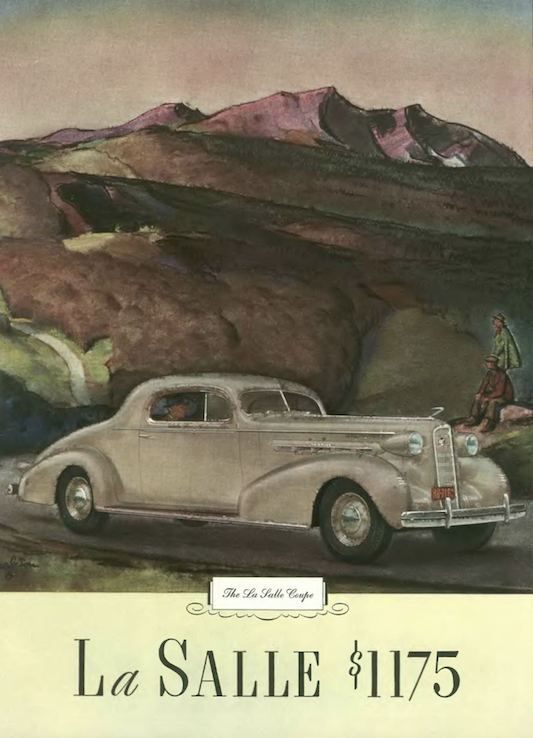
…the makers of Cadillac motorcars continued to emphasize their lower-priced LaSalle models for Depression-squeezed consumers…
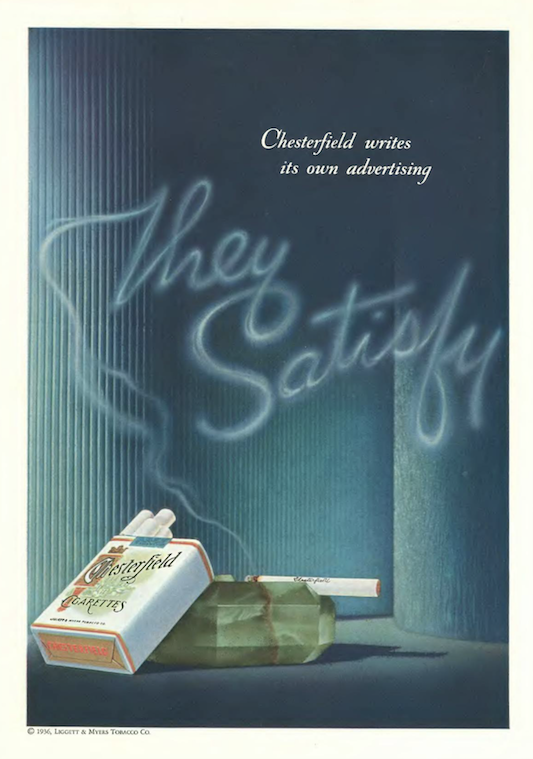
…no fashion models or health claims here, just the allure of cigarette smoke courtesy Liggett and Myers…
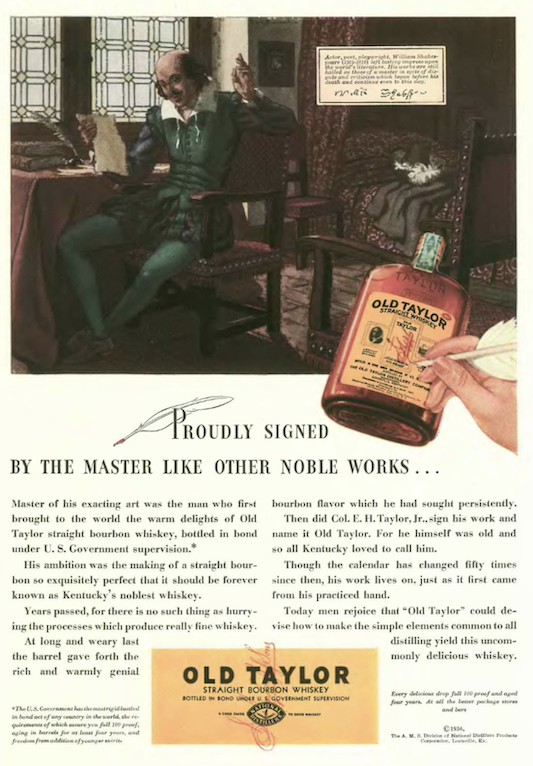
…the distillers of Old Taylor wanted you to associate their product with the timeless work of William Shakespeare…after all, who’s going to sue them over image rights?…
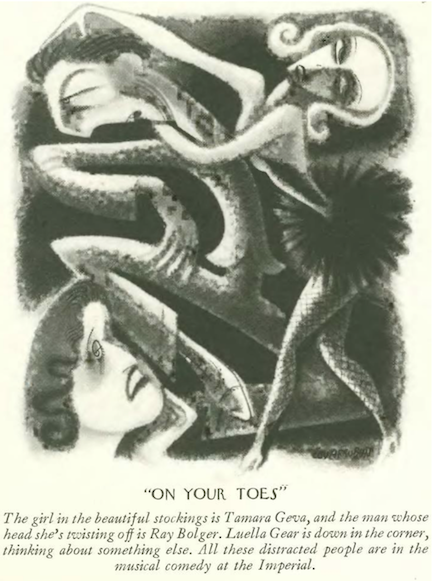
…on to our cartoonists…Miguel Covarrubias, whose work was featured in The New Yorker’s first issue and was frequent in those early days, lent his talents to the theatre review section with this rendering from On Your Toes

…something else I forgot to mention in my last post, On Your Toes also marked George Balanchine’s debut as a Broadway choreographer…
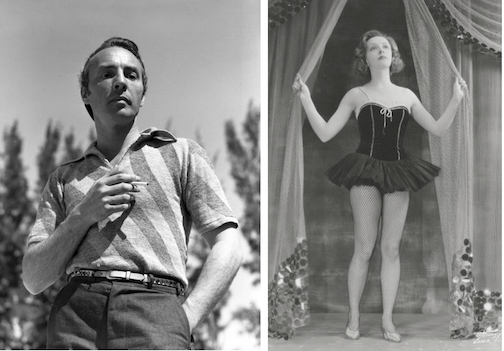
ON HIS TOES…At left, George Balanchine in 1942; at right, Tamara Geva in 1936’s Broadway production of On Your Toes. Geva, an actress, ballet dancer, and choreographer, was Balanchine’s first wife (married 1921-1926). (Wikipedia/instagram)

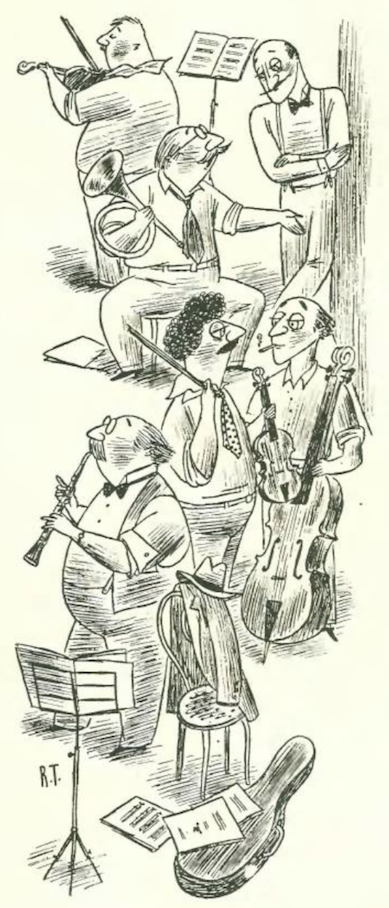
…we are seeing a lot of Richard Taylor in the 1936 issues, especially in providing spot illustrations such as this one…
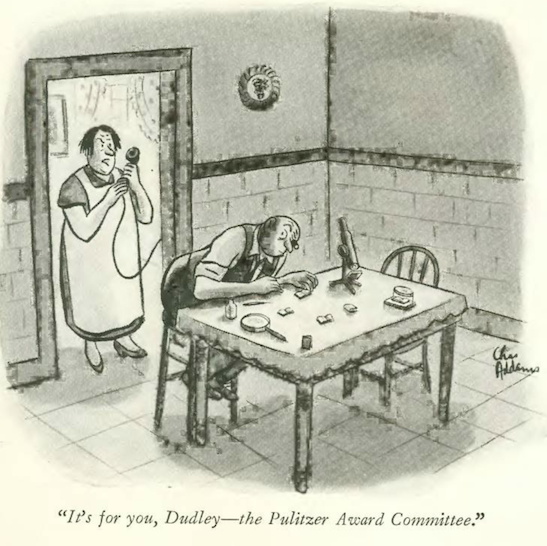
Charles Addams deployed some sarcasm on the domestic front…
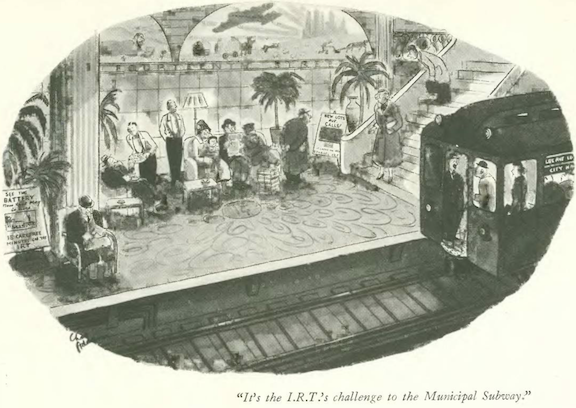
…and Addams again, commenting on the fierce rivalry between the privately owned Interborough Rapid Transit (IRT) and the municipal subway systems…
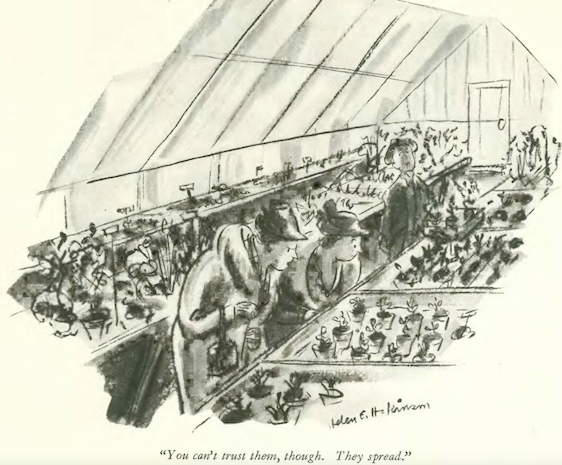
…and we have two by Helen Hokinson, having misgivings about a greenhouse variety…
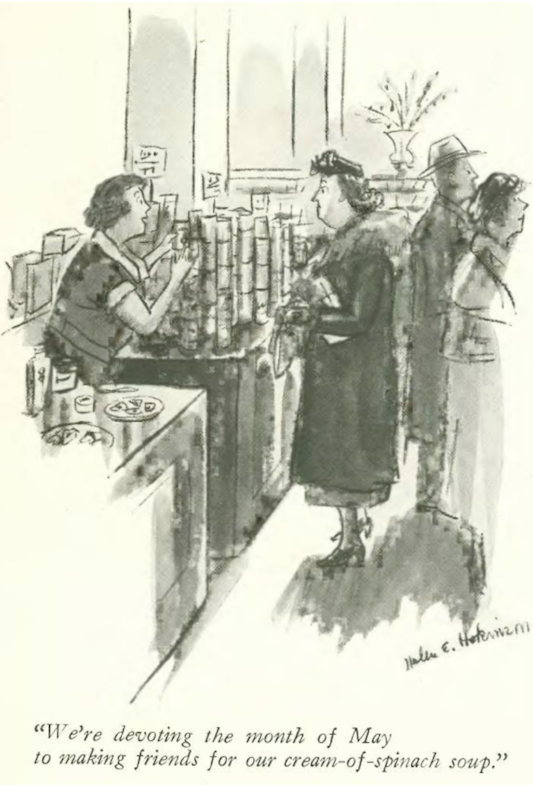
…and finding a personal commitment to a can of soup…
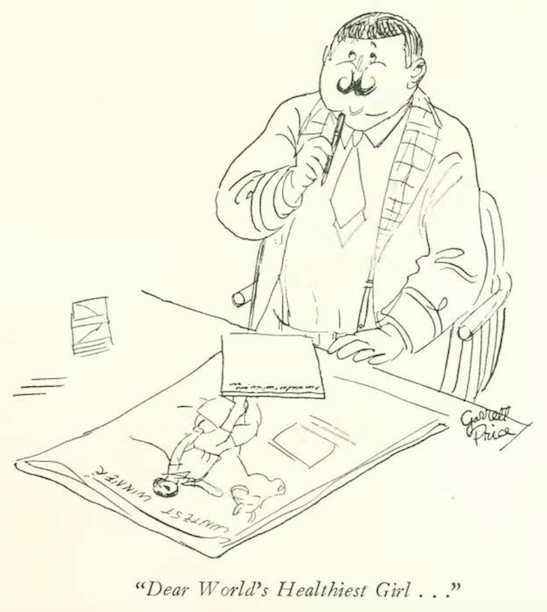
Garrett Price had this man doing some wishful thinking…
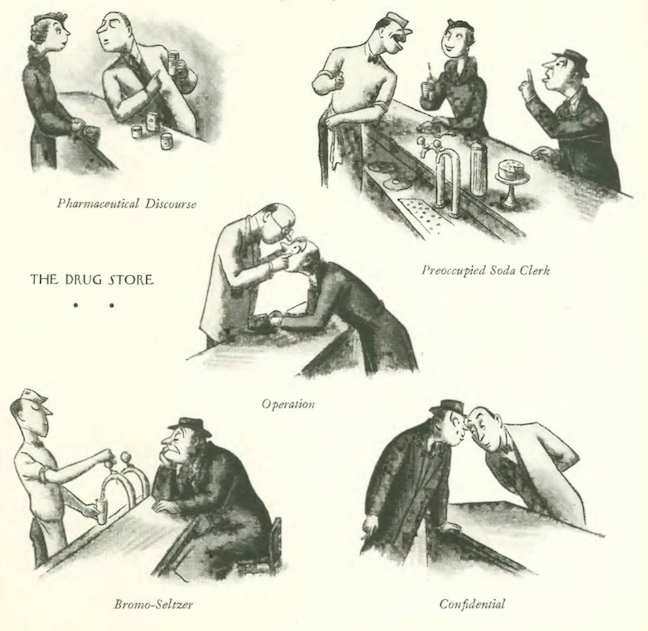
William Steig used a two-page spread to illustrate a day at the drugstore…
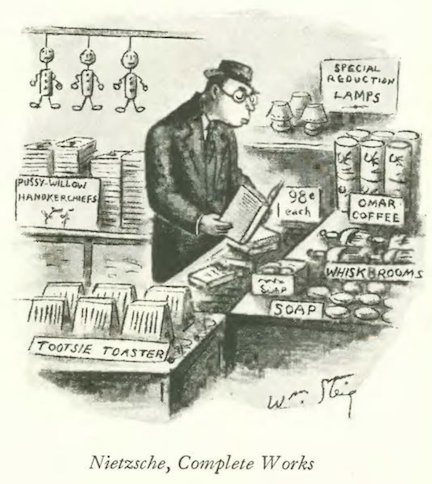
…another drawing from the group, appearing on the left-hand page…
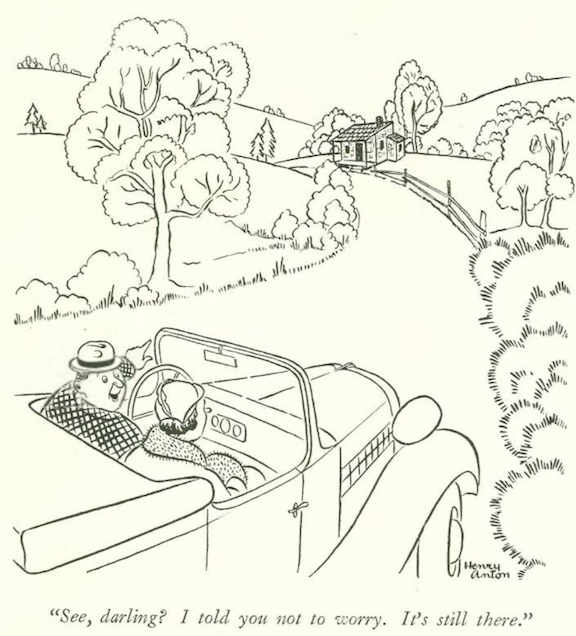
…keeping it in the family, we have one by Henry Anton Steig (William Steig’s brother)…according to Michael Maslin’s indispensable Ink Spill, Henry contributed nineteen drawings to The New Yorker from 1932 to 1936 under the name Henry Anton…this one was his final contribution…
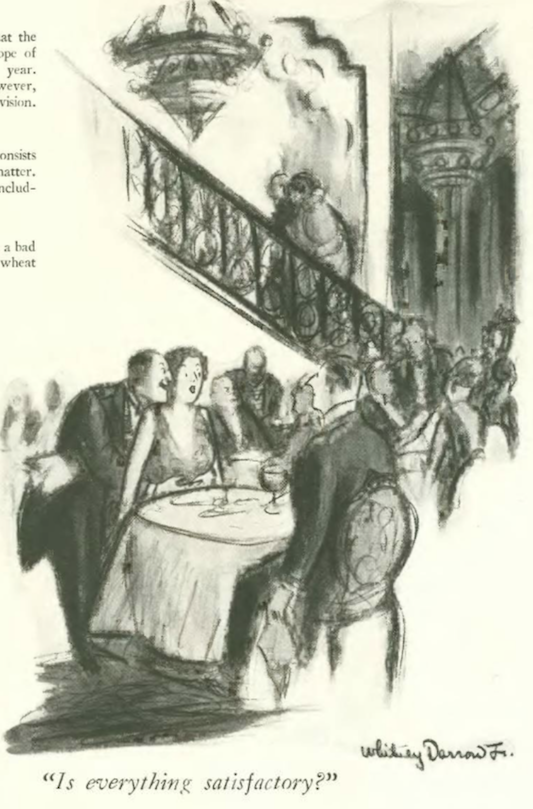
Whitney Darrow Jr drew up this over-enthusiastic maître d’…
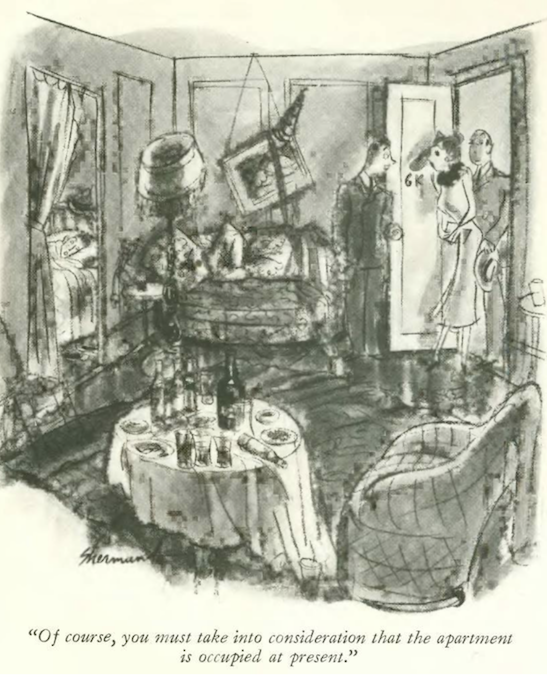
Barbara Shermund went apartment hunting…
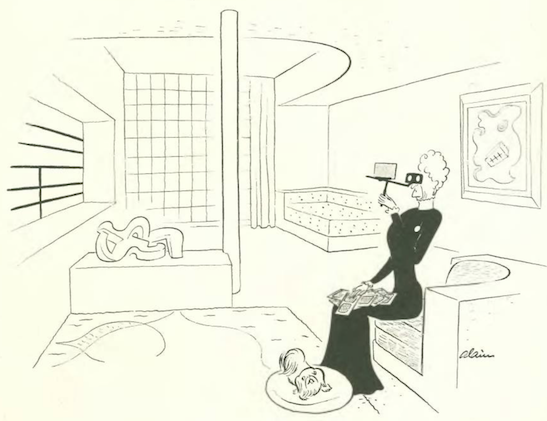
…and we close with Daniel ‘Alain’ Brustlein, and a room with a view…
Next Time: Saving the Row…
 

Some Pitiful Melodies

Sigmund Gottfried Spaeth (1885–1965) sought to popularize classical music and improve the musical tastes of the masses by meeting the public wherever he could find them, from vaudeville halls to national radio broadcasts.

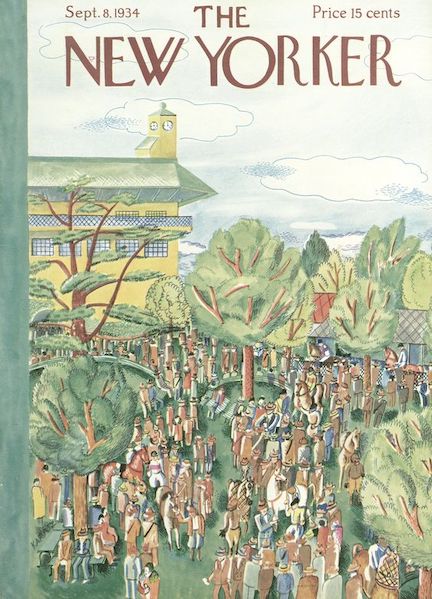
September 1, 1934 cover by William Steig.

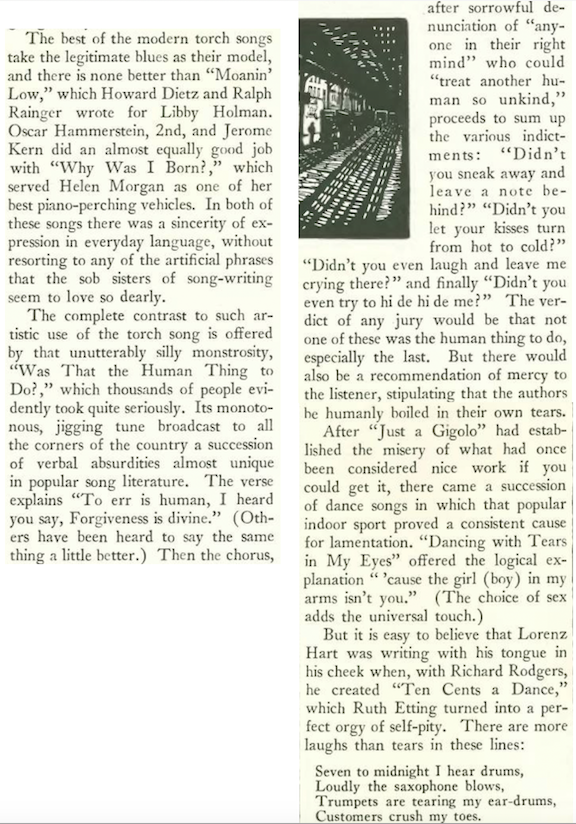
Born in a line of three generations of Lutheran clergymen, Spaeth chose a different path and became a musicologist who sought to de-mystify classical music, often demonstrating how popular melodies had origins in earlier music. He also had strong opinions about lyrics in popular music, demonstrating his distaste for “the lyric school of self-pity” in this “Onward and Upward” column. Excerpts:

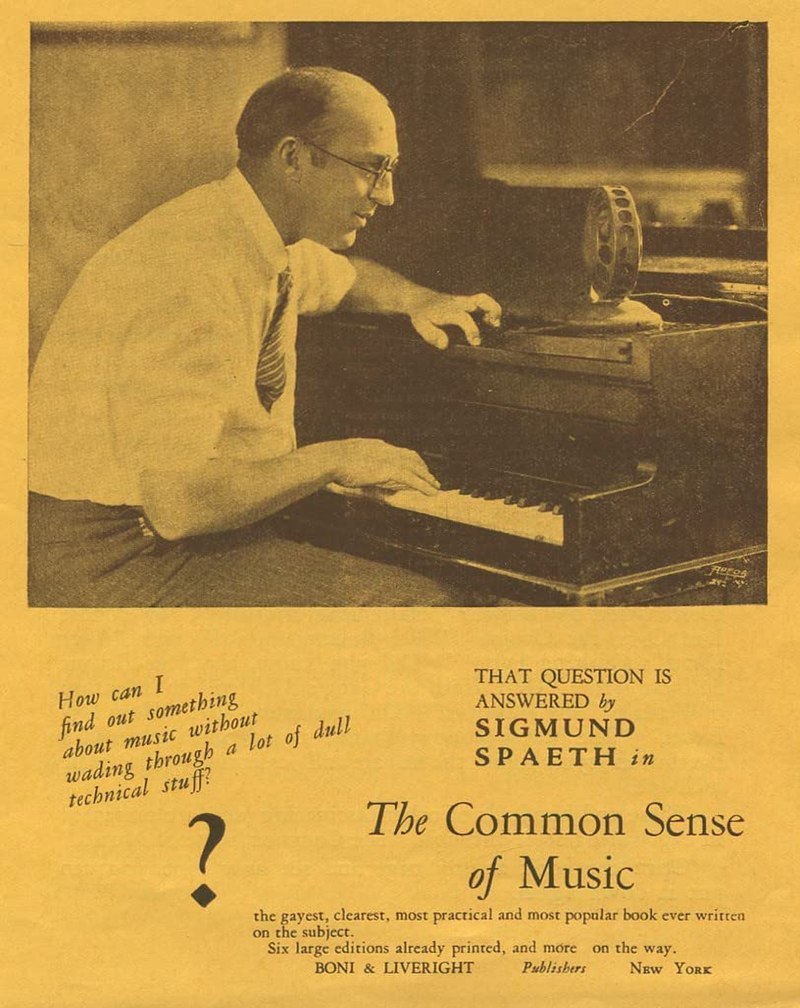
BRINGING MUSIC AND LIGHT…Sigmund Spaeth found much to dislike in the world of popular music, but he was never stuffy in his approach to music appreciation. At right, Spaeth appeared in vaudeville-style shows (and for many years on the radio) as “The Tune Detective,” wearing a deerstalker cap, cape, and checked tweeds in imitation of Sherlock Holmes. He hoped to demonstrate to a wide audience that all music was essentially based on a set of simple principles. (sinfonia.org/wnyc.org)
HAVE NO FEAR…Spaeth wrote a popular syndicated newspaper column, “Music for Everybody,” and contributed articles to many periodicals during his career. With his first book in 1925, The Common Sense of Music, and others that followed, Spaeth sought to de-mystify music for a general audience. (Wikimedia Commons)
OH LIGHTEN UP…Spaeth detected a cynical note in Bing Crosby’s (left) sob song, “I Cried for You,” and noted Irving Berlin’s latest contribution to the “sob symposium,” “I Never Had a Chance.” (Wikipedia/digitalcommons.library.umaine.edu/britannica.com)

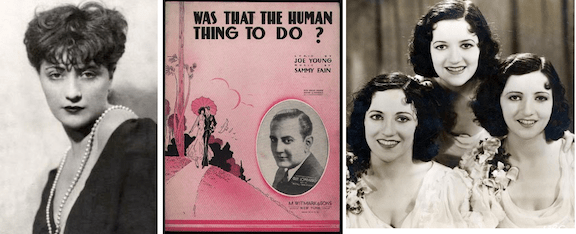
Spaeth noted that not all sad songs were dripping in artificial self-pity, citing Helen Morgan’s “Why Was I Born?” as an example of a song modeled on “the legitimate blues,” marked by “a sincerity of expression in everyday language”…

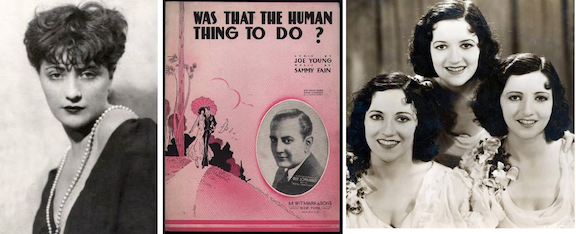
RIGHT AND WRONG…Spaeth acknowledged the “sincerity of expression” in Helen Morgan’s (left) torch songs, while at the other extreme he suggested that the authors of “Was That the Human Thing to Do?” (Sammy Fain and Joe Young) be boiled alive in their own tears. The song was popularized by The Boswell Sisters, a beloved New Orleans trio in the early 1930s. (findagrave.com/amazon.com/genius.com)

 * * *

Off to the Races

In his column, “Of All Things,” Howard Brubaker commented on the apparent competition and contrast between Alexander Woollcott’s book, While Rome Burns, and another with a rosier title, The Coming of the American Boom. It appears Woollcott’s book won out, at least in the long run, as I can find no trace of the Boom book, or its author.*

* One of our kind readers has identified the author: “The Coming American Boom” was written by Lawrence Lee Bazley Angas and published by Simon and Schuster in 1934. In 1939, Time noted that “Major Lawrence Lee Bazley (‘Boom’) Angas is a pink & white Britisher with a reputation for making daring predictions which have sometimes come true…. He won his nickname with a much-publicized booklet, The Coming American Boom, which heralded his arrival in the U.S. in 1934.”

Speaking of rosy outlooks, E.B. White offered some parting thoughts on Chicago’s World’s Fair, called “A Century of Progress.” Rather than focus on the grandiose exhibits, White wryly noted other signs of progress at the fair, as recounted from a letter he received from his nephew.

The Chicago World’s Fair featured all sorts of modern wonders “dedicated to the ideal of scientific advance”…

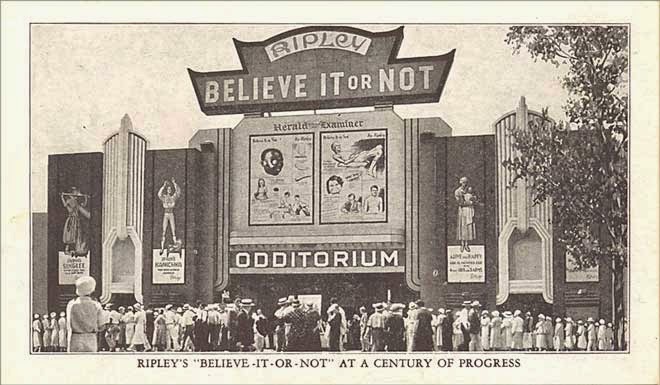
…but as with any World’s Fair, it also catered to the baser interests of the masses, with attractions such as Robert Ripley’s Believe It Or Not “Odditorium,” which was essentially a P.T. Barnum-style freak show…

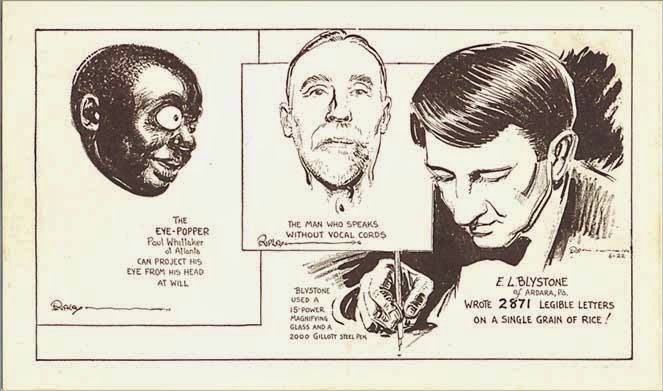
…Ripley’s syndicated newspaper feature included these Odditorium attractions…

…White made light of exhibitions displaying such signs of progress as how to brush your teeth, and more examples of human freakdom…

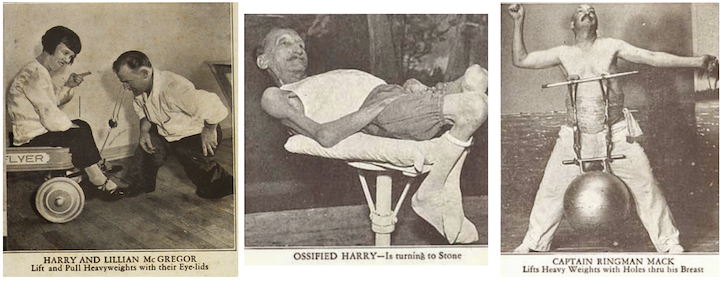
…White’s nephew wrote of a man who could pull a wagon (containing his wife) with his eyelids, an apparently arthritic fellow who was “turning to stone,” and a man who could support heavy weights with his pierced breasts…

(all images courtesy postcardy.blogspot.com)

 * * *

Letter From Paris

Paris correspondent Janet Flanner wrote that August 1934 was a “month of memories” as it marked the twentieth anniversary of the outbreak of the Great War, which we now call World War I. Flanner wrote about a new attitude that had arisen in those two decades, “a new attitude not only toward the last war but toward the next (which, ironically enough, seems increasingly inevitable to France since the death of the enemy warrior, von Hindenburg).” She continued with these observations made by French journalist and historian Emmanuel Berl (1892–1976), who wrote that as a result of the Great War, the youth in both France and Germany held few heroic illusions about war, seeing it not as a sacrifice but rather “as a means of being annihilated.”

SO MUCH FOR THE HEROICS…A refugee family returning to Amiens, France, looking at the ruins of a house on Sept. 17, 1918. Top right, Janet Flanner in 1940; below, Emmanuel Berl. (iwm.org.uk/Flanner photo copyright Estate of George Platt Lynes/Berl photo courtesy Joël Chirol)

 * * *

From Our Advertisers

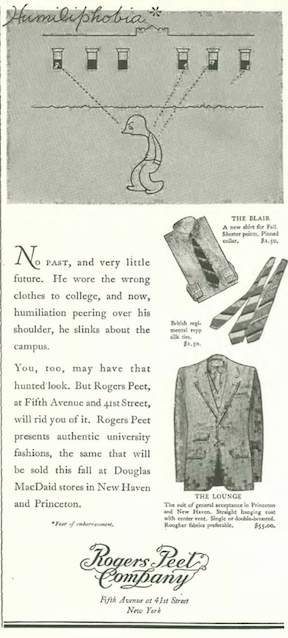
Clothing company Rogers Peet used the threat of humiliation to encourage young men to stock up on “authentic university fashions” before returning to campus…

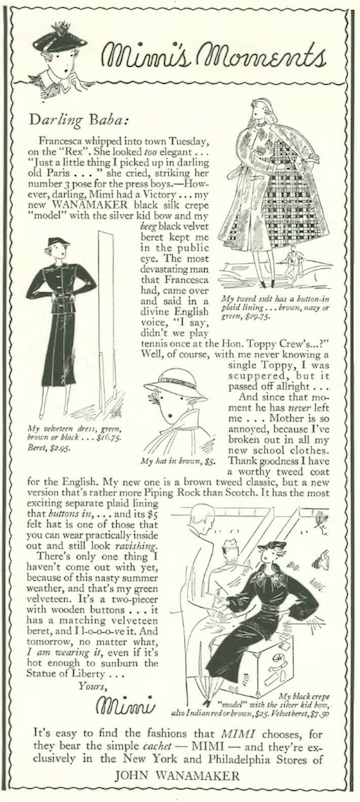
…the Wanamaker department store took a different approach, offering up new styles with a heavy English accent (I say, didn’t we play tennis once at the Hon. Toppy Crew’s?)…

…the makers of Goodyear tires offered up this disturbing image to boost sales…

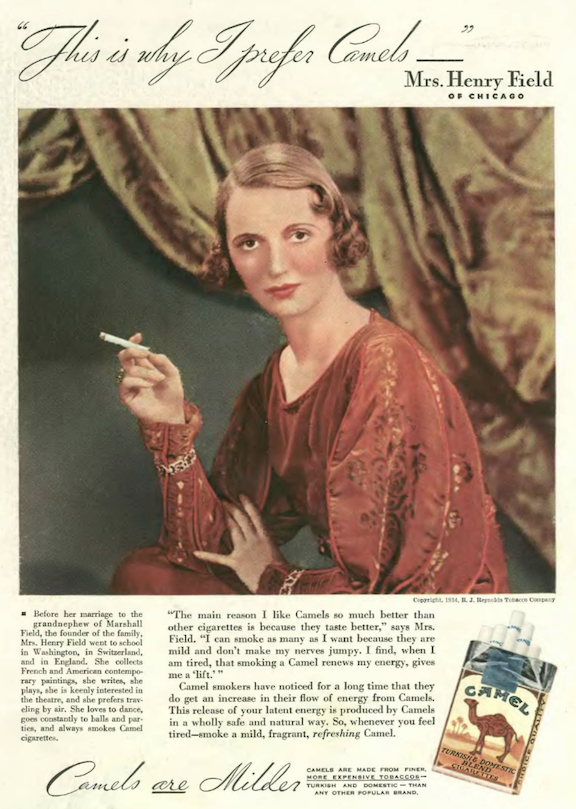
…this ad told us that “Mrs. Henry Field” collected fine art, loved to go to parties, and “always smoked Camel cigarettes”…I am unaware of the fate of Mrs. Henry Field, married to the grandnephew of Marshall Field, but this unseemly image suggests she was replaced by a wax figure before the photo was taken…

…on to our cartoons, we begin with spot illustrations from (clockwise, from top) Victor De Pauw, Abe Birnbaum, and an unidentified illustrator who offered this suggestion for beating the late summer heat…

…we move along to Alan Dunn and a record-seeking pooch…

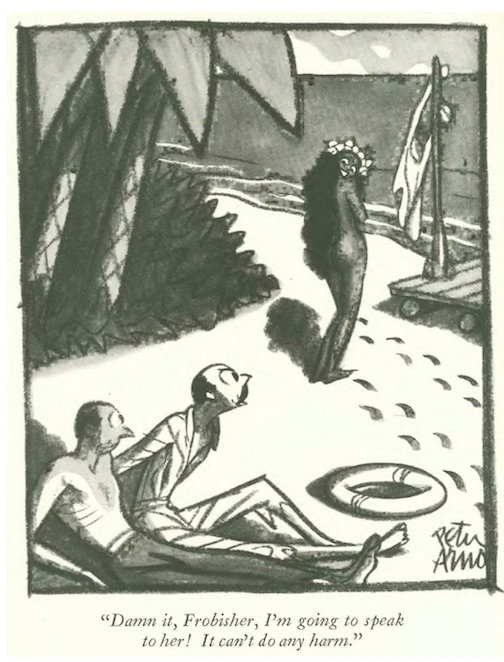
Peter Arno with a very Arno-esque take on the stranded island trope…

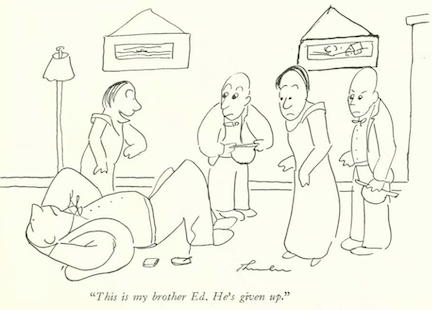
James Thurber gave us a man who was done making decisions…

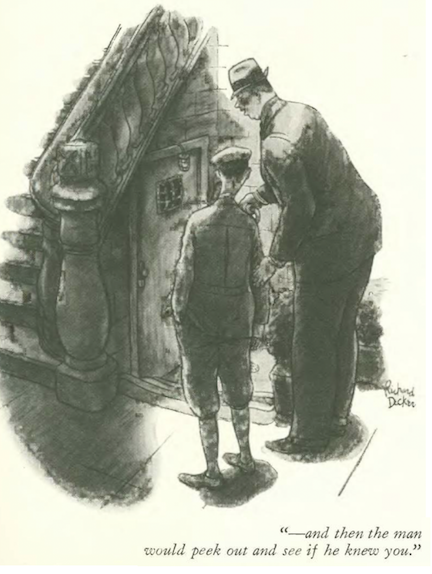
Richard Decker offered up this living history demonstration…

George Price gave us two tropes for the price of one…

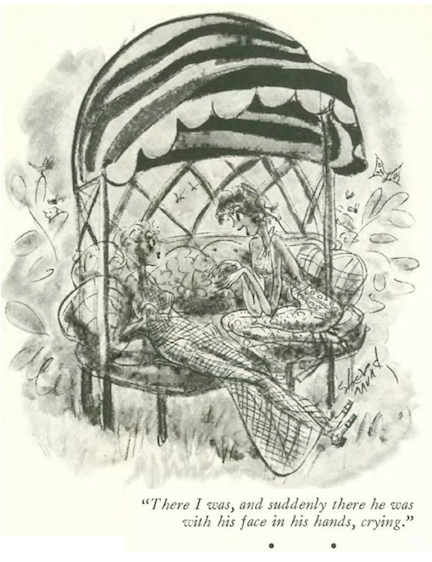
Barbara Shermund gave us another glimpse into the lives of modern women…

Rea Irvin continued his exploration of Manhattan’s fauna…

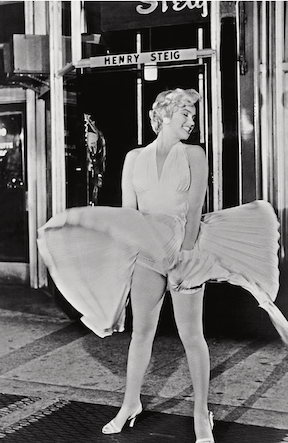
…our next cartoon is by Henry Steig, who used the pseudonym Henry Anton to avoid being confused with his brother, William Steig (featured on this issue’s cover)…unlike his brother, Henry was also a jazz musician, a sculptor and painter, a photographer, and a novelist…that is before he became a noted jeweler…

…Henry Steig’s jewelry shop at 590 Lexington Avenue can be glimpsed in the background of the famous subway vent scene from 1955’s The Seven Year Itch featuring Marilyn Monroe

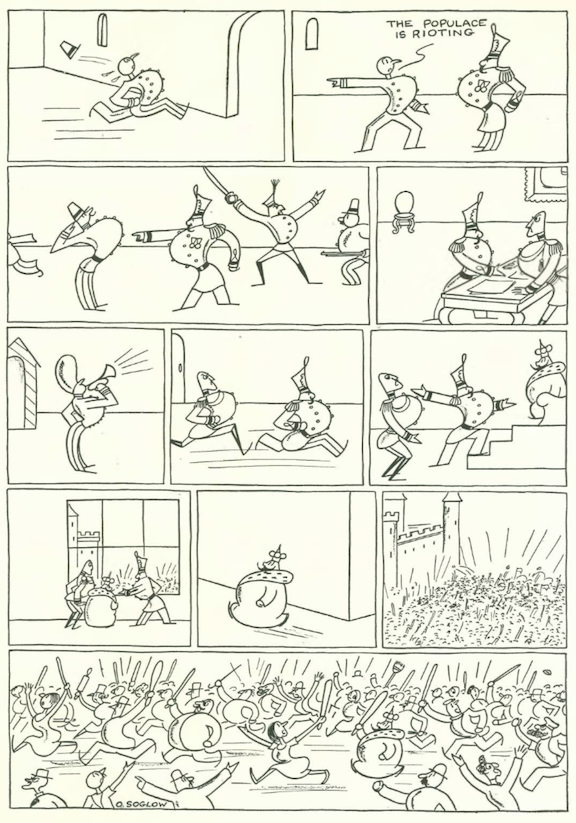
…and we close with Otto Soglow, and the last appearance his “Little King” in The New Yorker...William Randolph Hearst had lured Soglow away for his King Features Syndicate, debuting The Little King in his newspapers on September 9, 1934, where it would run until Soglow’s death in 1975…Soglow, however, would continue contributing cartoons of other themes to The New Yorker until 1974…

Next Time: Lunch at the Dog Wagon…