Idiot’s Delight

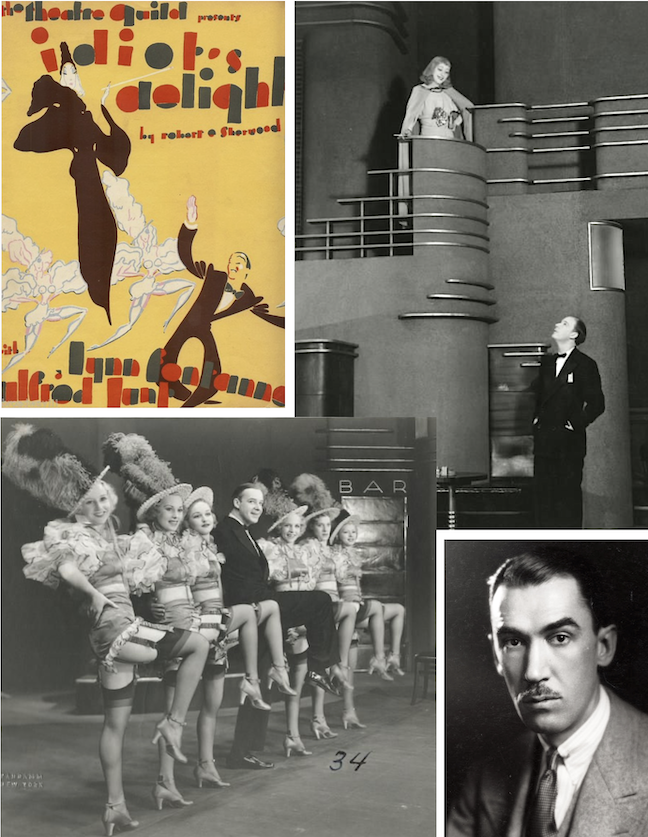
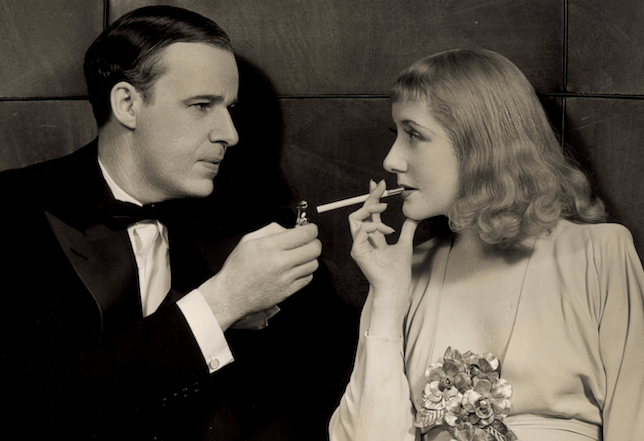
Above: Alfred Lunt and Lynn Fontanne headed the cast of Idiot's Delight, a Pulitzer-Prize-winning play by Robert E. Sherwood. The anti-war play premiered at Broadway's Shubert Theatre on March 24, 1936, and ran for three hundred performances. (latimes.com)

Set against the backdrop of impending war in Europe, Robert Sherwood’s Idiot’s Delight was a timely exploration of how individuals might respond to a major upheaval. The play’s themes about the futility of war resonate as much today as they did in 1936.
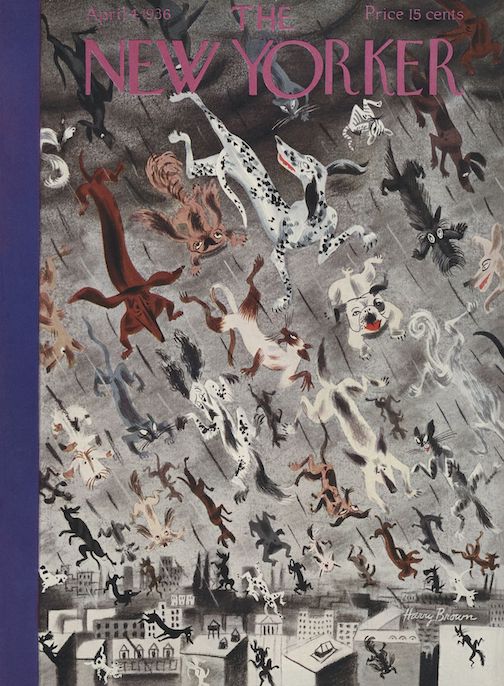
April 4, 1936 cover by Harry Brown. Although he created some distinctive, whimsical covers for The New Yorker (including today’s), there is very little biographical information available on the artist. Brown created eighteen covers for the magazine from 1931 to 1937.

Presented at Shubert Theatre, the Pulitzer Prize-winning play was set at a hotel in the Italian Alps, where the guests—among them a military captain, a German scientist, a radical socialist, and a honeymooning couple—find themselves trapped by the sudden onset of world war. The cast was led by Alfred Lunt, who played a small-time American entertainer accompanied by a troupe of chorines, and Lynn Fontanne, who portrayed a mysterious Russian woman who was traveling with an arms dealer.

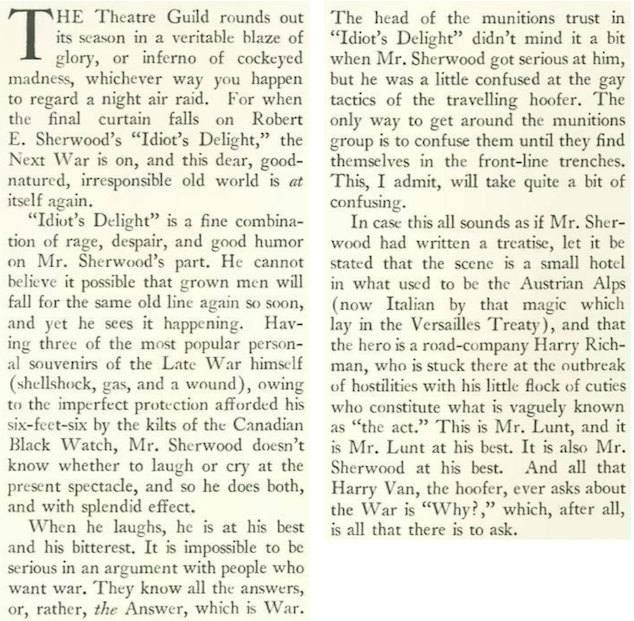
The Pulitzer jury called the play first-rate, full of dramatic invention and “Molierian richness.” Critic Robert Benchley heartily agreed:
FRIVOLITY AMID THE CHAOS OF WAR…Clockwise, from top left, souvenir program for Idiot’s Delight; Alfred Lunt and Lynn Fontanne in a scene from the play; playwright Robert E. Sherwood; Lunt with a chorus line in Idiot’s Delight. The New York Times critic Brooks Atkinson wrote that the play “demonstrates Mr. Sherwood’s taste for exuberance and jovial skulduggery.”(eBay.com/nypl.org/imdb.com)

Benchley concluded that the play was at once entertaining and edifying:
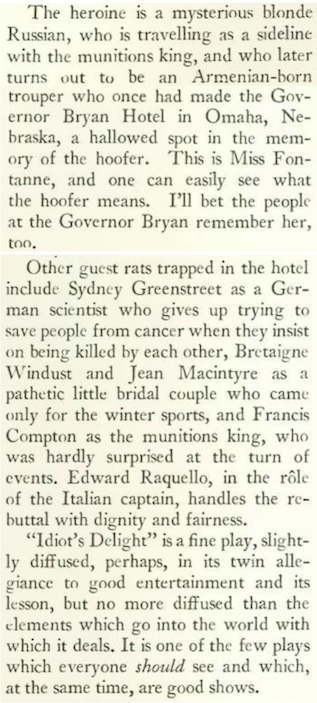
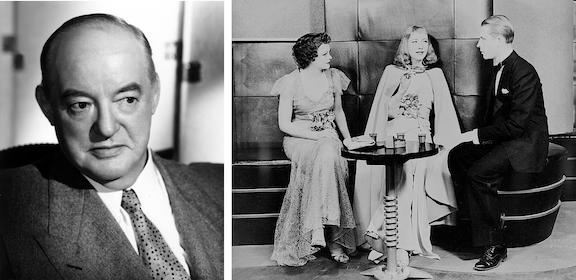
FORGET ABOUT IT…In Idiot’s Delight, Sydney Greenstreet (left) portrayed a doctor who, in the face of senseless war deaths, gives up on his life-saving research; at right, Jean MacIntyre (left) portrayed Mrs. Cherry, part of a young English honeymooning couple stranded at a hotel due to the sudden closing of the border. With her in the scene are Fontanne and Lunt. (radioclassics.com/Public Domain)

Sherwood adapted the play into a 1939 film of the same name, starring Norma Shearer and Clark Gable.

 * * *

Earth Gazing

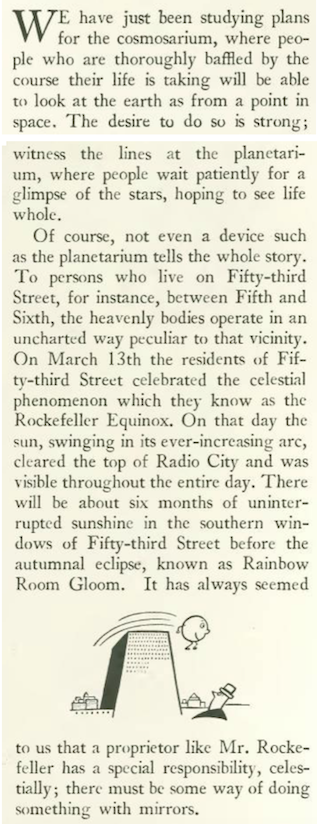
In his “Notes and Comment,” E.B. White mused about plans at the Hayden Planetarium for a program that would give visitors some idea of how earth would appear from a point in space. Earthlings would have to wait until 1968 to actually see a clear, color image of their planet.
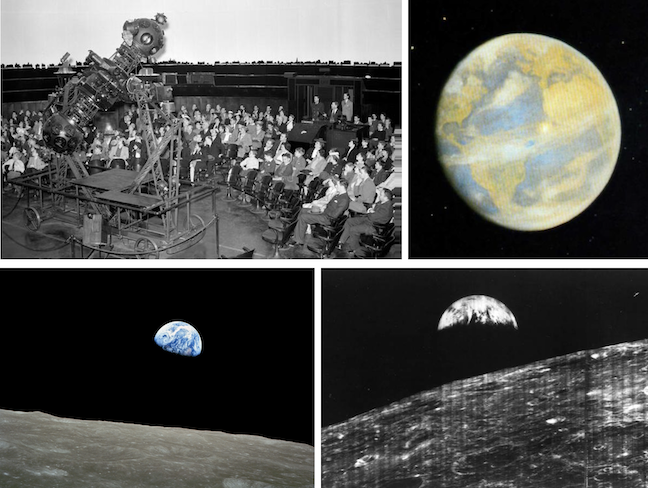
THE WONDER OF IT ALL…Clockwise, from top left, the cosmosarium at the Hayden Planetarium, circa 1935; Howard Russell Butler’s attempt at an accurate portrayal of the earth for the American Museum of Natural History, circa 1920s; in 1966, Lunar Orbiter I sent back this image of Earth from the vicinity of the Moon; Earthrise is a famous photograph of Earth taken from lunar orbit by astronaut William Anders on December 24, 1968, during the Apollo 8 mission. (facebook.com/pinterest.com/NASA)

 * * *

From Russia With Love

Journalist and literary critic Edmund Wilson Jr (1895–1972) traveled in Russia from May to October 1935, and later filed a couple of articles in The New Yorker detailing his travels. Writing for the column “A Reporter at Large,” Wilson described his journey by boat from London to Leningrad, finding an unexpected kinship with his Soviet cabin mates. Excerpts:
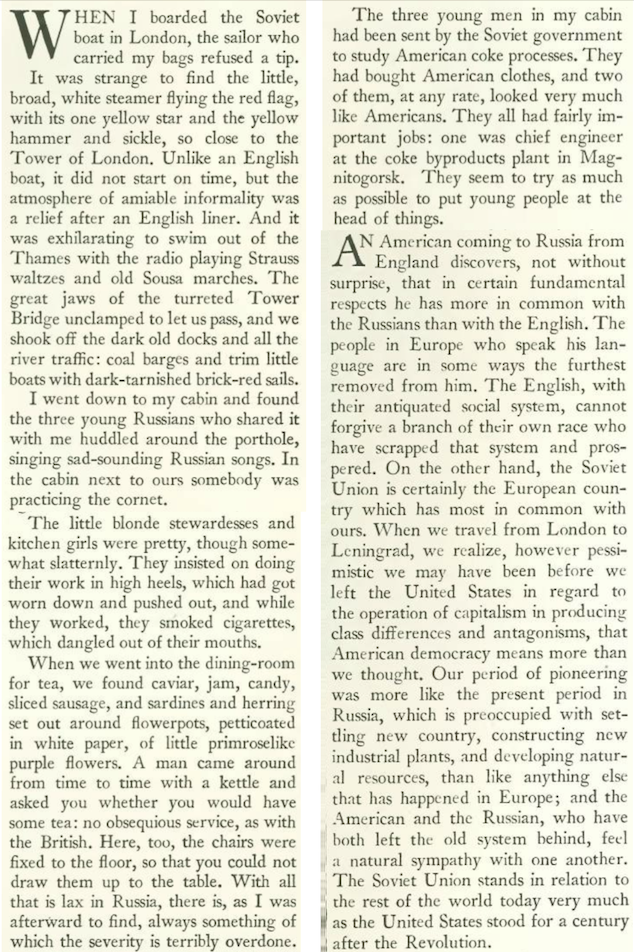
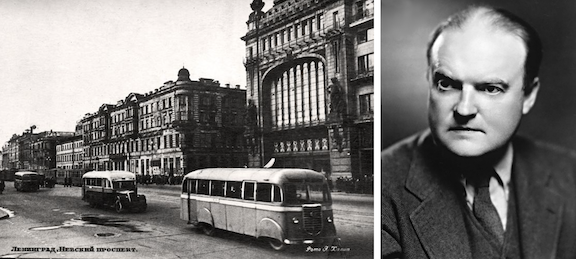
DESTINATION…Leningrad’s Nevsky Prospect 1930s; Edmund Wilson Jr in 1936. (pinterest.com/Wikipedia)

Wilson found that he preferred the company of the Soviets to a stuffy English couple who were his dining companions. He concluded:
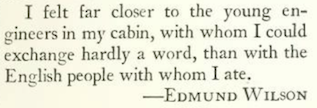
It should be noted that Wilson, despite his Marxist sympathies, would soon become disillusioned with the Soviet experiment; his travels concluded just before the onset of Josef Stalin’s “Great Purge,” which featured the notorious Moscow Show Trials that sent millions of innocent Soviet citizens to labor camps or to their deaths in prisons.
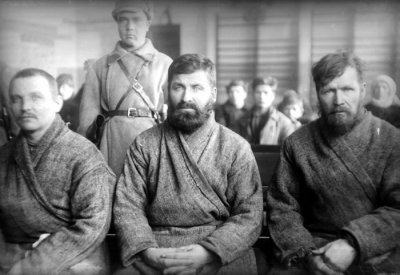
DOOMED…During the Great Terror, which included the notorious show trials of Stalin’s former Bolshevik opponents in 1936-1938 and reached its peak in 1937 and 1938, millions of innocent Soviet citizens were sent off to labor camps or killed in prison. This image from 1936 shows defendants dressed in prison clothing during one of the Moscow Show Trials. (umkc.edu)

 * * *

At the Movies

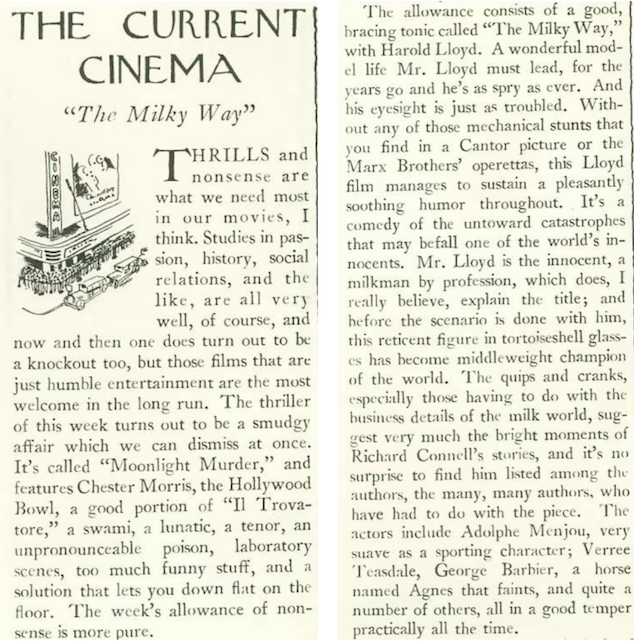
Film critic John Mosher observed that moviegoers mostly needed “thrills and nonsense” at the cinema. Thrills were not to be found, but Harold Lloyd provided the nonsense.
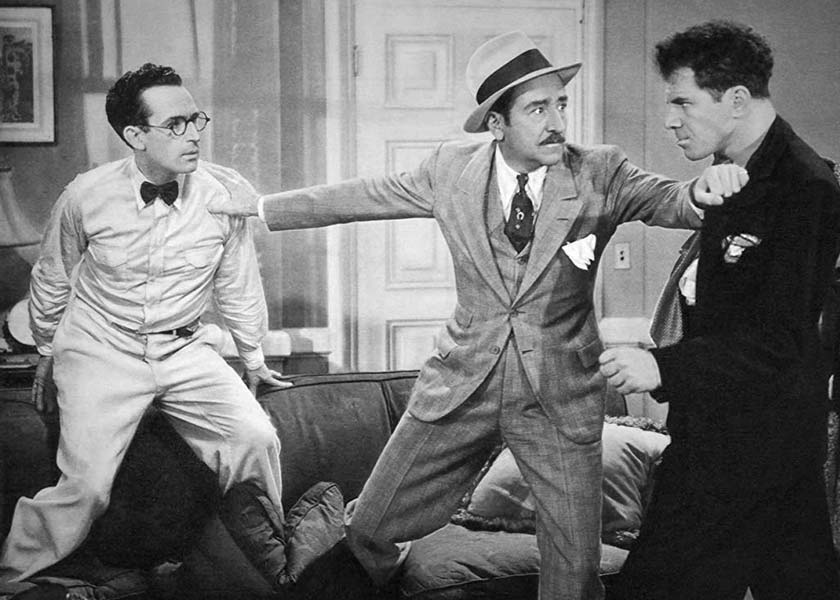
PUNCH LINES…Harold Lloyd (left), portrayed an unlikely middleweight boxer in The Milky Way. Above is a scene with Adolphe Menjou (center) and Lionel Stander. (obscurehollywood.net)

The “thriller” of the week was Moonlight Murder, which Mosher suggested audiences could “dismiss at once.”
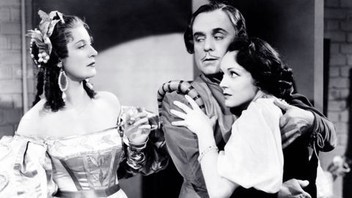
DISMISSED…Katharine Alexander, Leo Carrillo and Benita Hume in Moonlight Murder. (rotten tomatoes.com)

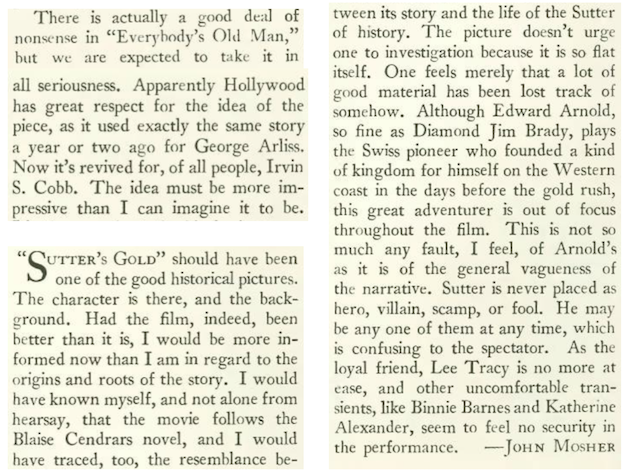
Mosher also offered tepid reviews of Everybody’s Old Man and Sutter’s Gold, despite these films featuring a popular humorist and a respected character actor, respectively.
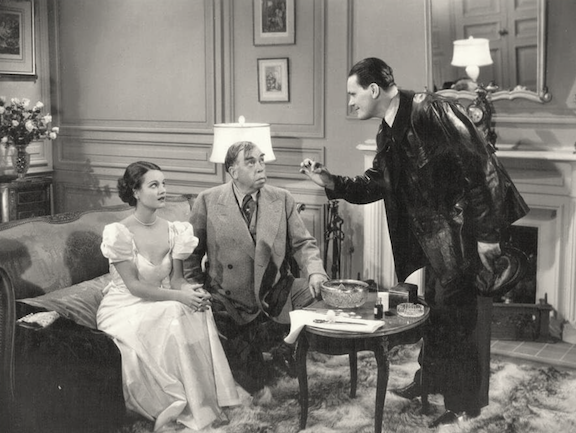
SAY SOMETHING FUNNY…Rochelle Hudson, Irvin S. Cobb and Warren Hymer in Everybody’s Old Man. (imdb.com)
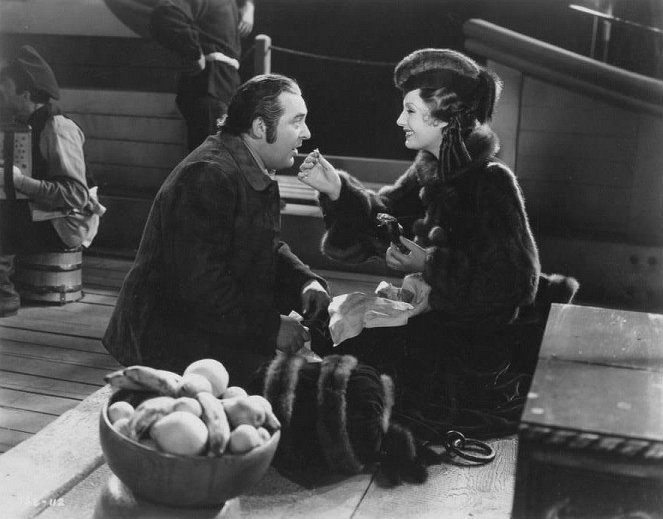
WHO AM I?…A vague narrative left critic John Mosher wondering if Edward Arnold’s character was supposed to be a “hero, villain, scamp, or fool” in Sutter’s Gold. Above, Arnold in a scene with Binnie Barnes. (film booster.com)

 * * *

From Our Advertisers

Arrow Shirts rolled out a colorful array of pre-shrunk sanforized shirts and neckties just in time for the Easter holiday…
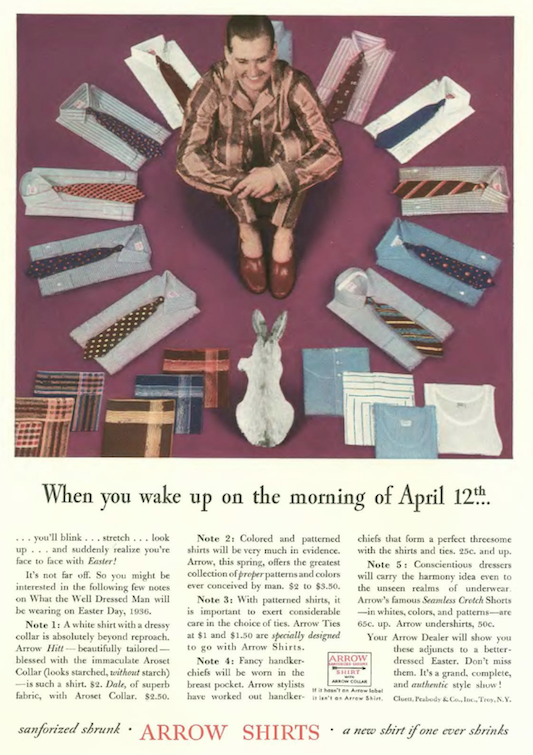
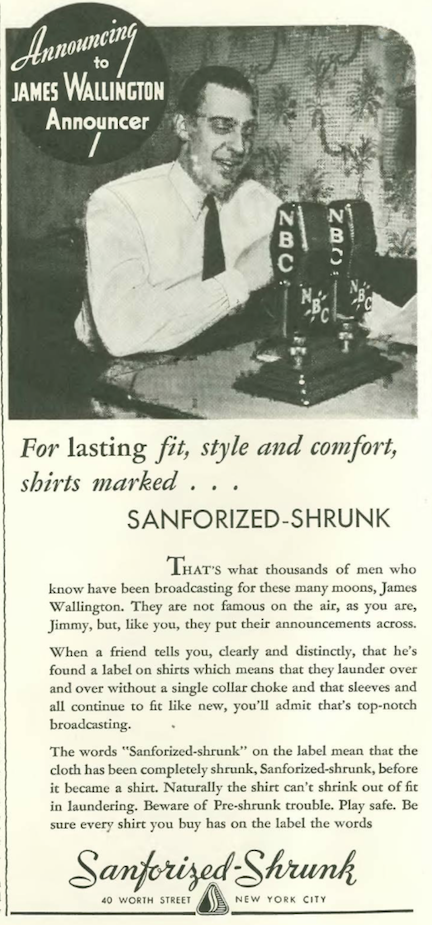
…from the 1930s through the 1950s the distinctive voice of James Wallington (1907–1972) filled the airwaves on both radio and television…here he endorses those “Sanforized Shrunk” shirts…
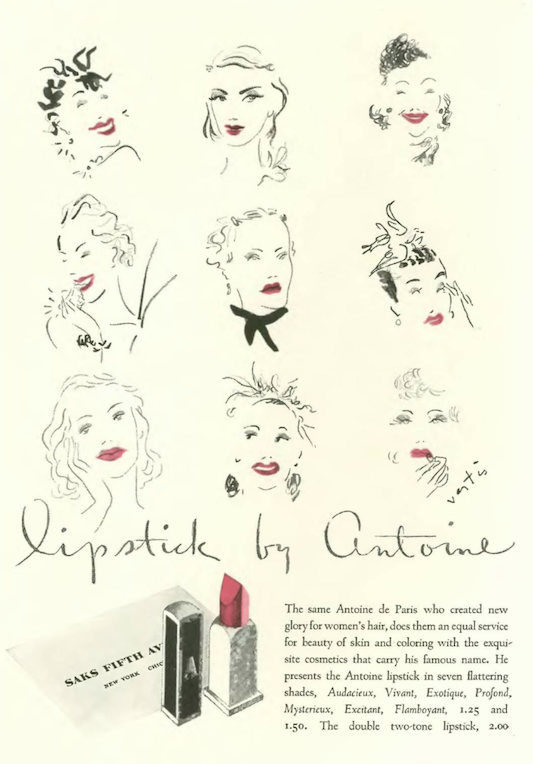
…French costume designer and illustrator Marcel Vertès (1895–1961) provided the art for the Antoine de Paris lipstick line at Saks…Vertès created the original murals in the Carlyle Hotel’s Café Carlyle and in the Waldorf-Astoria’s Peacock Alley… he also won two Academy Awards for his work on the 1952 film Moulin Rouge

…Hockanum Mills announced its new line of woolens for the spring racing season…
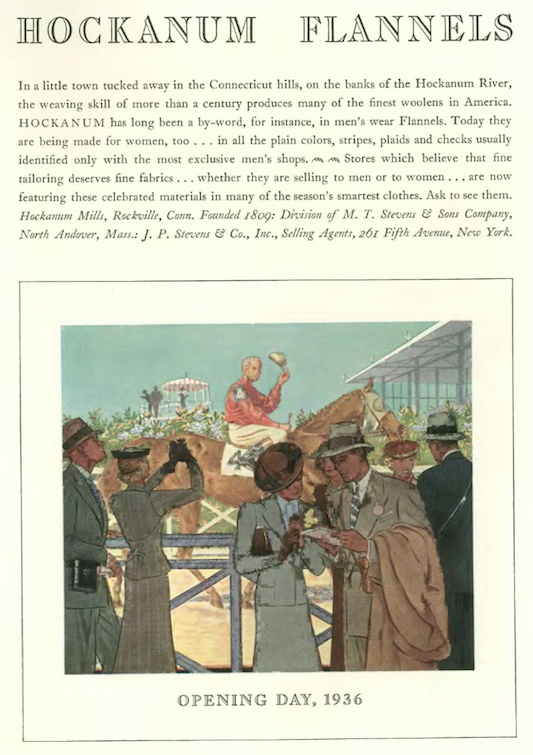
Hockanum’s Rockville mills were shut down in 1951. Today the site is being redeveloped for commercial and light industrial uses as well as the site for the New England Motorcycle Museum. (historicbuildingsct.com)

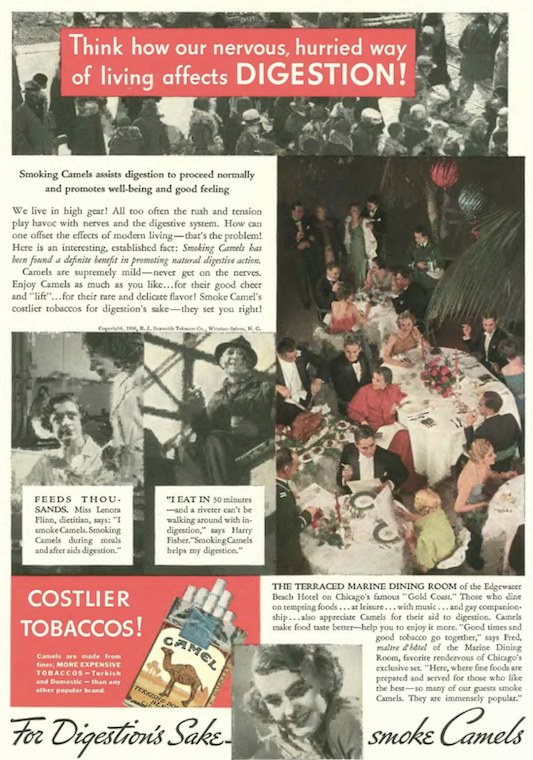
…more claims from R.J. Reynolds regarding the gastrointestinal benefits of their Camel cigarettes…
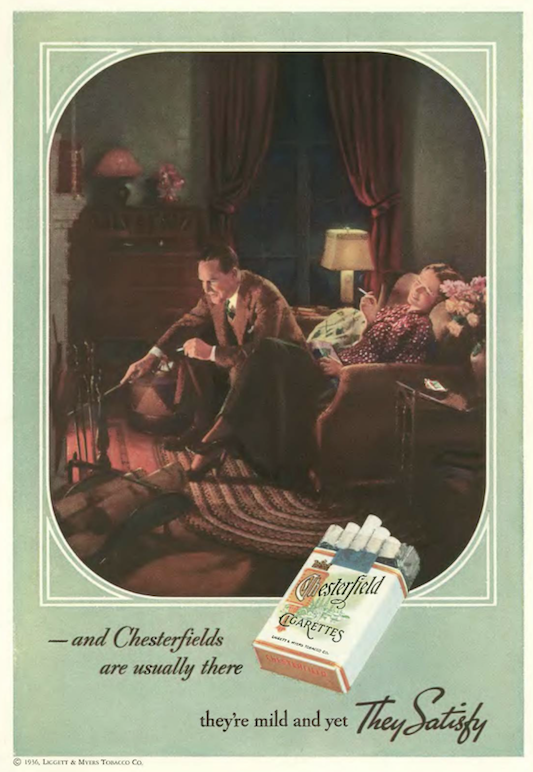
…while Liggett and Myers stuck with the pleasures of hearth and home, and a pack of Chesterfields…
…on to the cartoon section, we begin with Christina Malman

Richard Taylor

Robert Day

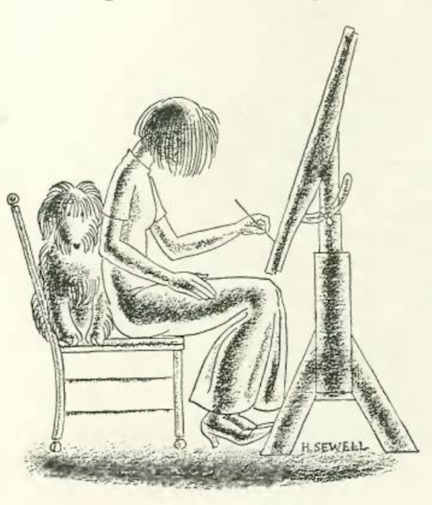
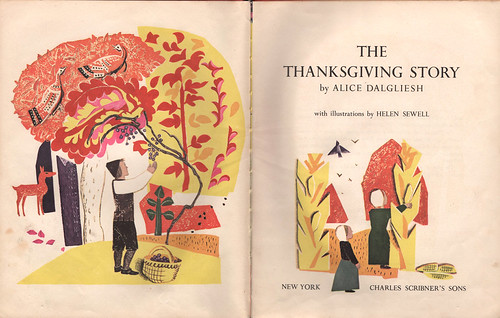
…and a wonderful spot drawing by illustrator and children’s book author Helen Moore Sewell

…who won a Caldecott Medal for her illustrations featured in Alice Dalgliesh’s The Thanksgiving Story (1954)…
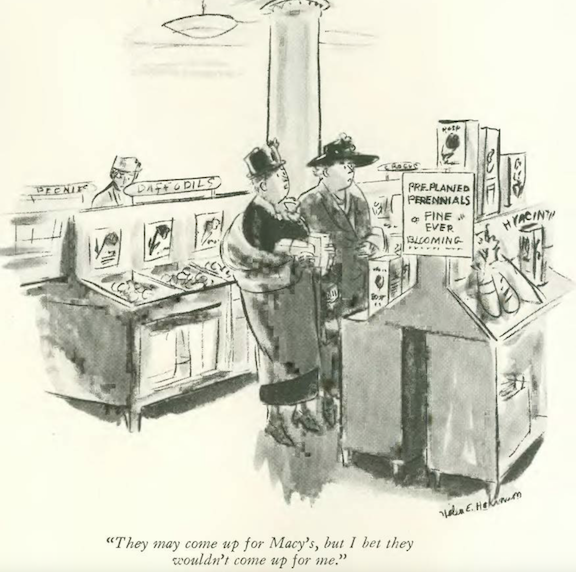
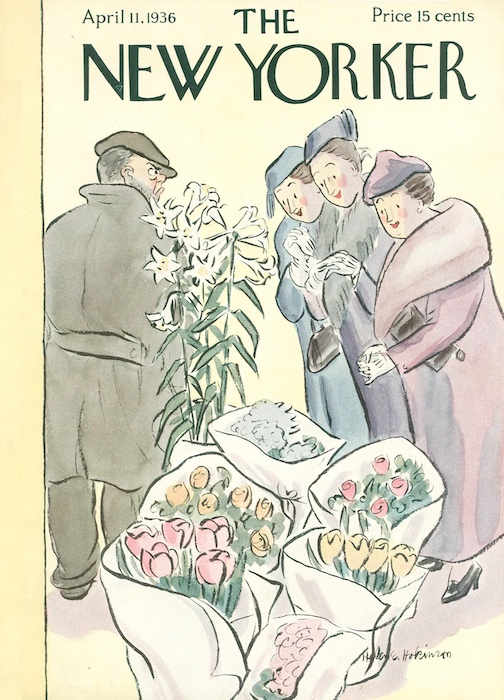
…we go shopping with Helen Hokinson in the garden section…
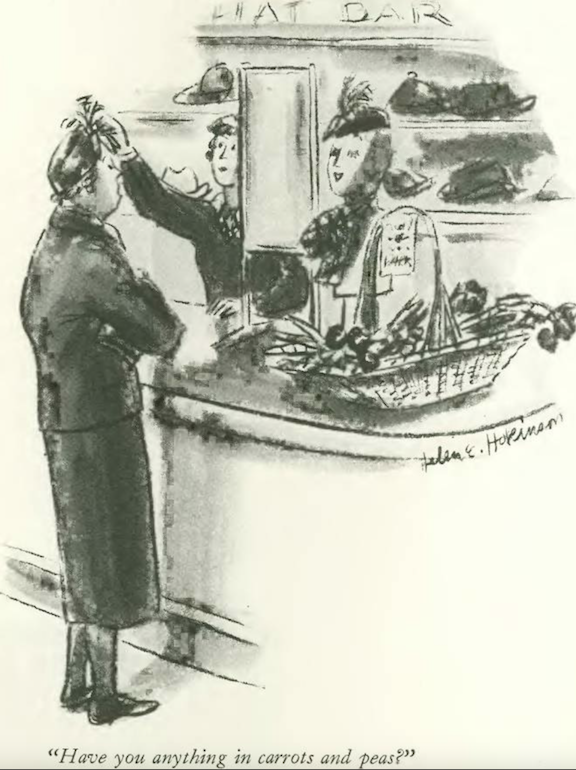
…and in the hat department…
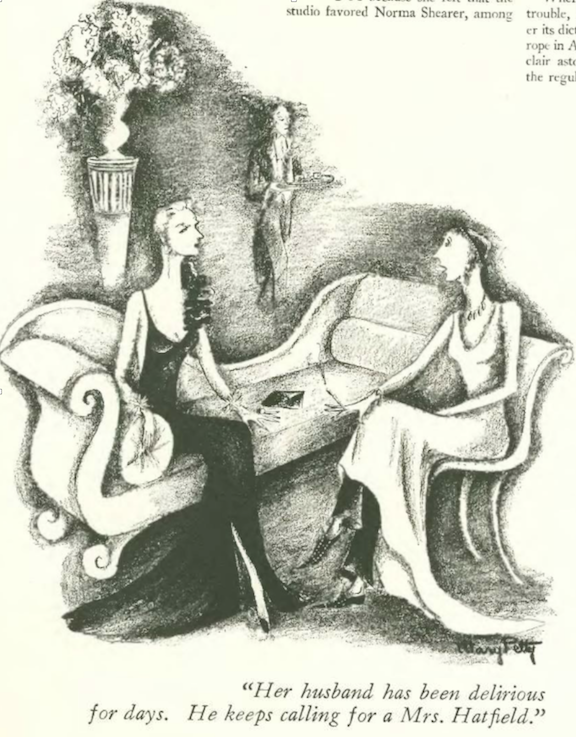
Mary Petty caught up on the latest gossip…
Perry Barlow gave us a shopkeeper in need of some marketing tips…
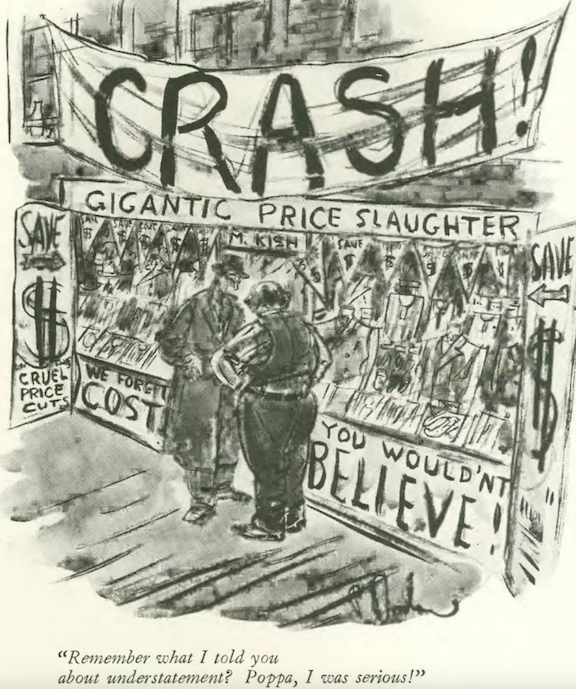
William Steig continued to probe the joys of married life…
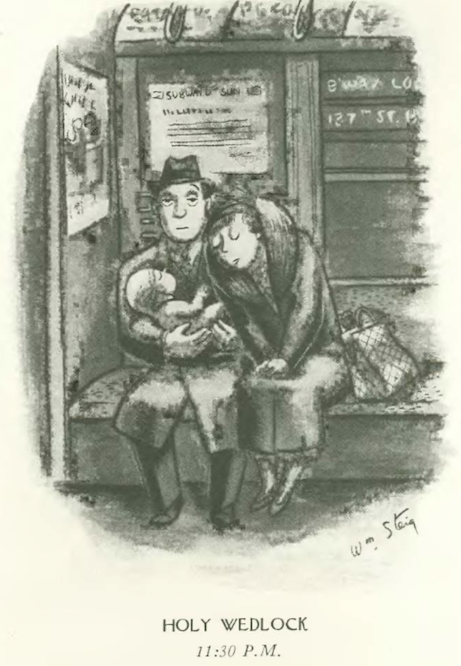
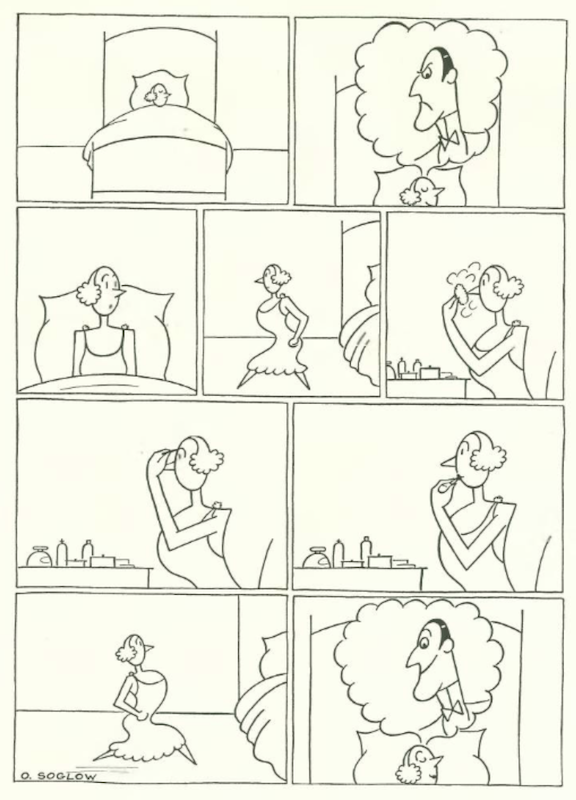
…even one’s dream world required some careful grooming, per Otto Soglow

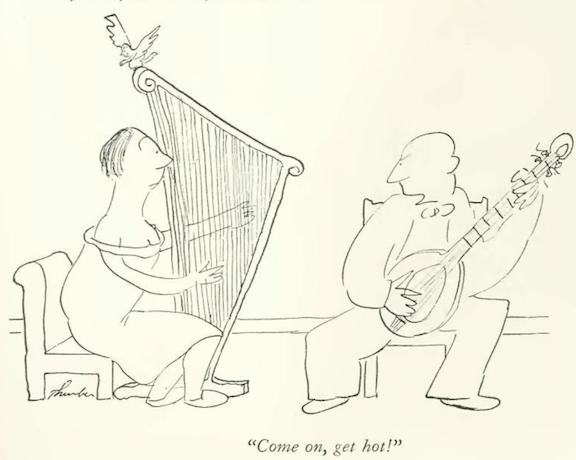
James Thurber drew up a duet out of tune…
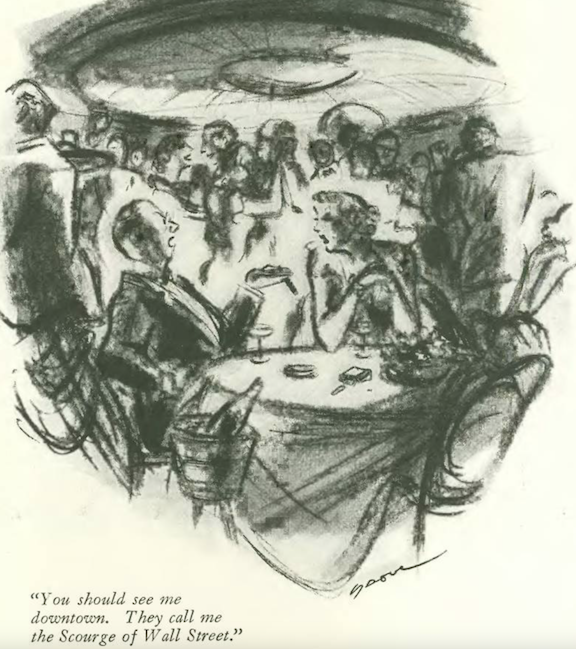
…outside of Wall Street, Leonard Dove’s titan of business was just another sugar daddy…
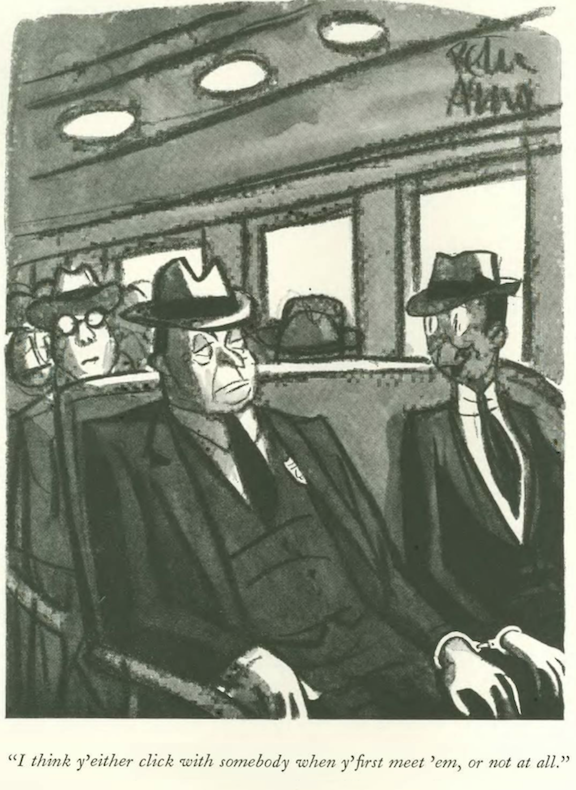
…and we close with Peter Arno, and strangers on a train…
Next Time: People in Glass Houses…
 

Ten Cents In Stamps

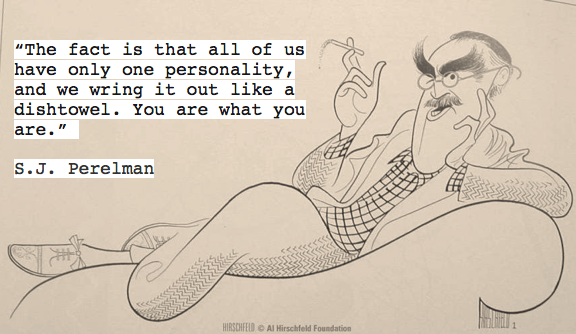
Like E.B. White, James Thurber and Dorothy Parker who came before him, S. J. Perelman was one of those New Yorker writers whose name would become synonymous with the magazine. 

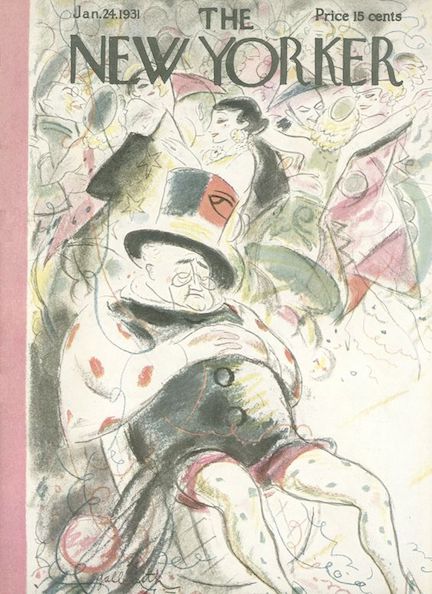
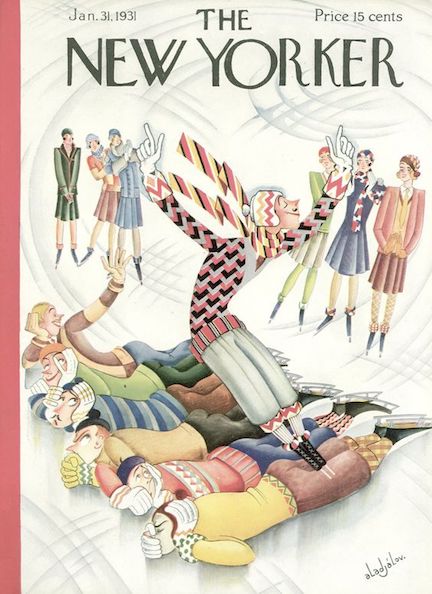
Jan. 24, 1931 cover by William Crawford Galbraith.

Perelman’s first New Yorker article, “Ten Cents in Stamps,” appeared in the Jan. 24, 1931 issue, his subject a collection of self-help and “how to” books he introduced with this Editor’s Note: “Upsetting as it may seem, all the books reviewed in the following article are genuine.”

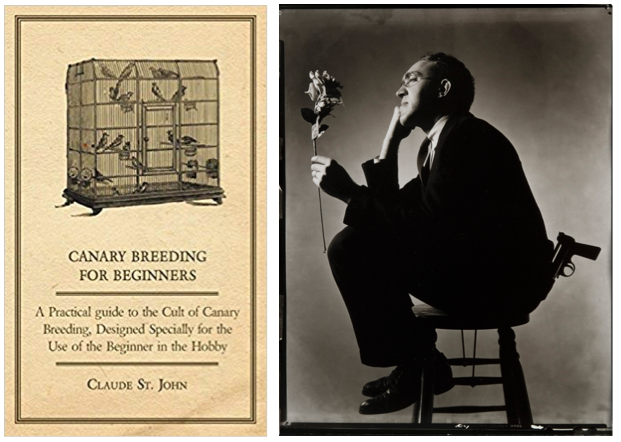
FOR THE BIRDS…S. J. Perelman (1904–1979) sampled Canary Breeding for Beginners among other titles in his first humorous short for The New Yorker. The above 1935 photograph was made by Ralph Steiner, who recalled “when I made this photograph I said ‘this is a foolish thing for two grown men to be doing with their time,’ Perelman answered: ‘We may be the only two men in the world at this moment not doing harm to anyone.'”(amazon/akronartmuseum.org)

Without further ado, some excerpts…

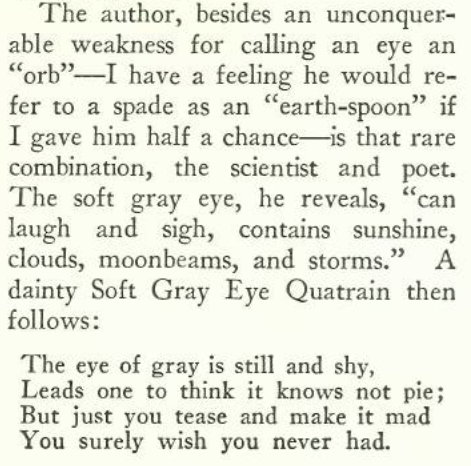
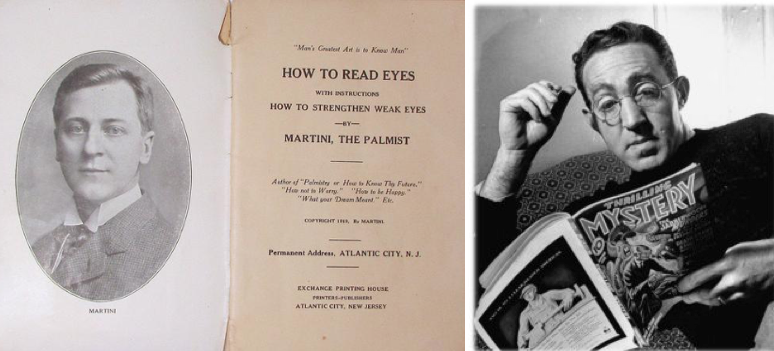
…Perelman offered us a taste of Martini’s poetic gifts…

MARTINI WITH A TWIST…S.J. Perelman wanted “a little tighter thinking” from Martini, The Palmist, in his book, How to Read Eyes. (Etsy/johnesimpson.com)

…and also sampled the wisdom of Jacob Penn, who wrote a book titled How to Get a Job Through Help Wanted Advertisements. Perelman zeroed in on the book’s appendix, which contained “Successful Model Letters”…

*  *  *

Dorothy Returns

After a long absence, Dorothy Parker returned to her immensely popular “Reading and Writing” column. Parker had been staying at an alpine sanitorium in Switzerland, providing moral support for her friends Gerald and Sara Murphy while their young son was treated for tuberculosis. Parker had originally fled to Europe (France, specifically) to write her “Great American Novel,” only to end up on the Swiss mountaintop, where she composed a long letter just recently published (2014) under the title Alpine Giggle Week. Back in New York, she returned to her typewriter and released her wit on Charles Noel Douglas, editor of Forty Thousand Sublime and Beautiful Thoughts.

A PENNY FOR YOUR THOUGHTS?…Charles Noel Douglas had 40,000 of them, Dorothy Parker discovered.(amazon/britannica.com)

 *  *  *

A ‘Tables’ Reprise

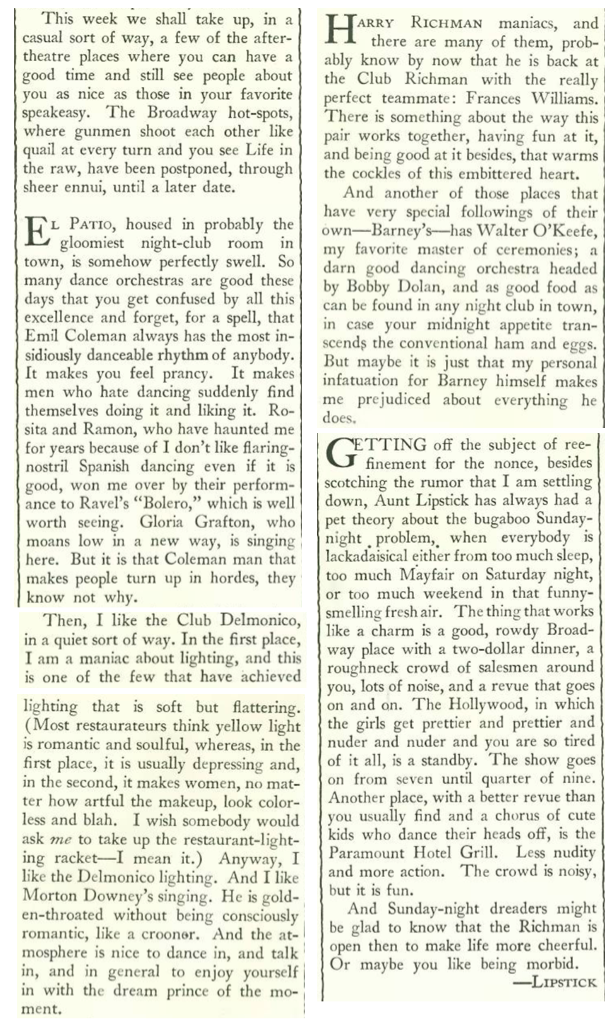
Lois Long was also back, in a way, reviving her “Tables for Two” column for on a one-off on the city’s Broadway hot-spots…

AFTER THE CURTAIN FALLS on Broadway there were plenty of nighttime diversions to keep theater crowds entertained into the wee hours.Clockwise, from top left, singer-dancer Frances Williams worked wonders with Harry Richman and his orchestra at the Club Richman; Bobby Dolan wielded a smart baton at Barney’s; and crooner Morton Downey (pictured with wife and actress Barbara Bennett)… lent his golden tenor to adoring crowds at Club Delmonico. The couple spawned the combative star of 1980s “Trash TV” Morton Downey Jr. (Pinterest)

 *  *  *

From Our Advertisers

We begin with a full page of ads for various Broadway shows…

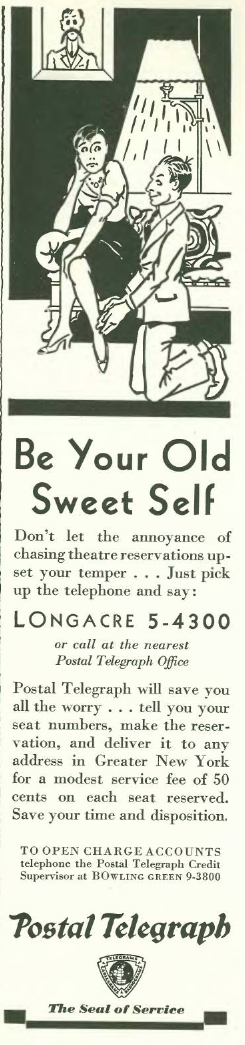
…and if you wanted to get tickets to one of those shows, here is 1931’s version of StubHub…

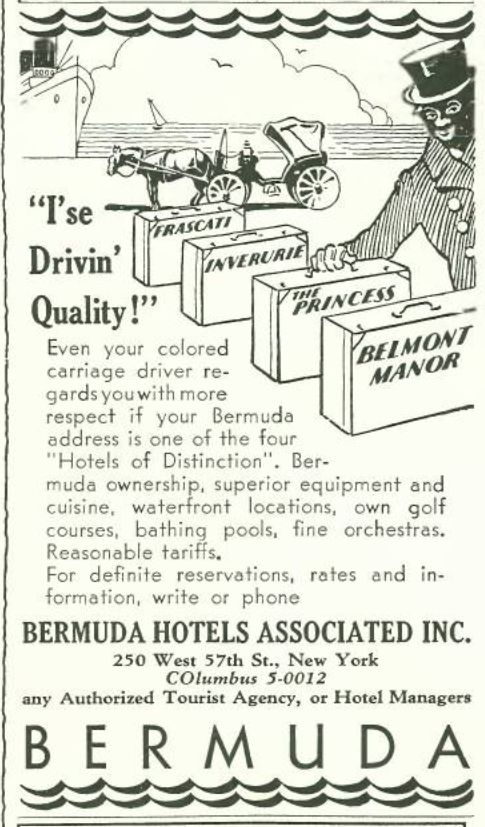
…and we are reminded that it is indeed 1931 with overtly racist ads such as this…

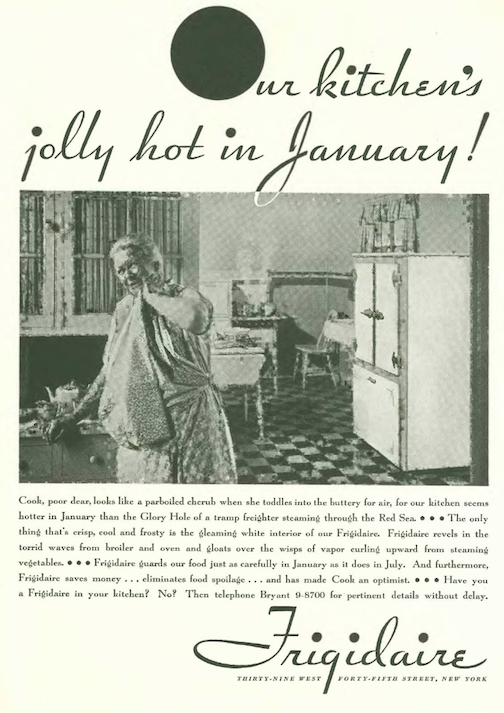
…back home, the help isn’t treated much better. “Cook” can suffer as long as the food remains fresh in the gleaming Frigidaire…

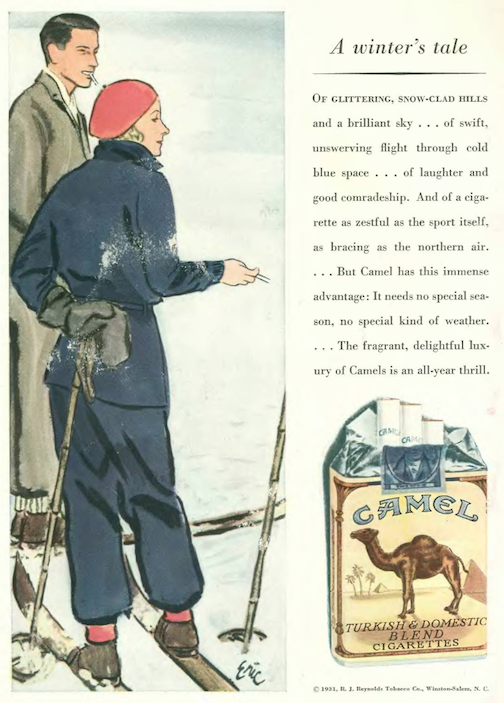
…meanwhile, our stylish Camel smokers (illustrated by Carl “Eric” Erickson) are keeping cool on the slopes…

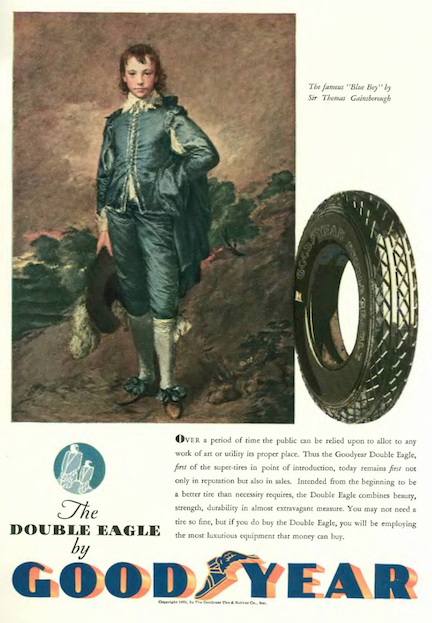
…and perhaps this is the one and only time a painting by Thomas Gainsborough is compared to a tire…

…on to our illustrators and cartoons, the editors tossed in this old spot illustration by H.O. Hofman to fill space on the events page…

…an then we have this spot (sorry, I can’t identify the artist) that imagines disastrous consequences for the Empire State Building’s “mooring mast” (which was never used as such)…

…and Ralph Barton returned to lend his artistry to the theater review section…

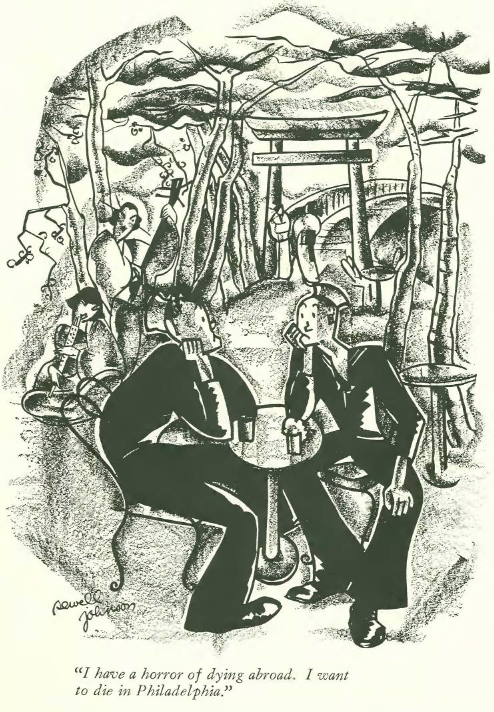
…for our cartoons, we begin with Sewell Johnson’s lone contribution to The New Yorker

Carl Rose was at the movies…

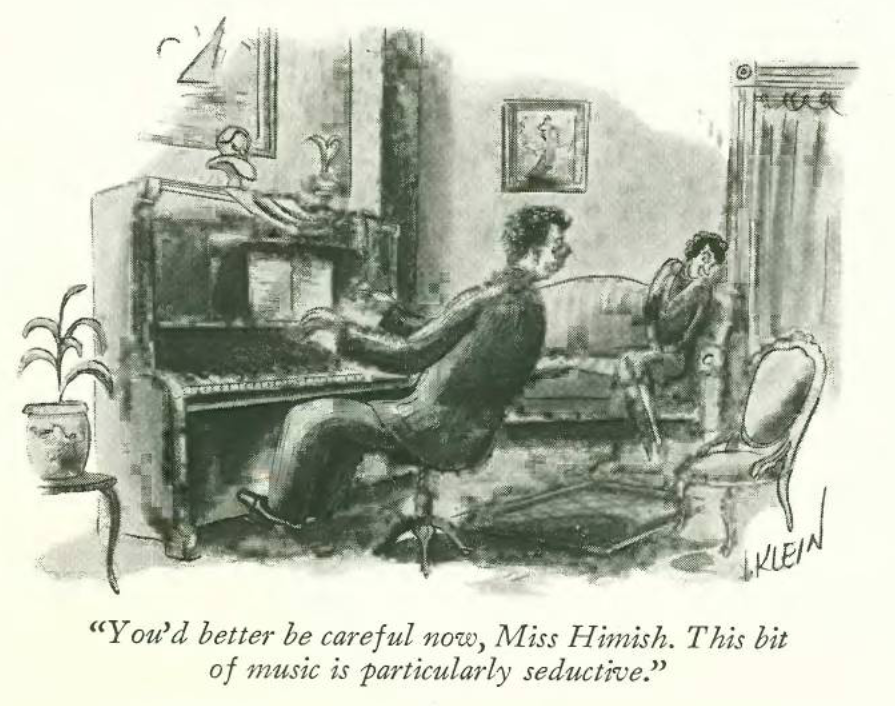
Isadore Klein warmed things up in this parlor scene…

Alan Dunn justified the existence of thriller author Edgar Wallace

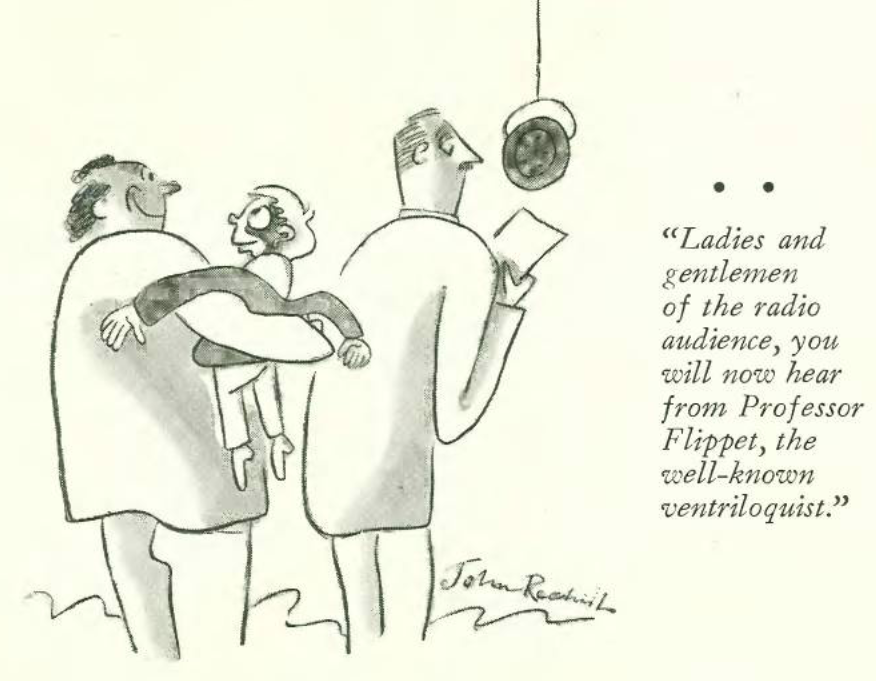
...John Reehill gave us a look at an unlikely radio act (however, from 1936 to 1956 ventriloquist Edgar Bergen and his dummy, Charlie McCarthy, would be hugely popular radio stars)…

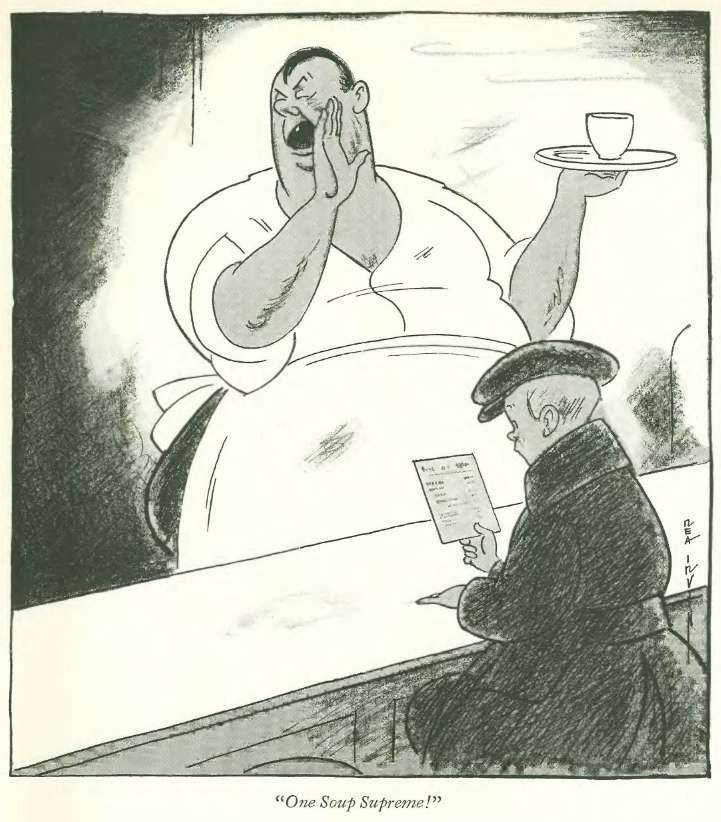
Rea Irvin paid a visit to the diner in this full-page cartoon…

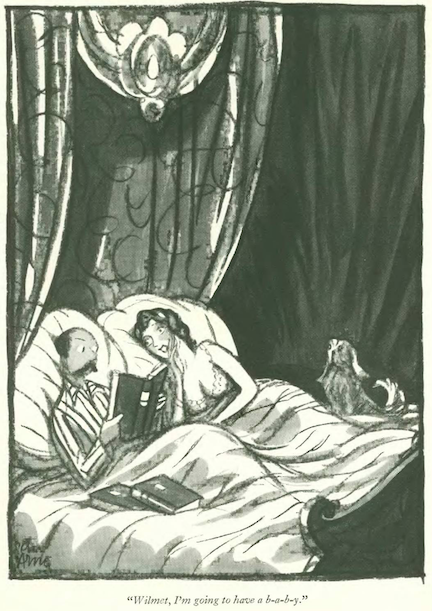
…and another full-page cartoon from Peter Arno, who looked in on an intimate moment…

Next Time: The Wickersham Sham…