Queen of the Seas

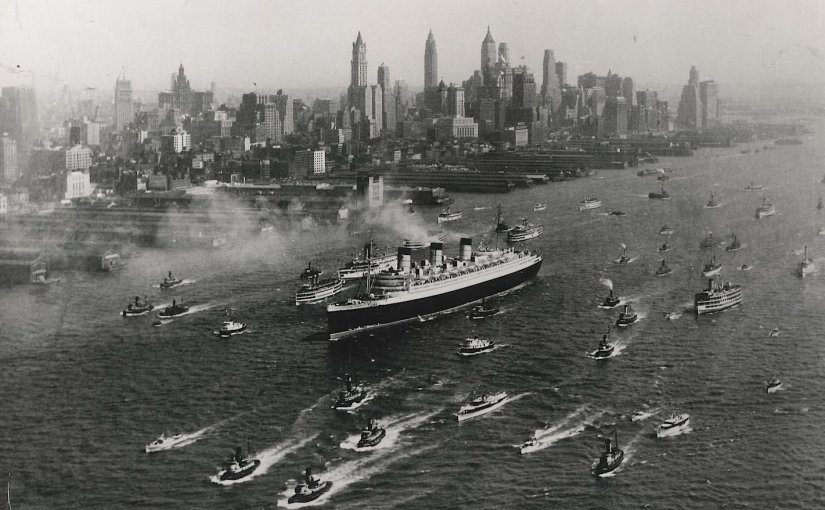
Above: The RMS Queen Mary arriving at New York harbor accompanied by a flotilla of escorts on June 1, 1936. (liverpool.ac.uk)

The RMS Queen Mary was launched in the age of superliners that included the SS Bremen, the SS Île de France and the SS Normandie. These and other liners competed for the Blue Riband, an unofficial honor bestowed on Atlantic Ocean liners achieving the highest average speed. These ships also vied for the distinction of being the most luxurious.
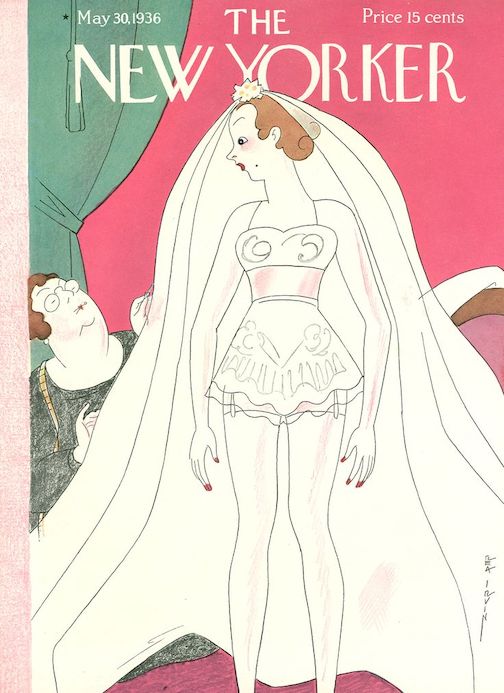
May 30, 1936 cover by Rea Irvin, celebrating the arrival of the June bride.

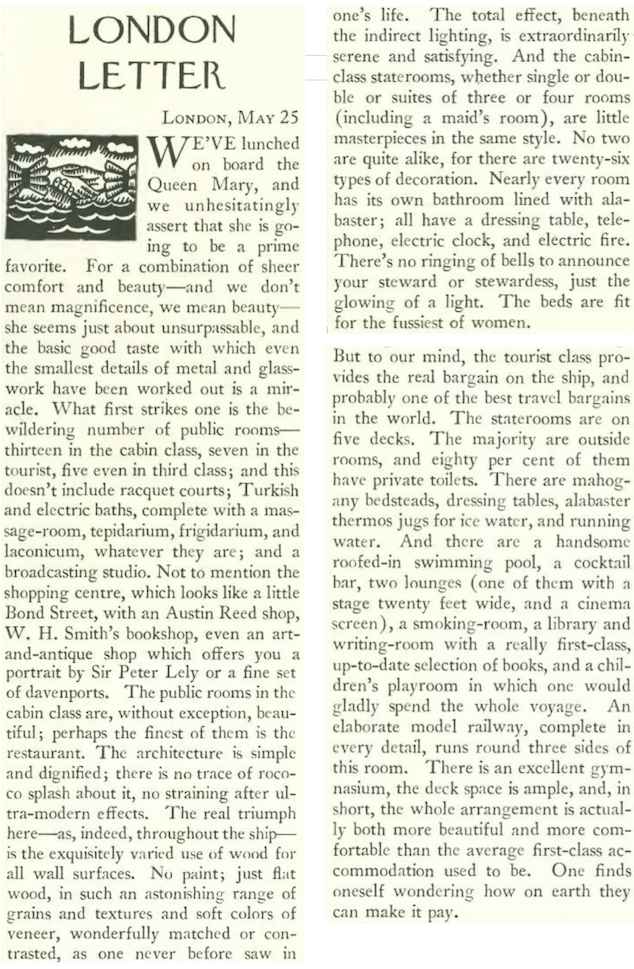
The Queen Mary was a top contender for both honors when she departed on her maiden voyage from Southampton on May 27, 1936. London correspondent Samuel Jeake, Jr (aka American poet and novelist Conrad Aiken) paid a visit to the liner just days before her first Atlantic crossing. Excerpts:
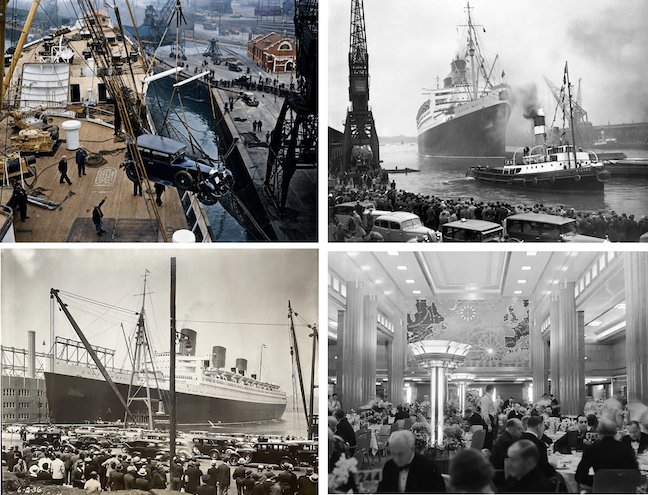
BOAT AFLOAT…Clockwise, from top left, a Bentley automobile is brought aboard the Queen Mary before her maiden voyage; the liner departs from Southampton, May 27, 1936; first-class passengers dining during that first crossing; the Queen Mary arriving at the newly built Pier 90 in New York Harbor, June 1, 1936. The Queen Mary and the SS Normandie were speedy competitors for the Blue Riband in the 1930s. (RMS Queen Mary via Facebook/NYC Municipal Archives)
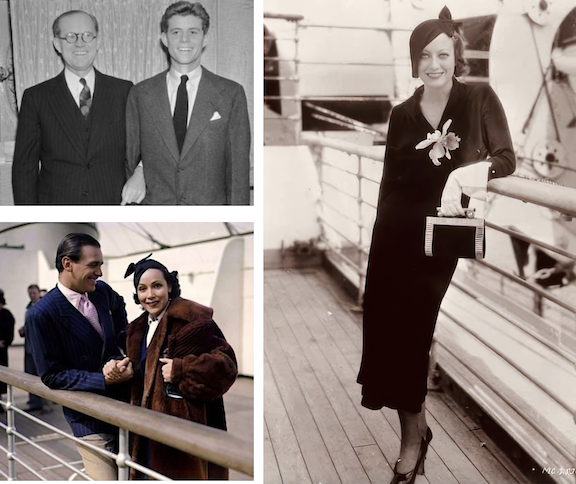
SEEING STARS…Celebrities on the maiden voyage included John F. Kennedy and his father, Joseph P. Kennedy (top left), as well as actress Joan Crawford (right). Bob Hope, Mae West, and Noël Coward were also spotted aboard the maiden voyage. Douglas Fairbanks Jr. and Dolores Del Rio (bottom left) were photographed on the liner’s second departure from Southhampton. (cruiselinehistory.com/RMS Queen Mary via Facebook)
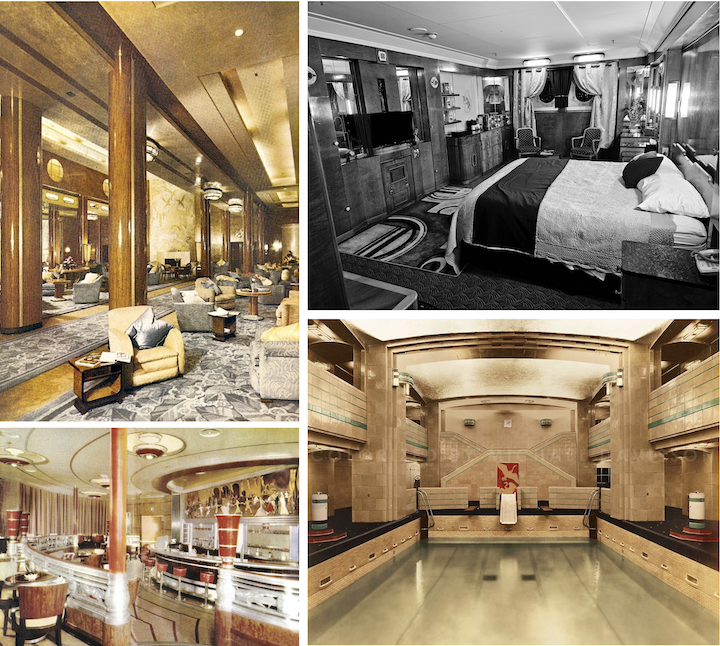
HOME AWAY FROM HOME…First-class accommodations on the Queen Mary included, clockwise from top left, the Main Lounge; the Queen Mary Suite; swimming pool; and Observation Bar. (RMS Queen Mary via Facebook)
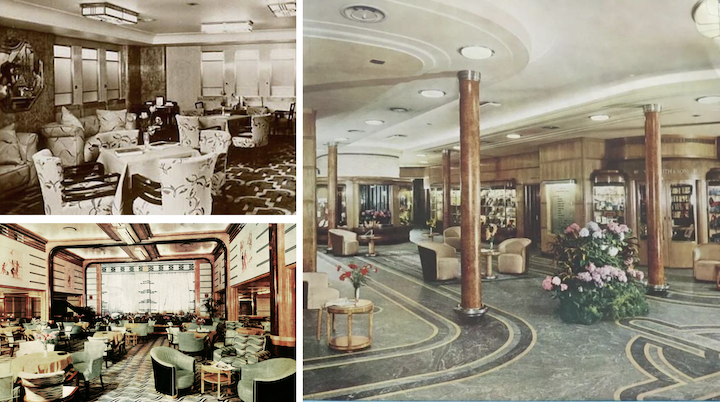
NOT BAD…Conrad Aiken called the liner’s second-class (Tourist class) sections “one of the best travel bargains in the world.” Photos at left show lounge areas, while at right is the ship’s Shopping Centre, open to all passengers. (RMS Queen Mary via Facebook)
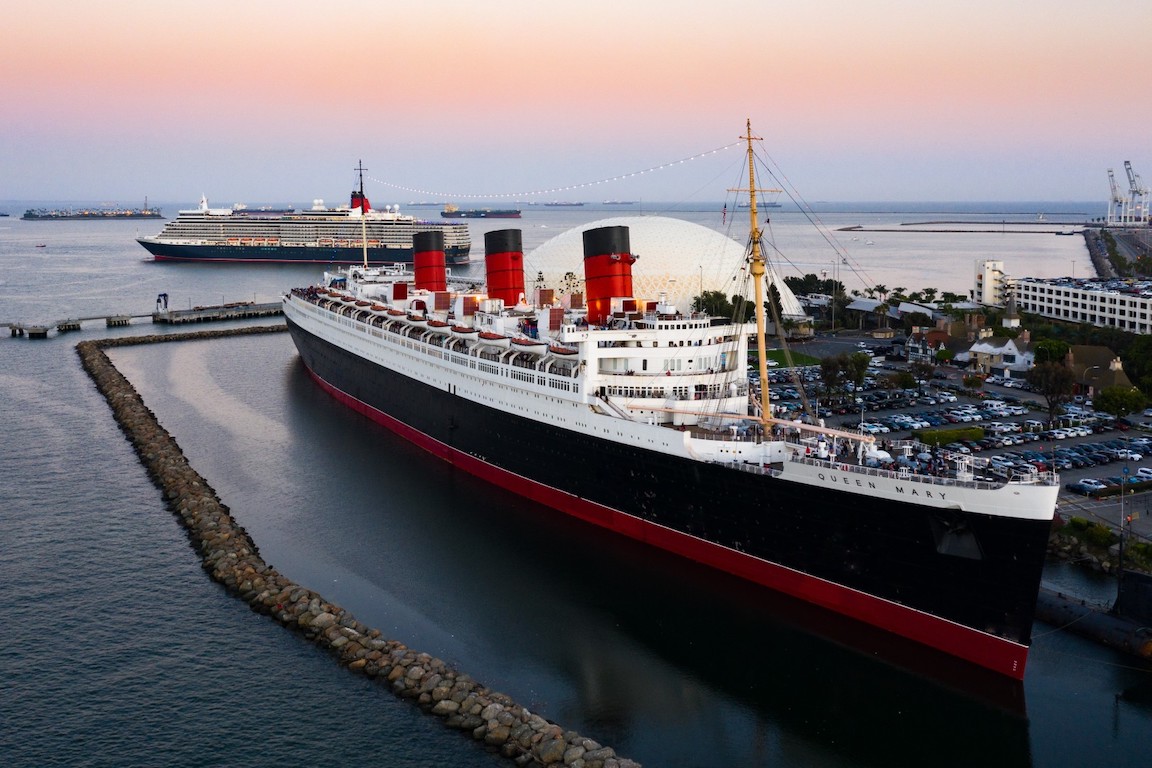
OUT TO PASTURE…The majority of the great superliners were either destroyed during World War II or scrapped after their service. However the RMS Queen Mary, after her retirement in 1967, was permanently moored at Long Beach, California as a hotel, museum, and convention space. During her years of service she crossed the Atlantic 1,001 times, carrying more than two million passengers. From 1939 to 1946 the liner also served the war effort, transporting more than 800,000 troops. (visitlongbeach.com)

* * *

Green Acres

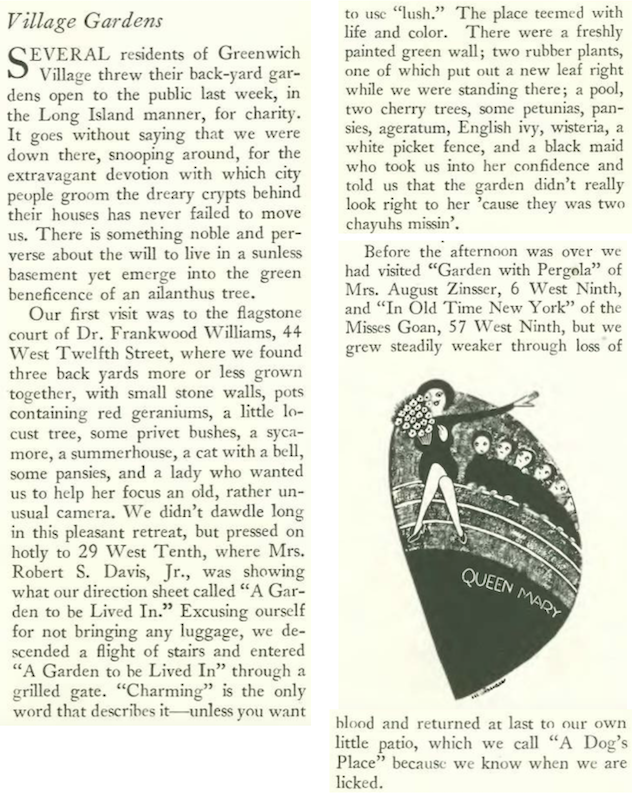
It’s hard to believe that at one time Greenwich Village was home to trash-filled back yards and deteriorating tenements. Beginning in the 1920s, residents transformed these back yards into communal green oases. “The Talk of the Town” visited three that had “more or less grown together.” Spot art by Christina Malman. Excerpts:
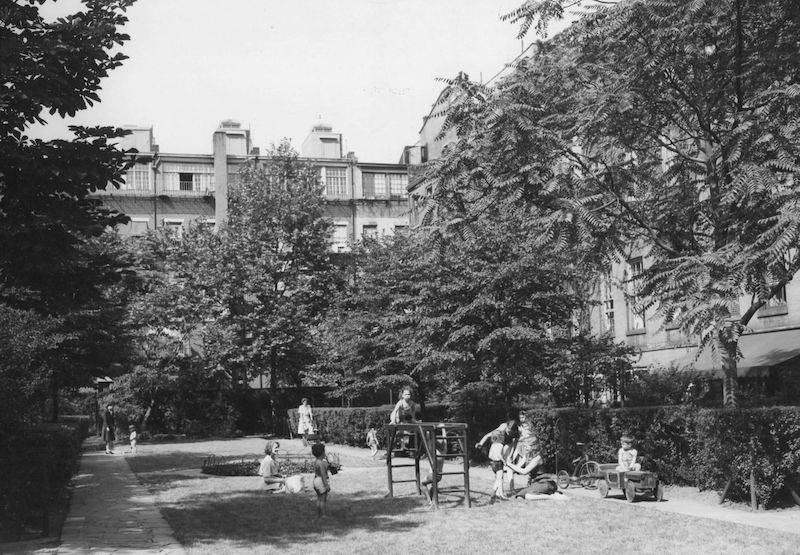
URBAN OASIS…Undated photo shows the interior courtyard garden shared by twenty-one row houses of the Macdougal-Sullivan Gardens Historic District in Greenwich Village. (nytimes.com)

 * * *

Art for the People

Geoffrey Hellman penned a profile of social realist artist George Biddle (1885– 1973), who played a major role in establishing the WPA’s Federal Art Project and who created murals for government buildings in the U.S., Brazil, and Mexico. Excerpt:
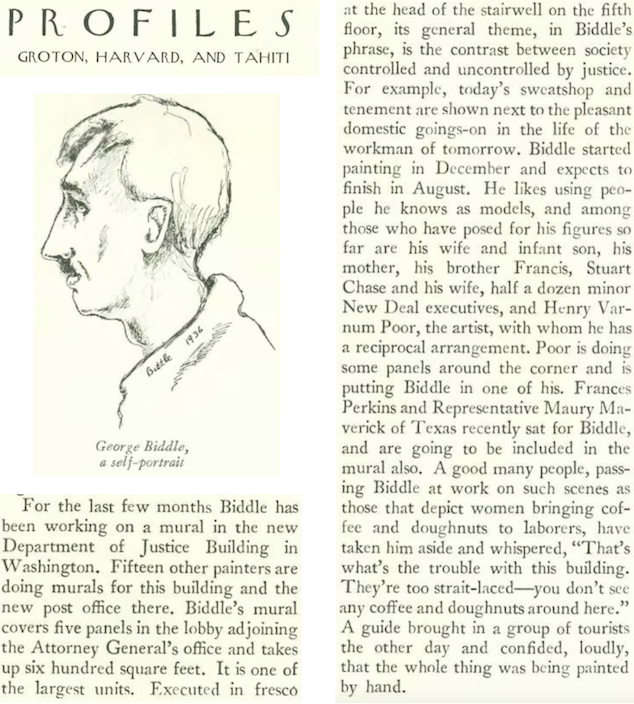
SERVING THE PUBLIC GOOD…George Biddle at work on a fresco titled Society Freed through Justice, located in the fifth floor lobby of the Attorney General’s office in the Department of Justice Building, Washington, D.C. (Wikipedia)
AMERICAN IDEAL…Detail from Biddle’s fresco painting Society Freed Through Justice. (Library of Congress)

 * * *

The Shoe Fits

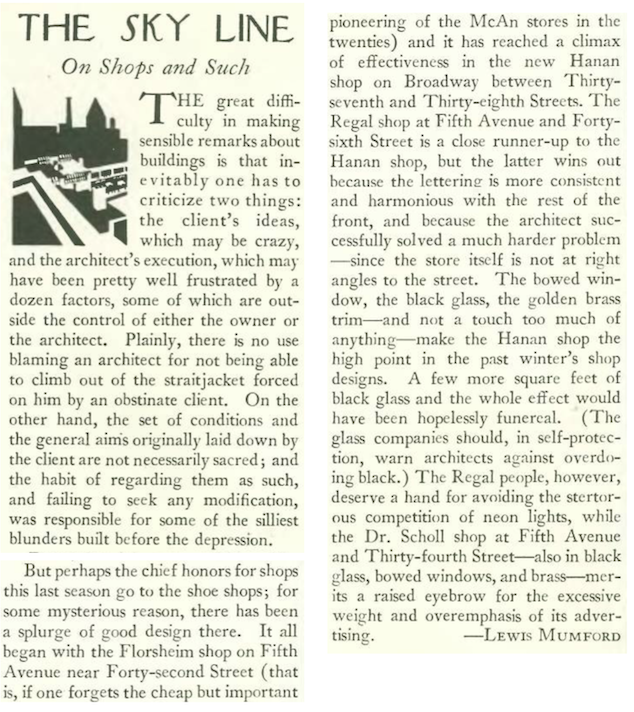
Architecture critic Lewis Mumford was unimpressed with latest designs in commercial shops, however for “some mysterious reason” he was quite taken with various shoe stores in Midtown. Excerpts:
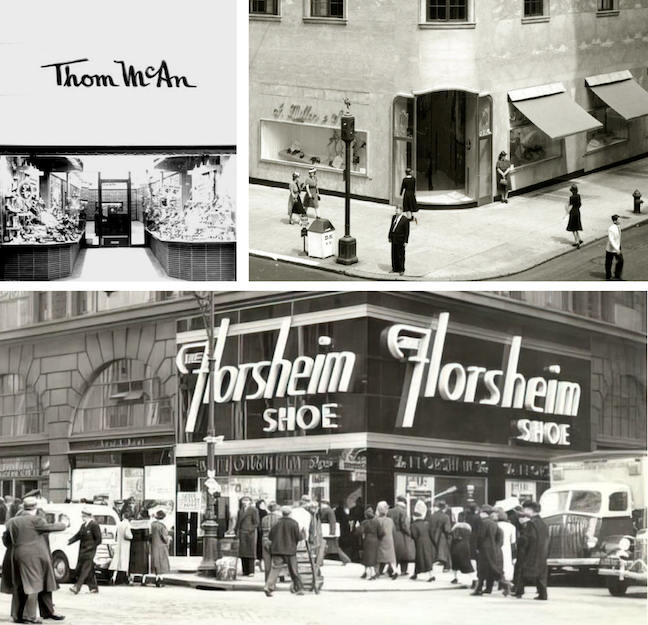
BRIGHT SPOTS…Lewis Mumford lauded the shoe company Thom McAn (top left) for its pioneering designs. Other notables included I. Miller & Sons (top right) on Fifth Avenue, and below, Florsheim Shoe on West 37th. (clickamericana.com)

 * * *

A Pirate Sets Sail

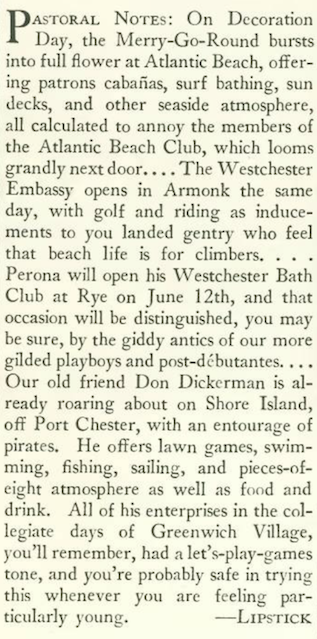
In her “Tables for Two” column, Lois Long noted a few of the summertime getaways near the city including the Westchester Embassy Club. She also mentioned the re-emergence of Don Dickerman, famed for his series of gaudy themed restaurants in the West Village from the late 1910s to 1930. Among those was his famed Pirate’s Den, which was destroyed in a 1929 fire. With the stock market crash Dickerman (1893-1981) was forced to sell the location, and he declared bankruptcy in 1932. However by 1936 he was on his way back, opening a pirate-themed enterprise near Port Chester:
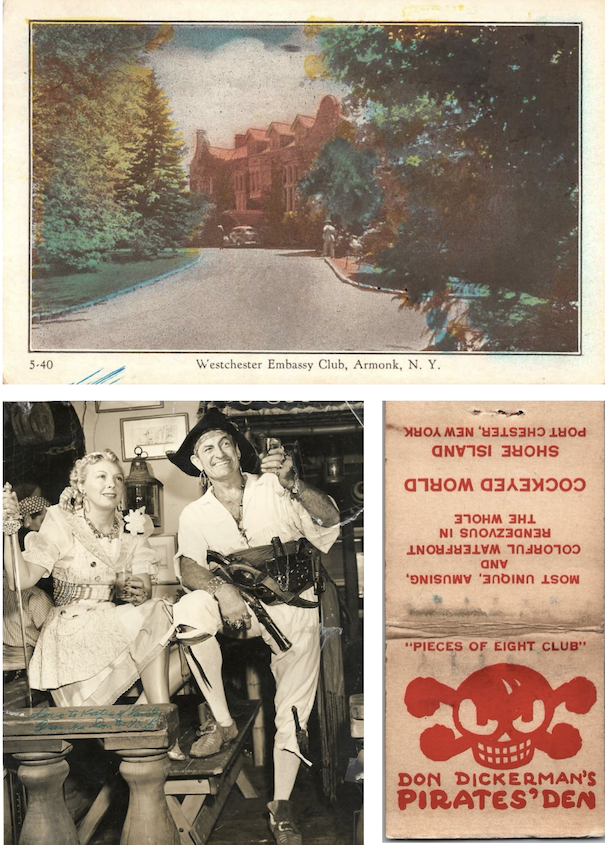
SUMMER DIVERSIONS…At top is a postcard image of the Westchester Embassy Club; below, Don Dickerman at his Los Angeles Pirates’ Den with his fifth wife, Thelma Mills Wunder (he had at least seven known wives). Originally a fixture of Greenwich Village, Dickerman emerged from his 1932 bankruptcy to open themed restaurants in Miami, Miami Beach, Port Chester, NY , Washington DC, and Hollywood. Bottom right, a matchbook cover from Dickerman’s revived Pirate’s Den at Port Chester, which was mentioned by Lois Long. (facebook.com/restaurant-ingthroughhistory.com/ebay.com)

 * * *

At the Movies

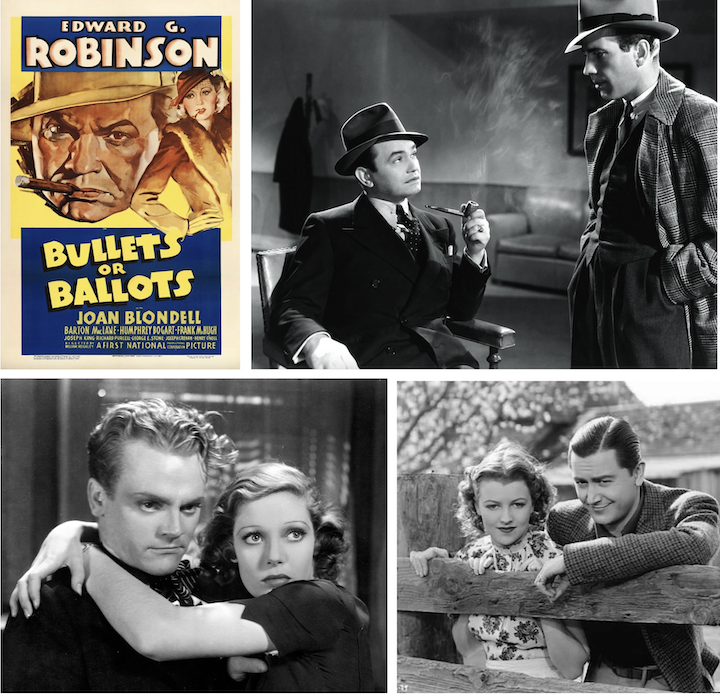
Under the strict moral guidelines of the Hays Code, gangster films of the Pre-Code era gave way to milder fare, much to the chagrin of film critic John Mosher. 
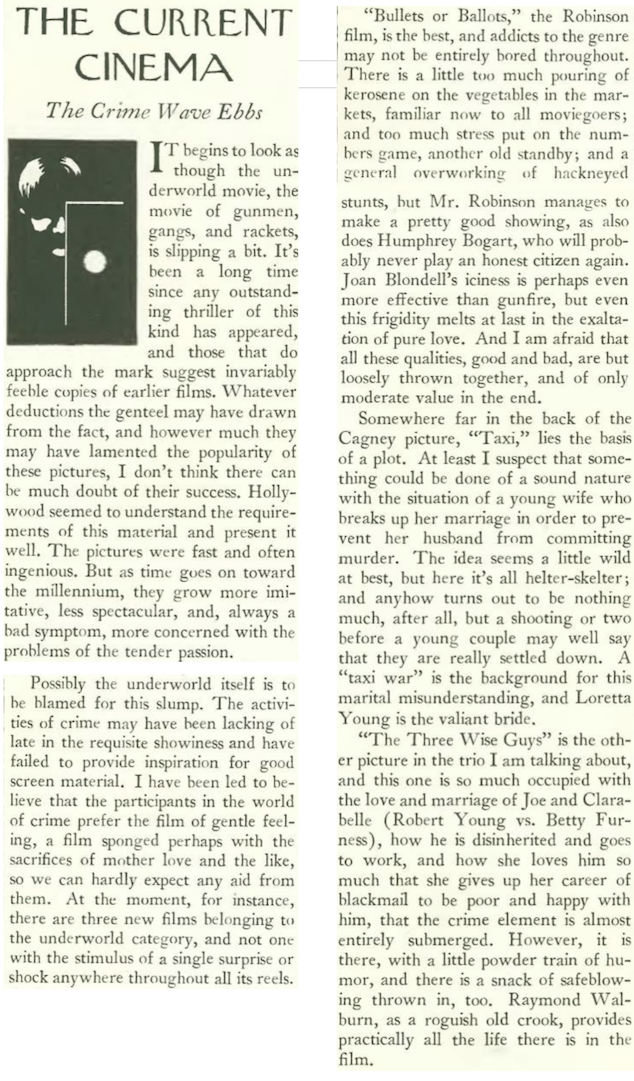
KINDER, GENTLER GANGSTERS…Clockwise from top left, poster for Bullets or Ballots gave Edward G. Robinson top billing with Joan Blondell also prominently featured—Humphrey Bogart was a relative newcomer in the movies, seen here in a scene with Robinson in Bullets or Ballots; Robert Young and Betty Furness in The 3 Wise Guys;  James Cagney and Loretta Young in the pre-Code film Taxi, which was released in 1932 but reissued in 1936 (SEE BELOW) to capitalize on Cagney’s new superstar status. The film also featured the famously misquoted line: “Come out and take it, you dirty yellow-bellied rat.” (imdb.com/tcm.com)

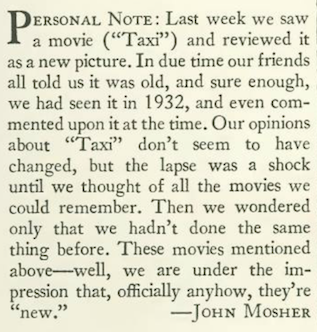
In the following week’s issue (June 6), Mosher noted that he’d forgotten about his previous review of the Cagney film Taxi in 1932:
* * *

From Our Advertisers

Appropriately buried in the back pages of The New Yorker was this tiny ad promoting Don Dickerman’s new Pirates’ Den at Port Chester, referenced above in Lois Long’s “Tables for Two” column…
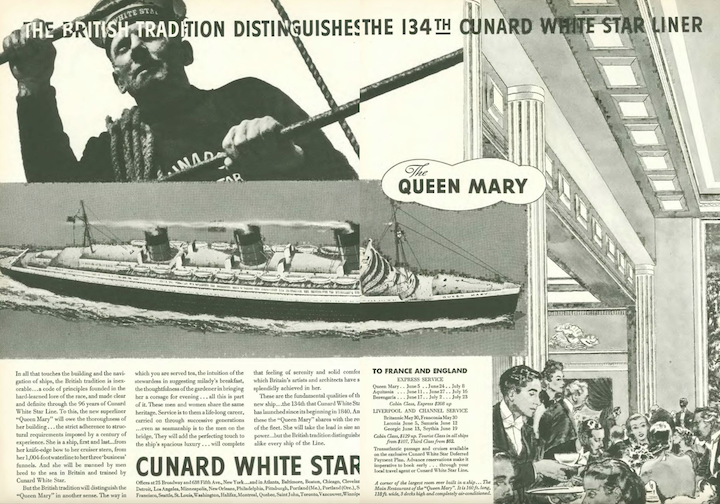
…the Cunard White Star Line took out this two-page spread to announce the launch of the Queen Mary

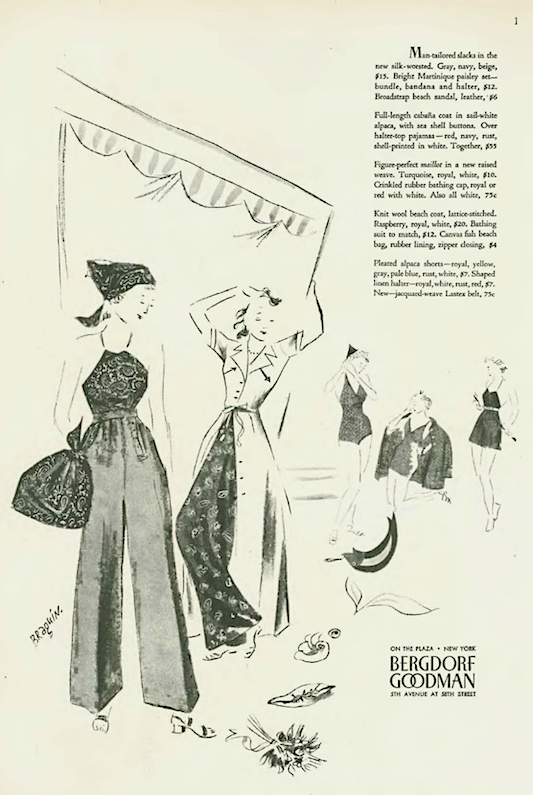
…illustrators with European roots brought modern touches to fashion advertisements…the Ukrainian-born Simeon Braguin (1907–1997), who created the ad below for Bergdorf Goodman, emerged in the 1930s as a prominent fashion illustrator, ultimately becoming the Creative Director for Vogue…during that time (1940s) he supported the work of an unknown artist, Andy Warhol

…the artist behind this next fashion illustration was the prominent French-Hungarian costume designer and illustrator Marcel Vertès (1895–1961)…
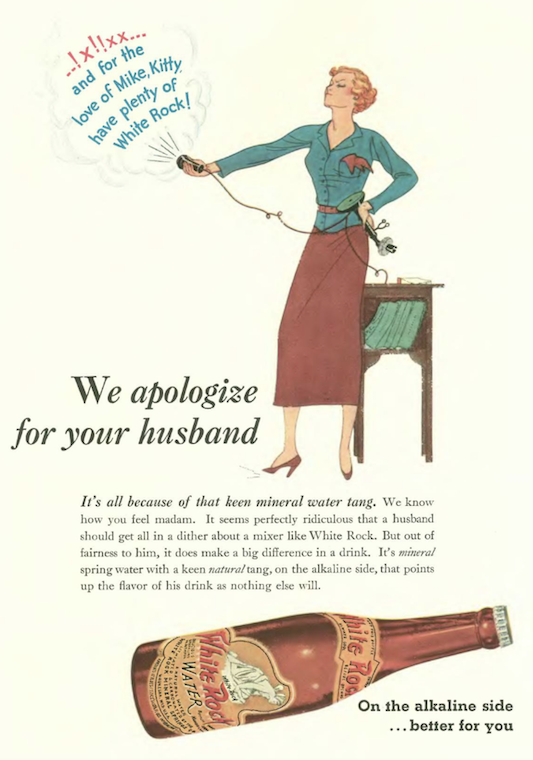
…the prolific illustrator R. John Holmgren (1897- 1963) worked for dozens of publications, and was well known for his White Rock ads in the 1930s and 40s…
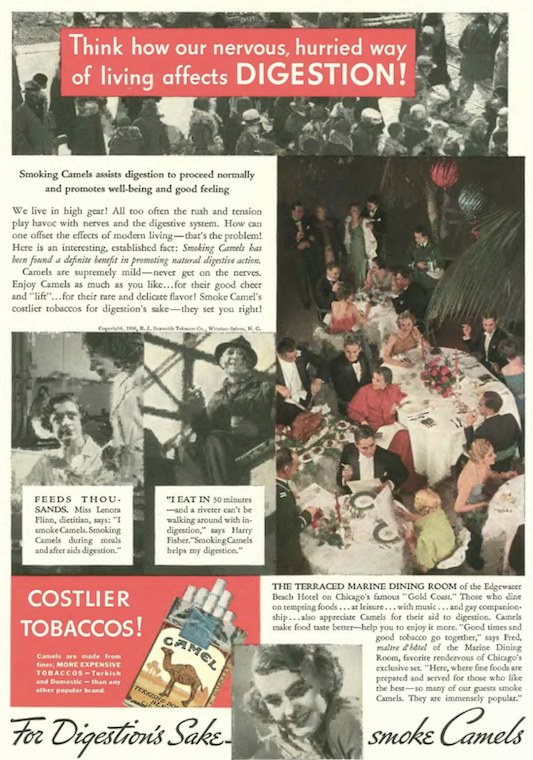
…the folks at R.J. Reynolds were still pushing their digestion claims along with their cigarettes…here they demonstrated the appeal of Camels to both the working class and the classy…
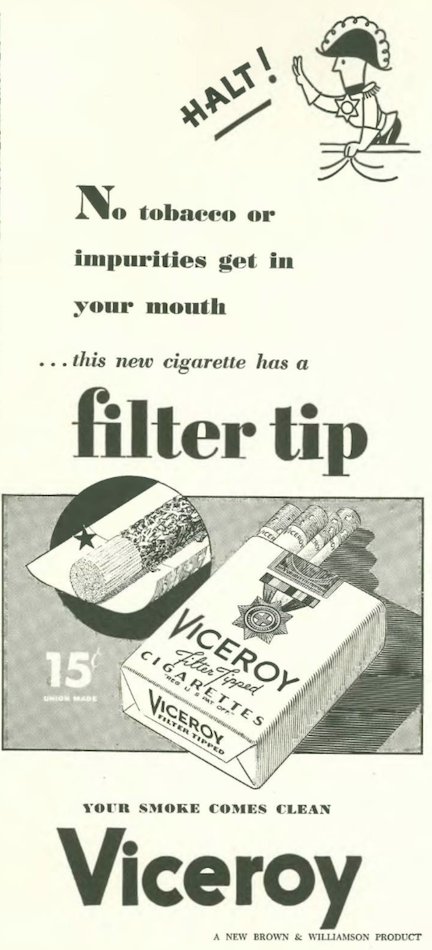
…Brown & Williamson introduced a new cigarette to the market…Viceroy was the first brand to feature a cork-tipped filter…
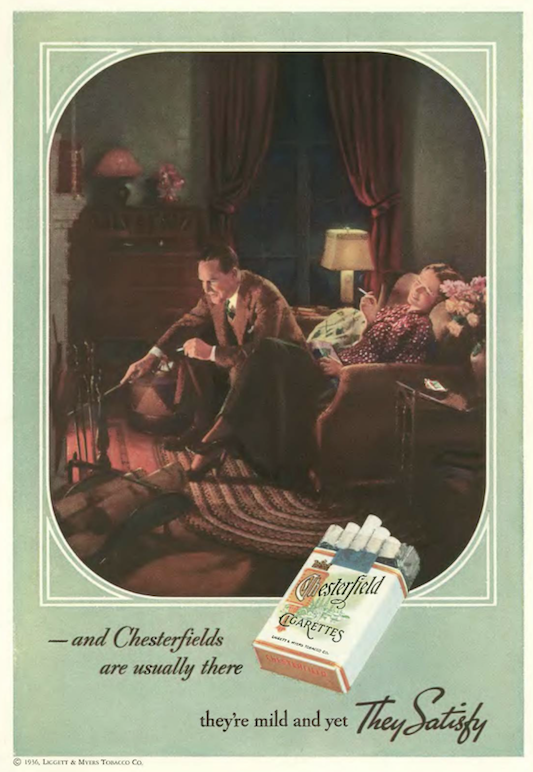
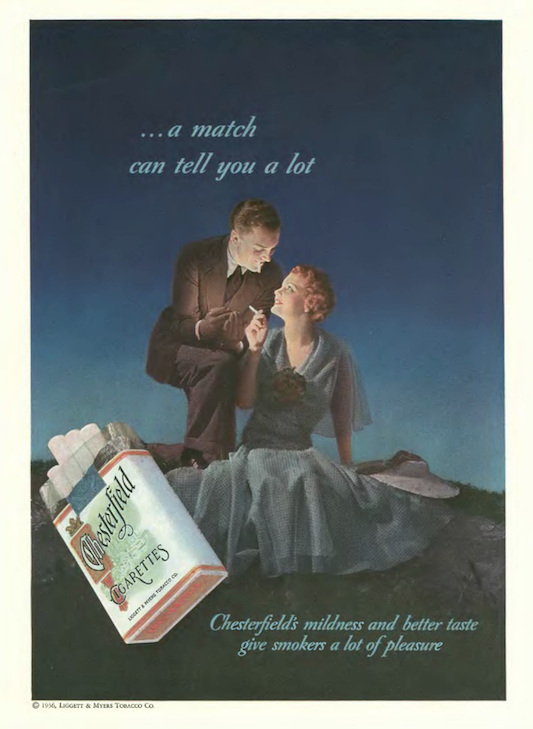
…Liggett & Myers continued to run their somewhat old-fashioned ads with softly lit, romantic settings…illustrator McClelland Barclay (1891–1943) created this look to promote the company’s Chesterfield brand…
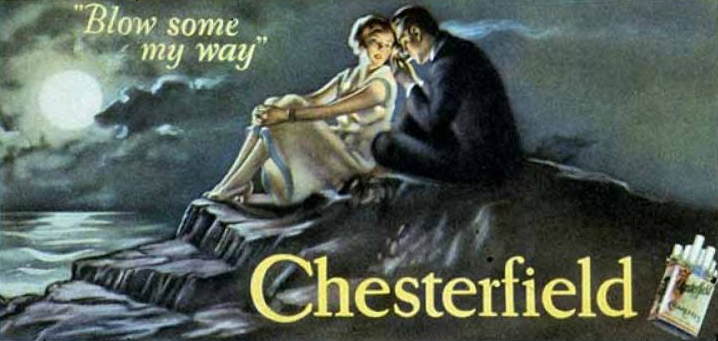
…Barclay’s work recalled similar imagery used in a controversial 1926 ad for Chesterfield that sought to break the taboo placed on women smokers…
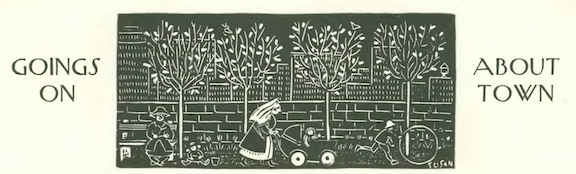
…not so controversial was Susan Willard Flint, who opened the magazine along with…
Otto Soglow

…and Richard Taylor

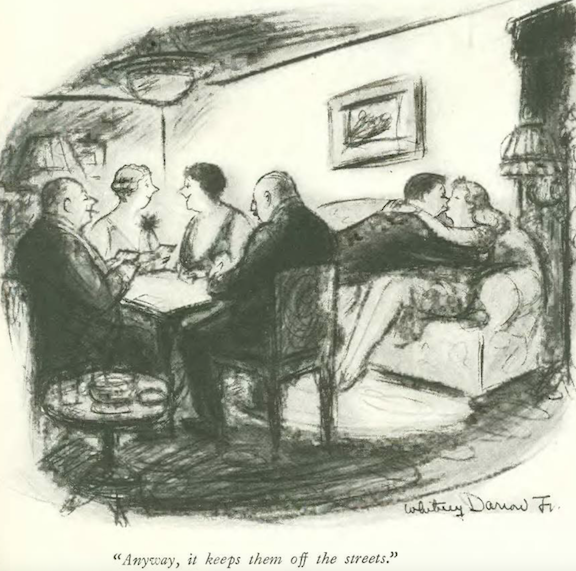
…we turn to the cartoons starting with Whitney Darrow Jr and a canoodling couple…
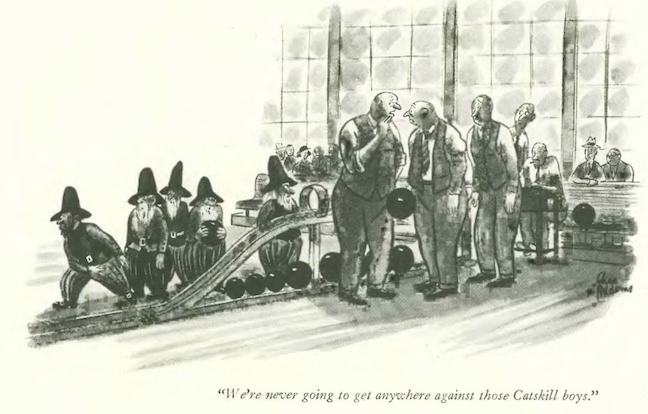
Charles Addams found some formidable bowling opponents…
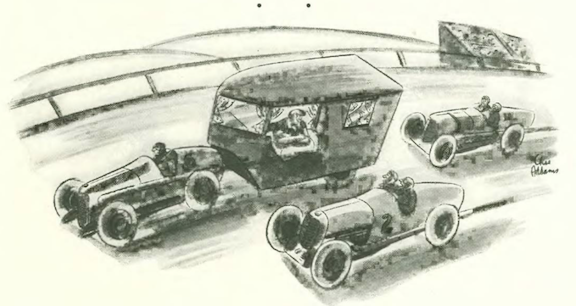
…and Addams again at the races…
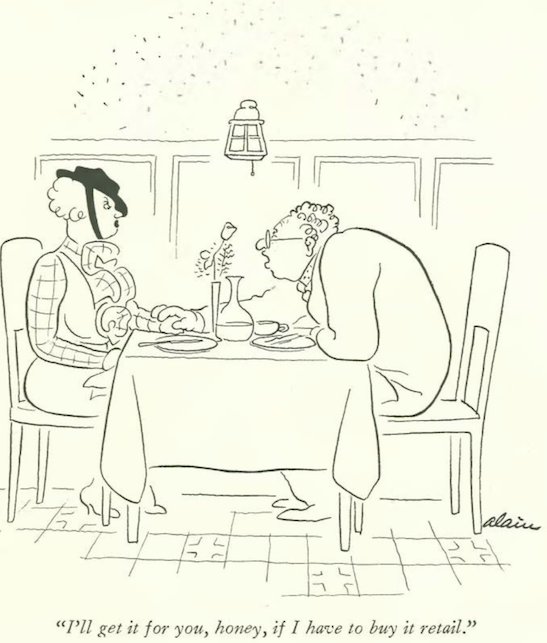
Alain showed us the harder edges of marital bliss…
…while William Steig was all sweetness and light…
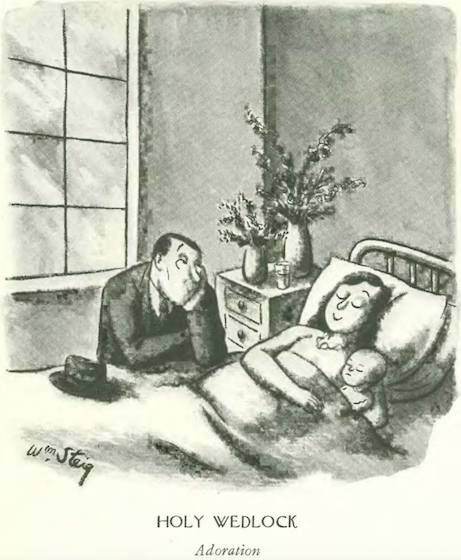
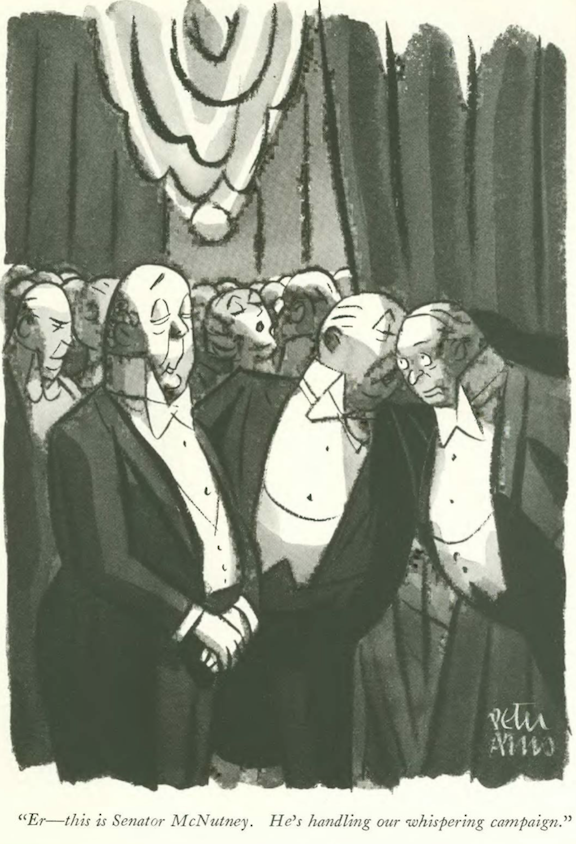
Peter Arno showed us some political intrigue…
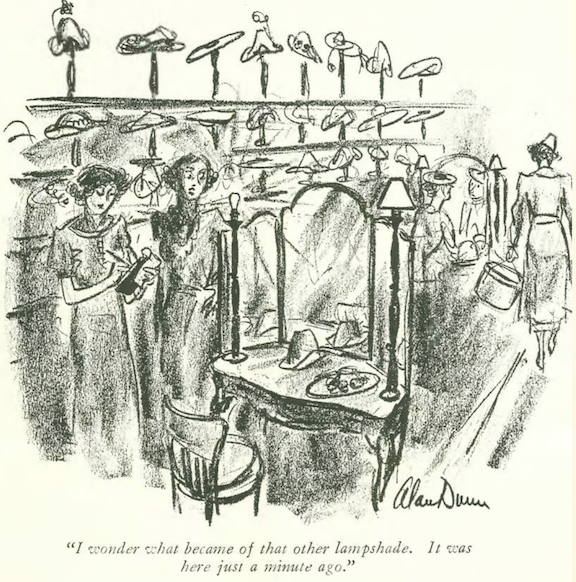
Alan Dunn offered a new twist in hat fashions…
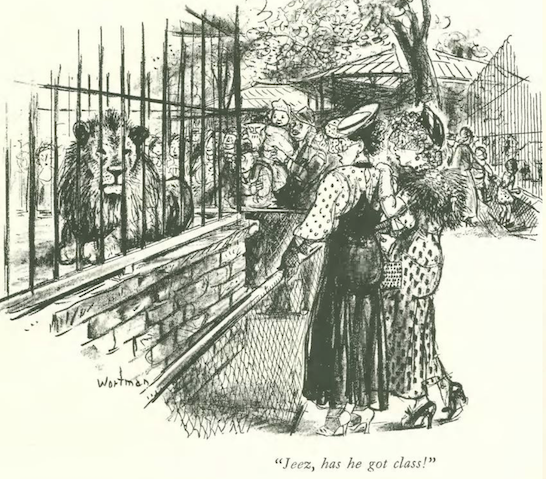
…and we close with Denys Wortman, and a very posh lion…
Next Time: Meet Izzy & Moe…
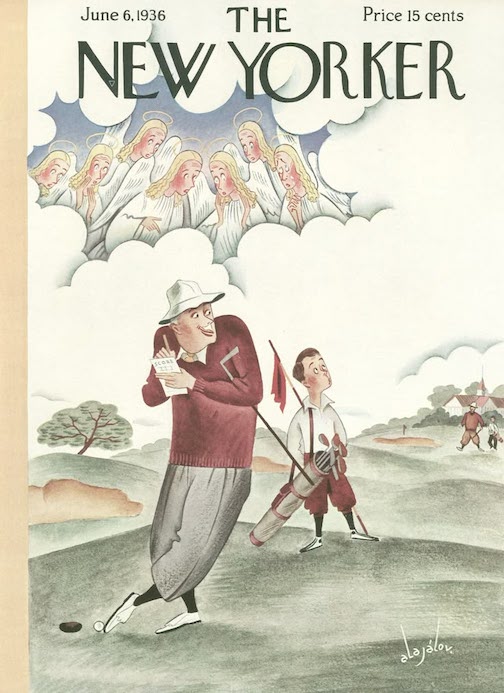
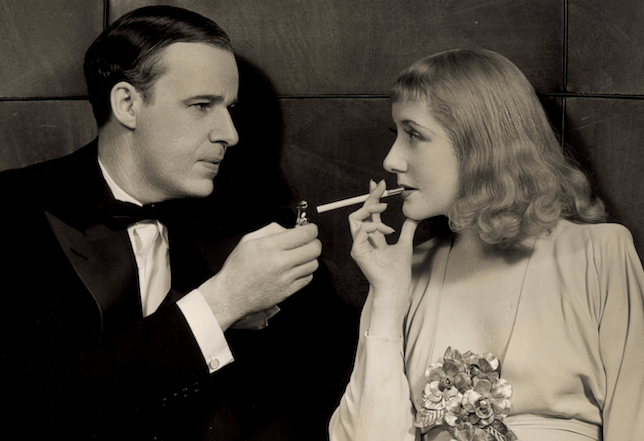
Idiot’s Delight

Above: Alfred Lunt and Lynn Fontanne headed the cast of Idiot's Delight, a Pulitzer-Prize-winning play by Robert E. Sherwood. The anti-war play premiered at Broadway's Shubert Theatre on March 24, 1936, and ran for three hundred performances. (latimes.com)

Set against the backdrop of impending war in Europe, Robert Sherwood’s Idiot’s Delight was a timely exploration of how individuals might respond to a major upheaval. The play’s themes about the futility of war resonate as much today as they did in 1936.

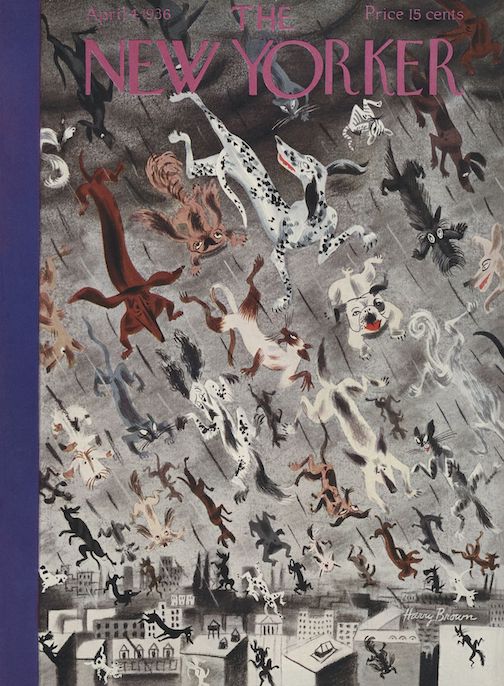
April 4, 1936 cover by Harry Brown. Although he created some distinctive, whimsical covers for The New Yorker (including today’s), there is very little biographical information available on the artist. Brown created eighteen covers for the magazine from 1931 to 1937.

Presented at Shubert Theatre, the Pulitzer Prize-winning play was set at a hotel in the Italian Alps, where the guests—among them a military captain, a German scientist, a radical socialist, and a honeymooning couple—find themselves trapped by the sudden onset of world war. The cast was led by Alfred Lunt, who played a small-time American entertainer accompanied by a troupe of chorines, and Lynn Fontanne, who portrayed a mysterious Russian woman who was traveling with an arms dealer.

The Pulitzer jury called the play first-rate, full of dramatic invention and “Molierian richness.” Critic Robert Benchley heartily agreed:

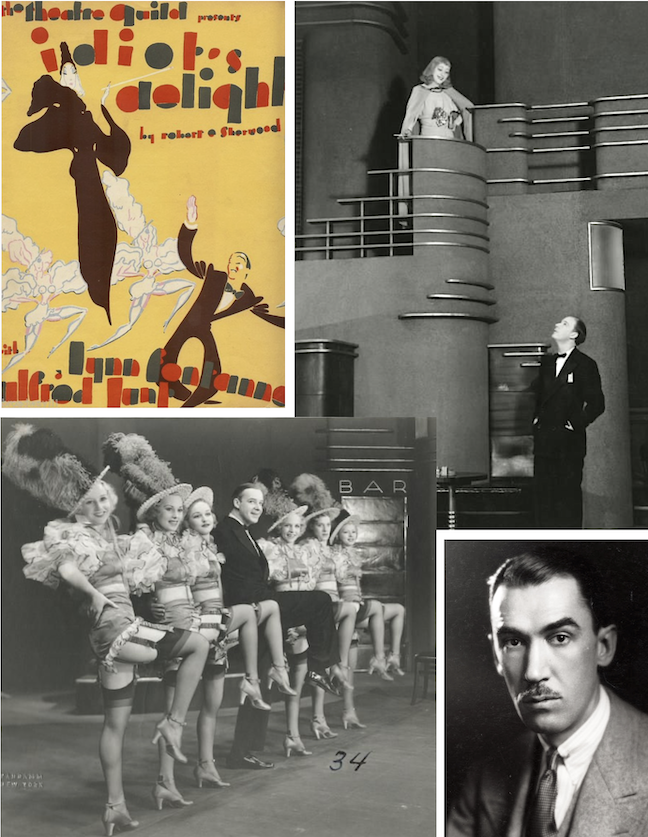
FRIVOLITY AMID THE CHAOS OF WAR…Clockwise, from top left, souvenir program for Idiot’s Delight; Alfred Lunt and Lynn Fontanne in a scene from the play; playwright Robert E. Sherwood; Lunt with a chorus line in Idiot’s Delight. The New York Times critic Brooks Atkinson wrote that the play “demonstrates Mr. Sherwood’s taste for exuberance and jovial skulduggery.”(eBay.com/nypl.org/imdb.com)

Benchley concluded that the play was at once entertaining and edifying:

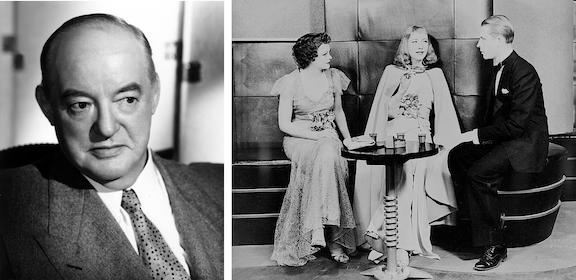
FORGET ABOUT IT…In Idiot’s Delight, Sydney Greenstreet (left) portrayed a doctor who, in the face of senseless war deaths, gives up on his life-saving research; at right, Jean MacIntyre (left) portrayed Mrs. Cherry, part of a young English honeymooning couple stranded at a hotel due to the sudden closing of the border. With her in the scene are Fontanne and Lunt. (radioclassics.com/Public Domain)

Sherwood adapted the play into a 1939 film of the same name, starring Norma Shearer and Clark Gable.

 * * *

Earth Gazing

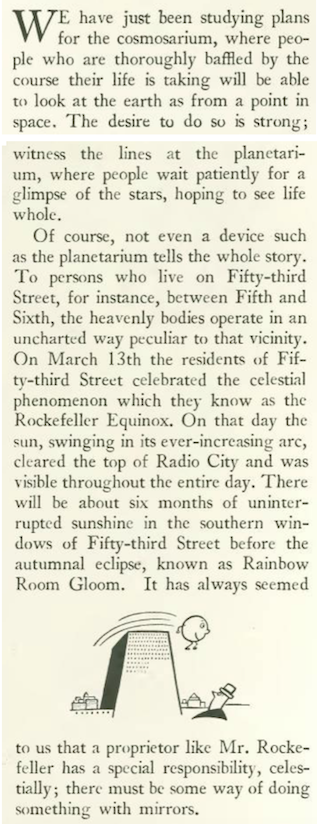
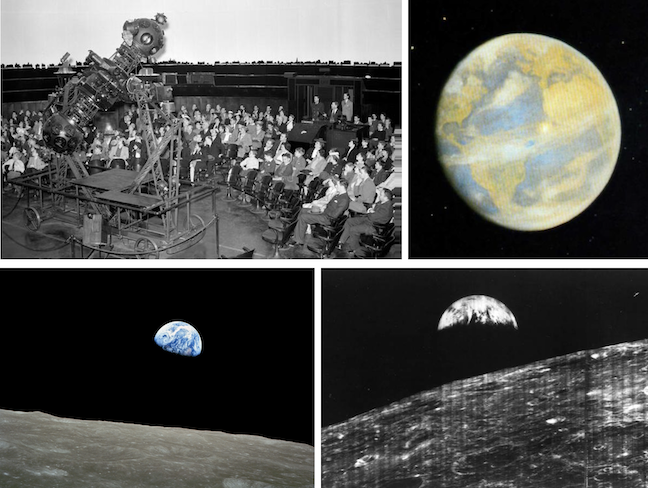
In his “Notes and Comment,” E.B. White mused about plans at the Hayden Planetarium for a program that would give visitors some idea of how earth would appear from a point in space. Earthlings would have to wait until 1968 to actually see a clear, color image of their planet.

THE WONDER OF IT ALL…Clockwise, from top left, the cosmosarium at the Hayden Planetarium, circa 1935; Howard Russell Butler’s attempt at an accurate portrayal of the earth for the American Museum of Natural History, circa 1920s; in 1966, Lunar Orbiter I sent back this image of Earth from the vicinity of the Moon; Earthrise is a famous photograph of Earth taken from lunar orbit by astronaut William Anders on December 24, 1968, during the Apollo 8 mission. (facebook.com/pinterest.com/NASA)

 * * *

From Russia With Love

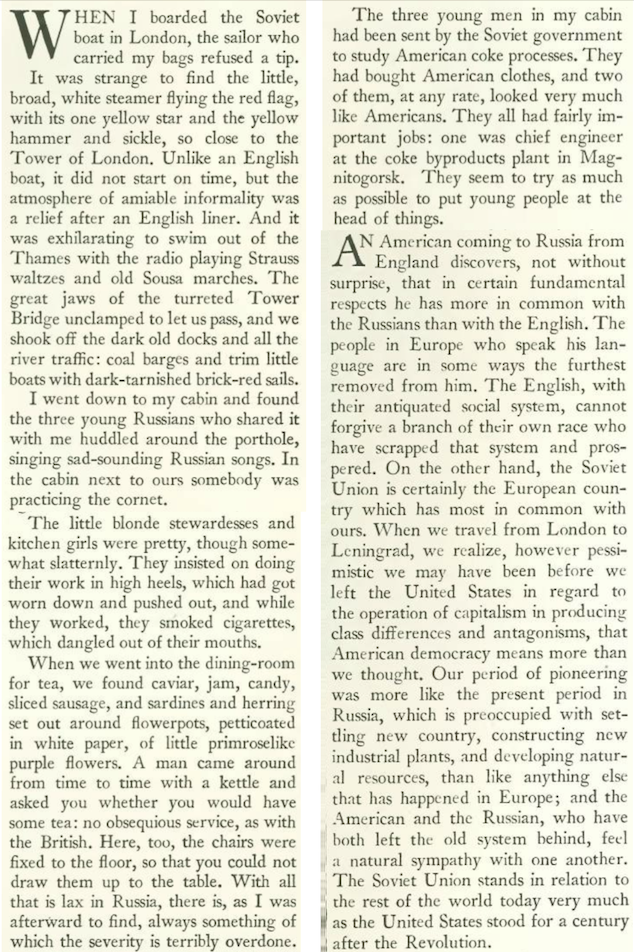
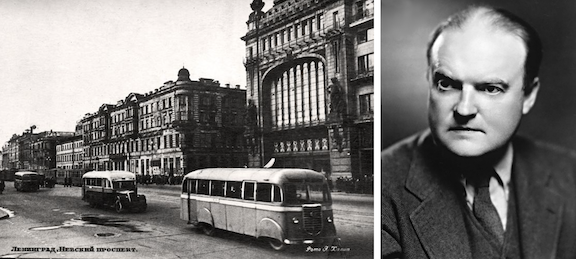
Journalist and literary critic Edmund Wilson Jr (1895–1972) traveled in Russia from May to October 1935, and later filed a couple of articles in The New Yorker detailing his travels. Writing for the column “A Reporter at Large,” Wilson described his journey by boat from London to Leningrad, finding an unexpected kinship with his Soviet cabin mates. Excerpts:

DESTINATION…Leningrad’s Nevsky Prospect 1930s; Edmund Wilson Jr in 1936. (pinterest.com/Wikipedia)

Wilson found that he preferred the company of the Soviets to a stuffy English couple who were his dining companions. He concluded:

It should be noted that Wilson, despite his Marxist sympathies, would soon become disillusioned with the Soviet experiment; his travels concluded just before the onset of Josef Stalin’s “Great Purge,” which featured the notorious Moscow Show Trials that sent millions of innocent Soviet citizens to labor camps or to their deaths in prisons.

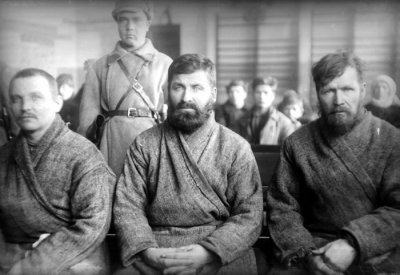
DOOMED…During the Great Terror, which included the notorious show trials of Stalin’s former Bolshevik opponents in 1936-1938 and reached its peak in 1937 and 1938, millions of innocent Soviet citizens were sent off to labor camps or killed in prison. This image from 1936 shows defendants dressed in prison clothing during one of the Moscow Show Trials. (umkc.edu)

 * * *

At the Movies

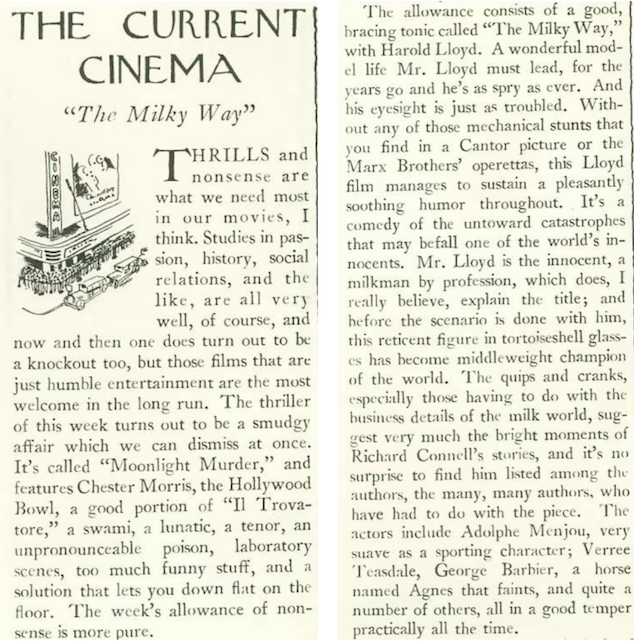
Film critic John Mosher observed that moviegoers mostly needed “thrills and nonsense” at the cinema. Thrills were not to be found, but Harold Lloyd provided the nonsense.

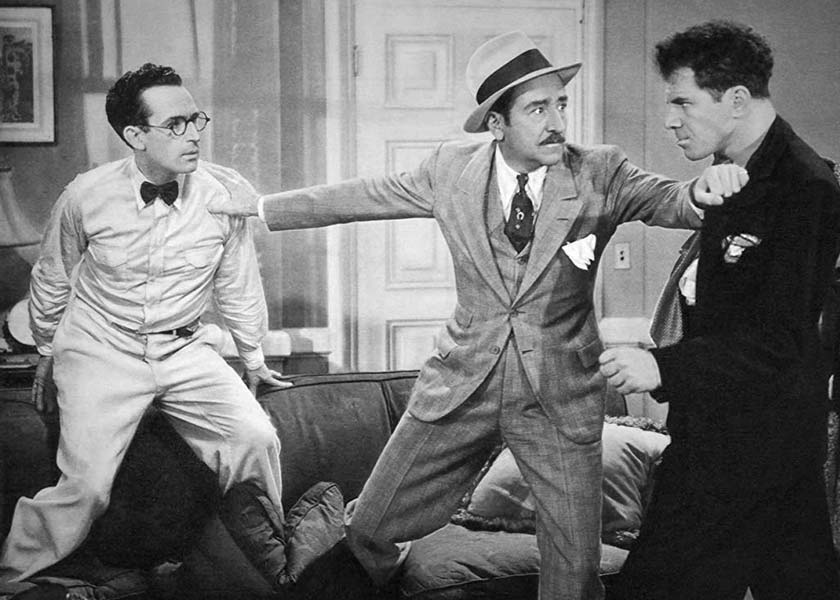
PUNCH LINES…Harold Lloyd (left), portrayed an unlikely middleweight boxer in The Milky Way. Above is a scene with Adolphe Menjou (center) and Lionel Stander. (obscurehollywood.net)

The “thriller” of the week was Moonlight Murder, which Mosher suggested audiences could “dismiss at once.”

DISMISSED…Katharine Alexander, Leo Carrillo and Benita Hume in Moonlight Murder. (rotten tomatoes.com)

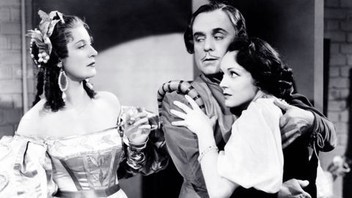
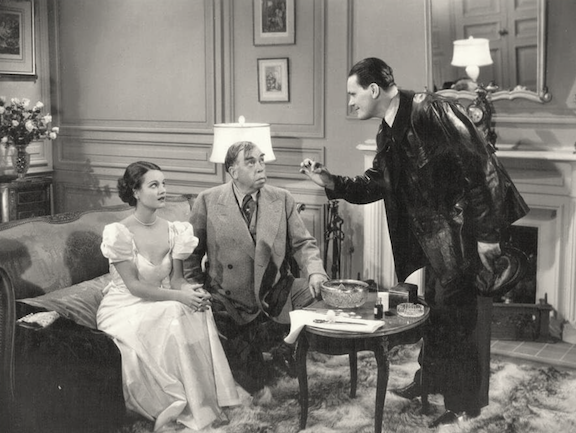
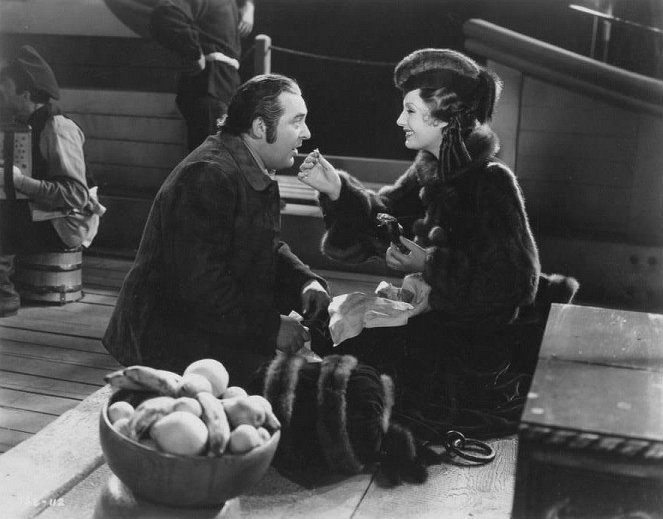
Mosher also offered tepid reviews of Everybody’s Old Man and Sutter’s Gold, despite these films featuring a popular humorist and a respected character actor, respectively.

SAY SOMETHING FUNNY…Rochelle Hudson, Irvin S. Cobb and Warren Hymer in Everybody’s Old Man. (imdb.com)
WHO AM I?…A vague narrative left critic John Mosher wondering if Edward Arnold’s character was supposed to be a “hero, villain, scamp, or fool” in Sutter’s Gold. Above, Arnold in a scene with Binnie Barnes. (film booster.com)

 * * *

From Our Advertisers

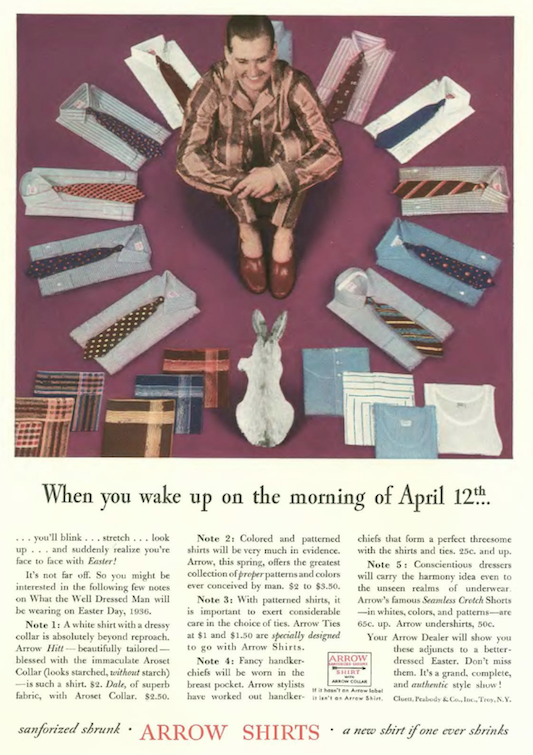
Arrow Shirts rolled out a colorful array of pre-shrunk sanforized shirts and neckties just in time for the Easter holiday…

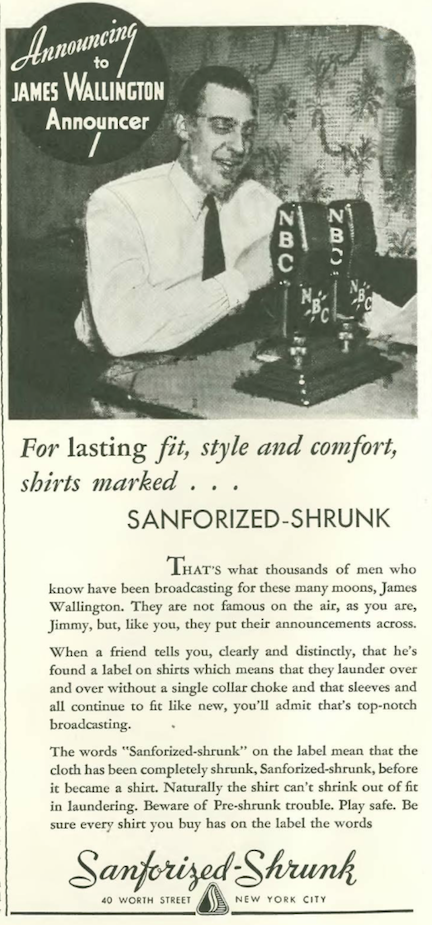
…from the 1930s through the 1950s the distinctive voice of James Wallington (1907–1972) filled the airwaves on both radio and television…here he endorses those “Sanforized Shrunk” shirts…

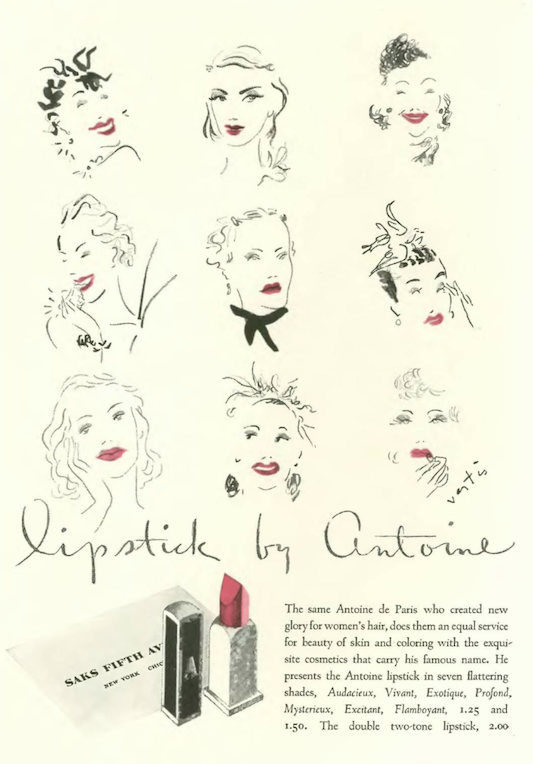
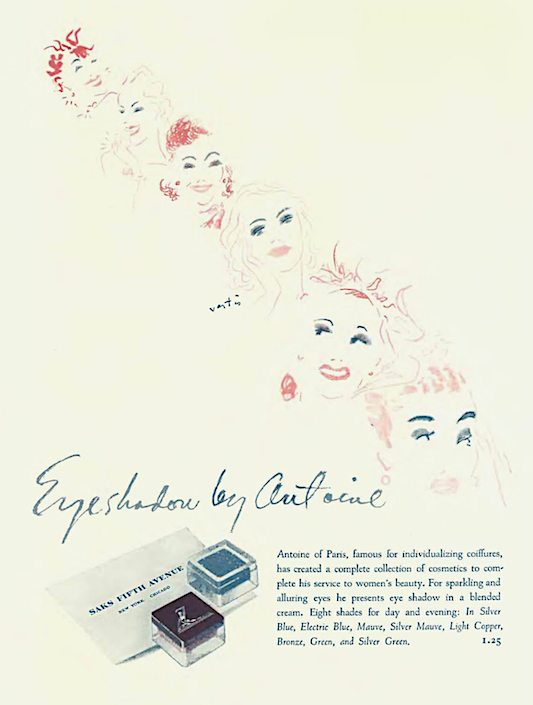
…French costume designer and illustrator Marcel Vertès (1895–1961) provided the art for the Antoine de Paris lipstick line at Saks…Vertès created the original murals in the Carlyle Hotel’s Café Carlyle and in the Waldorf-Astoria’s Peacock Alley… he also won two Academy Awards for his work on the 1952 film Moulin Rouge

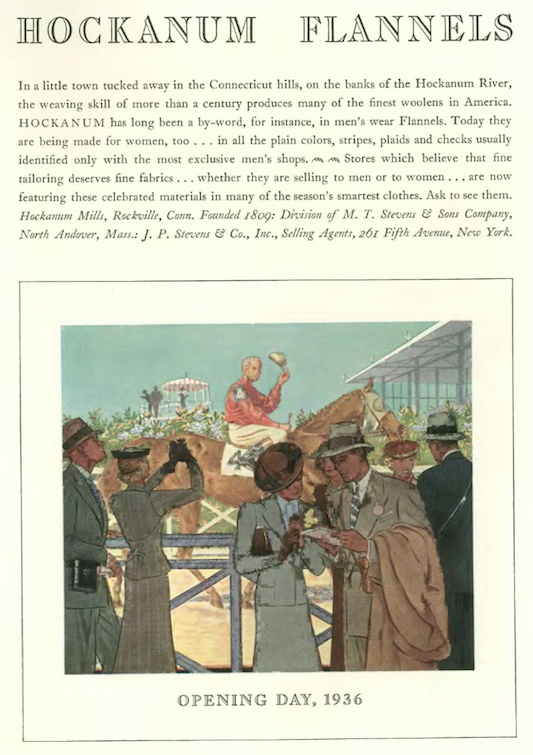
…Hockanum Mills announced its new line of woolens for the spring racing season…

Hockanum’s Rockville mills were shut down in 1951. Today the site is being redeveloped for commercial and light industrial uses as well as the site for the New England Motorcycle Museum. (historicbuildingsct.com)

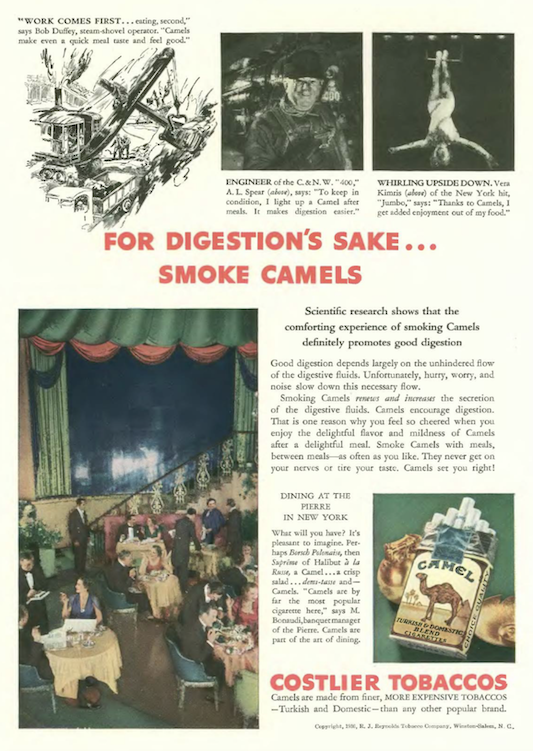
…more claims from R.J. Reynolds regarding the gastrointestinal benefits of their Camel cigarettes…

…while Liggett and Myers stuck with the pleasures of hearth and home, and a pack of Chesterfields…

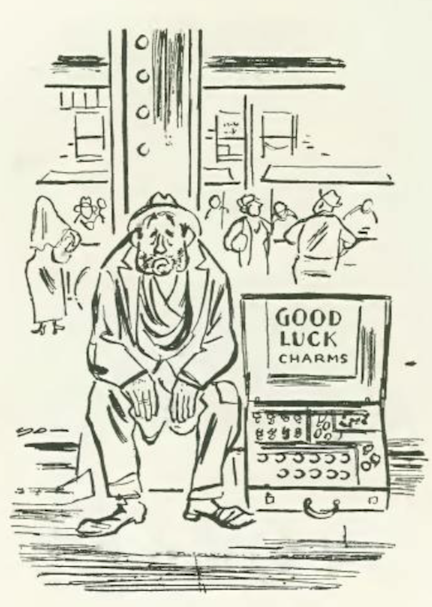
…on to the cartoon section, we begin with Christina Malman

Richard Taylor

Robert Day

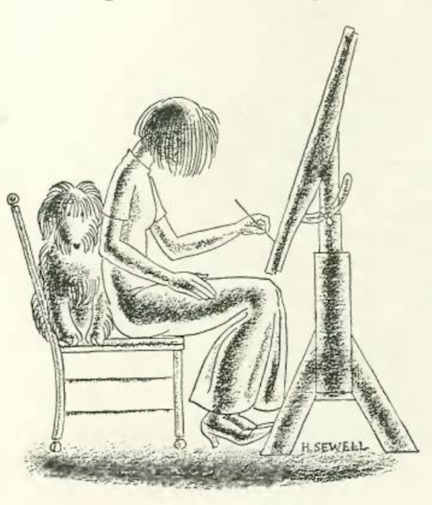
…and a wonderful spot drawing by illustrator and children’s book author Helen Moore Sewell

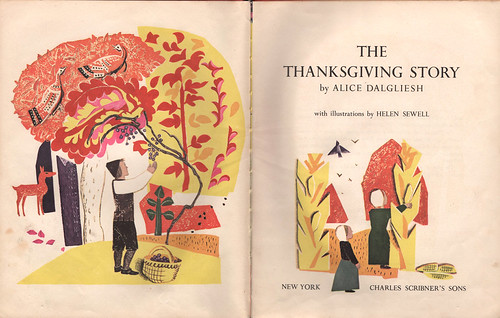
…who won a Caldecott Medal for her illustrations featured in Alice Dalgliesh’s The Thanksgiving Story (1954)…

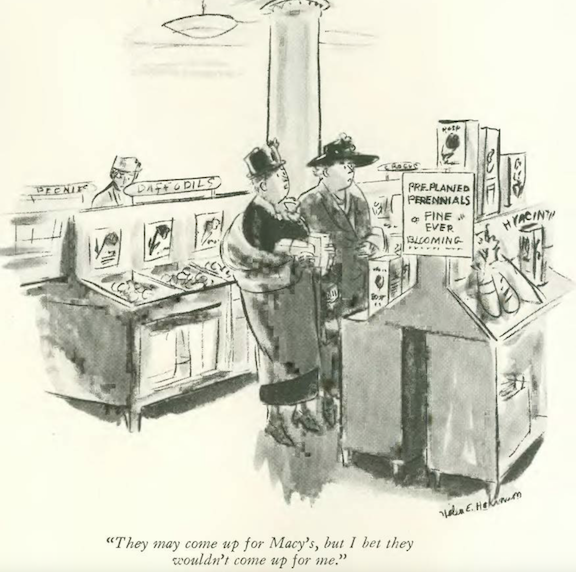
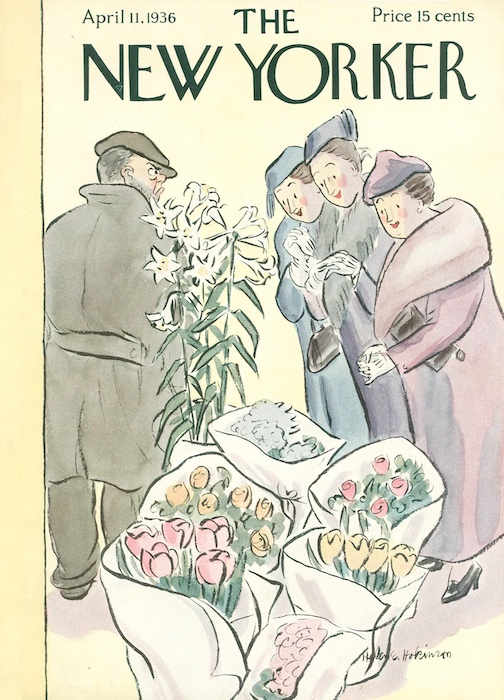
…we go shopping with Helen Hokinson in the garden section…

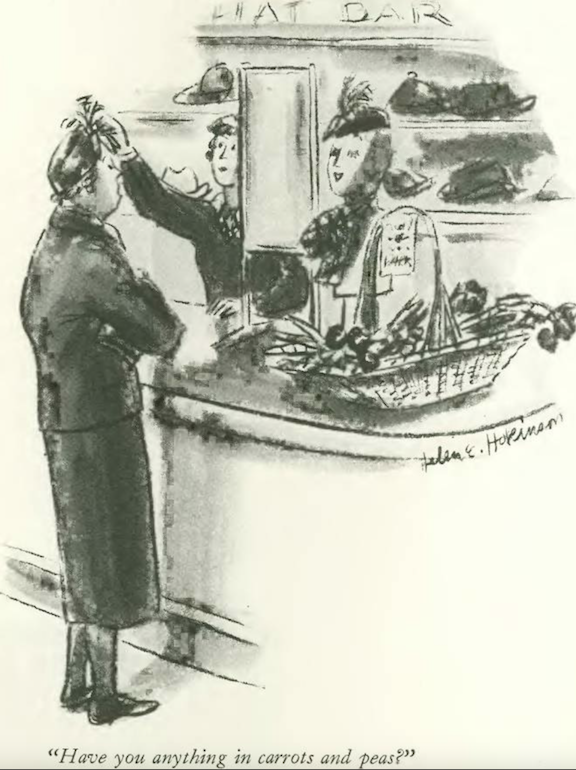
…and in the hat department…

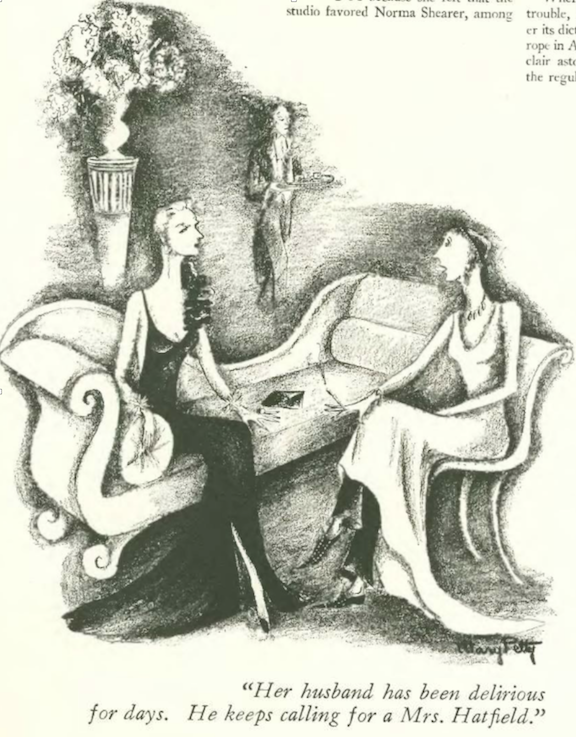
Mary Petty caught up on the latest gossip…

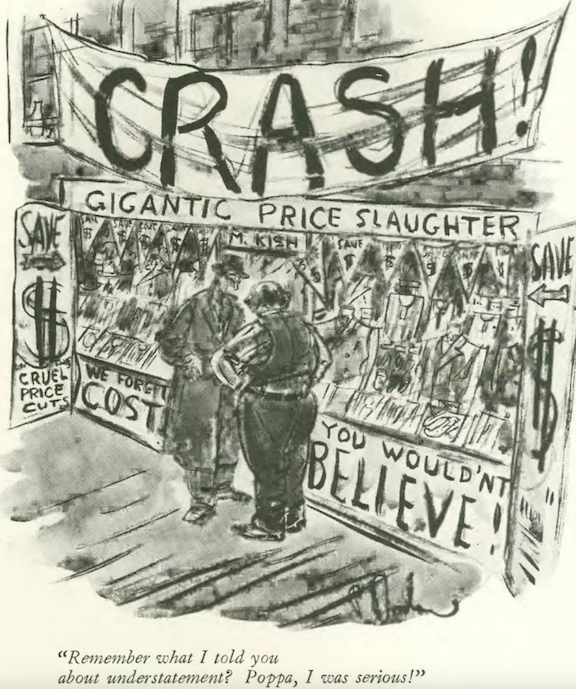
Perry Barlow gave us a shopkeeper in need of some marketing tips…

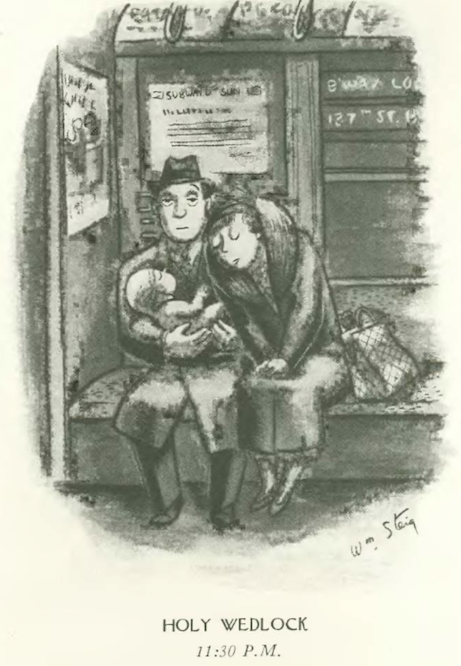
William Steig continued to probe the joys of married life…
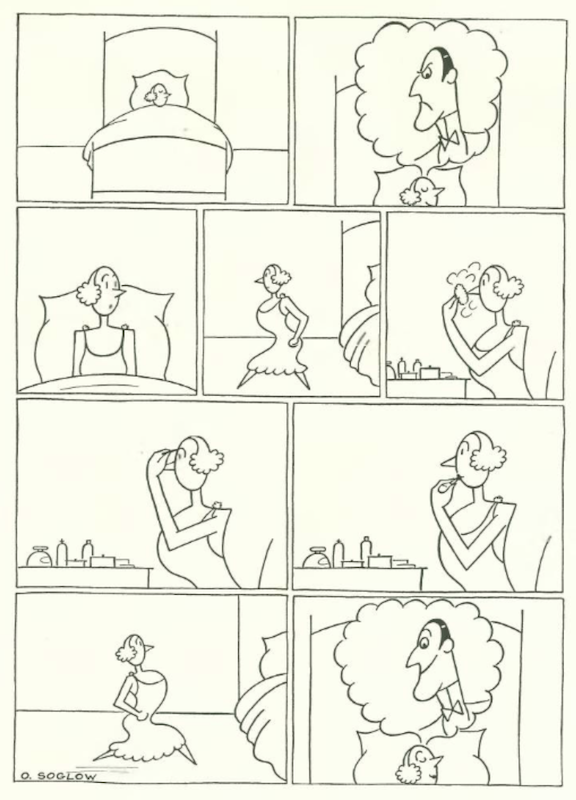
…even one’s dream world required some careful grooming, per Otto Soglow

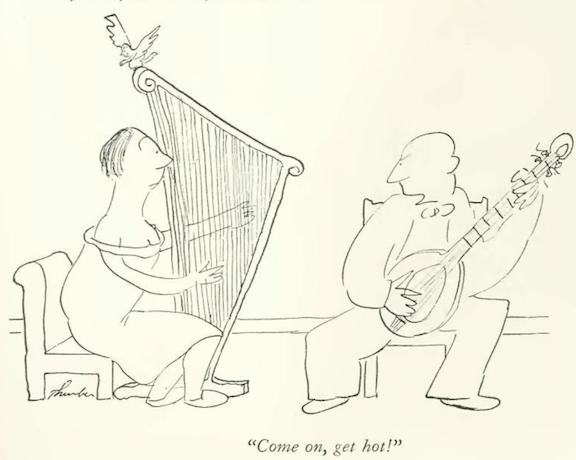
James Thurber drew up a duet out of tune…
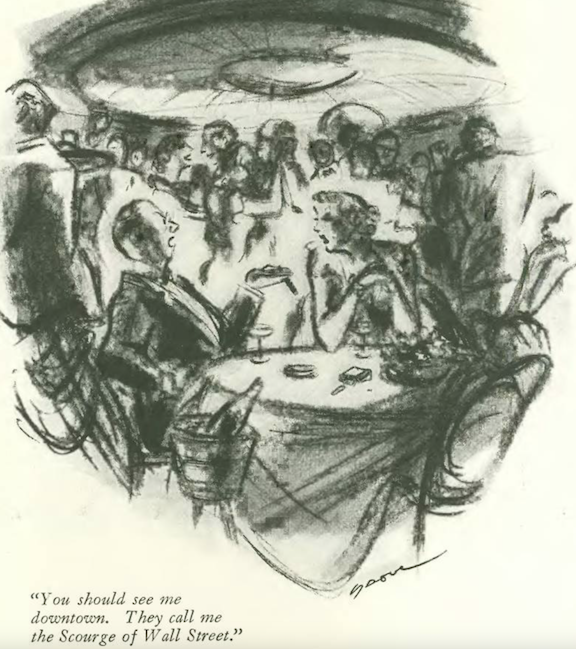
…outside of Wall Street, Leonard Dove’s titan of business was just another sugar daddy…

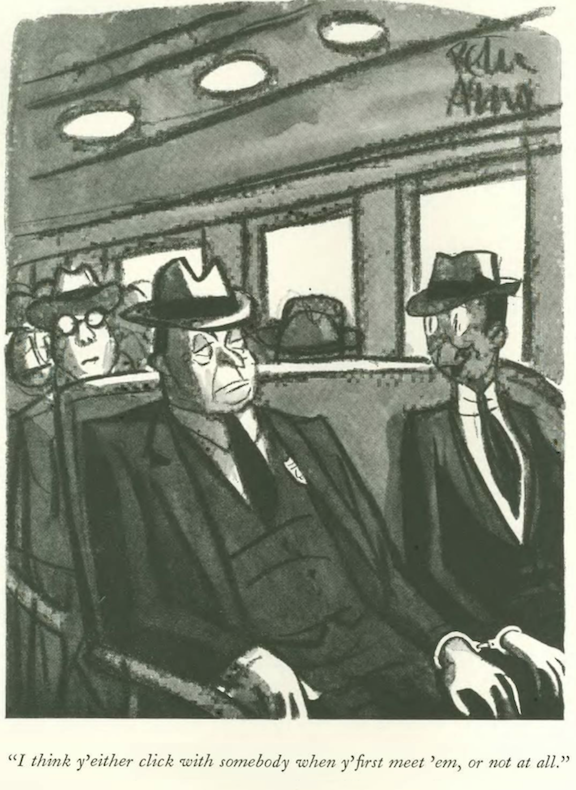
…and we close with Peter Arno, and strangers on a train…

Next Time: People in Glass Houses…