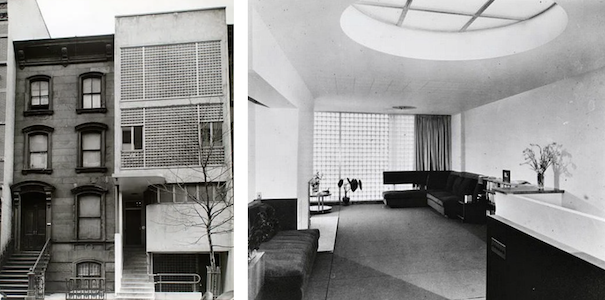
Above: The Morris B. Sanders Studio and Apartment is the second-oldest modern townhouse in Manhattan. Sanders designed the townhouse, located on 49th Street between 2nd and 3rd Avenue, in 1934 for his own use, and construction was completed in December 1935. (Wikipedia/docomomo-nytri.org)
Today we barely notice the tens of thousands of shiny glass buildings that populate our cities, not to mention the countless postwar houses that feature vast expanses of glass from floor to ceiling.
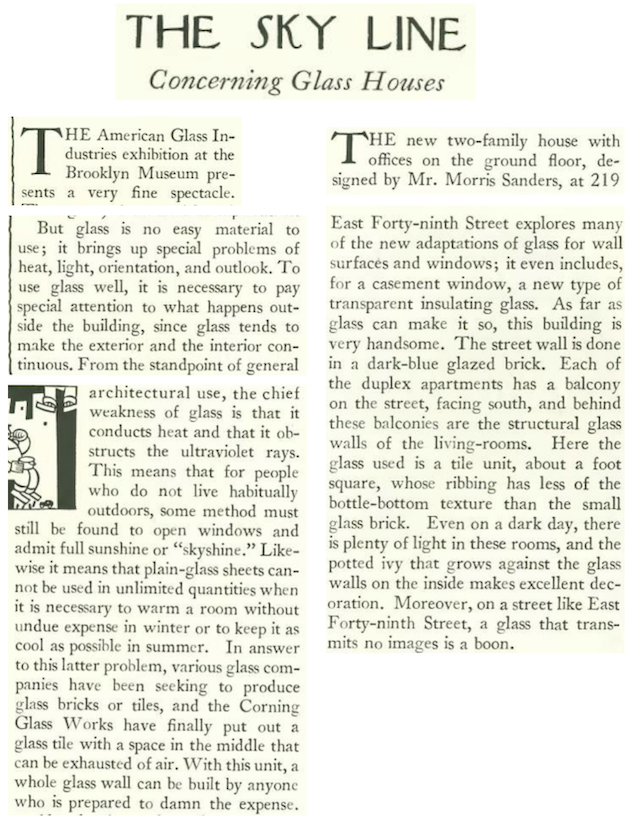
In 1936 a house made of glass, especially as a structural element, seemed unlikely to most folks, if not downright bizarre. Enter Lewis Mumford, arts and architecture critic for The New Yorker, who was critical of many modern industrial trends and often promoted his ideal of human-scaled, organic design in buildings and cities. Mumford was not opposed to new technologies, such as glass block, as long as it was employed with sensitivity and good taste. Here are some of Mumford’s observations after visiting the American Glass Industries Exhibition at the Brooklyn Museum:
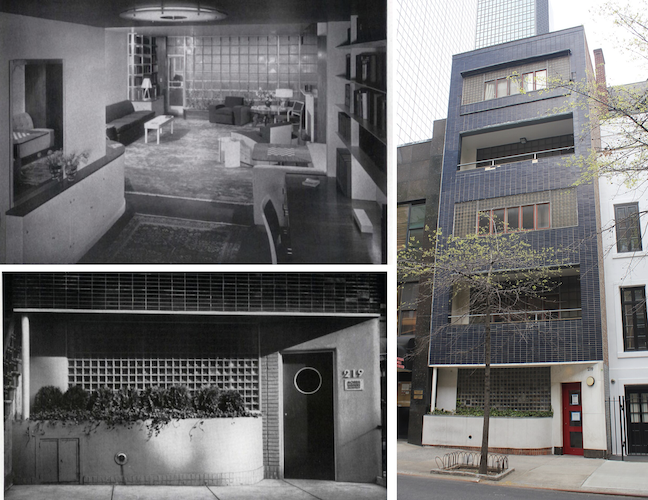
The Sanders House wasn’t the first time a brownstone was replaced by a modernist building. That honor goes to another Turtle Bay-area house, just one block from the Sanders house, designed by architect William Lescaze in 1933-34.
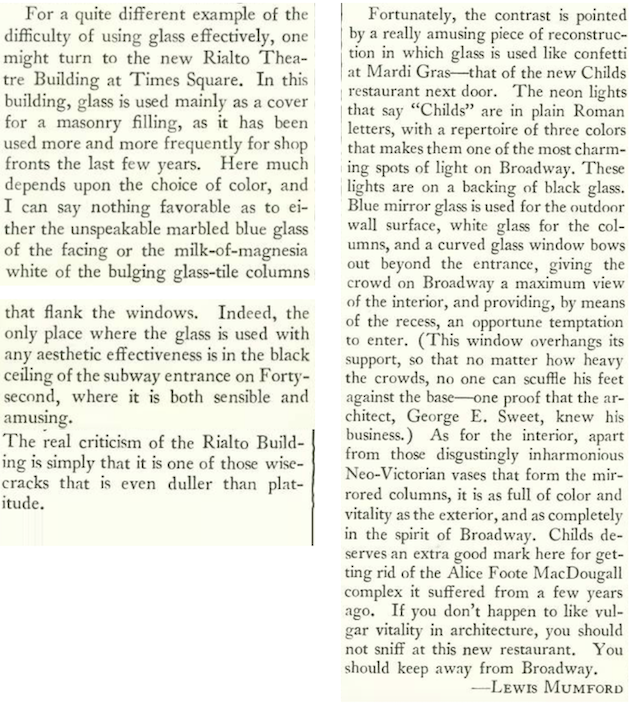
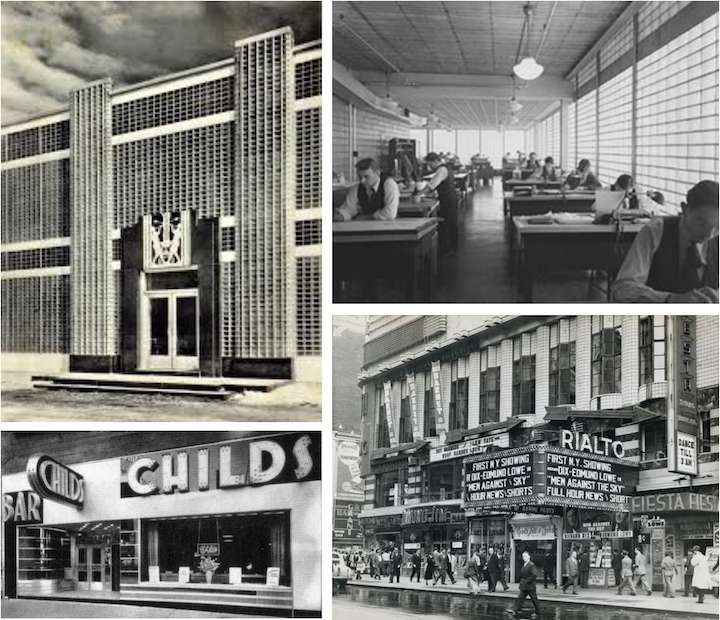
The Brooklyn Museum exhibition also included commercial examples such as one of the world’s first buildings to be completely covered in glass, the Owens-Illinois Glass Research Laboratory in Toledo, Ohio. Mumford also commented extensively on the new uses of glass in Times Square, namely the rebuilt Rialto Theatre and a Childs restaurant located next door. Excerpts:
* * *
Down on Il Duce
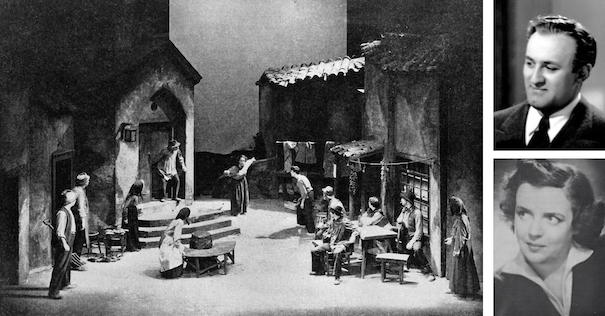
Last week we saw Robert Benchley’s review of the anti-war play, Idiot’s Delight. This week he reviews another play with themes that resonated in the moment, Bitter Stream. Written by Victor Wolfson and adapted from Ignazio Silone’s novel, Fontamara, the play depicted the horrors of fascism as Mussolini’s Black Shirts brutally seize an Italian neighborhood. It featured relative newcomer Lee J. Cobb as well as Frances Bavier, who twenty-four years later would portray Aunt Bee on The Andy Griffith Show. Excerpts:
* * *
Sick Leave
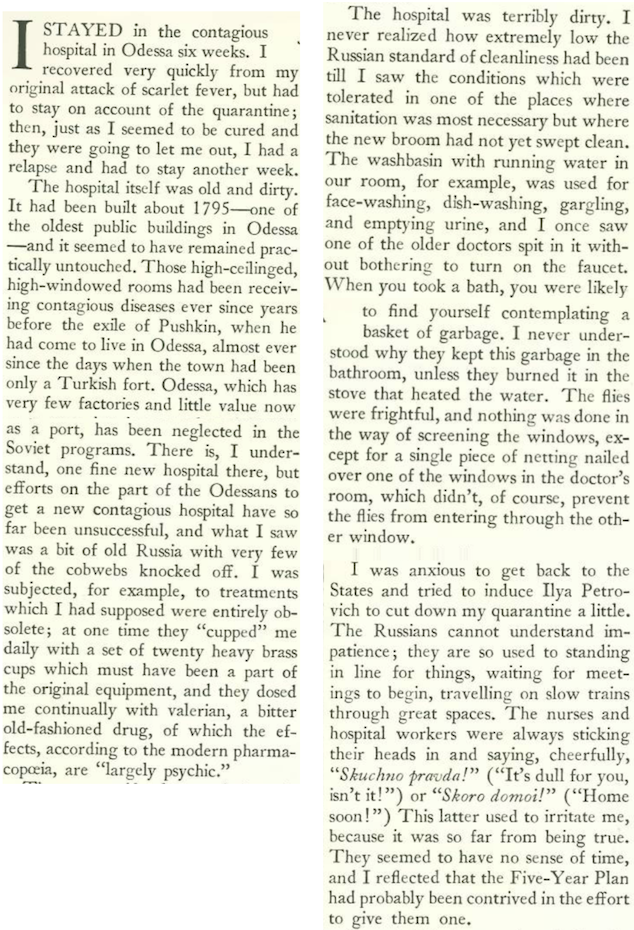
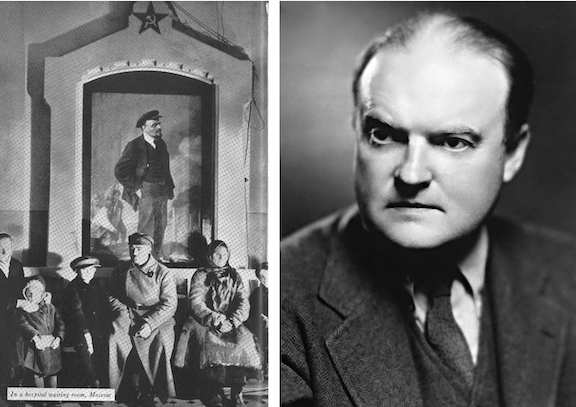
Also last week we saw the first part of Edmund Wilson’s account of his travels in the Soviet Union. For the April 11 installment of “A Reporter at Large” (titled “Scarlet Fever in Odessa”), Wilson recounted his six-week stay in a filthy Soviet hospital. Excerpts:
* * *
Gall in Gaul
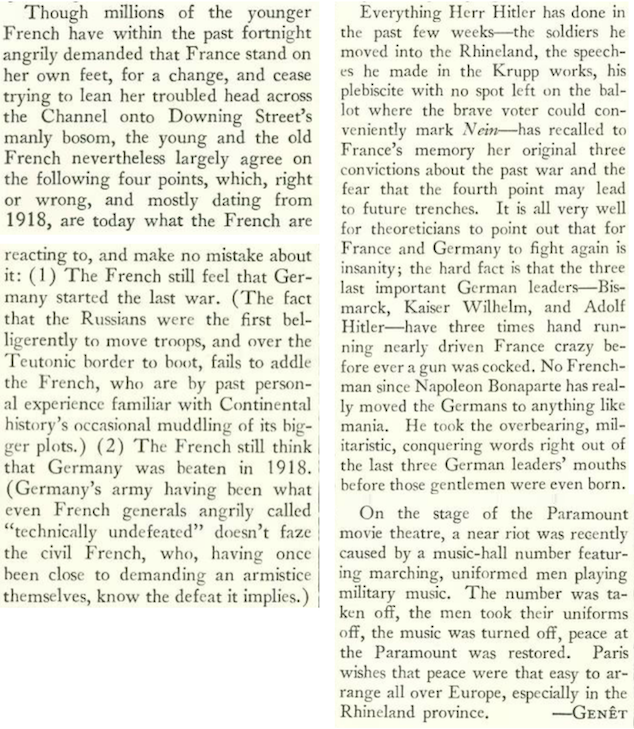
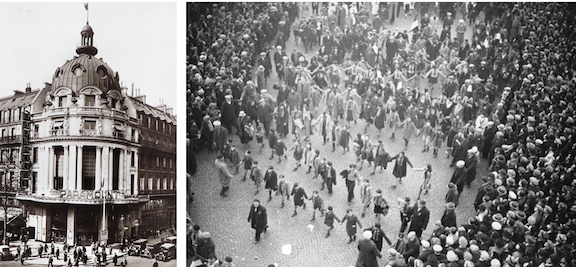
In her Paris Letter, Janet Flanner continued to share her observations about the French mood (agitated) in the wake of the German occupation of the Rhineland.
* * *
At the Movies
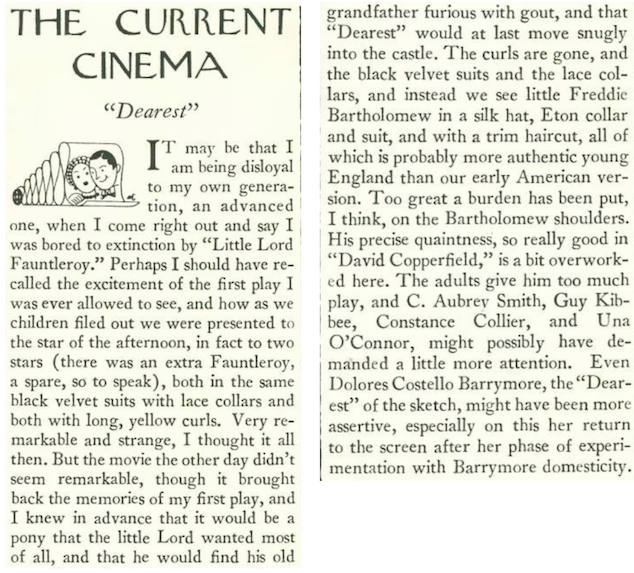
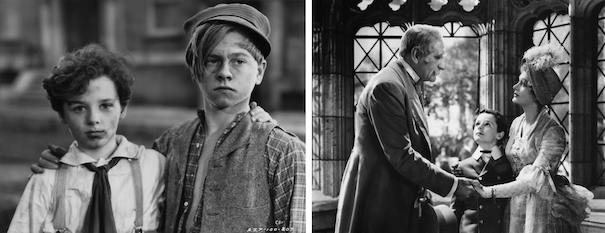
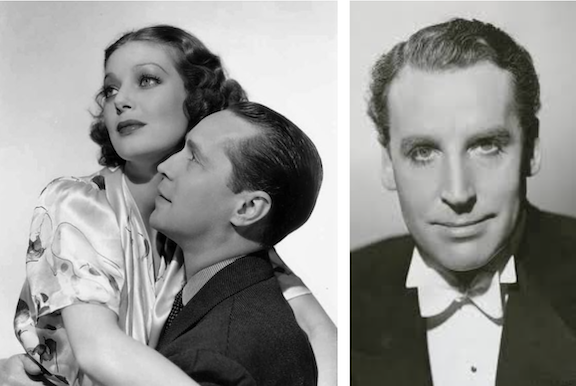
Little Lord Fauntleroy was Selznick International Pictures’ most profitable film until Gone with the Wind, and it featured one of the top child stars of the 1930s, English-American child actor Freddie Bartholomew (1924–1992). However, New Yorker film critic John Mosher was “bored to extinction” by the popular film.
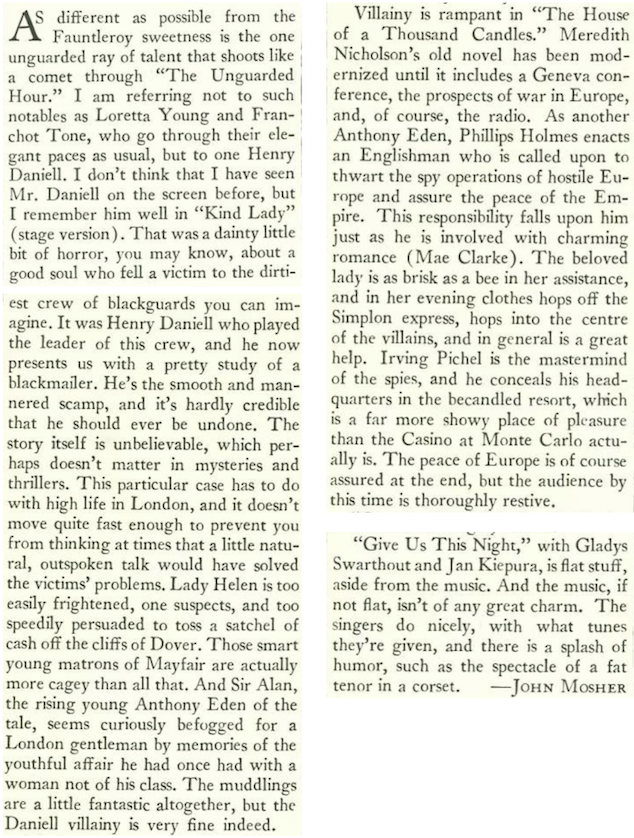
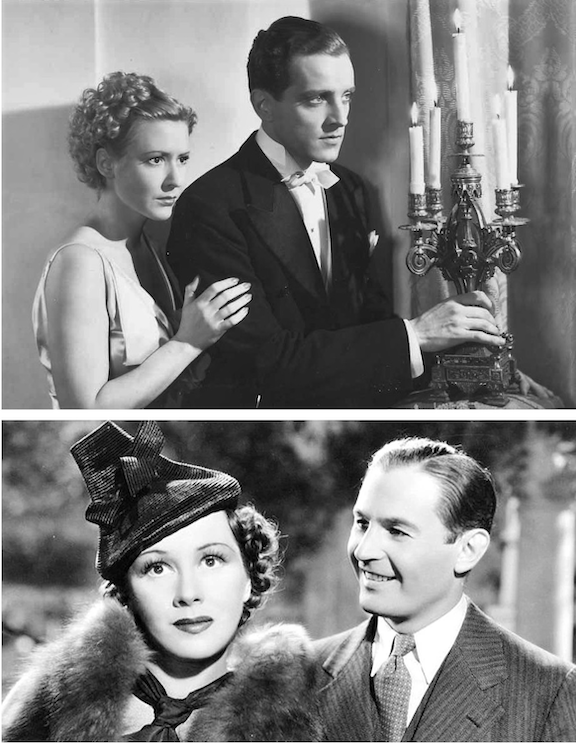
One of Hollywood’s greatest screen villains, English actor Henry Daniell, caught Mosher’s attention for his “smooth” performance as a blackmailer in The Unguarded Hour. The critic also enjoyed the thriller The House of a Thousand Candles, but was left flat by Give Us This Night.
* * *
From Our Advertisers
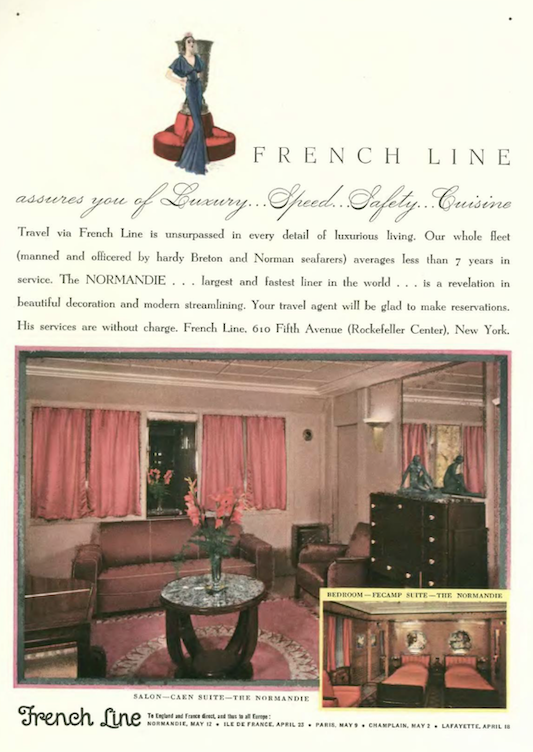
If you could afford it, a first-class salon on the Normandie sure looked like a great way to travel to France…
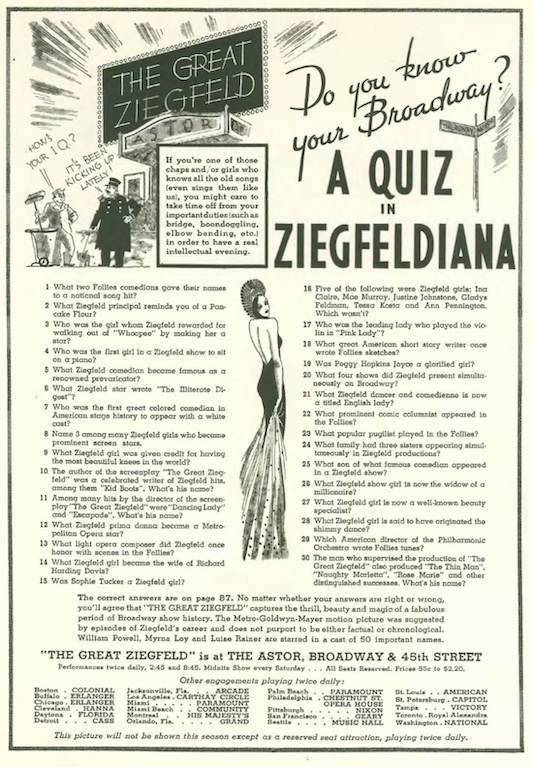
…this full-page ad enticed moviegoers with a quiz that promoted MGM’s The Great Ziegfeld…one of the most successful films of the 1930s, the movie won three Academy Awards, including Best Picture, Best Actress (Luise Rainer), and Best Dance Direction…
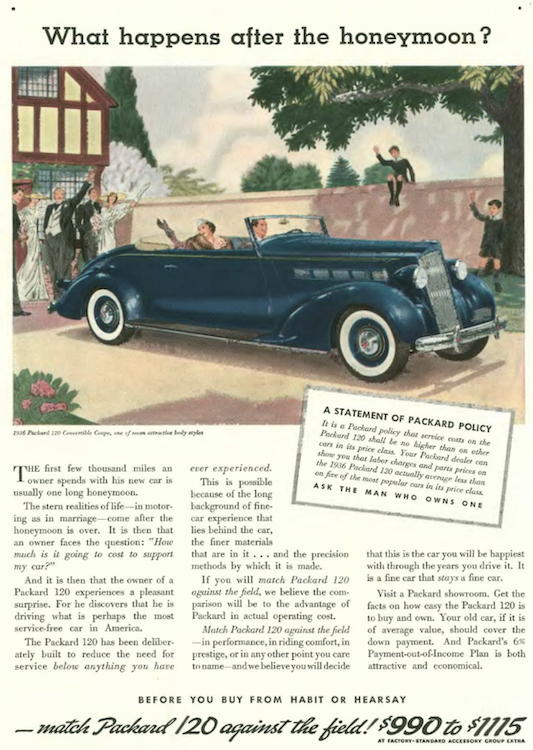
…who knows what will happen after the honeymoon, but we do know they will driving around in this swell-looking Packard 120, a lower-priced model that helped keep Packard afloat during the waning days of the Depression…
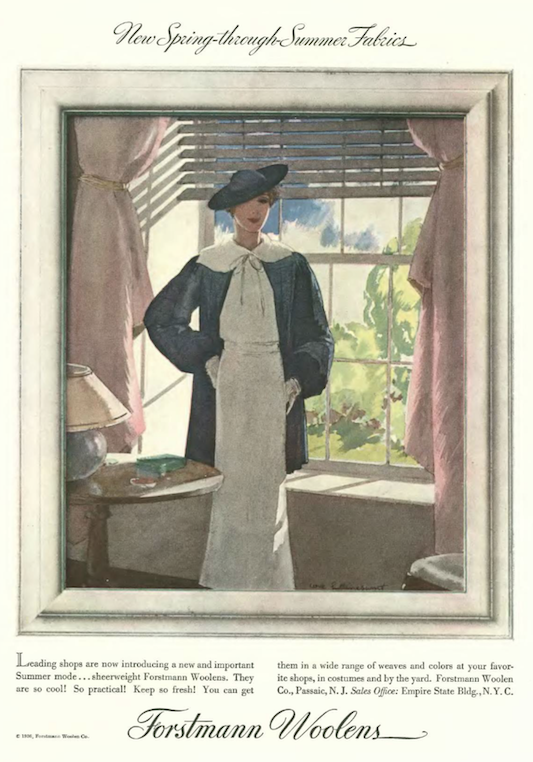
…Forstmann Woolens continued to entice buyers with their seasonal images of fine fashions…
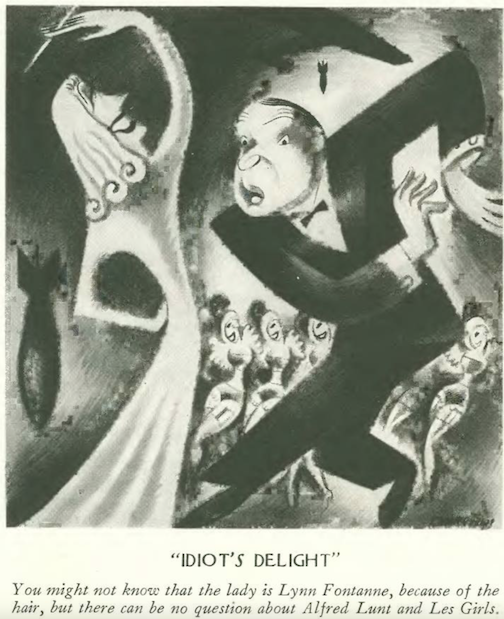
…on to our cartoonists, we begin with the illustration for “The Theatre” section, this week Miguel Covarrubias taking over for Al Frueh…
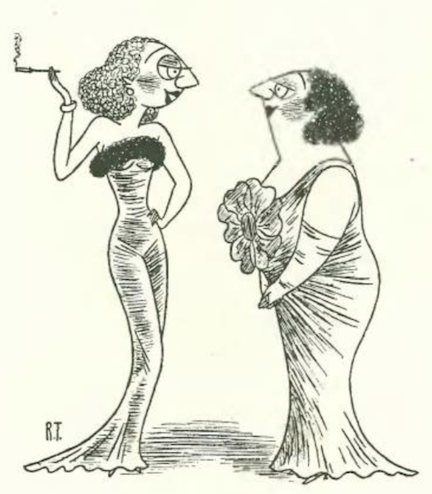
…Richard Taylor contributed this fine spot illustration…
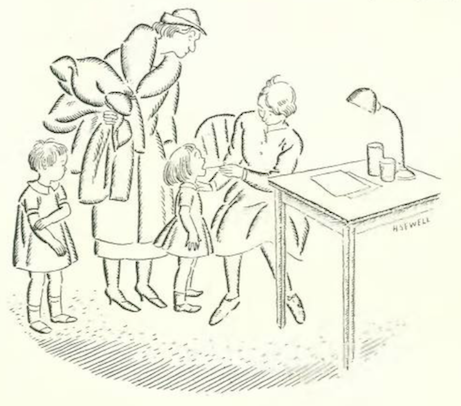
…and we have another spot by Helen Moore Sewell…
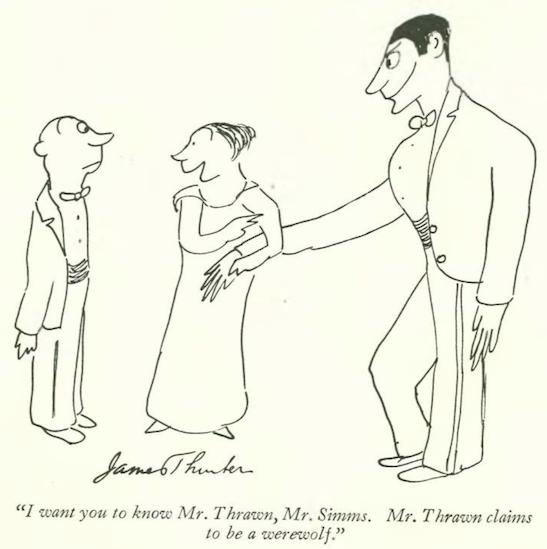
…James Thurber made an awkward introduction…
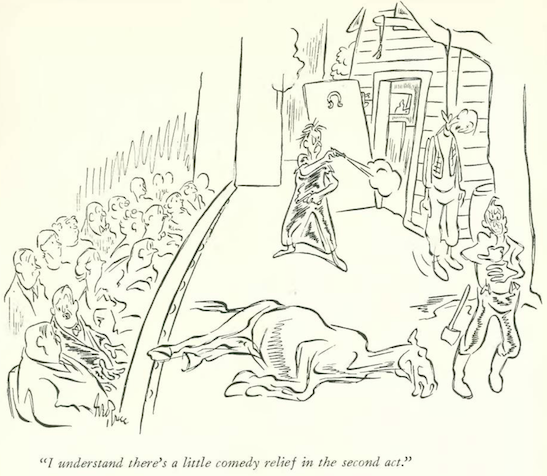
…George Price hoped for some comic relief at the theatre…
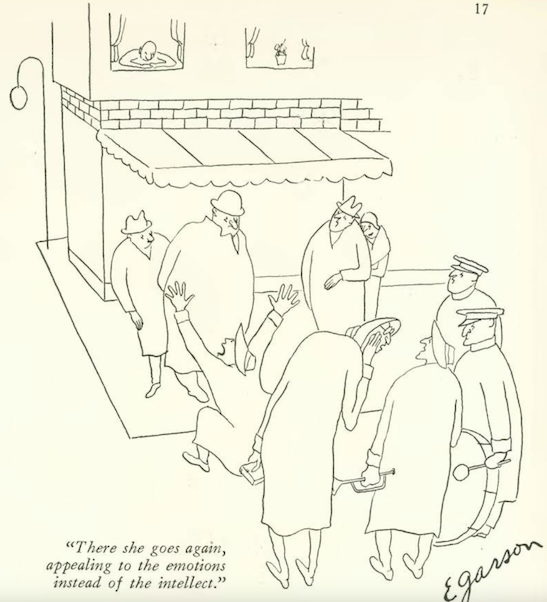
…Eli Garson found religious zeal at a street corner…
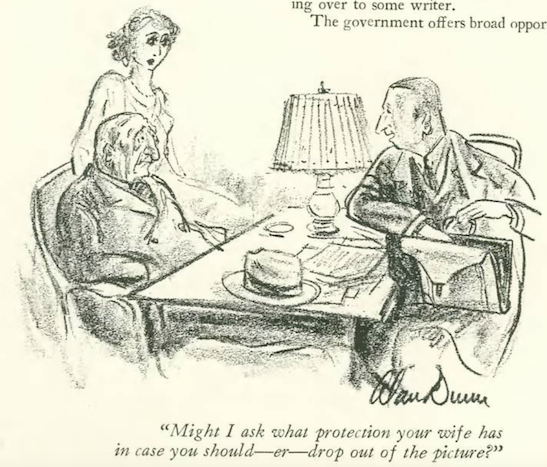
…Alan Dunn gave us a great opening line for an insurance salesman…
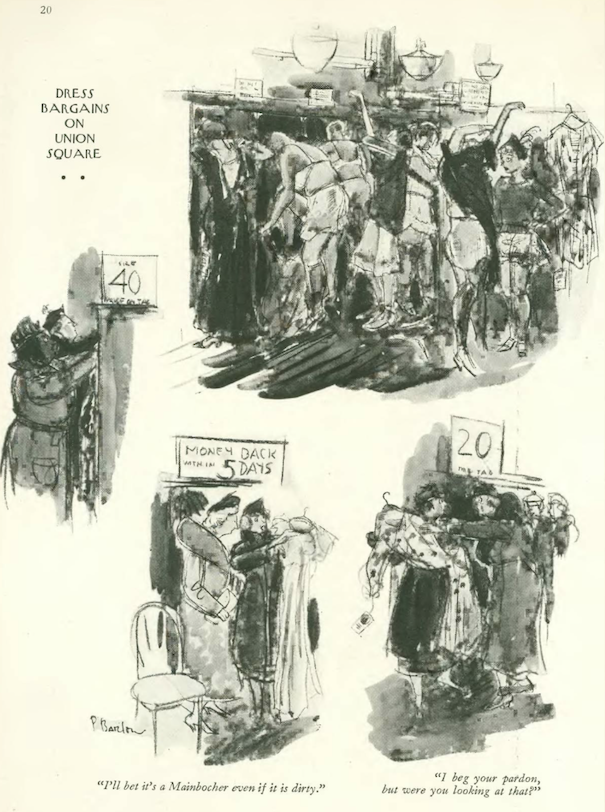
…Perry Barlow was inspired by bargains on Union Square…
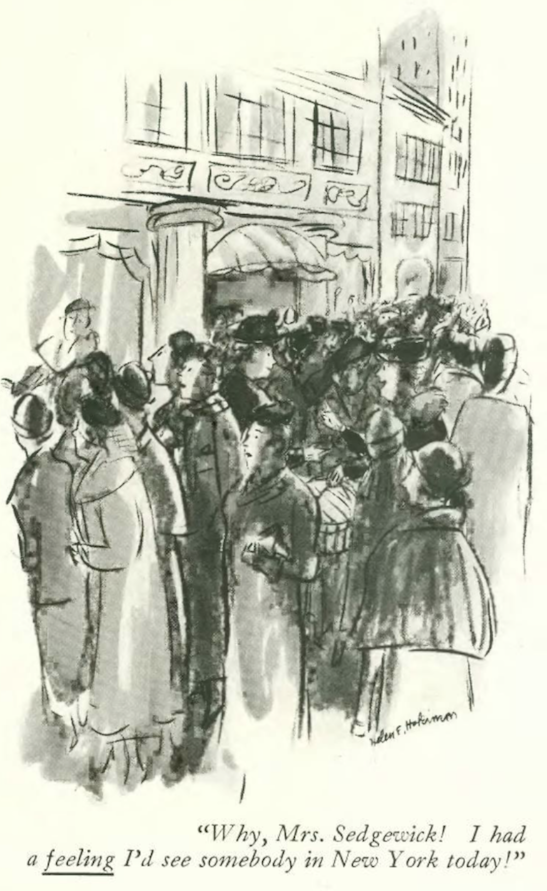
…Helen Hokinson spotted a familiar face in the crowd…
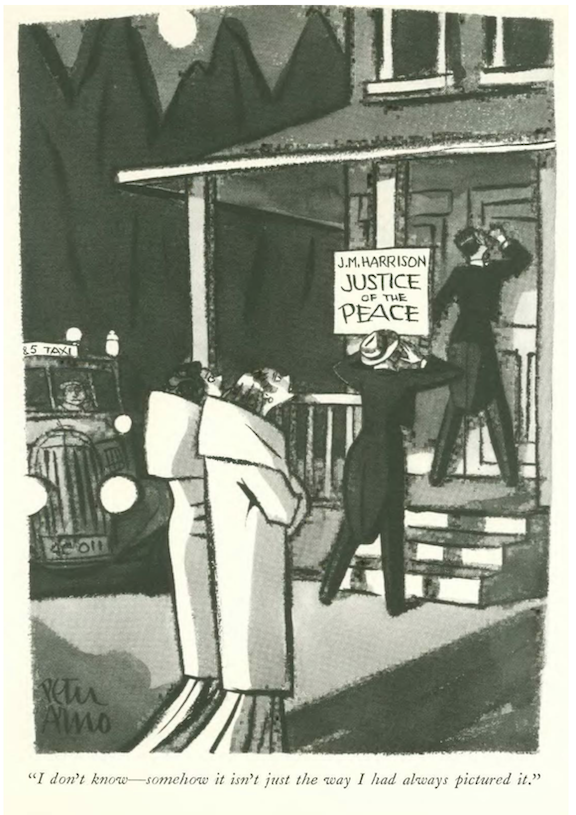
…a quickie marriage left no room for romance, per Peter Arno…
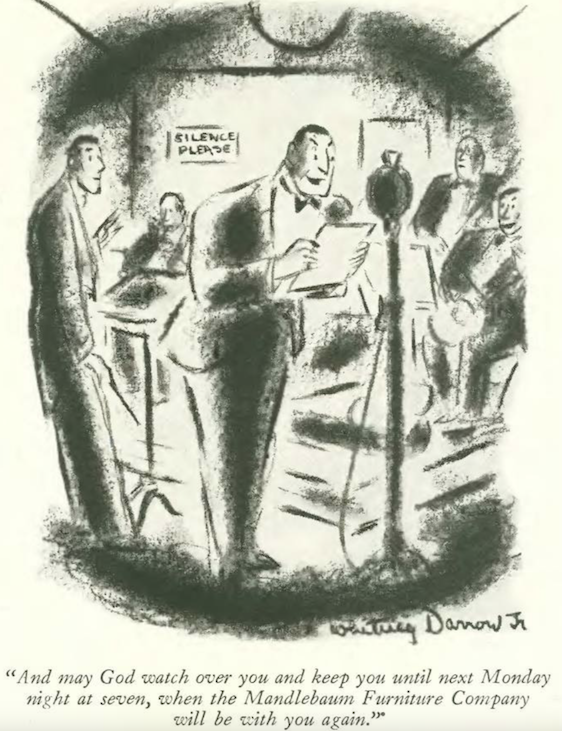
…Whitney Darrow Jr signed us off with an endorsed blessing…
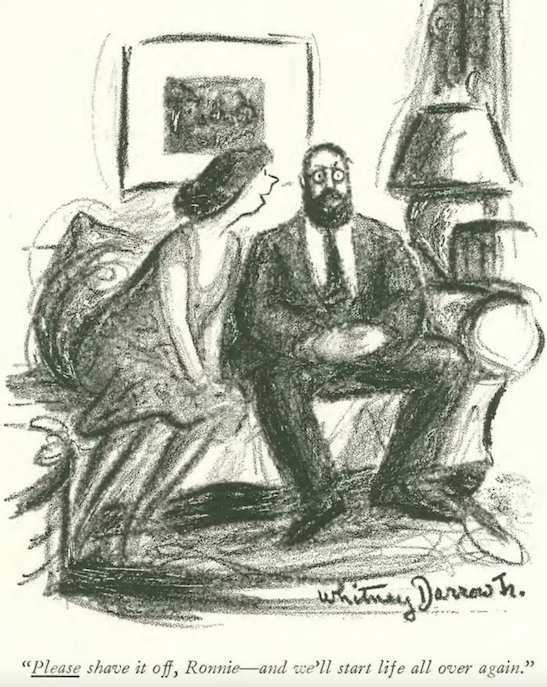
…and a plea to begin life anew, sans whiskers…
Next Time: Age of the Clipper…