Above: Detail from illustration depicting the Philippine Clipper arriving in Hong Kong to establish the first commercial air service between North America and the continent of Asia on October 23, 1936. (Otto G. Richter Library, University of Miami)
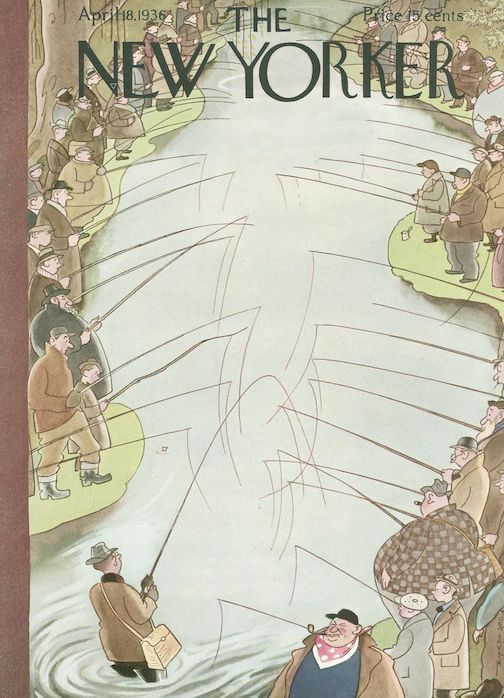
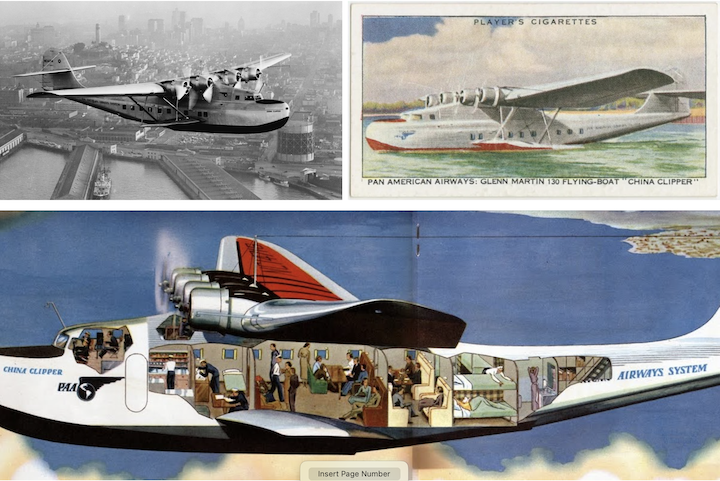
We take to the air with the April 18, 1936 edition of The New Yorker, namely via the China Clipper, a Pan American flying boat that was preparing to begin regular passenger service from San Francisco to the Philippines and Hong Kong along with its two sister ships.
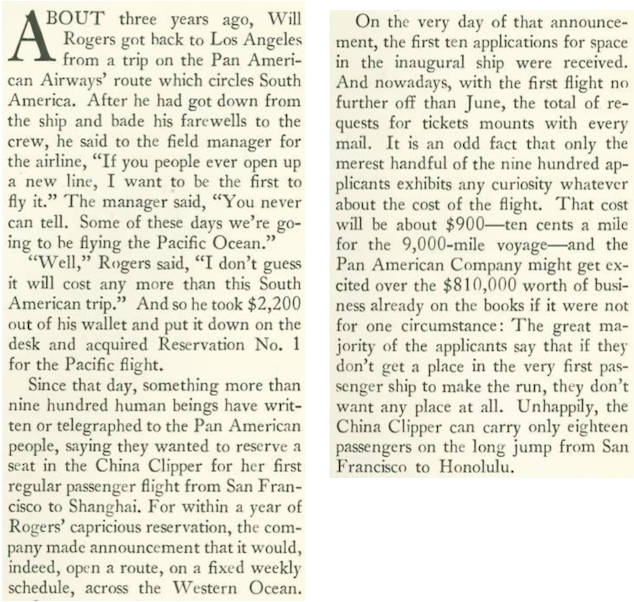
Writing for “A Reporter at Large” under the title “See You in Shanghai,” Morris Markey offered an enthusiastic preview of the China Clipper, a Martin M-130 flying boat that was initially tested on a Trans-Pacific mail route laid out by famed navigator Fred Noonan (who would disappear the following year in a fateful flight with Amelia Earhart). Although Markey anticipated a summer launch, the first commercial trans-Pacific airmail and passenger service from San Francisco to Manila actually took place in October 1936, when the Hawaii Clipper made the first scheduled transoceanic passenger flight to the Philippines. The Philippine Clipper inaugurated the first passenger service into Hong Kong that same month, but it was a public relations VIP flight rather than a revenue generating one.
Here are excerpts from Markey’s report:
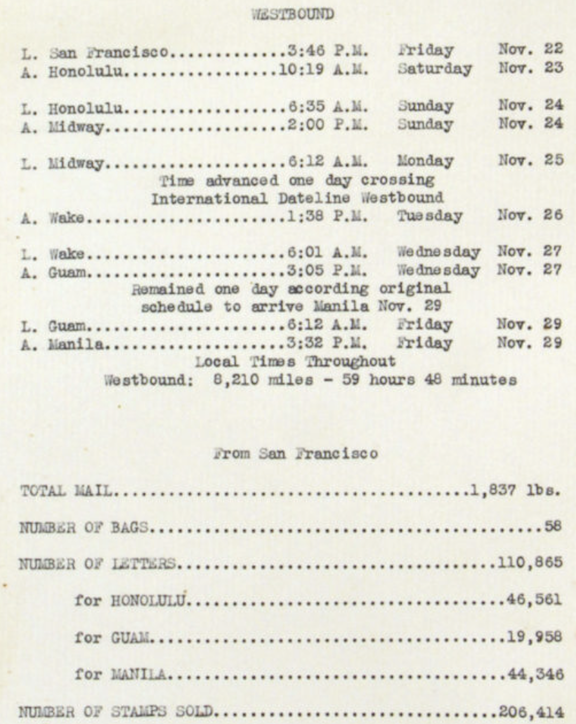
Here is the flight schedule for the China Clipper’s first airmail flight to Manila in November 1935:
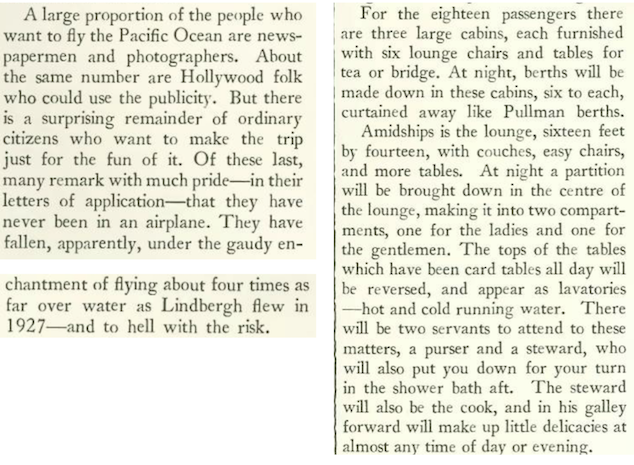
Today’s commercial aircraft squeeze passengers into about six square feet. Compare that to a Pan Am Clipper, which allotted twenty-two square feet per each passenger. They lounged on easy chairs and couches, enjoyed six-course meals served on fine china, and could even take a hot shower if so desired. Markey again:
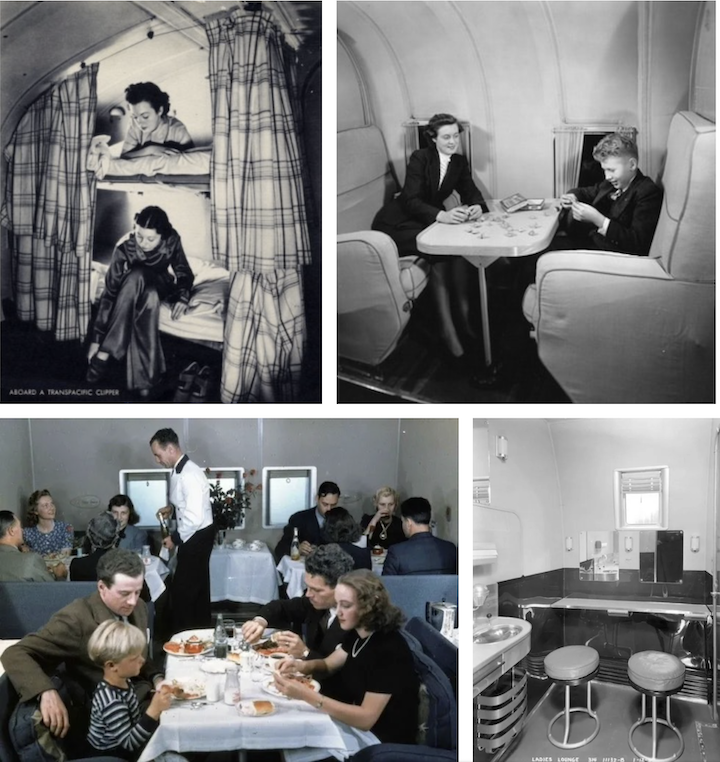
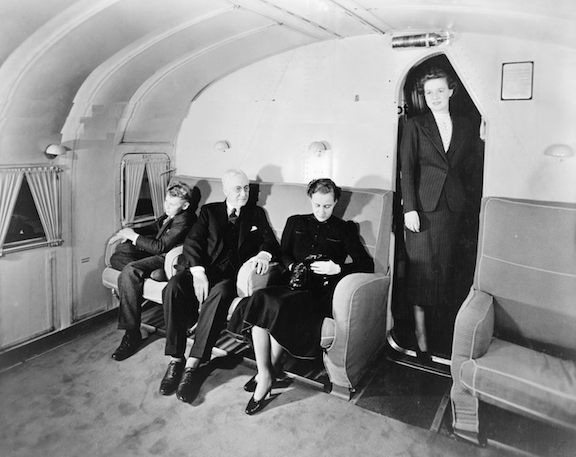
Talk about legroom…
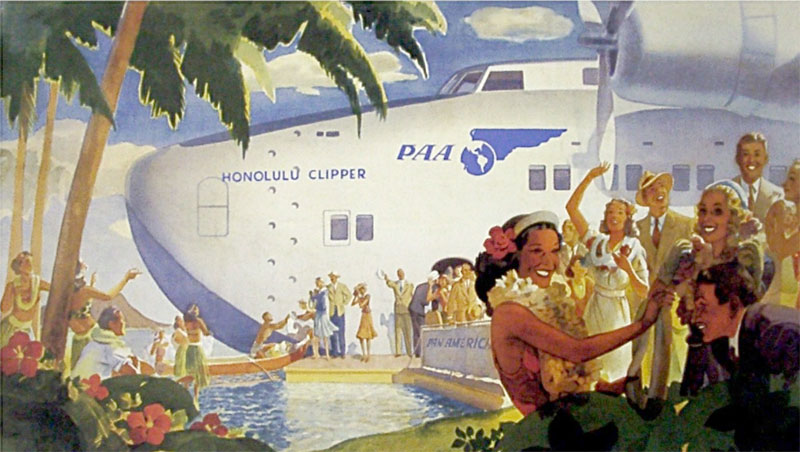
Writing for Messy Nessy, Luke Spencer notes this experience was only available to a select few: “…a one-way ticket from San Francisco to Hong Kong would set you back $760 in 1939 (more than $13,000 today). But despite being largely reserved for the rich and famous, the seaplanes are so evocative of the bygone era, that today, it’s hard to imagine a vintage travel poster without a Flying Clipper in it, soaring above a distant island.” Indeed, the long-gone Clipper ships live on in popular vintage travel posters such as the one below depicting Pan Am’s most advanced, largest and last flying boat, the Boeing 314. The circa 1939 illustration is by George Lawler:
* * *
Don’t Step On Them
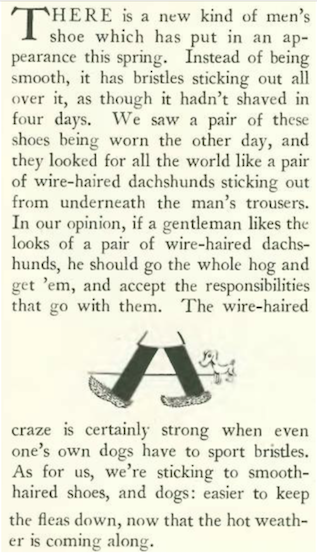
Suede shoes (aka Bucks, Reverse Calfskin) caught the attention of E.B. White, who thought this “new kind of men’s shoe” resembled a wire-haired dachshund. Suede shoes (blue ones would come later) were introduced as a preppy alternative to heavy lace-up shoes in the 1930s. They were favored (and made popular) by fashion trendsetter Edward, Duke of Windsor, who briefly reigned as British king in 1936 before abdicating the throne.

* * *
Cowboys and Elephants
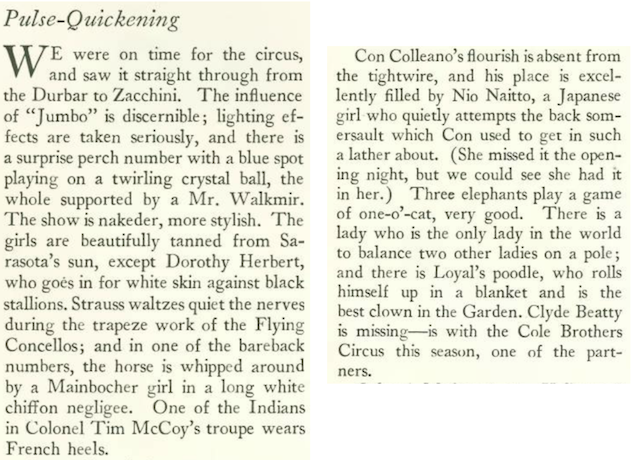
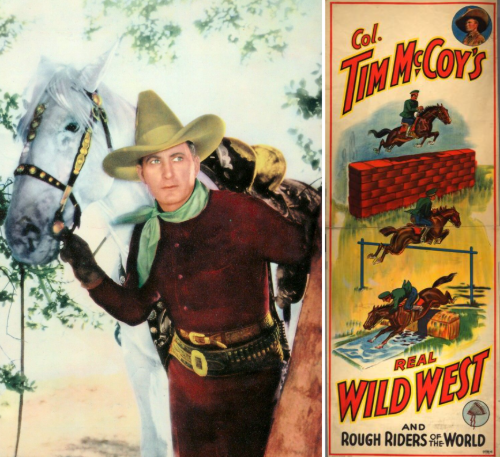
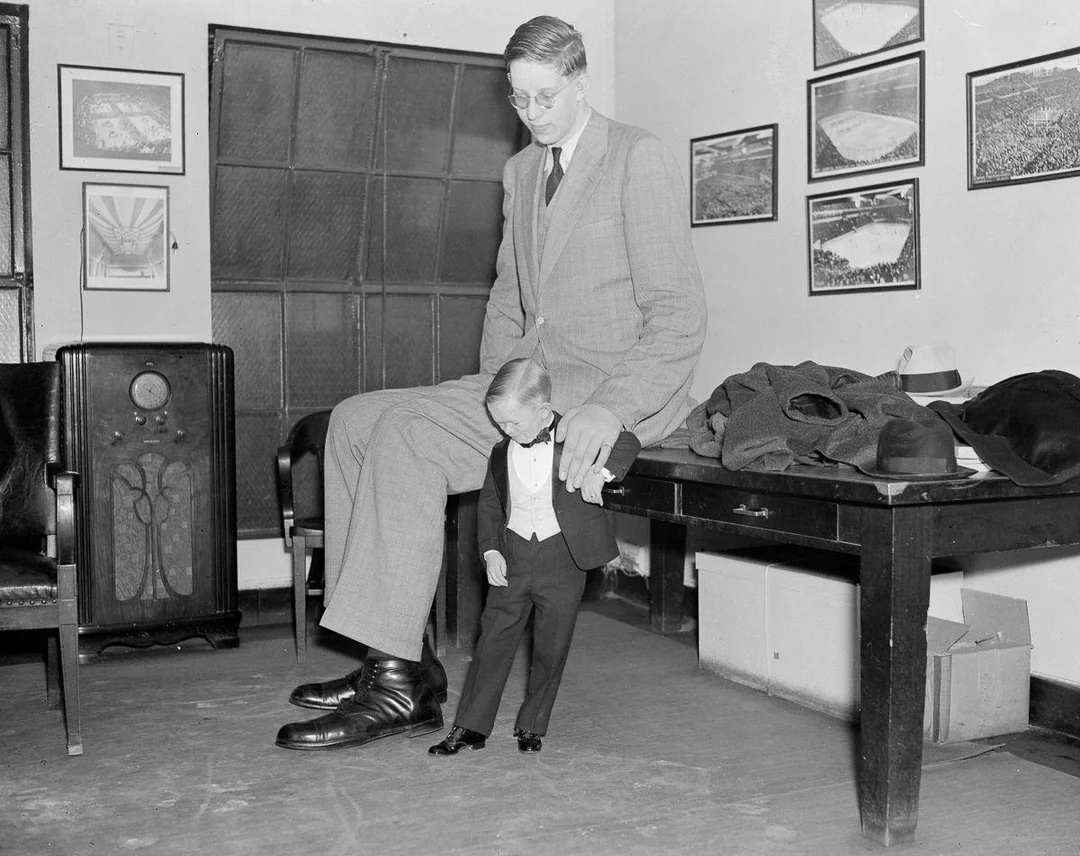
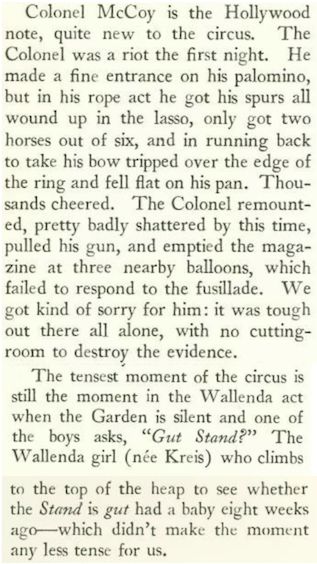
The “Talk of the Town” noted the latest attractions the Ringling Brothers were bringing to Madison Square Garden, including B-grade Western film actor Colonel Tim McCoy and a trio of elephants who played a rudimentary form of baseball.
The tallest person ever recorded, Robert Wadlow (1918–1940), became a celebrity after his 1936 U.S. tour with the Ringling Brothers Circus, appearing at Madison Square Garden in the center ring, and never in the sideshow.
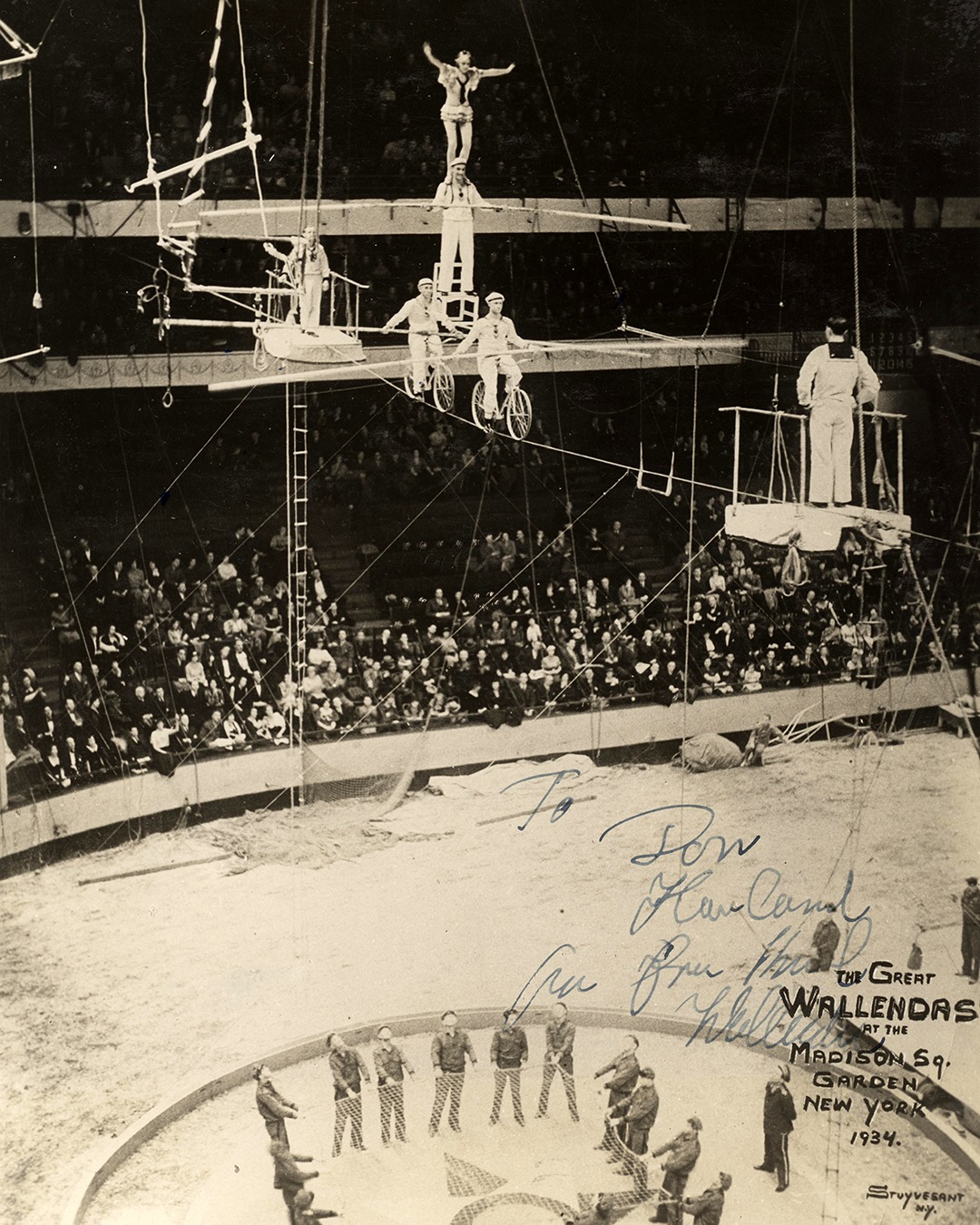
In addition to Col. McCoy, the circus also featured the daring high wire act of the famous Wallenda family:
* * *
Sage Advice
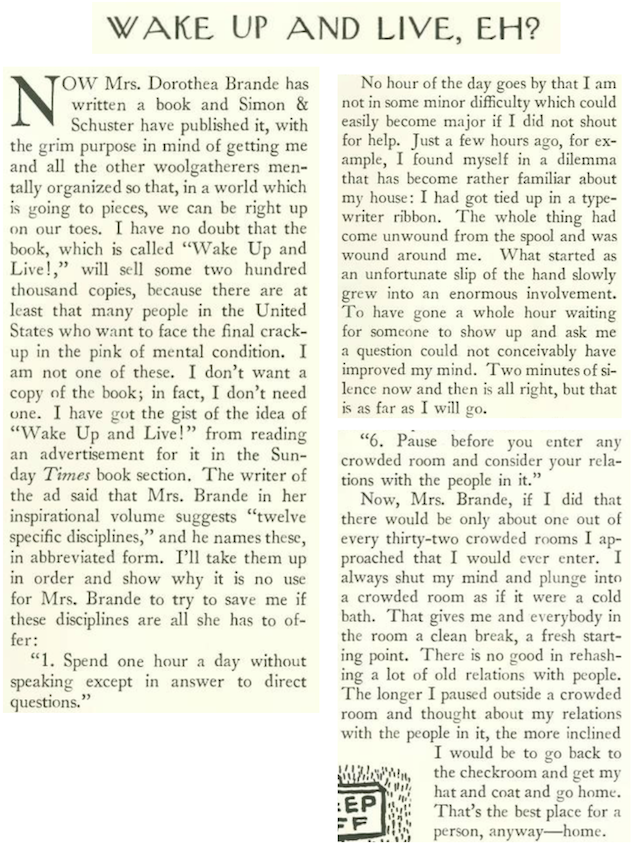
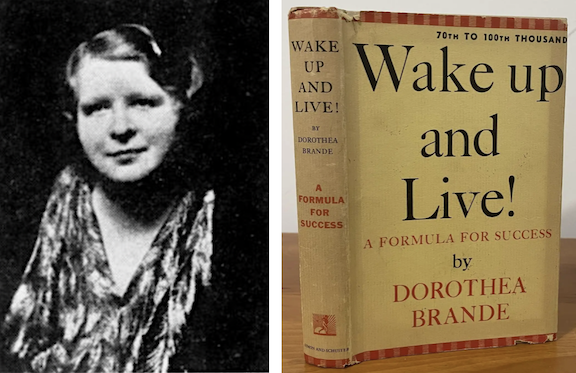
Dorothea Brande (1892–1948) was the author of two popular advice books: Becoming a Writer (1934) remains in print today, and her motivational Wake Up and Live (1936) sold more than a million copies and inspired an eponymous 1937 Hollywood movie.
As we’ve seen before, James Thurber relished the opportunity to satirize the writers of motivational books, and Brande’s Wake Up and Live proved to be irresistible. Here are some choice excerpts:
* * *
Legacy Lines
In 1936 Stephen Vincent Benét (1898–1943) was more widely read than any American poet, but his popularity didn’t diminish the respect he received from literary critics. So no wonder The New Yorker gave him a two-page spread to publish his “Notes To Be Left In A Cornerstone.” It’s too large to reproduce here, but this is how it looked in the magazine (with great spot art by Hugo Gellert)…
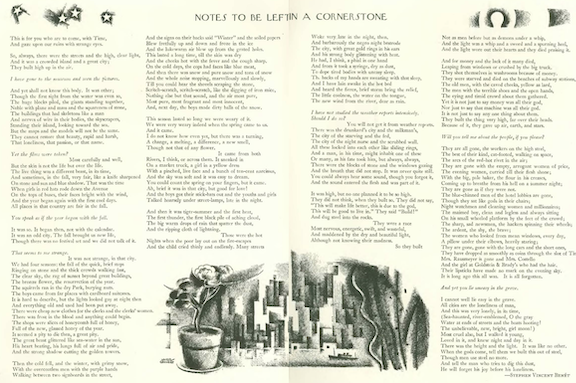
A closer look at Gellert’s illustration…

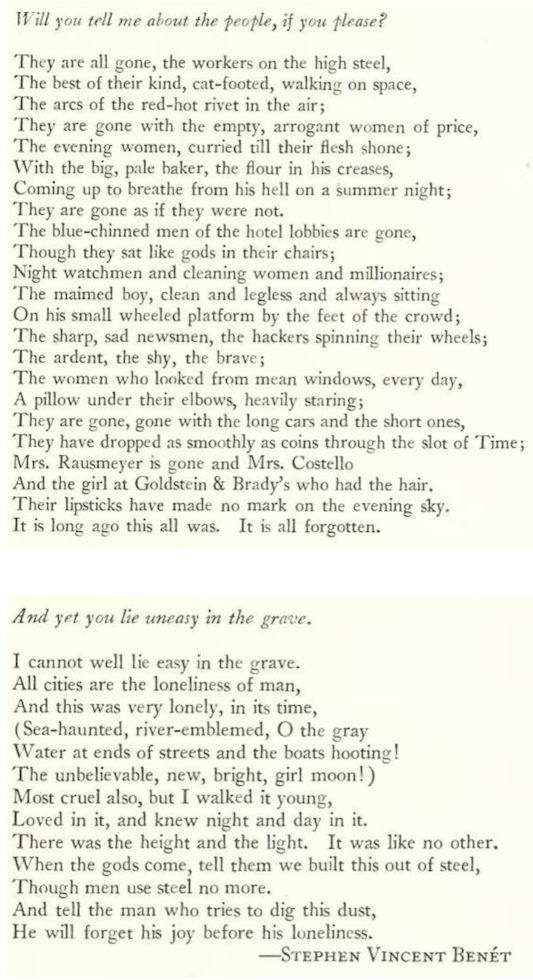
…and here are the last two stanzas of the poem:
* * *
Ray Gets Rough
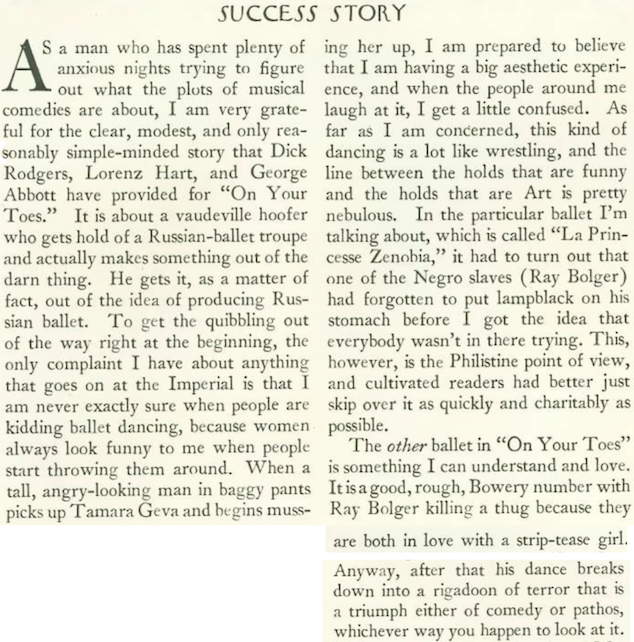
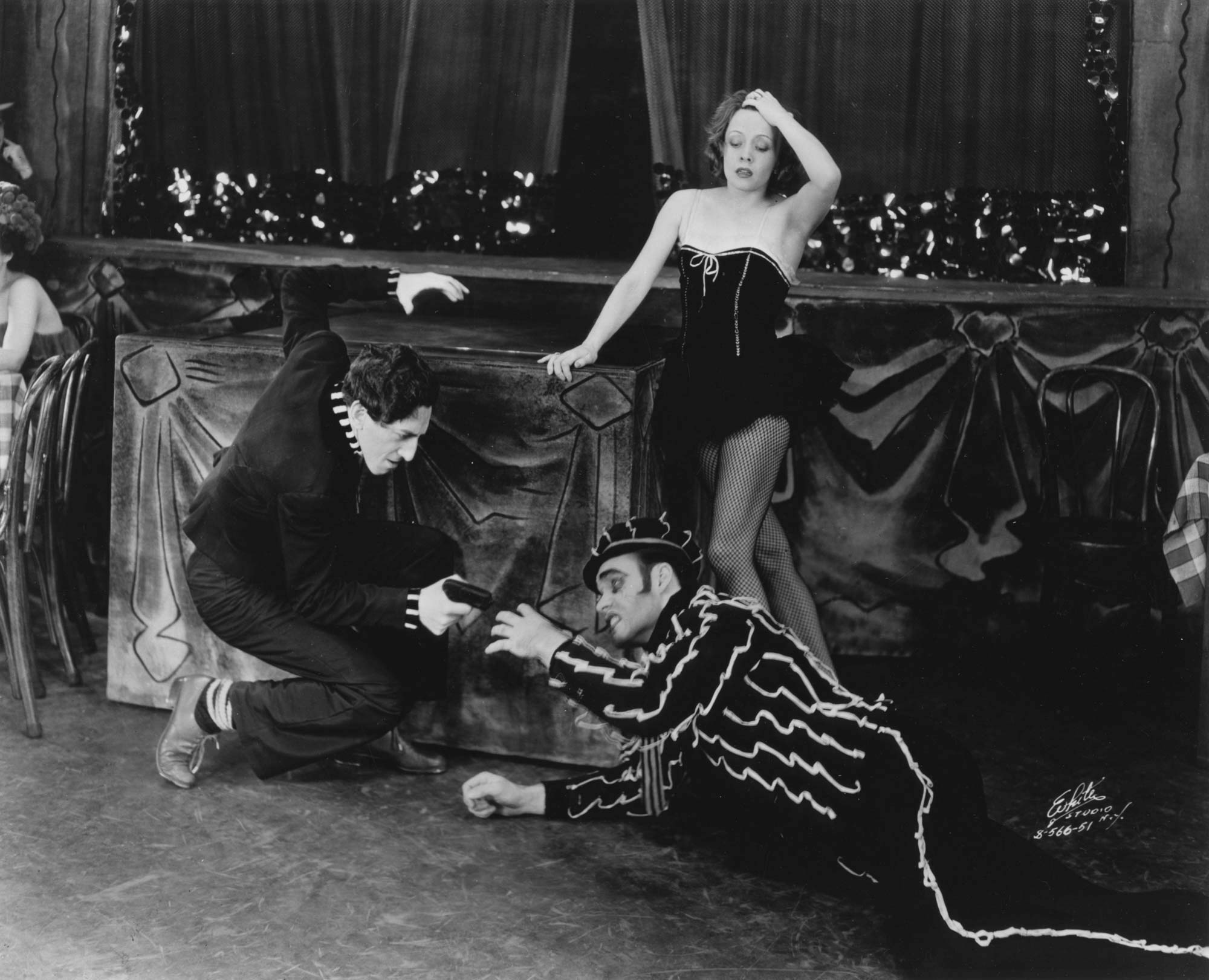
Ray Bolger’s long career included everything from dancing in vaudeville shows and acting on Broadway to appearing in his own television sitcom and in a 1981 Dr. Pepper commercial (dancing, of course). He is best remembered as the lovable, loose-limbed Scarecrow in 1939’s Wizard of Oz. So it was a surprise to learn that the Tony-winning actor could also play a tough guy, a turn that delighted critic Wolcott Gibbs, who penned this review of the Rodgers and Hart comedy musical On Your Toes:
* * *
Bio Myopic
Biopics reached a height of popularity in the Thirties, with dozens of these pictures featuring major stars including Charles Laughton in The Private Life of Henry VIII (1933) and Rembrandt (1936), Barbara Stanwyck in Annie Oakley (1935), Greta Garbo in Queen Christina (1933), and Claudette Colbert in Cleopatra (1934). Paul Muni, the king of biopics, appeared in at least a half-dozen including The Story of Louis Pasteur (1936). The year 1936 also brought us The Great Ziegfeld, starring William Powell as Flo Ziegfeld, Myrna Loy as his wife, Billie Burke, and Luise Rainer as Ziegfeld’s first wife, Anna Held. Critic John Mosher takes it from here:
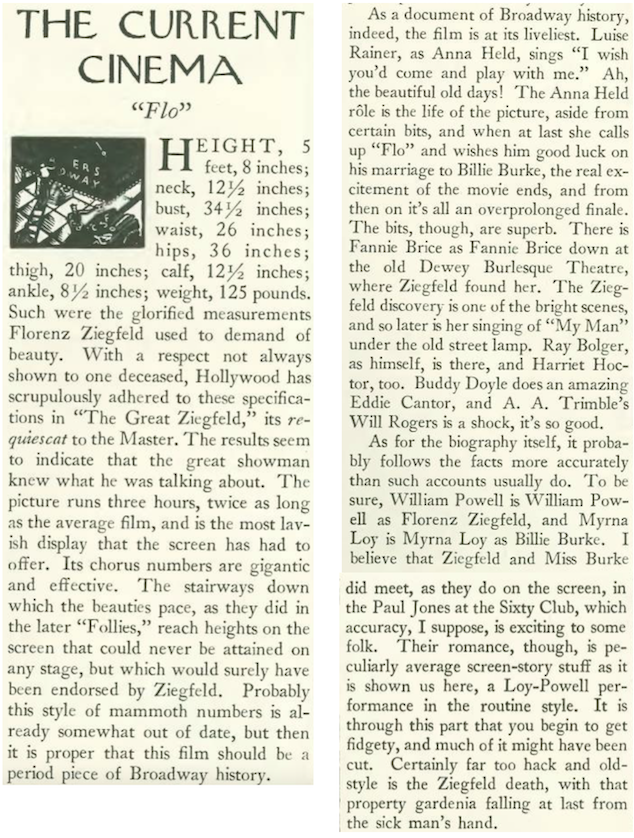
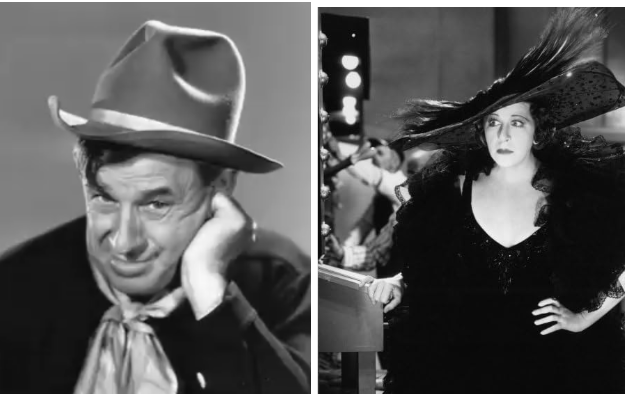
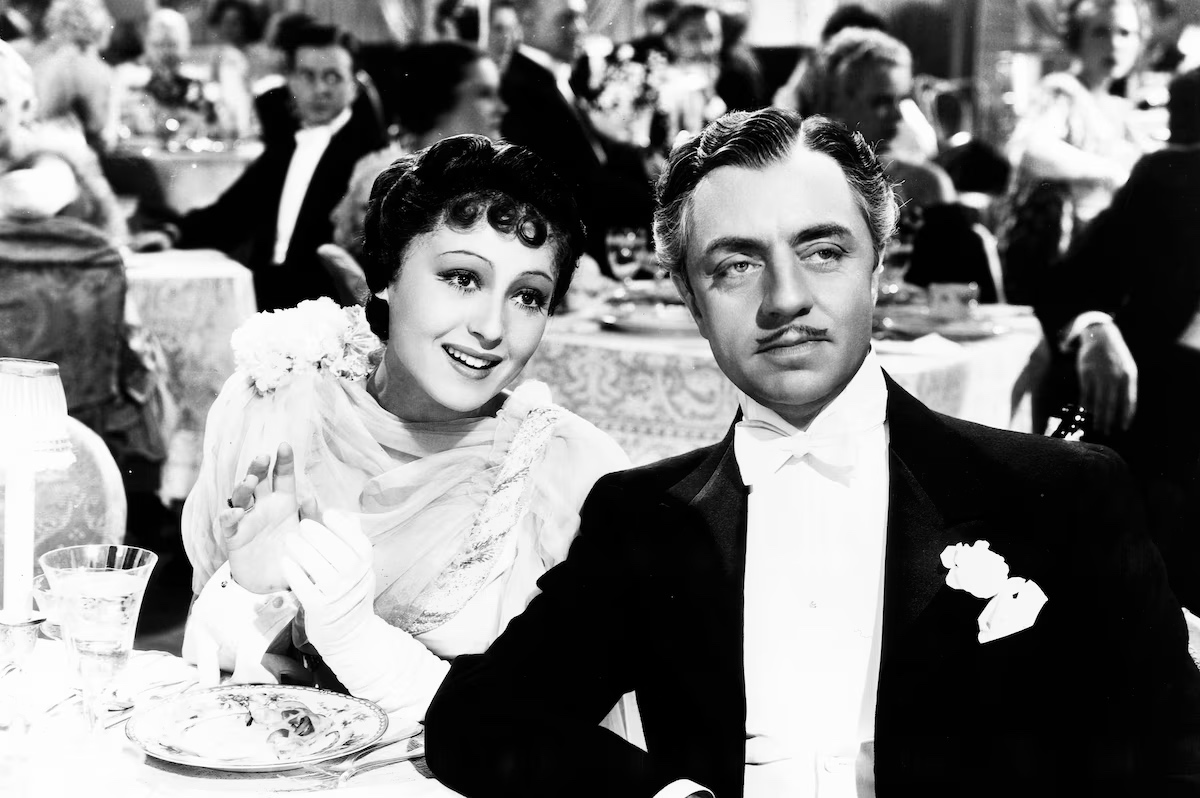
A note on Luise Rainer (1910–2014): The Austrian-American Rainer was the first person to win two Academy Awards in a row. The first was for her role as Anna Held in The Great Ziegfeld, and the second was for her role as a Chinese farm wife in 1937’s The Good Earth.

At the time of her death in 2014, thirteen days shy of her 105th birthday, Rainer was the longest-lived Oscar recipient, and the longest-lived female star from Classic Hollywood.
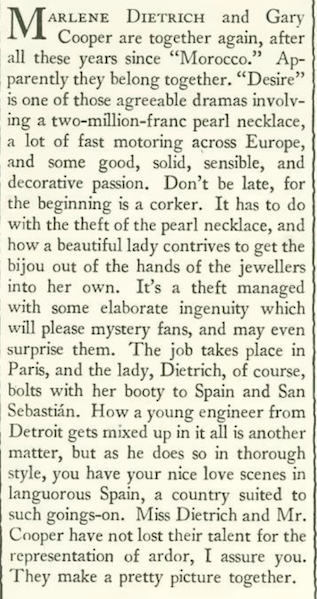
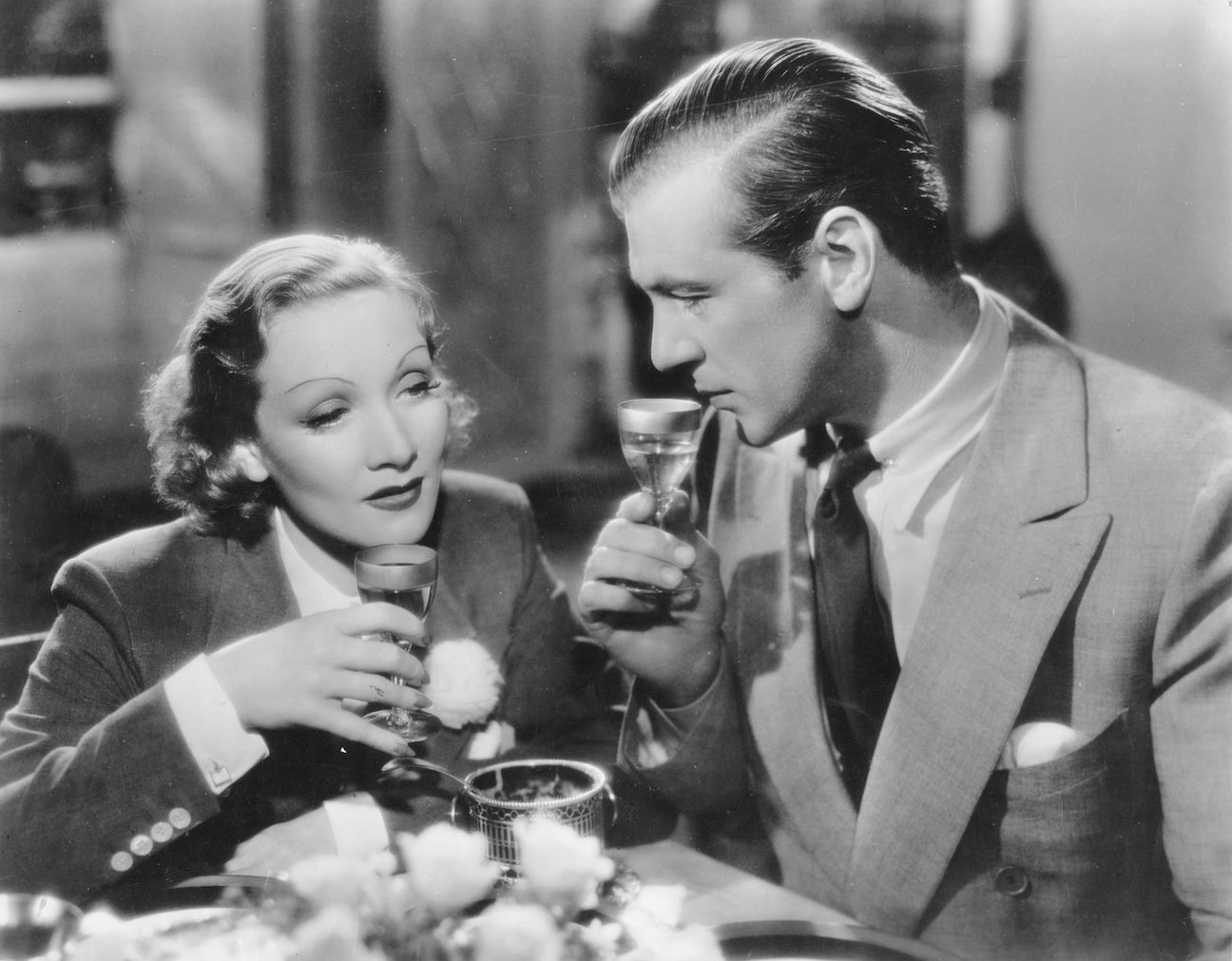
Mosher also reviewed Desire, a romantic crime drama that reunited the stars of the 1930 pre-code film Morocco, Marlene Dietrich and Gary Cooper.
* * *
From Our Advertisers
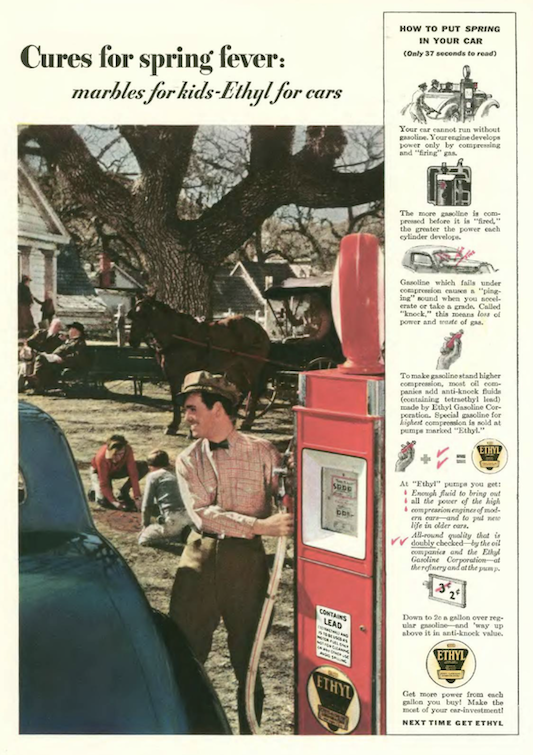
We begin with the inside front cover, where the makers of leaded gasoline appealed to homespun sensibilities with an odd juxtaposition…
…oil companies and other auto-related industries were big advertisers in The New Yorker, including the United States Rubber Company…
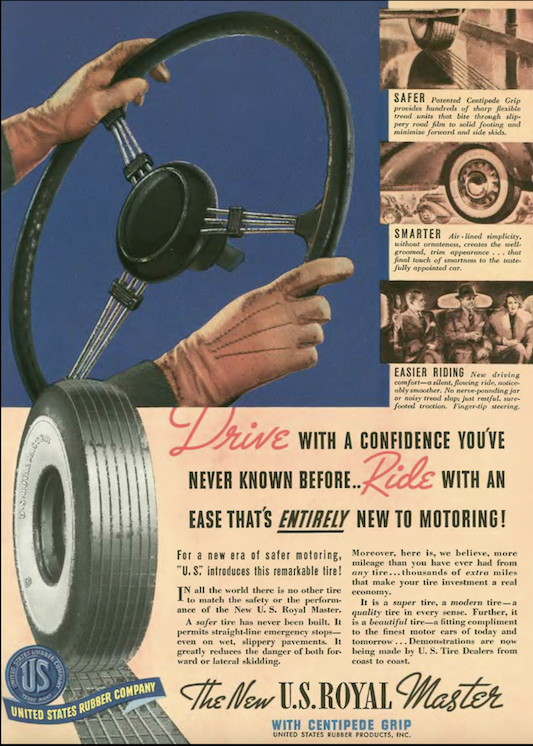
…which ran this back cover ad in the very first issue of the magazine, Feb. 21, 1925…
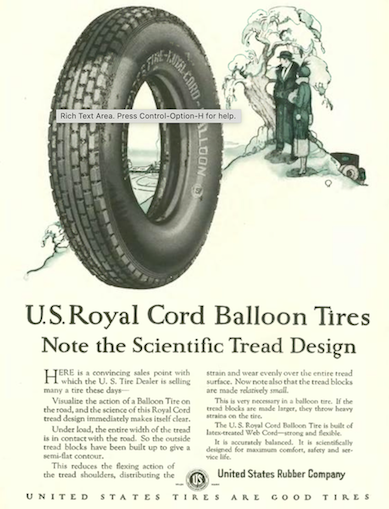
…another advertiser with deep pockets was big tobacco…R.J. Reynolds continued to make the ridiculous claim that their Camel cigarettes aided digestion…
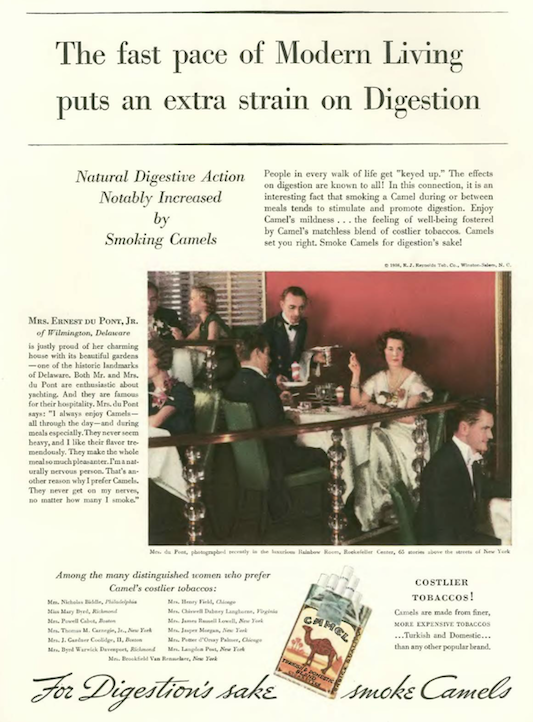
…the makers of Old Gold stuck with sex to sell their smokes, featuring illustrations by pin-up artist George Petty…

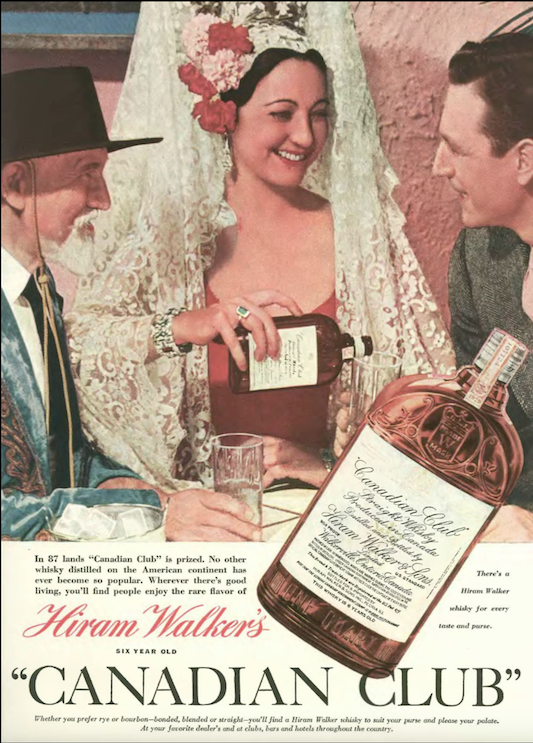
…Hiram Walker boasted the availability of their Canadian Club whiskey in “87 lands”…
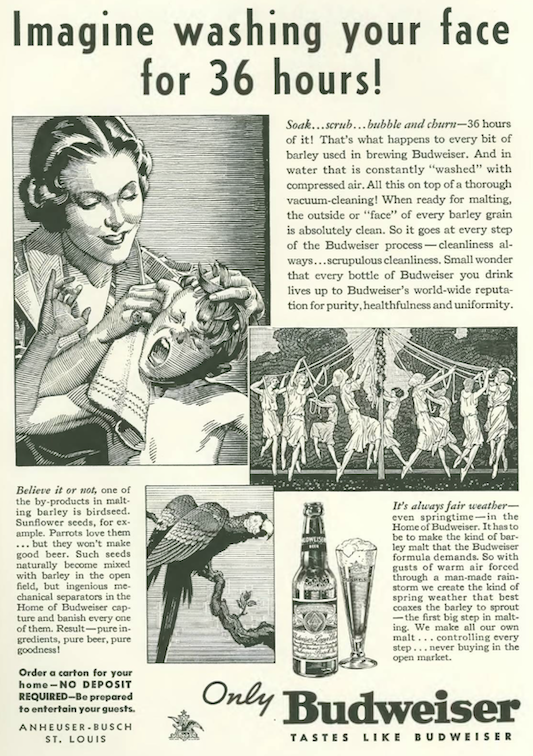
…at first glance I thought this was a soap advertisement…one doubts this analogy prompted more people to pick up a case of Bud…
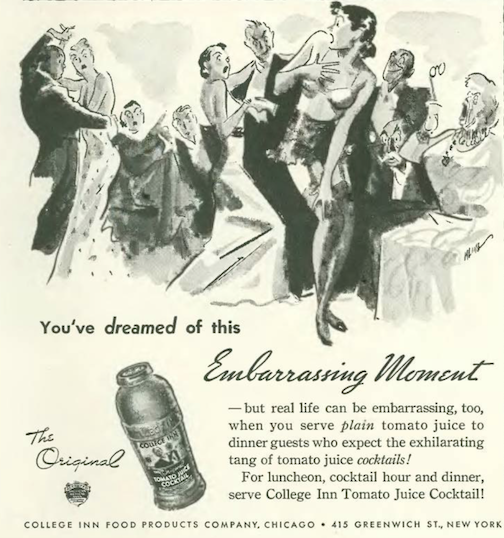
…the makers of College Inn Tomato Juice Cocktail continued to employ the social faux pas to sell their product…note the outraged duchess making an appearance on the right…
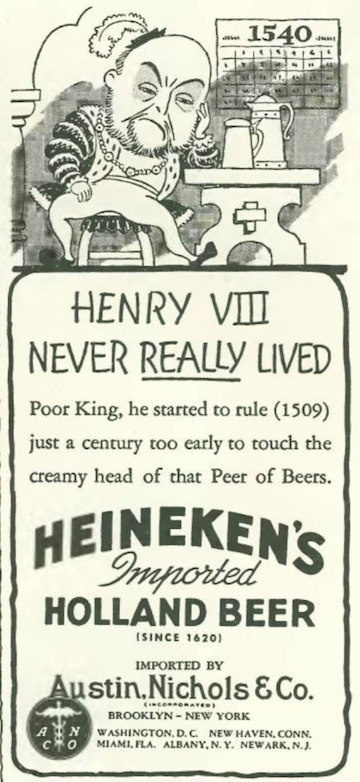
…Heineken established its U.S. presence in 1933, becoming the first imported beer legally sold after the end of Prohibition…
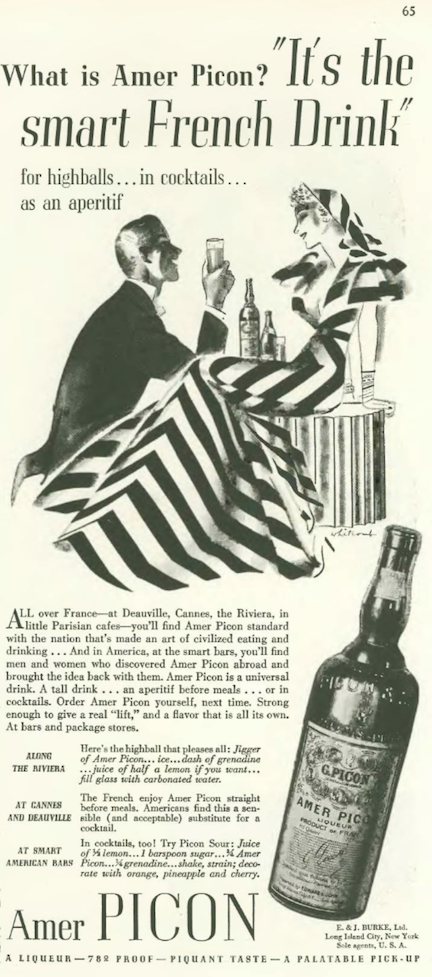
…Amer Picon called on the talents of illustrator Jon Whitcomb (1906–1988) to create this stylish advertisement…
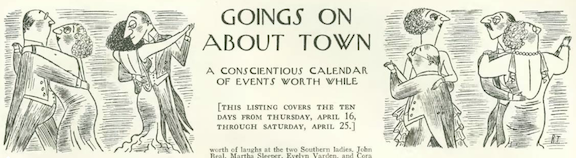
…on to our cartoonists, we have a spot illustration by Richard Taylor to kick off the issue…
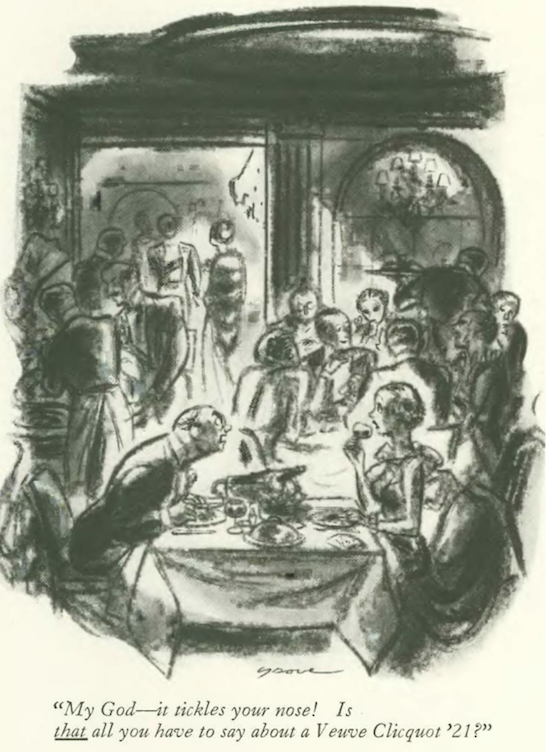
…Leonard Dove gave us a frustrated sugar daddy…
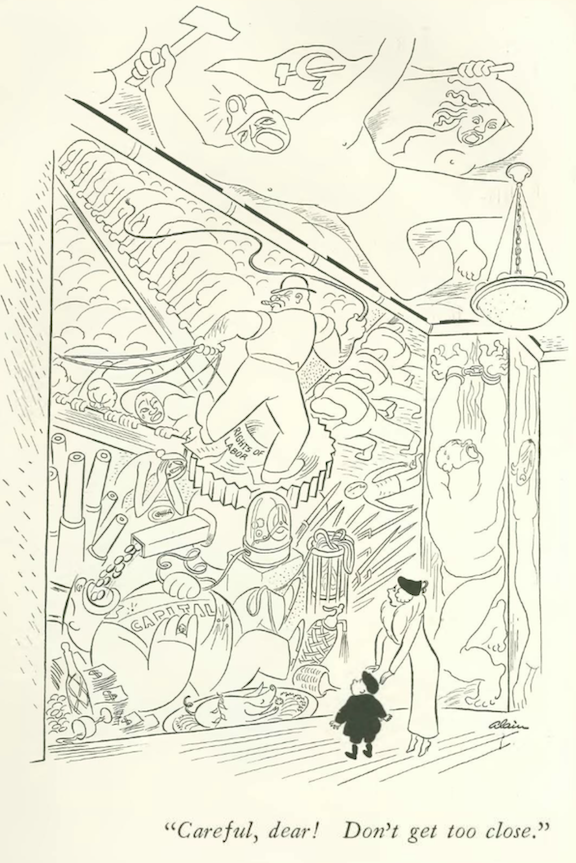
…Alain illustrated the perils of social realism…
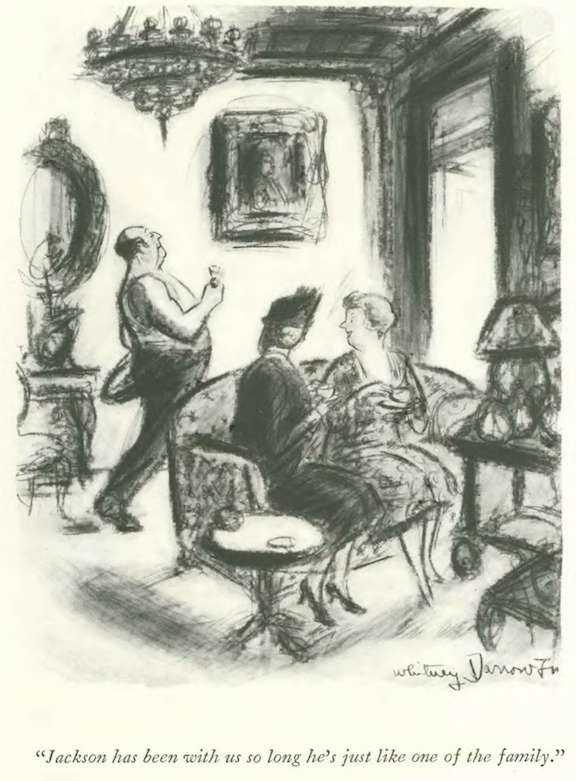
…Whitney Darrow Jr’s butler made himself right at home…
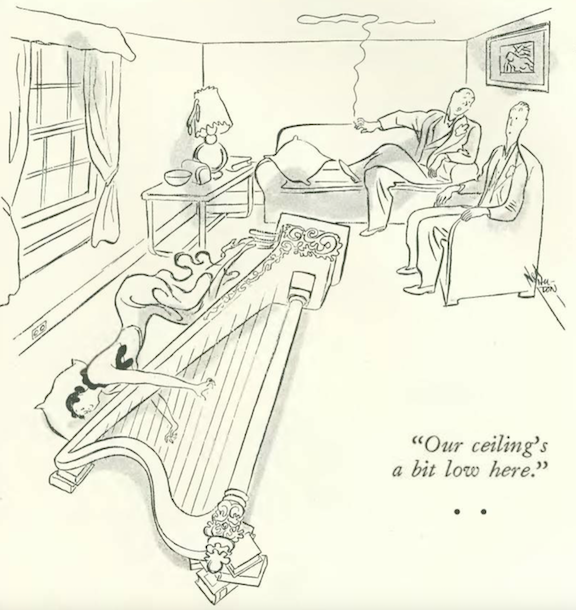
…Ned Hilton’s harpist found a way to adapt to her surroundings…
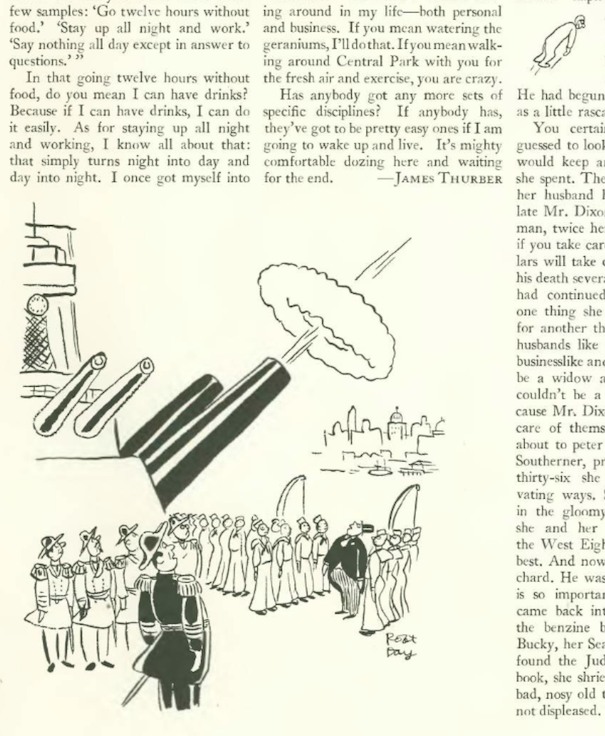
…Robert Day required a layout adjustment for his human cannonball…
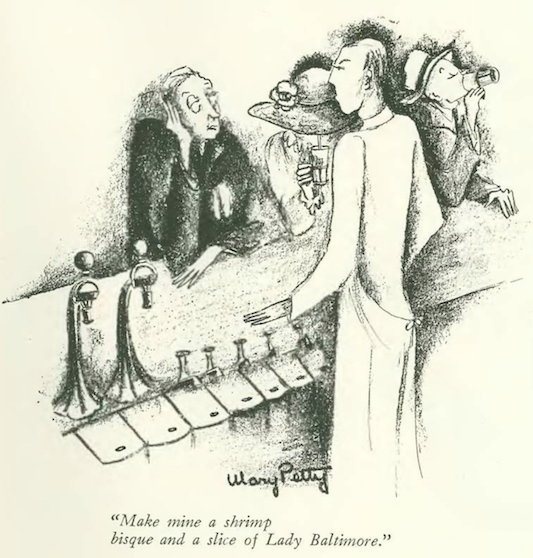
…Mary Petty took an unusual request at the soda fountain…
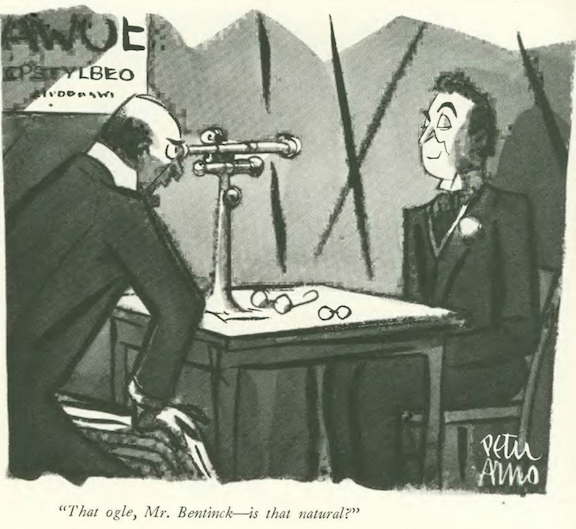
…Peter Arno diagnosed an incurable eye condition…
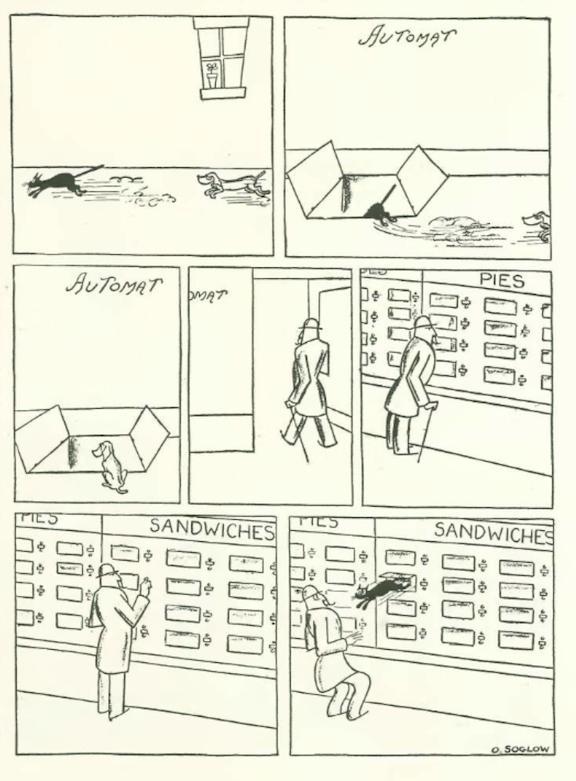
…Otto Soglow offered up a surprise at the automat…
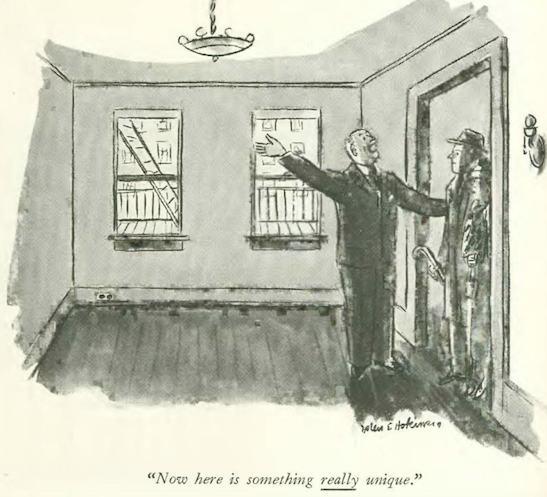
…Helen Hokinson went apartment hunting…
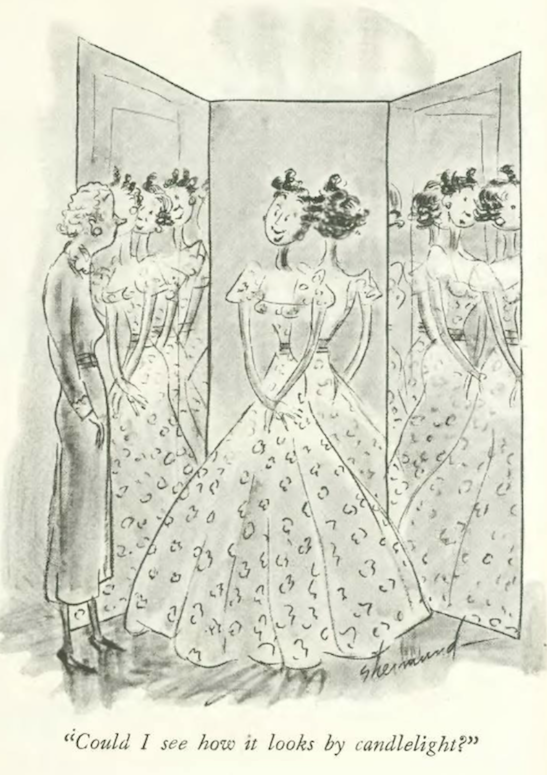
…and we close with Barbara Shermund, and a big ask…
Next Time: Things to Come…