Idiot’s Delight

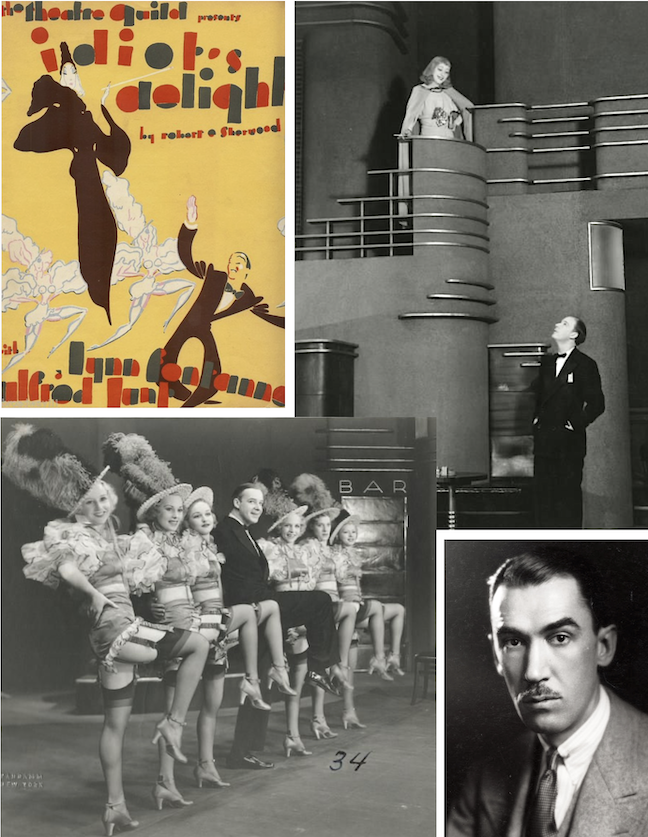
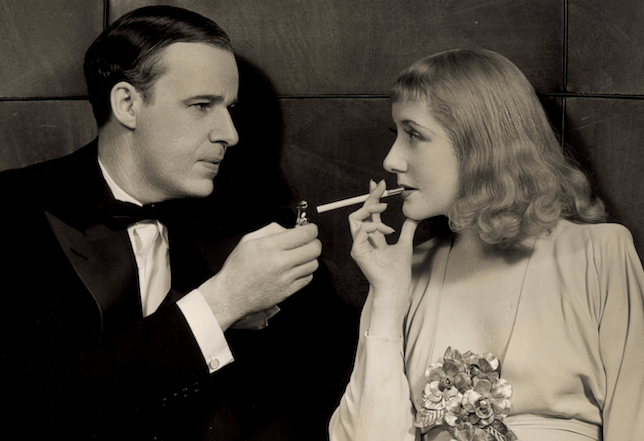
Above: Alfred Lunt and Lynn Fontanne headed the cast of Idiot's Delight, a Pulitzer-Prize-winning play by Robert E. Sherwood. The anti-war play premiered at Broadway's Shubert Theatre on March 24, 1936, and ran for three hundred performances. (latimes.com)

Set against the backdrop of impending war in Europe, Robert Sherwood’s Idiot’s Delight was a timely exploration of how individuals might respond to a major upheaval. The play’s themes about the futility of war resonate as much today as they did in 1936.
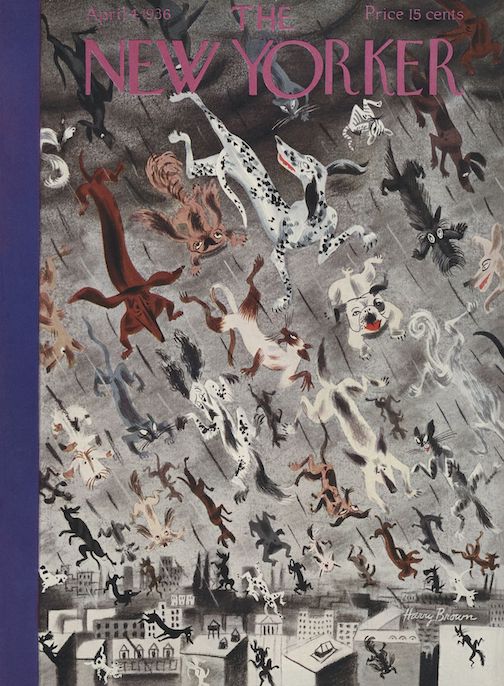
April 4, 1936 cover by Harry Brown. Although he created some distinctive, whimsical covers for The New Yorker (including today’s), there is very little biographical information available on the artist. Brown created eighteen covers for the magazine from 1931 to 1937.

Presented at Shubert Theatre, the Pulitzer Prize-winning play was set at a hotel in the Italian Alps, where the guests—among them a military captain, a German scientist, a radical socialist, and a honeymooning couple—find themselves trapped by the sudden onset of world war. The cast was led by Alfred Lunt, who played a small-time American entertainer accompanied by a troupe of chorines, and Lynn Fontanne, who portrayed a mysterious Russian woman who was traveling with an arms dealer.

The Pulitzer jury called the play first-rate, full of dramatic invention and “Molierian richness.” Critic Robert Benchley heartily agreed:
FRIVOLITY AMID THE CHAOS OF WAR…Clockwise, from top left, souvenir program for Idiot’s Delight; Alfred Lunt and Lynn Fontanne in a scene from the play; playwright Robert E. Sherwood; Lunt with a chorus line in Idiot’s Delight. The New York Times critic Brooks Atkinson wrote that the play “demonstrates Mr. Sherwood’s taste for exuberance and jovial skulduggery.”(eBay.com/nypl.org/imdb.com)

Benchley concluded that the play was at once entertaining and edifying:
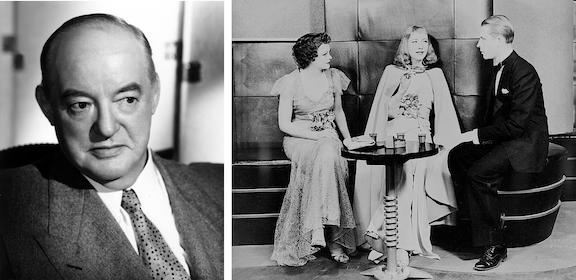
FORGET ABOUT IT…In Idiot’s Delight, Sydney Greenstreet (left) portrayed a doctor who, in the face of senseless war deaths, gives up on his life-saving research; at right, Jean MacIntyre (left) portrayed Mrs. Cherry, part of a young English honeymooning couple stranded at a hotel due to the sudden closing of the border. With her in the scene are Fontanne and Lunt. (radioclassics.com/Public Domain)

Sherwood adapted the play into a 1939 film of the same name, starring Norma Shearer and Clark Gable.

 * * *

Earth Gazing

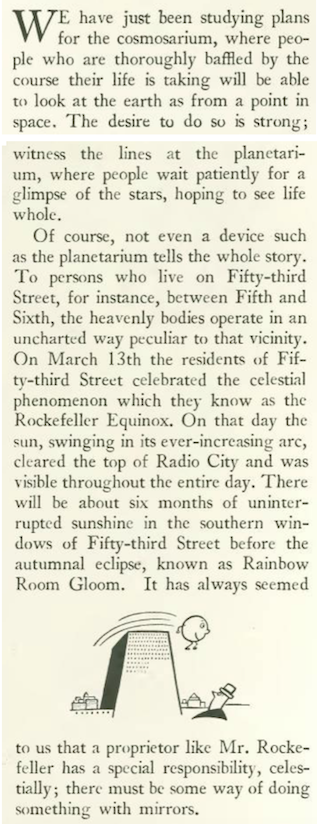
In his “Notes and Comment,” E.B. White mused about plans at the Hayden Planetarium for a program that would give visitors some idea of how earth would appear from a point in space. Earthlings would have to wait until 1968 to actually see a clear, color image of their planet.
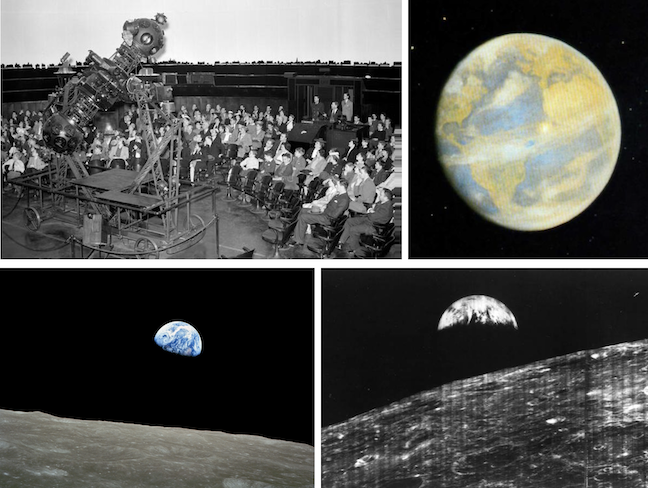
THE WONDER OF IT ALL…Clockwise, from top left, the cosmosarium at the Hayden Planetarium, circa 1935; Howard Russell Butler’s attempt at an accurate portrayal of the earth for the American Museum of Natural History, circa 1920s; in 1966, Lunar Orbiter I sent back this image of Earth from the vicinity of the Moon; Earthrise is a famous photograph of Earth taken from lunar orbit by astronaut William Anders on December 24, 1968, during the Apollo 8 mission. (facebook.com/pinterest.com/NASA)

 * * *

From Russia With Love

Journalist and literary critic Edmund Wilson Jr (1895–1972) traveled in Russia from May to October 1935, and later filed a couple of articles in The New Yorker detailing his travels. Writing for the column “A Reporter at Large,” Wilson described his journey by boat from London to Leningrad, finding an unexpected kinship with his Soviet cabin mates. Excerpts:
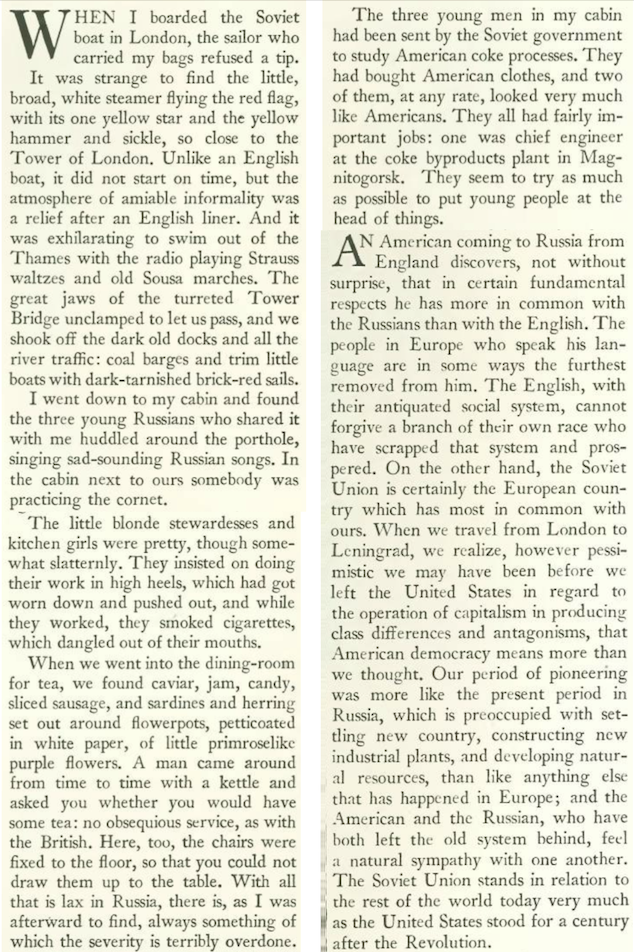
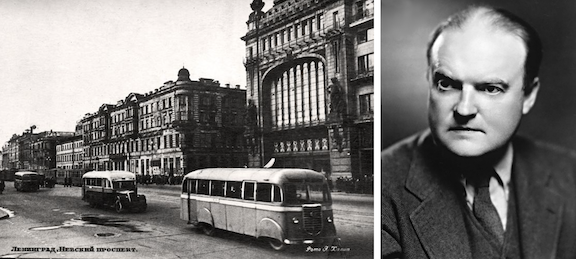
DESTINATION…Leningrad’s Nevsky Prospect 1930s; Edmund Wilson Jr in 1936. (pinterest.com/Wikipedia)

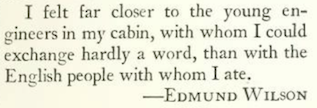
Wilson found that he preferred the company of the Soviets to a stuffy English couple who were his dining companions. He concluded:
It should be noted that Wilson, despite his Marxist sympathies, would soon become disillusioned with the Soviet experiment; his travels concluded just before the onset of Josef Stalin’s “Great Purge,” which featured the notorious Moscow Show Trials that sent millions of innocent Soviet citizens to labor camps or to their deaths in prisons.
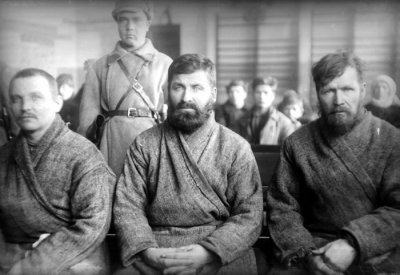
DOOMED…During the Great Terror, which included the notorious show trials of Stalin’s former Bolshevik opponents in 1936-1938 and reached its peak in 1937 and 1938, millions of innocent Soviet citizens were sent off to labor camps or killed in prison. This image from 1936 shows defendants dressed in prison clothing during one of the Moscow Show Trials. (umkc.edu)

 * * *

At the Movies

Film critic John Mosher observed that moviegoers mostly needed “thrills and nonsense” at the cinema. Thrills were not to be found, but Harold Lloyd provided the nonsense.
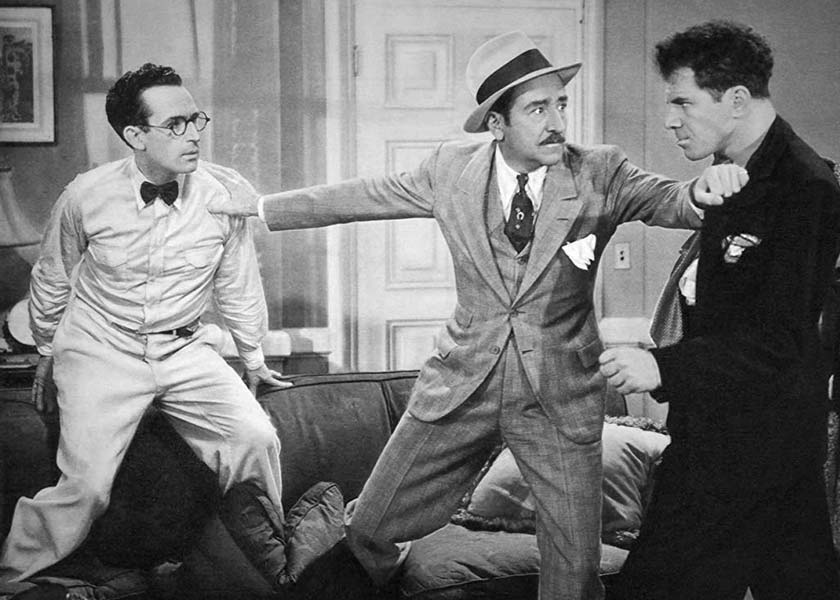
PUNCH LINES…Harold Lloyd (left), portrayed an unlikely middleweight boxer in The Milky Way. Above is a scene with Adolphe Menjou (center) and Lionel Stander. (obscurehollywood.net)

The “thriller” of the week was Moonlight Murder, which Mosher suggested audiences could “dismiss at once.”
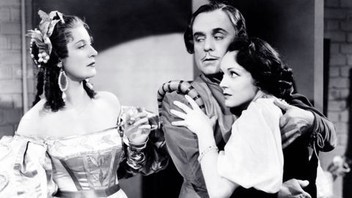
DISMISSED…Katharine Alexander, Leo Carrillo and Benita Hume in Moonlight Murder. (rotten tomatoes.com)

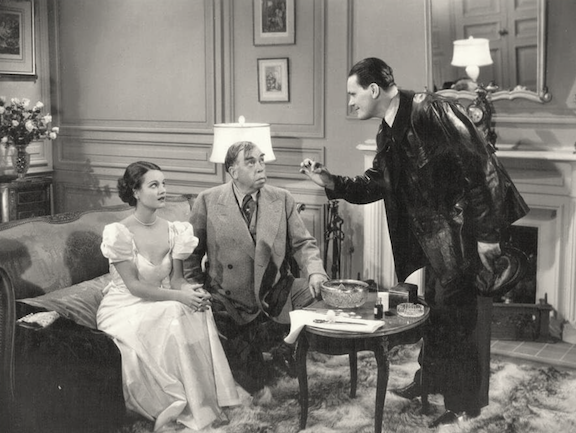
Mosher also offered tepid reviews of Everybody’s Old Man and Sutter’s Gold, despite these films featuring a popular humorist and a respected character actor, respectively.
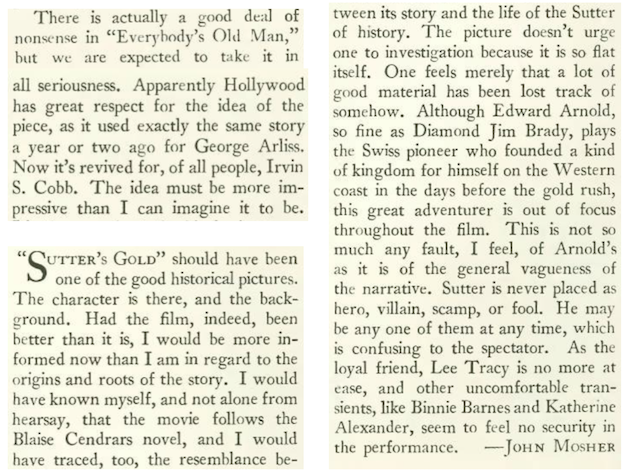
SAY SOMETHING FUNNY…Rochelle Hudson, Irvin S. Cobb and Warren Hymer in Everybody’s Old Man. (imdb.com)
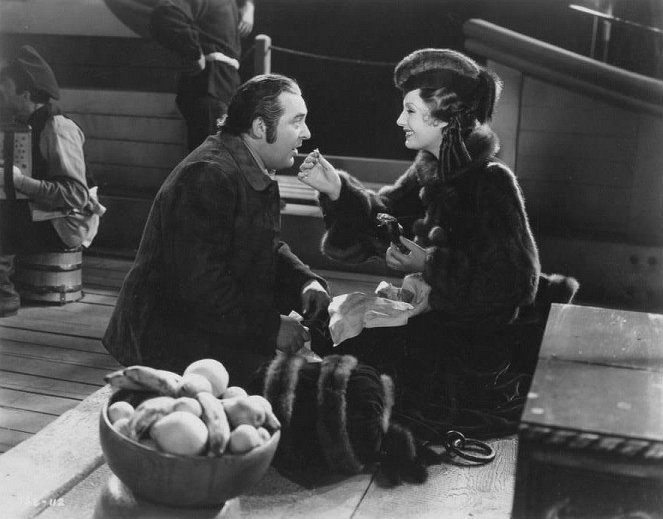
WHO AM I?…A vague narrative left critic John Mosher wondering if Edward Arnold’s character was supposed to be a “hero, villain, scamp, or fool” in Sutter’s Gold. Above, Arnold in a scene with Binnie Barnes. (film booster.com)

 * * *

From Our Advertisers

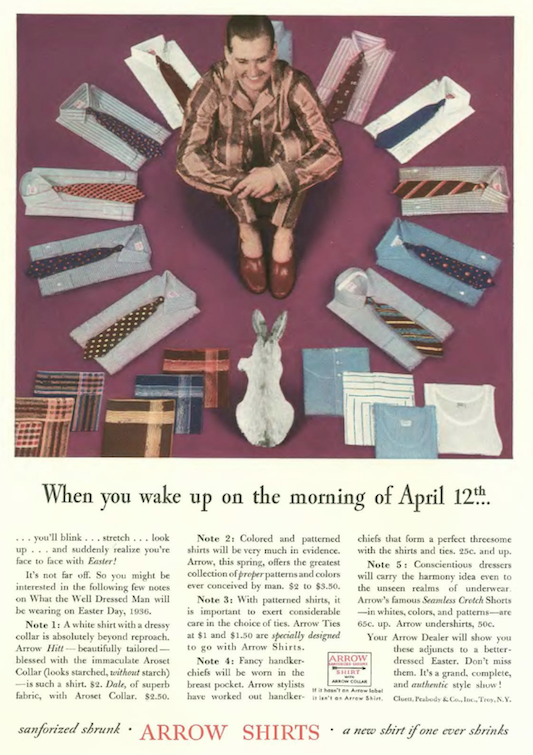
Arrow Shirts rolled out a colorful array of pre-shrunk sanforized shirts and neckties just in time for the Easter holiday…
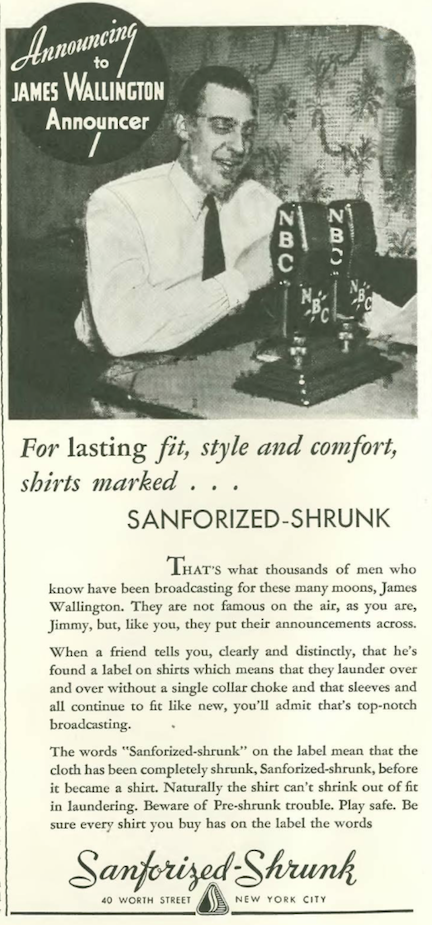
…from the 1930s through the 1950s the distinctive voice of James Wallington (1907–1972) filled the airwaves on both radio and television…here he endorses those “Sanforized Shrunk” shirts…
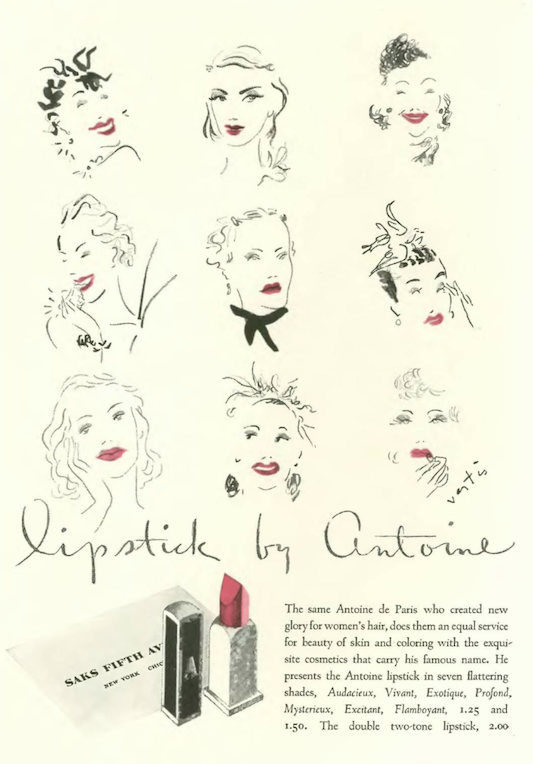
…French costume designer and illustrator Marcel Vertès (1895–1961) provided the art for the Antoine de Paris lipstick line at Saks…Vertès created the original murals in the Carlyle Hotel’s Café Carlyle and in the Waldorf-Astoria’s Peacock Alley… he also won two Academy Awards for his work on the 1952 film Moulin Rouge

…Hockanum Mills announced its new line of woolens for the spring racing season…
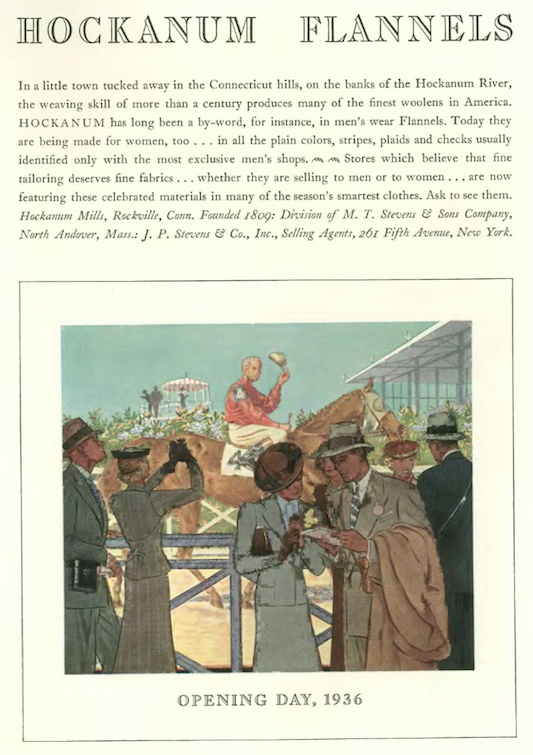
Hockanum’s Rockville mills were shut down in 1951. Today the site is being redeveloped for commercial and light industrial uses as well as the site for the New England Motorcycle Museum. (historicbuildingsct.com)

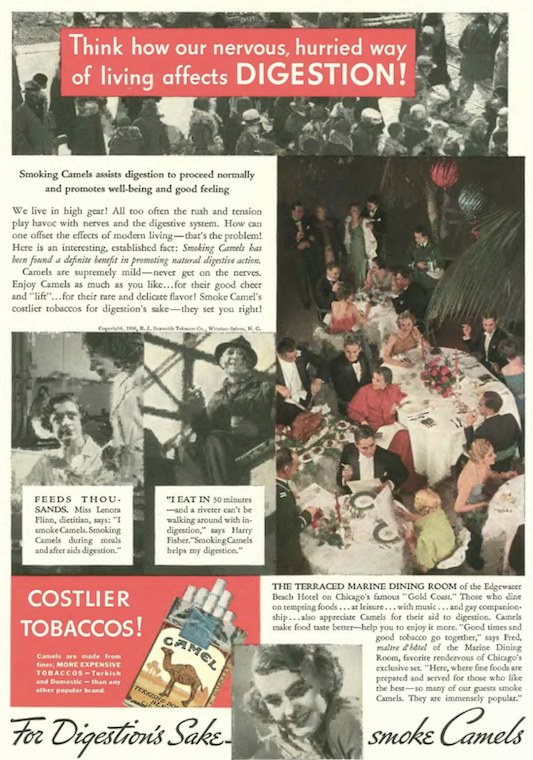
…more claims from R.J. Reynolds regarding the gastrointestinal benefits of their Camel cigarettes…
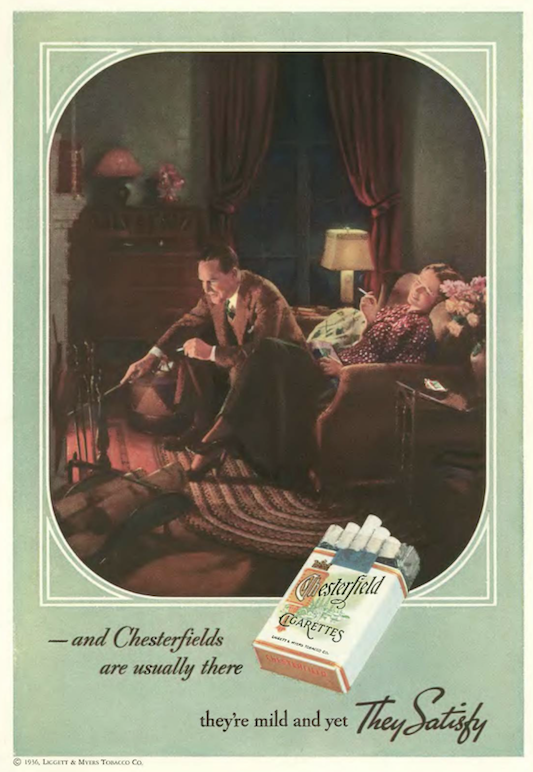
…while Liggett and Myers stuck with the pleasures of hearth and home, and a pack of Chesterfields…
…on to the cartoon section, we begin with Christina Malman

Richard Taylor

Robert Day

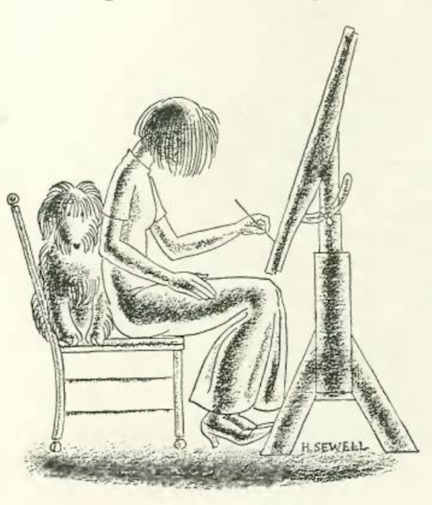
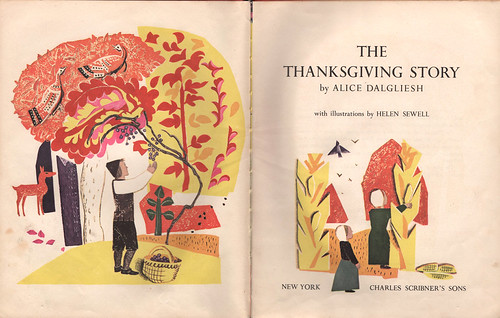
…and a wonderful spot drawing by illustrator and children’s book author Helen Moore Sewell

…who won a Caldecott Medal for her illustrations featured in Alice Dalgliesh’s The Thanksgiving Story (1954)…
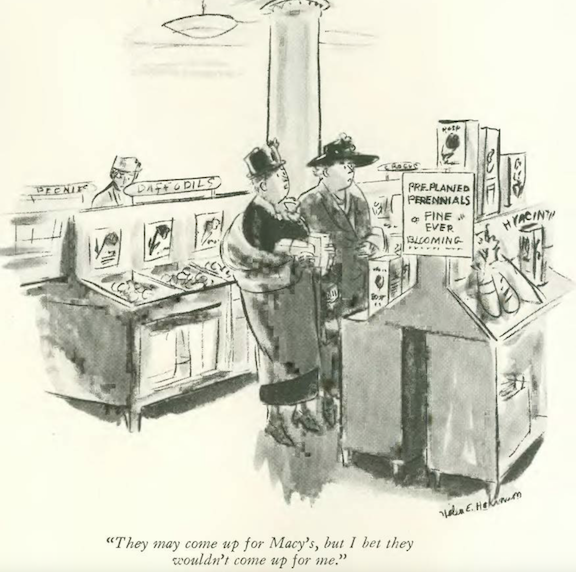
…we go shopping with Helen Hokinson in the garden section…
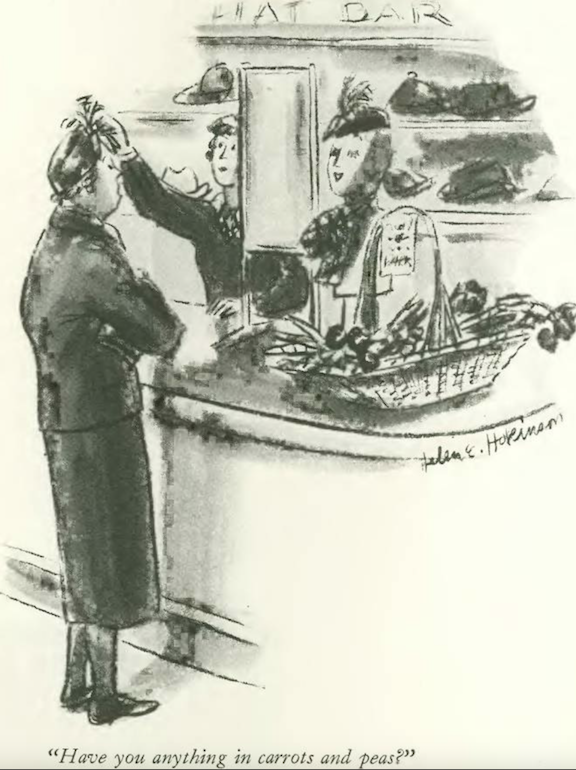
…and in the hat department…
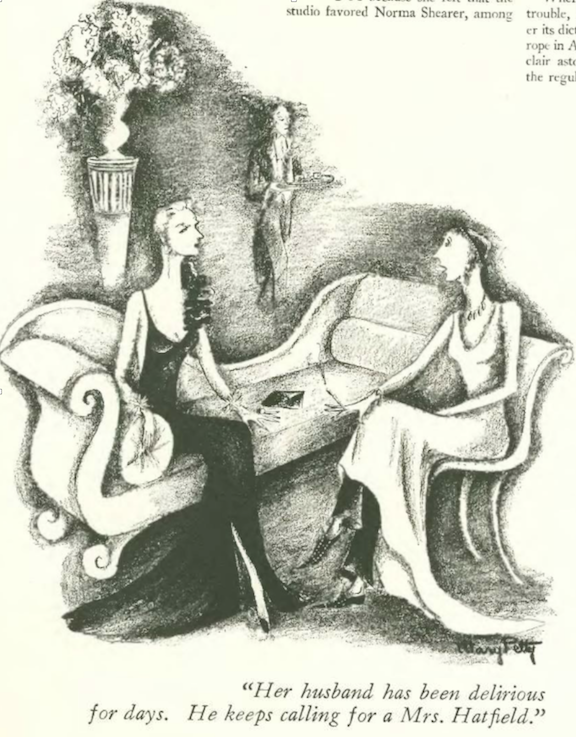
Mary Petty caught up on the latest gossip…
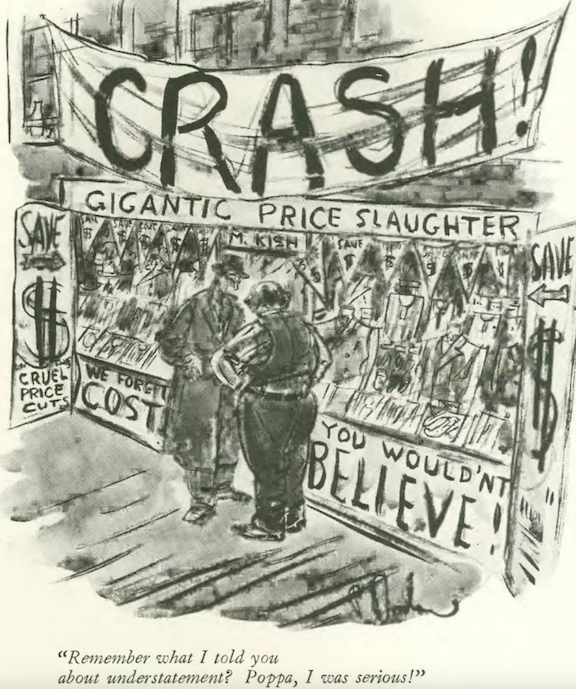
Perry Barlow gave us a shopkeeper in need of some marketing tips…
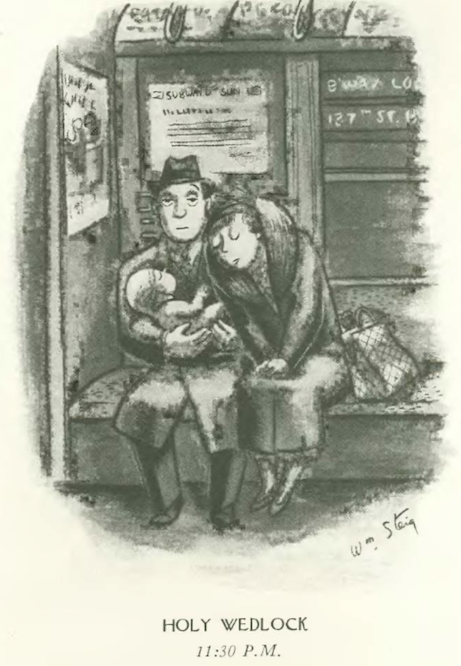
William Steig continued to probe the joys of married life…
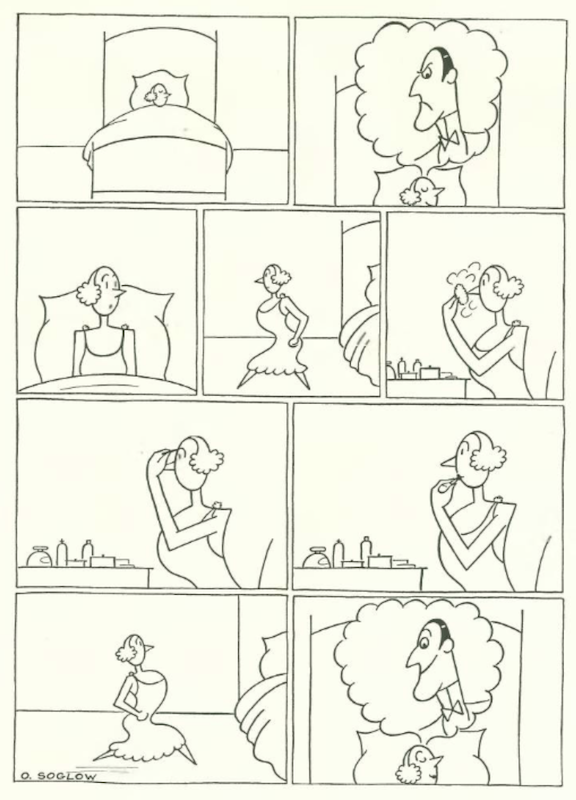
…even one’s dream world required some careful grooming, per Otto Soglow

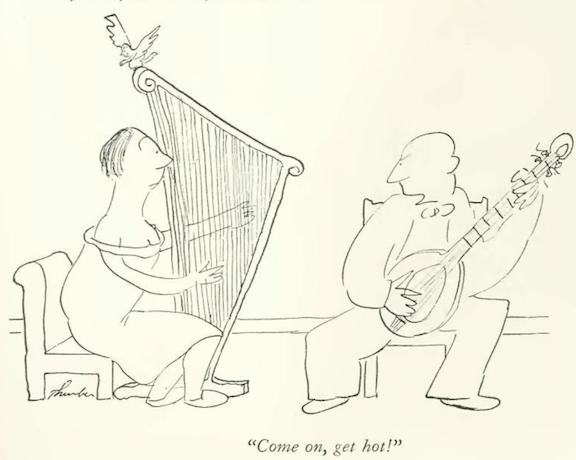
James Thurber drew up a duet out of tune…
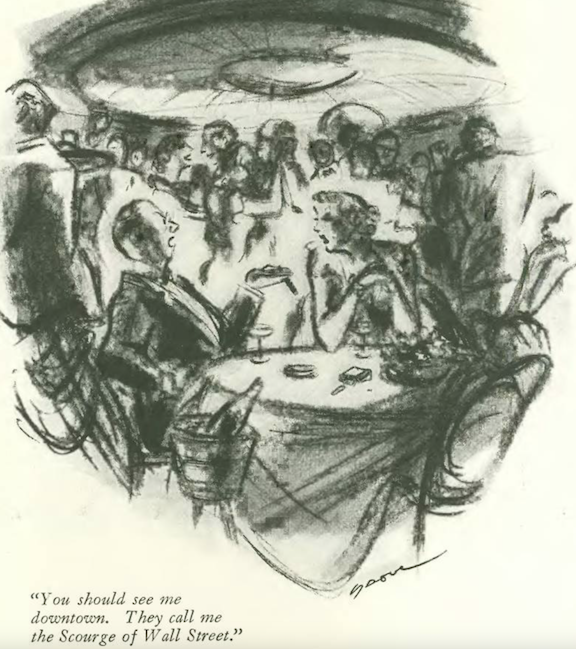
…outside of Wall Street, Leonard Dove’s titan of business was just another sugar daddy…
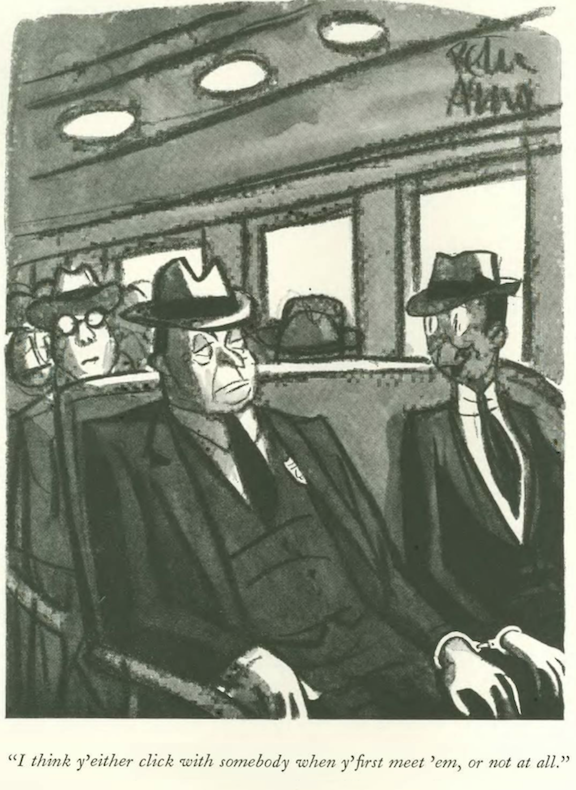
…and we close with Peter Arno, and strangers on a train…
Next Time: People in Glass Houses…
 

Back in the USSR

The year 1932 was a tough one for many Americans, barely scraping by in the deepening Depression. But to the suffering millions in the Soviet Union, America’s economic woes looked like a walk in the park.

Jan. 30, 1932 cover by Rose Silver.

The year marked the beginning of a catastrophic famine that swept across the Soviet countryside, thanks to the government’s bone-headed and heartless forced collectivization that caused more than five million people to perish from hunger. Those events, however, were still on the horizon when Robin Kinkead, a New York Times Moscow correspondent, ventured out into Moscow’s frigid streets in search of a lightbulb. Here is his story:

WE HAVE PLENTY OF NOTHING FOR EVERYONE…In 1930s Moscow, and in the decades beyond, much of life consisted of standing in line for everything from bread to light bulbs.
MAGIC LANTERN…Russian peasants experience electricity for the first time in their village. (flashback.com)
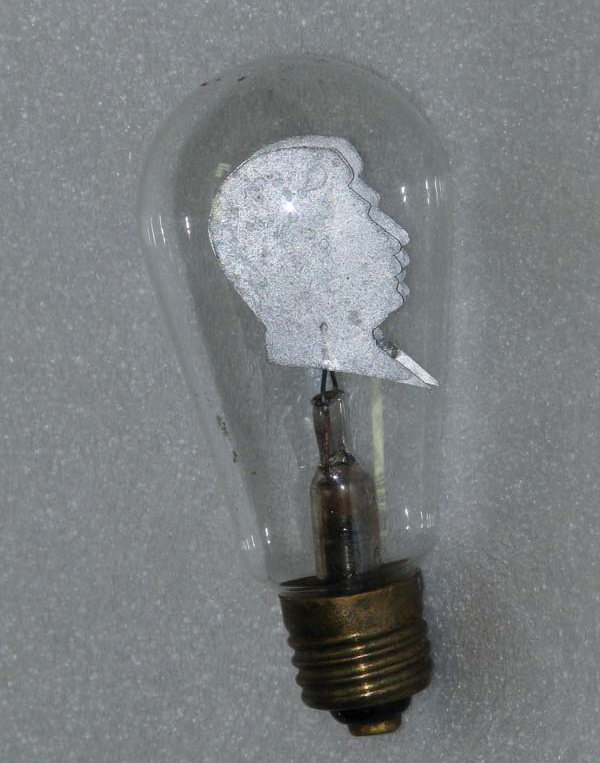
STALIN CAST A LARGE SHADOW over his subjects, even when they sought a bit of light in the darkness. Stalin and Lenin profiles served as glowers in this Soviet lightbulb, circa 1935. The first series of these bulbs were presented to the delegates of Soviet parliament of 1935, just in case they forgot who was in charge—or who might liquidate them at any moment, for any reason, or for no reason. (englishrussia.com)

*  *  *

One of Theirs

Miguel Covarrubias was one of the first artists to contribute to the fledgling New Yorker, and his linear style was well known to readers when he opened his latest show at New York’s Valentine Gallery. It featured works he had created during a 1931 sojourn in the East Indies. Critic Murdock Pemberton found the palette reminiscent of Covarrubias’ earlier work during the Harlem Renaissance:

GLOBETROTTER…A frequent contributor to the early New Yorker, Miguel Covarrubias traveled the world in search of inspiration. His 1932 exhibition at New York’s Valentine Gallery featured his latest work, a series of “Balinese paintings” including In Preparation of a Balinese Ceremony, at right. (sothebys.com)
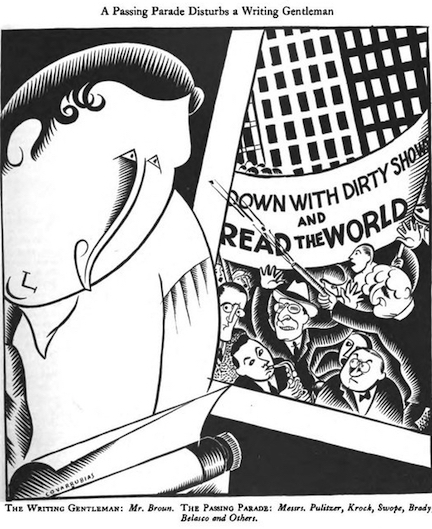
MAN OF MANY TALENTS…An early Covarrubias contribution to the New Yorker in the March 7, 1925 issue.
 *  *  *
From Our Advertisers
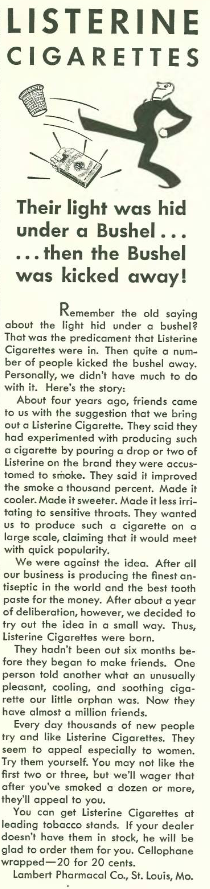
Listerine had been around since the late 1860s, but it wasn’t marketed as a mouthwash until 1914. The brand really took off in the 1920s when it was heavily advertised as a solution for “chronic halitosis” (bad breath), so in 1930 its makers went one step further by adding a few drops of their product to one of the chief causes of bad breath. The folks at Listerine were also keen to the growing market of women smokers—note the fifth paragraph: “They seem to appeal especially to women”…

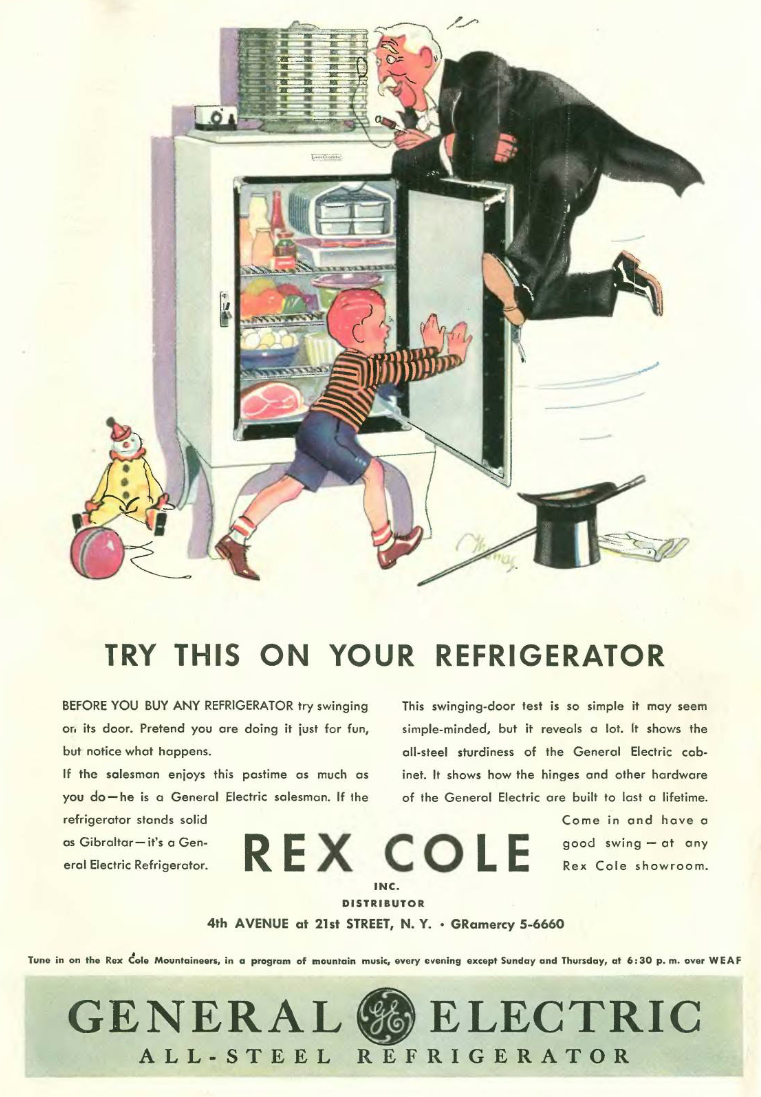
…when you run out of ideas to amuse your grandchild, drop your top hat and walking stick and let him take you for a swing on a GE fridge door…wow, admire its “all-steel sturdiness” as it slowly tips toward the unsuspecting lad…

…on to our cartoons, Rea Irvin showed readers what he thought of the latest “rosy” economic predictions…

…but with the economy still deep in the dumps, building continued to boom, per Robert Day

Perry Barlow gave us a fellow needing a break from the daily gloom…

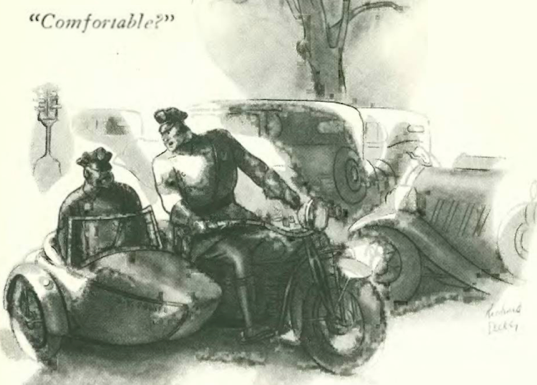
Richard Decker unveiled this crime-fighting duo…

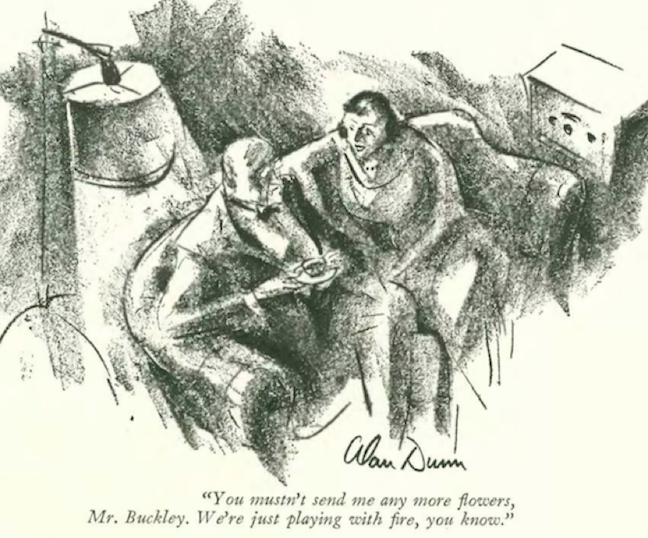
Alan Dunn tempered the flames of passion…

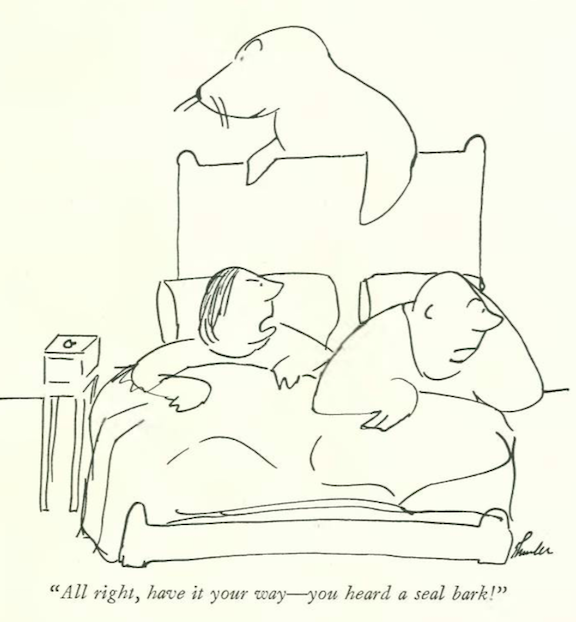
…and we close this issue with one of James Thurber’s most famous cartoons…

…on to Feb. 6, 1932…

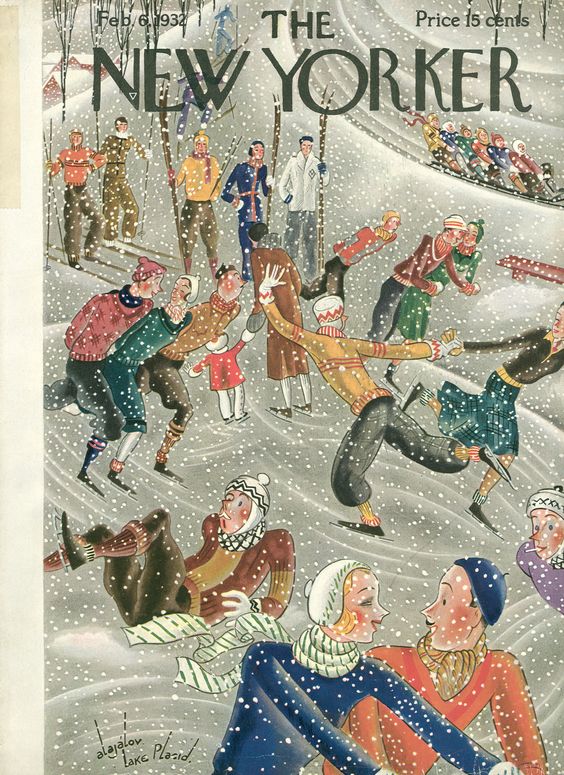
Feb. 6, 1932 cover by Constantin Alajalov.

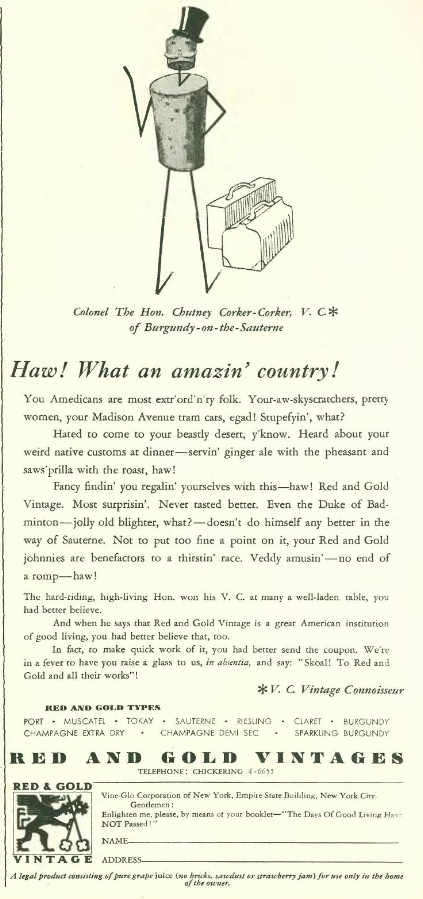
…and we head straight to our advertisers…and yet with another sad Prohibition-era ad, this from the makers of Red & Gold Vintages, who promised to dress up your bootleg rotgut with many fine flavorings…

New Yorker founding editor Harold Ross couldn’t care less about the advertising department as long as it paid the bills and kept its nose out of editorial, but I wonder if a cig dropped from his lips when he glanced at this ad…

…as noted in the Listerine ad above, tobacco companies were eager to tap the growing market of women smokers…actress Sue Carol egged on the sisterhood in this ad…Carol would have a brief acting career (including 1929’s Girls Gone Wild—not quite as racy as the 1990s DVD series) before becoming a successful talent agent…

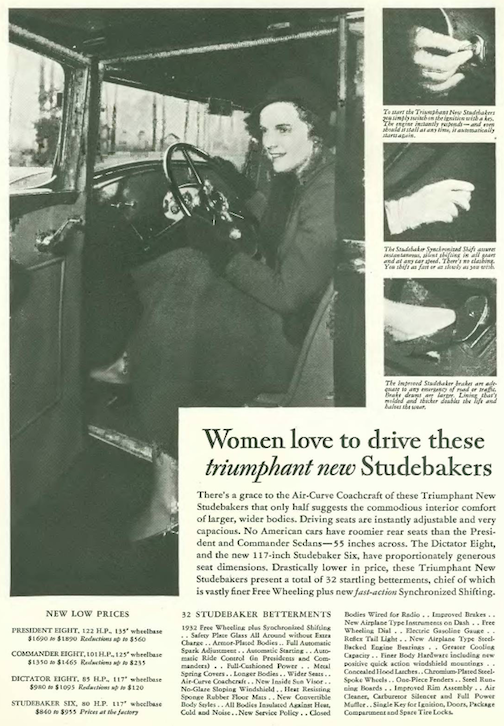
…as noted in my previous “Dream Cars” post, women were also a fast growing market for automobiles, and manufacturers—desperate for Depression-era sales—scrambled to show women all of the swell gadgets that would make driving a snap (as if men didn’t need these gadgets too)…

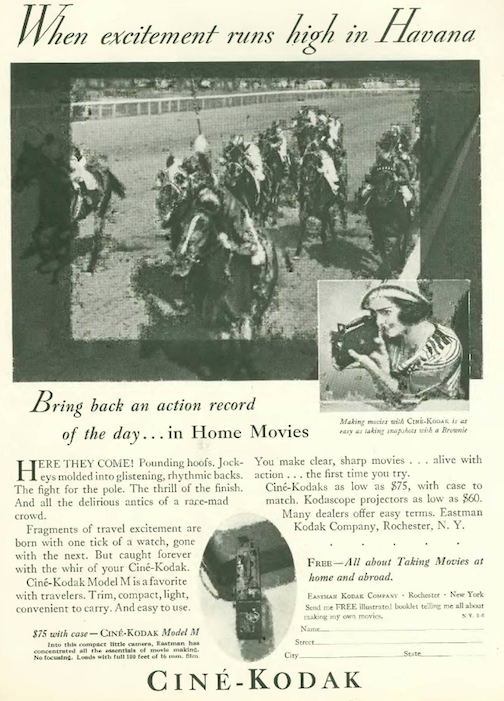
…and here we have an ad from Kodak that demonstrated the ease of its home movie camera, which could go anywhere, say, like the horse races in Havana…

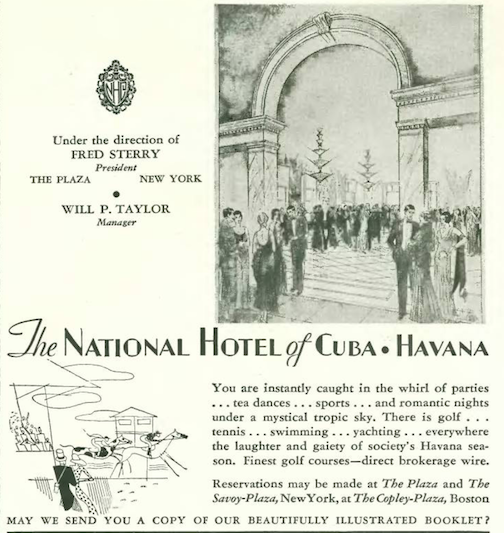
…Havana then was a playground for wealthier Americans, and many resided at a grand hotel operated by another rich American…

…but if you remained in town, you should at least know how to get tickets to the latest show (this drawing is signed “Russell”…could it be the noted illustrator Russell Patterson?)…

…on to our cartoons, Rea Irvin again commented on the latest predictions for economic recovery…

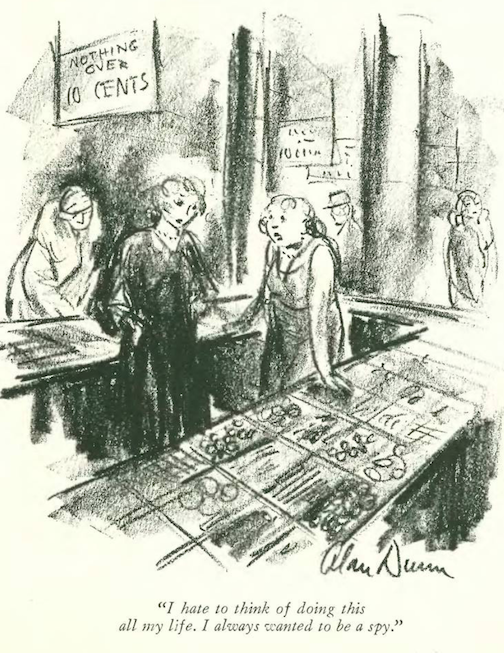
…but Alan Dunn found one woman who wanted an adventure, not a job…

…perhaps she should hang out with one of Barbara Shermund’s “New Women,” who had a flair for the dramatic…

…as for those seeking a new life, Mary Petty considered the costs…

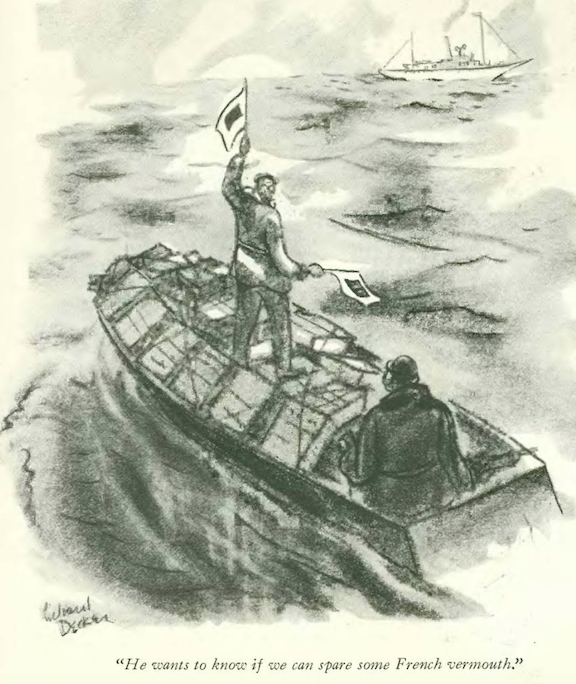
Richard Decker took us to the high seas, where a thirsty yachtsman hailed a passing smuggler…

Otto Soglow probed the sorrows of youth…

…and William Crawford Galbraith, the joys…

…and James Thurber introduced his classic dog in a big way on this two-page spread…

…and on to one more issue, Feb. 13, 1932…

Feb. 13, 1932 cover by S. Liam Dunne.

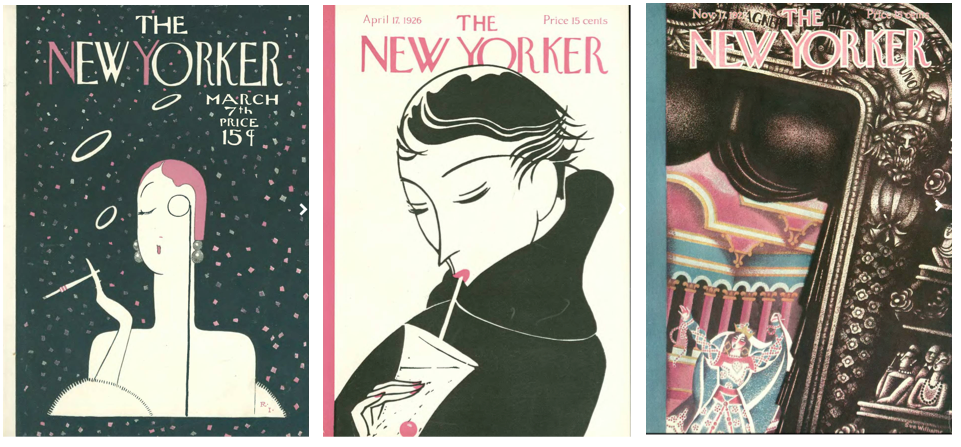
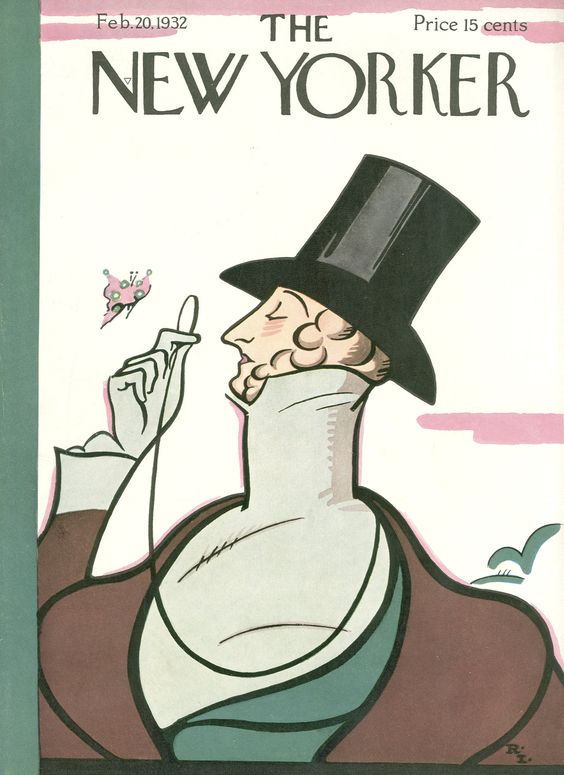
…we begin with a nerd alert—the Feb. 13 cover represented one of the magazine’s biggest departures from the original Rea Irvin nameplate, here heavily embellished within S. Liam Dunne’s design. Departures in previous issues were more subtle, Irvin himself experimented with an elongated version in the third issue (below, left). For the April 17, 1926 issue, Katharine and Clayton Knight’s* stylish illustration (center) was the first to overlap part of the nameplate, and Sue Williams’ Nov. 17, 1928 cover (right) was the first to embellish the Irvin font.

*A note on Katharine Sturges Knight and Clayton Knight. The April 17, 1926 cover (center) was the only design by the Knights published by The New Yorker. The original picture was drawn on wood by Katharine and then cut by Clayton. Their son, Hilary Knight, is also an artist, best known as the illustrator of Kay Thompson’s Eloise book series.

…on to the advertisements, kicking off with this subtle appeal from the makers of the unfortunately named “Spud” menthol cigarettes…here a young woman experiences Spud’s “mouth-happiness” while attending the annual Beaux Arts Ball at the new Waldorf-Astoria…

…if you’re wondering why the Spud ad featured a guy in a powdered wig puffing on a cigarette, well the theme of the 1932 ball was “A Pageant of Old New York.” Every year had a different costume theme, and the ladies and gentlemen of the ruling classes delighted in dressing up for the occasion…

PLAYING DRESS-UP…Program for the 1932 Beaux Arts Ball, and two of the attendees, Frank Sanders and Frances Royce. (Pinterest)

…if stuffy events weren’t your thing, you could chuck the fancy duds and head to the sunny beaches of Bermuda…

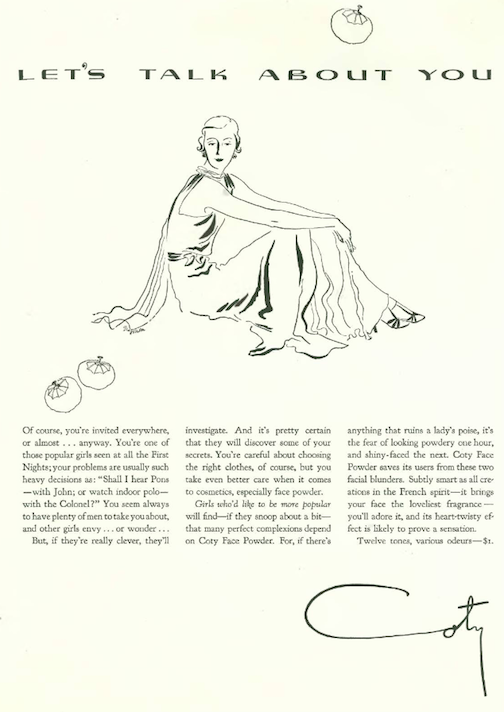
…I include this Coty advertisement for its modern look — it easily could have appeared in a magazine from the 50s or even 60s…the artwork is by American fashion illustrator Ruth Sigrid Grafstrom…

…the auto show has left town, but for some reason the makers of 12-cylinder models continued to shill their products in the New Yorker…Auburn (the middle ad) built beautiful, upscale vehicles, but the Depression would drop it to its knees by 1937…Pierce Arrow would succumb the following year…Lincoln, the highest-priced of these three, would hang on thanks to the largess of parent Ford…

New Yorker cartoonist John Held Jr. picked up some extra bucks by designing this ad for Chase and Sanborn’s…

…and on to our other cartoonists/illustrators, Reginald Marsh wrapped this busy dance hall scene around a section of “The Talk of the Town”…

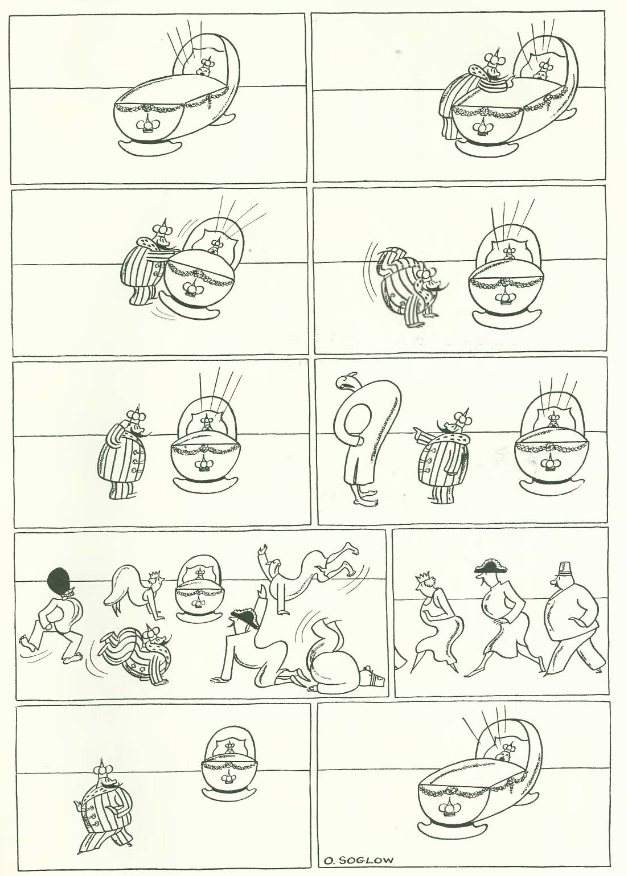
Otto Soglow was back with his Little King, and the challenges of fatherhood…

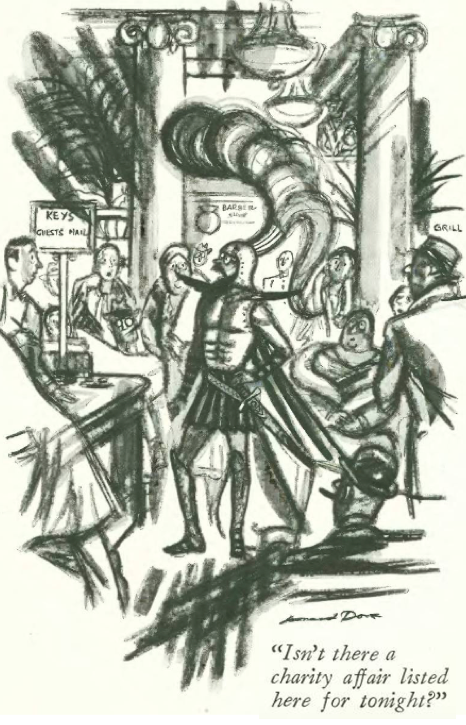
Leonard Dove gave us a knight lost on his crusade…

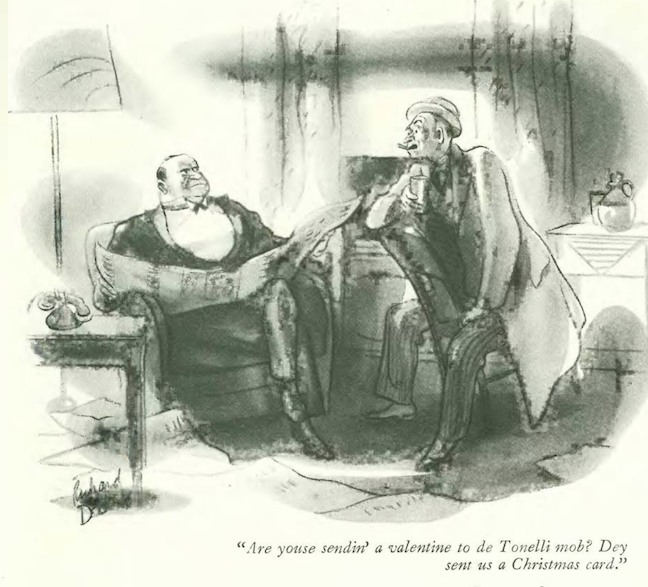
Richard Decker explored the softer side of gangster life…

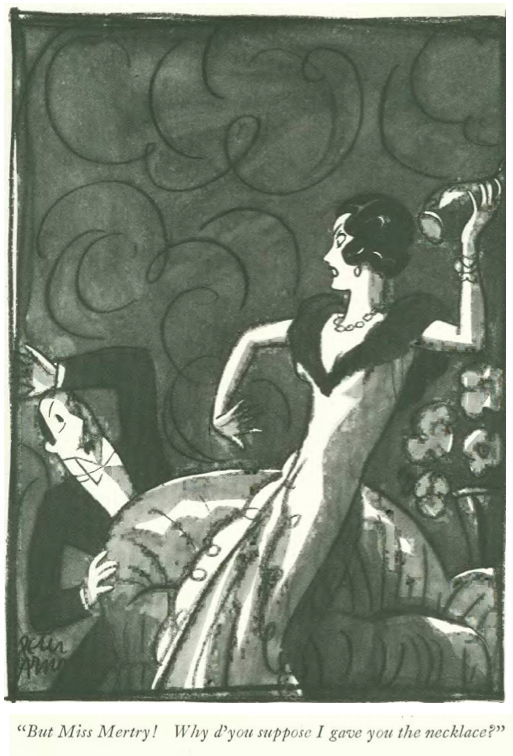
…and we sign off with Peter Arno, and a little misunderstanding…

Next Time: Winter Games…