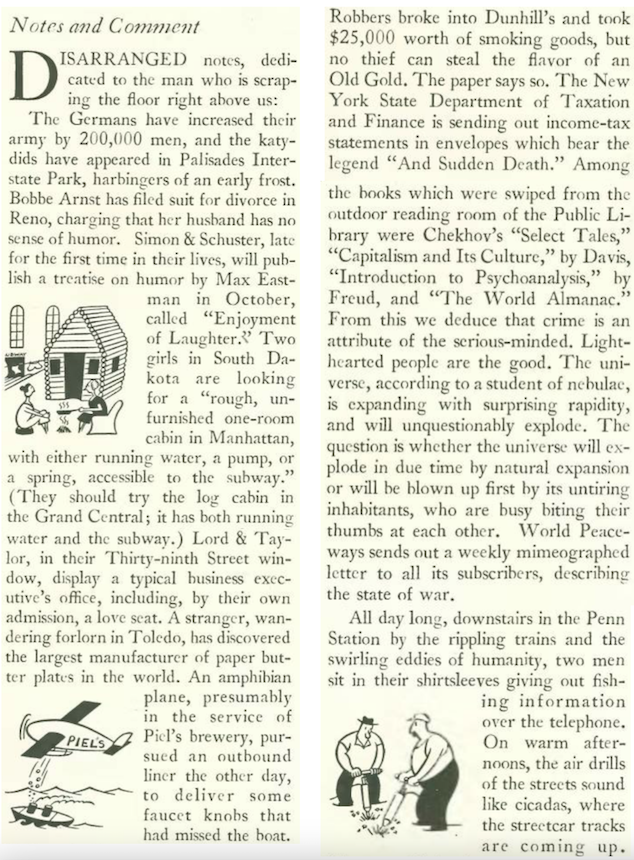
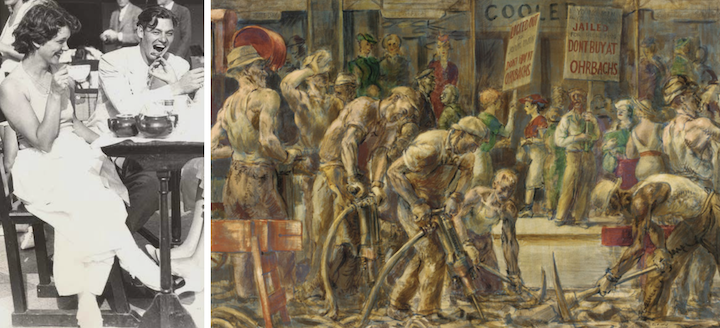
Above: E.B. White noted the sounds of late summer ranging from jackhammers (that sounded like cicadas) to the songs of katydids predicting an early frost. (pafa.org/Ellyn B/Flickr/nwf.org)
For roughly four decades E.B. White’s “Notes and Comment” set the tone for each issue of The New Yorker, offering observations on daily life that sometimes were compiled from his “disarranged notes.”
September 5, 1936 cover by Adolph K. Kronengold.
For the September 5 issue White offered brief comments on everything from the German military buildup to the romantic life of singer Bobby Arnst.
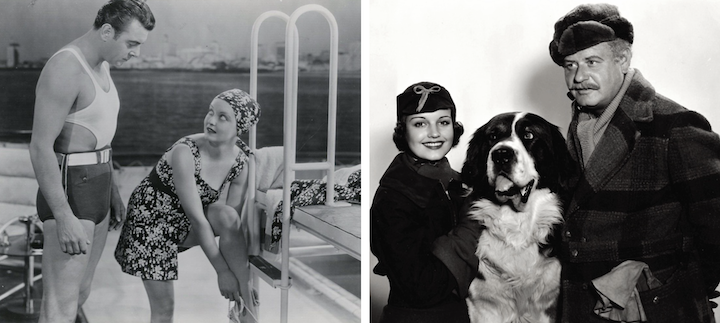
SHE WENT APE OVER TARZAN…Photo at left: Singer/dancer Bobbe Arnst shares a laugh with her first husband, Tarzan star Johnny Weissmuller—apparently her second marriage to divorce attorney Robert Cavenaugh wasn’t so full of yuks; White also noted the cicada-like sounds of air drills tearing up old trolley car lines—at right is the 1936 painting “End of 14th Street Crosstown Line” by early New Yorker contributor Reginald Marsh. The urban realist Marsh juxtaposed workers tearing up tracks with picketers demonstrating against Ohrbach’s, which would not allow employees to unionize. (whosdatedwho.com/pafa.org)
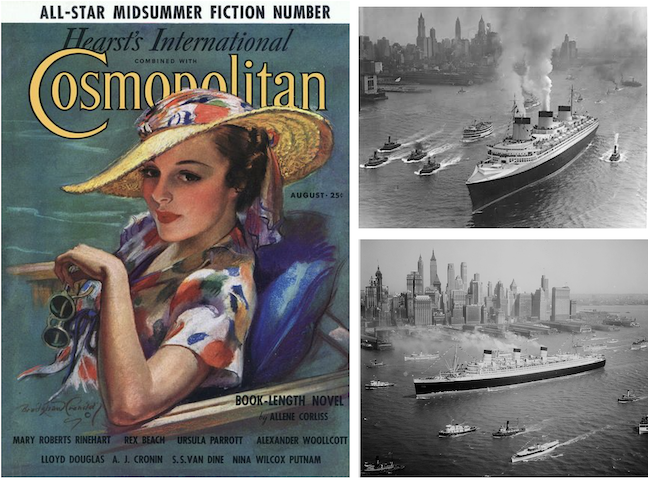
White also cited Cosmopolitan magazine regarding “the age of accumulation” (twenty-five to thirty-five), and noted the average speed of rival ocean liners for “New Yorkers hastening to the Scottish moors for the grouse shooting…”
CONSUMER REPORT…White cited Cosmopolitan regarding “the age of accumulation,” and considered the average speeds of the world’s fastest ocean liners, France’s SS Normandie (top), and Great Britain’s RMS Queen Mary. (instagram.com/ucla.edu)
* * *
Sounds of Music
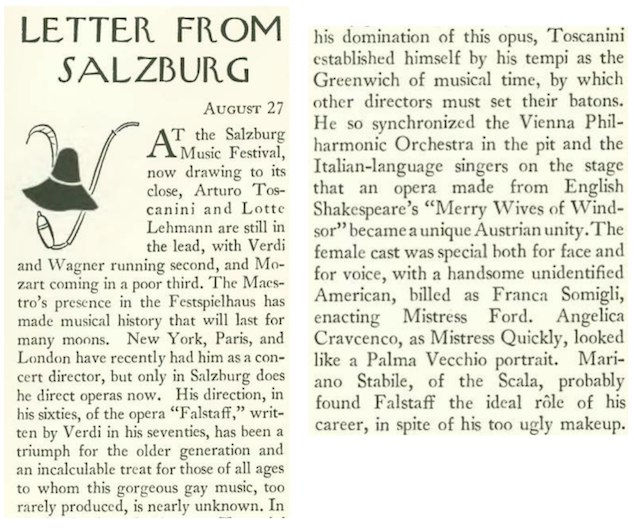
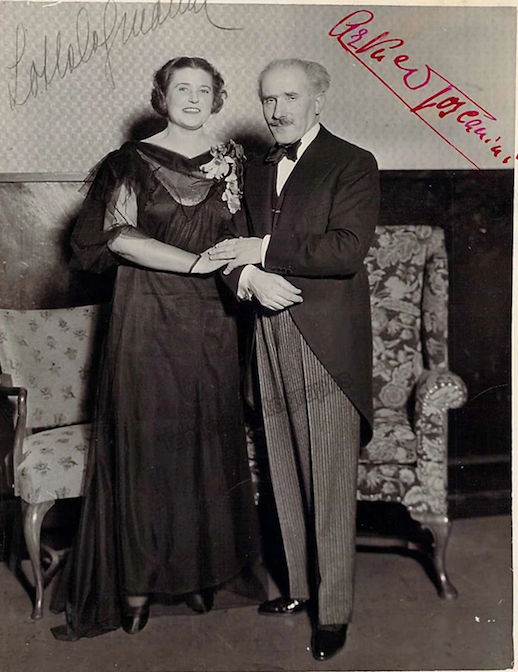
Paris correspondent Janet Flanner moved on from the Nazi Olympics in Berlin to the foothills of the Alps for the Salzburg Music Festival, where German dramatic soprano Lotte Lehmann and Italian conductor Arturo Toscanini made music together.
DRAMATIC DUO…Dramatic soprano Lotte Lehmann and conductor Arturo Toscanini were the big draw at the 1936 Salzburg Music Festival, which also featured the debut of the Trapp Family Singers, who were encouraged by Lehmann to enter the Salzburg Festival contest. (taminoautographs.com via stolpersteine-salzburg.at/en)
In August 1936 Lehmann discovered the Trapp Family Singers (made famous in 1965’s The Sound of Music). While approaching a villa available to let, Lehmann overheard the Trapp children singing in their garden. Due to her fame, Lehmann was able to persuade Captain Georg Von Trapp to allow his children to perform at Salzburg Festival.
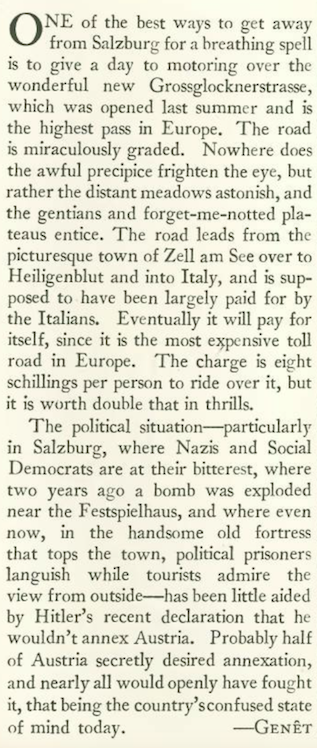
Flanner also marveled at the Austria’s Grossglockner High Alpine Road—with the highest pass in Europe—and noted the bitter struggle between Nazis and Social Democrats that was dividing Austrians less than two years before the Anschluss, the German annexation of Austria.
GETTING HIGH…At left, the Grossglockner High Alpine Road (Grossglockner Hochalpenstrasse); at right, the Hohensalzburg Fortress (Festung Hohensalzburg) a large medieval fortress that is a prominent landmark in the city of Salzburg, Austria. Flanner noted that unbeknownst to gawking tourists, the fortress contained political prisoners. (Wikipedia)
* * *
At the Movies
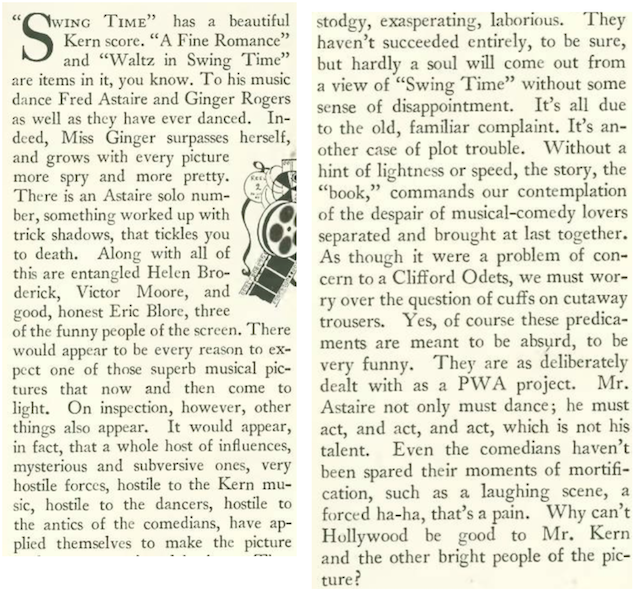
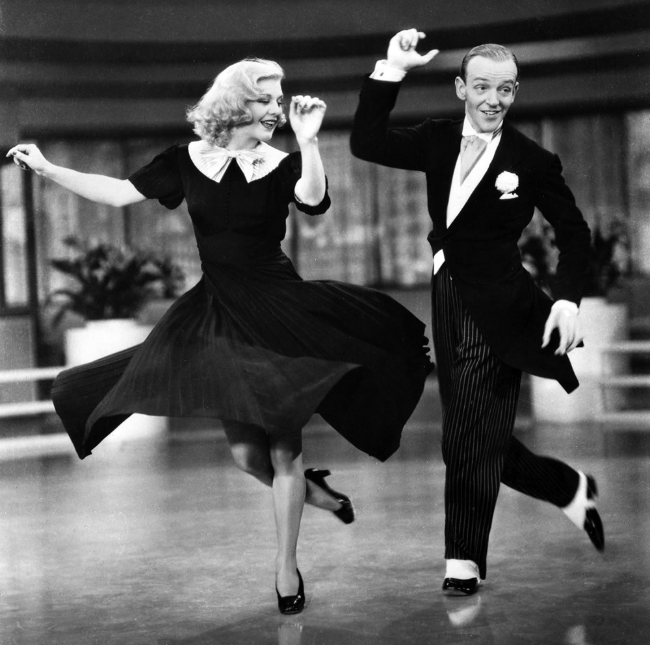
John Mosher found Fred Astaire and Ginger Rogers at the top of their game in the musical comedy Swing Time, but lamented the stodgy and laborious plot that burdened the non-dancing scenes.
BUSTING SOME MOVES are Ginger Rogers and Fred Astaire in Swing Time. The film was the sixth of ten films starring Astaire and Rogers. (goldenageofcinemasite.wordpress.com)
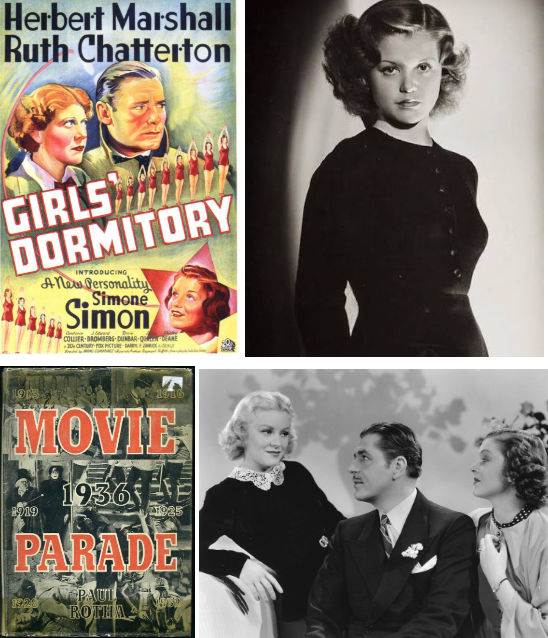
Mosher also had a look at Girl’s Dormitory, which introduced audiences to the young French actress Simone Simon, and also checked out the latest Myrna Loy flick.
THINGS THAT MAKE YOU GO HMMM…Clockwise from top left: Set at a Swiss boarding school, Girl’s Dormitory is a story about a middle-aged school director (Herbert Marshall) who resists the attentions of a forty-something professor (Ruth Chatterton) and instead hooks up with a 19-year-old student (Simone Simon);1936 photo of Simon by George Hurrell—Simon is is perhaps best remembered for her role in the 1942 American horror film Cat People and its sequel; Claire Trevor, Warner Baxter, and Myrna Loy in To Mary—with Love; cover of Movie Parade, a book on movie history when the history of film was just three decades old. (imdb.com/facebook.com)
* * *
From Our Advertisers
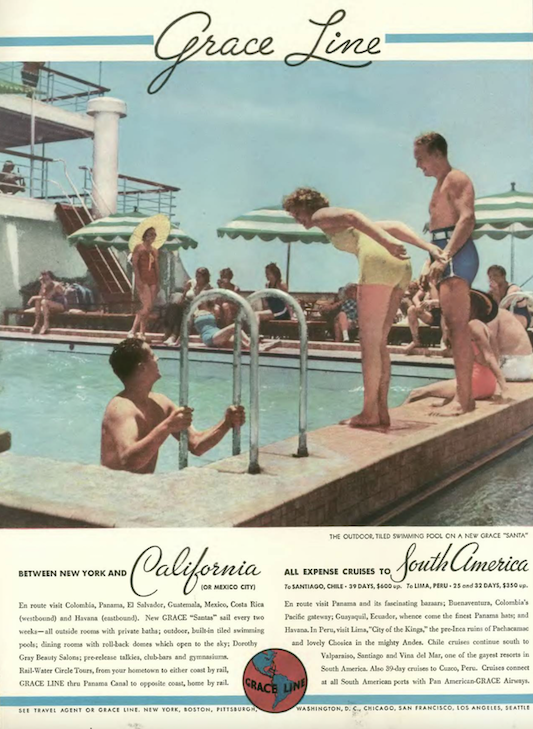
The magazine opened with another enticing photo from Grace Line depicting an ocean cruise before the days of water slides, buffet lines and norovirus…
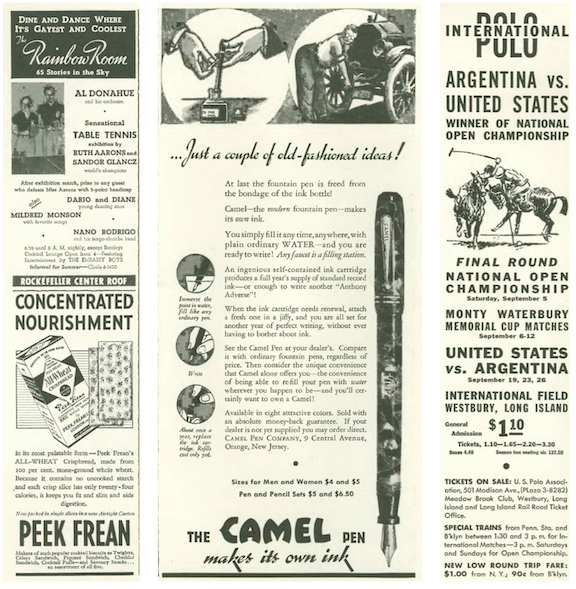
…some one-column selections from the back of the book, including an ad from the Camel Pen Company introducing an innovative fountain pen that contained a dry ink pellet—the user added water to dissolve the pellet into a year’s supply of ink…
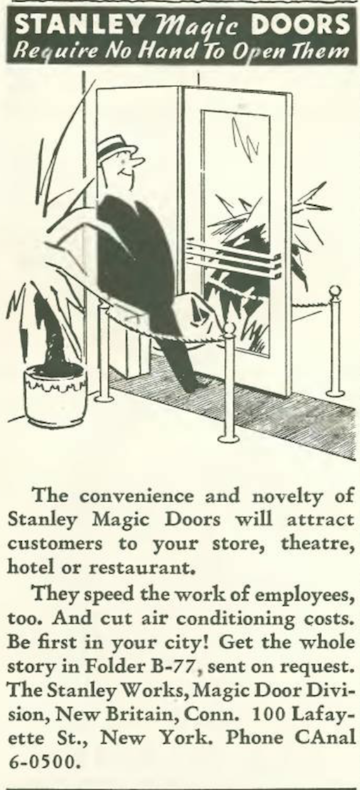
…these days most of us use ball-point pens, and we are also so accustomed to automatic doors that they no longer seem “magic” as they did in the 1930s…
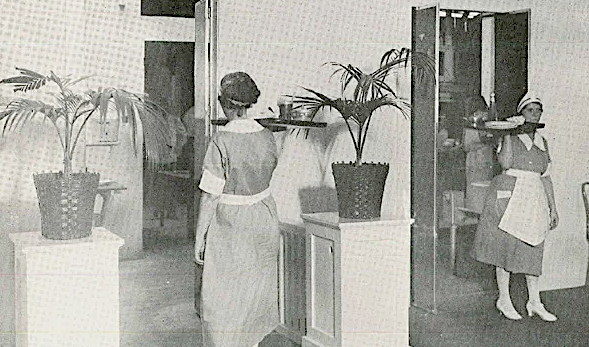
WONDERS NEVER CEASE…In 1931, Wilcox’s Pier Restaurant in West Haven, Connecticut featured the first automatic doors in America, invented by Stanley. (cbsnews.com)
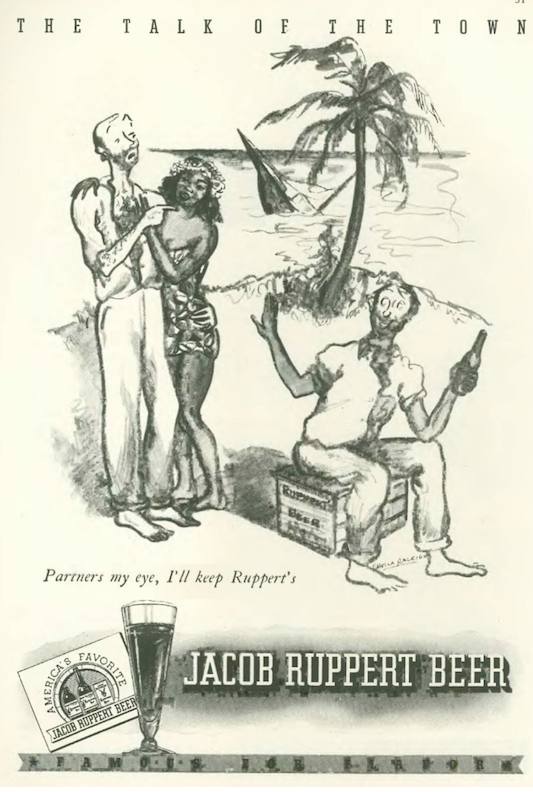
…New York artist Sheila Raleigh employed the desert island trope to sell some beer for Jacob Ruppert…
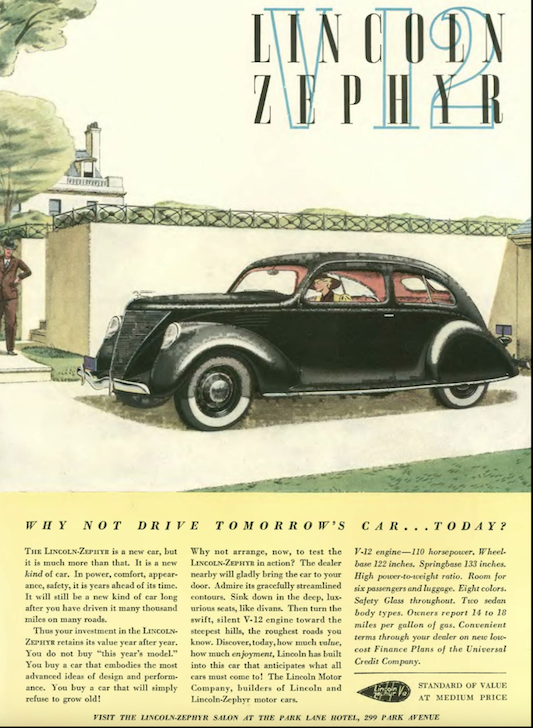
…the inside back cover popped with this ad for the streamlined V-12 Lincoln Zephyr…
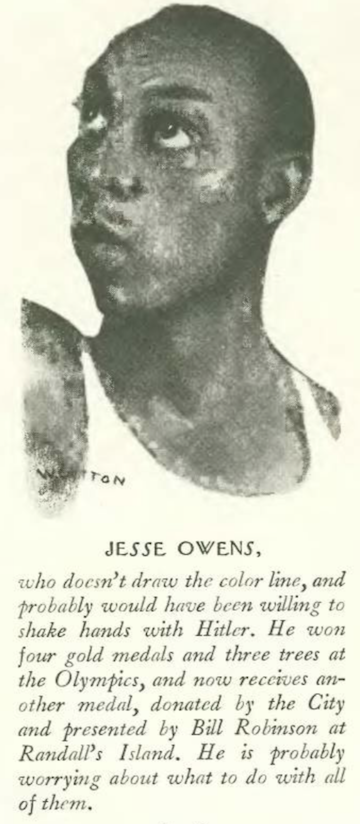
…the “Talk of the Town” occasionally featured these illustrated mini-bios, here highlighting Jesse Owens’ record-setting performance at the 1936 Olympics (illustration by William Cotton)…
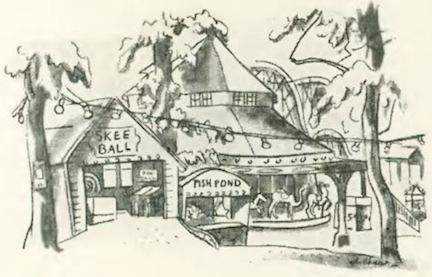
…a couple of spots by George Shellhase…
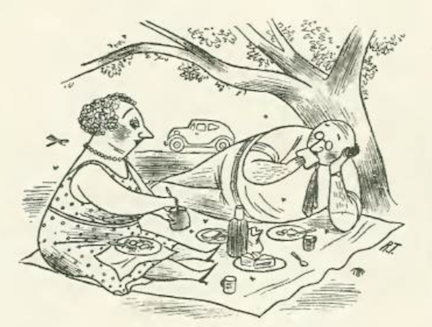
…and Richard Taylor…
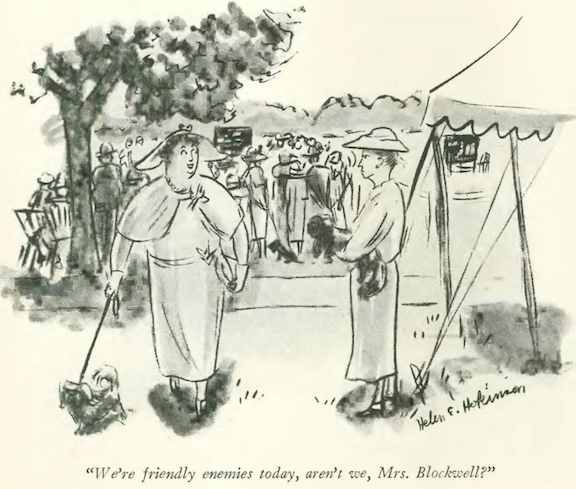
…Helen Hokinson gave us frenemies at a dog show…
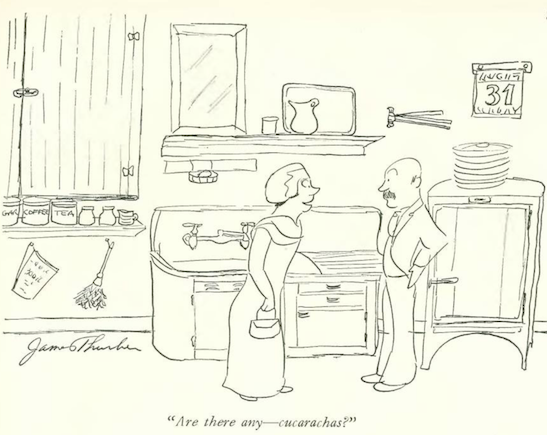
…James Thurber looked out for cockroaches…
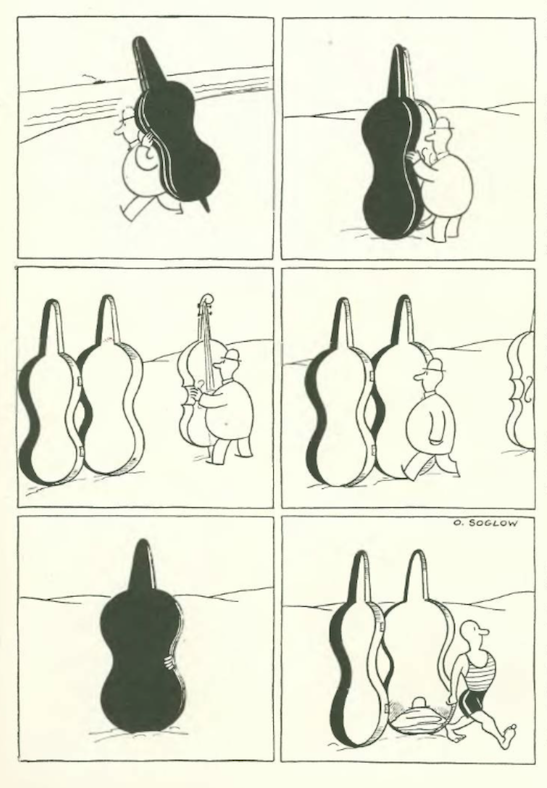
…Otto Soglow found a new use for a bass case…
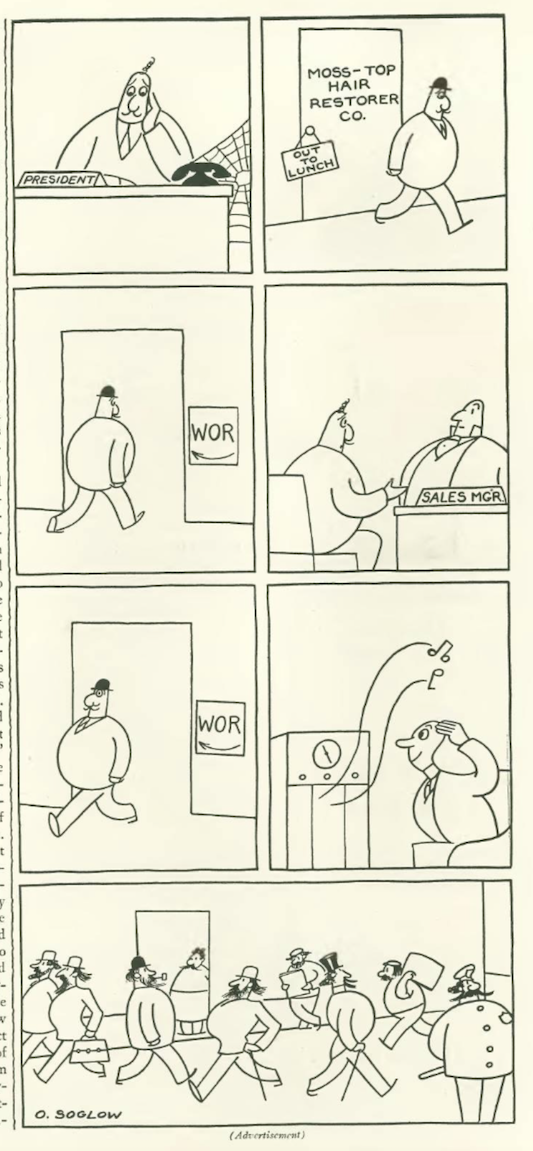
…Soglow again, demonstrating the wonders of radio advertising…
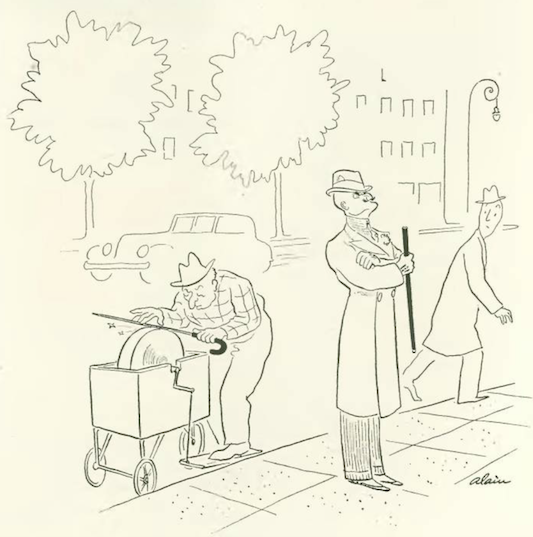
…Alain showed us a man with a cagey cane…
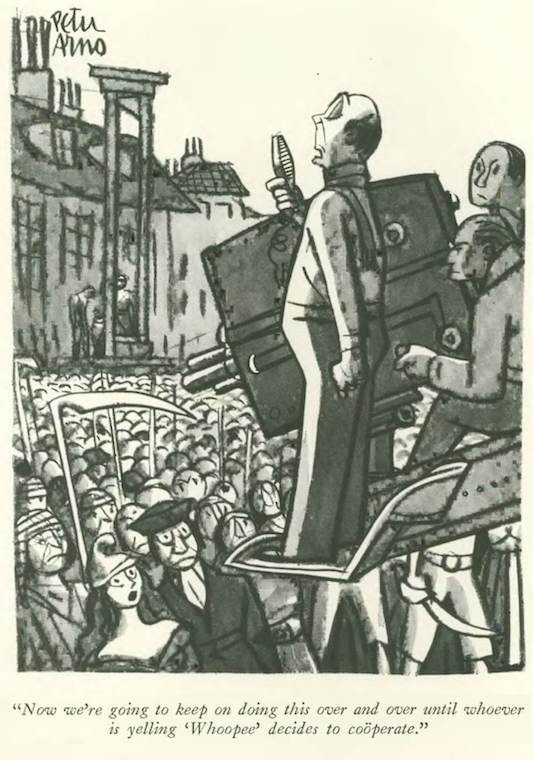
…Peter Arno illustrated the trials of working with extras…
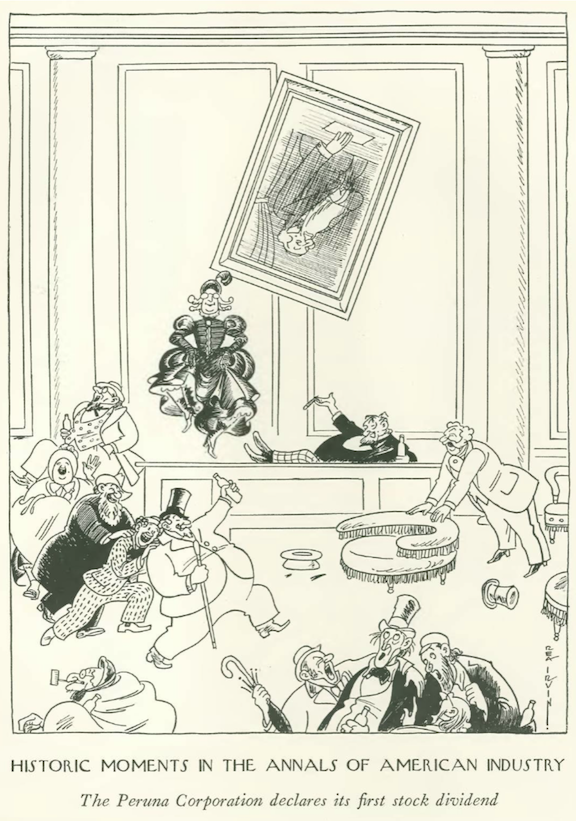
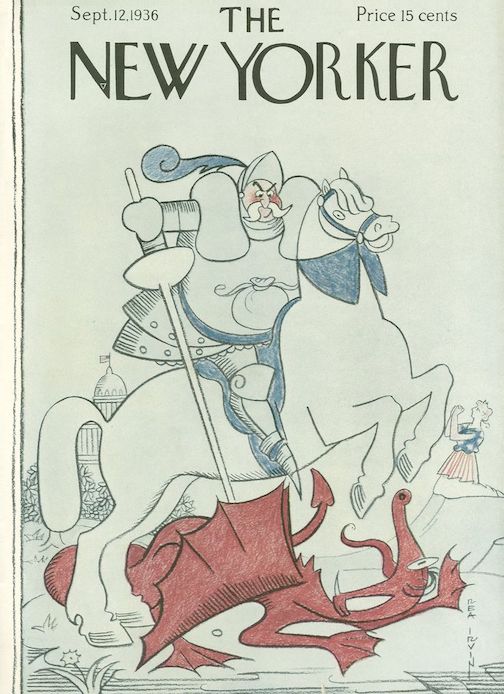
…Rea Irvin continued to chronicle achievements in industry (Peruna was a well-known patent medicine sold from the late-19th to mid-20th century—with its high alcohol content, Americans drank large amounts of Peruna during Prohibition)…
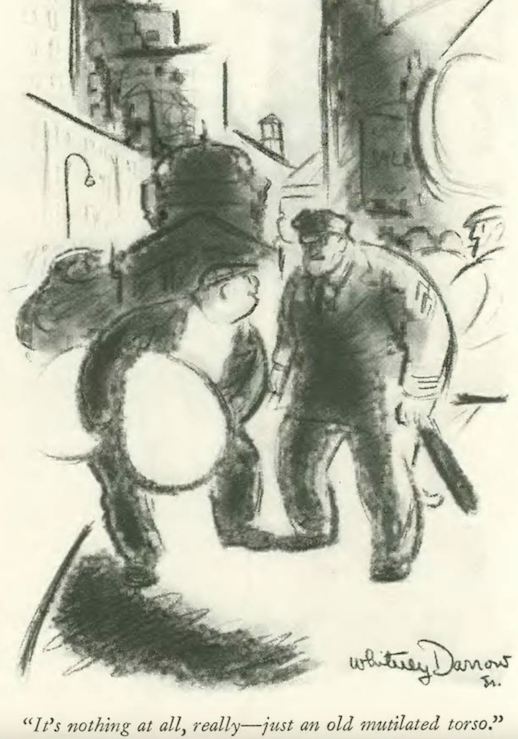
…a beat cop receives an unlikely confession, per Whitney Darrow Jr…
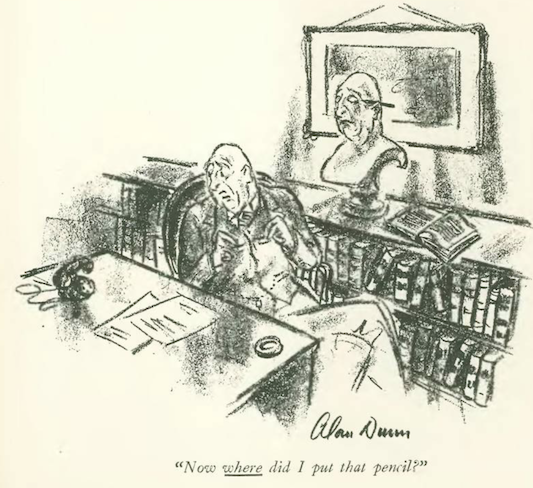
…and we close with Alan Dunn, in a forgettable situation…
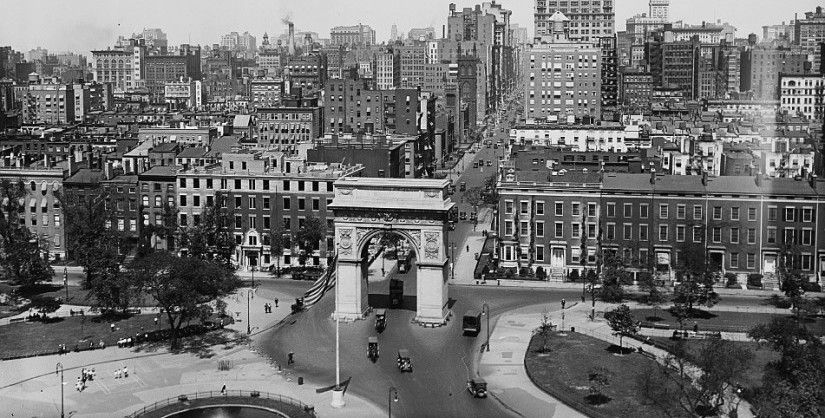
Above: Washington Square North circa 1930. (nypap.org)
In the first decades of the 20th century very few buildings in New York City were considered sacred, especially during the building boom of the Twenties when large swaths of the old city were erased to make way for massive skyscrapers and more than 740,000 new housing units.
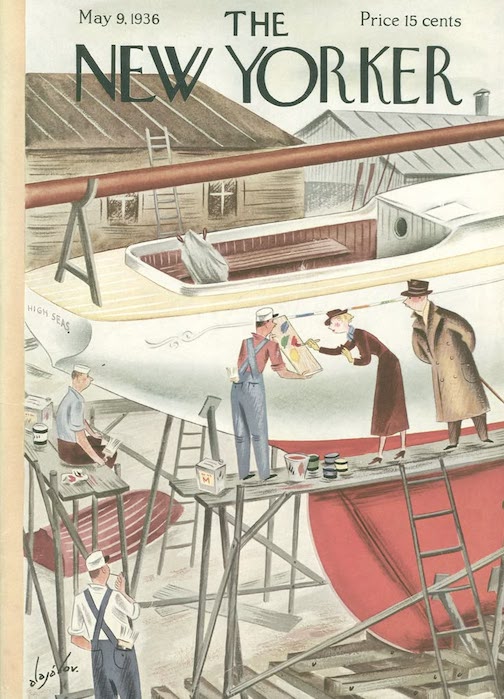
May 9, 1936 cover by Constantin Alajalov.
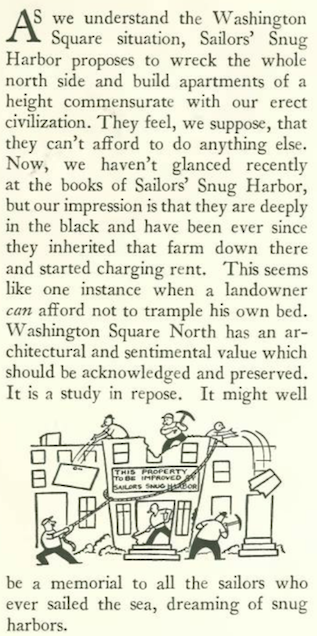
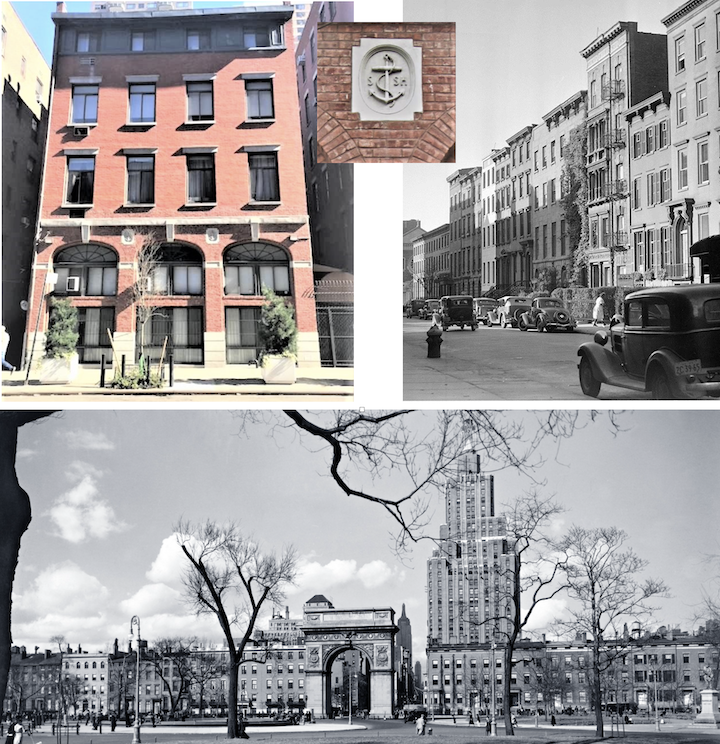
To keep anything historic from the wrecking ball required constant vigilance as well as political savvy. Such was the case at Washington Square, where in response to a 27-story building erected at 1 Fifth Avenue a campaign was organized to create height limits around the square itself. The land for 1 Fifth Avenue was leased by Sailors’ Snug Harbor—a foundation dedicated to assisting retired mariners and one of the largest owners of land in Greenwich Village. The threat to Washington Square became even greater in 1936 when the same foundation announced plans to demolish several of the structures facing the north side of Washington Square, known as “The Row.” In his “Notes and Comment,” E.B.White explained:
INTERLOPER…The Sailors’ Snug Harbor Foundation had already altered the scale of Washington Square with the erection of 1 Fifth Avenue (1926-27), seen to the right of the arch in the bottom photo (by Berenice Abbott, 1936); above left, facade of Sailors’ Snug Harbor Foundation building as it appears today (inset: the foundation’s monogram set within the spandrels of the arched windows); top right, looking west down Washington Square North, 1937. (daytoninmanhattan.blogspot.com/geographicguide.com)
Fortunately the demolition did not proceed, with Sailors’ Snug Harbor deciding to retain the character of “The Row”—numbers 1-13 Washington Square North. Not so fortunate were the adjacent Rhinelander Houses that were demolished in the mid-1940s, and “Genius Row” on Washington Square South, which was demolished in 1948 to make room for the NYU Law Center.
NOT SO FORTUNATE…The Rhinelander Houses at Washington Square North (top photo, from 1922) were demolished in 1951 to make way for an apartment house; photo below, the “Genius Row” on Washington Square South was demolished in 1948 to make room for the NYU Law Center. Occupants of Genius Row included writers Stephen Crane, O. Henry, and Willa Cather.(nypl.org/Village Preservation–GVSHP)
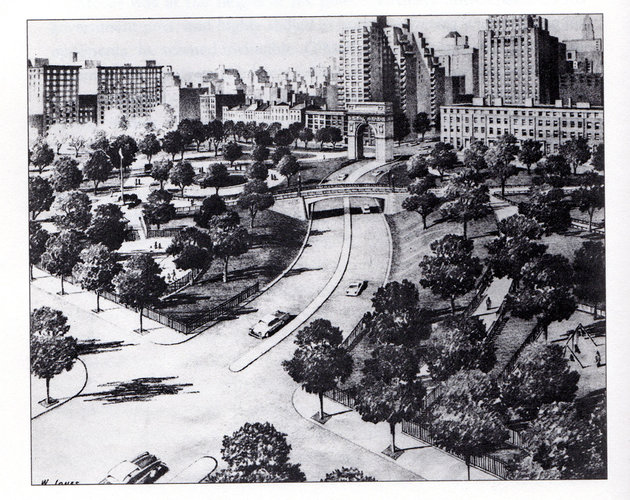
Beginning in the 1940s, Parks Commissioner Robert Moses would try many times to ram a highway through Washington Square Park, including a proposal in the early 1950s (below) that would bisect the park with a 48-foot-wide highway connecting Fifth Avenue to West Broadway.
PAVING PARADISE…Opposition was so great to Robert Moses’s Washington Square proposals that he finally abandoned plans for a highway through the park. (MTA Archives)
* * *
Farewell Artie
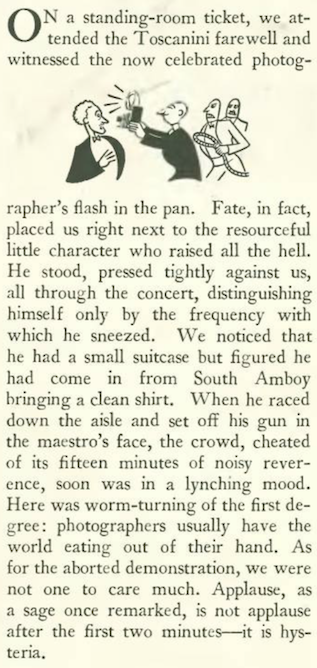
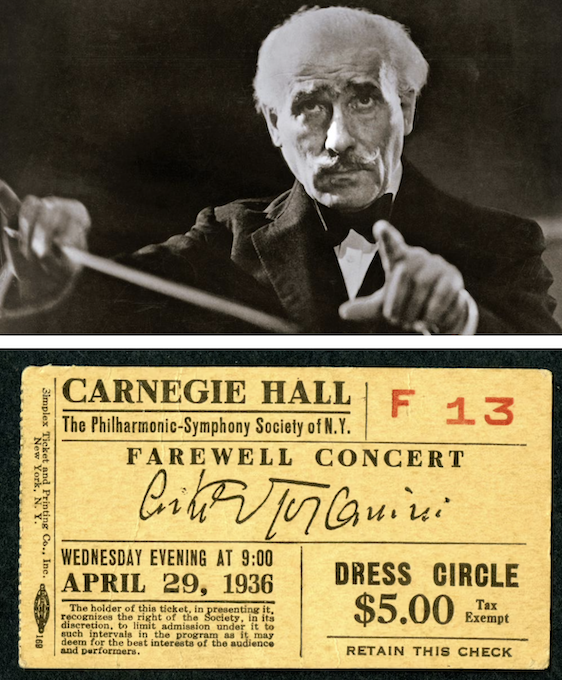
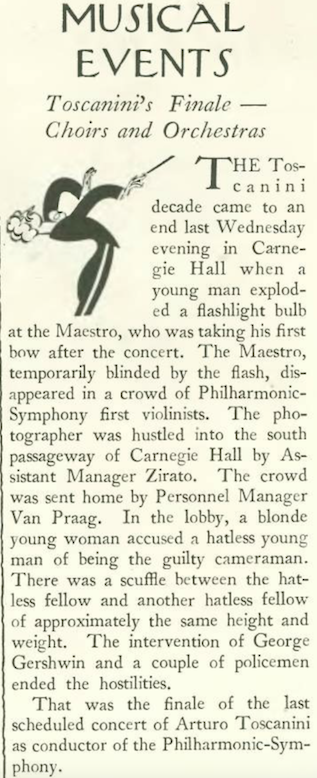
Legendary conductor Arturo Toscanini (1867–1957) transformed the New York Philharmonic into a world-class ensemble during his stint as music director from 1928 to 1936. Unfortunately, his stellar career with the Philharmonic ended rather ignominiously: When the Maestro turned to take a bow at the conclusion of his Carnegie Hall farewell concert, a young photographer exploded a flash bulb directly in his face, causing the great conductor to flee the stage. E.B. White was there to take it all in:
I SAW THE LIGHT…a photographer’s flash temporarily blinded legendary conductor Arturo Toscanini (top) following his farewell concert at Carnegie Hall. Below, a ticket stub from the historic evening. Five bucks seems like a bargain, but it is roughly equivalent to nearly $120 today. (wfimc.org/carnegiehall.org)
The New Yorker’s music critic Robert A. Simon also shared some thoughts on the evening, which included a scuffle between a “hatless fellow” and another fellow (also hatless) that followed the photographer incident:
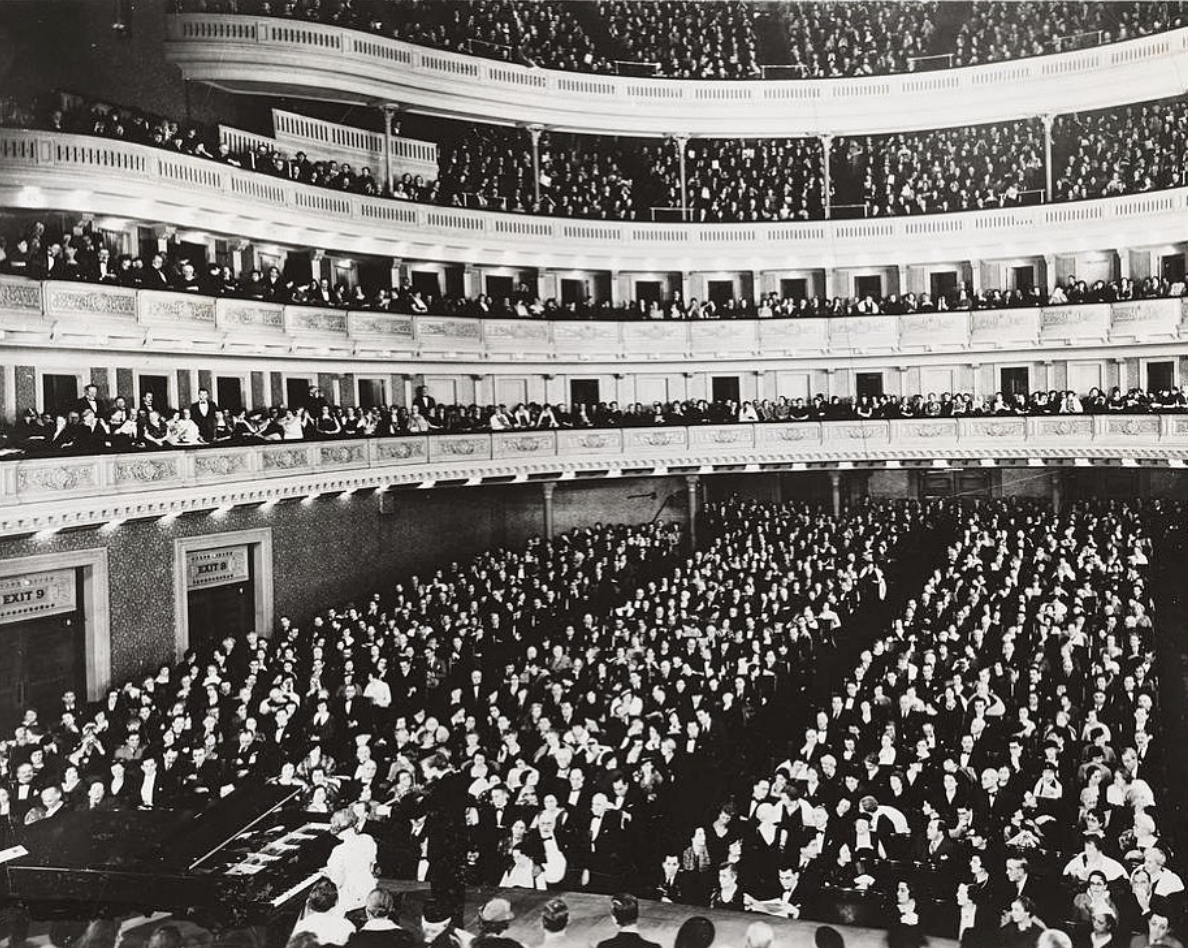
PLEASE BEHAVE…A view from the Carnegie Hall stage in 1930. Following Arturo Toscanini’s farewell concert in 1936, a scuffle broke out in the lobby, the result of a row over the temporary blinding of the Maestro by a photographer’s flash bulb. (nypap.org)
* * *
Lah-Dee-Dy
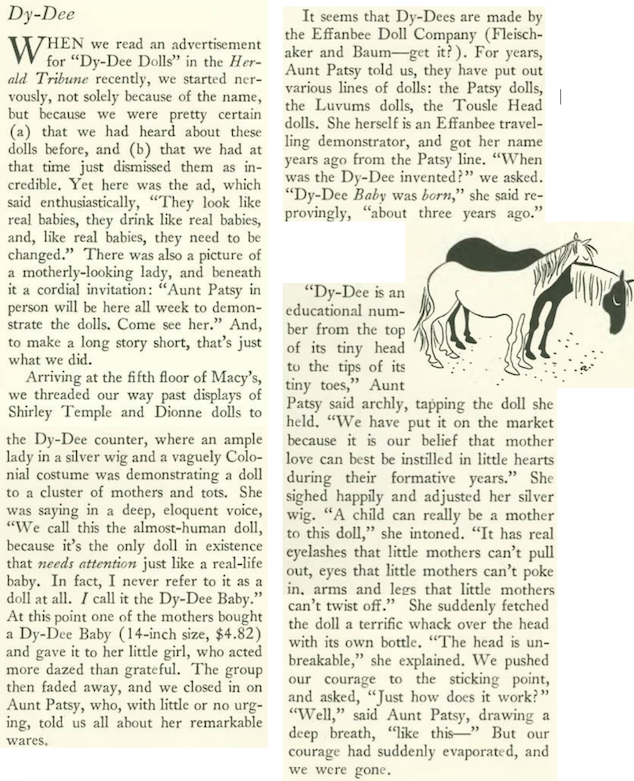
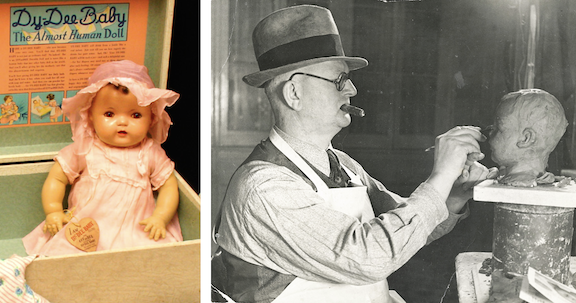
“The Talk of the Town” looked into the fuss over the toy industry’s first practical “drink-and-wet” baby doll, Effanbee’s Dy-Dee doll. Marketed as “The Almost Human Doll”, the “Talk” correspondents (Helen and Charles Cooke) found a demonstration at Macy’s a bit too real (included with this excerpt is spot art by Abe Birnbaum).
UNCANNY…The Effanbee Doll Company marketed their “Almost Human” Dy-Dee doll as the first workable “drink-and-wet” baby doll. The doll was designed by German-born Bernard Lipfert (1886–1974), who sculpted dolls for prominent American toy manufacturers from the 1920s to the 1960s, including the famous Patsy and Shirley Temple dolls. (collectornet.net/Linda Lipfert White via catskilldolls.com)
* * *
At the Movies
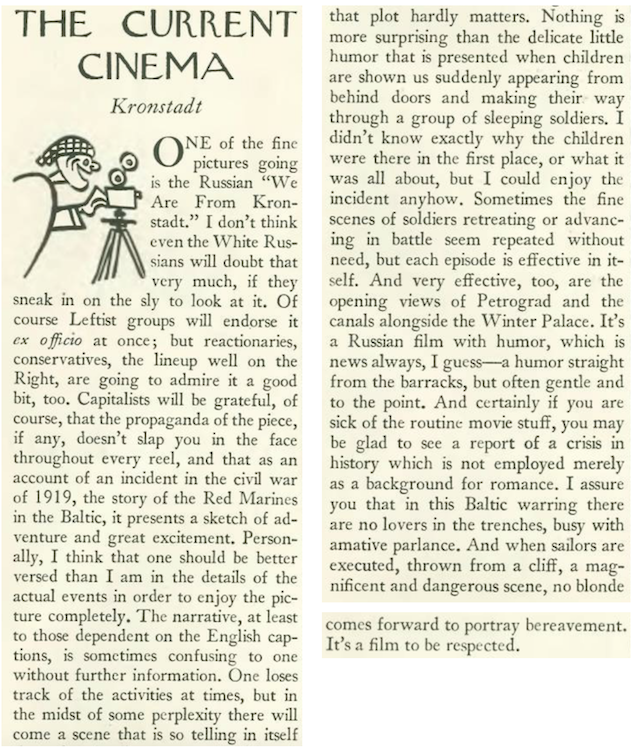
Many film critics in the 1930s, including The New Yorker’sJohn Mosher, admired the Soviet film industry for its cinematic innovations and often brutal realism, even if deployed as propaganda. Such was the case with We Are From Kronstadt, which depicted heroic Red sailors defending the city of Petrograd from counterrevolutionary forces. “It’s a film to be respected,” Mosher wrote.
NO BLONDES, JUST BOMBSHELLS…Clockwise from top left: Russian poster for We Are From Kronstadt; actor Georgi Bushuyev; battle scene from the film; actress Raisa Yesipova. (Wikipedia/imdb.com)
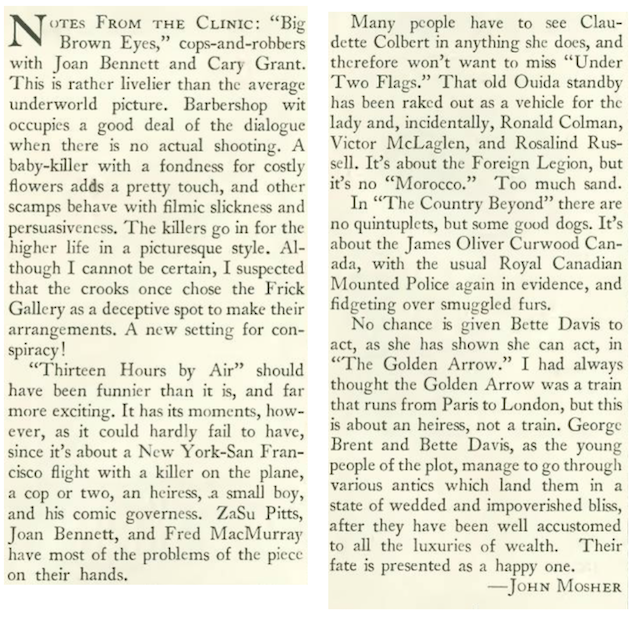
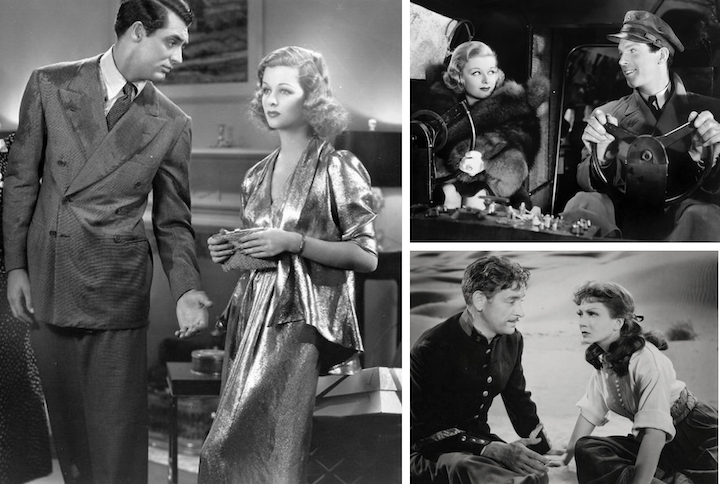
Mosher also reviewed the lighter fare coming out of Hollywood, including two films featuring the actress Joan Bennett.
SEEING DOUBLE…Joan Bennett shared top billing in two new releases—with Cary Grant in Big Brown Eyes (left); and with Fred MacMurray in 13 Hours by Air (top right); Claudette Colbert was paired with Ronald Colman in Under Two Flags (below). (csfd.cz/imdb.com)WET AND COLD…Bette Davis and George Brent went through the motions in The Golden Arrow (left); at right, Rochelle Hudson and Alan Hale braved the wilds of Canada in The Country Beyond. Hale was the father of Alan Hale Jr., who was also a film actor but is best known today for playing the Skipper on TV’s Gilligan’s Island. (pinterest.com/20th Century Fox)
* * *
Swing Time
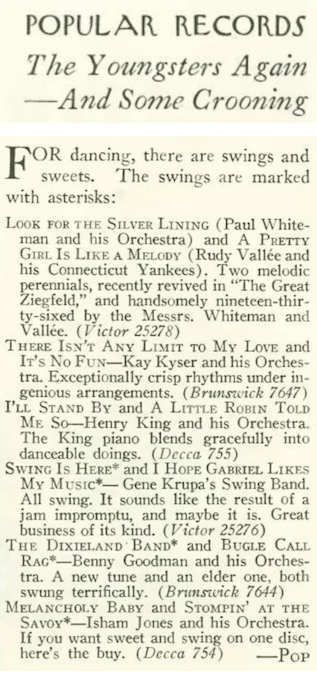
Ninety years ago America’s youth primarily listened to (and danced to) swing music and big band jazz. The New Yorker kept readers up to date on the latest hits.
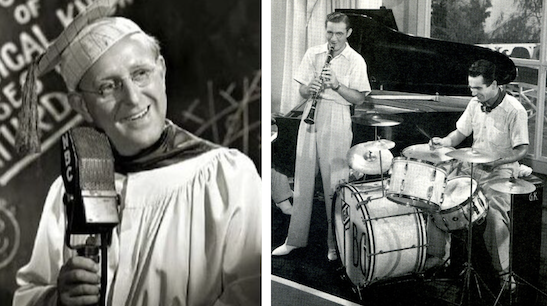
RHYTHM SECTION…”The Ol’ Perfessor” Kay Kyser’s band (the “Kollege of Musical Knowledge”) kept the kids in rhythm in the 1930s; at right, Benny Goodman (left) and Gene Krupa both released records with some new “swings.” (jimramsburg.com/grampsblog.wordpress.com)
* * *
From Our Advertisers
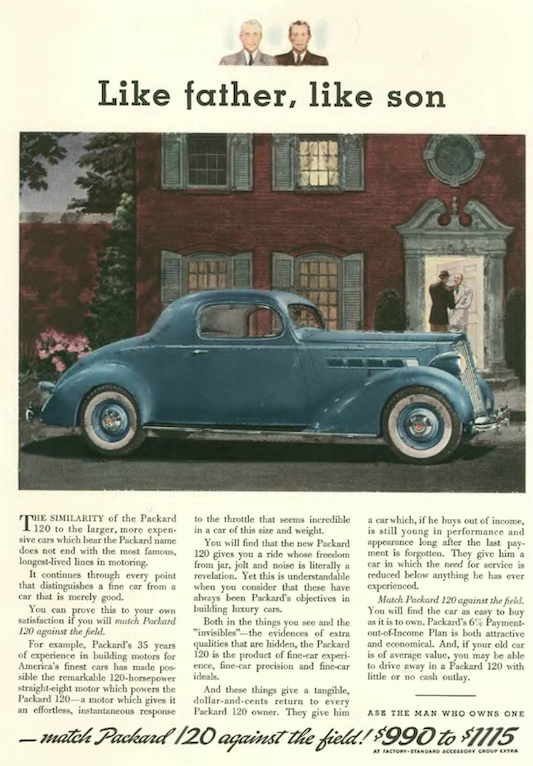
The makers of Packard automobiles were big into the idea of continuity, emphasizing the quality and longevity of their product over gimmicky style changes…
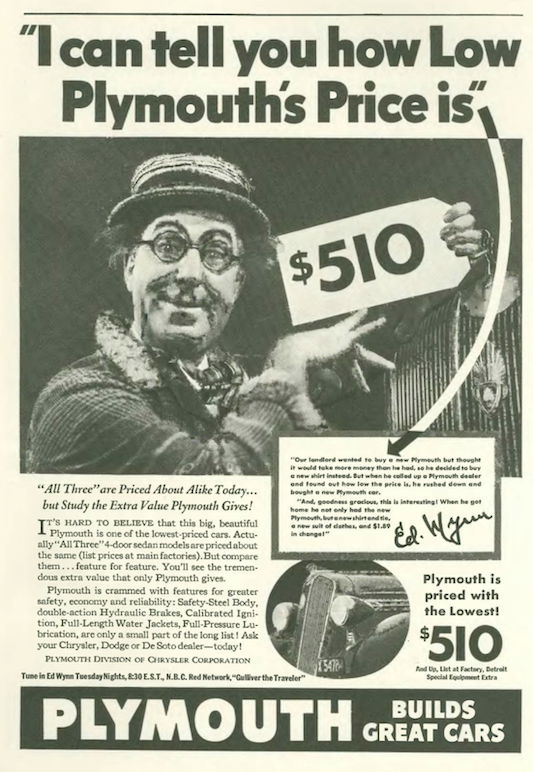
…in the mid-1930s (and especially in 1936) Chrysler employed the comedic talents of Ed Wynn to sell its low-priced Plymouths…
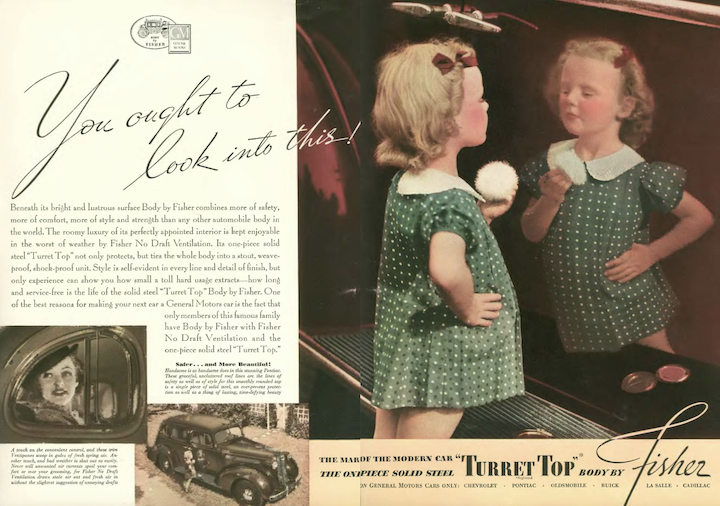
…the makers of Fisher car bodies (a division of General Motors) continued their campaign of two-page ads pairing cute kids with their “Turret Top” safety feature…
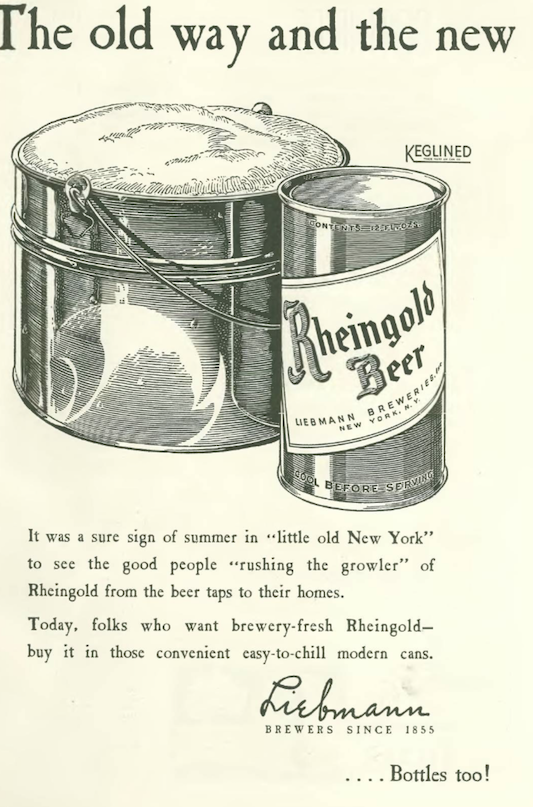
…canned beer was a recent innovation in 1936, with New York breweries leading the way (Krueger Brewing Company was first, its canned beer officially debuting in January 1935)…
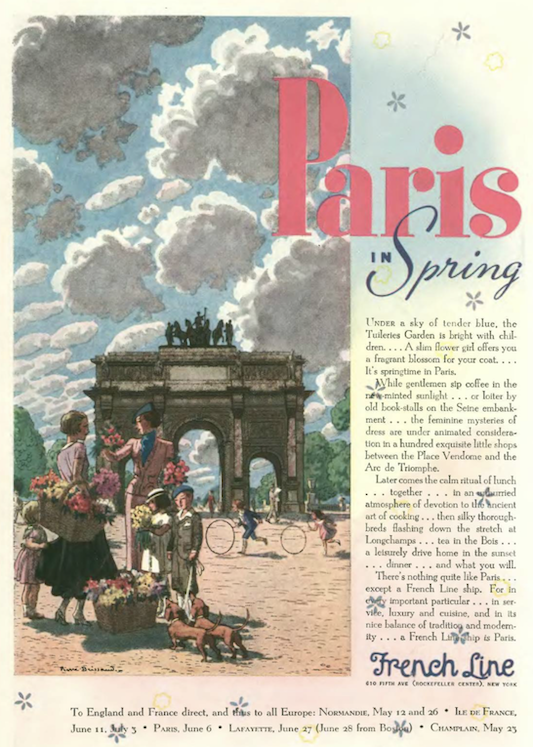
…the French Line enticed New Yorkers to see Paris in the springtime…
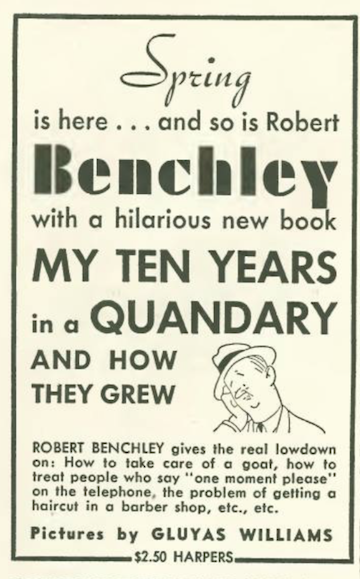
…Harper’s ran this ad on the top left corner of page 95 to promote Robert Benchley’sMy Ten Years in a Quandary…and How They Grew, illustrated by Benchley’s New Yorker colleague Gluyas Williams…
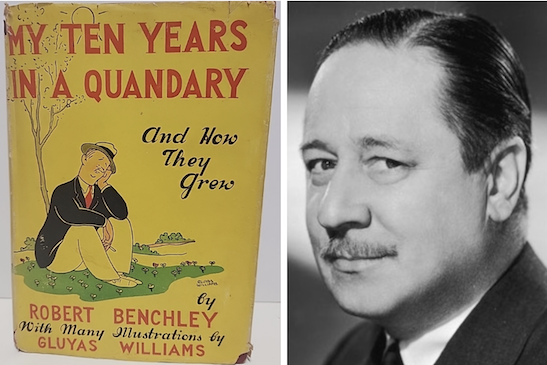
BENCHLEY IN A BIND…Robert Benchley and the cover of My Ten Years in a Quandary…and How They Grew. (ebay.com/ebooktakeaway.com)
…on to our cartoonists, we begin with Richard Taylor in the calendar section…
…and a nice bit of spot art by Christina Malman…
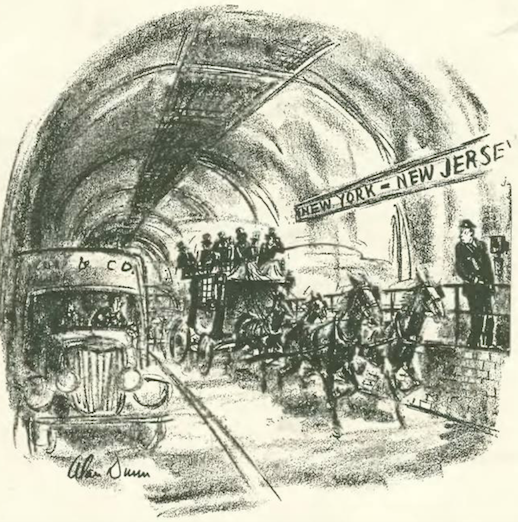
…Alan Dunn revealed a time tunnel under the Hudson…
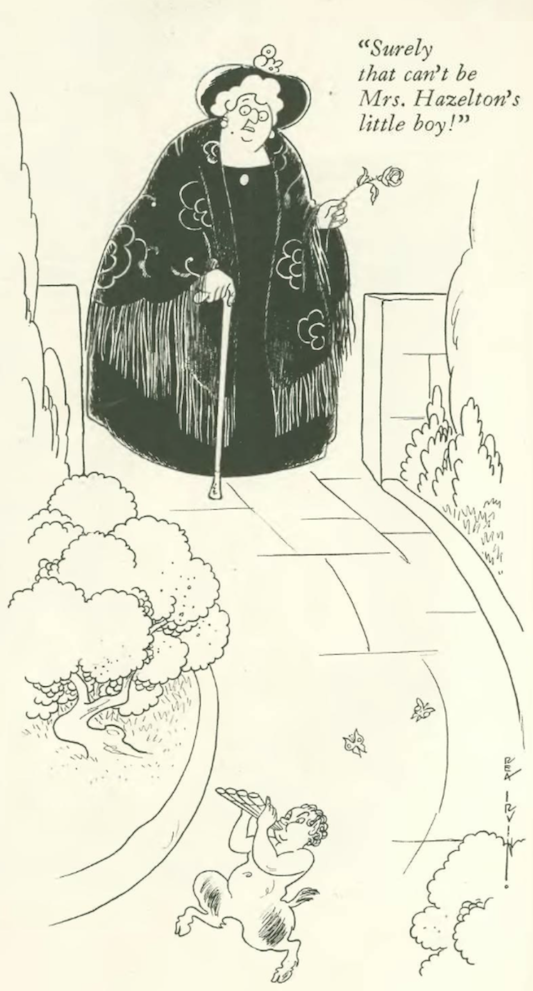
…Rea Irvin drew up an odd sight along a garden path…
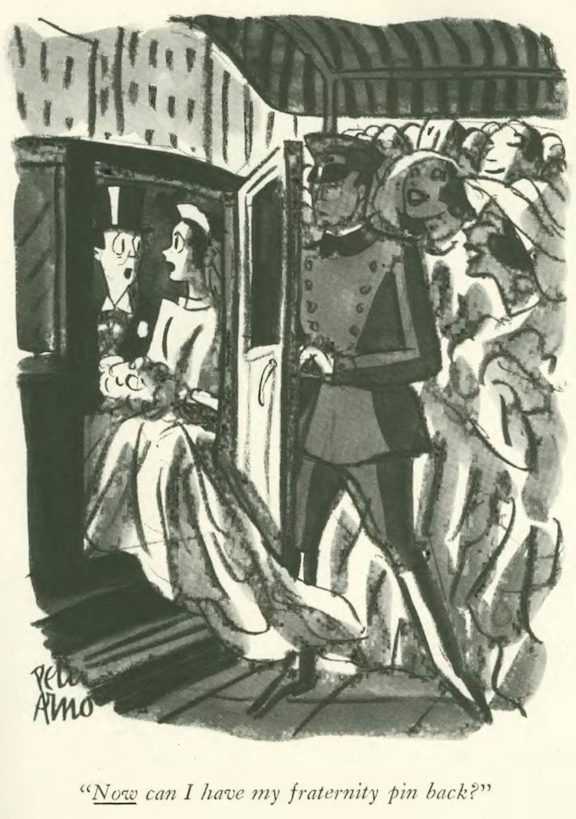
…this honeymoon was over before it even started, per Peter Arno…
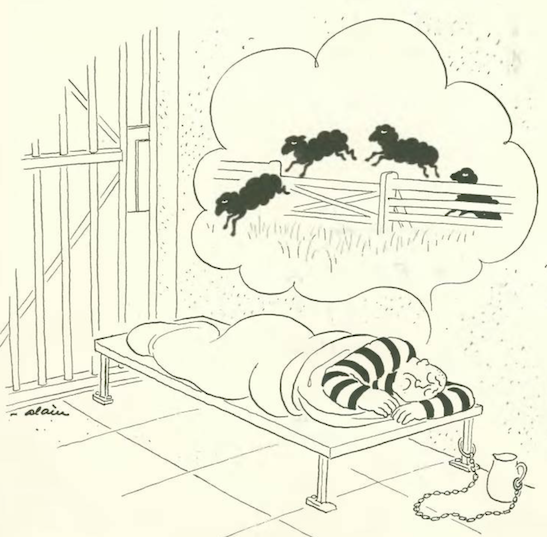
…Alain showed us the troubled dreams of a jailbird…
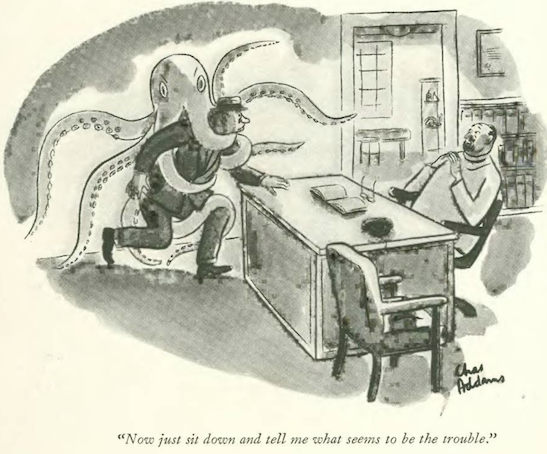
…Charles Addams at his best, taking the daily horrors in stride…
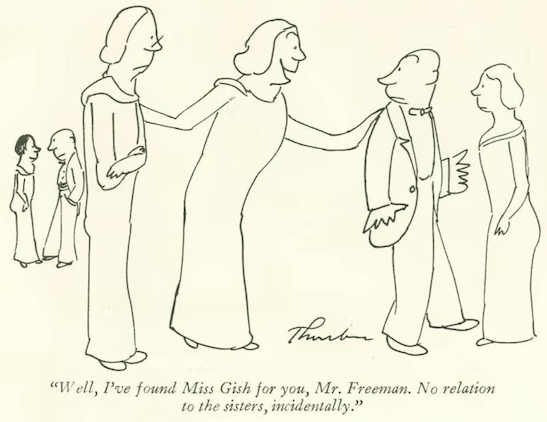
…James Thurber gave us a Gish, but not of silent movie fame…
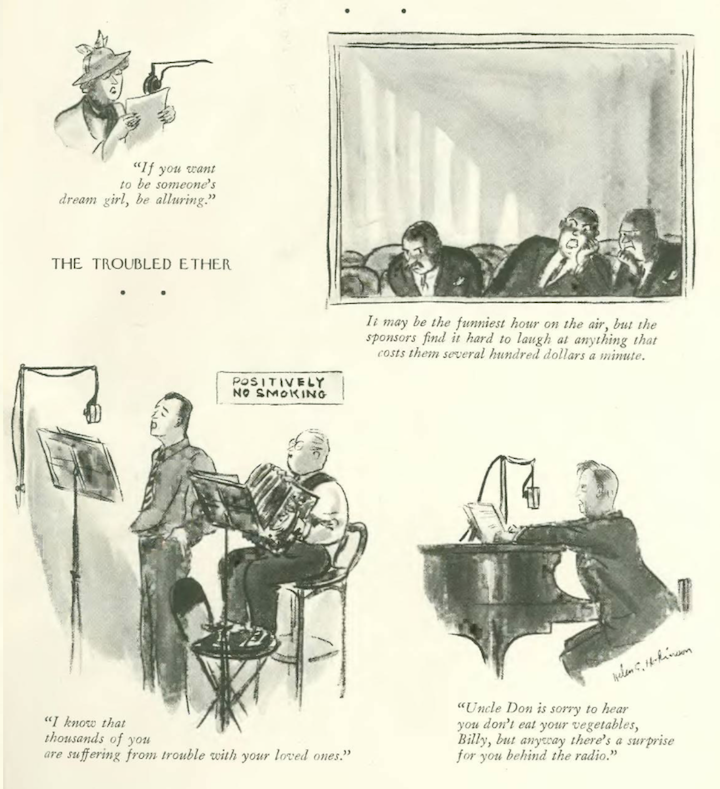
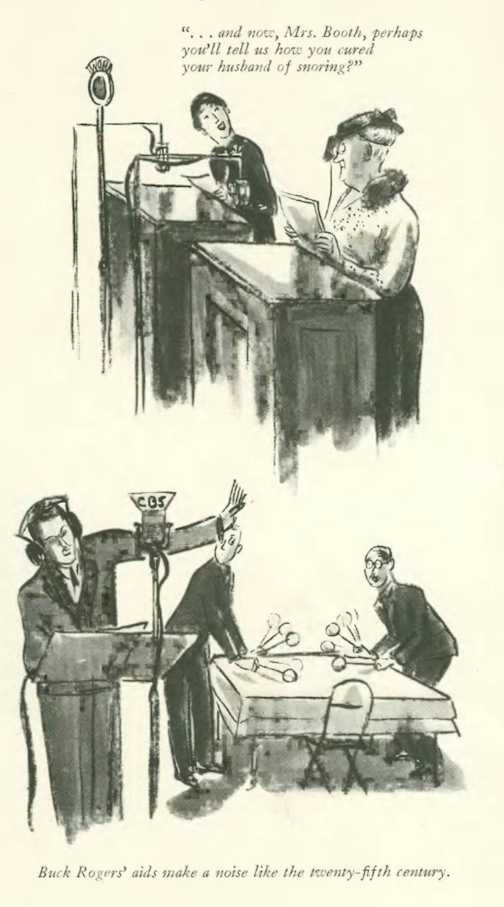
…Helen Hokinson illustrated a day at the radio station across pages 22-23…
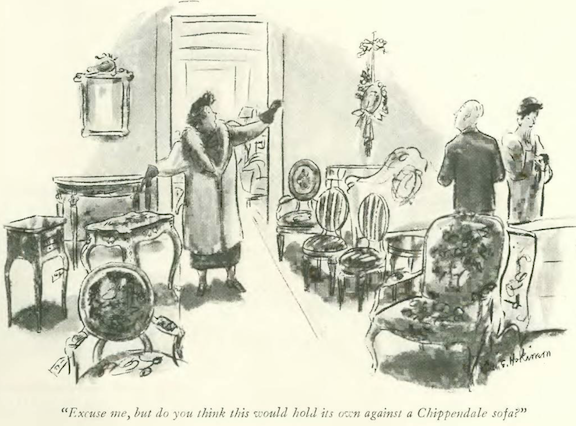
…Hokinson again, weighing the competition between a sofa and table…
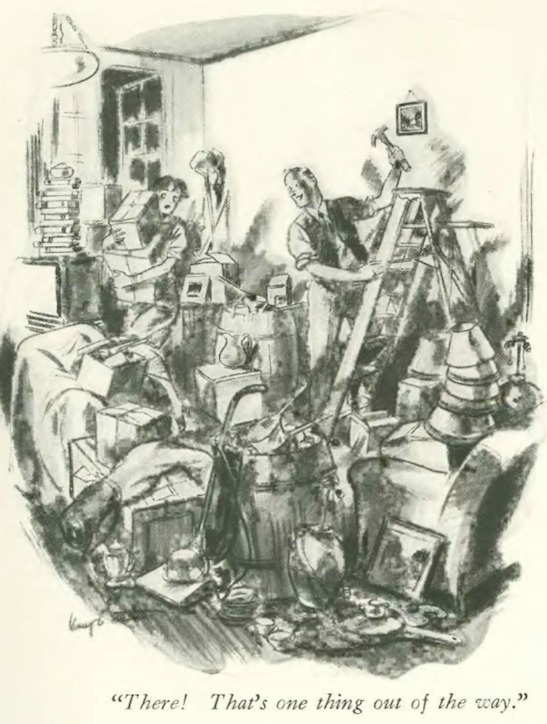
…and we close with Kemp Starrett, and a helpful husband…
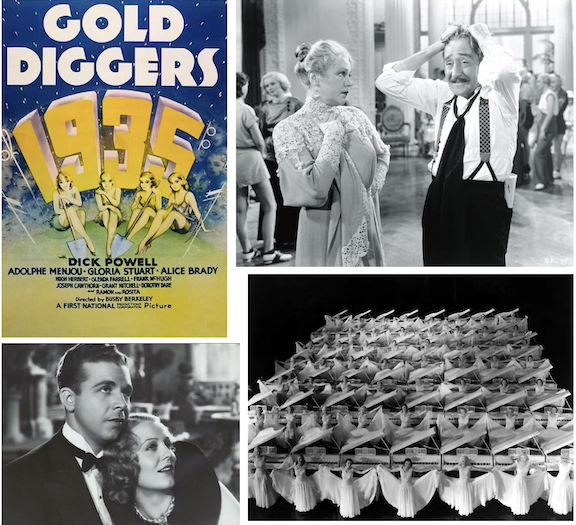
And what can be more frivolous than a Busby Berkeley musical, with scores of leggy showgirls tap-dancing in perfect rhythm, or dressed in identical white gowns while playing flying pianos. Make sense? No, and that was the whole point.
March 23, 1935 cover by Peter Arno. The color, contrast and composition are striking; it looks more like a cover from the 50s or 60s.
“In an era of breadlines, depression and wars, I tried to help people get away from all the misery…” Berkeley once remarked. “I wanted to make people happy, if only for an hour.” Gold Diggers of 1935 was Berkeley’s second “Gold Digger” picture (he choreographed or directed four; there were six in all, including one silent), and it was the first in which he served as sole director. Critic John Mosher didn’t know what to make of the film, likening it more to an earthquake than an entertainment.
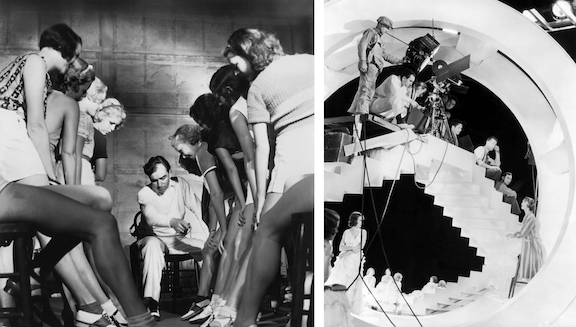
SOMEONE HAS TO DO IT…Busby Berkeley (1895-1976) works with dancers (left) during the production of 1933’s 42nd Street; right, at work on one of his lavish sets, circa 1930s. (IMDB)
The “harmless jingle” Mosher referred to, Harry Warren and Al Dubin’s “Lullaby of Broadway,” received an Oscar for Best Original Song (it also gave me an earworm for a week).
GOLDEN GIRLS…Clockwise, from top left, Alice Brady as the parsimonious Matilda Prentiss and Adolphe Menjou as the conniving Russian dance director Nicolai Nicoleff in Gold Diggers of 1935; a scene from the dancing pianos sequence; Dick Powell and Gloria Stuart as the film’s sweethearts. (Wikipedia/YouTube/IMDB)
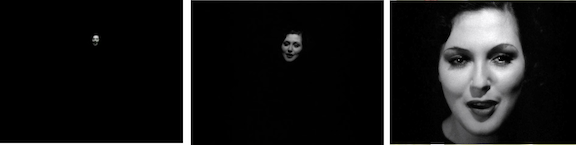
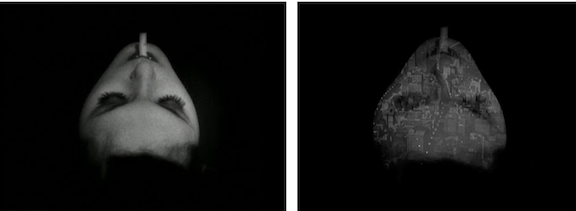
Amid the frivolity, Mosher noted the juxtaposition of the jingly “Lullaby of Broadway” with the haunting, two-minute sequence of Wini Shaw singing “Lullaby” as her disembodied face emerges from the blackness toward the viewer.
The scene continues as the woman (Shaw) turns onto her back, her head slowly dissolving into the nighttime city…after a raucous, mass tap-dancing scene, she falls to her death, and the sequence is reversed, her face disappearing into the blackness. The blog Acidemic gives an interesting take on this part of the film, which is more reminiscent of a German avant-garde film than Berkeley’s usual fare…
(YouTube)
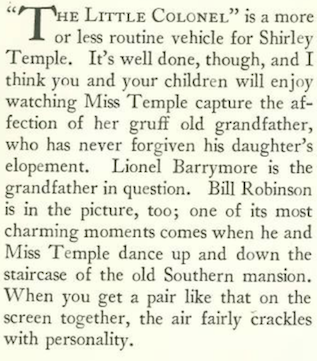
…Mosher found the scene “terrifying.” Perhaps Shirley Temple helped calm his nerves with her precocious antics in The Little Colonel…
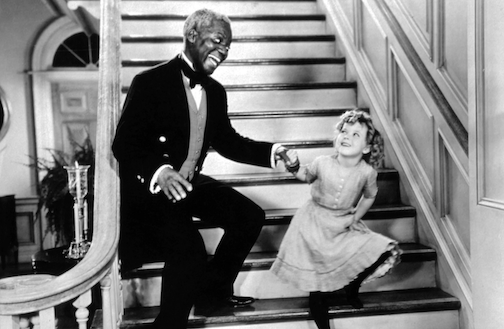
NO FLOATING HEADS HERE…Shirley Temple and Bill Robinson doing the famous staircase dance in The Little Colonel (1935). (TCM)
* * *
Up In Smoke
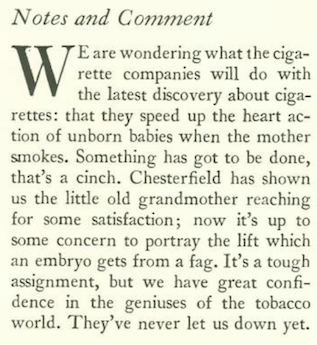
In “Notes and Comment” E.B. White considered the possibility that cigarette smoking might be harmful to unborn babies, and wryly suggested that embryos could replace grandmothers as a new growth market for big tobacco:
…White referred to the advertisement below, which appeared in the Feb. 9, 1935 issue of The New Yorker:
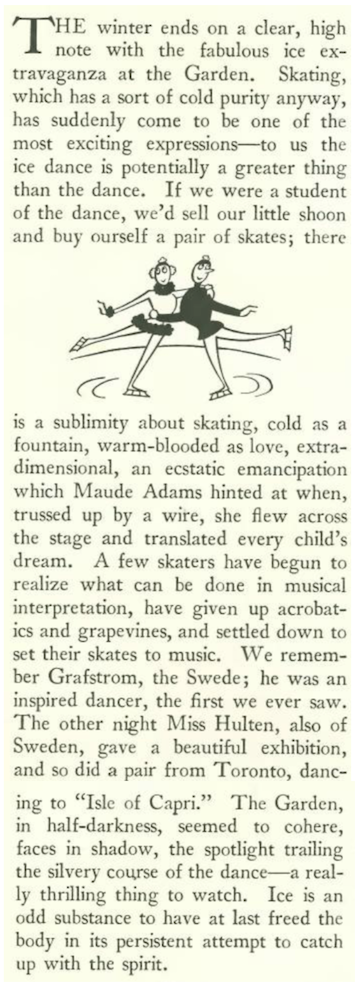
…White also commented on his recent visit to Madison Square Garden’s winter skating carnival…
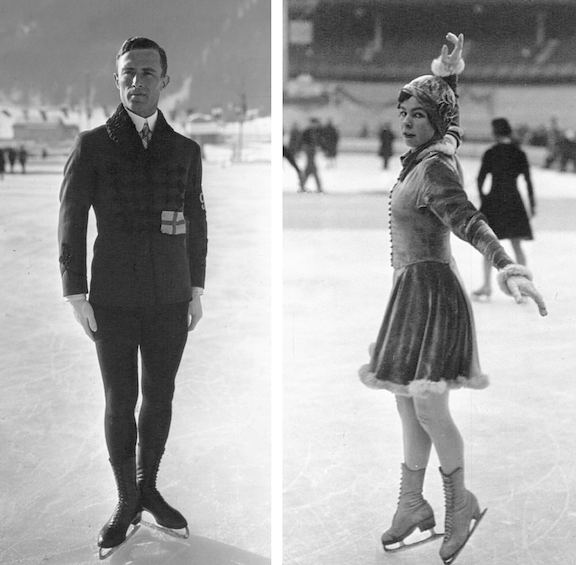
THE DOUBLE AXEL was still thirteen years in the future when Swedish skaters Gillis Emanuel Grafström (left) and Vivi-Anne Hultén delighted E.B. White at Madison Square Garden. Photos are from 1924 and 1932, respectively. (Wikipedia)
* * *
Prescience of Mind
We have more from E.B. White, this time in a humorous piece titled “The Dove’s Nest,” in which White took a poke at the most influential newspaper editor in the country, Arthur Brisbane. A close friend of William Randolph Hearst, Brisbane essentially ran Hearst’s newspaper empire. The New Yorker often ridiculed Hearst’s (and Brisbane’s) jingoistic approach to the news that included giant headlines warning of war. Excerpts:
William A. Swanberg, author of the 1961 biography Citizen Hearst, described Brisbane as “a one-time socialist who had drifted pleasantly into the profit system…in some respects a vest-pocket Hearst–a personal enigma, a workhorse, a madman for circulation, a liberal who had grown conservative, an investor.”
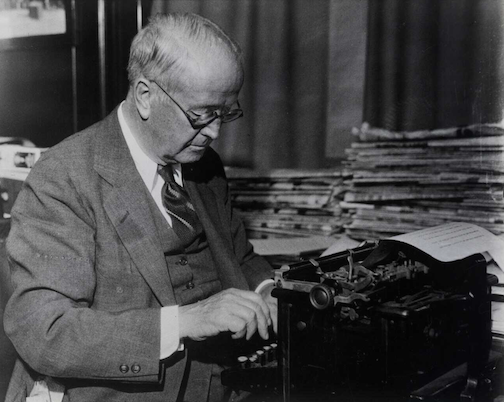
DAMN THOSE TORPEDOES…Arthur Brisbane in 1933. His grandson, Arthur S. Brisbane, now retired, served as public editor of The New York Times from 2010 to 2012. (credo.library.umass.edu)
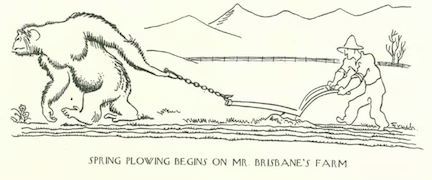
The New Yorker continued to take jabs at Brisbane in the following issue (March 30). Brisbane owned a large estate (including a horse farm) in New Jersey that he made available to New Deal work programs during the Depression. I suppose this Al Frueh cartoon was some kind of reference to that…
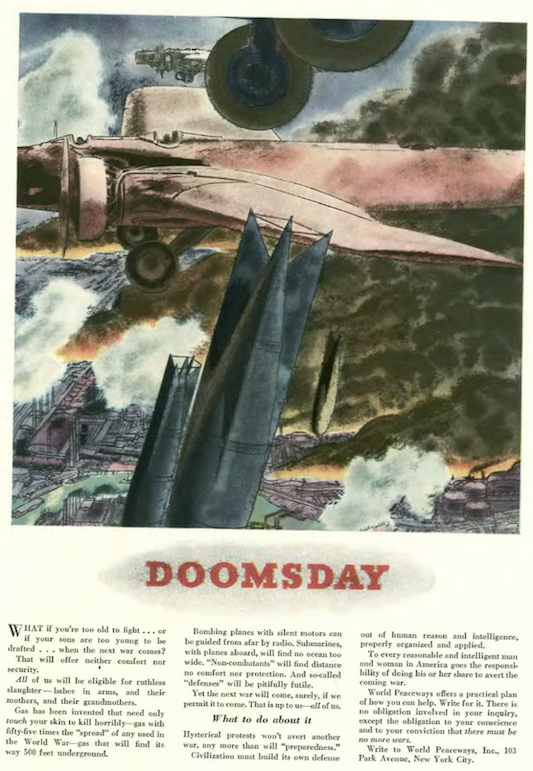
…also in the March 30 issue was this ad from World Peaceways, which raised alarms about possible war and bombs raining down from the sky…
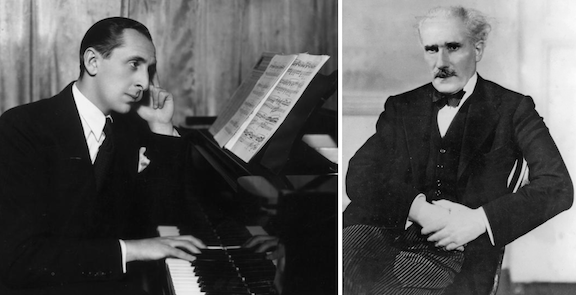
…back to the March 23 issue, where we find the calming strains of a Brahms concerto at Carnegie Hall, conducted by Arturo Toscanini with some support from his son-in-law, Vladimir Horowitz…
MAY I CALL YOU DAD?…Not likely something said by young Vladimir Horowitz, left, to father-in-law Arturo Toscanini. (WQXR/Britannica)
* * *
From Our Advertisers
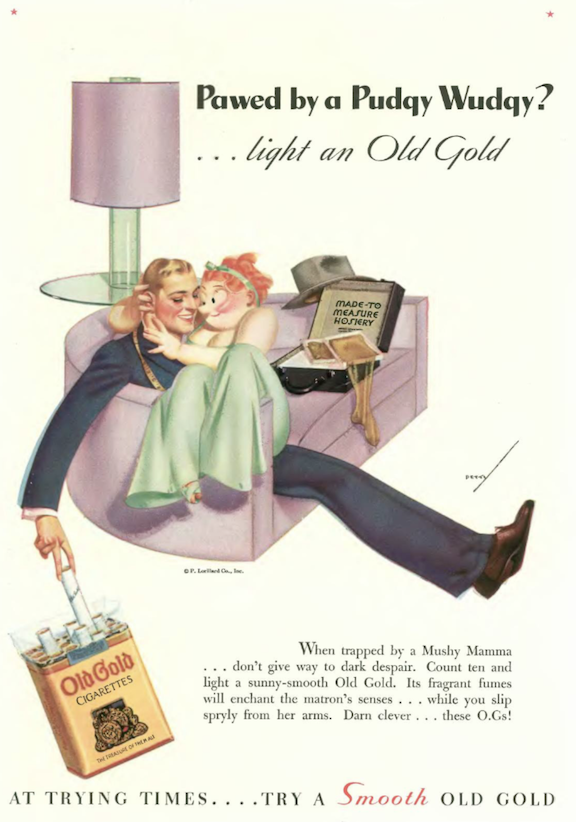
Beginning in 1934 the makers of Old Gold cigarettes hired pin-up artist George Petty to create a series of ads featuring a homely, clueless sugar daddy and his leggy mistress…here he turns the tables, introducing a “Pudgy Wudgy” matron putting the moves on a handsome hosiery salesman…
…this Petty ad appeared in the Feb. 9, 1935 issue of The New Yorker…
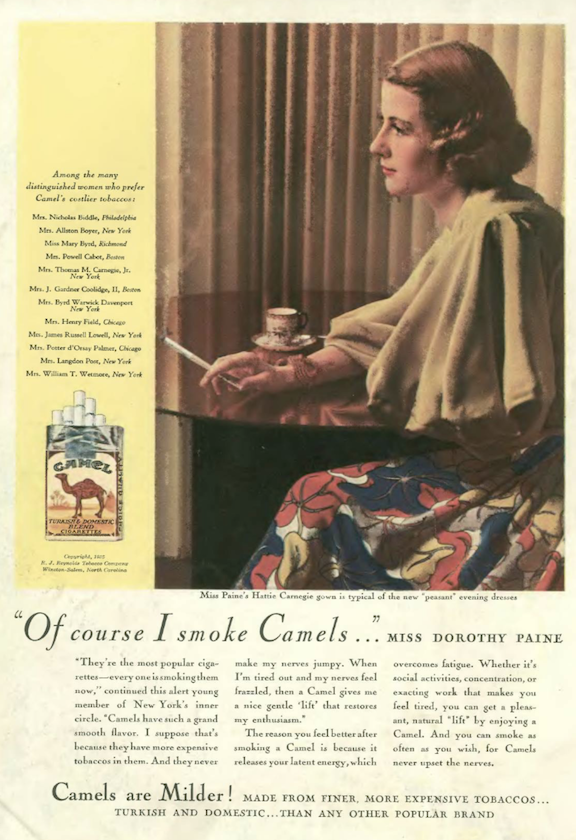
…the makers of Camels continued their campaign of “distinguished women” who enjoyed their product…here we have a former debutante, Dorothy Paine, an “alert young member of New York’s inner circle.” Not much of a record of Dorothy, who married a man named Walter H. Sterling in 1935…apparently they moved to Phoenix and bought up property in the Southwest…
…the makers of General Tire offered this grim assessment of tire safety…the lad seems to be a mere investment of time…
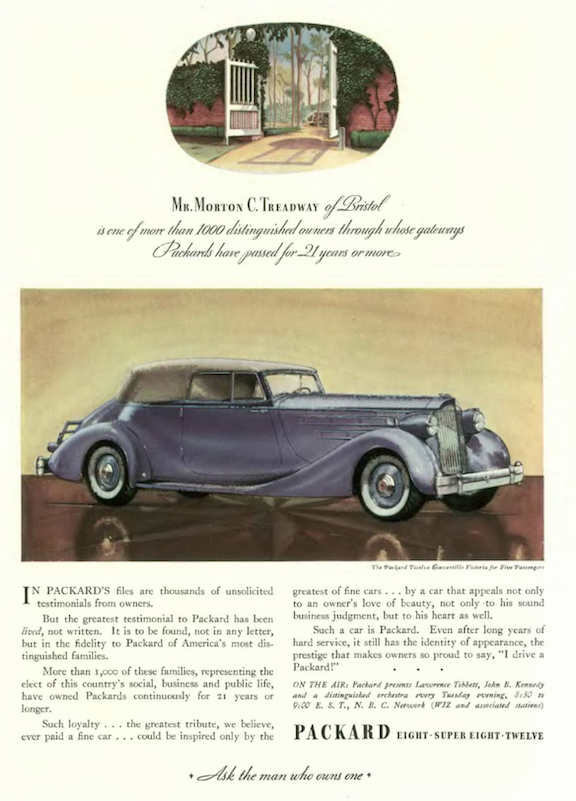
…although prestige brands suffered mightily during the Depression, the folks at Packard were doubling down on the elite status of their automobile…
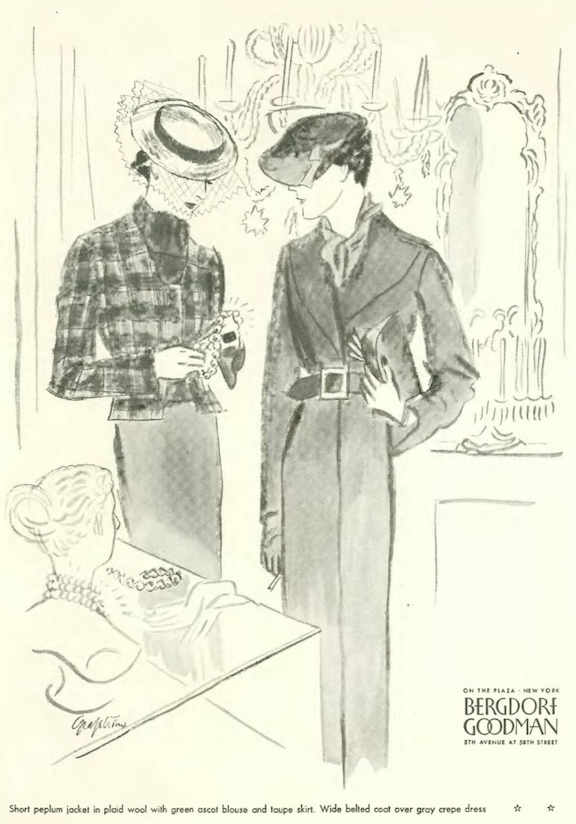
…we’ve seen the work of fashion illustrator Ruth Sigrid Grafstrom before in ads for Spud cigarettes…here she contributes some elegant lines to a spot for Bergdorf Goodman (is the woman on the right smoking a Spud?)…
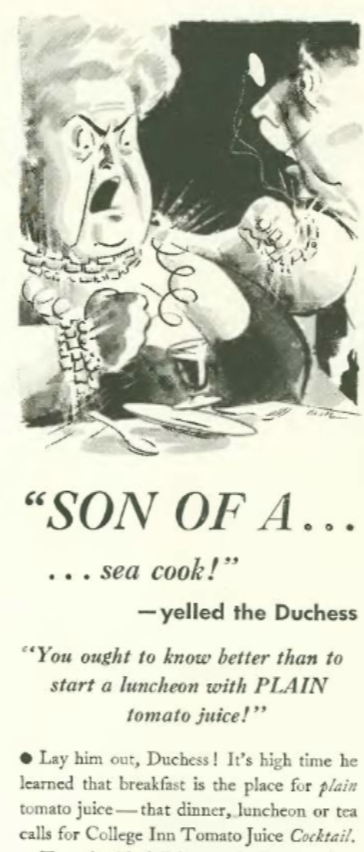
…here’s the Duchess again, still blowing her top over College Inn tomato juice…just look at her clenched fists…that fop with a monocle looks like he just took a left hook to the chops…
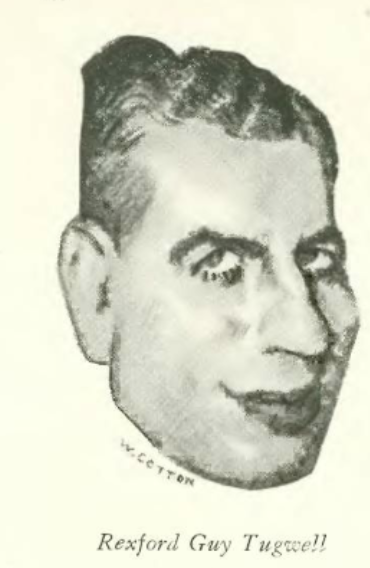
…on to our illustrators, William Cotton created this caricature of Rexford Guy Tugwell for Russell Lord’s two-part profile…Tugwell and President Franklin D. Roosevelt created the Resettlement Administration, which relocated rural unemployed to “Greenbelt Cities” near urban job markets. Critics called him “Rex the Red” for his social engineering experiments, and after he was forced out of federal government, Tugwell was appointed in 1938 as the first director of the NYC Planning Commission. Naturally, he would butt heads with Robert Moses…
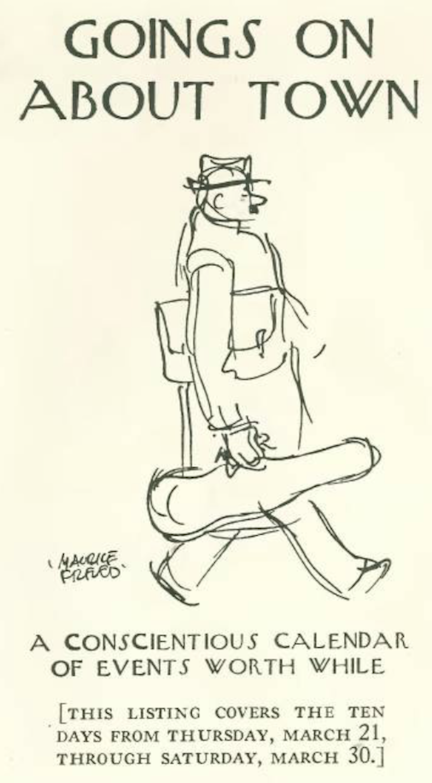
…illustrator and painter Maurice Freed kicked off the calendar section…
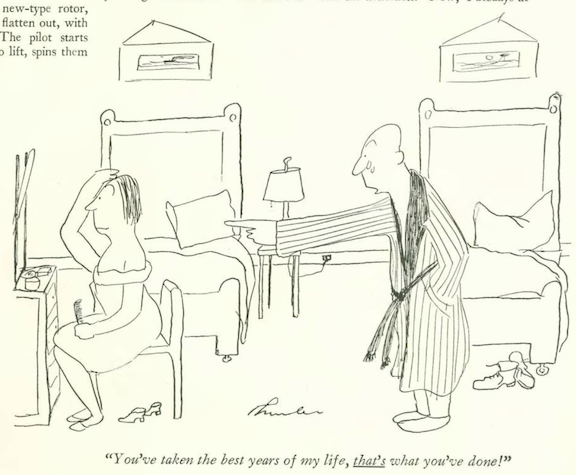
…bookended on the bottom of page 4 by one of James Thurber’s most recognized drawings…
…Thurber again, and more woes between the sexes…
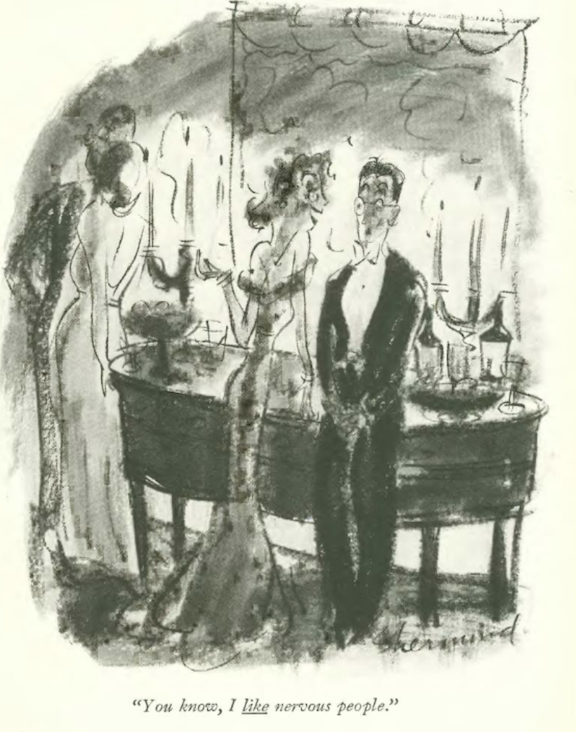
…we continue with our cartoonists by looking in on Barbara Shermund…
…George Price found a new wrinkle for his recurring floating man cartoon…
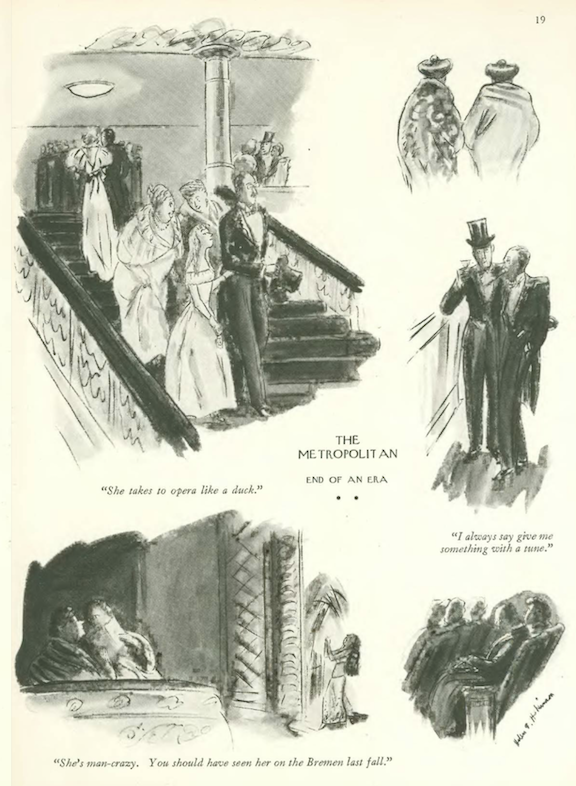
…Helen Hokinson graced page 19 with scenes from the opera…
…leaving an extra drawing stranded on page 18…
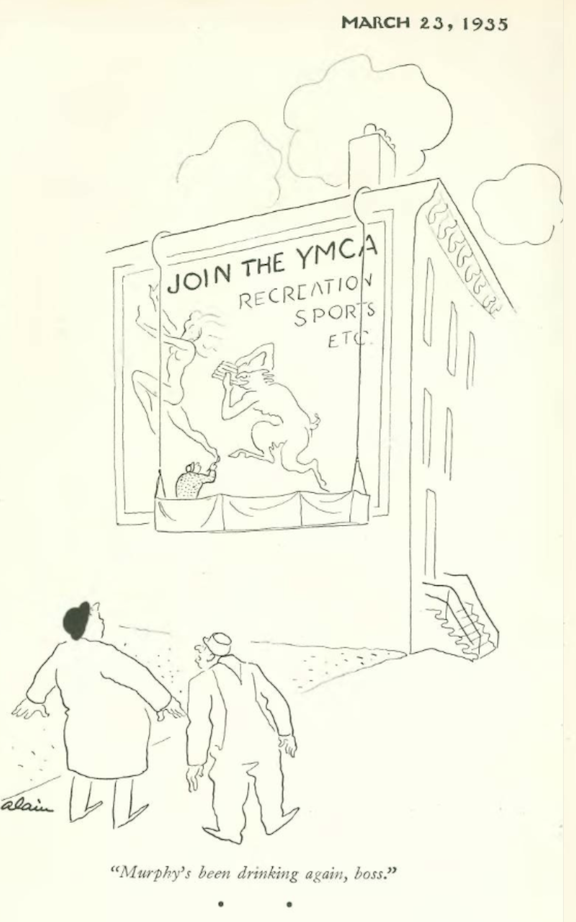
…Alain offered a new twist on the promotion of physical fitness…
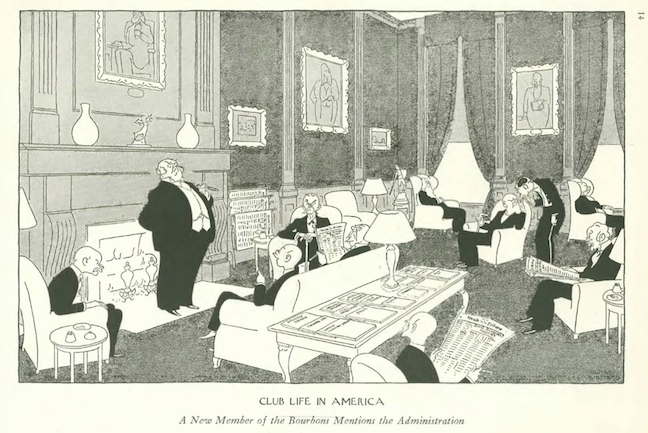
…Gluyas Williams brought us to the stuffy confines of club life (the cartoon was originally featured vertically)…
…and we close with Richard Decker, and a lucky draw at the IRS…
The cover of the Nov. 9, 1929 issue belied the mood of New Yorkers still reeling from the stock market crash. But then again, football games and other entertainments would grow in importance as much-needed distractions from the harsh realities that lay ahead.
Nov. 9, 1929 cover by Theodore G. Haupt. The title image is by James Montgomery Flagg, published in Life, November 15, 1929.
The New Yorker editors and writers were as bewildered as anyone in the aftermath of the crash. “The Talk of the Town” only gave it passing mention:
Robert Benchley, writing under the pseudonym “Guy Fawkes,” also looked at the market crash from the angle of the newspapers in “The Wayward Press” column. Naturally, Benchley tried to find humor in the midst of the disaster, noting that the crash provided some relief from tedious election coverage:
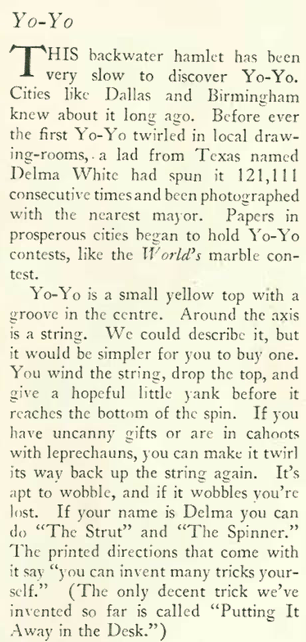
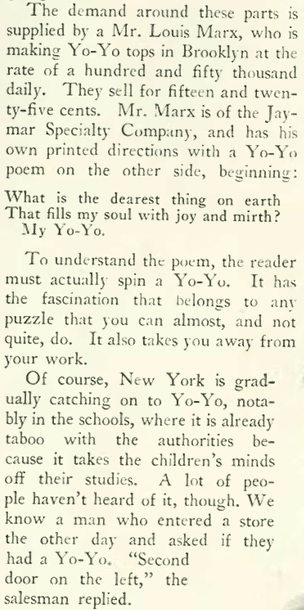
When the Nov. 9 New Yorker went to press, the stock market crash was viewed as a serious setback (in the sixth paragraph Benchley mentioned numerous reports of suicides), but not something that would result in worldwide depression. Indeed, much of the issue was devoted to lighter fare, including a rather lengthy piece in “Talk” about the latest craze among the nation’s youth — the yo-yo:
The Lumar 33, made of tin, was one of the original yo-yos produced by Louis Marx beginning in 1929. Hugely popular, it helped launch the Marx toy company empire. (WorthPoint)
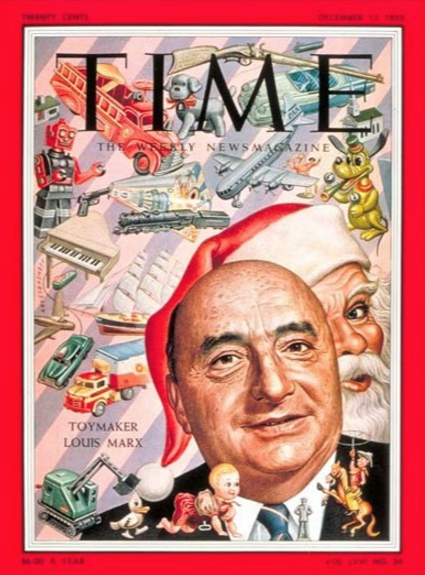
BUT HE’S NO YO-YO…Louis Marx’s version of the yo-yo would help him launch a toy empire and land him on the cover of Time magazine, Dec. 12, 1955. (Time)
* * *
Just Wait Until They Get iPads
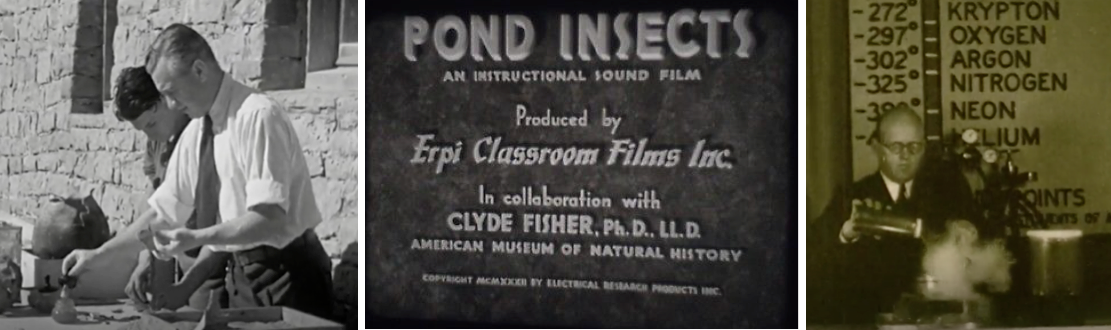
The New Yorker showed less enthusiasm for a plan by Fox studios to introduce talking pictures into schools, hospitals and churches. Writing for “Talk,” E.B. White observed:
TECHNOLOGY INVADES THE CLASSROOM…Left to right, a still from a 1930 educational film showing archeologist Earl Morris gluing together pottery shards at a dig near Mesa Verde National Monument; ca. 1932 title card for a science film; detail from a ca. 1930 educational film demonstrating the wonders of liquid nitrogen. (archive.org)
* * *
And Then There Was Light
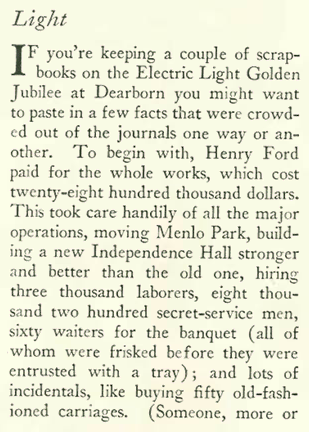
The introduction of talking pictures in the classroom owed something to Thomas Edison (1847-1931), inventor of the incandescent light bulb and a pioneer in the development of motion pictures, among many other things. The invention of the light bulb was commemorated at a “Golden Jubilee” celebration in Dearborn, Michigan, and “The Talk of the Town” offered these observations on the occasion:
GIVING THEIR TWO CENT’S WORTH…Lights were ablaze in Dearborn, Mich., to commemorate the 50th anniversary of the light bulb’s invention. “Light’s Golden Jubilee” was staged by public relations guru Edward Bernays on behalf of General Electric; below, commemorative postage stamp for the occasion. (prmuseum.org/Wikipedia)
The jubilee was the brainchild of Edward Bernays (1891-1995), often referred to as “the father of public relations.” The author of the 1928 book Propaganda, Bernays worked for dozens of corporations, and is known for his efforts in 1929 to promote cigarette smoking among women (branding them “torches of freedom”). Ironically, a man that helped many women develop a habit that led to their early deaths himself lived to the ripe age of 103.
Albert Einstein sent his best wishes from Berlin via transatlantic radio (see below), and special guests at the Jubilee included Henry Ford and Harvey Firestone, seen here talking with the nearly-deaf Thomas Edison about the development of radio in this short “talkie” filmed at the Jubilee on Oct. 21, 1929:
* * *
Please Release Me
Nunnally Johnson (1897-1977) was a journalist and film critic before breaking into the movies himself in the mid-1930s as a writer, producer and director of such films as The Grapes of Wrath (writer, producer) and The Man in the Gray Flannel Suit (writer, producer, director). As a critic Johnson learned what he didn’t like, including Al Jolson’s The Singing Fool, an early talking film that featured Jolson crooning the tear-jerker hit “Sonny Boy” to child actor Davey Lee, who portrayed his dying son. Nunnally responded with this parody titled “Sonny Boy’s Diary.” Some excerpts:
HOLD THE SCHMALTZ, AL…Nunnally Johnson, left, parodied the sentimental scenes Al Jolson shared with child actor Davey Lee in The Singing Fool. Johnson would go on to become a successful screenwriter, producer and director. (in.bookmyshow.com/virtual-history.com)
* * *
Dream Space
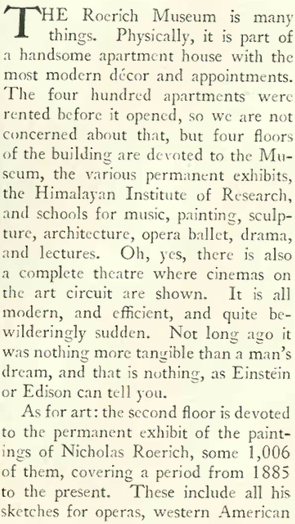
New Yorker art critic Murdock Pemberton hailed the opening of a new museum, the Roerich, on the lower floors of the 27-story art deco Master Apartment Building. The building also housed the Master Institute of United Arts, founded in 1920 by Nicholas and Helena Roerich.
The art deco landmark Master Building on Riverside Drive (left, in 1929) originally housed the Roerich Museum in its lower floors. Today the Roerich is located in this brownstone at 319 West 107th. (Wikipedia)
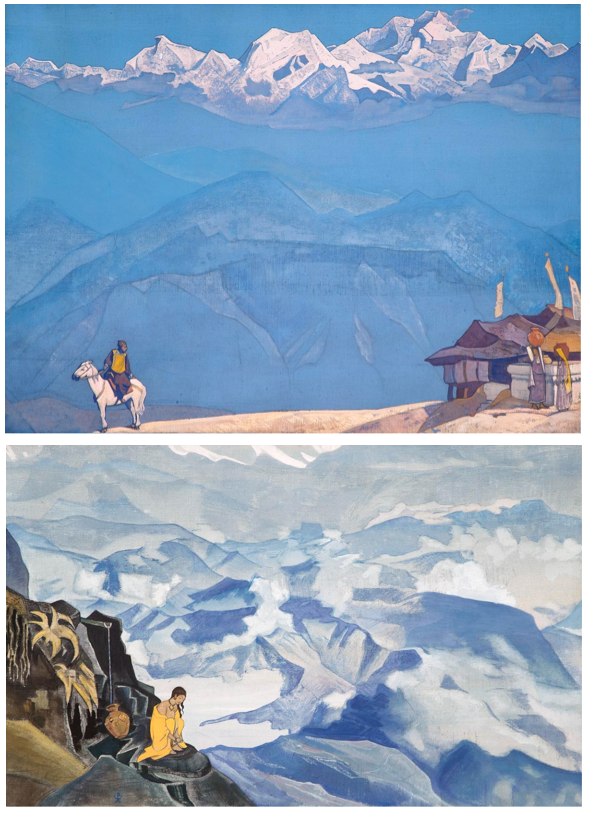
FOOTNOTES FROM A FULL LIFE…Two of Nicholas Roerich’s paintings from the 1920s: at top, Remember, 1924; below, Drops of Life, 1924. (roerich.org)
* * *
A Tenor for the Times
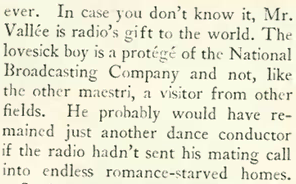
The crooner Rudy Vallée (1901-1986) became an overnight sensation after his Oct. 24, 1929 debut on national radio. Already a popular New York bandleader (and sometime local radio personality), his appearance on NBC’s Fleischmann’s Yeast Radio Hour made him a national sensation, especially among young women. According to Ian Whitcomb in his book, The Coming of the Crooners, Vallée’s thin, wavering tenor was not well-suited to the stage (especially in pre-microphone days when booming voices prevailed) but it worked magic on the radio, soft voices ideal for this more intimate medium (Bing Crosby, Frank Sinatra and other popular crooners would soon follow). The New Yorker’s “On The Air” column (signed “A.S.”) had this to say about Vallée’s return:
BALM FOR WEARY SOULS…Rudy Vallée’s soothing voice and easy-going manner were just what the nation needed days after the stock market crash. According to Anthony Rudel of Old Time Radio, “At 8 pm on the night of October 24th, 1929, just after the ubiquitous Graham McNamee introduced him, Vallée became a national radio star.” It was the debut of NBC’s Fleischmann’s Yeast Radio Hour, which soon came to be known as the Rudy Vallée Show. (Fleischmann was also a major benefactor of the New Yorker). Photo at left, Vallée with McNamee; at right, child actor Dorothy Gray and Vallée in the comedy talkie, The Vagabond Lover (1929). (otrcat.com/IMDB)
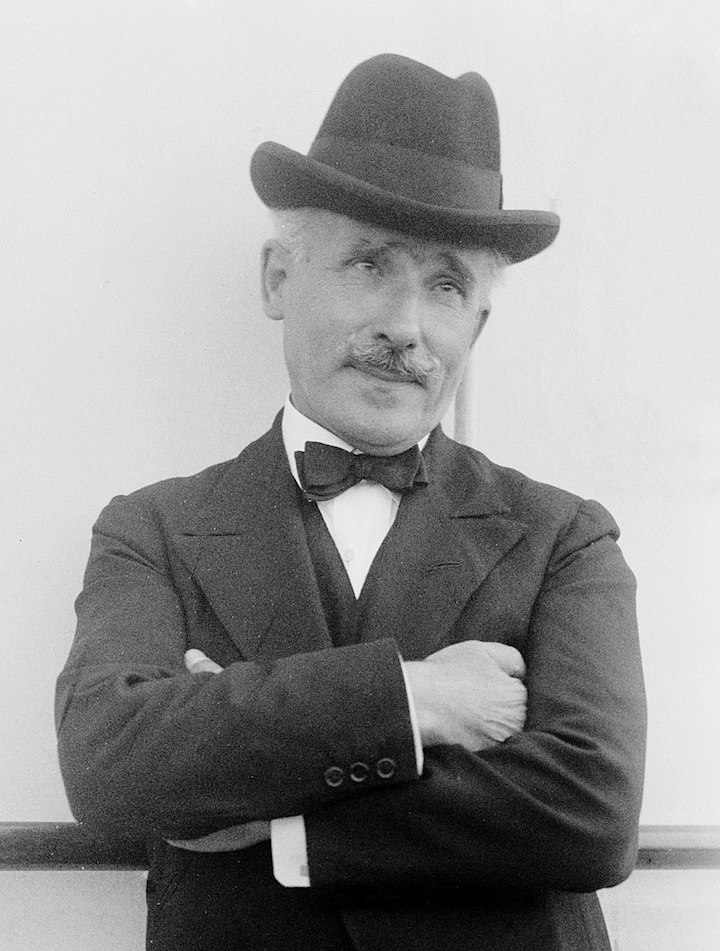
A giant among conductors of the 20th century, Arturo Toscanini (1867-1957) was already well-known to live audiences in New York, having conducted at both the Metropolitan Opera and the New York Philharmonic. Unlike Vallée, the Italian conductor’s radio broadcast was limited to the range of the New York radio station WOR. Toscanini would make his national radio debut in the States in 1937, with the NBC Symphony Orchestra.
THE MAESTRO…Arturo Toscanini, renowned for his intensity and perfectionism, was said to have perfect pitch. After leaving fascist Italy in 1936, he became a household name across the US thanks to the NBC Symphony Orchestra’s presence both on national radio (beginning in 1937) and television (1948-1952). (Library of Congress)
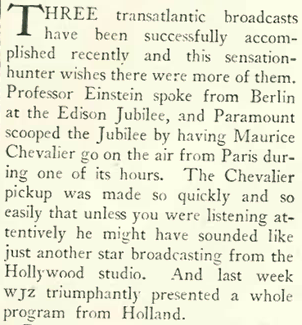
The New Yorker also noted the successful transmission of three transatlantic broadcasts, including remarks spoken by Albert Einstein from Berlin to the Electric Light Golden Jubilee in Dearborn, Michigan:
RELATIVELY SPEAKING…Albert Einstein prepares to congratulate Thomas Edison via transatlantic radio on the 50th anniversary of the incandescent light bulb, Oct. 21, 1929. (UT College of Liberal Arts)
* * *
From Our Advertisers
Now that we are post-market crash, we will be seeing the effects of that crash on New Yorker advertisers. Here are three advertisers from the Nov. 9 issue not long for the world: from left, the high-fashion salon Stewart & Company would file for bankruptcy and go out of business by the spring of 1930; Pierce-Arrow, maker of rolling status symbols for the wealthy, ceased car production in 1933; Hanan & Son, a leader in the mass production of shoes, would go bankrupt and fold by 1935.
Already at this early date advertisers were responding to tightening belts — this appeal from the Cuban Tourism Commission offered “an opportunity to forget business” while traveling on the cheap…
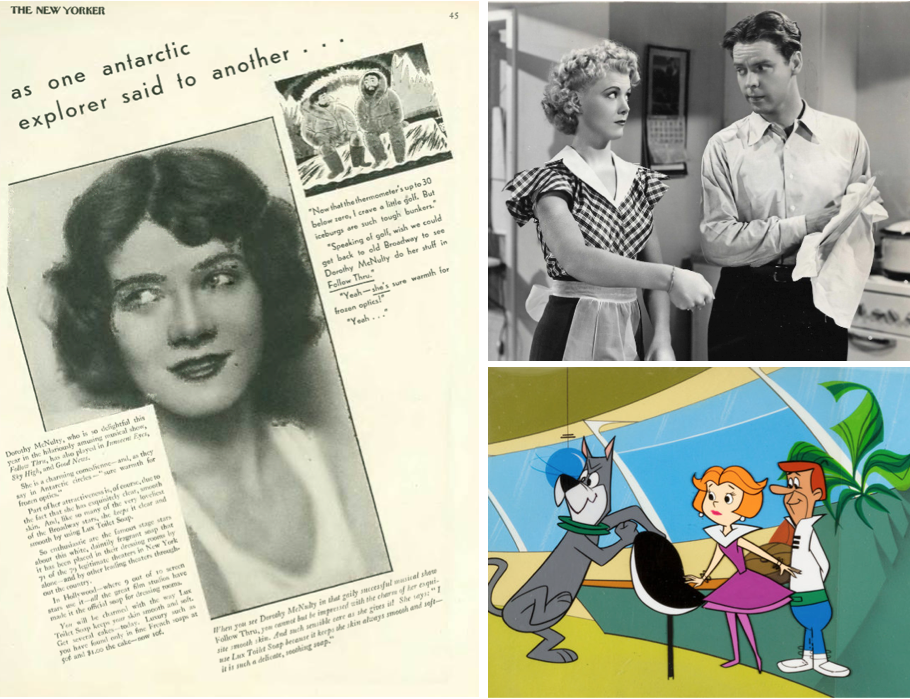
…other ads were the usual fare, this one from Lux Toilet soap featured its latest young celebrity, Dorothy McNulty (1908-2003), who changed her name to Penny Singleton in 1937 before starring in more than two-dozen Blondie-themed comedies (based on the Chic Young comic strip) with co-star Arthur Lake (who portrayed Dagwood Bumstead). She dyed her naturally brunette hair (as seen in the ad) blonde for the first Blondie movie in 1938, and continued to do so for the rest of her long life. A career that truly spanned several generations, she also provided the voice for Jane Jetson in The Jetsons in its original airing in the early 1960s and in later revivals through 1990…
THE MANY FACES OF PENNY SINGLETON…At left, before she was the film star Penny Singleton,Dorothy McNulty was a popular star on Broadway, as this ad from the Nov. 9 New Yorker attests. At top, Singleton with Blondie co-star Arthur Lake in the first installment of that popular 27-film series, 1938; a still from The Jetsons 1962-63, for which Singleton provided the voice of Jane Jetson. (IMDB/Hanna-Barbera)
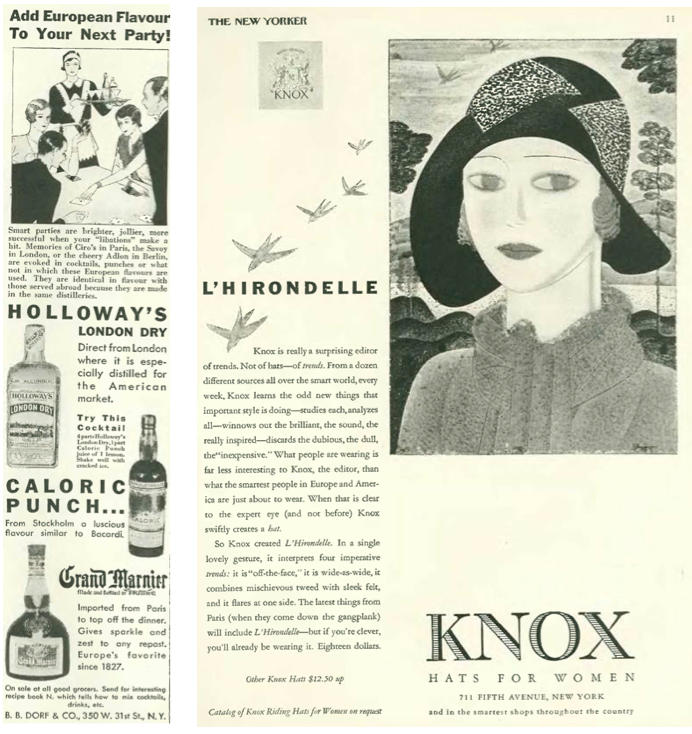
…on to other ads, the one on the left is another sad example of how manufacturers of spirits tried to market non-alcoholic versions of their libations to Prohibition-starved Americans (“especially distilled for the American market”)…at right, an ad from Knox hatters, with a somber rendering of a young woman (maybe she’s headed to the party in the other ad) wearing a fashion that would be popular in the early Thirties…the old flapper hat, along with the Jazz Age, was dead as a doornail…
…oh well, at least you could stay healthy by smoking lots of cigarettes…
…we’ve seen ads illustrated by other New Yorker cartoonists including Peter Arno, Rea Irvin, and Julian De Miskey;Helen Hokinson got in on the action with this ad touting G. Washington instant coffee…the first instant coffee to be produced on a mass scale, G. Washington was so well known it was referred to as a “cup of George.” The brand was discontinued in 1961…
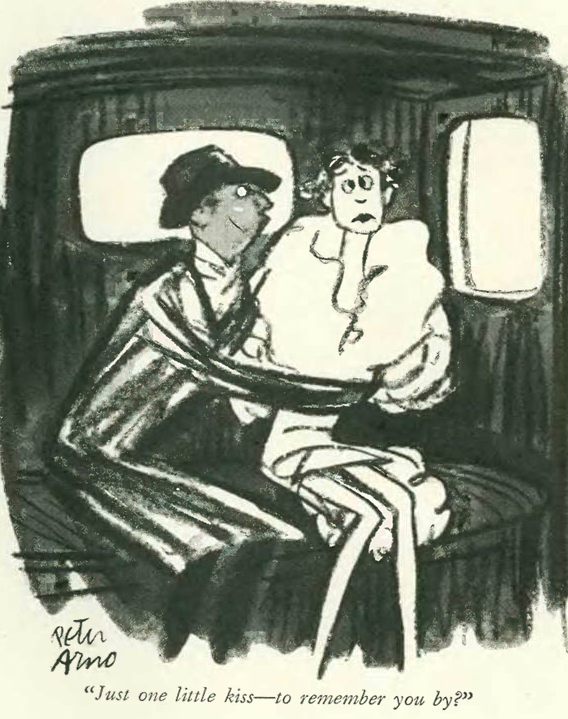
…on to our comics, an awkward moment courtesy Peter Arno…
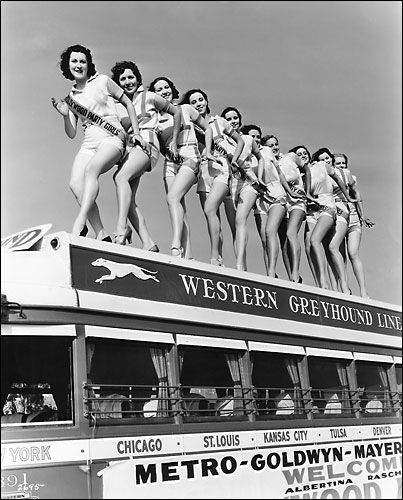
…W.P. Trent illustrated a backstage exchange regarding the ado over a popular dance troupe, the Albertina Rasch Girls…
…for reference…
MGM publicity photo from 1929 of the Albertina Rasch Girls, who traveled to Hollywood to appear in the Technicolor finale of the film Hollywood Revue of 1929. (dimitritiomkin.com)
…and John Reynolds explored the clash of the Old World and the New…