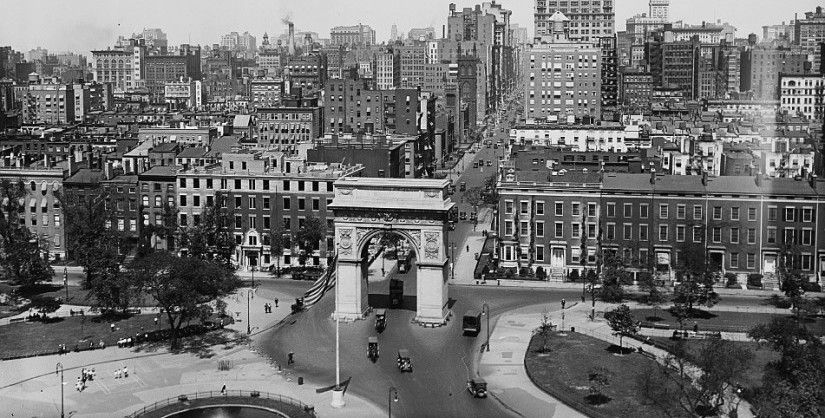
Above: Washington Square North circa 1930. (nypap.org)
In the first decades of the 20th century very few buildings in New York City were considered sacred, especially during the building boom of the Twenties when large swaths of the old city were erased to make way for massive skyscrapers and more than 740,000 new housing units.
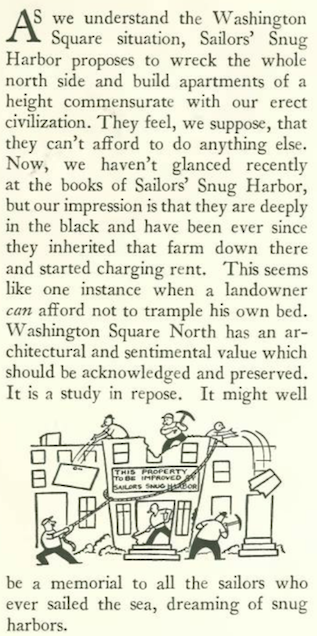
To keep anything historic from the wrecking ball required constant vigilance as well as political savvy. Such was the case at Washington Square, where in response to a 27-story building erected at 1 Fifth Avenue a campaign was organized to create height limits around the square itself. The land for 1 Fifth Avenue was leased by Sailors’ Snug Harbor—a foundation dedicated to assisting retired mariners and one of the largest owners of land in Greenwich Village. The threat to Washington Square became even greater in 1936 when the same foundation announced plans to demolish several of the structures facing the north side of Washington Square, known as “The Row.” In his “Notes and Comment,” E.B.White explained:
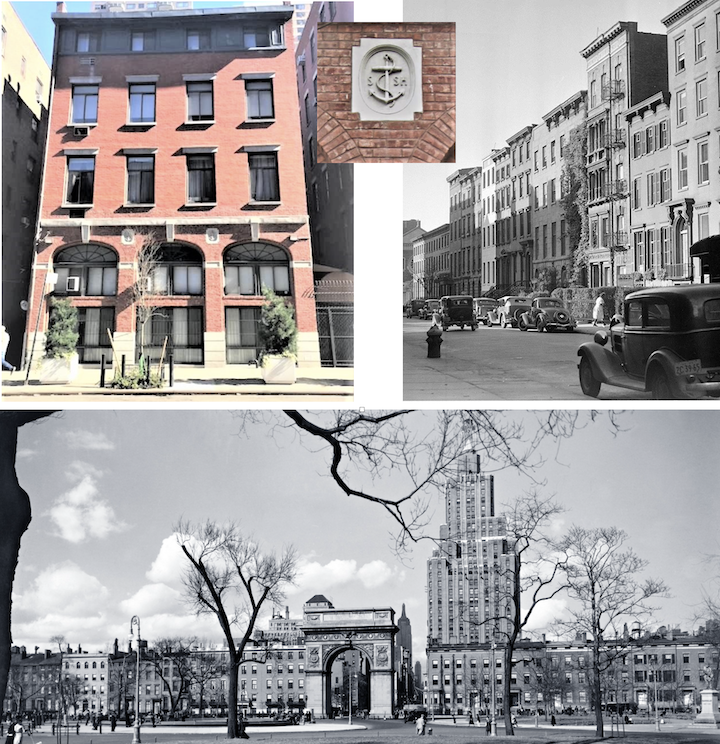
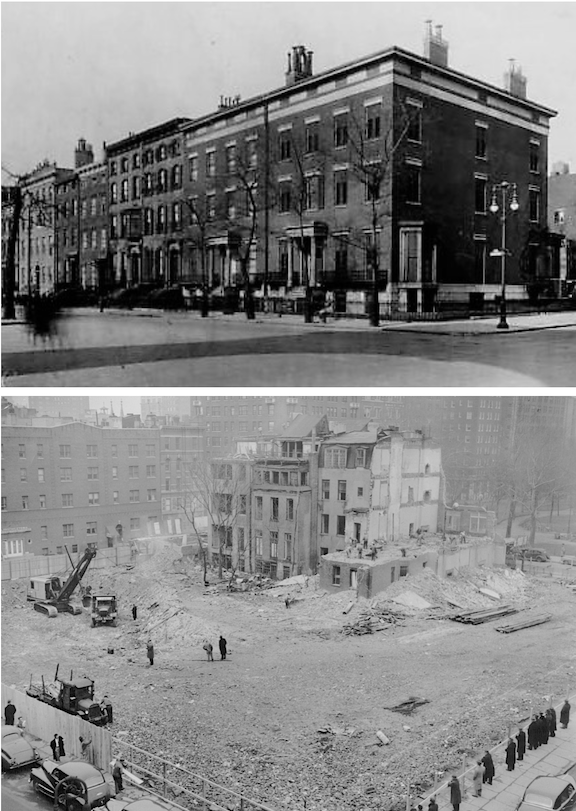
Fortunately the demolition did not proceed, with Sailors’ Snug Harbor deciding to retain the character of “The Row”—numbers 1-13 Washington Square North. Not so fortunate were the adjacent Rhinelander Houses that were demolished in the mid-1940s, and “Genius Row” on Washington Square South, which was demolished in 1948 to make room for the NYU Law Center.
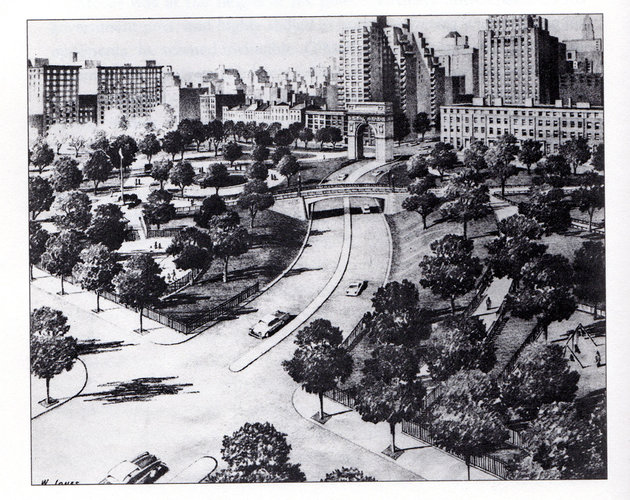
Beginning in the 1940s, Parks Commissioner Robert Moses would try many times to ram a highway through Washington Square Park, including a proposal in the early 1950s (below) that would bisect the park with a 48-foot-wide highway connecting Fifth Avenue to West Broadway.
* * *
Farewell Artie
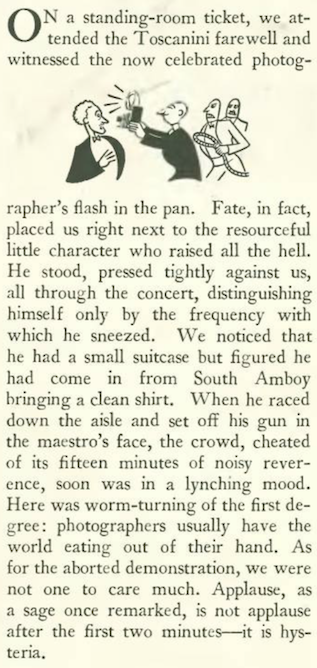
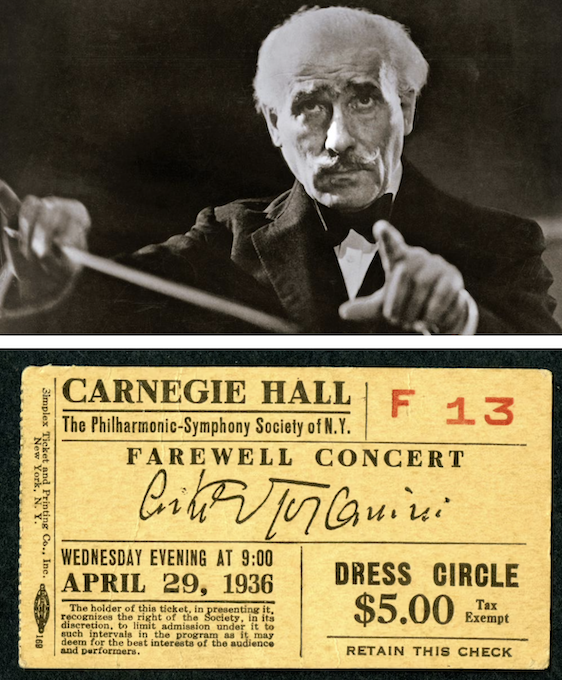
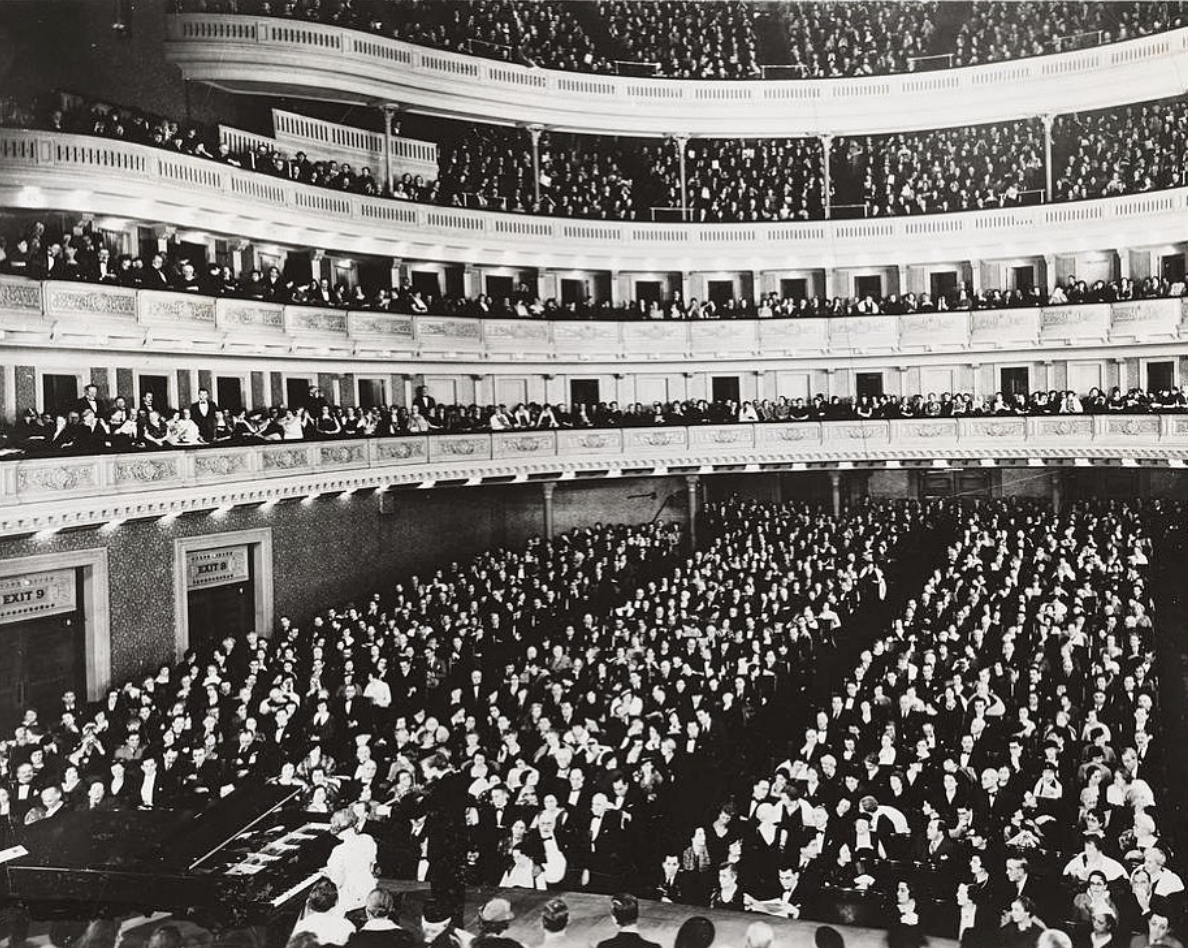
Legendary conductor Arturo Toscanini (1867–1957) transformed the New York Philharmonic into a world-class ensemble during his stint as music director from 1928 to 1936. Unfortunately, his stellar career with the Philharmonic ended rather ignominiously: When the Maestro turned to take a bow at the conclusion of his Carnegie Hall farewell concert, a young photographer exploded a flash bulb directly in his face, causing the great conductor to flee the stage. E.B. White was there to take it all in:
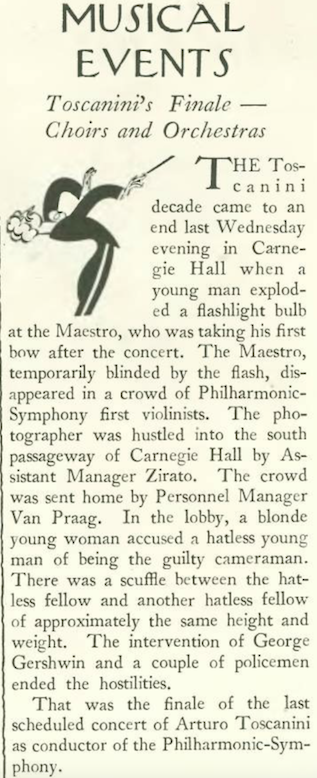
The New Yorker’s music critic Robert A. Simon also shared some thoughts on the evening, which included a scuffle between a “hatless fellow” and another fellow (also hatless) that followed the photographer incident:
* * *
Lah-Dee-Dy
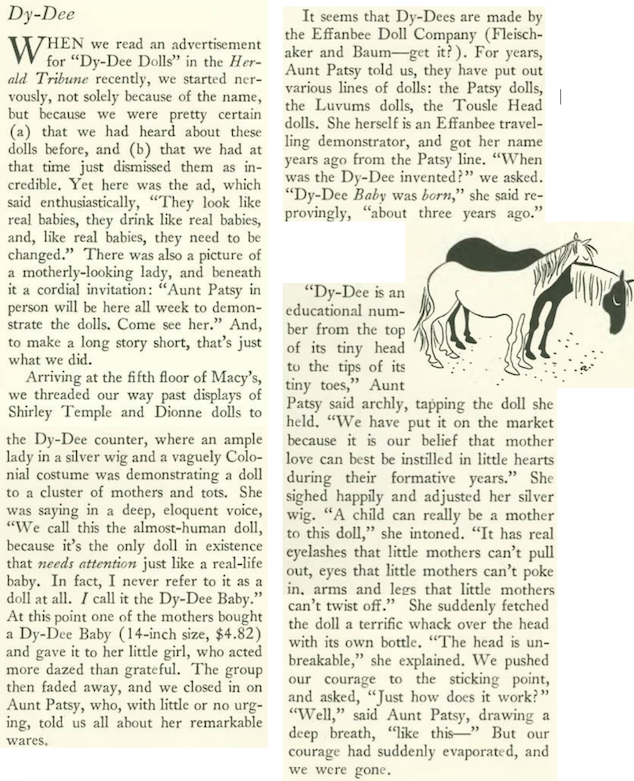
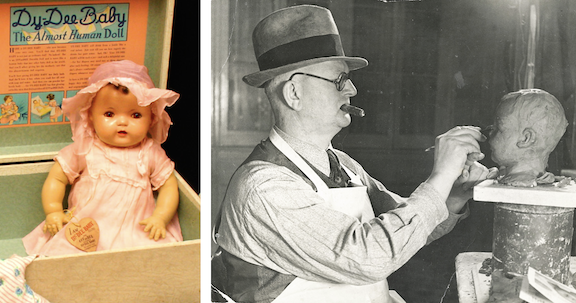
“The Talk of the Town” looked into the fuss over the toy industry’s first practical “drink-and-wet” baby doll, Effanbee’s Dy-Dee doll. Marketed as “The Almost Human Doll”, the “Talk” correspondents (Helen and Charles Cooke) found a demonstration at Macy’s a bit too real (included with this excerpt is spot art by Abe Birnbaum).
* * *
At the Movies
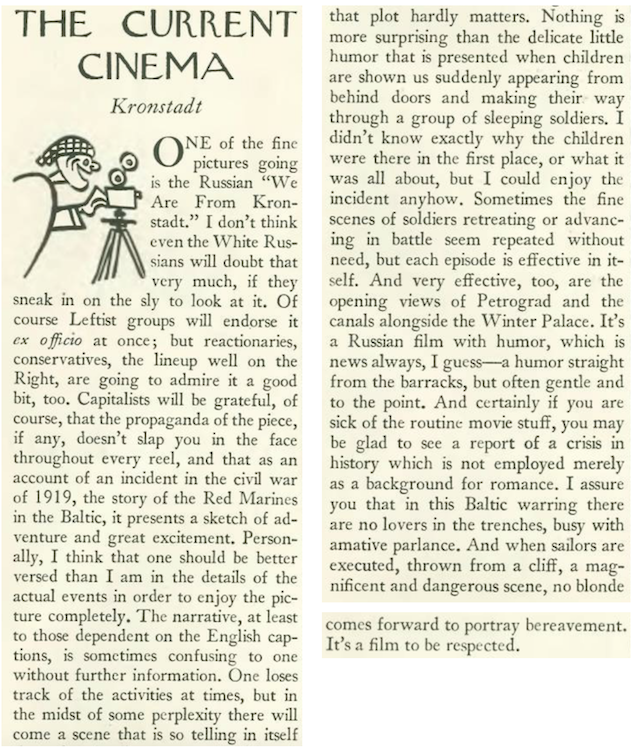
Many film critics in the 1930s, including The New Yorker’s John Mosher, admired the Soviet film industry for its cinematic innovations and often brutal realism, even if deployed as propaganda. Such was the case with We Are From Kronstadt, which depicted heroic Red sailors defending the city of Petrograd from counterrevolutionary forces. “It’s a film to be respected,” Mosher wrote.

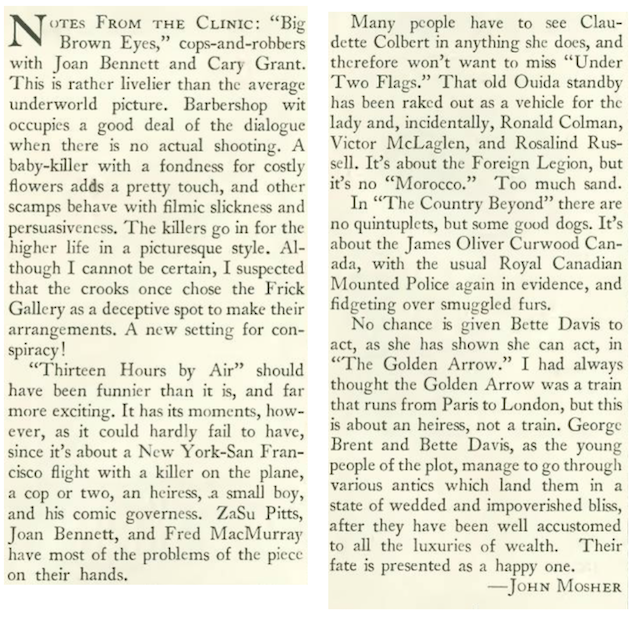
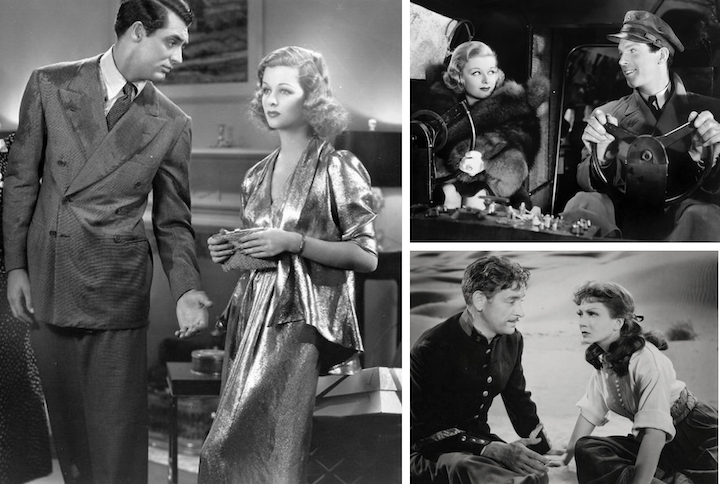
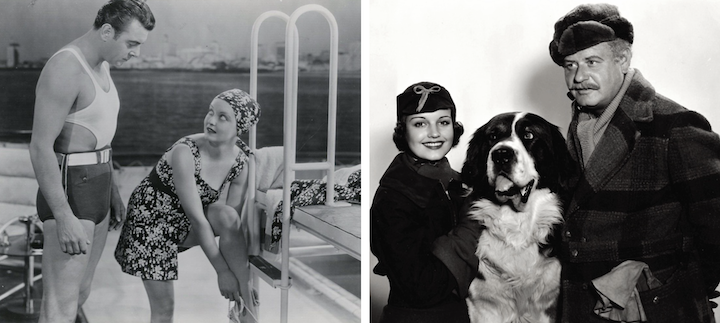
Mosher also reviewed the lighter fare coming out of Hollywood, including two films featuring the actress Joan Bennett.
* * *
Swing Time
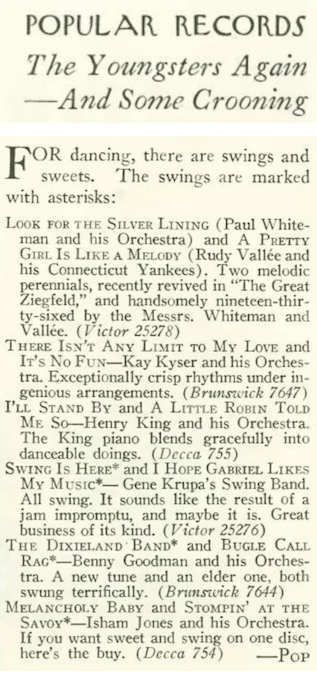
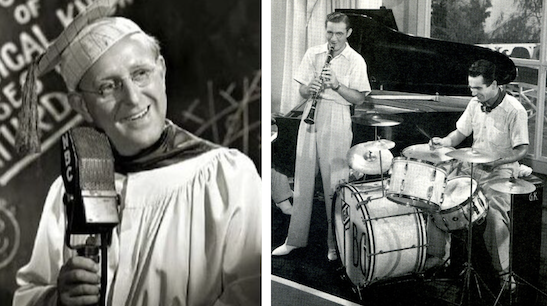
Ninety years ago America’s youth primarily listened to (and danced to) swing music and big band jazz. The New Yorker kept readers up to date on the latest hits.
* * *
From Our Advertisers
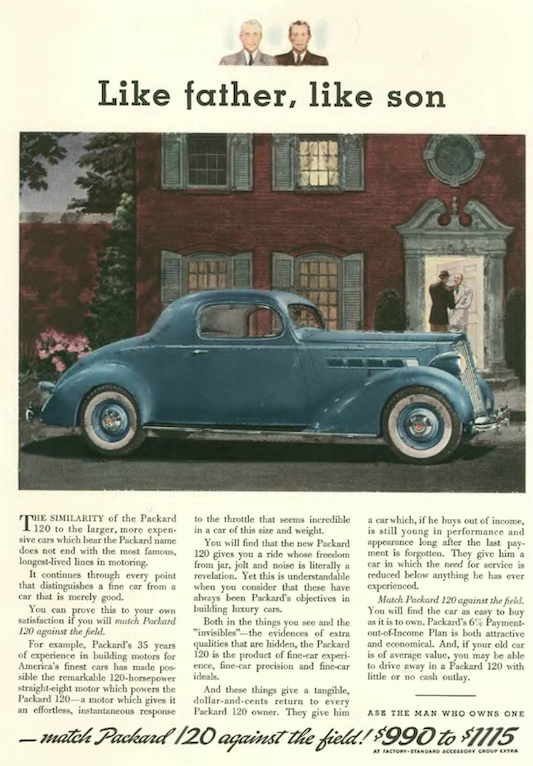
The makers of Packard automobiles were big into the idea of continuity, emphasizing the quality and longevity of their product over gimmicky style changes…
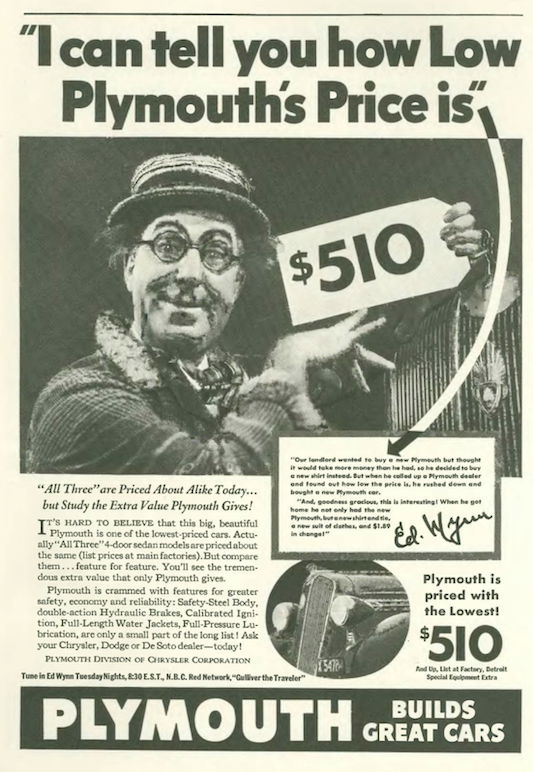
…in the mid-1930s (and especially in 1936) Chrysler employed the comedic talents of Ed Wynn to sell its low-priced Plymouths…
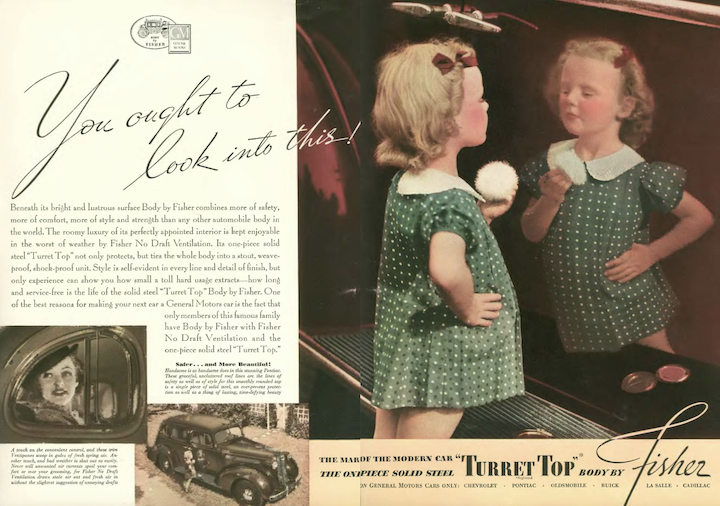
…the makers of Fisher car bodies (a division of General Motors) continued their campaign of two-page ads pairing cute kids with their “Turret Top” safety feature…
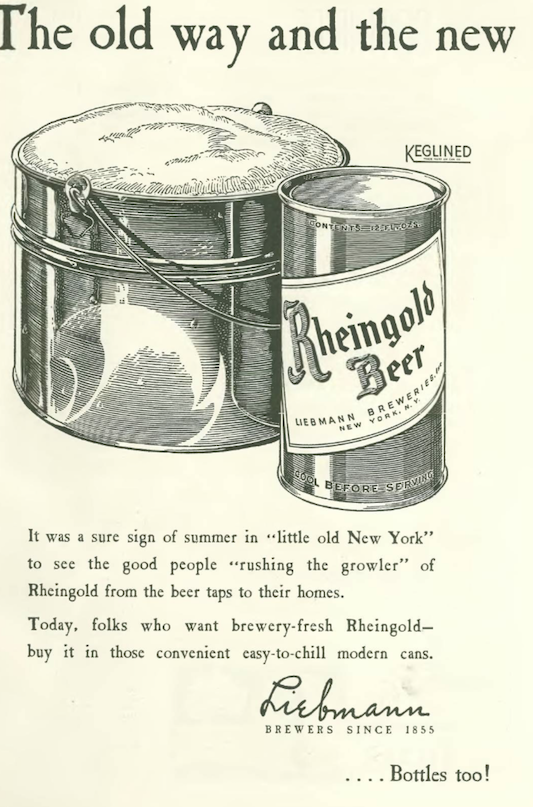
…canned beer was a recent innovation in 1936, with New York breweries leading the way (Krueger Brewing Company was first, its canned beer officially debuting in January 1935)…
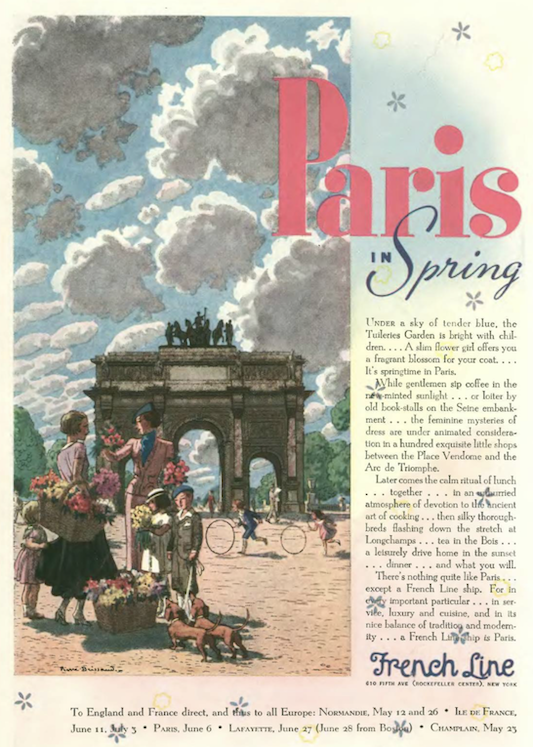
…the French Line enticed New Yorkers to see Paris in the springtime…
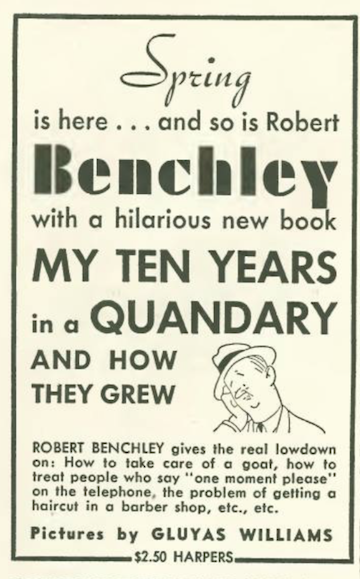
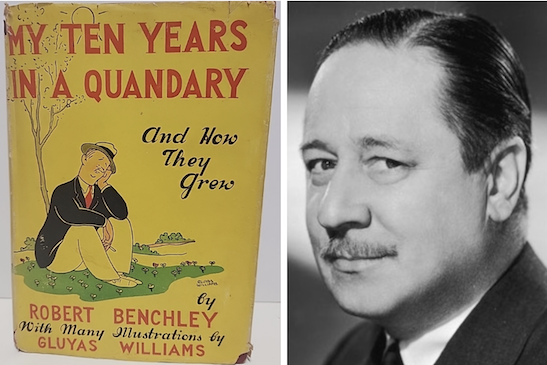
…Harper’s ran this ad on the top left corner of page 95 to promote Robert Benchley’s My Ten Years in a Quandary…and How They Grew, illustrated by Benchley’s New Yorker colleague Gluyas Williams…
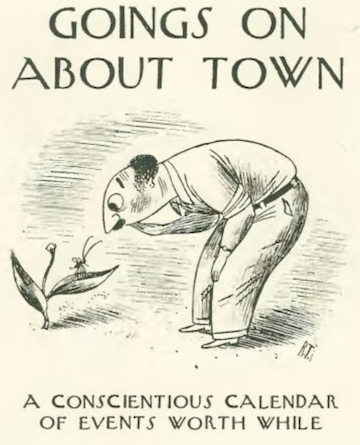
…on to our cartoonists, we begin with Richard Taylor in the calendar section…
…and a nice bit of spot art by Christina Malman…

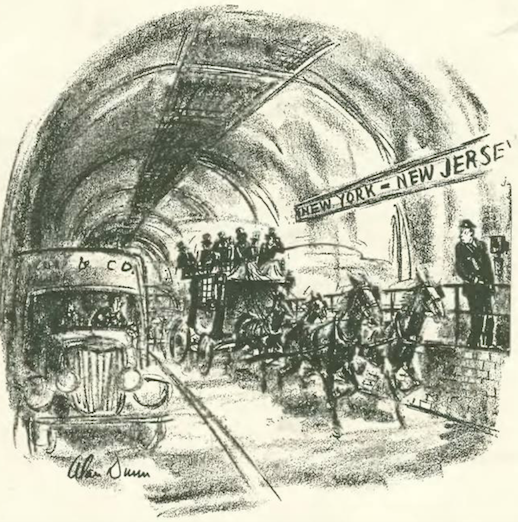
…Alan Dunn revealed a time tunnel under the Hudson…
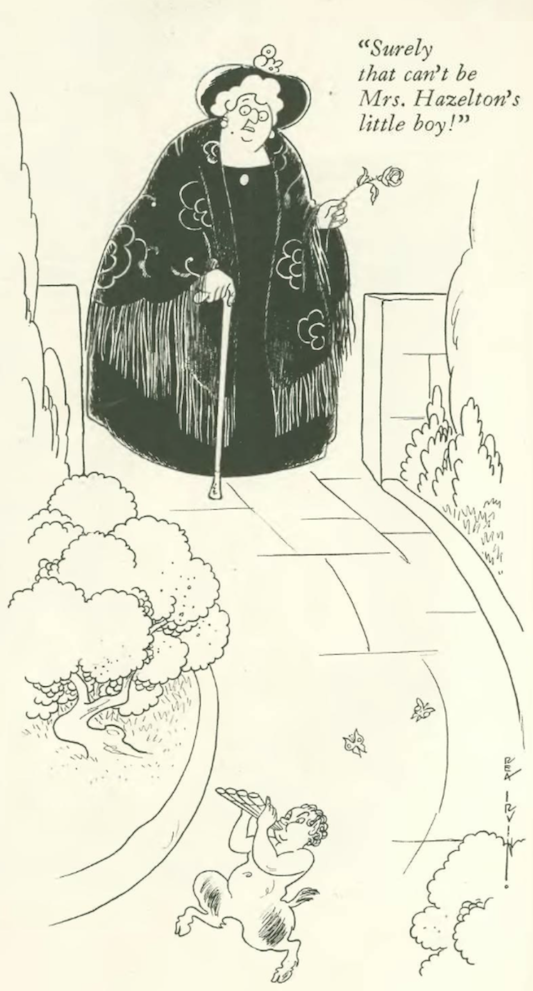
…Rea Irvin drew up an odd sight along a garden path…
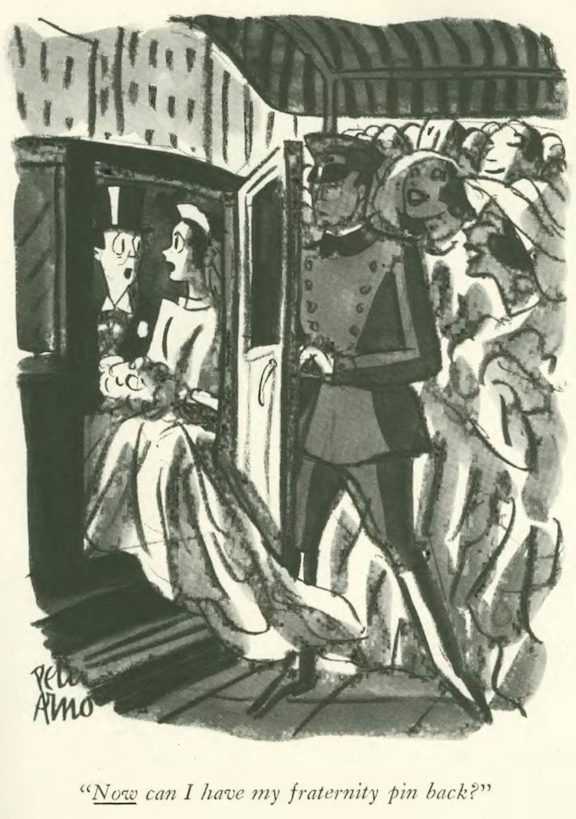
…this honeymoon was over before it even started, per Peter Arno…
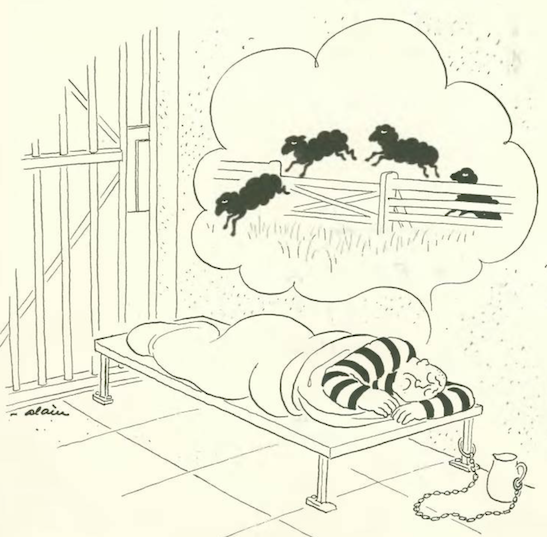
…Alain showed us the troubled dreams of a jailbird…
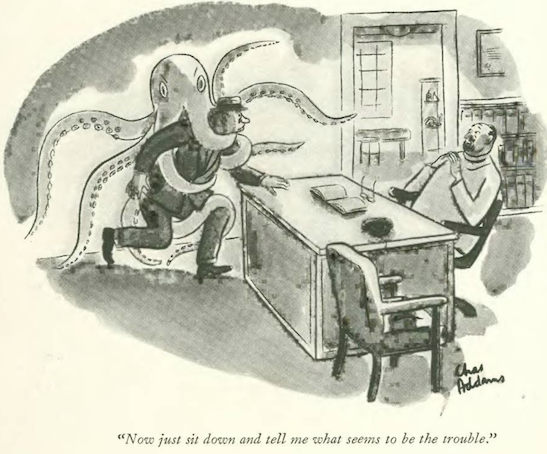
…Charles Addams at his best, taking the daily horrors in stride…
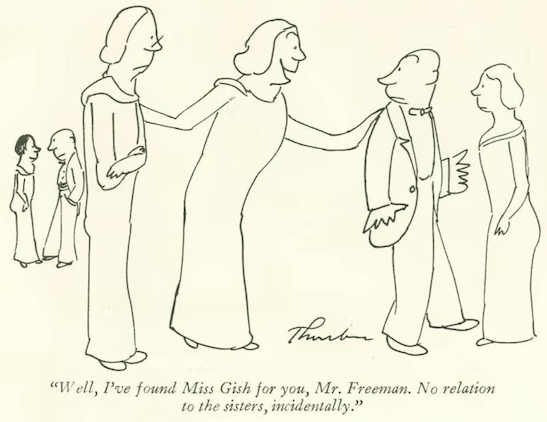
…James Thurber gave us a Gish, but not of silent movie fame…
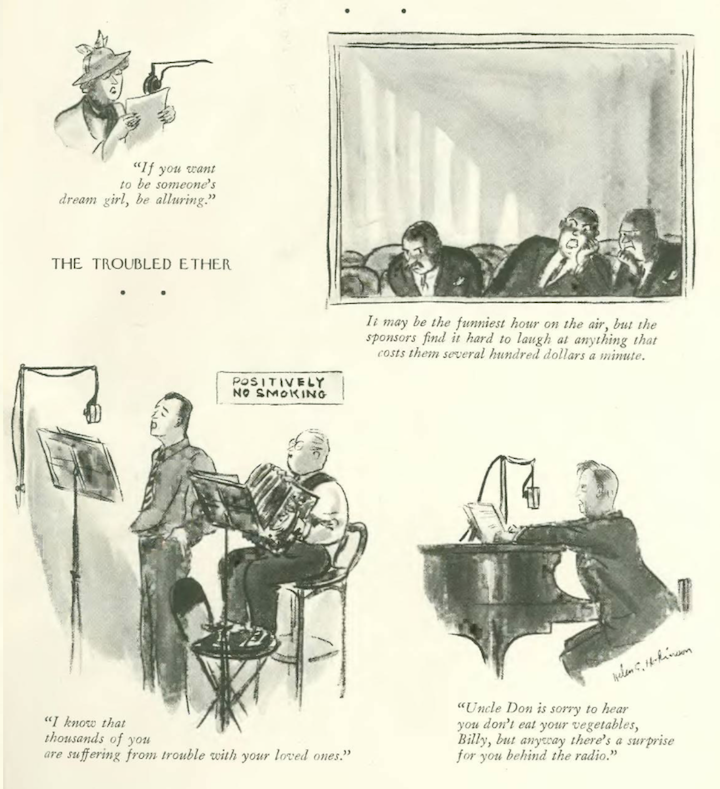
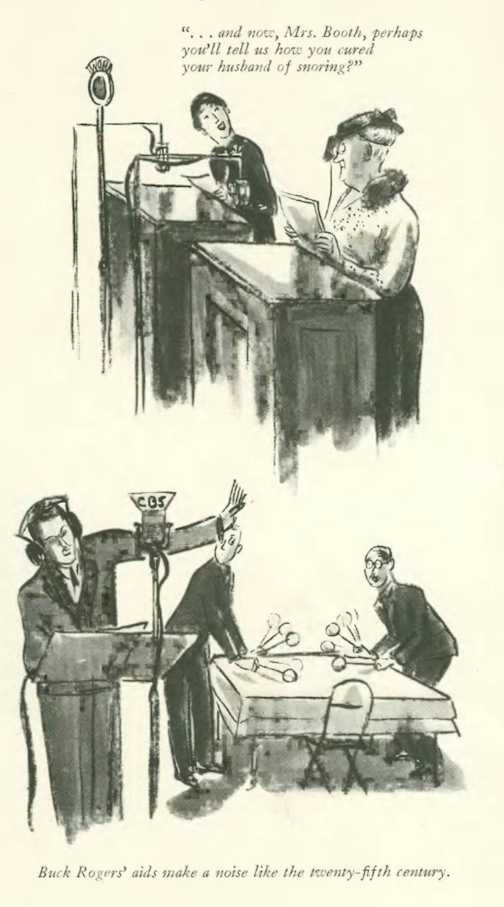
…Helen Hokinson illustrated a day at the radio station across pages 22-23…
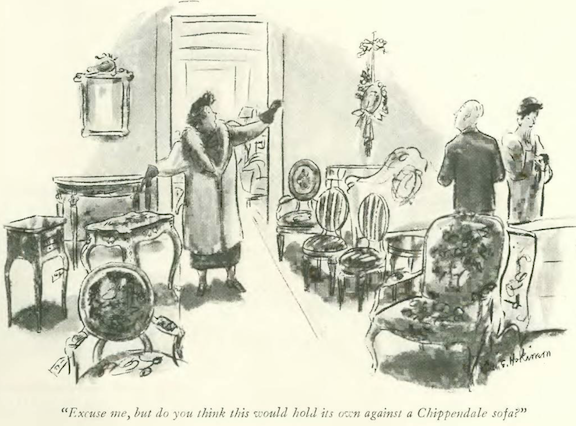
…Hokinson again, weighing the competition between a sofa and table…
…and we close with Kemp Starrett, and a helpful husband…