Queen of the Seas

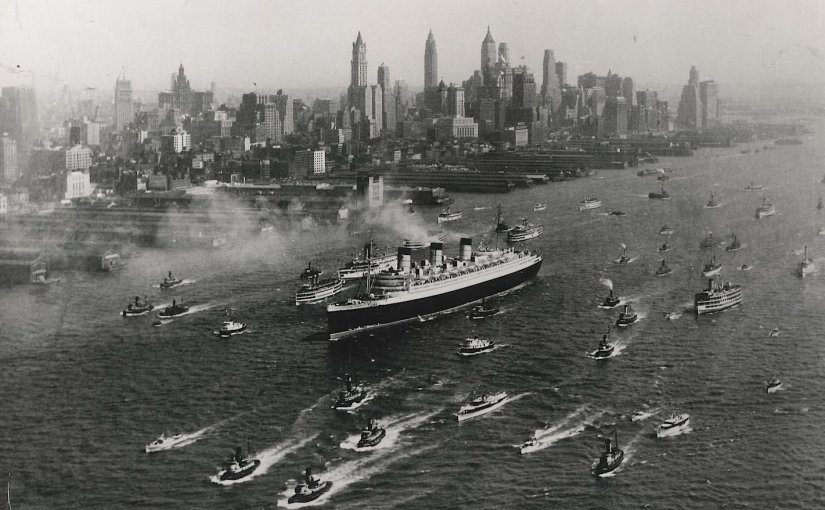
Above: The RMS Queen Mary arriving at New York harbor accompanied by a flotilla of escorts on June 1, 1936. (liverpool.ac.uk)

The RMS Queen Mary was launched in the age of superliners that included the SS Bremen, the SS Île de France and the SS Normandie. These and other liners competed for the Blue Riband, an unofficial honor bestowed on Atlantic Ocean liners achieving the highest average speed. These ships also vied for the distinction of being the most luxurious.

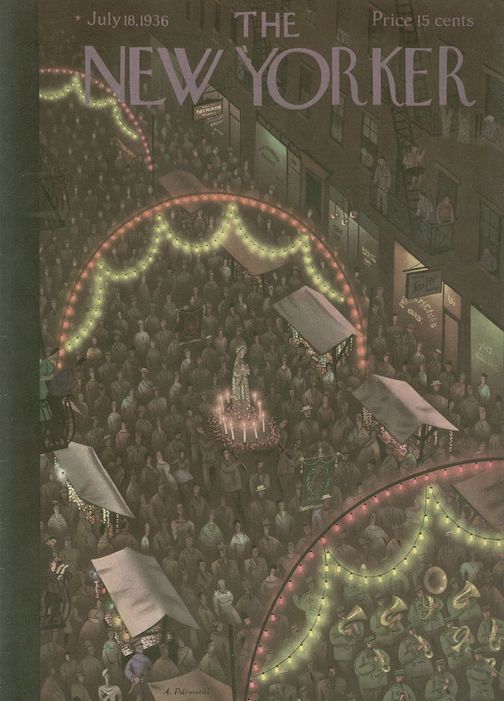
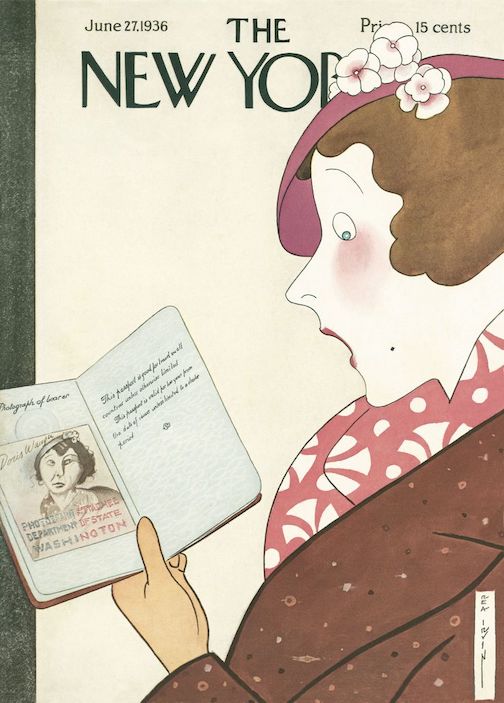
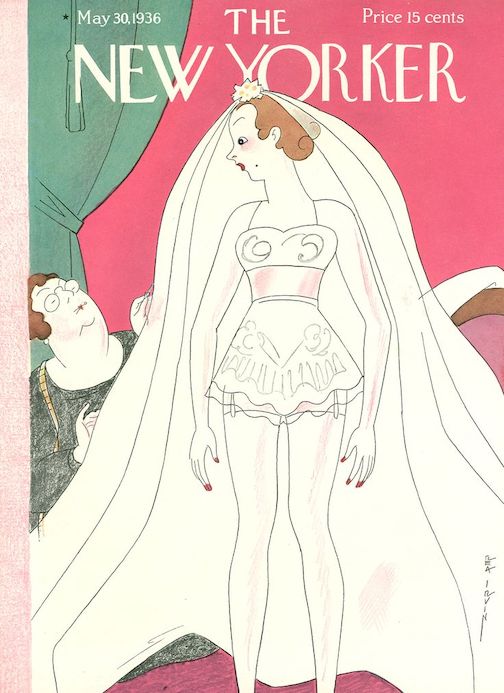
May 30, 1936 cover by Rea Irvin, celebrating the arrival of the June bride.

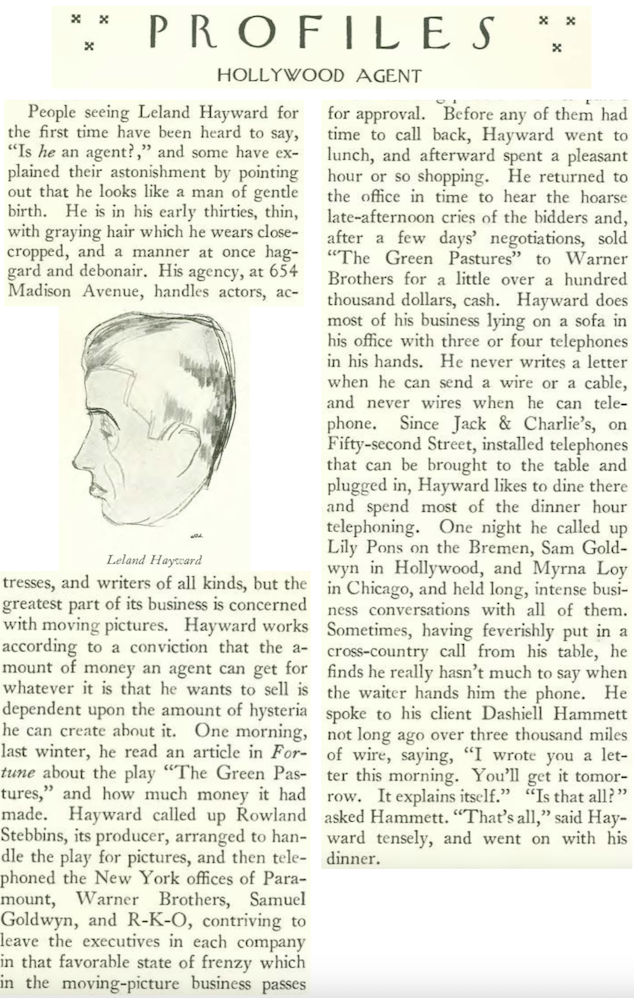
The Queen Mary was a top contender for both honors when she departed on her maiden voyage from Southampton on May 27, 1936. London correspondent Samuel Jeake, Jr (aka American poet and novelist Conrad Aiken) paid a visit to the liner just days before her first Atlantic crossing. Excerpts:

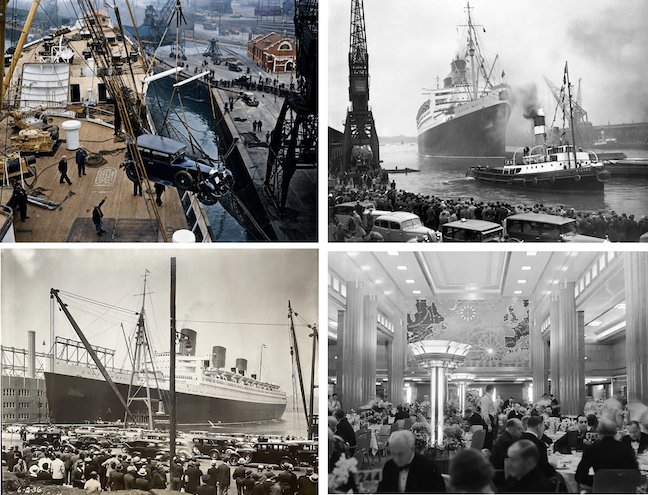
BOAT AFLOAT…Clockwise, from top left, a Bentley automobile is brought aboard the Queen Mary before her maiden voyage; the liner departs from Southampton, May 27, 1936; first-class passengers dining during that first crossing; the Queen Mary arriving at the newly built Pier 90 in New York Harbor, June 1, 1936. The Queen Mary and the SS Normandie were speedy competitors for the Blue Riband in the 1930s. (RMS Queen Mary via Facebook/NYC Municipal Archives)
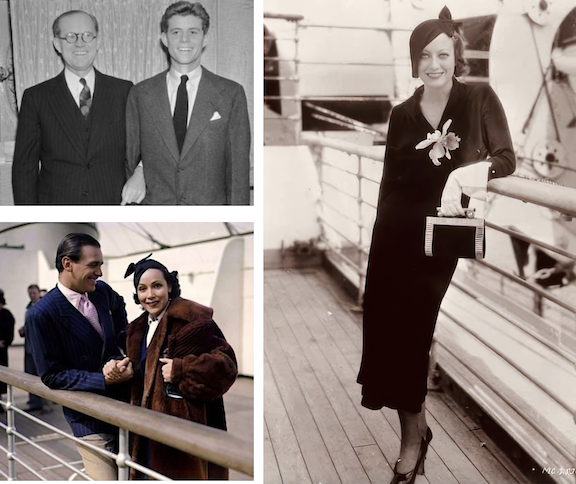
SEEING STARS…Celebrities on the maiden voyage included John F. Kennedy and his father, Joseph P. Kennedy (top left), as well as actress Joan Crawford (right). Bob Hope, Mae West, and Noël Coward were also spotted aboard the maiden voyage. Douglas Fairbanks Jr. and Dolores Del Rio (bottom left) were photographed on the liner’s second departure from Southhampton. (cruiselinehistory.com/RMS Queen Mary via Facebook)
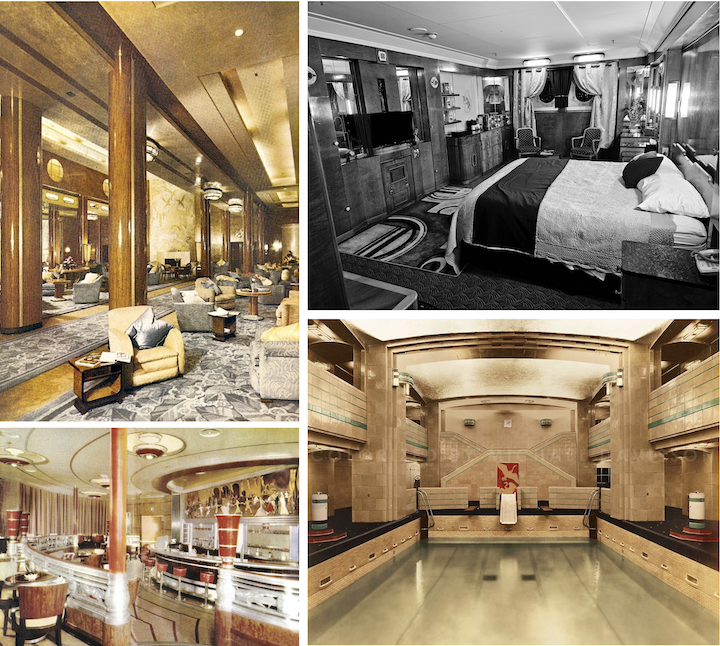
HOME AWAY FROM HOME…First-class accommodations on the Queen Mary included, clockwise from top left, the Main Lounge; the Queen Mary Suite; swimming pool; and Observation Bar. (RMS Queen Mary via Facebook)
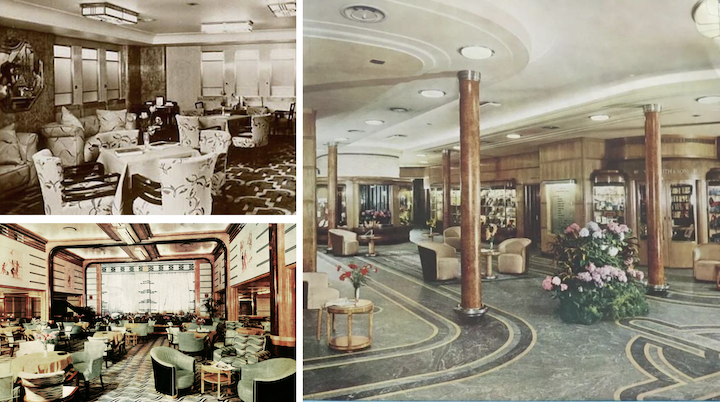
NOT BAD…Conrad Aiken called the liner’s second-class (Tourist class) sections “one of the best travel bargains in the world.” Photos at left show lounge areas, while at right is the ship’s Shopping Centre, open to all passengers. (RMS Queen Mary via Facebook)
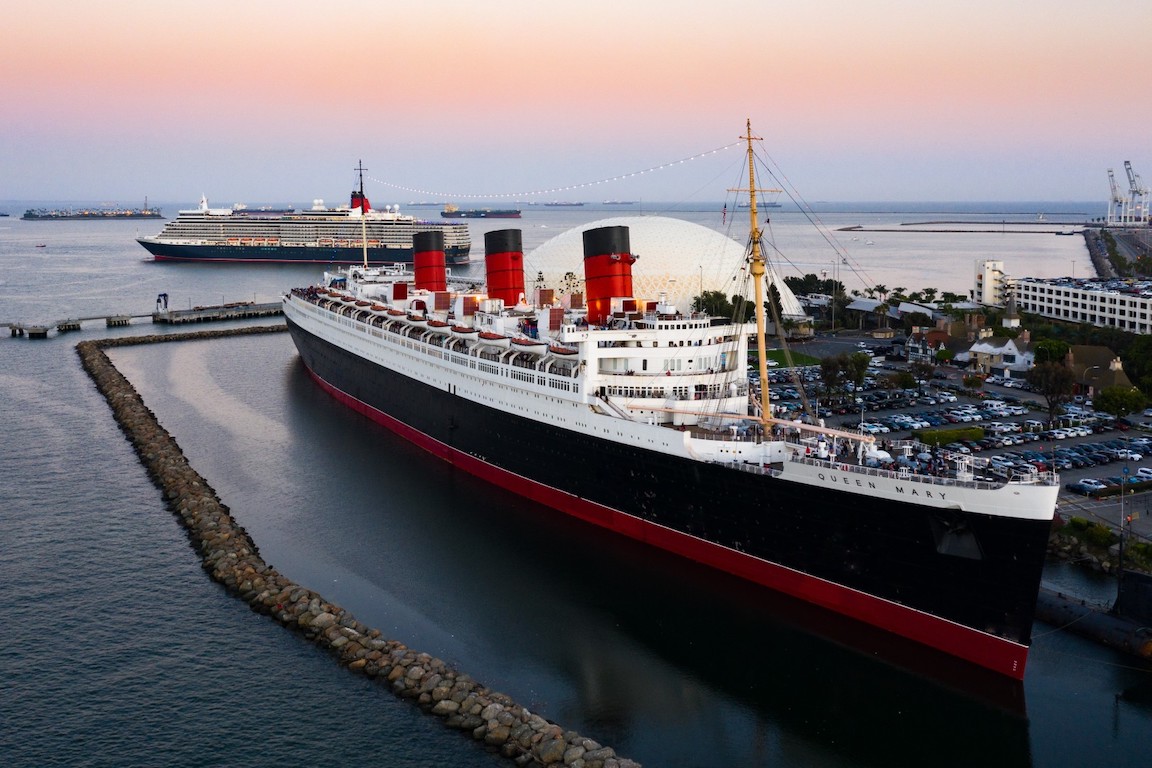
OUT TO PASTURE…The majority of the great superliners were either destroyed during World War II or scrapped after their service. However the RMS Queen Mary, after her retirement in 1967, was permanently moored at Long Beach, California as a hotel, museum, and convention space. During her years of service she crossed the Atlantic 1,001 times, carrying more than two million passengers. From 1939 to 1946 the liner also served the war effort, transporting more than 800,000 troops. (visitlongbeach.com)

* * *

Green Acres

It’s hard to believe that at one time Greenwich Village was home to trash-filled back yards and deteriorating tenements. Beginning in the 1920s, residents transformed these back yards into communal green oases. “The Talk of the Town” visited three that had “more or less grown together.” Spot art by Christina Malman. Excerpts:

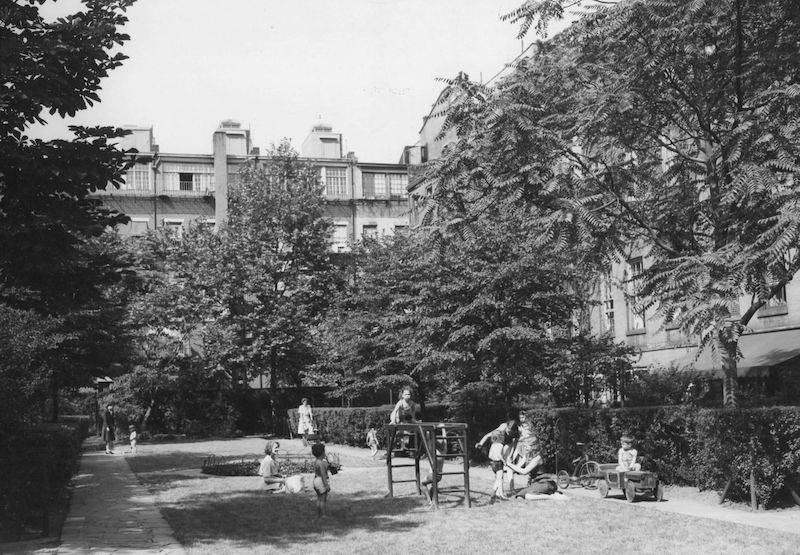
URBAN OASIS…Undated photo shows the interior courtyard garden shared by twenty-one row houses of the Macdougal-Sullivan Gardens Historic District in Greenwich Village. (nytimes.com)

 * * *

Art for the People

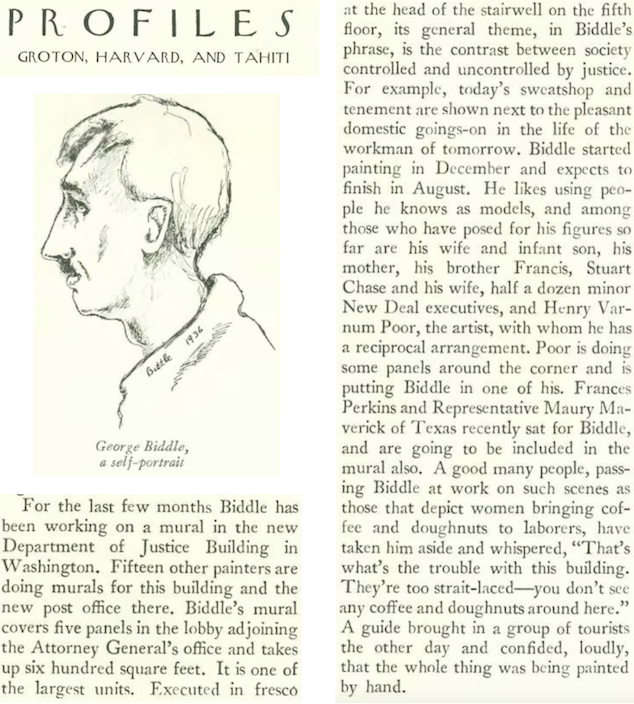
Geoffrey Hellman penned a profile of social realist artist George Biddle (1885– 1973), who played a major role in establishing the WPA’s Federal Art Project and who created murals for government buildings in the U.S., Brazil, and Mexico. Excerpt:

SERVING THE PUBLIC GOOD…George Biddle at work on a fresco titled Society Freed through Justice, located in the fifth floor lobby of the Attorney General’s office in the Department of Justice Building, Washington, D.C. (Wikipedia)
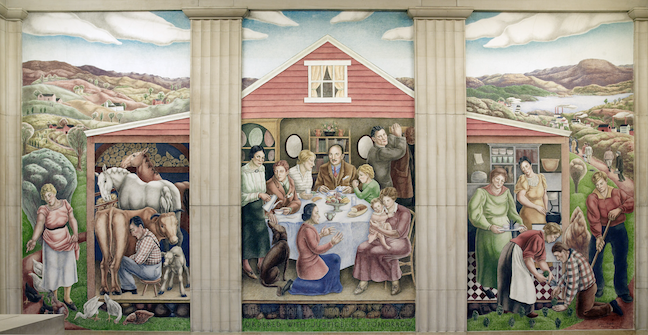
AMERICAN IDEAL…Detail from Biddle’s fresco painting Society Freed Through Justice. (Library of Congress)

 * * *

The Shoe Fits

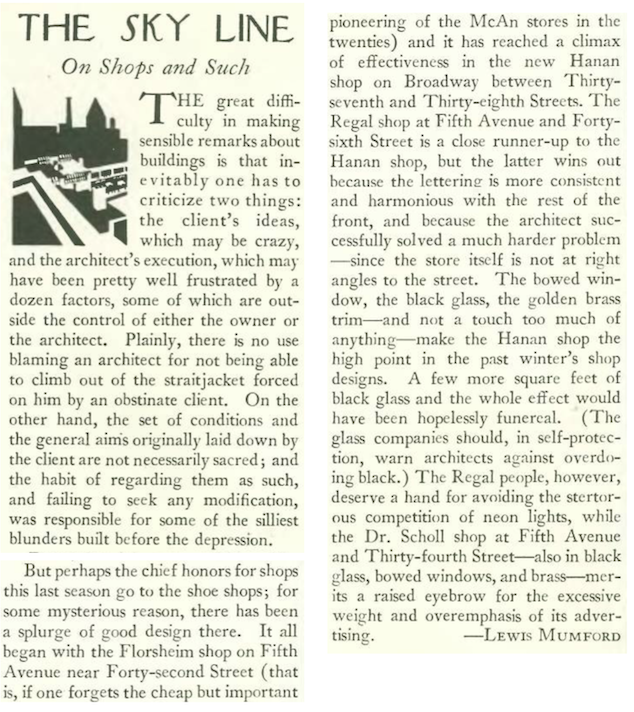
Architecture critic Lewis Mumford was unimpressed with latest designs in commercial shops, however for “some mysterious reason” he was quite taken with various shoe stores in Midtown. Excerpts:

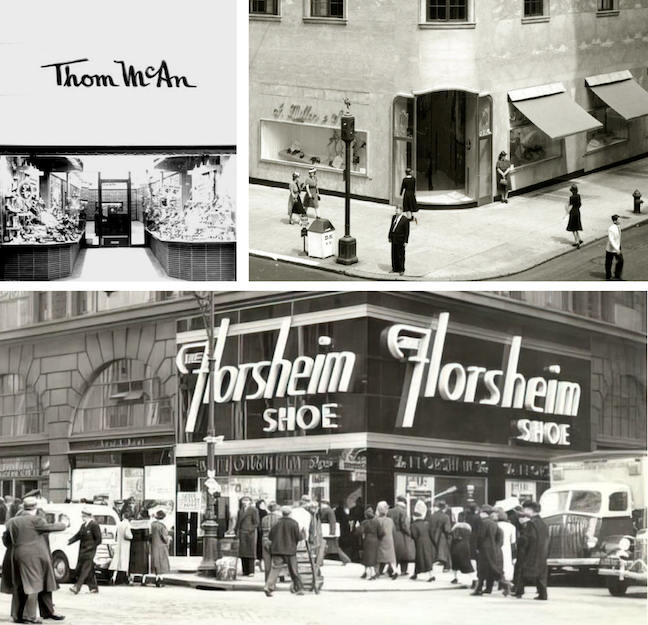
BRIGHT SPOTS…Lewis Mumford lauded the shoe company Thom McAn (top left) for its pioneering designs. Other notables included I. Miller & Sons (top right) on Fifth Avenue, and below, Florsheim Shoe on West 37th. (clickamericana.com)

 * * *

A Pirate Sets Sail

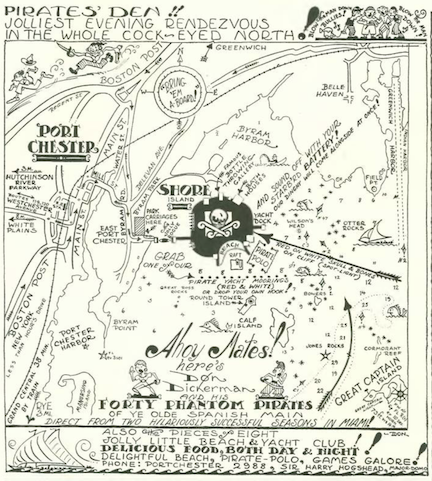
In her “Tables for Two” column, Lois Long noted a few of the summertime getaways near the city including the Westchester Embassy Club. She also mentioned the re-emergence of Don Dickerman, famed for his series of gaudy themed restaurants in the West Village from the late 1910s to 1930. Among those was his famed Pirate’s Den, which was destroyed in a 1929 fire. With the stock market crash Dickerman (1893-1981) was forced to sell the location, and he declared bankruptcy in 1932. However by 1936 he was on his way back, opening a pirate-themed enterprise near Port Chester:

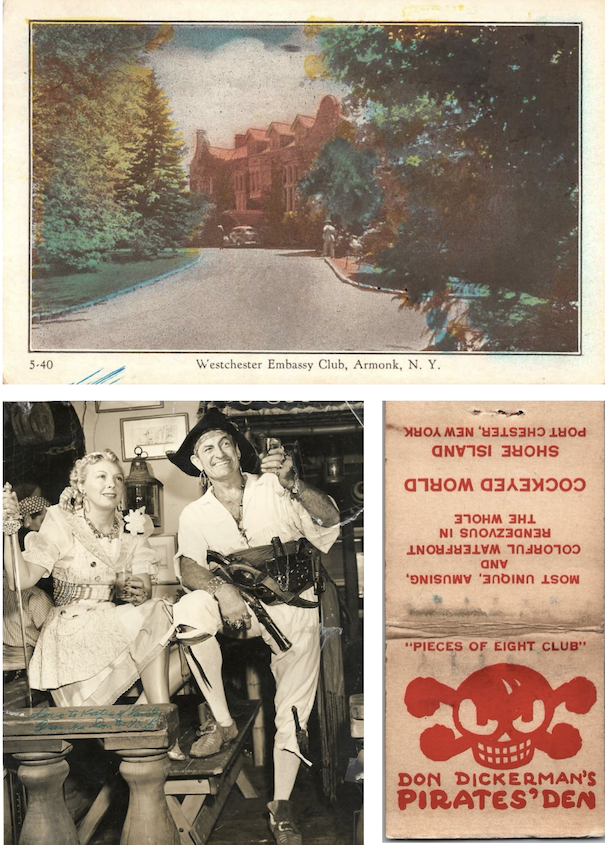
SUMMER DIVERSIONS…At top is a postcard image of the Westchester Embassy Club; below, Don Dickerman at his Los Angeles Pirates’ Den with his fifth wife, Thelma Mills Wunder (he had at least seven known wives). Originally a fixture of Greenwich Village, Dickerman emerged from his 1932 bankruptcy to open themed restaurants in Miami, Miami Beach, Port Chester, NY , Washington DC, and Hollywood. Bottom right, a matchbook cover from Dickerman’s revived Pirate’s Den at Port Chester, which was mentioned by Lois Long. (facebook.com/restaurant-ingthroughhistory.com/ebay.com)

 * * *

At the Movies

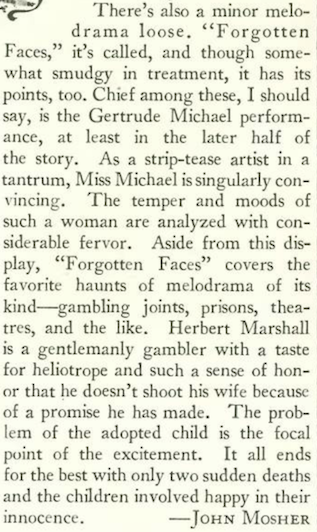
Under the strict moral guidelines of the Hays Code, gangster films of the Pre-Code era gave way to milder fare, much to the chagrin of film critic John Mosher. 

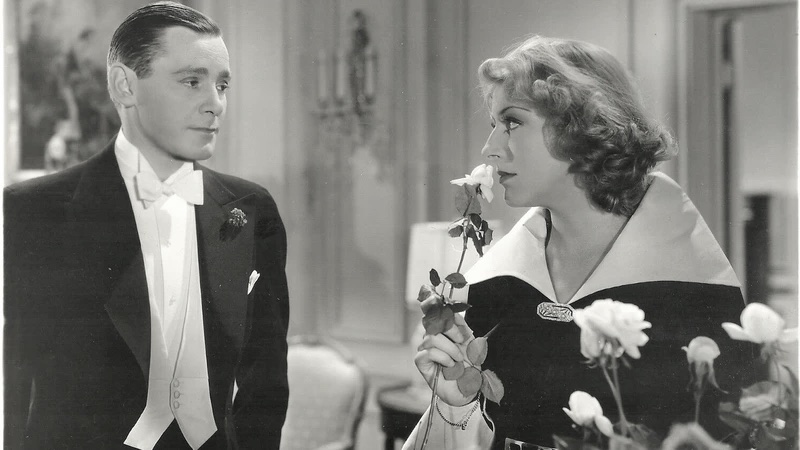
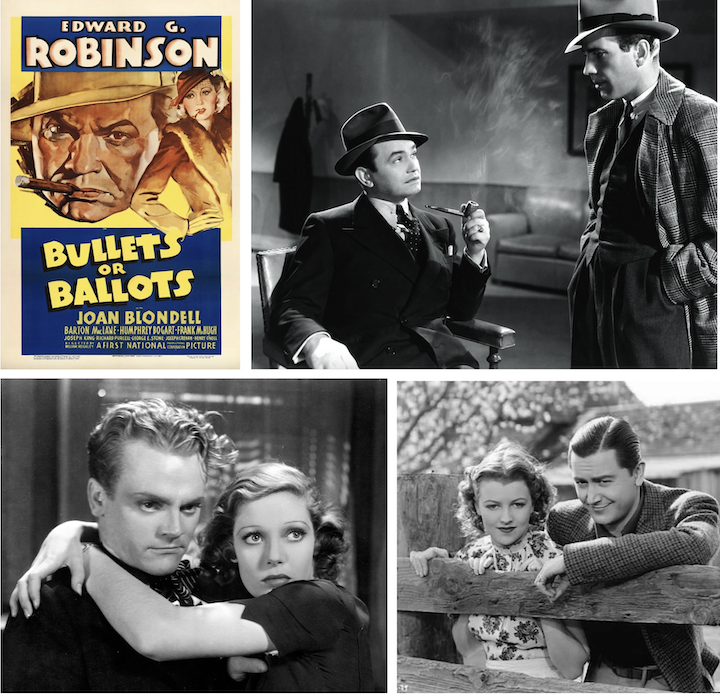
KINDER, GENTLER GANGSTERS…Clockwise from top left, poster for Bullets or Ballots gave Edward G. Robinson top billing with Joan Blondell also prominently featured—Humphrey Bogart was a relative newcomer in the movies, seen here in a scene with Robinson in Bullets or Ballots; Robert Young and Betty Furness in The 3 Wise Guys;  James Cagney and Loretta Young in the pre-Code film Taxi, which was released in 1932 but reissued in 1936 (SEE BELOW) to capitalize on Cagney’s new superstar status. The film also featured the famously misquoted line: “Come out and take it, you dirty yellow-bellied rat.” (imdb.com/tcm.com)

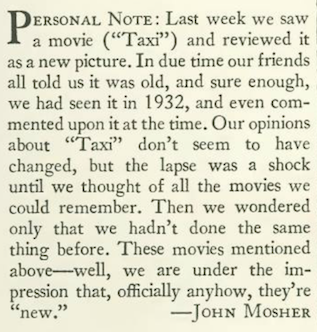
In the following week’s issue (June 6), Mosher noted that he’d forgotten about his previous review of the Cagney film Taxi in 1932:

* * *

From Our Advertisers

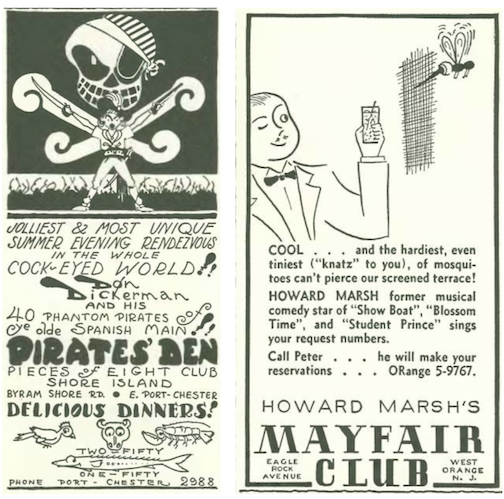
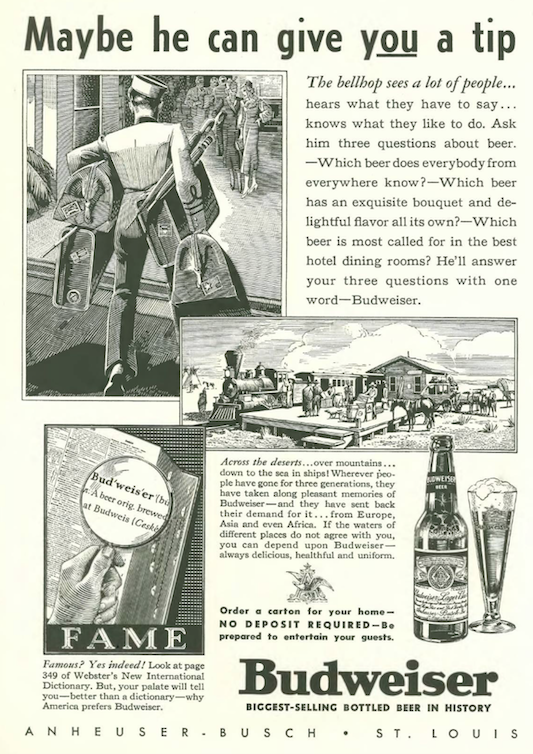
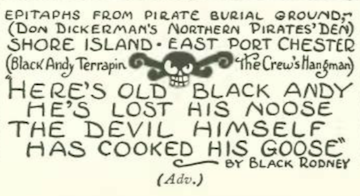
Appropriately buried in the back pages of The New Yorker was this tiny ad promoting Don Dickerman’s new Pirates’ Den at Port Chester, referenced above in Lois Long’s “Tables for Two” column…
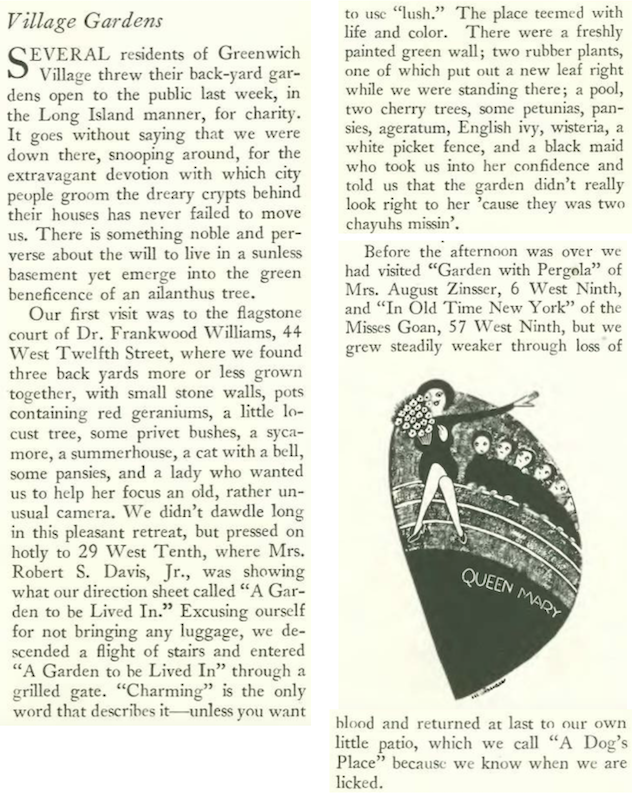
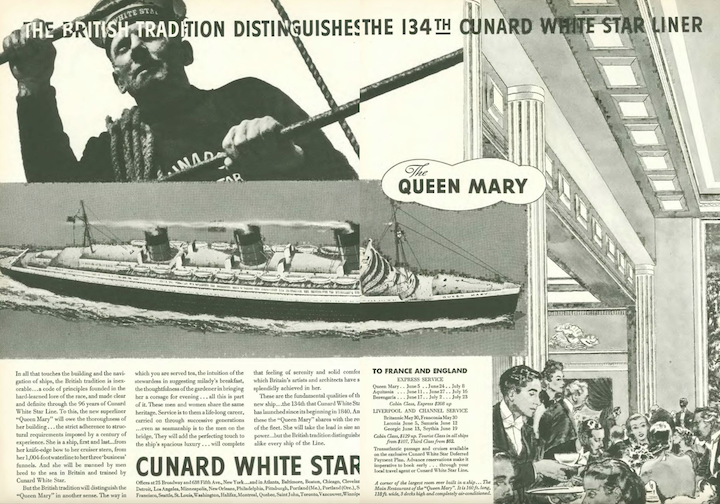
…the Cunard White Star Line took out this two-page spread to announce the launch of the Queen Mary

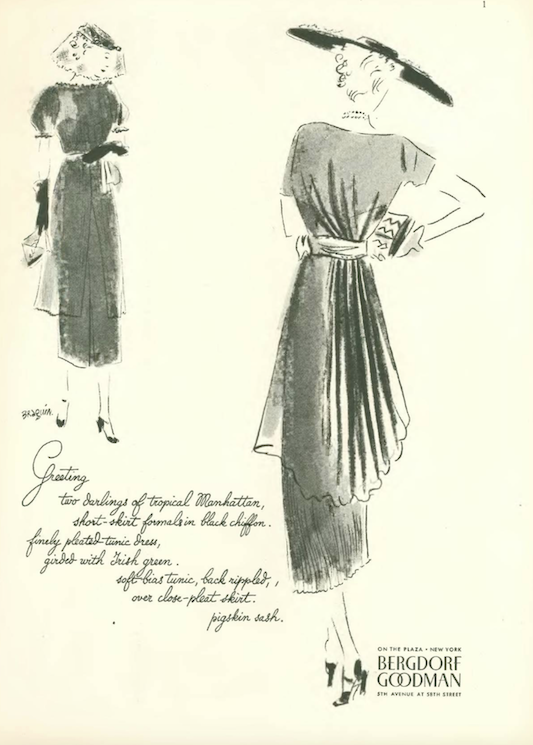
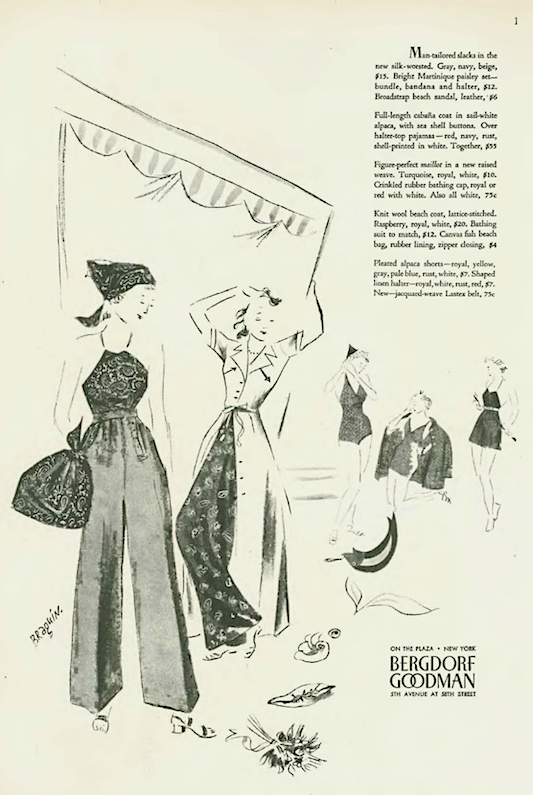
…illustrators with European roots brought modern touches to fashion advertisements…the Ukrainian-born Simeon Braguin (1907–1997), who created the ad below for Bergdorf Goodman, emerged in the 1930s as a prominent fashion illustrator, ultimately becoming the Creative Director for Vogue…during that time (1940s) he supported the work of an unknown artist, Andy Warhol

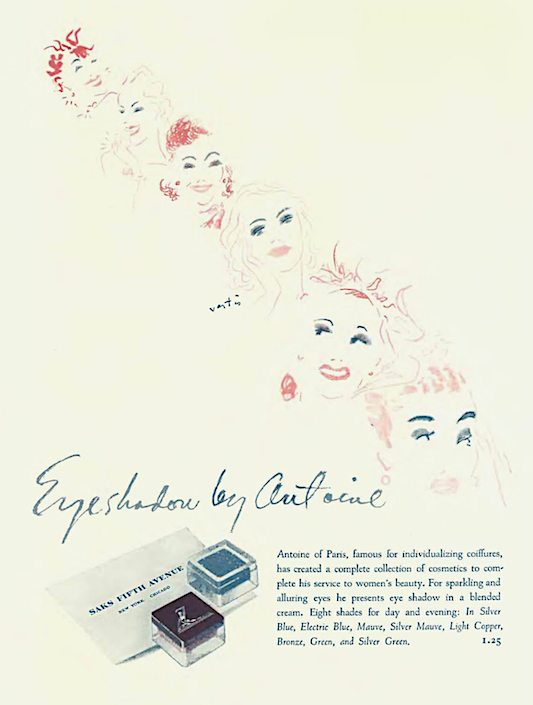
…the artist behind this next fashion illustration was the prominent French-Hungarian costume designer and illustrator Marcel Vertès (1895–1961)…

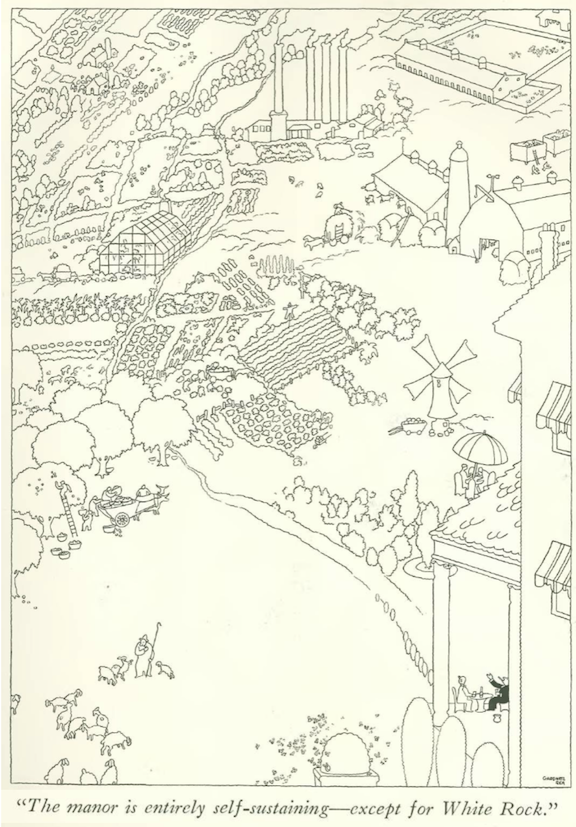
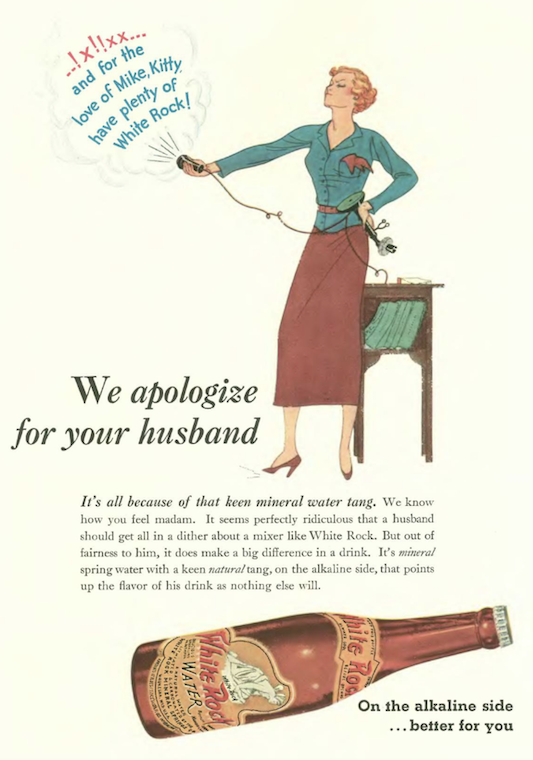
…the prolific illustrator R. John Holmgren (1897- 1963) worked for dozens of publications, and was well known for his White Rock ads in the 1930s and 40s…

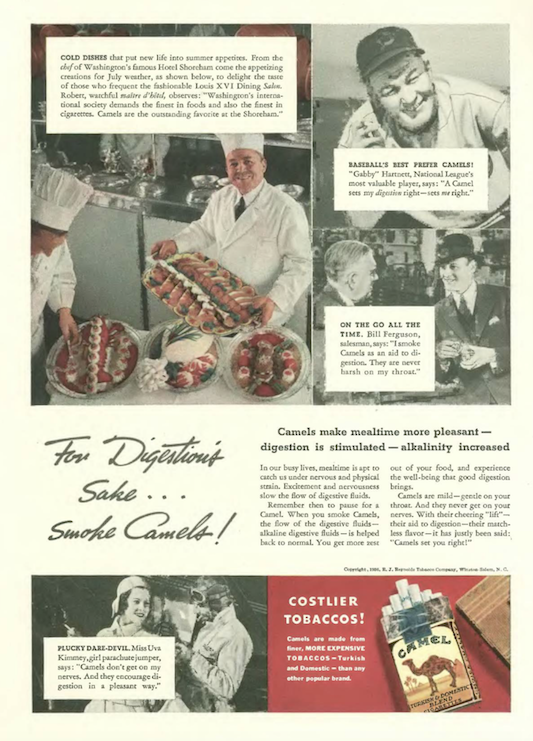
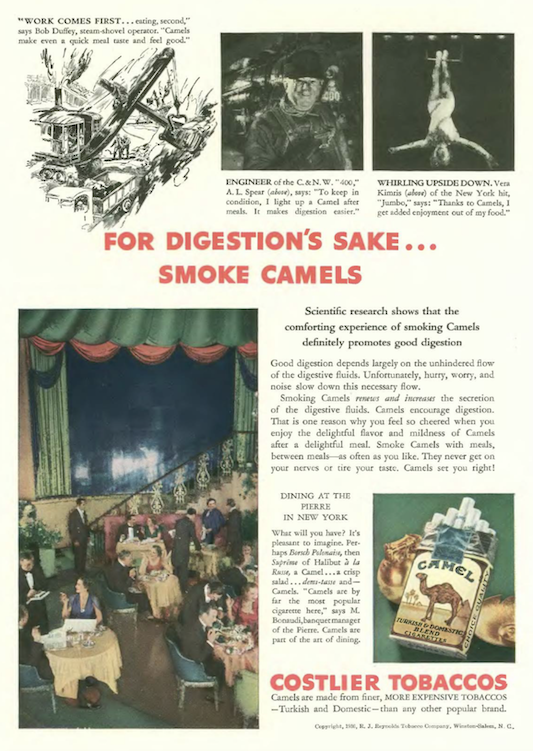
…the folks at R.J. Reynolds were still pushing their digestion claims along with their cigarettes…here they demonstrated the appeal of Camels to both the working class and the classy…

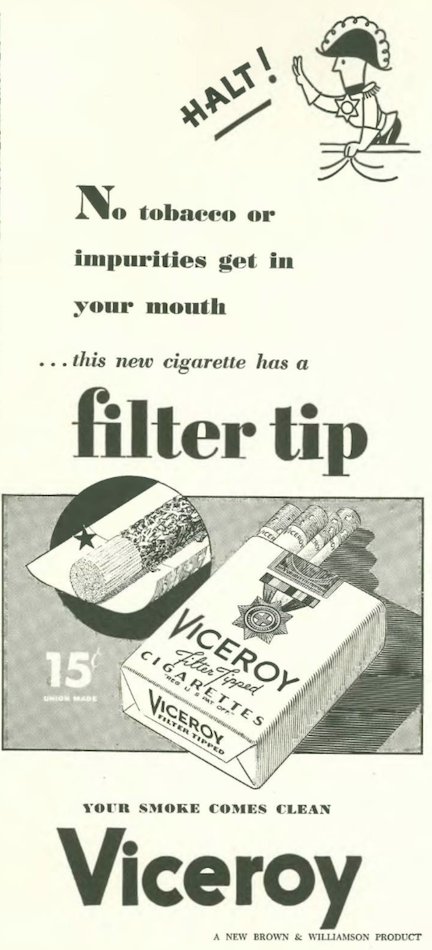
…Brown & Williamson introduced a new cigarette to the market…Viceroy was the first brand to feature a cork-tipped filter…

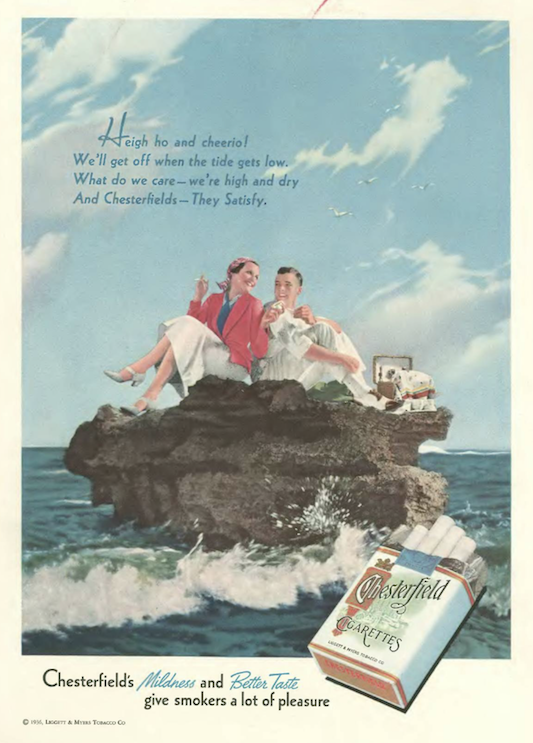
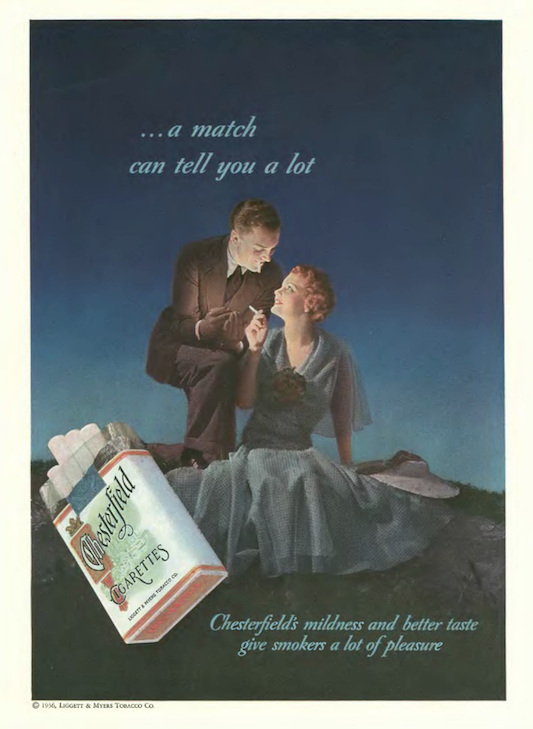
…Liggett & Myers continued to run their somewhat old-fashioned ads with softly lit, romantic settings…illustrator McClelland Barclay (1891–1943) created this look to promote the company’s Chesterfield brand…

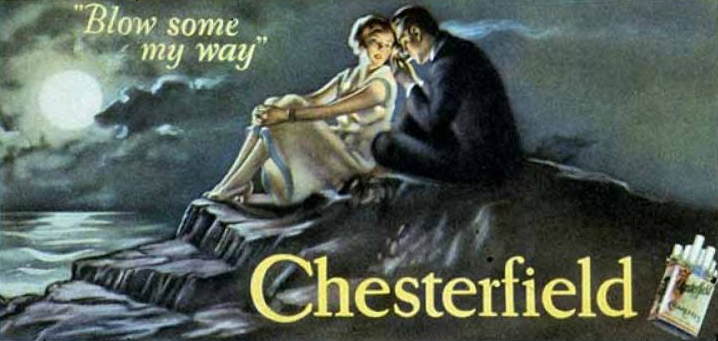
…Barclay’s work recalled similar imagery used in a controversial 1926 ad for Chesterfield that sought to break the taboo placed on women smokers…

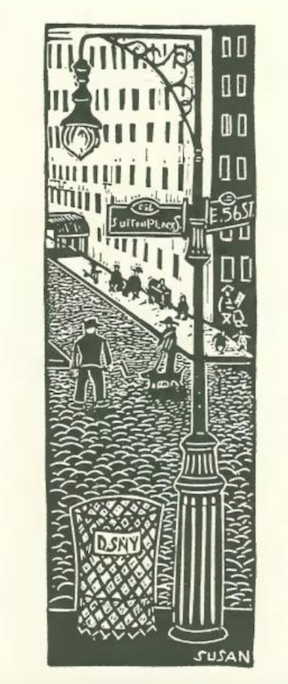
…not so controversial was Susan Willard Flint, who opened the magazine along with…

Otto Soglow

…and Richard Taylor

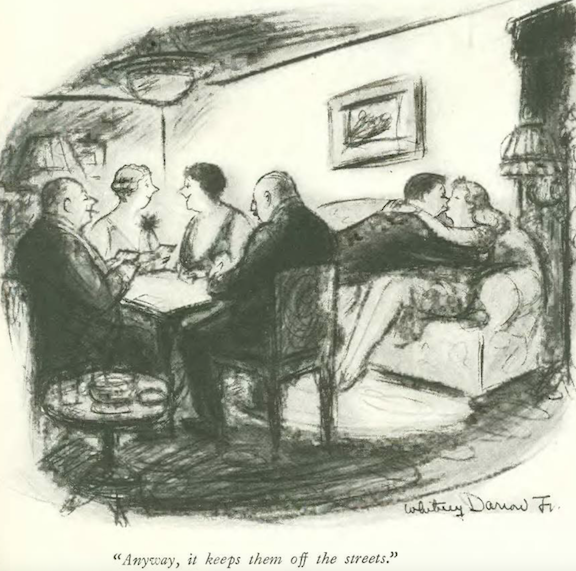
…we turn to the cartoons starting with Whitney Darrow Jr and a canoodling couple…

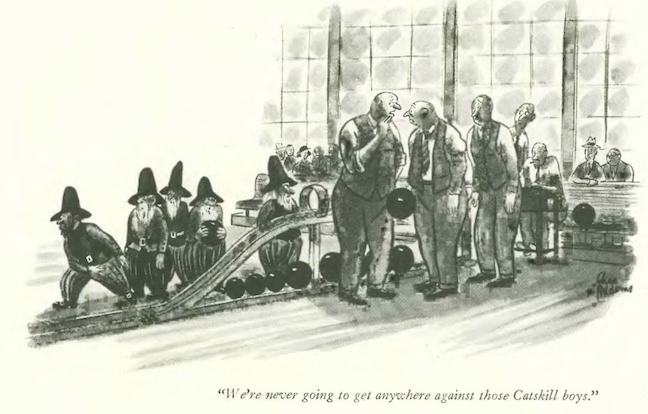
Charles Addams found some formidable bowling opponents…

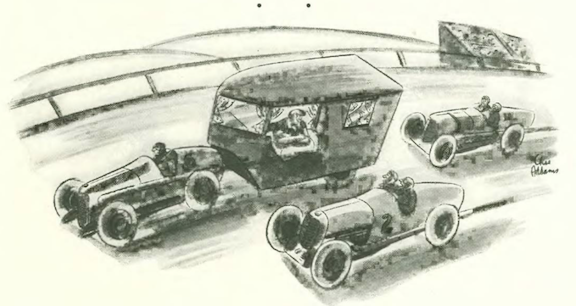
…and Addams again at the races…

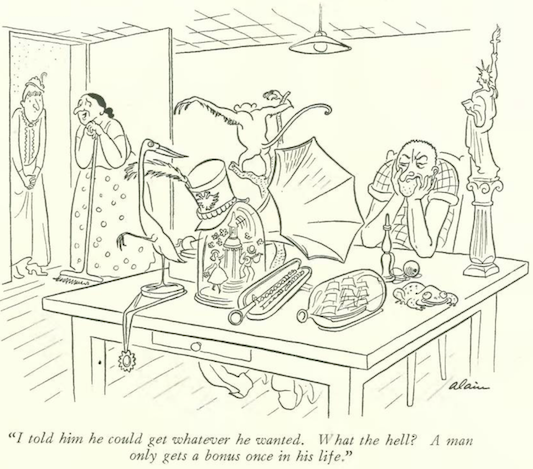
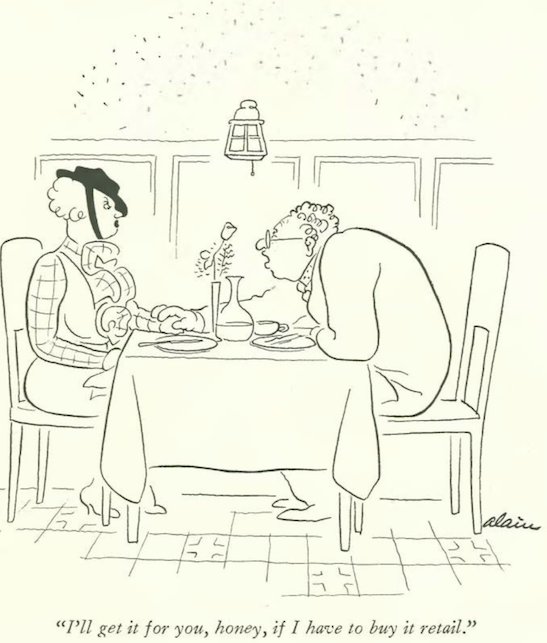
Alain showed us the harder edges of marital bliss…

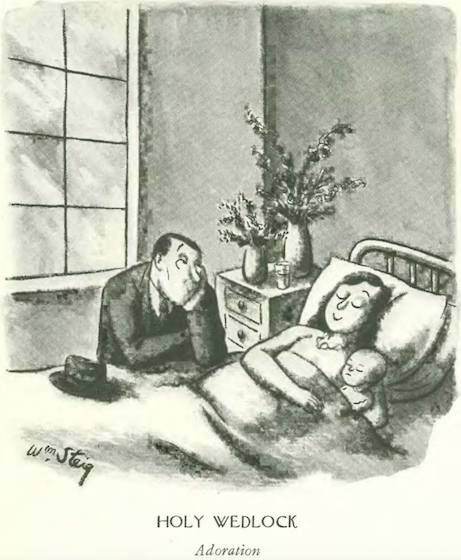
…while William Steig was all sweetness and light…

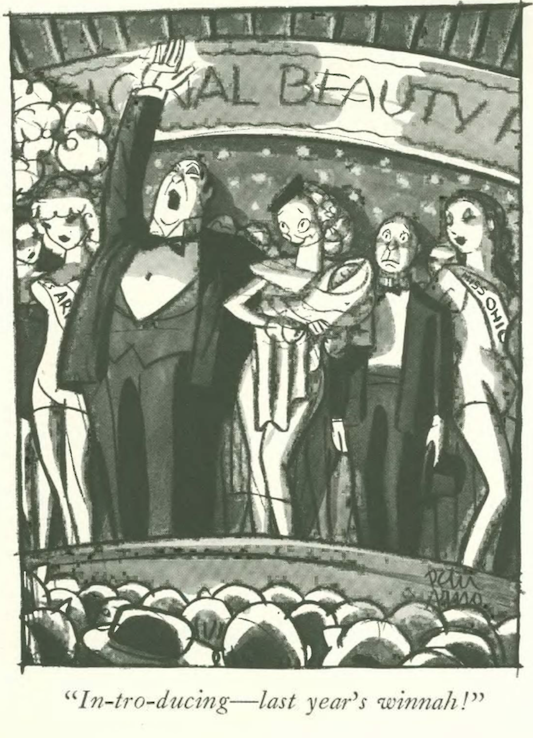
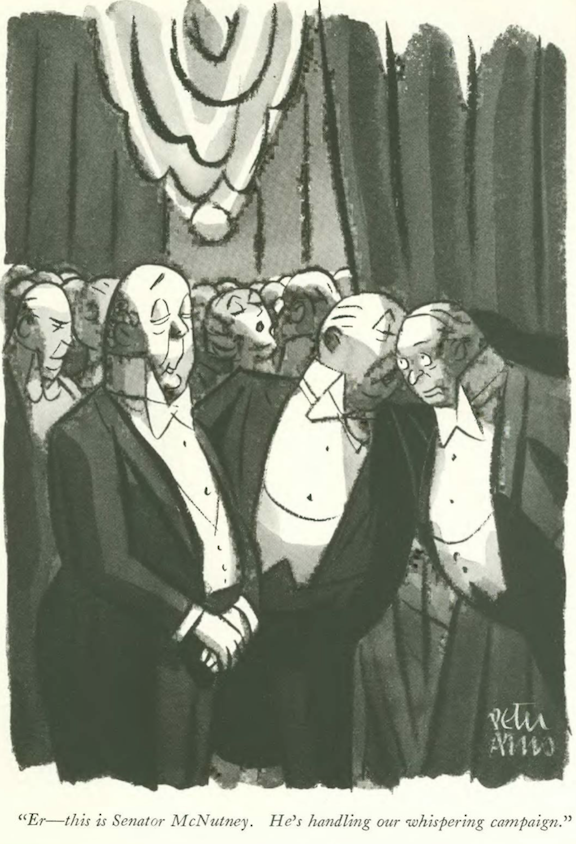
Peter Arno showed us some political intrigue…

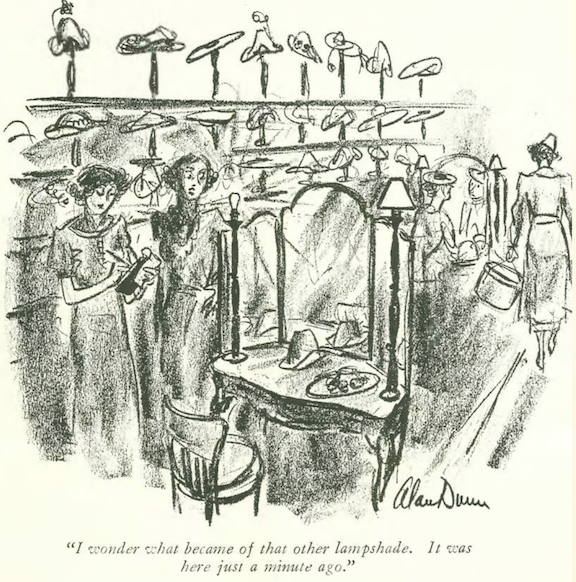
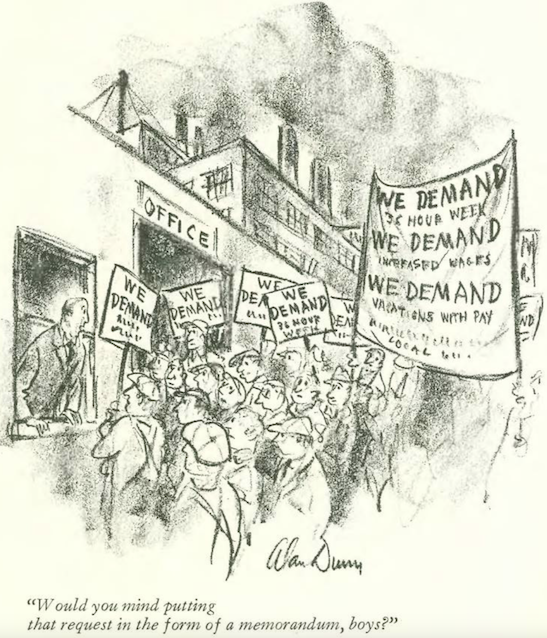
Alan Dunn offered a new twist in hat fashions…

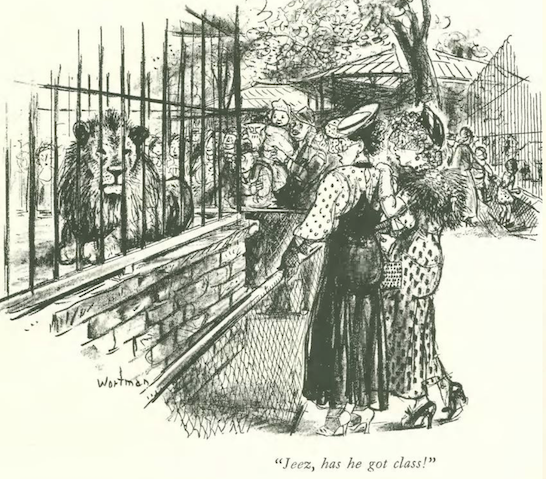
…and we close with Denys Wortman, and a very posh lion…
Next Time: Meet Izzy & Moe…
Vast Horizons

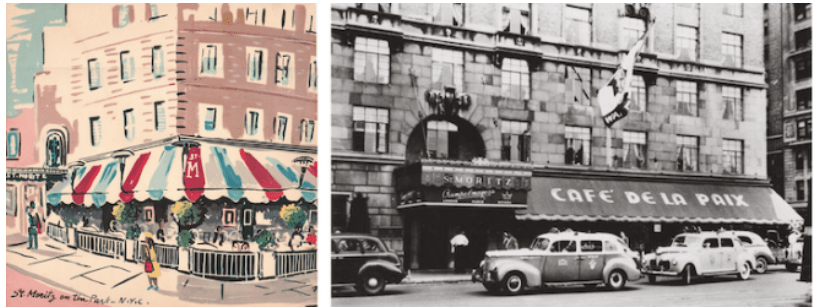
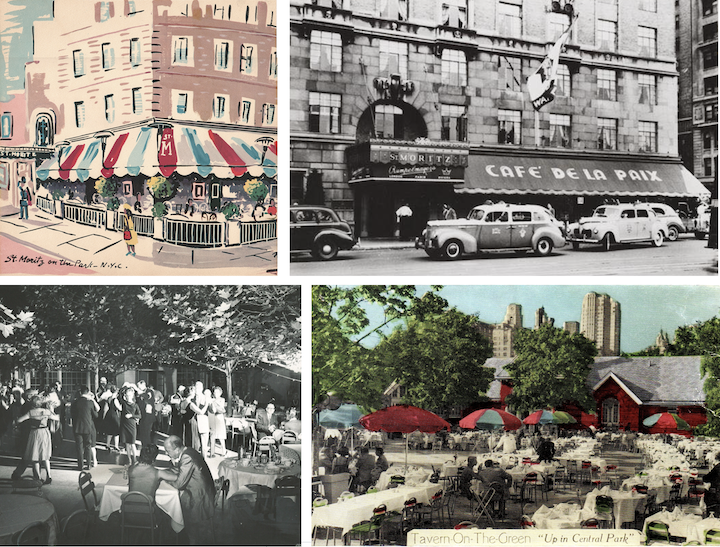
Above: Pierre Lelong painting (circa 1950s) of the outdoor café at New York's Hotel St. Moritz (left); view of the St. Moritz and Café de la Paix, 1944.

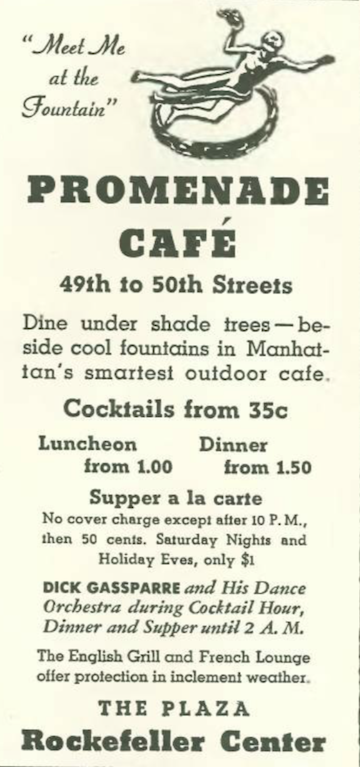
After the repeal of Prohibition in 1933, nightlife in Manhattan slowly picked up steam. By 1936 things were swinging, and although the club scene wasn’t as heady as the Roaring Twenties, there was still plenty to entice New Yorkers into the night air.

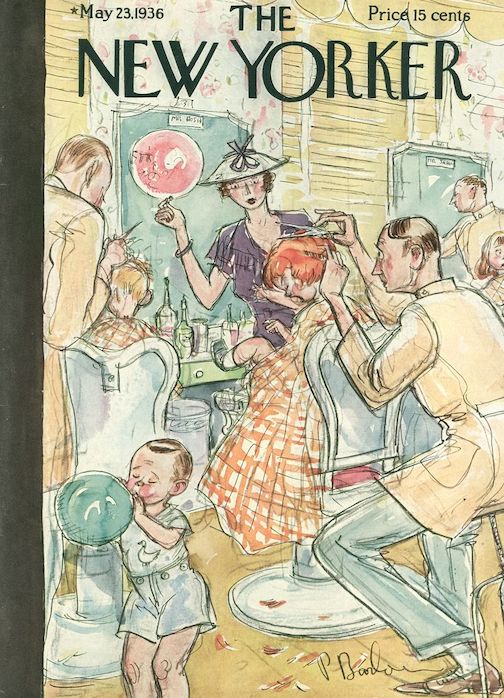
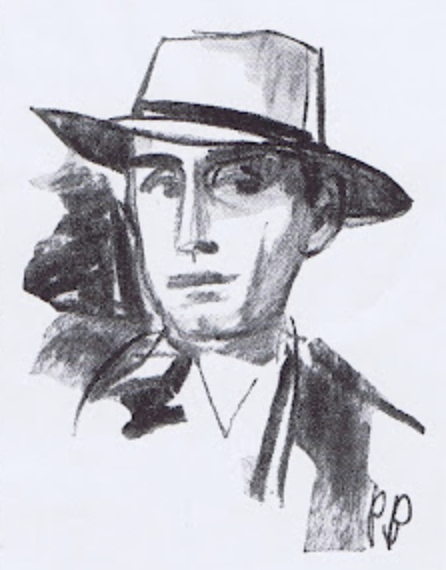
May 23, 1936 cover by Perry Barlow. The Texas-born Barlow (1892–1977) published 135 covers and 1,574 drawings in The New Yorker from 1926 to 1974. According to the late Lee Lorenz, Barlow’s drawings were elegant and deceptively casual, “delineating the absurdities and frustrations of the suburban middle class.” Barlow’s wife, Dorothy Hope Smith (also a successful artist) collaborated with her husband on many of his covers. Lorenz noted that “being partly color-blind, [Barlow] depended on his wife to provide the color for his drawings.”
Before we get to our top story, here is a self portrait of Barlow featured in the April 26, 1941 issue of Colliers (via Mike Lynch Cartoons):

Lee Lorenz described Perry Barlow as a modest man: “Tall, lean, and soft-spoken, he seemed to many of his friends the image of the laconic Texan…(his) drawings remain fresh, and the generous and civilized sensibility behind them is a reminder of a quieter, kinder world.”

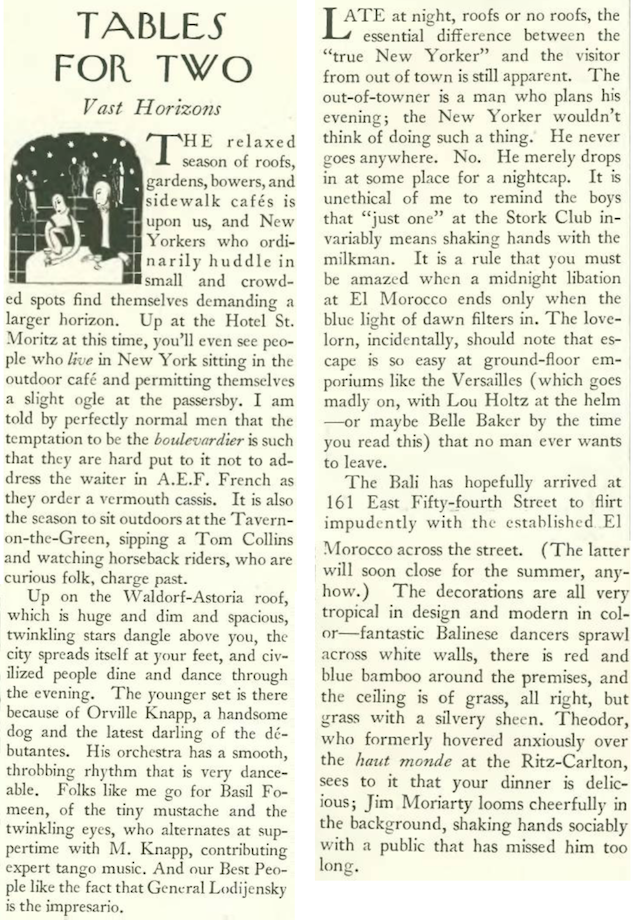
Now let’s enjoy a relaxing evening with the world’s greatest nightlife correspondent, Lois Long, who checked out the latest outdoor drinking and dining options in Manhattan. Excerpts:

AL FRESCO…Clockwise from top left: Whimsical illustration of the outdoor cafe at the Hotel St. Moritz by French Post-Impressionist painter Pierre Lelong, circa 1950s; view of St. Moritz Hotel and Cafe’ de la Paix, 1944 (in 1997 Donald Trump planned to gut the St. Moritz and cover it in glass; fortunately it was sold before that could happen); circa 1940s postcard depicting outdoor dining/dancing area at Tavern on the Green; dancing and drinks at Tavern on the Green, 1963. (scan by author/mcny.org/ephemeralnewyork.com/nytimes.com)
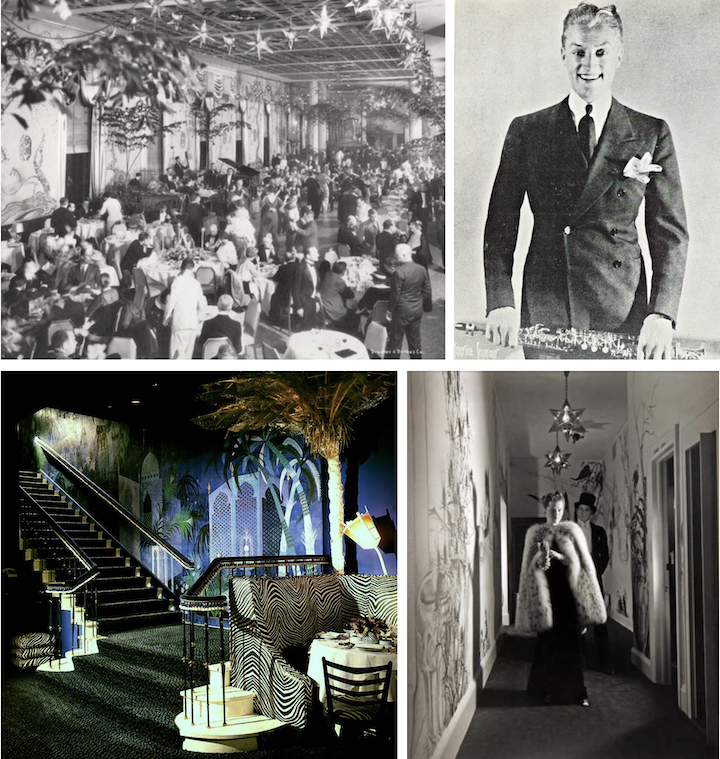
DANCING WITH THE STARS…Clockwise, from top left: The Waldorf’s Starlight Rooftop in the 1930s; Lois Long referred to the Waldorf’s multi-talented bandleader Orville Knapp as a “handsome dog”; actress Mary Taylor makes an entrance at the El Morocco in the 1930s; color image of the El Morocco’s Champagne Room, 1960. (notjustalabel.com/findagrave.com/facebook.com/life.com)

 * * *

Keeping the Flame

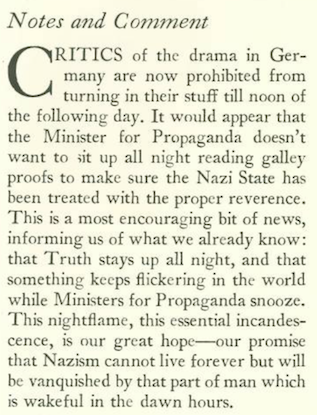
E.B. White began his column with a hopeful message regarding the power of truth in the face of Nazism:

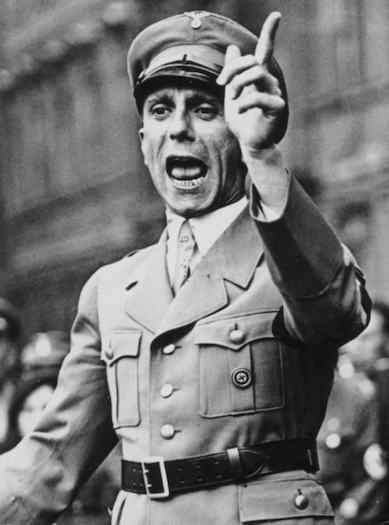
OH SHUT UP…Reich Minister of Propaganda Joseph Goebbels giving a speech in Lustgarten, Berlin, August 1934. (Wikipedia)

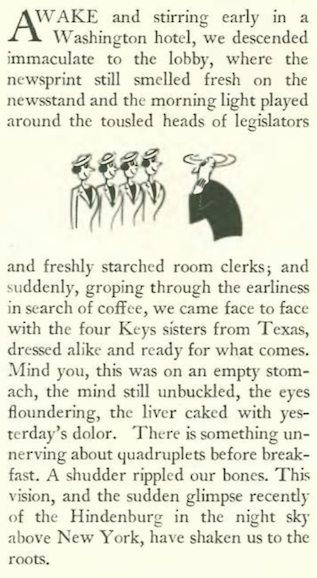
…White also commented on some “unnerving” moments while encountering quadruplets and a Nazi dirigible…

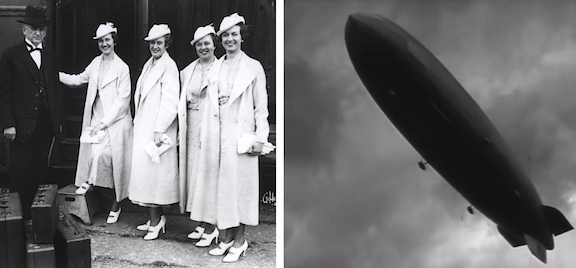
SISTER ACT…At left, the Keys Sisters circa 1936—Leota, Mary, Mona, and Roberta—were a national sensation and America’s most famous set of quadruplets. They were the first quadruplets in history to graduate from college (Baylor 1937), and they traveled thousands of miles on “goodwill tours” to promote Baylor University and the Texas Centennial Exposition of 1936; at right, the Hindenburg looms in the night sky just minutes before it was destroyed while attempting to dock in Lakehurst, N.J.
(baylor.edu/British Pathé)

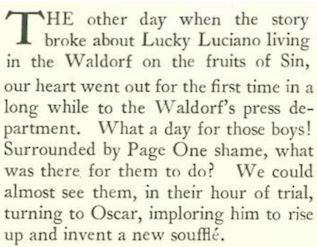
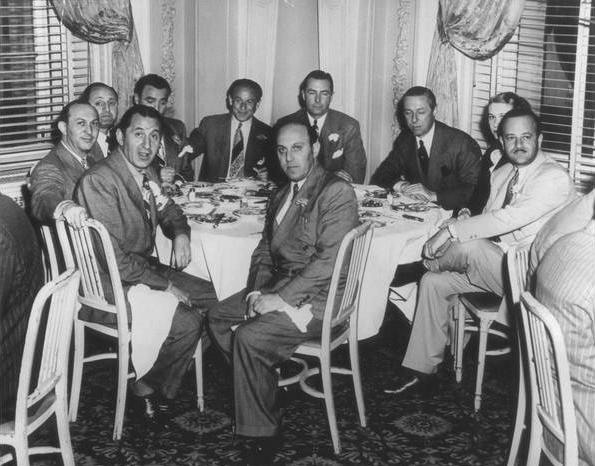
…and one more from White, here musing about Lucky Luciano’s residence at the Waldorf (Penthouse 39C, where Luciano was registered as “Charles Ross”)…

WALDORF ROUND TABLE…Lucky Luciano (back, center) with associates at the Waldorf-Astoria, circa 1936. Luciano regularly entertained prominent mobsters like Meyer Lansky and Frank Costello at the hotel. (dc.lib.jjay.cuny.edu)

 * * *

Headline Acts

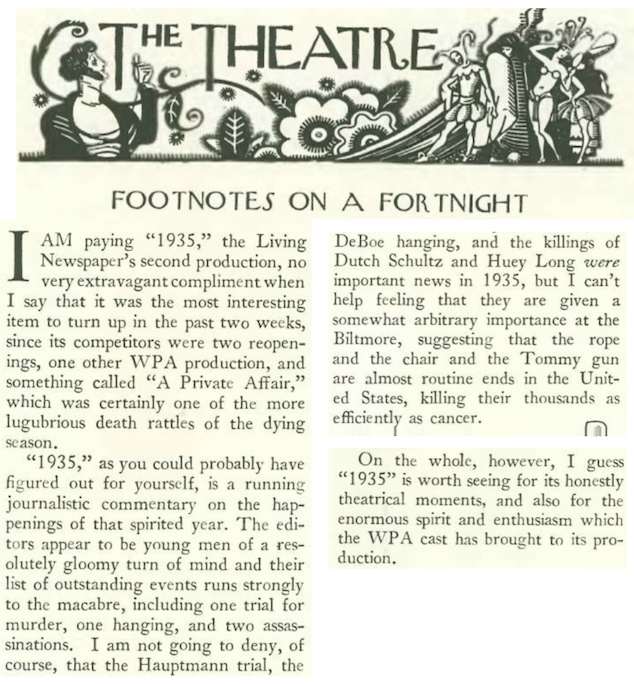
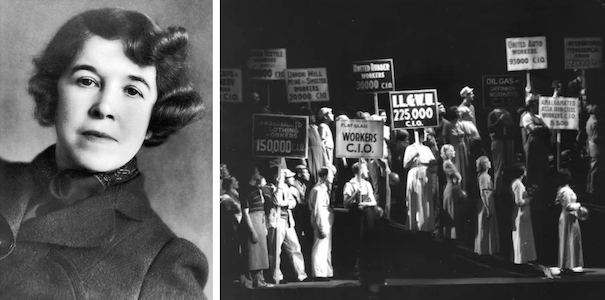
From 1935 to 1939, the WPA’s Federal Theatre Project gave work to more than 12,000 unemployed actors, directors, writers, designers, stagehands, and seamstresses while staging more than 1,200 productions across twenty-nine states. Although Wolcott Gibbs wasn’t too impressed with the project’s “Living Newspaper” performance, he deemed it worth seeing as the best thing on stage in the waning days of the theater season.

TOO SUCCESSFUL…As the director of the WPA’s Federal Theatre Project from 1935 to 1939, Hallie Flanagan (left) oversaw the hiring of thousands of unemployed theater workers and the production of nearly 64,000 theatrical performances. At right, a scene from a “Living Newspaper” performance in the 1930s. Despite its enormous success, the project was abruptly shut down by Congress on June 30, 1939, due to its progressive social commentary. (nara.gov/loc.gov)

 * * *

At the Movies

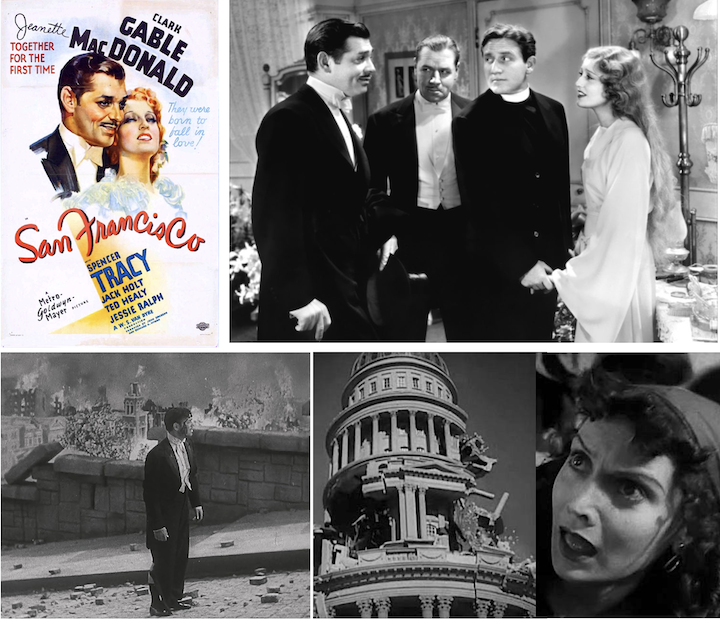
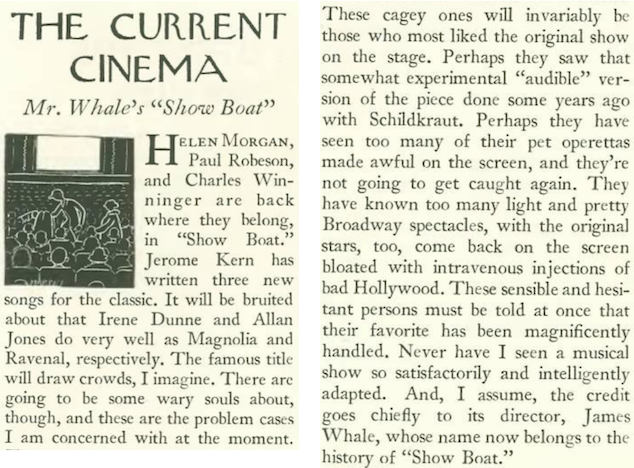
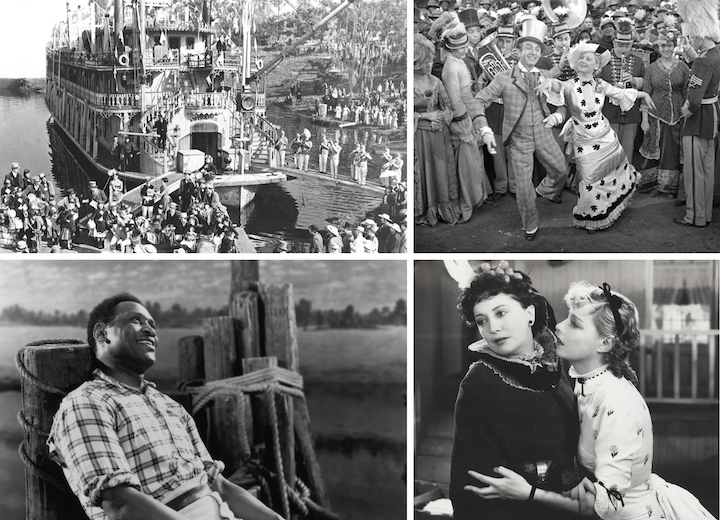
The romantic musical Showboat was a big hit with Broadway audiences after it premiered in 1927, but the play’s first film adaptation in 1929 fell flat; it was shot as a silent and then partially re-shot to incorporate sound dialogue and singing. Film critic John Mosher referred to that version as something “made awful on the screen,” and wanted his readers to know that the new 1936 adaptation had been “magnificently handled” by director James Whale (perhaps best remembered for 1931’s Frankenstein).

THE OLD MAN…Clockwise, from top left: the show boat Cotton Palace sets out on the Mississippi River to much fanfare in 1936’s Show Boat; Jeanette Dickson and  Jimmy Jackson kick up their heels before the boat departs; Irene Dunne (right) and Helen Morgan in a dramatic scene; Paul Robeson performing his iconic rendition of “Ol’ Man River.” (collider.com/criterion.com/nystagereview.com)

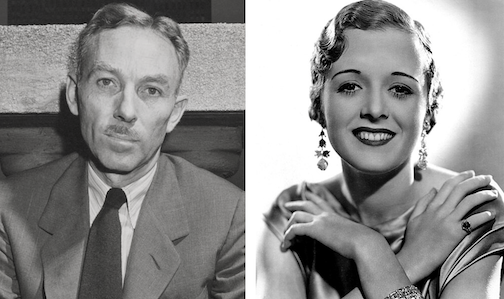
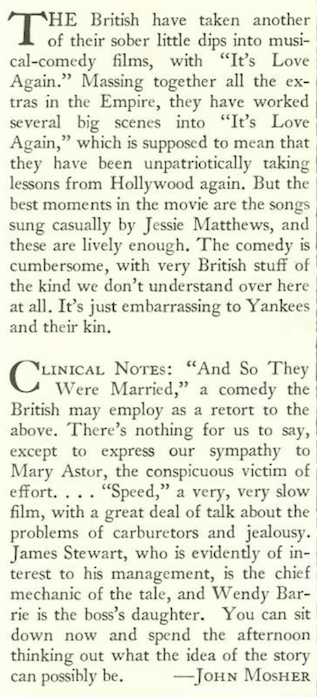
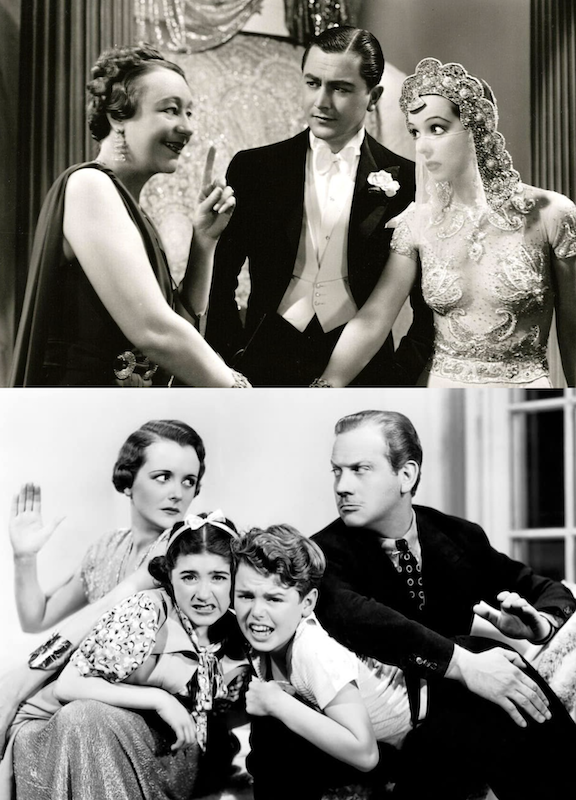
Mosher also reviewed the musical It’s Love Again, finding the comedy “cumbersome,” filled with “very British stuff of the kind we don’t understand over here at all.” He also had little to say about And So They Were Married, expressing sympathy to actress Mary Astor as “the conspicuous victim of effort…”

NOT PLAYING DOCTOR…Folks of certain age will recognize Robert Young from the 1970s TV series Marcus Welby, M.D. Prior to that he appeared in more than one hundred films. Top photo, Athene Seyler, Robert Young, and Jessie Matthews in It’s Love Again; Below, Mary Astor and Melvyn Douglas with child actors Edith Fellows and Jackie Moran in And So They Were Married. (imdb.com)

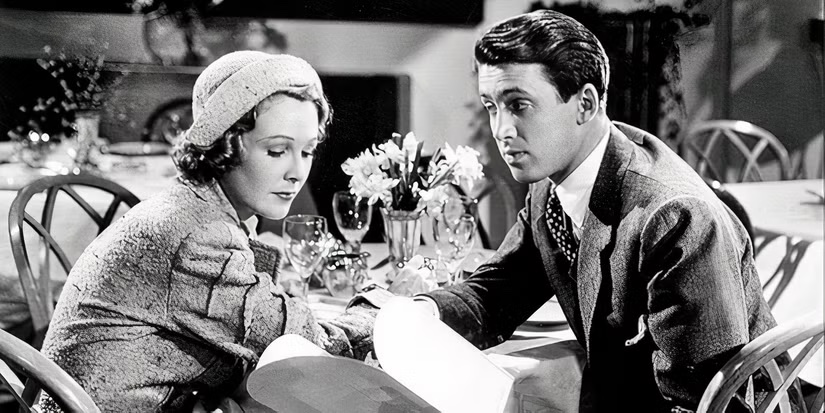
And then there was Speed, Jimmy Stewart’s first leading role. Mosher couldn’t make sense of it, but the film did launch Stewart into bigger roles.

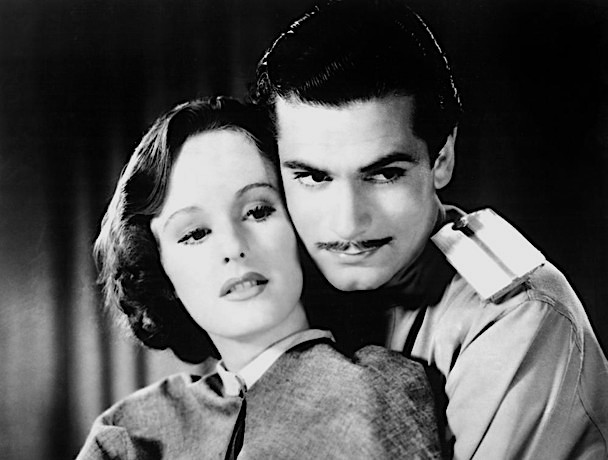
OUT OF GAS…Jimmy Stewart as race car driver Terry Martin in Speed. Wendy Barrie played the love interest Jane Mitchell, who was secretly the heiress Jane Emery. The film received tepid reviews, but it helped launch Stewart to stardom. (collider.com)

* * *

From Our Advertisers

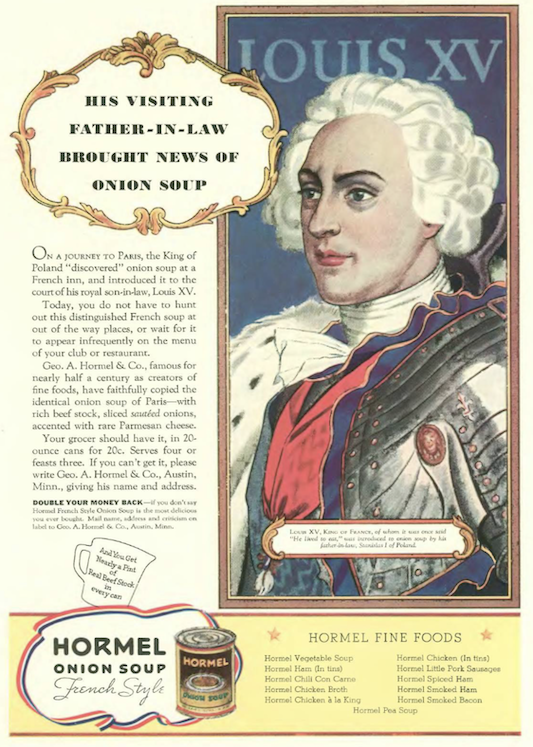
The folks at Hormel were back on the inside front cover with another tale from the annals of onion soup…

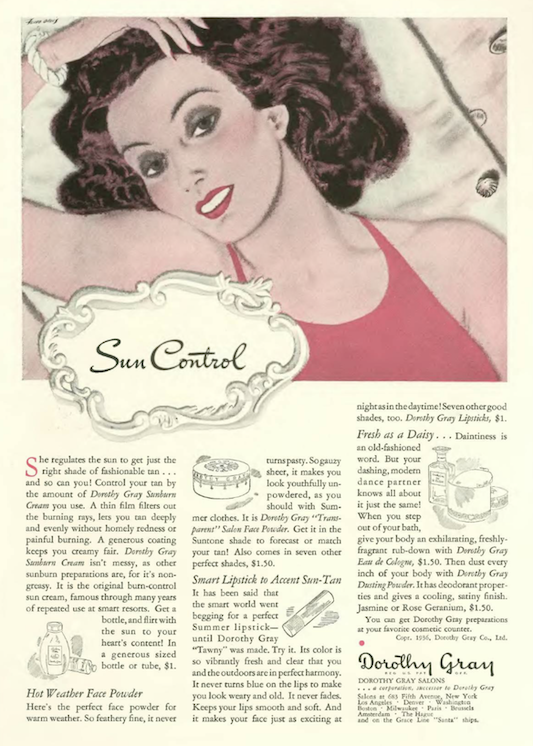
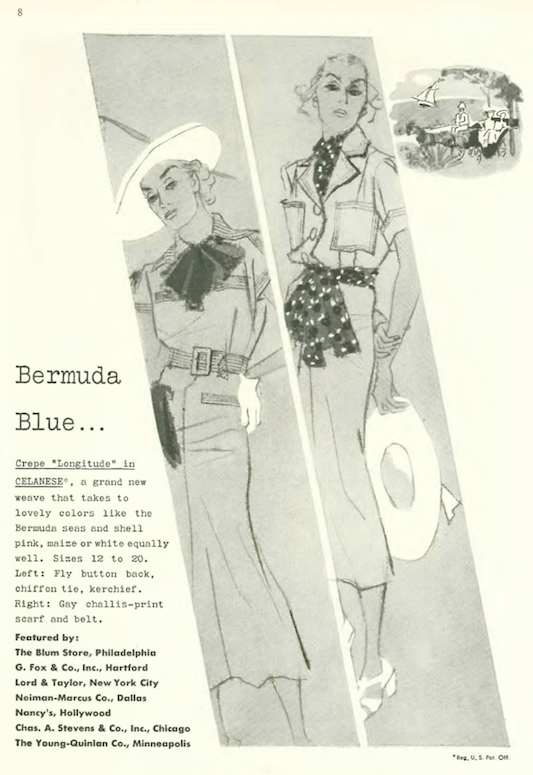
…and summer fashions once again dominated the opening pages of the magazine…

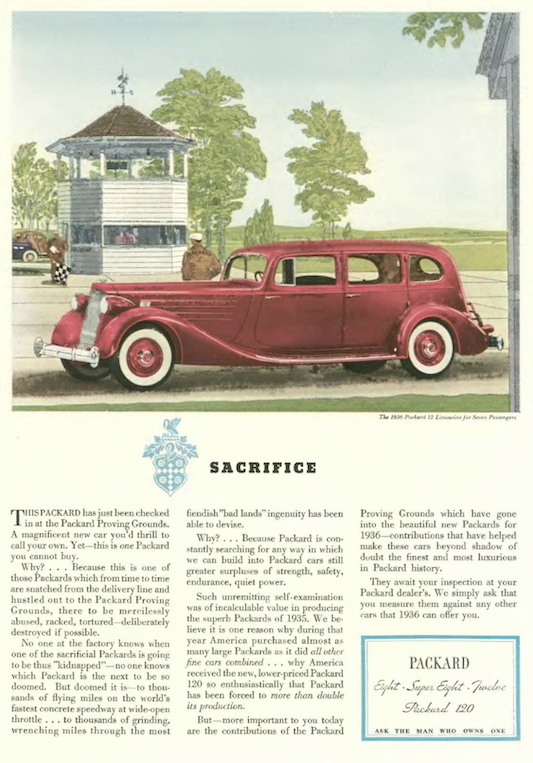
…Packard answered Cadillac’s pastoral ads with one of its own…

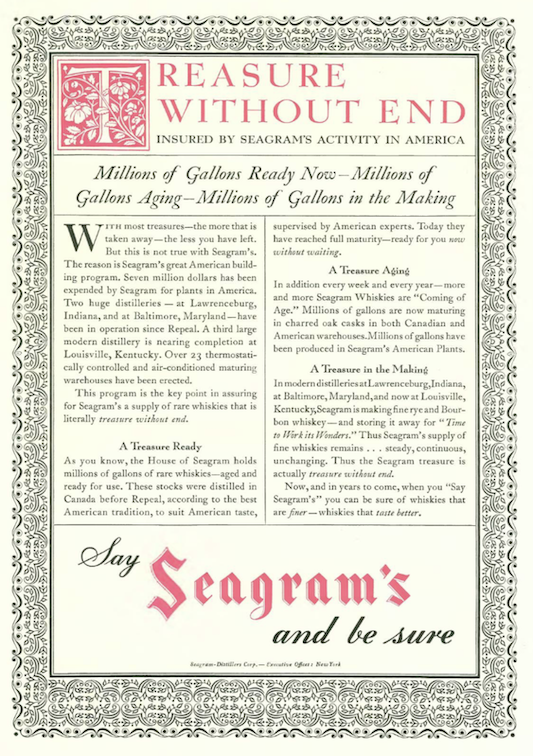
…while the distillers at Seagram’s wanted to reassure thirsty Americans that there was plenty of the hard stuff to go around…

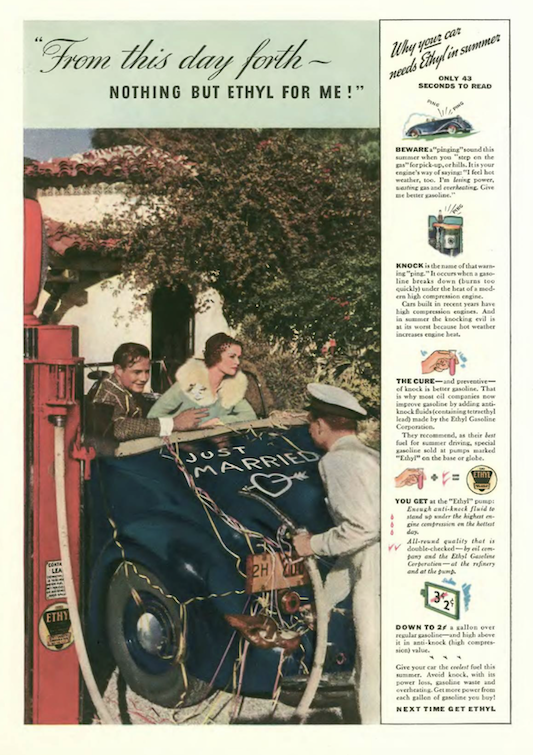
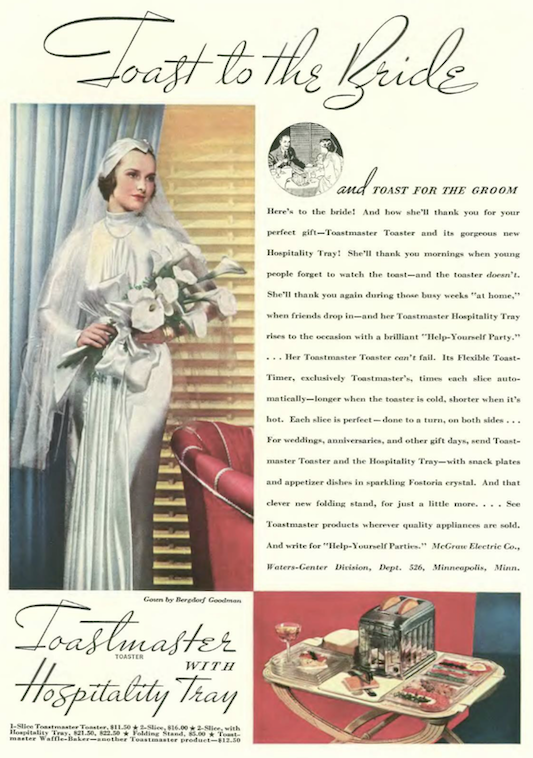
…anticipating the season of the June bride, this ad helpfully suggested the Toastmaster toaster (and accessories) as the ideal gift for the newlywed…

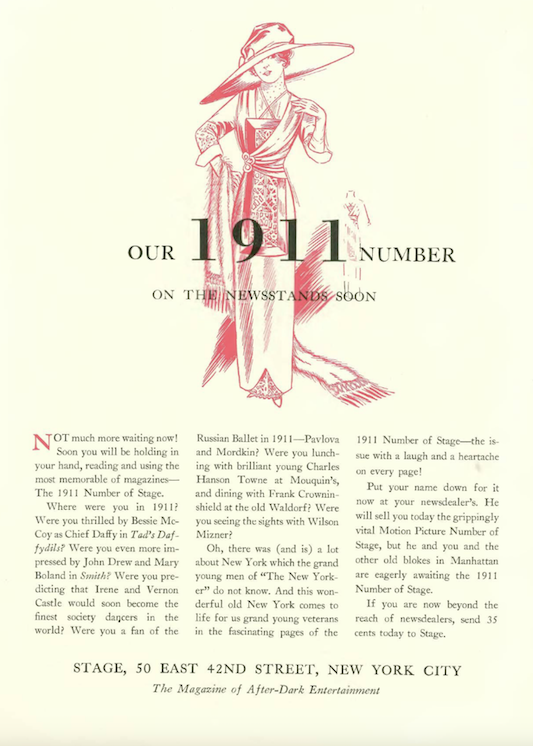
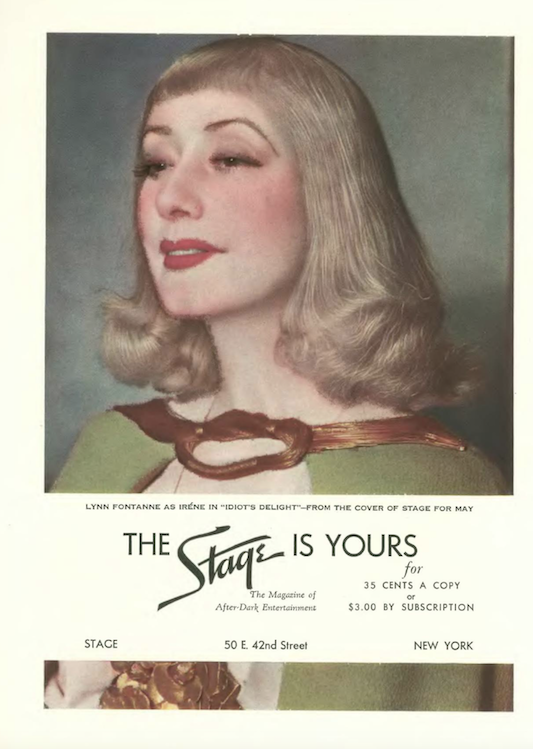
…this ad for Stage magazine featured actress Lynn Fontanne as the mysterious countess Iréne in Idiot’s Delight

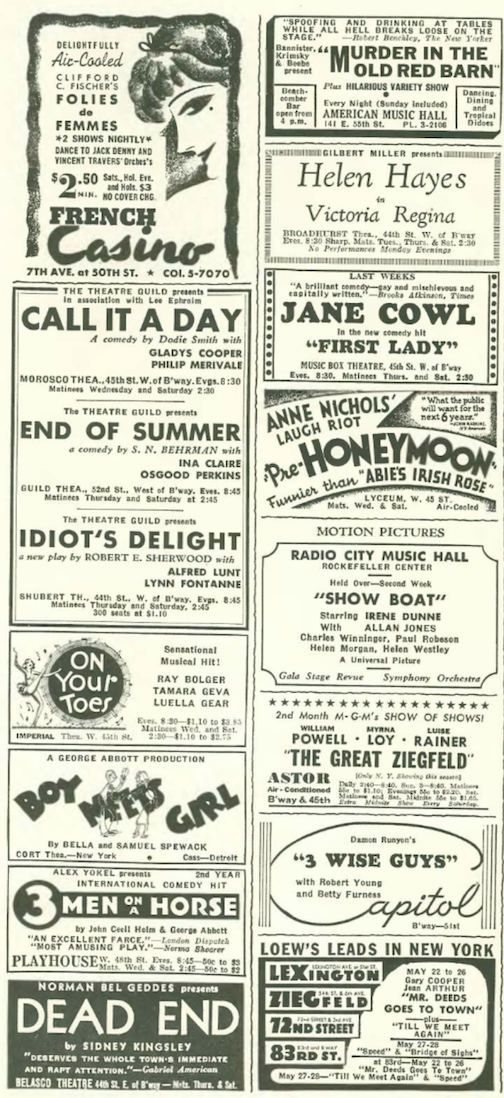
…Fontanne’s play, along with several other stage and screen diversions, were advertised in the back of the book…

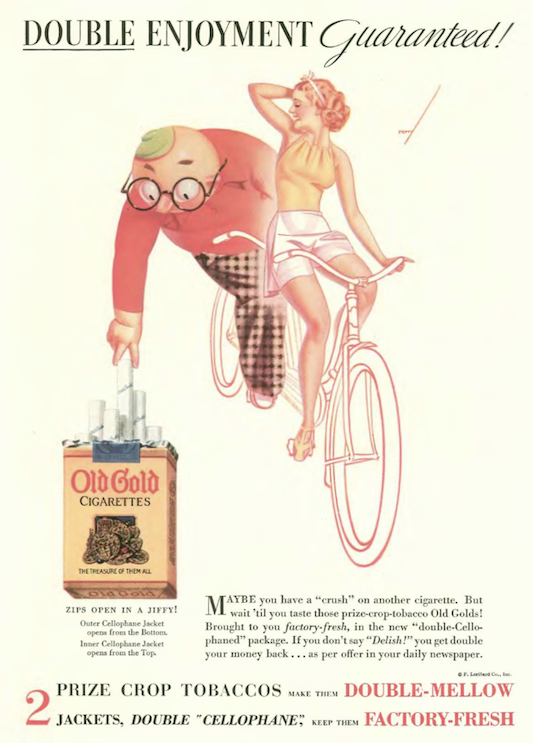
…pin-up artist George Petty drew up another odd couple for Old Gold cigarettes…

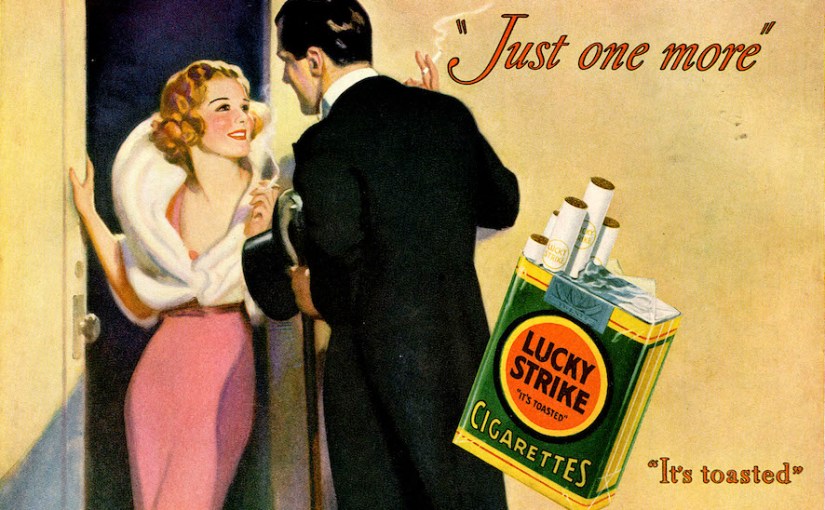
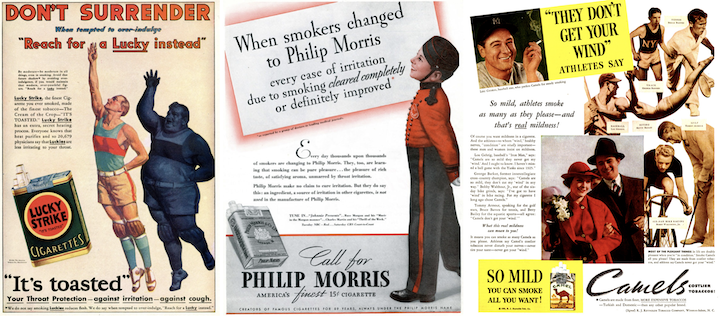
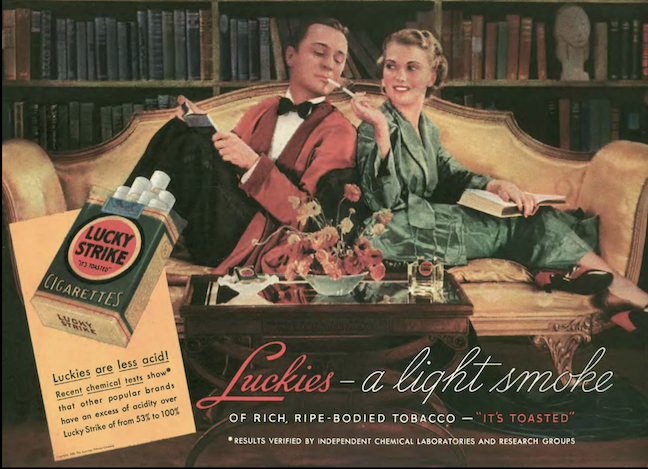
…While the makers of Lucky Strike cigarettes gave their smokes a homey appeal…

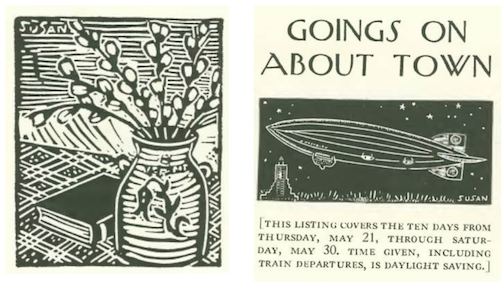
…on to our illustrators and cartoonists, we have spot art from Susan Willard Flint

…and Christina Malman

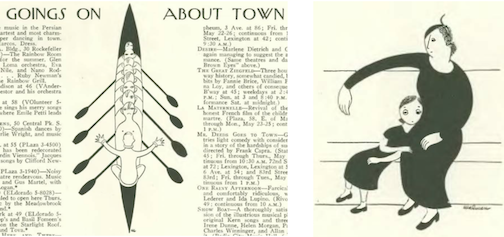
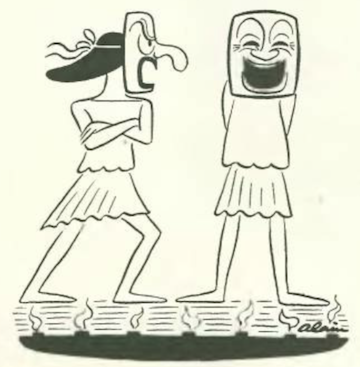
…and Daniel ‘Alain’ Brustlein (for the “Theatre” section)…

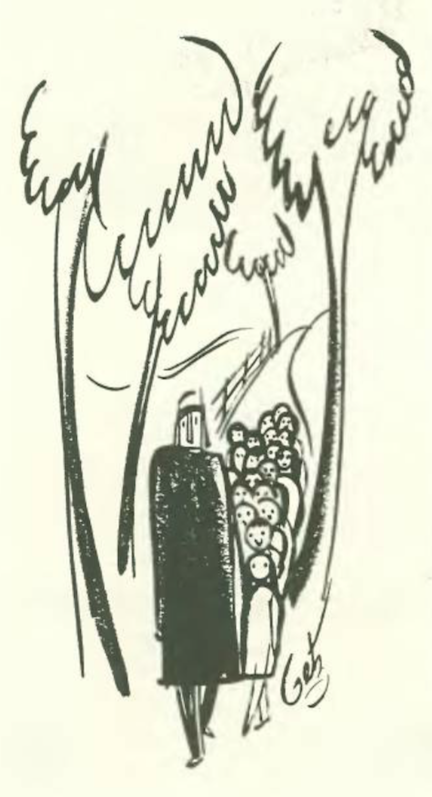
…this next bit of spot art has me confused…the signature appears to belong to Arthur Getz, yet the image suggests an early drawing by Ludwig Bemelmans…Getz and Bemelmans were contemporaries at the New Yorker, and both were prolific spot art contributors…

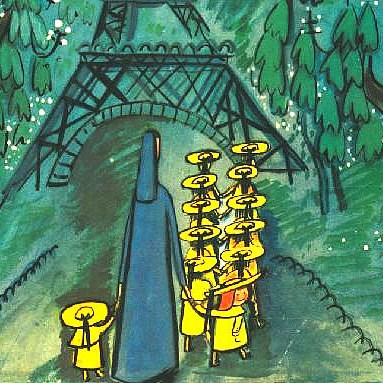
…the drawing seems to anticipate Bemelmans’ 1939 children’s book Madeline

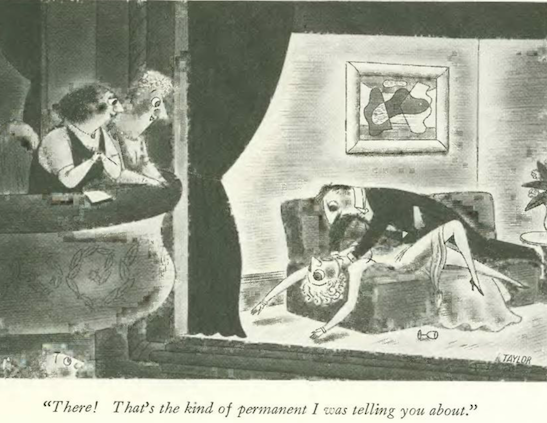
Richard Taylor found inspiration on the Broadway stage…

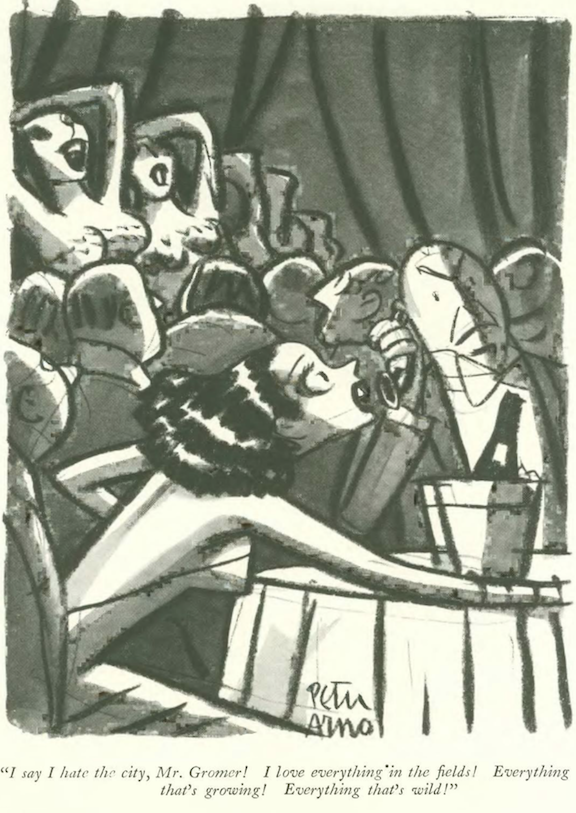
Peter Arno showed us a sugar daddy receiving an earful (via ear trumpet)…

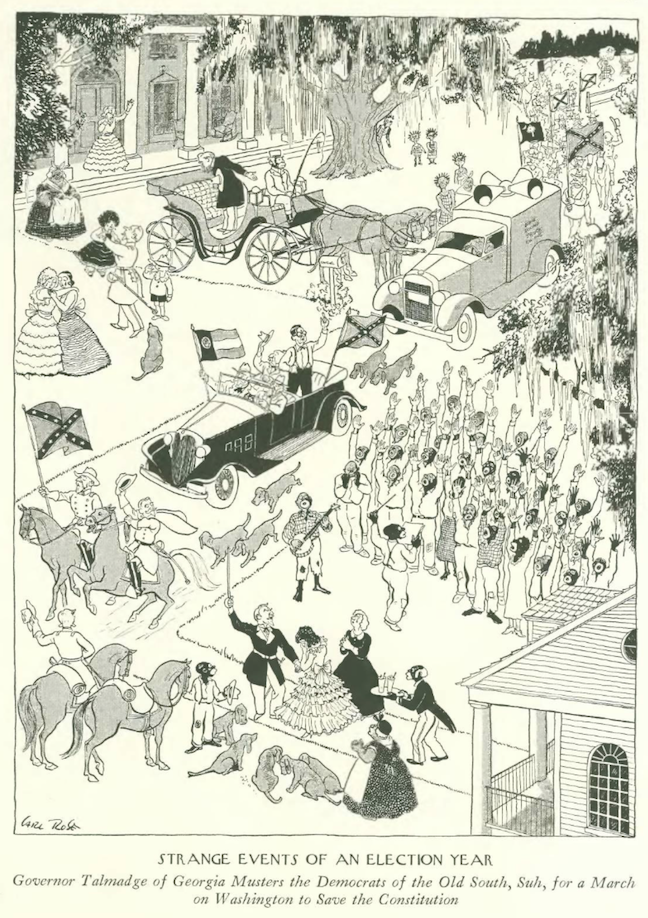
Carl Rose offered some Southern-style electioneering in this lively illustration…

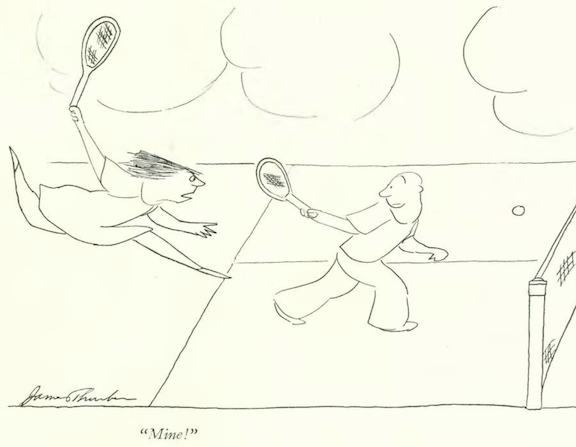
…by contrast, James Thurber’s spare lines told us everything we needed to know about this couple…

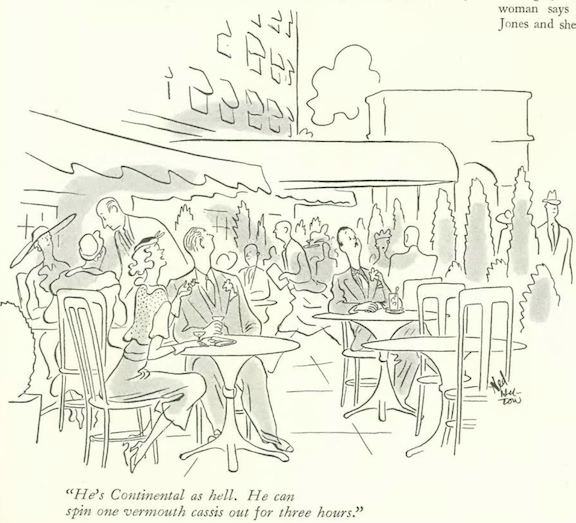
Ned Hilton spotted an outlier at an outdoor café...

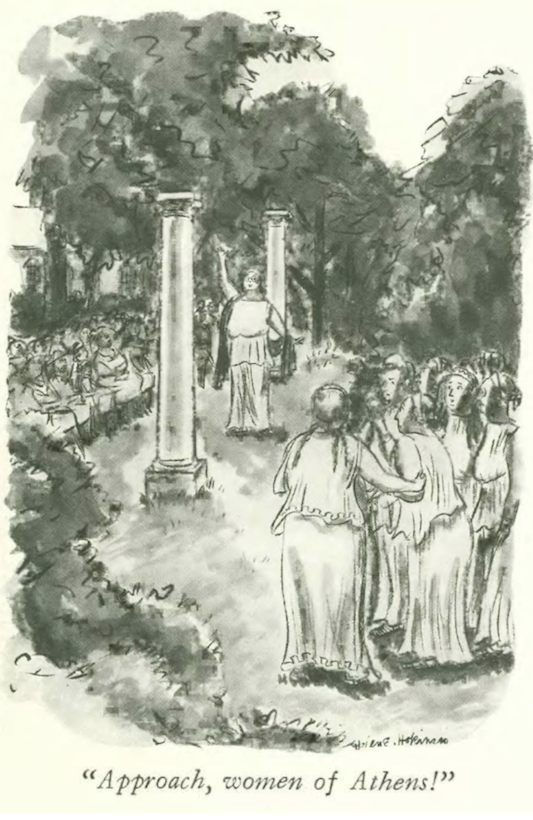
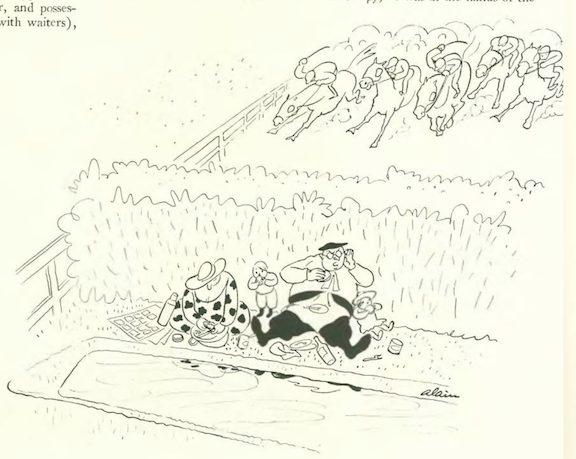
Alain again, here anticipating a big surprise…

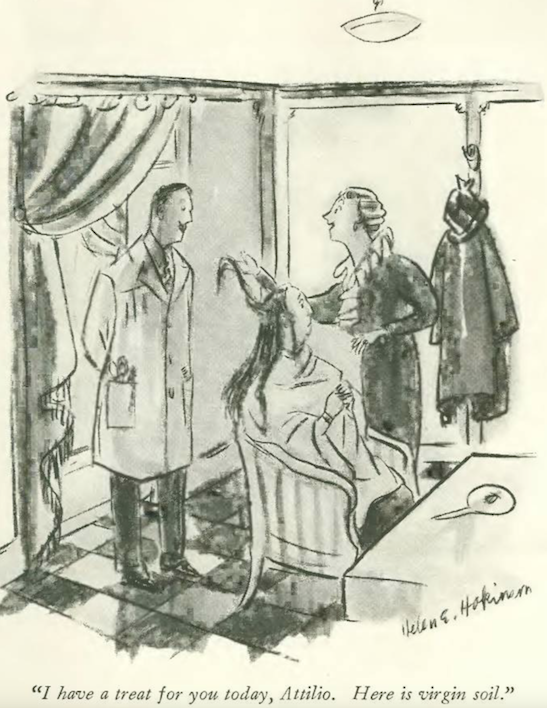
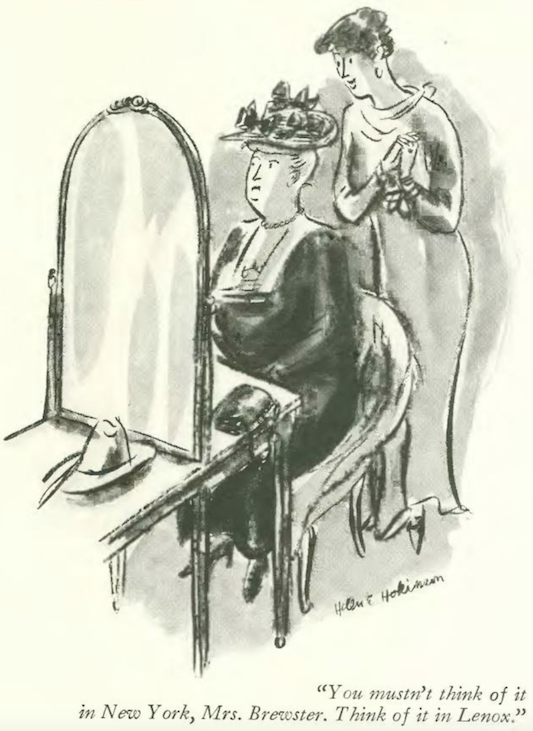
Helen Hokinson offered a helpful fashion tip…

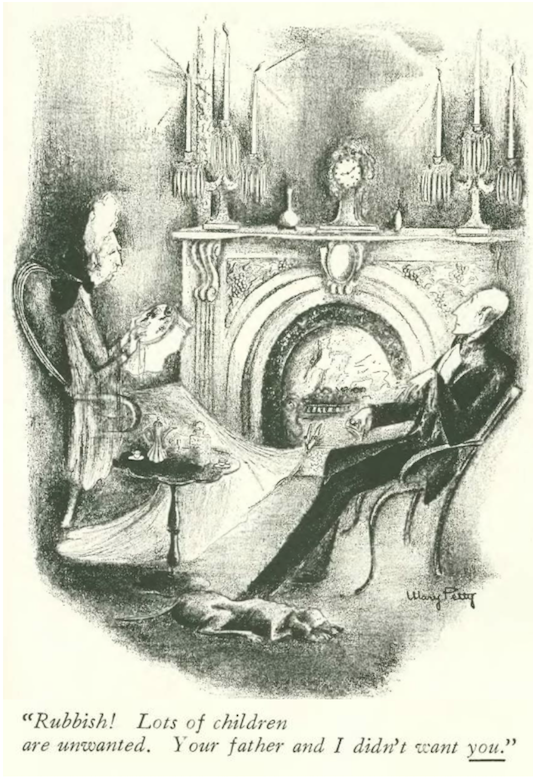
…and we close with Mary Petty, and a motherly retort…

Next Time: Queen of the Seas…