A Flivver Farewell

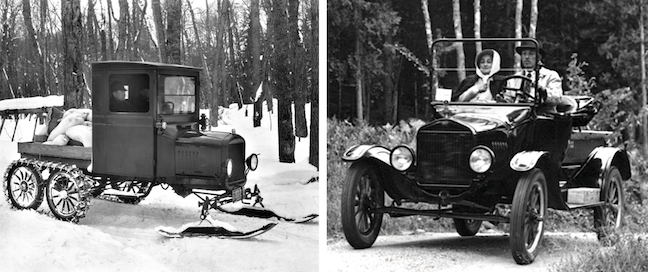
Above: Undated image (left) demonstrates the versatility of the Model T Ford. At right, E.B. White and Katharine Sergeant White take a spin in a Model T Roadster. (freep.com/whistlestoppers.com)

E.B. White often shared anachronistic views on progress, decrying everything from streamlined cars to fully-enclosed city buses that removed passengers from the open air.
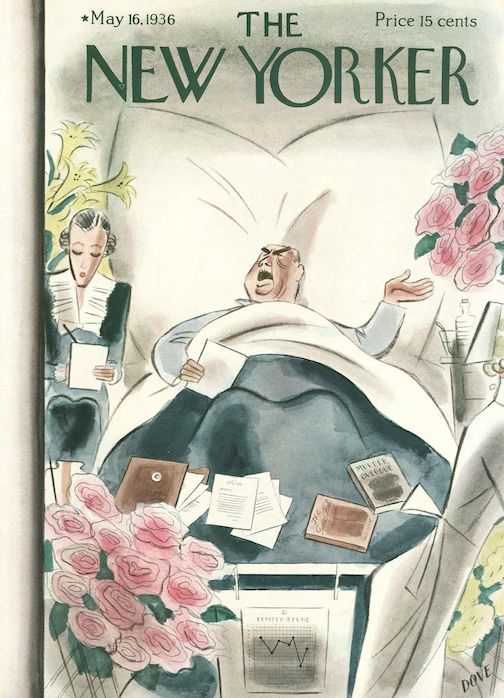
May 16, 2026 cover by Leonard Dove. Note the star next to the date. On older New Yorker magazine covers, the star was a printer’s mark indicating a split run or a specific newsstand edition.

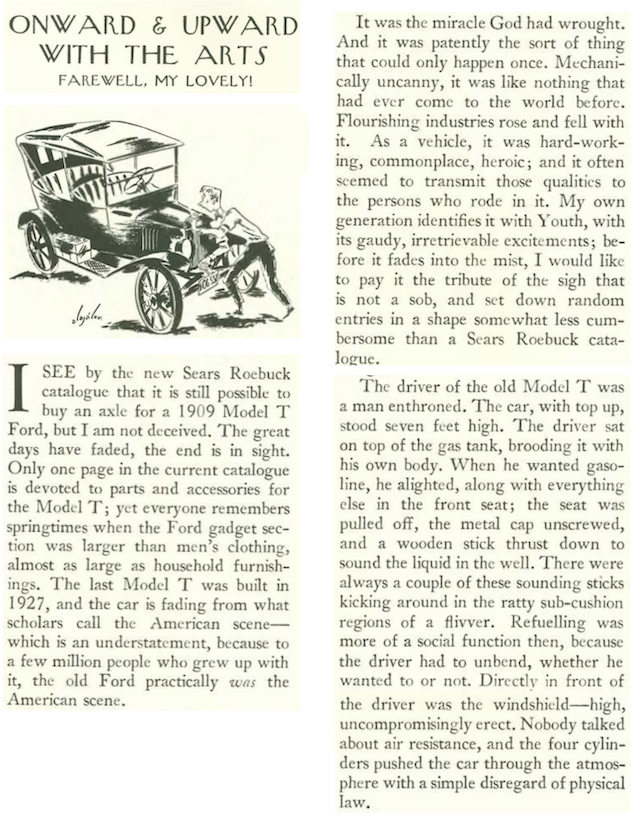
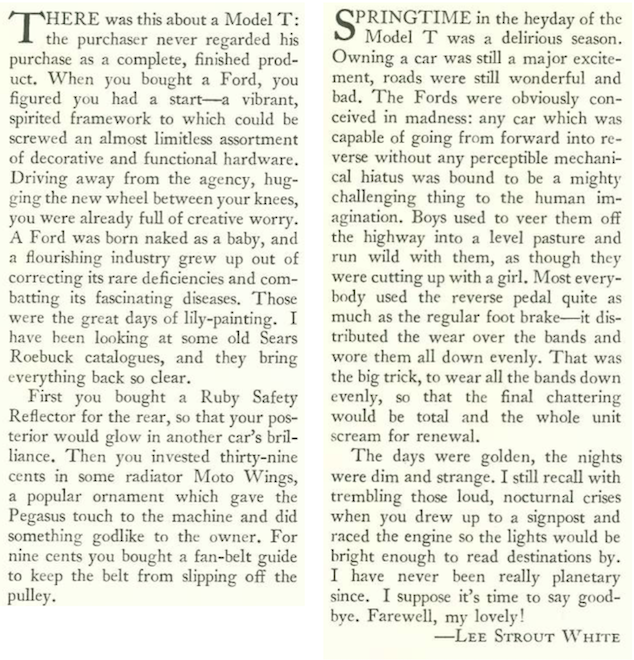
Instead, White celebrated the simplicity and mechanical quirks of earlier motor vehicles, including his beloved Ford Model T. For the May 16 issue White collaborated with journalist Richard Lee Strout on a homage to the old motorcar, “Farewell, My Lovely!” Strout’s contribution is important here, since it was he who originally submitted a manuscript to editor Harold Ross about the Model T. Either White rewrote Strout’s submission or used it as inspiration for “Farewell, My Lovely!” At any rate, that explains the blended byline, “Lee Strout White.” Here are some excerpts (spot art by Constantin Alajalov):
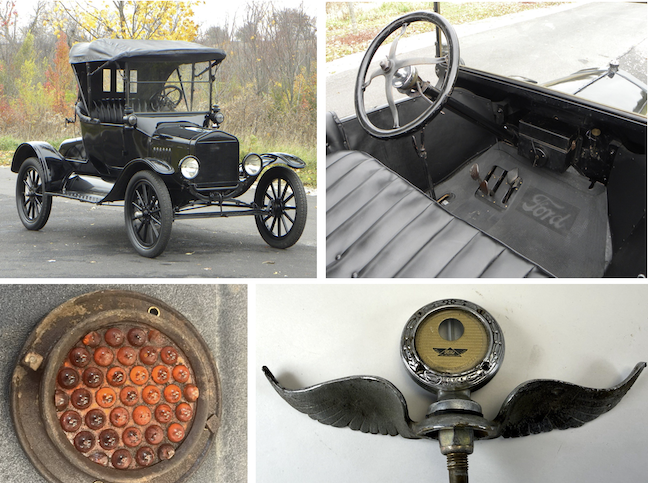
MIX AND MATCH…E.B. White’s famous Model T was a 1917 Roadster like the one pictured at top left. He purchased the car shortly after college and famously drove it across the country in 1922; at top right, the dash featured the ignition key and nothing else, however you could add such extras as radiator “Moto Wings” or a Ruby Safety Reflector. (volocars.com/ebay.com)
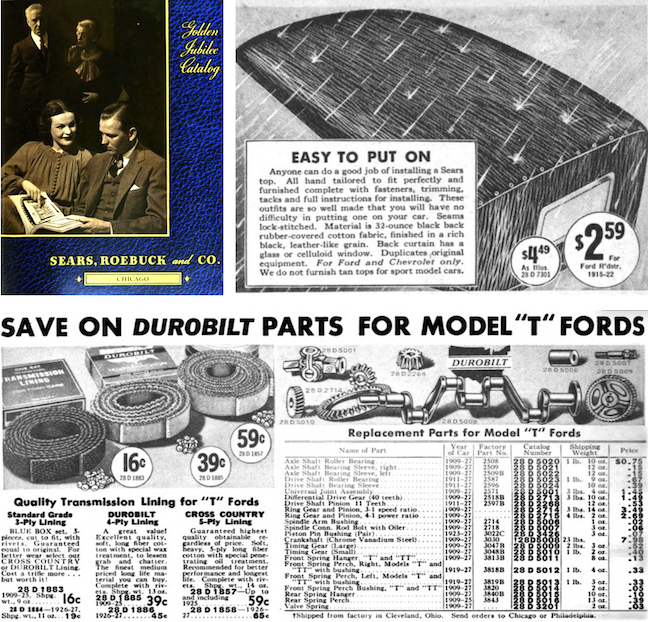
KEEPING IT HUMMING…As E.B. White noted in his opening lines, you could buy an axle as well as a number of other parts for the Model T from the Sears catalog. Clockwise, from top left: Cover of the 1936 “Golden Jubilee” catalog; replacement parts featured in the catalog included new car tops and an array of replacement parts. (archive.org/babel.hathitrust.org)

Model T owners developed all sorts of hacks to keep their Lizzies running. White wrote that “Dropping a camphor ball into the gas tank was a popular expedient; it seemed to have a tonic effect on both man and machine.” He also noted that the Ford driver “flew blind,” given that on earlier models the dashboard was bare save for an ignition key. Those cars lacked speedometers, fuel gauges, as well as gauges for engine temperature and oil pressure. “Whatever the driver learned of his motor,” White wrote, “he learned not through instruments but through sudden developments.” He concluded his piece with some thoughts on the golden days of the automobile.
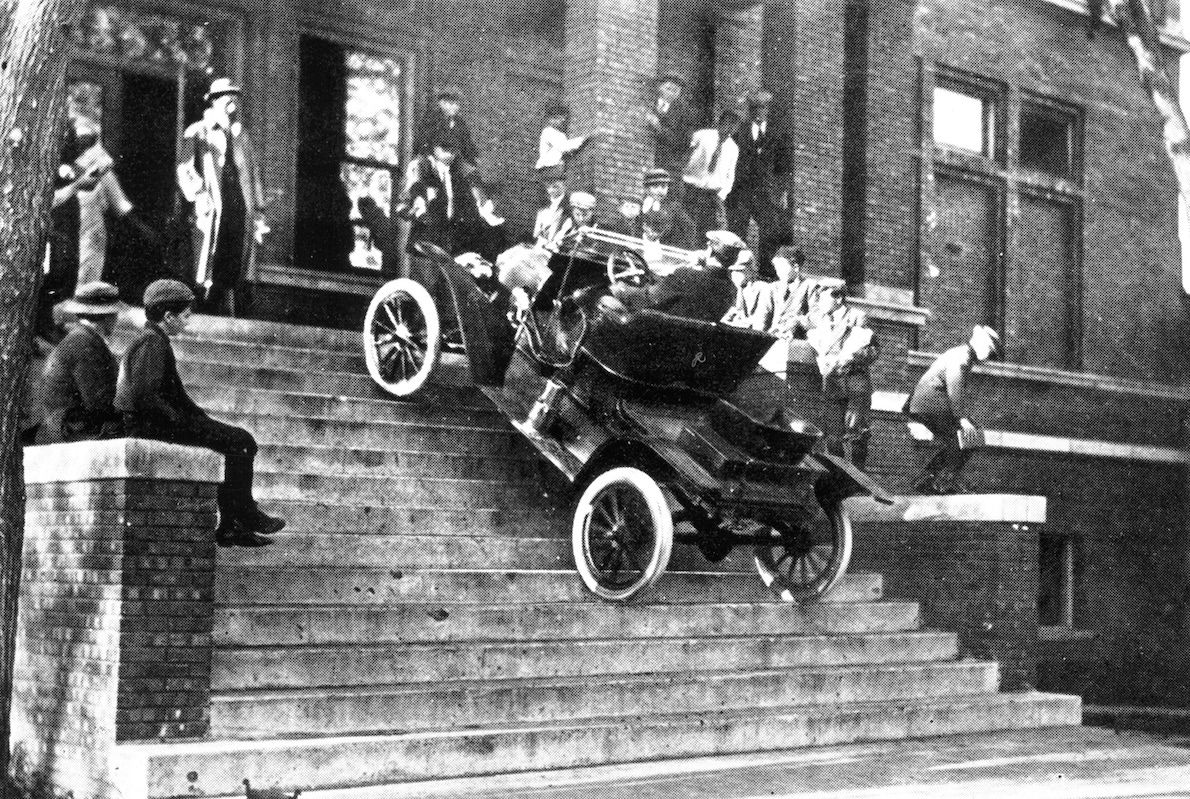
SHOWOFF…The Model T’s unique transmission and gravity-fed fuel system were key to the rugged car’s many stunts. In scaling Scotland’s Ben Nevis mountain, the driver often had to go backwards up inclines to maintain fuel flow. Above is a photo of a Model T climbing the stairs of the Tennessee State Capitol in 1911. (media.lincoln.com)

 * * *

Total Recall

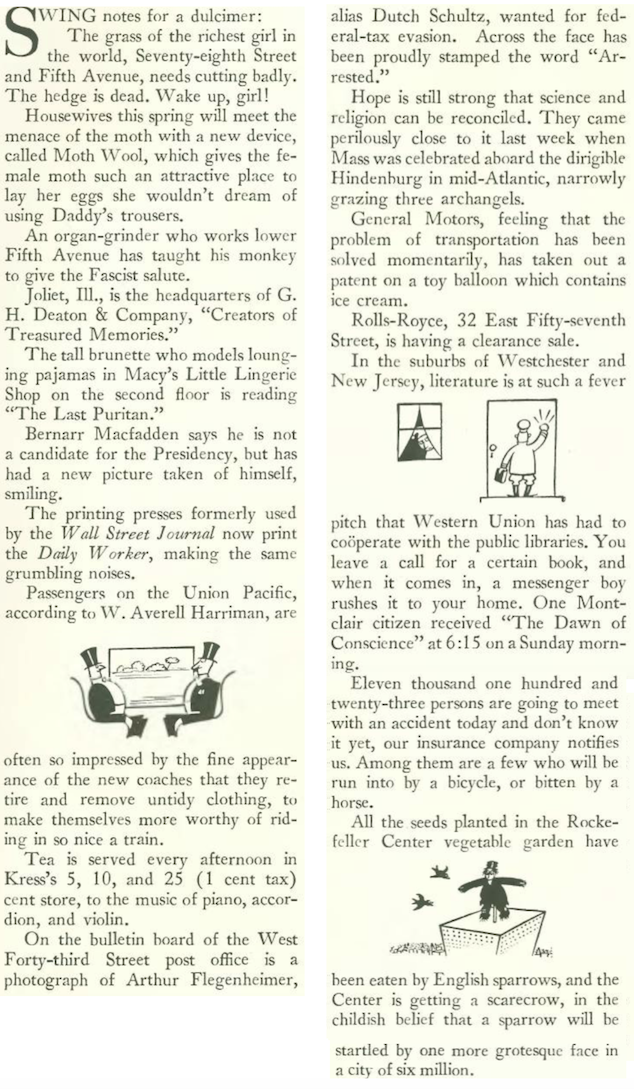
E.B. White also filed a lengthy “Notes and Comment” comprised entirely of brief dispatches from around the country:
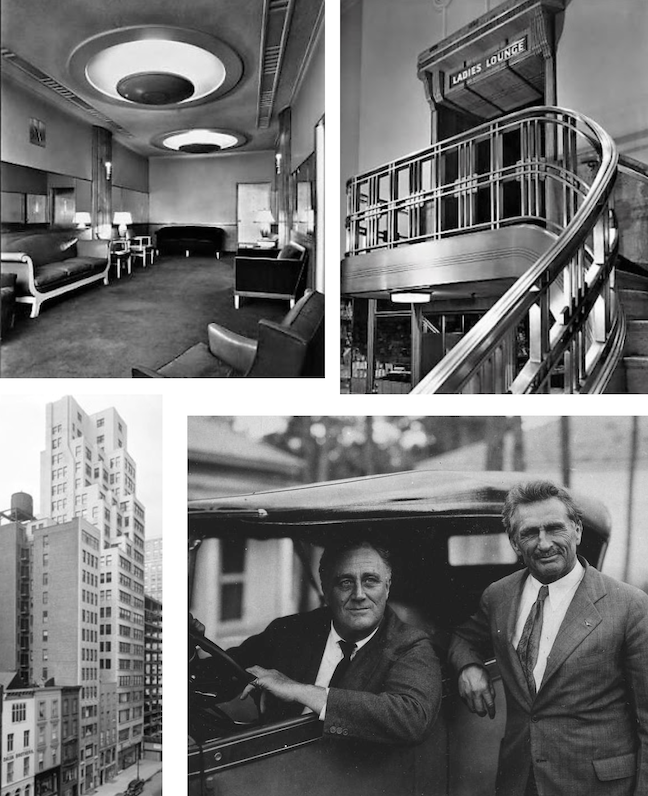
CIVILIZED SHOPPING…Tea time was observed every afternoon at Kress’s department store—images above are of the store’s ladies lounge; body builder and fitness magazine publisher Benarr Macfadden (seen here with President Franklin Roosevelt circa mid-1930s) said he had no plans to run for president; bottom left, a sale was in progress at the Rolls-Royce building on East 57th. (nypl.org/public domain/mcny.org)

Here are the rest of White’s notes on the passing scene:
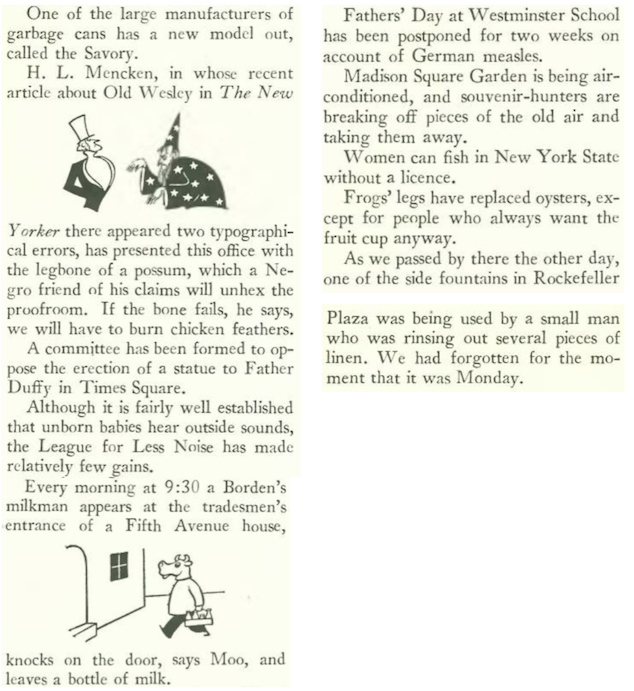
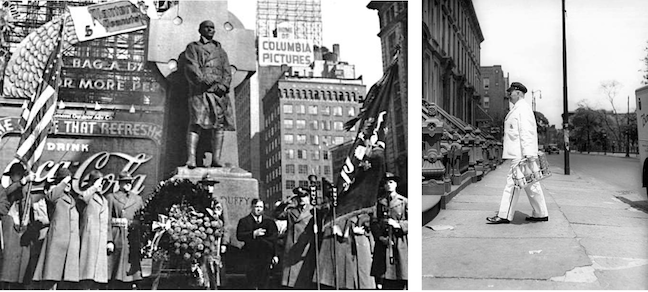
LIMITATION OF STATUES…At left, Mayor Fiorello LaGuardia presides over the dedication ceremonies of a Times Square statue honoring Father Francis Patrick Duffy, May 2, 1937—apparently some folks were opposed to a statue honoring the most decorated chaplain in Army history; at right, a Borden’s milkman making a delivery in New York City, 1936. (facebook.com/photo army.mil)

 * * *

Not Playing in Peoria

Jack Kirkland’s play Tobacco Road, based on the 1932 novel by Erskine Caldwell, was one of the longest-running plays in theater history, with 3,182 performances from 1933 to 1941. Although banned in major cities such as Chicago and Detroit for being sensational and immoral (and panned by critics), it nevertheless saw huge success on Broadway and with its touring company. “The Talk of the Town” checked the status of the play at the Forrest Theatre, where it had exceeded the millionth ticket mark.
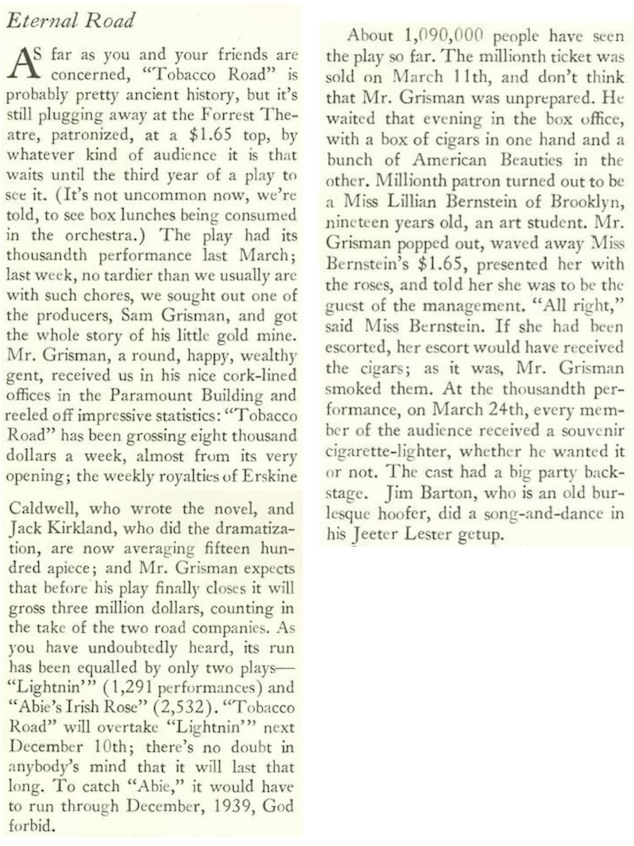
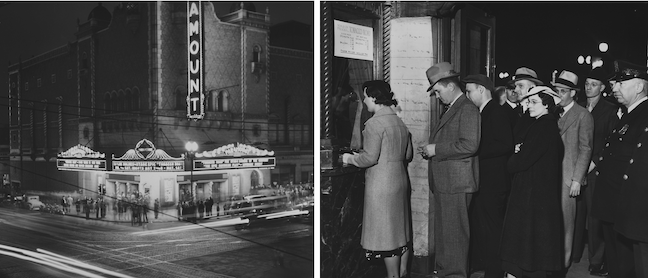
WORD GETS AROUND…Folks queue up in 1937 to see Tobacco Road at Omaha’s Paramount Theater. Despite being banned in many cities, the play ran until 1941. (Wikipedia)

 * * *

At the Movies

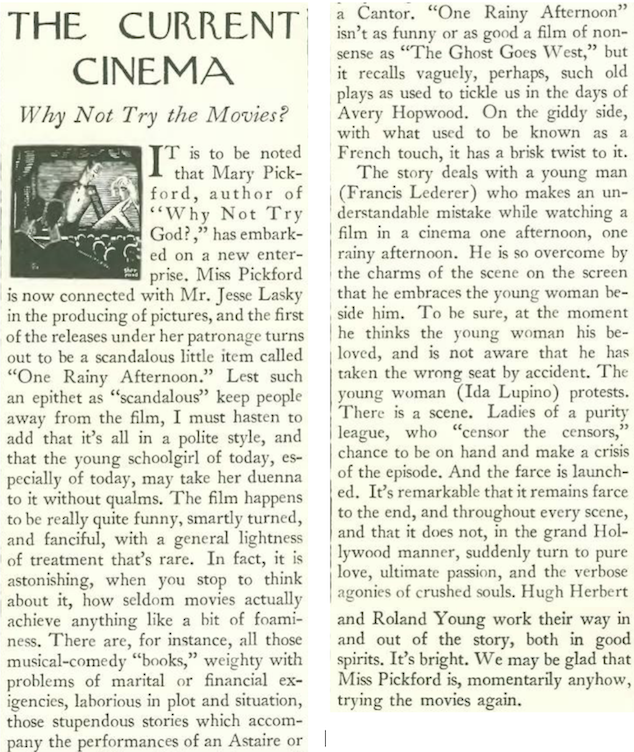
One Rainy Afternoon was the first of a small number of films from United Artists produced by its vice-president, Mary Pickford, through her Pickford-Lasky production company. In his opening lines critic John Mosher alluded to Pickford’s popular 1934 essay, Why Not Try God? 
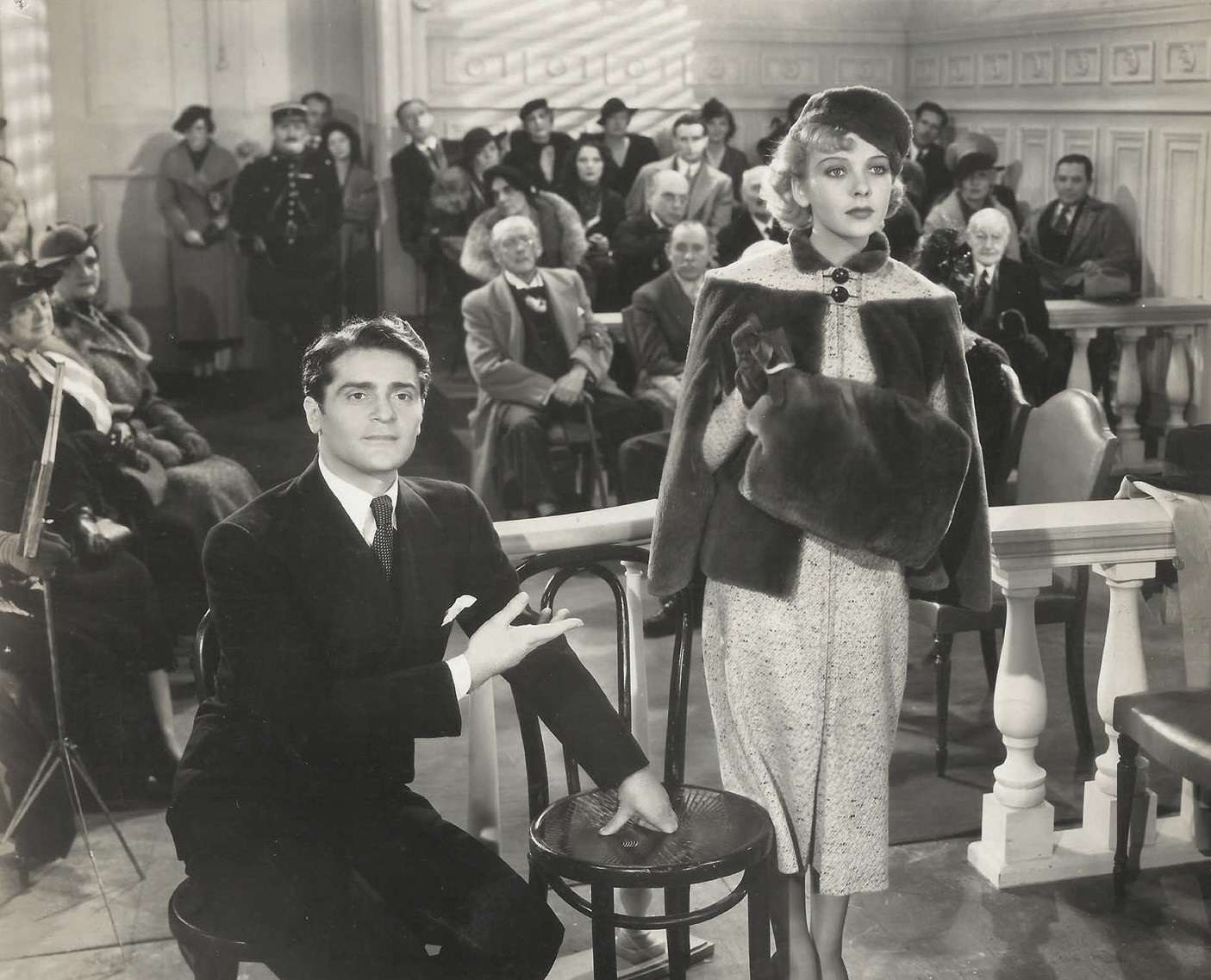
HONEST MISTAKE…Francis Lederer played a debonair actor who accidentally kisses young socialite Ida Lupino in a darkened theatre in One Rainy Afternoon. Hilarity and romance follow. Lederer (1899–2000) would enjoy a successful stage, film and television career while becoming wealthy as an L.A. real estate investor. Lupino (1918–1995) was an actress, director, writer, and producer, appearing in 59 films and directing eight. She is regarded as the most prominent woman filmmaker working during the Hollywood studio system of the 1950s. (Wikipedia)

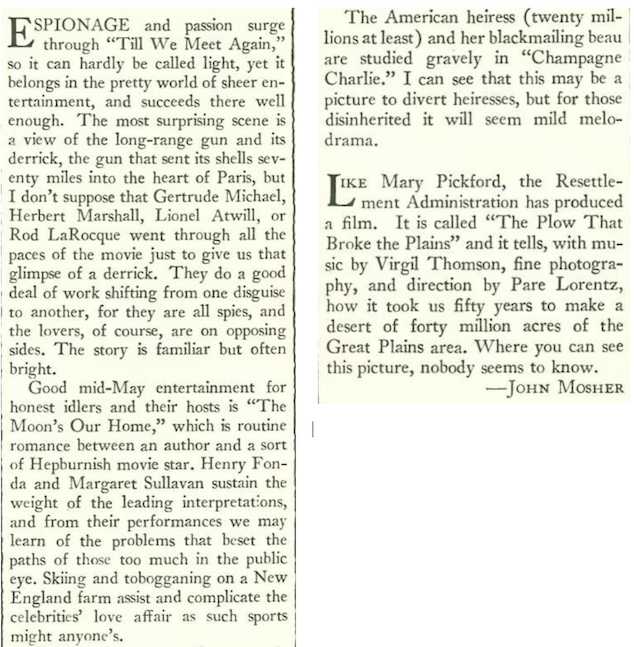
Mosher also reviewed some “Good mid-May entertainment for honest idlers” and a documentary about the Dust Bowl.
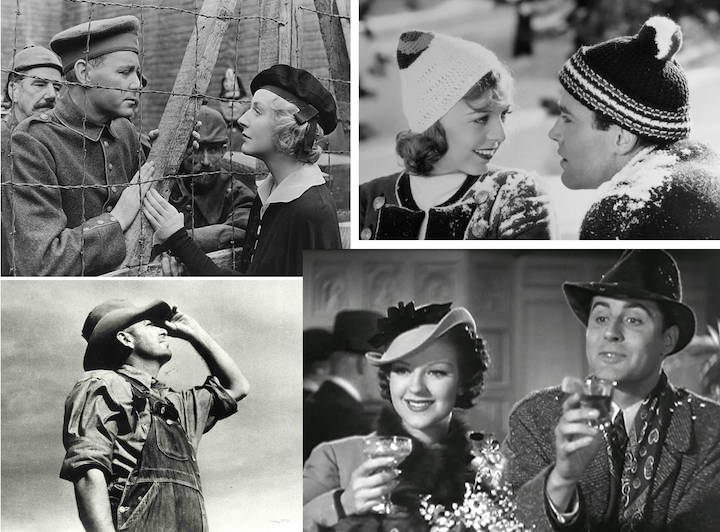
MAY DIVERSIONS…Clockwise, from top left: Herbert Marshall and Gertrude Michael in Till We Meet Again; Margaret Sullavan and Henry Fonda in The Moon’s Our Home; Thomas Beck and Helen Wood in Champagne Charlie; a farmer looks to the sky in the Dust Bowl documentary The Plow That Broke the Plains. (csfd.cz,pinterest.com/imdb.com)

 * * *

From Our Advertisers

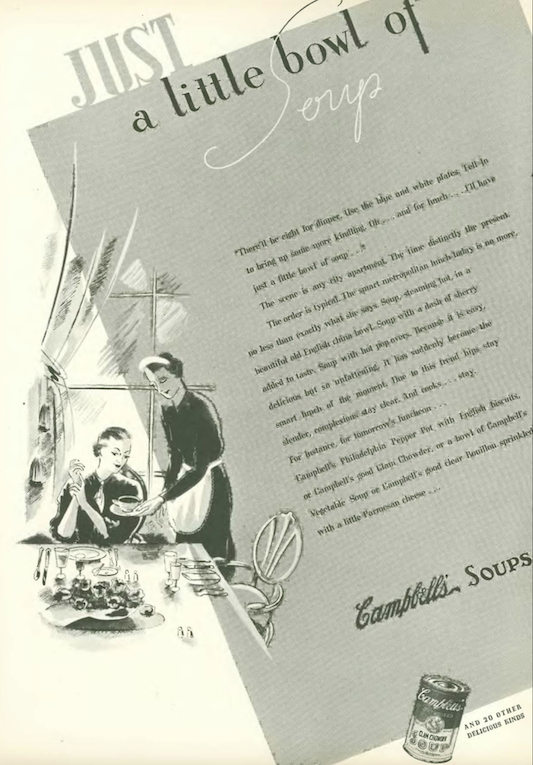
The makers of Campbell’s soups continued to market their product as an upscale starter for dinner…or perhaps a time-saver for the cook, Madam none the wiser…
…Cadillac continued to entice buyers with bucolic scenes dominated by their luxury sedans…the price isn’t outrageous, roughly equivalent to $40K today…
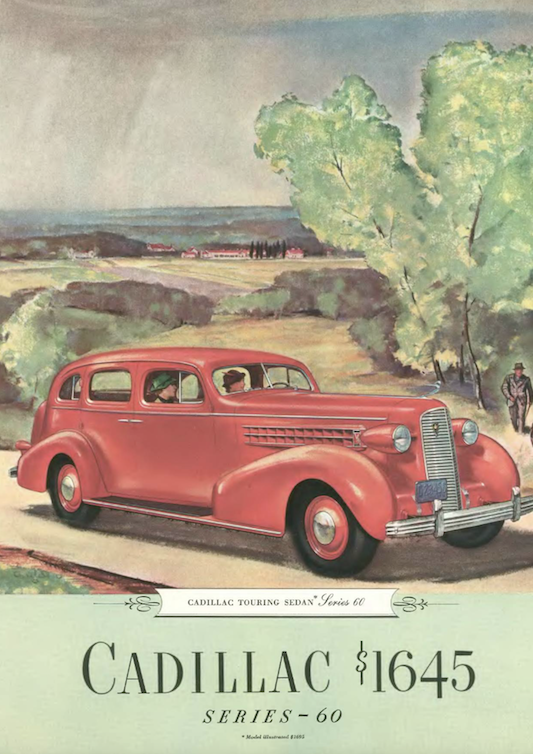
…we experience much of 1930s history in black and white, but according to this ad things were quite colorful…
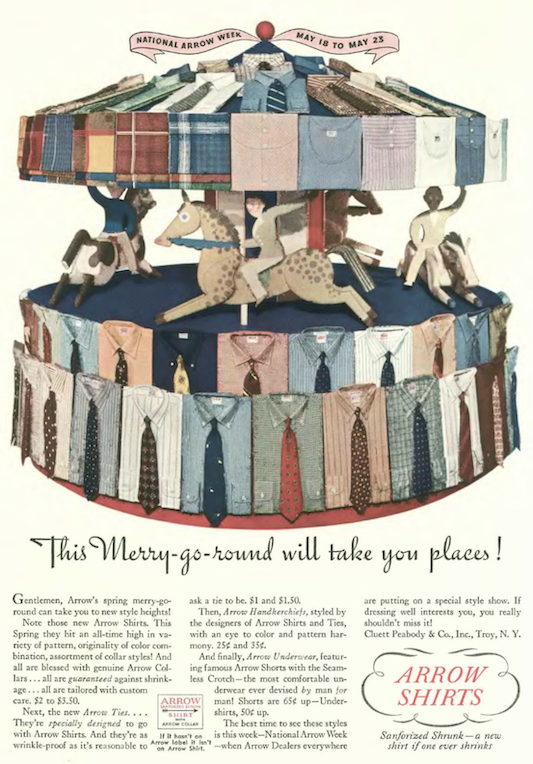
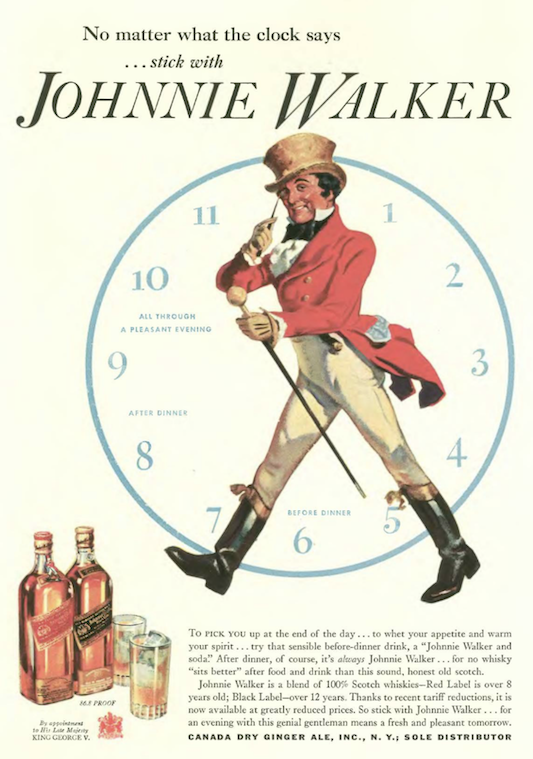
…now a couple of ads with an eye on the clock…here we have a suggestion that Johnnie Walker can be enjoyed before dinner and up to bedtime…
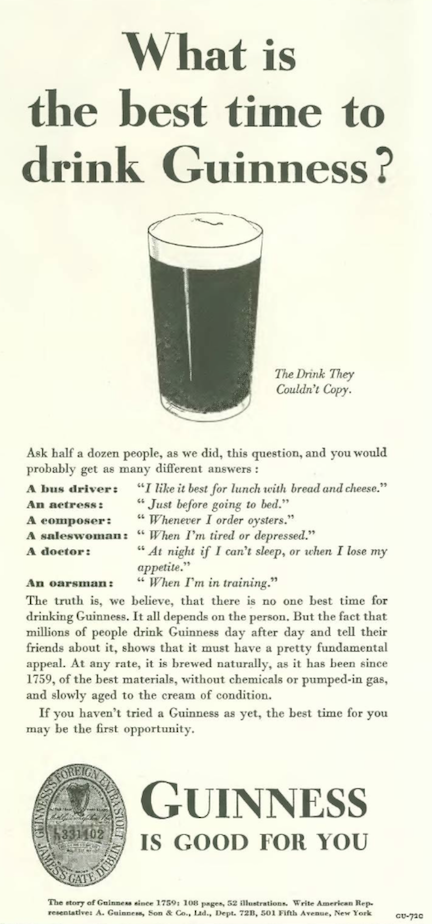
…the brewers of Guinness suggested their tipple was suitable for lunchtime, before bed, or when one is “tired or depressed”…
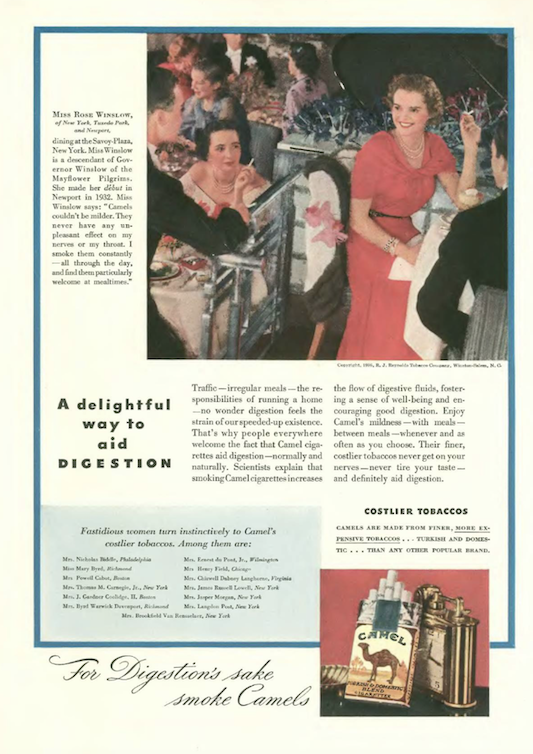
…as we already know, R.J. Reynolds encouraged folks to smoke from morning to night, with the added benefit of improved digestion…
…on to our cartoonists, we begin with a spot by Abe Birnbaum

…and spots from frequent contributors Richard Taylor

…and Christina Malman

…and a spot drawing on the opening pages by James Thurber

…who also contributed this cartoon to the issue…
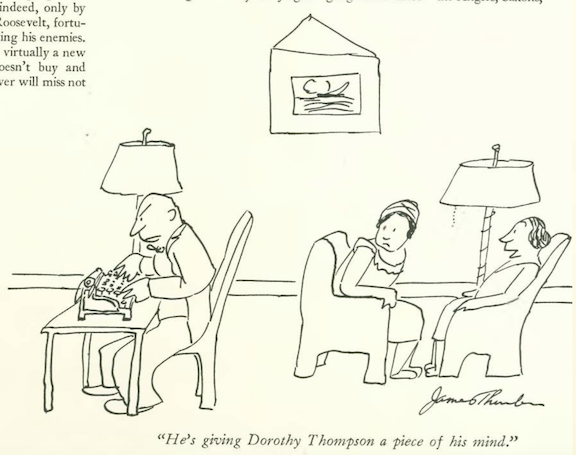
…Thurber’s caption refers to journalist and radio broadcaster Dorothy Thompson. One of the few women radio news commentators of the 1930s, she was the first American journalist to be expelled from Nazi Germany in 1934. In 1936 Thompson launched her “On the Record” column, syndicated nationwide by the New York Herald Tribune…
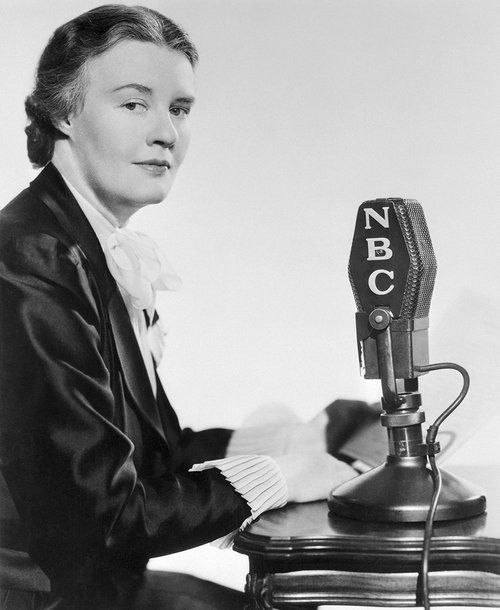
Dorothy Thompson in 1937. (Wikipedia)

…we continue our cartoons with Charles Addams (apologies for the quality) floating to earth…
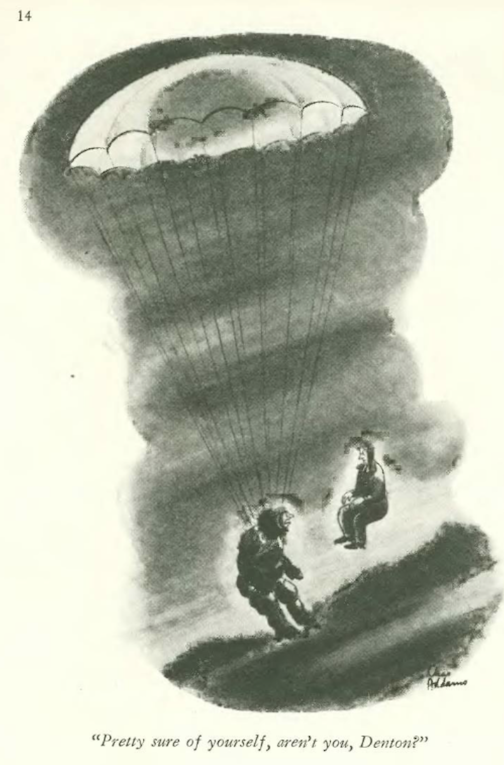
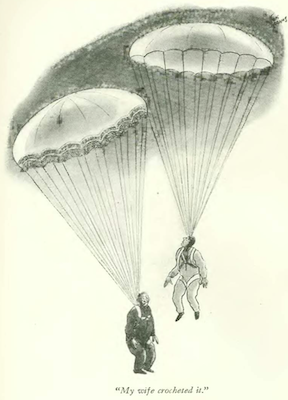
…which recalled another Addams cartoon from the Aug 3, 1935 issue (caption reads “My wife crocheted it.”)…
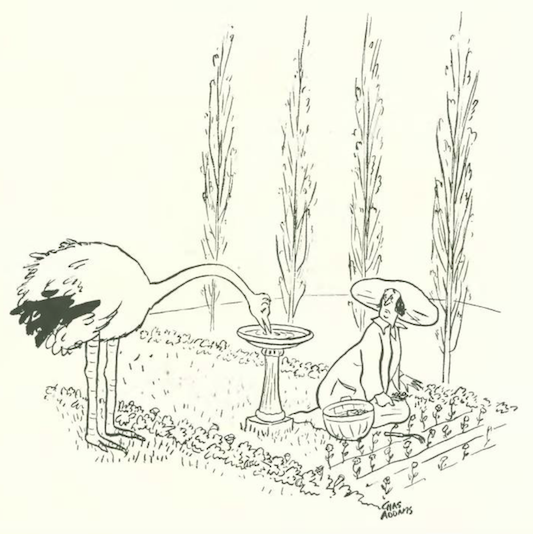
…and Addams again, this time down to earth…
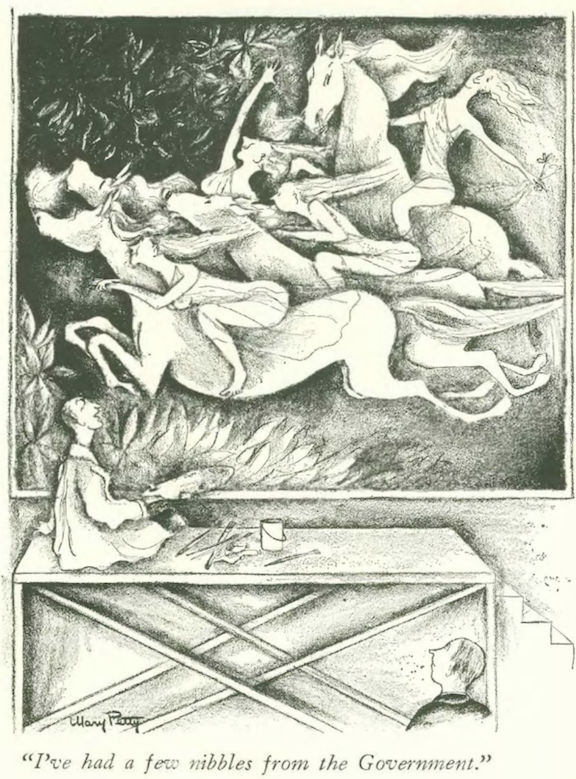
Mary Petty looked in on the art world…

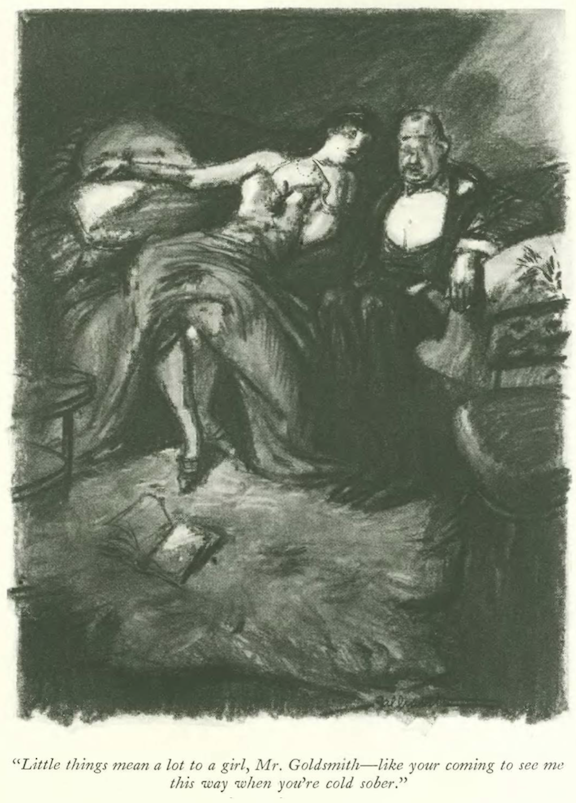
William Crawford Galbraith continued to explore lives and loves of sugar daddies…
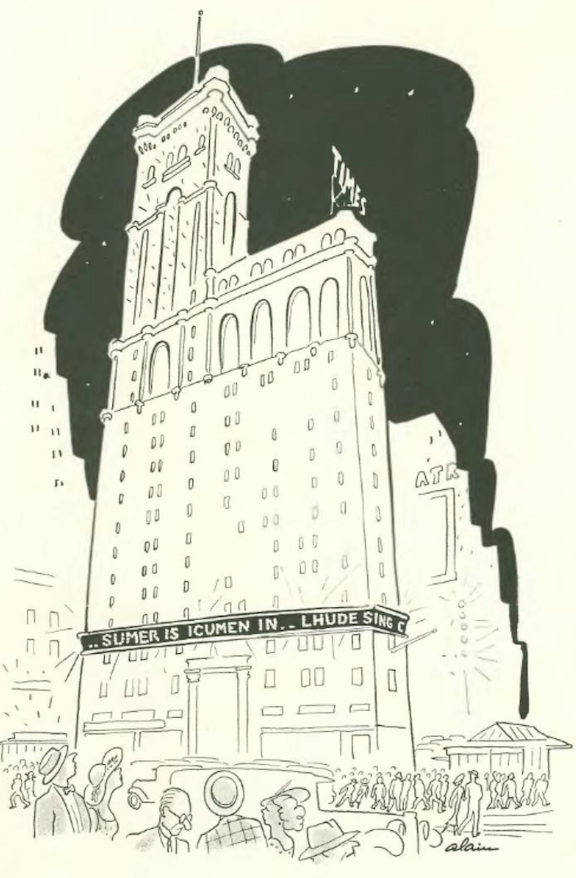
Alain had folks deciphering the news crawler at Times Square…
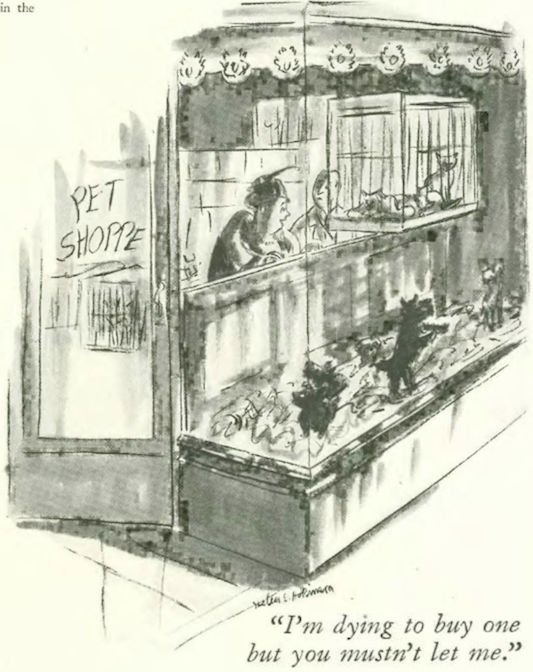
Helen Hokinson avoided temptation at the pet shop…
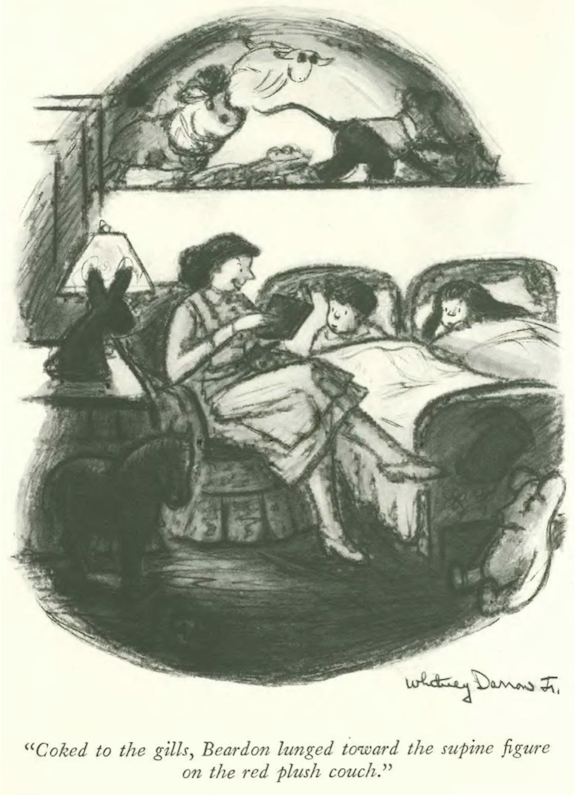
…and we close with Whitney Darrow Jr, and a bedtime story that would keep the sandman at bay…
Next Time: Vast Horizons…
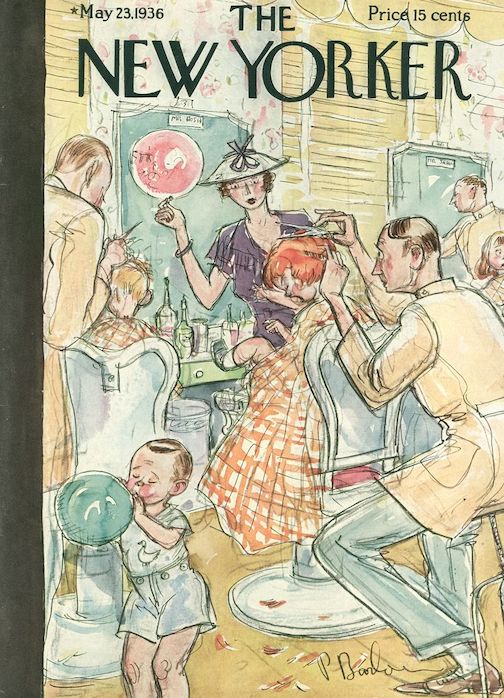
 

Saving The Row

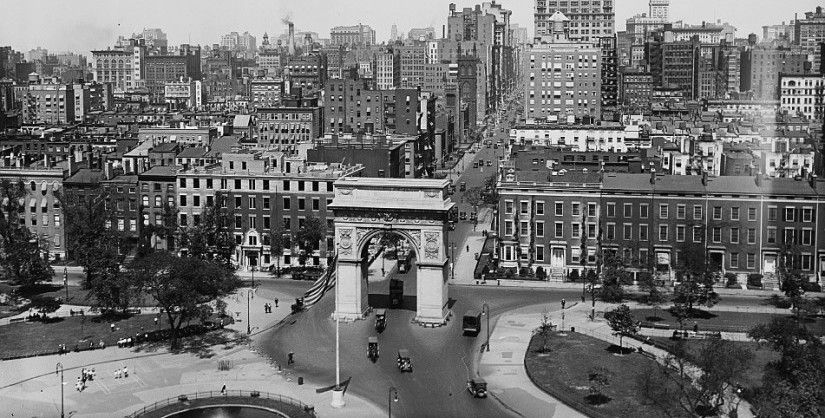
Above: Washington Square North circa 1930. (nypap.org)

In the first decades of the 20th century very few buildings in New York City were considered sacred, especially during the building boom of the Twenties when large swaths of the old city were erased to make way for massive skyscrapers and more than 740,000 new housing units.

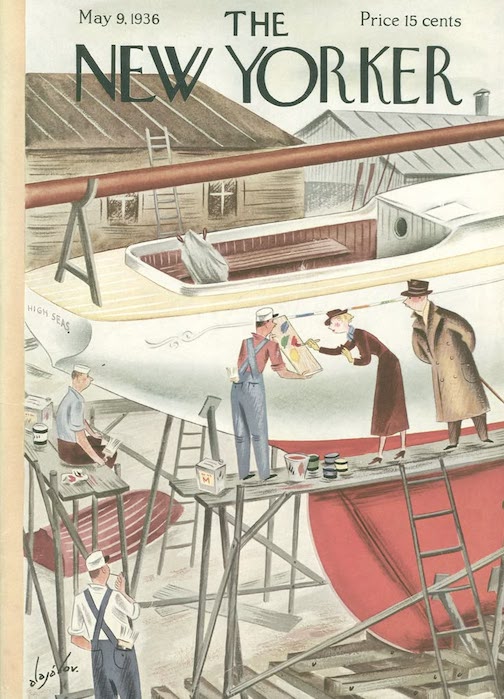
May 9, 1936 cover by Constantin Alajalov.

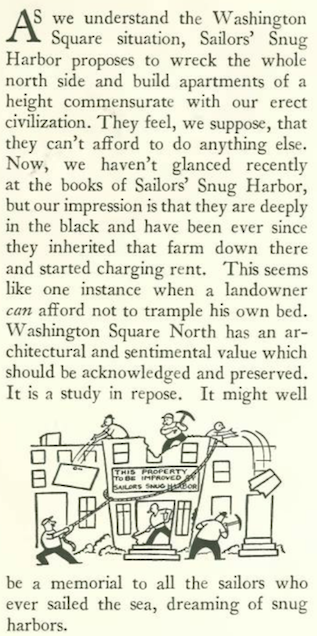
To keep anything historic from the wrecking ball required constant vigilance as well as political savvy. Such was the case at Washington Square, where in response to a 27-story building erected at 1 Fifth Avenue a campaign was organized to create height limits around the square itself. The land for 1 Fifth Avenue was leased by Sailors’ Snug Harbor—a foundation dedicated to assisting retired mariners and one of the largest owners of land in Greenwich Village. The threat to Washington Square became even greater in 1936 when the same foundation announced plans to demolish several of the structures facing the north side of Washington Square, known as “The Row.” In his “Notes and Comment,” E.B.White explained:

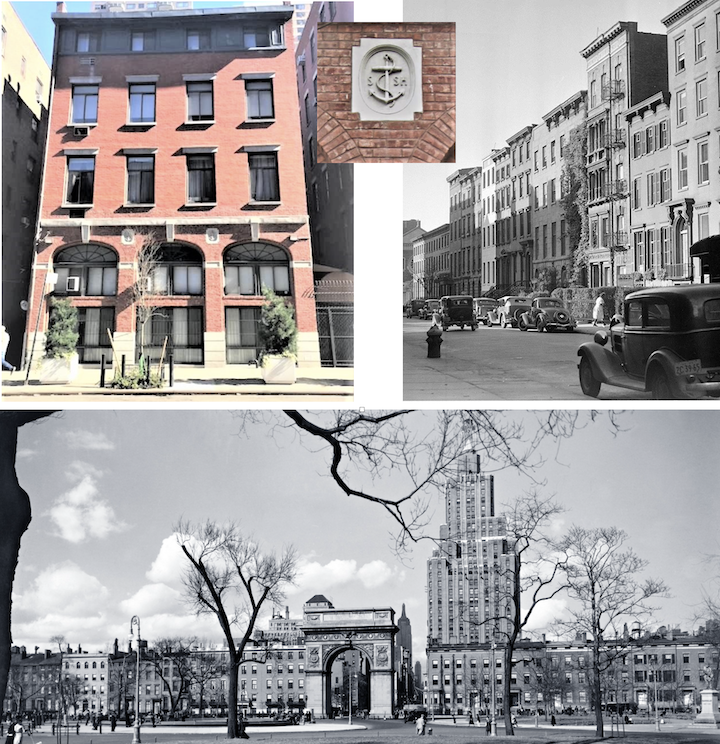
INTERLOPER…The Sailors’ Snug Harbor Foundation had already altered the scale of Washington Square with the erection of 1 Fifth Avenue (1926-27), seen to the right of the arch in the bottom photo (by Berenice Abbott, 1936); above left, facade of Sailors’ Snug Harbor Foundation building as it appears today (inset: the foundation’s monogram set within the spandrels of the arched windows); top right, looking west down Washington Square North, 1937. (daytoninmanhattan.blogspot.com/geographicguide.com)

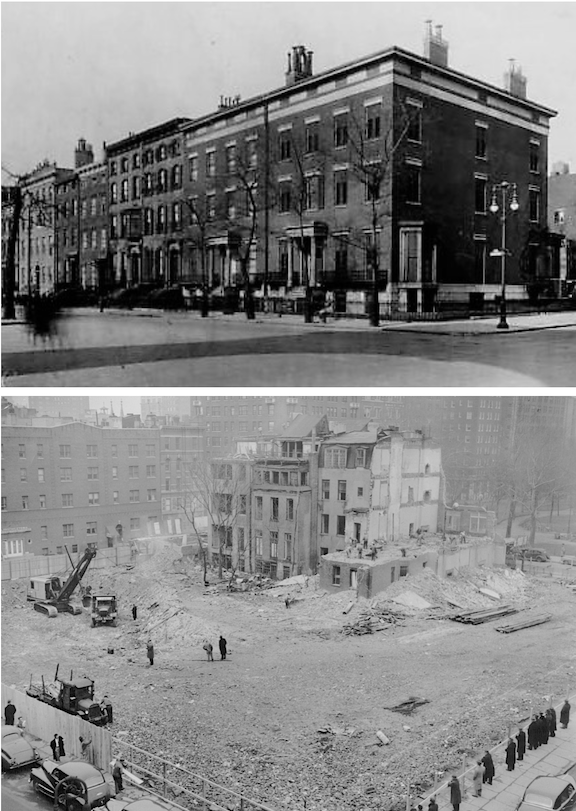
Fortunately the demolition did not proceed, with Sailors’ Snug Harbor deciding to retain the character of “The Row”—numbers 1-13 Washington Square North. Not so fortunate were the adjacent Rhinelander Houses that were demolished in the mid-1940s, and “Genius Row” on Washington Square South, which was demolished in 1948 to make room for the NYU Law Center.

NOT SO FORTUNATE…The Rhinelander Houses at Washington Square North (top photo, from 1922) were demolished in 1951 to make way for an apartment house; photo below, the “Genius Row” on Washington Square South was demolished in 1948 to make room for the NYU Law Center. Occupants of Genius Row included writers Stephen Crane, O. Henry, and Willa Cather. (nypl.org/Village Preservation–GVSHP)

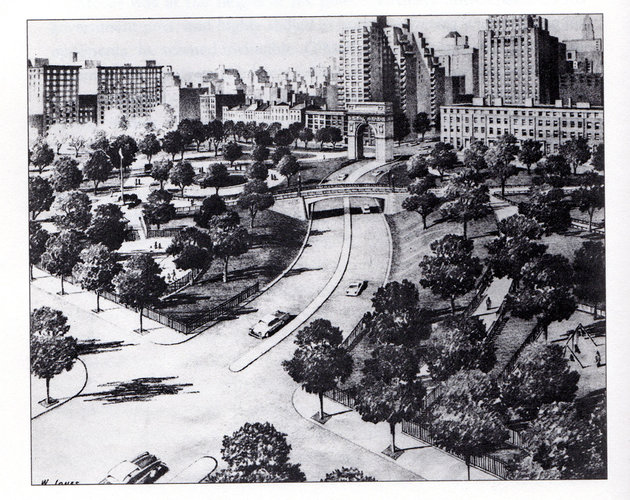
Beginning in the 1940s, Parks Commissioner Robert Moses would try many times to ram a highway through Washington Square Park, including a proposal in the early 1950s (below) that would bisect the park with a 48-foot-wide highway connecting Fifth Avenue to West Broadway.

PAVING PARADISE…Opposition was so great to Robert Moses’s Washington Square proposals that he finally abandoned plans for a highway through the park. (MTA Archives)

 * * *

Farewell Artie

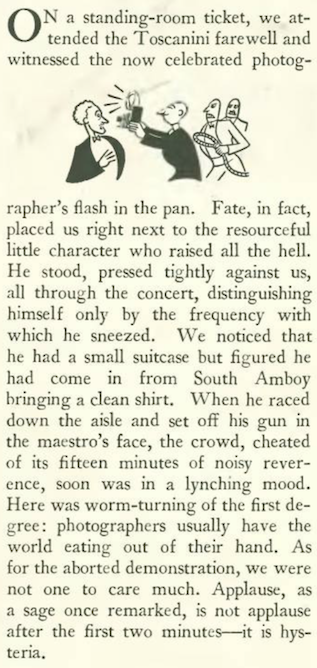
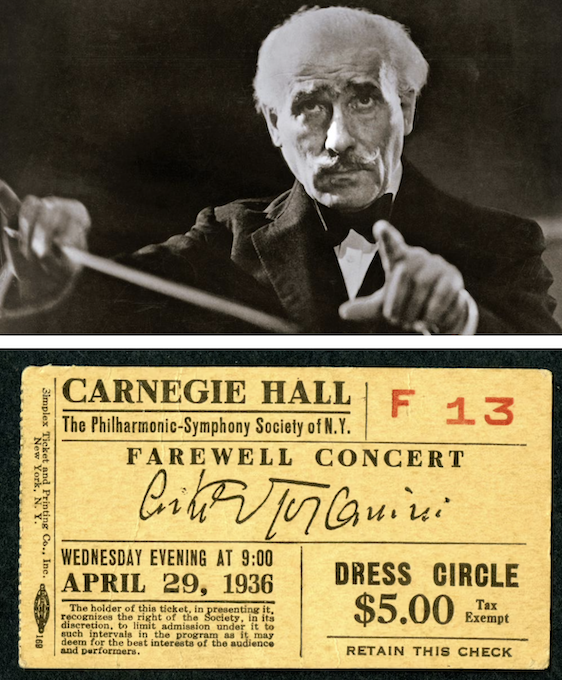
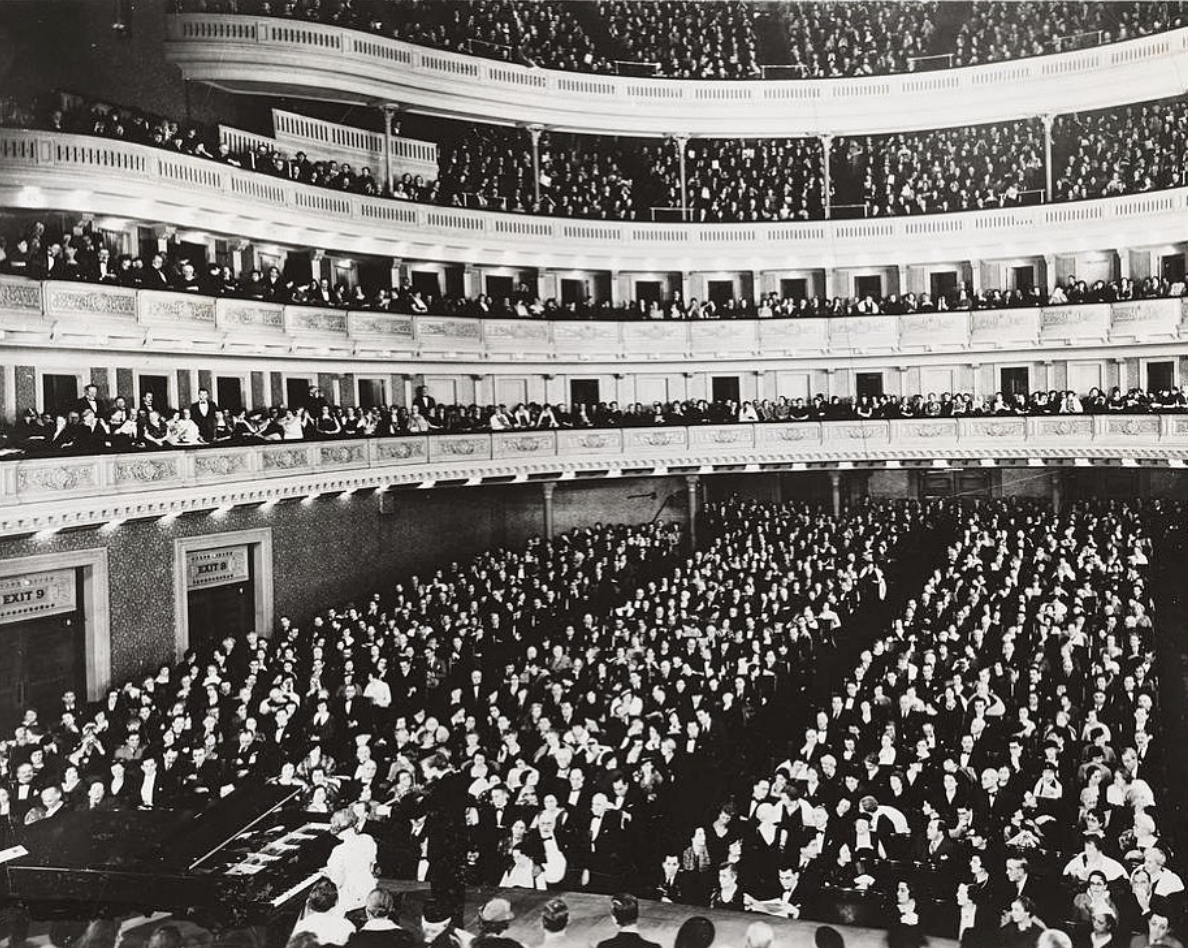
Legendary conductor Arturo Toscanini (1867–1957) transformed the New York Philharmonic into a world-class ensemble during his stint as music director from 1928 to 1936. Unfortunately, his stellar career with the Philharmonic ended rather ignominiously: When the Maestro turned to take a bow at the conclusion of his Carnegie Hall farewell concert, a young photographer exploded a flash bulb directly in his face, causing the great conductor to flee the stage. E.B. White was there to take it all in:

I SAW THE LIGHT…a photographer’s flash temporarily blinded legendary conductor Arturo Toscanini (top) following his farewell concert at Carnegie Hall. Below, a ticket stub from the historic evening. Five bucks seems like a bargain, but it is roughly equivalent to nearly $120 today. (wfimc.org/carnegiehall.org)

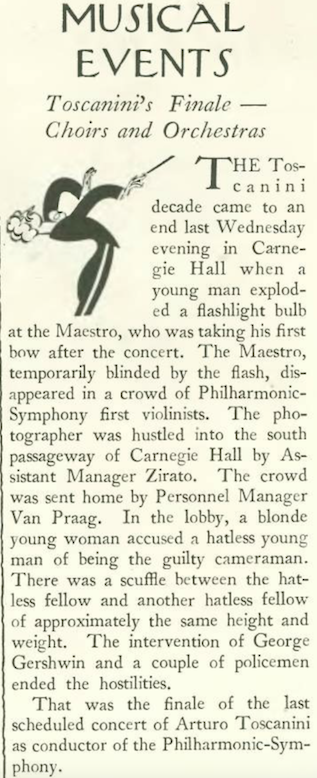
The New Yorker’s music critic Robert A. Simon also shared some thoughts on the evening, which included a scuffle between a “hatless fellow” and another fellow (also hatless) that followed the photographer incident:

PLEASE BEHAVE…A view from the Carnegie Hall stage in 1930. Following Arturo Toscanini’s farewell concert in 1936, a scuffle broke out in the lobby, the result of a row over the temporary blinding of the Maestro by a photographer’s flash bulb. (nypap.org)

 * * *

Lah-Dee-Dy

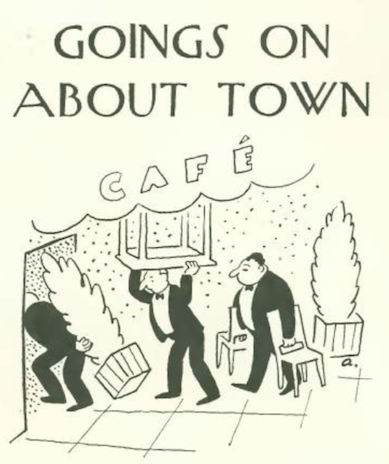
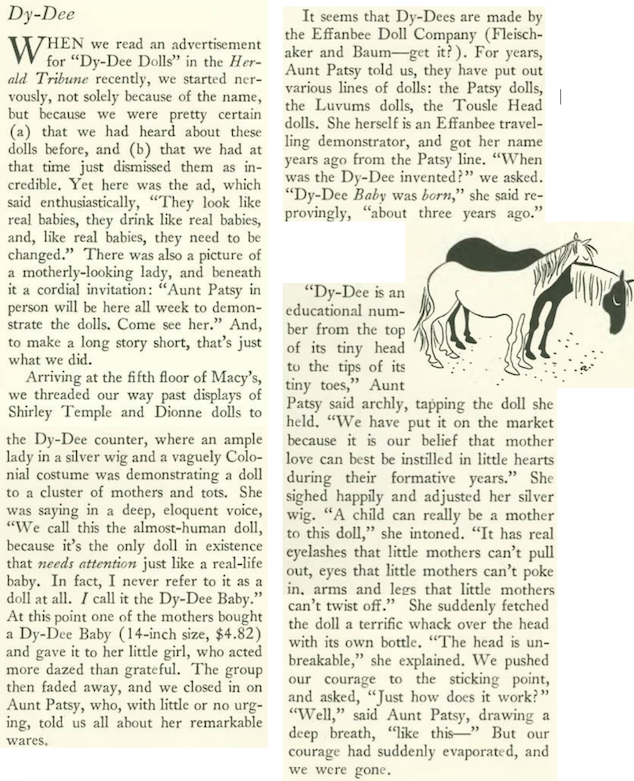
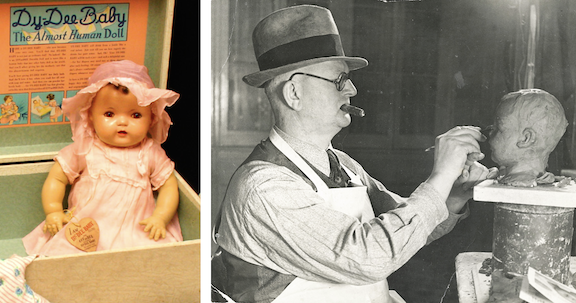
“The Talk of the Town” looked into the fuss over the toy industry’s first practical “drink-and-wet” baby doll, Effanbee’s Dy-Dee doll. Marketed as “The Almost Human Doll”, the “Talk” correspondents (Helen and Charles Cooke) found a demonstration at Macy’s a bit too real (included with this excerpt is spot art by Abe Birnbaum).

UNCANNY…The Effanbee Doll Company marketed their “Almost Human” Dy-Dee doll as the first workable “drink-and-wet” baby doll. The doll was designed by German-born Bernard Lipfert (1886–1974), who sculpted dolls for prominent American toy manufacturers from the 1920s to the 1960s, including the famous Patsy and Shirley Temple dolls. (collectornet.net/Linda Lipfert White via catskilldolls.com)

 * * *

At the Movies

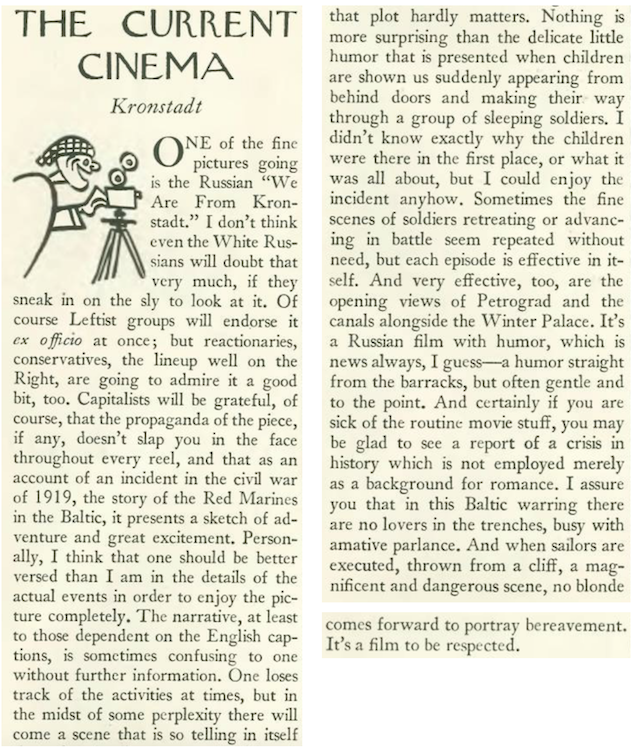
Many film critics in the 1930s, including The New Yorker’s John Mosher, admired the Soviet film industry for its cinematic innovations and often brutal realism, even if deployed as propaganda. Such was the case with We Are From Kronstadt, which depicted heroic Red sailors defending the city of Petrograd from counterrevolutionary forces. “It’s a film to be respected,” Mosher wrote.

NO BLONDES, JUST BOMBSHELLS…Clockwise from top left: Russian poster for We Are From Kronstadt; actor Georgi Bushuyev; battle scene from the film; actress Raisa Yesipova. (Wikipedia/imdb.com)

Mosher also reviewed the lighter fare coming out of Hollywood, including two films featuring the actress Joan Bennett.

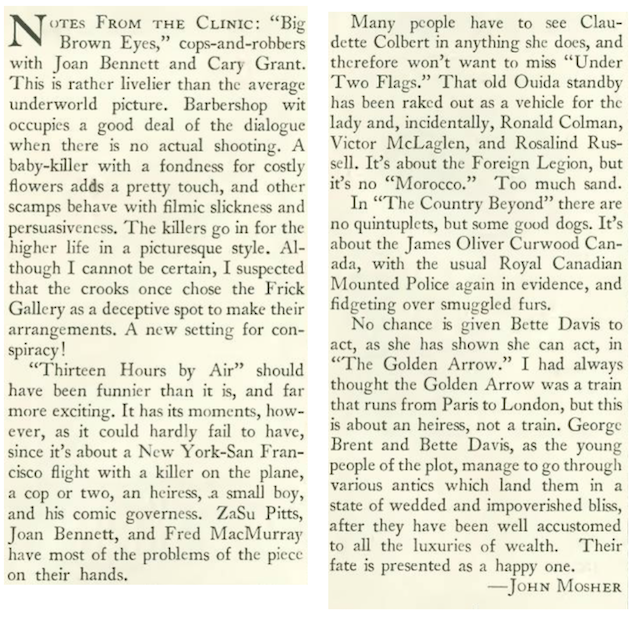
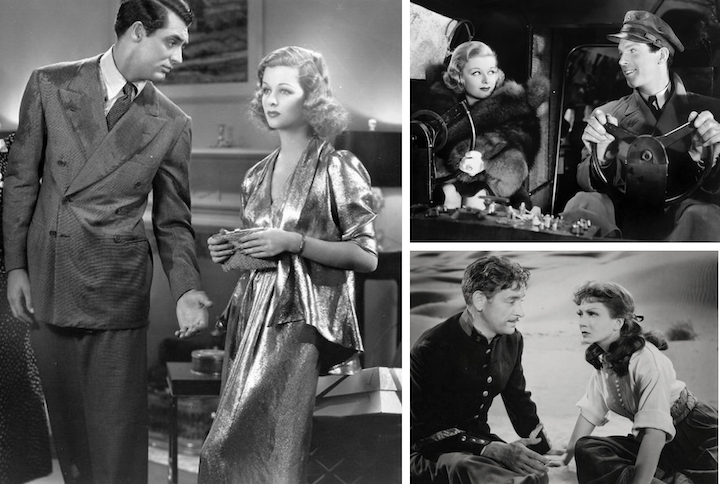
SEEING DOUBLE…Joan Bennett shared top billing in two new releases—with Cary Grant in Big Brown Eyes (left); and with Fred MacMurray in 13 Hours by Air (top right); Claudette Colbert was paired with Ronald Colman in Under Two Flags (below). (csfd.cz/imdb.com)
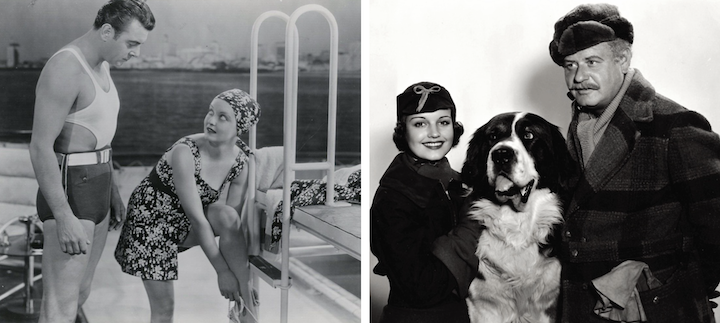
WET AND COLD…Bette Davis and George Brent went through the motions in The Golden Arrow (left); at right, Rochelle Hudson and Alan Hale braved the wilds of Canada in The Country Beyond. Hale was the father of Alan Hale Jr., who was also a film actor but is best known today for playing the Skipper on TV’s Gilligan’s Island. (pinterest.com/20th Century Fox)

 * * *

Swing Time

Ninety years ago America’s youth primarily listened to (and danced to) swing music and big band jazz. The New Yorker kept readers up to date on the latest hits.

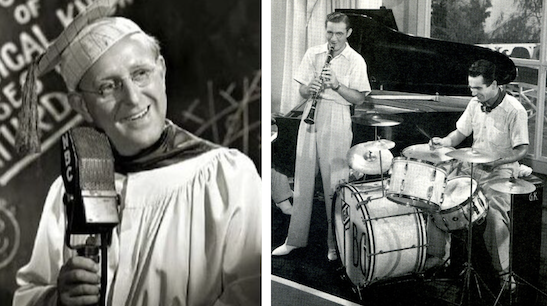
RHYTHM SECTION…”The Ol’ Perfessor” Kay Kyser’s band (the “Kollege of Musical Knowledge”) kept the kids in rhythm in the 1930s; at right, Benny Goodman (left) and Gene Krupa both released records with some new “swings.” (jimramsburg.com/grampsblog.wordpress.com)

 * * *

From Our Advertisers

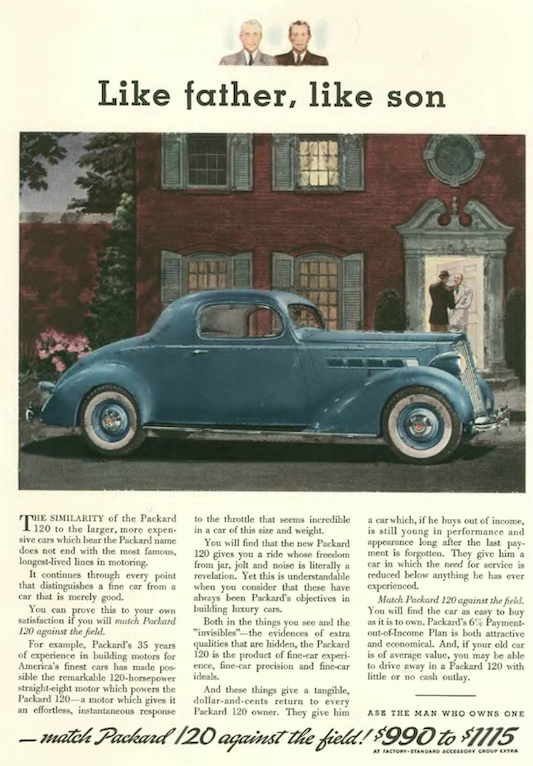
The makers of Packard automobiles were big into the idea of continuity, emphasizing the quality and longevity of their product over gimmicky style changes…
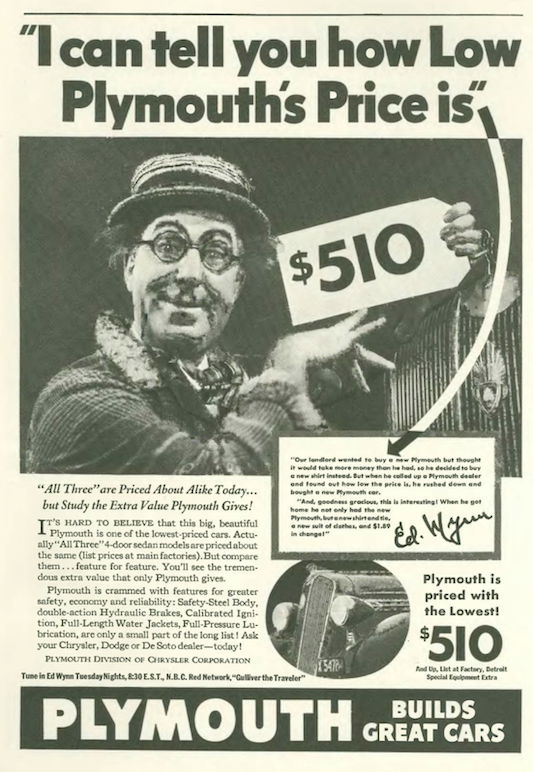
…in the mid-1930s (and especially in 1936) Chrysler employed the comedic talents of Ed Wynn to sell its low-priced Plymouths…
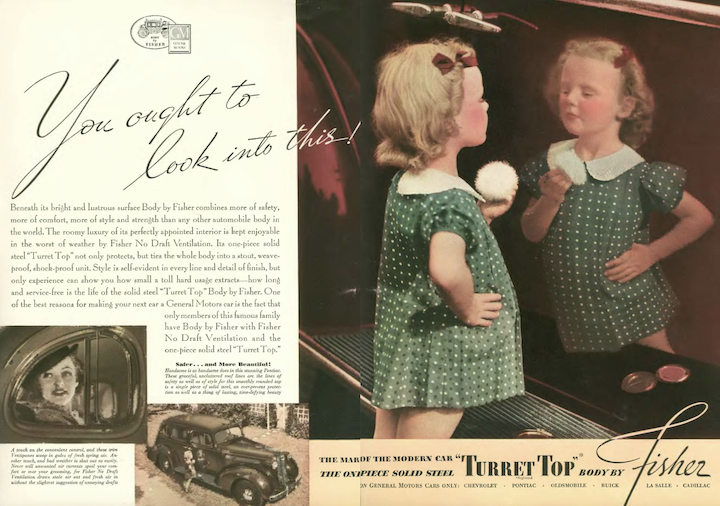
…the makers of Fisher car bodies (a division of General Motors) continued their campaign of two-page ads pairing cute kids with their “Turret Top” safety feature…

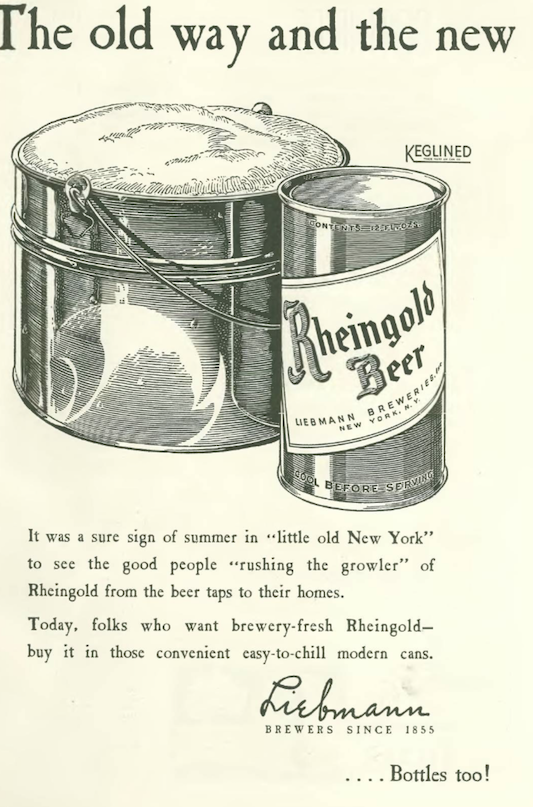
…canned beer was a recent innovation in 1936, with New York breweries leading the way (Krueger Brewing Company was first, its canned beer officially debuting in January 1935)…

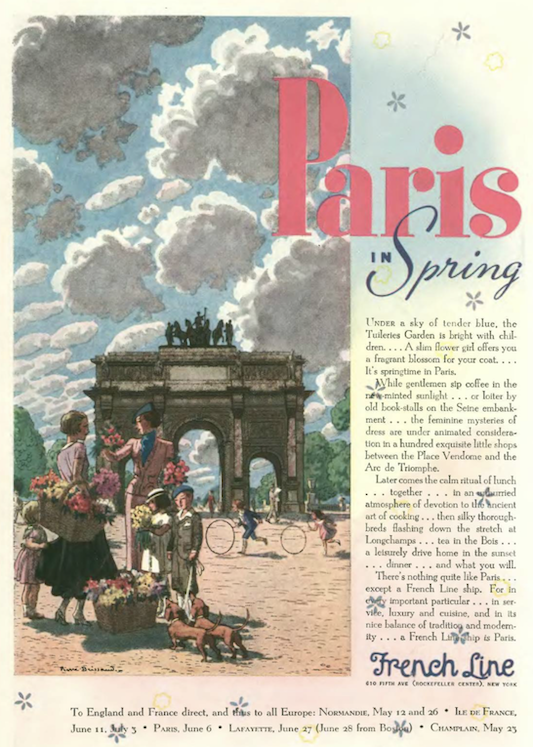
…the French Line enticed New Yorkers to see Paris in the springtime…

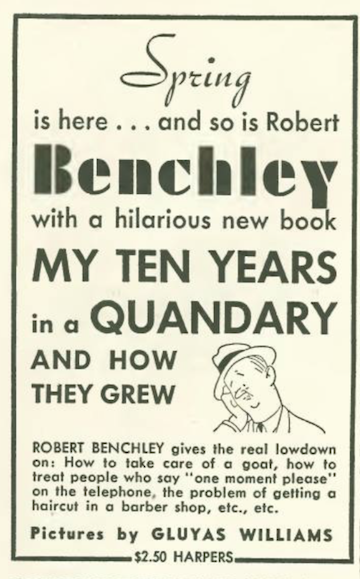
…Harper’s ran this ad on the top left corner of page 95 to promote Robert Benchley’s My Ten Years in a Quandary…and How They Grew, illustrated by Benchley’s New Yorker colleague Gluyas Williams

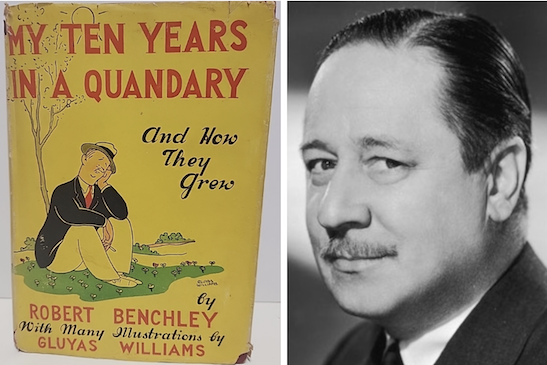
BENCHLEY IN A BIND…Robert Benchley and the cover of My Ten Years in a Quandary…and How They Grew. (ebay.com/ebooktakeaway.com)

…on to our cartoonists, we begin with Richard Taylor in the calendar section…

…and a nice bit of spot art by Christina Malman

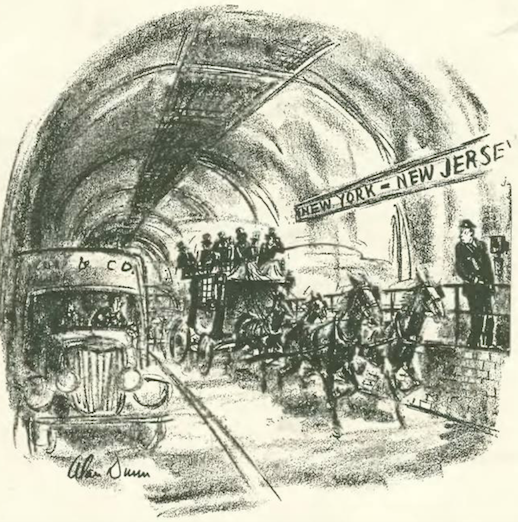
Alan Dunn revealed a time tunnel under the Hudson…

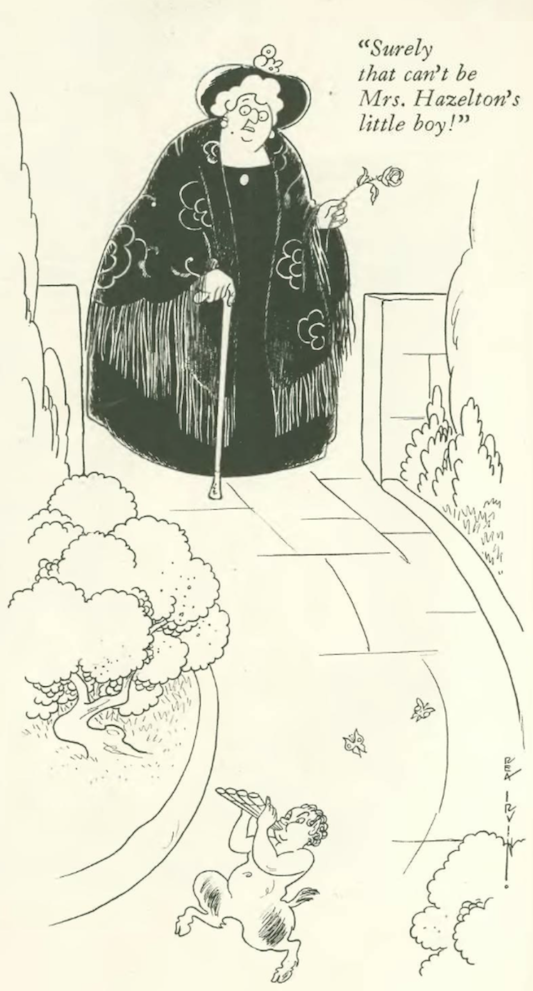
Rea Irvin drew up an odd sight along a garden path…

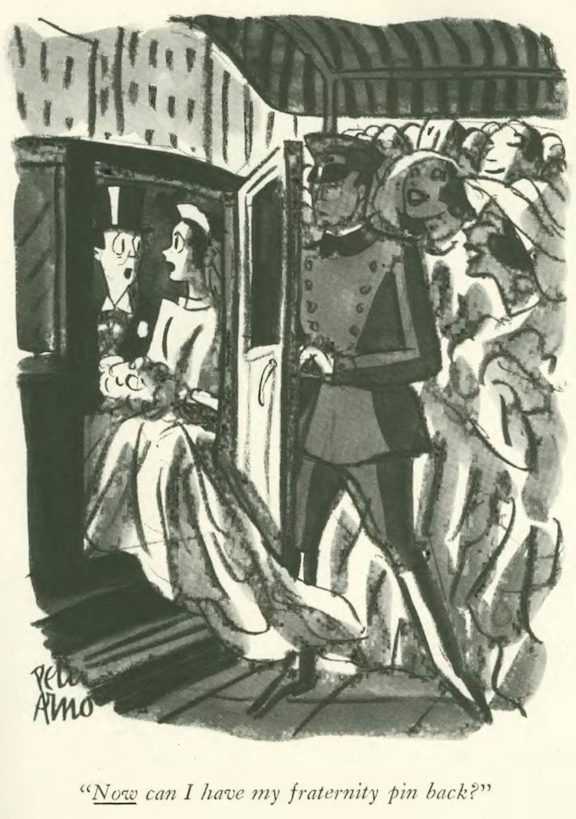
…this honeymoon was over before it even started, per Peter Arno

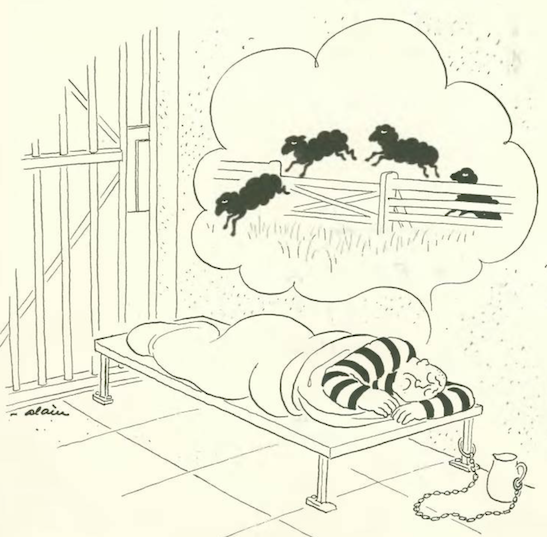
Alain showed us the troubled dreams of a jailbird…

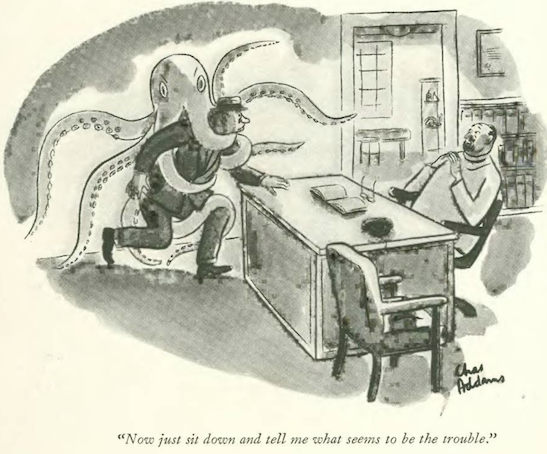
Charles Addams at his best, taking the daily horrors in stride…

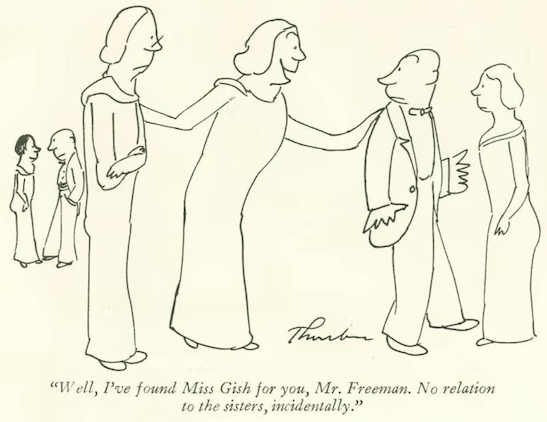
James Thurber gave us a Gish, but not of silent movie fame…

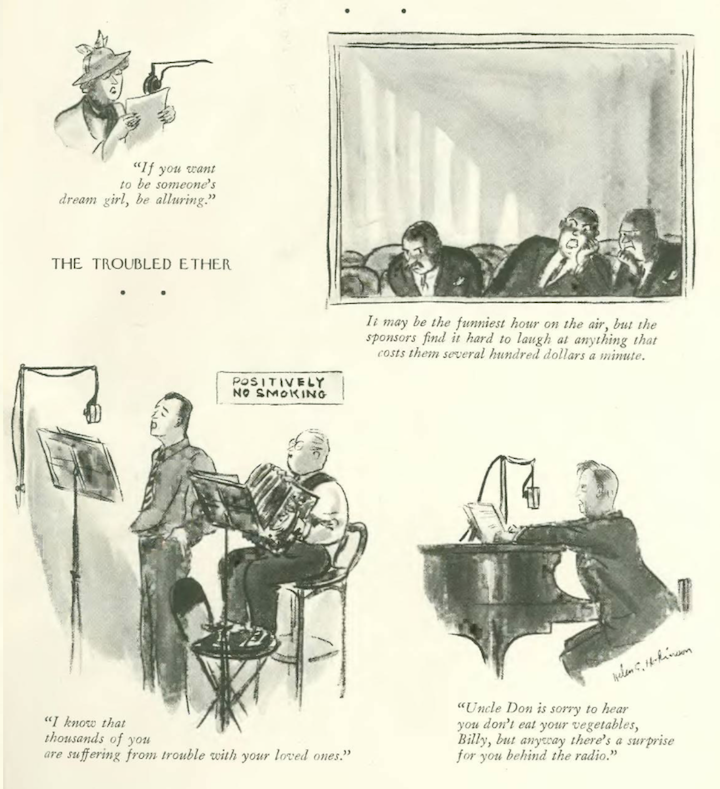
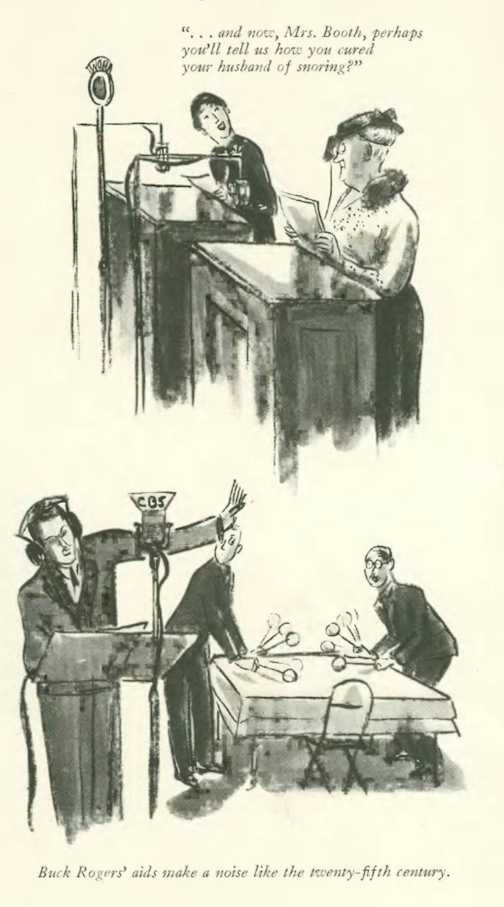
Helen Hokinson illustrated a day at the radio station across pages 22-23…

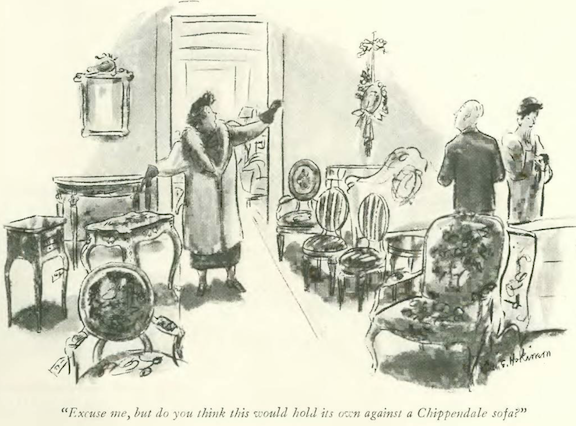
…Hokinson again, weighing the competition between a sofa and table…

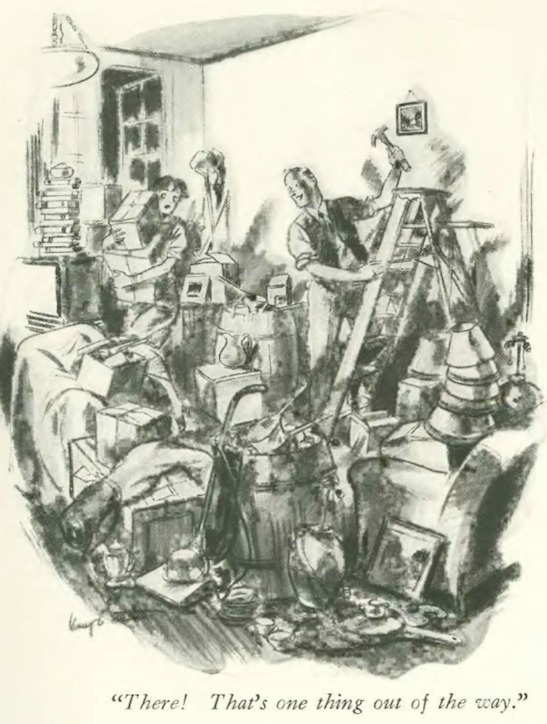
…and we close with Kemp Starrett, and a helpful husband…

Next Time: A Flivver Farewell…

Safari Under Glass

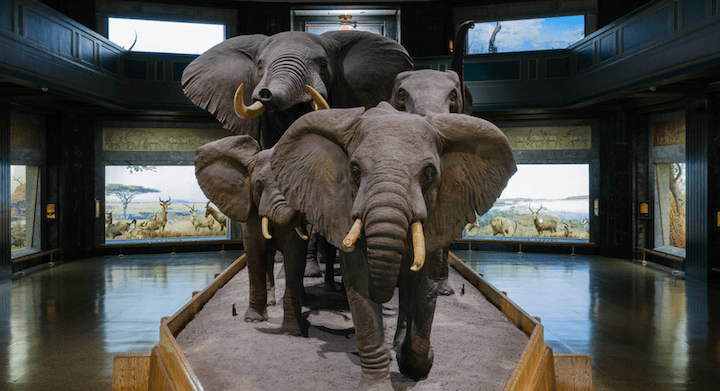
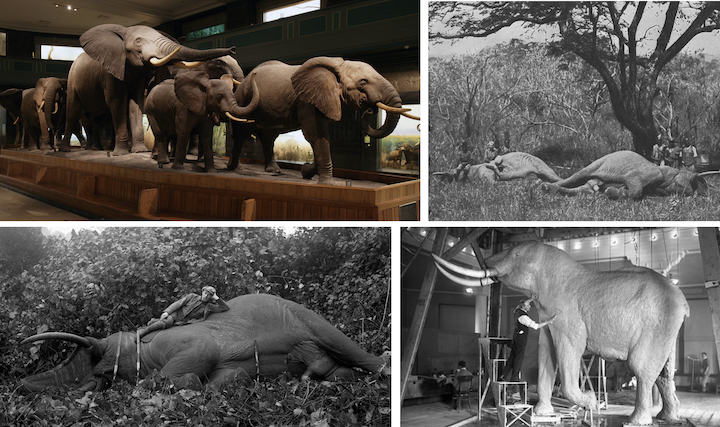
Above: A group of eight East African elephants greet visitors to the American Museum of Natural History's Akeley Hall of African Mammals, which opened in 1936. The elephants are surrounded by twenty-eight habitat dioramas. (amnh.org)

One can instantly call up a photo on an iPad of every known animal on the planet, so why are people still fascinated by dead, stuffed animals displayed in glass cases?

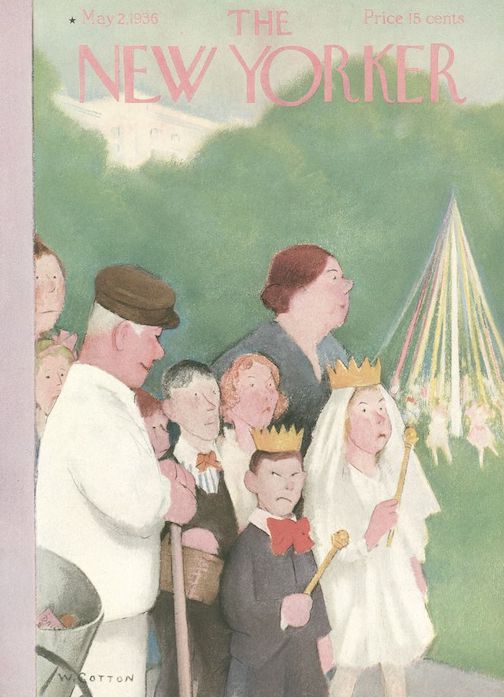
May 2, 1936 cover by William Cotton. 

To be accurate, most animals on display at natural history museums are not “stuffed;” they are an art form or sorts, anatomical sculptures covered with skins, posed in meticulous re-creations of their natural environments.

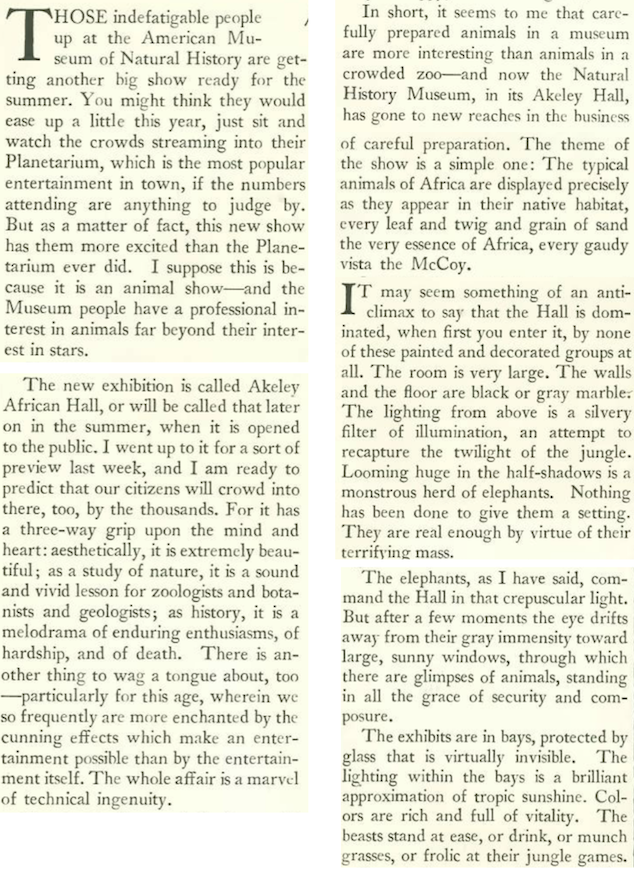
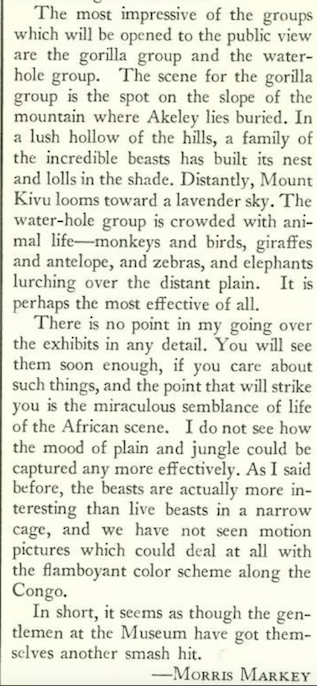
Ninety years after it opened to the public, the American Museum of Natural History’s Akeley Hall of African Mammals—named for the father of modern taxidermy Carl Akeley— still dazzles museum-goers with incredibly detailed dioramas (twenty-eight in all) that depict a range of African ecosystems. Writing for “A Reporter at Large” (titled “Africa Brought to Town”), Morris Markey marveled at the lifelike displays of flora and fauna, “every twig and grain of sand the very essence of Africa…”

DEATH AND LIFE(LIKE)…Clockwise, from top left, procession of elephants in the American Museum of Natural History’s Akeley Hall; the downside of dioramas—elephants slain in 1911 that now comprise “The Rear Guard” (elephants in back) of AMNH’s procession of elephants; Carl Akeley models a taxidermied elephant circa 1921; Akeley reclining on a bull elephant he killed in 1910 on an AMNH expedition. (uconn.edu/public domain/amnh.org)
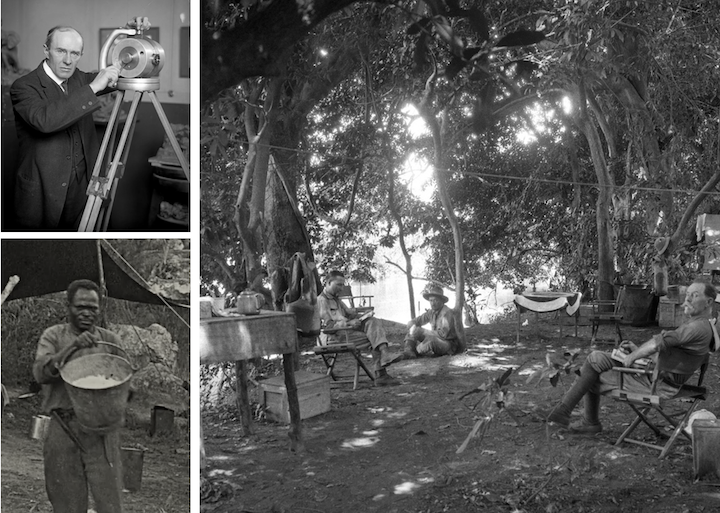
GETTING IT RIGHT…Clockwise from top left: Carl Akeley with his camera, circa 1920s—Akeley contributed hundreds of specimens and images of wildlife and plants to various American museums throughout the course of his career; James L. Clark, William R. Leigh and Richard Radatz relax during a 1926 African expedition to document the flora and fauna (through photos, sketches and paintings) for reference in creating true-to-life dioramas; unidentified expedition worker prepares plaster to make casts of collections (tree bark, leaves, rocks etc.). (amnh.org/uconn.org)
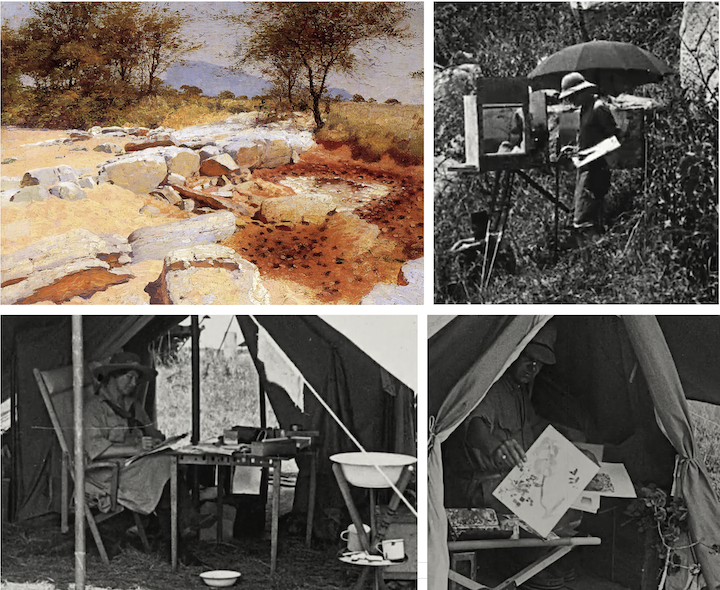
MARRIAGE OF SCIENCE AND ART…Clockwise from top left: William R. Leigh landscape study; expedition artists made paintings en plein air as well as from specimens brought back to their tents (below). At bottom left is Carl Akeley’s second wife, Mary Lee Jobe Akeley (1886–1966), a well-known explorer and naturalist. It was her first expedition to Africa and Carl’s last—he would die of dysentery before the expedition concluded—so Mary took charge of the expedition, and was later named Carl’s successor as adviser to the American Museum of Natural History. (Leigh landscape courtesy Gerald Peters Gallery via jamesperrywilson.wordpress.com/still images taken from a short film of AMNH’s 1926 African Hall expedition, courtesy University of Connecticut)

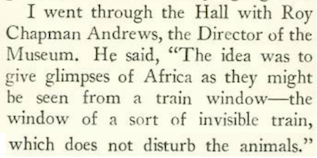
Markey visited with museum director Roy Chapman, who likened the dioramas to “glimpses of Africa as they might be seen from a train window…” Since this was 1936, no one seemed too concerned about the ethical implications of hunting and killing animals for museum displays. It should be noted that most animals we see in major natural history museums today were killed during early 20th-century expeditions such as Akeley’s; animals used in new displays are often obtained from zoos or sanctuaries after dying of natural causes.

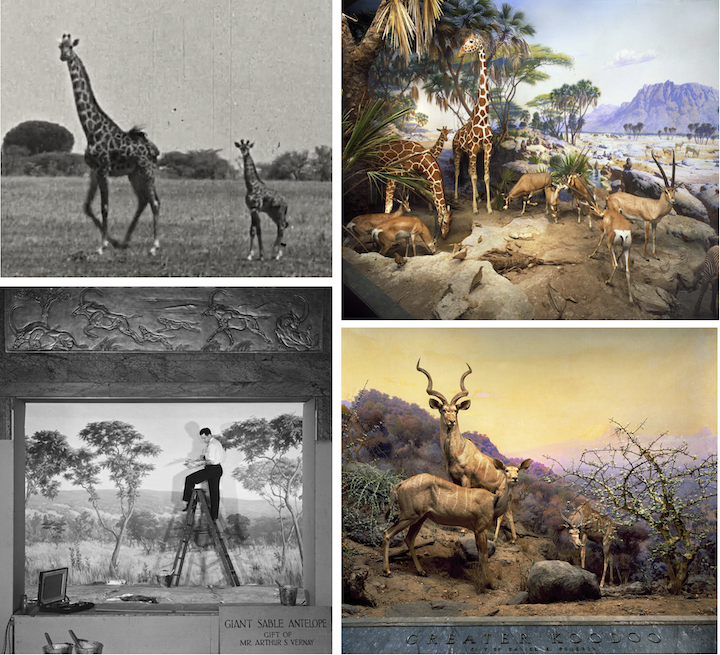
OUT OF AFRICA…Still image of giraffes taken from a short film of AMNH’s 1926 African Hall expedition; the AMNH’s “Water Hole” diorama; “Greater Koodoo” diorama; Clarence Rosenkranz working on the “Giant Sable” diorama. (amnh.org/uconn.org)

There is an undeniable appeal to these artificial environments. Although our digital age offers all sorts of them, there are still kids who like to build dioramas in shoeboxes. And for those of us who grew up in 1960s and 70s, there was the thrill of opening a new three-pack of View-Master reels, each slide revealing a three-dimensional, self-contained world.

And so it is with museum dioramas. They offer a moment of wonder and calm to viewers. As the noisy world collapses around them, these displays—however artificial—might inspire in some a greater appreciation of these creatures and their fragile environments.

(amnh.org)

The AMNH has posted a video on the taxidermy process, if you are interested.

 * * *

At the Movies

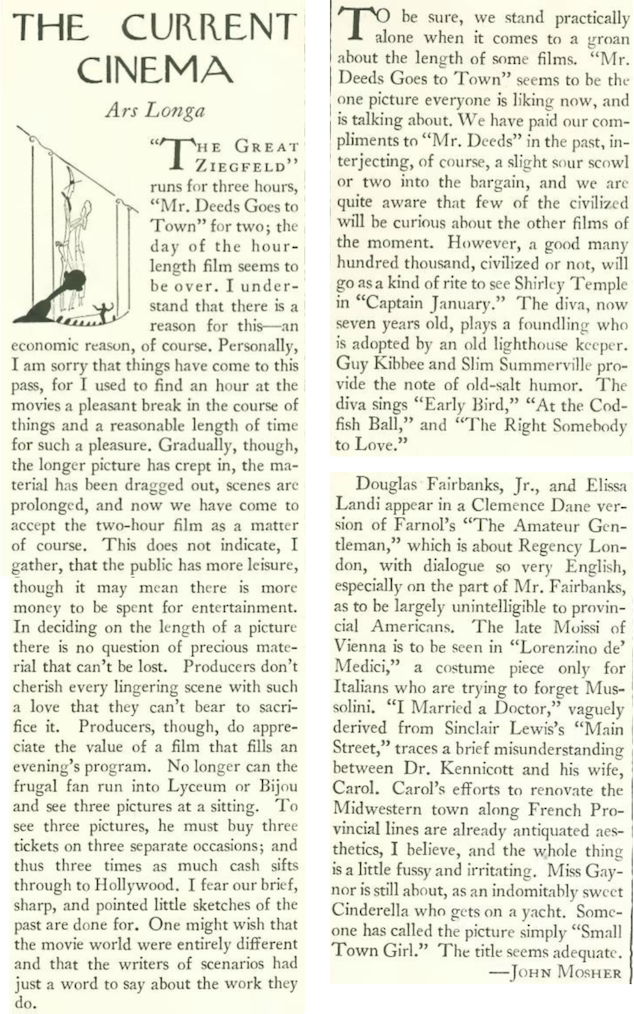
One can imagine film critic John Mosher rubbing his eyes as he pondered the reasons why Hollywood insists on making overly long movies (also lamented by critics today). He also reviewed four new films, with little enthusiasm.

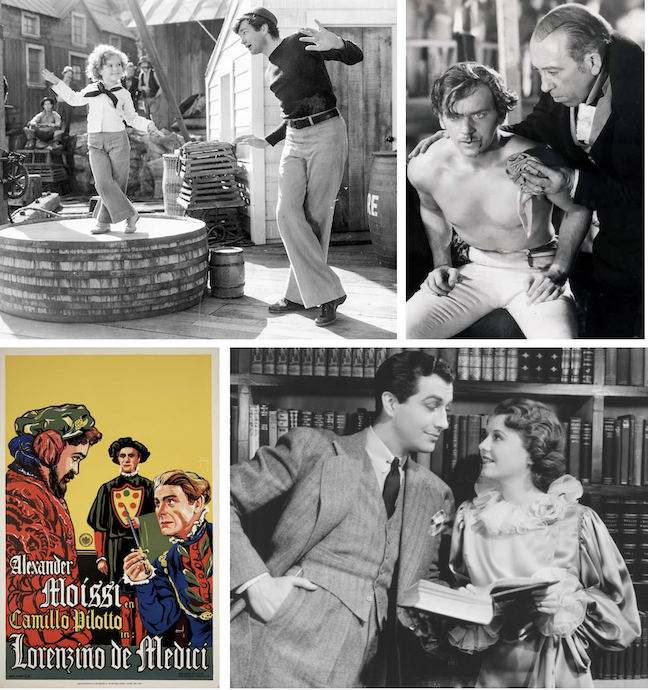
LONG IN THE TOOTH?…Clockwise from top left: Critic John Mosher seemed to imply that seven-year-old Shirley Temple (seen here with Buddy Ebsen in Captain January) was getting too old to play the precocious little healer; Douglas Fairbanks Jr. and Gordon Harker in The Amateur Gentleman; Janet Gaynor and Robert Taylor made cute in I Married a Doctor; movie poster for Lorenzino de ’Medici, which Mosher felt was best suited to Italian audiences. (letterboxd.com)

 * * *

Getting Things Done

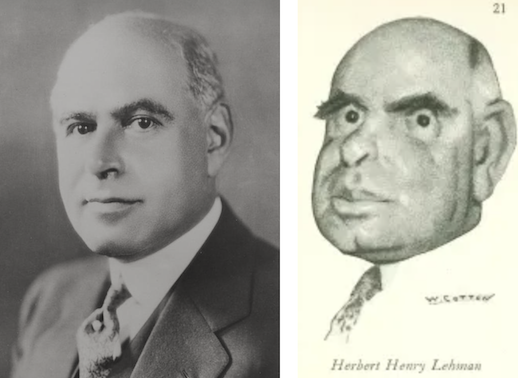
Journalist Hickman Powell filed the first part of a two-part profile of New York’s 45th Governor, Herbert Lehman (1878–1963). The first Jewish governor of New York, Lehman was a prominent liberal leader and a major philanthropist, known for implementing a “Little New Deal” that established a minimum wage, unemployment insurance, and public housing.
HMMM…William Cotton was a terrific caricaturist, but he seemed to miss the mark with this illustration of Gov. Herbert Lehman for the “Profile.” (Wikipedia)

 * * *

From Our Advertisers

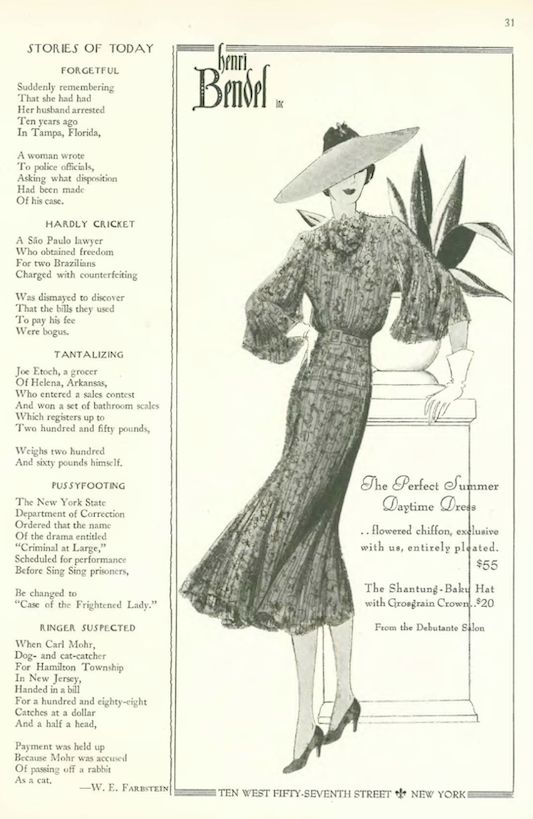
The May 2 issue was crammed with ads for women’s summer fashions, which were defined by longer, leaner silhouettes…

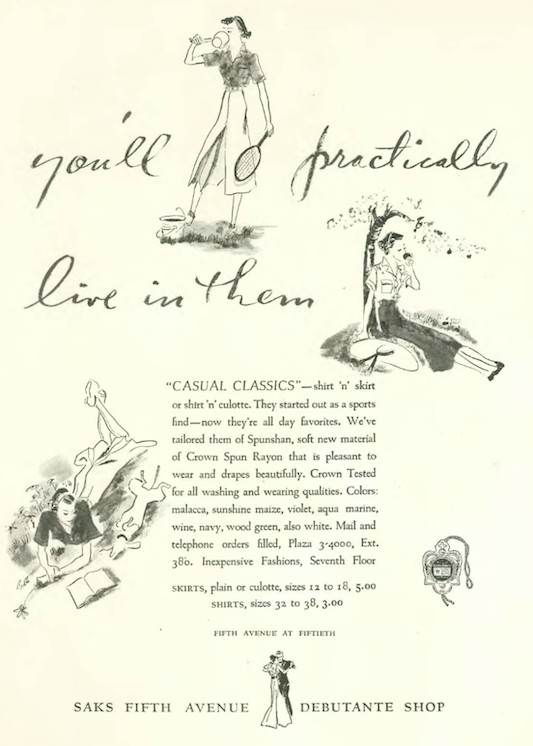
…and by the increasing popularity of practical sports and casual clothes…

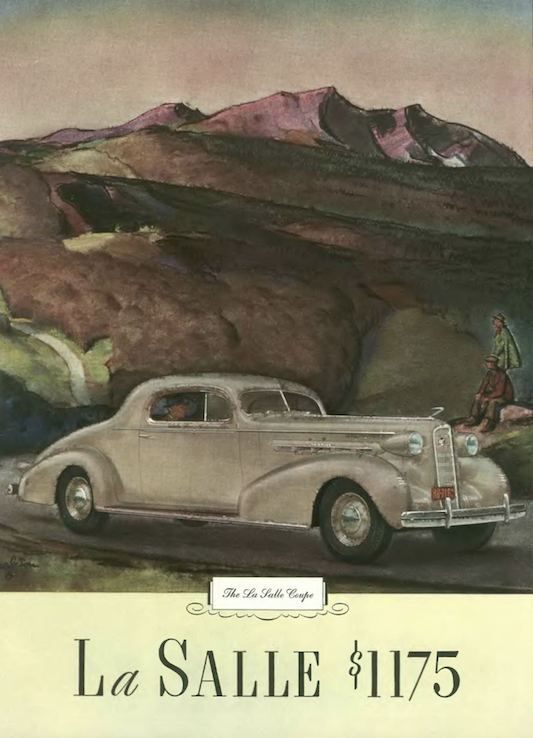
…the makers of Cadillac motorcars continued to emphasize their lower-priced LaSalle models for Depression-squeezed consumers…

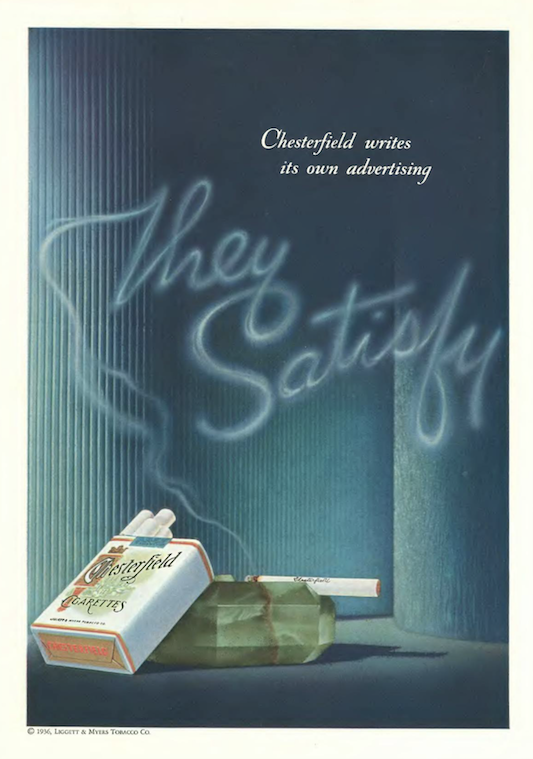
…no fashion models or health claims here, just the allure of cigarette smoke courtesy Liggett and Myers…

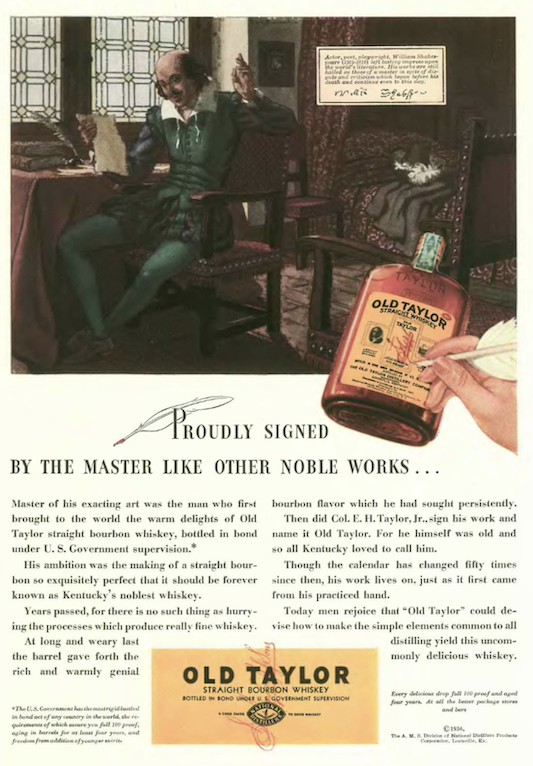
…the distillers of Old Taylor wanted you to associate their product with the timeless work of William Shakespeare…after all, who’s going to sue them over image rights?…

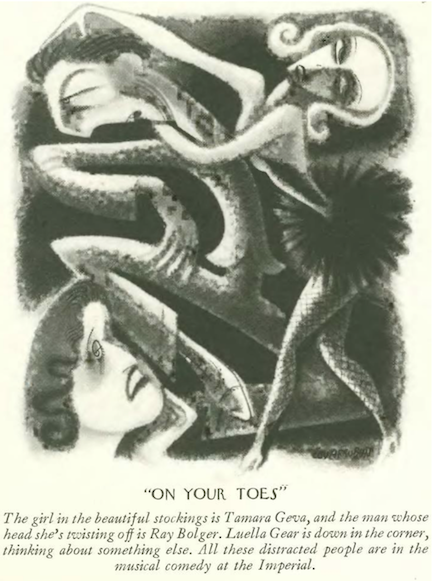
…on to our cartoonists…Miguel Covarrubias, whose work was featured in The New Yorker’s first issue and was frequent in those early days, lent his talents to the theatre review section with this rendering from On Your Toes

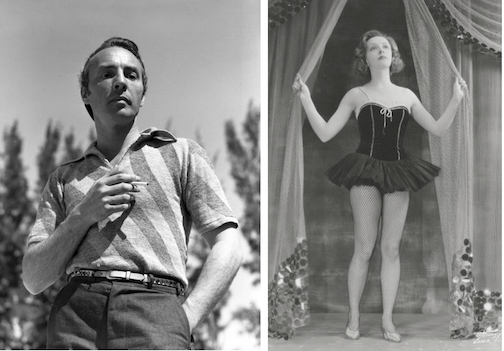
…something else I forgot to mention in my last post, On Your Toes also marked George Balanchine’s debut as a Broadway choreographer…

ON HIS TOES…At left, George Balanchine in 1942; at right, Tamara Geva in 1936’s Broadway production of On Your Toes. Geva, an actress, ballet dancer, and choreographer, was Balanchine’s first wife (married 1921-1926). (Wikipedia/instagram)

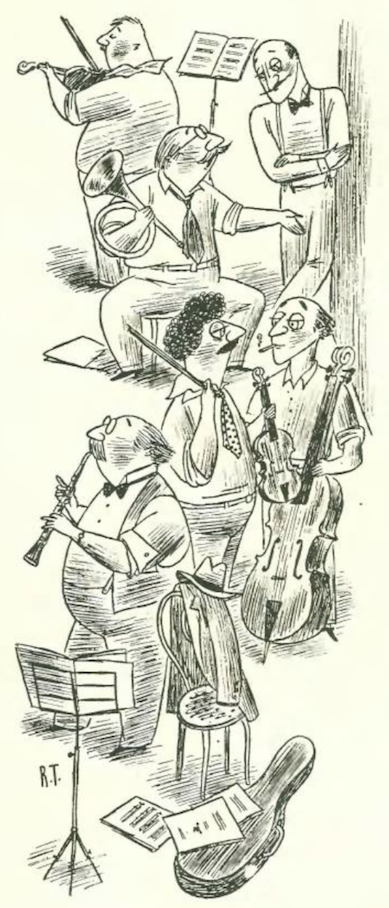
…we are seeing a lot of Richard Taylor in the 1936 issues, especially in providing spot illustrations such as this one…

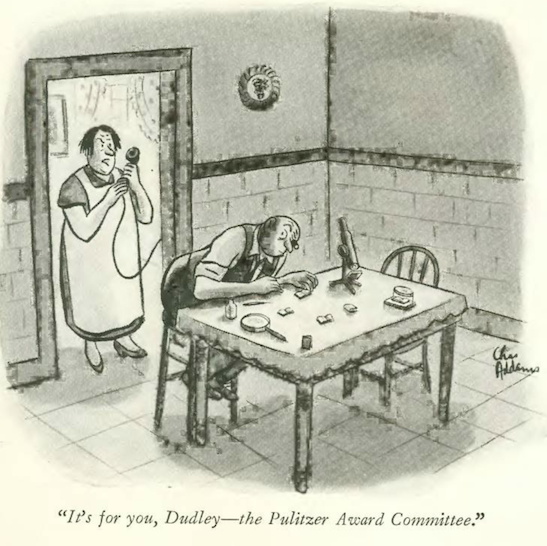
Charles Addams deployed some sarcasm on the domestic front…

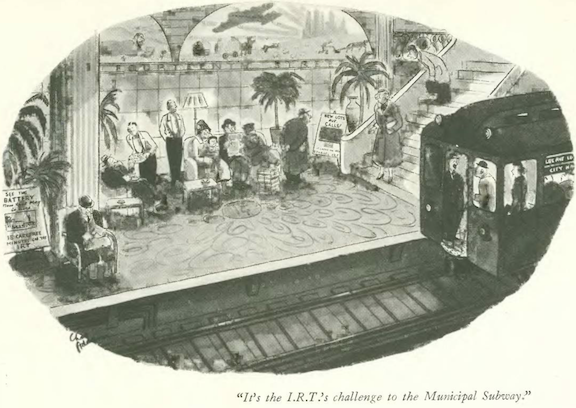
…and Addams again, commenting on the fierce rivalry between the privately owned Interborough Rapid Transit (IRT) and the municipal subway systems…

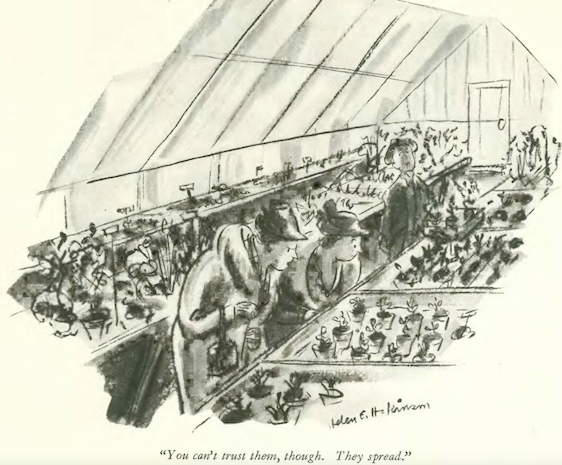
…and we have two by Helen Hokinson, having misgivings about a greenhouse variety…

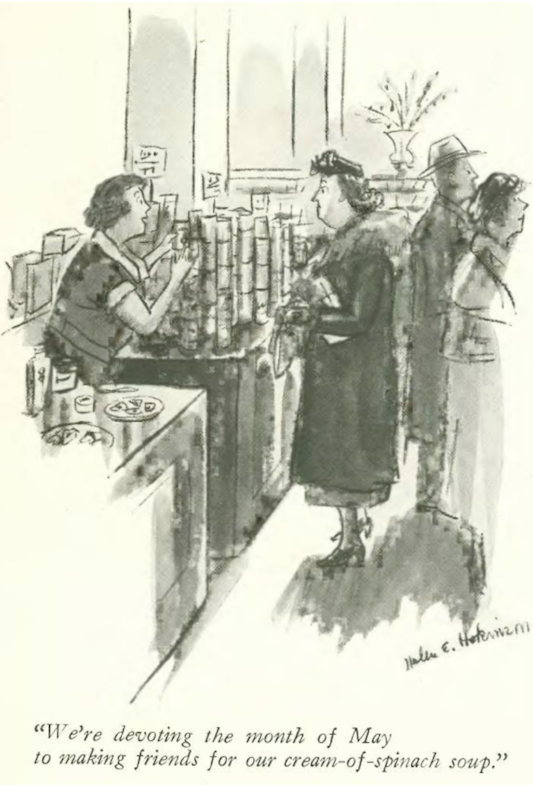
…and finding a personal commitment to a can of soup…

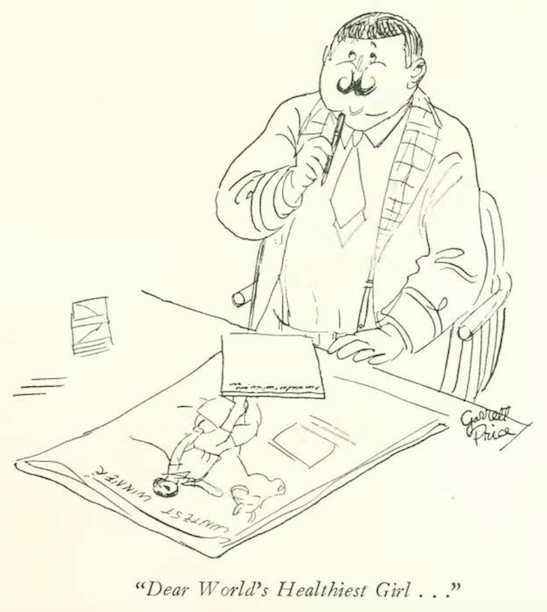
Garrett Price had this man doing some wishful thinking…

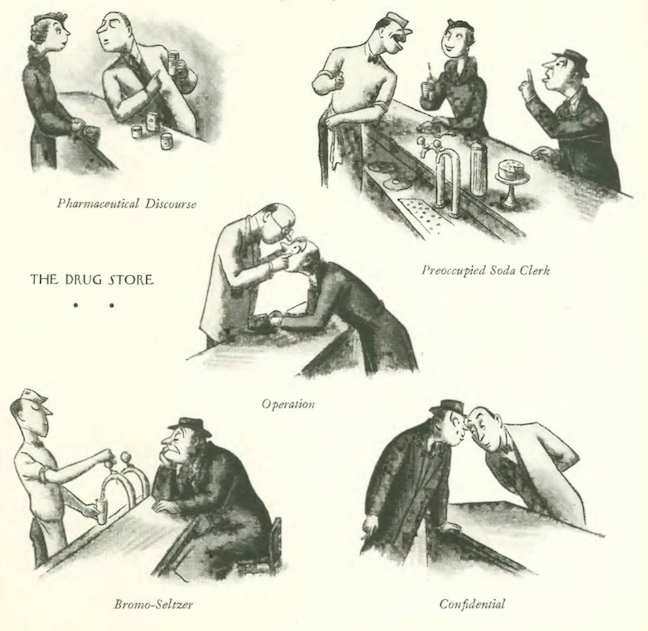
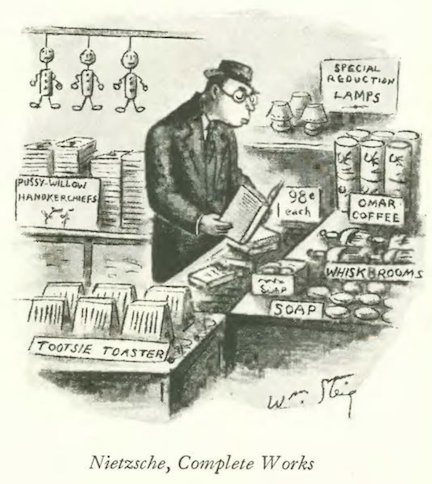
William Steig used a two-page spread to illustrate a day at the drugstore…

…another drawing from the group, appearing on the left-hand page…

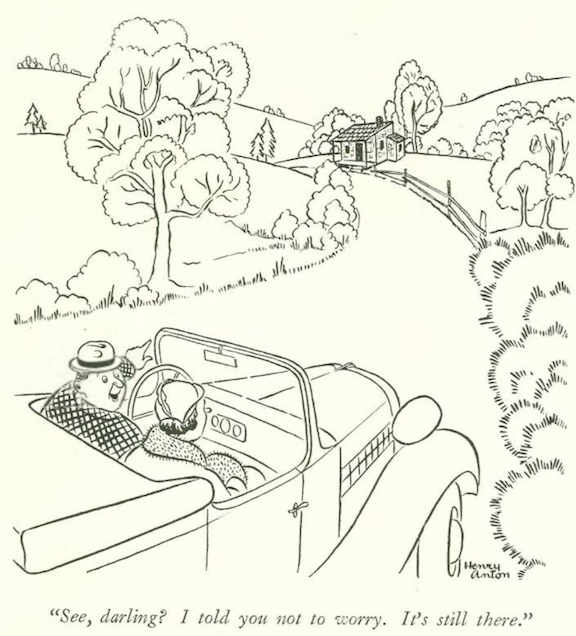
…keeping it in the family, we have one by Henry Anton Steig (William Steig’s brother)…according to Michael Maslin’s indispensable Ink Spill, Henry contributed nineteen drawings to The New Yorker from 1932 to 1936 under the name Henry Anton…this one was his final contribution…

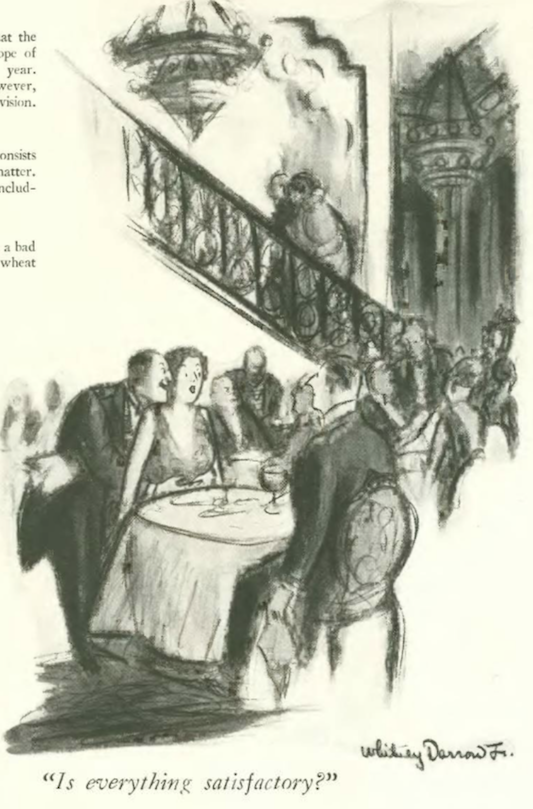
Whitney Darrow Jr drew up this over-enthusiastic maître d’…

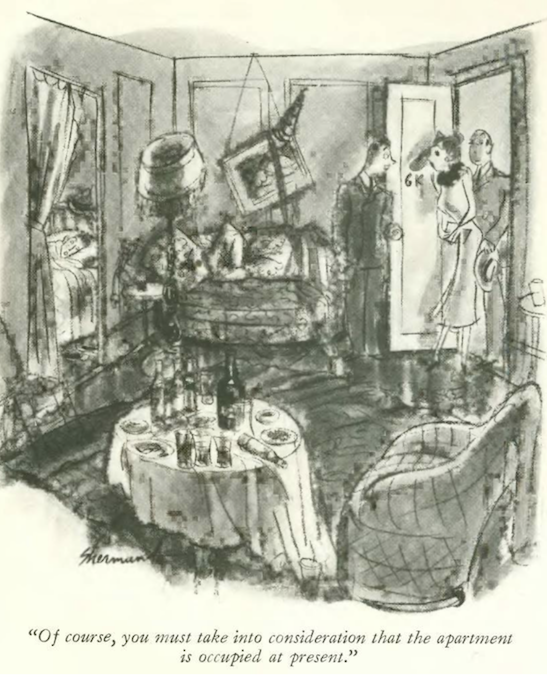
Barbara Shermund went apartment hunting…

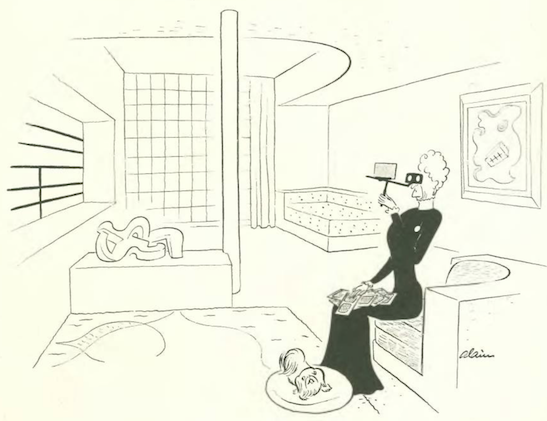
…and we close with Daniel ‘Alain’ Brustlein, and a room with a view…

Next Time: Saving the Row…