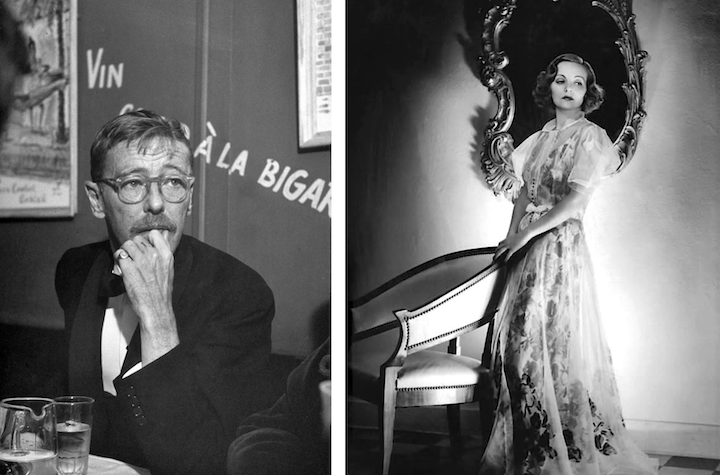
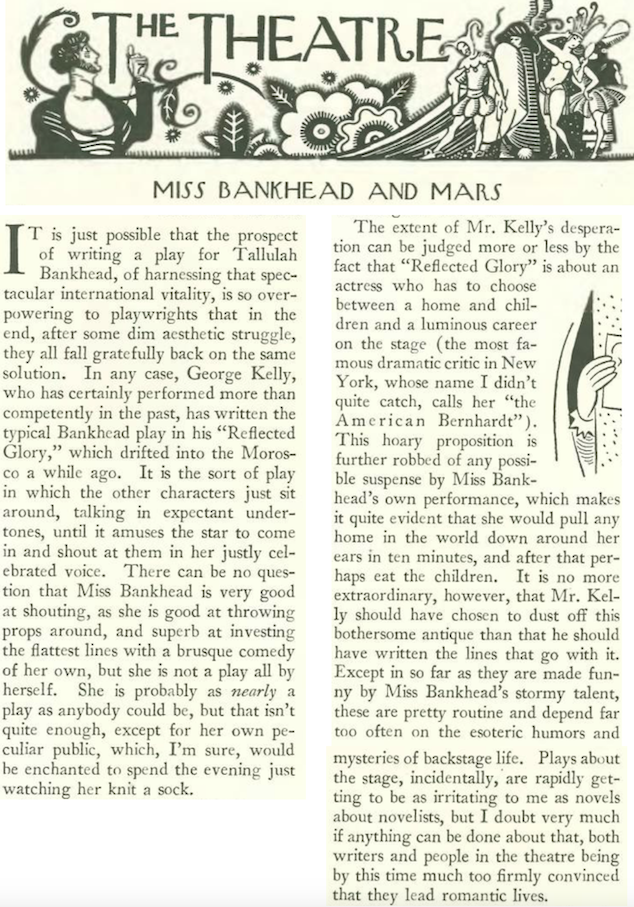
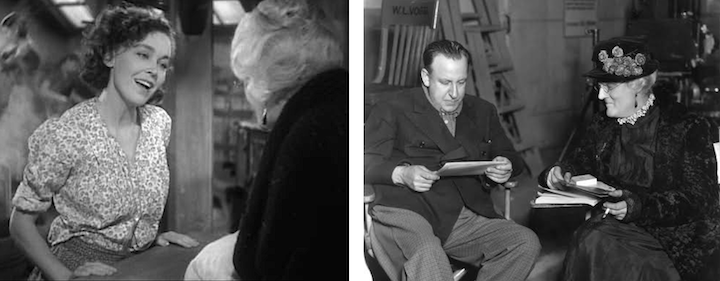
Above: In his review of Tallulah Bankhead's performance in "Reflected Glory," Wolcott Gibbs noted that she was a force to be reckoned with: ..."she would pull any home in the world down around her ears in ten minutes, and after that perhaps eat the children." (newyorker.com/facebook.com)
Broadway’s fall season was still young when the Morosco Theatre staged Reflected Glory, featuring Tallulah Bankhead in a role that mimicked her famously flamboyant lifestyle.
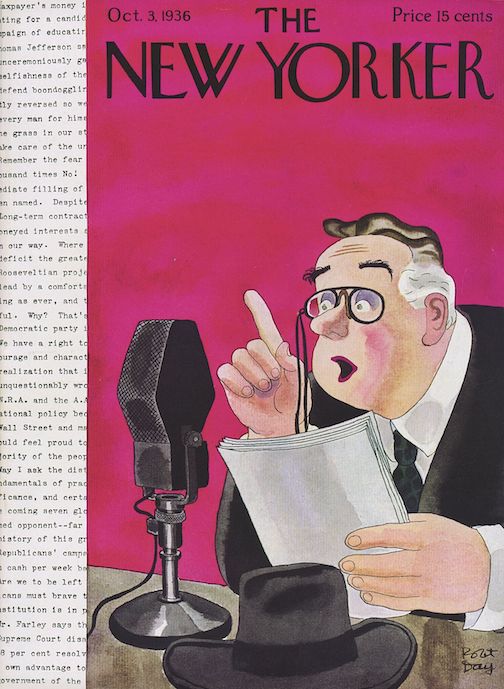
October 3, 1936 cover by Robert Day.
The play, which ran for 127 performances, was not well-received by the critics, but audiences loved it, and especially those who, in the words of critic Wolcott Gibbs, “would be enchanted to spend the evening just watching (Bankhead) knit a sock.”
Bankhead (1902–1968) also appeared in films (she won a New York Film Critics Circle award in 1944 for her performance in Alfred Hitchcock’sLifeboat), but she was mostly known for her stage acting and her wild lifestyle—drugs, alcohol, and lots of sex with both men and women; she was candid about her vices, including the claim she smoked 120 cigarettes a day.
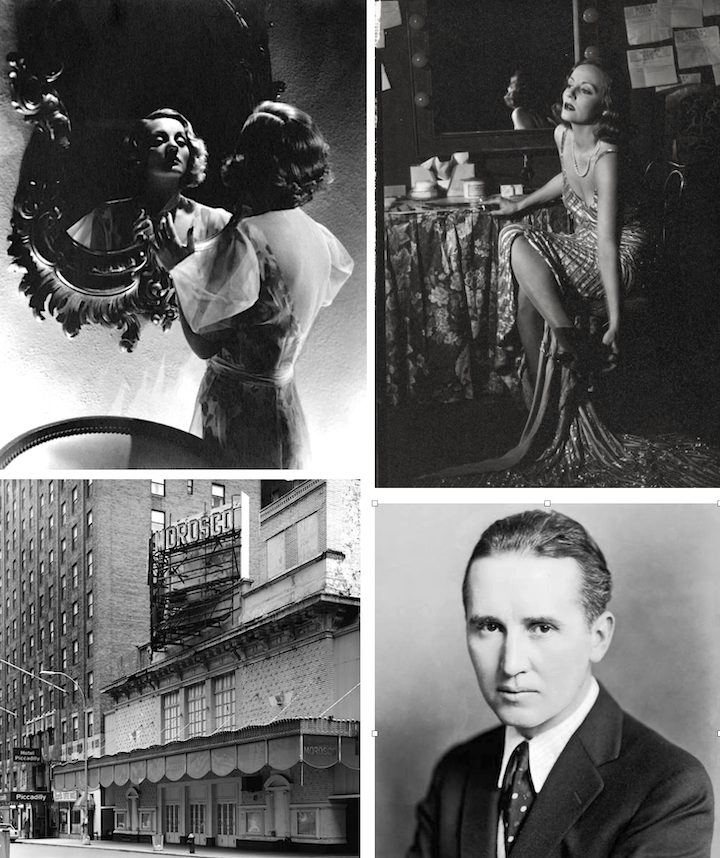
ART IMITATES LIFE…Clockwise, from top left: Tallulah Bankhead in promotional photo for Reflected Glory; Bankhead played Muriel Flood, a flamboyant, self-absorbed actress who constantly dramatizes her own life both on and off stage; author and director George Kelly wrote Reflected Glory specifically for Bankhead; Broadway’s Morosco Theatre (demolished 1982). (cinemaclassico.com/jacksonupperco.com/Wikipedia)
Early in her career Bankhead, an Alabama native, moved into the Algonquin Hotel and quickly made her way into the orbit of the famed Algonquin Round Table—so, she was well-known to Gibbs, who noted in this excerpt that Bankhead’s only competition in Reflected Glory was William Brisbane, a man with a face “as mad and vacant as the moon.”
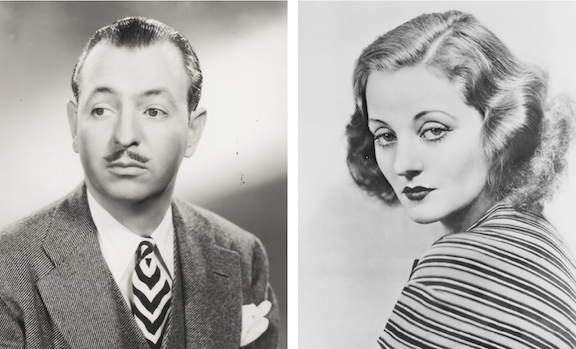
MAD MATCH…Wolcott Gibbs noted that William Brisbane was Tallulah Bankhead’s only competition in Reflected Glory.(themovieb.org/npg.org.uk)
* * *
The Yankee Clipper
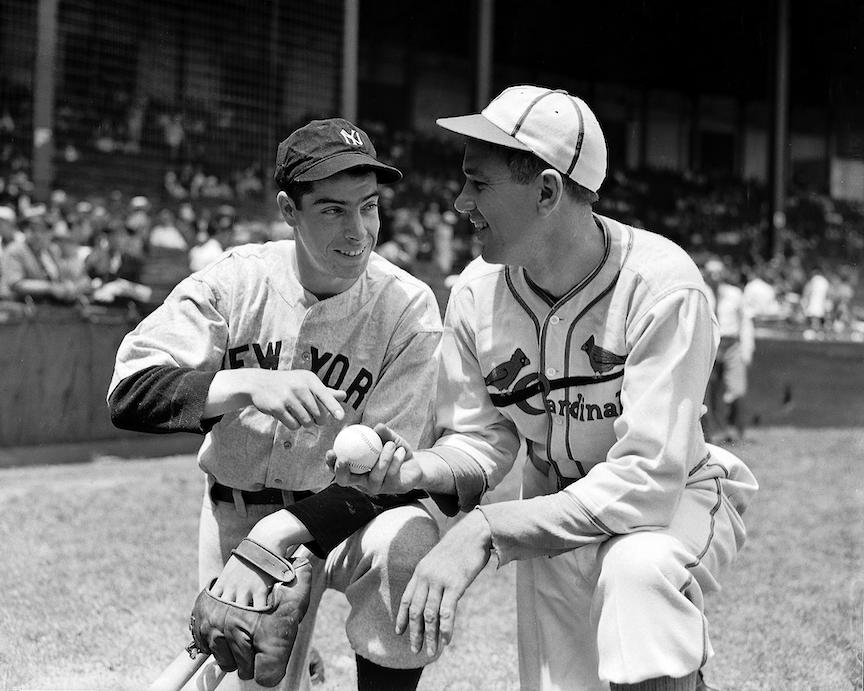
Baseball was mostly ignored in the early years of the New Yorker, but every now and then the magazine would feature a famous personality from the game, in this case Joe DiMaggio, who in 1936 would set a franchise record for rookies by hitting twenty-nine home runs (in just 138 games).
DIZZY AND JOE D…Yankees rookie Joe DiMaggio meets with Cardinals pitcher Dizzy Dean at the All-Star Game in Boston July 7, 1936. (AP Photo)
* * *
Right of the Right
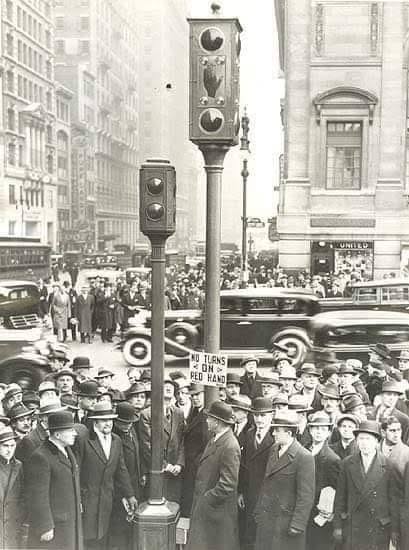
In his “Notes and Comment,” E.B. White took issue with a proposal by the New York Board of Aldermen to ban right-hand turns against a red light (the board ultimately approved the ban).
SEEING THE LIGHT…City officials examine new traffic lights on Fifth Avenue, 1933. (Golden Age Of Travel via facebook.com)
* * *
At the Movies
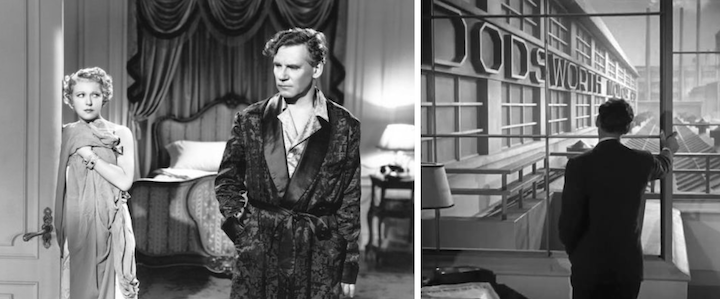
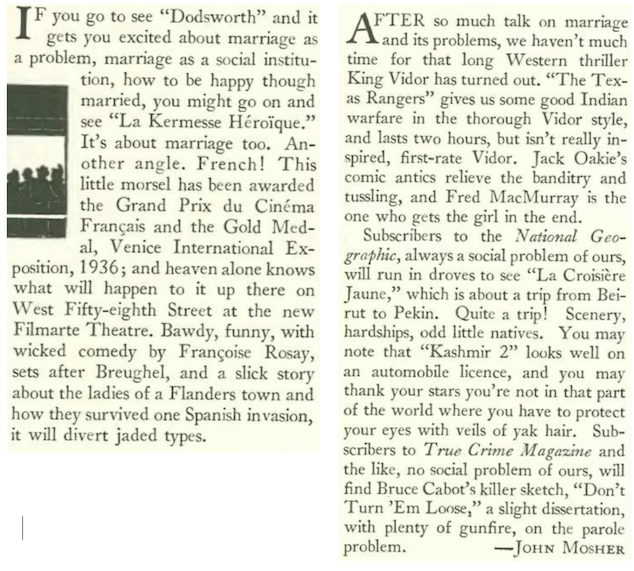
Based on a 1929 novel by Sinclair Lewis, the William Wyler-directed Dodsworth was acclaimed by critics as one of the best films of the year. New Yorker critic John Mosher wholeheartedly agreed:
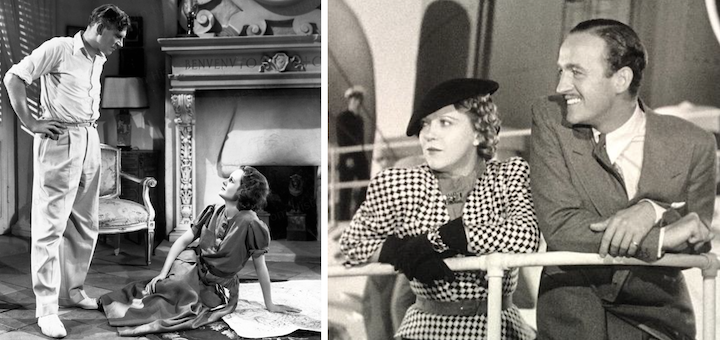
SHE SAID, HE SAID…At left, Ruth Chatterton and Walter Huston portrayed a couple in a declining marriage in Dodsworth; at right, retired auto magnate Sam Dodsworth (Huston) reconsiders the life he has made for himself. (torontofilmsociety.com/YouTube.com)COMPLICATIONS…While travelling on the RMS Queen Mary to England, the Dodsworths find romantic companions—at left, Sam finds a soulmate in Edith Cortright (Mary Astor), while Fran flirts with a younger Englishman, Captain Lockert, played by David Niven. It was Niven’s first sizable role—he was a lieutenant in the British Army before coming to Hollywood in 1935. (eBay.com/film-foundation.org)
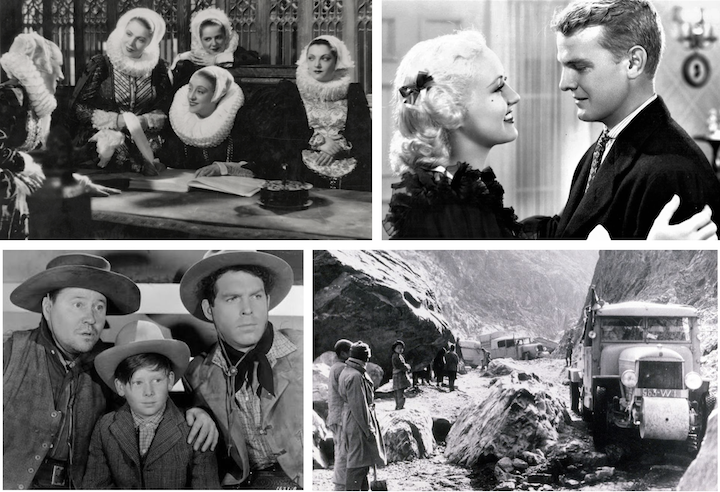
Mosher also reviewed a mixed bag of films, including the “wicked comedy” La Kermesse héroïque (Carnival in Flanders) featuring French opera star Françoise Rosay as a mayor’s wife who cleverly thwarts potential troubles from visiting Spanish soldiers.
BAWDY FUN was how John Mosher described the schemes of a mayor’s wife in La Kermesse héroïque (Carnival in Flanders)—clockwise, from left: Françoise Rosay (seated) organizes the village women to tame some visiting soldiers; Betty Grable and John Arledge in the crime drama Don’t Turn ’em Loose; La Croisière Jaune (Yellow Expedition) documented a 1931-32 French trans-Asian expedition organized by Citroën to promote its rugged Kégresse track vehicles; Jack Oakie, Bennie Bartlett and Fred MacMurray in The Texas Rangers. (mubi.com/imdb.com/radiofrance.fr/csfd.cz)
* * *
From Our Advertisers
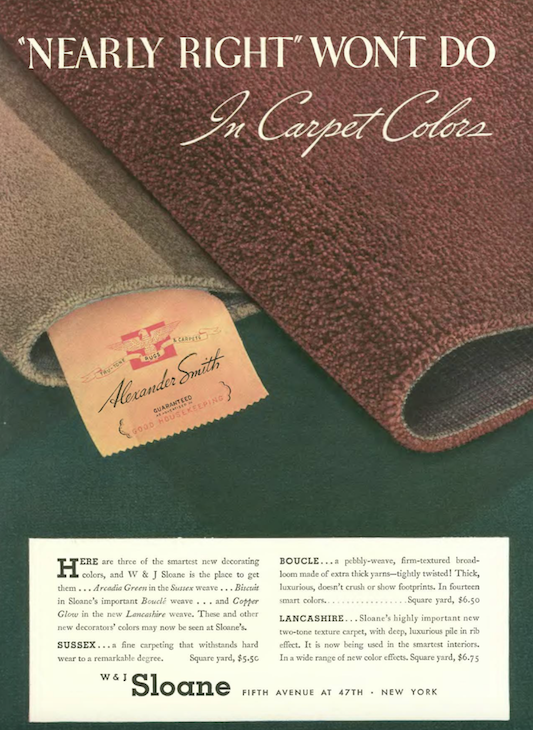
Fall advertising continued its uptick in the magazine, with many splashes of color including this carpet ad that greeted readers on the inside front cover…
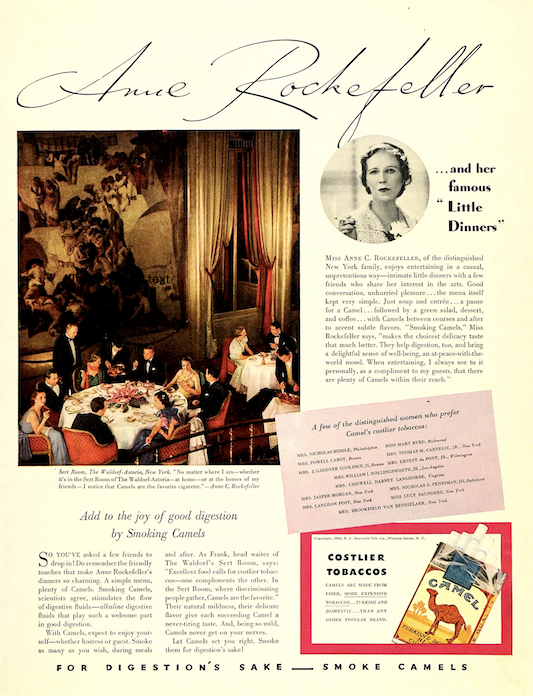
…R.J. Reynolds continued to roll out endorsements from society mavens…here Anne C. Rockefeller stated that Camels gave her “a delightful sense of well-being”…
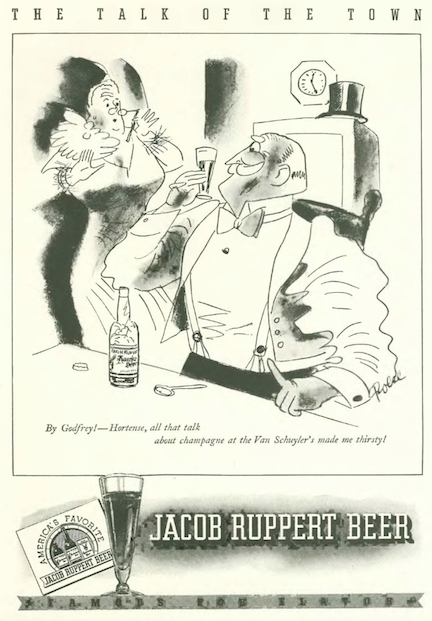
…more Colonel and Duchess archetypes turn up in this issue, on behalf of Ruppert beer…
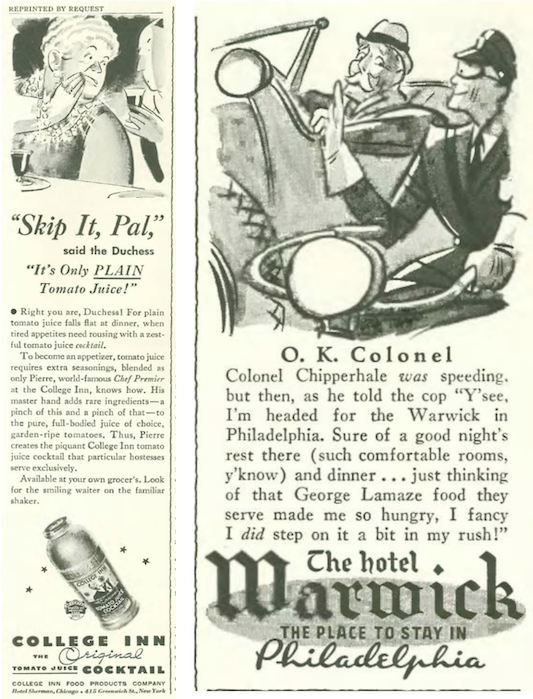
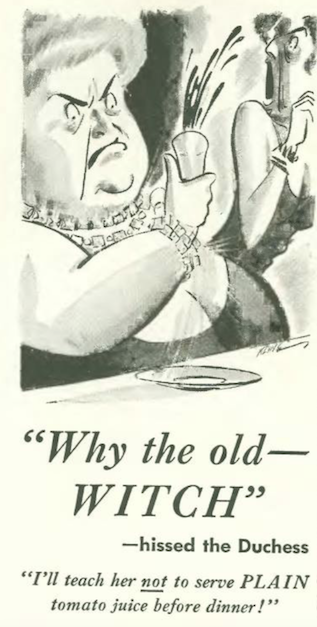
…the Warwick Hotel (Philadelphia), and College Inn tomato juice “cocktail”…College Inn had softened the appearance of their Duchess…
…since she was last spotted in The New Yorker in 1935 (detail)…
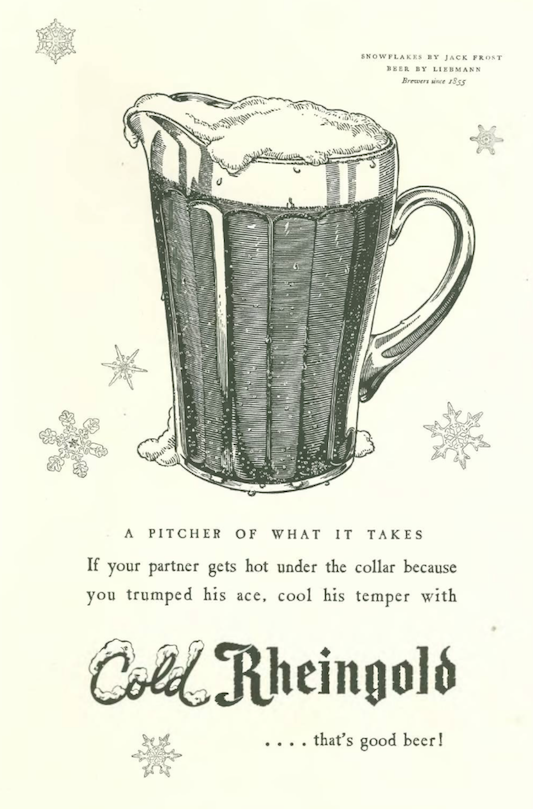
…after a blazing hot summer, the brewers of Rheingold figured this image would still appeal to parched New Yorkers…
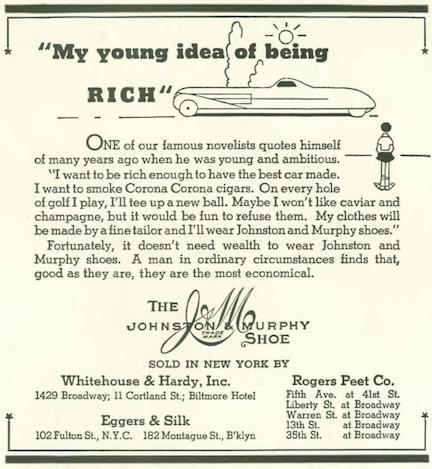
…a back of the book ad from Johnston & Murphy, quoting an unidentified author regarding some childhood wishes…
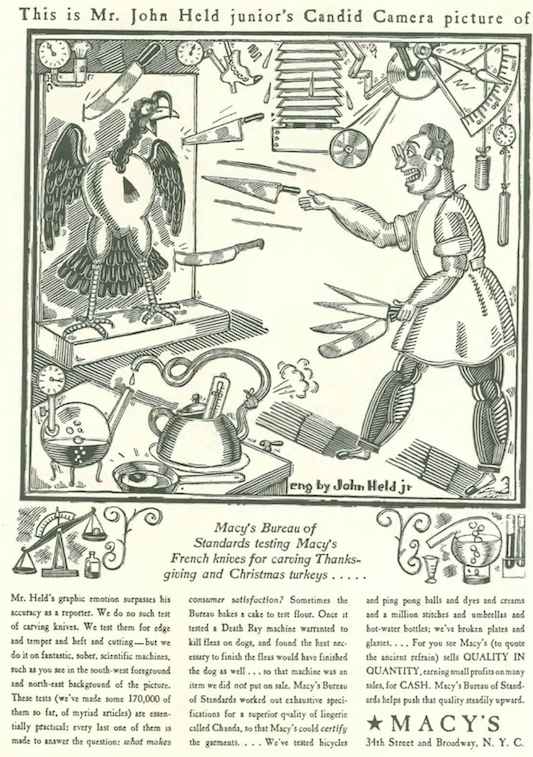
…John Held Jr. was one of the earliest contributors to The New Yorker—from 1925 to 1932 his woodcut-style cartoons and fanciful maps were frequent features…by 1936 Held had turned his talents to painting, book illustration, and the occasional advertisement, here on behalf of Macy’s…
…our illustrators and cartoonists for this issue include Christina Malman…
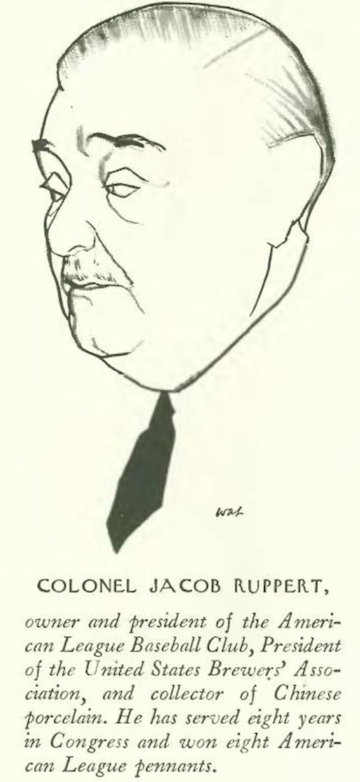
…a caricature by William Auerbach-Levy for the calendar section’s mini bio…
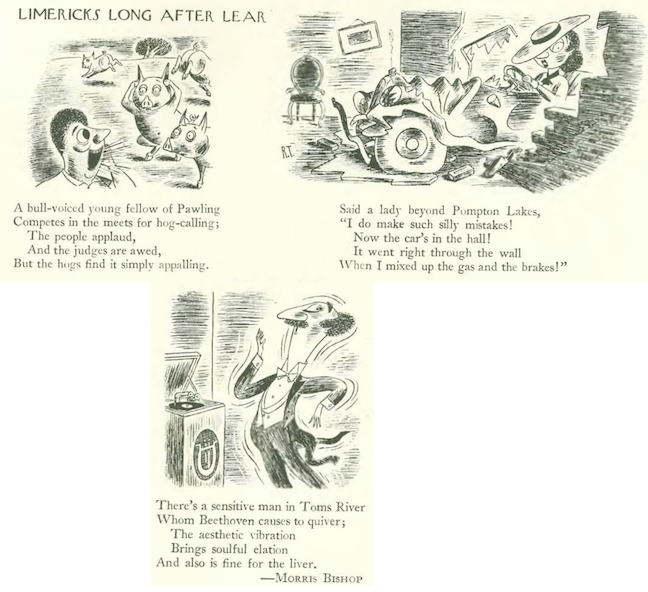
…another Richard Taylor–Morris Bishop collaboration…
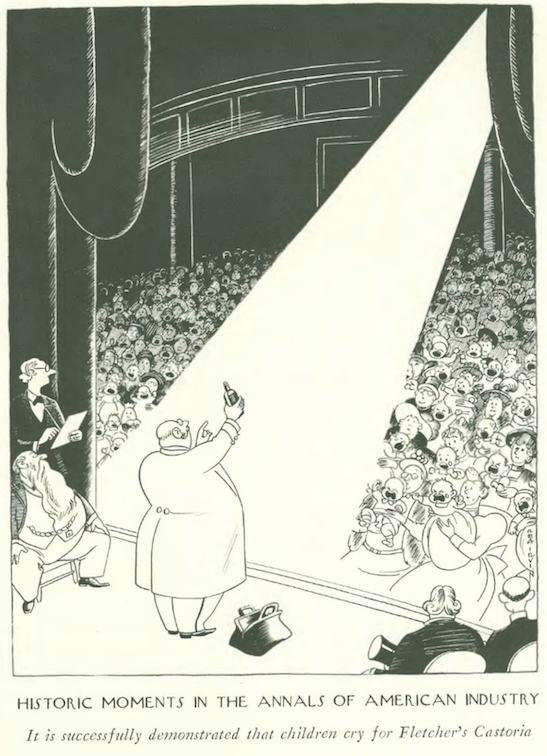
…more historic moments from American Industry, with Rea Irvin…
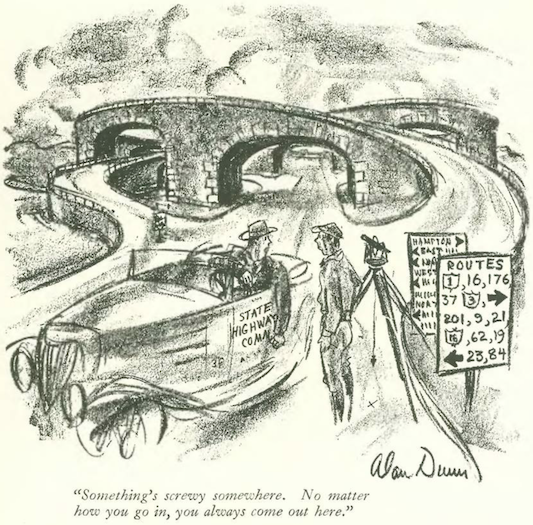
…Alan Dunn had an M.C. Escher moment on the turnpike…
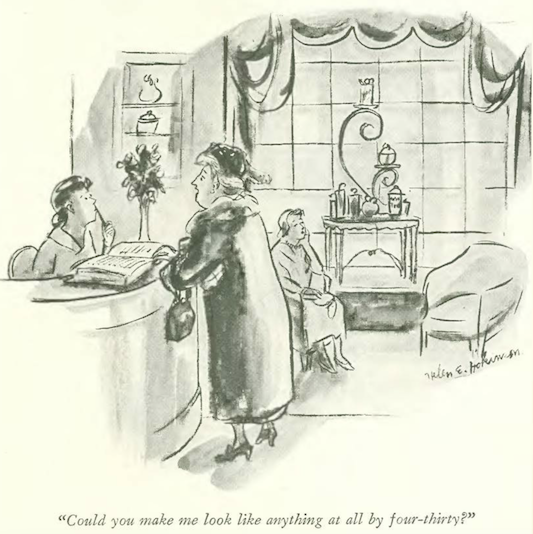
…Helen Hokinson made a big ask at the beauty parlor…
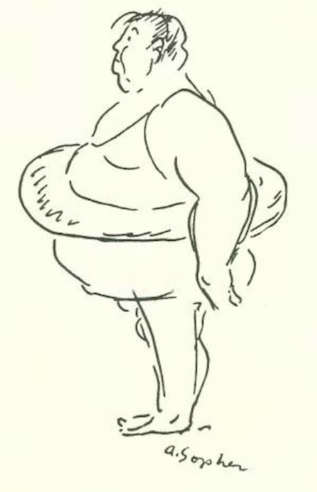
…Ned Hilton drew up a big man with a big complex…
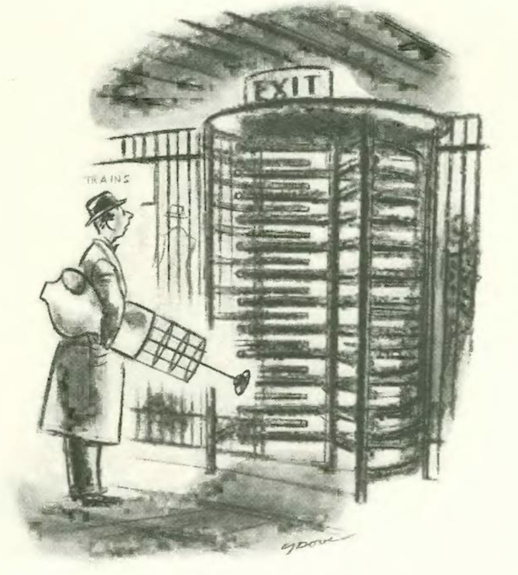
…Leonard Dove offered a challenge and a unique perspective at the subway station…
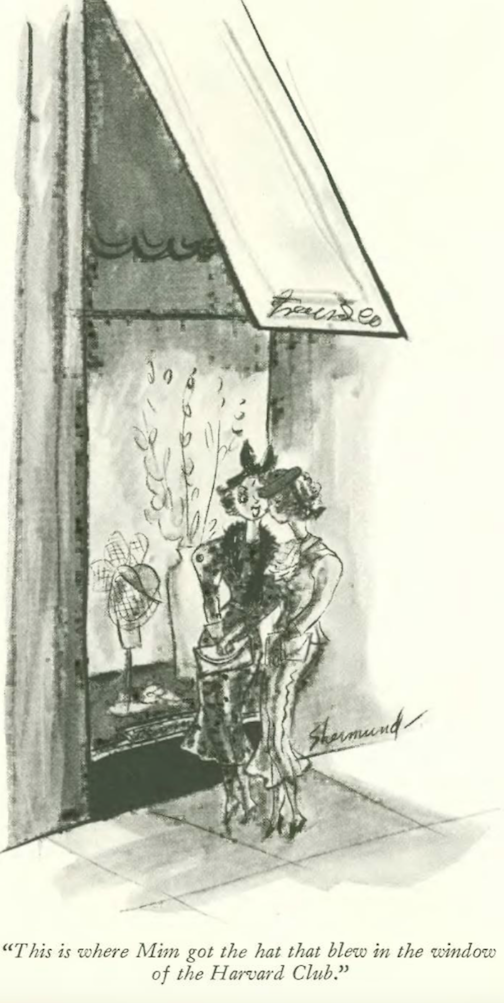
….Barbara Shermund’s modern women thrilled to the sights of Manhattan…
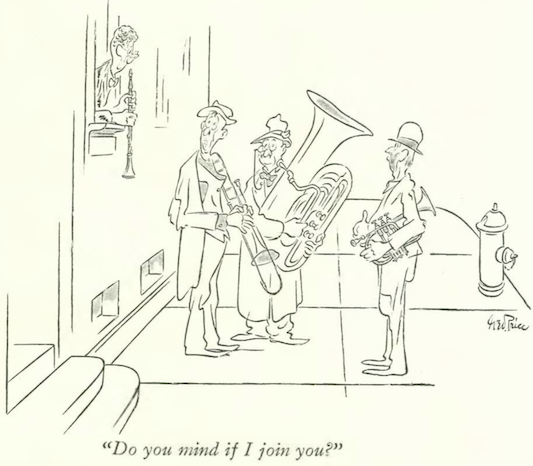
…George Price turned this trio into a quartet…
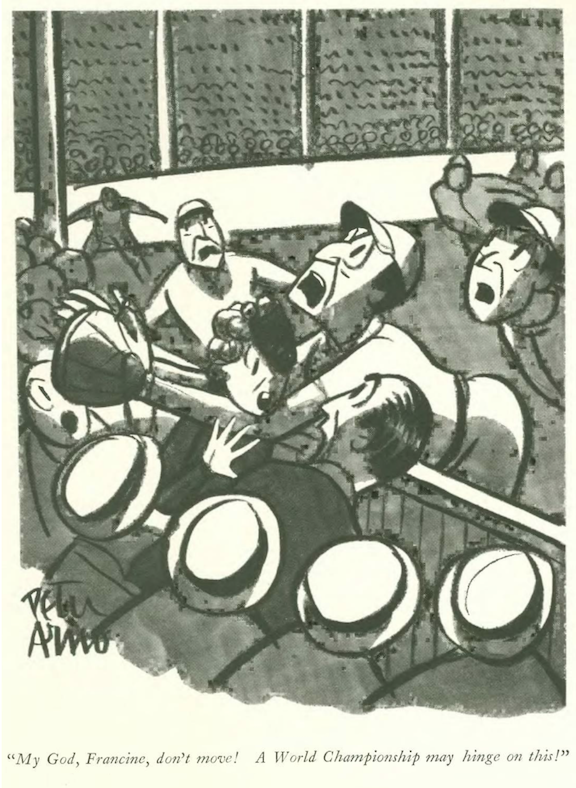
…and we close with a terrific, terrifying moment at the World Series, courtesy Peter Arno…
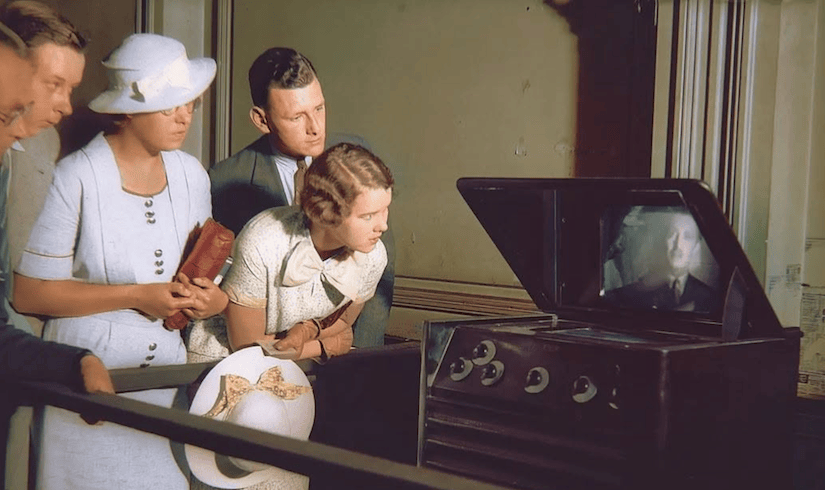
Above: The BBC offered a public demonstration of television at Waterloo Station, London, in 1936. (Colorized image via Facebook)
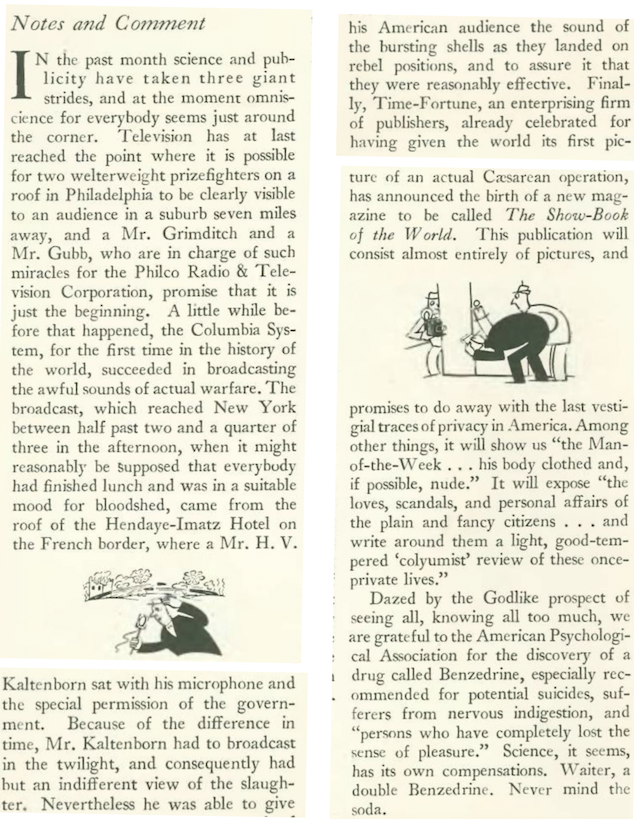
E.B. White was ever wary of new technology (except for aviation—he loved to fly), so television posed yet another thing to fear in the coming age of “omniscience.”
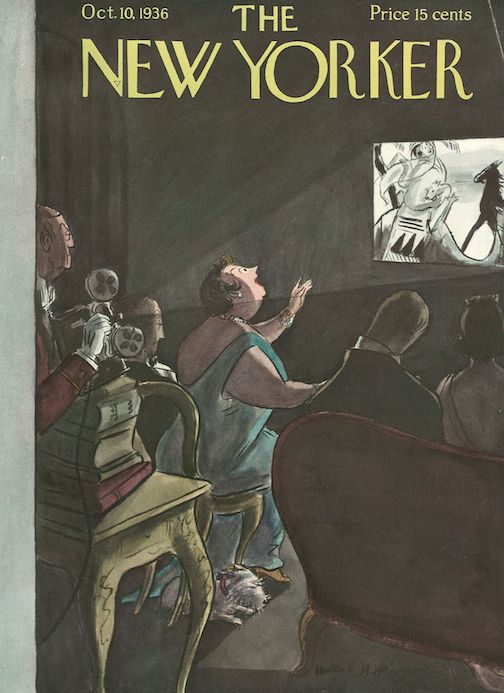
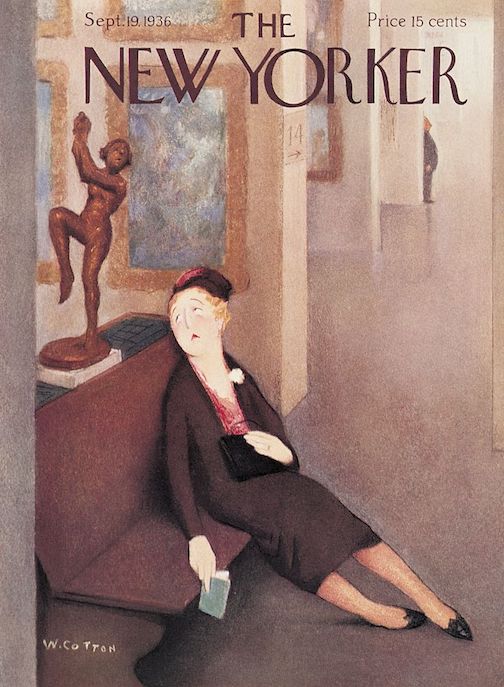
September 19, 1936 cover by William Cotton.
In addition to television, White noted two other “giant strides” in the world of science and publicity: a live radio broadcast featuring sounds from the Spanish Civil War, and the launch of a new magazine that would “consist almost entirely of pictures.”
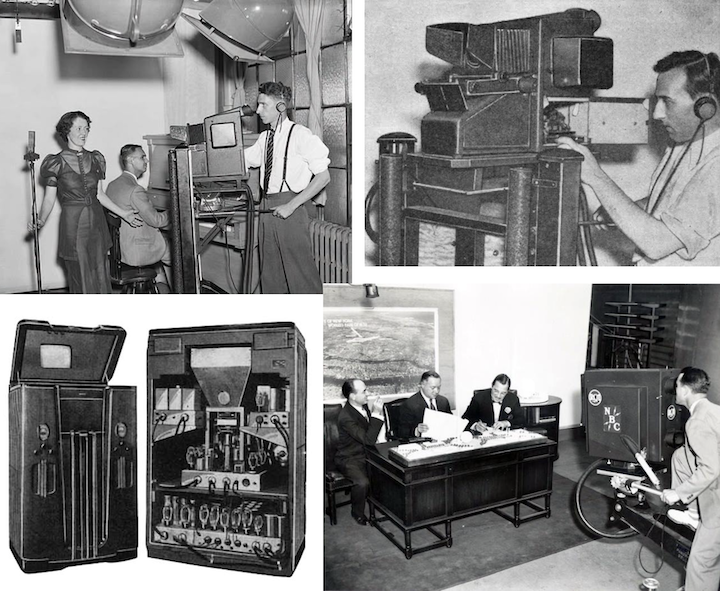
ONE-EYED MONSTER…Clockwise, from top left: On Aug. 11, 1936, Philco Radio and Television demonstrated the transmitting end of a television with the help of camera operator R.E. Waggener and singer Betty McNellis—the sound and picture were projected seven miles to a receiving set; a close-up of a 1936 television camera; photo taken in 1936 during a “live broadcast” from America’s first television studio, NBC Studio 3H—from left, NBC President Lenox Lohr, RCA President David Sarnoff and Fair Committee head Grover Whalen sign a contract for an RCA pavilion at the upcoming 1939 World’s Fair; front and rear view of a 1936 television receiver. (eyesofageneration.com/facebook.com)
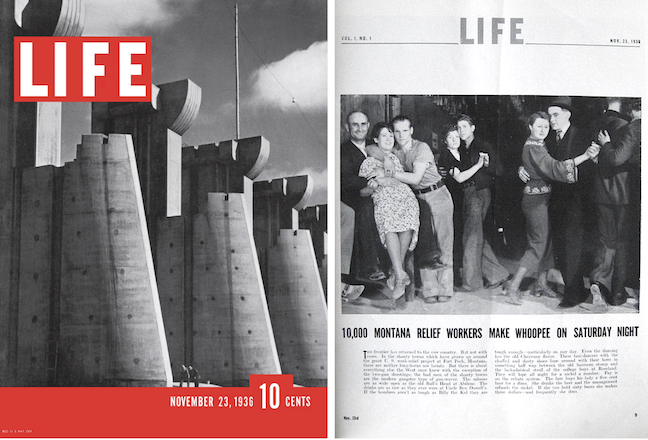
White also noted the upcoming launch of a new magazine, The Show-Book of the World,which was the working title of a publication that would become Life magazine. White did not like the idea of a magazine consisting mostly of pictures that graphically expose “once-private lives,” believing it would “do away with the last vestiges of privacy in America.”
MONUMENTAL…The photo on the first cover of Life magazine, Nov. 23, 1936, was shot by one of Life‘s original four photographers, Margaret Bourke-White, who covered the construction of the Fort Peck Dam, a Public Works Administration endeavor to build the largest earth dam in the world during the Great Depression. At right, a Bourke-White photo of Fort Peck workers enjoying some down time. (npr.org/life.com/worthpoint.com)
* * *
Call for Johnny Roventini!
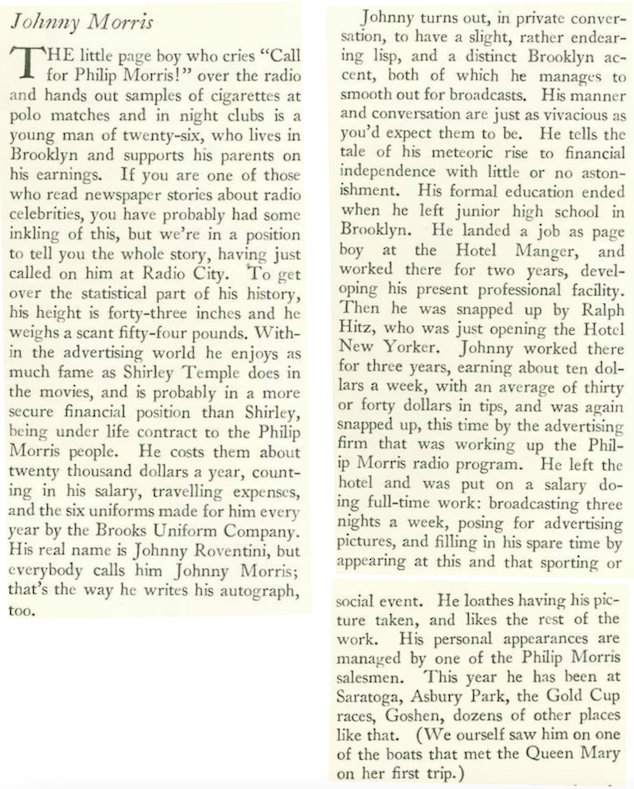
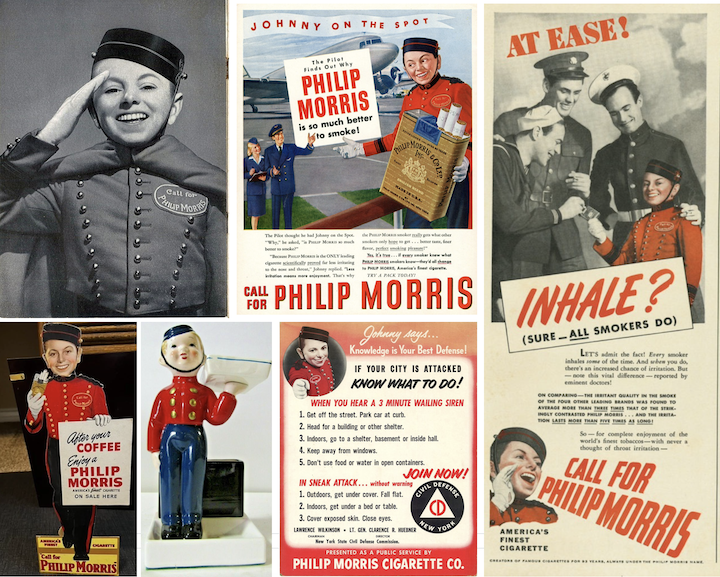
“The Talk of the Town” featured a brief profile of Johnny Roventini (aka Johnny Morris or Johnny the Bellboy), the famous “living trademark” for the Philip Morris tobacco company. Roventini (1910–1998), who represented the company for more than forty years, was working as a bellboy at the New Yorker Hotel in 1933 when he was discovered by an advertising agent. Excerpts:
THEY’RE SELLING YOU…In mid-century America the image of Johnny Roventini, known to the public as Johnny Morris or Johnny the Bellboy, seemed to be everywhere. Clockwise, from top left: Publicity photo, 1937; magazine ad, 1947; ad promoting the armed services, 1941; civil defense-themed ad, 1940s; cigarette match holder; promotional stand-up sign. (cats.ua.edu/standford.edu/worthpoint.com)
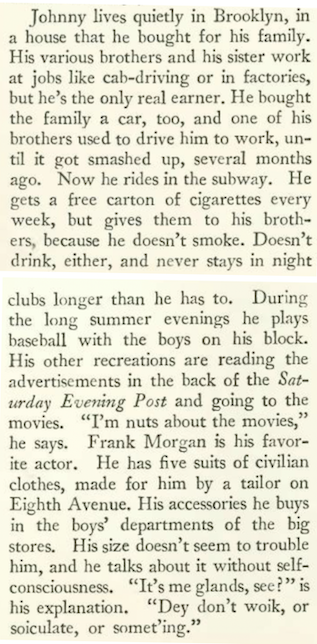
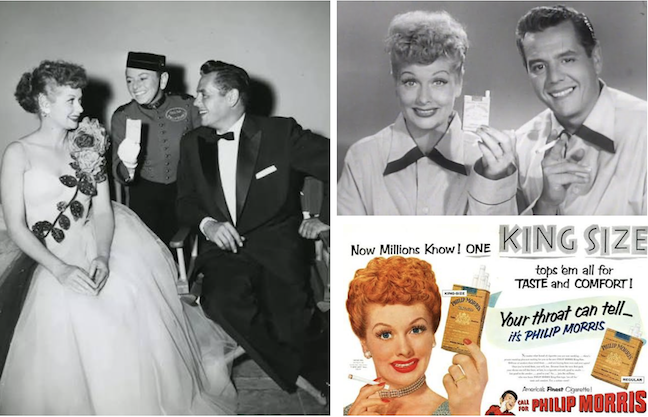
Roventini was probably best known for his Philip Morris promos on I Love Lucy. The new show was challenged to find a sponsor (due to the Cuban character played by Desi Arnaz) until Arnaz arranged a deal that made Philip Morris the exclusive sponsor of I Love Lucy from its premiere on October 15, 1951 through Christmas of 1954. Roventini gained unprecedented national TV exposure and became fast friends with Arnaz and Lucille Ball. Here is one more excerpt from “Talk” regarding the quiet life of Philip Morris’s “living trademark.”
I LOVE PHILIP MORRIS…Lucille Ball, Johnny Roventini and Desi Arnaz formed a lucrative trio for the tobacco company Philip Morris when I Love Lucy went on the air in 1951. Roventini was an occasional, social smoker, while Ball and Arnaz were heavy smokers (although Lucy preferred Chesterfields). (facebook.com/instagram.com)
* * *
At the Movies
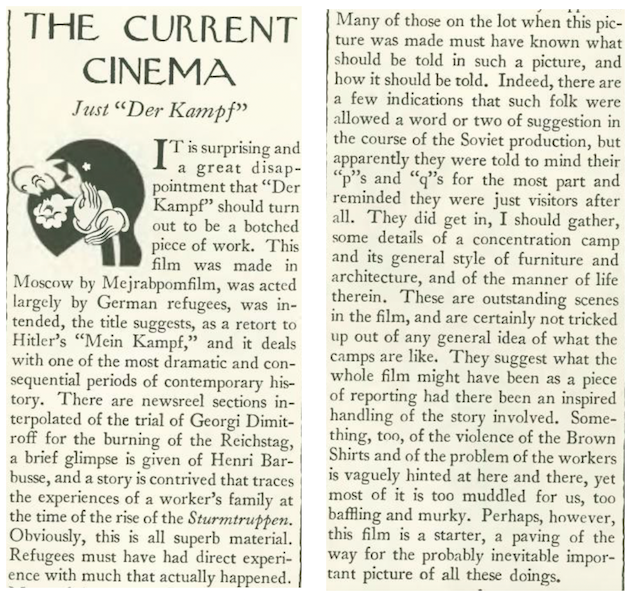
A Soviet film featuring exiled German communists proved to be a disappointment for critic John Mosher, but in retrospect the 1936 German-Soviet film The Struggle (aka Kämpfer or Der Kampf) reveals the strange and terrifying climate artists had to navigate in Stalin’s Russia.
Set in Germany after 1933, the film depicted the resistance of workers against the rise of the Nazi Party. One of the earliest films to depict Nazi terror and concentration camps, ironically many of those who worked on the film became victims of Joseph Stalin’s terror and the Gulag.
DEFIANCE…German actress Lotte Loebinger in a scene from the 1936 German-Soviet movie The Struggle (“Kämpfer”). Loebinger (1905-1995) managed to survive Stalin’s purges and had a long career on the stage in East Berlin following World War II. Loebinger’s lover, a German refugee physician with whom she bore a daughter, was not so fortunate, dying in a Soviet Gulag camp. (YouTube)
Shortly after The Struggle was completed, Stalin purged the community of exiled German communists living in Moscow, and the film was quickly banned by Soviet authorities. A large number of the film’s cast and crew were arrested, sent to the Gulag, or killed, including lead actor Bruno Schmidtsdorf, who was executed by firing squad near Moscow in 1938. Composer Hans Hauska, who wrote the film’s musical score, perished in a Soviet prison camp.
* * *
Playing the Ponies
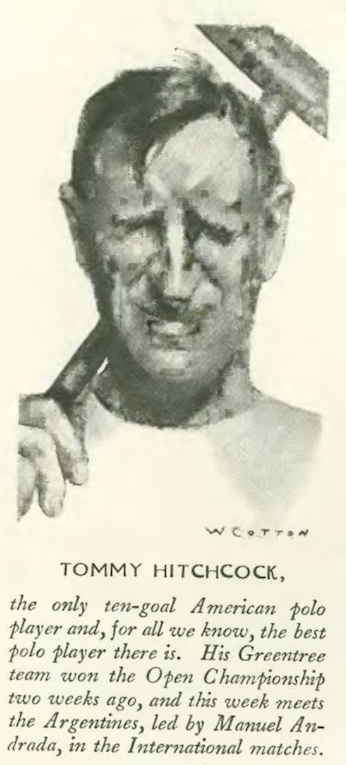
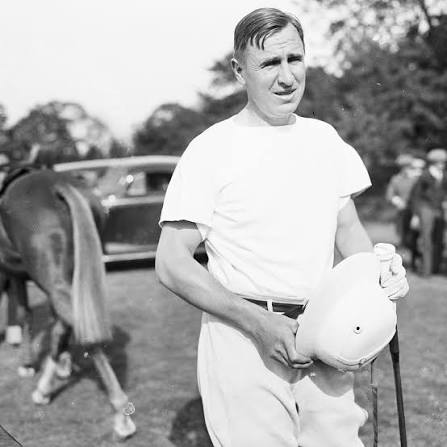
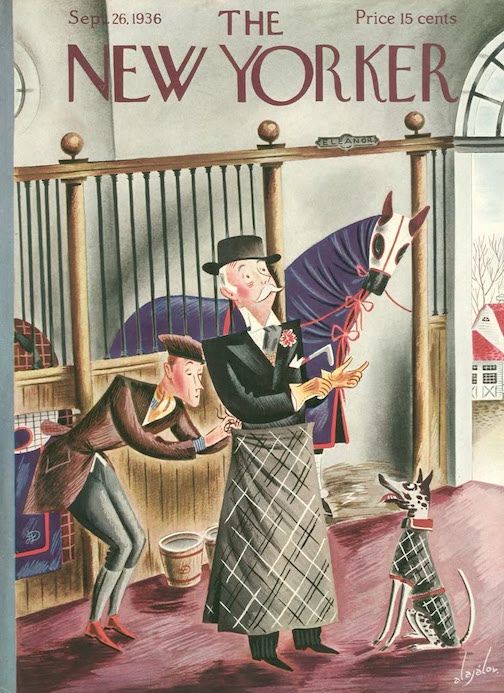
The calendar section continued its series of illustrated mini-bios, this week featuring Tommy Hitchcock, widely regarded as the greatest polo player in the history of the sport. A dashing figure in high society, Hitchcock (1900–1944) was also an aviator and decorated war hero. Illustration by William Cotton.
POLO PLAYING PILOT…Tommy Hitchcock flew as a volunteer pilot for the French Air Force in World War I, and was later instrumental in the development of the P-51 Mustang fighter plane. Hitchcock was killed in 1944 while piloting a P-51 on a test flight near Salisbury, England. (instagram.com)
* * *
From Our Advertisers
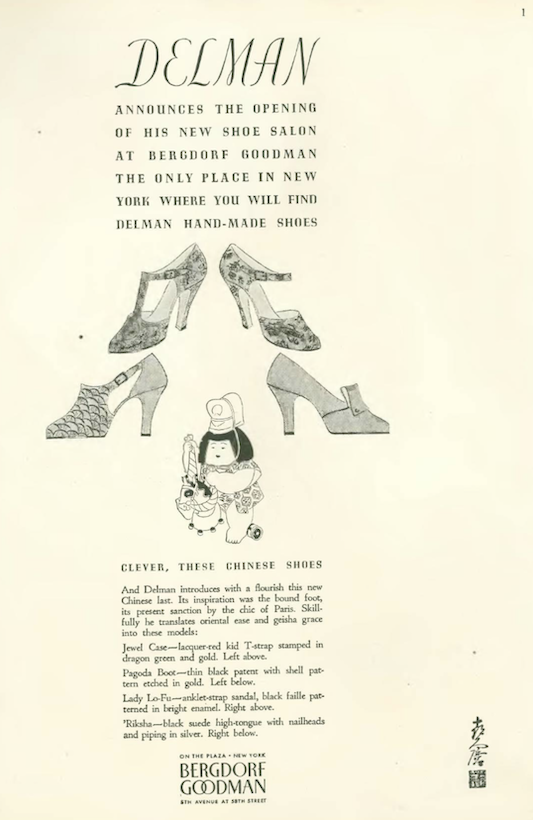
A strange advertisement from Bergdorf, announcing the opening of a salon that featured a line of shoes inspired by the Chinese “bound foot”…
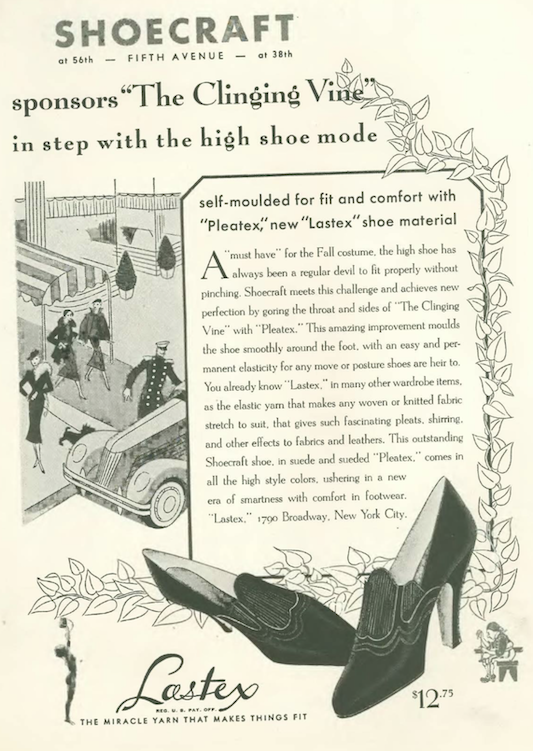
…if a bound foot wasn’t your thing, you could wiggle your toes in an elastic shoe fashioned from “Pleatex”…
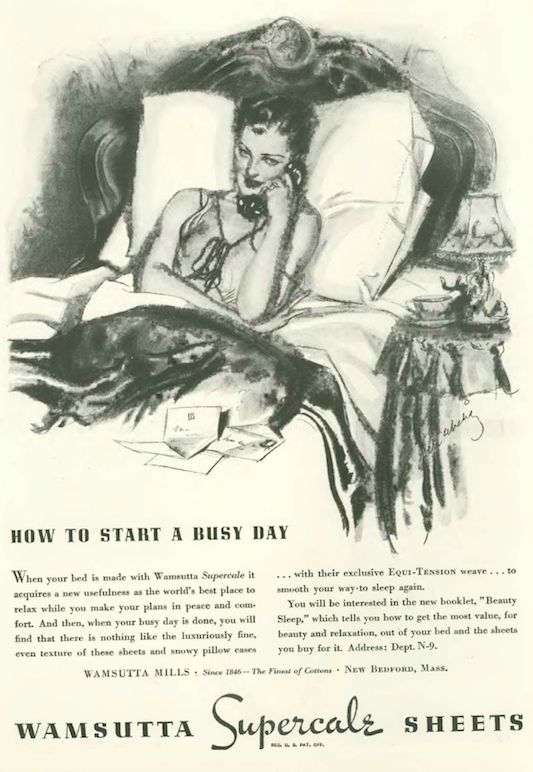
…Wamsutta continued to promote its high thread-count sheets with these somewhat seductive advertisements…
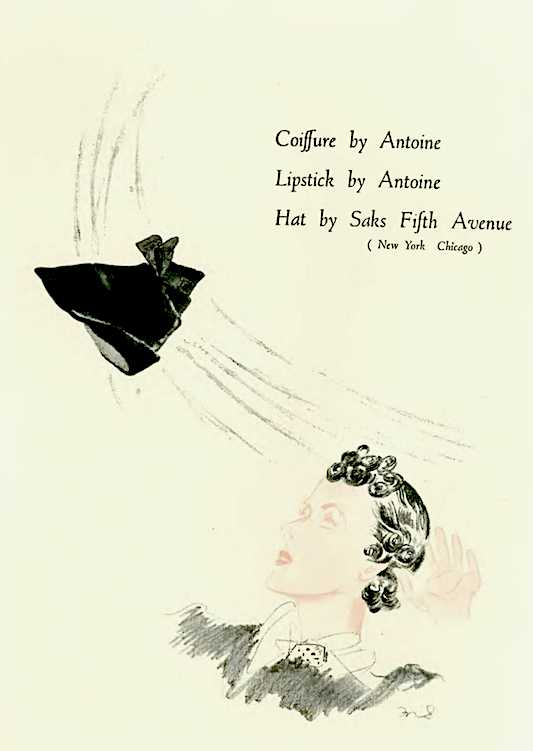
…oddly composed advertisement for Saks Fifth Avenue by fashion illustrator Margaret Sommerfeld, who produced promotional artwork for Saks…
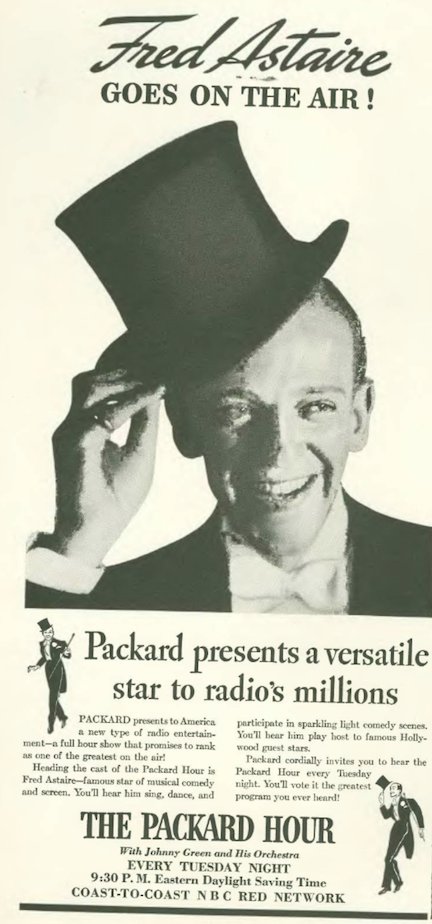
…Fred Astaire managed to hang on to his hat in this advertisement for “The Packard Hour” on NBC’s nationwide “Red Network”…the ad proclaimed “you’ll hear him sing and dance“…on the radio, that is…
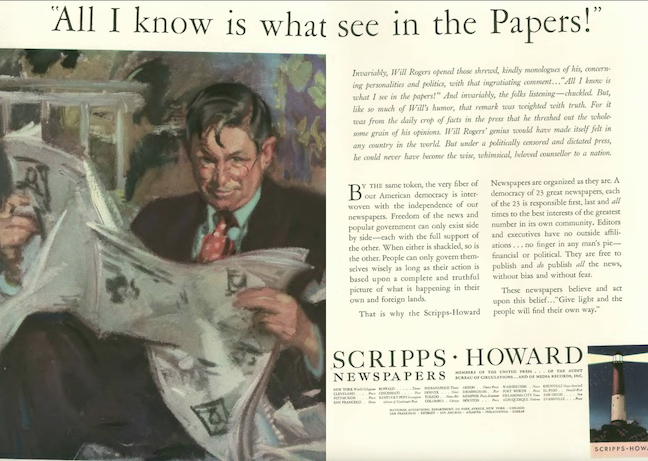
…Scripps-Howard featured this image of the late Will Rogers to promote newspaper advertising…
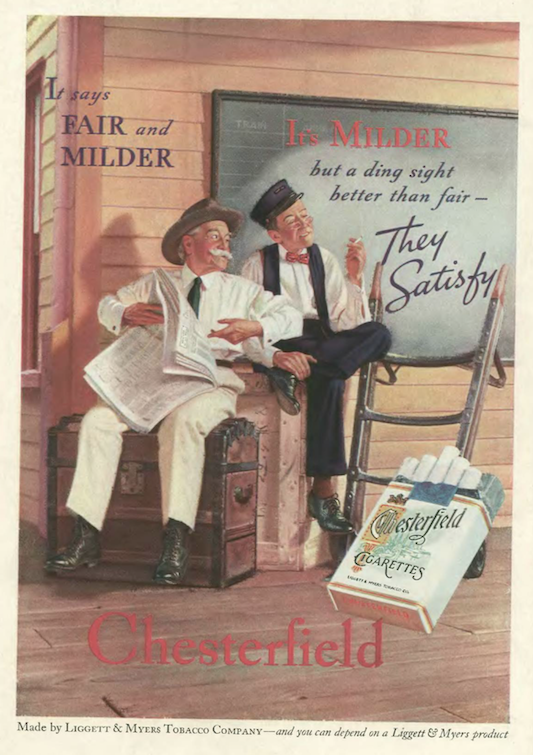
…this back cover ad also featured a newspaper reader, enjoying a smoke while waiting for the train…
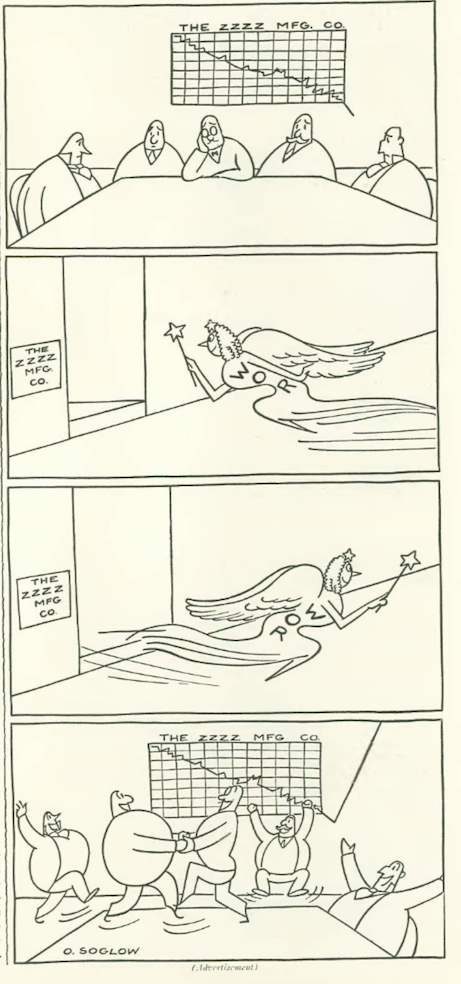
…best known for creating The Little King,Otto Soglow drew hundreds of cartoons and spot drawings for The New Yorker as well as for a variety of advertisers including Pepsi-Cola, Benson & Hedges cigarettes, and here, one from a series of ads he created for WOR radio…
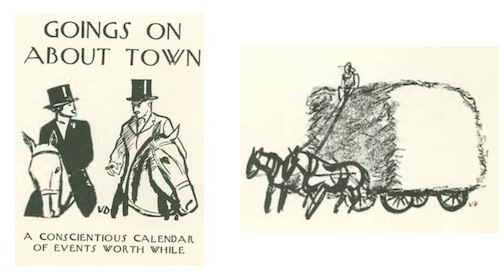
…speaking of spots, here are two by Victor de Pauw…
…biographies of prolific New Yorker cover artist Arthur Getz give his start date at the magazine as 1938, but this might be one of his early spot drawings (although the signature style differs from Getz’s other works)…
…no mistaking this spot by Christina Malman…
…or this one by Richard Decker…
…Leonard Dove demonstrated some moves for a chorus line…
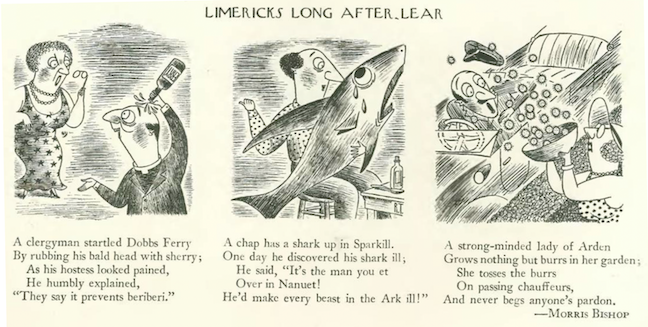
…and more wonderful Richard Taylor illustrations for Morris Bishop’s limericks…
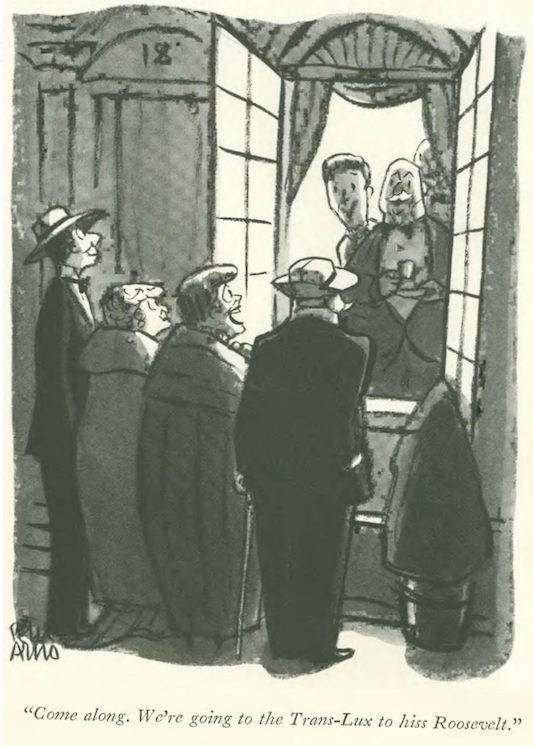
…the well-heeled prepared to engage in a favorite sport, per Peter Arno…
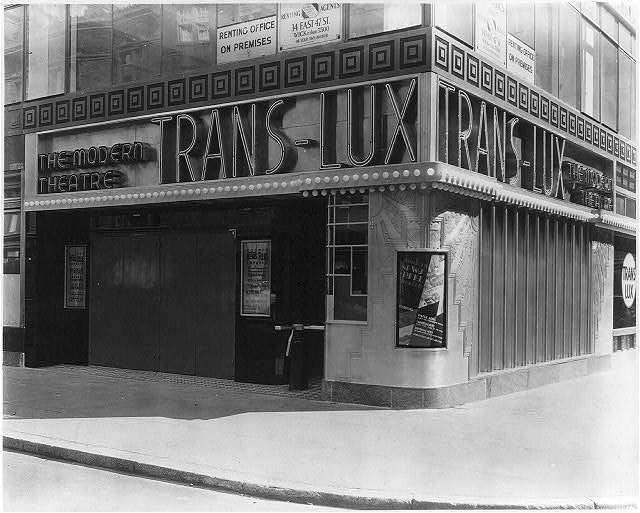
…”Trans-Lux” theaters were conversions of storefronts and retail offices that seated smaller audiences than traditional theaters. Rather than feature films, the Trans-Lux theaters showed continuous 45-to-60-minute loops of newsreels (like The March of Time), short subjects, travelogues, and cartoons from 10 a.m. to midnight—people could come and go as they pleased. The theaters pioneered rear-screen projection, using a specialized, wide-angled lens placed just eight feet behind a translucent screen…
POP IN, POP OUT…The very first Trans-Lux cinema opened in 1931 at 58th and Madison as a unique venue that played newsreels and shorts. According to The New York Times, “by the late 1940s, the rise of television began to kill the newsreel format entirely. By 1949, Trans-Lux stopped expanding its boutique newsreel footprint and pivoted its existing houses toward showing standard feature-length films.” (Library of Congress)
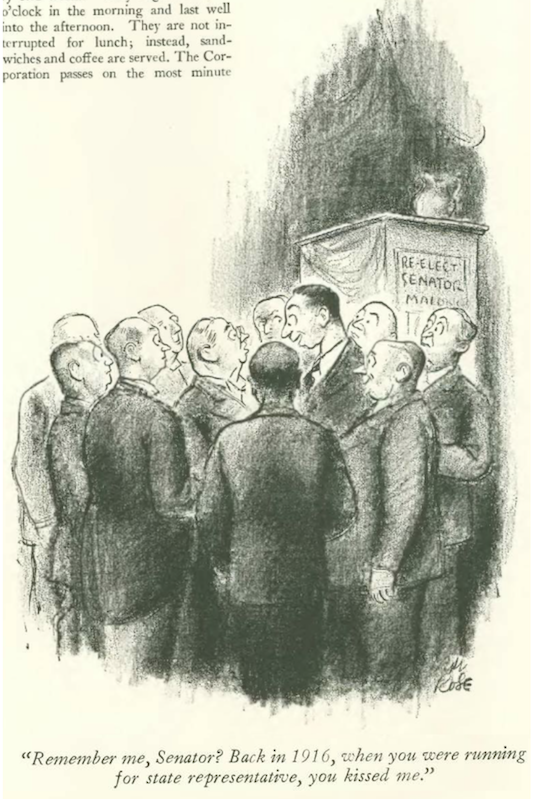
…back to our cartoons, Carl Rose conjured up an unwelcome reminder…
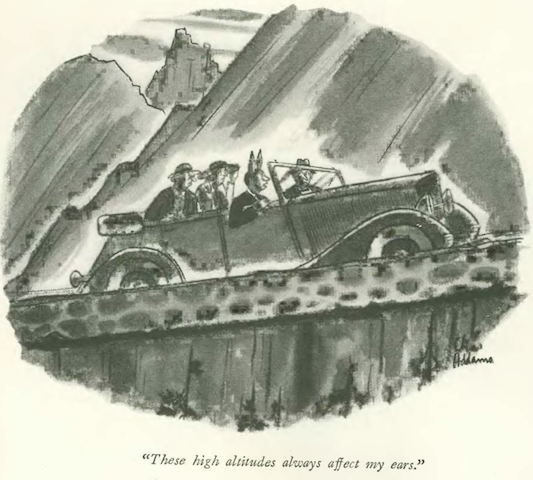
…Charles Addams was up to his old tricks…
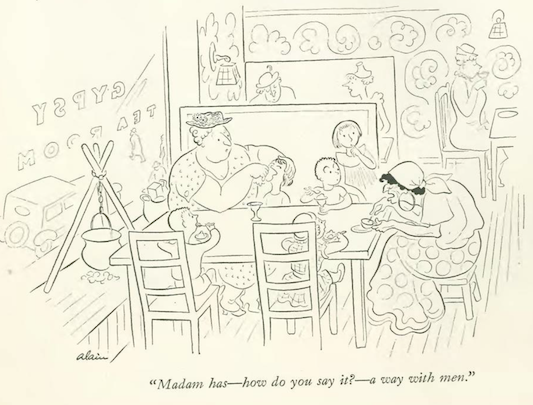
…Alain read the obvious from some tea leaves…
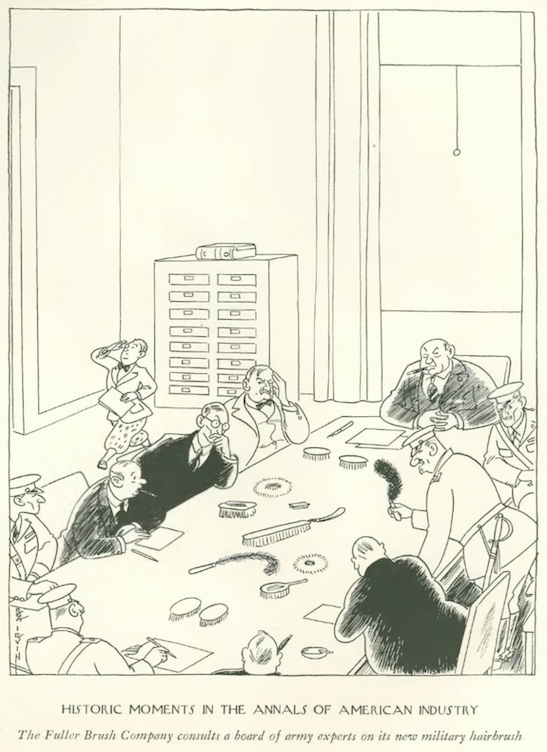
…Rea Irvin showed us some strategic thinking by military brass…
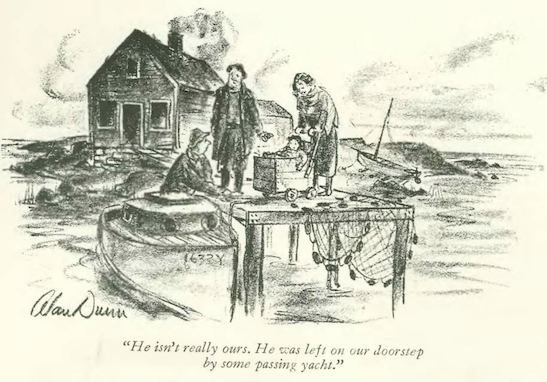
…Alan Dunn considered the mysteries of the sea…
…this guy should have suggested a comedy, per Barbara Shermund…
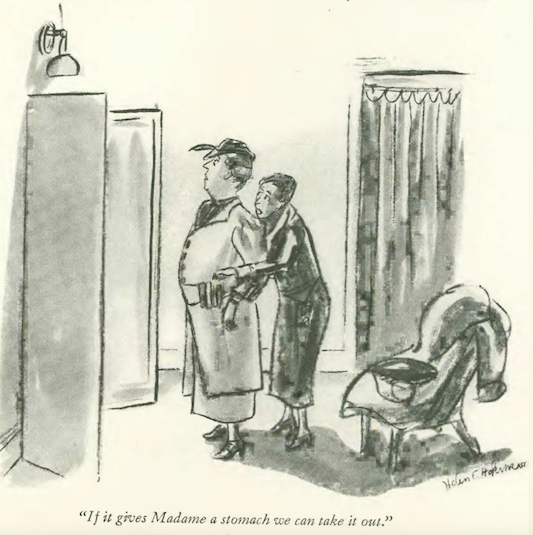
…Helen Hokinson continued to probe the delicate work of the dress shop…
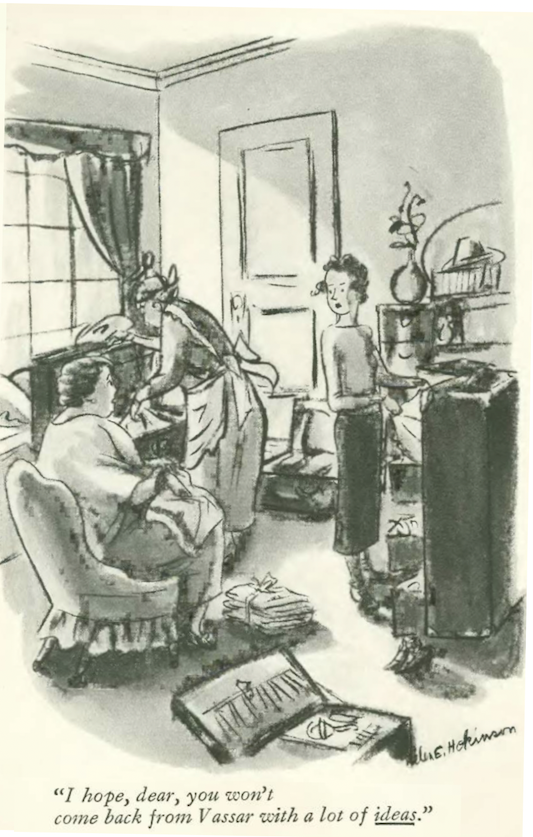
…and we close with another by dear Helen, and the fear of too much thinking…
Above: Fredric March and Olivia de Havilland in "Anthony Adverse". (tcm.com)
Epic costume dramas were all the rage in the 1930s, doubtless due to their escapist qualities (escape from the Depression and fears of war, among other things) and the cool comforts of a movie palace during a decade of exceptionally hot summers (yes, once again I’m leading with a movie. Nevertheless, some tasty bits ahead!).
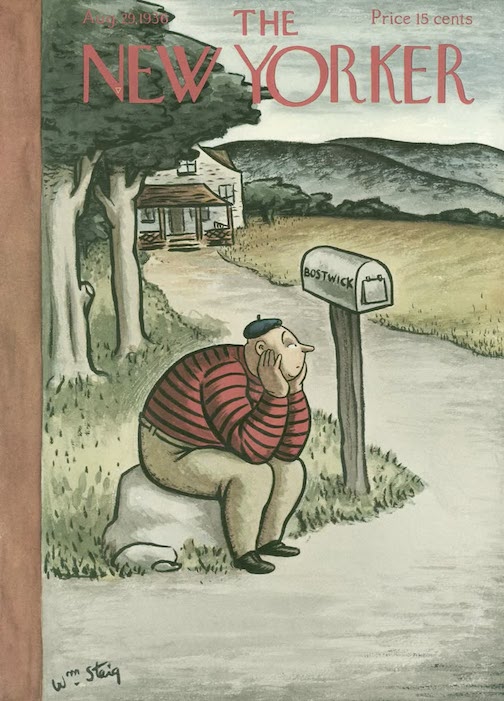
August 29, 1936 cover by William Steig.
Unlike MGM’s Romeo and Juliet, which lost money, Anthony Adverse was Warner Brothers’ most popular release in 1936, a nearly two-and-a-half-hour film featuring the seemingly ever-present Frederic March and rising star Olivia de Havilland. Based on Hervey Allen’s 1933 historical novel by the same name, New Yorker critic John Mosher gave Anthony Adverse passing marks.
COSTUMES IN MOTION…Critic John Mosher appreciated a costume drama that was also lively. Clockwise, from left: Warner Brothers promotional poster; Olivia de Havilland as Angela, the daughter of a cook who becomes Mademoiselle Georges, a famous opera star and mistress of Napoleon Bonaparte; Anita Louise portrayed sweet young Maria, betrothed to grumpy old Don Luis (Claude Rains). (frockflicks.com)WICKEDLY GOOD…Gale Sondergaard with Claude Rains in Anthony Adverse. Sondergaard would win the inaugural Academy Award for Best Actress in a Supporting Role for her performance as the villainous Faith Paleologus. In total, the film would earn four Oscars. (IMDb.com)
Mosher found other cinema diversions, including a film featuring a cameo by Robert Benchley.
WORLD OF WODEHOUSE…Madge Evans and Robert Montgomery in Piccadilly Jim; Dolores Costello and George Raft in Yours for the Asking; Ida Lupino portrayed con artist Gertie Malloy in Yours for the Asking; pioneer American film animator Mary Ellen Bute created some of the first electronically generated film images, her specialty being visual music. (imdb.com/csfd.sk/facebook.com/Wikipedia)
And lest we forget, here is The New Yorker’sRobert Benchley portraying a “barroom character” in Piccadilly Jim:
THE TWO BOBS…Robert Montgomery and Robert Benchley in Piccadilly Jim.(immortalephemera.com)
* * *
Pentameter Pickle
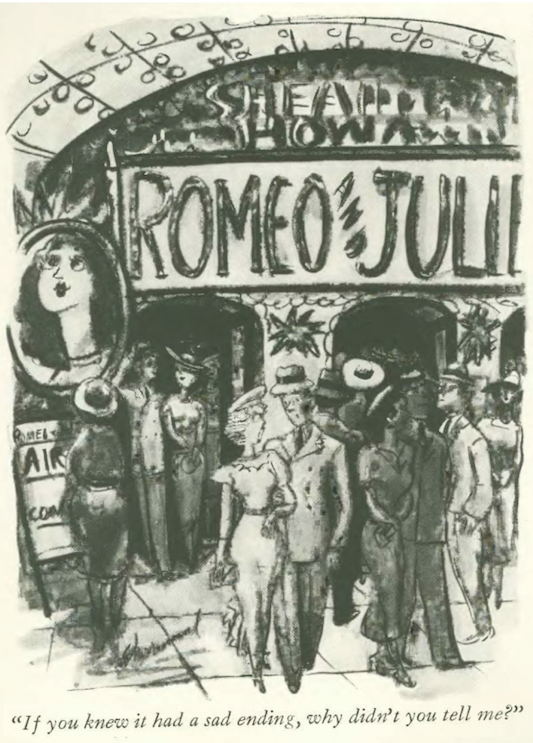
E.B. White expressed his annoyance with MGM’s claim regarding Norma Shearer as “the first screen Juliet” (see last week’s post on Romeo and Juliet). He also noted that after seeing Romeo and Juliet, he had the urge to speak in Shakespeare’s iambic pentameter.
White noted that either Beverly Bayne or Theda Bara were the first screen Juliets…actually both appeared in dueling films in 1916, opening just three days apart.
FILM DUEL…Top, Francis X. Bushman and Beverly Bayne (married in real life) in Metro’s 1916 adaptation of Romeo and Juliet. Below, Theda Bara and Harry Hilliard in Fox’s 1916 Romeo and Juliet. In direct competition, the Fox film was released on Oct.22, the same week as Metro’s (Oct. 19). Both silent films are considered lost. (theeverydaycinephile.com)
If White had had access to the internet, he would have learned that the very first screen Juliet was actually Florence Lawrence , who appeared in a fifteen-minute silent film short made in 1908 by Vitagraph Studios (amazingly, the film survives and can be viewed on YouTube).
THE ORIGINAL…The first screen Juliet was Florence Lawrence, who appeared in a 1908 silent film short by Vitagraph Studios. Lawrence (1886–1938) is widely referred to as the “first movie star”, appearing in almost three hundred films. She also invented a surprising list of patents, including the first “auto signaling arm.” (messynessychic.com).
* * *
He Used His Bean
“The Talk of the Town” featured a rare mention of baseball in the form of a brief profile of Jo-Jo Moore (1908–2001), a New York Giants left fielder known for his intimidating, left-handed-hitting as lead-off man; Moore batted over .300 five times in his career. Apparently he was also known for getting beaned at the plate, as this excerpt explains:
LEANING IN…Jo-Jo Moore, who batted left-handed and threw right-handed, hit over .300 five times in his career with the Giants from 1930 to 1941. When he died in 2001 at age 92, he was the last surviving member of the 1933 World Champion New York Giants. (centerfieldmaz.com)
* * *
The Bobby We Didn’t Know
Mention the name Bobby Riggs to those of a certain age and they’ll likely conjure up the cheeky grin of a 55-year-old man who in 1973 challenged 29-year-old Billie Jean King to a much-ballyhooed “Battle of the Sexes” tennis match at the Houston Astrodome—which King won in straight sets (6–4, 6–3, 6–3). What seems forgotten is the fact that Riggs was once considered the best tennis player in the world. As a 21-year-old amateur in 1939, he won Wimbledon and the U.S. Open. Even in 1936 the teenaged Riggs was already sensation, as this excerpt explains:
PROMISING BEGINNINGS…Left, Bobby Riggs (center) accepts the 1939 men’s national singles championship trophy after defeating Welby Van Horn at Forest Hills. Riggs also won the U.S. Singles Championship in 1941. At right, Billie Jean King and Bobby Riggs strike a pose in 1973, the year they competed in famed “Battle of the Sexes” tennis match. (facebook.com/Wikipedia)
* * *
From Our Advertisers
Singer Ethel Merman lit up the opening page of the August 29 issue in this colorful advertisement for Stage magazine…
…the makers of the bargain cigarette Twenty Grand used this New Yorker-style cartoon to push their brand of tobacco…
…the inside back cover featured this bright appeal from Imperial Wallpapers…
…and the makers of Luckies claimed the back page to build their base of women smokers…
…on to our cartoonists, we begin with spots by Abe Birnbaum…
…and Robert Day…
…more cartoon art from Richard Taylor to enliven Morris Bishop’s limericks…
…Birnbaum again, with a bit of hide and-seek…
…Alan Dunn confronted a moral quandary…
…Rea Irvin put up a tempting target…
…Helen Hokinson found the right words to describe a bridge party…
…Peter Arno illustrated one way to accommodate an estrangement…
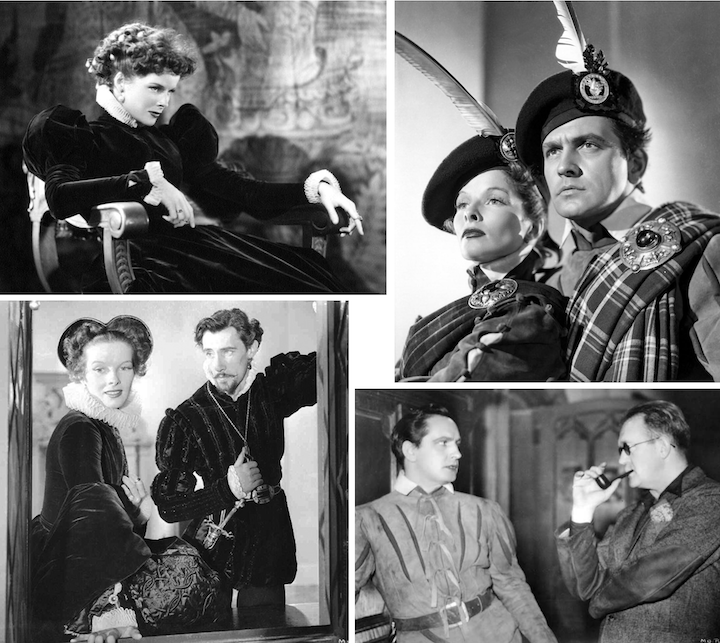
Above: Fredric March as the Earl of Bothwell in Mary of Scotland. March sported a kilt that Alex von Tunzelmann (the Guardian, May 7, 2015) calls "the bane of Scottish historical movies from here to Braveheart." Tunzelmann notes that "What we call a kilt today—the fèileadh beag, or small kilt—was invented in the mid-18th century, almost 200 years after this film is set. The Scots should be wearing belted plaid, or the rather fetching skintight tartan trews (image at right) sported by Mary’s father, James V." (eBay.com/pinterest.com)
These were truly the dog days of summer—New Yorkers had just endured one of the hottest months on record (106 F on July 9) and it remained intensely hot and dry as August rolled in. So for this post we will retreat to one of the few places that had air-conditioning—the cinema—and see what folks were enjoying in the first week of August 1936.
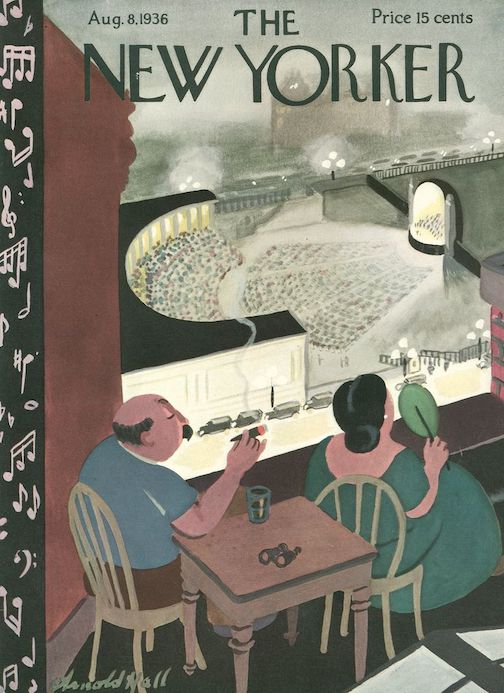
August 8, 1936 cover by Arnold Hall.
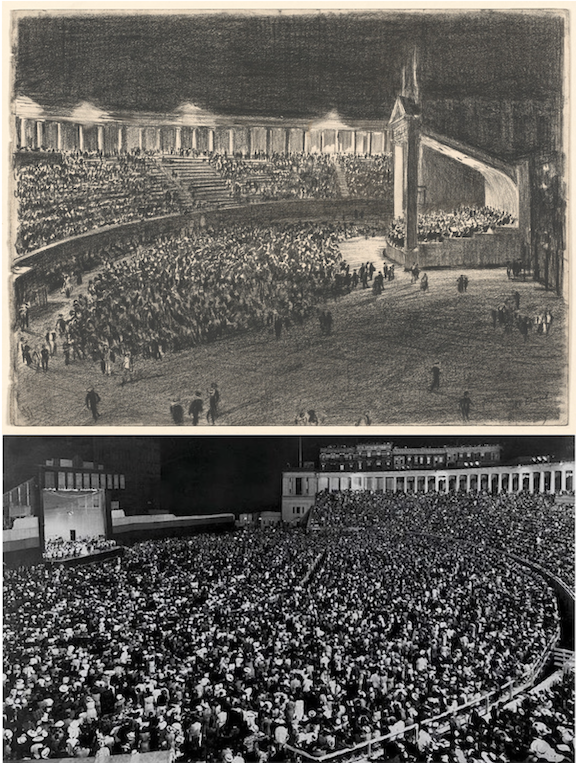
Before we jump into the movies, the wonderful cover by Arnold Hall recalled the summer night concerts at Lewisohn Stadium (although Hall took some liberties with the stadium’s design for the sake of composition).
A LITTLE NIGHT MUSIC…Top: Illustration by Scottish artist Muirhead Bone of a nighttime Lewisohn Stadium concert, circa 1920s; below: Andre Kostelanetz conducts before a crowd of thousands at Lewisohn Stadium in 1939—for an admission price of a mere twenty-five cents, concertgoers were treated to appearances by leading performers of jazz, classical music and opera. The stadium was demolished in 1973. (digitalcommonwealth.org)
On to our movies, Russell Maloney once again sat in for John Mosher as the magazine’s film critic, taking on everything from a Tudor romance to a horror film that featured Lionel Barrymore in drag.
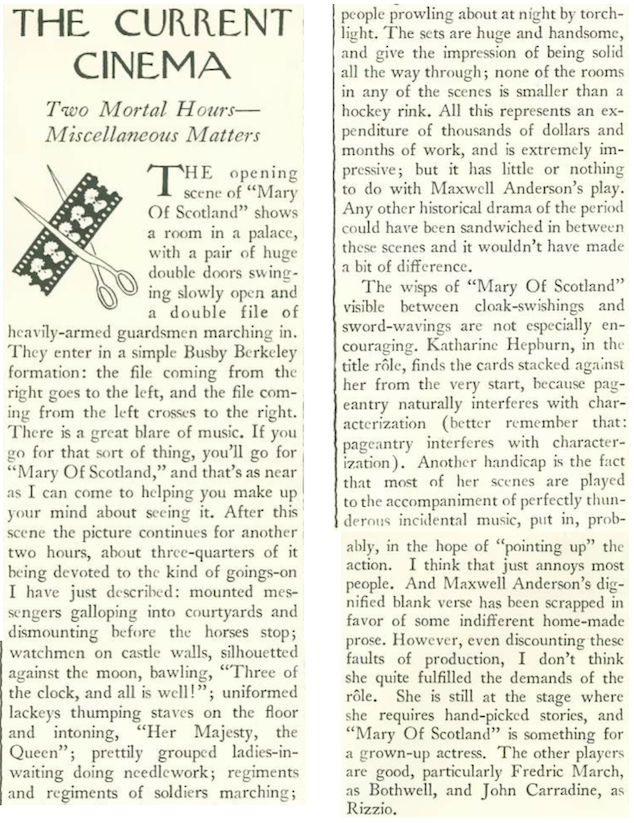
In Mary of Scotland, Maloney found Katharine Hepburn’s turn as Mary, Queen of Scots a bit wanting (the role should have gone to a “grown-up actress”), while he thought the film itself was rather tedious with “lots of goings on.” He concluded that the “wisps of Mary of Scotland visible between cloak-swishings and sword-wavings are not especially encouraging.”
NOT READY FOR PRIME TIME?…Clockwise, from top left: Critic Russell Maloney thought the 29-year-old Katharine Hepburn was not seasoned enough to portray Mary Stuart in Mary of Scotland; Fredric March as the Earl of Bothwell, with Hepburn; March visits with director John Ford, who was better known for his Westerns (Ford and Hepburn would famously have an affair during the filming); Hepburn in a scene with John Carradine, who portrayed Rizzio, the Italian courtier and private secretary to Mary. Patriarch of the Carradine acting dynasty, his children included actors David, Keith, and Robert Carradine. (imdb.com/pinterest.com/frockflicks.com)
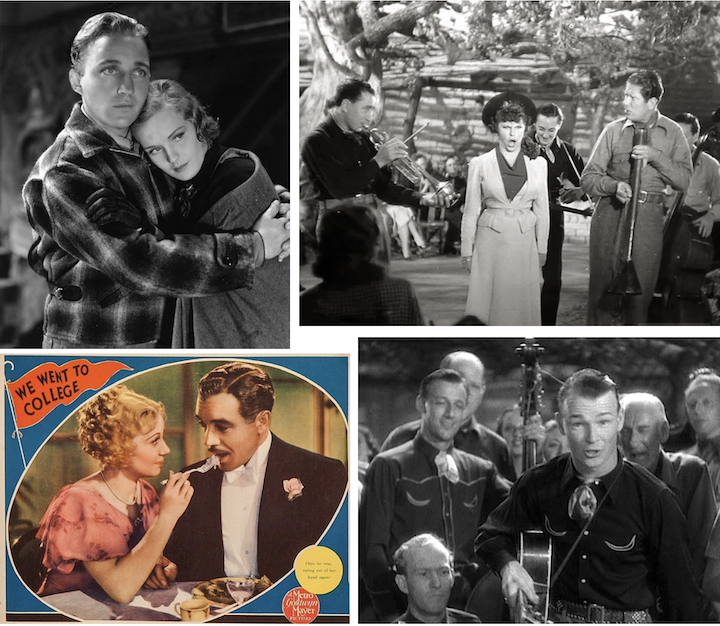
In addition to a forgettable lion-tamer flick (Bengal Tiger), Maloney also reviewed a Bing Crosby movie with a host of singing cowboys, Rhythm on the Range, and a “consistently funny” film with an “unpromising name,” We Went to College…
COWBOY CROSBY…Clockwise from top left: Bing Crosby portrayed a traveling cowboy in love with a rich girl (Frances Farmer) in Rhythm on the Range;Louis Prima, Martha Raye (in her film debut), and Bob Burns performed in the ensemble “I’m an Old Cowhand from the Rio Grande” along with Roy Rogers (uncredited and performing under his original stage name, Leonard Slye) and The Sons of the Pioneers; Una Merkel and Walter Abel in a lobby card image advertising We Went to College. (imdb.com)
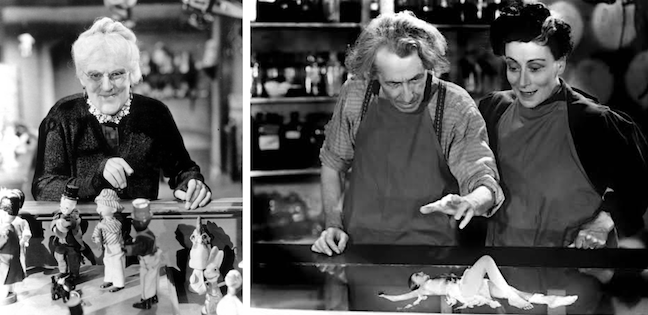
Maloney also reviewed a horror-farce, The Devil Doll, featuring Lionel Barrymore as banker Paul Lavond. A brief synopsis: Framed by his three partners and imprisoned on Devil’s Island, Lavond escapes with a fellow inmate who introduces him to his wife, Malita. The couple demonstrate a process that shrinks animals and people to the size of dolls, which then can be animated by will power. Seeing the dolls as an opportunity for revenge on his former partners, Lavond disguises himself as an old woman and sends out the shrunken people to harm his enemies.
PLAYING WITH DOLLS…At left, Lionel Barrymore disguised as Madame Mandelip, preparing his demonic dollies for revenge in The Devil Doll; at right, Marcel (Henry B, Walthall) and his wife Malita (Raffaela Ottiano) with one of their shrunken people. (classic-monsters.com)MY, WHAT BIG TEETH YOU HAVE…At left, Tarzan star Maureen O’Sullivan portrayed Paul Lafond’s unsuspecting daughter—in this scene from The Devil Doll she doesn’t recognize her long-absent father, disguised as the kindly Paris toy shop owner Madame Mandelip; at right, Lionel Barrymore (dressed as Madame Mandelip) meeting with Devil Doll director Tod Browning, best known for his 1932 magnum opus, Freaks. (classic-monsters.com/moriareviews.com)
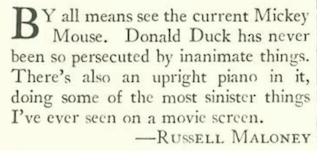
It seems there were few, if any, critics in the 1930s who didn’t like Mickey Mouse cartoons. These days we take animation for granted, but ninety years ago it was still something of a miracle, especially in color. Maloney noted the latest must-see Disney cartoon short, Donald and Pluto.
MARTYRDOM OF DONALD DUCK…Donald Duck was literally put through the wringer for our amusement in the 1936 short Donald and Pluto, one of the three installments of the Mickey Mouse series in which Mickey doesn’t appear as a character. Donald Duck was a fairly new Disney character in 1936, making his debut in 1934’s The Wise Little Hen. (disneyfandom.com)
* * *
Life Goes On
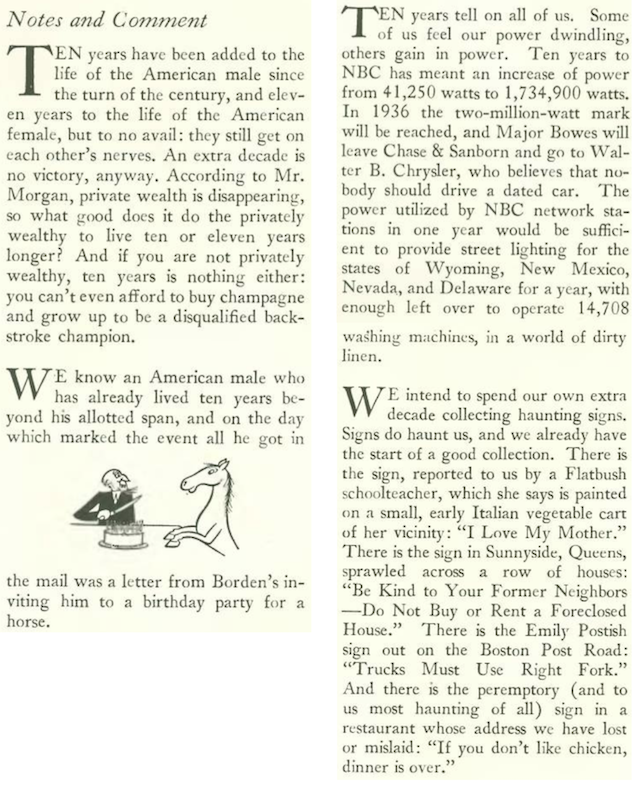
E.B. White mused about the increasing life expectancy at birth of the American male from 47 years in 1900 to 58 years in 1936 (a woman’s life expectancy was roughly 49/62, respectively). White (who would live 86 years) said he would spend his extra years collecting “haunting” signs, such as one on the Boston Post Road that read: Trucks Must Use Right Fork.
AND NO ELBOWS ON THE TABLE, EITHER…Trucker poses in front of his rig in 1936. (facebook.com)
* * *
Wartime Wardrobe
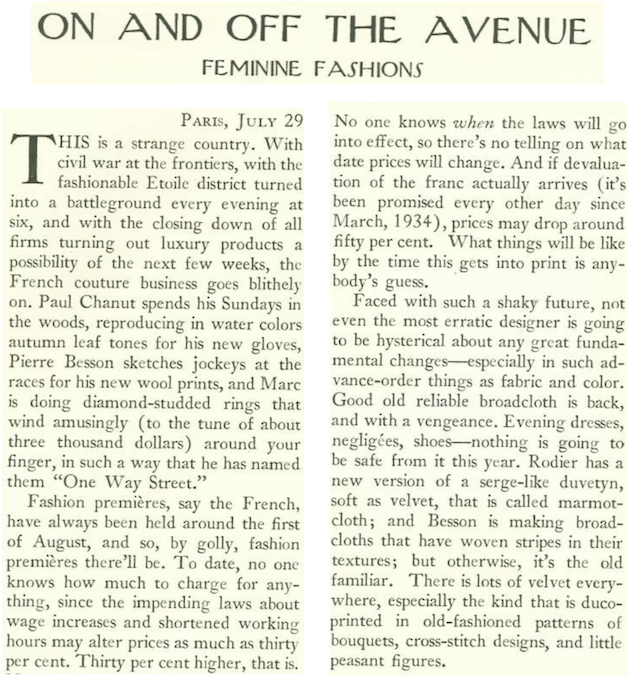
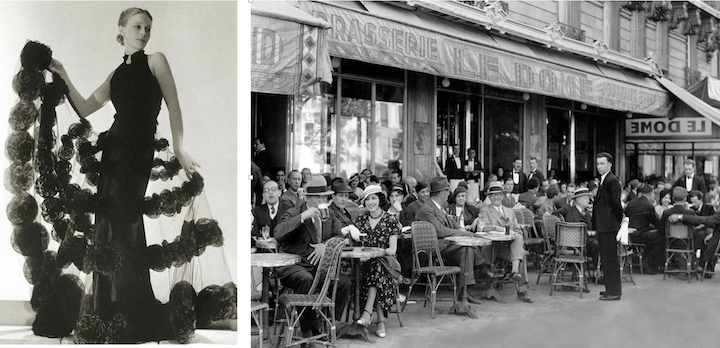
Beatrice Mathieu—the first and only Paris fashion correspondent for The New Yorker—sat in on Lois Long’s column to discuss the latest from The City of Light. Designers were soldiering on with their premieres despite the winds of war blowing from the east. Excerpts:
LIFE GOES ON…At left, a model shows off a “Carnival dress” by Madeleine Vionnet, 1936; a sidewalk café in Paris filled with fashionable folks, 1936. (godsandfoolishgrandeur.blogspot.com/reddit.com)
A note about Beatrice Mathieu: According to her 1976 New York Times obituary, “In an era when honest criticism in fashion writing was relatively rare, she blended humor with a kind of skepticism and honesty in writing that enhanced her reputation as a leader in the field…In 1928, when the young woman from Faribault, Minn., was making a living in Paris as a freelance writer, she received a cable from Harold Ross…asking her to do some work for him. She wired back: ‘What is The New Yorker?’ Mr. Ross replied at some length. She took the job.” Mathieu stopped writing her Paris column in 1936 but resumed after the end of World War II.
* * *
A Dose of Passos
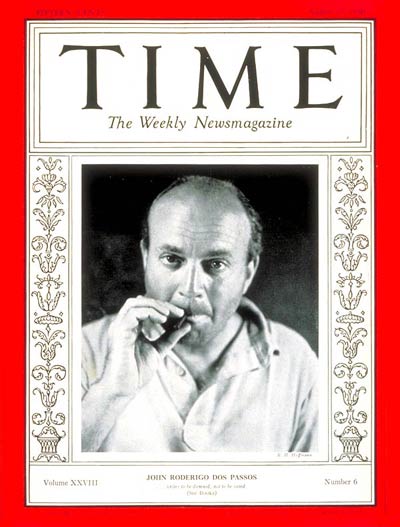
Clifton Fadiman reviewed the latest book by John Dos Passos (1896– 1970), who is known for his pioneering works of nonlinear fiction and his U.S.A. trilogy, which he completed in 1936 with The Big Money. One of the major novelists of the post-World War I “lost generation,” he is widely praised today for his timeless insights into America’s inequalities (and was also highly regarded by contemporaries including William Faulkner). Fadiman, however wrote “A great writer he is not.” Excerpts:
HIS TIME WOULD COME…John Dos Passos on the cover of Time, Aug. 10, 1936. Dos Passos is admired today for showing how Americans respond to the chaos and inequalities of modern life. (time.com)
* * *
From Our Advertisers
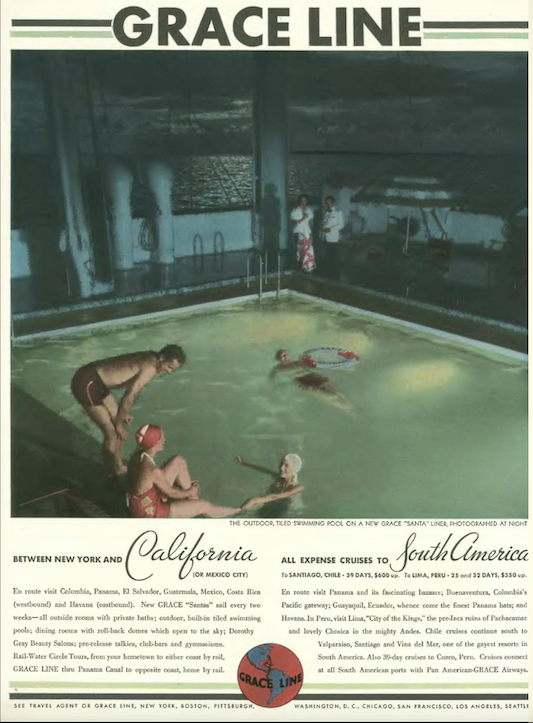
We begin our advertising section with the Grace Line, which offered this inviting image (on the inside front cover) of nighttime swimming on the deck of one of its Santa liners, en route to South America and California…
…less inviting, it would seem at the time, would be a cruise to Germany aboard a Hamburg-America Line (HAPAG) ship—beginning in 1939, U.S. and British forces would seize nearly all of HAPAG’s fleet…
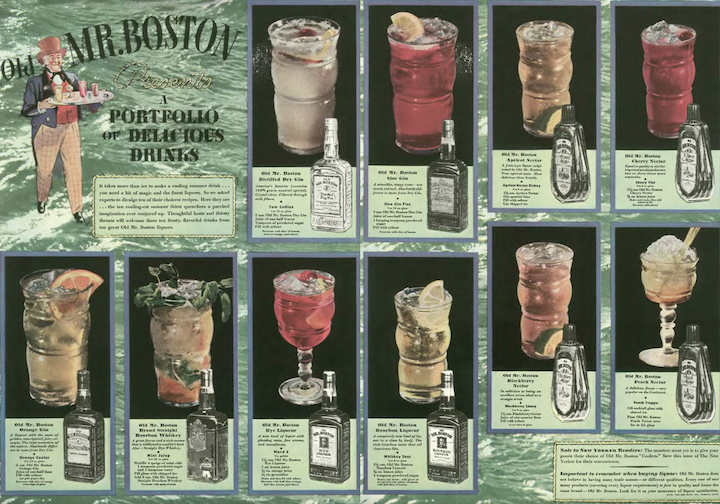
…the relatively new company Old Mr. Boston (founded in Boston in 1933, right as Prohibition ended) went big with this two-page color advertisement touting its line that included gin, rum, whiskey, and cordials…
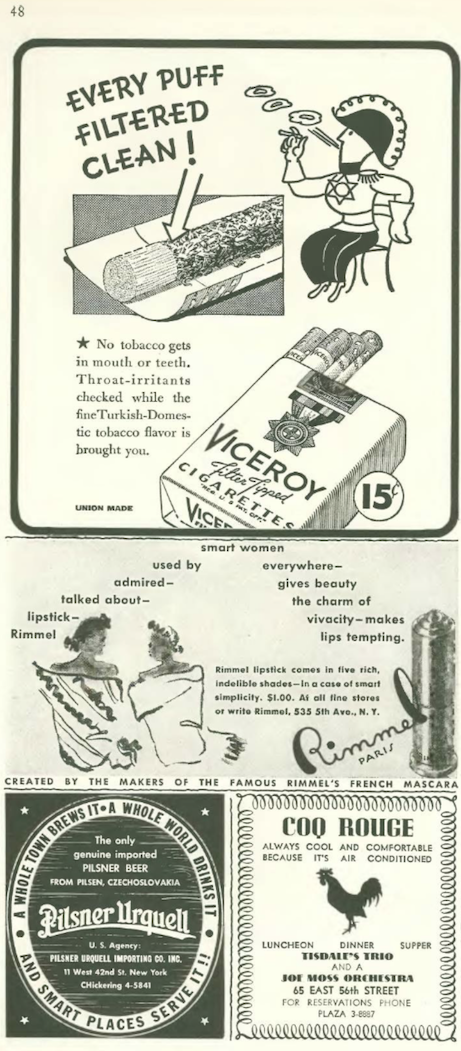
…in the back of the book…Brown & Williamson launched its Viceroy brand in 1936 as the world’s first cork-tipped filter cigarette…at the bottom is a modest ad for Pilsner Urquell, a Czech brewer that produced the world’s first pale lager…it is still brewed in Pilsen (Czech Republic) under the ownership of Tokyo-based Asahi Group…
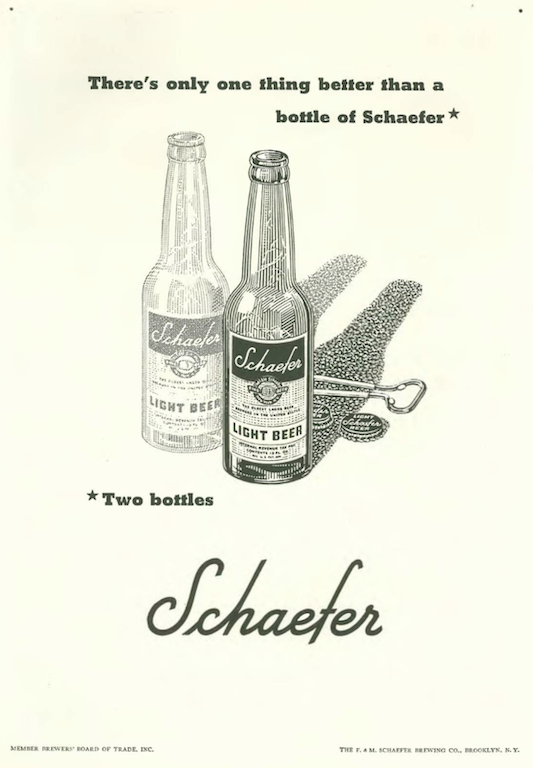
…Schaefer promoted their “light beer” in this rather spare advertisement…the “light” referred to its pale color, not to its calorie count…founded in New York City in 1842, Schaefer grew to be a top five brewer in America…today it is marketed by Pabst as a regional heritage brand…
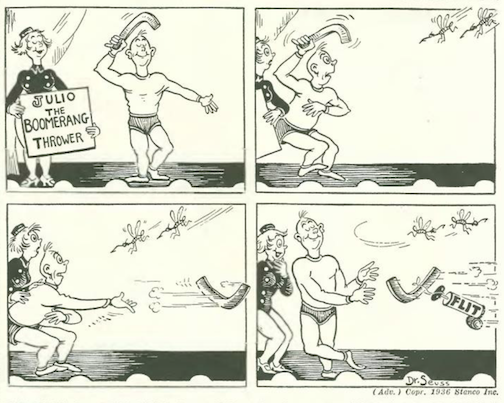
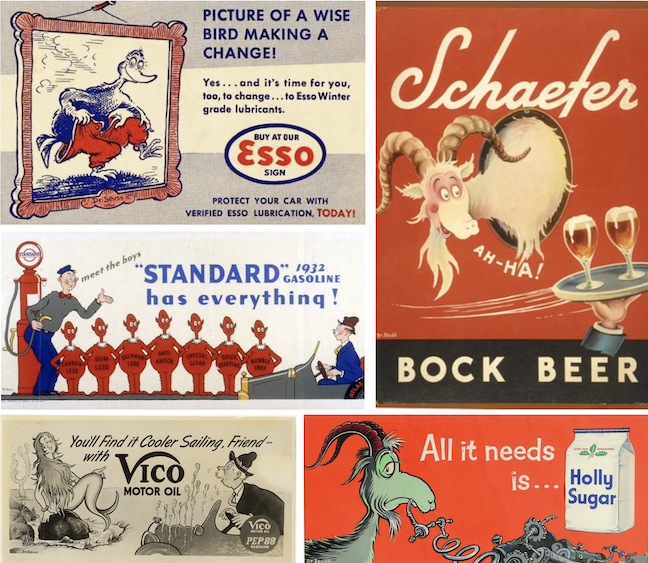
…Dr. Seuss was still at it with his Flit ads…after rejections from nearly thirty publishers, in 1937 Seuss (aka Theodor Geisel) would publish his first book with Vanguard Press—And to Think That I Saw It on Mulberry Street…Seuss also illustrated ads for Schaefer beer, Esso gasoline, Holly Sugar, and General Electric, among others…
HONING A STYLE…A sampling of Dr. Seuss’s advertising art from the 1930s to the 1950s. (aoghs.org/UC San Diego/booksforgoatlings.weebly.com)
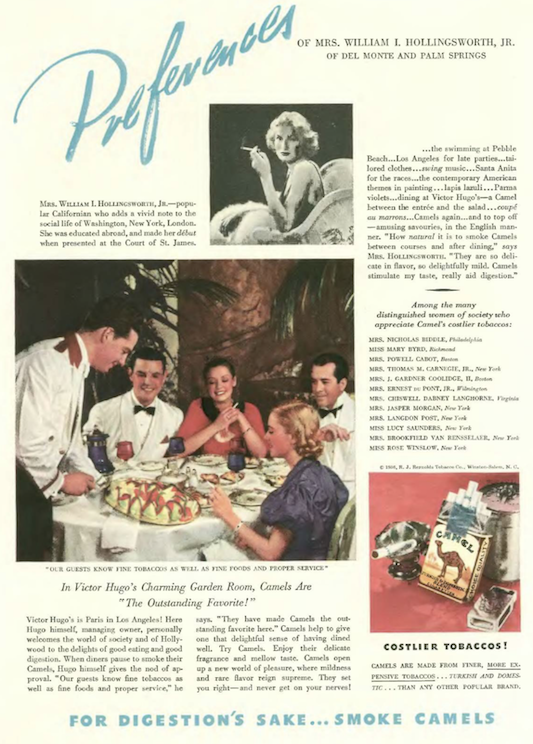
…R.J. Reynolds lined up another socialite endorsement for their Camel cigarettes…here they go to the West Coast, with a plug from Mrs. William J. Hollingsworth, Jr., aka Madeleine Ruth Piper…her marriage to Hollingsworth was over by 1937…she would marry three more times before her death in 1993…
SHE REALLY LIGHTS UP A ROOM…At left, undated photo of socialite Madeleine Ruth Piper (1916–1993), who was apparently telling the truth about her love of smoking; at right, the Victor Hugo Restaurant in Los Angeles (Beverly Hills), featured in the Camel ad. (findagrave.com/facebook.com)
…on to our illustrators and cartoonists, we begin with spots by Christina Malman…
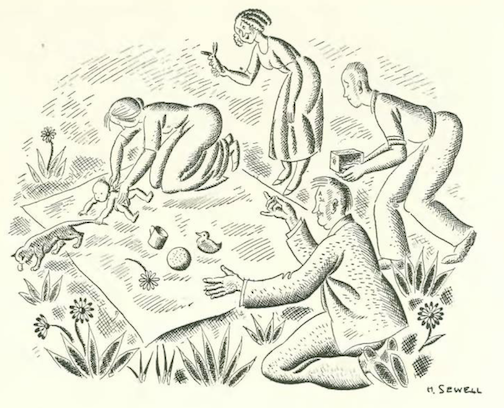
…Helen Moore Sewell…
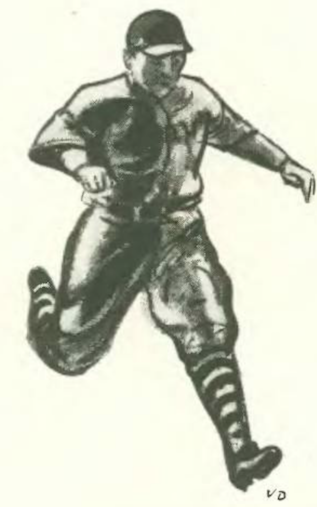
…Victor de Pauw…
and Aaron Sopher…
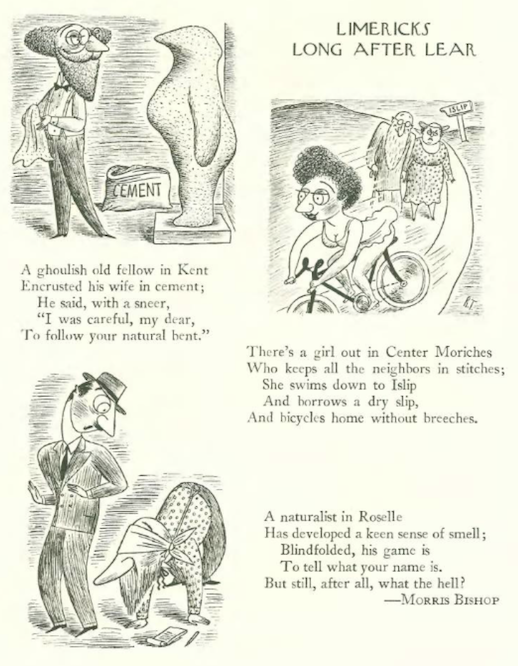
…there was another installment of Morris Bishop limericks illustrated by Richard Taylor…
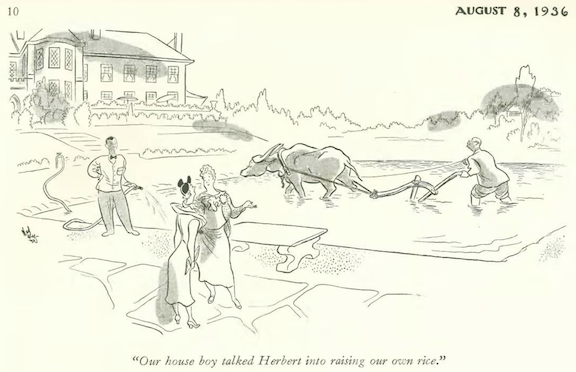
…Ned Hilton’s lord of the manor took up rice farming…
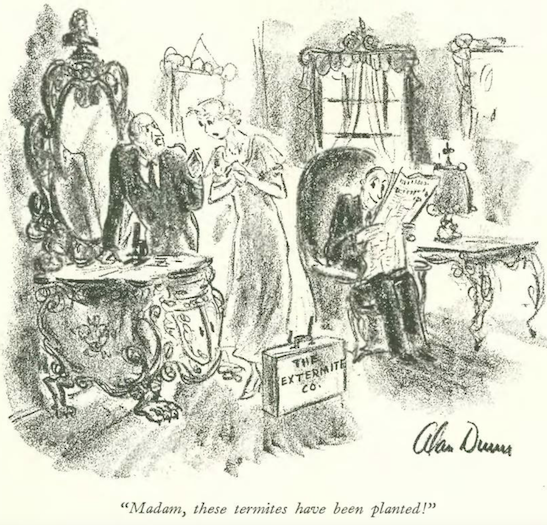
…Alan Dunn showed us some devious domestic doings…
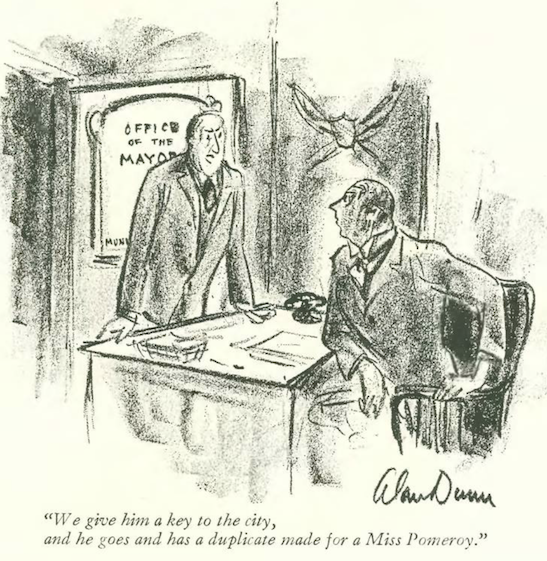
…and a complaint to the mayor…
…in contrast to Dunn’s style, the spare lines of Gardner Rea…
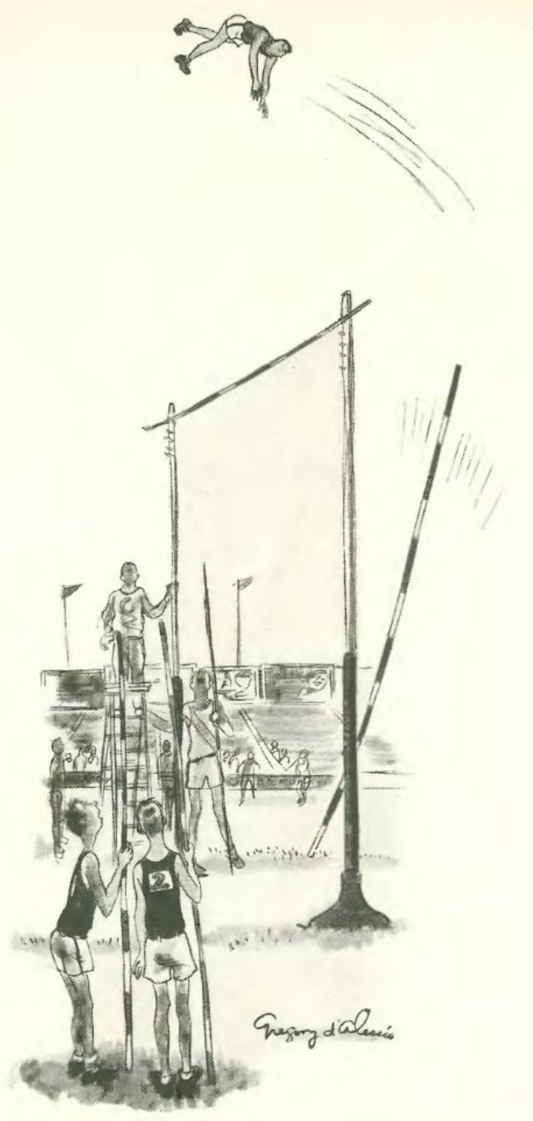
…Gregory d’Alessio prepared for Olympic glory…
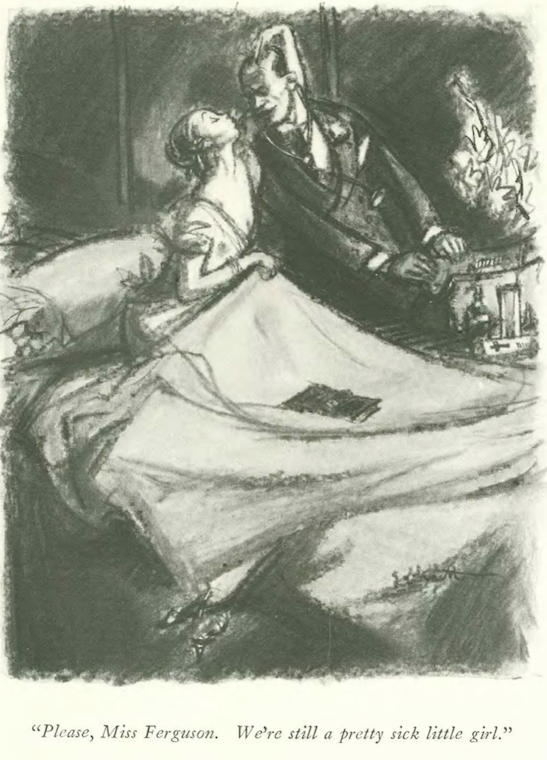
…William Crawford Galbraith continued to plumb the creepy waters inhabited by impressionable young women and lecherous older men, in this case a woman’s personal physician…
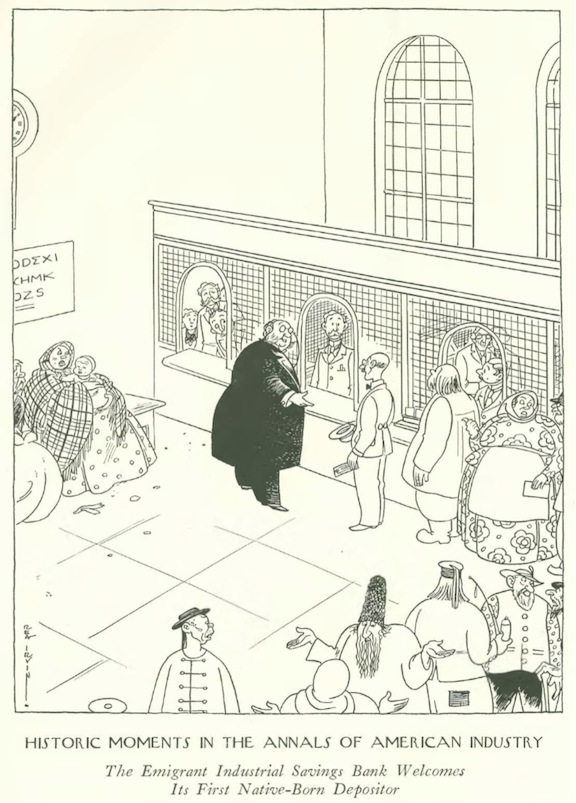
…and Rea Irvin continued to explore historic moments in American industry…
…we close with Helen Hokinson, and some scandal brewing under a hair dryer…
Above: The building that housed Manhattan's Democratic Party, known as Tammany Hall, circa 1935, and James Joseph "Jimmy" Hines, perhaps Tammany's most powerful leader. (wpsu.org/facebook.com)
Tammany Hall was founded more than two hundred years ago as an independent social organization serving the needs of New York City’s immigrants and Irish Catholics in particular. After the 1854 mayoral election, however, Tammany grew into a powerful political force, and for nearly a century controlled both city and state elections and the power of patronage that came with them.
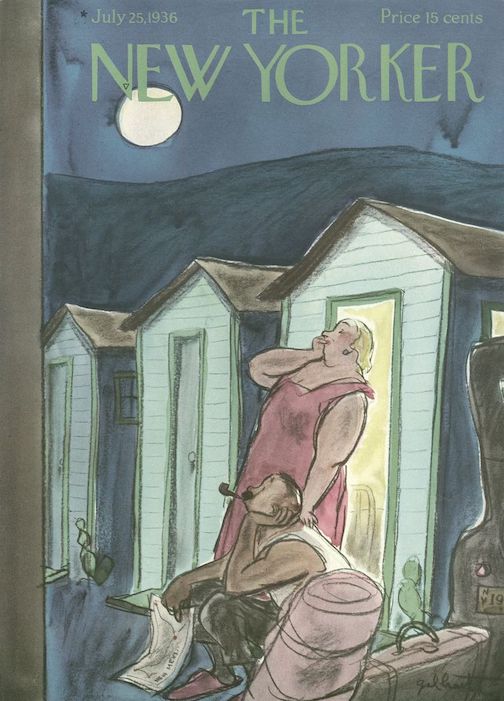
July 25, 1936 cover by William Crawford Galbraith.
It was no secret that political graft was rampant in the organization, but business leaders were happy to support Tammany’s corrupt practices as long as they served the bottom line. The same, it seems, also applied to politicians, law enforcement, and the courts, beneficiaries of political favors as well as outright bribes.
Few knew how to work Tammany’s levers better than James Joseph “Jimmy” Hines (1876–1957), who held absolute power over New York’s Eleventh District. Journalist Jack Alexander published Part One of a three-part profile on Hines for the July 25 issue. Excerpts:
SOBER REPORTING…Journalist Jack Alexander (1902–1975) was a reporter in St. Louis before joining New York’s Daily News in 1930. He later worked for The New Yorker and then moved to The Saturday Evening Post, where he became senior editor. He is best known for his groundbreaking 1941 article on Alcoholics Anonymous. (saturdayeveningpost.com)
Tammany was weakened when their scandal-plagued mayor, Jimmy Walker, was ousted in 1932 and eventually succeeded by reformist Mayor Fiorello LaGuardia. Hines, however, grew even more powerful as head of the U.S. Civil Service’s patronage system for Manhattan District employees. Ironically, Hines was appointed to the post by President Franklin D. Roosevelt, who saw Tammany as a liability but owed Hines a favor—in 1932 Hines split from other Democratic machine bosses (who initially favored Al Smith) to back Roosevelt’s bid for the presidency.
One person who was not tainted by Hines’ influence was Special Prosecutor Thomas E. Dewey, who in 1936 was busy going after New York’s rackets and Hines in particular.
William Auerbach-Levy provided the illustration for Part One of the Hines profile:
In these excerpts, Alexander noted Hines’ “ace in the hole” (the White House) when Tammany Leader James J. Dooling tried to oust him.
I’M GONNA GET YA…Clockwise from top left: In 1936 reformers looked to Special Prosecutor Thomas E. Dewey to fight New York’s entrenched rackets; Jimmy Hines (right) leaves the courthouse after a 1938 mistrial; Hines was accused of having close ties with mobsters Dutch Schultz and Lucky Luciano among others; Hines with his attorney, Martin Littleton, after leaving Tombs Prison on April 4, 1939—he was released on $35,000 bail pending an appeal for his conviction as a political fixer for the numbers racket. Hines would lose the appeal—convicted on thirteen counts of racketeering, he would be imprisoned at Sing Sing until 1944. (alchetron.com/facebook.com/Wikipedia)
Despite his misdeeds, Hines’ many admirers remained faithful to him until his death in 1957 at age 80. Many recalled his annual “June Walk” from the days before he went to prison. According to his New York Times obituary, the annual event in Central Park drew as many as twenty-five thousand women and children, who “listened to half a dozen brass bands, put on paper hats and gorged themselves on ice cream, hot dogs and pop furnished by Hines, who used to take part in the fun wearing the gay green bucket hat of the stage Irishman.” The obituary noted that when Hines left Sing Sing prison, a guard said, “Best of luck. Jimmy! Give my regards to the missus!”
* * *
At the Movies
Critic John Mosher found the perfect distraction from the summer heat in the Mary Boland–Charlie Ruggles comedy Early to Bed:
SILLY SOMNAMBULIST…From left, Mary Boland, Charles Ruggles and Colin Tapley in Early to Bed. (Pinterest)
Mosher also reviewed a Nero Wolfe mystery starring Edward Arnold, and a rather “slight” romance featuring an heiress with a penchant for speeding.
HOMEBODY…Rex Stout’s portly detective Nero Wolfe loved to solve crimes without venturing from the comforts of home. Clockwise, from top left; Edward Arnold (as Wolfe) with John Qualen, Lionel Stander, and Dennie Moore in Meet Nero Wolfe; eighteen-year-old Rita Hayworth (credited as Rita Cansino) appeared in several Nero Wolfe scenes as she continued to build her résumé at Columbia; an heiress with a lead foot runs afoul of a traffic cop (Randolph Scott) who eventually falls in love with her in “And Sudden Death; Frances Drake as the heiress in a scene with Tom Brown. (dancinglady39.wordpress.com/csfd.cz)
* * *
Genteel Sport
The New Yorker featured a variety of sports in its early years, most of them elite pastimes except for hockey, college football and boxing. Save for the occasional mention of Babe Ruth’s antics (and his 1926 “Profile”) and a scattering of cartoons and spots, the game was conspicuously absent from the magazine during the Yankees’ “Murderers’ Row” years in the late 1920s and beyond. I’ve read that editor Harold Ross hated the game, but perhaps the real reason was explained by James Thurber in his “Talk of the Town” piece titled “Peanuts and Crackerjack” (September 22, 1928). Thurber described Yankees baseball as a mass spectacle for out-of-towners who were “a bit mad.” It wasn’t cool to be a Yankees fan if you counted yourself among Manhattan’s smart set.
G.O.A.T. HERD…Less than a month after James Thurber published “Peanuts and Crackerjack,” the New York Yankees would sweep the St. Louis Cardinals in The World Series. The 1928 Yankees set a major league record by having nine players on the team who would eventually be elected to the Hall of Fame. (Wikipedia)
Basketball was also missing from those early issues of The New Yorker, even though it had been played since the 1890s. So we turn to New Yorker cartoonist and author Michael Maslin (via his essential Ink Spill), who recently noted The New Yorker’svery first basketball-themed cartoon by Robert Day (Dec. 23, 1933). The post also features Abe Birnbaum’s terrific 1951 basketball-themed cover and a hilarious MAD magazine parody of Charles Addams.
The elite sports that dominated the back half of the magazine in those early years included golf, tennis, badminton, squash, yachting, rowing, horse hunts and horse racing, and polo (both indoor and out).
Lets look at a couple from the July 25 issue, beginning with these brief excerpts from the “Polo” column authored by “Backhander”—a generic pen name that referred to a rotating cast of polo correspondents including Robert F. Kelley, George F. T. Ryall and Tom O’Reilly (who covered indoor polo).
ELECTRIC HORSEMEN…At left, the Jaipur Polo team (shown here in England in 1933) won all the open tournaments between 1930 and 1938 in India and England. From left is Maharaja Swai Man Singh of Jaipur State and Rao Raja Hanut Singh, Rao Raja Abhey Singh and Colonel Prithvi Singh of Baria; at right, international polo star Laddie Sanford was the dynamic patron and captain of the famed Hurricanes, which won the U.S. Open in three different decades. (The Rajputs via Facebook/polo museum.org)
The “Yachts and Yachtsman” column was also signed by a pen name—”Bosun”—signifying any staff writer assigned to boat races or boat shows. In this case the writer was H. K. Rigg, who covered the start of the 1936 Larchmont Race Week, one of the most successful and heavily attended spectacles in the early history of yacht racing.
ON YOUR MARK…Photo above depicts the start of the July 21, 1936 Larchmont Yacht Club Race. The 1936 event is remembered for its massive turnout—300 boats duelling through crowded waters. In the Aug. 1, 1936 issue of The New Yorker,H. K. Rigg wrote that a “sausage balloon” was needed just to see over the congested fleet. (Rosenfeld Collection via newyork32.org)
* * *
From Our Advertisers
A couple of issues ago we looked at the Advertising Federation of America’s “truth in advertising campaign” (Better Living Through Fiction) that sought to forestall government regulation. On June 29, 1936, the AFA hosted more than a thousand ad executives in Boston, where the head of advertising at Scripps-Howard criticized competitive selling among papers (it hurt them in competition with other media). Newspaper ad executives were urged to work together as a profession, and that likely explains this lavish two-page spread in The New Yorker…
…as well as this full-page appeal from the Chicago Daily News…
…and this spot from the Philadelphia Evening Bulletin…
…Dr. Seuss was still honing his style in ads for Flit insecticide…
…this White Rock ad featured the work of two artists…the prolific R. John Holmgren famously illustrated White Rock ads in the 1930s and 40s, often featuring the “tiny Colonel,” seen below regarding the original painting of Psyche at Nature’s Mirror by German artist Paul Thumann…the owners of White Rock bought the rights to the painting after seeing it at the Chicago World’s Fair in 1893 and adopted Psyche as their trademark…Holmgren would incorporate a modernized version of Psyche in dozens of ads…
…on the inside front cover Seagram’s referenced the character of Thomas Jefferson as an apt metaphor for their product…
…and on the back cover the makers of Luckies kept it simple with this colorful appeal to the growing market for women smokers…
…on to our cartoonists, we begin with another installment of “Limericks” by Morris Bishop featuring the unique style of cartoonist Richard Taylor…
…Alain helped open things up for the events calendar…
…as did Susan Willard Flint with her woodcuts…
…Ned Hilton offered a new wrinkle in a familiar game of skill…
…and Hilton again, preparing for take-off…
…Carl Rose used a double spread to illustrate a singles match…
…Alan Dunn illustrated a familiar problem of the electric age…
…and Dunn again with some realtor trickery…
…Helen Hokinson looked to an Eastern ascetic for some sage advice…
…and found one of her “girls” overdressed for an outing on the Thames…
…Rea Irvin celebrated the genius of American marketing…
…and we end with Peter Arno, and his unique view of matrimony…
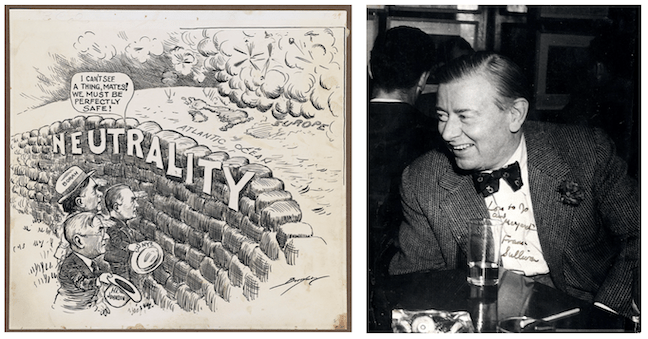
Above: Political cartoon by Clifford Berryman depicting three supporters of the Neutrality Act, 1939; at right, Frank Sullivan at his favorite watering hole, the Worden Hotel in Saratoga Springs, NY. (nationalww2museum.org/digitalarchive.sspl.org)
In 1935 the American humorist Frank Sullivan introduced the “Cliche Expert” Mr. Arbuthnot to New Yorker readers, exploring a variety of bromides associated with everything from political campaigns to the legal system.
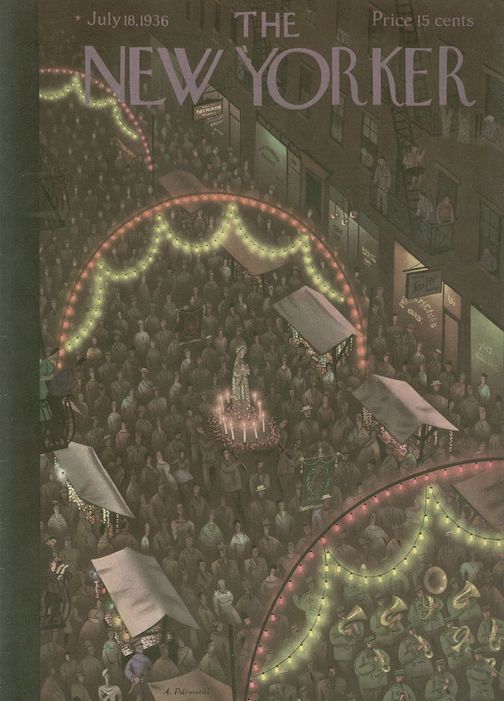
July 18, 1936 cover by Antonio Petruccelli.
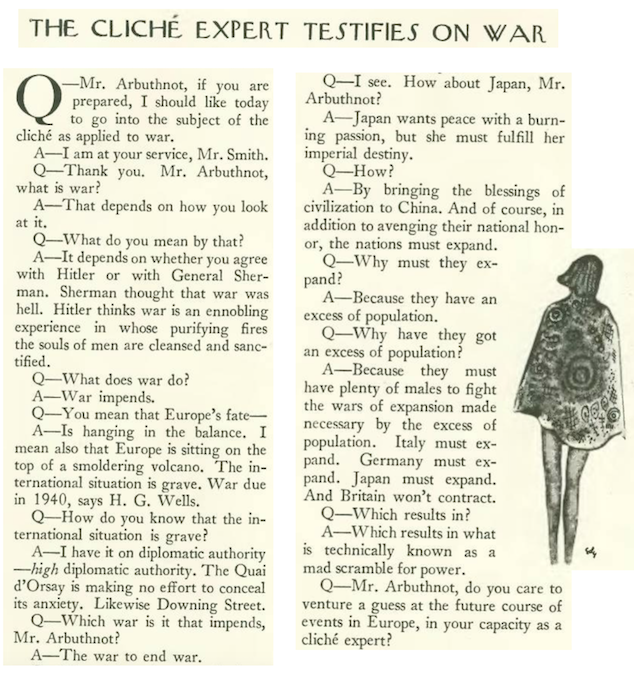
For the July 18 issue Sullivan (1892–1976) called on Mr. Arbuthnot to explore the subject of war (Sullivan had some familiarity with the subject as a soldier in World War I). Below is the first of two excerpts from “The Cliché Expert Testifies on War” (spot drawing by Susanne Suba):
A peripheral member of the Algonquin Round Table, Sullivan wrote his first article for The New Yorker in 1925, and seven years later published his inaugural “Greetings, Friends!” Christmas poem (he would contribute forty-two of them, his last in 1974). He penned more than a dozen Mr. Arbuthnot stories from 1935 to 1952, and also introduced such characters as Aunt Sally Gallup, Martha Hepplethwaite, and the Forgotten Bach. An expert in comparative illusion, he is credited with this gem: “This is either a forgery or a damned clever original!”
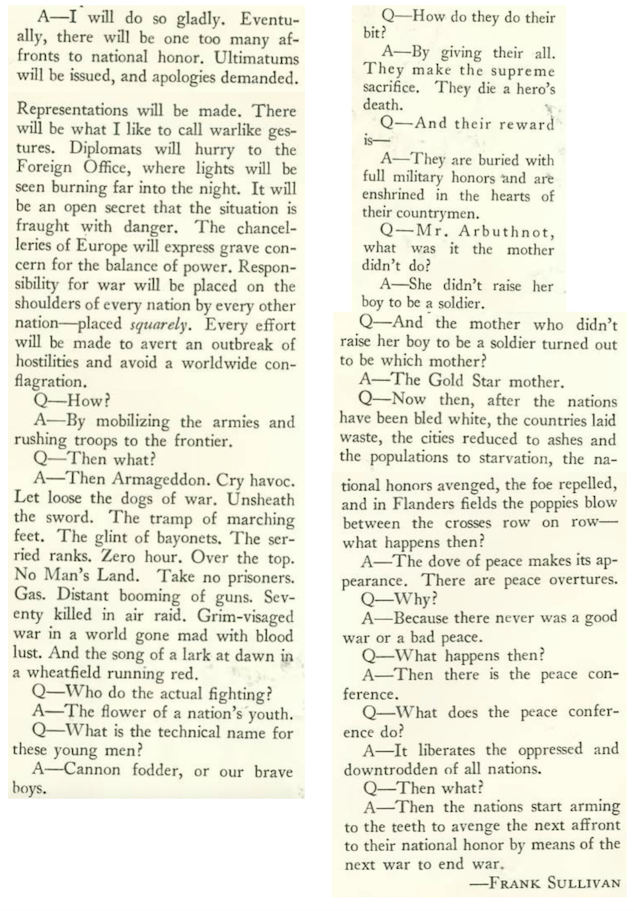
Here is the second excerpt from “The Cliché Expert Testifies on War”…
In a 1967 interview with The New York Times, Sullivan remarked that the war-divided country had lost its sense of humor. “But wars have never stopped humor,” he told Alden Whitman. Sullivan maintained that the world was more lighthearted in the 1920s and 30s, despite the horrors of World War I. “It was a time of beautiful nonsense,” he said.
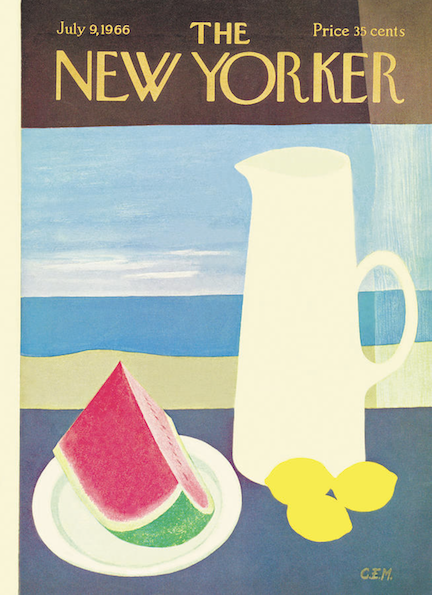
SAGE OF SARATOGA was the nickname conferred upon Frank Sullivan, who preferred the simpler life in his hometown. Top left, the small clapboard house Sullivan shared with his sister in Saratoga Springs; at right, Sullivan reading the July 9, 1966 issue of The New Yorker; below, an Al Frueh illustration topped Sullivan’s annual “Greeting Friends!” message for the Dec. 26, 1936 issue. (algonquinroundtable.org/hillcountryobserver.com)
Here is the cover of the July 9, 1966 issue featured above; the painting is by Charles E Martin:
A final note: After his service in World War I, Sullivan moved to New York City and wrote for several newspapers including the New York World. After the World folded in 1931, Sullivan moved back to his hometown, Saratoga Springs, where he shared a small clapboard house with his older sister, Kate Sullivan. Of his preference for small town life, he wrote: “Once I visited New York for twenty years but I wouldn’t live there if you gave me Philadelphia. A small town is the place to live. I live in a small town 180 miles from New York and while I would not say it has New York beat by a mile I would put the distance at six furlongs.”
Called the “Ultimate Freelancer,” Sullivan wrote for The New Yorker for fifty years and also contributed to the New York Times sports section, the Saturday Evening Post, and Town & Country. His work is collected in more than a half-dozen books.
* * *
Hanging Around
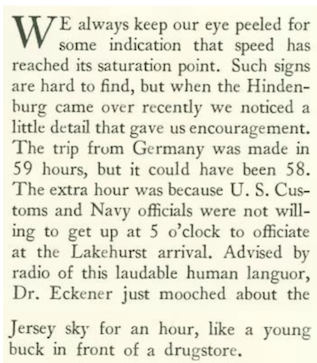
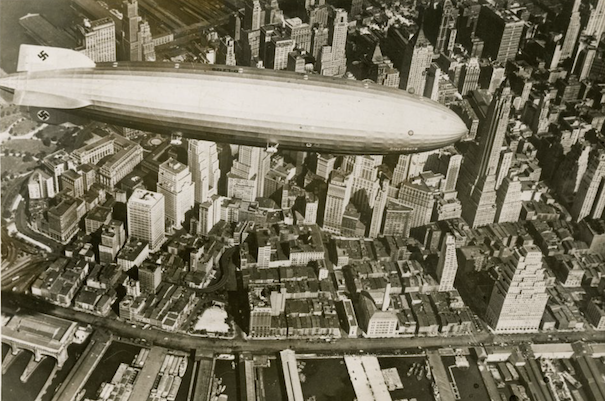
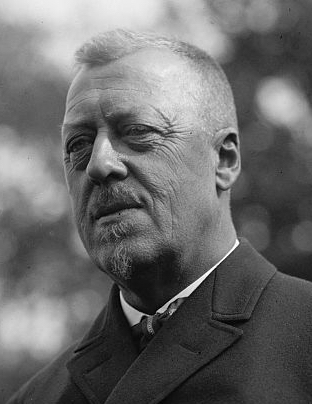
In his “Notes and Comment,” E.B. White noted the speed at which the Hindenburg made its Atlantic crossing, although the giant German airship had to hover over Lakehurst, N.J. for an extra hour to wait for customs officials to get out of bed. White also mentioned a “Dr. Eckener,” a reference to Zeppelin captain Hugo Eckener (see below), who was also manager of a German aircraft company that produced the ill-fated Hindenburg.
DOOMSDAY MACHINE…The Hindenburg flies above New York City in 1936—the airship made seventeen round trips across the Atlantic in 1936—its first and only full year of service—with ten trips to the United States. The Hindenburg would famously crash and burn while docking in Lakehurst, NJ on May 6, 1937. (zeppelin-museum.de)LOYAL TO AIRSHIPS, NOT GASBAGS…Airship innovator Hugo Eckener was apparently commanding the Hindenburg flight noted by E.B. White, but he was not on board when the giant airship crashed and burned the following May. A stickler for safety, Eckener was sidelined by the Nazi regime and replaced by Hitler loyalists. (Wikipedia)
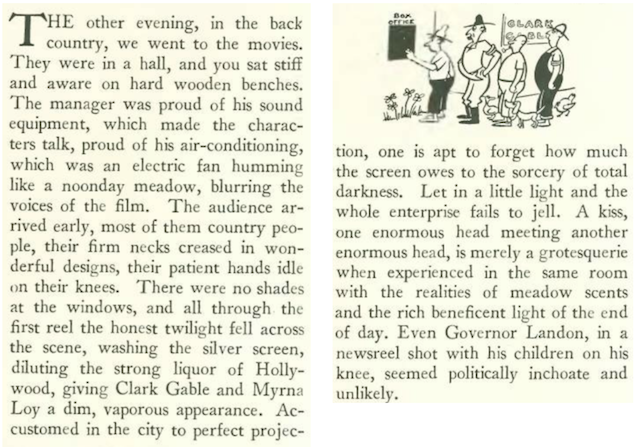
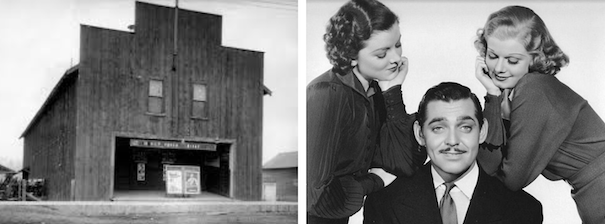
White also commented on a recent evening at the movies “in the back country,” where a Clark Gable–Myrna Loy picture was playing in a makeshift theater outfitted with wooden benches.
RUSTIC RIVOLI…E.B. White found the silver screen a bit diluted in a “back country” theater, probably similar to the one pictured at left. He most likely took in the film Wife vs Secretary featuring Myrna Loy, Clark Gable and Jean Harlow. (facebook.com/MGM)
* * *
Komrade With Kamera
Humorist Leo C. Rosten contributed numerous short fiction stories to The New Yorker as well as several “A Reporter at Large” pieces between 1936 and 1939. He published “A Shot of Lenin’s Tomb” (classified as fiction) in the July 18 issue. Two brief excerpts:
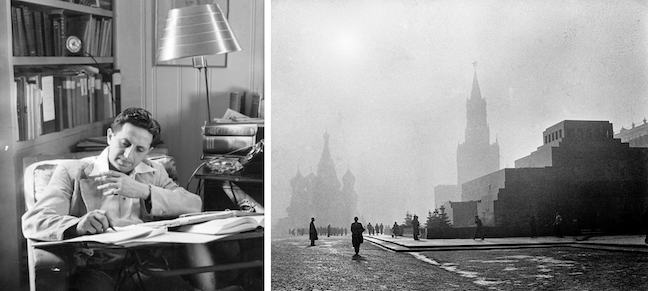
THE SOUL OF WIT…Leo C. Rosten (1908–1997) was an American writer and humorist in the fields of scriptwriting, storywriting, journalism, and Yiddish lexicography. Fran Lebowitz once called Rosten “the Jewish James Thurber.” Above, Rosten circa 1940s and a foggy view of Lenin’s Tomb, undated. (forward.com/tass.com)
* * *
Crossing Over
Station wagons were first built in the 1910s as custom jobs—independent manufacturers would produce wooden bodies for the Model T chassis. These were considered “depot hacks” and commercial vehicles rather than family cars. But things changed in the 1930s as manufacturers saw their potential in the consumer market. Journalist George F.T. Ryall (pen name “Speed”), who wrote the “Motors” column for The New Yorker in the 1930s, looked in on the new automobiles that would foreshadow today’s crossovers.
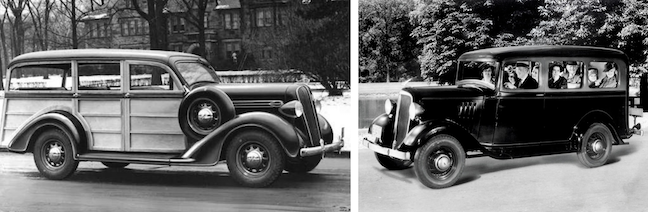
IN THE FAMILY WAY…In the mid-1930s U.S. automakers began introducing a new kind of car—the station wagon. Pictured above are the 1936 Dodge Westchester Suburban (left) and the 1936 Chevrolet Carry-All Suburban. (Facebook.com/hemmings.com)
* * *
At the Movies
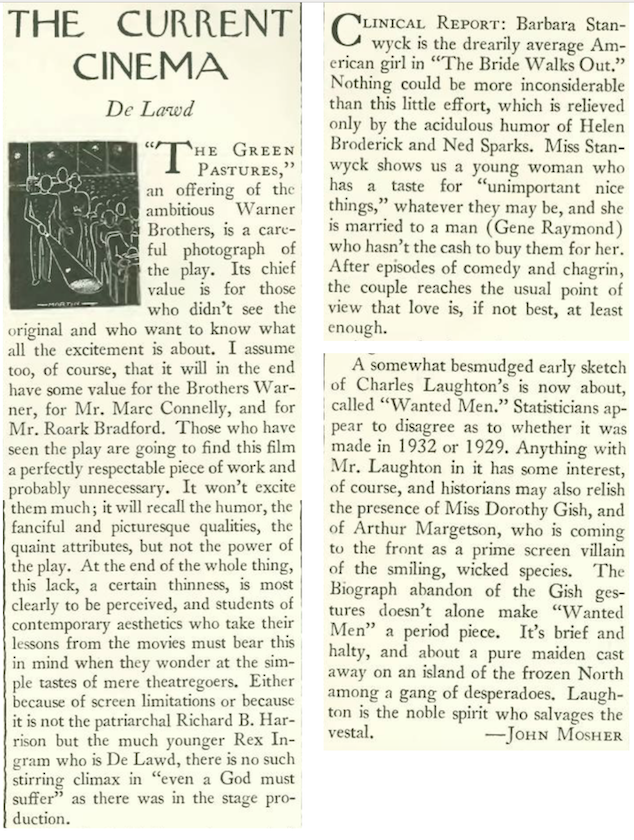
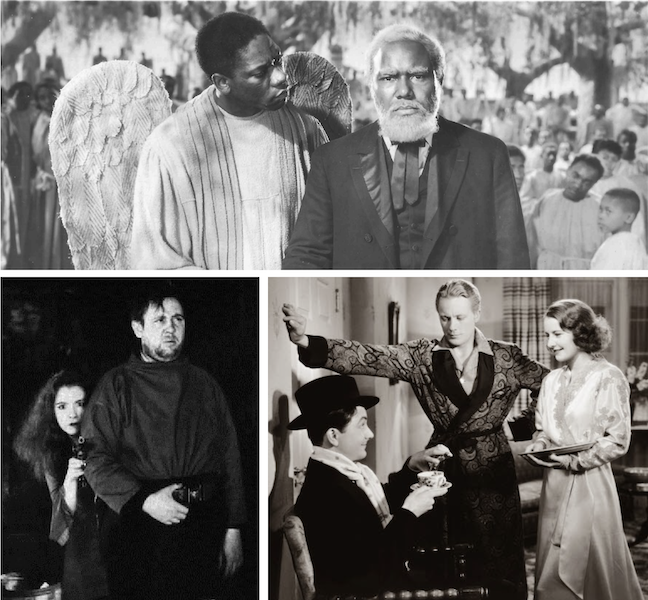
The 1929 play The Green Pastures, which portrayed Old Testament stories as seen through the eyes of a young Black child, was written by playwright Marc Connelly, one of founding members of the Algonquin Round Table. The play was based on Roark Bradford’s popular 1928 story collection Ol’ Man Adam an’ His Chillun (strongly criticized over the years for its patronizing and demeaning portrayals of Black characters). Connelly, who won a Pulitzer for the play, also directed its screen adaptation, one of just six feature films in the Hollywood Studio era to feature an all-Black cast. Critic John Mosher gave the film, along two other releases, an unenthusiastic review.
HEAVEN CAN WAIT…Clockwise from top: Oscar Polk (left) as the Angel Gabriel with “De Lawd” (Rex Ingram) in The Green Pastures—the film was a commercial success despite criticisms about its racial stereotyping; Robert Young, Gene Raymond and Barbara Stanwyck in The Bride Walks Out; Dorothy Gish and Charles Laughton in Wanted Men, originally released as the 1930 British crime film Wolves. (cinemafaith.com/imdb.com)
* * *
From Our Advertisers
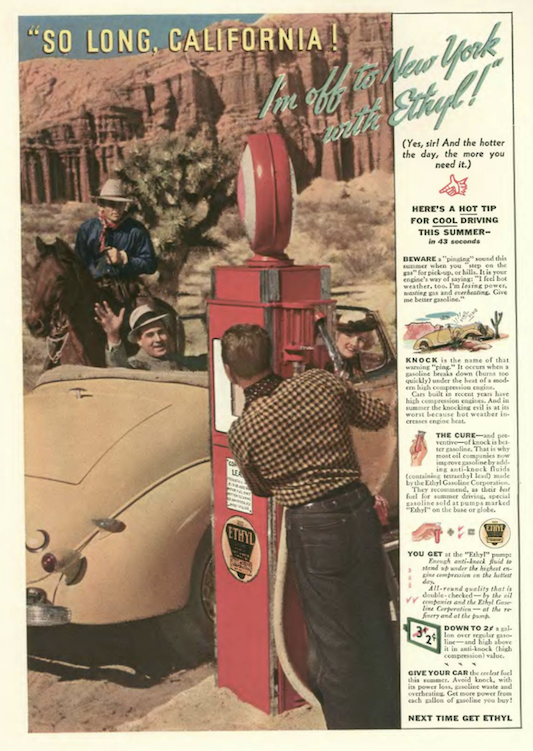
We set off down a long road with a tankful of leaded petrol…
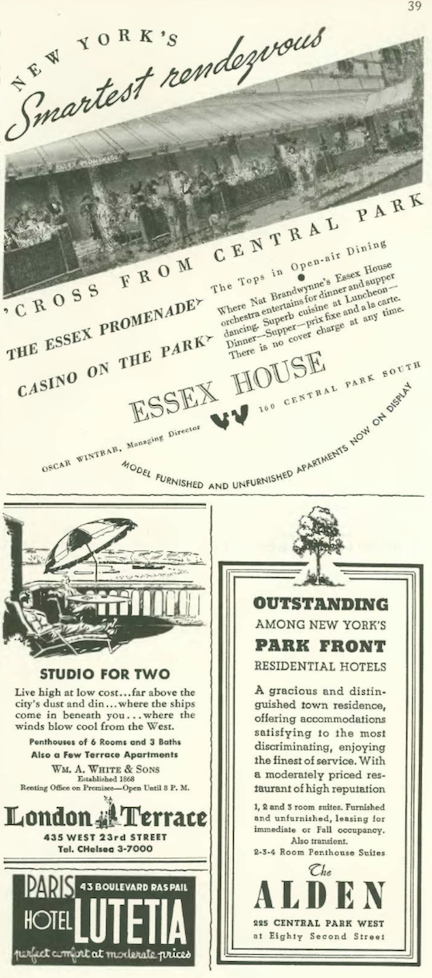
…from the back of the book, select living arrangements from the upscale to the budget conscious…
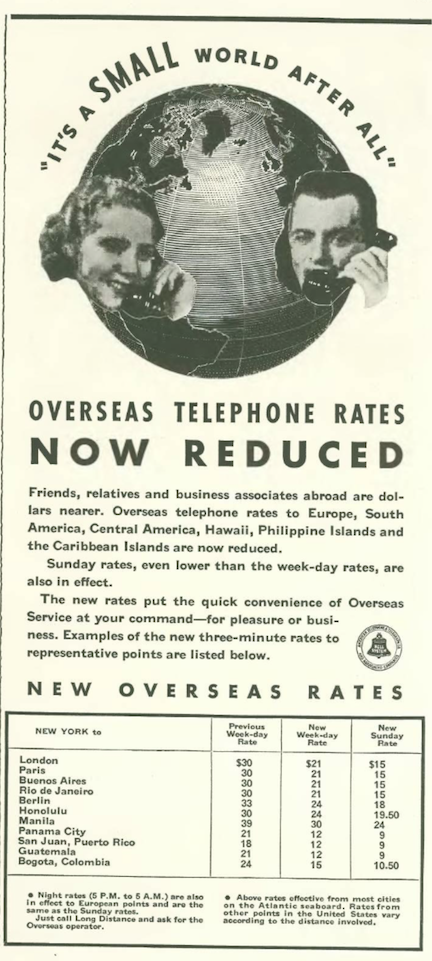
…this ad from Bell Telephone anticipated the Sherman Brothers 1964 earworm that still accompanies a popular Disney attraction…
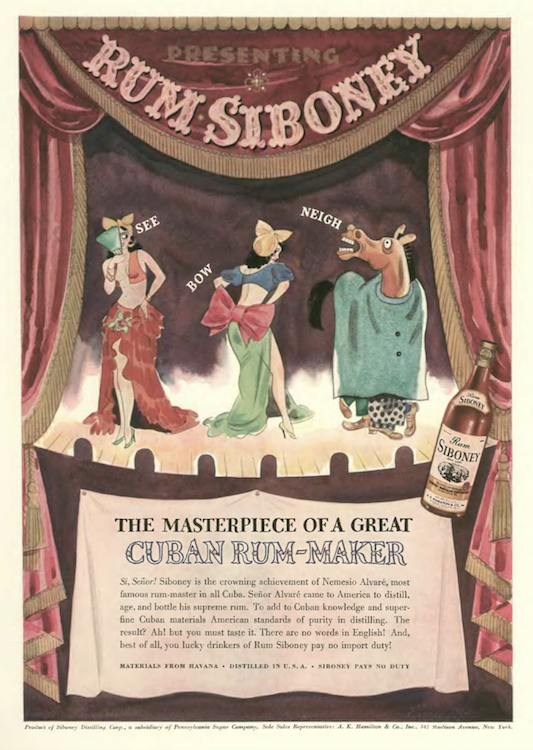
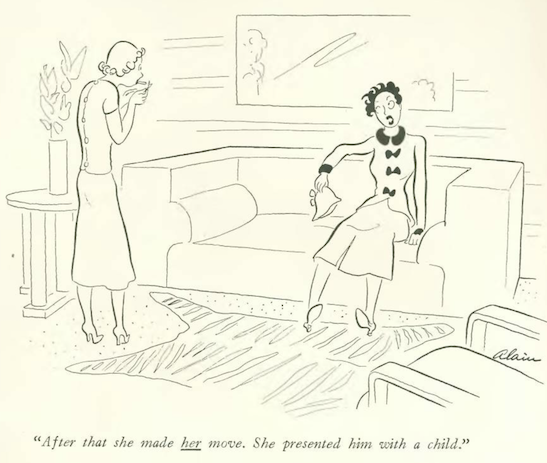
…the back inside cover offered a colorful splash of sex and humor (and a bit of phonetics) to promote Siboney Rum…
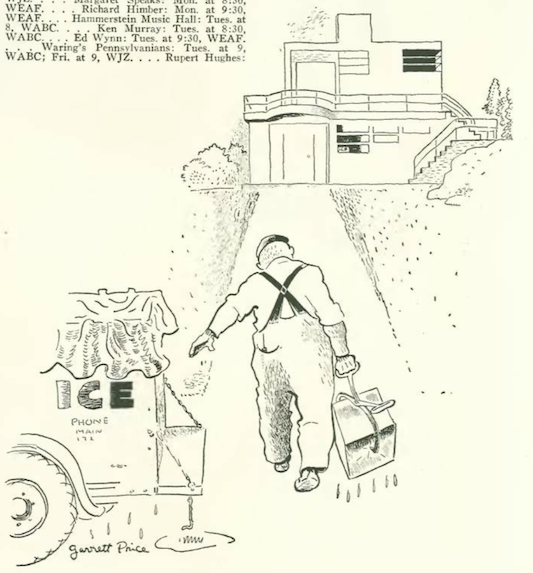
…on to our cartoonists, we begin with some heavy lifting from Garrett Price…
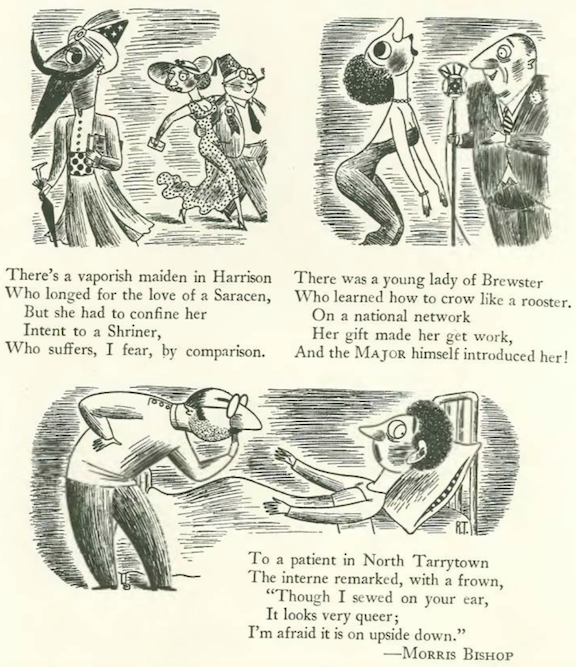
…Richard Taylor sketched up these merry illustrations for a Morris Bishop ditty…
…Alain engaged in some market research…
…and channelled a bit of Barbara Shermund humor…
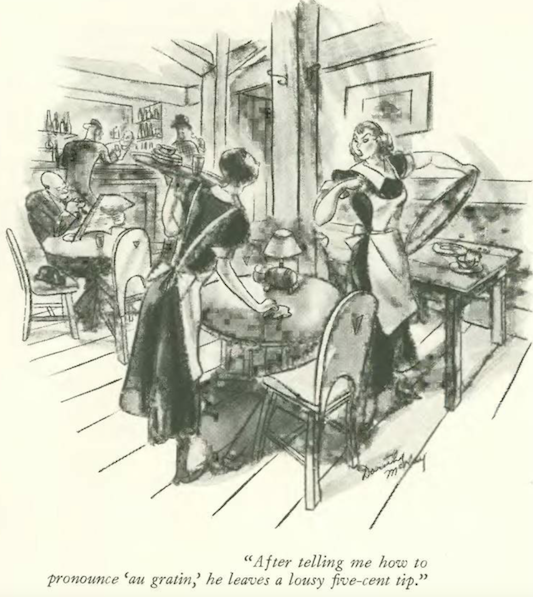
…Dorothy McKay explored the sad world of phonies and cheapskates…
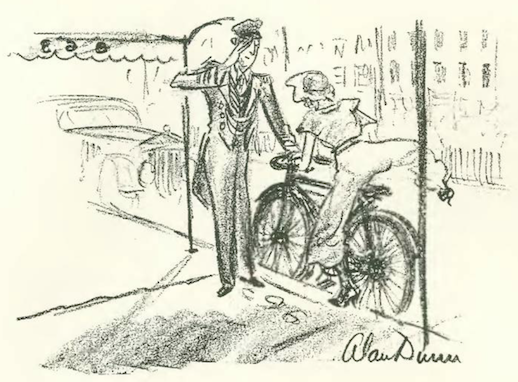
…Alan Dunn gave us a dutiful doorman…
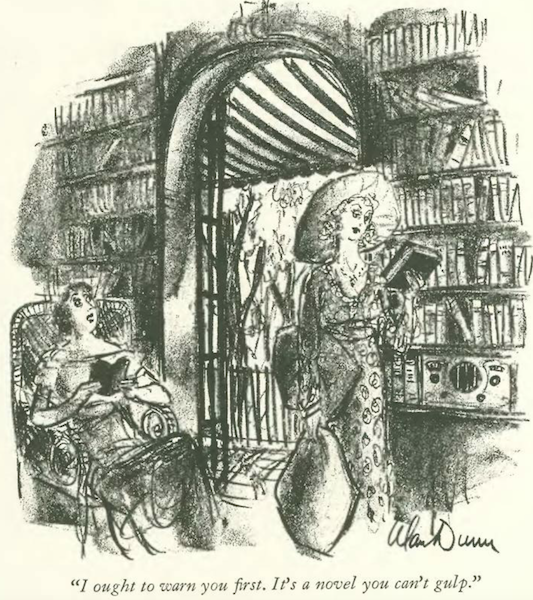
…and Dunn again, contemplating a hefty tome…
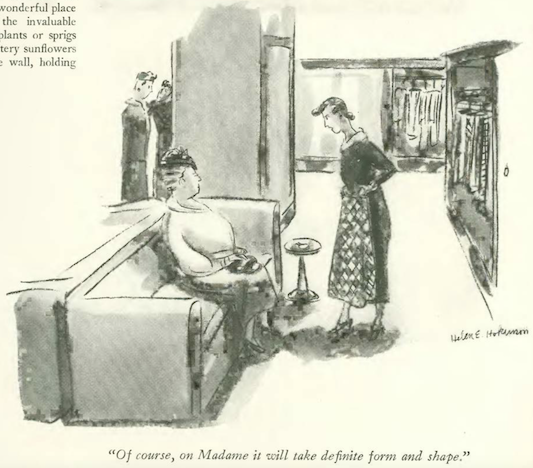
…Helen Hokinson continued her exploration of department store drama…
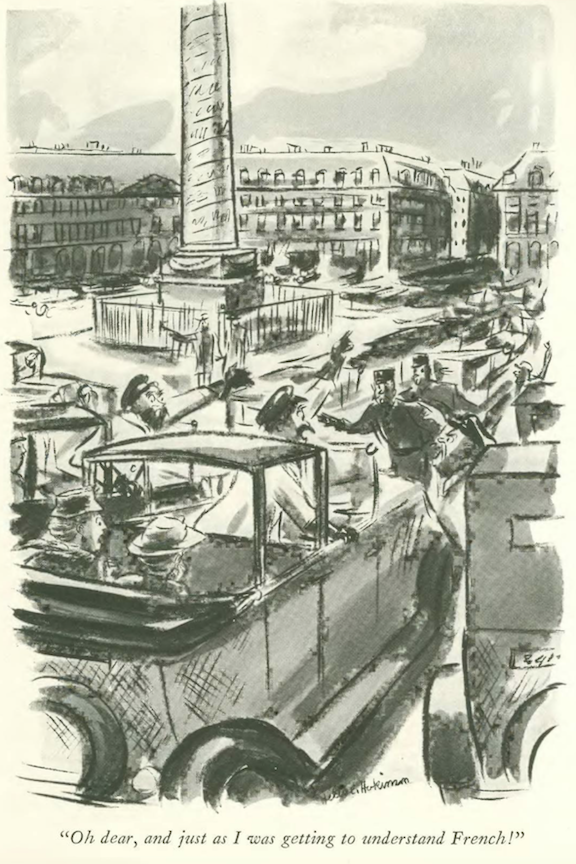
…as well as the world of foreign affairs…
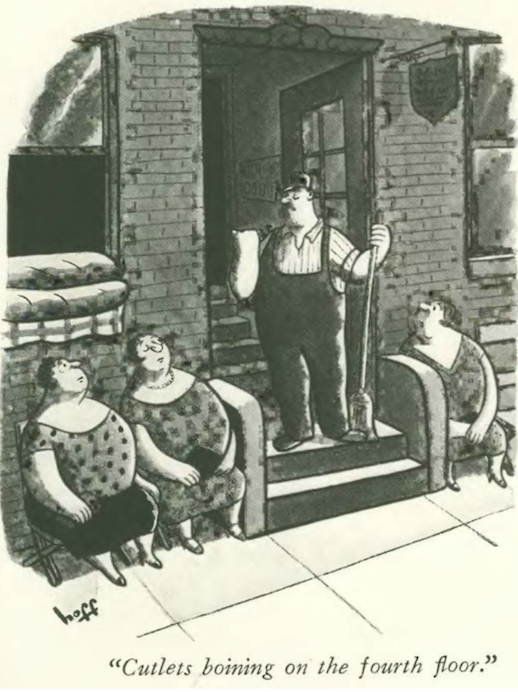
…Syd Hoff sounded the alarm on some burning cutlets…
…and we close with the master of dark humor, Charles Addams…
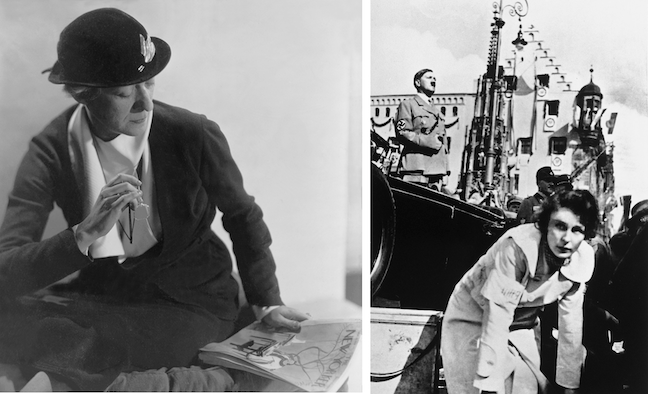
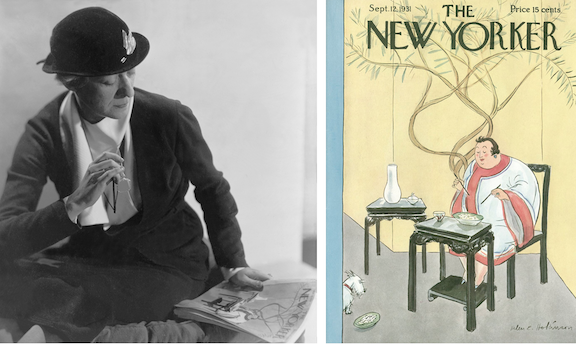
Above, left, Janet Flanner regards the cover of the Sept. 13, 1931 issue of The New Yorker; at right, Adolf Hitler's chosen filmmaker Leni Riefenstahl at Nuremberg's "Shovel Day" parade, 1936. (Library of Congress/Sueddeutscher Verlag)
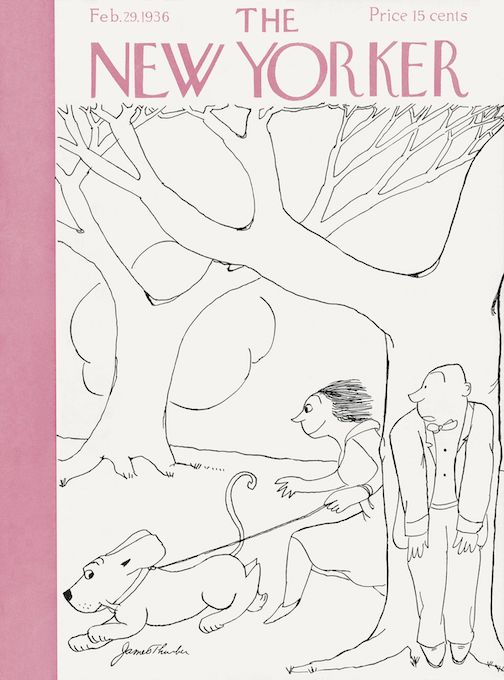
The February 29, 1936 issue stands out from pack not only for its cover—James Thurber’s first—but also for the magazine’s first in-depth look at a man who would spark the deadliest conflict in human history.
February 29, 1936 cover by James Thurber. This was the first of six covers Thurber contributed to The New Yorker. You can see all six covers at Michael Maslin’s Ink Spill, the go-to site for all things Thurber and so much more. UPDATE: Also check Maslin’s post regarding the repeat of this cover on Sept. 4, 2023. Fascinating read!
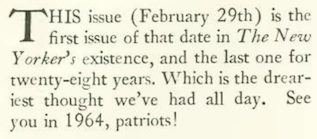
Before we jump in…Thurber’s close friend E.B. White noted another unusual fact about this issue…
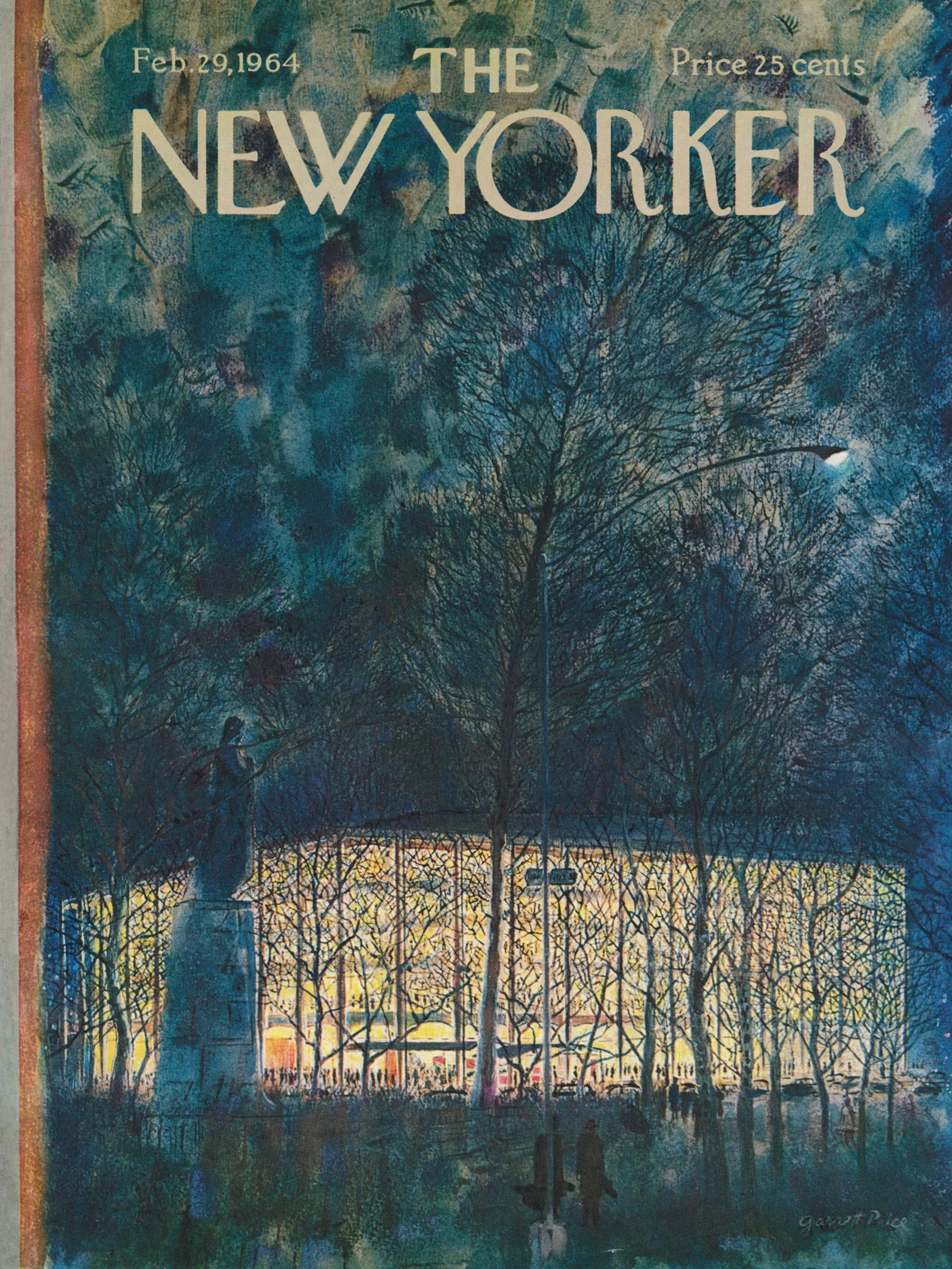
…twenty-eight years later, and a dime extra (cover by Garrett Price)…
* * *
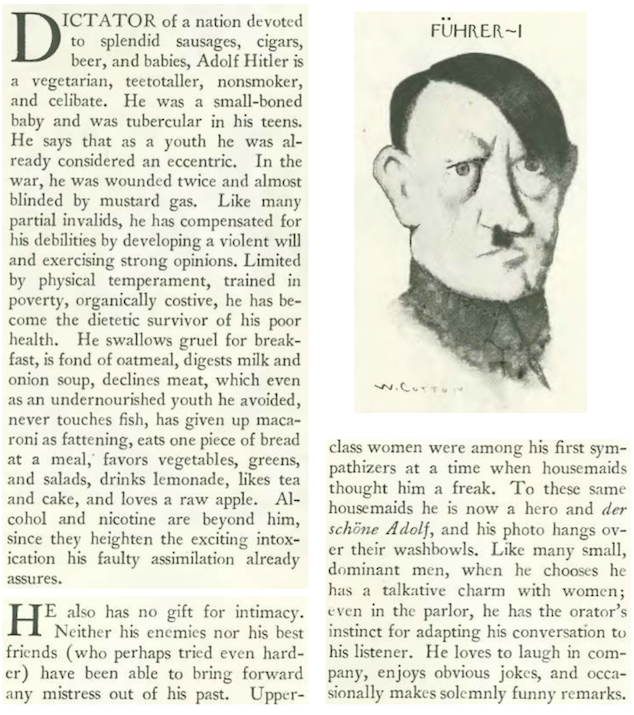
Inside the Feb. 29 issue, The New Yorker’s Paris correspondent Janet Flanner published the first part of a three-part profile on German dictator Adolf Hitler. In this first excerpt she described the Führer’s ascetic diet and personality (caricature by William Cotton).
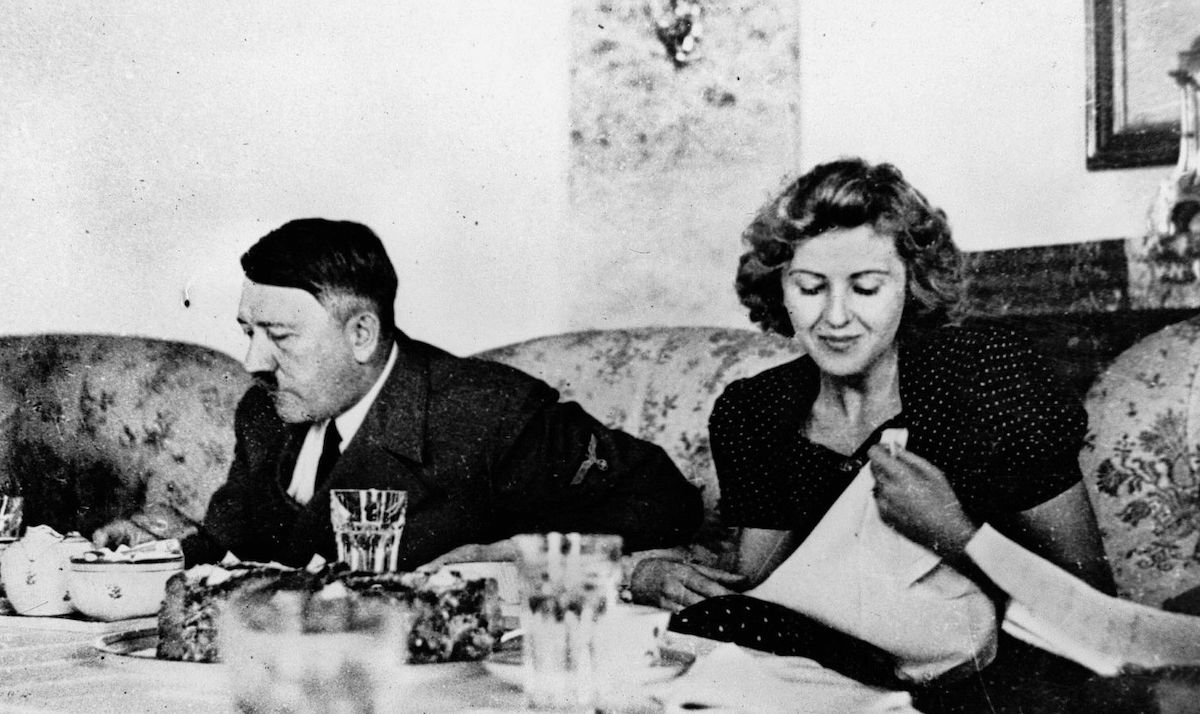
NAZI NUM NUMS….Adolf Hitler with one of his official food tasters, Margot Woelk, during World War II. Woelk later claimed she was the sole survivor from a group of food tasters who were summarily executed by the Red Army after the fall of Berlin. (warfarehistorynetwork.com)
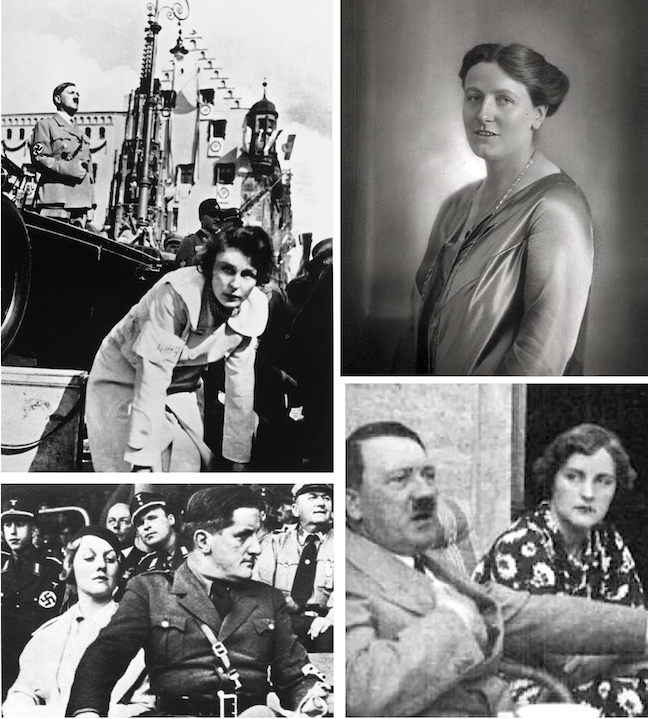
Flanner described Hitler’s relationships with influential women, particularly filmmaker Leni Riefenstahl.
FRIENDS WITH BENEFITS…Adolf Hitler had influential admirers both in and outside of Germany, including, clockwise, from top left, filmmaker Leni Riefenstahl (in the white skirt described by Flanner) at the 1936 “Shovel Day” in Nuremburg; Winifred Wagner, daughter-in-law of composer Richard Wagner, in 1925; Hitler with Unity Mitford, one of six aristocratic Mitford sisters and a fanatical Nazi; Ernst Franz Sedgwick Hanfstaengl with another Mitford sister, Diana Mitford, at a 1934 Nuremberg rally. Diana as married to Oswald Mosley, leader of the British Union of Fascists, and Hanfstaengl was the son of Katharina Wilhelmina Hanfstaengl, a prominent Munich art publisher who helped finance Hitler’s rise to power. (Sueddeutscher Verlag/Wikipedia/historyreader.com)
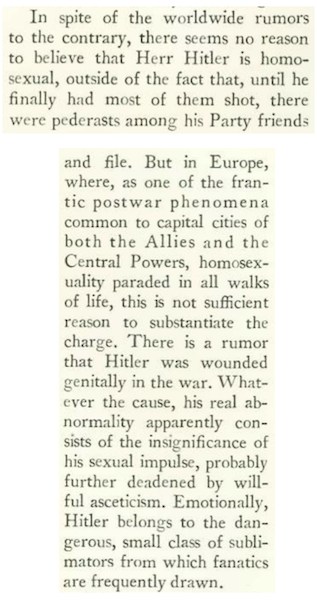
Flanner concluded the piece with a look at Hitler’s sexuality, which seemed non-existent, and drew an ominous conclusion about his personality type.
EXPENDABLE…Ernst Röhm with Adolf Hitler in 1933. Although Hitler knew Röhm was gay, he also valued Röhm’s leadership and organizational skills, that is until his presence proved a liability. Röhm was murdered by the SS in 1934 during the “Night of the Long Knives.” (Wikipedia)
As part of a centenary series, The New Yorker’s Andrew Marantz recently looked at Flanner’s profile of Hitler, noting that she was “neither an antifascist, like her friend Dorothy Parker, nor a Fascist, like her friend Ezra Pound; she was against crude bigotry, but she was not the world’s greatest philo-Semite.”
* * *
Lamour Amour
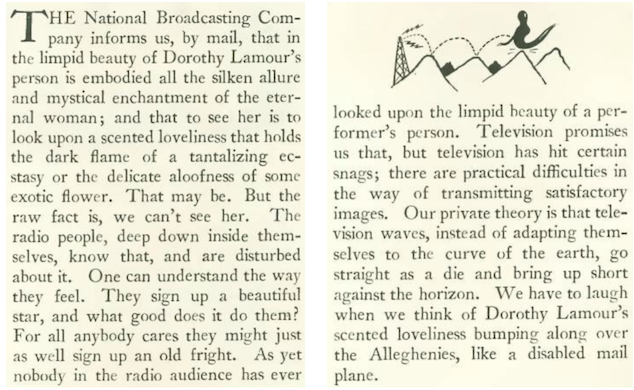
In his “Notes and Comment,” E.B. White pointed out the challenges of expressing physical beauty over a non-visual medium like radio:
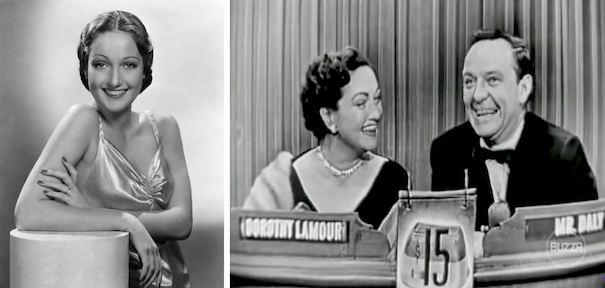
TELEGENIC…Hopefully E.B. White managed to see Dorothy Lamour on the “television waves… bumping along over the Alleghenies.” At left, publicity photo of Lamour from 1937; at right, Lamour appeared as a mystery guest on What’s My Line?, Feb. 20, 1955, seen here with host John Daly. In later years Lamour was a guest on a number of television shows, ranging from Marcus Welby, M.D. to Remington Steele. (Wikipedia/YouTube.com)
* * *
Shadow Plays
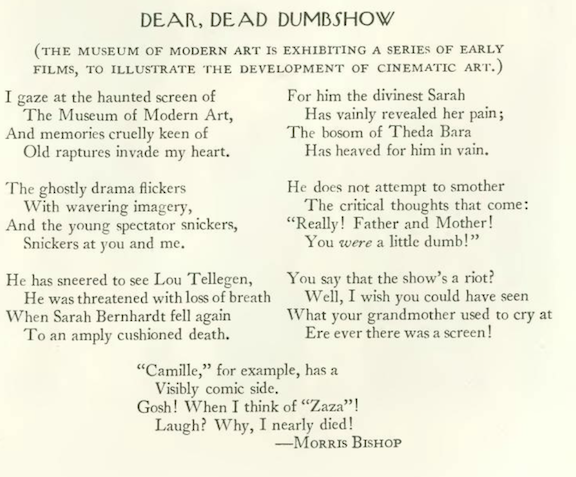
Morris Bishop (1893-1973), a noted scholar of the Middle Ages as well as a writer of light verse, offered up these lines after screening early silent films at the Museum of Modern Art. The screenings were curated by Iris Barry to showcase MoMA’s new film library and to advance the study of film as a serious art form.
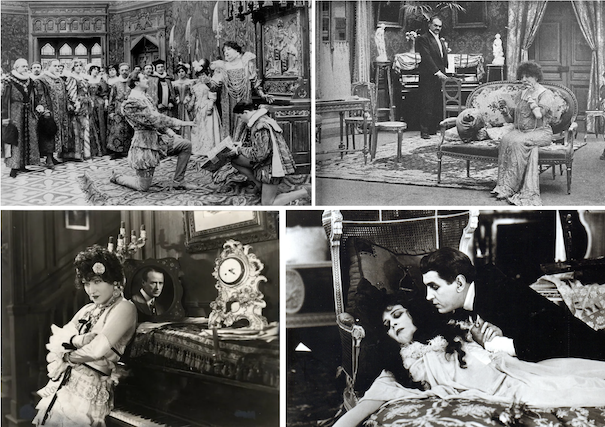
TIME CAPSULES…The Museum of Modern Art was a pioneer in the study of film as a modern art form. Among the films screened at MoMA in 1936 (clockwise, from top left): famed stage actress Sarah Bernhardt as Queen Elizabeth in the Les Amours de la reine Élisabeth (The Loves of Queen Elizabeth) with Lou Tellegen, 1912; Bernhardt in the film Camille (La Dame aux camélias) with André Calmettes, 1911; Theda Bara’s 1917 take on Camille, in a scene with Alan Roscoe; Gloria Swanson in Zaza, 1923. (Wikipedia/imdb.com/YouTube.com)
* * *
A Reporter’s Chops
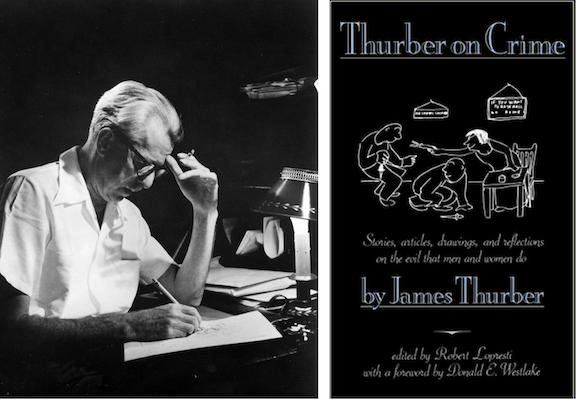
With so much attention given to James Thurber as a humorist, it is easy to forget that he was an experienced journalist, and that he could apply his considerable gifts as a writer to narrative non-fiction. For the Feb. 29 “A Reporter at Large” column, Thurber penned “Crime in the Cumberlands.”I can’t do it justice through excerpts, but I highly recommend giving it a read as a prime example of Thurber’s skills as a reporter.
SERIOUSLY SERIOUS WRITER…You can find both humorous and not-so-humorous crime stories (and drawings, of course) in 1991’s Thurber on Crime, edited by Robert Lopresti. “Crime in the Cumberlands” is included in the collection. (jamesthurber.org/barnesandnoble.com)
* * *
At the Movies
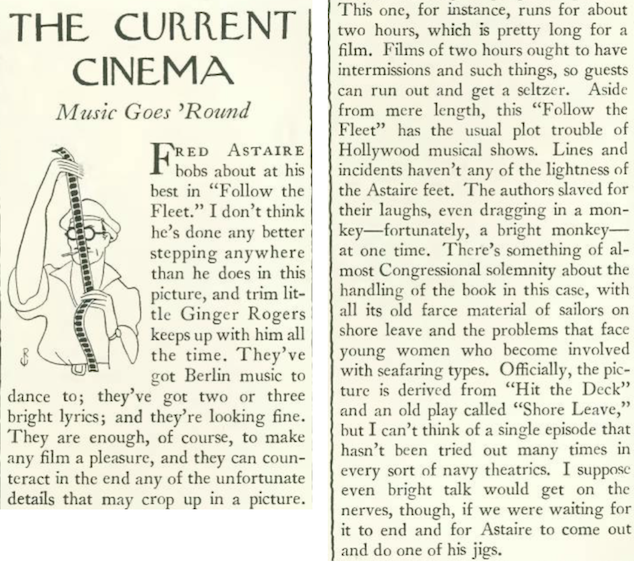
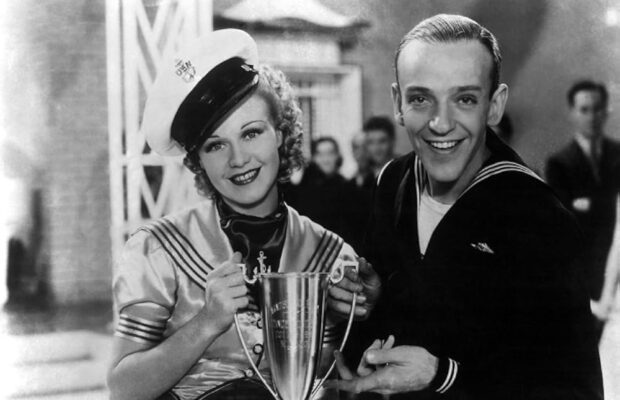
Not so serious were the films being churned out by Hollywood, including the Fred Astaire/Ginger Rogers toe-tapper Follow the Fleet, set to an Irving Berlin score that featured the hit “Let’s Face the Music and Dance.” Critic John Mosher was on board for the ride.
GOOD CLEAN FUN…Dance partners “Bake” Baker (Fred Astaire) and Sherry Martin (Ginger Rogers) find love during shore leave in Follow the Fleet.(Toronto Film Society)
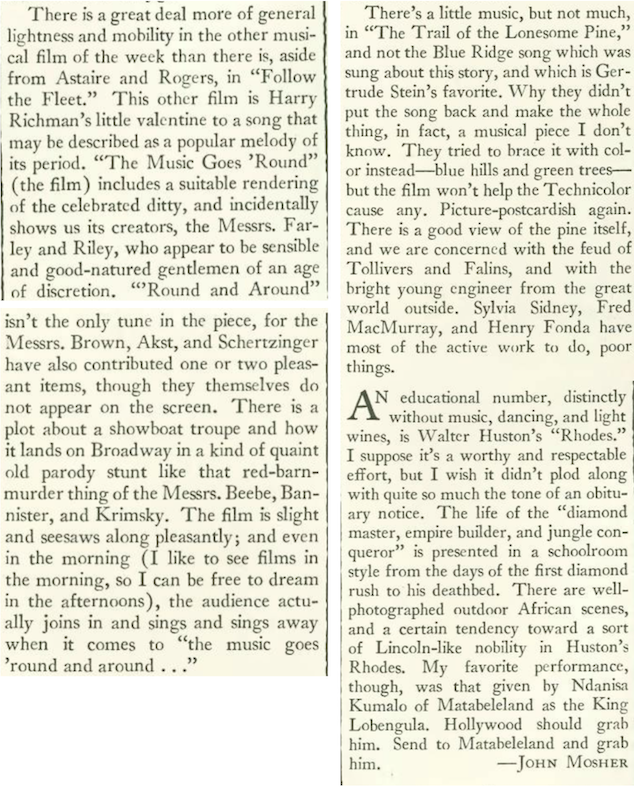
Bandleader Harry Richman, well known in the New York nightlife scene of the 1920s and 30s, showed his acting chops in The Music Goes ‘Round…
I CAN SING TOO…Rochelle Hudson and Harry Richman in The Music Goes ‘Round. (imdb.com)
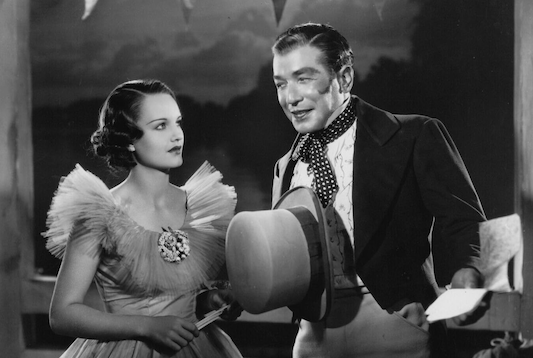
…Fred MacMurray, Sylvia Sydney, Henry Fonda and Fred Stone appeared in living color in The Trail of the Lonesome Pine–it was just the second full-length feature to be shot in three-strip Technicolor and the first to be shot outdoors in Technicolor…
LIFELIKE…Clockwise, from top left: Fred MacMurray; Sylvia Sydney; a Paramount movie poster; Henry Fonda and Fred Stone.(moviesalamark.com/imdb.com)
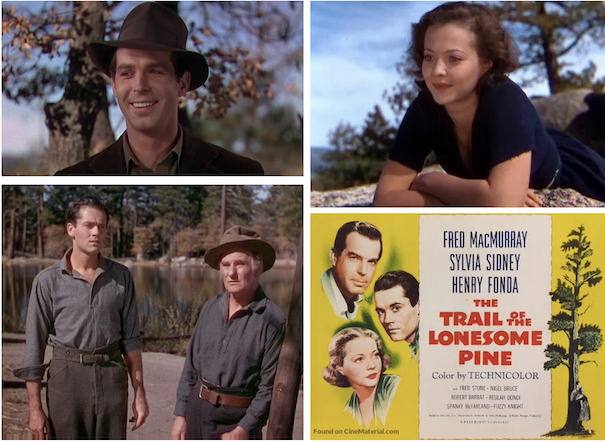
…the 1936 film Rhodes (aka Rhodes of Africa) featured the massive acting talents of Walter Huston and Peggy Ashcroft; not surprisingly, the subject matter of the film has not aged well…a 2015 review in The Guardianis headlined: “Rhodes of Africa: only slightly less offensive than the man himself”…
COLONIAL KLINK…Walter Huston and Peggy Ashcroft in Rhodes.(imdb.com)
* * *
From Our Advertisers
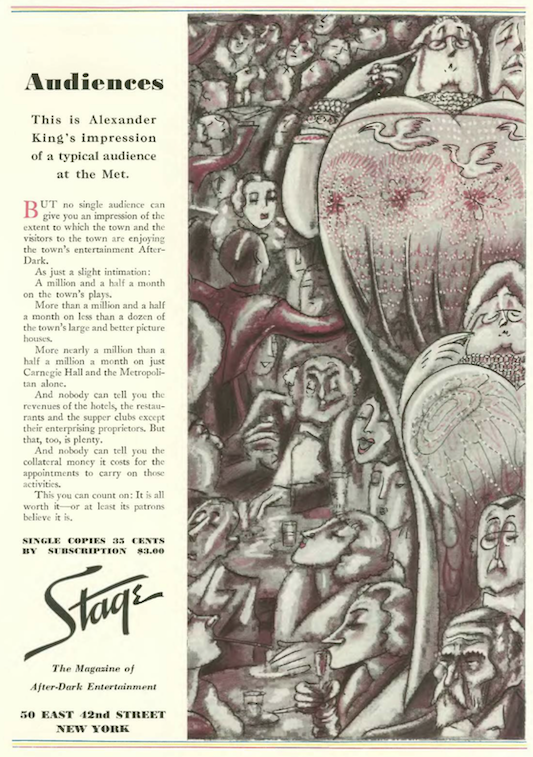
We begin with a Stage magazine ad from the inside front cover, featuring an illustration by Alexander King…
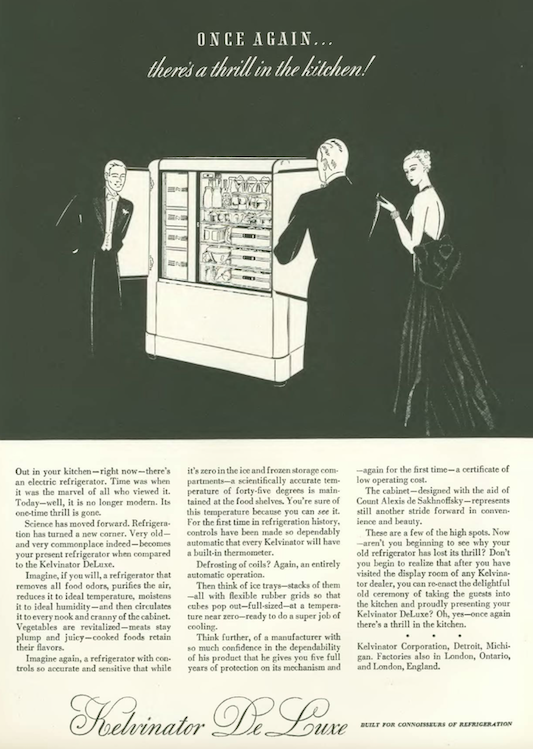
…only new-money swells would be seen doing this…old money wouldn’t dare enter the kitchen, unless they needed to sack the cook…
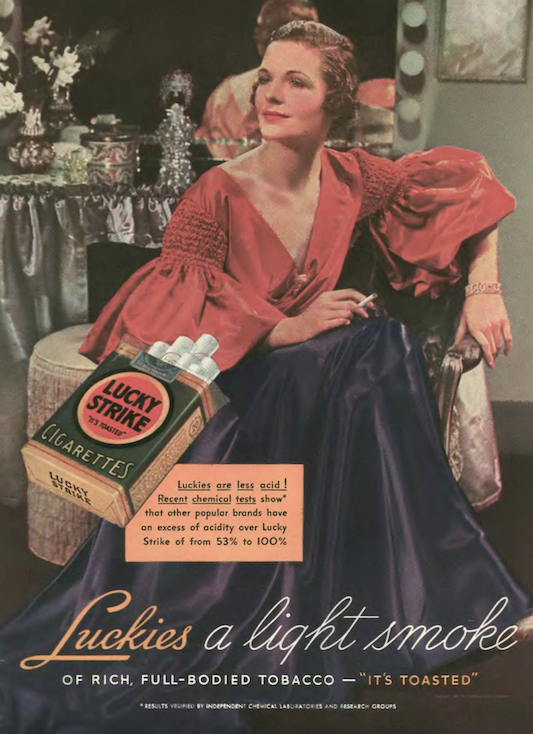
…on the back cover of the Feb. 29 issue you would find this elegant woman taking a break from her vanity to enjoy a “toasted” Lucky…
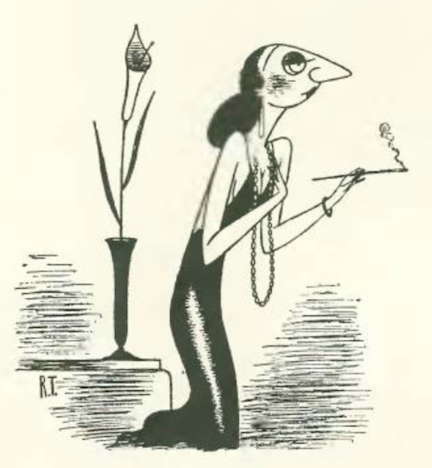
…we join our cartoonists, starting with this spot by Richard Taylor…
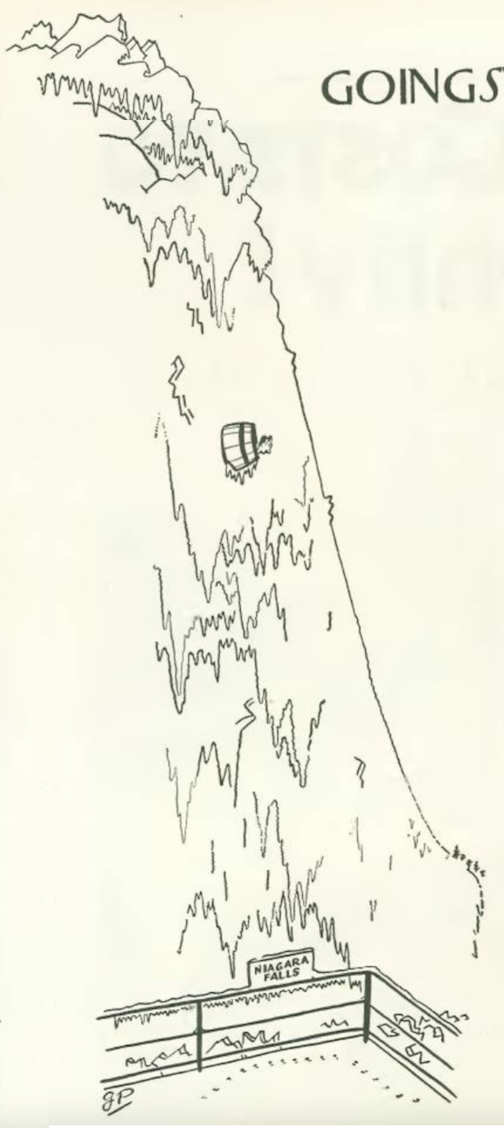
…Garrett Price got stuck over the frozen falls…
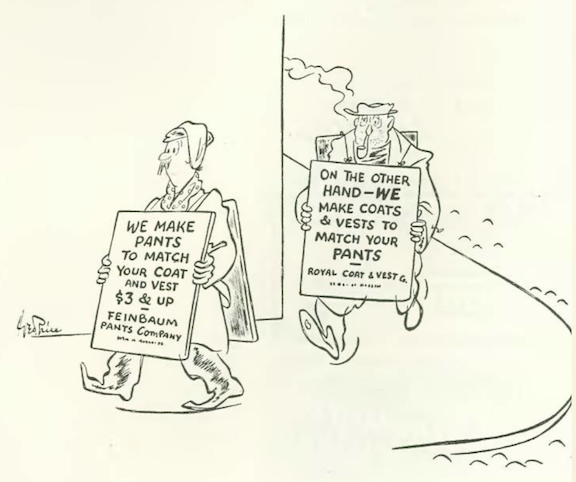
…George Price drew up a sandwich board competition…
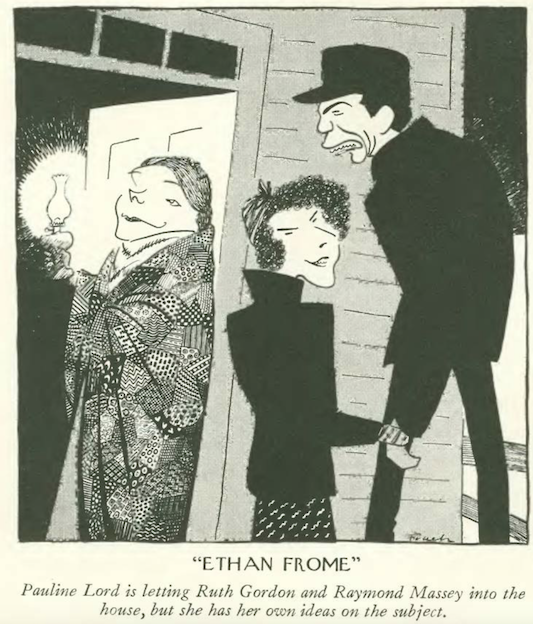
…Al Frueh continued to illuminate “The Theatre” section…
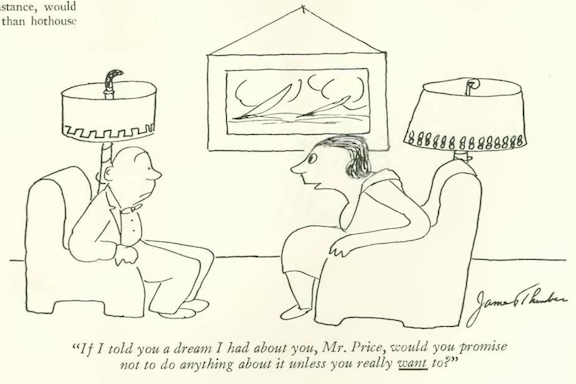
…James Thurber posed a loaded question…
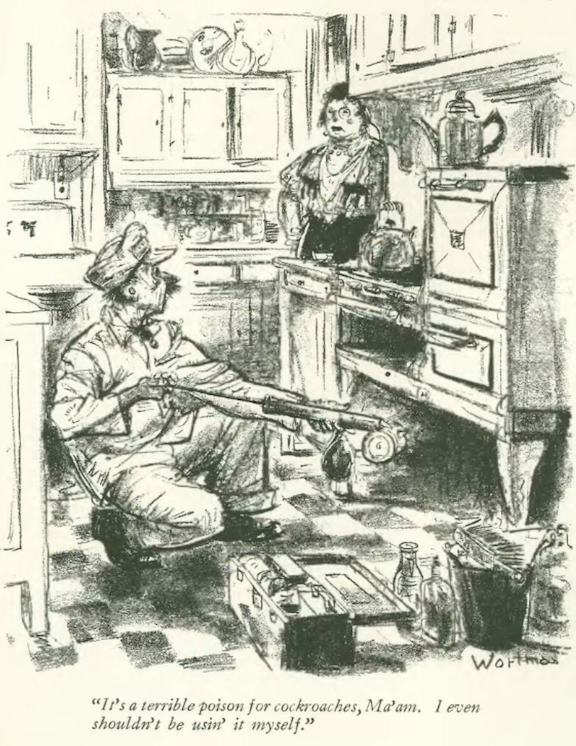
…Denys Wortman got down to some debugging…
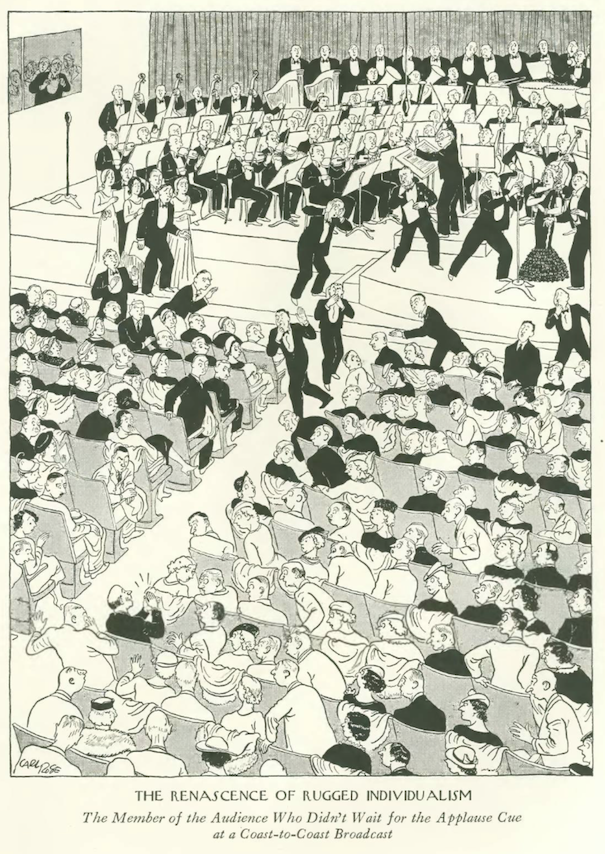
…Carl Rose offered up another example of rugged individualism…
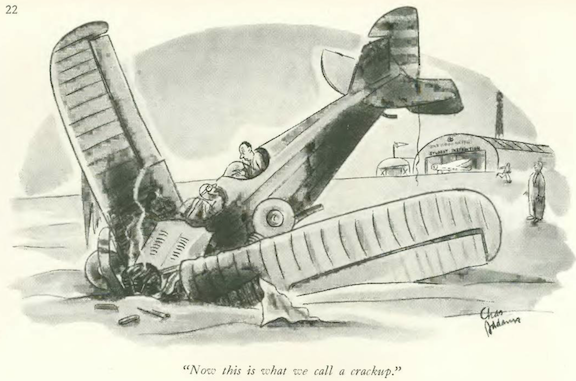
…Charles Addams came down to earth…
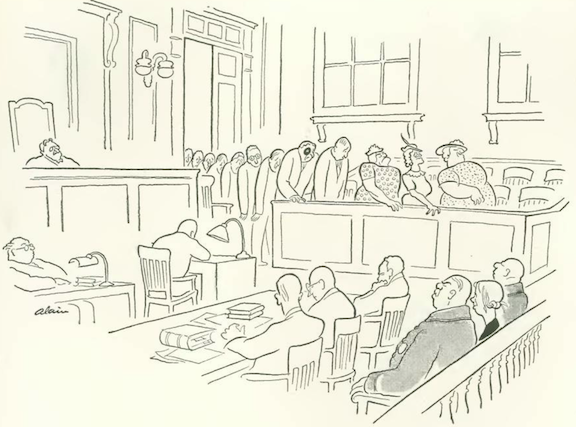
…Alain illustrated a case of jury tampering…
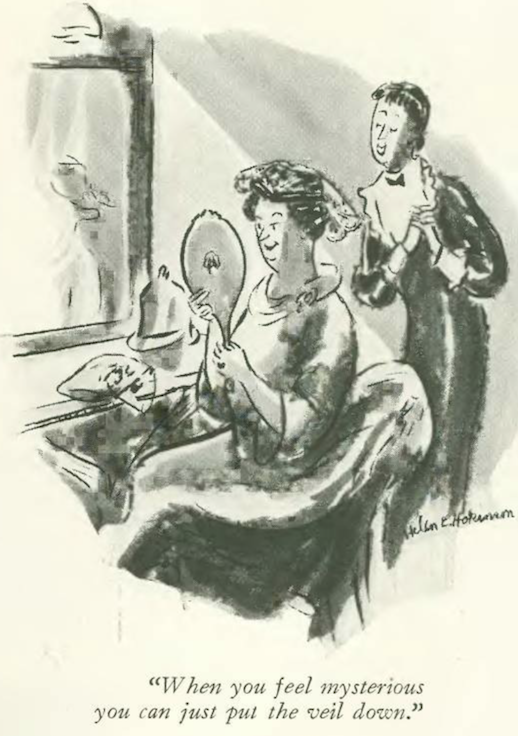
…Helen Hokinson demonstrated the allure of a netted hat…
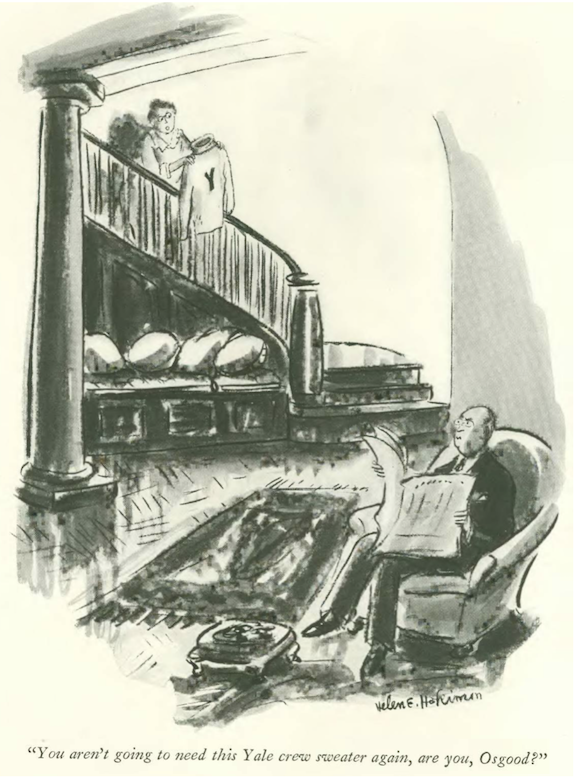
…and Hokinson again, doing some early spring cleaning…
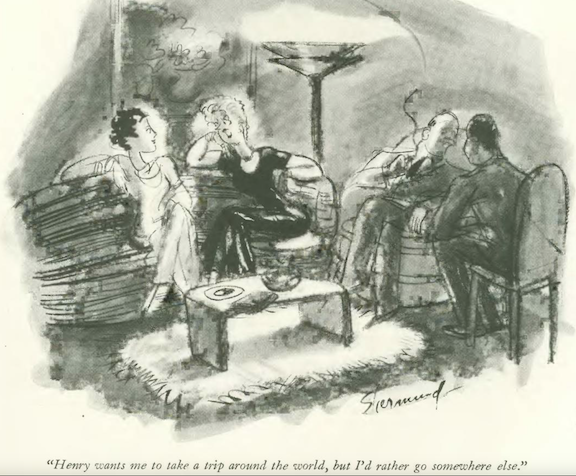
…and Barbara Shermund explored the idyll of wanderlust…
…and before we go, here is the New Yorker cover—by Helen Hokinson, Sept. 12, 1931—that was the object of Janet Flanner’s attention…