A Flivver Farewell

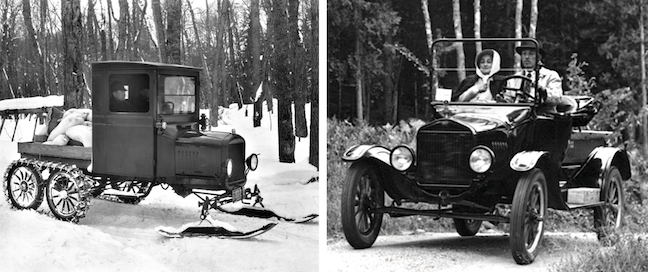
Above: Undated image (left) demonstrates the versatility of the Model T Ford. At right, E.B. White and Katharine Sergeant White take a spin in a Model T Roadster. (freep.com/whistlestoppers.com)

E.B. White often shared anachronistic views on progress, decrying everything from streamlined cars to fully-enclosed city buses that removed passengers from the open air.
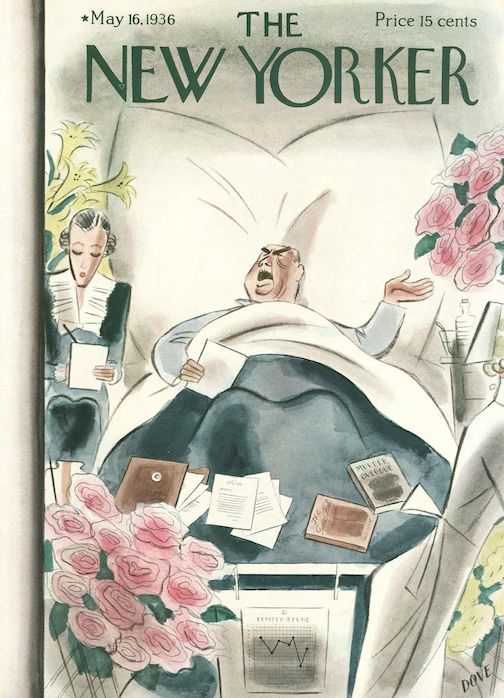
May 16, 2026 cover by Leonard Dove. Note the star next to the date. On older New Yorker magazine covers, the star was a printer’s mark indicating a split run or a specific newsstand edition.

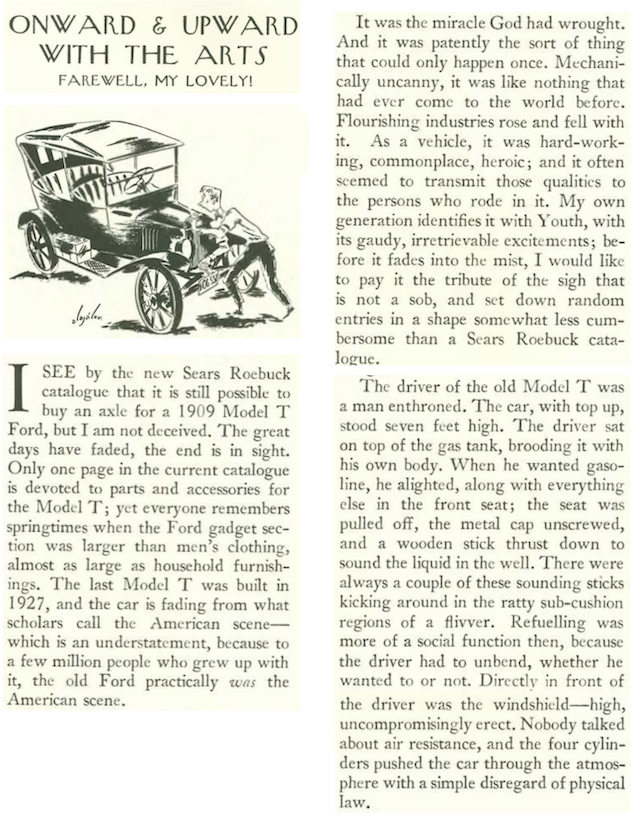
Instead, White celebrated the simplicity and mechanical quirks of earlier motor vehicles, including his beloved Ford Model T. For the May 16 issue White collaborated with journalist Richard Lee Strout on a homage to the old motorcar, “Farewell, My Lovely!” Strout’s contribution is important here, since it was he who originally submitted a manuscript to editor Harold Ross about the Model T. Either White rewrote Strout’s submission or used it as inspiration for “Farewell, My Lovely!” At any rate, that explains the blended byline, “Lee Strout White.” Here are some excerpts (spot art by Constantin Alajalov):
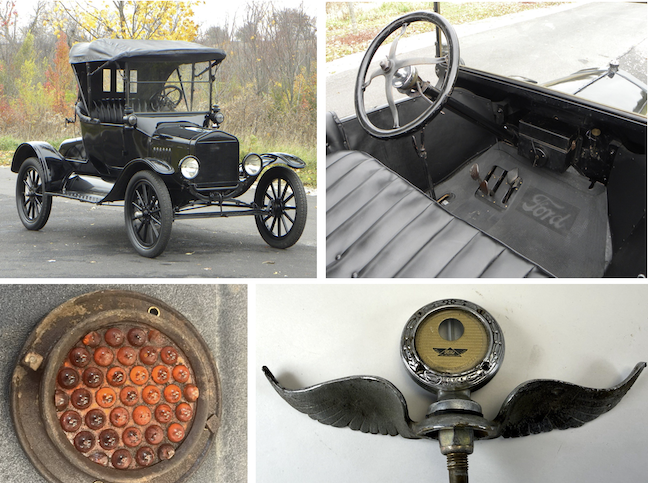
MIX AND MATCH…E.B. White’s famous Model T was a 1917 Roadster like the one pictured at top left. He purchased the car shortly after college and famously drove it across the country in 1922; at top right, the dash featured the ignition key and nothing else, however you could add such extras as radiator “Moto Wings” or a Ruby Safety Reflector. (volocars.com/ebay.com)
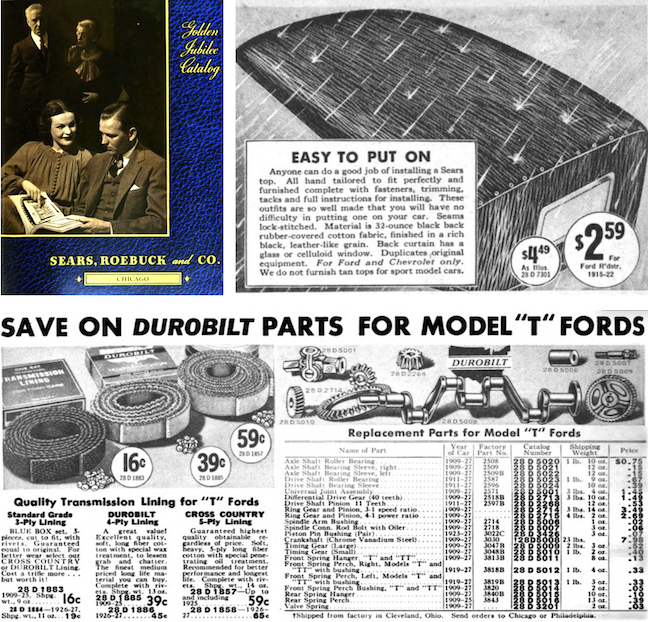
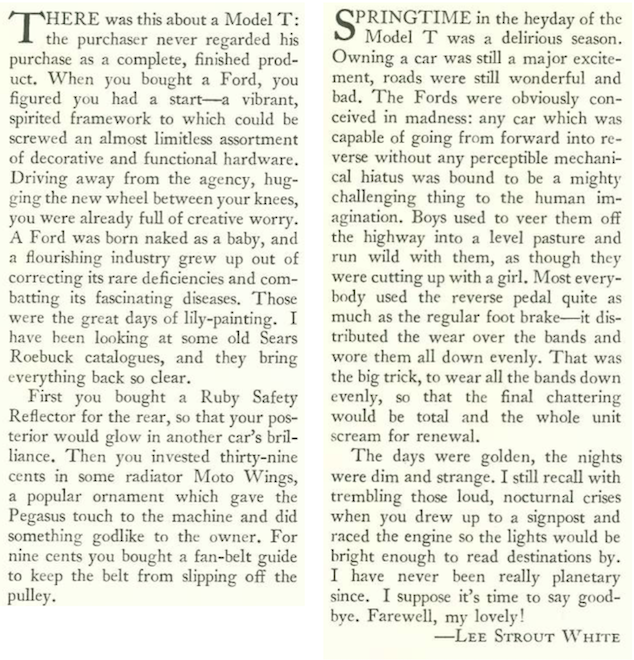
KEEPING IT HUMMING…As E.B. White noted in his opening lines, you could buy an axle as well as a number of other parts for the Model T from the Sears catalog. Clockwise, from top left: Cover of the 1936 “Golden Jubilee” catalog; replacement parts featured in the catalog included new car tops and an array of replacement parts. (archive.org/babel.hathitrust.org)

Model T owners developed all sorts of hacks to keep their Lizzies running. White wrote that “Dropping a camphor ball into the gas tank was a popular expedient; it seemed to have a tonic effect on both man and machine.” He also noted that the Ford driver “flew blind,” given that on earlier models the dashboard was bare save for an ignition key. Those cars lacked speedometers, fuel gauges, as well as gauges for engine temperature and oil pressure. “Whatever the driver learned of his motor,” White wrote, “he learned not through instruments but through sudden developments.” He concluded his piece with some thoughts on the golden days of the automobile.
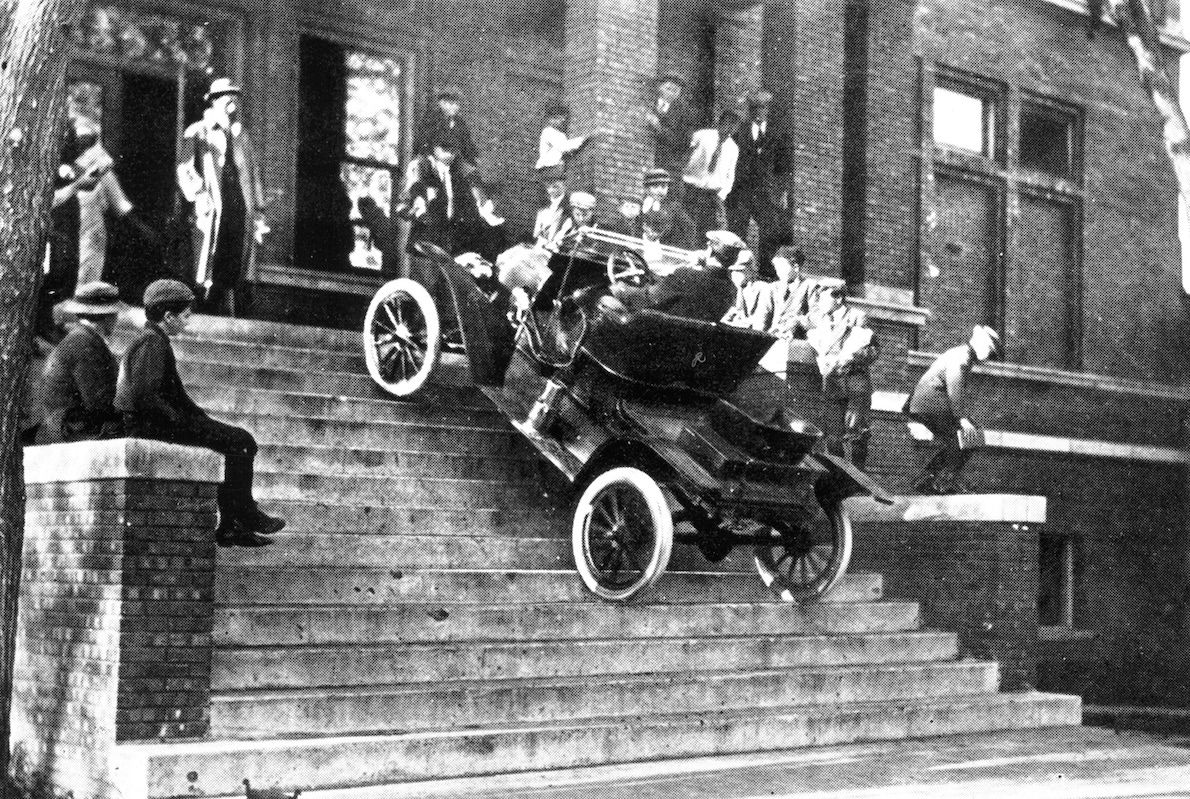
SHOWOFF…The Model T’s unique transmission and gravity-fed fuel system were key to the rugged car’s many stunts. In scaling Scotland’s Ben Nevis mountain, the driver often had to go backwards up inclines to maintain fuel flow. Above is a photo of a Model T climbing the stairs of the Tennessee State Capitol in 1911. (media.lincoln.com)

 * * *

Total Recall

E.B. White also filed a lengthy “Notes and Comment” comprised entirely of brief dispatches from around the country:
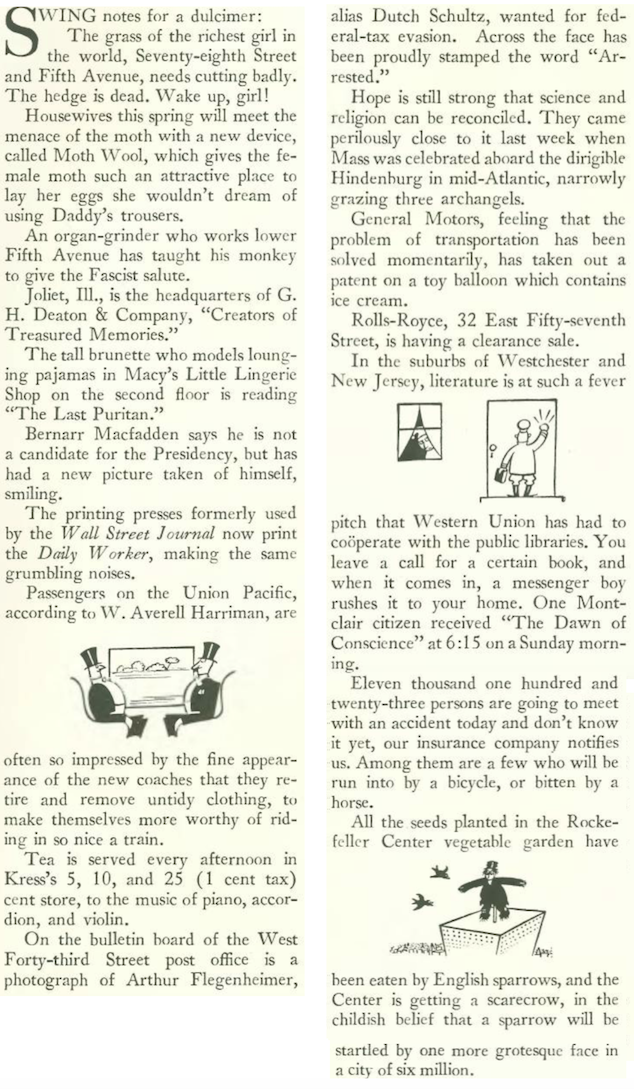
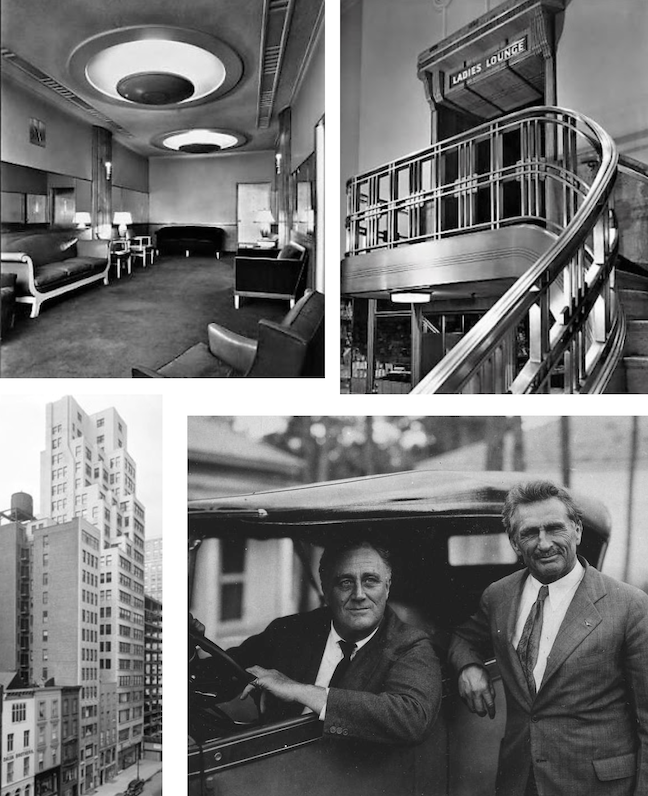
CIVILIZED SHOPPING…Tea time was observed every afternoon at Kress’s department store—images above are of the store’s ladies lounge; body builder and fitness magazine publisher Benarr Macfadden (seen here with President Franklin Roosevelt circa mid-1930s) said he had no plans to run for president; bottom left, a sale was in progress at the Rolls-Royce building on East 57th. (nypl.org/public domain/mcny.org)

Here are the rest of White’s notes on the passing scene:
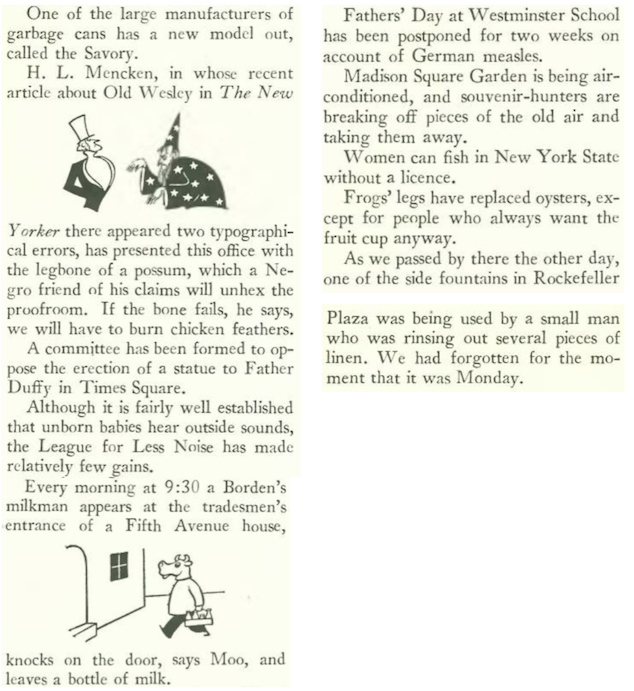
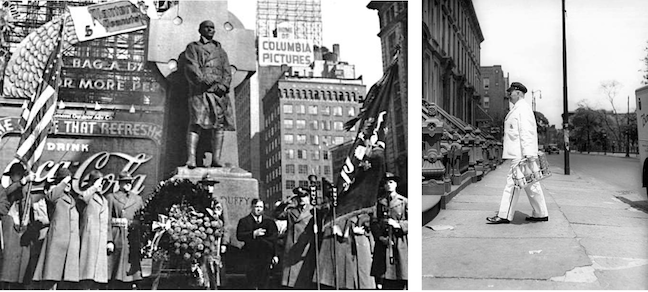
LIMITATION OF STATUES…At left, Mayor Fiorello LaGuardia presides over the dedication ceremonies of a Times Square statue honoring Father Francis Patrick Duffy, May 2, 1937—apparently some folks were opposed to a statue honoring the most decorated chaplain in Army history; at right, a Borden’s milkman making a delivery in New York City, 1936. (facebook.com/photo army.mil)

 * * *

Not Playing in Peoria

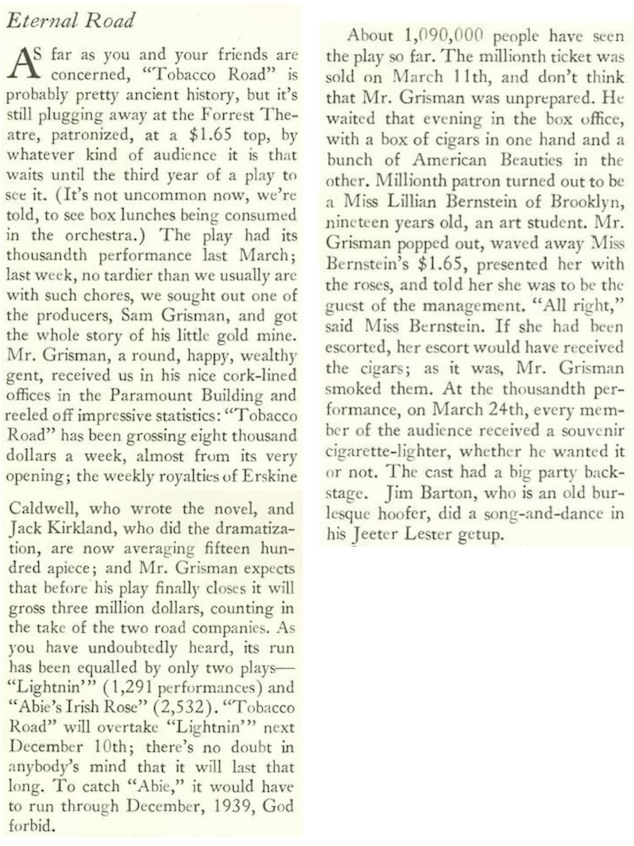
Jack Kirkland’s play Tobacco Road, based on the 1932 novel by Erskine Caldwell, was one of the longest-running plays in theater history, with 3,182 performances from 1933 to 1941. Although banned in major cities such as Chicago and Detroit for being sensational and immoral (and panned by critics), it nevertheless saw huge success on Broadway and with its touring company. “The Talk of the Town” checked the status of the play at the Forrest Theatre, where it had exceeded the millionth ticket mark.
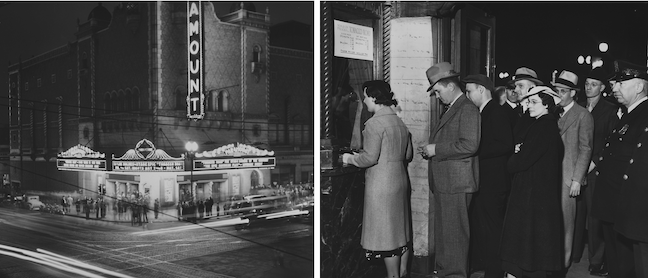
WORD GETS AROUND…Folks queue up in 1937 to see Tobacco Road at Omaha’s Paramount Theater. Despite being banned in many cities, the play ran until 1941. (Wikipedia)

 * * *

At the Movies

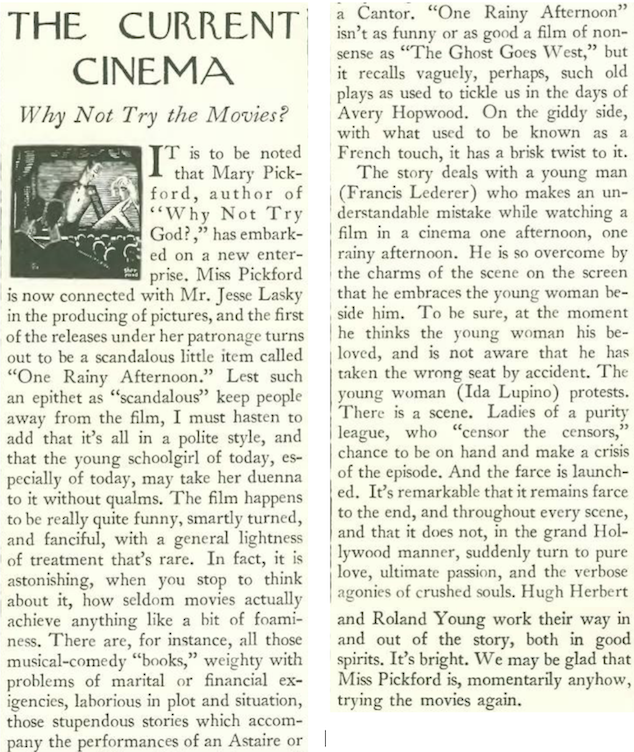
One Rainy Afternoon was the first of a small number of films from United Artists produced by its vice-president, Mary Pickford, through her Pickford-Lasky production company. In his opening lines critic John Mosher alluded to Pickford’s popular 1934 essay, Why Not Try God? 
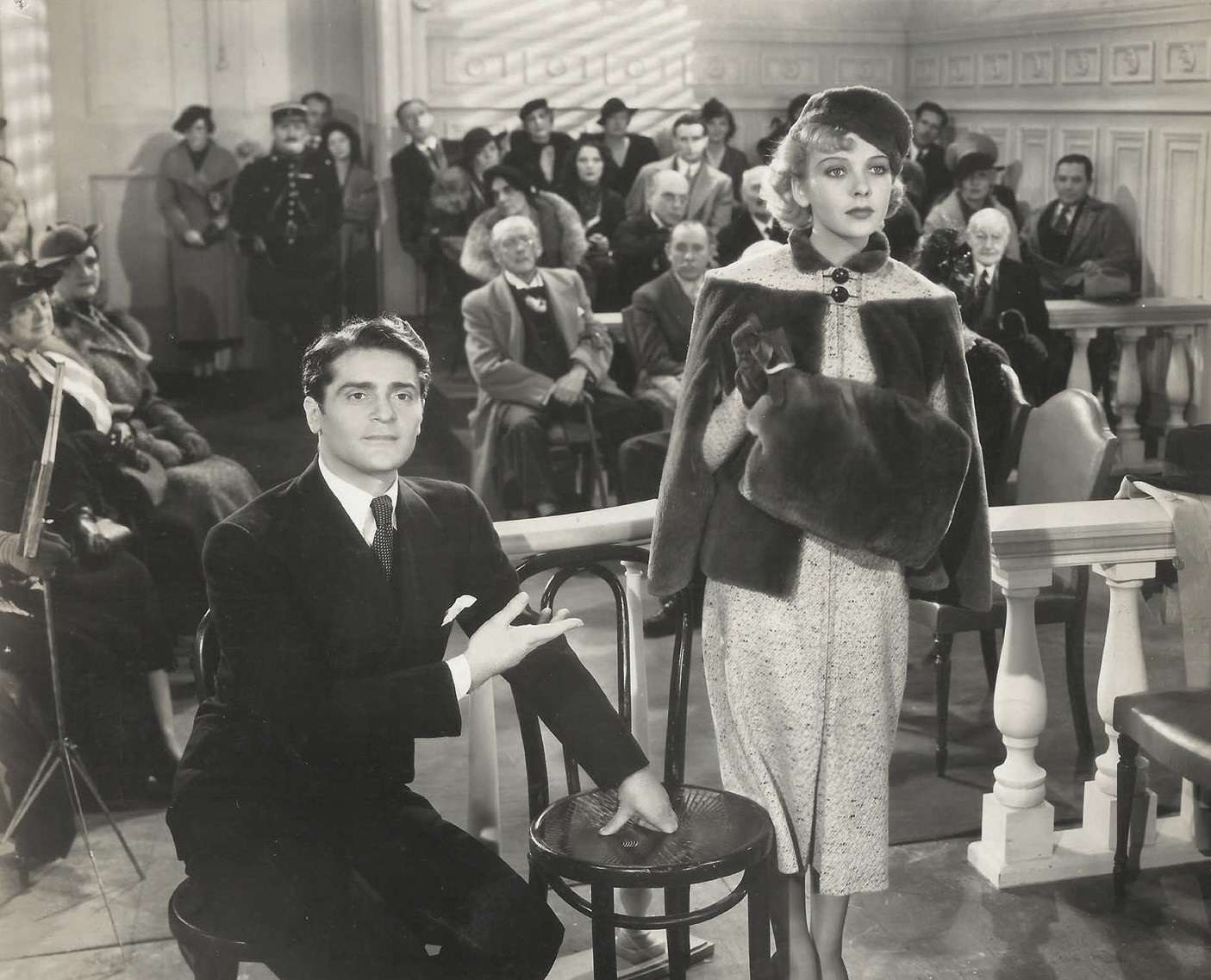
HONEST MISTAKE…Francis Lederer played a debonair actor who accidentally kisses young socialite Ida Lupino in a darkened theatre in One Rainy Afternoon. Hilarity and romance follow. Lederer (1899–2000) would enjoy a successful stage, film and television career while becoming wealthy as an L.A. real estate investor. Lupino (1918–1995) was an actress, director, writer, and producer, appearing in 59 films and directing eight. She is regarded as the most prominent woman filmmaker working during the Hollywood studio system of the 1950s. (Wikipedia)

Mosher also reviewed some “Good mid-May entertainment for honest idlers” and a documentary about the Dust Bowl.
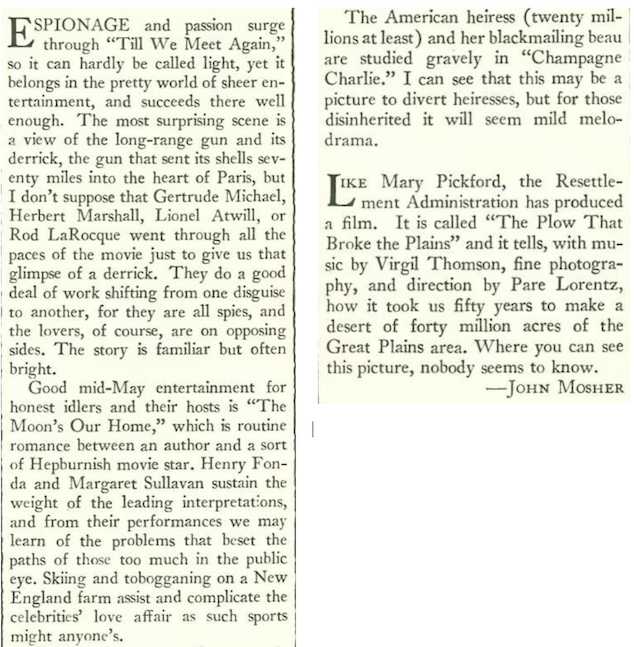
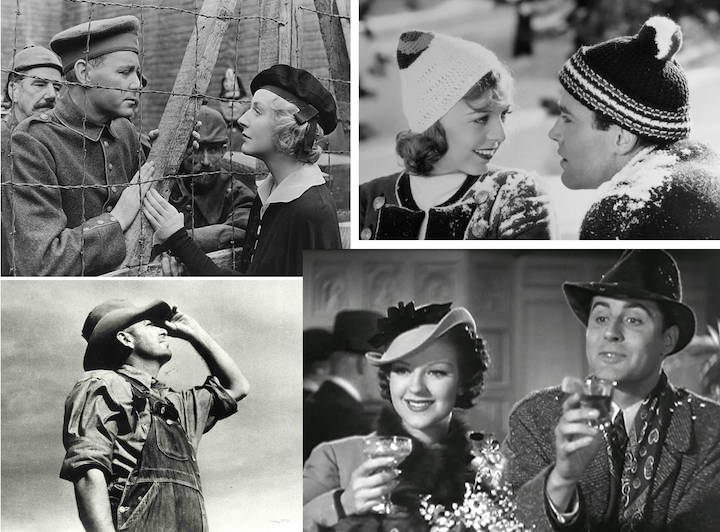
MAY DIVERSIONS…Clockwise, from top left: Herbert Marshall and Gertrude Michael in Till We Meet Again; Margaret Sullavan and Henry Fonda in The Moon’s Our Home; Thomas Beck and Helen Wood in Champagne Charlie; a farmer looks to the sky in the Dust Bowl documentary The Plow That Broke the Plains. (csfd.cz,pinterest.com/imdb.com)

 * * *

From Our Advertisers

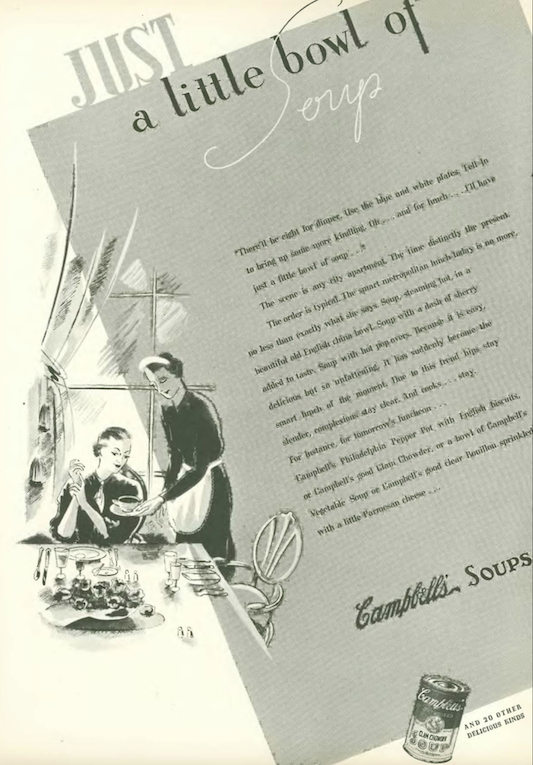
The makers of Campbell’s soups continued to market their product as an upscale starter for dinner…or perhaps a time-saver for the cook, Madam none the wiser…
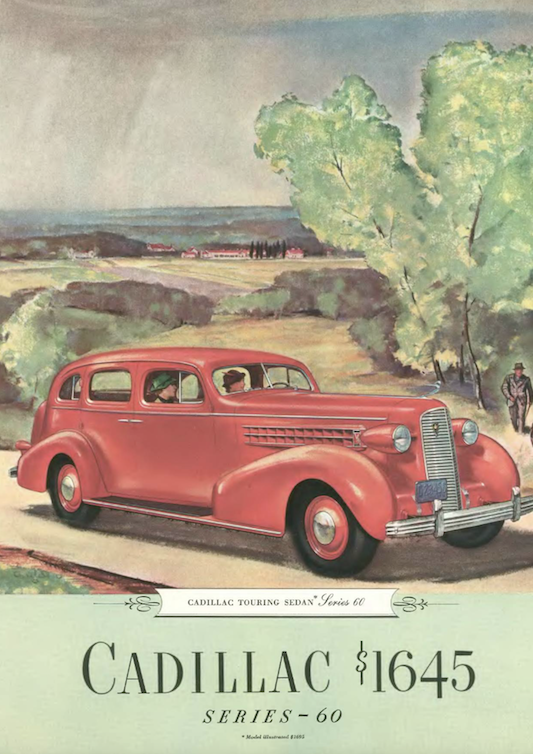
…Cadillac continued to entice buyers with bucolic scenes dominated by their luxury sedans…the price isn’t outrageous, roughly equivalent to $40K today…
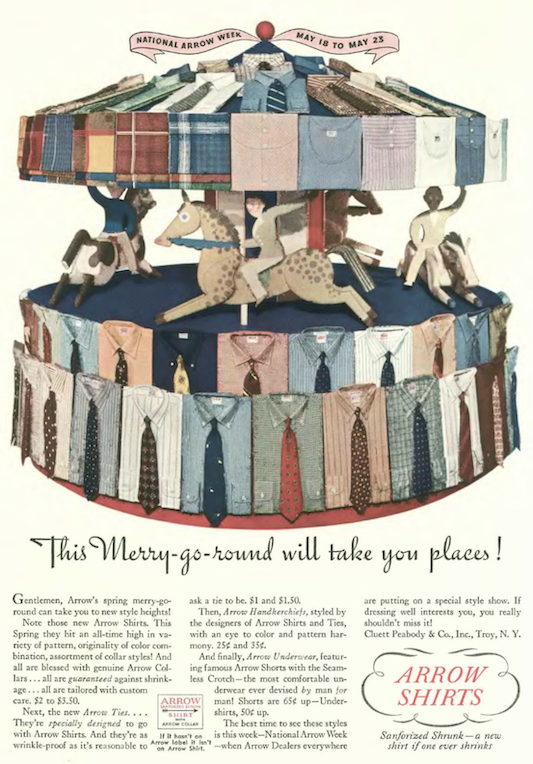
…we experience much of 1930s history in black and white, but according to this ad things were quite colorful…
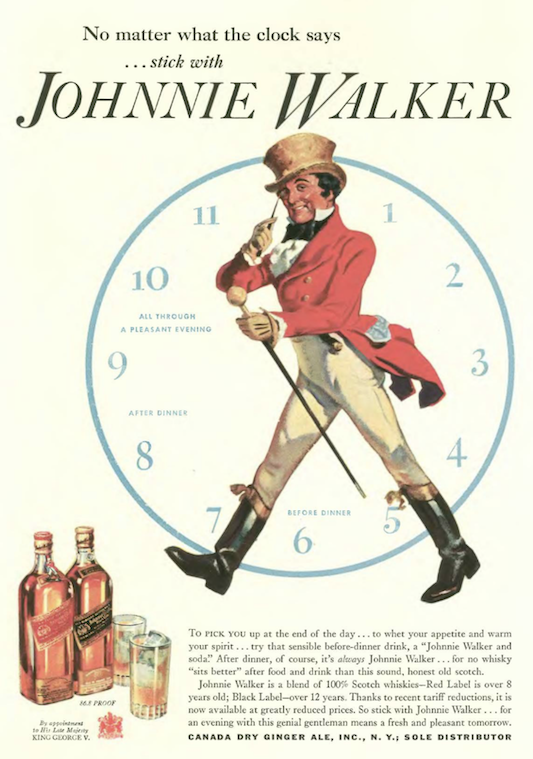
…now a couple of ads with an eye on the clock…here we have a suggestion that Johnnie Walker can be enjoyed before dinner and up to bedtime…
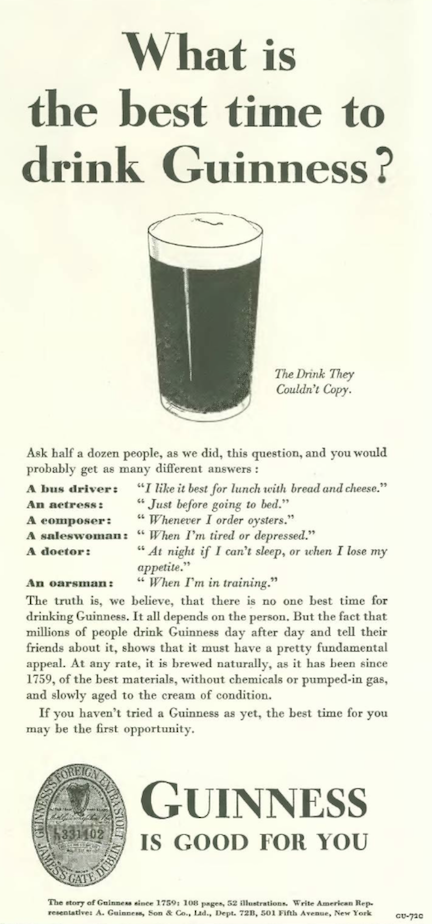
…the brewers of Guinness suggested their tipple was suitable for lunchtime, before bed, or when one is “tired or depressed”…
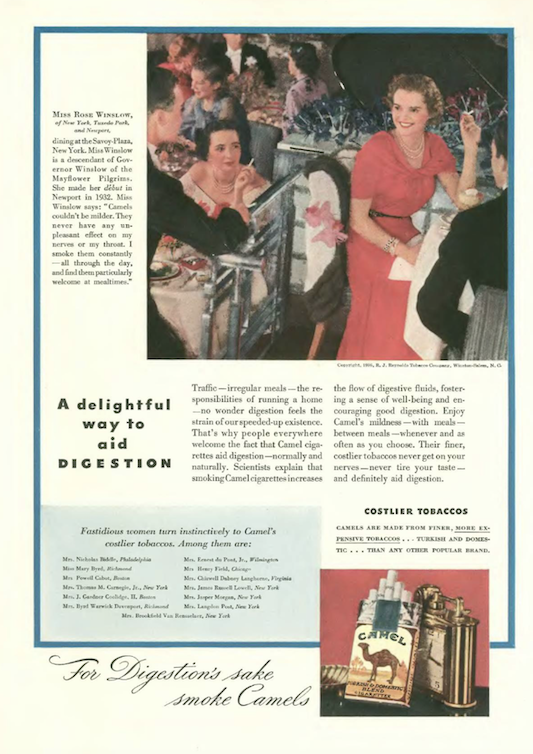
…as we already know, R.J. Reynolds encouraged folks to smoke from morning to night, with the added benefit of improved digestion…
…on to our cartoonists, we begin with a spot by Abe Birnbaum

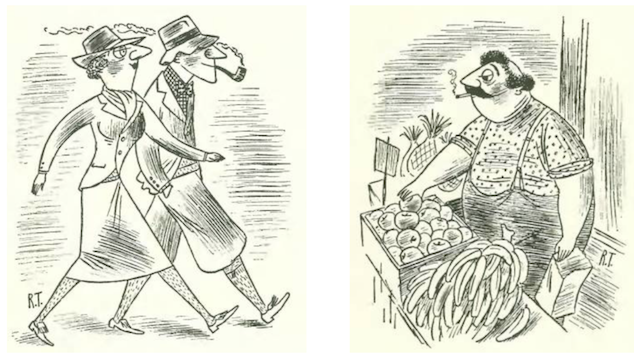
…and spots from frequent contributors Richard Taylor

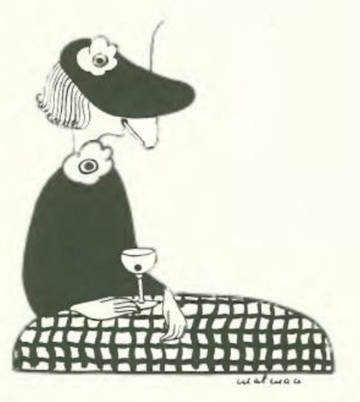
…and Christina Malman

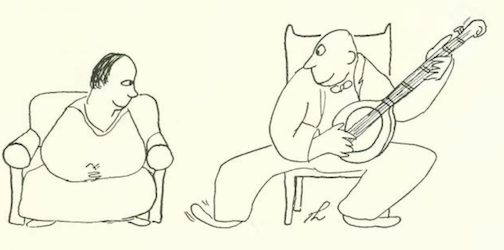
…and a spot drawing on the opening pages by James Thurber

…who also contributed this cartoon to the issue…
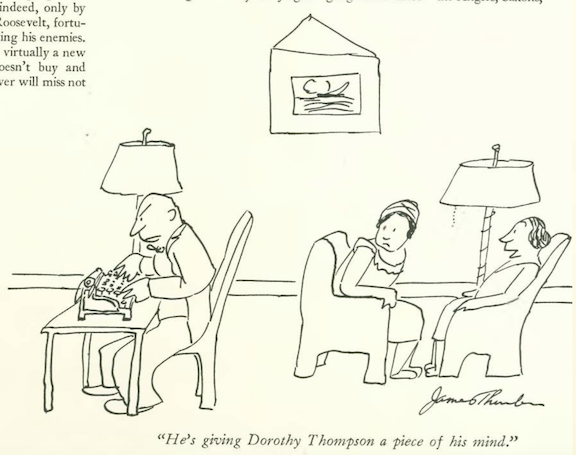
…Thurber’s caption refers to journalist and radio broadcaster Dorothy Thompson. One of the few women radio news commentators of the 1930s, she was the first American journalist to be expelled from Nazi Germany in 1934. In 1936 Thompson launched her “On the Record” column, syndicated nationwide by the New York Herald Tribune…
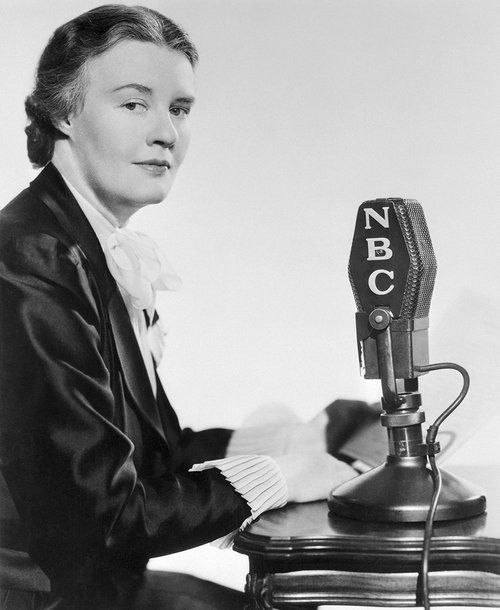
Dorothy Thompson in 1937. (Wikipedia)

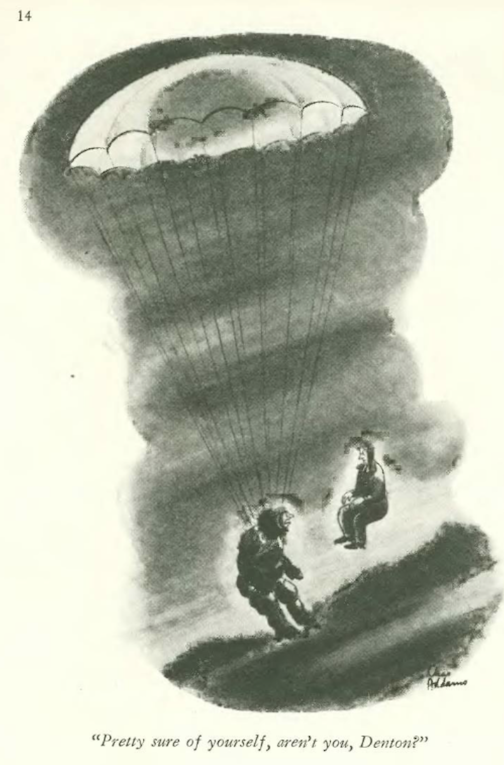
…we continue our cartoons with Charles Addams (apologies for the quality) floating to earth…
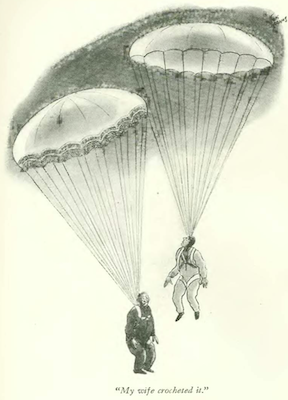
…which recalled another Addams cartoon from the Aug 3, 1935 issue (caption reads “My wife crocheted it.”)…
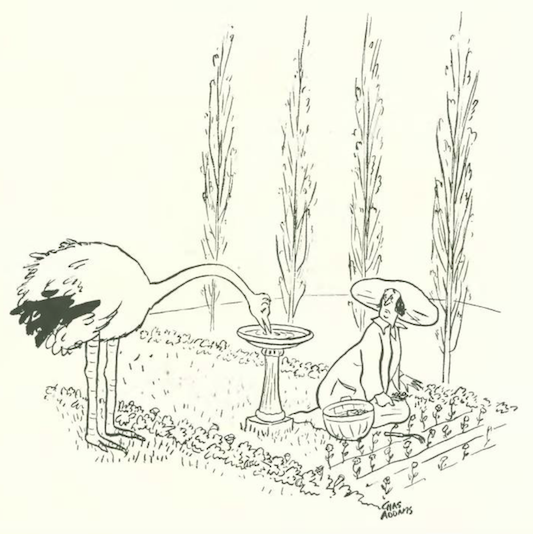
…and Addams again, this time down to earth…
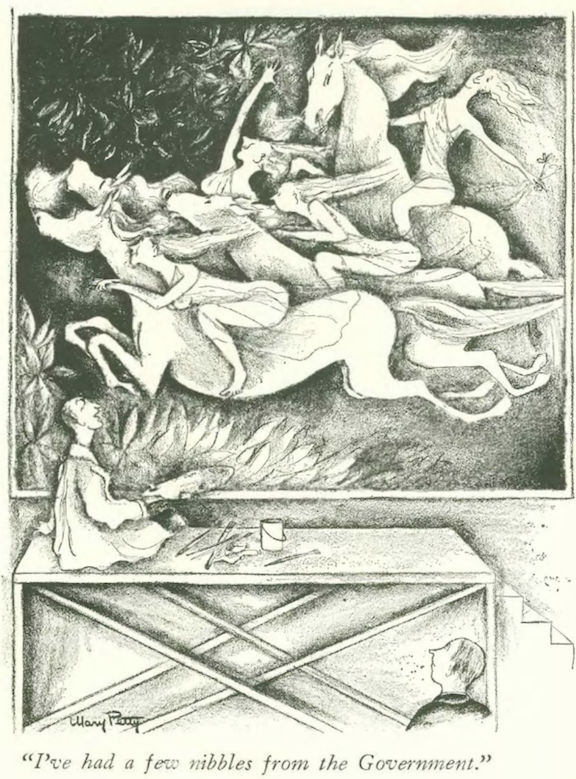
Mary Petty looked in on the art world…

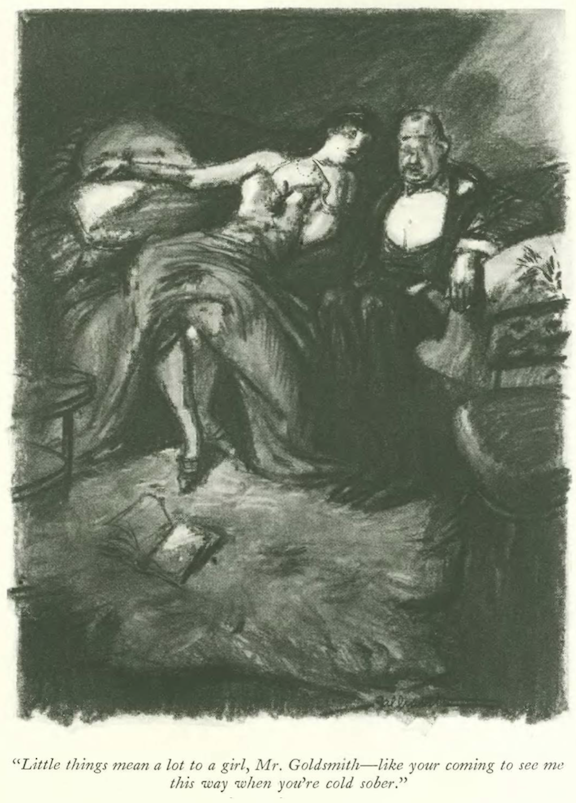
William Crawford Galbraith continued to explore lives and loves of sugar daddies…
Alain had folks deciphering the news crawler at Times Square…
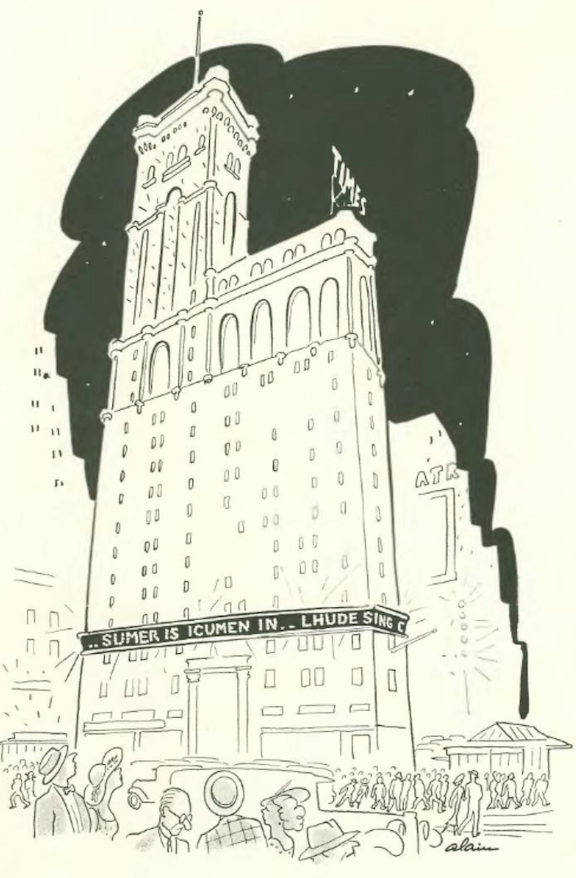
Helen Hokinson avoided temptation at the pet shop…
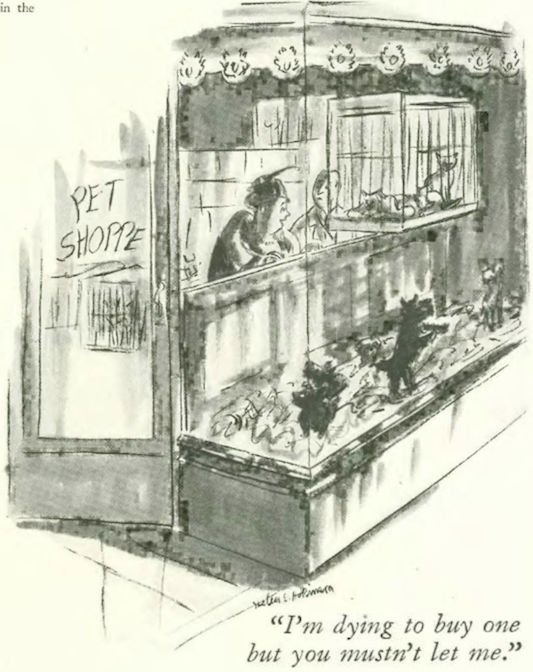
…and we close with Whitney Darrow Jr, and a bedtime story that would keep the sandman at bay…
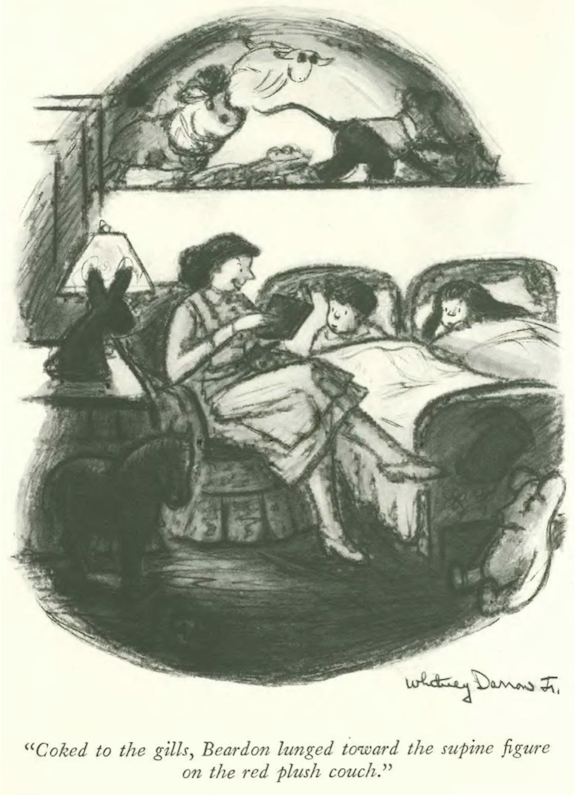
Next Time: Vast Horizons…
 

Machine Age Bromance

American inventor Thomas Edison was a hero to the young Henry Ford, who grew up to become something of a tinkerer himself with his pioneering development of the assembly line and mass production techniques. Over a matter of decades in the late 19th and early 20th century these two men would play outsized roles in transforming the American landscape and our way of life.

986198649aa5ada2614b8158443db596
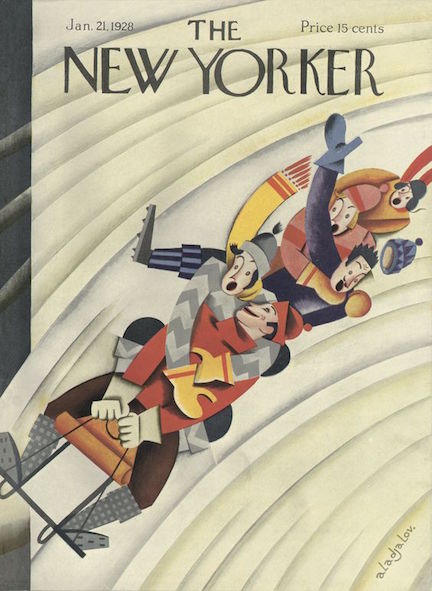
January 21, 1928 cover by Constantin Alajalov.

Ford would first meet Edison in August 1896, at a convention of the Association of Edison Illuminating Companies held at the Oriental Hotel in Brooklyn—it was just two months after the 33-year-old Ford had finished work on his first car—a “quadricycle”—consisting of a simple frame, an ethanol-powered engine and four bicycle wheels. In contrast, by 1896 the 49-year-old Edison was a worldwide celebrity, having already invented the phonograph (1877), the incandescent lamp (1879), public electricity (1883) and motion pictures (1888).

screen-shot-2017-02-21-at-5-05-35-pm
WHAT NEXT, A CAR STEREO?…Thomas Edison (left) with his second phonograph, photographed by Mathew Brady in Washington, D.C., April 1878. At right, Henry Ford sits in his first automobile, the Ford Quadricycle, in 1896. (Wikimedia Commons)
By 1907 the two had forged a close friendship that would endure the rest of their lives. So it was no surprise that these two giants of the machine age would show up together at the New York Auto Show at Madison Square Garden and take a gander at the latest technical marvels, including Ford’s new “Model A.” The New Yorker’s “Talk of the Town” was on hand as witness:

screen-shot-2017-02-15-at-1-26-25-pm

screen-shot-2017-02-15-at-1-27-28-pm

screen-shot-2017-02-15-at-1-27-51-pm

NEAT-O…Thomas Edison and Henry Ford at the 1928 New York Auto Show. (Associated Press)
screen-shot-2017-02-20-at-11-49-56-am
IT SOLD LIKE HOTCAKES…Henry Ford and son Edsel introducing the 1928 Ford Model A at the Ford Industrial Exposition in New York City, January 1928. (thehenryford.org)

*  *  *

E.B. Drives the ‘A’

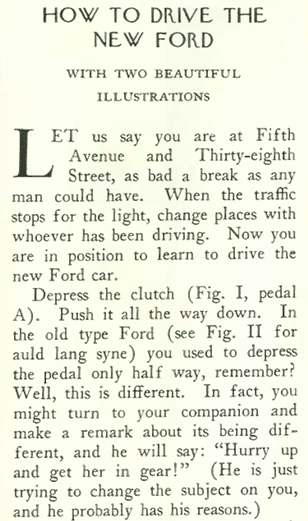
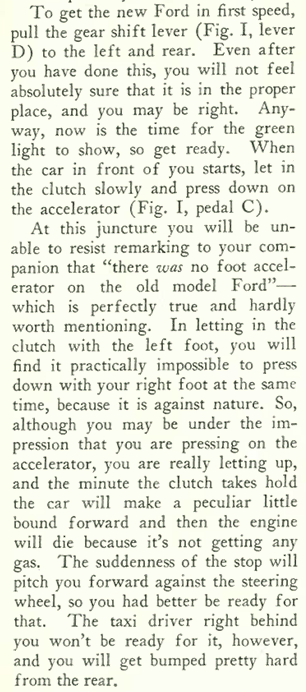
In the same issue (Jan. 21, 1928) E.B. White told readers how to drive the new Model A—in his roundabout way. Some excerpts:

screen-shot-2017-02-15-at-1-44-00-pm

screen-shot-2017-02-15-at-1-44-27-pm

No doubt White was feeling a bit wistful with the arrival of the Model A, which supplanted its predecessor, the ubiquitous Model T. White even penned a farewell to the old automobile under a pseudonym that conflated White’s name with Richard Lee Strout’s, whose original submission to The New Yorker inspired White’s book (illustrated by New Yorker cartoonist Daniel ‘Alain’ Brustlein).

wrclit64451

farewellmodelt_lg_1024x1024
FAREWELL TIN LIZZIE…E.B. and Katharine White driving his beloved Model T.

In Farewell to Model T White recalled his days after graduating from college, when in 1922 he set off across America with his typewriter and his Model T.  White wrote that “(his) own vision of the land—my own discovery of it—was shaped, more than by any other instrument, by a Model T Ford…a slow-motion roadster of miraculous design—strong, tremulous, and tireless, from sea to shining sea.”

The Eternal Debate

In his “Reporter at Large” column, Morris Markey commented on the execution of former lovers and convicted murderers Ruth Snyder and Judd Gray, noting that once again the debate over the death penalty had been stirred, but as usual there was no resolution in sight. Little could Markey know that we would still be holding the debate 89 years later, with no resolution in sight.

screen-shot-2017-02-17-at-4-48-50-pm

screen-shot-2017-02-22-at-9-17-54-am

snyder-and-gray
END OF THE LINE…Mugshots of Ruth Snyder and Henry Judd Gray taken at Sing Sing Prison following their conviction for the murder of Snyder’s husband. They were executed Jan. 12, 1928. (Lloyd Sealy Library, CUNY)

 *  *  *

Ahoy there

The New York Boat Show was back in town at the Grand Central Palace, enticing both the rich and the not-so-rich to answer the call of the sea. Correspondent Nicholas Trott observed:

screen-shot-2017-02-17-at-4-42-25-pm

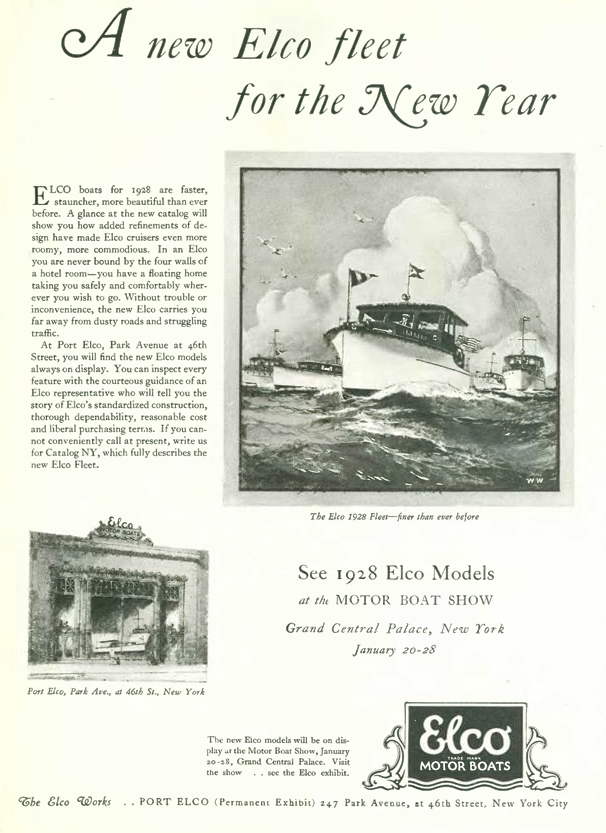
An advertisement in the same issue touted Elco’s “floating home”…

screen-shot-2017-02-17-at-4-40-05-pm

But if you aspired to something larger than a modest cruiser, the Boat Show also featured an 85-foot yacht…

screen-shot-2017-02-17-at-4-42-31-pm

But for the rest of the grasping orders, Chris-Craft offered the Cadet, an affordable 22′ runabout sold on an installment plan. Another ad from the issue asking those of modest means to answer “the call of freedom!”

screen-shot-2017-02-17-at-4-37-35-pm

For an affordable boat, the Chris-Craft was really quite beautiful—its mahogany construction puts today’s fiberglass tubs to shame…

1024px-1928_chris_craft_cadet
PRETTY SWEET…A 1928 Chris-Craft Cadet. (Click to enlarge)

 *  *  *

Odds & Ends

The boat show was one indication that spring was already in the air. The various ads for clothing in the Jan. 21 issue had also thrown off the woolens, such as this one from Dobbs on Fifth Avenue, which featured a woman with all the lines of a skyscraper.

screen-shot-2017-02-17-at-4-36-55-pm

And to achieve those lines, another advertisement advised young women to visit Marjorie Dork…

screen-shot-2017-02-17-at-4-38-18-pm

…who seemed to do quite well for herself in the early days of fitness training…

screen-shot-2017-02-20-at-12-38-54-pm
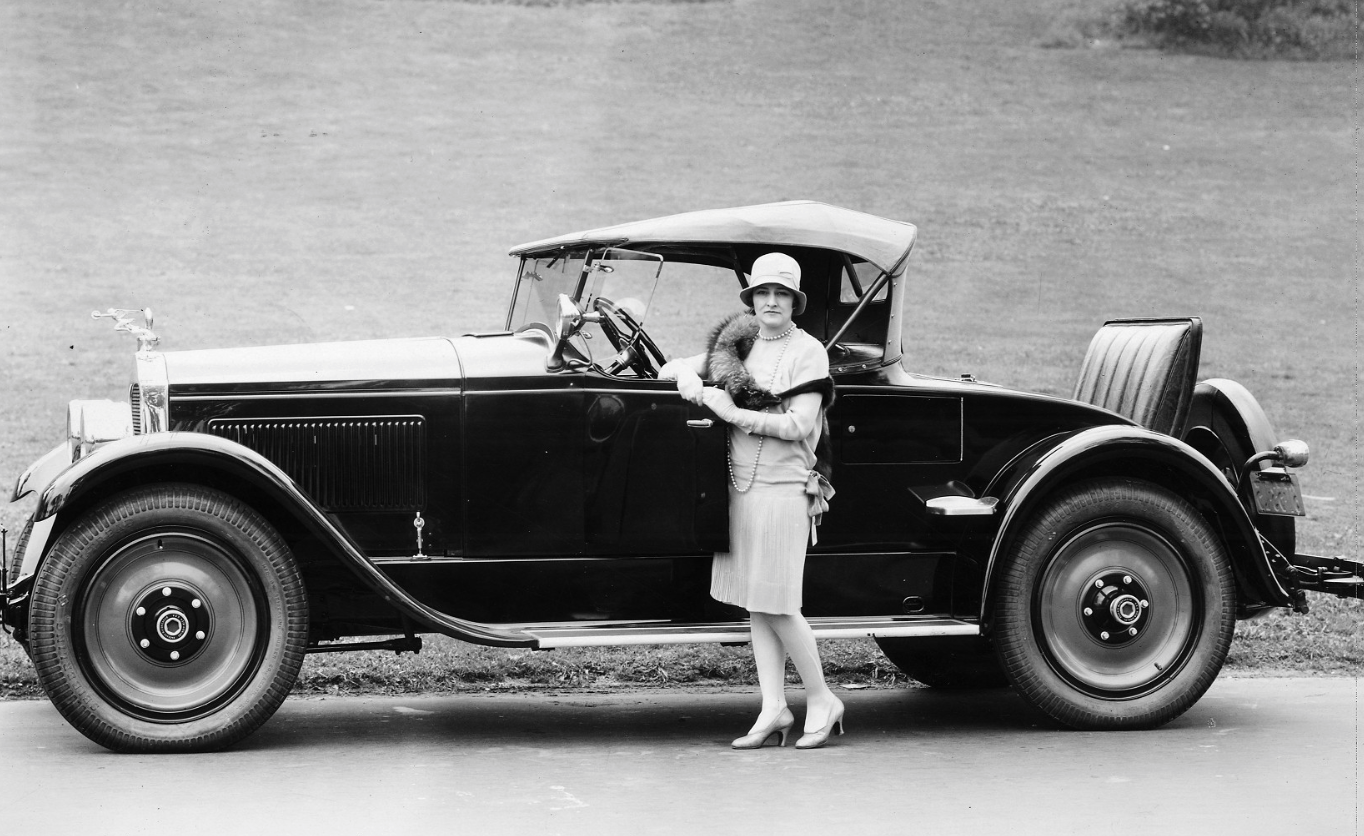
THOROUGHLY MODERN MARJORIE…New York beauty specialist Marjorie Dork, with her Packard, in New York’s Central Park, 1927. Original photo by John Adams Davis, New York. (Detroit Public Library)

And then there was a back page ad that said to hell with healthy living…

screen-shot-2017-02-17-at-4-46-49-pm

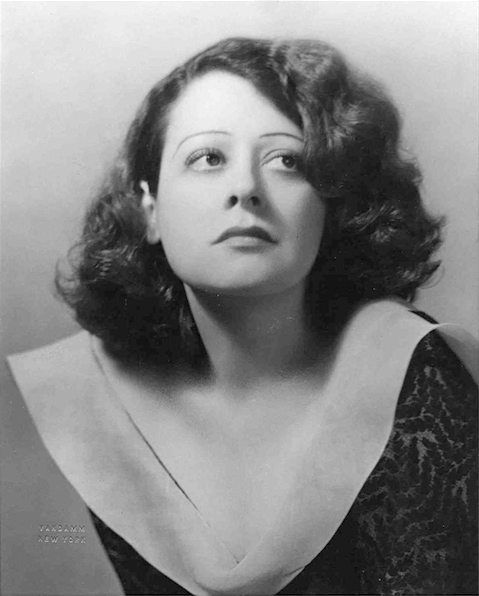
The actress featured in the advertisement, Lenore Ulric, was considered one of the American theater’s top stars. Born in 1892 as Lenore Ulrich in New Ulm, Minnesota, she got her start on stage when she was still a teen, a protégé of the famed David Belasco. Though she primarily became a stage actress, she also made the occasional film appearance, portraying fiery, hot-blooded women of the femme fatale variety.

screen-shot-2017-02-23-at-1-44-41-pm
Portrait of Lenore Ulric by New York’s Vandamm Studio. (broadway.cas.sc.edu)

 *  *  *

And we close with this post with a peek into the into upper class social scene, courtesy of Barbara Shermund

screen-shot-2017-02-15-at-1-46-26-pm

Next Time: Distant Rumblings…

db7671e6282218c0e4285522e188b05f