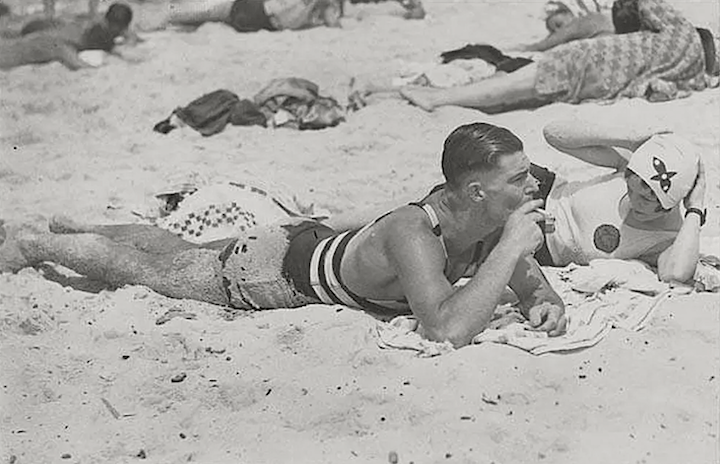
E.B. White grew up along the coast of Maine and had a lifelong love of sailing. He did not, however, have much regard for those who came to the water simply to bask in the sun.
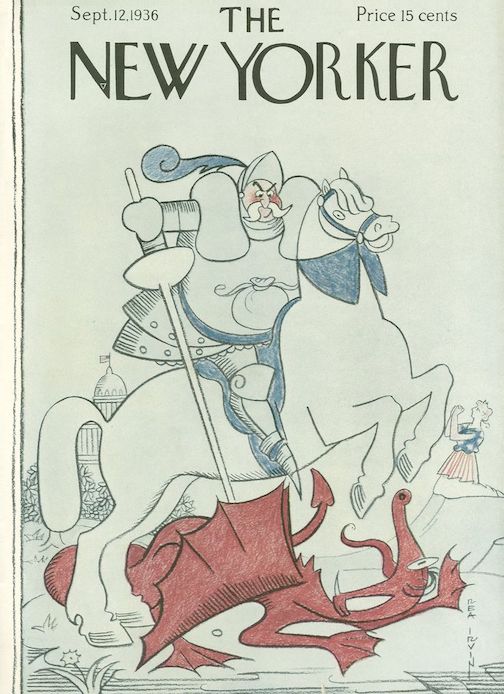
September 12, 1936 cover by Rea Irvin.
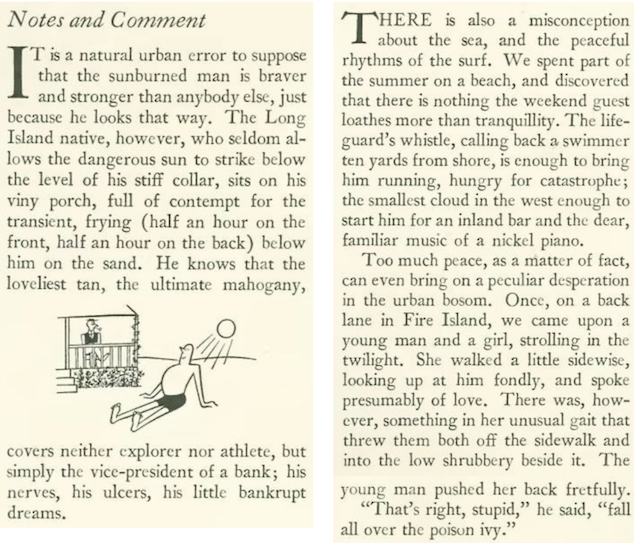
White led off his column with some sharp words about the “sunburned man” who did not come by his tan honestly, like an athlete or explorer, but rather spent his weekends “frying” to cover his “bankrupt dreams.” White was also critical of “the weekend guest” who brought noise rather than tranquility to the seaside.
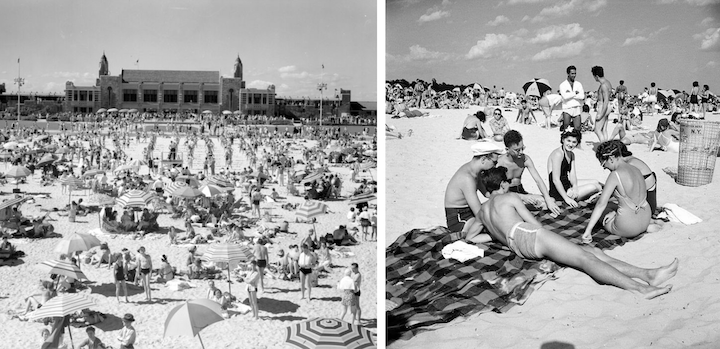
E.B. WHITE’S NIGHTMARE…At left, the West Bathhouse at Jones Beach is the backdrop for this circa 1930s image of New York beachgoers; at right, sunbathers play cards on Orchard Beach, known as the “Riviera of the Bronx,” circa 1930. (facebook.com/Patchogue-Medford Library)
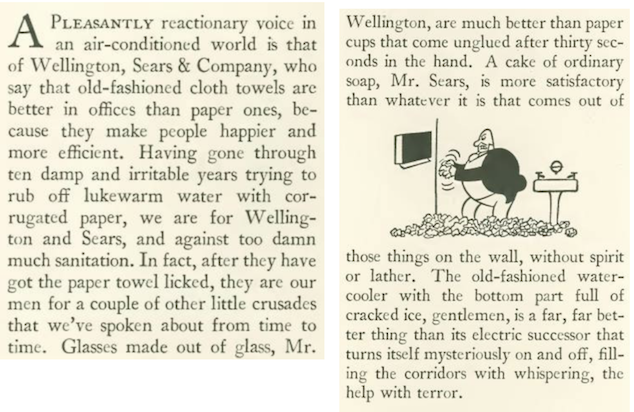
Ever critical of innovation, E.B. White also lamented the rise of such “conveniences” as paper towels and powdered soap dispensers.
A FEW OF MY LEAST FAVORITE THINGS…Always wary of the newfangled, E.B. White preferred cloth over paper towels, bar soap over powdered; glass rather than Dixie Cups, and old-fashioned water coolers glittering with cracked ice. Clockwise, from top left: Ad for Scot paper towels, 1935; 1930s powdered soap dispenser; Dixie Cups, 1931; Eleanor Powell and Fred Astaire take a break at an old-fashioned water cooler during filming of Broadway Melody of 1940; detail from an ad for a Frigidaire electric water cooler, 1936. (witness2fashion/urbanremainschicago.com/lafayette.edu/tcm.com)
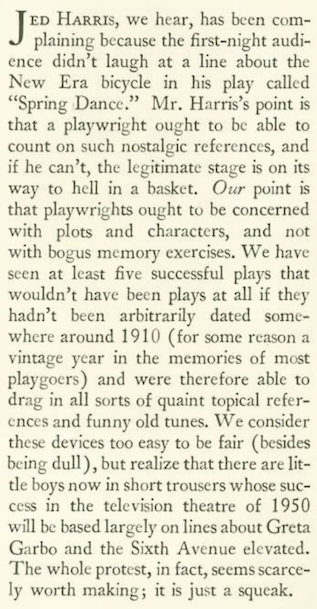
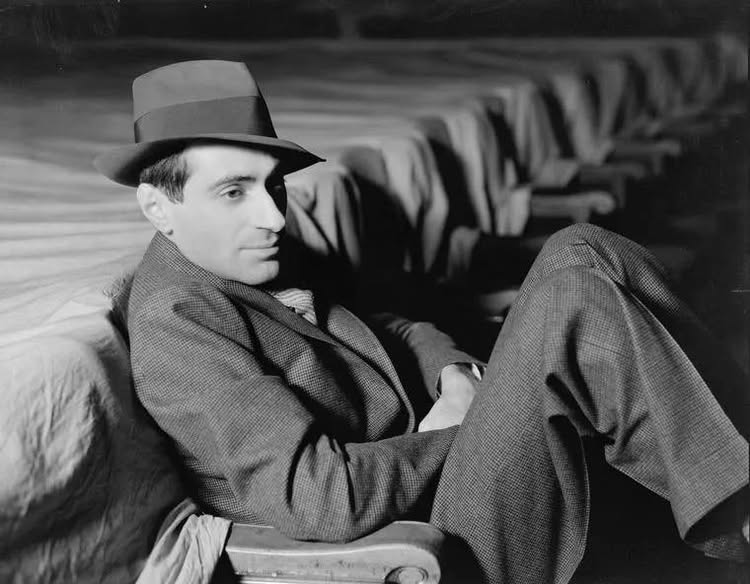
One more item from “Notes,” this referring to theatrical producer and director Jed Harris, who was peeved when a nostalgic reference in his new comedy, Spring Dance, failed to elicit laughter from a first-night audience at the Empire Theatre. E.B. White sided with the audience, and wondered if playwrights in the “television theatre of 1950” would someday reference “Greta Garbo and the Sixth Avenue elevated.”
RELAX, JED…Learning that Broadway producer and director Jed Harris was upset about an audience’s lack of reaction to a nostalgic reference, E.B. White suggested that the director’s protest was a mere “squeak.” (History of Cinema via Facebook)
* * *
At the Movies
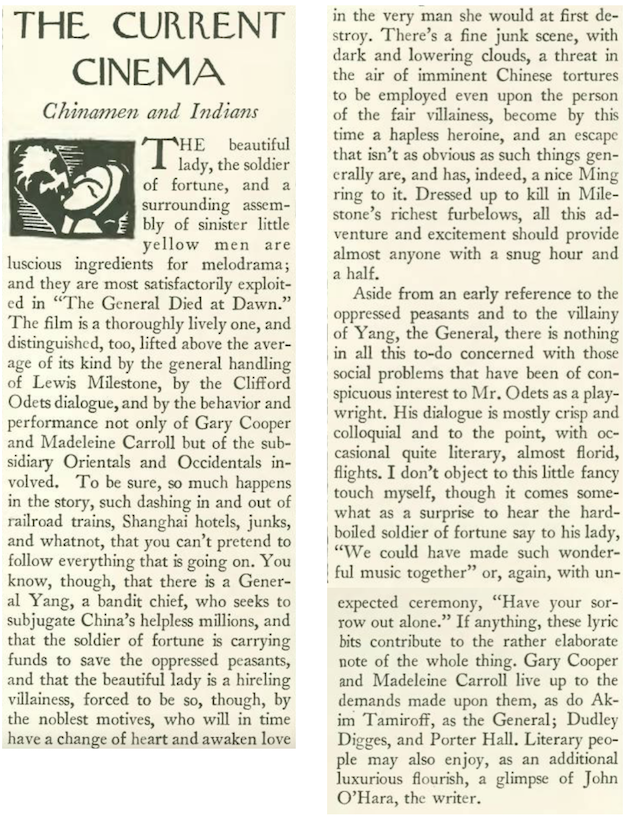
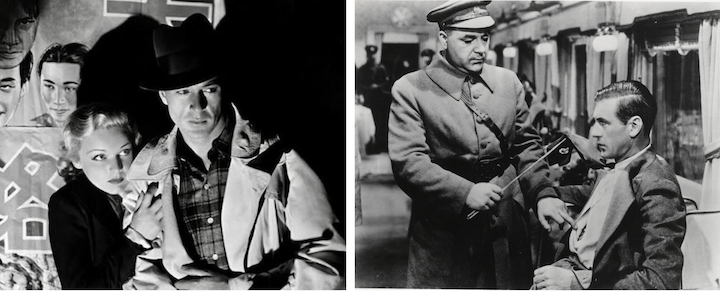
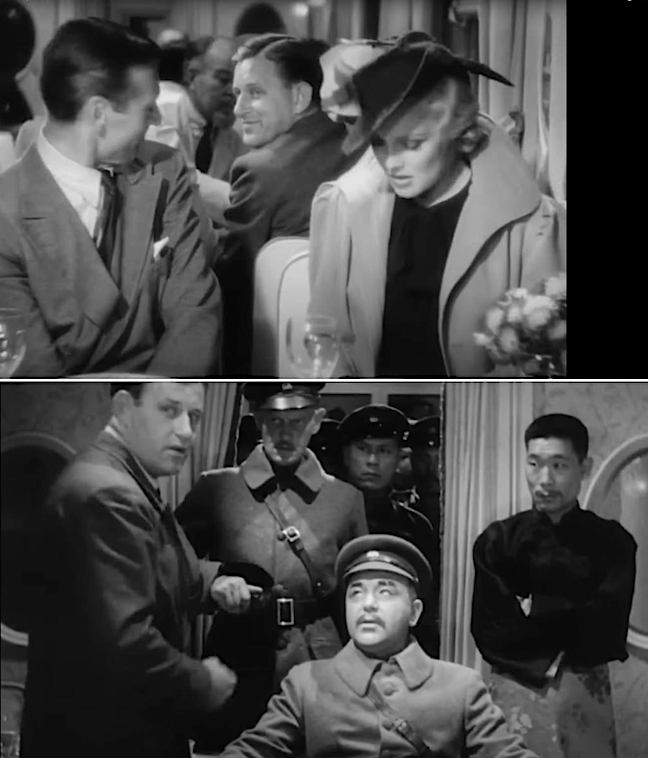
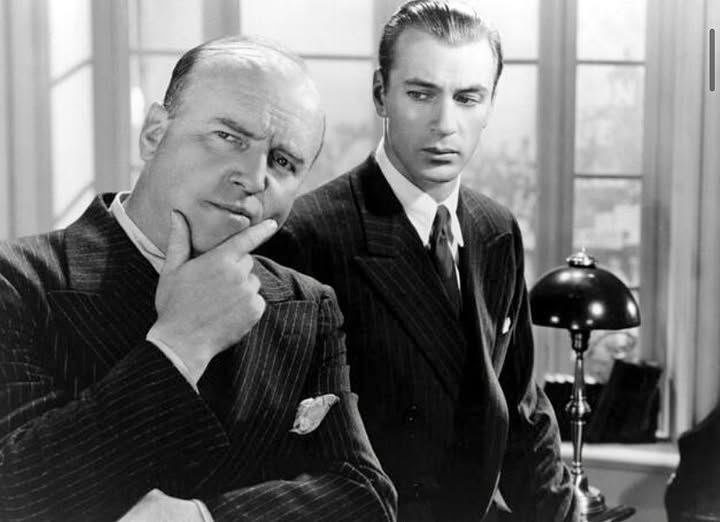
Gary Cooper finally showed off his gift for gab in Paramount’s drama The General Died at Dawn. Critic John Mosher called the film “lively,” and noted a “glimpse” of New Yorker short story writer John O’Hara in a cameo appearance.
TROUBLE IN CHINA…Gary Cooper and Madeleine Carroll portrayed lovers in war-torn China who seek to stop an arms shipment in The General Died at Dawn; at right, Cooper in a scene with Akin Tamiroff, who portrayed warlord General Yang. The film was directed by Lewis Milestone and written by Charles G. Booth and Clifford Odets. (imdb.com/ebay.com)CAMEO…New Yorker short story writer and novelist John O’Hara played a minor role as a newspaper reporter in The General Died at Dawn. (John Fronza via Facebook and YouTube)
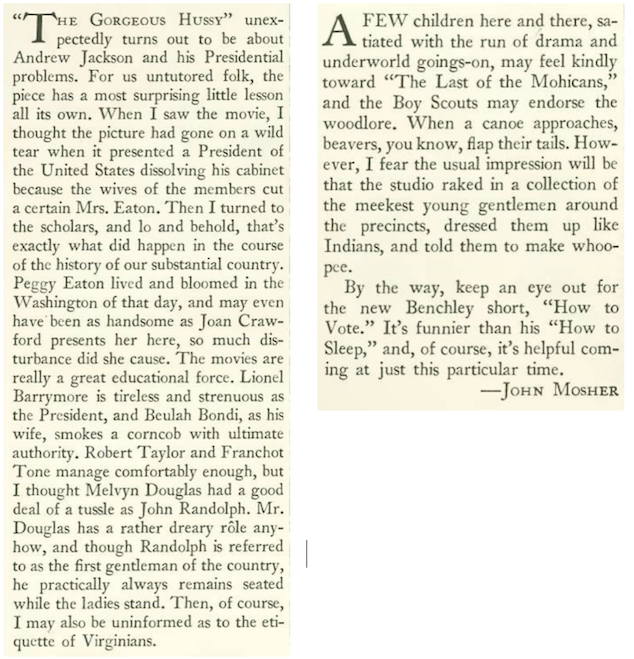
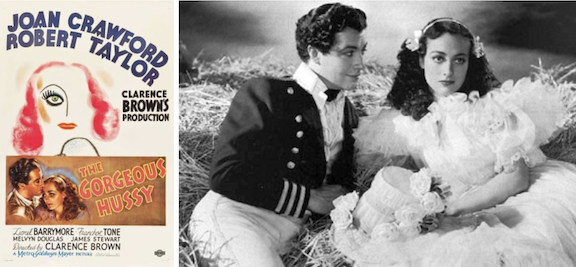
The title of MGM’s The Gorgeous Hussy suggested something racy, but as Mosher noted, it “unexpectedly turns out to be about Andrew Jackson.”
SEX SELLS…MGM played up Joan Crawford’s role as a “hussy” in this theatrical poster for The Gorgeous Hussy, but these were the days of the Hays Code and things wouldn’t get more racy than the scene at right, with Robert Taylor as Andrew Jackson and Crawford as the “hussy,” Peggy Eaton. (imdb.com/mubi.com)
* * *
From Our Advertisers
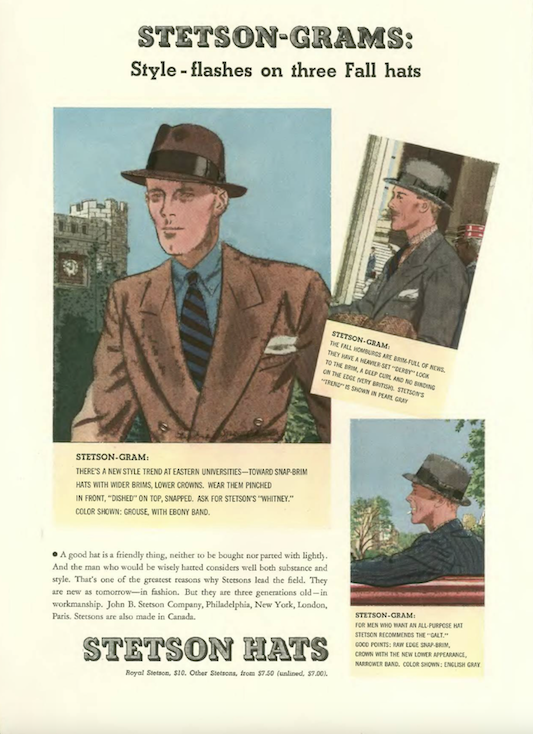
It was time to get that fall hat, and Stetson had three smart-looking lids for the man about town…
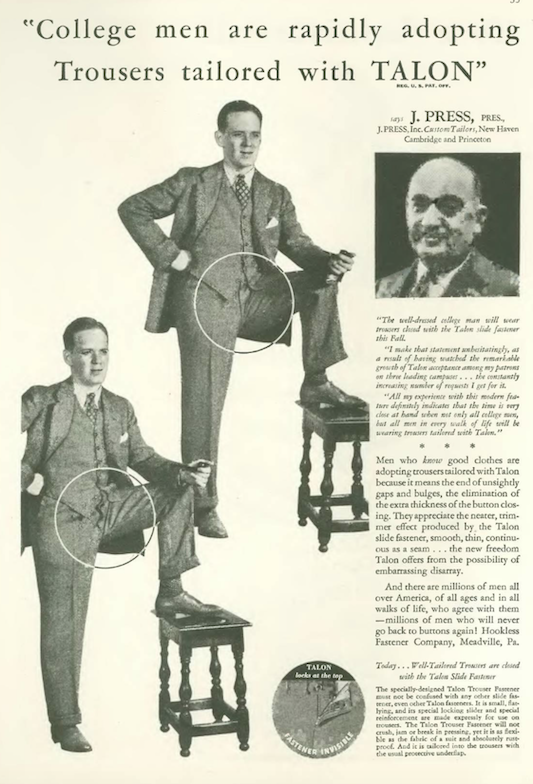
…and here’s a not-so-smart ad from the makers of Talon zippers…no doubt some of the wags on The New Yorker’s editorial side got a kick out of this…
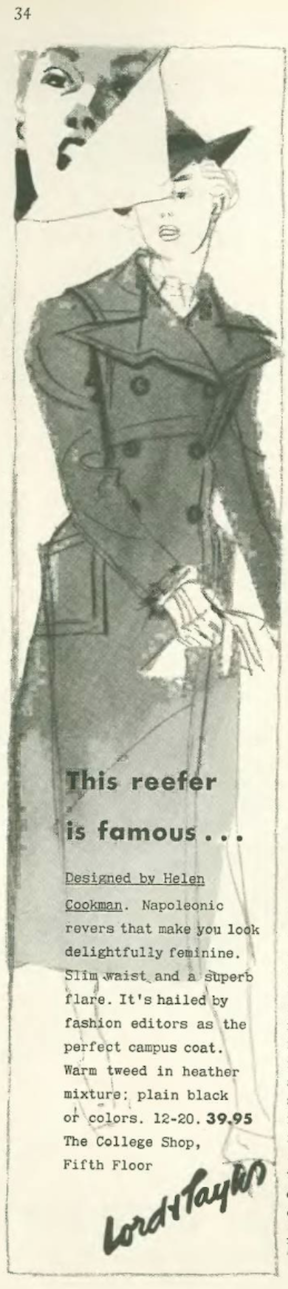
…and this strange ad from Lord & Taylor…not sure what they were trying to convey with that peeled-back corner…
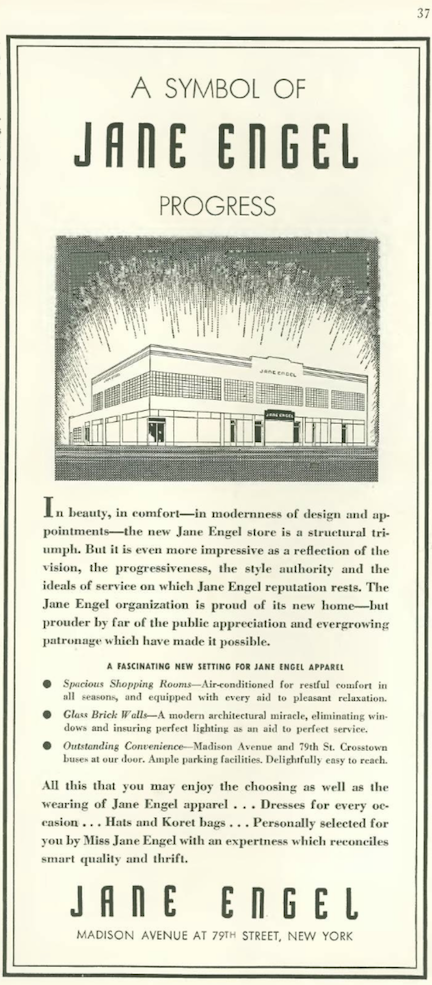
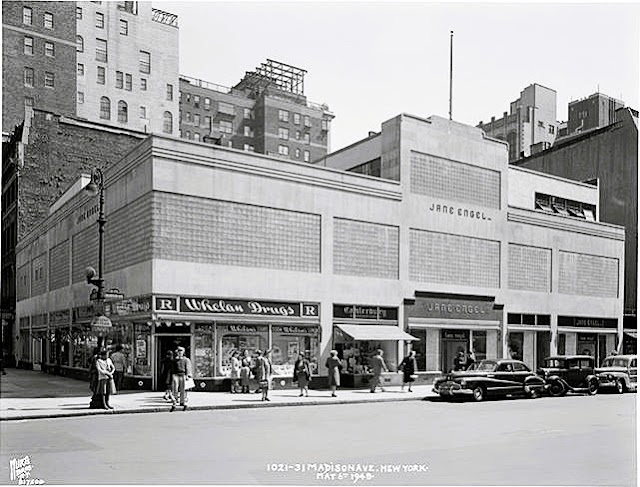
…Jane Engel founded a popular women’s and children’s apparel shop during the Great Depression (in 1930) with just $400 to her name. She grew the business from a single shop on Madison into a successful chain of more than thirty locations…
JEWEL BOX…The flagship Jane Engel Building at Madison and 79th was designed by Roy C. Morris in the Art Moderne style—the generous use of glass brick filled the interior with soft, diffused light. The shop closed in 1955 and was demolished two years later. (New York Public Library)
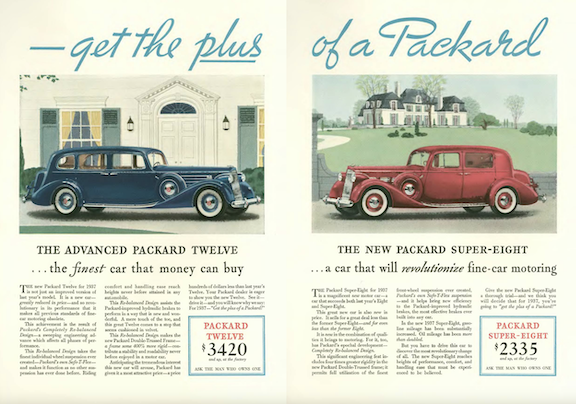
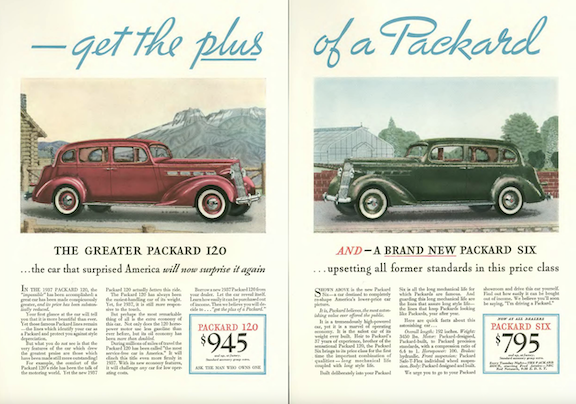
…the makers of the luxury brand Packard made sure Depression-strapped buyers could still afford one of their automobiles, which ranged in price from $795 to $3,420 (in 2026 equivalent to roughly $19,000 and $83,000, respectively)…no doubt The New Yorker’s bean counters appreciated the revenue from these five consecutive full-page color ads…
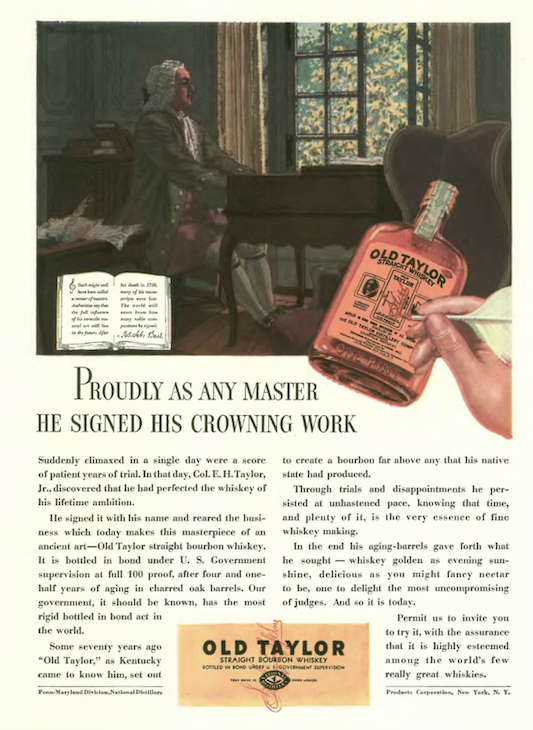
…bourbon distillers continued to compare the accomplishments of famous men to the quality of their tipple…
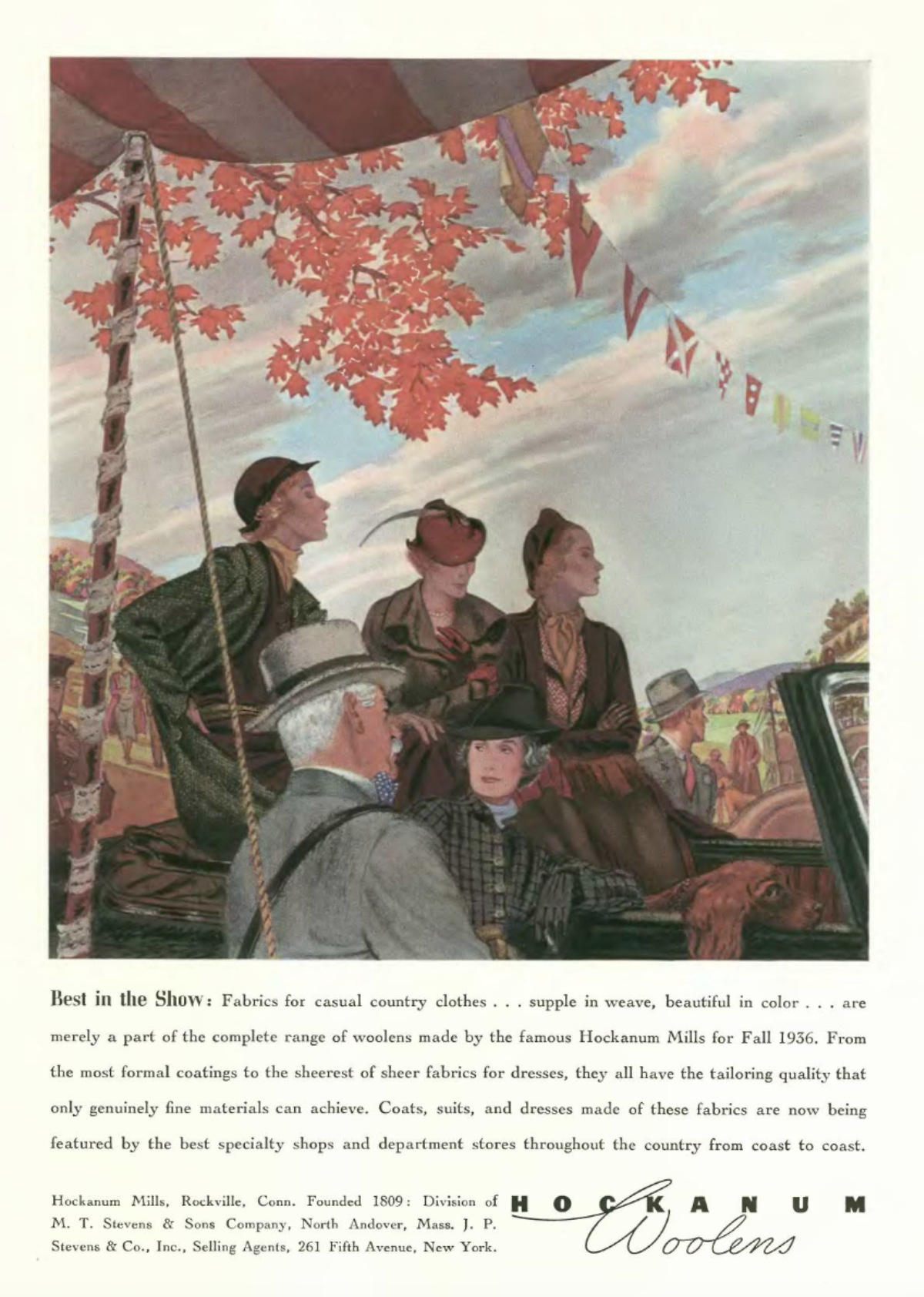
…as the folks at Hockanum Mills continued featuring fine woolens in upscale, seasonal settings…
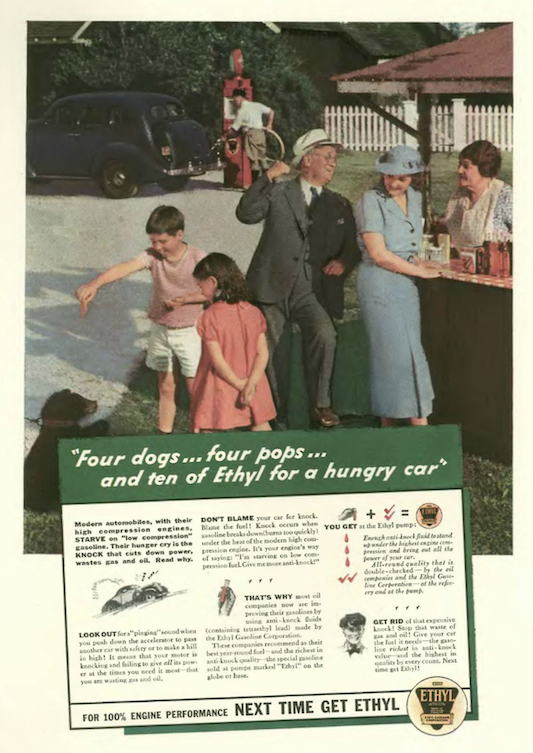
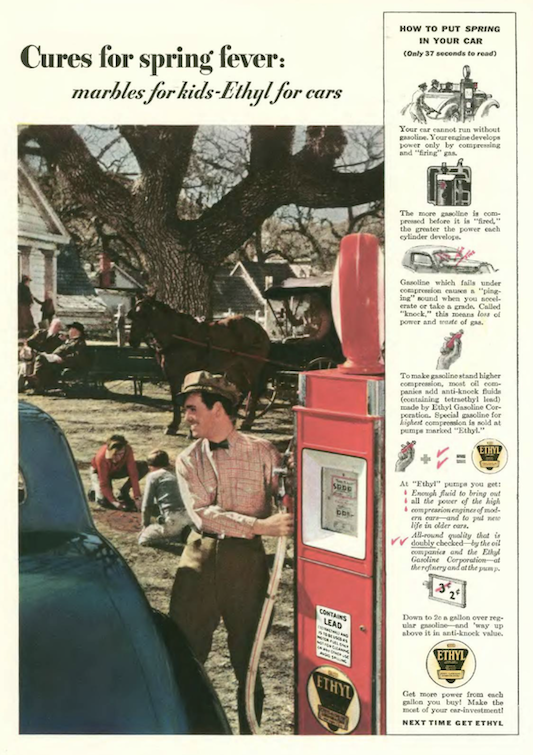
…and the makers of leaded gasoline continued their series featuring homespun images juxtaposed with attendants gassing up cars in the background…at first I thought this was one image superimposed over another, but more likely the gas pump is a prop…also, an odd detail on the left where children appear to be feeding (or teasing) a baby bear restrained by a leash…
…we move on to our cartoonists, beginning with Richard Decker…
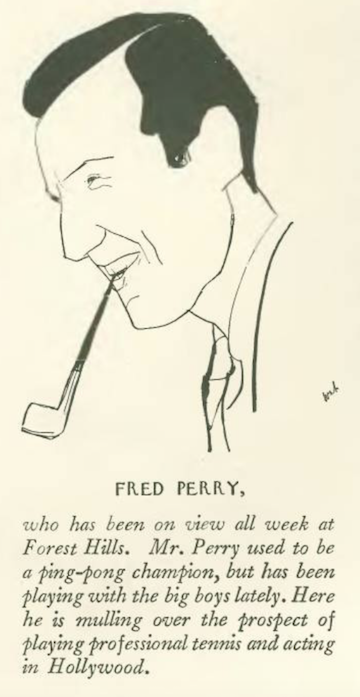
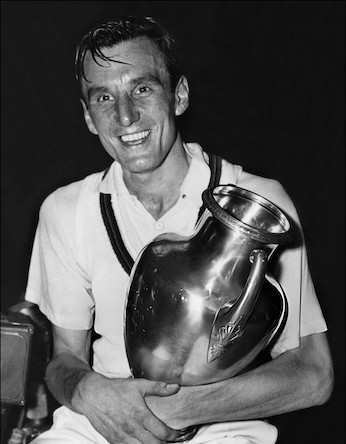
…also in the calendar section was this illustration by William Auerbach-Levy for the mini bio of Fred Perry (1909–1995), British tennis star who won ten Majors, including three consecutive Wimbledon Championships from 1934 to 1936…he was the first player to win a “Career Grand Slam” which he completed at the tender age of 26 in 1935…Perry was also the world champion ping-pong champion in 1929…
FRISKY FRED…Fred Perry was one of the leading bachelors of the 1930s and his off-court romances were reported in the world press—including one with actress Marlene Dietrich. Perry was also known for his popular line of sports attire. Above: Perry hugs the championship cup after his U.S. Open victory at Forest Hills, 1936. (Wikipedia)
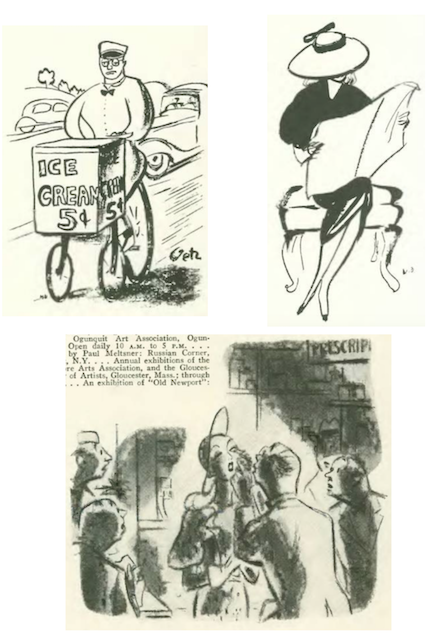
…an assortment of spot drawings…clockwise, from top left, Arthur Getz, Victor de Pauw, and Barbara Shermund (arguably not a spot drawing, but not really a cartoon either)…
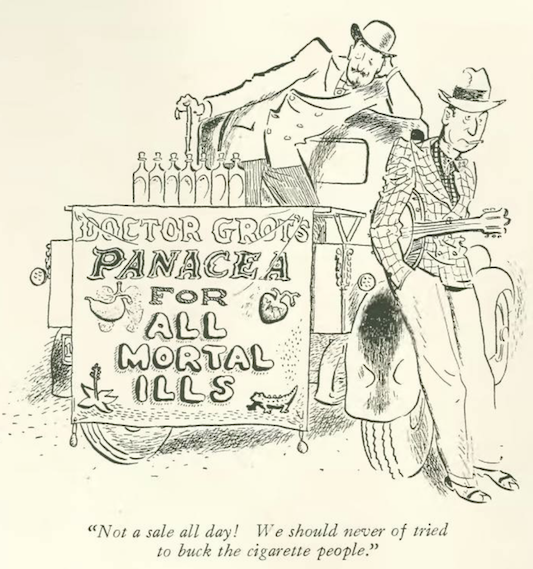
…no signature on this, but it appears to be the work of Perry Barlow, which always reminded me of another artist known for his rural types, Robert McCloskey…
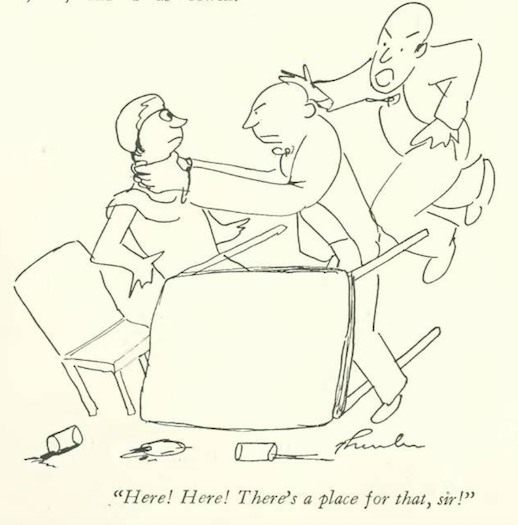
…James Thurber illustrated a public display of disaffection…interesting use of perspective here…Thurber seems to violate all the rules yet the effect is masterful…
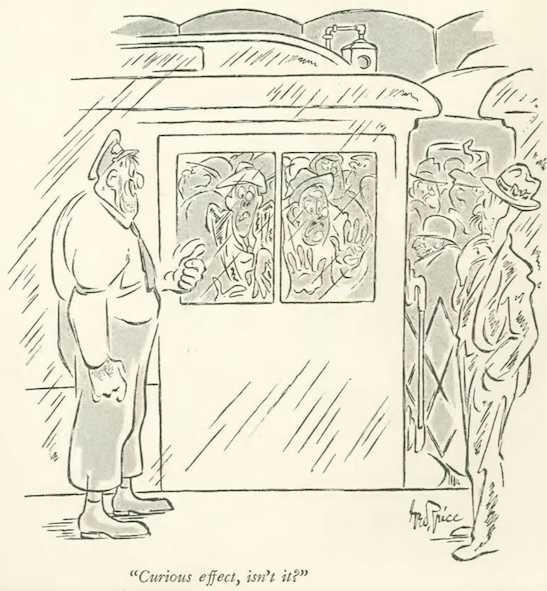
…speaking of effect, George Price in the subway…
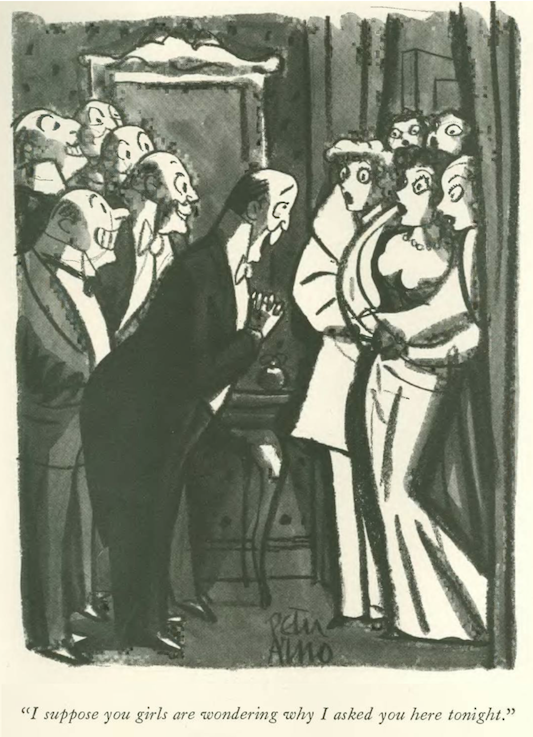
…Peter Arno continued to explore a familiar theme…
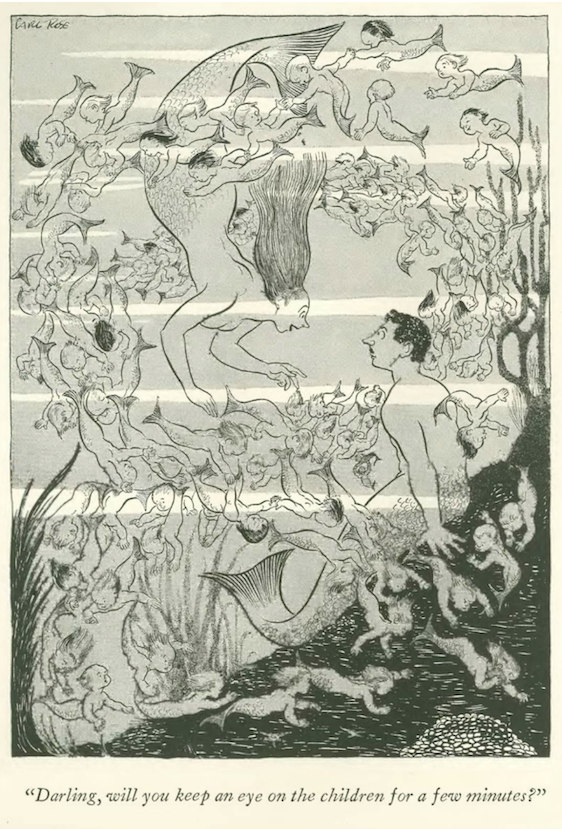
…Carl Rose imagined the home life of a mermaid…
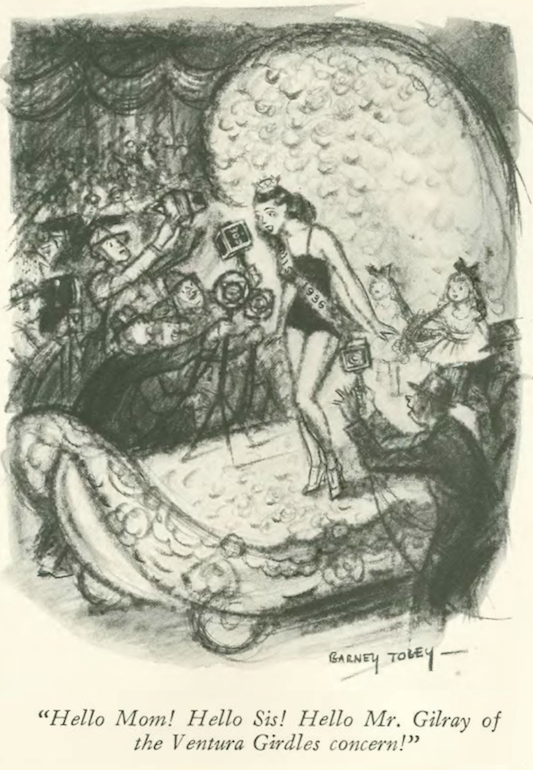
…Barney Tobey’s Miss America gave a plug to her sponsors…
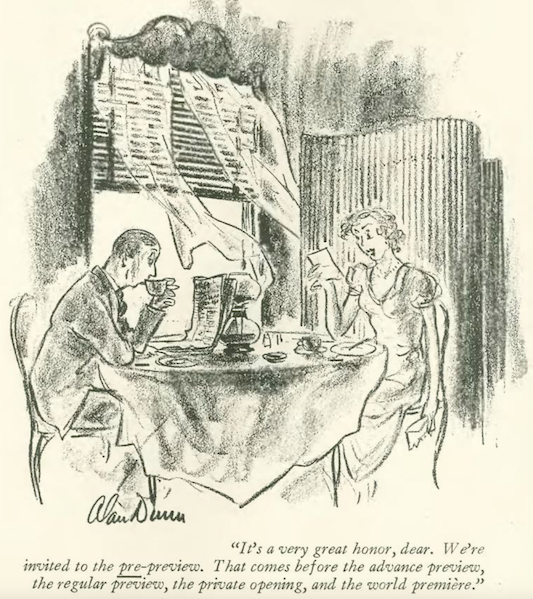
…Alan Dunn gave us a view of a pre-preview…
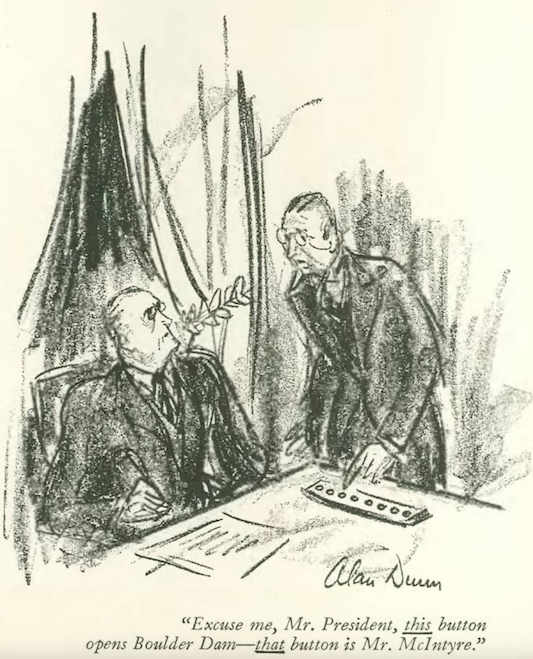
…Dunn again, with a rare cartoon featuring a known personage…
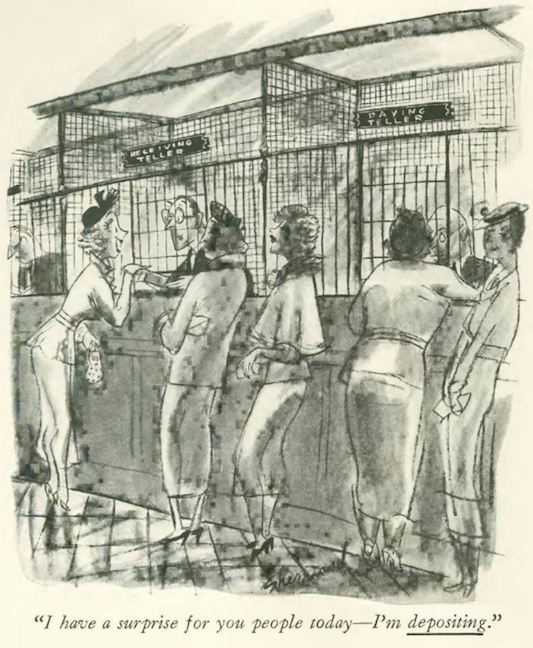
…Barbara Shermund revealed a surprise at the teller window…
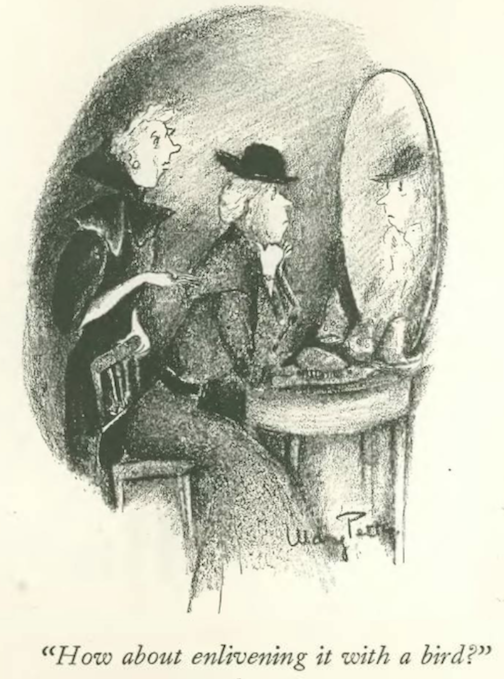
…Mary Petty got creative at the hat shop…
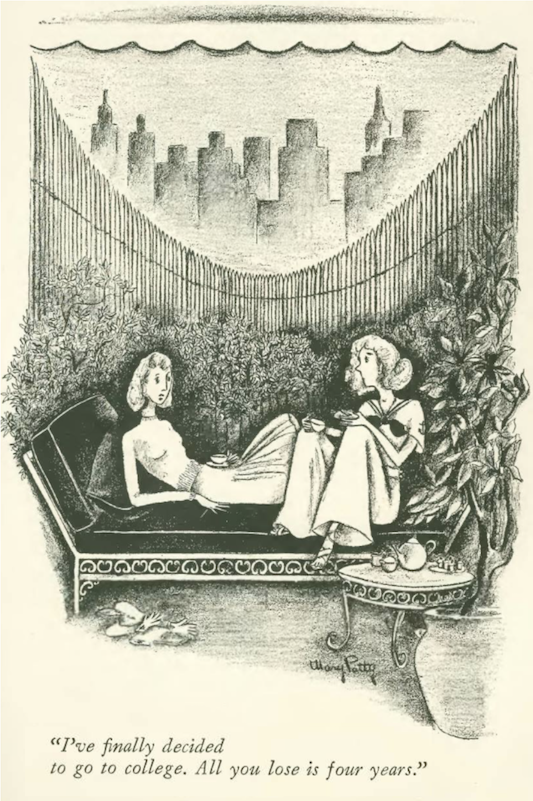
…and Petty again, as we close with her modern take on higher education…
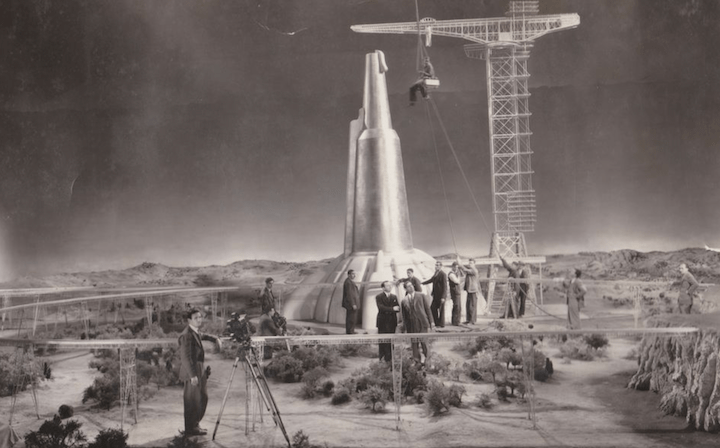
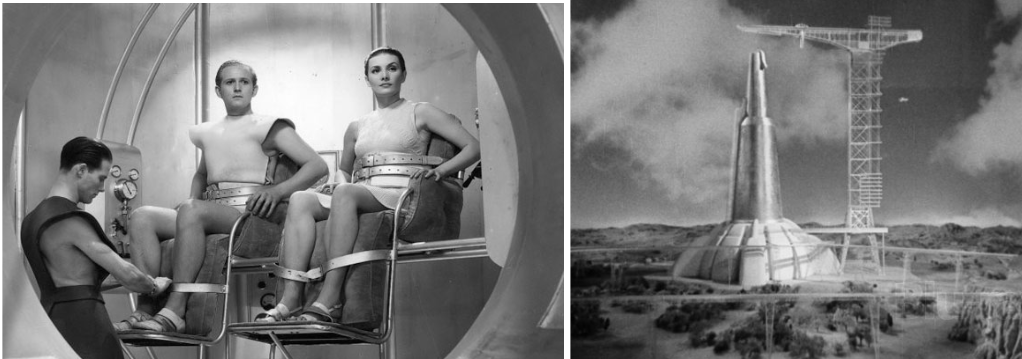
Above: Behind the scenes production photo of the space gun used to launch a manned projectile to the moon in Things to Come. (Instagram)
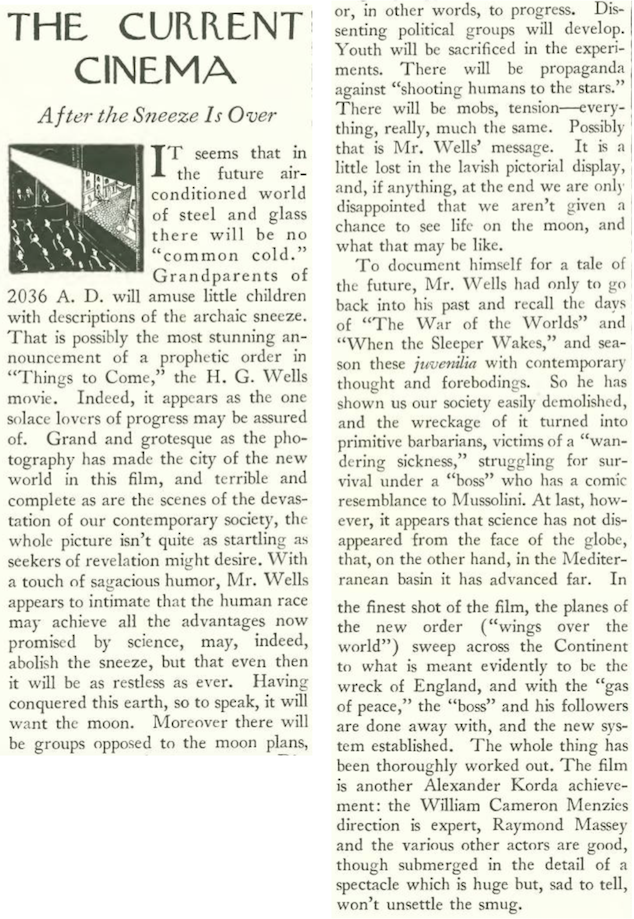
One of the most anticipated films of the 1930s was the British production of Things to Come. Loosely based on the 1933 science fiction novel by H.G. Wells,The Shape of Things to Come, the film was an extraordinarily ambitious and expensive production featuring a huge cast and elaborate sets, both full-scale and in miniature.
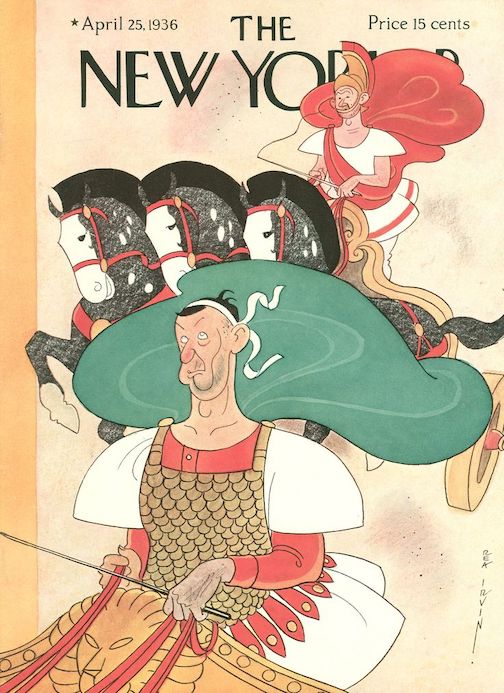
April 25, 1936 cover by Rea Irvin.
Critic John Mosher wasn’t quite sure what to make of Things to Come, seizing on the film’s promise to end the common cold.
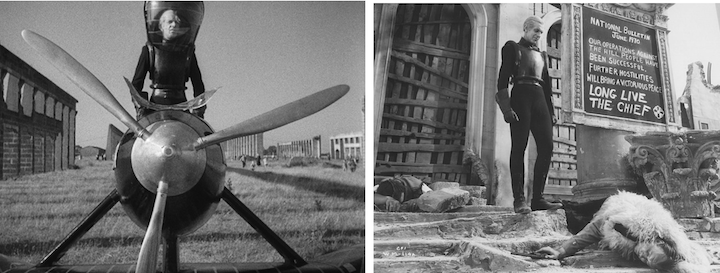
CLEANING CREW…A businessman in Everytown in the 1940s, John Cabal (Raymond Massey) returns in the 1970s to find his city in ruin and governed by a warlord. As a member of a secret organization called “Wings Over the World” (comprised of the last surviving band of engineers and mechanics), Cabal orders his organization to send giant flying wings over Everytown and saturate the population with a “Gas of Peace.” Not only does the gas make the population tranquil, it also kills the warlord, played by Ralph Richardson (right). (midnightonly.com/instagram.com)
In a review for The Criterion Collection, Geoffrey O’Brien notes that the film’s shocking scenes of war were shown to an audience “in active denial, many of them, of the possibility of such things coming to pass in the near future.”
But an antiseptic city with a population made docile by a “Gas of Peace” didn’t appear to be something one would look forward to either. O’Brien points to Jorge Luis Borges’ remarks regarding Things to Come: “The heaven of Wells and Alexander Korda, like that of so many other eschatologists and set designers, is not much different than their hell, though even less charming.” Borges dismissed the notion that science and technology would be the rallying force against tyranny: “In 1936, the power of almost all tyrants arises from their control of technology.”
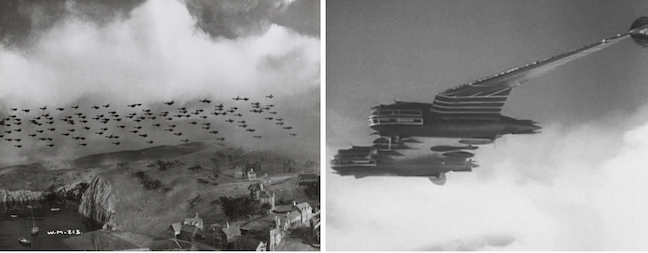
WAR AND PEACE…At left, bombers lay waste to Everytown in the 1940s, seemingly forecasting The Blitz of London in 1940-41; at right, decades later, “Wings Over the World” sends giant flying wings (right) over Everytown to saturate the population with a “Gas of Peace.” (Illinois.edu/facebook.com)UTOPIA?…After years of rebuilding, a new, underground Everytown emerges in 2036. The set (left) was designed by director William Cameron Menzies and Bauhaus artist Laszlo Moholy-Nagy. Above, transportation included autogyros; both men and women wore futuristic togas, including John Cabal’s great-granddaughter Catherine Cabal (Pearl Argyle). Note the acrylic furniture, ubiquitous in the future scenes of the film. (midnightonly.com/facebook.com/YouTube)
O’Brien concludes: “There is no way any audience, in the 1930s or now, would be likely to accept Raymond Massey’s Oswald Cabal as an empathetic spokesperson for the human race. He is essentially the chairman of the board of a quasi-fascist ruling elite—and not so very far from the idea that Wells, at best ambivalent about democracy, in fact had in mind.”
In all fairness, I should note that Massey did not like his character’s “heavy-handed speeches” that lacked human emotion. He complained H.G. Wells prioritized cold scientific ideals over personal character depth. “For heart interest, Mr. Wells hands you an electric switch,” Massey stated.
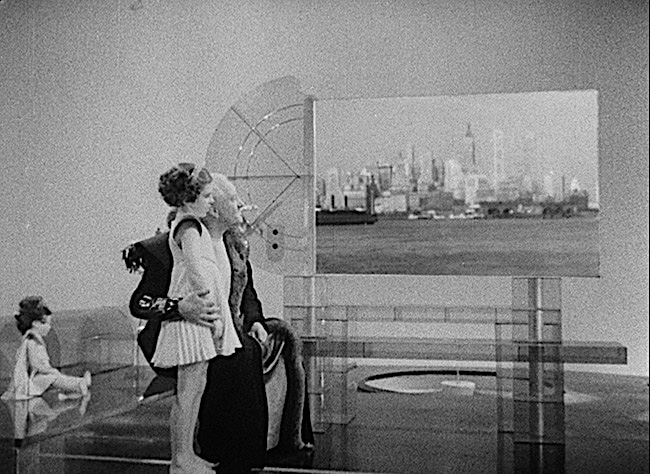
WISHES SOMETIMES COME TRUE…In the movie, a little girl in the year 2036 receives a history lesson from her great grandfather (including a video of 1936 New York), and she expresses delight that people will “keep on inventing things and making life lovelier and lovelier.” The little girl was played by eight-year-old Anne McLaren. The great grandfather was played by Charles Carson (1885–1977). (midnightonly.com)DAME McLAREN…In real life that little girl, Anne McLaren (1927–2007), did make life better, becoming a leading figure in developmental biology and paving the way for other women in science. Her work also helped lead to the development of human invitrofertilization. Dame Anne Laura Dorinthea McLaren received many honors for her research and ethical contributions. (YouTube.com/Wikipedia)POW! TO THE MOON…At left, Catherine Cabal (Pearl Argyle) and fellow scientist Maurice Passworthy (Kenneth Villiers) prepare to fly around the moon, launched from a gigantic space gun (right). (theguardian.com/YouTube)
Interestingly, Raymond Massey (1896–1983) and most of the film’s cast would live to see an actual moon landing in just 33 years. Most of them would also be involved in some way in the Second World War, Massey being wounded as part of the Canadian regiment.
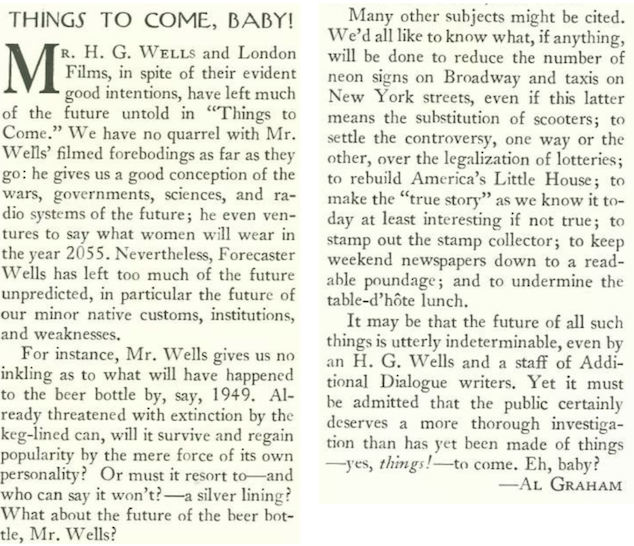
American writer and editor Al Graham (1905–1972), who contributed a number of poems and “Talk of the Town” pieces to The New Yorker in the Thirties and Forties, offered some thoughts regarding Things to Come. Here are excerpts of the first and last parts of his piece:
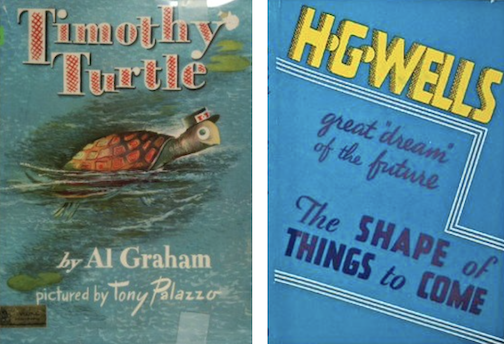
SLOW AND STEADY…Al Graham is perhaps best known for his 1930s humorous verse and children’s literature such as Timothy Turtle (1946) and The Rhymes of Squire O’Squirrel (1963). At right is a cover of the first edition of H.G. Wells’The Shape of Things to Come. (Wikipedia)
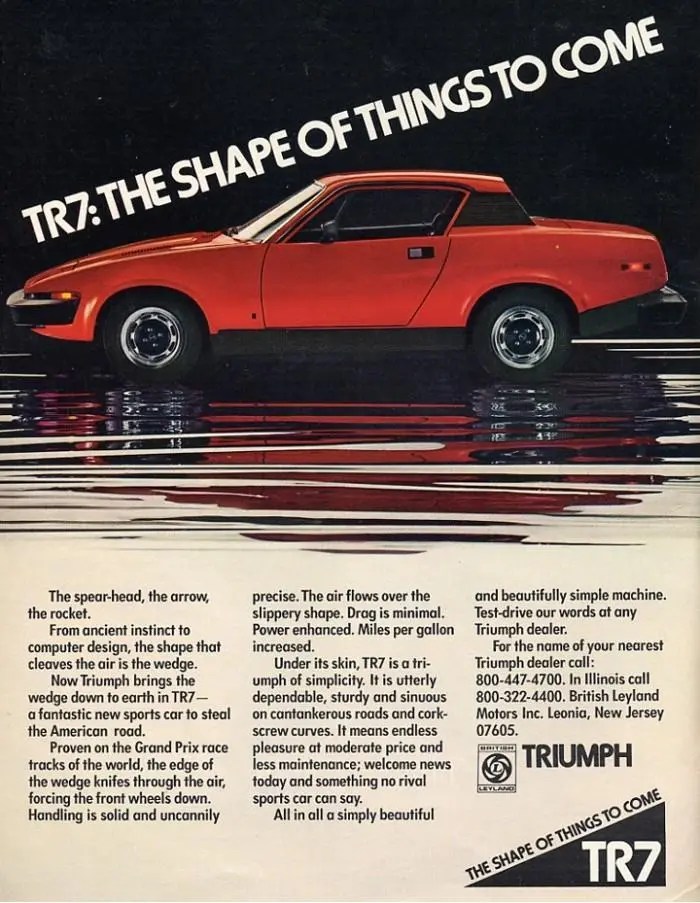
Incidentally, the British automaker Triumph used Wells’ title in a 1970s ad campaign for the TR-7…
(The Daily Drive)
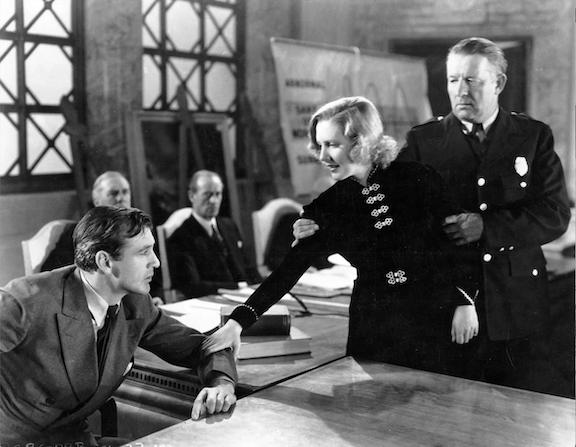
While we are talking movies, Mosher also reviewed Frank Capra’sMr. Deeds Goes to Town. Films such as Mr. Deeds and It’s a Wonderful Life were Capra’s “love letters to an idealized America—a cinematic landscape of his own invention,” wrote social critic Morris Dickstein. Or as actor/director John Cassavetes once observed: “Maybe there really wasn’t an America, it was only Frank Capra.” Whatever it was, Mr. Deeds would win Capra his second Oscar for Best Director (he would win three in all, plus a fourth for a World War II documentary).
HAPPY ENDING…Mr. Deeds (Gary Cooper) finds love and salvation with Jean Arthur in Mr. Deeds Goes to Town. (britannica.com)
* * *
Ah-Choo!
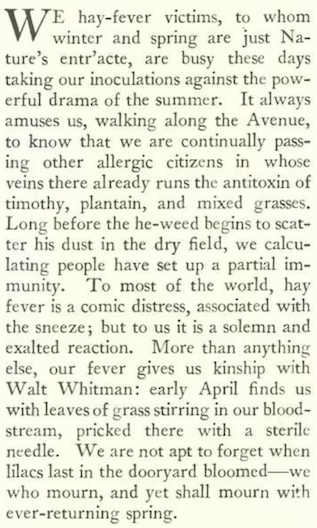
Those familiar with E.B. White’s writings are likely also familiar with his lifelong struggle with hay fever, or “catarrh” as it was also referred to in those days. White notably wrote about his condition in a 1938 New Yorker essay, “Daniel Webster, the Hay Fever, and Me.” He addresses the malady in his April 25, 1936 “Notes and Comment” column:
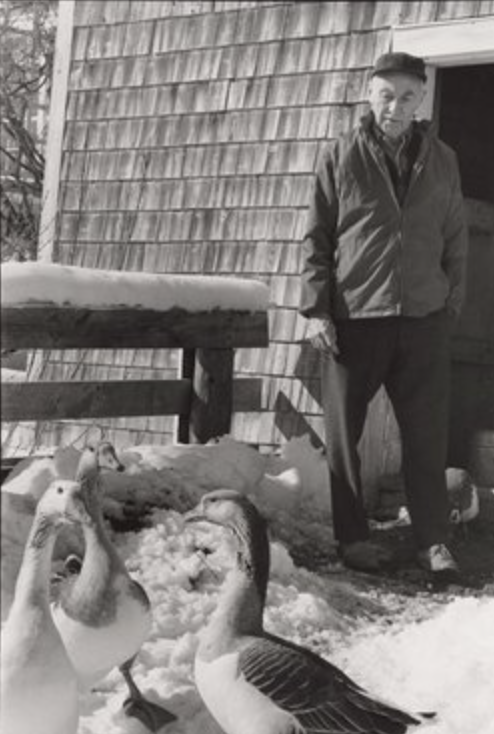
SNEEZING AND HONKING…Despite his allergies, E.B. White had a deep love for the countryside and nature. Although he grew up just outside New York City, he cultivated a love of rural life that was finally realized when he and wife Katharine bought a farm near Brooklin, Maine. Above is a 1974 photo (by Jill Krementz) of White at his Maine farm. (cornell.edu)
One of the more common and effective treatments for allergies in the Thirties was the benzedrine inhaler. The active ingredient was amphetamine. It was safe if inhaled, however some folks got the idea to crack open the inhaler and swallow the contents, which would induce a mind-altering effect (the amount of amphetamine in the inhaler was 250 milligrams, much greater than the five or ten milligrams in tablets prescribed for depression).
NOT SHIRLEY TEMPLE, however the marketers of the inhaler probably wanted consumers to make the connection. (mcgill.ca)
* * *
Before the Internet
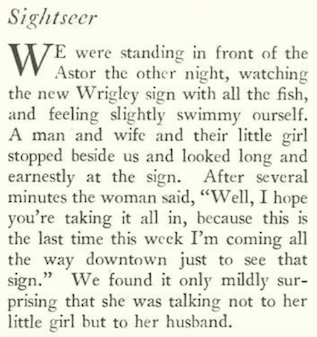
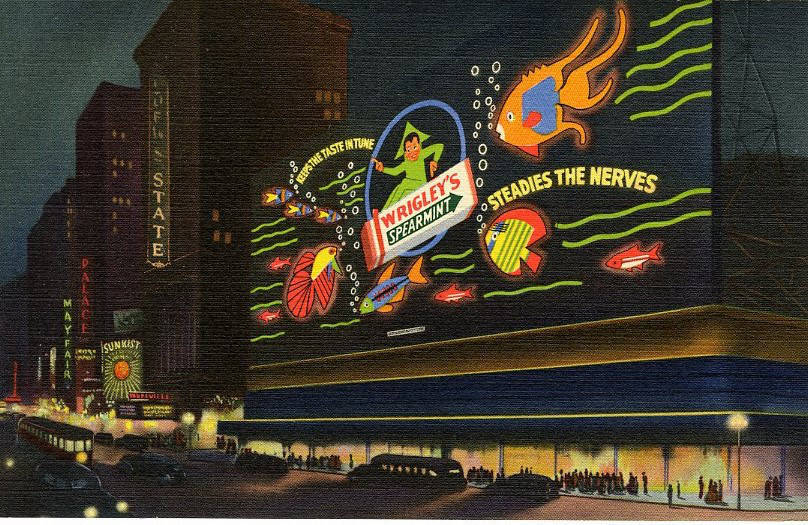
What did some folks do in the evening before modern-day distractions? According to “The Talk of the Town,” at least one man and his family loved to gawk at the new Wrigley sign in Times Square.
CHEW ON THIS…The Wrigley sign spanned the block on Broadway from 44th Street to 45th Street. Designed by artist Dorothy Shepard, the display featured fish blowing bubbles and was lit by 29,608 lamps and 1,084 feet of neon tubing. It was so large that its electrical power usage was estimated to be equivalent to a small city of ten thousand people. (Wikipedia)
* * *
From Our Advertisers
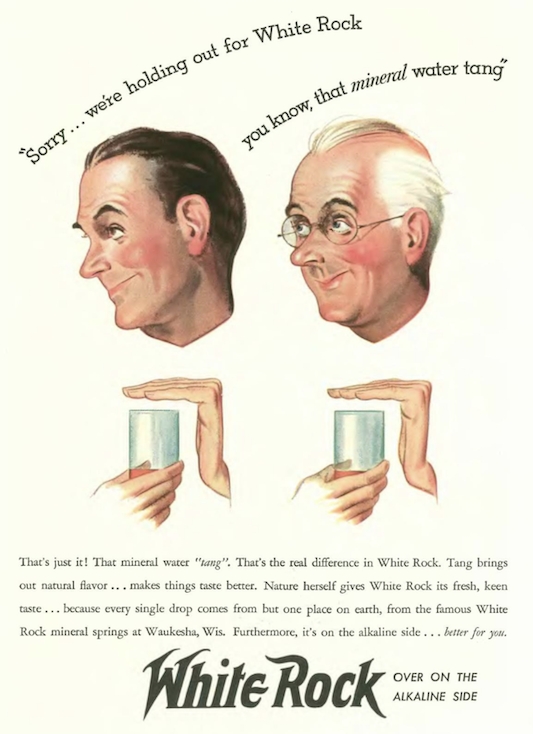
White Rock continued its series of brightly illustrated ads, this most likely the work of noted illustrator John Holmgren…
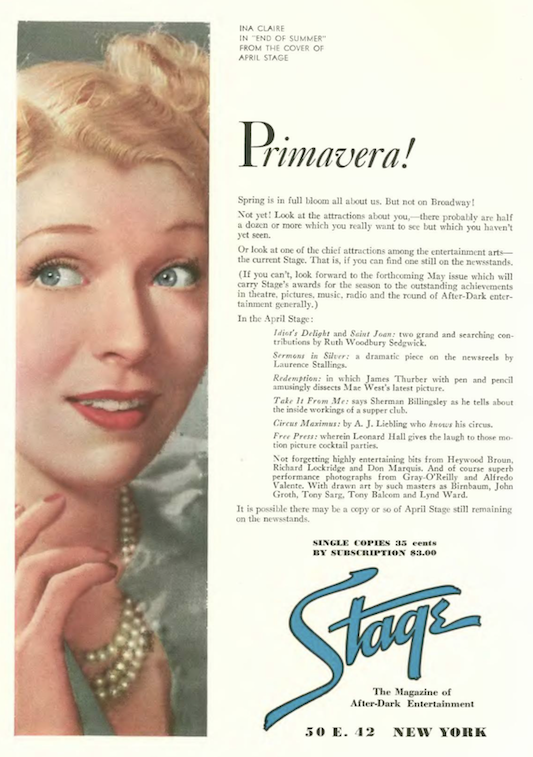
…Stage magazine continued to promote its star-studded content in full-page color ads…this one featured American stage and film actress Ina Claire…
Ina Claire, center, with Osgood Perkins and Doris Dudley in End of Summer.(jacksonupperco.com)
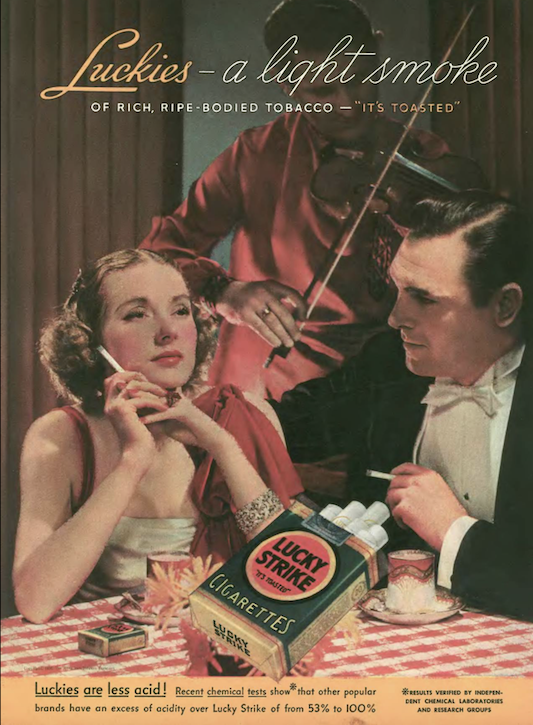
…ah, the pleasure of an after-dinner Lucky back in the day when you could still smoke indoors…
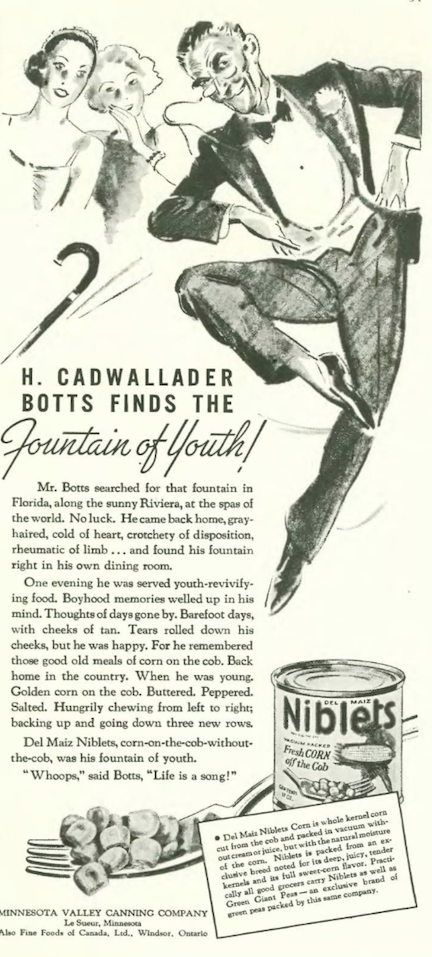
…another ad for Green Giant Niblets featuring a rich old toff who’s just over the moon about canned corn…
…these surreal Lyse Darcy ads for Guerlain really stood out in the magazine…
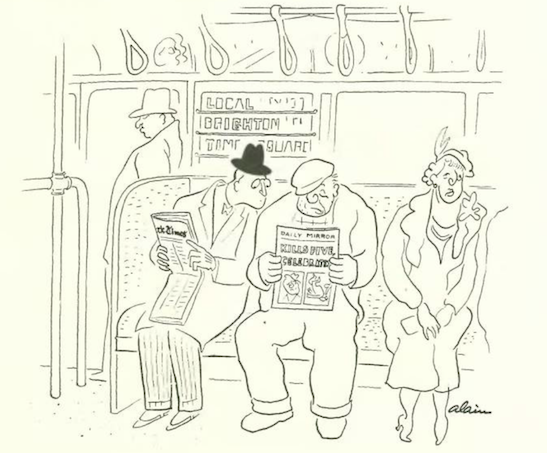
…speaking of standing out, who could resist the distraction of a tabloid, especially with the Gray Lady folded in one’s lap?…Alain illustrates…
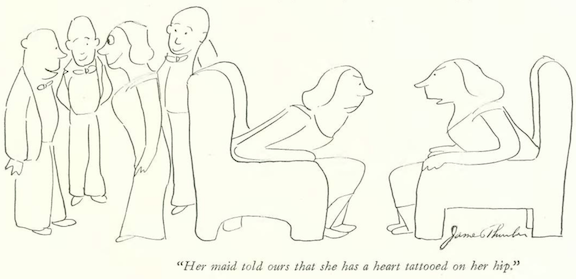
…and per James Thurber, who was immune to the charms of a woman with a heart tattooed on her hip?…
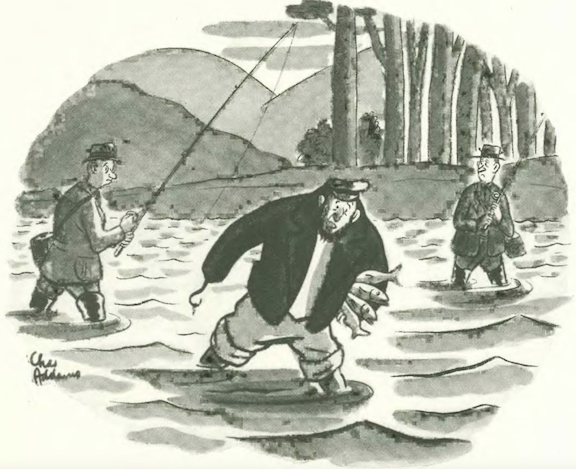
…Charles Addams showed us a man with a built-in fishing advantage…
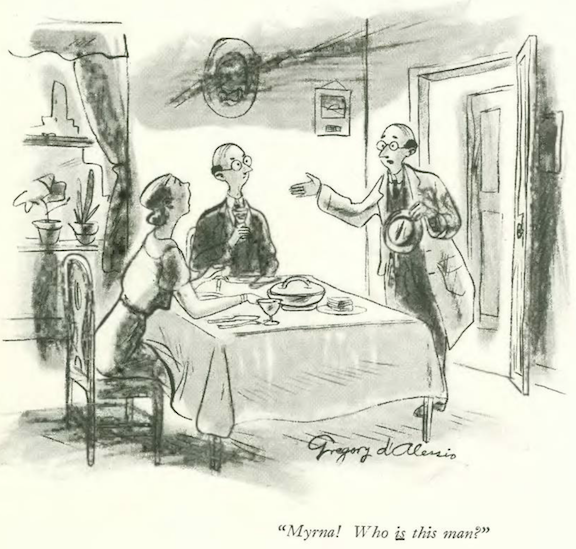
…Gregory d’Alessio gave us an understandable marital mix-up…
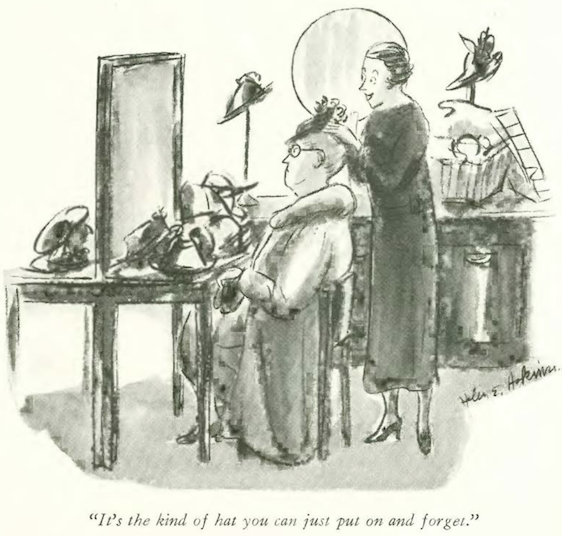
…Helen Hokinson offered a dose of “meh” in the hat department…
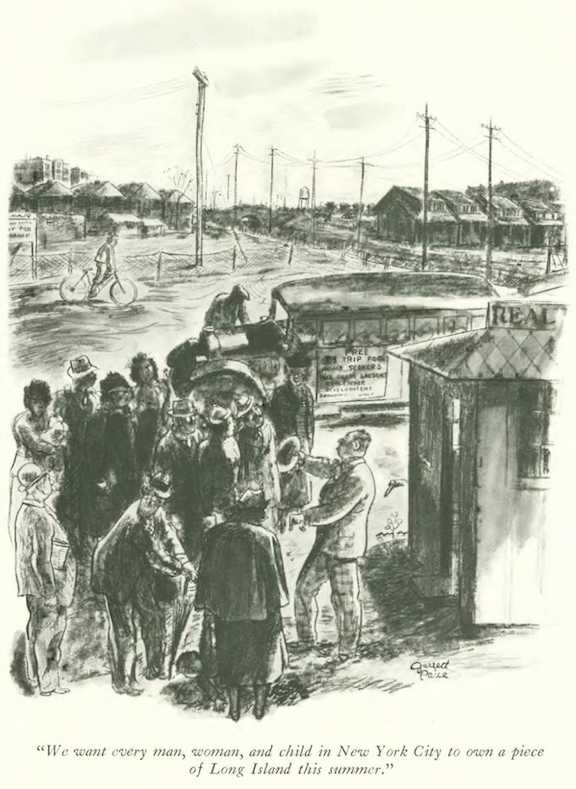
…Garrett Price showed us the consequences of Robert Moses’s transformation of Long Island from a rural area for the rich into a suburban landscape for the hoi polloi…
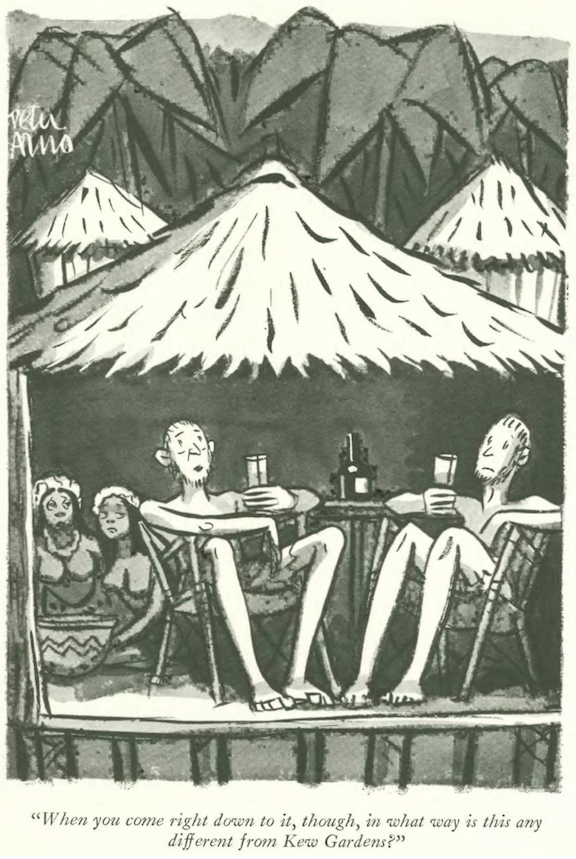
…and we close with Peter Arno, who wondered what’s the fun of drinking in the tropics when you can do the same thing in Queens?…
Above: Detail from illustration depicting the Philippine Clipper arriving in Hong Kong to establish the first commercial air service between North America and the continent of Asia on October 23, 1936. (Otto G. Richter Library, University of Miami)
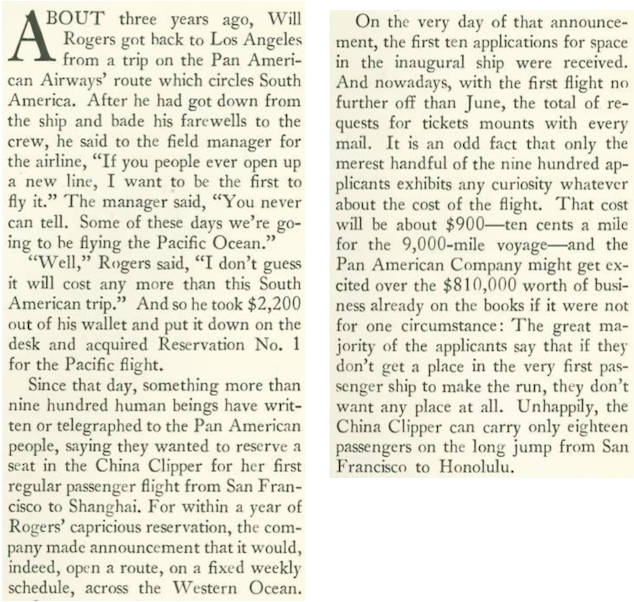
We take to the air with the April 18, 1936 edition of The New Yorker, namely via the China Clipper, a Pan American flying boat that was preparing to begin regular passenger service from San Francisco to the Philippines and Hong Kong along with its two sister ships.
April 18, 1930 cover by Rea Irvin.
Writing for “A Reporter at Large” under the title “See You in Shanghai,” Morris Markey offered an enthusiastic preview of the China Clipper, a Martin M-130 flying boat that was initially tested on a Trans-Pacific mail route laid out by famed navigator Fred Noonan (who would disappear the following year in a fateful flight with Amelia Earhart). Although Markey anticipated a summer launch, the first commercial trans-Pacific airmail and passenger service from San Francisco to Manila actually took place in October 1936, when the Hawaii Clipper made the first scheduled transoceanic passenger flight to the Philippines. The Philippine Clipper inaugurated the first passenger service into Hong Kong that same month, but it was a public relations VIP flight rather than a revenue generating one.
Here are excerpts from Markey’s report:
TAKING WING…Clockwise, from top left, carrying nearly 111,000 letters, the China Clipper passes over the San Francisco waterfront on its first airmail flight to Manila in November 1935; trading card from a pack of Player’s cigarettes; cutaway view of the Martin M-130 flying boat dubbed the China Clipper.(Wikipedia/frommers.com/Smithsonian)
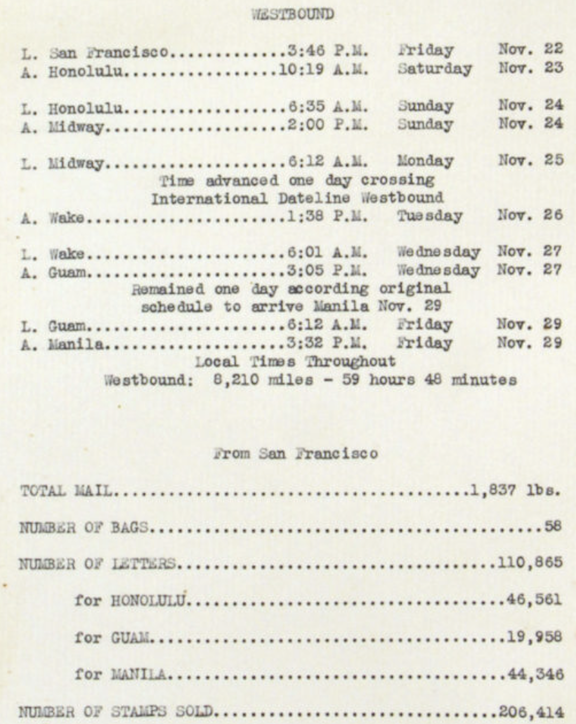
Here is the flight schedule for the China Clipper’s first airmail flight to Manila in November 1935:
(messynessychic.com)
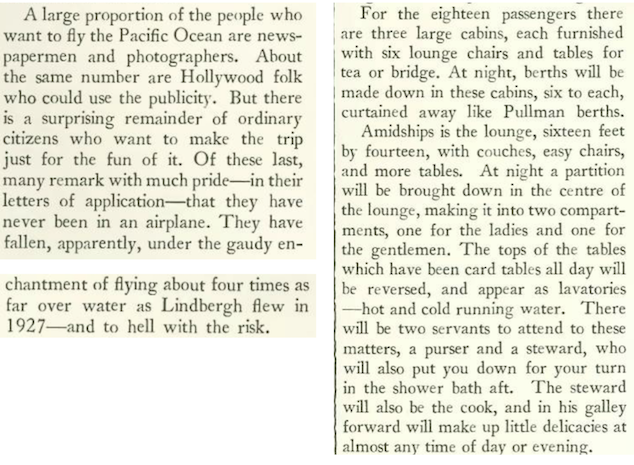
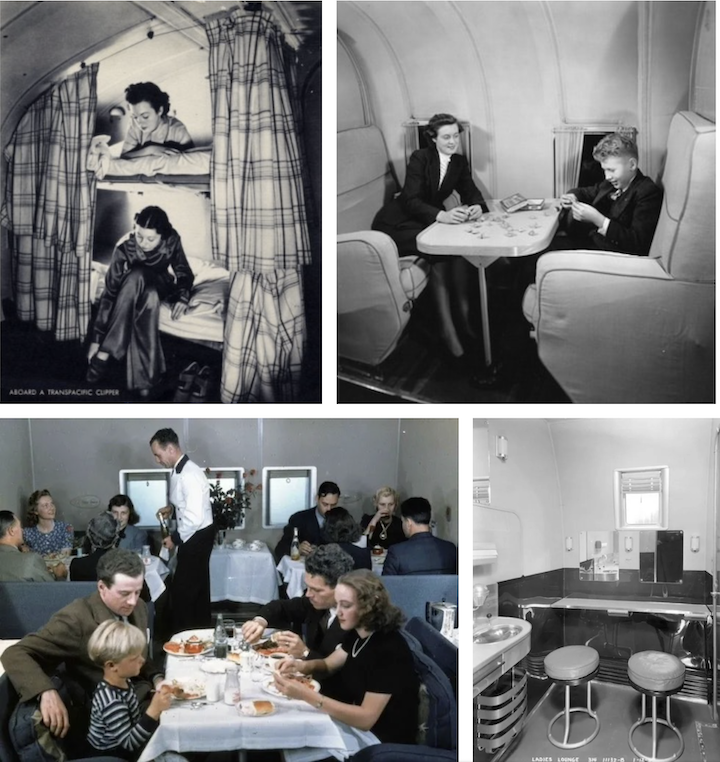
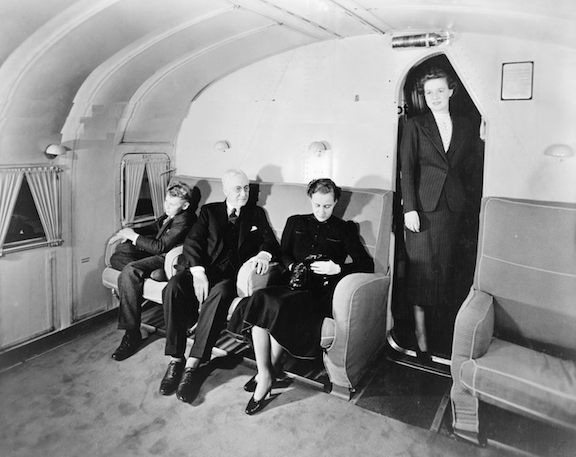
Today’s commercial aircraft squeeze passengers into about six square feet. Compare that to a Pan Am Clipper, which allotted twenty-two square feet per each passenger. They lounged on easy chairs and couches, enjoyed six-course meals served on fine china, and could even take a hot shower if so desired. Markey again:
THE ONLY WAY TO FLY if you had the means. The Clippers were divided into spacious cabins, with couches rather than airplane seats. The passenger compartments would transform at night into deluxe sleeper cabins. There was a dining salon, dressing rooms, and separate bathrooms for men and women. (messynessychic.com/Wikipedia/clipperflyingboats.com)
Talk about legroom…
(everythingpanam.com)
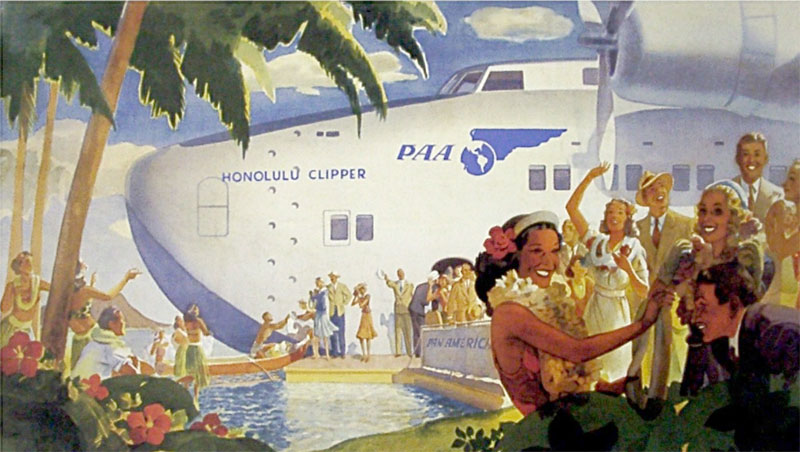
Writing for Messy Nessy,Luke Spencer notes this experience was only available to a select few: “…a one-way ticket from San Francisco to Hong Kong would set you back $760 in 1939 (more than $13,000 today). But despite being largely reserved for the rich and famous, the seaplanes are so evocative of the bygone era, that today, it’s hard to imagine a vintage travel poster without a Flying Clipper in it, soaring above a distant island.” Indeed, the long-gone Clipper ships live on in popular vintage travel posters such as the one below depicting Pan Am’s most advanced, largest and last flying boat, the Boeing 314. The circa 1939 illustration is by George Lawler:
(panam.org)
* * *
Don’t Step On Them
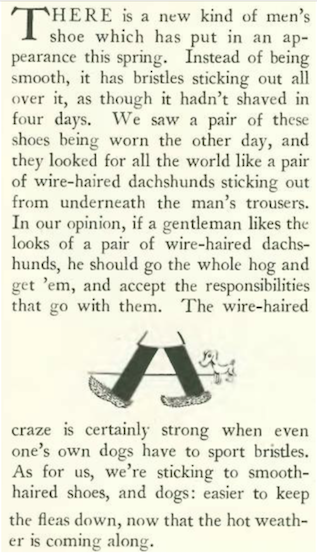
Suede shoes (aka Bucks, Reverse Calfskin) caught the attention of E.B. White, who thought this “new kind of men’s shoe” resembled a wire-haired dachshund. Suede shoes (blue ones would come later) were introduced as a preppy alternative to heavy lace-up shoes in the 1930s. They were favored (and made popular) by fashion trendsetter Edward, Duke of Windsor, who briefly reigned as British king in 1936 before abdicating the throne.
GOING CASUAL…Suede shoes offered a less formal option to men who still wanted to look stylish about town or at the club. At left is an ad from the 1940s, and at right is a one-column ad from the April 18, 1936 issue of The New Yorker. One wonders if E.B. White noticed it. (chronicallyvintage.com)
* * *
Cowboys and Elephants
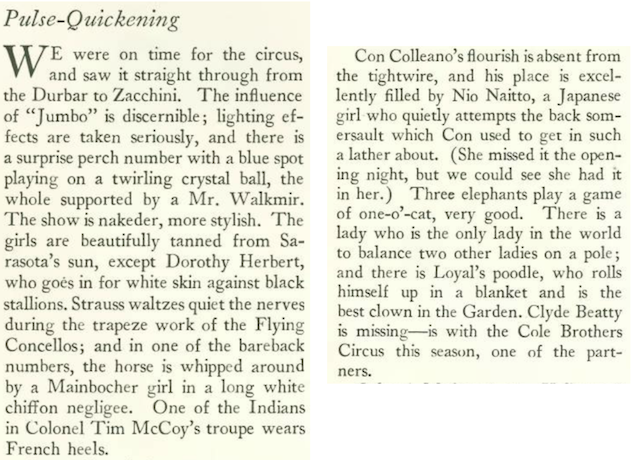
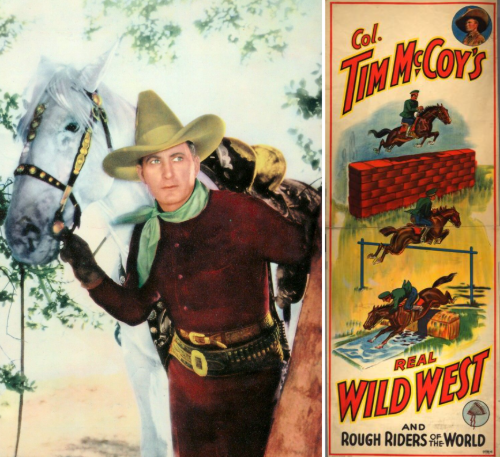
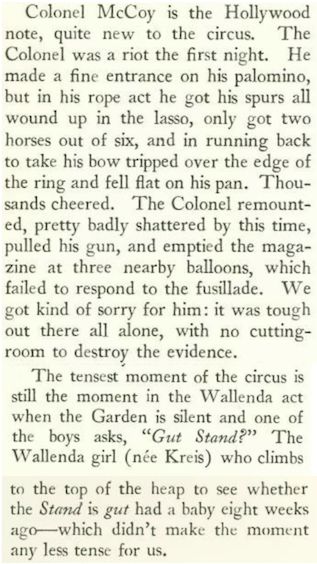
The “Talk of the Town” noted the latest attractions the Ringling Brothers were bringing to Madison Square Garden, including B-grade Western film actor ColonelTim McCoy and a trio of elephants who played a rudimentary form of baseball.
NICE DUDS…American actor and military officer Colonel Tim McCoy (1891–1978) was a popular cowboy film star; he was even honored with his picture on a Wheaties box. (Wikipedia/nypl.org)
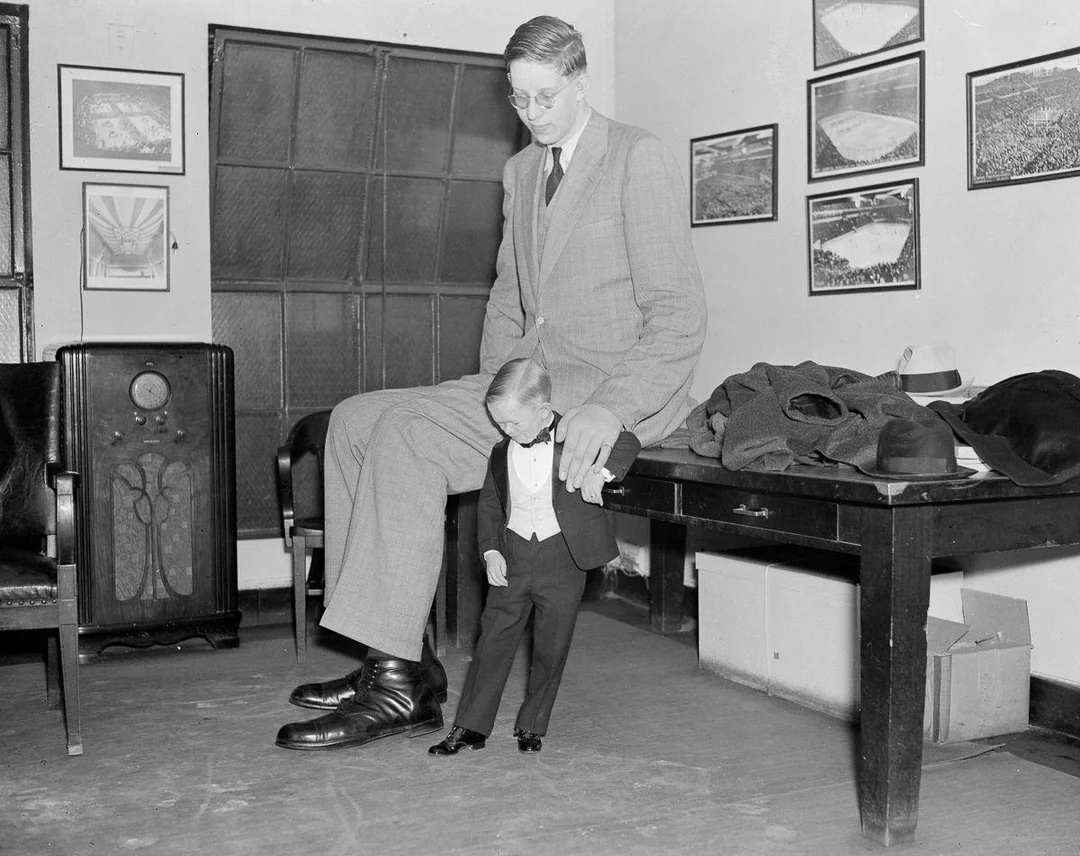
The tallest person ever recorded, Robert Wadlow (1918–1940), became a celebrity after his 1936 U.S. tour with the Ringling Brothers Circus, appearing at Madison Square Garden in the center ring, and never in the sideshow.
ON DISPLAY…The 8 foot, 11.1 inch Robert Wadlow shares a moment with Harry Earles (aka Harry Doll) behind the scenes at the Ringling Brothers Circus in 1936. During his appearance, Wadlow dressed in his everyday clothes and refused the circus’s request that he wear a top hat and tails. (reddit.com)
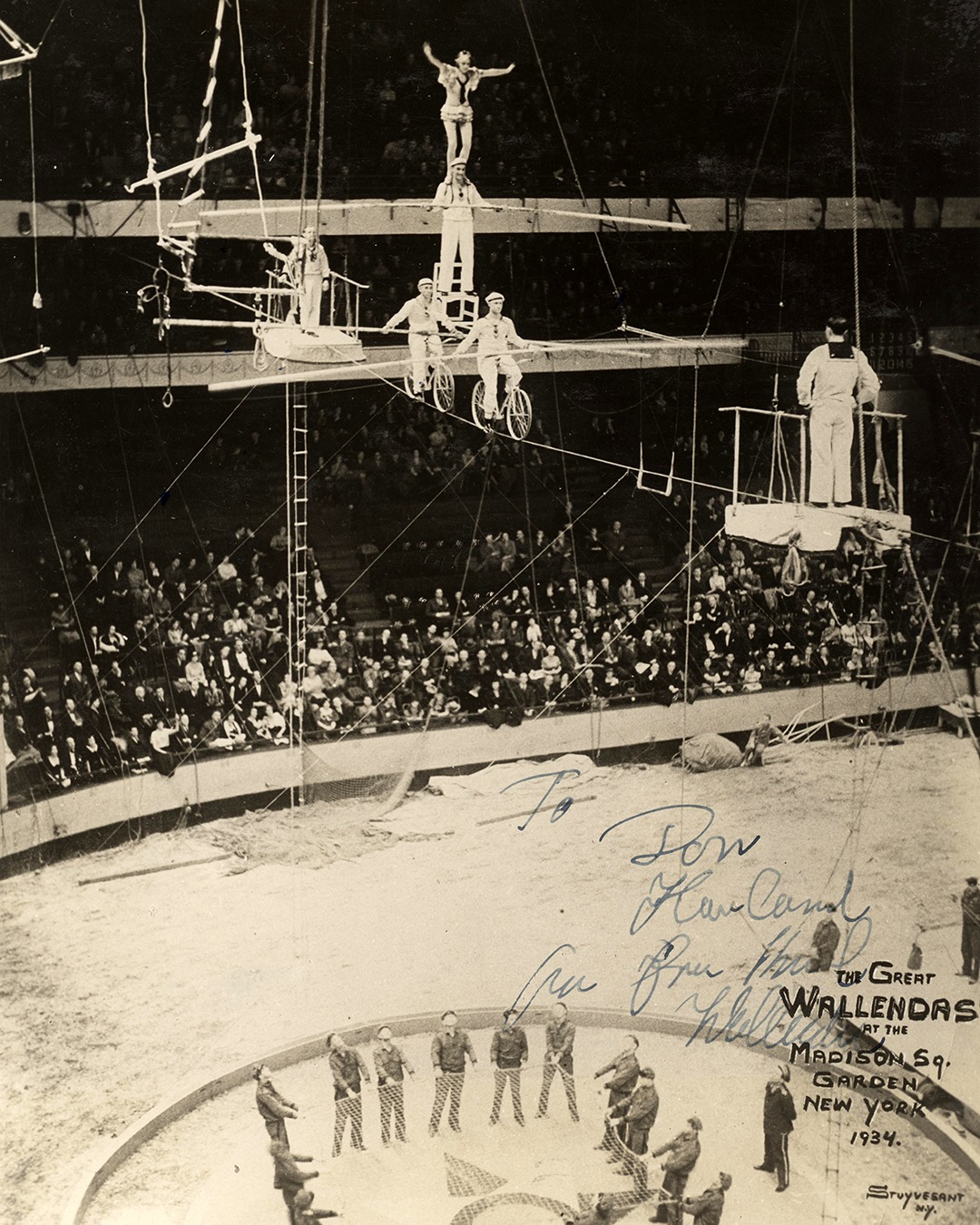
In addition to Col. McCoy, the circus also featured the daring high wire act of the famous Wallenda family:
IT’S A LIVING…The Wallendas performing at Madison Square Garden in 1934. (facebook.com)
* * *
Sage Advice
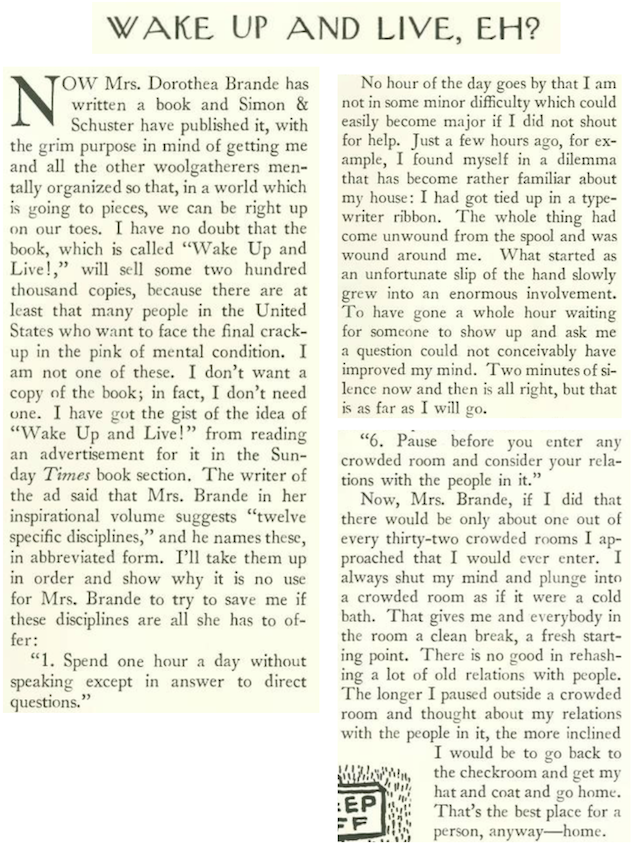
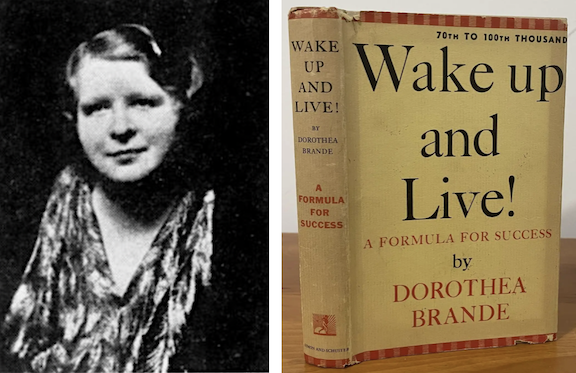
Dorothea Brande (1892–1948) was the author of two popular advice books: Becoming a Writer (1934) remains in print today, and her motivational Wake Up and Live (1936) sold more than a million copies and inspired an eponymous 1937 Hollywood movie.
As we’ve seen before, James Thurber relished the opportunity to satirize the writers of motivational books, and Brande’s Wake Up and Live proved to be irresistible. Here are some choice excerpts:
IDEAL FOR AN AIRPORT READ if such a thing would have existed in 1936. Above, Dorothea Brande circa 1937 and her 1936 bestseller, Wake Up and Live, which sold more than a million copies and inspired a Hollywood movie. (Wikipedia/matthewsbookshop.com)
* * *
Legacy Lines
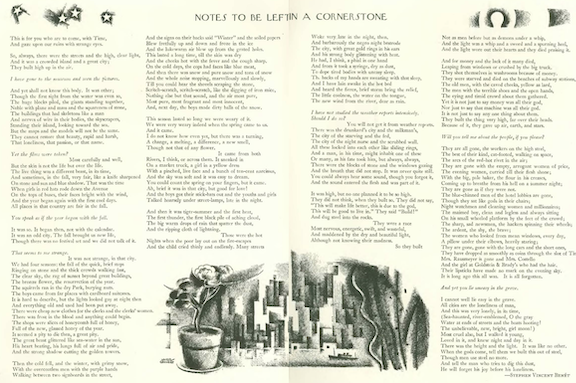
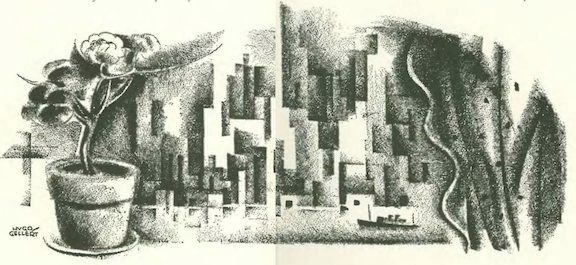
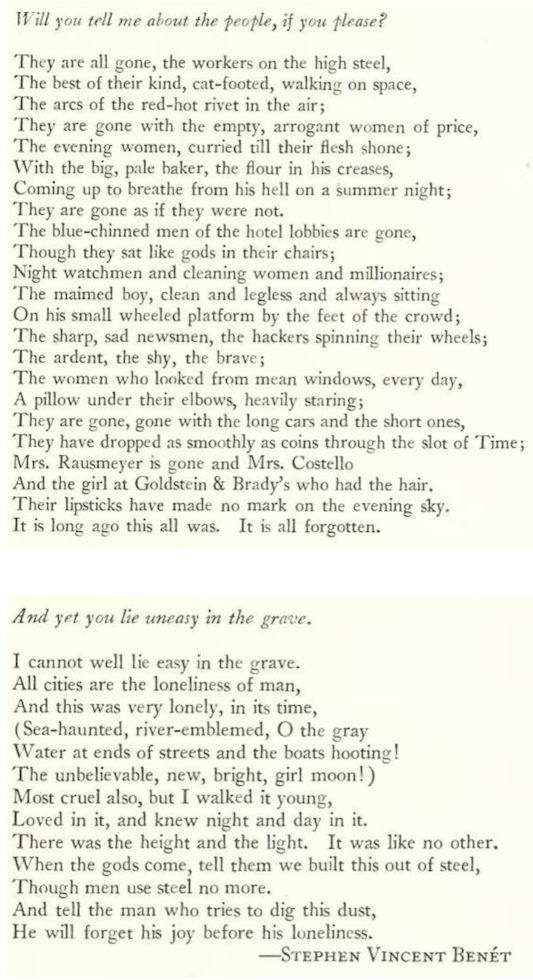
In 1936 Stephen Vincent Benét (1898–1943) was more widely read than any American poet, but his popularity didn’t diminish the respect he received from literary critics. So no wonder The New Yorker gave him a two-page spread to publish his “Notes To Be Left In A Cornerstone.” It’s too large to reproduce here, but this is how it looked in the magazine (with great spot art by Hugo Gellert)…
A closer look at Gellert’s illustration…
…and here are the last two stanzas of the poem:
* * *
Ray Gets Rough
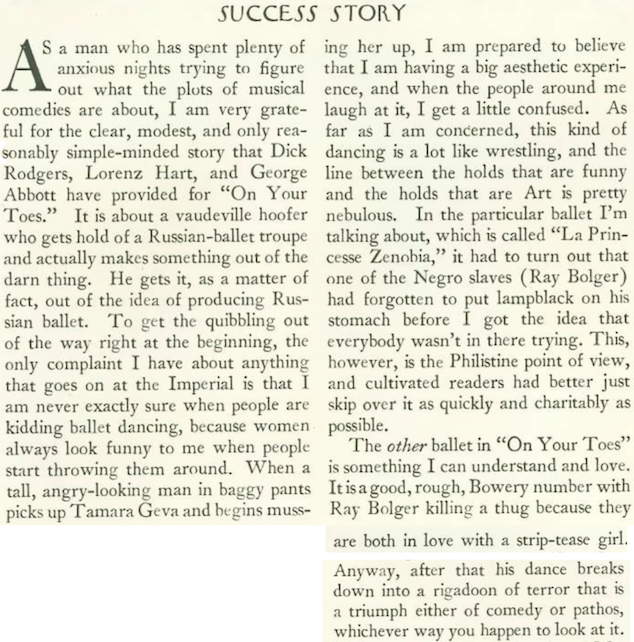
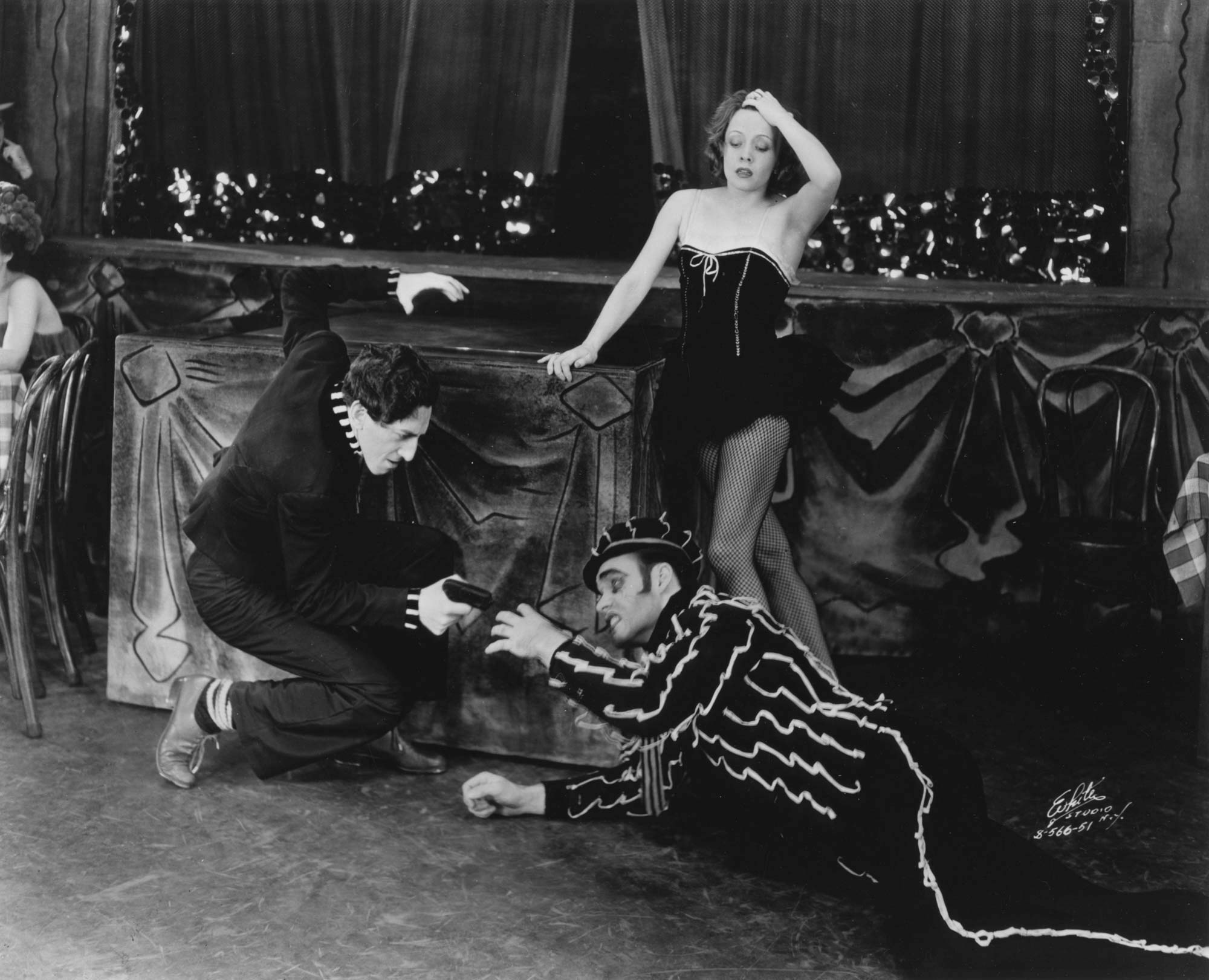
Ray Bolger’s long career included everything from dancing in vaudeville shows and acting on Broadway to appearing in his own television sitcom and in a 1981 Dr. Pepper commercial (dancing, of course). He is best remembered as the lovable, loose-limbed Scarecrow in 1939’s Wizard of Oz. So it was a surprise to learn that the Tony-winning actor could also play a tough guy, a turn that delighted critic Wolcott Gibbs, who penned this review of the Rodgers and Hart comedy musical On Your Toes:
I CAN SCARE MORE THAN CROWS…Ray Bolger (left) gets rough with a thug as Tamara Geva looks on in the musical comedy On Your Toes. (rodgersandhammerstein.com)
* * *
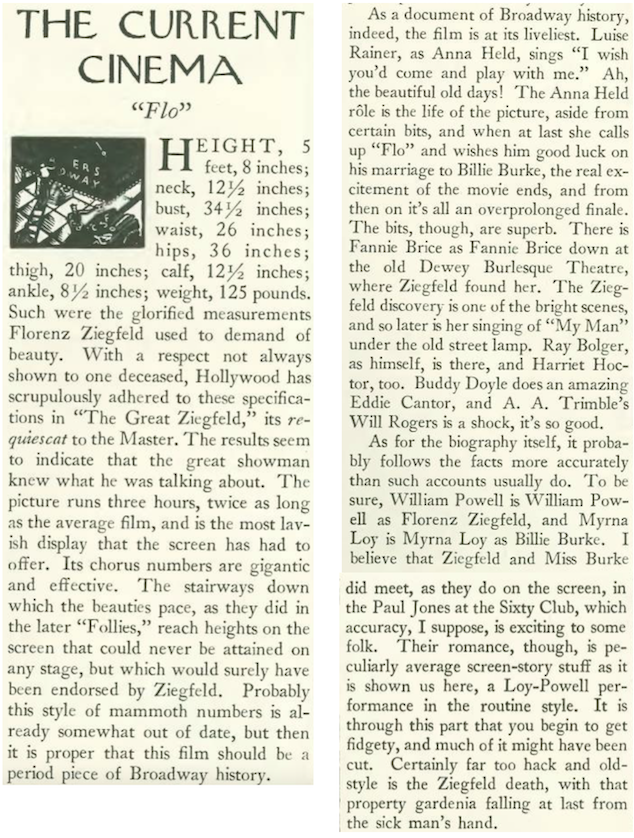
Bio Myopic
Biopics reached a height of popularity in the Thirties, with dozens of these pictures featuring major stars including Charles Laughton in The Private Life of Henry VIII (1933) and Rembrandt (1936), Barbara Stanwyck in Annie Oakley (1935), Greta Garbo in Queen Christina (1933), and Claudette Colbert in Cleopatra (1934). Paul Muni, the king of biopics, appeared in at least a half-dozen including The Story of Louis Pasteur (1936). The year 1936 also brought us The Great Ziegfeld, starring William Powell as Flo Ziegfeld, Myrna Loy as his wife, Billie Burke, and Luise Rainer as Ziegfeld’s first wife, Anna Held. Critic JohnMosher takes it from here:
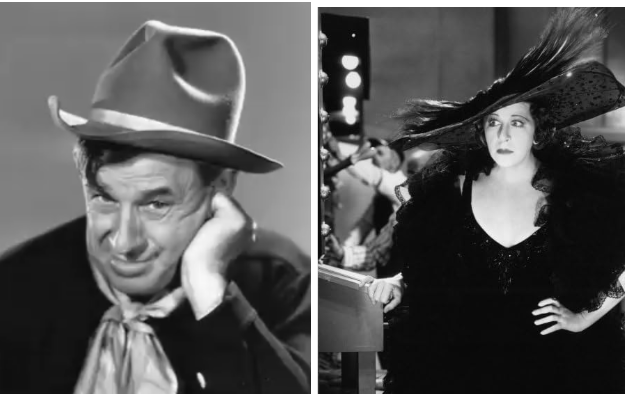
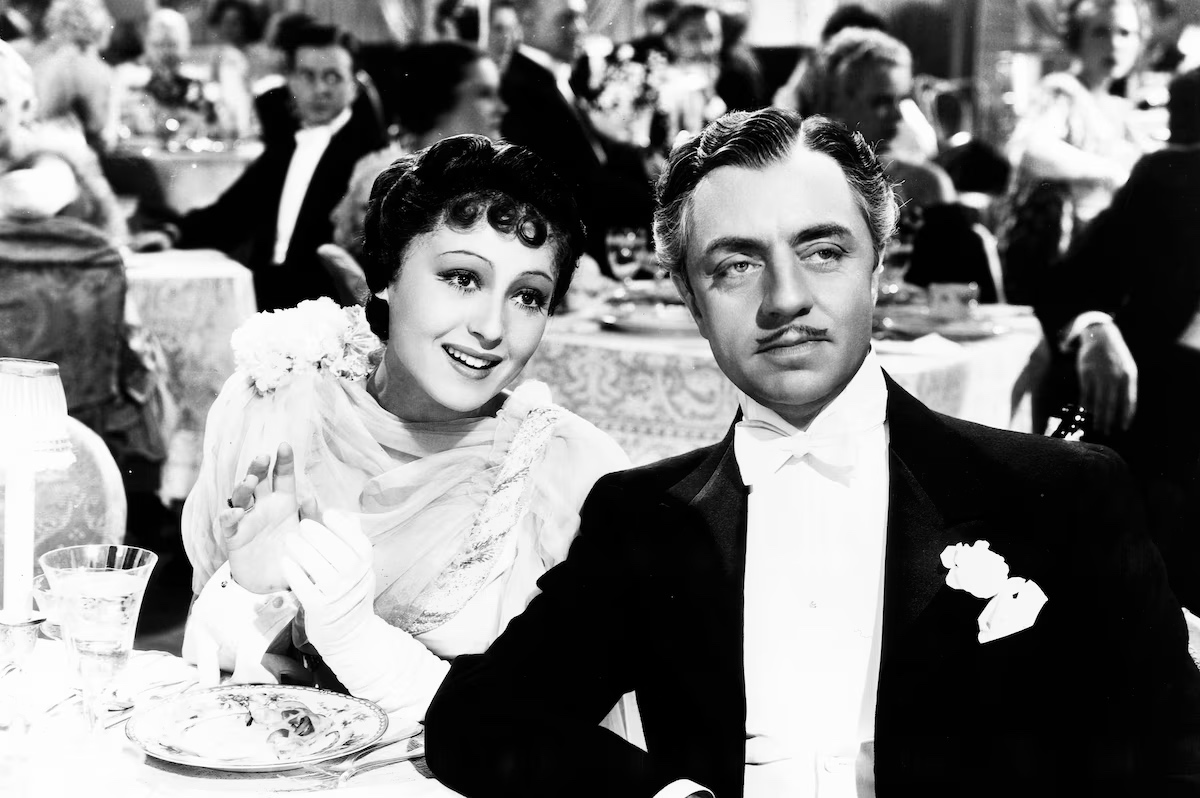
DOUBLE TAKE..Ziegfeld Follies star Will Rogers was originally intended to appear in the 1936 film The Great Ziegfeld, but died in a plane crash in August 1935 before filming began. A.A. Trimble (pictured at left), was a map salesman by trade, but was also known to perform impersonations of Rogers at events like Rotarian lunches. Critic John Mosher was shocked by Trimble’s uncanny impersonation of Rogers in the film, which also featured Ziegfeld headliner Fanny Brice (right), the real one. (facebook.com/amazon.com)OSCAR-WORTHY…William Powell and Luise Rainer in The Great Ziegfeld. The film won three Academy Awards, including Best Picture, Best Dance Direction, and Best Actress, which went to Rainer. (tcm.com)
A note on Luise Rainer (1910–2014): The Austrian-American Rainer was the first person to win two Academy Awards in a row. The first was for her role as Anna Held in The Great Ziegfeld, and the second was for her role as a Chinese farm wife in 1937’s The Good Earth.
TIME WAS ON HER SIDE…Luise Rainer in 1936. (Wikipedia)
At the time of her death in 2014, thirteen days shy of her 105th birthday, Rainer was the longest-lived Oscar recipient, and the longest-lived female star from Classic Hollywood.
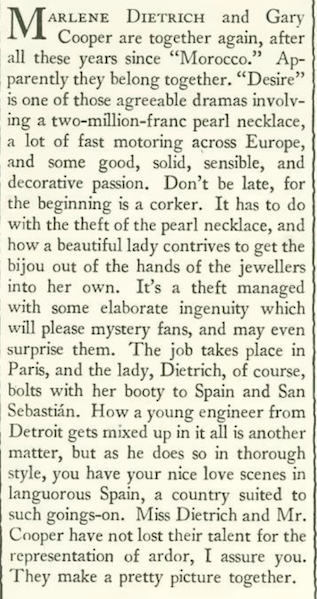
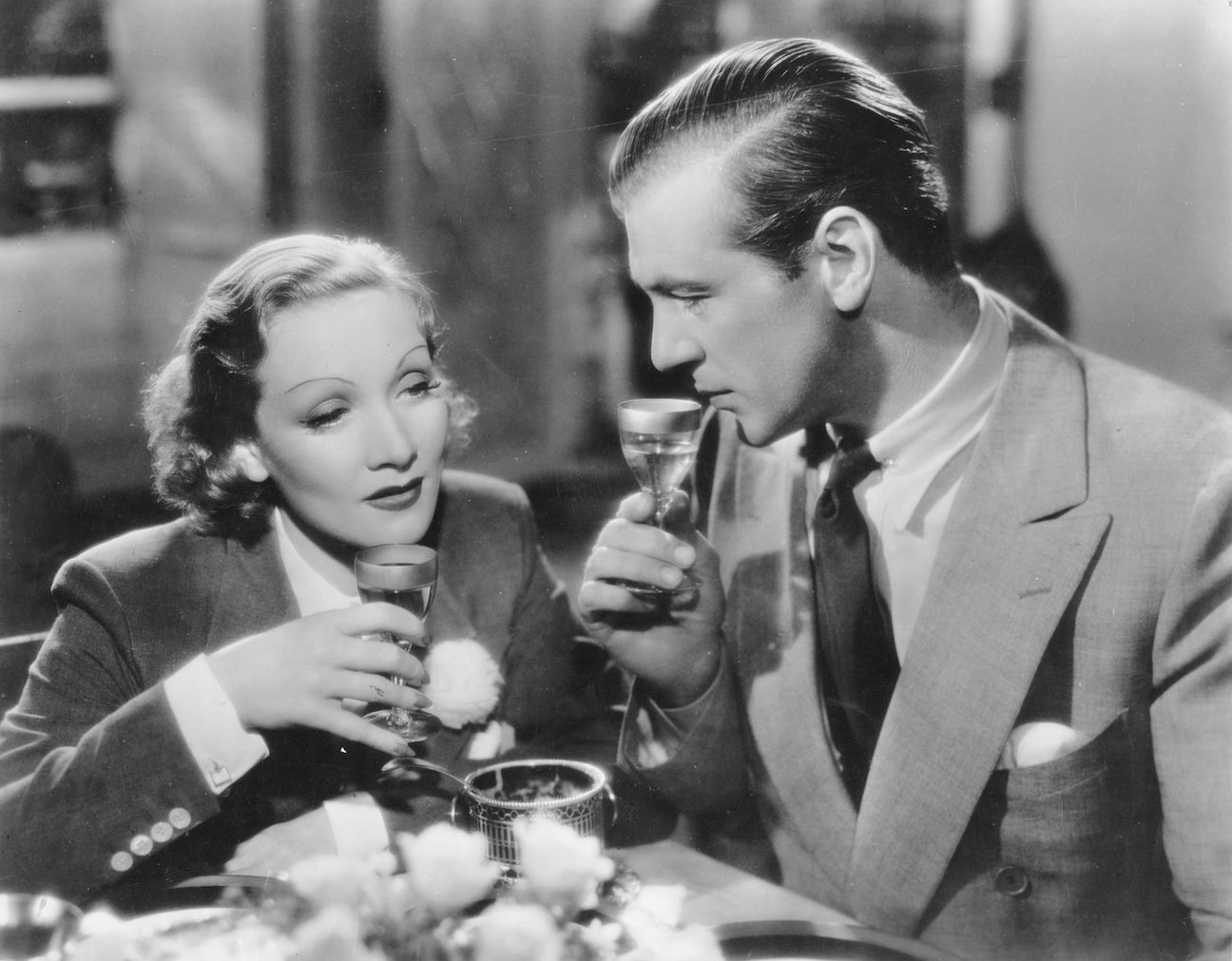
Mosher also reviewed Desire, a romantic crime drama that reunited the stars of the 1930 pre-code film Morocco, Marlene Dietrich and Gary Cooper.
REKINDLING THOSE SPARKS…Marlene Dietrich and Gary Cooper reunite in Desire. (video librarian.com)HMMM…Desire also featured character actor William Frawley (seen here with Cooper), who would go on to greater fame in television, playing Fred Mertz on I Love Lucy. (facebook.com)
* * *
From Our Advertisers
We begin with the inside front cover, where the makers of leaded gasoline appealed to homespun sensibilities with an odd juxtaposition…
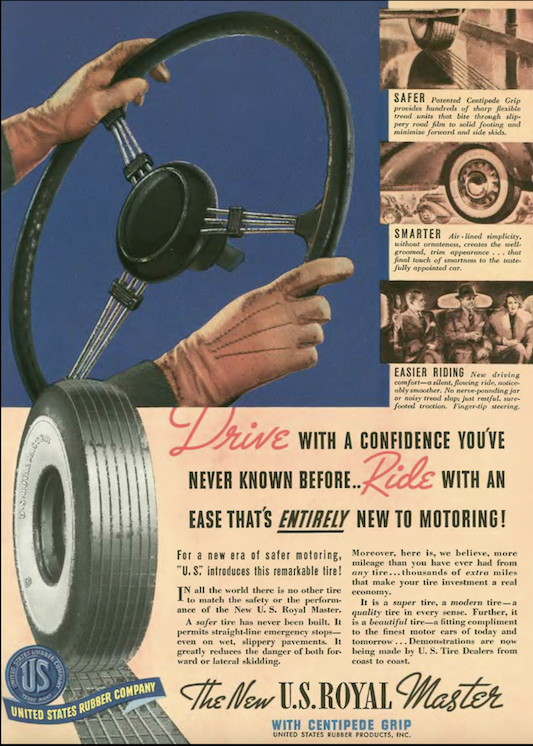
…oil companies and other auto-related industries were big advertisers in The New Yorker, including the United States Rubber Company…
…which ran this back cover ad in the very first issue of the magazine, Feb. 21, 1925…
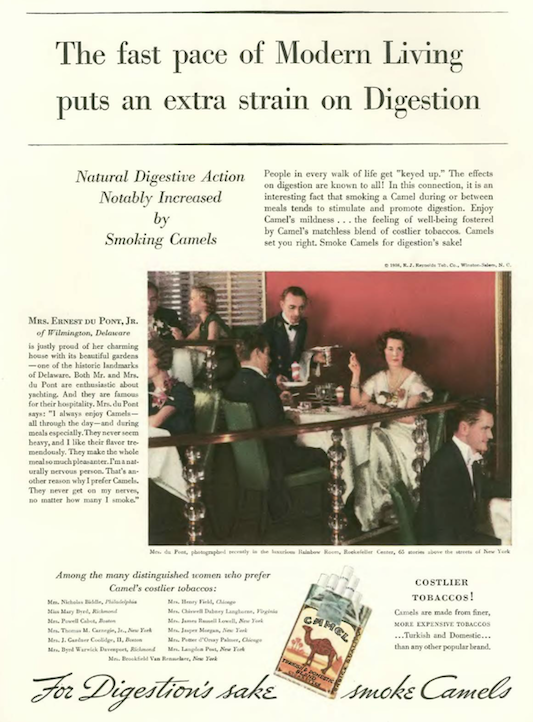
…another advertiser with deep pockets was big tobacco…R.J. Reynolds continued to make the ridiculous claim that their Camel cigarettes aided digestion…
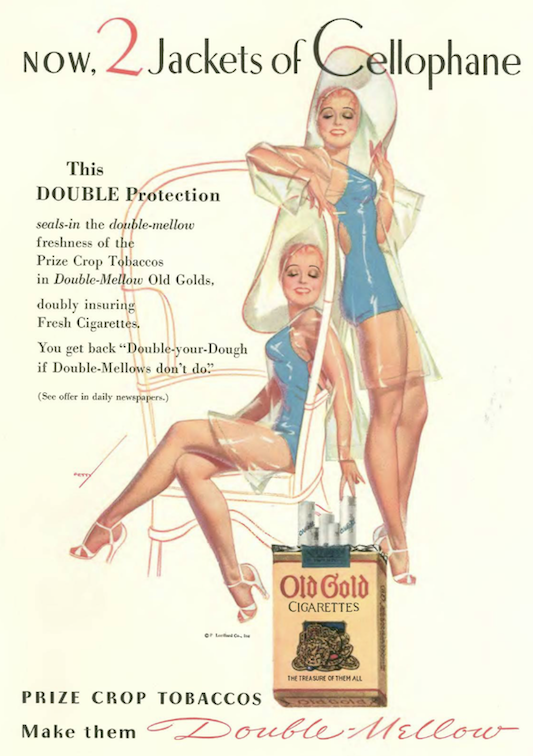
…the makers of Old Gold stuck with sex to sell their smokes, featuring illustrations by pin-up artist George Petty…
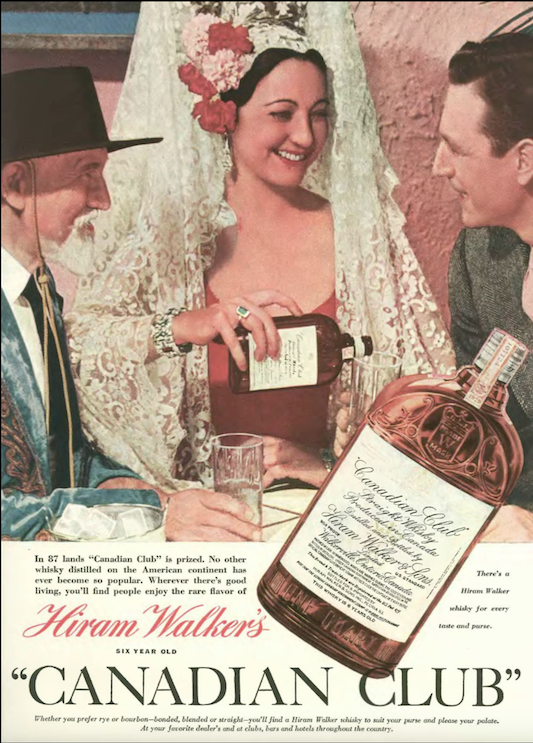
…Hiram Walker boasted the availability of their Canadian Club whiskey in “87 lands”…
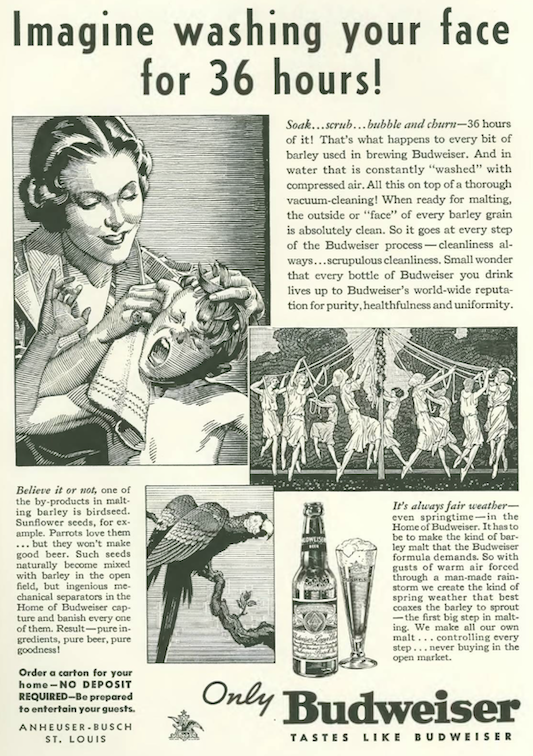
…at first glance I thought this was a soap advertisement…one doubts this analogy prompted more people to pick up a case of Bud…
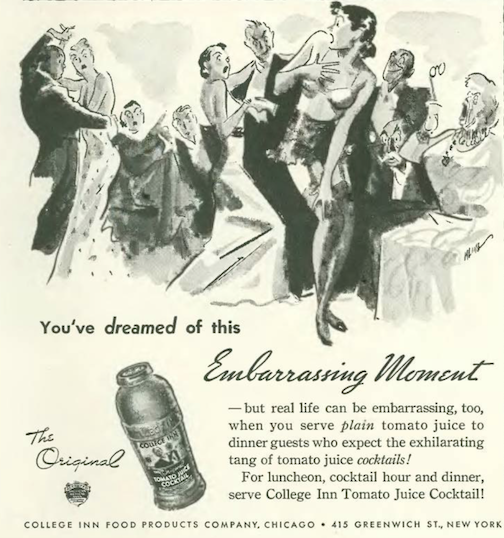
…the makers of College Inn Tomato Juice Cocktail continued to employ the social faux pas to sell their product…note the outraged duchess making an appearance on the right…
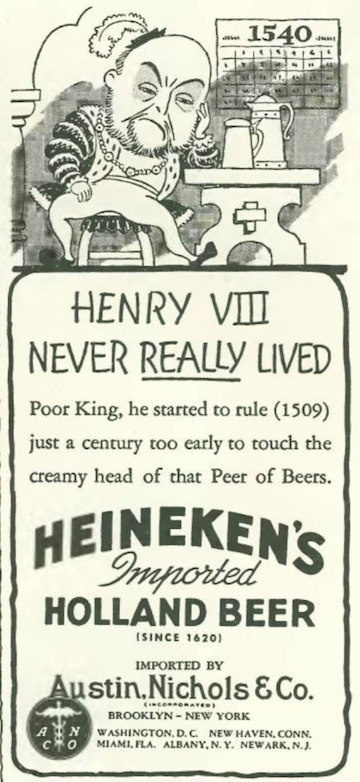
…Heineken established its U.S. presence in 1933, becoming the first imported beer legally sold after the end of Prohibition…
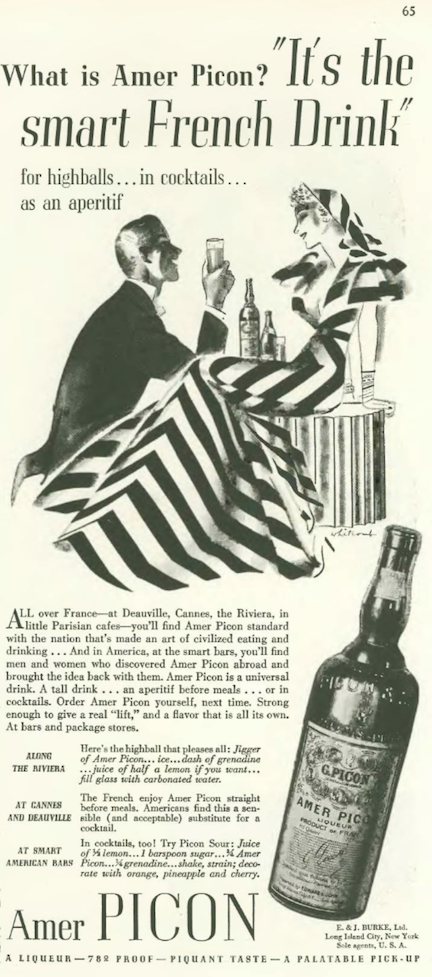
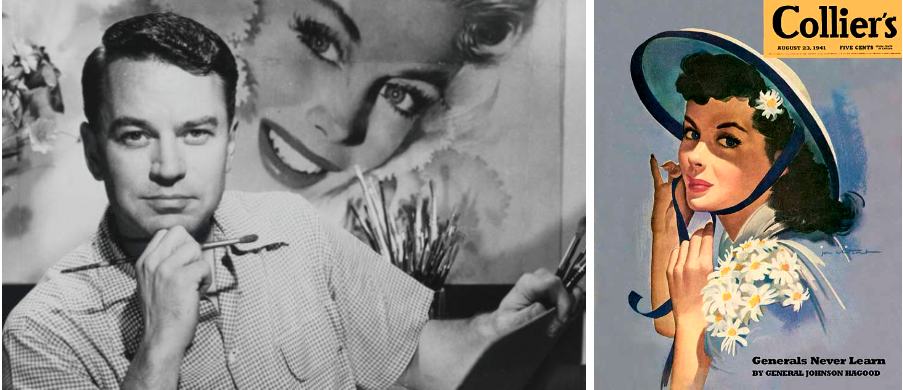
…Amer Picon called on the talents of illustrator Jon Whitcomb (1906–1988) to create this stylish advertisement…
Jon Whitcomb (1906–1988) was known primarily for his illustrations of glamorous young women, including his signature “Whitcomb Girl.” Born and raised in the Midwest, Whitcomb moved to New York City in 1934, joining with Al Cooper to found the Cooper Studio. At left, Whitcomb circa 1940s; at right, his illustration for the cover of Colliers, Aug. 23, 1941. (illustrationhistory.org)
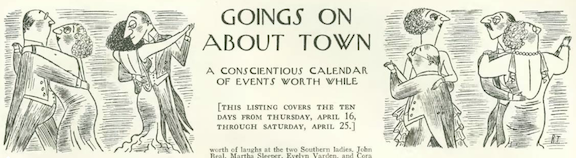
…on to our cartoonists, we have a spot illustration by Richard Taylor to kick off the issue…
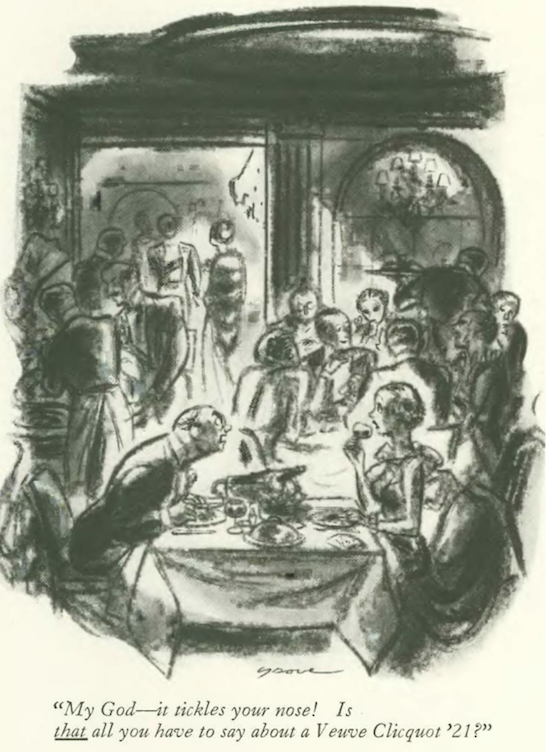
…Leonard Dove gave us a frustrated sugar daddy…
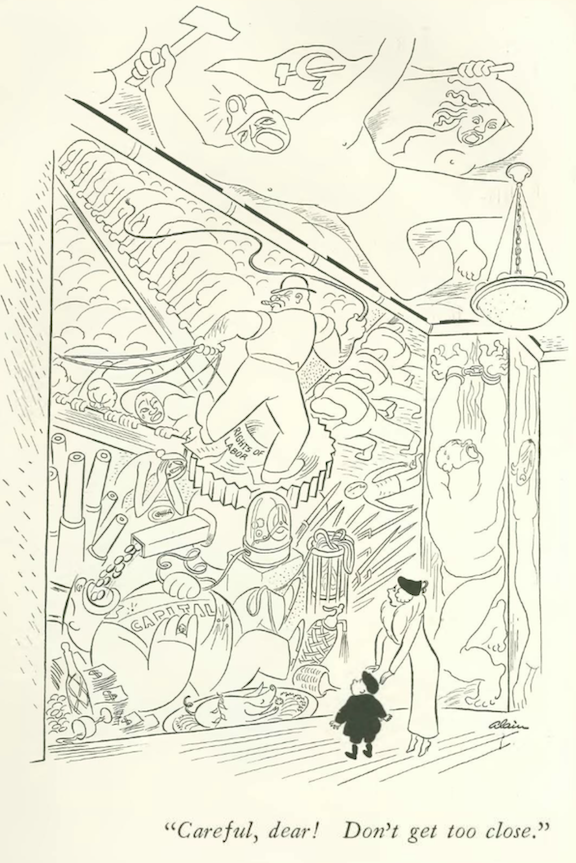
…Alain illustrated the perils of social realism…
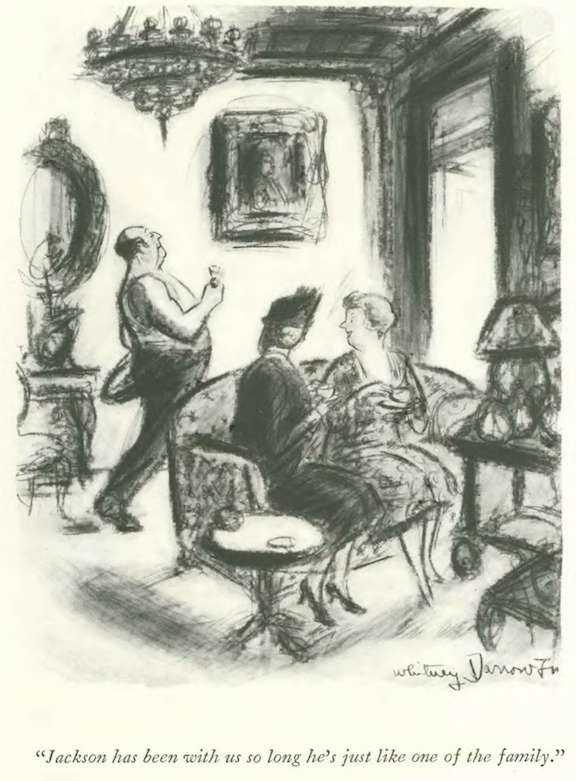
…Whitney Darrow Jr’s butler made himself right at home…
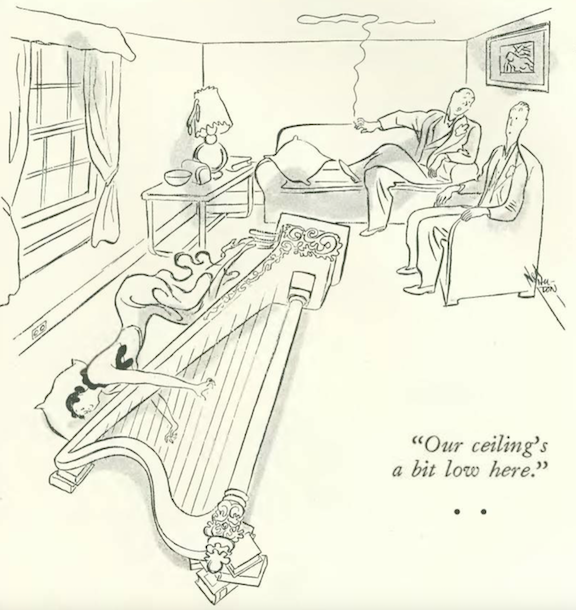
…Ned Hilton’s harpist found a way to adapt to her surroundings…
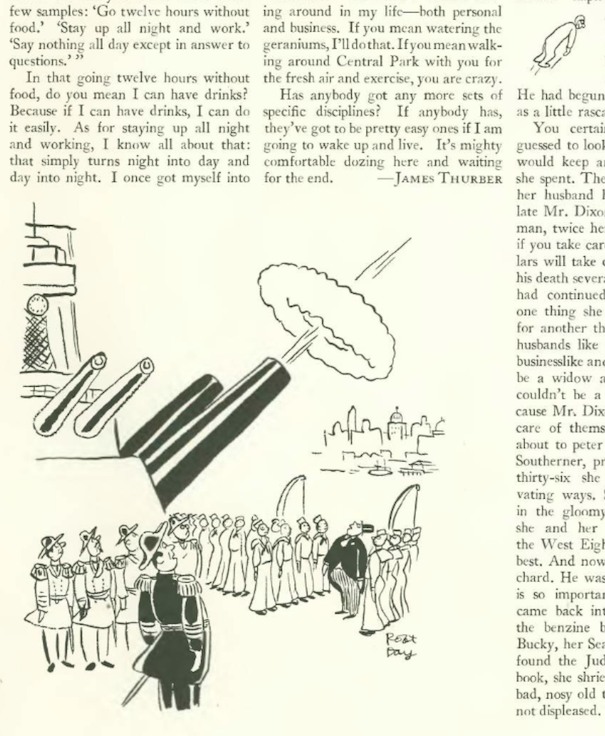
…Robert Day required a layout adjustment for his human cannonball…
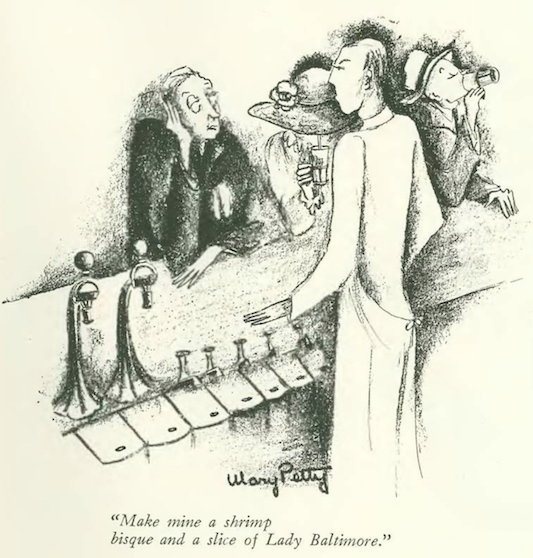
…Mary Petty took an unusual request at the soda fountain…
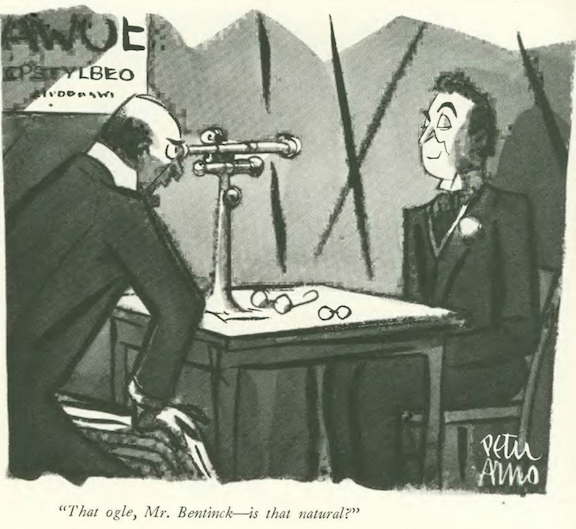
…Peter Arno diagnosed an incurable eye condition…
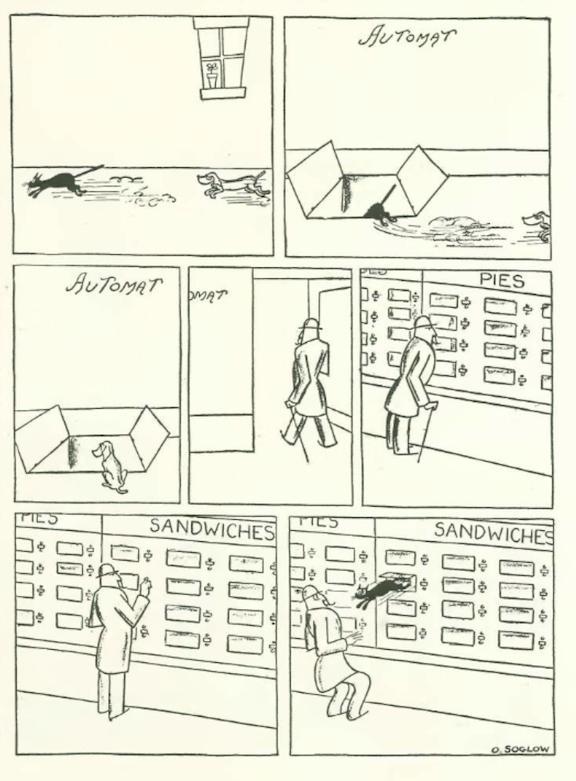
…Otto Soglow offered up a surprise at the automat…
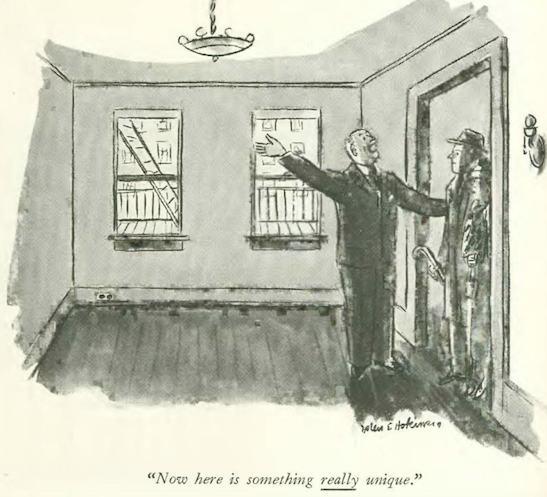
…Helen Hokinson went apartment hunting…
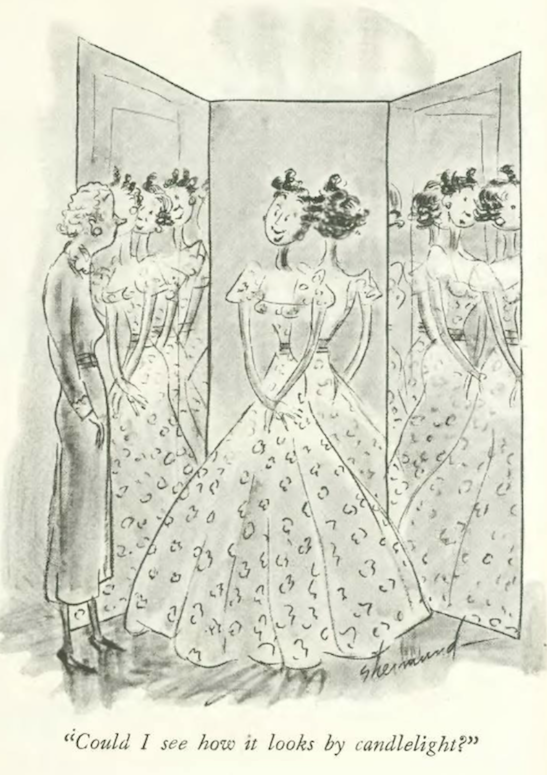
…and we close with Barbara Shermund, and a big ask…
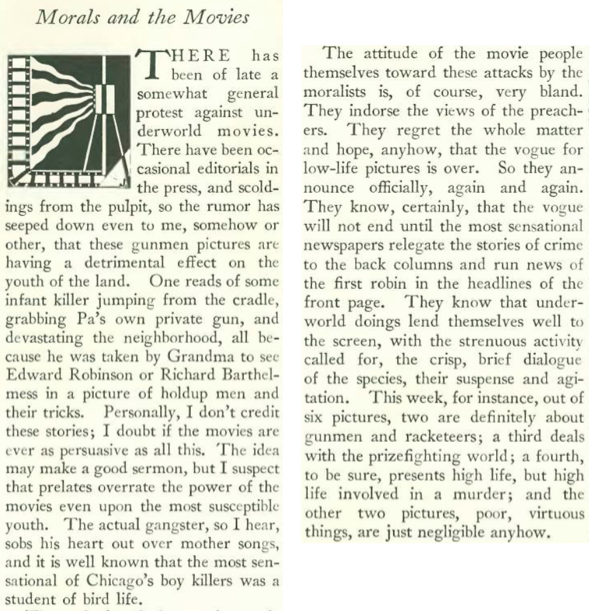
In some ways, the raucous party of the Roaring Twenties was sublimated in the movies of the late 1920s and early 1930s—a brief period at the beginning of the sound era before censorship guidelines were enforced. During those “Pre-code” times everyone from preachers to publishers decried the sex and violence that washed across the silver screen.
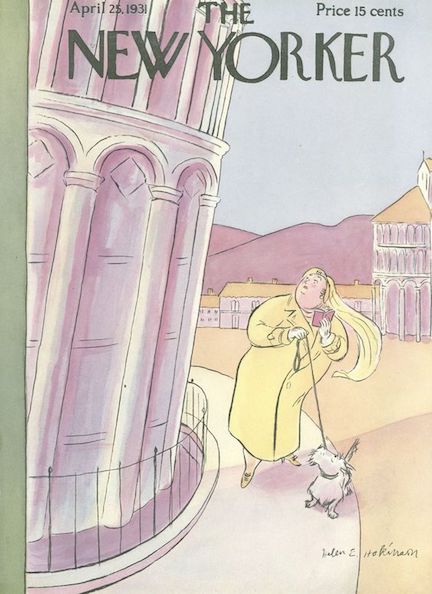
April 25, 1931 cover by Helen Hokinson.
New Yorker film critic John Mosher opened his “Current Cinema” column with some musings about violence and “morals” in underworld films, declaring that until newspapers relegated sensational crime stories to the back pages, the public would be drawn to similar fare at the movies.
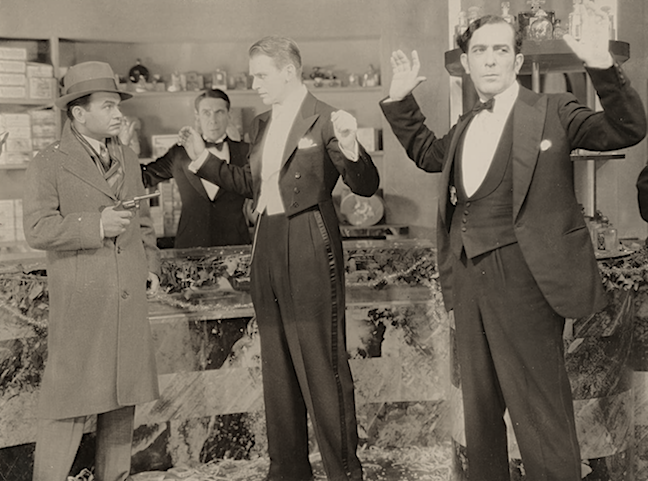
GIVING THE PEOPLE WHAT THEY WANT…Edward G. Robinson (left) played a hoodlum hoping to make the big time in 1931’s Little Caesar, a film that defined the gangster genre for decades to come. (IMDB)
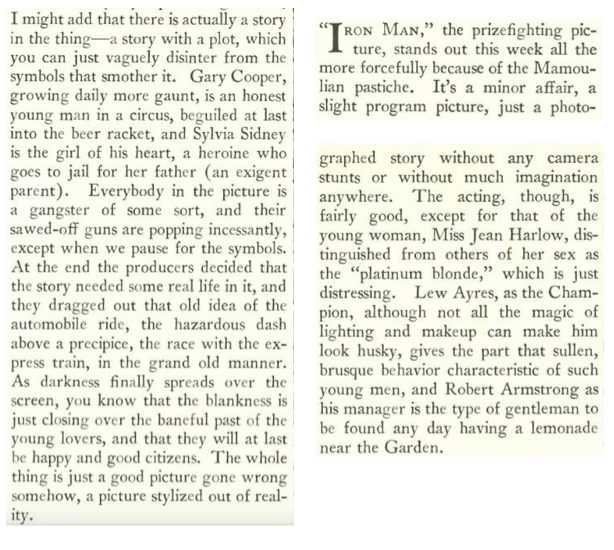
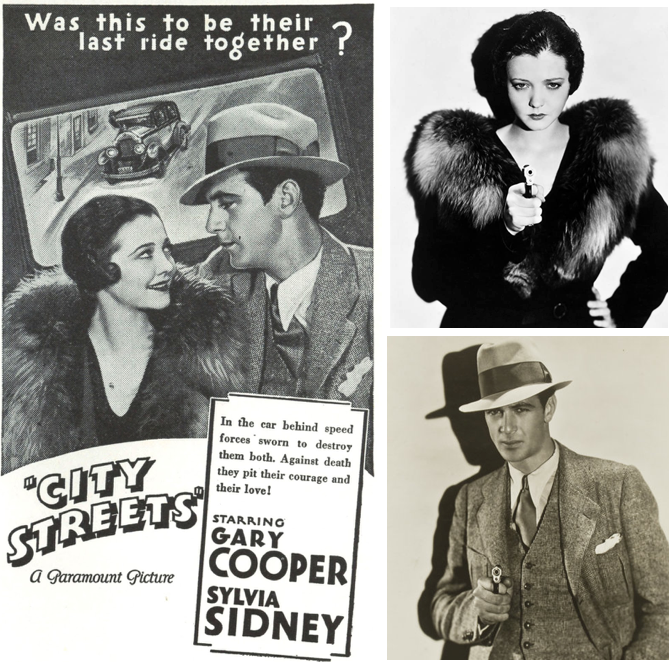
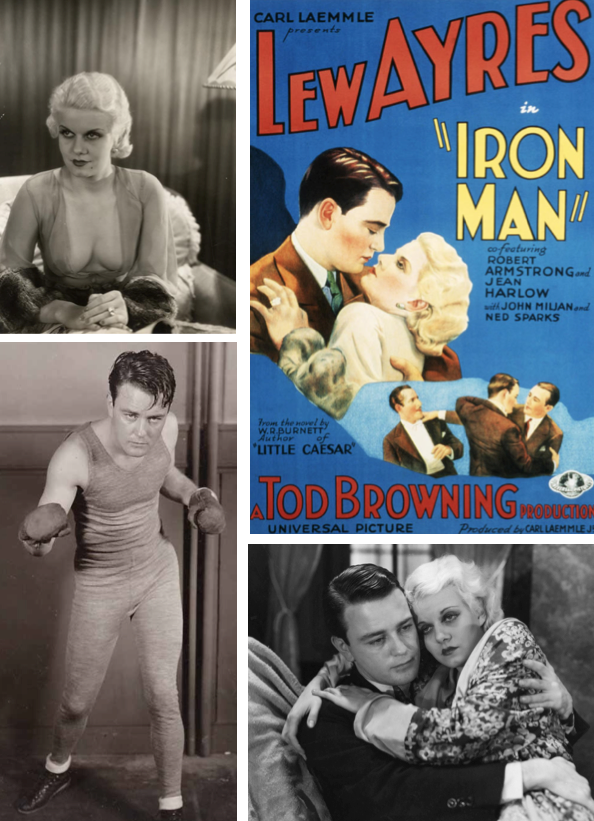
Mosher noted that two of the more prominent gangster films currently making the circuit weren’t much to fuss about—City Streets, the “more pretentious” of the two movies, featured rising stars Gary Cooper and Sylvia Sidney. The prizefighting picture Iron Man featured another popular pair of actors, Lew Ayers and Jean Harlow. Mosher observed that no amount of camera tricks could make the slight Ayers look like a husky fighter. As for Harlow, Mosher found it distressing that it was her “platinum blonde” status, rather than her acting, that landed her in the picture.
WHO CARES?…That was the conclusion of critic John Mosher after sitting through the “pretentious” City Streets. At right, publicity photos for lead actors Sylvia Sidney and Gary Cooper. (IMDB)NO, NOT THAT IRON MAN…Jean Harlow, top, was known for attributes other than her acting, according to critic John Mosher. As for her co-star, Lew Ayers, a few weeks in the gym and some protein shakes might have made for a more plausible prize fighter. (IMDB)
* * *
Fashion of a Different Fashion
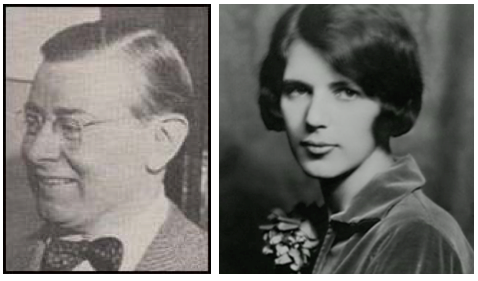
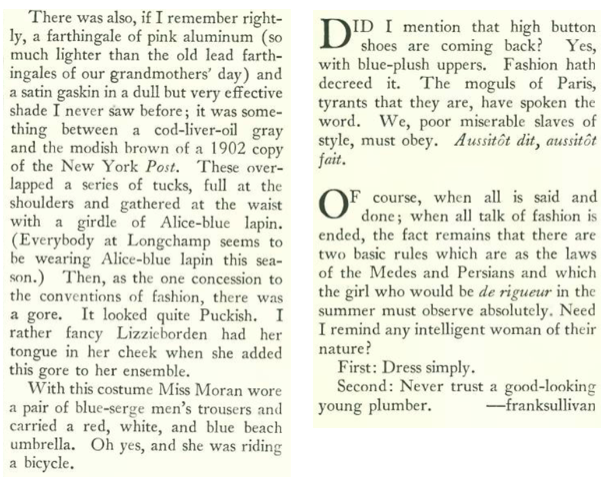
A New Yorker contributor since 1925 and denizen of the Algonquin Round Table, Frank Sullivan was a jolly soul known for his gentle wit and spoofs of cliches. His latest target was Lois Long’s fashion column “On and Off the Avenue,” penning a spoof that was indistinguishable from the original save for the change of one word in the title. Long’s actual column appeared in the magazine a few pages later, so no doubt a few readers started reading Sullivan’s spoof before realizing they had been had. I am among them. Some excerpts:
HE TOOK A FASHION TO FASHION…A wit herself, Lois Long no doubt enjoyed Frank Sullivan’s spoof of her fashion column. (Wikipedia/PBS)
Sullivan probably had a little extra time on his hands after the folding of the New York World newspaper, to which he contributed two or three humor columns a week before the grand old paper folded for good in February 1931. And so we have Sullivan again in the April 25 issue, and his “report” on the annual meeting of the “International Association of Girls Who Have Danced with the Prince of Wales.” Excerpts:
HOOFER…Apparently the Prince of Wales (Edward VIII), shown here in 1924, danced with many a lady before he abdicated the throne and married Wallis Simpson. (Pinterest)
* * *
Getting High in Manhattan
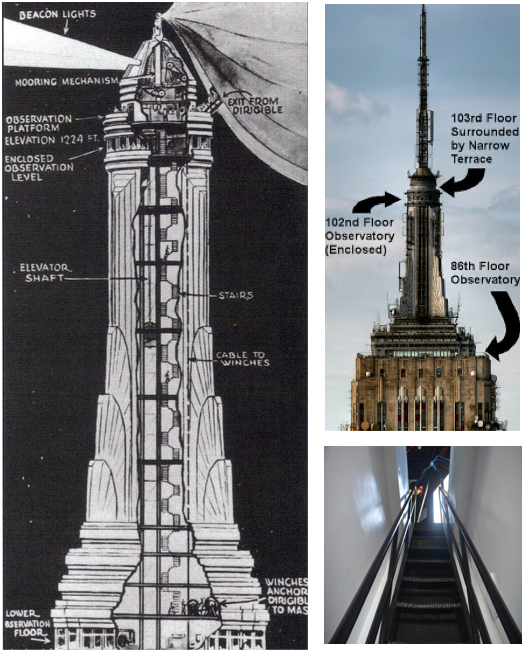
E.B. White enthusiastically embraced many aspects of modern life, from the wonder of air travel to the spectacle of buildings climbing ever higher into the clouds above Manhattan. It seemed whenever someone was needed to report on a flight or check out progress on the latest skyscraper, White was there, eager to climb into cockpits or onto scaffolds to get a better a look at his fair city. In “The Talk of the Town” White recalled his visit to (almost) to the very top of the Empire State Building, which was to open on May 1, 1931.
QUITE A SALTSHAKER…As E.B. White noted, the mooring mast atop the Empire State Building might have looked like a mere “saltcellar” from the ground, but in reality was as tall as a 20-story building, so quite a climb. Image at left shows inner stairwell winding to the top; bottom right, stairs to the 103rd floor of the Empire State Building. (Modern Mechanix/Evan Bindelglass-CBSNewYork)
* * *
From Our Advertisers
With summer on the way B. Altman’s touted its new line of wool bathing suits for the kiddies…I frankly can’t imagine wearing wet wool in the summer, at least not voluntarily…
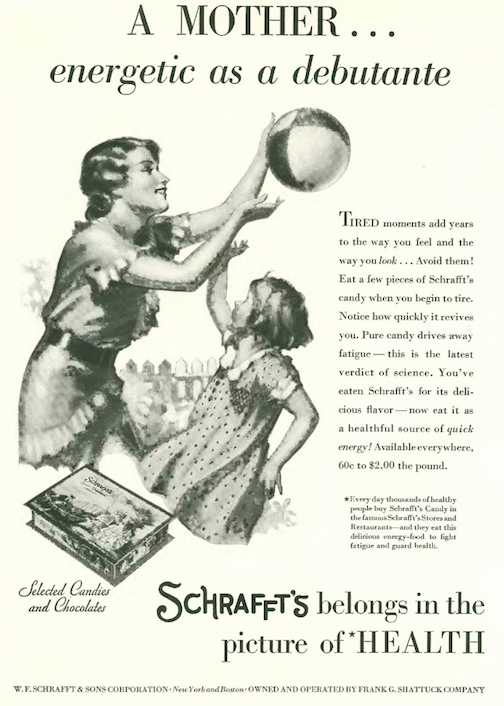
…hey, here’s an idea if you want to keep up with the little brats…eat some candy…according to Schrafft’s, it’s HEALTHY…
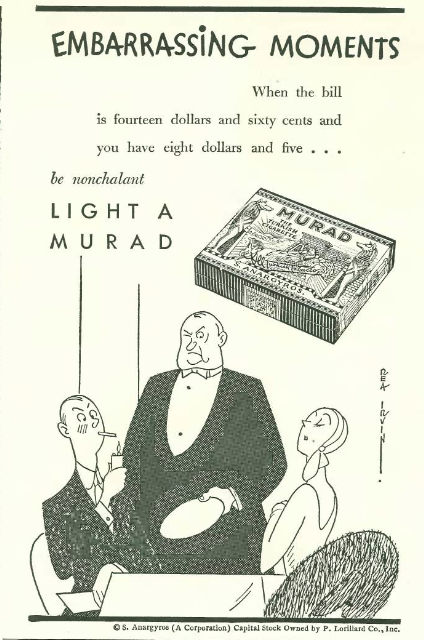
…on to our illustrators and cartoonists, another fine moment in smoking thanks to Rea Irvin…
…Ralph Barton introduced us to his latest “Hero of the Week”…
…and his news summary in graphic form…
…Helen Hokinson observed some subway etiquette…
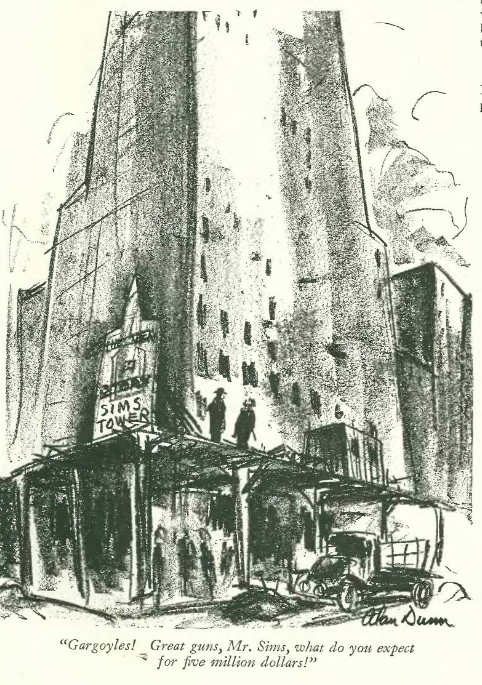
…Alan Dunn found a developer looking for some extras…
…Bruce Bairnsfather offered a study in contrasts…
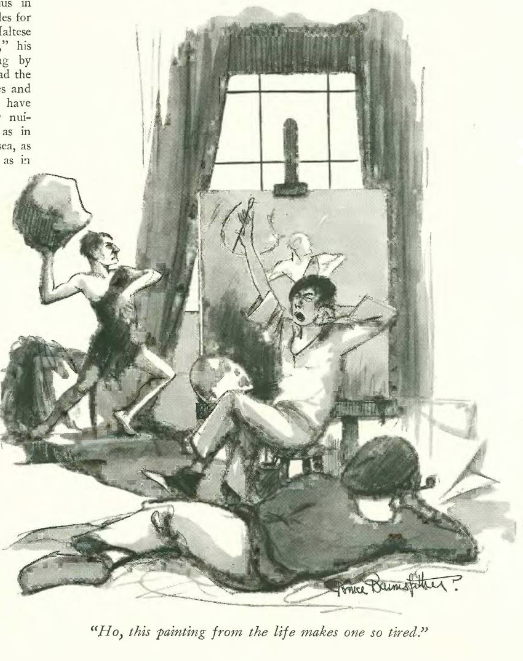
…C.W. Anderson, and another example of an artist’s struggle…
…and we end with Otto Soglow and his Little King, a strip that would become a nationally syndicated hit…