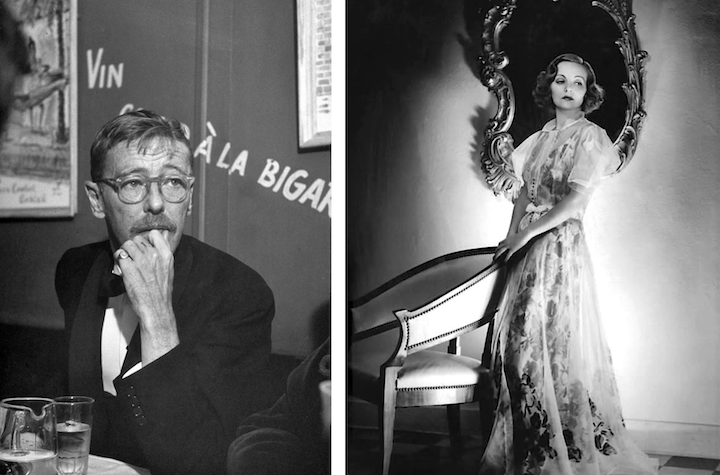
Mirror, Mirror

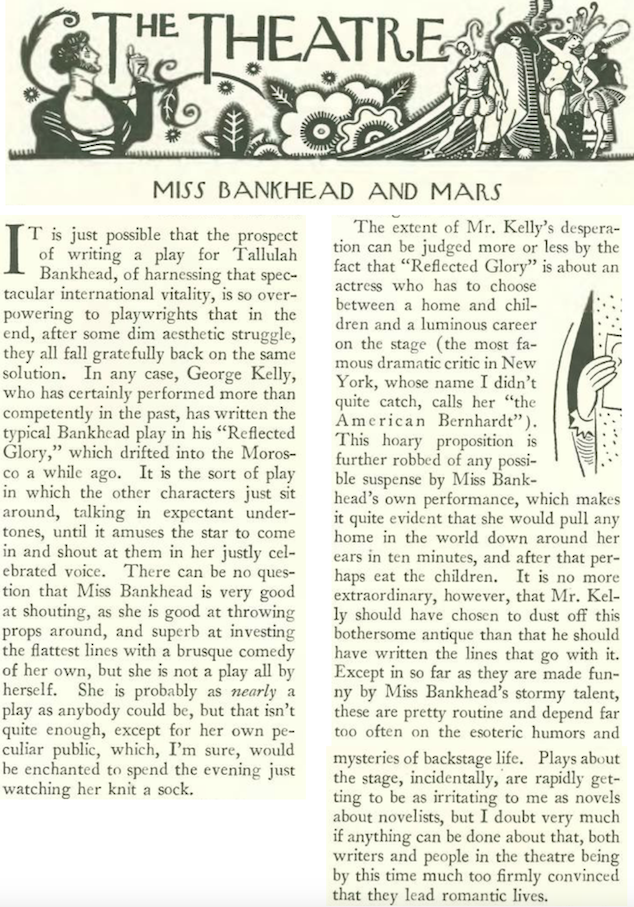
Above: In his review of Tallulah Bankhead's performance in "Reflected Glory," Wolcott Gibbs noted that she was a force to be reckoned with: ..."she would pull any home in the world down around her ears in ten minutes, and after that perhaps eat the children." (newyorker.com/facebook.com)

Broadway’s fall season was still young when the Morosco Theatre staged Reflected Glory, featuring Tallulah Bankhead in a role that mimicked her famously flamboyant lifestyle.
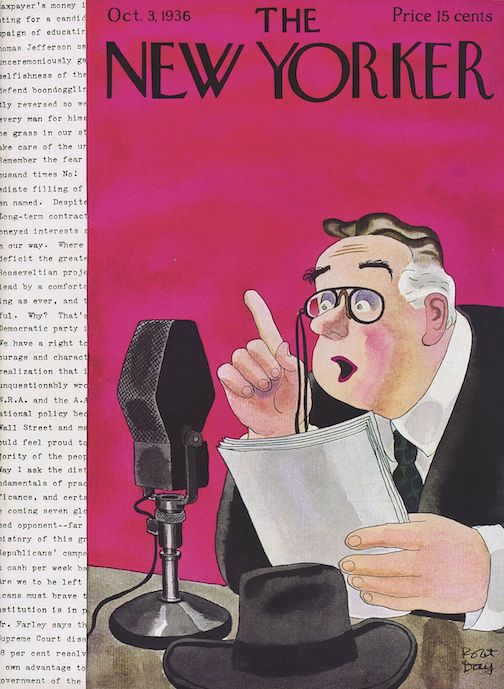
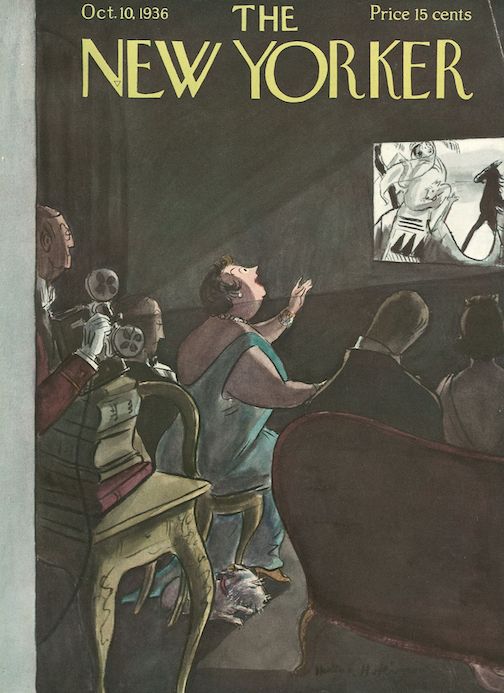
October 3, 1936 cover by Robert Day.

The play, which ran for 127 performances, was not well-received by the critics, but audiences loved it, and especially those who, in the words of critic Wolcott Gibbs, “would be enchanted to spend the evening just watching (Bankhead) knit a sock.”

Bankhead (1902–1968) also appeared in films (she won a New York Film Critics Circle award in 1944 for her performance in Alfred Hitchcock’s Lifeboat), but she was mostly known for her stage acting and her wild lifestyle—drugs, alcohol, and lots of sex with both men and women; she was candid about her vices, including the claim she smoked 120 cigarettes a day.
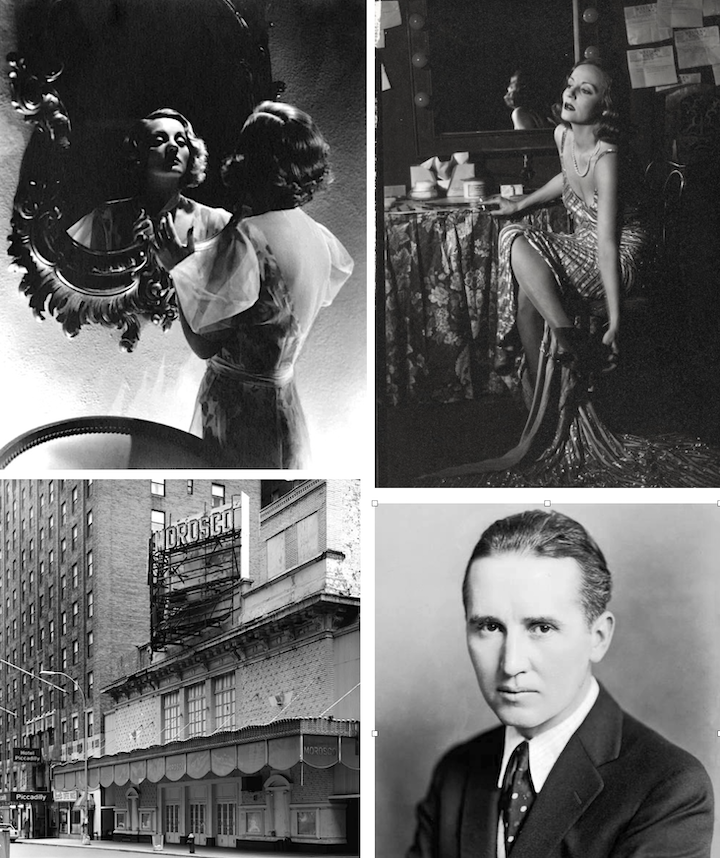
ART IMITATES LIFE…Clockwise, from top left: Tallulah Bankhead in promotional photo for Reflected Glory; Bankhead played Muriel Flood, a flamboyant, self-absorbed actress who constantly dramatizes her own life both on and off stage; author and director George Kelly wrote Reflected Glory specifically for Bankhead; Broadway’s Morosco Theatre (demolished 1982). (cinemaclassico.com/jacksonupperco.com/Wikipedia)

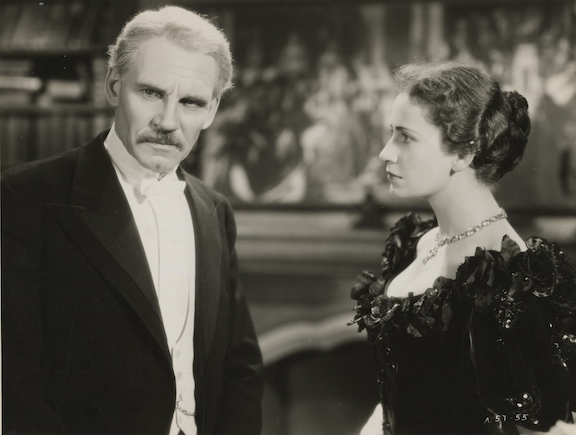
Early in her career Bankhead, an Alabama native, moved into the Algonquin Hotel and quickly made her way into the orbit of the famed Algonquin Round Table—so, she was well-known to Gibbs, who noted in this excerpt that Bankhead’s only competition in Reflected Glory was William Brisbane, a man with a face “as mad and vacant as the moon.”
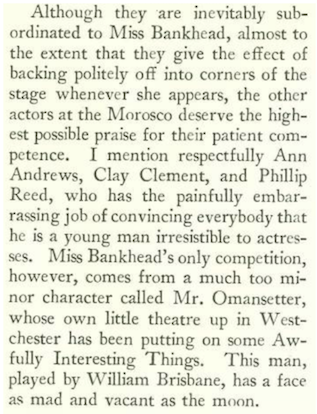
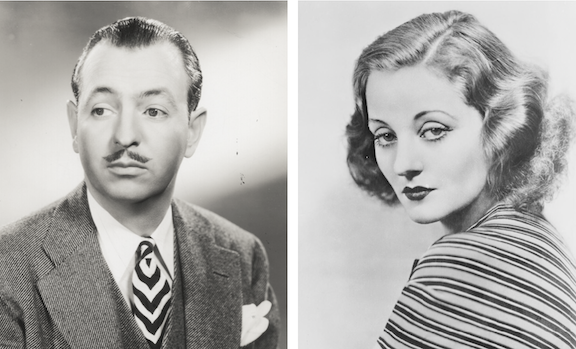
MAD MATCH…Wolcott Gibbs noted that William Brisbane was Tallulah Bankhead’s only competition in Reflected Glory. (themovieb.org/npg.org.uk)

 * * *

The Yankee Clipper

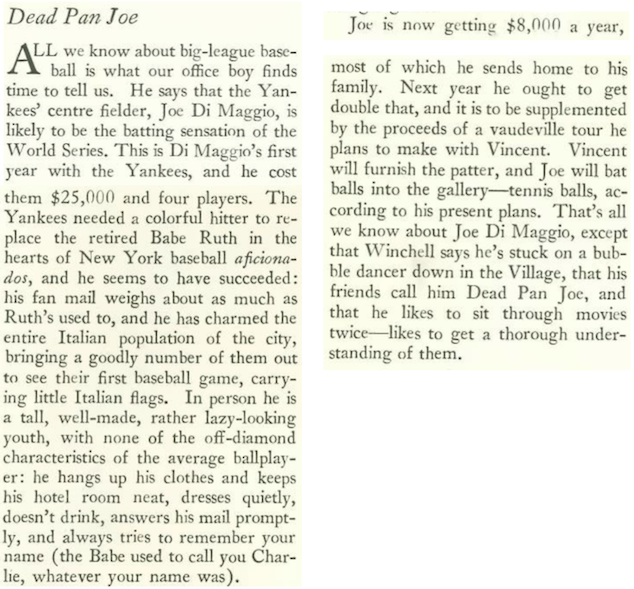
Baseball was mostly ignored in the early years of the New Yorker, but every now and then the magazine would feature a famous personality from the game, in this case Joe DiMaggio, who in 1936 would set a franchise record for rookies by hitting twenty-nine home runs (in just 138 games).
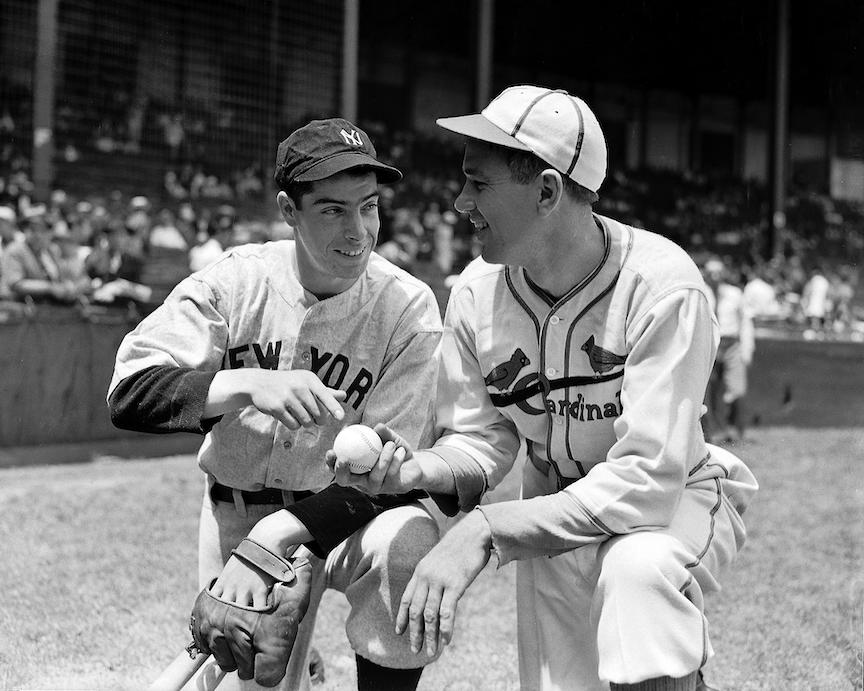
DIZZY AND JOE D…Yankees rookie Joe DiMaggio meets with Cardinals pitcher Dizzy Dean at the All-Star Game in Boston July 7, 1936. (AP Photo)

 * * *

Right of the Right

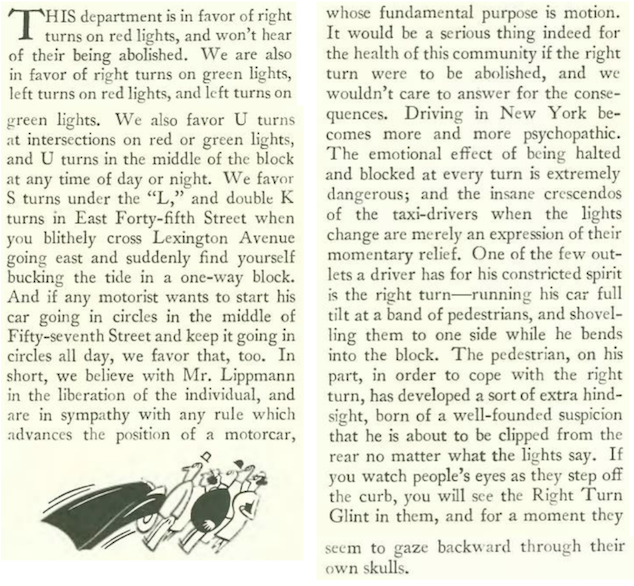
In his “Notes and Comment,” E.B. White took issue with a proposal by the New York Board of Aldermen to ban right-hand turns against a red light (the board ultimately approved the ban).
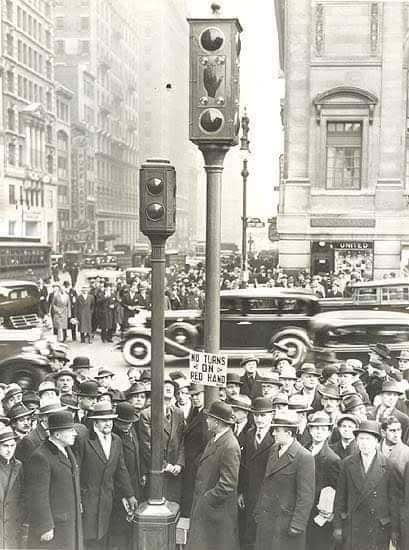
SEEING THE LIGHT…City officials examine new traffic lights on Fifth Avenue, 1933. (Golden Age Of Travel via facebook.com)

 * * *

At the Movies

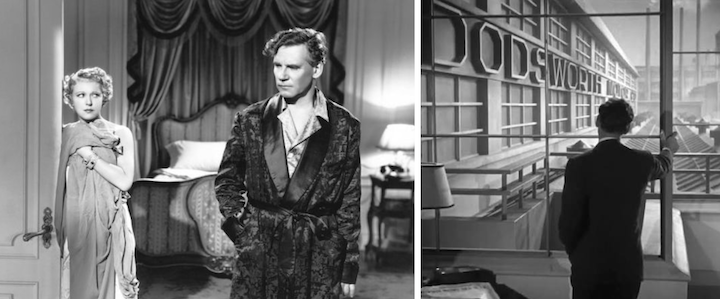
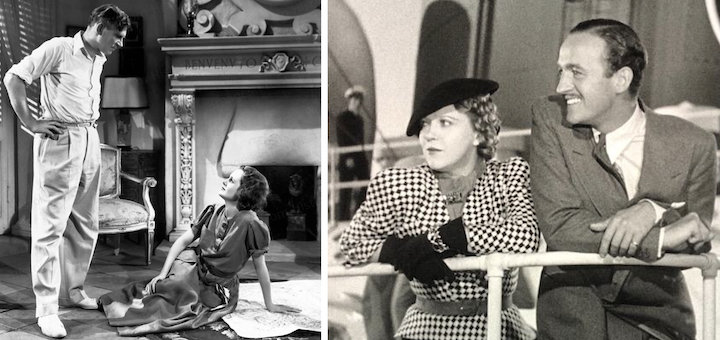
Based on a 1929 novel by Sinclair Lewis, the William Wyler-directed Dodsworth was acclaimed by critics as one of the best films of the year. New Yorker critic John Mosher wholeheartedly agreed:

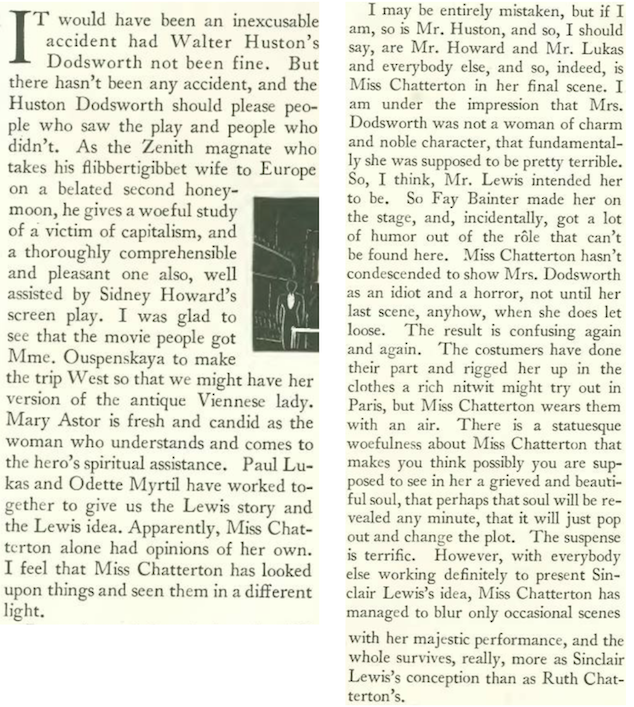
SHE SAID, HE SAID…At left, Ruth Chatterton and Walter Huston portrayed a couple in a declining marriage in Dodsworth; at right, retired auto magnate Sam Dodsworth (Huston) reconsiders the life he has made for himself. (torontofilmsociety.com/YouTube.com)
COMPLICATIONS…While travelling on the RMS Queen Mary to England, the Dodsworths find romantic companions—at left, Sam finds a soulmate in Edith Cortright (Mary Astor), while Fran flirts with a younger Englishman, Captain Lockert, played by David Niven. It was Niven’s first sizable role—he was a lieutenant in the British Army before coming to Hollywood in 1935. (eBay.com/film-foundation.org)

Mosher also reviewed a mixed bag of films, including the “wicked comedy” La Kermesse héroïque (Carnival in Flanders) featuring French opera star Françoise Rosay as a mayor’s wife who cleverly thwarts potential troubles from visiting Spanish soldiers.
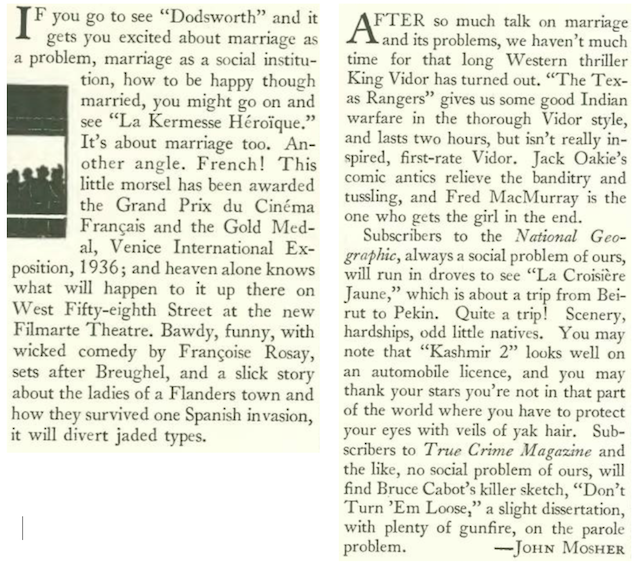
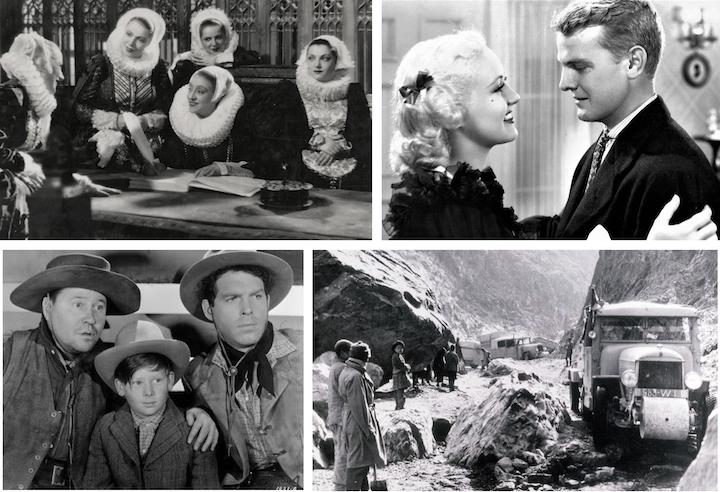
BAWDY FUN was how John Mosher described the schemes of a mayor’s wife in La Kermesse héroïque (Carnival in Flanders)—clockwise, from left: Françoise Rosay (seated) organizes the village women to tame some visiting soldiers; Betty Grable and John Arledge in the crime drama Don’t Turn ’em Loose; La Croisière Jaune (Yellow Expedition) documented a 1931-32 French trans-Asian expedition organized by Citroën to promote its rugged Kégresse track vehicles; Jack Oakie, Bennie Bartlett and Fred MacMurray in The Texas Rangers. (mubi.com/imdb.com/radiofrance.fr/csfd.cz)

 * * *

From Our Advertisers

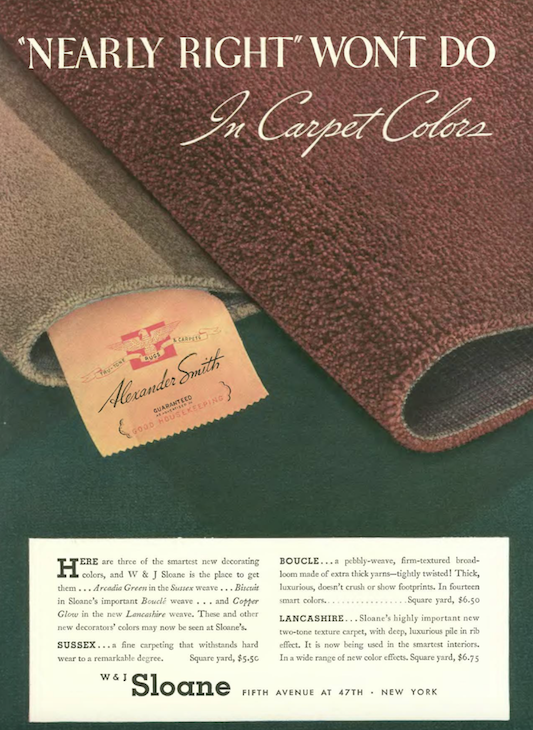
Fall advertising continued its uptick in the magazine, with many splashes of color  including this carpet ad that greeted readers on the inside front cover…
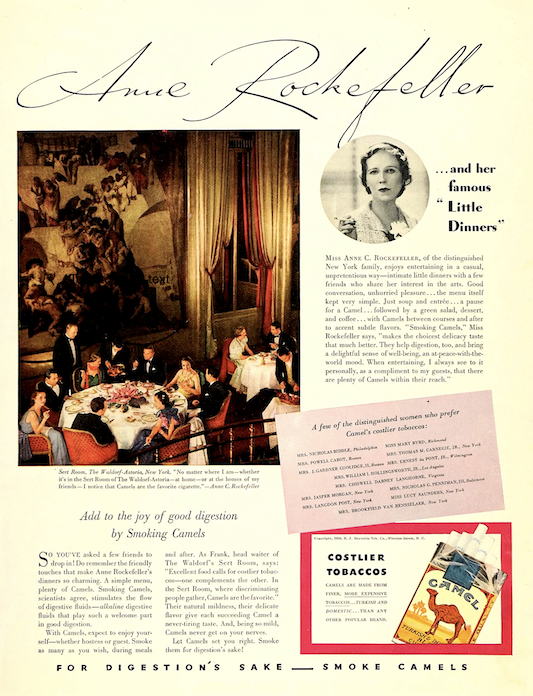
…R.J. Reynolds continued to roll out endorsements from society mavens…here Anne C. Rockefeller stated that Camels gave her “a delightful sense of well-being”…
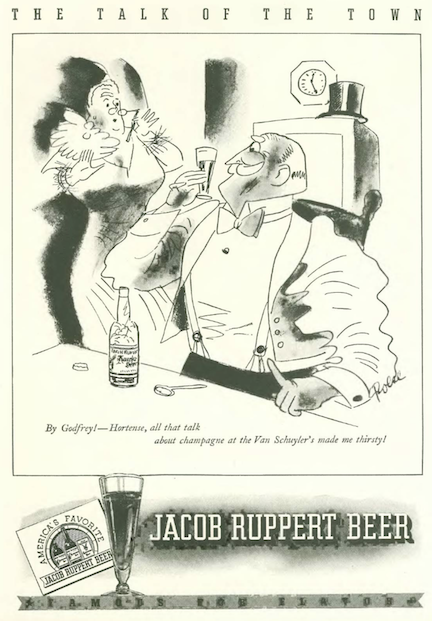
…more Colonel and Duchess archetypes turn up in this issue, on behalf of Ruppert beer…
…the Warwick Hotel (Philadelphia), and College Inn tomato juice “cocktail”…College Inn had softened the appearance of their Duchess…
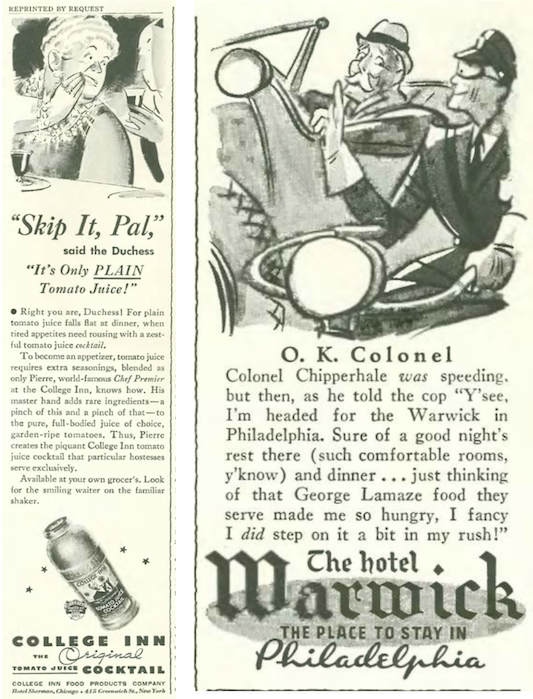
…since she was last spotted in The New Yorker in 1935 (detail)…
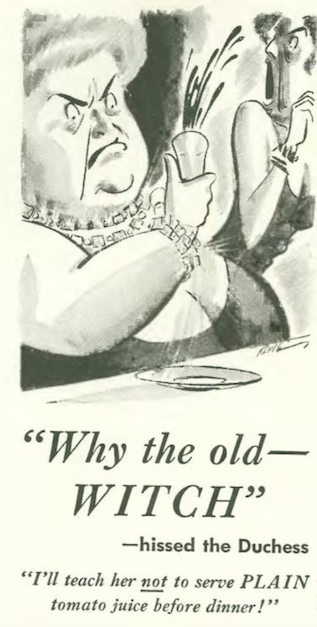
…after a blazing hot summer, the brewers of Rheingold figured this image would still appeal to parched New Yorkers…
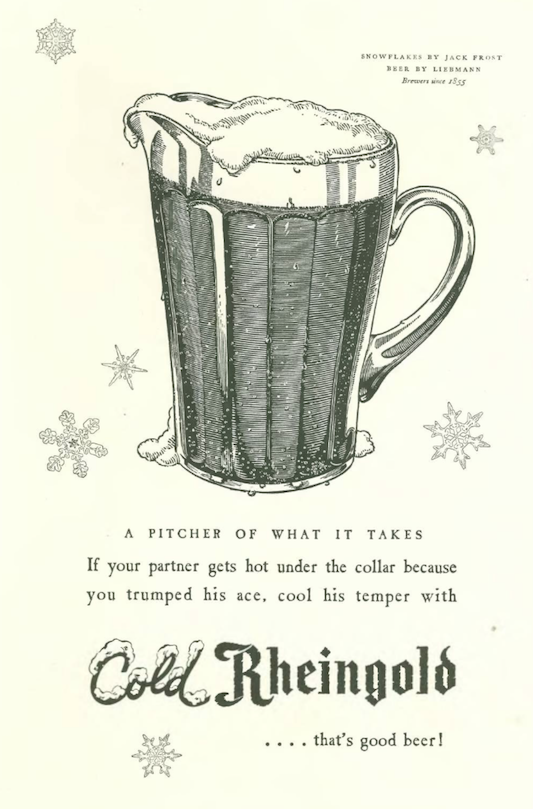
…a back of the book ad from Johnston & Murphy, quoting an unidentified author regarding some childhood wishes…
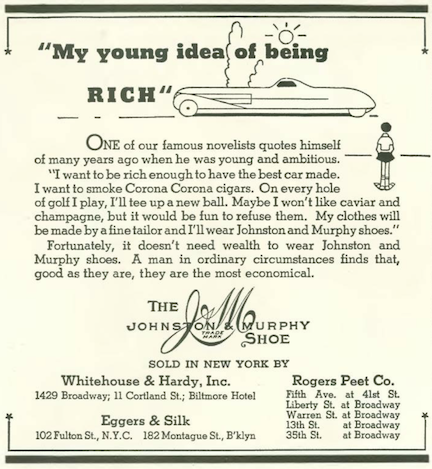
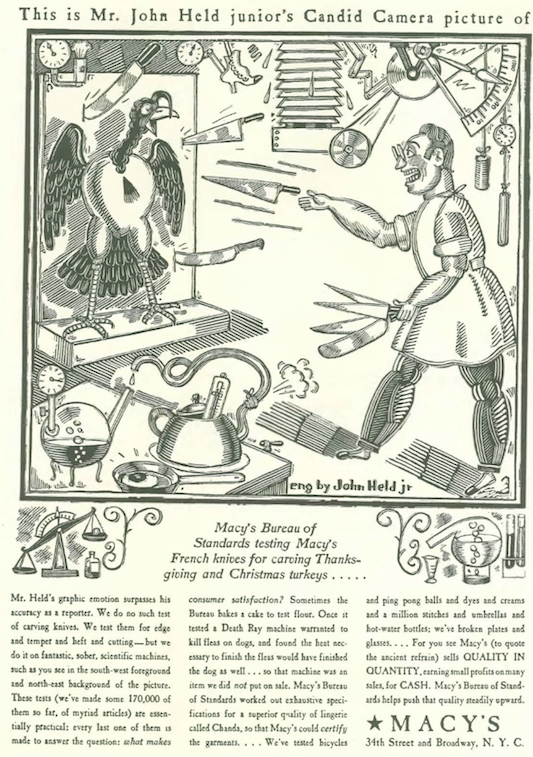
…John Held Jr. was one of the earliest contributors to The New Yorker—from 1925 to 1932 his woodcut-style cartoons and fanciful maps were frequent features…by 1936 Held had turned his talents to painting, book illustration, and the occasional advertisement, here on behalf of Macy’s…
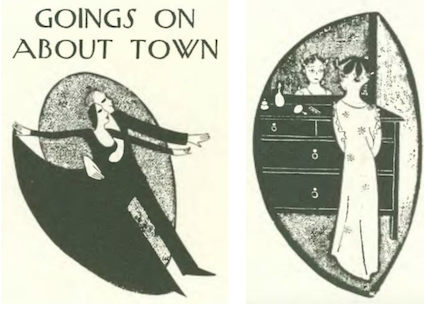
…our illustrators and cartoonists for this issue include Christina Malman…
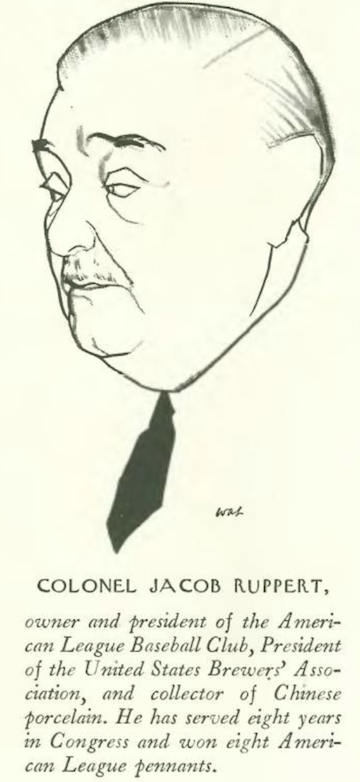
…a caricature by William Auerbach-Levy for the calendar section’s mini bio…
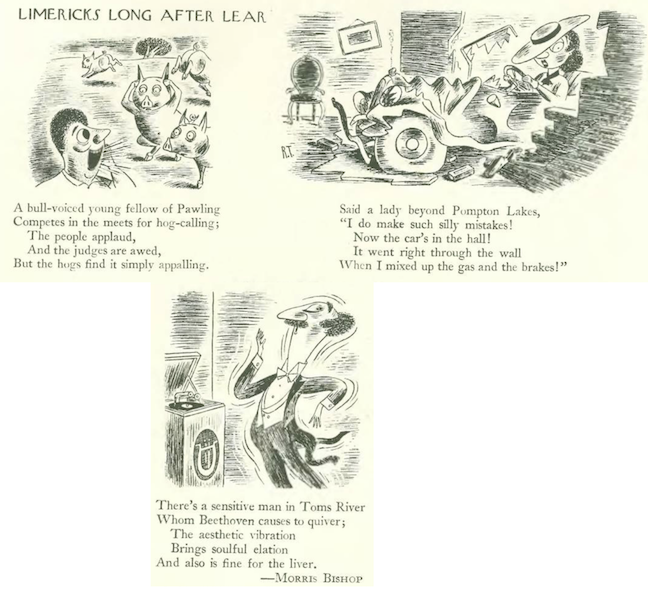
…another Richard Taylor–Morris Bishop collaboration…
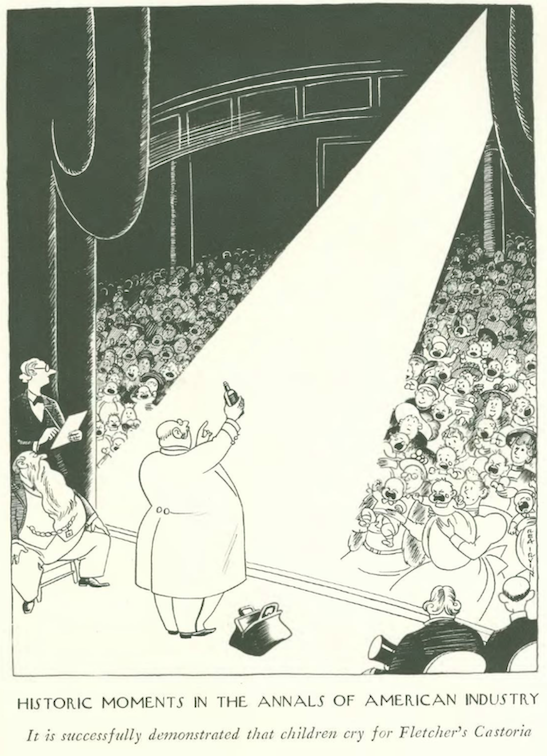
…more historic moments from American Industry, with Rea Irvin…
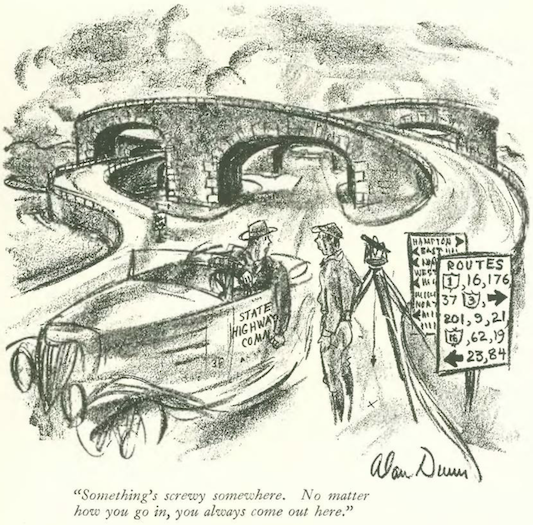
…Alan Dunn had an M.C. Escher moment on the turnpike…
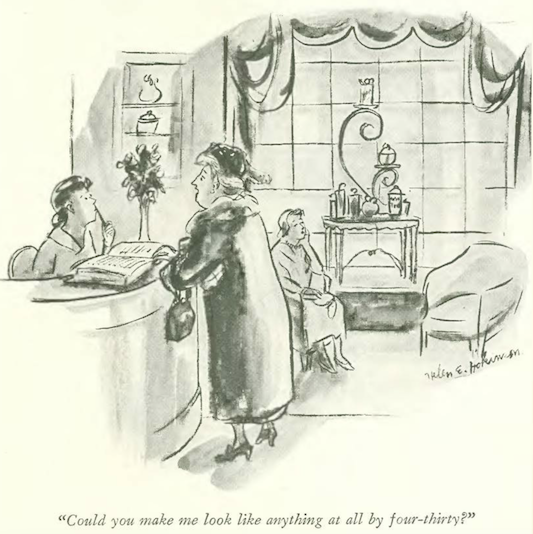
…Helen Hokinson made a big ask at the beauty parlor…
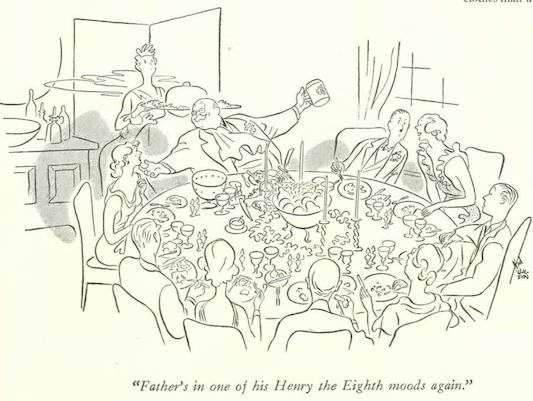
…Ned Hilton drew up a big man with a big complex…
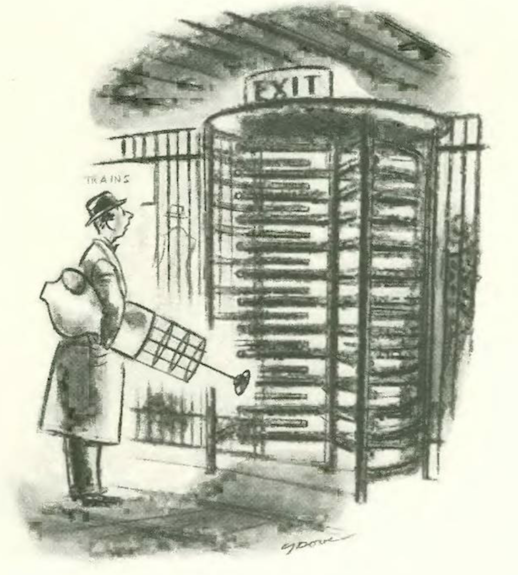
…Leonard Dove offered a challenge and a unique perspective at the subway station…
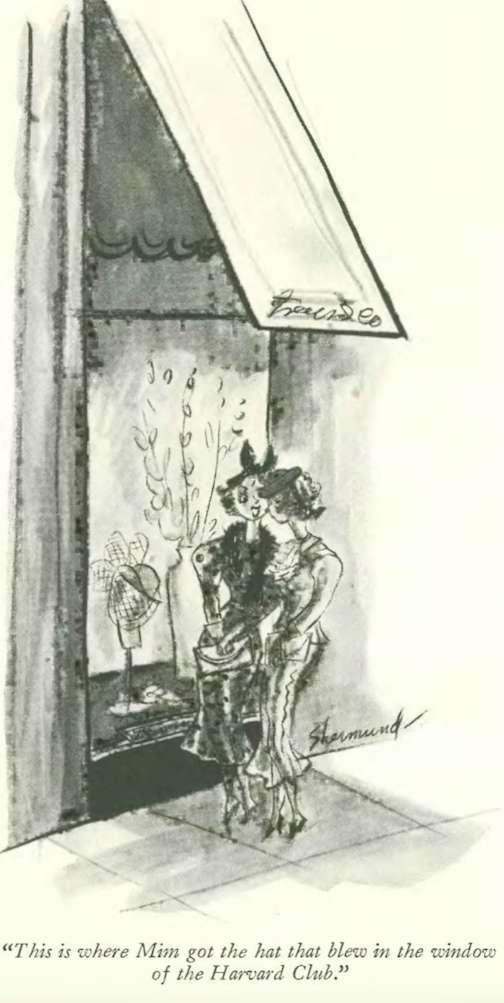
….Barbara Shermund’s modern women thrilled to the sights of Manhattan…
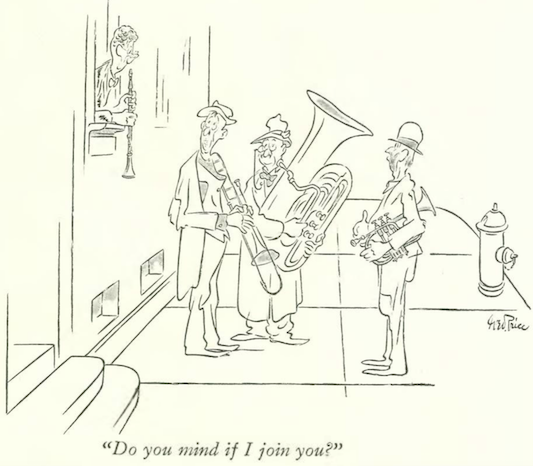
…George Price turned this trio into a quartet…
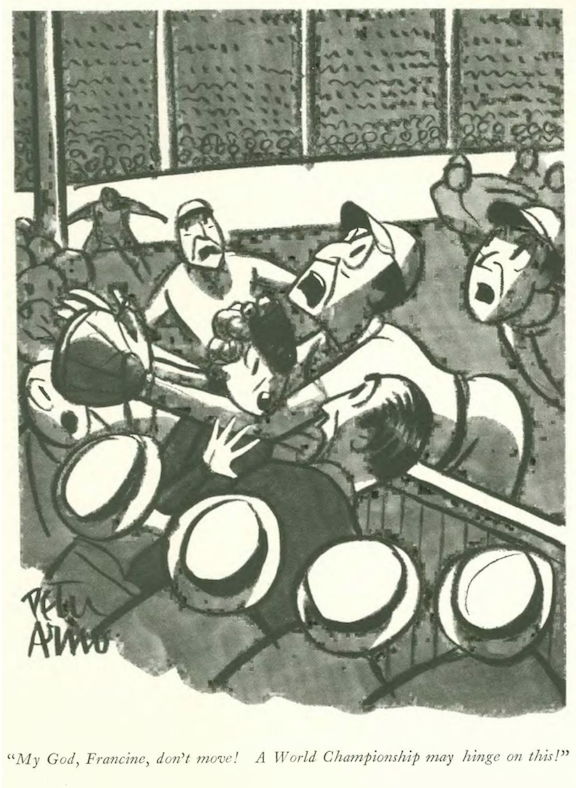
…and we close with a terrific, terrifying moment at the World Series, courtesy Peter Arno…
Next Time: Road Warriors…
Führer Furor

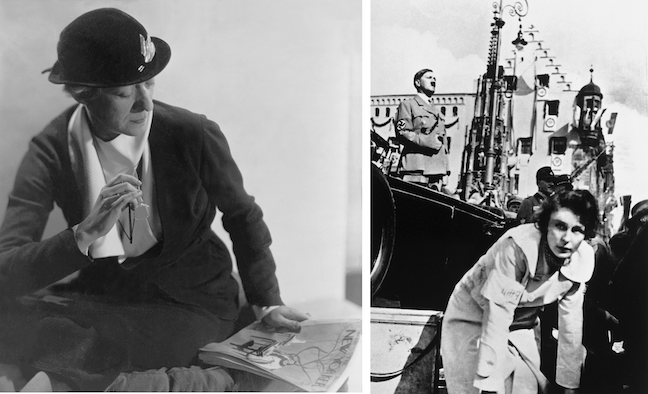
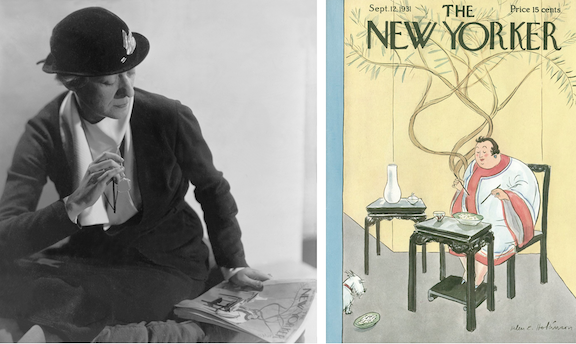
Above, left, Janet Flanner regards the cover of the Sept. 13, 1931 issue of The New Yorker; at right, Adolf Hitler's chosen filmmaker Leni Riefenstahl at Nuremberg's "Shovel Day" parade, 1936. (Library of Congress/Sueddeutscher Verlag)

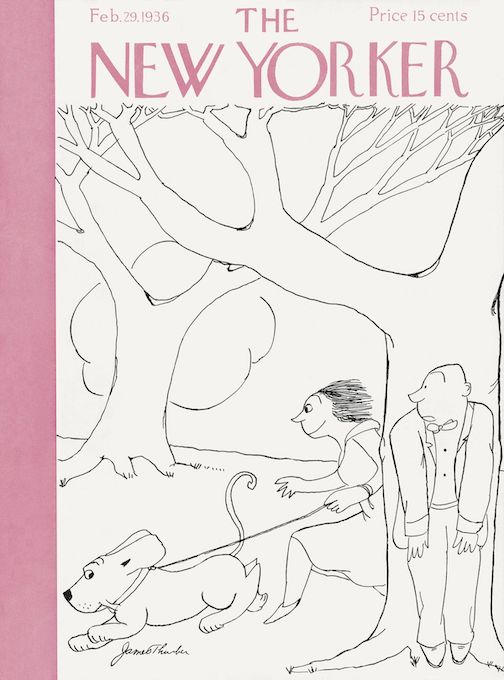
The February 29, 1936 issue stands out from pack not only for its cover—James Thurber’s first—but also for the magazine’s first in-depth look at a man who would spark the deadliest conflict in human history.

February 29, 1936 cover by James Thurber. This was the first of six covers Thurber contributed to The New Yorker. You can see all six covers at Michael Maslin’s Ink Spill, the go-to site for all things Thurber and so much more. UPDATE: Also check Maslin’s post regarding the repeat of this cover on Sept. 4, 2023. Fascinating read!

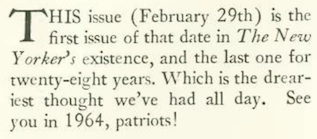
Before we jump in…Thurber’s close friend E.B. White noted another unusual fact about this issue…

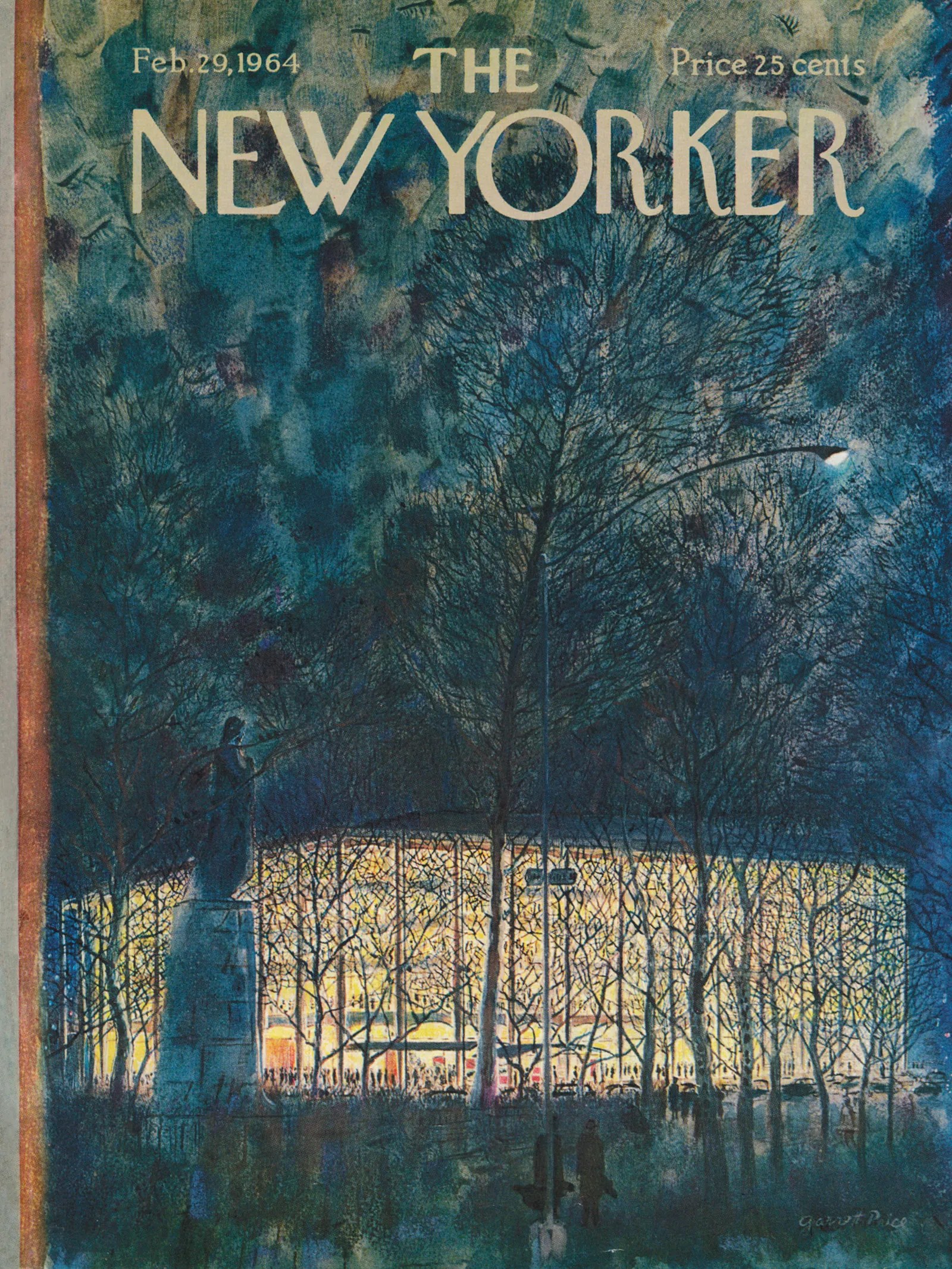
…twenty-eight years later, and a dime extra (cover by Garrett Price)…

 * * *

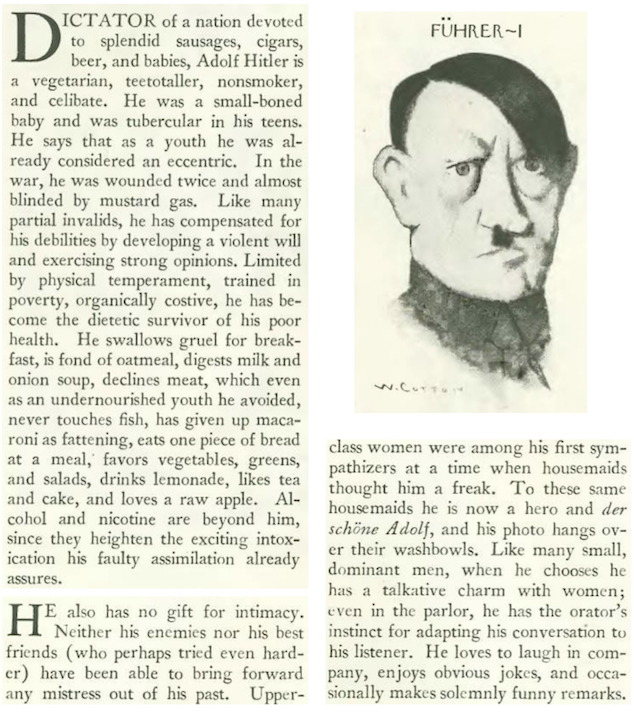
Inside the Feb. 29 issue, The New Yorker’s Paris correspondent Janet Flanner published the first part of a three-part profile on German dictator Adolf Hitler. In this first excerpt she described the Führer’s ascetic diet and personality (caricature by William Cotton).

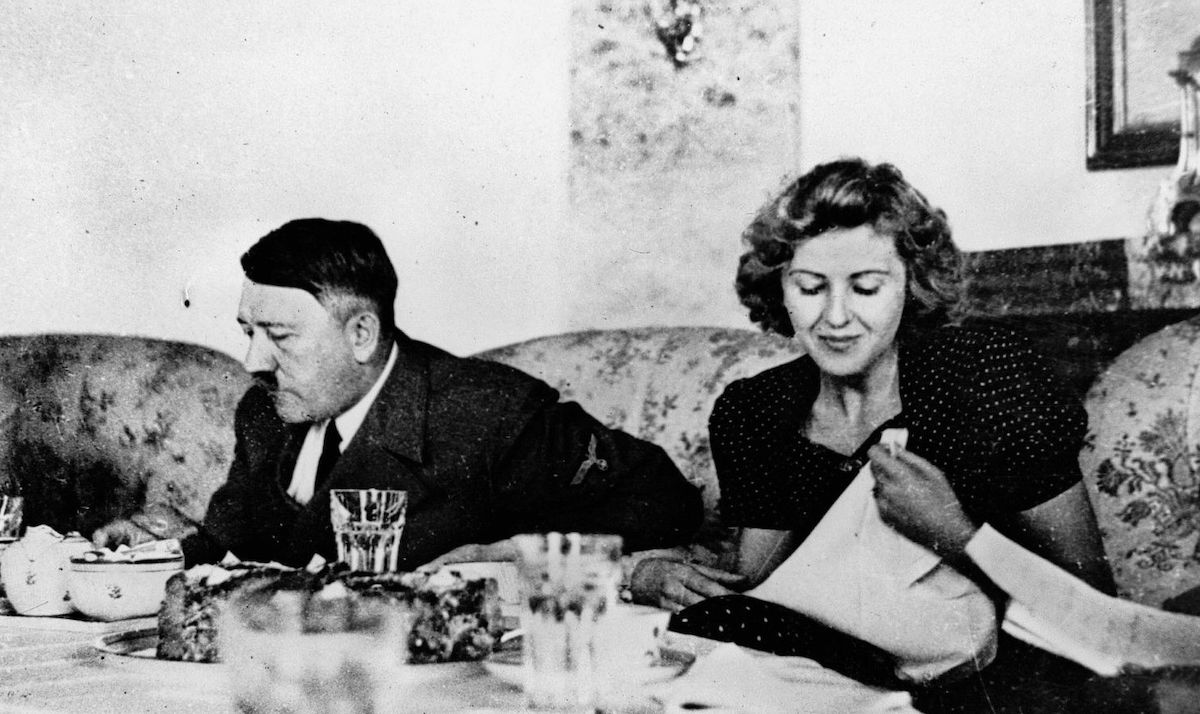
NAZI NUM NUMS….Adolf Hitler with one of his official food tasters, Margot Woelk, during World War II. Woelk later claimed she was the sole survivor from a group of food tasters who were summarily executed by the Red Army after the fall of Berlin. (warfarehistorynetwork.com)

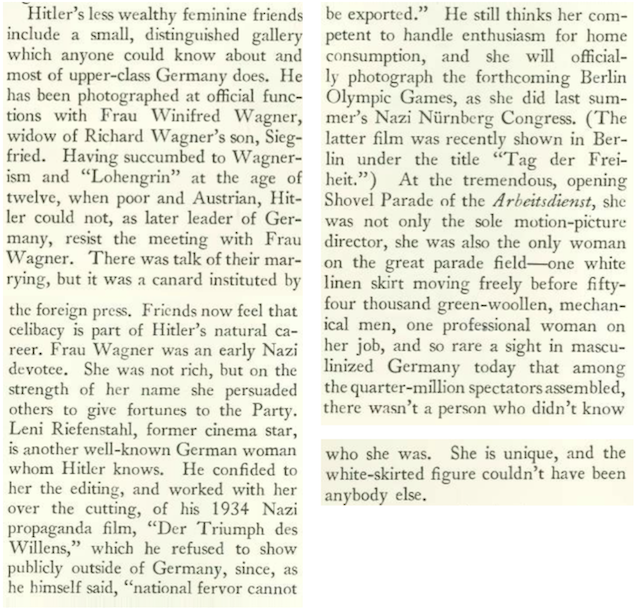
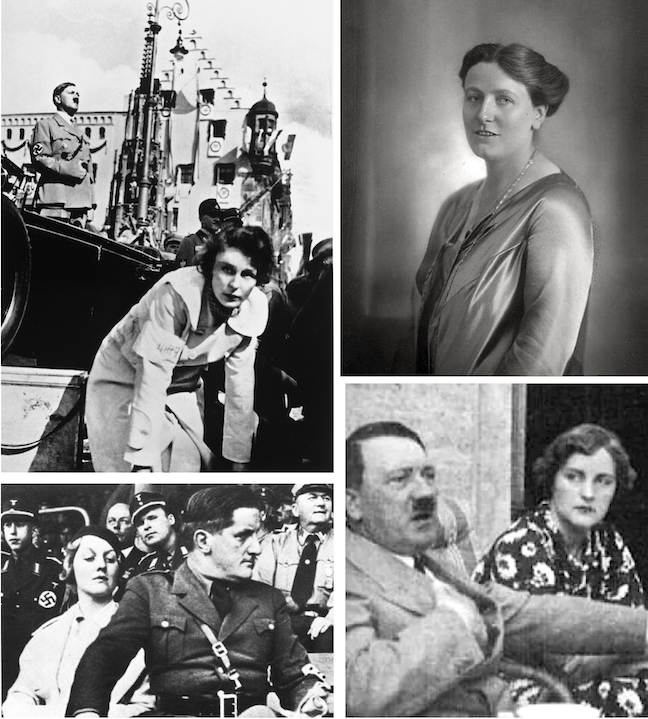
Flanner described Hitler’s relationships with influential women, particularly filmmaker Leni Riefenstahl.

FRIENDS WITH BENEFITS…Adolf Hitler had influential admirers both in and outside of Germany, including, clockwise, from top left, filmmaker Leni Riefenstahl (in the white skirt described by Flanner) at the 1936 “Shovel Day” in Nuremburg; Winifred Wagner, daughter-in-law of composer Richard Wagner, in 1925; Hitler with Unity Mitford, one of six aristocratic Mitford sisters and a fanatical Nazi; Ernst Franz Sedgwick Hanfstaengl with another Mitford sister, Diana Mitford, at a 1934 Nuremberg rally. Diana as married to Oswald Mosley, leader of the British Union of Fascists, and Hanfstaengl was the son of Katharina Wilhelmina Hanfstaengl, a prominent Munich art publisher who helped finance Hitler’s rise to power. (Sueddeutscher Verlag/Wikipedia/historyreader.com)

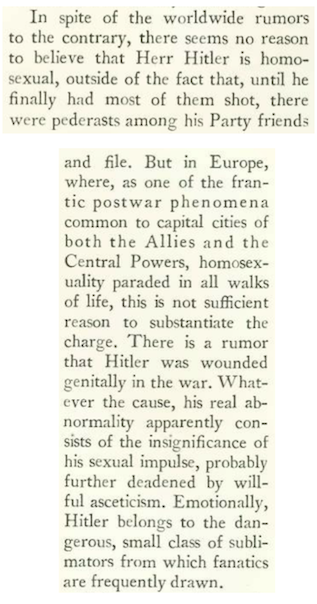
Flanner concluded the piece with a look at Hitler’s sexuality, which seemed non-existent, and drew an ominous conclusion about his personality type.

EXPENDABLE…Ernst Röhm with Adolf Hitler in 1933. Although Hitler knew Röhm was gay, he also valued Röhm’s leadership and organizational skills, that is until his presence proved a liability. Röhm was murdered by the SS in 1934 during the “Night of the Long Knives.” (Wikipedia)

As part of a centenary series, The New Yorker’s Andrew Marantz recently looked at Flanner’s profile of Hitler, noting that she was “neither an antifascist, like her friend Dorothy Parker, nor a Fascist, like her friend Ezra Pound; she was against crude bigotry, but she was not the world’s greatest philo-Semite.”

 * * *

Lamour Amour

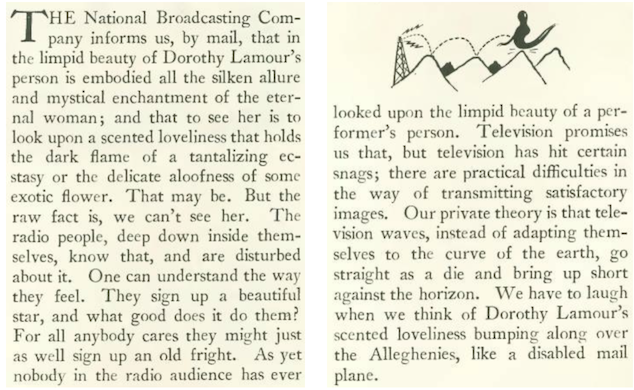
In his “Notes and Comment,” E.B. White pointed out the challenges of expressing physical beauty over a non-visual medium like radio:

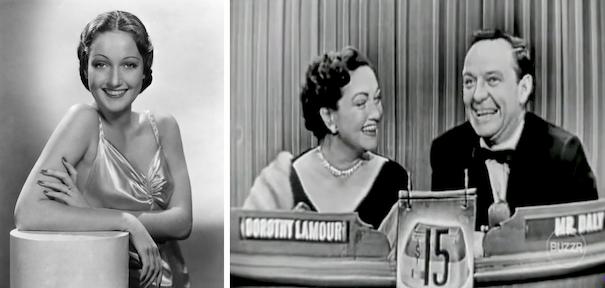
TELEGENIC…Hopefully E.B. White managed to see Dorothy Lamour on the “television waves… bumping along over the Alleghenies.” At left, publicity photo of Lamour from 1937; at right, Lamour appeared as a mystery guest on What’s My Line?, Feb. 20, 1955, seen here with host John Daly. In later years Lamour was a guest on a number of television shows, ranging from Marcus Welby, M.D. to Remington Steele. (Wikipedia/YouTube.com)
 * * *

Shadow Plays

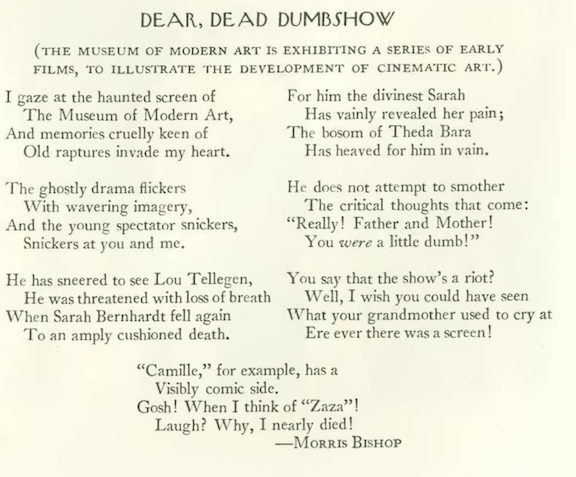
Morris Bishop (1893-1973), a noted scholar of the Middle Ages as well as a writer of light verse, offered up these lines after screening early silent films at the Museum of Modern Art. The screenings were curated by Iris Barry to showcase MoMA’s new film library and to advance the study of film as a serious art form.

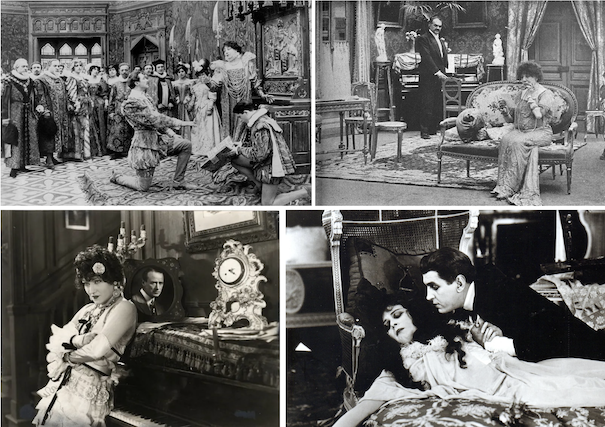
TIME CAPSULES…The Museum of Modern Art was a pioneer in the study of film as a modern art form. Among the films screened at MoMA in 1936 (clockwise, from top left): famed stage actress Sarah Bernhardt as Queen Elizabeth in the Les Amours de la reine Élisabeth (The Loves of Queen Elizabeth) with Lou Tellegen, 1912; Bernhardt in the film Camille (La Dame aux camélias) with André Calmettes, 1911; Theda Bara’s 1917 take on Camille, in a scene with Alan Roscoe; Gloria Swanson in Zaza, 1923. (Wikipedia/imdb.com/YouTube.com)

 * * *

A Reporter’s Chops

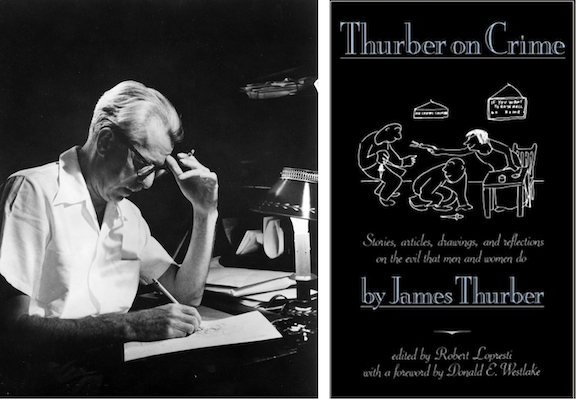
With so much attention given to James Thurber as a humorist, it is easy to forget that he was an experienced journalist, and that he could apply his considerable gifts as a writer to narrative non-fiction. For the Feb. 29 “A Reporter at Large” column, Thurber penned “Crime in the Cumberlands.” I can’t do it justice through excerpts, but I highly recommend giving it a read as a prime example of Thurber’s skills as a reporter.

SERIOUSLY SERIOUS WRITER…You can find both humorous and not-so-humorous crime stories (and drawings, of course) in 1991’s Thurber on Crime, edited by Robert Lopresti. “Crime in the Cumberlands” is included in the collection. (jamesthurber.org/barnesandnoble.com)

 * * *

At the Movies

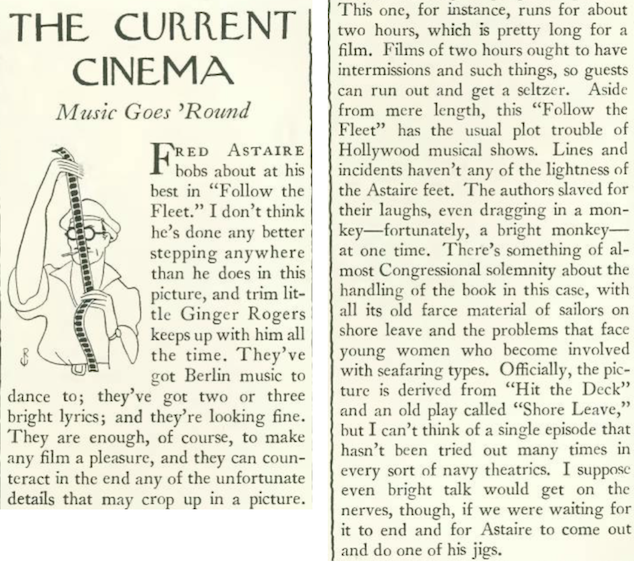
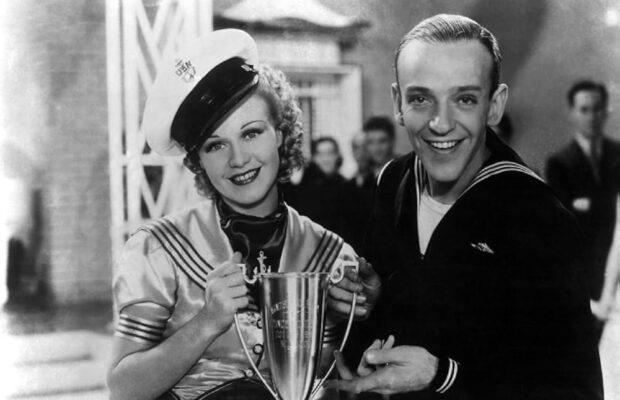
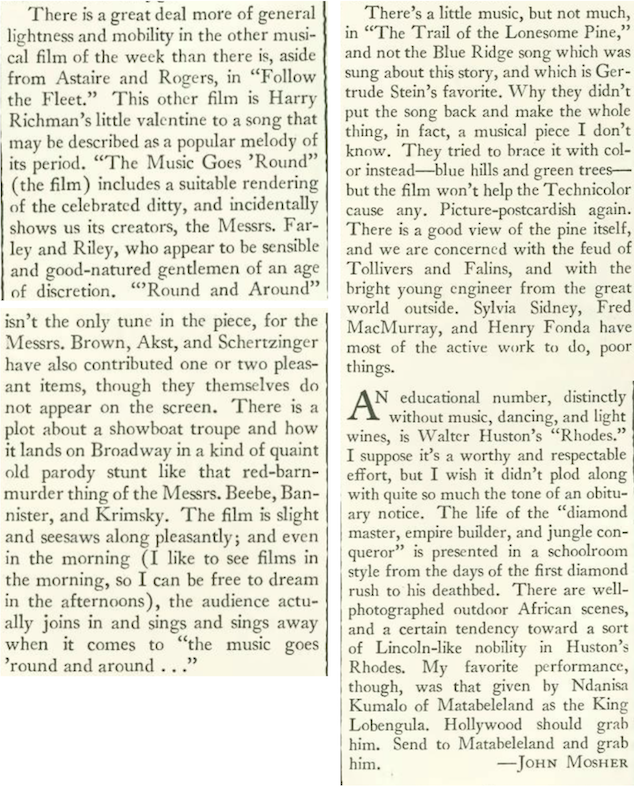
Not so serious were the films being churned out by Hollywood, including the Fred Astaire/Ginger Rogers toe-tapper Follow the Fleet, set to an Irving Berlin score that featured the hit “Let’s Face the Music and Dance.” Critic John Mosher was on board for the ride.

GOOD CLEAN FUN…Dance partners “Bake” Baker (Fred Astaire) and Sherry Martin (Ginger Rogers) find love during shore leave in Follow the Fleet. (Toronto Film Society)

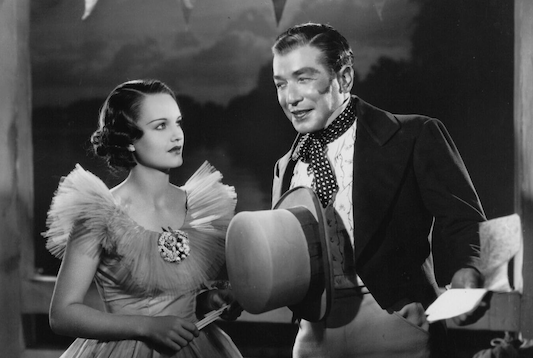
Bandleader Harry Richman, well known in the New York nightlife scene of the 1920s and 30s, showed his acting chops in The Music Goes ‘Round…
I CAN SING TOO…Rochelle Hudson and Harry Richman in The Music Goes ‘Round. (imdb.com)

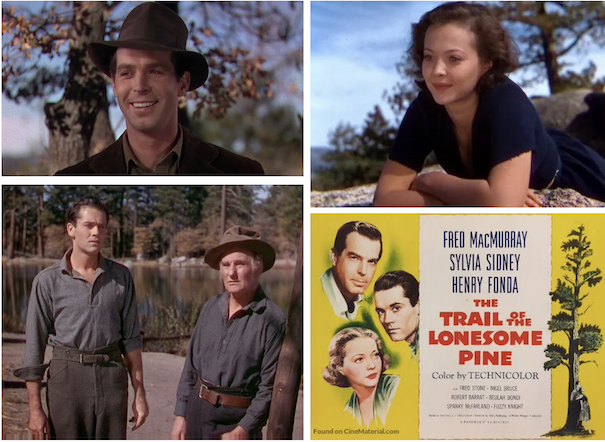
…Fred MacMurray, Sylvia Sydney, Henry Fonda and Fred Stone appeared in living color in The Trail of the Lonesome Pine–it was just the second full-length feature to be shot in three-strip Technicolor and the first to be shot outdoors in Technicolor…

LIFELIKE…Clockwise, from top left: Fred MacMurray; Sylvia Sydney; a Paramount movie poster; Henry Fonda and Fred Stone. (moviesalamark.com/imdb.com)

…the 1936 film Rhodes (aka Rhodes of Africa) featured the massive acting talents of Walter Huston and Peggy Ashcroft; not surprisingly, the subject matter of the film has not aged well…a 2015 review in The Guardian is headlined: “Rhodes of Africa: only slightly less offensive than the man himself”…

COLONIAL KLINK…Walter Huston and Peggy Ashcroft in Rhodes. (imdb.com)

 * * *

From Our Advertisers

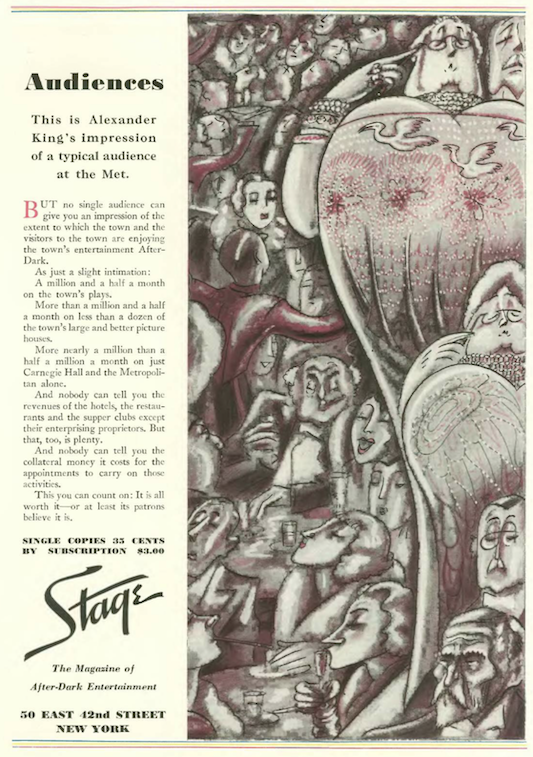
We begin with a Stage magazine ad from the inside front cover, featuring an illustration by Alexander King…

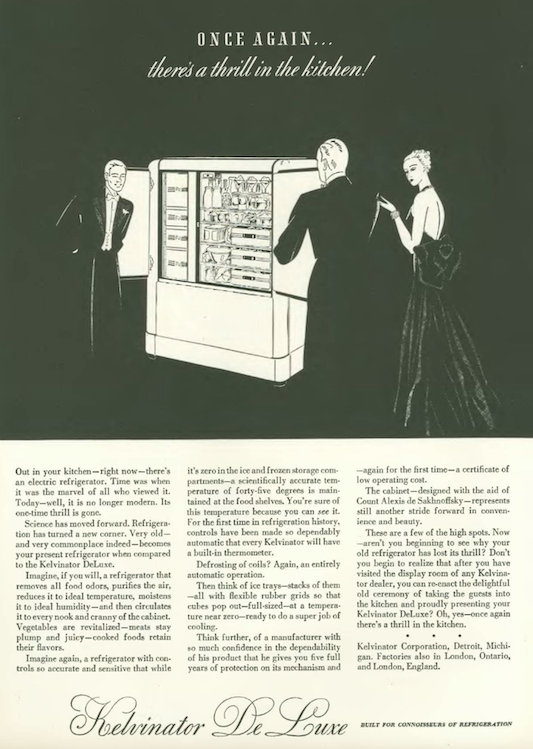
…only new-money swells would be seen doing this…old money wouldn’t dare enter the kitchen, unless they needed to sack the cook…

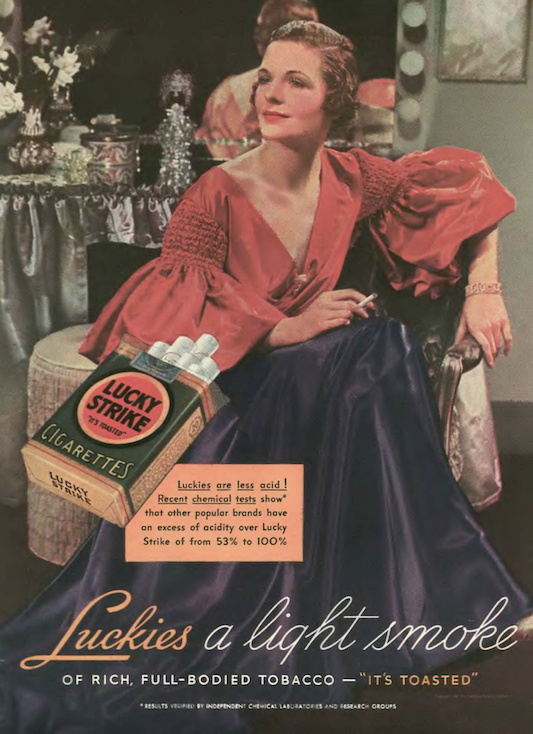
…on the back cover of the Feb. 29 issue you would find this elegant woman taking a break from her vanity to enjoy a “toasted” Lucky…

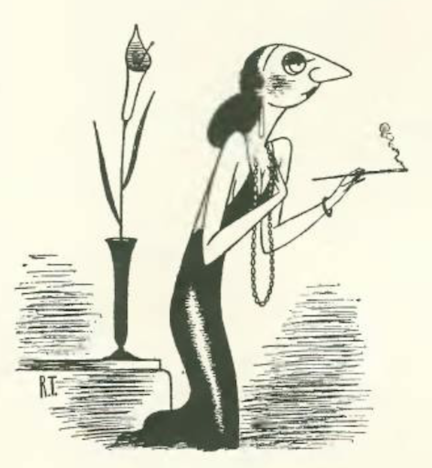
…we join our cartoonists, starting with this spot by Richard Taylor…

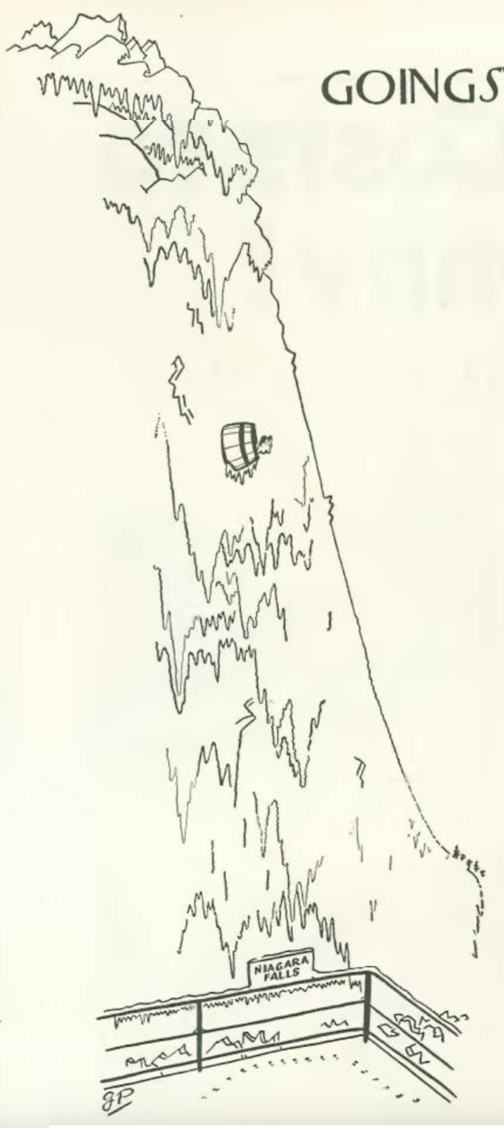
…Garrett Price got stuck over the frozen falls…

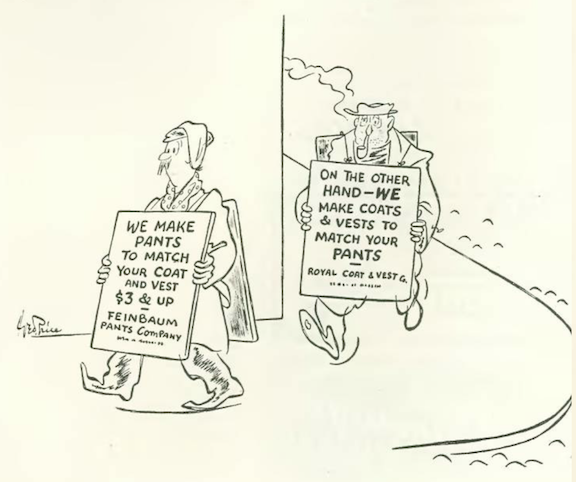
…George Price drew up a sandwich board competition…

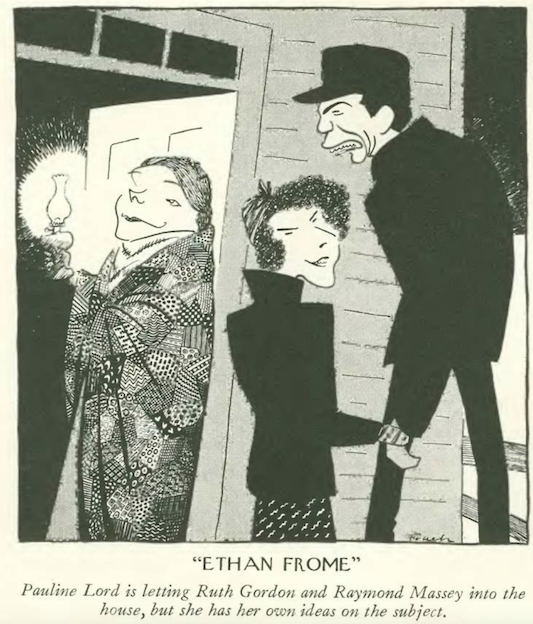
…Al Frueh continued to illuminate “The Theatre” section…

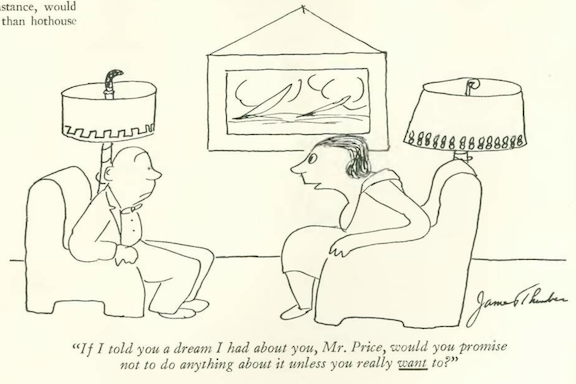
…James Thurber posed a loaded question…

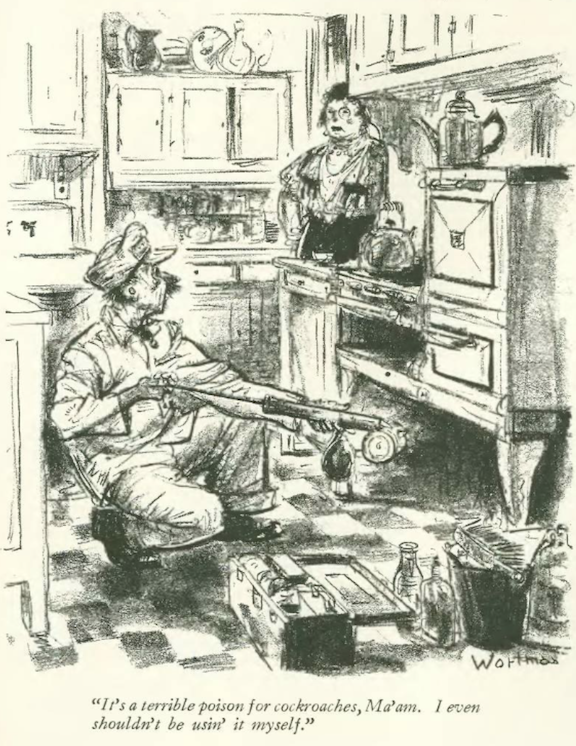
…Denys Wortman got down to some debugging…

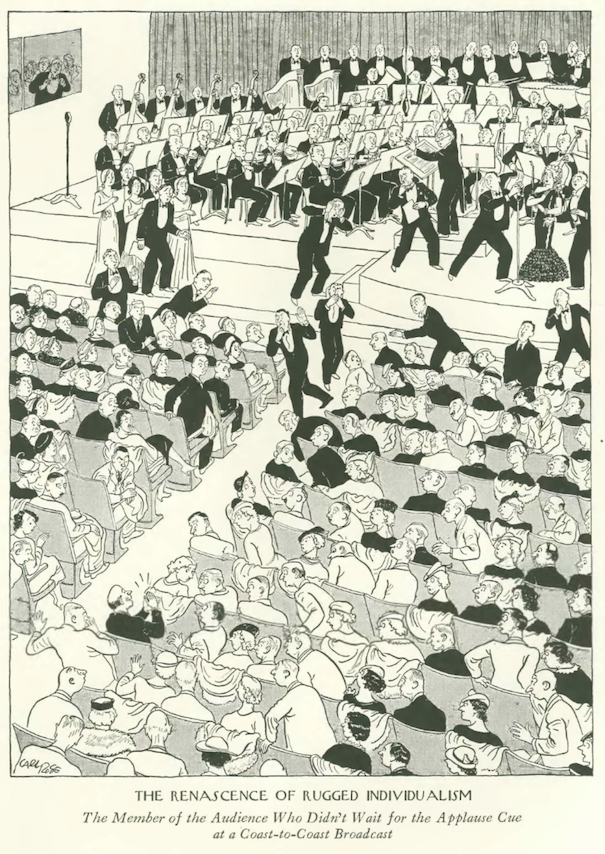
…Carl Rose offered up another example of rugged individualism…

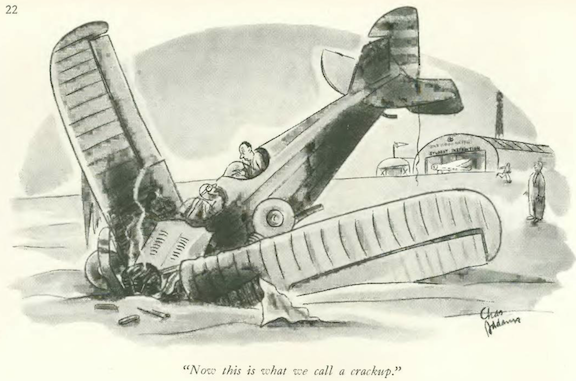
…Charles Addams came down to earth…

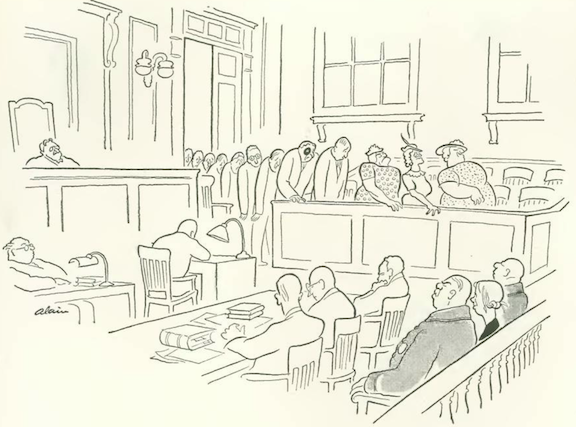
…Alain illustrated a case of jury tampering…

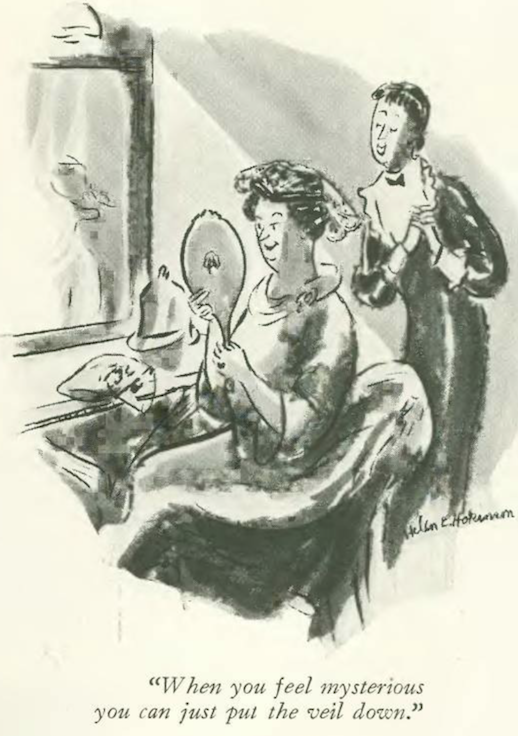
…Helen Hokinson demonstrated the allure of a netted hat…

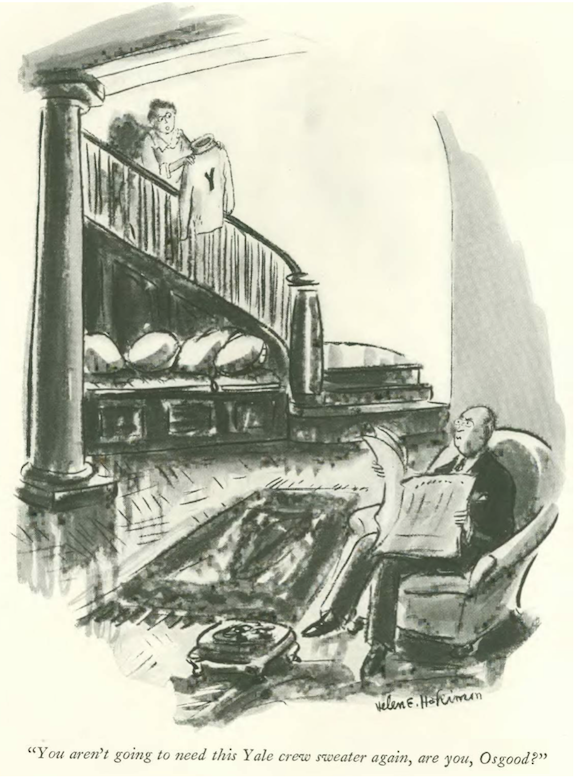
…and Hokinson again, doing some early spring cleaning…

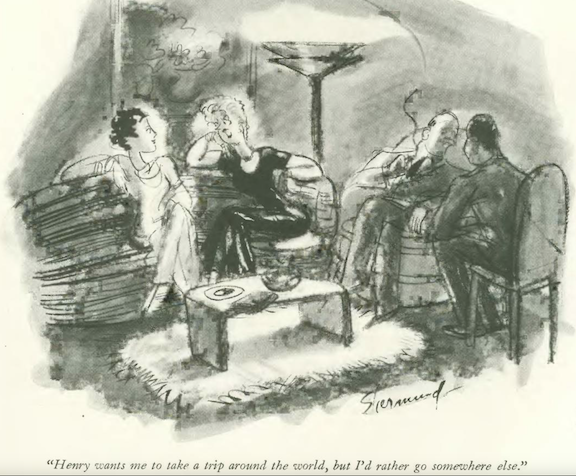
…and Barbara Shermund explored the idyll of wanderlust…

…and before we go, here is the New Yorker cover—by Helen Hokinson, Sept. 12, 1931—that was the object of Janet Flanner’s attention…

Next Time: Making of a Madman…