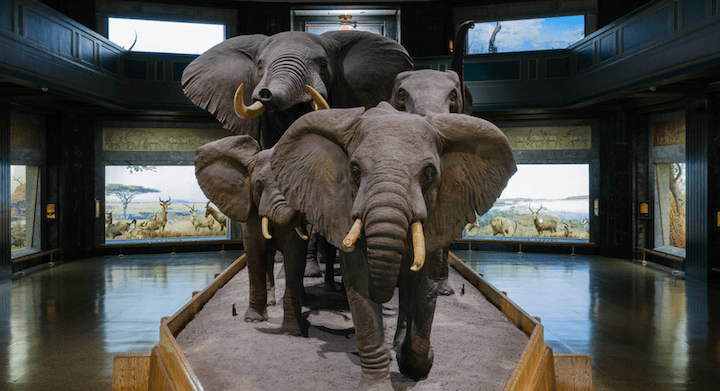
Above: A group of eight East African elephants greet visitors to the American Museum of Natural History's Akeley Hall of African Mammals, which opened in 1936. The elephants are surrounded by twenty-eight habitat dioramas. (amnh.org)
One can instantly call up a photo on an iPad of every known animal on the planet, so why are people still fascinated by dead, stuffed animals displayed in glass cases?
To be accurate, most animals on display at natural history museums are not “stuffed;” they are an art form or sorts, anatomical sculptures covered with skins, posed in meticulous re-creations of their natural environments.
Ninety years after it opened to the public, the American Museum of Natural History’s Akeley Hall of African Mammals—named for the father of modern taxidermy Carl Akeley— still dazzles museum-goers with incredibly detailed dioramas (twenty-eight in all) that depict a range of African ecosystems. Writing for “A Reporter at Large” (titled “Africa Brought to Town”), Morris Markey marveled at the lifelike displays of flora and fauna, “every twig and grain of sand the very essence of Africa…”
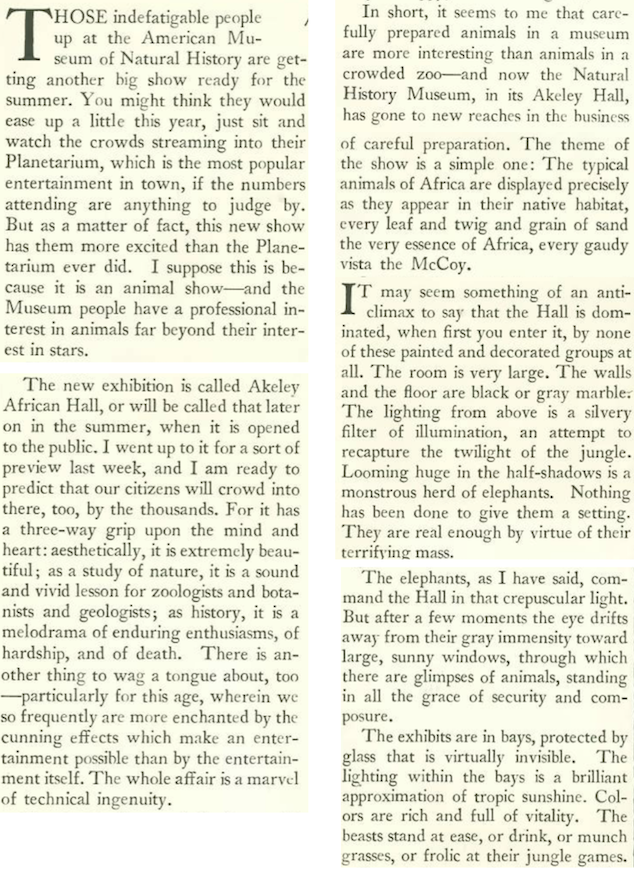
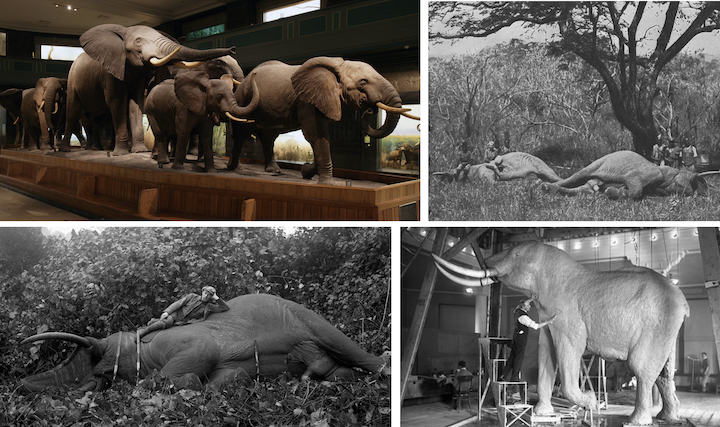
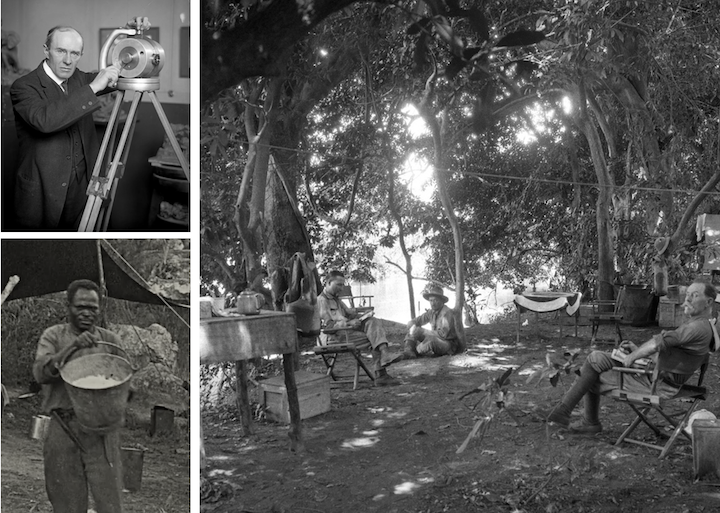
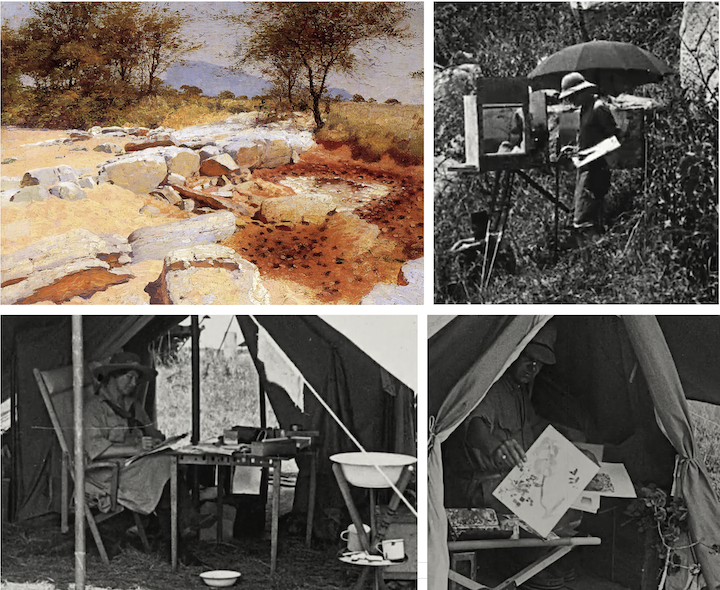
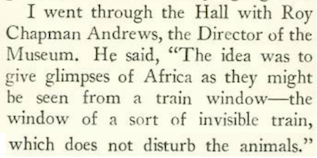
Markey visited with museum director Roy Chapman, who likened the dioramas to “glimpses of Africa as they might be seen from a train window…” Since this was 1936, no one seemed too concerned about the ethical implications of hunting and killing animals for museum displays. It should be noted that most animals we see in major natural history museums today were killed during early 20th-century expeditions such as Akeley’s; animals used in new displays are often obtained from zoos or sanctuaries after dying of natural causes.
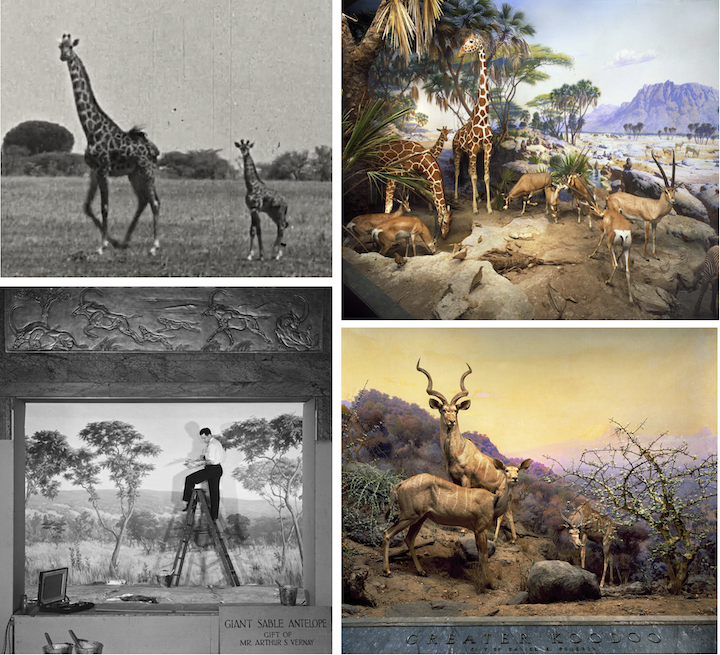
There is an undeniable appeal to these artificial environments. Although our digital age offers all sorts of them, there are still kids who like to build dioramas in shoeboxes. And for those of us who grew up in 1960s and 70s, there was the thrill of opening a new three-pack of View-Master reels, each slide revealing a three-dimensional, self-contained world.
And so it is with museum dioramas. They offer a moment of wonder and calm to viewers. As the noisy world collapses around them, these displays—however artificial—might inspire in some a greater appreciation of these creatures and their fragile environments.

The AMNH has posted a video on the taxidermy process, if you are interested.
* * *
At the Movies
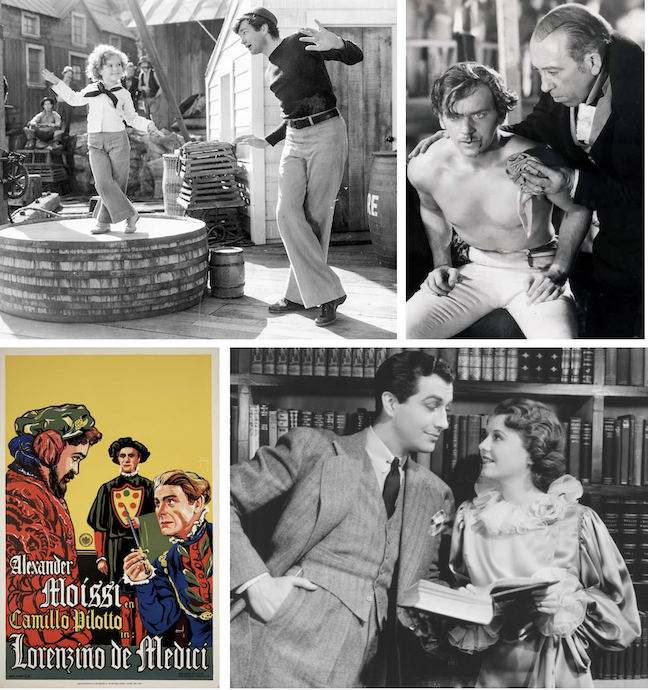
One can imagine film critic John Mosher rubbing his eyes as he pondered the reasons why Hollywood insists on making overly long movies (also lamented by critics today). He also reviewed four new films, with little enthusiasm.
* * *
Getting Things Done
* * *
From Our Advertisers
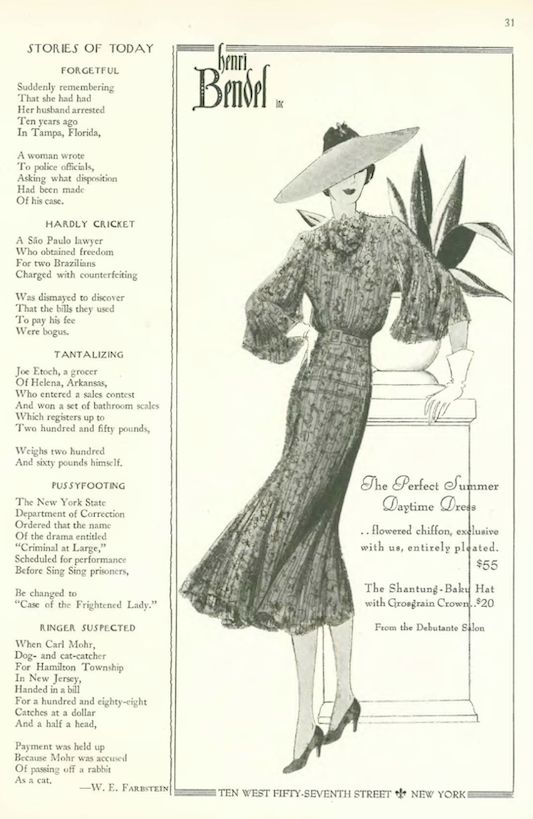
The May 2 issue was crammed with ads for women’s summer fashions, which were defined by longer, leaner silhouettes…
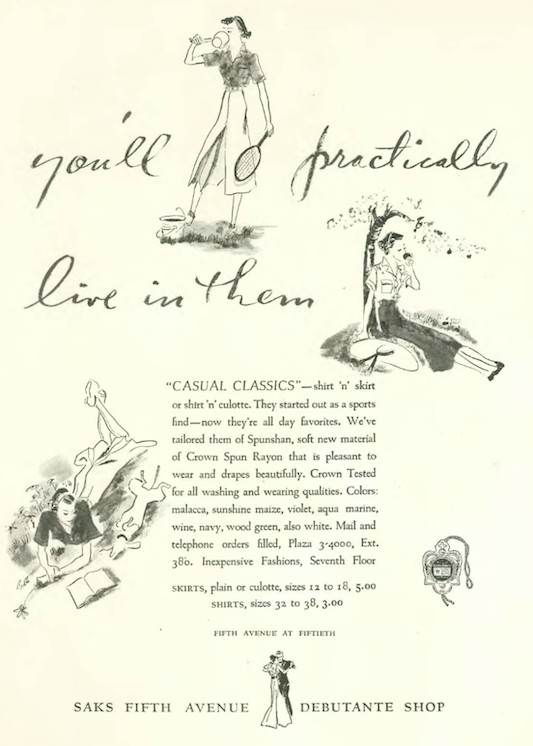
…and by the increasing popularity of practical sports and casual clothes…
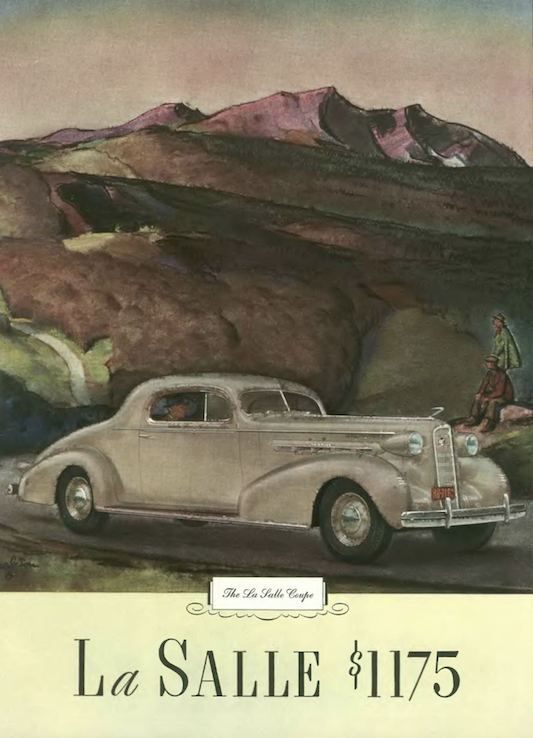
…the makers of Cadillac motorcars continued to emphasize their lower-priced LaSalle models for Depression-squeezed consumers…
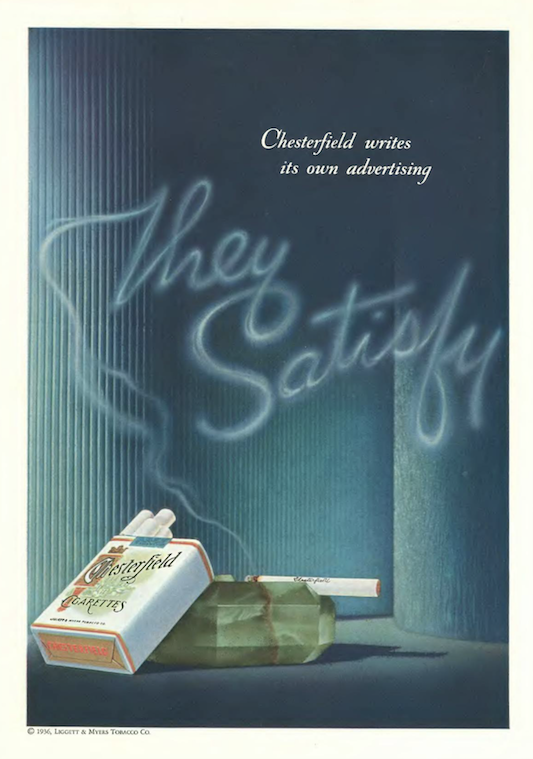
…no fashion models or health claims here, just the allure of cigarette smoke courtesy Liggett and Myers…
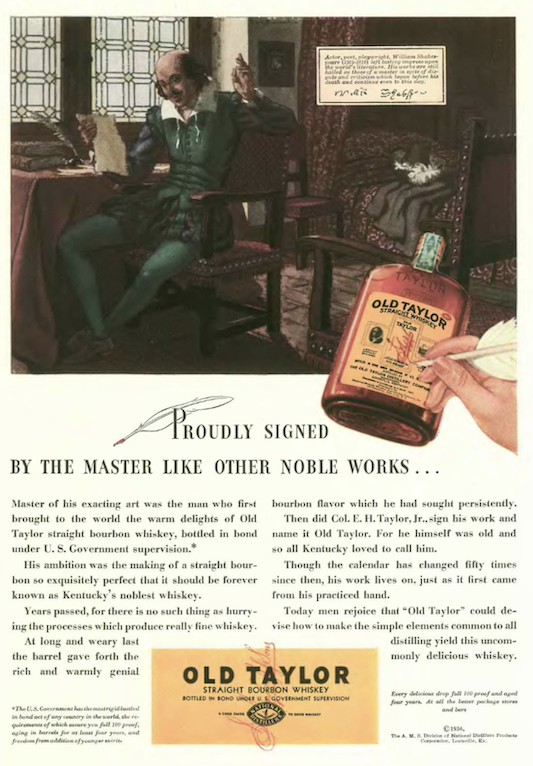
…the distillers of Old Taylor wanted you to associate their product with the timeless work of William Shakespeare…after all, who’s going to sue them over image rights?…
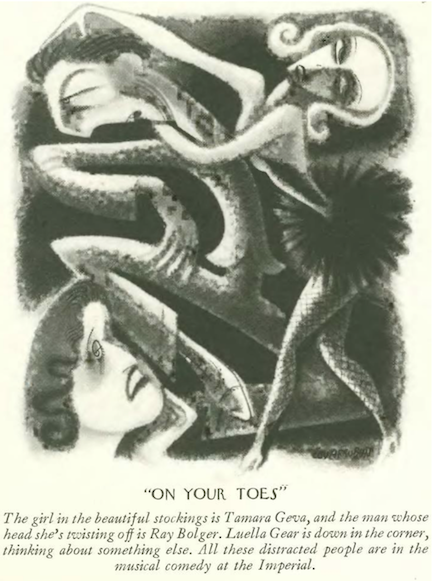
…on to our cartoonists…Miguel Covarrubias, whose work was featured in The New Yorker’s first issue and was frequent in those early days, lent his talents to the theatre review section with this rendering from On Your Toes…
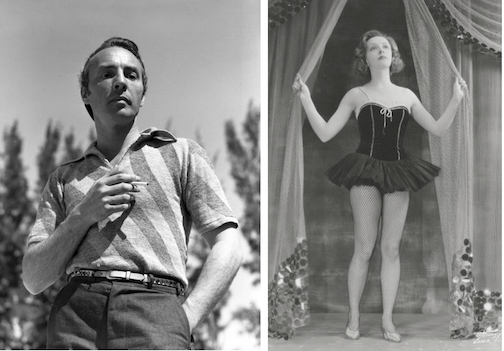
…something else I forgot to mention in my last post, On Your Toes also marked George Balanchine’s debut as a Broadway choreographer…
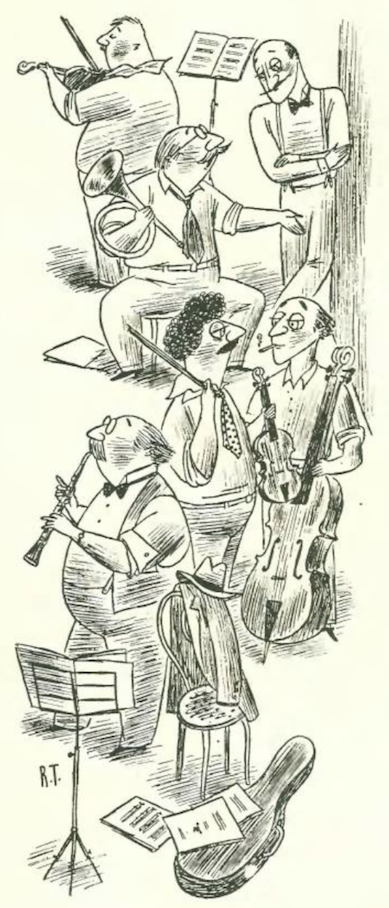
…we are seeing a lot of Richard Taylor in the 1936 issues, especially in providing spot illustrations such as this one…
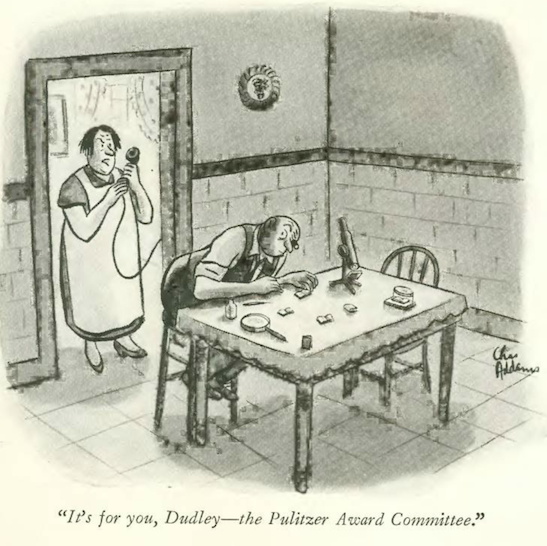
…Charles Addams deployed some sarcasm on the domestic front…
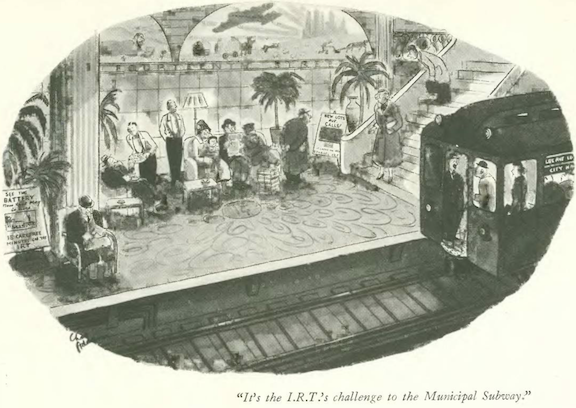
…and Addams again, commenting on the fierce rivalry between the privately owned Interborough Rapid Transit (IRT) and the municipal subway systems…
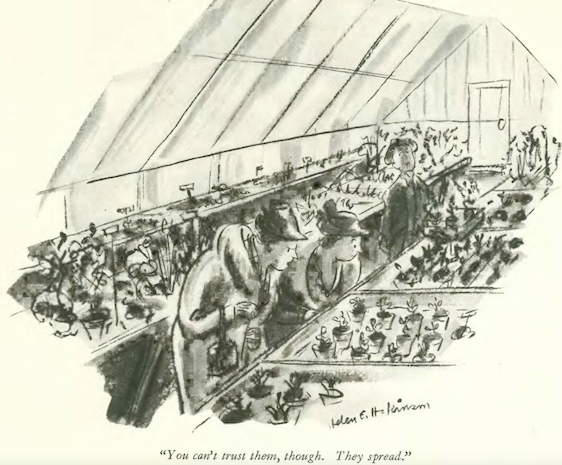
…and we have two by Helen Hokinson, having misgivings about a greenhouse variety…
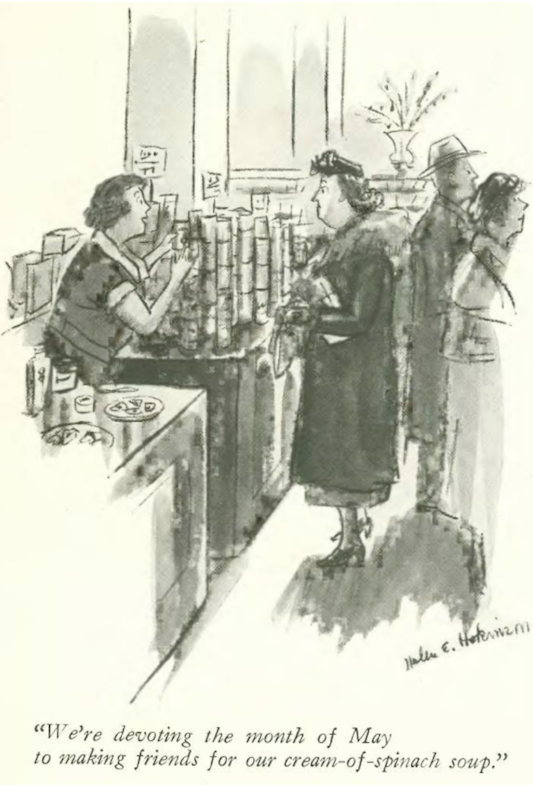
…and finding a personal commitment to a can of soup…
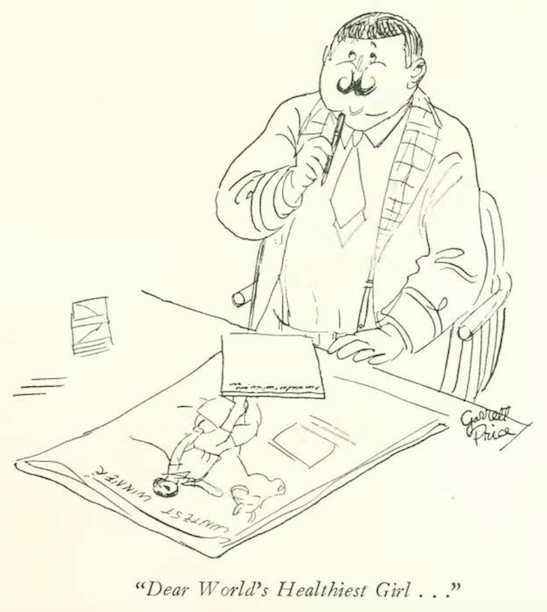
…Garrett Price had this man doing some wishful thinking…
…William Steig used a two-page spread to illustrate a day at the drugstore…
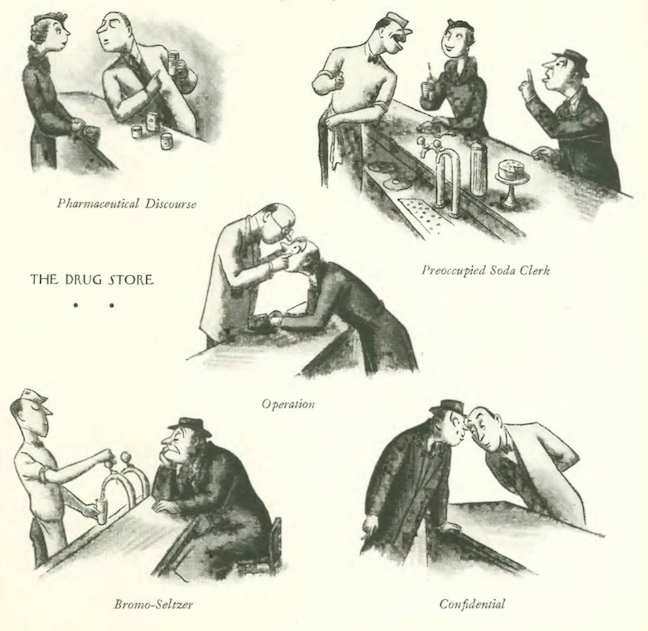
…another drawing from the group, appearing on the left-hand page…
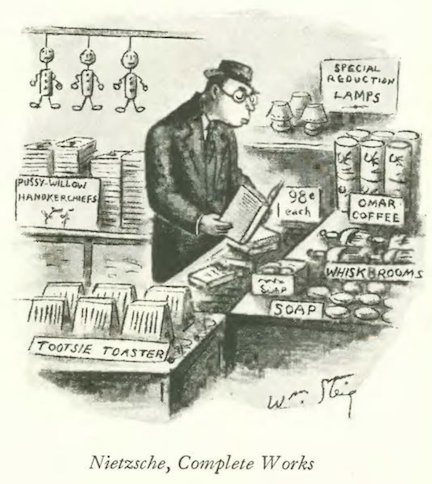
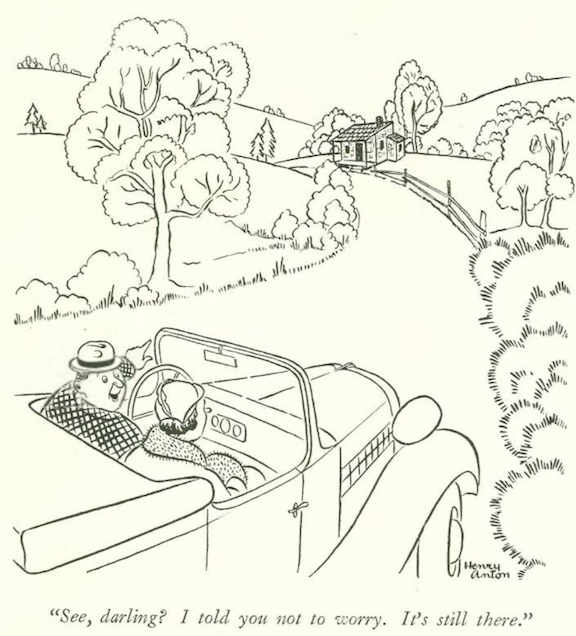
…keeping it in the family, we have one by Henry Anton Steig (William Steig’s brother)…according to Michael Maslin’s indispensable Ink Spill, Henry contributed nineteen drawings to The New Yorker from 1932 to 1936 under the name Henry Anton…this one was his final contribution…
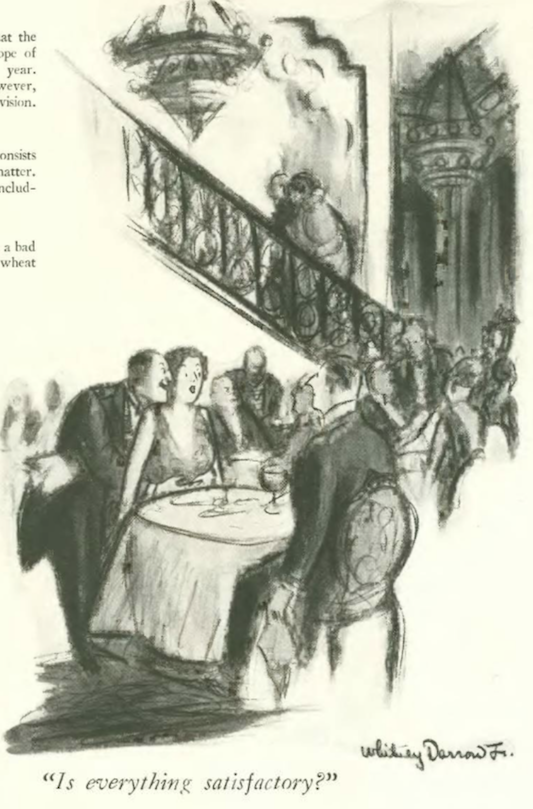
…Whitney Darrow Jr drew up this over-enthusiastic maître d’…
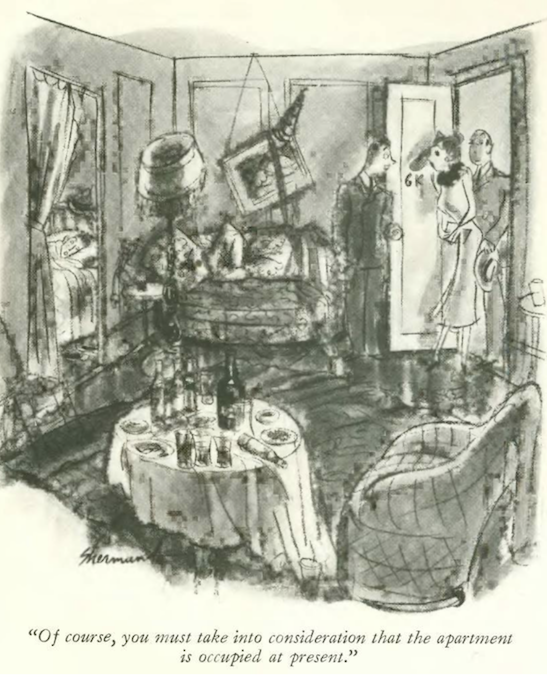
…Barbara Shermund went apartment hunting…
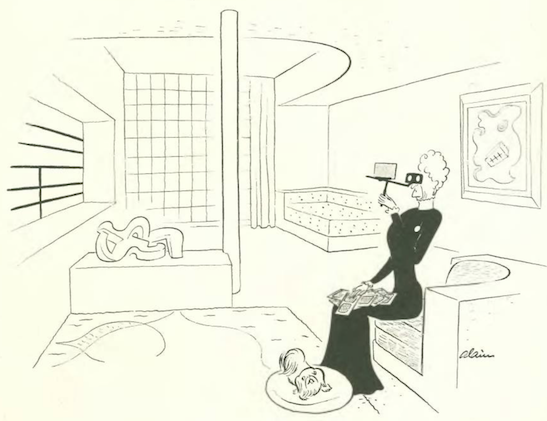
…and we close with Daniel ‘Alain’ Brustlein, and a room with a view…
Next Time: Saving the Row…