Wherefore Old Romeo?

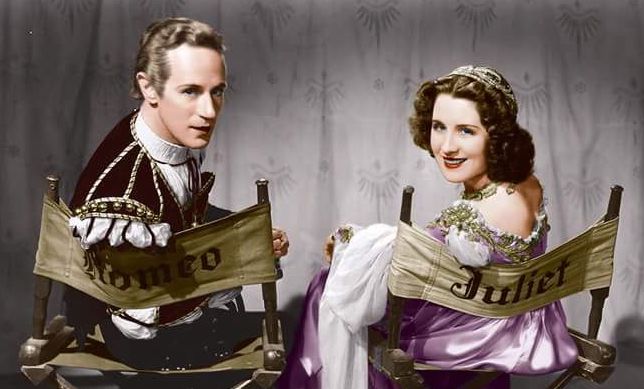
Above: Leslie Howard and Norma Shearer played the lead roles in George Cukor's 1936 adaptation of William Shakespeare's "Romeo and Juliet." In retrospect, these major stars were miscast; Shakespeare's original play identified Juliet as thirteen years old (soon to be fourteen), while scholars estimate Romeo to be around sixteen. Howard was forty-three and Shearer thirty-four when the film was released. (pinterest.com)

Although Leslie Howard and Norma Shearer were too old to play Romeo and Juliet as lovesick teenagers, in 1936 audiences and critics didn’t seem to notice or care. What did keep audiences away from the big budget Romeo and Juliet was the perception that it was too “arty.”

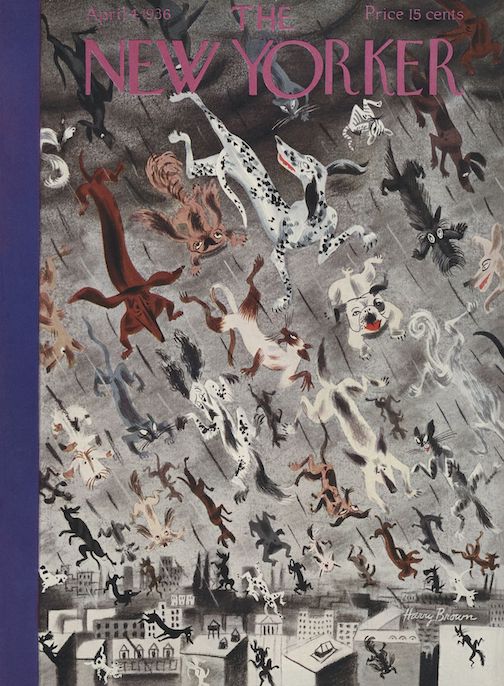
August 22, 1936 cover by Ilonka Karasz. 

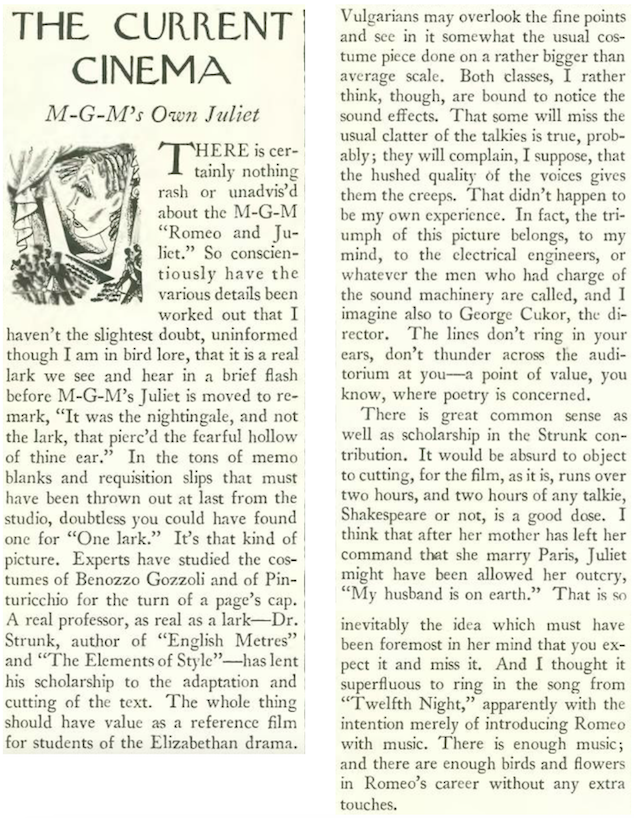
Indeed, New Yorker film critic John Mosher suggested that “vulgarians” would miss the finer points of this meticulously made film—director George Cukor even secured the services of William Strunk Jr. (of Elements of Style fame) to ensure linguistic accuracy.

This dedication to the finer points of the play obviously didn’t apply to the choice of the principal actors—a middle-aged Romeo, a thirty-something Juliet, or a 54-year-old playing Romeo’s best friend, Mercutio (John Barrymore). In the days of the studio system, it was assumed that big productions needed equally big, established actors attached to them, regardless of age. Also, Shearer was producer Irving Thalberg’s wife.
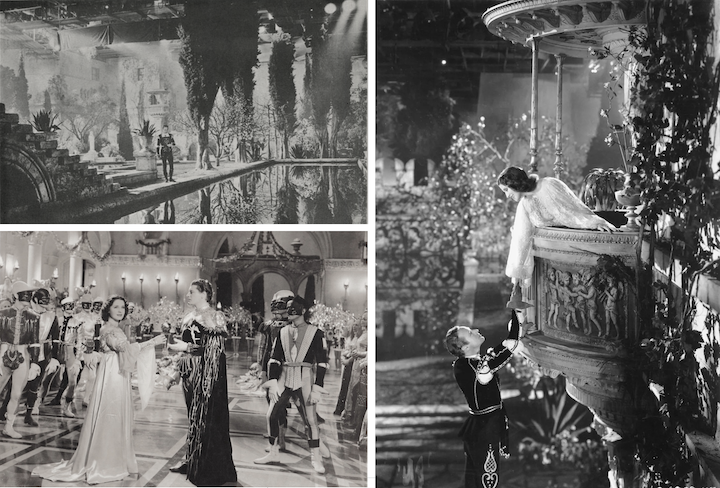
THE ART OF ARTIFICE…Clockwise from top left: Lavish sets and a star-studded cast made Romeo and Juliet MGM’s most expensive sound film up to that time; the famed balcony scene between Leslie Howard and Norma Shearer; Shearer in a scene with Ralph Forbes, who played a kinsman to the prince. (imdb.com/moviemusings.uk/britannica.com)

Mosher described the film as a “sensible” presentation and praised the 34-year-old Norma Shearer for her youthful appearance. “Actually, for once, we see a Juliet who is a girl,” he wrote. Writing for Literature/Film Quarterly, Allison Kellar notes that “with the help of costumes, props, and lighting, Shearer effectively appears as the young Juliet.”
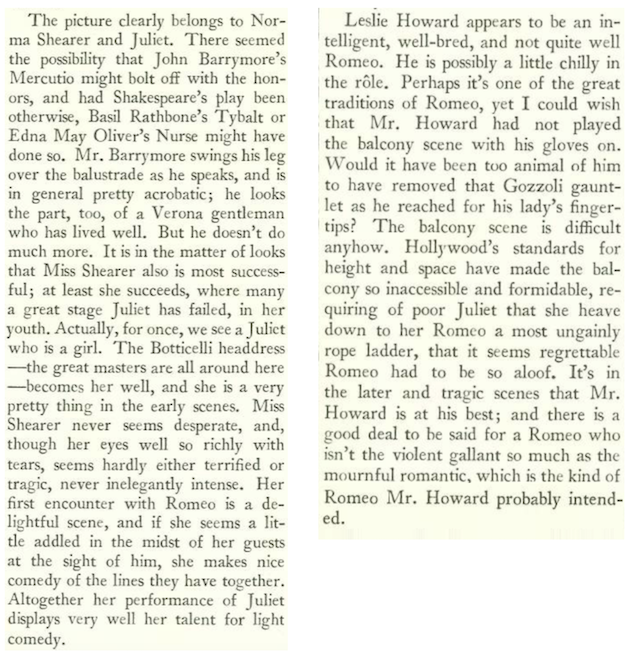
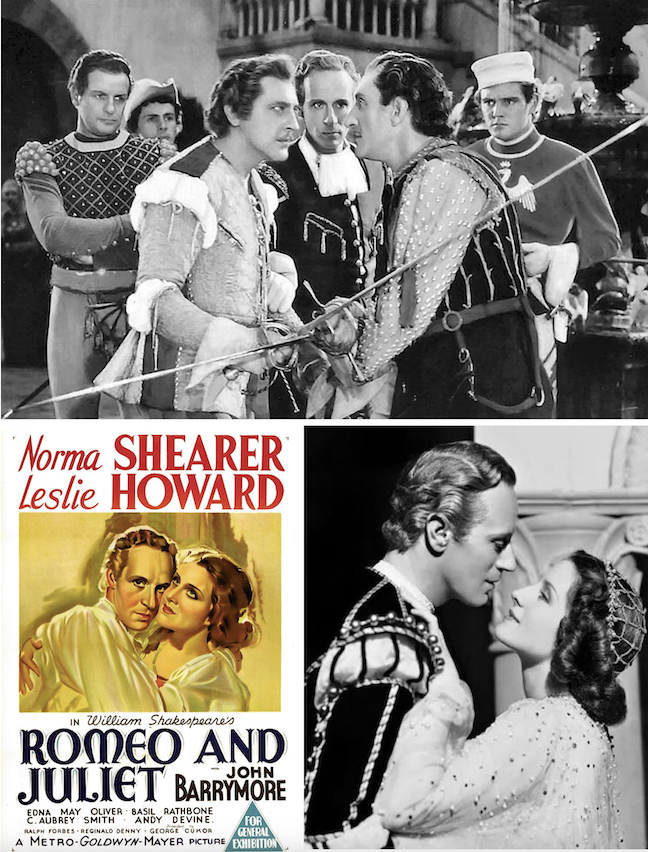
RAPIER-TONGUED…Top: Mercutio (John Barrymore, left) challenges Tybalt (Basil Rathbone) to a duel and is subsequently slain (this is when Mercutio speaks those famous words, “A plague o’ both houses!”); Leslie Howard and Norma Shearer; MGM promotional poster. (moviemusings.uk/tvtropes.org/imdb.com)

For years MGM’s “Boy Wonder,” producer Irving Thalberg, had pushed the studio to make the film, but MGM head Louis B. Mayer believed (correctly, it turned out) that the masses would consider Shakespeare too highbrow. Mayer was also concerned about a big budget picture in those lean Depression years, but somehow Thalberg won him over (the film lost almost a million dollars, roughly equivalent to $25 million today).
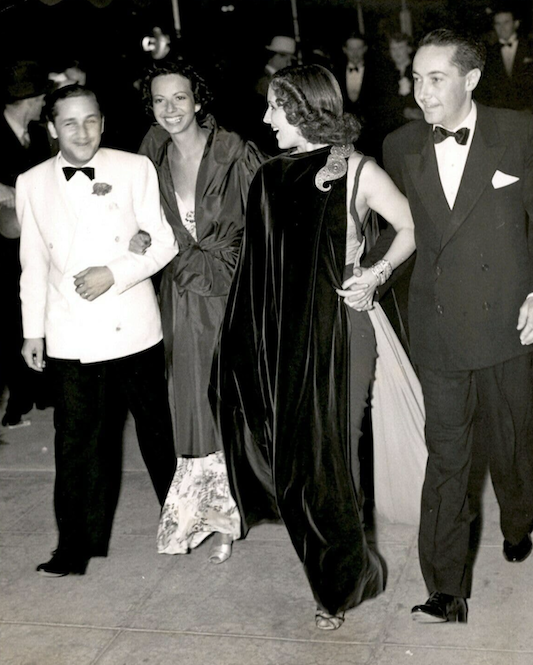
HOLLYWOOD NIGHTS…At left, Anthony Adverse director Mervyn LeRoy and his wife, Doris Warner, accompany Norma Shearer and her husband Irving Thalberg at the Los Angeles premiere of Anthony Adverse, July 29, 1936. A month and a half later Thalberg would die from a congenital heart condition at age 37. (see below). (Wikipedia)

Romeo and Juliet would have its world premiere on Aug. 20, 1936 at New York’s Astor Theatre. The West Coast premiere followed on Sept. 14that same night legendary MGM producer, Irving Thalberg, husband of star Norma Shearer, would die suddenly at the age of 37. Needless to note, the Los Angeles opening was deeply somber.

Now, just for kicks, here are the ages of actors who have portrayed Shakespeare’s star-crossed lovers in more recent films:

FOLLIES OF YOUTH…Clockwise, from top left, with ages in parentheses: Claire Danes (17) and Leonardo DiCaprio (22) in Romeo + Juliet (1996) Hailee Steinfeld (17) and John Booth (21) in 2013’s Romeo & Juliet; Clara Rugaard (27) as Juliet and Jamie Ward (35) as Romeo in 2025’s Juliet & Romeo; Olivia Hussey (16) and Leonard Whiting (16) in Romeo & Juliet (1968). (imdb.com/heyuguys.com/wikipedia.org/reddit.com)

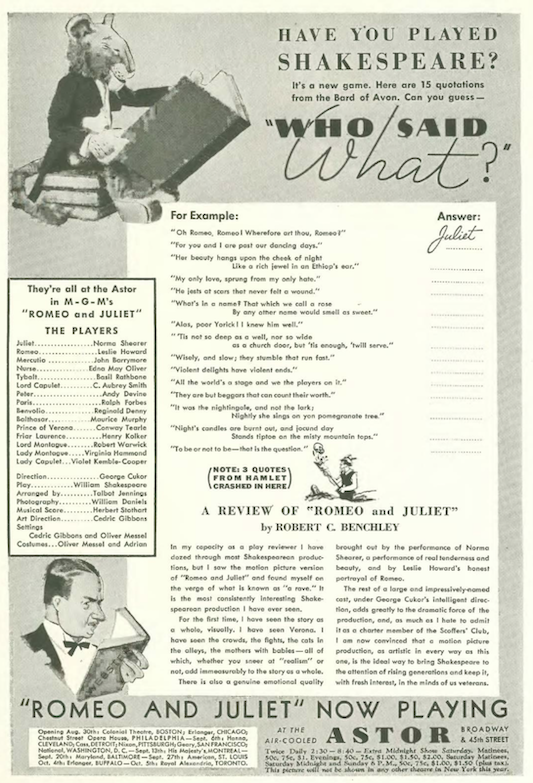
MGM spent a lot on the marketing of Romeo and Juliet, including this full-page ad in The New Yorker that included an endorsement from the magazine’s theater critic, Robert Benchley:
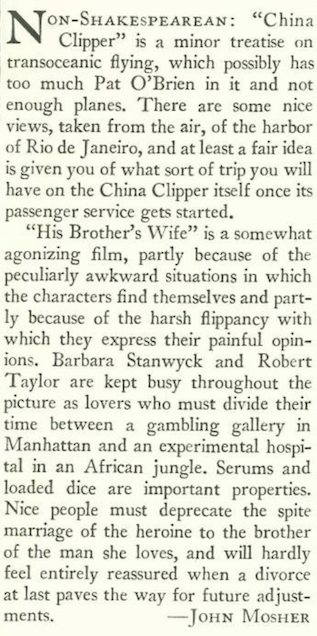
There were other, less-hyped films available for those allergic to Shakespearian drama. Mosher again:
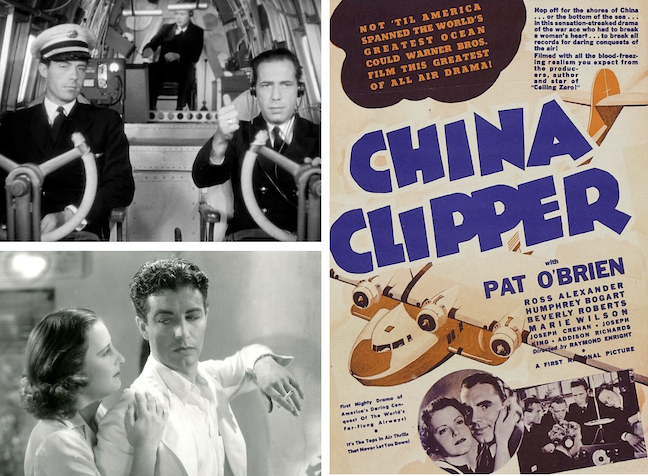
ALL SYSTEMS GO…Clockwise, from top left: Dennis Moore (left) and Humphrey Bogart prepare for a bumpy ride in China Clipper; Barbara Stanwyck and Robert Taylor in His Brother’s Wife. (dailymotion.com/blu-ray.com/imdb.com)

 * * *

Getting Out of Town

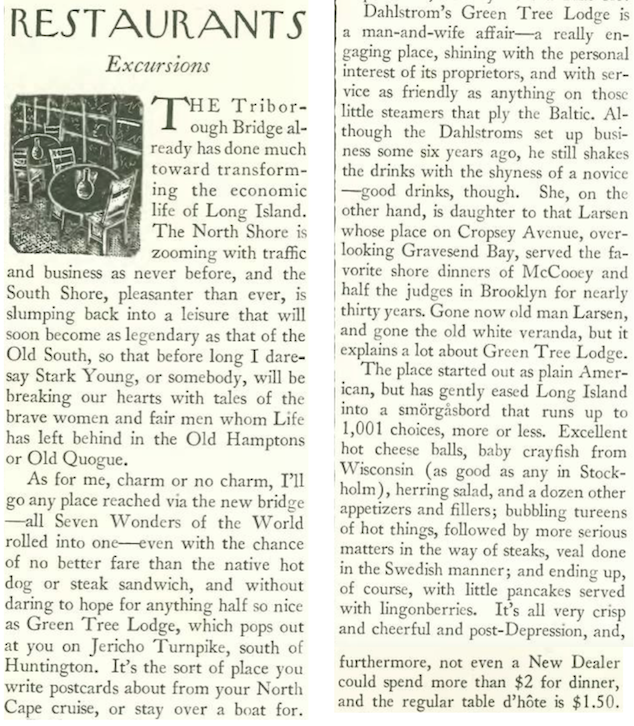
Food critic Sheila Hibben headed to Long Island to do a little restaurant-hopping, checking out Dahlstrom’s Greentree Lodge on the Jericho Turnpike. Dahlstrom’s was a popular Swedish restaurant that served food smörgåsbord-style. This concept for displaying a variety of self-serve dishes would not become widespread until the smörgåsbord was introduced to the general public in the Swedish Pavilion at the 1939 New York World’s Fair.
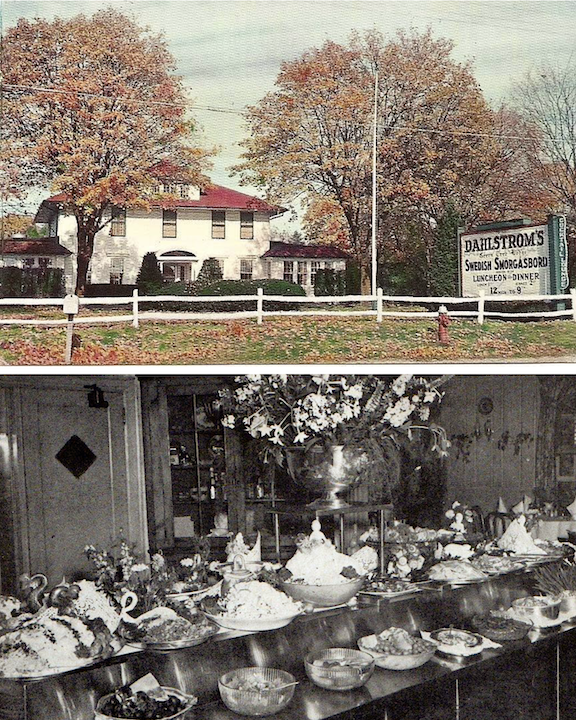
A RARE TREAT…Dahlstrom’s Greentree Lodge on Jericho Turnpike in Huntington, LI, was a popular Swedish restaurant that served food smörgåsbord-style from the 1930s through the 1960s. (Frank Leist via Facebook.com)

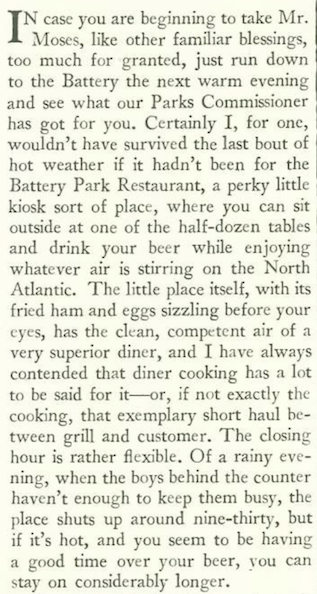
Closer to home, Hibben visited the Battery Park Restaurant, a “perky little kiosk sort of place where you can sit outside…and drink your beer while enjoying whatever air is stirring on the North Atlantic.”
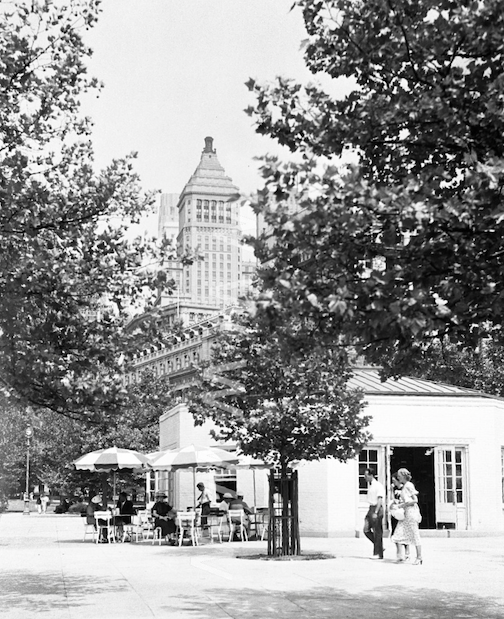
MADE IN THE SHADE…The Battery Park Restaurant, circa 1936. (eBay.com)

* * *

Cheers Before Tears

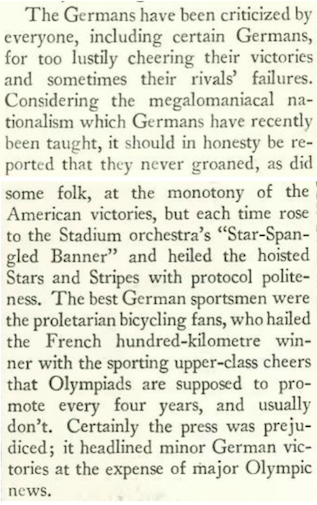
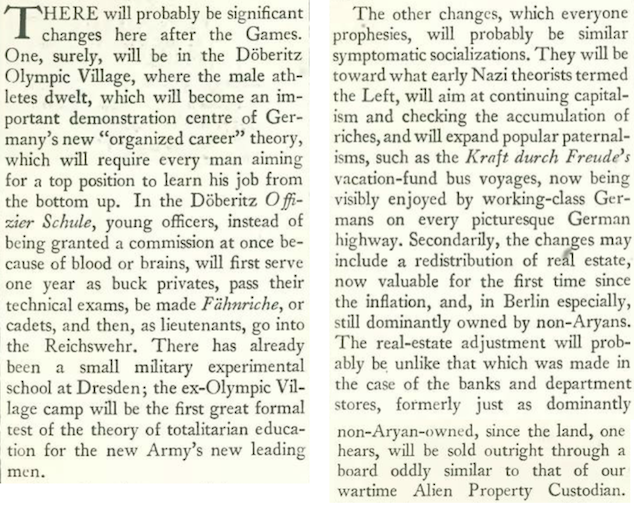
In her continuing report on the Berlin Olympics, Janet Flanner noted that some German fans—despite their country’s “megalomaniacal nationalism”—were polite about the “monotony of the American victories,” and even offered cheers for the French bicycling team (whose country would be invaded by theirs in less than four years).
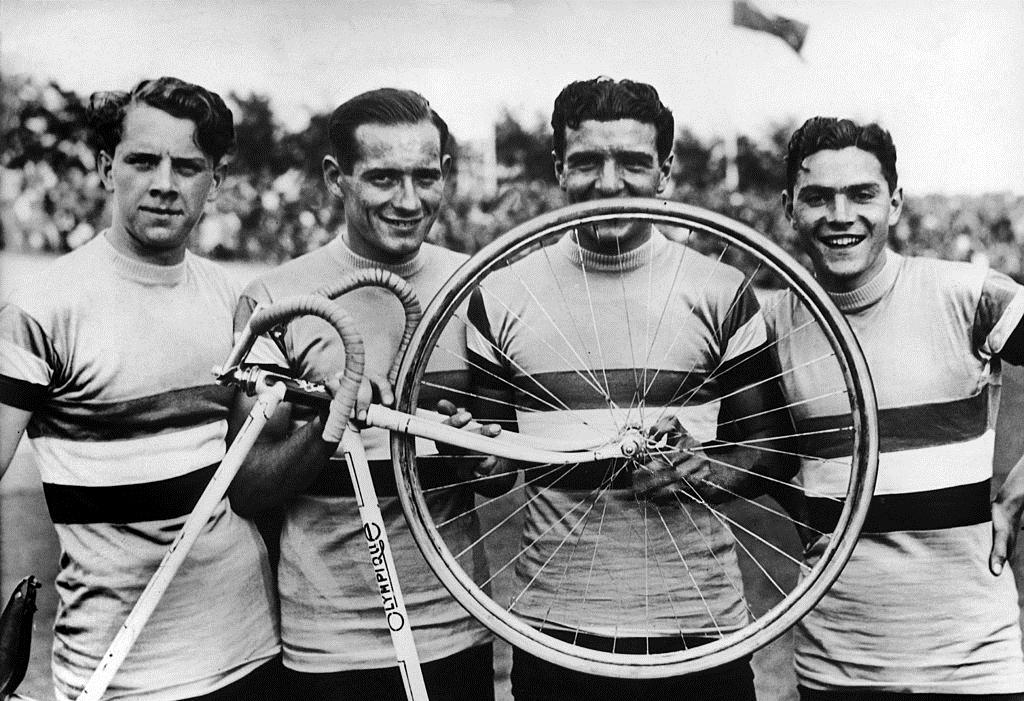
CYCLING GREATS…The French cycling team (left to right) Robert Charpentier, Guy Lapebie, Jean Goujon and Roger Le Nizerhy celebrate after winning the team race at the 1936 Berlin Summer Olympics. The Frenchmen delivered a historic performance, capturing seven total medals (three Gold, two Silver, and two Bronze). Charpentier was the star of the team, becoming a triple Olympic champion across road and track disciplines. (Wikipedia)

Flanner also noted some not-so-happy events that would occur following the games, including initial steps by the Nazis that would lead to the systematic seizure and forced transfer of Jewish real estate and property to the Third Reich’s leaders, citizens, and collaborators. It seems unlikely that Flanner was unaware of at least some of this plan, although she never explicitly mentions that this “real-estate adjustment” was directed solely at Jewish property owners.
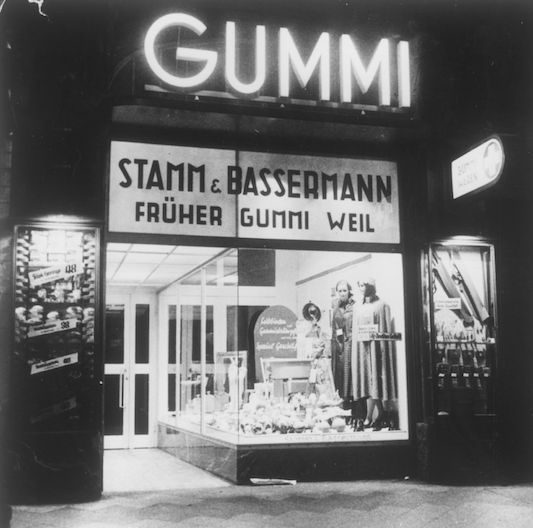
THE UGLY TERM “Aryanization” referred to the forced transfer of Jewish-owned homes and businesses to the Third Reich’s leaders, citizens, and collaborators. Above, the formerly Jewish-owned store Gummi Weil was expropriated and transferred to non-Jewish ownership (Stamm and Bassermann). Frankfurt, Germany, 1938. (Bildarchiv Preussischer Kulturbesitz)

 * * *

From Our Advertisers

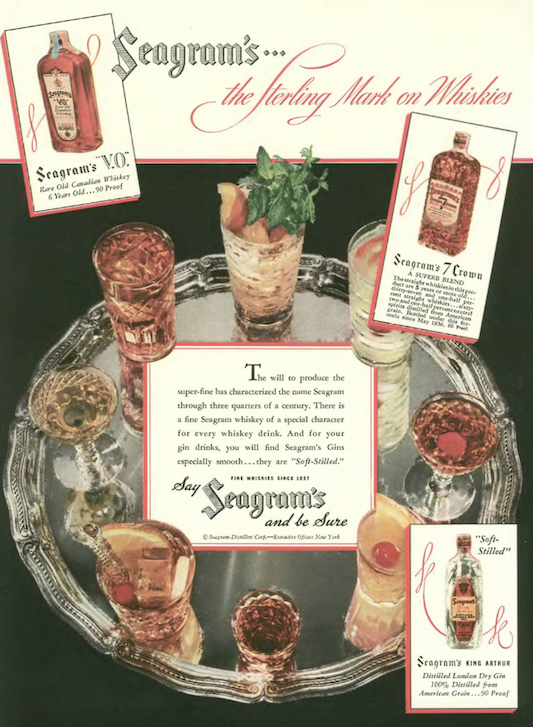
We begin with Seagram’s, promoting their signature whiskies and “soft-stilled” gin…
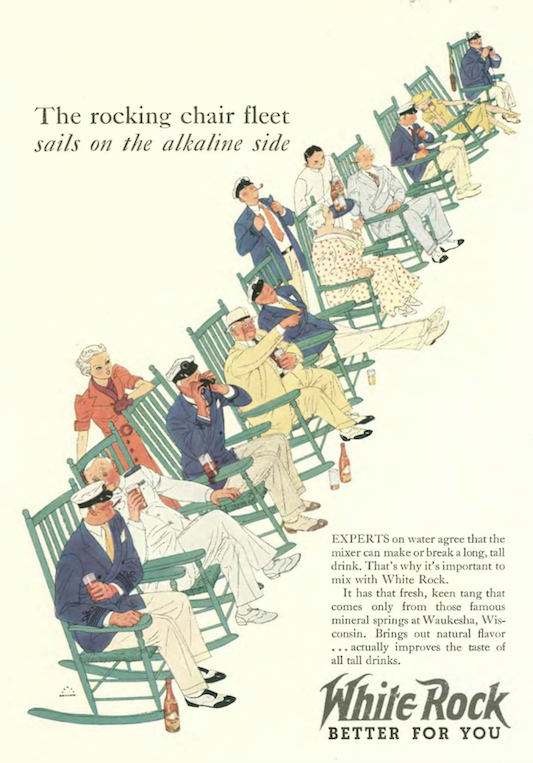
…White Rock continued to feature their clever and colorful John Holmgren-illustrated ads…
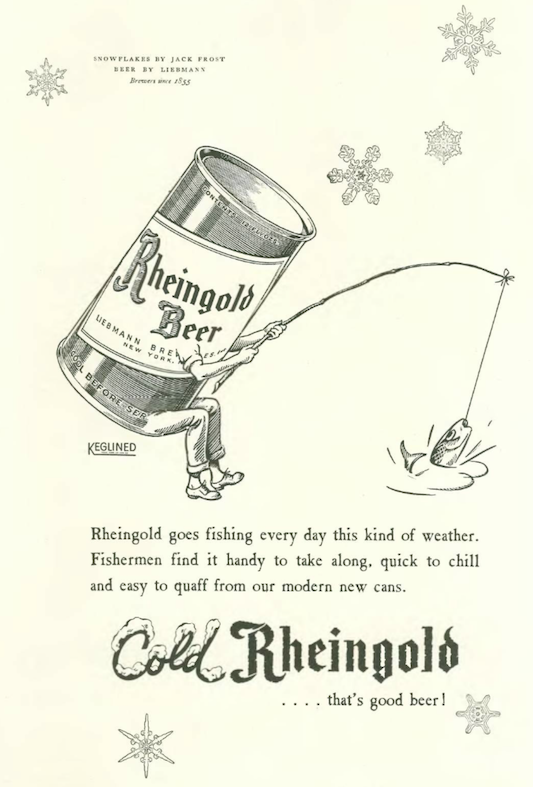
…Rheingold offered up their “Keglined” canned beer as a summer refresher…
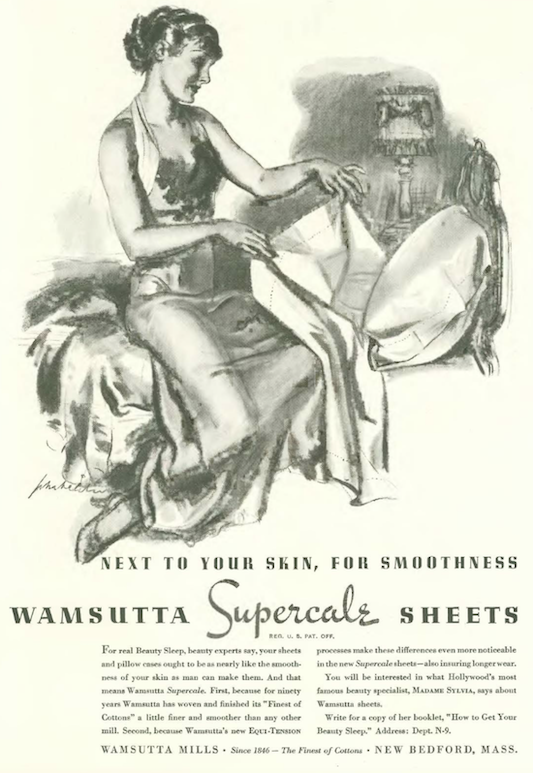
…Wamsutta Mills of New Bedford, Massachusetts became the world’s largest cotton-weaving plant by the end of the 19th century…their iconic “Supercale” sheets (introduced in 1935) typically featured a 200-thread-count…
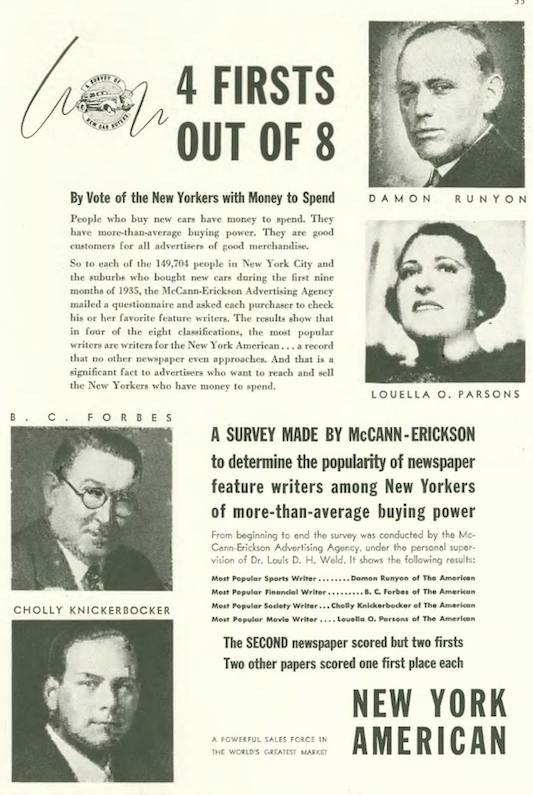
William Randolph Hearst’s New York American (soon to merge with Hearst’s New York Evening Journal) boasted a lineup of writers including short story writer and journalist Damon Runyon, movie gossip columnist Louella Parsons, Forbes magazine founder B.C. Forbes, and “Cholly Knickerbocker“—a pseudonym used by society writers, in this case by Maury Henry Biddle Paul

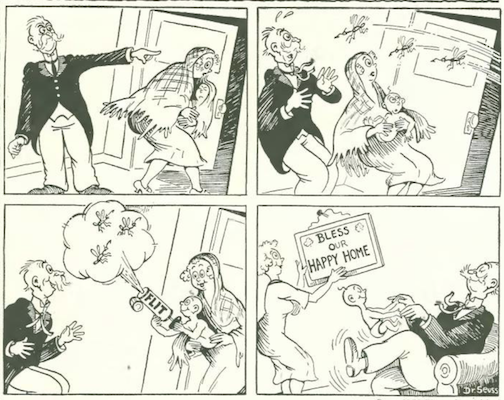
…another Flit ad by Dr. Seuss, this time an illegitimate child saves the roof over his head by whipping out some insecticide…
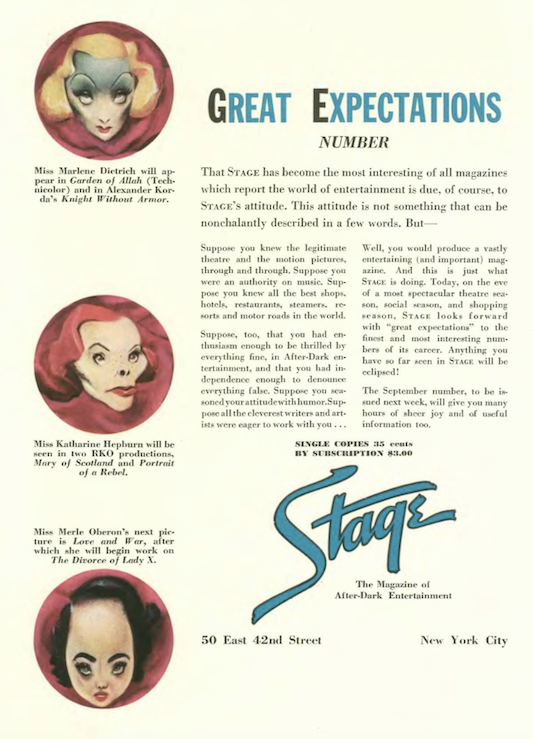
Stage magazine featured caricatures by Sam Berman to promote its “Great Expectations” issue…
Susan Willard Flint opens up our illustrators and cartoonists section…

…joined by James Thurber

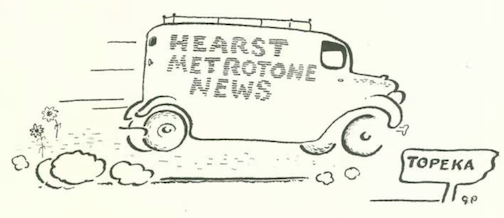
…and spots by Garrett Price

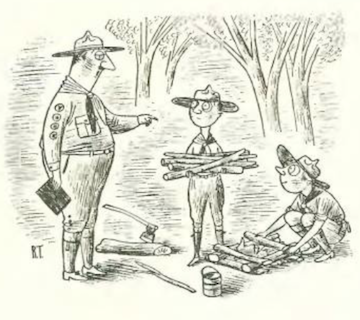
Richard Taylor

…and Christina Malman

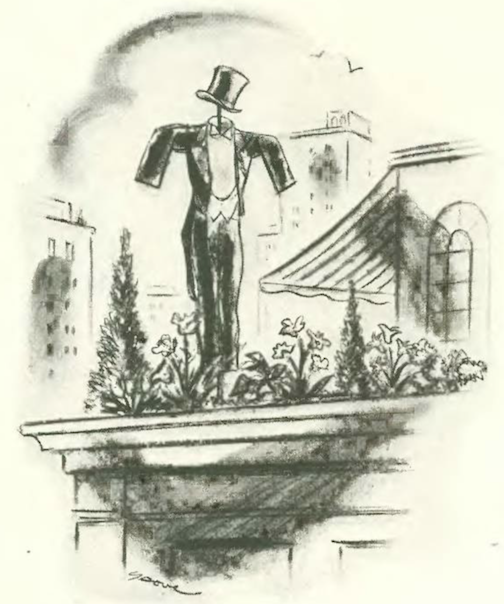
Leonard Dove drew up a stylish scarecrow…
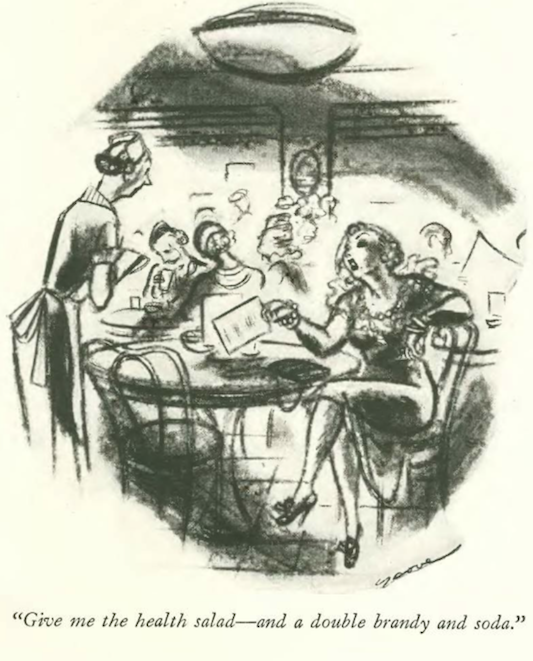
…and a woman who knows what she likes…
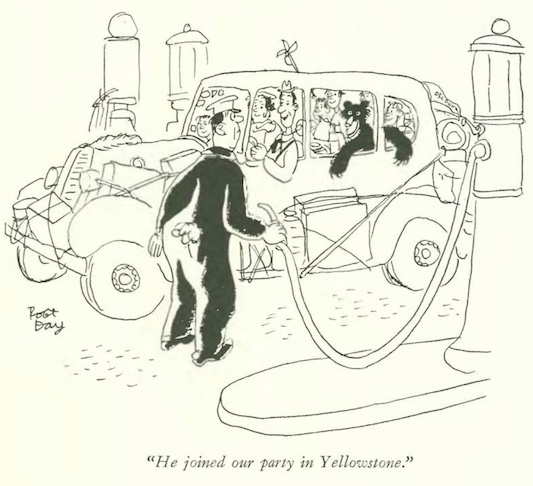
Robert Day found more than scenery on a trip to Yellowstone…
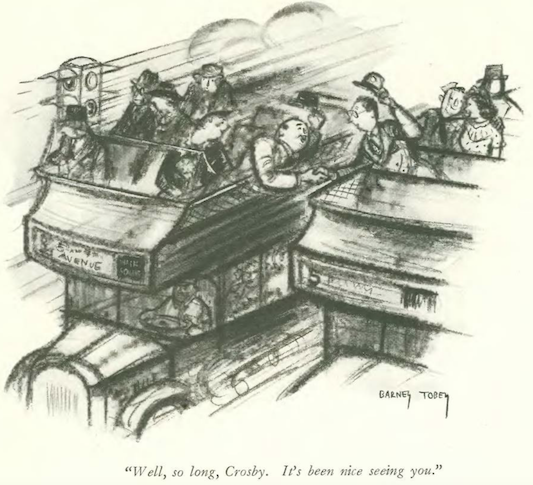
Barney Tobey exchanged some quick greetings on the omnibus line…
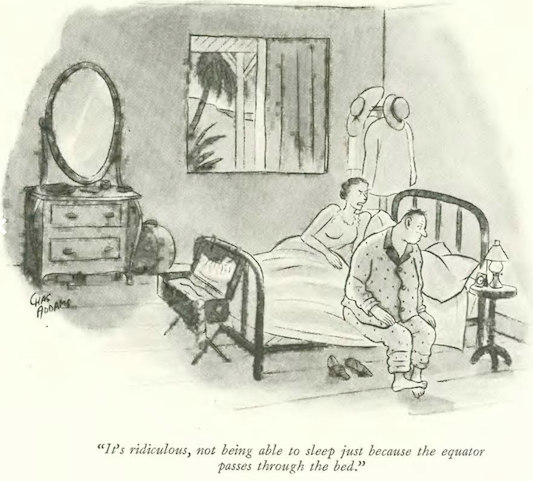
Charles Addams gave us a case of equatorial insomnia…
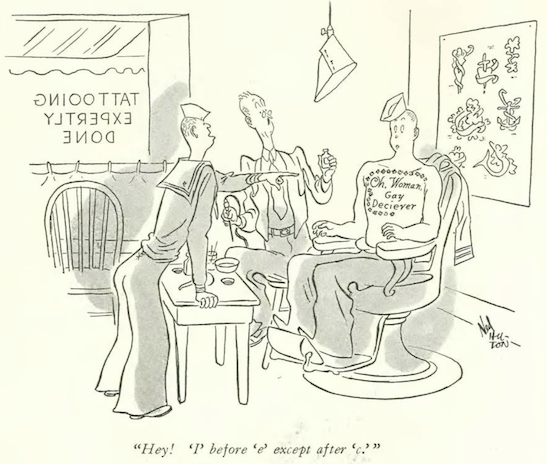
Ned Hilton’s inker had some editing to do…
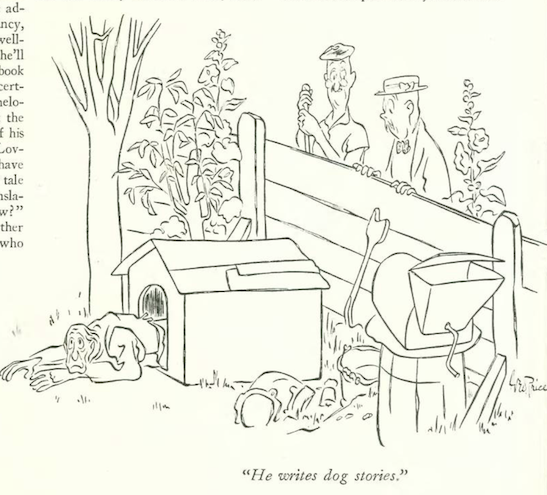
George Price gave new meaning to being “in the doghouse”…
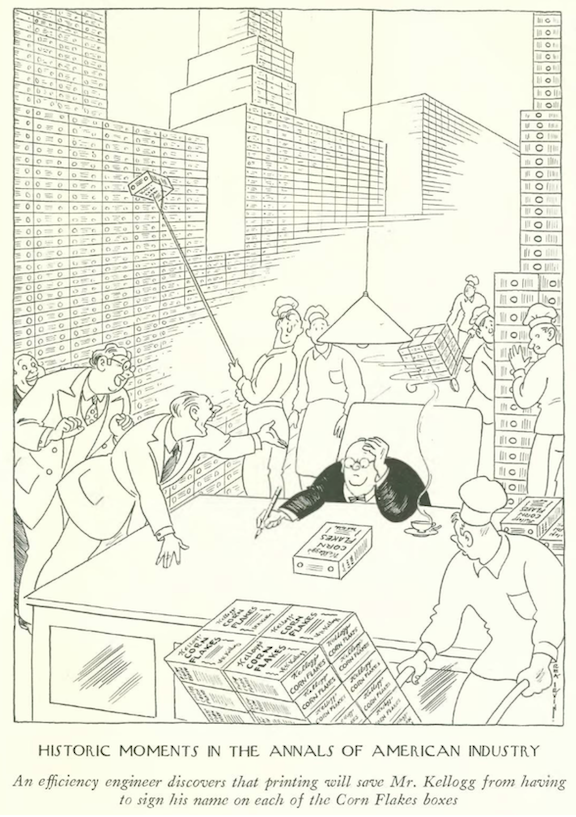
Rea Irvin revealed another advance in American ingenuity…
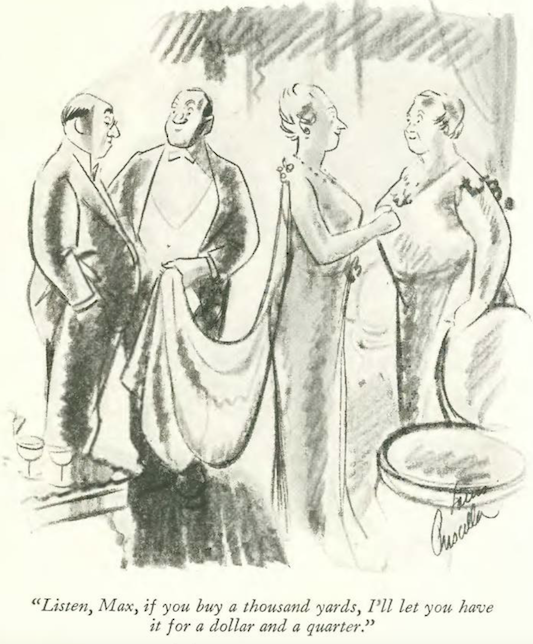
Louis Priscilla published the third of a total of three cartoons he contributed to The New Yorker from 1933 to 1936…Priscilla was also a magazine illustrator and a teacher at the Art Students League of New York…
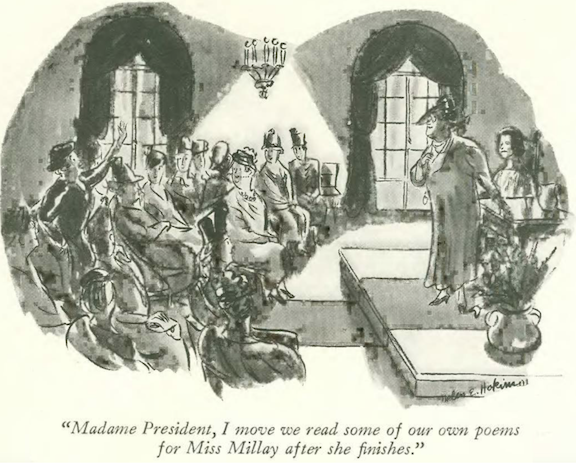
Helen Hokinson’s club ladies hoped to wow Edna St. Vincent Millay with some of their own poetry…
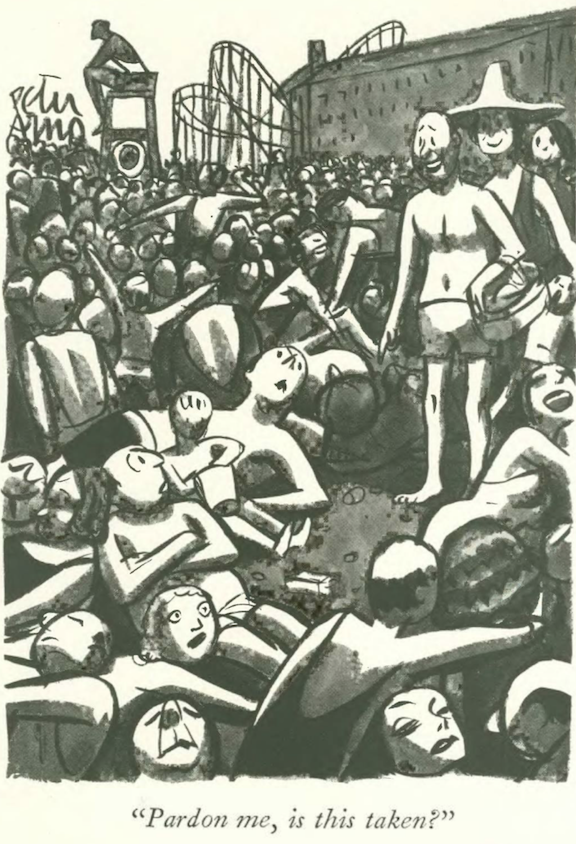
…and to close…if you’ve seen photos of Coney Island beaches in the 1930s, you know Peter Arno isn’t exaggerating much here…
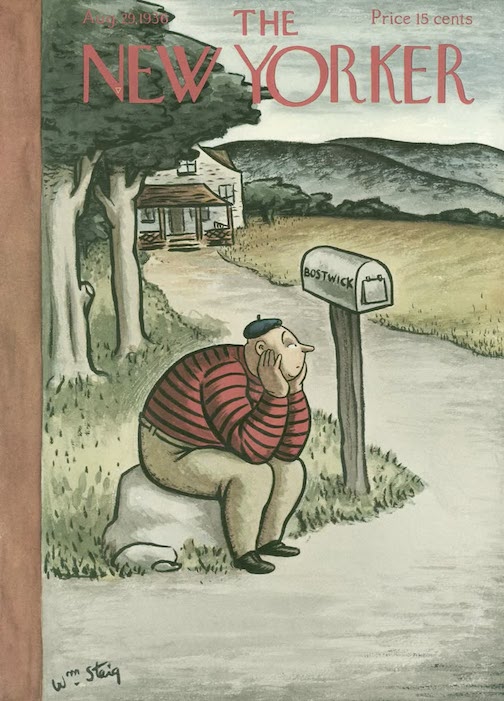
Next Time: Epic Adversity…
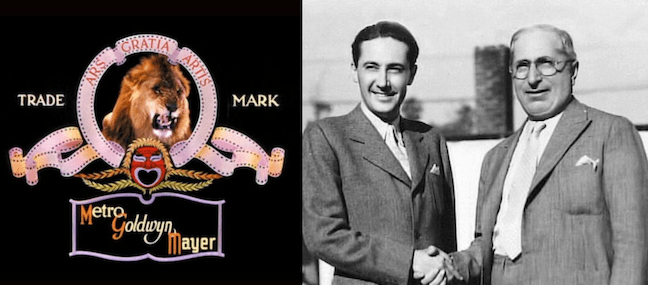
 

Star Maker

Above: Although MGM head Louis B. Mayer (right) had a strong business sense, he needed Irving Thalberg's keen ability to combine artistic quality with commercial success. During his twelve years at MGM, Thalberg supervised the production of more than four hundred films. (artsfuse.org)

Born in a Ukrainian village in 1884, Louis B. Mayer grew up poor in Canada and dropped out of school at age twelve to support his family. Nearly three decades later he co-founded Metro-Goldwyn-Mayer, lured the “boy genius” Irving Thalberg from Universal, and went on to lead one Hollywood’s most prestigious filmmaking companies.

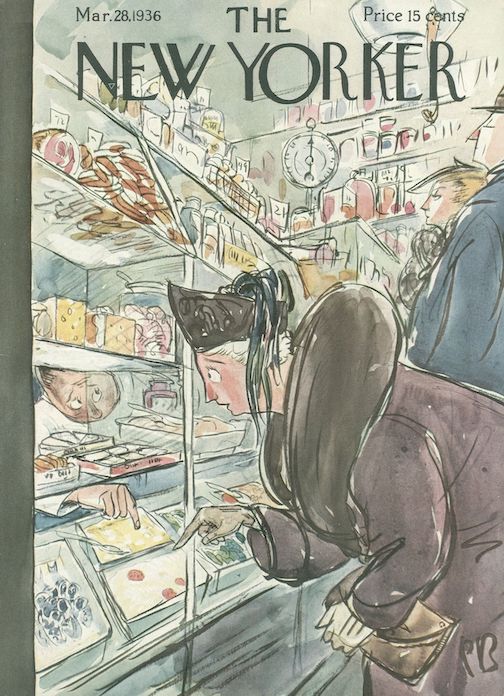
March 28, 1936 cover by Perry Barlow.

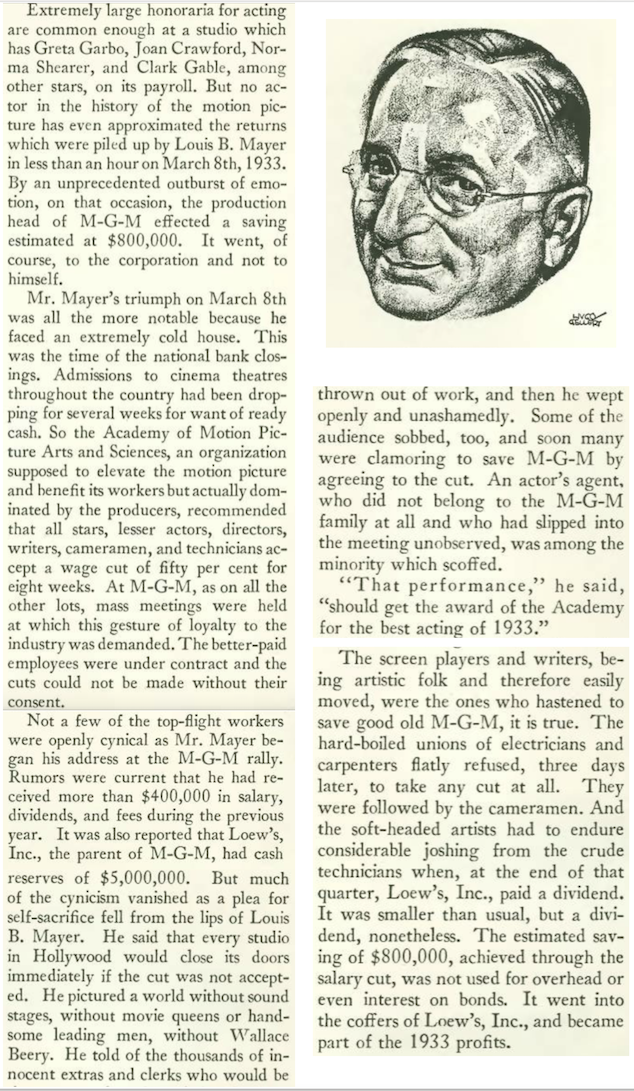
Pulitzer Prize-winning journalist Henry F. Pringle (1897–1958) looked into Mayer’s life in a two-part profile, leading with a look into the movie mogul’s ability to control his vast stable of stars (illustration by Hugo Gellert):

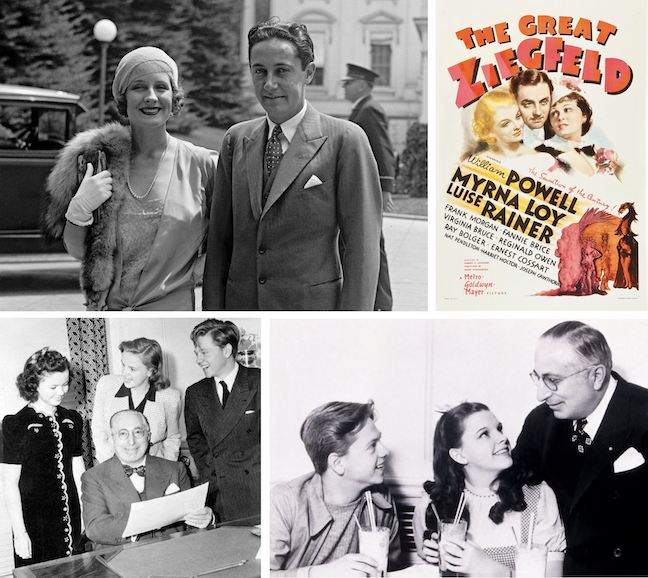
BOY GENIUS…Clockwise, from top left, MGM producer Irving Thalberg (seen here in 1929 with wife and actress Norma Shearer), had a knack for combining quality art with commercial appeal. Born with a weak heart, Thalberg died in September 1936 at age 37; The Great Ziegfeld was one of MGM’s top movies in 1936—it won three Academy Awards including Best Picture; Louis B. Mayer with young MGM stars Mickey Rooney and Judy Garland; Shirley Temple signing with MGM in 1941 with Mayer, Garland and Rooney. (theguardian.com/Wikipedia/facebook.com)

Mayer (1884–1957) is credited with helping to create the “star system” in Hollywood. “The idea of a star being born is bush-wah,” Mayer once said. “A star is made, created; carefully and cold-bloodedly built up from nothing, from nobody.” Mayer believed he “made” his stars, and therefore had the right to control their careers as well as their very lives. Pringle explained the predicament of actress Joan Crawford:

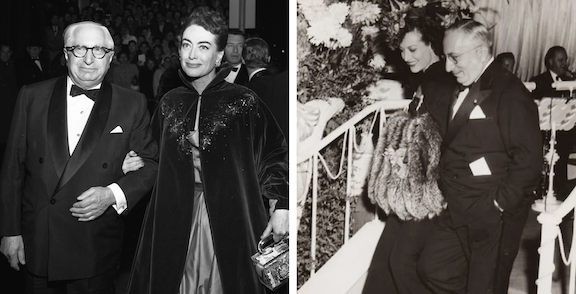
MAYER-MADE…Louis B. Mayer not only gave Joan Crawford a new name (she was born Lucille LeSueur), he was also instrumental in transforming her from a dancer to a major Hollywood star. Throughout her career at MGM Crawford pestered Mayer for better roles (until she finally left MGM in 1943). However, they remained friends until his death in 1957. Crawford once called Mayer “the best friend I ever had.” (Wikipedia/imdb.com)

Many stars were less forgiving than Crawford regarding Mayer’s controlling behavior. Although many male actors saw him as a father figure, women often had a very different view. A young Elizabeth Taylor called him a “monster” for his attempts to oversee her life, while Judy Garland was forced to go on diets and take amphetamines and barbiturates to meet Mayer’s punishing work schedules. Many believe this led to Garland’s lifelong addiction issues.

* * *

Water Water Everywhere

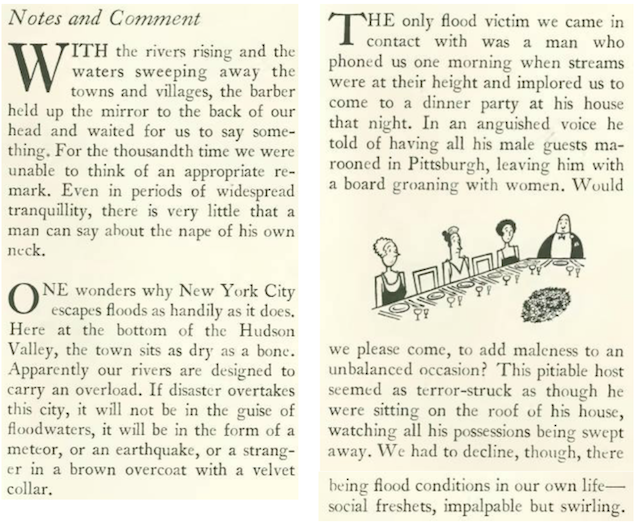
In his “Notes and Comment,” E.B. White was at a loss for words to describe the floods in the northeastern U.S. that followed a bitter winter. A combination of rain and the melting of heavy snowpack caused massive damage in the Connecticut and Merrimack River valleys as well as in the Pittsburgh area. In addition to approximately two hundred fatalities, hundreds of thousands were left homeless.

DELUGE…The flooding in Albany, NY, in 1936 (top) was part of a series of devastating floods that affected much of the northeastern United States. Below, the Holyoke Dam in Massachusetts, March 19, 1936. (South Hadley Public Library/sungazette.com)

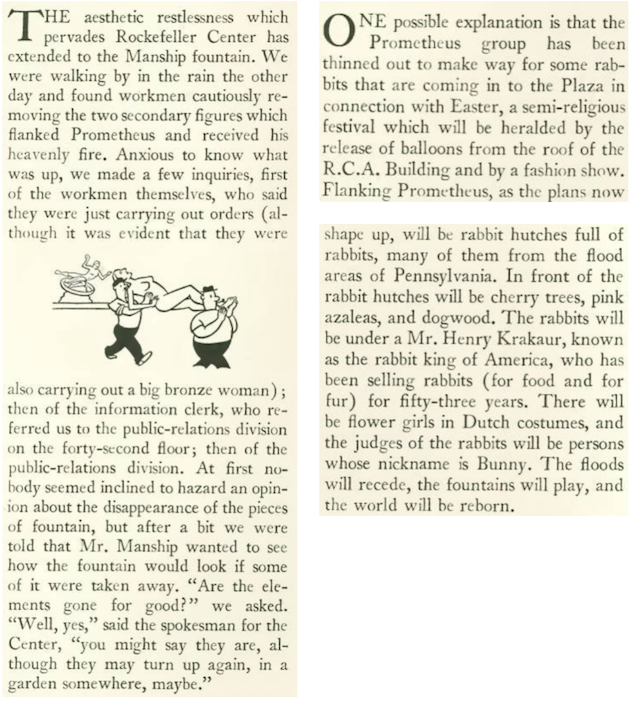
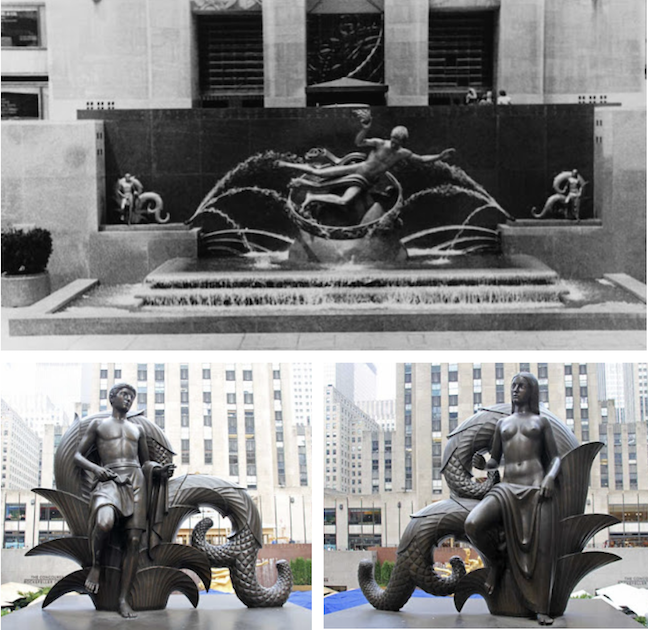
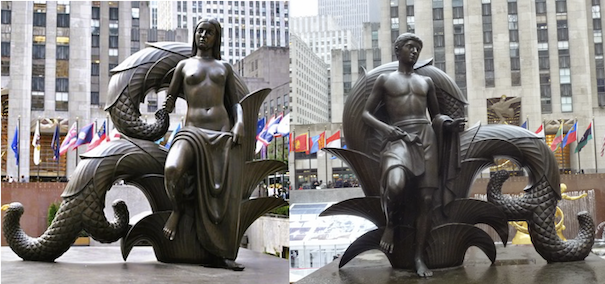
White’s “Notes” also included an update on the “aesthetic restlessness” at Rockefeller Center, where the statues Youth and Maiden were removed from the Paul Manship-designed Prometheus fountain. The artist decided the two bronze figures did not fit well in the fountain, so they were moved to the roof garden of the Palazzo d’Italia.

EXILED…Paul Manship’s two gilded figures, Youth and Maiden, representing mankind receiving the fire, originally flanked Prometheus (top photo). In 1936 they were moved to the roof garden of the Palazzo d’Italia, but were returned to the Plaza in the 1980s. Pictured below, the six-foot statues were again moved in 2001 to the top of the Plaza staircase between the Channel Gardens and the Sunken Plaza.
(mcny.org/Elisa.rolle/photo-opsblogspot.com)

 * * *

Pyramid Scheme

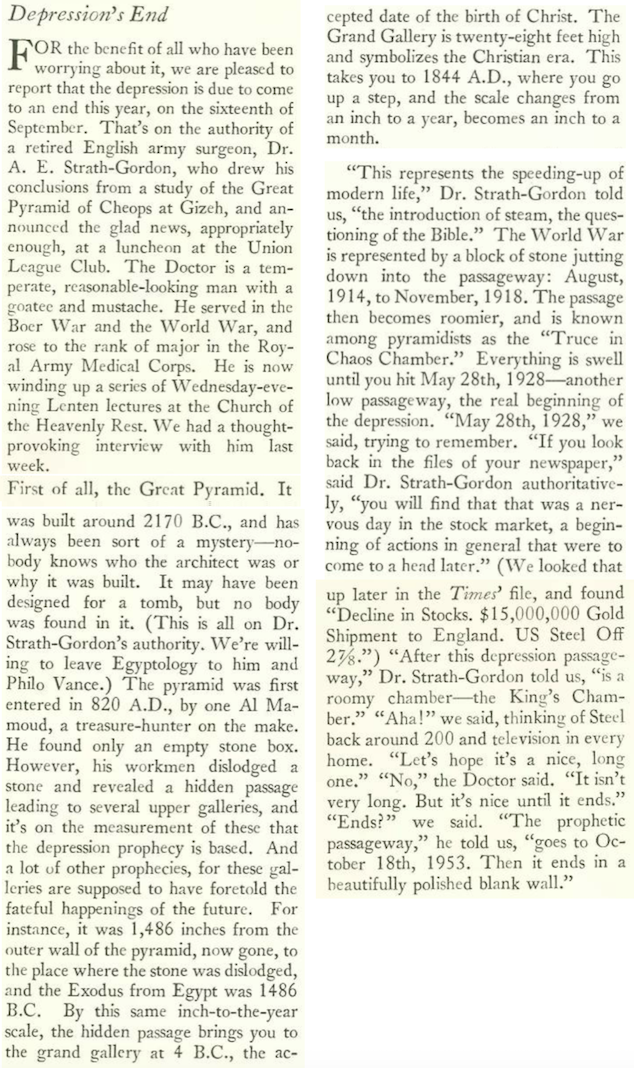
“The Talk of the Town” commented on some unusual research conducted by Dr. A.E. Strath-Gordon, in which he used measurements from the Great Pyramid to predict the end of the Depression. Excerpts:

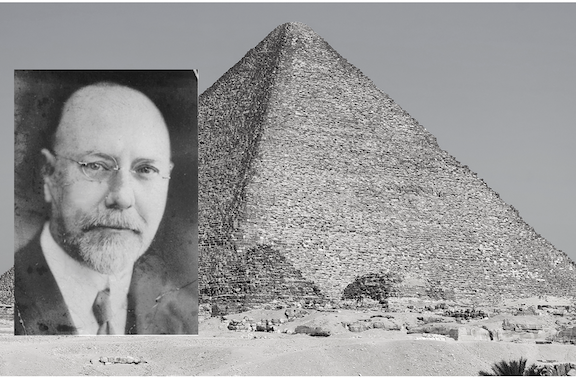
JUST READ THE STONES…Dr. A.E. Strath-Gordon (1873–1952) was a spiritualist, researcher, author, and lecturer on the occult and paranormal subjects. (strathgordon.wordpress.com)

* * *

Deeper South

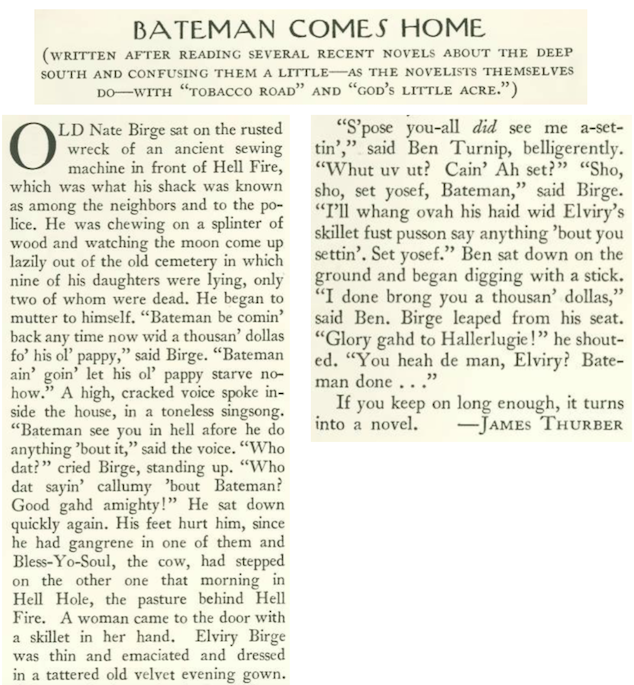
James Thurber had some fun with novels about the Deep South that sought to employ authentic dialogue—but not as successfully as novelist Erskine Caldwell.  These excerpts are the first and last paragraphs from the piece.

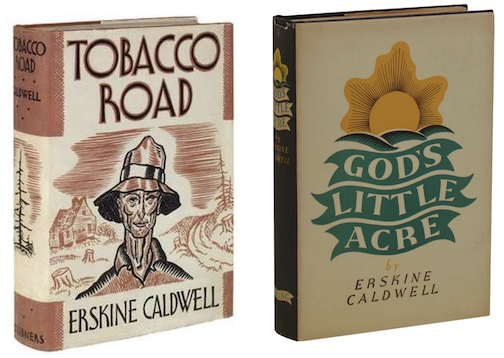
CRITICALLY ACCLAIMED…Erskine Caldwell’s writings about poverty and racism in his native South included novels such as Tobacco Road (1932) and God’s Little Acre (1933). Unlike Thurber’s parody, Caldwell’s writing style has been described as spare, direct and unadorned.  (Wikipedia/etsy.com)

* * *

An Introduction

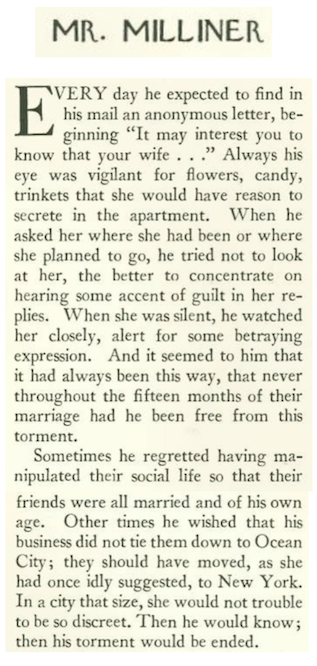
I didn’t know much about the novelist Leane Zugsmith until I read her short story in the March 28, 1936 edition of The New Yorker. During the 1930s she was prominent among writers who focused on the struggles of the working class during the Great Depression. “Mr. Milliner” was the eighth short story she published in the magazine, out of a total of fifteen from 1934 to 1949. Here are the opening lines:

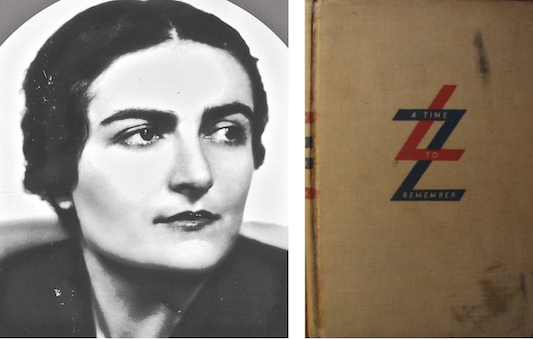
FED UP…Writer Leane Zugsmith (1903–1969) focused on the shortcomings of capitalism in her novels and short stories, including her 1936 novel A Time to Remember, which depicted a department store strike and the rise of white-collar unions. She published fifteen short stories in The New Yorker from 1934 to 1949. (bolerium.com)

 * * *

Over There

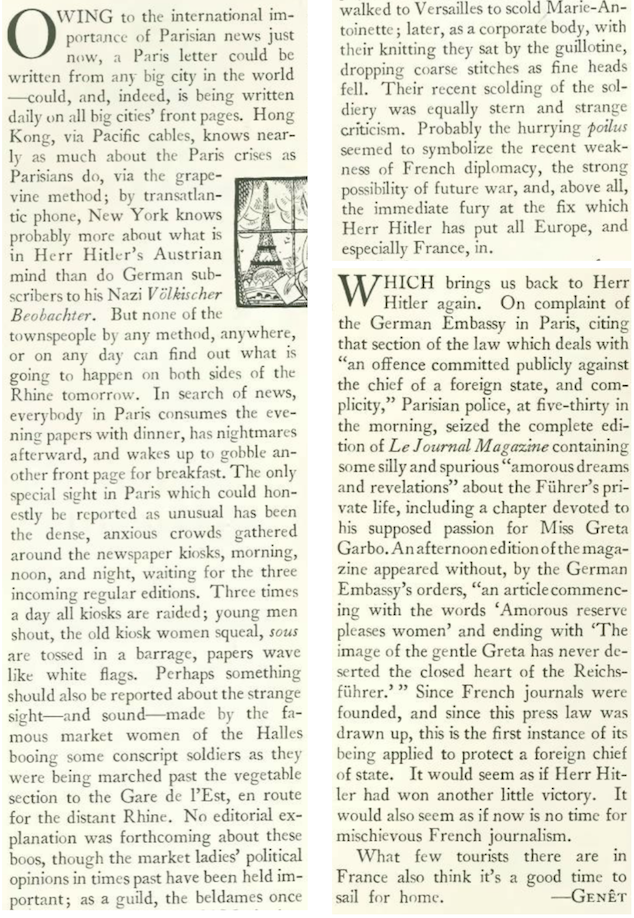
In her latest dispatch from Paris, Janet Flanner noted the growing anxiety among Parisians over Germany’s arms buildup and its re-occupation of the Rhineland.

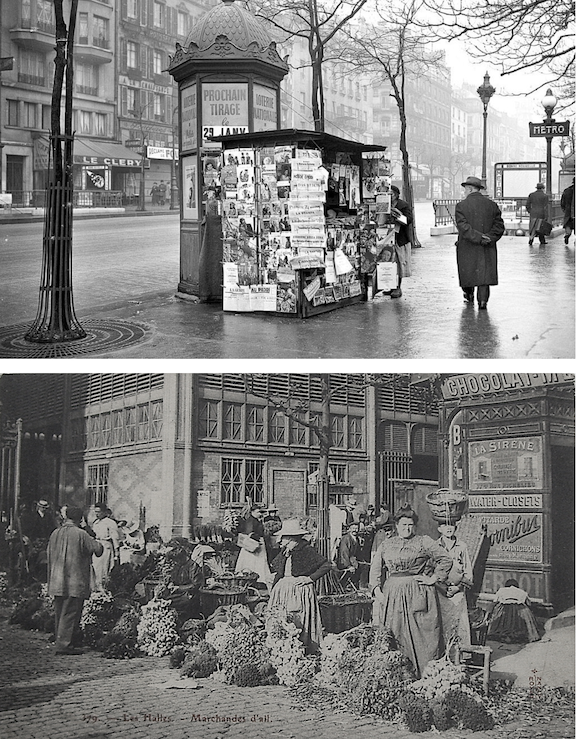
HAIRY HEADLINES…Janet Flanner noted the anxious crowds around newspaper kiosks (unlike the quiet image above) and the boos being issued by the market women in the Halles (at passing soldiers) as war with Germany was being seen as inevitable. (tresors-de-paris.com/mattbarrett-travel.com)

 * * *

At the Movies

Lillian Hellman’s drama The Children’s Hour premiered on Broadway on Nov. 24, 1934, and ran for 691 performances—but bringing it to the screen in the era of the Motion Picture Production Code (aka Hays Code) proved a bit tricky, according to film critic John Mosher. Hellman’s play centered on a schoolgirl’s false accusation of lesbianism against two of her teachers, or as Mosher put it rather delicately, “a friendship of two young women…characterized by such emotional undercurrents as are not held seemly for screen exposition.”

Hellman rewrote the play to conform to the Code, removing any mention of lesbianism and changing the dramatic focus to a schoolteacher accused of having sex with another’s fiance. It appeared in 1936 under the title These Three.

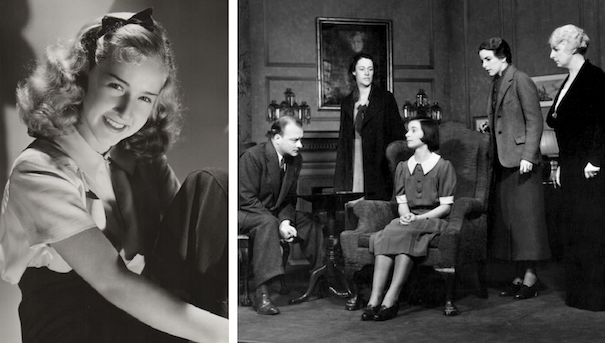
Mosher wished the film could have included Florence McGee, who portrayed the conniving student protagonist Mary Tilford in the original play. The part in These Three went instead to Bonita Granville, who at age fourteen earned an Academy Award nomination for her performance as Mary Tilford.

TWO TAKES…Florence McGee (pictured at right, seated center) portrayed the conniving student protagonist Mary Tilford in the Broadway production of The Children’s Hour. The part of Mary Tilford in the re-written film version of the play, These Three, went to Bonita Granville (left), who at age fourteen earned an Academy Award nomination for her performance. (oscarchamps.com/Wikipedia)
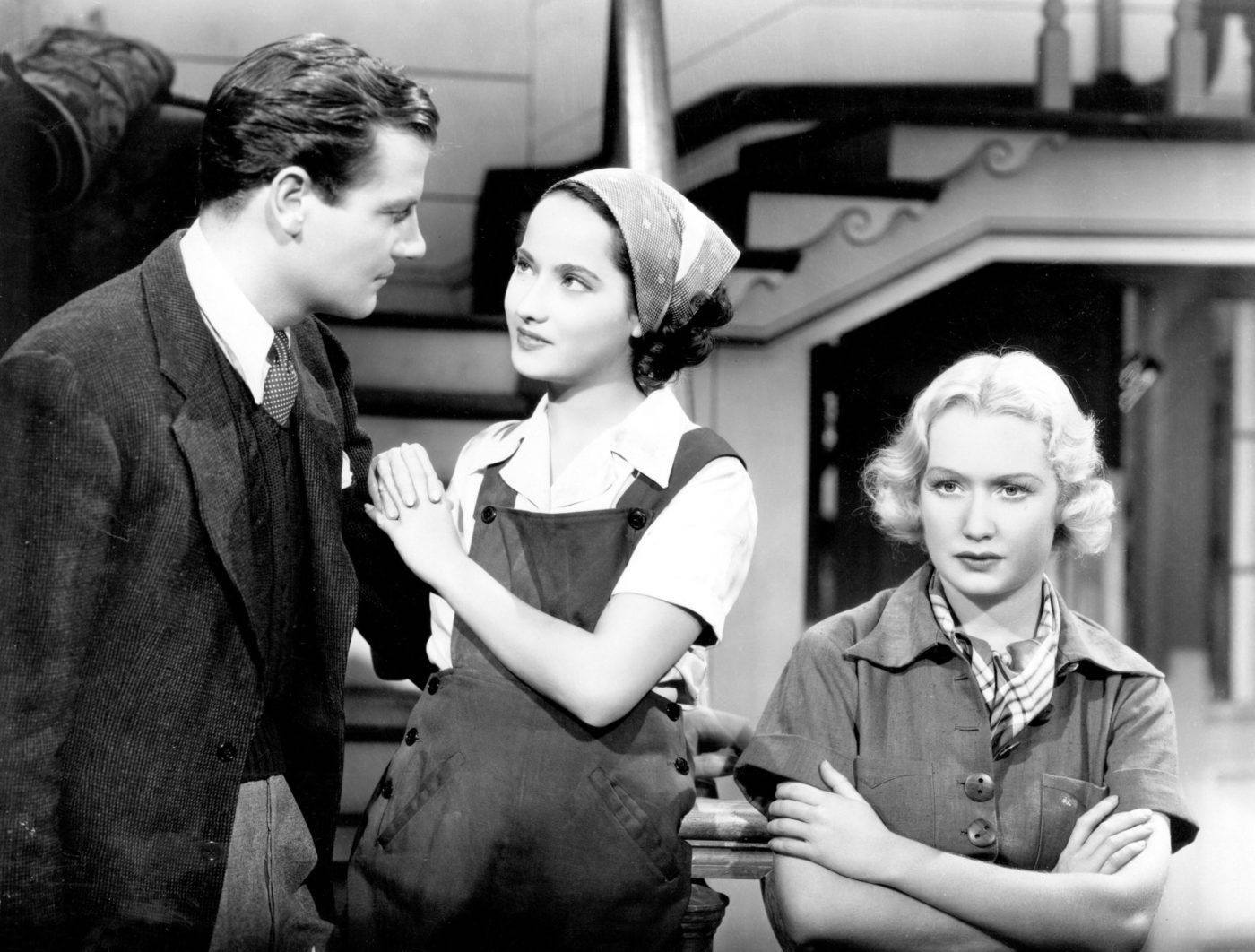
THREE TOTALLY STRAIGHT PEOPLE…Joel McCrea, Merle Oberon and Miriam Hopkins starred in These Three, a cinematic rewrite of Lillian Hellman’s play The Children’s Hour. (quadcinema.com)

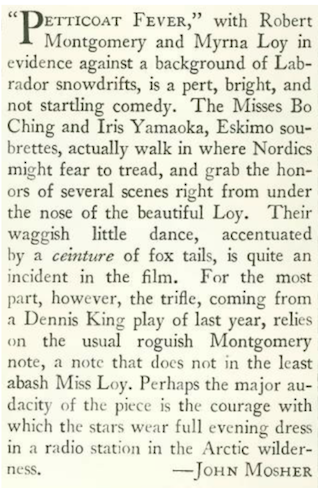
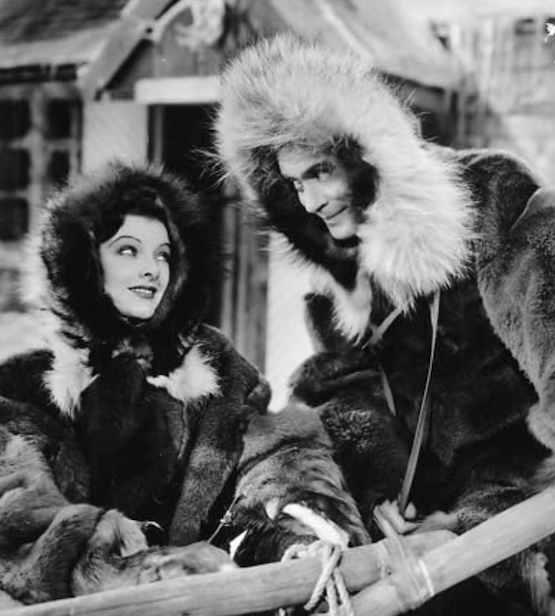
Mosher also reviewed Petticoat Fever, a “trifle” starring Myrna Loy and Robert Montgomery.

BABY ITS COLD OUTSIDE…Myrna Loy and Robert Montgomery in Petticoat Fever. Montgomery was the father of Elizabeth Montgomery, best known for her portrayal of Samantha Stephens on the TV sitcom Bewitched. (IMDb.com)

 * * *

From Our Advertisers

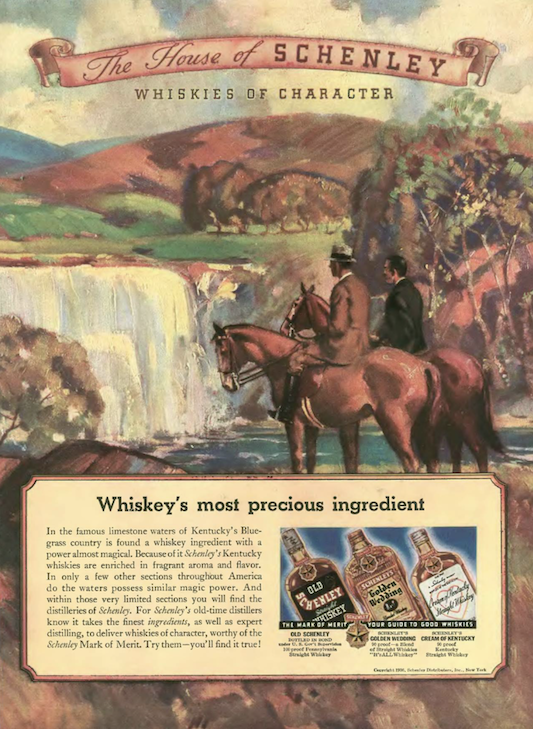
The inside front cover advertisement belonged to the “House of Schenley,” which emphasized the purity of Kentucky’s “limestone waters”…

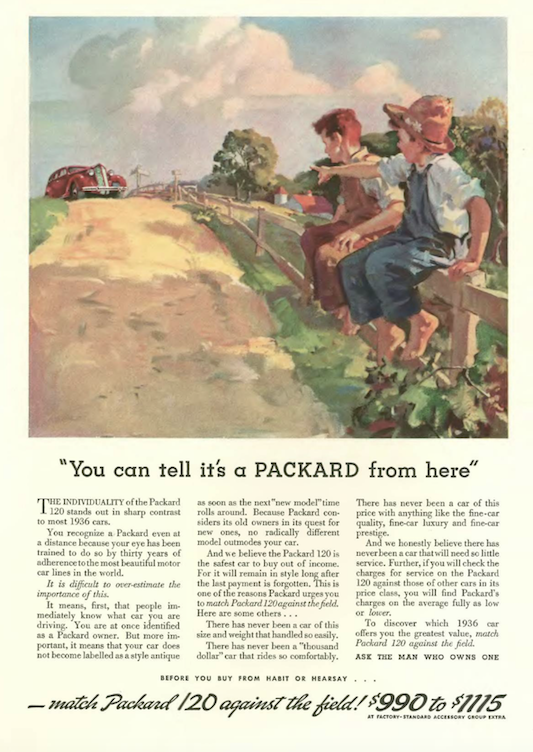
…the makers of Packard automobiles also appealed to bucolic sensibilities with this homespun image…

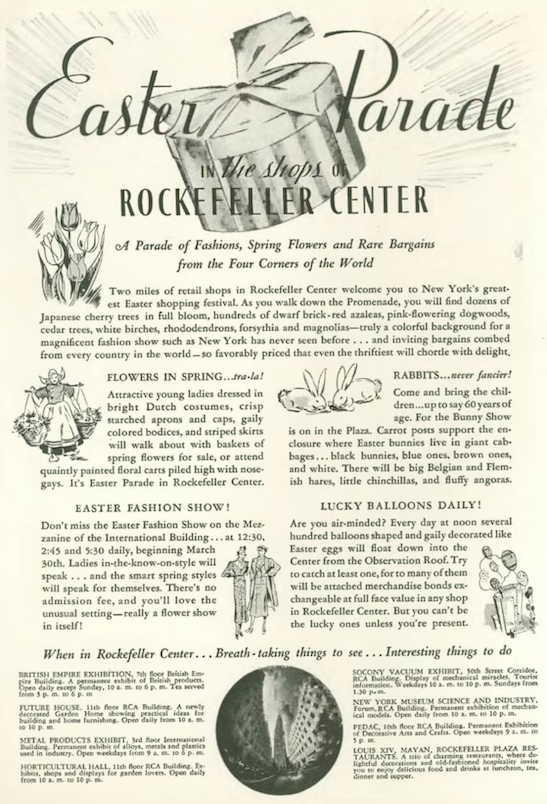
…the Easter Parade has been a New York tradition since the 1870s, when New York’s elite would walk down Fifth Avenue to show off the latest European fashions…the event was largely centered around churches like St. Patrick’s, hence the ad from its neighbor across the street, Rockefeller Center…today the event is called the Easter Parade and Bonnet Festival, a more inclusive event featuring eccentric, handcrafted bonnets…

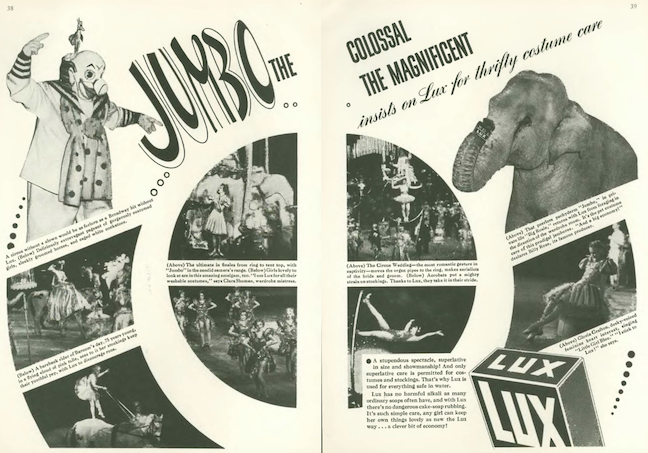
…Lux Soap Flakes were featured in big, celebrity-filled ads in mid-century America, soap being one product (like whiskey and cigarettes) that proved to be mostly Depression-proof…

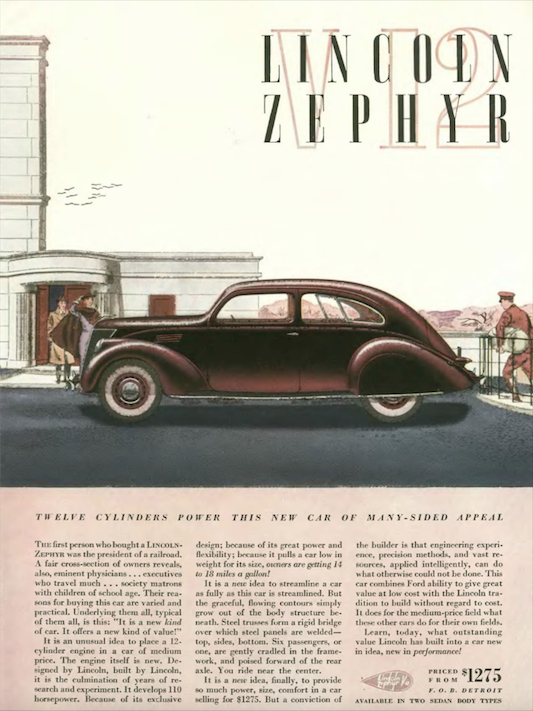
…a twelve-cylinder engine was usually a feature of top-of-the-line luxury automobiles, but the folks at Lincoln put one into their medium-priced Zephyr…the car succeeded in reigniting sales at Lincoln dealerships during the Depression…

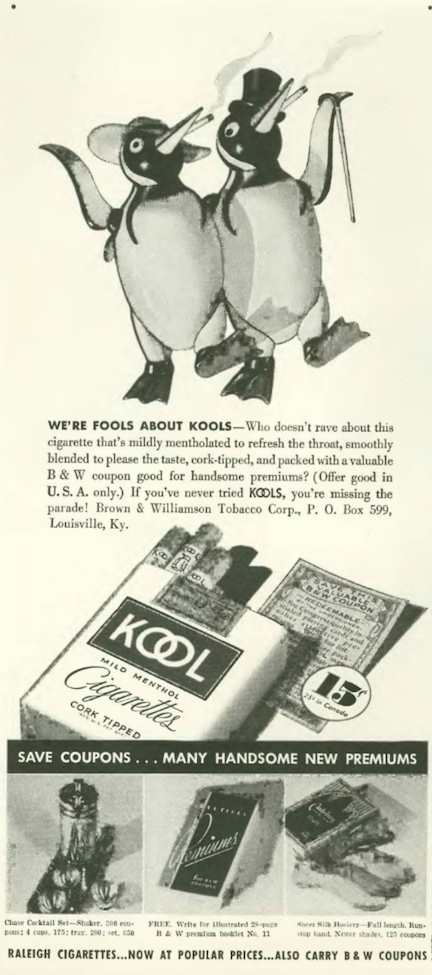
…beginning in the late nineteenth century cigarette companies included coupons that could be redeemed for items ranging from cocktail sets to silk stockings (per this ad)…Brown & Williamson, the makers of Raleigh and Kool cigarettes, featured coupons on the back of every pack, and smokers could write the company for a free premium catalog…

…this Raleigh catalog from the early 1950s even featured toys…250 coupons could get you a “Teddy bear with plastic nose”…so keep on puffing…

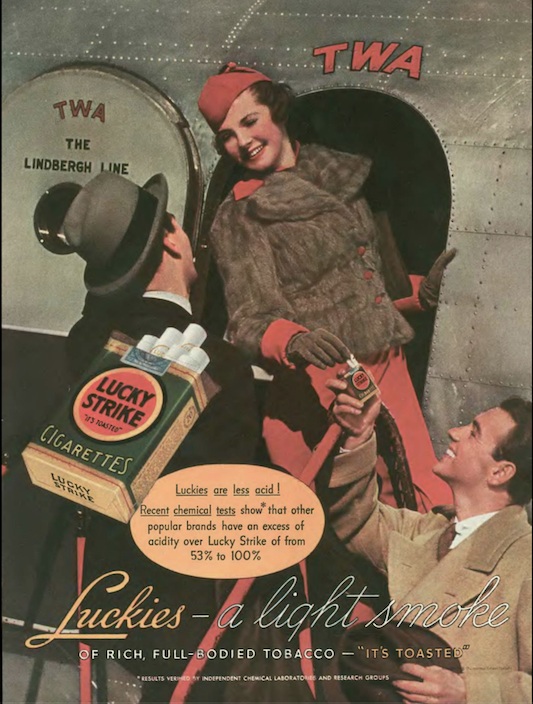
…Luckies went with the glamour of flying, an experience only the well-heeled could afford…

…on to our cartoonists, we have Richard Taylor

…and Barbara Shermund welcoming us into the issue…

…and a this nice spot from Christina Malman

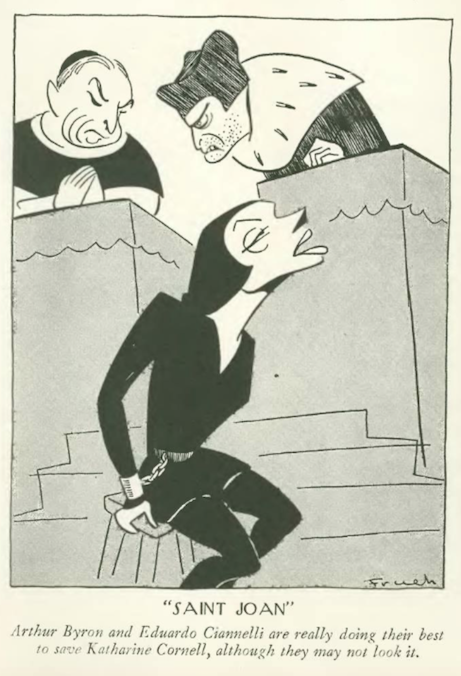
Al Frueh gave us his interpretation of Saint Joan

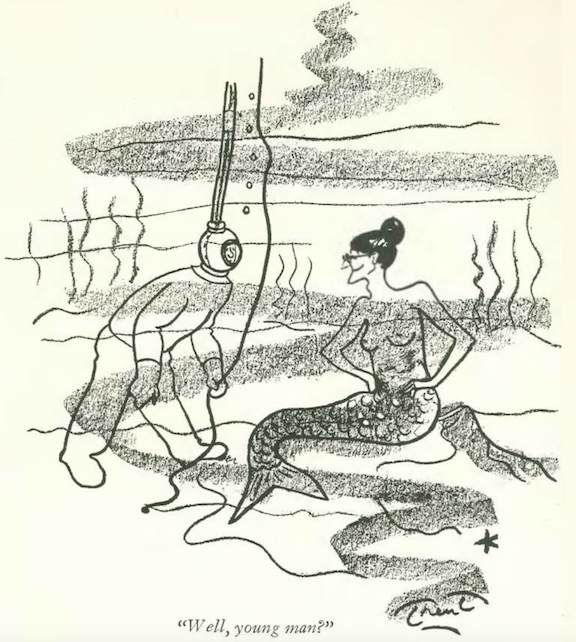
W.P. Trent explored the deep seas…

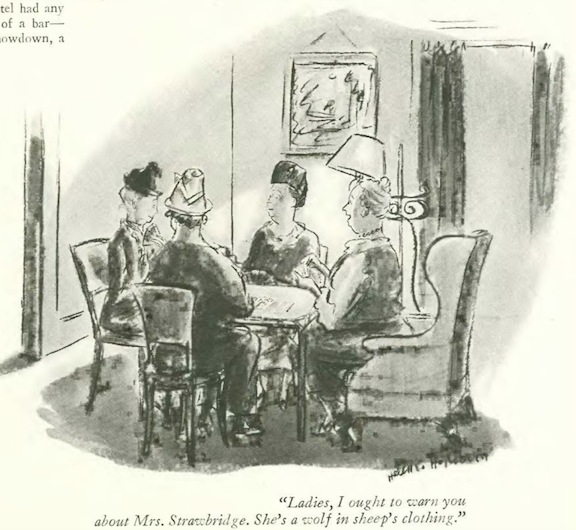
Helen Hokinson revealed a secret…

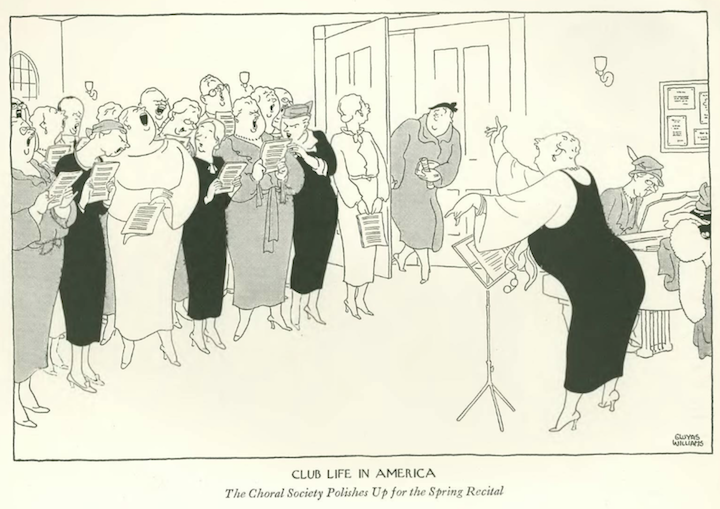
Gluyas Williams was still examining club life…

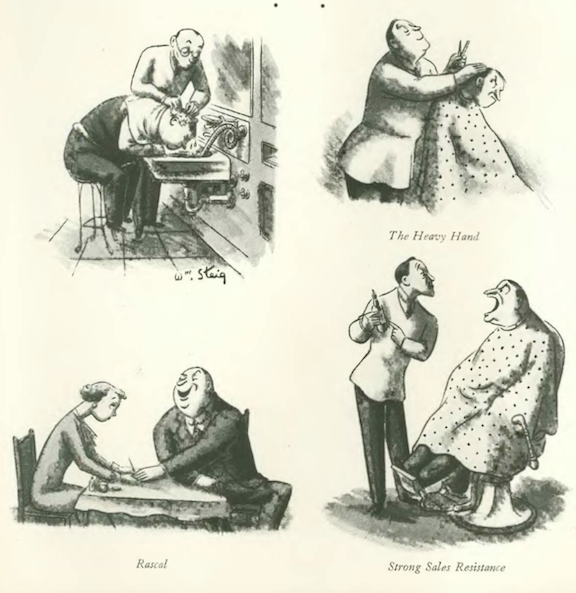
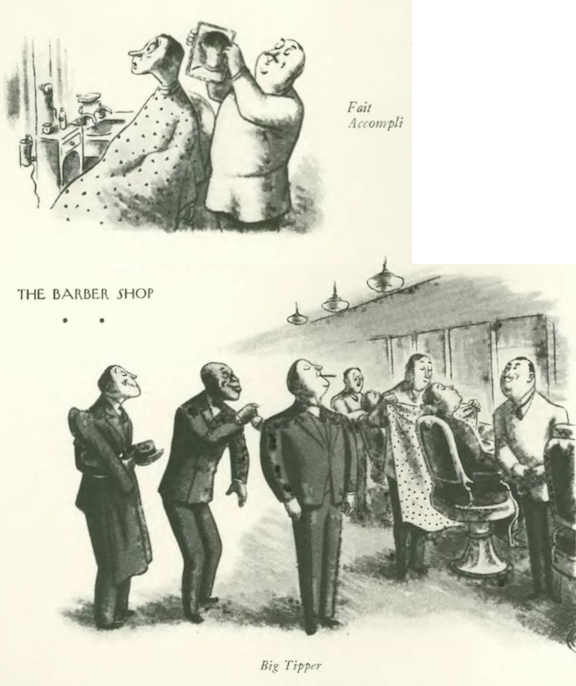
William Steig went for a haircut (across two pages)…

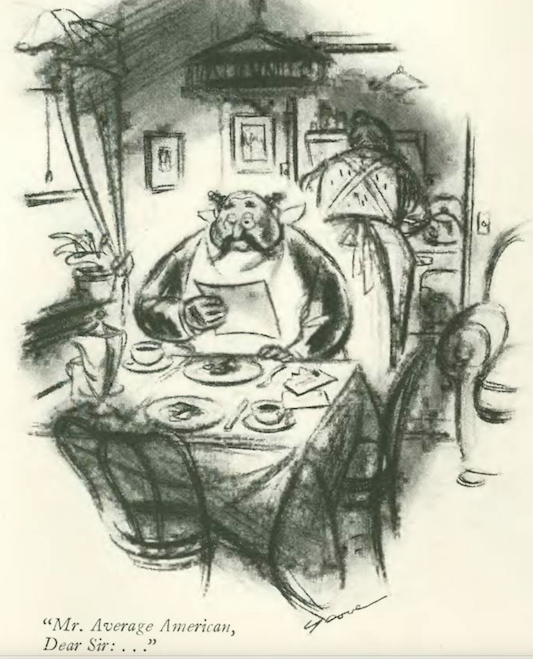
Leonard Dove received some junk mail…

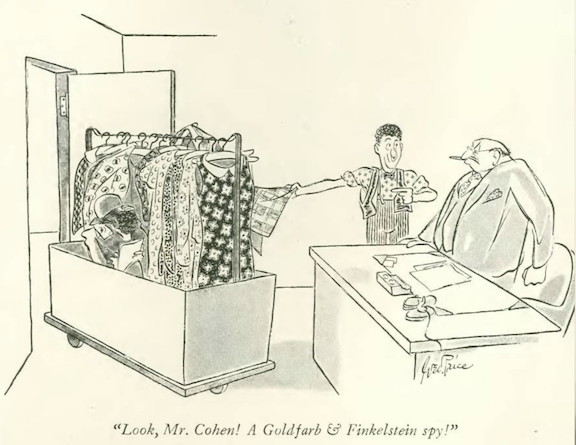
George Price uncovered a spy…
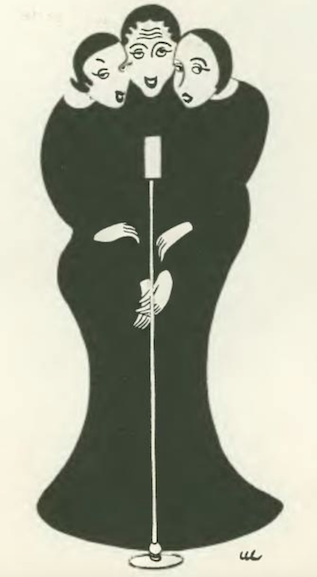
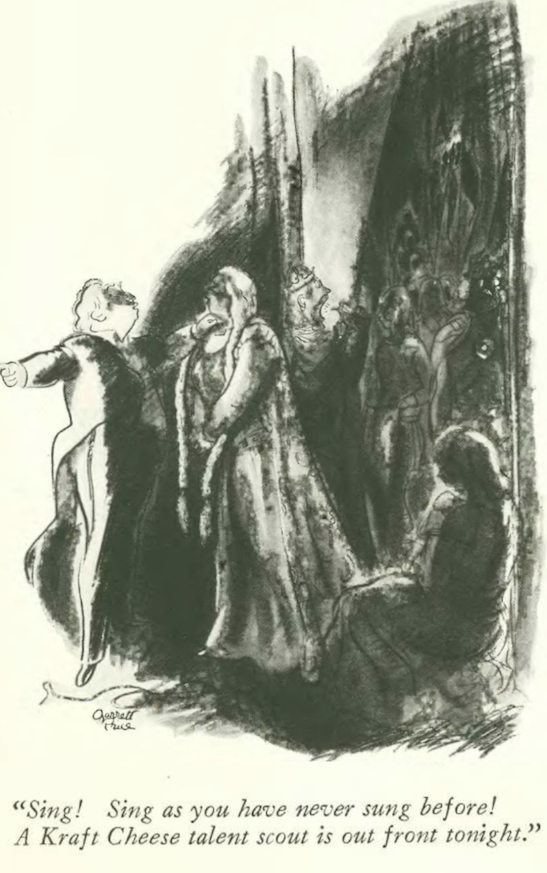
Garrett Price assessed the price of fame…
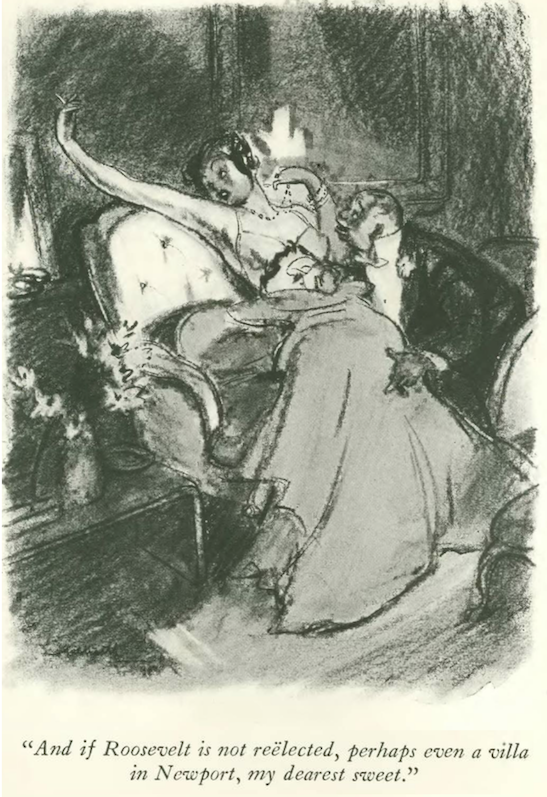
William Crawford Galbraith continued to explore the world of sugar daddies and chlorines…

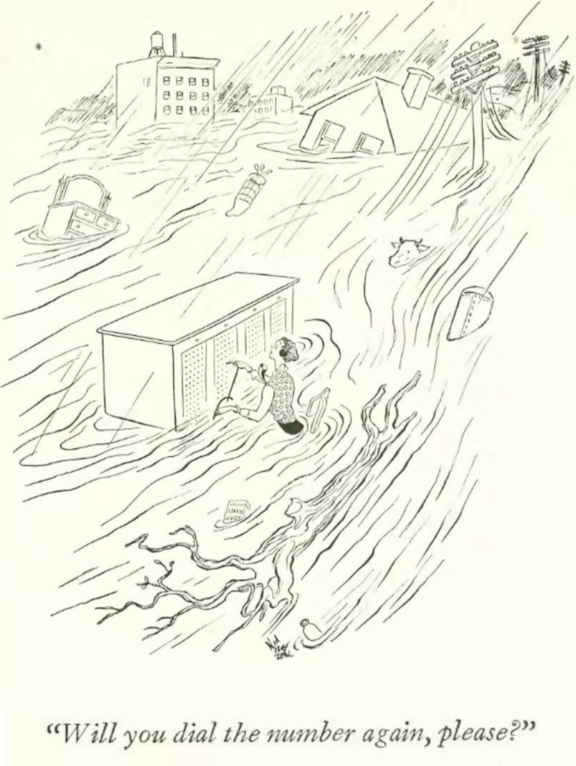
…and we close with Ned Hilton, and those floods…

Next Time: Idiot’s Delight…