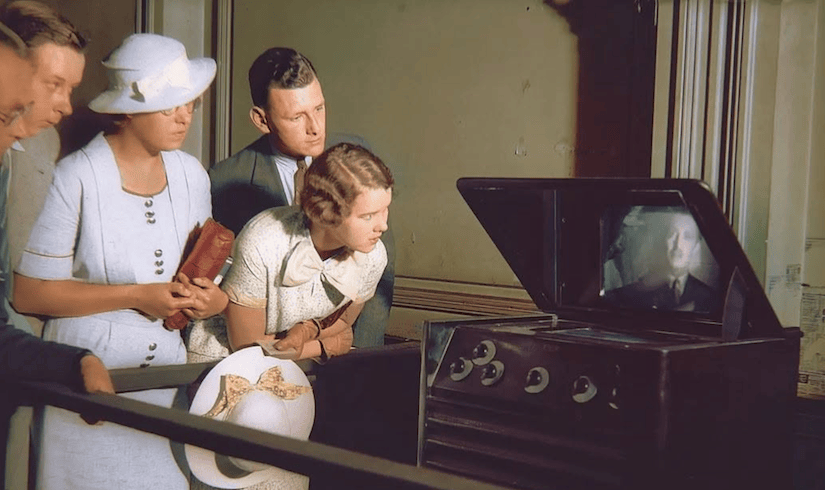
Above: The BBC offered a public demonstration of television at Waterloo Station, London, in 1936. (Colorized image via Facebook)
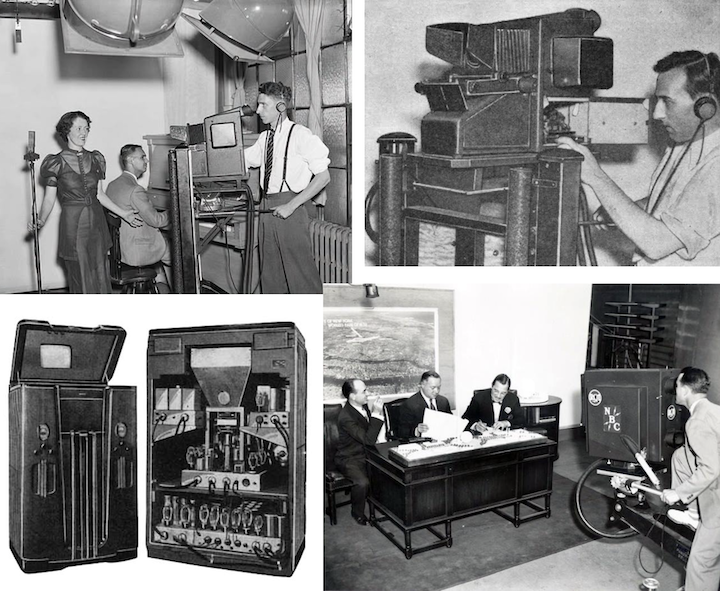
E.B. White was ever wary of new technology (except for aviation—he loved to fly), so television posed yet another thing to fear in the coming age of “omniscience.”
In addition to television, White noted two other “giant strides” in the world of science and publicity: a live radio broadcast featuring sounds from the Spanish Civil War, and the launch of a new magazine that would “consist almost entirely of pictures.”
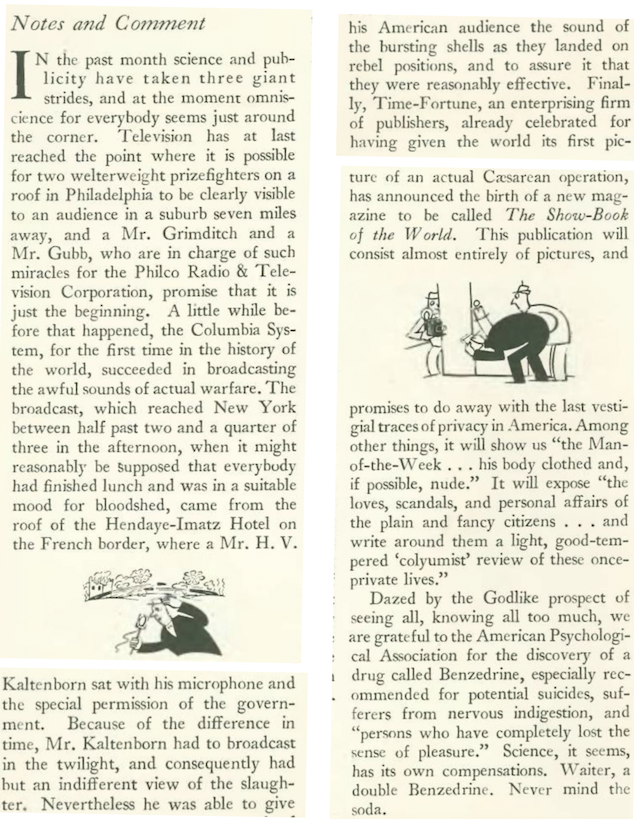
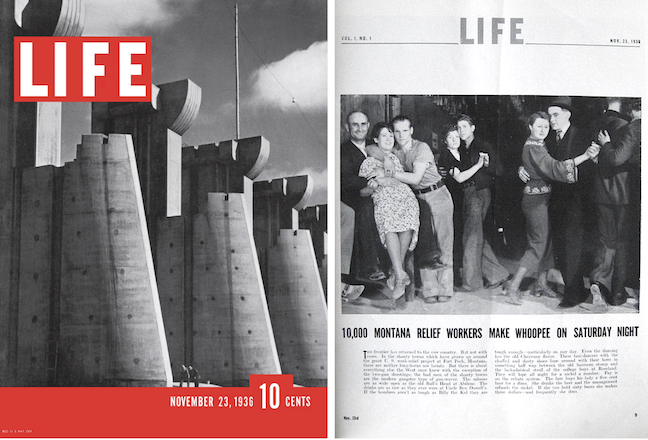
White also noted the upcoming launch of a new magazine, The Show-Book of the World, which was the working title of a publication that would become Life magazine. White did not like the idea of a magazine consisting mostly of pictures that graphically expose “once-private lives,” believing it would “do away with the last vestiges of privacy in America.”
* * *
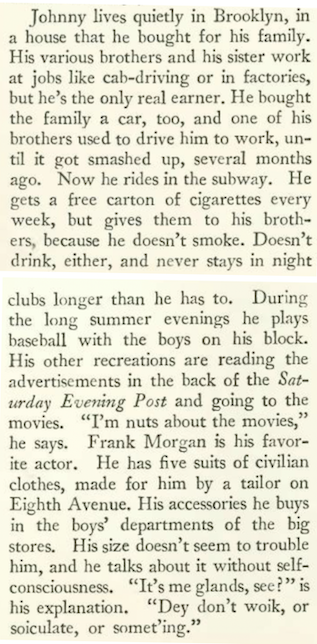
Call for Johnny Roventini!
“The Talk of the Town” featured a brief profile of Johnny Roventini (aka Johnny Morris or Johnny the Bellboy), the famous “living trademark” for the Philip Morris tobacco company. Roventini (1910–1998), who represented the company for more than forty years, was working as a bellboy at the New Yorker Hotel in 1933 when he was discovered by an advertising agent. Excerpts:
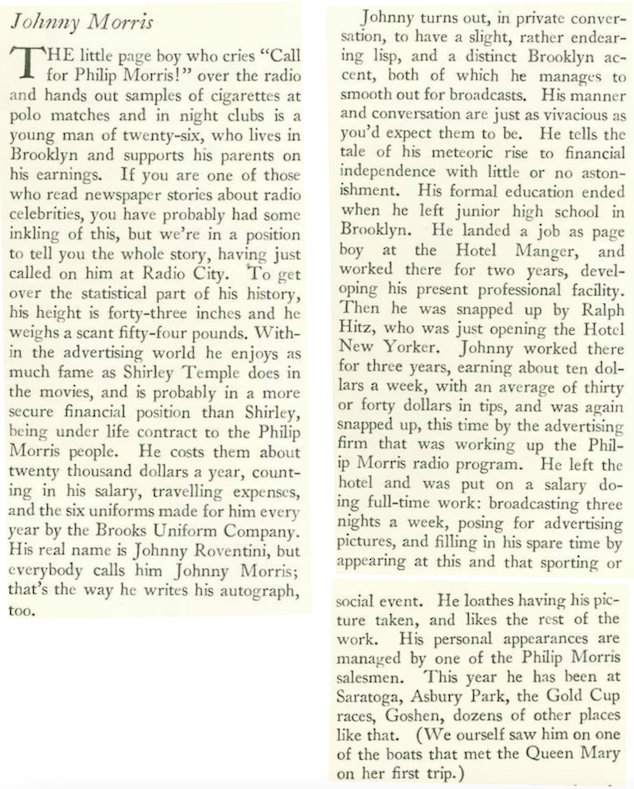
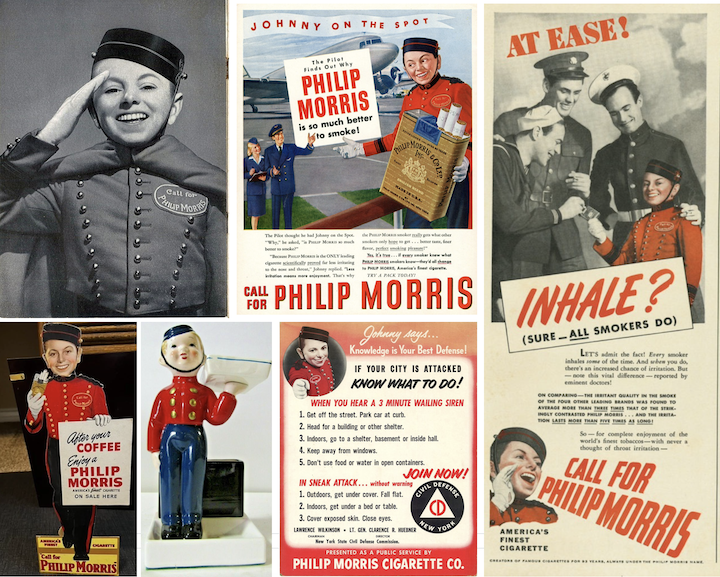
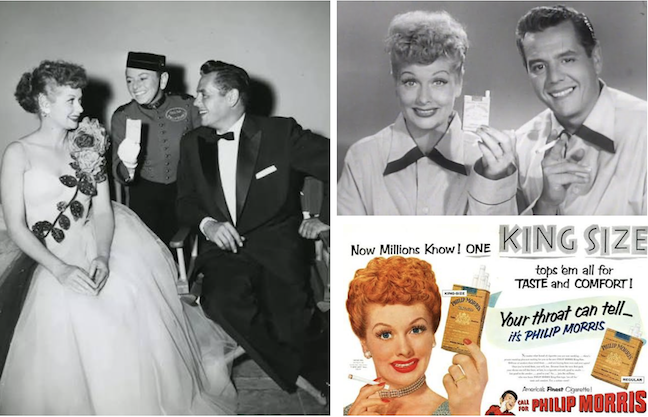
Roventini was probably best known for his Philip Morris promos on I Love Lucy. The new show was challenged to find a sponsor (due to the Cuban character played by Desi Arnaz) until Arnaz arranged a deal that made Philip Morris the exclusive sponsor of I Love Lucy from its premiere on October 15, 1951 through Christmas of 1954. Roventini gained unprecedented national TV exposure and became fast friends with Arnaz and Lucille Ball. Here is one more excerpt from “Talk” regarding the quiet life of Philip Morris’s “living trademark.”
* * *
At the Movies
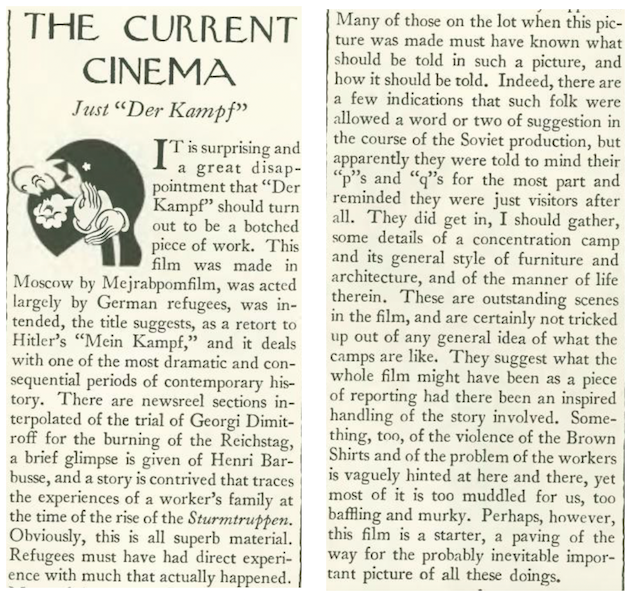
A Soviet film featuring exiled German communists proved to be a disappointment for critic John Mosher, but in retrospect the 1936 German-Soviet film The Struggle (aka Kämpfer or Der Kampf) reveals the strange and terrifying climate artists had to navigate in Stalin’s Russia.
Set in Germany after 1933, the film depicted the resistance of workers against the rise of the Nazi Party. One of the earliest films to depict Nazi terror and concentration camps, ironically many of those who worked on the film became victims of Joseph Stalin’s terror and the Gulag.
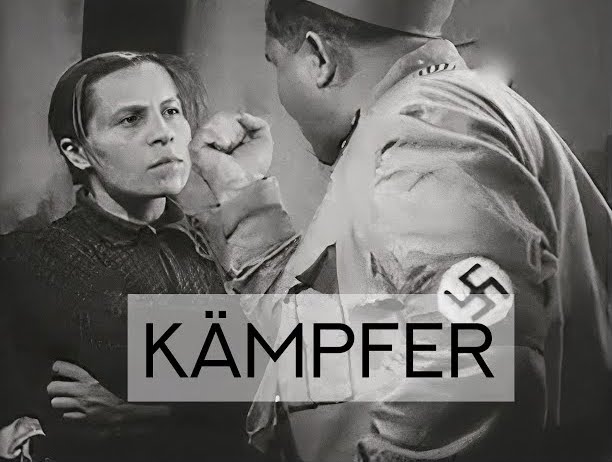
Shortly after The Struggle was completed, Stalin purged the community of exiled German communists living in Moscow, and the film was quickly banned by Soviet authorities. A large number of the film’s cast and crew were arrested, sent to the Gulag, or killed, including lead actor Bruno Schmidtsdorf, who was executed by firing squad near Moscow in 1938. Composer Hans Hauska, who wrote the film’s musical score, perished in a Soviet prison camp.
* * *
Playing the Ponies
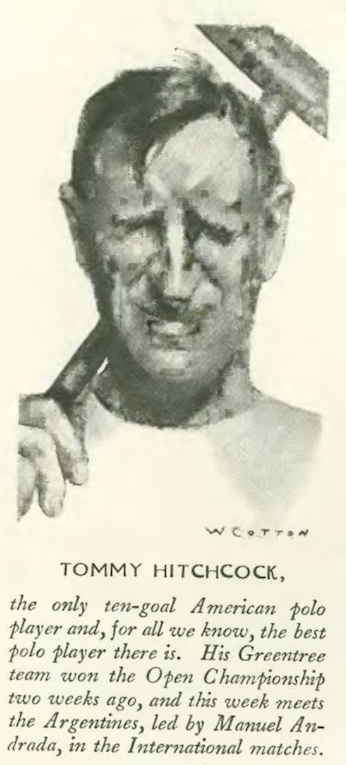
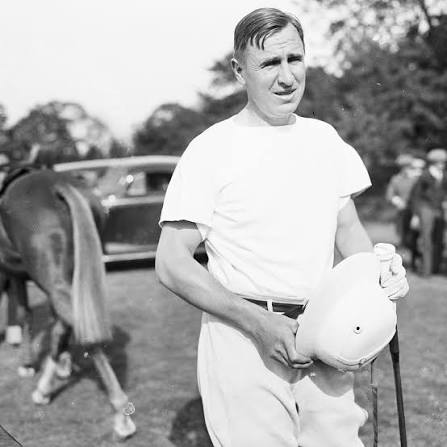
The calendar section continued its series of illustrated mini-bios, this week featuring Tommy Hitchcock, widely regarded as the greatest polo player in the history of the sport. A dashing figure in high society, Hitchcock (1900–1944) was also an aviator and decorated war hero. Illustration by William Cotton.
* * *
From Our Advertisers
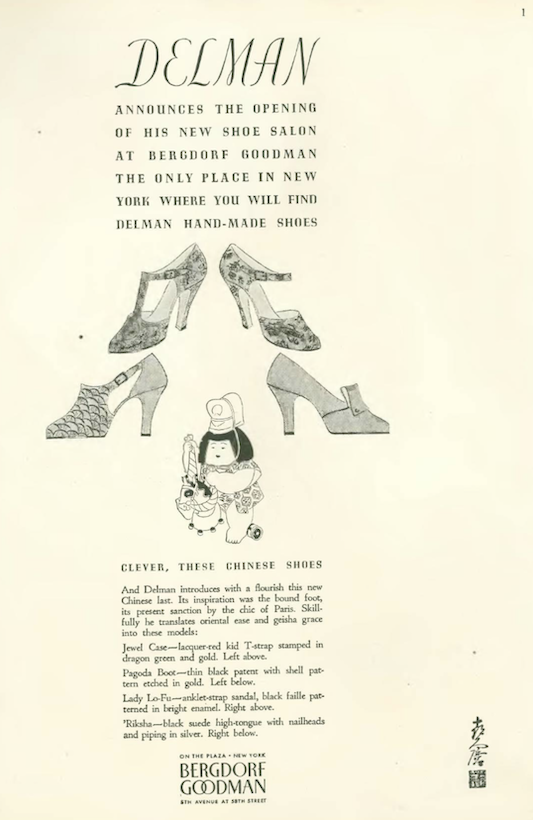
A strange advertisement from Bergdorf, announcing the opening of a salon that featured a line of shoes inspired by the Chinese “bound foot”…
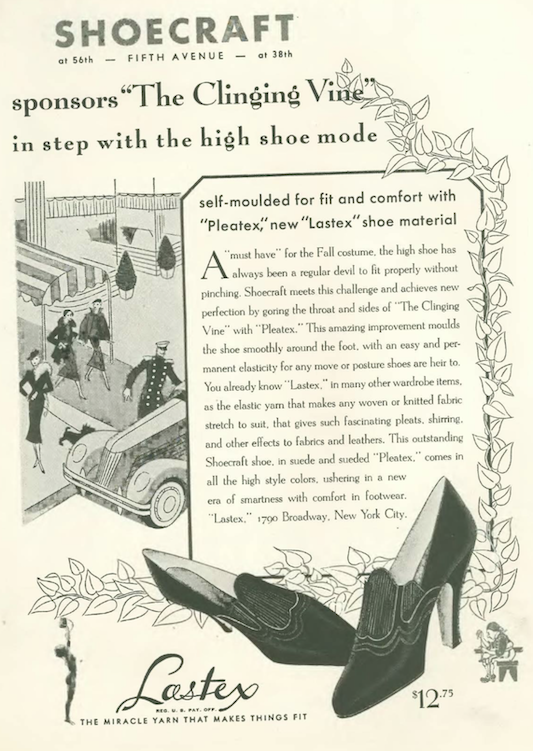
…if a bound foot wasn’t your thing, you could wiggle your toes in an elastic shoe fashioned from “Pleatex”…
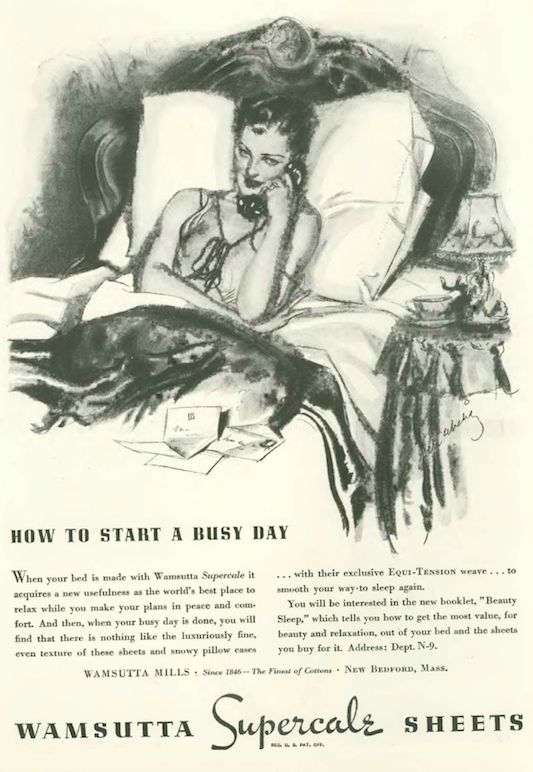
…Wamsutta continued to promote its high thread-count sheets with these somewhat seductive advertisements…
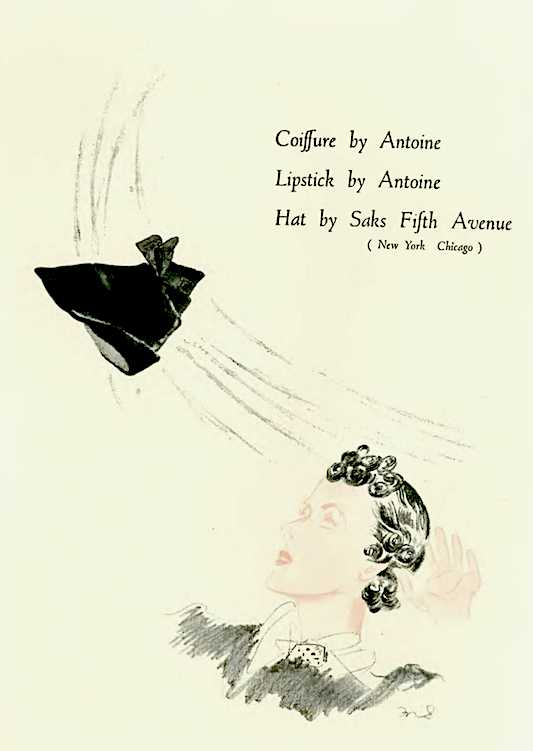
…oddly composed advertisement for Saks Fifth Avenue by fashion illustrator Margaret Sommerfeld, who produced promotional artwork for Saks…
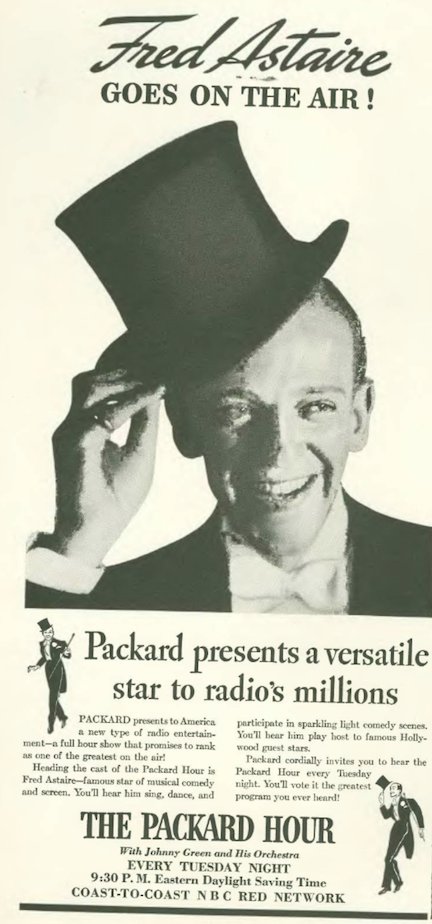
…Fred Astaire managed to hang on to his hat in this advertisement for “The Packard Hour” on NBC’s nationwide “Red Network”…the ad proclaimed “you’ll hear him sing and dance“…on the radio, that is…
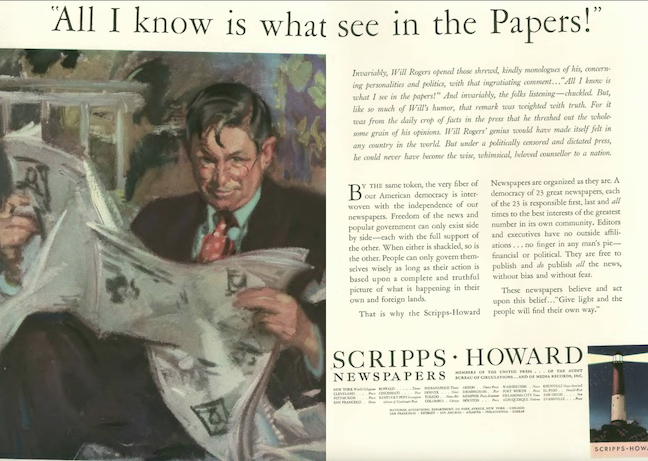
…Scripps-Howard featured this image of the late Will Rogers to promote newspaper advertising…
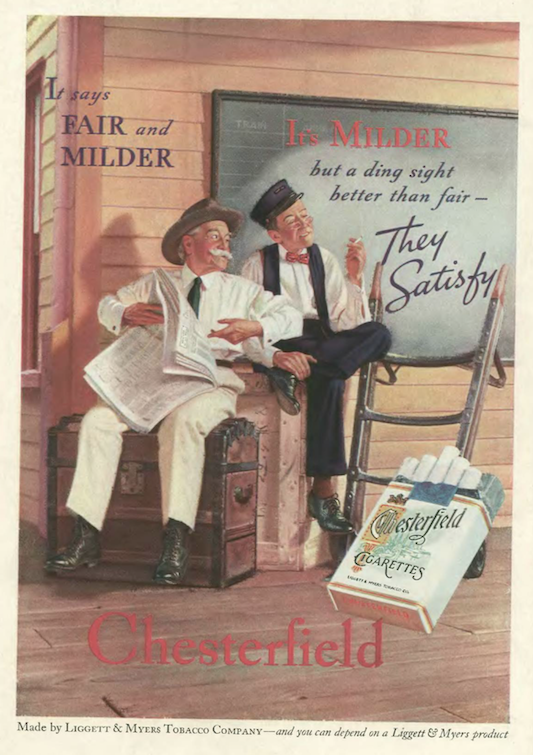
…this back cover ad also featured a newspaper reader, enjoying a smoke while waiting for the train…
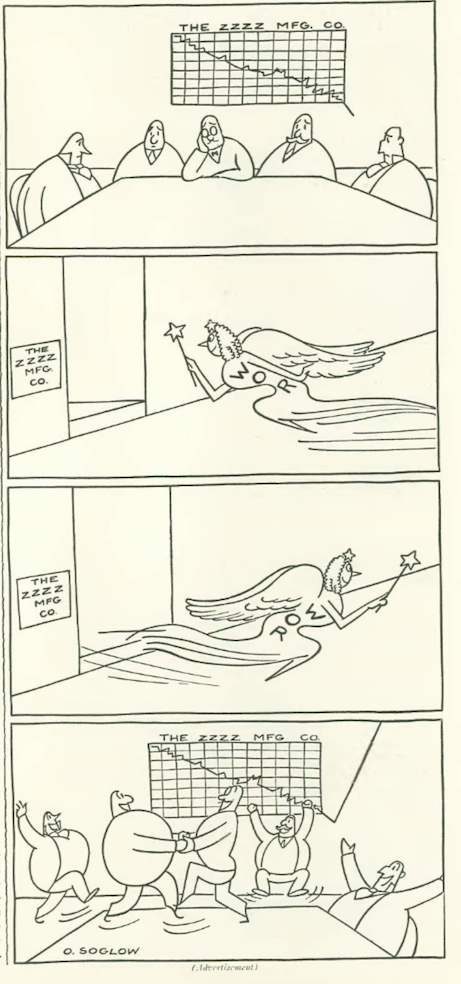
…best known for creating The Little King, Otto Soglow drew hundreds of cartoons and spot drawings for The New Yorker as well as for a variety of advertisers including Pepsi-Cola, Benson & Hedges cigarettes, and here, one from a series of ads he created for WOR radio…
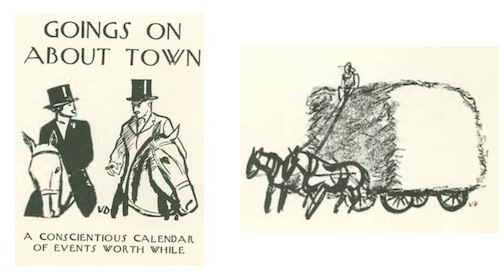
…speaking of spots, here are two by Victor de Pauw…
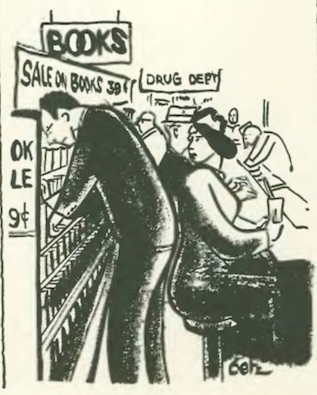
…biographies of prolific New Yorker cover artist Arthur Getz give his start date at the magazine as 1938, but this might be one of his early spot drawings (although the signature style differs from Getz’s other works)…
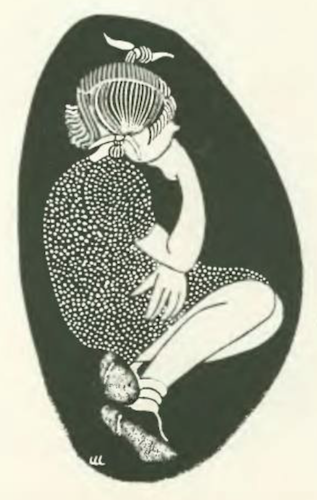
…no mistaking this spot by Christina Malman…
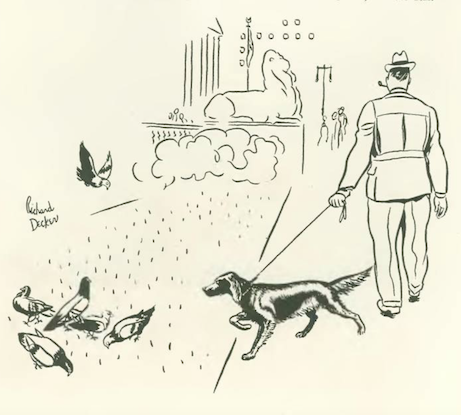
…or this one by Richard Decker…
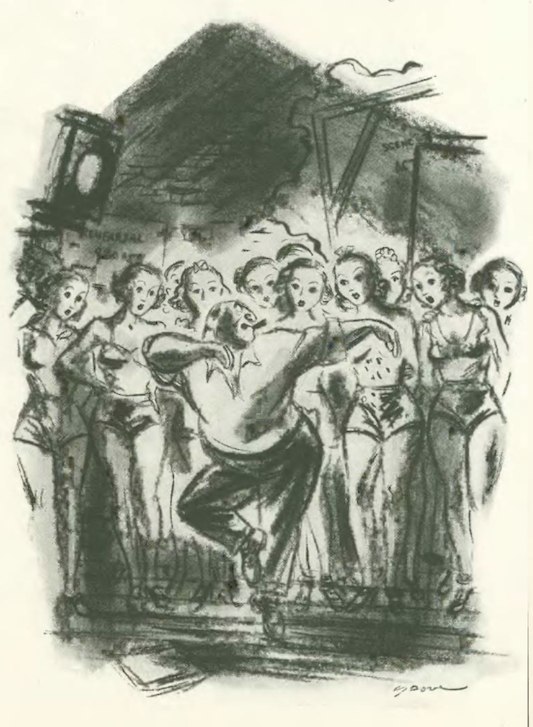
…Leonard Dove demonstrated some moves for a chorus line…
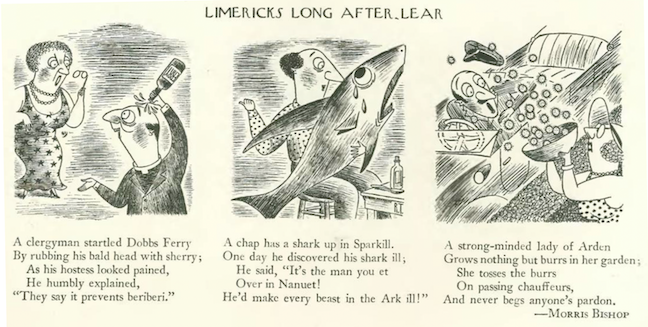
…and more wonderful Richard Taylor illustrations for Morris Bishop’s limericks…
…the well-heeled prepared to engage in a favorite sport, per Peter Arno…
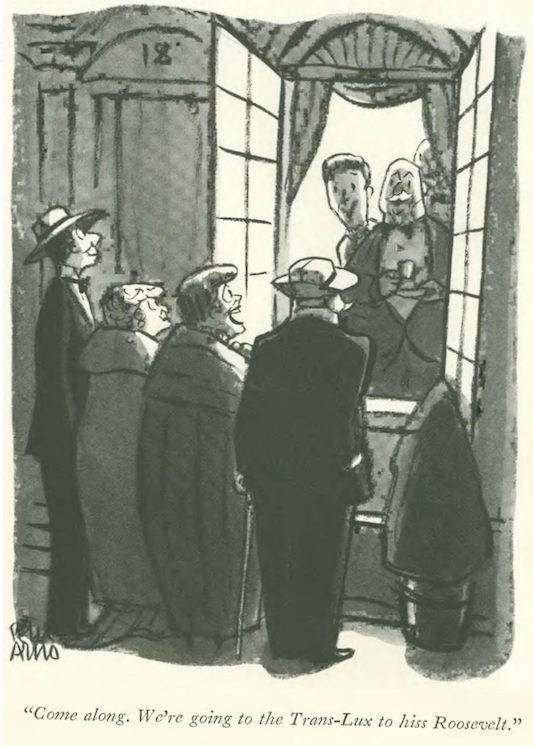
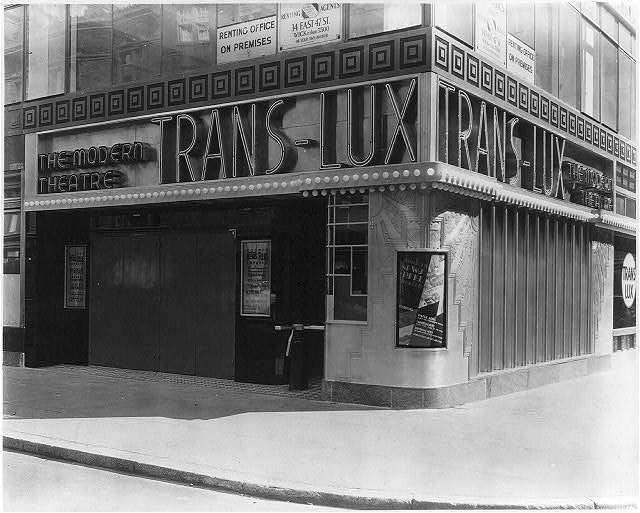
…”Trans-Lux” theaters were conversions of storefronts and retail offices that seated smaller audiences than traditional theaters. Rather than feature films, the Trans-Lux theaters showed continuous 45-to-60-minute loops of newsreels (like The March of Time), short subjects, travelogues, and cartoons from 10 a.m. to midnight—people could come and go as they pleased. The theaters pioneered rear-screen projection, using a specialized, wide-angled lens placed just eight feet behind a translucent screen…
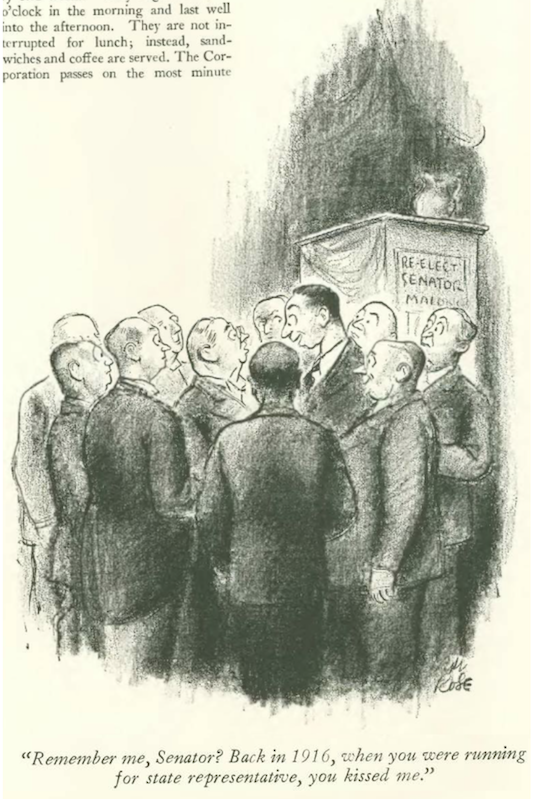
…back to our cartoons, Carl Rose conjured up an unwelcome reminder…
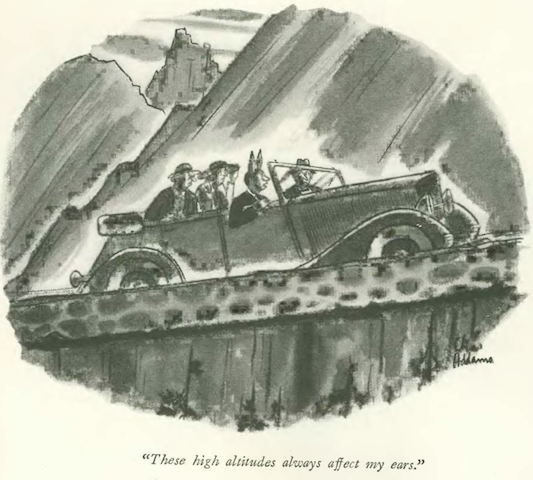
…Charles Addams was up to his old tricks…
…Alain read the obvious from some tea leaves…
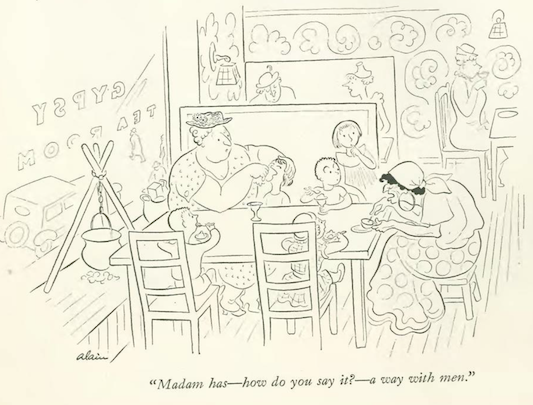
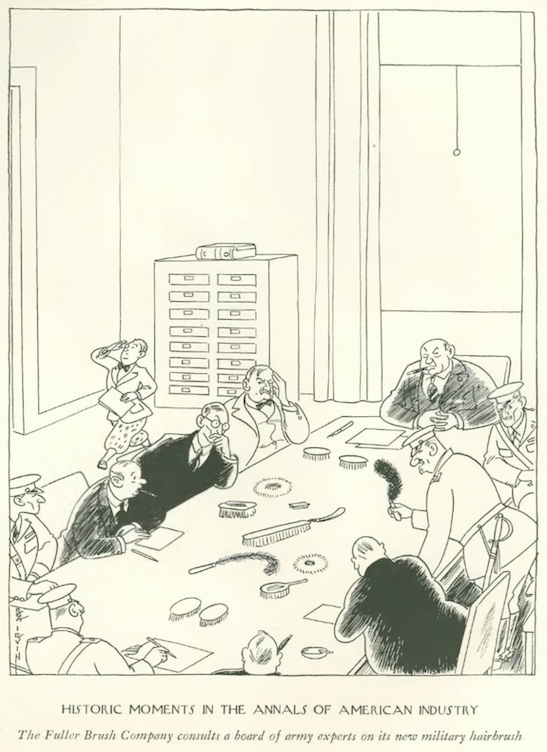
…Rea Irvin showed us some strategic thinking by military brass…
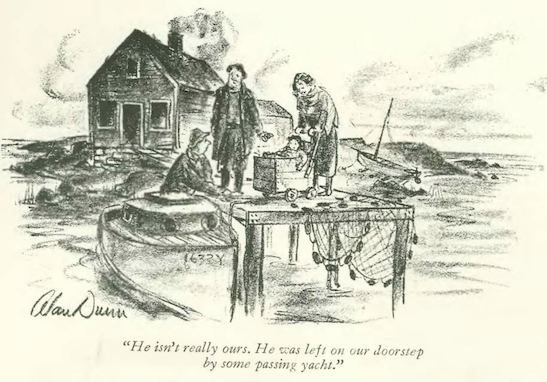
…Alan Dunn considered the mysteries of the sea…
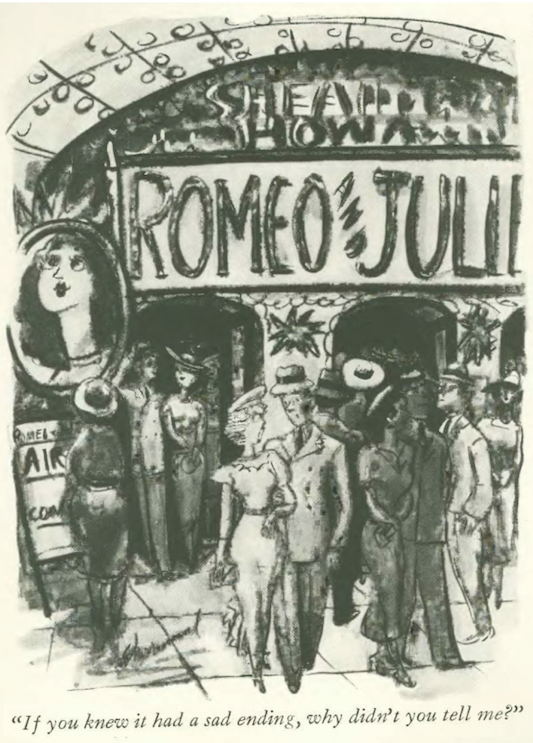
…this guy should have suggested a comedy, per Barbara Shermund…
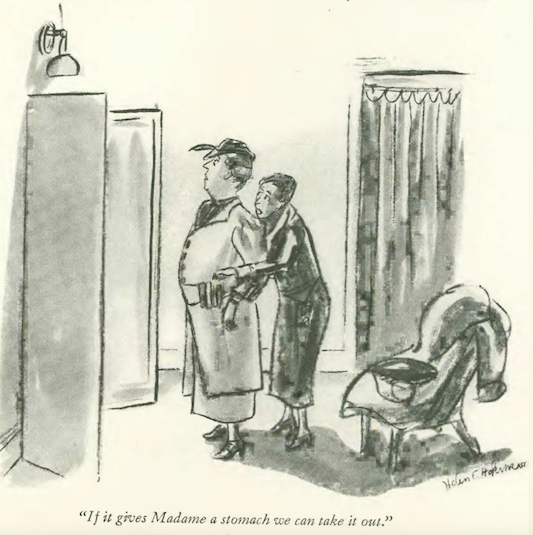
…Helen Hokinson continued to probe the delicate work of the dress shop…
…and we close with another by dear Helen, and the fear of too much thinking…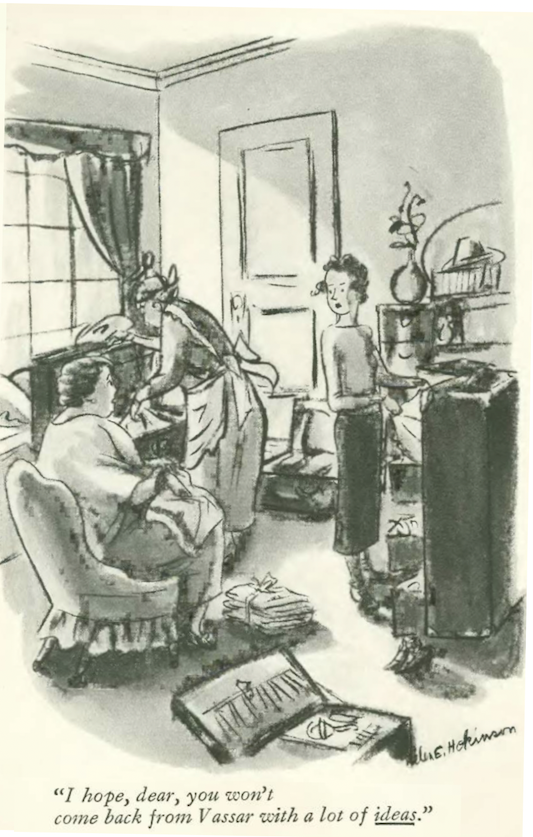
Next Time: Can-Can in Cleveland…