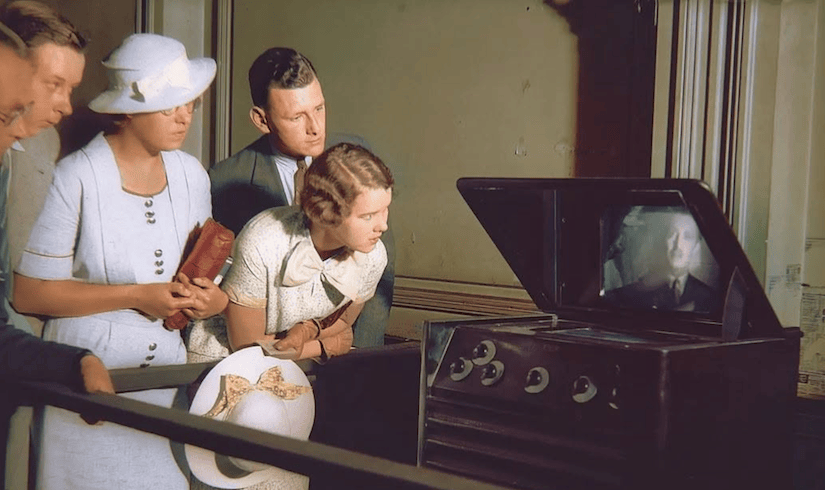
Through the Looking Glass, Darkly

Above: The BBC offered a public demonstration of television at Waterloo Station, London, in 1936. (Colorized image via Facebook)

E.B. White was ever wary of new technology (except for aviation—he loved to fly), so television posed yet another thing to fear in the coming age of “omniscience.”
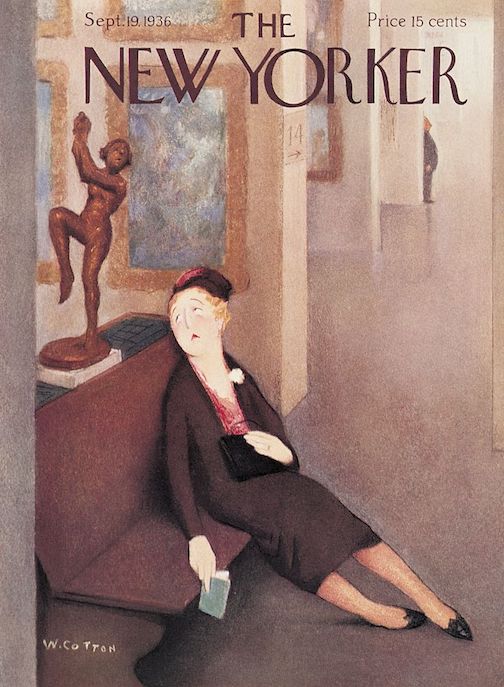
September 19, 1936 cover by William Cotton.

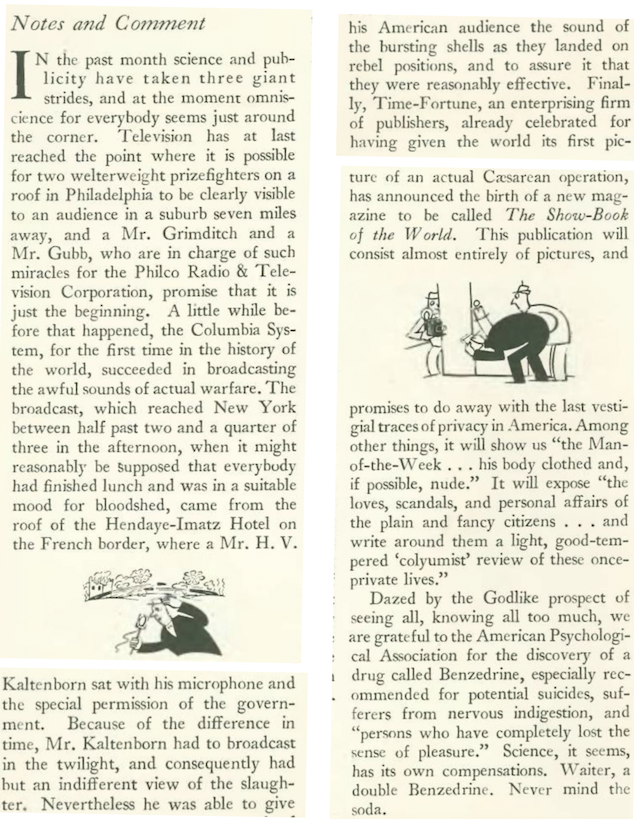
In addition to television, White noted two other “giant strides” in the world of science and publicity: a live radio broadcast featuring sounds from the Spanish Civil War, and the launch of a new magazine that would “consist almost entirely of pictures.”
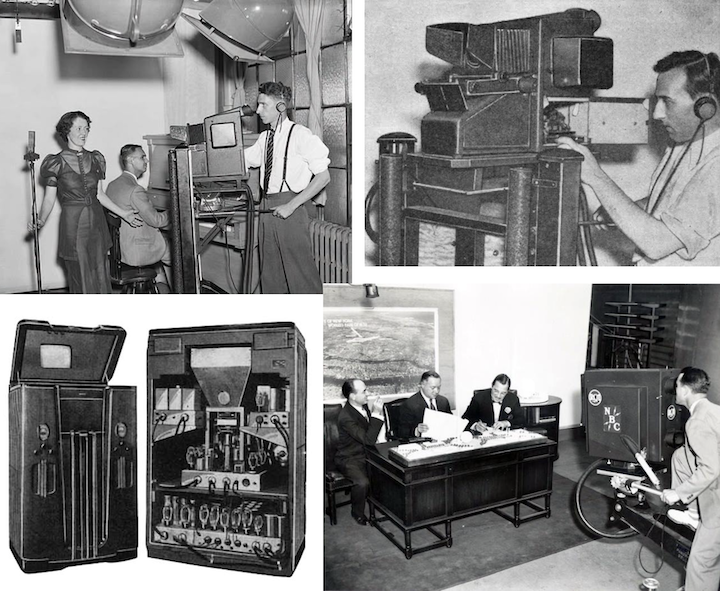
ONE-EYED MONSTER…Clockwise, from top left: On Aug. 11, 1936, Philco Radio and Television demonstrated the transmitting end of a television with the help of camera operator R.E. Waggener and singer Betty McNellis—the sound and picture were projected seven miles to a receiving set; a close-up of a 1936 television camera; photo taken in 1936 during a “live broadcast” from America’s first television studio, NBC Studio 3H—from left, NBC President Lenox Lohr, RCA President David Sarnoff and Fair Committee head Grover Whalen sign a contract for an RCA pavilion at the upcoming 1939 World’s Fair; front and rear view of a 1936 television receiver. (eyesofageneration.com/facebook.com)

White also noted the upcoming launch of a new magazine, The Show-Book of the World, which was the working title of a publication that would become Life magazine. White did not like the idea of a magazine consisting mostly of pictures that graphically expose “once-private lives,”  believing it would “do away with the last vestiges of privacy in America.”
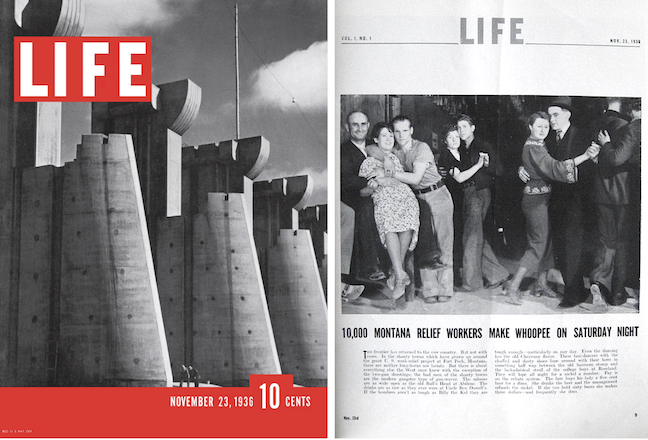
MONUMENTAL…The photo on the first cover of Life magazine, Nov. 23, 1936, was shot by one of Life‘s original four photographers, Margaret Bourke-White, who covered the construction of the Fort Peck Dam, a Public Works Administration endeavor to build the largest earth dam in the world during the Great Depression. At right, a Bourke-White photo of Fort Peck workers enjoying some down time. (npr.org/life.com/worthpoint.com)

 * * *

Call for Johnny Roventini!

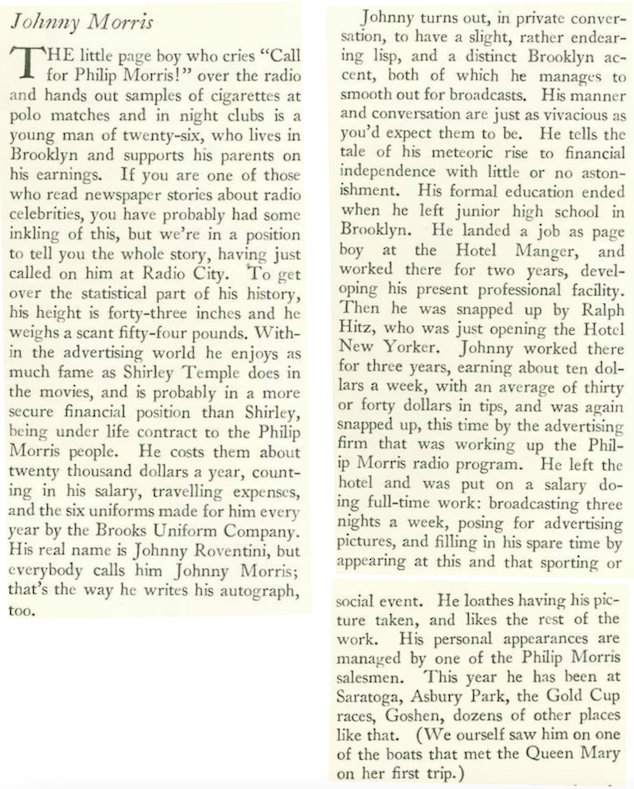
“The Talk of the Town” featured a brief profile of  Johnny Roventini (aka Johnny Morris or Johnny the Bellboy), the famous “living trademark” for the Philip Morris tobacco company. Roventini (1910–1998), who represented the company for more than forty years, was working as a bellboy at the New Yorker Hotel in 1933 when he was discovered by an advertising agent. Excerpts:
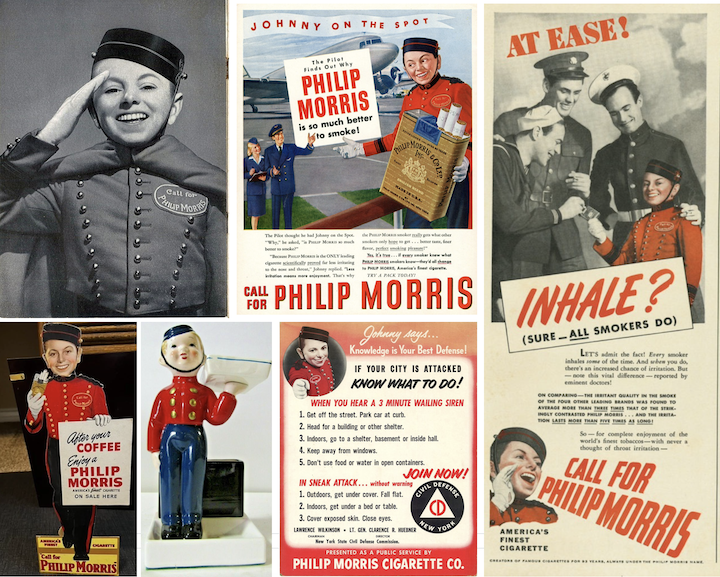
THEY’RE SELLING YOU…In mid-century America the image of Johnny Roventini, known to the public as Johnny Morris or Johnny the Bellboy, seemed to be everywhere. Clockwise, from top left: Publicity photo, 1937;  magazine ad, 1947; ad promoting the armed services, 1941; civil defense-themed ad, 1940s; cigarette match holder; promotional stand-up sign. (cats.ua.edu/standford.edu/worthpoint.com)

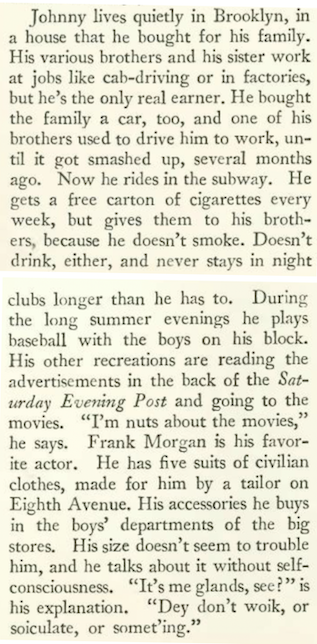
Roventini was probably best known for his Philip Morris promos on I Love Lucy. The new show was challenged to find a sponsor (due to the Cuban character played by Desi Arnaz) until Arnaz arranged a deal that made Philip Morris the exclusive sponsor of I Love Lucy from its premiere on October 15, 1951 through Christmas of 1954. Roventini gained unprecedented national TV exposure and became fast friends with Arnaz and Lucille Ball. Here is one more excerpt from “Talk” regarding the quiet life of Philip Morris’s “living trademark.”
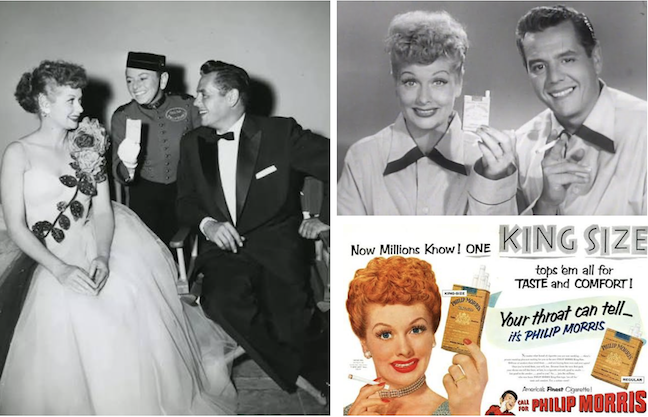
I LOVE PHILIP MORRIS…Lucille Ball, Johnny Roventini and Desi Arnaz formed a lucrative trio for the tobacco company Philip Morris when I Love Lucy went on the air in 1951. Roventini was an occasional, social smoker, while Ball and Arnaz were heavy smokers (although Lucy preferred Chesterfields). (facebook.com/instagram.com)

* * *

At the Movies

A Soviet film featuring exiled German communists proved to be a disappointment for critic John Mosher, but in retrospect the 1936 German-Soviet film The Struggle (aka Kämpfer or Der Kampf) reveals the strange and terrifying climate artists had to navigate in Stalin’s Russia.

Set in Germany after 1933, the film depicted the resistance of workers against the rise of the Nazi Party. One of the earliest films to depict Nazi terror and concentration camps, ironically many of those who worked on the film became victims of Joseph Stalin’s terror and the Gulag.

DEFIANCE…German actress Lotte Loebinger in a scene from the 1936 German-Soviet movie The Struggle (“Kämpfer”). Loebinger (1905-1995) managed to survive Stalin’s purges and had a long career on the stage in East Berlin following World War II. Loebinger’s lover, a German refugee physician with whom she bore a daughter, was not so fortunate, dying in a Soviet Gulag camp. (YouTube)

Shortly after The Struggle was completed, Stalin purged the community of exiled German communists living in Moscow, and the film was quickly banned by Soviet authorities. A large number of the film’s cast and crew were arrested, sent to the Gulag, or killed, including lead actor Bruno Schmidtsdorf, who was executed by firing squad near Moscow in 1938. Composer Hans Hauska, who wrote the film’s musical score, perished in a Soviet prison camp.

 * * *

Playing the Ponies

The calendar section continued its series of illustrated mini-bios, this week featuring Tommy Hitchcock, widely regarded as the greatest polo player in the history of the sport. A dashing figure in high society, Hitchcock (1900–1944) was also an aviator and decorated war hero. Illustration by William Cotton.
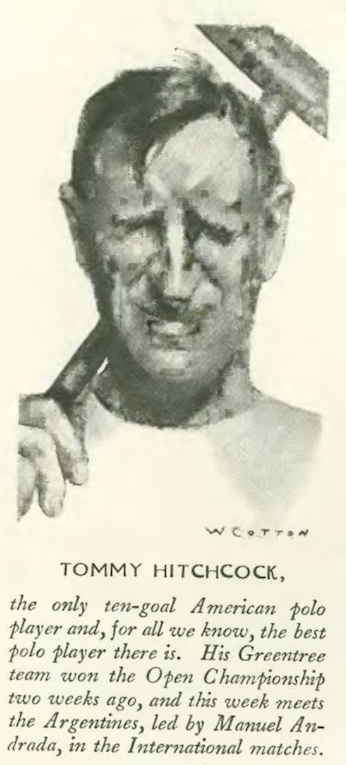
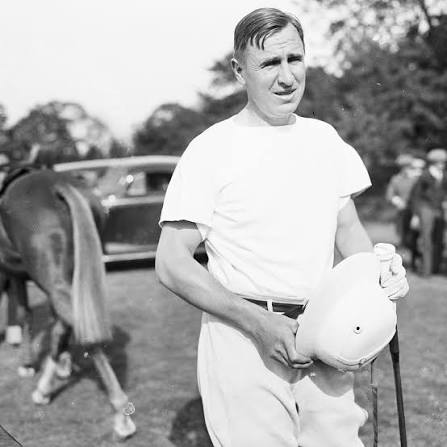
POLO PLAYING PILOT…Tommy Hitchcock flew as a volunteer pilot for the French Air Force in World War I, and was later instrumental in the development of the P-51 Mustang fighter plane. Hitchcock was killed in 1944 while piloting a P-51 on a test flight near Salisbury, England. (instagram.com)

 * * *

From Our Advertisers

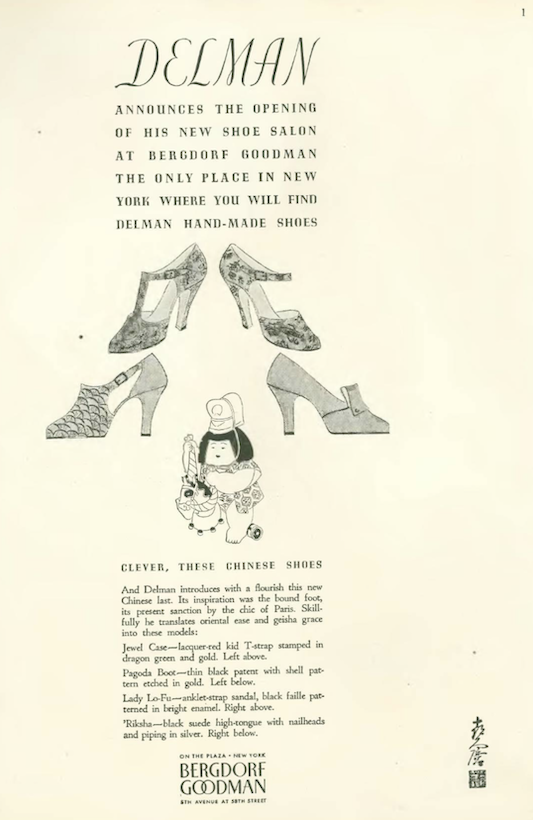
A strange advertisement from Bergdorf, announcing the opening of a salon that featured a line of shoes inspired by the Chinese “bound foot”…
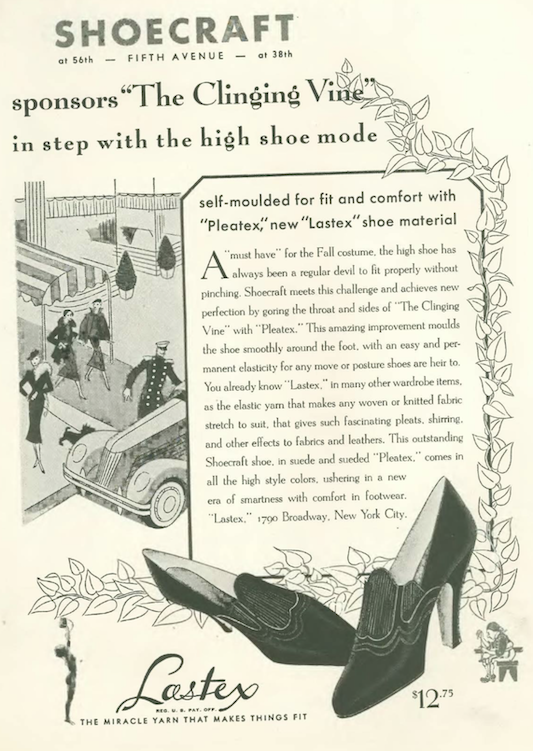
…if a bound foot wasn’t your thing, you could wiggle your toes in an elastic shoe fashioned from “Pleatex”…
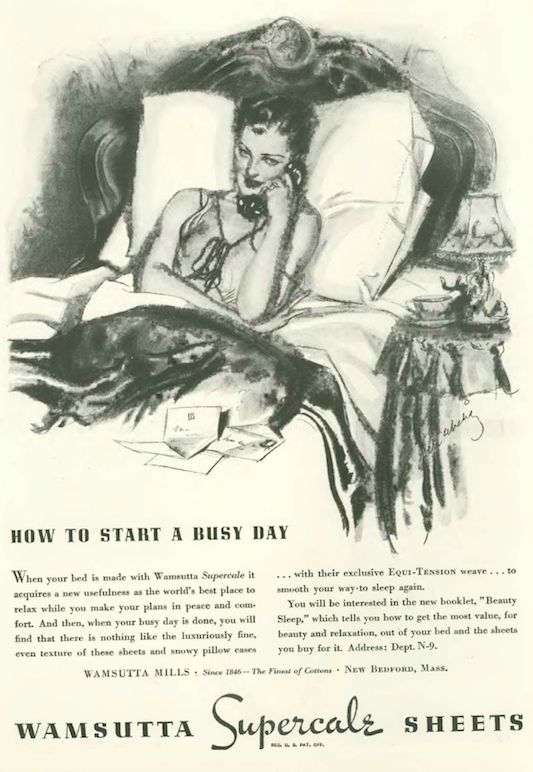
…Wamsutta continued to promote its high thread-count sheets with these somewhat seductive advertisements…
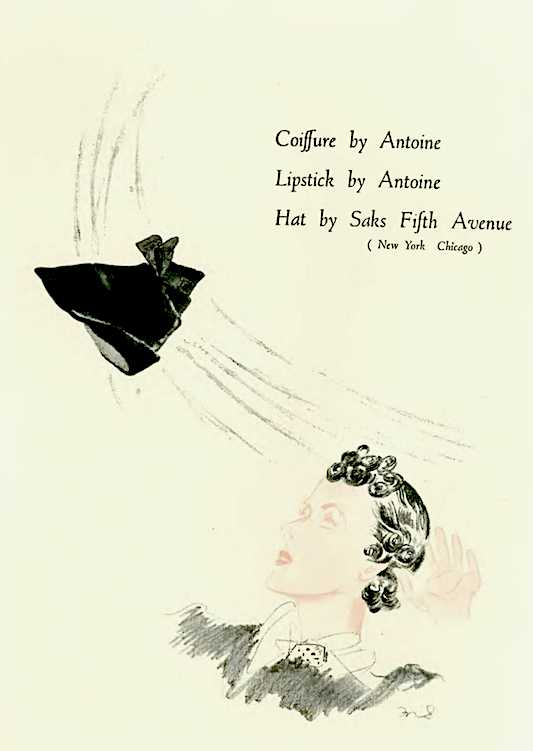
…oddly composed advertisement for Saks Fifth Avenue by fashion illustrator Margaret Sommerfeld, who produced promotional artwork for Saks…
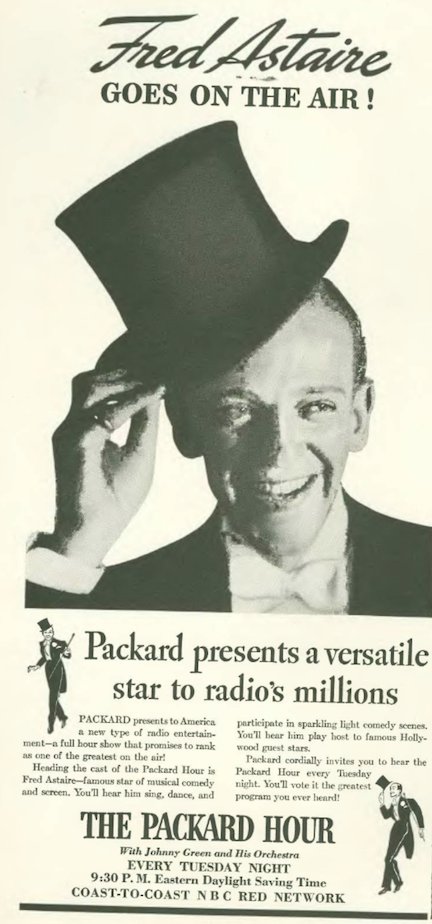
…Fred Astaire managed to hang on to his hat in this advertisement for “The Packard Hour” on NBC’s nationwide “Red Network”…the ad proclaimed “you’ll hear him sing and dance“…on the radio, that is…
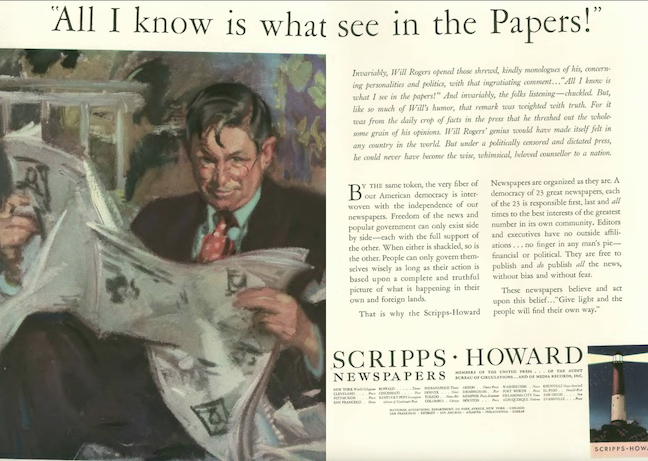
…Scripps-Howard featured this image of the late Will Rogers to promote newspaper advertising…
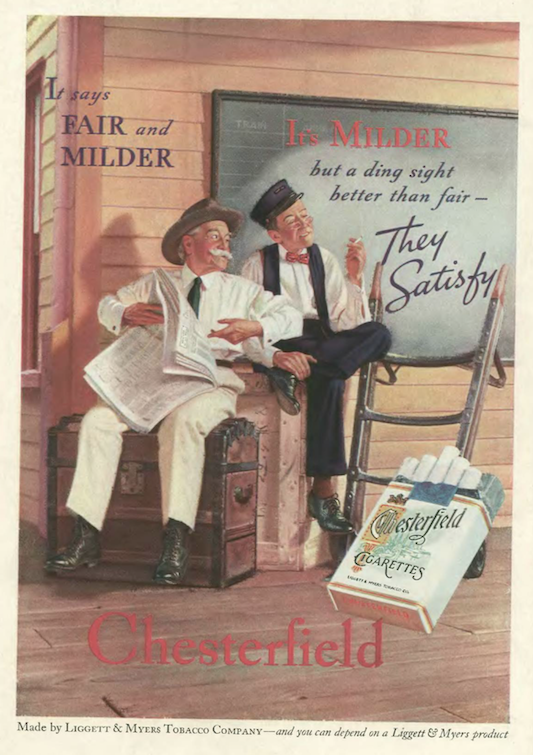
…this back cover ad also featured a newspaper reader, enjoying a smoke while waiting for the train…
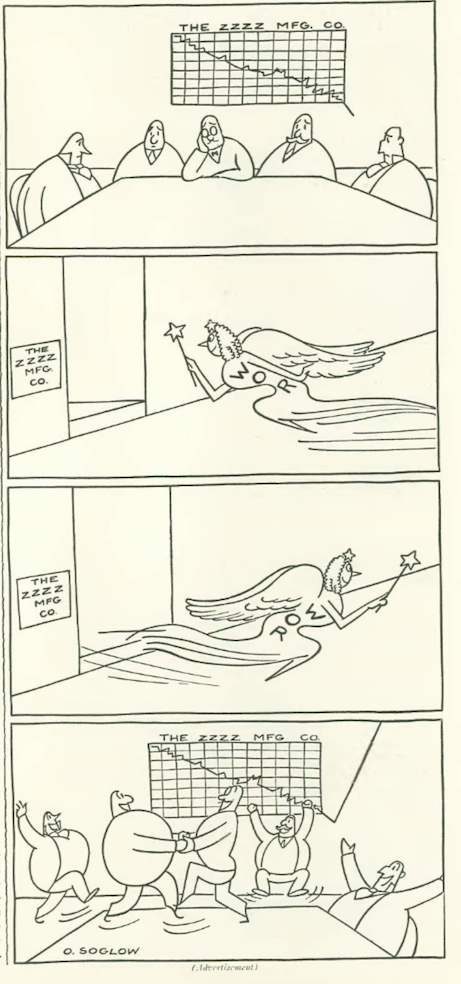
…best known for creating The Little King, Otto Soglow drew hundreds of cartoons and spot drawings for The New Yorker as well as for a variety of advertisers including Pepsi-Cola, Benson & Hedges cigarettes, and here, one from a series of ads he created for WOR radio…
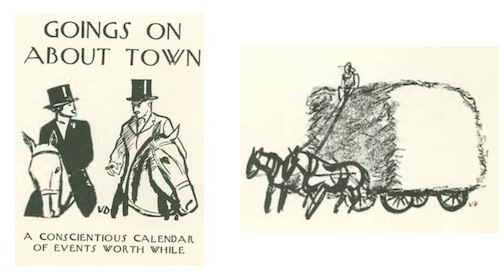
…speaking of spots, here are two by Victor de Pauw…
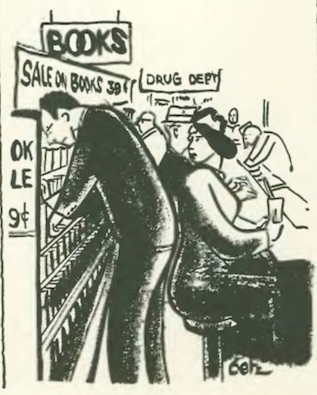
…biographies of prolific New Yorker cover artist Arthur Getz give his start date at the magazine as 1938, but this might be one of his early spot drawings (although the signature style differs from Getz’s other works)…
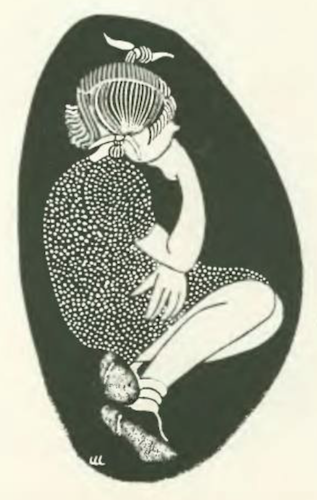
…no mistaking this spot by Christina Malman…
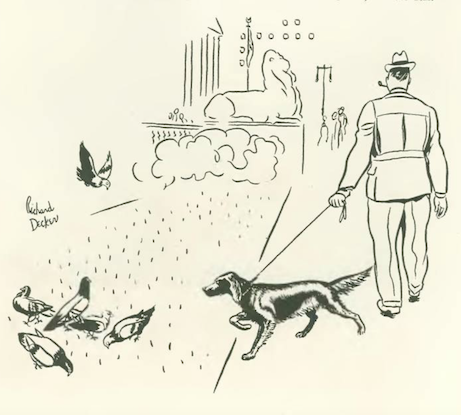
…or this one by Richard Decker…
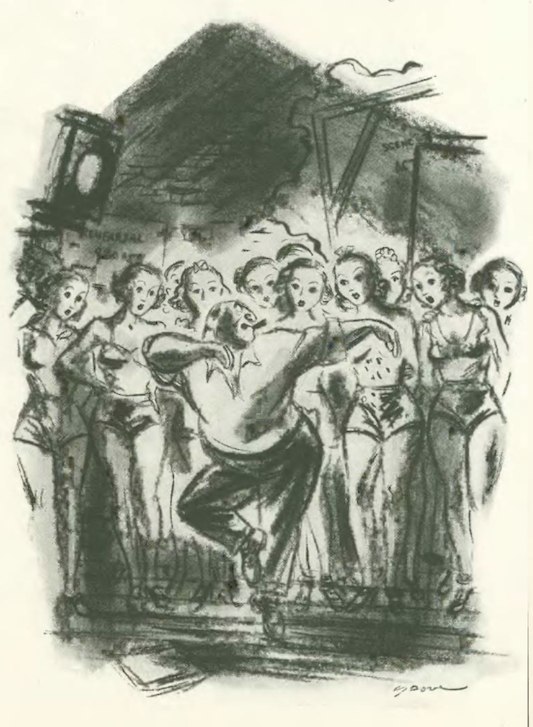
…Leonard Dove demonstrated some moves for a chorus line…
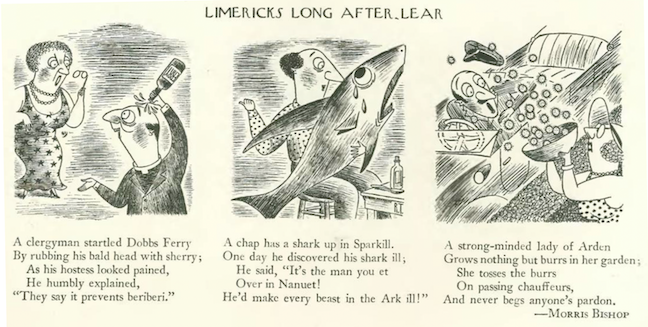
…and more wonderful Richard Taylor illustrations for Morris Bishop’s limericks…
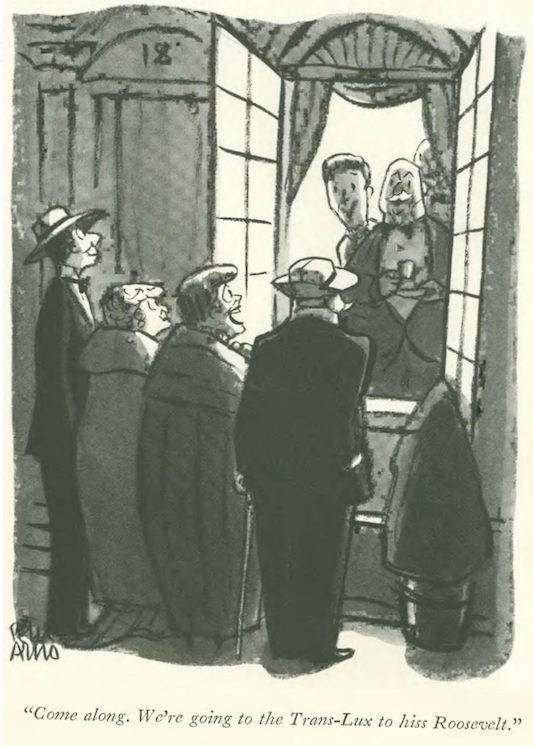
…the well-heeled prepared to engage in a favorite sport, per Peter Arno…
…”Trans-Lux” theaters were conversions of storefronts and retail offices that seated smaller audiences than traditional theaters. Rather than feature films, the Trans-Lux theaters showed continuous 45-to-60-minute loops of newsreels (like The March of Time), short subjects, travelogues, and cartoons from 10 a.m. to midnight—people could come and go as they pleased. The theaters pioneered rear-screen projection, using a specialized, wide-angled lens placed just eight feet behind a translucent screen…
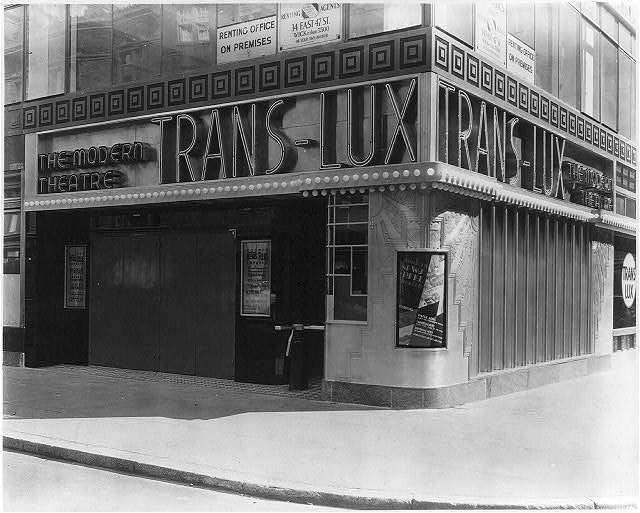
POP IN, POP OUT…The very first Trans-Lux cinema opened in 1931 at 58th and Madison as a unique venue that played newsreels and shorts. According to The New York Times, “by the late 1940s, the rise of television began to kill the newsreel format entirely. By 1949, Trans-Lux stopped expanding its boutique newsreel footprint and pivoted its existing houses toward showing standard feature-length films.” (Library of Congress)

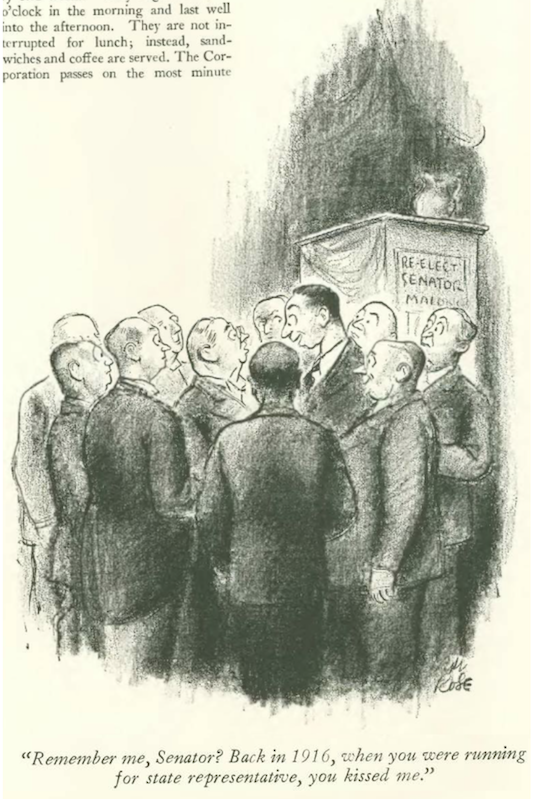
…back to our cartoons, Carl Rose conjured up an unwelcome reminder…
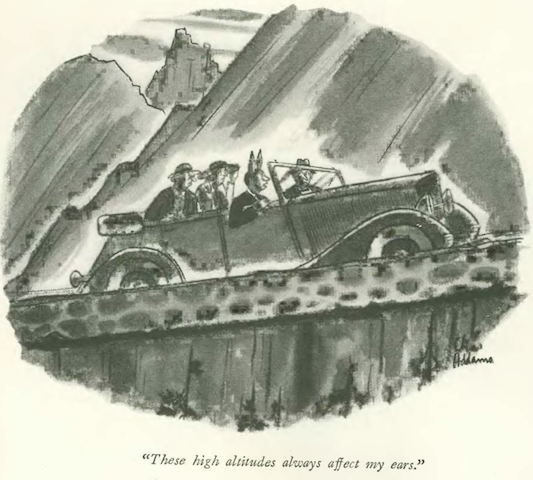
…Charles Addams was up to his old tricks…
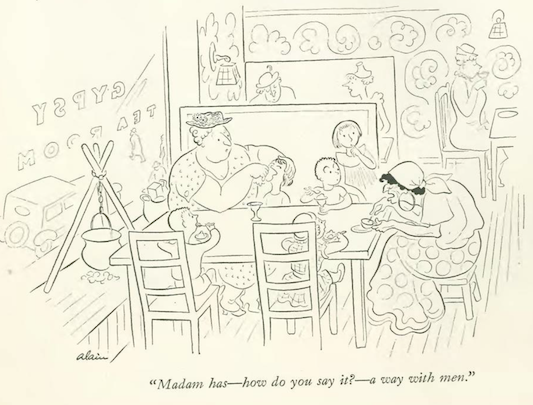
…Alain read the obvious from some tea leaves…
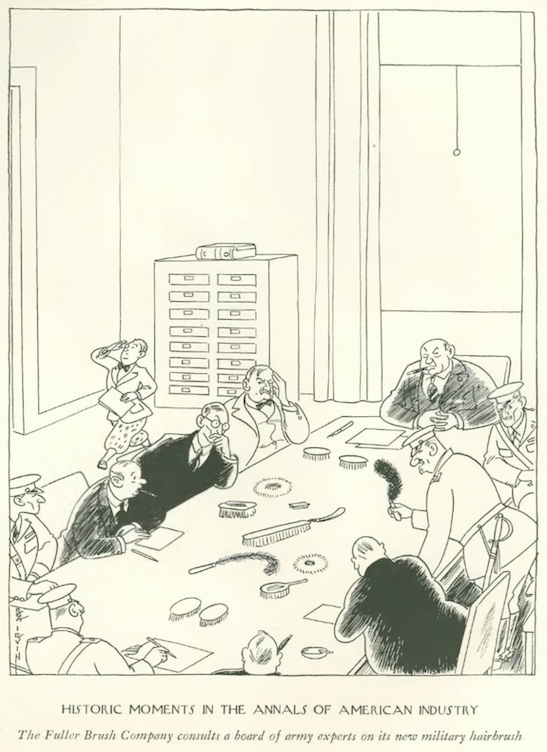
…Rea Irvin showed us some strategic thinking by military brass…
…Alan Dunn considered the mysteries of the sea…
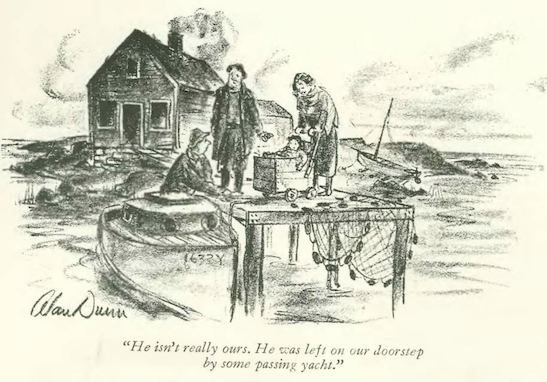
…this guy should have suggested a comedy, per Barbara Shermund…
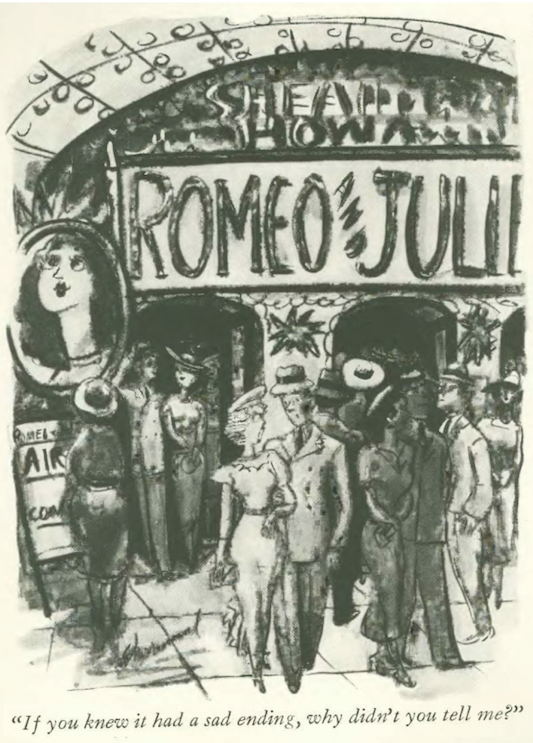
…Helen Hokinson continued to probe the delicate work of the dress shop…
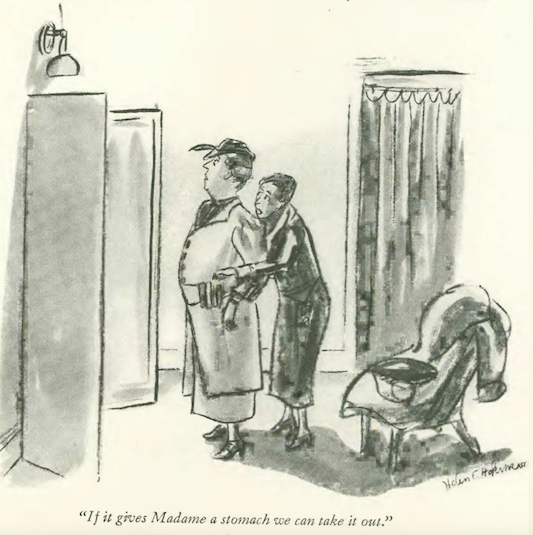
…and we close with another by dear Helen, and the fear of too much thinking…
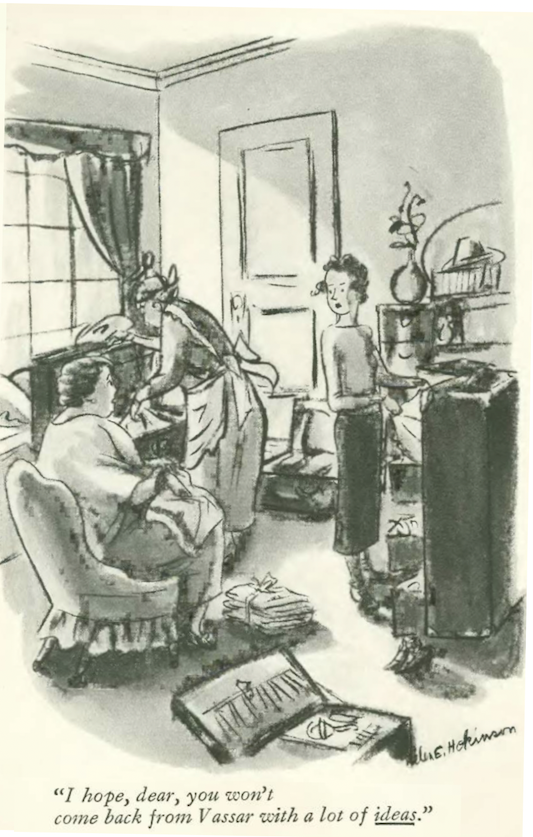
Next Time: Progress on the Lakes…

Coney Summertime

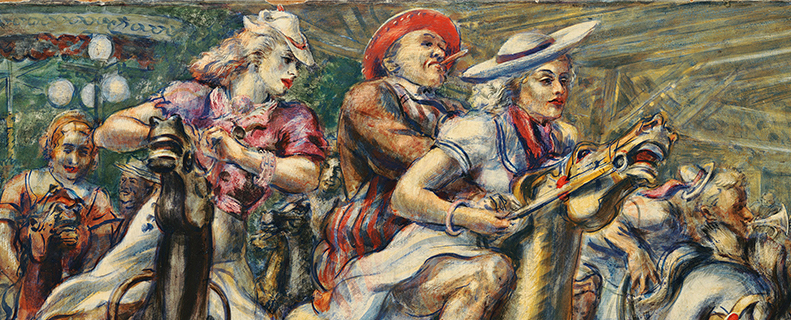
Above: Wooden Horses(detail) by Reginald Marsh, 1936. Marsh was a frequent visitor to Coney Island, a place that inspired numerous sketches and paintings. (Wadsworth Atheneum Museum of Art)

We officially kick off the summer with a visit to Coney Island, where “The Talk of the Town” took in the latest sights and amusements.

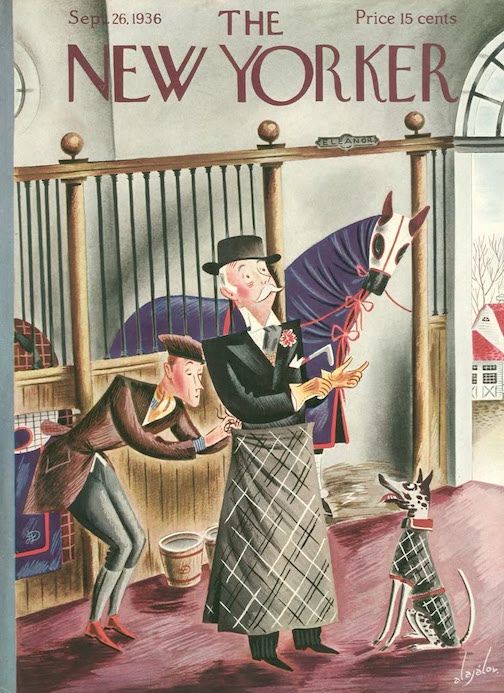
June 16, 1934 cover by Constantin Alajalov.

This excerpted “Talk” piece, attributed either to an “ 

CLANKITY CLANK…The mechanical man referred to in the “Talk” piece was likely similar to the one pictured above in this October 1933 feature in Popular Mechanics. Like many “robots” of that era, they were often pictured smoking cigarettes. (Google books)
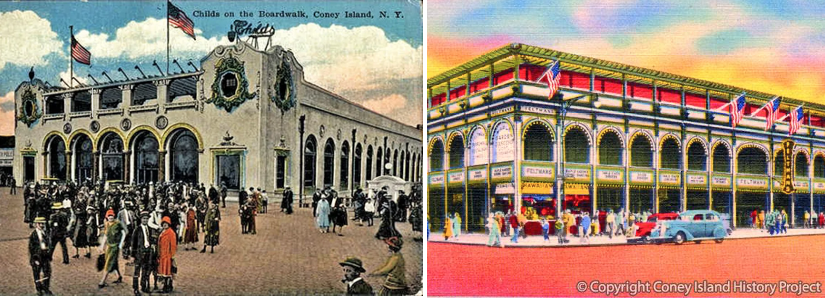
WET YOUR WHISTLE…Beer flowed up and down the boardwalk at Coney Island, but if you wanted something stronger you had to stop by the Half Moon Hotel or one of these establishments, Childs (left) or Feltmans’. (www.coneyislandhistory.org)
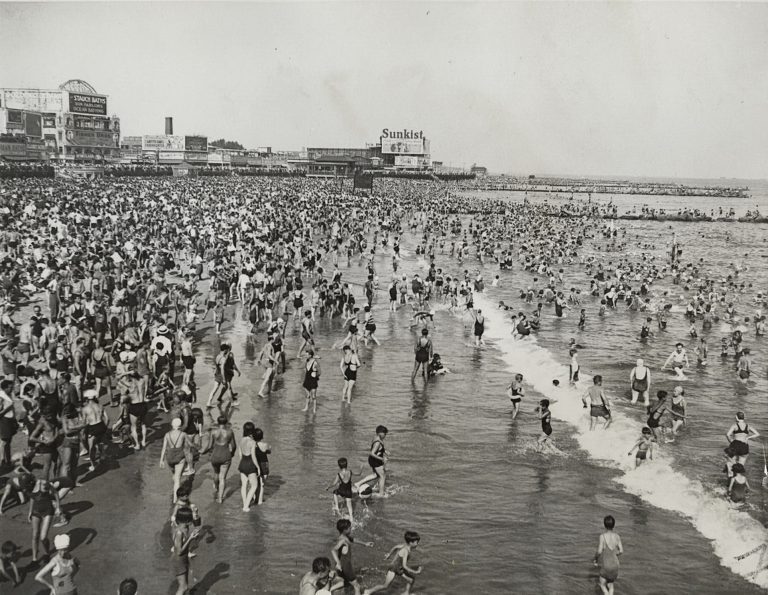
LEAVE SOME FOR ME…An estimated one million New Yorkers visited Coney Island on July 4, 1934 to get away from the heat of the city. (stuffnobodycaresabout.com)
DIFFERING INTERPRETATIONS…In his 1934 painting, Coney Island (left), artist Paul Cadmus portrayed beachgoers as ridiculous and uncouth rabble, while Cadmus’s friend and fellow artist Reginald Marsh took a somewhat kinder approach to the same subject in his 1936 Coney Island (right). (Jon F. Anderson, Estate of Paul Cadmus, licensed by VAGA, obtained via lacma.org / Syracuse University Art Collection)

Of course it wouldn’t be Coney Island without grisly wax museum scenes inspired by the latest sensational headlines…bank robber John Dillinger was still on the run, and “little June Robles” was finally free and apparently unharmed after being kidnapped and locked in a desert cage for 19 days…

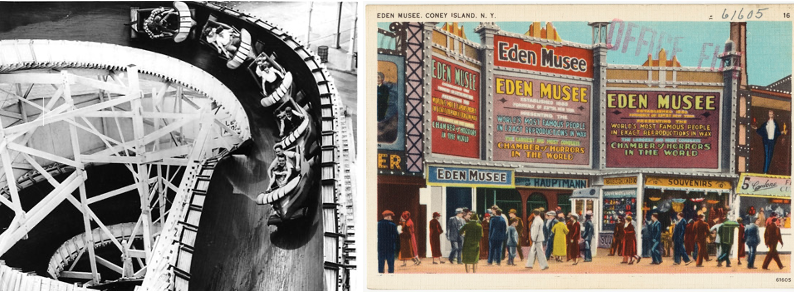
THANKS WINDY CITY…At left, the Chicago World’s Fair inspired Coney Island to build a trackless, bobsled-style “flying turns” coaster in Steeplechase Park (the wooden ride was destroyed by fire after only five years of operation). At right, a postcard image of the Eden Musee wax museum. (riverviewparkchicago.com / New York Public Library)
ON THE BOARDWALK…Another Coney scene by Reginald Marsh, titled Pip and Flip, 1932. (Terra Foundation for American Art, Chicago Daniel J. Terra Collection via artblart.com)

 * * *

Luck of the Irish

The Irish Hospitals’ Sweepstake (more commonly known as the Irish Sweepstakes) was established in 1930 to raise funding for hospitals in Ireland. Although lotteries were generally illegal in the U.S., millions of tickets were sold in the States, many of them in New York and New England. In his “Notes and Comment,” E.B. White wondered what would become of the lottery’s newest American winners, including former Ziegfeld Follies showgirl Alma Mamay, who won $152,000 in the Irish sweepstakes. White might have been pleased to know that Mamay moved to California, married a millionaire oil tycoon, and lived to the age of ninety-one.

CALIFORNY IS THE PLACE YOU OUGHTA BE..Ziegfeld Follies showgirl Alma Mamay took her Sweepstakes winnings and fled to California, where she married a millionaire oil tycoon. (ziegfeldfolliesgirls.com)

 * * *

Rugged Individual

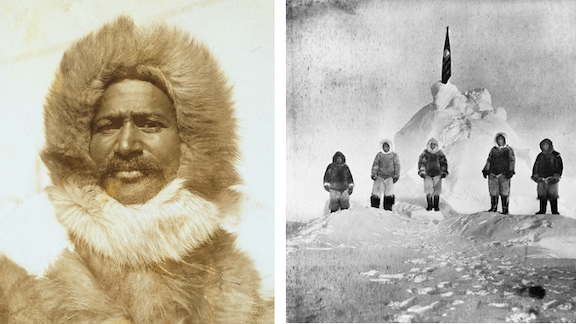
Matthew Alexander Henson (1866–1955) was an African American explorer who accompanied Polar explorer Robert Peary to the Arctic seven times, participating in a 1908–1909 expedition that arguably made Henson the first explorer to reach the geographic North Pole. “The Talk of the Town” caught up with Henson on the feat’s 25th anniversary.

GO NORTH YOUNG MAN…At left, Matthew Henson circa 1910. At right, photograph of Henson and four Inuit guides on the last stretch of their 1908–09 expedition, taken by Robert Peary at what they believed to be the North Pole. Henson (center) planted the flag. (Wikipedia)

 * * *

POTUS Profiled

Pulitizer Prize-winning historian Henry F. Pringle published the first installment of a three-part profile of President Franklin D. Roosevelt. In this excerpt Pringle writes about FDR’s sense of humor (illustration by William Cotton):

 * * *

Mattress Campers

The “About the House” column featured the latest in home-cooling devices. Couldn’t afford the zillions it would cost to install a home air-conditioner? Well the folks at Crosley—an electronics company known for its radios—offered a more affordable solution: an air-conditioned tent that could be erected over one’s bed for $150 (about $3,500 in today’s dollars):

Here is a 1934 ad for the contraption I found at worldradiohistory.com:

…and we continue with more from our advertisers, including the Broadway magazine The Stage, which offered up this idyllic scene showing what folks did in the days before air-conditioning…

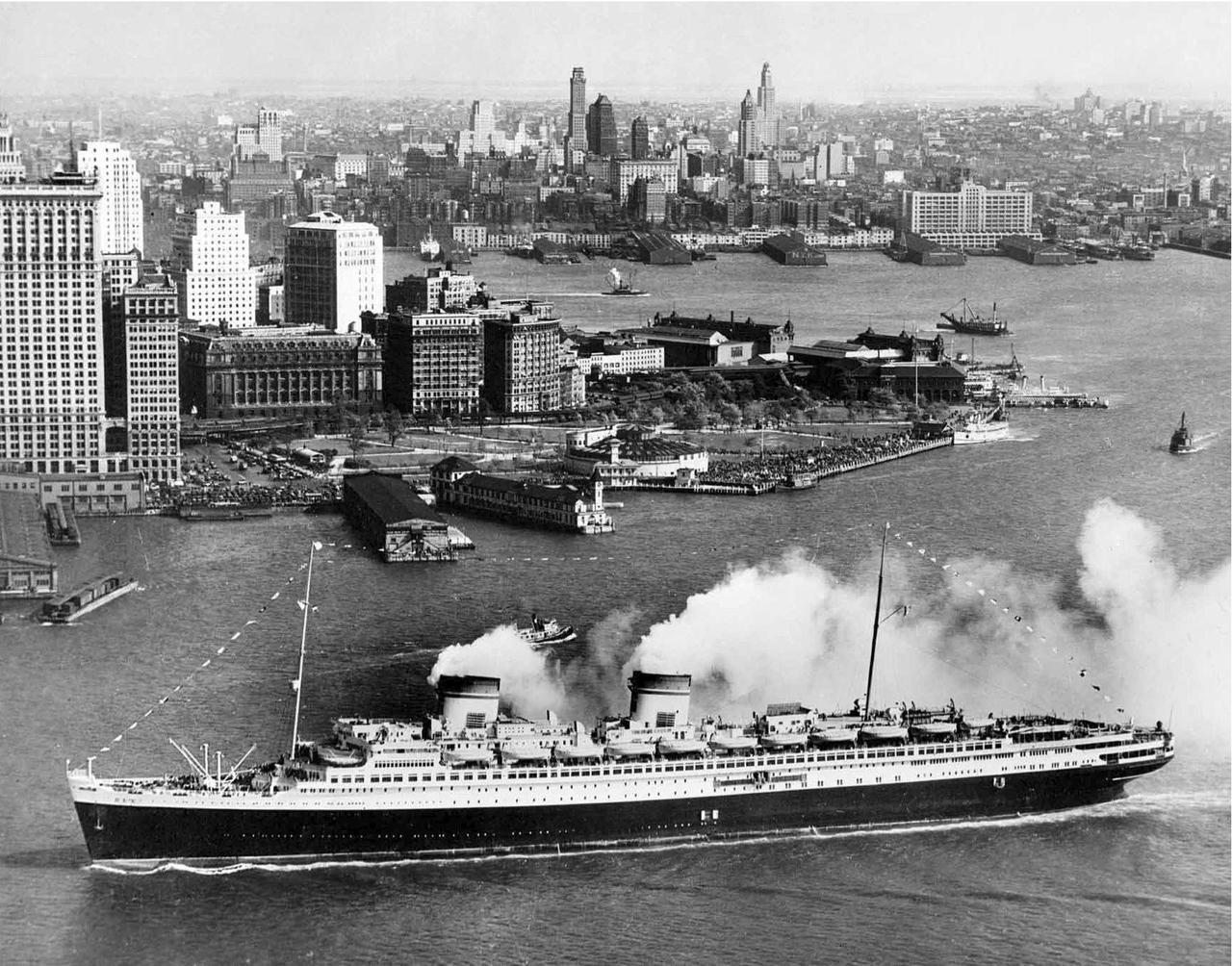
…you could also escape the heat by taking to the high seas aboard the Italian liner SS Rex…

…seen below arriving in New York in this 1932 photo, the 911-foot SS Rex was the largest ship built in Italy before World War II…it was destroyed by the British RAF in 1944…

(adventures-of-the-blackgang.tumblr.com)

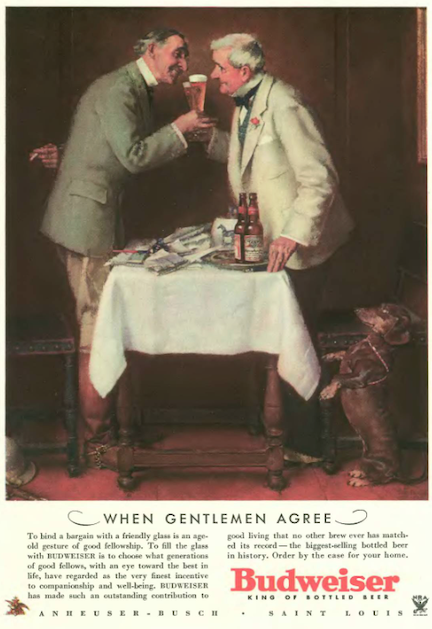
…you could also cool off like these two old gents, sharing a toast and some Budweisers…

…or you could get yourself a jug of applejack brandy and mix it 1:1 with pineapple juice…not sure who or what is being “saved” here…

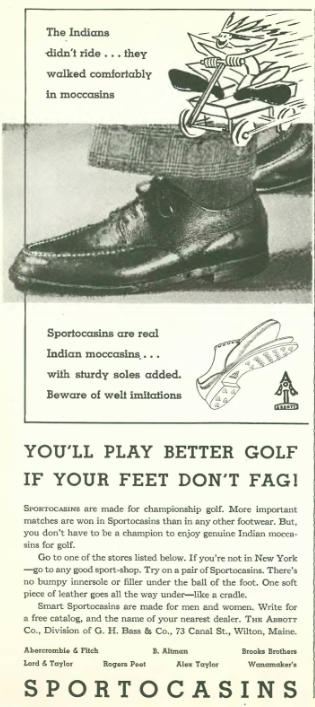
…long before there were Nikes or Adidas, golfers could hit the links in a pair of Sportocasins…

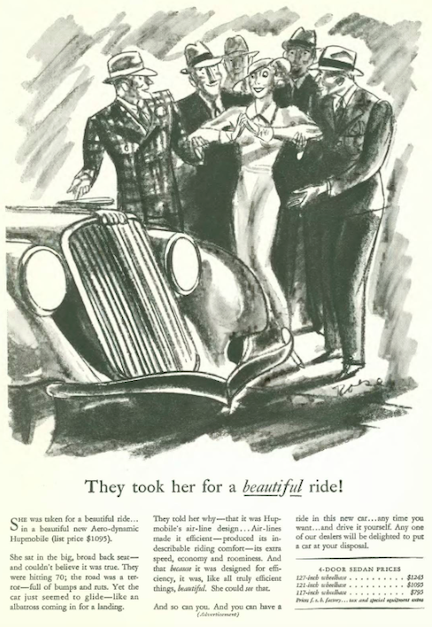
…Hupmobile was still hanging in there, enlisting the talents of illustrator Herbert Roese to extol the comforts and the beauty of its “air-line design”… it isn’t clear why it required five middle-aged men to take her on that beautiful ride…

…the real-life bellboy Johnny Roventini made his debut in the New Yorker as the spokesman for Phillip Morris cigarettes…

…Roventini (1910–1998), who stood less than four feet tall as an adult, was working as a bellboy at the New Yorker Hotel when he was discovered by an advertising executive in 1933. Apparently the exec had Roventini shout the line “Call for Philip Morris!” and learned the bellboy could repeatedly, and on cue, vocalize a perfect B-flat tone. Representing the company for more than forty years, he helped Lucille Ball and Desi Arnaz with the initial success of I Love Lucy (Philip Morris was the show’s sponsor)…

WHAT’S HIS LINE?…TV producers Mark Goodson, left, and Bill Todman greet Johnny Roventini during a 1952 radio broadcast of their quiz show, What’s My Line? The program’s sponsor was Phillip Morris. Note Goodson and Todman both hold cigarettes. (Wikipedia)

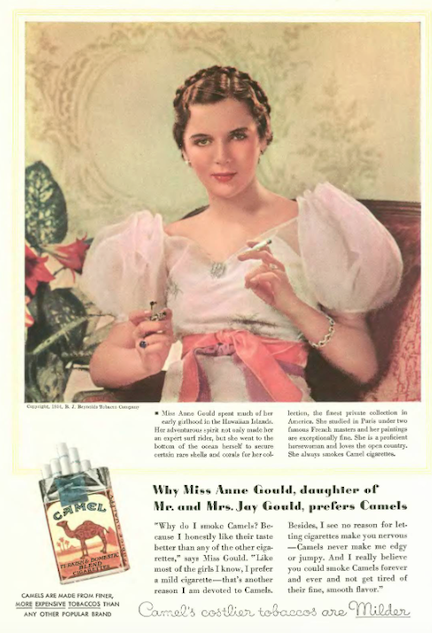
…by the looks of it, Anne Gould (heiress daughter of Jay Gould II and Anne Douglas Graham Gould) didn’t need anyone to tell her what to smoke…

…on to our cartoons, we continue our birdwatching with Rea Irvin…and we also get…

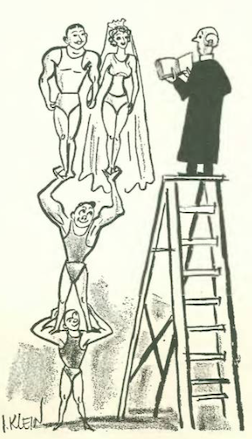
…high-flying nuptials with Isadore Klein…

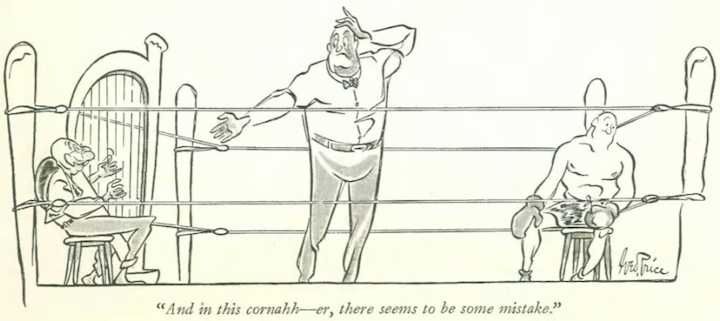
…a mismatch with George Price…

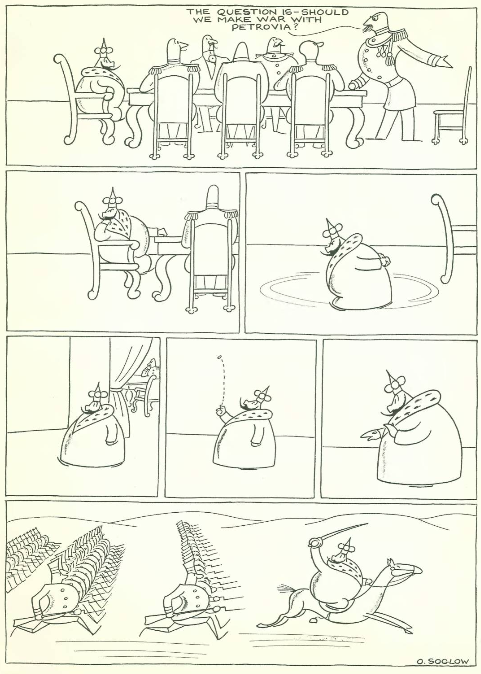
…the prospects for war with Otto Soglow…

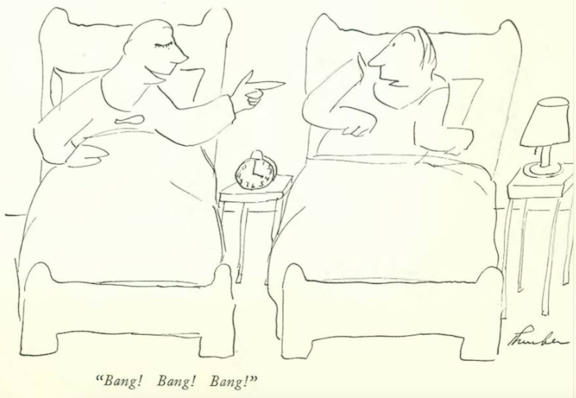
…marital bliss with James Thurber…

…and a courtship scene, with an expiration date, from Mary Petty…

Next Time: A Ring Ding…