Road Warriors

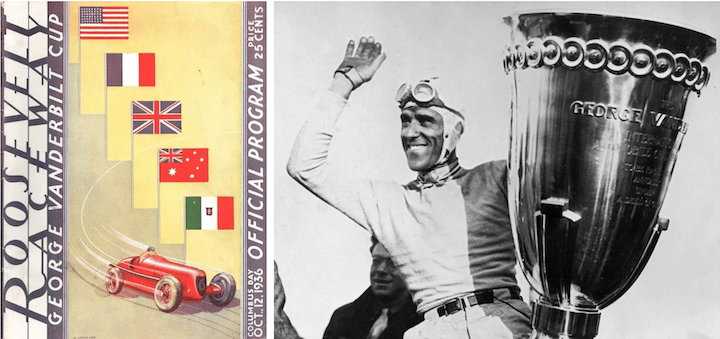
Above: 1936 Vanderbilt Cup program cover and the winner of the race, Italy's Tazio Nuvolari. (Wikipedia)

When William K. Vanderbilt II founded the Vanderbilt Cup Race in 1904, Long Island’s Nassau County was mostly farmland, its North Shore dotted with the luxurious country estates of wealthy New Yorkers. The Vanderbilt Cup would help crack open the door to the eventual suburbanization of Long Island, now home to more than eight million people.
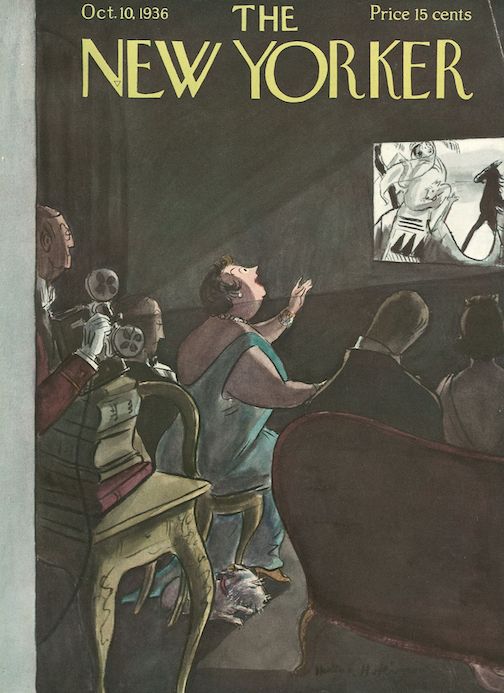
October 10, 1936 cover by Helen Hokinson.

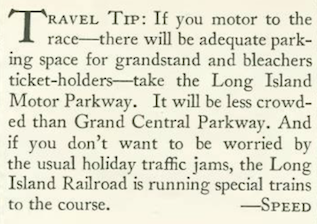
The race was cancelled after just three years—a spectator was killed in 1906— but it was revived in 1908 with the opening of the Long Island Motor Parkway. That nine-mile (14.4 km) private toll road, combined with fourteen miles (22.5 km) of public dirt roads, served as the Vanderbilt Cup course until the race was suspended in 1916 with the U.S. entry into World War I. The race would not be revived until Oct. 12, 1936, when the new Roosevelt Raceway opened in Westbury, welcoming 50,000 spectators. New Yorker correspondent G.F.T. Ryall (aka “Speed”) looked forward to the big race:
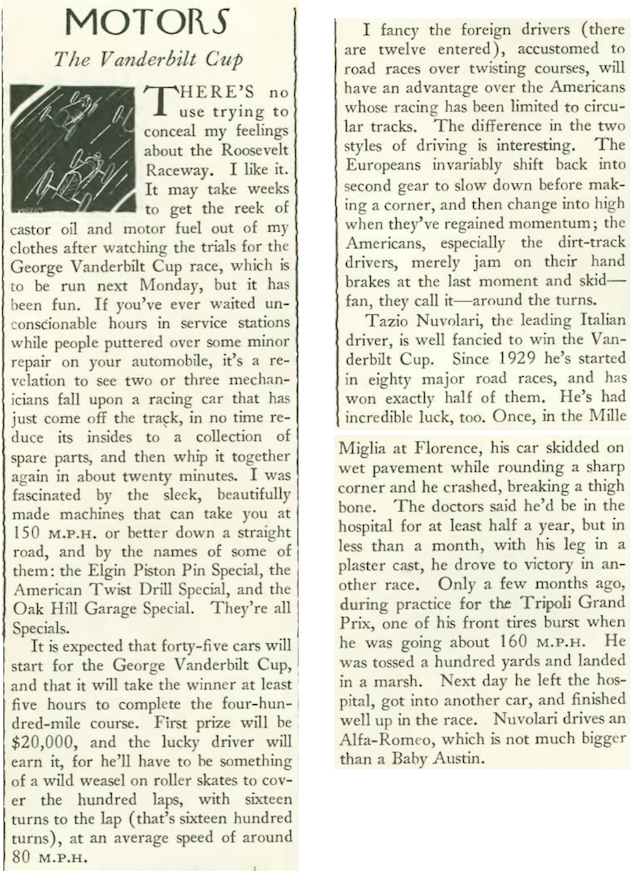
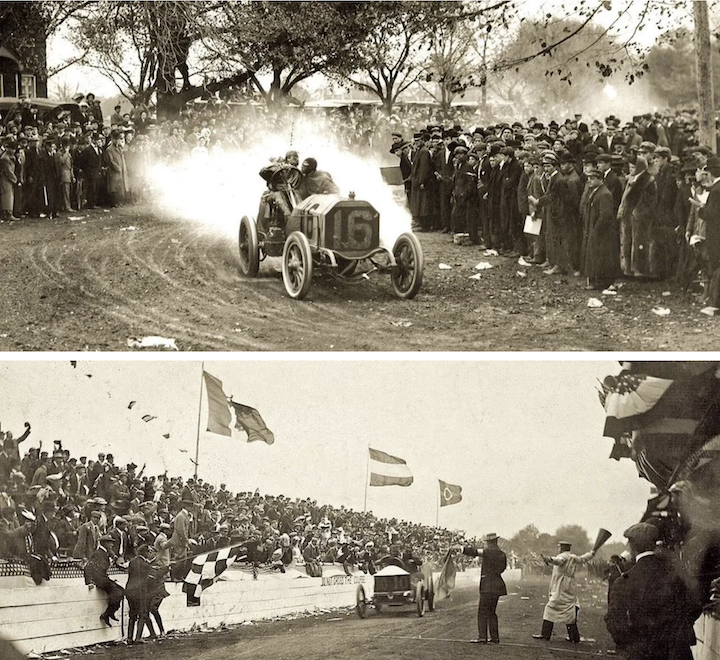
EAT MY DUST…Top photo: Averaging sixty-five miles per hour (104.6 kph), with a top speed exceeding one hundred mph (161 kph), George Robertson’s 1906 Locomobile is shown rounding a turn in the 1908 Vanderbilt Cup race—the crowd, estimated at more than 250,000—often stood dangerously close to the action (a spectator was killed in the 1906 race); Below: The 1906 finish saw the first-ever use of a checkered flag to signal the winner of an automobile race. (hemmings.com)

The 1936 race was revived by William K’s nephew George Washington Vanderbilt III, NFL founder George Preston Marshall, and famed World War I flying ace Eddie Rickenbacker. The three hundred-mile (482.8 km) race, featuring seventy-five laps on a twisting, four-mile (6.4. km) circuit, was won by Italy’s Tazio Nuvolari driving a twelve-cylinder Alfa Romeo. The best American driver, William Cummings, finished almost twenty-five minutes behind Nuvolari.
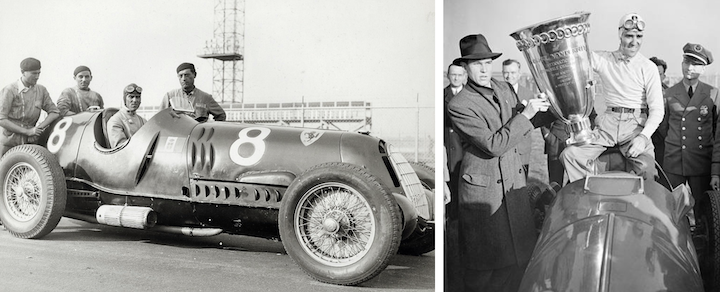
STEERING COMMITTEE…At left, 1936 Vanderbilt Cup winner Tazio Nuvolari and his mechanics prior to the race—his average speed was similar to the winner of the 1908 race due to the twisty, maze-like design of Roosevelt Raceway; at right, George Washington Vanderbilt III presents the winning trophy to Nuvolari. The massive sterling silver cup, crafted by Cartier, is now housed at the Museo Nicolis in Verona, Italy. (vanderbiltcupraces.com)

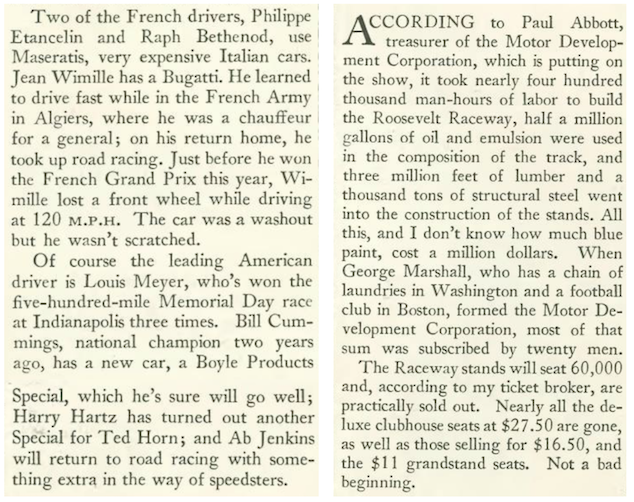
Ryall noted that the leading American driver was Louis Meyer, but Meyer would not compete due to a crash on a practice run. Also noted was the labor and materials involved in the construction of Roosevelt Raceway, where the winning average speed (65.998 mph or 106.2 km/h), was nearly the same as the 1908 race. This lack of speed was later mocked by spectators and the press, who criticized the many twisty hair-pin turns on the course.
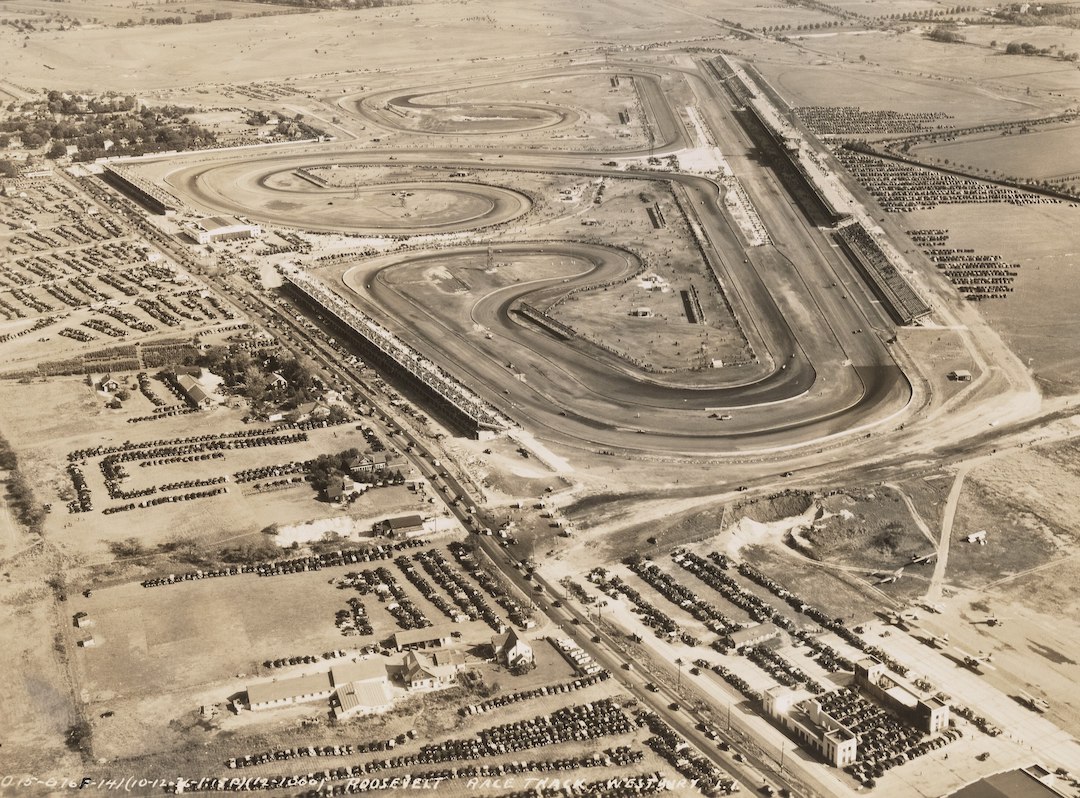
LOTS OF CURVES, YOU BET…Army Air Forces aerial photograph of the new Roosevelt Raceway taken during the 1936 Vanderbilt Cup Race Oct. 12, 1936. Deluxe clubhouse seats were sold for $27.50, or about $700 today. The four-mile (6.4. km) layout featuring sixteen unbanked corners (many with tight hairpins), a layout that kept average speeds disappointingly low. (Wikipedia)

The revived race lasted only two years, both won by Europeans. Check out the website Vanderbilt Cup Races for more photos and information on the race. This final note by Ryall suggested that travelers use the Long Island Motor Parkway to get to the race—the very same road that was originally constructed for the 1908 race.
 * * *

A Gentler Pastime

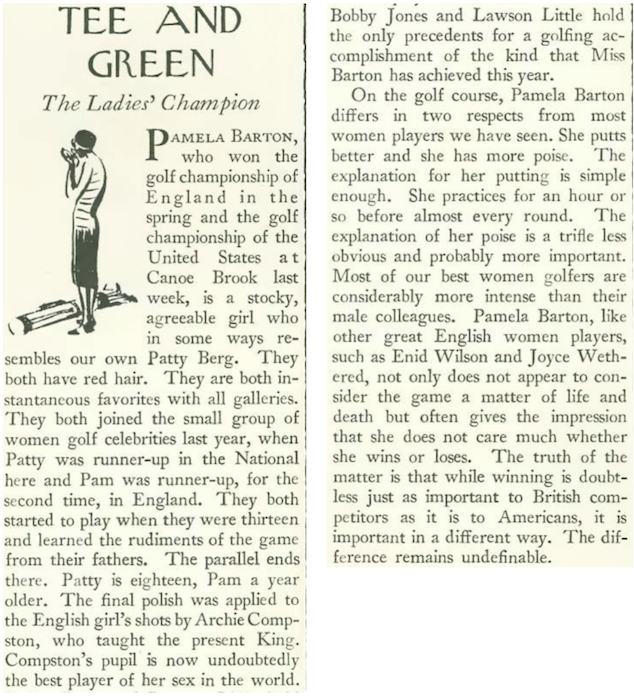
Noel F. Busch reported from the 1936 U.S. Women’s Amateur Championship, where the young British golfer Pamela Barton won her second major tournament of the year.
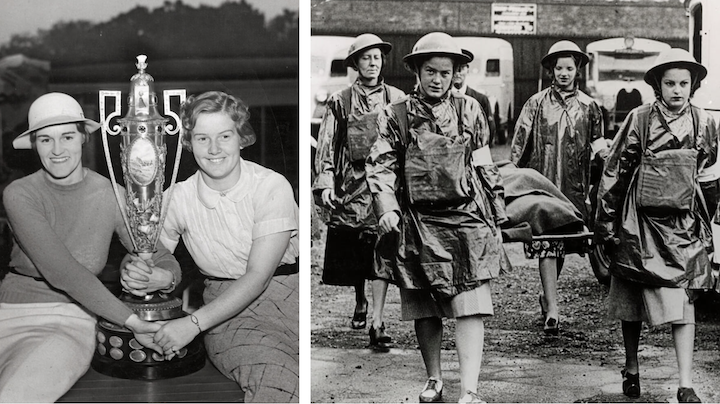
KING AND COUNTRY…Photo at left: Pamela Barton (right) defeated Maureen Orcutt (left) to win the 1936 U.S. Women’s Amateur Championship, becoming the youngest, at age nineteen, to win the U.S. and British women’s amateur titles in the same year—Barton was considered the best female golfer in the world in the late 1930s; photo at right: Barton takes part in training for the Volunteer Ambulance Service in England during WWII—sadly, the crash of a Royal Air Force Tiger Moth on November 13, 1943, claimed Barton’s life at age twenty-six. (USGA Archives)

* * *

At the Movies

Italian tenor Nino Martini took top billing in the second film produced by Mary Pickford and Jesse Lasky for United Artists, the musical comedy The Gay Desperado. Critic John Mosher gave a thumbs up to this spoof of the gangster genre.
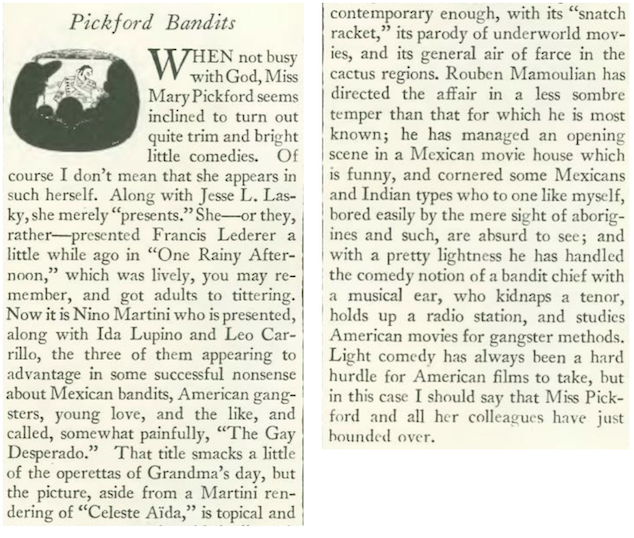
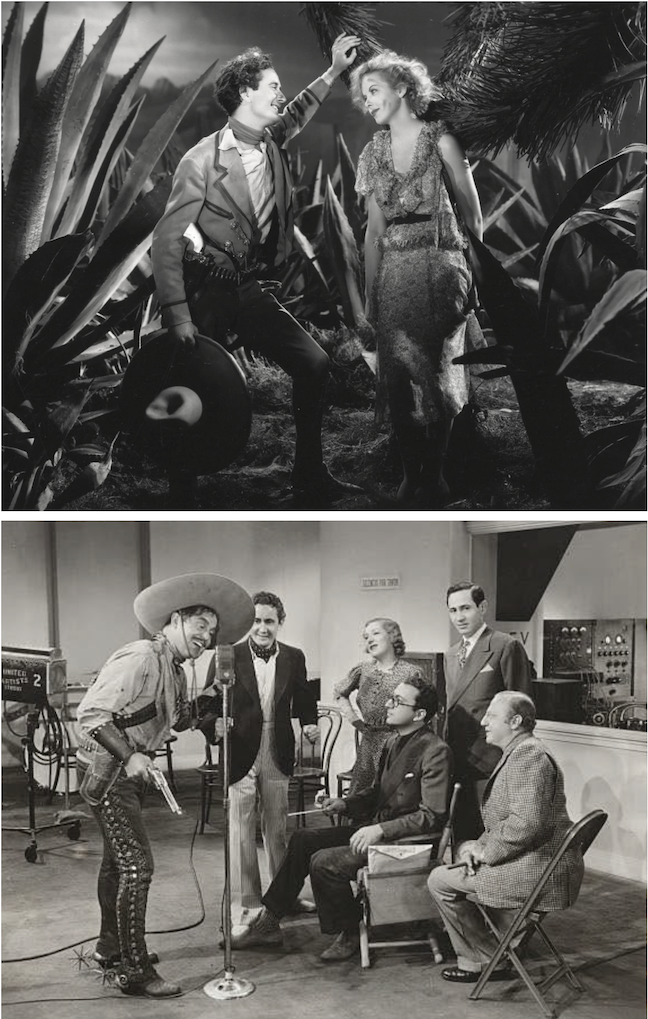
LIGHT AND EASY…Top photo: Italian operatic tenor Nino Martini took top billing in The Gay Desperado, seen here with co-star Ida Lupino; below: the film’s other co-star, Leo Carrillo, performs in costume in front of (from left) Martini, producer Mary Pickford, director Rouben Mamoulian, Mexican Consular Ricardo G. Hill, and producer Jesse L. Lasky. (Citizen Screen via Facebook/just watch.com)

Not so light was Craig’s Wife, starring Rosalind Russell as a domineering woman who drives everyone from her life, including her husband. Mosher found some relief in the “toothsome” comedy Kelly the Second.
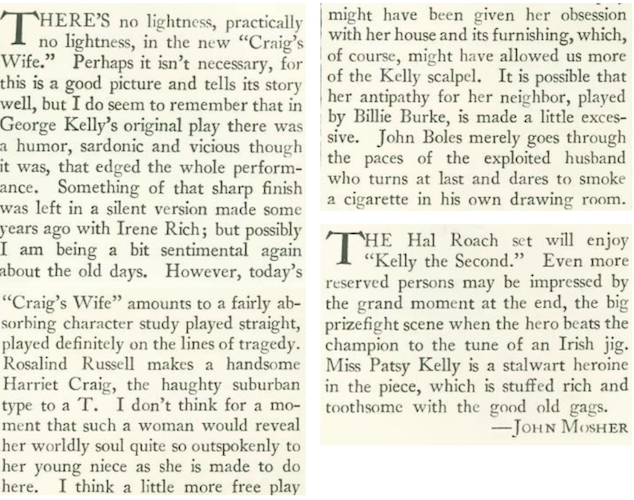
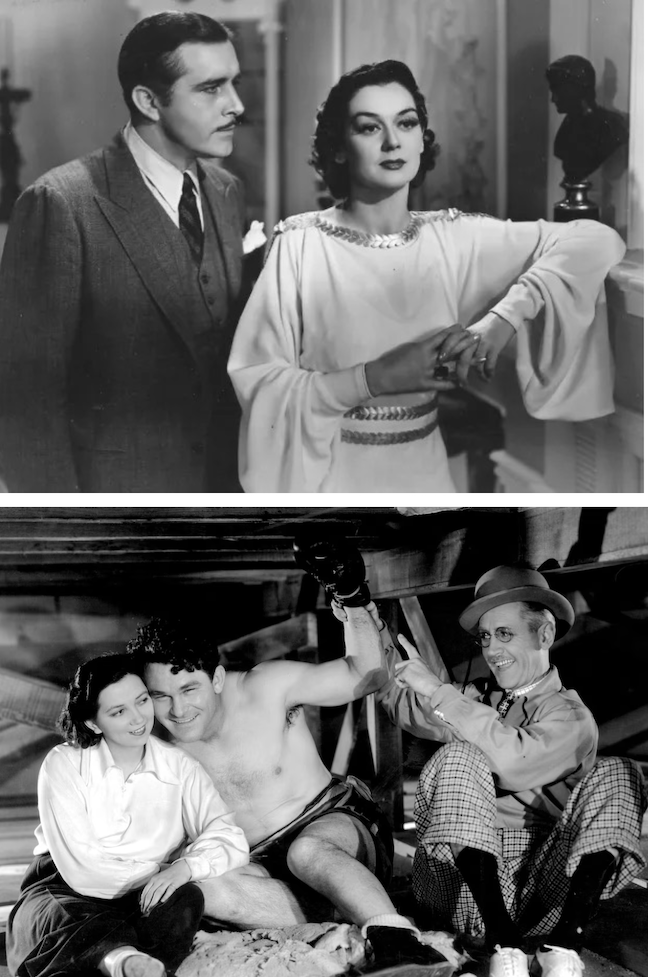
MOTHER MAY I?…Top photo: Rosalind Russell portrayed the domineering wife of Walter Craig (John Boles) in Craig’s Wife; Below: Patsy Kelly, Guinn ‘Big Boy’ Williams and Charley Chase in Kelly the Second. (melanienovak.com/tcm.com)

 * * *

Whining for Winesburg

Book critic Clifton Fadiman found himself “stymied” by Sherwood Anderson’s latest novel, Kit Brandon: A Portrait, in which the author seemed “to be asking himself questions about a dozen things at once.”
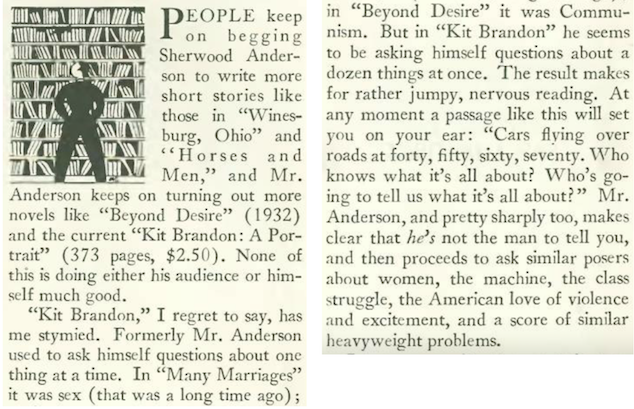
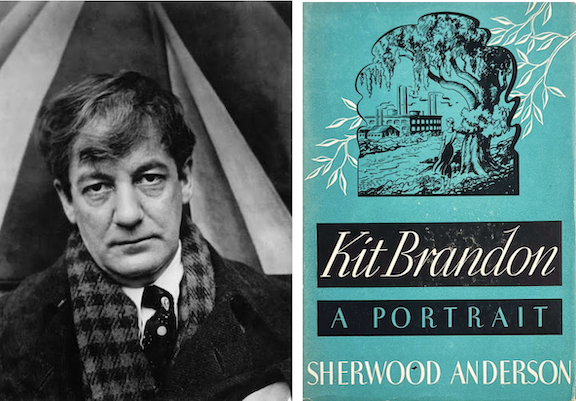
A LOT ON HIS MIND…Sherwood Anderson’s Kit Brandon: A Portrait, would be his eighth novel. (neh.gov/abebooks.com)

 * * *

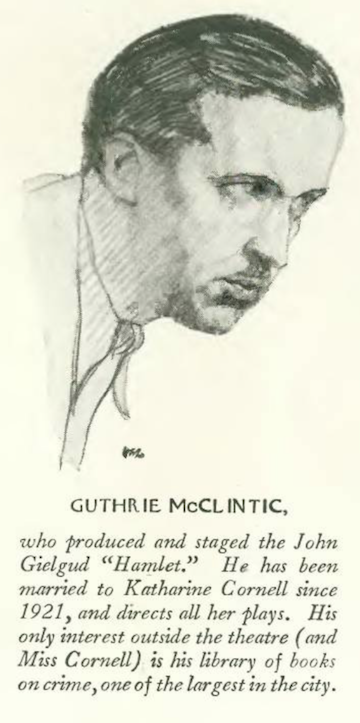
The calendar pages continued to feature mini-bios of celebrities, this week theater producer and director Guthrie McClintic…
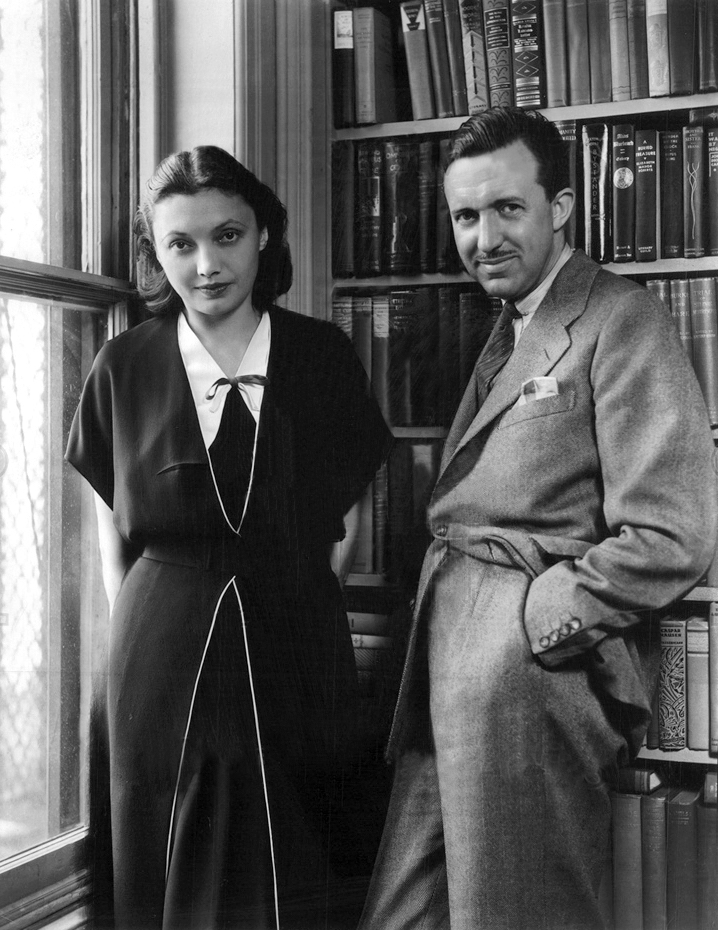
THEATER ROYALTY…Katharine Cornell and Guthrie McClintic in the library of their home at 23 Beekman Place in Manhattan, 1933. (Wikipedia)

 * * *

From Our Advertisers

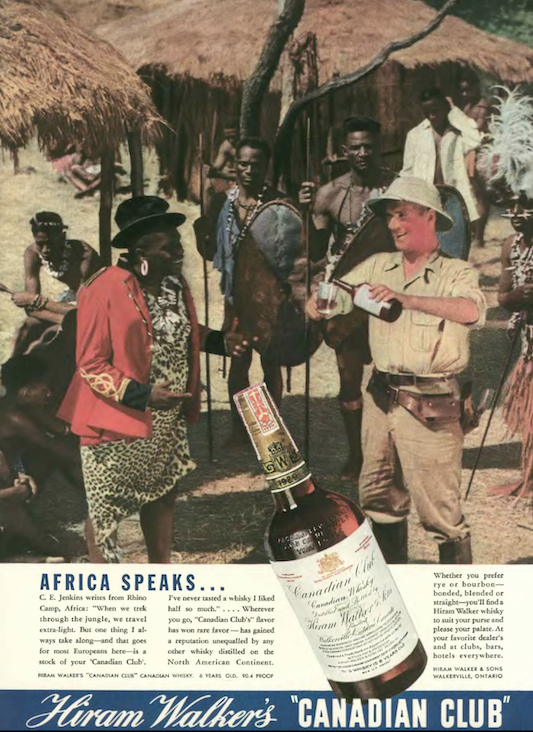
We begin with this antediluvian image from Hiram Walker, which greeted readers on the inside front cover…the ad was part of series showcasing the consumption of Canadian Club around the world…
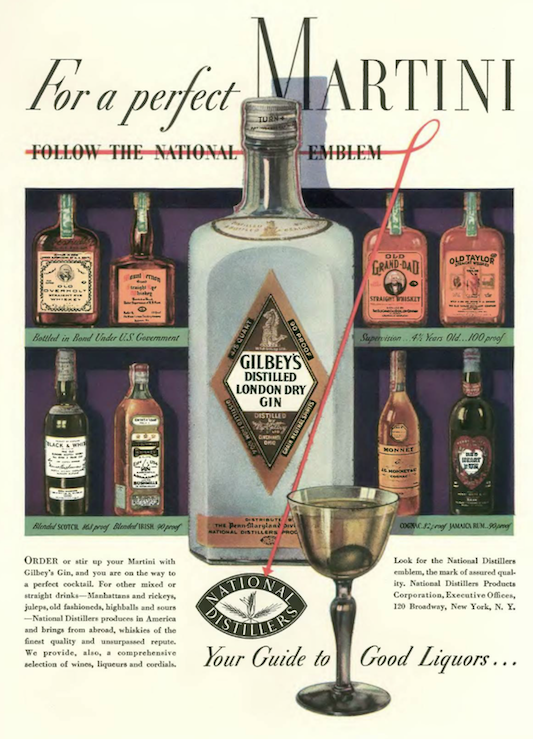
…National Distillers lined up their domestic and imported brands to promote a “perfect martini”…
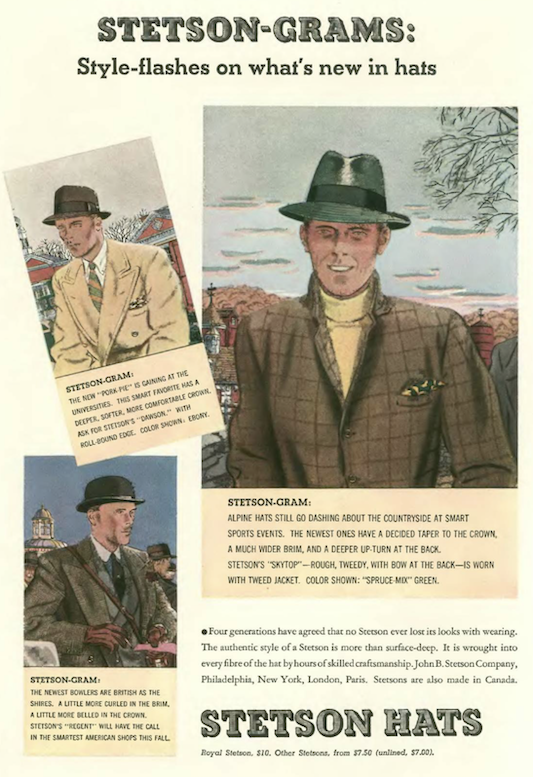
…and we have more stylish lids from Stetson, which included a “new pork-pie” that was apparently popular among university students…
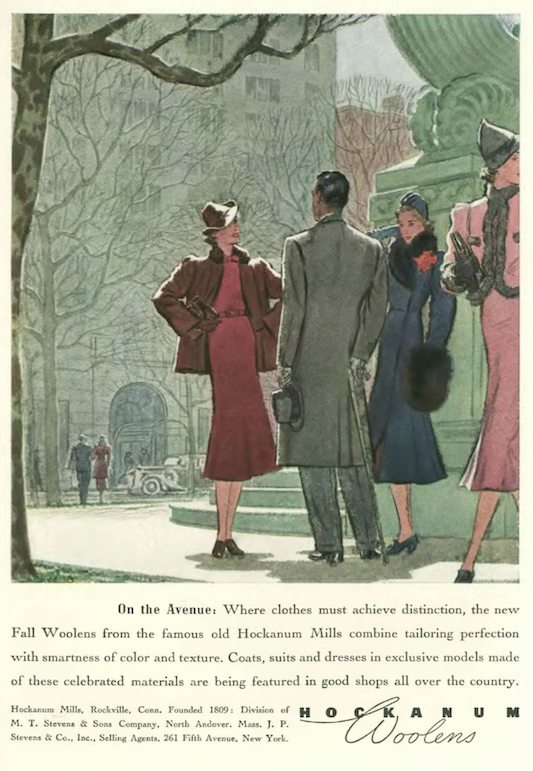
…and Hockanum Woolens continued its series celebrating the seasons in fashion…
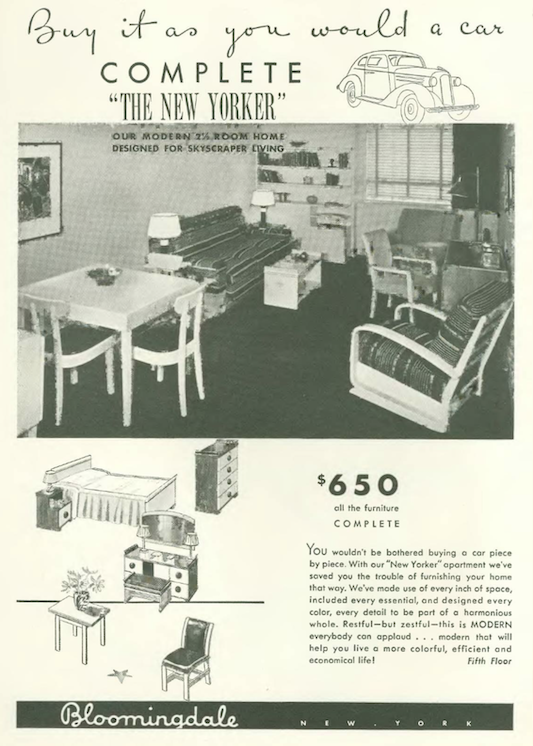
…there were numerous ads in the issue touting the latest in modern furniture, including Bloomingdale’s…
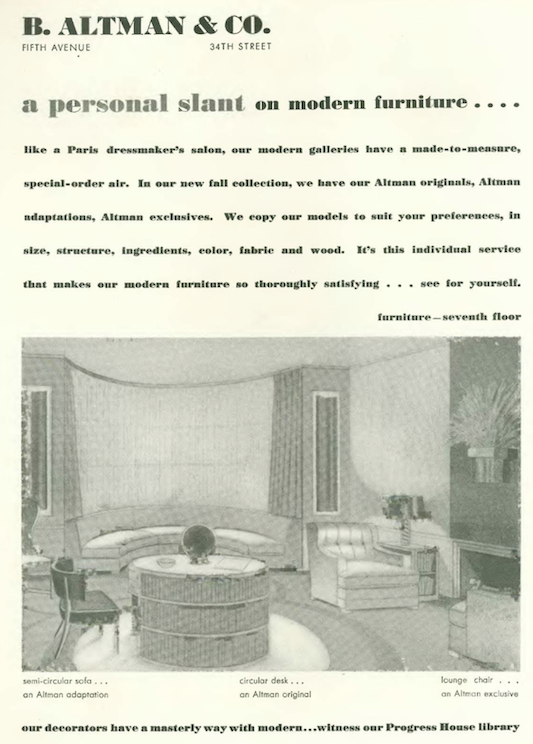
…and B. Altman…
…The New York Sun hired cartoonist Fred Neher to tout the newspaper’s advertising reach…
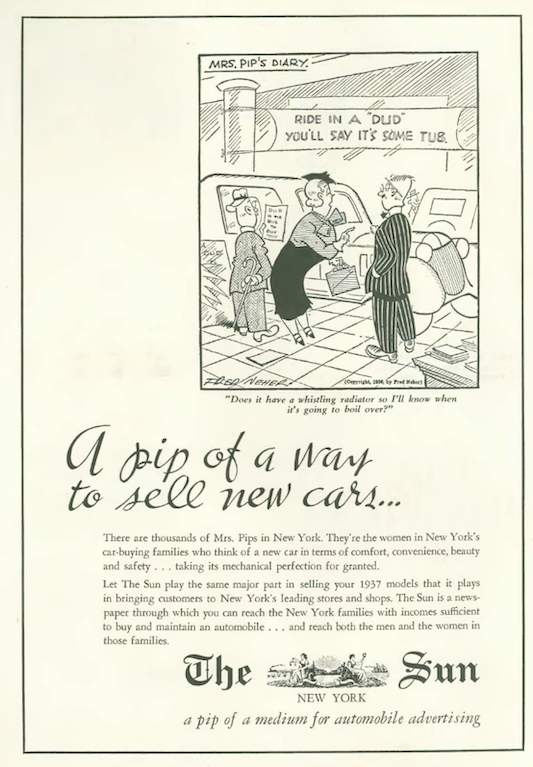
…Neher (1903–2001) was best known for his long-running syndicated cartoon Life Is Like That, which ran from 1934 to 1977…he also published one cartoon in The New Yorker, Jan. 21, 1933…
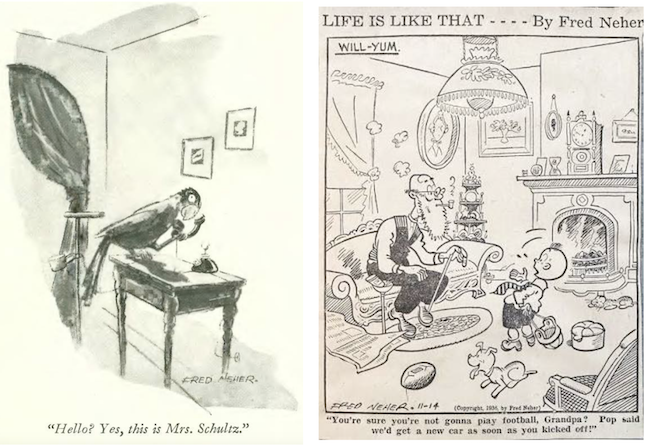
Left, Fred Neher’s sole New Yorker cartoon (Jan. 21, 1933), and at right, an example of his long-running gag panel from 1936. (Thanks to Ink Spill for the always invaluable reference!)

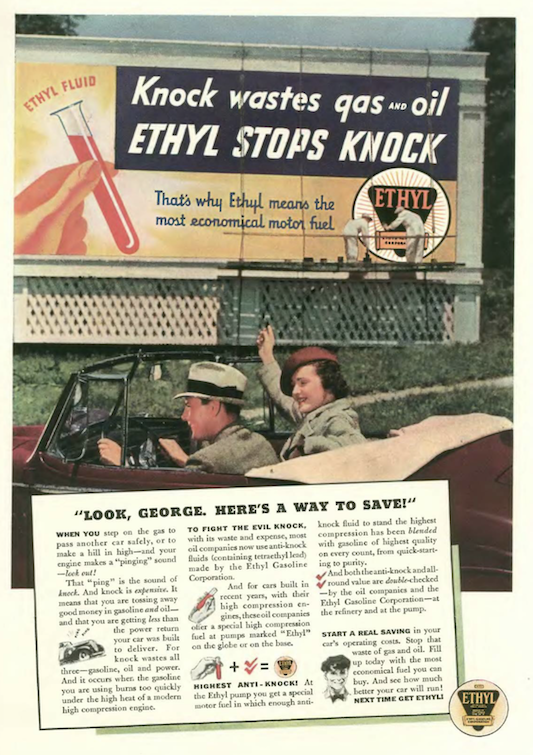
…the inside back cover featured an appeal to motorists to make the switch to leaded gasoline (during the 20th century, leaded gasoline released millions of tons of toxic lead particles into the air, soil, and water, and even today persists throughout ecosystems, including human bloodstreams)…
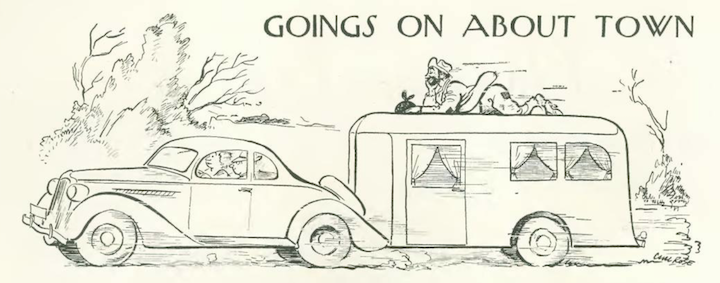
…on a cheerier note, we have a bunch of cartoons, beginning with spots by Carl Rose…
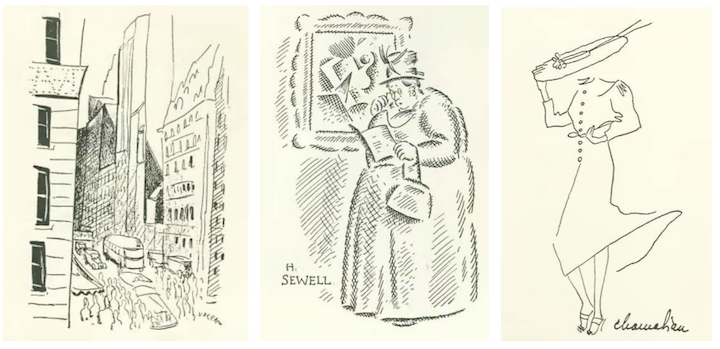
…Victor de Pauw, Helen Moore Sewell, and Alice Chamalian…
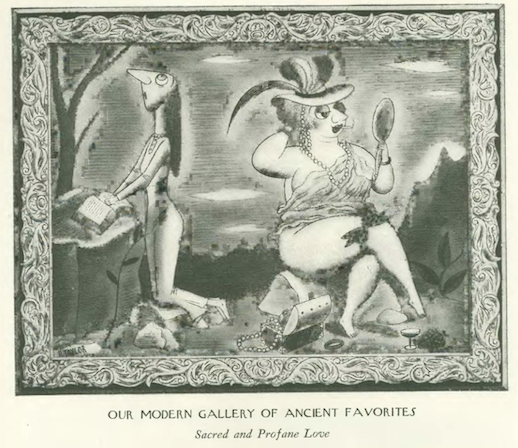
…Richard Taylor began his series of “Ancient Favorites”…
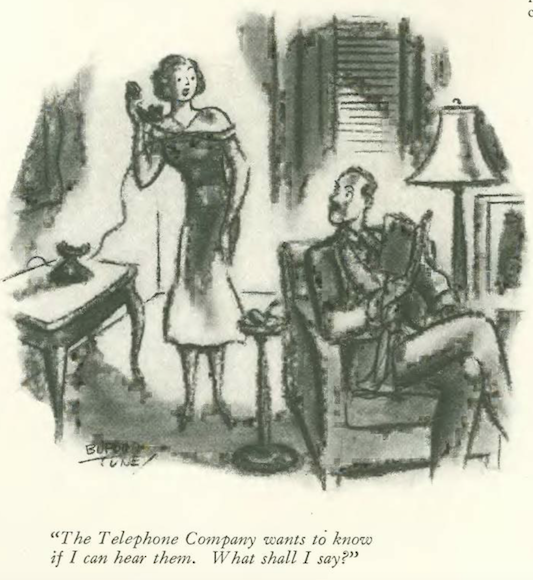
…Barney Tobey gave us a 1930s version of “can you hear me now?”…
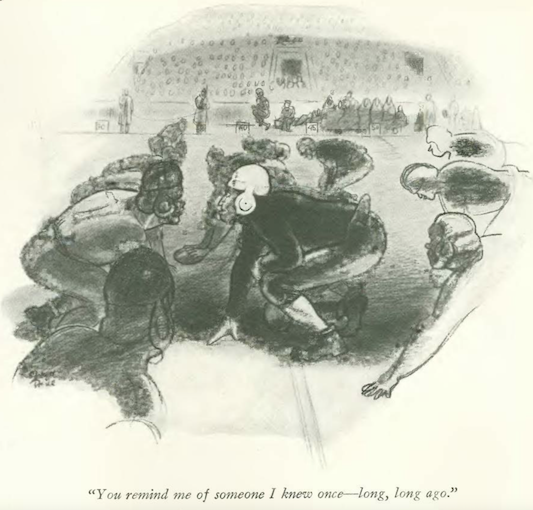
…Garrett Price recognized a face in the crowd…
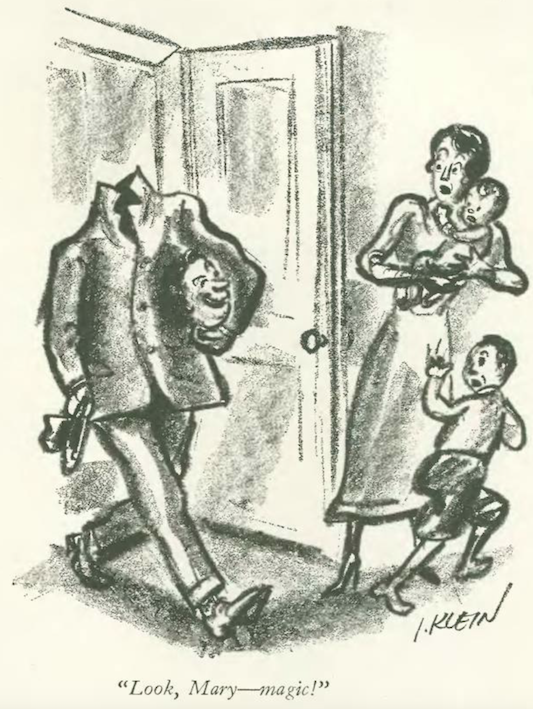
…after a long absence, Isadore “Izzy” Klein returned to The New Yorker with this contribution (in 1935 Klein (1897–1986) resumed his work as an animator for major studios including Screen Gems and Disney)…
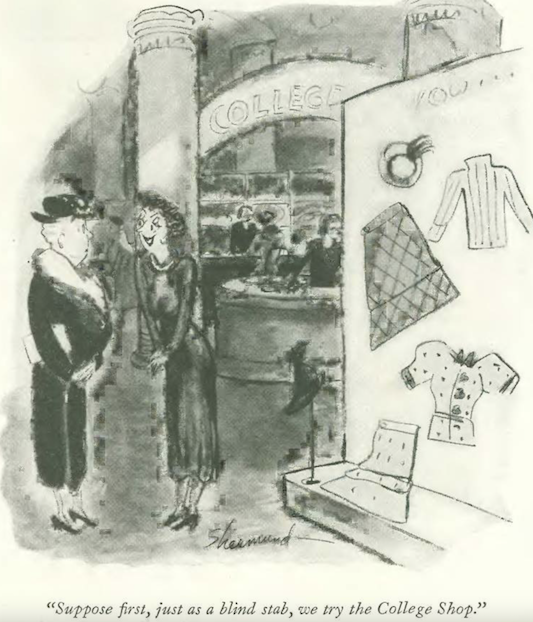
…Barbara Shermund got creative at a department store…
…Whitney Darrow Jr overheard some inside scoop at the theater…
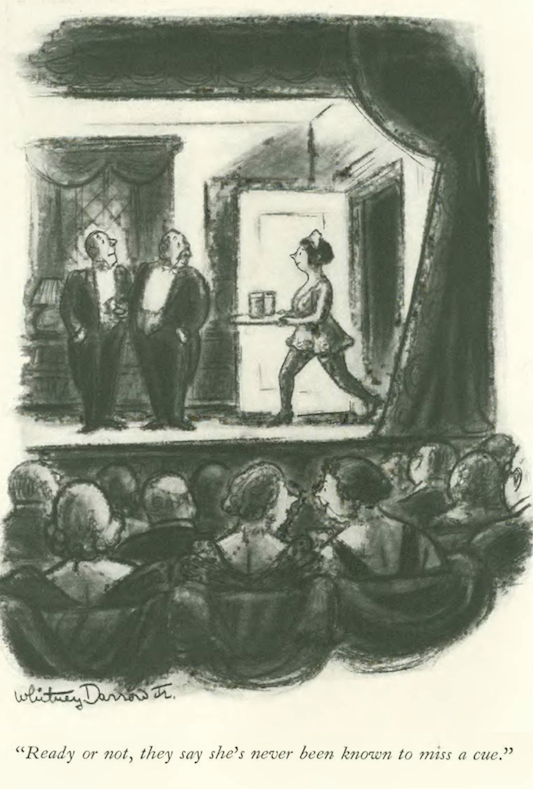
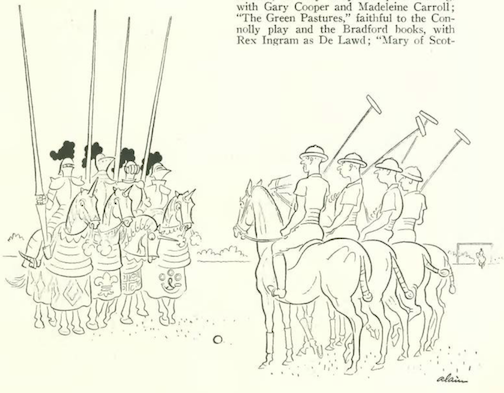
…Alain offered up some timeless advice from the advertising world…
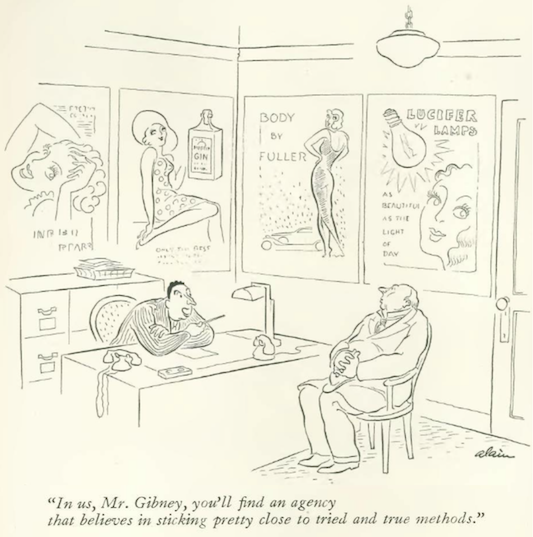
…Helen Hokinson’s “girls” steered clear of some political rhetoric…
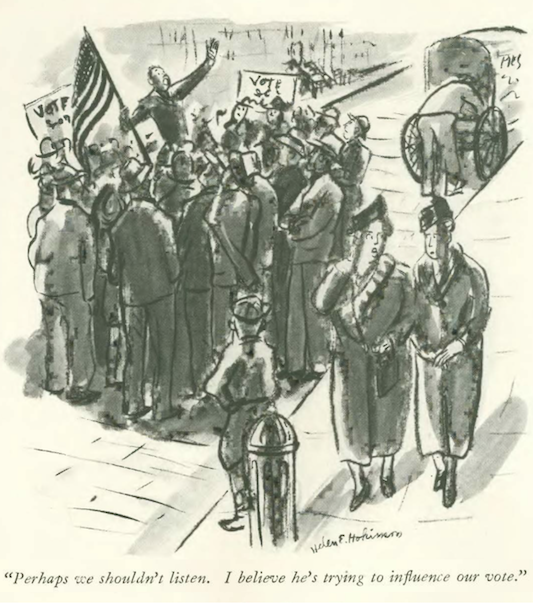
…Ned Hilton had an urgent change order…
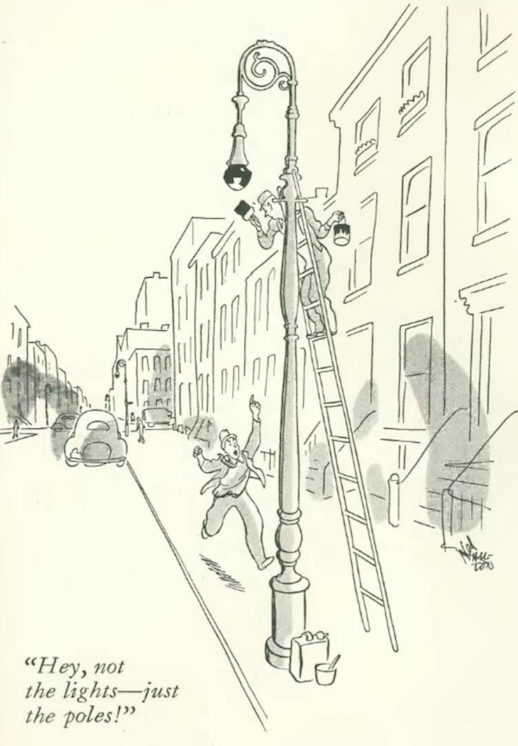
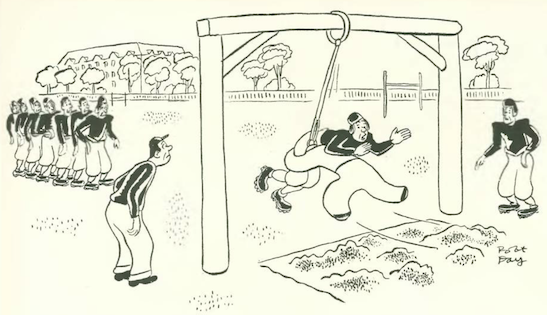
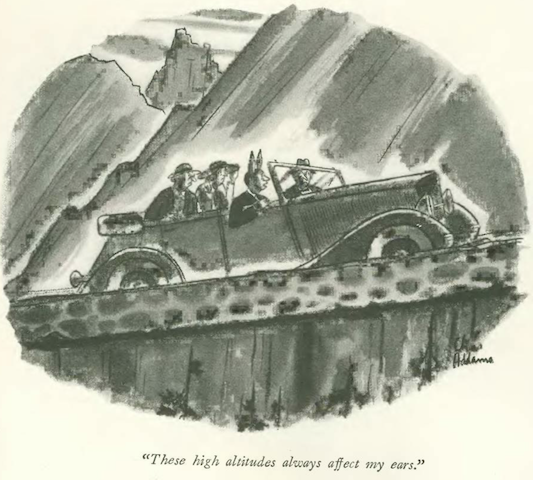
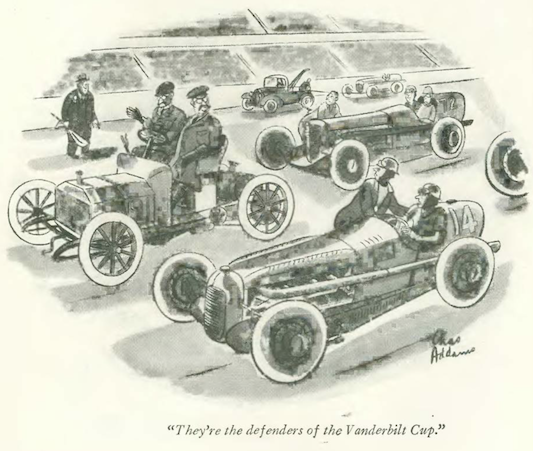
…and we close where we began, at the races, this time with Charles Addams…
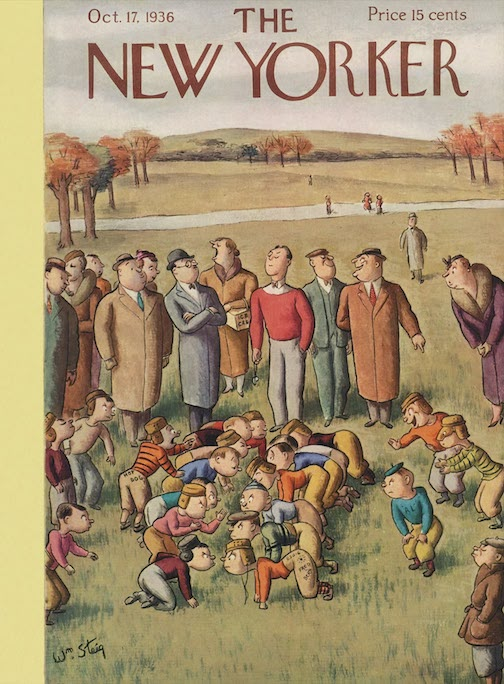
Next Time: National Treasure…
 

Mirror, Mirror

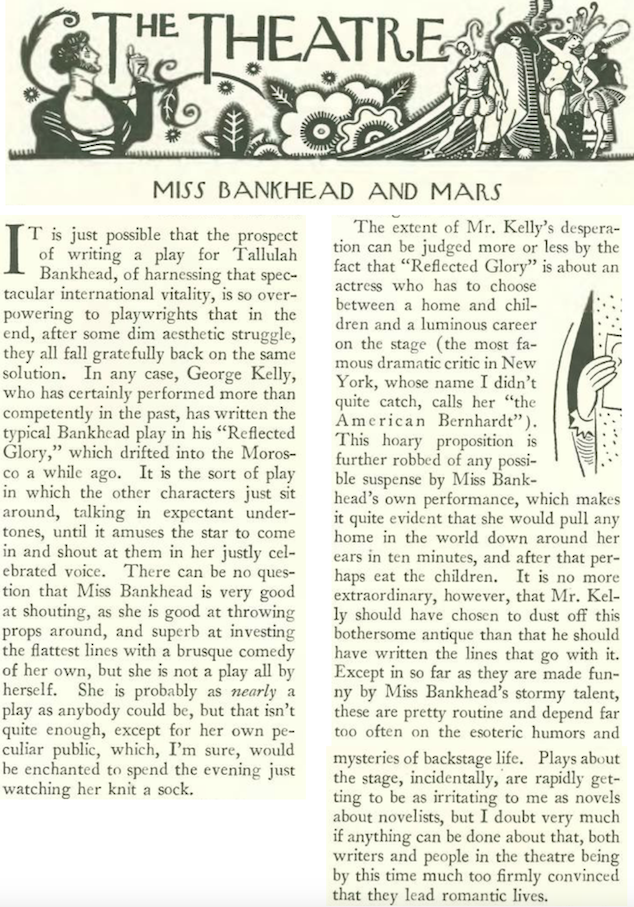
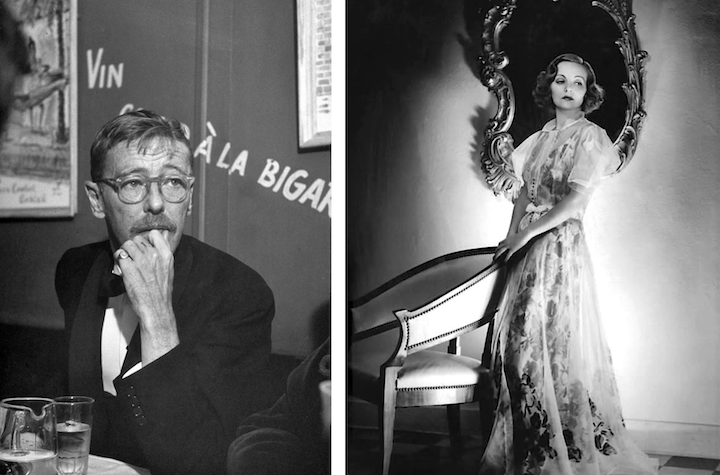
Above: In his review of Tallulah Bankhead's performance in "Reflected Glory," Wolcott Gibbs noted that she was a force to be reckoned with: ..."she would pull any home in the world down around her ears in ten minutes, and after that perhaps eat the children." (newyorker.com/facebook.com)

Broadway’s fall season was still young when the Morosco Theatre staged Reflected Glory, featuring Tallulah Bankhead in a role that mimicked her famously flamboyant lifestyle.

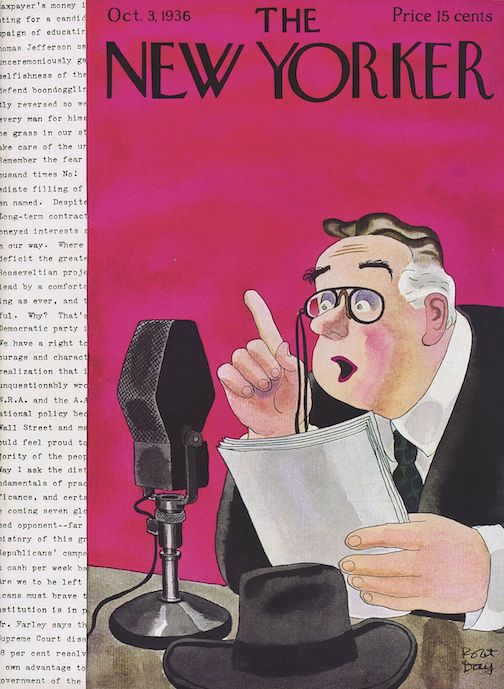
October 3, 1936 cover by Robert Day.

The play, which ran for 127 performances, was not well-received by the critics, but audiences loved it, and especially those who, in the words of critic Wolcott Gibbs, “would be enchanted to spend the evening just watching (Bankhead) knit a sock.”

Bankhead (1902–1968) also appeared in films (she won a New York Film Critics Circle award in 1944 for her performance in Alfred Hitchcock’s Lifeboat), but she was mostly known for her stage acting and her wild lifestyle—drugs, alcohol, and lots of sex with both men and women; she was candid about her vices, including the claim she smoked 120 cigarettes a day.

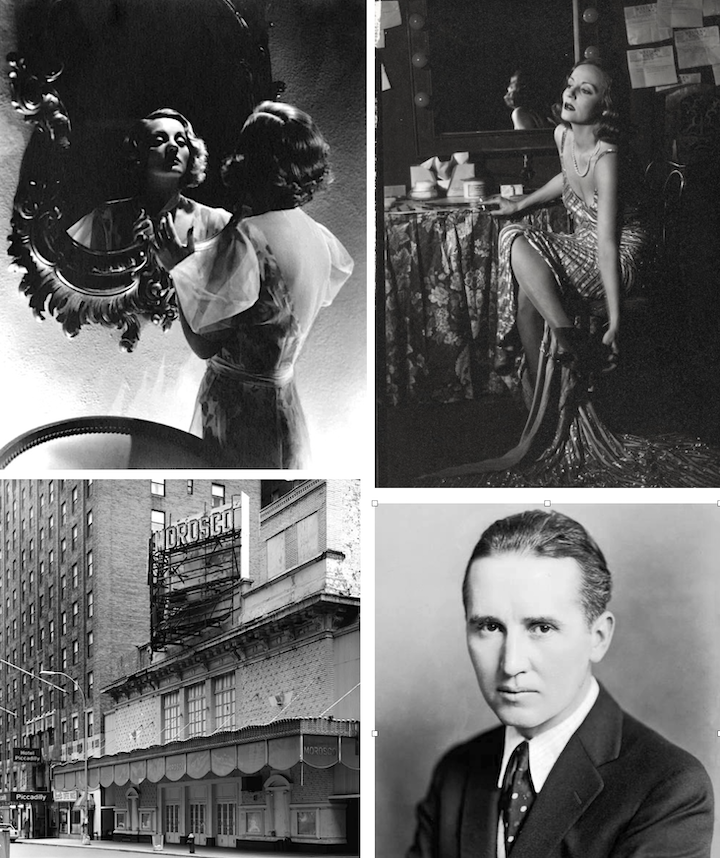
ART IMITATES LIFE…Clockwise, from top left: Tallulah Bankhead in promotional photo for Reflected Glory; Bankhead played Muriel Flood, a flamboyant, self-absorbed actress who constantly dramatizes her own life both on and off stage; author and director George Kelly wrote Reflected Glory specifically for Bankhead; Broadway’s Morosco Theatre (demolished 1982). (cinemaclassico.com/jacksonupperco.com/Wikipedia)

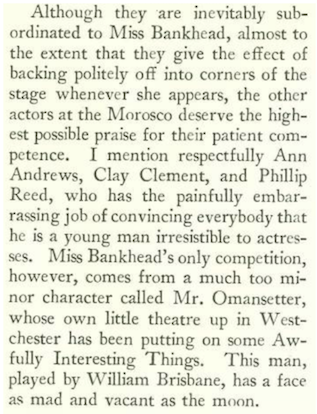
Early in her career Bankhead, an Alabama native, moved into the Algonquin Hotel and quickly made her way into the orbit of the famed Algonquin Round Table—so, she was well-known to Gibbs, who noted in this excerpt that Bankhead’s only competition in Reflected Glory was William Brisbane, a man with a face “as mad and vacant as the moon.”

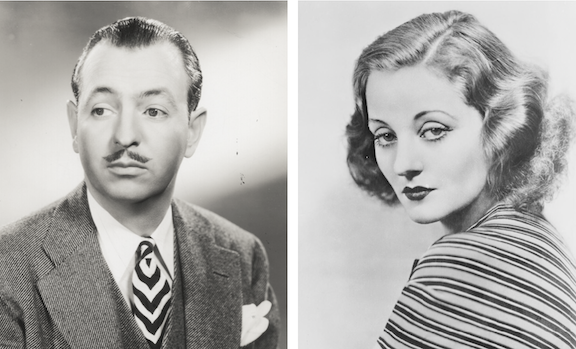
MAD MATCH…Wolcott Gibbs noted that William Brisbane was Tallulah Bankhead’s only competition in Reflected Glory. (themovieb.org/npg.org.uk)

 * * *

The Yankee Clipper

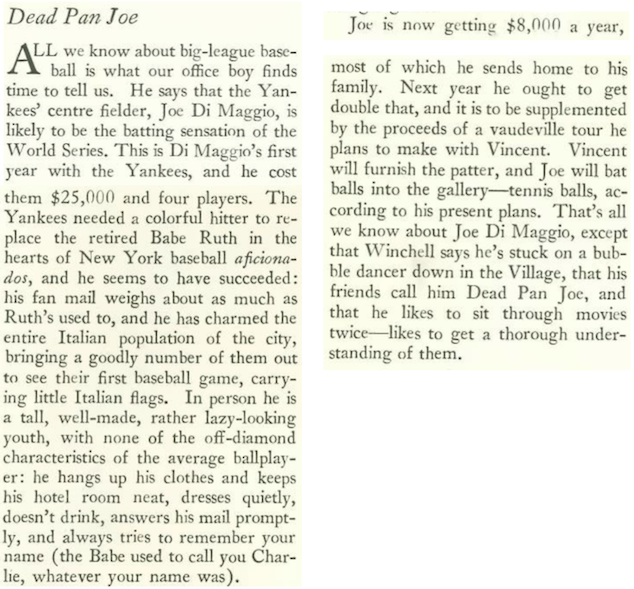
Baseball was mostly ignored in the early years of the New Yorker, but every now and then the magazine would feature a famous personality from the game, in this case Joe DiMaggio, who in 1936 would set a franchise record for rookies by hitting twenty-nine home runs (in just 138 games).

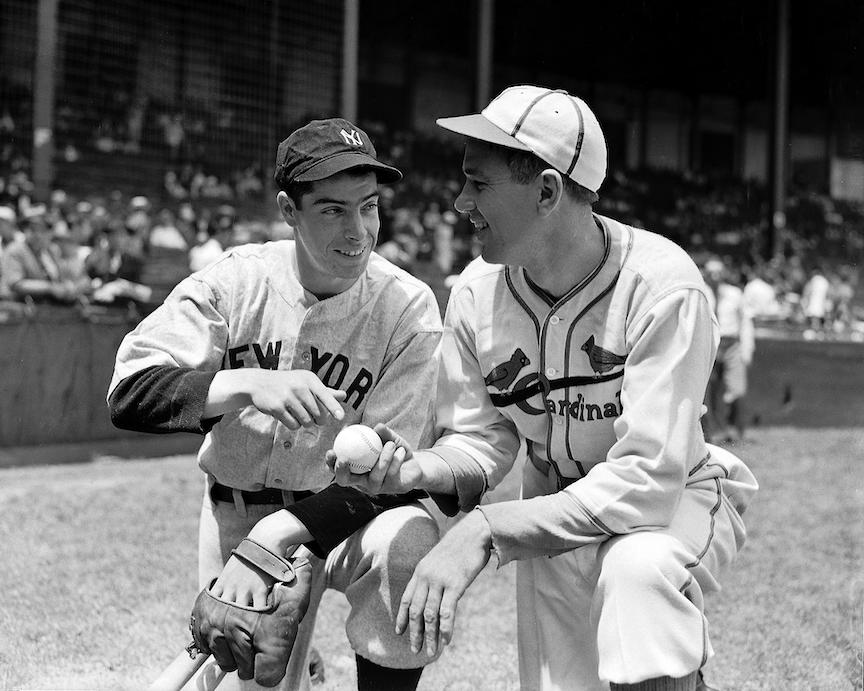
DIZZY AND JOE D…Yankees rookie Joe DiMaggio meets with Cardinals pitcher Dizzy Dean at the All-Star Game in Boston July 7, 1936. (AP Photo)

 * * *

Right of the Right

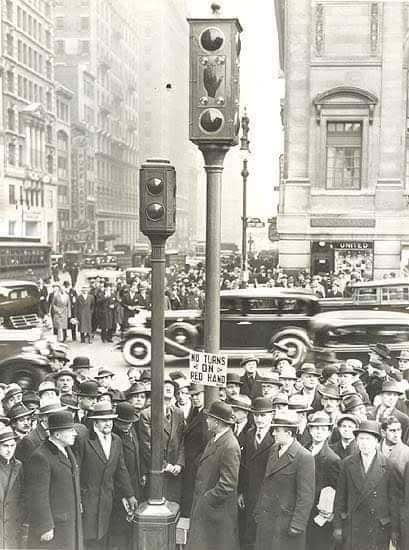
In his “Notes and Comment,” E.B. White took issue with a proposal by the New York Board of Aldermen to ban right-hand turns against a red light (the board ultimately approved the ban).

SEEING THE LIGHT…City officials examine new traffic lights on Fifth Avenue, 1933. (Golden Age Of Travel via facebook.com)

 * * *

At the Movies

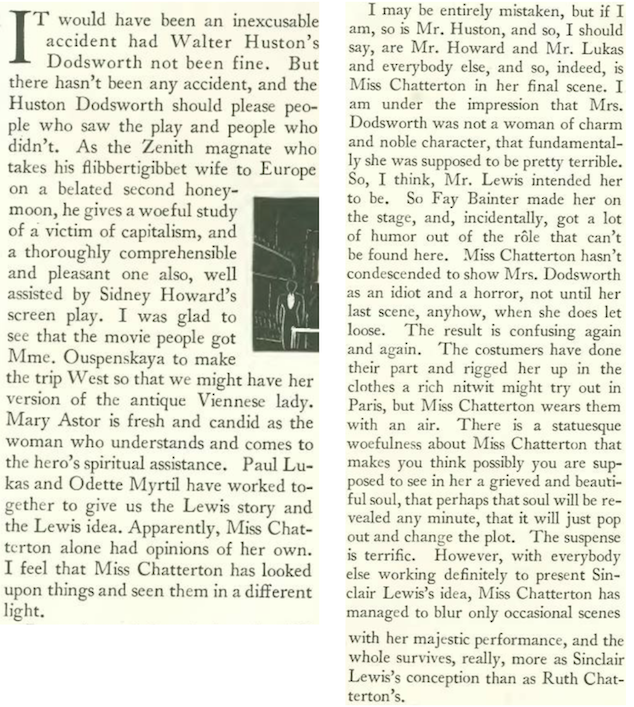
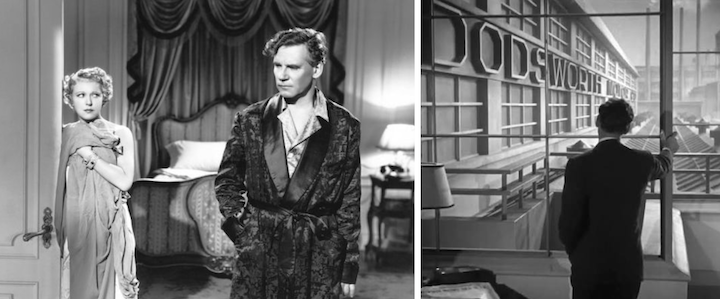
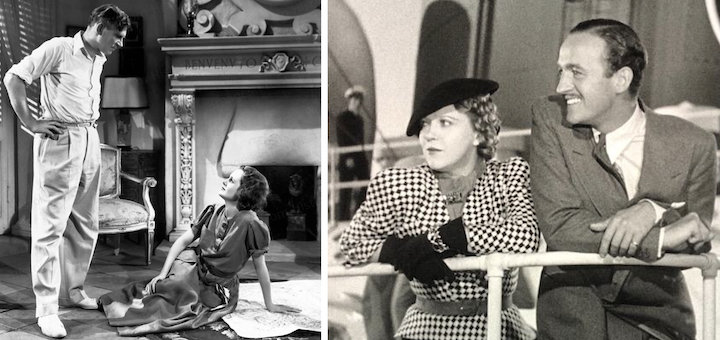
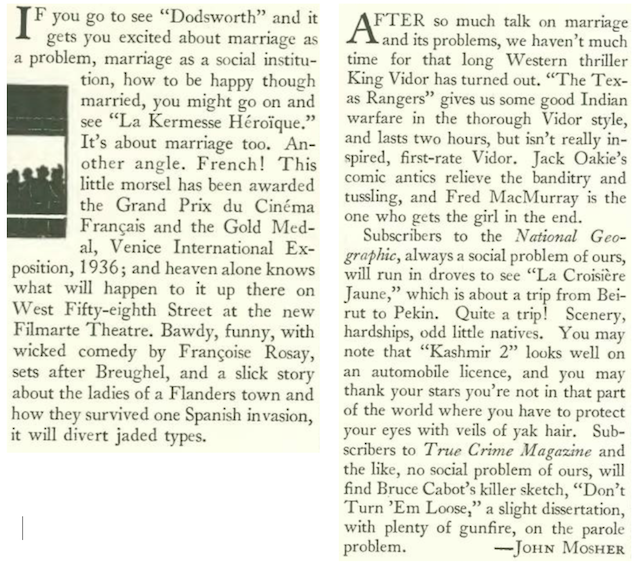
Based on a 1929 novel by Sinclair Lewis, the William Wyler-directed Dodsworth was acclaimed by critics as one of the best films of the year. New Yorker critic John Mosher wholeheartedly agreed:

SHE SAID, HE SAID…At left, Ruth Chatterton and Walter Huston portrayed a couple in a declining marriage in Dodsworth; at right, retired auto magnate Sam Dodsworth (Huston) reconsiders the life he has made for himself. (torontofilmsociety.com/YouTube.com)
COMPLICATIONS…While travelling on the RMS Queen Mary to England, the Dodsworths find romantic companions—at left, Sam finds a soulmate in Edith Cortright (Mary Astor), while Fran flirts with a younger Englishman, Captain Lockert, played by David Niven. It was Niven’s first sizable role—he was a lieutenant in the British Army before coming to Hollywood in 1935. (eBay.com/film-foundation.org)

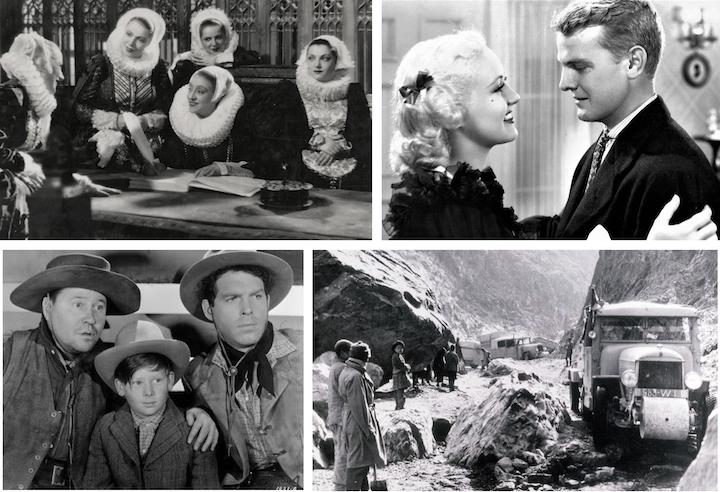
Mosher also reviewed a mixed bag of films, including the “wicked comedy” La Kermesse héroïque (Carnival in Flanders) featuring French opera star Françoise Rosay as a mayor’s wife who cleverly thwarts potential troubles from visiting Spanish soldiers.

BAWDY FUN was how John Mosher described the schemes of a mayor’s wife in La Kermesse héroïque (Carnival in Flanders)—clockwise, from left: Françoise Rosay (seated) organizes the village women to tame some visiting soldiers; Betty Grable and John Arledge in the crime drama Don’t Turn ’em Loose; La Croisière Jaune (Yellow Expedition) documented a 1931-32 French trans-Asian expedition organized by Citroën to promote its rugged Kégresse track vehicles; Jack Oakie, Bennie Bartlett and Fred MacMurray in The Texas Rangers. (mubi.com/imdb.com/radiofrance.fr/csfd.cz)

 * * *

From Our Advertisers

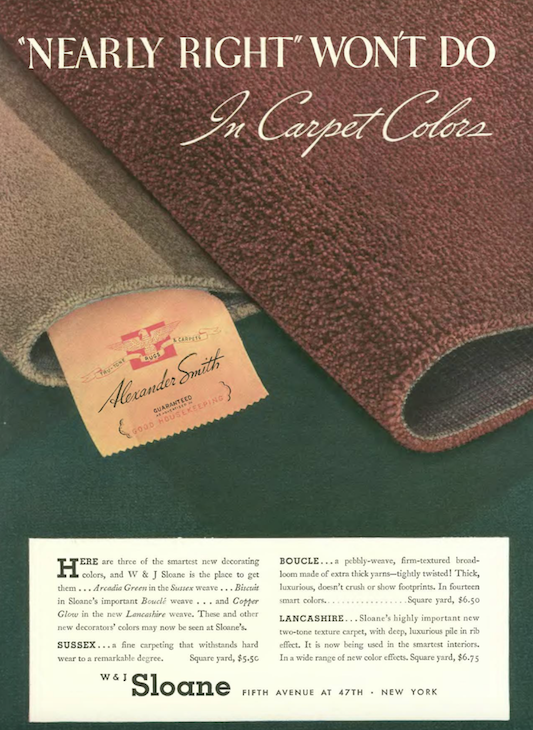
Fall advertising continued its uptick in the magazine, with many splashes of color  including this carpet ad that greeted readers on the inside front cover…

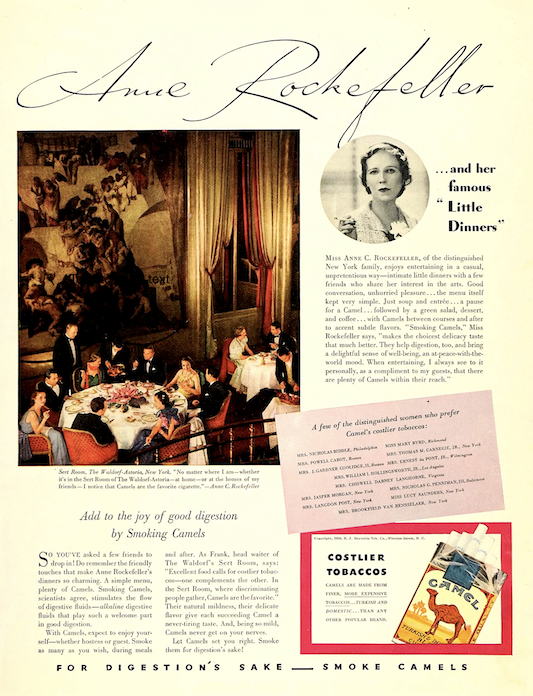
…R.J. Reynolds continued to roll out endorsements from society mavens…here Anne C. Rockefeller stated that Camels gave her “a delightful sense of well-being”…

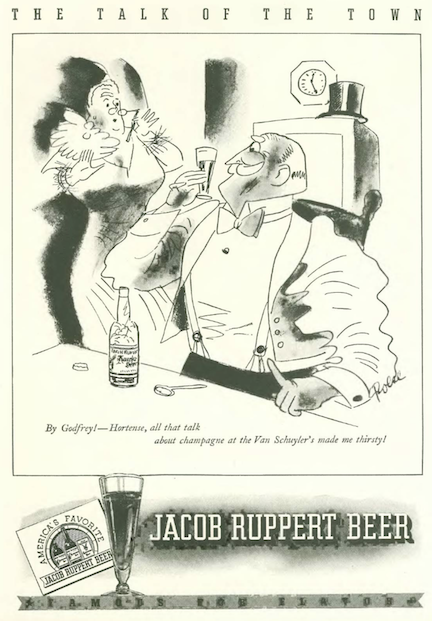
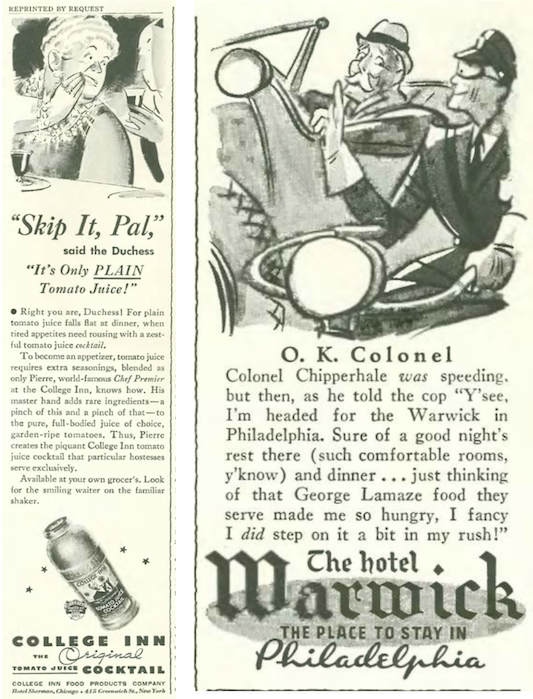
…more Colonel and Duchess archetypes turn up in this issue, on behalf of Ruppert beer…

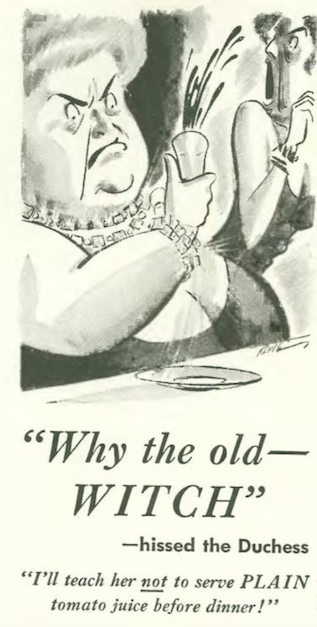
…the Warwick Hotel (Philadelphia), and College Inn tomato juice “cocktail”…College Inn had softened the appearance of their Duchess…

…since she was last spotted in The New Yorker in 1935 (detail)…

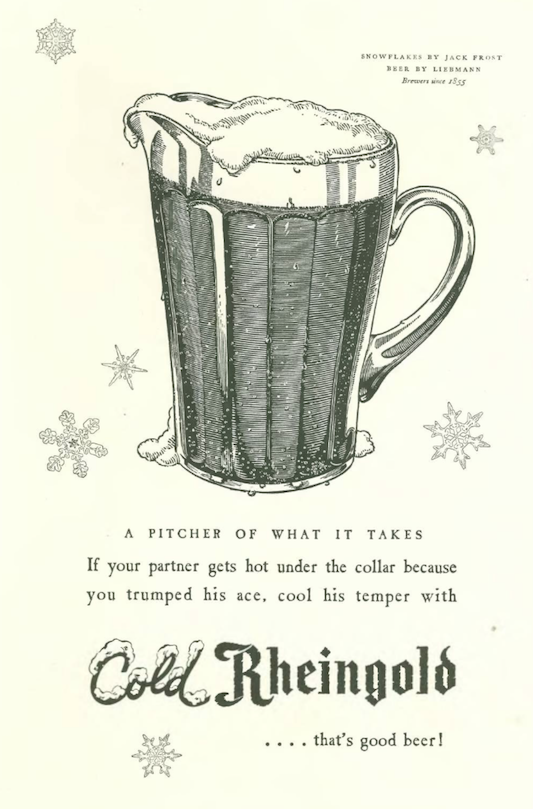
…after a blazing hot summer, the brewers of Rheingold figured this image would still appeal to parched New Yorkers…

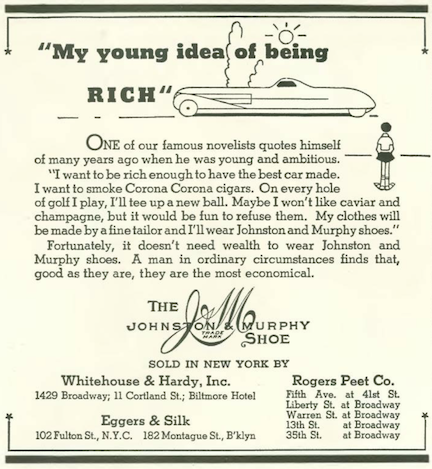
…a back of the book ad from Johnston & Murphy, quoting an unidentified author regarding some childhood wishes…

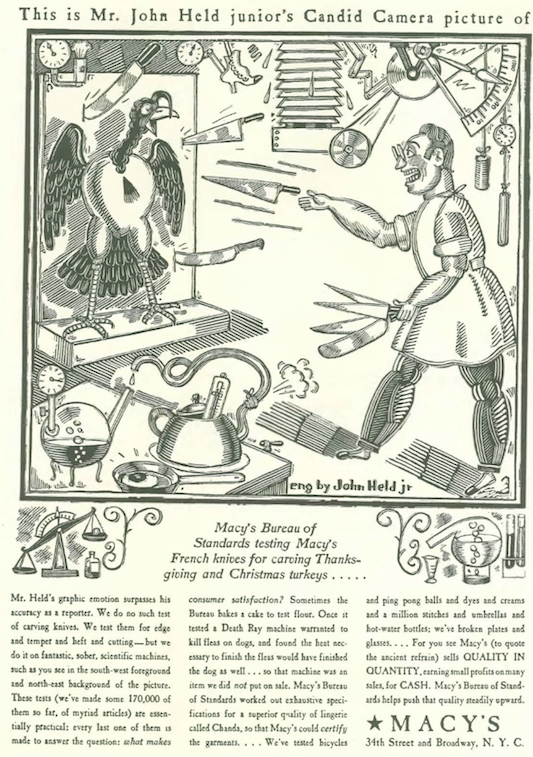
…John Held Jr. was one of the earliest contributors to The New Yorker—from 1925 to 1932 his woodcut-style cartoons and fanciful maps were frequent features…by 1936 Held had turned his talents to painting, book illustration, and the occasional advertisement, here on behalf of Macy’s…

…our illustrators and cartoonists for this issue include Christina Malman…

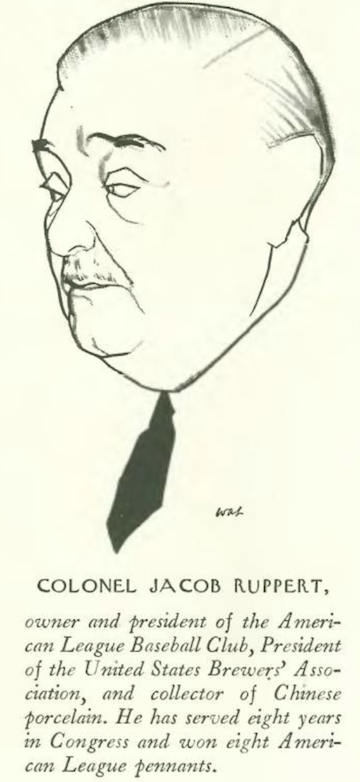
…a caricature by William Auerbach-Levy for the calendar section’s mini bio…

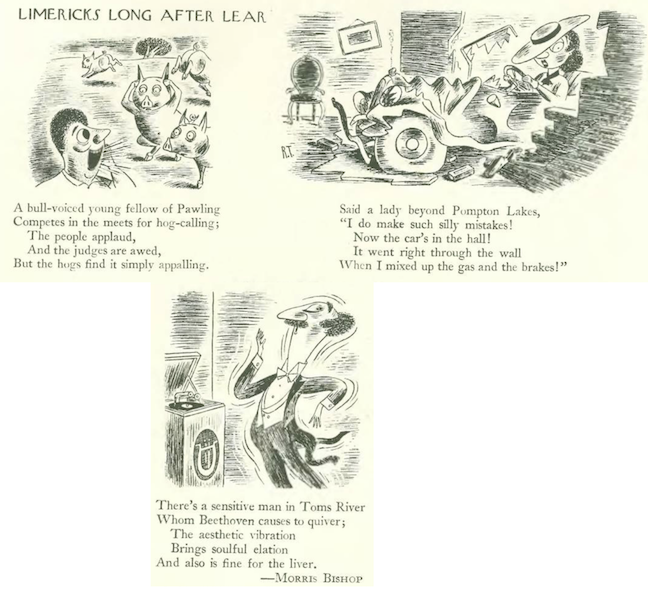
…another Richard Taylor–Morris Bishop collaboration…

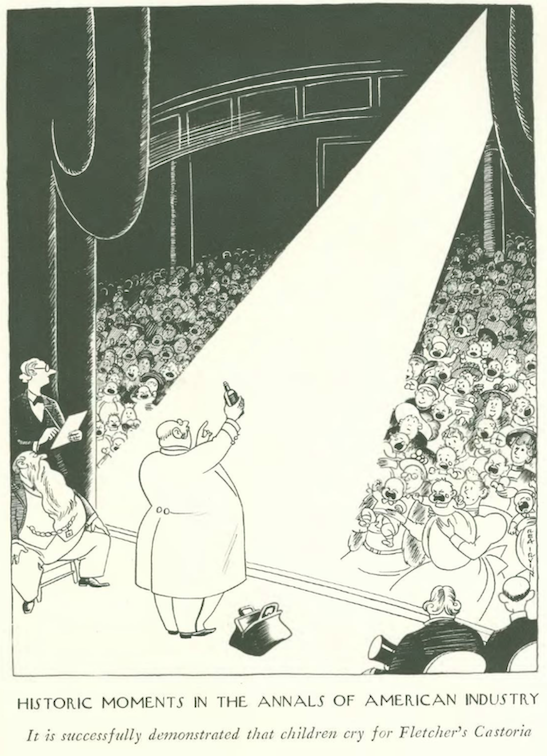
…more historic moments from American Industry, with Rea Irvin…

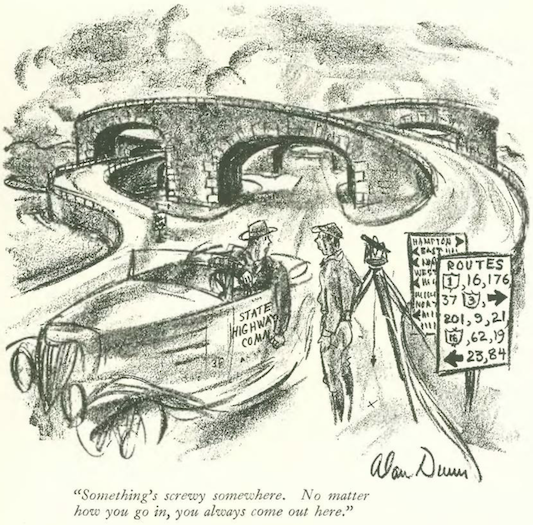
…Alan Dunn had an M.C. Escher moment on the turnpike…
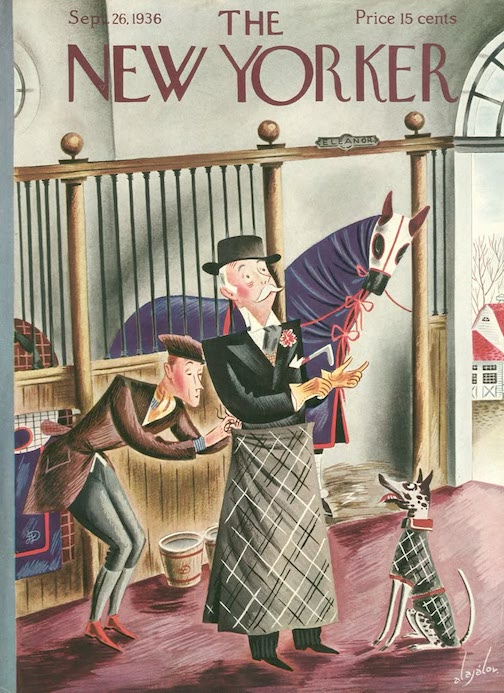
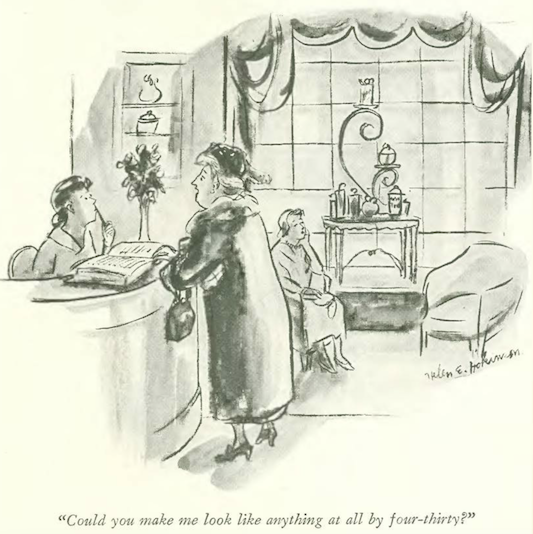
…Helen Hokinson made a big ask at the beauty parlor…
…Ned Hilton drew up a big man with a big complex…

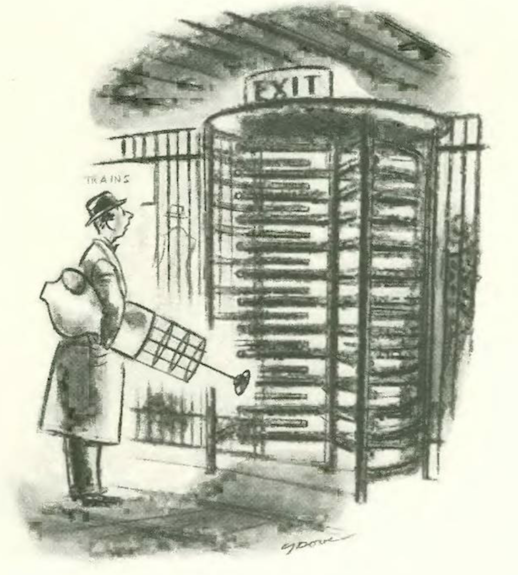
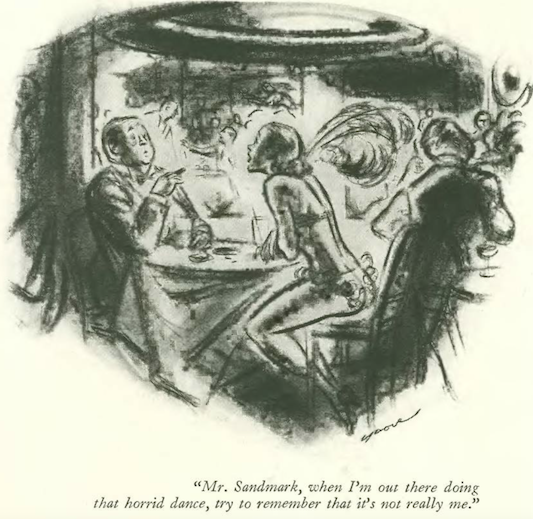
…Leonard Dove offered a challenge and a unique perspective at the subway station…

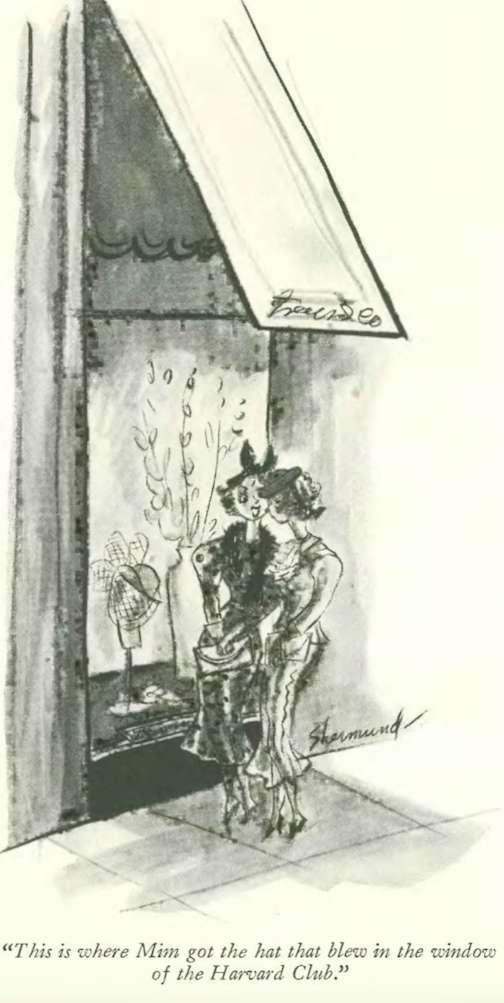
….Barbara Shermund’s modern women thrilled to the sights of Manhattan…

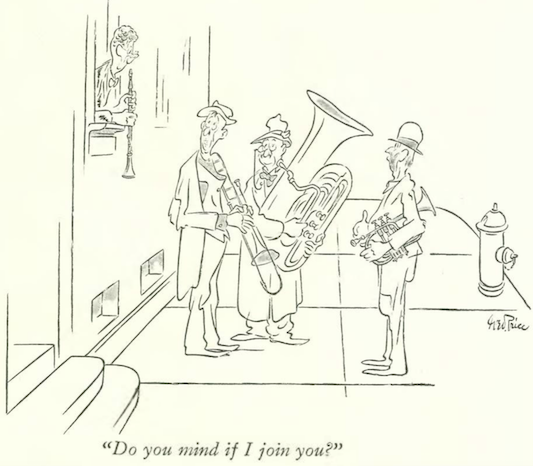
…George Price turned this trio into a quartet…

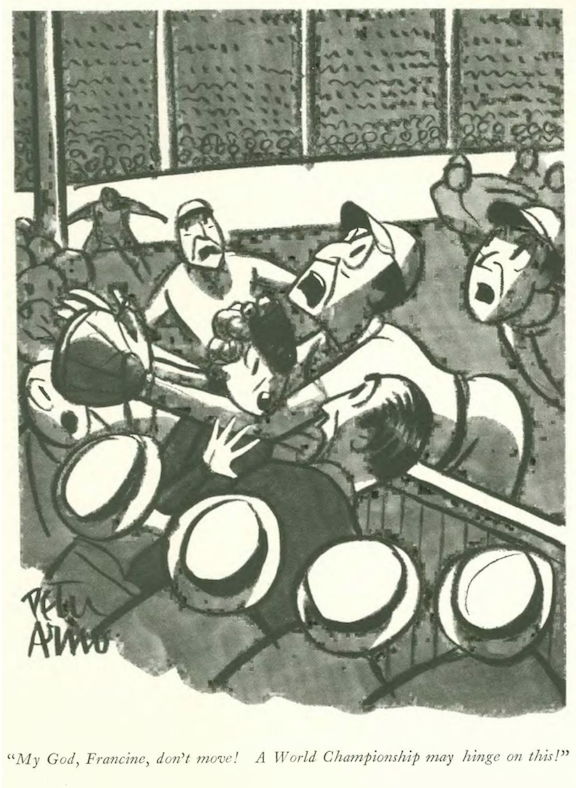
…and we close with a terrific, terrifying moment at the World Series, courtesy Peter Arno…

Next Time: Road Warriors…

Can-Can in Cleveland

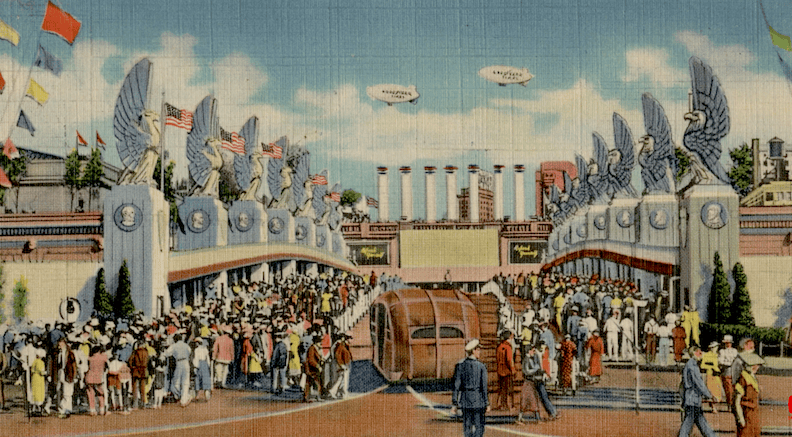
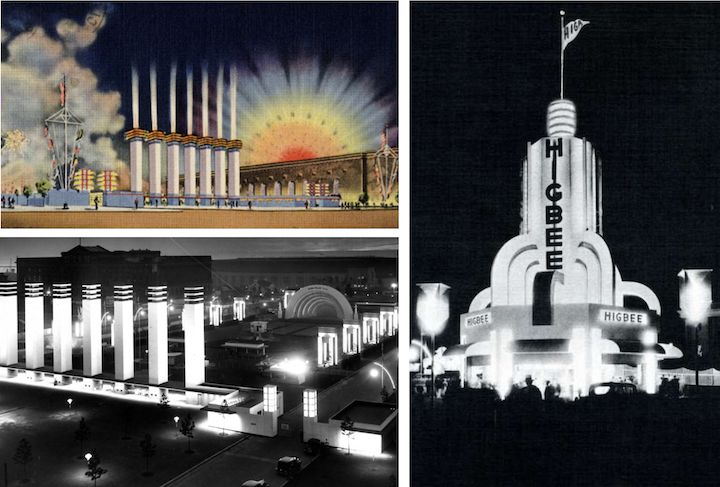
Above: Postcard image of the "Avenue of Presidents" at the 1936 Great Lakes Exposition in Cleveland, Ohio. (youtube.com)

Before the days of mass communications, millions would flock to various world’s fairs and expositions to see the latest inventions, experience the boosterism of the host city, and seek out the thrills of a carnival ride or peep show.

September 26, 1936 cover by Constantin Alajalov.

Along with the major world’s fairs such as Chicago’s 1893 World’s Columbian Exposition, smaller cities also hosted expositions to “boom” their standing in the world—Omaha’s 1898 Trans-Mississippi and International Exposition attracted 2.6 million people, including President William McKinley, and three years later Buffalo’s 1901 Pan-American Exposition would draw eight million—McKinley was there, too, but his visit (and life) would be cut short by an assassin’s bullet.

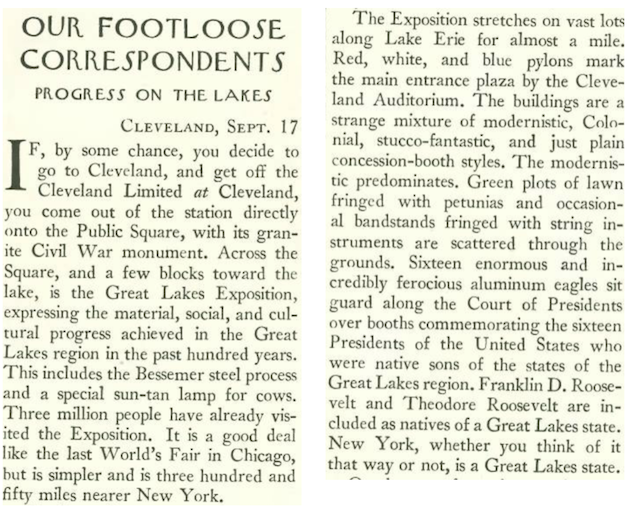
In many cases these expositions commemorated anniversaries that marked the progress of a particular city or geographic area. Such was the case of Cleveland’s Great Lakes Exposition, which was created to commemorate the centennial of Cleveland’s incorporation as a city while giving a boost to a region hit hard by the Depression. The exposition was visited by The New Yorker’s Eugene Kinkead, who was an editor and writer of the magazine’s “The Talk of the Town” section for many years. Here are brief excerpts from his visit:

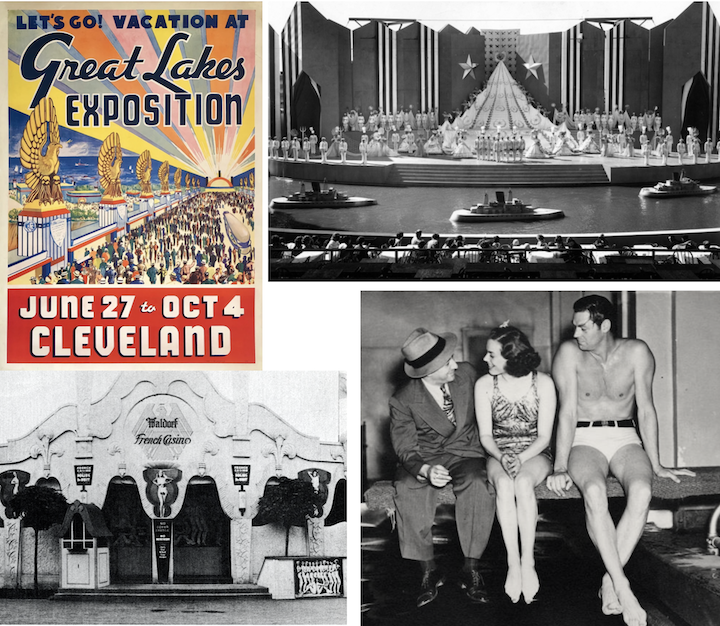
SOMETHING FOR EVERYONE…Clockwise from top left: Poster for the Great Lakes Exposition; the most popular attraction was Billy Rose’s Aquacade, a 5,000-seat theater-restaurant that featured diving and synchronized swimming (the Aquacade was also a hit at the 1939 New York Wold’s Fair); star attractions at the Aquacade were Olympic champion swimmers Eleanor Holm and Johnny Weissmuller, pictured here with Billy Rose; the “Streets of the World” showcased the cultures of more than forty different countries—it also featured the “French Casino,” a restaurant/nightclub that drew massive crowds to its “Girl Revues”—naturally, the scantily clad performances and nude can-can dancers created a major stir among more modest expo attendees. (chicagovintageposters.com/clevelandmemory.org)
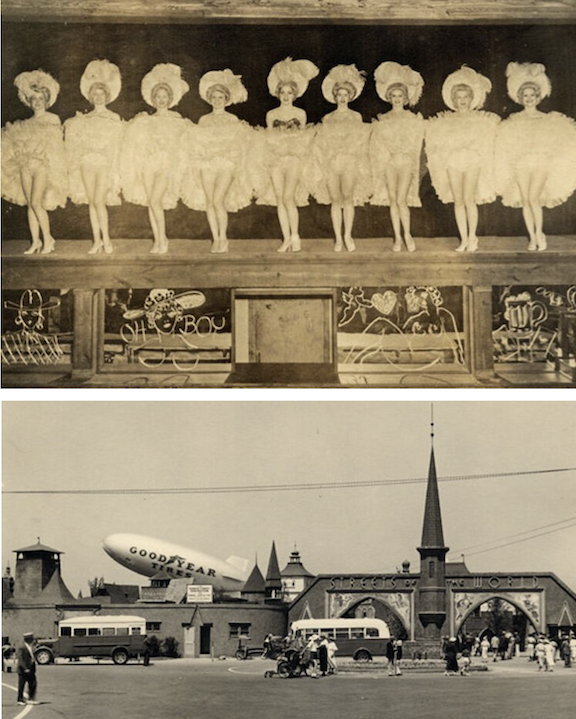
OTHER DIVERSIONS…Above: the can-can dancers who caused quite a stir at the French Casino, located in the “Streets of the World” section. Below: One of the blimps the Goodyear Tire & Rubber Company featured at the exposition rises in the background of “Streets of the World.” Visitors could purchase tickets for three dollars (roughly $65 today) to take a scenic flight over downtown Cleveland, the exposition, and Lake Erie. (clevelandmemory.org)
EXPO BY NIGHT…Clockwise, from top left: Postcard view of the main entrance to the Great Lakes Exposition, backlit by the “Aurora Borealis”—a spectacular light display created by powerful searchlights and colored beams; a tower sponsored by Cleveland’s famed Higbee’s Department Store; photograph of the main entrance at night. (clevelandmemory.org/clevelandhistorical.org)

 * * *

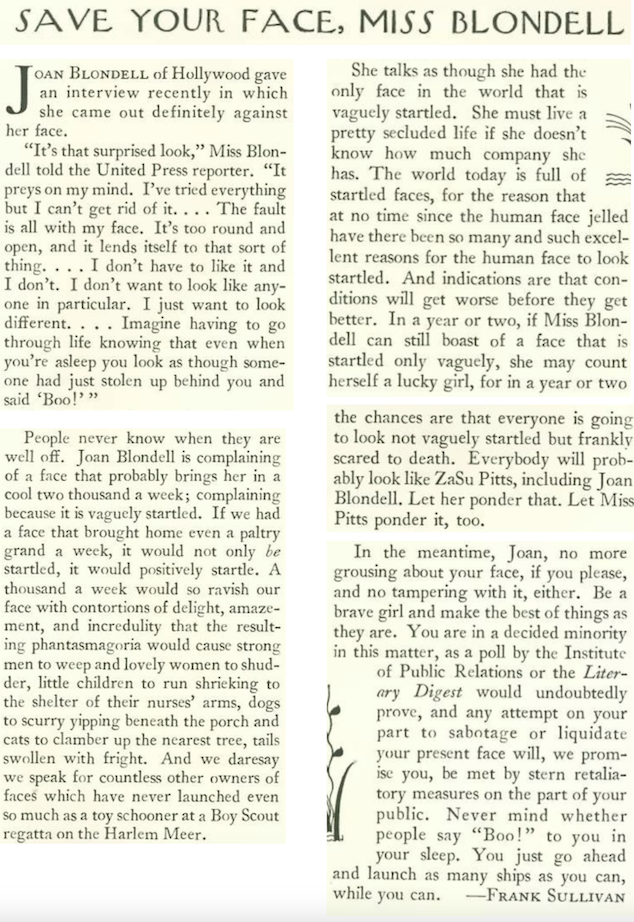
Relax, Joan

New Yorker regular Frank Sullivan found inspiration in a newspaper article featuring actress Joan Blondell lamenting the “surprised look” she thought was permanently fixed on her face. Sullivan suggested that Blondell “must live a pretty secluded life” not to notice a world “full of startled faces.” Alluding to the coming war in Europe, he suggested that in a year or two “everyone will probably look like ZaSu Pitts.”

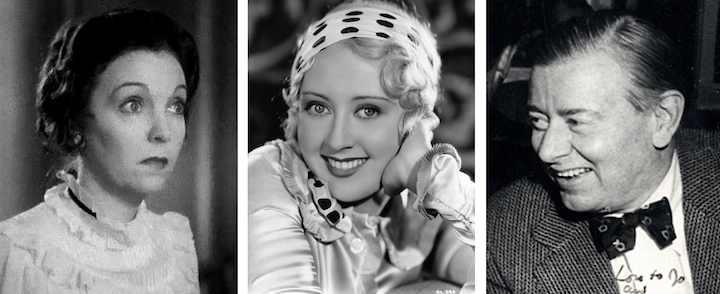
PUT ON YOUR WAR FACE…Frank Sullivan reassured Joan Blondell (center) that soon everyone would wear the expression of actress ZaSu Pitts (left). (imdb.com/sspl.org)

 * * *

At the Movies

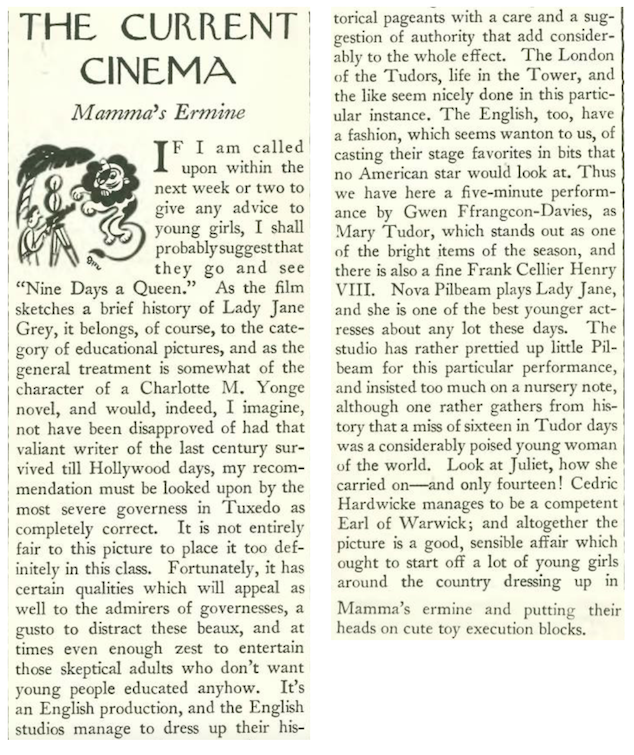
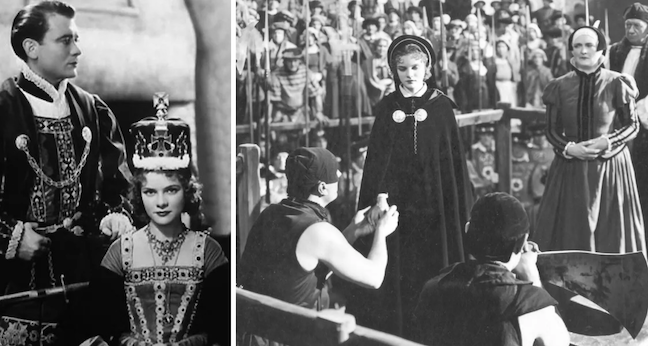
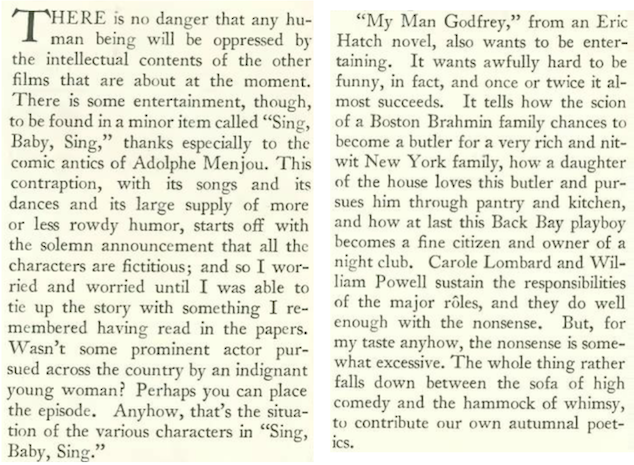
As previously noted, costume dramas were big in 1936, and critic John Mosher was less than enthusiastic about many of them, but he found Nine Days a Queen (Tudor Rose in the British release) a sensible affair, noting that “English studios manage to dress up their historical pageants with a care and a suggestion of authority…”

TEMPORARY CROWN…Nine Days a Queen (aka Tudor Rose) tells the story of Lady Jane Grey’s brief reign as the queen of England before she loses her head. Left: John Mills as Lord Guilford Dudley and Nova Pilbeam as Lady Jane Grey. At right, executioners seek forgiveness from Lady Jane ahead of their grisly task. Critic John Mosher liked the film, but Graham Greene (critic for The Spectator), wrote that he had “seldom listened to more inchoate rubbish…” (oldhollywooddiary via instagram.com)

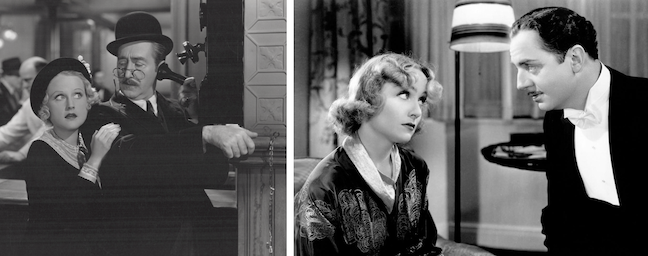
Mosher found the musical comedy Sing, Baby, Sing a minor entertainment, and dismissed the screwball comedy My Man Godfrey as “nonsense.” Mosher was in the minority on that latter opinion: Godfrey was one of the most acclaimed comedies of 1936, nominated for six Oscars. In 1999 the film was selected for preservation in the National Film Registry.

PAIRING OFF…Alice Faye and Adolphe Menjou in Sing, Baby, Sing. Carole Lombard and William Powell in My Man Godfrey. Lombard and Powell were briefly married from 1931 to 1933, but remained close friends after their divorce. (eBay.com/pbs.org)

 * * *

From Our Advertisers

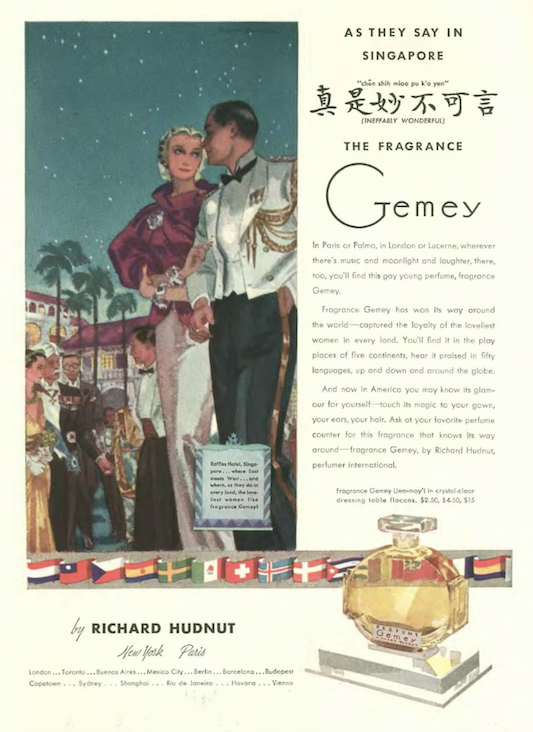
The inside front cover greeted readers with this romantic image from Richard Hudnut cosmetics…

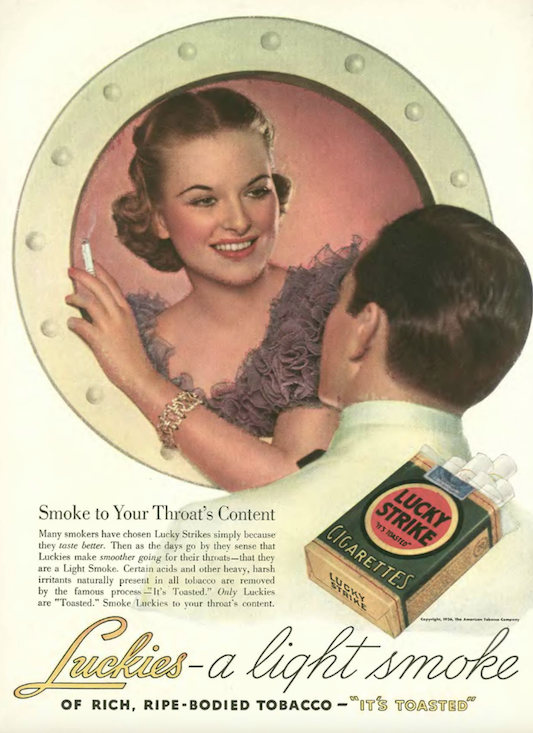
…the makers of Lucky Strikes used a bit of romance themselves to inspire more women smokers…

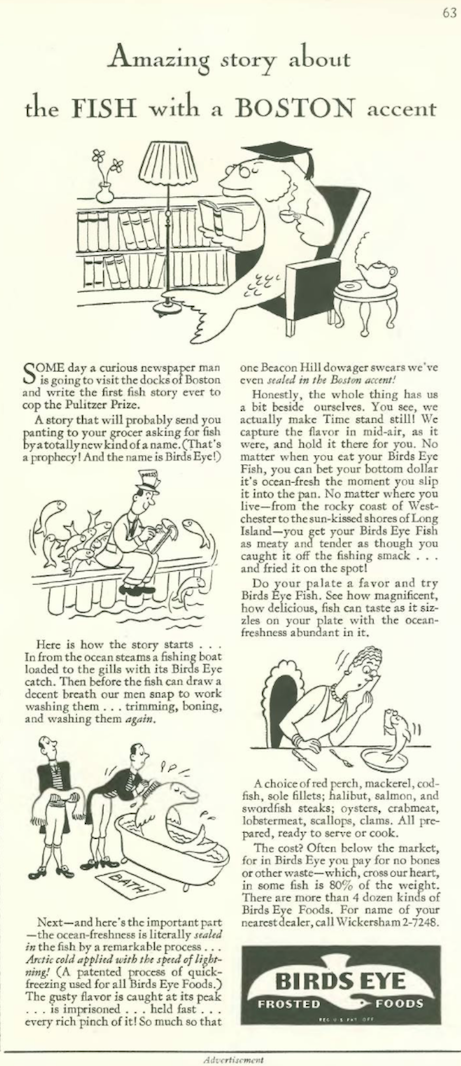
…the folks at Birds Eye took out this advertisement to extol the virtues of frozen fish…

…an odd ad from Green Giant, using the image of an annoying little man to sell peas…one imagines the woman calling “Pa, git yer shotgun”…

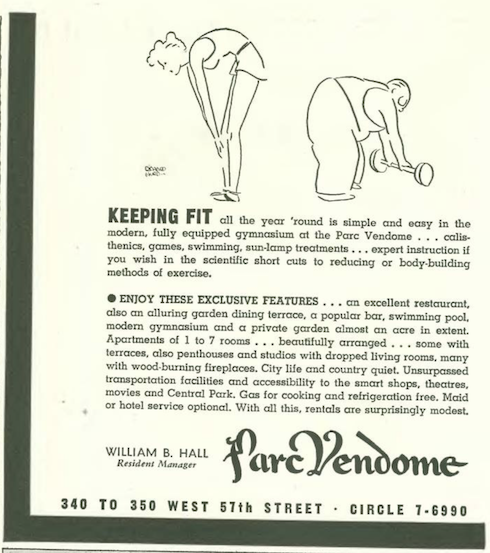
…the Parc Vendome advertised its apartments as a great place to keep fit, everything from calisthenics to sun-lamp treatments…

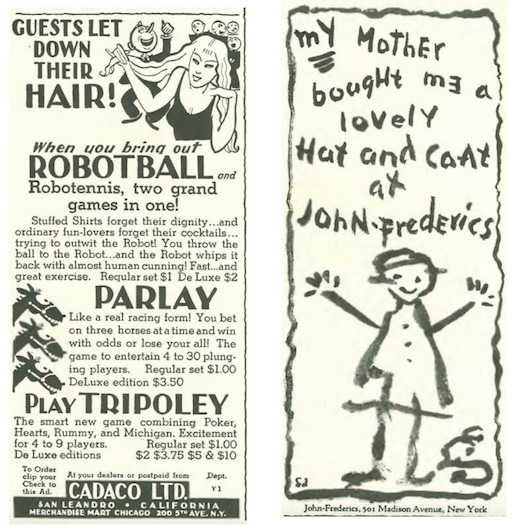
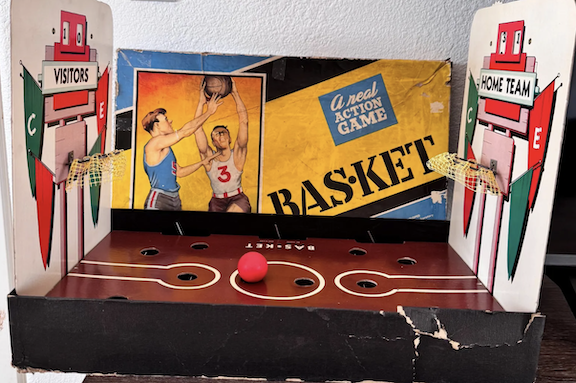
…a couple of one-column ads from the back of the book…at left: founded in 1935, Cadaco was known for transforming real-world sports into table-top versions…on the right: John-Frederics was a partnership between hat designer “Mr John” Harberger and Frederic Hirst…John-Frederics hats were famous in Hollywood, including the green velvet bonnet worn by Vivien Leigh in 1939’s Gone with the Wind…

This 1938 edition of Cadaco’s Bas-Ket featured spring-loaded levers that propelled a ping-pong-like ball toward a basket. (etsy.com)

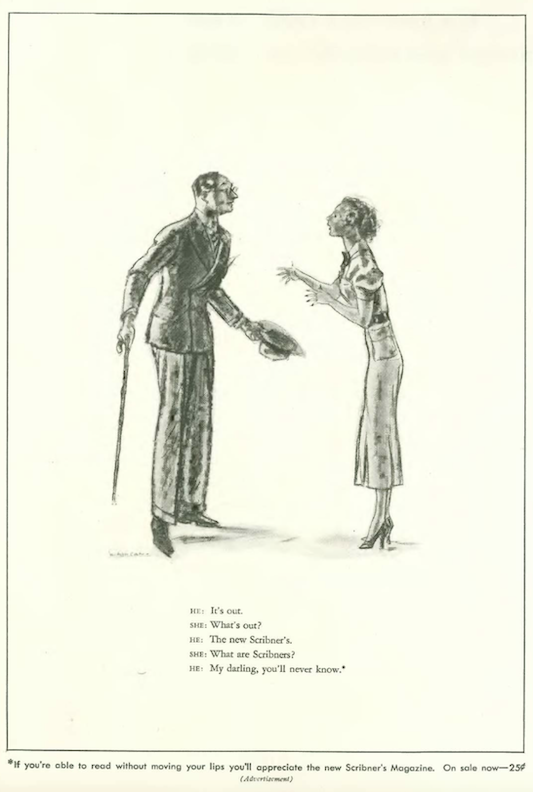
…Scribner’s magazine, a product of publisher Charles Scribner’s Sons, tried to head off declining circulation by hiring a new editor-in-chief, Harlan D. Logan, who sought to modernize the format to compete with contemporary lifestyle magazines…the publisher took out this cheeky full-page ad to draw attention to the “new” Scribner’s…

…founded in January 1887, the magazine saw its strongest sales when Teddy Roosevelt was a contributor from the 1890s to about 1910…despite Logan’s efforts, the magazine folded in May 1939…

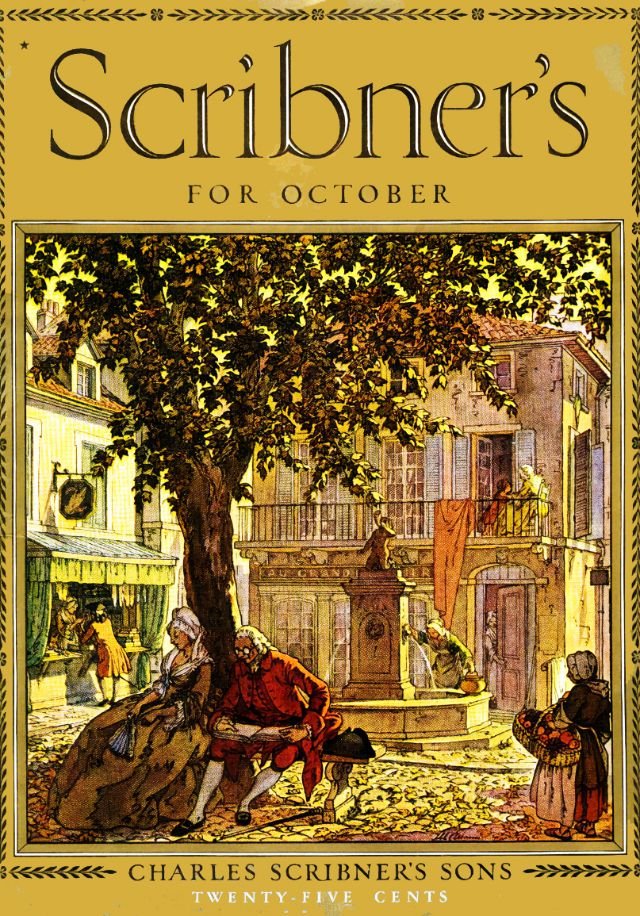
The October 1936 issue of Scribner’s marked a change in editorship and design of the magazine. This cover was by American graphic designer Thomas Cleland. (vintage.es)

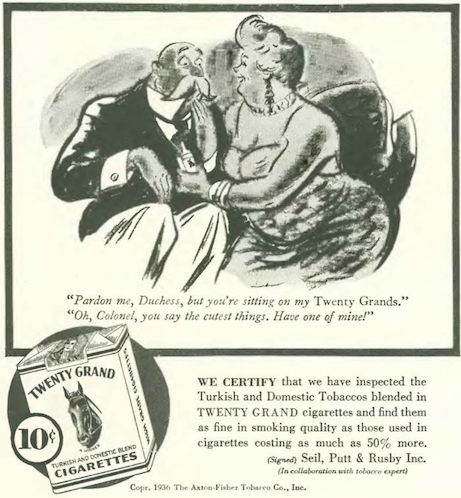
…archetypes like the pompous British Colonel and the haughty Duchess seemed to be everywhere in the 1930s, whether they were foils in screwball comedies or wealthy aristocrats laughably out-of-touch and obsessed with past glories (Peter Arno knew that trick well)…if you’ve followed these posts for awhile you know they are often seen in New Yorker advertising as well…

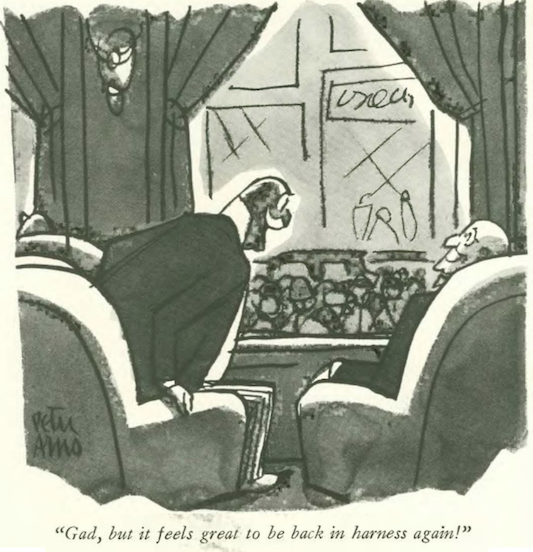
…which makes a nice segue to our cartoons, starting with Arno…

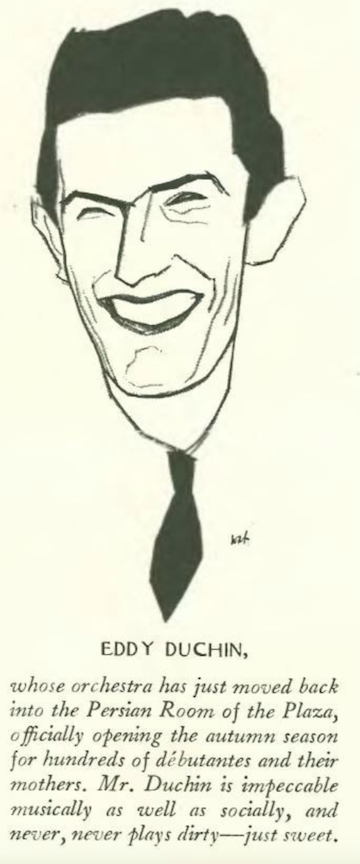
…the calendar section featured this illustration by William Auerbach-Levy for the mini bio of popular bandlander and pianist Eddy Duchin…

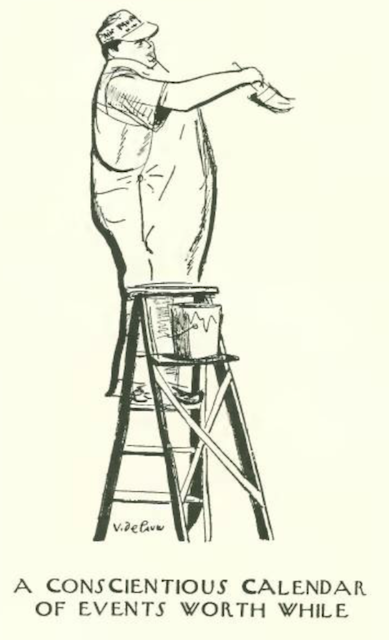
…Victor de Pauw opened up the magazine with this painterly illustration…

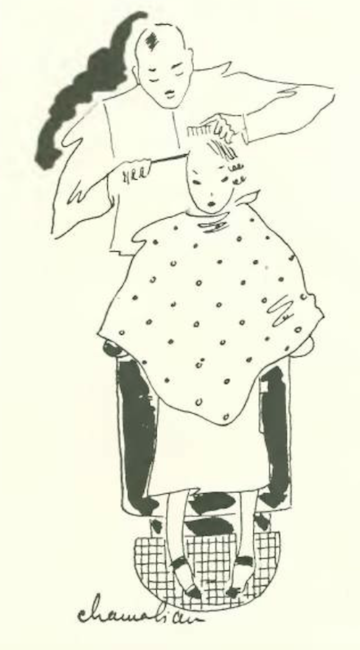
…some spot art from fashion illustrator Alice Chamalian…

…and Richard Taylor…

…caption-less entries from Alain…

…and Robert Day…

…Leonard Dove supplied a clarification for this sugar daddy…

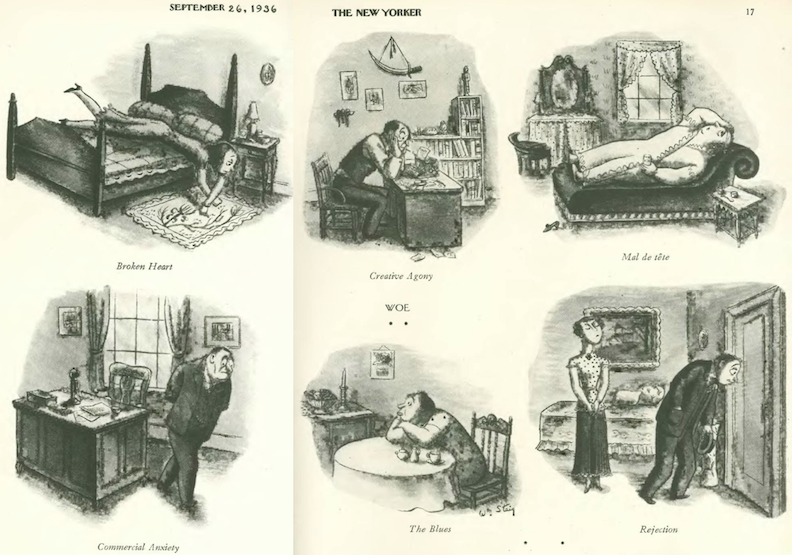
…William Steig gave us various types of “woe”…

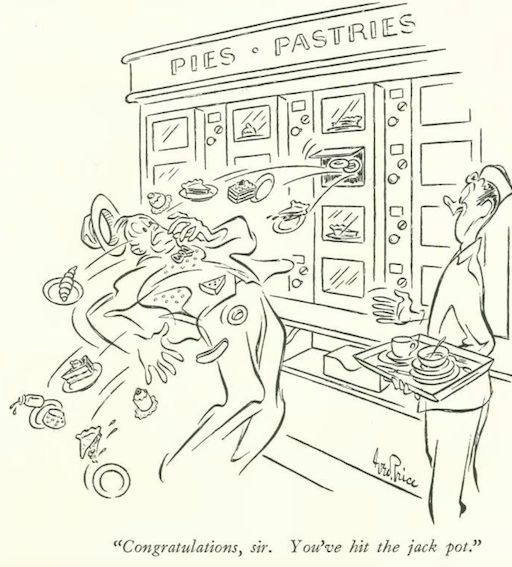
…George Price delivered a surprise at the Automat…

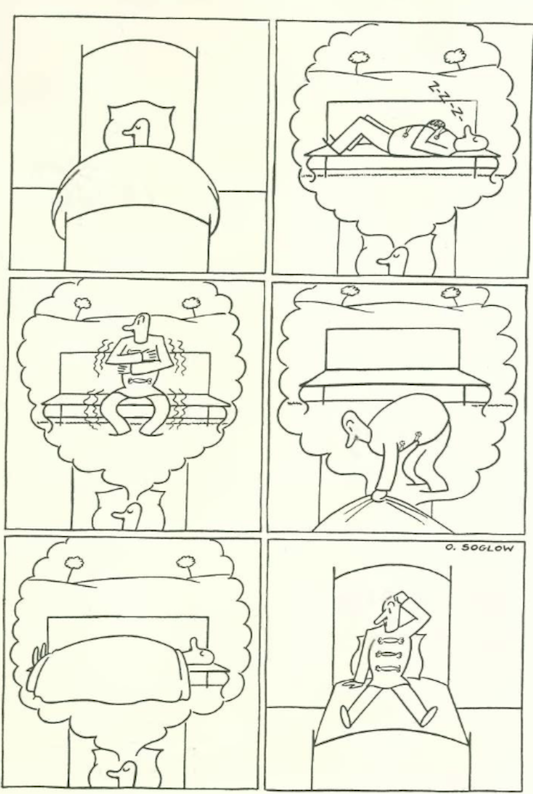
…Otto Soglow pondered the meaning of dreams…

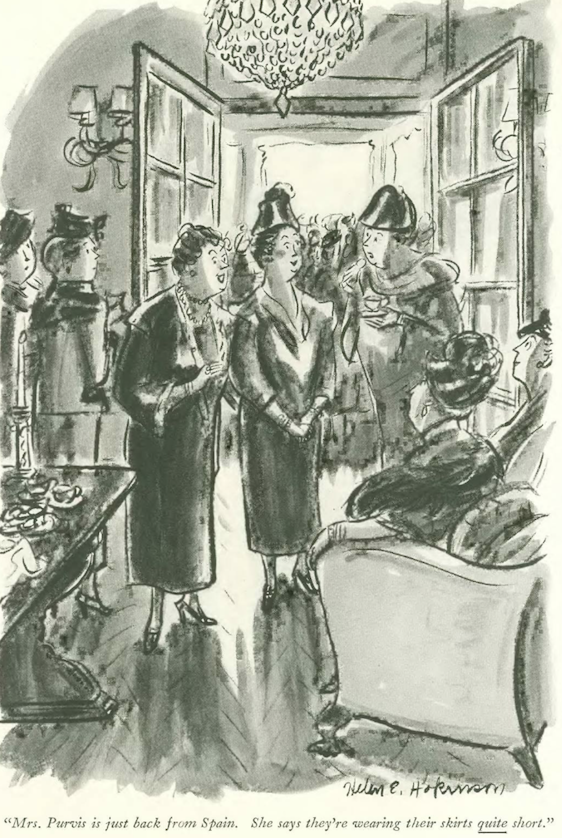
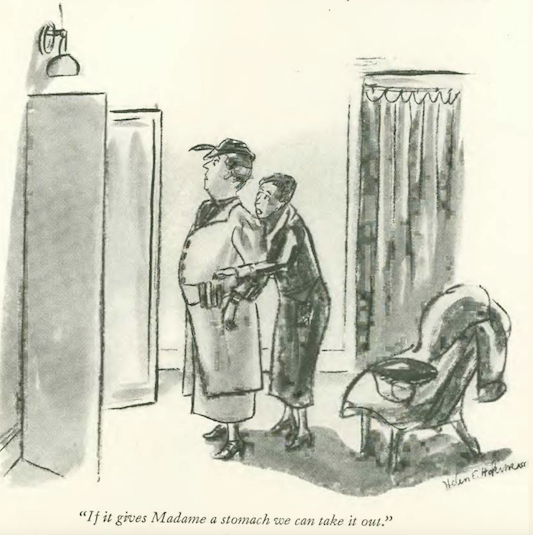
…and we close with some scandalous fashion gossip, courtesy Helen Hokinson…

Next Time: Mirror, Mirror…

Through the Looking Glass, Darkly

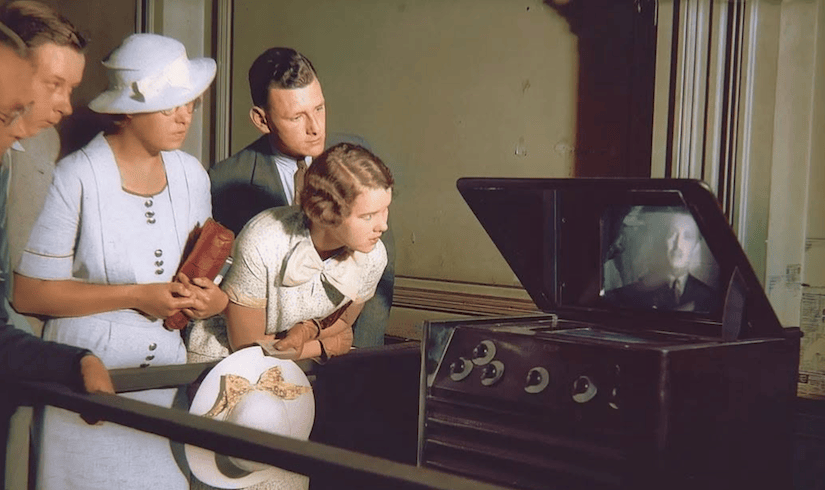
Above: The BBC offered a public demonstration of television at Waterloo Station, London, in 1936. (Colorized image via Facebook)

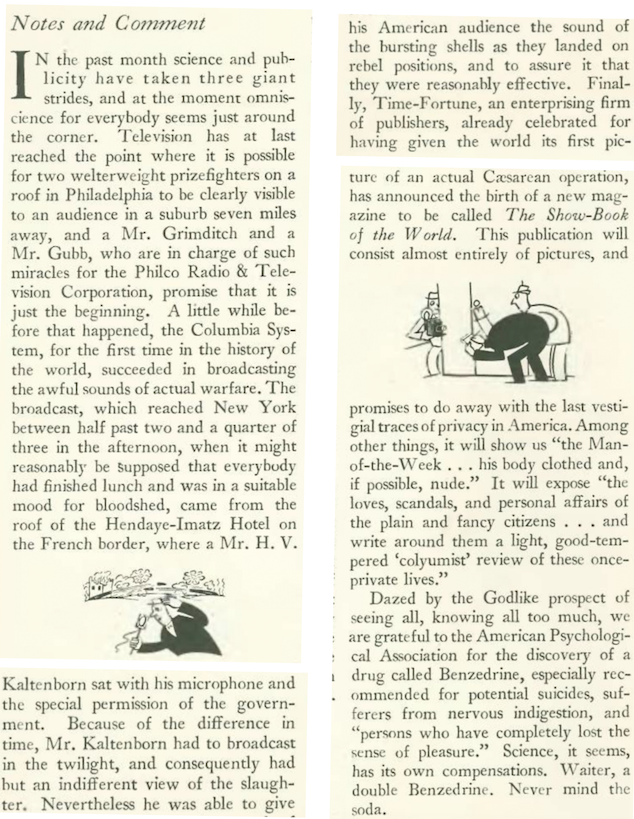
E.B. White was ever wary of new technology (except for aviation—he loved to fly), so television posed yet another thing to fear in the coming age of “omniscience.”

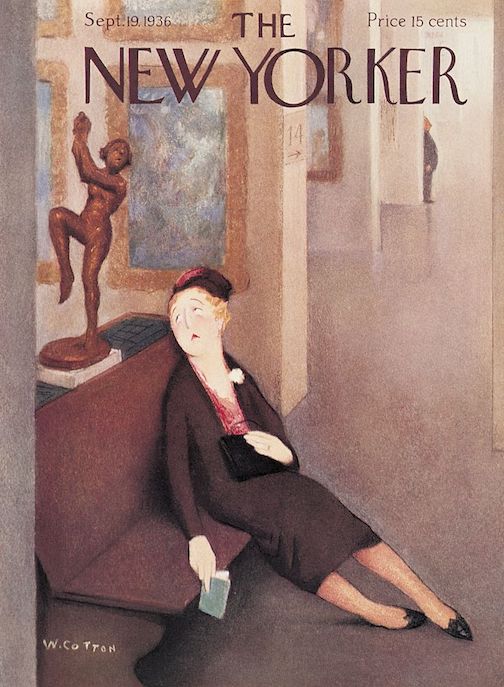
September 19, 1936 cover by William Cotton.

In addition to television, White noted two other “giant strides” in the world of science and publicity: a live radio broadcast featuring sounds from the Spanish Civil War, and the launch of a new magazine that would “consist almost entirely of pictures.”

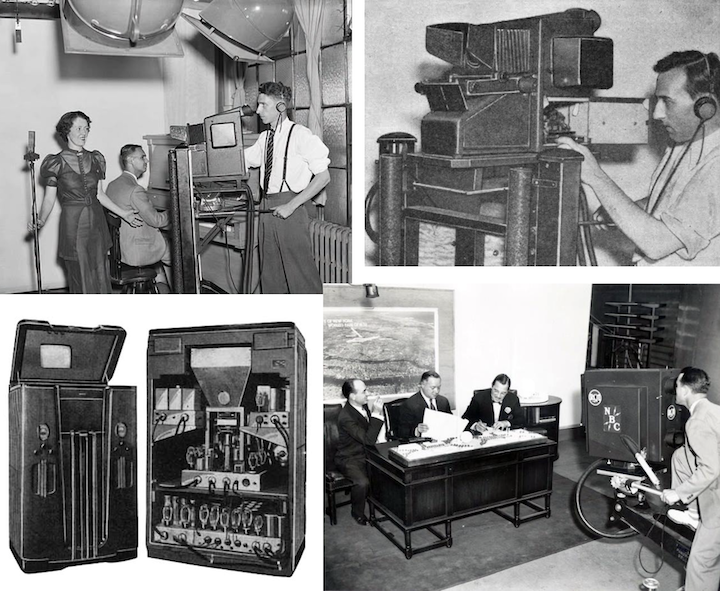
ONE-EYED MONSTER…Clockwise, from top left: On Aug. 11, 1936, Philco Radio and Television demonstrated the transmitting end of a television with the help of camera operator R.E. Waggener and singer Betty McNellis—the sound and picture were projected seven miles to a receiving set; a close-up of a 1936 television camera; photo taken in 1936 during a “live broadcast” from America’s first television studio, NBC Studio 3H—from left, NBC President Lenox Lohr, RCA President David Sarnoff and Fair Committee head Grover Whalen sign a contract for an RCA pavilion at the upcoming 1939 World’s Fair; front and rear view of a 1936 television receiver. (eyesofageneration.com/facebook.com)

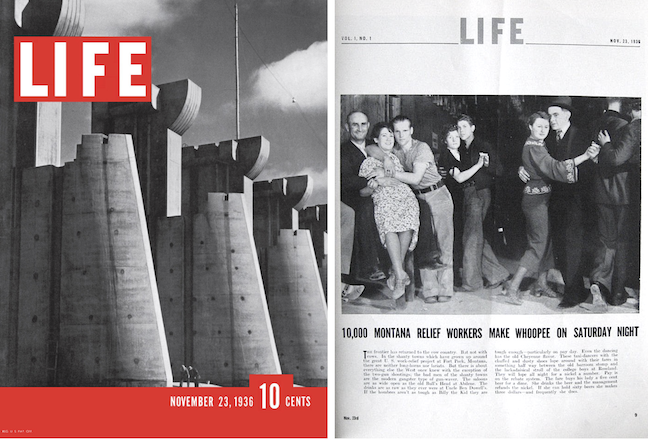
White also noted the upcoming launch of a new magazine, The Show-Book of the World, which was the working title of a publication that would become Life magazine. White did not like the idea of a magazine consisting mostly of pictures that graphically expose “once-private lives,”  believing it would “do away with the last vestiges of privacy in America.”

MONUMENTAL…The photo on the first cover of Life magazine, Nov. 23, 1936, was shot by one of Life‘s original four photographers, Margaret Bourke-White, who covered the construction of the Fort Peck Dam, a Public Works Administration endeavor to build the largest earth dam in the world during the Great Depression. At right, a Bourke-White photo of Fort Peck workers enjoying some down time. (npr.org/life.com/worthpoint.com)

 * * *

Call for Johnny Roventini!

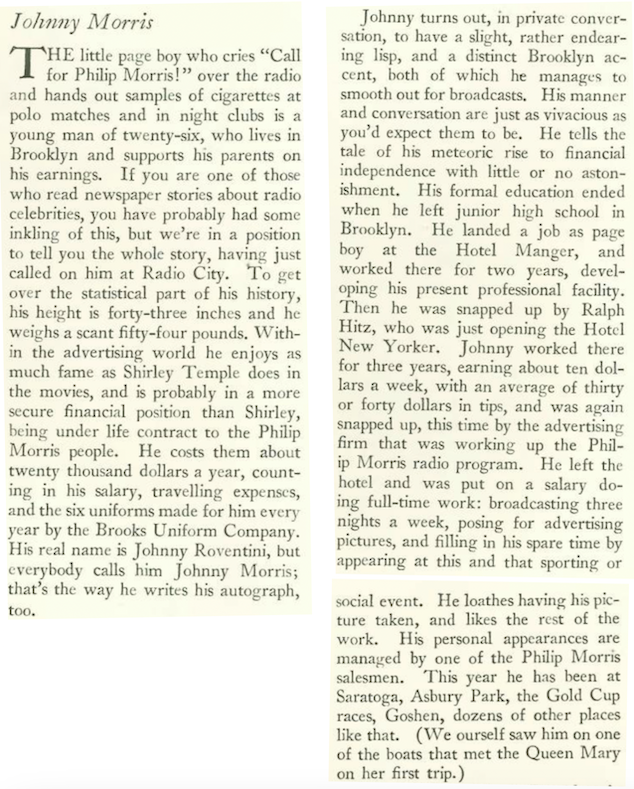
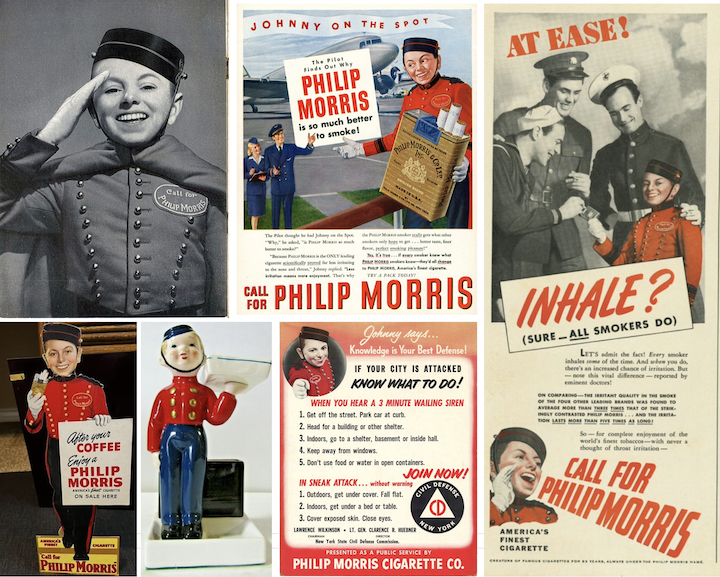
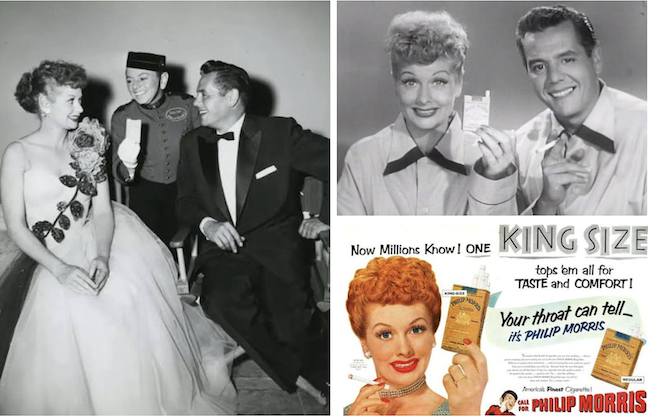
“The Talk of the Town” featured a brief profile of  Johnny Roventini (aka Johnny Morris or Johnny the Bellboy), the famous “living trademark” for the Philip Morris tobacco company. Roventini (1910–1998), who represented the company for more than forty years, was working as a bellboy at the New Yorker Hotel in 1933 when he was discovered by an advertising agent. Excerpts:

THEY’RE SELLING YOU…In mid-century America the image of Johnny Roventini, known to the public as Johnny Morris or Johnny the Bellboy, seemed to be everywhere. Clockwise, from top left: Publicity photo, 1937;  magazine ad, 1947; ad promoting the armed services, 1941; civil defense-themed ad, 1940s; cigarette match holder; promotional stand-up sign. (cats.ua.edu/standford.edu/worthpoint.com)

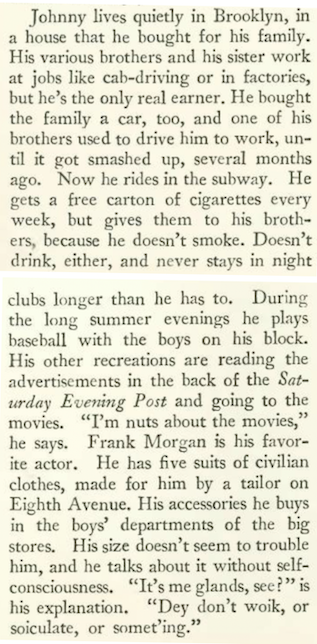
Roventini was probably best known for his Philip Morris promos on I Love Lucy. The new show was challenged to find a sponsor (due to the Cuban character played by Desi Arnaz) until Arnaz arranged a deal that made Philip Morris the exclusive sponsor of I Love Lucy from its premiere on October 15, 1951 through Christmas of 1954. Roventini gained unprecedented national TV exposure and became fast friends with Arnaz and Lucille Ball. Here is one more excerpt from “Talk” regarding the quiet life of Philip Morris’s “living trademark.”

I LOVE PHILIP MORRIS…Lucille Ball, Johnny Roventini and Desi Arnaz formed a lucrative trio for the tobacco company Philip Morris when I Love Lucy went on the air in 1951. Roventini was an occasional, social smoker, while Ball and Arnaz were heavy smokers (although Lucy preferred Chesterfields). (facebook.com/instagram.com)

* * *

At the Movies

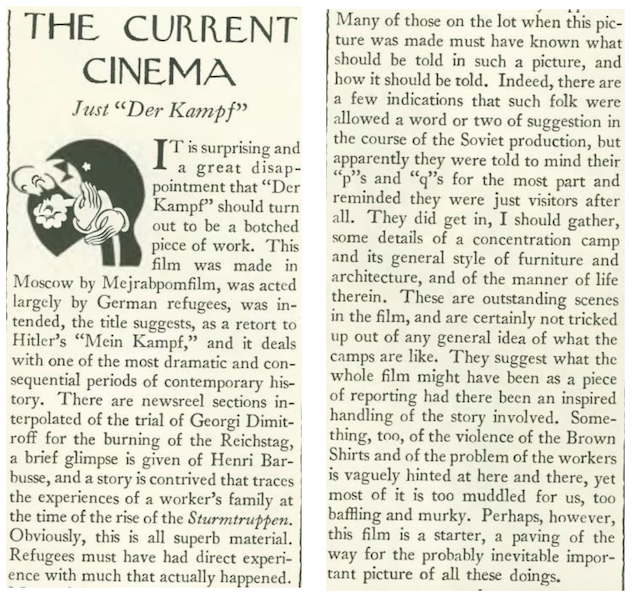
A Soviet film featuring exiled German communists proved to be a disappointment for critic John Mosher, but in retrospect the 1936 German-Soviet film The Struggle (aka Kämpfer or Der Kampf) reveals the strange and terrifying climate artists had to navigate in Stalin’s Russia.

Set in Germany after 1933, the film depicted the resistance of workers against the rise of the Nazi Party. One of the earliest films to depict Nazi terror and concentration camps, ironically many of those who worked on the film became victims of Joseph Stalin’s terror and the Gulag.

DEFIANCE…German actress Lotte Loebinger in a scene from the 1936 German-Soviet movie The Struggle (“Kämpfer”). Loebinger (1905-1995) managed to survive Stalin’s purges and had a long career on the stage in East Berlin following World War II. Loebinger’s lover, a German refugee physician with whom she bore a daughter, was not so fortunate, dying in a Soviet Gulag camp. (YouTube)

Shortly after The Struggle was completed, Stalin purged the community of exiled German communists living in Moscow, and the film was quickly banned by Soviet authorities. A large number of the film’s cast and crew were arrested, sent to the Gulag, or killed, including lead actor Bruno Schmidtsdorf, who was executed by firing squad near Moscow in 1938. Composer Hans Hauska, who wrote the film’s musical score, perished in a Soviet prison camp.

 * * *

Playing the Ponies

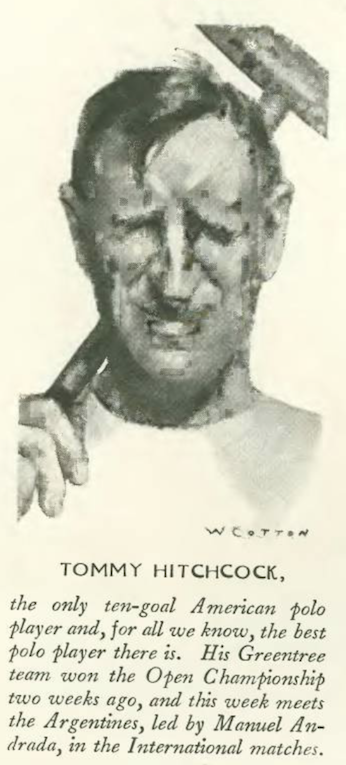
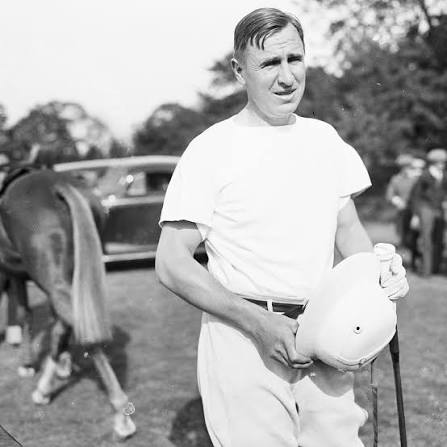
The calendar section continued its series of illustrated mini-bios, this week featuring Tommy Hitchcock, widely regarded as the greatest polo player in the history of the sport. A dashing figure in high society, Hitchcock (1900–1944) was also an aviator and decorated war hero. Illustration by William Cotton.

POLO PLAYING PILOT…Tommy Hitchcock flew as a volunteer pilot for the French Air Force in World War I, and was later instrumental in the development of the P-51 Mustang fighter plane. Hitchcock was killed in 1944 while piloting a P-51 on a test flight near Salisbury, England. (instagram.com)

 * * *

From Our Advertisers

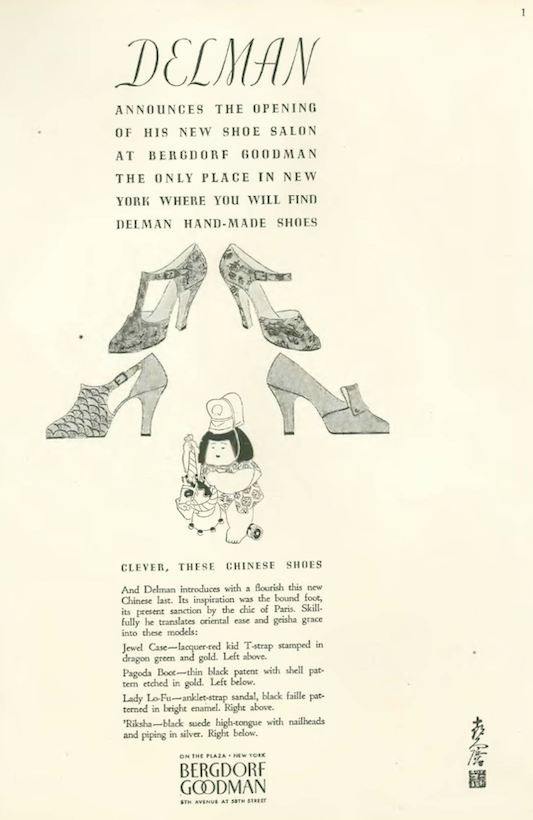
A strange advertisement from Bergdorf, announcing the opening of a salon that featured a line of shoes inspired by the Chinese “bound foot”…

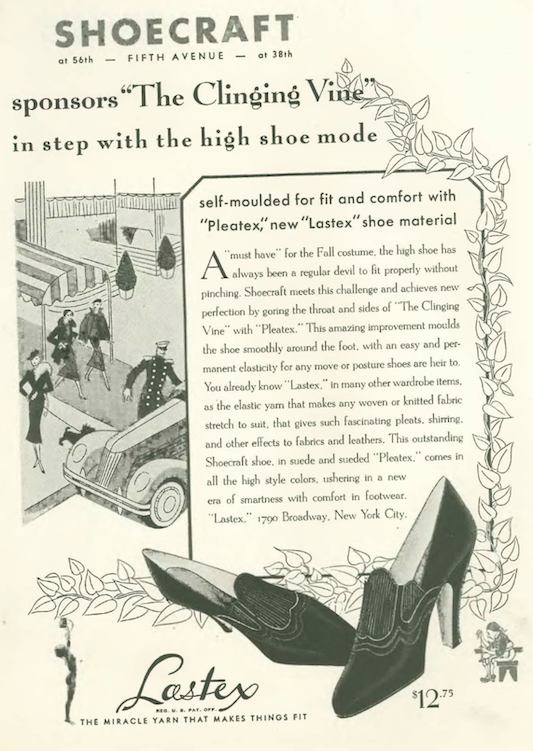
…if a bound foot wasn’t your thing, you could wiggle your toes in an elastic shoe fashioned from “Pleatex”…

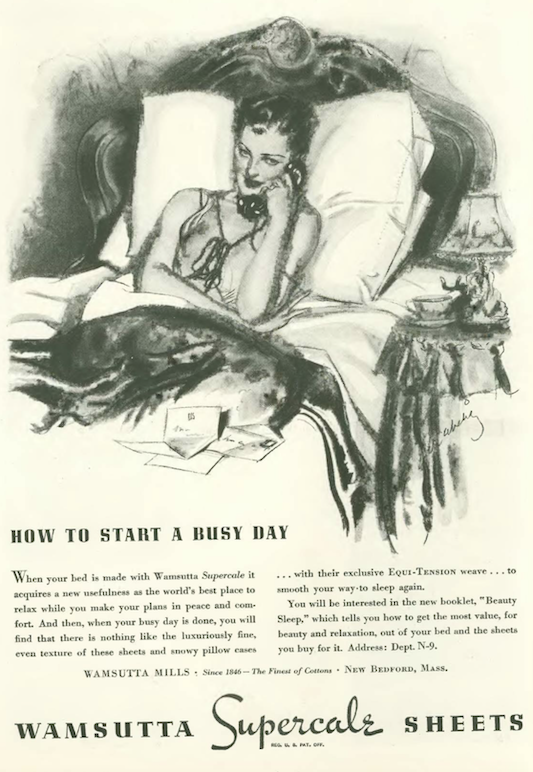
…Wamsutta continued to promote its high thread-count sheets with these somewhat seductive advertisements…

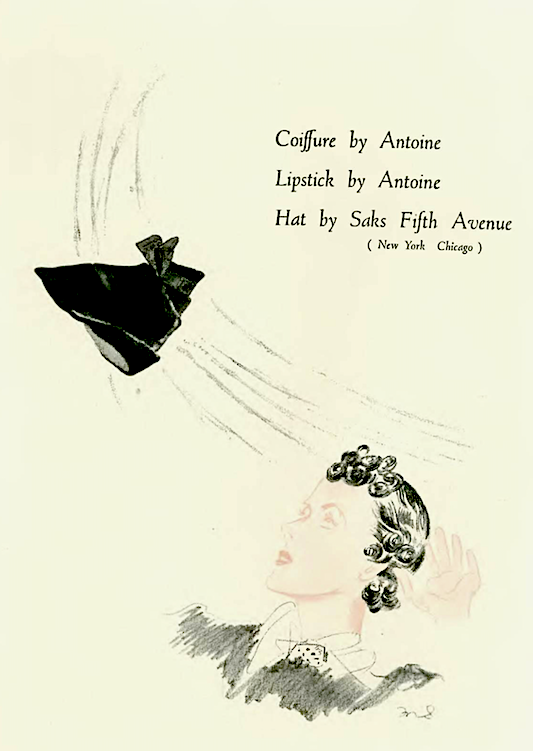
…oddly composed advertisement for Saks Fifth Avenue by fashion illustrator Margaret Sommerfeld, who produced promotional artwork for Saks…

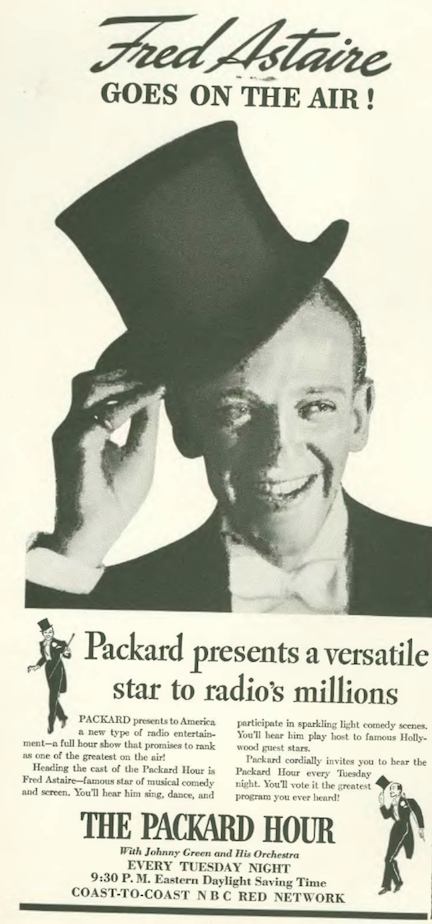
…Fred Astaire managed to hang on to his hat in this advertisement for “The Packard Hour” on NBC’s nationwide “Red Network”…the ad proclaimed “you’ll hear him sing and dance“…on the radio, that is…

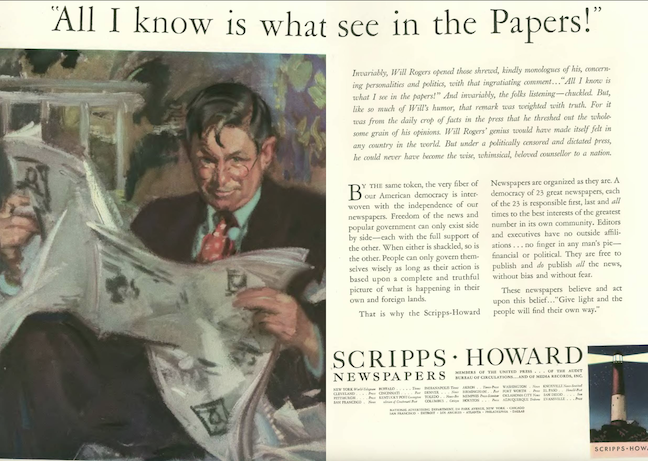
…Scripps-Howard featured this image of the late Will Rogers to promote newspaper advertising…

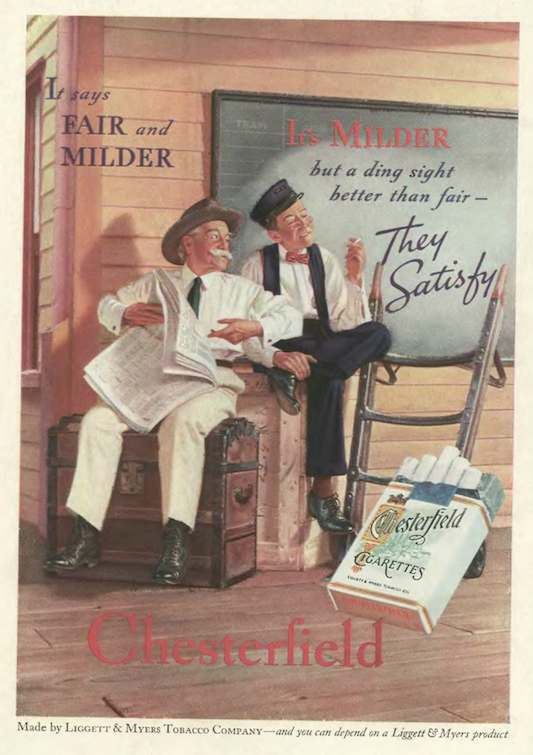
…this back cover ad also featured a newspaper reader, enjoying a smoke while waiting for the train…

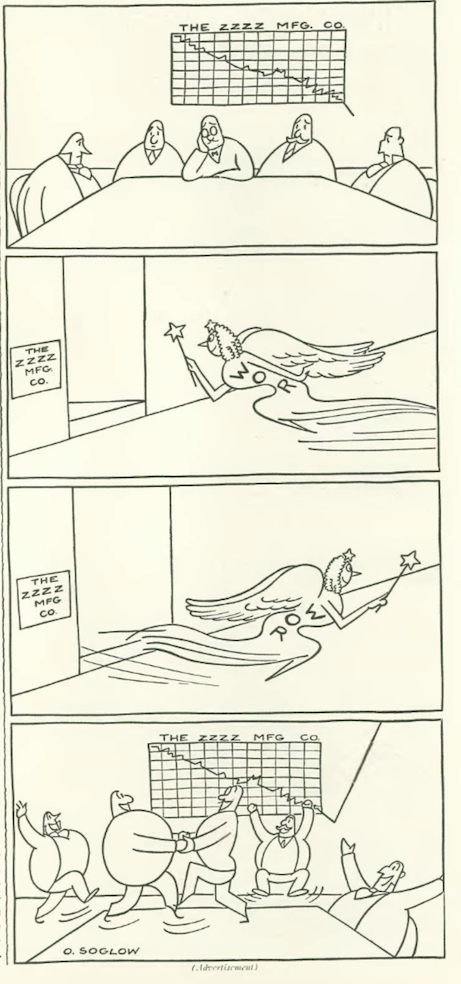
…best known for creating The Little King, Otto Soglow drew hundreds of cartoons and spot drawings for The New Yorker as well as for a variety of advertisers including Pepsi-Cola, Benson & Hedges cigarettes, and here, one from a series of ads he created for WOR radio…

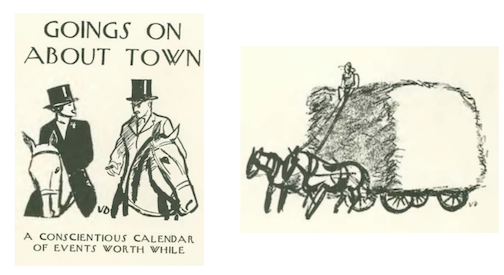
…speaking of spots, here are two by Victor de Pauw…

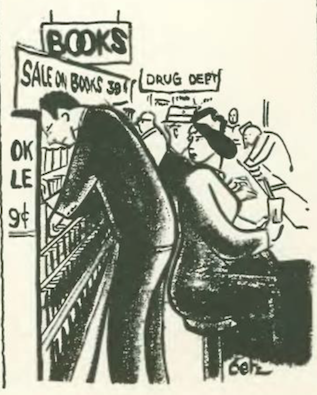
…biographies of prolific New Yorker cover artist Arthur Getz give his start date at the magazine as 1938, but this might be one of his early spot drawings (although the signature style differs from Getz’s other works)…

…no mistaking this spot by Christina Malman…

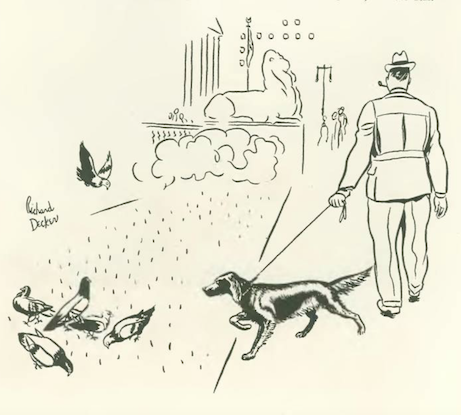
…or this one by Richard Decker…

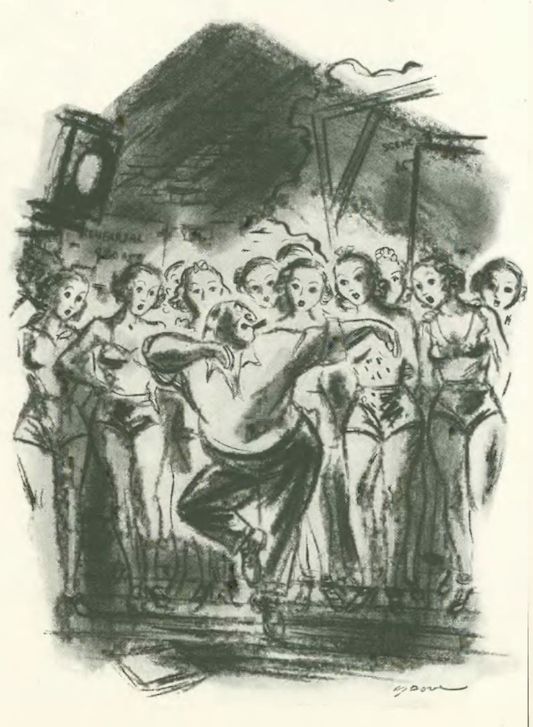
…Leonard Dove demonstrated some moves for a chorus line…
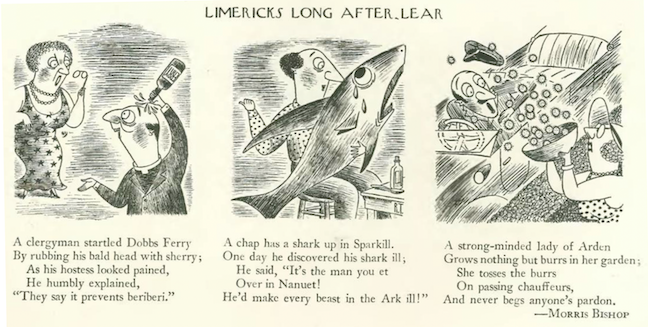
…and more wonderful Richard Taylor illustrations for Morris Bishop’s limericks…
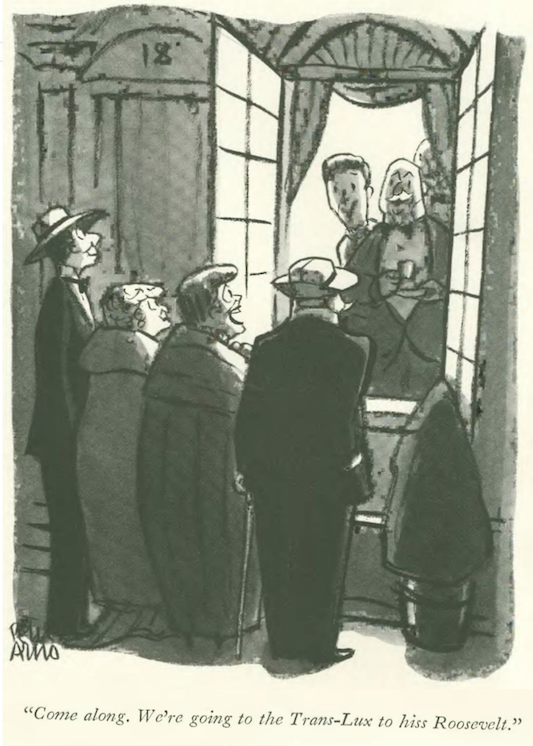
…the well-heeled prepared to engage in a favorite sport, per Peter Arno…

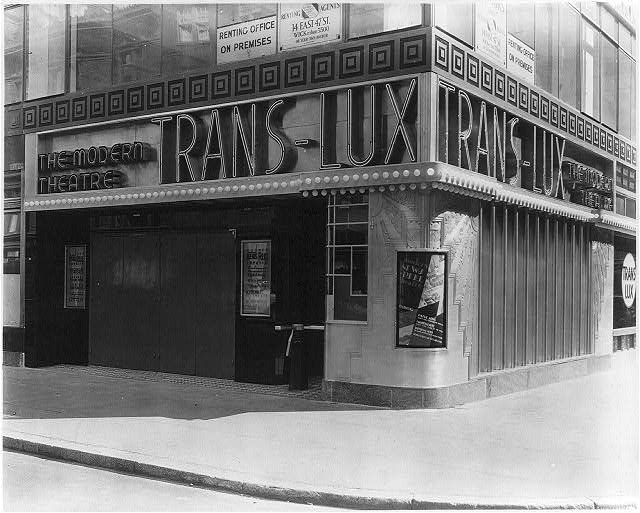
…”Trans-Lux” theaters were conversions of storefronts and retail offices that seated smaller audiences than traditional theaters. Rather than feature films, the Trans-Lux theaters showed continuous 45-to-60-minute loops of newsreels (like The March of Time), short subjects, travelogues, and cartoons from 10 a.m. to midnight—people could come and go as they pleased. The theaters pioneered rear-screen projection, using a specialized, wide-angled lens placed just eight feet behind a translucent screen…

POP IN, POP OUT…The very first Trans-Lux cinema opened in 1931 at 58th and Madison as a unique venue that played newsreels and shorts. According to The New York Times, “by the late 1940s, the rise of television began to kill the newsreel format entirely. By 1949, Trans-Lux stopped expanding its boutique newsreel footprint and pivoted its existing houses toward showing standard feature-length films.” (Library of Congress)

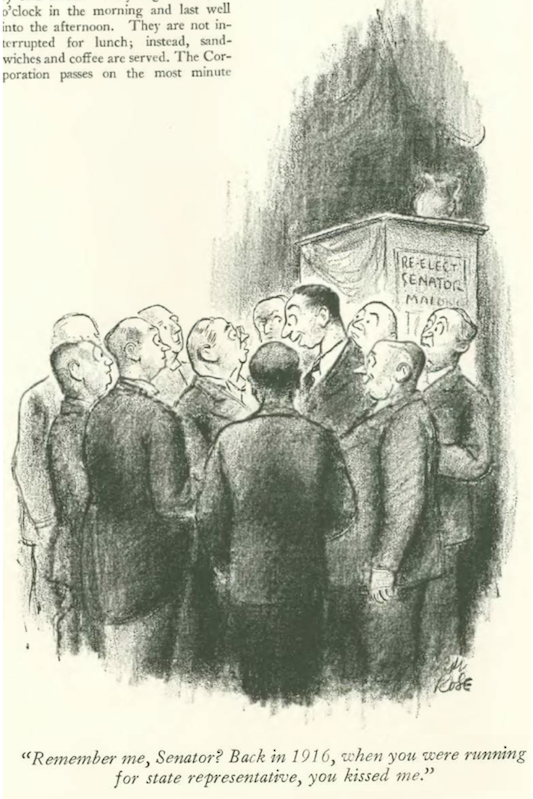
…back to our cartoons, Carl Rose conjured up an unwelcome reminder…

…Charles Addams was up to his old tricks…

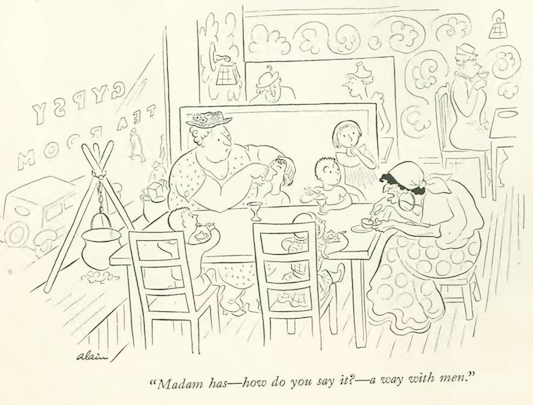
…Alain read the obvious from some tea leaves…

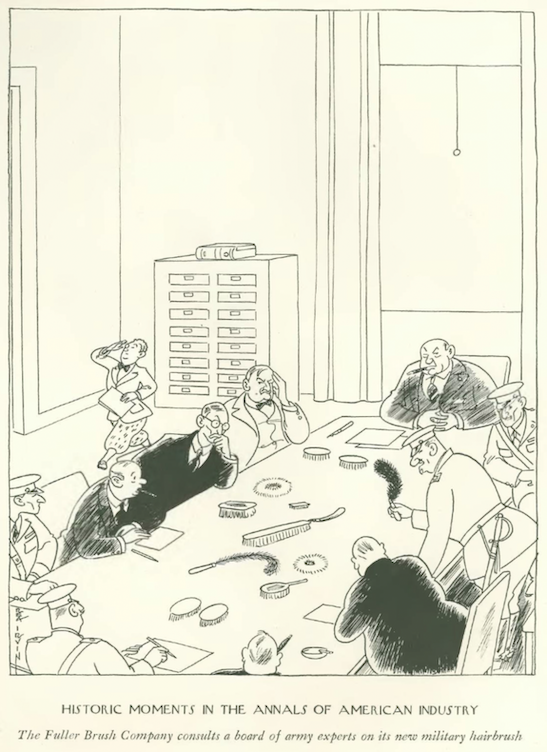
…Rea Irvin showed us some strategic thinking by military brass…

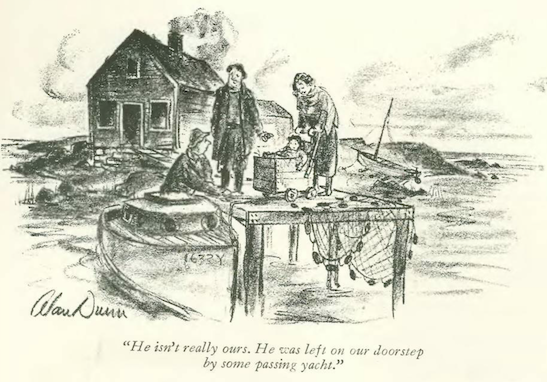
…Alan Dunn considered the mysteries of the sea…

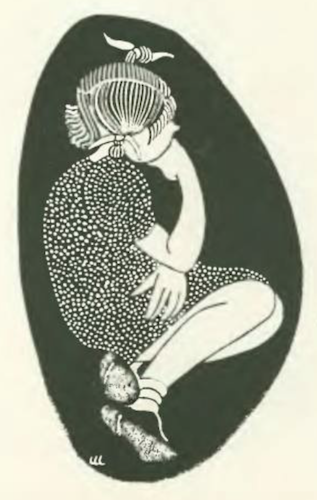
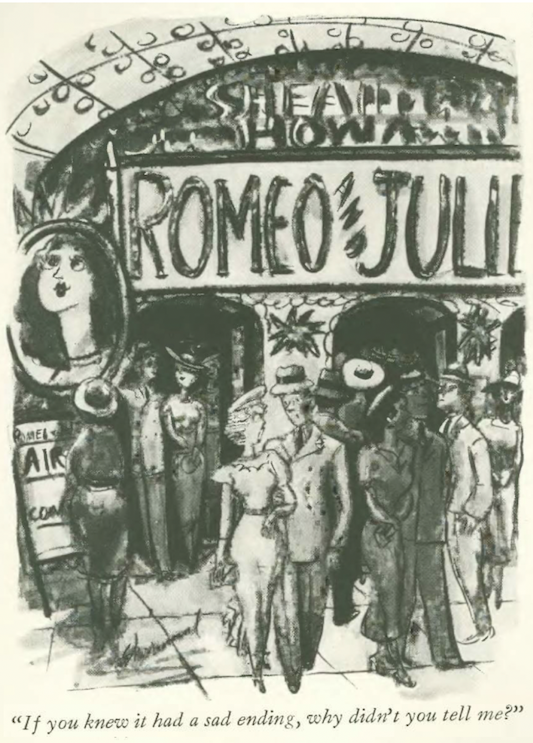
…this guy should have suggested a comedy, per Barbara Shermund…

…Helen Hokinson continued to probe the delicate work of the dress shop…

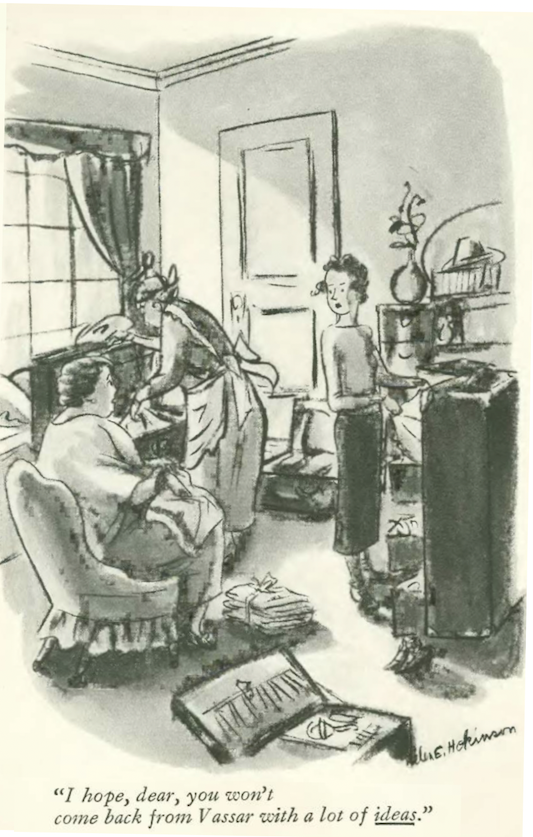
…and we close with another by dear Helen, and the fear of too much thinking…

Next Time: Can-Can in Cleveland…