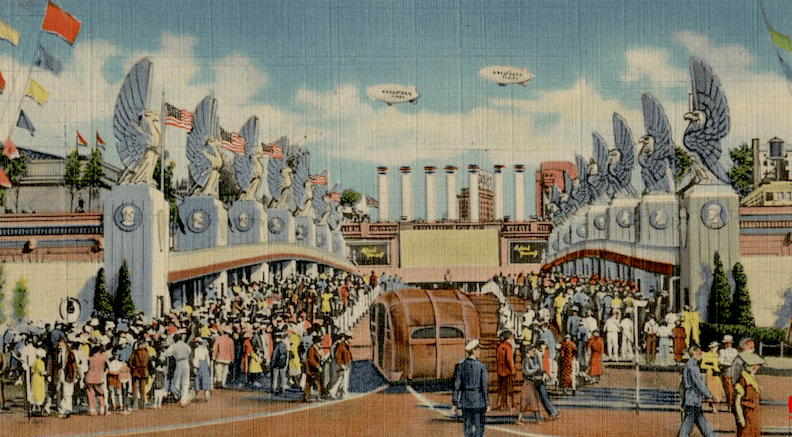
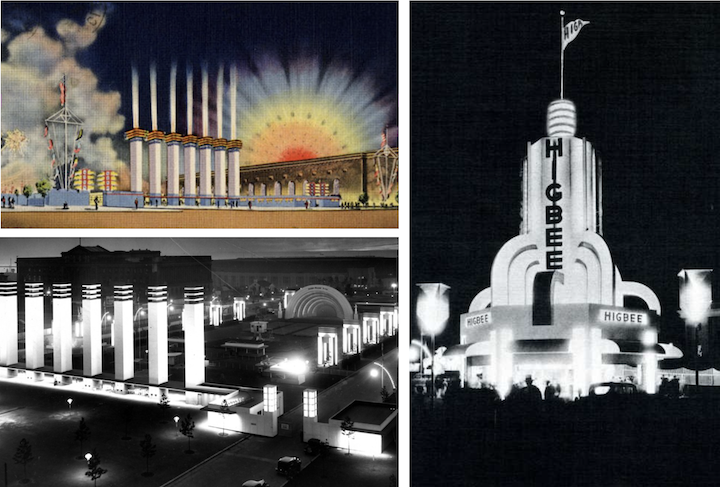
Above: Postcard image of the "Avenue of Presidents" at the 1936 Great Lakes Exposition in Cleveland, Ohio. (youtube.com)
Before the days of mass communications, millions would flock to various world’s fairs and expositions to see the latest inventions, experience the boosterism of the host city, and seek out the thrills of a carnival ride or peep show.
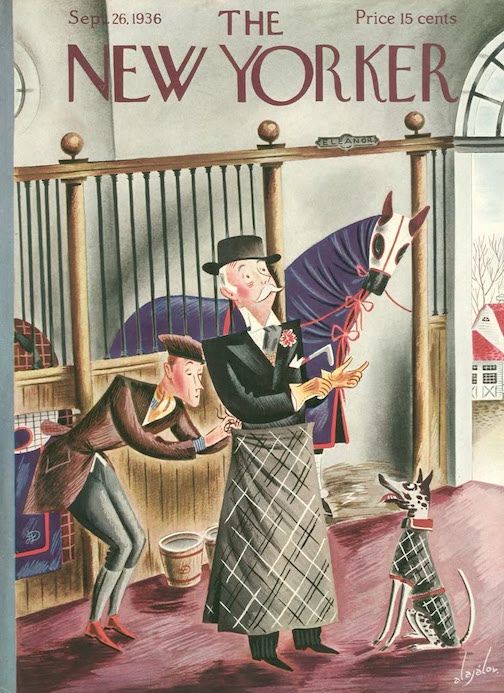
September 26, 1936 cover by Constantin Alajalov.
Along with the major world’s fairs such as Chicago’s 1893 World’s Columbian Exposition, smaller cities also hosted expositions to “boom” their standing in the world—Omaha’s 1898 Trans-Mississippi and International Exposition attracted 2.6 million people, including President William McKinley, and three years later Buffalo’s 1901 Pan-American Exposition would draw eight million—McKinley was there, too, but his visit (and life) would be cut short by an assassin’s bullet.
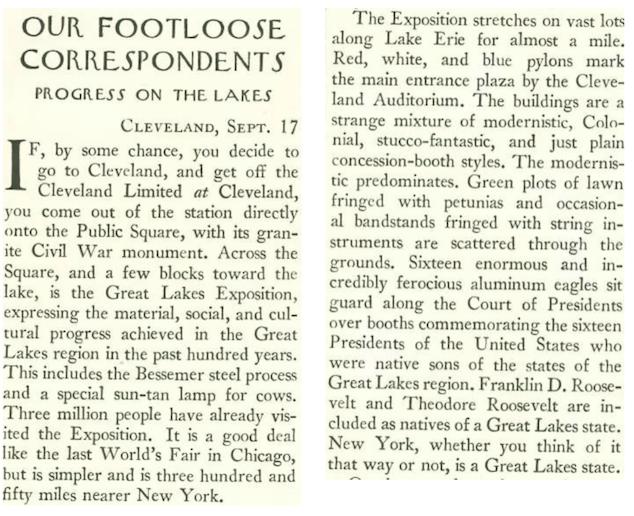
In many cases these expositions commemorated anniversaries that marked the progress of a particular city or geographic area. Such was the case of Cleveland’s Great Lakes Exposition, which was created to commemorate the centennial of Cleveland’s incorporation as a city while giving a boost to a region hit hard by the Depression. The exposition was visited by The New Yorker’sEugene Kinkead, who was an editor and writer of the magazine’s “The Talk of the Town” section for many years. Here are brief excerpts from his visit:
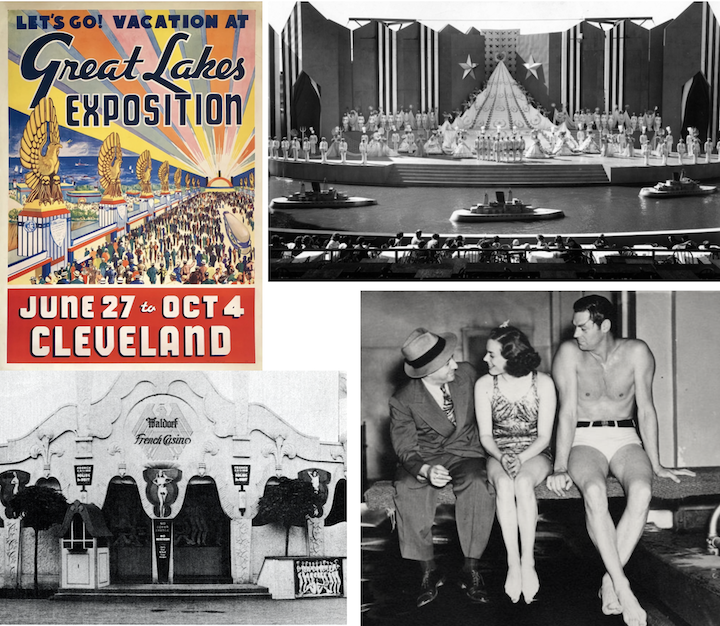
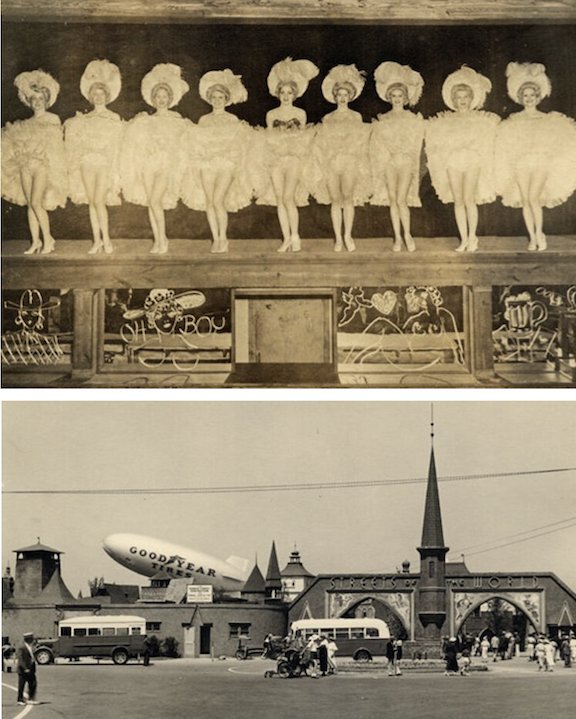
SOMETHING FOR EVERYONE…Clockwise from top left: Poster for the Great Lakes Exposition; the most popular attraction was Billy Rose’s Aquacade, a 5,000-seat theater-restaurant that featured diving and synchronized swimming (the Aquacade was also a hit at the 1939 New York Wold’s Fair); star attractions at the Aquacade were Olympic champion swimmers Eleanor Holm and Johnny Weissmuller, pictured here with Billy Rose; the “Streets of the World” showcased the cultures of more than forty different countries—it also featured the “French Casino,” a restaurant/nightclub that drew massive crowds to its “Girl Revues”—naturally, the scantily clad performances and nude can-can dancers created a major stir among more modest expo attendees. (chicagovintageposters.com/clevelandmemory.org)OTHER DIVERSIONS…Above: the can-can dancers who caused quite a stir at the French Casino, located in the “Streets of the World” section. Below: One of the blimps the Goodyear Tire & Rubber Company featured at the exposition rises in the background of “Streets of the World.” Visitors could purchase tickets for three dollars (roughly $65 today) to take a scenic flight over downtown Cleveland, the exposition, and Lake Erie. (clevelandmemory.org)EXPO BY NIGHT…Clockwise, from top left: Postcard view of the main entrance to the Great Lakes Exposition, backlit by the “Aurora Borealis”—a spectacular light display created by powerful searchlights and colored beams; a tower sponsored by Cleveland’s famed Higbee’s Department Store; photograph of the main entrance at night. (clevelandmemory.org/clevelandhistorical.org)
* * *
Relax, Joan
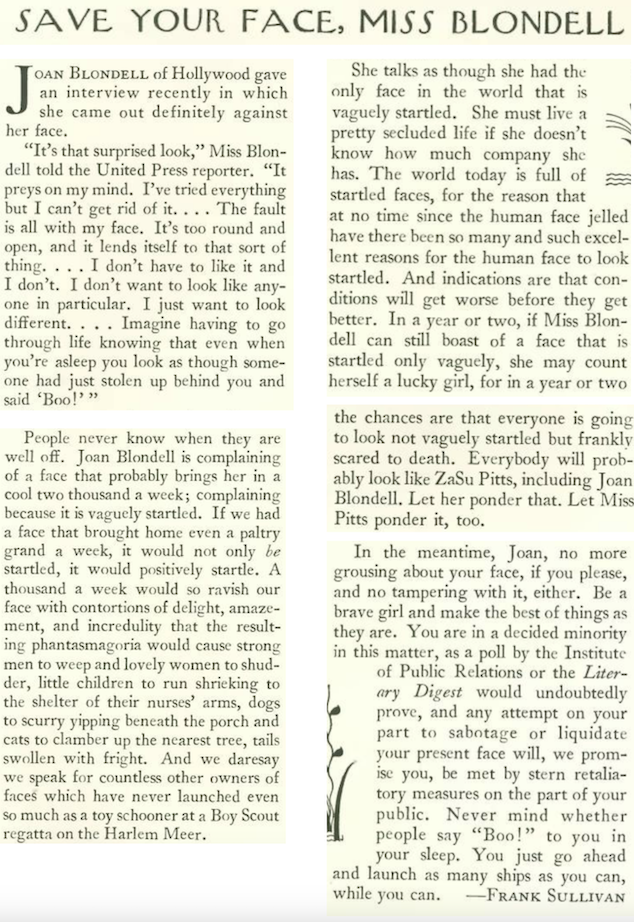
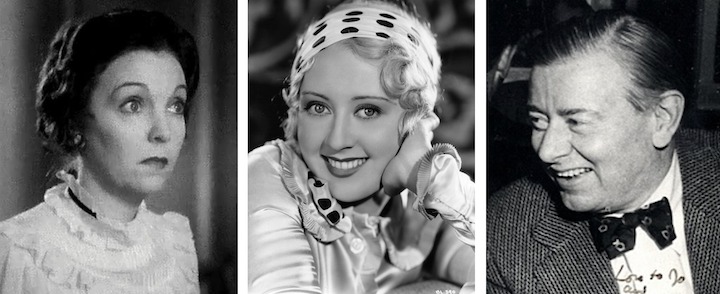
New Yorker regular Frank Sullivan found inspiration in a newspaper article featuring actress Joan Blondell lamenting the “surprised look” she thought was permanently fixed on her face. Sullivan suggested that Blondell “must live a pretty secluded life” not to notice a world “full of startled faces.” Alluding to the coming war in Europe, he suggested that in a year or two “everyone will probably look like ZaSu Pitts.”
PUT ON YOUR WAR FACE…Frank Sullivan reassured Joan Blondell (center) that soon everyone would wear the expression of actress ZaSu Pitts (left). (imdb.com/sspl.org)
* * *
At the Movies
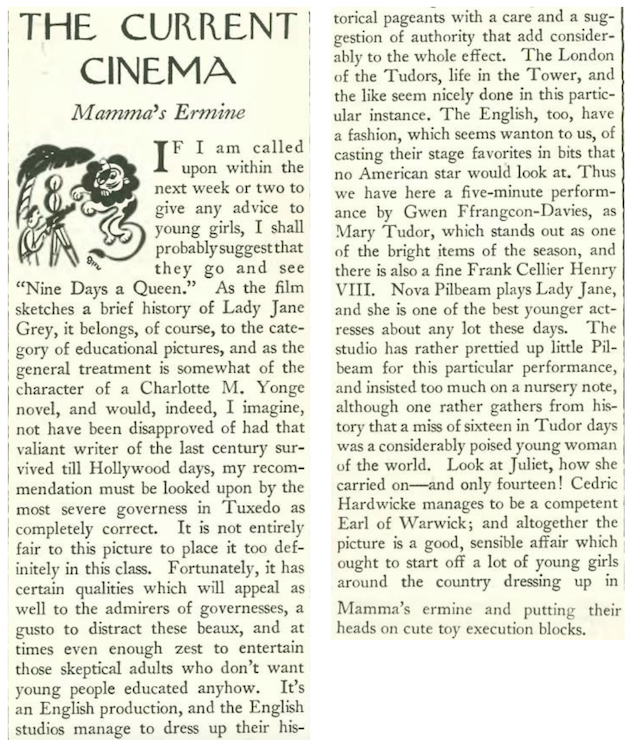
As previously noted, costume dramas were big in 1936, and critic John Mosher was less than enthusiastic about many of them, but he found Nine Days a Queen (Tudor Rose in the British release) a sensible affair, noting that “English studios manage to dress up their historical pageants with a care and a suggestion of authority…”
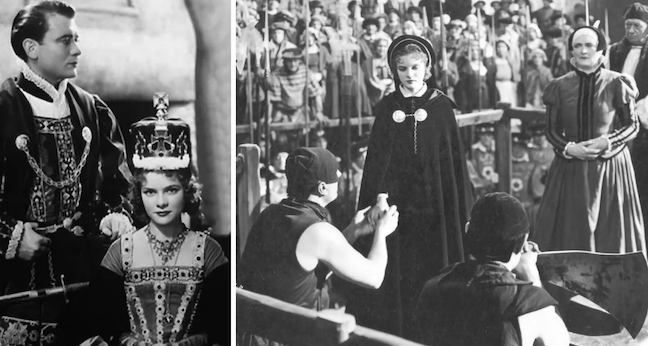
TEMPORARY CROWN…Nine Days a Queen (aka Tudor Rose) tells the story of Lady Jane Grey’s brief reign as the queen of England before she loses her head. Left: John Mills as Lord Guilford Dudley and Nova Pilbeam as Lady Jane Grey. At right, executioners seek forgiveness from Lady Jane ahead of their grisly task. Critic John Mosher liked the film, but Graham Greene (critic for The Spectator), wrote that he had “seldom listened to more inchoate rubbish…” (oldhollywooddiary via instagram.com)
Mosher found the musical comedy Sing, Baby, Sing a minor entertainment, and dismissed the screwball comedy My Man Godfrey as “nonsense.” Mosher was in the minority on that latter opinion: Godfrey was one of the most acclaimed comedies of 1936, nominated for six Oscars. In 1999 the film was selected for preservation in the National Film Registry.
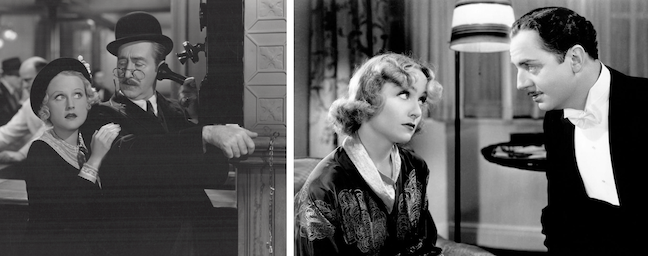
PAIRING OFF…Alice Faye and Adolphe Menjou in Sing, Baby, Sing.Carole Lombard and William Powell in My Man Godfrey. Lombard and Powell were briefly married from 1931 to 1933, but remained close friends after their divorce. (eBay.com/pbs.org)
* * *
From Our Advertisers
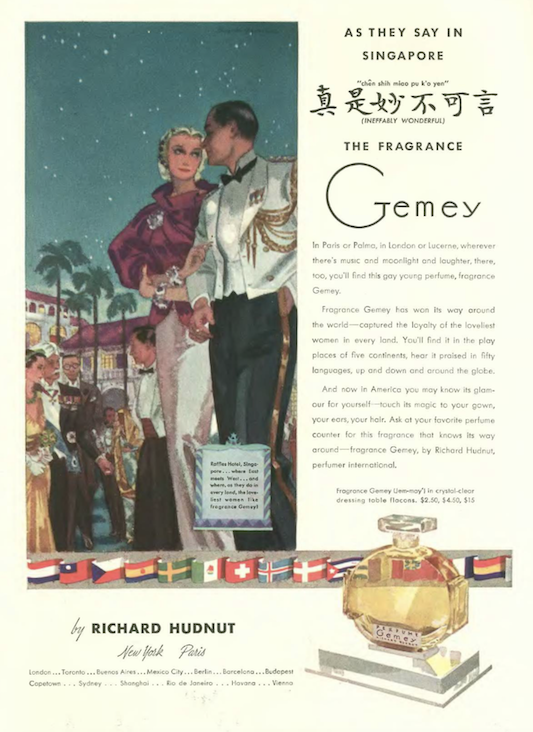
The inside front cover greeted readers with this romantic image from Richard Hudnut cosmetics…
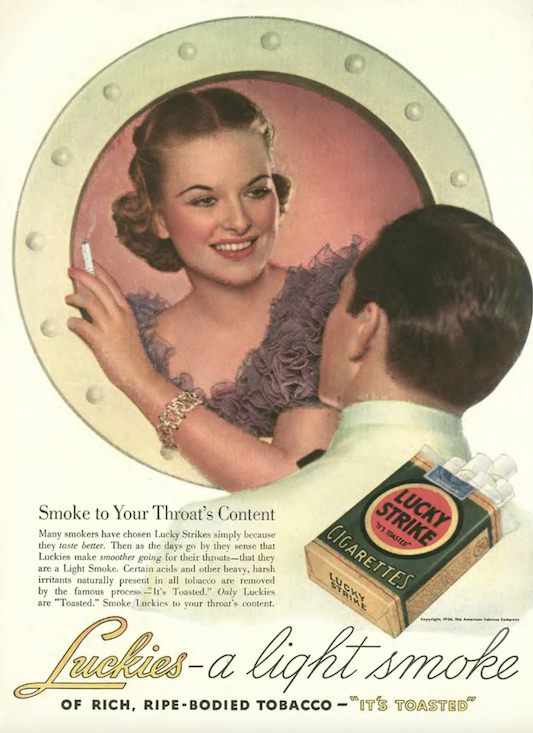
…the makers of Lucky Strikes used a bit of romance themselves to inspire more women smokers…
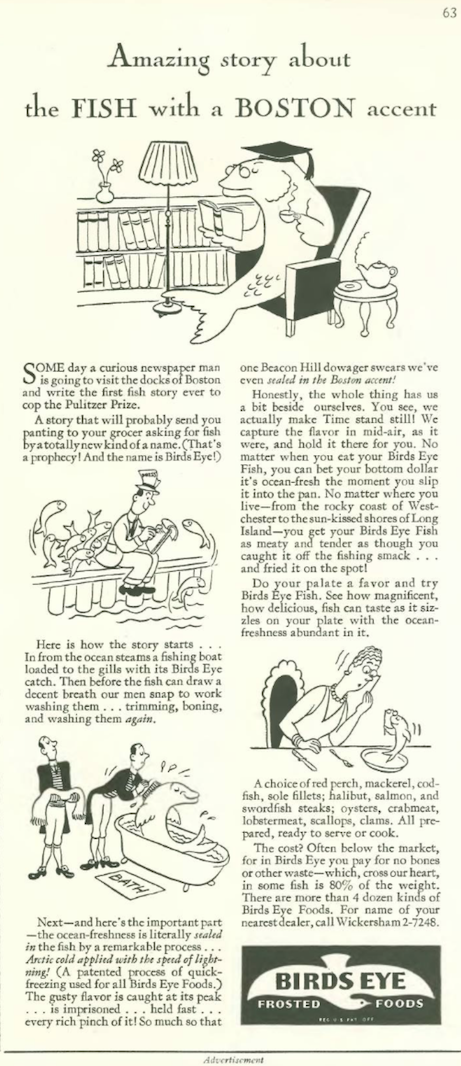
…the folks at Birds Eye took out this advertisement to extol the virtues of frozen fish…
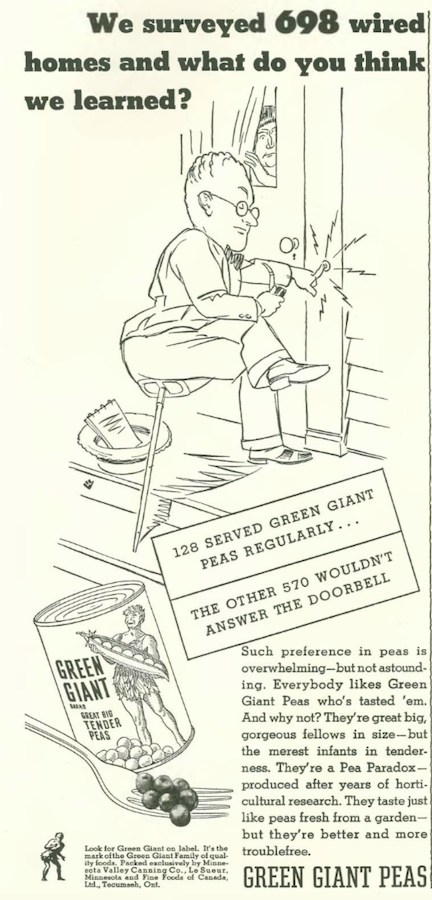
…an odd ad from Green Giant, using the image of an annoying little man to sell peas…one imagines the woman calling “Pa, git yer shotgun”…
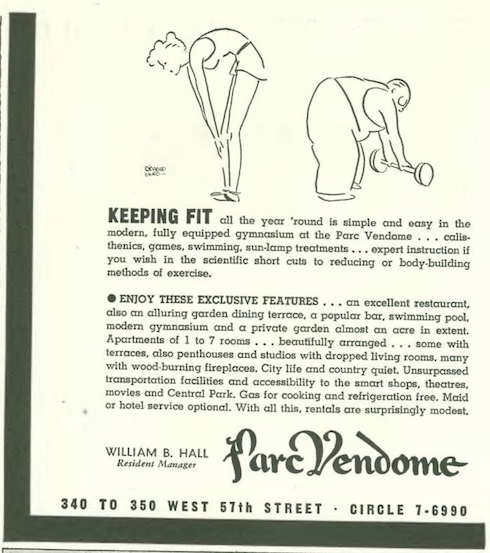
…the Parc Vendome advertised its apartments as a great place to keep fit, everything from calisthenics to sun-lamp treatments…
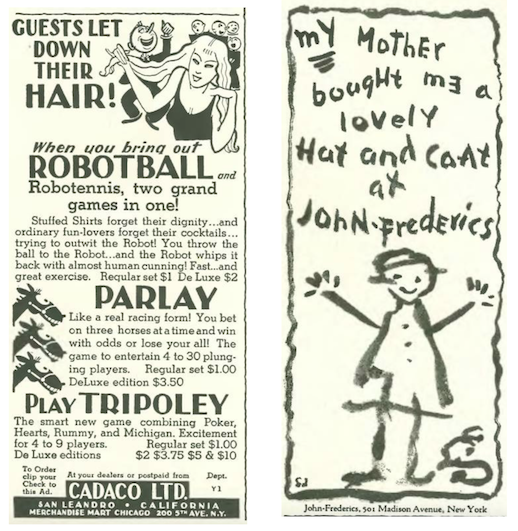
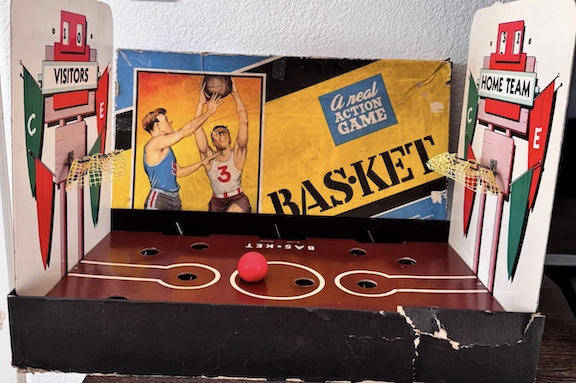
…a couple of one-column ads from the back of the book…at left: founded in 1935, Cadaco was known for transforming real-world sports into table-top versions…on the right: John-Frederics was a partnership between hat designer “Mr John” Harberger and Frederic Hirst…John-Frederics hats were famous in Hollywood, including the green velvet bonnet worn by Vivien Leigh in 1939’s Gone with the Wind…
This 1938 edition of Cadaco’s Bas-Ket featured spring-loaded levers that propelled a ping-pong-like ball toward a basket. (etsy.com)
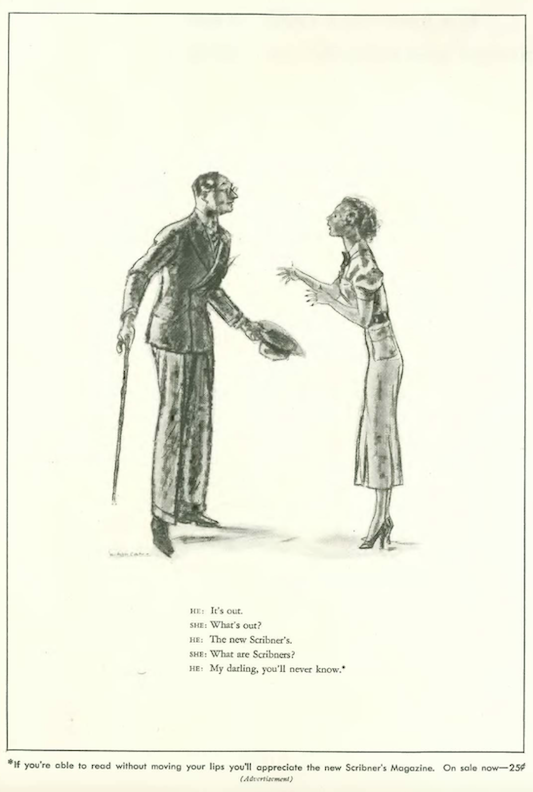
…Scribner’s magazine, a product of publisher Charles Scribner’s Sons, tried to head off declining circulation by hiring a new editor-in-chief, Harlan D. Logan, who sought to modernize the format to compete with contemporary lifestyle magazines…the publisher took out this cheeky full-page ad to draw attention to the “new” Scribner’s…
…founded in January 1887, the magazine saw its strongest sales when Teddy Roosevelt was a contributor from the 1890s to about 1910…despite Logan’s efforts, the magazine folded in May 1939…
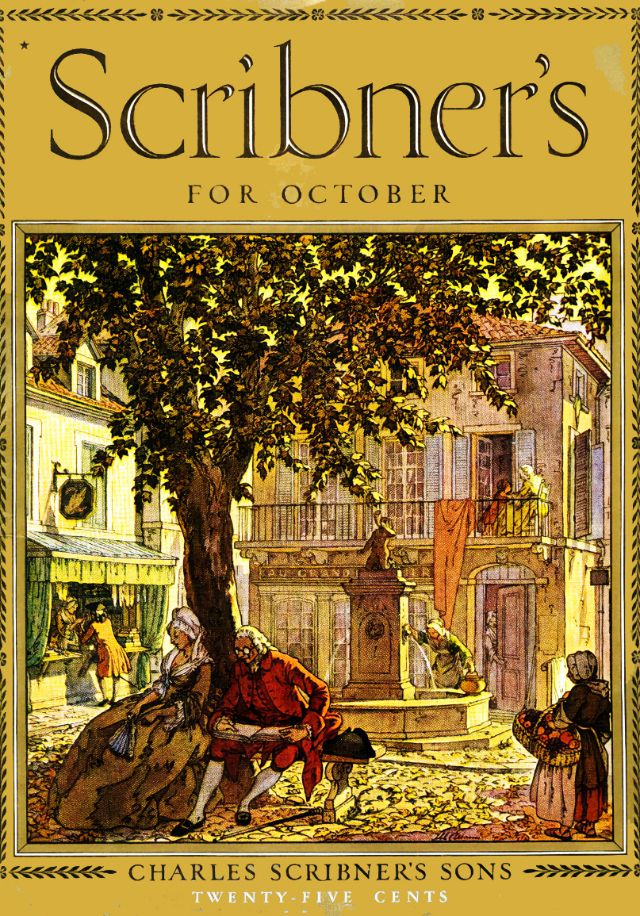
The October 1936 issue of Scribner’s marked a change in editorship and design of the magazine. This cover was by American graphic designer Thomas Cleland. (vintage.es)
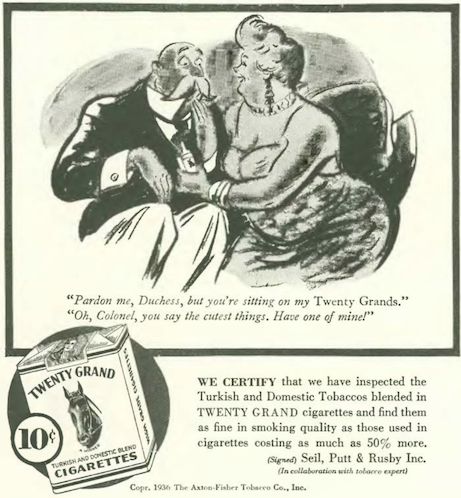
…archetypes like the pompous British Colonel and the haughty Duchess seemed to be everywhere in the 1930s, whether they were foils in screwball comedies or wealthy aristocrats laughably out-of-touch and obsessed with past glories (Peter Arno knew that trick well)…if you’ve followed these posts for awhile you know they are often seen in New Yorker advertising as well…
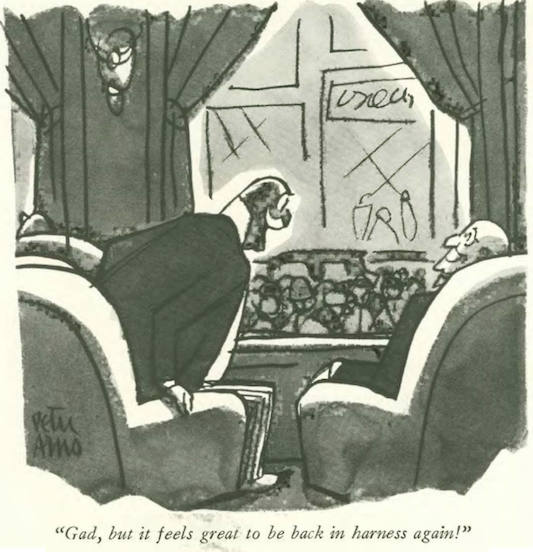
…which makes a nice segue to our cartoons, starting with Arno…
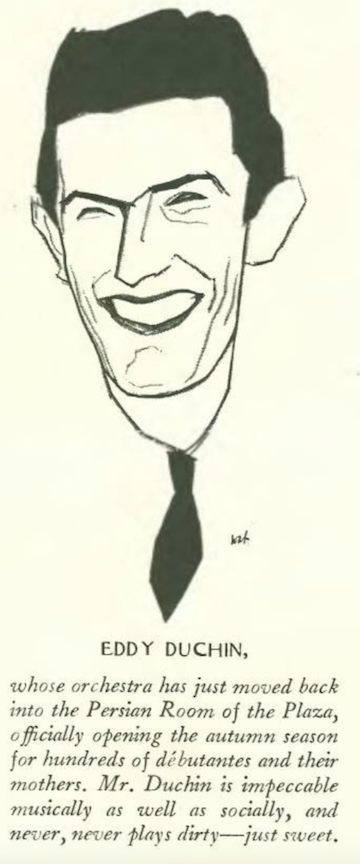
…the calendar section featured this illustration by William Auerbach-Levy for the mini bio of popular bandlander and pianist Eddy Duchin…
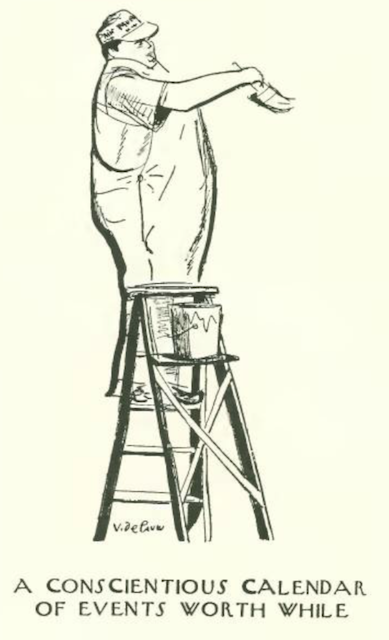
…Victor de Pauw opened up the magazine with this painterly illustration…
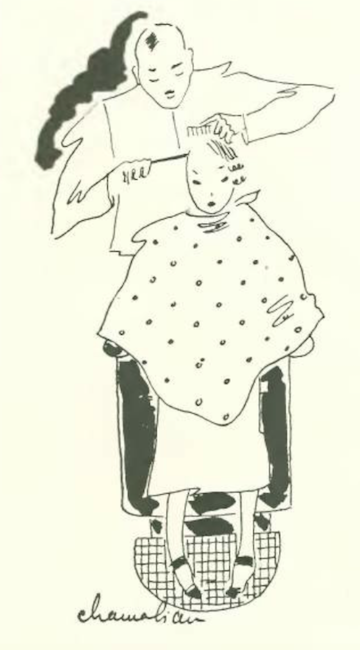
…some spot art from fashion illustrator Alice Chamalian…
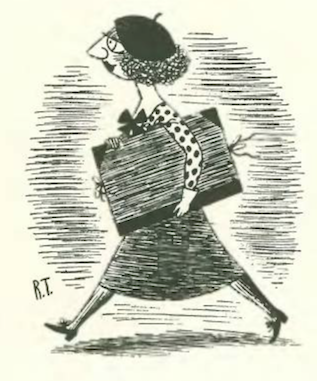
…and Richard Taylor…
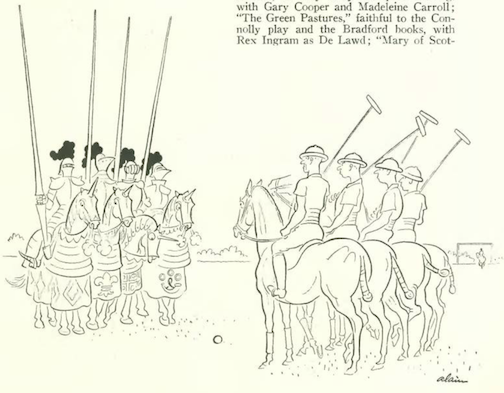
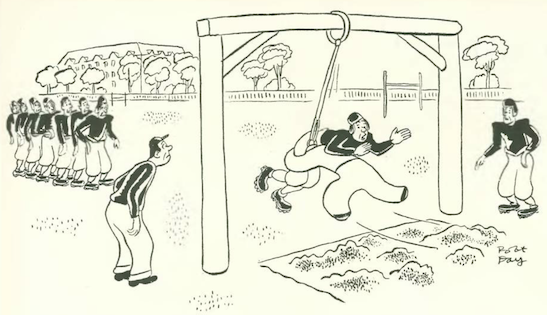
…caption-less entries from Alain…
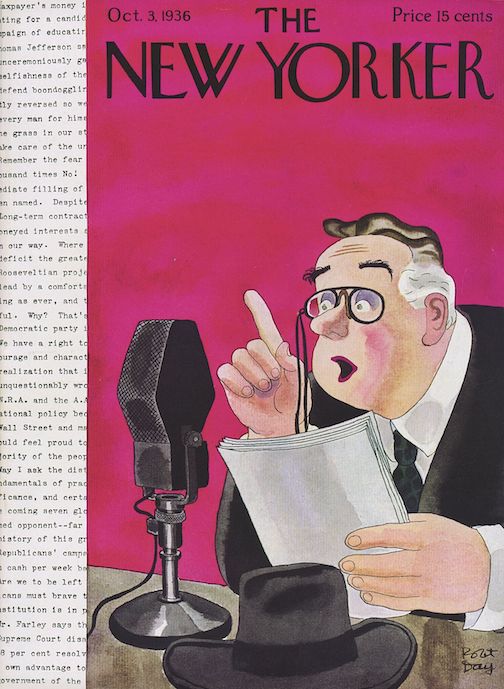
…and Robert Day…
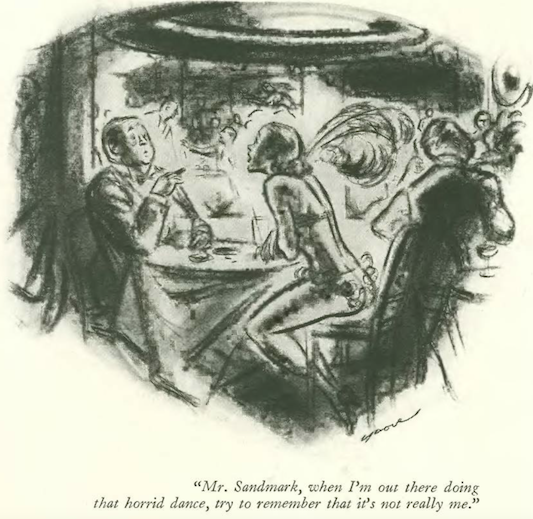
…Leonard Dove supplied a clarification for this sugar daddy…
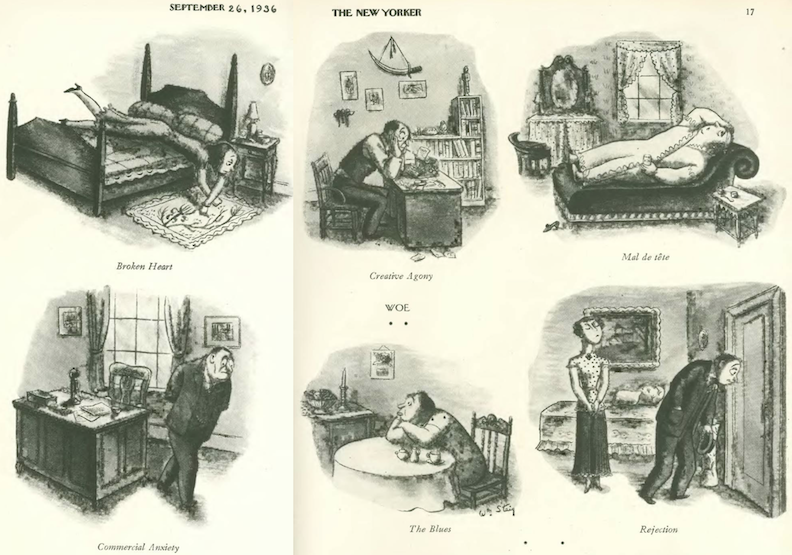
…William Steig gave us various types of “woe”…
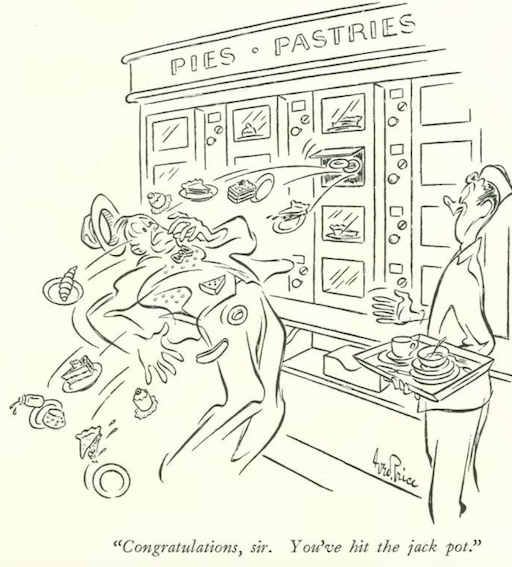
…George Price delivered a surprise at the Automat…
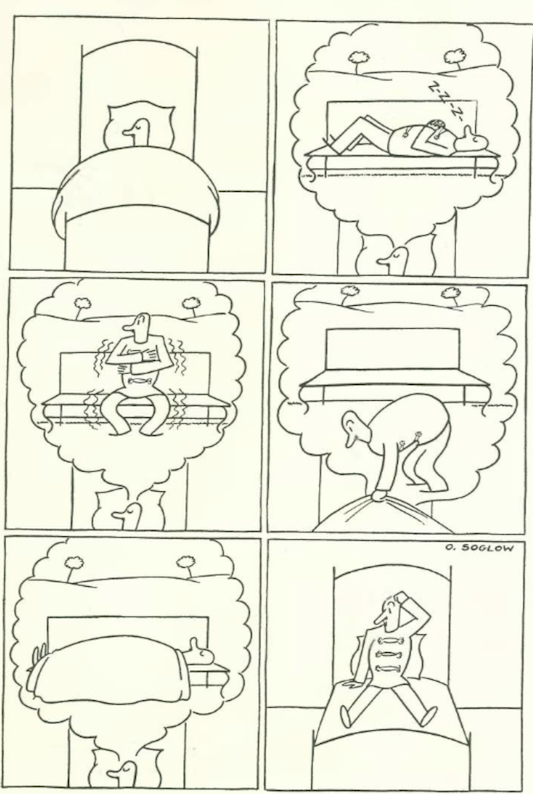
…Otto Soglow pondered the meaning of dreams…
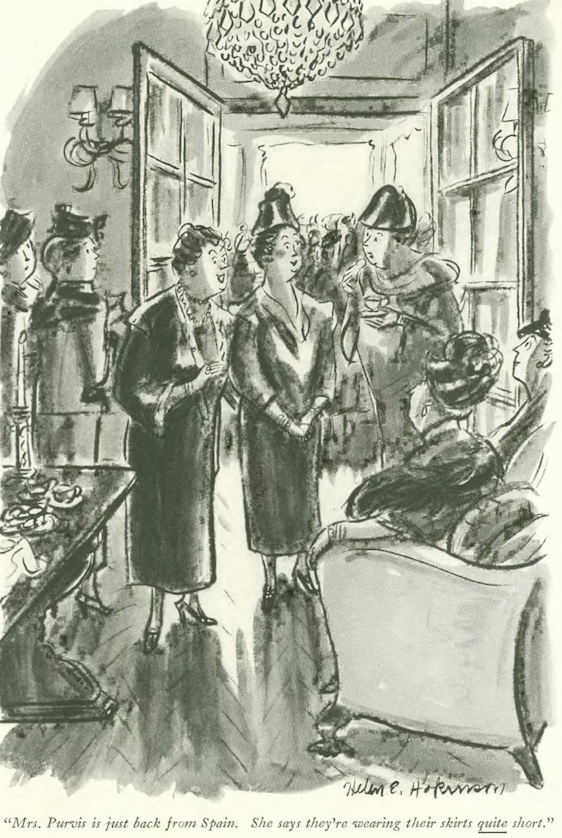
…and we close with some scandalous fashion gossip, courtesy Helen Hokinson…
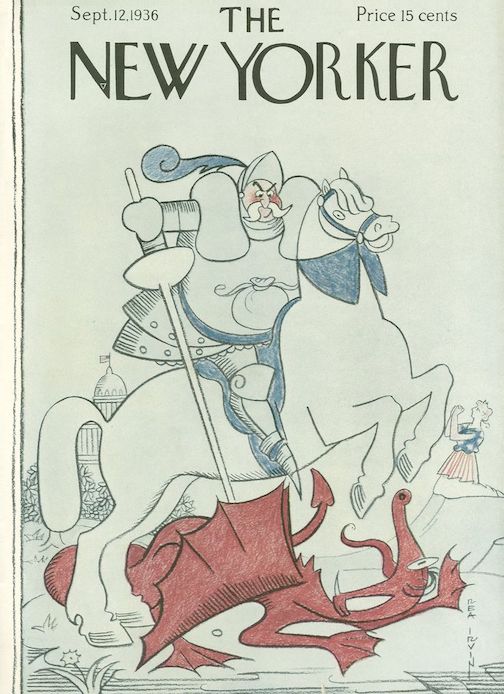
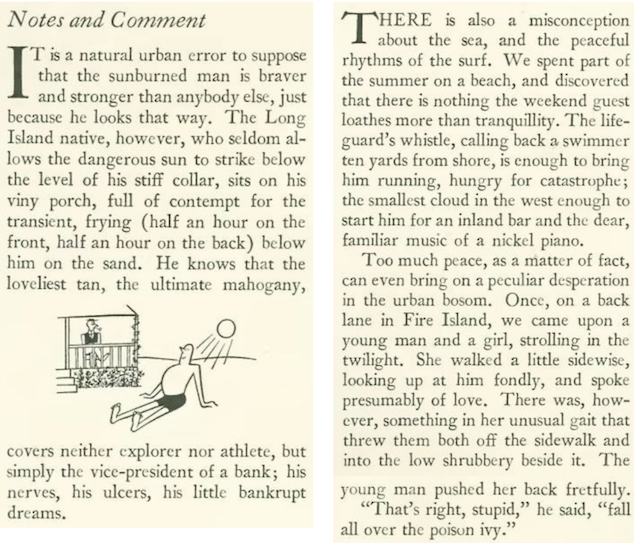
E.B. White grew up along the coast of Maine and had a lifelong love of sailing. He did not, however, have much regard for those who came to the water simply to bask in the sun.
September 12, 1936 cover by Rea Irvin.
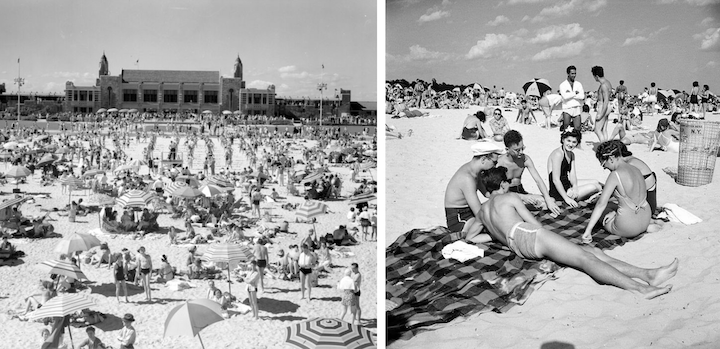
White led off his column with some sharp words about the “sunburned man” who did not come by his tan honestly, like an athlete or explorer, but rather spent his weekends “frying” to cover his “bankrupt dreams.” White was also critical of “the weekend guest” who brought noise rather than tranquility to the seaside.
E.B. WHITE’S NIGHTMARE…At left, the West Bathhouse at Jones Beach is the backdrop for this circa 1930s image of New York beachgoers; at right, sunbathers play cards on Orchard Beach, known as the “Riviera of the Bronx,” circa 1930. (facebook.com/Patchogue-Medford Library)
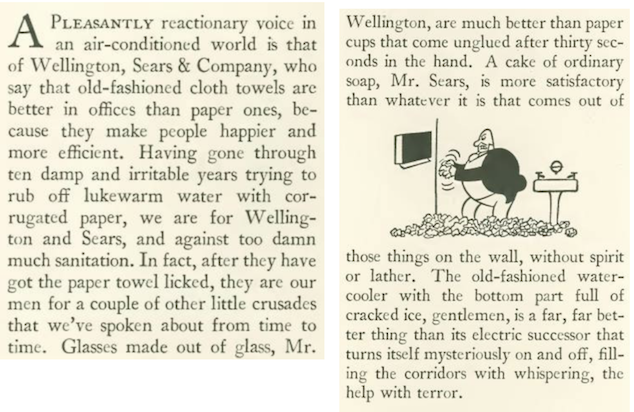
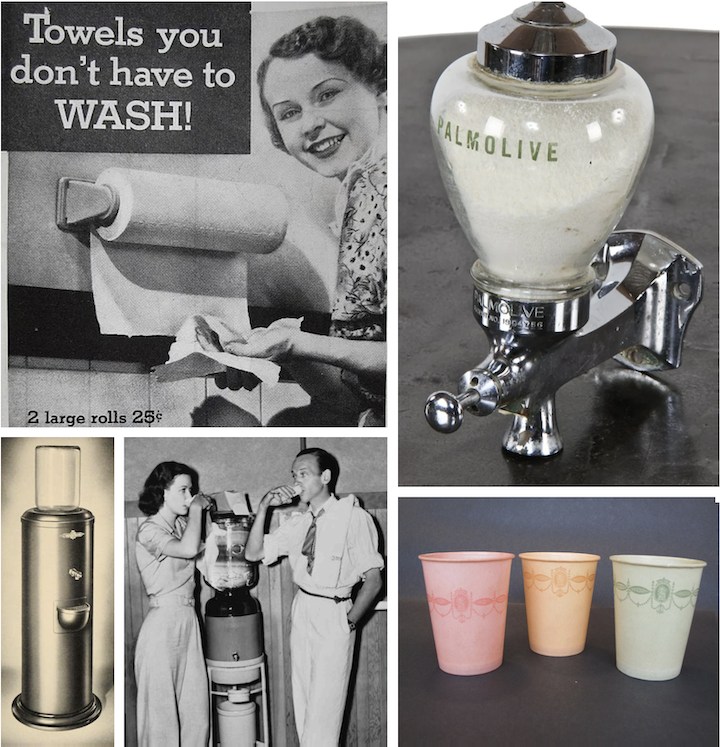
Ever critical of innovation, E.B. White also lamented the rise of such “conveniences” as paper towels and powdered soap dispensers.
A FEW OF MY LEAST FAVORITE THINGS…Always wary of the newfangled, E.B. White preferred cloth over paper towels, bar soap over powdered; glass rather than Dixie Cups, and old-fashioned water coolers glittering with cracked ice. Clockwise, from top left: Ad for Scot paper towels, 1935; 1930s powdered soap dispenser; Dixie Cups, 1931; Eleanor Powell and Fred Astaire take a break at an old-fashioned water cooler during filming of Broadway Melody of 1940; detail from an ad for a Frigidaire electric water cooler, 1936. (witness2fashion/urbanremainschicago.com/lafayette.edu/tcm.com)
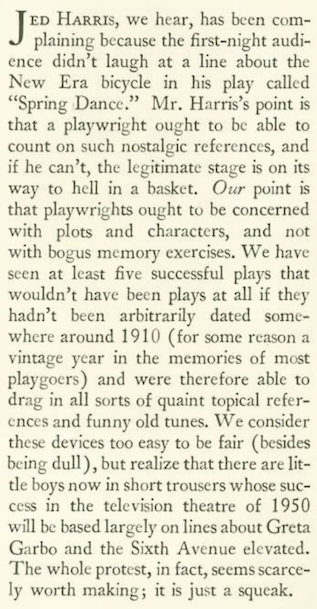
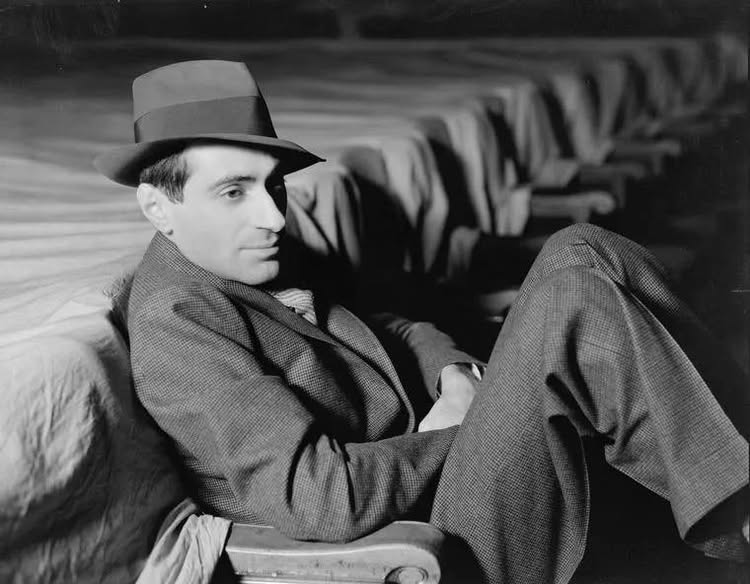
One more item from “Notes,” this referring to theatrical producer and director Jed Harris, who was peeved when a nostalgic reference in his new comedy, Spring Dance, failed to elicit laughter from a first-night audience at the Empire Theatre. E.B. White sided with the audience, and wondered if playwrights in the “television theatre of 1950” would someday reference “Greta Garbo and the Sixth Avenue elevated.”
RELAX, JED…Learning that Broadway producer and director Jed Harris was upset about an audience’s lack of reaction to a nostalgic reference, E.B. White suggested that the director’s protest was a mere “squeak.” (History of Cinema via Facebook)
* * *
At the Movies
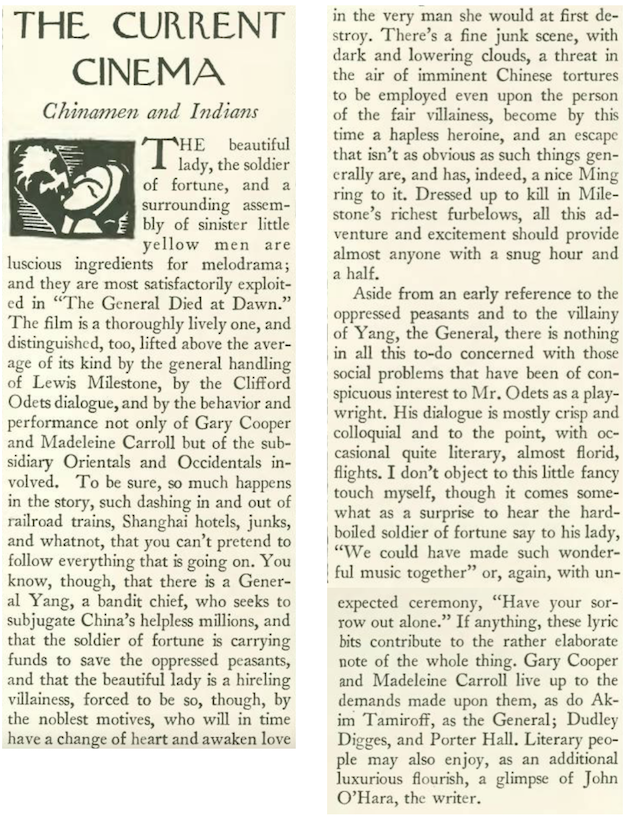
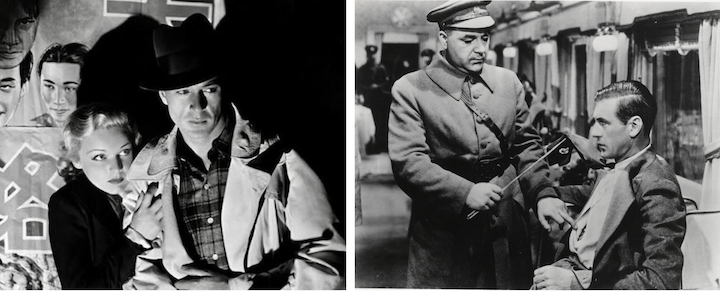
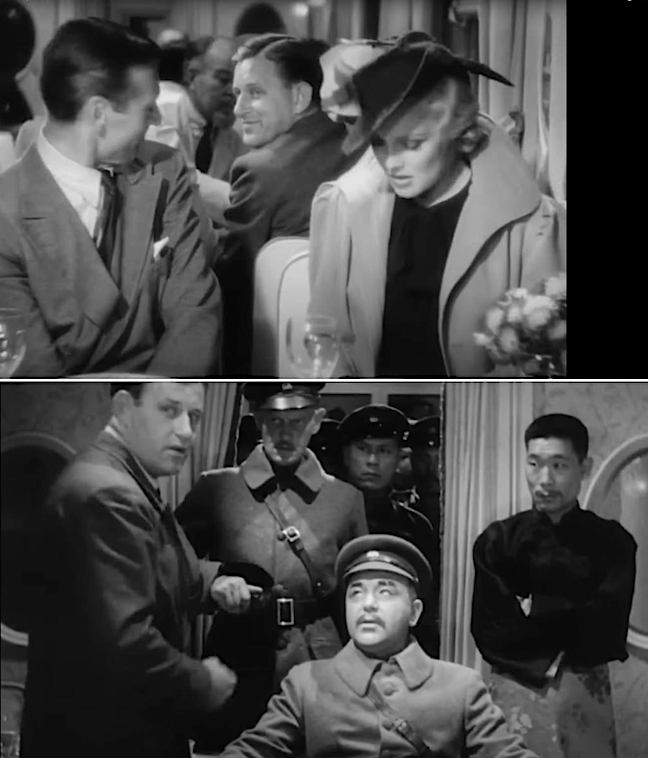
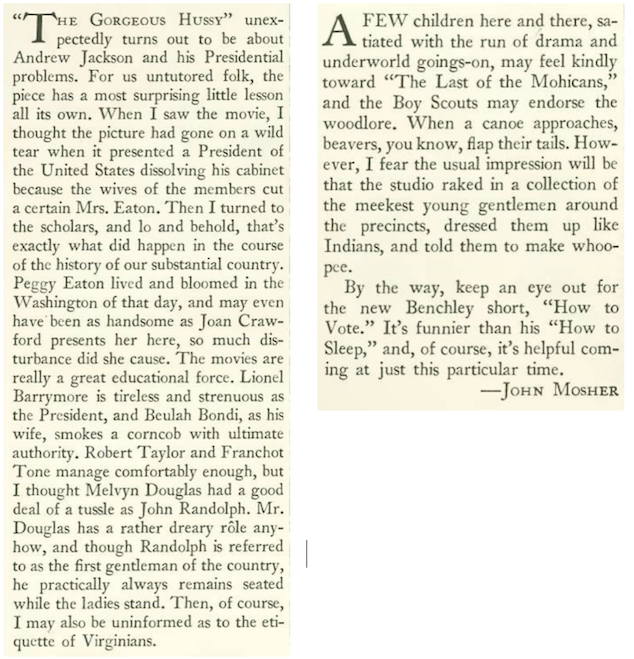
Gary Cooper finally showed off his gift for gab in Paramount’s drama The General Died at Dawn. Critic John Mosher called the film “lively,” and noted a “glimpse” of New Yorker short story writer John O’Hara in a cameo appearance.
TROUBLE IN CHINA…Gary Cooper and Madeleine Carroll portrayed lovers in war-torn China who seek to stop an arms shipment in The General Died at Dawn; at right, Cooper in a scene with Akin Tamiroff, who portrayed warlord General Yang. The film was directed by Lewis Milestone and written by Charles G. Booth and Clifford Odets. (imdb.com/ebay.com)CAMEO…New Yorker short story writer and novelist John O’Hara played a minor role as a newspaper reporter in The General Died at Dawn. (John Fronza via Facebook and YouTube)
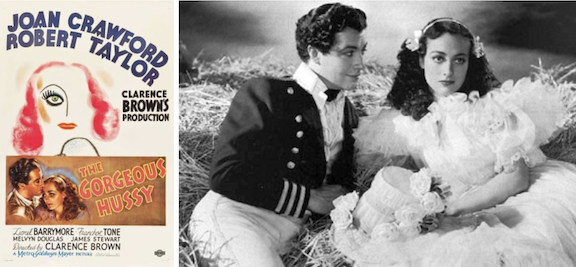
The title of MGM’s The Gorgeous Hussy suggested something racy, but as Mosher noted, it “unexpectedly turns out to be about Andrew Jackson.”
SEX SELLS…MGM played up Joan Crawford’s role as a “hussy” in this theatrical poster for The Gorgeous Hussy, but these were the days of the Hays Code and things wouldn’t get more racy than the scene at right, with Robert Taylor as Andrew Jackson and Crawford as the “hussy,” Peggy Eaton. (imdb.com/mubi.com)
* * *
From Our Advertisers
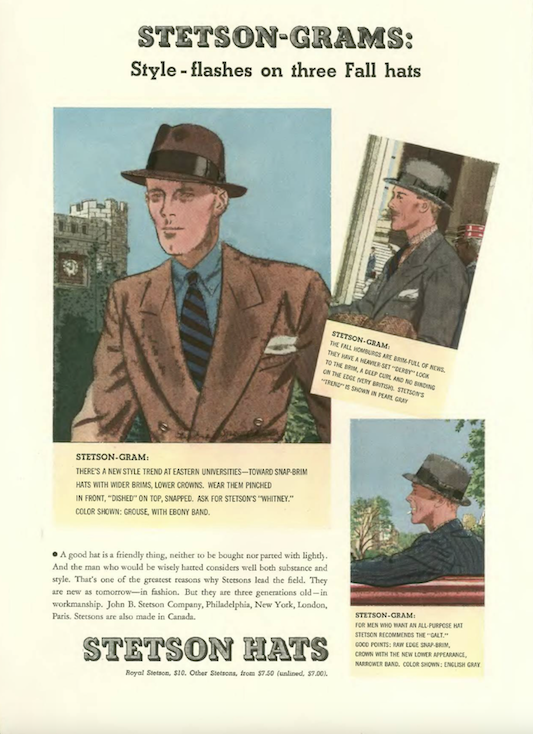
It was time to get that fall hat, and Stetson had three smart-looking lids for the man about town…
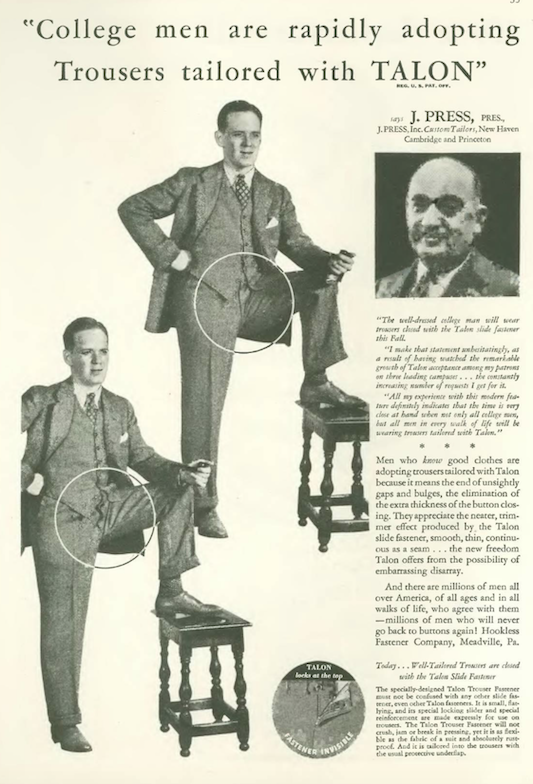
…and here’s a not-so-smart ad from the makers of Talon zippers…no doubt some of the wags on The New Yorker’s editorial side got a kick out of this…
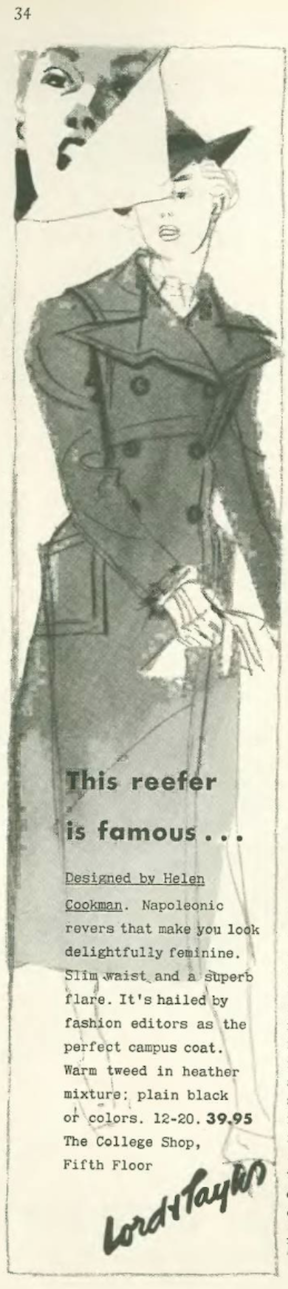
…and this strange ad from Lord & Taylor…not sure what they were trying to convey with that peeled-back corner…
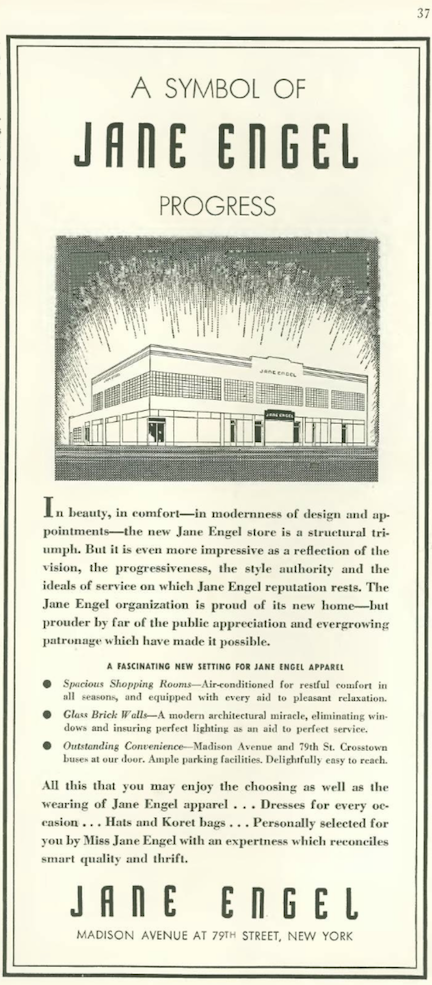
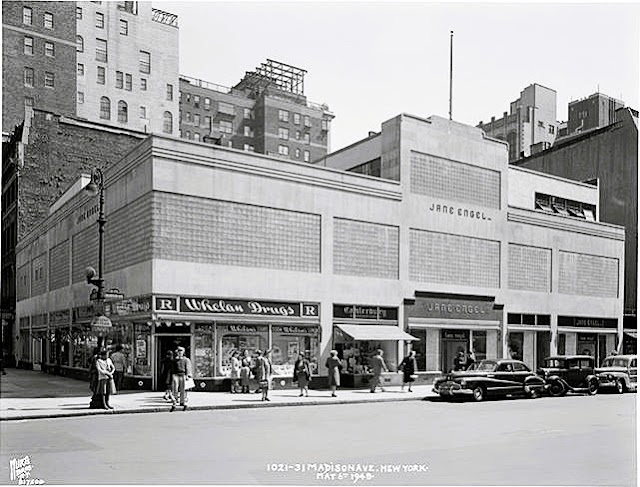
…Jane Engel founded a popular women’s and children’s apparel shop during the Great Depression (in 1930) with just $400 to her name. She grew the business from a single shop on Madison into a successful chain of more than thirty locations…
JEWEL BOX…The flagship Jane Engel Building at Madison and 79th was designed by Roy C. Morris in the Art Moderne style—the generous use of glass brick filled the interior with soft, diffused light. The shop closed in 1955 and was demolished two years later. (New York Public Library)
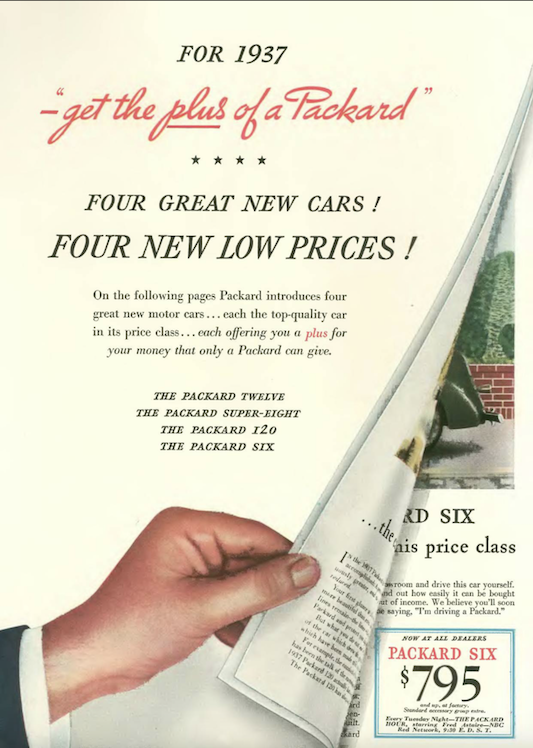
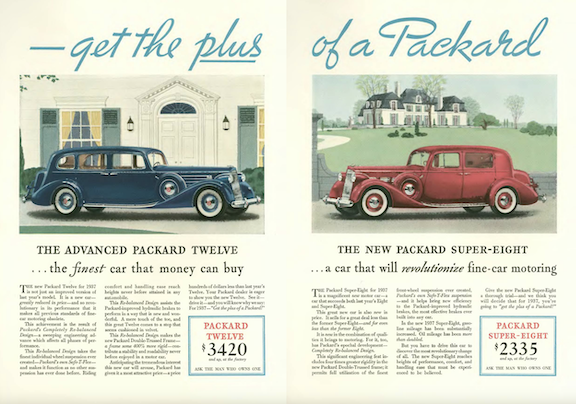
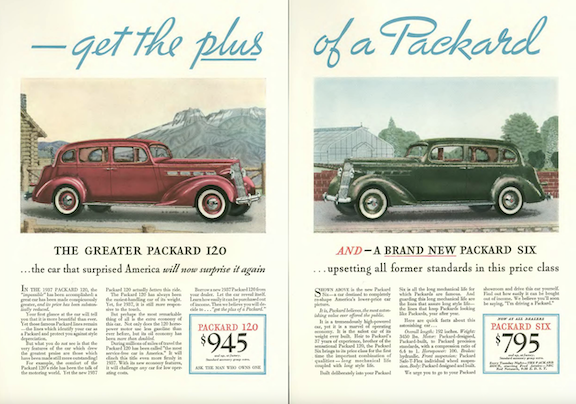
…the makers of the luxury brand Packard made sure Depression-strapped buyers could still afford one of their automobiles, which ranged in price from $795 to $3,420 (in 2026 equivalent to roughly $19,000 and $83,000, respectively)…no doubt The New Yorker’s bean counters appreciated the revenue from these five consecutive full-page color ads…
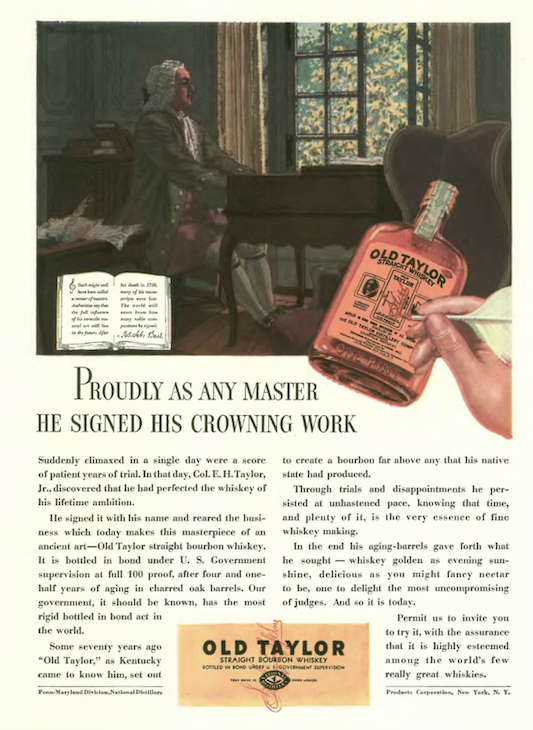
…bourbon distillers continued to compare the accomplishments of famous men to the quality of their tipple…
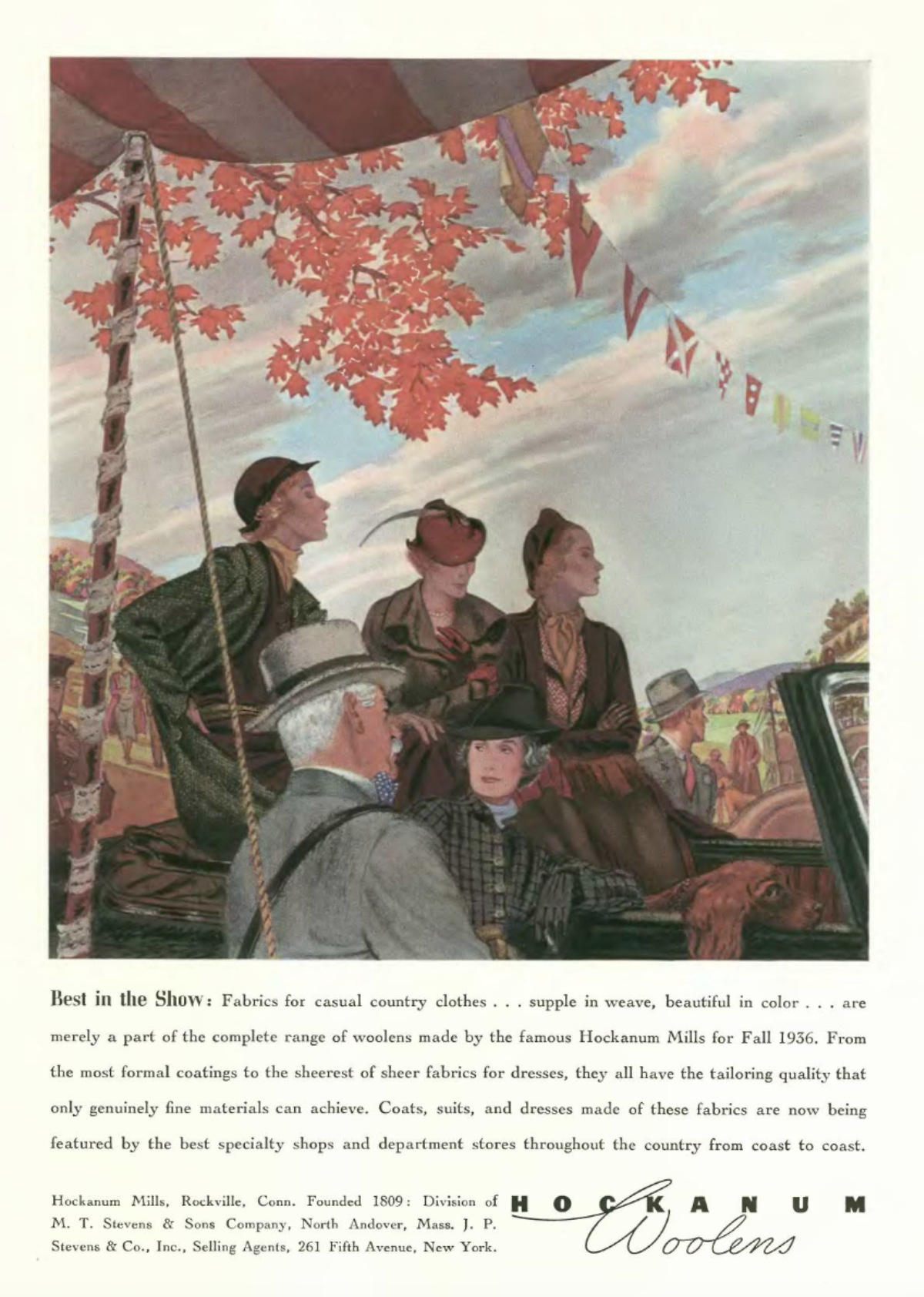
…as the folks at Hockanum Mills continued featuring fine woolens in upscale, seasonal settings…
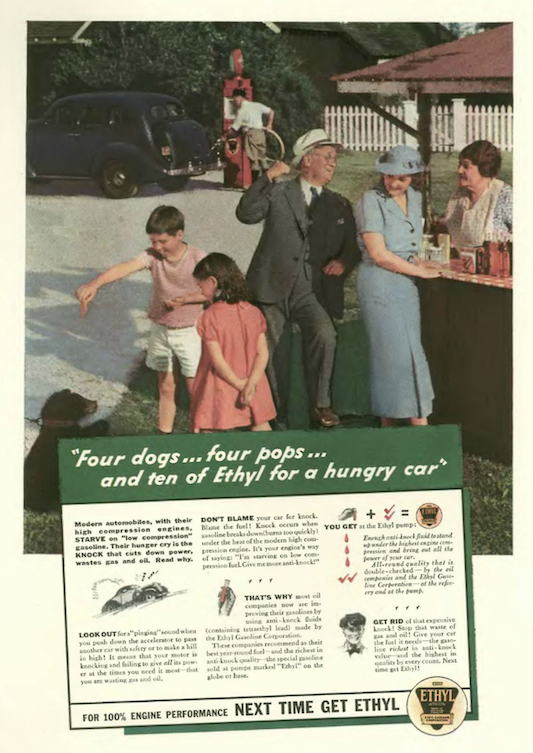
…and the makers of leaded gasoline continued their series featuring homespun images juxtaposed with attendants gassing up cars in the background…at first I thought this was one image superimposed over another, but more likely the gas pump is a prop…also, an odd detail on the left where children appear to be feeding (or teasing) a baby bear restrained by a leash…
…we move on to our cartoonists, beginning with Richard Decker…
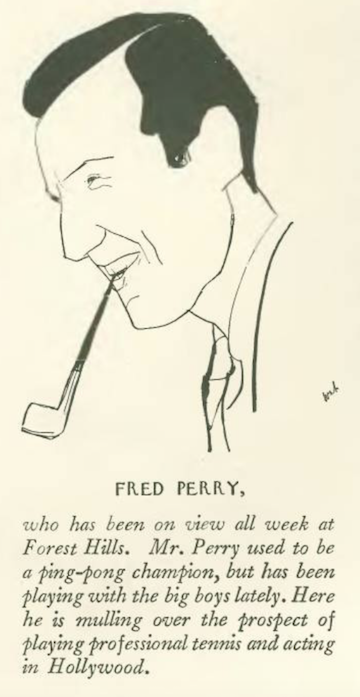
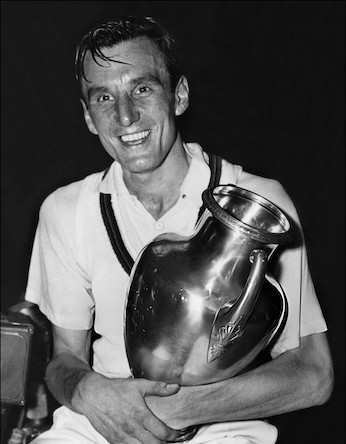
…also in the calendar section was this illustration by William Auerbach-Levy for the mini bio of Fred Perry (1909–1995), British tennis star who won ten Majors, including three consecutive Wimbledon Championships from 1934 to 1936…he was the first player to win a “Career Grand Slam” which he completed at the tender age of 26 in 1935…Perry was also the world champion ping-pong champion in 1929…
FRISKY FRED…Fred Perry was one of the leading bachelors of the 1930s and his off-court romances were reported in the world press—including one with actress Marlene Dietrich. Perry was also known for his popular line of sports attire. Above: Perry hugs the championship cup after his U.S. Open victory at Forest Hills, 1936. (Wikipedia)
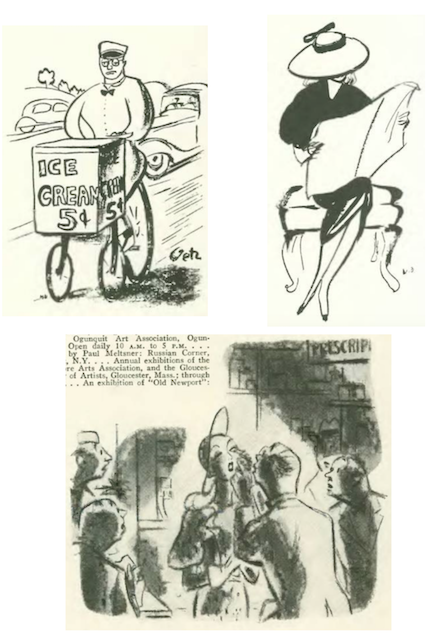
…an assortment of spot drawings…clockwise, from top left, Arthur Getz, Victor de Pauw, and Barbara Shermund (arguably not a spot drawing, but not really a cartoon either)…
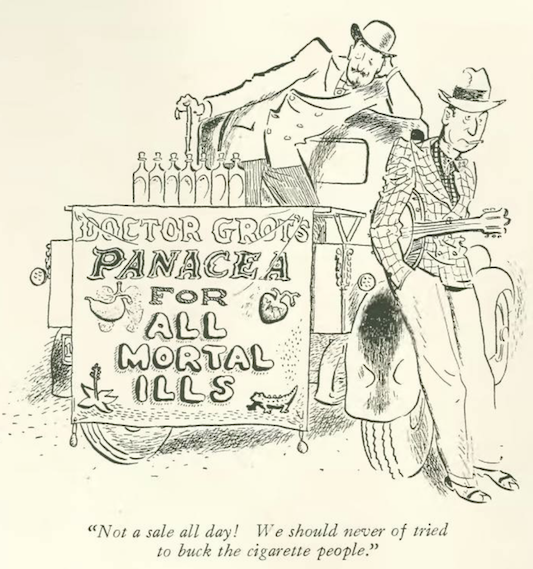
…no signature on this, but it appears to be the work of Perry Barlow, which always reminded me of another artist known for his rural types, Robert McCloskey…
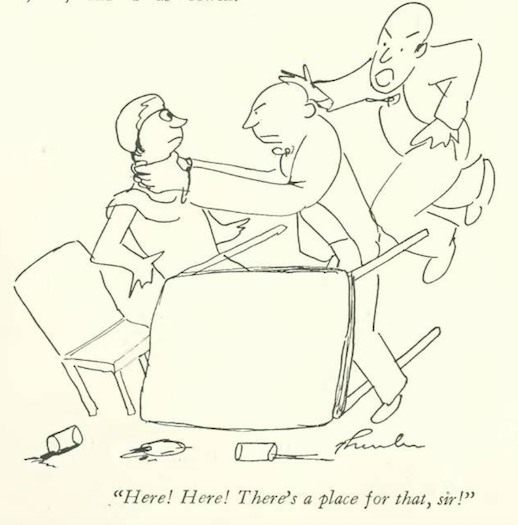
…James Thurber illustrated a public display of disaffection…interesting use of perspective here…Thurber seems to violate all the rules yet the effect is masterful…
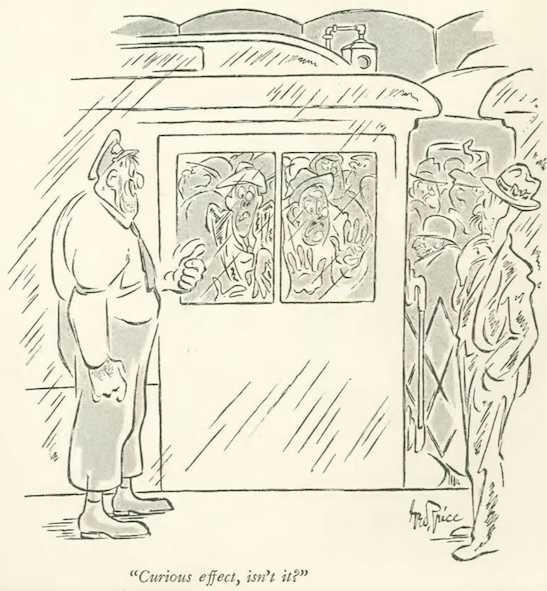
…speaking of effect, George Price in the subway…
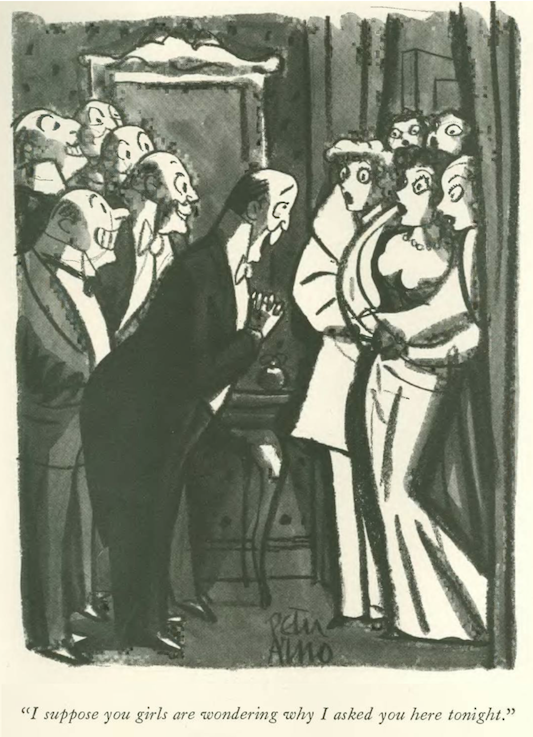
…Peter Arno continued to explore a familiar theme…
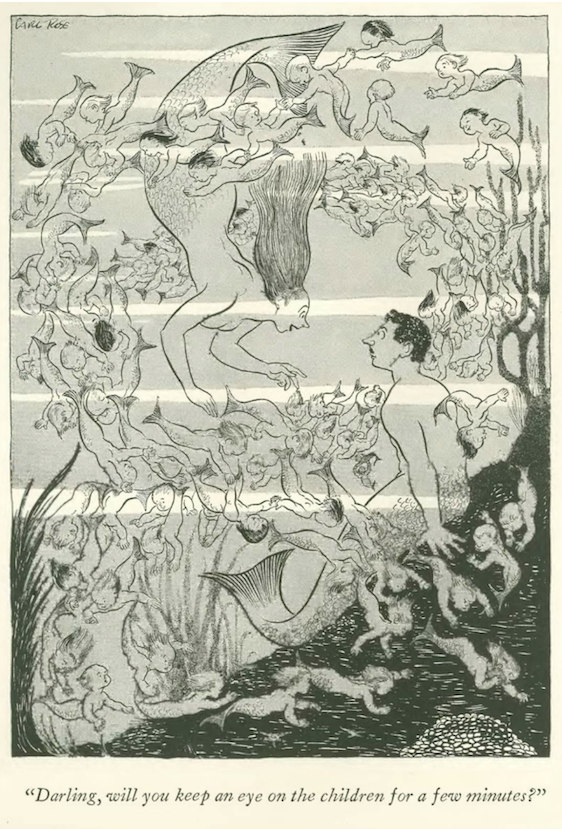
…Carl Rose imagined the home life of a mermaid…
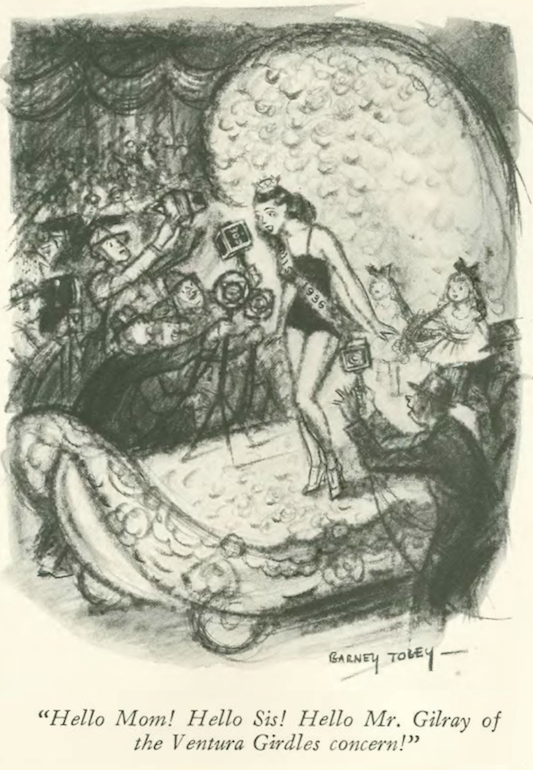
…Barney Tobey’s Miss America gave a plug to her sponsors…
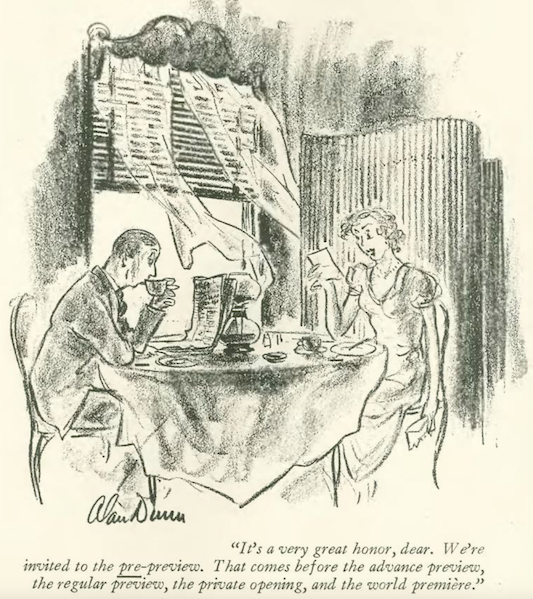
…Alan Dunn gave us a view of a pre-preview…
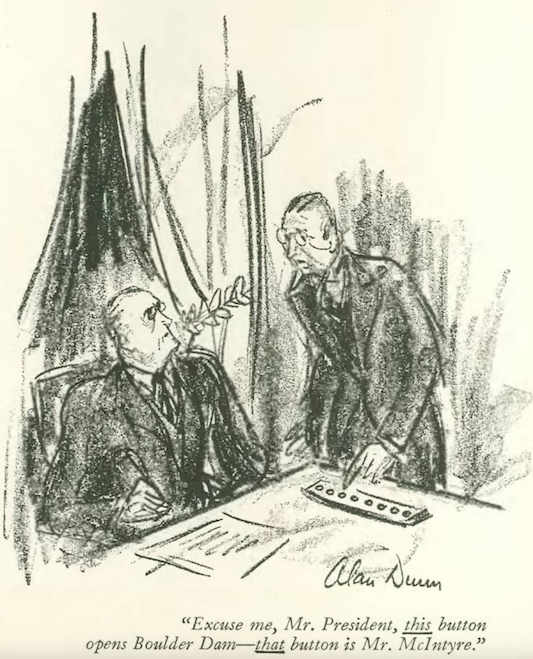
…Dunn again, with a rare cartoon featuring a known personage…
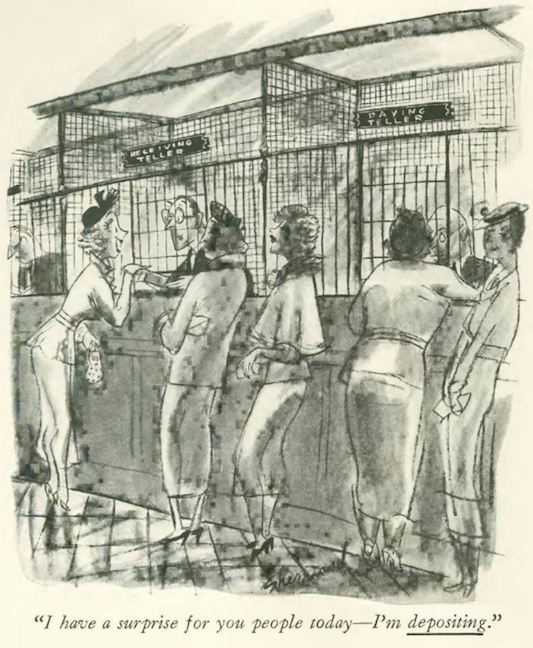
…Barbara Shermund revealed a surprise at the teller window…
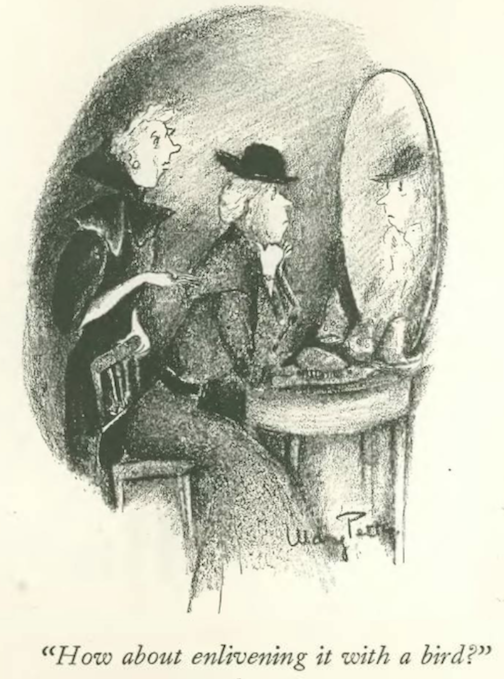
…Mary Petty got creative at the hat shop…
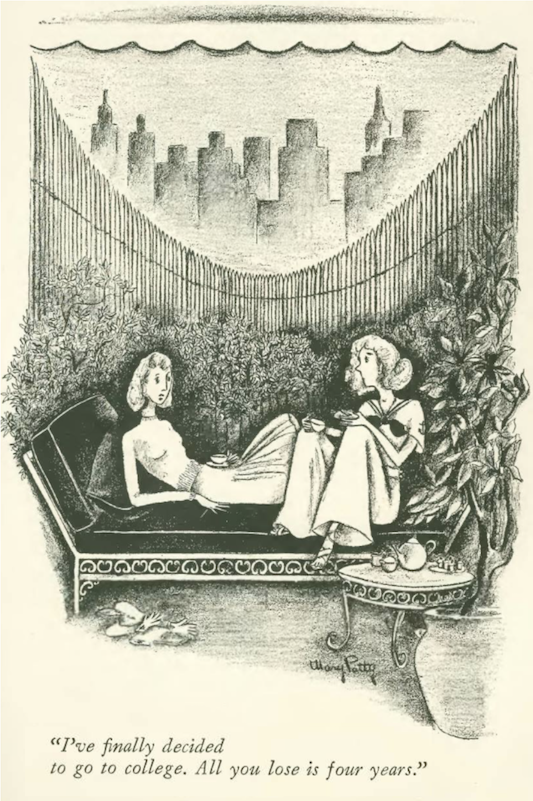
…and Petty again, as we close with her modern take on higher education…
Above: The building that housed Manhattan's Democratic Party, known as Tammany Hall, circa 1935, and James Joseph "Jimmy" Hines, perhaps Tammany's most powerful leader. (wpsu.org/facebook.com)
Tammany Hall was founded more than two hundred years ago as an independent social organization serving the needs of New York City’s immigrants and Irish Catholics in particular. After the 1854 mayoral election, however, Tammany grew into a powerful political force, and for nearly a century controlled both city and state elections and the power of patronage that came with them.
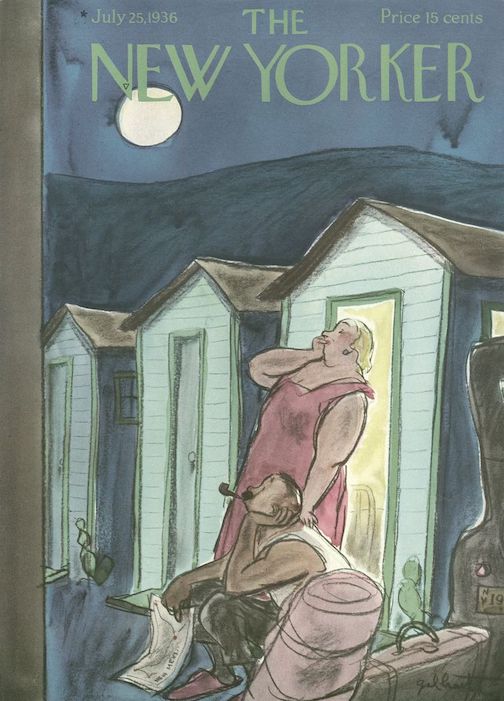
July 25, 1936 cover by William Crawford Galbraith.
It was no secret that political graft was rampant in the organization, but business leaders were happy to support Tammany’s corrupt practices as long as they served the bottom line. The same, it seems, also applied to politicians, law enforcement, and the courts, beneficiaries of political favors as well as outright bribes.
Few knew how to work Tammany’s levers better than James Joseph “Jimmy” Hines (1876–1957), who held absolute power over New York’s Eleventh District. Journalist Jack Alexander published Part One of a three-part profile on Hines for the July 25 issue. Excerpts:
SOBER REPORTING…Journalist Jack Alexander (1902–1975) was a reporter in St. Louis before joining New York’s Daily News in 1930. He later worked for The New Yorker and then moved to The Saturday Evening Post, where he became senior editor. He is best known for his groundbreaking 1941 article on Alcoholics Anonymous. (saturdayeveningpost.com)
Tammany was weakened when their scandal-plagued mayor, Jimmy Walker, was ousted in 1932 and eventually succeeded by reformist Mayor Fiorello LaGuardia. Hines, however, grew even more powerful as head of the U.S. Civil Service’s patronage system for Manhattan District employees. Ironically, Hines was appointed to the post by President Franklin D. Roosevelt, who saw Tammany as a liability but owed Hines a favor—in 1932 Hines split from other Democratic machine bosses (who initially favored Al Smith) to back Roosevelt’s bid for the presidency.
One person who was not tainted by Hines’ influence was Special Prosecutor Thomas E. Dewey, who in 1936 was busy going after New York’s rackets and Hines in particular.
William Auerbach-Levy provided the illustration for Part One of the Hines profile:
In these excerpts, Alexander noted Hines’ “ace in the hole” (the White House) when Tammany Leader James J. Dooling tried to oust him.
I’M GONNA GET YA…Clockwise from top left: In 1936 reformers looked to Special Prosecutor Thomas E. Dewey to fight New York’s entrenched rackets; Jimmy Hines (right) leaves the courthouse after a 1938 mistrial; Hines was accused of having close ties with mobsters Dutch Schultz and Lucky Luciano among others; Hines with his attorney, Martin Littleton, after leaving Tombs Prison on April 4, 1939—he was released on $35,000 bail pending an appeal for his conviction as a political fixer for the numbers racket. Hines would lose the appeal—convicted on thirteen counts of racketeering, he would be imprisoned at Sing Sing until 1944. (alchetron.com/facebook.com/Wikipedia)
Despite his misdeeds, Hines’ many admirers remained faithful to him until his death in 1957 at age 80. Many recalled his annual “June Walk” from the days before he went to prison. According to his New York Times obituary, the annual event in Central Park drew as many as twenty-five thousand women and children, who “listened to half a dozen brass bands, put on paper hats and gorged themselves on ice cream, hot dogs and pop furnished by Hines, who used to take part in the fun wearing the gay green bucket hat of the stage Irishman.” The obituary noted that when Hines left Sing Sing prison, a guard said, “Best of luck. Jimmy! Give my regards to the missus!”
* * *
At the Movies
Critic John Mosher found the perfect distraction from the summer heat in the Mary Boland–Charlie Ruggles comedy Early to Bed:
SILLY SOMNAMBULIST…From left, Mary Boland, Charles Ruggles and Colin Tapley in Early to Bed. (Pinterest)
Mosher also reviewed a Nero Wolfe mystery starring Edward Arnold, and a rather “slight” romance featuring an heiress with a penchant for speeding.
HOMEBODY…Rex Stout’s portly detective Nero Wolfe loved to solve crimes without venturing from the comforts of home. Clockwise, from top left; Edward Arnold (as Wolfe) with John Qualen, Lionel Stander, and Dennie Moore in Meet Nero Wolfe; eighteen-year-old Rita Hayworth (credited as Rita Cansino) appeared in several Nero Wolfe scenes as she continued to build her résumé at Columbia; an heiress with a lead foot runs afoul of a traffic cop (Randolph Scott) who eventually falls in love with her in “And Sudden Death; Frances Drake as the heiress in a scene with Tom Brown. (dancinglady39.wordpress.com/csfd.cz)
* * *
Genteel Sport
The New Yorker featured a variety of sports in its early years, most of them elite pastimes except for hockey, college football and boxing. Save for the occasional mention of Babe Ruth’s antics (and his 1926 “Profile”) and a scattering of cartoons and spots, the game was conspicuously absent from the magazine during the Yankees’ “Murderers’ Row” years in the late 1920s and beyond. I’ve read that editor Harold Ross hated the game, but perhaps the real reason was explained by James Thurber in his “Talk of the Town” piece titled “Peanuts and Crackerjack” (September 22, 1928). Thurber described Yankees baseball as a mass spectacle for out-of-towners who were “a bit mad.” It wasn’t cool to be a Yankees fan if you counted yourself among Manhattan’s smart set.
G.O.A.T. HERD…Less than a month after James Thurber published “Peanuts and Crackerjack,” the New York Yankees would sweep the St. Louis Cardinals in The World Series. The 1928 Yankees set a major league record by having nine players on the team who would eventually be elected to the Hall of Fame. (Wikipedia)
Basketball was also missing from those early issues of The New Yorker, even though it had been played since the 1890s. So we turn to New Yorker cartoonist and author Michael Maslin (via his essential Ink Spill), who recently noted The New Yorker’svery first basketball-themed cartoon by Robert Day (Dec. 23, 1933). The post also features Abe Birnbaum’s terrific 1951 basketball-themed cover and a hilarious MAD magazine parody of Charles Addams.
The elite sports that dominated the back half of the magazine in those early years included golf, tennis, badminton, squash, yachting, rowing, horse hunts and horse racing, and polo (both indoor and out).
Lets look at a couple from the July 25 issue, beginning with these brief excerpts from the “Polo” column authored by “Backhander”—a generic pen name that referred to a rotating cast of polo correspondents including Robert F. Kelley, George F. T. Ryall and Tom O’Reilly (who covered indoor polo).
ELECTRIC HORSEMEN…At left, the Jaipur Polo team (shown here in England in 1933) won all the open tournaments between 1930 and 1938 in India and England. From left is Maharaja Swai Man Singh of Jaipur State and Rao Raja Hanut Singh, Rao Raja Abhey Singh and Colonel Prithvi Singh of Baria; at right, international polo star Laddie Sanford was the dynamic patron and captain of the famed Hurricanes, which won the U.S. Open in three different decades. (The Rajputs via Facebook/polo museum.org)
The “Yachts and Yachtsman” column was also signed by a pen name—”Bosun”—signifying any staff writer assigned to boat races or boat shows. In this case the writer was H. K. Rigg, who covered the start of the 1936 Larchmont Race Week, one of the most successful and heavily attended spectacles in the early history of yacht racing.
ON YOUR MARK…Photo above depicts the start of the July 21, 1936 Larchmont Yacht Club Race. The 1936 event is remembered for its massive turnout—300 boats duelling through crowded waters. In the Aug. 1, 1936 issue of The New Yorker,H. K. Rigg wrote that a “sausage balloon” was needed just to see over the congested fleet. (Rosenfeld Collection via newyork32.org)
* * *
From Our Advertisers
A couple of issues ago we looked at the Advertising Federation of America’s “truth in advertising campaign” (Better Living Through Fiction) that sought to forestall government regulation. On June 29, 1936, the AFA hosted more than a thousand ad executives in Boston, where the head of advertising at Scripps-Howard criticized competitive selling among papers (it hurt them in competition with other media). Newspaper ad executives were urged to work together as a profession, and that likely explains this lavish two-page spread in The New Yorker…
…as well as this full-page appeal from the Chicago Daily News…
…and this spot from the Philadelphia Evening Bulletin…
…Dr. Seuss was still honing his style in ads for Flit insecticide…
…this White Rock ad featured the work of two artists…the prolific R. John Holmgren famously illustrated White Rock ads in the 1930s and 40s, often featuring the “tiny Colonel,” seen below regarding the original painting of Psyche at Nature’s Mirror by German artist Paul Thumann…the owners of White Rock bought the rights to the painting after seeing it at the Chicago World’s Fair in 1893 and adopted Psyche as their trademark…Holmgren would incorporate a modernized version of Psyche in dozens of ads…
…on the inside front cover Seagram’s referenced the character of Thomas Jefferson as an apt metaphor for their product…
…and on the back cover the makers of Luckies kept it simple with this colorful appeal to the growing market for women smokers…
…on to our cartoonists, we begin with another installment of “Limericks” by Morris Bishop featuring the unique style of cartoonist Richard Taylor…
…Alain helped open things up for the events calendar…
…as did Susan Willard Flint with her woodcuts…
…Ned Hilton offered a new wrinkle in a familiar game of skill…
…and Hilton again, preparing for take-off…
…Carl Rose used a double spread to illustrate a singles match…
…Alan Dunn illustrated a familiar problem of the electric age…
…and Dunn again with some realtor trickery…
…Helen Hokinson looked to an Eastern ascetic for some sage advice…
…and found one of her “girls” overdressed for an outing on the Thames…
…Rea Irvin celebrated the genius of American marketing…
…and we end with Peter Arno, and his unique view of matrimony…