Above: E.B. White noted the sounds of late summer ranging from jackhammers (that sounded like cicadas) to the songs of katydids predicting an early frost. (pafa.org/Ellyn B/Flickr/nwf.org)
For roughly four decades E.B. White’s “Notes and Comment” set the tone for each issue of The New Yorker, offering observations on daily life that sometimes were compiled from his “disarranged notes.”
September 5, 1936 cover by Adolph K. Kronengold.
For the September 5 issue White offered brief comments on everything from the German military buildup to the romantic life of singer Bobby Arnst.
SHE WENT APE OVER TARZAN…Photo at left: Singer/dancer Bobbe Arnst shares a laugh with her first husband, Tarzan star Johnny Weissmuller—apparently her second marriage to divorce attorney Robert Cavenaugh wasn’t so full of yuks; White also noted the cicada-like sounds of air drills tearing up old trolley car lines—at right is the 1936 painting “End of 14th Street Crosstown Line” by early New Yorker contributor Reginald Marsh. The urban realist Marsh juxtaposed workers tearing up tracks with picketers demonstrating against Ohrbach’s, which would not allow employees to unionize. (whosdatedwho.com/pafa.org)
White also cited Cosmopolitan magazine regarding “the age of accumulation” (twenty-five to thirty-five), and noted the average speed of rival ocean liners for “New Yorkers hastening to the Scottish moors for the grouse shooting…”
CONSUMER REPORT…White cited Cosmopolitan regarding “the age of accumulation,” and considered the average speeds of the world’s fastest ocean liners, France’s SS Normandie (top), and Great Britain’s RMS Queen Mary. (instagram.com/ucla.edu)
* * *
Sounds of Music
Paris correspondent Janet Flanner moved on from the Nazi Olympics in Berlin to the foothills of the Alps for the Salzburg Music Festival, where German dramatic soprano Lotte Lehmann and Italian conductor Arturo Toscanini made music together.
DRAMATIC DUO…Dramatic soprano Lotte Lehmann and conductor Arturo Toscanini were the big draw at the 1936 Salzburg Music Festival, which also featured the debut of the Trapp Family Singers, who were encouraged by Lehmann to enter the Salzburg Festival contest. (taminoautographs.com via stolpersteine-salzburg.at/en)
In August 1936 Lehmann discovered the Trapp Family Singers (made famous in 1965’s The Sound of Music). While approaching a villa available to let, Lehmann overheard the Trapp children singing in their garden. Due to her fame, Lehmann was able to persuade Captain Georg Von Trapp to allow his children to perform at Salzburg Festival.
Flanner also marveled at the Austria’s Grossglockner High Alpine Road—with the highest pass in Europe—and noted the bitter struggle between Nazis and Social Democrats that was dividing Austrians less than two years before the Anschluss, the German annexation of Austria.
GETTING HIGH…At left, the Grossglockner High Alpine Road (Grossglockner Hochalpenstrasse); at right, the Hohensalzburg Fortress (Festung Hohensalzburg) a large medieval fortress that is a prominent landmark in the city of Salzburg, Austria. Flanner noted that unbeknownst to gawking tourists, the fortress contained political prisoners. (Wikipedia)
* * *
At the Movies
John Mosher found Fred Astaire and Ginger Rogers at the top of their game in the musical comedy Swing Time, but lamented the stodgy and laborious plot that burdened the non-dancing scenes.
BUSTING SOME MOVES are Ginger Rogers and Fred Astaire in Swing Time. The film was the sixth of ten films starring Astaire and Rogers. (goldenageofcinemasite.wordpress.com)
Mosher also had a look at Girl’s Dormitory, which introduced audiences to the young French actress Simone Simon, and also checked out the latest Myrna Loy flick.
THINGS THAT MAKE YOU GO HMMM…Clockwise from top left: Set at a Swiss boarding school, Girl’s Dormitory is a story about a middle-aged school director (Herbert Marshall) who resists the attentions of a forty-something professor (Ruth Chatterton) and instead hooks up with a 19-year-old student (Simone Simon);1936 photo of Simon by George Hurrell—Simon is is perhaps best remembered for her role in the 1942 American horror film Cat People and its sequel; Claire Trevor, Warner Baxter, and Myrna Loy in To Mary—with Love; cover of Movie Parade, a book on movie history when the history of film was just three decades old. (imdb.com/facebook.com)
* * *
From Our Advertisers
The magazine opened with another enticing photo from Grace Line depicting an ocean cruise before the days of water slides, buffet lines and norovirus…
…some one-column selections from the back of the book, including an ad from the Camel Pen Company introducing an innovative fountain pen that contained a dry ink pellet—the user added water to dissolve the pellet into a year’s supply of ink…
…these days most of us use ball-point pens, and we are also so accustomed to automatic doors that they no longer seem “magic” as they did in the 1930s…
WONDERS NEVER CEASE…In 1931, Wilcox’s Pier Restaurant in West Haven, Connecticut featured the first automatic doors in America, invented by Stanley. (cbsnews.com)
…New York artist Sheila Raleigh employed the desert island trope to sell some beer for Jacob Ruppert…
…the inside back cover popped with this ad for the streamlined V-12 Lincoln Zephyr…
…the “Talk of the Town” occasionally featured these illustrated mini-bios, here highlighting Jesse Owens’ record-setting performance at the 1936 Olympics (illustration by William Cotton)…
…a couple of spots by George Shellhase…
…and Richard Taylor…
…Helen Hokinson gave us frenemies at a dog show…
…James Thurber looked out for cockroaches…
…Otto Soglow found a new use for a bass case…
…Soglow again, demonstrating the wonders of radio advertising…
…Alain showed us a man with a cagey cane…
…Peter Arno illustrated the trials of working with extras…
…Rea Irvin continued to chronicle achievements in industry (Peruna was a well-known patent medicine sold from the late-19th to mid-20th century—with its high alcohol content, Americans drank large amounts of Peruna during Prohibition)…
…a beat cop receives an unlikely confession, per Whitney Darrow Jr…
…and we close with Alan Dunn, in a forgettable situation…
Above: Fredric March and Olivia de Havilland in "Anthony Adverse". (tcm.com)
Epic costume dramas were all the rage in the 1930s, doubtless due to their escapist qualities (escape from the Depression and fears of war, among other things) and the cool comforts of a movie palace during a decade of exceptionally hot summers (yes, once again I’m leading with a movie. Nevertheless, some tasty bits ahead!).
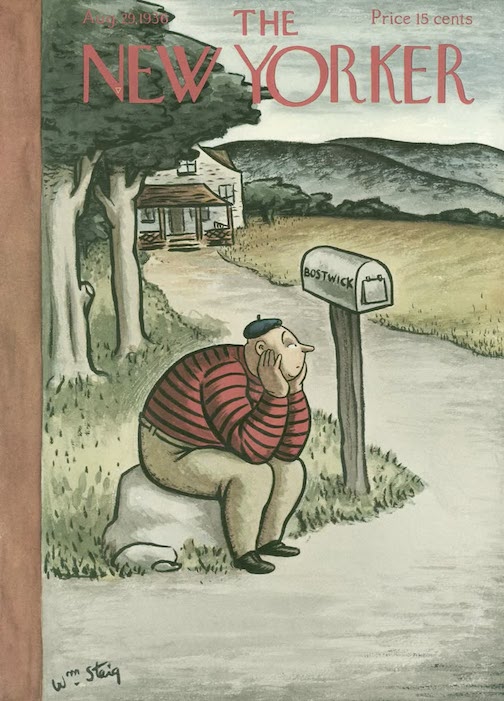
August 29, 1936 cover by William Steig.
Unlike MGM’s Romeo and Juliet, which lost money, Anthony Adverse was Warner Brothers’ most popular release in 1936, a nearly two-and-a-half-hour film featuring the seemingly ever-present Frederic March and rising star Olivia de Havilland. Based on Hervey Allen’s 1933 historical novel by the same name, New Yorker critic John Mosher gave Anthony Adverse passing marks.
COSTUMES IN MOTION…Critic John Mosher appreciated a costume drama that was also lively. Clockwise, from left: Warner Brothers promotional poster; Olivia de Havilland as Angela, the daughter of a cook who becomes Mademoiselle Georges, a famous opera star and mistress of Napoleon Bonaparte; Anita Louise portrayed sweet young Maria, betrothed to grumpy old Don Luis (Claude Rains). (frockflicks.com)WICKEDLY GOOD…Gale Sondergaard with Claude Rains in Anthony Adverse. Sondergaard would win the inaugural Academy Award for Best Actress in a Supporting Role for her performance as the villainous Faith Paleologus. In total, the film would earn four Oscars. (IMDb.com)
Mosher found other cinema diversions, including a film featuring a cameo by Robert Benchley.
WORLD OF WODEHOUSE…Madge Evans and Robert Montgomery in Piccadilly Jim; Dolores Costello and George Raft in Yours for the Asking; Ida Lupino portrayed con artist Gertie Malloy in Yours for the Asking; pioneer American film animator Mary Ellen Bute created some of the first electronically generated film images, her specialty being visual music. (imdb.com/csfd.sk/facebook.com/Wikipedia)
And lest we forget, here is The New Yorker’sRobert Benchley portraying a “barroom character” in Piccadilly Jim:
THE TWO BOBS…Robert Montgomery and Robert Benchely in Piccadilly Jim.(immortalephemera.com)
* * *
Pentameter Pickle
E.B. White expressed his annoyance with MGM’s claim regarding Norma Shearer as “the first screen Juliet” (see last week’s post on Romeo and Juliet). He also noted that after seeing Romeo and Juliet, he had the urge to speak in Shakespeare’s iambic pentameter.
White noted that either Beverly Bayne or Theda Bara were the first screen Juliets…actually both appeared in dueling films in 1916, opening just three days apart.
FILM DUEL…Top, Francis X. Bushman and Beverly Bayne (married in real life) in Metro’s 1916 adaptation of Romeo and Juliet. Below, Theda Bara and Harry Hilliard in Fox’s 1916 Romeo and Juliet. In direct competition, the Fox film was released on Oct.22, the same week as Metro’s (Oct. 19). Both silent films are considered lost. (theeverydaycinephile.com)
If White had had access to the internet, he would have learned that the very first screen Juliet was actually Florence Lawrence , who appeared in a fifteen-minute silent film short made in 1908 by Vitagraph Studios (amazingly, the film survives and can be viewed on YouTube).
THE ORIGINAL…The first screen Juliet was Florence Lawrence, who appeared in a 1908 silent film short by Vitagraph Studios. Lawrence (1886–1938) is widely referred to as the “first movie star”, appearing in almost three hundred films. She also invented a surprising list of patents, including the first “auto signaling arm.” (messynessychic.com).
* * *
He Used His Bean
“The Talk of the Town” featured a rare mention of baseball in the form of a brief profile of Jo-Jo Moore (1908–2001), a New York Giants left fielder known for his intimidating, left-handed-hitting as leadoff man; Moore batted over .300 five times in his career. Apparently he was also known for getting beaned at the plate, as this excerpt explains:
LEANING IN…Jo-Jo Moore, who batted left-handed and threw right-handed, hit over .300 five times in his career with the Giants from 1930 to 1941. When he died in 2001 at age 92, he was the last surviving member of the 1933 World Champion New York Giants. (centerfieldmaz.com)
* * *
The Bobby We Didn’t Know
Mention the name Bobby Riggs to those of a certain age and they’ll likely conjure up the cheeky grin of a 55-year-old man who in 1973 challenged 29-year-old Billie Jean King to a much-ballyhooed “Battle of the Sexes” tennis match at the Houston Astrodome—which King won in straight sets (6–4, 6–3, 6–3). What seems forgotten is the fact that Riggs was once considered the best tennis player in the world. As a 21-year-old amateur in 1939, he won Wimbledon and the U.S. Open. Even in 1936 the teenaged Riggs was already sensation, as this excerpt explains:
PROMISING BEGINNINGS…Left, Bobby Riggs (center) accepts the 1939 men’s national singles championship trophy after defeating Welby Van Horn at Forest Hills. Riggs also won the U.S. Singles Championship in 1941. At right, Billie Jean King and Bobby Riggs strike a pose in 1973, the year they competed in famed “Battle of the Sexes” tennis match. (facebook.com/Wikipedia)
* * *
From Our Advertisers
Singer Ethel Merman lit up the opening page of the August 29 issue in this colorful advertisement for Stage magazine…
…the makers of the bargain cigarette Twenty Grand used this New Yorker-style cartoon to push their brand of tobacco…
…the inside back cover featured this bright appeal from Imperial Wallpapers…
…and the makers of Luckies claimed the back page to build their base of women smokers…
…on to our cartoonists, we begin with spots by Abe Birnbaum…
…and Robert Day…
…more cartoon art from Richard Taylor to enliven Morris Bishop’s limericks…
…Birnbaum again, with a bit of hide and-seek…
…Alan Dunn confronted a moral quandary…
…Rea Irvin put up a tempting target…
…Helen Hokinson found the right words to describe a bridge party…
…Peter Arno illustrated one way to accommodate an estrangement…
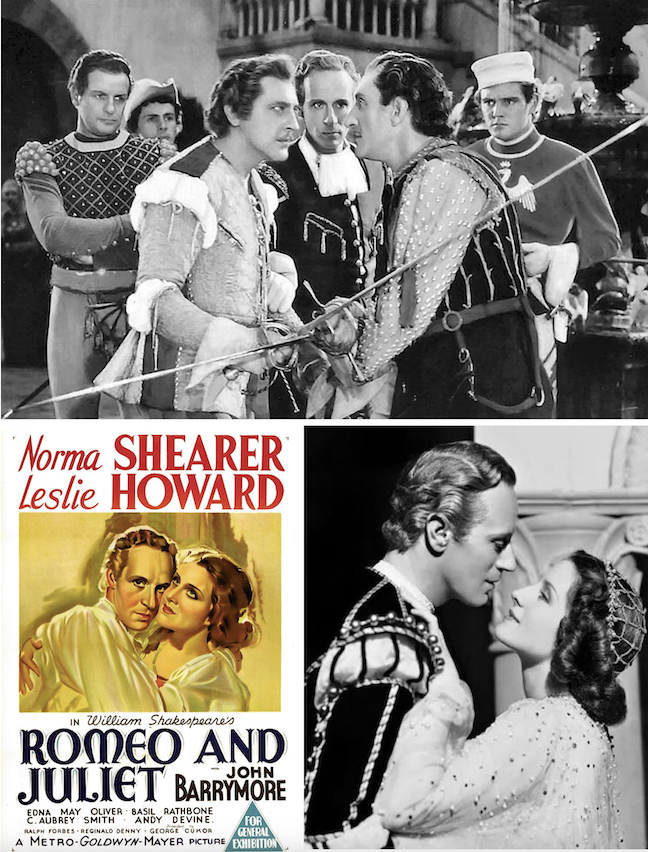
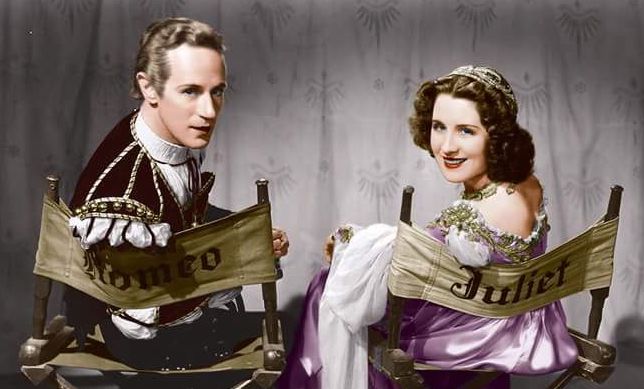
Above: Leslie Howard and Norma Shearer played the lead roles in George Cukor's 1936 adaptation of William Shakespeare's "Romeo and Juliet." In retrospect, these major stars were miscast; Shakespeare's original play identified Juliet as thirteen years old (soon to be fourteen), while scholars estimate Romeo to be around sixteen. Howard was forty-three and Shearer thirty-four when the film was released. (pinterest.com)
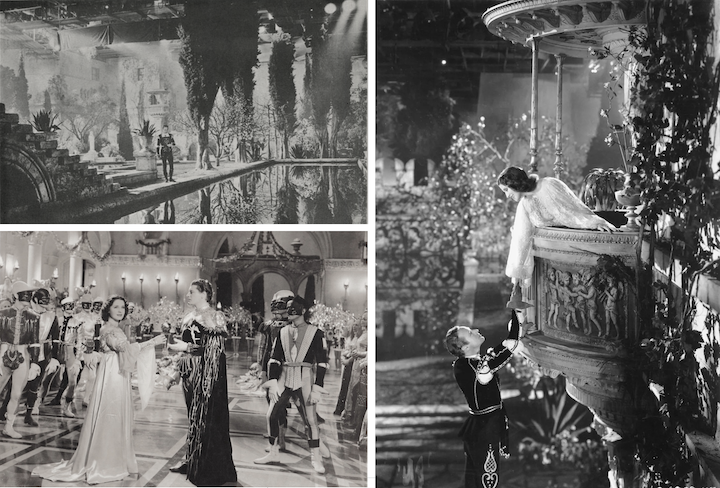
Although Leslie Howard and Norma Shearer were too old to play Romeo and Juliet as lovesick teenagers, in 1936 audiences and critics didn’t seem to notice or care. What did keep audiences away from the big budget Romeo and Juliet was the perception that it was too “arty.”

August 22, 1936 cover by Ilonka Karasz.
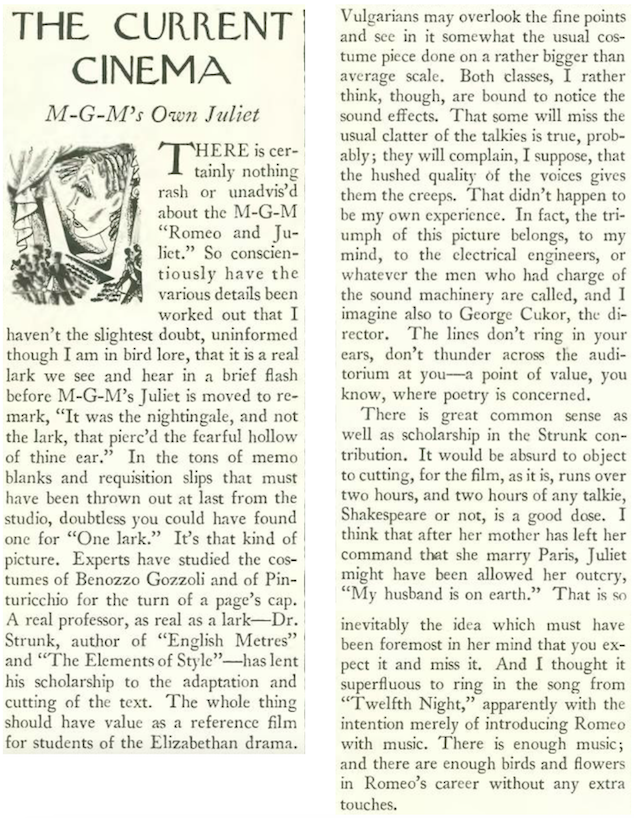
Indeed, New Yorker film critic John Mosher suggested that “vulgarians” would miss the finer points of this meticulously made film—director George Cukor even secured the services of William Strunk Jr. (of Elements of Style fame) to ensure linguistic accuracy.
This dedication to the finer points of the play obviously didn’t apply to the choice of the principal actors—a middle-aged Romeo, a thirty-something Juliet, or a 54-year-old playing Romeo’s best friend, Mercutio (John Barrymore). In the days of the studio system, it was assumed that big productions needed equally big, established actors attached to them, regardless of age. Also, Shearer was producer Irving Thalberg’s wife.
THE ART OF ARTIFICE…Clockwise from top left: Lavish sets and a star-studded cast made Romeo and Juliet MGM’s most expensive sound film up to that time; the famed balcony scene between Leslie Howard and Norma Shearer; Shearer in a scene with Ralph Forbes, who played a kinsman to the prince. (imdb.com/moviemusings.uk/britannica.com)
Mosher described the film as a “sensible” presentation and praised the 34-year-old Norma Shearer for her youthful appearance. “Actually, for once, we see a Juliet who is a girl,” he wrote. Writing for Literature/Film Quarterly,Allison Kellar notes that “with the help of costumes, props, and lighting, Shearer effectively appears as the young Juliet.”
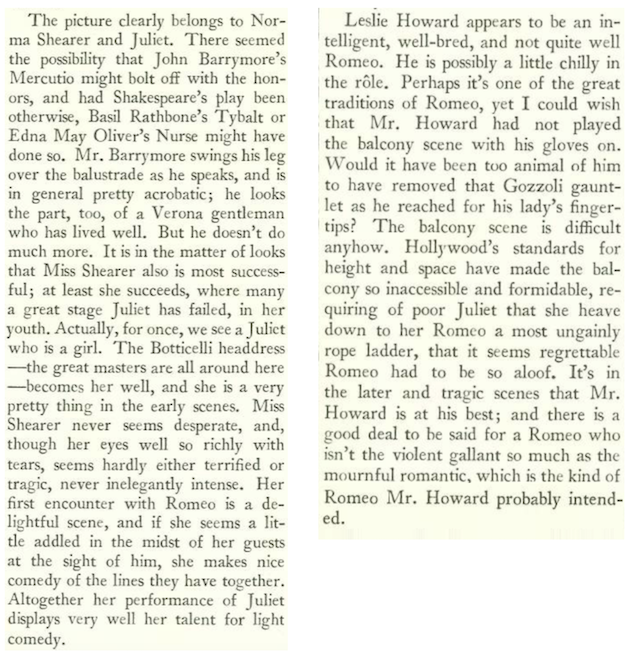
RAPIER-TONGUED…Top: Mercutio (John Barrymore, left) challenges Tybalt (Basil Rathbone) to a duel and is subsequently slain (this is when Mercutio speaks those famous words, “A plague o’ both houses!”); Leslie Howard and Norma Shearer; MGM promotional poster. (moviemusings.uk/tvtropes.org/imdb.com)
For years MGM’s “Boy Wonder,” producer Irving Thalberg, had pushed the studio to make the film, but MGM head Louis B. Mayer believed (correctly, it turned out) that the masses would consider Shakespeare too highbrow. Mayer was also concerned about a big budget picture in those lean Depression years, but somehow Thalberg won him over (the film lost almost a million dollars, roughly equivalent to $25 million today).
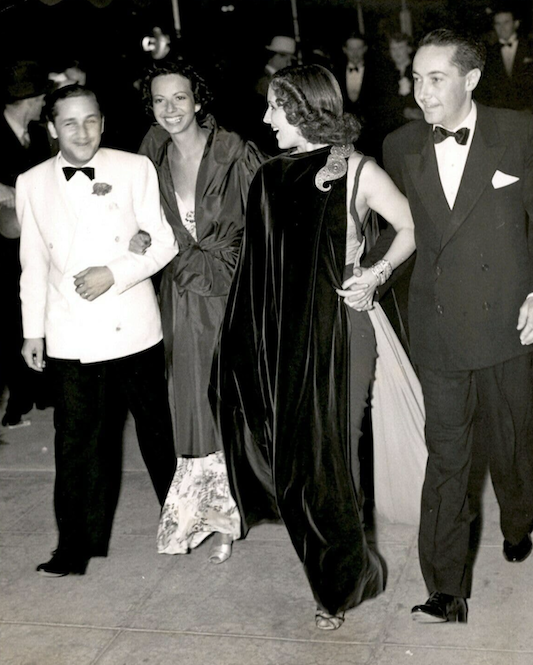
HOLLYWOOD NIGHTS…At left, Anthony Adverse director Mervyn LeRoy and his wife, Doris Warner, accompany Norma Shearer and her husband Irving Thalberg at the Los Angeles premiere of Anthony Adverse, July 29, 1936. A month and a half later Thalberg would die from a congenital heart condition at age 37. (see below). (Wikipedia)
Romeo and Juliet would have its world premiere on Aug. 20, 1936 at New York’s Astor Theatre. The West Coast premiere followed on Sept. 14—that same night legendary MGM producer, Irving Thalberg, husband of star Norma Shearer, would die suddenly at the age of 37. Needless to note, the Los Angeles opening was deeply somber.
Now, just for kicks, here are the ages of actors who have portrayed Shakespeare’s star-crossed lovers in more recent films:
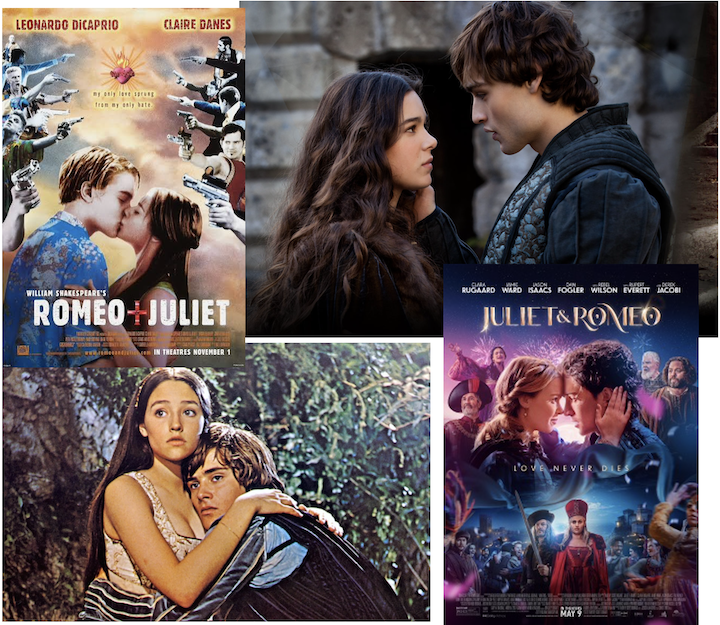
FOLLIES OF YOUTH…Clockwise, from top left, with ages in parentheses: Claire Danes (17) and Leonardo DiCaprio (22) in Romeo + Juliet (1996) Hailee Steinfeld (17) and John Booth (21) in 2013’s Romeo & Juliet; Clara Rugaard (27) as Juliet and Jamie Ward (35) as Romeo in 2025’s Juliet & Romeo; Olivia Hussey (16) and Leonard Whiting (16) in Romeo & Juliet (1968). (imdb.com/heyuguys.com/wikipedia.org/reddit.com)
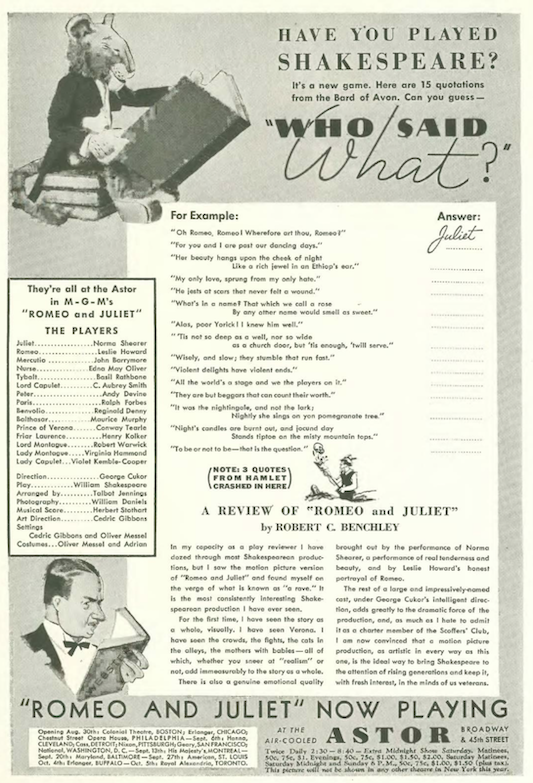
MGM spent a lot on the marketing of Romeo and Juliet, including this full-page ad in The New Yorker that included an endorsement from the magazine’s theater critic, Robert Benchley:
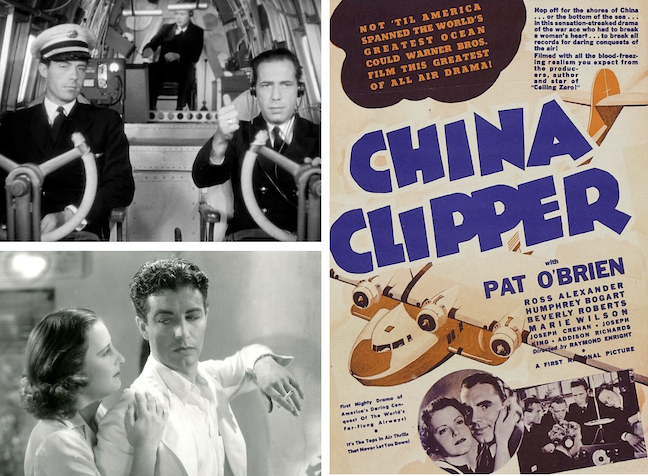
There were other, less-hyped films available for those allergic to Shakespearian drama. Mosher again:
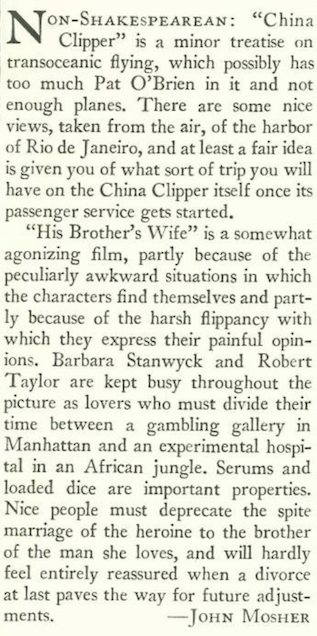
ALL SYSTEMS GO…Clockwise, from top left: Dennis Moore (left) and Humphrey Bogart prepare for a bumpy ride in China Clipper; Barbara Stanwyck and Robert Taylor in His Brother’s Wife. (dailymotion.com/blu-ray.com/imdb.com)
* * *
Getting Out of Town
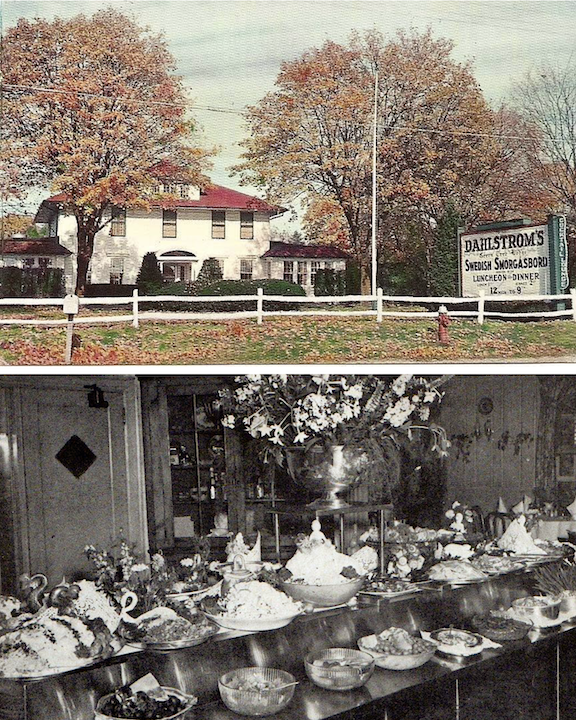
Food critic Sheila Hibben headed to Long Island to do a little restaurant-hopping, checking out Dahlstrom’s Greentree Lodge on the Jericho Turnpike. Dahlstrom’s was a popular Swedish restaurant that served food smörgåsbord-style. This concept for displaying a variety of self-serve dishes would not become widespread until the smörgåsbord was introduced to the general public in the Swedish Pavilion at the 1939 New York World’s Fair.
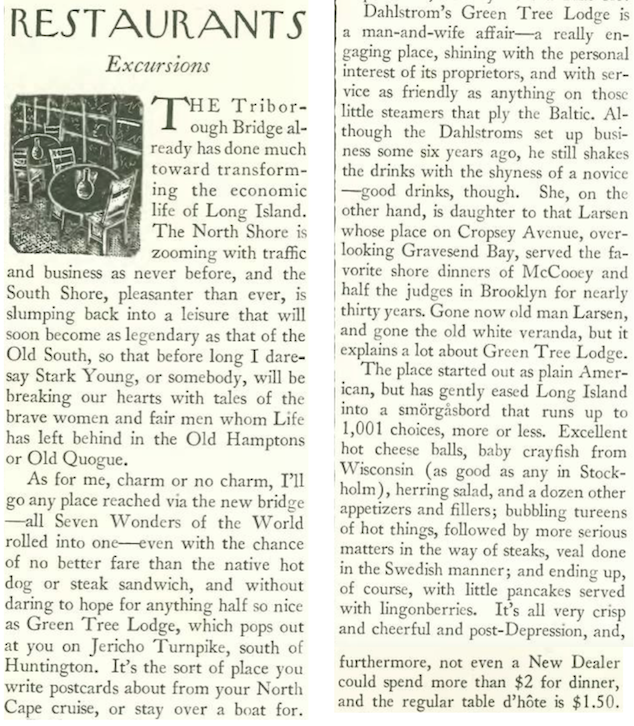
A RARE TREAT…Dahlstrom’s Greentree Lodge on Jericho Turnpike in Huntington, LI, was a popular Swedish restaurant that served food smörgåsbord-style from the 1930s through the 1960s. (Frank Leist via Facebook.com)
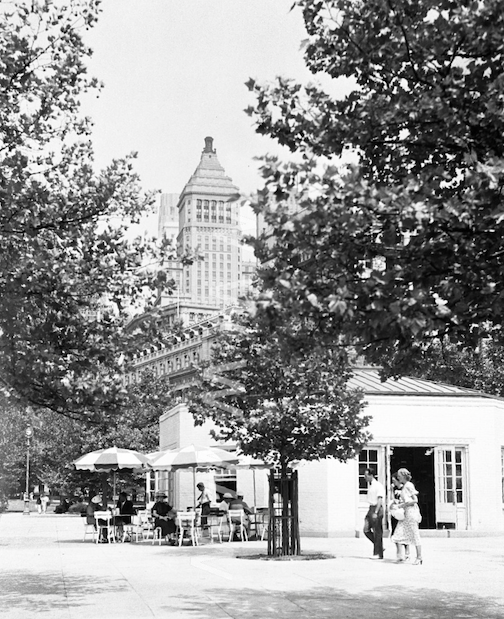
Closer to home, Hibben visited the Battery Park Restaurant, a “perky little kiosk sort of place where you can sit outside…and drink your beer while enjoying whatever air is stirring on the North Atlantic.”
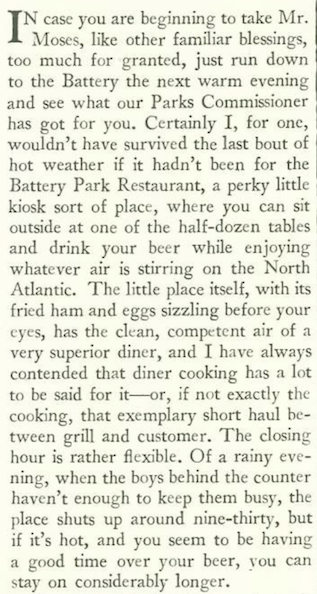
MADE IN THE SHADE…The Battery Park Restaurant, circa 1936. (eBay.com)
* * *
Cheers Before Tears
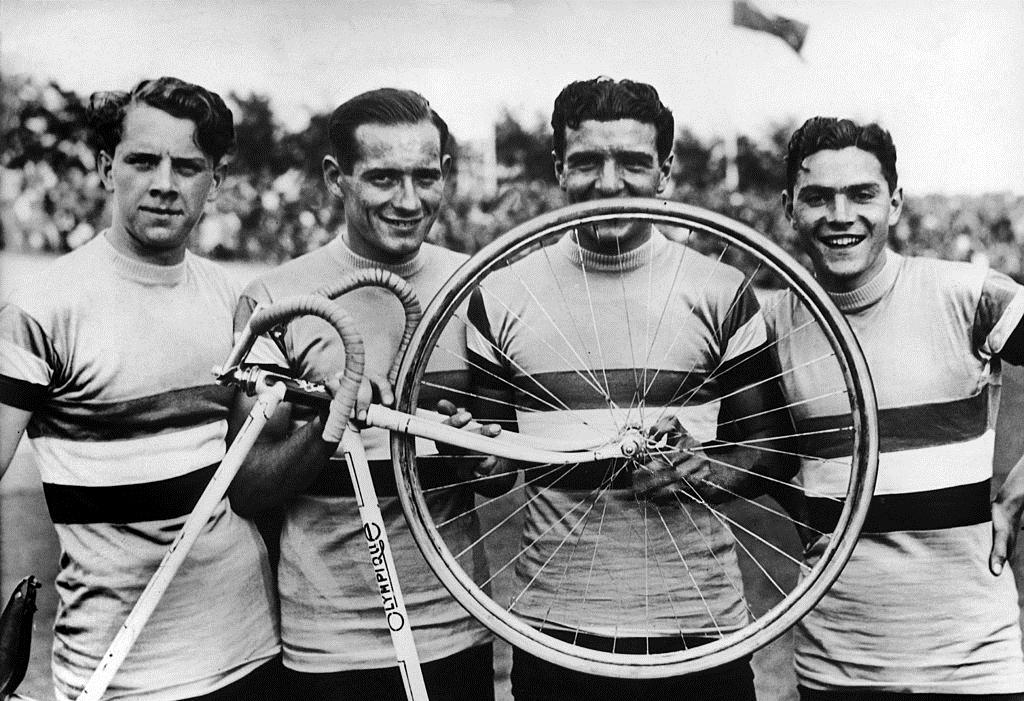
In her continuing report on the Berlin Olympics, Janet Flanner noted that some German fans—despite their country’s “megalomaniacal nationalism”—were polite about the “monotony of the American victories,” and even offered cheers for the French bicycling team (whose country would be invaded by theirs in less than four years).
CYCLING GREATS…The French cycling team (left to right) Robert Charpentier, Guy Lapebie, Jean Goujon and Roger Le Nizerhy celebrate after winning the team race at the 1936 Berlin Summer Olympics. The Frenchmen delivered a historic performance, capturing seven total medals (three Gold, two Silver, and two Bronze). Charpentier was the star of the team, becoming a triple Olympic champion across road and track disciplines. (Wikipedia)
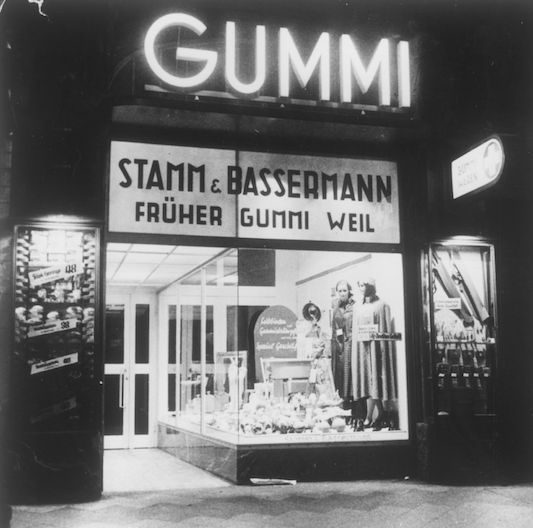
Flanner also noted some not-so-happy events that would occur following the games, including initial steps by the Nazis that would lead to the systematic seizure and forced transfer of Jewish real estate and property to the Third Reich’s leaders, citizens, and collaborators. It seems unlikely that Flanner was unaware of at least some of this plan, although she never explicitly mentions that this “real-estate adjustment” was directed solely at Jewish property owners.
THE UGLY TERM “Aryanization” referred to the forced transfer of Jewish-owned homes and businesses to the Third Reich’s leaders, citizens, and collaborators. Above, the formerly Jewish-owned store Gummi Weil was expropriated and transferred to non-Jewish ownership (Stamm and Bassermann). Frankfurt, Germany, 1938. (Bildarchiv Preussischer Kulturbesitz)
* * *
From Our Advertisers
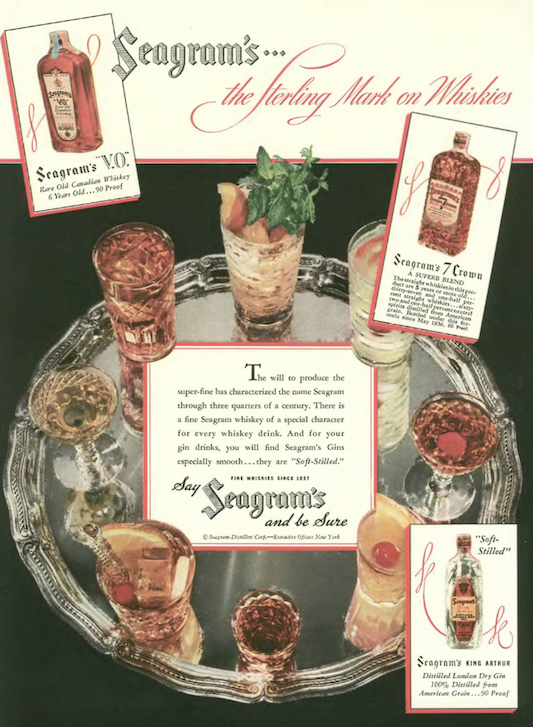
We begin with Seagram’s, promoting their signature whiskies and “soft-stilled” gin…
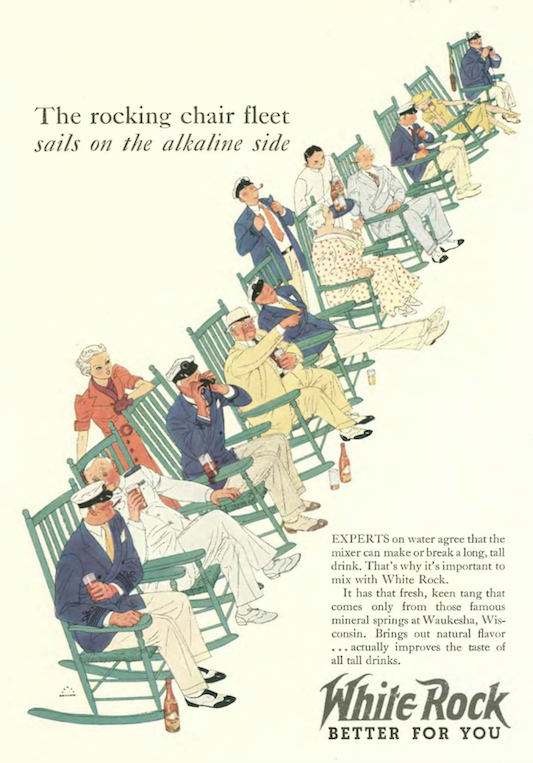
…White Rock continued to feature their clever and colorful John Holmgren-illustrated ads…
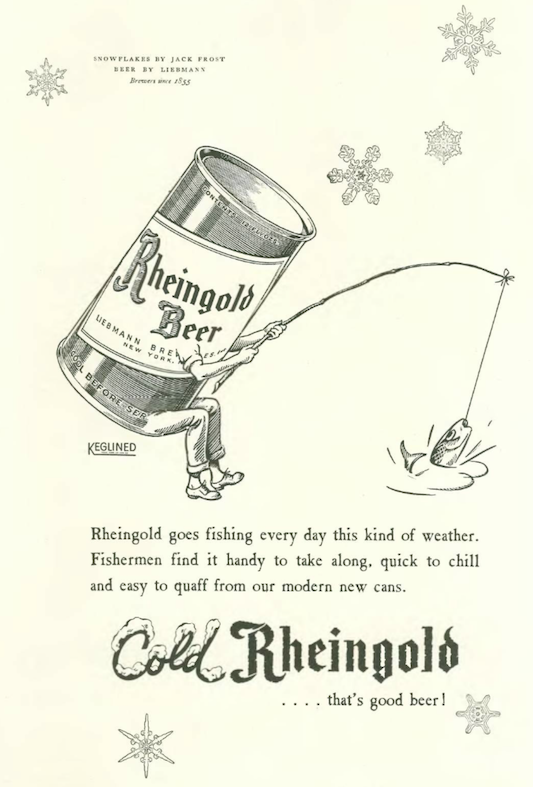
…Rheingold offered up their “Keglined” canned beer as a summer refresher…
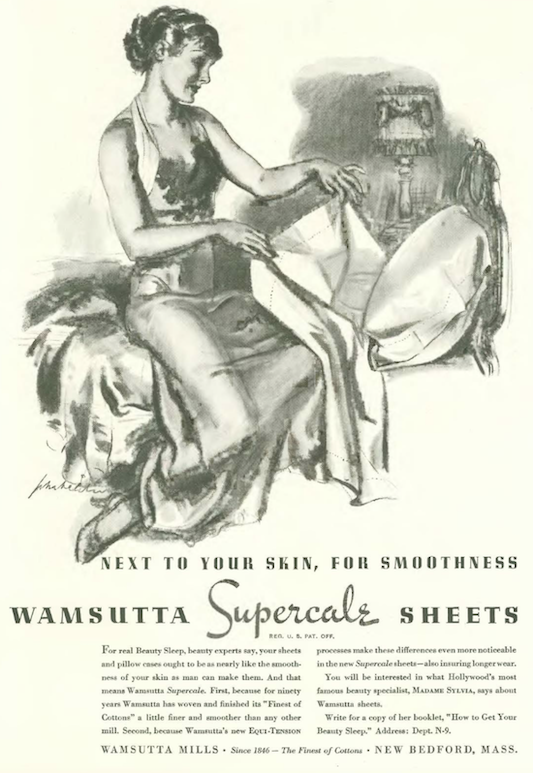
…Wamsutta Mills of New Bedford, Massachusetts became the world’s largest cotton-weaving plant by the end of the 19th century…their iconic “Supercale” sheets (introduced in 1935) typically featured a 200-thread-count…
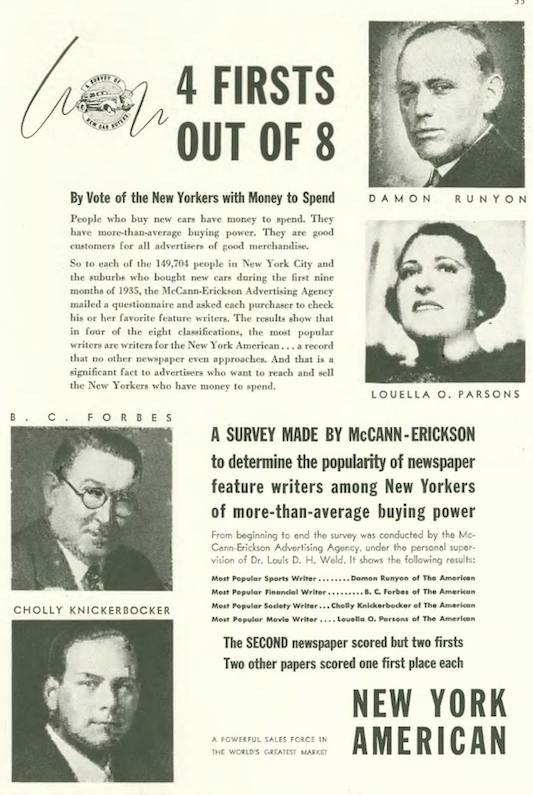
…William Randolph Hearst’sNew York American (soon to merge with Hearst’s New York Evening Journal) boasted a lineup of writers including short story writer and journalist Damon Runyon, movie gossip columnist Louella Parsons, Forbes magazine founder B.C. Forbes, and “Cholly Knickerbocker“—a pseudonym used by society writers, in this case by Maury Henry Biddle Paul…
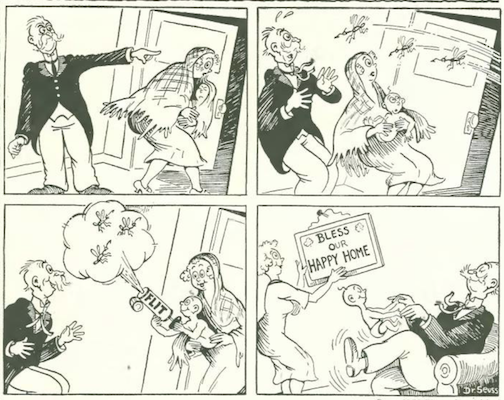
…another Flit ad by Dr. Seuss, this time an illegitimate child saves the roof over his head by whipping out some insecticide…
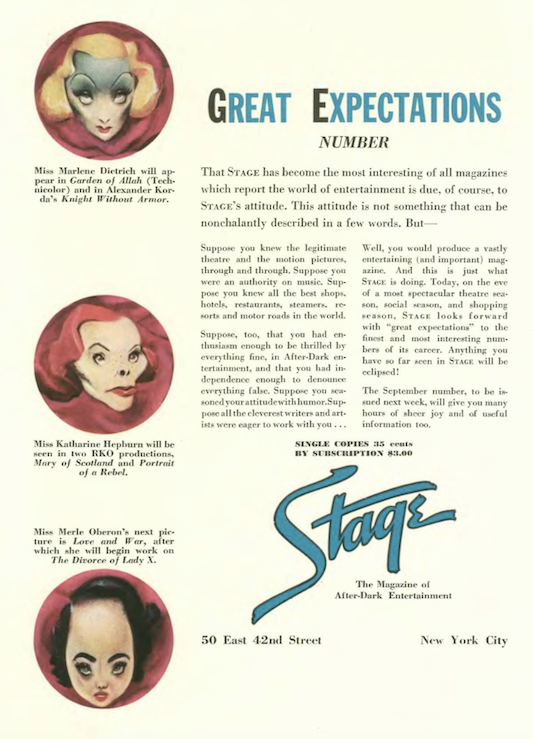
…Stage magazine featured caricatures by Sam Berman to promote its “Great Expectations” issue…
…Susan Willard Flint opens up our illustrators and cartoonists section…
…joined by James Thurber…
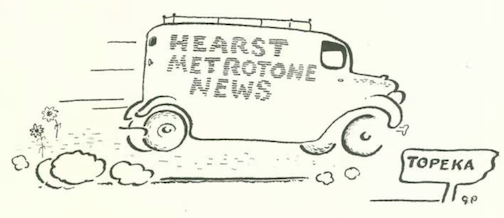
…and spots by Garrett Price…
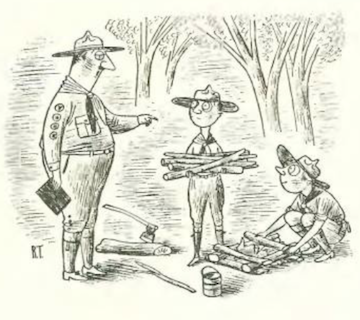
…Richard Taylor…
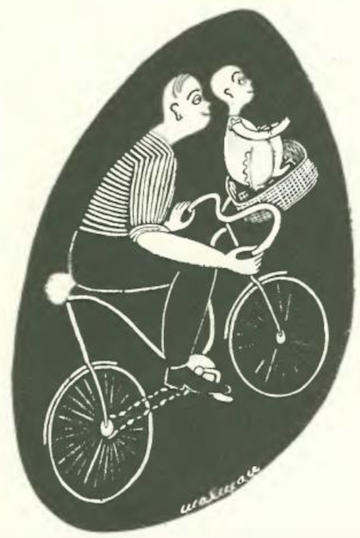
…and Christina Malman…
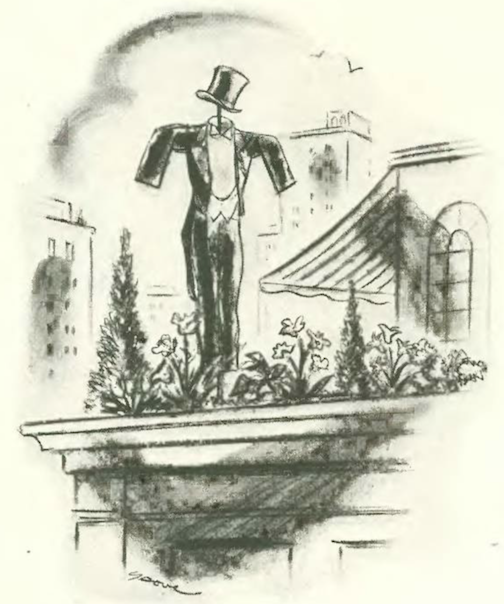
…Leonard Dove drew up a stylish scarecrow…
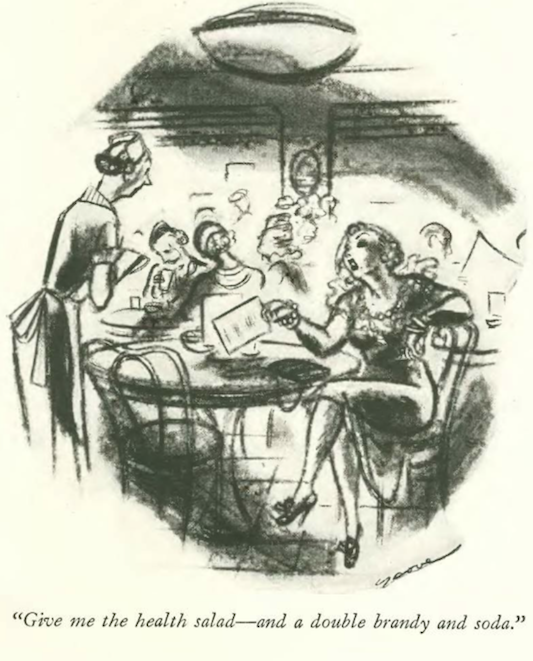
…and a woman who knows what she likes…
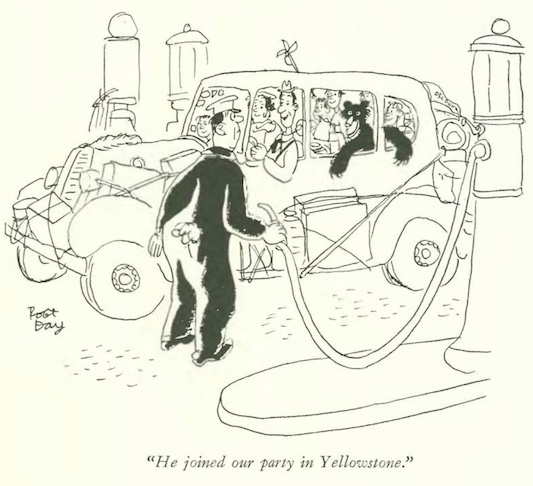
…Robert Day found more than scenery on a trip to Yellowstone…
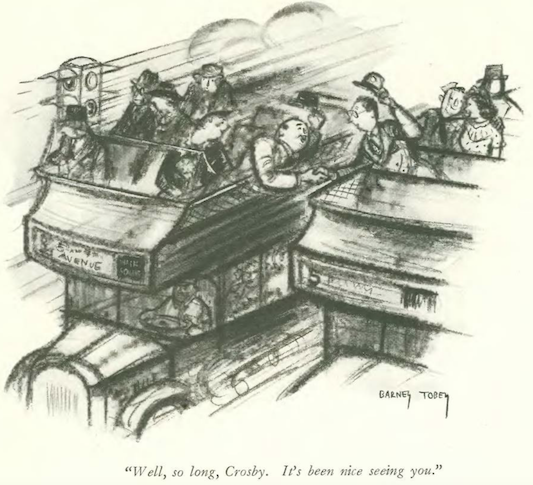
…Barney Tobey exchanged some quick greetings on the omnibus line…
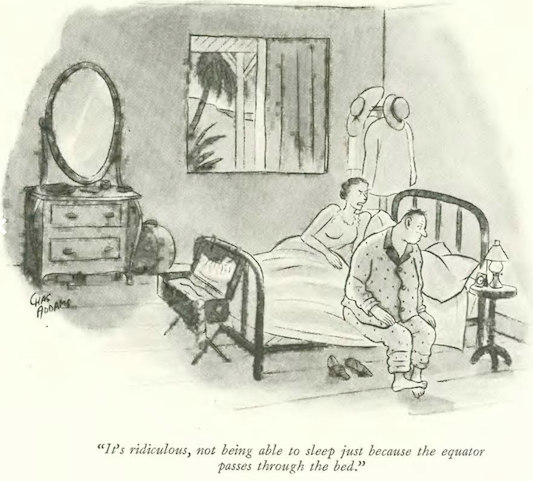
…Charles Addams gave us a case of equatorial insomnia…
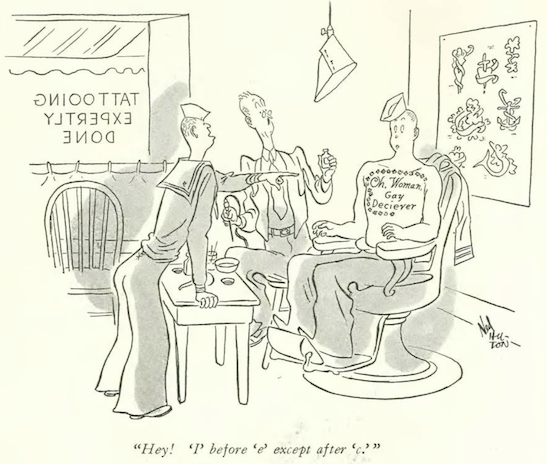
…Ned Hilton’s inker had some editing to do…
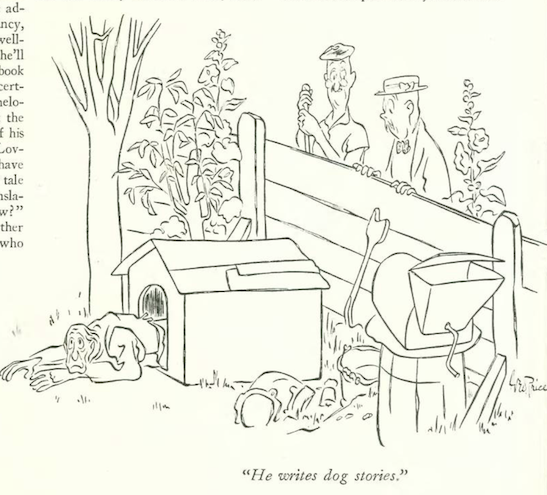
…George Price gave new meaning to being “in the doghouse”…
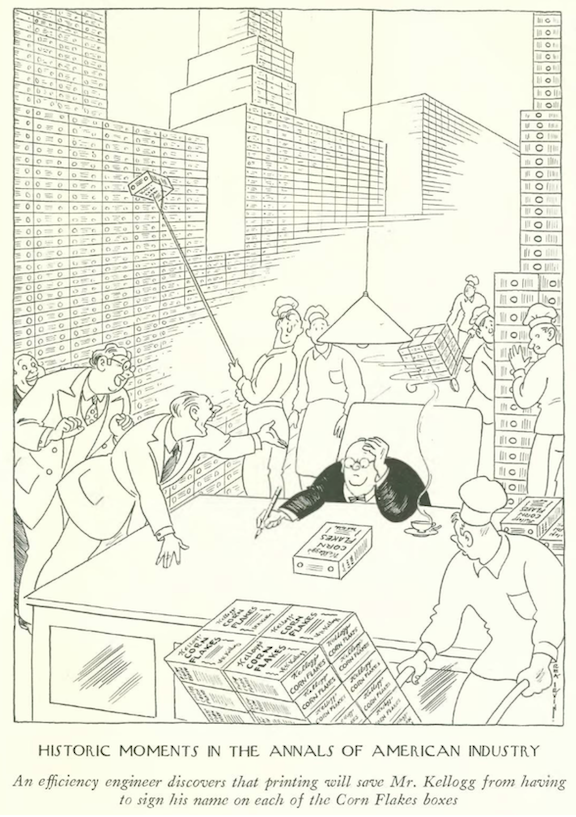
…Rea Irvin revealed another advance in American ingenuity…
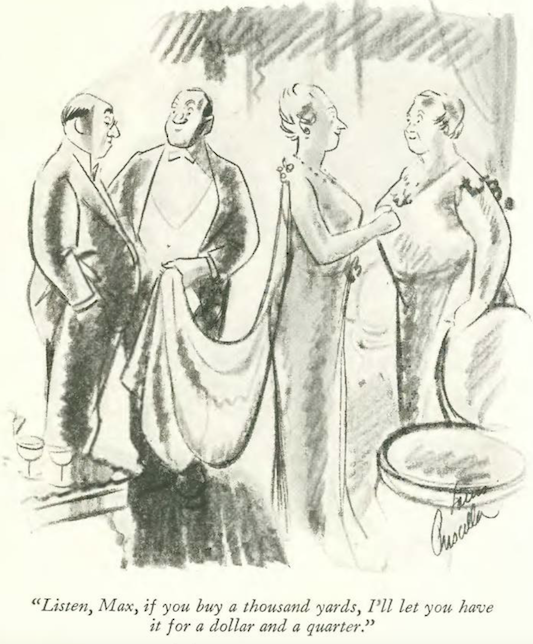
…Louis Priscilla published the third of a total of three cartoons he contributed to The New Yorker from 1933 to 1936…Priscilla was also a magazine illustrator and a teacher at the Art Students League of New York…
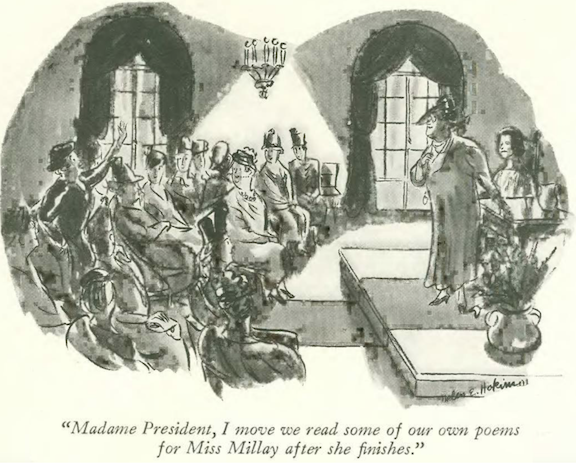
…Helen Hokinson’s club ladies hoped to wow Edna St. Vincent Millay with some of their own poetry…
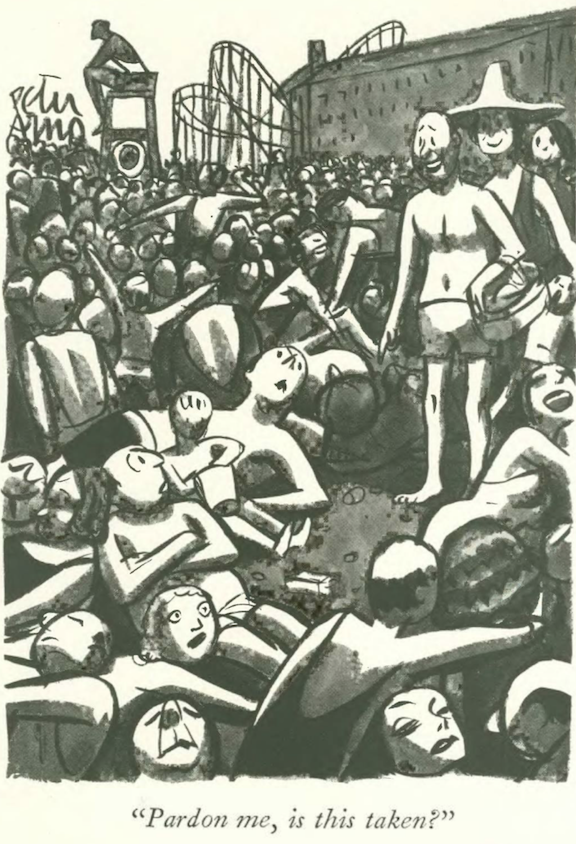
…and to close…if you’ve seen photos of Coney Island beaches in the 1930s, you know Peter Arno isn’t exaggerating much here…