Platoon Platitudes

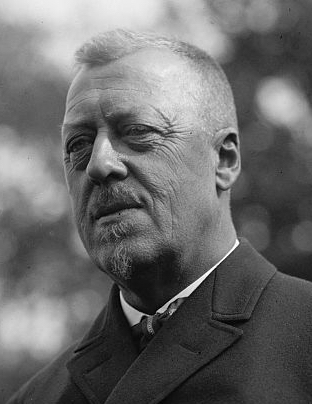
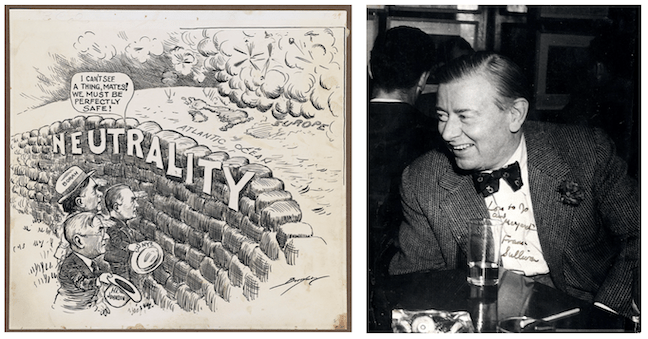
Above: Political cartoon by Clifford Berryman depicting three supporters of the Neutrality Act, 1939; at right, Frank Sullivan at his favorite watering hole, the Worden Hotel in Saratoga Springs, NY. (nationalww2museum.org/digitalarchive.sspl.org)

In 1935 the American humorist Frank Sullivan introduced the “Cliche Expert” Mr. Arbuthnot to New Yorker readers, exploring a variety of bromides associated with everything from political campaigns to the legal system.
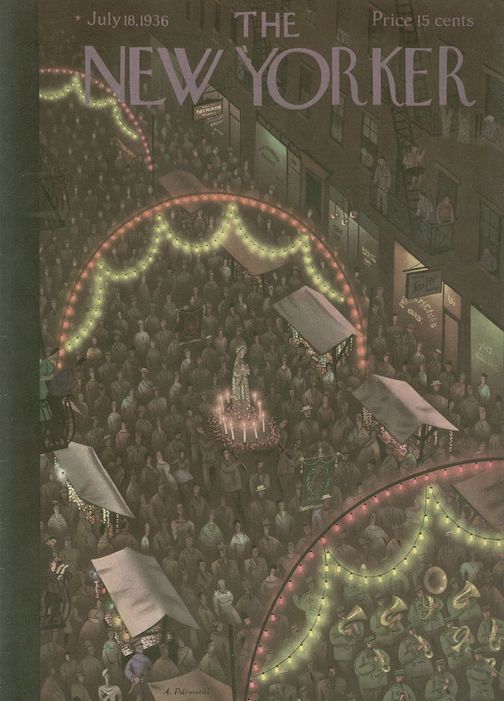
July 18, 1936 cover by Antonio Petruccelli.

For the July 18 issue Sullivan (1892–1976) called on Mr. Arbuthnot to explore the subject of war (Sullivan had some familiarity with the subject as a soldier in World War I). Below is the first of two excerpts from “The Cliché Expert Testifies on War” (spot drawing by Susanne Suba):
A peripheral member of the Algonquin Round Table, Sullivan wrote his first article for The New Yorker in 1925, and seven years later published his inaugural “Greetings, Friends!” Christmas poem (he would contribute forty-two of them, his last in 1974). He penned more than a dozen Mr. Arbuthnot stories from 1935 to 1952, and also introduced such characters as Aunt Sally Gallup, Martha Hepplethwaite, and the Forgotten Bach. An expert in comparative illusion, he is credited with this gem: “This is either a forgery or a damned clever original!”

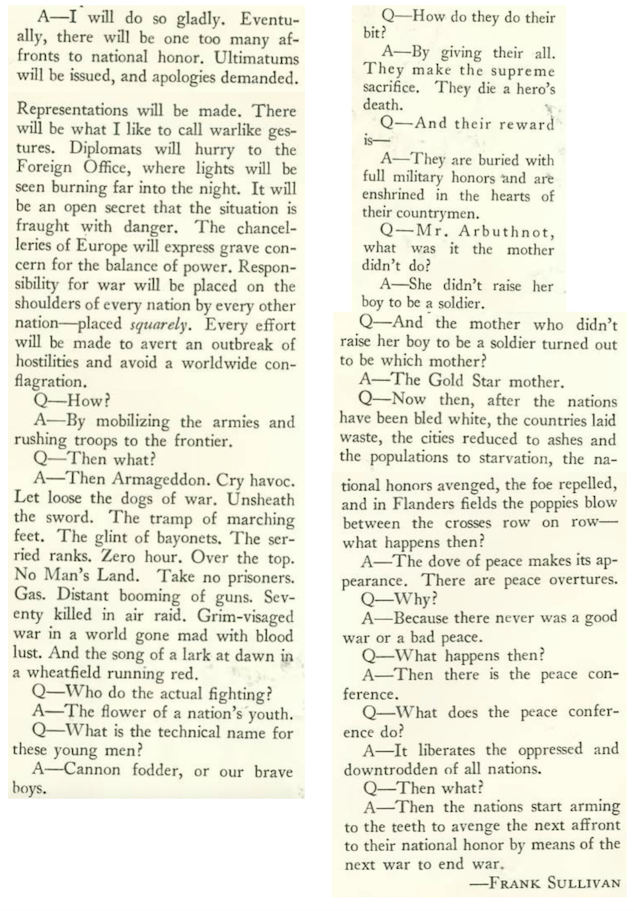
Here is the second excerpt from “The Cliché Expert Testifies on War”…
In a 1967 interview with The New York Times, Sullivan remarked that the war-divided country had lost its sense of humor. “But wars have never stopped humor,” he told Alden Whitman. Sullivan maintained that the world was more lighthearted in the 1920s and 30s, despite the horrors of World War I. “It was a time of beautiful nonsense,” he said.

SAGE OF SARATOGA was the nickname conferred upon Frank Sullivan, who preferred the simpler life in his hometown. Top left, the small clapboard house Sullivan shared with his sister in Saratoga Springs; at right, Sullivan reading the July 9, 1966 issue of The New Yorker; below, an Al Frueh illustration topped Sullivan’s annual “Greeting Friends!” message for the Dec. 26, 1936 issue. (algonquinroundtable.org/hillcountryobserver.com)

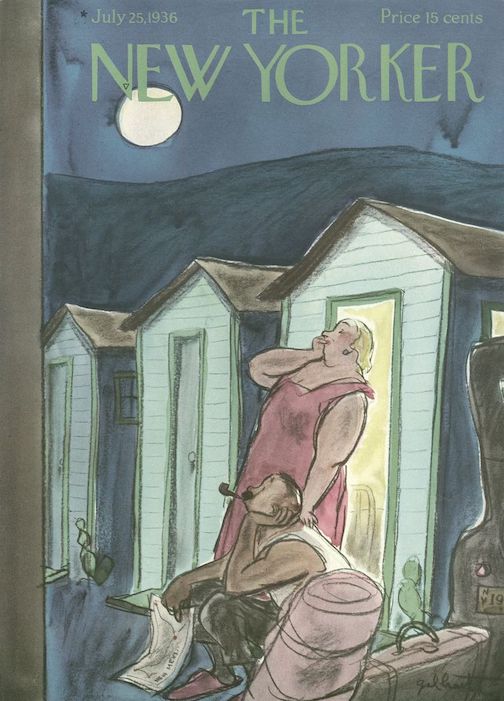
Here is the cover of the July 9, 1966 issue featured above; the painting is by Charles E Martin:

A final note: After his service in World War I, Sullivan moved to New York City and wrote for several newspapers including the New York World. After the World folded in 1931, Sullivan moved back to his hometown, Saratoga Springs, where he shared a small clapboard house with his older sister, Kate Sullivan. Of his preference for small town life, he wrote: “Once I visited New York for twenty years but I wouldn’t live there if you gave me Philadelphia. A small town is the place to live. I live in a small town 180 miles from New York and while I would not say it has New York beat by a mile I would put the distance at six furlongs.”

Called the “Ultimate Freelancer,” Sullivan wrote for The New Yorker for fifty years and also contributed to the New York Times sports section, the Saturday Evening Post, and Town & Country. His work is collected in more than a half-dozen books.

 * * *

Hanging Around

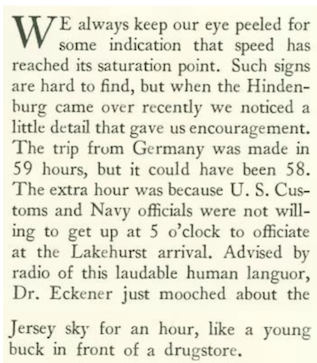
In his “Notes and Comment,” E.B. White noted the speed at which the Hindenburg made its Atlantic crossing, although the giant German airship had to hover over Lakehurst, N.J. for an extra hour to wait for customs officials to get out of bed. White also mentioned a “Dr. Eckener,” a reference to Zeppelin captain Hugo Eckener (see below), who was also manager of a German aircraft company that produced the ill-fated Hindenburg.
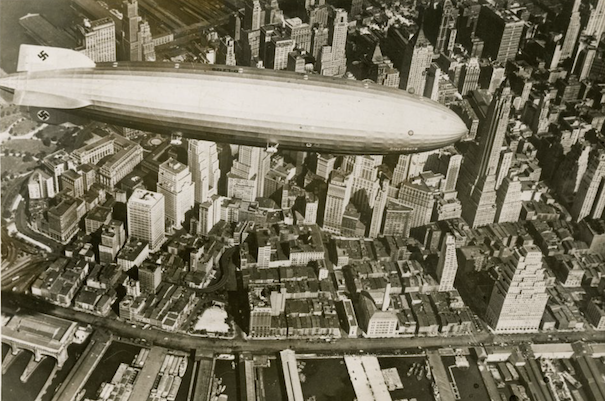
DOOMSDAY MACHINE…The Hindenburg flies above New York City in 1936—the airship made seventeen round trips across the Atlantic in 1936—its first and only full year of service—with ten trips to the United States. The Hindenburg would famously crash and burn while docking in Lakehurst, NJ on May 6, 1937. (zeppelin-museum.de)
LOYAL TO AIRSHIPS, NOT GASBAGS…Airship innovator Hugo Eckener was apparently commanding the Hindenburg flight noted by E.B. White, but he was not on board when the giant airship crashed and burned the following May. A stickler for safety, Eckener was sidelined by the Nazi regime and replaced by Hitler loyalists. (Wikipedia)

White also commented on a recent evening at the movies “in the back country,” where a Clark Gable–Myrna Loy picture was playing in a makeshift theater outfitted with wooden benches.
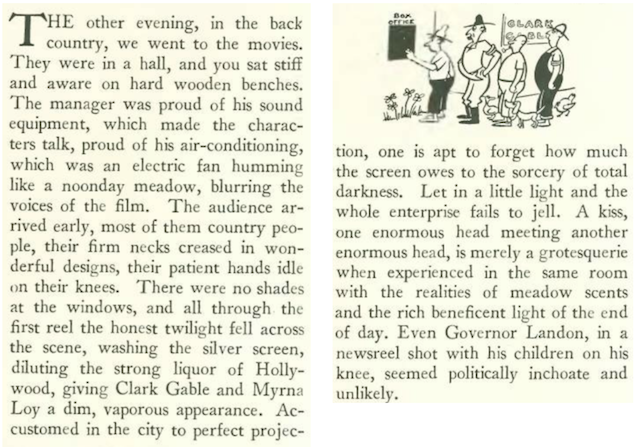
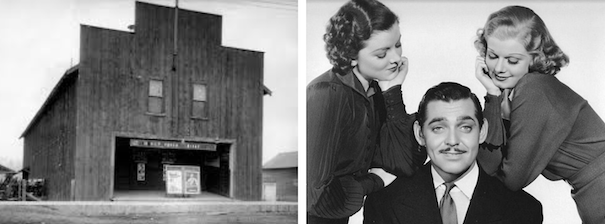
RUSTIC RIVOLI…E.B. White found the silver screen a bit diluted in a “back country” theater, probably similar to the one pictured at left. He most likely took in the film Wife vs Secretary featuring Myrna Loy, Clark Gable and Jean Harlow. (facebook.com/MGM)

 * * *

Komrade With Kamera

Humorist Leo C. Rosten contributed numerous short fiction stories to The New Yorker as well as several “A Reporter at Large” pieces between 1936 and 1939. He published “A Shot of Lenin’s Tomb” (classified as fiction) in the July 18 issue. Two brief excerpts:
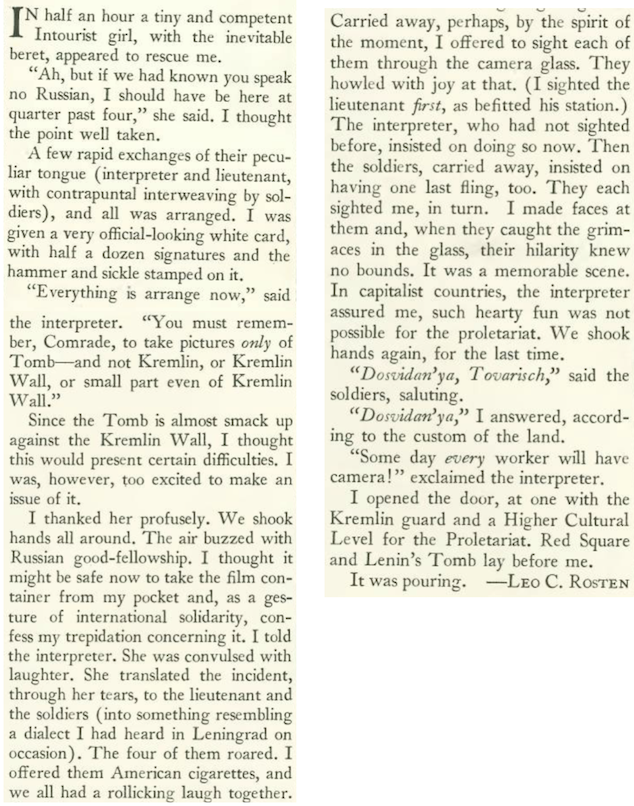
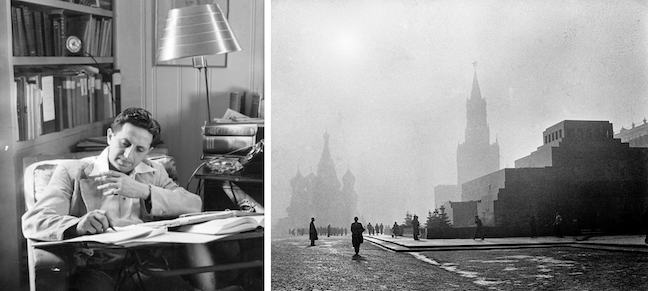
THE SOUL OF WIT…Leo C. Rosten (1908–1997) was an American writer and humorist in the fields of scriptwriting, storywriting, journalism, and Yiddish lexicography. Fran Lebowitz once called Rosten “the Jewish James Thurber.” Above, Rosten circa 1940s and a foggy view of Lenin’s Tomb, undated. (forward.com/tass.com)

 * * *

Crossing Over

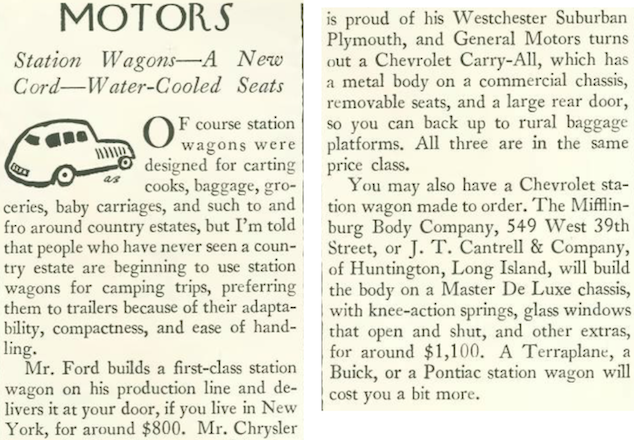
Station wagons were first built in the 1910s as custom jobs—independent manufacturers would produce wooden bodies for the Model T chassis. These were considered “depot hacks” and commercial vehicles rather than family cars. But things changed in the 1930s as manufacturers saw their potential in the consumer market. Journalist George F.T. Ryall (pen name “Speed”), who wrote the “Motors” column for The New Yorker in the 1930s, looked in on the new automobiles that would foreshadow today’s crossovers.
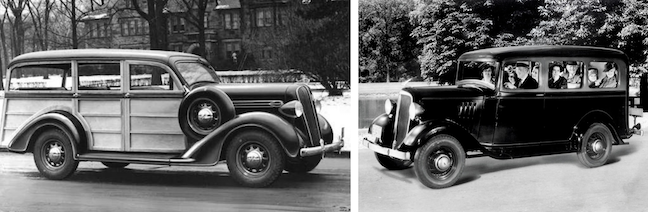
IN THE FAMILY WAY…In the mid-1930s U.S. automakers began introducing a new kind of car—the station wagon. Pictured above are the 1936 Dodge Westchester Suburban (left) and the 1936 Chevrolet Carry-All Suburban. (Facebook.com/hemmings.com)

 * * *

At the Movies

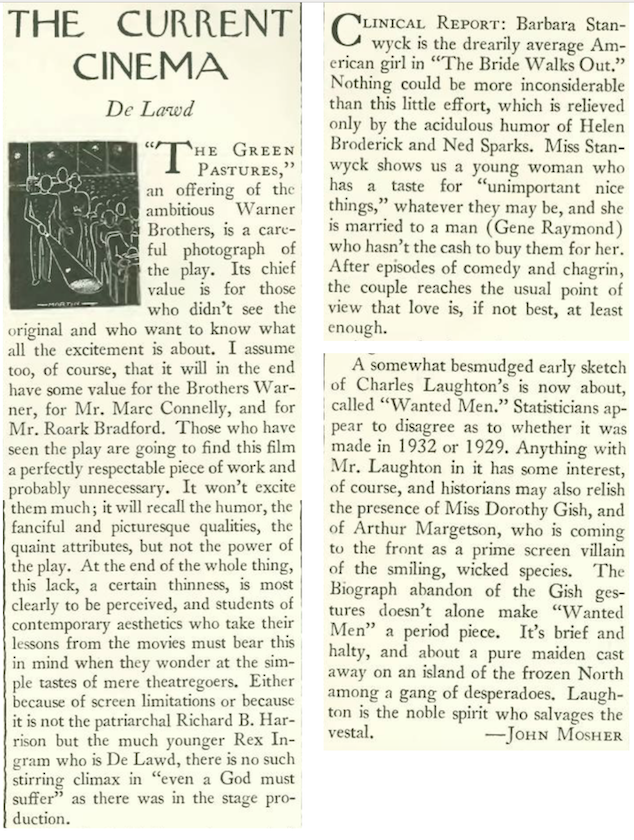
The 1929 play The Green Pastures, which portrayed Old Testament stories as seen through the eyes of a young Black child, was written by playwright Marc Connelly, one of founding members of the Algonquin Round Table. The play was based on Roark Bradford’s popular 1928 story collection Ol’ Man Adam an’ His Chillun (strongly criticized over the years for its patronizing and demeaning portrayals of Black characters). Connelly, who won a Pulitzer for the play, also directed its screen adaptation, one of just six feature films in the Hollywood Studio era to feature an all-Black cast. Critic John Mosher gave the film, along two other releases, an unenthusiastic review.
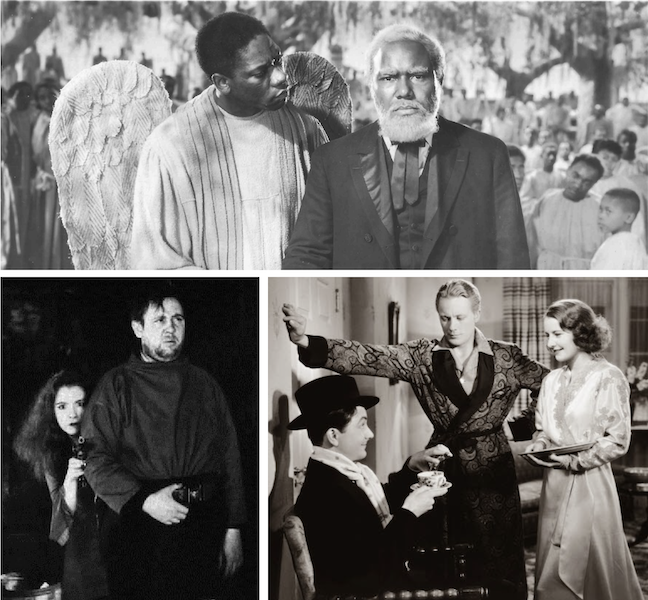
HEAVEN CAN WAIT…Clockwise from top: Oscar Polk (left) as the Angel Gabriel with “De Lawd” (Rex Ingram) in The Green Pastures—the film was a commercial success despite criticisms about its racial stereotyping; Robert Young, Gene Raymond and Barbara Stanwyck in The Bride Walks Out; Dorothy Gish and Charles Laughton in Wanted Men, originally released as the 1930 British crime film Wolves. (cinemafaith.com/imdb.com)

 * * *

From Our Advertisers

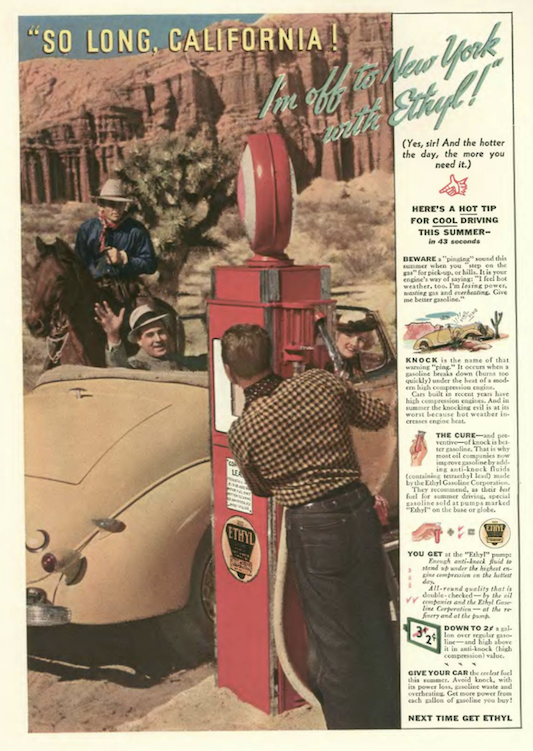
We set off down a long road with a tankful of leaded petrol…
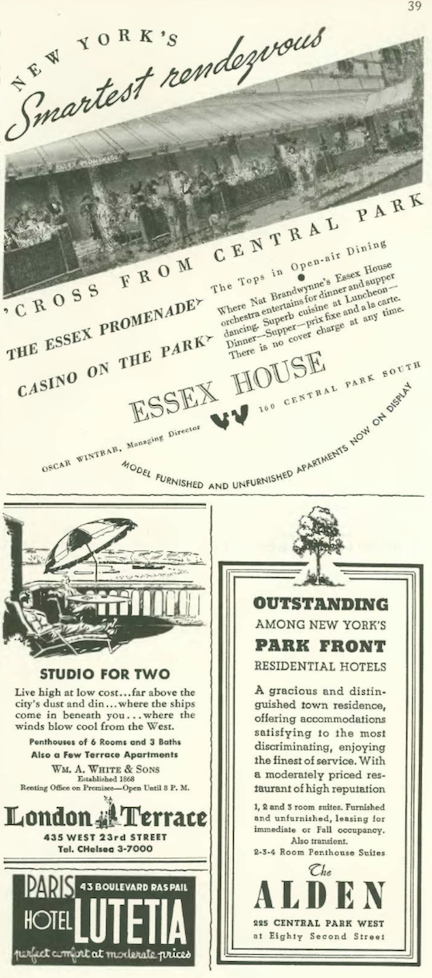
…from the back of the book, select living arrangements from the upscale to the budget conscious…
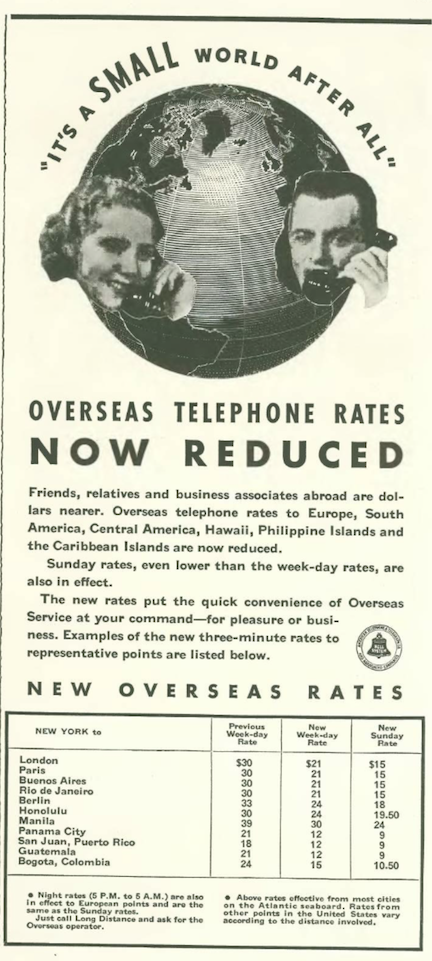
…this ad from Bell Telephone anticipated the Sherman Brothers 1964 earworm that still accompanies a popular Disney attraction…
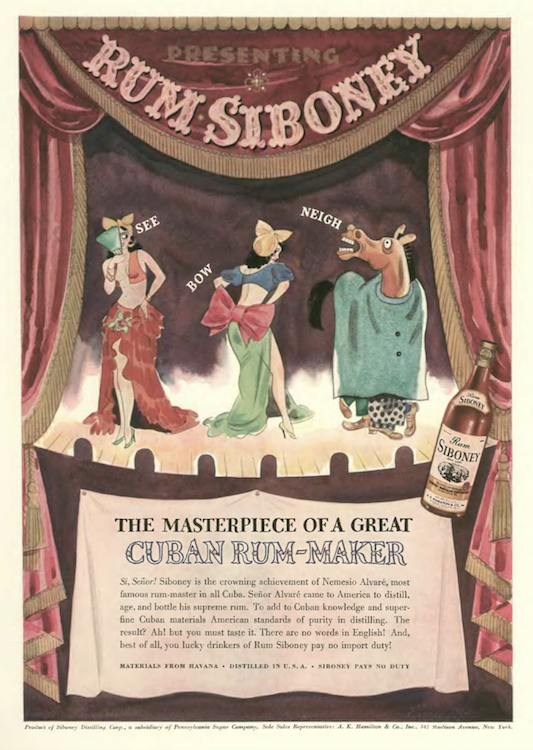
…the back inside cover offered a colorful splash of sex and humor (and a bit of phonetics) to promote Siboney Rum…
…on to our cartoonists, we begin with some heavy lifting from Garrett Price

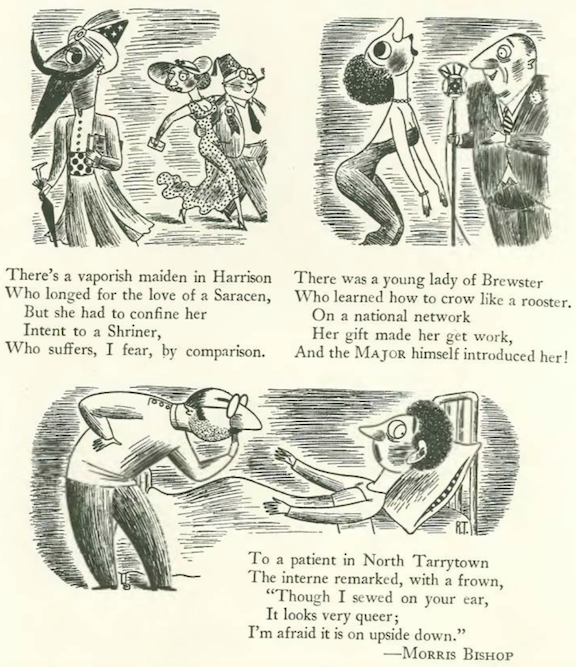
Richard Taylor sketched up these merry illustrations for a Morris Bishop ditty…
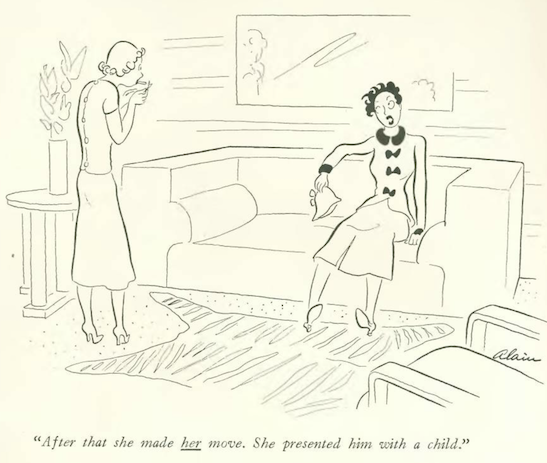
Alain engaged in some market research…

…and channelled a bit of Barbara Shermund humor…
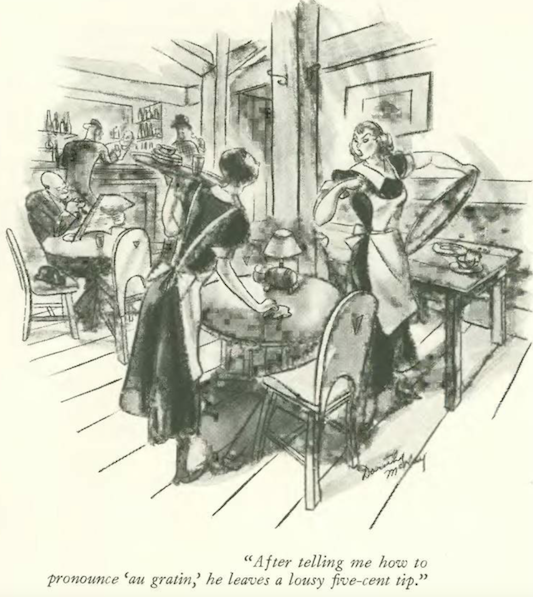
Dorothy McKay explored the sad world of phonies and cheapskates…
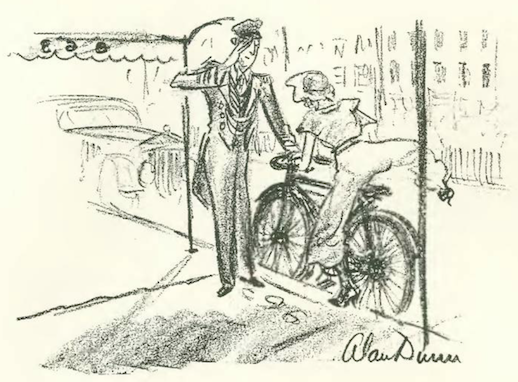
Alan Dunn gave us a dutiful doorman…

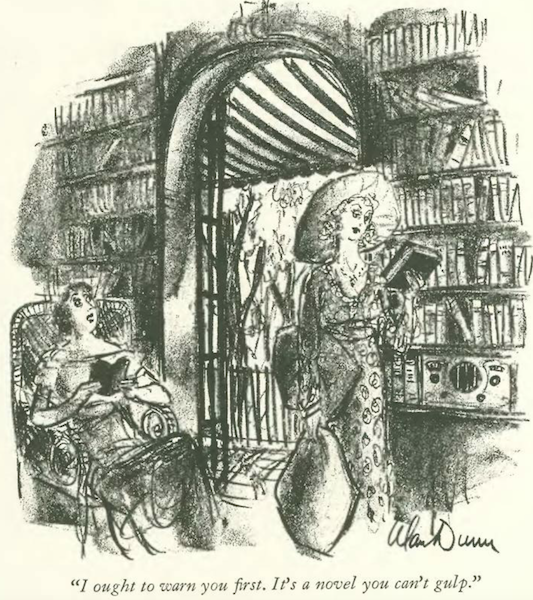
…and Dunn again, contemplating a hefty tome…
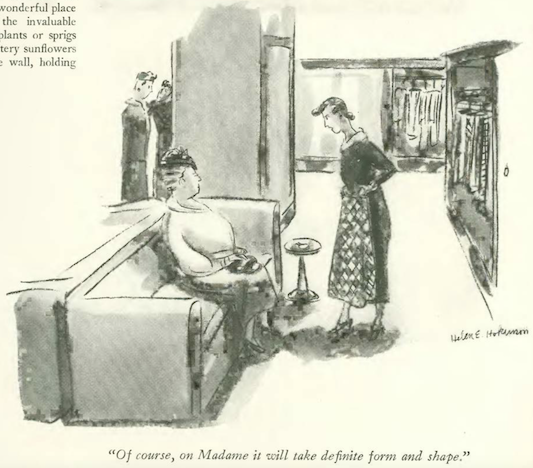
Helen Hokinson continued her exploration of department store drama…
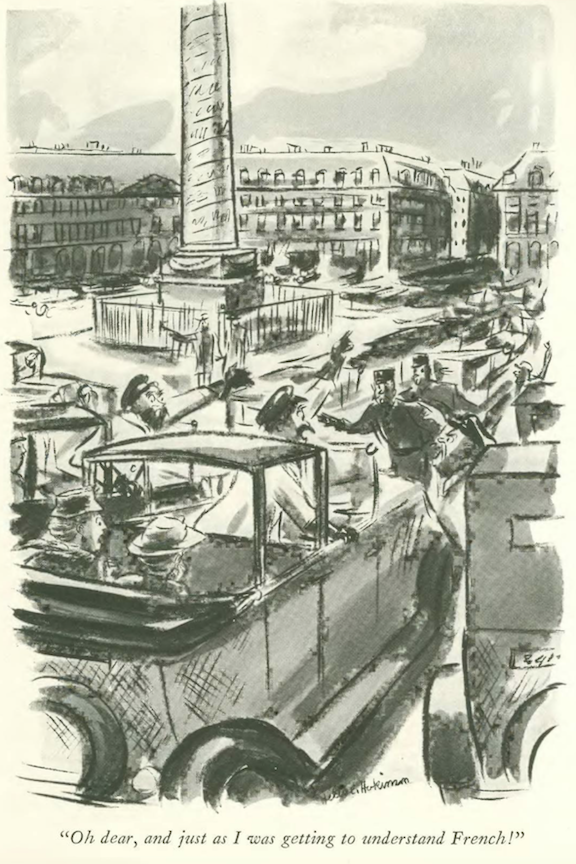
…as well as the world of foreign affairs…
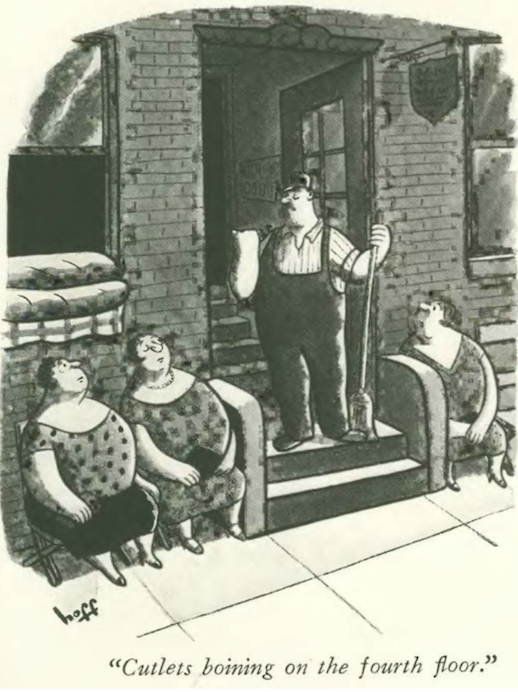
Syd Hoff sounded the alarm on some burning cutlets…
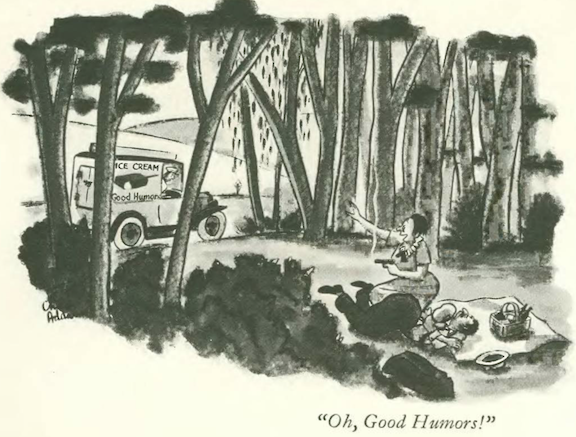
…and we close with the master of dark humor, Charles Addams

Next Time: That Tammany Taint…

Better Living Through Fiction

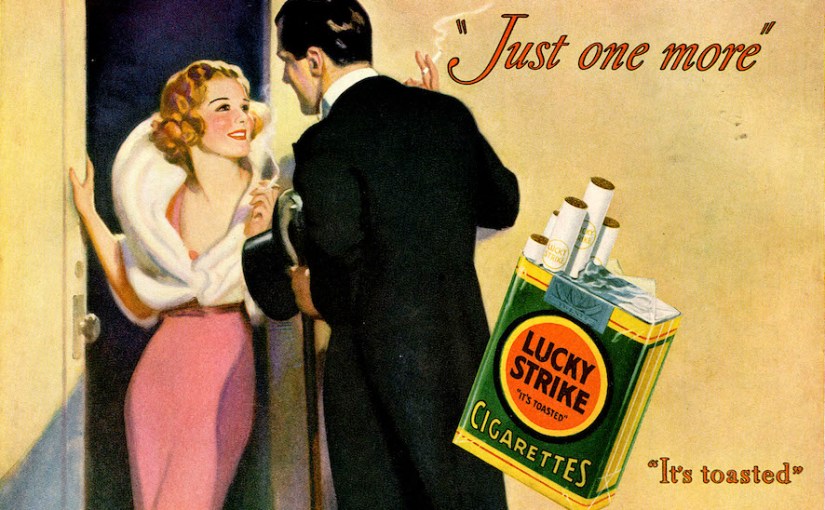
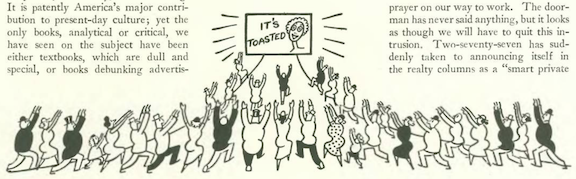
Above: Introduced by the American Tobacco Company in 1917, the iconic slogan "It's Toasted" became the cornerstone of Lucky Strike marketing in the 1930s. The company claimed their heat-curing method (as opposed to sun-drying) removed tobacco's "corrosive acids." This 1933 Lucky Strike advertisement was illustrated by Hayden Hayden. (wash.edu)

In May 1936 the Advertising Federation of America (AFA) celebrated the 25th anniversary of its “truth in advertising” movement, highlighting the work of vigilance committees that encouraged advertisers to avoid government intervention through self-regulation. As one can imagine, such voluntary efforts were largely ignored.

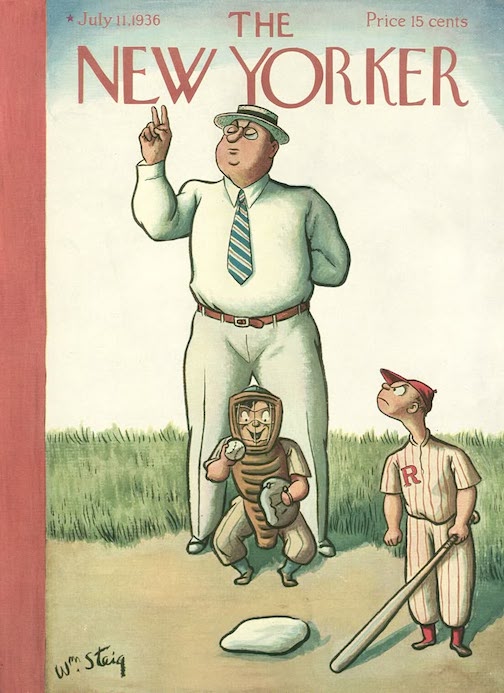
July 11, 1936 cover by William Steig.
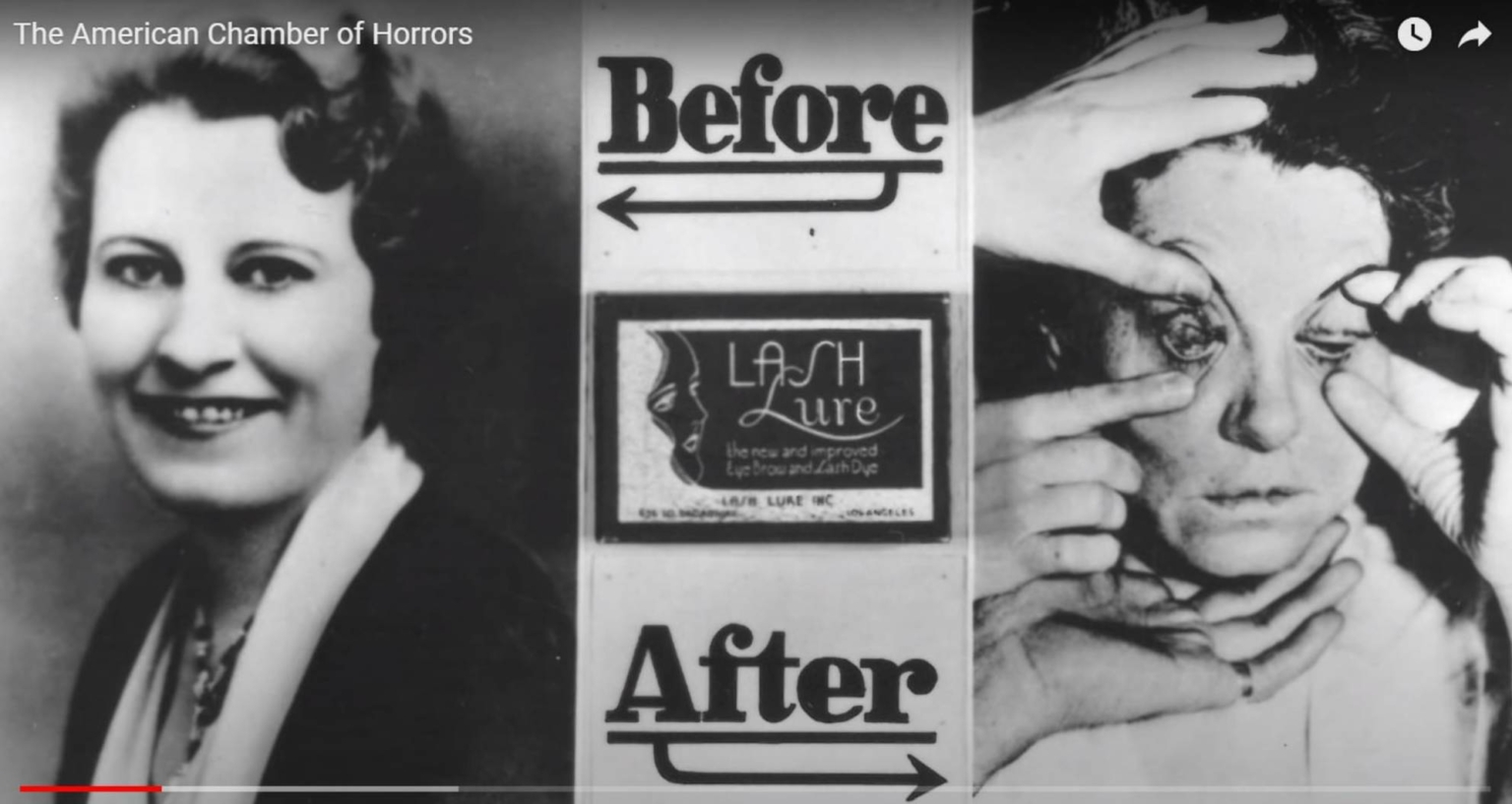
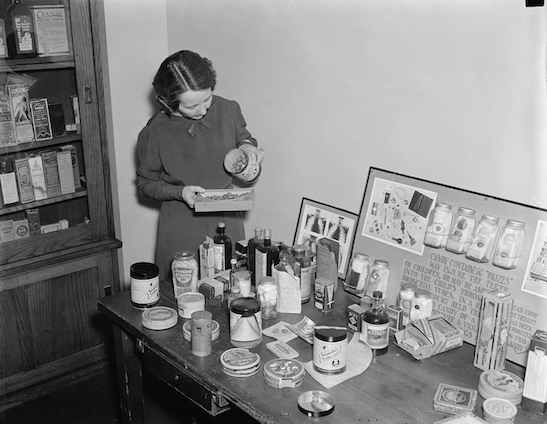
The celebration was short-lived, for later that year the Food and Drug Administration’s Ruth Lamb, published American Chamber of Horrors: The Truth About Food and Drugs. Lamb, who was head of public relations for the FDA, based her publication on a FDA traveling exhibit that exposed dangerous, poisonous, and deceptively marketed cosmetics, foods, medicine, and medical treatments. Lamb played an important role in advising Congress on new regulations that culminated in the Wheeler-Lea Act of 1938, which expanded the Federal Trade Commission’s unfair competition mandate to include consumer protections from “unfair or deceptive acts or practice.” That same year, Congress also passed the Federal Food, Drug, and Cosmetic Act, requiring pre-market safety testing and prohibiting false therapeutic claims.
BLISTERS INSTEAD OF BEAUTY…In 1933 the makers of Lash Lure mascara promised women a permanently made-up look using aniline dye on eyelashes. Tragically, Lash Lure contained p-phenylenediamine, which caused horrific blisters, abscesses and ulcers on the face, eyelids and eyes of Lash Lure users. It even led to blindness in some women. (livingnewdeal.org)
Apparently Lamb hadn’t yet published her American Chamber of Horrors when E.B. White filed his July 11 “Notes and Comment.” He did, however, pen this satirical take on the AFA’s sanctimonious commitment to the “truth.”

Otto Soglow provided this apt illustration along the bottom of White’s “Notes” column…

HORROR SHOW…The FDA’s Ruth Lamb displays some of the worthless and harmful products in her “Chamber of Horrors.” Lamb was instrumental in advising Congress on new drug and food legislation. (Wikipedia)
BUYER BEWARE…Clockwise, from top left: In the 1930s Othine promised to remove brown spots and lighten skin; the active ingredient was mercury; Bred-Spred was a line of beautifully colored “jellies” that did not contain the industry standard of 50 percent fruit/juice to qualify as jelly. Indeed, they had no fruit or juice at all—just artificial colors and flavors, and in the case of the “strawberry flavor” pictured above, a few hayseeds were added to simulate strawberry seeds; a circa 1930 ad claiming substantial weight loss simply by listening to a record. (fda.gov/brandingstrategyinsider.com)

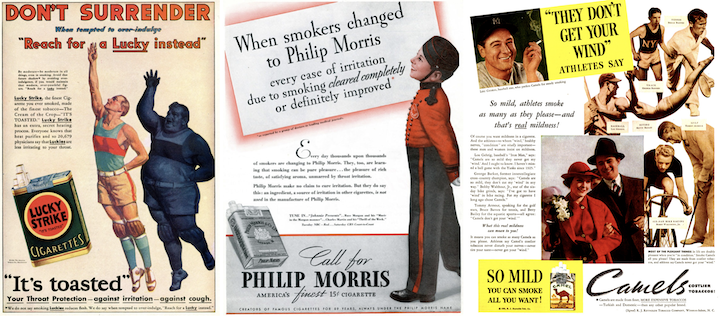
Quackery was not confined to the smaller companies. Big Tobacco made outlandish claims regarding the health benefits of smoking…

BIG MONEY from tobacco companies financed these splashy ads from the 1930s, including, from left, Lucky Strike’s weight-loss claims; Philip Morris asserted they used a different type of moistening agent that also prevented throat irritation—these ads were aimed at easing smoker anxiety about deep inhaling; R.J. Reynolds claimed their Camels did everything from aiding digestion to easing one’s nerves. Many of the ads featured famous athletes claiming they could smoke all they wanted and still perform at their peak. (Stanford.edu)

 * * *

A Quiet Place

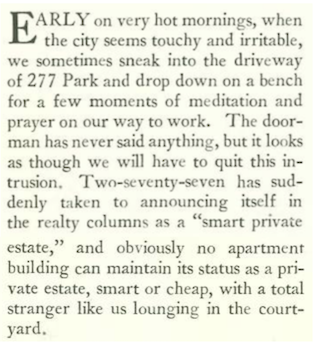
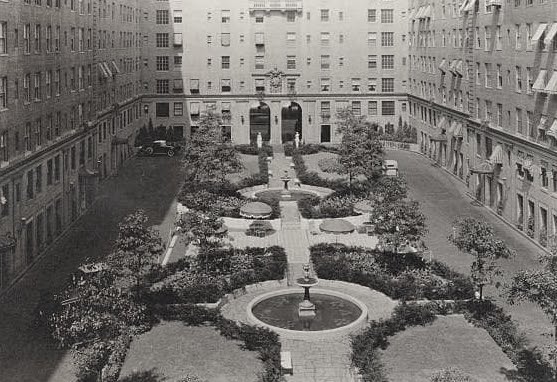
E.B. White (in “Notes and Comment”) revealed a hallowed spot in the city where he could gather his thoughts on hot summer mornings…

REFUGE FROM THE HEAT AND DIN…This apartment building’s courtyard at 277 Park Avenue offered E.B. White a place to ponder on a summer day. Built in 1905 and designed by McKim, Mead and White, the apartments were demolished in 1964 and replaced with a glass tower. (mcny.org)

 * * *

On Your Mark

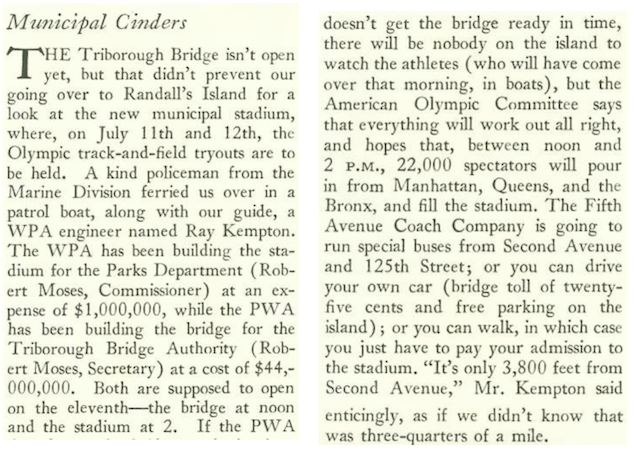
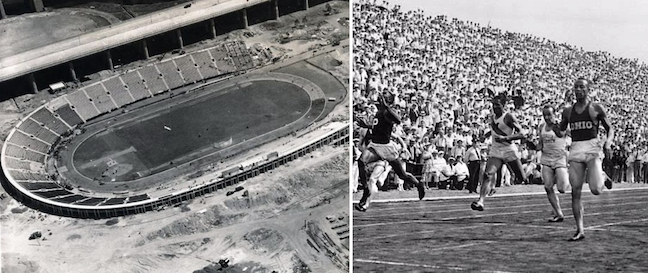
“The Talk of the Town” visited the new Randalls Island Stadium (later renamed Downing Stadium). Built with WPA funding, the stadium hosted the Men’s Olympic Track and Field Trials where Jesse Owens qualified for the Berlin Summer Games.

READY TO RUN…Aerial photo of the new Randalls Island Stadium taken on July 10, 1936, the day before the Olympic trials; at right, Jesse Owens at the stadium’s Olympic tryouts—Owens dominated the competition by winning the 100-yard dash, the 220-yard run, and the broad jump. He would go on to win four gold medals at the Berlin Games. (Associated Press/randallsisland.org)

 * * *

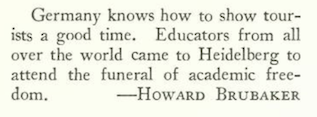
Ach Du Lieber

In his column “Of All Things,” Howard Brubaker offered his thoughts on the state of higher education in Nazi Germany:

 * * *

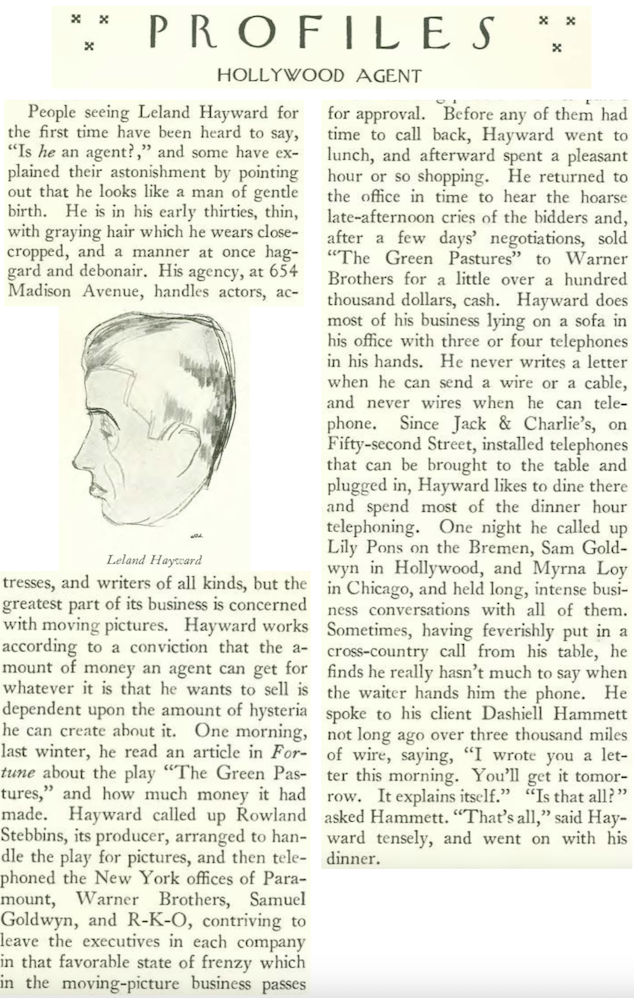
Haggard and Debonair

Margaret Case Harriman profiled talent agent and theatrical producer Leland Hayward (1902–1971), a kid from Nebraska City, Nebraska who would become a renowned playboy (married five times) and agent to scores of Hollywood actors. He would also produce the original Broadway stage productions of South Pacific and The Sound of Music. Excerpts:

ALL SMILES…at left, Katharine Hepburn with agent/boyfriend Leland Hayward arriving at director George Cukor’s home, circa 1936; Hayward with wife number three Margaret Sullivan⁣, circa 1940. (instagram.com/alchetron)

 * * *

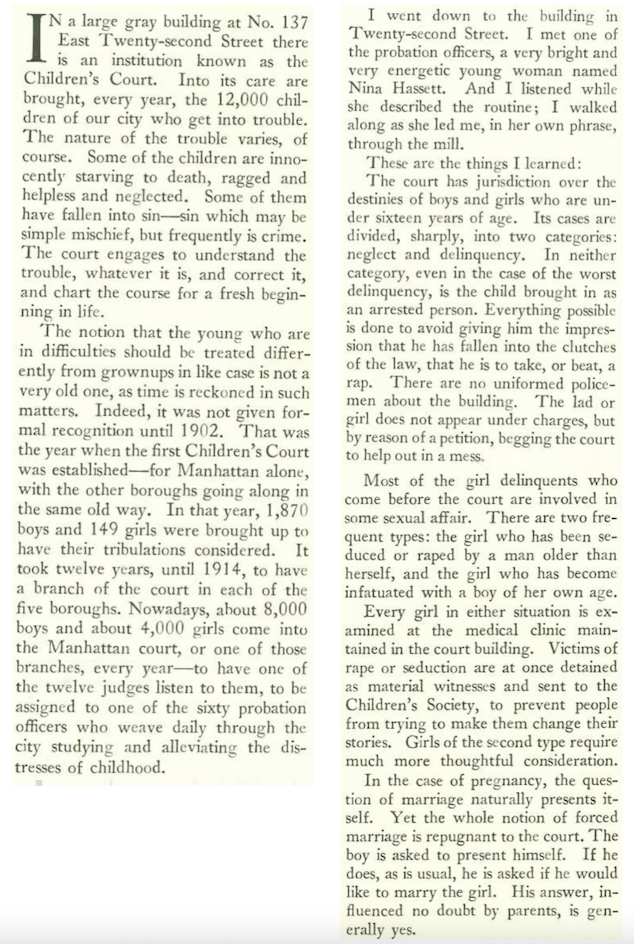
Juvie Justice

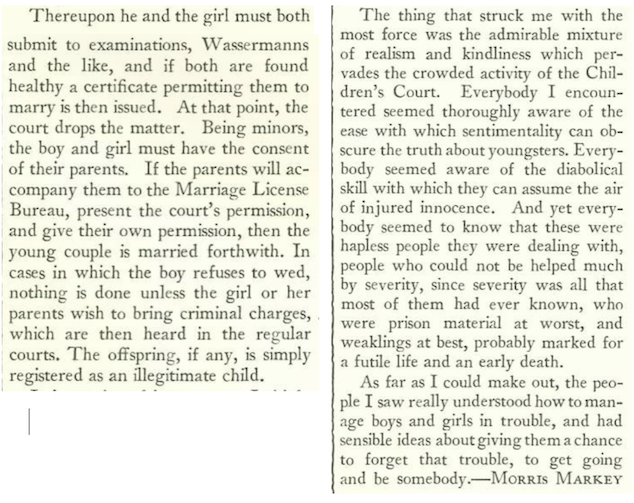
For the column⁣ “A Reporter at Large” (titled “Gamins”), Morris Markey looked in on the workings of the Children’s Court on East Twenty-second Street. Beginning with the sixth paragraph is an example of how teen pregnancies were addressed in New York ninety years ago. Excerpts:

Markey examined the possible outcomes of unwed mothers and fathers, and concluded that the Children’s Court was a realistic and kindly way to deal with these issues as well as a range of juvenile offenses. History seems to be on Markey’s side; for its time, the Children’s Court offered a progressive approach that kept minors from the horrors of the prison system.

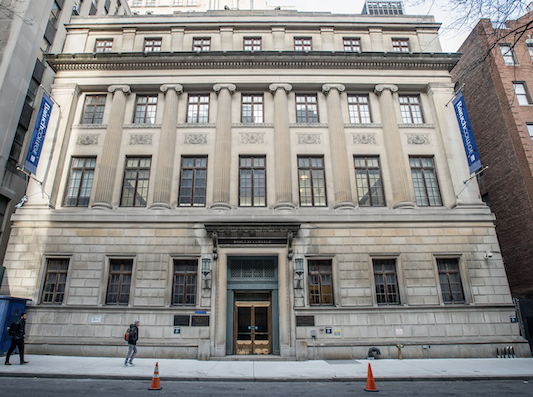
STILL STANDING…The Children’s Court building on East Twenty-second Street was visited by Morris Markey for his column. Today it serves as Newman Hall for CUNY’s Baruch College. (J.C. Rice via nypost.com)
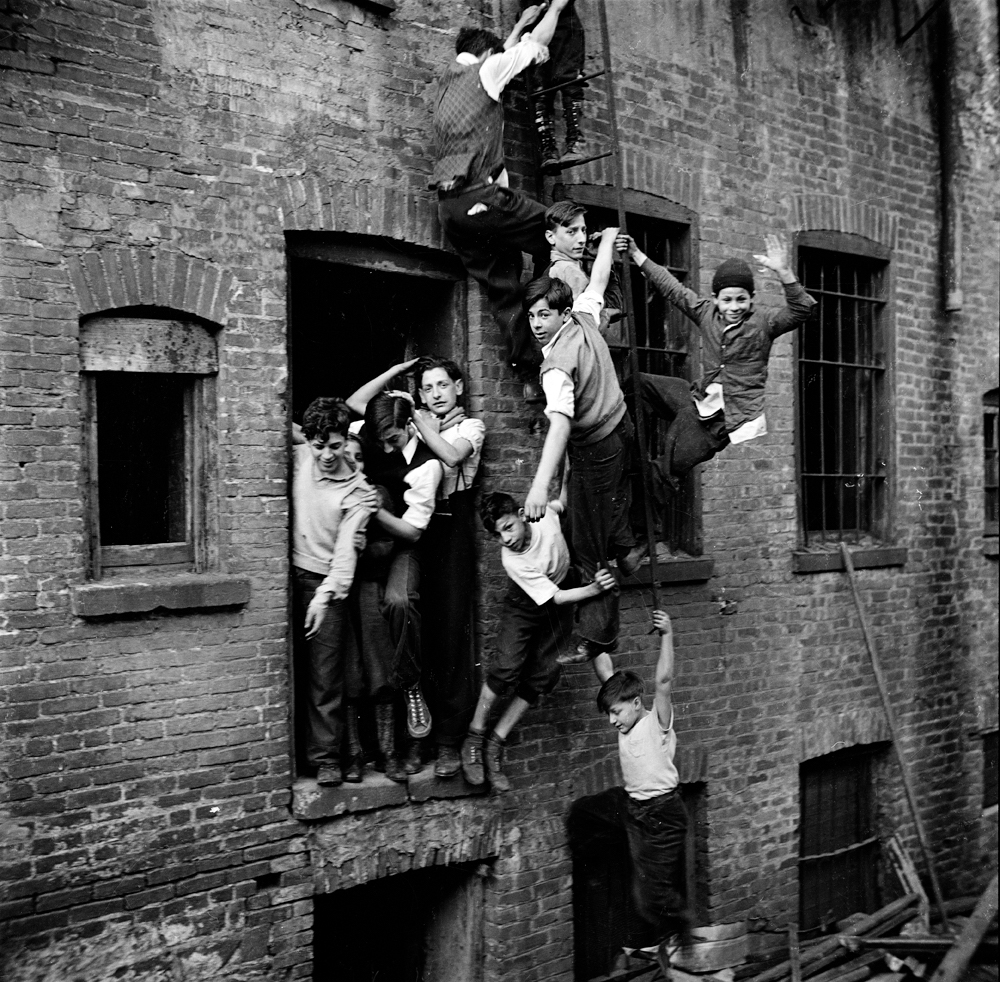
JUST SOME KIDS HANGING OUT…Arnold Eagle’s Federal Art Project photo, “Boys Climbing the Fire Escape of a Deserted Building,” 1935. (mcny.org)

 * * *

Some Lawn Tennis

American journalist and sports radio personality Cedric E. Adams (known as “Ced,” hence the initials below) occasionally provided tennis commentary for The New Yorker. Here he takes in Wimbledon, where he found the men’s matches dull and the women’s memorable.

THREE’S A CHARM…In 1936 Fred Perry won the men’s singles title at Wimbledon for the third year in a row, while Helen Jacobs’ “cool tactics” helped her capture the women’s title. (facebook.com/findagrave.com)

 * * *

At the Movies

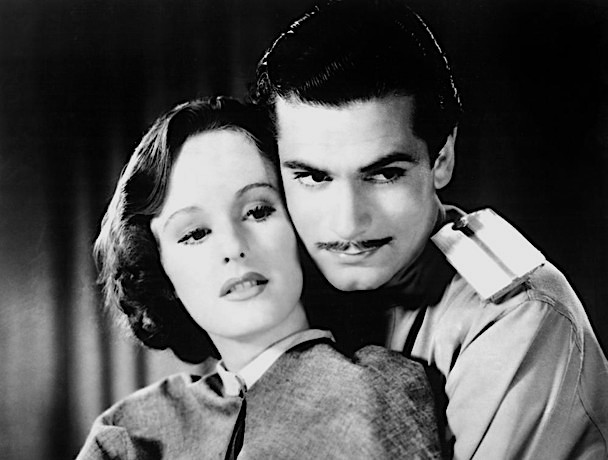
Laurence Olivier (1907–1989) was a rising star of the London stage when he moved to Hollywood in the early 1930s. Not making the breakthrough he had hoped for, he returned to London for stage and film work, including the 1935 film Moscow Nights, which was released in the U.S. in 1936 as I Stand Condemned. Critic John Mosher still wasn’t wowed by Olivier, but found the film better than average.

SPIES LIKE US…Laurence Olivier and Penelope Dudley-Ward in I Stand Condemned. Directed by Anthony Asquith, the film concerned a wounded officer who falls in love with his nurse. (rotten tomatoes.com)

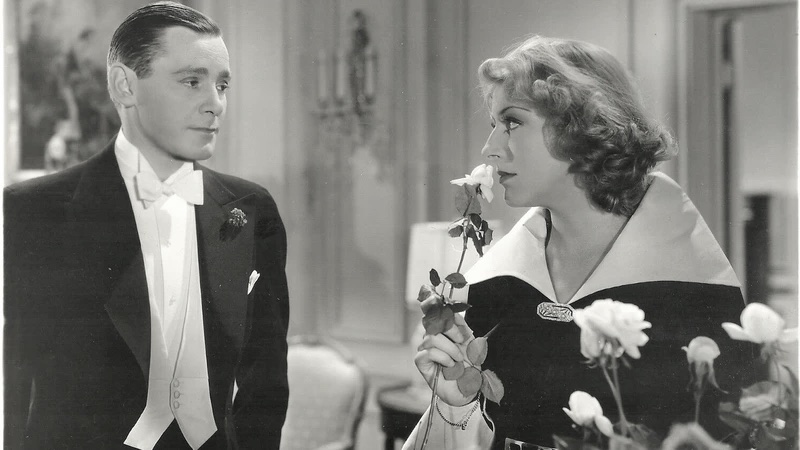
Mosher also reviewed a “minor melodrama,” Forgotten Faces.

A GAMBLER AND A STRIPPER were portrayed by Herbert Marshall and Gertrude Michael in Forgotten Faces. (mubi.com)

 * * *

From Our Advertisers

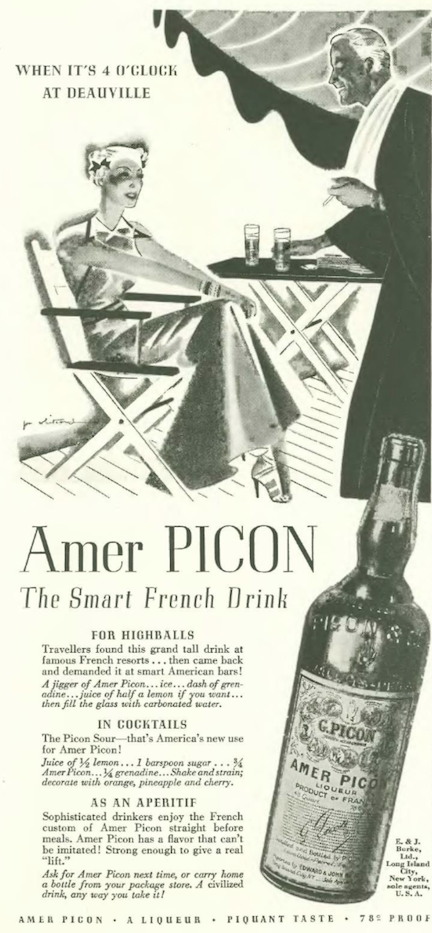
Illustrator Jon Whitcomb sketched up this happy scene to promote this “Smart French Drink”…

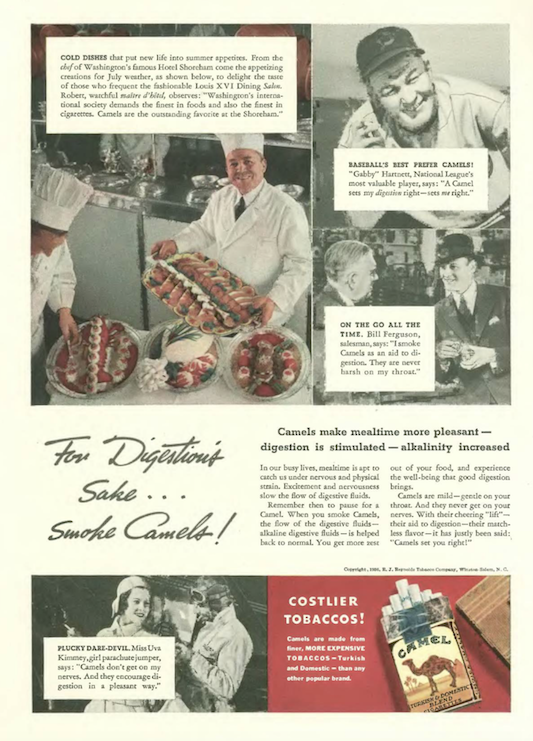
…as noted in our lead story, cigarette manufacturers made all sorts of health claims connected to heavy smoking…

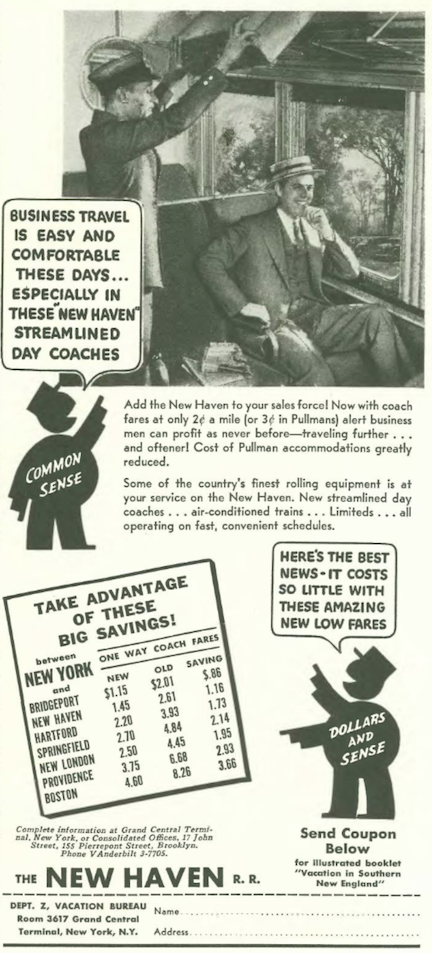
…now this was the way to travel…sadly the U.S. has largely abandoned reliable rail service…

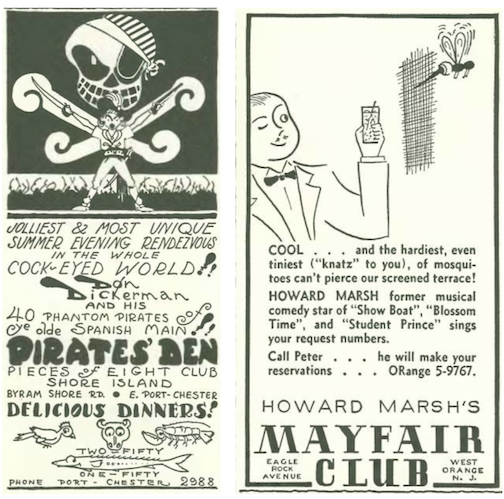
…from the back of the book, enticements to escape the city into the countryside…

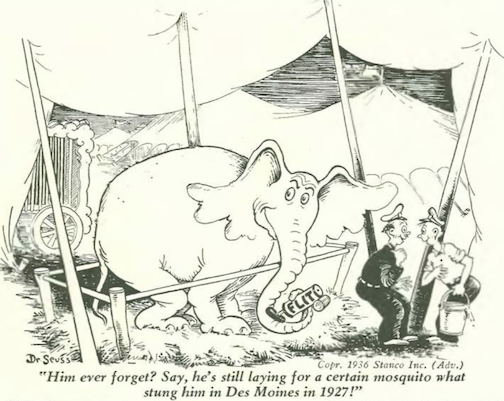
…another Dr. Seuss Flit ad, anticipating his 1954 bestseller Horton Hears a Who

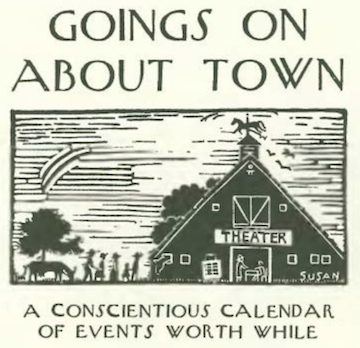
…on to our spots, we start with a summer stock-themed woodcut by Susan Willard Flint

…escaping the heat with Christina Malman

…on to our cartoonists, we begin with caption-less entries by Constantin Alajalov

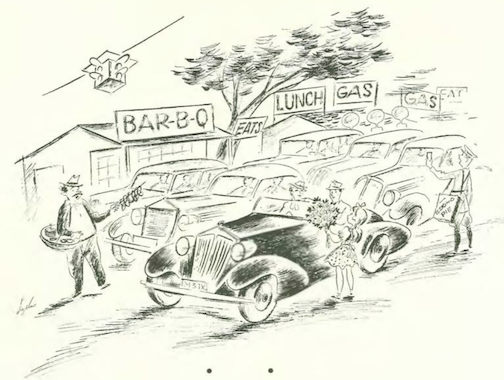
Daniel ‘Alain’ Brustlein

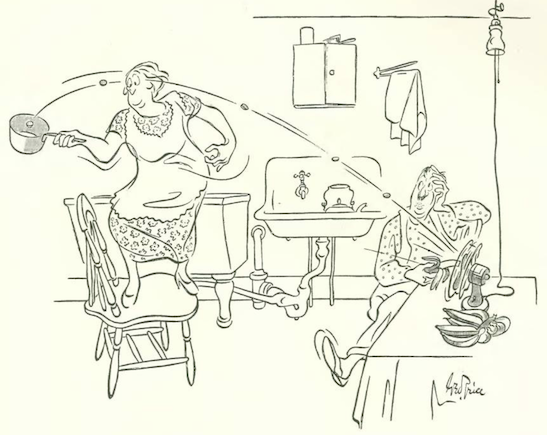
George Price

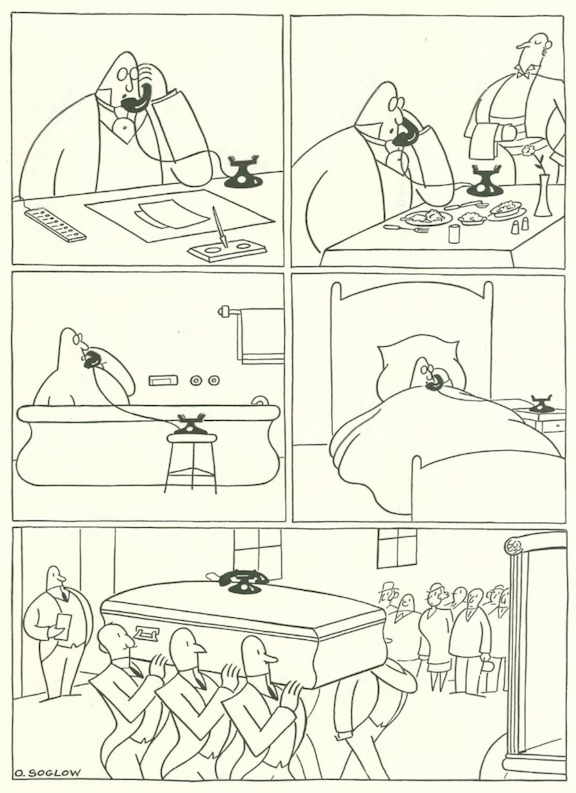
…and Otto Soglow

Alan Dunn gave us a man seeking order in chaos…

…and Helen Hokinson gave us a woman turning chaos into order…

…another from Hokinson, anticipating a scene from The Music Man

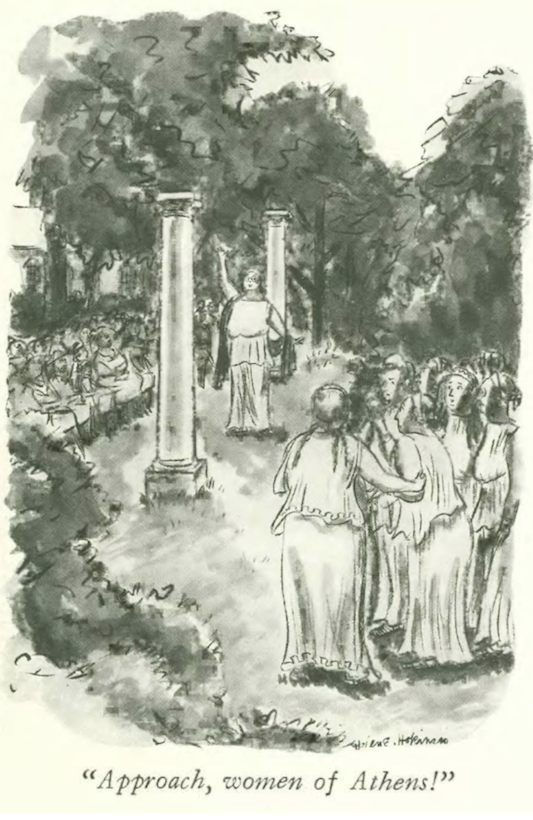
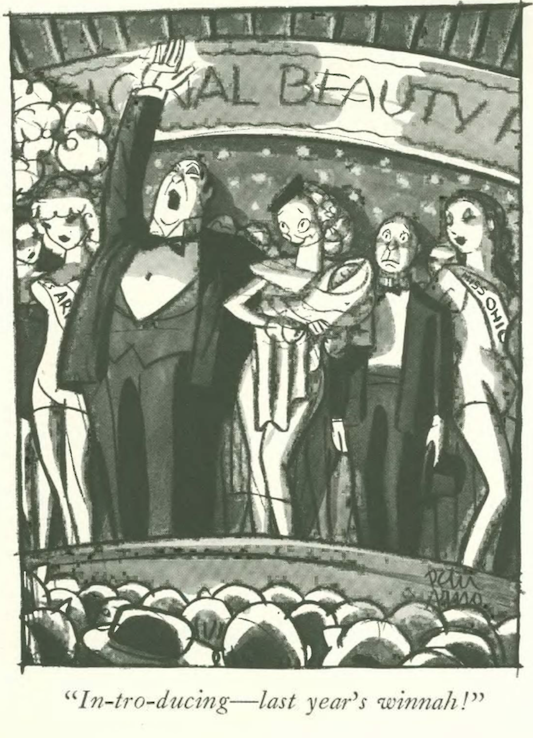
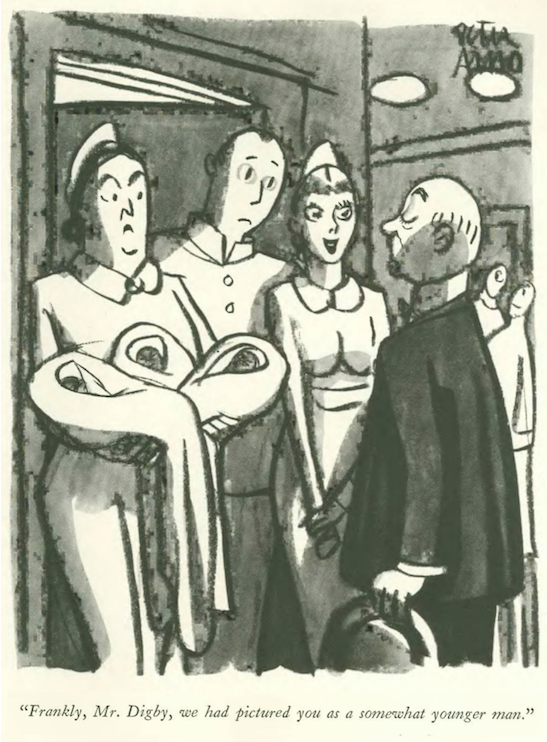
…and we close with Peter Arno, and a surprise announcement…
Next Time: Platoon Platitudes…

Highfalutin Absurdities

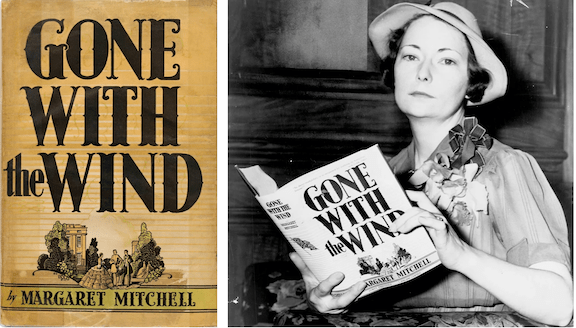
Above: Margaret Mitchell poses with her award-winning novel, c. 1938. Mitchell won the National Book Award for Fiction for Most Distinguished Novel of 1936 and the Pulitzer Prize for Fiction in 1937. Gone With the Wind was the only novel she published in her lifetime. (britannica.com)

Margaret Mitchell’s 1936 novel Gone With the Wind and the 1939 film it inspired have both served as controversial reference points for cultural critics and scholars, particularly for the stereotypical and derogatory portrayals of African Americans in the 19th century South.

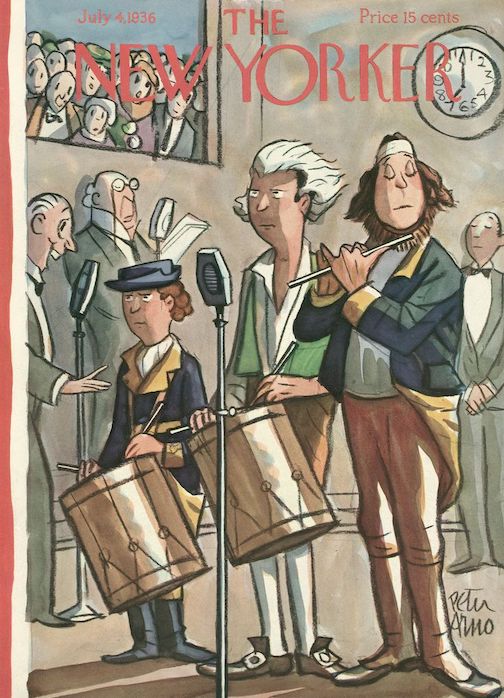
July 4, 1936 cover by Peter Arno.

Ninety years later the novel still proves divisive; it also remains one of America’s most-loved books. Worldwide, more than 30 million copies have been printed in the U.S. and abroad.

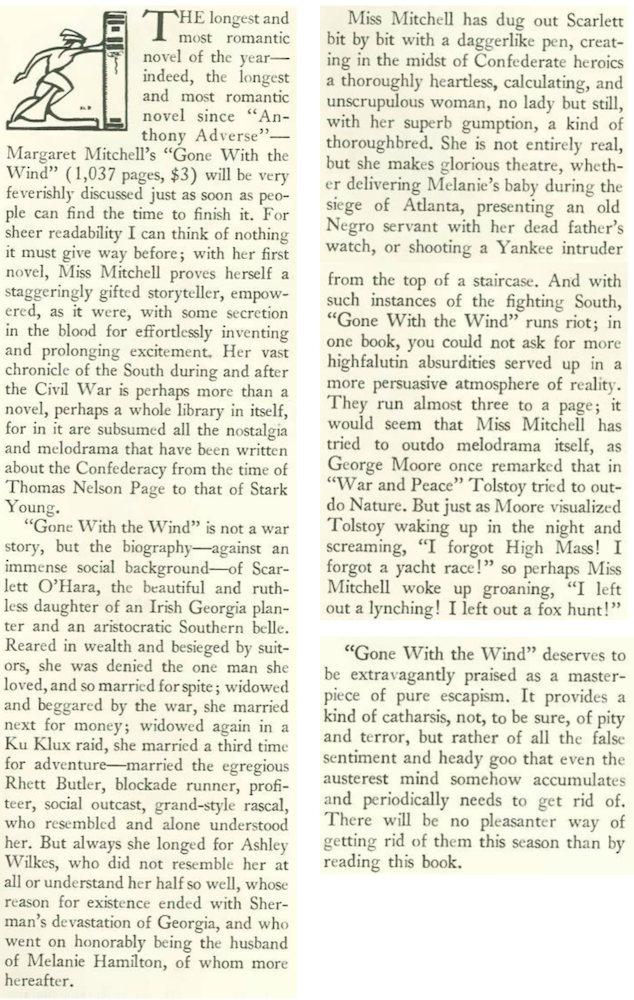
In 1936 the novel quickly rose to the top of fiction bestseller lists, and was generally well received by critics. Novelist and literary critic Louis Kronenberger (1904–1980), who sat in for Clifton Fadiman in The New Yorker’s book section, praised the novel for its “highfalutin absurdities,” calling it a “masterpiece of pure escapism.” Kronenberger wrote that Gone with the Wind provided “a kind of catharsis…of all the false sentiment and heady goo that even the austerest mind somehow accumulates and periodically needs to get rid of.” He correctly predicted that the novel would be “very feverishly discussed” once people found the time to read its thousand-plus pages. Excerpts:

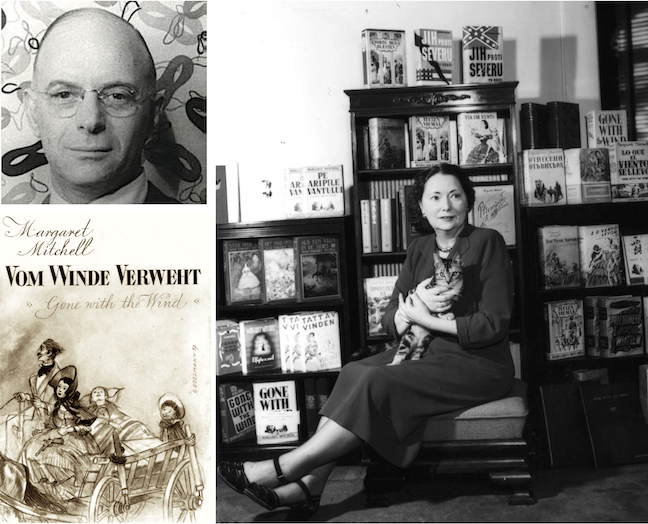
GOO GONE…Clockwise, from top left: Reading Gone With the Wind will clear one’s “heady goo,” according to critic Louis Kronenberger; Margaret Mitchell (1900–1949) seated before a selection of Gone With the Wind translations; an example of a German version of the novel—Gone With the Wind was translated into at least forty different languages with eight hundred unique international printings. (azquotes.com/Atlanta Journal-Constitution/georgiaencyclopedia.org)
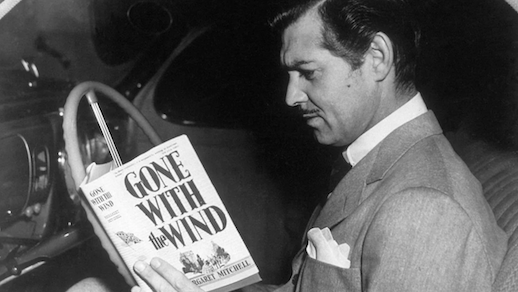
IT HAS HOW MANY PAGES?!…Clark Gable, who portrayed Rhett Butler in the 1939 film adaptation of Gone with the Wind, has a look at Margaret Mitchell’s doorstop of a book. Mitchell was not involved in the screenplay or film production. (yahoo.com)

 * * *

Tweet From Tinseltown

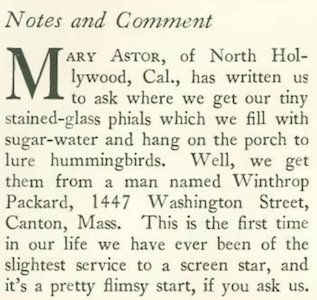
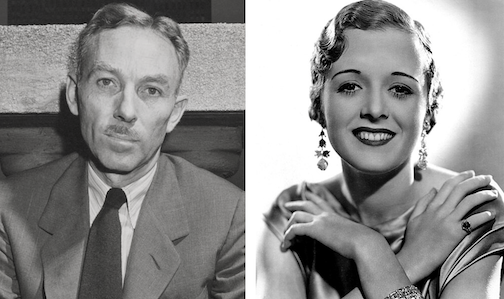
Apparently actress Mary Astor was a New Yorker reader, having read an E.B. White “Notes” column that mentioned his stained-glass hummingbird feeders.

FOR THE BIRDS…A New Yorker column by E.B. White inspired actress Mary Astor to feed Hollywood’s hummingbirds. (Wikipedia)

 * * *

Going, Going, Gone

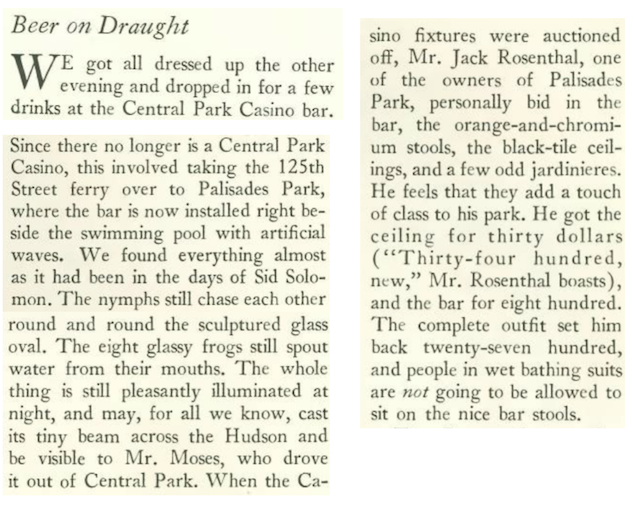
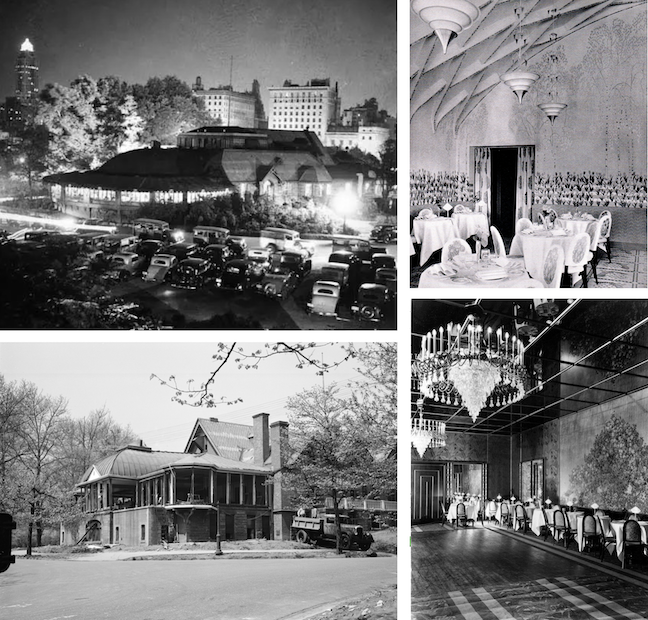
A “Talk of the Town” piece co-written by A. J. Liebling and Russell Maloney tracked down what remained of the Central Park Casino, which had been demolished under the orders of Parks Commissioner Robert Moses.

Moses hated former Mayor Jimmy Walker, and by association he hated Walker’s favorite haunt, the Central Park Casino. Despite pleas from preservationists to save the famous Art Deco supper club, which had been beautifully rebuilt by the late designer Joseph Urban, Moses moved as quickly as possible to demolish the building. Following a public auction, the iconic horseshoe-shaped bar and some interior fixtures were acquired by the Palisades Amusement Park in New Jersey and subsequently installed beside the park’s wave pool.

FROM GLITTER TO RUIN…Clockwise, from top left, the Central Park Casino on the evening of Sept.10, 1935; interior images of Joseph Urban’s elegant Art Deco designs; workers remove windows and interior fixtures as demolition commences in May 1936. (nycgovparks.com/centralpark.org/mcny.org)

 * * *

Maddy Returns

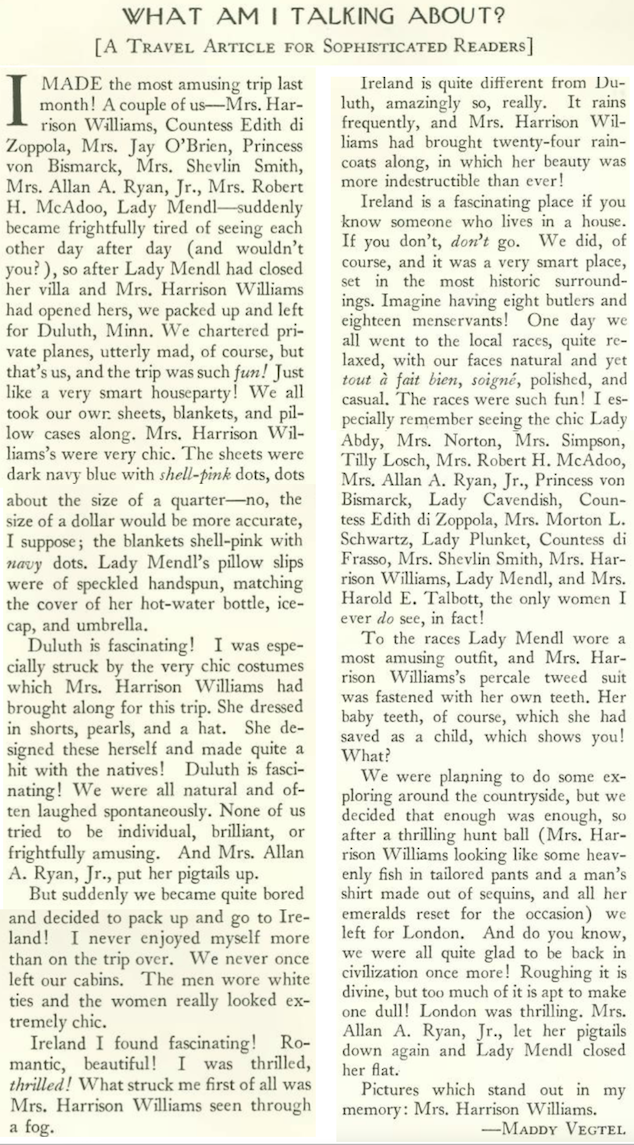
It’s a shame that writer Maddy Vegtel is largely forgotten today. She wrote with great wit and verve, and was well known in the 1920s and 30s for her Vanity Fair profiles and for her articles about Holland, her native land. A contributor to The New Yorker from 1926 to 1956, she published this casual in July 4 issue.

 * * *

Bad Men and Mad Men

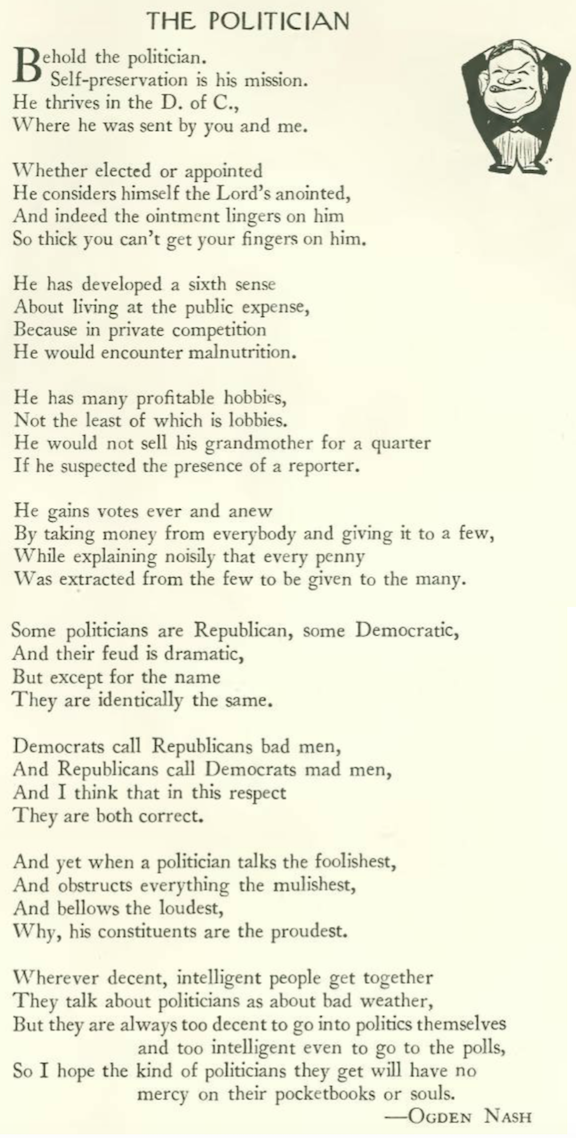
The poet Ogden Nash shared his thoughts on the summer political convention season:

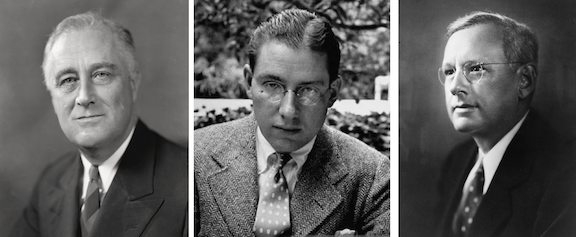
THE LORD’S ANOINTED…Ogden Nash (center) observed this belief in the political animal; at left and right, the Democratic and Republican nominees for president in 1936, Franklin D. Roosevelt and Alf Landon. (Wikimedia/poetryverse.com/Wikipedia)

 * * *

At the Movies

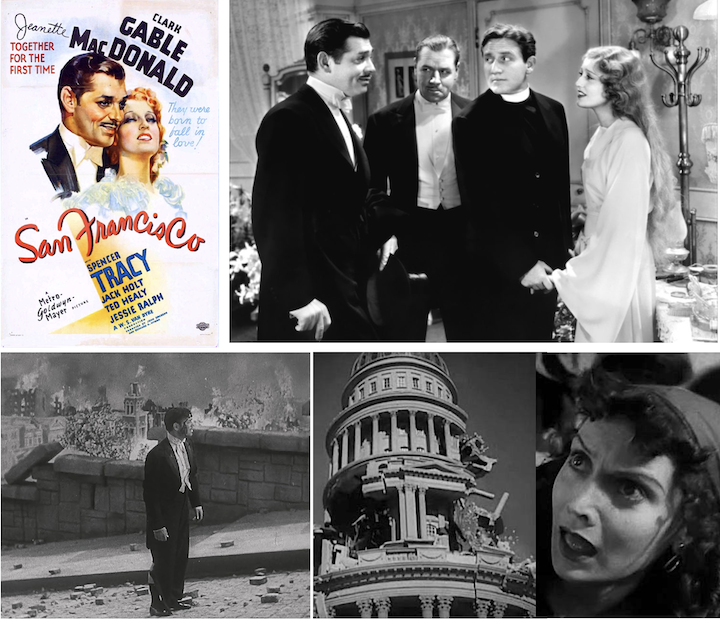
Critic John Mosher was on board for MGM’s musical-drama disaster film San Francisco, which told the story of a saloon keeper, a singer, and a priest caught up in 1906 San Francisco earthquake.

SHAKING IN THEIR BOOTS…Clockwise, from top left: MGM poster for San Francisco touts the first-time pairing of Clark Gable and Jeanette MacDonald in a film; scene from the film featuring, from left, Gable, Jack Holt, Spencer Tracy and MacDonald; the film included stunning effects, including an earthquake montage sequence that interspersed scenes of wreckage with the faces of terrified victims; Gable assesses the carnage in a scene from the film. (imdb.com/kittypackard.wordpress.com)

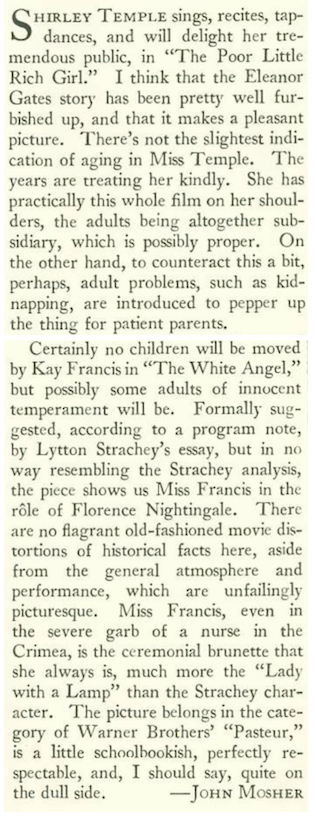
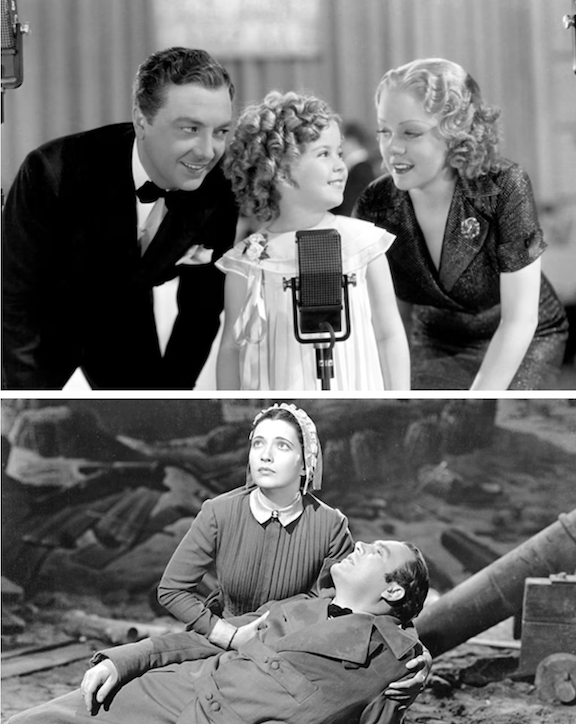
Mosher offered a tongue-cheek assessment of Shirley Temple’s appearance in her latest film, The Poor Little Rich Girl, noting that “There’s not the slightest indication of aging in Miss Temple.” The child star was just shy of eight years old when she filmed the picture. As for the The White Angel, Mosher found the Florence Nightingale biopic—with Kay Francis in the title role—”a little schoolbookish [and] quite on the dull side.”

THAT YOUTHFUL GLOW…Top photo: Critic John Mosher found Shirley Temple still able to “delight her tremendous public” in The Poor Little Rich Girl—she is seen here with co-stars Jack Haley and Alice Faye; Below: Kay Francis and Ian Hunter in The White Angel, a film about Florence Nightingale’s pioneering work as a nurse during the Crimean War. (tcm.com)

 * * *

From Our Advertisers

Sunscreen as we understand it today wasn’t available to New Yorkers in 1936, so they relied on zinc oxide and other mineral applications to avoid sunburns…however, Eugene Schueler, founder of L’Oréal, developed the first tanning oil with UV radiation-filtering properties in Europe in 1935 (active ingredient was benzyl salicylate), and later marketed it to the U.S. as Ambre Solaire…the brand is still sold today…

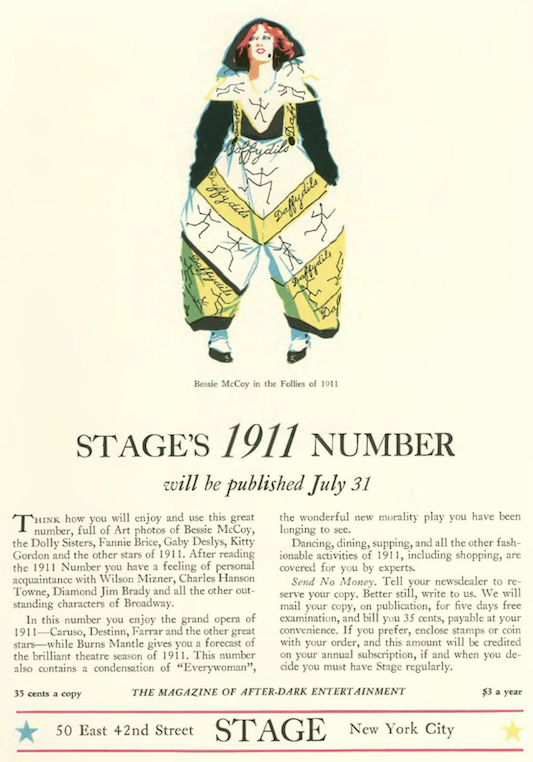
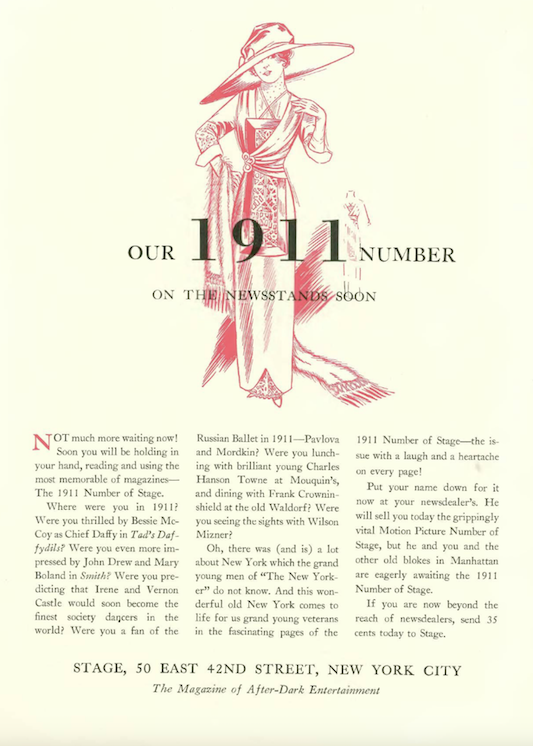
Stage magazine continued to promote their 1911 throwback issue…

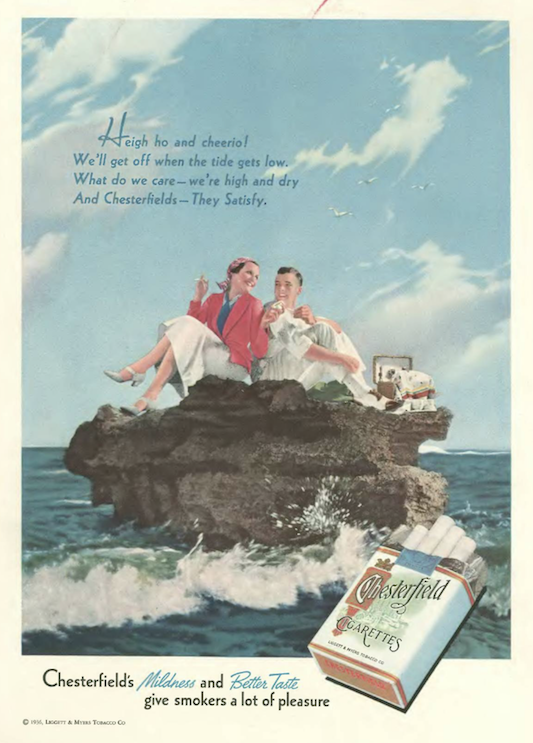
…the back cover belonged to Liggett & Myers, offering another romantic couple enjoying their Chesterfields…

…we open the cartoons with Richard Taylor, who felt the heat as summer took hold in the city…on July 4, 1936, the official high temperature in Central Park reached an unseasonably warm 93 degrees F (34 c), hitting 106 F (41C) five days later on July 9…that mark remains the city’s all-time absolute highest temperature…

Otto Soglow’s spot art showed us how one well-heeled family escaped the hot city…

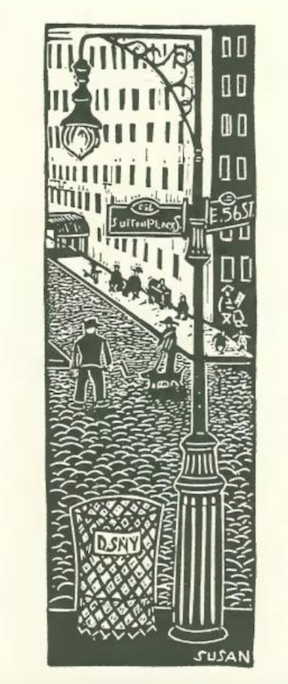
…while Susan Willard Flint offered a woodcut if a quiet cobbled street…
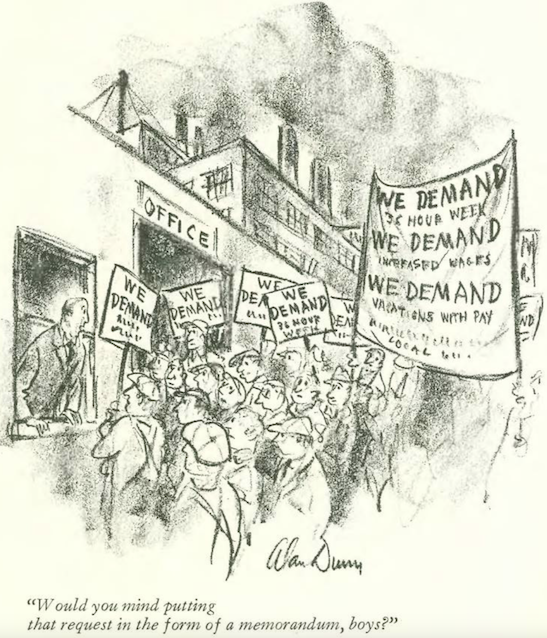
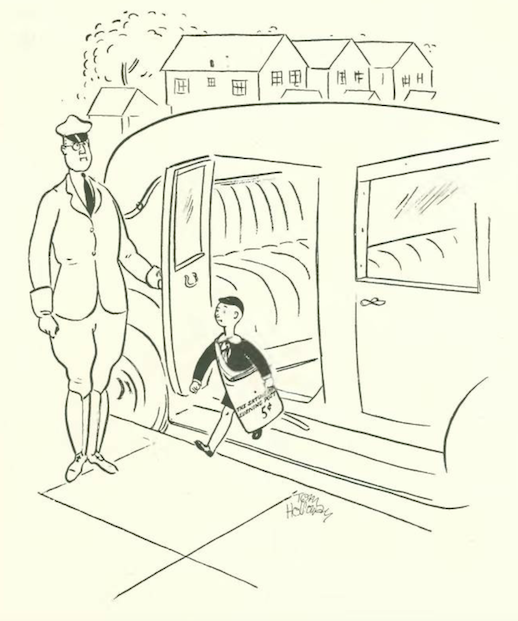
Tom Holloway showed us how one posh kid delivered the Saturday Evening Post (Holloway was a cartoonist for the Post, contributing just two drawings to The New Yorker, both in 1936)…

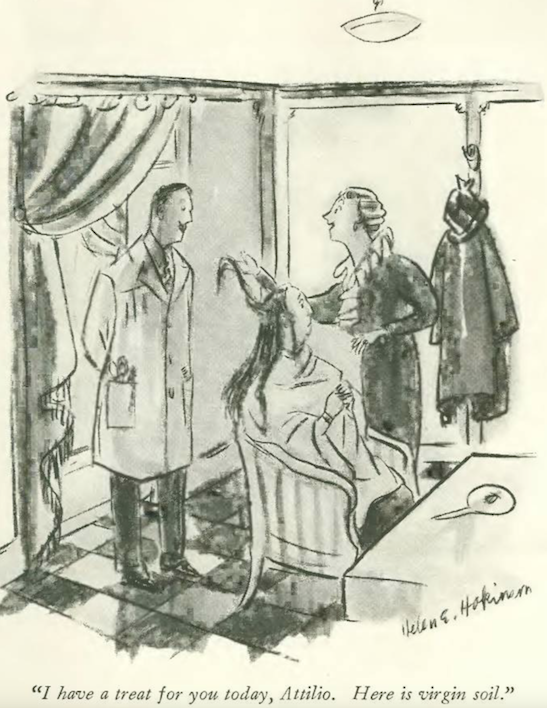
…the woman’s expression says it all in this Helen Hokinson cartoon…

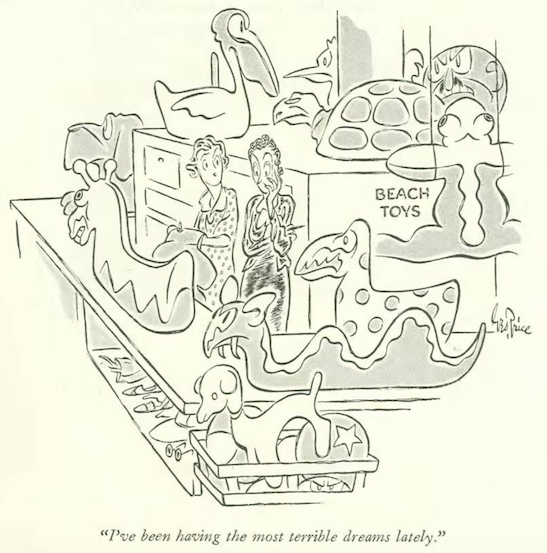
George Price gave us a saleswoman who saw one two many pool floats…

Gardner Rea drew up a vast estate for a man who (almost) had it all…

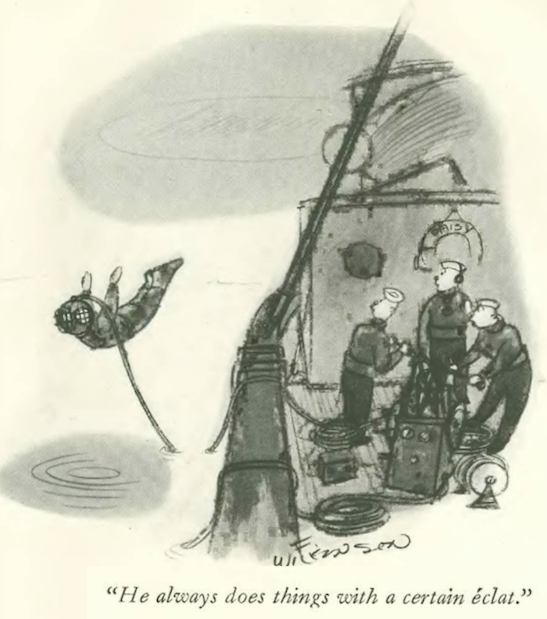
Fritz Wilkinson did some deep sea swan diving…

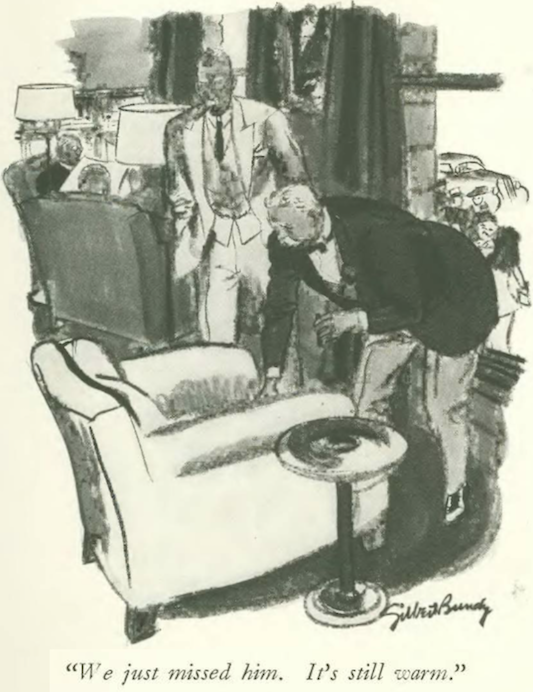
Gilbert Bundy found a clue at the gentleman’s club…

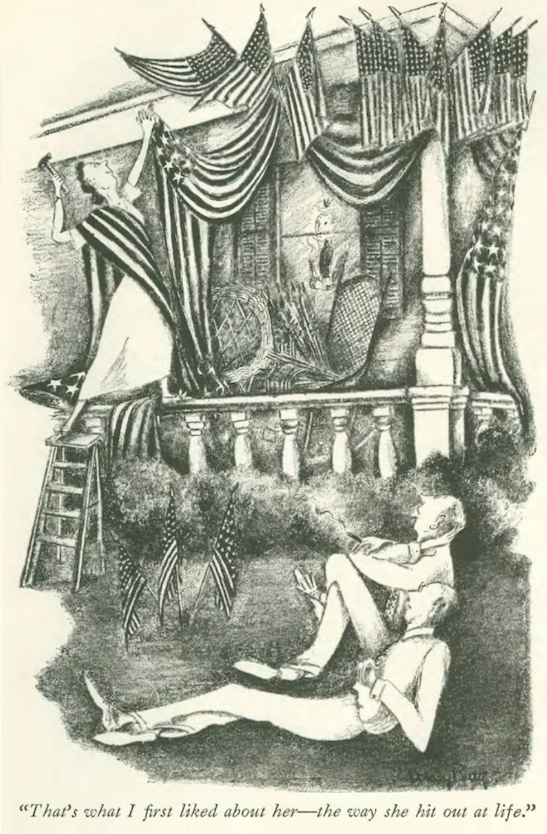
Mary Petty went all out for the Fourth of July…

…and we close with Peter Arno, and the miracle of birth…

Next Time: Better Living Through Fiction…

Poppy Returns

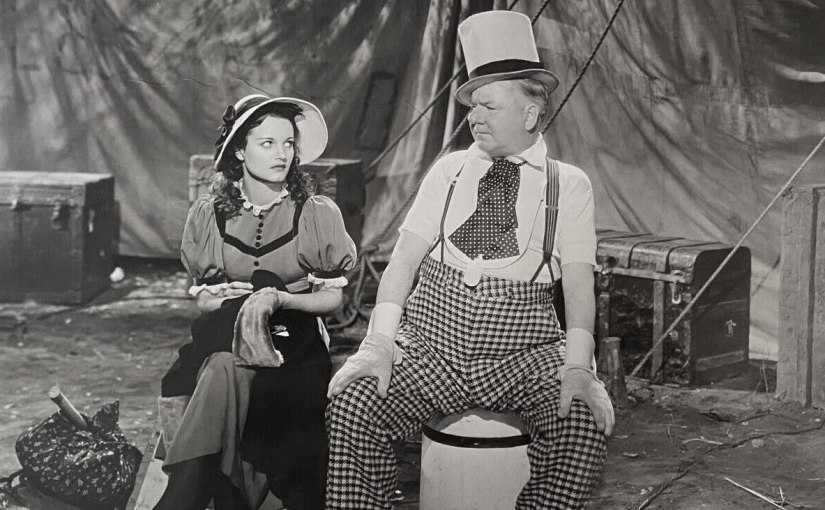
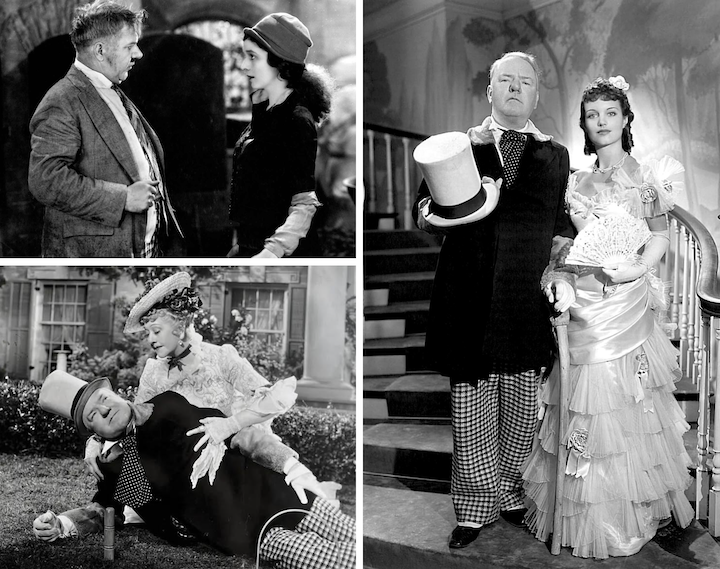
Above: Rochelle Hudson and W.C. Fields in scene from Poppy. Fields reprised his vaudeville character Professor McGargle (from the hit 1923 stage revue of the same name), who learns about a million-dollar inheritance meant for a long-lost local heiress and concocts a plan to pass off his daughter, Poppy, as the true heiress. (Facebook.com)

Eighty years after his death W.C. Fields is still recognized as one of the America’s great comic geniuses. When he made a sound film version of his hit Broadway play, Poppy, in 1936, many thought it would be his last, since he suffered from a variety of ailments including a bad back and chronic lung congestion. Doubtless two quarts of liquor a day also had a few people wondering.

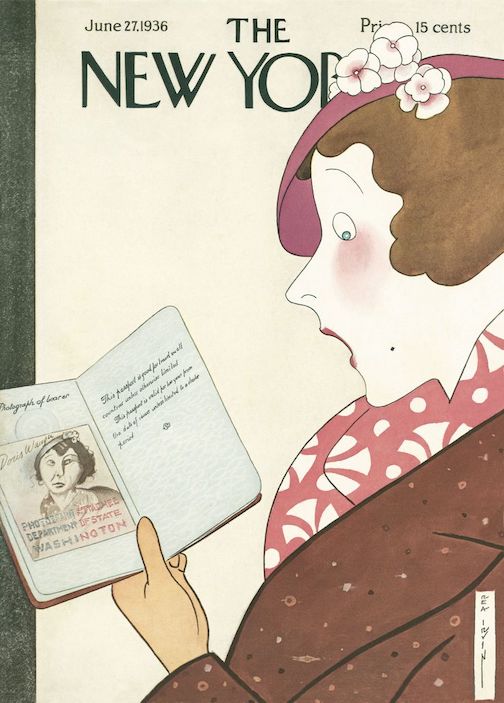
June 27, 1936 cover by Rea Irvin. 

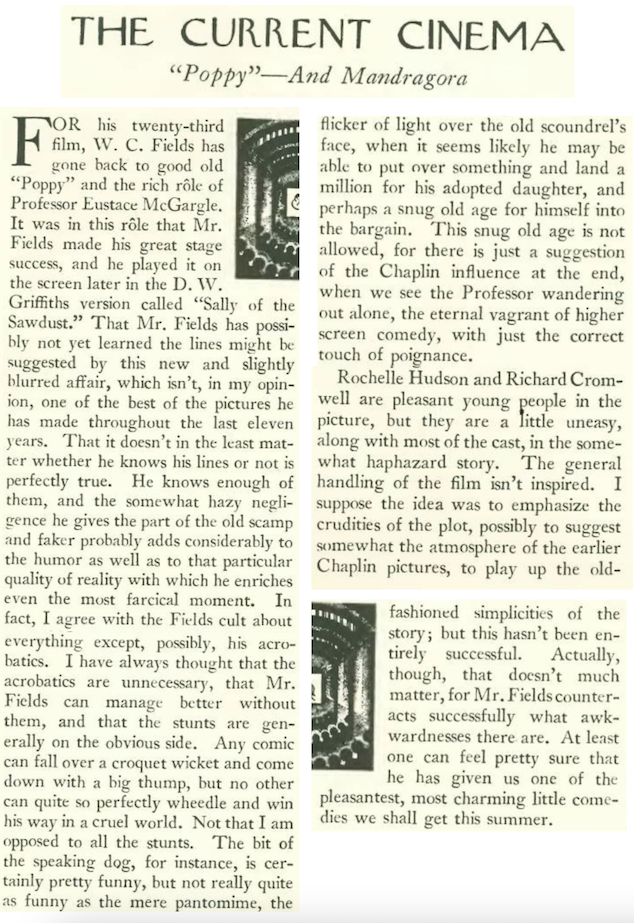
It would have been an appropriate, if premature ending to Field’s career, since it was the Poppy stage play that launched him into national stardom (along with the play’s first adaptation into film, the 1925 silent Sally of the Sawdust). The play and the silent film introduced audiences to the lovable snake oil salesman “Professor” Eustace McGargle, who returned in the 1936 film, “a slightly blurred affair” according to critic John Mosher.

THE PROFESSOR RETURNS…Clockwise, from top left: W.C. Fields and Carole Dempster in 1925’s Sally of the Sawdust, which was based on the stage play Poppy and was directed by D.W. Griffith; Fields as Professor Eustace McGargle and Rochelle Hudson as Poppy in 1936’s Poppy; Fields and Catherine Doucet, who portrayed Countess Maggi Tubbs DePuizzi. (filmforum.org/doctormacro.com/facebook.com)

The “blurred” performance by Fields (1880–1946), the result of his various ills, didn’t seem to affect most critics—the New York Times, for example, called the film “a glorious victory.” Remarkably, Fields would live another ten years and go on to star in such classics as 1940’s My Little Chickadee, (with Mae West), 1940’s The Bank Dick, and 1941’s Never Give a Sucker an Even Break.

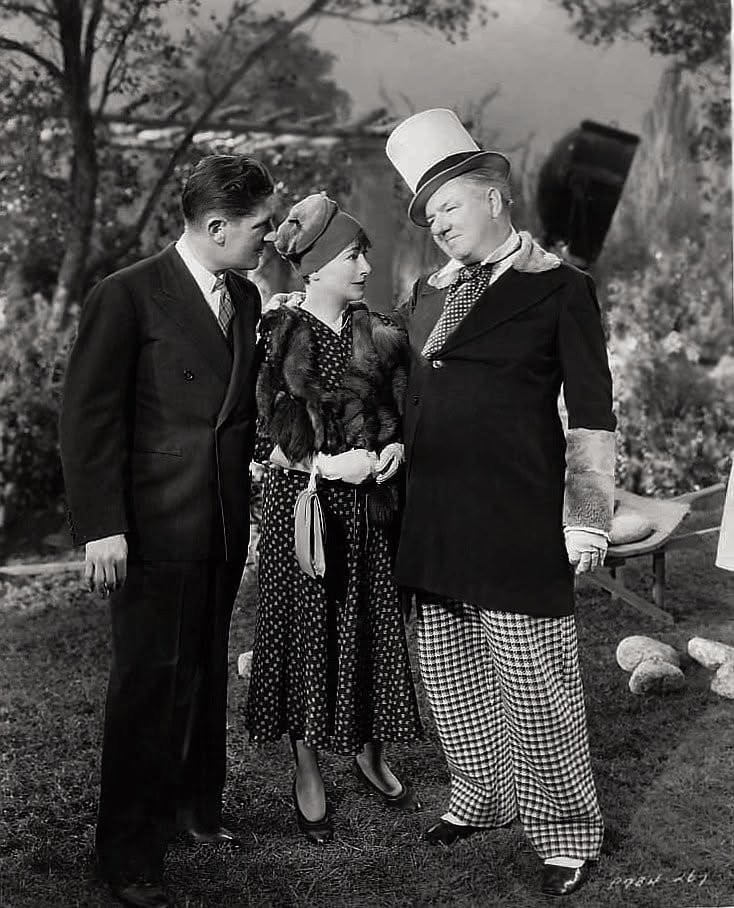
HELLO FRIENDS…W.C. Fields chats with his close friend and Poppy director Eddie Sutherland, who was accompanied by writer Dorothy Parker during a visit to the set of Poppy. (Facebook.com)

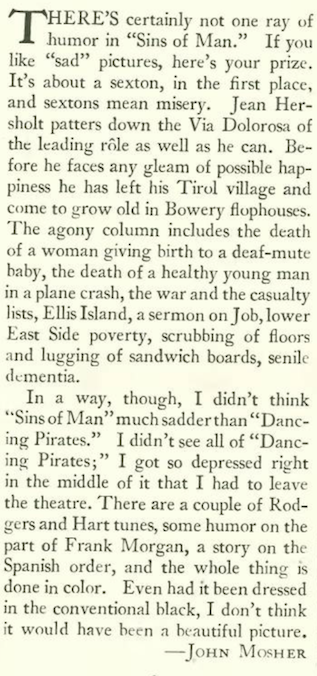
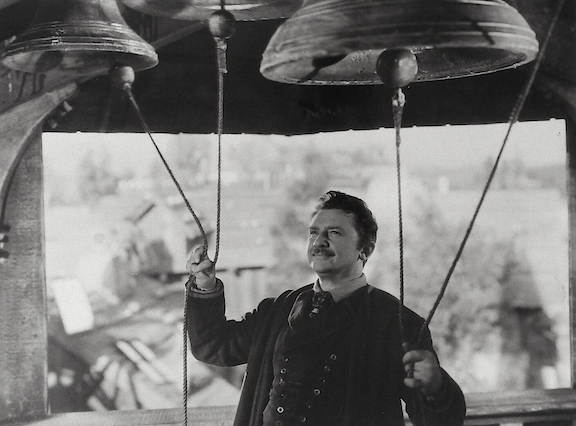
Mosher also reviewed a “sad” picture about the tragic life of a Tyrolean sexton, Sins of Man, and the musical comedy Dancing Pirate, which he deemed even sadder because it was so terrible (Mosher walked out during the middle of the picture).

FROM BELLS TO THE BOWERY…Jean Hersholt played a Tyrolian sexton with an American dream that goes awry in Sins of Man. (eBay.com)
SEEING RED…Not even Technicolor could spare Dancing Pirate from John Mosher’s wrath. At left, Steffi Duna and Charles Collins in a dance scene; eighteen-year-old Rita Hayworth (right) appeared as an uncredited dancer in the film—here she poses in a publicity photo for 1936’s Human Cargos. (mediaplaynews.com/facebook.com)

 * * *

All Aboard

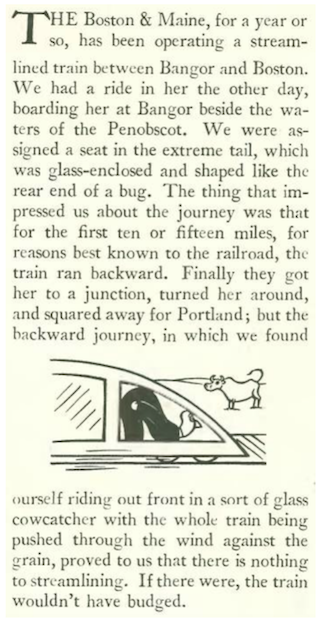
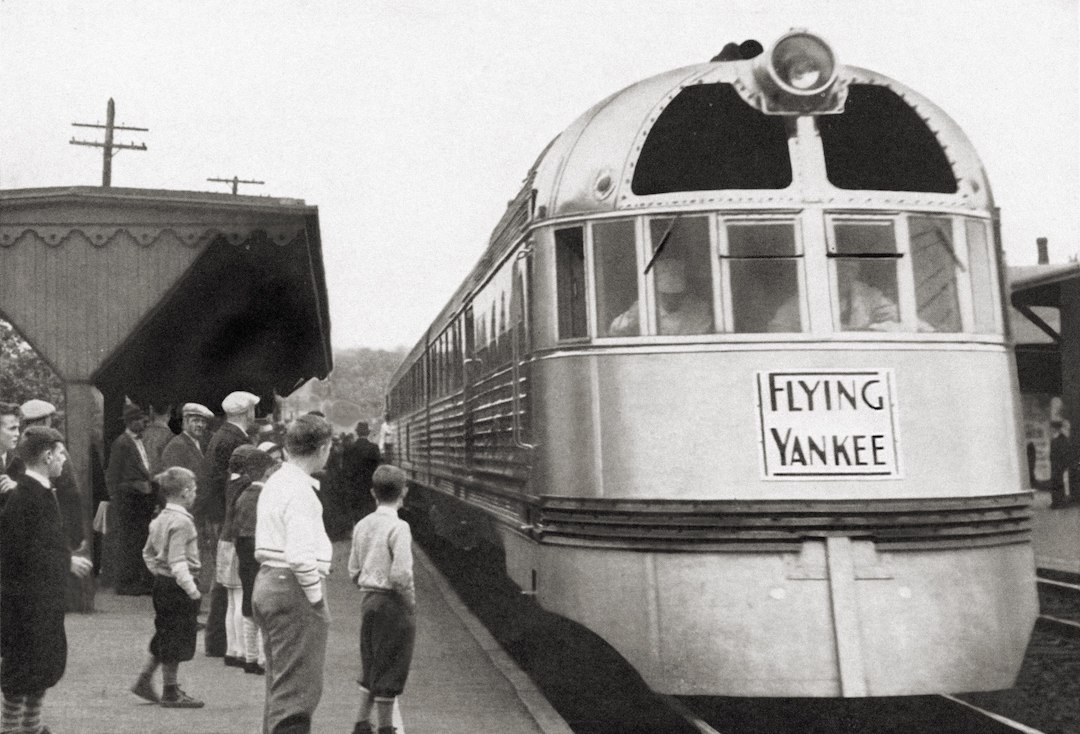
In his “Notes and Comment,” E.B. White described a trip on a Boston & Main streamliner that traveled along a branch line. Lacking a turning loop, the train had to run in reverse for half of the round trip.

TWO-WAY TICKET…The Boston & Main streamlined Flying Yankee (seen here in 1938) would run both forward and backward when traveling along a branch line that lacked a turning loop. (Wikipedia)

 * * *

Furies Al Fresco

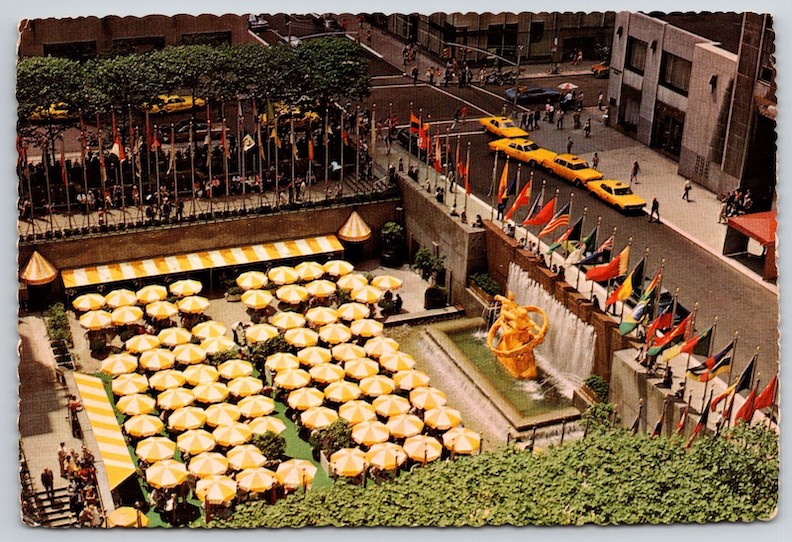
On June 17, 1936 Rockefeller Center opened the Promenade Café in the plaza surrounding the Prometheus Fountain (later that year a temporary ice skating rink took the spot, now a permanent, iconic feature of the plaza). Writing for “The Talk of the Town,” E.B. White commented on the breezy dining experience he shared with wife, Katharine Sergeant White. Excerpt:

FIRE AND ICE…Patrons enjoy dining with the god of fire in the plaza beneath 30 Rock, circa 1970. The plaza is converted to an ice skating rink in the winter. (eBay.com)

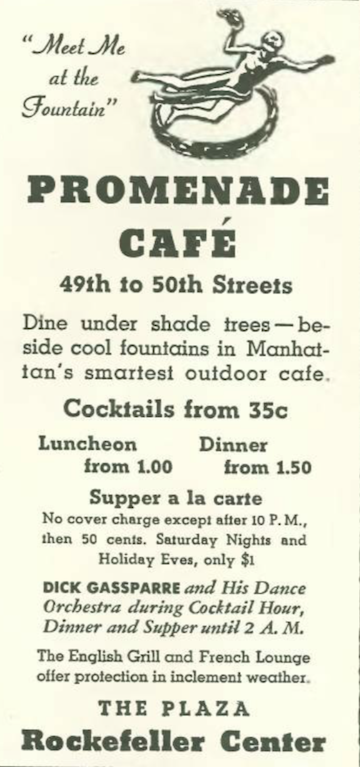
The magazine’s next issue (July 4) advertised dinner, dancing and thirty-five cent cocktails at the Promenade Café…

 * * *

From Our Advertisers

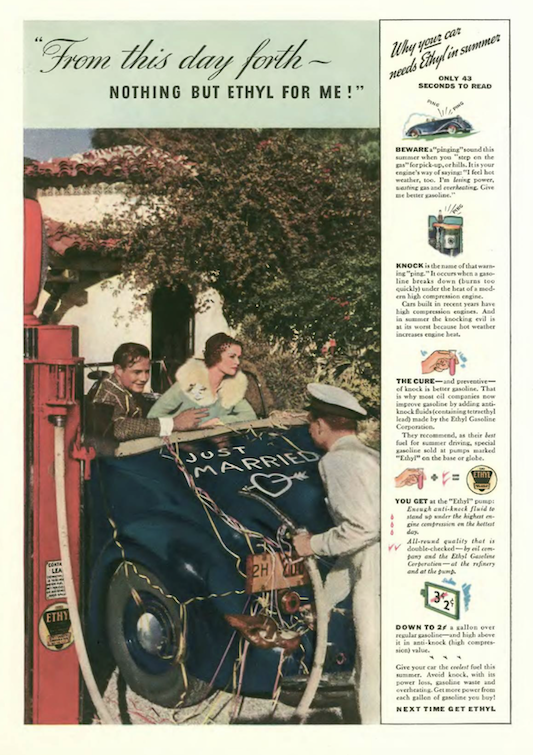
We open with a June Bride and hubby tanking up on some leaded gas before heading to Niagara Falls…

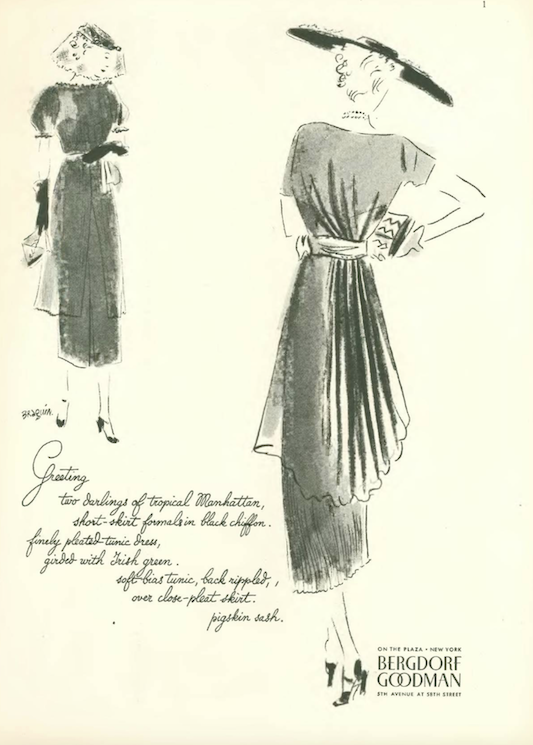
…opposite the Ethyl ad was this Simeon Braguin-illustrated spot for Bergdorf…

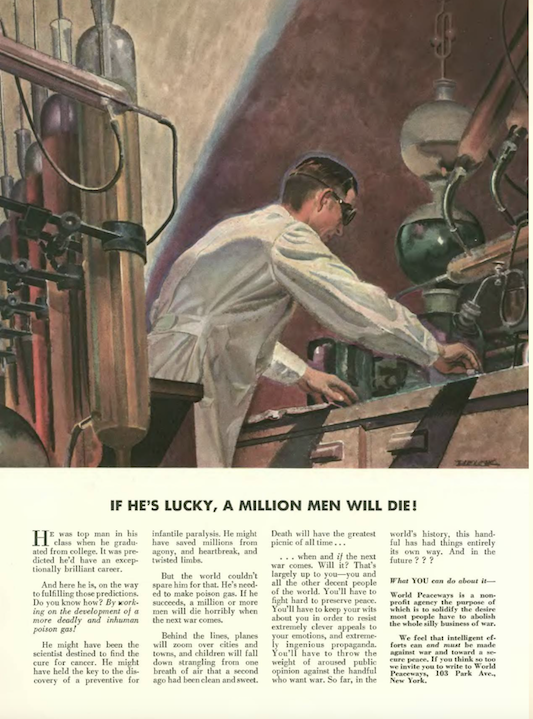
…the pacifists behind the World Peaceways ads pulled no punches when delivering their anti-war message…

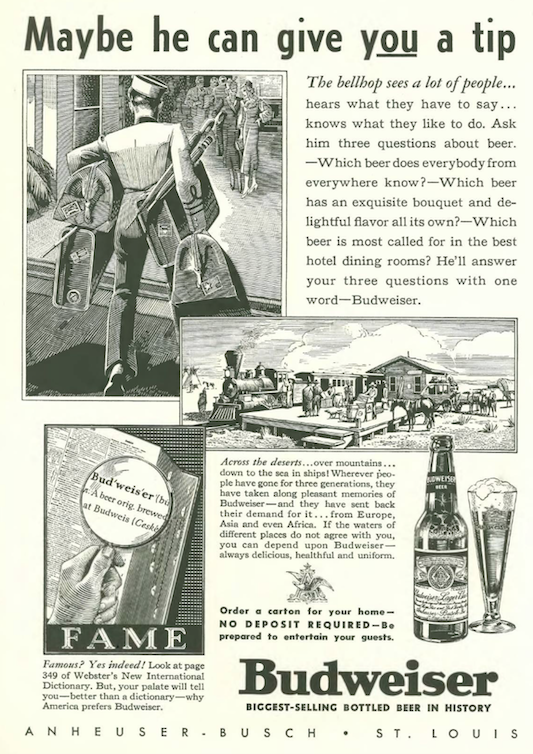
…Budweiser continued its laborious series of ads that employed analogies and metaphors to promote its best-selling suds…

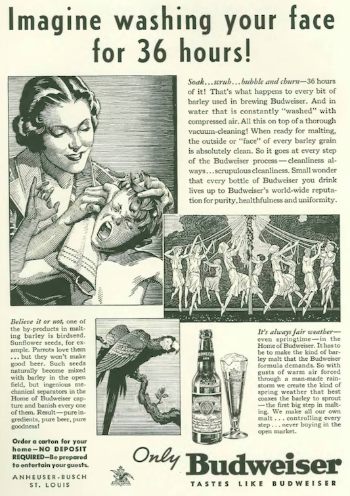
…recall the ad from the April 18 issue of The New Yorker, when the brewer used this disagreeable analogy to tout its “vacuum-cleansing” process…

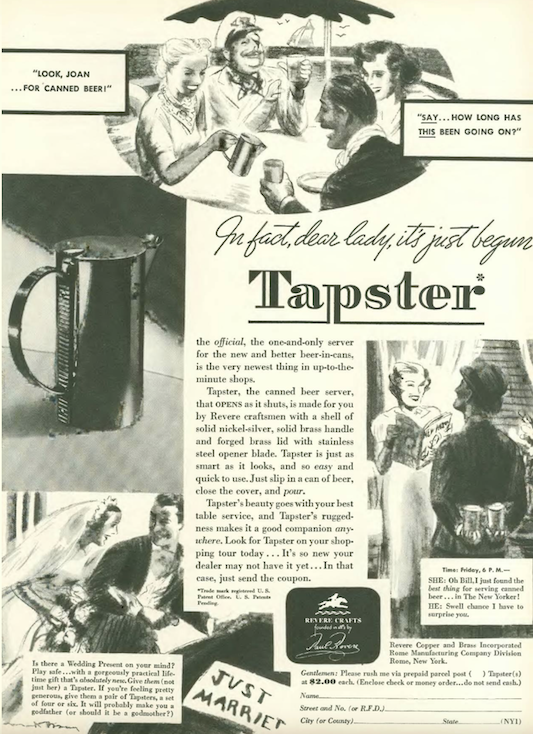
…the Revere Copper and Brass company responded to the recent invention of canned beer with an invention of its own…the Tapster, an elegant nickel and brass pitcher with a built-in punch on the underside of the lid…just insert a can, push down on the lid, and pour…great for the yacht, or as a gift to some newlyweds…

The nickel-silver and brass “Tapster” is highly sought by collectors today. (americanhistory.si.edu)

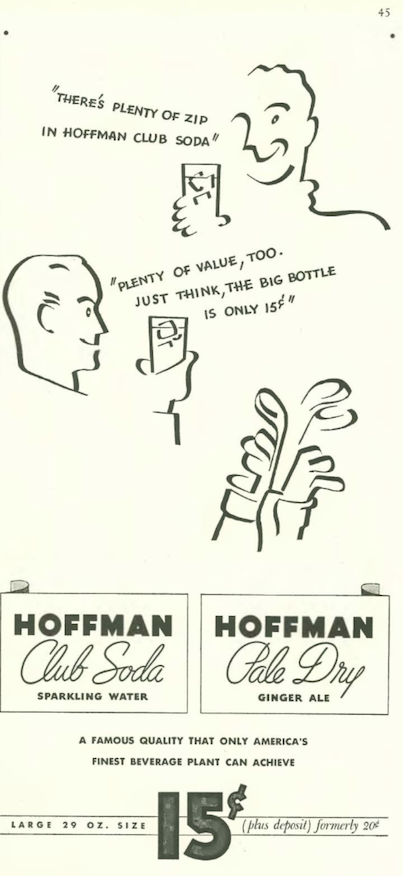
…in contrast to Budweiser’s wordy ads (or to White Rock’s colorful ones), the folks at Hoffman advertised their products with just a few lines of black ink…

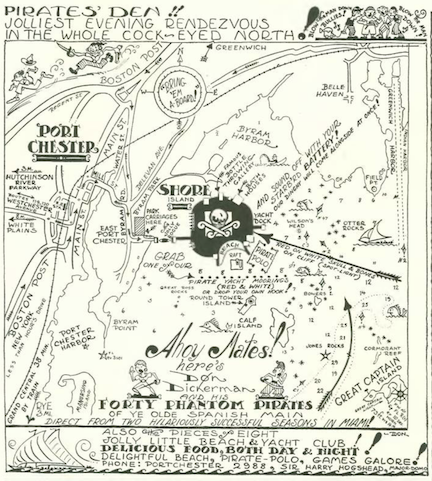
Don Dickerman continued to promote his latest “Pirates Den” near Port Chester…note that among many other talents, Dickerman was also an artist…he illustrated the ads for all of his enterprises, including this one…

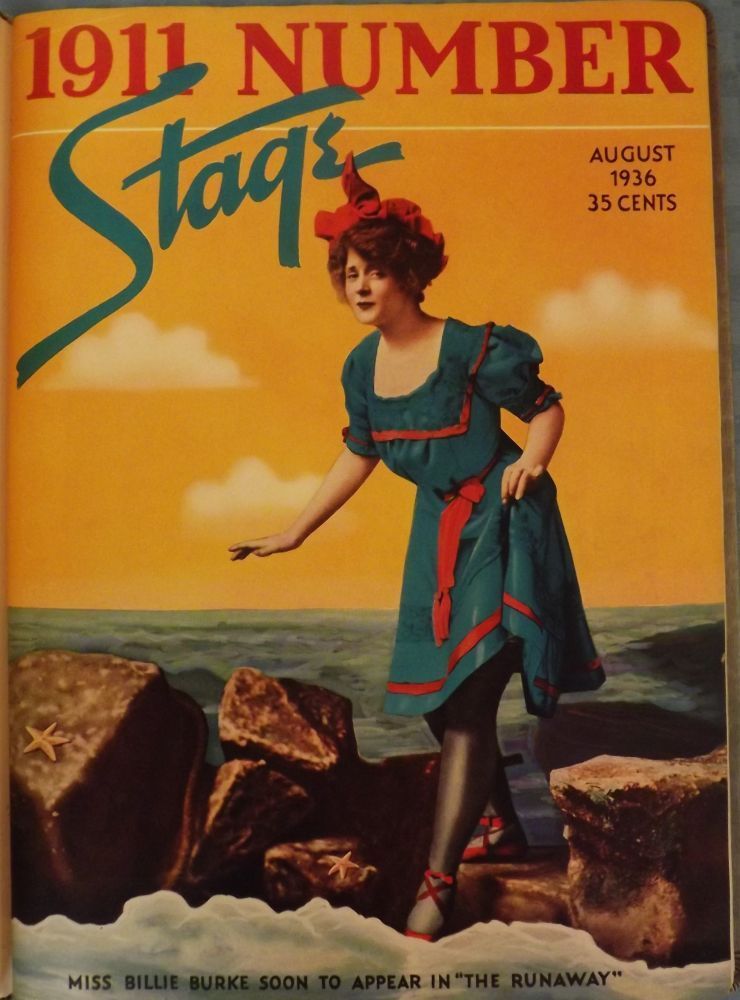
John Hanrahan, publisher and editor of Stage theater magazine (and who also helped put The New Yorker on solid financial footing), set aside the August 1936 issue as a special edition, the “1911 Number,” a nostalgic, tongue-in-cheek look back to the founding of Stage’s predecessor, The Theatre Guild Magazine. The magazine marked its 25th anniversary by examining the striking differences between 1911 and 1936 in the world of theater as well as in fashion and cultural mores.

…here is the cover of that issue, featuring Billie Burke, a leading Broadway actress who would marry producer and impresario Florenz Ziegfeld Jr in 1914…she is still known today for her portrayal of Glinda the Good Witch of the North in 1939’s The Wizard of Oz

(eBay.com)

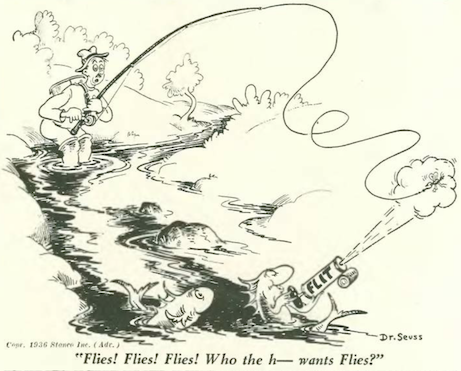
…and Dr. Seuss was still at it, finding new and clever ways to deploy the insecticide Flit…

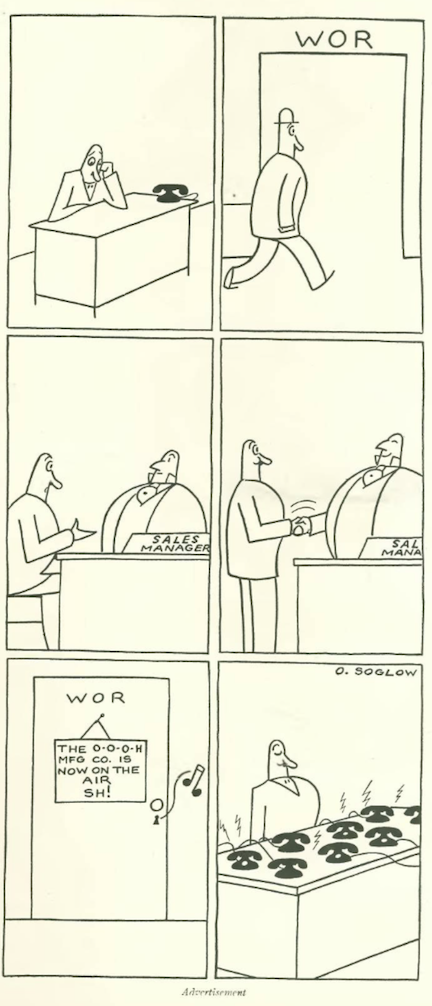
…the New York radio station WOR employed Otto Soglow to drum up some business for their ad department…WOR began broadcasting in early 1922, and is one of the oldest continuously operating radio stations in the U.S. (the three–letter call sign is characteristic of stations dating from the 1920s)…
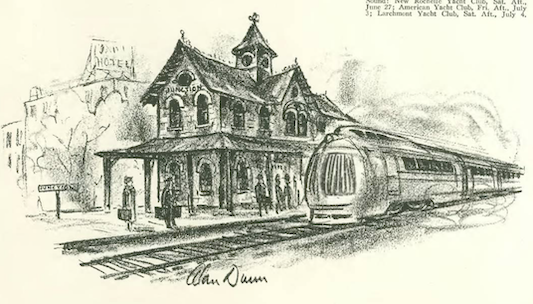
…Soglow gives us a nice segue to our cartoonists and illustrators, beginning with a Susan Willard Flint woodcut…

Alan Dunn contributed this spot drawing…

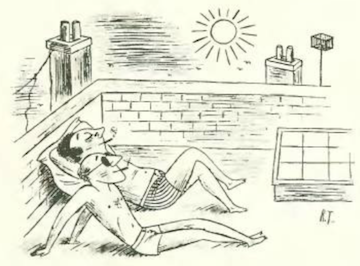
…as did Richard Taylor

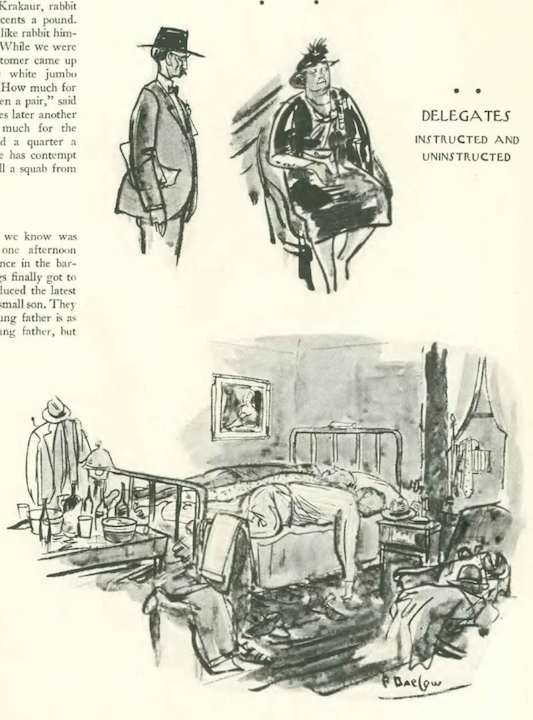
Perry Barlow offered some sketches from the summer convention scene…

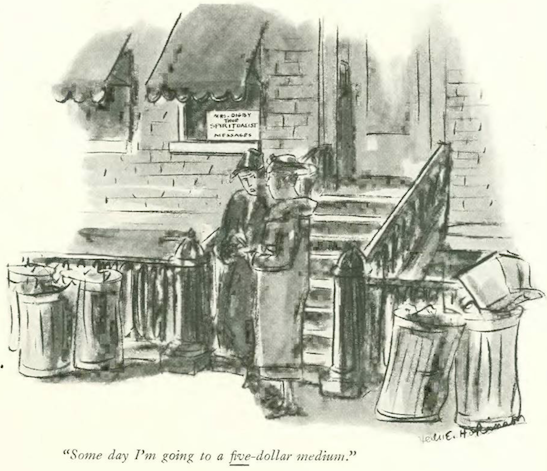
Helen Hokinson considered the value of fortune-teller…

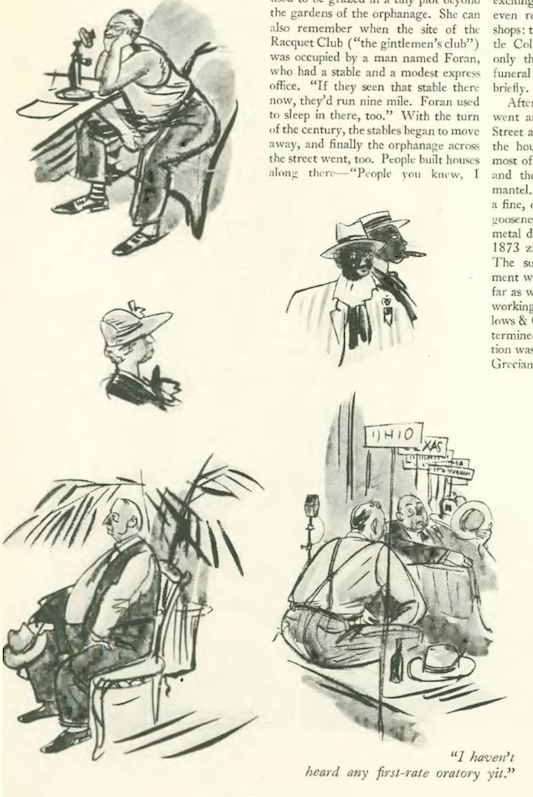
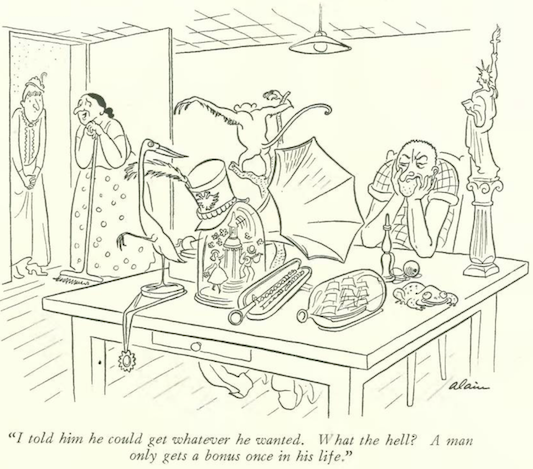
Alain illustrated what dreams are made of, at least for one man…

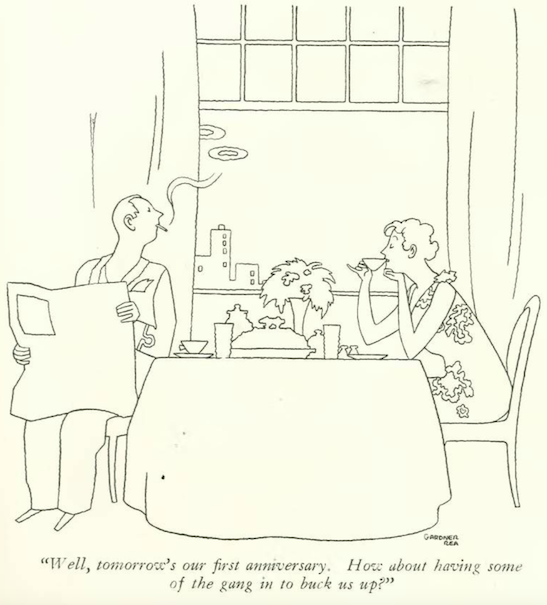
…and what are friends for? Gardner Rea had an idea…

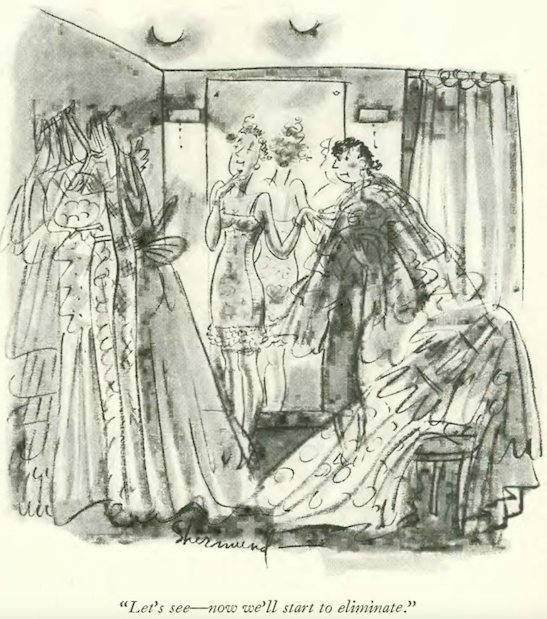
Barbara Shermund offered a challenge at a dress shop…

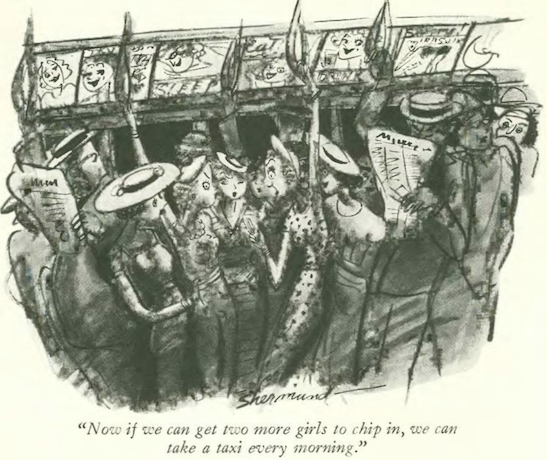
…and Shermund again, with an enterprising commuter…

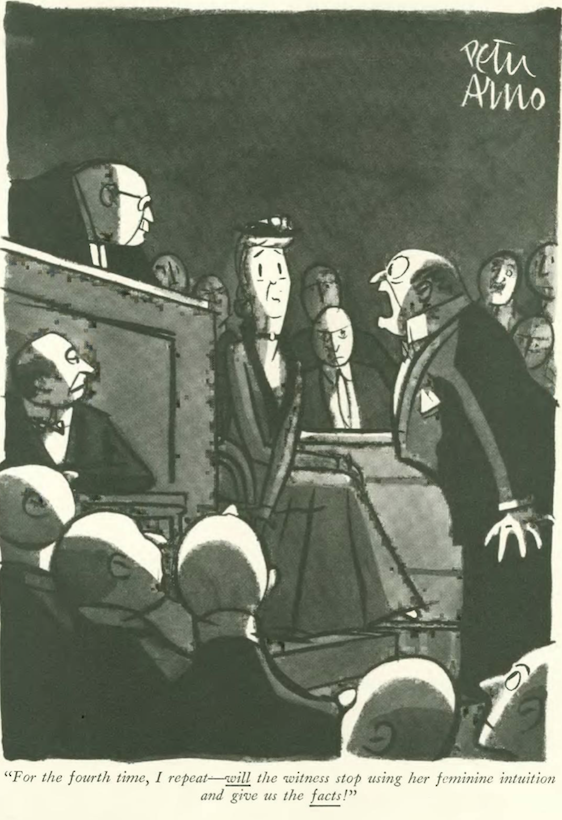
…just the facts ma’am, with Peter Arno in the court of law…

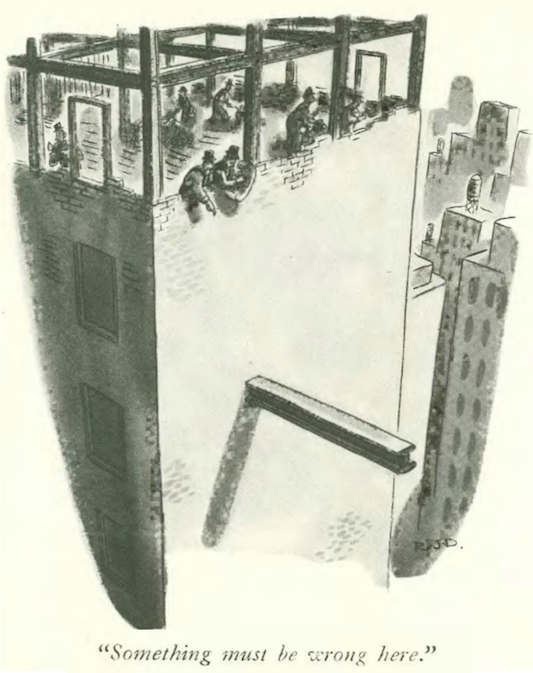
Robert Day presented a construction conundrum…

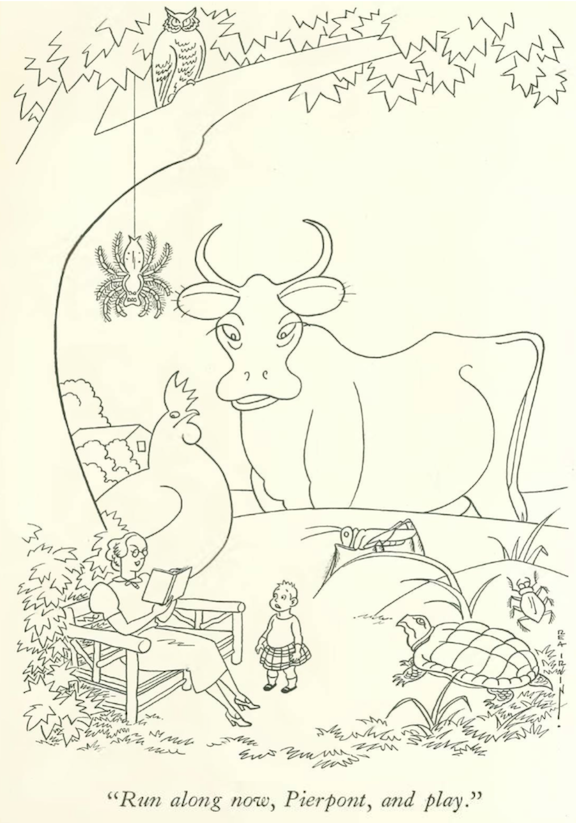
Rea Irvin took a child’s perspective of the wild world…

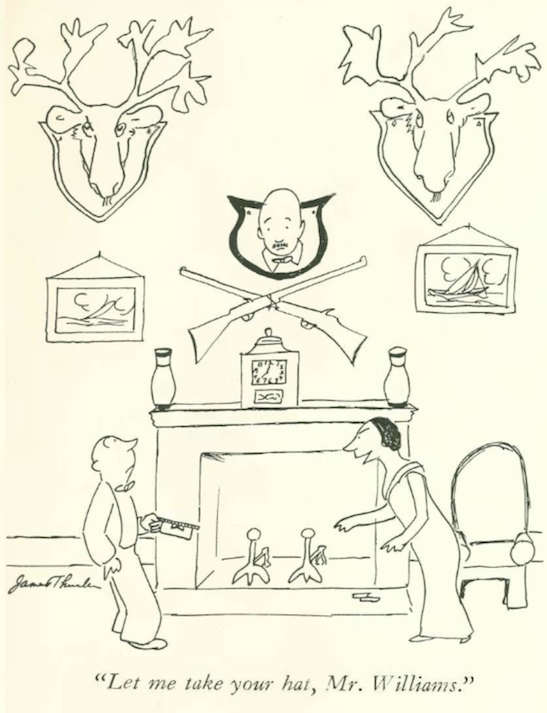
…and we close with this gem from James Thurber

Next Time: Highfalutin Absurdities…