Through the Looking Glass, Darkly

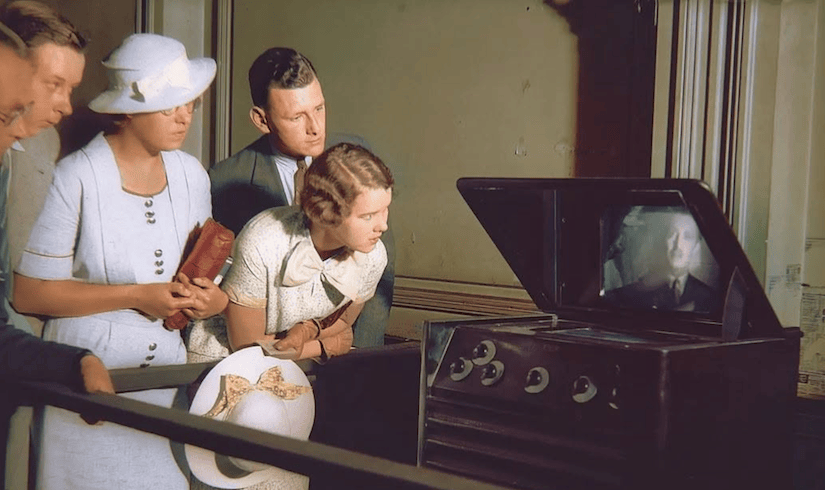
Above: The BBC offered a public demonstration of television at Waterloo Station, London, in 1936. (Colorized image via Facebook)

E.B. White was ever wary of new technology (except for aviation—he loved to fly), so television posed yet another thing to fear in the coming age of “omniscience.”
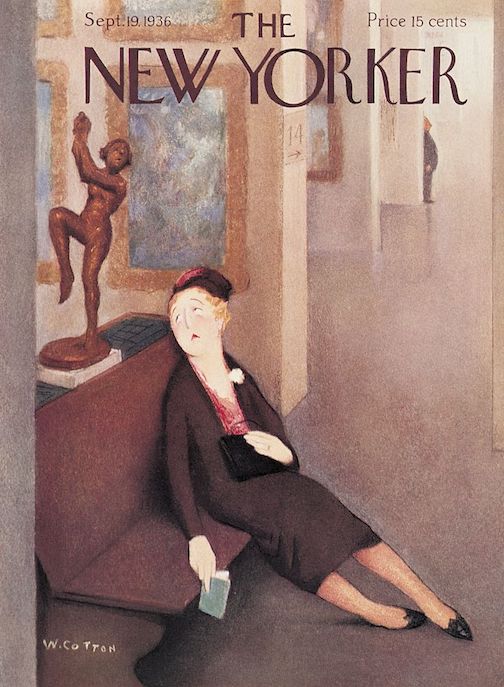
September 19, 1936 cover by William Cotton.

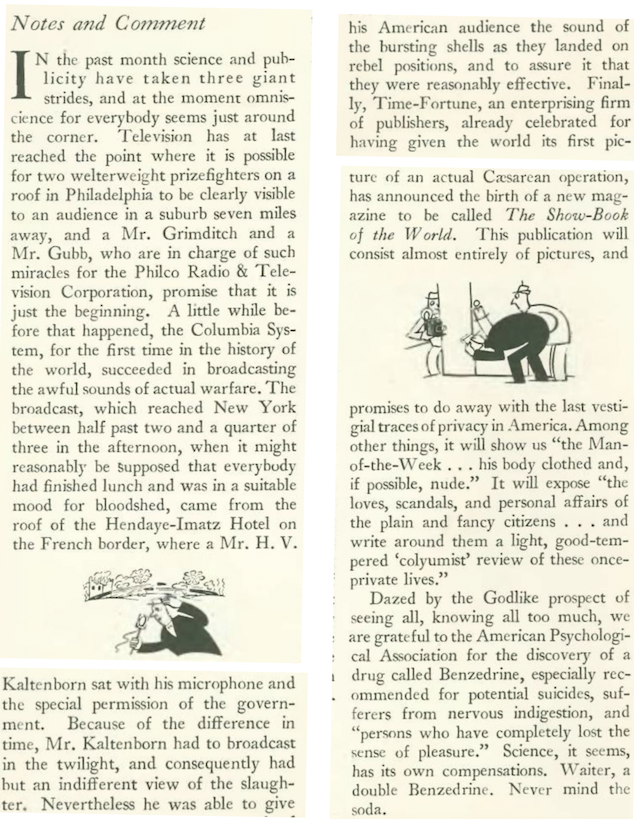
In addition to television, White noted two other “giant strides” in the world of science and publicity: a live radio broadcast featuring sounds from the Spanish Civil War, and the launch of a new magazine that would “consist almost entirely of pictures.”
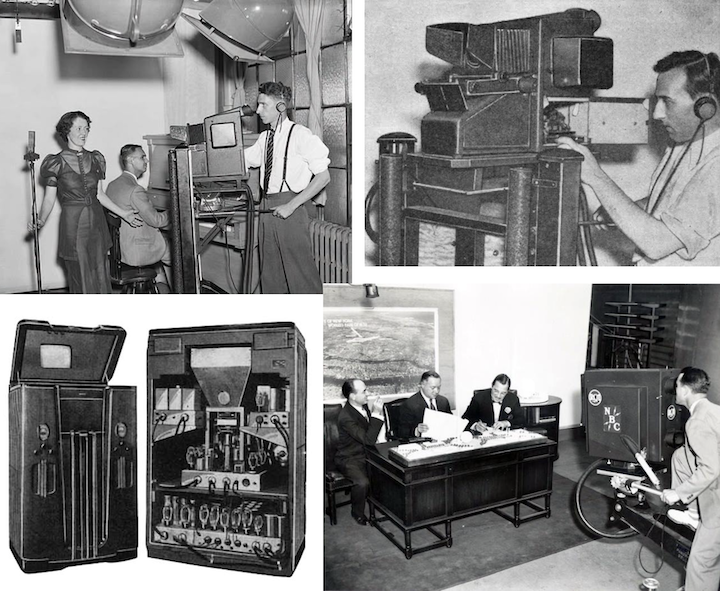
ONE-EYED MONSTER…Clockwise, from top left: On Aug. 11, 1936, Philco Radio and Television demonstrated the transmitting end of a television with the help of camera operator R.E. Waggener and singer Betty McNellis—the sound and picture were projected seven miles to a receiving set; a close-up of a 1936 television camera; photo taken in 1936 during a “live broadcast” from America’s first television studio, NBC Studio 3H—from left, NBC President Lenox Lohr, RCA President David Sarnoff and Fair Committee head Grover Whalen sign a contract for an RCA pavilion at the upcoming 1939 World’s Fair; front and rear view of a 1936 television receiver. (eyesofageneration.com/facebook.com)

White also noted the upcoming launch of a new magazine, The Show-Book of the World, which was the working title of a publication that would become Life magazine. White did not like the idea of a magazine consisting mostly of pictures that graphically expose “once-private lives,”  believing it would “do away with the last vestiges of privacy in America.”
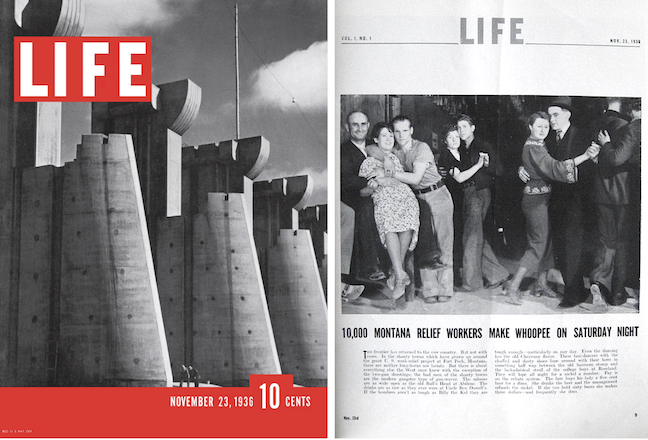
MONUMENTAL…The photo on the first cover of Life magazine, Nov. 23, 1936, was shot by one of Life‘s original four photographers, Margaret Bourke-White, who covered the construction of the Fort Peck Dam, a Public Works Administration endeavor to build the largest earth dam in the world during the Great Depression. At right, a Bourke-White photo of Fort Peck workers enjoying some down time. (npr.org/life.com/worthpoint.com)

 * * *

Call for Johnny Roventini!

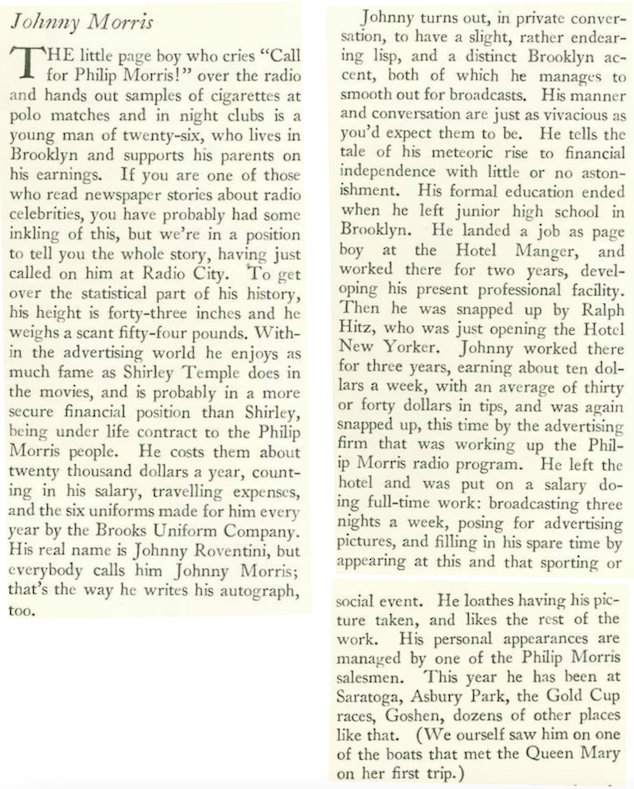
“The Talk of the Town” featured a brief profile of  Johnny Roventini (aka Johnny Morris or Johnny the Bellboy), the famous “living trademark” for the Philip Morris tobacco company. Roventini (1910–1998), who represented the company for more than forty years, was working as a bellboy at the New Yorker Hotel in 1933 when he was discovered by an advertising agent. Excerpts:
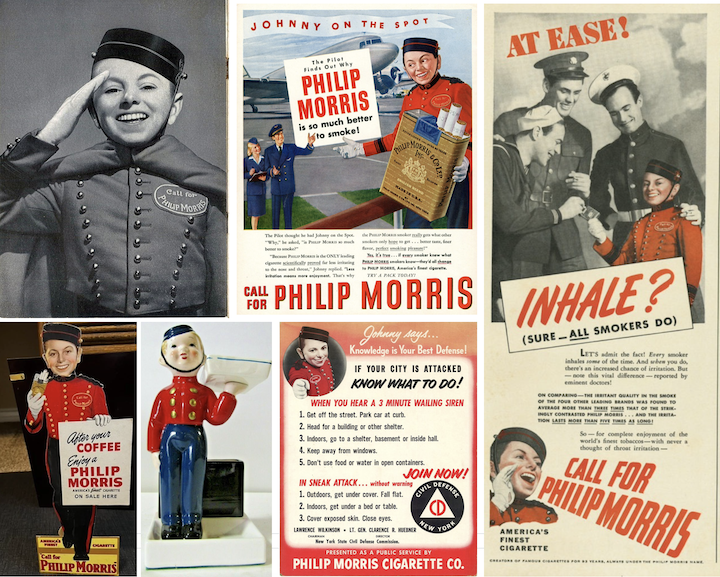
THEY’RE SELLING YOU…In mid-century America the image of Johnny Roventini, known to the public as Johnny Morris or Johnny the Bellboy, seemed to be everywhere. Clockwise, from top left: Publicity photo, 1937;  magazine ad, 1947; ad promoting the armed services, 1941; civil defense-themed ad, 1940s; cigarette match holder; promotional stand-up sign. (cats.ua.edu/standford.edu/worthpoint.com)

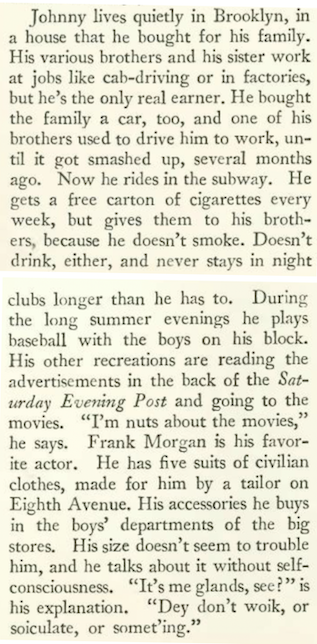
Roventini was probably best known for his Philip Morris promos on I Love Lucy. The new show was challenged to find a sponsor (due to the Cuban character played by Desi Arnaz) until Arnaz arranged a deal that made Philip Morris the exclusive sponsor of I Love Lucy from its premiere on October 15, 1951 through Christmas of 1954. Roventini gained unprecedented national TV exposure and became fast friends with Arnaz and Lucille Ball. Here is one more excerpt from “Talk” regarding the quiet life of Philip Morris’s “living trademark.”
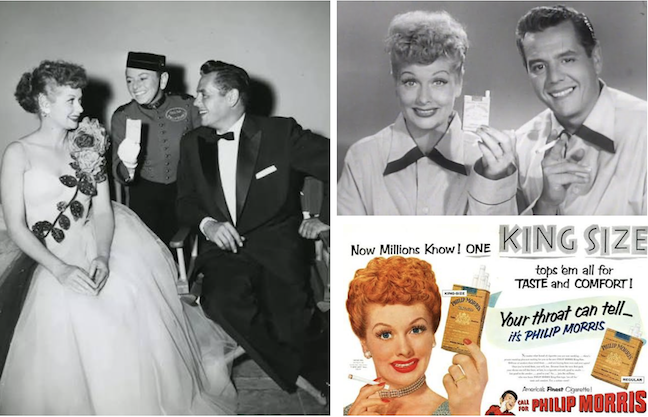
I LOVE PHILIP MORRIS…Lucille Ball, Johnny Roventini and Desi Arnaz formed a lucrative trio for the tobacco company Philip Morris when I Love Lucy went on the air in 1951. Roventini was an occasional, social smoker, while Ball and Arnaz were heavy smokers (although Lucy preferred Chesterfields). (facebook.com/instagram.com)

* * *

At the Movies

A Soviet film featuring exiled German communists proved to be a disappointment for critic John Mosher, but in retrospect the 1936 German-Soviet film The Struggle (aka Kämpfer or Der Kampf) reveals the strange and terrifying climate artists had to navigate in Stalin’s Russia.

Set in Germany after 1933, the film depicted the resistance of workers against the rise of the Nazi Party. One of the earliest films to depict Nazi terror and concentration camps, ironically many of those who worked on the film became victims of Joseph Stalin’s terror and the Gulag.
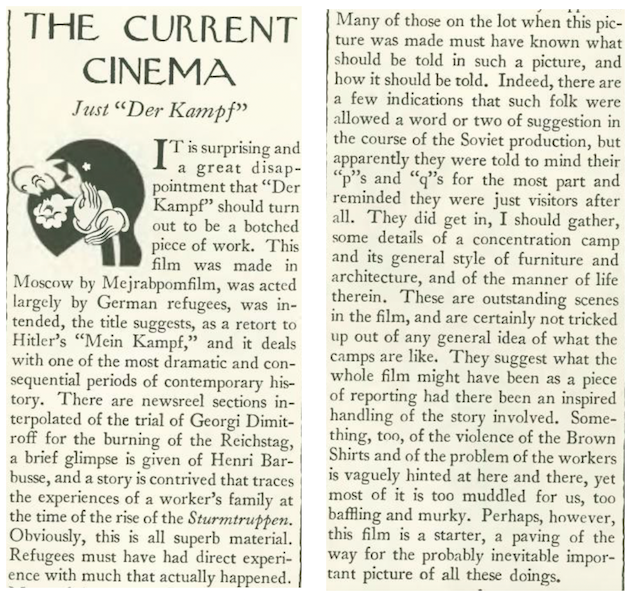

DEFIANCE…German actress Lotte Loebinger in a scene from the 1936 German-Soviet movie The Struggle (“Kämpfer”). Loebinger (1905-1995) managed to survive Stalin’s purges and had a long career on the stage in East Berlin following World War II. Loebinger’s lover, a German refugee physician with whom she bore a daughter, was not so fortunate, dying in a Soviet Gulag camp. (YouTube)

Shortly after The Struggle was completed, Stalin purged the community of exiled German communists living in Moscow, and the film was quickly banned by Soviet authorities. A large number of the film’s cast and crew were arrested, sent to the Gulag, or killed, including lead actor Bruno Schmidtsdorf, who was executed by firing squad near Moscow in 1938. Composer Hans Hauska, who wrote the film’s musical score, perished in a Soviet prison camp.

 * * *

Playing the Ponies

The calendar section continued its series of illustrated mini-bios, this week featuring Tommy Hitchcock, widely regarded as the greatest polo player in the history of the sport. A dashing figure in high society, Hitchcock (1900–1944) was also an aviator and decorated war hero. Illustration by William Cotton.
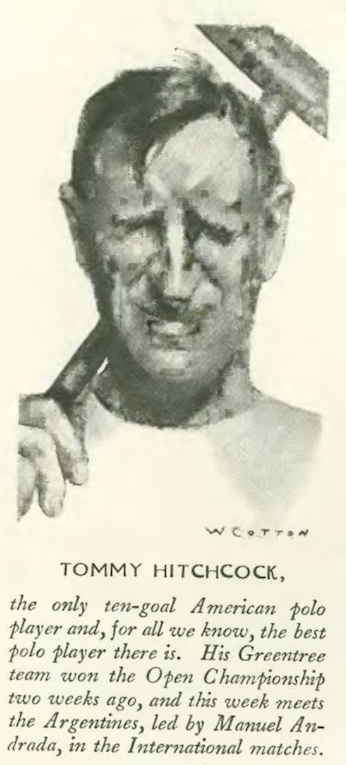
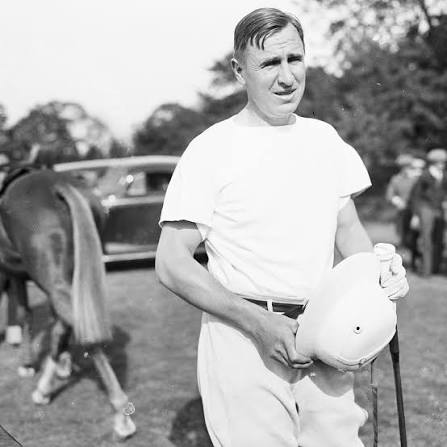
POLO PLAYING PILOT…Tommy Hitchcock flew as a volunteer pilot for the French Air Force in World War I, and was later instrumental in the development of the P-51 Mustang fighter plane. Hitchcock was killed in 1944 while piloting a P-51 on a test flight near Salisbury, England. (instagram.com)

 * * *

From Our Advertisers

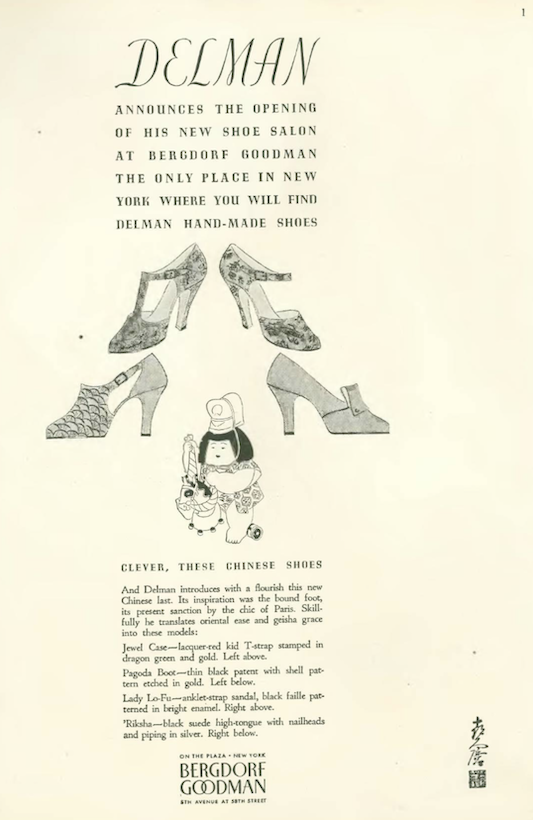
A strange advertisement from Bergdorf, announcing the opening of a salon that featured a line of shoes inspired by the Chinese “bound foot”…
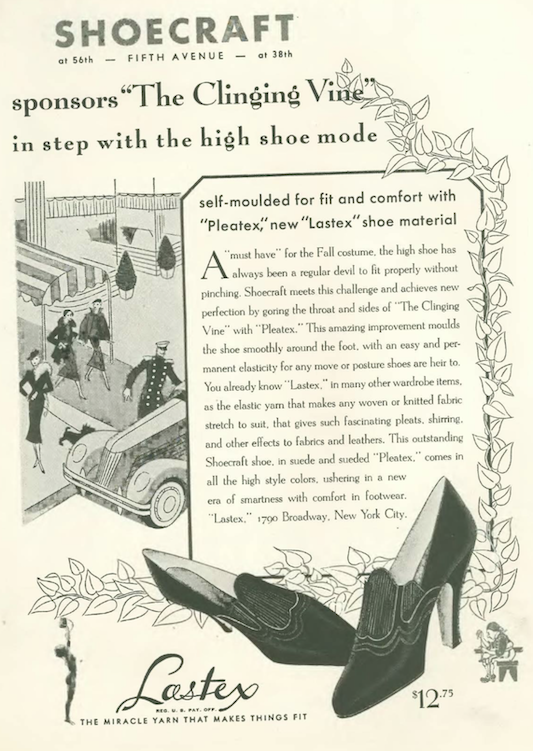
…if a bound foot wasn’t your thing, you could wiggle your toes in an elastic shoe fashioned from “Pleatex”…
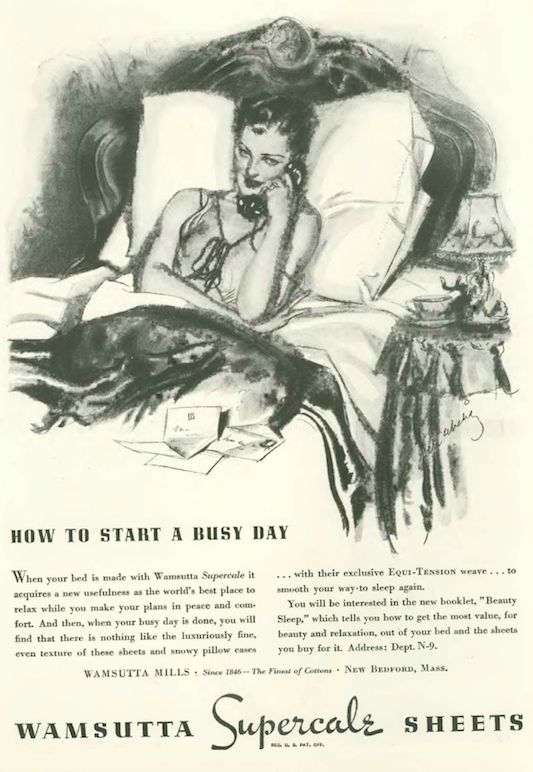
…Wamsutta continued to promote its high thread-count sheets with these somewhat seductive advertisements…
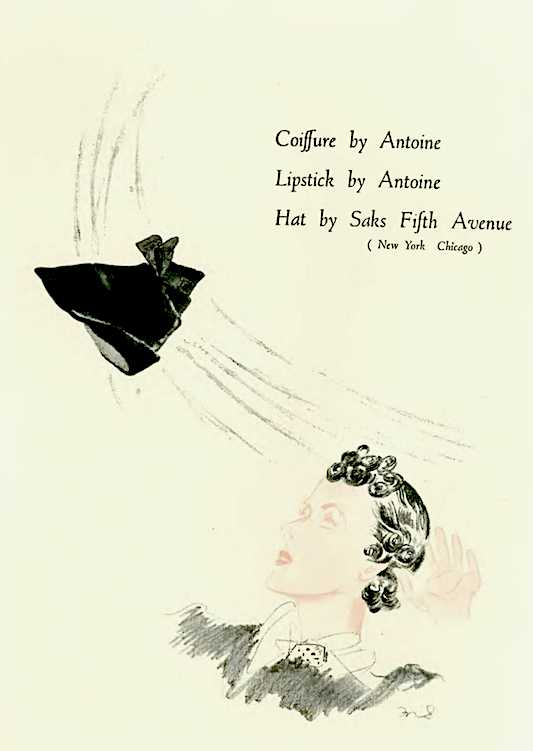
…oddly composed advertisement for Saks Fifth Avenue by fashion illustrator Margaret Sommerfeld, who produced promotional artwork for Saks…
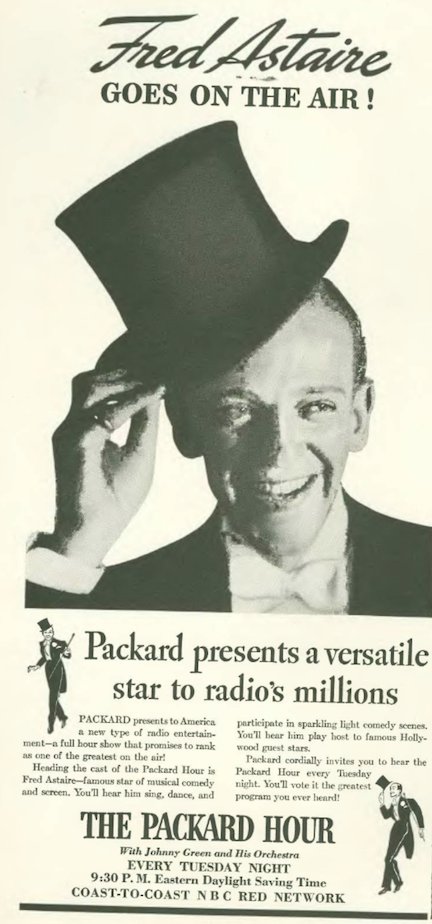
…Fred Astaire managed to hang on to his hat in this advertisement for “The Packard Hour” on NBC’s nationwide “Red Network”…the ad proclaimed “you’ll hear him sing and dance“…on the radio, that is…
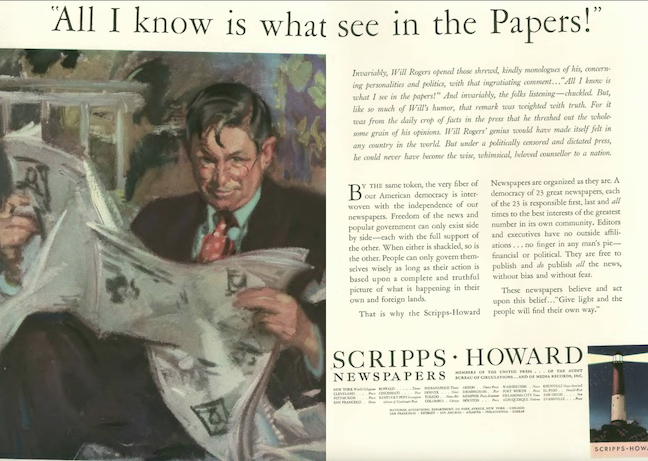
…Scripps-Howard featured this image of the late Will Rogers to promote newspaper advertising…
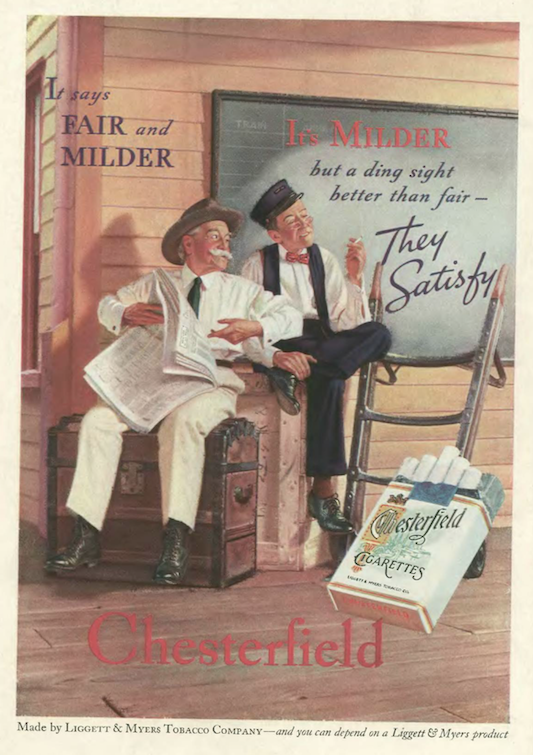
…this back cover ad also featured a newspaper reader, enjoying a smoke while waiting for the train…
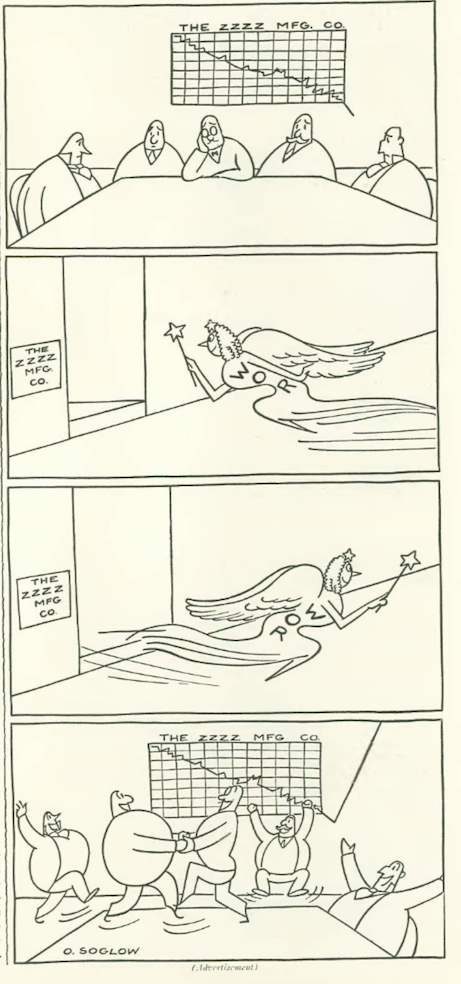
…best known for creating The Little King, Otto Soglow drew hundreds of cartoons and spot drawings for The New Yorker as well as for a variety of advertisers including Pepsi-Cola, Benson & Hedges cigarettes, and here, one from a series of ads he created for WOR radio…
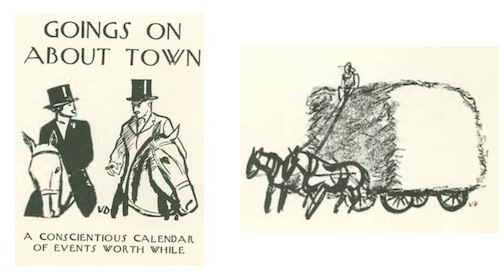
…speaking of spots, here are two by Victor de Pauw…
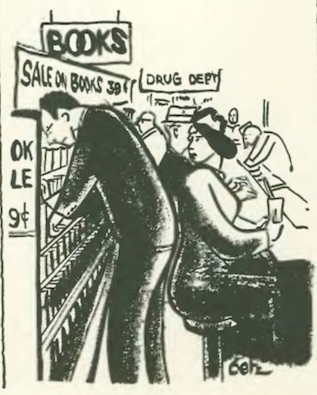
…biographies of prolific New Yorker cover artist Arthur Getz give his start date at the magazine as 1938, but this might be one of his early spot drawings (although the signature style differs from Getz’s other works)…
…no mistaking this spot by Christina Malman…
…or this one by Richard Decker…
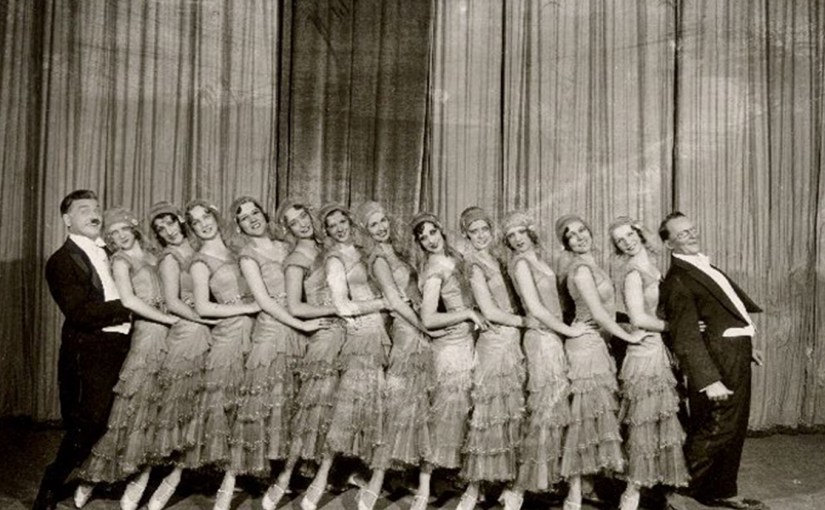
…Leonard Dove demonstrated some moves for a chorus line…
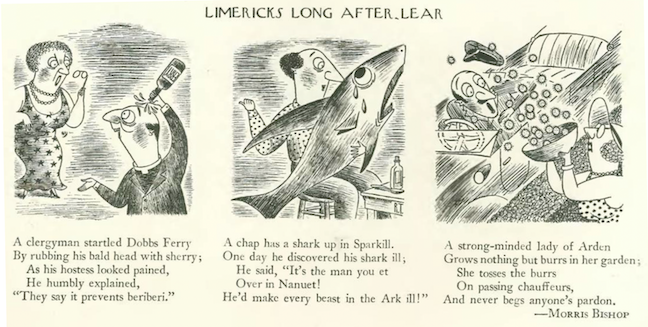
…and more wonderful Richard Taylor illustrations for Morris Bishop’s limericks…
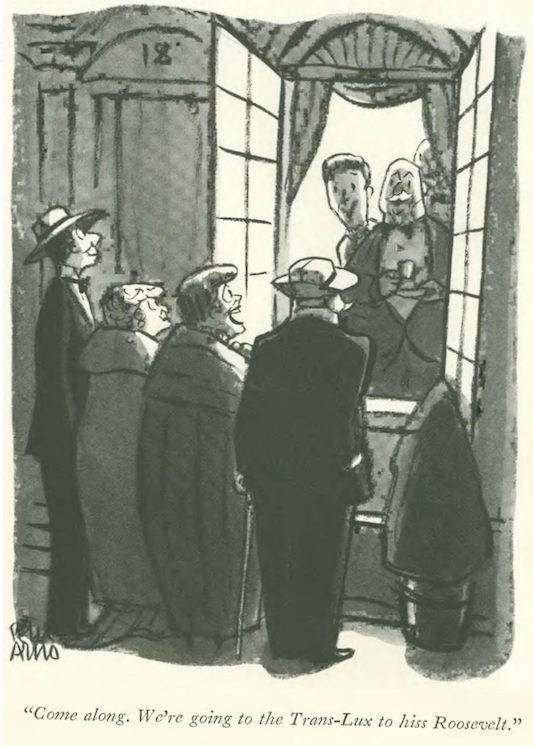
…the well-heeled prepared to engage in a favorite sport, per Peter Arno…
…”Trans-Lux” theaters were conversions of storefronts and retail offices that seated smaller audiences than traditional theaters. Rather than feature films, the Trans-Lux theaters showed continuous 45-to-60-minute loops of newsreels (like The March of Time), short subjects, travelogues, and cartoons from 10 a.m. to midnight—people could come and go as they pleased. The theaters pioneered rear-screen projection, using a specialized, wide-angled lens placed just eight feet behind a translucent screen…
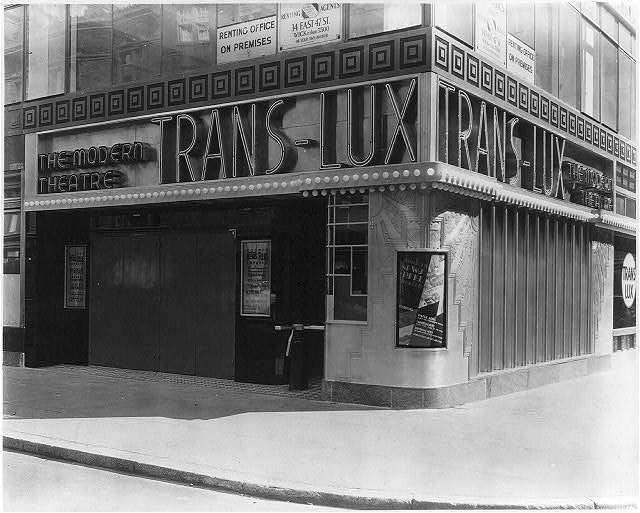
POP IN, POP OUT…The very first Trans-Lux cinema opened in 1931 at 58th and Madison as a unique venue that played newsreels and shorts. According to The New York Times, “by the late 1940s, the rise of television began to kill the newsreel format entirely. By 1949, Trans-Lux stopped expanding its boutique newsreel footprint and pivoted its existing houses toward showing standard feature-length films.” (Library of Congress)

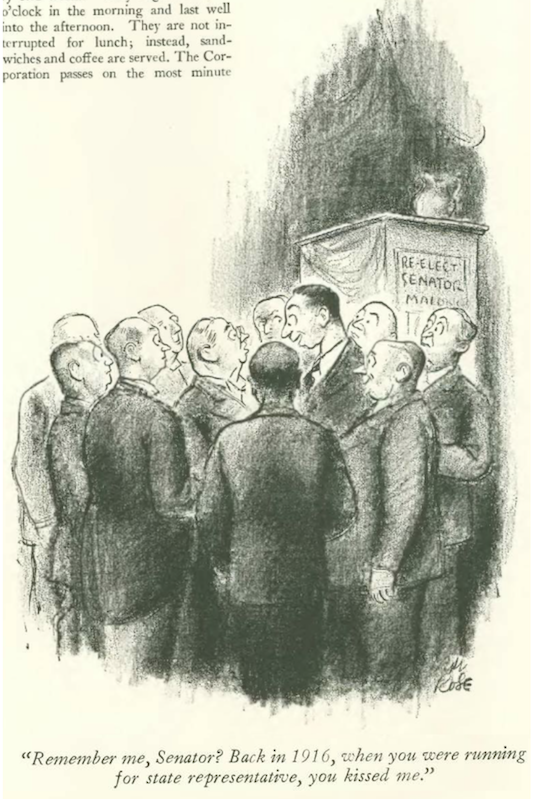
…back to our cartoons, Carl Rose conjured up an unwelcome reminder…
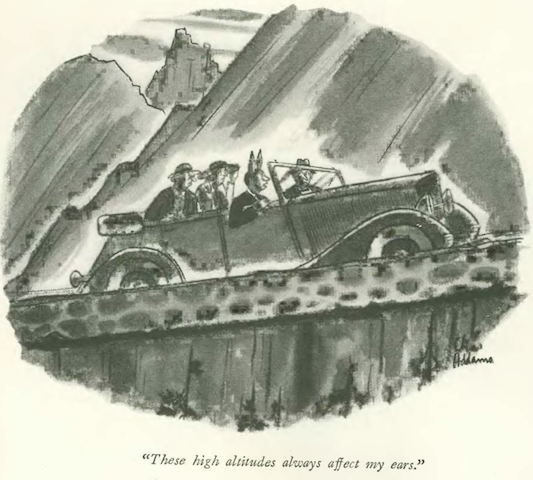
…Charles Addams was up to his old tricks…
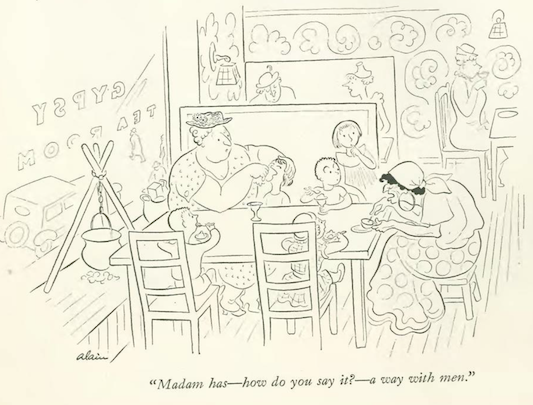
…Alain read the obvious from some tea leaves…
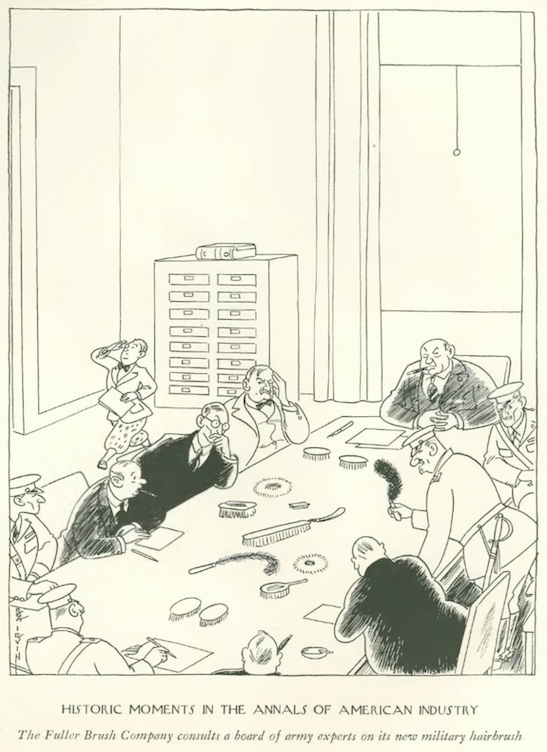
…Rea Irvin showed us some strategic thinking by military brass…
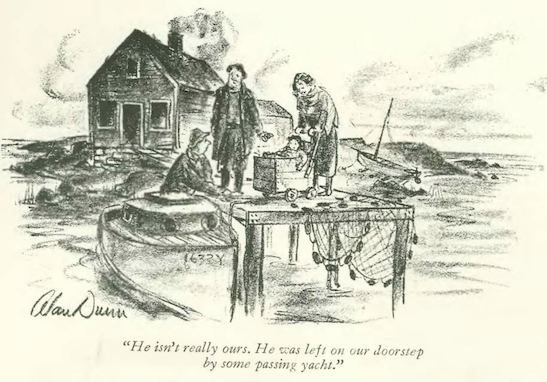
…Alan Dunn considered the mysteries of the sea…
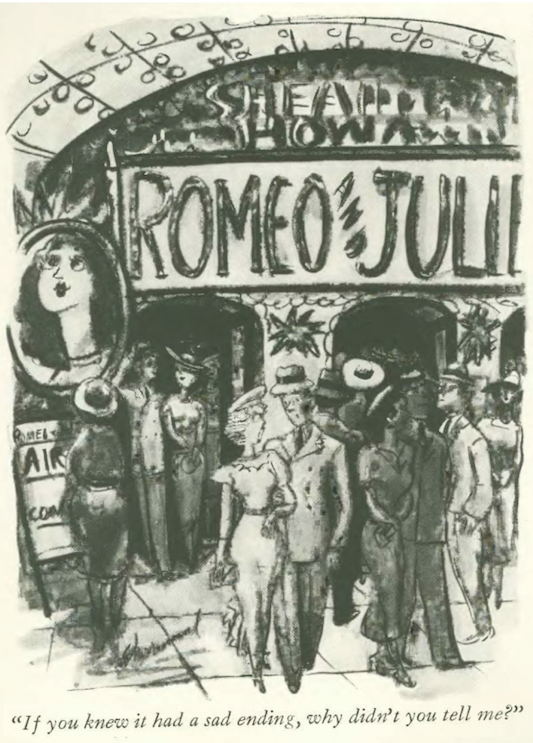
…this guy should have suggested a comedy, per Barbara Shermund…
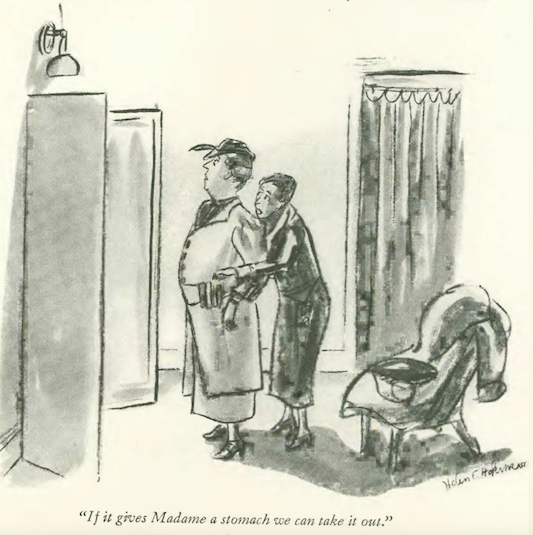
…Helen Hokinson continued to probe the delicate work of the dress shop…
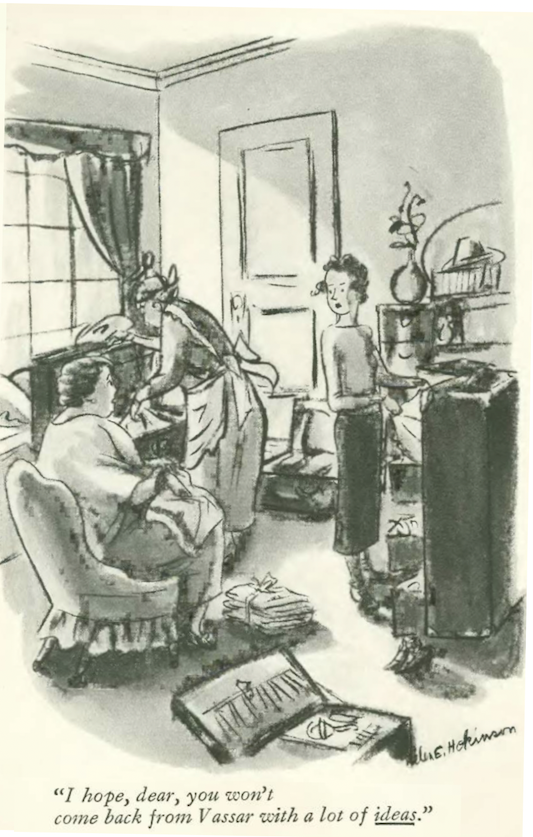
…and we close with another by dear Helen, and the fear of too much thinking…
Next Time: Can-Can in Cleveland…
Strike Up the Band!

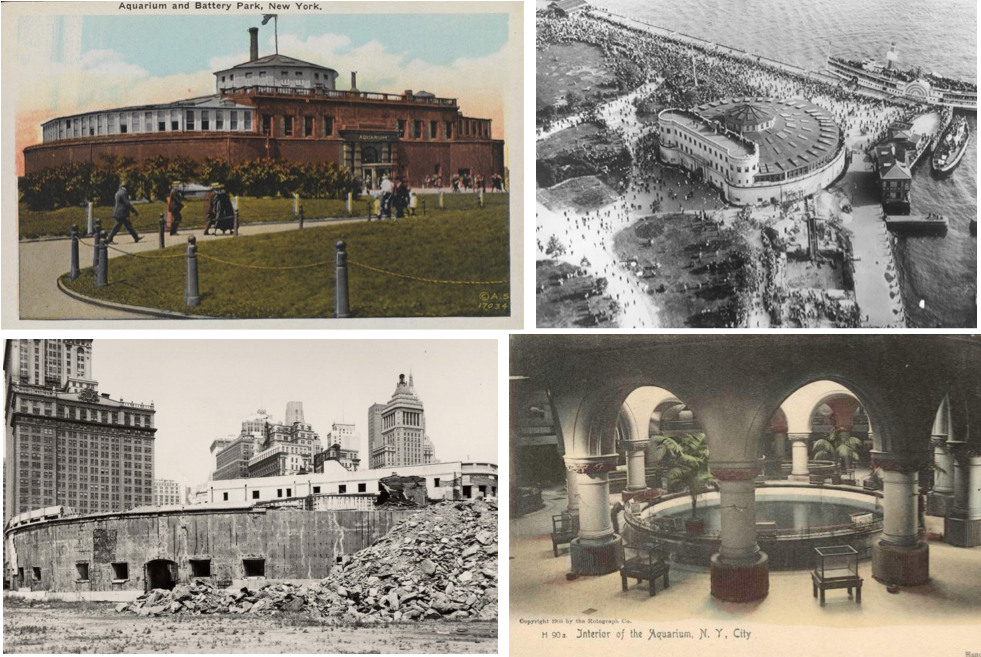
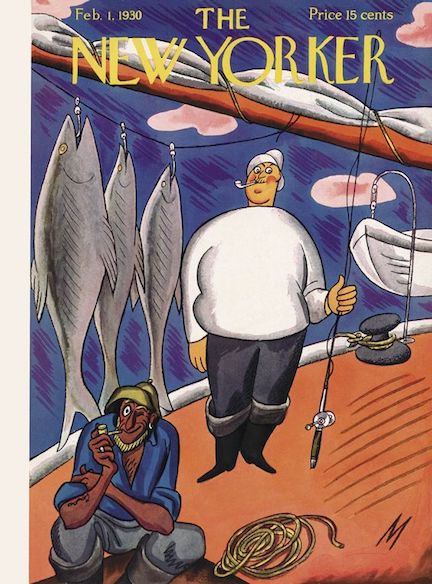
Before we launch into the Jan. 25 issue, the rendering of the old New York Aquarium in this Sue Williams cover bears some consideration.

Jan. 25, 1930 cover by Sue Williams.

The aquarium was housed within the historic walls the South West Battery, constructed off the tip of Manhattan between 1808 and 1811 as a defense against the British. Renamed Castle Clinton in 1817 (in honor of former Mayor/Governor Dewitt Clinton), it was deeded to the city in 1823 to be used as an entertainment center. From 1855 to 1890 it served as an immigrant landing depot, then remodeled in 1896 (by the architectural firm McKim, Mead, and White) to become the popular New York City Aquarium.

FISH OUT OF WATER…Postcard image of the New York City Aquarium from the early 1900s; aerial view of the aquarium circa 1934; postcard image of aquarium interior; demolition of the aquarium in 1941, on orders from city planner Robert Moses. (thebattery.org/nycgovparks.org)

Although the aquarium proved to be a cultural and educational magnet, it stood in the way of master planner Robert Moses’s designs to build a bridge from The Battery to Brooklyn. After residents, preservationists and even Eleanor and President Franklin Roosevelt protested, the city opted instead to construct a tunnel under the East River. Nevertheless, Moses managed to get the aquarium knocked down before demolition was halted by the outbreak of World War II. After the war, Congress passed a bill declaring the site a National Monument, and preserved the walls of Castle Clinton.

HIGH AND DRY…Until it was demolished in 1941, the New York City Aquarium occupied the space in the center of Castle Clinton, which was added to National Register of Historic Places in 1966. (nps.gov)

 *  *  *

Now, About That Band…

A play that satirized America’s enthusiasm for war—Strike Up the Band—was loved by critics but spurned by audiences when it opened in Philadelphia in 1927. Written by George S. Kaufman, with music and lyrics by George and Ira Gershwin, the play had the pedigree for success, but audiences weren’t quite ready for a show that poked fun at the U.S. military just nine years after the end of World War I (in the original play, America is goaded into declaring war on Switzerland by an American cheese tycoon).

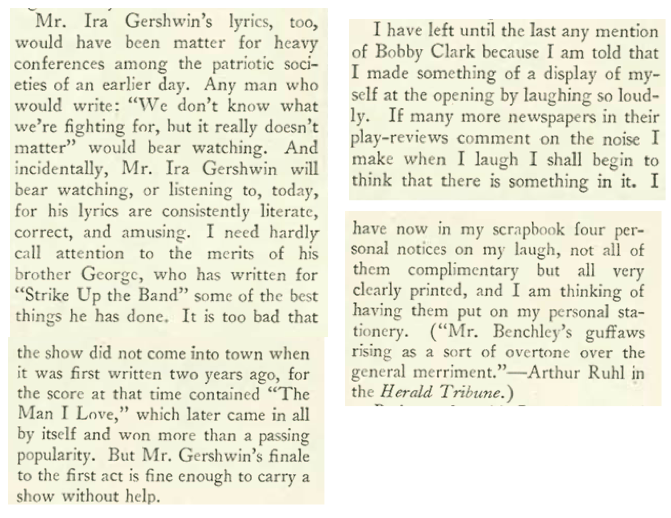
Enter lyricist Morrie Ryskind, who reworked the script, softening its political message and remaking the war plot into a dream sequence. The revised play proved to a be hit, running for 191 performances at the Times Square Theatre. It also introduced a number of popular songs, including “The Man I Love” and “Strike Up the Band.” Robert Benchley was on hand for opening night:

TEAMWORK…Clockwise, from top, Ira (left) and George Gershwin at work circa 1930; lyricist Morrie Ryskind, who softened the tone of George S. Kaufman’s original script. (U of Michigan/Wikipedia)

Benchley noted that the antics of comedian Bobby Clark caused him to laugh so loud that his guffaws were even noted in the Herald Tribune’s review:

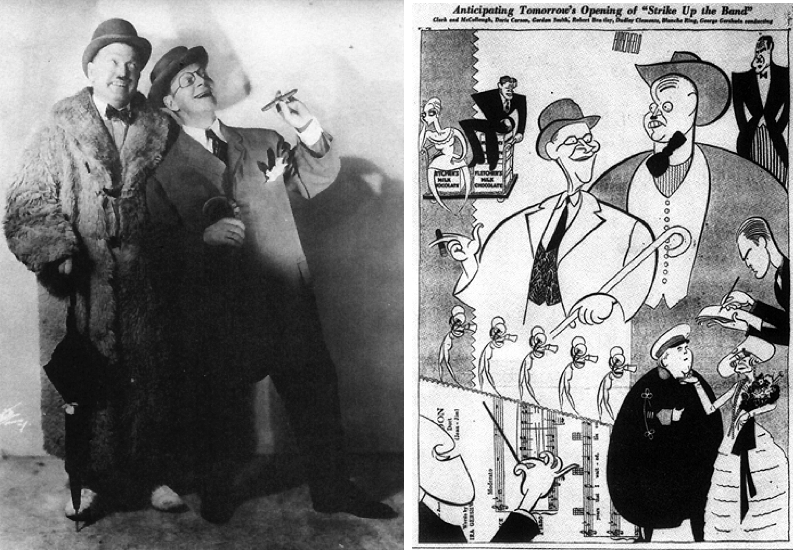
MAKE ‘EM LAUGH…The comedy team of Paul McCullough (left) and Bobby Clark were one of the play’s big draws. At right, Herald-Tribune illustration by Al Hirschfeld announcing the Broadway opening of Strike Up the Band. (aaronneathery.org)

 *  *  *

Duncan Yo-Yos

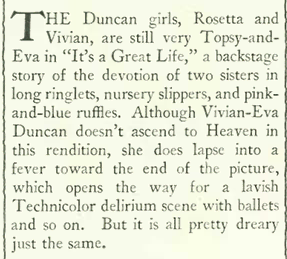
We’ve seen the Duncan Sisters (Rosetta and Vivian) before in this blog, the sister vaudeville act that became famous with the 1923 hit musical Topsy and Eva, which inspired a silent 1927 film starring the duo. They were back on the screen in late 1929 with It’s a Great Life, which The New Yorker’s John Mosher found to be “pretty dreary”…

NOT SO GREAT, THIS…Clockwise from top, promotional poster for It’s a Great Life; a scene from a dance number in the film; Rosetta (in blackface) and Vivian Duncan as Topsy and Eva (characters derived from the novel Uncle Tom’s Cabin). It’s a Great Life flopped at the box office, along with the Duncan’s brief movie careers. In the years to follow the duo would became popular nightclub entertainers and would continue to perform their Topsy and Eva routine even though appearing in blackface was increasingly considered offensive. (Wikipedia/freewebs.com)

 *  *  *

Miracle Worker

The New Yorker profile, written by Robert Coates, featured Helen Keller (with illustration by Hugo Gellert). A brief excerpt:

 *  *  *

From Our Advertisers

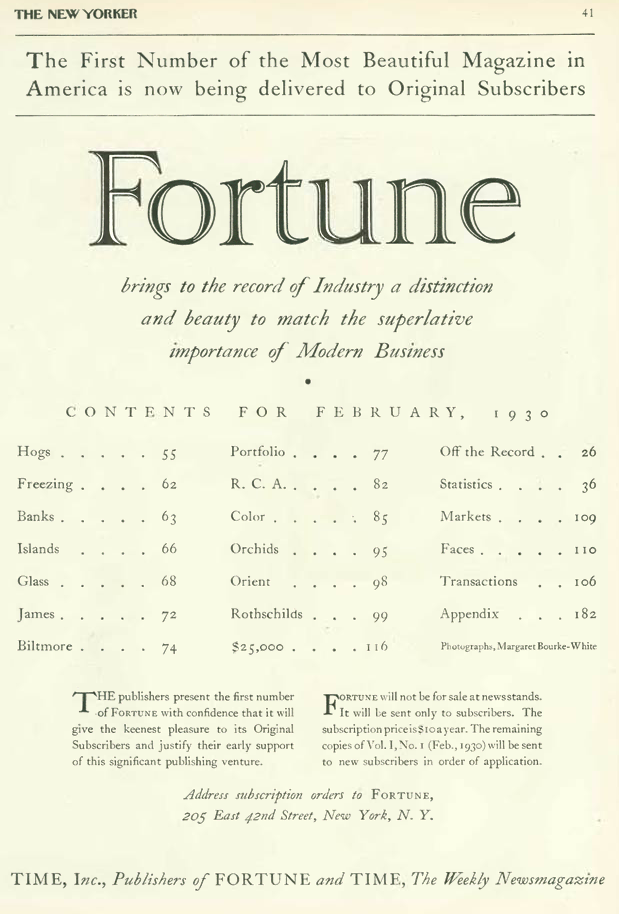
Advertisers in the Jan. 25 issue included the new Fortune magazine, which announced its first issue with this full-page ad:

…the table of contents is fascinating, spare in descriptions of everything from “Hogs” to “Orchids”…

From left, issue No. 1, February 1930; table contents for the issue; a prototype of the magazine, September 1929. (Fortune)

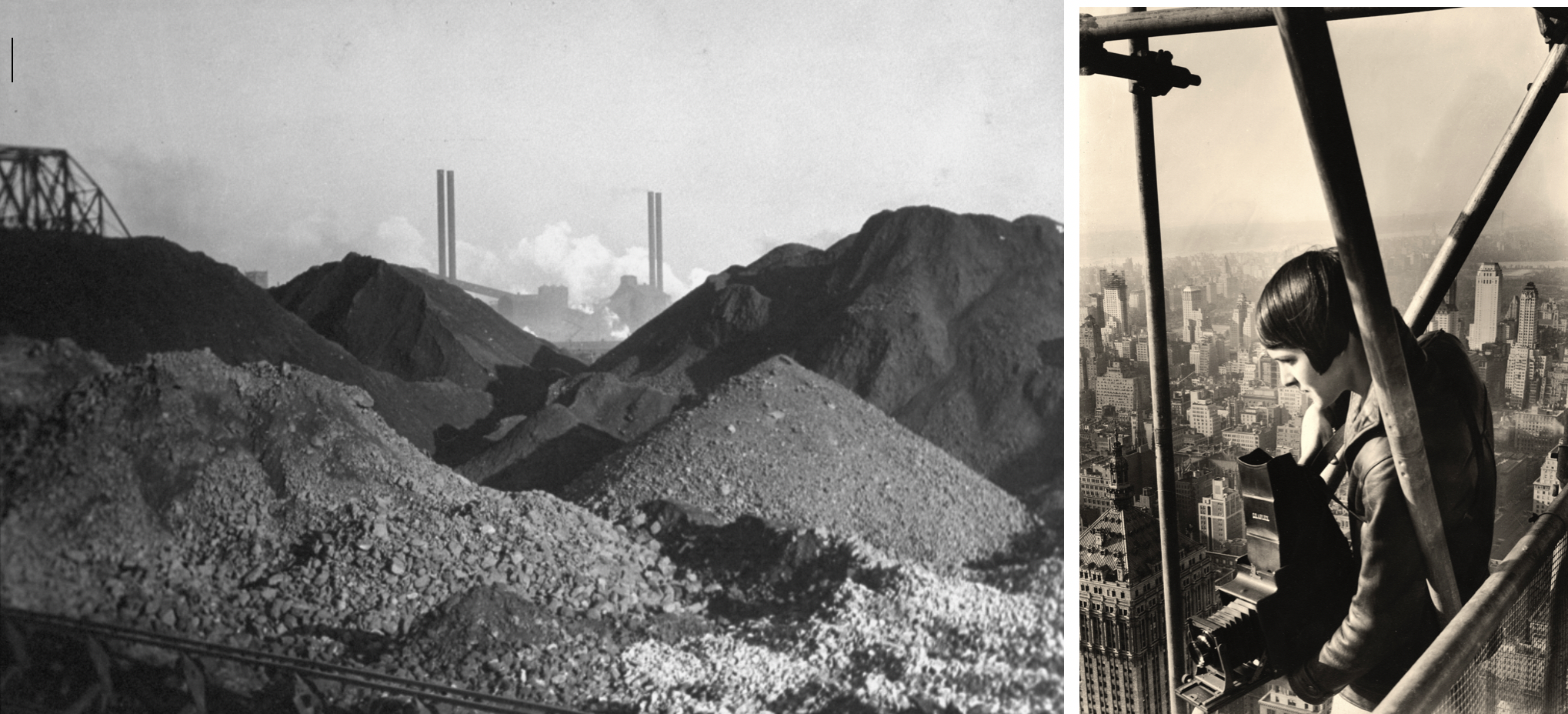
…also listed in the new magazine’s table of contents was the name of a 24-year-old photographer, Margaret Bourke-White…

A photo of coal piles by Margaret Bourke-White in the first issue of Fortune magazine. At right, Bourke-White photographing atop a skyscraper circa 1930. (Fortune)

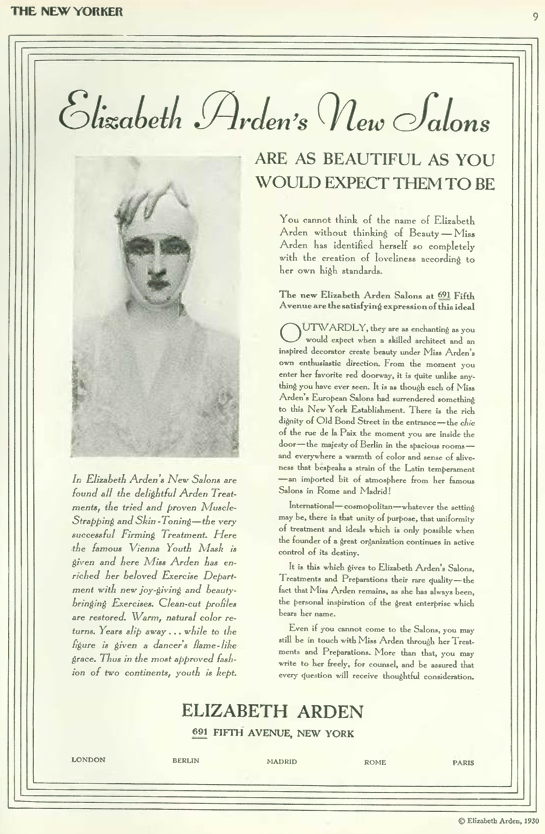
…on to our other advertisements, we have this entry from Elizabeth Arden…ads from this salon chain in the 1920s and 30s featured this ubiquitous image of a woman with a distant stare, her head tightly bound — mummy-like — as part of a firming treatment called “muscle-strapping”…

…in contrast to the rather cold, clinical look of the Elizabeth Arden ad, the Primrose House appealed more to social climbing than skin toning…

…while the makers of Pond’s cold cream continued to draw from their stable of debutantes and society ladies to move their product…

…long before there was Joe Camel, R.J. Reynolds also appealed to social climbers with a series of ads beautifully illustrated by fashion artist Carl Erickson…

…society’s smokers were advised to pack a tube of Bost toothpaste, or have their French maid do it for them…

…and once again we have an ad by Dr. Seuss for Flit insecticide that is very much of its time…

…as is this cartoon by Isadore Klein, perhaps the first in The New Yorker that depicted African Americans as something other than minstrel show stereotypes. Nevertheless, the rendering is still a bit crude — especially the boy’s face — as is the idea behind the “joke” —  that a black boy could actually aspire to be a great violinist like Jascha Heifetz…

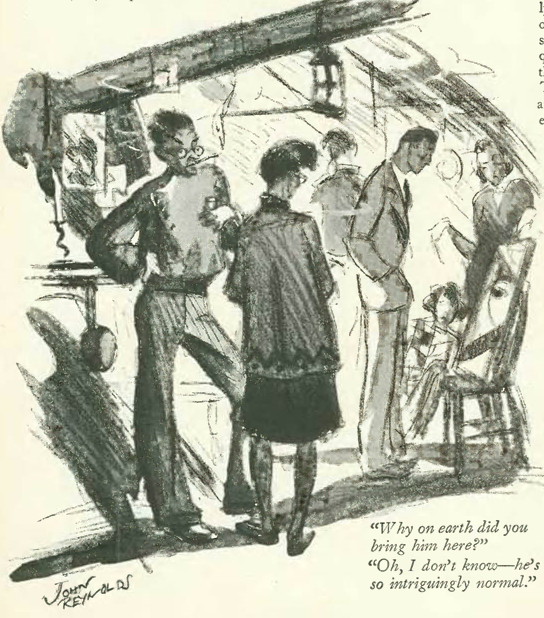
…John Reynolds explored a less troubling juxtaposition among the bohemian set…

…and we end with this peek into society life courtesy Barbara Shermund… 

Next Time: The Wild Kingdom…