
Above: Fredric March as the Earl of Bothwell in Mary of Scotland. March sported a kilt that Alex von Tunzelmann (the Guardian, May 7, 2015) calls "the bane of Scottish historical movies from here to Braveheart." Tunzelmann notes that "What we call a kilt today—the fèileadh beag, or small kilt—was invented in the mid-18th century, almost 200 years after this film is set. The Scots should be wearing belted plaid, or the rather fetching skintight tartan trews (image at right) sported by Mary’s father, James V." (eBay.com/pinterest.com)
These were truly the dog days of summer—New Yorkers had just endured one of the hottest months on record (106 F on July 9) and it remained intensely hot and dry as August rolled in. So for this post we will retreat to one of the few places that had air-conditioning—the cinema—and see what folks were enjoying in the first week of August 1936.
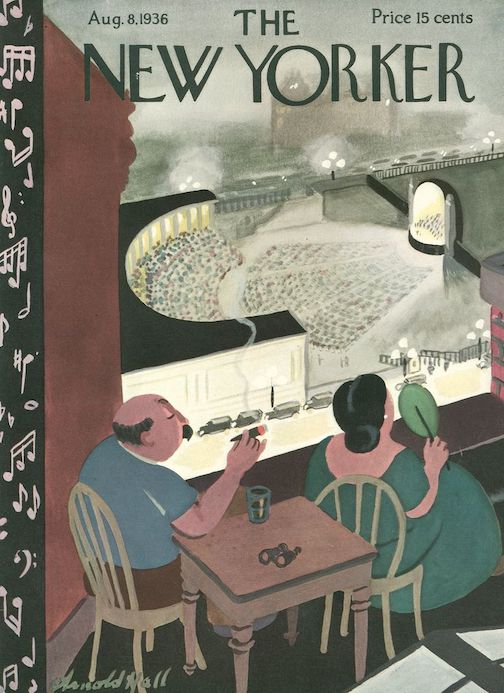
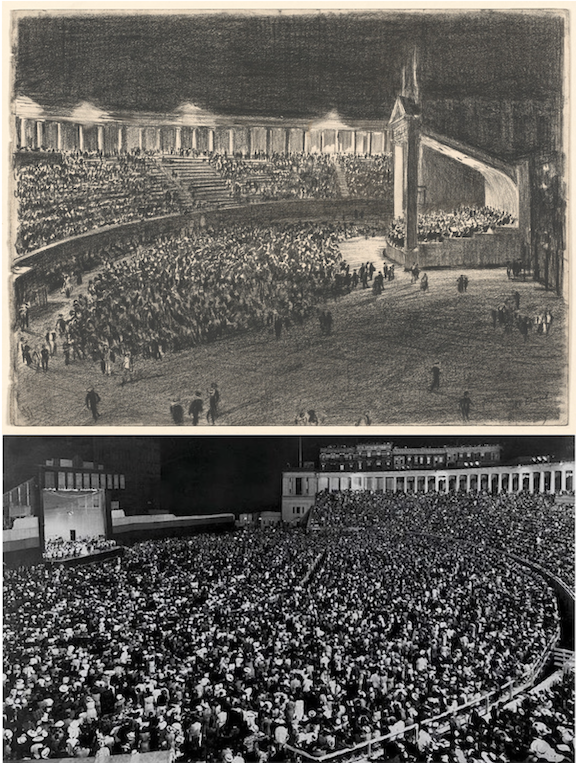
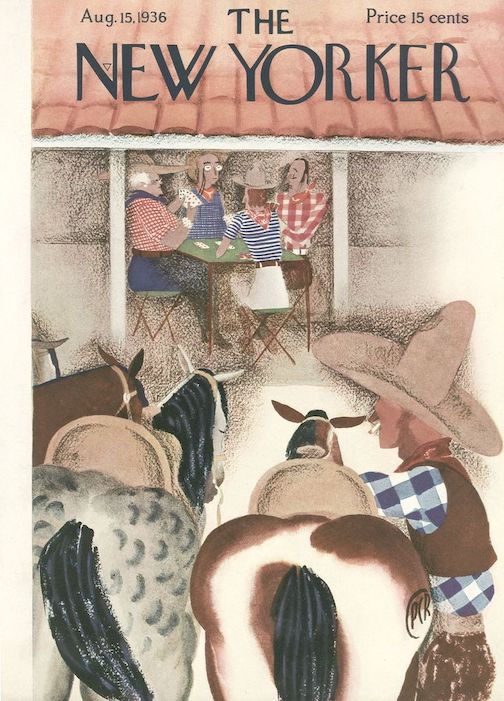
Before we jump into the movies, the wonderful cover by Arnold Hall recalled the summer night concerts at Lewisohn Stadium (although Hall took some liberties with the stadium’s design for the sake of composition).
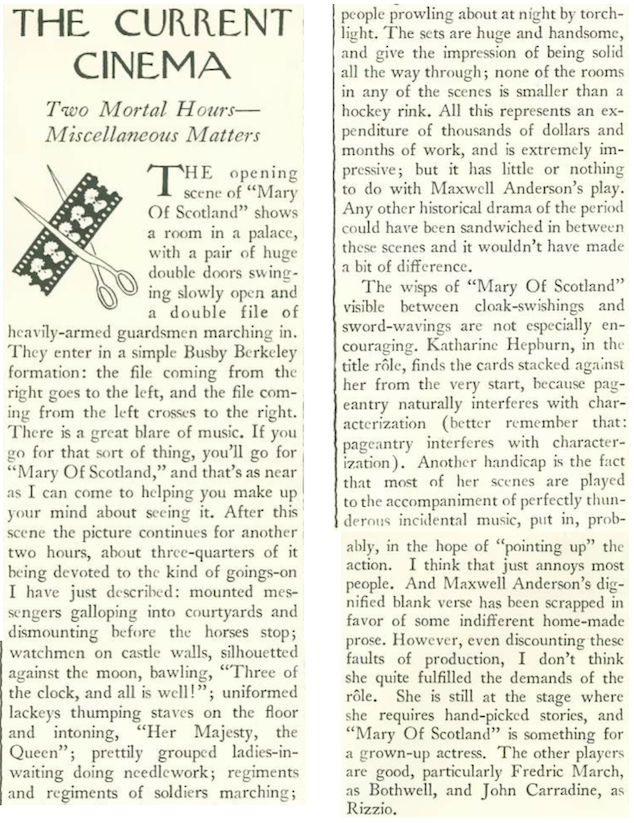
On to our movies, Russell Maloney once again sat in for John Mosher as the magazine’s film critic, taking on everything from a Tudor romance to a horror film that featured Lionel Barrymore in drag.
In Mary of Scotland, Maloney found Katharine Hepburn’s turn as Mary, Queen of Scots a bit wanting (the role should have gone to a “grown-up actress”), while he thought the film itself was rather tedious with “lots of goings on.” He concluded that the “wisps of Mary of Scotland visible between cloak-swishings and sword-wavings are not especially encouraging.”
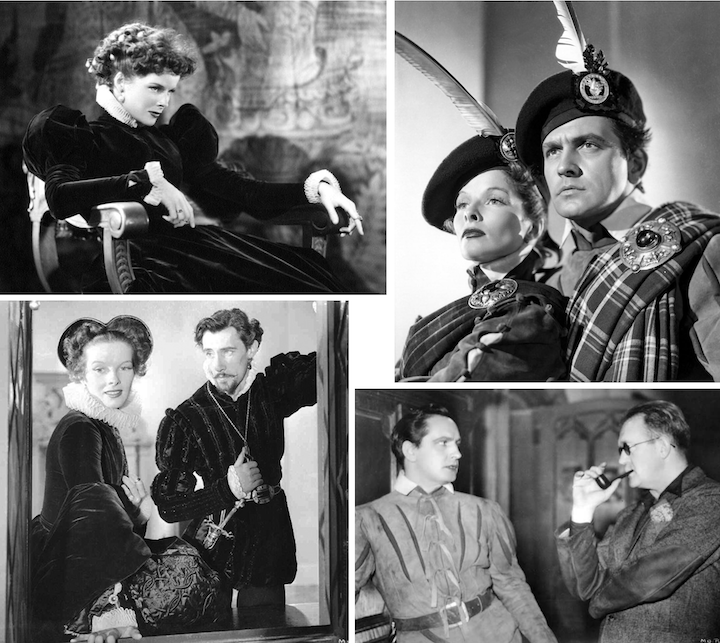
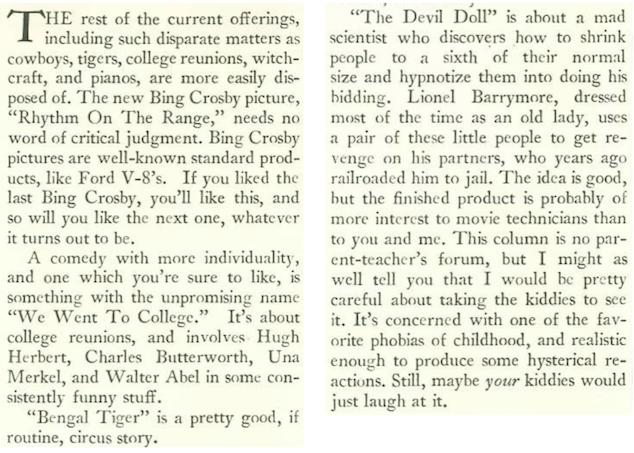
In addition to a forgettable lion-tamer flick (Bengal Tiger), Maloney also reviewed a Bing Crosby movie with a host of singing cowboys, Rhythm on the Range, and a “consistently funny” film with an “unpromising name,” We Went to College…
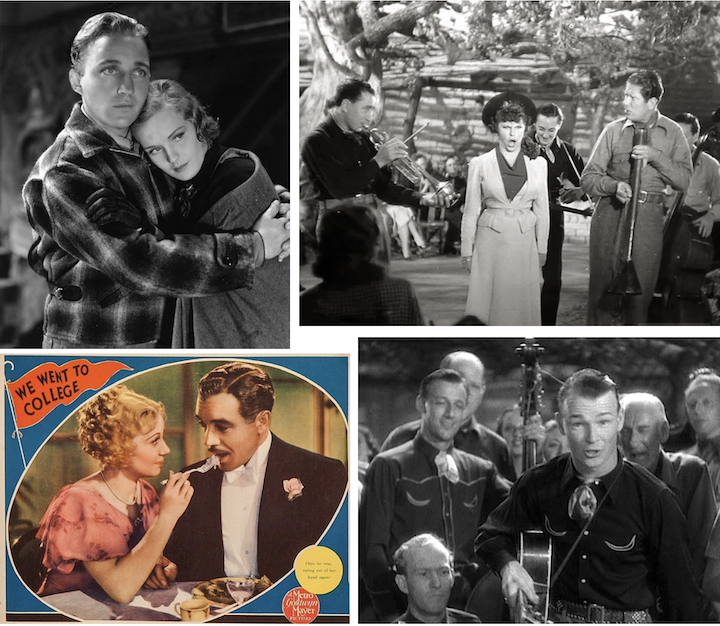
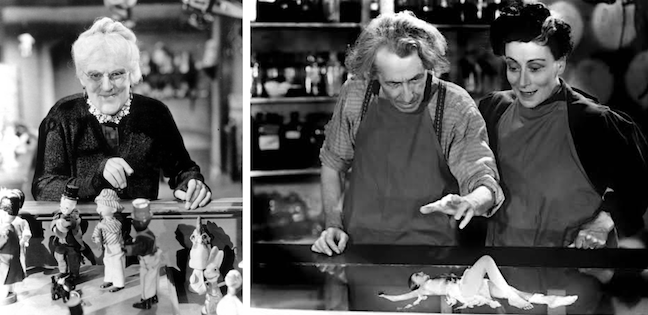
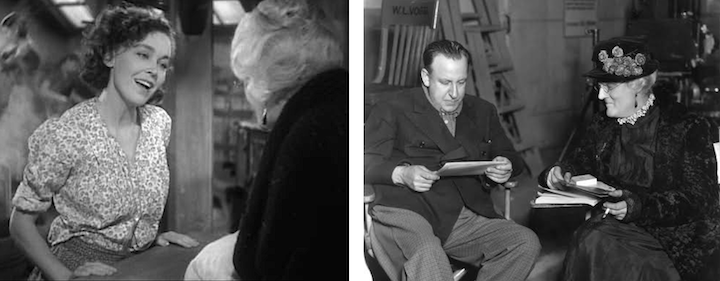
Maloney also reviewed a horror-farce, The Devil Doll, featuring Lionel Barrymore as banker Paul Lavond. A brief synopsis: Framed by his three partners and imprisoned on Devil’s Island, Lavond escapes with a fellow inmate who introduces him to his wife, Malita. The couple demonstrate a process that shrinks animals and people to the size of dolls, which then can be animated by will power. Seeing the dolls as an opportunity for revenge on his former partners, Lavond disguises himself as an old woman and sends out the shrunken people to harm his enemies.
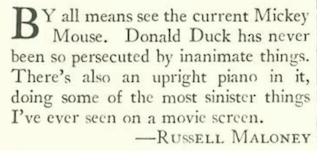
It seems there were few, if any, critics in the 1930s who didn’t like Mickey Mouse cartoons. These days we take animation for granted, but ninety years ago it was still something of a miracle, especially in color. Maloney noted the latest must-see Disney cartoon short, Donald and Pluto.

* * *
Life Goes On
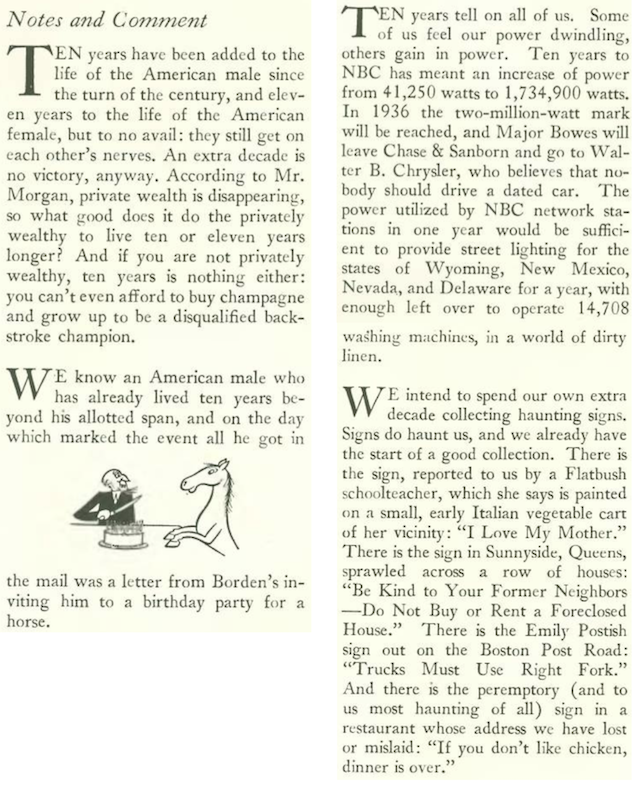
E.B. White mused about the increasing life expectancy at birth of the American male from 47 years in 1900 to 58 years in 1936 (a woman’s life expectancy was roughly 49/62, respectively). White (who would live 86 years) said he would spend his extra years collecting “haunting” signs, such as one on the Boston Post Road that read: Trucks Must Use Right Fork.

* * *
Wartime Wardrobe
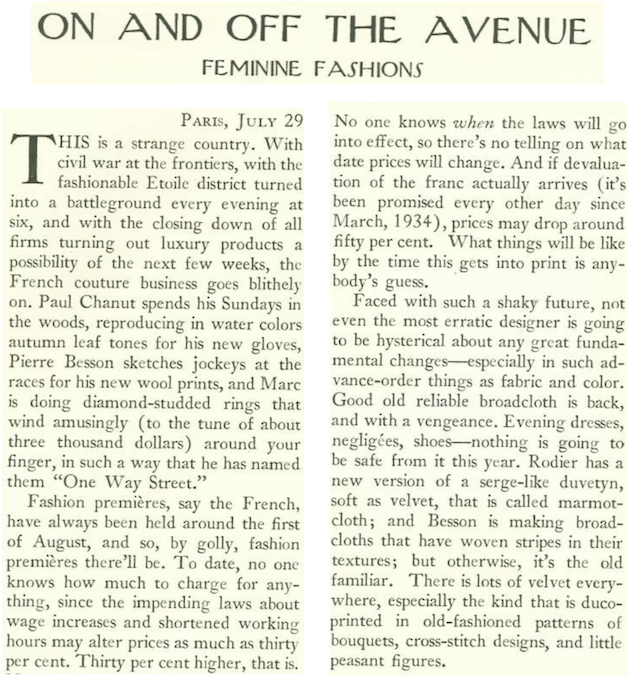
Beatrice Mathieu—the first and only Paris fashion correspondent for The New Yorker—sat in on Lois Long’s column to discuss the latest from The City of Light. Designers were soldiering on with their premieres despite the winds of war blowing from the east. Excerpts:
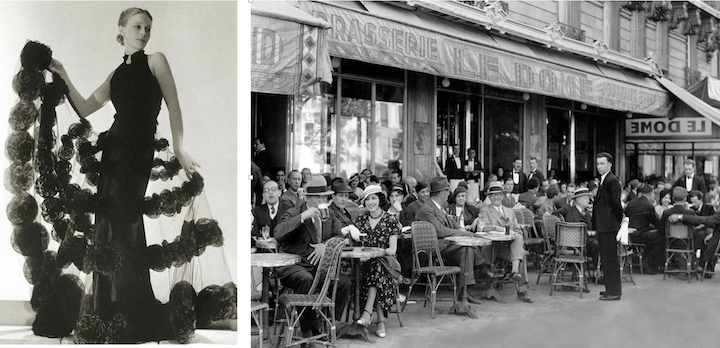
A note about Beatrice Mathieu: According to her 1976 New York Times obituary, “In an era when honest criticism in fashion writing was relatively rare, she blended humor with a kind of skepticism and honesty in writing that enhanced her reputation as a leader in the field…In 1928, when the young woman from Faribault, Minn., was making a living in Paris as a freelance writer, she received a cable from Harold Ross…asking her to do some work for him. She wired back: ‘What is The New Yorker?’ Mr. Ross replied at some length. She took the job.” Mathieu stopped writing her Paris column in 1936 but resumed after the end of World War II.
* * *
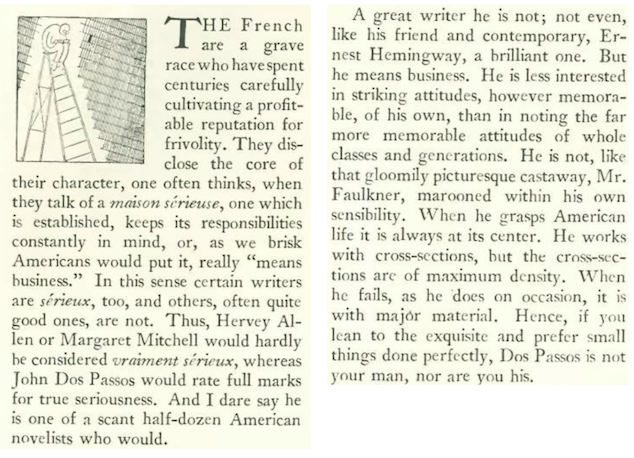
A Dose of Passos
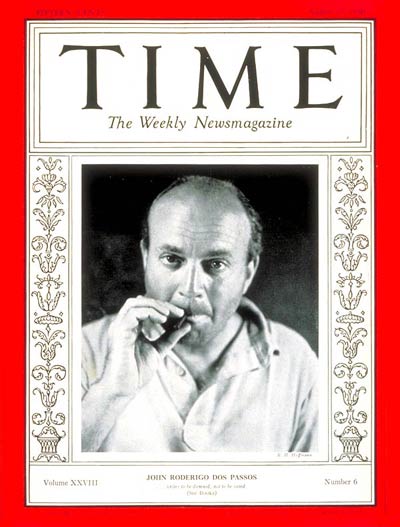
Clifton Fadiman reviewed the latest book by John Dos Passos (1896– 1970), who is known for his pioneering works of nonlinear fiction and his U.S.A. trilogy, which he completed in 1936 with The Big Money. One of the major novelists of the post-World War I “lost generation,” he is widely praised today for his timeless insights into America’s inequalities (and was also highly regarded by contemporaries including William Faulkner). Fadiman, however wrote “A great writer he is not.” Excerpts:
* * *
From Our Advertisers
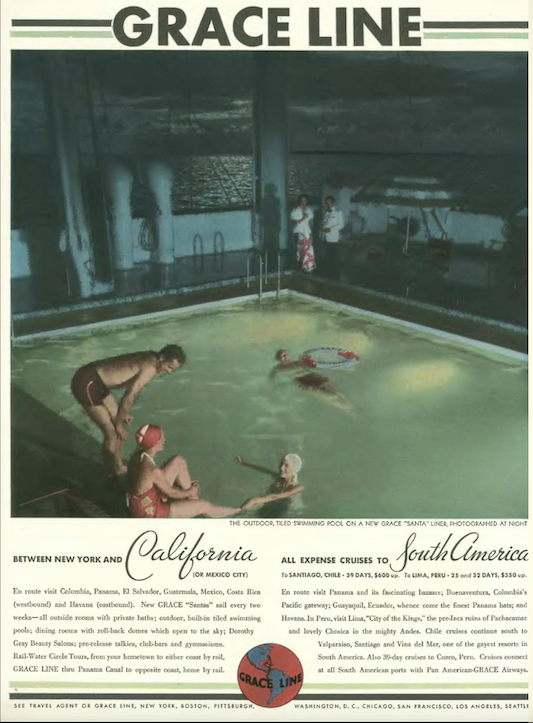
We begin our advertising section with the Grace Line, which offered this inviting image (on the inside front cover) of nighttime swimming on the deck of one of its Santa liners, en route to South America and California…
…less inviting, it would seem at the time, would be a cruise to Germany aboard a Hamburg-America Line (HAPAG) ship—beginning in 1939, U.S. and British forces would seize nearly all of HAPAG’s fleet…

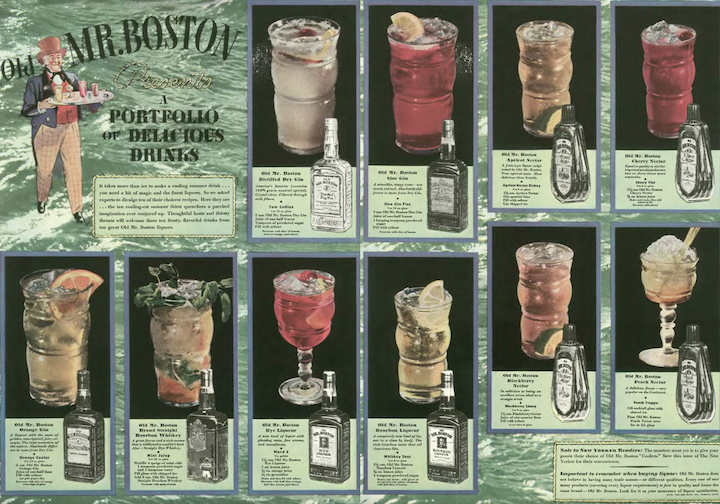
…the relatively new company Old Mr. Boston (founded in Boston in 1933, right as Prohibition ended) went big with this two-page color advertisement touting its line that included gin, rum, whiskey, and cordials…
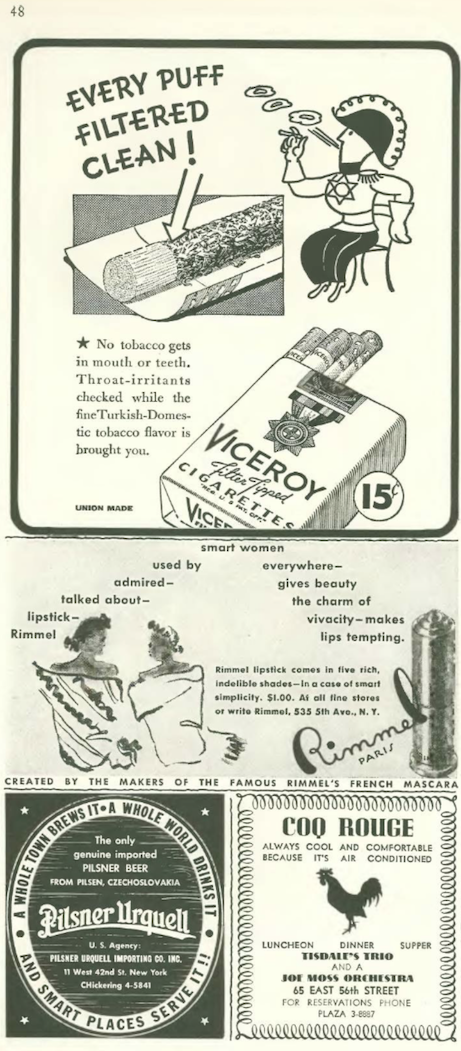
…in the back of the book…Brown & Williamson launched its Viceroy brand in 1936 as the world’s first cork-tipped filter cigarette…at the bottom is a modest ad for Pilsner Urquell, a Czech brewer that produced the world’s first pale lager…it is still brewed in Pilsen (Czech Republic) under the ownership of Tokyo-based Asahi Group…
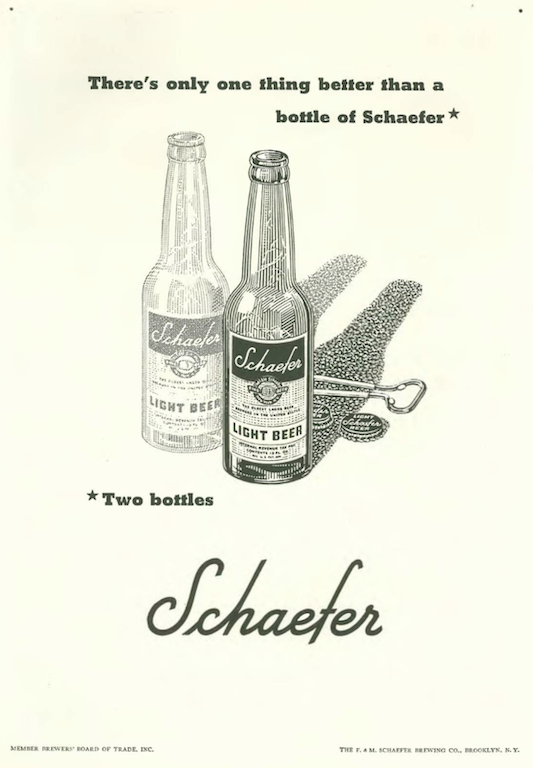
…Schaefer promoted their “light beer” in this rather spare advertisement…the “light” referred to its pale color, not to its calorie count…founded in New York City in 1842, Schaefer grew to be a top five brewer in America…today it is marketed by Pabst as a regional heritage brand…
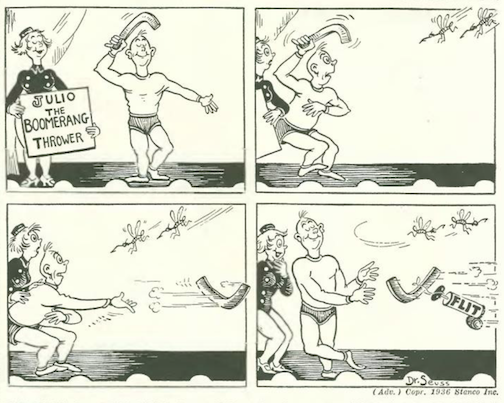
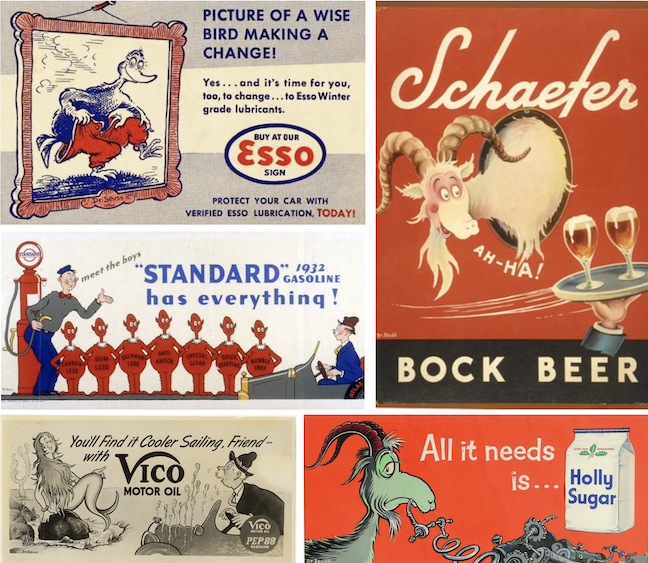
…Dr. Seuss was still at it with his Flit ads…after rejections from nearly thirty publishers, in 1937 Seuss (aka Theodor Geisel) would publish his first book with Vanguard Press—And to Think That I Saw It on Mulberry Street…Seuss also illustrated ads for Schaefer beer, Esso gasoline, Holly Sugar, and General Electric, among others…
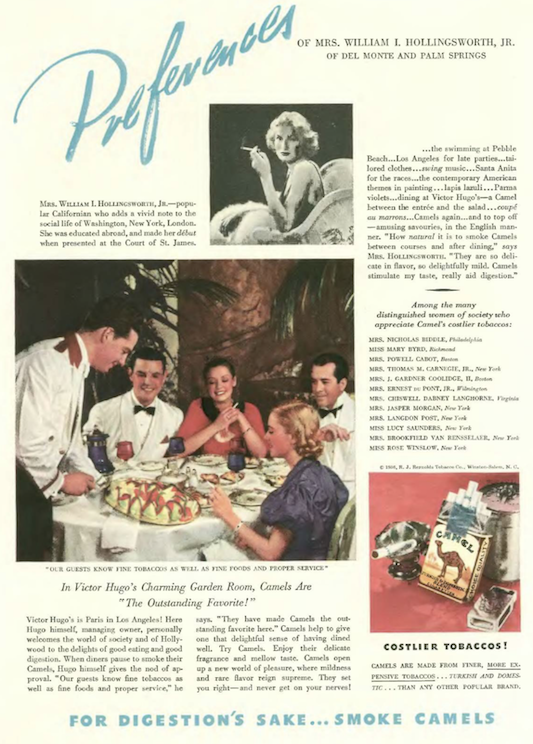
…R.J. Reynolds lined up another socialite endorsement for their Camel cigarettes…here they go to the West Coast, with a plug from Mrs. William J. Hollingsworth, Jr., aka Madeleine Ruth Piper…her marriage to Hollingsworth was over by 1937…she would marry three more times before her death in 1993…

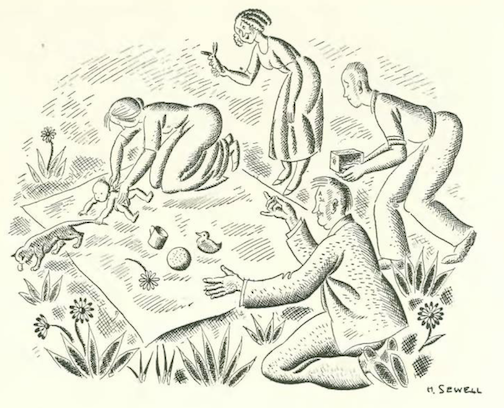
…on to our illustrators and cartoonists, we begin with spots by Christina Malman…

…Helen Moore Sewell…
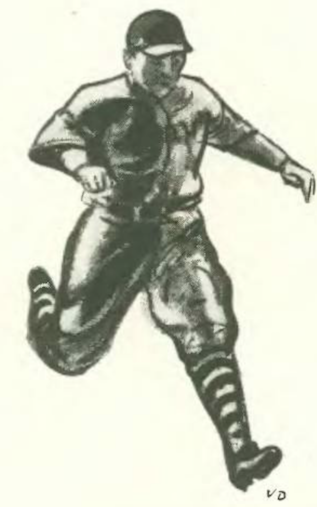
…Victor de Pauw…
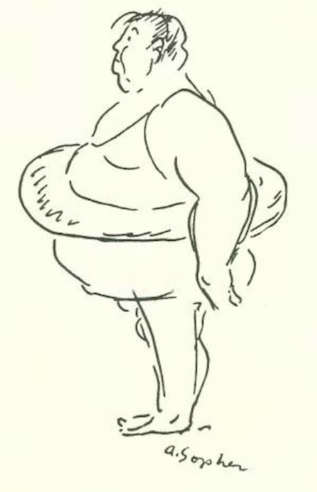
and Aaron Sopher…
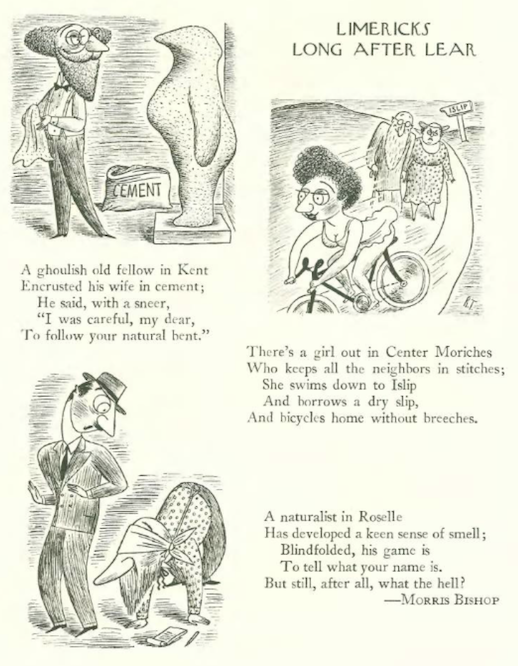
…there was another installment of Morris Bishop limericks illustrated by Richard Taylor…
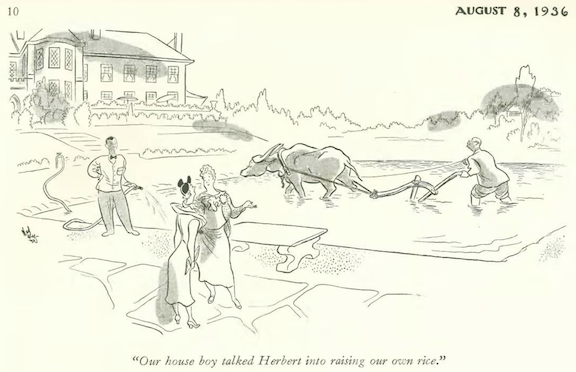
…Ned Hilton’s lord of the manor took up rice farming…
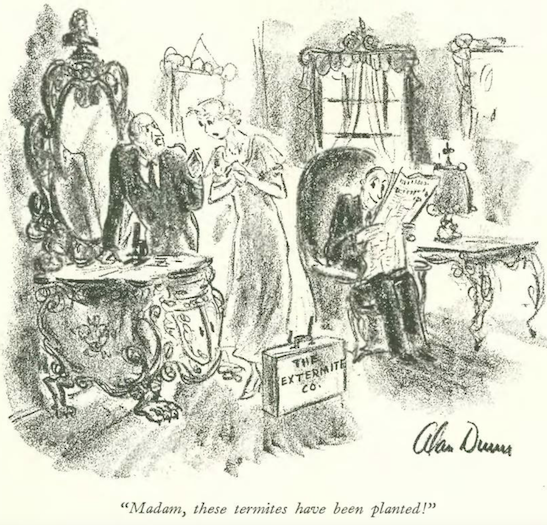
…Alan Dunn showed us some devious domestic doings…
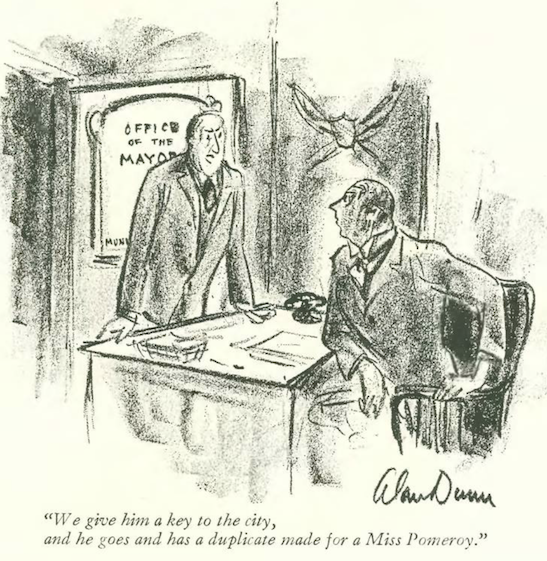
…and a complaint to the mayor…
…in contrast to Dunn’s style, the spare lines of Gardner Rea…

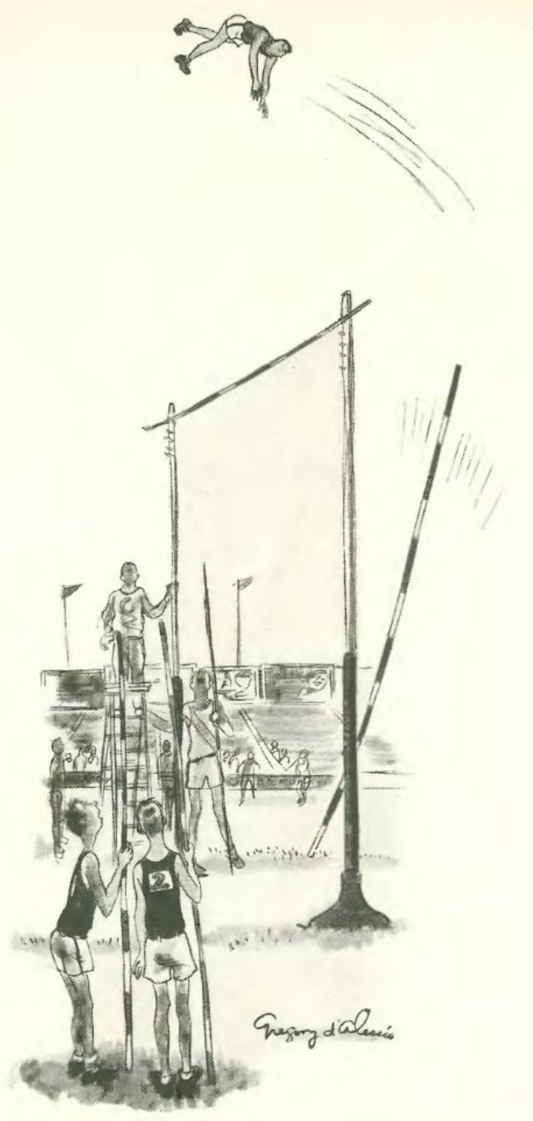
…Gregory d’Alessio prepared for Olympic glory…

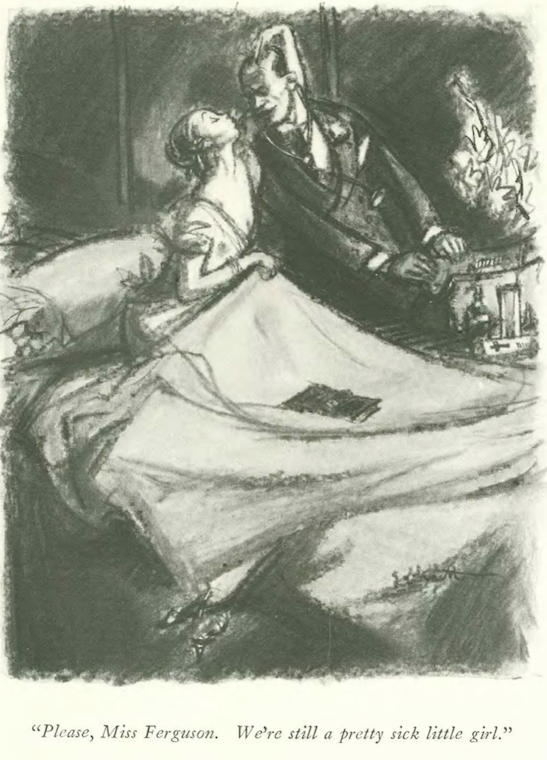
…William Crawford Galbraith continued to plumb the creepy waters inhabited by impressionable young women and lecherous older men, in this case a woman’s personal physician…
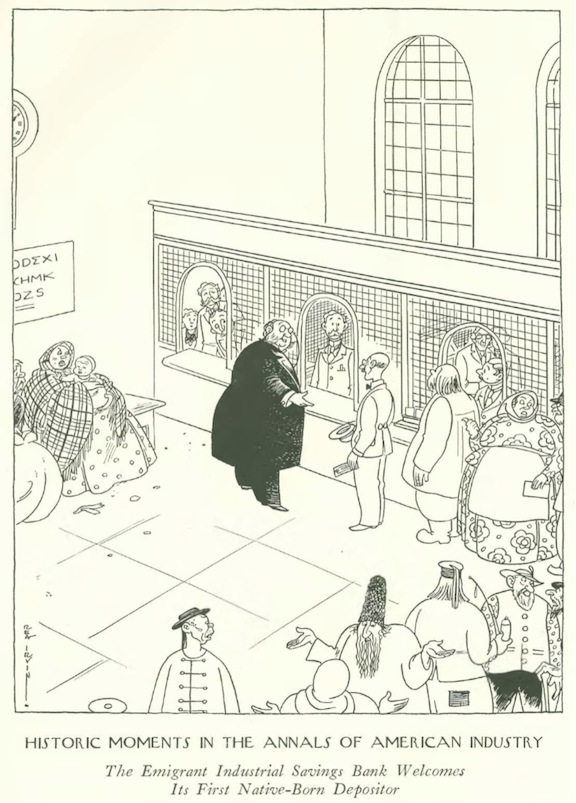
…and Rea Irvin continued to explore historic moments in American industry…
…we close with Helen Hokinson, and some scandal brewing under a hair dryer…

Next Time: Bottoms Up…


One thought on “Men in Kilts”