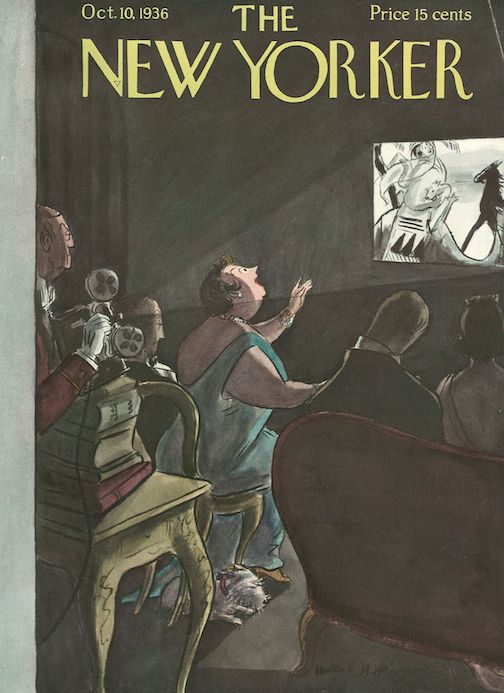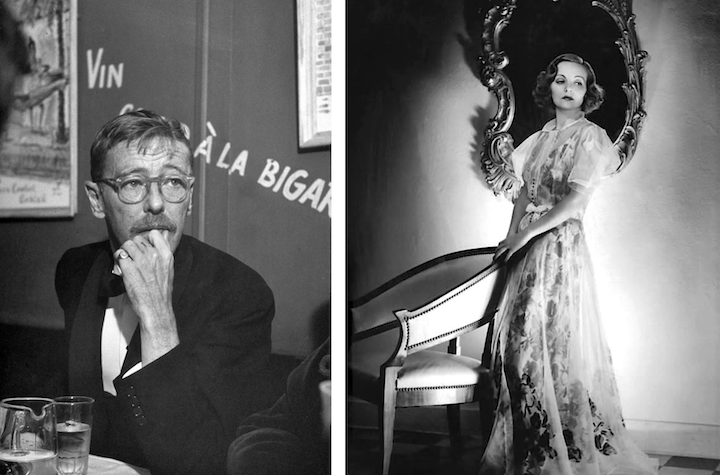
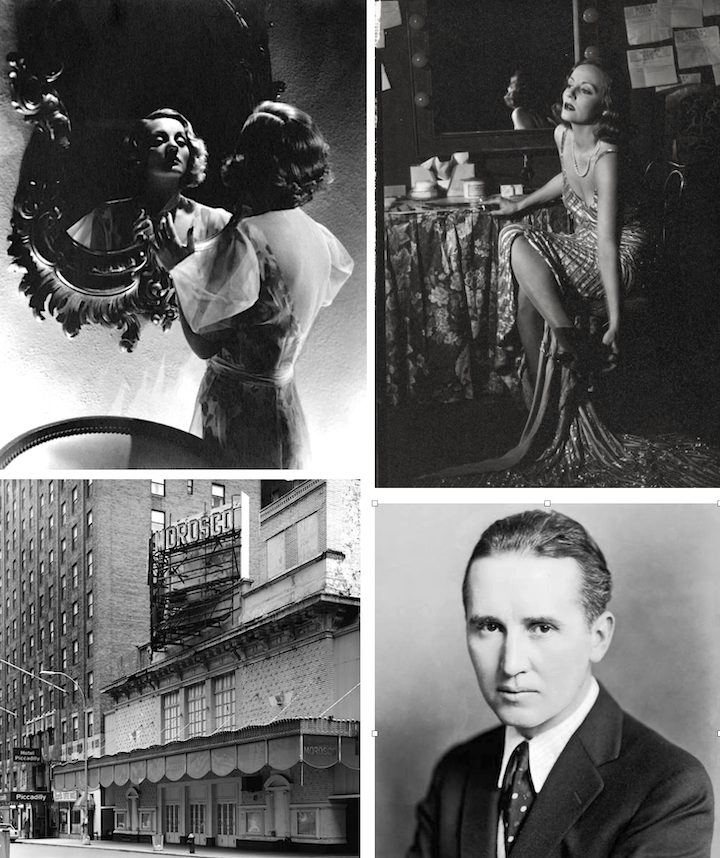
Above: In his review of Tallulah Bankhead's performance in "Reflected Glory," Wolcott Gibbs noted that she was a force to be reckoned with: ..."she would pull any home in the world down around her ears in ten minutes, and after that perhaps eat the children." (newyorker.com/facebook.com)
Broadway’s fall season was still young when the Morosco Theatre staged Reflected Glory, featuring Tallulah Bankhead in a role that mimicked her famously flamboyant lifestyle.
The play, which ran for 127 performances, was not well-received by the critics, but audiences loved it, and especially those who, in the words of critic Wolcott Gibbs, “would be enchanted to spend the evening just watching (Bankhead) knit a sock.”
Bankhead (1902–1968) also appeared in films (she won a New York Film Critics Circle award in 1944 for her performance in Alfred Hitchcock’s Lifeboat), but she was mostly known for her stage acting and her wild lifestyle—drugs, alcohol, and lots of sex with both men and women; she was candid about her vices, including the claim she smoked 120 cigarettes a day.
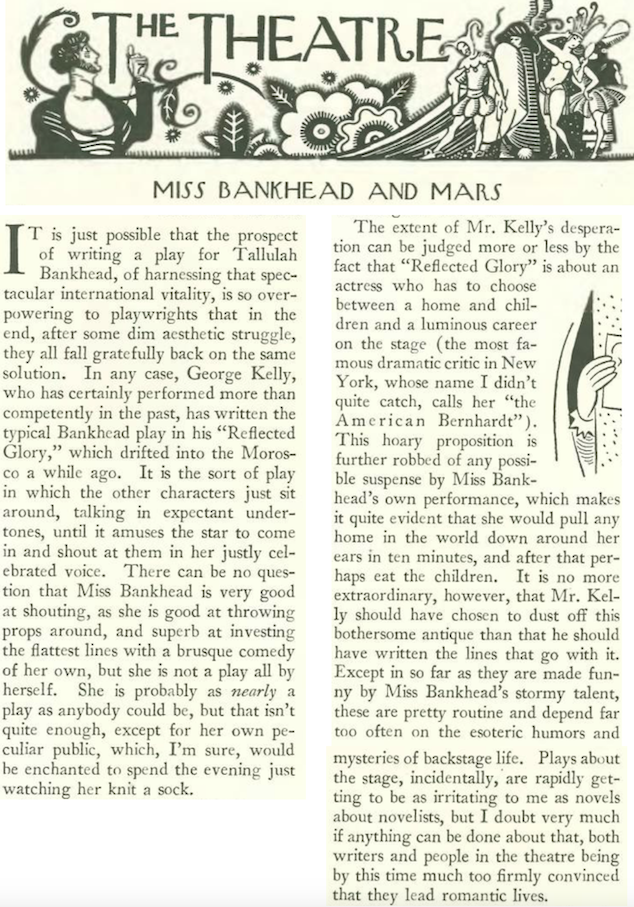
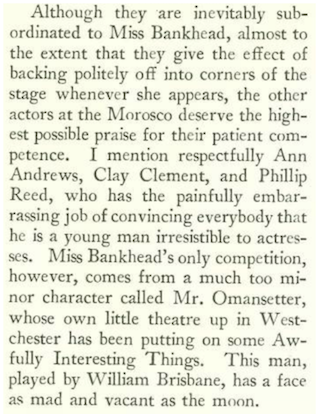
Early in her career Bankhead, an Alabama native, moved into the Algonquin Hotel and quickly made her way into the orbit of the famed Algonquin Round Table—so, she was well-known to Gibbs, who noted in this excerpt that Bankhead’s only competition in Reflected Glory was William Brisbane, a man with a face “as mad and vacant as the moon.”
* * *
The Yankee Clipper
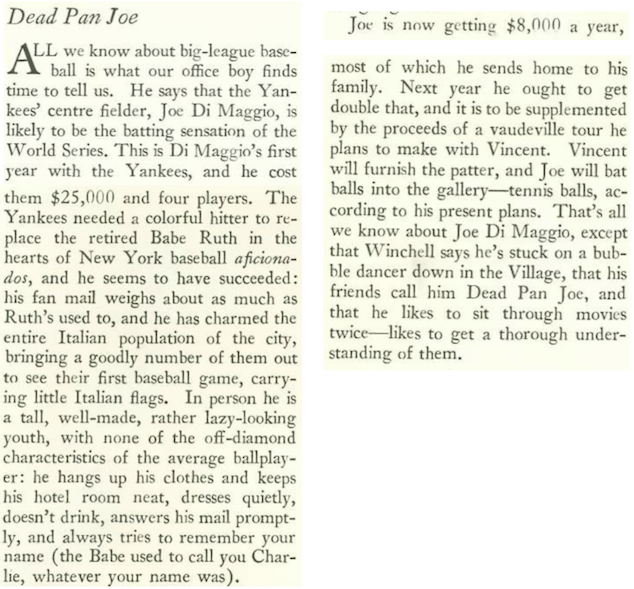
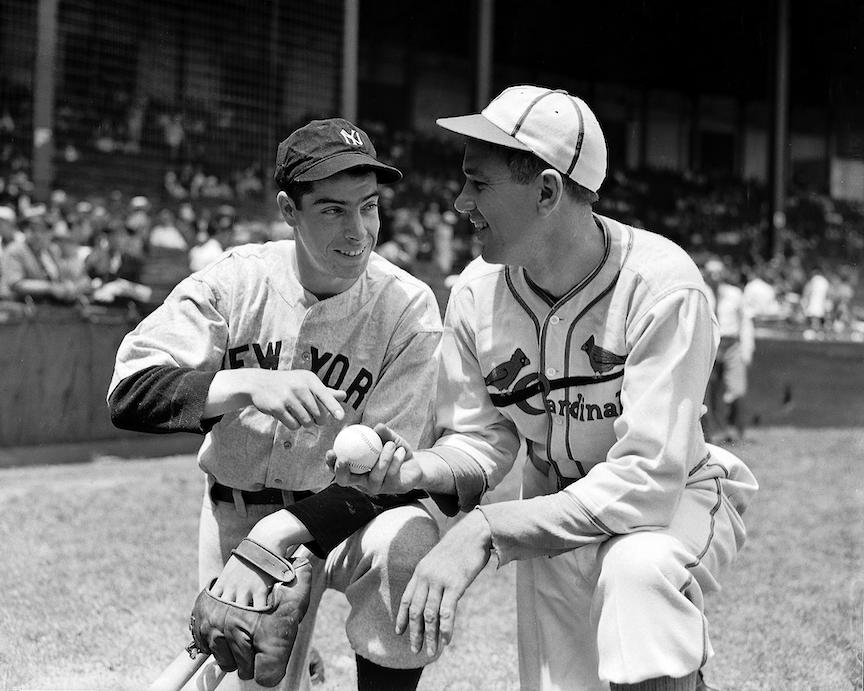
Baseball was mostly ignored in the early years of the New Yorker, but every now and then the magazine would feature a famous personality from the game, in this case Joe DiMaggio, who in 1936 would set a franchise record for rookies by hitting twenty-nine home runs (in just 138 games).
* * *
Right of the Right
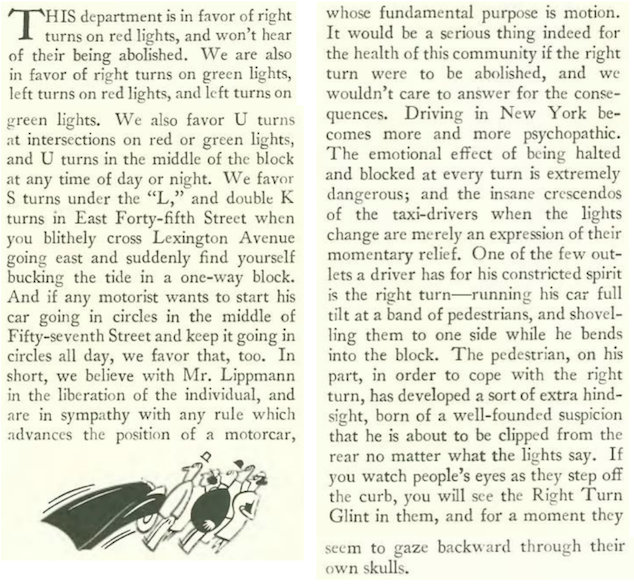
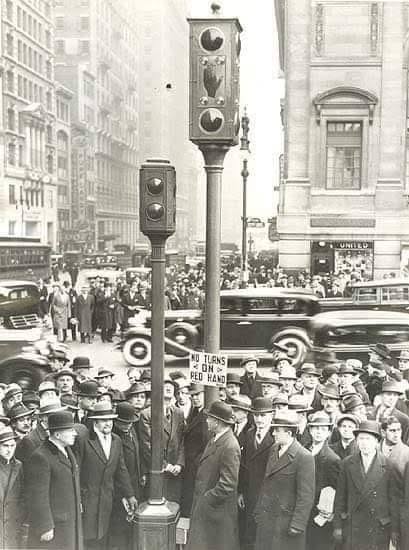
In his “Notes and Comment,” E.B. White took issue with a proposal by the New York Board of Aldermen to ban right-hand turns against a red light (the board ultimately approved the ban).
* * *
At the Movies
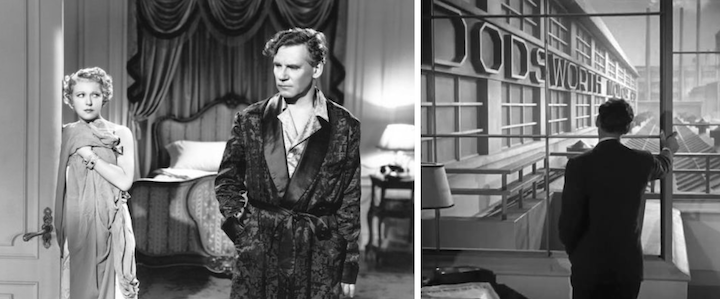
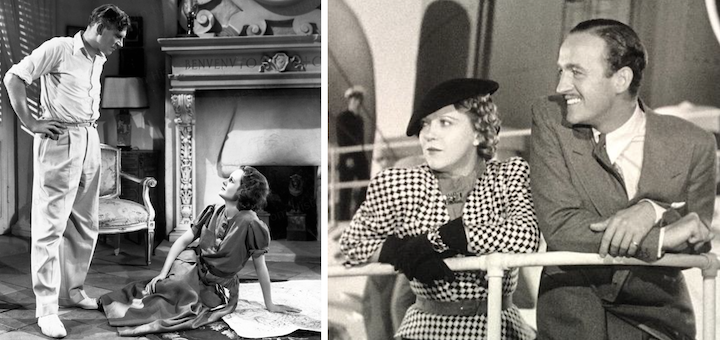
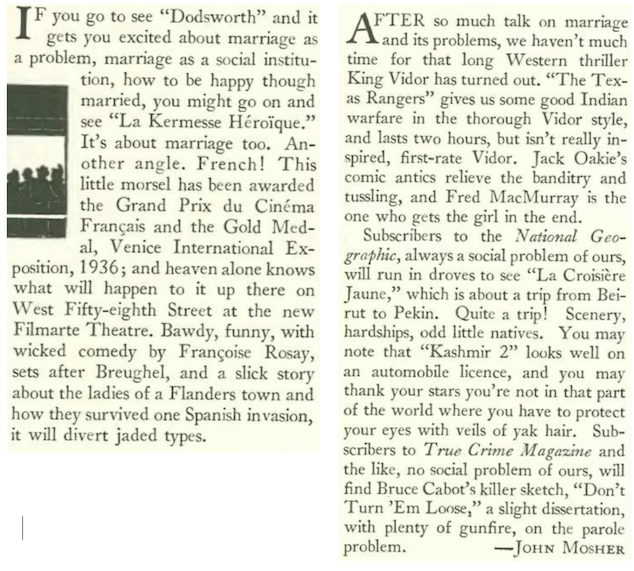
Based on a 1929 novel by Sinclair Lewis, the William Wyler-directed Dodsworth was acclaimed by critics as one of the best films of the year. New Yorker critic John Mosher wholeheartedly agreed:

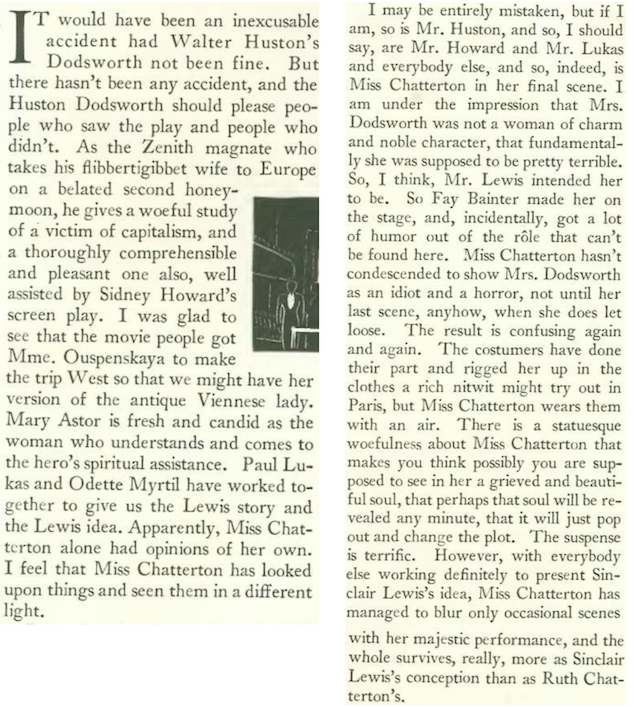
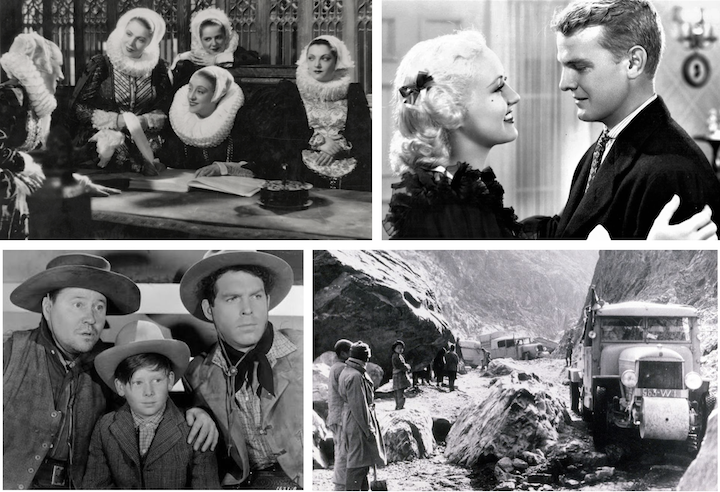
Mosher also reviewed a mixed bag of films, including the “wicked comedy” La Kermesse héroïque (Carnival in Flanders) featuring French opera star Françoise Rosay as a mayor’s wife who cleverly thwarts potential troubles from visiting Spanish soldiers.
* * *
From Our Advertisers
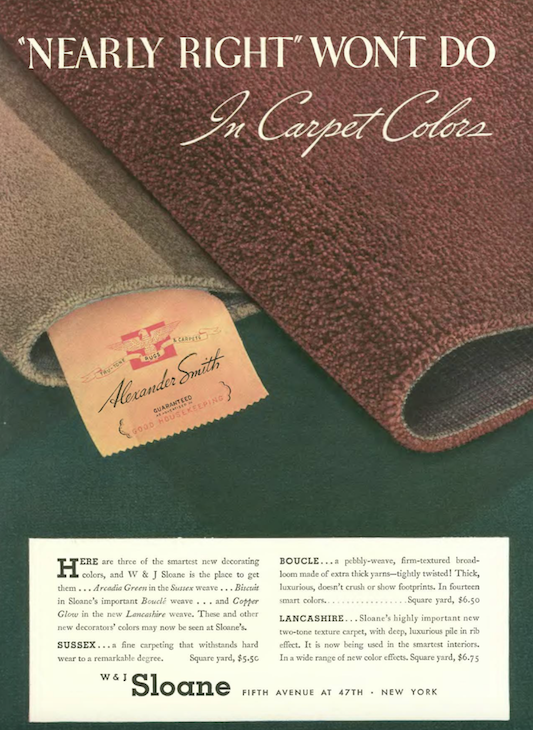
Fall advertising continued its uptick in the magazine, with many splashes of color including this carpet ad that greeted readers on the inside front cover…
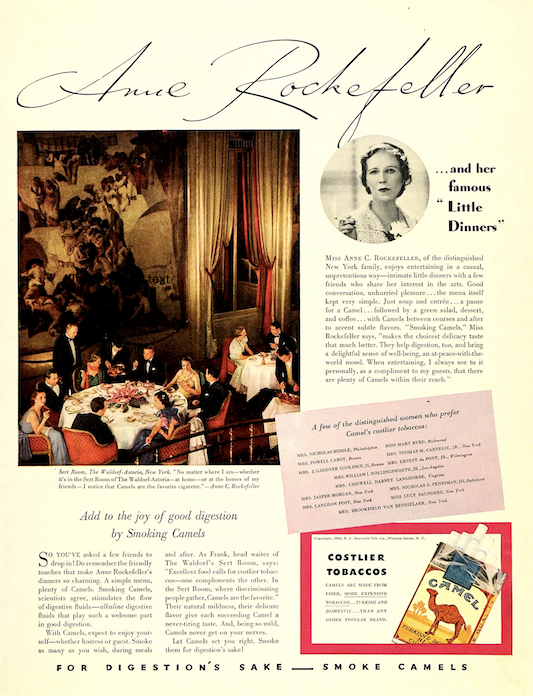
…R.J. Reynolds continued to roll out endorsements from society mavens…here Anne C. Rockefeller stated that Camels gave her “a delightful sense of well-being”…
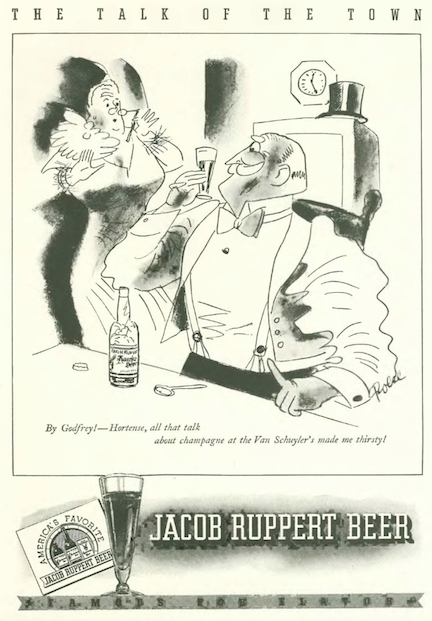
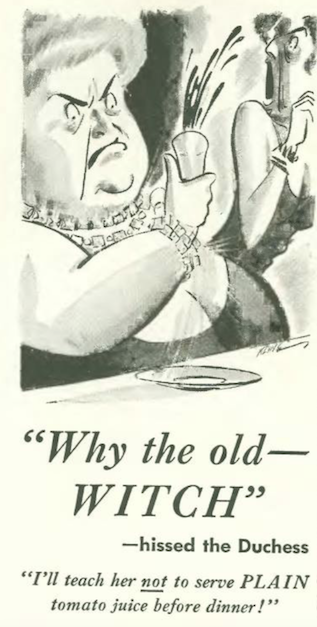
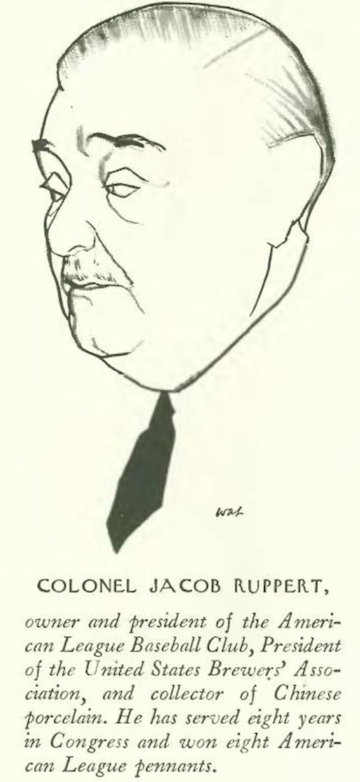
…more Colonel and Duchess archetypes turn up in this issue, on behalf of Ruppert beer…
…the Warwick Hotel (Philadelphia), and College Inn tomato juice “cocktail”…College Inn had softened the appearance of their Duchess…
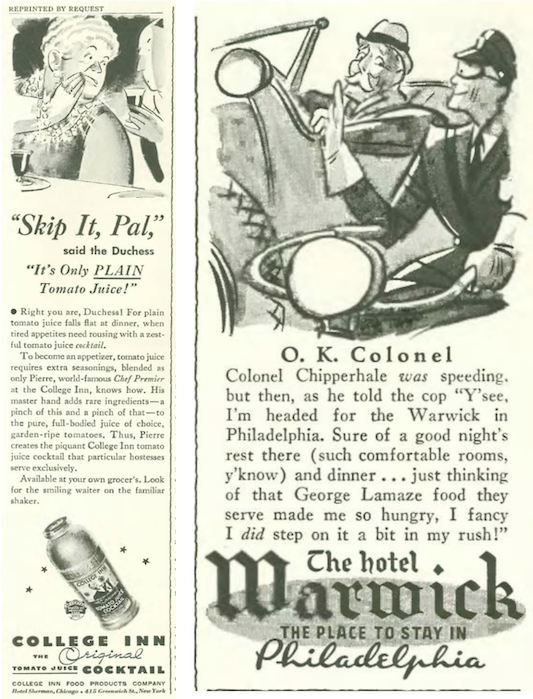
…since she was last spotted in The New Yorker in 1935 (detail)…
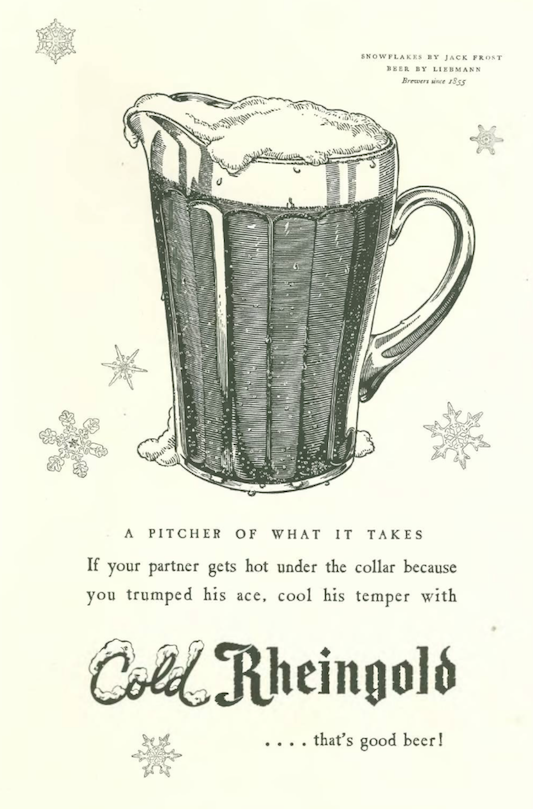
…after a blazing hot summer, the brewers of Rheingold figured this image would still appeal to parched New Yorkers…
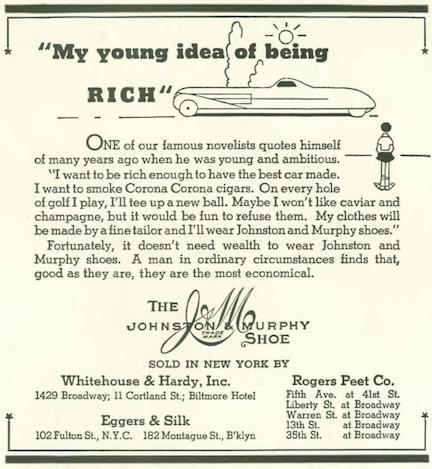
…a back of the book ad from Johnston & Murphy, quoting an unidentified author regarding some childhood wishes…
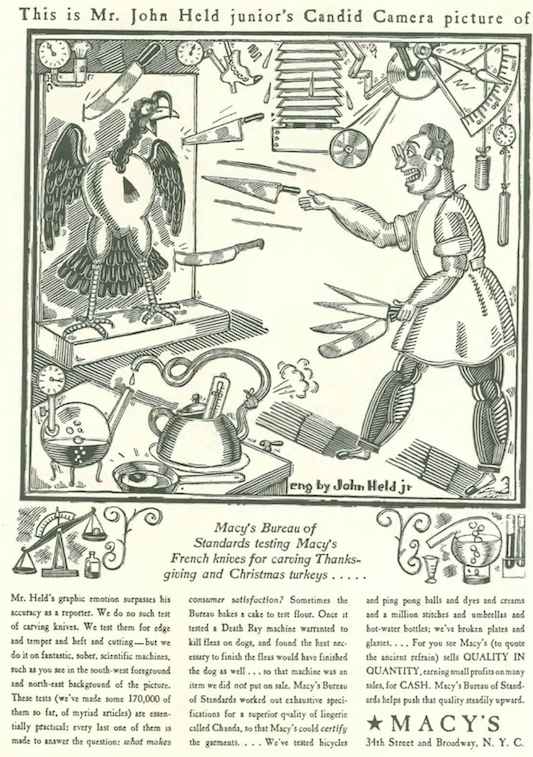
…John Held Jr. was one of the earliest contributors to The New Yorker—from 1925 to 1932 his woodcut-style cartoons and fanciful maps were frequent features…by 1936 Held had turned his talents to painting, book illustration, and the occasional advertisement, here on behalf of Macy’s…
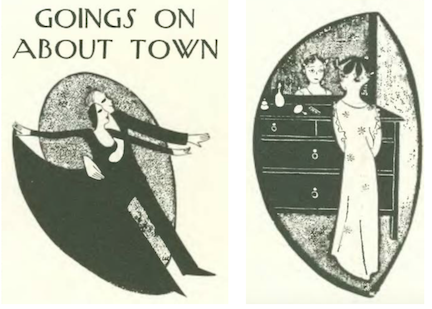
…our illustrators and cartoonists for this issue include Christina Malman…
…a caricature by William Auerbach-Levy for the calendar section’s mini bio…
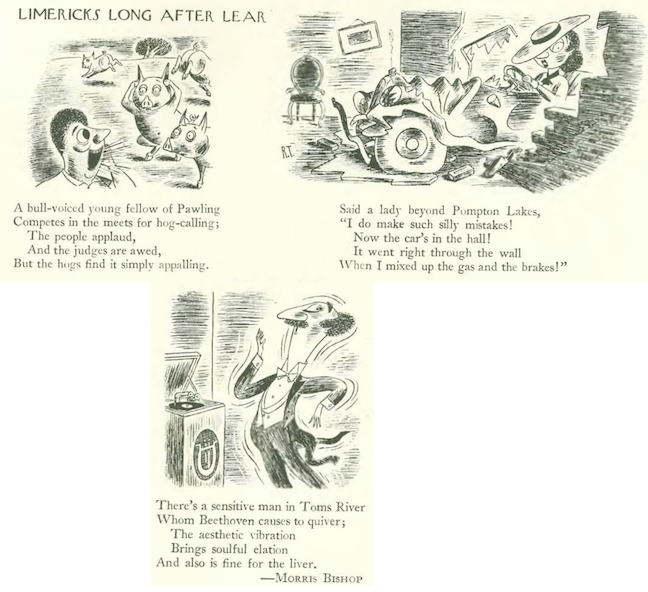
…another Richard Taylor–Morris Bishop collaboration…
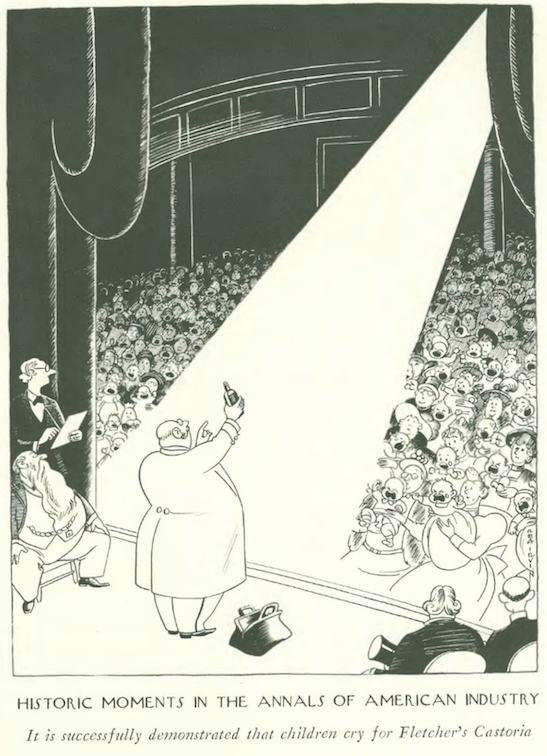
…more historic moments from American Industry, with Rea Irvin…
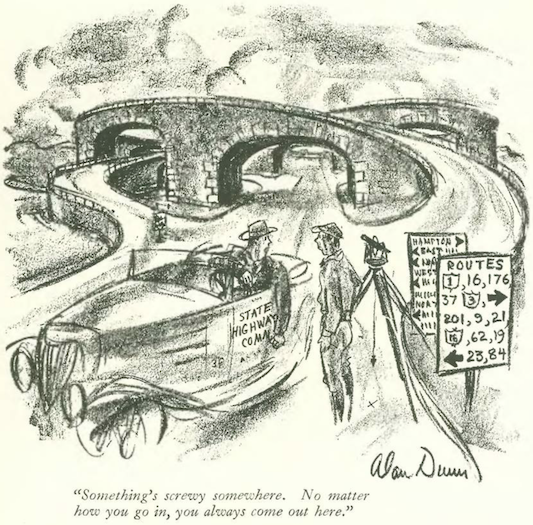
…Alan Dunn had an M.C. Escher moment on the turnpike…
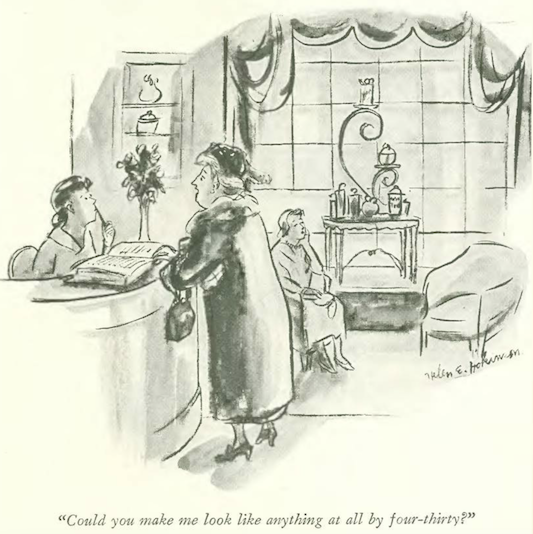
…Helen Hokinson made a big ask at the beauty parlor…
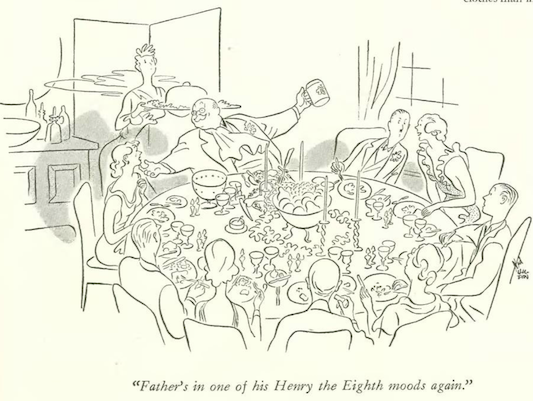
…Ned Hilton drew up a big man with a big complex…
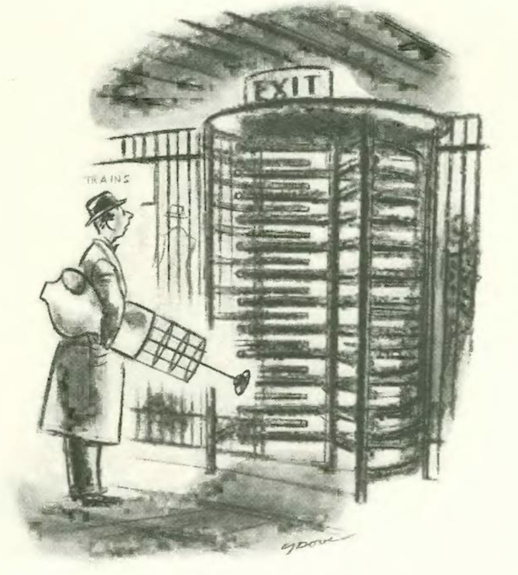
…Leonard Dove offered a challenge and a unique perspective at the subway station…
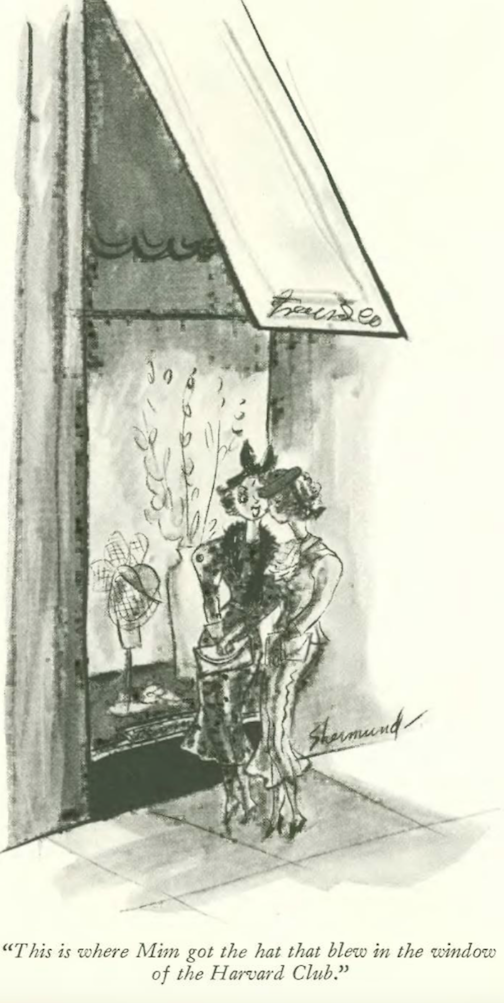
….Barbara Shermund’s modern women thrilled to the sights of Manhattan…
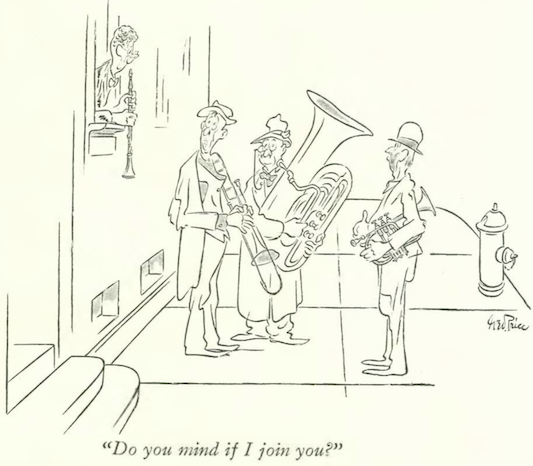
…George Price turned this trio into a quartet…
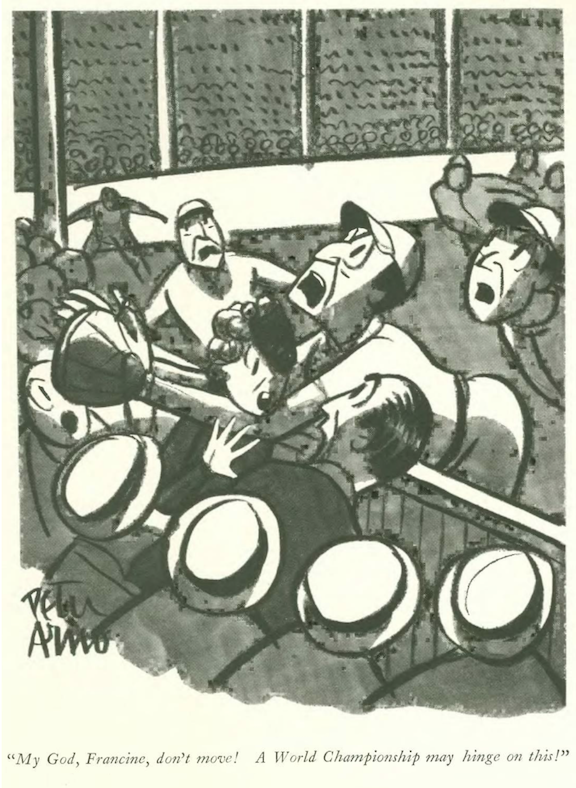
…and we close with a terrific, terrifying moment at the World Series, courtesy Peter Arno…
Next Time: Road Warriors…