Can-Can in Cleveland

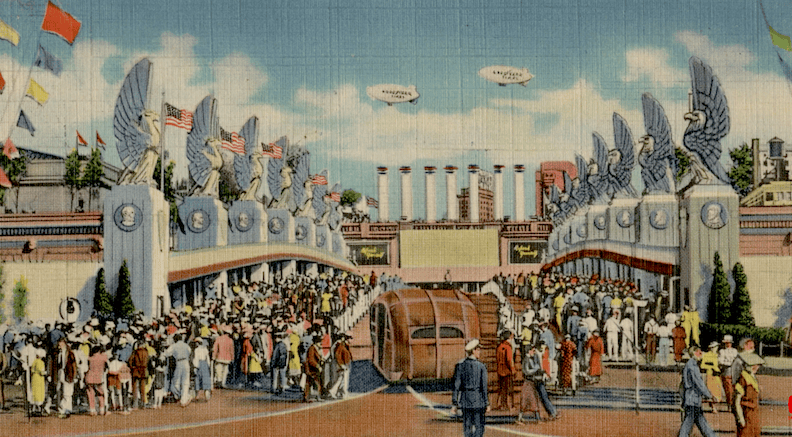
Above: Postcard image of the "Avenue of Presidents" at the 1936 Great Lakes Exposition in Cleveland, Ohio. (youtube.com)

Before the days of mass communications, millions would flock to various world’s fairs and expositions to see the latest inventions, experience the boosterism of the host city, and seek out the thrills of a carnival ride or peep show.
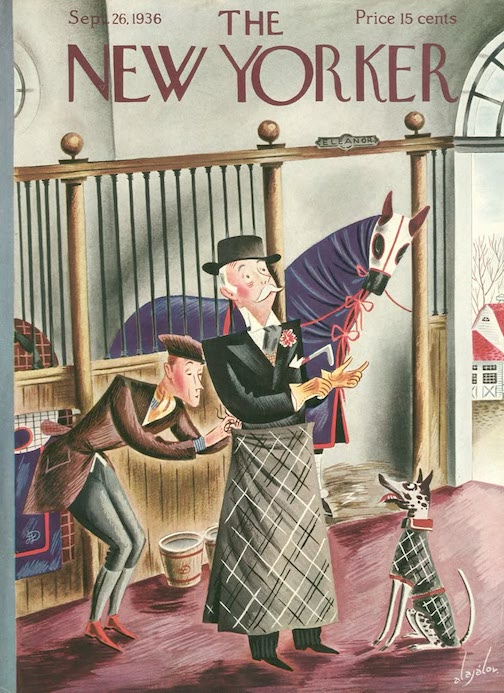
September 26, 1936 cover by Constantin Alajalov.

Along with the major world’s fairs such as Chicago’s 1893 World’s Columbian Exposition, smaller cities also hosted expositions to “boom” their standing in the world—Omaha’s 1898 Trans-Mississippi and International Exposition attracted 2.6 million people, including President William McKinley, and three years later Buffalo’s 1901 Pan-American Exposition would draw eight million—McKinley was there, too, but his visit (and life) would be cut short by an assassin’s bullet.

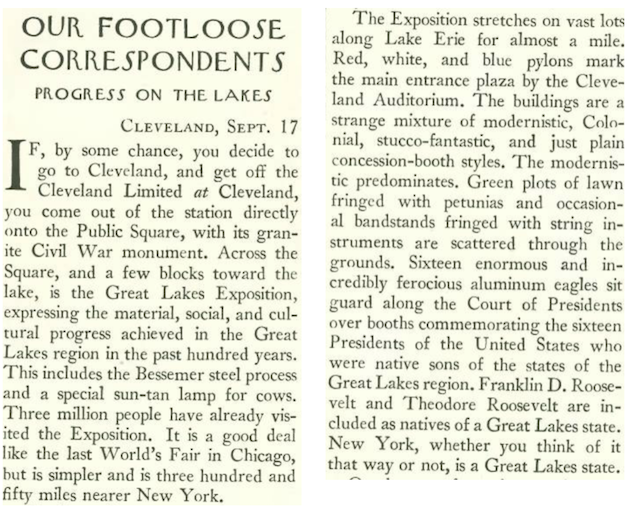
In many cases these expositions commemorated anniversaries that marked the progress of a particular city or geographic area. Such was the case of Cleveland’s Great Lakes Exposition, which was created to commemorate the centennial of Cleveland’s incorporation as a city while giving a boost to a region hit hard by the Depression. The exposition was visited by The New Yorker’s Eugene Kinkead, who was an editor and writer of the magazine’s “The Talk of the Town” section for many years. Here are brief excerpts from his visit:
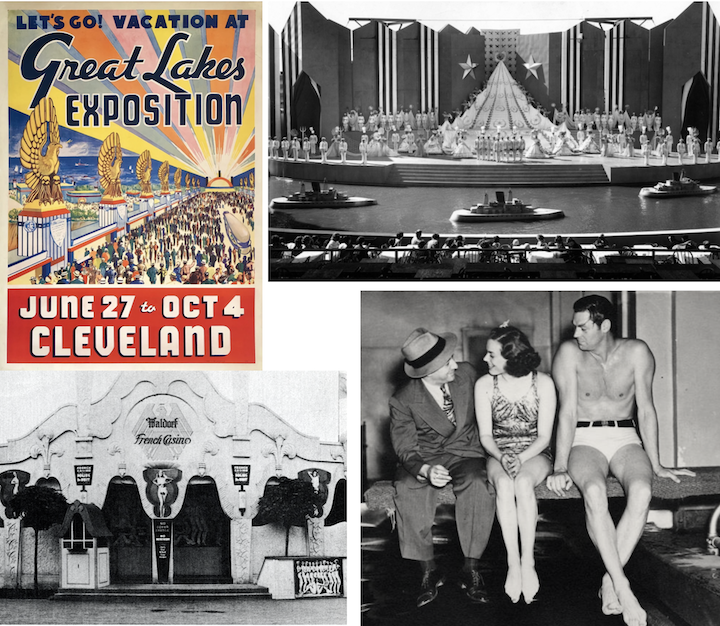
SOMETHING FOR EVERYONE…Clockwise from top left: Poster for the Great Lakes Exposition; the most popular attraction was Billy Rose’s Aquacade, a 5,000-seat theater-restaurant that featured diving and synchronized swimming (the Aquacade was also a hit at the 1939 New York Wold’s Fair); star attractions at the Aquacade were Olympic champion swimmers Eleanor Holm and Johnny Weissmuller, pictured here with Billy Rose; the “Streets of the World” showcased the cultures of more than forty different countries—it also featured the “French Casino,” a restaurant/nightclub that drew massive crowds to its “Girl Revues”—naturally, the scantily clad performances and nude can-can dancers created a major stir among more modest expo attendees. (chicagovintageposters.com/clevelandmemory.org)
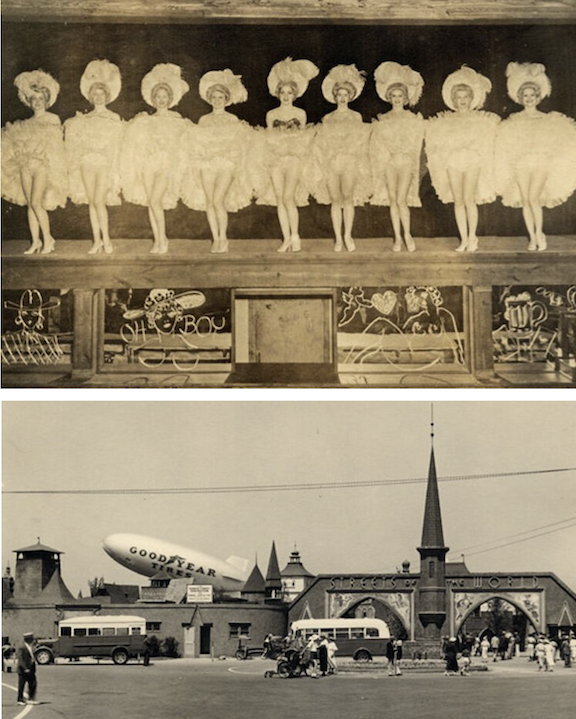
OTHER DIVERSIONS…Above: the can-can dancers who caused quite a stir at the French Casino, located in the “Streets of the World” section. Below: One of the blimps the Goodyear Tire & Rubber Company featured at the exposition rises in the background of “Streets of the World.” Visitors could purchase tickets for three dollars (roughly $65 today) to take a scenic flight over downtown Cleveland, the exposition, and Lake Erie. (clevelandmemory.org)
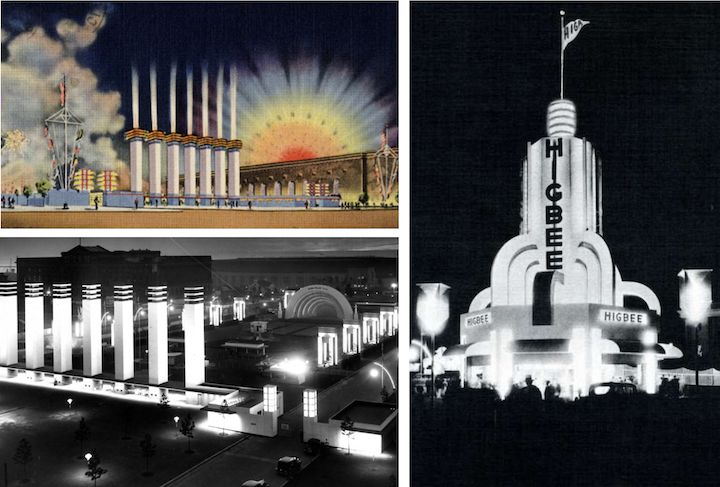
EXPO BY NIGHT…Clockwise, from top left: Postcard view of the main entrance to the Great Lakes Exposition, backlit by the “Aurora Borealis”—a spectacular light display created by powerful searchlights and colored beams; a tower sponsored by Cleveland’s famed Higbee’s Department Store; photograph of the main entrance at night. (clevelandmemory.org/clevelandhistorical.org)

 * * *

Relax, Joan

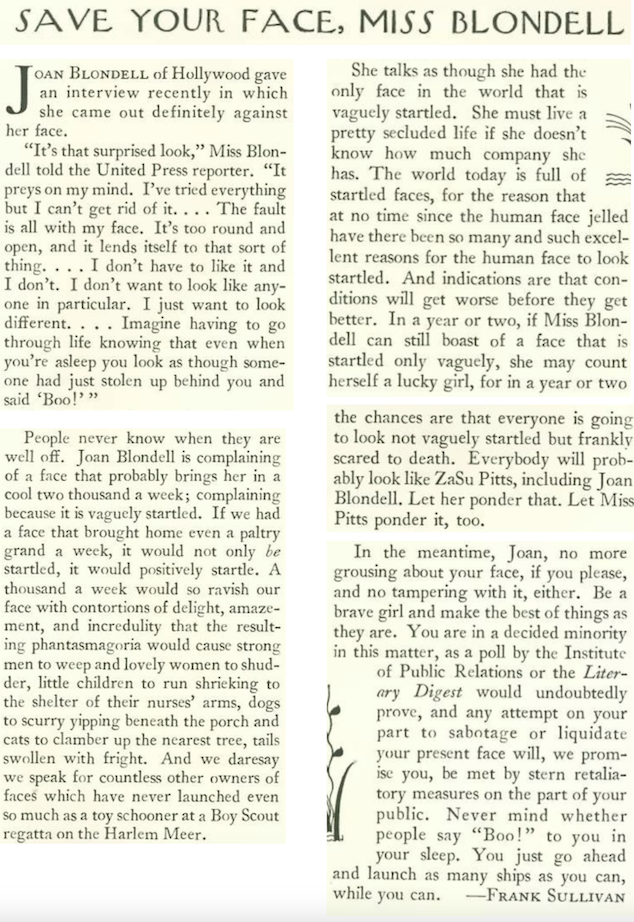
New Yorker regular Frank Sullivan found inspiration in a newspaper article featuring actress Joan Blondell lamenting the “surprised look” she thought was permanently fixed on her face. Sullivan suggested that Blondell “must live a pretty secluded life” not to notice a world “full of startled faces.” Alluding to the coming war in Europe, he suggested that in a year or two “everyone will probably look like ZaSu Pitts.”
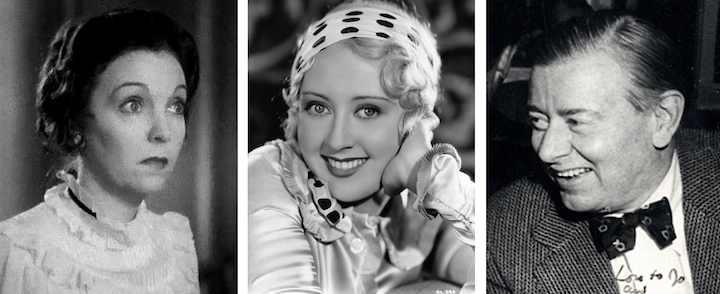
PUT ON YOUR WAR FACE…Frank Sullivan reassured Joan Blondell (center) that soon everyone would wear the expression of actress ZaSu Pitts (left). (imdb.com/sspl.org)

 * * *

At the Movies

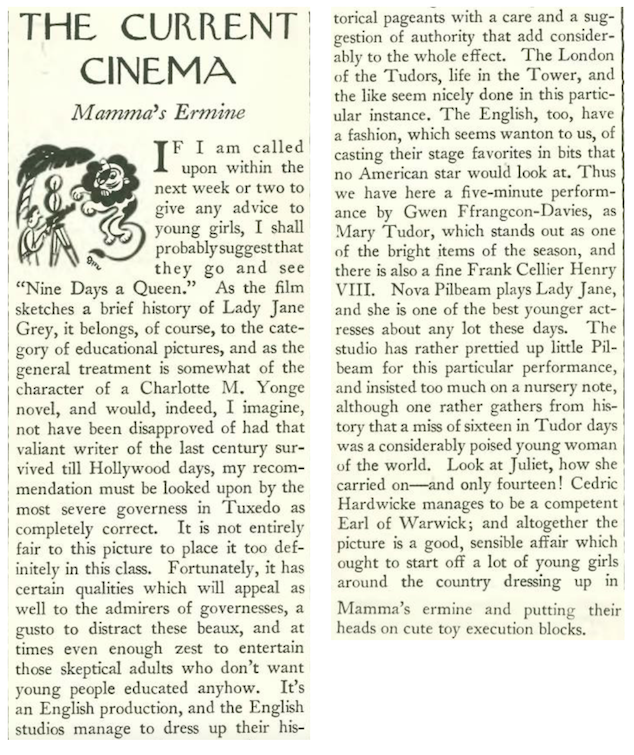
As previously noted, costume dramas were big in 1936, and critic John Mosher was less than enthusiastic about many of them, but he found Nine Days a Queen (Tudor Rose in the British release) a sensible affair, noting that “English studios manage to dress up their historical pageants with a care and a suggestion of authority…”
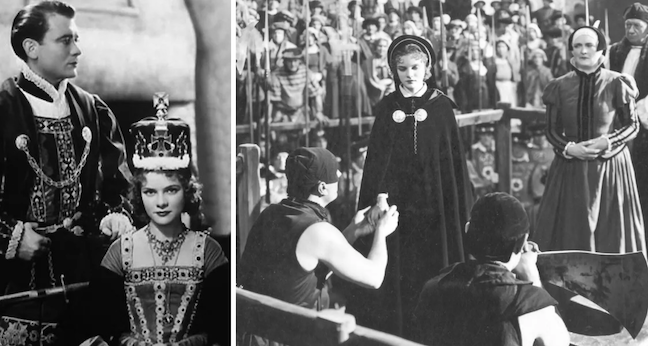
TEMPORARY CROWN…Nine Days a Queen (aka Tudor Rose) tells the story of Lady Jane Grey’s brief reign as the queen of England before she loses her head. Left: John Mills as Lord Guilford Dudley and Nova Pilbeam as Lady Jane Grey. At right, executioners seek forgiveness from Lady Jane ahead of their grisly task. Critic John Mosher liked the film, but Graham Greene (critic for The Spectator), wrote that he had “seldom listened to more inchoate rubbish…” (oldhollywooddiary via instagram.com)

Mosher found the musical comedy Sing, Baby, Sing a minor entertainment, and dismissed the screwball comedy My Man Godfrey as “nonsense.” Mosher was in the minority on that latter opinion: Godfrey was one of the most acclaimed comedies of 1936, nominated for six Oscars. In 1999 the film was selected for preservation in the National Film Registry.
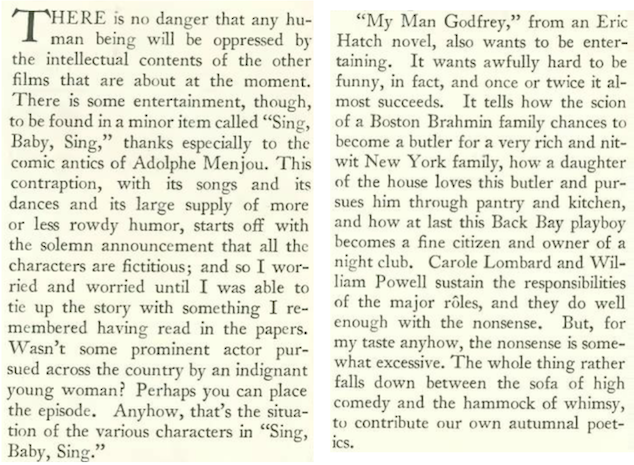
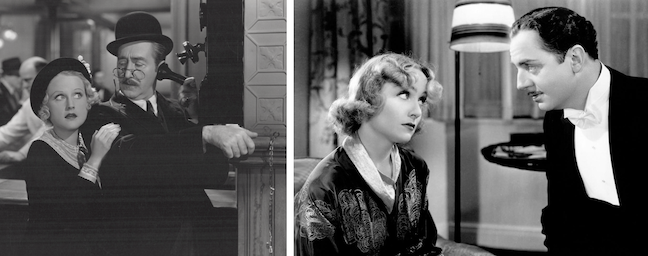
PAIRING OFF…Alice Faye and Adolphe Menjou in Sing, Baby, Sing. Carole Lombard and William Powell in My Man Godfrey. Lombard and Powell were briefly married from 1931 to 1933, but remained close friends after their divorce. (eBay.com/pbs.org)

 * * *

From Our Advertisers

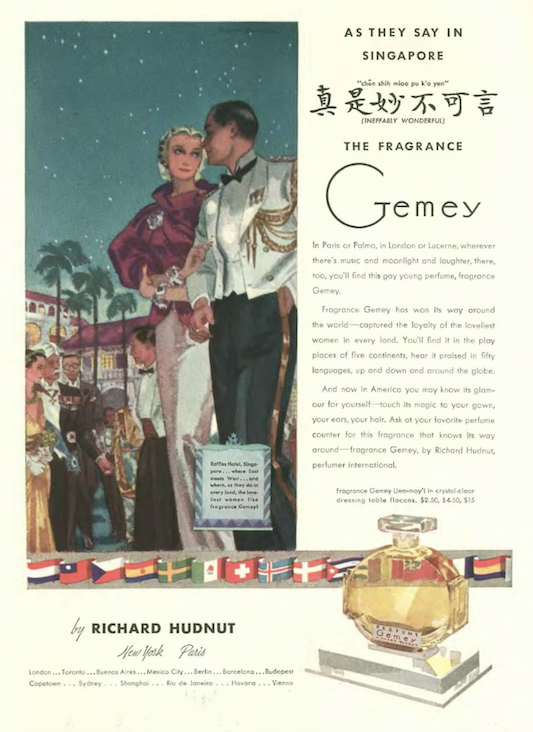
The inside front cover greeted readers with this romantic image from Richard Hudnut cosmetics…
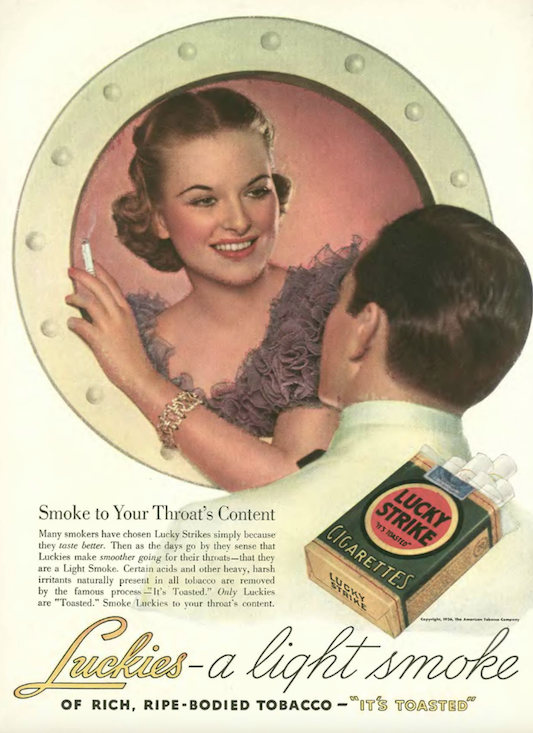
…the makers of Lucky Strikes used a bit of romance themselves to inspire more women smokers…
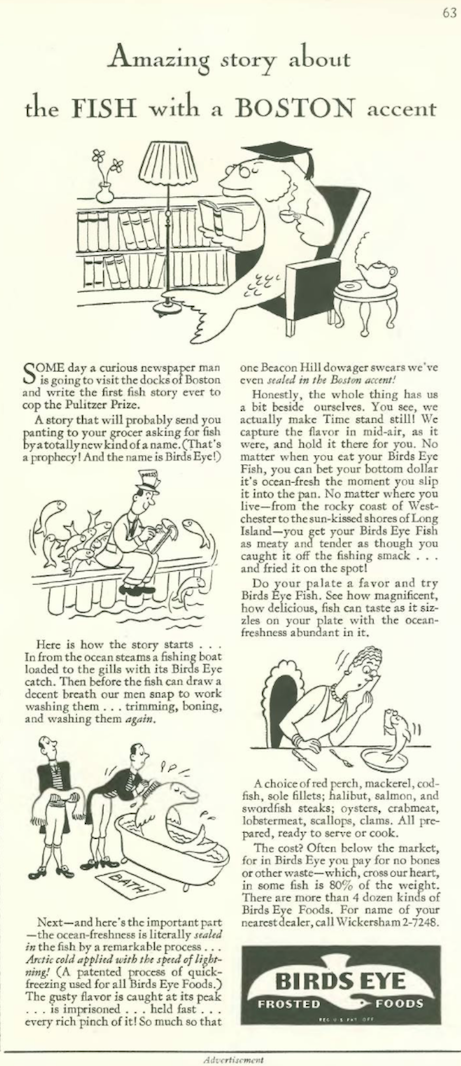
…the folks at Birds Eye took out this advertisement to extol the virtues of frozen fish…
…an odd ad from Green Giant, using the image of an annoying little man to sell peas…one imagines the woman calling “Pa, git yer shotgun”…

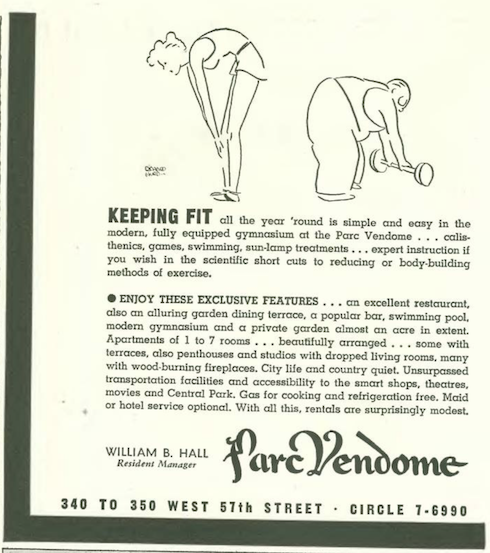
…the Parc Vendome advertised its apartments as a great place to keep fit, everything from calisthenics to sun-lamp treatments…
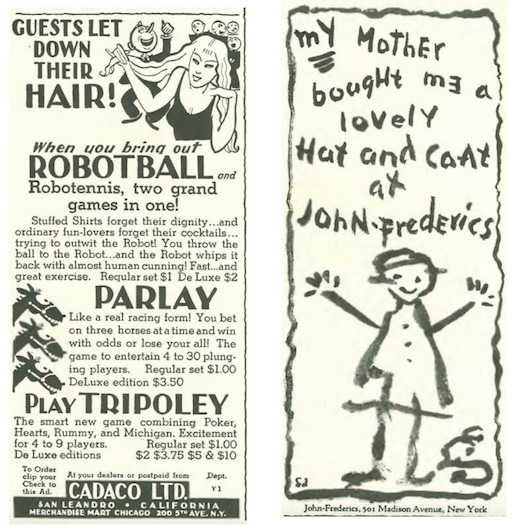
…a couple of one-column ads from the back of the book…at left: founded in 1935, Cadaco was known for transforming real-world sports into table-top versions…on the right: John-Frederics was a partnership between hat designer “Mr John” Harberger and Frederic Hirst…John-Frederics hats were famous in Hollywood, including the green velvet bonnet worn by Vivien Leigh in 1939’s Gone with the Wind…
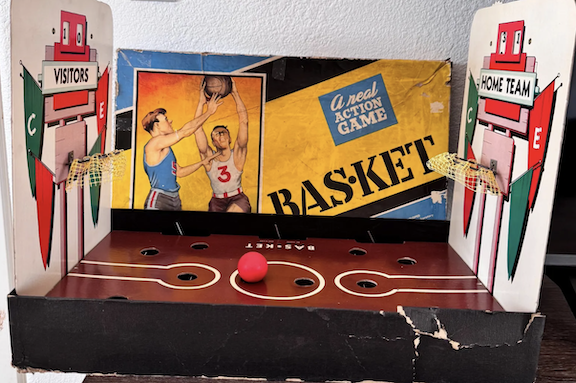
This 1938 edition of Cadaco’s Bas-Ket featured spring-loaded levers that propelled a ping-pong-like ball toward a basket. (etsy.com)

…Scribner’s magazine, a product of publisher Charles Scribner’s Sons, tried to head off declining circulation by hiring a new editor-in-chief, Harlan D. Logan, who sought to modernize the format to compete with contemporary lifestyle magazines…the publisher took out this cheeky full-page ad to draw attention to the “new” Scribner’s…
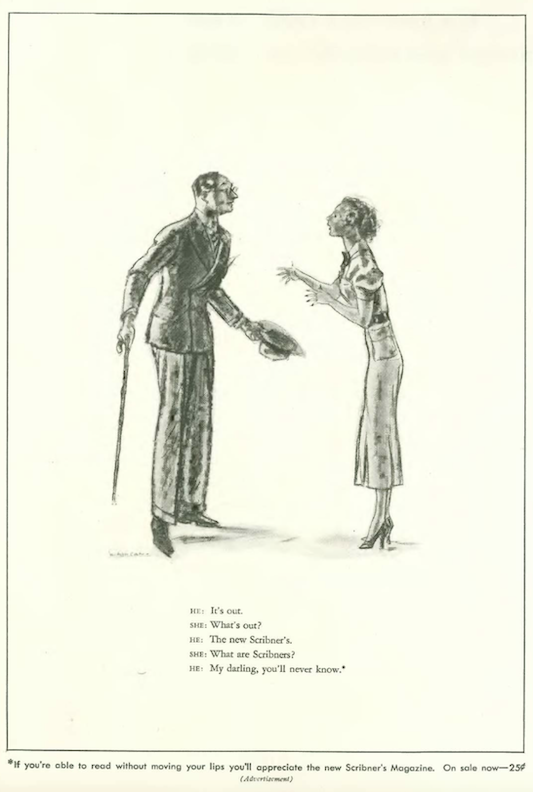
…founded in January 1887, the magazine saw its strongest sales when Teddy Roosevelt was a contributor from the 1890s to about 1910…despite Logan’s efforts, the magazine folded in May 1939…
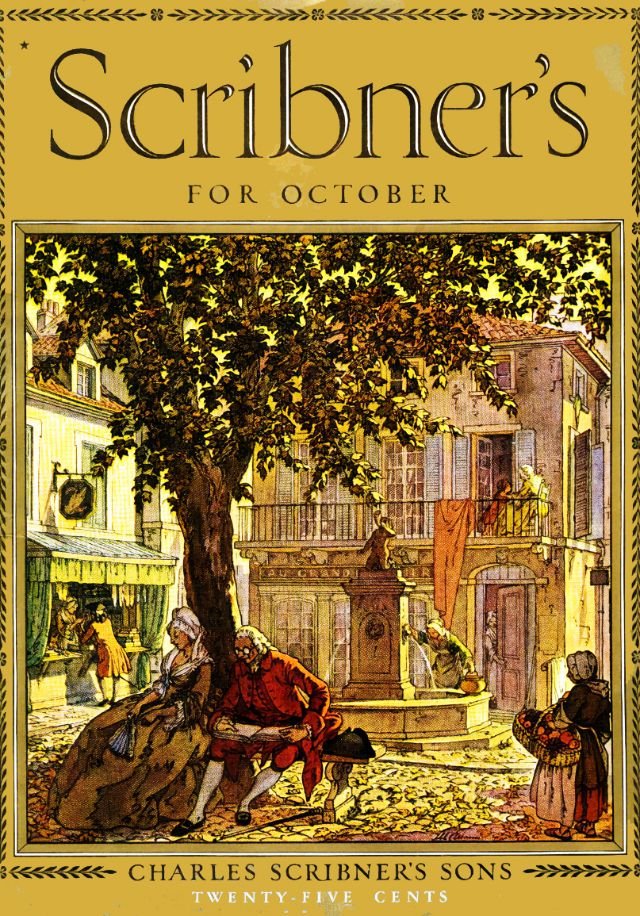
The October 1936 issue of Scribner’s marked a change in editorship and design of the magazine. This cover was by American graphic designer Thomas Cleland. (vintage.es)

…archetypes like the pompous British Colonel and the haughty Duchess seemed to be everywhere in the 1930s, whether they were foils in screwball comedies or wealthy aristocrats laughably out-of-touch and obsessed with past glories (Peter Arno knew that trick well)…if you’ve followed these posts for awhile you know they are often seen in New Yorker advertising as well…
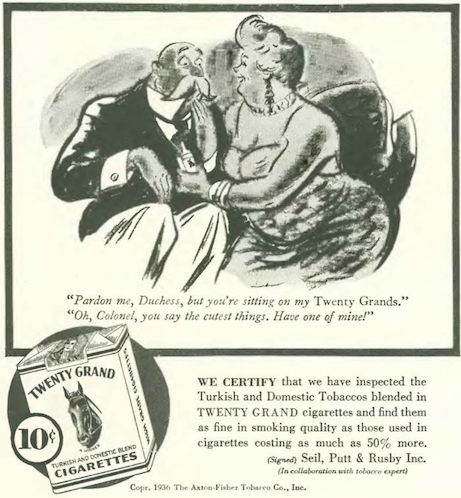
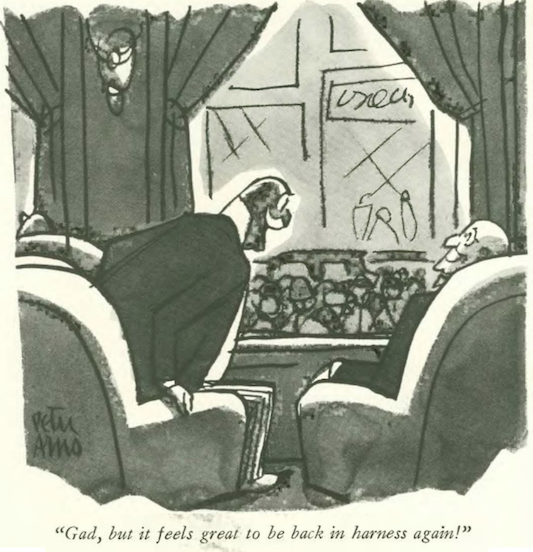
…which makes a nice segue to our cartoons, starting with Arno…
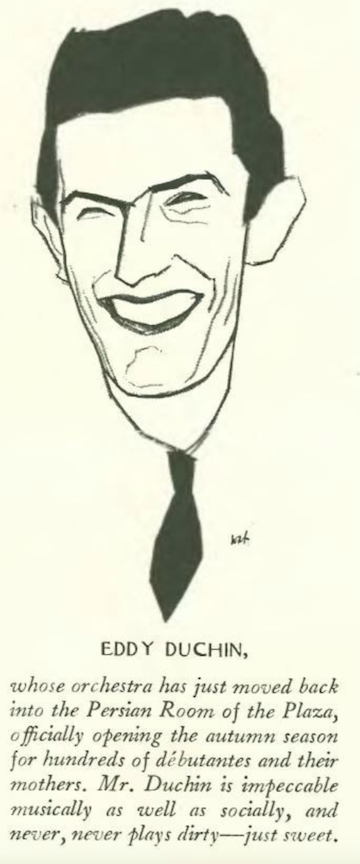
…the calendar section featured this illustration by William Auerbach-Levy for the mini bio of popular bandlander and pianist Eddy Duchin…
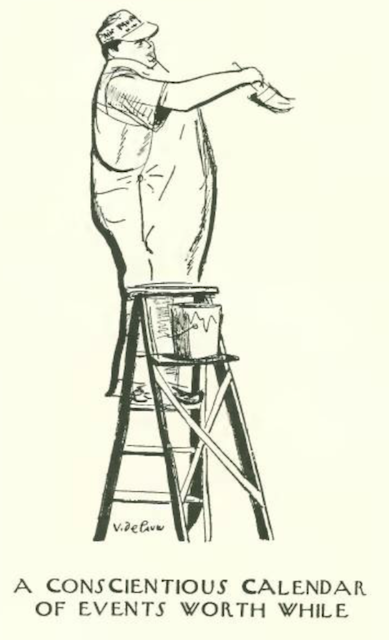
…Victor de Pauw opened up the magazine with this painterly illustration…
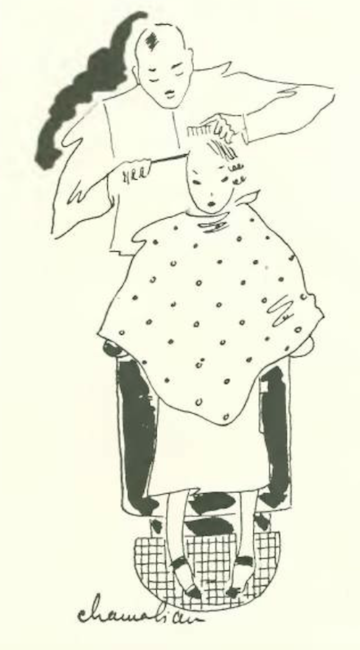
…some spot art from fashion illustrator Alice Chamalian…
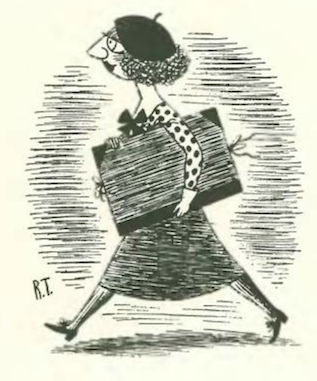
…and Richard Taylor…
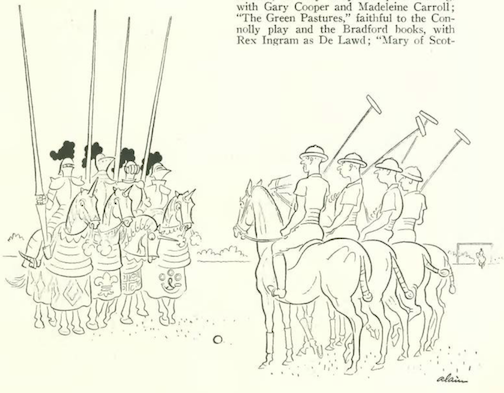
…caption-less entries from Alain…
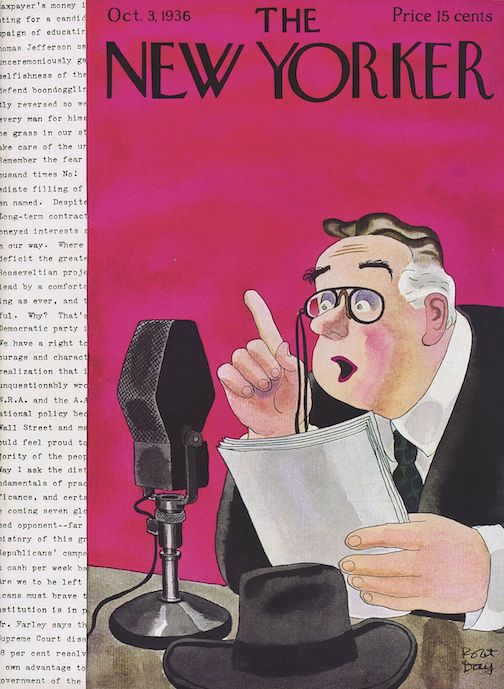
…and Robert Day…
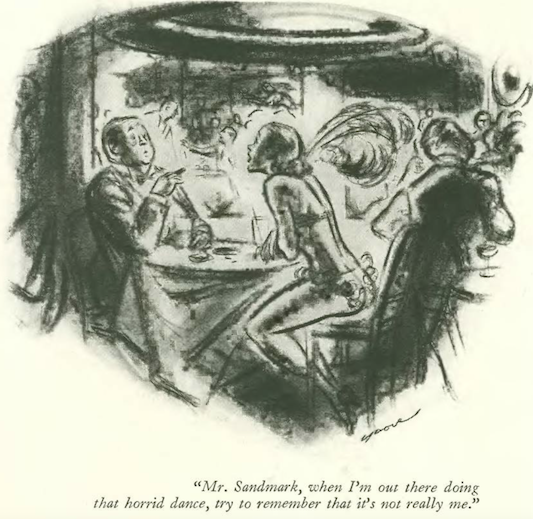
…Leonard Dove supplied a clarification for this sugar daddy…
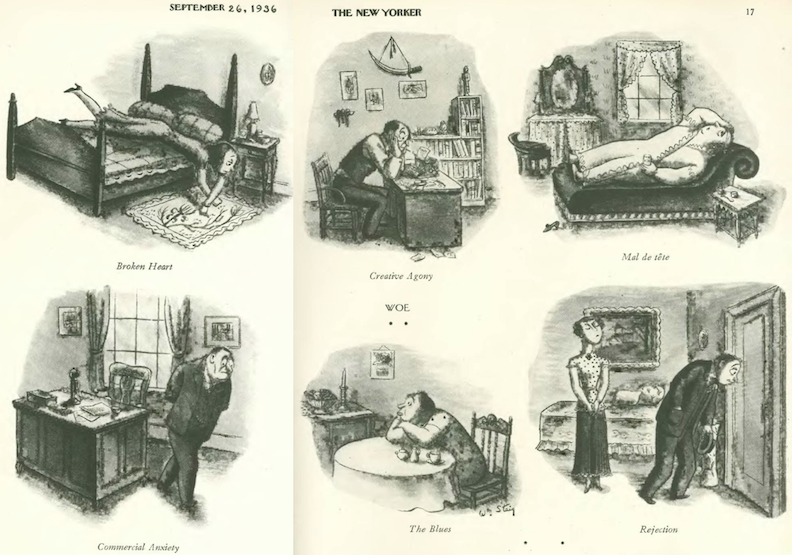
…William Steig gave us various types of “woe”…
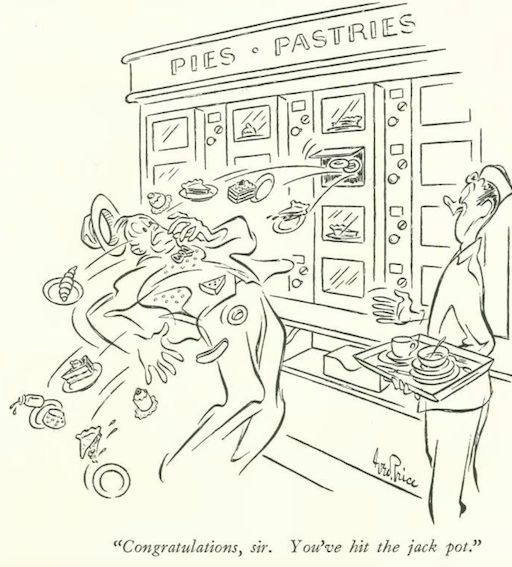
…George Price delivered a surprise at the Automat…
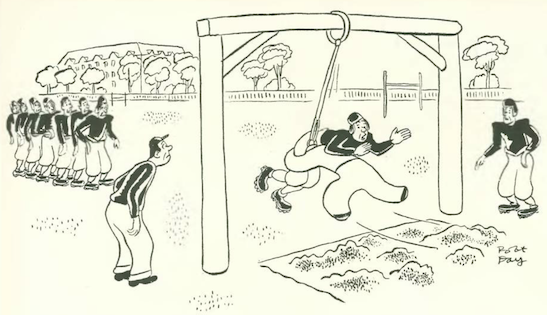
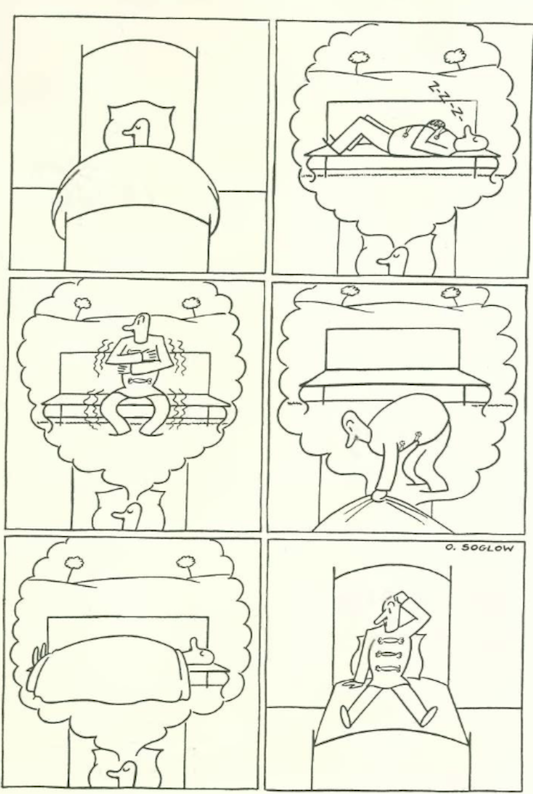
…Otto Soglow pondered the meaning of dreams…
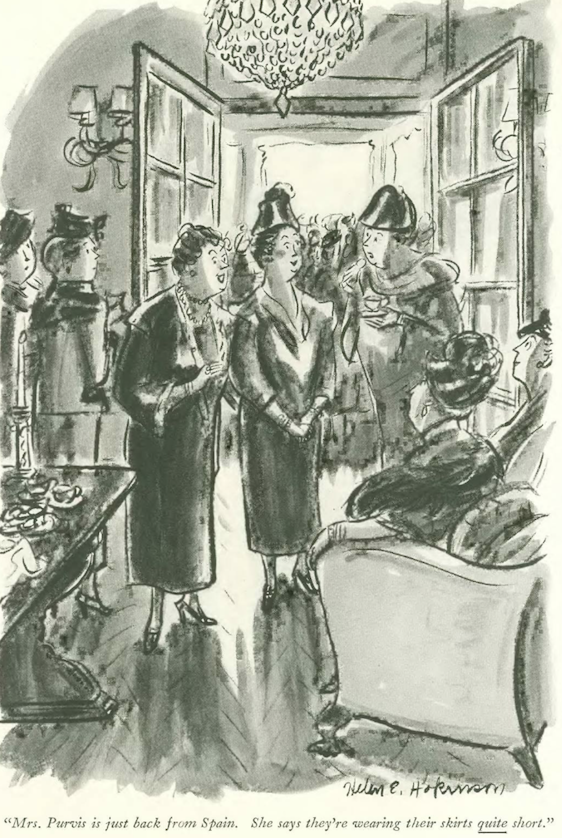
…and we close with some scandalous fashion gossip, courtesy Helen Hokinson…
Next Time: Mirror, Mirror…
Summer Indulgences

Writing under the pseudonym Guy Fawkes, Robert Benchley (1889-1945) tried to keep the newspaper industry honest through regular criticism in his “Wayward Press” column.

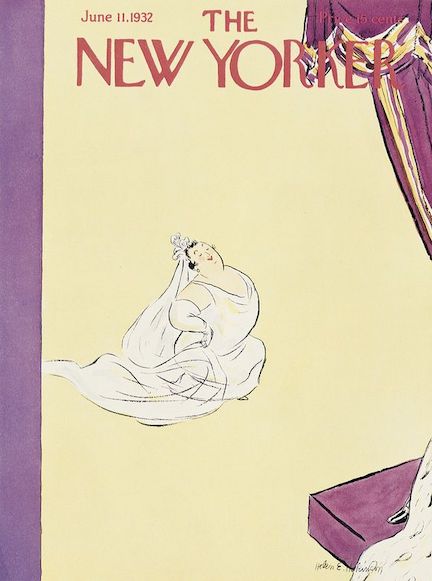
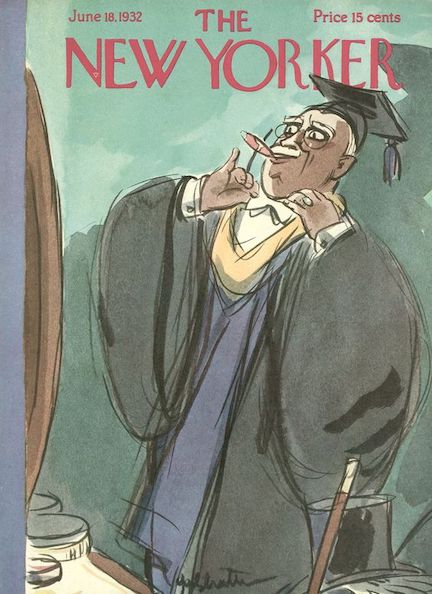
June 11, 1932 cover by Helen Hokinson.

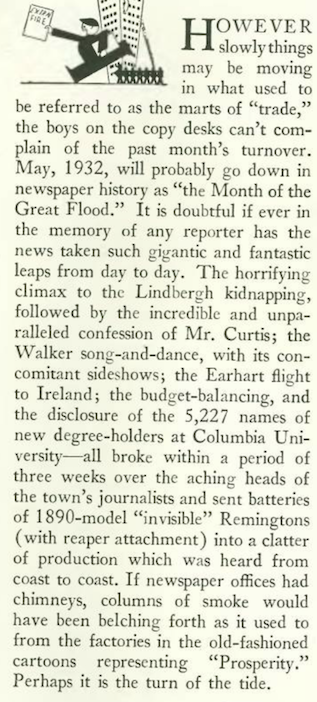
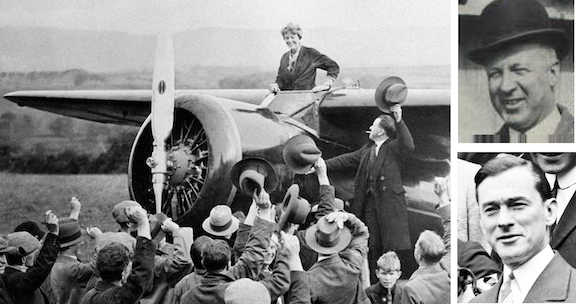
As the summer of ’32 approached, Benchley recalled the barrage of sensational headlines that dominated the month of May—everything from Amelia Earhart’s solo crossing of the Atlantic to John Curtis’ false confession in the Lindbergh baby kidnapping. Here is the opening paragraph:

THE NOBLE AND IGNOBLE marked a busy May 1932. On May 20–21, Amelia Earhart became the first woman—and the only person since Charles Lindbergh—to fly nonstop and alone across the Atlantic. She is shown here after arriving in Culmore, Northern Ireland after her solo flight; At top, right, John Hughes Curtis, a bankrupt shipbuilder from Norfolk, Virginia, who falsely claimed he was in contact with the actual kidnappers of the Lindbergh baby, leading investigators on a wild goose chase; bottom right, Jimmy Walker’s days as mayor of New York were numbered as investigations into corruption continued. (pioneersofflight.si.edu/Wikipedia)

*  *  *

News From Texas

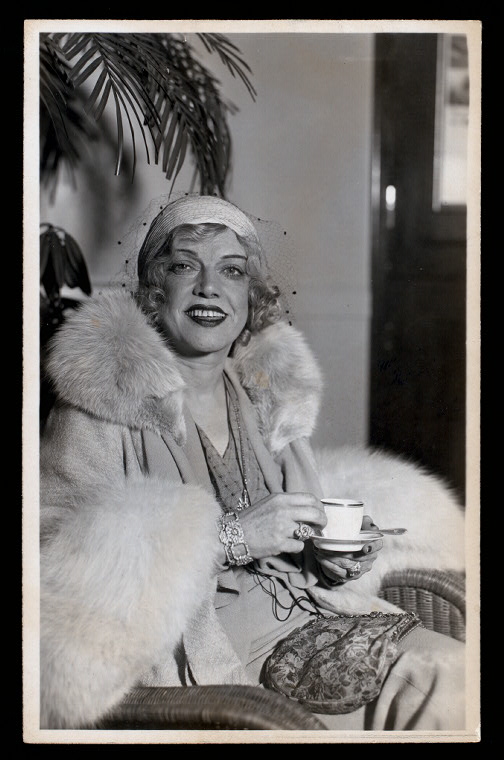
Lois Long filed another installment of “Tables for Two,” noting that folks at Broadway and Seventh Avenue “still own most of the motorcars that sally out of town,” with some of those cars ending up at Texas Guinan’s new La Casa Guinan on Merrick Road.

TEXAS TEA…Following the market crash of 1929, Mary Louise Cecilia “Texas” Guinan left Manhattan’s speakeasy life and in time started a new club near Valley Stream, Long Island. Formerly known as Hoffman’s, Guinan renamed the club La Casa Guinan in 1932. (liherald.com)

 *  *  *

Dud Stud

Writing under his pseudonym Audax Minor, George F. T. Ryall reported on the latest news from the track, namely the race at Belmont that produced a surprise winner.

FAIR FAIRENO scored his first major victory of 1932 in the Belmont Stakes. Unfortunately, Faireno fared less well with the fillies—he was found to be completely sterile when tried at stud.(americanclassicpedigrees.com)

*  *  *

Appreciating ZaSu

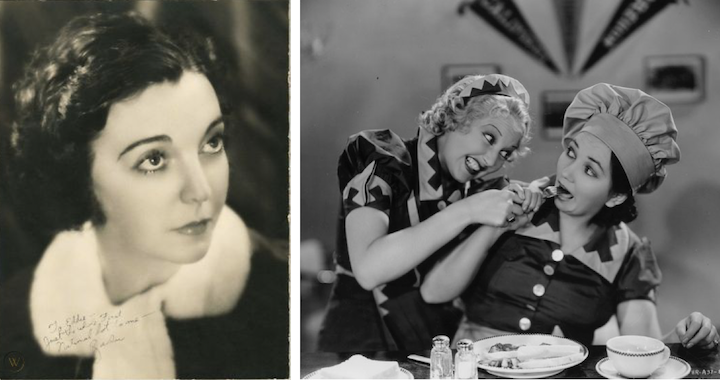
ZaSu Pitts (1894 – 1963) began her acting career in silent dramas, but moved on to comic roles with the advent of sound, most famously pairing up with Thelma Todd in a string of comedy shorts. Producer Hal Roach saw the duo as a female version of Laurel and Hardy, although Pitts and Todd’s characters were smarter and more streetwise. Pitts was also known for playing many secondary parts in B films, mostly portraying fretful spinsters. According to critic John Mosher, this typecasting did not do justice to the Pitts’ obvious talents, which were on display in 1932’s Strangers of the Evening.

UNSUNG HEROINE is how critic John Mosher described actor ZaSu Pitts, seen at left in a circa 1930 publicity photo. Anticipating Lucy and Ethel from I Love Lucy, Pitts teamed up with Thelma Todd in a string of comedy shorts in the early 1930s. Pitts was featured in dozens of films in her 50-year career, including appearances in 18 films in 1932 alone. (IMDB)

Mosher was also a big fan of Greta Garbo, her recent appearance in Grand Hotel prompting a raft of superlatives from the usually reserved critic. But in her latest outing, As You Desire Me, the enigmatic star seemed to drift a bit closer to earth.

GET OFF MY BACK…Critic John Mosher was a big fan of Greta Garbo, but her appearance in As You Desire Me was a bit of a letdown. Maybe it was the blonde wig. (IMDB)

*  *  *

From Our Advertisers

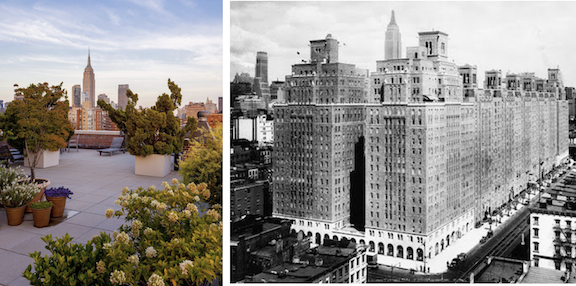
Chelsea’s London Terrace opened in 1930 as largest apartment building in the world, and it was a world unto itself, noted for its “Garden Quiet” as this ad claimed…

…and its terraces continue to provide respite from the clamor below…

NOW AND THEN…London Terrace today and in 1930. (londonterracestories.com)

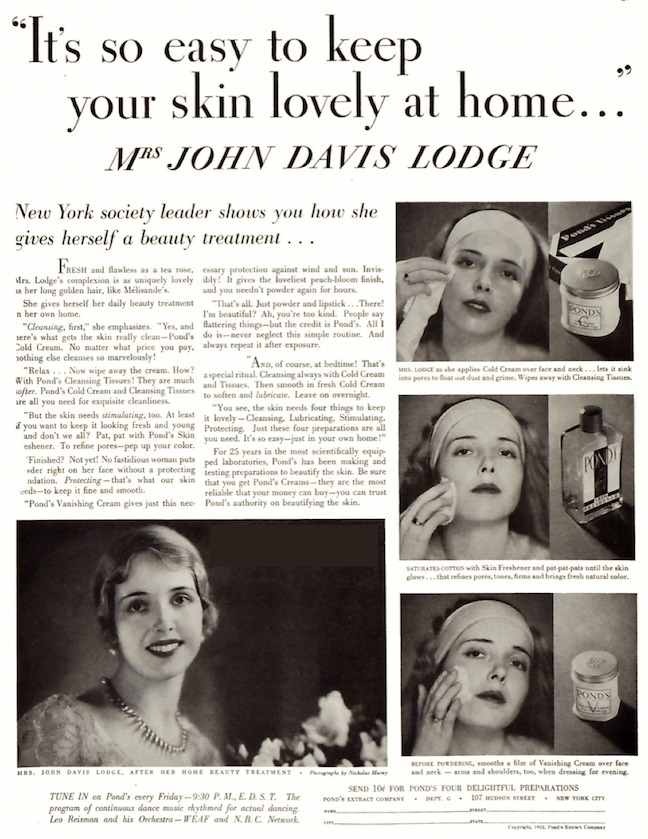
…next is another testimonial ad from Pond’s Cold Cream, this time featuring “Mrs. John Davis Lodge,” aka Francesca Braggiotti (1902-1998), an Italian dancer and actor who married fellow actor John Davis Lodge in 1929 (they co-starred in the 1938 film Tonight at Eleven)…

…A member of a prominent political family, John Davis Lodge (1903-1985) later served as governor of Connecticut, a U.S. House representative, and ambassador to Spain, Argentina, and Switzerland…

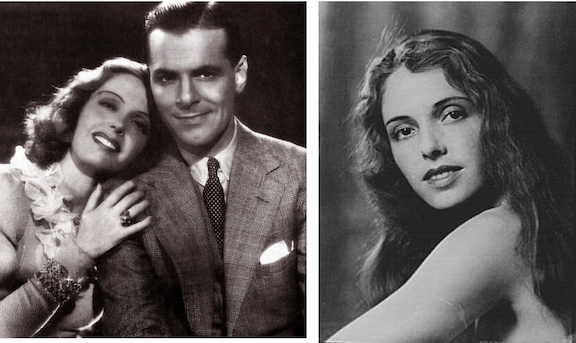
SECOND ACT… Francesca Braggiotti married fellow actor John Davis Lodge in 1929, but gave up the acting life when her husband entered politics in the 1940s. At left, the couple in 1938; at right, a 1931 portrait of Braggiotti by Arnold Genthe. The couple had two children, one of whom is Lily Lodge, co-founder of Actors Conservatory in NYC. (Wikipedia/geni.com)

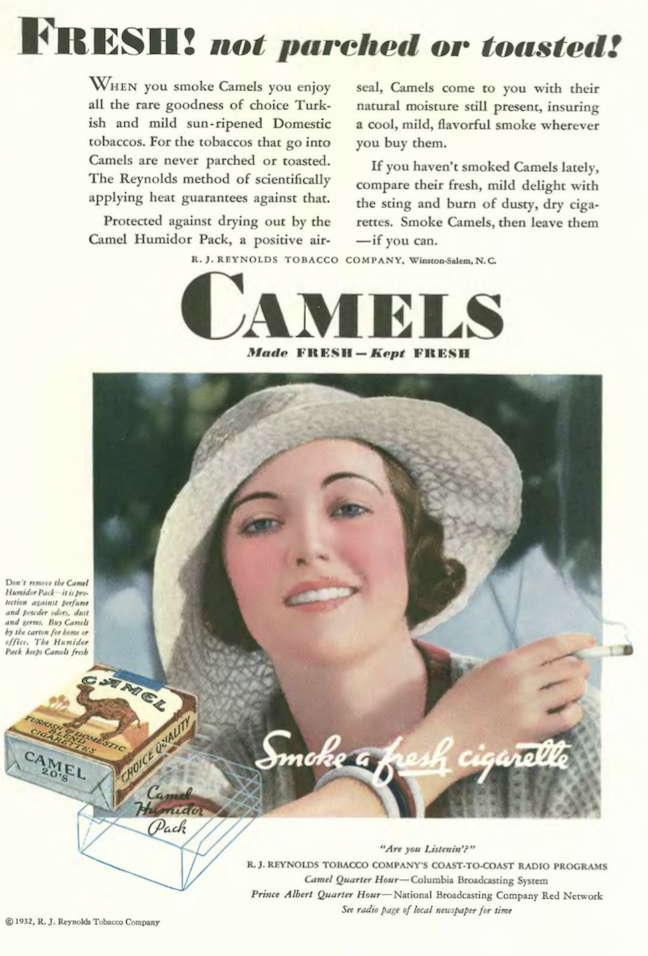
…on with the rest of the ads, we have this one from the maker of Camels, R.J. Reynolds, who took a shot at rival American Tobacco, and their “toasted” Lucky Strikes…

…and we get a dose of retrofuturism thanks to Charles Kaiser and his illustrations of life unbounded with the autogiro, a predecessor to the modern helicopter…

…and it makes a nice segue to our cartoons, beginning with Robert Day…

…and the next series are of a scandalous nature, beginning with Otto Soglow’s comment on Mayor Walker’s corruption charge, and an “unnamed” whistleblower…

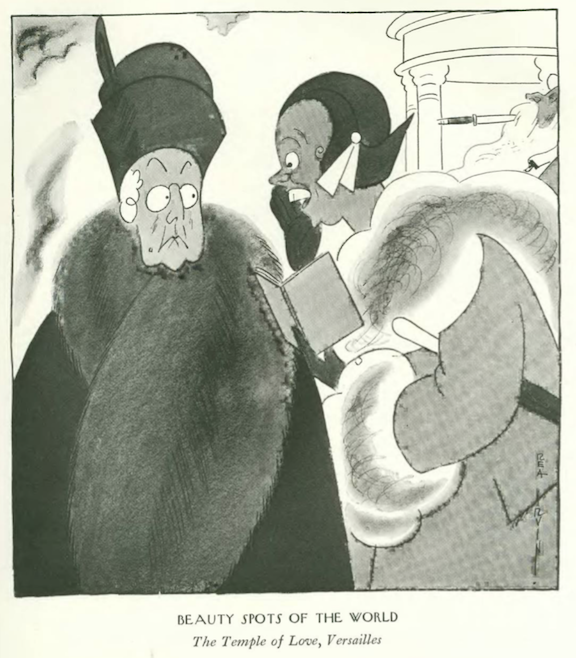
…and we have scandalous whispers for a dowager at Versailles, with Rea Irvin…

…and we let our imaginations run wild with Helen Hokinson here…

…and again here…

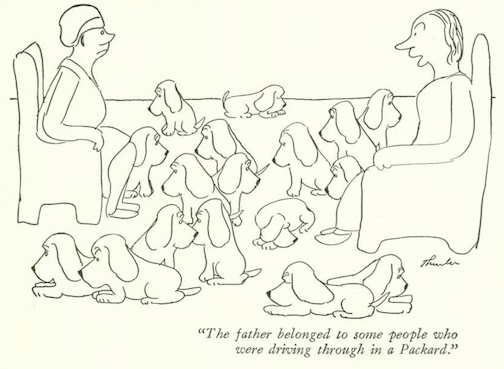
…and we end with another James Thurber classic…

Next Time: On Detention…