Road Warriors

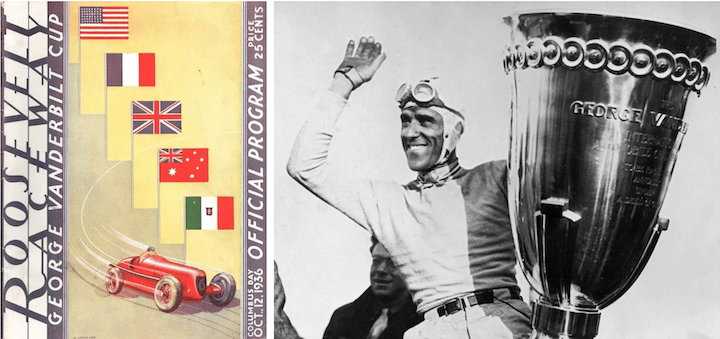
Above: 1936 Vanderbilt Cup program cover and the winner of the race, Italy's Tazio Nuvolari. (Wikipedia)

When William K. Vanderbilt II founded the Vanderbilt Cup Race in 1904, Long Island’s Nassau County was mostly farmland, its North Shore dotted with the luxurious country estates of wealthy New Yorkers. The Vanderbilt Cup would help crack open the door to the eventual suburbanization of Long Island, now home to more than eight million people.
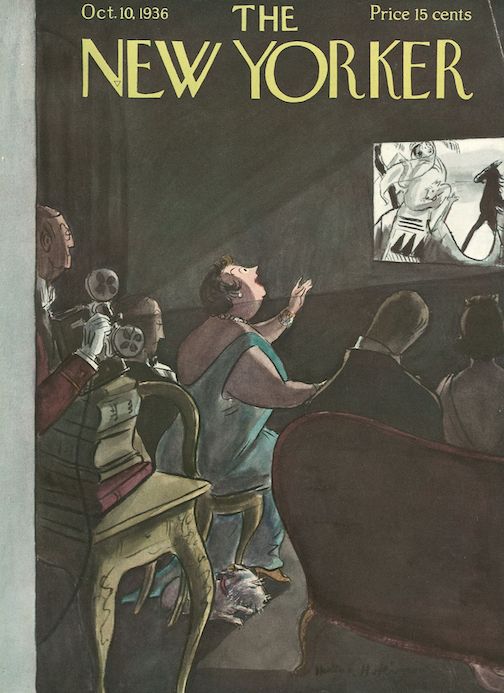
October 10, 1936 cover by Helen Hokinson.

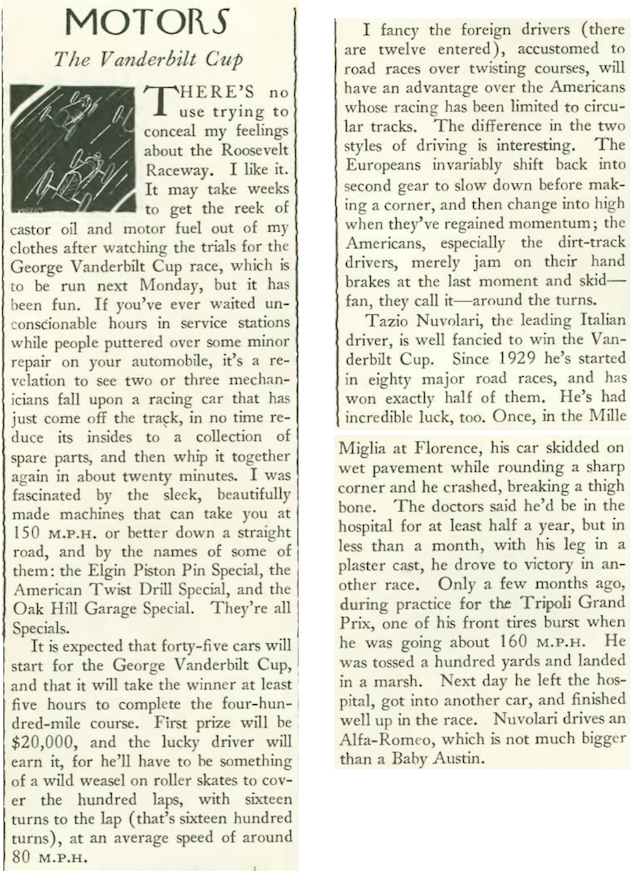
The race was cancelled after just three years—a spectator was killed in 1906— but it was revived in 1908 with the opening of the Long Island Motor Parkway. That nine-mile (14.4 km) private toll road, combined with fourteen miles (22.5 km) of public dirt roads, served as the Vanderbilt Cup course until the race was suspended in 1916 with the U.S. entry into World War I. The race would not be revived until Oct. 12, 1936, when the new Roosevelt Raceway opened in Westbury, welcoming 50,000 spectators. New Yorker correspondent G.F.T. Ryall (aka “Speed”) looked forward to the big race:
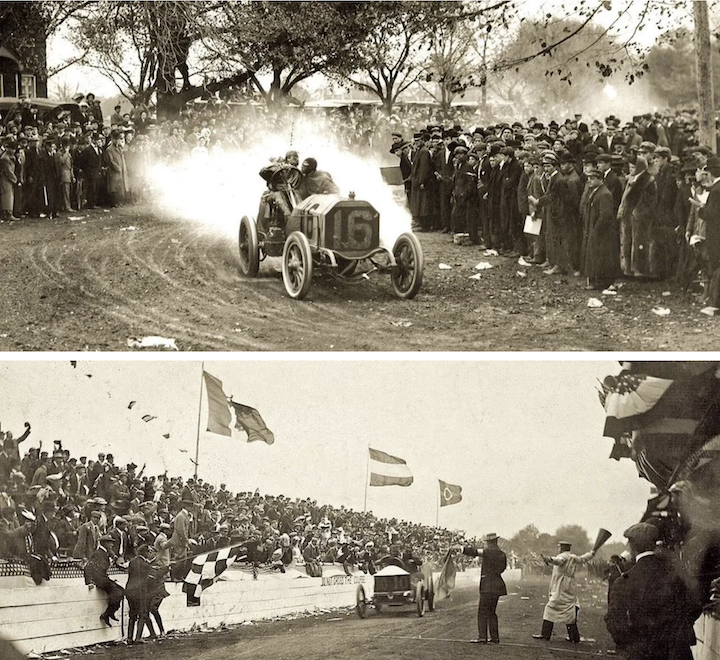
EAT MY DUST…Top photo: Averaging sixty-five miles per hour (104.6 kph), with a top speed exceeding one hundred mph (161 kph), George Robertson’s 1906 Locomobile is shown rounding a turn in the 1908 Vanderbilt Cup race—the crowd, estimated at more than 250,000—often stood dangerously close to the action (a spectator was killed in the 1906 race); Below: The 1906 finish saw the first-ever use of a checkered flag to signal the winner of an automobile race. (hemmings.com)

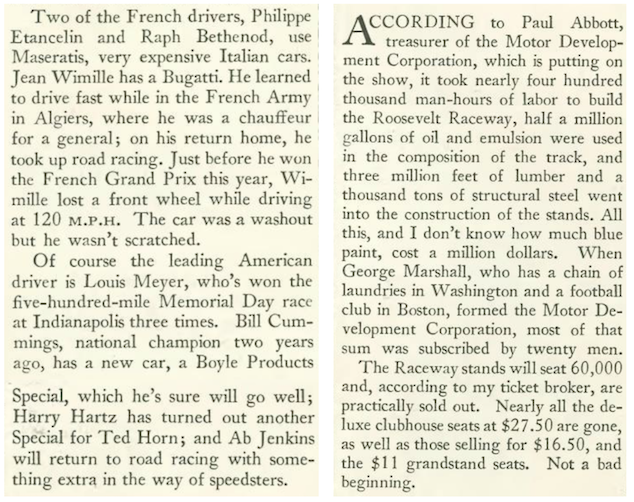
The 1936 race was revived by William K’s nephew George Washington Vanderbilt III, NFL founder George Preston Marshall, and famed World War I flying ace Eddie Rickenbacker. The three hundred-mile (482.8 km) race, featuring seventy-five laps on a twisting, four-mile (6.4. km) circuit, was won by Italy’s Tazio Nuvolari driving a twelve-cylinder Alfa Romeo. The best American driver, William Cummings, finished almost twenty-five minutes behind Nuvolari.
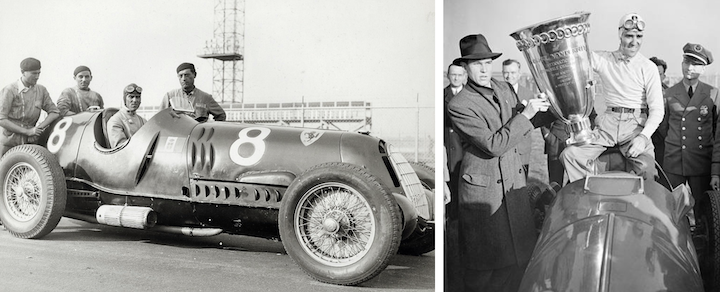
STEERING COMMITTEE…At left, 1936 Vanderbilt Cup winner Tazio Nuvolari and his mechanics prior to the race—his average speed was similar to the winner of the 1908 race due to the twisty, maze-like design of Roosevelt Raceway; at right, George Washington Vanderbilt III presents the winning trophy to Nuvolari. The massive sterling silver cup, crafted by Cartier, is now housed at the Museo Nicolis in Verona, Italy. (vanderbiltcupraces.com)

Ryall noted that the leading American driver was Louis Meyer, but Meyer would not compete due to a crash on a practice run. Also noted was the labor and materials involved in the construction of Roosevelt Raceway, where the winning average speed (65.998 mph or 106.2 km/h), was nearly the same as the 1908 race. This lack of speed was later mocked by spectators and the press, who criticized the many twisty hair-pin turns on the course.
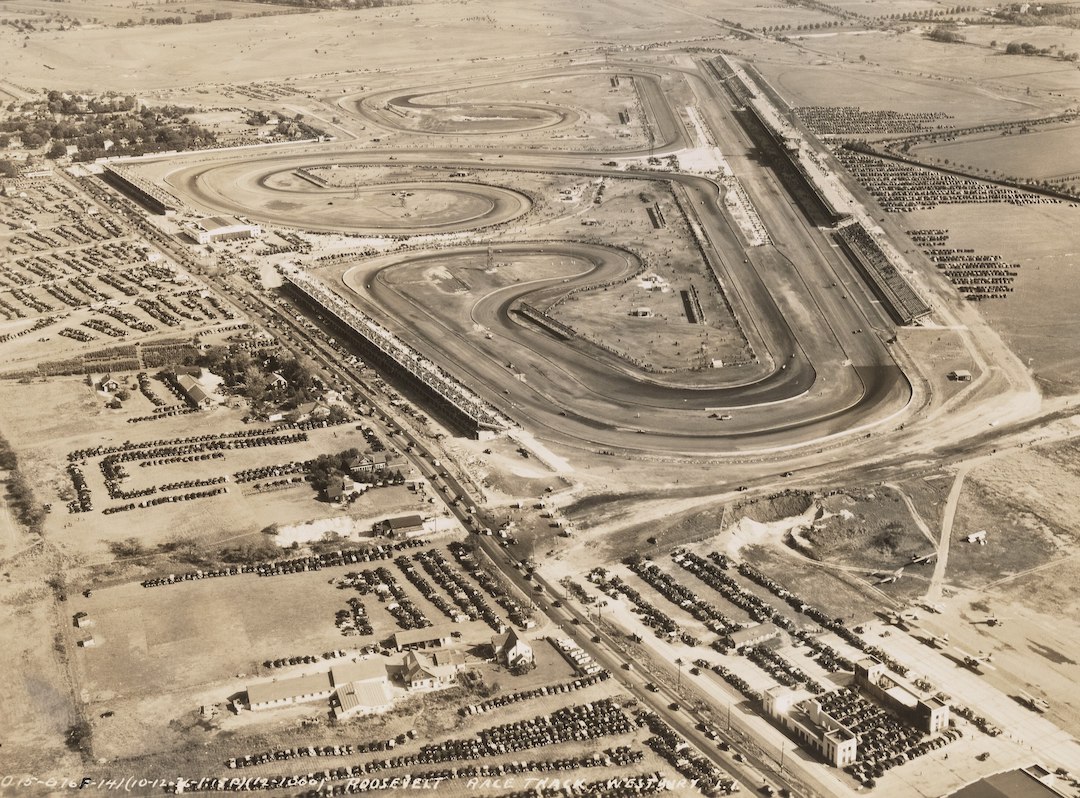
LOTS OF CURVES, YOU BET…Army Air Forces aerial photograph of the new Roosevelt Raceway taken during the 1936 Vanderbilt Cup Race Oct. 12, 1936. Deluxe clubhouse seats were sold for $27.50, or about $700 today. The four-mile (6.4. km) layout featuring sixteen unbanked corners (many with tight hairpins), a layout that kept average speeds disappointingly low. (Wikipedia)

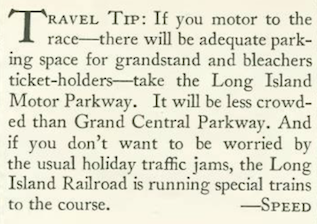
The revived race lasted only two years, both won by Europeans. Check out the website Vanderbilt Cup Races for more photos and information on the race. This final note by Ryall suggested that travelers use the Long Island Motor Parkway to get to the race—the very same road that was originally constructed for the 1908 race.
 * * *

A Gentler Pastime

Noel F. Busch reported from the 1936 U.S. Women’s Amateur Championship, where the young British golfer Pamela Barton won her second major tournament of the year.
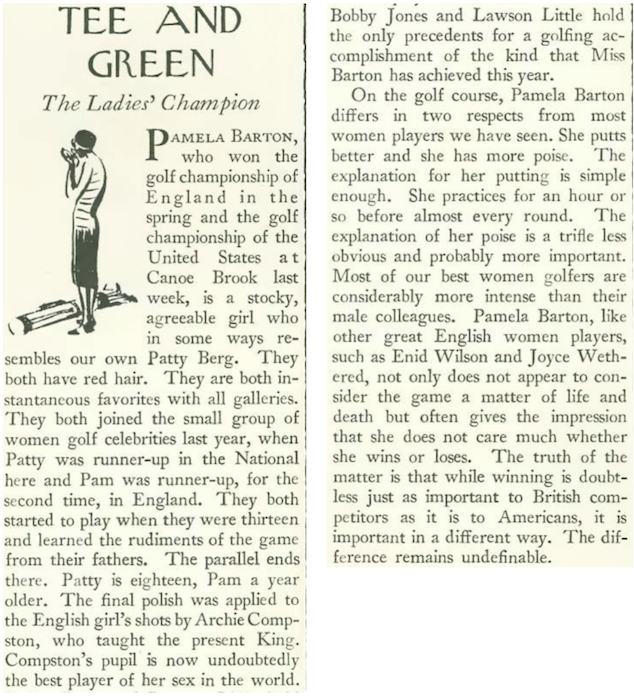
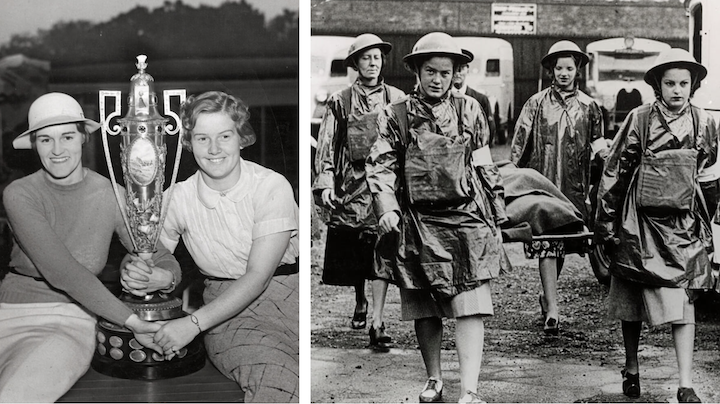
KING AND COUNTRY…Photo at left: Pamela Barton (right) defeated Maureen Orcutt (left) to win the 1936 U.S. Women’s Amateur Championship, becoming the youngest, at age nineteen, to win the U.S. and British women’s amateur titles in the same year—Barton was considered the best female golfer in the world in the late 1930s; photo at right: Barton takes part in training for the Volunteer Ambulance Service in England during WWII—sadly, the crash of a Royal Air Force Tiger Moth on November 13, 1943, claimed Barton’s life at age twenty-six. (USGA Archives)

* * *

At the Movies

Italian tenor Nino Martini took top billing in the second film produced by Mary Pickford and Jesse Lasky for United Artists, the musical comedy The Gay Desperado. Critic John Mosher gave a thumbs up to this spoof of the gangster genre.
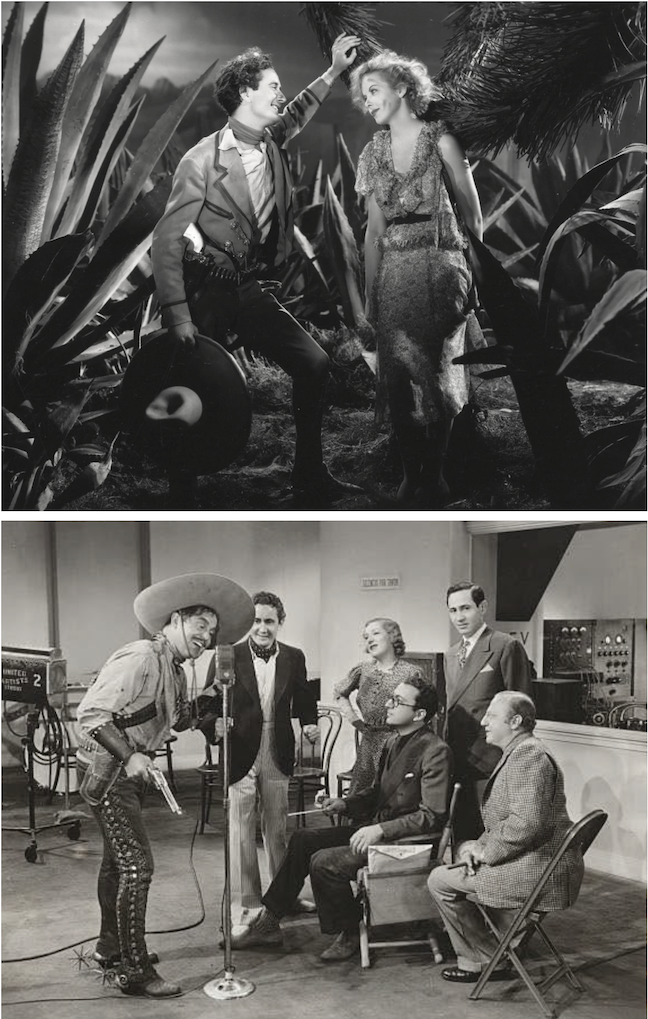
LIGHT AND EASY…Top photo: Italian operatic tenor Nino Martini took top billing in The Gay Desperado, seen here with co-star Ida Lupino; below: the film’s other co-star, Leo Carrillo, performs in costume in front of (from left) Martini, producer Mary Pickford, director Rouben Mamoulian, Mexican Consular Ricardo G. Hill, and producer Jesse L. Lasky. (Citizen Screen via Facebook/just watch.com)

Not so light was Craig’s Wife, starring Rosalind Russell as a domineering woman who drives everyone from her life, including her husband. Mosher found some relief in the “toothsome” comedy Kelly the Second.
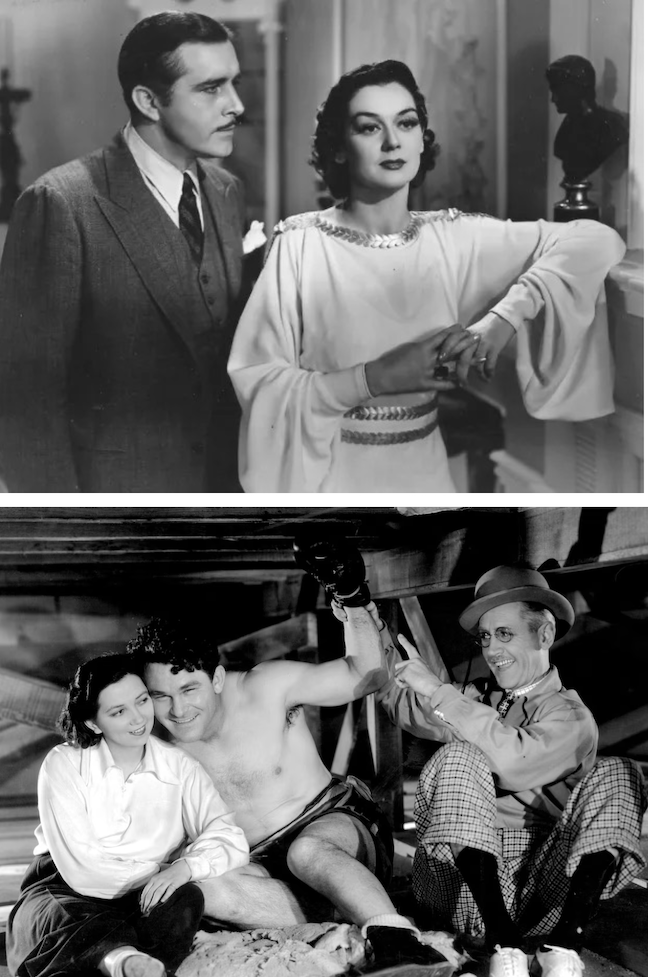
MOTHER MAY I?…Top photo: Rosalind Russell portrayed the domineering wife of Walter Craig (John Boles) in Craig’s Wife; Below: Patsy Kelly, Guinn ‘Big Boy’ Williams and Charley Chase in Kelly the Second. (melanienovak.com/tcm.com)

 * * *

Whining for Winesburg

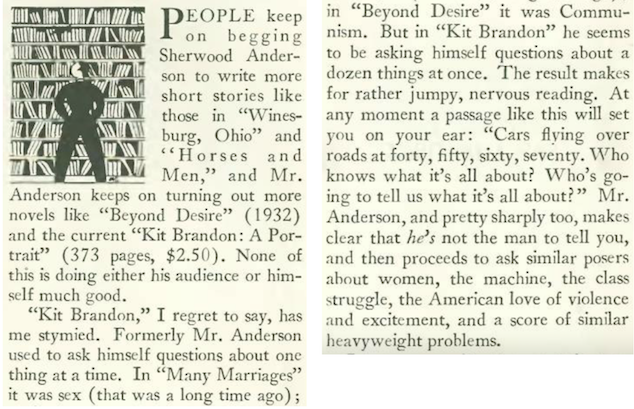
Book critic Clifton Fadiman found himself “stymied” by Sherwood Anderson’s latest novel, Kit Brandon: A Portrait, in which the author seemed “to be asking himself questions about a dozen things at once.”
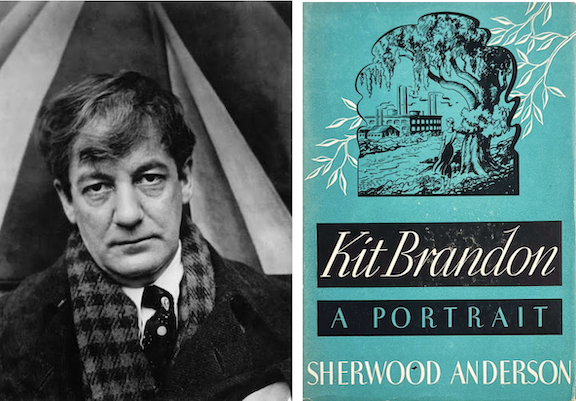
A LOT ON HIS MIND…Sherwood Anderson’s Kit Brandon: A Portrait, would be his eighth novel. (neh.gov/abebooks.com)

 * * *

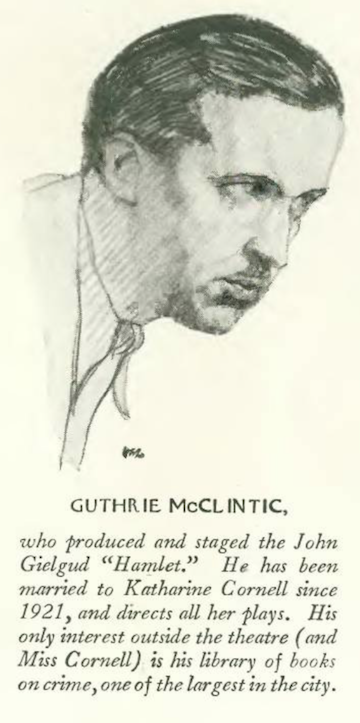
The calendar pages continued to feature mini-bios of celebrities, this week theater producer and director Guthrie McClintic…caricature by William Auerbach-Levy…
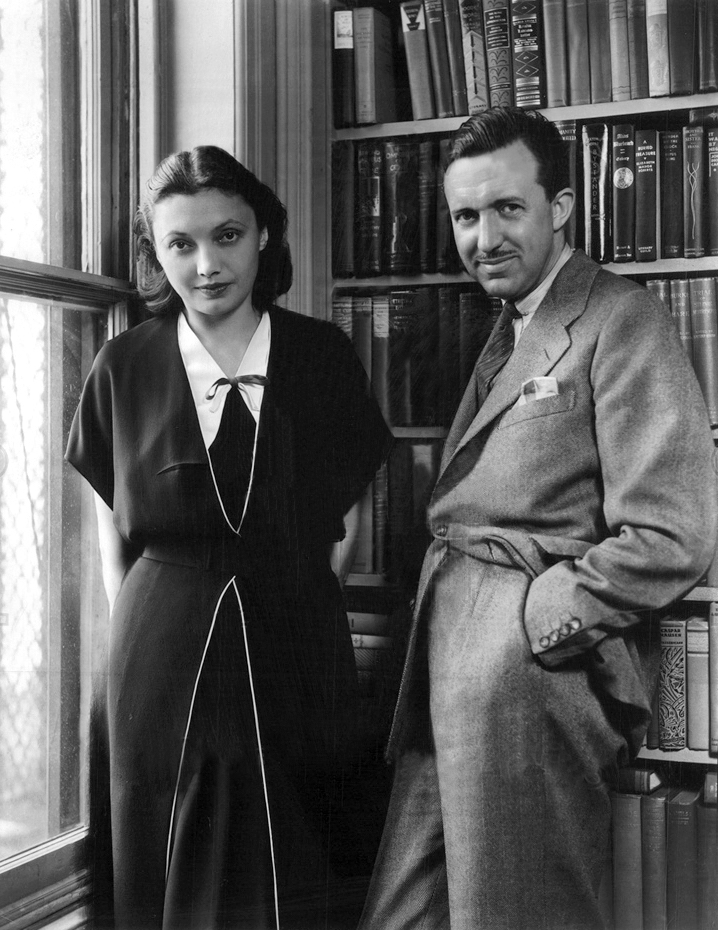
THEATER ROYALTY…Katharine Cornell and Guthrie McClintic in the library of their home at 23 Beekman Place in Manhattan, 1933. (Wikipedia)

 * * *

From Our Advertisers

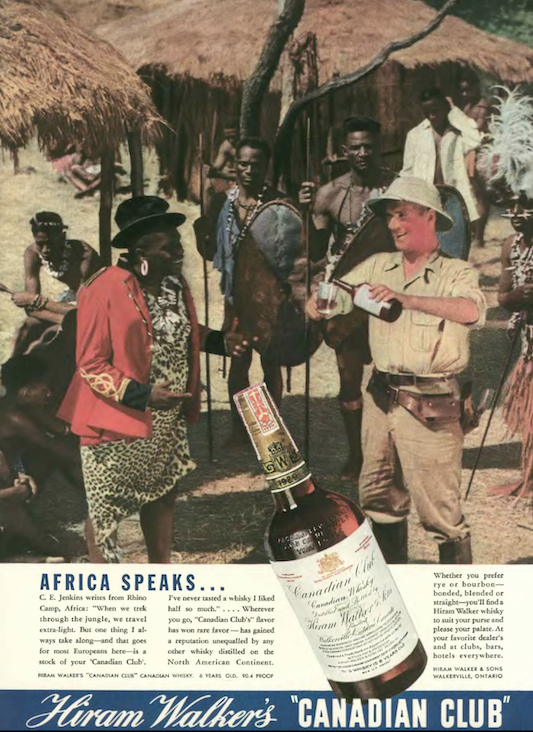
We begin with this antediluvian image from Hiram Walker, which greeted readers on the inside front cover…the ad was part of series showcasing the consumption of Canadian Club around the world…
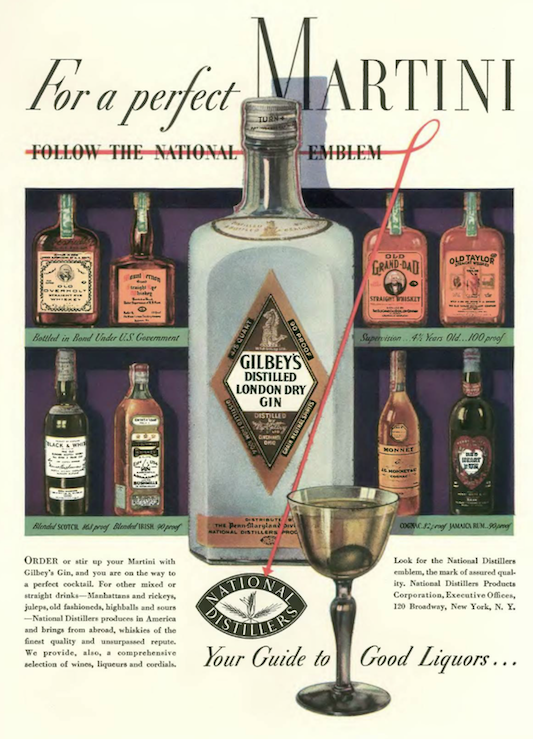
…National Distillers lined up their domestic and imported brands to promote a “perfect martini”…
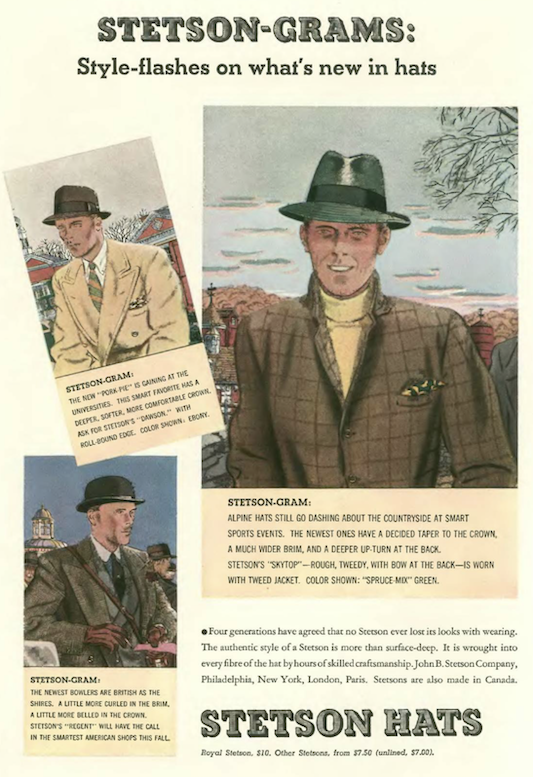
…and we have more stylish lids from Stetson, which included a “new pork-pie” that was apparently popular among university students…
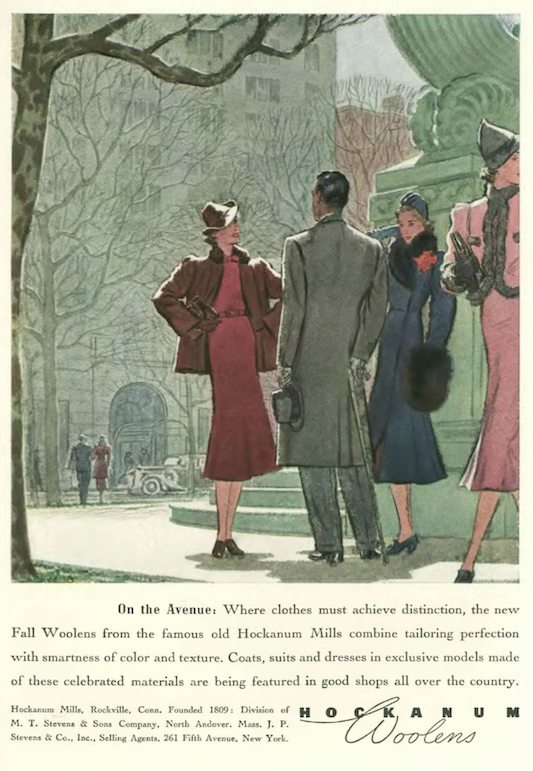
…and Hockanum Woolens continued its series celebrating the seasons in fashion…
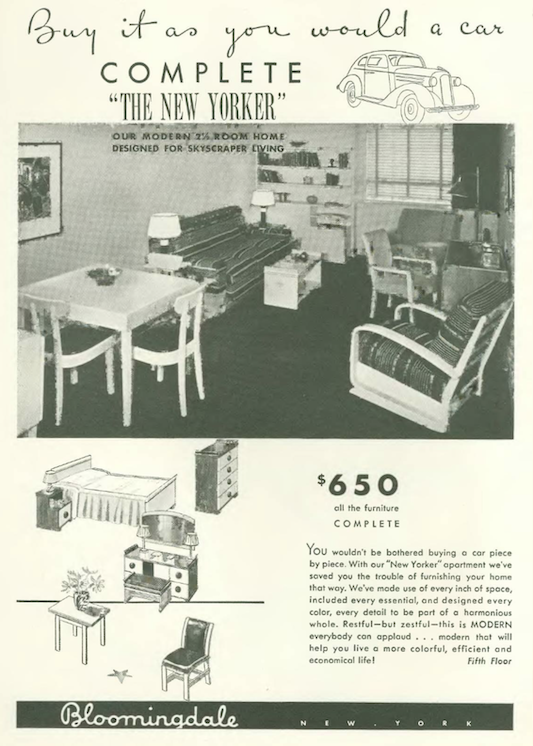
…there were numerous ads in the issue touting the latest in modern furniture, including Bloomingdale’s…
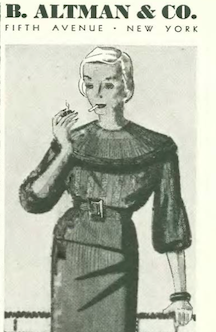
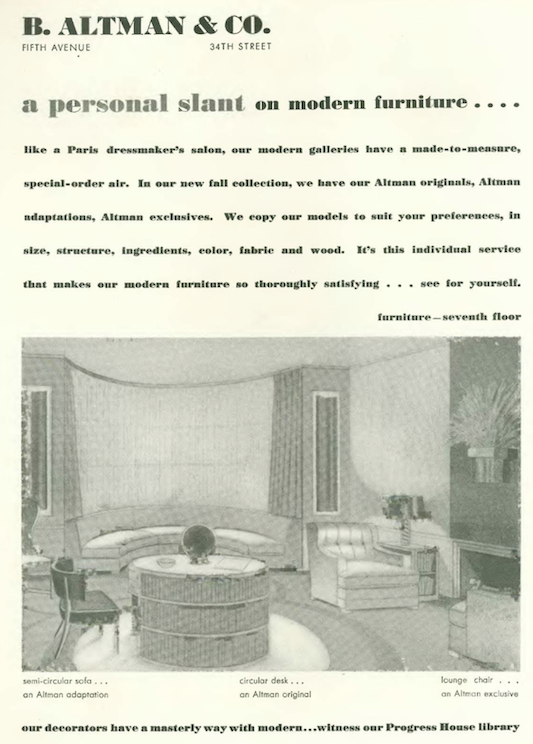
…and B. Altman…
…The New York Sun hired cartoonist Fred Neher to tout the newspaper’s advertising reach…
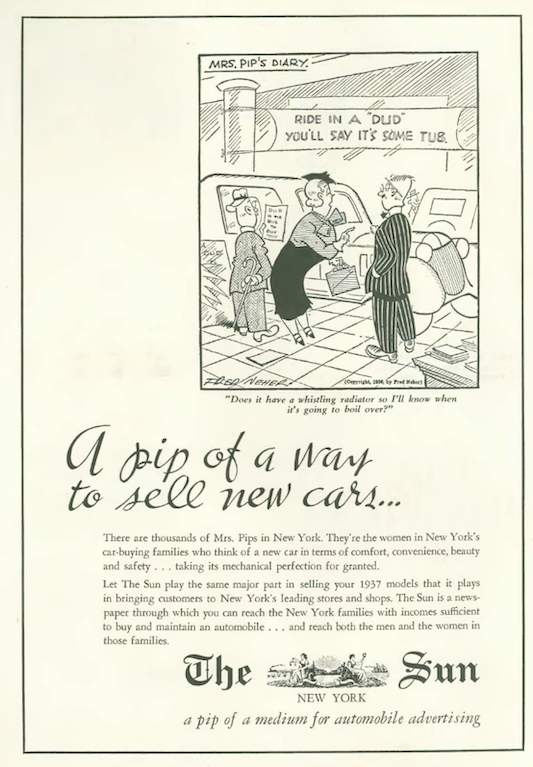
…Neher (1903–2001) was best known for his long-running syndicated cartoon Life Is Like That, which ran from 1934 to 1977…he also published one cartoon in The New Yorker, Jan. 21, 1933…
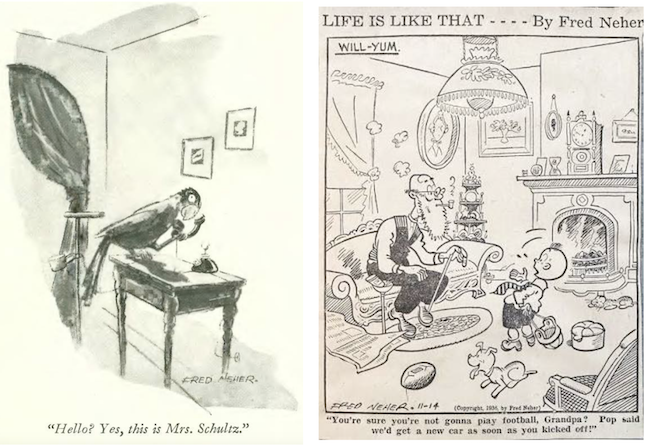
Left, Fred Neher’s sole New Yorker cartoon (Jan. 21, 1933), and at right, an example of his long-running gag panel from 1936. (Thanks to Ink Spill for the always invaluable reference!)

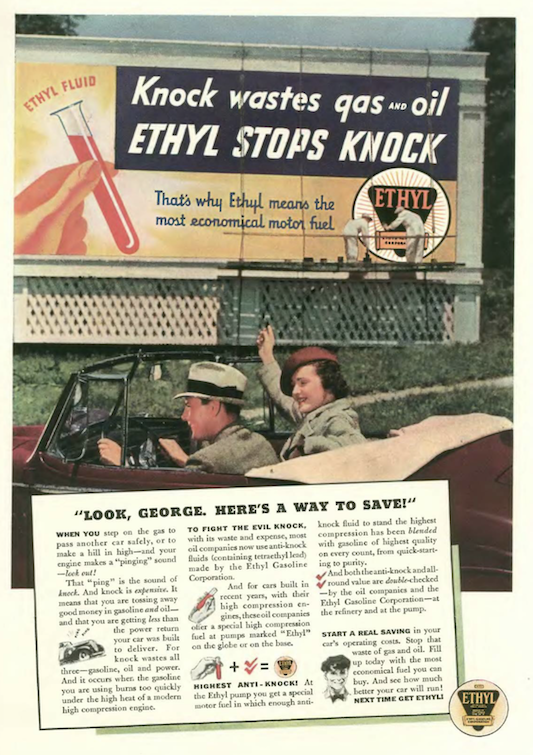
…the inside back cover featured an appeal to motorists to make the switch to leaded gasoline (during the 20th century, leaded gasoline released millions of tons of toxic lead particles into the air, soil, and water, and even today persists throughout ecosystems, including human bloodstreams)…
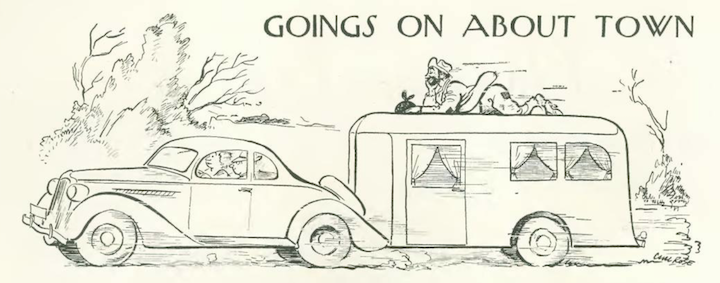
…on a cheerier note, we have a bunch of cartoons, beginning with spots by Carl Rose…
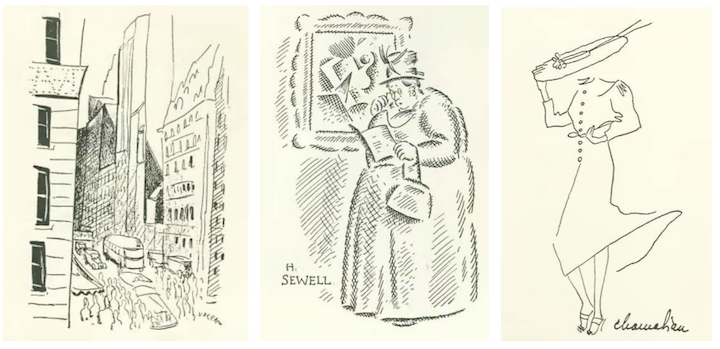
…Victor de Pauw, Helen Moore Sewell, and Alice Chamalian…
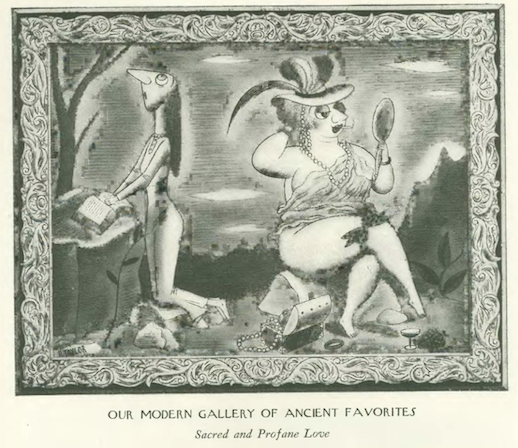
…Richard Taylor began his series of “Ancient Favorites”…
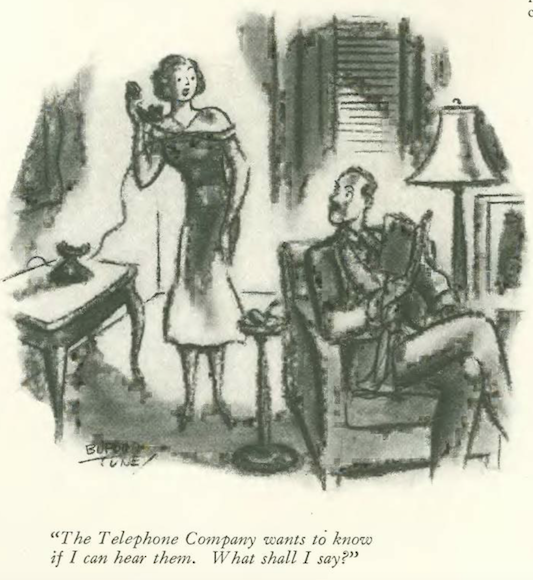
…Barney Tobey gave us a 1930s version of “can you hear me now?”…
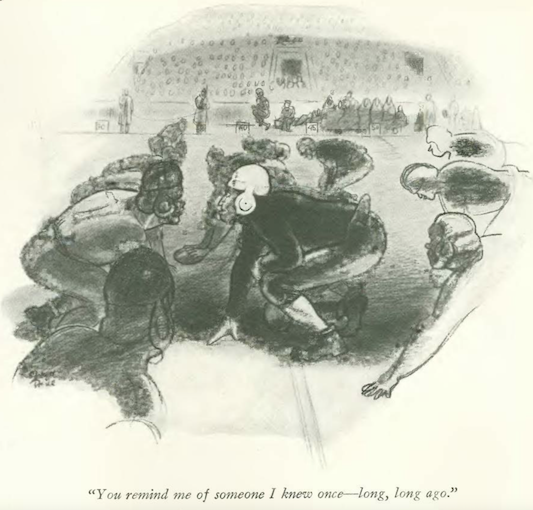
…Garrett Price recognized a face in the crowd…
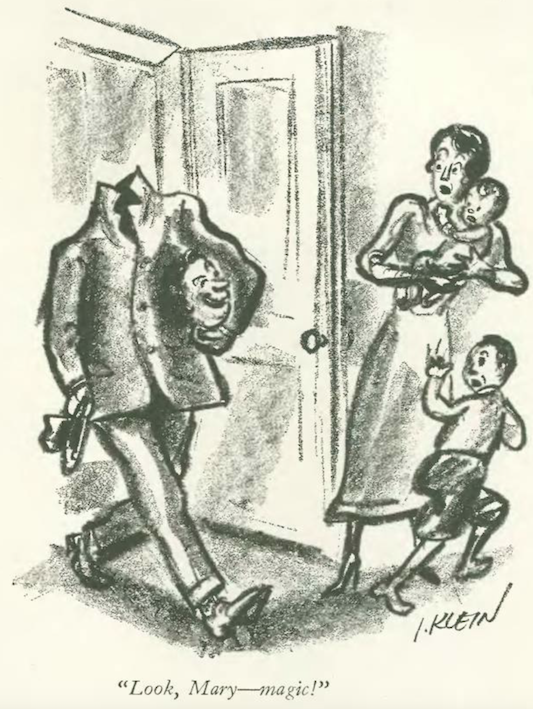
…after a long absence, Isadore “Izzy” Klein returned to The New Yorker with this contribution (in 1935 Klein (1897–1986) resumed his work as an animator for major studios including Screen Gems and Disney)…
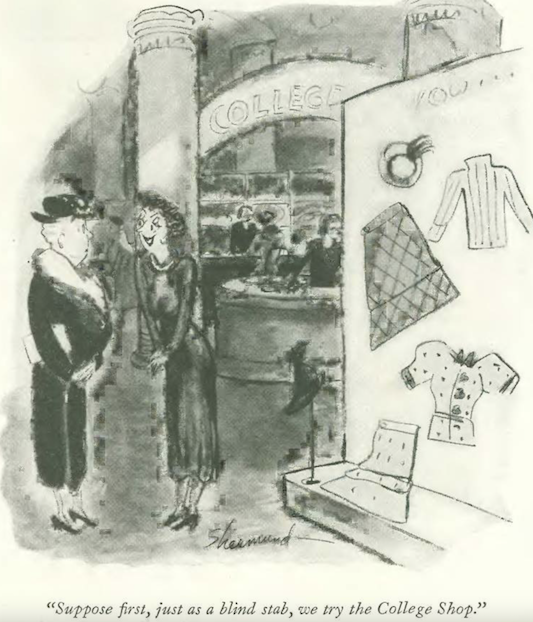
…Barbara Shermund got creative at a department store…
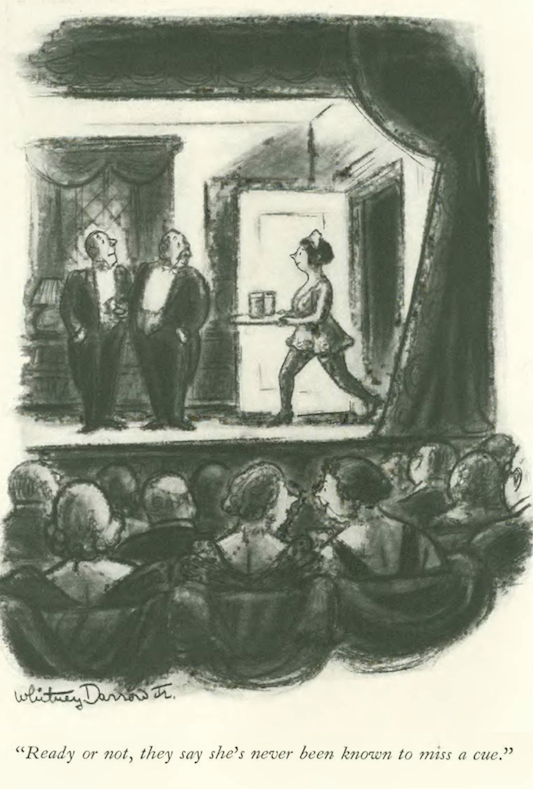
…Whitney Darrow Jr overheard some inside scoop at the theater…
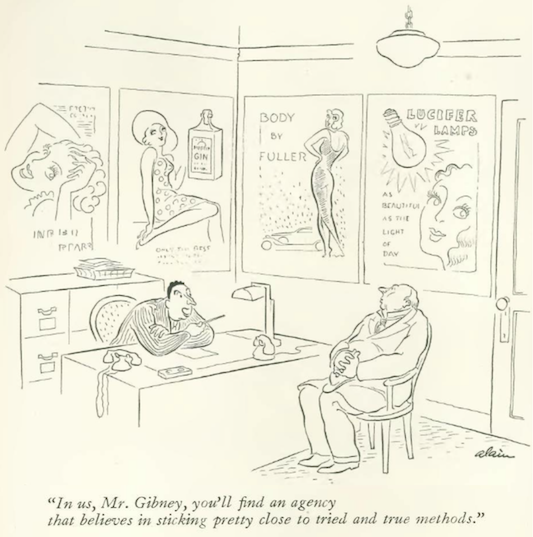
…Alain offered up some timeless advice from the advertising world…
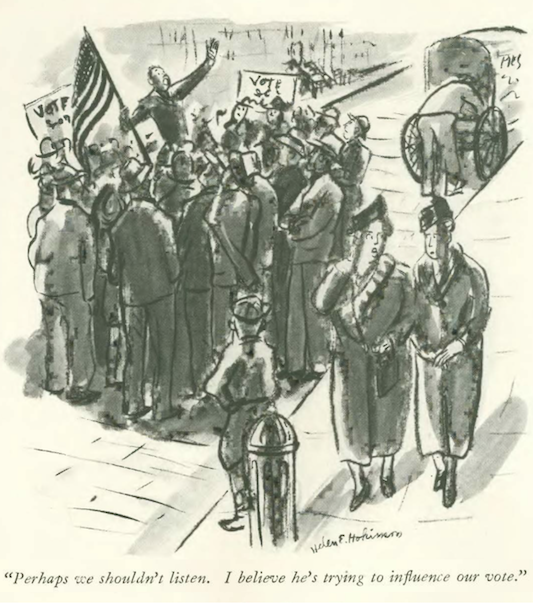
…Helen Hokinson’s “girls” steered clear of some political rhetoric…
…Ned Hilton had an urgent change order…
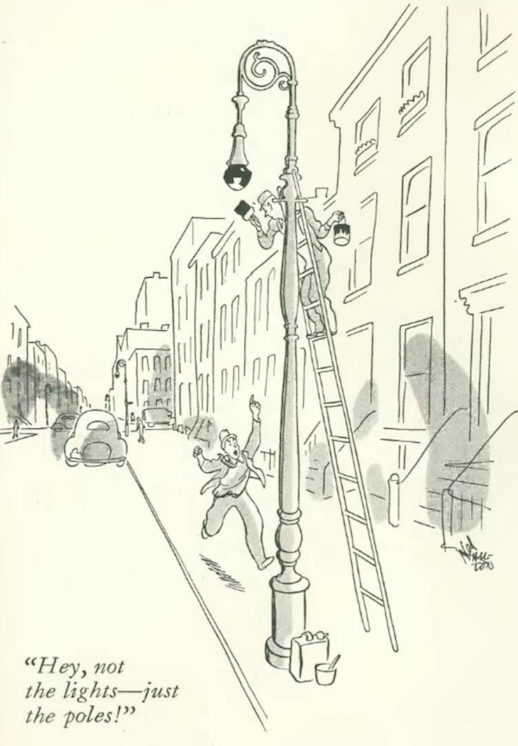
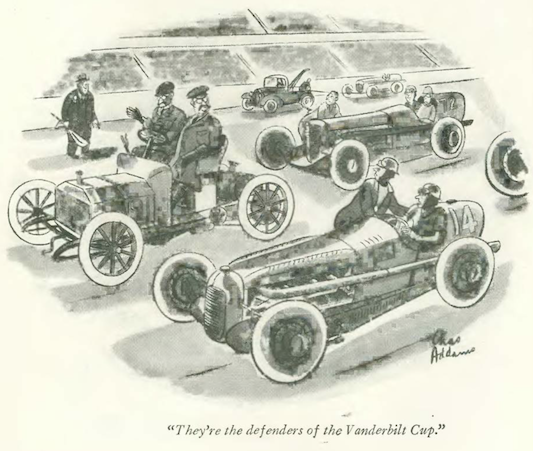
…and we close where we began, at the races, this time with Charles Addams…
Next Time: National Treasure…
 

Reel News

Above: Newsreel cameramen perch on boards resting on a windowsill to get a birds-eye view of a passing parade, circa 1930. (Public Domain Image)

We marvel at, and sometimes decry, today’s instantaneous news coverage of wars, disasters and the like, but ninety years ago newsreel crews did a remarkable job of filming and delivering the latest news to thousands of theaters across the U.S. and around the world.

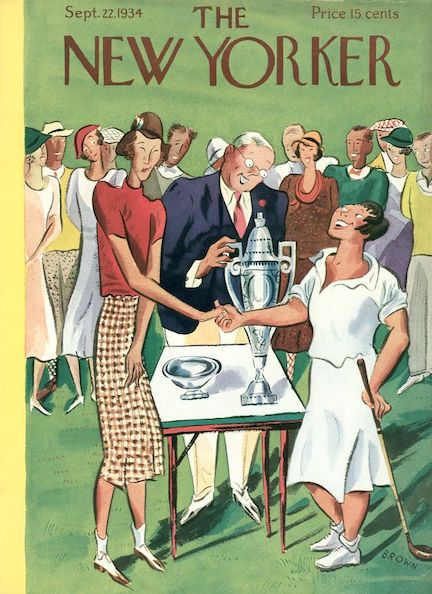
Sept. 22, 1934 cover by Harry Brown.

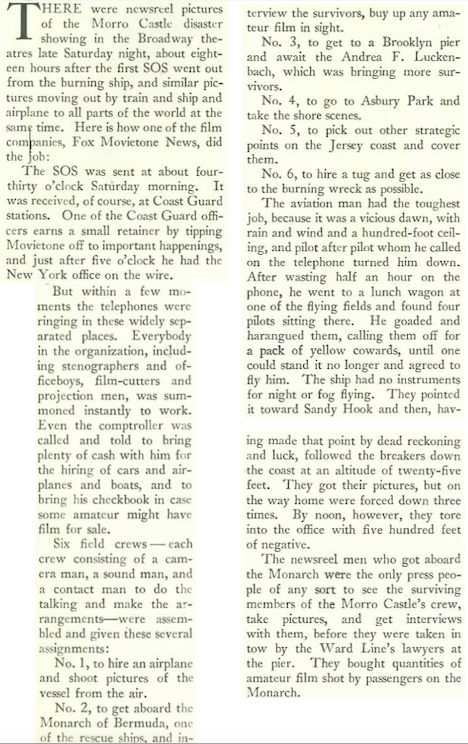
In his “A Reporter at Large” column, Morris Markey penned a lengthy account of Fox Movietone’s coverage of the SS Morro Castle disaster. En route from Havana to New York City on Sept. 8, 1934, the luxury liner caught fire near the New Jersey coast. Due to the ship’s design and the ineptitude of the crew, the blaze claimed 137 lives. Markey described how newsreel crews—with their bulky cameras and sound equipment—went into action, including a cameraman who “goaded” a pilot into taking him aloft through vicious weather conditions.

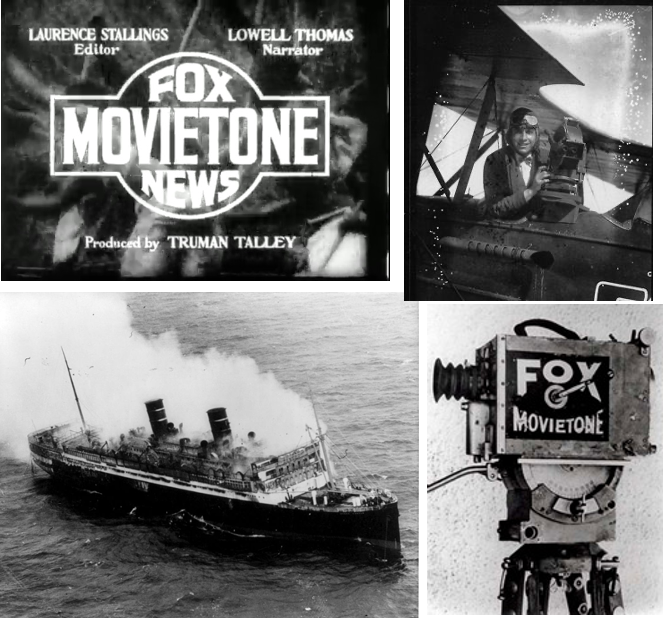
GUTS AND INGENUITY took newsreel reporters to places high and low. Clockwise, from top left, title card from a 1935 Fox Movietone newsreel; Jack Lieb goes aloft to get capture newsreel footage in an undated photo—Lieb was a cameraman for Hearst’s News of the Day; a 1930s Fox Movietone camera; the SS Morro Castle ablaze off the New Jersey Coast on Sept. 8, 1934. (Wikipedia/Lieb photo Courtesy of Bette Marshall via unwritten-record.blogs.archives.gov)

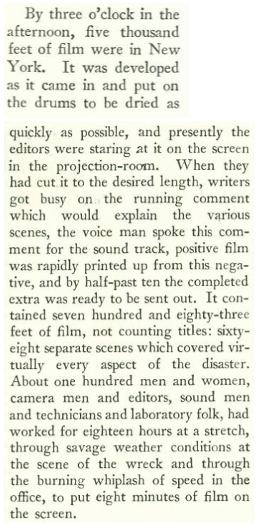
Somehow the cameraman aboard the airplane (which was forced down by weather three times) was able to get his footage to the Movietone office by noon, less than seven hours after the office first received word of the disaster. By three o’clock, five thousand feet of film from all sources was being developed.

UP NORTH AND DOWN UNDER…Movietone news had crews stationed around the world, including field staff in Sydney (top, from 1938), and in Toronto, circa 1930. (Nat’l Library of Australia/City of Toronto Archives)

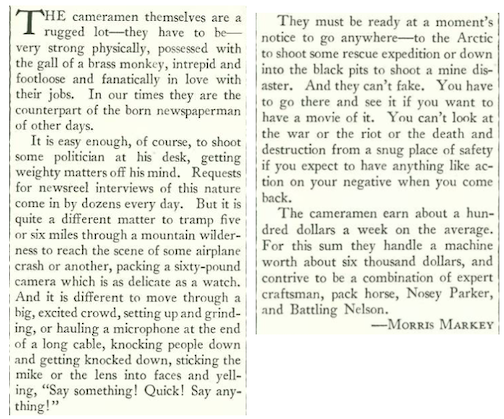
Markey concluded with this observation about the “rugged” and persistent newsreel cameramen:

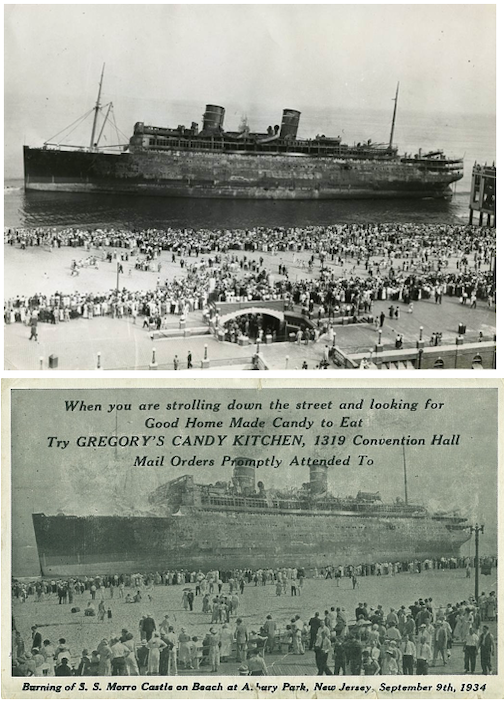
In the aftermath of the Morro Castle disaster, a scene of enormous tragedy was turned into a tourist attraction…

GAWKERS AND HAWKERS…The charred hulk of the SS Morro Castle came to rest on the shore near the Asbury Park boardwalk, which became a popular spot for souvenir salesmen and photo-ops. Tourists flocked to the site from September 1934 to March 1935, when the ship was finally towed away. Note the postcard (bottom) advertising homemade candy over an image of the charred ship. (ripleys.com/side-o-lamb.com)

Fox Movietone News produced sound newsreels from 1928 to 1963, and in the UK as British Movietone News…here is Movietone footage of the Morro Castle disaster, as presented by British Movietone in 1934:

 * * *

Up In The Old Hotels

Last week “The Talk of the Town” looked in on one of Manhattan’s oldest saloons, McSorley’s. For the Sept. 22 “Talk” the subject was “Oldest Hotels,” two of which, The Cosmopolitan and The Grand, remarkably survive to this day.

HANGING IN THERE…The 1845 Brevoort House hotel at 15 Fifth Avenue (top left) was torn down in 1952, however the 1868 Grand Hotel (right) at 1232–1238 Broadway and the 1845 Cosmopolitan Hotel (below, left) at Chambers Street and West Broadway still stand today. (Museum of the City of New York / Chester Higgins Jr. for The New York Times)

 * * *

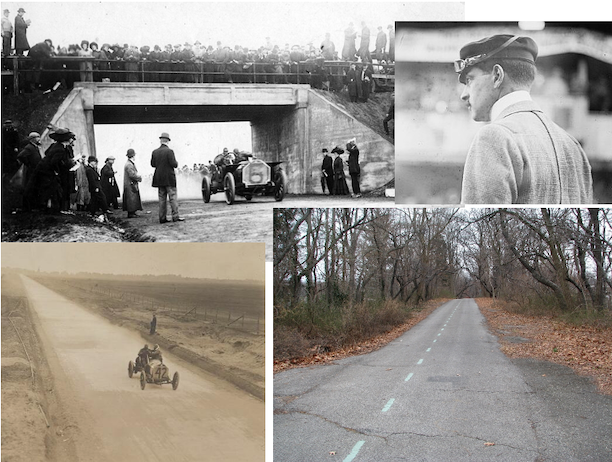
The Six-Million Dollar Road

The first roadway designed exclusively for automobile use was likely the Long Island Motor Parkway, privately built by William Kissam Vanderbilt II because he wanted a road suitable for auto racing. He established the Vanderbilt Cup races on local roads in 1904, but after two spectators were killed and many others injured, in 1908 he began building what would become a 45-mile (72 km) toll road from Queens to Lake Ronkonkoma. After two mechanics were killed in a 1910 race, the New York Legislature banned racing on the road, which the state took over in 1938.

ROAD WARRIOR…William Kissam Vanderbilt II (top right) staged his Vanderbilt Cup Races on his private road until a fatal accident put a stop to the fun in 1910; At bottom right, a surviving section of the road today. Most of the road in Queens is a bicycle trail, and other segments still serve as parts of a county road. (nyheritage.org/Wikipedia-Steve Nowotarski/ny1.com)

 * * *

From Our Advertisers

I have nothing against accordion music, despite years of exposure to Lawrence Welk during my youth, but I find it hard to believe that a Park Avenue socialite (identified here as Mrs. René Du Champ Bellinger) would contemplate tormenting her posh friends with a Hohner squeezebox…

…Esquire magazine was barely a year old when it posted this ad in The New Yorker…its appeal to men (and their anxieties) keeps it going today…

…it’s interesting how companies in the 19th century and on through the 1950s featured idealized, bird’s eye images of their factories in advertising, doubtless believing that consumers associated size (and smokestacks) with prosperity, and therefore a quality product…

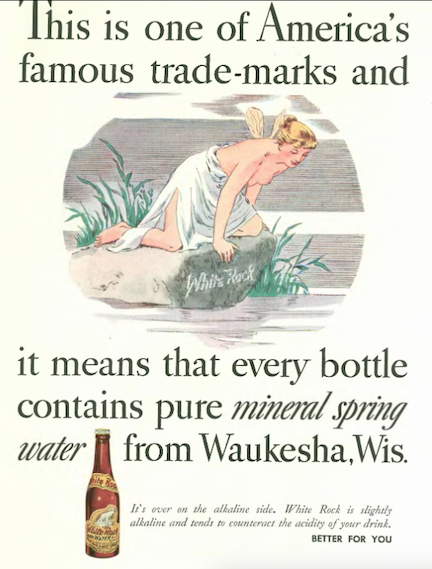
…White Rock, however, has used the image of the Greek goddess Psyche for more than a century to promote the purity of its spring water…

…purity was also the main point of this ad from Daggett & Ramsdell, who hawked their wares to the Park Avenue set…after more than 130 years D&G is still in the beauty business…

…this next ad is almost unbelievable…single rooms starting at $5, double rooms $7, and a whole suite for $10…at the Plaza…okay, $10 is roughly equivalent to $225 today, but half of that could get you a single…

…and yet another unlikely claim from R.J. Reynolds regarding the energizing qualities of their Camel cigarettes…it seems the last thing you would need while climbing a mountain is smoke in your already over-taxed lungs…

…however, let’s give proper due to Georgia Engelhard (1906–1986), who scandalized the mountaineering world by ditching the Victorian climbing skirt in favor of a pair of climbing pants. Engelhard was the first female climber to ascend many of the peaks in the Rockies…

Georgia Engelhard in a 1922 photo attributed to her friend Alfred Stieglitz. (nga.gov)

…it seemed like nearly everyone smoked in the 1930s, even in ads that had nothing to do with tobacco companies (detail)…

…on to our cartoons, we begin with Richard Decker and some retail competition…

…George Price drew up a curiosity even Robert Ripley couldn’t believe…

…Robert Day examined advances in evolutionary science…

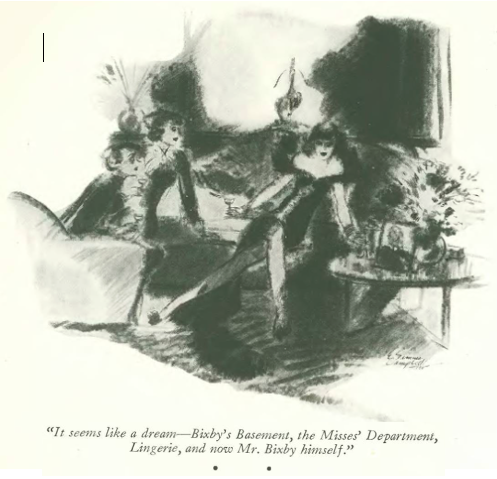
…E. Simms Campbell offered up this abbreviated love story…

…Peter Arno gave us a director with a god complex…

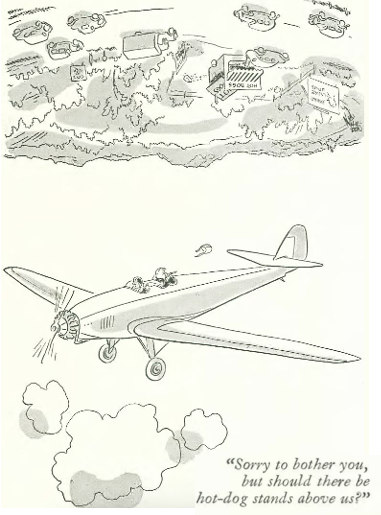
…and one from Ned Hilton, and a new perspective on flying…

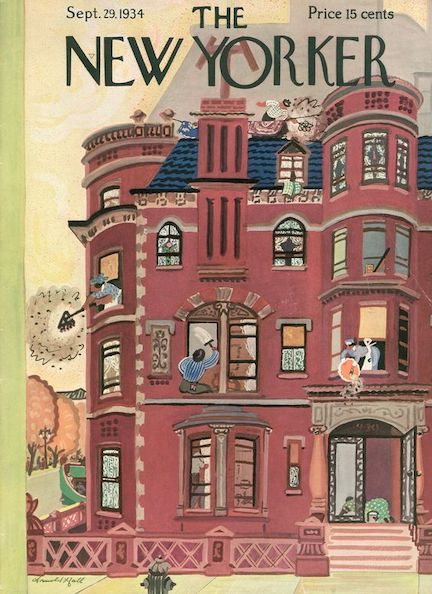
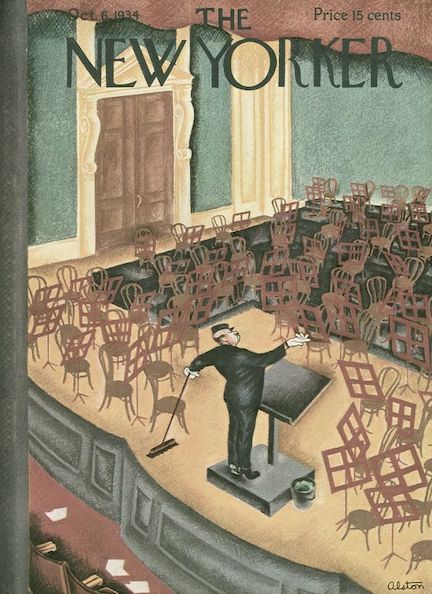
…on to Sept. 29, 1934, with a cover by Arnold Hall, who produced at least twelve covers for The New Yorker between 1933 and 1939…

Sept. 29, 1934 cover by Arnold Hall.

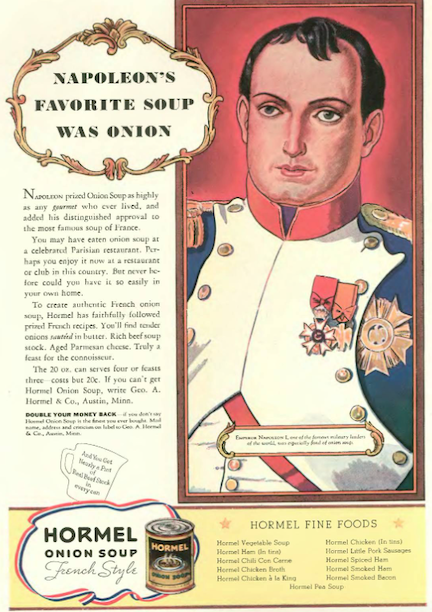
…and we go straight to ads, beginning with this alarming image that greeted readers on the inside cover…why would this prompt anyone to purchase a can of onion soup?…

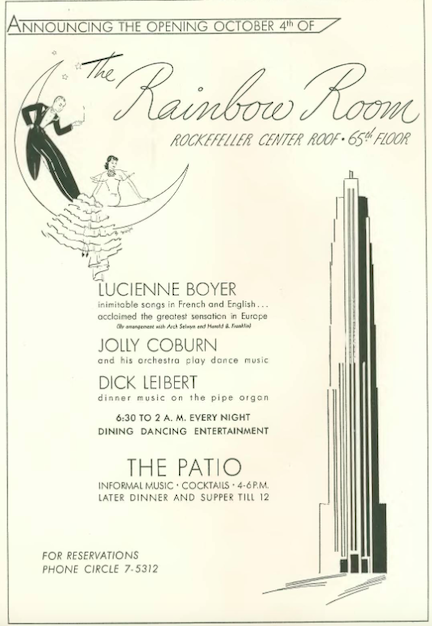
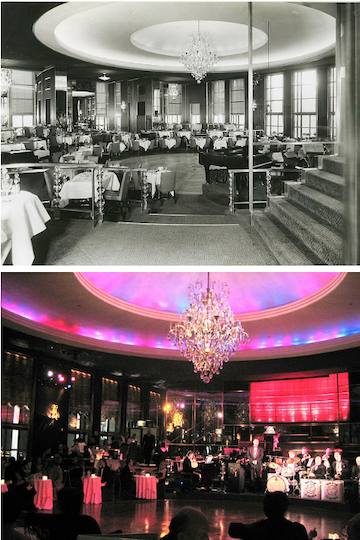
…the Rainbow Room on the 65th floor of Rockefeller Center opened in 1934, and it quickly became a focal point for the city’s elite…

Above, the dining room at the Rainbow Room, 1934, and below, in 2004. (Library of Congress/Wikipedia)

…Lucky Strike continued its series of ads featuring fashionable women looking smart with their product…

…our cartoons include this spot illustration by Otto Soglow, who did spots for The New Yorker for many years…although Soglow’s Little King moved to the Hearst newspapers, he continued to contribute cartoons to The New Yorker until 1974…

…George Price continued to explore life as a levitating man…

…the enforcement of the Hays Code had this teen in a “fix,” per James Thurber…

…Gluyas Williams continued his exploration of various crises, this time in the music world…

…Alan Dunn gave us a glimpse of civilization via the pharaonic sculptures that were emerging on the face of Mt. Rushmore…

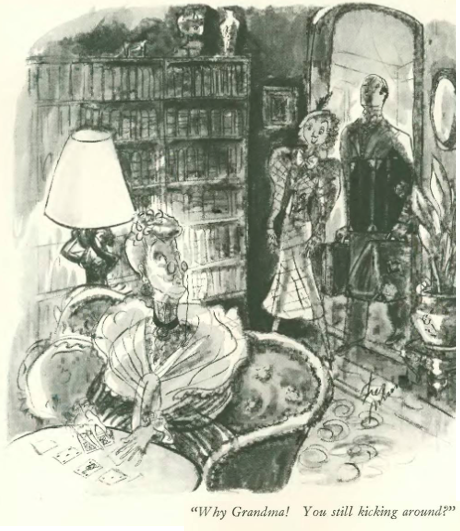
…and we close with the wonderful wit of Barbara Shermund…
Next Time: Bojangles…