The President’s Mystery

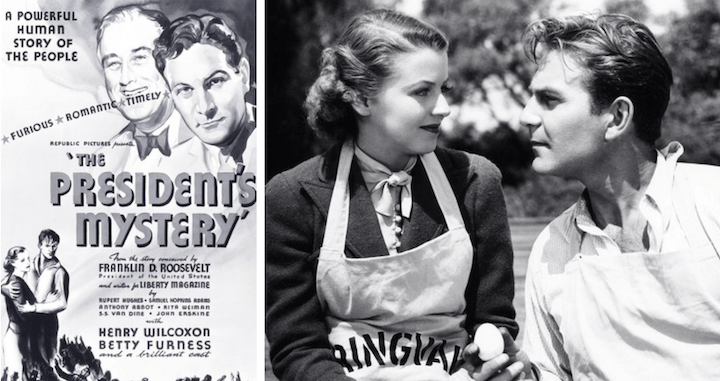
Above: President Franklin D. Roosevelt was credited as a writer on the film "The President's Mystery," although his role was more one of inspiration; at right, Betty Furness and Henry Wilcoxon starred in the film. (rottentomatoes.com)

Just one month before the 1936 general election, Republic Pictures released a film “conceived by Franklin D. Roosevelt.”
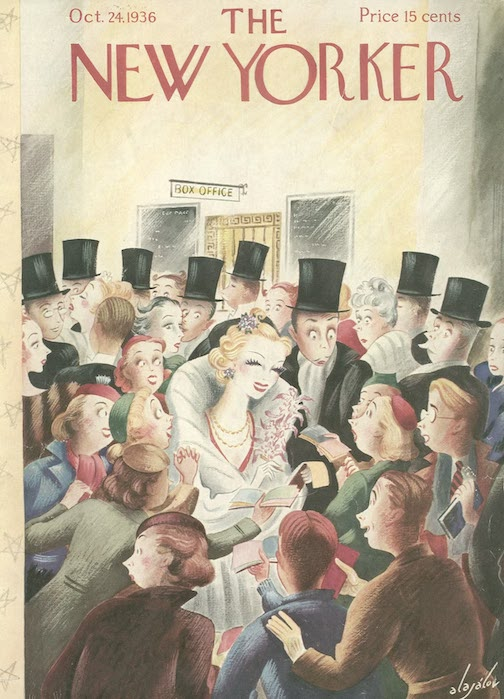
October 24, 1936 cover by Constantin Alajalov.

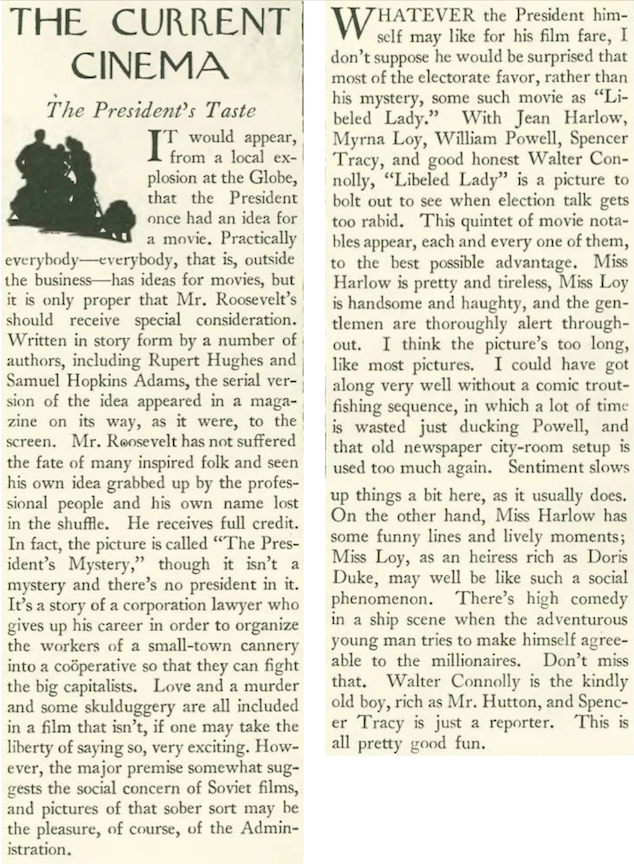
Yes, the president of the United States, standing for re-election in November (which he would win by a landslide), was actually credited as a writer for the film The President’s Mystery, although FDR’s actual role in the film was its concept. While visiting with Fulton Oursler, editor of Liberty magazine, Roosevelt posed the question: “How can a man disappear with five million dollars of his own money in negotiable form and not be traced?” Oursler, a close friend of the president’s, responded by enlisting several prominent authors to write a screenplay. New Yorker film critic John Mosher takes it from there:
The story behind the film was first featured in the Nov. 16, 1935 issue of Liberty magazine…
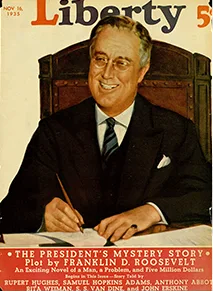
(libertymagazine.com)

…and released as a movie on Sept. 28, 1936…
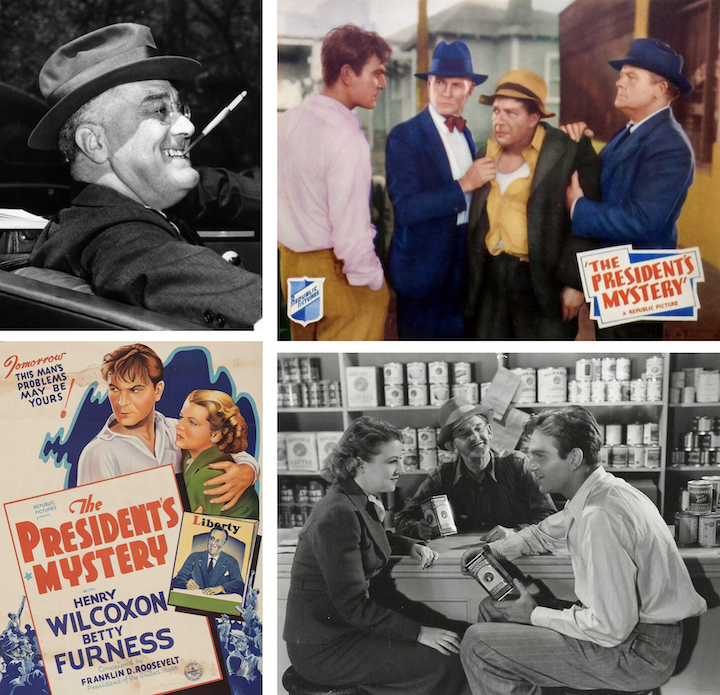
MAN OF MYSTERY…Clockwise, from top left, President Franklin D. Roosevelt, a fan of mysteries, conceived the idea for The President’s Mystery; Henry Wilcoxon, Frank O’Connor, an unidentified actor, and Wade Boteler featured on a lobby card promoting the film ; Betty Furness, Si Jenks, and Henry Wilcoxon in a promo shot for the film; poster for the film featured an image of FDR on the cover of Liberty magazine. (instagram.com/imdb.com/themovieb.org)

Mosher also had “pretty good fun” with the star-studded screwball comedy, Libeled Lady, which was acclaimed by critics and nominated for Best Picture:
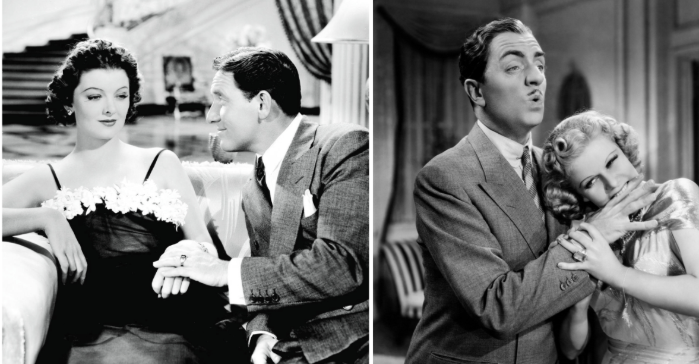
LOVE QUADRANGLE…Lovers spats and romantic mix-ups were just part of the stew in the screwball comedy Libeled Lady. At left, Myrna Loy and Spencer Tracy; at right, William Powell and Jean Harlow. (imdb.com/movie nation.com)

There were still other films reviewed by Mosher, including The Devil is a Sissy, starring sixteen-year-old Mickey Rooney, still emerging as a star, as well as famed child actors Jackie Cooper and Freddie Bartholomew. There was also a film featuring Clark Gable as a prize fighter, and a movie titled The Longest Night, ironically the shortest feature ever produced by MGM—just 51 minutes.
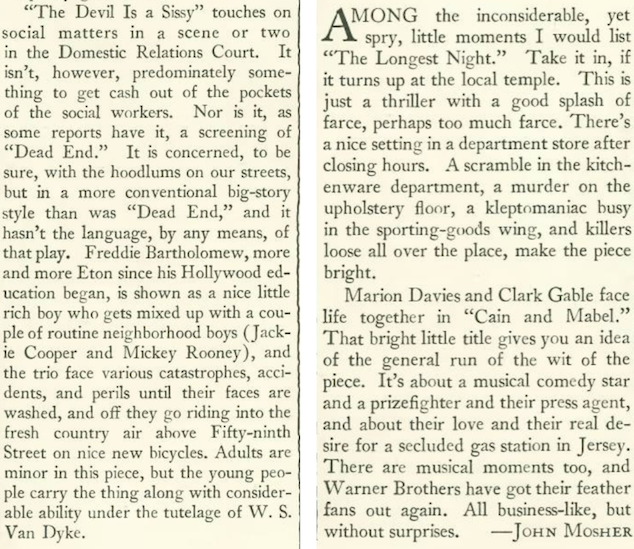
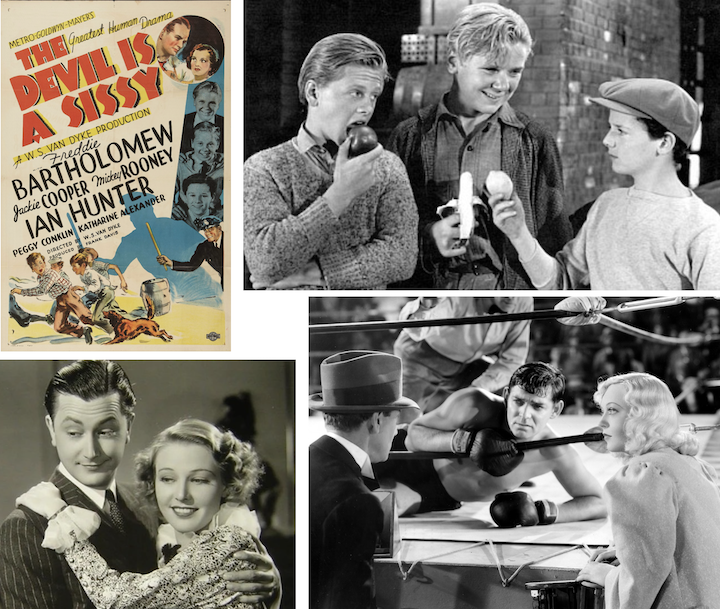
STREET SMARTS…Mickey Rooney, Jackie Cooper, and Freddie Bartholomew in The Devil is a Sissy, a story about a posh kid who befriends a couple of ruffians; Clark Gable was down for the count in Cain and Mabel, co-starring Marion Davies; Robert Young teamed up with Florence Rice in the mystery-thriller, The Longest Night—Florence Rice was the only child of sportswriter Grantland Rice. (Wikipedia/mubi.com/tcm.com)

 * * *

A Second Life

E.B. White still wasn’t done with the new Life magazine—recall his “Notes and Comment” from Sept. 19, when he lamented a magazine that would “consist almost entirely of pictures” and would “do away with the last vestiges of privacy in America.” Here White notes the purchase of Life by Time, Inc., and compares it to the old Life.
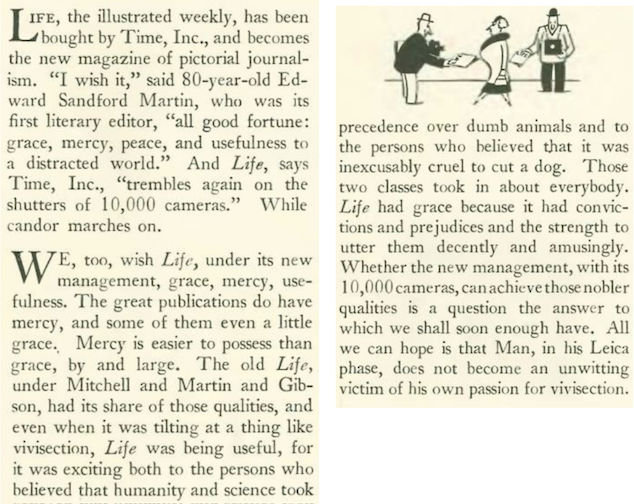
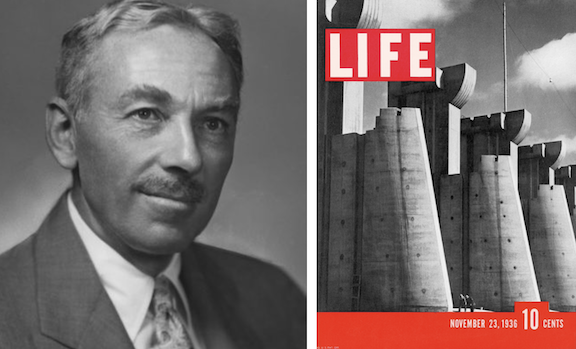
ASKING FOR MERCY…E.B. White hoped the new Life magazine would have some of the mercy and grace of its predecessor. (sunrisepoint.com/time.com)
LIFELESS…Launched in 1883, Life was an American humor and general-interest magazine. Purchased and shut down in 1936 by Henry Luce, he replaced it with his new, and very different Life. The image above is the cover of the Feb. 2, 1922 issue of the old magazine. (Wikipedia)

 * * *

A Sensitive Hamlet

There are as many approaches to playing Hamlet as there are versions of the famous Shakespeare play, The Tragedy of Hamlet, Prince of Denmark. In the case of actor John Gielgud, as reported in “The Talk of the Town,” Hamlet was quite sane, although he was “immensely sensitive.”
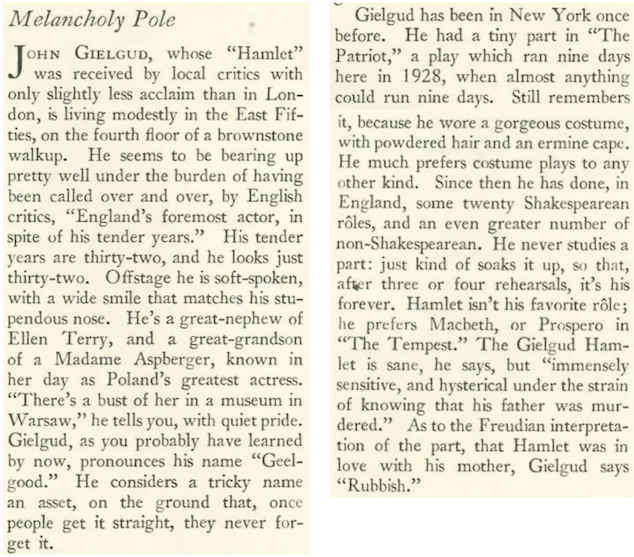
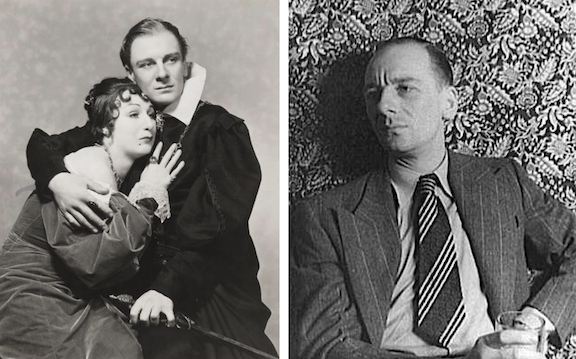
MOMMY DEAREST…At left, Judith Anderson as Hamlet’s mother, Gertrude, Queen of Denmark, and John Gielgud as Hamlet in Broadway’s 1936 production of the Shakespeare play; at right, Carl Van Vechten portrait of Gielgud during the actor’s time on Broadway, December 1936. Gielgud is widely regarded as one of the definitive Hamlets of the 20th century. (newyorktheater.me/newworldencyclopedia.org)

 * * *

Safety Last

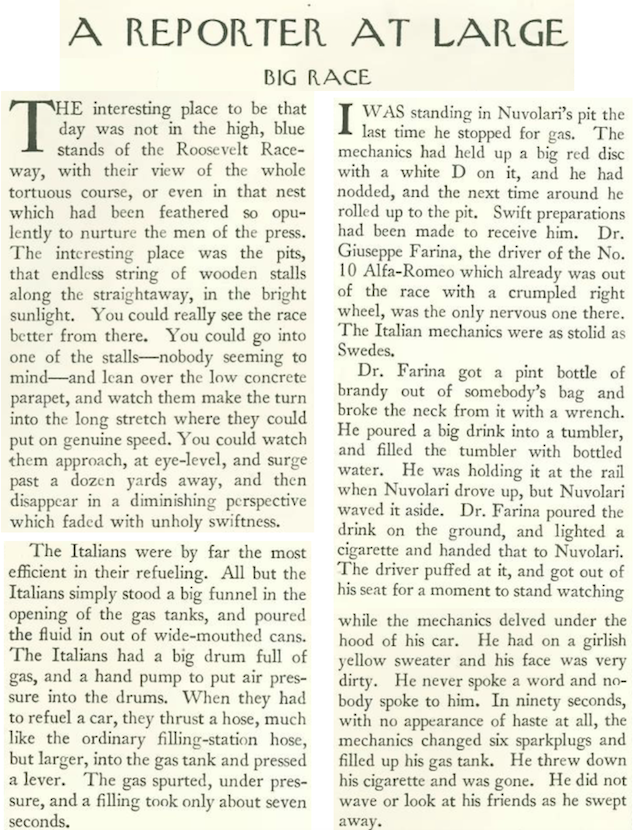
Morris Markey was on hand for the Vanderbilt Cup Race (recently featured here), offering a track-side look at the pit crews. Notable in this excerpt is the complete lack of safety protocols, from gasoline poured out of wide-mouthed cans to smoking and drinking among drivers and pit crews. The race winner, Tazio Nuvolari (who refuses some brandy but puffs on a cigarette) would eventually have to retire by 1950 due to his total deafness and other health problems—he spent years racing in an open cockpit with the manifold ends right next to his ear. Those combustion gases—containing gasoline juiced with methanol, benzene, acetone, and nitrobenzene—easily penetrated Nuvolari’s ears and nose and were absorbed directly into his skin and bloodstream.
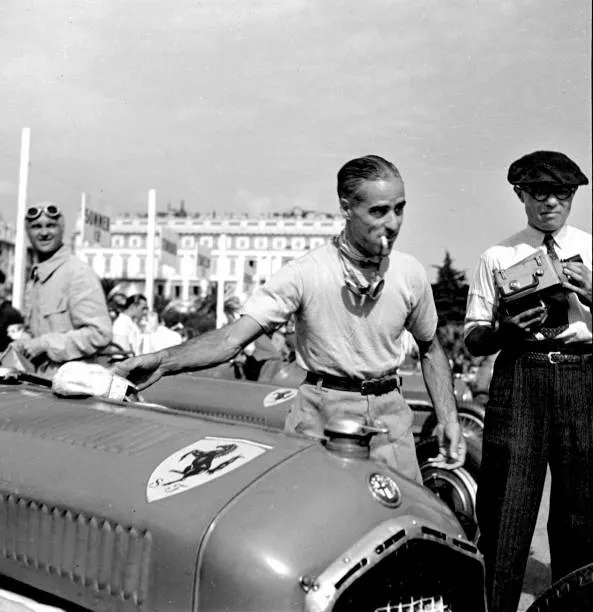
GUTS AND GLORY…Italian racing legend Tazio Nuvolari (1892–1953) with his Alfa Romeo before the start of the 1935 Nice Grand Prix in France. Nuvolari easily won the 1936 Vanderbilt Cup on Long Island. (notenoughcylinders.com)

 * * *

Color My World

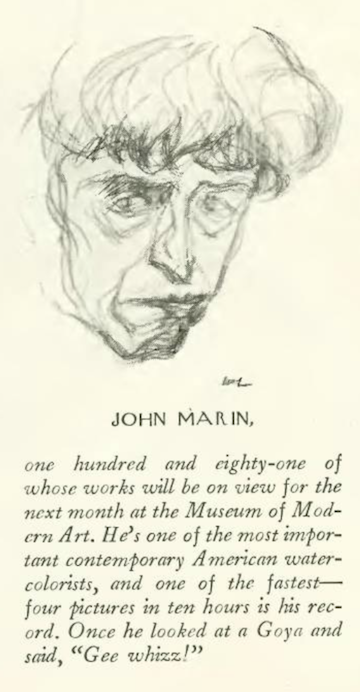
The works of John Marin, considered one of America’s finest water-colorists, were featured in a major exhibition at the Museum of Modern Art. In addition to a review by art critic Lewis Mumford, Marin was featured in this mini bio on the opening pages…caricature by William Auerbach-Levy…
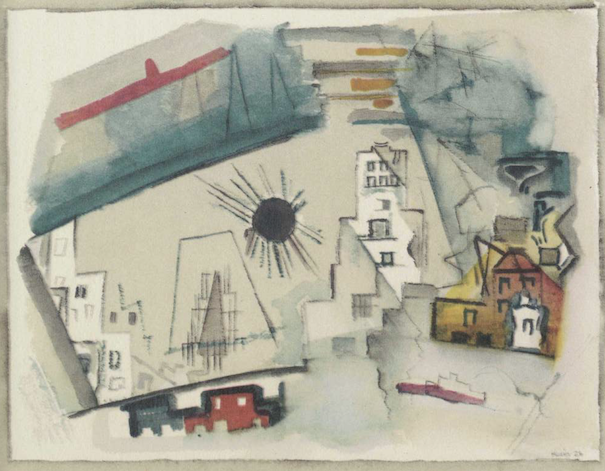
MASTER WATER-COLORIST…John Marin’s Movement No. 2, Related to Downtown New York (The Black Sun), 1926. Image reproduced from the 1936 MoMA exhibition catalog. (moma.org)

 * * *

From Our Advertisers

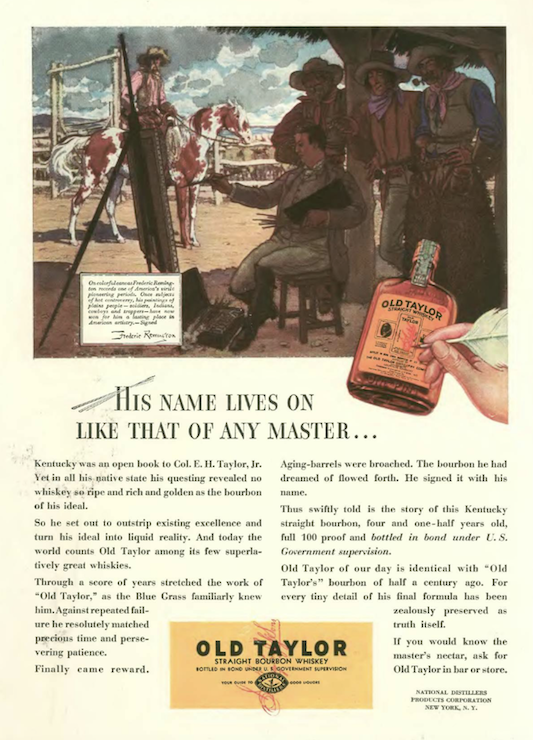
The Oct. 24 issue opened with this advertisement by the distillers of Old Taylor, who continued to compare their product to the work of “masters,” here the painter Frederic Remington…
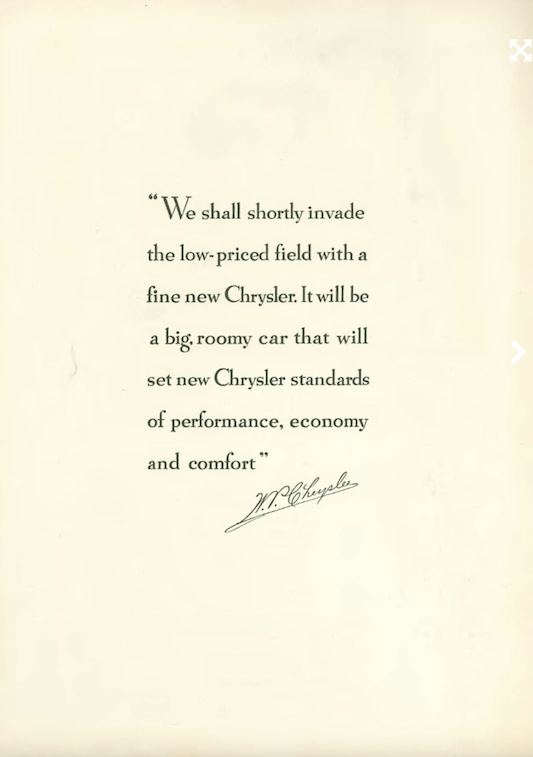
…on the opposite page, this spare ad from Chrysler, a stark contrast to their previous week’s very wordy appeal…
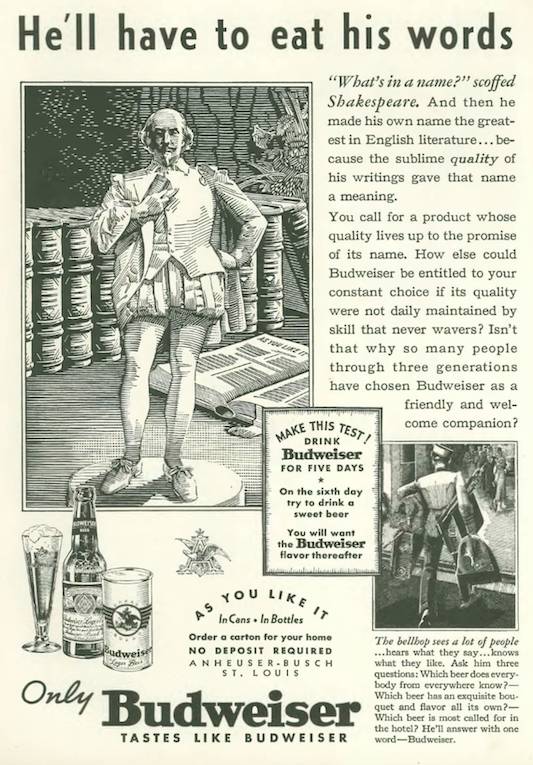
…the promoters of Budweiser took a cue from the whiskey distillers, invoking the words of an historic personage to promote their product…
…predating modern thermostats by decades, the mechanical Chronotherm was one of the earliest automated room thermostats ever produced by the Minneapolis-Honeywell Regulator Company…it was often used to control coal or early heating systems by automatically adjusting dampers or furnaces on a schedule…
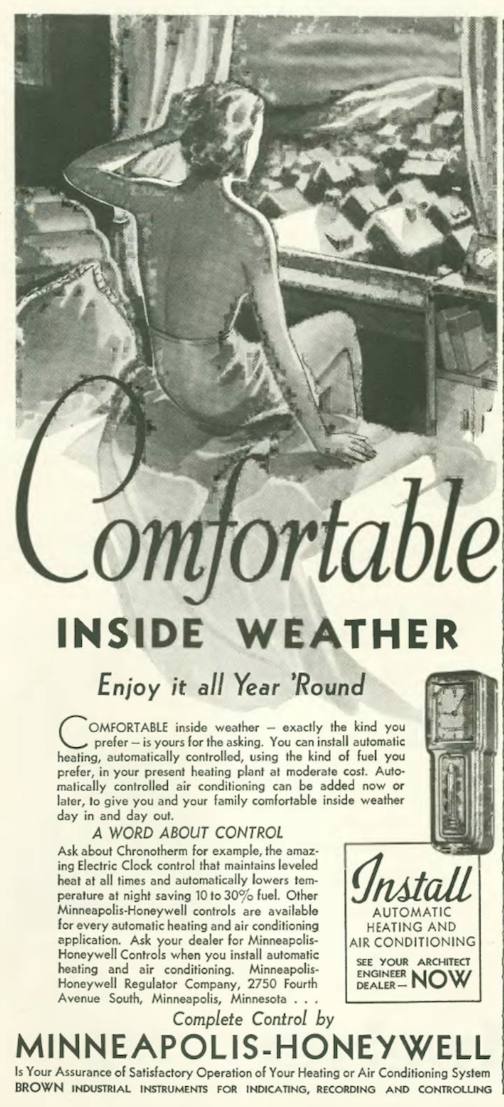
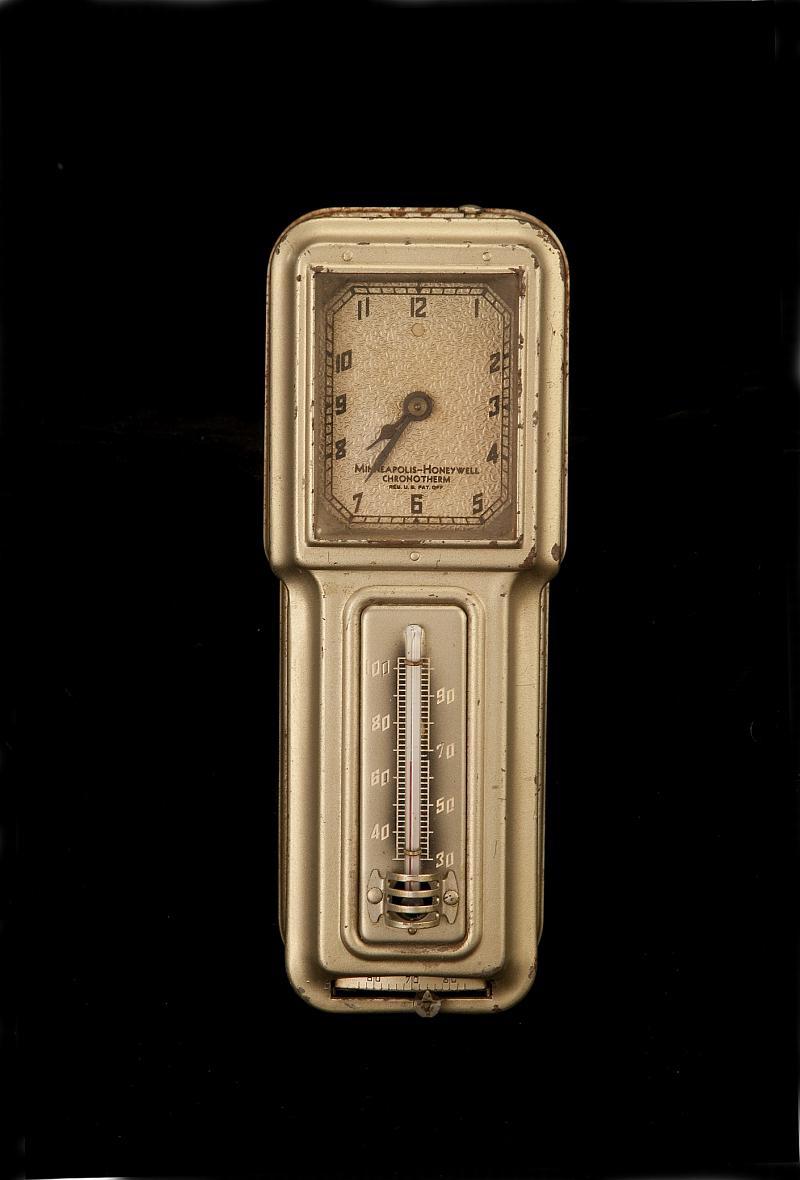
The Minneapolis-Honeywell Chronotherm retailed for about $41 in the 1930s (equivalent to roughly $970 today). It was considered a high-end luxury upgrade for the home. (si.edu)

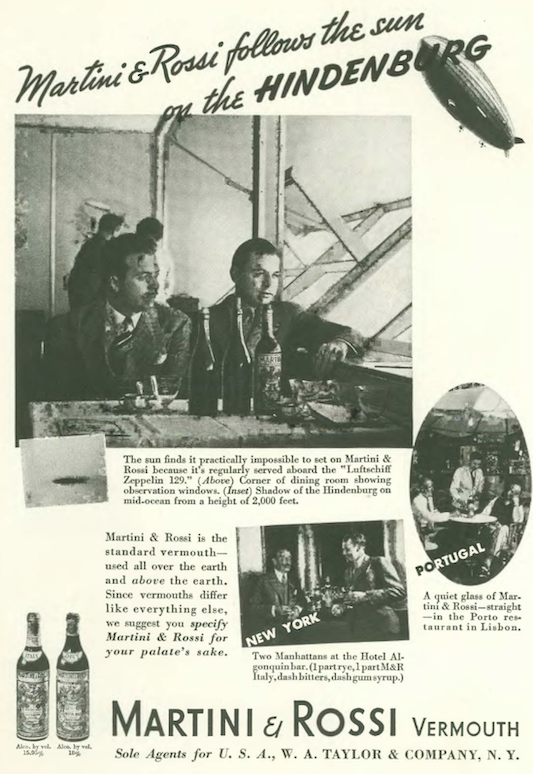
…Martini & Rossi would have about six more months to serve their vermouth on the Hindenburg before it would go down in a fireball on May 6, 1937…
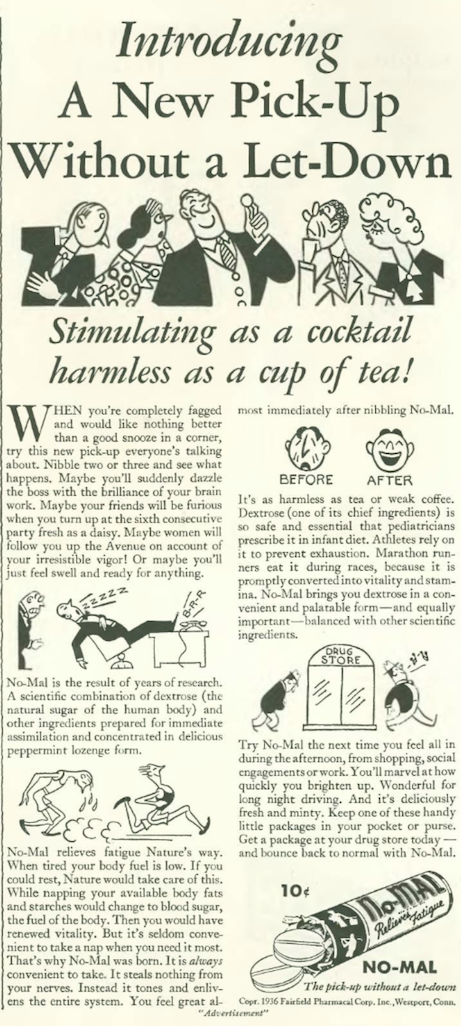
…the illustrations in this No-Mal ad mimicked the style of Otto Soglow to market a new patent medicine touted as a stimulant and hangover cure, among other things…these remedies often contained heavy doses of caffeine plus aspirin, mild laxatives, and antacids, while some also contained the amphetamine Benzedrine…
…model railroading for adults started to build up steam in the 1930s…here’s a back of the book ad aimed at those who couldn’t afford to travel but who could afford a Scale-Craft kit…
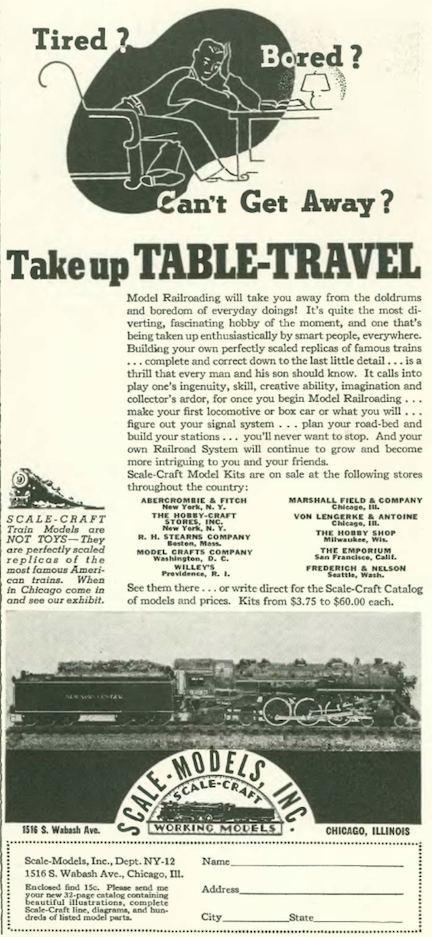
…here’s a page from the 1936 Scale-Craft catalog…
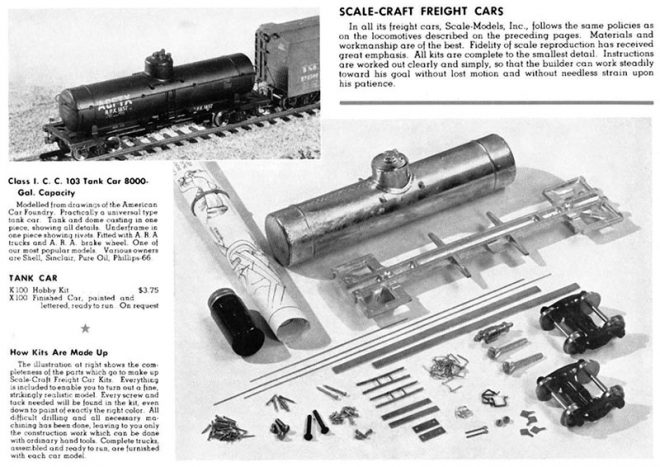
…and an example of what you could build from a kit…
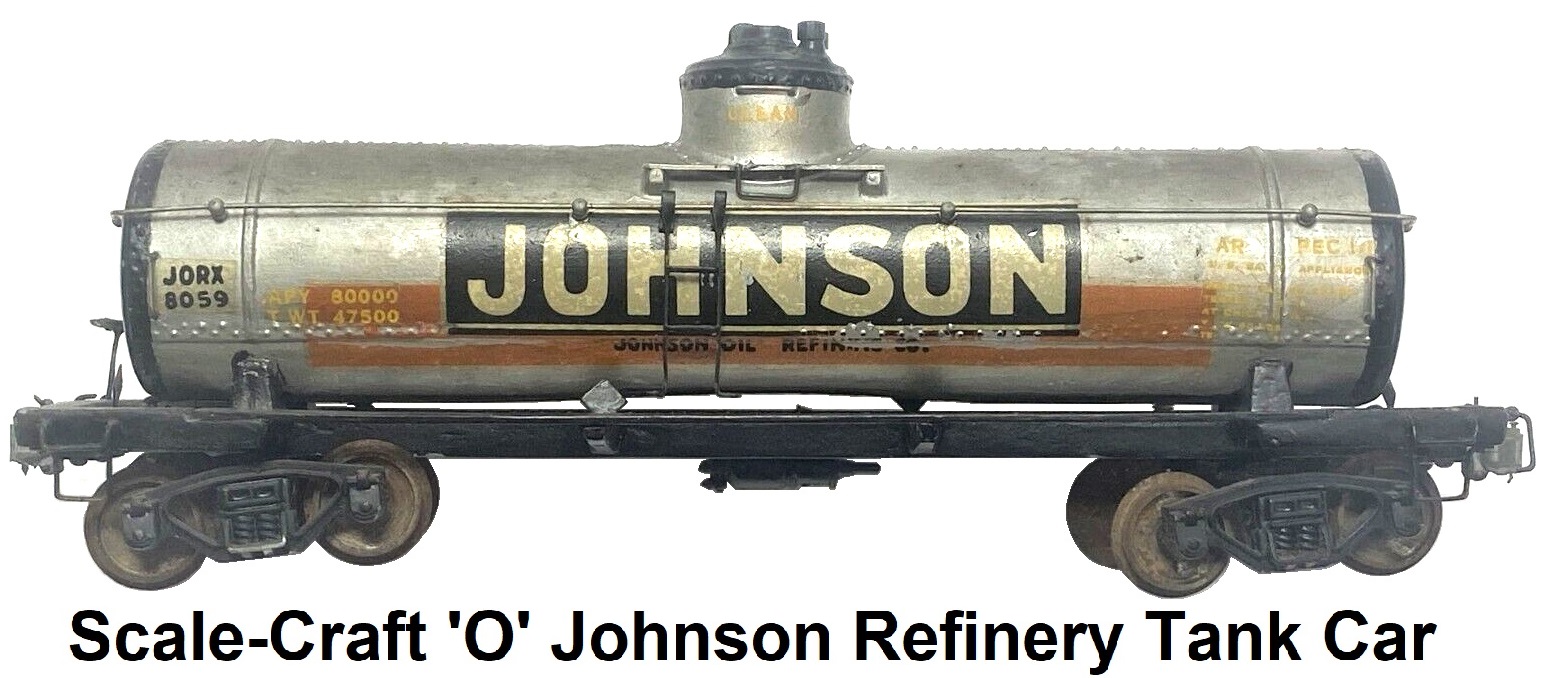
(tcawestern.org/oscalemag.com)

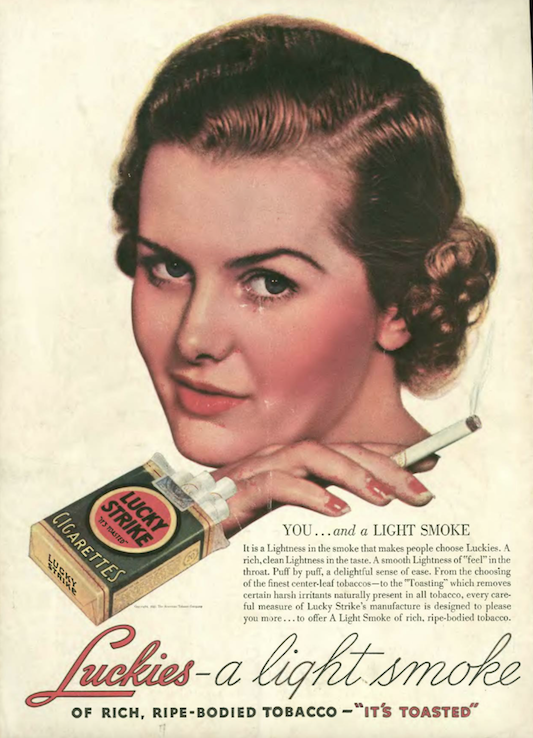
…and there’s no guessing the target audience for this brand of cigarettes…
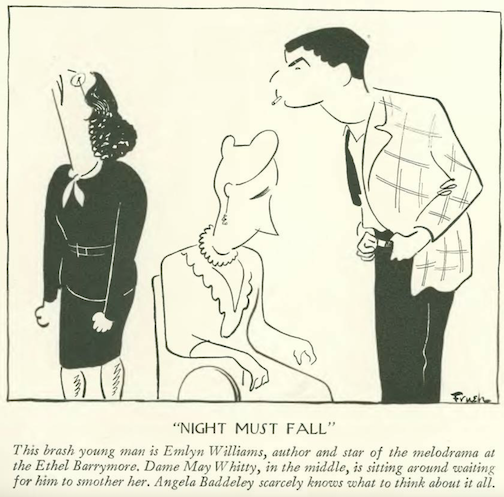
…on to our cartoonists, Al Frueh was back with illustrations for the theater review section…
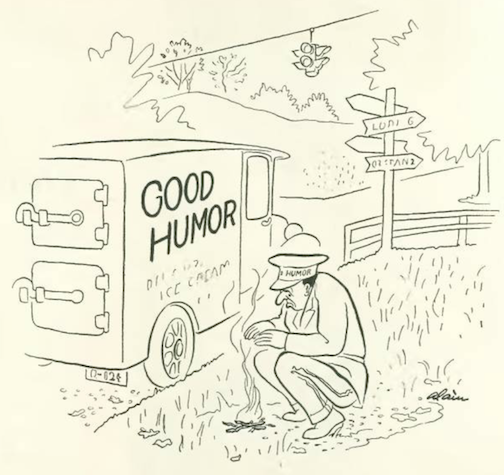
…Alain found nothing humorous about being a Good Humor man…
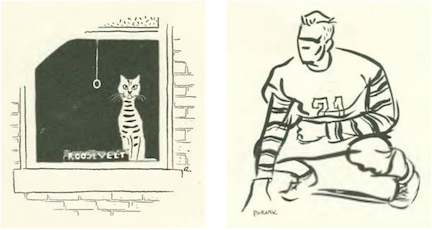
…a couple of spots by Abe Birnbaum (left) and unidentified at right (signature looks like PHRANK)…
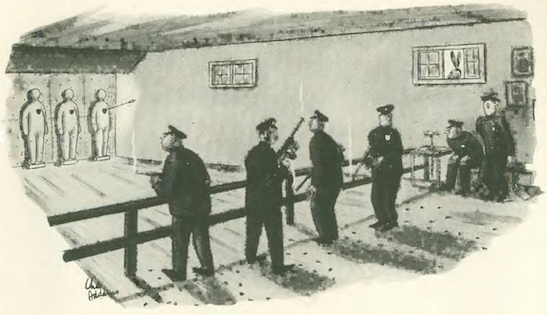
…a stray arrow found its way into this cartoon by Charles Addams…
…Whitney Darrow Jr illustrated the childish side of politics…
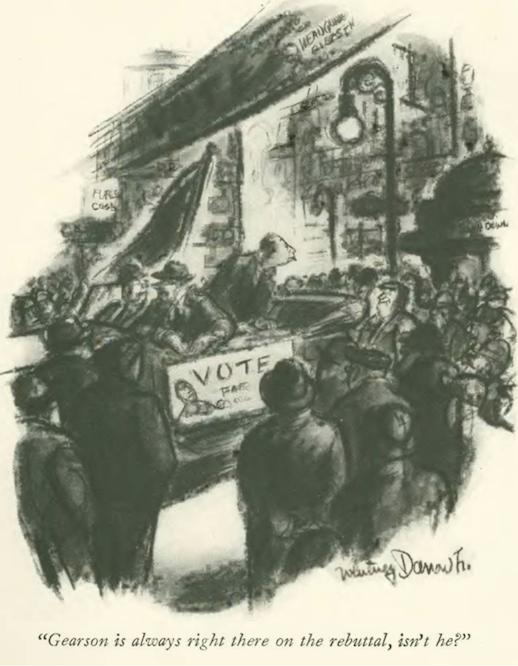
…we zoom in for a close-up…
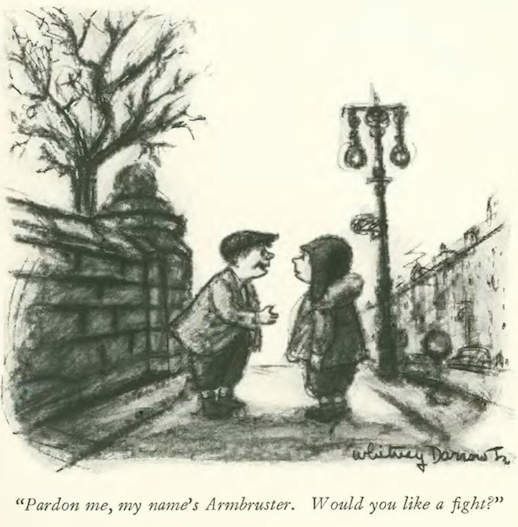
…Darrow again, making a new friends…
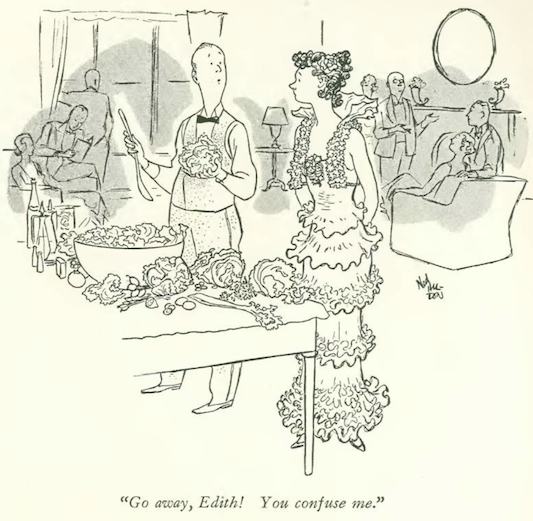
…Ned Hilton drew up an outfit that clashed with the salad course…
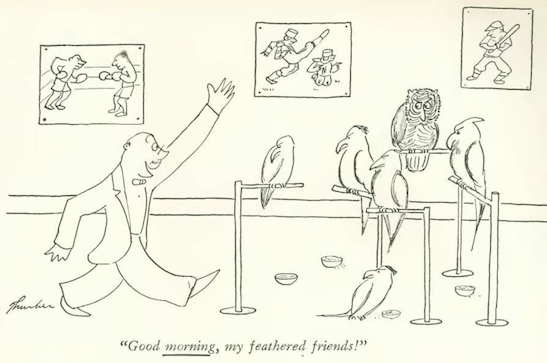
…James Thurber greeted a group of dour birds (interesting background with sporting scenes…one wonders why)…
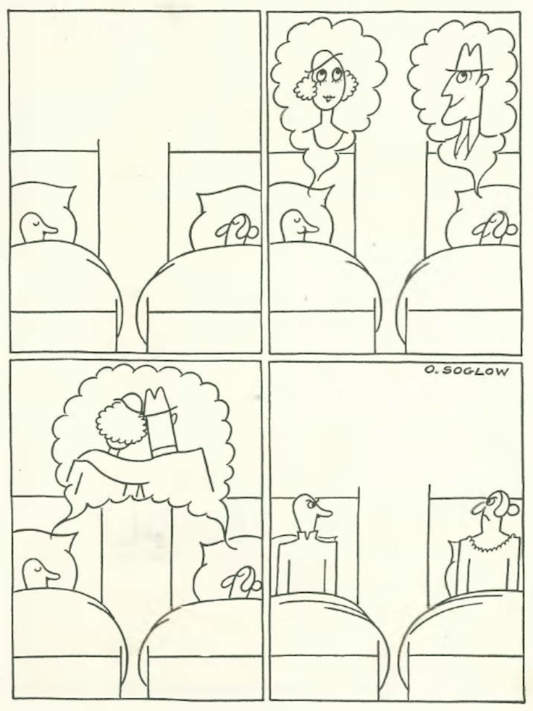
…Otto Soglow gave us some shattered dreams…
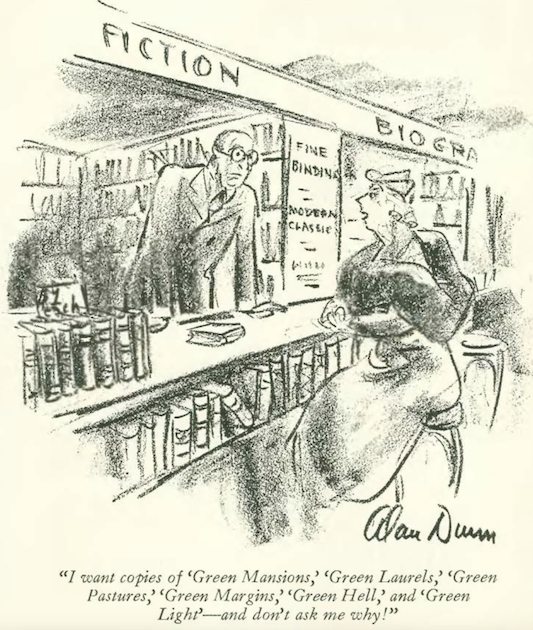
…Alan Dunn visited the fiction section, no questions asked…
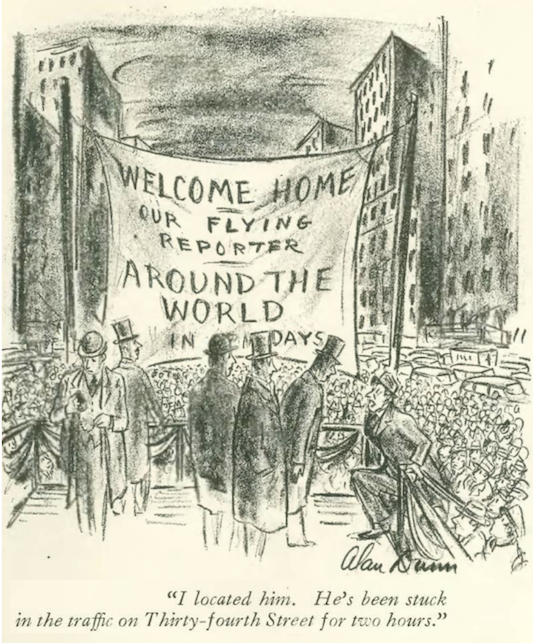
…and Dunn again…with an around the world adventure stuck in traffic…
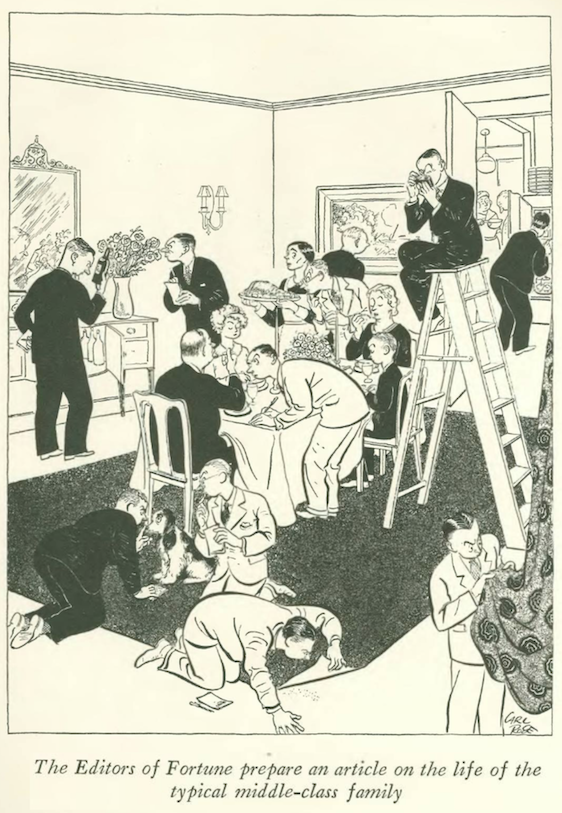
…Fortune magazine probed the mysteries of middle class life, per Carl Rose…
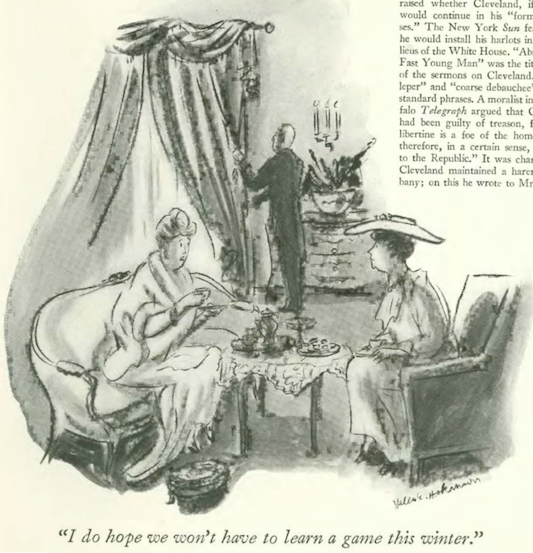
…and we close with Helen Hokinson, and the unease of an approaching winter…
Next Time: Far-Fetched Faulkner…
National Treasure

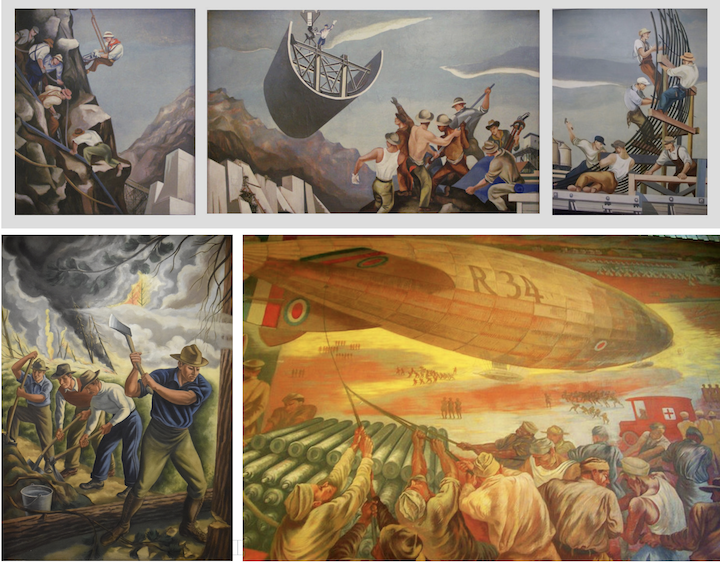
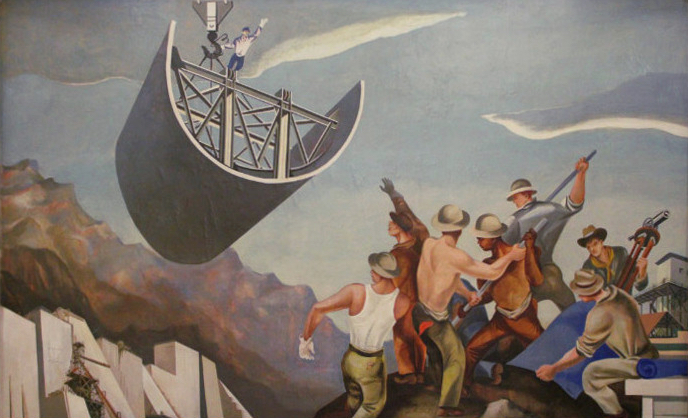
Above: Detail of a mural by William Gropper, "Construction of a Dam," 1939, located in the U.S. Department of the Interior. (gsa.gov)

Sociologist and urban design critic Lewis Mumford was well known for his strong convictions regarding the development of cities, but he also applied those convictions—namely his ideas of organic balance—while writing “The Art Galleries” column for The New Yorker.

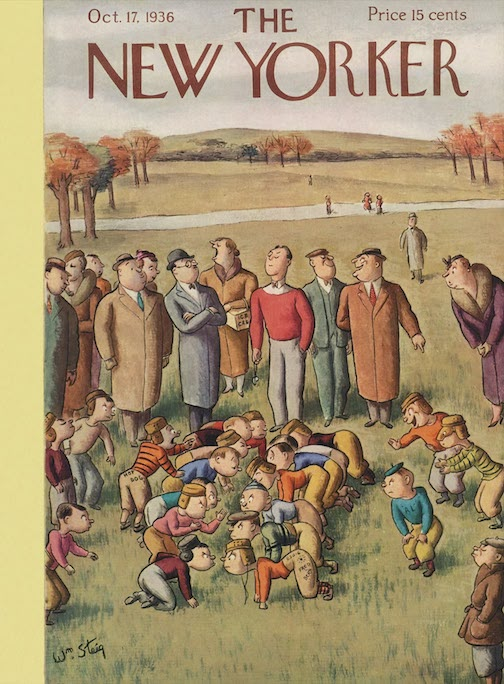
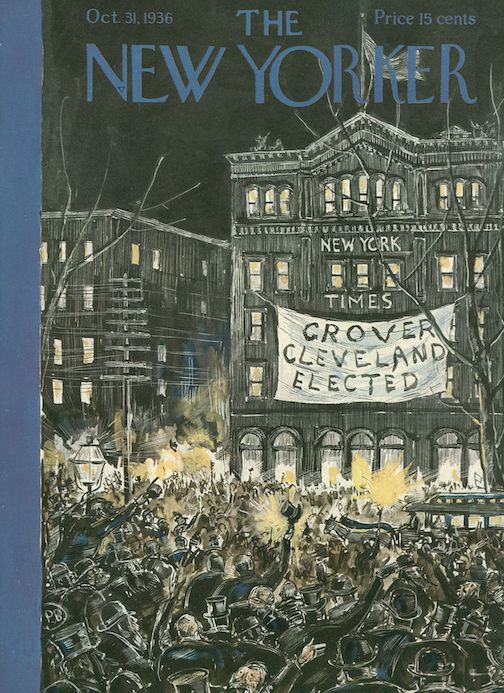
October 17, 1936 cover by William Steig.

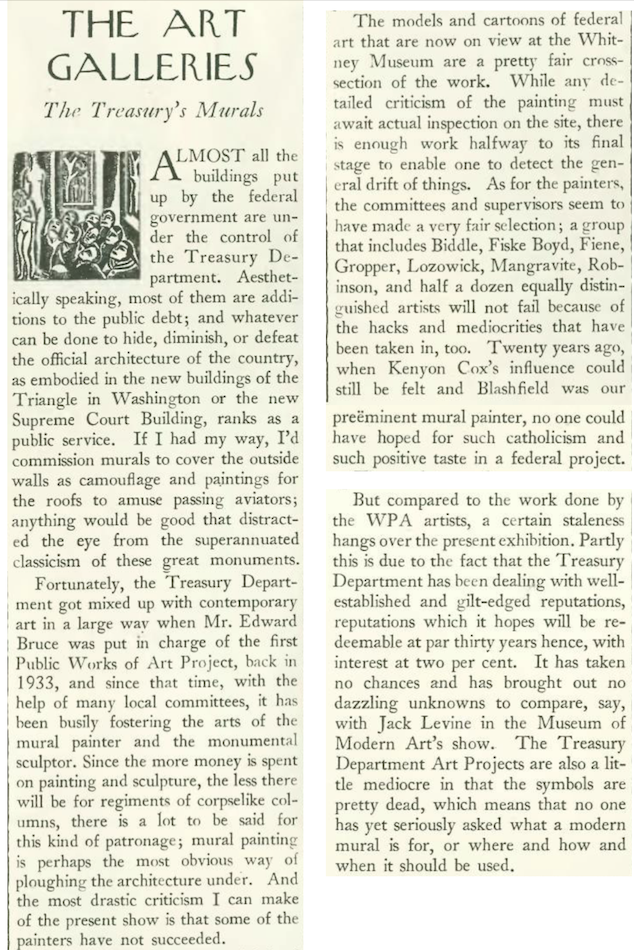
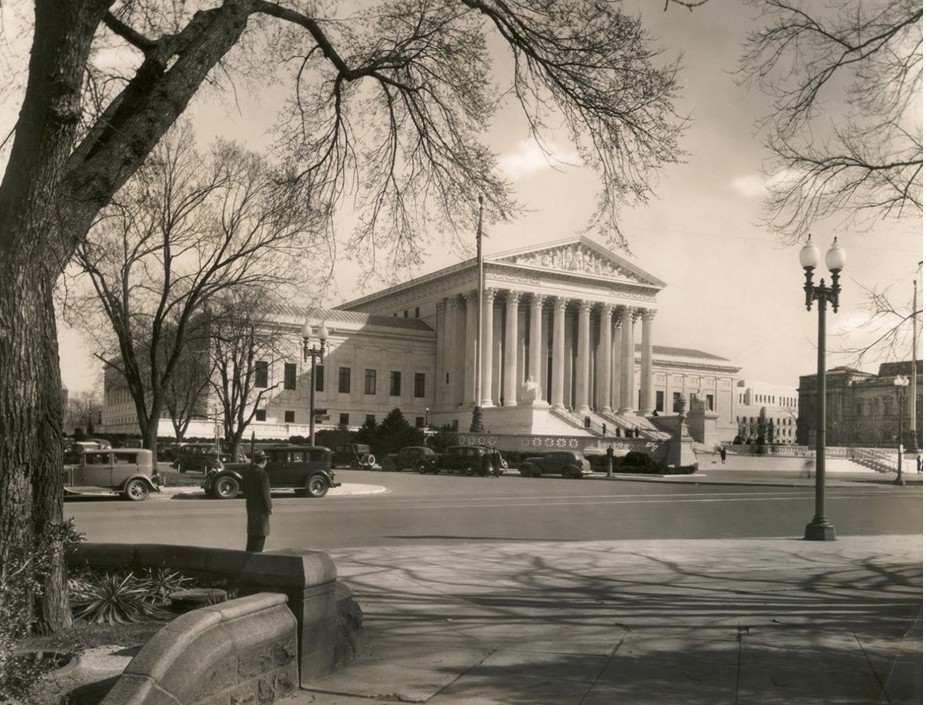
Mumford (1895–1990) was neither a traditionalist nor a modernist, but rather a proponent of art and architecture that was human-scaled and that honestly reflected the times and places it which they were created. In his Oct. 17 column he cited Washington’s new Supreme Court Building as a prime example of sham architecture, and lamented a “certain staleness” in an exhibition of the U.S. Treasury’s Relief Art Project, which commissioned numerous murals and sculptures for installation in federal buildings. Excerpts:

SUPERANNUATED CLASSICISM was the term Lewis Mumford used to describe new buildings in Washington, D.C., and suggested (in jest) commissioning murals to cover their outside walls, including those of the new Supreme Court building, completed in 1935. According to the Federal Judiciary Center, the building was designed on a scale in keeping with the importance and dignity of the Court and the Judiciary as a coequal, independent branch of the United States Government, and as a symbol of “the national ideal of justice in the highest sphere of activity.” (fjc.gov)

Although Mumford noted the “hacks and mediocrities” of Treasury-sponsored art, he also noted the inclusion of a number of distinguished artists. The problem, it seemed to him, was not the artists but rather the outmoded, monumental murals they were commissioned to create.

MONUMENT MEN…Clockwise, from top: mural by William Gropper, Construction of a Dam, 1939, located in the Department of the Interior; mural created in 1937 by Peppino Mangravite for the U.S. Post Office in Hempstead, New York, depicting the arrival of British dirigible R.34 with the first air mail in 1919; Ernest Fiene painting from 1938 depicted a wildfire battle, one of a set of four Fiene oil-on-canvas murals at Interior. (gsa.gov/livingnewdeal.org)

Mumford concluded: “We need a type of painting that is flexible and renewable…capable of renewal every month, or as often as a Japanese changes a kakemono.”

THE ART OF IMPERMANANCE…Lewis Mumford wrote that public art should change as often as the Japanese change their kakemono. (britannica.com)

 * * *

Been There, Done That

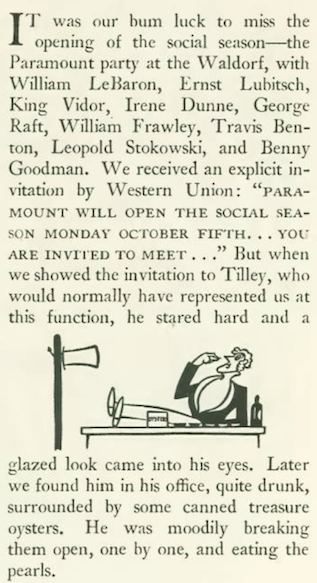
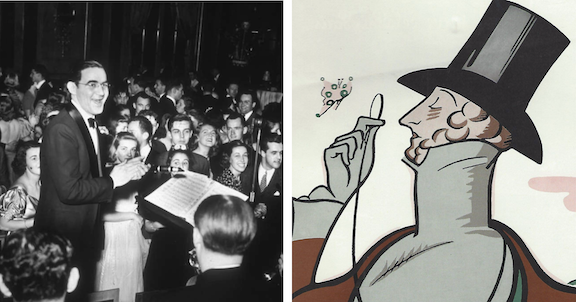
E.B. White gave voice to New Yorker mascot Eustace Tilley in 1927 when Tilley bade farewell as the author of “The Talk of the Town.” White also checked in on Tilley in a 1932 “Notes and Comment” column, recounting how Tilley almost lost his silk top hat to the tax man. Tilley turns up again in this week’s “Notes,” this time appearing quite inebriated and refusing to attend a star-studded party at the Waldorf:

HO-HUM…Not even Benny Goodman and a bevy of Hollywood stars could distract Eustace Tilley from his drink and a tin of oysters. (bennygoodman.com)

 * * *

Stunt Pilots

I’m not sure which “Talk of the Town” writer went up on the airplane, but either or

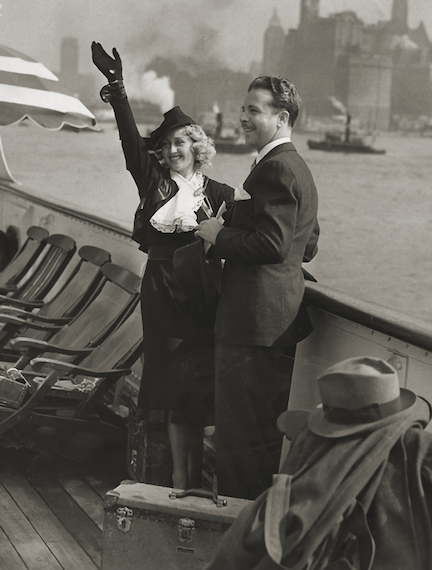
AHOY THERE!…Newlyweds Joan Blondell and Dick Powell greet admirers as they arrive in New York aboard the

 * * *

Gielgud’s Gig

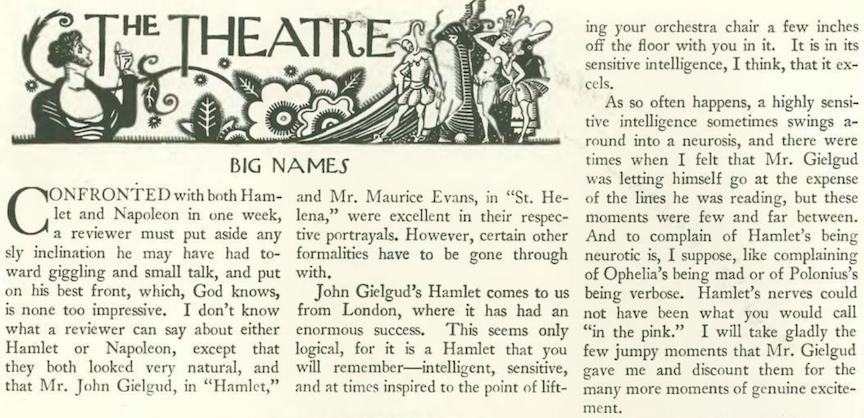
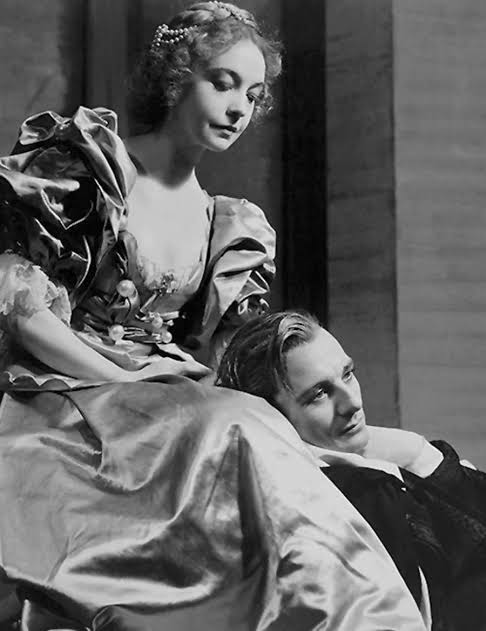
After enormous success on the London stage, John Gielgud brought his Hamlet to Broadway’s Empire Theatre, where he was paired with Lillian Gish as Ophelia. Robert Benchley was there for the action. Excerpt:

ACTING ROYALTY…The queen of the silents met the king of the stage when Lillian Gish joined John Gielgud for Broadway’s production of Hamlet at the Empire Theatre. The play ran for 132 performances, a record at that time for a Shakespeare play on Broadway. (James Grissom via facebook.com)

 * * *

At the Movies

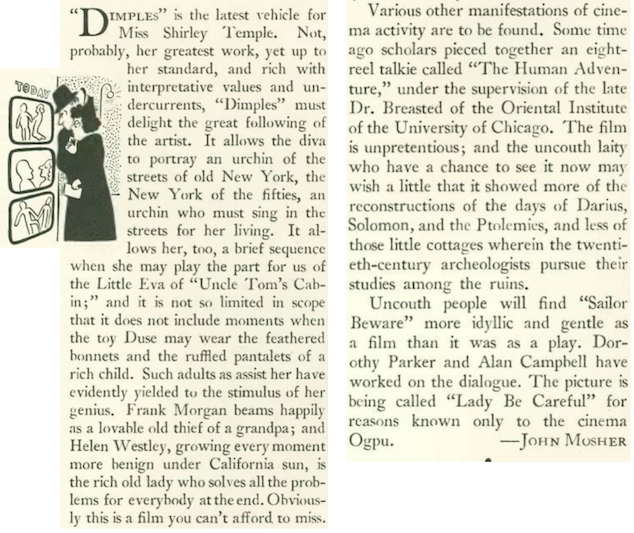
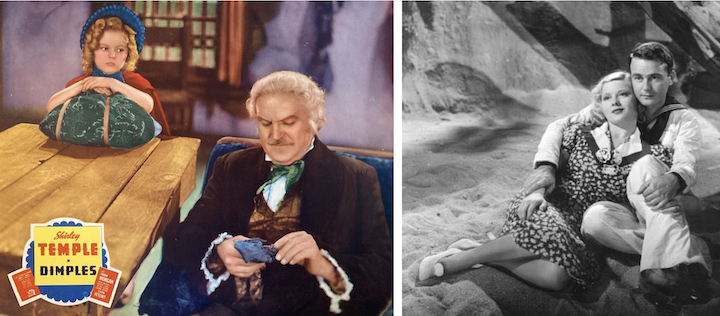
Some light fare at the cinema, with Shirley Temple cranking out her thirteenth starring role in Dimples, and Mary Carlisle teaming up with Lew Ayres for some shore leave hijinks in Lady Be Careful.

EIGHT-YEAR-OLD FILM VETERAN Shirley Temple and co-star Frank Morgan featured on a lobby card promoting Dimples; at right, Mary Carlisle and Lew Ayres in Lady Be Careful. (eBay.com/facebook.com)

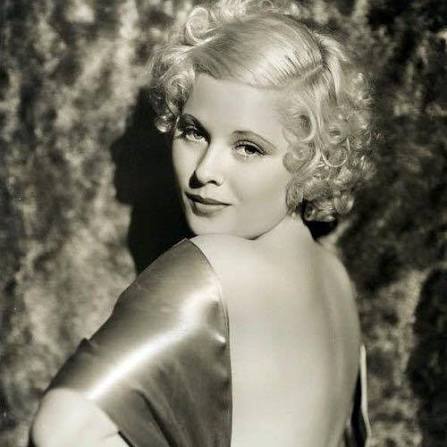
A quick note about the actress, singer and dancer Mary Carlisle (featured above): Best known for her roles as a wholesome ingénue in 1930s musical-comedies, she was with us until just eight years ago. The last surviving WAMPAS Baby Star, Carlisle died at age 104 in 2018.

AGELESS…Publicity photo of Mary Carlisle, circa 1930s. (facebook.com)

 * * *

Saving Face

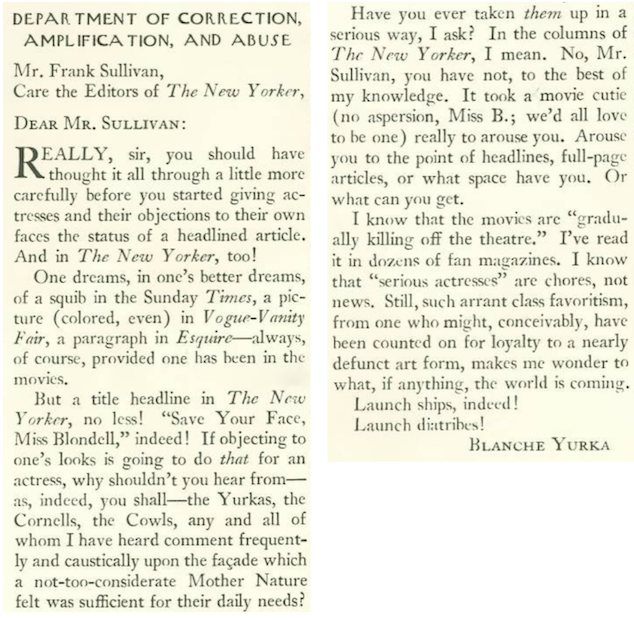
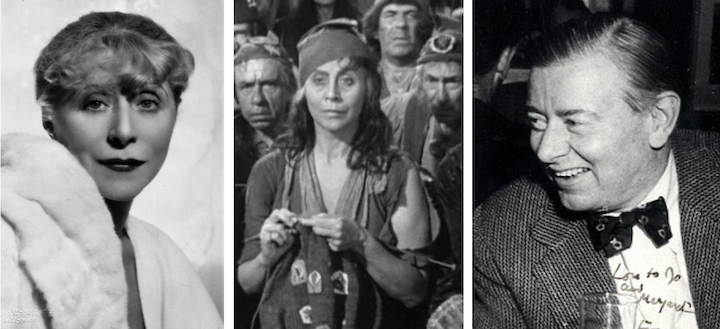
Famed stage actress Blanche Yurka had some choice words for Frank Sullivan after she read his Sept. 26 humor piece, “Save Your Face, Miss Blondell”…

WHAT ABOUT ME?…Blanche Yurka (left) called out Frank Sullivan for his attentions to “movie cutie” Joan Blondell. Yurka (1887–1974) was an acclaimed actress known for her intense commitment to both stage and screen roles—she even learned to knit (center image) so that she could play the role of the vengeful Madame Defarge in the 1935 film adaptation of A Tale of Two Cities. (tmdb.org/michaelbalter.substack.com/sspl.org)

 * * *

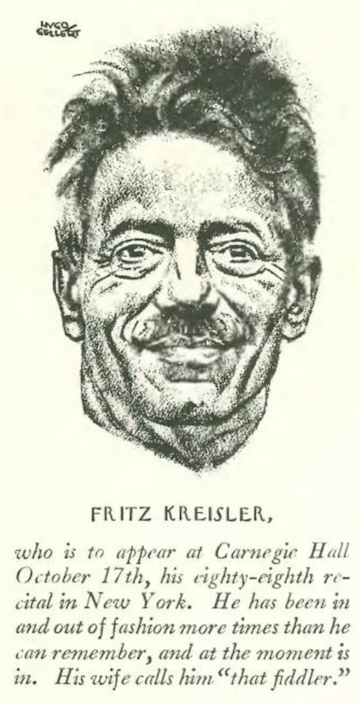
The latest mini-bio from the calendar section featured famed violinist Friedrich “Fritz” Kreisler (1875–1962)…illustration is by Hugo Gellert…

 * * *

From Our Advertisers

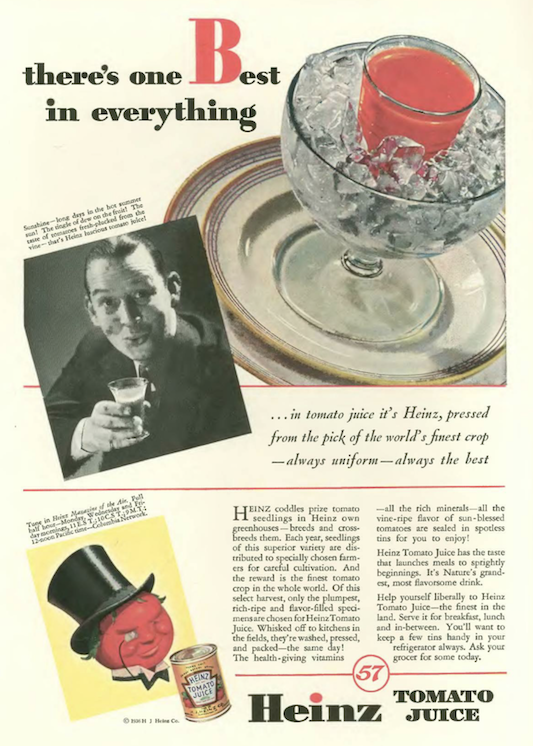
We begin with this full-page advertisement for Heinz tomato juice, which featured a photo of a man who resembled playwright/actor Noël Coward…the person in the ad is not identified, but Coward was known for endorsing products from time to time, including Bulova watches and Rheingold beer…
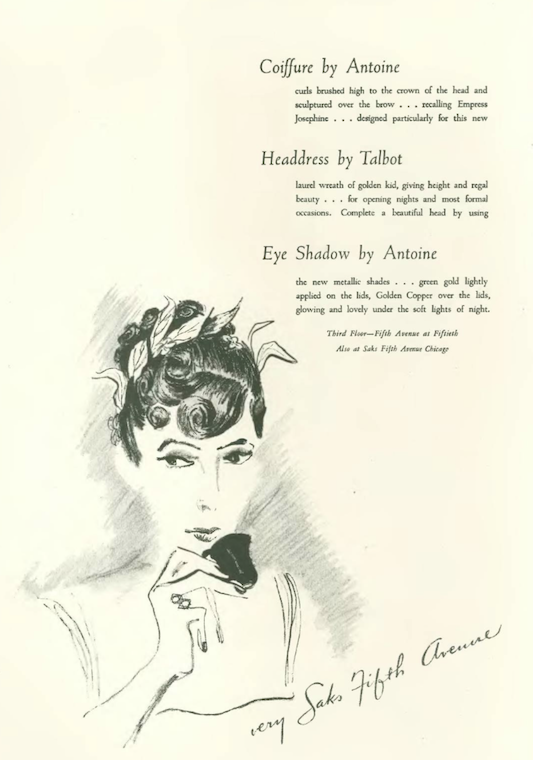
…another ad illustrated by Margaret Sommerfeld, who produced promotional artwork for Saks…

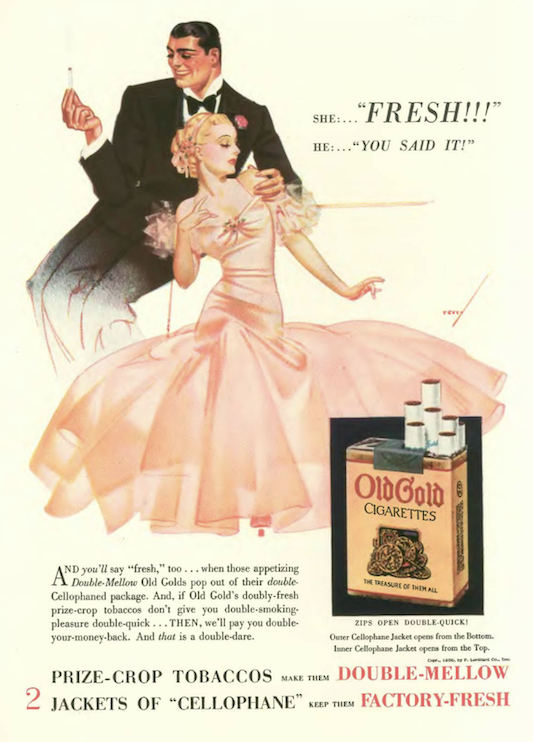
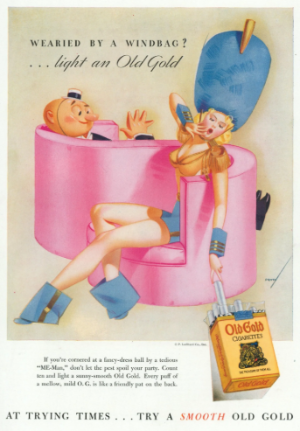
…and another full page ad for Old Gold illustrated by pin-up artist George Petty…

…the Old Gold ad marks a departure from a long series of Petty-illustrated ads that were more in the pin-up style and featured a leering little man rather than a handsome masher:

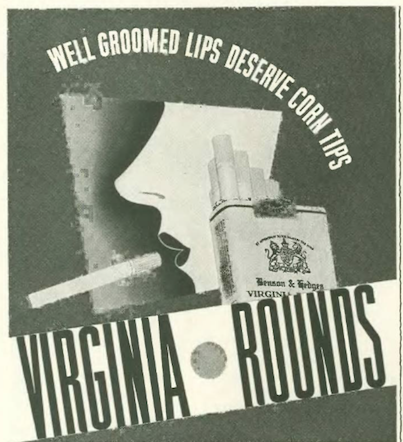
…most cigarette ads still targeted the growing market of women smokers, including this line of smokes manufactured by Benson & Hedges…

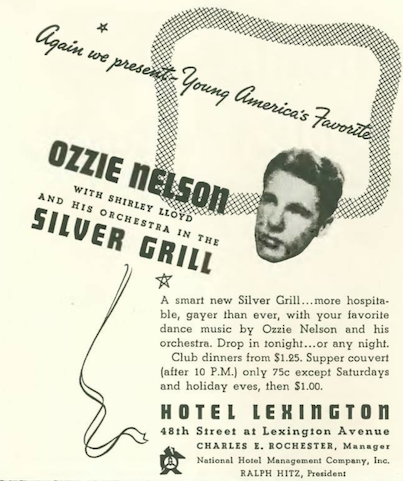
…Ozzie Nelson was a famed bandleader until he reached even greater fame on his own radio series, The Adventures of Ozzie and Harriet, launched in 1944, and his television show by the same name, which ran from 1952 to 1966…

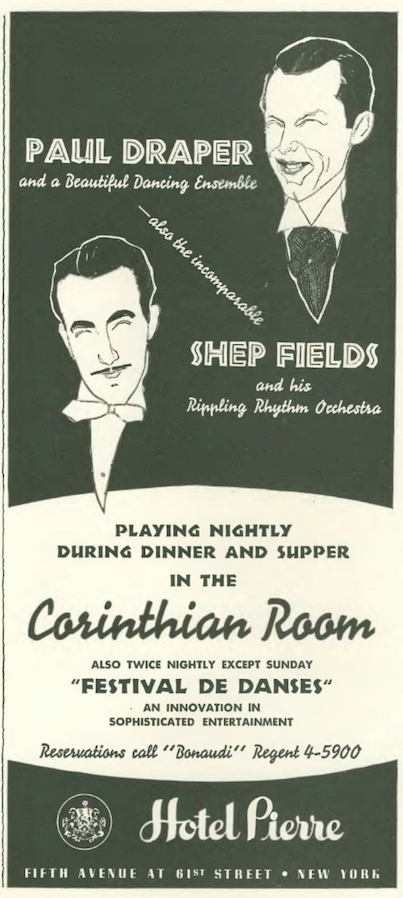
…if Ozzie Nelson wasn’t your thing, you could tap your toes to Paul Draper’s dancing ensemble or Shep Fields’ “Rippling Rhythm Orchestra” at the Hotel Pierre…

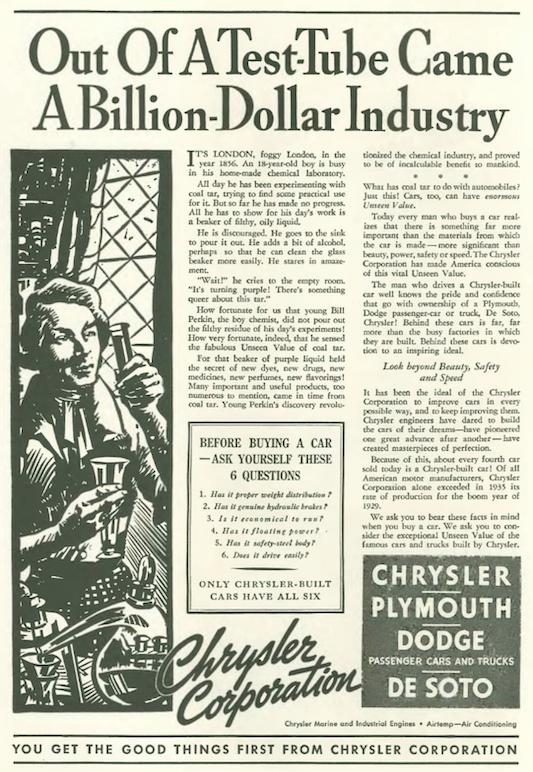
…some advertisers persisted in running wordy appeals for their products, including the execs at the Chrysler, who thought consumers could be swayed by the story of a nineteenth-century amateur chemist who accidentally refined coal tar and spawned a billion-dollar industry…

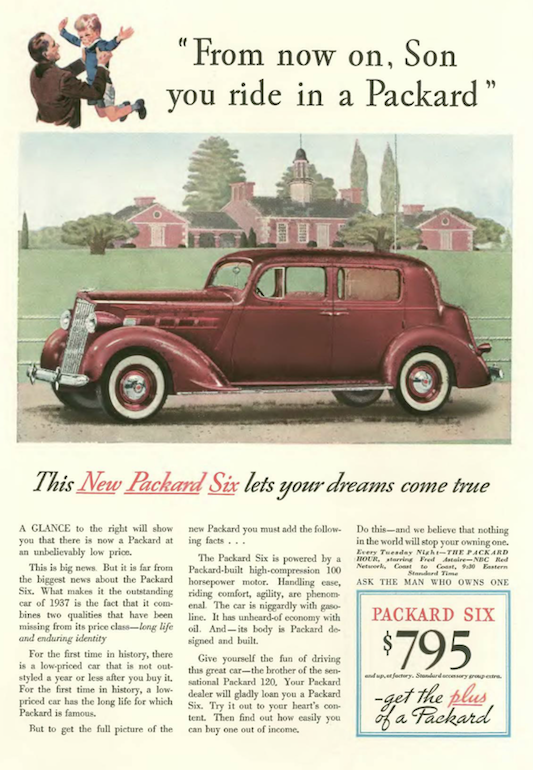
…the makers of the luxury brand Packard continued to stay afloat during the Depression by marketing lower-priced models like the Packard Six…

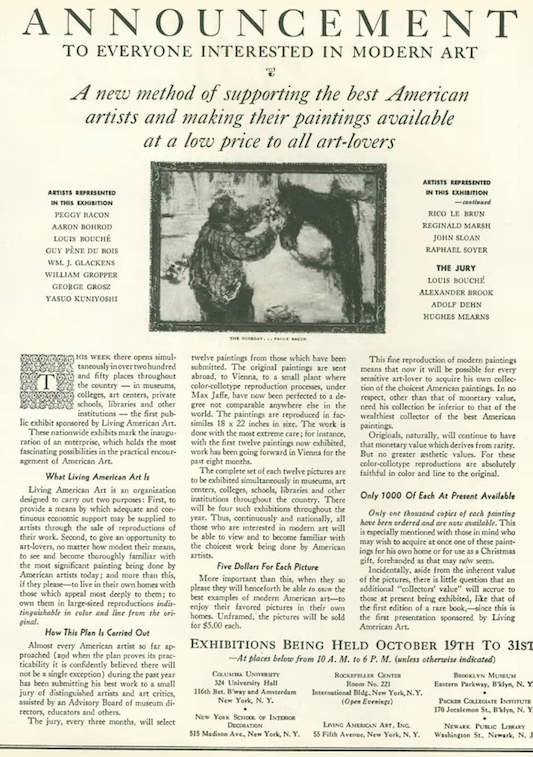
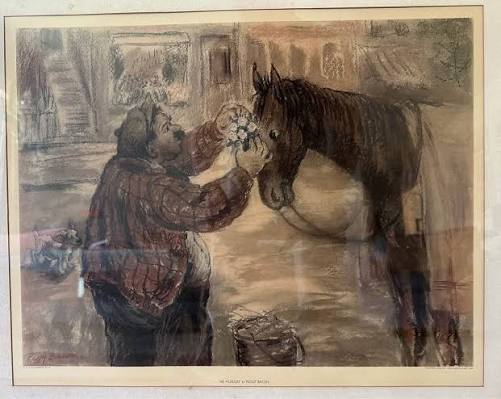
…lower-priced options were also featured in this ad from an organization called “Living American Art,” which offered “faithful” color collotype reproductions by modern artists, including New Yorker contributors Peggy Bacon and Reginald Marsh…

1936 lithograph of Peggy Bacon’s The Nosegay, featured in the ad above. (posted on Facebook Marketplace)

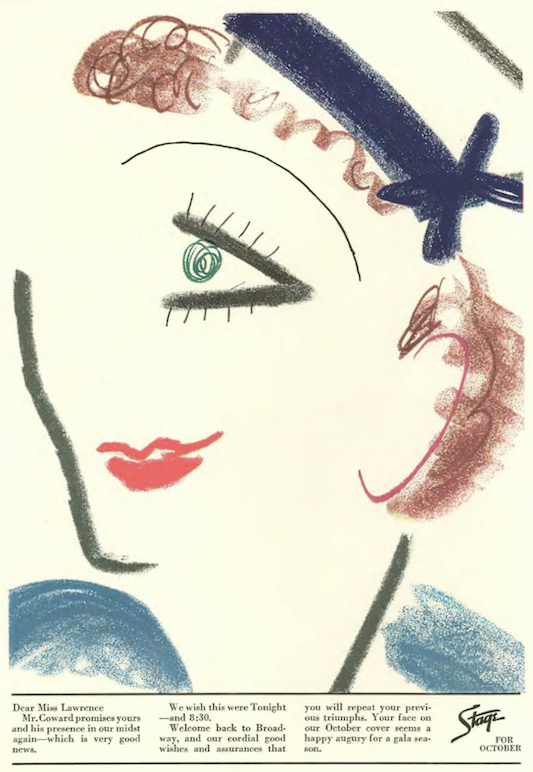
…and we have another striking Abe Birnbaum caricature (of stage actress Gertrude Lawrence) for Stage magazine…

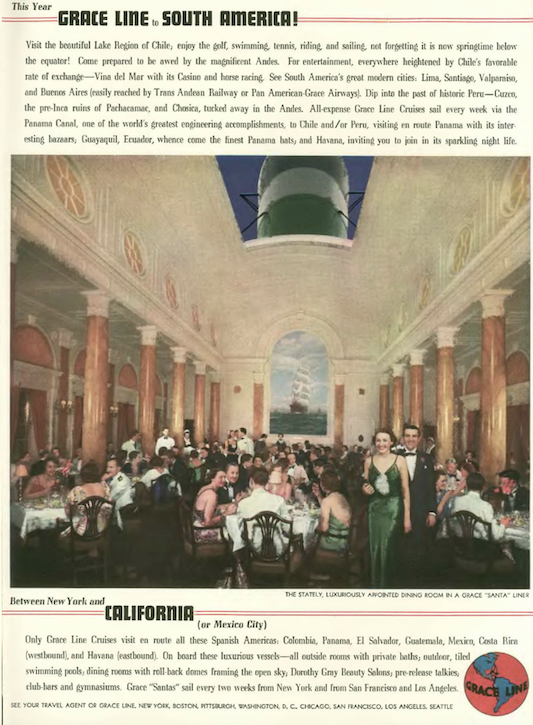
…imagine entering this dining room while aboard a Grace Line Santa liner…not a waterslide or buffet line in sight (this was the same liner that Joan Blondell and Dick Powell took on their honeymoon from California to New York)…

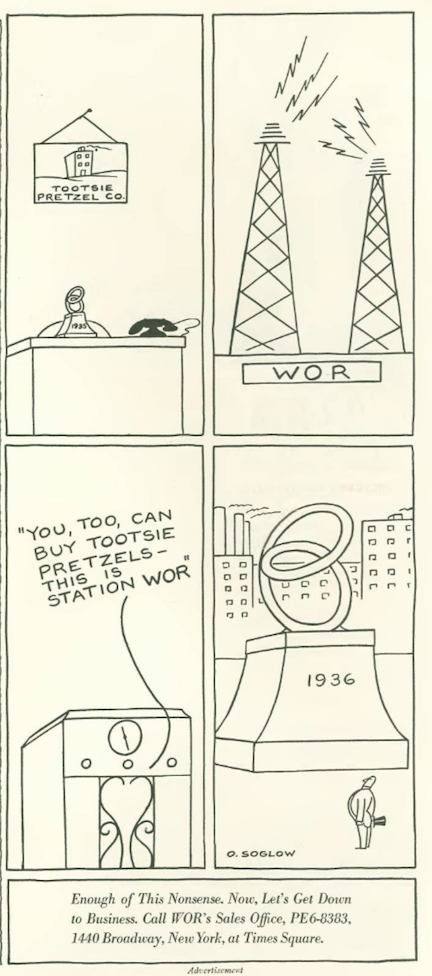
…Otto Soglow continued illustrating ads for WOR radio…

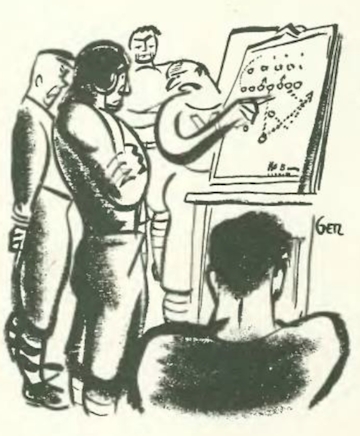
…which segues to our cartoonists, beginning with a spot by Arthur Getz…

…a caption-less entry by Alain…

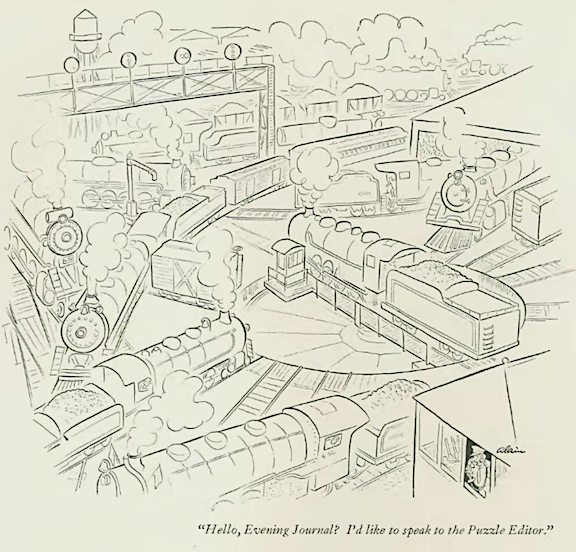
…Alain again, with a puzzling challenge…

…a horticultural mystery courtesy of Helen Hokinson…

…Charles Addams presented an ideal client to this fortune teller…
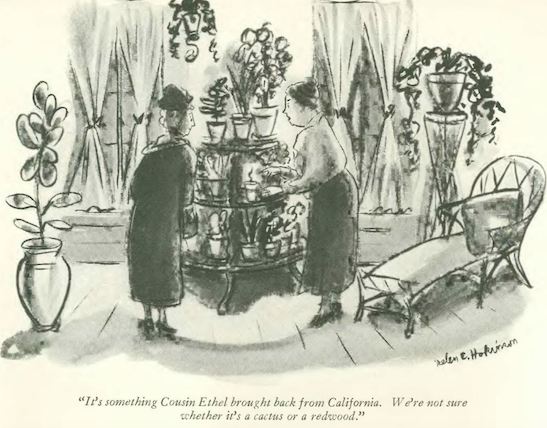
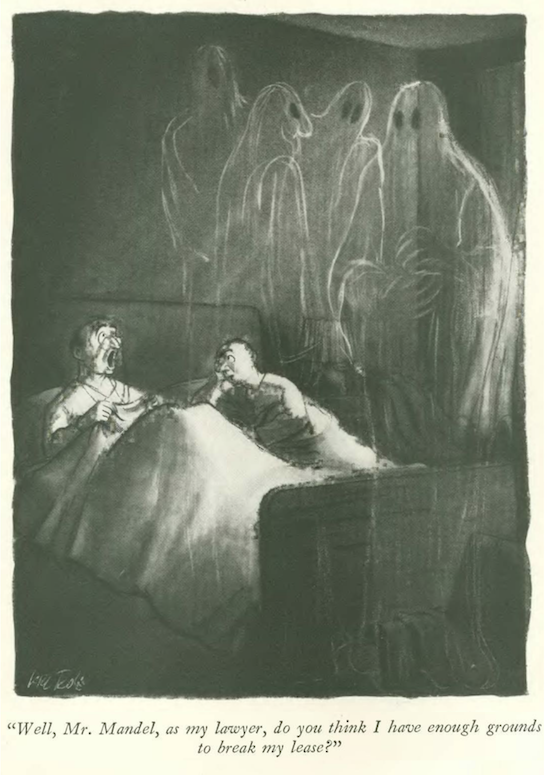
…Carl Rose got a little spooky…
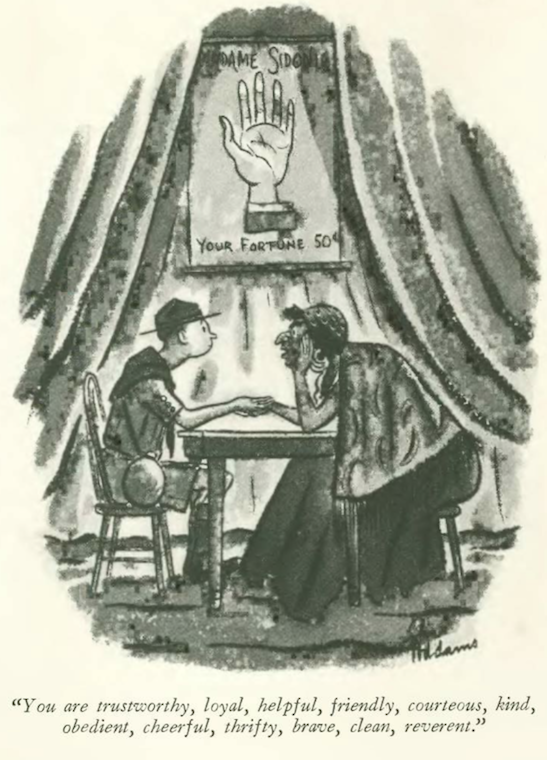
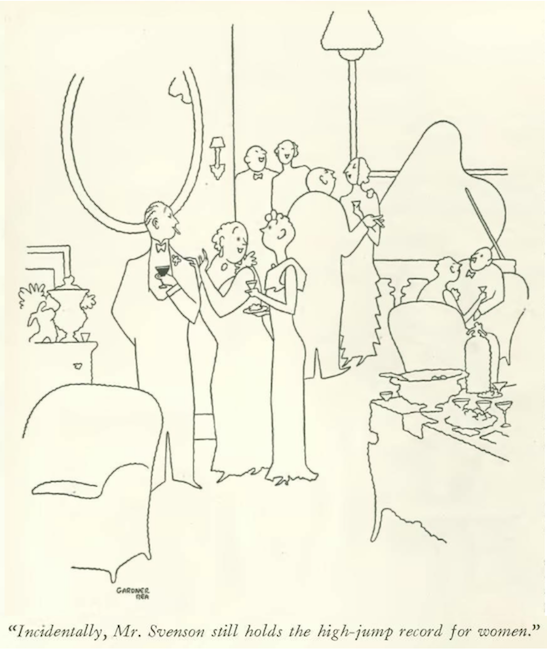
…Gardner Rea served up an Olympian boast…

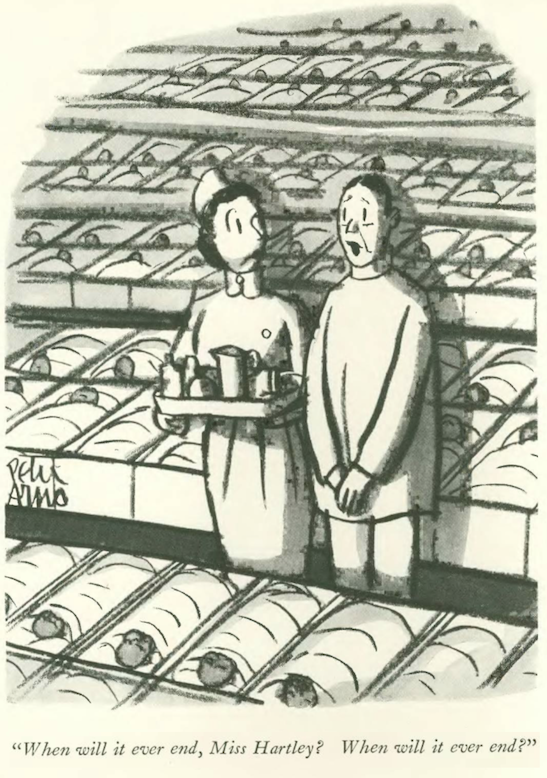
…Peter Arno drew up a doubtful doctor…

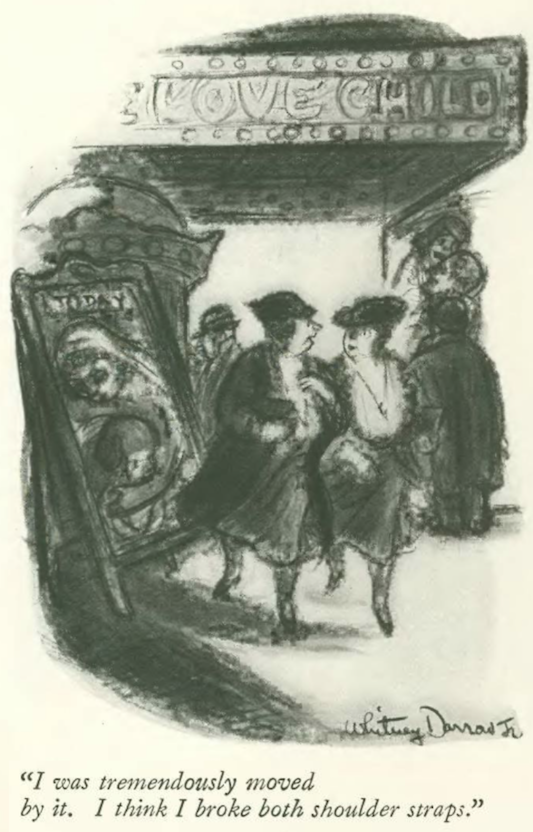
…Whitney Darrow Jr illustrated the power of motion pictures…

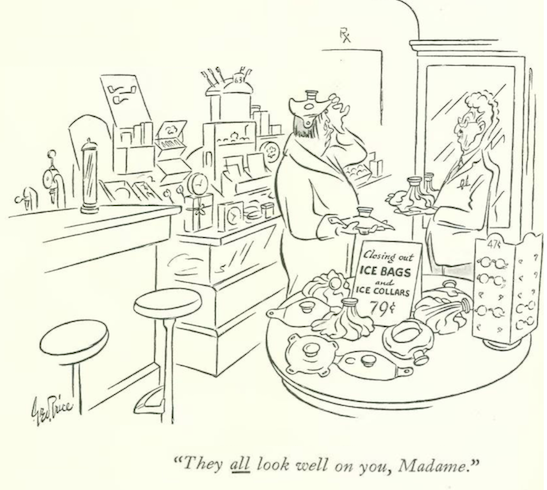
…George Price sampled the latest styles in ice bags…

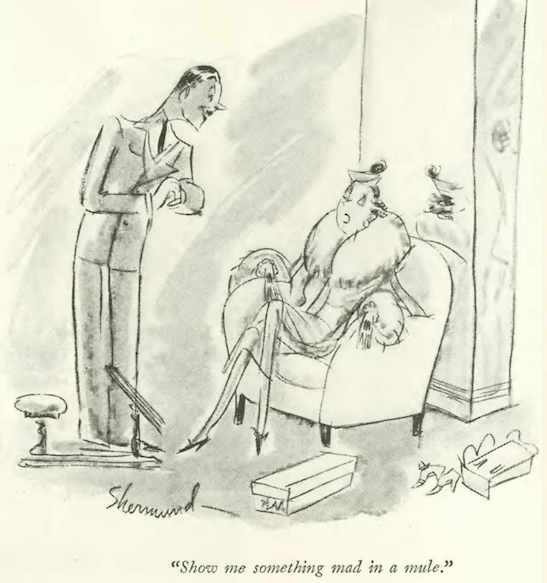
…Barbara Shermund went shoe shopping…

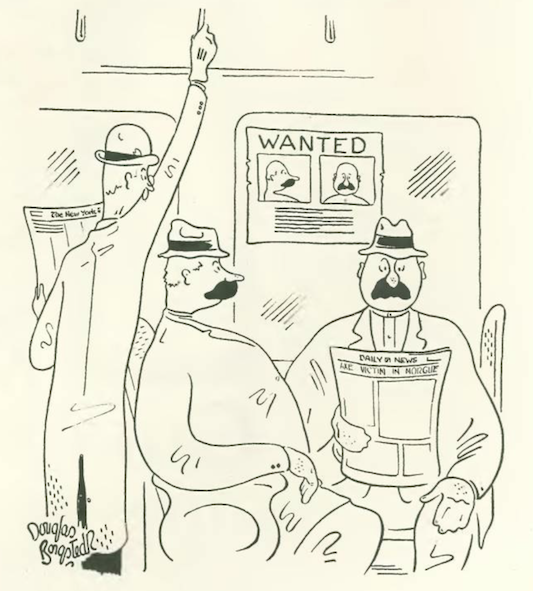
…and we close with the first New Yorker cartoon by Douglas Borgstedt (1911–2001), and a good one at that!…

Next Time: The President’s Mystery…


Meet Father Divine

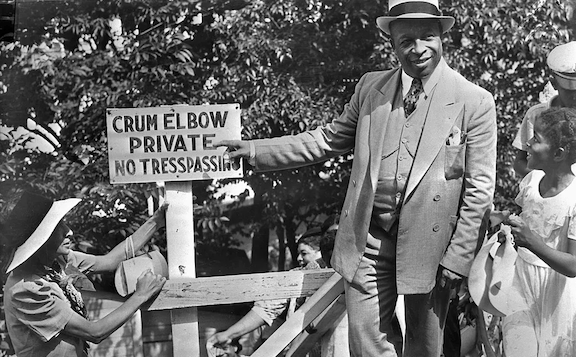
Above: Father Divine points to a Crum Elbow Estate sign (in Highland, NY) in July 1938. His followers purchased the 500-acre spread from anti-New Dealer Howland Spencer...the property was located directly across the Hudson from President Franklin D. Roosevelt's Hyde Park family home. That same summer Father Divine would also buy a fifty-room double dwelling in New York City. These and other locations served as integrated "heavens" for his followers. (Wikimedia Commons)

America has long been fertile ground for various religious denominations, sects and cults. Although the U.S. Religion Census has cataloged more than 370 distinct religious groups and bodies in the U.S., there are tens of thousands of independents scattered across the country.

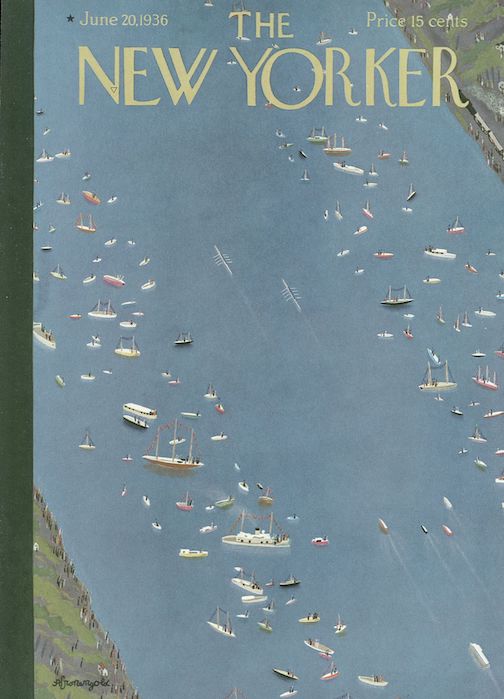
June 13, 1936 cover by Leonard Dove.

Some of these remain small, while others grow into megachurches often organized around a charismatic leader. Such was the case with Father Divine (1876–1965), aka Reverend Major Jealous Divine, aka George Baker.

His life as George Baker of Valdosta, Georgia came to an end in 1907 when he became known as “the Messenger.” He parted ways with the Baptist church, declared himself a god, and was asked to leave Georgia after his 1914 arrest for lunacy. He led his followers to Brooklyn and later to a commune in Sayville, New York (Long Island), where he founded the International Peace Mission movement and came to be known as Father Divine. By the early 1930s his small and predominantly black congregation had grown into a multiracial and international church.

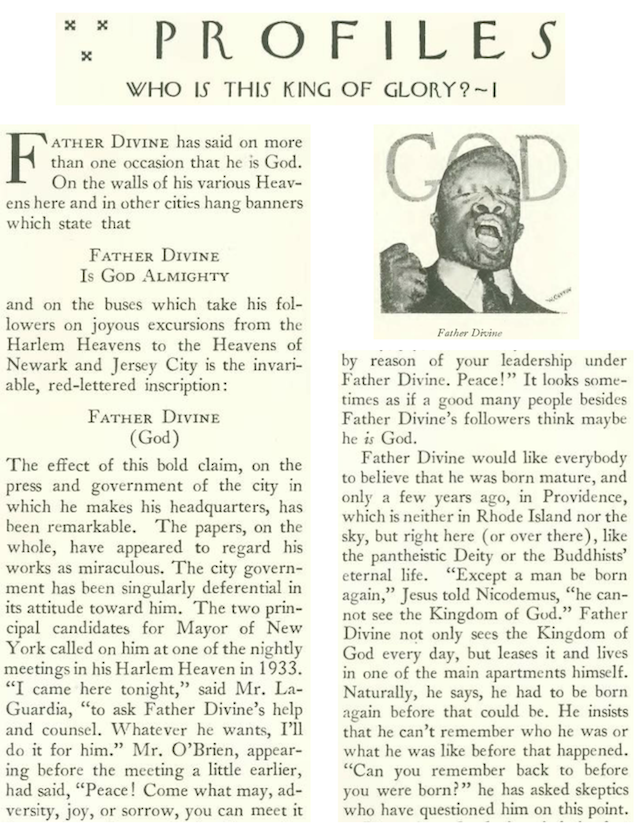
So intriguing was his story that The New Yorker published a lengthy, three-part profile written by St. Clair McKelway and A.J. Liebling. Here are excerpts from Part One (illustration by William Cotton):

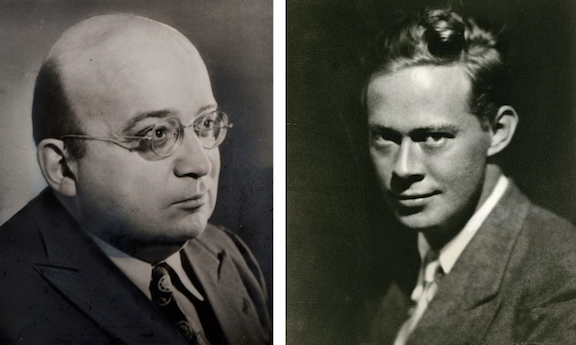
A DEFT DUO…A.J. Liebling (left) and St. Clair McKelway, both acclaimed journalists, co-authored the three-part profile of Father Divine. Liebling (1904–1963) was closely associated with The New Yorker, joining the magazine in 1935 (he was also a well-known gastronome); McKelway (1905–1980) served as The New Yorker’s managing editor for journalistic contributions from 1936 to 1939 and wrote for the magazine for forty-seven years. (Wikipedia/sfgate.com)
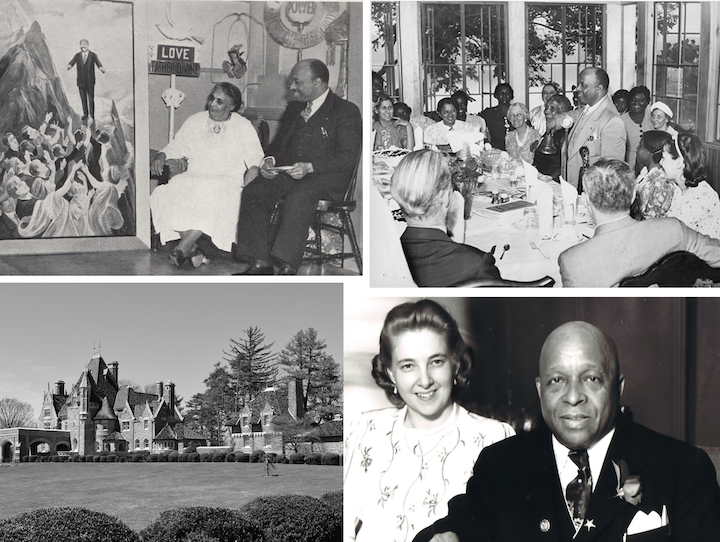
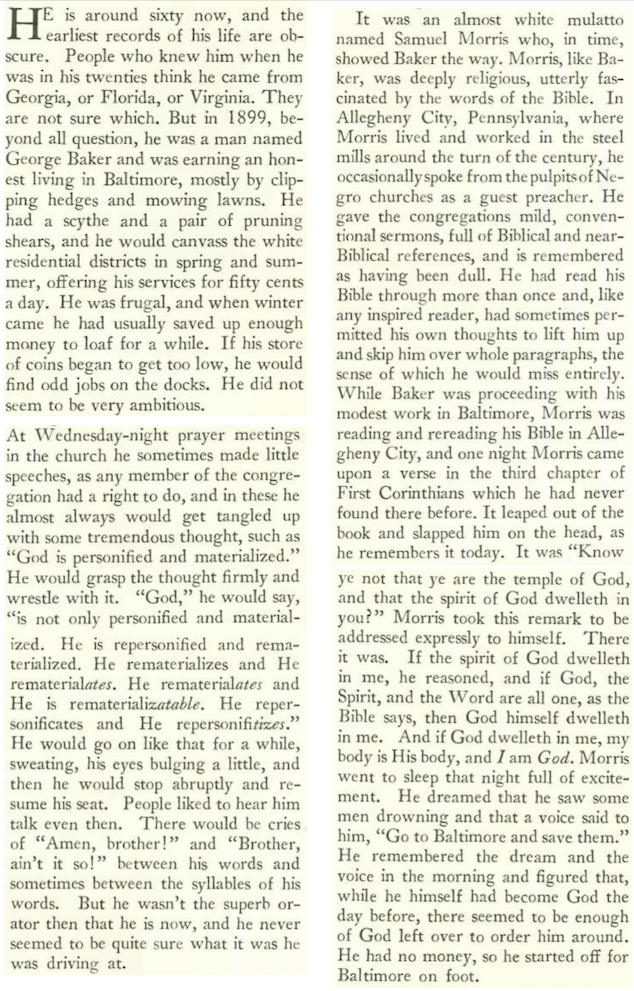
DIVINE’S PATH…Clockwise, from top left: After relocating to Brooklyn in 1914, Father Divine married his first wife, Peninniah—they are shown here admiring his portrait; Father Divine led large gatherings centered on food—here he entertains guests at a summer retreat in upstate New York in 1938; following the death of Peninniah, the 70-year-old Father Divine married 21-year-old Edna Ritchings in 1946—she took the name “Mother Divine, with Father Divine claiming she was the reincarnation of Penninah; in 1953 Father Divine was given a hilltop estate (“Woodmont”) in Gladwyne, Pennsylvania, by follower John Devoute. The estate is the center of the International Peace Mission movement, a shrine to Father Divine’s life, and a meeting place for the few remaining followers. (thecityroot.com/Newark Public Library/hsmcpa.org/Wikipedia)

How did Father Divine come to believe he was a god? This excerpt offers some insights into his early development:

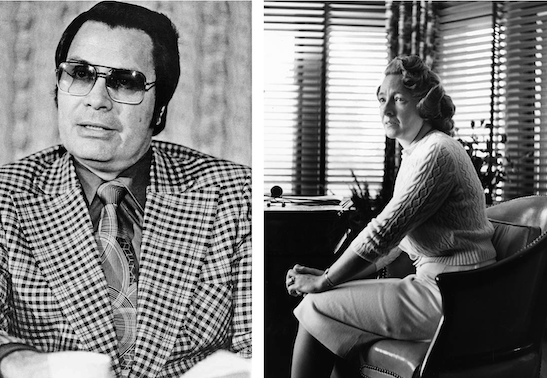
One of the perils of this kind of thinking is that it can lead to the formation of dangerous cults. Jim Jones, the notorious leader of the Peoples Temple, heavily modeled his early church activities and authoritarian structure on Father Divine’s example. Jones even attempted to take over the International Peace Mission after Father Divine’s death—in 1971 he tried to convert the Peace Mission’s followers, claiming he was the reincarnated Father Divine. His takeover attempt was thwarted by Mother Divine, who went to the media and publicly denounced Jones and the Peoples Temple. In 1974 Jones and his followers would relocate to a Guyana commune he called Jonestown. Four years later Jones would lead the mass murder-suicide of 909 Jonestown inhabitants.

AT ODDS…Jim Jones (left, circa 1970) attempted to take over the International Peace Mission after Father Divine’s death, but was publicly denounced by Mother Divine. At right, Mother Divine giving her first interview following the death of Father Divine in 1965. (Wikipedia/temple.edu)

 * * *

At the Movies

The media has always thrived on crime stories, feeding the public’s insatiable desire to be tantalized; once sated, they often demand swift justice. Take the heavily publicized 1933 case of two San Jose, California men who were accused of kidnapping and murdering a department store heir. Rather than wait for justice to be served, an angry mob broke into the jail and lynched the accused. Fascinated by the story, MGM screenwriter Norman Krasna pitched it as a potential film.

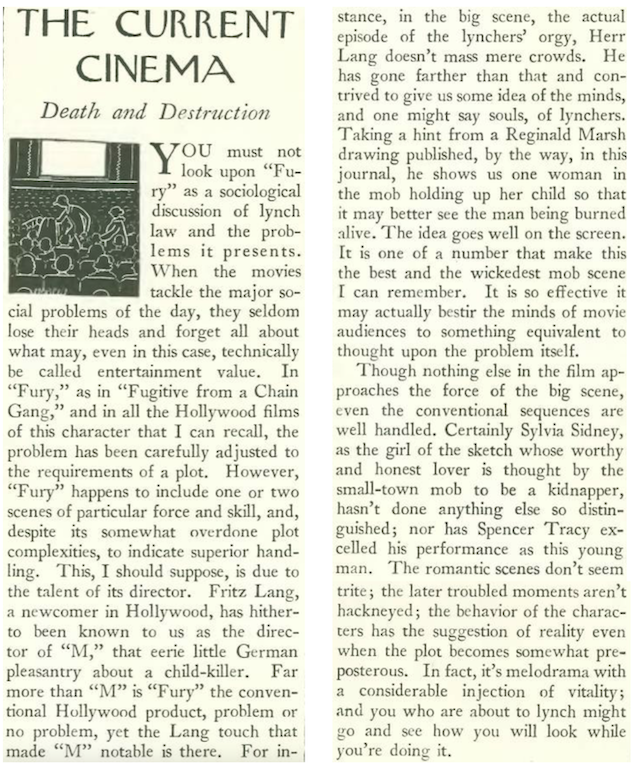
That film would become Fury, German director Fritz Lang’s first American project. Prior to fleeing the Third Reich in 1933, Lang was perhaps best known to Americans for his pioneering 1927 silent sci-fi film Metropolis and the 1931 thriller M. Lang sought to demonstrate how a decent and civilized man could become filled with vengeance and hate. Although critic John Mosher could see how the film had been tampered with by studio execs (and the Hays Code), he was nevertheless impressed by Lang’s direction and by the performances of lead actors Sylvia Sidney and Spencer Tracy.

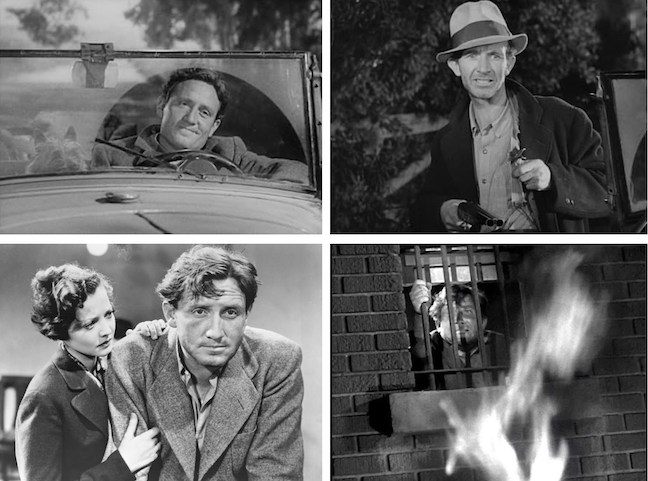
WRONG TURN…Clockwise, from top left: In Fury, Spencer Tracy played gas station owner Joe Wilson, who drives west to reunite with his fiancée—the dog seated to his right is Terry, the same Cairn Terrier who played Toto in The Wizard of Oz; while camping outside a small town, Joe is arrested by a creepy local deputy (Walter Brennan) on suspicion of kidnapping a child; a mob forms and tries to burn Joe in his cell; in the confusion of the fire he escapes and seeks vengeance on the mob, but in the end finds peace with his fiancée (Sylvia Sidney). (imdb.com)

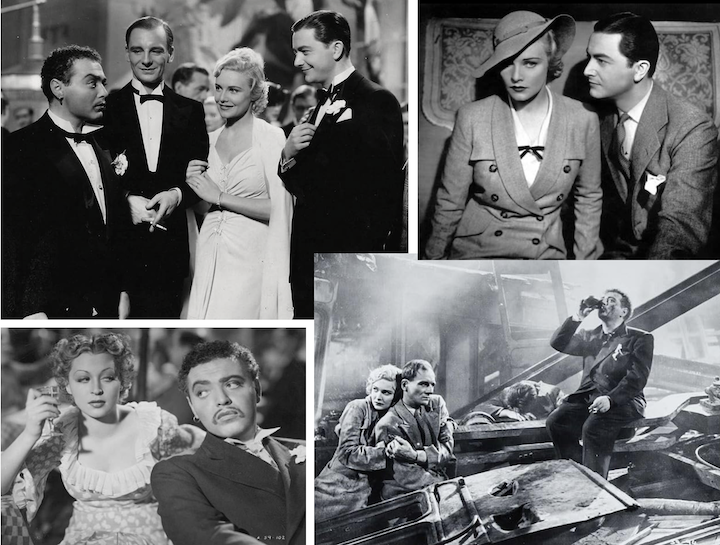
Peter Lorre, who was famously directed by Fritz Lang in the 1931 German thriller M, was starring in Alfred Hitchcock’s Secret Agent, which also featured John Gielgud (already famous as a London stage performer), Madeline Carroll, and Robert Young.

SECRETS AND LIES…Clockwise from top left: Peter Lorre, John Gielgud, Madeline Carroll, and Robert Young in Secret Agent; Carroll with Young, who played a German mole; Carroll, Gielgud and Lorre amid the wreckage of a train; Lorre in a scene with Lilli Palmer. (imdb.com)

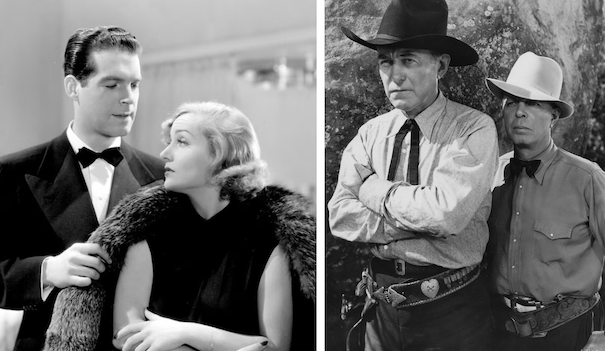
Mosher briefly mentioned a new Fred MacMurray/Carole Lombard comedy–mystery, and the return of two silent movie stars.

CHOOSE YOUR PARTNER…The second of four films Fred MacMurray made with Carole Lombard between 1935 and 1937, The Princess Comes Across featured Lombard doing a clever take-off on Greta Garbo; silent-film veterans Harry Carey and Hoot Gibson stood for the ideals of the Old West in a culture clash with scientific crime-fighting in The Last Outlaw. The film was a remake of a 1919 silent film originally written and directed by John Ford. (imdb.com/csfd.cz)

* * *

Beer Bottle Battle

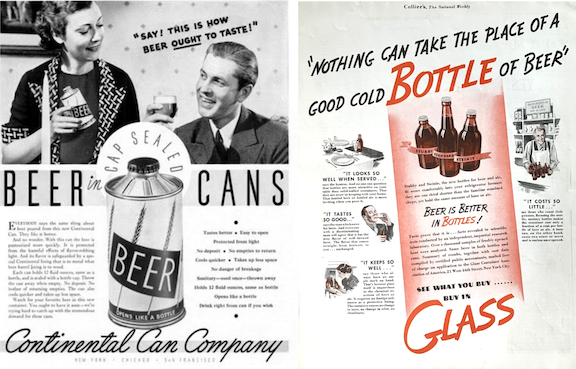
E.B. White (in his “Notes and Comment”) seized on the battle between bottle and can manufacturers as an apt metaphor for the jousting of Republicans and Democrats ahead of the November elections.

FOAMING AT THE MOUTH…Competing ads from Collier’s magazine circa 1935-36 illustrate the battle between can and bottle manufacturers. Ninety years later, beer drinkers still debate the merits of glass over cans. (boakandbailey.com/ebay.com)

 * * *

From Our Advertisers

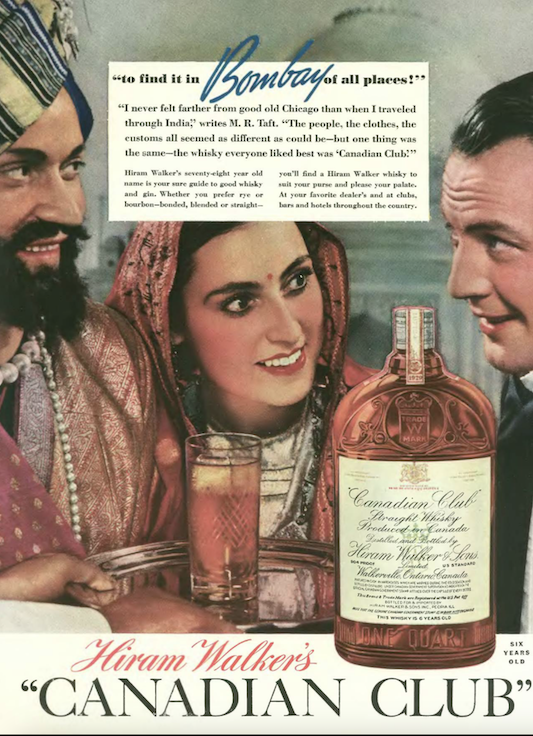
In 1936 whisky was still firmly in bottle form, and the makers of Canadian Club—through a series of ads—wanted to let us know you could enjoy their tipple almost anywhere in the world…

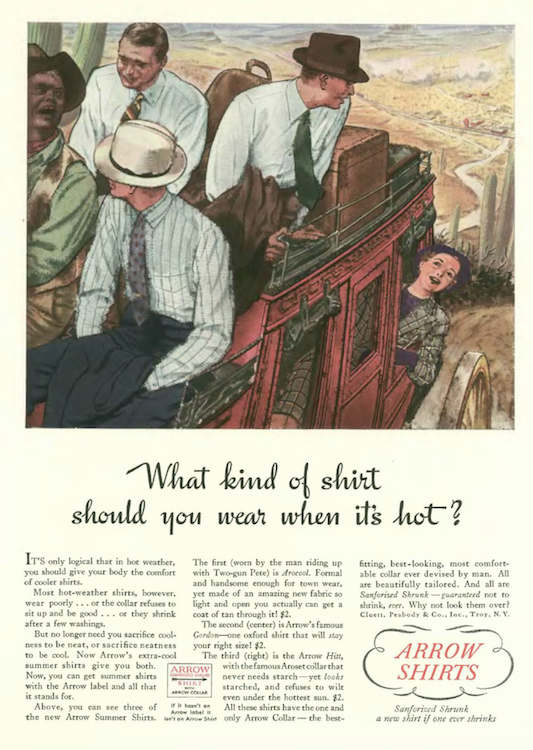
…this woman poses an interesting question, considering the fellas are riding atop a dusty stagecoach in the Arizona heat—in formal attire no less…

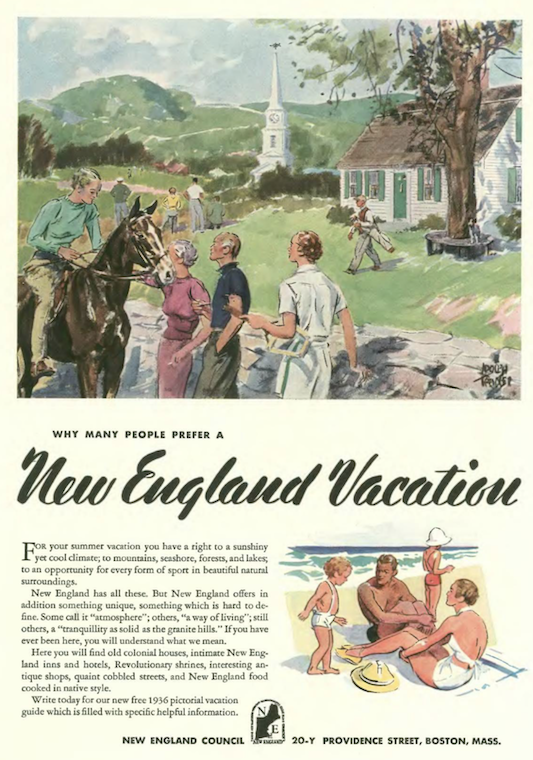
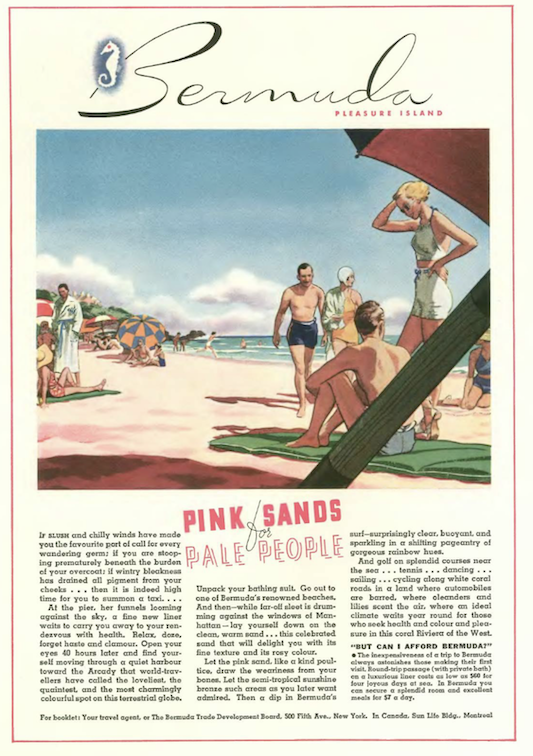
…over the years we’ve seen a lot of Adolph Teidler’s work for the Bermuda Board of Trade…Teidler (1886–1981) was also well known for his Saturday Evening Post covers…

…here’s an example of Teidler’s work for the Bermuda Board of Trade from the Feb. 22, 1936 issue of The New Yorker…

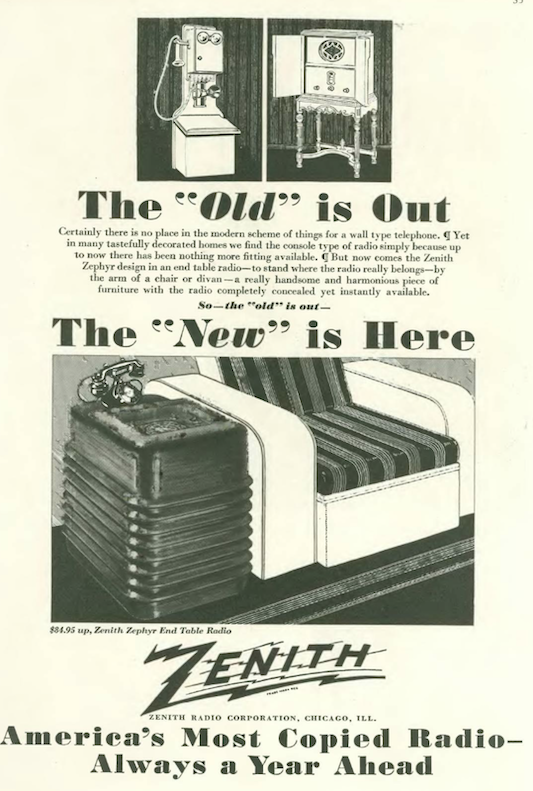
…the Zenith Radio Corporation touted their modern, streamlined “Zephyr” radio by industrial designer Robert Davol Budlong…

A restored Zenith 10-S-147 Zephyr chairside radio. (Pete Johnson–Zenith Radios Enthusiasts and Collectors via Facebook.com)

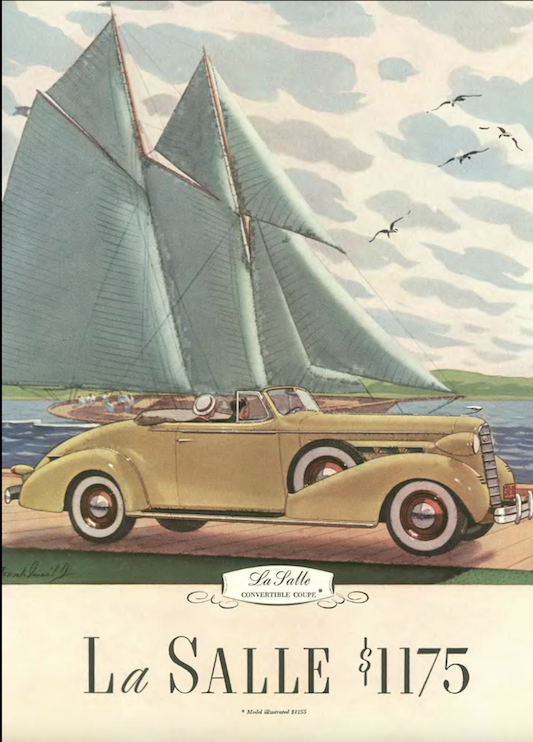
…Frank Quail Jr was a prominent automotive illustrator active from the 1920s through the 1930s. He was well-known for his work with luxury automobile brands such as Cadillac, LaSalle and Packard…here he conjures up a breezy seaside image for Cadillac’s more affordable LaSalle model (most of these ads were two-page spreads, with promo copy on the right-hand page)…

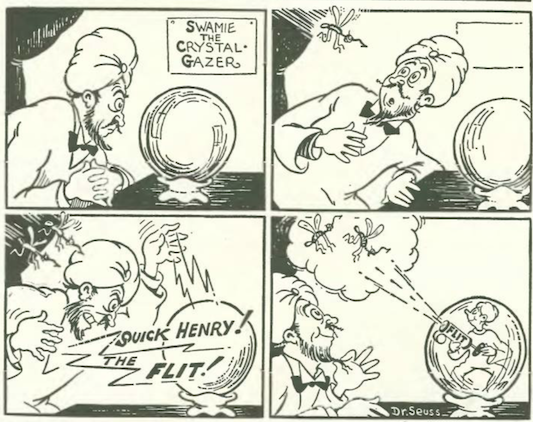
…and more Dr. Seuss on behalf of Flit insecticide…

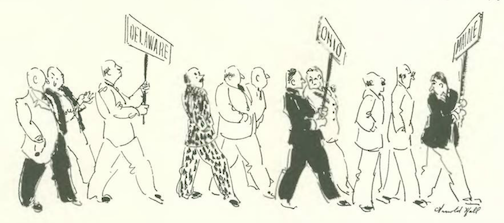
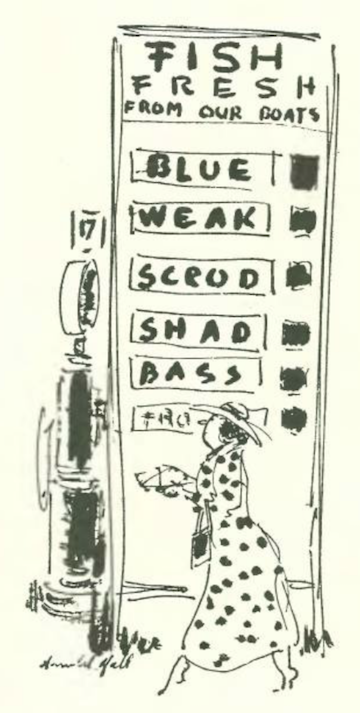
…we begin the cartoon section with some spot art…here are two by Arnold Hall…

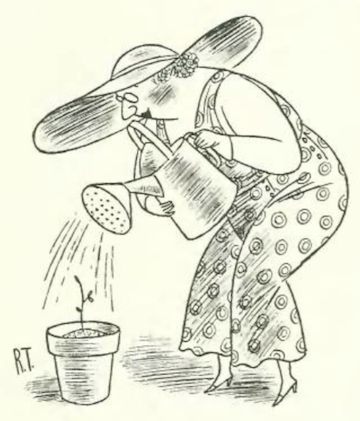
…and one from Richard Taylor…

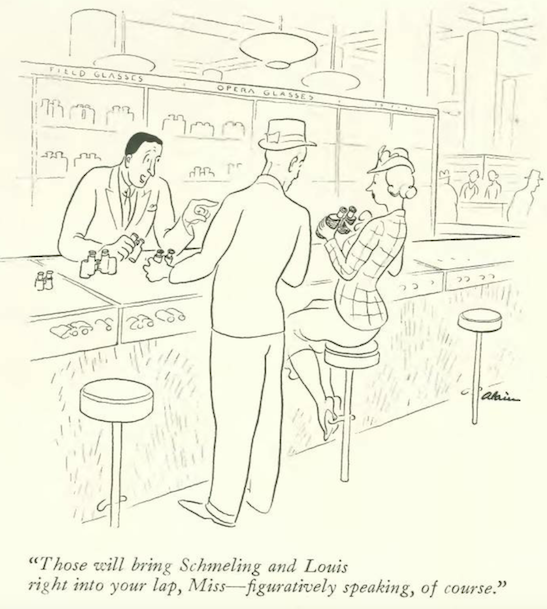
…Alain referenced the upcoming heavyweight bout at Yankee Stadium between Max Schmeling and Joe Louis…their two fights in 1936 and 1938 were international sensations…

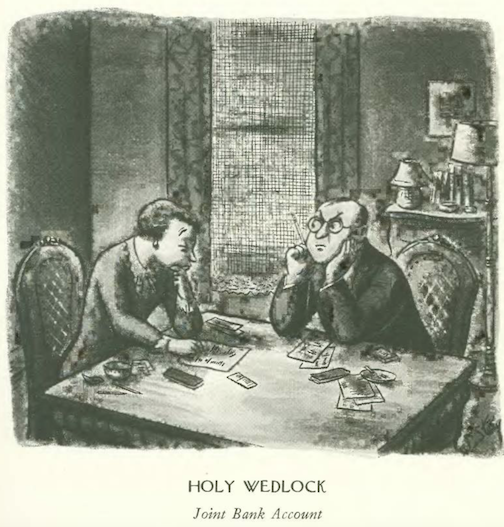
…more glimpses of “Holy Wedlock” from William Steig…

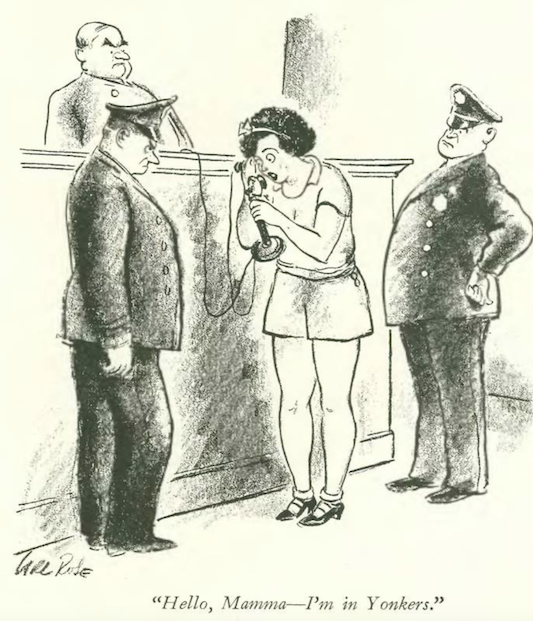
…a bit of trouble in Yonkers, per Carl Rose…

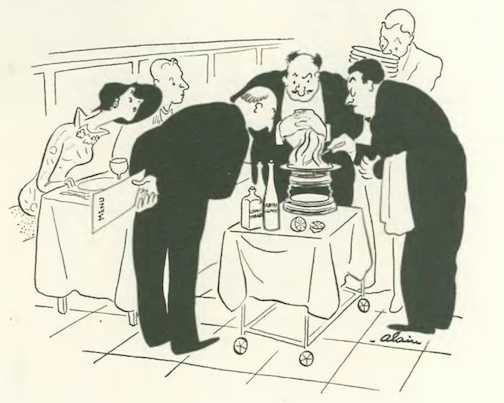
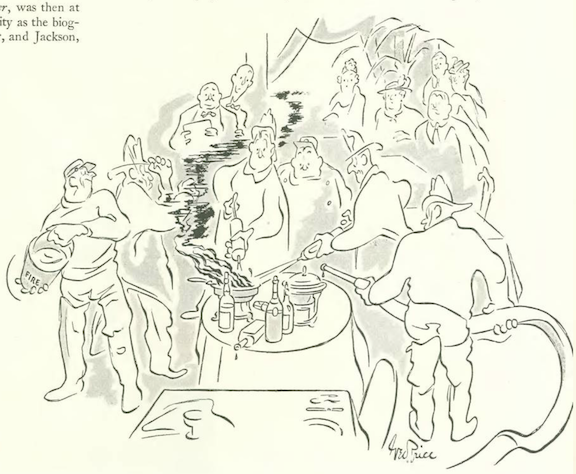
…George Price brought out the fire brigade for the Crêpes Suzette…

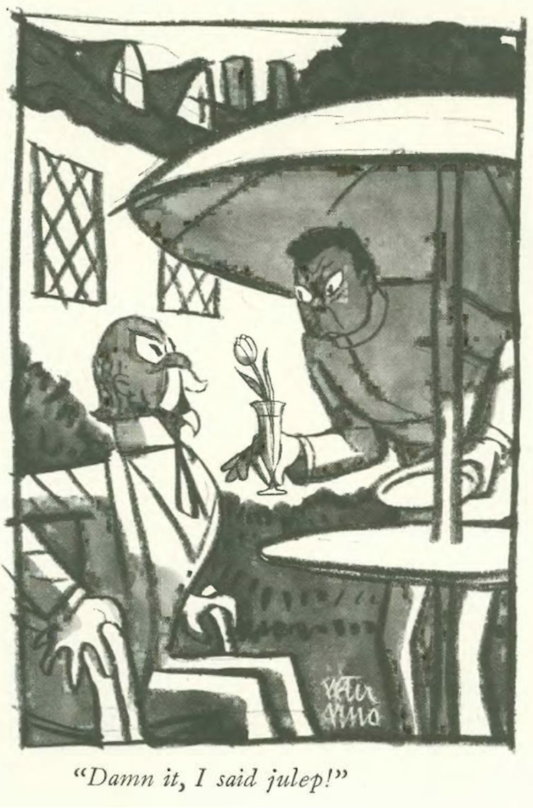
…Peter Arno drew up a colonel with a communication issue…

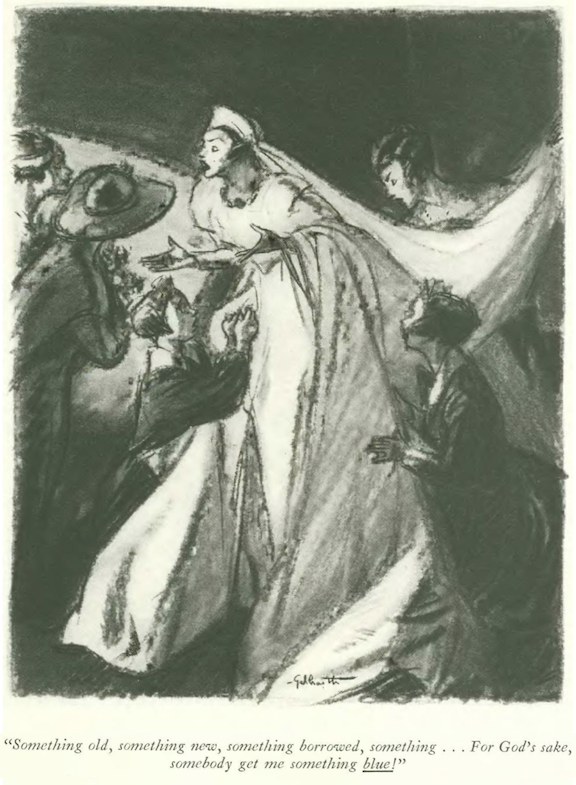
…William Crawford Galbraith celebrated the June bride…

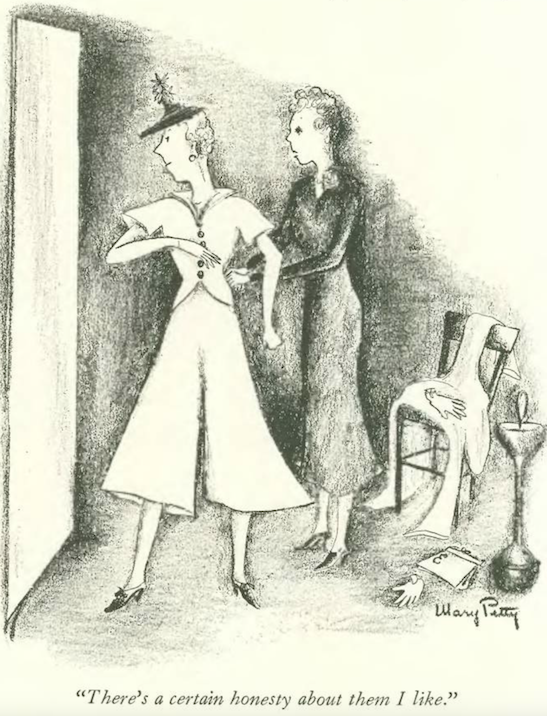
…two by Mary Petty, at the dress shop…

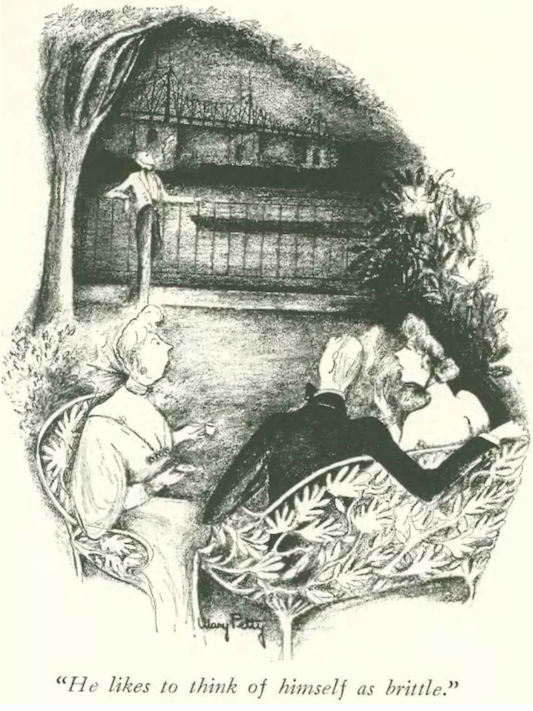
and at the in-laws…

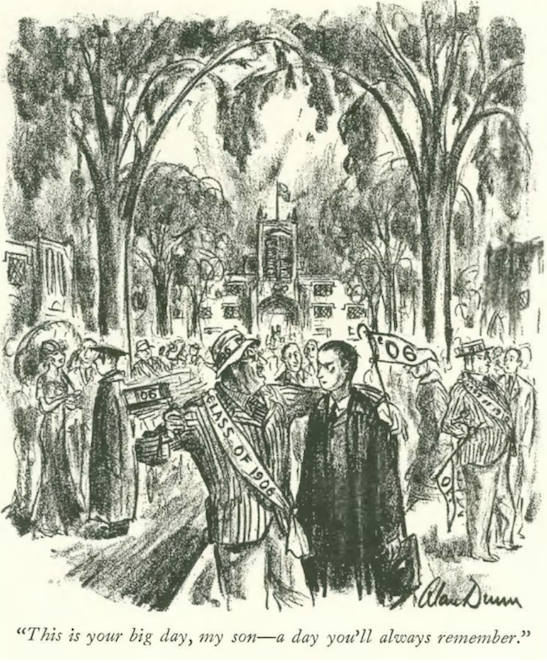
…Petty’s husband Alan Dunn feted the Class of ’36 (and ’06)…

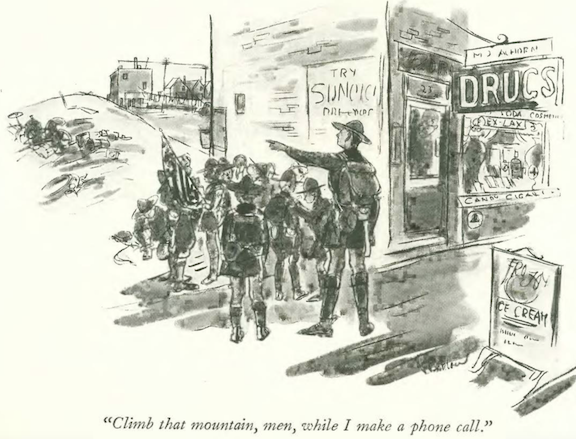
…Perry Barlow illustrated a scoutmaster’s leadership skills…

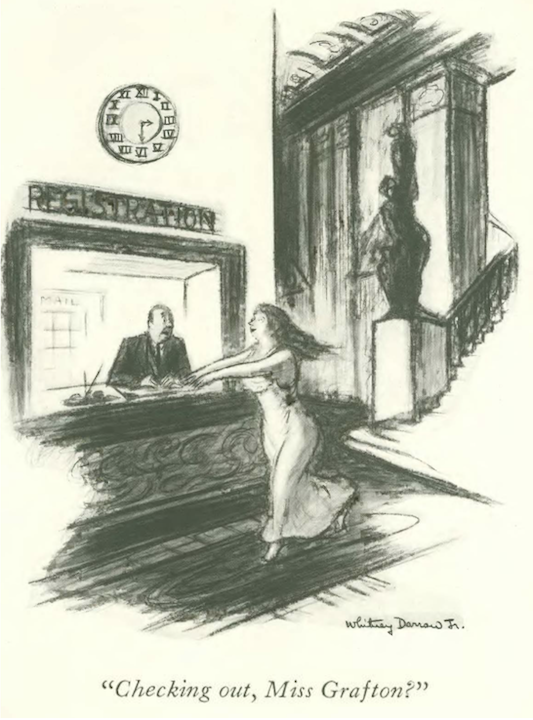
…and we check out with Whitney Darrow Jr…

Next Time: An Urban Spectacle…