National Treasure

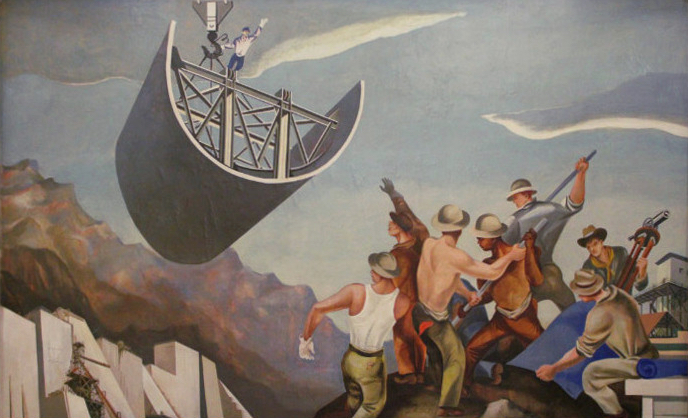
Above: Detail of a mural by William Gropper, "Construction of a Dam," 1939, located in the U.S. Department of the Interior. (gsa.gov)

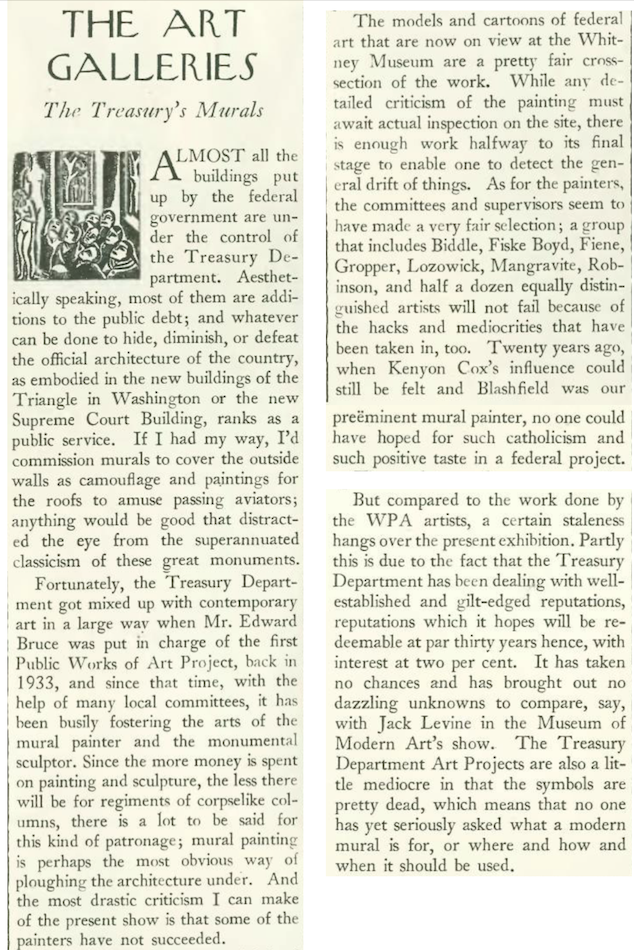
Sociologist and urban design critic Lewis Mumford was well known for his strong convictions regarding the development of cities, but he also applied those convictions—namely his ideas of organic balance—while writing “The Art Galleries” column for The New Yorker.
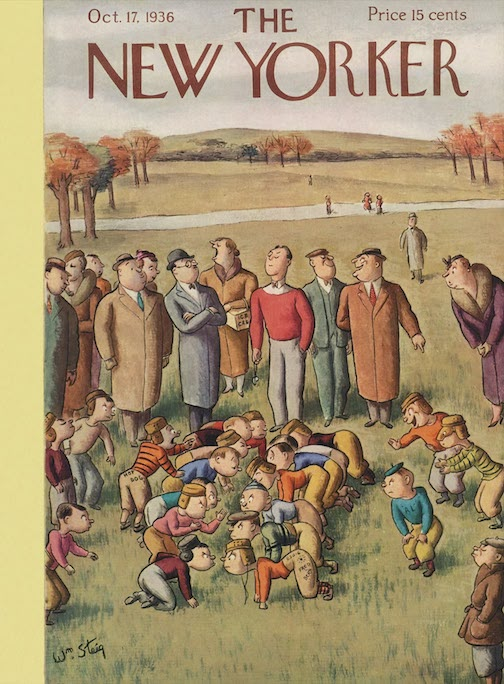
October 17, 1936 cover by William Steig.

Mumford (1895–1990) was neither a traditionalist nor a modernist, but rather a proponent of art and architecture that was human-scaled and that honestly reflected the times and places it which they were created. In his Oct. 17 column he cited Washington’s new Supreme Court Building as a prime example of sham architecture, and lamented a “certain staleness” in an exhibition of the U.S. Treasury’s Relief Art Project, which commissioned numerous murals and sculptures for installation in federal buildings. Excerpts:
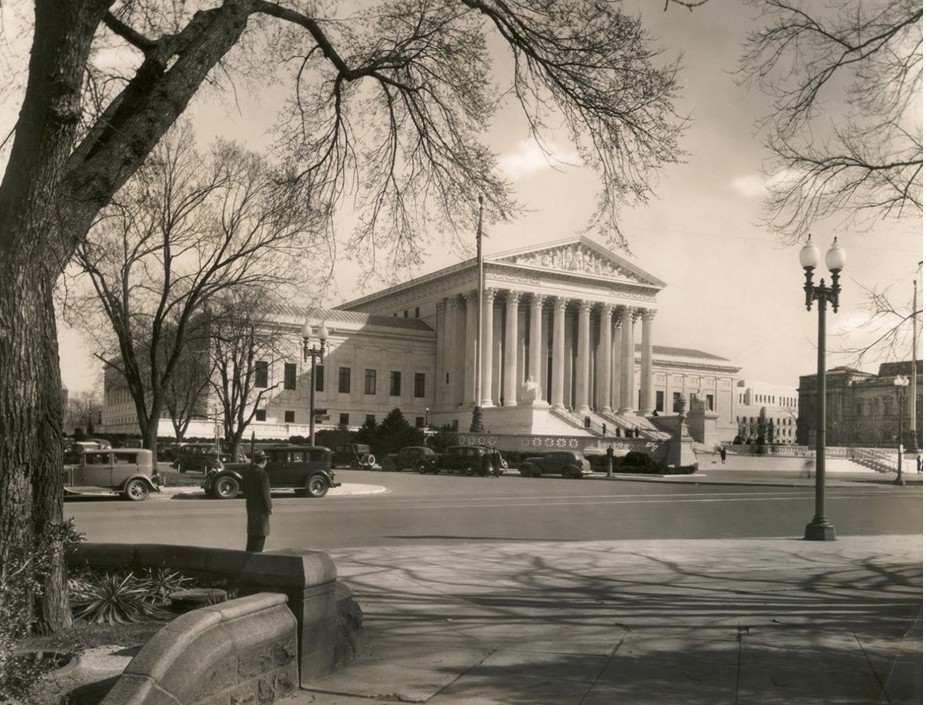
SUPERANNUATED CLASSICISM was the term Lewis Mumford used to describe new buildings in Washington, D.C., and suggested (in jest) commissioning murals to cover their outside walls, including those of the new Supreme Court building, completed in 1935. According to the Federal Judiciary Center, the building was designed on a scale in keeping with the importance and dignity of the Court and the Judiciary as a coequal, independent branch of the United States Government, and as a symbol of “the national ideal of justice in the highest sphere of activity.” (fjc.gov)

Although Mumford noted the “hacks and mediocrities” of Treasury-sponsored art, he also noted the inclusion of a number of distinguished artists. The problem, it seemed to him, was not the artists but rather the outmoded, monumental murals they were commissioned to create.
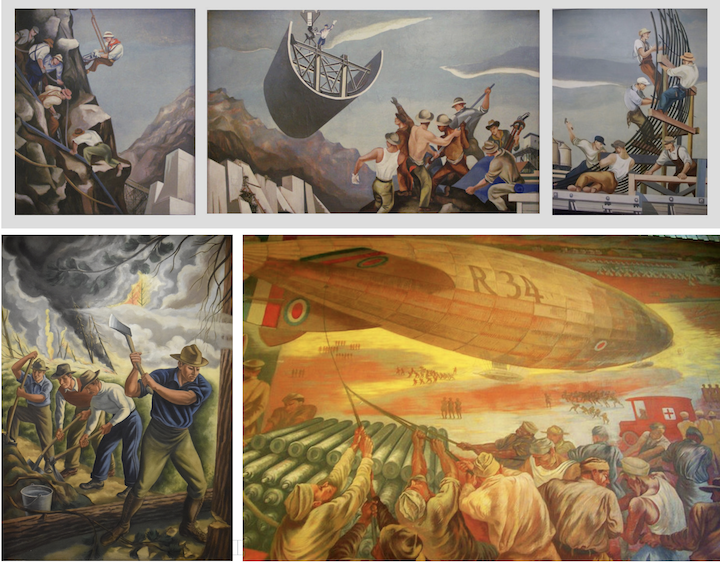
MONUMENT MEN…Clockwise, from top: mural by William Gropper, Construction of a Dam, 1939, located in the Department of the Interior; mural created in 1937 by Peppino Mangravite for the U.S. Post Office in Hempstead, New York, depicting the arrival of British dirigible R.34 with the first air mail in 1919; Ernest Fiene painting from 1938 depicted a wildfire battle, one of a set of four Fiene oil-on-canvas murals at Interior. (gsa.gov/livingnewdeal.org)

Mumford concluded: “We need a type of painting that is flexible and renewable…capable of renewal every month, or as often as a Japanese changes a kakemono.”
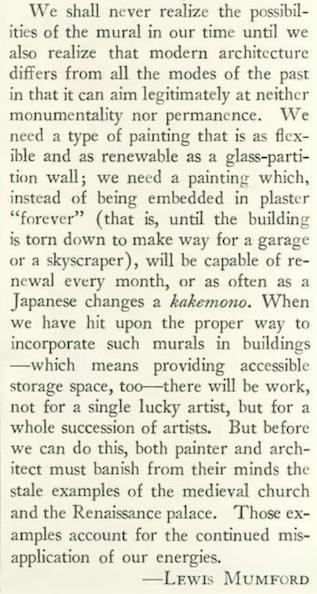

THE ART OF IMPERMANANCE…Lewis Mumford wrote that public art should change as often as the Japanese change their kakemono. (britannica.com)

 * * *

Been There, Done That

E.B. White gave voice to New Yorker mascot Eustace Tilley in 1927 when Tilley bade farewell as the author of “The Talk of the Town.” White also checked in on Tilley in a 1932 “Notes and Comment” column, recounting how Tilley almost lost his silk top hat to the tax man. Tilley turns up again in this week’s “Notes,” this time appearing quite inebriated and refusing to attend a star-studded party at the Waldorf:
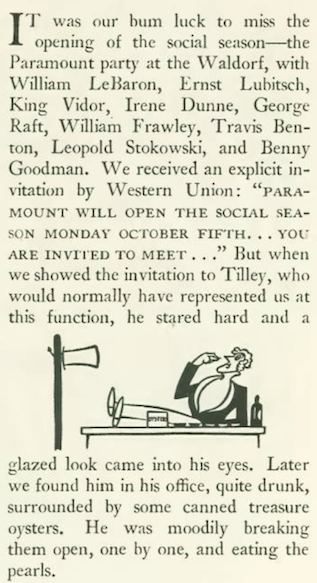
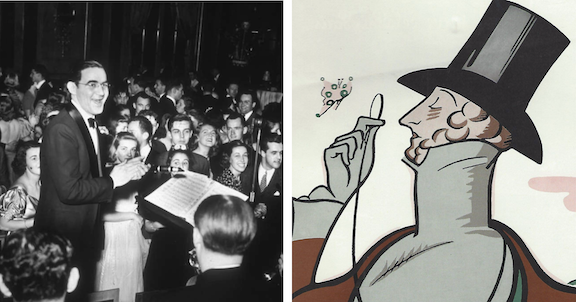
HO-HUM…Not even Benny Goodman and a bevy of Hollywood stars could distract Eustace Tilley from his drink and a tin of oysters. (bennygoodman.com)

 * * *

Stunt Pilots

I’m not sure which “Talk of the Town” writer went up on the airplane, but either or
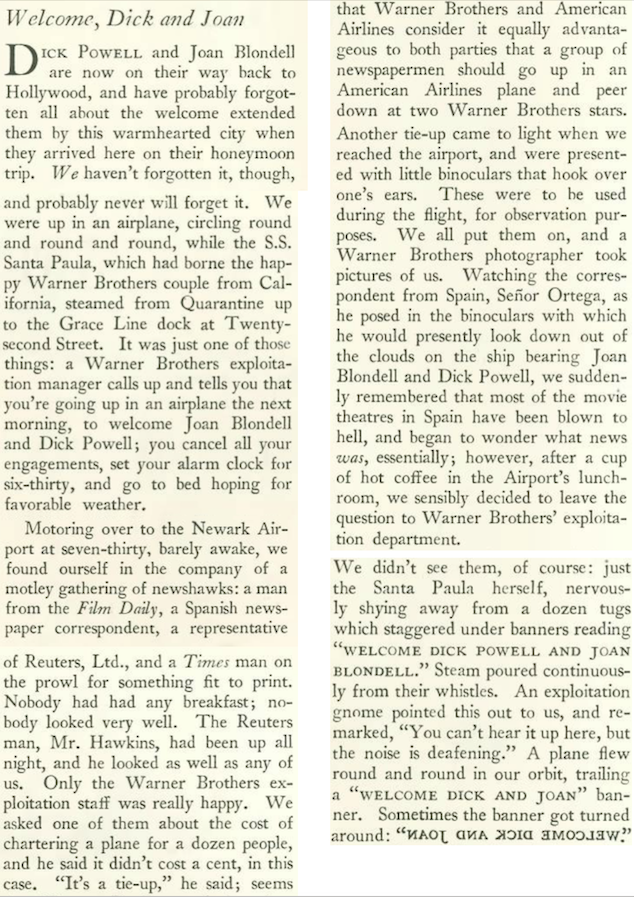
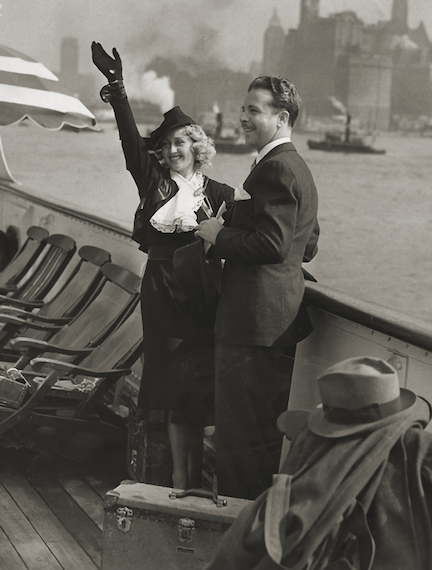
AHOY THERE!…Newlyweds Joan Blondell and Dick Powell greet admirers as they arrive in New York aboard the

 * * *

Gielgud’s Gig

After enormous success on the London stage, John Gielgud brought his Hamlet to Broadway’s Empire Theatre, where he was paired with Lillian Gish as Ophelia. Robert Benchley was there for the action. Excerpt:
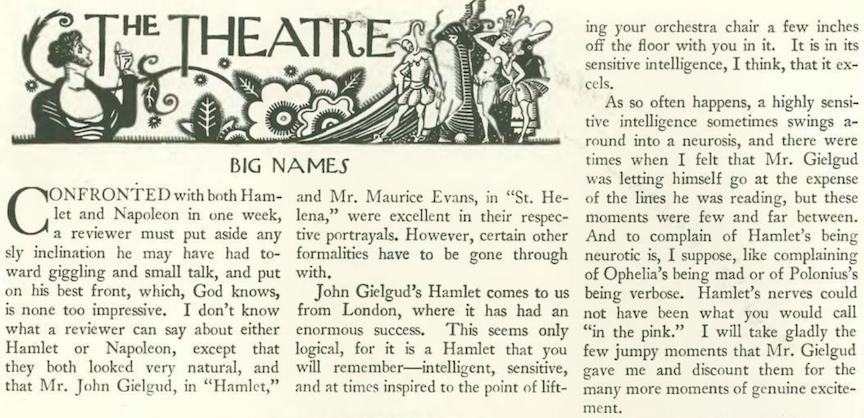
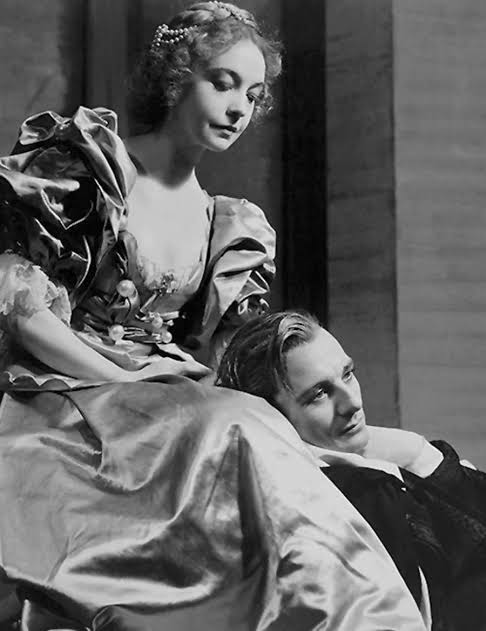
ACTING ROYALTY…The queen of the silents met the king of the stage when Lillian Gish joined John Gielgud for Broadway’s production of Hamlet at the Empire Theatre. The play ran for 132 performances, a record at that time for a Shakespeare play on Broadway. (James Grissom via facebook.com)

 * * *

At the Movies

Some light fare at the cinema, with Shirley Temple cranking out her thirteenth starring role in Dimples, and Mary Carlisle teaming up with Lew Ayres for some shore leave hijinks in Lady Be Careful.
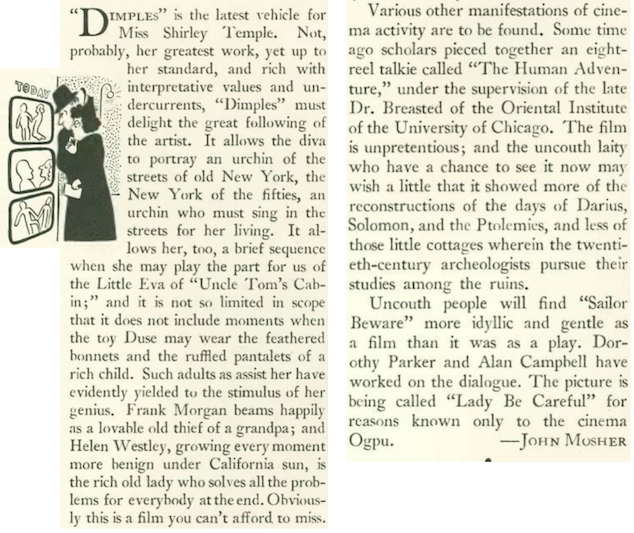
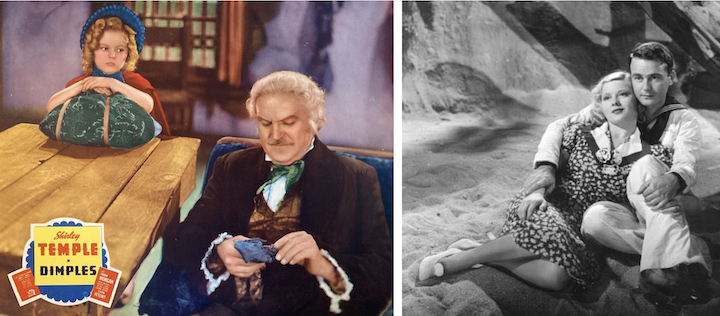
EIGHT-YEAR-OLD FILM VETERAN Shirley Temple and co-star Frank Morgan featured on a lobby card promoting Dimples; at right, Mary Carlisle and Lew Ayres in Lady Be Careful. (eBay.com/facebook.com)

A quick note about the actress, singer and dancer Mary Carlisle (featured above): Best known for her roles as a wholesome ingénue in 1930s musical-comedies, she was with us until just eight years ago. The last surviving WAMPAS Baby Star, Carlisle died at age 104 in 2018.
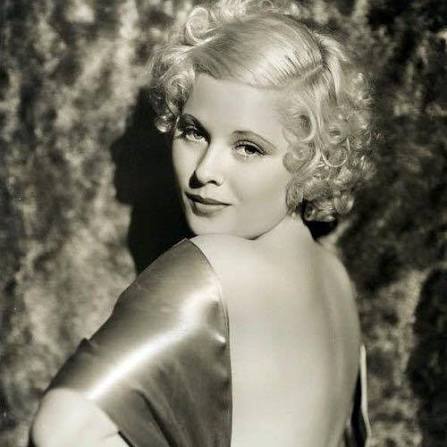
AGELESS…Publicity photo of Mary Carlisle, circa 1930s. (facebook.com)

 * * *

Saving Face

Famed stage actress Blanche Yurka had some choice words for Frank Sullivan after she read his Sept. 26 humor piece, “Save Your Face, Miss Blondell”…
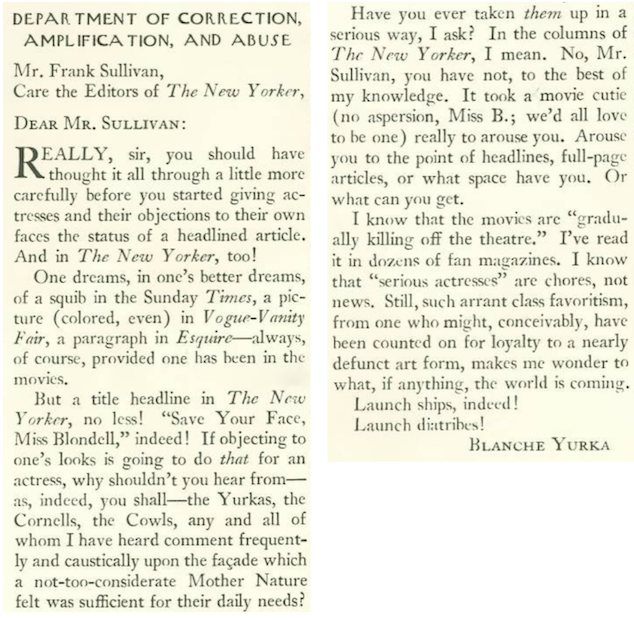
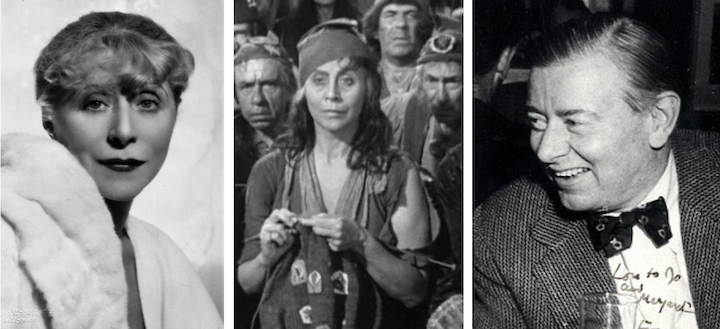
WHAT ABOUT ME?…Blanche Yurka (left) called out Frank Sullivan for his attentions to “movie cutie” Joan Blondell. Yurka (1887–1974) was an acclaimed actress known for her intense commitment to both stage and screen roles—she even learned to knit (center image) so that she could play the role of the vengeful Madame Defarge in the 1935 film adaptation of A Tale of Two Cities. (tmdb.org/michaelbalter.substack.com/sspl.org)

 * * *

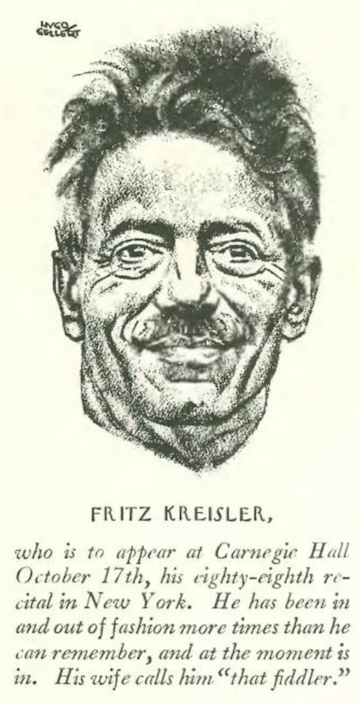
The latest mini-bio from the calendar section featured famed violinist Friedrich “Fritz” Kreisler (1875–1962)…illustration is by Hugo Gellert…
 * * *

From Our Advertisers

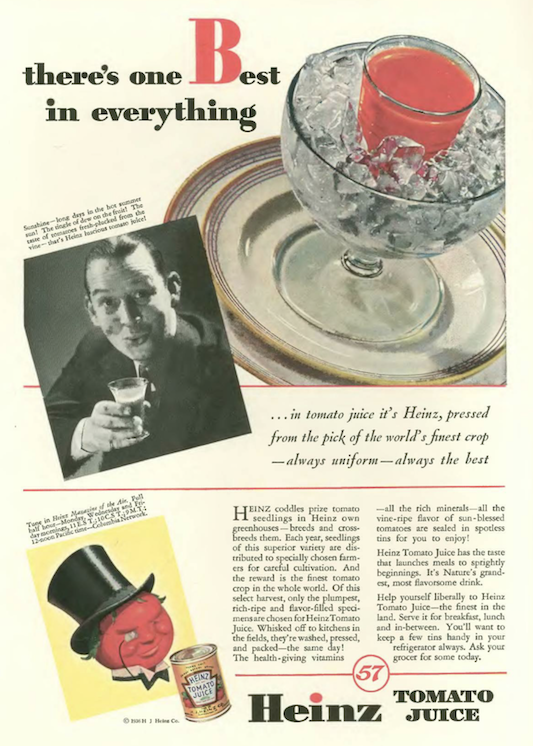
We begin with this full-page advertisement for Heinz tomato juice, which featured a photo of a man who resembled playwright/actor Noël Coward…the person in the ad is not identified, but Coward was known for endorsing products from time to time, including Bulova watches and Rheingold beer…
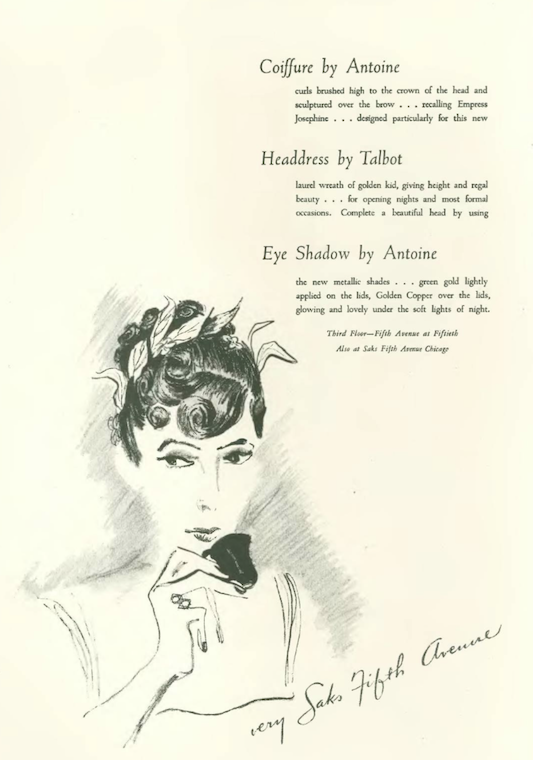
…another ad illustrated by Margaret Sommerfeld, who produced promotional artwork for Saks…
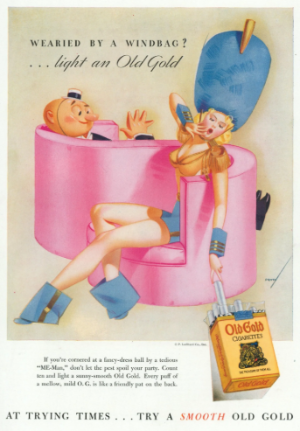
…and another full page ad for Old Gold illustrated by pin-up artist George Petty…
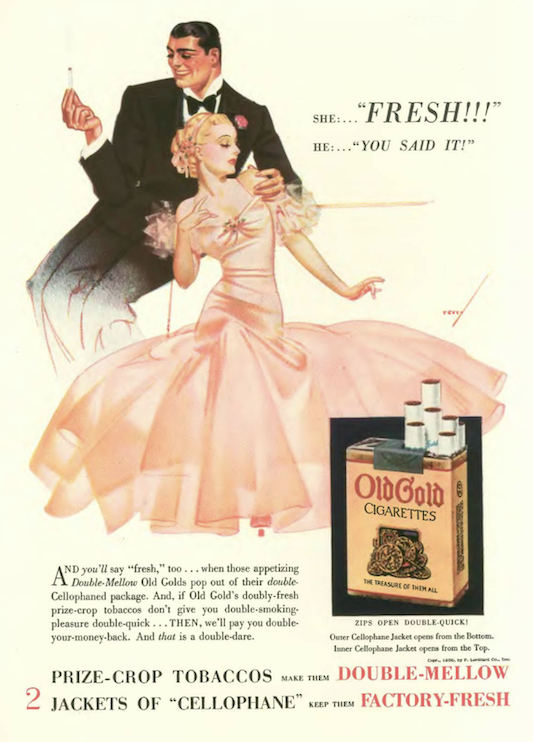
…the Old Gold ad marks a departure from a long series of Petty-illustrated ads that were more in the pin-up style and featured a leering little man rather than a handsome masher:
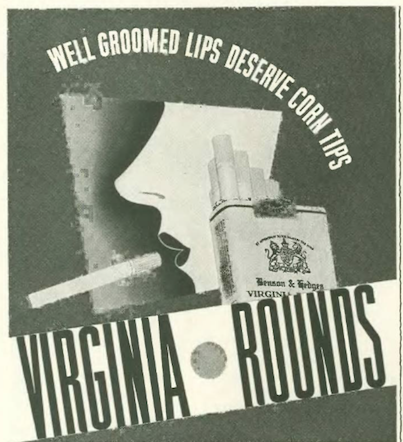
…most cigarette ads still targeted the growing market of women smokers, including this line of smokes manufactured by Benson & Hedges…
…Ozzie Nelson was a famed bandleader until he reached even greater fame on his own radio series, The Adventures of Ozzie and Harriet, launched in 1944, and his television show by the same name, which ran from 1952 to 1966…
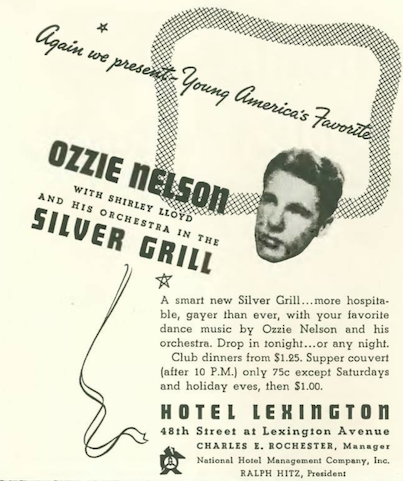
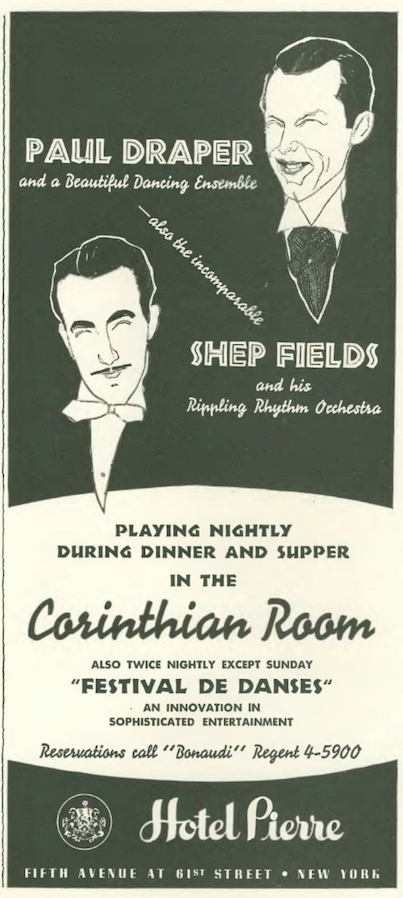
…if Ozzie Nelson wasn’t your thing, you could tap your toes to Paul Draper’s dancing ensemble or Shep Fields’ “Rippling Rhythm Orchestra” at the Hotel Pierre…
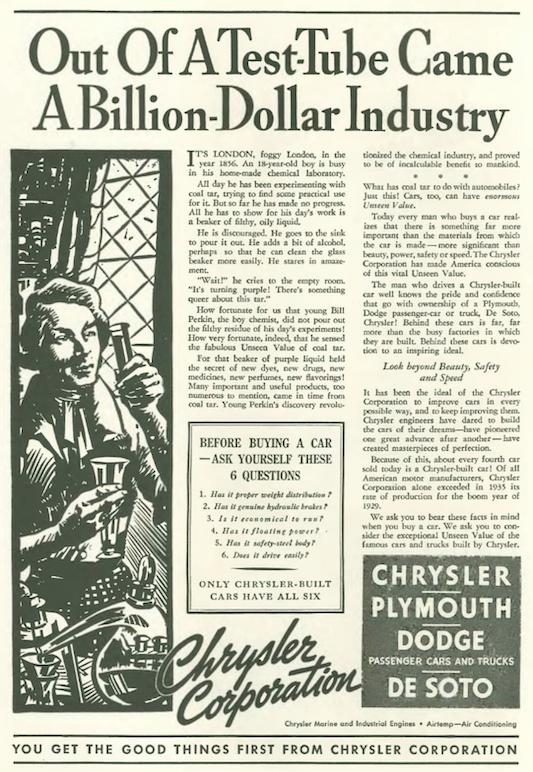
…some advertisers persisted in running wordy appeals for their products, including the execs at the Chrysler, who thought consumers could be swayed by the story of a nineteenth-century amateur chemist who accidentally refined coal tar and spawned a billion-dollar industry…
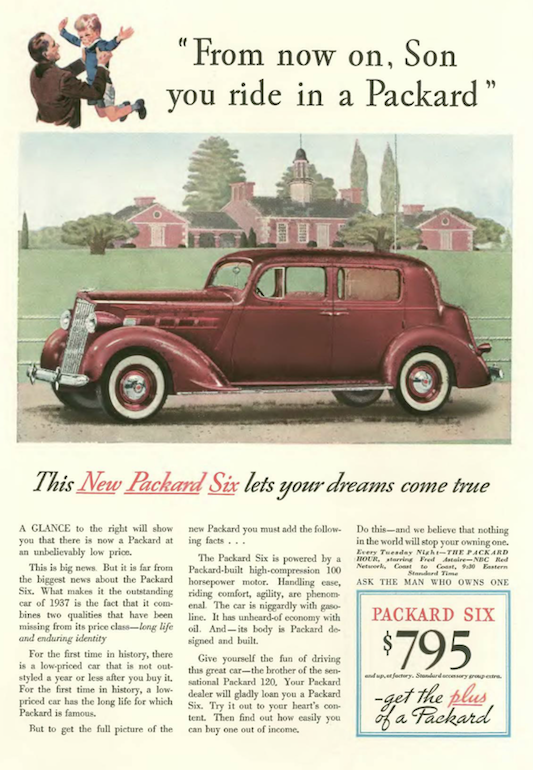
…the makers of the luxury brand Packard continued to stay afloat during the Depression by marketing lower-priced models like the Packard Six…
…lower-priced options were also featured in this ad from an organization called “Living American Art,” which offered “faithful” color collotype reproductions by modern artists, including New Yorker contributors Peggy Bacon and Reginald Marsh…
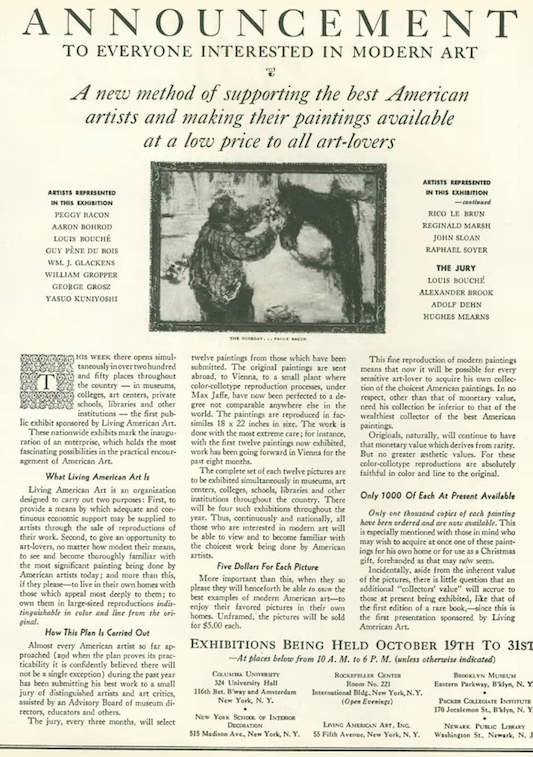
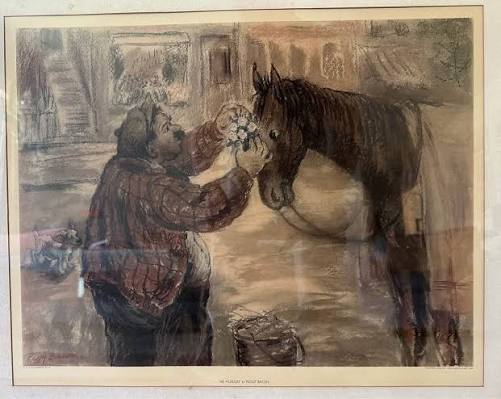
1936 lithograph of Peggy Bacon’s The Nosegay, featured in the ad above. (posted on Facebook Marketplace)

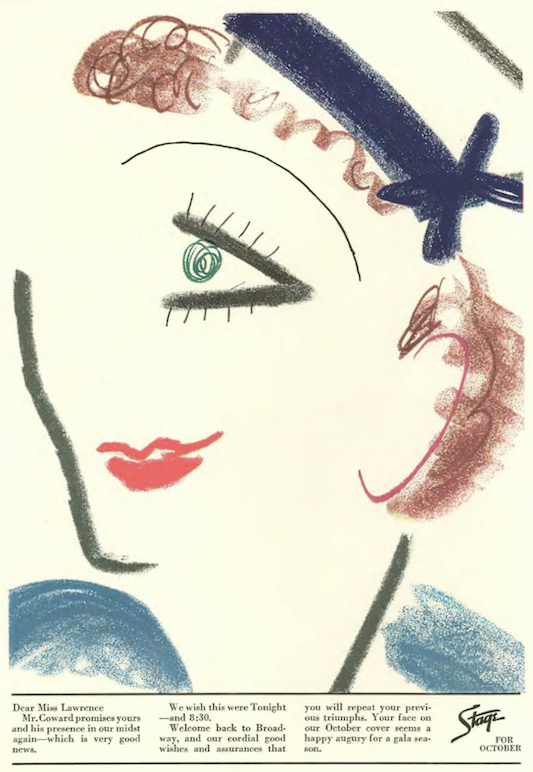
…and we have another striking Abe Birnbaum caricature (of stage actress Gertrude Lawrence) for Stage magazine…
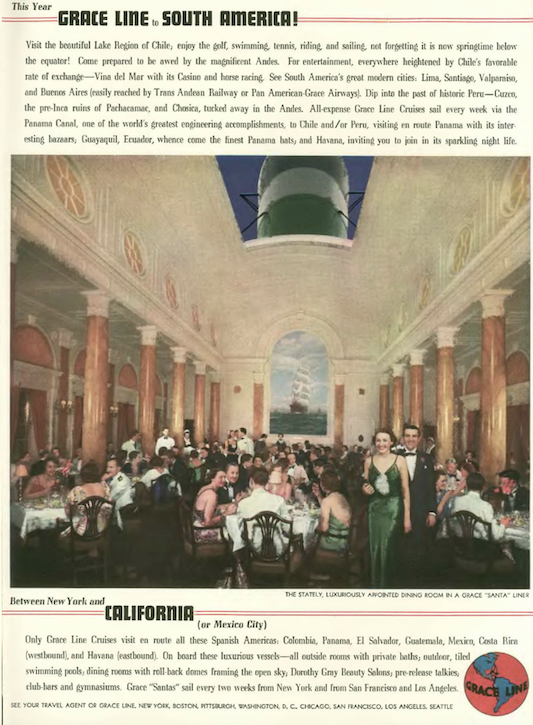
…imagine entering this dining room while aboard a Grace Line Santa liner…not a waterslide or buffet line in sight (this was the same liner that Joan Blondell and Dick Powell took on their honeymoon from California to New York)…
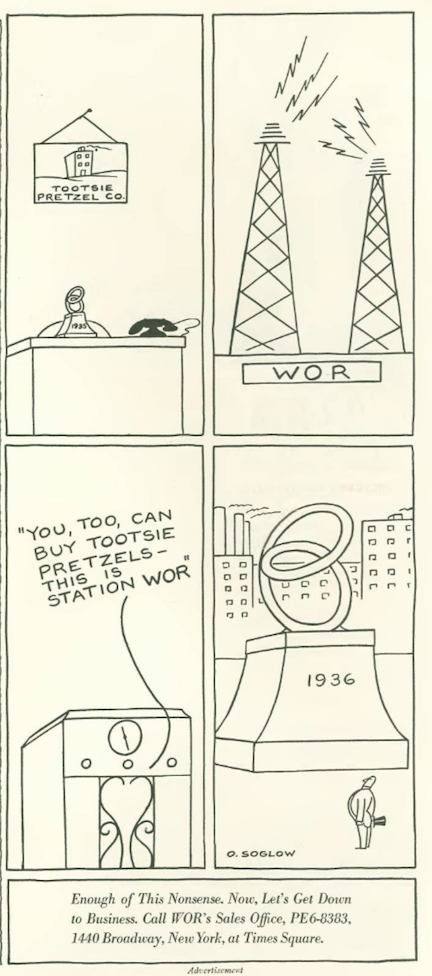
…Otto Soglow continued illustrating ads for WOR radio…
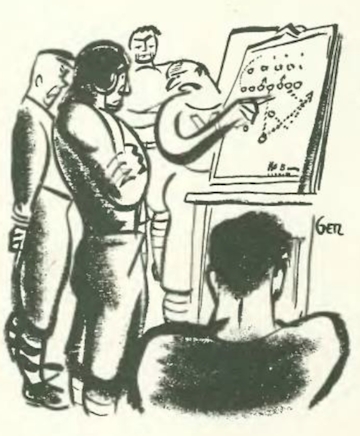
…which segues to our cartoonists, beginning with a spot by Arthur Getz…
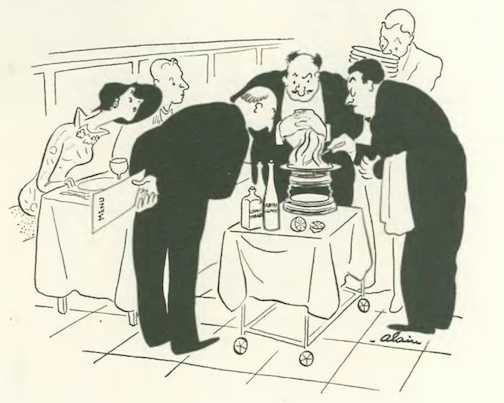
…a caption-less entry by Alain…
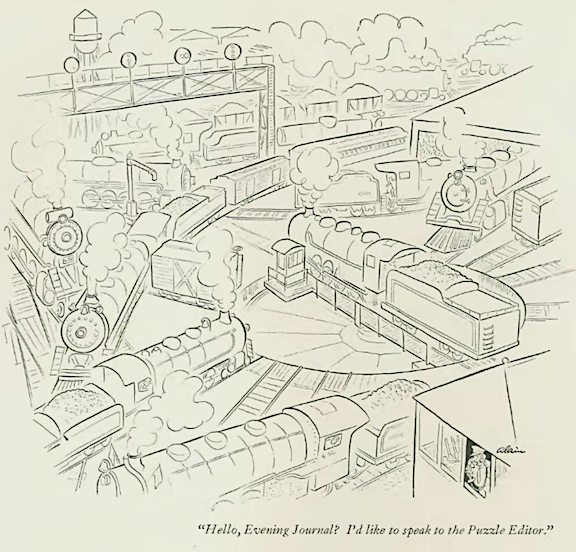
…Alain again, with a puzzling challenge…
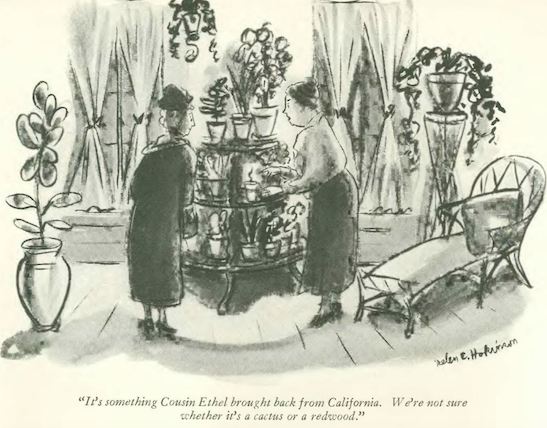
…a horticultural mystery courtesy of Helen Hokinson…
…Charles Addams presented an ideal client to this fortune teller…
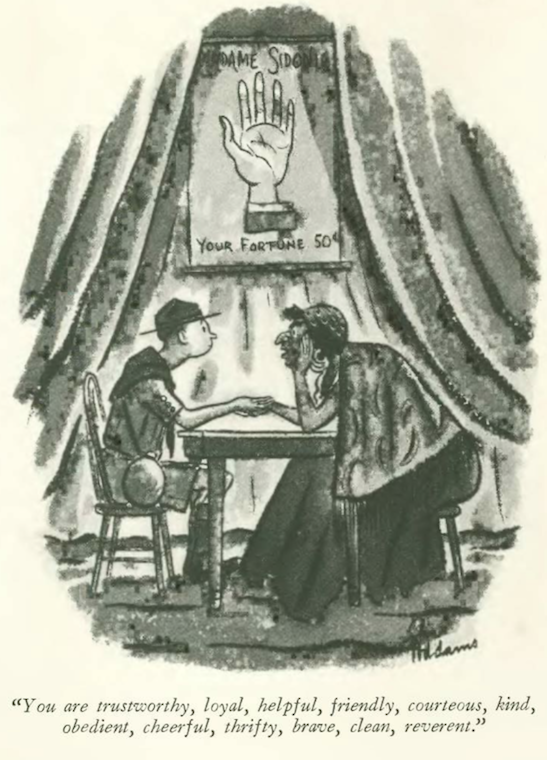
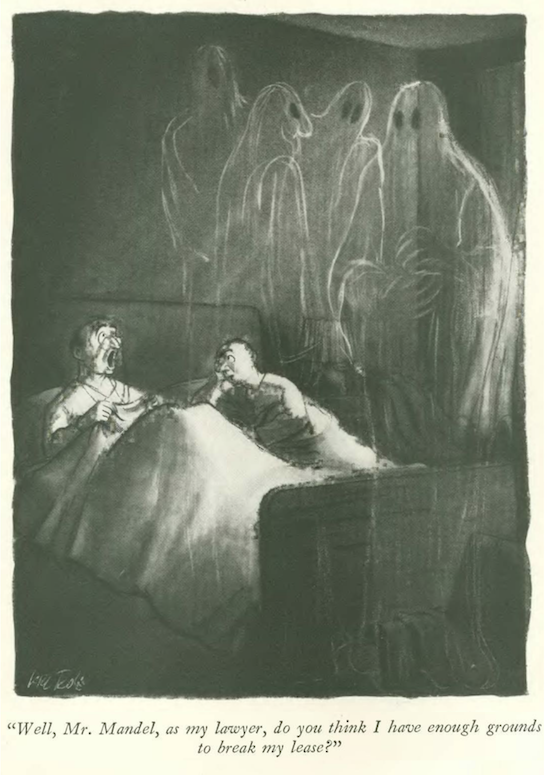
…Carl Rose got a little spooky…
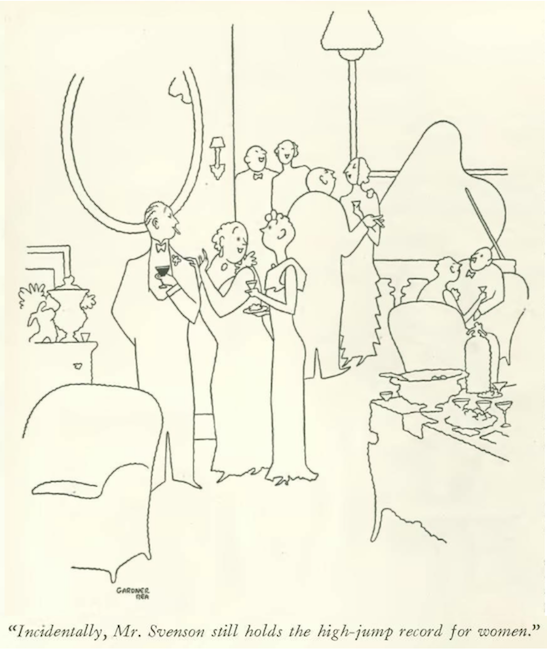
…Gardner Rea served up an Olympian boast…
…Peter Arno drew up a doubtful doctor…
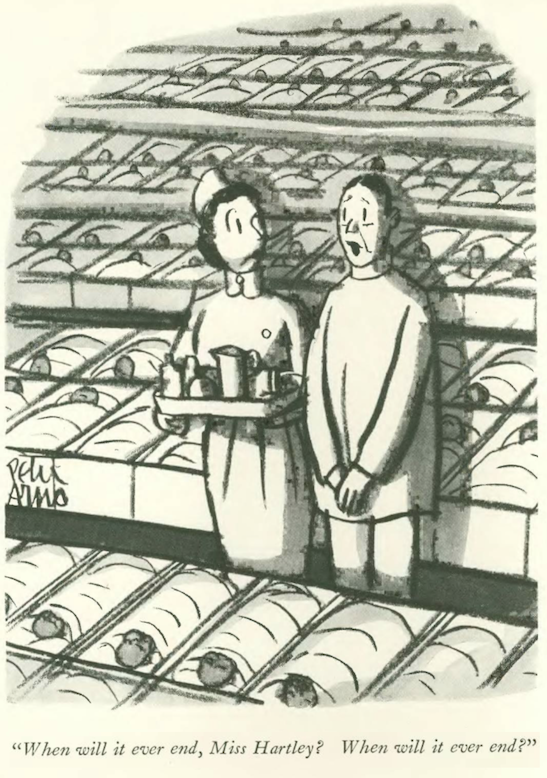
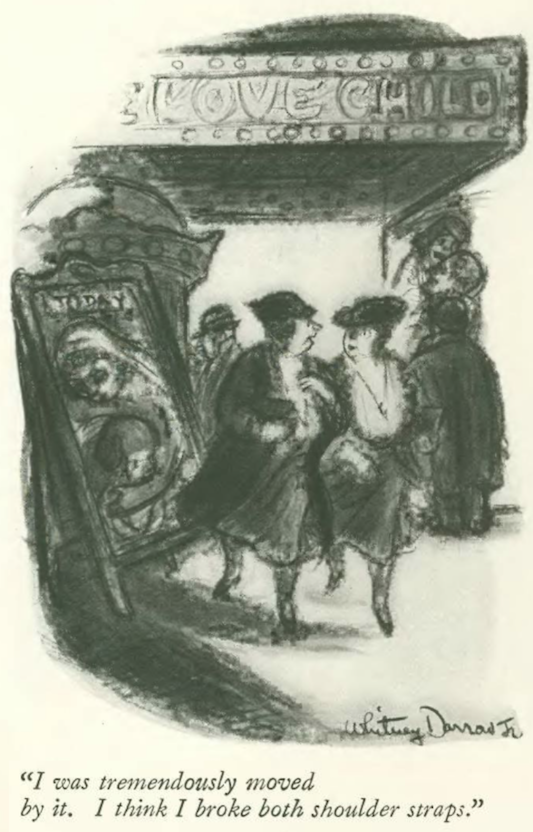
…Whitney Darrow Jr illustrated the power of motion pictures…
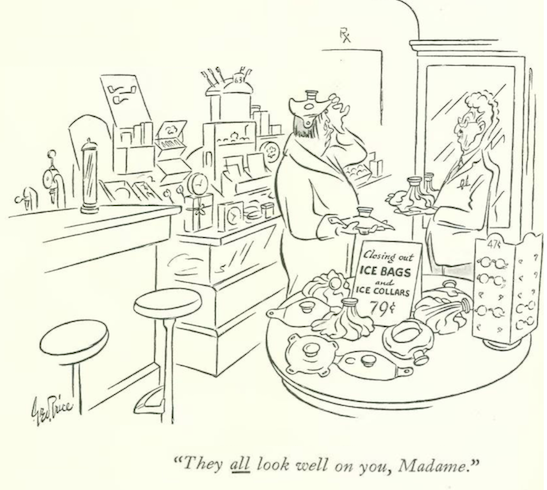
…George Price sampled the latest styles in ice bags…
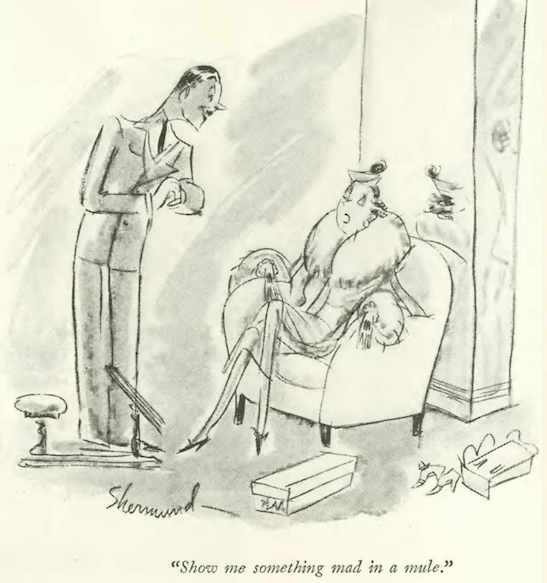
…Barbara Shermund went shoe shopping…
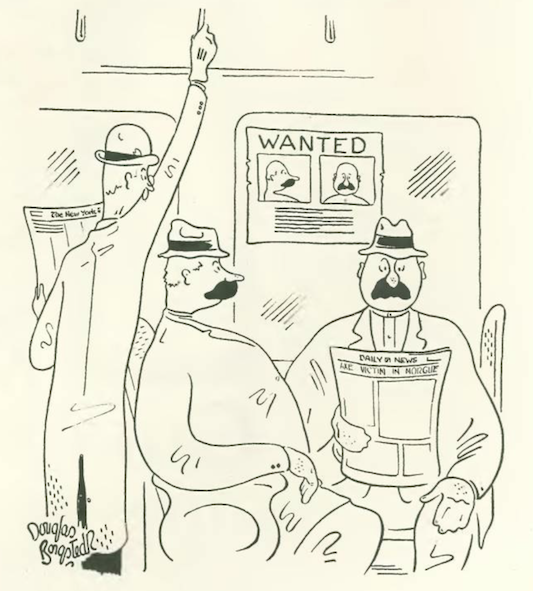
…and we close with the first New Yorker cartoon by Douglas Borgstedt (1911–2001), and a good one at that!…
Next Time: The President’s Mystery…
 

Fracking the Frick

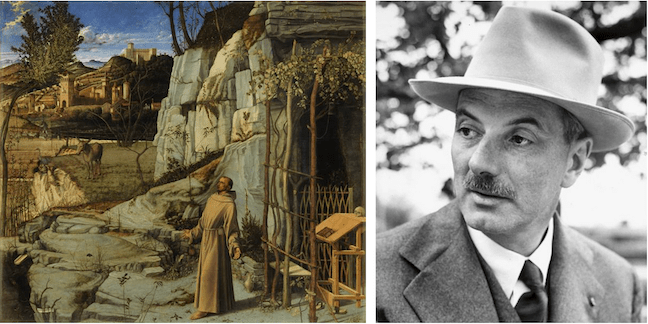
Above: Critic Lewis Mumford was not ecstatic about his visit to the newly opened Frick Collection, unhappy with the museum's crowd-control regulations that limited his view of Giovanni Bellini's masterpiece, St Francis in Ecstasy, among other things. (wikiart.org/communitydevelopmentarchive.org)

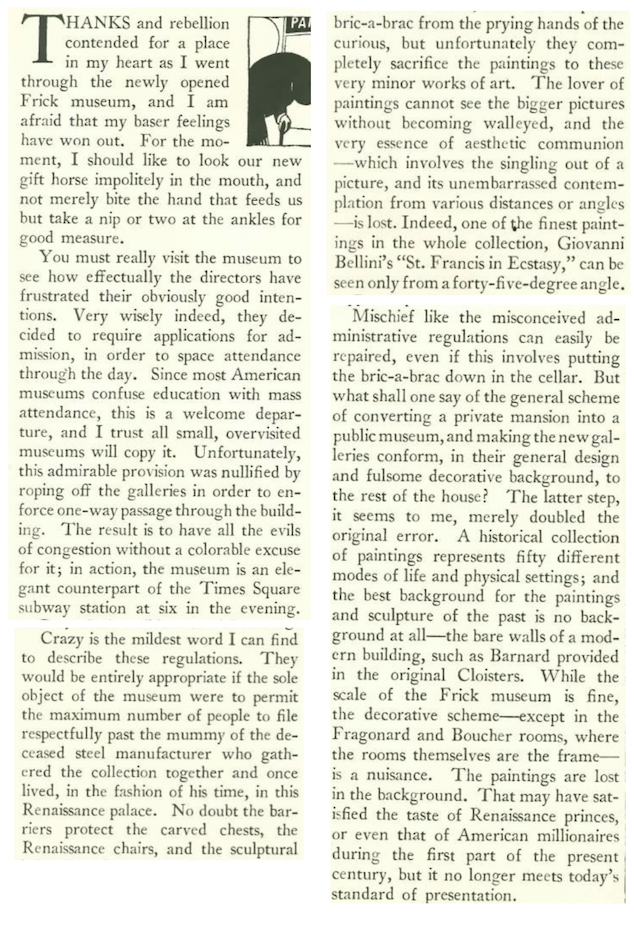
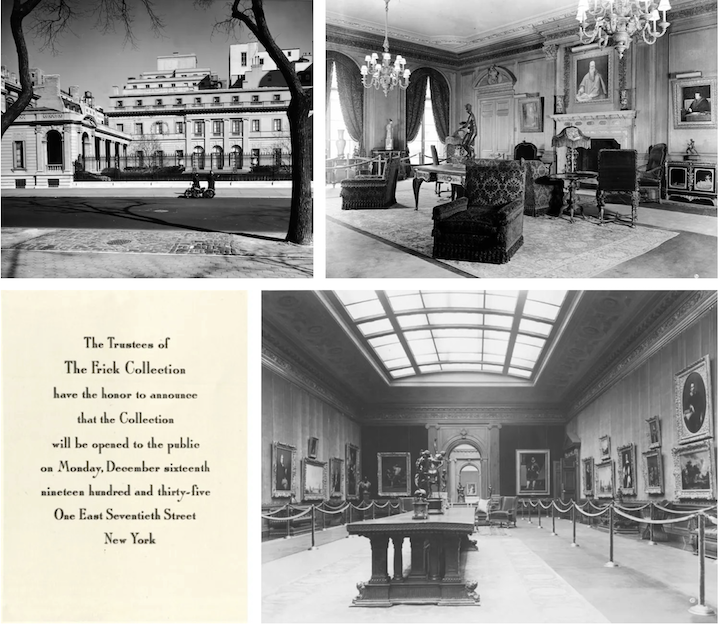
Considered one of the finest museums in the U.S., the Frick Collection on the Upper East Side of Manhattan was established in 1935 to preserve steel magnate Henry Clay Frick’s priceless 14th- to 19th-century European paintings as well as the Frick house and its furnishings. When it opened to the public on Dec. 16, 1935, museum staff distributed timed-entry tickets to prevent crowding, and therein lay the rub for New Yorker critic Lewis Mumford.

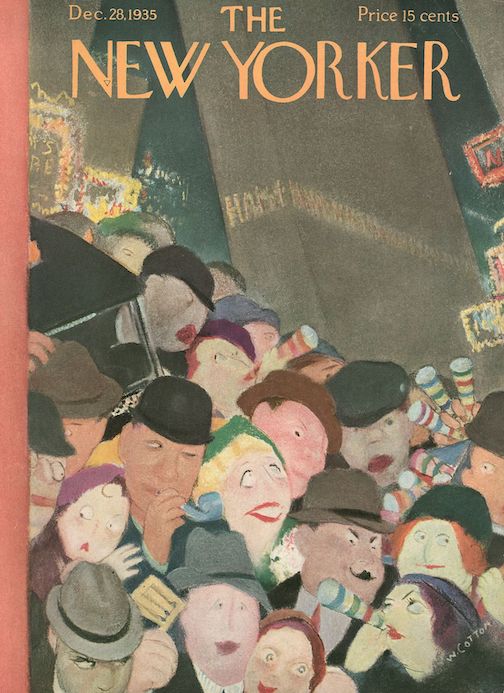
December 28, 1935 cover by William Cotton. Exclusively a cover artist for The New Yorker, Cotton (1880–1958) produced fifty-five covers for the magazine.

The timed tickets, along with ropes that forced visitors to follow a defined path, spoiled the museum’s debut for Mumford, who was one of its few detractors. In these excerpts Mumford addressed the crowd control measures, and criticized the furniture and other “bric-a-brac” that further served to obstruct his viewing pleasure:

ROPES AND BRIC-A-BRAC presented obstacles to Mumford’s visit at the opening of the Frick Collection. Clockwise, from top left, view of the Frick mansion, circa 1935; installation view of the Living Hall, 1935; West Gallery, 1935; invitation to the opening of The Frick Collection, 1935. (businessinsider.com/Frick Art Reference Library Archives)

The Frick’s recent renovation and expansion has also had its detractors; after enduring a long and contentious proposal review process and five years of renovation and construction, the Frick reopened to the public in April 2025. It seems most attendees appreciate the changes.

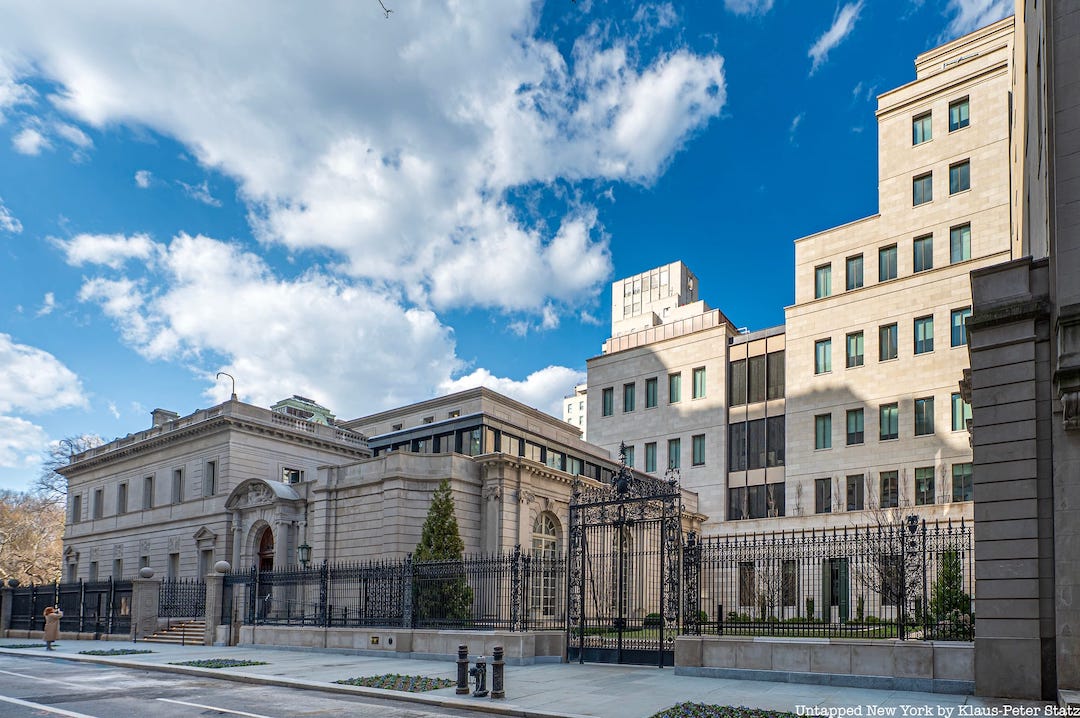
OLD AND NEW…The Frick Collection’s home today, with expansion to the right. (untappedcities)

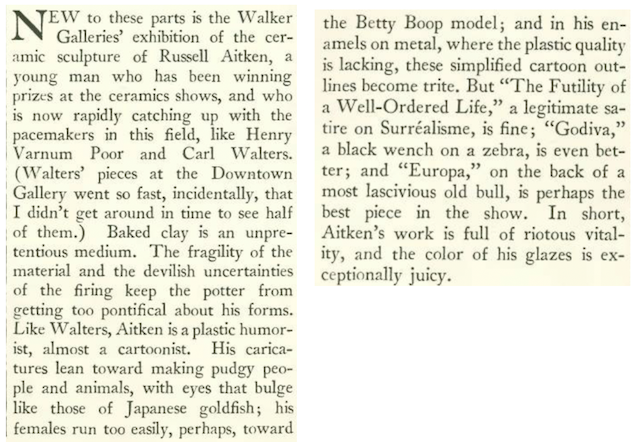
Mumford also took a look at the latest work by ceramic sculptor Russell Aitken (1910-2002), comparing his work to that of a cartoonist. Aitken was a rather odd duck in the art world, renowned both for his quirky sculptures as well as for his exploits as a big game hunter.

KILLER ARTWORK…Russell Aitken had eclectic tastes, to say the least, ranging from creating cutesy ceramics and cartoonish enamels to murdering Cape buffalo. Top left, Virgins of Mogambo, enamel on metal, 1935; bottom left, The Cactus Kid, ceramic, 1932. At right, midcentury whiskey ad featuring Aiken as a big game hunter. (Cleveland Museum of Art/findagrave.com)

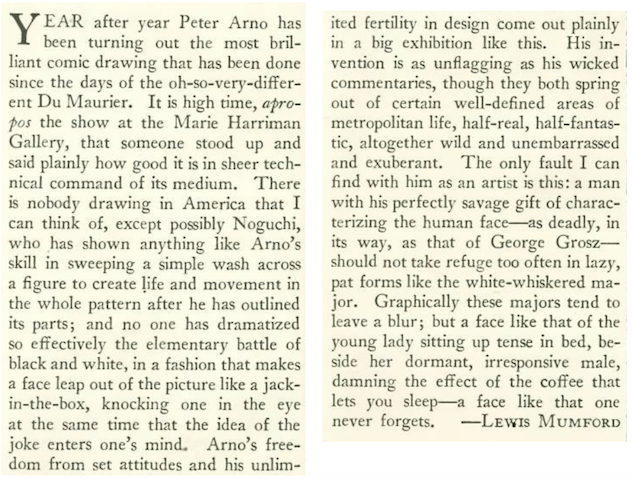
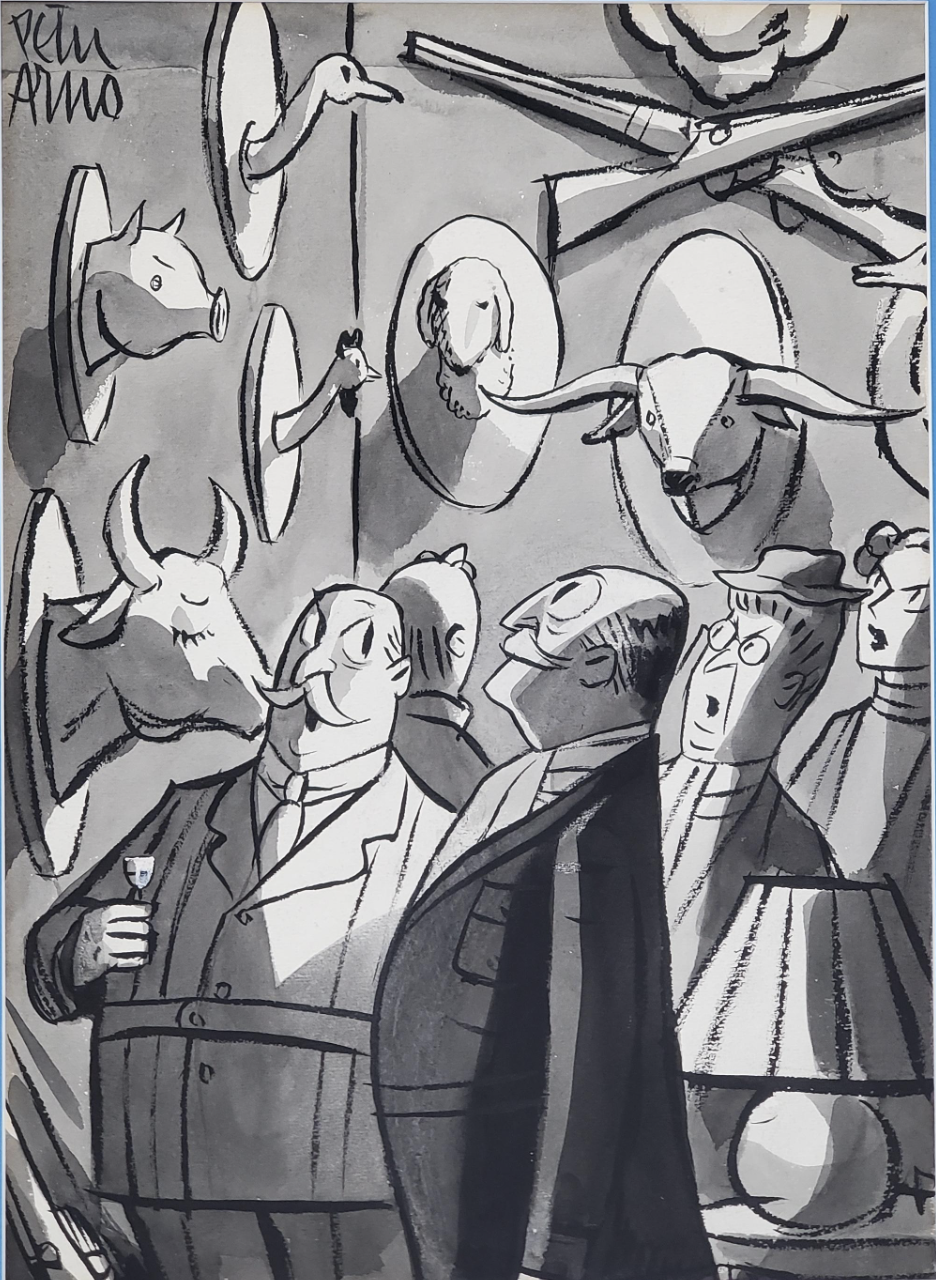
It’s always a little dicey to review the work of a colleague, but in the case of Peter Arno, Mumford had mostly praise, some of it quite high, that is except for Arno’s “white-whiskered major” which Mumford characterized as a “lazy, pat form.”

Thankfully Arno ignored Mumford’s criticism and continued to draw his “white-whiskered major.” Here he is in a delightful 1937 cartoon featured on one of my favorite New Yorker-related sites, Attempted Bloggery:

Caption reads: “I Only Kill For Food.”

 * * *

Shock of the New

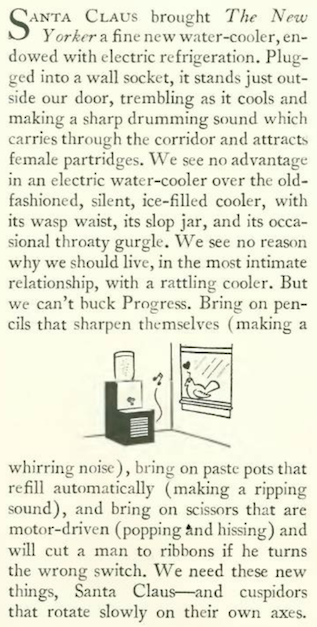
E.B. White, ever skeptical of newfangled inventions, saw no reason why The New Yorker’s old ice-filled water cooler needed to be replaced by a “rattling” electric one:

* * *

O Tannenbaum

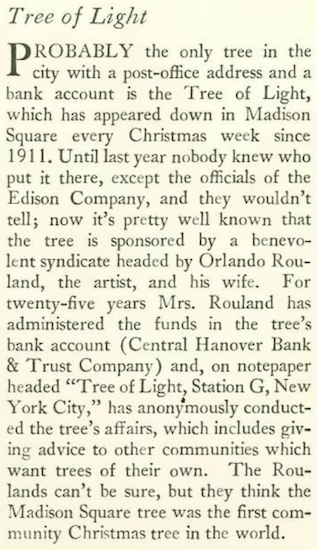
Two decades before Rockefeller Plaza raised its giant Christmas tree (or before Rockefeller Center even existed), New Yorkers gathered around a “Tree of Light” at Madison Square. “The Talk of the Town” remembered:

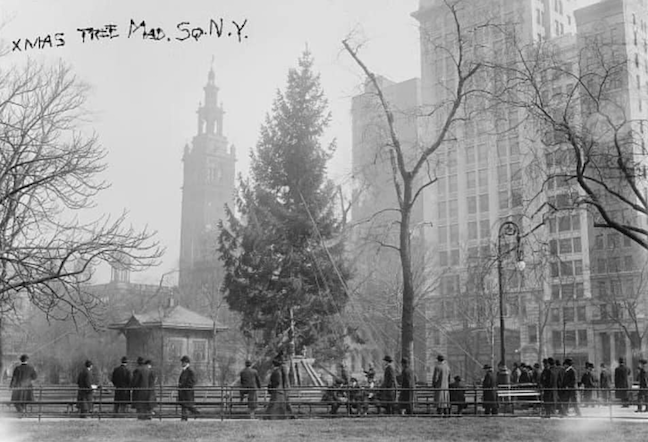
TREE OF LIGHT…America’s first outdoor Christmas tree lighting apparently occurred in Madison Square Park in 1912 (the “Talk” excerpt cited 1911). Bowery Boys History notes that “the organizers knew they were doing something unique, but probably did not realize the special significance of the event. Their 70-foot-tall imported tree from the Adirondacks, festooned with lights from the Edison Company, would be the first outdoor community Christmas tree in the United States.” (Library of Congress )

According to Bowery Boys History, in 1912 “this ‘Tree of Light’, mounted in cement, was such a novelty that almost 25,000 people showed up that night [Christmas Eve] to witness it and enjoy an evening-long slate of choral entertainment.” The following year, The New York Times reported that the Salvation Army took over the event, offering up “10,000 hot sausages and 10,000 cups of hot coffee” for the crowds.

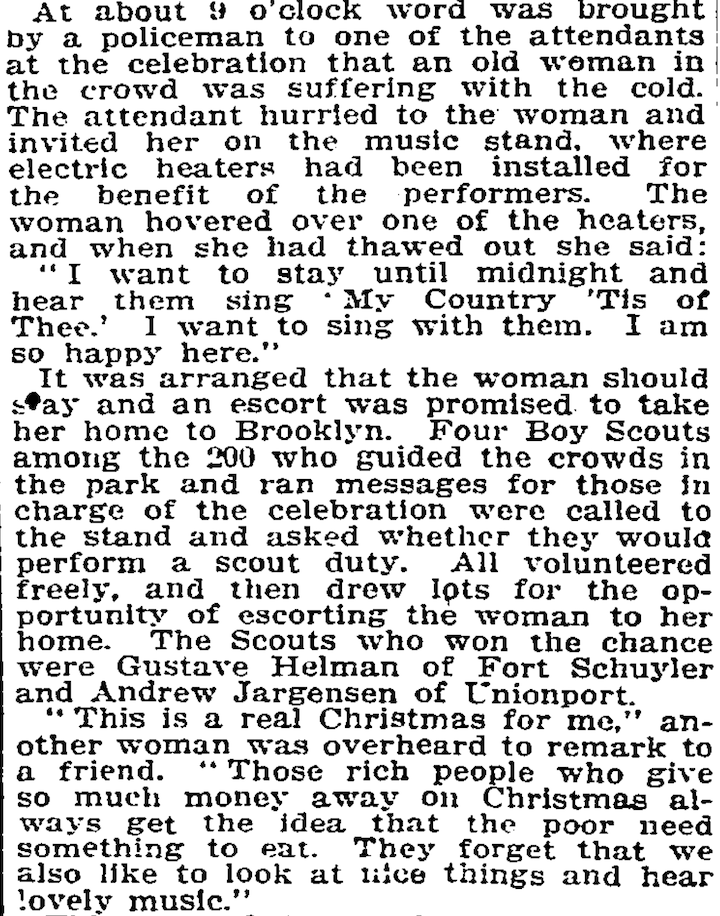
The celebration was sparked by social activists seeking to draw attention to the needs of the city’s poor. On Christmas Day, 1912, the Times ran extensive coverage, and noted the charitable tone of the event in this excerpt:

 * * *

Honor Roll

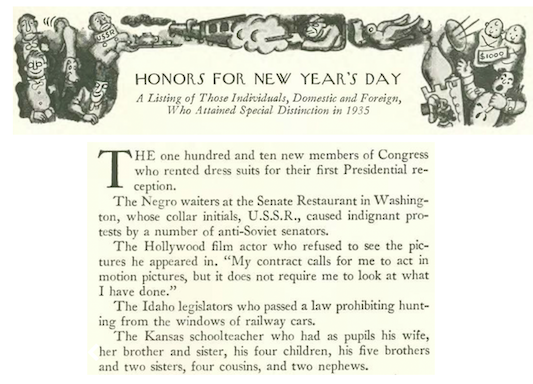
Joseph P. Pollard and W.E. Farbstein covered a two-page spread, listing individuals of “Special Distinction” in honor of the New Year…here is a brief excerpt:

 * * *

Best (and Worst) of Broadway

Robert Benchley reviewed the hits and misses of the fall Broadway season, and admitted he had become something of a softhearted theatre critic after spending six months in Hollywood.

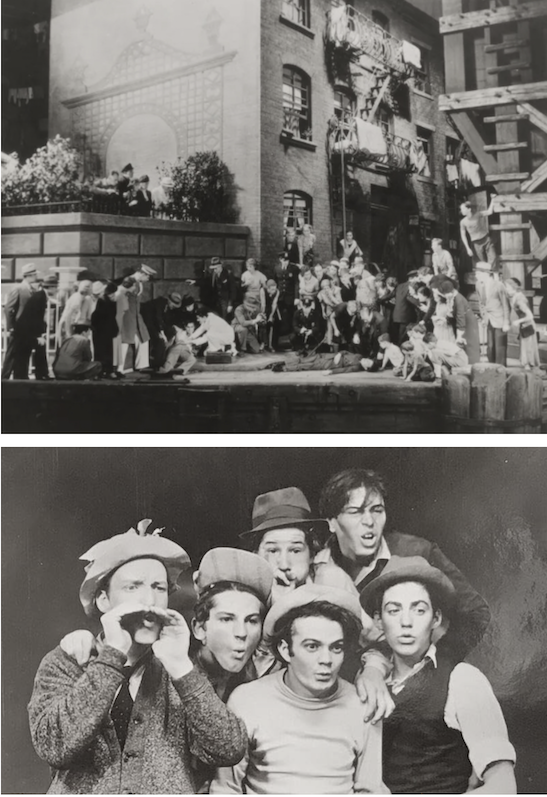
MEET THE GANG…Among the plays recommended by Robert Benchley was Dead End, which opened at the Belasco Theatre on Oct. 28,1935 and ran for 687 performances before closing on June 12, 1937. The play featured an impressive set design by Norman Bel Geddes (top) and introduced the Dead End Kids (aka the Bowery Boys), various teams of young actors who made 89 films and three serials for four different studios during their 21-year film career. The photo above shows the original six Dead End Kids—front row, from left, Huntz Hall, Gabriel Dell, Leo Gorcey and Billy Halop; back row, Bobby Jordan and Bernard Punsly. (deadendmusical.com)

 * * *

At the Movies

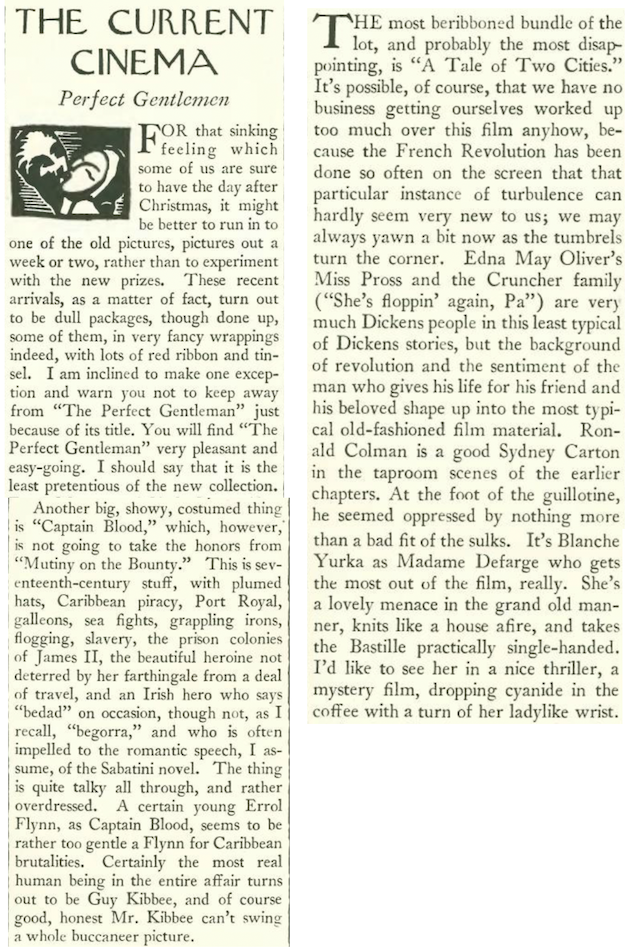
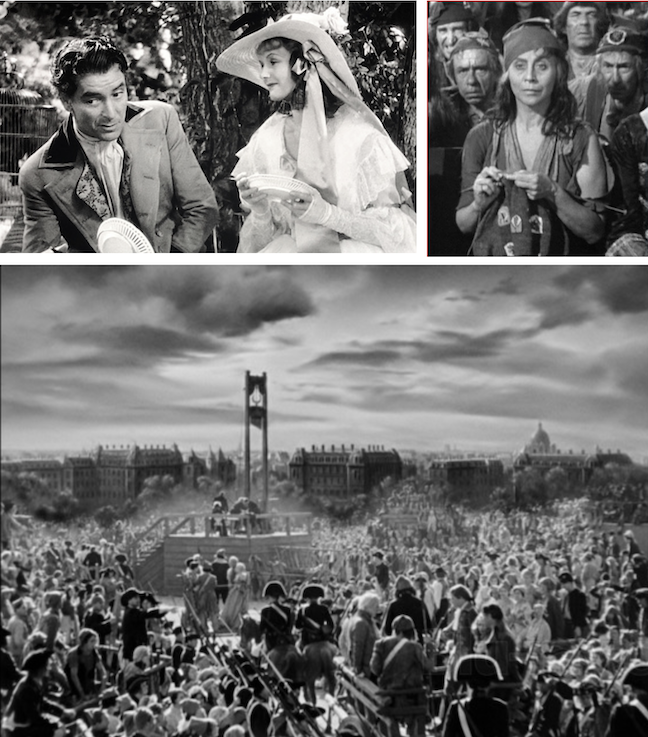
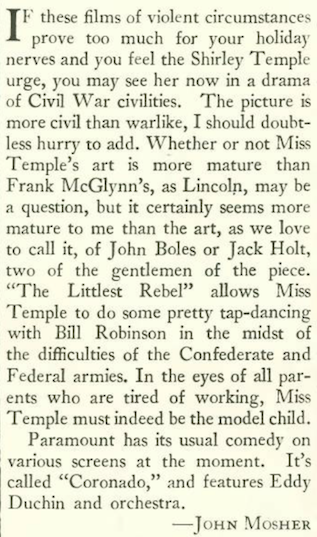
New Yorkers could nurse their holiday hangovers with a variety of films, ranging from the “very pleasant” The Perfect Gentleman to the “overdressed” Captain Blood, which featured a young Errol Flynn as a rather gentle pirate. As for the late year’s most anticipated film, A Tale of Two Cities, critic John Mosher found a few bright spots between his yawns, including praise for Blanche Yurka’s standout performance as Madame DeFarge.

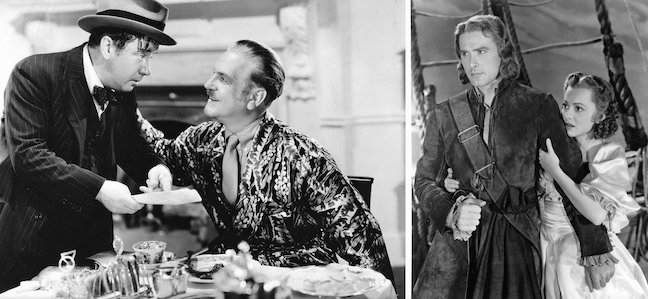
GENTLE MAN AND GENTLE PIRATE…At left, Forrester Harvey and Frank Morgan in The Perfect Gentleman; at right, Errol Flynn and Olivia de Havilland in Captain Blood. The film launched the 26-year-old Flynn and the 19-year-old de Havilland into Hollywood stardom, and marked the beginning of Flynn’s swashbuckler image. (MGM/IMDB)
I’M LOSING MY HEAD OVER YOU…Clockwise, from top left, Sydney Carton (Ronald Colman) would lose his noggin to the guillotine in a scheme to save Lucie Manette (Elizabeth Allan) in A Tale of Two Cities; veteran theater actress Blanche Yurka, who learned to knit for her acclaimed role as Madame Defarge, is shown here in a front row seat before the guillotine—it was Yurka’s first film role; at the bottom, the execution scene at the Place de la Révolution. (bluray.com/michaelbalter.substack.com)

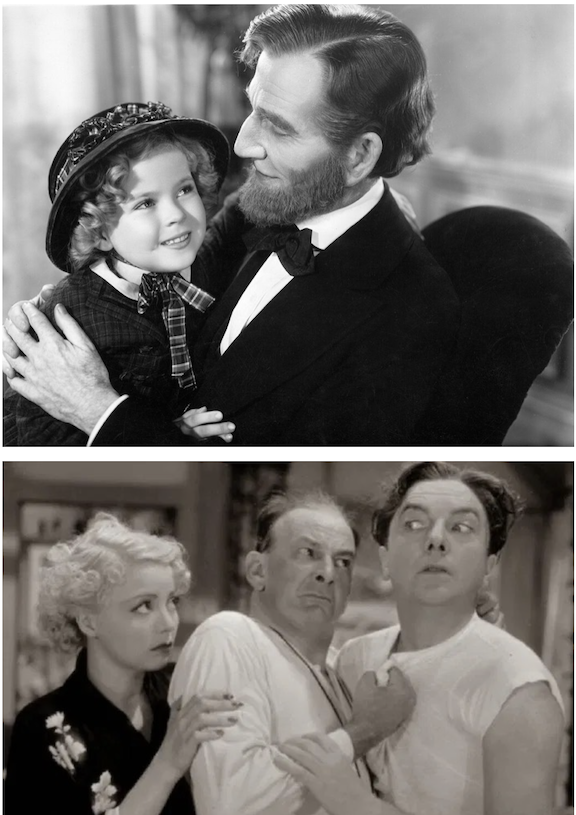
If piracy and revolution were “too much for your holiday nerves,” Mosher suggested the latest Shirley Temple film, The Littlest Rebel, featuring the superstar moppet dancing her way through the Civil War (and, unfortunately, performing a scene in blackface). Also on tap was the the musical comedy, Coronado.

SEEKING A PRESIDENTIAL PARDON, little Virgie Cary (Shirley Temple) asks President Lincoln (Frank McGlynn Sr.) to bestow mercy on her Confederate father in The Littlest Rebel; below, Alice White, Leon Errol and Jack Haley in the musical comedy Coronado. Haley is best known today as the Tin Man in 1939’s The Wizard of Oz. (whitehousehistory.org/themovieb.org)

 * * *

From Our Advertisers

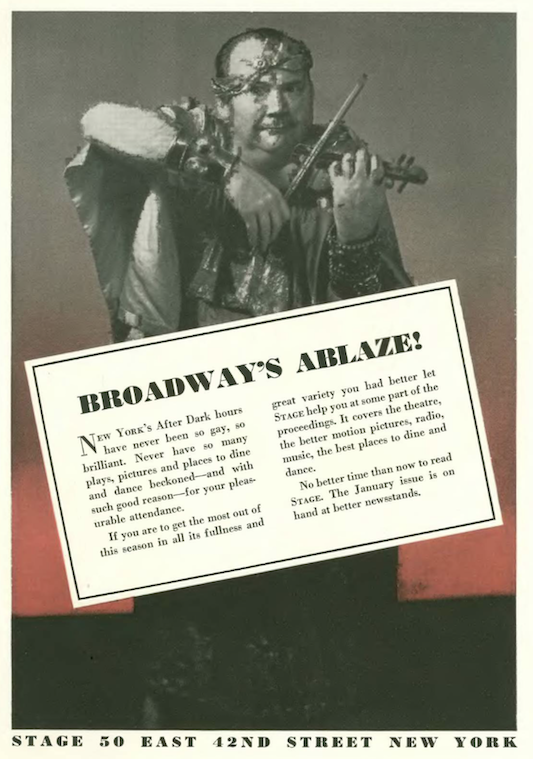
We look in on our advertisers, beginning with this from Stage magazine…the actor portraying Nero is likely from the play Achilles Had a Heel, which closed after just eight performances…

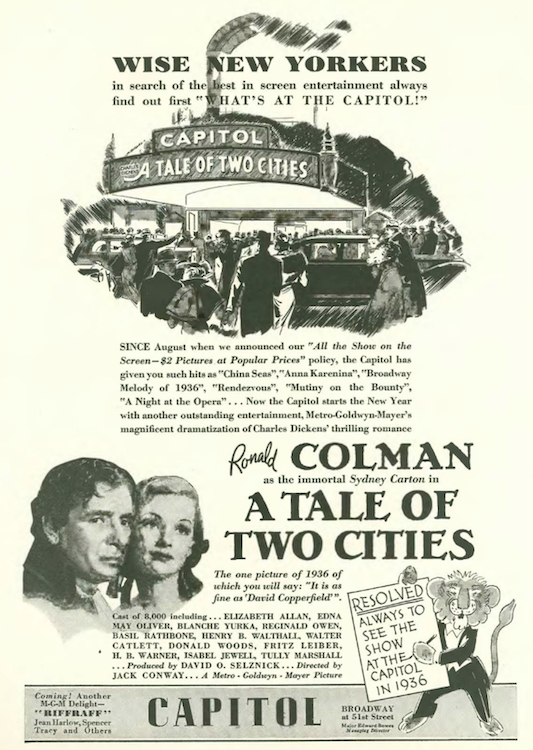
…John Mosher wasn’t wowed by MGM’s A Tale of Two Cities, even if the Capitol Theatre promised a spectacle with “a cast of 8,000″…

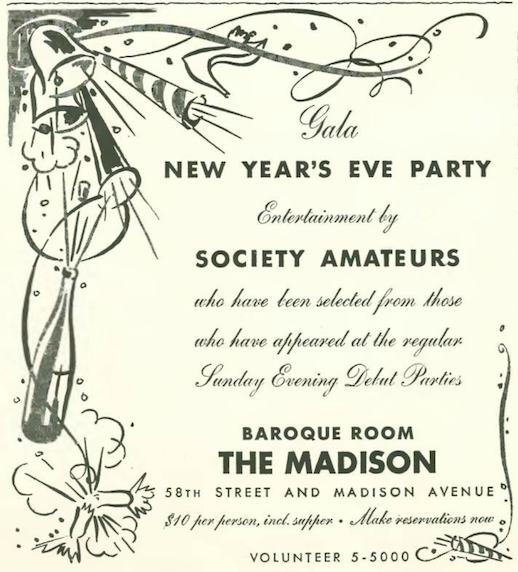
…this back of the book ad promised entertainment by “Society Amateurs” selected from the “Sunday Evening Debut Parties”…

…the brewers of Guinness promoted the health benefits of their product for the New Year…

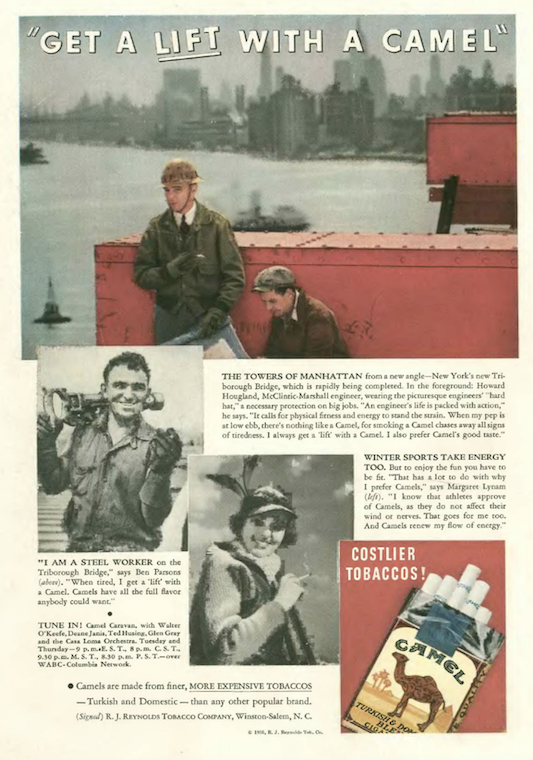
…and the makers of Camels continued to print testimonials touting the invigorating effects of their cigarettes…

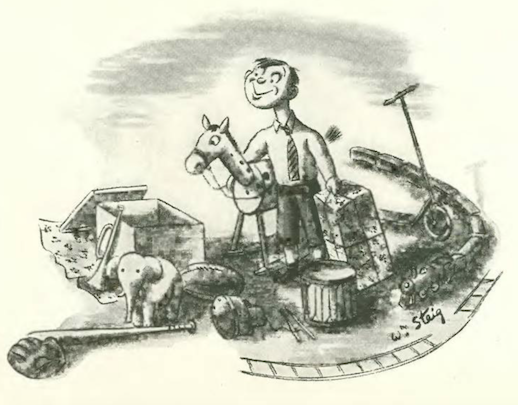
…on to our cartoonists, with William Steig taking stock of the Christmas haul…

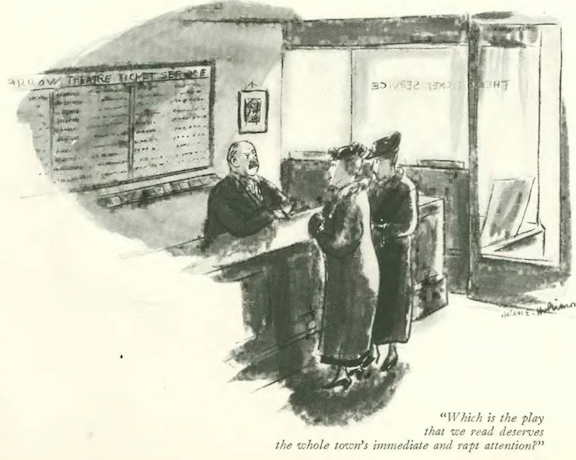
…Helen Hokinson’s girls were looking for the hottest show in town…

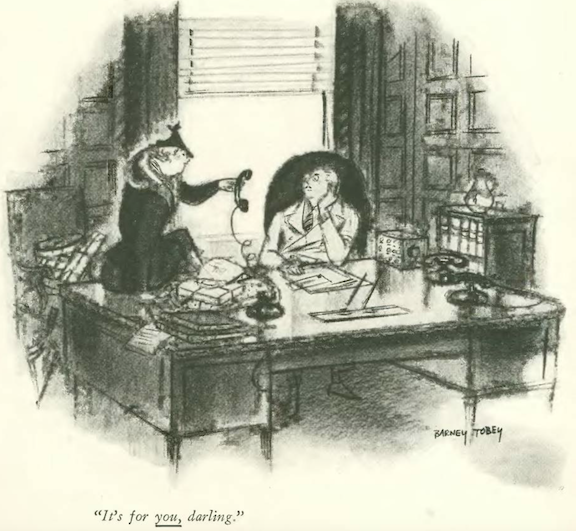
…Barney Tobey was the latest cartoonist to take a shot at the boss-secretary trope…

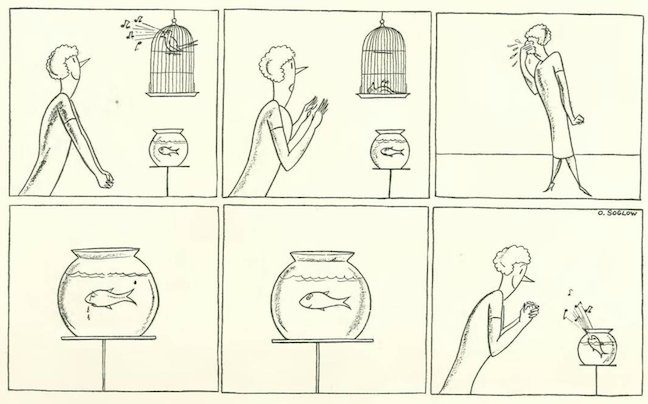
…Otto Soglow gave us a singing fish…

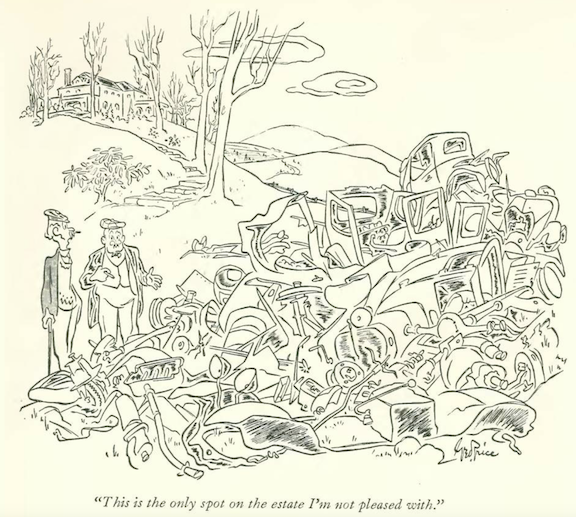
…George Price came across a landscaping challenge…

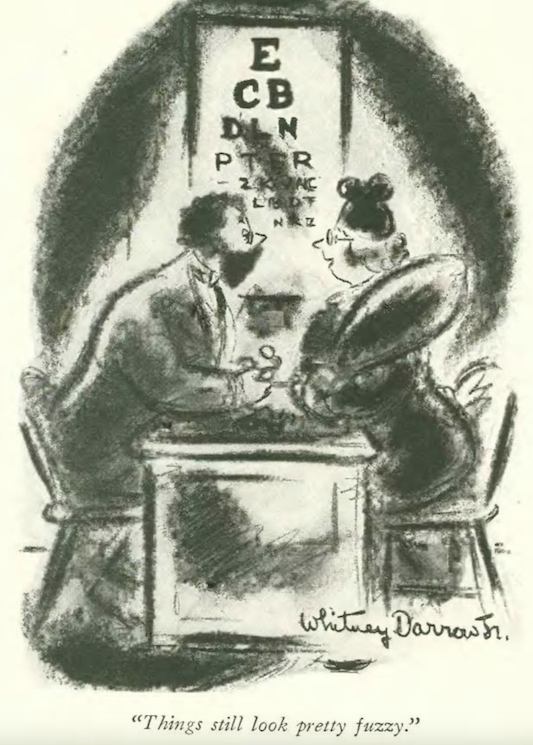
…Whitney Darrow Jr focused on a visit to the optometrist…

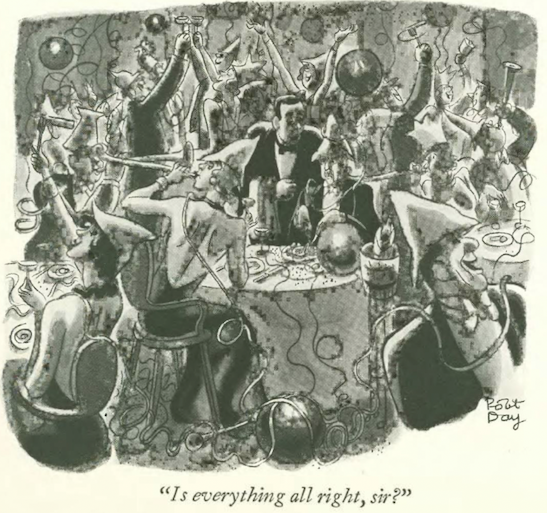
…Robert Day gave us a party pooper too pooped to party…
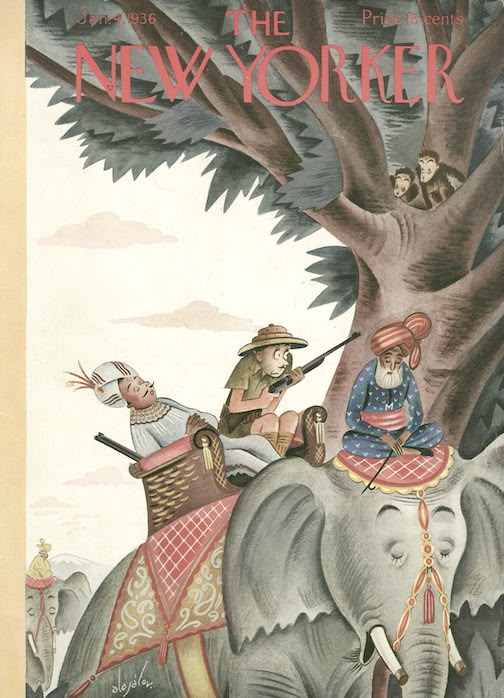
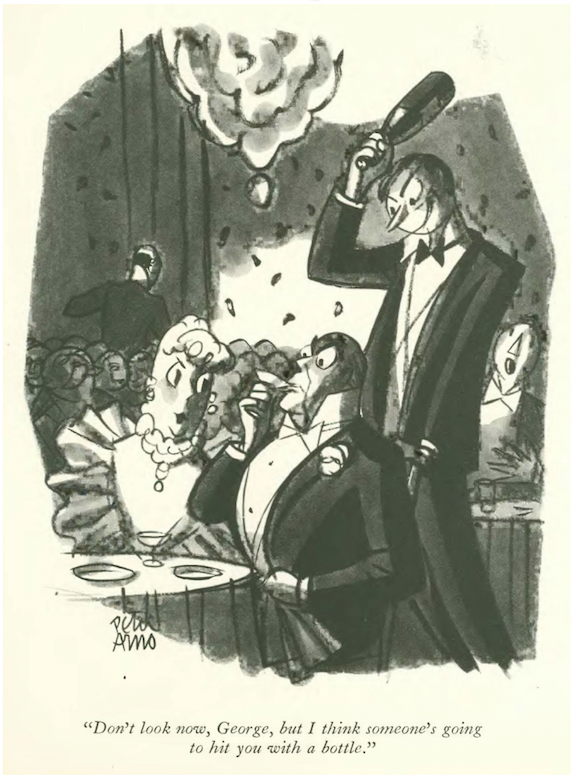
…and Peter Arno offered a glimpse into his active nightlife…

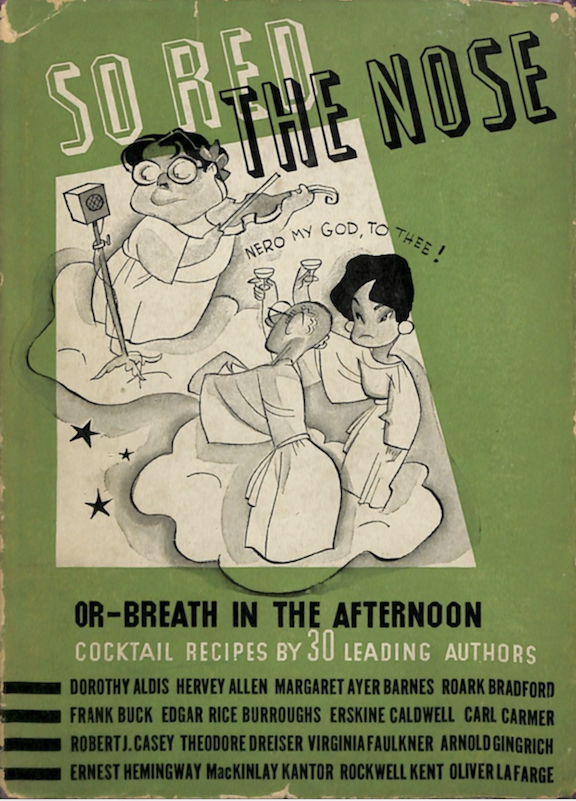
…before we go, I ran across this cocktail book, So Red the Nose, at Messy Nessy’s Cabinet of Curiosities…

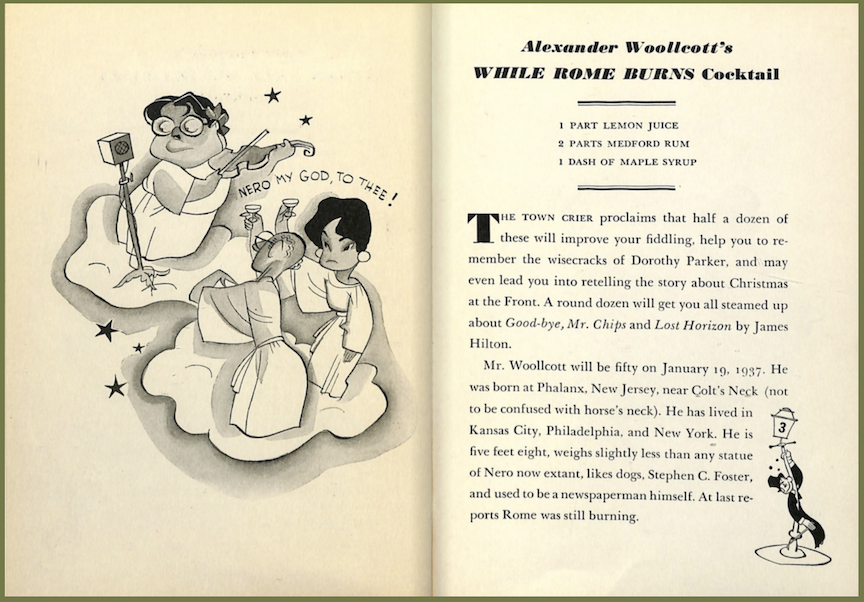
…this particular tome featured an Alexander Woollcott recipe for a cocktail called “While Rome Burns”…

…you can flip through the entire book at this site…

Next Time: The Major’s Amateur Hour …