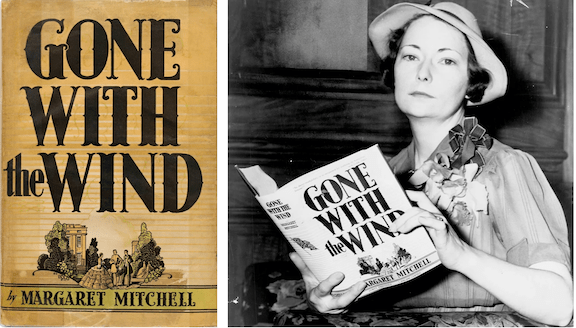
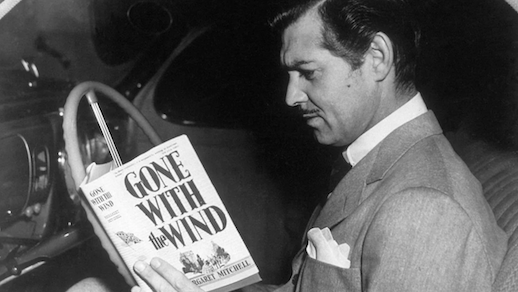
Above: Margaret Mitchell poses with her award-winning novel, c. 1938. Mitchell won the National Book Award for Fiction for Most Distinguished Novel of 1936 and the Pulitzer Prize for Fiction in 1937. Gone With the Wind was the only novel she published in her lifetime. (britannica.com)
Margaret Mitchell’s 1936 novel Gone With the Wind and the 1939 film it inspired have both served as controversial reference points for cultural critics and scholars, particularly for the stereotypical and derogatory portrayals of African Americans in the 19th century South.
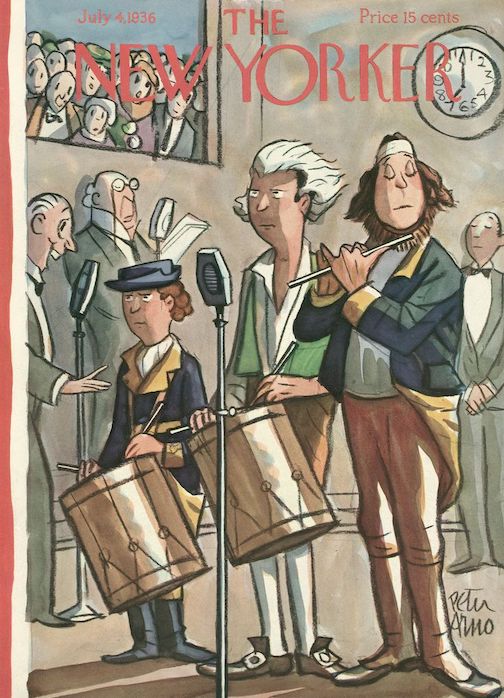
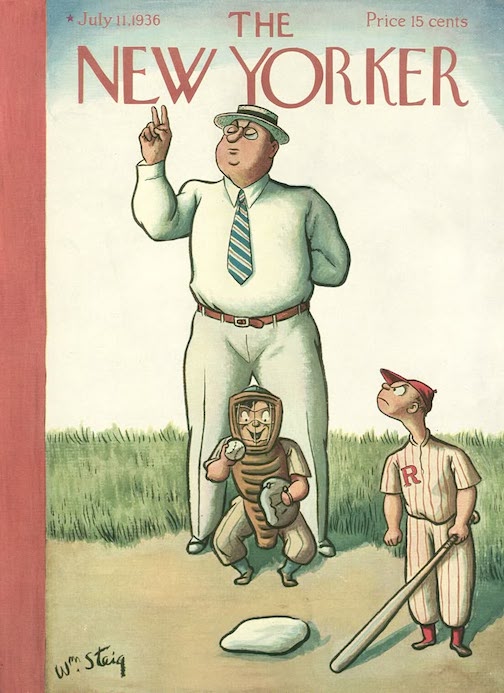
July 4, 1936 cover by Peter Arno.
Ninety years later the novel still proves divisive; it also remains one of America’s most-loved books. Worldwide, more than 30 million copies have been printed in the U.S. and abroad.
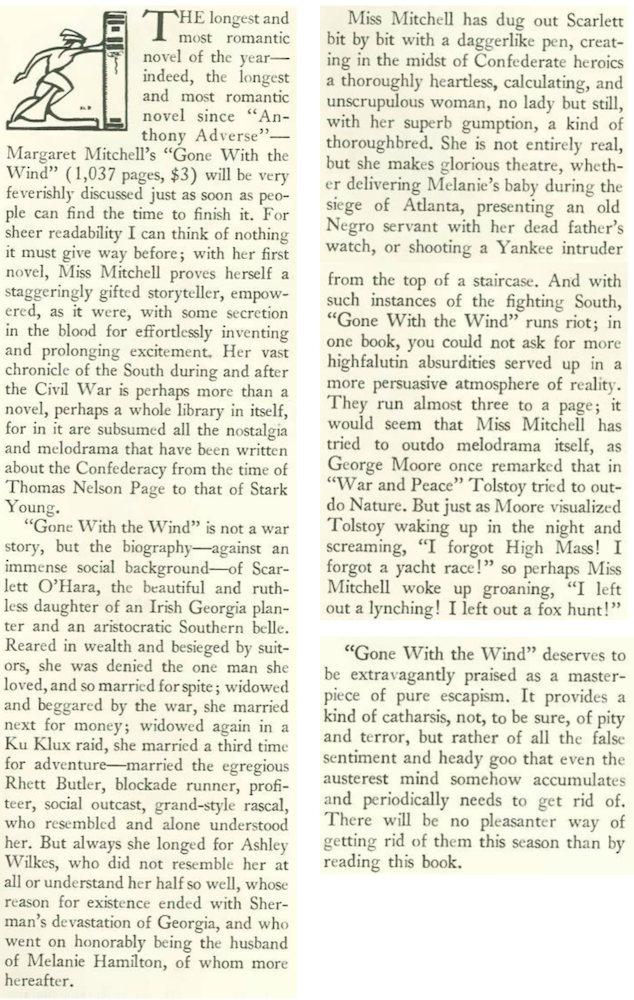
In 1936 the novel quickly rose to the top of fiction bestseller lists, and was generally well received by critics. Novelist and literary critic Louis Kronenberger (1904–1980), who sat in for Clifton Fadiman in The New Yorker’s book section, praised the novel for its “highfalutin absurdities,” calling it a “masterpiece of pure escapism.” Kronenberger wrote that Gone with the Wind provided “a kind of catharsis…of all the false sentiment and heady goo that even the austerest mind somehow accumulates and periodically needs to get rid of.” He correctly predicted that the novel would be “very feverishly discussed” once people found the time to read its thousand-plus pages. Excerpts:
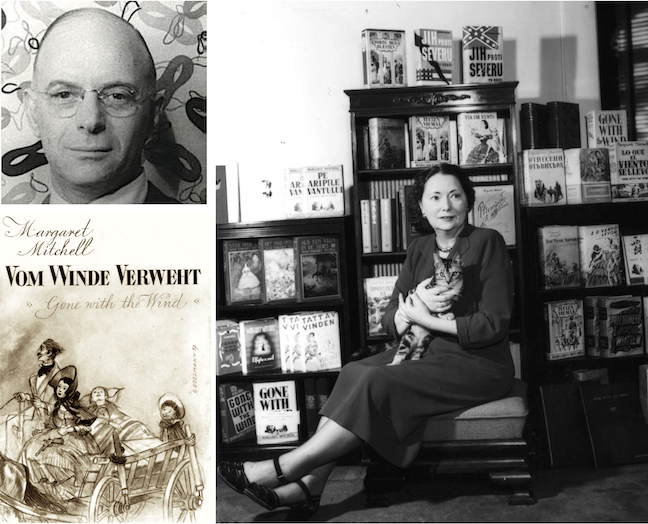
GOO GONE…Clockwise, from top left: Reading Gone With the Wind will clear one’s “heady goo,” according to critic Louis Kronenberger; Margaret Mitchell (1900–1949) seated before a selection of Gone With the Wind translations; an example of a German version of the novel—Gone With the Wind was translated into at least forty different languages with eight hundred unique international printings. (azquotes.com/Atlanta Journal-Constitution/georgiaencyclopedia.org)IT HAS HOW MANY PAGES?!…Clark Gable, who portrayed Rhett Butler in the 1939 film adaptation of Gone with the Wind, has a look at Margaret Mitchell’s doorstop of a book. Mitchell was not involved in the screenplay or film production. (yahoo.com)
* * *
Tweet From Tinseltown
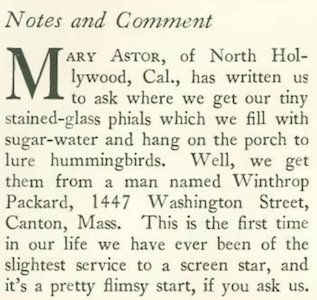
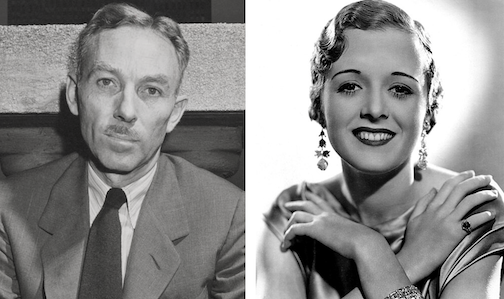
Apparently actress Mary Astor was a New Yorker reader, having read an E.B. White “Notes” column that mentioned his stained-glass hummingbird feeders.
FOR THE BIRDS…A New Yorker column by E.B. White inspired actress Mary Astor to feed Hollywood’s hummingbirds. (Wikipedia)
* * *
Going, Going, Gone
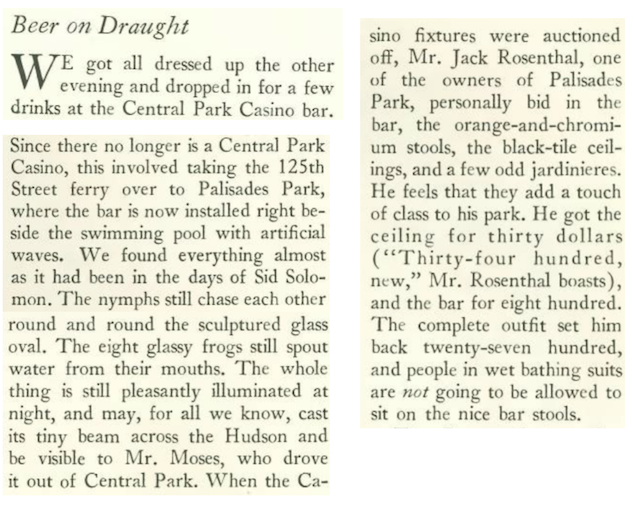
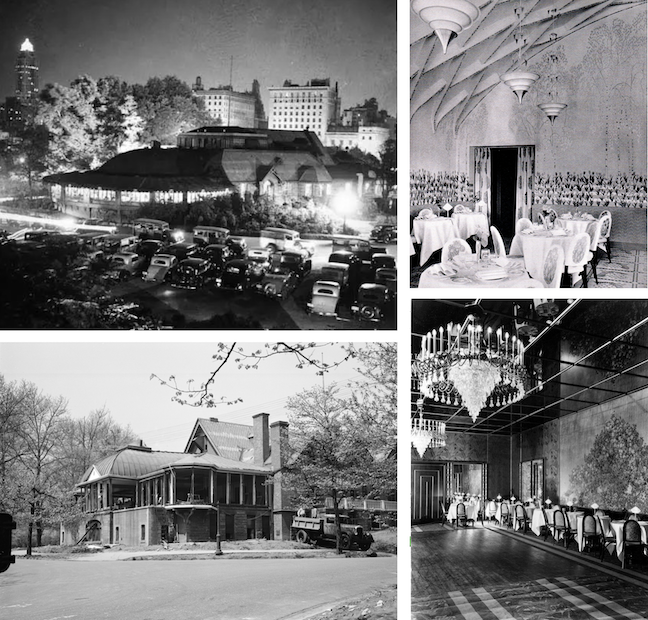
A “Talk of the Town” piece co-written by A. J. Liebling and Russell Maloney tracked down what remained of the Central Park Casino, which had been demolished under the orders of Parks Commissioner Robert Moses.
Moses hated former Mayor Jimmy Walker, and by association he hated Walker’s favorite haunt, the Central Park Casino. Despite pleas from preservationists to save the famous Art Deco supper club, which had been beautifully rebuilt by the late designerJoseph Urban, Moses moved as quickly as possible to demolish the building. Following a public auction, the iconic horseshoe-shaped bar and some interior fixtures were acquired by the Palisades Amusement Park in New Jersey and subsequently installed beside the park’s wave pool.
FROM GLITTER TO RUIN…Clockwise, from top left, the Central Park Casino on the evening of Sept.10, 1935; interior images of Joseph Urban’s elegant Art Deco designs; workers remove windows and interior fixtures as demolition commences in May 1936. (nycgovparks.com/centralpark.org/mcny.org)
* * *
Maddy Returns
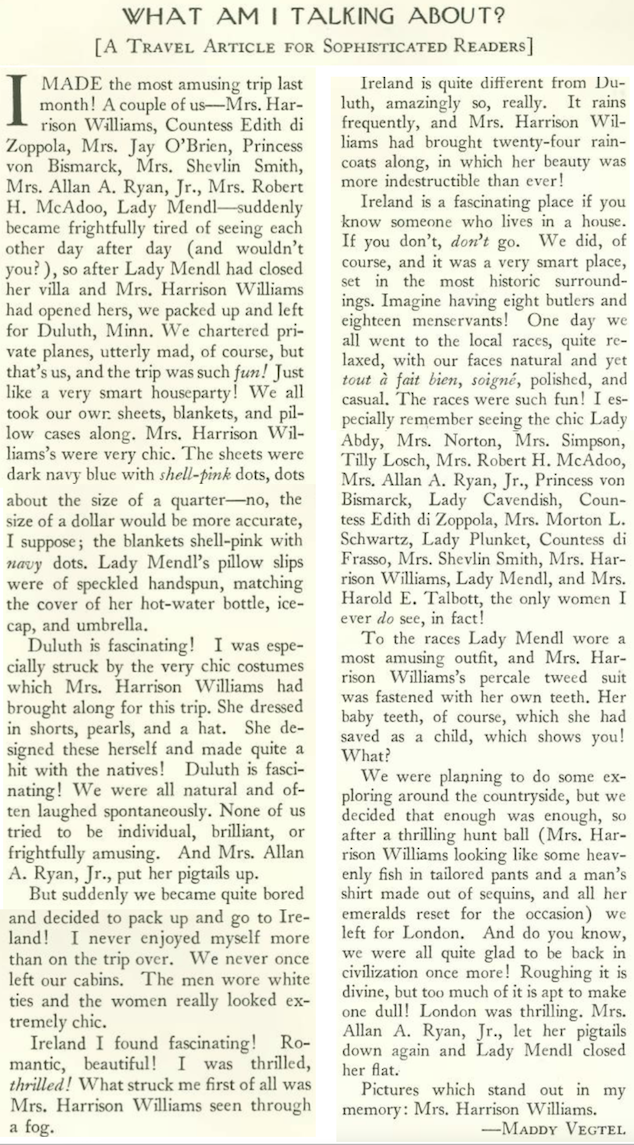
It’s a shame that writer Maddy Vegtel is largely forgotten today. She wrote with great wit and verve, and was well known in the 1920s and 30s for her Vanity Fair profiles and for her articles about Holland, her native land. A contributor to The New Yorker from 1926 to 1956, she published this casual in July 4 issue.
* * *
Bad Men and Mad Men
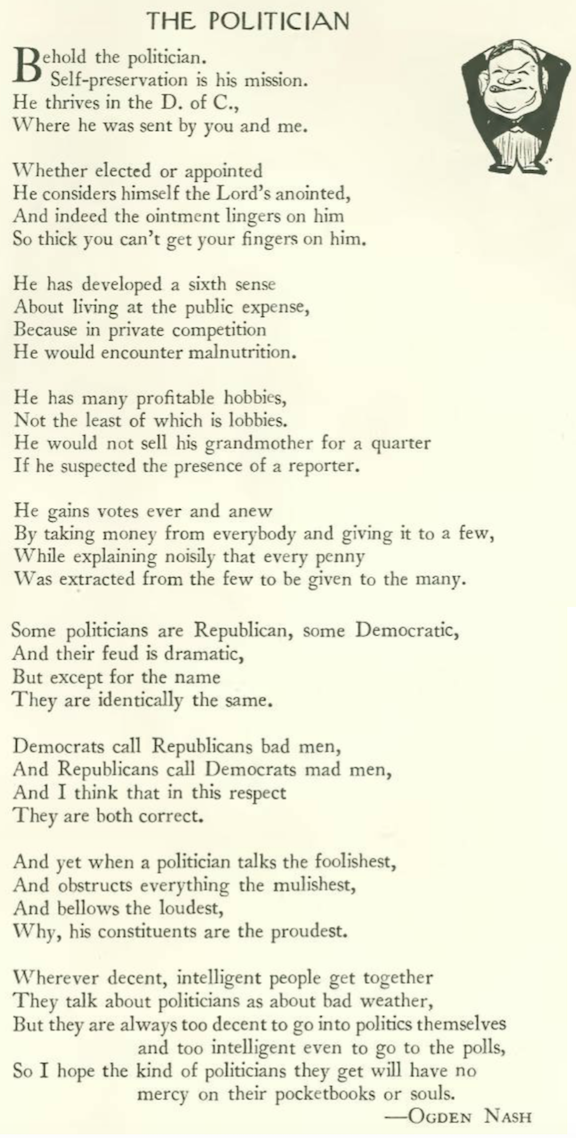
The poet Ogden Nash shared his thoughts on the summer political convention season:
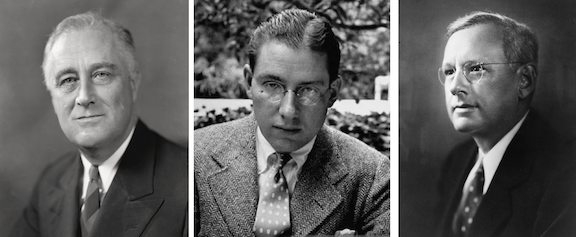
THE LORD’S ANOINTED…Ogden Nash (center) observed this belief in the political animal; at left and right, the Democratic and Republican nominees for president in 1936, Franklin D. Roosevelt and Alf Landon. (Wikimedia/poetryverse.com/Wikipedia)
* * *
At the Movies
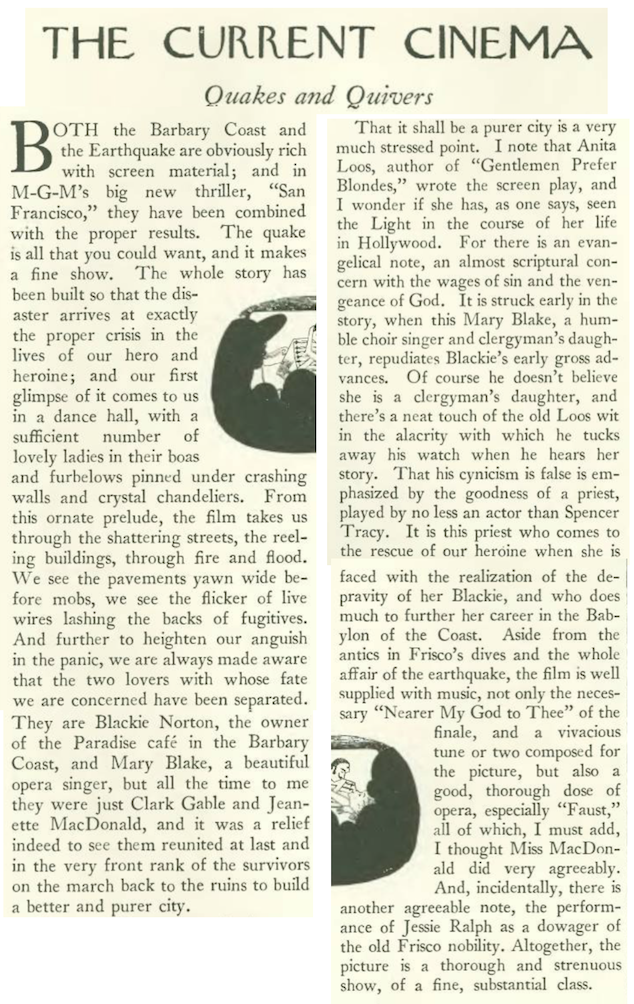
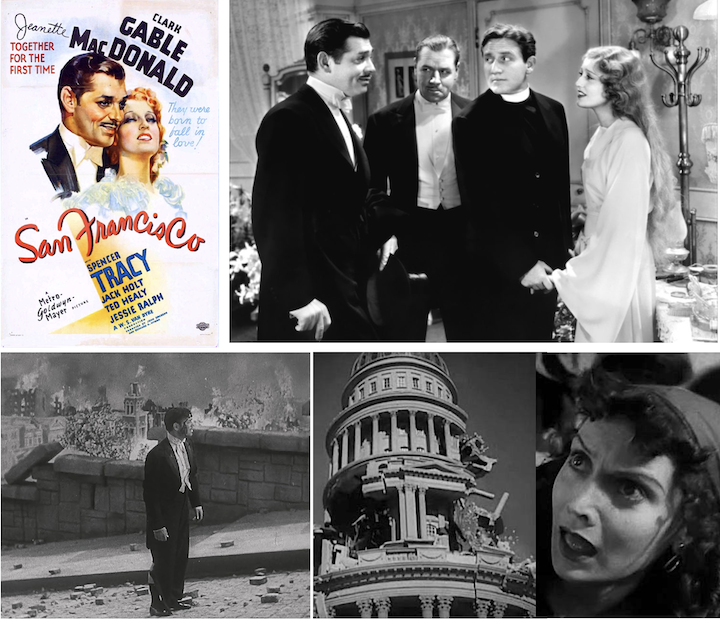
Critic John Mosher was on board for MGM’s musical-drama disaster film San Francisco, which told the story of a saloon keeper, a singer, and a priest caught up in 1906 San Francisco earthquake.
SHAKING IN THEIR BOOTS…Clockwise, from top left: MGM poster for San Francisco touts the first-time pairing of Clark Gable and Jeanette MacDonald in a film; scene from the film featuring, from left, Gable, Jack Holt, Spencer Tracy and MacDonald; the film included stunning effects, including an earthquake montage sequence that interspersed scenes of wreckage with the faces of terrified victims; Gable assesses the carnage in a scene from the film. (imdb.com/kittypackard.wordpress.com)
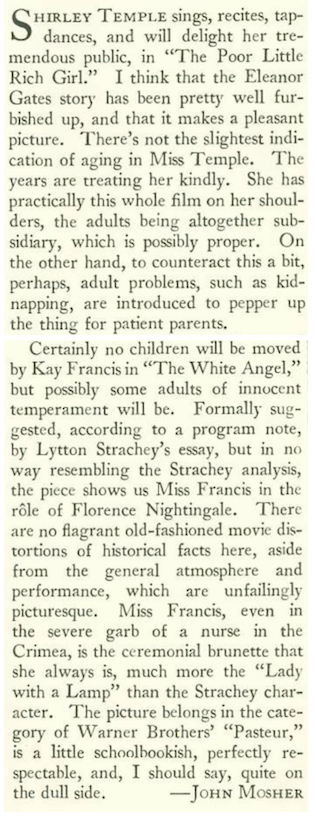
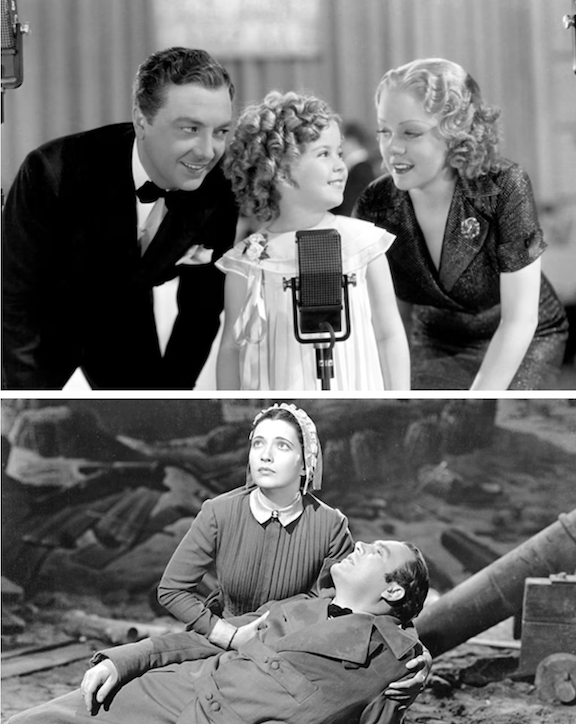
Mosher offered a tongue-cheek assessment of Shirley Temple’s appearance in her latest film, The Poor Little Rich Girl, noting that “There’s not the slightest indication of aging in Miss Temple.” The child star was just shy of eight years old when she filmed the picture. As for the The White Angel, Mosher found the Florence Nightingale biopic—with Kay Francis in the title role—”a little schoolbookish [and] quite on the dull side.”
THAT YOUTHFUL GLOW…Top photo: Critic John Mosher found Shirley Temple still able to “delight her tremendous public” in The Poor Little Rich Girl—she is seen here with co-stars Jack Haley and Alice Faye; Below: Kay Francis and Ian Hunter in The White Angel, a film about Florence Nightingale’s pioneering work as a nurse during the Crimean War. (tcm.com)
* * *
From Our Advertisers
Sunscreen as we understand it today wasn’t available to New Yorkers in 1936, so they relied on zinc oxide and other mineral applications to avoid sunburns…however, Eugene Schueler, founder of L’Oréal, developed the first tanning oil with UV radiation-filtering properties in Europe in 1935 (active ingredient was benzyl salicylate), and later marketed it to the U.S. as Ambre Solaire…the brand is still sold today…
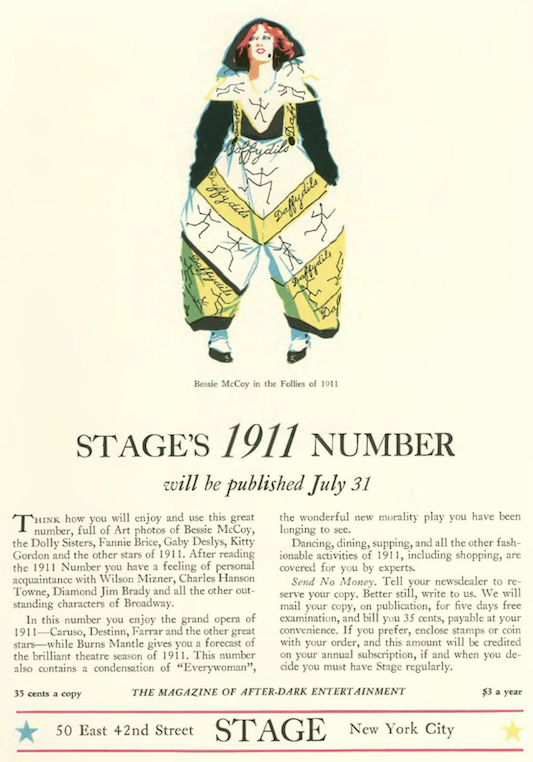
…Stage magazine continued to promote their 1911 throwback issue…
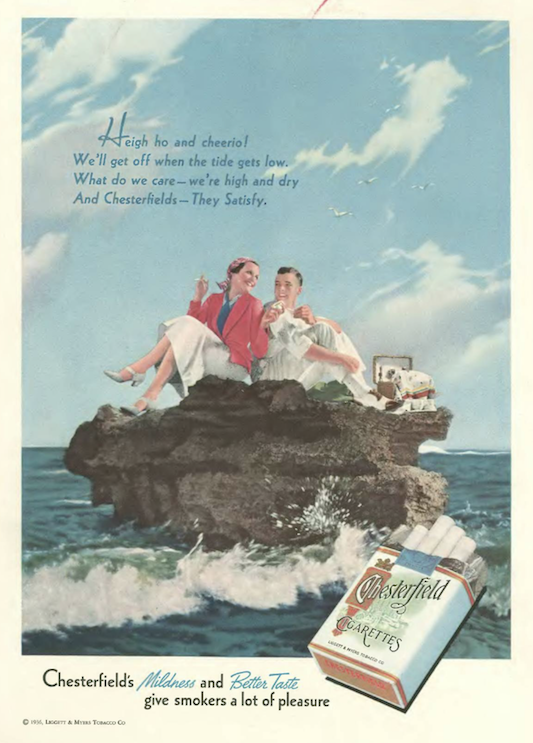
…the back cover belonged to Liggett & Myers, offering another romantic couple enjoying their Chesterfields…
…we open the cartoons with Richard Taylor, who felt the heat as summer took hold in the city…on July 4, 1936, the official high temperature in Central Park reached an unseasonably warm 93 degrees F (34 c), hitting 106 F (41C) five days later on July 9…that mark remains the city’s all-time absolute highest temperature…
…Otto Soglow’s spot art showed us how one well-heeled family escaped the hot city…
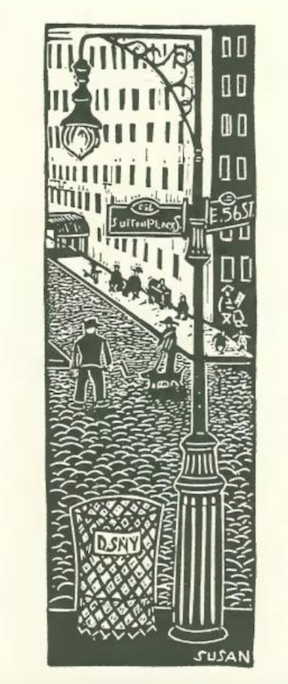
…while Susan Willard Flint offered a woodcut if a quiet cobbled street…
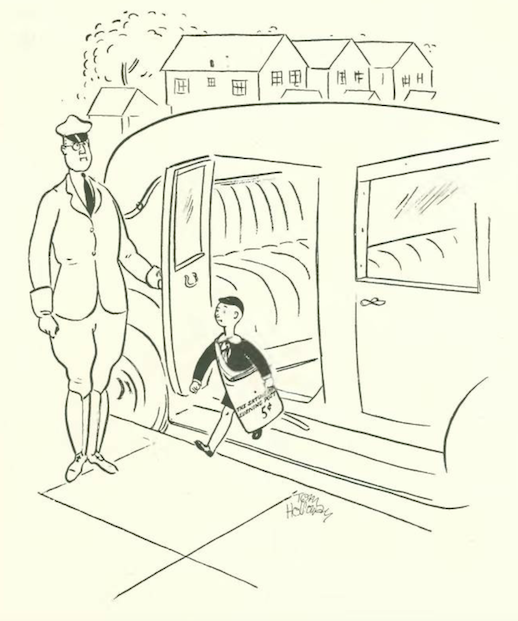
…Tom Holloway showed us how one posh kid delivered the Saturday Evening Post (Holloway was a cartoonist for the Post, contributing just two drawings to The New Yorker, both in 1936)…
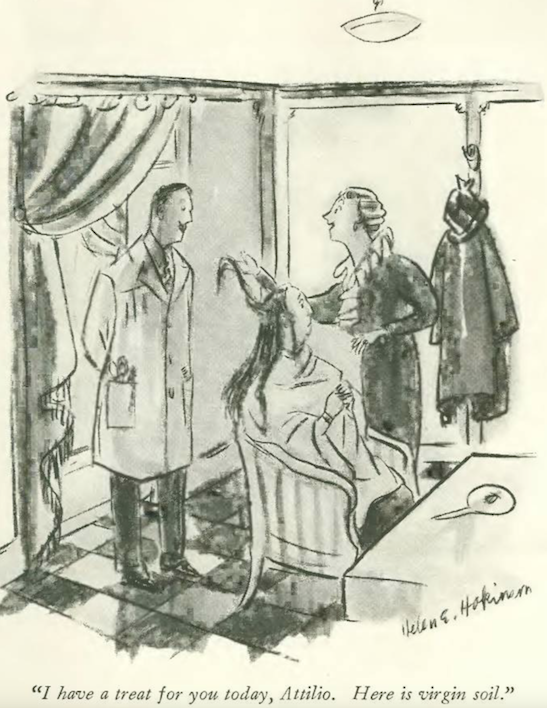
…the woman’s expression says it all in this Helen Hokinson cartoon…
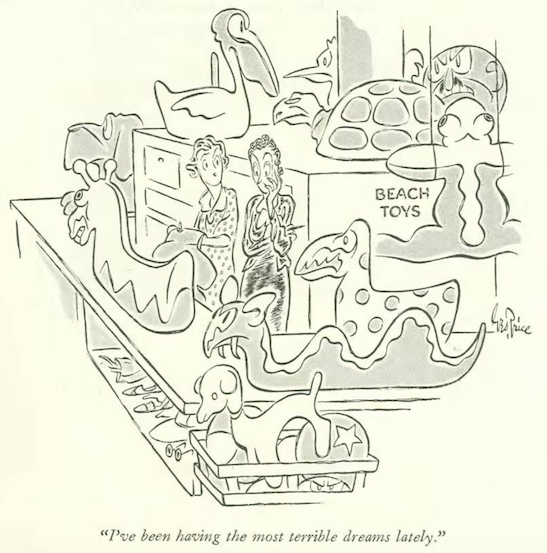
…George Price gave us a saleswoman who saw one two many pool floats…
…Gardner Rea drew up a vast estate for a man who (almost) had it all…
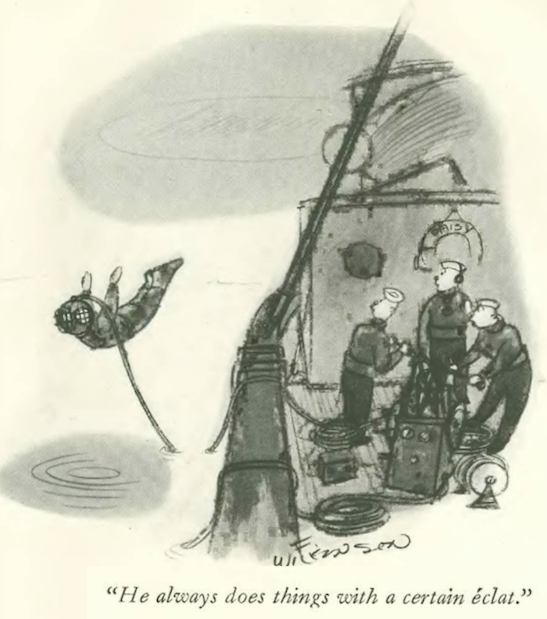
…Fritz Wilkinson did some deep sea swan diving…
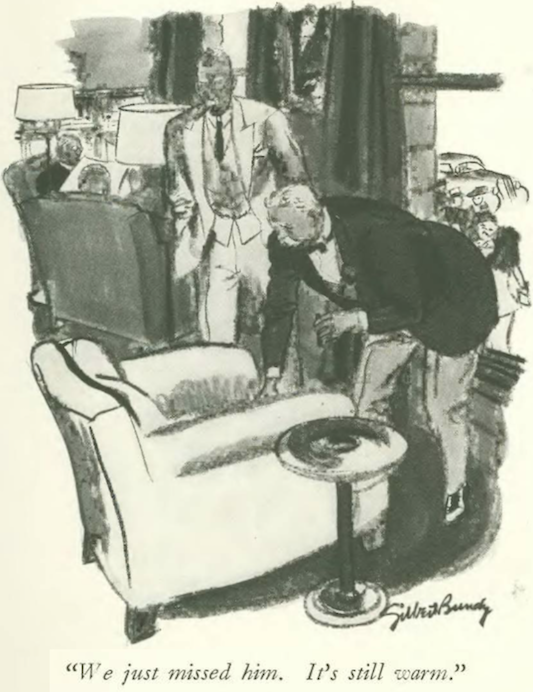
…Gilbert Bundy found a clue at the gentleman’s club…
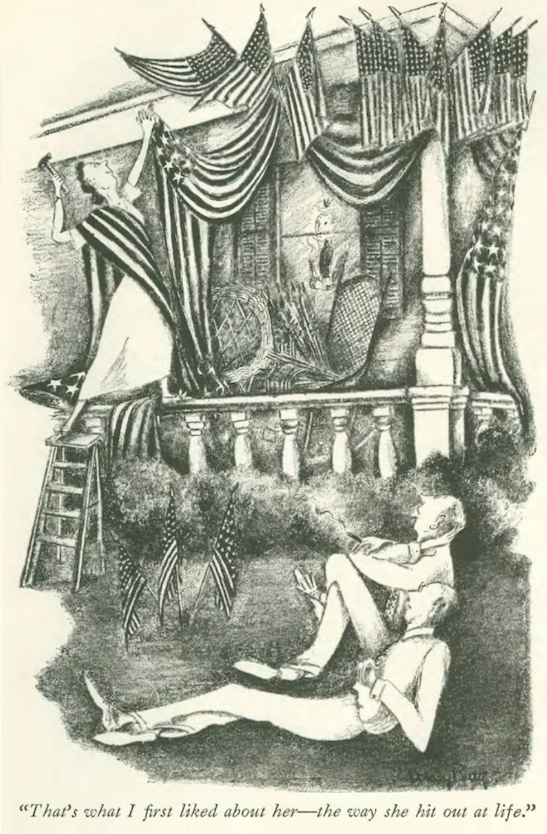
…Mary Petty went all out for the Fourth of July…
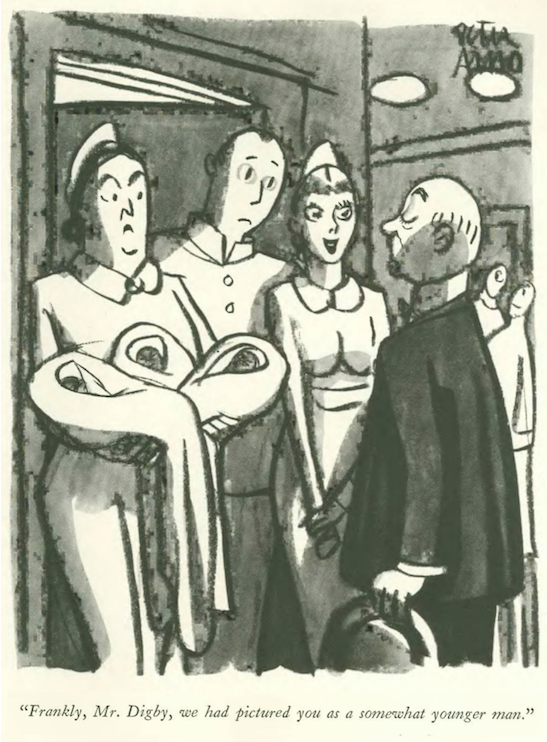
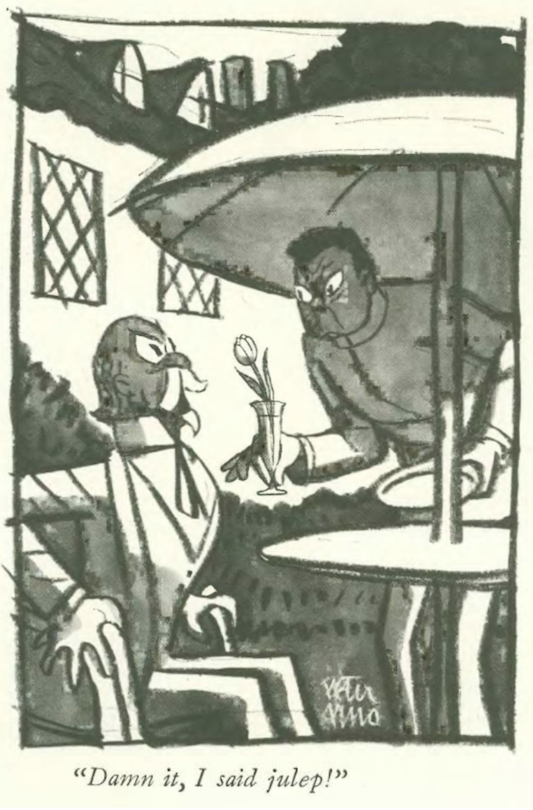
…and we close with Peter Arno, and the miracle of birth…
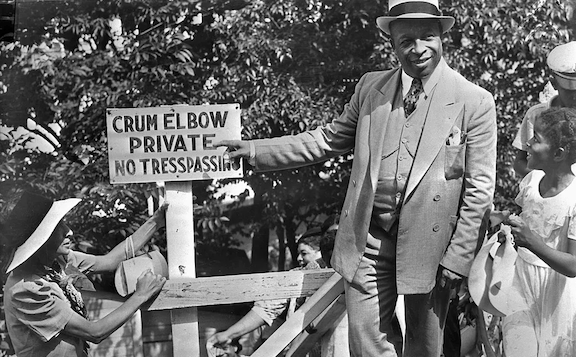
Above: Father Divine points to a Crum Elbow Estate sign (in Highland, NY) in July 1938. His followers purchased the 500-acre spread from anti-New Dealer Howland Spencer...the property was located directly across the Hudson from President Franklin D. Roosevelt's Hyde Park family home. That same summer Father Divine would also buy a fifty-room double dwelling in New York City. These and other locations served as integrated "heavens" for his followers. (Wikimedia Commons)
America has long been fertile ground for various religious denominations, sects and cults. Although the U.S. Religion Census has cataloged more than 370 distinct religious groups and bodies in the U.S., there are tens of thousands of independents scattered across the country.
June 13, 1936 cover by Leonard Dove.
Some of these remain small, while others grow into megachurches often organized around a charismatic leader. Such was the case with Father Divine (1876–1965), aka Reverend Major Jealous Divine, aka George Baker.
His life as George Baker of Valdosta, Georgia came to an end in 1907 when he became known as “the Messenger.” He parted ways with the Baptist church, declared himself a god, and was asked to leave Georgia after his 1914 arrest for lunacy. He led his followers to Brooklyn and later to a commune in Sayville, New York (Long Island), where he founded the International Peace Mission movement and came to be known as Father Divine. By the early 1930s his small and predominantly black congregation had grown into a multiracial and international church.
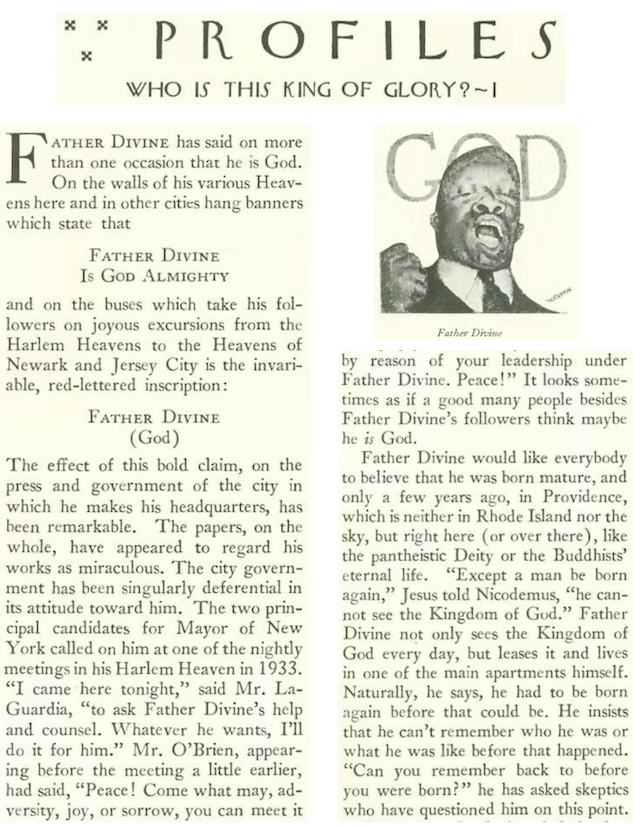
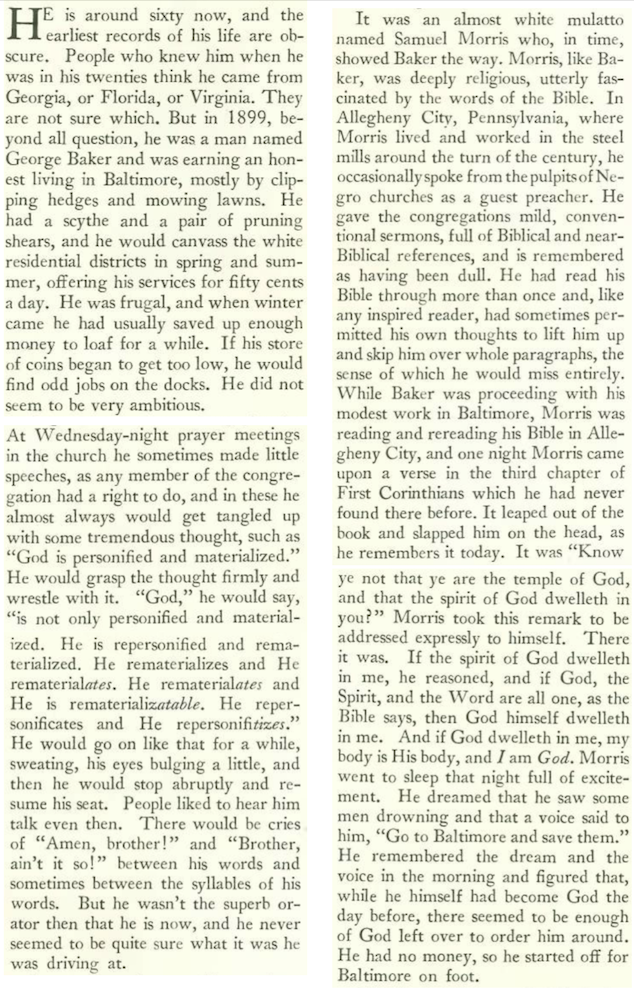
So intriguing was his story that The New Yorker published a lengthy, three-part profile written by St. Clair McKelway and A.J. Liebling. Here are excerpts from Part One (illustration by William Cotton):
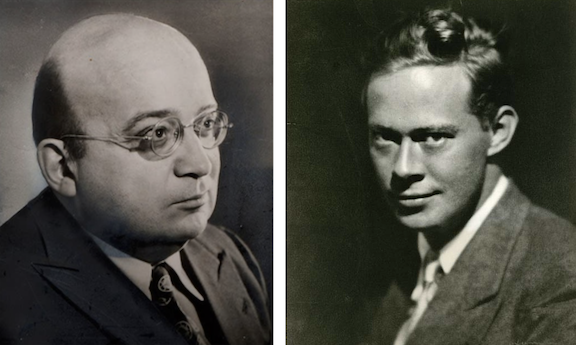
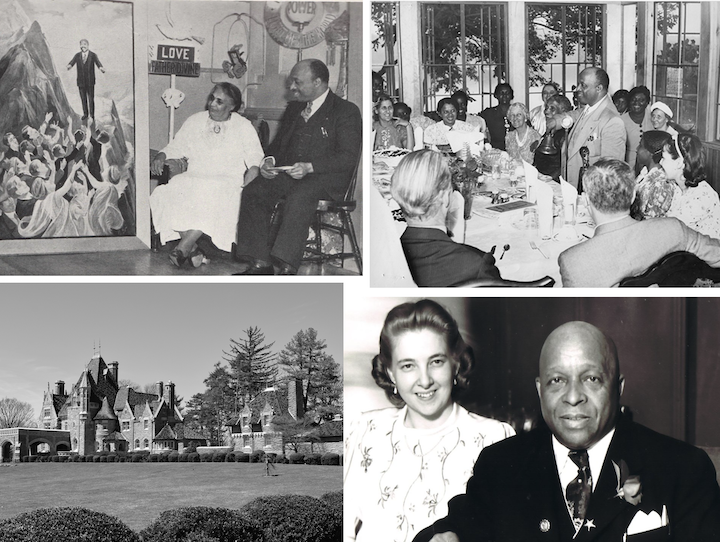
A DEFT DUO…A.J. Liebling (left) and St. Clair McKelway, both acclaimed journalists, co-authored the three-part profile of Father Divine. Liebling (1904–1963) was closely associated with The New Yorker, joining the magazine in 1935 (he was also a well-known gastronome); McKelway (1905–1980) served as The New Yorker’s managing editor for journalistic contributions from 1936 to 1939 and wrote for the magazine for forty-seven years. (Wikipedia/sfgate.com)DIVINE’S PATH…Clockwise, from top left: After relocating to Brooklyn in 1914, Father Divine married his first wife, Peninniah—they are shown here admiring his portrait; Father Divine led large gatherings centered on food—here he entertains guests at a summer retreat in upstate New York in 1938; following the death of Peninniah, the 70-year-old Father Divine married 21-year-old Edna Ritchings in 1946—she took the name “Mother Divine, with Father Divine claiming she was the reincarnation of Penninah; in 1953 Father Divine was given a hilltop estate (“Woodmont”) in Gladwyne, Pennsylvania, by follower John Devoute. The estate is the center of the International Peace Mission movement, a shrine to Father Divine’s life, and a meeting place for the few remaining followers. (thecityroot.com/Newark Public Library/hsmcpa.org/Wikipedia)
How did Father Divine come to believe he was a god? This excerpt offers some insights into his early development:
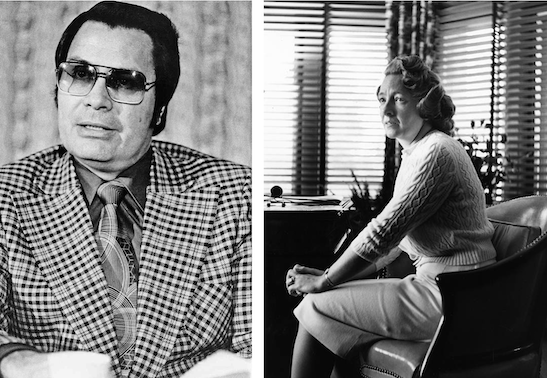
One of the perils of this kind of thinking is that it can lead to the formation of dangerous cults. Jim Jones, the notorious leader of the Peoples Temple, heavily modeled his early church activities and authoritarian structure on Father Divine’s example. Jones even attempted to take over the International Peace Mission after Father Divine’s death—in 1971 he tried to convert the Peace Mission’s followers, claiming he was the reincarnated Father Divine. His takeover attempt was thwarted by Mother Divine, who went to the media and publicly denounced Jones and the Peoples Temple. In 1974 Jones and his followers would relocate to a Guyana commune he called Jonestown. Four years later Jones would lead the mass murder-suicide of 909 Jonestown inhabitants.
AT ODDS…Jim Jones (left, circa 1970) attempted to take over the International Peace Mission after Father Divine’s death, but was publicly denounced by Mother Divine. At right, Mother Divine giving her first interview following the death of Father Divine in 1965. (Wikipedia/temple.edu)
* * *
At the Movies
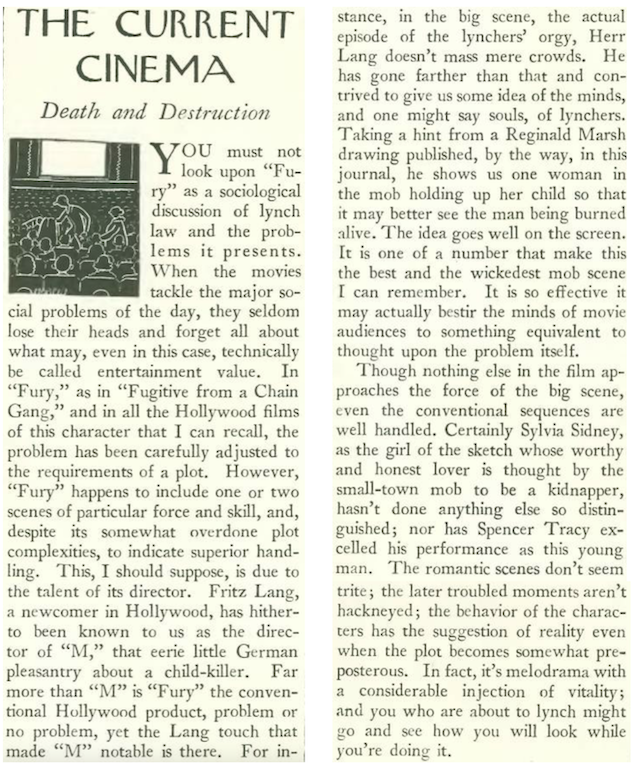
The media has always thrived on crime stories, feeding the public’s insatiable desire to be tantalized; once sated, they often demand swift justice. Take the heavily publicized 1933 case of two San Jose, California men who were accused of kidnapping and murdering a department store heir. Rather than wait for justice to be served, an angry mob broke into the jail and lynched the accused. Fascinated by the story, MGM screenwriter Norman Krasna pitched it as a potential film.
That film would become Fury, German director Fritz Lang’s first American project. Prior to fleeing the Third Reich in 1933, Lang was perhaps best known to Americans for his pioneering 1927 silent sci-fi film Metropolis and the 1931 thriller M. Lang sought to demonstrate how a decent and civilized man could become filled with vengeance and hate. Although critic John Mosher could see how the film had been tampered with by studio execs (and the Hays Code), he was nevertheless impressed by Lang’s direction and by the performances of lead actors Sylvia Sidney and Spencer Tracy.
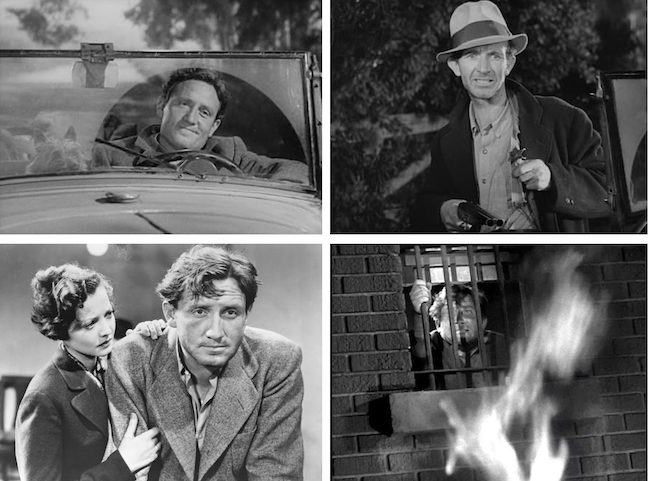
WRONG TURN…Clockwise, from top left: In Fury,Spencer Tracy played gas station owner Joe Wilson, who drives west to reunite with his fiancée—the dog seated to his right is Terry, the same Cairn Terrier who played Toto in The Wizard of Oz; while camping outside a small town, Joe is arrested by a creepy local deputy (Walter Brennan) on suspicion of kidnapping a child; a mob forms and tries to burn Joe in his cell; in the confusion of the fire he escapes and seeks vengeance on the mob, but in the end finds peace with his fiancée (Sylvia Sidney). (imdb.com)
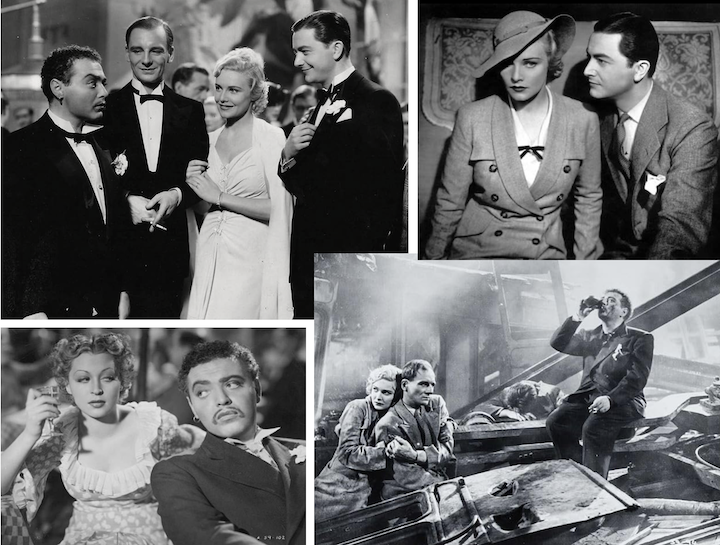
Peter Lorre, who was famously directed by Fritz Lang in the 1931 German thriller M, was starring in Alfred Hitchcock’sSecret Agent, which also featured John Gielgud (already famous as a London stage performer), Madeline Carroll, and Robert Young.
SECRETS AND LIES…Clockwise from top left: Peter Lorre, John Gielgud, Madeline Carroll, and Robert Young in Secret Agent; Carroll with Young, who played a German mole; Carroll, Gielgud and Lorre amid the wreckage of a train; Lorre in a scene with Lilli Palmer. (imdb.com)
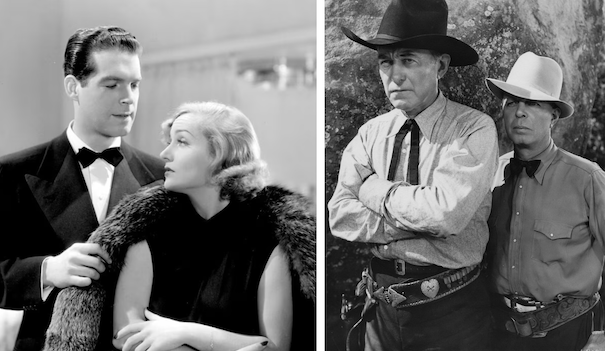
Mosher briefly mentioned a new Fred MacMurray/Carole Lombard comedy–mystery, and the return of two silent movie stars.
CHOOSE YOUR PARTNER…The second of four films Fred MacMurray made with Carole Lombard between 1935 and 1937, The Princess Comes Across featured Lombard doing a clever take-off on Greta Garbo; silent-film veterans Harry Carey and Hoot Gibson stood for the ideals of the Old West in a culture clash with scientific crime-fighting in The Last Outlaw. The film was a remake of a 1919 silent film originally written and directed by John Ford.(imdb.com/csfd.cz)
* * *
Beer Bottle Battle
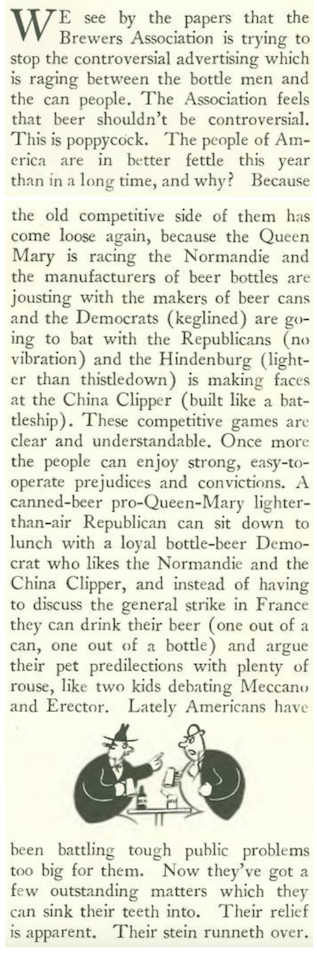
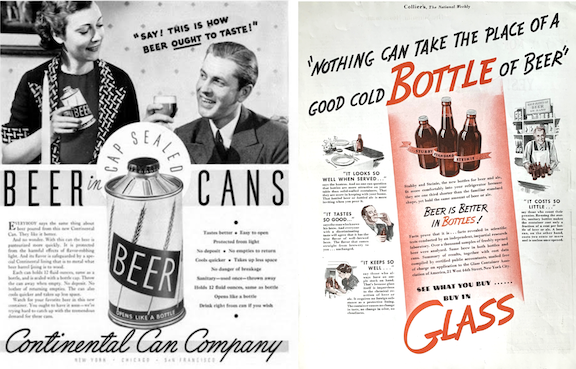
E.B. White (in his “Notes and Comment”) seized on the battle between bottle and can manufacturers as an apt metaphor for the jousting of Republicans and Democrats ahead of the November elections.
FOAMING AT THE MOUTH…Competing ads from Collier’s magazine circa 1935-36 illustrate the battle between can and bottle manufacturers. Ninety years later, beer drinkers still debate the merits of glass over cans. (boakandbailey.com/ebay.com)
* * *
From Our Advertisers
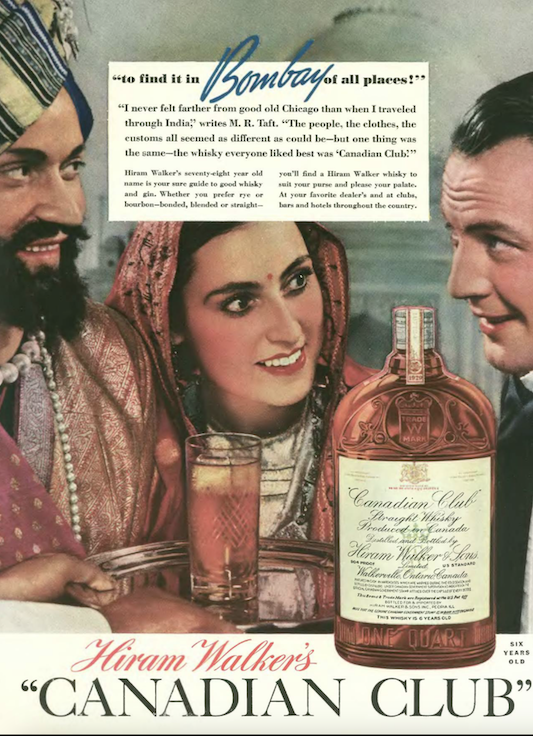
In 1936 whisky was still firmly in bottle form, and the makers of Canadian Club—through a series of ads—wanted to let us know you could enjoy their tipple almost anywhere in the world…
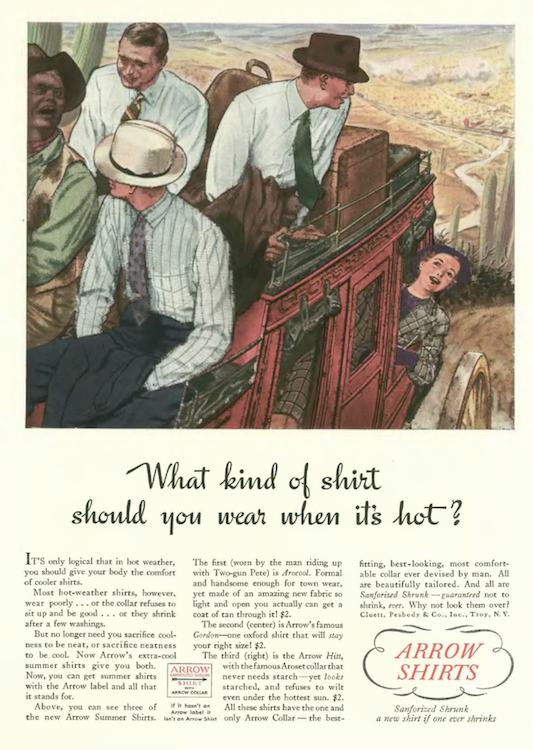
…this woman poses an interesting question, considering the fellas are riding atop a dusty stagecoach in the Arizona heat—in formal attire no less…
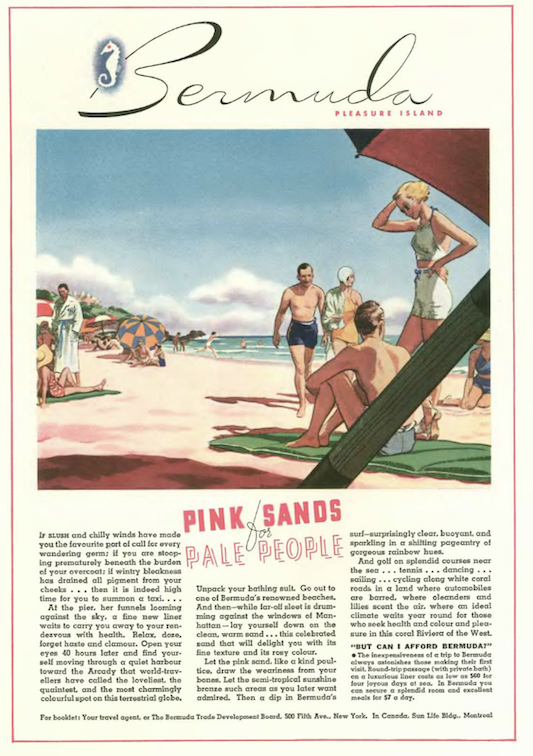
…over the years we’ve seen a lot of Adolph Teidler’s work for the Bermuda Board of Trade…Teidler (1886–1981) was also well known for his Saturday Evening Post covers…
…here’s an example of Teidler’s work for the Bermuda Board of Trade from the Feb. 22, 1936 issue of The New Yorker…
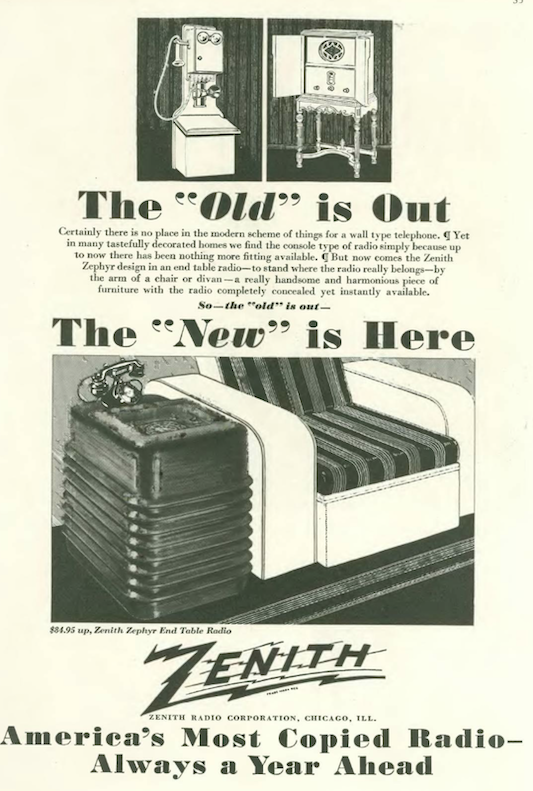
…the Zenith Radio Corporation touted their modern, streamlined “Zephyr” radio by industrial designer Robert Davol Budlong…
A restored Zenith 10-S-147 Zephyr chairside radio. (Pete Johnson–Zenith Radios Enthusiasts and Collectors via Facebook.com)
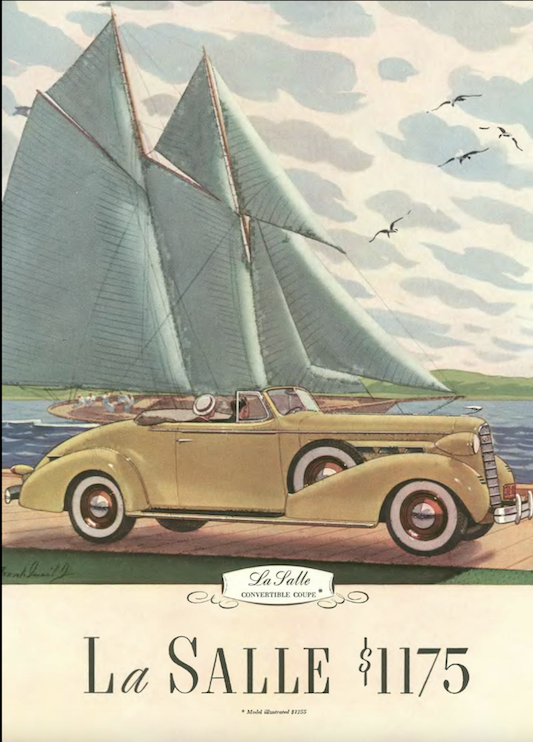
…Frank Quail Jr was a prominent automotive illustrator active from the 1920s through the 1930s. He was well-known for his work with luxury automobile brands such as Cadillac, LaSalle and Packard…here he conjures up a breezy seaside image for Cadillac’s more affordable LaSalle model (most of these ads were two-page spreads, with promo copy on the right-hand page)…
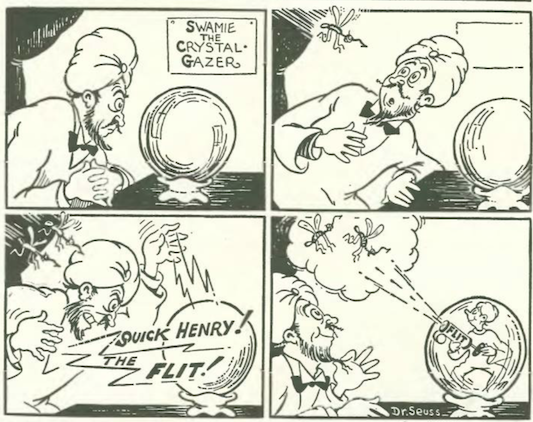
…and more Dr. Seuss on behalf of Flit insecticide…
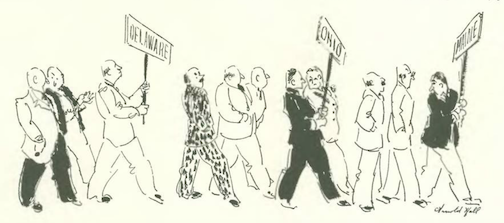
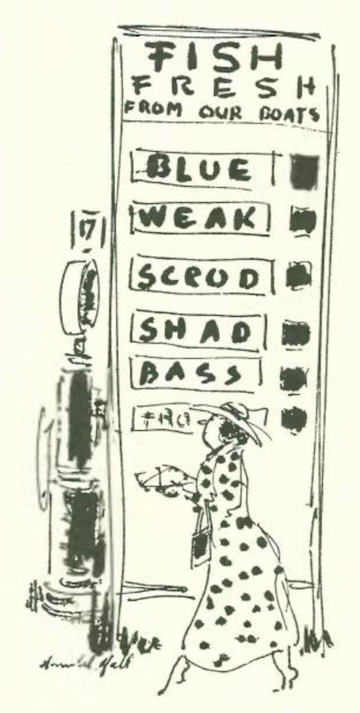
…we begin the cartoon section with some spot art…here are two by Arnold Hall…
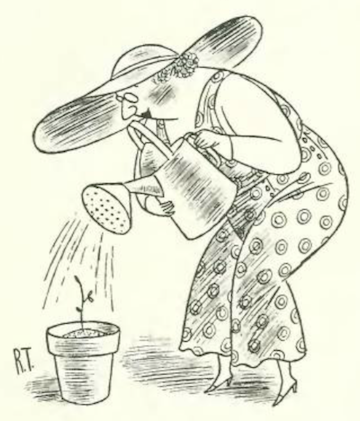
…and one from Richard Taylor…
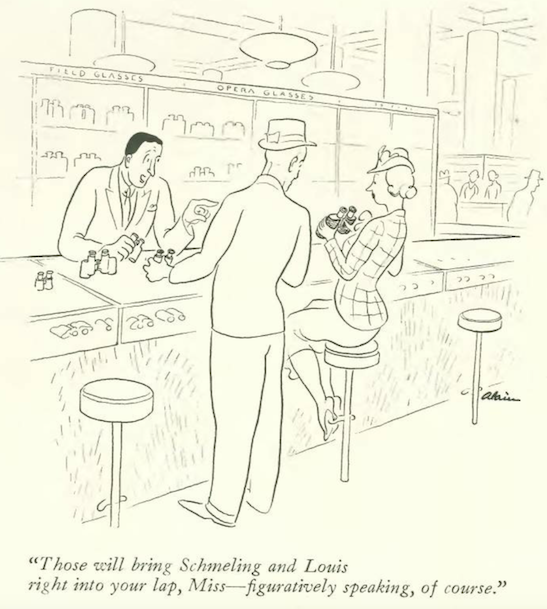
…Alain referenced the upcoming heavyweight bout at Yankee Stadium between Max Schmeling and Joe Louis…their two fights in 1936 and 1938 were international sensations…
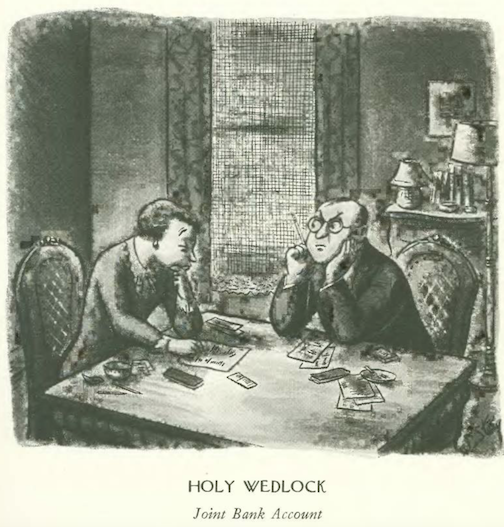
…more glimpses of “Holy Wedlock” from William Steig…
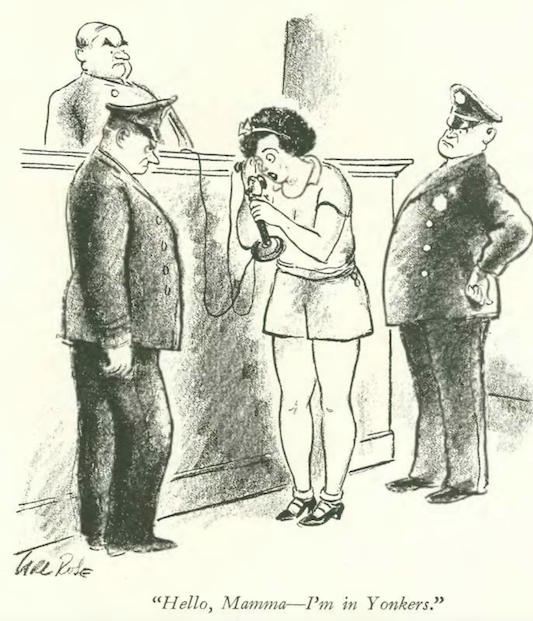
…a bit of trouble in Yonkers, per Carl Rose…
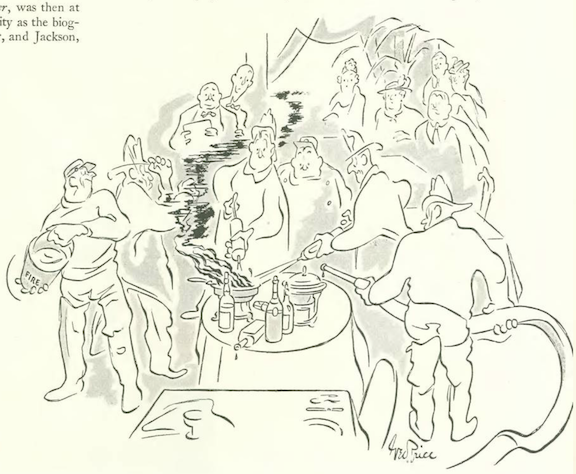
…George Price brought out the fire brigade for the Crêpes Suzette…
…Peter Arno drew up a colonel with a communication issue…
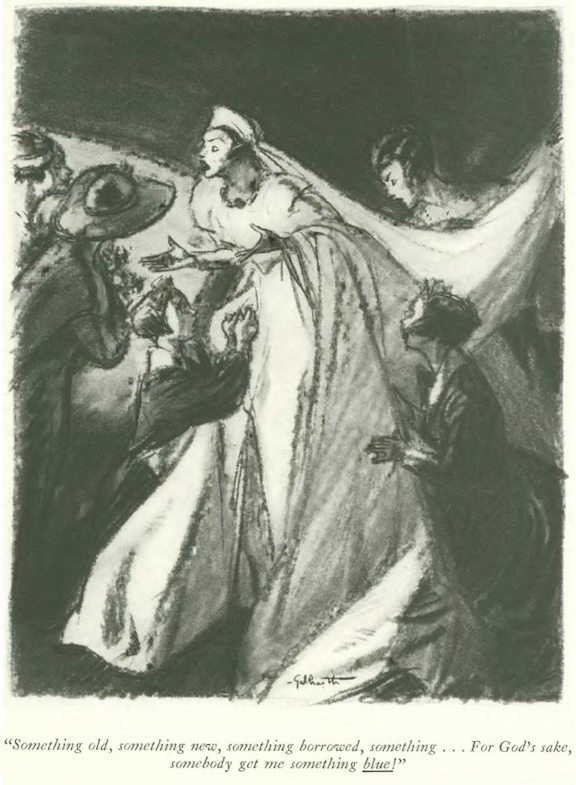
…William Crawford Galbraith celebrated the June bride…
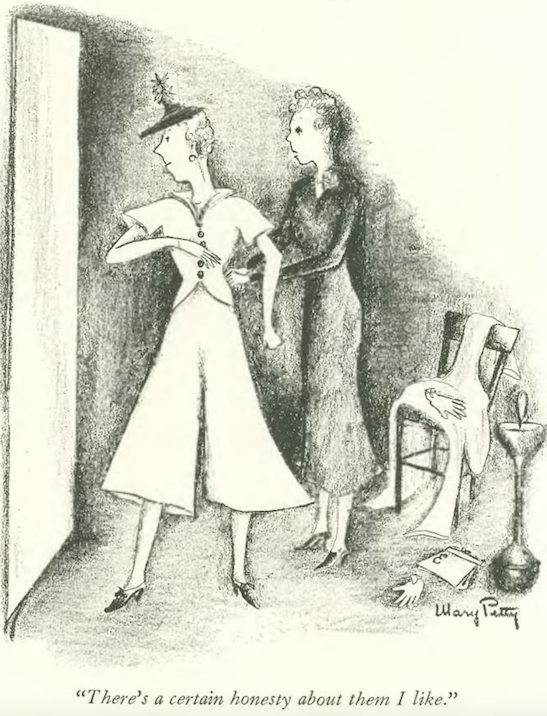
…two by Mary Petty, at the dress shop…
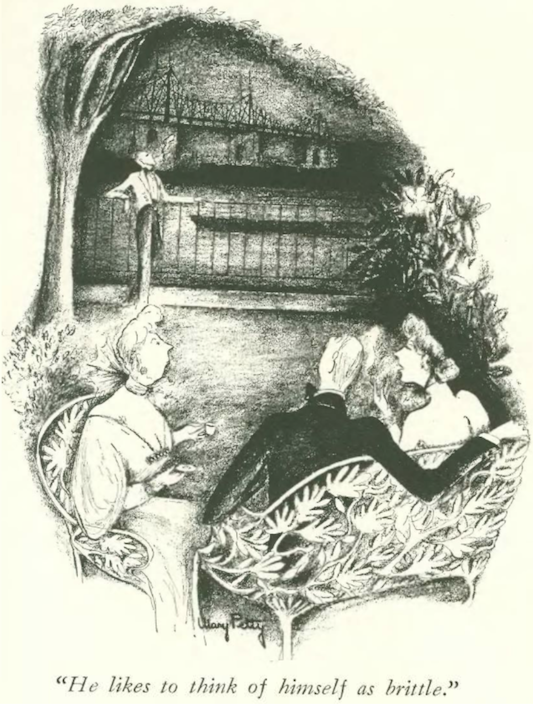
and at the in-laws…
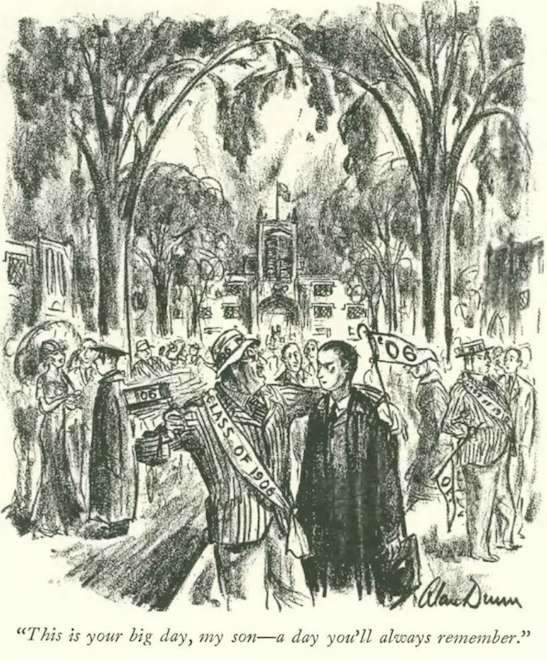
…Petty’s husband Alan Dunn feted the Class of ’36 (and ’06)…
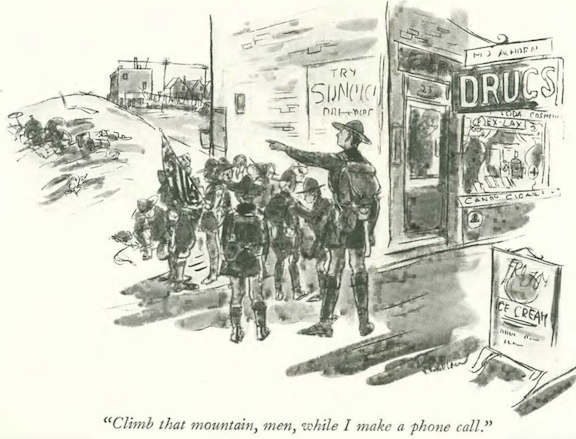
…Perry Barlow illustrated a scoutmaster’s leadership skills…
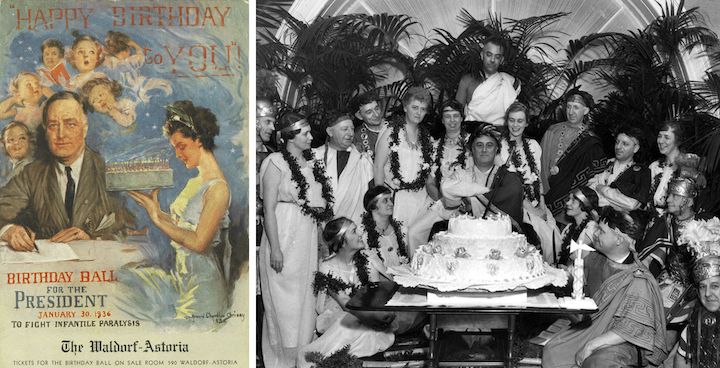
Above: Beginning in 1934, the President’s Birthday Balls became annual fundraisers for polio research. The Waldorf-Astoria's 1936 event (left) featured dance bands, celebrities, and formal dress. At right, a 1934 "Toga Party" birthday with FDR's Cuff Link Gang, Washington D.C. (fdrlibrary.org)
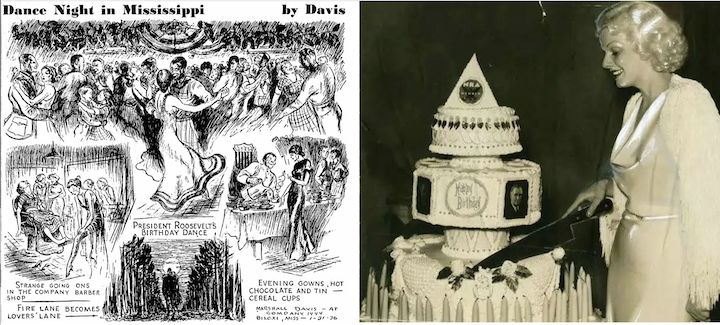
President Franklin D. Roosevelt’s birthday was a cause for annual celebration throughout the country, where cities and towns both large and small used the occasion to raise money for polio research.
February 1, 1936 cover by Roger Duvoisin.
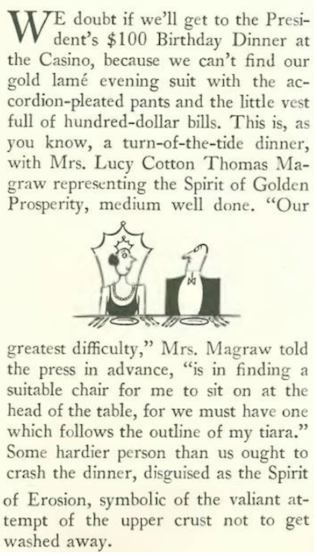
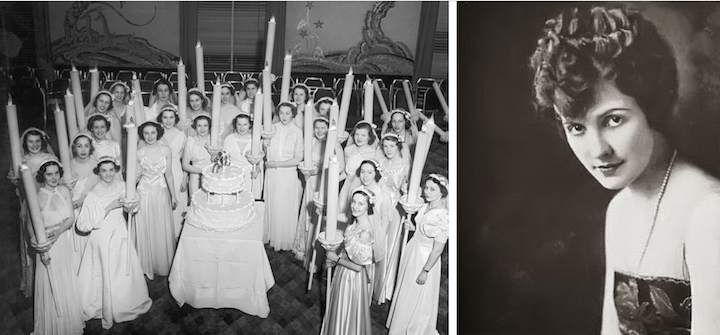
The Jan. 30, 1936 President’s Birthday Ball marked FDR’s 54th year, featuring celebrities, dances, and a national radio address. The Waldorf-Astoria hosted an event, as did the Central Park Casino, where E.B. White found the one-hundred-dollar price tag and the dress code a bit too rich for his tastes, but not too rich for Lucy Cotton Thomas Magraw, a Manhattan social climber who represented the “Spirit of Golden Prosperity” at the Casino event.
LIKE MOTHS TO FLAME…At left, debutantes mark FDR’s birthday fundraiser at the Waldorf-Astoria in the 1930s; at right, Lucy Cotton Thomas Magraw (1891–1948) was a chorus girl from Houston who appeared in several silent films, but was best known as a Manhattan social climber and for her marriages to a series of prominent men. (wwd.com/davidkfrasier.com)
FDR himself was diagnosed with polio in 1921, which left him paralyzed from the waist down. To counter the effects of the disease, Roosevelt explored the potential benefits of hydrotherapy, establishing a rehabilitation center at Warm Springs, Georgia. Proceeds from the charity balls went to Warm Springs until Roosevelt founded the National Foundation for Infantile Paralysis in 1938. Funds raised by the foundation supported the development of a vaccine by the 1950s.
A NIGHT OF MERRIMENT…Celebrations in CCC camps in honor of FDR’s birthday became annual events, such as the one at left (illustrated by Marshall Davis) that depicted various happenings at the 1936 President’s Birthday Dance in Biloxi, Mississippi; at right, actress Jean Harlow cutting FDR’s birthday cake at the Eastbay Birthday Ball in Oakland, CA, in 1934. (newdealstories.com/facebook.com)
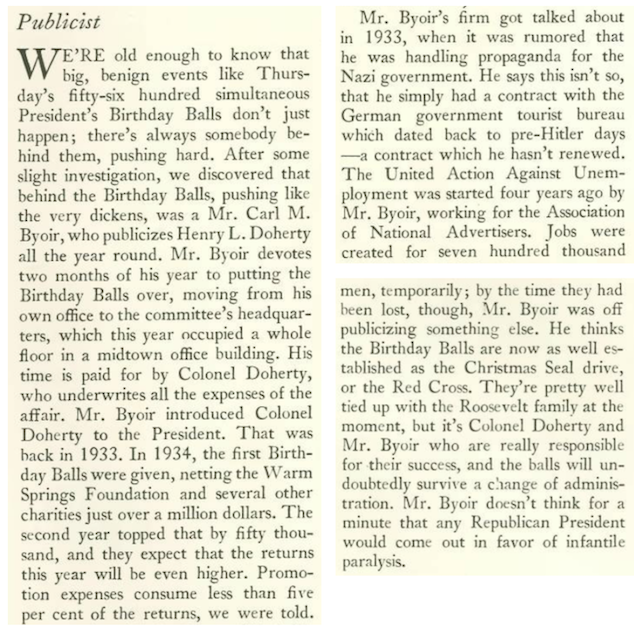
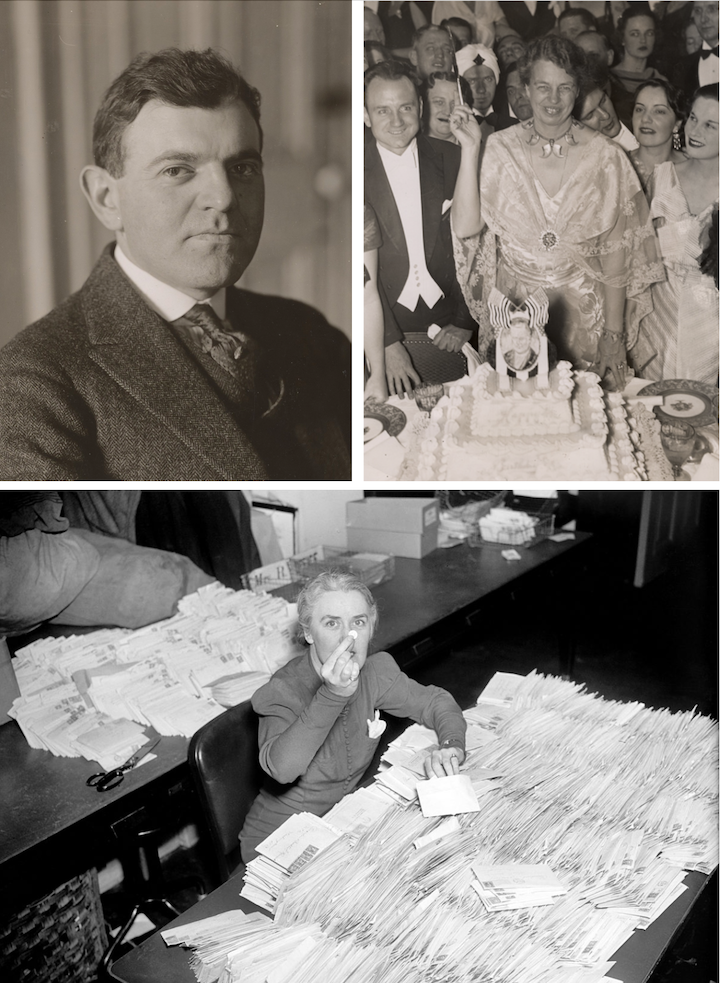
“The Talk of the Town” noted the role of Carl M. Byoir, a pioneering publicist, in creating the buzz around the yearly birthday balls.
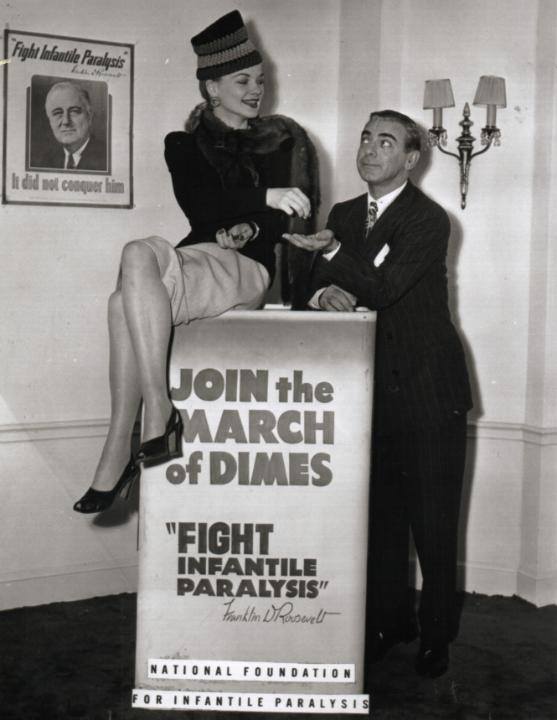
CAN YOU SPARE A DIME?…Clockwise, from top left, Carl Byoir created and organized one of the world’s largest public relations firms in 1930, and was a force behind making the FDR Birthday Balls a major national event; Eleanor Roosevelt cuts the cake at a Birthday Ball, Washington, D.C., Jan. 30, 1936; Margaret Lehand, personal secretary to President Roosevelt, holds up one of the 30,000 dimes received on the morning of Jan. 28, 1938 for FDR’s National Foundation for Infantile Paralysis, which would later become the March of Dimes. (Wikipedia)COIN FOR A CAUSE…As we saw in the previous post, it was comedian Eddie Cantor who coined the phrase “March of Dimes” for the annual fundraiser for polio research. The phrase later became the official name of the National Foundation for Infantile Paralysis. (Facebook)
The Roosevelt Dime went into circulation in 1946, commemorating FDR’s role in inspiring the March of Dimes.
* * *
Rap on Scrap
Poet and author Phyllis McGinley apparently had her fill of social occasions that included interminable, tedious viewings of the hosts’ scrapbooks, photo albums, and various tchotchkes.
SPARE ME YOUR VACATION SLIDES…Phyllis McKinley would have hated Facebook. (Wikipedia)
* * *
Wise Guy
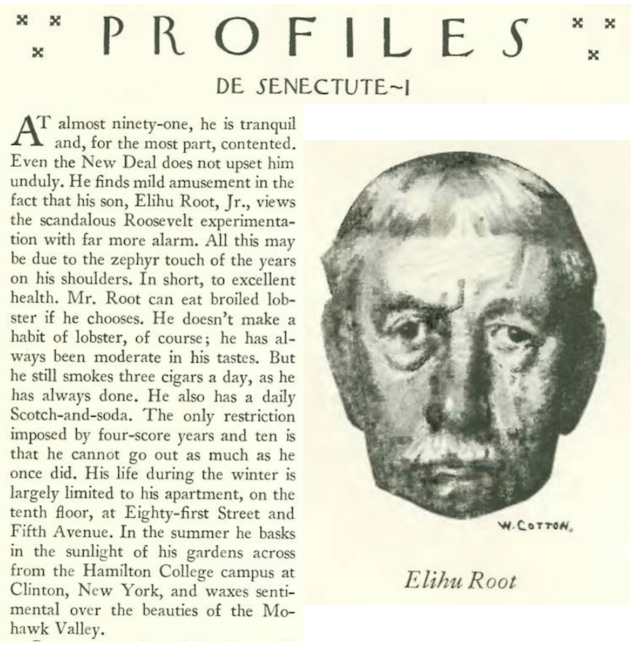
Henry F. Pringle published the first part of a three-part profile on Elihu Root, making much of the fact that Root (1845–1937) was still kicking at ninety after a lifetime of public service including two stints as Secretary of War and serving as Secretary of State under President Theodore Roosevelt. Unofficially, he advised a number of presidents and other leaders on foreign and domestic issues, giving him the imprimatur of a political “wise man.” A brief excerpt (with caricature by William Cotton):
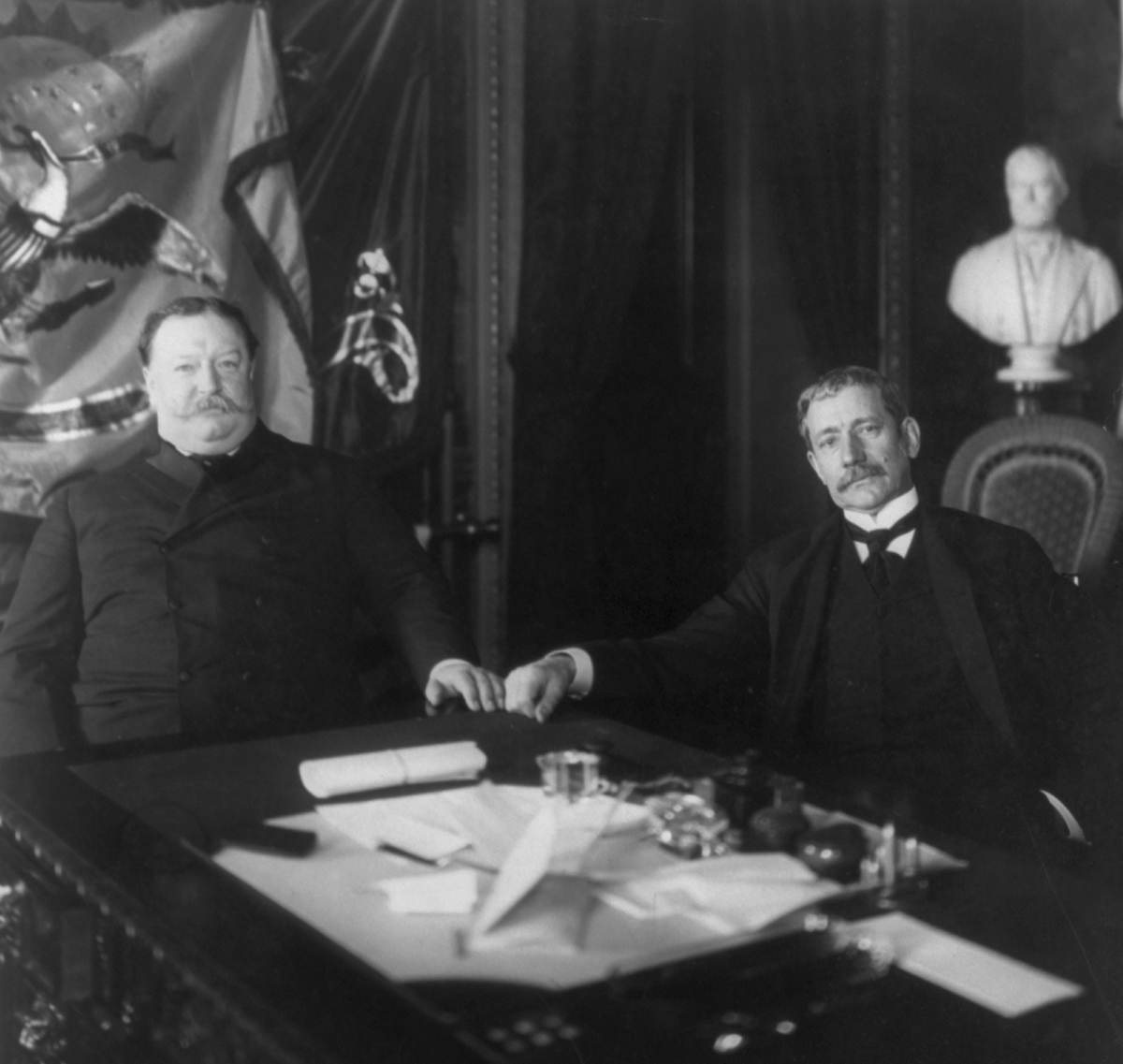
WAR BUDDIES…U.S. Secretary of War Elihu Root (right) and his successor, William Howard Taft, c. 1904. Taft was elected U.S. President in 1908, and in 1912 Root would receive the Nobel Peace Prize. (Wikipedia)
* * *
Devastating Irony
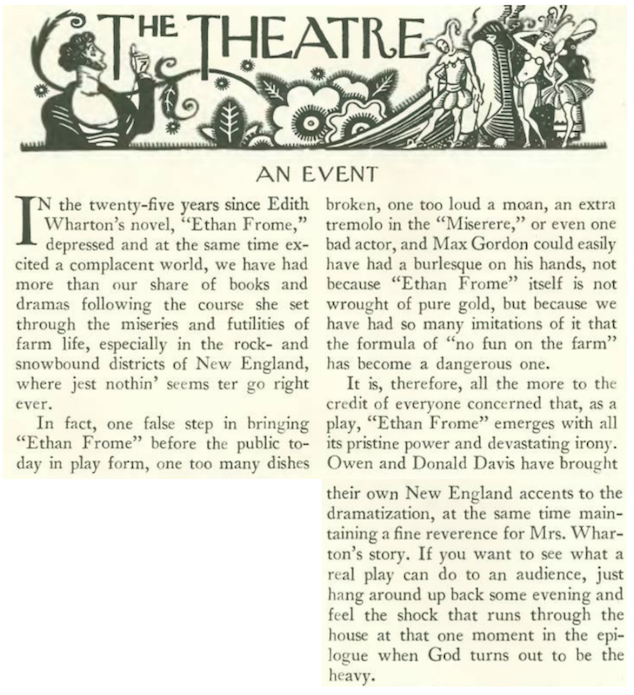
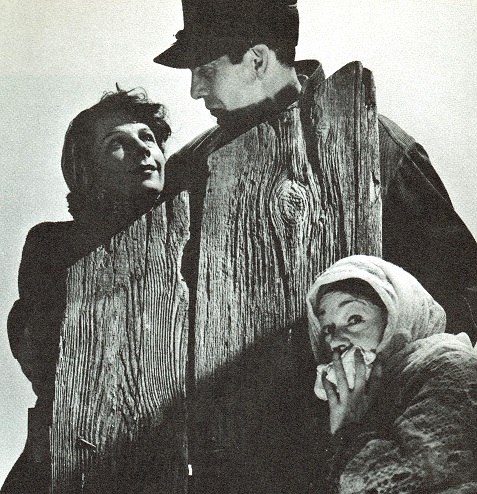
According to critic Robert Benchley, the adaptation of Edith Wharton’s novel Ethan Frome to the stage required a precise hand, and apparently director Max Gordon delivered when it opened at the National Theatre. Excerpt:
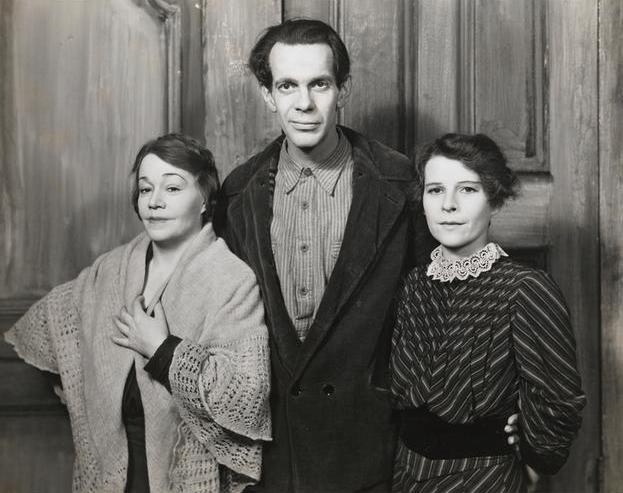
EDITH WHARTON WOULD HAVE BEEN PROUD, according to Robert Benchley, of the stage adaptation of Ethan Frome. The cast, from left, included Pauline Lord, Raymond Massey, and Ruth Gordon. Benchley would have been well acquainted with Gordon, who was a familiar face at the Algonquin Round Table. (Facebook)
Benchley praised the performances of the principal actors Pauline Lord, Raymond Massey, and Ruth Gordon.
IN FINE FORM…Pauline Lord, Raymond Massey, and Ruth Gordon in a publicity still for Ethan Frome. (witness2fashion.com)
* * *
At the Movies
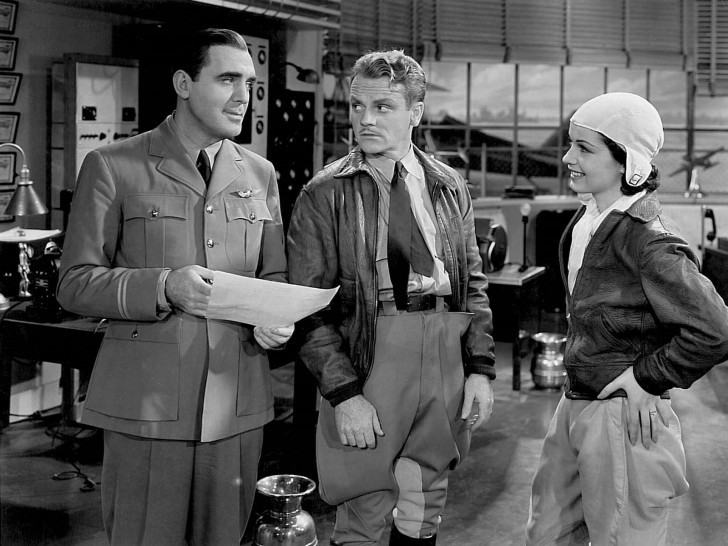
We take to the air with Howard Hawks’ Ceiling Zero, which featured an odd mix of screwball dialogue and nerve-wracking flight scenes. Critic John Mosher found the film to be well done, even though most of its action took place on the ground.
GROUNDED…Shot a shoestring budget, Warner Brothers’ Ceiling Zero, directed by Howard Hawks, staged most of the action at an airline’s headquarters rather than up in the air. From left are Pat O’Brien, James Cagney, and June Travis. (Harvard Film Archive)
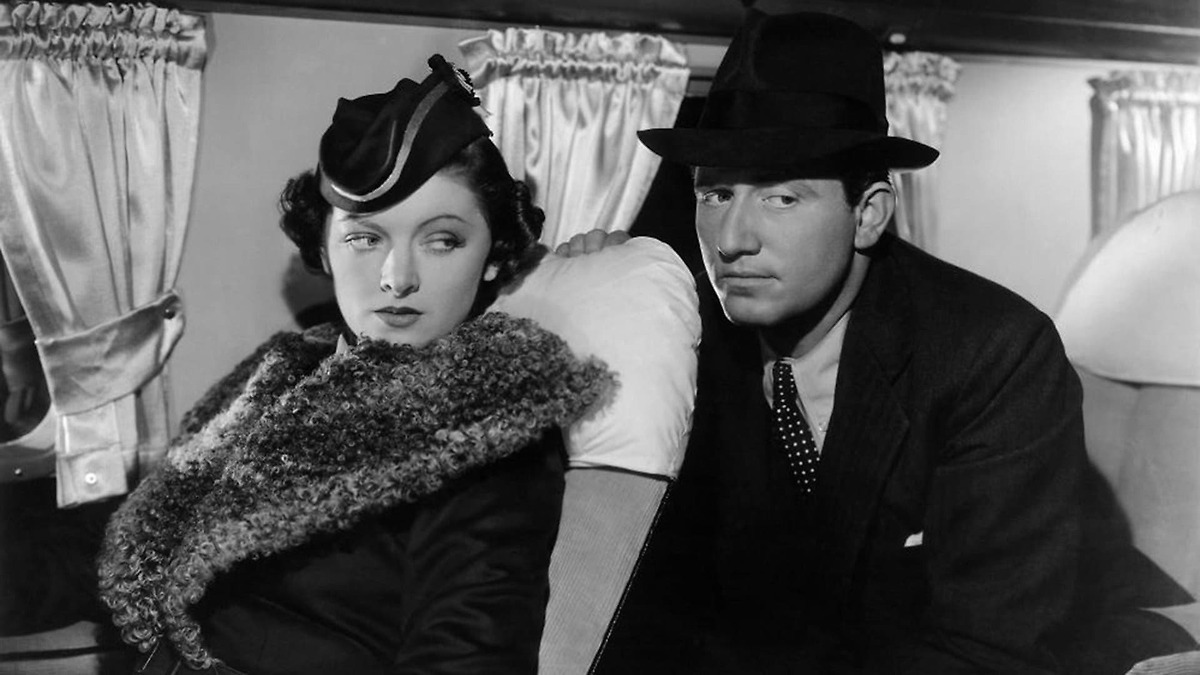
Mosher was also happy to welcome Myrna Loy back to the silver screen in the “agreeable” Whipsaw.
HUSTLE AND BUSTLE…Myrna Loy and Spencer Tracy starred in action-packed crime drama Whipsaw. (Letterboxd.com)
Mosher was at a loss to explain the popularity of comedian Joe Penner, whose presence in the film Collegiate inspired impatient “mobs” to crash the windows and doors of the Paramount Theatre.
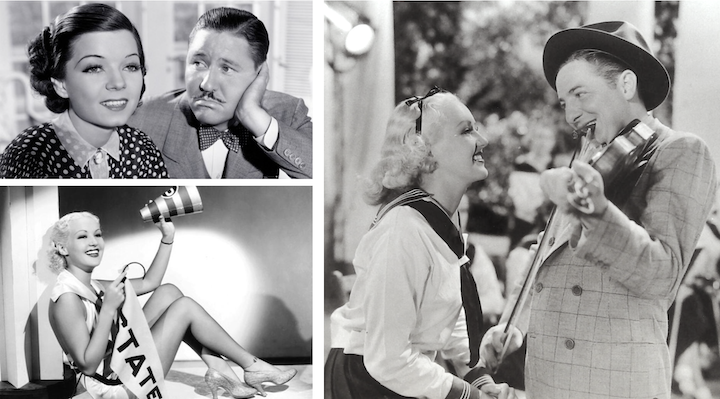
INCONSEQUENTIAL was the word John Mosher used to describe Collegiate. Clockwise, from top left, Frances Langford and Jack Oakie in a scene from Collegiate—Oakie played a man who inherits an all-girls school from his aunt; Betty Grable with Joe Penner; Grable shows off her school spirit and her famous legs in a publicity photo. (rottentomatoes.com/imdb.com)
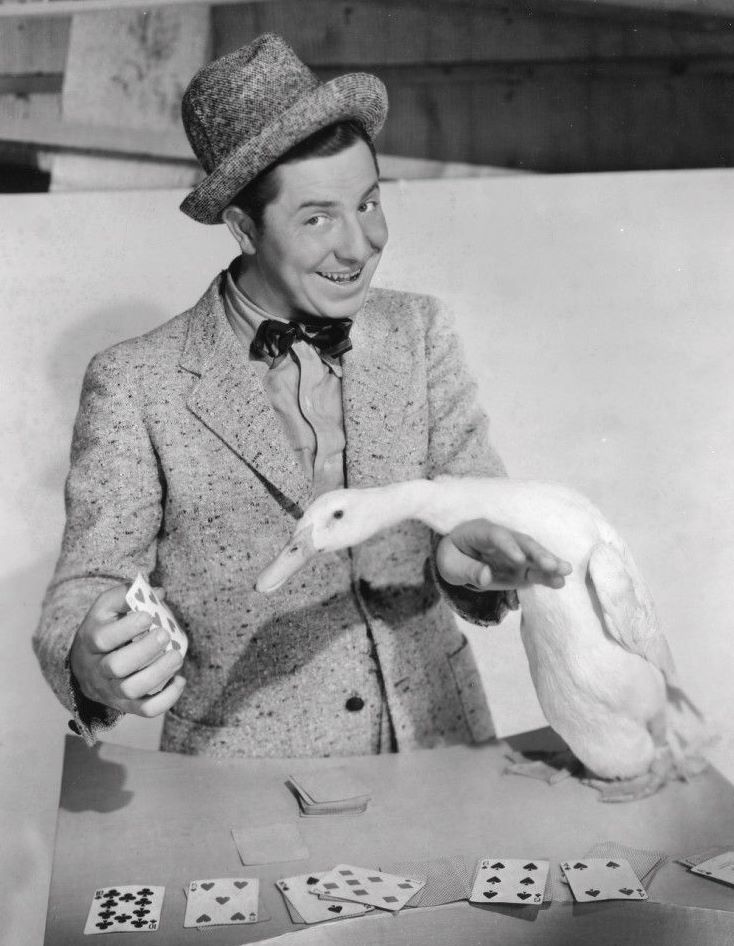
About Joe Penner (1904–1941): Broadcast historian Elizabeth McLeod sums up Penner’s popularity as “the ultimate Depression-era zany.” Mostly forgotten today, Penner was a national craze in the mid-1930s. “There is no deep social meaning in his comedy, no shades of subtlety,” writes McLeod, “just utter slapstick foolishness, delivered in an endearingly simpering style that’s the closest thing the 1930s had to Pee-wee Herman.”
WANNA BUY A DUCK? was Joe Penner’s catchphrase. Born József Pintér in what is now Serbia, he is shown here with his ubiquitous duck, Goo Goo. According to historian Elizabeth McLeod, Penner was doomed to an early decline by the sheer repetitiveness of his format. He died in his sleep, of a heart attack, at age 36. (imdb.com)
* * *
Something Completely Different
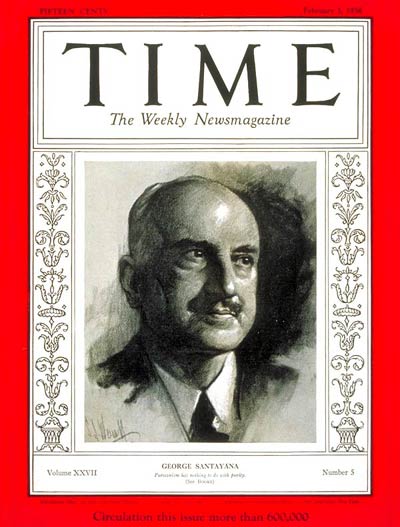
We go from Joe Penner to George Santayana, who finished the six-hundred-page The Last Puritan after laboring on the novel for fifteen years. A brief excerpt from a Clifton Fadiman review:
WHEN WRITERS MADE THE COVER…George Santayana on the cover of Time, Feb. 3, 1936. (Time.com)
* * *
From Our Advertisers
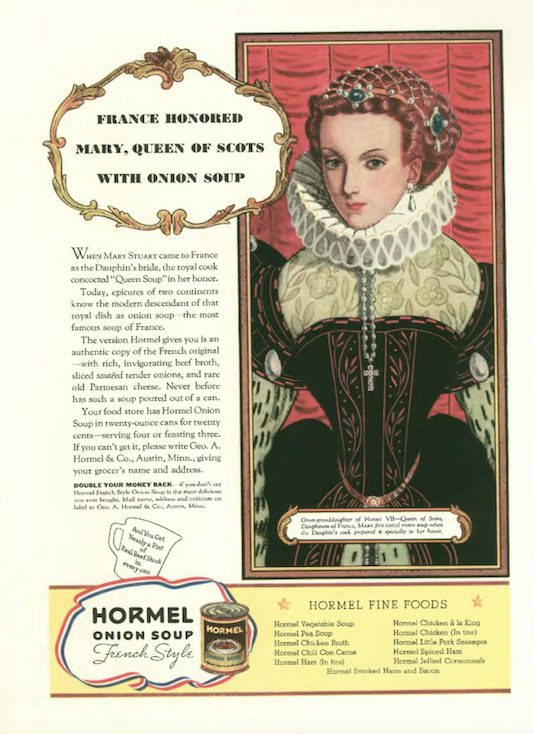
The folks at Hormel continued their ad series pairing Hormel French Style onion soup with notable historic figures…apparently Mary, Queen of Scots was honored with some onion soup when she married the Dauphin in 1558…nearly three decades later she would lose her head under the reign of Elizabeth I…
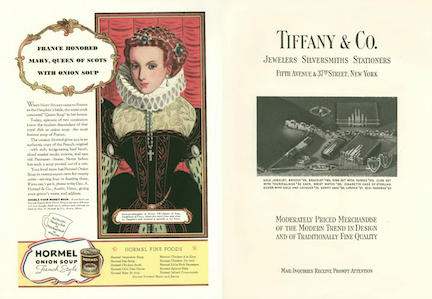
…the opening spread of the magazine sometimes offered odd juxtapositions…
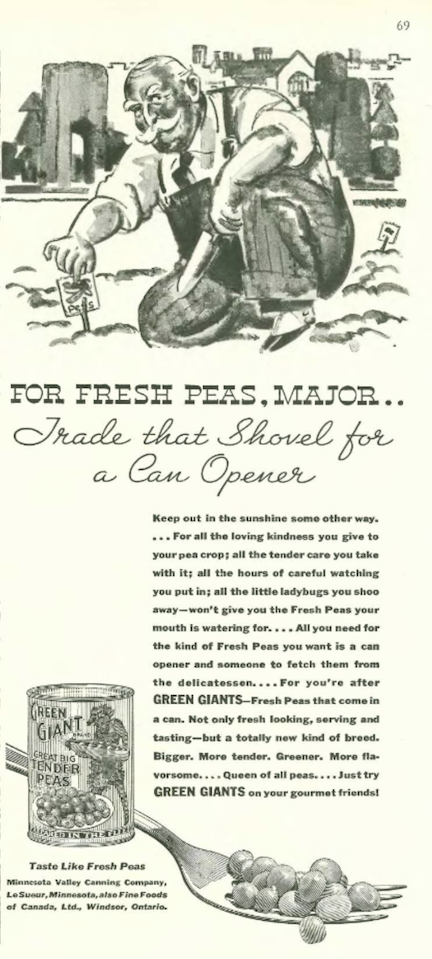
…and what was this obsession with peas?…last week (and previous weeks) the makers of Green Giant canned foods featured a “Major” obsessed with fresh peas…
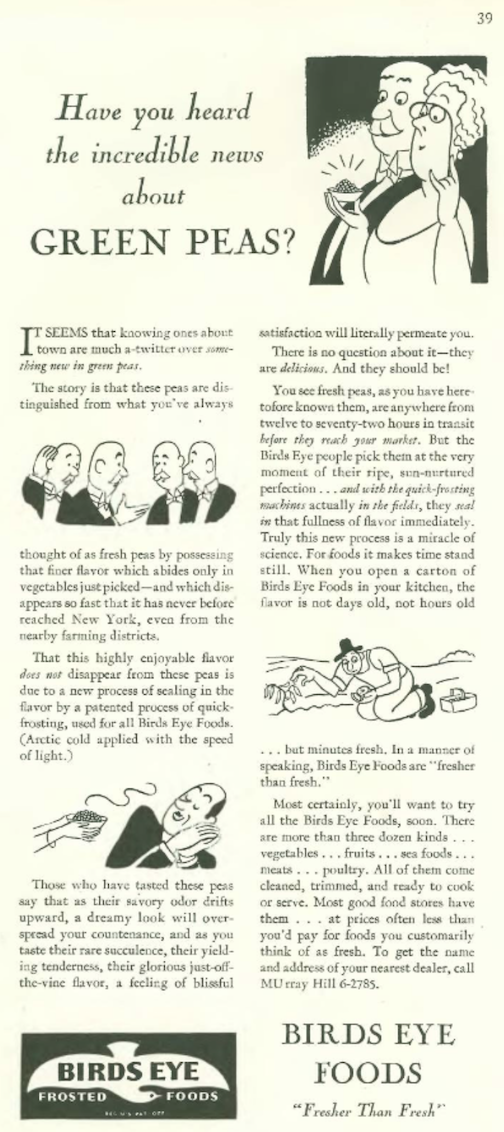
…in this issue, the folks at Birds Eye presented frozen peas as a fresher alternative to canned…the ad featured their own version of a “Major,” here sharing the wonderful news about frozen peas with his cronies…
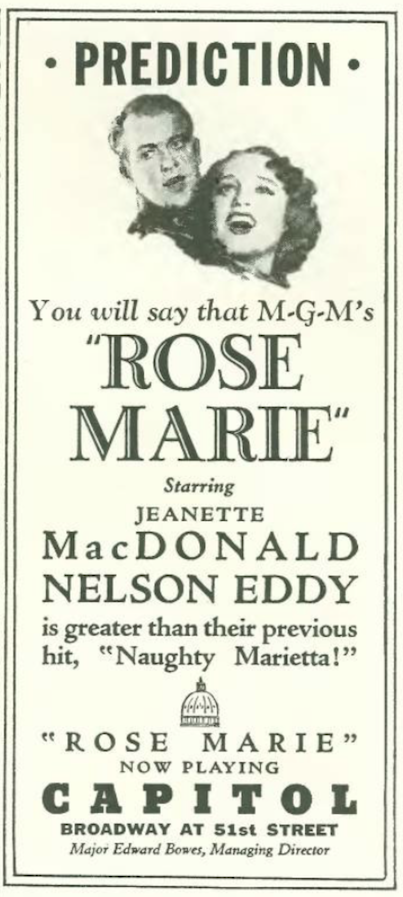
…Capitol Theatre predicted that their latest feature, Rose Marie, would be even better than Naughty Marietta…
…and apparently it was…
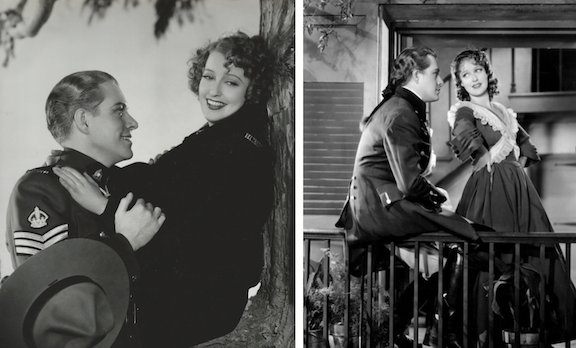
WHEN I’M CALLING YOOOOUUUU…The Capitol Theatre’s prediction came true—Rose Marie was a big hit, as was the duet “Indian Love Call” (it remained a signature song for both actors); at left, Nelson Eddy and Jeanette MacDonald in Rose Marie; at right, Eddy and MacDonald in 1935’s Naughty Marietta. “America’s Singing Sweethearts” made eight films together. (MGM)
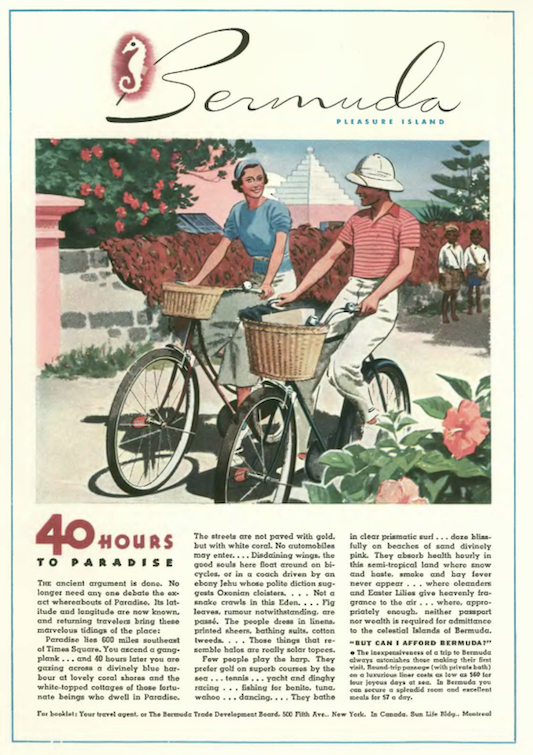
…only forty hours to paradise, claimed this ad on the inside back cover…
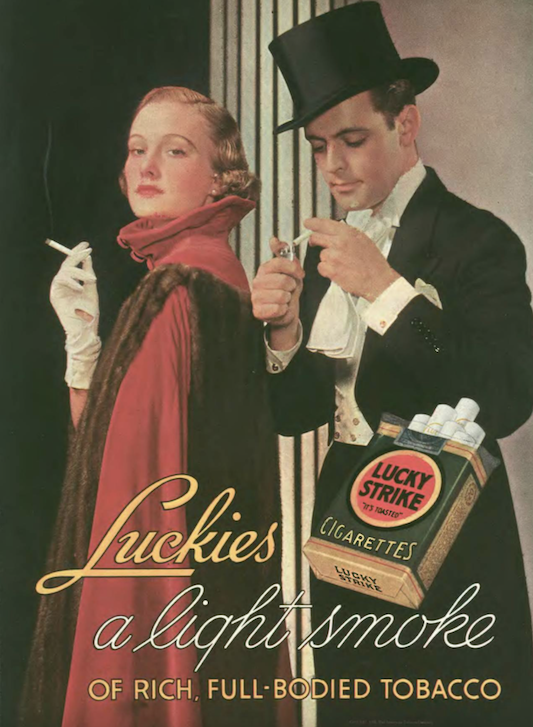
…and on the back cover, readers were greeted by a smug, almost withering look—a fashionable woman striking a pose, one that was doubtless imitated by many in the smart set who would soon realize they were hopelessly addicted to nicotine…
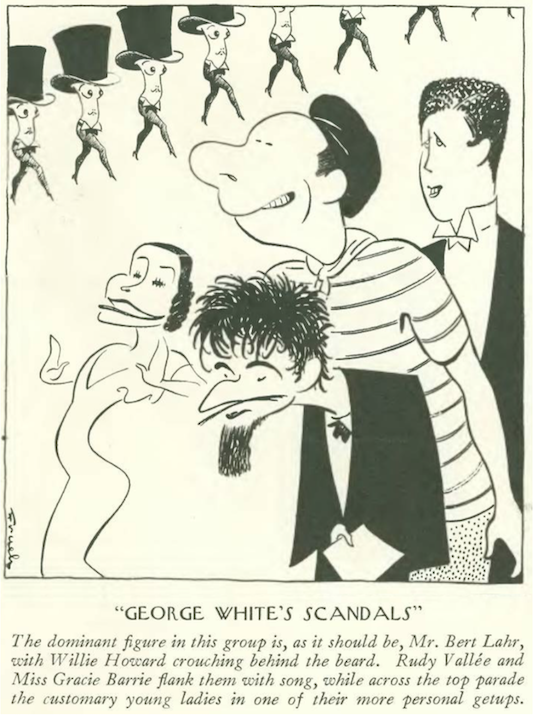
…on to our cartoonists, we begin with Al Frueh and his topless tribute to George White’sScandals…
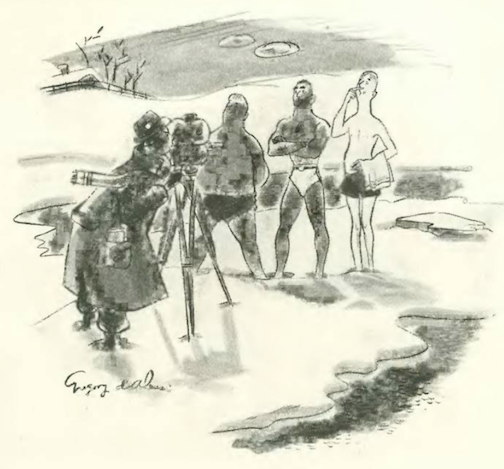
…Gregory d’Alessio drew up this trio—endomorph, mesomorph, ectomorph—for the opening pages…
…here’s a spot by Robert Day, dreaming of warmer climes…
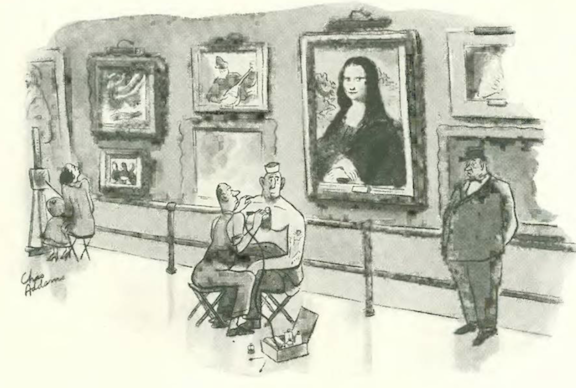
…we join Charles Addams at the Louvre…
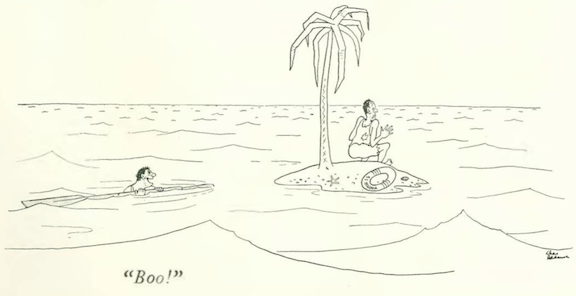
…and on a desert island…
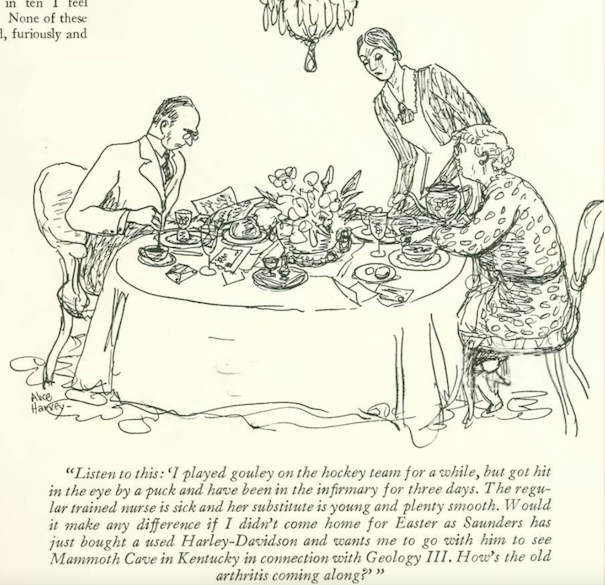
…a rather strange entry by Alice Harvey, with the longest caption I’ve come across so far…
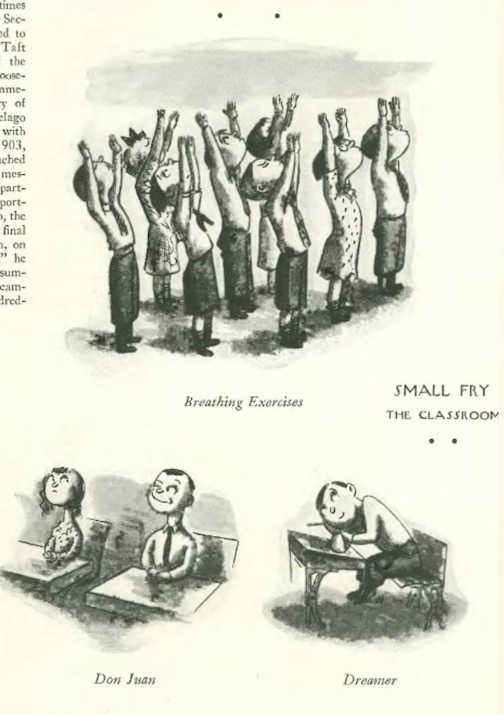
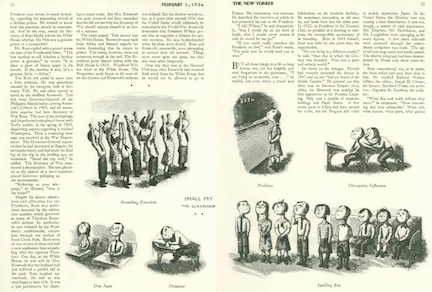
…we join William Steig’s “Small Fry” during a school day, beginning on page 24…
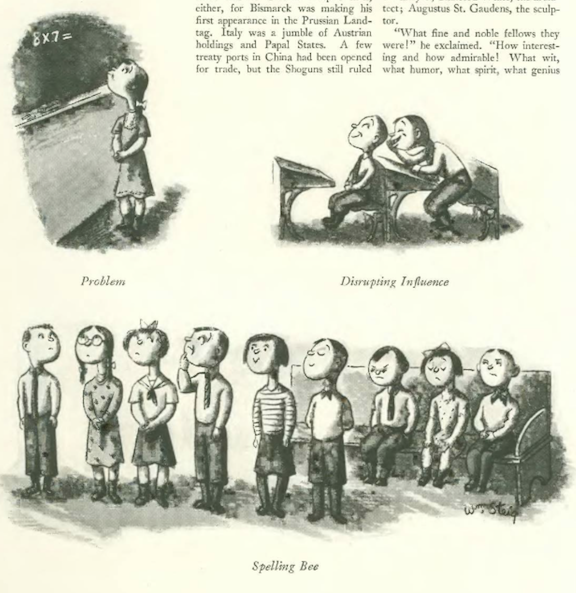
…and continuing onto page 25…
…here is how it originally appeared…
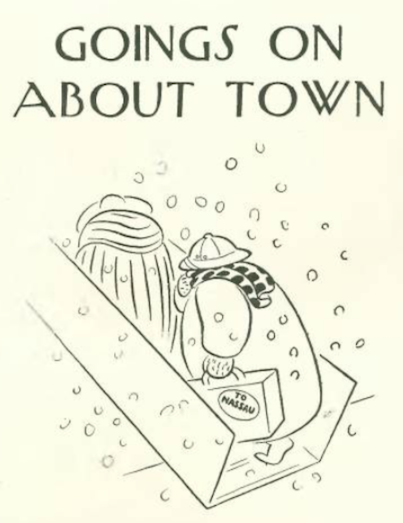
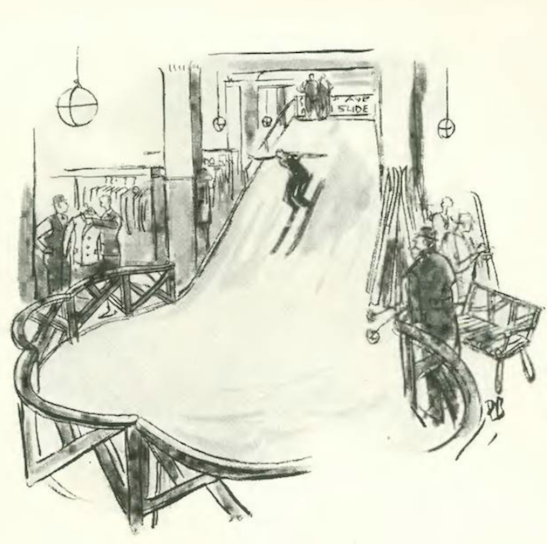
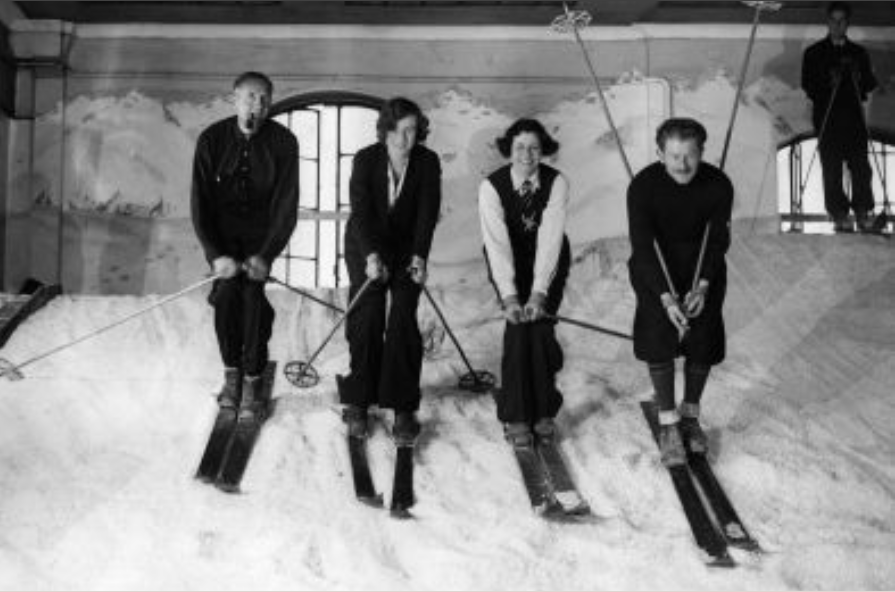
…In 1935, Saks Fifth Avenue installed an indoor ski slope on the men’s floor of its New York City flagship store, here illustrated by Perry Barlow…
IT WAS A THING…Ski slope inside Saks Fifth Avenue, New York, 1935. (CNN.com)
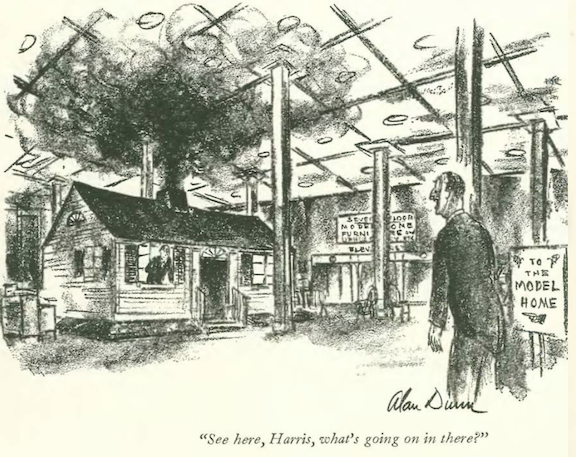
…department stores such as Macy’s often featured model homes in their household departments…Alan Dunn added a bit of color, or rather, soot, to this one…
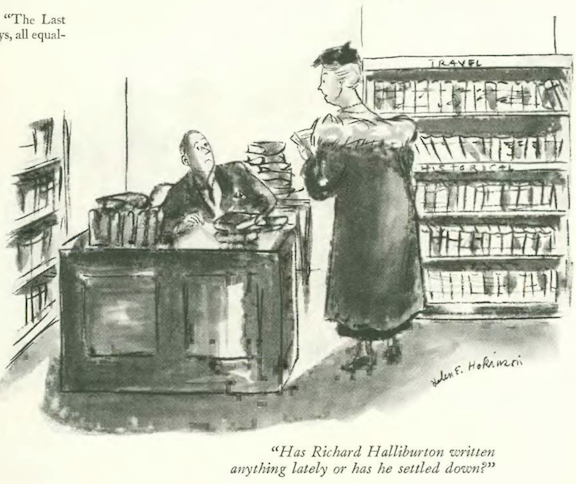
…Helen Hokinson looked for answers at a book shop…
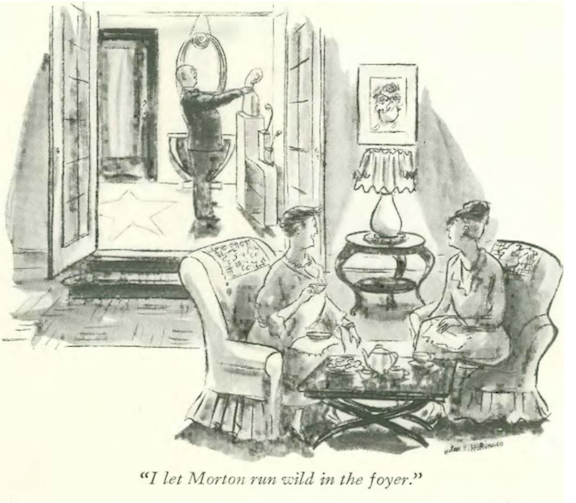
and Hokinson again, doing a bit of home decorating…
…it appears Morton was displaying a copy of Constantin Brancusi’s Princess X…
(sheldonartmuseum.org)
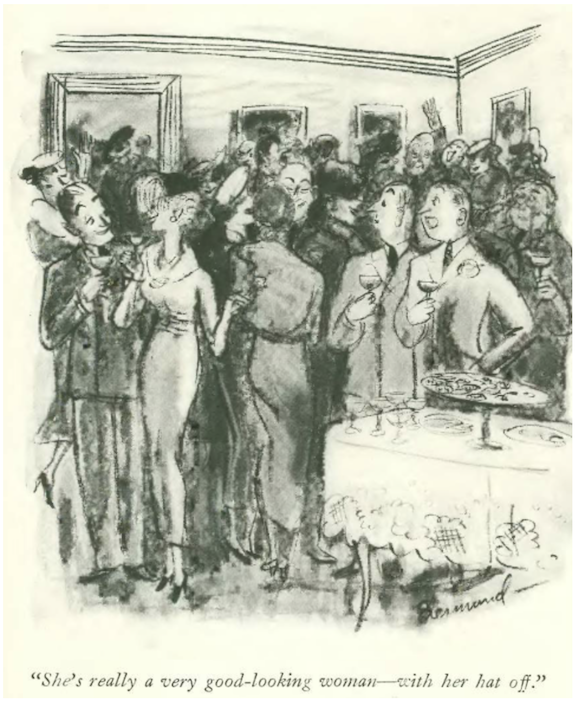
…Barbara Shermund engaged in some light banter at a cocktail party…
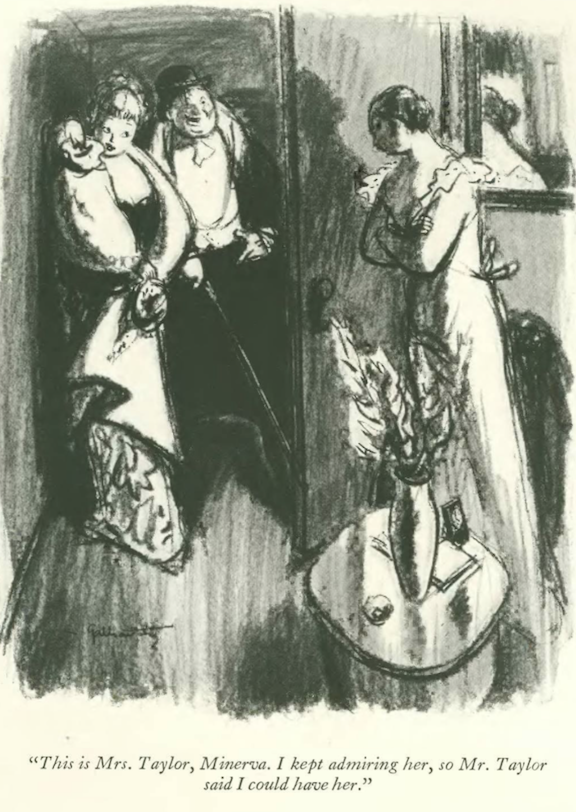
…and we close with a surprise visit from William Crawford Galbraith…