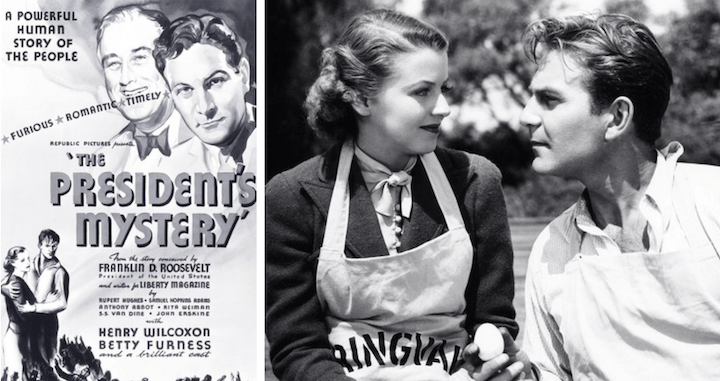
The President’s Mystery

Above: President Franklin D. Roosevelt was credited as a writer on the film "The President's Mystery," although his role was more one of inspiration; at right, Betty Furness and Henry Wilcoxon starred in the film. (rottentomatoes.com)

Just one month before the 1936 general election, Republic Pictures released a film “conceived by Franklin D. Roosevelt.”
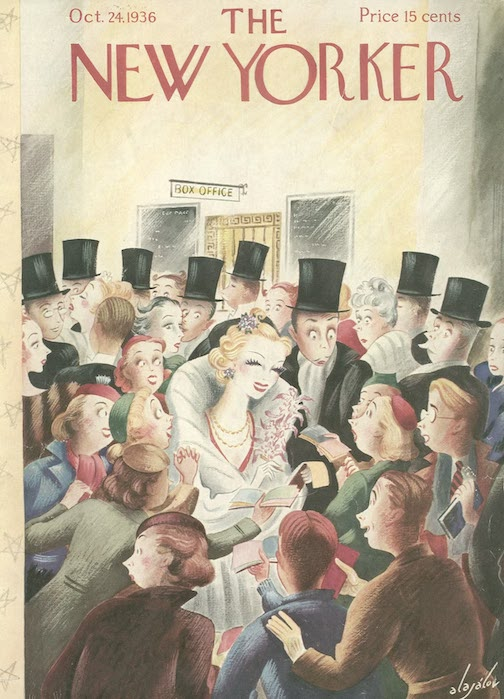
October 24, 1936 cover by Constantin Alajalov.

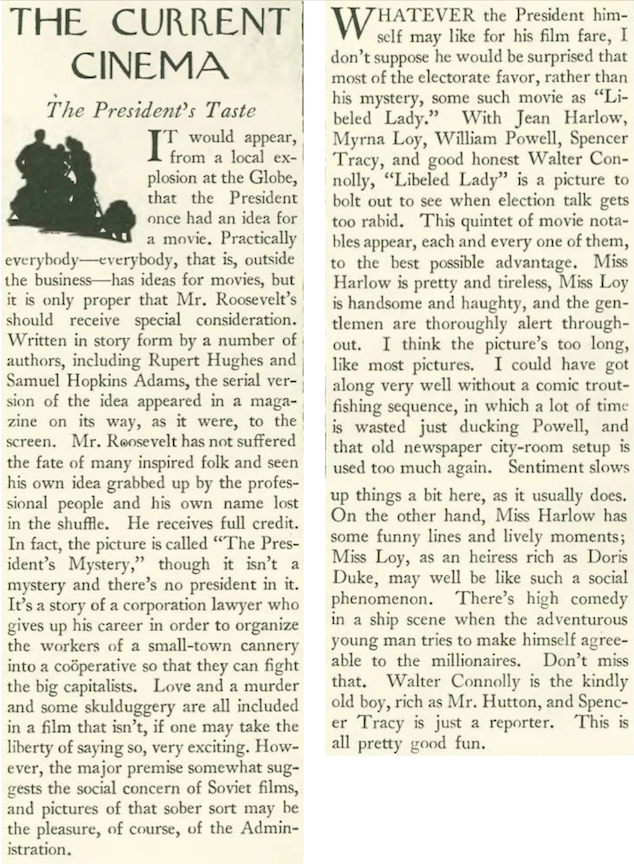
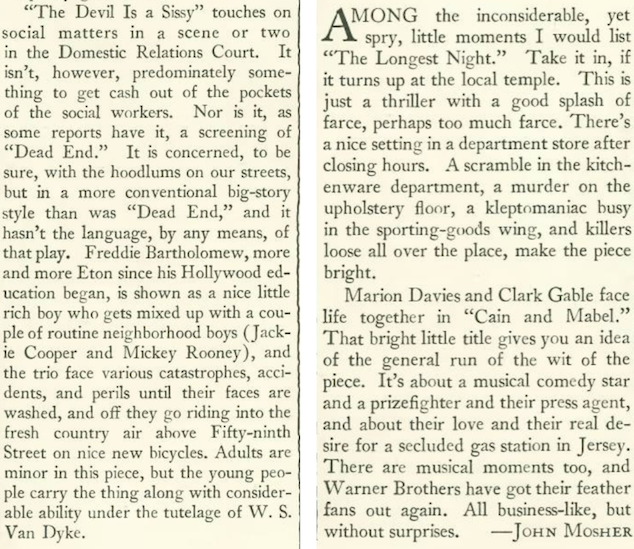
Yes, the president of the United States, standing for re-election in November (which he would win by a landslide), was actually credited as a writer for the film The President’s Mystery, although FDR’s actual role in the film was its concept. While visiting with Fulton Oursler, editor of Liberty magazine, Roosevelt posed the question: “How can a man disappear with five million dollars of his own money in negotiable form and not be traced?” Oursler, a close friend of the president’s, responded by enlisting several prominent authors to write a screenplay. New Yorker film critic John Mosher takes it from there:
The story behind the film was first featured in the Nov. 16, 1935 issue of Liberty magazine…
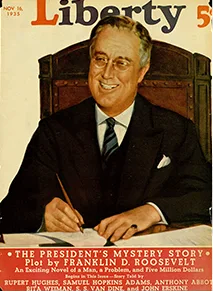
(libertymagazine.com)

…and released as a movie on Sept. 28, 1936…
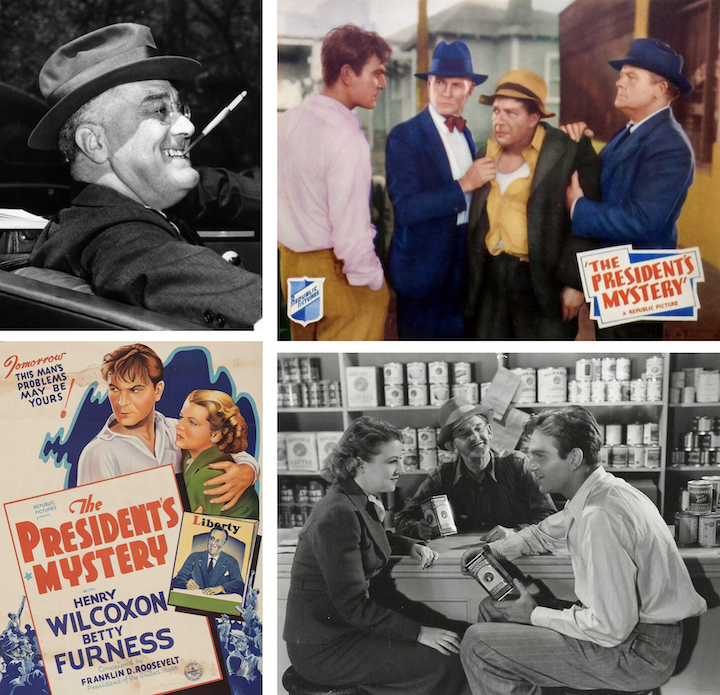
MAN OF MYSTERY…Clockwise, from top left, President Franklin D. Roosevelt, a fan of mysteries, conceived the idea for The President’s Mystery; Henry Wilcoxon, Frank O’Connor, an unidentified actor, and Wade Boteler featured on a lobby card promoting the film ; Betty Furness, Si Jenks, and Henry Wilcoxon in a promo shot for the film; poster for the film featured an image of FDR on the cover of Liberty magazine. (instagram.com/imdb.com/themovieb.org)

Mosher also had “pretty good fun” with the star-studded screwball comedy, Libeled Lady, which was acclaimed by critics and nominated for Best Picture:
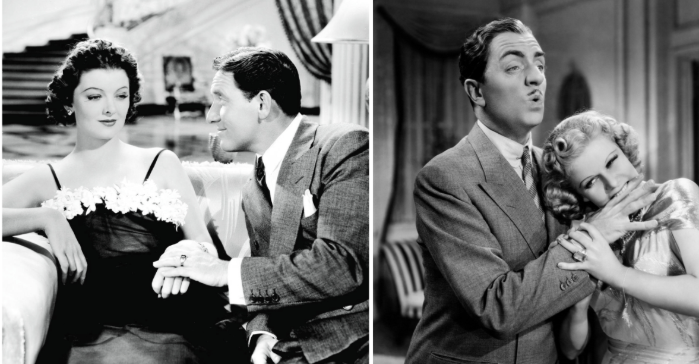
LOVE QUADRANGLE…Lovers spats and romantic mix-ups were just part of the stew in the screwball comedy Libeled Lady. At left, Myrna Loy and Spencer Tracy; at right, William Powell and Jean Harlow. (imdb.com/movie nation.com)

There were still other films reviewed by Mosher, including The Devil is a Sissy, starring sixteen-year-old Mickey Rooney, still emerging as a star, as well as famed child actors Jackie Cooper and Freddie Bartholomew. There was also a film featuring Clark Gable as a prize fighter, and a movie titled The Longest Night, ironically the shortest feature ever produced by MGM—just 51 minutes.
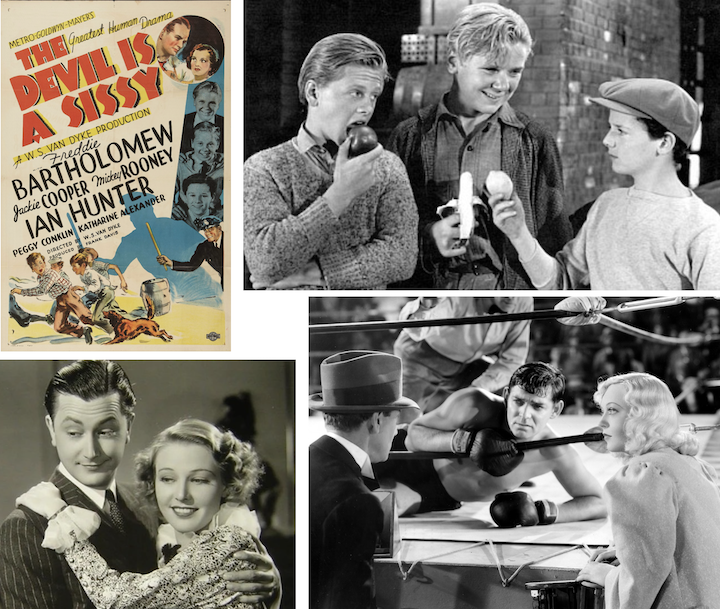
STREET SMARTS…Mickey Rooney, Jackie Cooper, and Freddie Bartholomew in The Devil is a Sissy, a story about a posh kid who befriends a couple of ruffians; Clark Gable was down for the count in Cain and Mabel, co-starring Marion Davies; Robert Young teamed up with Florence Rice in the mystery-thriller, The Longest Night—Florence Rice was the only child of sportswriter Grantland Rice. (Wikipedia/mubi.com/tcm.com)

 * * *

A Second Life

E.B. White still wasn’t done with the new Life magazine—recall his “Notes and Comment” from Sept. 19, when he lamented a magazine that would “consist almost entirely of pictures” and would “do away with the last vestiges of privacy in America.” Here White notes the purchase of Life by Time, Inc., and compares it to the old Life.
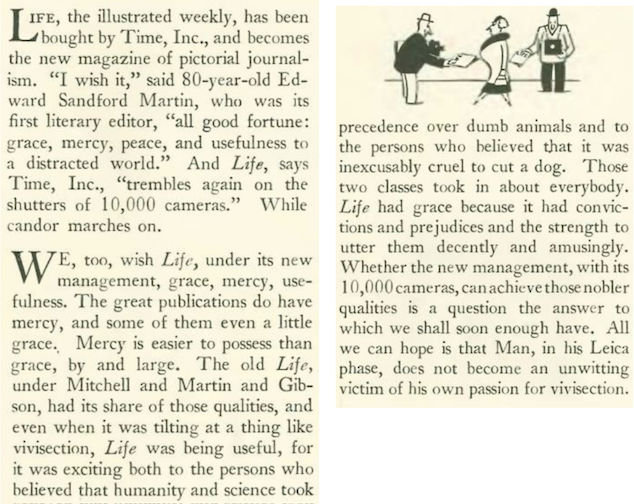
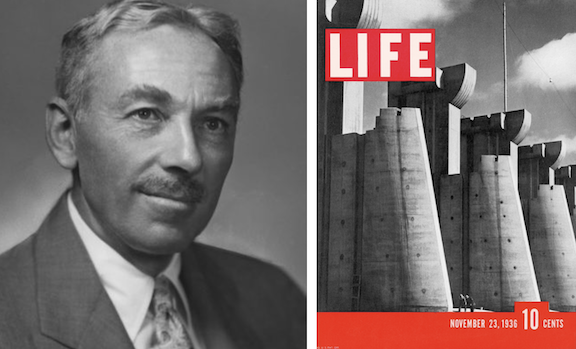
ASKING FOR MERCY…E.B. White hoped the new Life magazine would have some of the mercy and grace of its predecessor. (sunrisepoint.com/time.com)
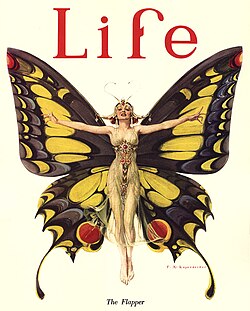
LIFELESS…Launched in 1883, Life was an American humor and general-interest magazine. Purchased and shut down in 1936 by Henry Luce, he replaced it with his new, and very different Life. The image above is the cover of the Feb. 2, 1922 issue of the old magazine. (Wikipedia)

 * * *

A Sensitive Hamlet

There are as many approaches to playing Hamlet as there are versions of the famous Shakespeare play, The Tragedy of Hamlet, Prince of Denmark. In the case of actor John Gielgud, as reported in “The Talk of the Town,” Hamlet was quite sane, although he was “immensely sensitive.”
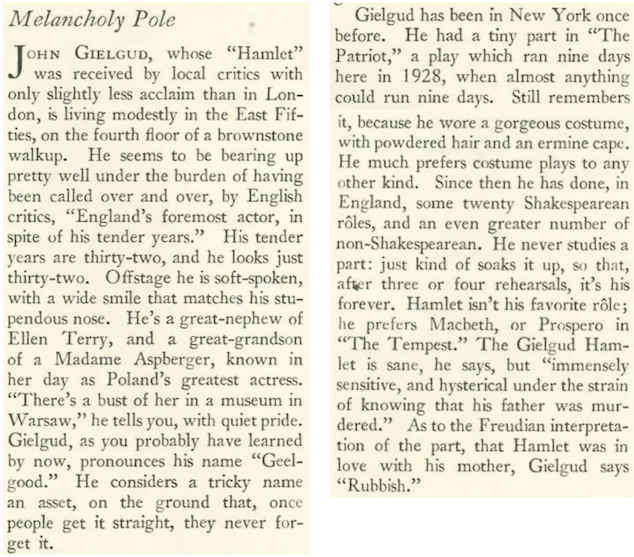
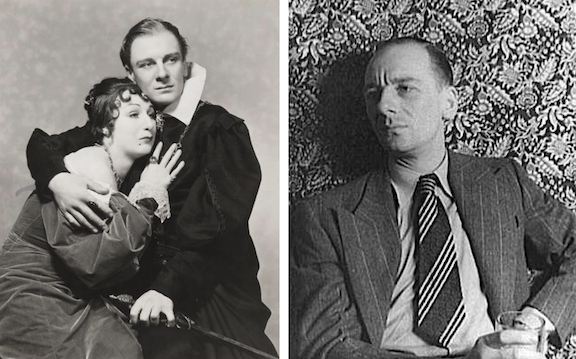
MOMMY DEAREST…At left, Judith Anderson as Hamlet’s mother, Gertrude, Queen of Denmark, and John Gielgud as Hamlet in Broadway’s 1936 production of the Shakespeare play; at right, Carl Van Vechten portrait of Gielgud during the actor’s time on Broadway, December 1936. Gielgud is widely regarded as one of the definitive Hamlets of the 20th century. (newyorktheater.me/newworldencyclopedia.org)

 * * *

Safety Last

Morris Markey was on hand for the Vanderbilt Cup Race (recently featured here), offering a track-side look at the pit crews. Notable in this excerpt is the complete lack of safety protocols, from gasoline poured out of wide-mouthed cans to smoking and drinking among drivers and pit crews. The race winner, Tazio Nuvolari (who refuses some brandy but puffs on a cigarette) would eventually have to retire by 1950 due to his total deafness and other health problems—he spent years racing in an open cockpit with the manifold ends right next to his ear. Those combustion gases—containing gasoline juiced with methanol, benzene, acetone, and nitrobenzene—easily penetrated Nuvolari’s ears and nose and were absorbed directly into his skin and bloodstream.
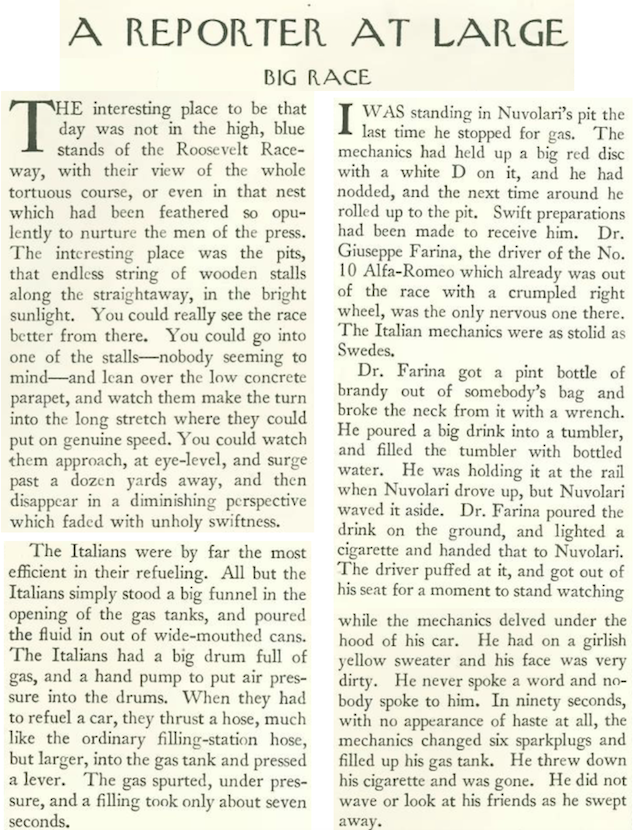
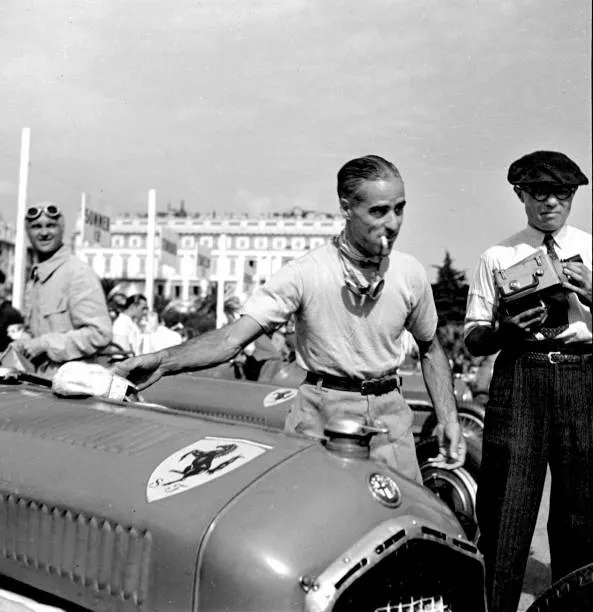
GUTS AND GLORY…Italian racing legend Tazio Nuvolari (1892–1953) with his Alfa Romeo before the start of the 1935 Nice Grand Prix in France. Nuvolari easily won the 1936 Vanderbilt Cup on Long Island. (notenoughcylinders.com)

 * * *

Color My World

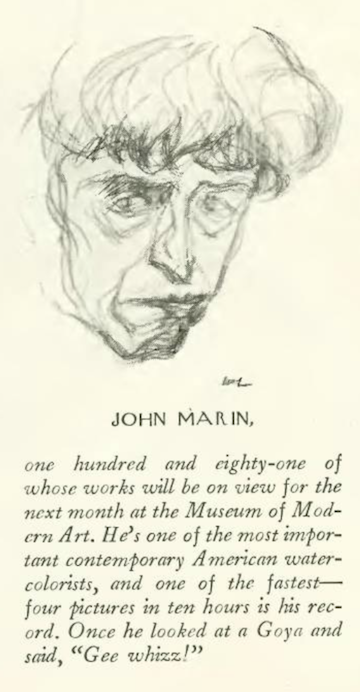
The works of John Marin, considered one of America’s finest water-colorists, were featured in a major exhibition at the Museum of Modern Art. In addition to a review by art critic Lewis Mumford, Marin was featured in this mini bio on the opening pages…caricature by William Auerbach-Levy…
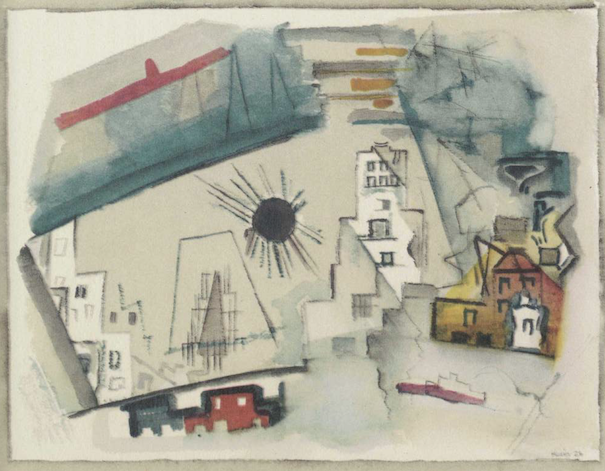
MASTER WATER-COLORIST…John Marin’s Movement No. 2, Related to Downtown New York (The Black Sun), 1926. Image reproduced from the 1936 MoMA exhibition catalog. (moma.org)

 * * *

From Our Advertisers

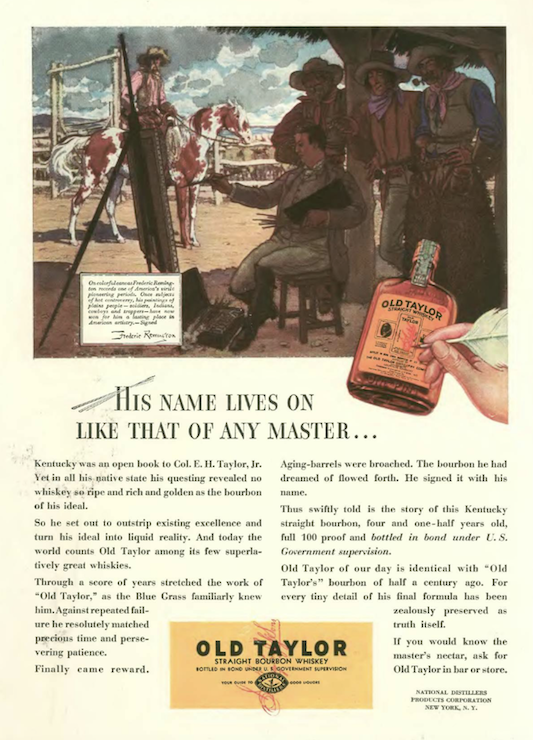
The Oct. 24 issue opened with this advertisement by the distillers of Old Taylor, who continued to compare their product to the work of “masters,” here the painter Frederic Remington…
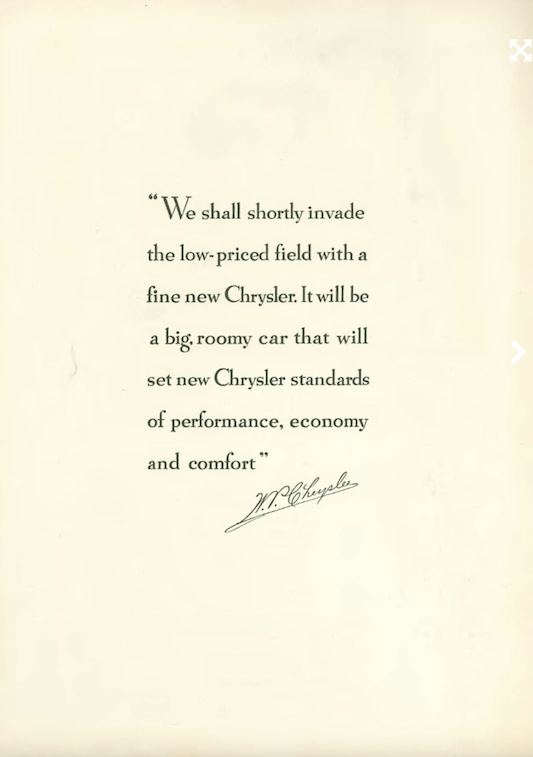
…on the opposite page, this spare ad from Chrysler, a stark contrast to their previous week’s very wordy appeal…
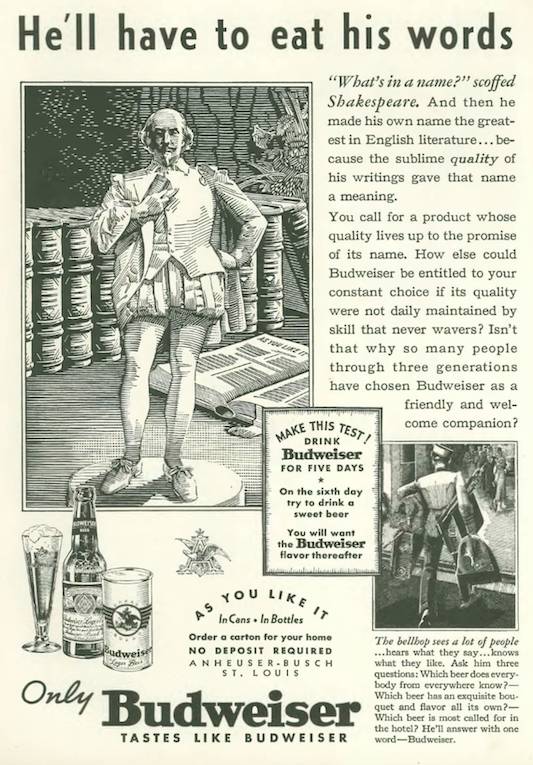
…the promoters of Budweiser took a cue from the whiskey distillers, invoking the words of an historic personage to promote their product…
…predating modern thermostats by decades, the mechanical Chronotherm was one of the earliest automated room thermostats ever produced by the Minneapolis-Honeywell Regulator Company…it was often used to control coal or early heating systems by automatically adjusting dampers or furnaces on a schedule…
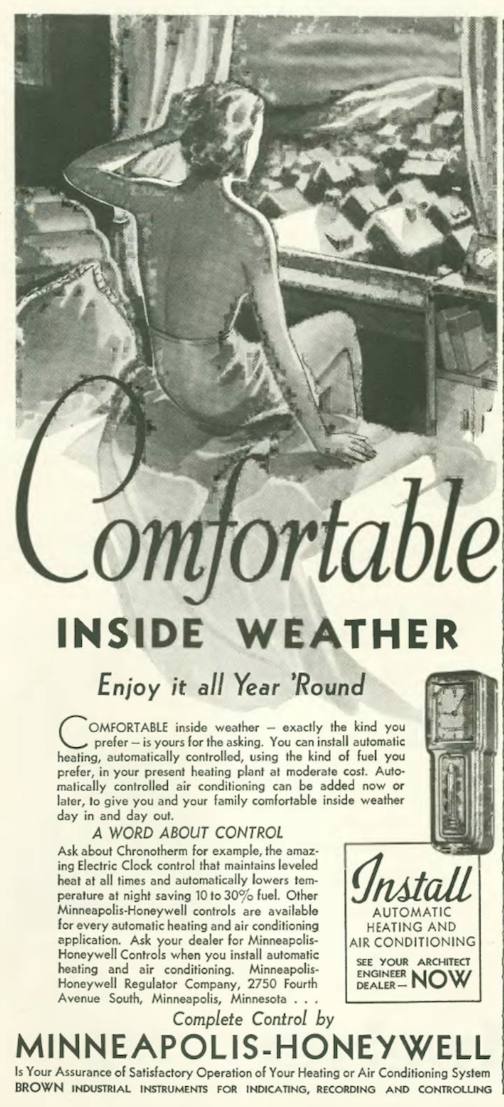
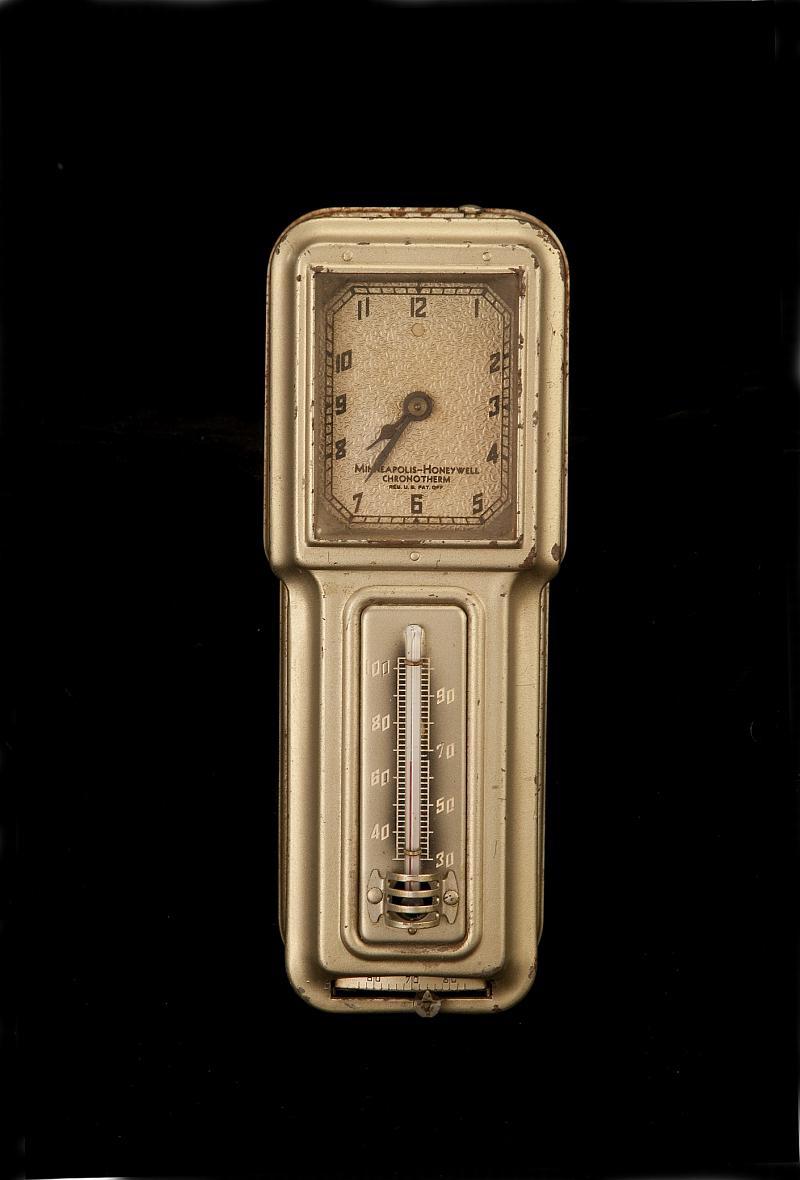
The Minneapolis-Honeywell Chronotherm retailed for about $41 in the 1930s (equivalent to roughly $970 today). It was considered a high-end luxury upgrade for the home. (si.edu)

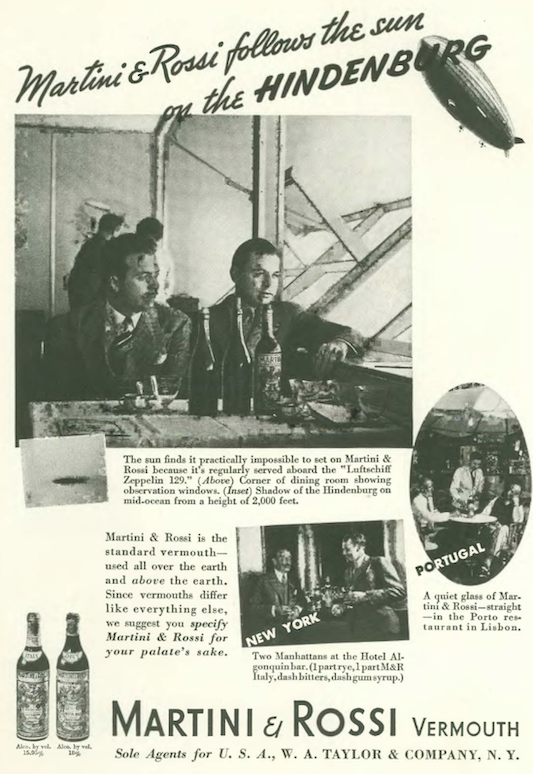
…Martini & Rossi would have about six more months to serve their vermouth on the Hindenburg before it would go down in a fireball on May 6, 1937…
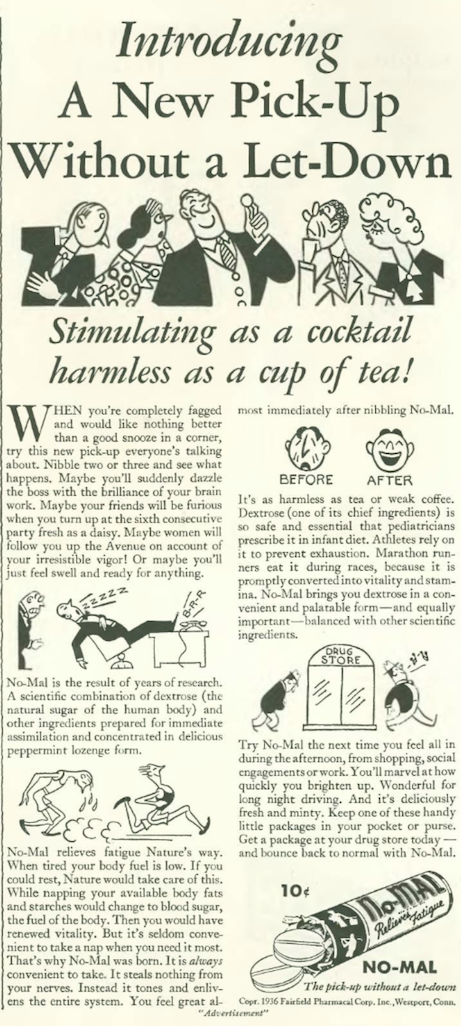
…the illustrations in this No-Mal ad mimicked the style of Otto Soglow to market a new patent medicine touted as a stimulant and hangover cure, among other things…these remedies often contained heavy doses of caffeine plus aspirin, mild laxatives, and antacids, while some also contained the amphetamine Benzedrine…
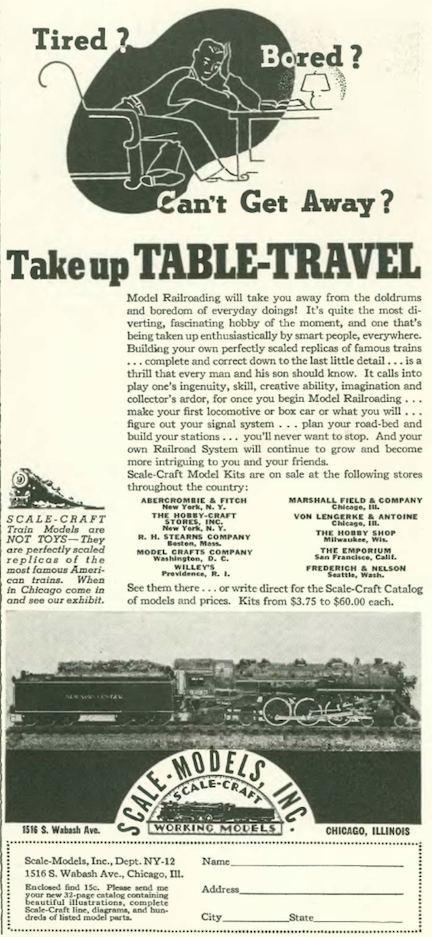
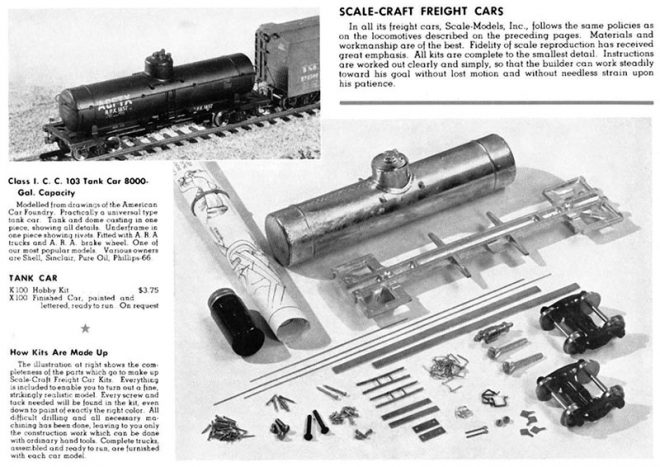
…model railroading for adults started to build up steam in the 1930s…here’s a back of the book ad aimed at those who couldn’t afford to travel but who could afford a Scale-Craft kit…
…here’s a page from the 1936 Scale-Craft catalog…
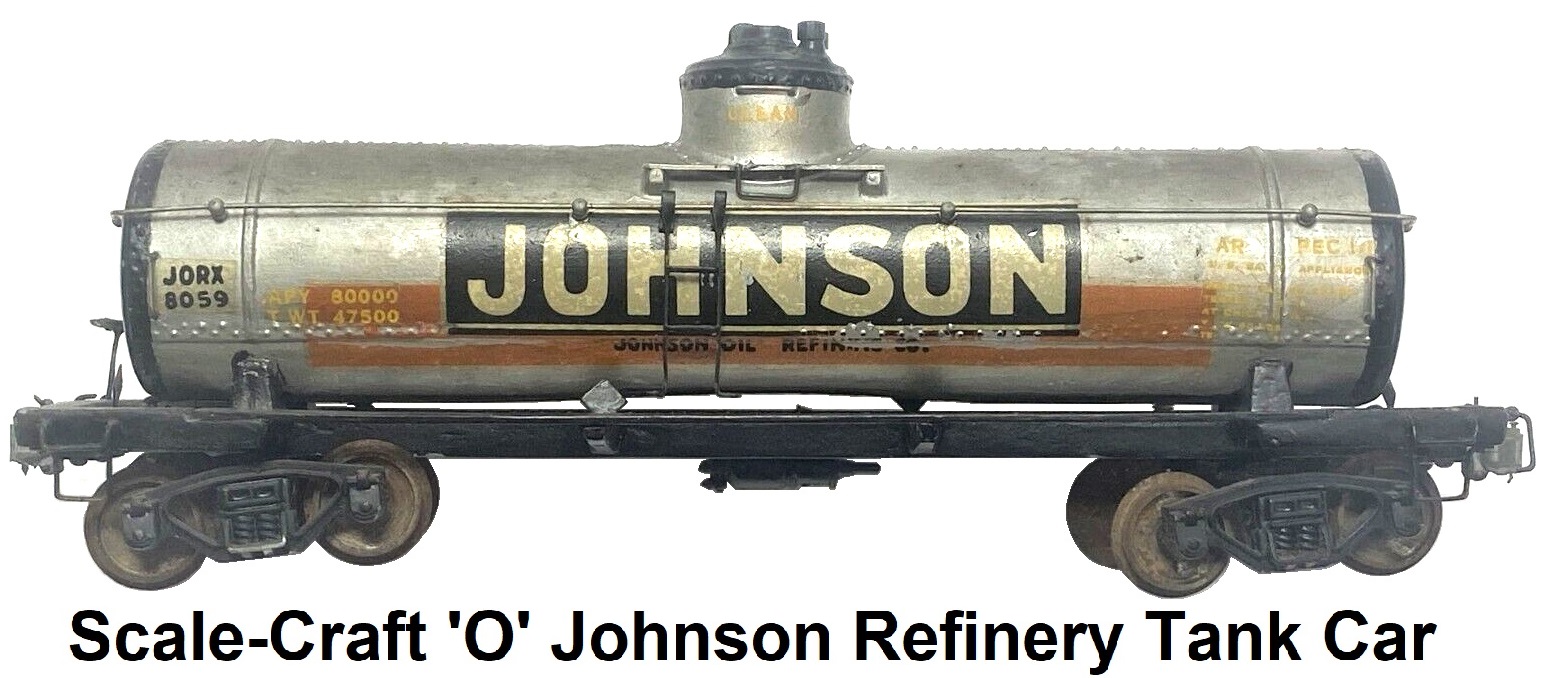
…and an example of what you could build from a kit…
(tcawestern.org/oscalemag.com)

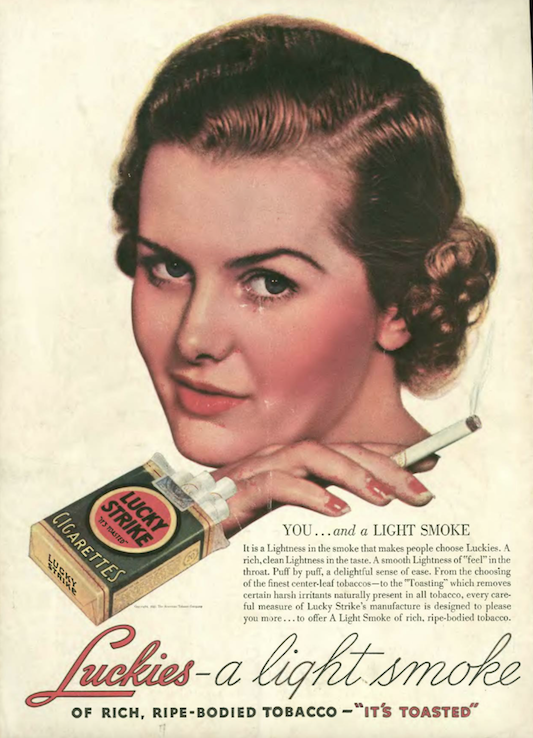
…and there’s no guessing the target audience for this brand of cigarettes…
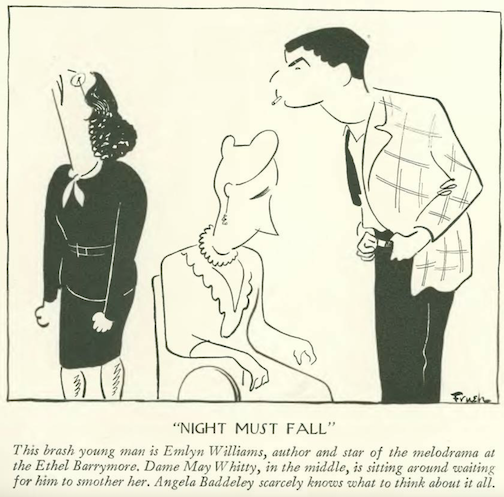
…on to our cartoonists, Al Frueh was back with illustrations for the theater review section…
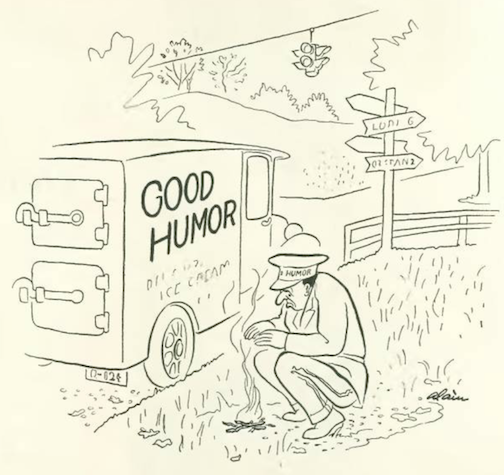
…Alain found nothing humorous about being a Good Humor man…
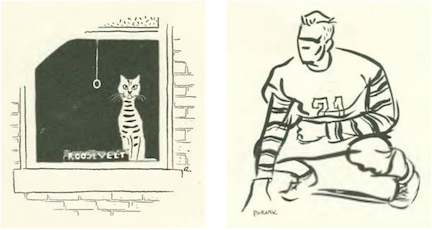
…a couple of spots by Abe Birnbaum (left) and unidentified at right (signature looks like PHRANK)…
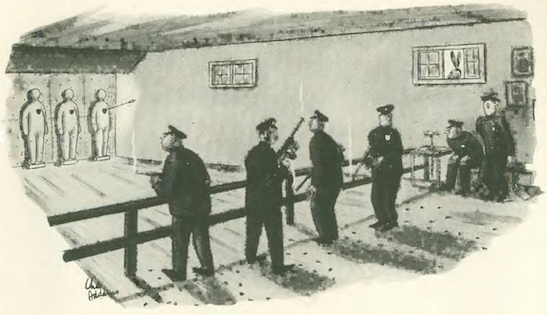
…a stray arrow found its way into this cartoon by Charles Addams…
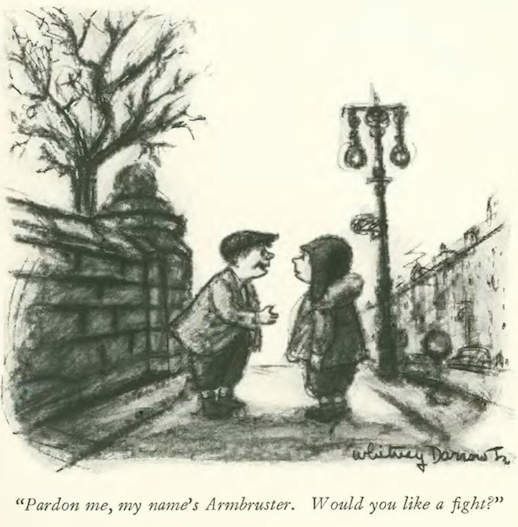
…Whitney Darrow Jr illustrated the childish side of politics…
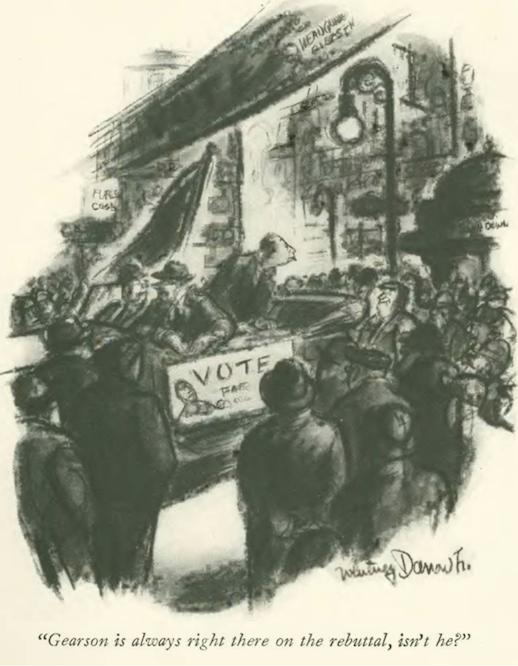
…we zoom in for a close-up…
…Darrow again, making a new friends…
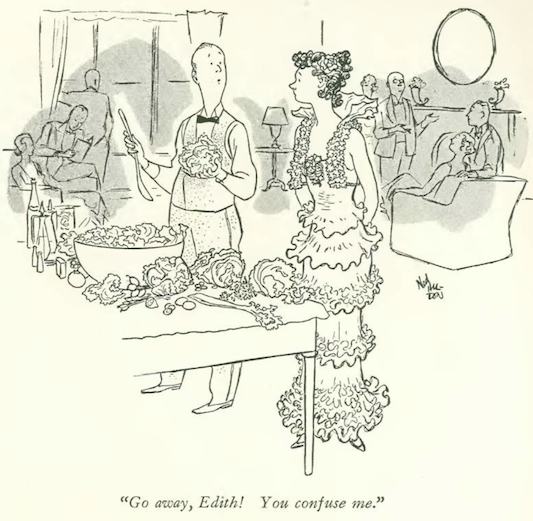
…Ned Hilton drew up an outfit that clashed with the salad course…
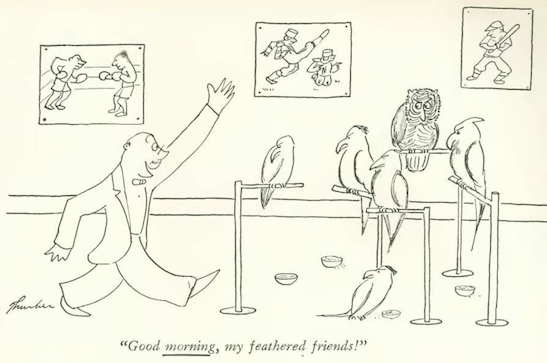
…James Thurber greeted a group of dour birds (interesting background with sporting scenes…one wonders why)…
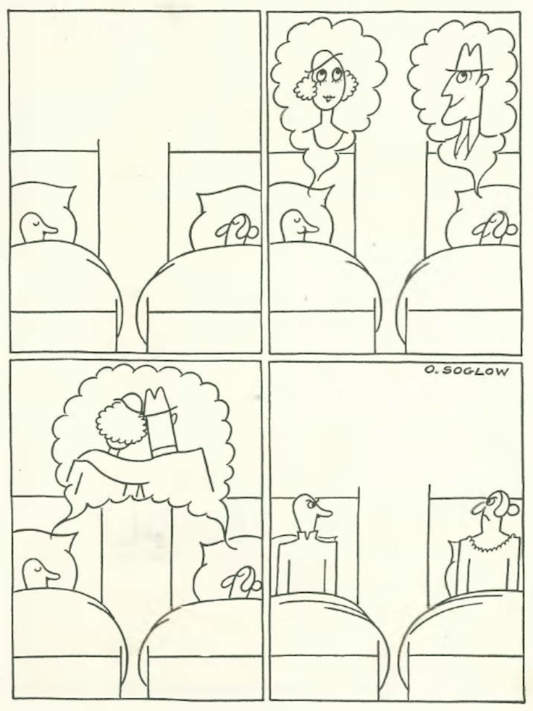
…Otto Soglow gave us some shattered dreams…
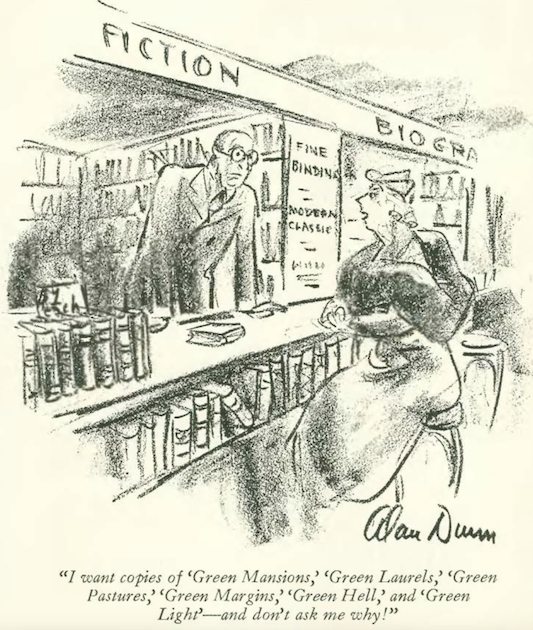
…Alan Dunn visited the fiction section, no questions asked…
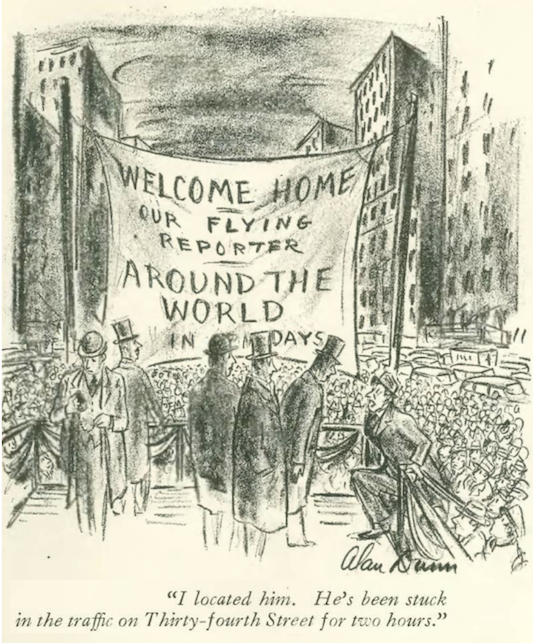
…and Dunn again…with an around the world adventure stuck in traffic…
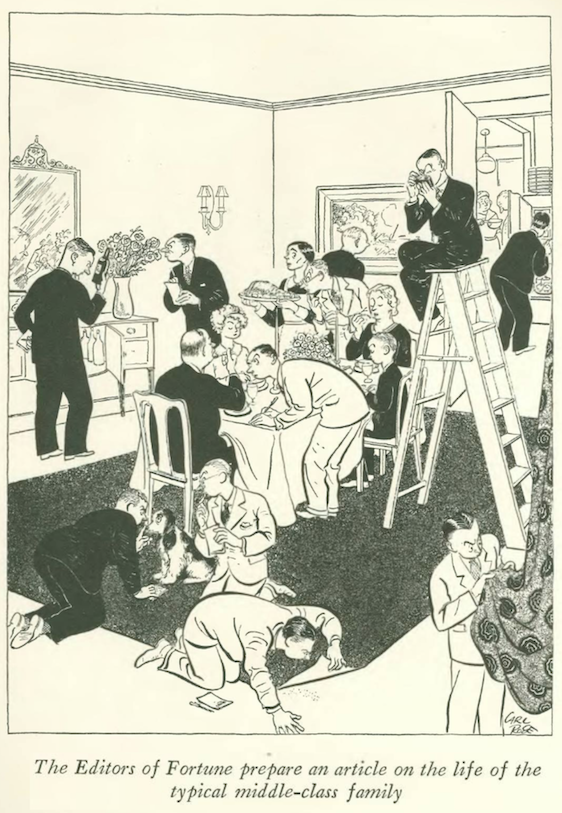
…Fortune magazine probed the mysteries of middle class life, per Carl Rose…
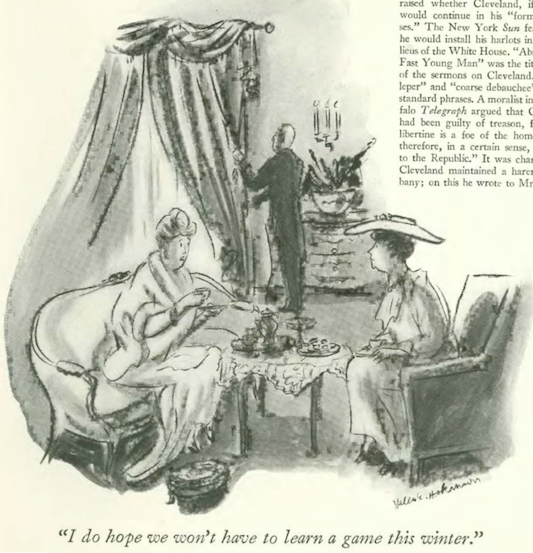
…and we close with Helen Hokinson, and the unease of an approaching winter…
Next Time: Far-Fetched Faulkner…
All That Glitters Is Not Gold

We first encountered critic Lewis Mumford in the June 30, 1931 issue of The New Yorker when he roundly excoriated plans for Rockefeller Center. The Nov. 14 issue once again found him in a surly mood, this time regarding the decorative arts and how they had been poorly displayed at the otherwise esteemed Metropolitan Museum.

Nov. 14, 1931 cover by B.H. Jackson.

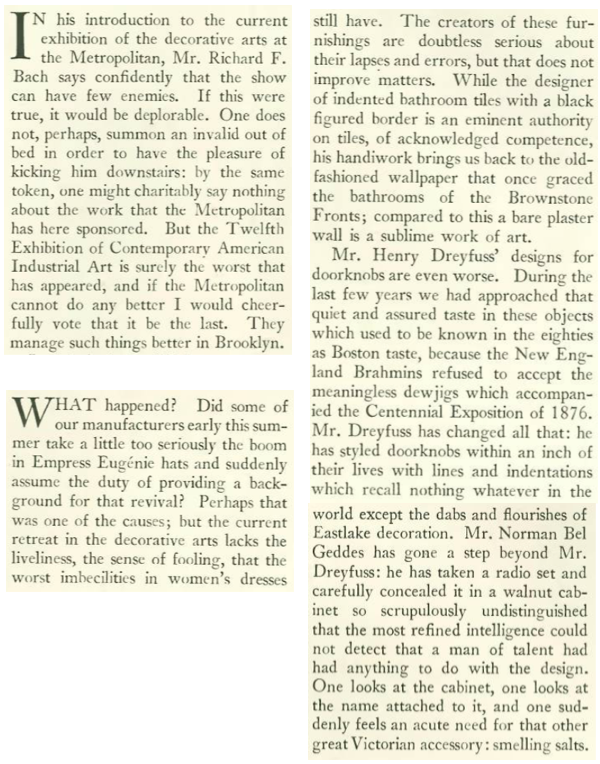
To say that Mumford was displeased with the Met’s decorative arts exhibition would be an understatement:

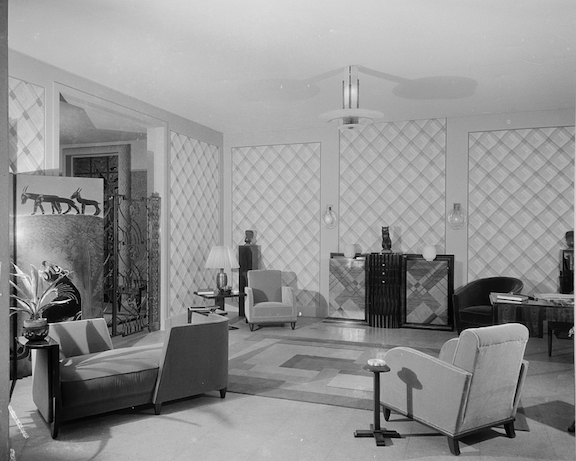
BED, BATH AND BEYOND…Let’s just say Lewis Mumford probably needed a stiff drink after strolling through the Met’s latest displays of the decorative arts. (Library of Congress)
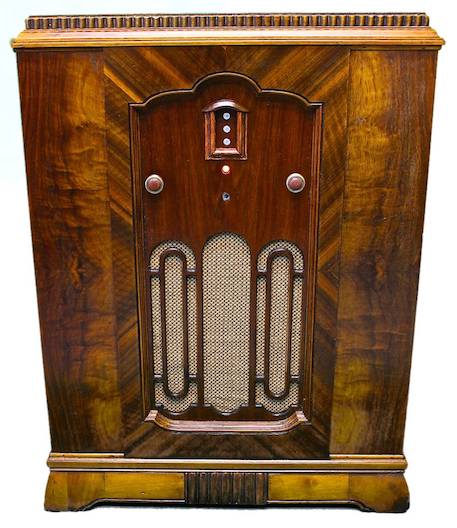
PAST IMPERFECT…Norman Bel Geddes was known for his theatrical, futuristic visions of streamlined everything, but the radio he exhibited at the Met was more Queen Victoria’s speed in Mumford’s view. (Pinterest)

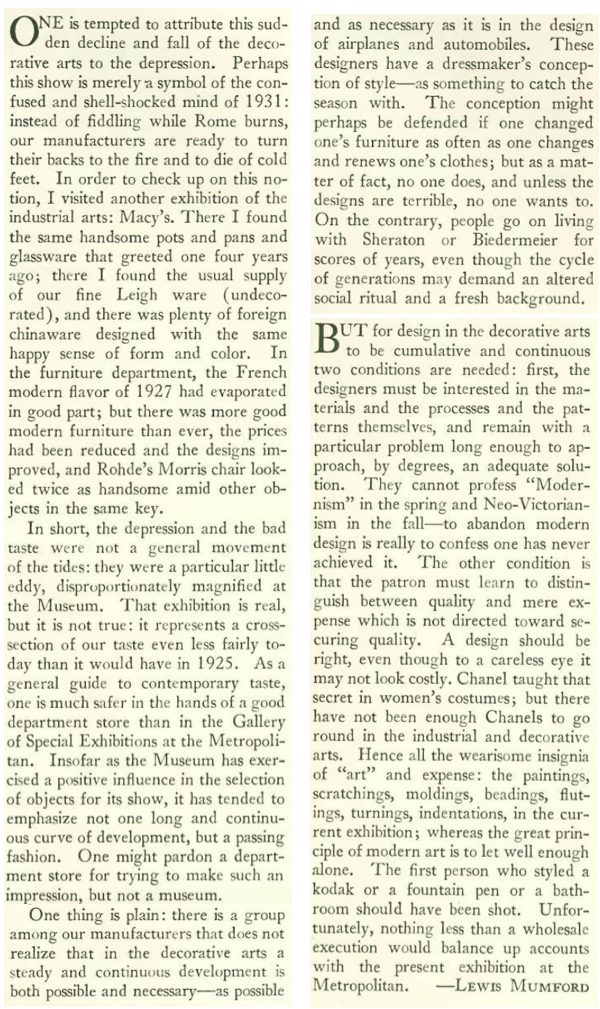
Mumford pondered this sudden decline: was it the Depression, or just a streak of bad taste? And what could be done with the purveyors of bad taste, short of shooting them? Let’s read on…

MIRACLE ON 34TH STREET…Mumford suggested that Macy’s International Exposition of Art in Industry in the late 1920’s had more vision than the Met’s 1931 offering. Above, living room furniture designed by Houbert et Petit exhibited in a showroom during the 1928 “International Exposition of Art in Industry” at Macy’s department store. (Library of Congress)
LESS THAN A PRETTY FACE?…The streamlined form of Norman Bel Geddes’ “House of Tomorrow” probably wowed a few readers of Ladies Home Journal in April 1931, but critic Lewis Mumford was likely not among them, as he often criticized Bel Geddes for his theatricality at the expense of good taste and functionality (see first excerpt above). Mumford was especially critical of Bel Geddes’ glorification of the automobile and the highway at the expense of livable cities. (Pinterest)

 *  *  *

Peter, We Have Your Back

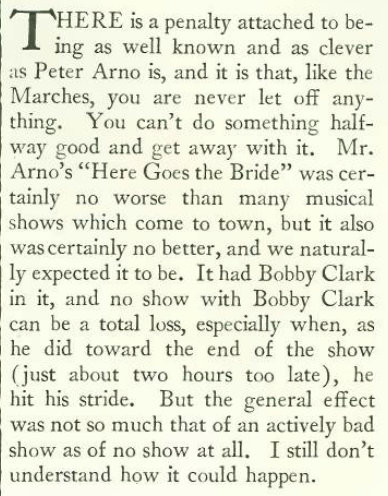
When your colleague has a play made from his book, and it closes after just seven performances, what can you say, especially if you are theater critic for The New Yorker? Well, here is what Robert Benchley did:

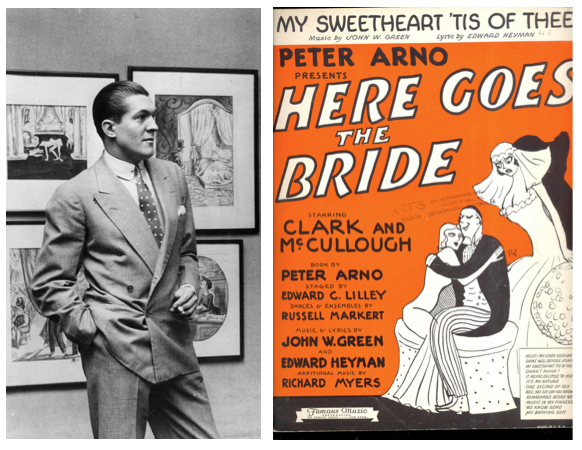
THAT’S SHOW BIZ…Here Goes The Bride, based on a Peter Arno book, closed after just seven performances. However, as a cartoonist, Arno was at the top of his game. (Britannica/Ebay)

 *  *  *

From Our Advertisers

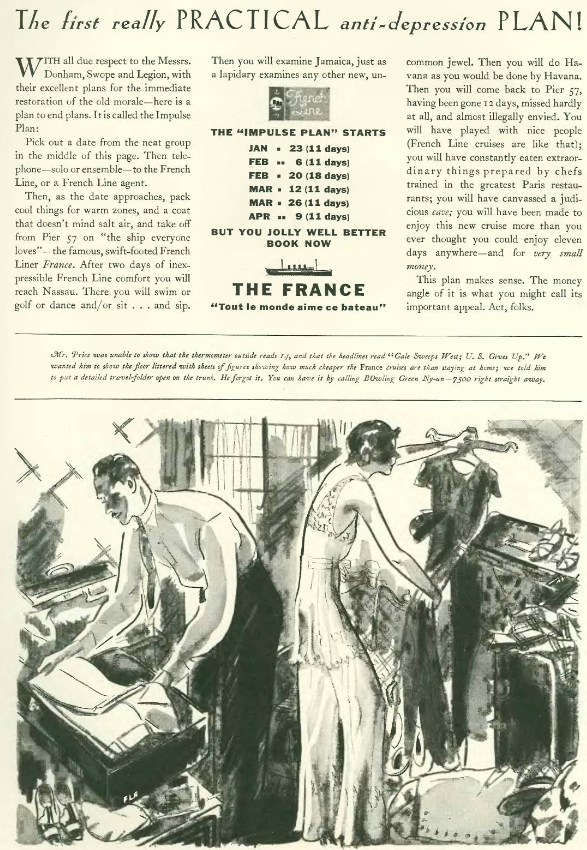
Depression? Who needs it? If you had the means, and didn’t lose your shirt in the 1929 crash, you could get away from it all and book passage to the Bahamas, where you could drink legally, soak up some sun, and forget about those lengthening bread lines you occasionally glanced from the window of your town car…

…well, that bootleg gin was a mind eraser…
…Helen Hokinson continued to offer her cartooning skills to the folks at Frigidaire…

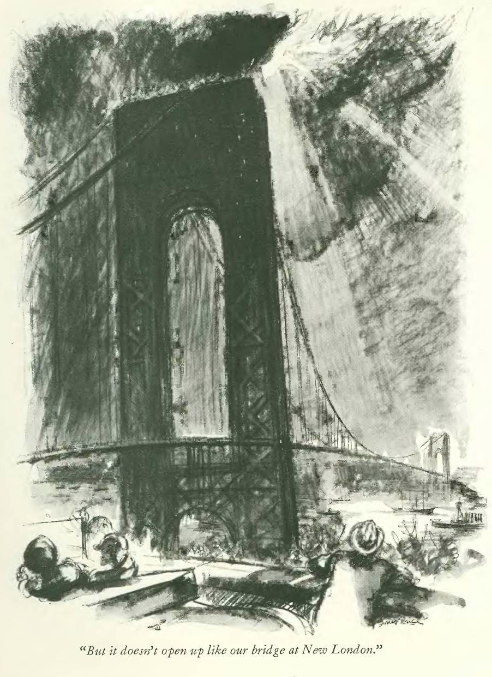
…on to our cartoons, the George Washington Bridge drew the envy of some out-of-towners, as illustrated by Garrett Price…

…nearly 90 years ago folks were almost as nuts about college football as they are now, except for Perry Barlow’s lone dowager, who would rather be sitting in her parlor with a cup of tea…

…Gardner Rea explored the wonders of heredity…

…Otto Soglow’s Little King employed a guard ready for any emergency…

…Barbara Shermund gave us an artist with a god complex…

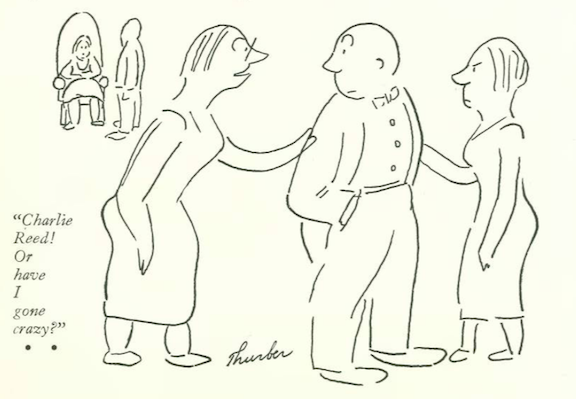
…James Thurber continued to probe the nuances of the sexes…

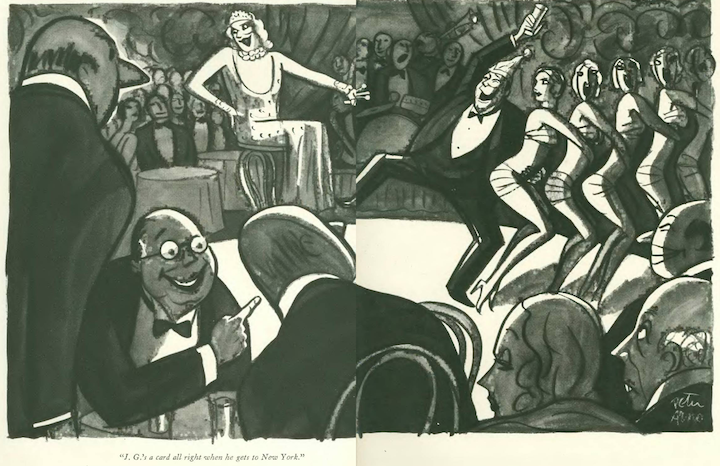
…Peter Arno sketched this two-page spread with the caption: J.G’s a card all right when he gets to New York…

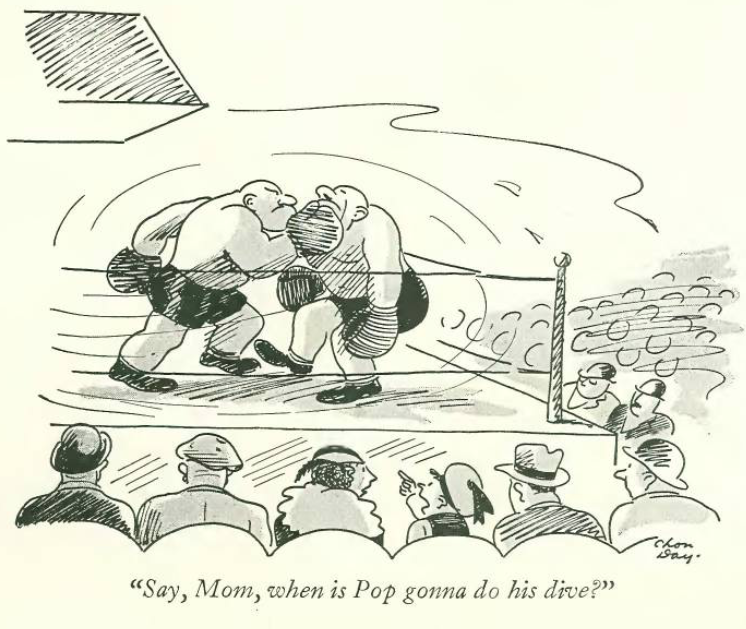
…and from the mouth of babes, we have these observations of the underworld from Chon Day…

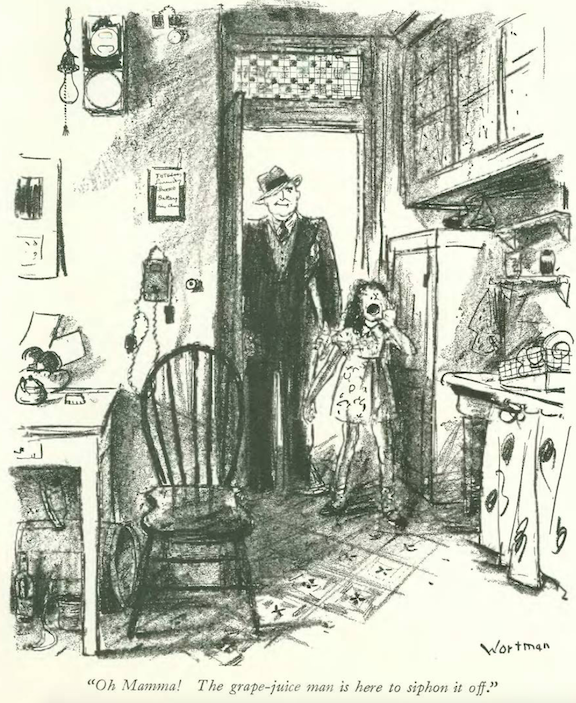
…and Denys Wortman…

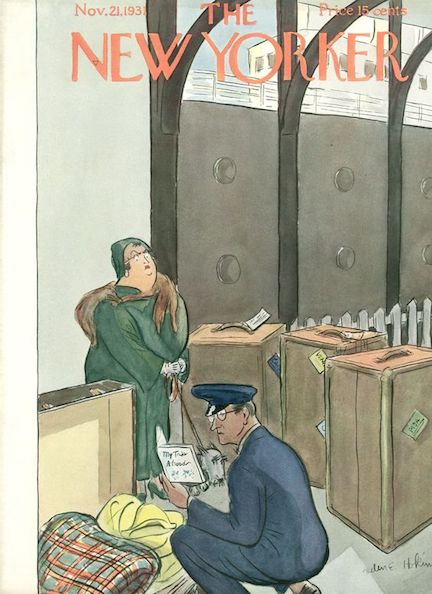
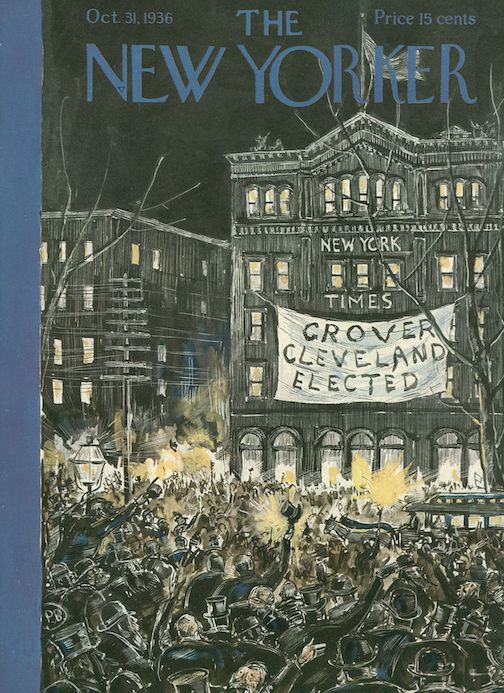
On to the Nov. 21 issue, which featured the last in a series of eleven covers Helen Hokinson contributed to The New Yorker in 1931. The covers featured one of Hokinson’s “Best Girls”—a plump, wealthy, society woman—on an around-the-world cruise, which began with the March 2 issue and ended on Nov. 21 with a stop at the customs office, and a nosy customs officer…
Nov. 21, 1931 cover by Helen Hokinson.

Bread & Circuses

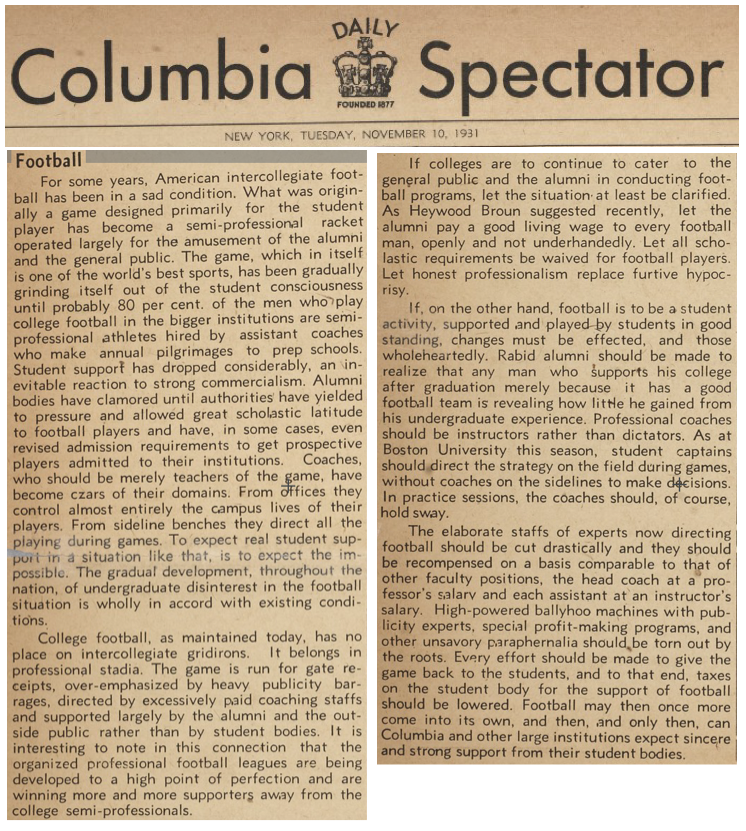
In his “Notes and Comment,” E.B. White reported on a recent editorial in the Columbia Spectator, that university’s student newspaper, which took issue with the professionalization and “furtive hypocrisy” of college football (if only they could see us now). White observed:

In 1931, Columbia was a football power, and the Ivy League was a big-time conference. To the editors of the Spectator, this was not a point of pride, which they made clear in this 89-year-old editorial that could have been written yesterday:

Clippings from Columbia Spectator Archive
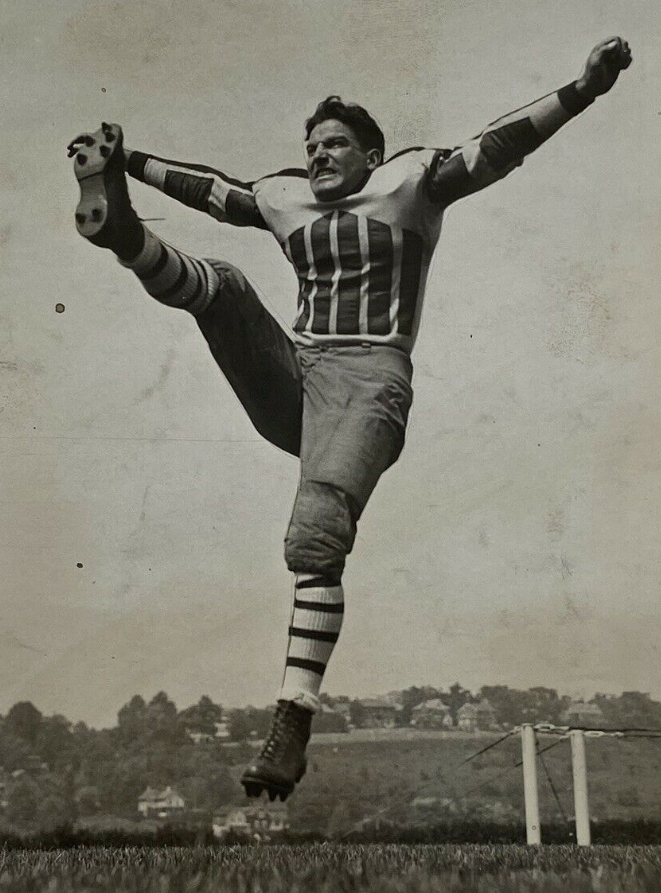
JUST GETTING MY KICKS…1931 press photo of Columbia University football star Ralph Hewitt, who still holds the school record for the longest field goal — a 53-yarder he dropped kicked in a 1930 upset victory over Cornell. Hewitt went on to coach high school sports.

 *  *  *

Sorry, Charlie

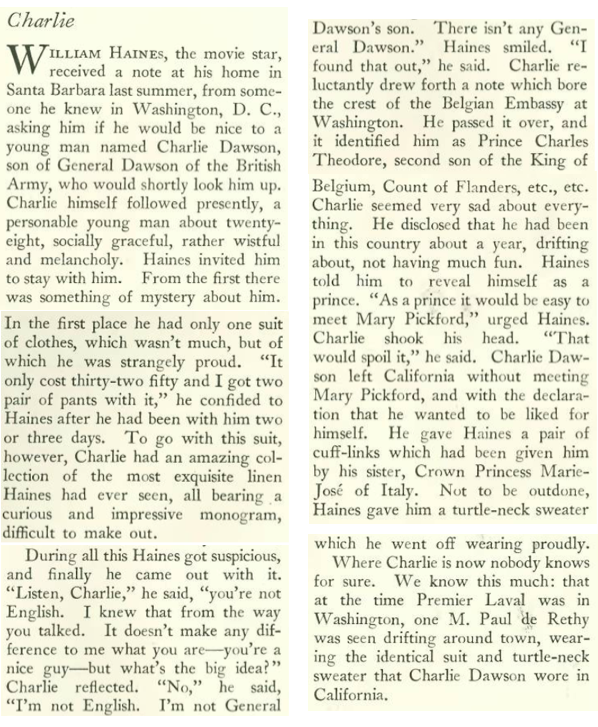
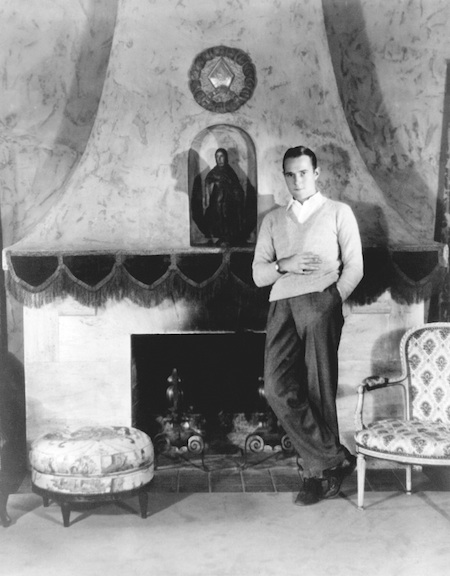
William “Billy” Haines was a top-five box-office star from 1928 to 1932, portraying arrogant but likable characters in a string of pictures that ended abruptly when Haines refused to deny his homosexuality and was cut loose by MGM. “The Talk of the Town” looked in on Haines at his Santa Barbara home, where he entertained a mysterious visitor:

THE INTERIOR LIFE…The actor William Haines in a 1926 publicity shot taken at his Hollywood home. Haines would abandon acting in the 1930s and take up a successful career as an interior designer. (Photofest)

 *  *  *

Coveted Coiffeur

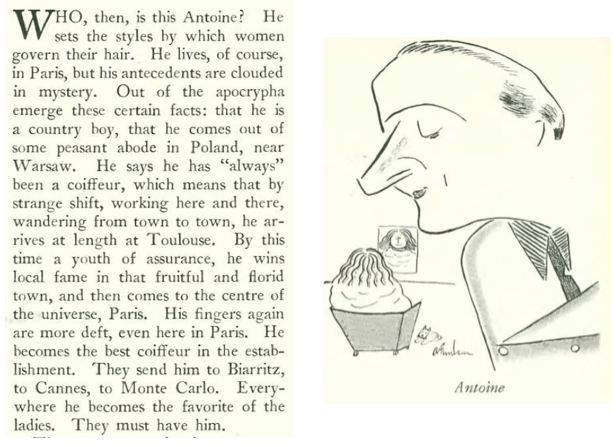
Writer Bessie Breuer wrote an admiring profile of Polish hairdresser Antoine (aka Antoni Cierplikowski), considered the world’s first celebrity hairdresser. The opening paragraph:

A CUT ABOVE…In 1914 famed hairdresser Antoine (aka Antoni Cierplikowski) invented the “shingle cut” (at left, sported by actress Louise Brooks in the 1920s), which was all the rage during the Roaring Twenties. (Pinterest)

 *  *  *

The Look of Relief

In “The Talk of the Town” E.B. White noted that a familiar face was gracing advertisements for President Herbert Hoover’s Unemployment Relief Agency:

I NEVER FORGET A FACE…E.B. White referred to this ad featuring an unnamed woman who had a familiar look about her. (period paper.com)

 *  *  *

More His Style

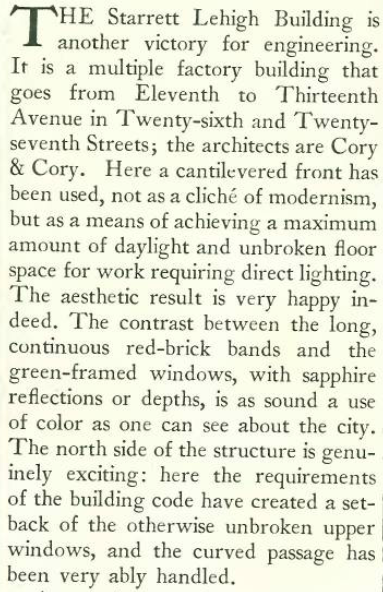
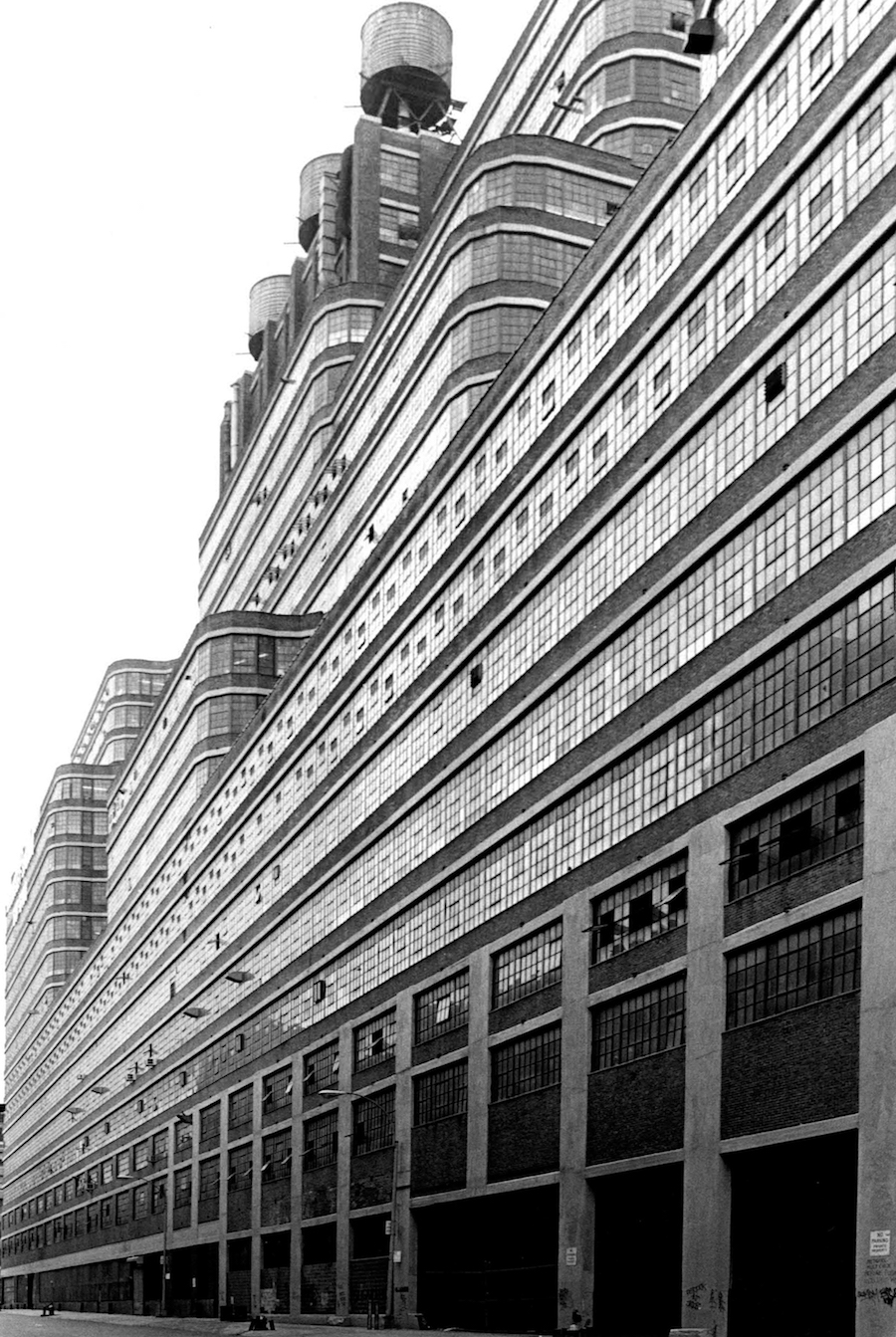
We return again to Lewis Mumford, this time cheered by the sight of the new Starrett-Lehigh Building in Chelsea, designed by Cory & Cory. An excerpt from “The Sky Line” column:

THAT’S MORE LIKE IT…Lewis Mumford praised the striking effect of the Starrett-Lehigh Building’s alternating bands of brick, concrete and steel. (Atlas of Places)

 *  *  *

The Chump

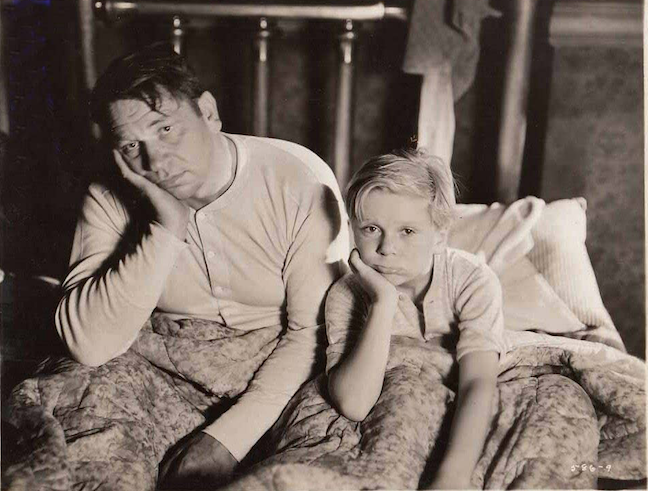
John Mosher was neither moved nor charmed by the appearance of little Jackie Cooper in The Champ, a tearjerker story of an alcoholic ex-boxer (Wallace Beery) struggling to provide for his son. He did, however, appreciate the boy’s ability to carry “on his little shoulders a heavy and tedious and lengthy story.”

BUMMER…John Mosher had little to like about King Vidor’s The Champ, featuring Wallace Beery and Jackie Cooper. Mosher was no doubt a bit dismayed when Beery received an Academy Award for his performance. (IMDB)

 *  *  *

A Wishful Christmas List

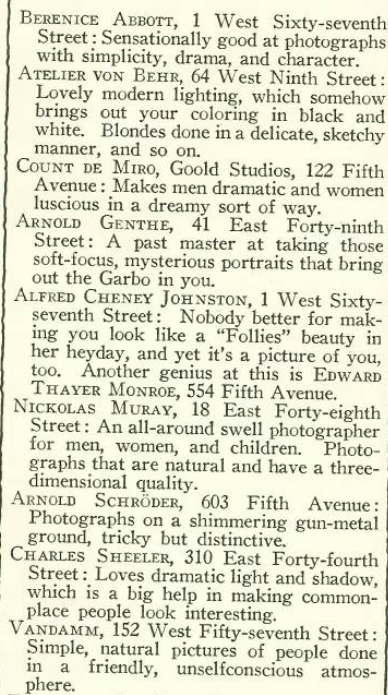
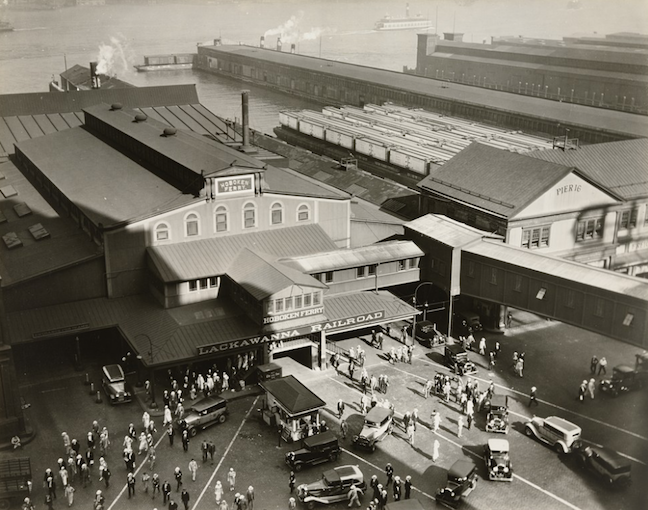
It was that time of the year when the New Yorker began running its lengthy features on possible gifts for Christmas. This excerpt caught my eye for what might have been possible in 1931 — buying a photographic print directly from Berenice Abbott or Nickolas Muray:

NO LUMP OF COAL, THIS…In 1931 it might have been quite possible to buy this print directly from photographer Berenice Abbott. Barclay Street, Hoboken Ferry 1931, is in MoMA’s photography collection.

*  *  *

From Our Advertisers

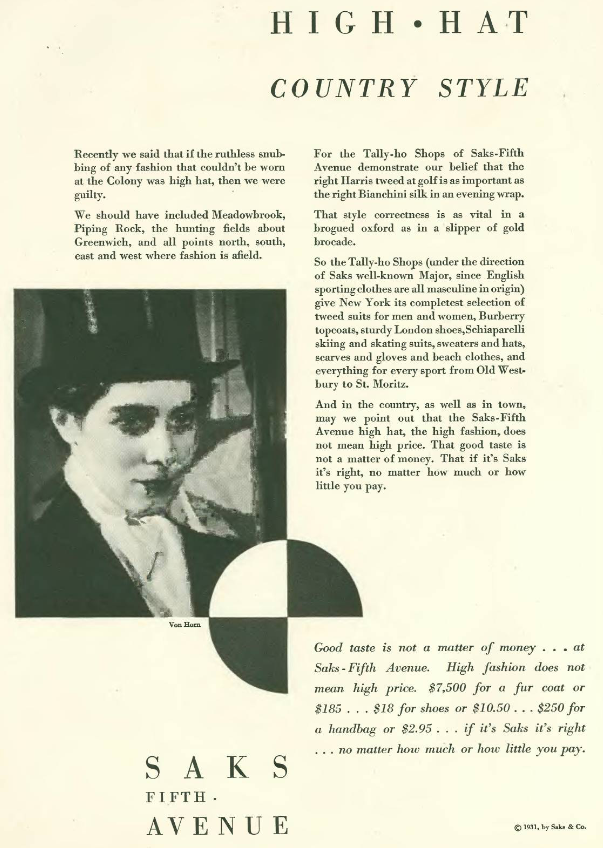
It has been well-established in previous posts that Anglophilia ran rampant among New York’s smart set, and this advertisement from Saks provides everything we need to underscore the point…
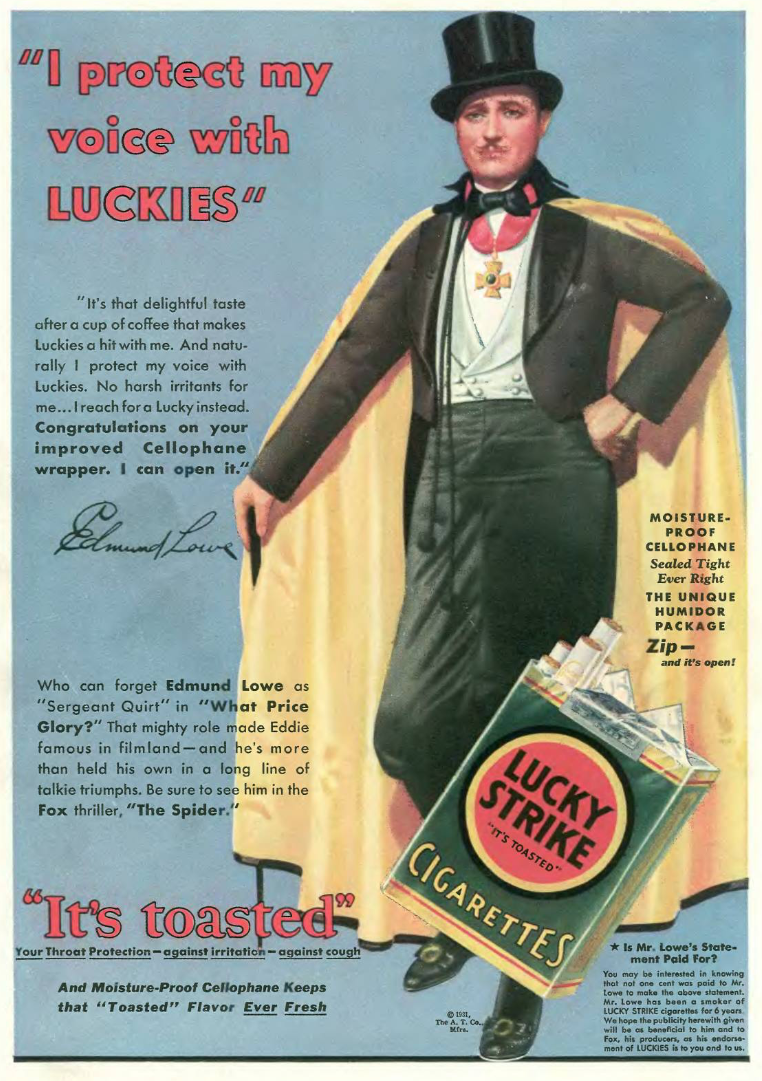
…and the top hat mades another appearance in this spot for Lucky Strike, featuring an endorsement from actor Edmund Lowe...

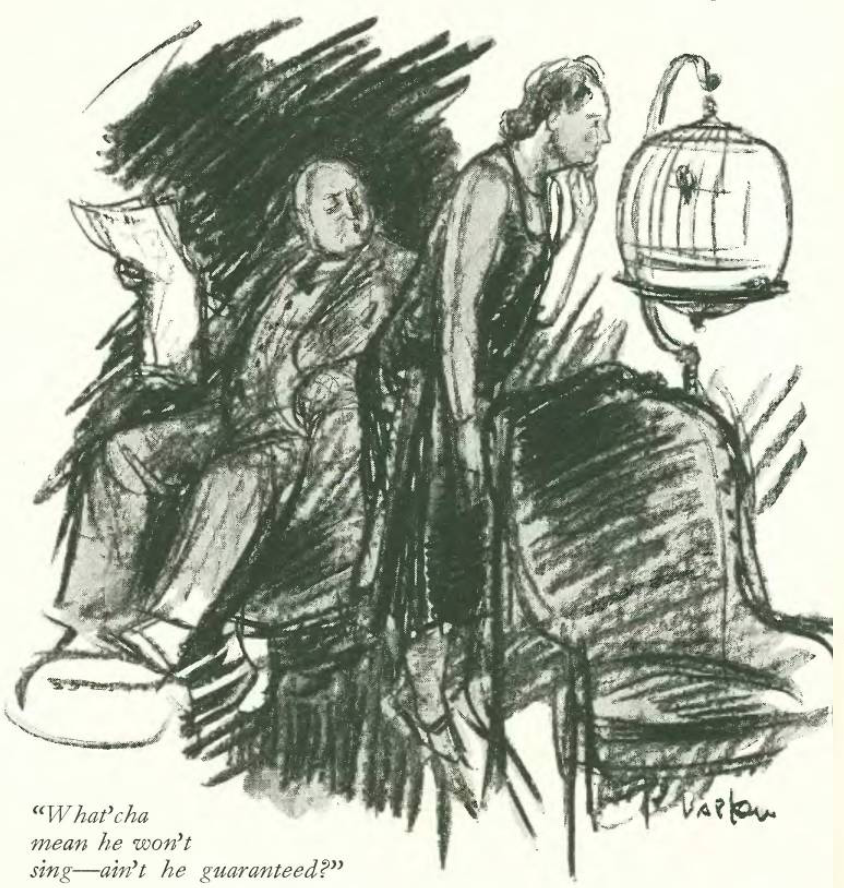
…our cartoons featured a song-less songbird courtesy of Perry Barlow…

…and from James Thurber, another creature with little appetite for song, let alone wine and women…

…William Steig brought us back to the bleachers with another nonconformist…

…Gluyas Williams gave us this sad sack all alone in the crowd…

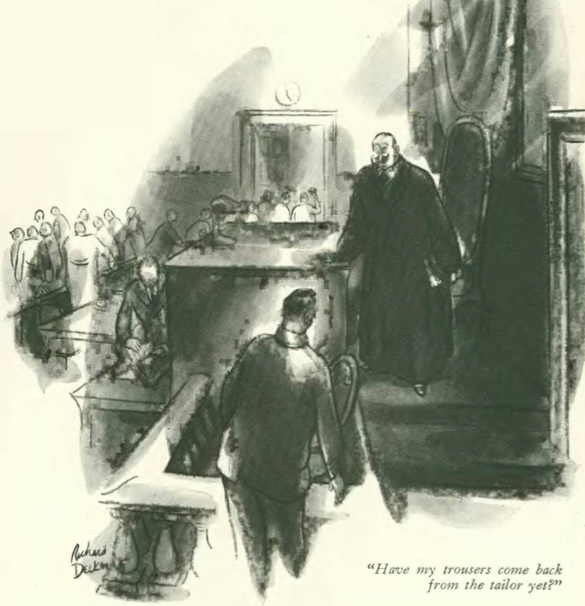
…Richard Decker sought to bring order to this court…

…and we end with Carl Rose, and this two-page cartoon illustrating a dicey parking challenge…

Next Time: Yankee Doodles…