An Urban Spectacle

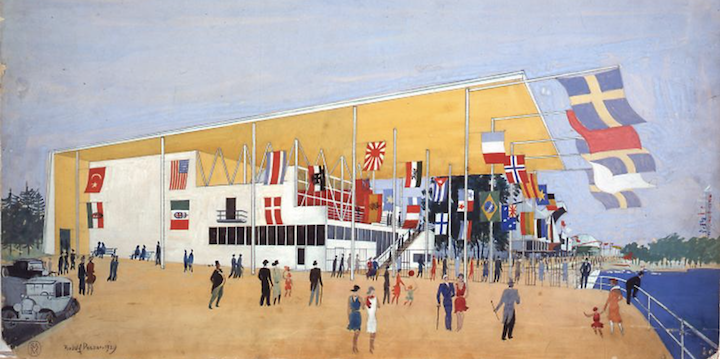
Above: Rudolf Persson's rendering of the main entrance to the Stockholm Exhibition of 1930, designed by Swedish architect Gunnar Asplund. The exhibition was a landmark event that introduced Functionalism to Swedish architecture and design.(Svensk Form)

Architecture critic Lewis Mumford turned his exacting eye on exhibitions at the Museum of Modern Art that looked to the future of building design. Of particular interest was an exhibit on those world expositions that have given us everything from the Eiffel Tower (1889 Exposition Universelle) to the car-dominated landscape that inspired millions of Depression-weary visitors at New York’s 1939 World’s Fair.
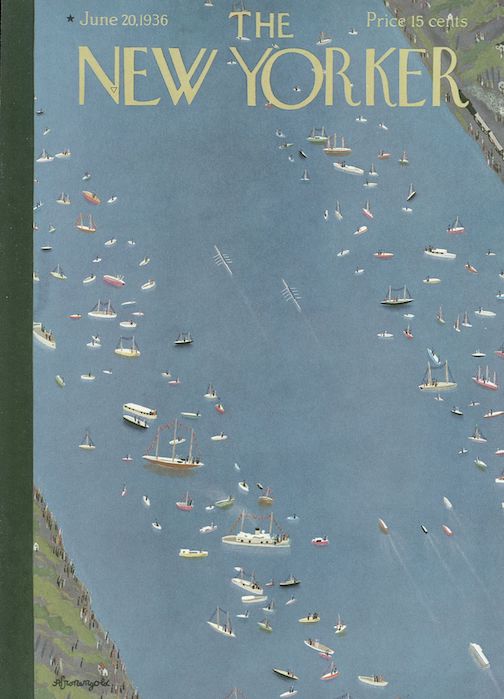
June 20, 1936 cover by Adolph K. Kronengold. Kronengold (1900–1986) created twenty-three covers for the New Yorker from 1928 to 1947. Born and raised in New Orleans, he frequently used watercolors and often painted scenes honoring his hometown. The June 20 cover was Kronengold’s seventeenth for the magazine.

Mumford made passing mention to the museum’s exhibit on government housing (he noted it was below MoMA’s standard) and then turned his attention to a review of world’s fairs, examining how they have inspired both waves of architectural achievement and “counterfeits of civic grandeur…”

BREAK FROM THE PAST…Images from the covers of MoMA’s exhibition catalogs depict the 1934-35 Carl Mackley Houses in Philadelphia (top, from the government housing exhibit) and the 1930 Stockholm Exposition. (MoMA.org)
STILL SERVING…the 1934-35 Carl Mackley Houses in Philadelphia have been on the National Register of Historic Places since 1998. (Wikipedia)
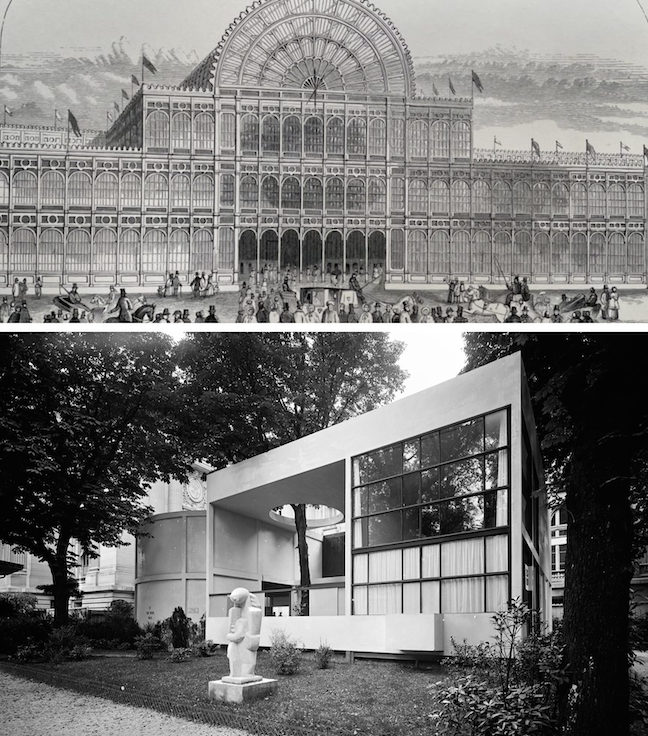
PONDERING what a modern exhibition should be, Lewis Mumford cited the granddaddy of them, the London Exhibition of 1851 (top), with its Crystal Palace, which he called “the first definitive monument of modern architecture,” as definitive and challenging as the Pavillon L’Esprit Nouveau (bottom), designed by Le Corbusier and Pierre Jeanneret for the 1925 International Exhibition of Modern Decorative and Industrial Arts in Paris. (devonandexeterinstitution.org/Wikipedia)
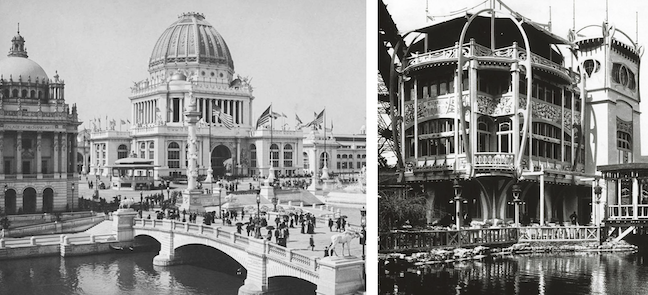
SHAM AESTHETIC…Mumford referred to buildings in the 1893 Chicago World’s Fair (left) as “laborious limestone counterfeits of civic grandeur,” while praising the 1893 and 1900 Paris expositions for design innovations including the Art Nouveau style—at right is Le Pavillon Bleu, a lavish restaurant once located at the foot of the Eiffel Tower. It was built by French architect René Dulong in collaboration with Belgian architect and designer Gustave Serrurier-Bovy, one of the founders of the Art Nouveau movement. (getzen.com/messynessychic.com)

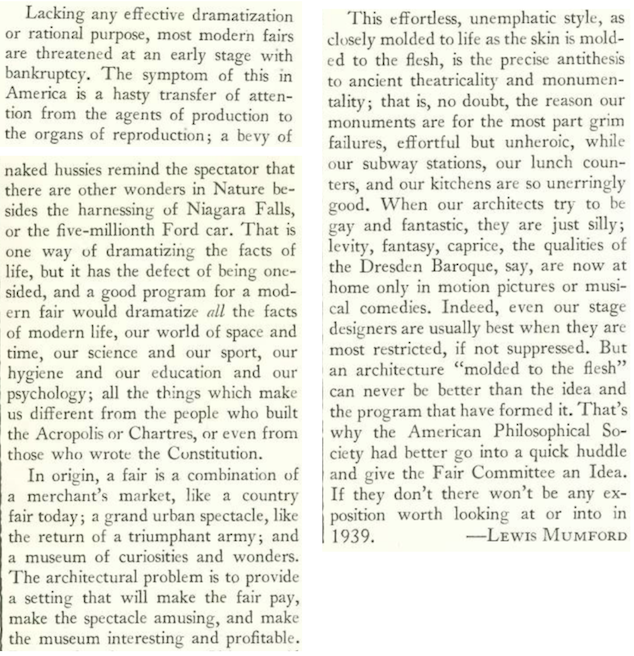
Looking ahead to the planned 1939 World’s Fair at Flushing Meadows, Mumford believed the age of grand world expositions had passed, especially those that moved the needle on design innovation. Moreover, he observed that the lack of real drama or rational purpose would threaten bankruptcy to future fairs, a symptom especially acute in America: “…a hasty transfer of attention from the agents of production to the organs of reproduction; a bevy of naked hussies remind the spectator that there are other wonders in Nature besides the harnessing of Niagara Falls, or the five-millionth Ford car.”
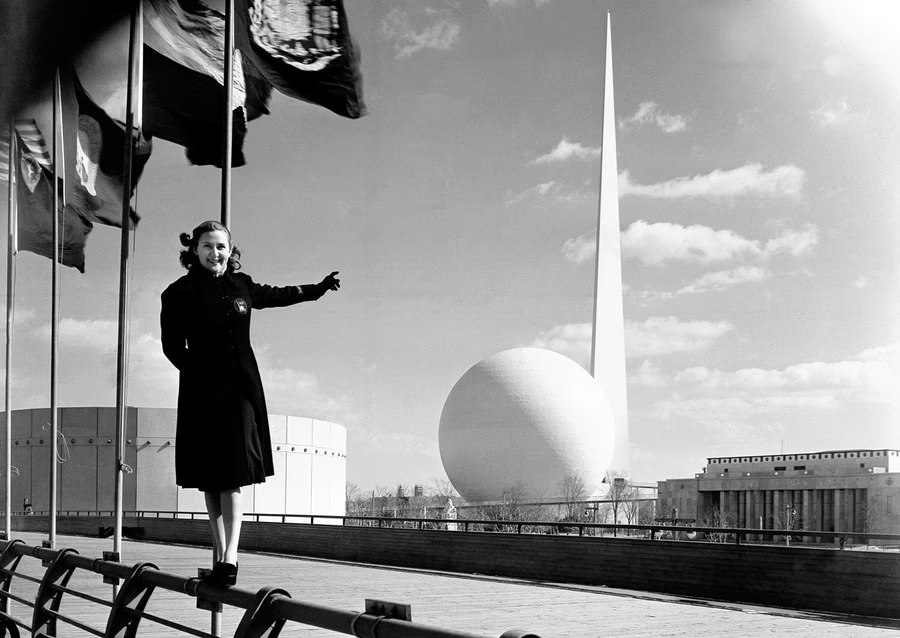
POINTING TO THE FUTURE..Rosalie Fairbanks, a guide to the 1939 New York World’s Fair, points to the theme of the exposition—the Trylon and Perisphere—after the entire sheath of scaffolding was removed for the first time on February 22, 1939. (Associated Press)

Earth-movers were already at work sculpting the fair’s site from the swampland and ash heaps along the Flushing River when Mumford assembled a self-anointed advisory group in 1936. This group— the “Fair of the Future Committee”—urged the fair’s leaders to abandon superficial commercialism and instead demonstrate how technology could serve the public good and restore ecological balance in American communities. That did not come to pass; when the fair opened in 1939, Mumford wrote in his “Sky Line” column (titled “Genuine Bootleg”) that the committee’s “hopes and proposals for a major contribution to urban design were progressively defeated. Today their wreckage is strewed about the Fair, so thoroughly smashed and disfigured that their own fathers could scarcely identify the corpses.”
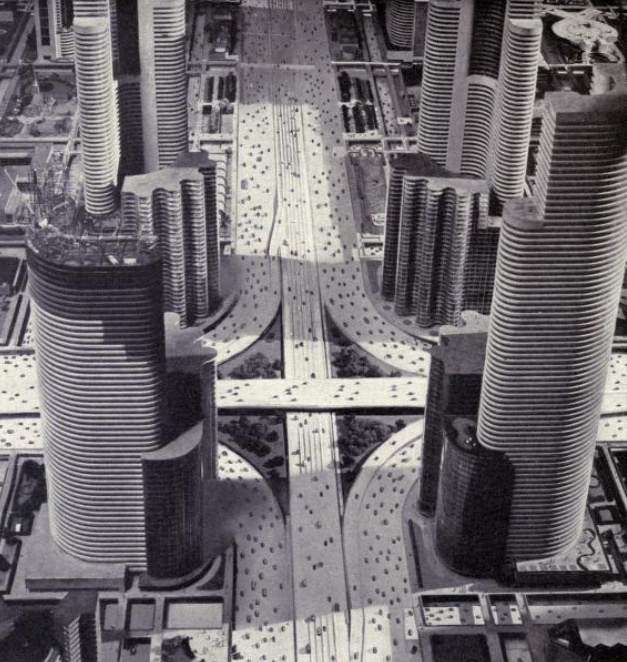
FUTURAMA was a popular exhibit and ride at the 1939 New York World’s Fair. Designed by Norman Bel Geddes for the General Motors pavilion, it proposed a sprawling car-based future that was the antitheses of Lewis Mumford’s vision of human-scaled, ecologically balanced development. (Wikipedia)

Mumford got one thing right. Although the 1939 fair attracted more than 45 million visitors, it lost a lot of money, recouping only 32 percent of its original cost.

 * * *

Only a Memory

In “Notes and Comment,” E.B. White recalled the brief life of “America’s Little House” at 39th and Park in the Murray Hill neighborhood. The eight-room Georgian colonial was built in 1934 during the “Better Homes in America” campaign that promoted single-family home ownership as well as design innovations. The CBS radio network (which contributed $50,000 to the project) installed a studio in the house’s garage, from which it broadcast three national radio programs to a hundred stations across the country.

Open for about a year, the house was demolished in November 1935, its doors and interior furnishings sold to hostesses who had worked at the house. In its place William Van Alen—architect of the Chrysler Building—erected the all-steel “House of the Modern Age.”
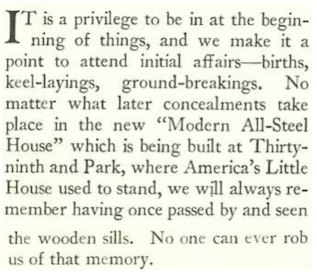
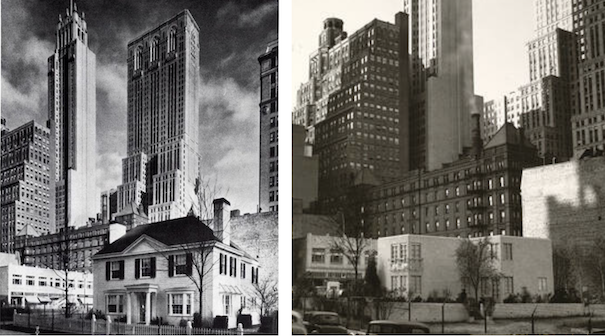
CHANGE OF SCENE…At left, America’s Little House on Park Avenue and 39th Street, replaced by William Van Alen’s prefabricated steel house (right), “The House of the Modern Age,” detail from a photo by Berenice Abbott. (Wikipedia/cornell.edu)

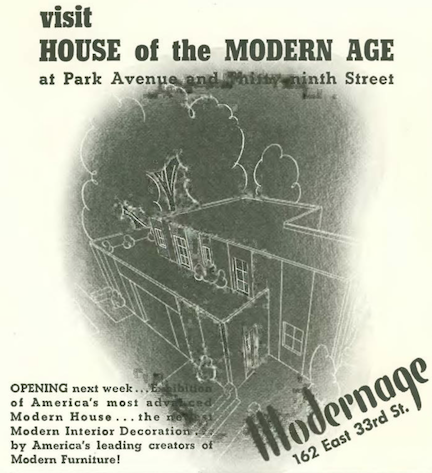
…in the following week’s issue of The New Yorker, June 27, a back of the book ad from the Modernage Furniture Corporation touted the opening of “The House of the Modern Age”…
 * * *

Fan Fans

Staying on the domestic scene, here is an excerpt from Barbara Blake’s “About the House” column, where she updated readers on the latest in electric fans (air-conditioning in private homes was still a rarity).
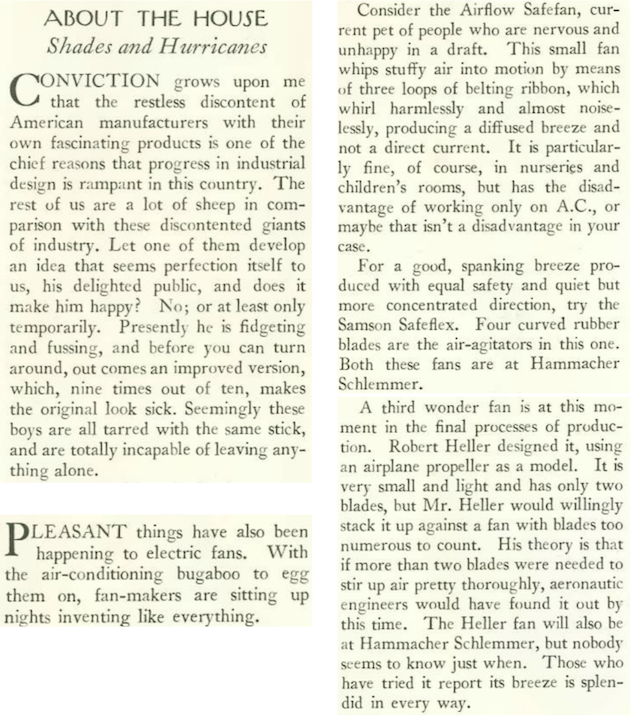
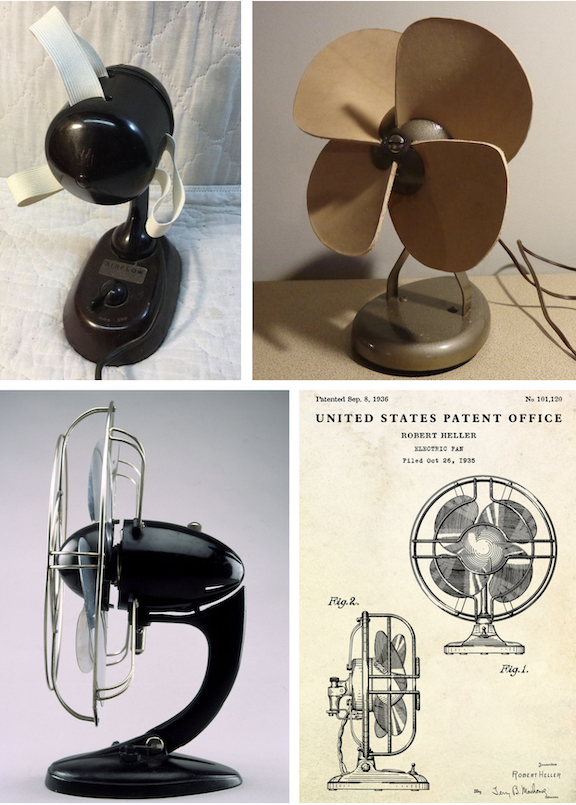
ELECTRIC WIND…Barbara Blake highlighted the latest in electric fans including, clockwise from top left, the Airflow Safefan, which moved air with looped ribbons; the Samson Safeflex employed rubber blades as a safety feature; the noted designer Robert Heller produced these fan designs (1936 and 1937) modeled on airplane propellers. (worthpoint.com/ebay.com/Montreal Museum of Fine Arts)

 * * *

Billy’s Beef

In 1899 vaudevillian Billy Watson (aka Isaac Levie) formed his Beef Trust burlesque troupe of plus-sized women. Although his shows starred women in the 200-pound range, he also relied on slight-of-hand provided by the “Tights King” Morris Kohan, who apparently could produce tights that could make a person look either heavier or slimmer. “The Talk of the Town” explains in this excerpt:
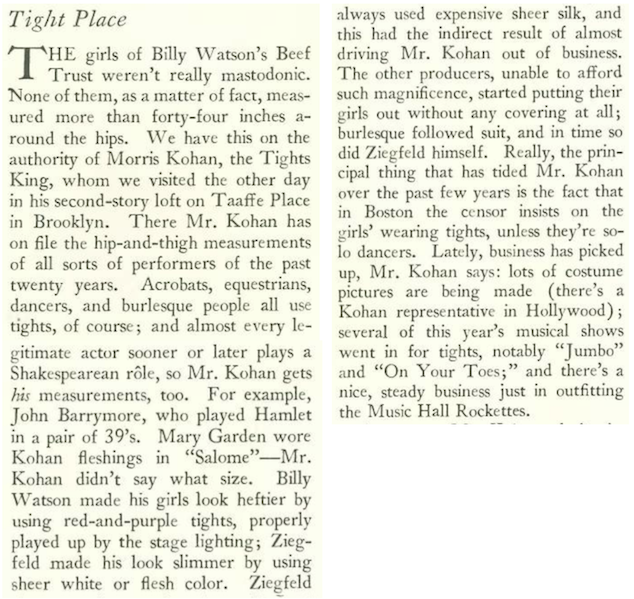
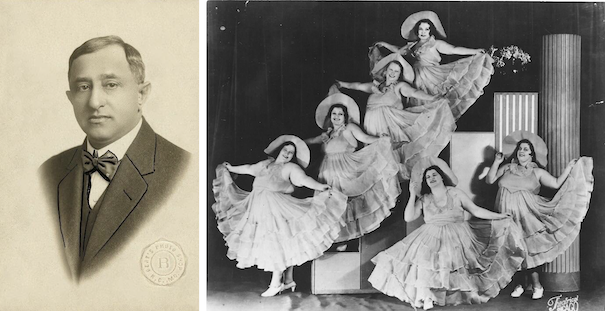
WHERE’S THE BEEF?…Billy Watson’s  burlesque troupe of plus-sized women—the Beef Trust— padded their profiles with the aid of specially designed tights. (Facebook.com)

 * * *

Divine Dilemma

In Part Two of Father Divine’s profile, St. Clair McKelway and A.J. Liebling recounted the preacher’s 1931 arrest, prompted by ongoing complaints from the citizens of Sayville, New York about the traffic jams caused by Divine’s daily feasts as well as the noise generated by the faithful who would holler hallelujahs late into the evening. During one of these late night revivals police raided Divine’s property and fined each of the seventy-eight followers a few dollars apiece. Divine, however, insisted on a jury trial, which was held seven months later. The charge: Maintaining a public nuisance.

Jurors convicted Divine, with a request for leniency, but Justice Lewis Smith sentenced the preacher to a year in prison, calling him a “menace to society.” However, four days later the judge dropped dead of a heart attack, and Divine was freed. The notion that the judge’s death was divine retribution was naturally perpetuated by the media. A brief excerpt, with illustration by Abe Birnbaum.
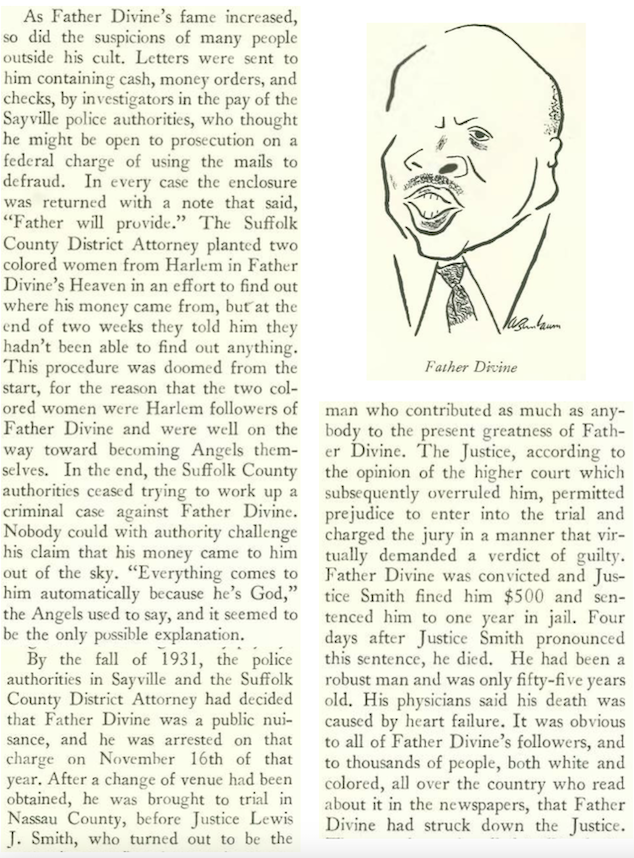
GET OUT OF JAIL CARD…In 1931 Father Divine was arrested for maintaining a public nuisance. Following a jury trial and conviction, the presiding judge dropped dead, leading the preacher’s freedom a few days later. (facebook.com/nydailynews.com)

 * * *

At the Movies

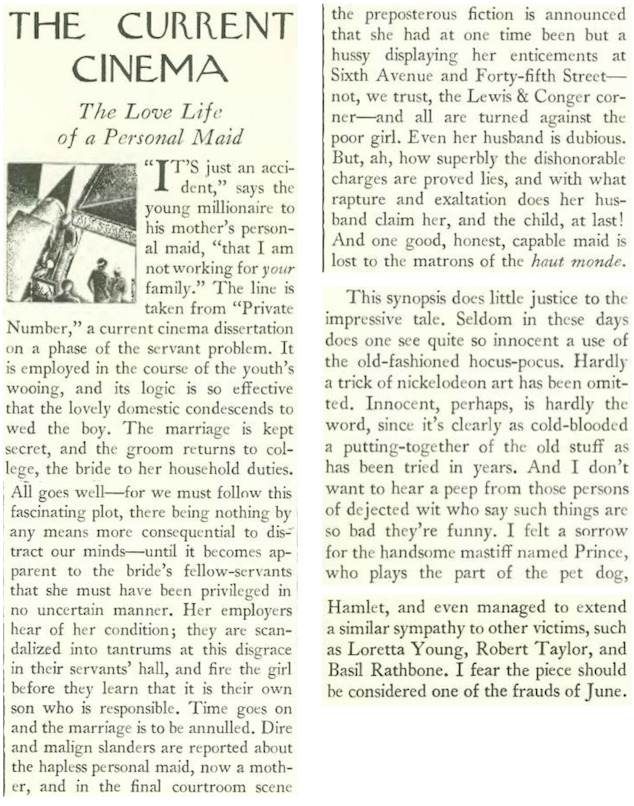
The drama film Private Number was based on the 1915 play Common Clay, which had already been made as a silent in 1919 and as a sound film in 1930. The play had a somewhat scandalous theme for the time (a young servant is fired when she becomes pregnant by her employer’s son), but thanks to the Hays Code, the more scandalous parts of the earlier films were omitted in 1936’s Private Number, leaving the viewer with little except for some “old-fashioned hocus pocus,” according to critic John Mosher.
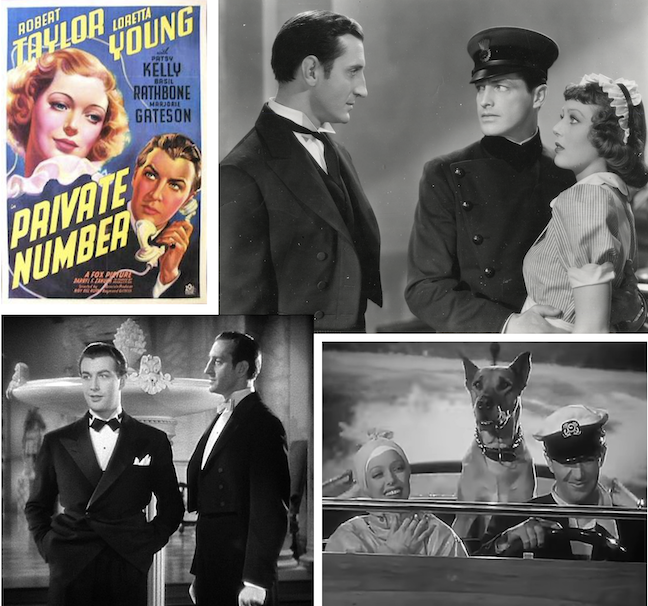
THE BUTLER DID IT…In Private Number, Basil Rathbone portrayed a tyrannical butler with a personal interest in one of his new maids (Loretta Young). She in turn secretly marries the scion of the family (Robert Taylor) and bears his child. Clockwise from top left: Poster for the film; Rathbone, Kane Richmond, and Young; Taylor, Young, and well-known canine actor Prince; rivals for a maid’s affection—Taylor and Rathbone. (Wikipedia/imdb.com/basilrathbone.net)

Thirty-nine-year-old Marion Davies appeared in one her final films, Hearts Divided, a musical based on the real-life marriage between American Elizabeth ‘Betsy’ Patterson and Jérôme Bonaparte, the brother of Napoleon Bonaparte. Although in real life Napoleon annulled the marriage, Hollywood gave the couple a happier ending.
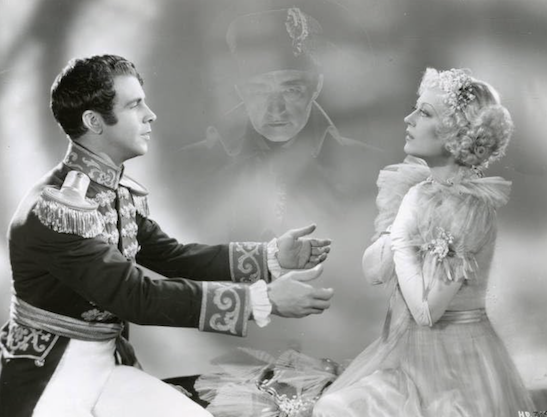
THREE’S A CROWD…Napoleon (Claude Rains) comes between lovers Marion Davies and Dick Powell in Hearts Divided. The two also shared an off-screen romance behind the back of William Randolph Hearst, with whom Davies had a long-term relationship and to whom she believed she owed her career. (imdb.com)

 * * *

From Our Advertisers

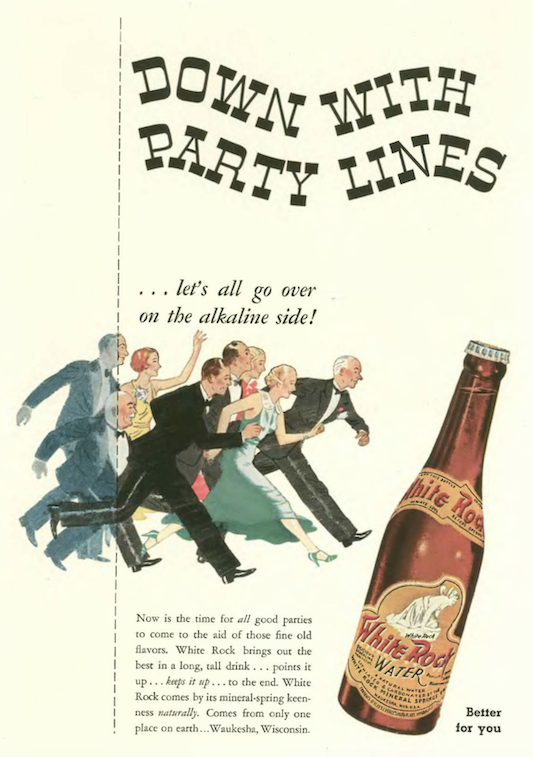
Illustrator R. John Holmgren drew up this non-partisan appeal for White Rock mineral water…
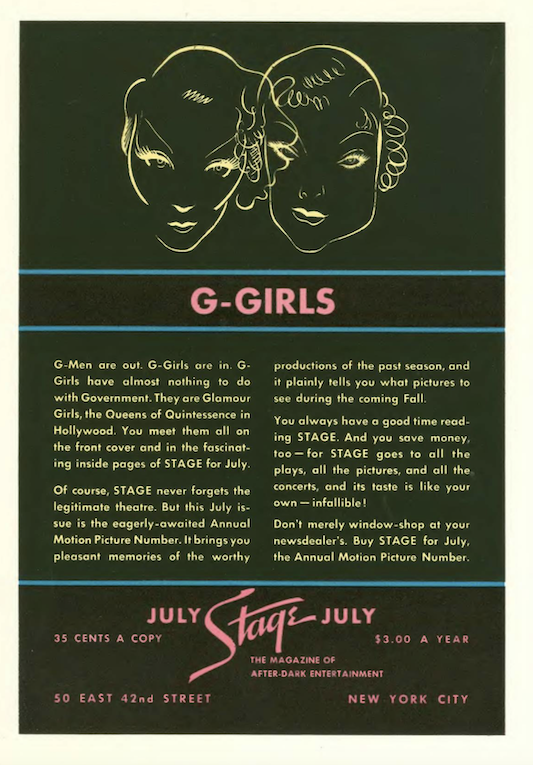
Stage magazine touted its upcoming July issue, featuring the “Glamour Girls” of Hollywood…
…here is the cover of that July 1936 issue, illustrated by Abe Birnbaum, featuring caricatures of leading ladies including Greta Garbo, Joan Crawford, Jean Harlow, Merle Oberon, Myrna Loy, Claudette Colbert, Bette Davis, Marlene Dietrich, and Katharine Hepburn…
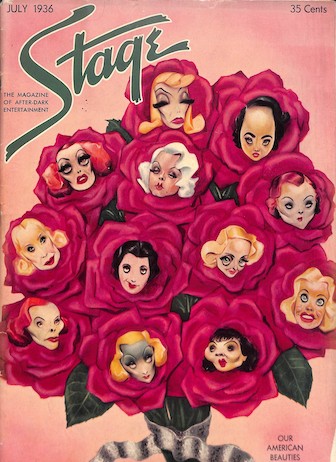
(abebooks.com)

…longtime member of the New Yorker coterie and contributor Alexander Woollcott appeared in this full-page ad endorsing the work of the American Civil Liberties Union…

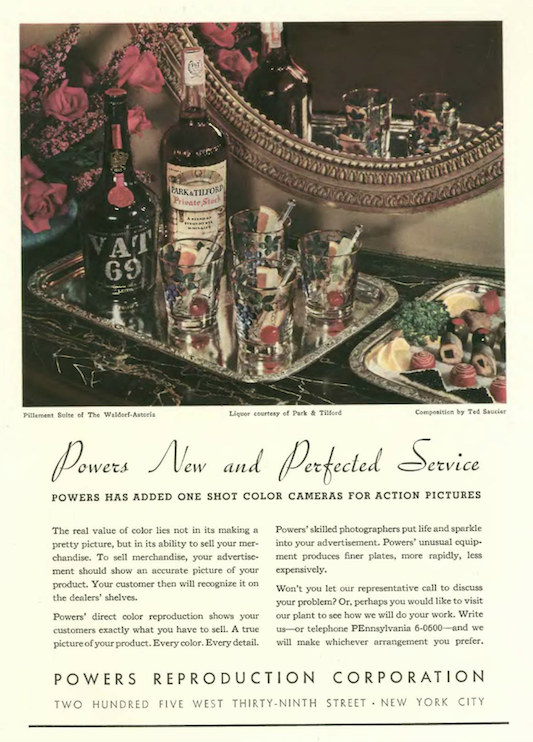
…from the 1920s to the 1940s the Powers Reproduction Corporation was a prominent, New York City photo-engraving firm that created high-quality color images for magazines and advertising agencies…
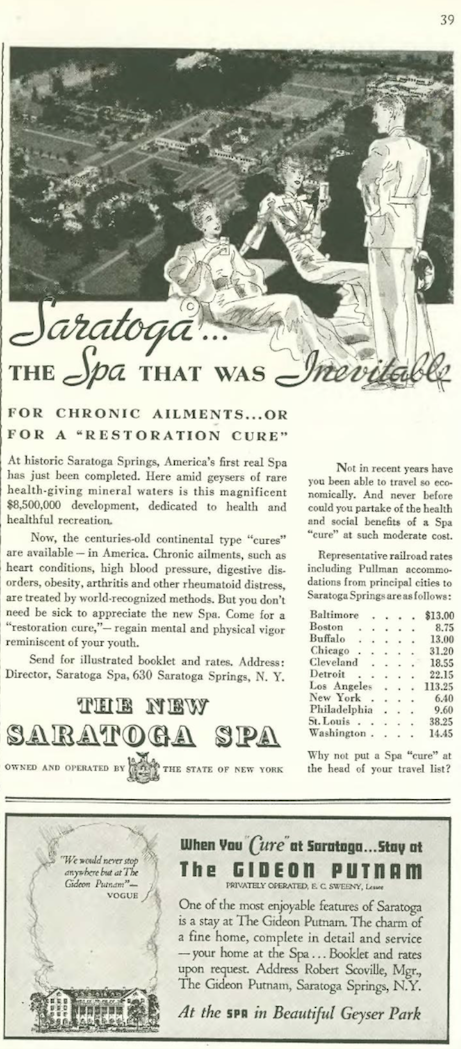
…these back of the book ads joined forces to promote the healing waters of Saratoga Springs and the Gideon Putnam hotel and spa…apparently the waters and other spa services treated everything from heart conditions to obesity…
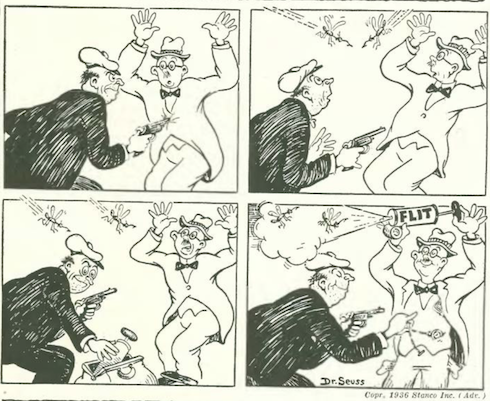
Dr. Seuss returned with another scenario for insecticide use…
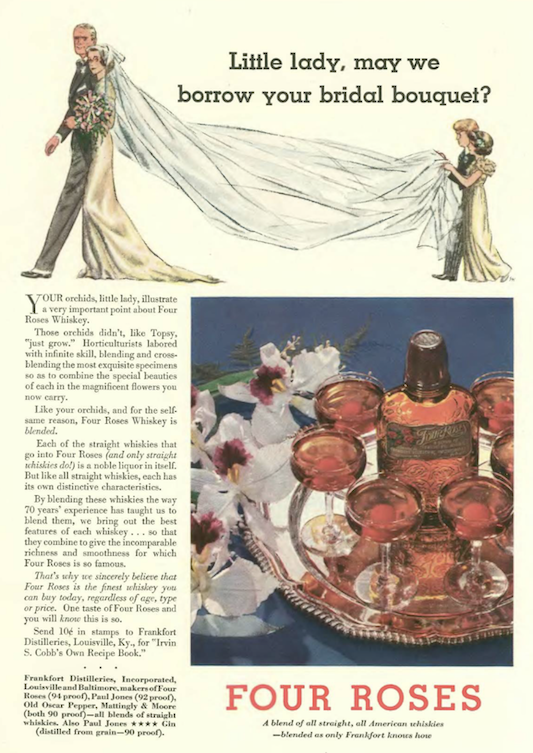
…on the inside back cover, the distillers of Four Roses Whiskey conjured up a June bride as an apt metaphor for their blending techniques…
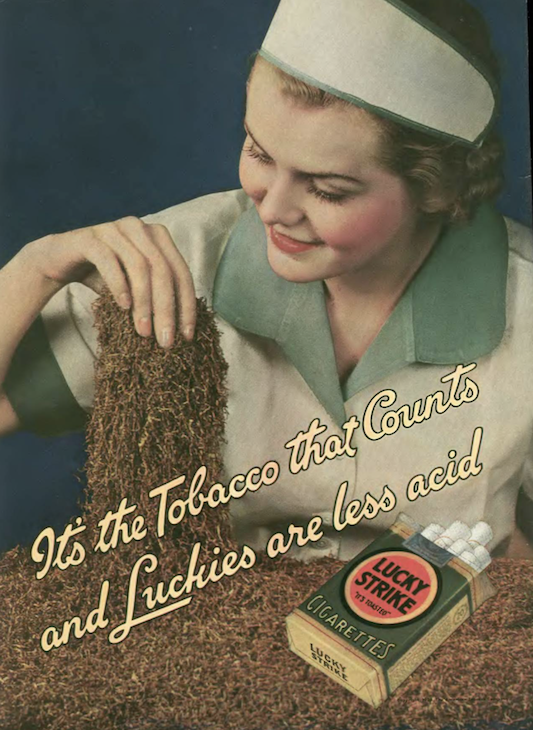
…while Lucky Strike reclaimed the back cover with an ad that promoted its low acid cigarettes, whatever that meant…
…on to our illustrators and cartoonists, we begin with Arnold Hall

…and Robert Day…

…with other featured spots from John Groth

Richard Taylor

…and Otto Soglow

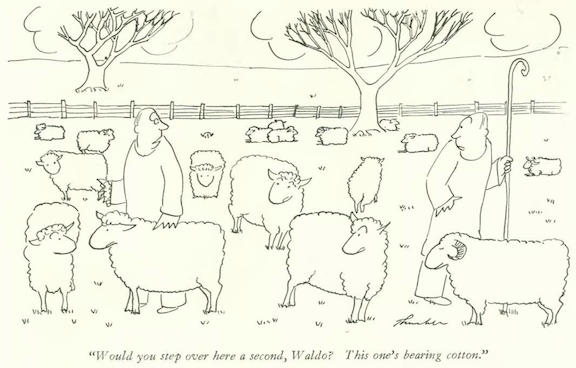
James Thurber drew up an unusual development in the sheepfold…
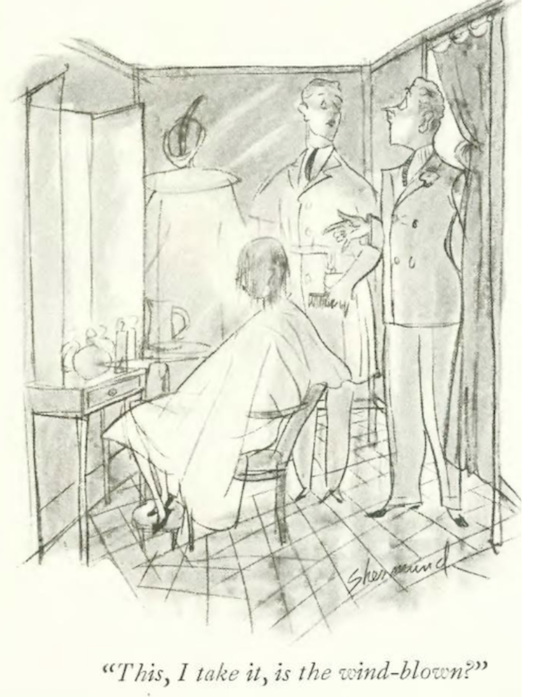
Barbara Shermund posed a challenge for a hair dresser…
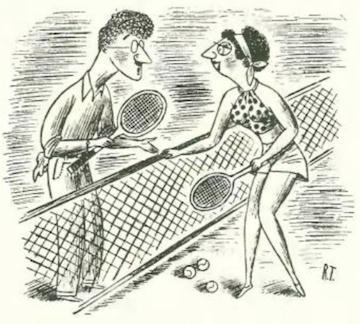
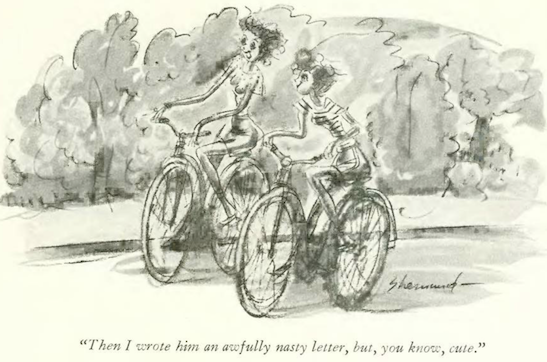
…and Shermund again, revealing a tactic of the modern woman…
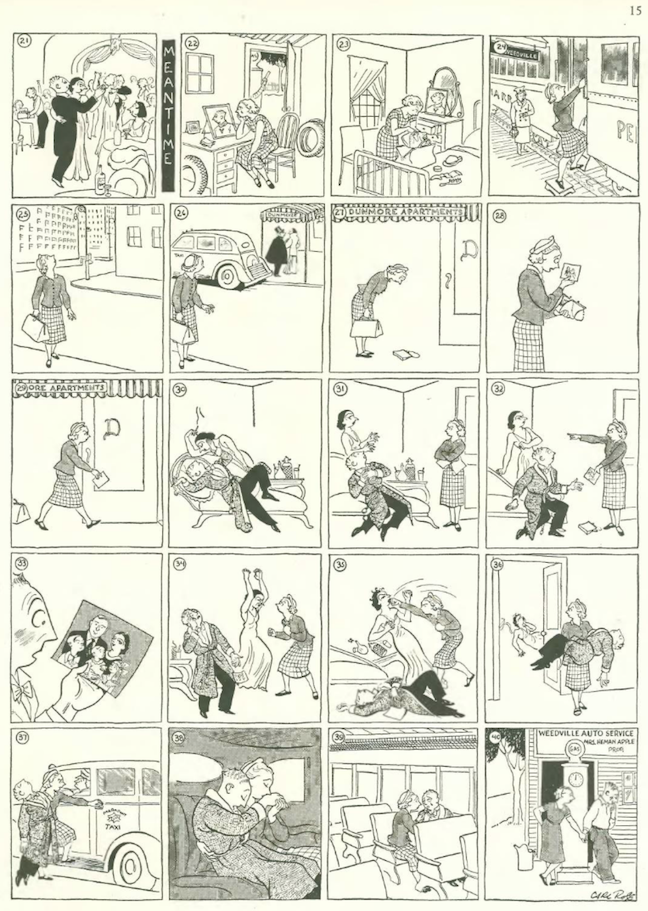
Carl Rose commanded a two-page spread to tell his tale of sin and redemption…

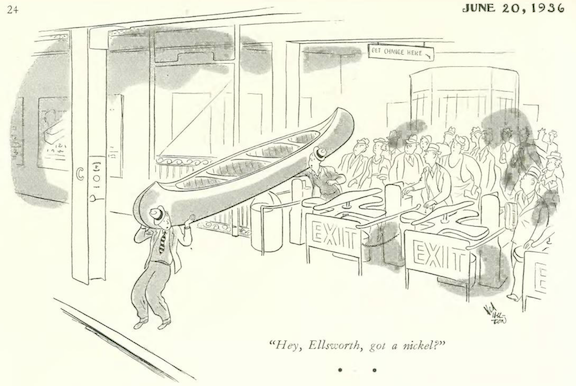
Ned Hilton needed a hand at the subway station…
Mary Petty gave us a patient in need of a second opinion…
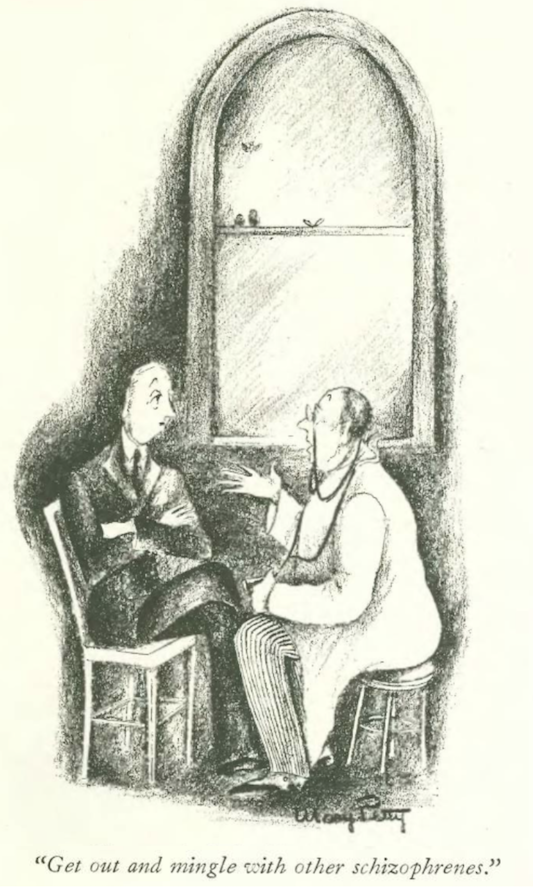
…while Alan Dunn weighed summer camp options…

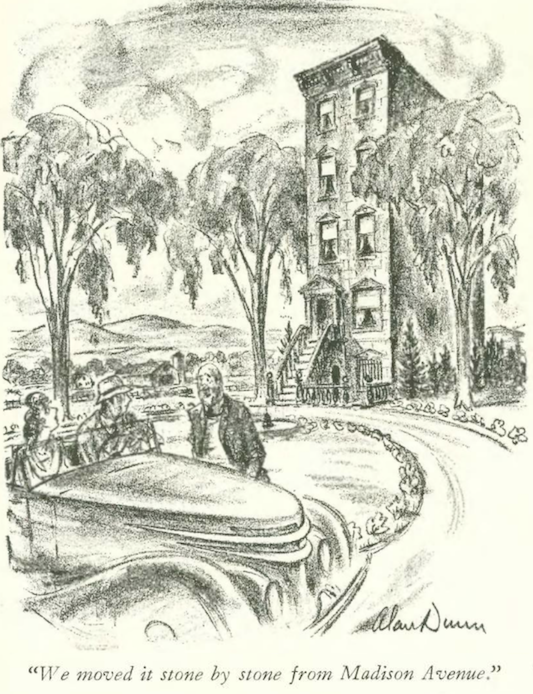
…and we close with Dunn, and a true urban escape…
Next Time: Poppy Returns…
 

Meet Father Divine

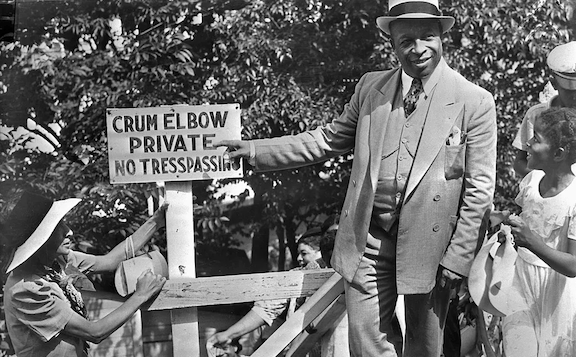
Above: Father Divine points to a Crum Elbow Estate sign (in Highland, NY) in July 1938. His followers purchased the 500-acre spread from anti-New Dealer Howland Spencer...the property was located directly across the Hudson from President Franklin D. Roosevelt's Hyde Park family home. That same summer Father Divine would also buy a fifty-room double dwelling in New York City. These and other locations served as integrated "heavens" for his followers. (Wikimedia Commons)

America has long been fertile ground for various religious denominations, sects and cults. Although the U.S. Religion Census has cataloged more than 370 distinct religious groups and bodies in the U.S., there are tens of thousands of independents scattered across the country.

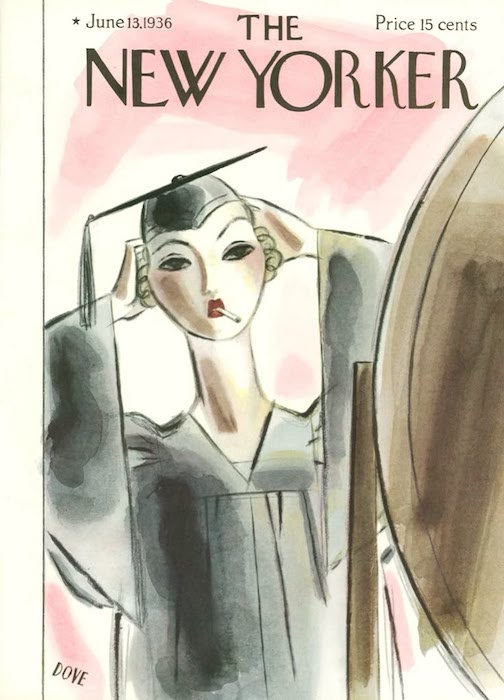
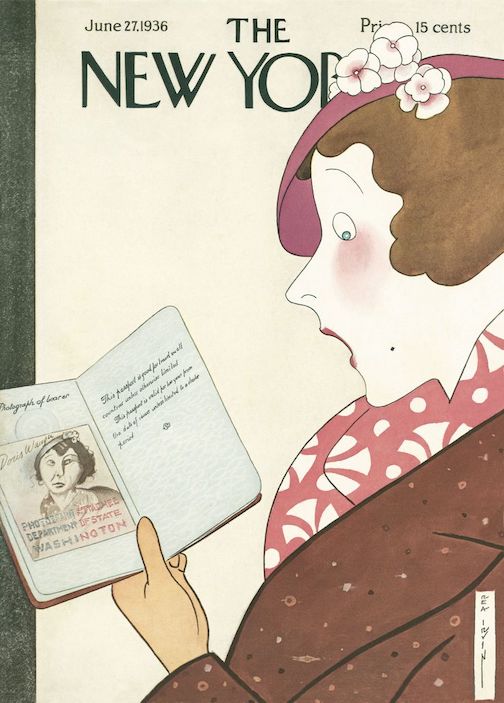
June 13, 1936 cover by Leonard Dove.

Some of these remain small, while others grow into megachurches often organized around a charismatic leader. Such was the case with Father Divine (1876–1965), aka Reverend Major Jealous Divine, aka George Baker.

His life as George Baker of Valdosta, Georgia came to an end in 1907 when he became known as “the Messenger.” He parted ways with the Baptist church, declared himself a god, and was asked to leave Georgia after his 1914 arrest for lunacy. He led his followers to Brooklyn and later to a commune in Sayville, New York (Long Island), where he founded the International Peace Mission movement and came to be known as Father Divine. By the early 1930s his small and predominantly black congregation had grown into a multiracial and international church.

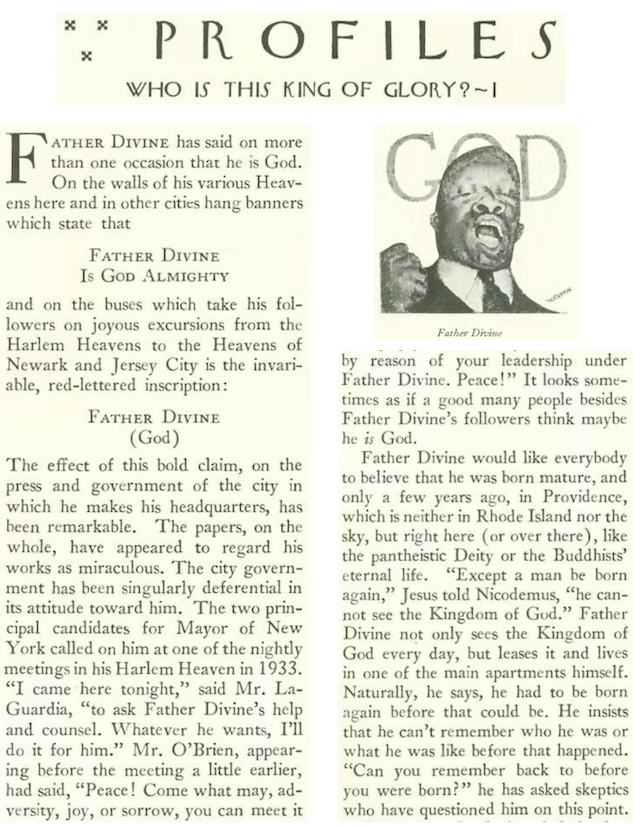
So intriguing was his story that The New Yorker published a lengthy, three-part profile written by St. Clair McKelway and A.J. Liebling. Here are excerpts from Part One (illustration by William Cotton):

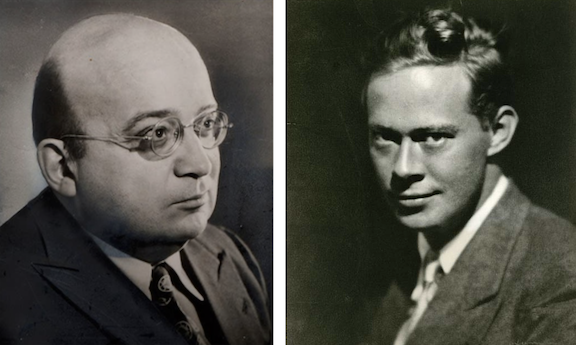
A DEFT DUO…A.J. Liebling (left) and St. Clair McKelway, both acclaimed journalists, co-authored the three-part profile of Father Divine. Liebling (1904–1963) was closely associated with The New Yorker, joining the magazine in 1935 (he was also a well-known gastronome); McKelway (1905–1980) served as The New Yorker’s managing editor for journalistic contributions from 1936 to 1939 and wrote for the magazine for forty-seven years. (Wikipedia/sfgate.com)
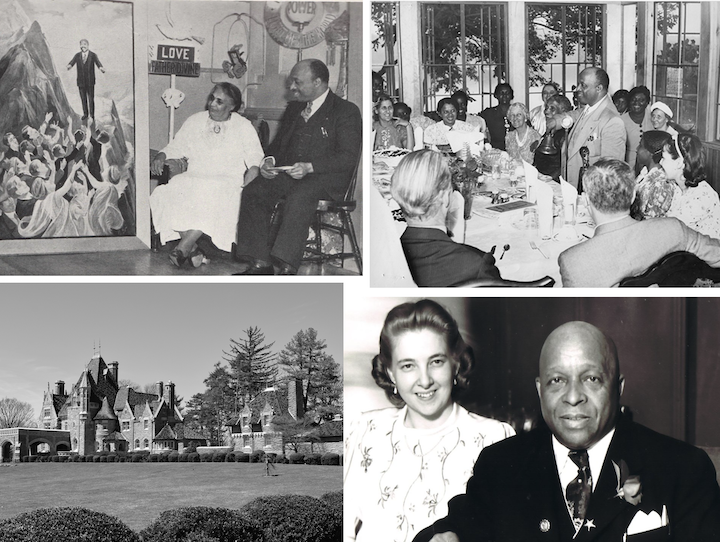
DIVINE’S PATH…Clockwise, from top left: After relocating to Brooklyn in 1914, Father Divine married his first wife, Peninniah—they are shown here admiring his portrait; Father Divine led large gatherings centered on food—here he entertains guests at a summer retreat in upstate New York in 1938; following the death of Peninniah, the 70-year-old Father Divine married 21-year-old Edna Ritchings in 1946—she took the name “Mother Divine, with Father Divine claiming she was the reincarnation of Penninah; in 1953 Father Divine was given a hilltop estate (“Woodmont”) in Gladwyne, Pennsylvania, by follower John Devoute. The estate is the center of the International Peace Mission movement, a shrine to Father Divine’s life, and a meeting place for the few remaining followers. (thecityroot.com/Newark Public Library/hsmcpa.org/Wikipedia)

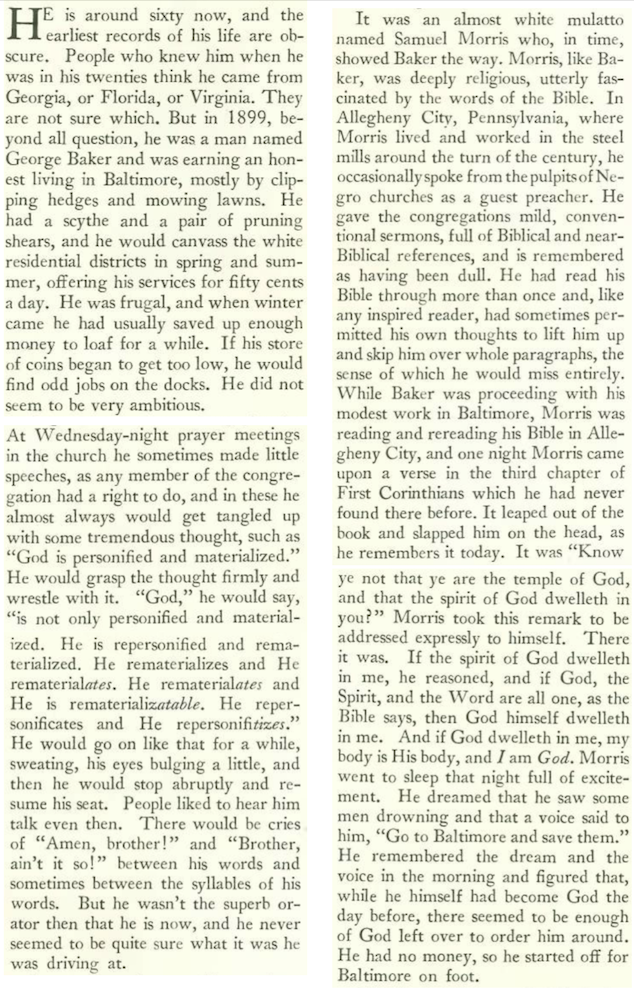
How did Father Divine come to believe he was a god? This excerpt offers some insights into his early development:

One of the perils of this kind of thinking is that it can lead to the formation of dangerous cults. Jim Jones, the notorious leader of the Peoples Temple, heavily modeled his early church activities and authoritarian structure on Father Divine’s example. Jones even attempted to take over the International Peace Mission after Father Divine’s death—in 1971 he tried to convert the Peace Mission’s followers, claiming he was the reincarnated Father Divine. His takeover attempt was thwarted by Mother Divine, who went to the media and publicly denounced Jones and the Peoples Temple. In 1974 Jones and his followers would relocate to a Guyana commune he called Jonestown. Four years later Jones would lead the mass murder-suicide of 909 Jonestown inhabitants.

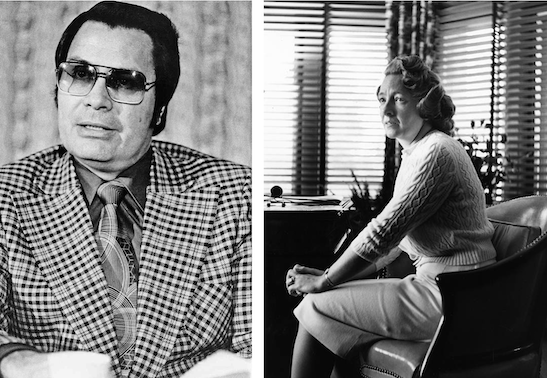
AT ODDS…Jim Jones (left, circa 1970) attempted to take over the International Peace Mission after Father Divine’s death, but was publicly denounced by Mother Divine. At right, Mother Divine giving her first interview following the death of Father Divine in 1965. (Wikipedia/temple.edu)

 * * *

At the Movies

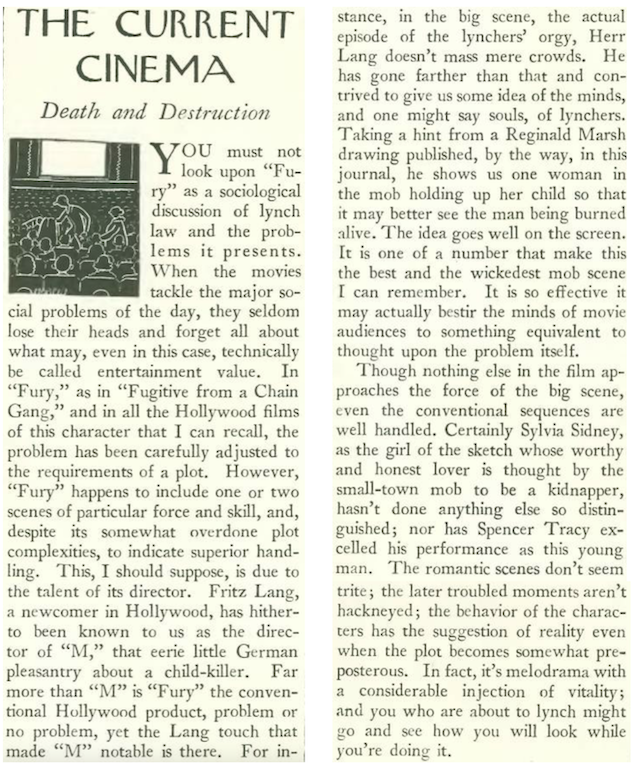
The media has always thrived on crime stories, feeding the public’s insatiable desire to be tantalized; once sated, they often demand swift justice. Take the heavily publicized 1933 case of two San Jose, California men who were accused of kidnapping and murdering a department store heir. Rather than wait for justice to be served, an angry mob broke into the jail and lynched the accused. Fascinated by the story, MGM screenwriter Norman Krasna pitched it as a potential film.

That film would become Fury, German director Fritz Lang’s first American project. Prior to fleeing the Third Reich in 1933, Lang was perhaps best known to Americans for his pioneering 1927 silent sci-fi film Metropolis and the 1931 thriller M. Lang sought to demonstrate how a decent and civilized man could become filled with vengeance and hate. Although critic John Mosher could see how the film had been tampered with by studio execs (and the Hays Code), he was nevertheless impressed by Lang’s direction and by the performances of lead actors Sylvia Sidney and Spencer Tracy.

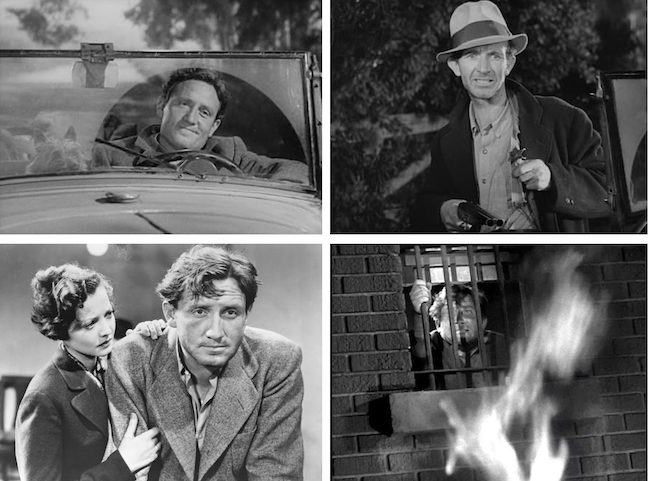
WRONG TURN…Clockwise, from top left: In Fury, Spencer Tracy played gas station owner Joe Wilson, who drives west to reunite with his fiancée—the dog seated to his right is Terry, the same Cairn Terrier who played Toto in The Wizard of Oz; while camping outside a small town, Joe is arrested by a creepy local deputy (Walter Brennan) on suspicion of kidnapping a child; a mob forms and tries to burn Joe in his cell; in the confusion of the fire he escapes and seeks vengeance on the mob, but in the end finds peace with his fiancée (Sylvia Sidney). (imdb.com)

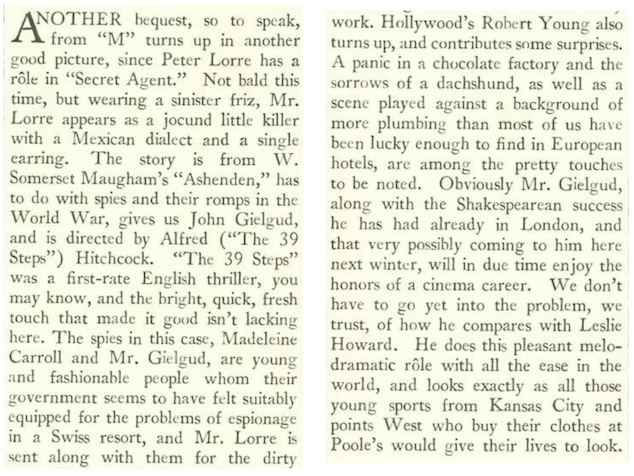
Peter Lorre, who was famously directed by Fritz Lang in the 1931 German thriller M, was starring in Alfred Hitchcock’s Secret Agent, which also featured John Gielgud (already famous as a London stage performer), Madeline Carroll, and Robert Young.

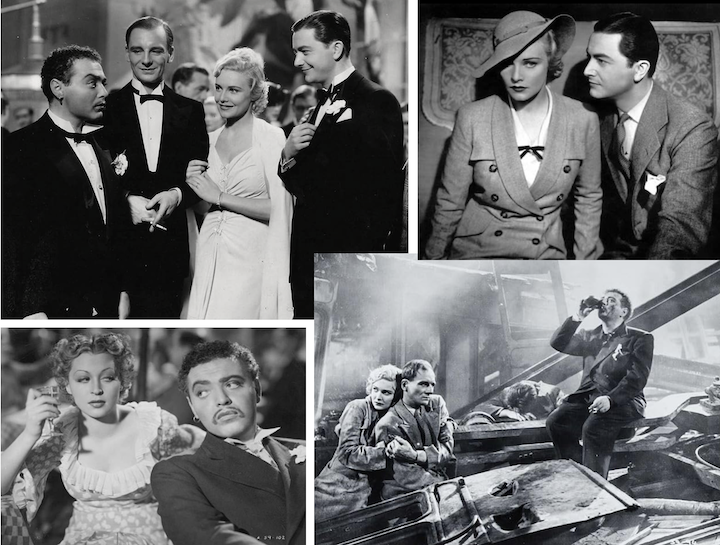
SECRETS AND LIES…Clockwise from top left: Peter Lorre, John Gielgud, Madeline Carroll, and Robert Young in Secret Agent; Carroll with Young, who played a German mole; Carroll, Gielgud and Lorre amid the wreckage of a train; Lorre in a scene with Lilli Palmer. (imdb.com)

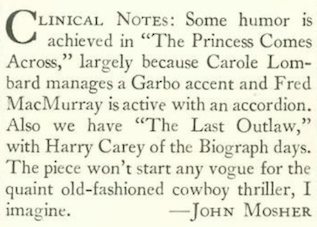
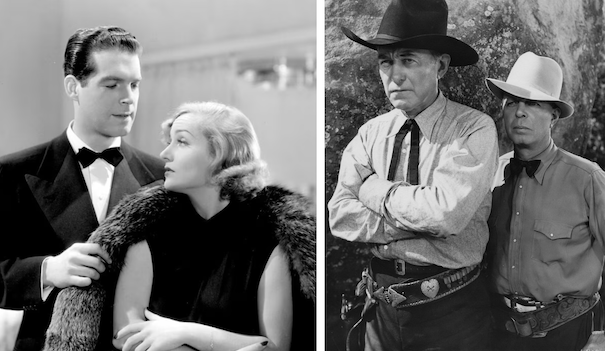
Mosher briefly mentioned a new Fred MacMurray/Carole Lombard comedy–mystery, and the return of two silent movie stars.

CHOOSE YOUR PARTNER…The second of four films Fred MacMurray made with Carole Lombard between 1935 and 1937, The Princess Comes Across featured Lombard doing a clever take-off on Greta Garbo; silent-film veterans Harry Carey and Hoot Gibson stood for the ideals of the Old West in a culture clash with scientific crime-fighting in The Last Outlaw. The film was a remake of a 1919 silent film originally written and directed by John Ford. (imdb.com/csfd.cz)

* * *

Beer Bottle Battle

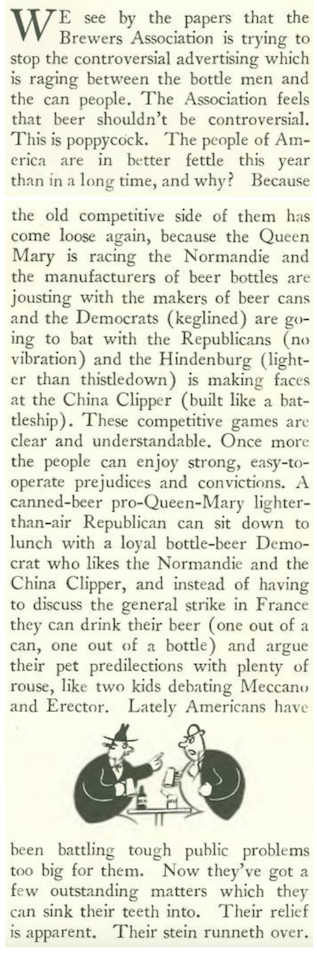
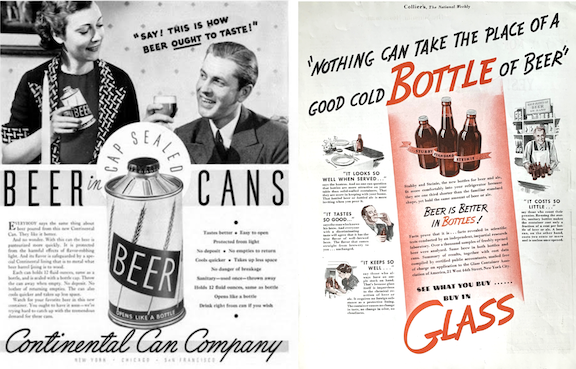
E.B. White (in his “Notes and Comment”) seized on the battle between bottle and can manufacturers as an apt metaphor for the jousting of Republicans and Democrats ahead of the November elections.

FOAMING AT THE MOUTH…Competing ads from Collier’s magazine circa 1935-36 illustrate the battle between can and bottle manufacturers. Ninety years later, beer drinkers still debate the merits of glass over cans. (boakandbailey.com/ebay.com)

 * * *

From Our Advertisers

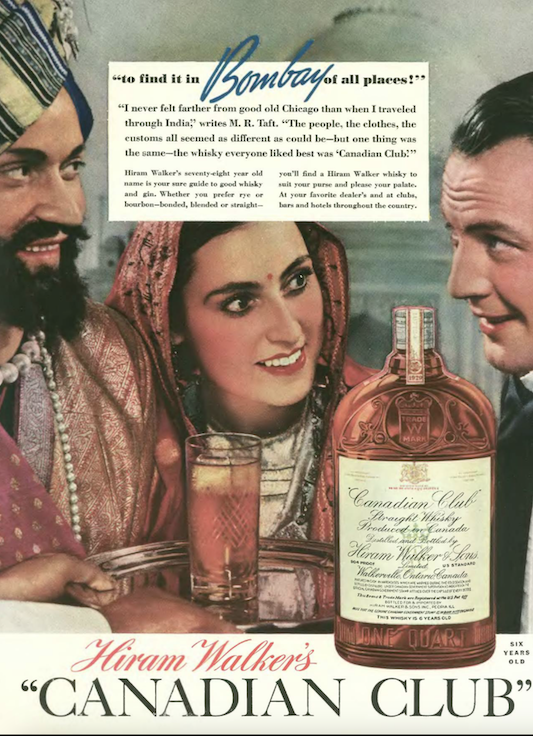
In 1936 whisky was still firmly in bottle form, and the makers of Canadian Club—through a series of ads—wanted to let us know you could enjoy their tipple almost anywhere in the world…

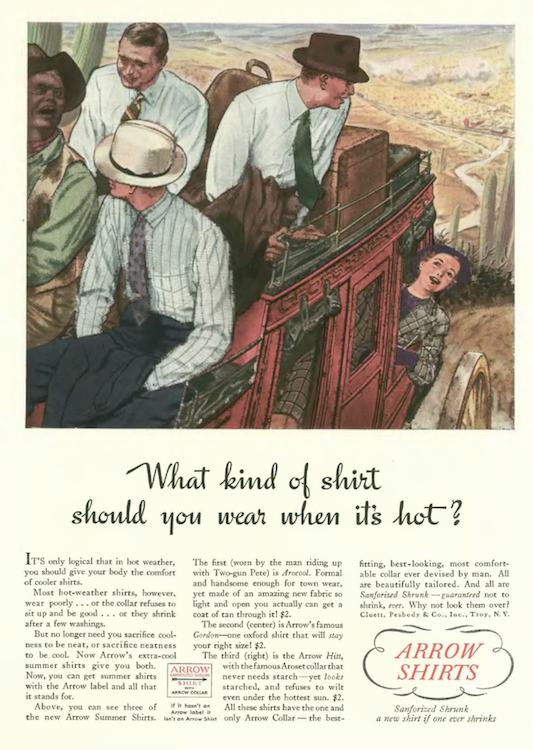
…this woman poses an interesting question, considering the fellas are riding atop a dusty stagecoach in the Arizona heat—in formal attire no less…

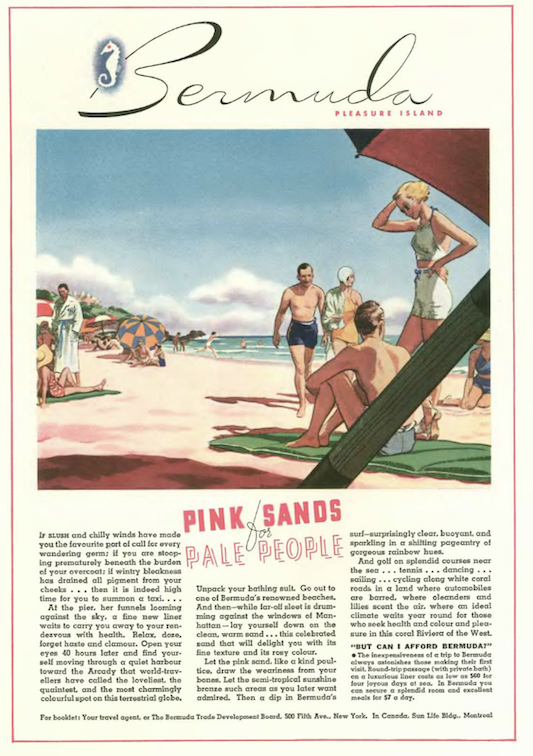
…over the years we’ve seen a lot of Adolph Teidler’s work for the Bermuda Board of Trade…Teidler (1886–1981) was also well known for his Saturday Evening Post covers…

…here’s an example of Teidler’s work for the Bermuda Board of Trade from the Feb. 22, 1936 issue of The New Yorker

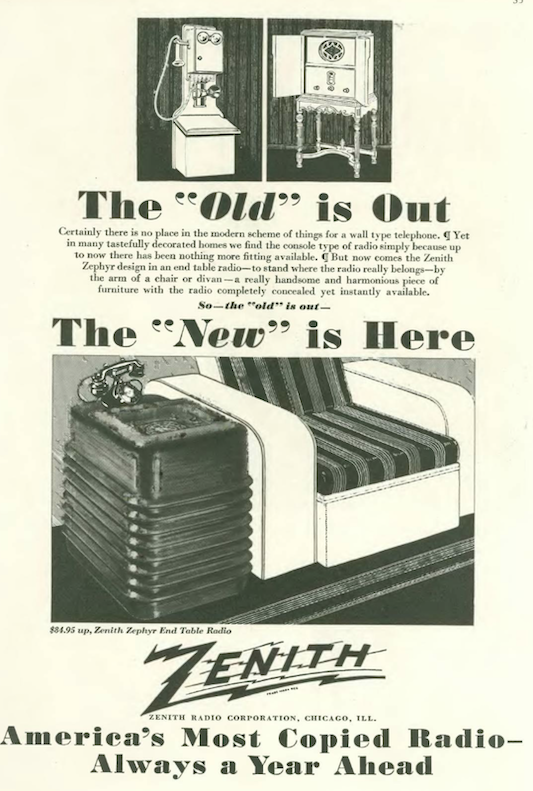
…the Zenith Radio Corporation touted their modern, streamlined “Zephyr” radio by industrial designer Robert Davol Budlong

A restored Zenith 10-S-147 Zephyr chairside radio. (Pete Johnson–Zenith Radios Enthusiasts and Collectors via Facebook.com)

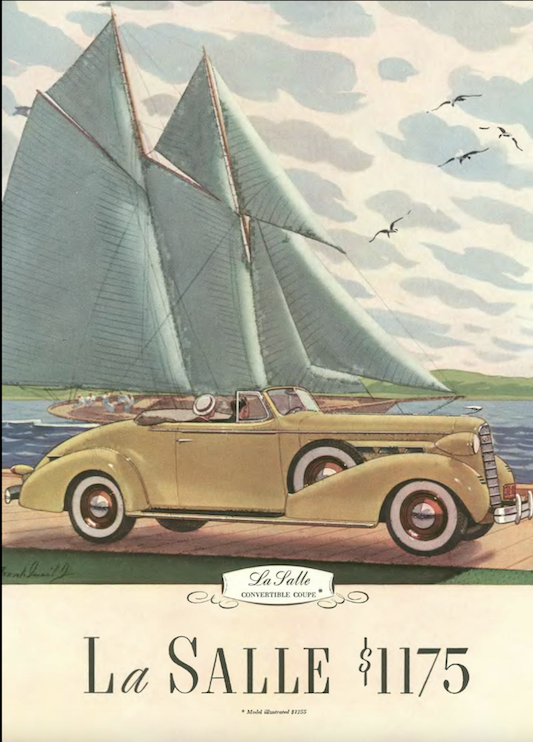
Frank Quail Jr was a prominent automotive illustrator active from the 1920s through the 1930s. He was well-known for his work with luxury automobile brands such as Cadillac, LaSalle and Packard…here he conjures up a breezy seaside image for Cadillac’s more affordable LaSalle model (most of these ads were two-page spreads, with promo copy on the right-hand page)…

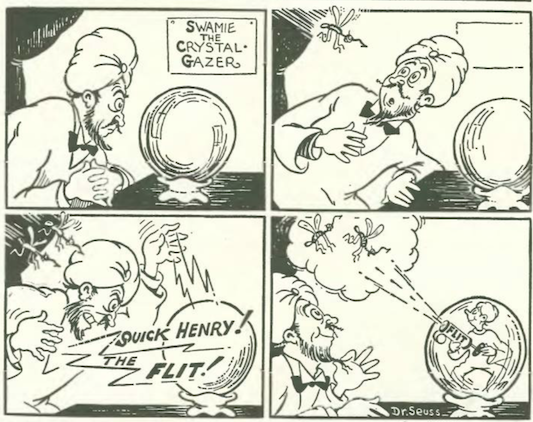
…and more Dr. Seuss on behalf of Flit insecticide…

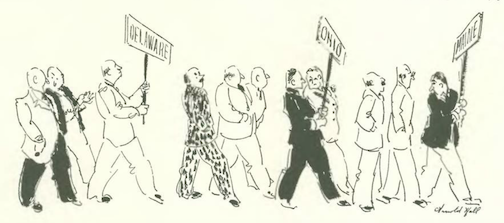
…we begin the cartoon section with some spot art…here are two by Arnold Hall

…and one from Richard Taylor

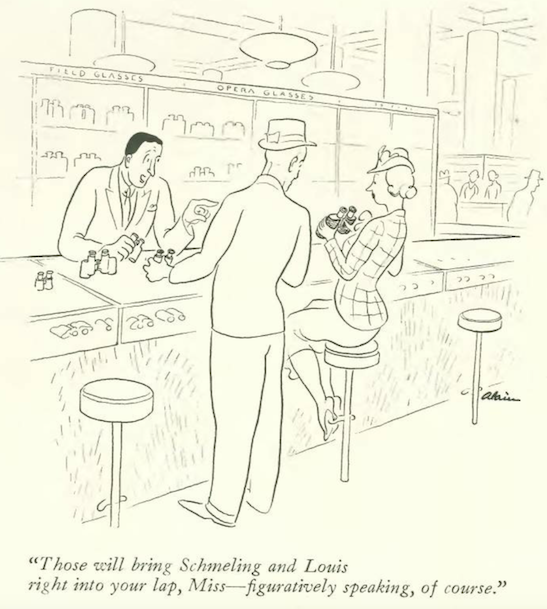
Alain referenced the upcoming heavyweight bout at Yankee Stadium between Max Schmeling and Joe Louis…their two fights in 1936 and 1938 were international sensations…
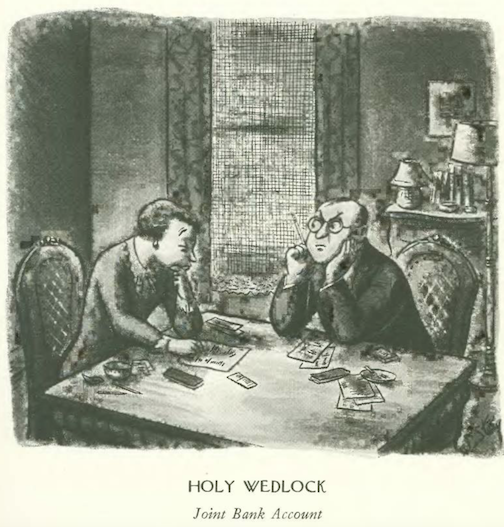
…more glimpses of “Holy Wedlock” from William Steig

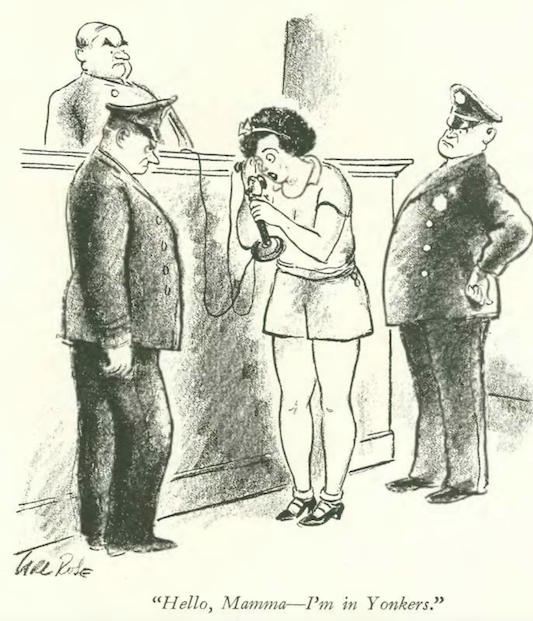
…a bit of trouble in Yonkers, per Carl Rose

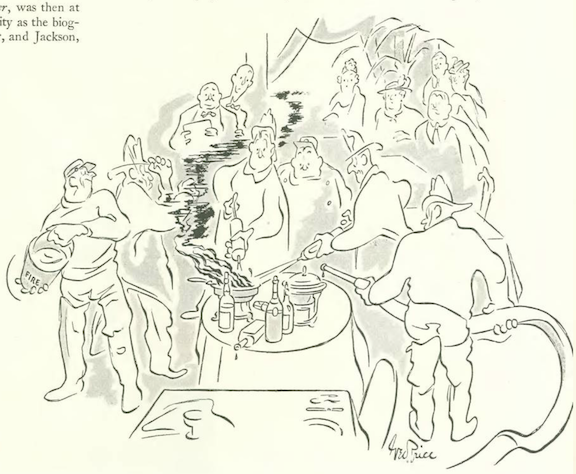
George Price brought out the fire brigade for the Crêpes Suzette

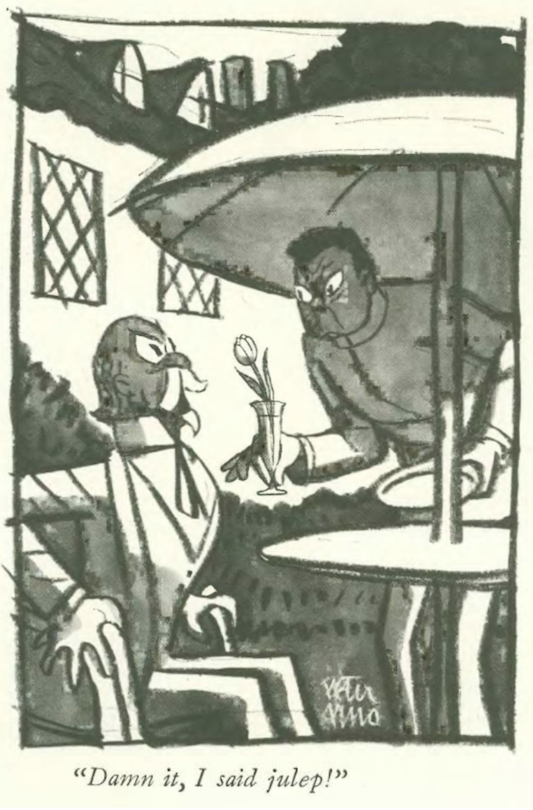
Peter Arno drew up a colonel with a communication issue…

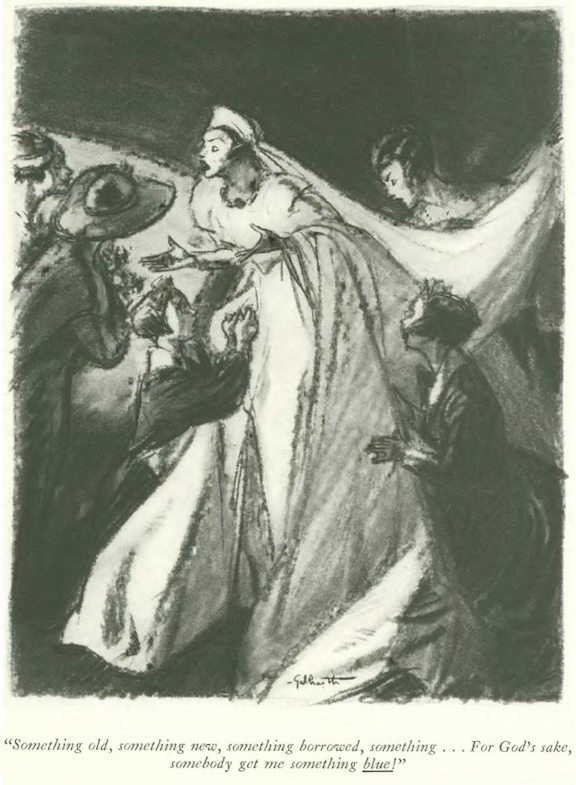
William Crawford Galbraith celebrated the June bride…

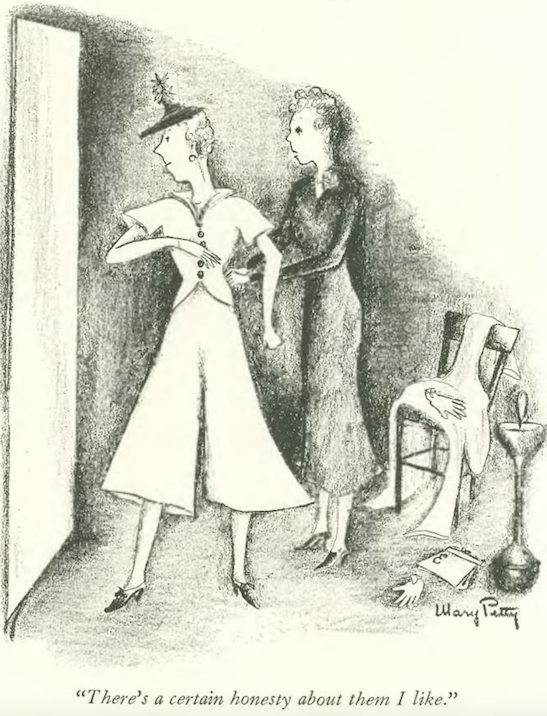
…two by Mary Petty, at the dress shop…

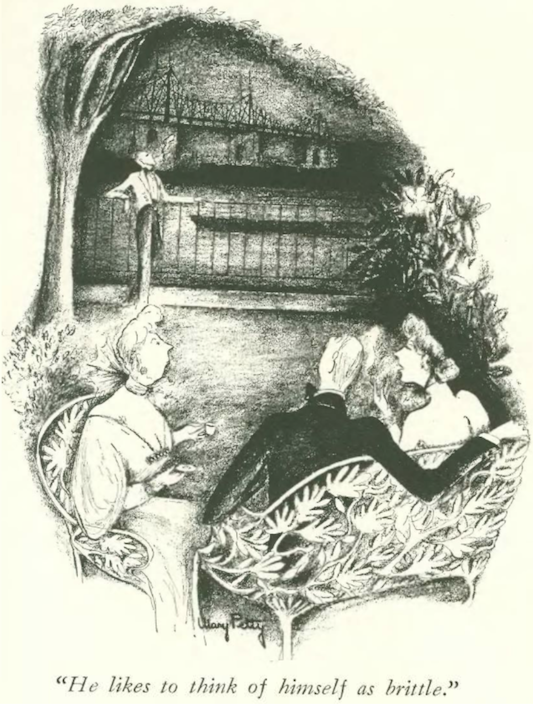
and at the in-laws…
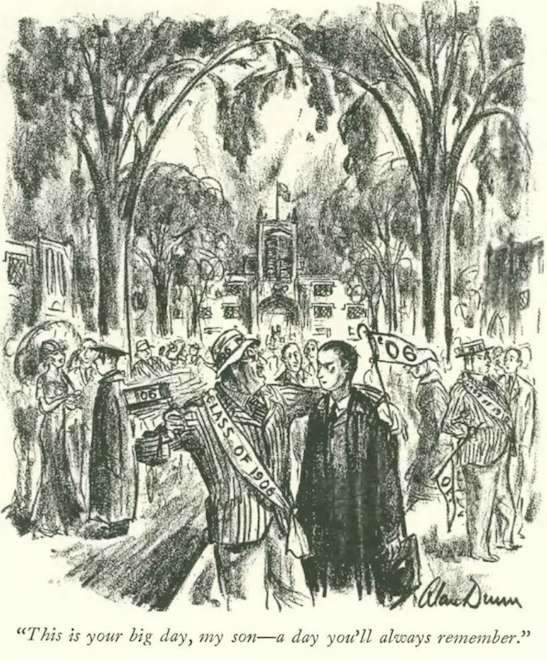
…Petty’s husband Alan Dunn feted the Class of ’36 (and ’06)…

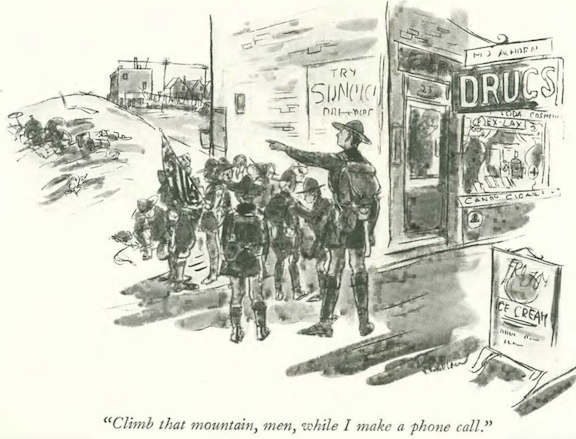
Perry Barlow illustrated a scoutmaster’s leadership skills…

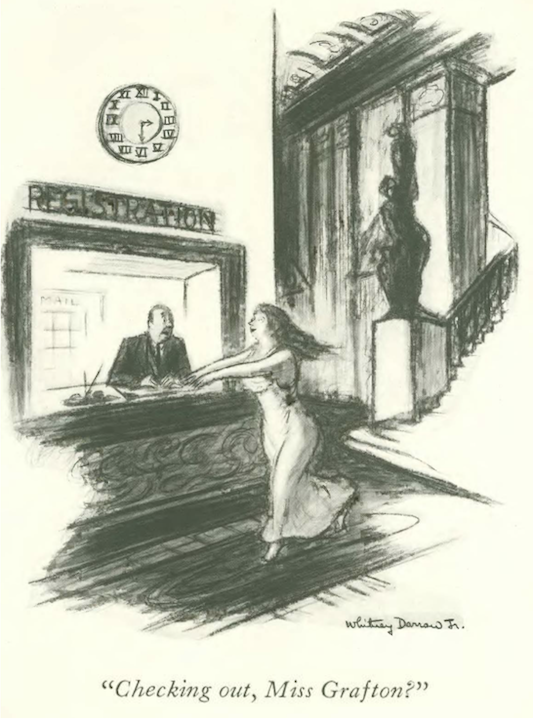
…and we check out with Whitney Darrow Jr

Next Time: An Urban Spectacle…