An Urban Spectacle

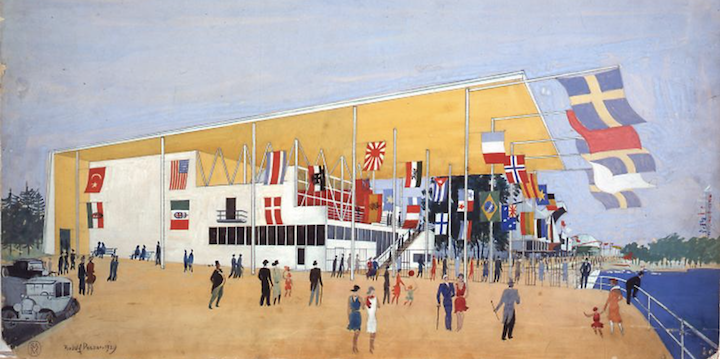
Above: Rudolf Persson's rendering of the main entrance to the Stockholm Exhibition of 1930, designed by Swedish architect Gunnar Asplund. The exhibition was a landmark event that introduced Functionalism to Swedish architecture and design.(Svensk Form)

Architecture critic Lewis Mumford turned his exacting eye on exhibitions at the Museum of Modern Art that looked to the future of building design. Of particular interest was an exhibit on those world expositions that have given us everything from the Eiffel Tower (1889 Exposition Universelle) to the car-dominated landscape that inspired millions of Depression-weary visitors at New York’s 1939 World’s Fair.
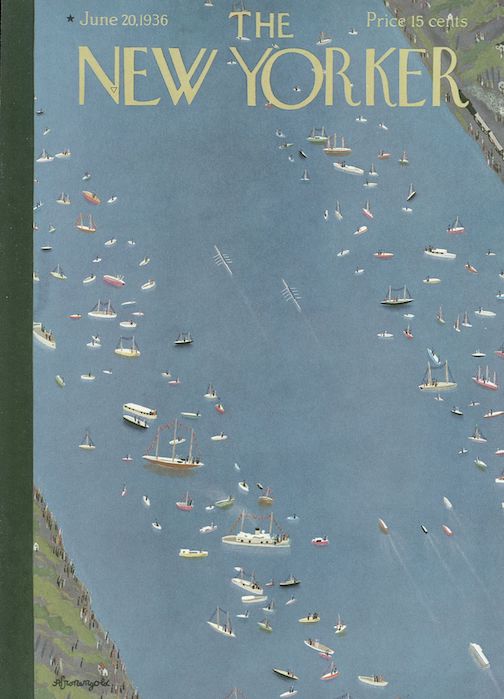
June 20, 1936 cover by Adolph K. Kronengold. Kronengold (1900–1986) created twenty-three covers for the New Yorker from 1928 to 1947. Born and raised in New Orleans, he frequently used watercolors and often painted scenes honoring his hometown. The June 20 cover was Kronengold’s seventeenth for the magazine.

Mumford made passing mention to the museum’s exhibit on government housing (he noted it was below MoMA’s standard) and then turned his attention to a review of world’s fairs, examining how they have inspired both waves of architectural achievement and “counterfeits of civic grandeur…”

BREAK FROM THE PAST…Images from the covers of MoMA’s exhibition catalogs depict the 1934-35 Carl Mackley Houses in Philadelphia (top, from the government housing exhibit) and the 1930 Stockholm Exposition. (MoMA.org)
STILL SERVING…the 1934-35 Carl Mackley Houses in Philadelphia have been on the National Register of Historic Places since 1998. (Wikipedia)
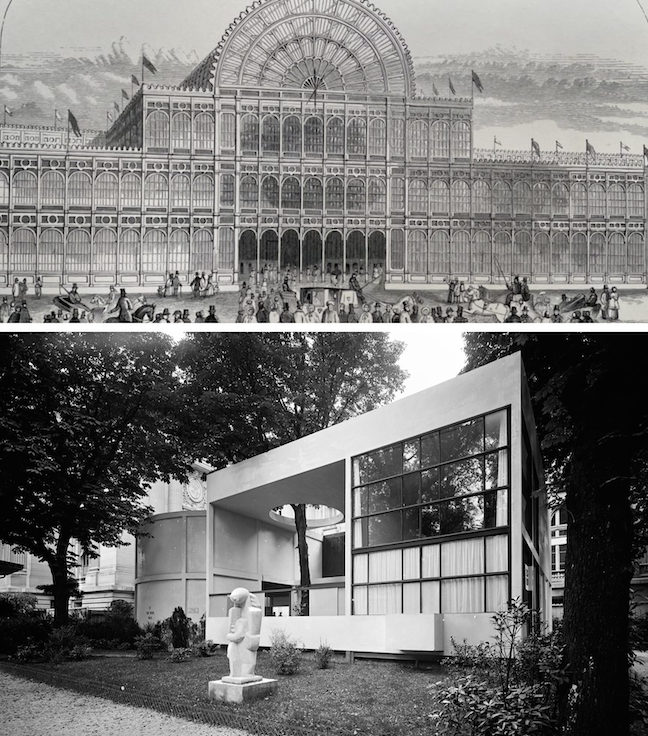
PONDERING what a modern exhibition should be, Lewis Mumford cited the granddaddy of them, the London Exhibition of 1851 (top), with its Crystal Palace, which he called “the first definitive monument of modern architecture,” as definitive and challenging as the Pavillon L’Esprit Nouveau (bottom), designed by Le Corbusier and Pierre Jeanneret for the 1925 International Exhibition of Modern Decorative and Industrial Arts in Paris. (devonandexeterinstitution.org/Wikipedia)
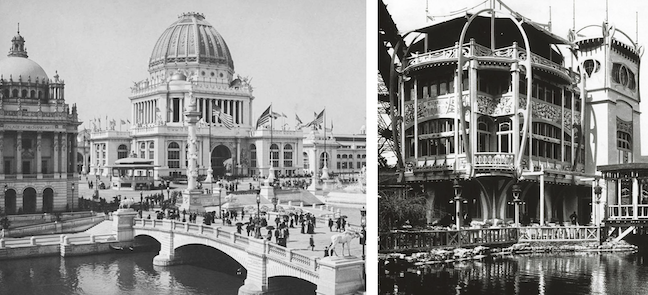
SHAM AESTHETIC…Mumford referred to buildings in the 1893 Chicago World’s Fair (left) as “laborious limestone counterfeits of civic grandeur,” while praising the 1893 and 1900 Paris expositions for design innovations including the Art Nouveau style—at right is Le Pavillon Bleu, a lavish restaurant once located at the foot of the Eiffel Tower. It was built by French architect René Dulong in collaboration with Belgian architect and designer Gustave Serrurier-Bovy, one of the founders of the Art Nouveau movement. (getzen.com/messynessychic.com)

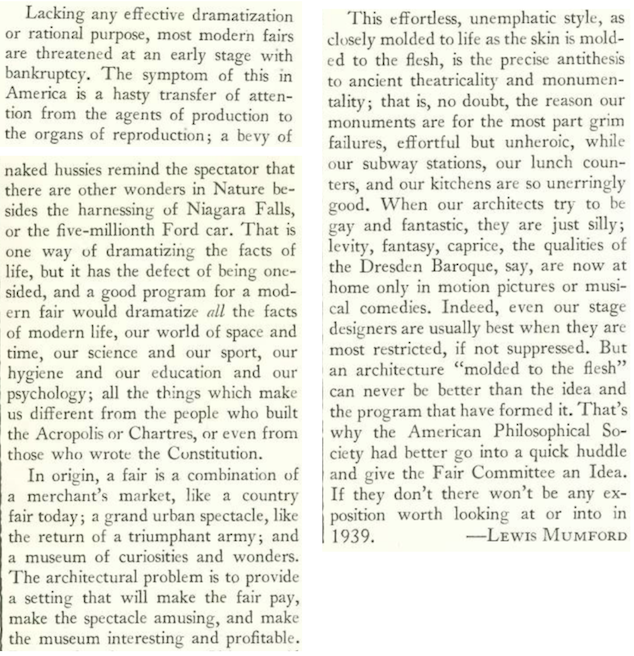
Looking ahead to the planned 1939 World’s Fair at Flushing Meadows, Mumford believed the age of grand world expositions had passed, especially those that moved the needle on design innovation. Moreover, he observed that the lack of real drama or rational purpose would threaten bankruptcy to future fairs, a symptom especially acute in America: “…a hasty transfer of attention from the agents of production to the organs of reproduction; a bevy of naked hussies remind the spectator that there are other wonders in Nature besides the harnessing of Niagara Falls, or the five-millionth Ford car.”

POINTING TO THE FUTURE..Rosalie Fairbanks, a guide to the 1939 New York World’s Fair, points to the theme of the exposition—the Trylon and Perisphere—after the entire sheath of scaffolding was removed for the first time on February 22, 1939. (Associated Press)

Earth-movers were already at work sculpting the fair’s site from the swampland and ash heaps along the Flushing River when Mumford assembled a self-anointed advisory group in 1936. This group— the “Fair of the Future Committee”—urged the fair’s leaders to abandon superficial commercialism and instead demonstrate how technology could serve the public good and restore ecological balance in American communities. That did not come to pass; when the fair opened in 1939, Mumford wrote in his “Sky Line” column (titled “Genuine Bootleg”) that the committee’s “hopes and proposals for a major contribution to urban design were progressively defeated. Today their wreckage is strewed about the Fair, so thoroughly smashed and disfigured that their own fathers could scarcely identify the corpses.”

FUTURAMA was a popular exhibit and ride at the 1939 New York World’s Fair. Designed by Norman Bel Geddes for the General Motors pavilion, it proposed a sprawling car-based future that was the antitheses of Lewis Mumford’s vision of human-scaled, ecologically balanced development. (Wikipedia)

Mumford got one thing right. Although the 1939 fair attracted more than 45 million visitors, it lost a lot of money, recouping only 32 percent of its original cost.

 * * *

Only a Memory

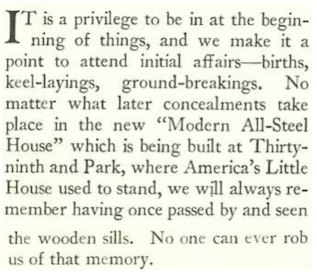
In “Notes and Comment,” E.B. White recalled the brief life of “America’s Little House” at 39th and Park in the Murray Hill neighborhood. The eight-room Georgian colonial was built in 1934 during the “Better Homes in America” campaign that promoted single-family home ownership as well as design innovations. The CBS radio network (which contributed $50,000 to the project) installed a studio in the house’s garage, from which it broadcast three national radio programs to a hundred stations across the country.

Open for about a year, the house was demolished in November 1935, its doors and interior furnishings sold to hostesses who had worked at the house. In its place William Van Alen—architect of the Chrysler Building—erected the all-steel “House of the Modern Age.”
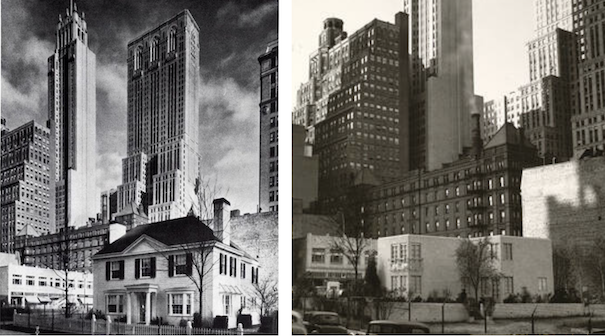
CHANGE OF SCENE…At left, America’s Little House on Park Avenue and 39th Street, replaced by William Van Alen’s prefabricated steel house (right), “The House of the Modern Age,” detail from a photo by Berenice Abbott. (Wikipedia/cornell.edu)

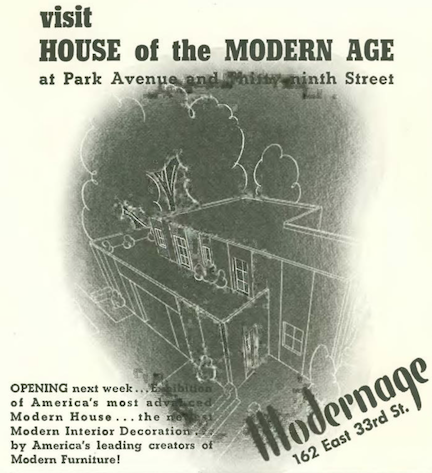
…in the following week’s issue of The New Yorker, June 27, a back of the book ad from the Modernage Furniture Corporation touted the opening of “The House of the Modern Age”…
 * * *

Fan Fans

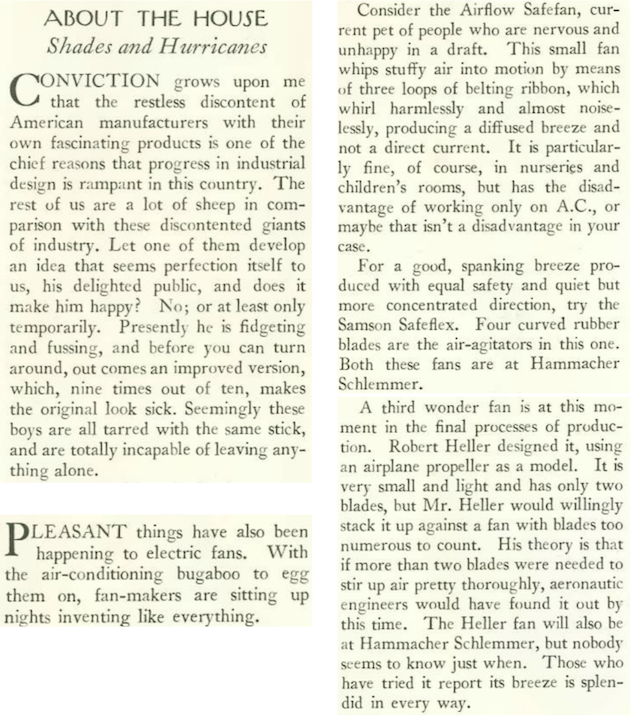
Staying on the domestic scene, here is an excerpt from Barbara Blake’s “About the House” column, where she updated readers on the latest in electric fans (air-conditioning in private homes was still a rarity).
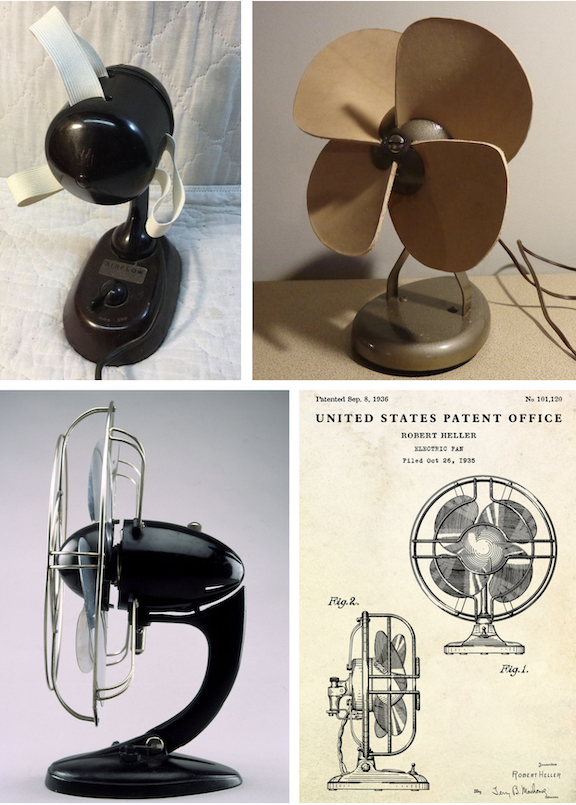
ELECTRIC WIND…Barbara Blake highlighted the latest in electric fans including, clockwise from top left, the Airflow Safefan, which moved air with looped ribbons; the Samson Safeflex employed rubber blades as a safety feature; the noted designer Robert Heller produced these fan designs (1936 and 1937) modeled on airplane propellers. (worthpoint.com/ebay.com/Montreal Museum of Fine Arts)

 * * *

Billy’s Beef

In 1899 vaudevillian Billy Watson (aka Isaac Levie) formed his Beef Trust burlesque troupe of plus-sized women. Although his shows starred women in the 200-pound range, he also relied on slight-of-hand provided by the “Tights King” Morris Kohan, who apparently could produce tights that could make a person look either heavier or slimmer. “The Talk of the Town” explains in this excerpt:
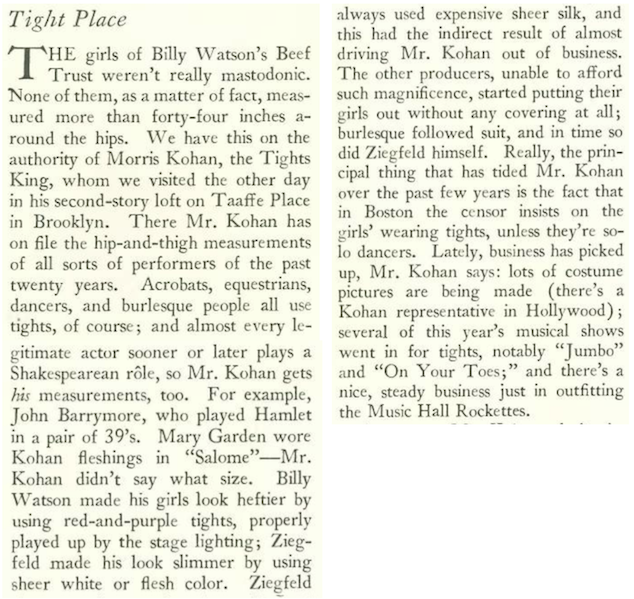
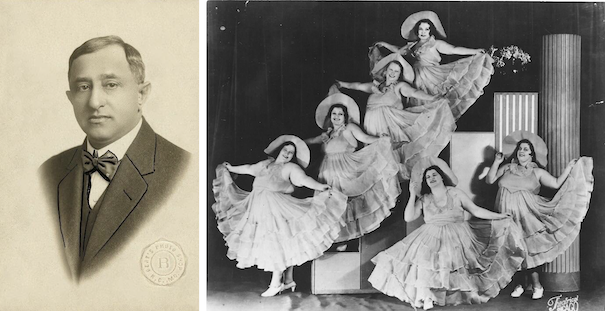
WHERE’S THE BEEF?…Billy Watson’s  burlesque troupe of plus-sized women—the Beef Trust— padded their profiles with the aid of specially designed tights. (Facebook.com)

 * * *

Divine Dilemma

In Part Two of Father Divine’s profile, St. Clair McKelway and A.J. Liebling recounted the preacher’s 1931 arrest, prompted by ongoing complaints from the citizens of Sayville, New York about the traffic jams caused by Divine’s daily feasts as well as the noise generated by the faithful who would holler hallelujahs late into the evening. During one of these late night revivals police raided Divine’s property and fined each of the seventy-eight followers a few dollars apiece. Divine, however, insisted on a jury trial, which was held seven months later. The charge: Maintaining a public nuisance.

Jurors convicted Divine, with a request for leniency, but Justice Lewis Smith sentenced the preacher to a year in prison, calling him a “menace to society.” However, four days later the judge dropped dead of a heart attack, and Divine was freed. The notion that the judge’s death was divine retribution was naturally perpetuated by the media. A brief excerpt, with illustration by Abe Birnbaum.
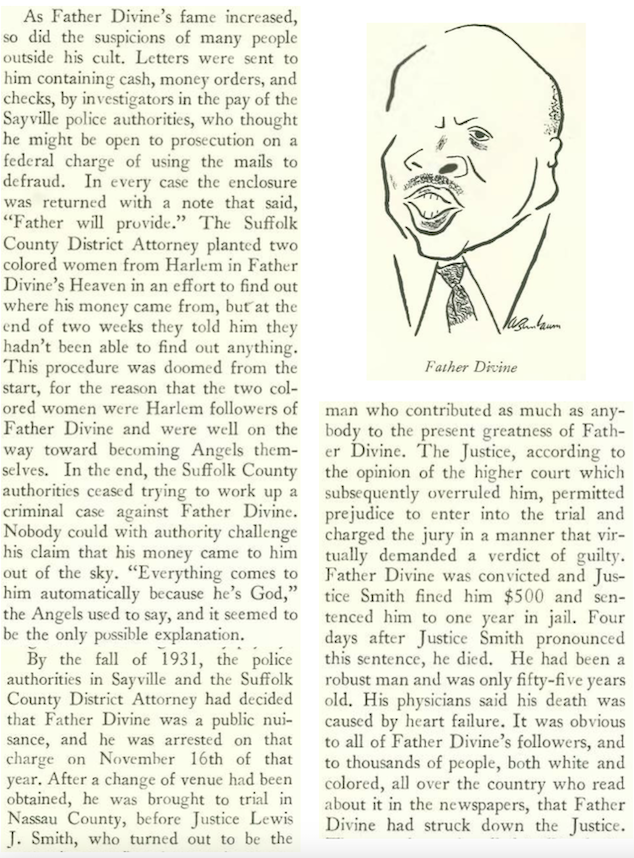
GET OUT OF JAIL CARD…In 1931 Father Divine was arrested for maintaining a public nuisance. Following a jury trial and conviction, the presiding judge dropped dead, leading the preacher’s freedom a few days later. (facebook.com/nydailynews.com)

 * * *

At the Movies

The drama film Private Number was based on the 1915 play Common Clay, which had already been made as a silent in 1919 and as a sound film in 1930. The play had a somewhat scandalous theme for the time (a young servant is fired when she becomes pregnant by her employer’s son), but thanks to the Hays Code, the more scandalous parts of the earlier films were omitted in 1936’s Private Number, leaving the viewer with little except for some “old-fashioned hocus pocus,” according to critic John Mosher.
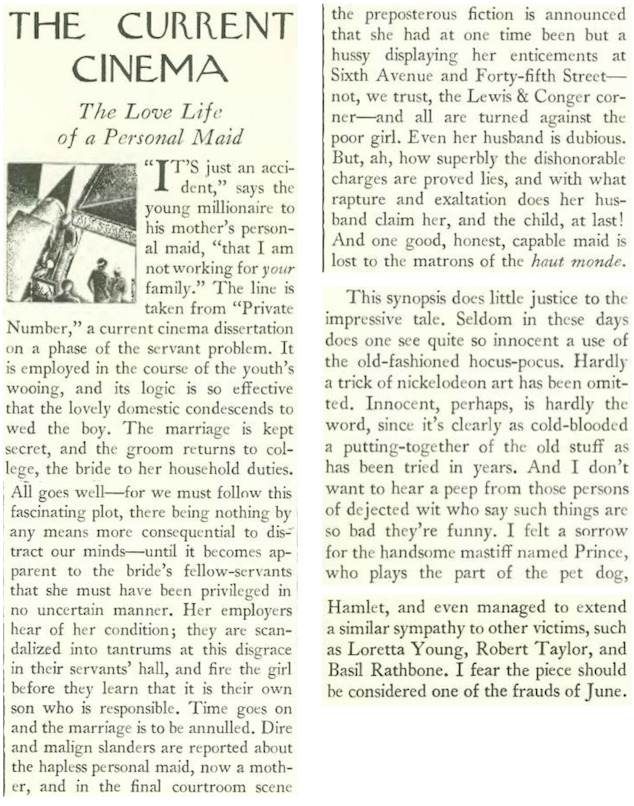
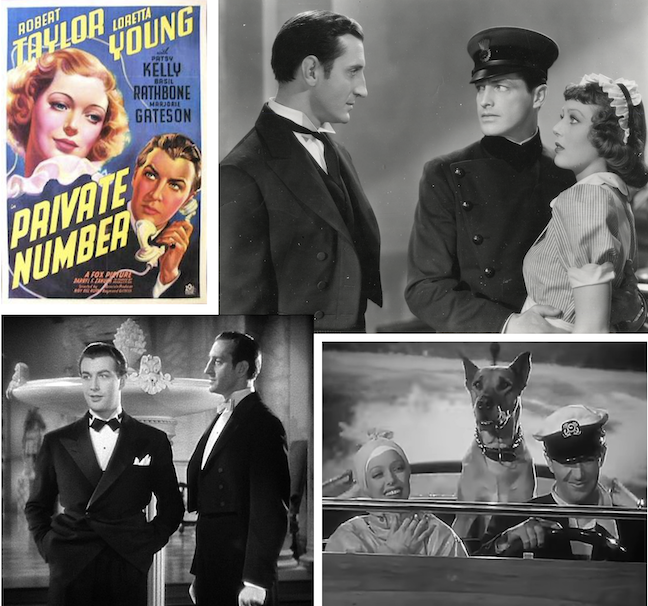
THE BUTLER DID IT…In Private Number, Basil Rathbone portrayed a tyrannical butler with a personal interest in one of his new maids (Loretta Young). She in turn secretly marries the scion of the family (Robert Taylor) and bears his child. Clockwise from top left: Poster for the film; Rathbone, Kane Richmond, and Young; Taylor, Young, and well-known canine actor Prince; rivals for a maid’s affection—Taylor and Rathbone. (Wikipedia/imdb.com/basilrathbone.net)

Thirty-nine-year-old Marion Davies appeared in one her final films, Hearts Divided, a musical based on the real-life marriage between American Elizabeth ‘Betsy’ Patterson and Jérôme Bonaparte, the brother of Napoleon Bonaparte. Although in real life Napoleon annulled the marriage, Hollywood gave the couple a happier ending.
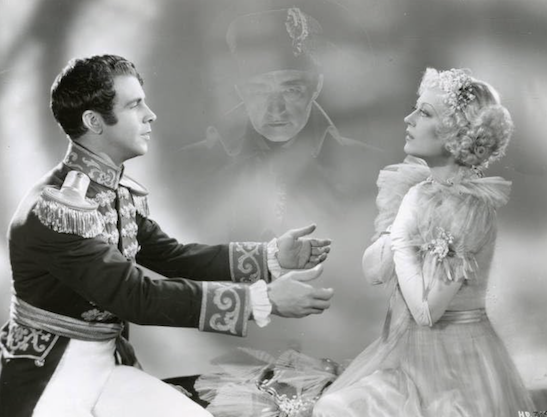
THREE’S A CROWD…Napoleon (Claude Rains) comes between lovers Marion Davies and Dick Powell in Hearts Divided. The two also shared an off-screen romance behind the back of William Randolph Hearst, with whom Davies had a long-term relationship and to whom she believed she owed her career. (imdb.com)

 * * *

From Our Advertisers

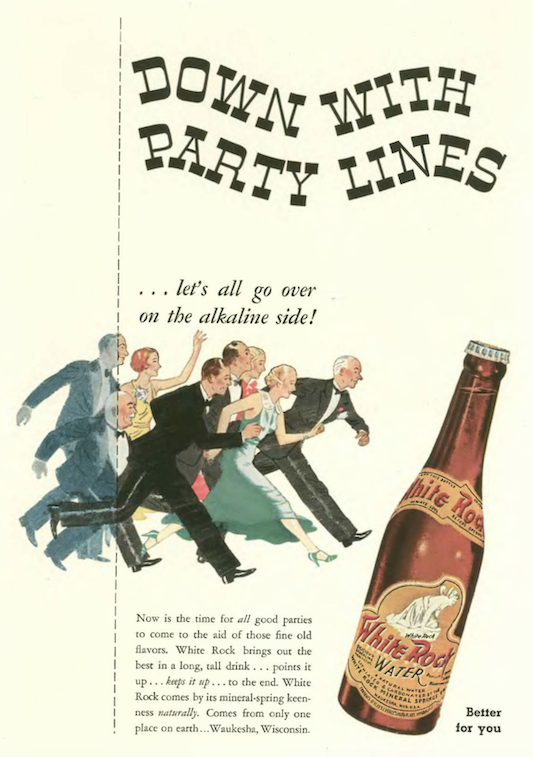
Illustrator R. John Holmgren drew up this non-partisan appeal for White Rock mineral water…
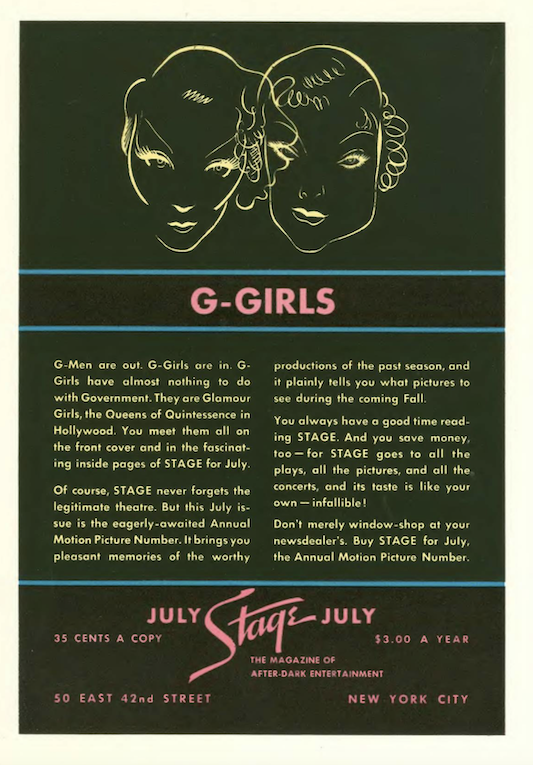
Stage magazine touted its upcoming July issue, featuring the “Glamour Girls” of Hollywood…
…here is the cover of that July 1936 issue, illustrated by Abe Birnbaum, featuring caricatures of leading ladies including Greta Garbo, Joan Crawford, Jean Harlow, Merle Oberon, Myrna Loy, Claudette Colbert, Bette Davis, Marlene Dietrich, and Katharine Hepburn…
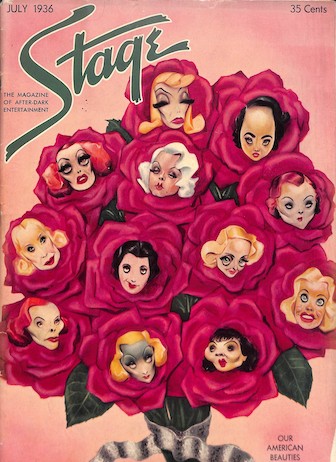
(abebooks.com)

…longtime member of the New Yorker coterie and contributor Alexander Woollcott appeared in this full-page ad endorsing the work of the American Civil Liberties Union…

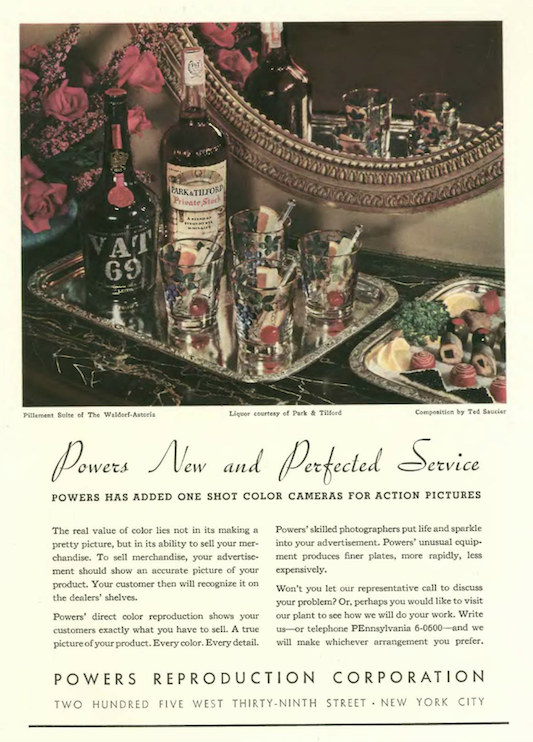
…from the 1920s to the 1940s the Powers Reproduction Corporation was a prominent, New York City photo-engraving firm that created high-quality color images for magazines and advertising agencies…
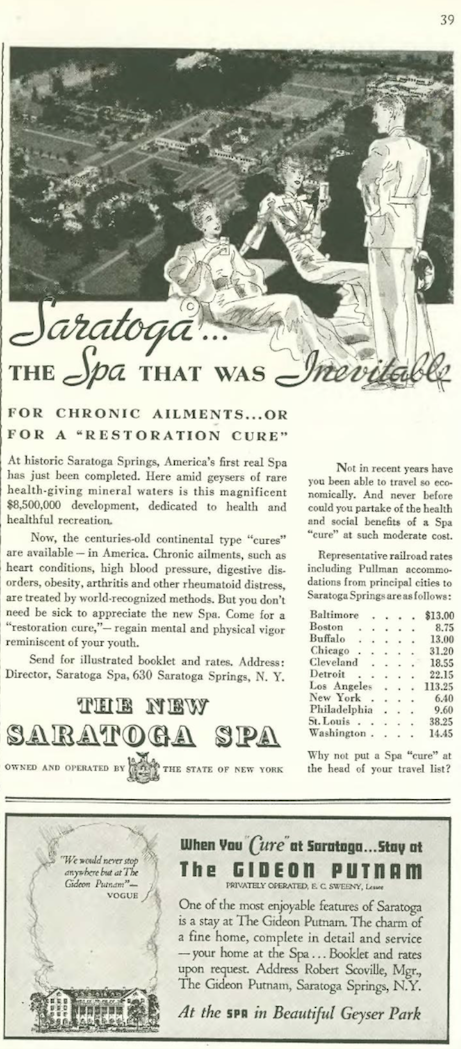
…these back of the book ads joined forces to promote the healing waters of Saratoga Springs and the Gideon Putnam hotel and spa…apparently the waters and other spa services treated everything from heart conditions to obesity…
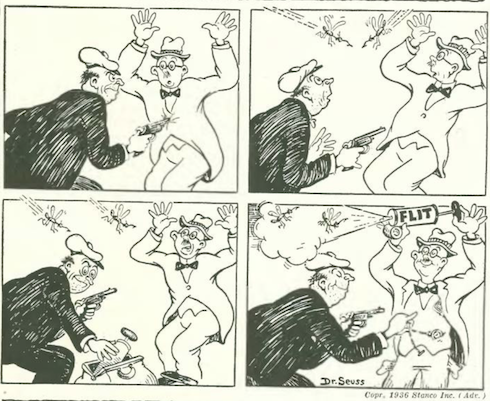
Dr. Seuss returned with another scenario for insecticide use…
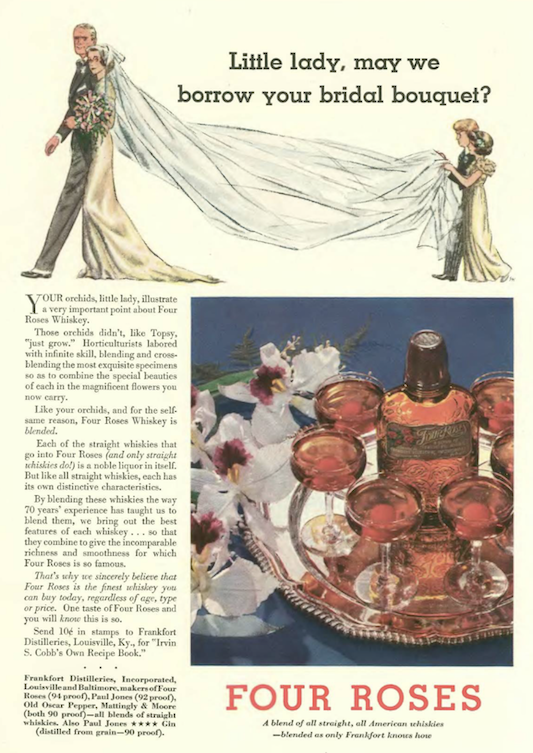
…on the inside back cover, the distillers of Four Roses Whiskey conjured up a June bride as an apt metaphor for their blending techniques…
…while Lucky Strike reclaimed the back cover with an ad that promoted its low acid cigarettes, whatever that meant…

…on to our illustrators and cartoonists, we begin with Arnold Hall

…and Robert Day…

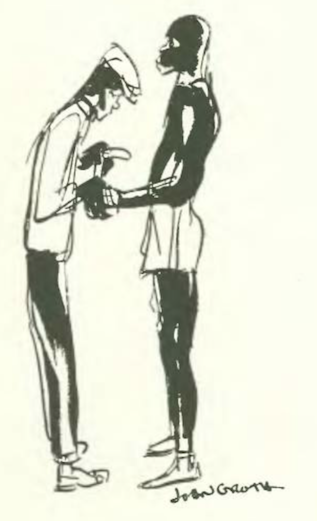
…with other featured spots from John Groth

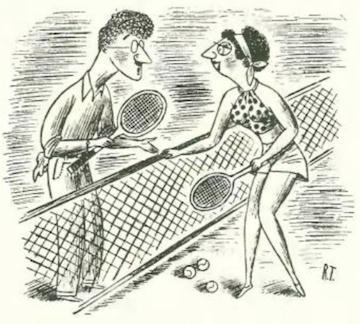
Richard Taylor

…and Otto Soglow

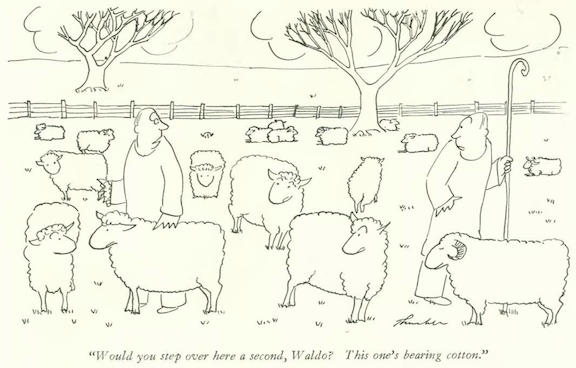
James Thurber drew up an unusual development in the sheepfold…
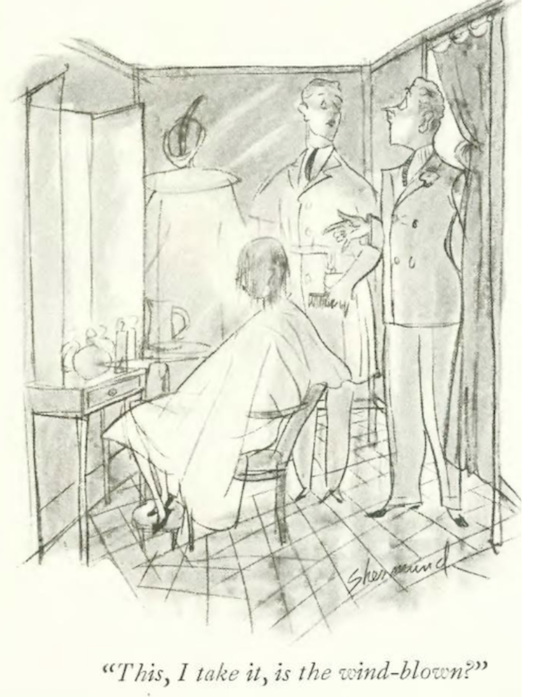
Barbara Shermund posed a challenge for a hair dresser…
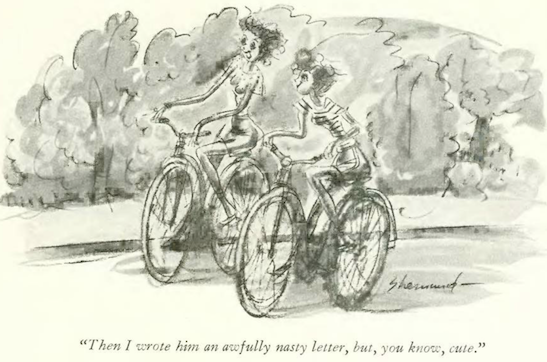
…and Shermund again, revealing a tactic of the modern woman…
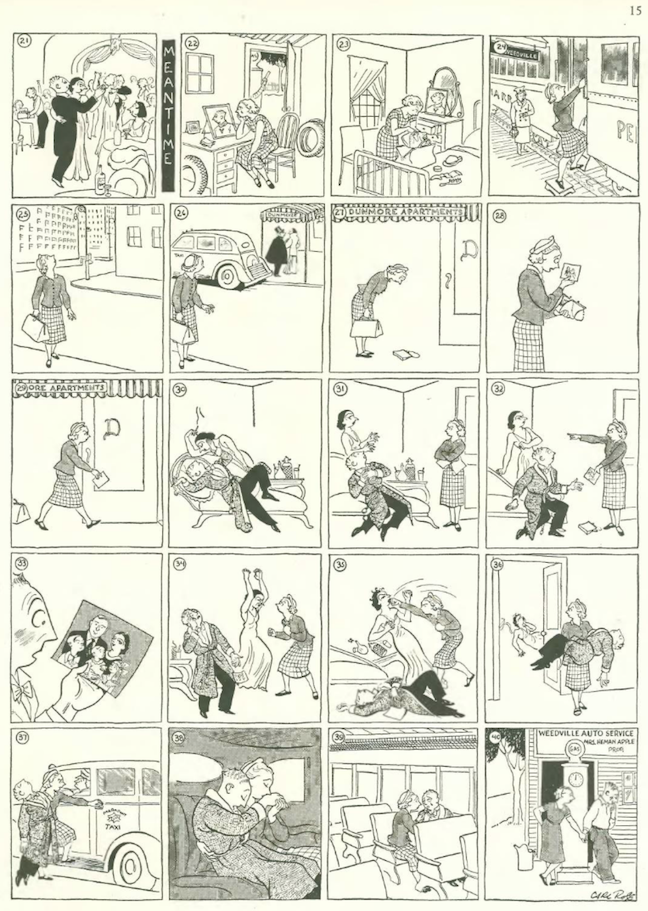
Carl Rose commanded a two-page spread to tell his tale of sin and redemption…

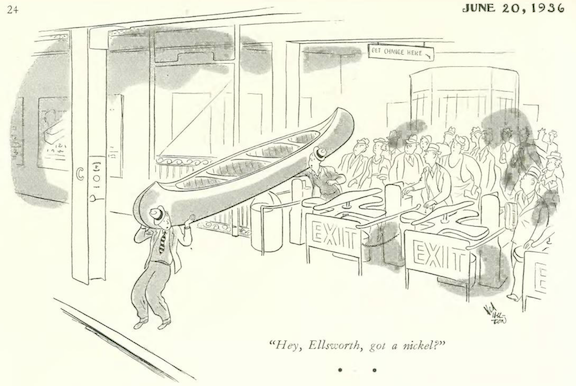
Ned Hilton needed a hand at the subway station…
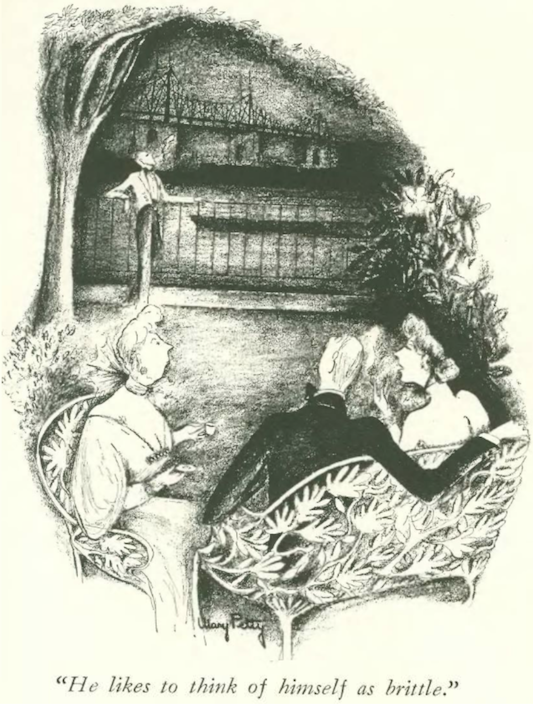
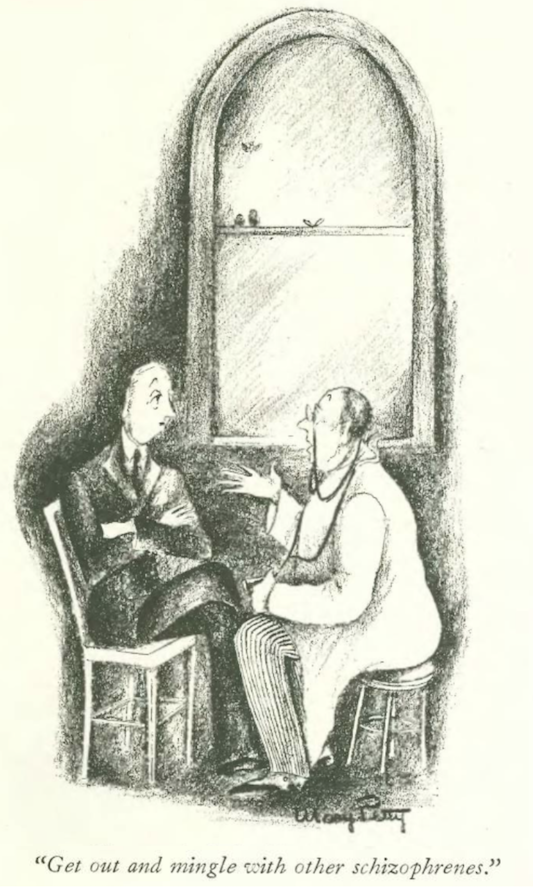
Mary Petty gave us a patient in need of a second opinion…
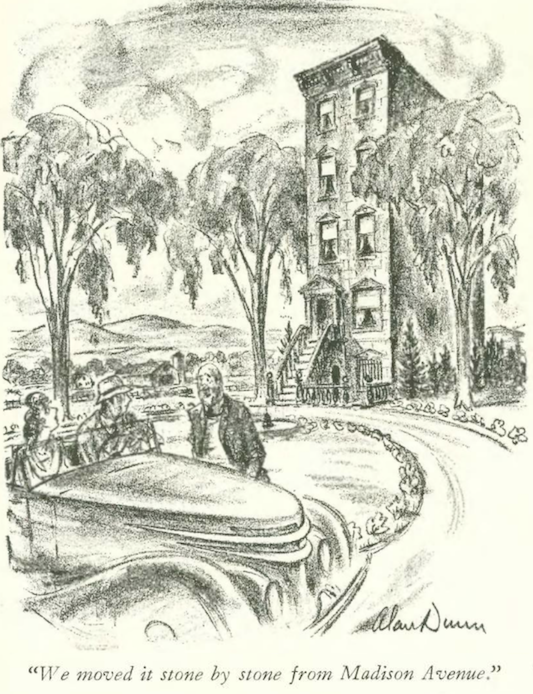
…while Alan Dunn weighed summer camp options…

…and we close with Dunn, and a true urban escape…
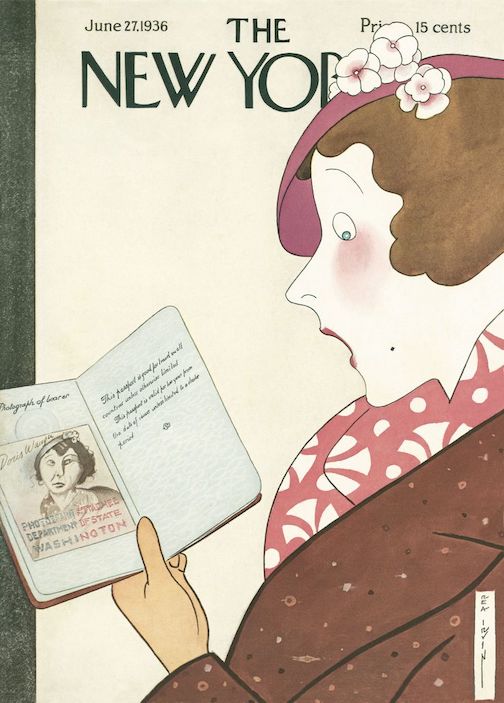
Next Time: Poppy Returns…
 

Meet Father Divine

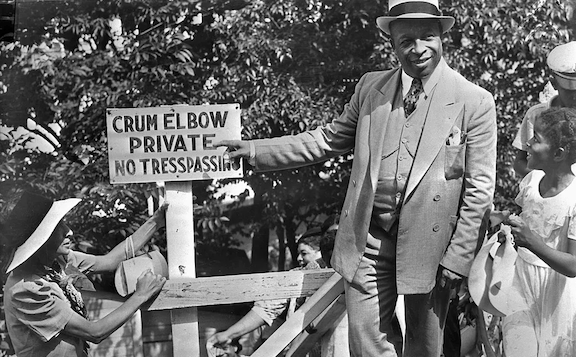
Above: Father Divine points to a Crum Elbow Estate sign (in Highland, NY) in July 1938. His followers purchased the 500-acre spread from anti-New Dealer Howland Spencer...the property was located directly across the Hudson from President Franklin D. Roosevelt's Hyde Park family home. That same summer Father Divine would also buy a fifty-room double dwelling in New York City. These and other locations served as integrated "heavens" for his followers. (Wikimedia Commons)

America has long been fertile ground for various religious denominations, sects and cults. Although the U.S. Religion Census has cataloged more than 370 distinct religious groups and bodies in the U.S., there are tens of thousands of independents scattered across the country.

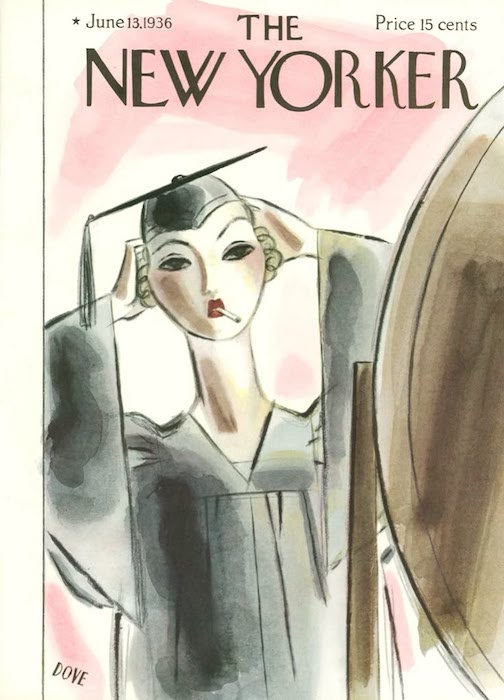
June 13, 1936 cover by Leonard Dove.

Some of these remain small, while others grow into megachurches often organized around a charismatic leader. Such was the case with Father Divine (1876–1965), aka Reverend Major Jealous Divine, aka George Baker.

His life as George Baker of Valdosta, Georgia came to an end in 1907 when he became known as “the Messenger.” He parted ways with the Baptist church, declared himself a god, and was asked to leave Georgia after his 1914 arrest for lunacy. He led his followers to Brooklyn and later to a commune in Sayville, New York (Long Island), where he founded the International Peace Mission movement and came to be known as Father Divine. By the early 1930s his small and predominantly black congregation had grown into a multiracial and international church.

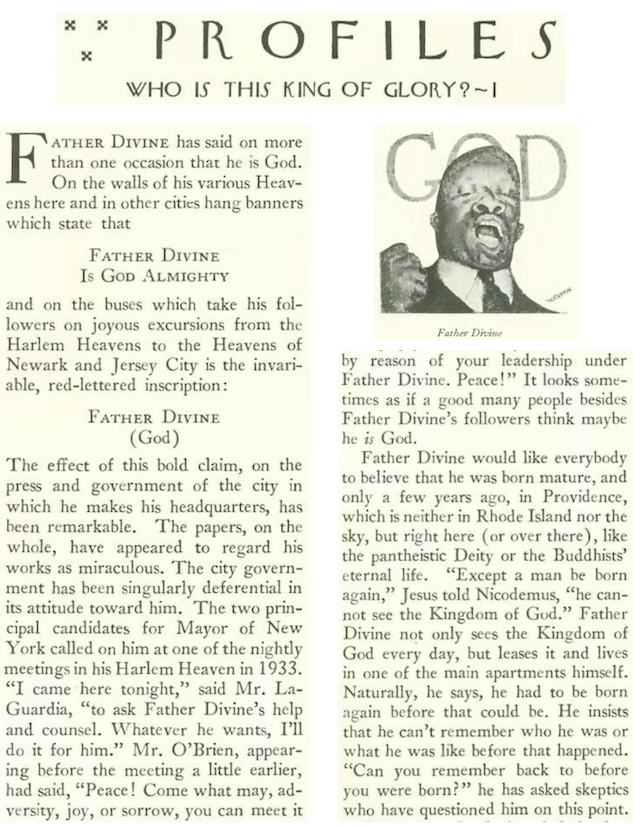
So intriguing was his story that The New Yorker published a lengthy, three-part profile written by St. Clair McKelway and A.J. Liebling. Here are excerpts from Part One (illustration by William Cotton):

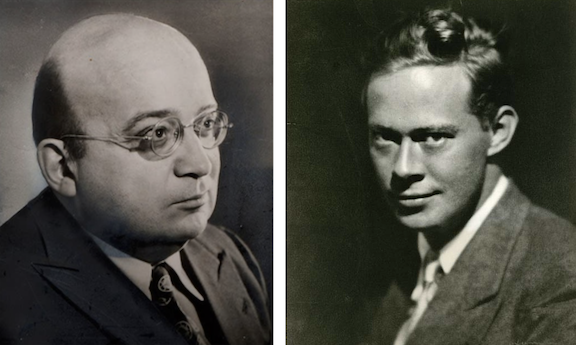
A DEFT DUO…A.J. Liebling (left) and St. Clair McKelway, both acclaimed journalists, co-authored the three-part profile of Father Divine. Liebling (1904–1963) was closely associated with The New Yorker, joining the magazine in 1935 (he was also a well-known gastronome); McKelway (1905–1980) served as The New Yorker’s managing editor for journalistic contributions from 1936 to 1939 and wrote for the magazine for forty-seven years. (Wikipedia/sfgate.com)
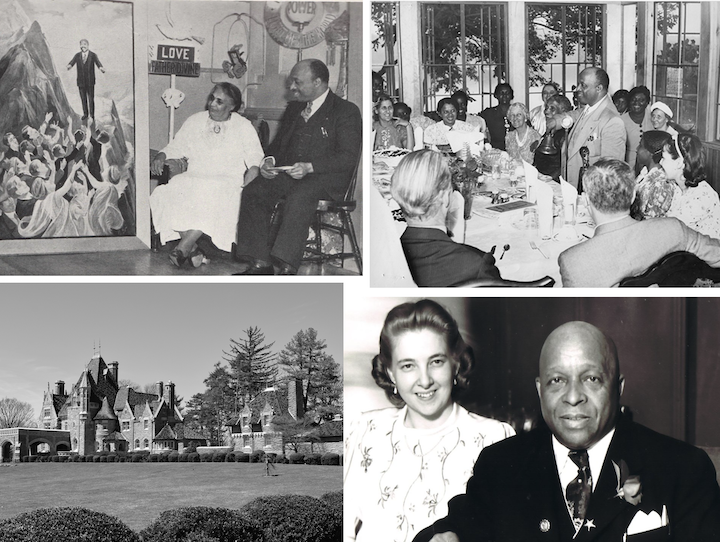
DIVINE’S PATH…Clockwise, from top left: After relocating to Brooklyn in 1914, Father Divine married his first wife, Peninniah—they are shown here admiring his portrait; Father Divine led large gatherings centered on food—here he entertains guests at a summer retreat in upstate New York in 1938; following the death of Peninniah, the 70-year-old Father Divine married 21-year-old Edna Ritchings in 1946—she took the name “Mother Divine, with Father Divine claiming she was the reincarnation of Penninah; in 1953 Father Divine was given a hilltop estate (“Woodmont”) in Gladwyne, Pennsylvania, by follower John Devoute. The estate is the center of the International Peace Mission movement, a shrine to Father Divine’s life, and a meeting place for the few remaining followers. (thecityroot.com/Newark Public Library/hsmcpa.org/Wikipedia)

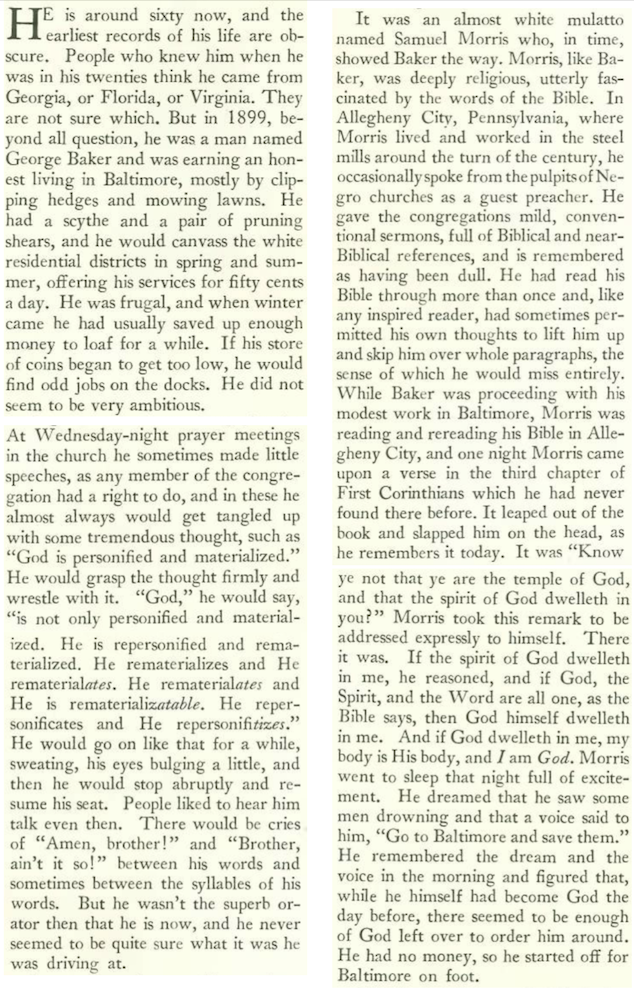
How did Father Divine come to believe he was a god? This excerpt offers some insights into his early development:

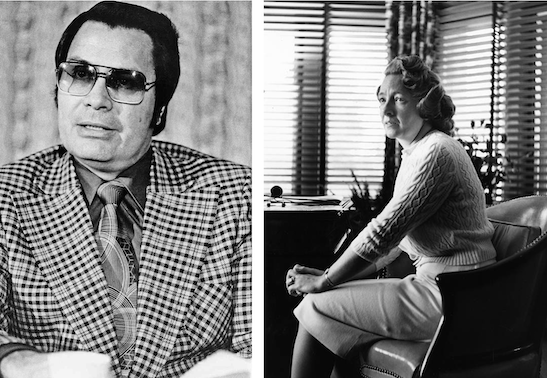
One of the perils of this kind of thinking is that it can lead to the formation of dangerous cults. Jim Jones, the notorious leader of the Peoples Temple, heavily modeled his early church activities and authoritarian structure on Father Divine’s example. Jones even attempted to take over the International Peace Mission after Father Divine’s death—in 1971 he tried to convert the Peace Mission’s followers, claiming he was the reincarnated Father Divine. His takeover attempt was thwarted by Mother Divine, who went to the media and publicly denounced Jones and the Peoples Temple. In 1974 Jones and his followers would relocate to a Guyana commune he called Jonestown. Four years later Jones would lead the mass murder-suicide of 909 Jonestown inhabitants.

AT ODDS…Jim Jones (left, circa 1970) attempted to take over the International Peace Mission after Father Divine’s death, but was publicly denounced by Mother Divine. At right, Mother Divine giving her first interview following the death of Father Divine in 1965. (Wikipedia/temple.edu)

 * * *

At the Movies

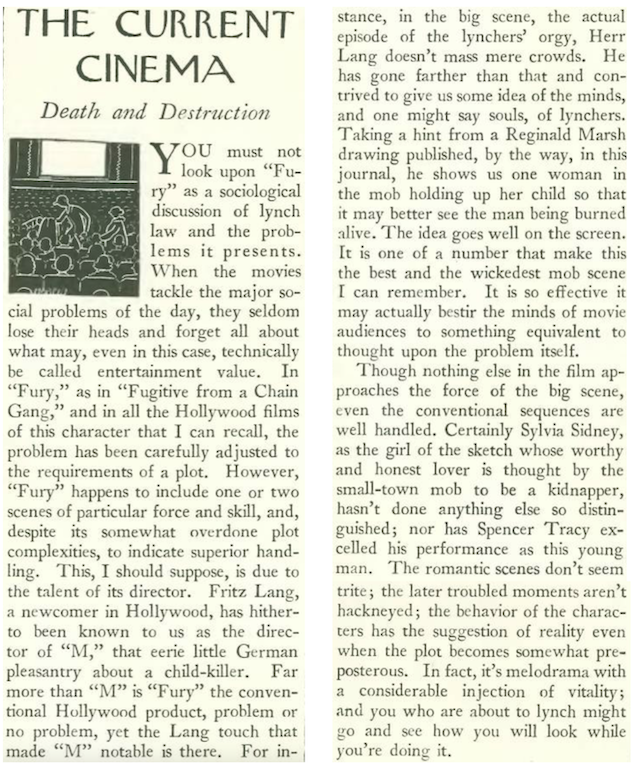
The media has always thrived on crime stories, feeding the public’s insatiable desire to be tantalized; once sated, they often demand swift justice. Take the heavily publicized 1933 case of two San Jose, California men who were accused of kidnapping and murdering a department store heir. Rather than wait for justice to be served, an angry mob broke into the jail and lynched the accused. Fascinated by the story, MGM screenwriter Norman Krasna pitched it as a potential film.

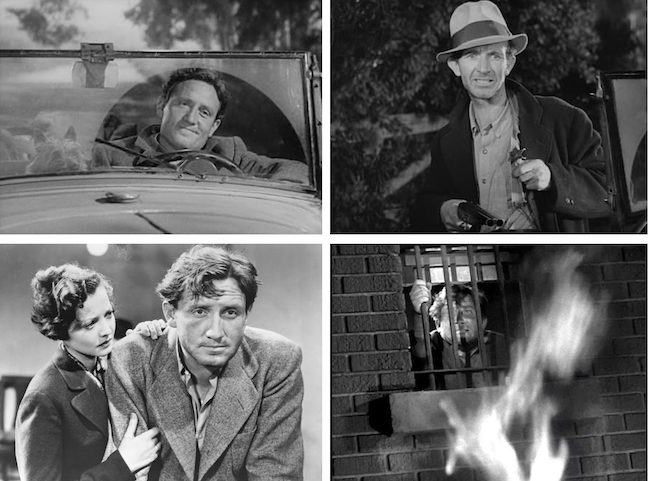
That film would become Fury, German director Fritz Lang’s first American project. Prior to fleeing the Third Reich in 1933, Lang was perhaps best known to Americans for his pioneering 1927 silent sci-fi film Metropolis and the 1931 thriller M. Lang sought to demonstrate how a decent and civilized man could become filled with vengeance and hate. Although critic John Mosher could see how the film had been tampered with by studio execs (and the Hays Code), he was nevertheless impressed by Lang’s direction and by the performances of lead actors Sylvia Sidney and Spencer Tracy.

WRONG TURN…Clockwise, from top left: In Fury, Spencer Tracy played gas station owner Joe Wilson, who drives west to reunite with his fiancée—the dog seated to his right is Terry, the same Cairn Terrier who played Toto in The Wizard of Oz; while camping outside a small town, Joe is arrested by a creepy local deputy (Walter Brennan) on suspicion of kidnapping a child; a mob forms and tries to burn Joe in his cell; in the confusion of the fire he escapes and seeks vengeance on the mob, but in the end finds peace with his fiancée (Sylvia Sidney). (imdb.com)

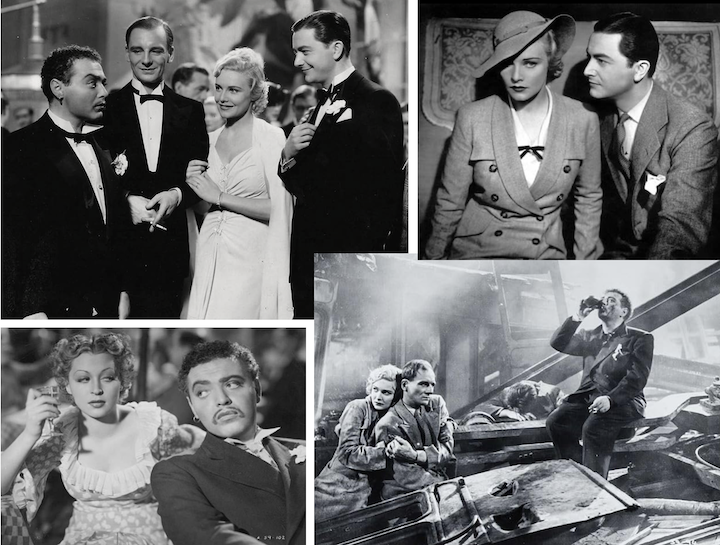
Peter Lorre, who was famously directed by Fritz Lang in the 1931 German thriller M, was starring in Alfred Hitchcock’s Secret Agent, which also featured John Gielgud (already famous as a London stage performer), Madeline Carroll, and Robert Young.

SECRETS AND LIES…Clockwise from top left: Peter Lorre, John Gielgud, Madeline Carroll, and Robert Young in Secret Agent; Carroll with Young, who played a German mole; Carroll, Gielgud and Lorre amid the wreckage of a train; Lorre in a scene with Lilli Palmer. (imdb.com)

Mosher briefly mentioned a new Fred MacMurray/Carole Lombard comedy–mystery, and the return of two silent movie stars.

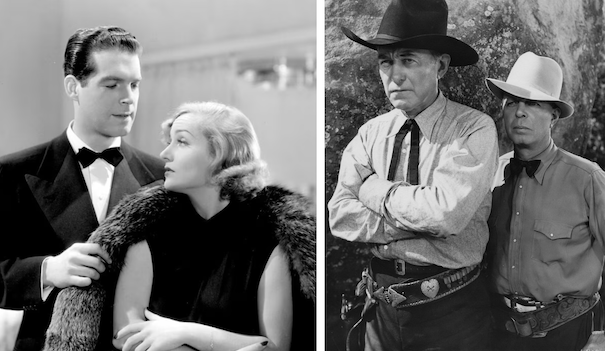
CHOOSE YOUR PARTNER…The second of four films Fred MacMurray made with Carole Lombard between 1935 and 1937, The Princess Comes Across featured Lombard doing a clever take-off on Greta Garbo; silent-film veterans Harry Carey and Hoot Gibson stood for the ideals of the Old West in a culture clash with scientific crime-fighting in The Last Outlaw. The film was a remake of a 1919 silent film originally written and directed by John Ford. (imdb.com/csfd.cz)

* * *

Beer Bottle Battle

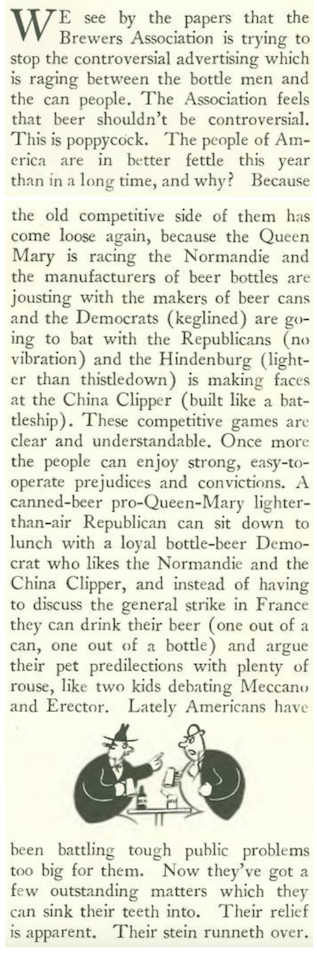
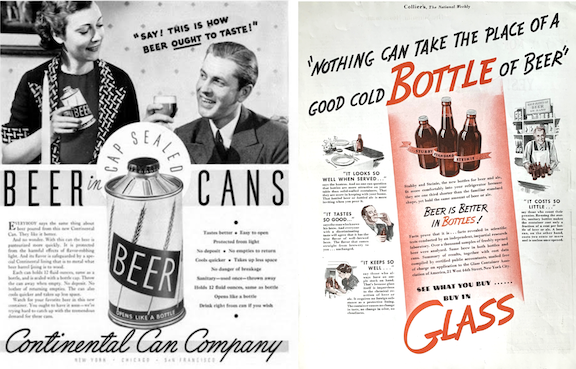
E.B. White (in his “Notes and Comment”) seized on the battle between bottle and can manufacturers as an apt metaphor for the jousting of Republicans and Democrats ahead of the November elections.

FOAMING AT THE MOUTH…Competing ads from Collier’s magazine circa 1935-36 illustrate the battle between can and bottle manufacturers. Ninety years later, beer drinkers still debate the merits of glass over cans. (boakandbailey.com/ebay.com)

 * * *

From Our Advertisers

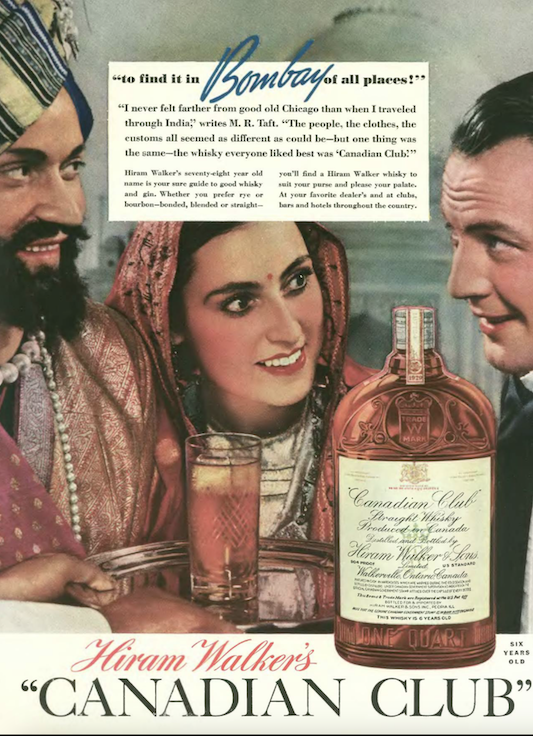
In 1936 whisky was still firmly in bottle form, and the makers of Canadian Club—through a series of ads—wanted to let us know you could enjoy their tipple almost anywhere in the world…

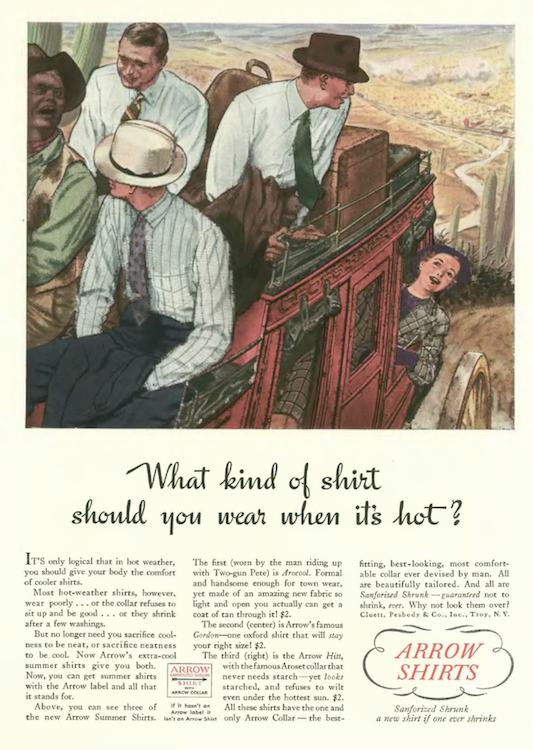
…this woman poses an interesting question, considering the fellas are riding atop a dusty stagecoach in the Arizona heat—in formal attire no less…

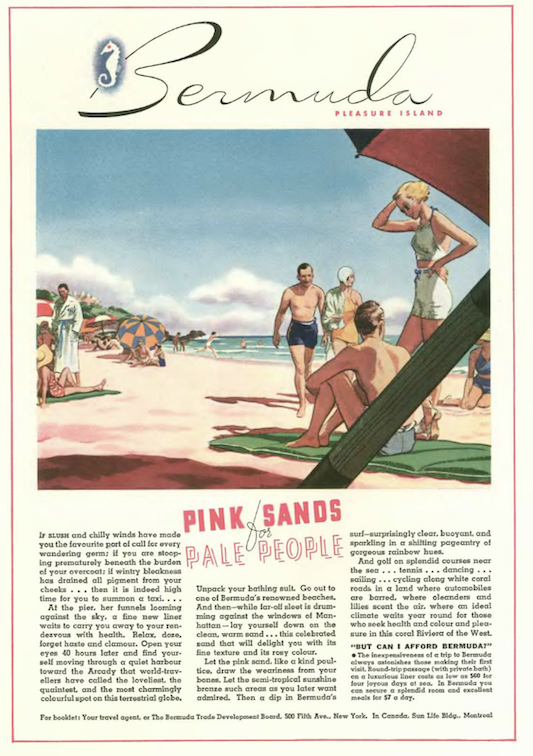
…over the years we’ve seen a lot of Adolph Teidler’s work for the Bermuda Board of Trade…Teidler (1886–1981) was also well known for his Saturday Evening Post covers…

…here’s an example of Teidler’s work for the Bermuda Board of Trade from the Feb. 22, 1936 issue of The New Yorker

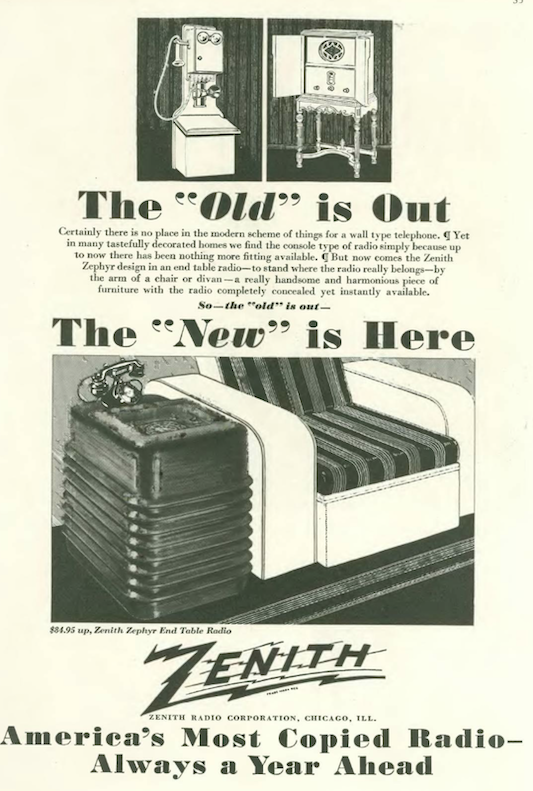
…the Zenith Radio Corporation touted their modern, streamlined “Zephyr” radio by industrial designer Robert Davol Budlong

A restored Zenith 10-S-147 Zephyr chairside radio. (Pete Johnson–Zenith Radios Enthusiasts and Collectors via Facebook.com)

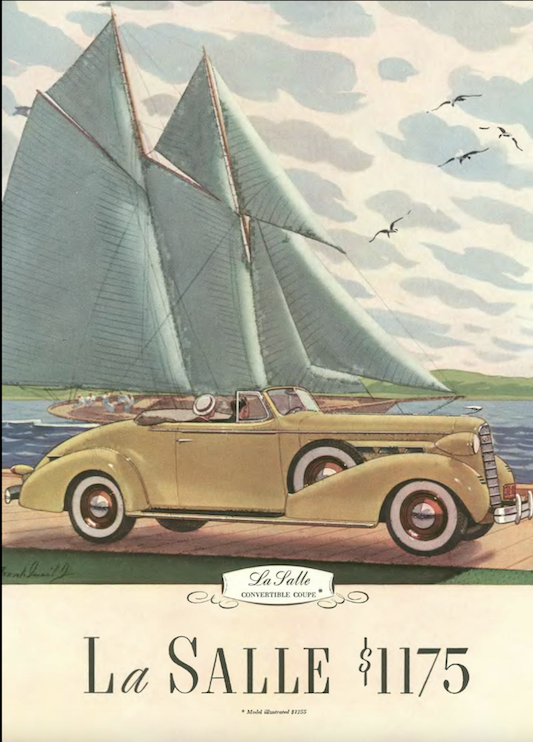
Frank Quail Jr was a prominent automotive illustrator active from the 1920s through the 1930s. He was well-known for his work with luxury automobile brands such as Cadillac, LaSalle and Packard…here he conjures up a breezy seaside image for Cadillac’s more affordable LaSalle model (most of these ads were two-page spreads, with promo copy on the right-hand page)…

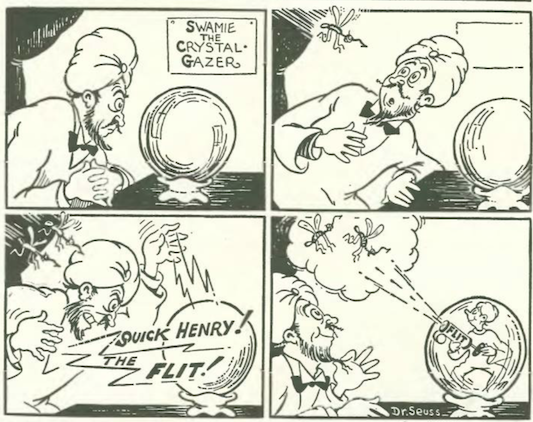
…and more Dr. Seuss on behalf of Flit insecticide…

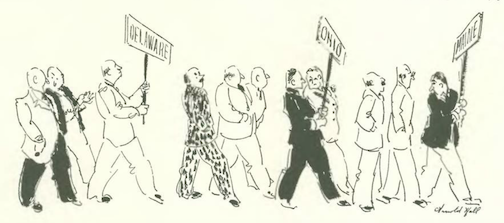
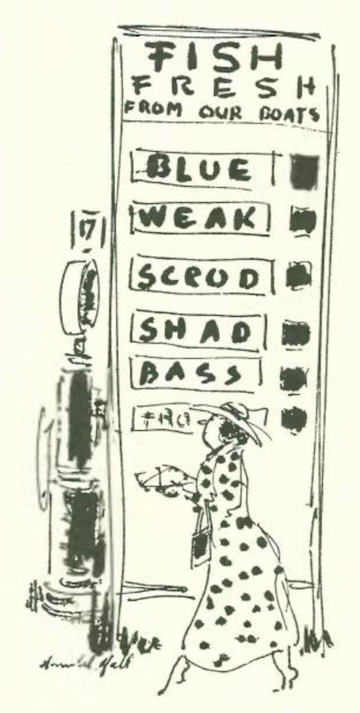
…we begin the cartoon section with some spot art…here are two by Arnold Hall

…and one from Richard Taylor

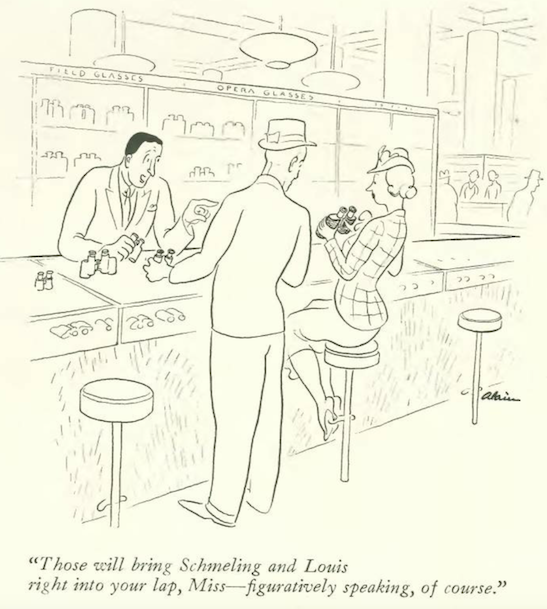
Alain referenced the upcoming heavyweight bout at Yankee Stadium between Max Schmeling and Joe Louis…their two fights in 1936 and 1938 were international sensations…
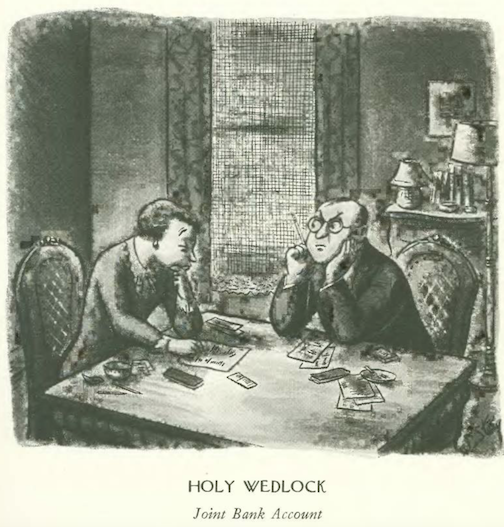
…more glimpses of “Holy Wedlock” from William Steig

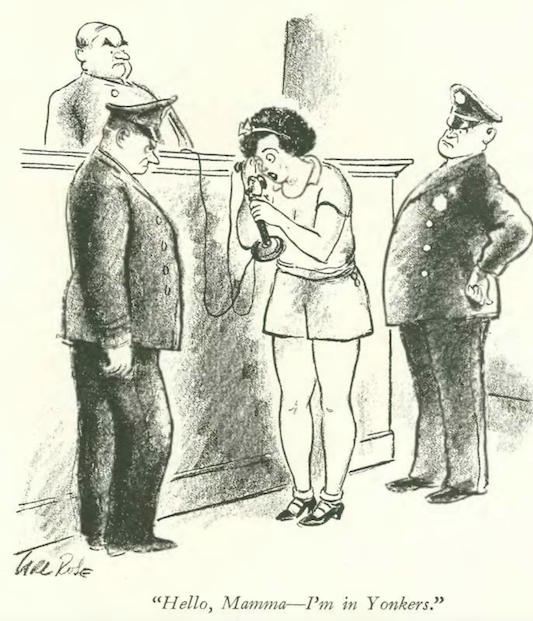
…a bit of trouble in Yonkers, per Carl Rose

George Price brought out the fire brigade for the Crêpes Suzette

Peter Arno drew up a colonel with a communication issue…

William Crawford Galbraith celebrated the June bride…

…two by Mary Petty, at the dress shop…

and at the in-laws…
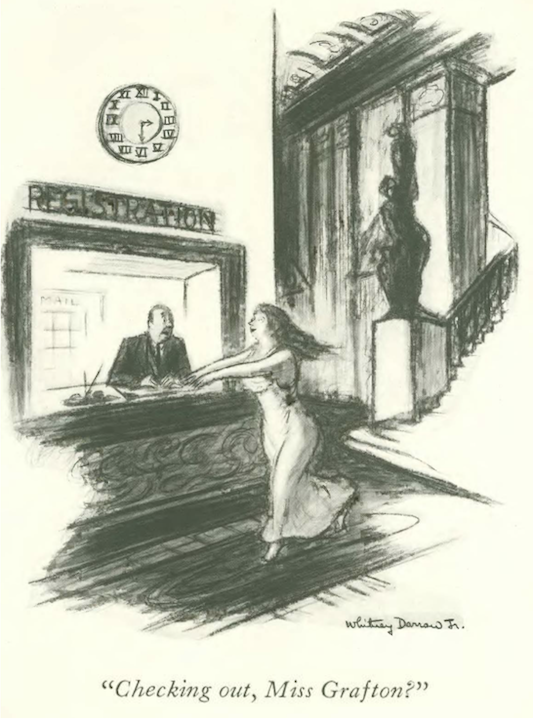
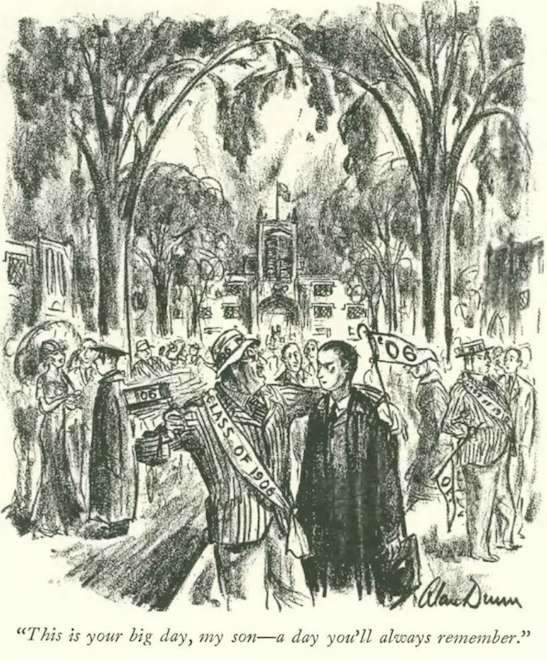
…Petty’s husband Alan Dunn feted the Class of ’36 (and ’06)…
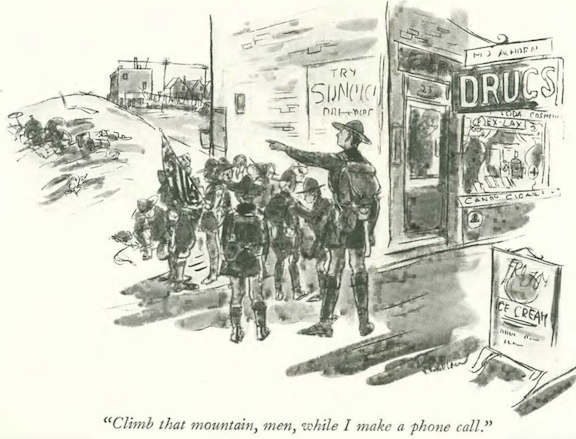
Perry Barlow illustrated a scoutmaster’s leadership skills…

…and we check out with Whitney Darrow Jr

Next Time: An Urban Spectacle…
 

Strike Me Pink

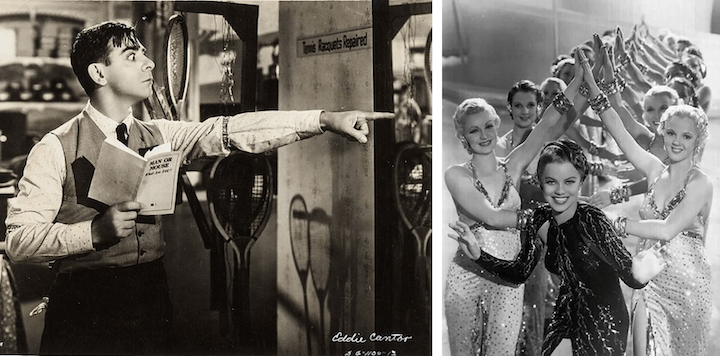
Above: Eddie Cantor (left) consulting his "confidence book" in Strike Me Pink; at right, Dona Drake and the “Goldwyn Girls” performing “The Lady Dances." (cometoverhollywood.com)

You don’t hear much about him today, but in 1936 Eddie Cantor was a household name, an entertainer who seemed to do it all—comedian, actor, dancer, singer, and songwriter were just a few of his trades.

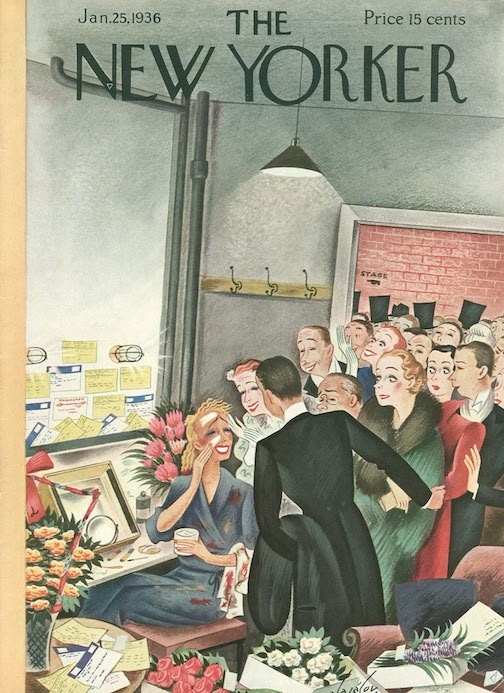
January 25, 1936 cover by Constantin Alajálov.

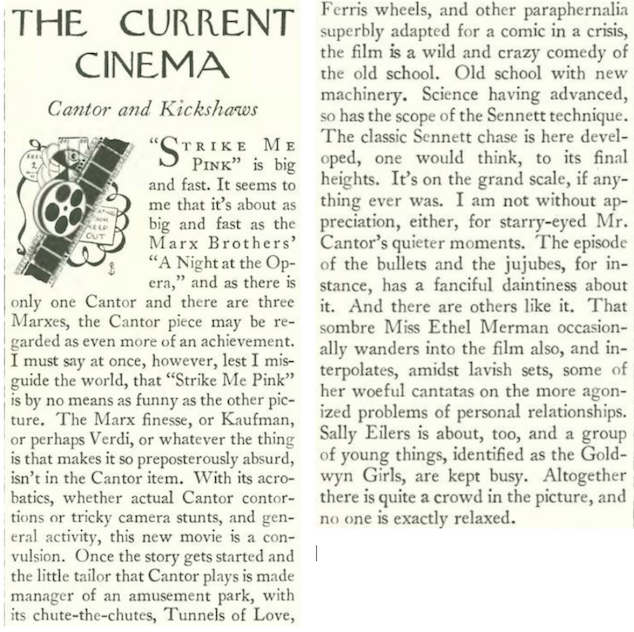
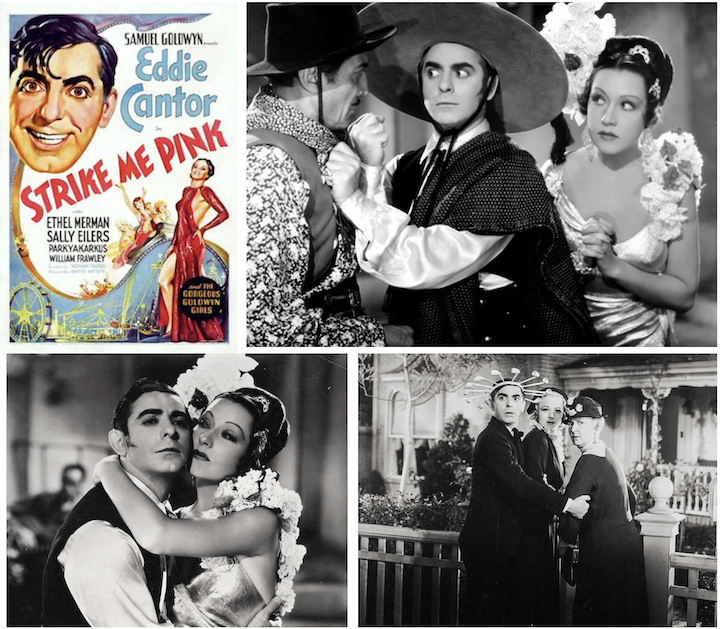
Critic John Mosher marveled at the energy Cantor (1892–1964) brought to his latest film, Strike Me Pink, in which Cantor played a mild-mannered manager of an amusement park infested with mobsters. The film was a “convulsion,” Mosher wrote, packed with action on “the grand scale” with occasional interludes by co-star Ethel Merman, who portrayed Cantor’s love interest.

FINDING HIS MOJO…top and below left, Eddie Cantor and Ethel Merman in Strike Me Pink. Bottom right, Cantor, Sally Eilers and Helen Lowell in a scene from the film. (Wikipedia/tcm.com/imdb.com)

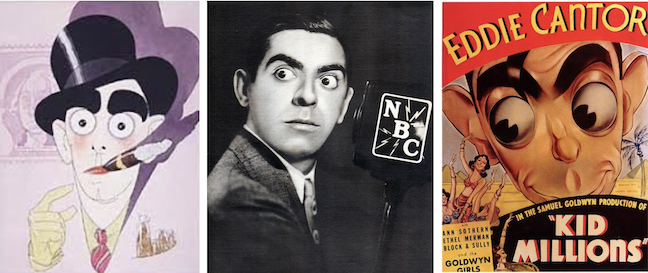
Bette Davis wasn’t the only Hollywood celeb known for her peepers. After artist Frederick J. Garner published a big-eyed caricature of Cantor in 1933, those “Banjo Eyes” became Cantor’s trademark.

BANJO EYES…at left, Frederick J. Garner’s caricature of Cantor. After he published the drawing in 1933, other artists followed suit with their own interpretations of the “Banjo Eyes.” At right, movie poster for 1934’s Kid Millions. (npg.si.edu/laughterlog.com/imdb.com)

Cantor would pack a lot into his seventy-two years, a regular with the Ziegfeld Follies (he would repeat his routines in numerous films), he would also appear in other stage productions, on the radio, on television (hosting The Colgate Comedy Hour) and recording hit songs like “Makin’ Whoopee.” He wrote or co-wrote seven books, was the second president of the Screen Actors Guild, and a co-founder of the March of Dimes (Cantor came up with the name as well). He also appeared in numerous cartoons, and even wrote the Merrie Melodies/LooneyTunes theme song, “Merrily We Roll Along.”

DOWN AND OUT…Eddie Cantor was caricatured along with, from left, Al Jolson, Jack Benny and Bing Crosby in the 1950 Looney Toons short “What’s Up, Doc?” The scene depicts a low point in Bugs Bunny’s career when he spends the winter with fellow struggling actors in Central Park. (Warner Brothers)

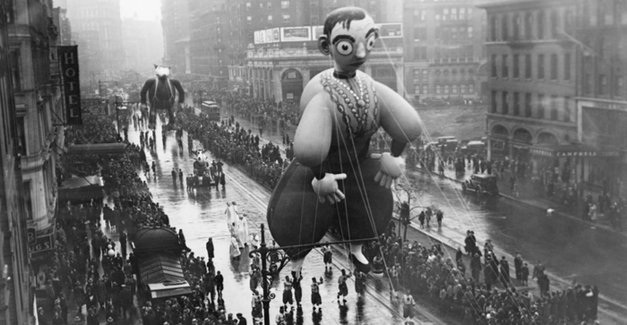
In 1934 Cantor was depicted as a balloon in the Macy’s Thanksgiving Day Parade, the only full-size balloon to represent a real person.

MY, WHAT BIG EYES YOU HAVE…Eddie Cantor looms over the Macy’s Thanksgiving Day Parade in 1934. (Ephemeral New York)

 * * *

Fishing For Buyers

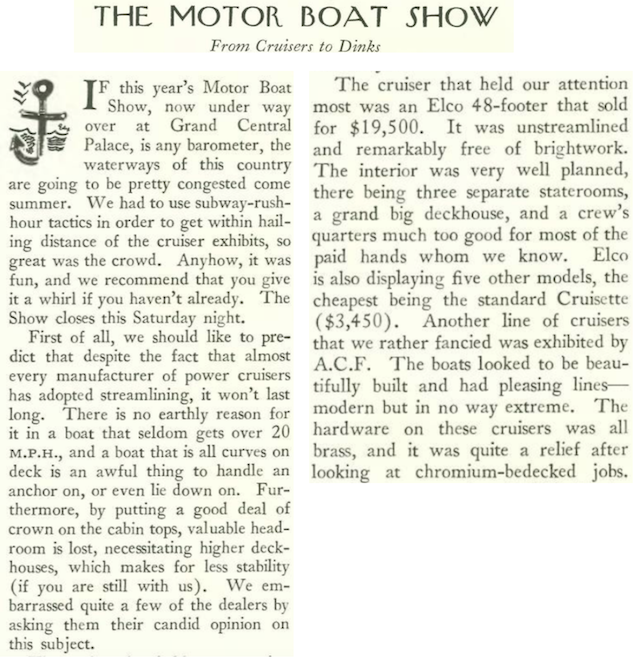
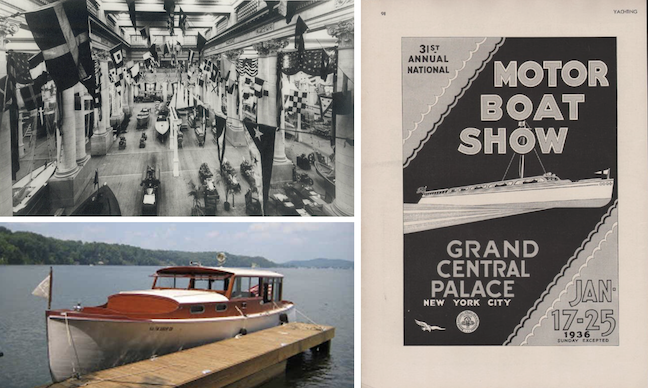
The Thirty-first annual Motor Boat Show was on at the Grand Central Palace, featuring everything from yachts to tiny sailboats. Excerpts from a report by a correspondent who wrote under the name “Bosun.”

FOR LANDLUBBERS TOO…The New York Motor Boat Show began in 1905 at Madison Square Garden before moving to the resplendent surroundings of the Grand Central Palace. Clockwise from top left, undated photo from the Grand Central Palace; advertisement in Yachting magazine; a 1935 Elco Cruisette. (offthehookyachts.com/antiqueboatamerica.com)

 * * *

Cultured Congress

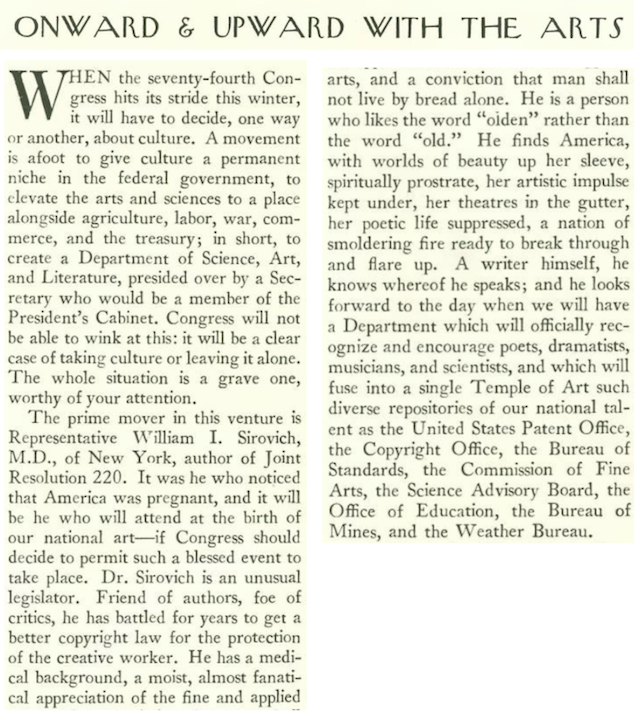
Hard to believe that ninety years ago the U.S. House of Representatives devoted considerable time and attention to a proposed bill for a “Department of Science, Art and Literature.” E.B. White covered the hearings in an extensive two-part report for “Onward & Upward With the Arts.” Here is a brief excerpt from part one.

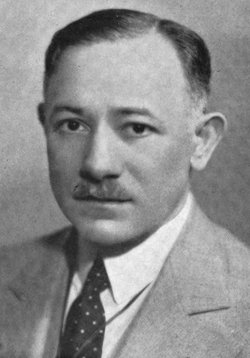
ARTS FANATIC is how E.B. White characterized New York Congressman William I. Sirovich (1882–1939), who proposed the establishment of a Department of Science, Art and Literature. (findagrave.com)

 * * *

A Really Big Show

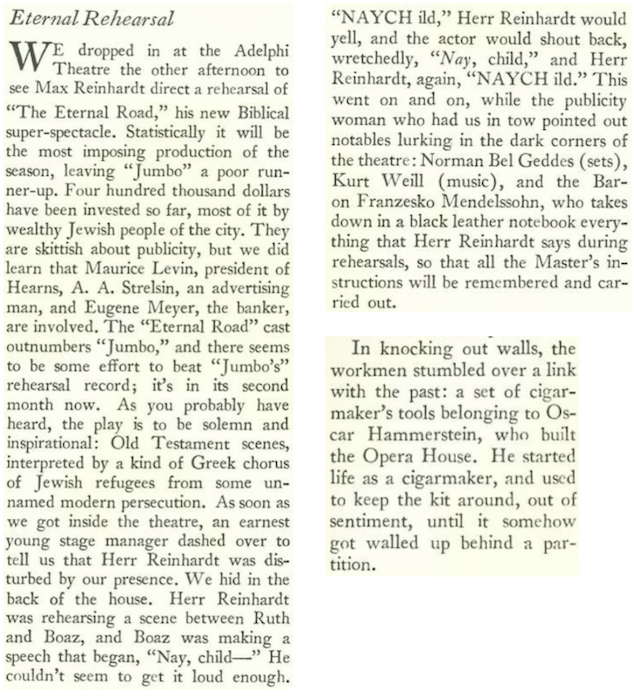
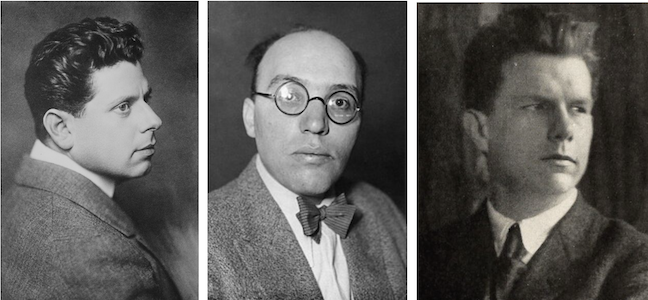
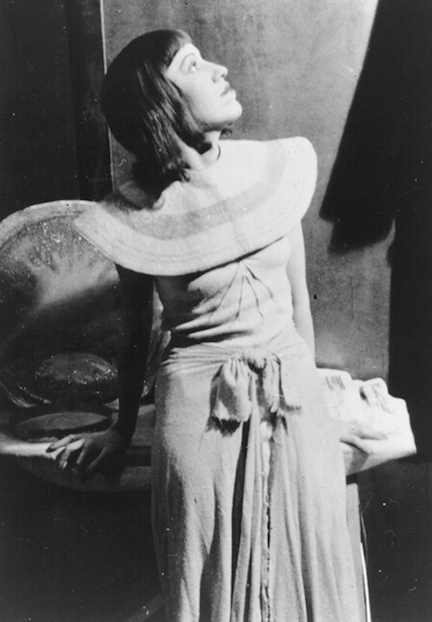
“The Talk of the Town” paid a visit to the Adelphi Theatre to see how preparations were going for opera-oratorio The Eternal Road. Conceived by journalist and playwright Meyer Weisgal to alert the public to the persecution of Jews in Nazi Germany, it featured a score by Kurt Weill with libretto by Franz Werfel (translated into English by Ludwig Lewisohn).

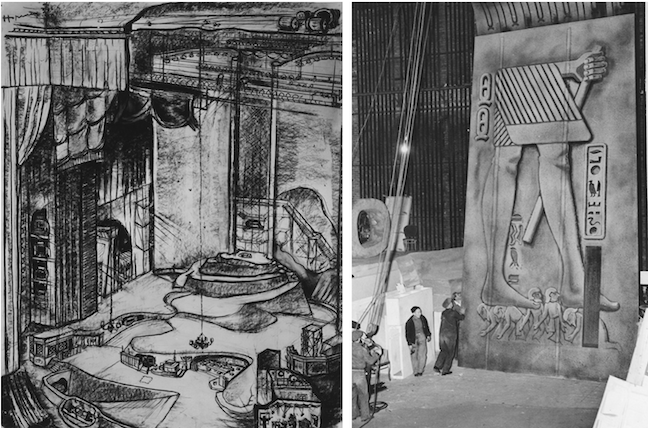
Directed by Max Reinhardt on an imposing set designed by Norman Bel GeddesThe Eternal Road would take time to produce, finally premiering at the Manhattan Opera House on Jan. 7, 1937. It ran for 153 performances.

ON THE ROAD…Key figures in the production of The Eternal Road included, from left, director Max Reinhardt, composer Kurt Weill, and set designer Norman Bel Geddes (who here bears an uncanny resemblance to New Yorker founding editor Harold Ross). (weillproject.com)
DRAMA QUEEN…Among the 245 actors in the production was Lotte Lenya, who portrayed Miriam. An acclaimed Austrian singer and actress, Lenya was also Kurt Weill’s ex-wife, and is probably best known today for her role as the sadistic Rosa Klebb in the 1963 James Bond film From Russia with Love.
MAKE NO LITTLE PLANS…At left, a sketch by Harry Horner of the The Eternal Road’s five-level set designed by Norman Bel Geddes for the Manhattan Opera House; at right, massive set piece from the production. (Kurt Weill Foundation kwf.org)

 * * *

Location, Location, Location

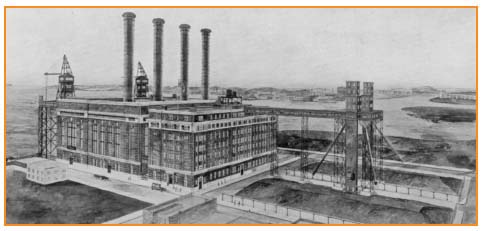
“Talk” also looked at property values in the city, noting that the site occupied by the Hell Gate power plant was assessed at nearly $57 million (roughly $1.3 billion today). Excerpt:

PRIME REAL ESTATE…Artist’s rendering of the Hell Gate generating station, circa 1922. (T.E. Murray, Power Stations 1922)

 * * *

A New, Improved Carmen

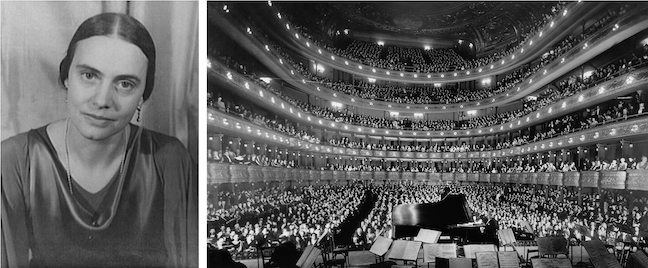
Music critic Robert Simon (writing for “Musical Events”) was delightfully surprised by the Met’s latest production of Carmen, and namely by the performance of Swedish mezzo-soprano Gertrud Pålson-Wettergren:

HUMOROUS AND HEROIC were just two for the adjectives Robert Simon used to describe an interpretation of Carmen by Swedish mezzo-soprano Gertrud Pålson-Wettergren (1897–1991). She made her Metropolitan Opera debut in December 1935. (Wikipedia)

 * * *

At the Movies

We rejoin critic John Mosher for a look at the rest of the cinema lineup, beginning with King of Burlesque, which featured Alice Faye and “everything but the kitchen stove.”

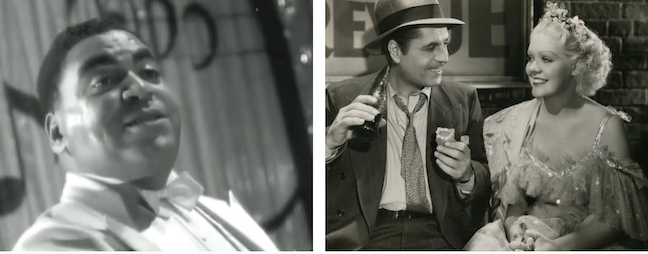
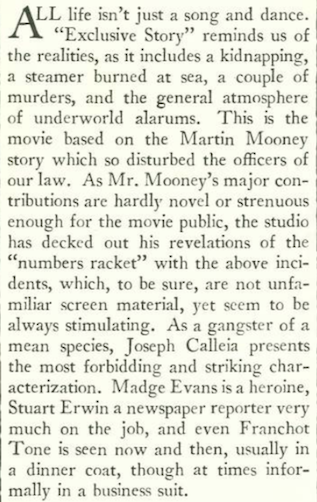
FACES IN THE CROWD…Mosher found a film crowded with talents in King of Burlesque, including Fats Waller (performing “I’ve Got My Fingers Crossed”), Warner Baxter, and Alice Faye. (YouTube.com/IMDb.com)

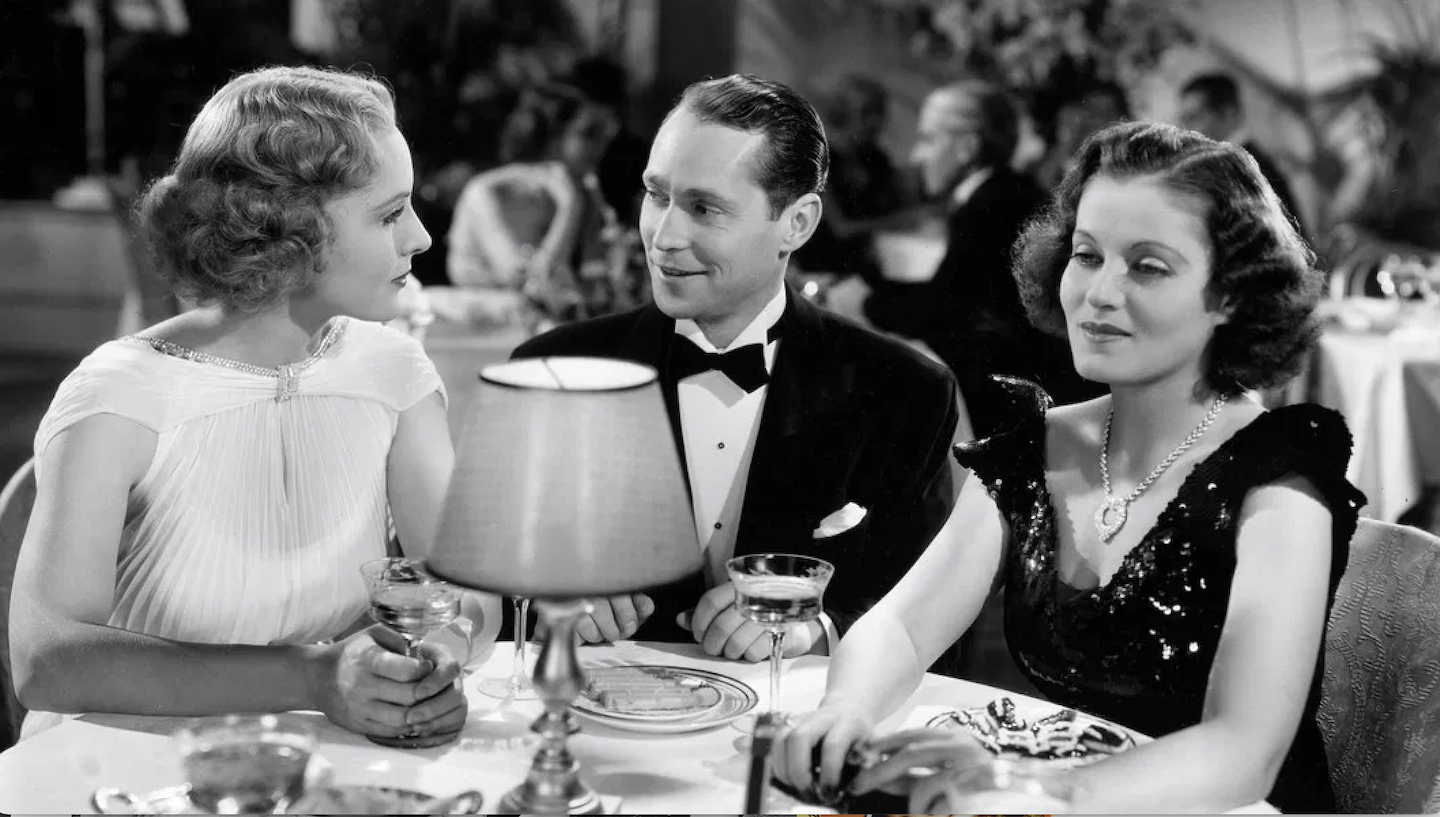
Mosher found a “stimulating” gangster flick in Exclusive Story

DRESSED TO THE NINES…Franchot Tone was clad in his usual Sunday best, here flanked by Madge Evans (left) and Louise Henry. (themovied.org)

…and a “trifling” horror movie, The Crime of Dr. Crespi

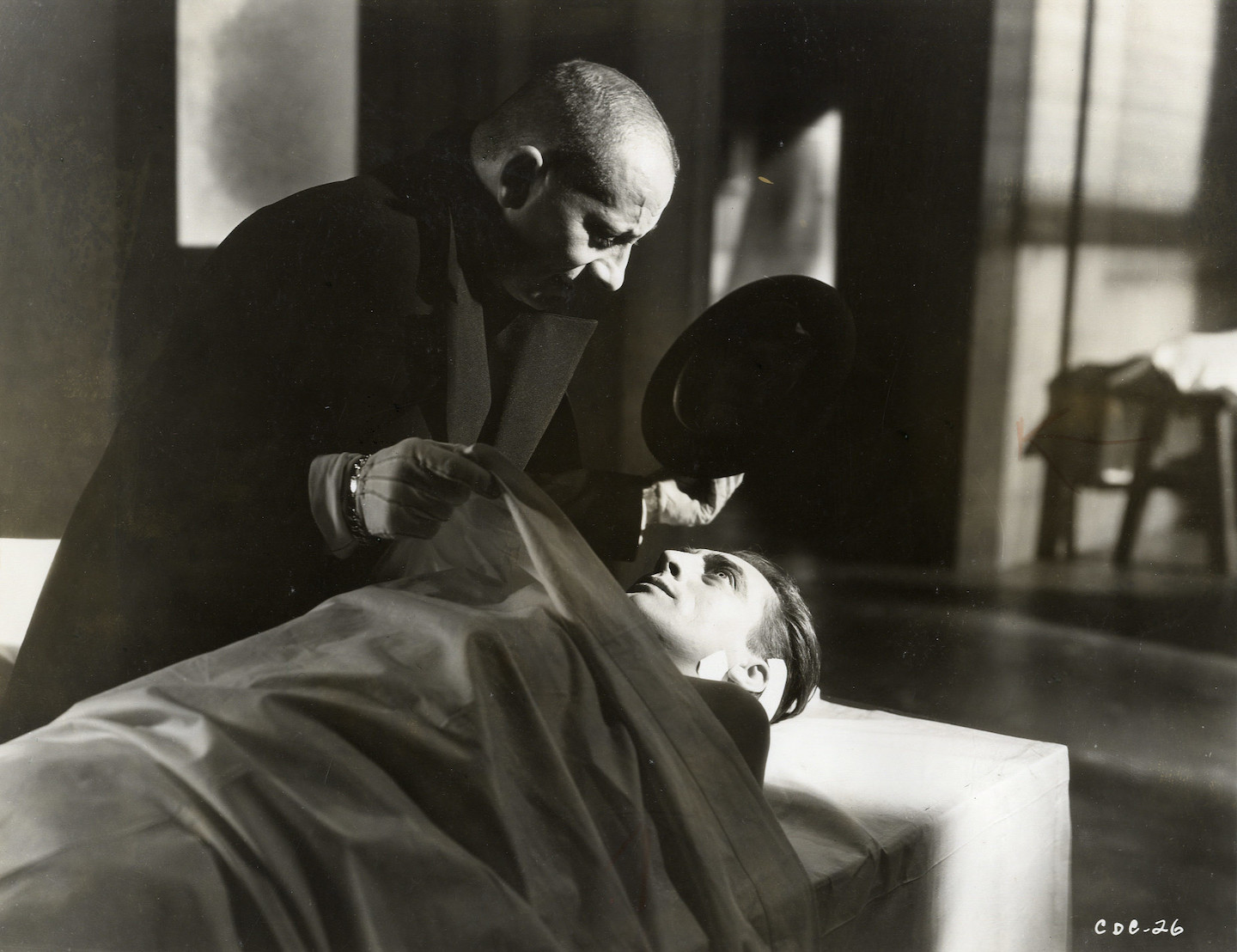
I’M NOT DEAD YET…Evil Dr. Crespi (Erich Von Stroheim) gives fellow doctor Stephen Ross (John Bohn) a drug that induces a state of apparent death in The Crime of Doctor Crespi. (moma.org)

 * * *

A Hot Hobby

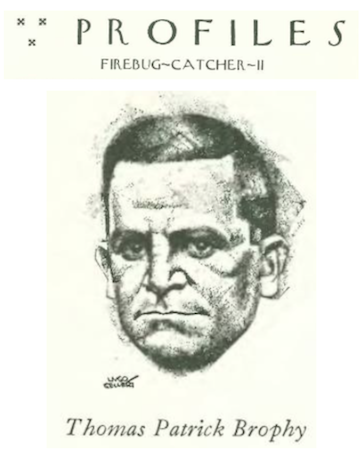
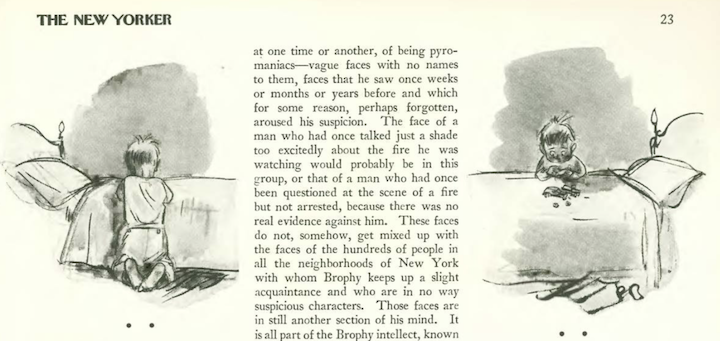
St. Clair McKelway filed the second of a two-part profile on New York’s Chief Fire Marshal Thomas P. Brophy (1880-1962). McKelway wrote, “How to stop a fire is the fire chief’s problem; how it got started, that of the fire marshal, Thomas Brophy…Brophy’s specialty, however, is pyromaniacs— it is almost his hobby.” Hugo Gellert supplied the drawing.

* * *

From Our Advertisers

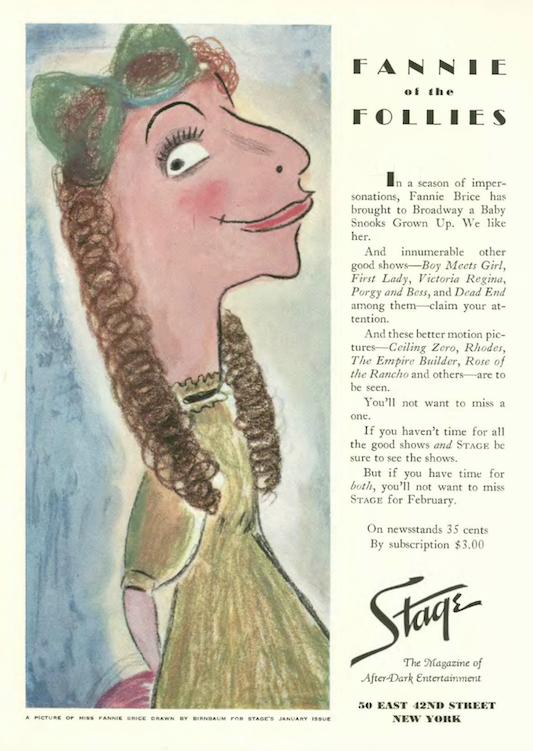
We begin with the inside front cover, and this colorful illustration of Fanny Brice by Abe Birnbaum for Stage magazine…

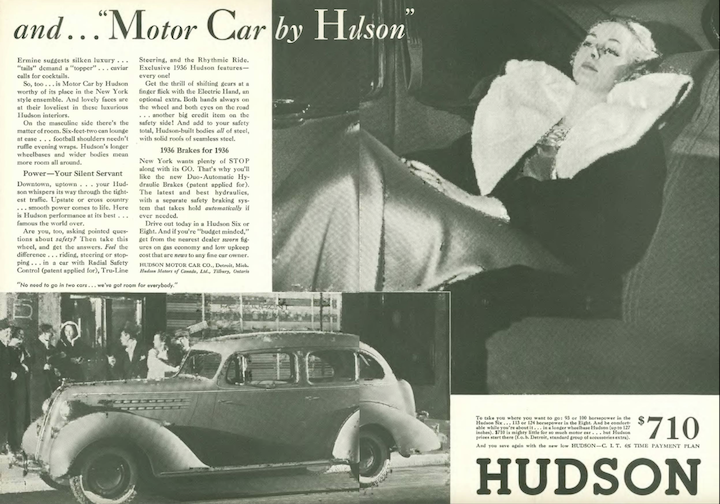
…the makers of budget automobiles such as Nash, Plymouth and Hudson were all on the same page when it came to marketing their automobiles, namely, that their products suggested luxury despite the bargain price…a “Motor Car by Hudson,” the ad proclaimed, is “worthy of its place in the New York style ensemble”…

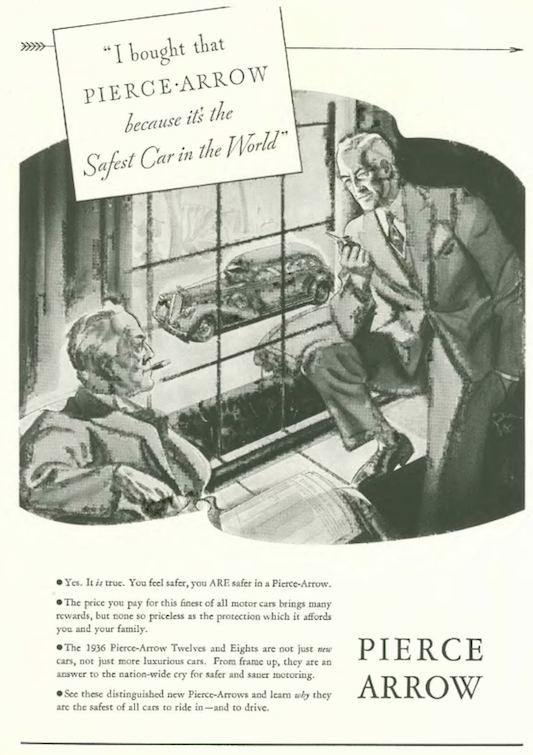
…the makers of Pierce Arrow had a solid reputation as the Rolls-Royce of American automobiles, so they took the safety angle in this understated, hyperbole-free advertisement…(however, cheaper cars like Hudson would survive the Depression, Pierce-Arrow would not)…

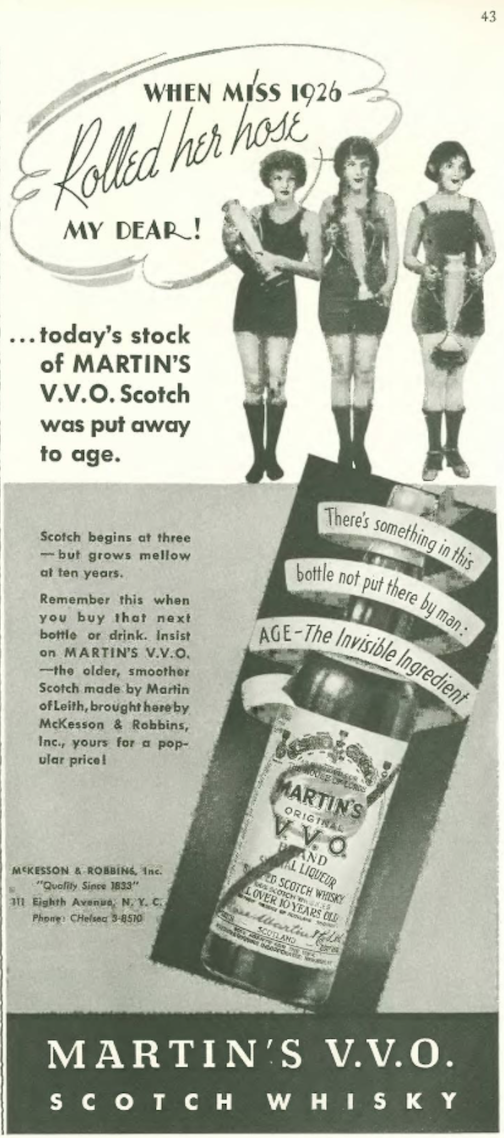
…this Scotch whisky ad recalled the days when “rolled hose” could create a scandal, underscoring how things can mellow after ten years, including whisky…

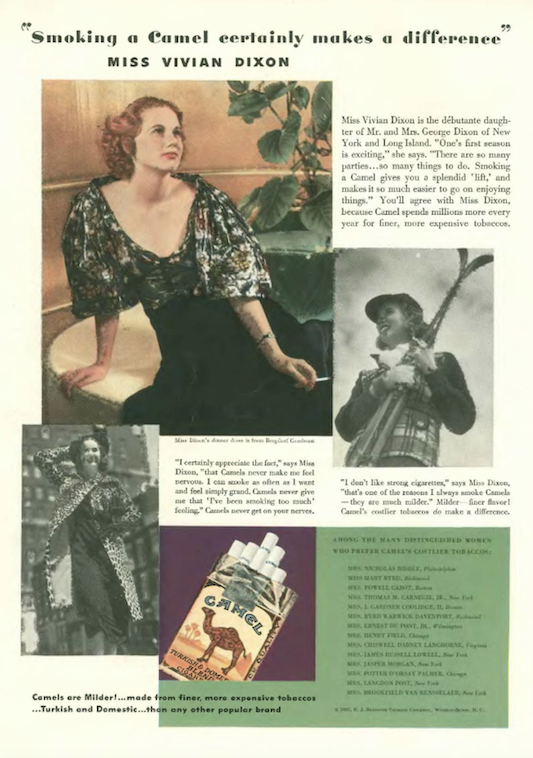
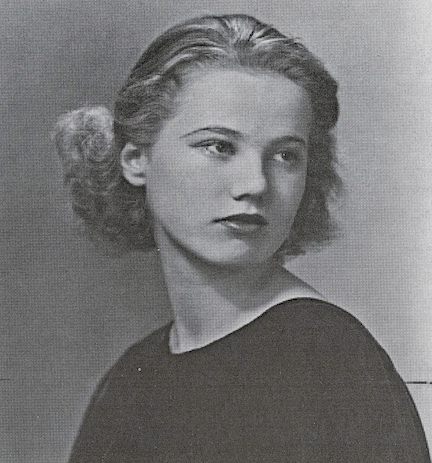
…in this back cover advertisement, Vivian Dixon (apparently just eighteen years old) was the latest New York debutante to invite young women to join her in smoking Camels…

Vivian Dixon (1918-1974) circa 1940. You can read more about her here. (stoningtonboroughct.com)

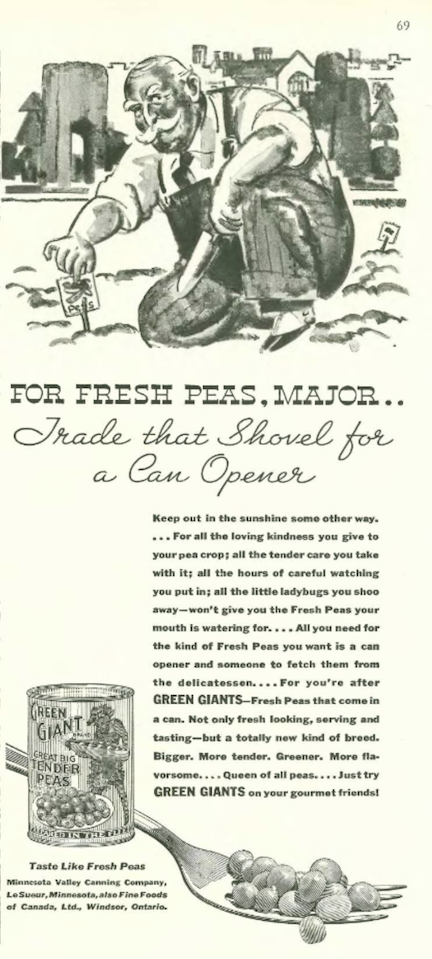
…the Major continued his quest for fresh peas in this ad from the Minnesota Valley Canning Company (aka Green Giant)…

…on to our cartoonists, beginning with this spot drawing for the boat show by Constantin Alajálov

…this spot by Abe Birnbaum broke up the text for James Thurber’s “Nine Needles” short story…

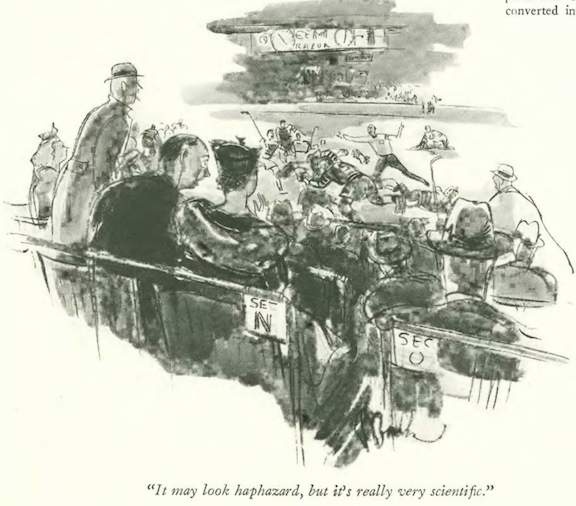
Perry Barlow gave us a gentleman attempting to explain the subtleties of ice hockey…

…Barlow again, where seeing is not necessarily believing…

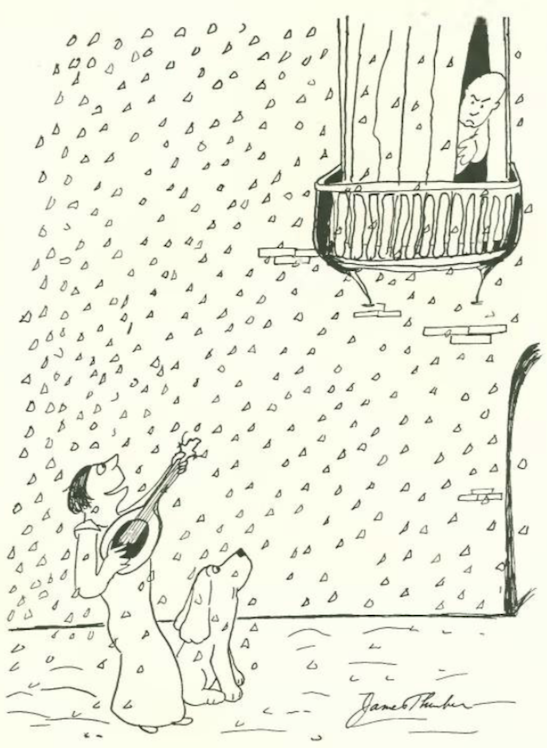
James Thurber contributed a serenade, accompanied by dog…

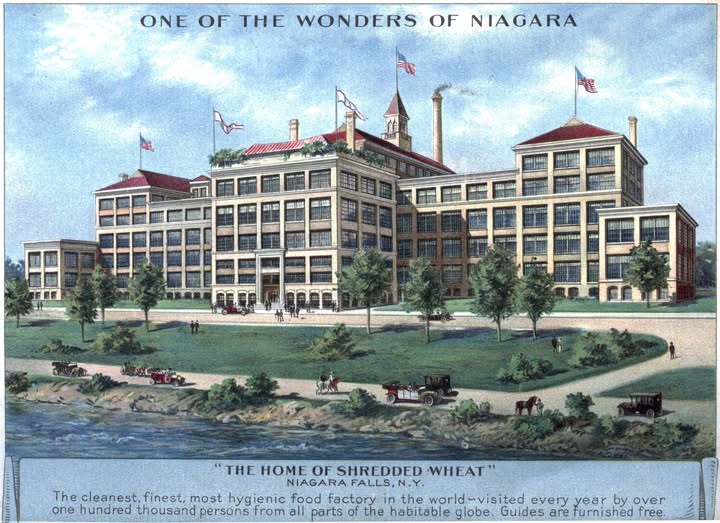
Peter Arno bid farewell to honeymooners destined for Niagara Falls and the Shredded Wheat factory…

…besides the falls, the Shredded Wheat factory was a big attraction in the early 20th century…

A 1905 postcard touting “One of the Wonders of Niagara.” (Niagara Falls Public Library)

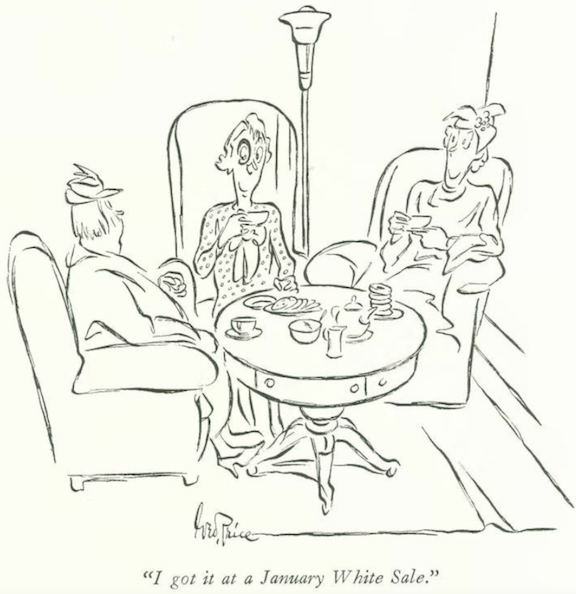
George Price illustrated the hazards of bargain shopping…

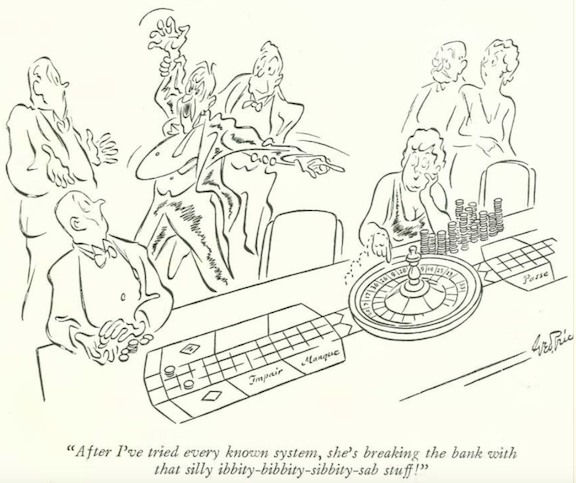
…and Price again, with a lucky streak in Atlantic City…

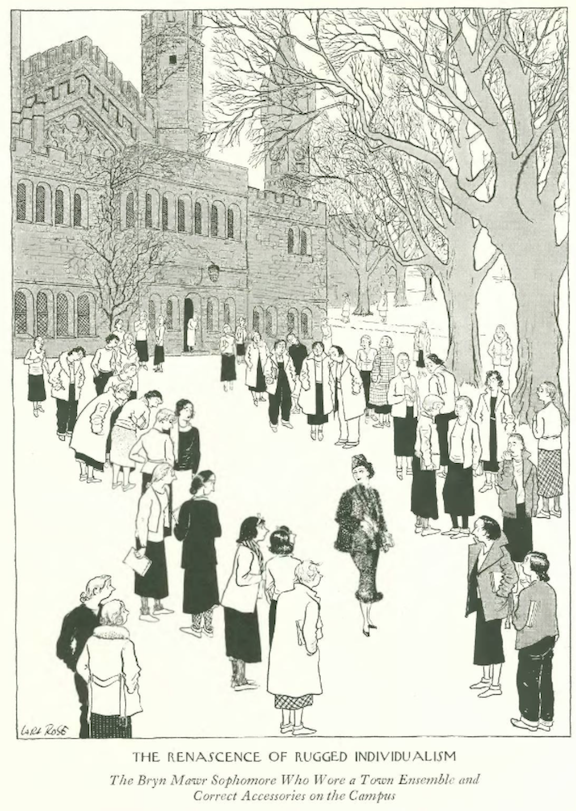
Carl Rose continued to offer examples of rugged individualism…

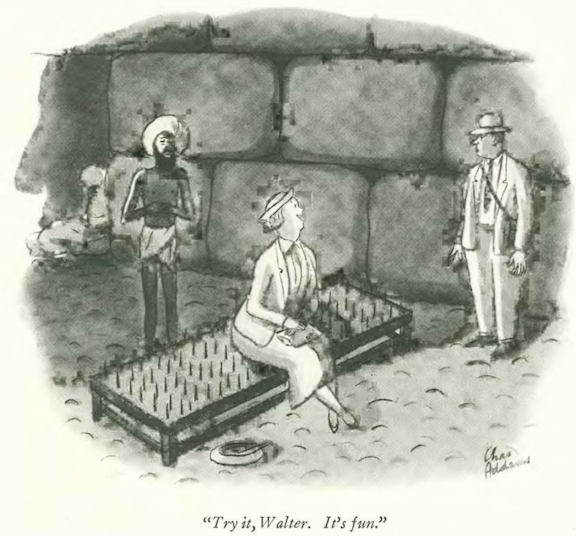
Charles Addams explored some exotic thrills…

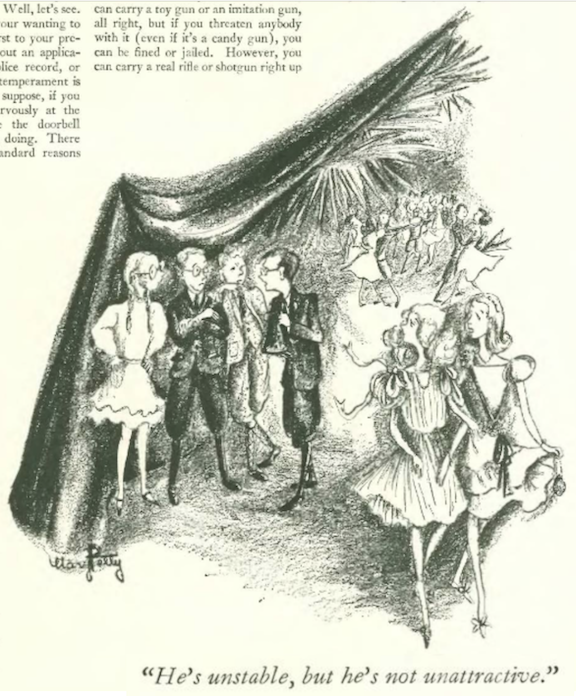
Mary Petty found nuance among youthful suitors…

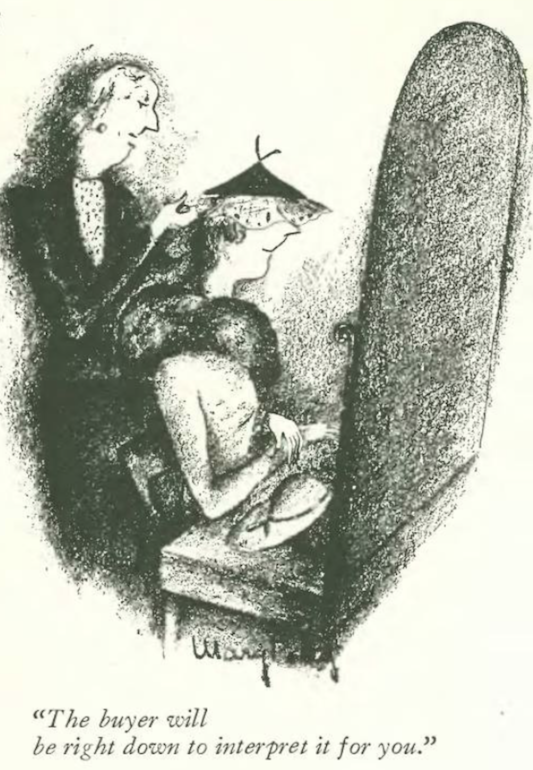
…and Petty again, and the complexities of hat shopping…

Alain paid a visit to the boat show…

Ned Hilton drew up a mail-order mix-up…

…and we close with Alan Dunn, and a matter of the heart…

Next Time: Having a Ball…

It Can’t Happen Here

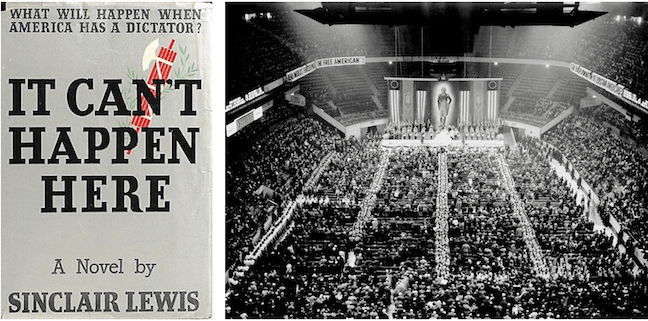
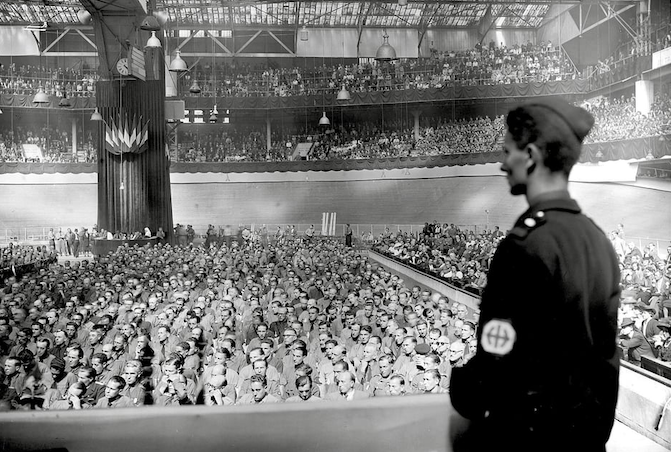
Above: Cover of Sinclair Lewis's 1935 novel about a fascist takeover of America, It Can't Happen Here. At right, 22,000 people attended a Nazi rally at Madison Square Garden on February 20, 1939. (Wikipedia/Reddit)

Ninety years ago Sinclair Lewis published It Can’t Happen Here, a dystopian novel that responded to the rise of fascism in Europe as well as to American demagogues like Louisiana Senator Huey Long.

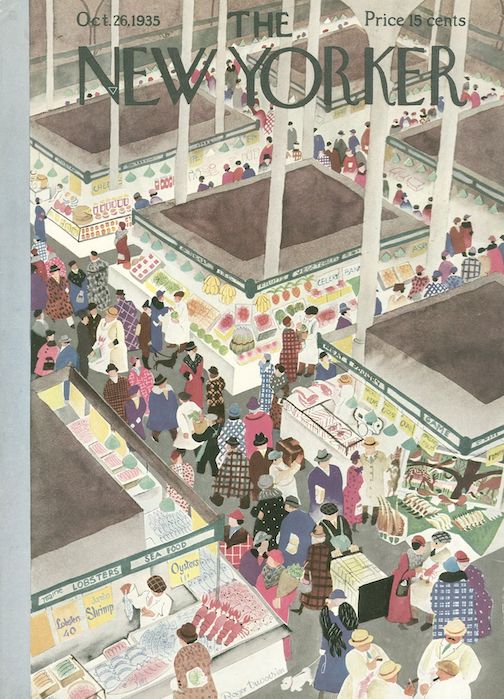
October 26, 1935 cover by Roger Duvoisin. Duvoisin (1900–1980) was a Swiss-born American writer and illustrator best known for children’s picture books. He illustrated 32 covers for The New Yorker, along with five cartoons. Duvoisin won the Caldecott Medal in 1948 (along with author Alvin Tresselt) for White Snow, Bright Snow.

In his 2016 New Yorker article, “Getting Close to Fascism with Sinclair Lewis’s ‘It Can’t Happen Here,'” journalist Alexander Nazaryan notes how Lewis was arguing for journalism and civic education as essential pillars of democracy. The title of Lewis’s book, Nazaryan observes, suggests that ‘It’ was something more subtle: “a collective apathy, born of ignorance, and a populace that can no longer make the kind of judgments that participatory democracy requires.”

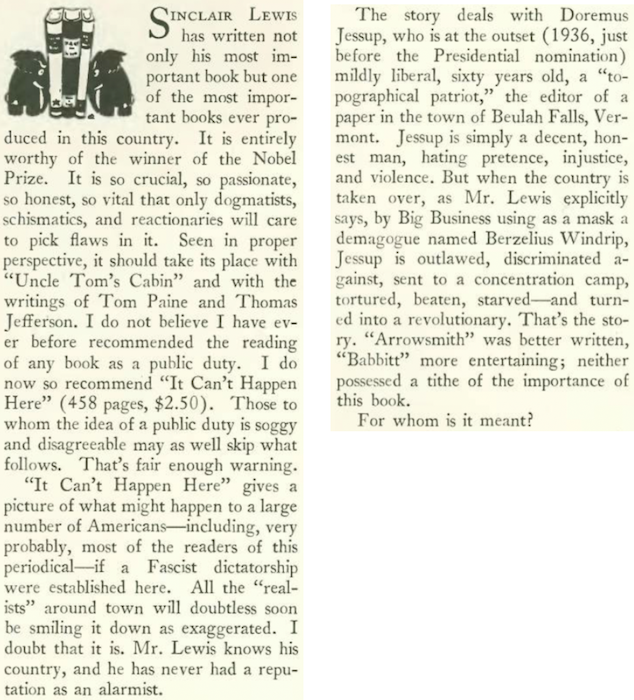
Lewis’s novel also made book critic Clifton Fadiman sit up and take notice. Here are excerpts from the first part of his review:

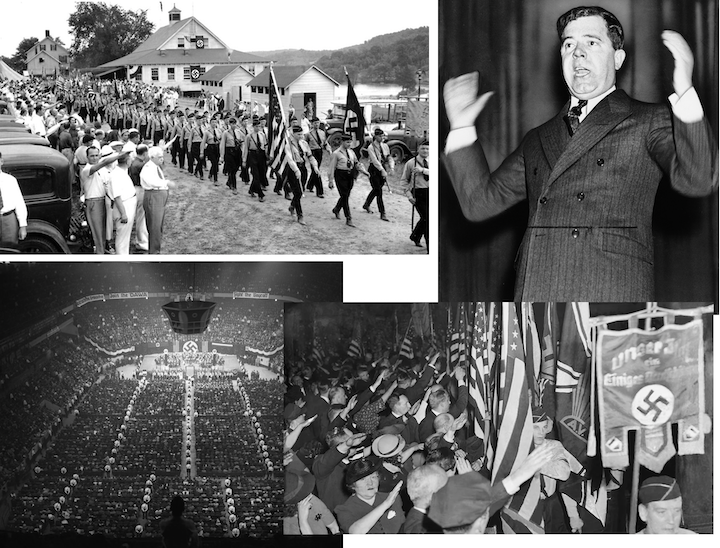
HOME-GROWN…American fascism was represented by organizations such as the German American Bund, the Silver Legion of America, and radio host Charles Coughlin, who opposed the New Deal and promoted conspiracy theories and antisemitic views. Clockwise, from top left: Nearly a thousand uniformed men wearing swastika arm bands and carrying Nazi banners parade past a reviewing stand in New Jersey on July 18, 1937. The New Jersey division of the German-American Bund had opened the 100-acre Camp Nordland at Sussex Hills; Huey Long in 1935, the same year he was assassinated; Nazi rally at Madison Square Garden in 1939. (AP/Wikipedia)

If you zoom in on the photo at bottom right, you can’t help but notice the woman in the black hat, who seems a little unsure about what she is doing, especially in front of a camera…the woman to her right appears to be hiding her face.

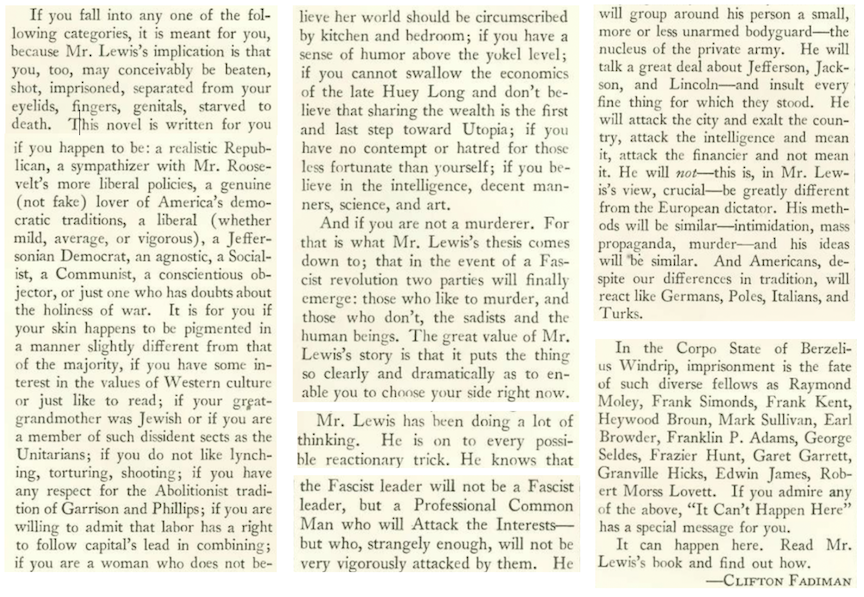
Here is more of Fadiman’s review (click to enlarge). It’s worth a read.

WE’VE BEEN WARNED…Published nearly seventy years apart, Sinclair Lewis’s It Can’t Happen Here (1935) and Philip Roth’s The Plot Against America (2004) both explored the dangers of fascism in the United States. (pulitzer.org/Wikipedia/Nancy Crampton via stanford.edu)

 * * *

It Was Happening There

In her “Letter from Paris,” Janet Flanner was noting “increasing Fascist sentiment and  sympathy” in her adopted city:

OVER THERE…The French Popular Party (Parti populaire français, PPF) was a French fascist and anti-semitic political party led by Jacques Doriot before and during World War II. Formed in June 1936, with an estimated 120,000 members by 1937, it is generally regarded as the most collaborationist party of France. (thefrenchhistorypodcast.com)

 * * *

All Talk

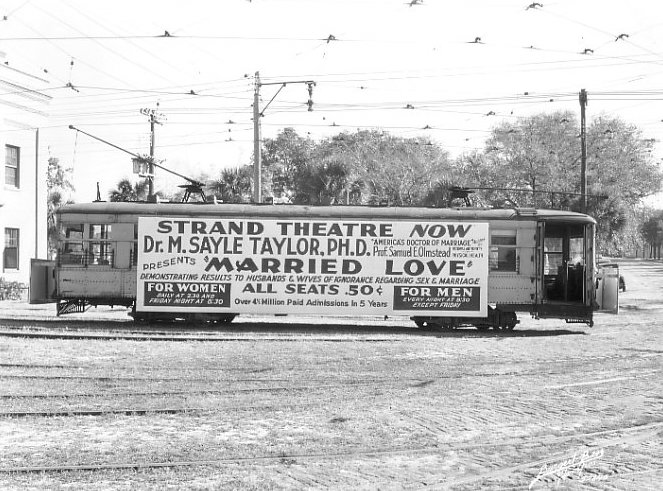
Marion Sayle Taylor (1889–1942) was the popular host of a radio advice show, The Voice of Experience. Margaret Case Harriman (1901–1966) penned a two-part profile of Taylor titled “The Voice.” I’ve included the opening lines to Part One here:

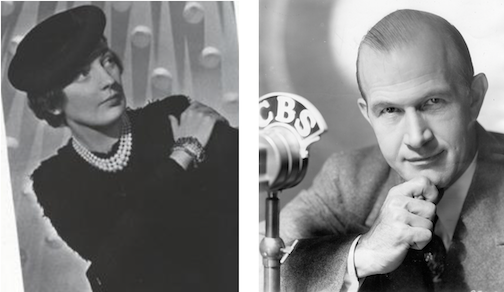
IF ONLY SHE KNEW…Margaret Case Harriman, left, circa 1936, profiled Marion Sayle Taylor before his misdeeds were revealed. (Vogue Archive/eleanorbritton.blogspot.com/Oregon Encyclopedia)

After reading both parts of Harriman’s profile piece, it appears she wasn’t yet aware that Taylor was more than a radio personality; he was also dishonest, manipulative, and opportunistic, according to a biography by Dick and Judy Wagner featured in the Oregon Encyclopedia. For example, Harriman reported (likely from Taylor’s official bio) that Taylor’s first wife, Pauline, had died in childbirth, when in fact she was quite alive and suing him for divorce that same year. Taylor also divorced his second wife, Jessie, who sued him in 1936 after he deceived her about another woman. Not surprisingly, his radio image as a reliable marriage counselor was damaged irretrievably.

FALSE ADVERTISING…A streetcar, possibly in Newark, N.J., advertising a lecture by Taylor, circa 1931. In addition to hiding a previous prison record, Taylor also falsely reported that he had studied at several universities (he did not earn a Ph.D, as the redundant title claims in the above photo). It appears Taylor also kept much of the money he solicited for charitable causes. (Oregon Encyclopedia)

 * * *

Selling Pooh

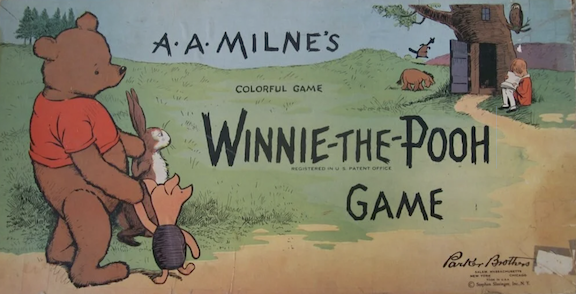
Commercial cross-marketing of children’s books with toys and other products had its origins in the late nineteenth century with Alice’s Adventures in Wonderland, and in the first years of the 20th century Beatrix Potter’s Peter Rabbit series inspired everything from dishes and wallpaper to board games and dolls—in 1903 Peter Rabbit was the first fictional character to be made into a patented stuffed toy.

Then came another character from British children’s literature, A.A. Milne’s Winnie-the-Pooh. In January 1930, Stephen Slesinger (1901–1953) purchased U.S. and Canadian merchandising, television, recording, and other trade rights to the Winnie-the-Pooh works from Milne (for $1,000, plus royalties), marketing a wide range of products. For the column “Onward & Upward With the Arts,” St. Clair McKelway paid a visit to Slesinger at the Park Avenue offices of Winnie-the-Pooh Association, Inc. Excerpts:

KEEP YER SHIRT ON…The Parker Brothers were the first to feature Winnie-the-Pooh in color for a 1932 board game. Stephan Slesinger added the iconic red t-shirt to Pooh for the game and a children’s record, a look that was later adopted by the Disney Corporation when it acquired the rights from Slesinger’s widow and daughter in 1961. (thedisneyclassics.com)
FUNNIES MAN…At left, Stephan Slesinger in an undated photo. Slesinger was a radio, television and film producer, and a curator of comic strip characters including Alley Cop, Captain Easy, Buck Rogers and Blondie, among others; at center, a record of “Winnie-the-Pooh Songs,” 1932; an ad for the Red Ryder BB gun—in 1938 Slesinger created the comic strip Red Ryder along with artist Fred Harmon. (alchetron/yesterdaysgallery.com/Port Isabel Press)

In another excerpt, McKelway gave us an idea of the scope of Slesinger’s Pooh empire:

 * * *

At the Movies

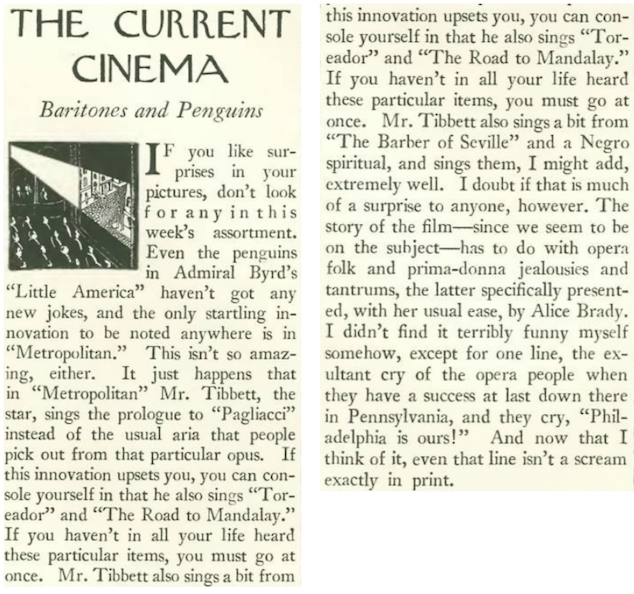
Critic John Mosher found few thrills in the latest fare from Hollywood, offering his views of Admiral Richard Byrd’s Into Little America and the musical Metropolitan, featuring famed baritone Lawrence Tibbett. 

FOR THE BYRDS…At left, lobby card for Into Little America; at right, Alice Brady and Lawrence Tibbett in Metropolitan. (eBay.uk/rottentomatoes.com)

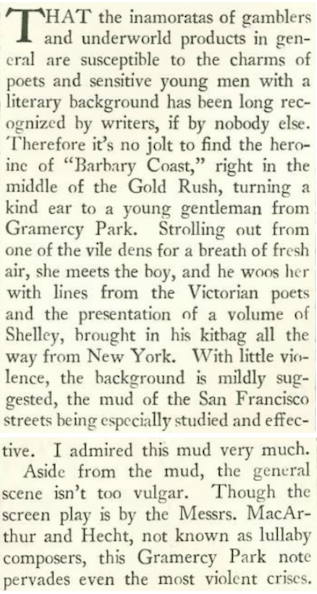
With a screenplay by Ben Hecht and Charles MacArthur and direction by Howard Hawks, one would hope for some rough and tumble in a film about Gold Rush San Francisco. Instead, Mosher found the trappings of Barbary Coast rather mild. This was doubtless due in part to the Hays Code that curtailed the sex and violence portrayed in films of the 1920s and early 1930s.

TAKING A SPIN…Miriam Hopkins runs the roulette wheel as Edward G. Robinson looks on in Barbary Coast. A brief 2019 review in the Harvard Film Archive praised the film’s Gothic feel created by the “evocative portrayal of early San Francisco as a foggy labyrinth of rickety boardwalks and ominous, sky-high ship masts…” (harvardfimarchive.org)

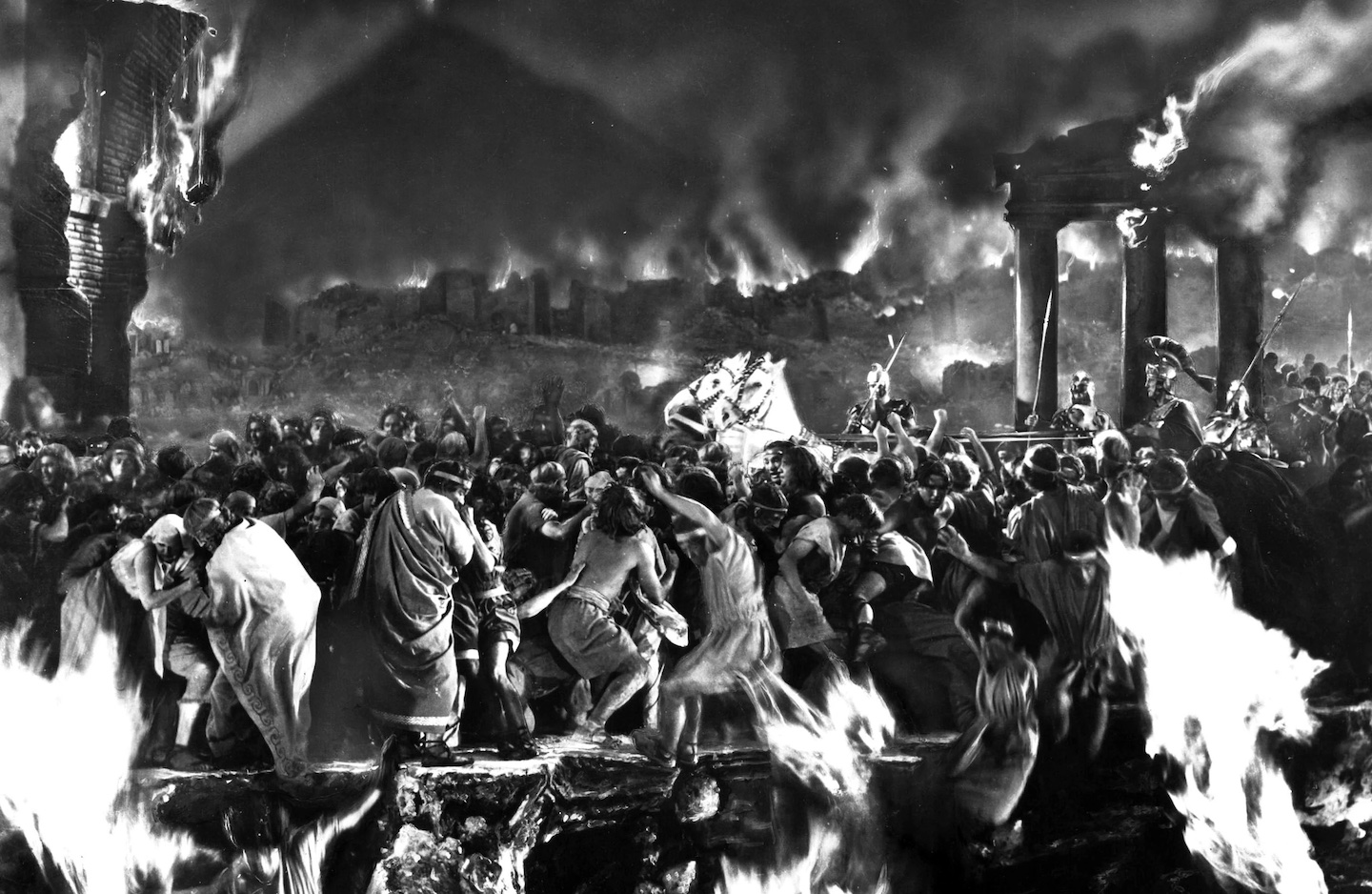
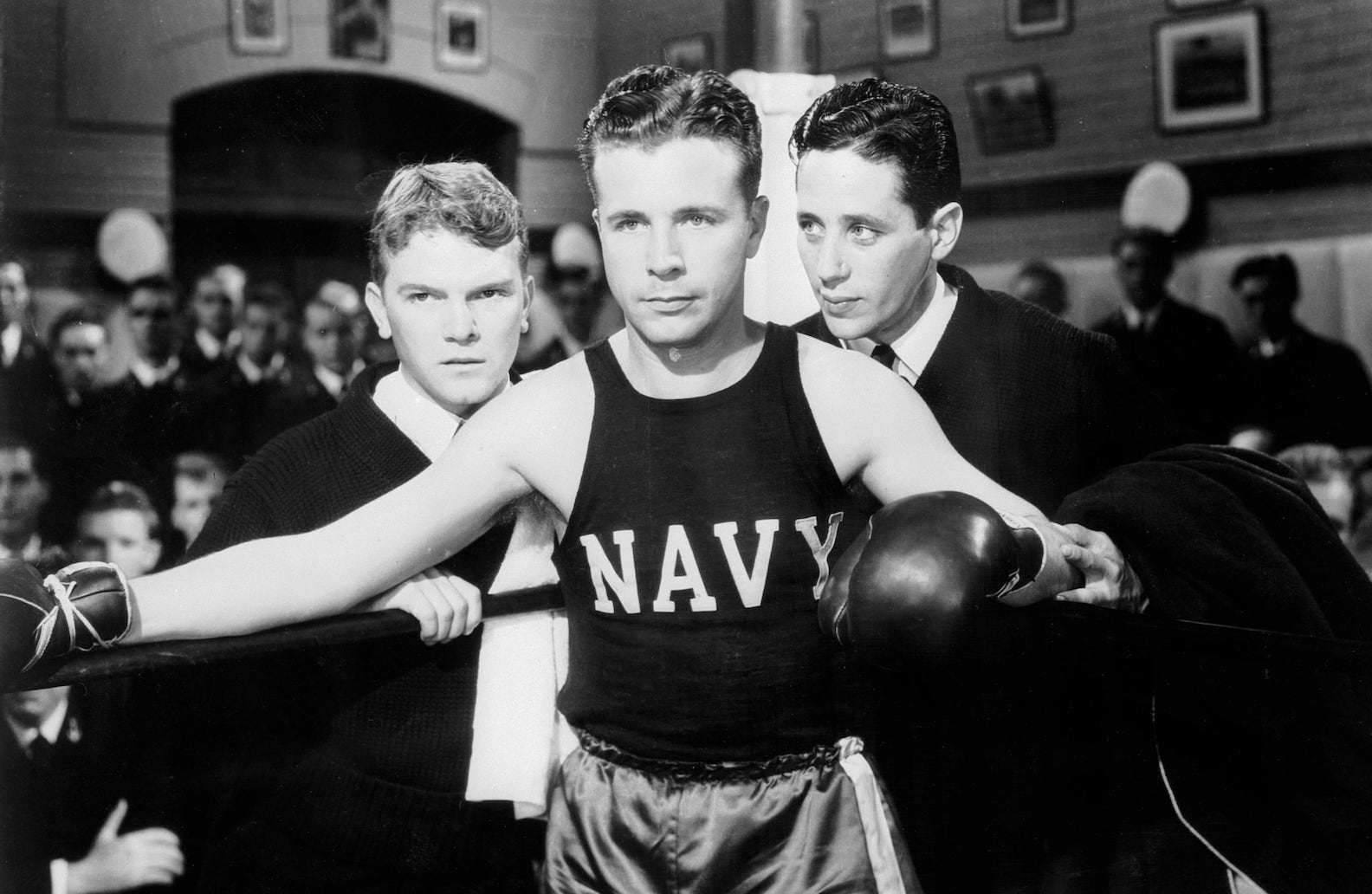
One might think that a film featuring the destruction of Pompeii would have some thrills, however RKO’s The Last Days of Pompeii proved to be a “temperate affair” in Mosher’s eyes, “one of the great bores of the moment.” The Dick Powell/U.S. Navy vehicle Shipmates Forever didn’t prove to be any better.

HOT TIMES IN POMPEII?…John Mosher called The Last Days of Pompeii “one of the great bores of the moment,” including the “drearily enacted” eruption of Vesuvius in which “Paper temples fall and there is a bit of bustle, and that is all there is to that.” Mosher did single out Basil Rathbone’s performance as an urbane Pontius Pilate, “a Pontius Pilate with a Long Island manner.” (tcm.com)
GO GET ‘EM DICK…The U.S. Naval Academy provided the setting for the musical Shipmates Forever, featuring Dick Powell as a crooner who ultimately chooses the Navy over a singing career. (tcm.com)

* * *

From Our Advertisers

We begin with the inside front cover, where the folks at Fisher touted their innovative “Turret Top” design…Body by Fisher began as a separate company in 1908, specializing as an automobile coach builder…although acquired by General Motors in 1926, the Fisher brand was promoted until the 1980s…

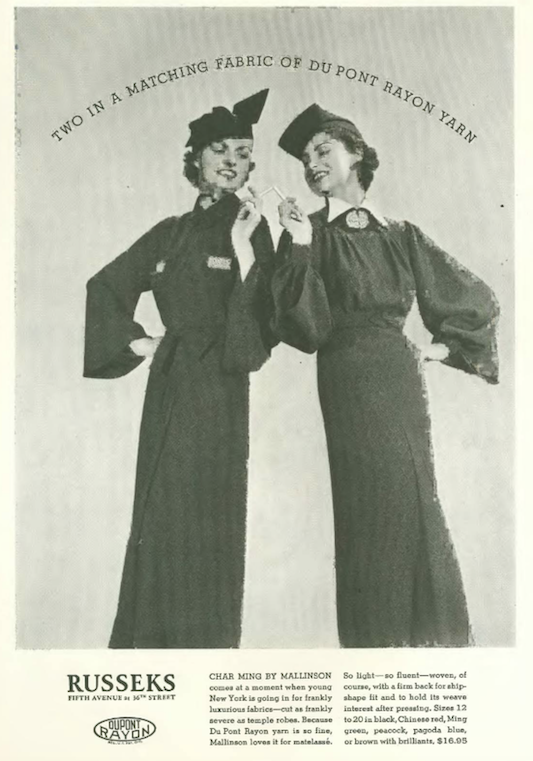
…there were many fall and winter fashion ads in this issue, including this continuing series by Russeks promoting Rayon fabrics…and women smoking, no doubt considered a sign of sophistication…

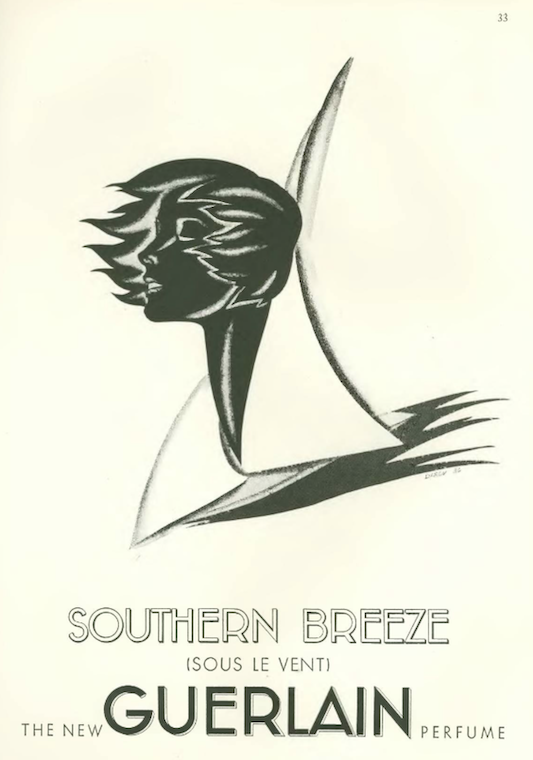
…Guerlain perfume ads featured the unmistakable style of illustrator Lyse Darcy

…the Heyward/Gershwin production of Porgy and Bess made a splash in this ad for Stage magazine…

…World Peaceways often used terrifying imagery to promote their anti-war messages…this ad was on the inside back cover…

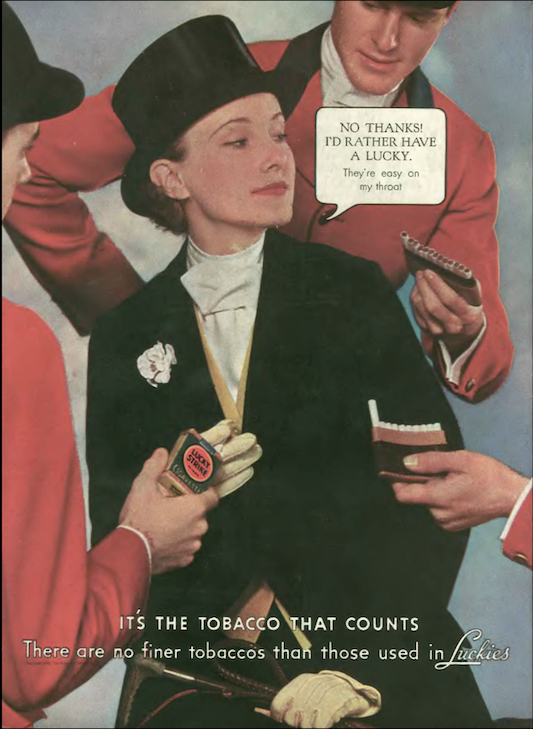
…and as you closed the magazine, the back cover greeted you with this stylish appeal to smoke Luckies…

…on to our cartoonists, starting with Al Frueh in the Theatre section…

…and Frueh again, in this interesting arrangement…

George Price was featured twice…

…with scenes of domestic life as only Price could render…

…and speaking of distinctive, no one did it quite like the great James Thurber

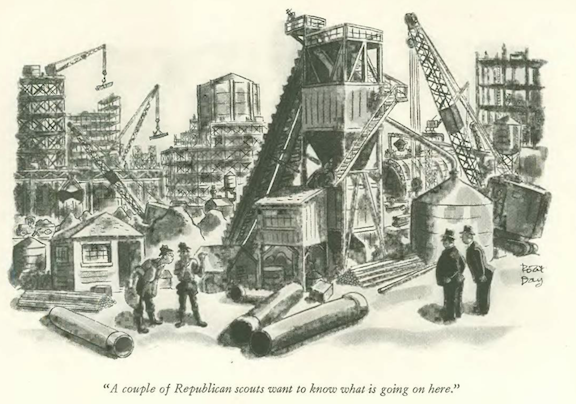
Robert Day gave us two Republicans looking in on the progress of the New Deal…

Carl Rose bid farewell to a writer sick of his peace and quiet…

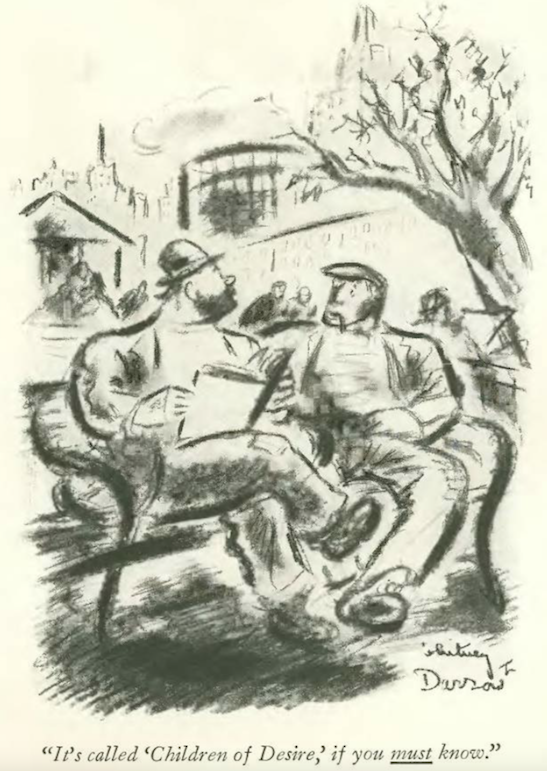
Whitney Darrow Jr illustrated a literary exchange on a park bench…

…and I close with today’s New Yorker cover artist, Roger Duvoisin—here is his cover for White Snow, Bright Snow, which won the Caldecott Medal in 1948.

Next Time: Planes, Trains and Automobiles…

School Days

Above: First-grade pupils at the blackboard, circa 1943. (The New York Times)

Peering into the life of a Manhattan elementary school—as it was ninety years ago—offers a glimpse into the social mores of the 1930s.

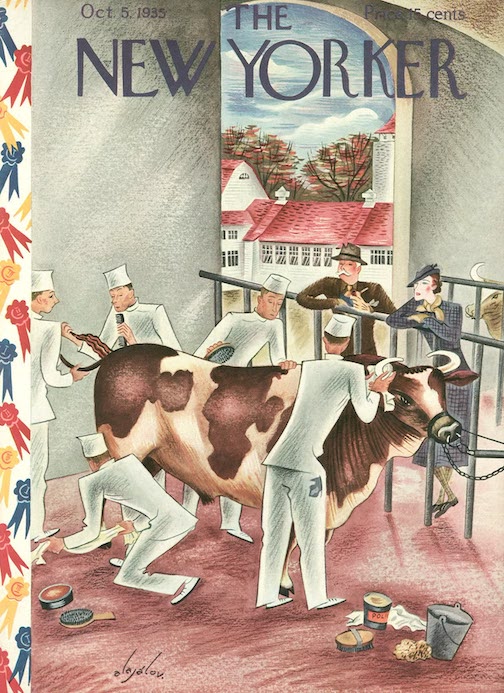
October 5, 1935 cover by Constantin Alajalov.

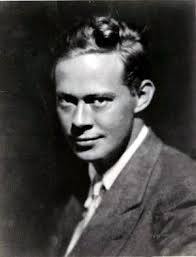
Taking us back to those days was St. Clair McKelway (1905-1980), who beginning in 1933 served as a writer and editor for The New Yorker. Although not well-known today, McKelway was credited by William Shawn as one of a handful of people who “set the magazine on its course.”

St. Clair McKelway. (LA Times)

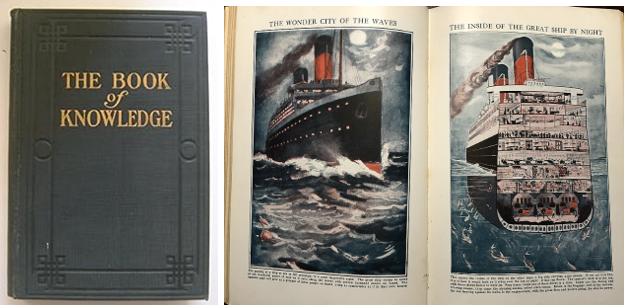
AROUND THE  WORLD IN TWENTY VOLUMES…The Grolier Society’s The Book of Knowledge was a well-known resource to students and teachers alike in the 1930s. Originally largely a reprint of the British Children’s Encyclopædia with U.S. revisions, it evolved over time into an entirely new entity. This particular volume is from 1919, part of a twenty-volume set. (Randal Oulton via Wikipedia)

In this next excerpt, a teacher and principal speak of the schoolchildren dispassionately, casually referring to one pupil’s IQ as “almost down to mental defective.”

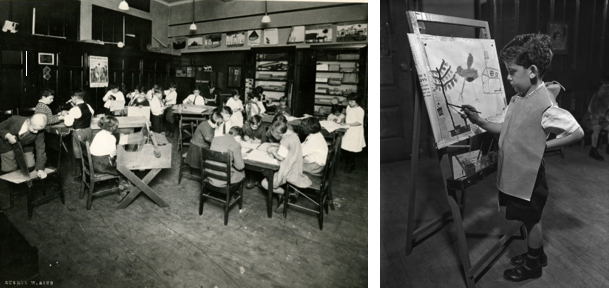
PS PUPILS…Students participate in Elizabeth Irwin’s “Little Red Schoolhouse“ program at PS 61 in 1928; at right, a kindergarten painter at PS 23 in 1935. (NYC Municipal Archives/Fordham U)

In this final excerpt, McKelway looked in on the school’s “ungraded class” of sixteen boys, most from families who were “on relief.” Beginning in the third paragraph, note how the teacher speculates on the future of one of the students.

STILL STANDING, STILL SERVING…PS 165 Robert E. Simon school today. (insideschools.org/Anna Duncan/Friends of PS 165)

A final note: It is interesting to compare McKelway’s article with one written almost thirty years later by few blocks from Columbia University, the school teaches children of graduate students and professors as well as long-time neighborhood residents and newcomers.

 * * *

Moving Days

In the fall of 1935 E.B. and Katharine White and their four-year-old son Joel moved from their Greenwich Village apartment on East 8th Street (reluctantly for E.B.) to Turtle Bay Gardens in the East 40s. At about the same time The New Yorker moved from its original headquarters on West 45th Street to its new digs at 25 West 43rd Street, where the magazine would settle in for more than fifty years.

HOME SWEET HOME…This New York townhouse (left) was the new home of E.B. and Katharine White in the fall of 1935 (their neighbor was Katharine Hepburn). At right, The New Yorker also moved to a new home at 25 West 43rd Street. The magazine would occupy several floors of the building for 56 years. (homes.com/Ink Spill)

 * * *

A Good Bad Girl

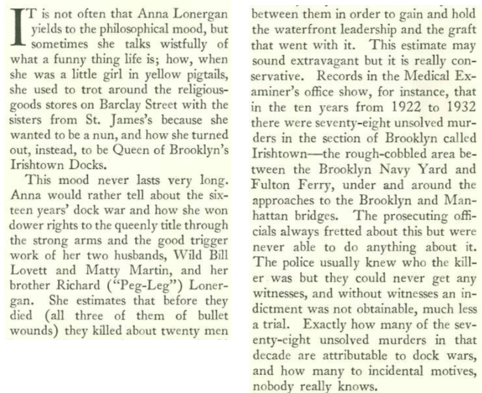
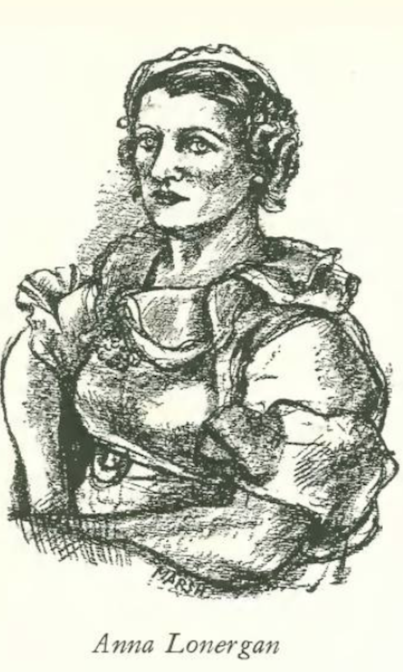
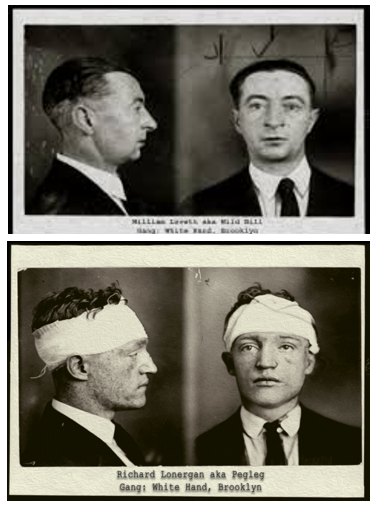
Journalist Meyer Berger (1898-1959) was known for digging deep into his subjects, including a two-part New Yorker profile of Anna Lonergan, “Queen of the Irishtown Docks.” Her two husbands and a brother—notorious killers themselves—were murdered in gang wars along with dozens of others who were Lonergan’s friends and neighbors. She was often called to the morgue to identify murder victims, thus the “Profile” title “Lady in Crepe”—one who is in a constant state of mourning. Here are the opening paragraphs:

SHE WANTED TO BE A NUN…Anna Lonergan, as rendered by Reginald Marsh for the Profile.
KILL OR BE KILLED…Members of the Irish “White Hand Gang” battled their Italian rivals (the Black Hand Gang) on the Brooklyn waterfront from the early 1900s to 1930. Anna Lonergan’s first husband William “Wild Bill” Lovett (top) was murdered in 1923; her brother Richard “Pegleg” Lonergan was gunned down in 1925. (artofneed.com)

 * * *

At the Movies

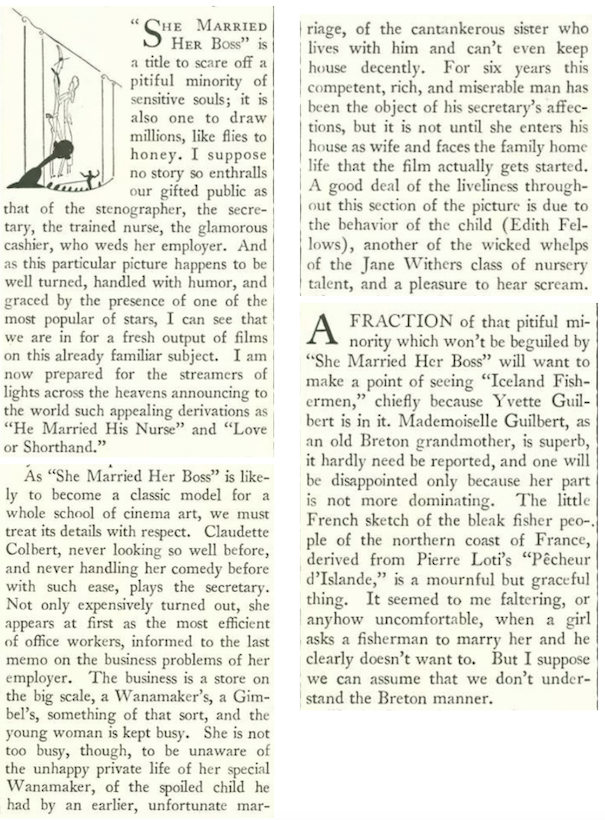
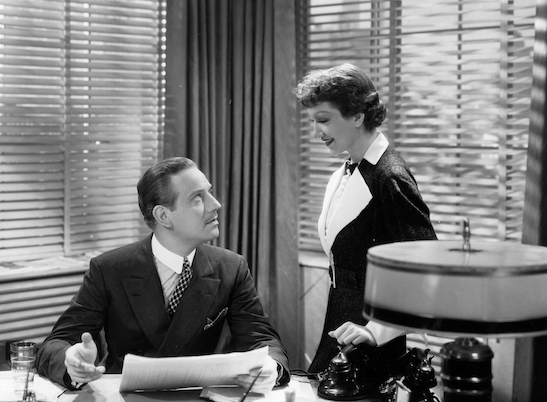
Film critic John Mosher took on a couple of very different films—the lively Claudette Colbert comedy She Married Her Boss, and the “mournful, graceful” Iceland Fisherman featuring the 1890s French cabaret star Yvette Guilbert.

BUSINESS AND PLEASURE…Melvyn Douglas and Claudette Colbert in She Married Her Boss. (IMDB)
GRAND GRANDMOTHER...John Mosher found French actress and cabaret singer Yvette Guilbert (1865–1944) to be the main attraction as a Breton grandmother in 1934’s Pêcheur d’Islande (Iceland Fishermen). Guilbert was a favorite subject of artist Henri de Toulouse-Lautrec, who made many portraits and caricatures of Guilbert, including the one at right from 1894. (musee-breton.finistere/National Portrait Gallery, London/Wikipedia)

Mosher also screened Soviet Russia through the Eyes of an American, which documented American engineer Charles Stuart’s travels through the Soviet Union. You can watch the entire film here.

NO FAMINE HERE…Children playing games were featured in Soviet Russia through the Eyes of an American, a travelogue that skipped all the bad parts of Stalinist Russia. (YouTube/Hoover Institution)

* * *

Some Housekeeping

Before we jump into the advertisements, I would feel remiss not to mention other writers in the issue, including poet Ogden Nash (“How Now, Sirrah, Oh, Anyhow”), James Thurber (“Smashup,” featuring henpecked husband Tommy Trinway); Frances Warfield (“Practical Nurse”); Theodore Pratt (“I Jes’ Goin'”); James Reid Parker (“The First Day”); Andree L. Eilert (“Words Across the Sea”) W.E. Farbstein (“Copycat”); and P. S. Le Poer Trench (“Parsons is Prepared”). Some of these contributors are long forgotten—Warfield often wrote about her deafness, but little to nothing can be found out about Eilert or Trench without considerable effort (Trench published twice in the New Yorker in 1935).

AMONG THE KNOWN…At left, Ogden Nash (1902-1971) is the most famous of this trio that includes Theodore Pratt (1901-1969), center, known as the “Literary Laureate of Florida”; and at right, James Reid Parker (1909-1984), who sidelined as a writer of captions for Helen Hokinson. Read more about Parker’s contributions to The New Yorker at Michael Maslin’s New Yorker treasure trove Ink Spill.

 * * *

From Our Advertisers

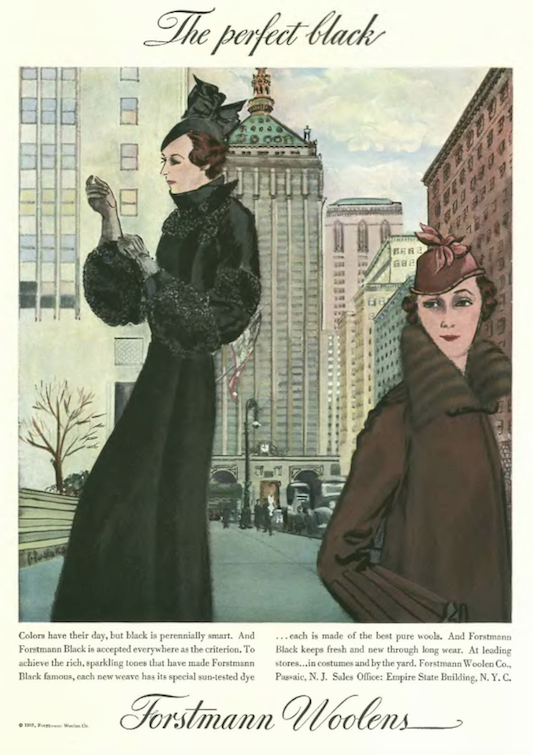
Apparently business was booming at Forstmann Woolens, who continued to post these stylish ads in the opening pages of The New Yorker—note Midtown’s 1927-29 New York Central Building (now Helmsley Building) that served as a gateway to Grand Central…

…who knew that one could be so stylish while drinking a glass of tomato juice?…

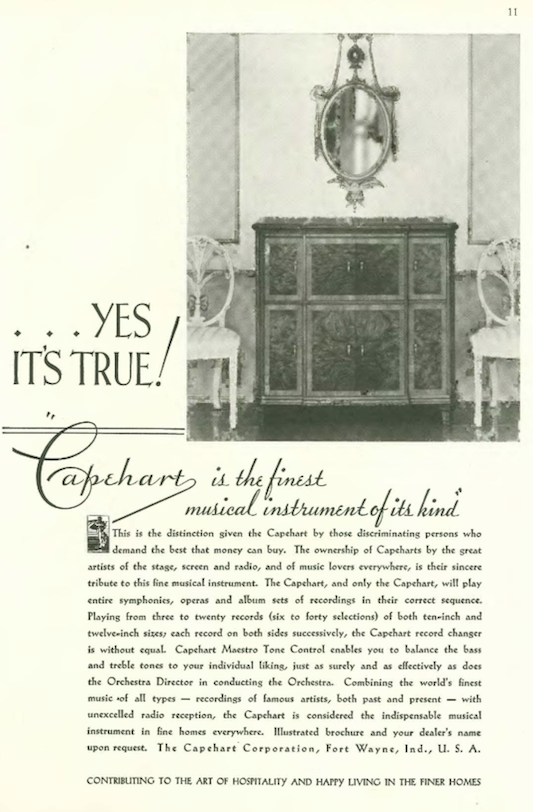
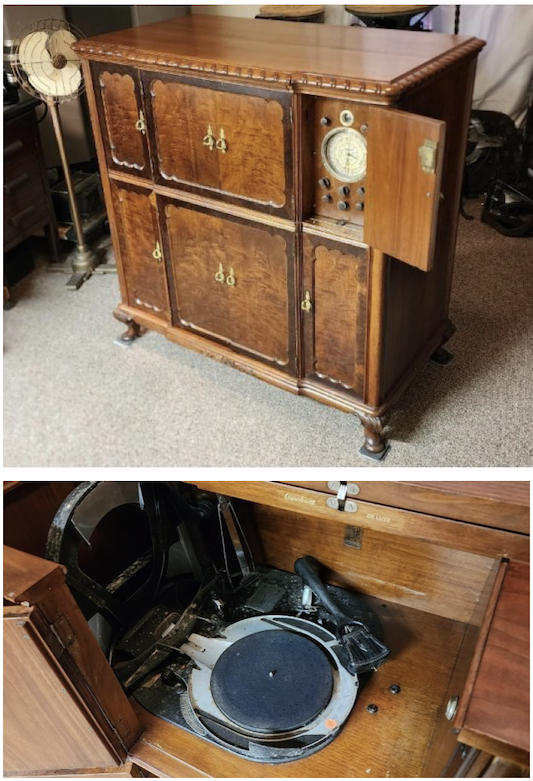
…the Capehart Automatic Phonograph Company produced a radio-phonograph that could automatically flip records to play both sides—this particular model could play up to twenty records in succession…

QUITE THE GIZMO…Restoration of a Capehart 405E. These units were not cheap, selling for the equivalent of $30k or more today. (forum.antiquephono.org)

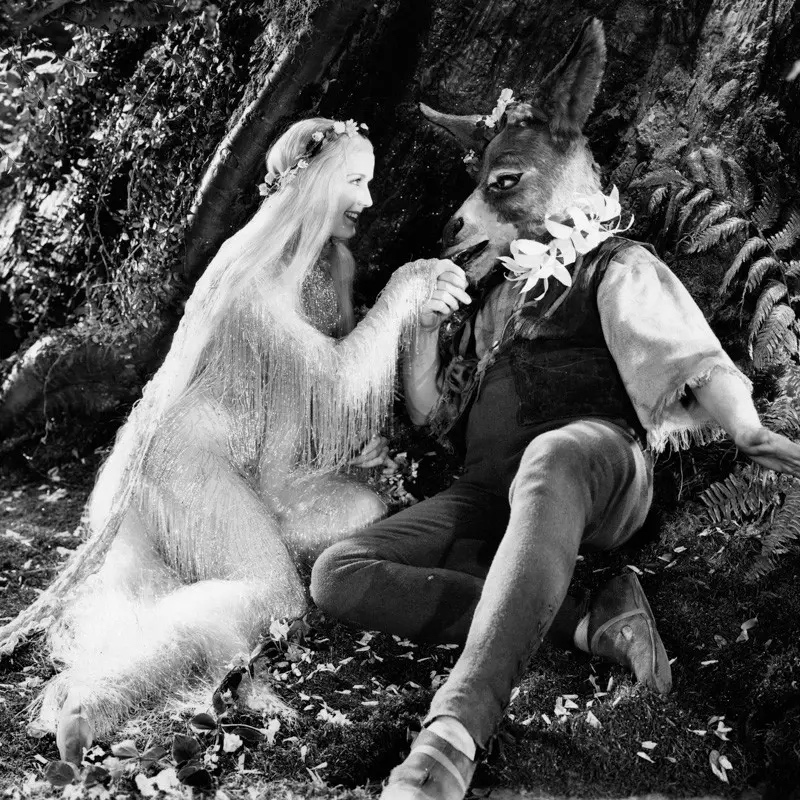
…Warner Brothers took out a full-page ad to announce the world premiere of A Midsummer Night’s Dream…the lavish, star-studded production featured, among others, James Cagney, Olivia de Havilland, Dick Powell, Anita Louise and Mickey Rooney

AN ACQUIRED TASTE...Anita Louise as Titania, Queen of the Fairies, and James Cagney as Bottom, the Weaver, in the 1935 film production of Shakespeare’s A Midsummer Night’s Dream. The film failed at the box office with mixed reviews, however it won two Academy Awards—Best Cinematography and Best Film Editing, and it was nominated for Best Picture. Today the film gets mostly good reviews. (www.academymuseum.org)

Stage magazine also took out a full-page ad to trumpet its own star-studded lineup, including contributions by James Thurber, Peggy Bacon and Abe Birnbaum

…Mrs. Chiswell Dabney Langhorne, nee Caryetta Davis Saunders (1899-1971), was the latest society maven to encourage women smokers to enjoy the unfiltered pleasures of Camel cigarettes…

…on to our cartoonists, George Price and Maurice Freed got things rolling with these spot drawings…

Carl Rose mixed the old with the new on moving day…

Barney Tobey showed us how the posh travelled to school…

George Price again, here demonstrating the joys of moneyed eccentricity…

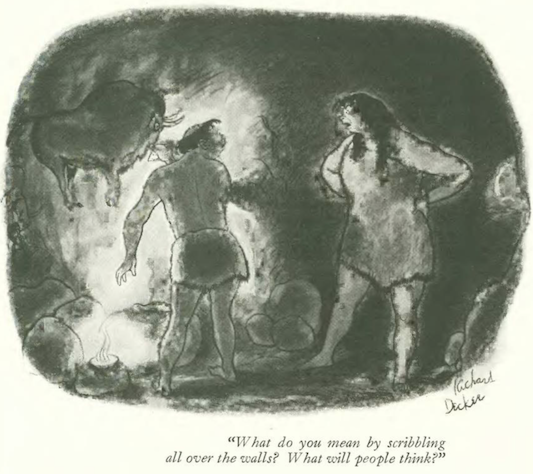
Richard Decker explored the origins of art criticism…

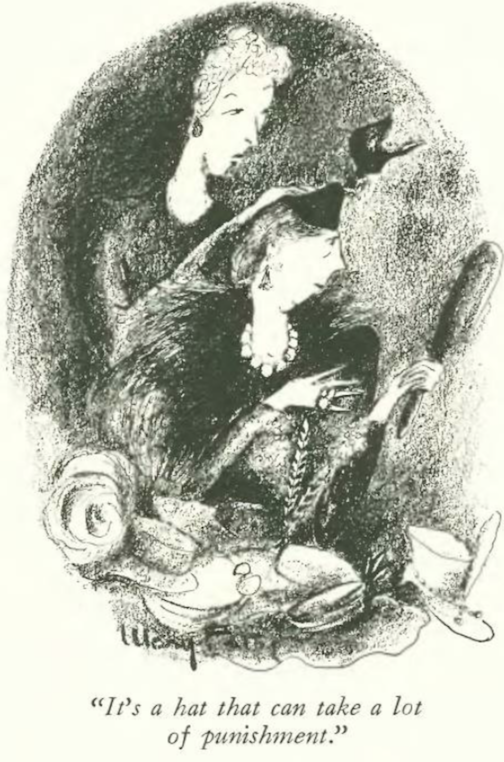
Mary Petty offered some durable fashion advice…

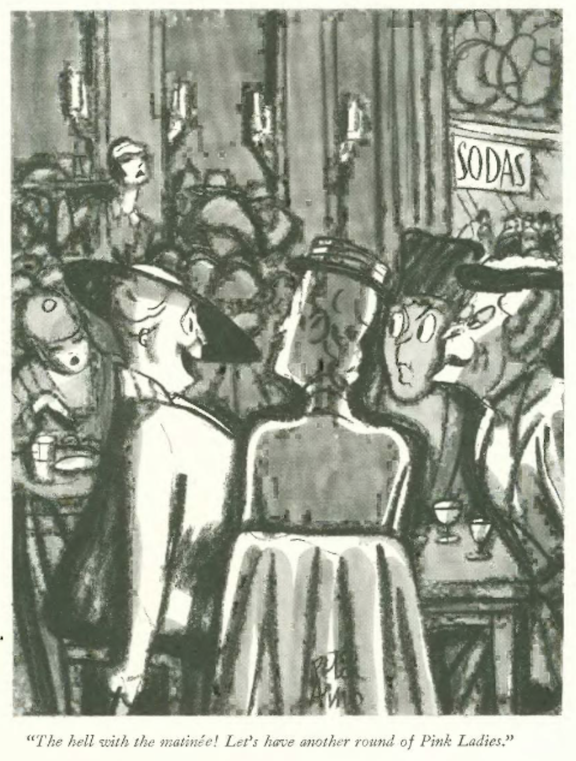
…and we close with Peter Arno, finding sudden inspiration in a Pink Lady cocktail…

Next Time: A Merry Menagerie…