Highfalutin Absurdities

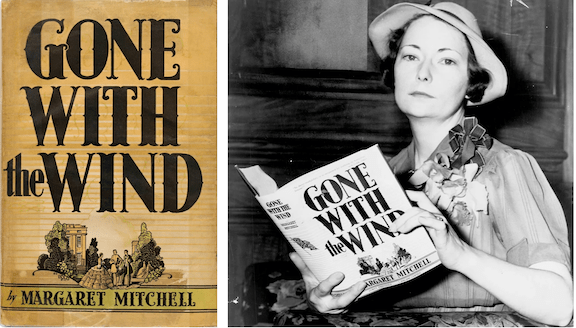
Above: Margaret Mitchell poses with her award-winning novel, c. 1938. Mitchell won the National Book Award for Fiction for Most Distinguished Novel of 1936 and the Pulitzer Prize for Fiction in 1937. Gone With the Wind was the only novel she published in her lifetime. (britannica.com)

Margaret Mitchell’s 1936 novel Gone With the Wind and the 1939 film it inspired have both served as controversial reference points for cultural critics and scholars, particularly for the stereotypical and derogatory portrayals of African Americans in the 19th century South.
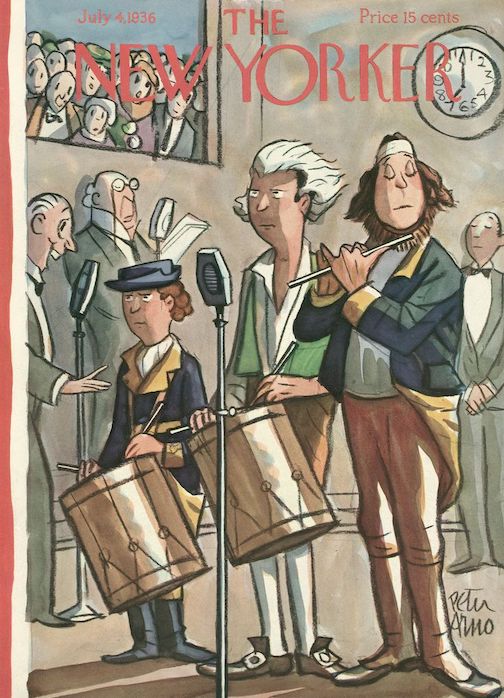
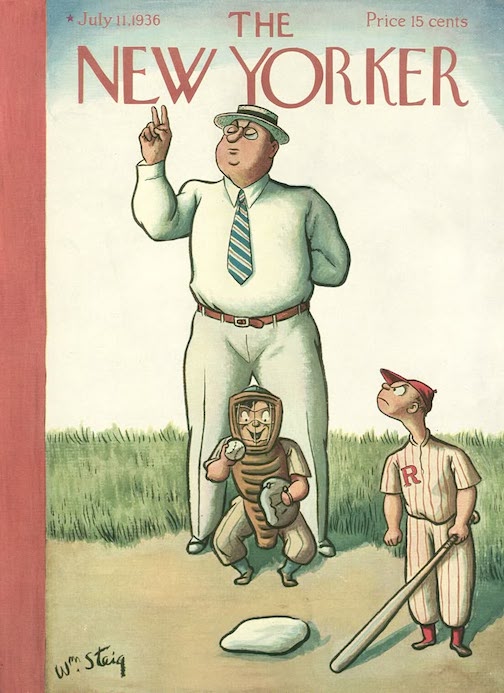
July 4, 1936 cover by Peter Arno.

Ninety years later the novel still proves divisive; it also remains one of America’s most-loved books. Worldwide, more than 30 million copies have been printed in the U.S. and abroad.

In 1936 the novel quickly rose to the top of fiction bestseller lists, and was generally well received by critics. Novelist and literary critic Louis Kronenberger (1904–1980), who sat in for Clifton Fadiman in The New Yorker’s book section, praised the novel for its “highfalutin absurdities,” calling it a “masterpiece of pure escapism.” Kronenberger wrote that Gone with the Wind provided “a kind of catharsis…of all the false sentiment and heady goo that even the austerest mind somehow accumulates and periodically needs to get rid of.” He correctly predicted that the novel would be “very feverishly discussed” once people found the time to read its thousand-plus pages. Excerpts:
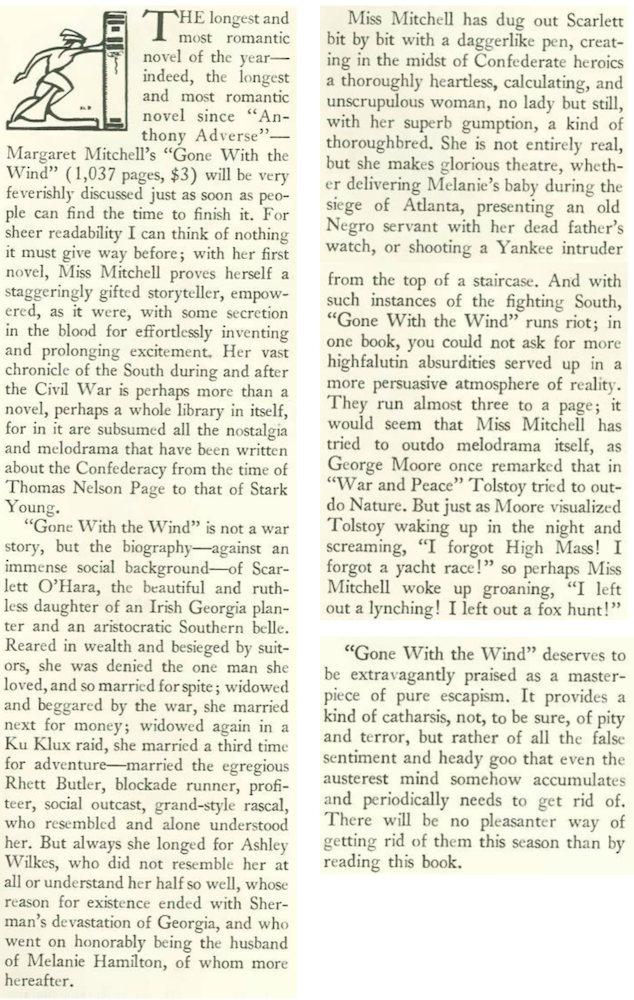
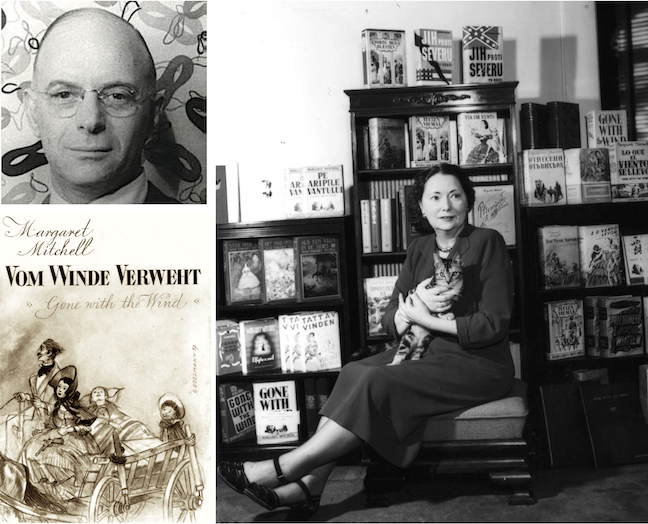
GOO GONE…Clockwise, from top left: Reading Gone With the Wind will clear one’s “heady goo,” according to critic Louis Kronenberger; Margaret Mitchell (1900–1949) seated before a selection of Gone With the Wind translations; an example of a German version of the novel—Gone With the Wind was translated into at least forty different languages with eight hundred unique international printings. (azquotes.com/Atlanta Journal-Constitution/georgiaencyclopedia.org)
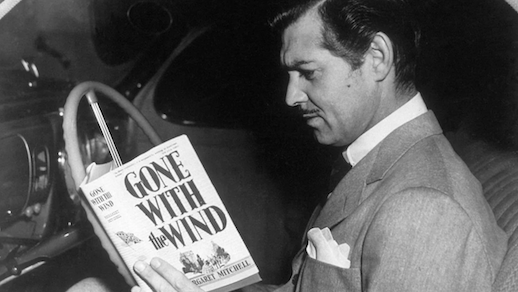
IT HAS HOW MANY PAGES?!…Clark Gable, who portrayed Rhett Butler in the 1939 film adaptation of Gone with the Wind, has a look at Margaret Mitchell’s doorstop of a book. Mitchell was not involved in the screenplay or film production. (yahoo.com)

 * * *

Tweet From Tinseltown

Apparently actress Mary Astor was a New Yorker reader, having read an E.B. White “Notes” column that mentioned his stained-glass hummingbird feeders.
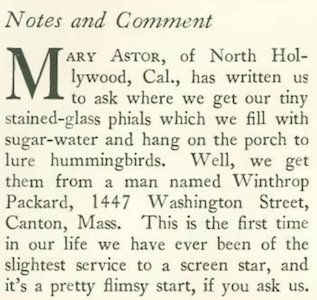
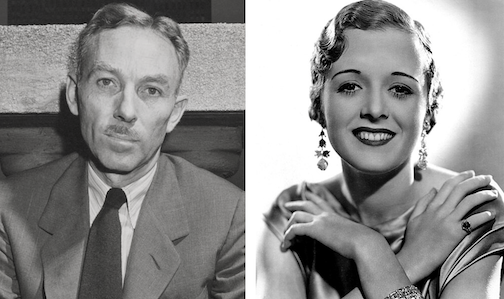
FOR THE BIRDS…A New Yorker column by E.B. White inspired actress Mary Astor to feed Hollywood’s hummingbirds. (Wikipedia)

 * * *

Going, Going, Gone

A “Talk of the Town” piece co-written by A. J. Liebling and Russell Maloney tracked down what remained of the Central Park Casino, which had been demolished under the orders of Parks Commissioner Robert Moses.
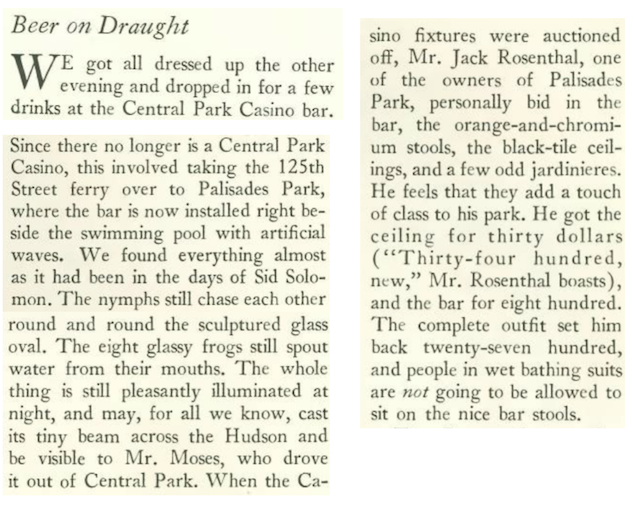
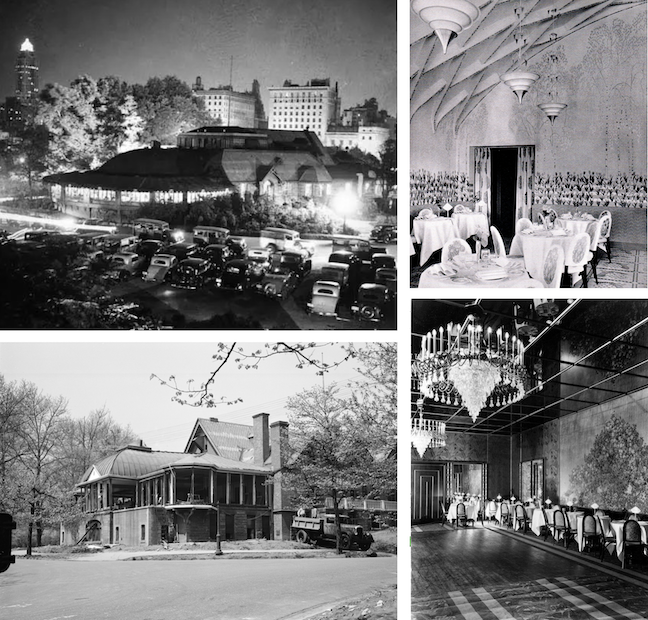
Moses hated former Mayor Jimmy Walker, and by association he hated Walker’s favorite haunt, the Central Park Casino. Despite pleas from preservationists to save the famous Art Deco supper club, which had been beautifully rebuilt by the late designer Joseph Urban, Moses moved as quickly as possible to demolish the building. Following a public auction, the iconic horseshoe-shaped bar and some interior fixtures were acquired by the Palisades Amusement Park in New Jersey and subsequently installed beside the park’s wave pool.

FROM GLITTER TO RUIN…Clockwise, from top left, the Central Park Casino on the evening of Sept.10, 1935; interior images of Joseph Urban’s elegant Art Deco designs; workers remove windows and interior fixtures as demolition commences in May 1936. (nycgovparks.com/centralpark.org/mcny.org)

 * * *

Maddy Returns

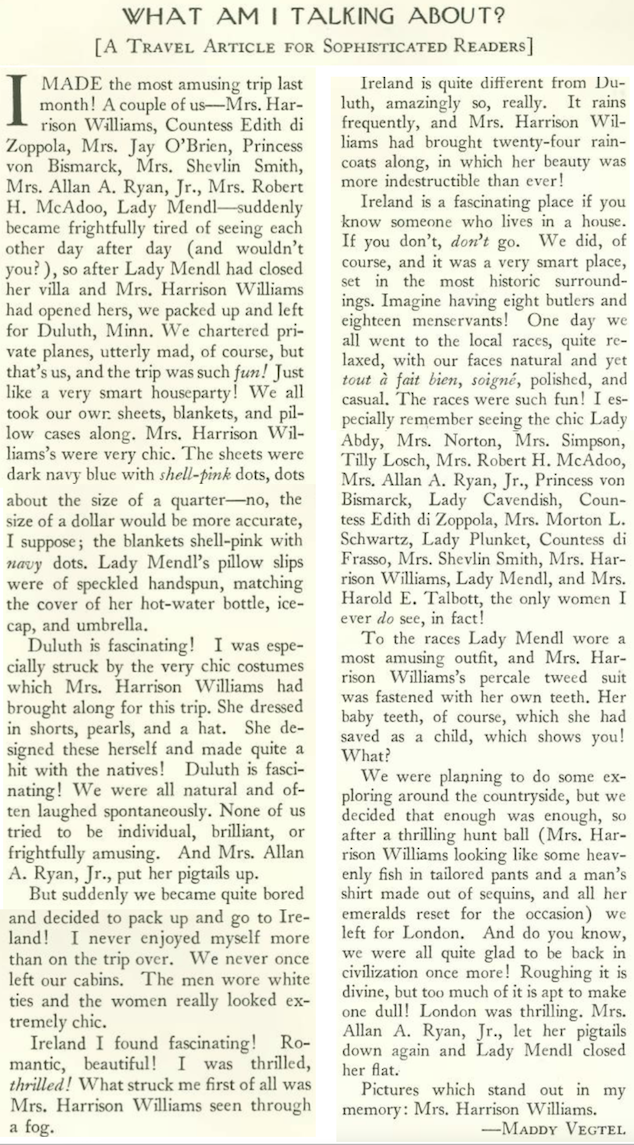
It’s a shame that writer Maddy Vegtel is largely forgotten today. She wrote with great wit and verve, and was well known in the 1920s and 30s for her Vanity Fair profiles and for her articles about Holland, her native land. A contributor to The New Yorker from 1926 to 1956, she published this casual in July 4 issue.

 * * *

Bad Men and Mad Men

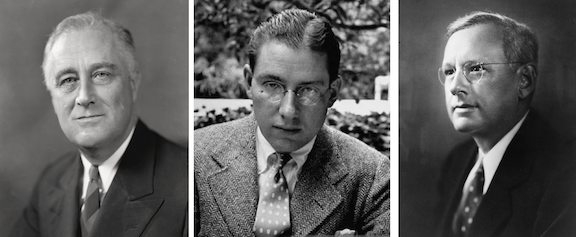
The poet Ogden Nash shared his thoughts on the summer political convention season:
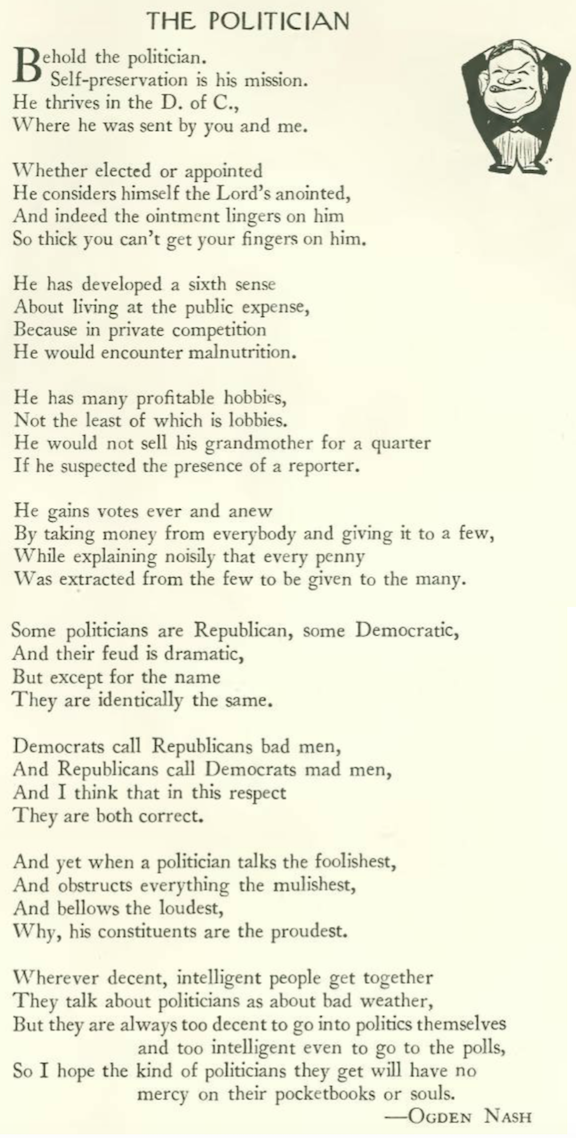
THE LORD’S ANOINTED…Ogden Nash (center) observed this belief in the political animal; at left and right, the Democratic and Republican nominees for president in 1936, Franklin D. Roosevelt and Alf Landon. (Wikimedia/poetryverse.com/Wikipedia)

 * * *

At the Movies

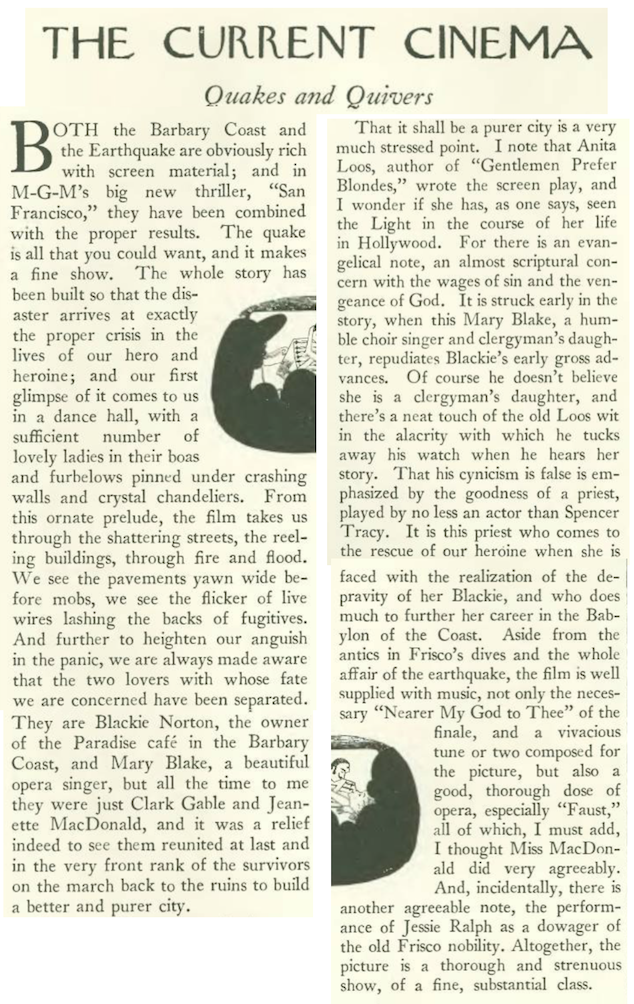
Critic John Mosher was on board for MGM’s musical-drama disaster film San Francisco, which told the story of a saloon keeper, a singer, and a priest caught up in 1906 San Francisco earthquake.
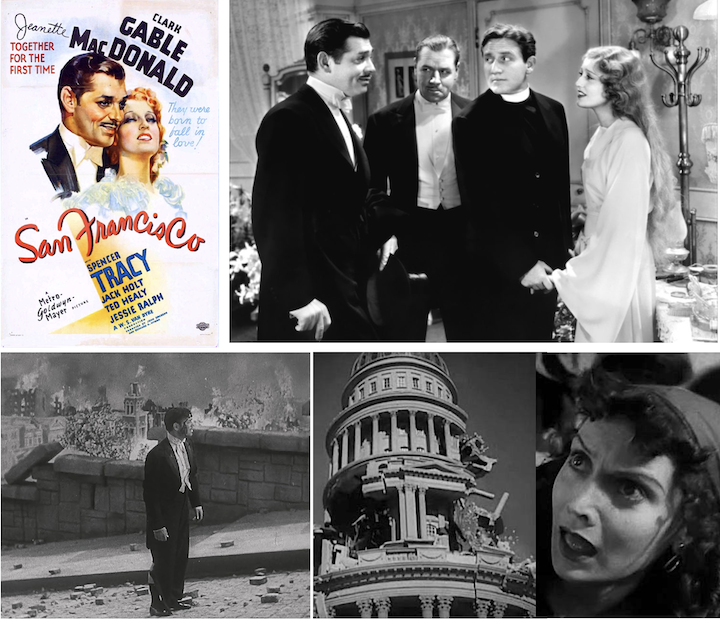
SHAKING IN THEIR BOOTS…Clockwise, from top left: MGM poster for San Francisco touts the first-time pairing of Clark Gable and Jeanette MacDonald in a film; scene from the film featuring, from left, Gable, Jack Holt, Spencer Tracy and MacDonald; the film included stunning effects, including an earthquake montage sequence that interspersed scenes of wreckage with the faces of terrified victims; Gable assesses the carnage in a scene from the film. (imdb.com/kittypackard.wordpress.com)

Mosher offered a tongue-cheek assessment of Shirley Temple’s appearance in her latest film, The Poor Little Rich Girl, noting that “There’s not the slightest indication of aging in Miss Temple.” The child star was just shy of eight years old when she filmed the picture. As for the The White Angel, Mosher found the Florence Nightingale biopic—with Kay Francis in the title role—”a little schoolbookish [and] quite on the dull side.”
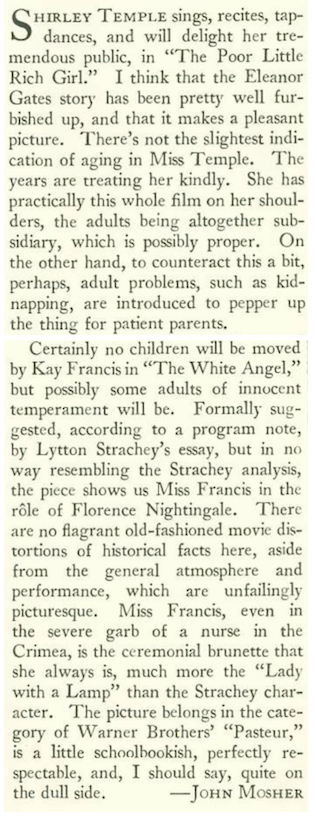
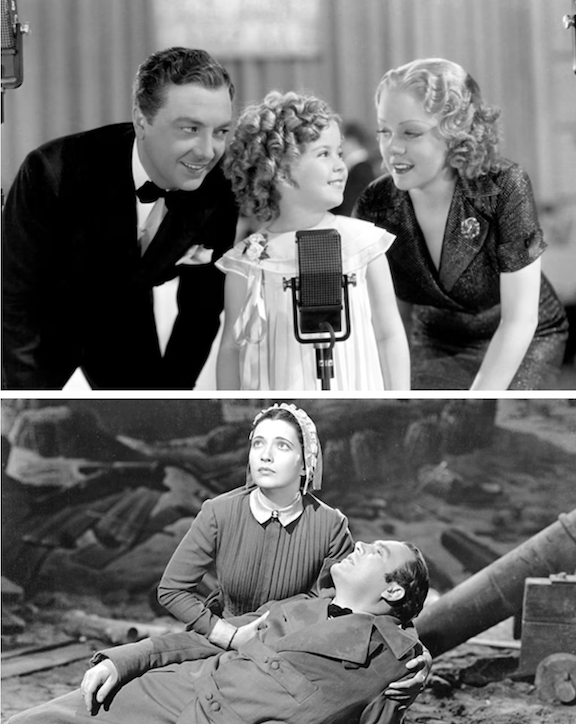
THAT YOUTHFUL GLOW…Top photo: Critic John Mosher found Shirley Temple still able to “delight her tremendous public” in The Poor Little Rich Girl—she is seen here with co-stars Jack Haley and Alice Faye; Below: Kay Francis and Ian Hunter in The White Angel, a film about Florence Nightingale’s pioneering work as a nurse during the Crimean War. (tcm.com)

 * * *

From Our Advertisers

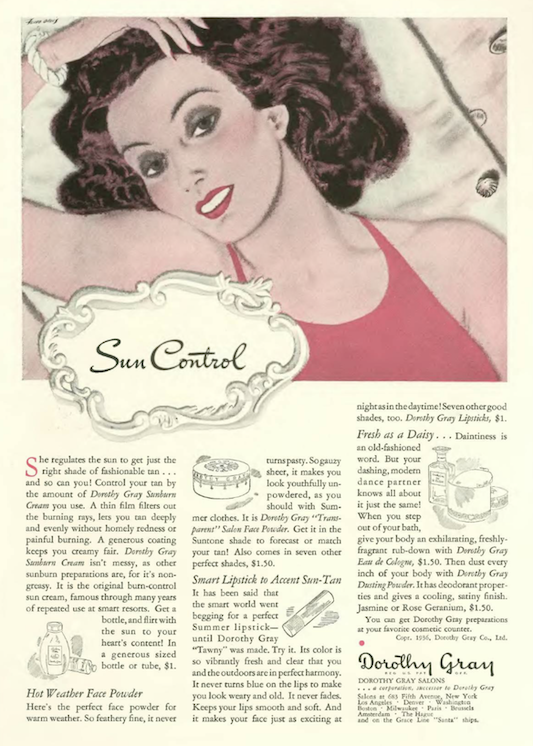
Sunscreen as we understand it today wasn’t available to New Yorkers in 1936, so they relied on zinc oxide and other mineral applications to avoid sunburns…however, Eugene Schueler, founder of L’Oréal, developed the first tanning oil with UV radiation-filtering properties in Europe in 1935 (active ingredient was benzyl salicylate), and later marketed it to the U.S. as Ambre Solaire…the brand is still sold today…
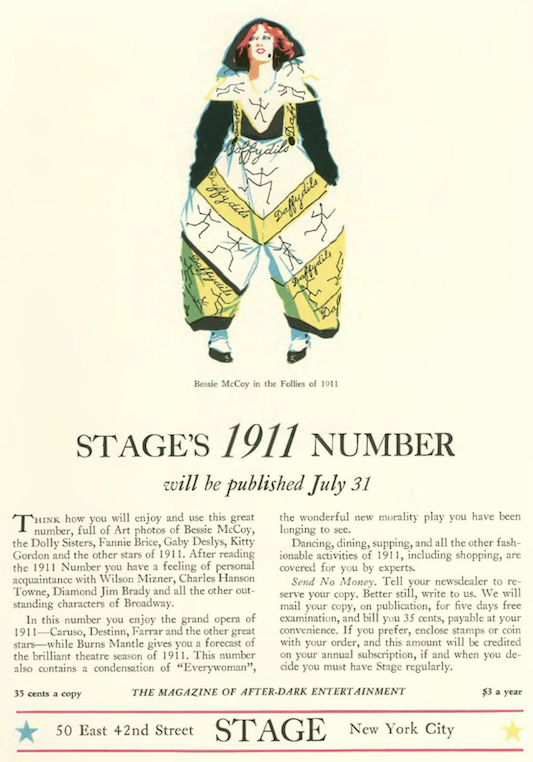
Stage magazine continued to promote their 1911 throwback issue…
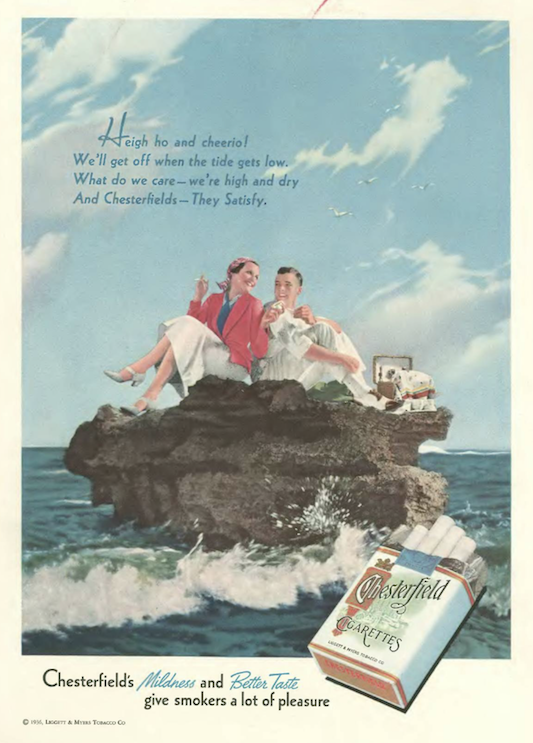
…the back cover belonged to Liggett & Myers, offering another romantic couple enjoying their Chesterfields…
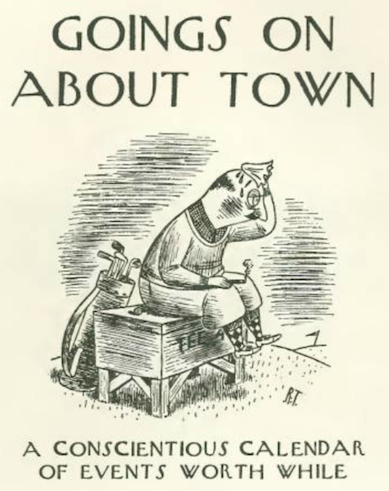
…we open the cartoons with Richard Taylor, who felt the heat as summer took hold in the city…on July 4, 1936, the official high temperature in Central Park reached an unseasonably warm 93 degrees F (34 c), hitting 106 F (41C) five days later on July 9…that mark remains the city’s all-time absolute highest temperature…
Otto Soglow’s spot art showed us how one well-heeled family escaped the hot city…

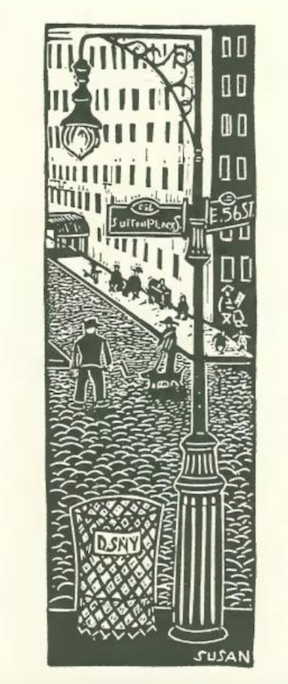
…while Susan Willard Flint offered a woodcut if a quiet cobbled street…
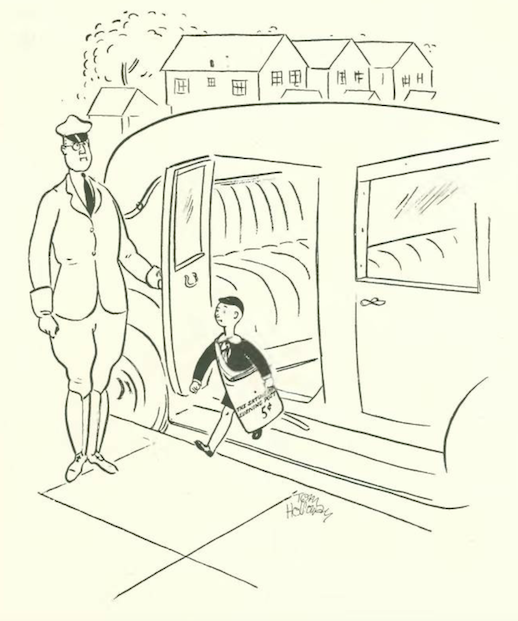
Tom Holloway showed us how one posh kid delivered the Saturday Evening Post (Holloway was a cartoonist for the Post, contributing just two drawings to The New Yorker, both in 1936)…
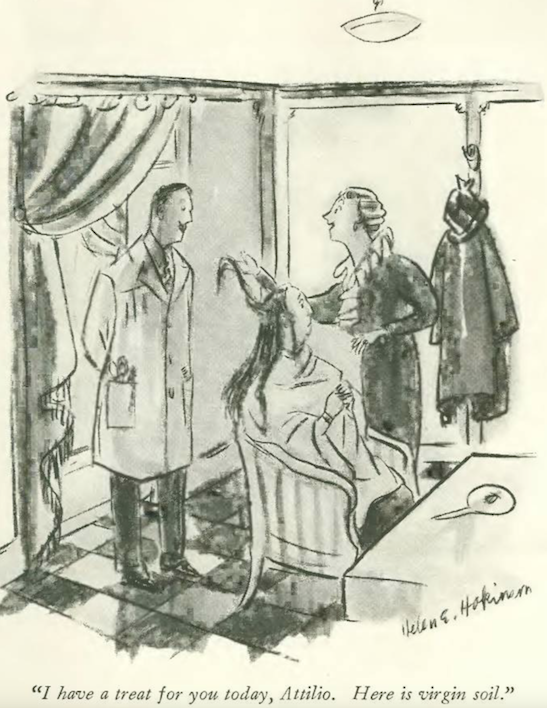
…the woman’s expression says it all in this Helen Hokinson cartoon…
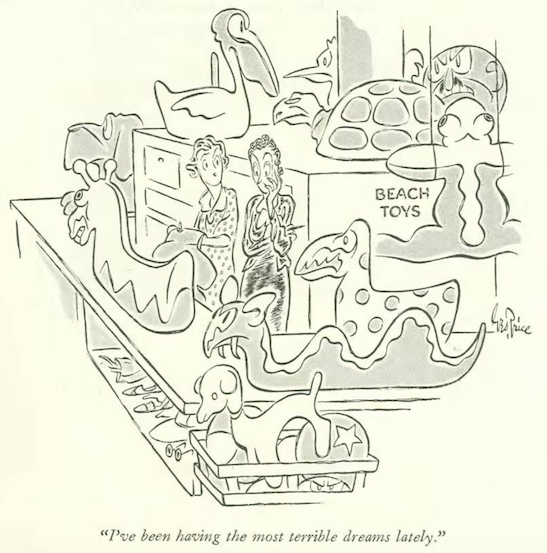
George Price gave us a saleswoman who saw one two many pool floats…
Gardner Rea drew up a vast estate for a man who (almost) had it all…

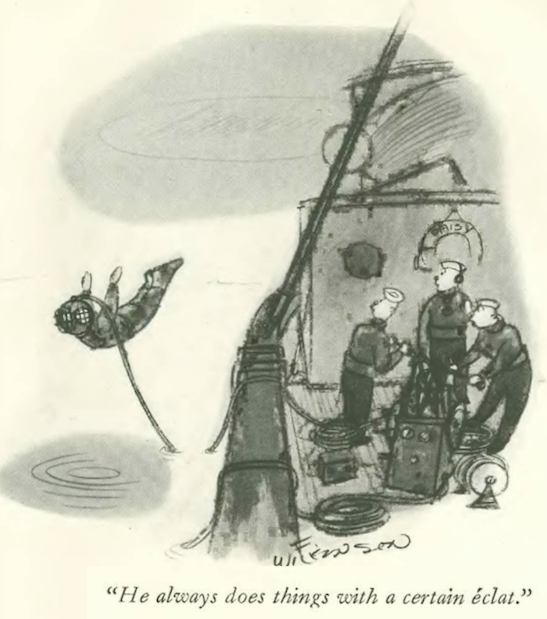
Fritz Wilkinson did some deep sea swan diving…
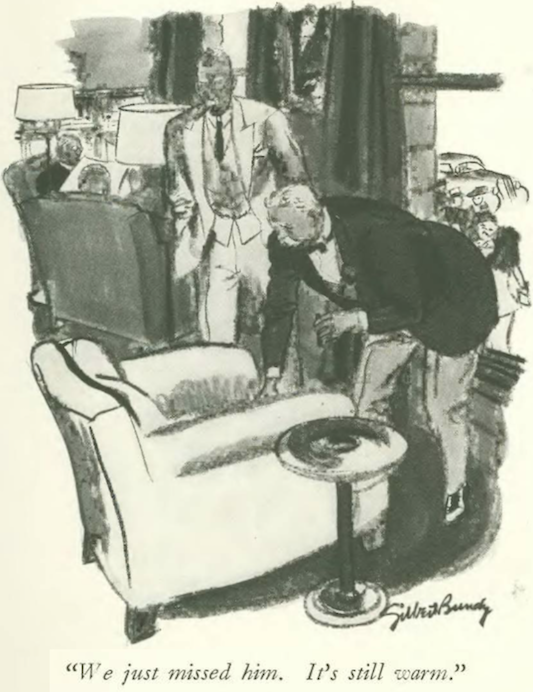
Gilbert Bundy found a clue at the gentleman’s club…
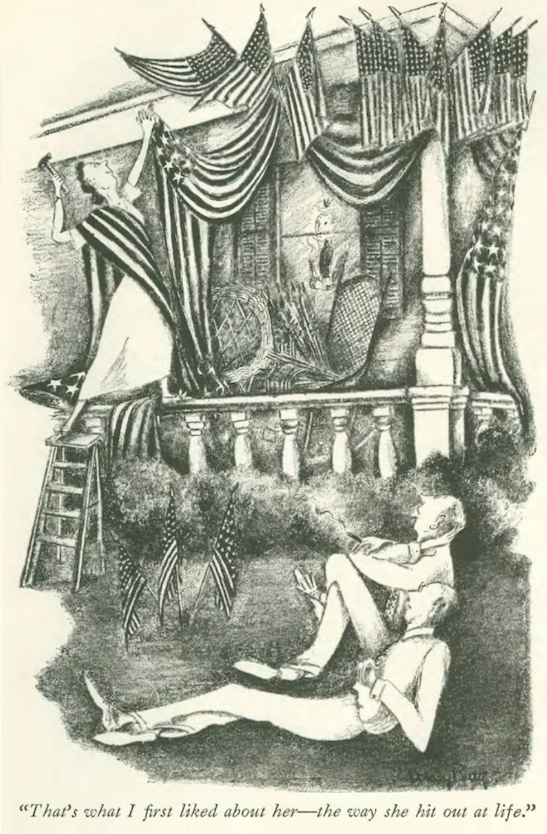
Mary Petty went all out for the Fourth of July…
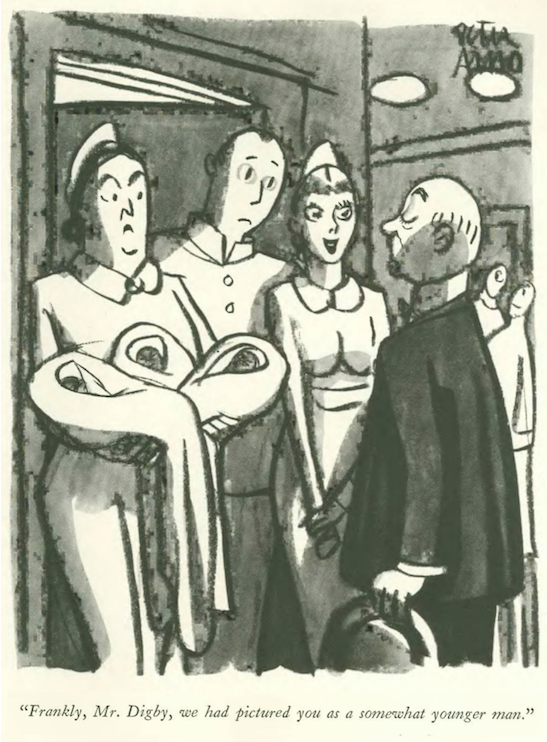
…and we close with Peter Arno, and the miracle of birth…
Next Time: Better Living Through Fiction…
The New Ziegfeld

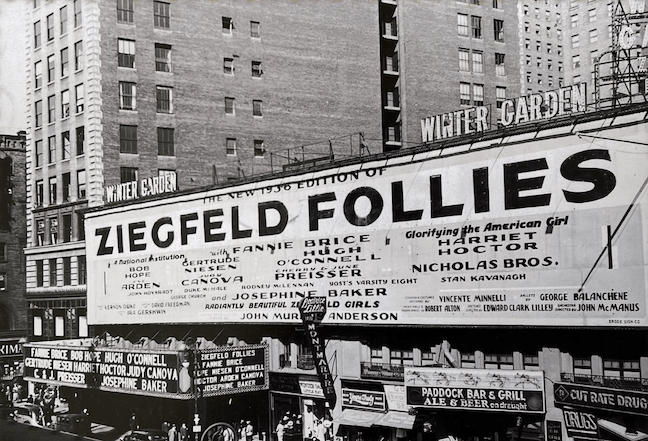
Above: The 1936 Ziegfeld Follies premiered on Broadway at the Winter Garden Theatre on January 30, 1936 and closed on May 9, 1936 after 115 performances. (Hulton Archive)

Broadway impresario Florenz Ziegfeld Jr died in 1932, but his famous theatrical revue lived on for years with revivals including one in 1936 that Robert Benchley praised for being better than the originals.

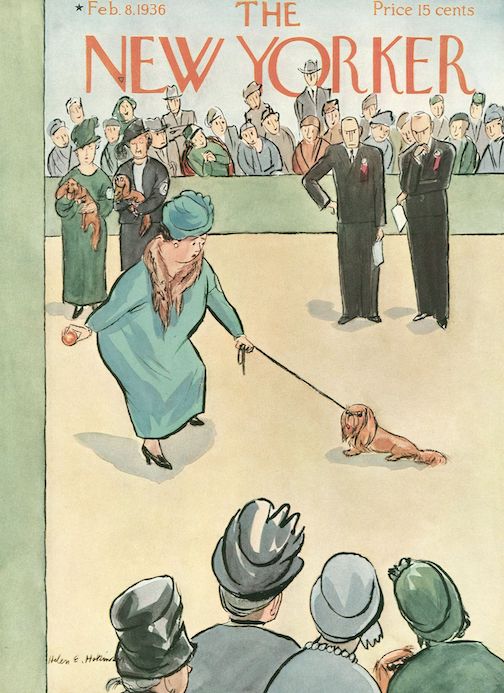
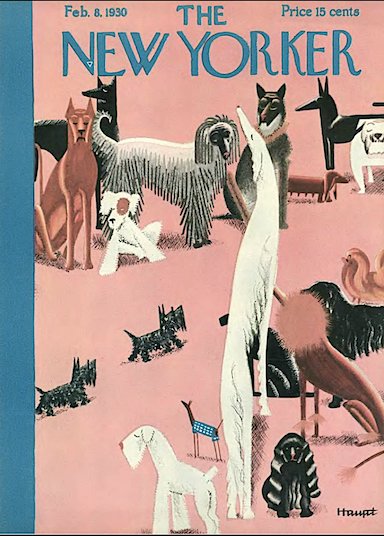
February 8, 1936 cover by Helen Hokinson, marking the opening of the Westminster Kennel Club Dog Show at Madison Square Garden. According to Michael Maslin’s always enlightening Ink Spill, the first dog-themed New Yorker cover was Feb. 8, 1930, by Theodore Haupt (below).

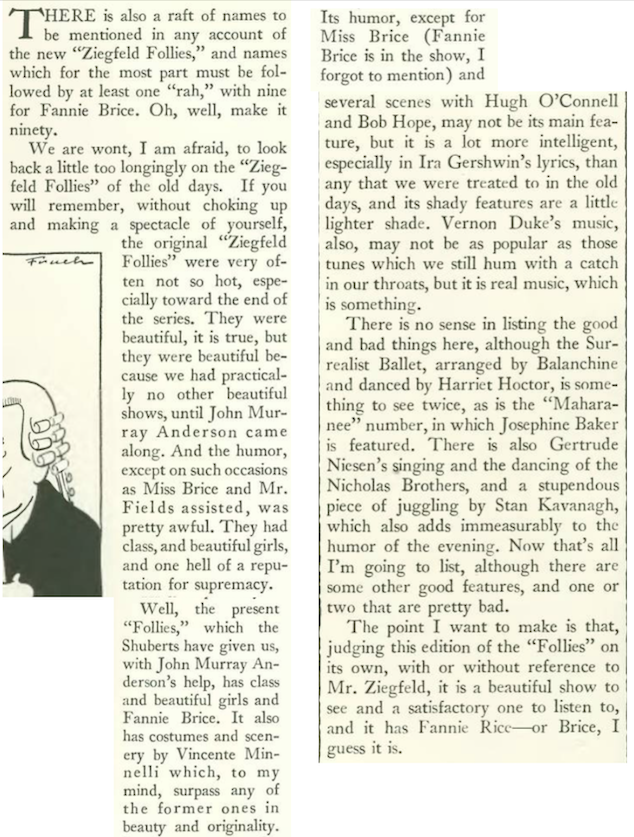
Now on with the show. Brought back to life by Ziegfeld’s widow Billie Burke and theatre operators Lee and J. J. Shubert, The Ziegfeld Follies of 1936 was loaded with talent, with lyrics by Ira Gershwin, choreography by George Balanchine, and sets and costumes by Vincente Minnelli. What really brought people in was the star of the show, Fannie Brice, who was supported by cast members Bob Hope, Eve Arden, Josephine Baker, and the Nicholas Brothers, among others. Benchley wrote:

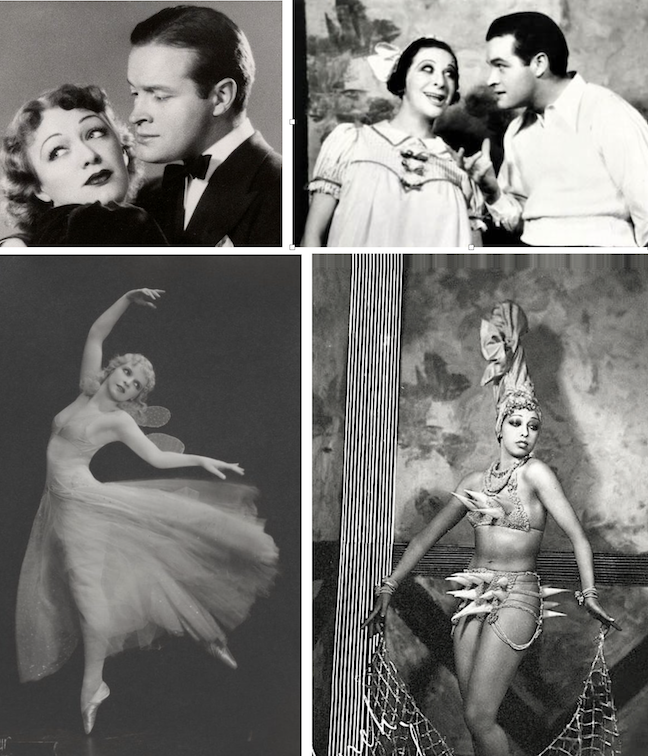
FANNIE AND THE REST…Clockwise, from top left: Bob Hope and Eve Arden performed the popular tune “I Can’t Get Started With You”; Hope with Fannie Brice in the sketch “Baby Snooks Goes Hollywood”; Josephine Baker premiered “The Conga” at the Follies, and Harriet Hoctor performed her “Night Flight.” (gershwin.com/uneicone-josephinebaker.webador.fr/libraryofcongress,org)

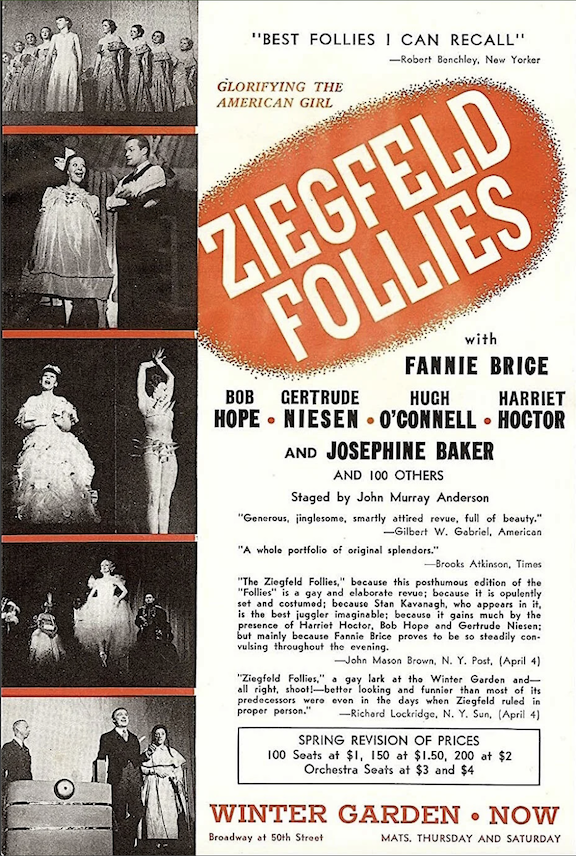
This ad for the 1936 Follies prominently featured Benchley’s endorsement:

(uneicone-josephinebaker.webador.fr)

Billie Burke (1884–1970) authorized Follies revivals with the Shuberts in 1934, 1936 and 1943, with the Shubert family producing a final revival in 1957. In 1936 MGM also filmed a Ziegfeld biopic, The Great Ziegfeld (which won two Academy Awards), casting William Powell as Ziegfeld and Myrna Loy as Burke. Burke wanted to play herself in the film, but at age 51 she was deemed too old for the part.

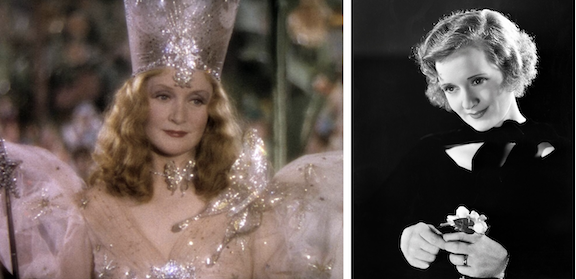
ZIEGFELD MAGIC…Florenz Ziegfeld’s widow Billie Burke kept the Follies going after her husband’s death in 1932. She is best known today for her portrayal of Glinda the Good Witch of the North in 1939’s The Wizard of Oz. (oscars.org/Wikipedia)

Fannie Brice (1891–1951) was the biggest star of the Follies and so dominated the show that when she became ill in May 1936 the production closed. Brice returned to the Winter Garden that September for 112 more performances.

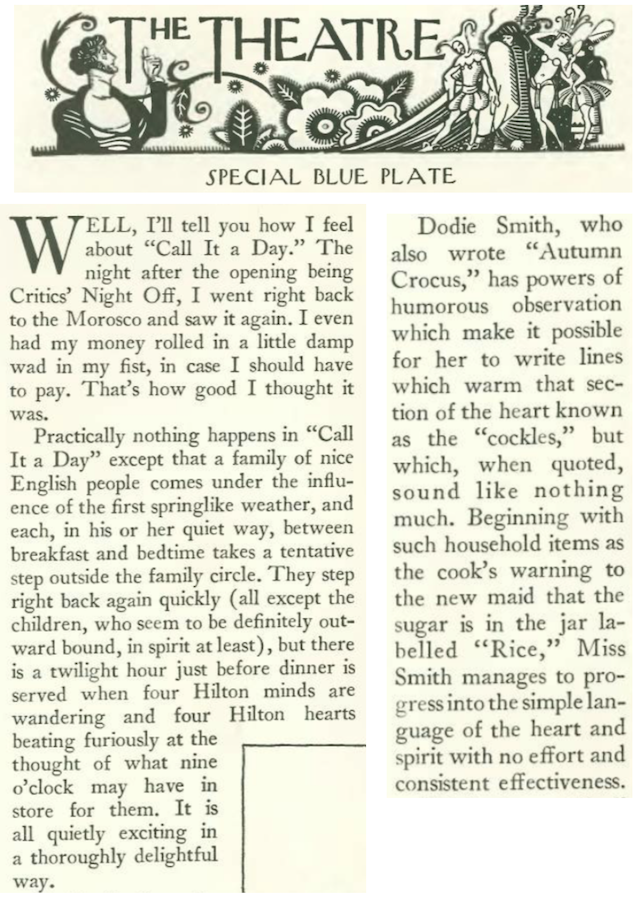
Benchley also praised Call it a Day, a 1935 play by British writer Dodie Smith that ran for 194 performances at the Morosco Theatre. Benchley thought it was so good he saw it twice.

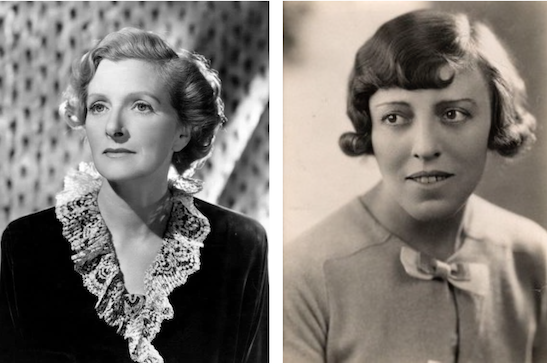
SPRING FEVER drove the action in Dodie Smith’s (right) hit comedy Call it a Day. The play chronicles a single spring day in the lives of the Hilton family, during which each member encounters unexpected romantic temptations and complications. Gladys Cooper, left, starred as Dorothy Hilton. The play was adapted to a Hollywood film in 1937. (vocal.media/Wikipedia)

 * * *

At the Movies

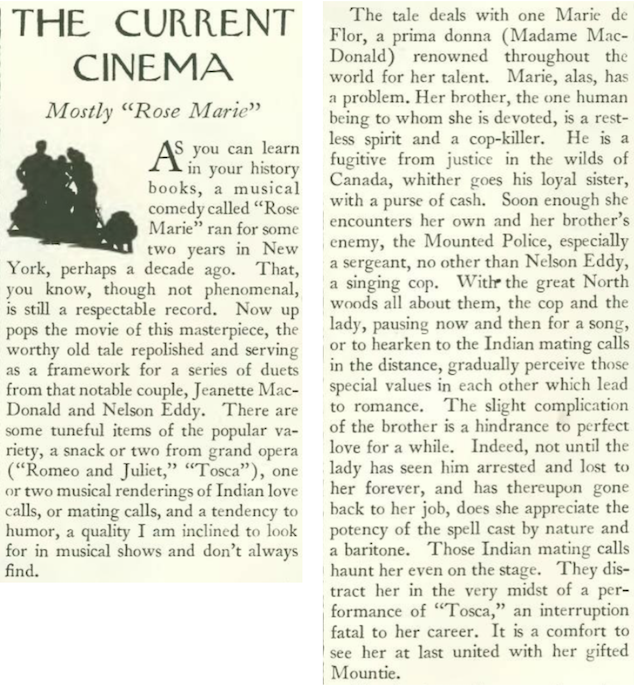
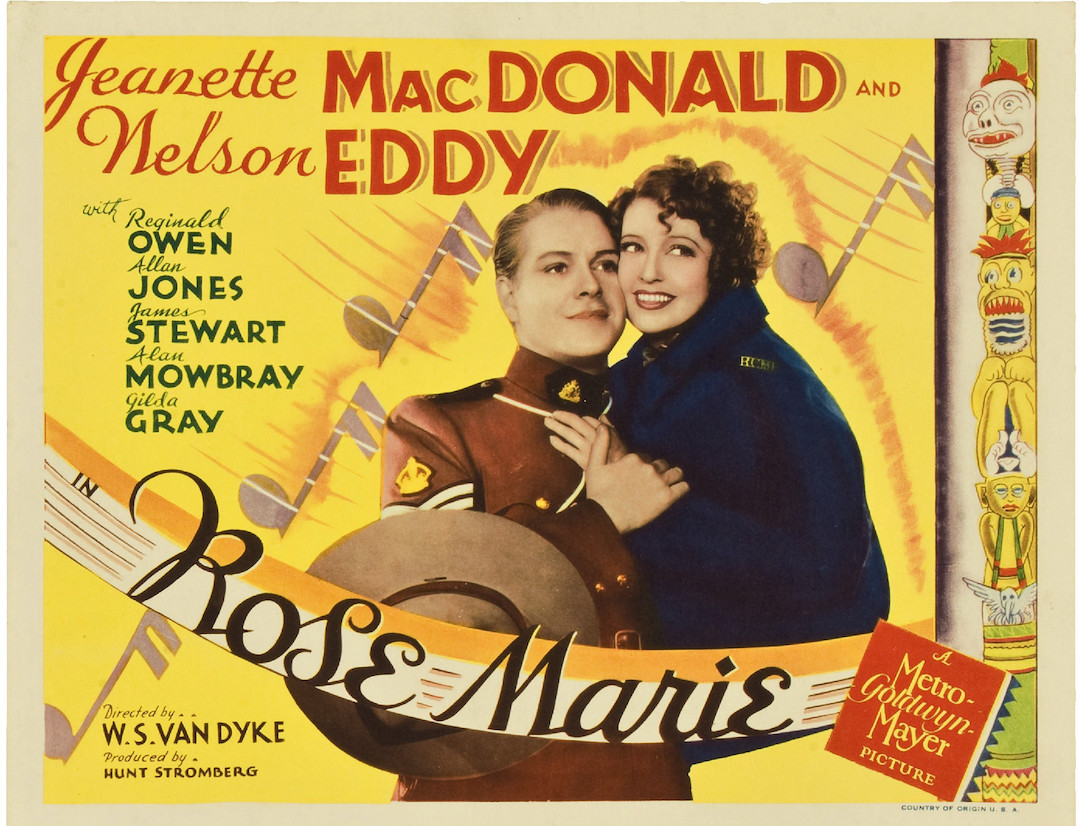
We go from the stage to the screen, where John Mosher took in Rose Marie, a musical comedy based on a popular 1924 Broadway play. The film “repolished” the old play and used it as a framework for a series of duets between Jeanette MacDonald and Nelson Eddy.

MELODIOUS MOUNTIE…Lobby card for Rose Marie, a musical romcom about a singing Mountie and a world-renowned prima donna, joined in love by a haunting “Indian mating call.” (Wikipedia)

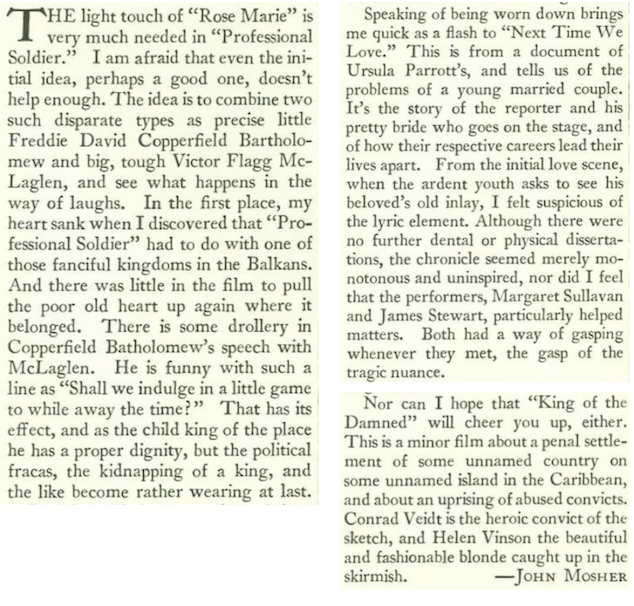
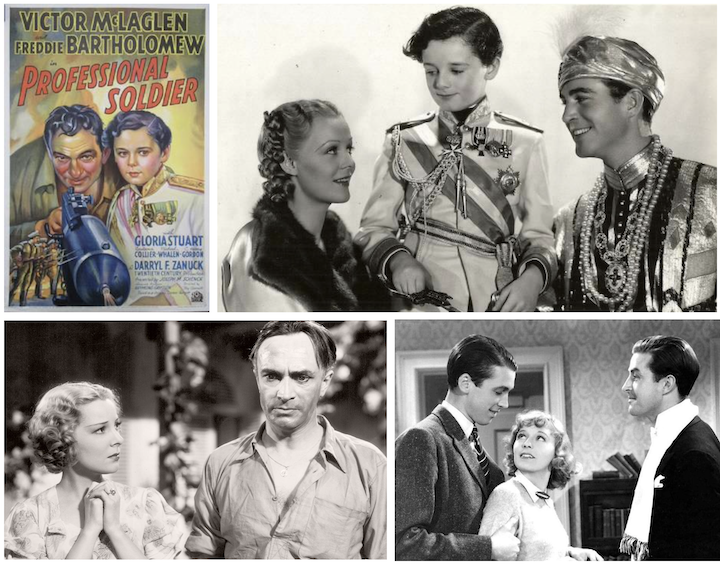
Mosher reviewed three other films that could have used some of Rose Marie’s cheer:

CHEERLESS FARE…Clockwise, from top: Gloria Stuart, Freddie Bartholomew, and Michael Whalen in Professional Soldier; James Stewart, Margaret Sullavan and Ray Milland in Next Time We Love; Helen Vinson and Conrad Veidt in King of the Damned. (Wikipedia/imdb.com/letterboxd.com/silversirens.co.uk)

 * * *

Miscellany

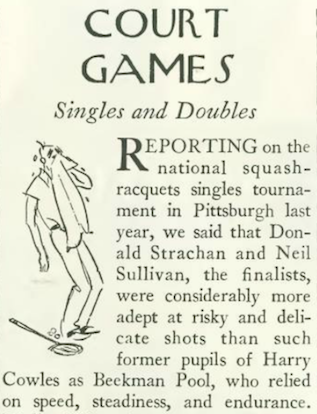
I strive to keep these posts at a readable length, and (hopefully) lively and enjoyable to read, which means that I cannot include absolutely everything that appears in each issue. For example, there are a number of regular features from the sports world—ranging from major attractions like hockey and college football (no coverage yet of baseball—which for some reason Harold Ross hated—or basketball) to more niche pursuits, such as squash (below) or indoor polo. From time to time I will include these under “Miscellany” as a way to give readers a more complete picture, and to assuage my fear that I am leaving something important out. Here is a very brief snippet of a regular feature, “Court Games,” by staff writer Geoffrey T. Hellman.

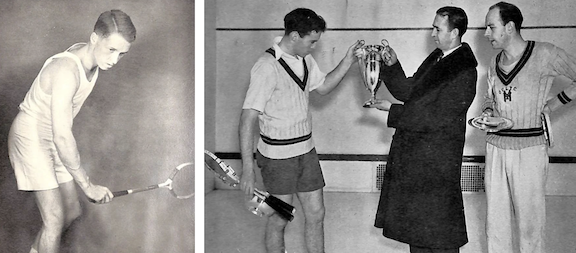
RACKETEERS…At left, Beekman Pool of the Harvard Club was the 1936 singles champion of the Metropolitan Squash Racquets Association; at right, Edwin Bigelow of the U.S. Squash Racquets Association presents the National Trophy to Germain Glidden. To the far right is runner-up Andrew Ingraham, who looks a bit miffed about getting a plate rather than a trophy cup. (thecarycollection.com)

 * * *

From Our Advertisers

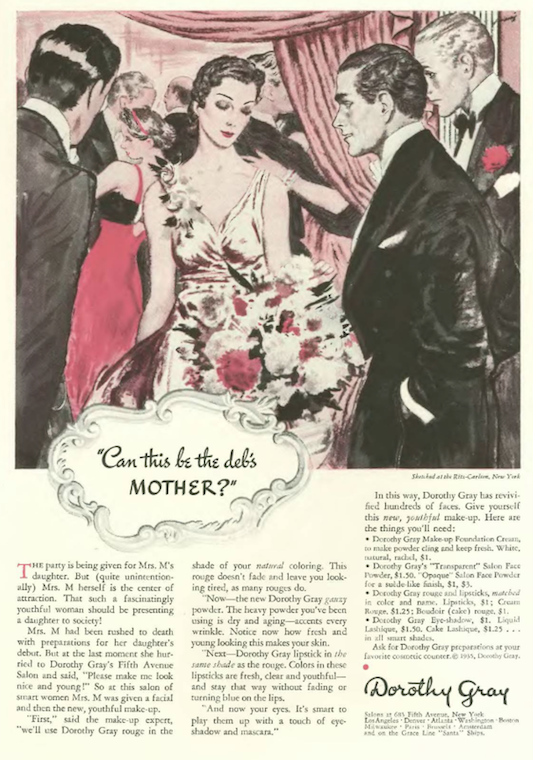
Let’s start with the inside front cover…advertisements from Dorothy Gray salons were all about the restoration of youth in older women…apparently the treatments were so successful that “Mrs. M” was a bigger attraction at a Ritz-Carlton debutante party than her society-bound daughter…note the young gents at right checking out mom, and not the deb…

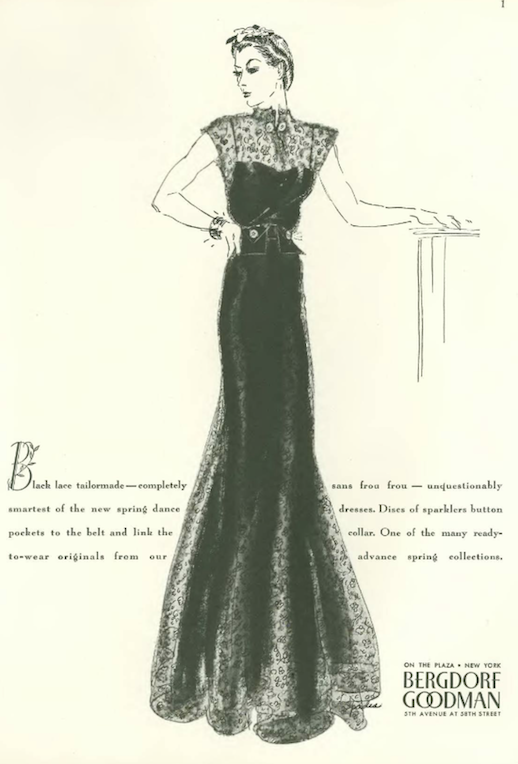
…opposite Dorothy Gray was this elegant appeal from Bergdorf Goodman…ads aimed at more refined tastes almost always featured these attenuated figures (whether they were people or luxury automobiles)…I guess I would hold onto something too with stilts like those…

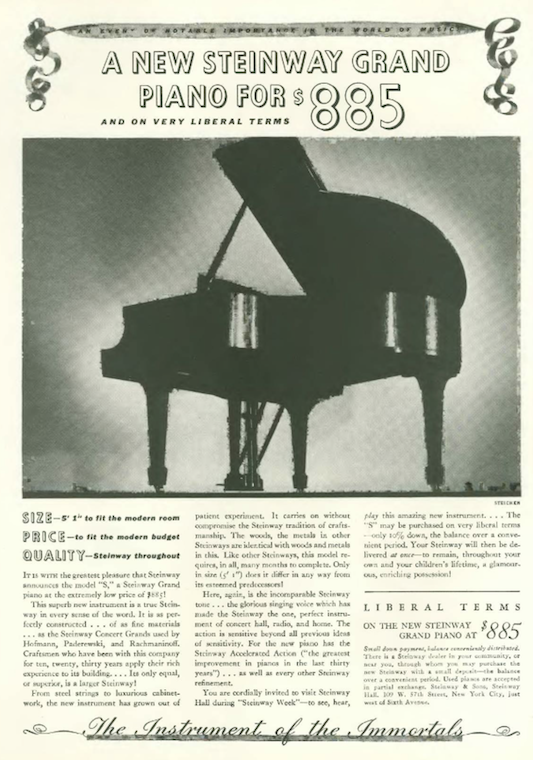
…here’s a Steinway grand for less than a grand…$885 in 1936 is roughly equivalent to $20,000 or so today, but that’s still a bargain—Steinway grand pianos currently start at around $85,000…

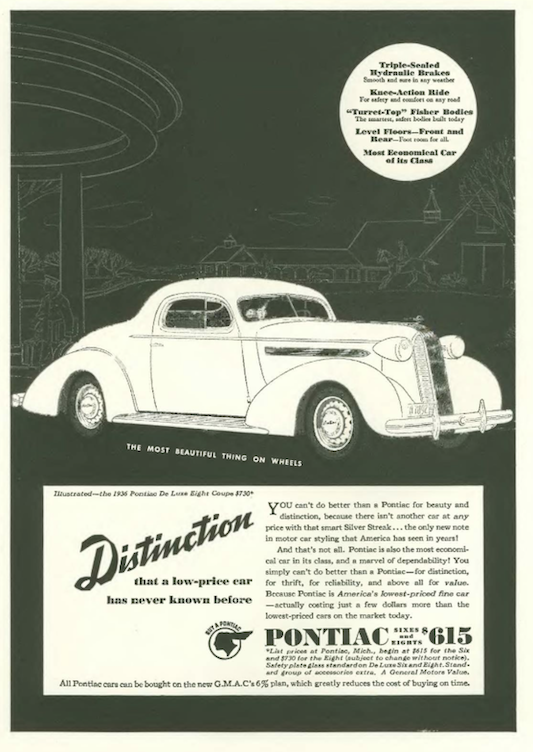
…speaking of bargains, you could own “The Most Beautiful Thing on Wheels” (according to this ad) for a mere $615…

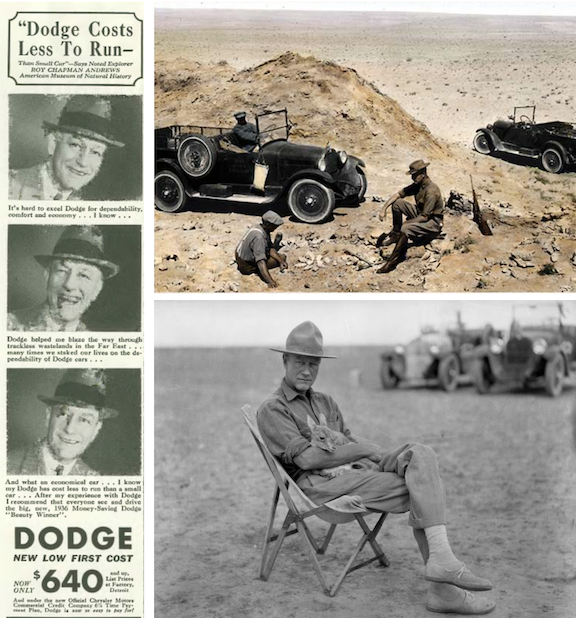
…and for an extra twenty-five bucks you could own a durable Dodge like the one endorsed by Roy Chapman Andrews (1884–1960), a globetrotting explorer who discovered fossilized dinosaur eggs in the Gobi Desert in the 1920s…
(amnh.org/roychapmanandrewssociety.org)
THE REAL INDY…Roy Chapman Andrews gained national fame as an explorer for New York’s American Museum of Natural History (AMNH). The discovery of a nest of complete dinosaur eggs in Mongolia in 1923 (above) provided the first proof that the critters hatched out of eggs. Named AMNH’s director in 1934, Andrews is thought to be an inspiration for the film hero Indiana Jones. (amnh.org/roychapmanandrewssociety.org)

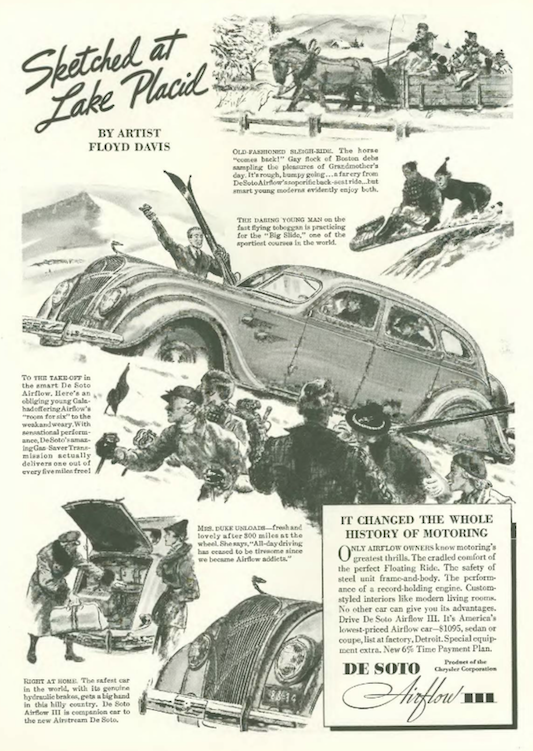
…the folks at Chrysler were doing everything they could to get people interested in buying their Airflows—despite its technological advances, the car’s streamlined design (toned down in later models) was just too radical for mass market tastes…note how the ad draws attention to the work of “Artist Floyd Davis”…

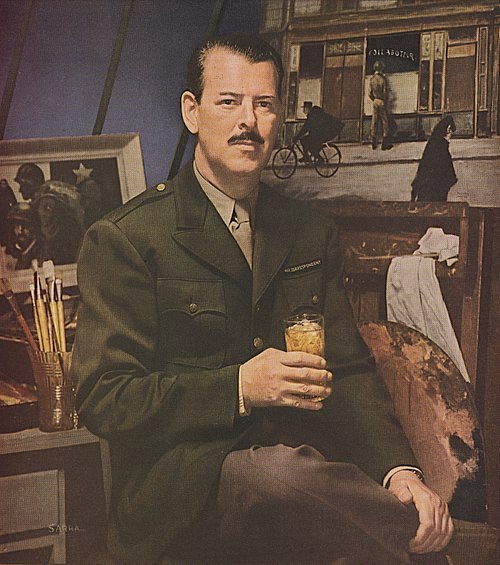
…here’s a photo of Floyd Davis

CHEERS…Illustrator Floyd Davis (1896–1966) poses in an ad for Lord Calvert whiskey, 1946. In 1943 Life magazine called him the “#1 Illustrator in America.” (Wikipedia)

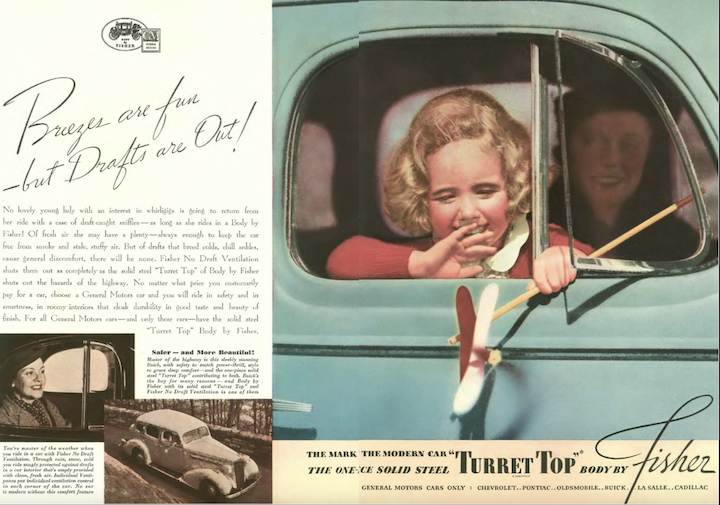
…the Fisher company, makers of car bodies for General Motors, liked to emphasize the safety of their “Turret Top,” although it didn’t seem to occur to anyone that a child dangling from a car window was problematic…

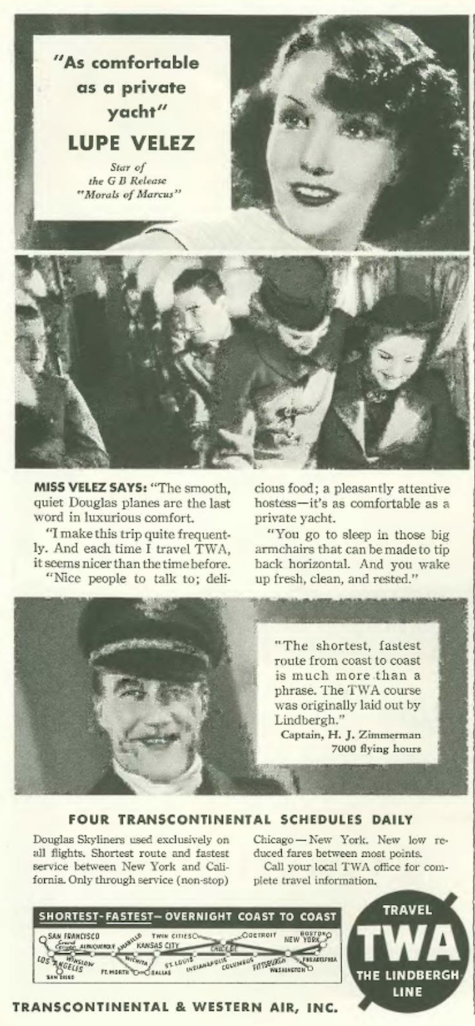
…actress Lupe Vélez made the unlikely claim that flying on a 1930s airliner was “as comfortable as a private yacht”…

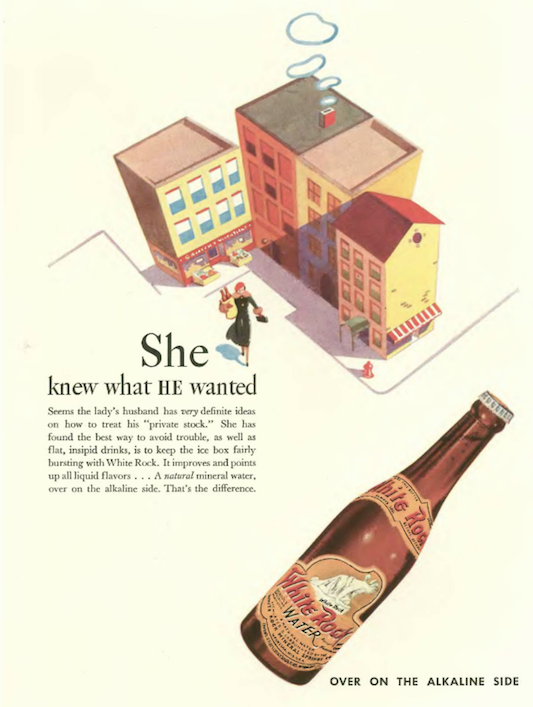
…ads for White Rock were among the more colorful found in the early New Yorker…

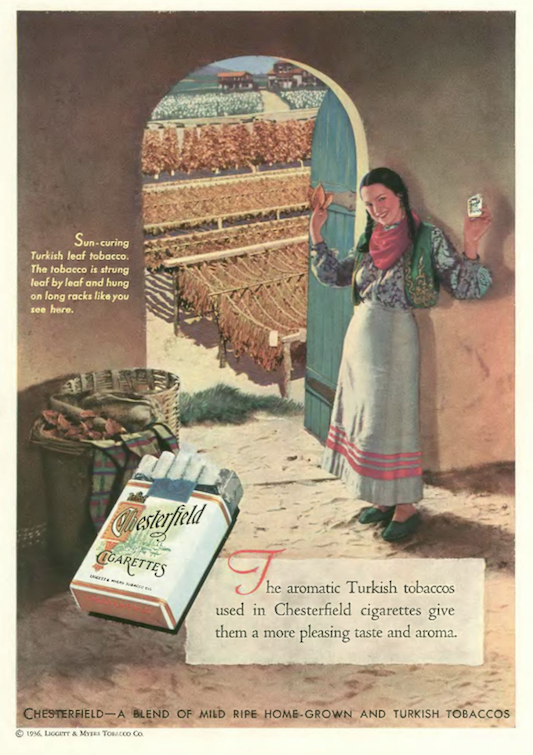
…on the back cover, Liggett & Myers tobacco company shifted gears from elegant to homespun with an ad that emphasized the high quality of Turkish leaf tobacco…

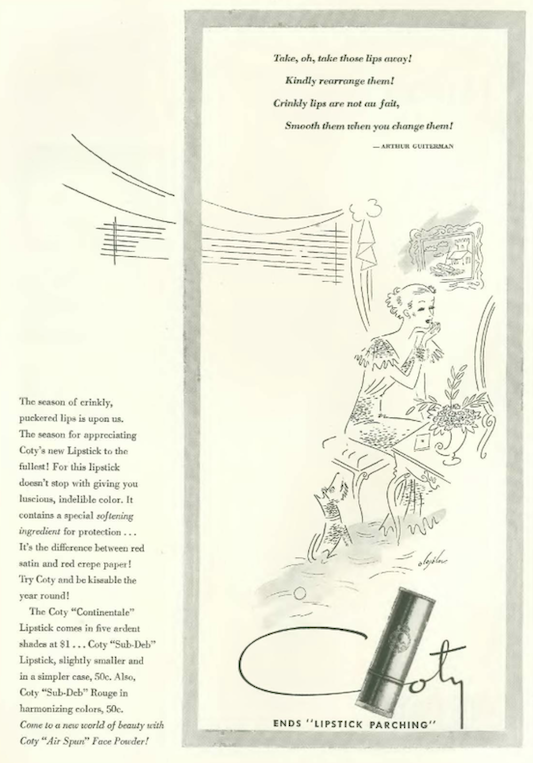
…the folks at Coty hired two New Yorker contributors, poet Arthur Guiterman and illustrator Constantin Alajalov, to promote their line of lipsticks…

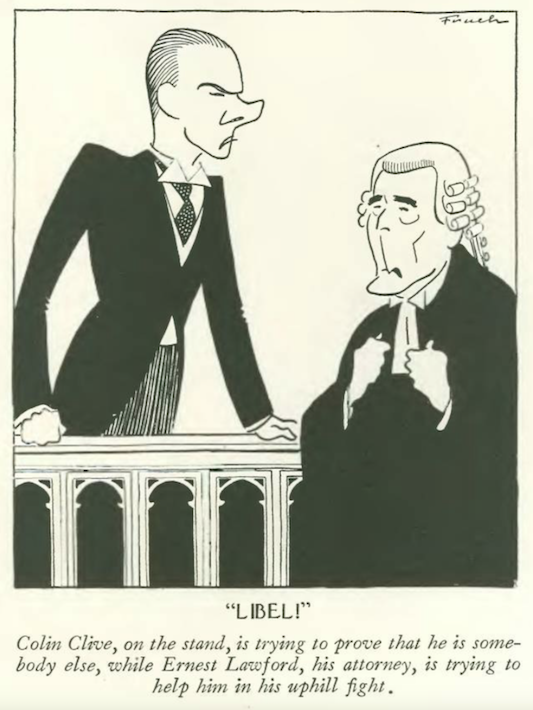
…which brings us to the cartoonists, beginning with Al Frueh

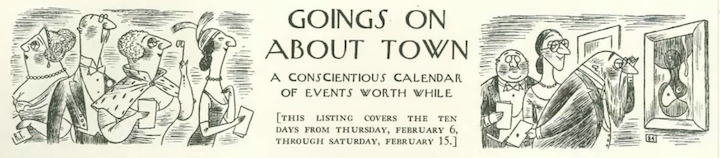
Richard Taylor opened things up in “Goings On”…

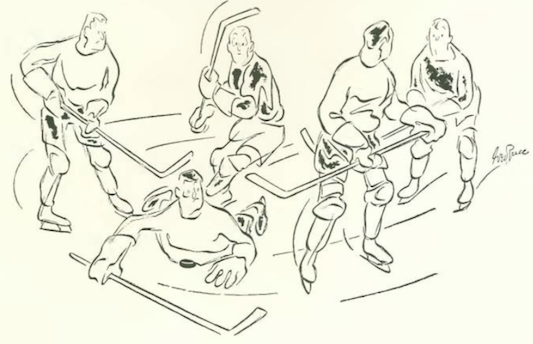
…and George Price added this bit of action to the calendar section…
Abe Birnbaum contributed this delightful spot drawing…
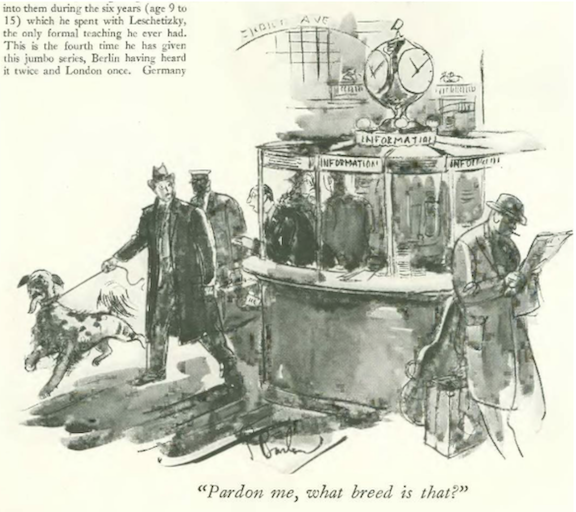
…the Westminster dog show was the talk of the town, and at Grand Central, per Perry Barlow

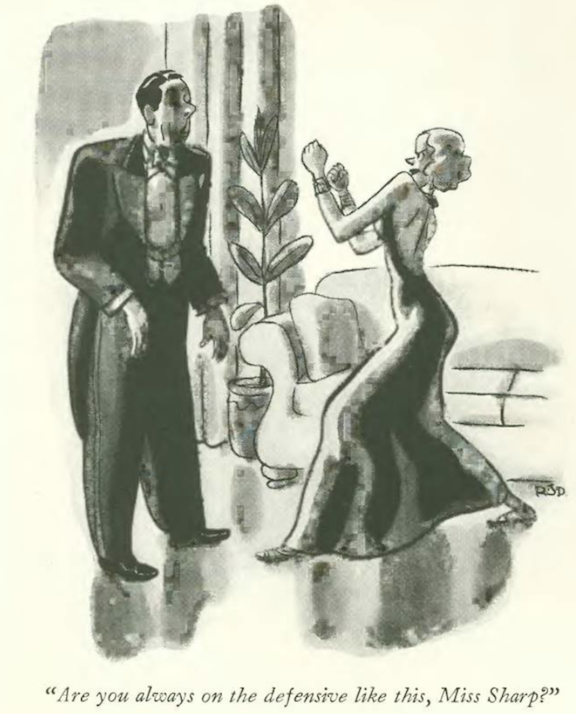
Robert Day had a fight on his hands…

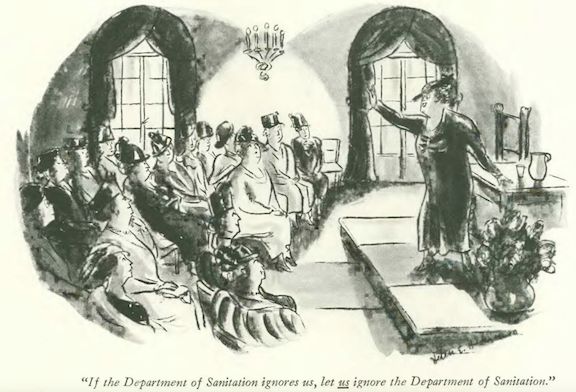
Helen Hokinson’s “girls” were out to snub the sanitation department…

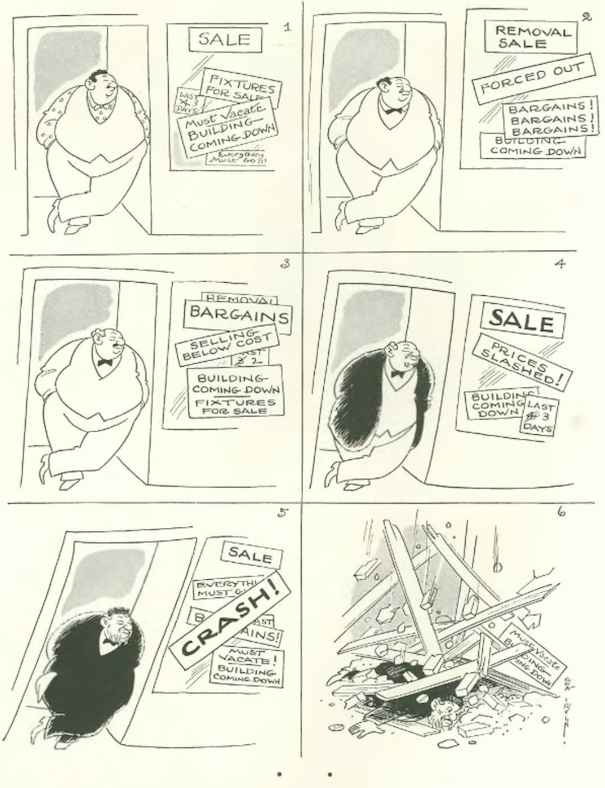
Rea Irvin drew up the literal downfall of one business…

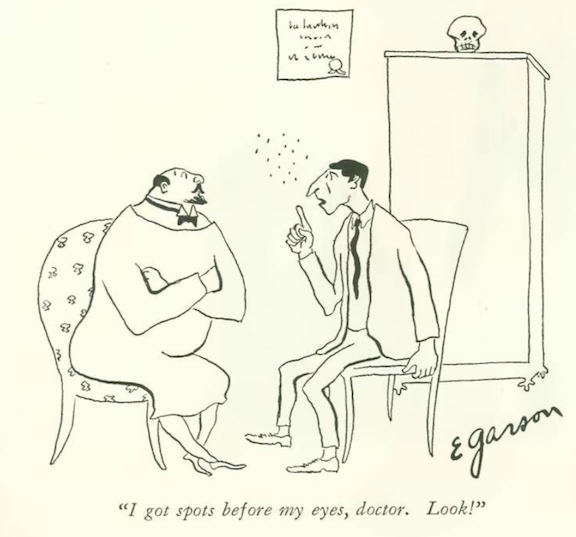
Eli Garson had us seeing spots…

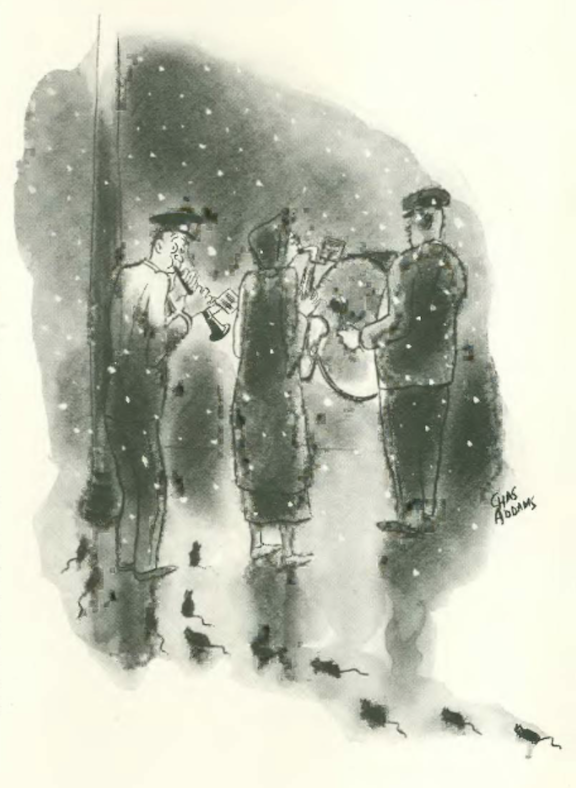
Charles Addams found the Pied Piper in a Salvation Army band…

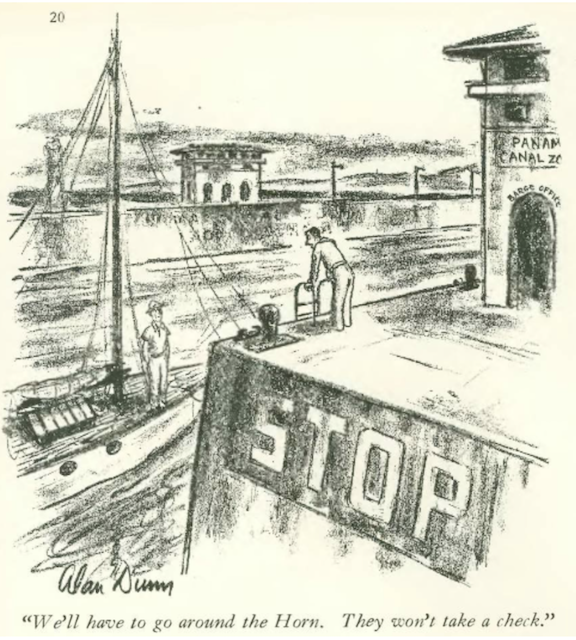
Alan Dunn gave new meaning to “taking a detour”…

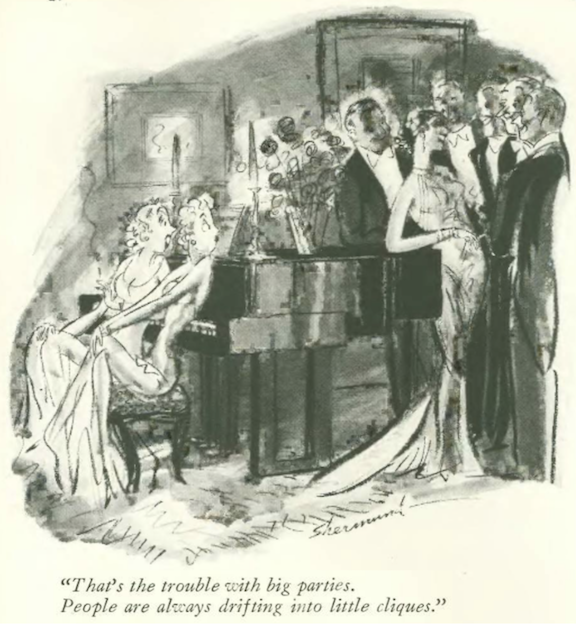
Barbara Shermund illustrated one of the perils of cocktail parties…

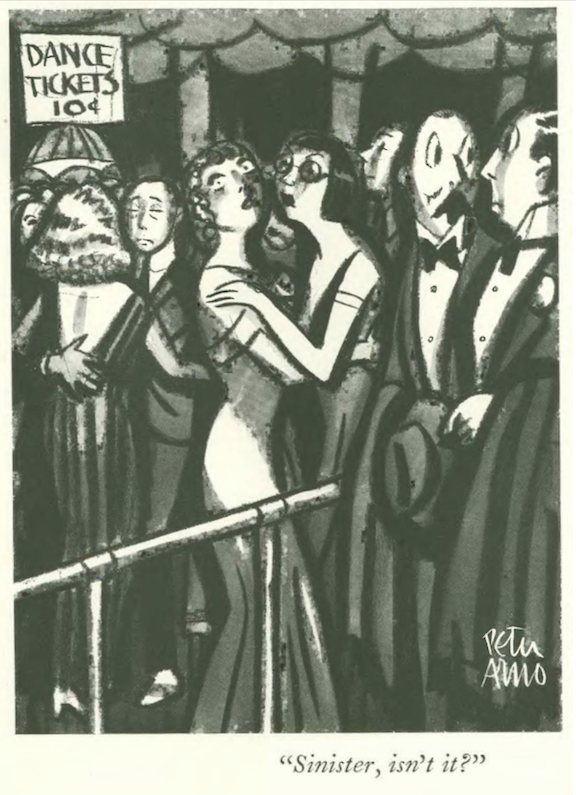
…and we close with Peter Arno, and the sinister world of taxi dancers…

Next Time: Modern Times…