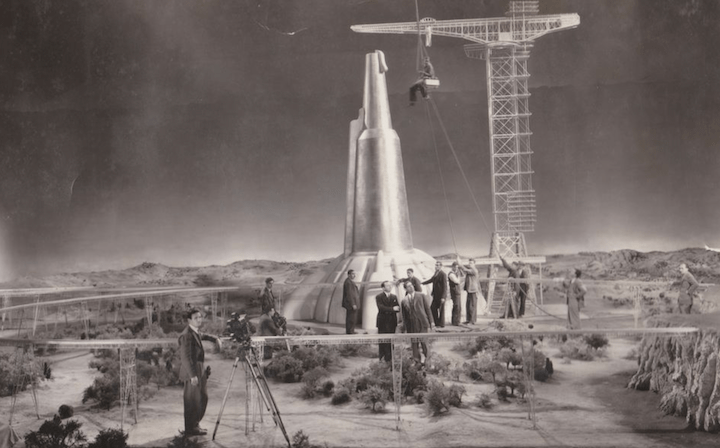
Things to Come

Above: Behind the scenes production photo of the space gun used to launch a manned projectile to the moon in Things to Come. (Instagram)

One of the most anticipated films of the 1930s was the British production of Things to Come. Loosely based on the 1933 science fiction novel by H.G. Wells, The Shape of Things to Come, the film was an extraordinarily ambitious and expensive production featuring a huge cast and elaborate sets, both full-scale and in miniature.
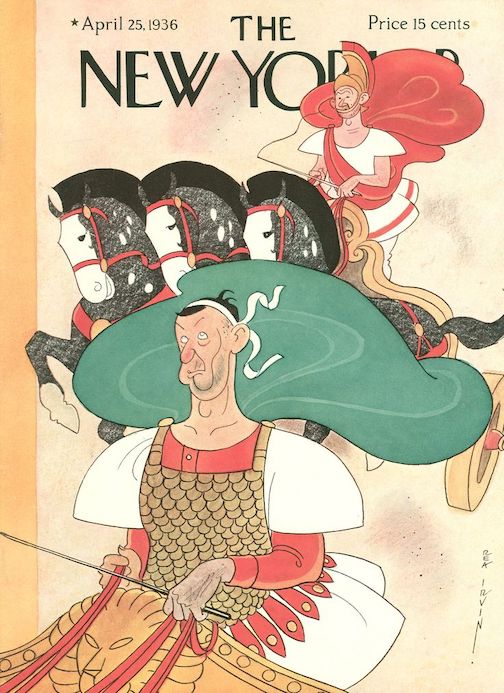
April 25, 1936 cover by Rea Irvin.

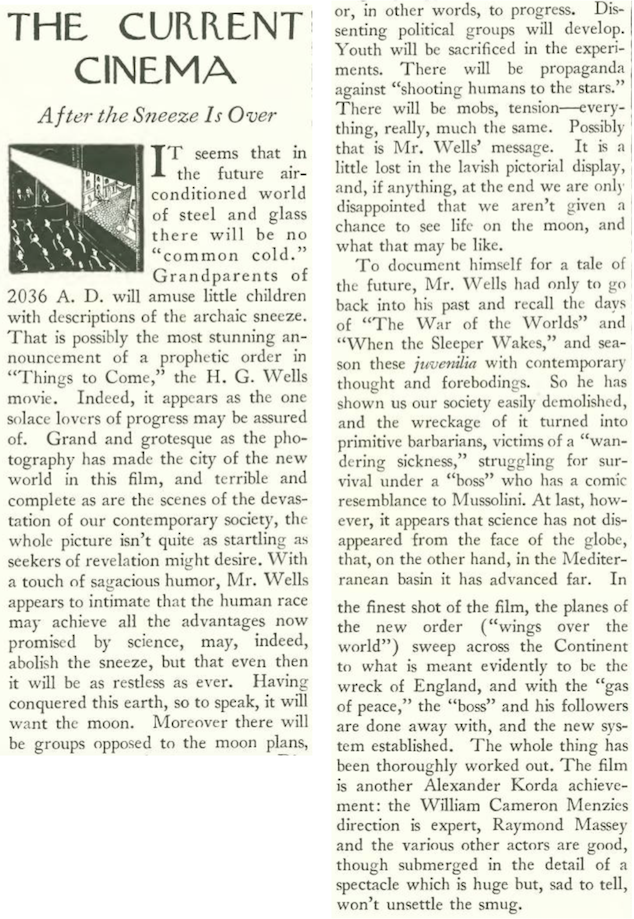
Critic John Mosher wasn’t quite sure what to make of Things to Come, seizing on the film’s promise to end the common cold.
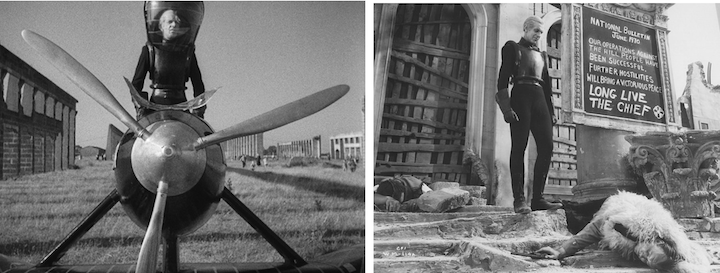
CLEANING CREW…A businessman in Everytown in the 1940s, John Cabal (Raymond Massey) returns in the 1970s to find his city in ruin and governed by a warlord. As a member of a secret organization called “Wings Over the World” (comprised of the last surviving band of engineers and mechanics), Cabal orders his organization to send giant flying wings over Everytown and saturate the population with a “Gas of Peace.” Not only does the gas make the population tranquil, it also kills the warlord, played by Ralph Richardson (right). (midnightonly.com/instagram.com)

In a review for The Criterion Collection, Geoffrey O’Brien notes that the film’s shocking scenes of war were shown to an audience “in active denial, many of them, of the possibility of such things coming to pass in the near future.”

But an antiseptic city with a population made docile by a “Gas of Peace” didn’t appear to be something one would look forward to either. O’Brien points to Jorge Luis Borges’ remarks regarding Things to Come: “The heaven of Wells and Alexander Korda, like that of so many other eschatologists and set designers, is not much different than their hell, though even less charming.” Borges dismissed the notion that science and technology would be the rallying force against tyranny: “In 1936, the power of almost all tyrants arises from their control of technology.”
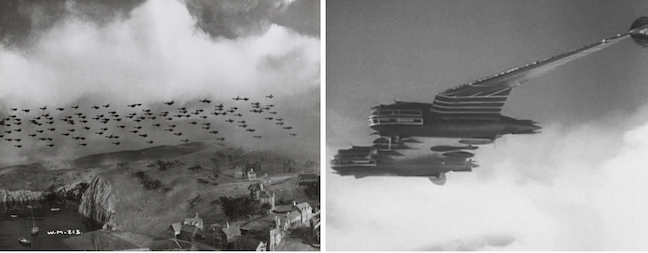

WAR AND PEACE…At left, bombers lay waste to Everytown in the 1940s, seemingly forecasting The Blitz of London in 1940-41; at right, decades later, “Wings Over the World” sends giant flying wings (right) over Everytown to saturate the population with a “Gas of Peace.” (Illinois.edu/facebook.com)
UTOPIA?…After years of rebuilding, a new, underground Everytown emerges in 2036. The set (left) was designed by director William Cameron Menzies and Bauhaus artist Laszlo Moholy-Nagy. Above, transportation included autogyros; both men and women wore futuristic togas, including John Cabal’s great-granddaughter Catherine Cabal (Pearl Argyle). Note the acrylic furniture, ubiquitous in the future scenes of the film. (midnightonly.com/facebook.com/YouTube)

O’Brien concludes: “There is no way any audience, in the 1930s or now, would be likely to accept Raymond Massey’s Oswald Cabal as an empa­thetic spokesperson for the human race. He is essentially the chairman of the board of a quasi-fascist ruling elite—and not so very far from the idea that Wells, at best ambivalent about democracy, in fact had in mind.”

In all fairness, I should note that Massey did not like his character’s “heavy-handed speeches” that lacked human emotion. He complained H.G. Wells prioritized cold scientific ideals over personal character depth. “For heart interest, Mr. Wells hands you an electric switch,” Massey stated.
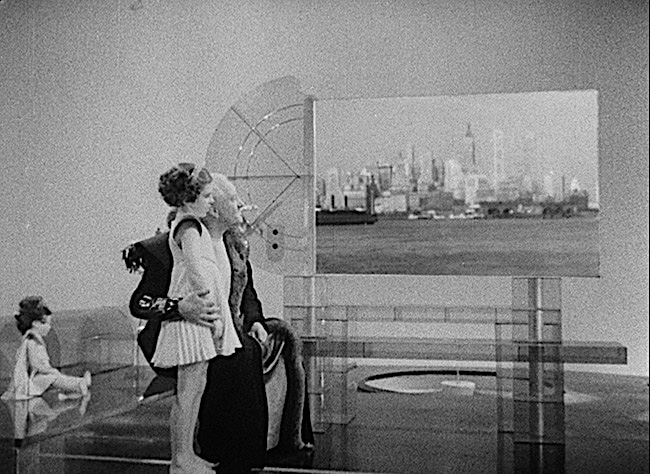

WISHES SOMETIMES COME TRUE…In the movie, a little girl in the year 2036 receives a history lesson from her great grandfather (including a video of 1936 New York), and she expresses delight that people will “keep on inventing things and making life lovelier and lovelier.” The little girl was played by eight-year-old Anne McLaren. The great grandfather was played by Charles Carson (1885–1977). (midnightonly.com)
DAME McLAREN…In real life that little girl, Anne McLaren (1927–2007), did make life better, becoming a leading figure in developmental biology and paving the way for other women in science. Her work also helped lead to the development of human invitrofertilization. Dame Anne Laura Dorinthea McLaren received many honors for her research and ethical contributions. (YouTube.com/Wikipedia)
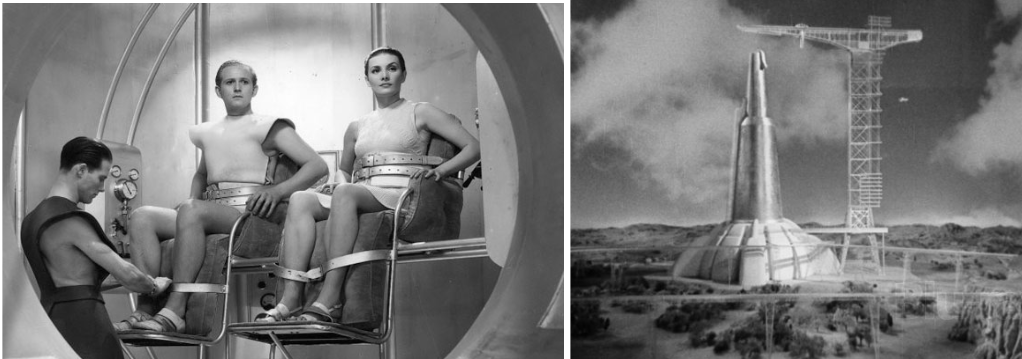
POW! TO THE MOON…At left, Catherine Cabal (Pearl Argyle) and fellow scientist Maurice Passworthy (Kenneth Villiers) prepare to fly around the moon, launched from a gigantic space gun (right). (theguardian.com/YouTube)

Interestingly, Raymond Massey (1896–1983) and most of the film’s cast would live to see an actual moon landing in just 33 years. Most of them would also be involved in some way in the Second World War, Massey being wounded as part of the Canadian regiment.

You can watch the whole film (colorized) on YouTube.

 * * *

Another Viewpoint

American writer and editor Al Graham (1905–1972), who contributed a number of poems and “Talk of the Town” pieces to The New Yorker in the Thirties and Forties, offered some thoughts regarding Things to Come. Here are excerpts of the first and last parts of his piece:
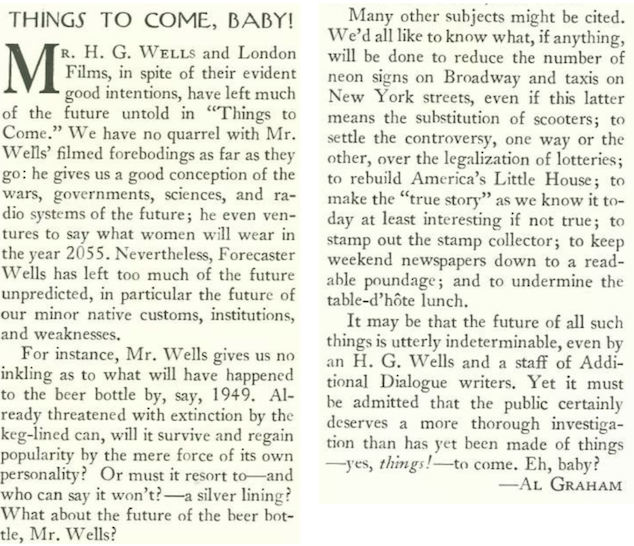
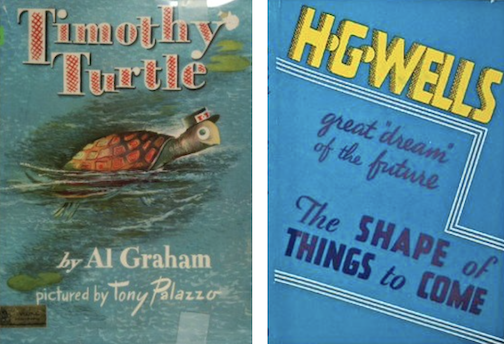
SLOW AND STEADY…Al Graham is perhaps best known for his 1930s humorous verse and children’s literature such as Timothy Turtle (1946) and The Rhymes of Squire O’Squirrel (1963). At right is a cover of the first edition of H.G. Wells’ The Shape of Things to Come. (Wikipedia)

Incidentally, the British automaker Triumph used Wells’ title in a 1970s ad campaign for the TR-7…

(The Daily Drive)

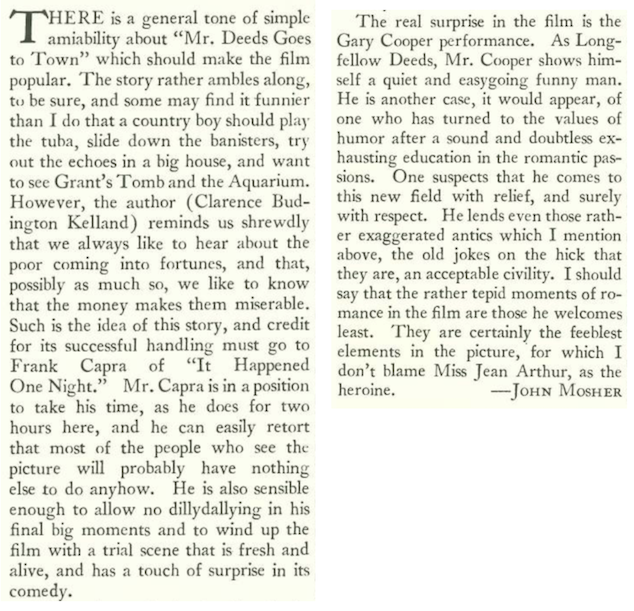
While we are talking movies, Mosher also reviewed Frank Capra’s Mr. Deeds Goes to Town. Films such as Mr. Deeds and It’s a Wonderful Life were Capra’s “love letters to an idealized America—a cinematic landscape of his own invention,” wrote social critic Morris Dickstein. Or as actor/director John Cassavetes once observed: “Maybe there really wasn’t an America, it was only Frank Capra.” Whatever it was, Mr. Deeds would win Capra his second Oscar for Best Director (he would win three in all, plus a fourth for a World War II documentary).
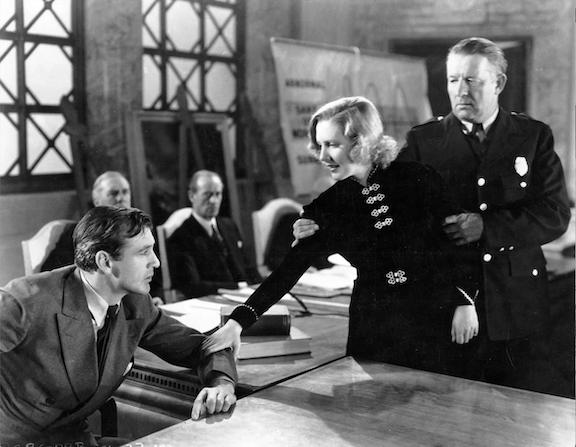
HAPPY ENDING…Mr. Deeds (Gary Cooper) finds love and salvation with Jean Arthur in Mr. Deeds Goes to Town. (britannica.com)

 * * *

Ah-Choo!

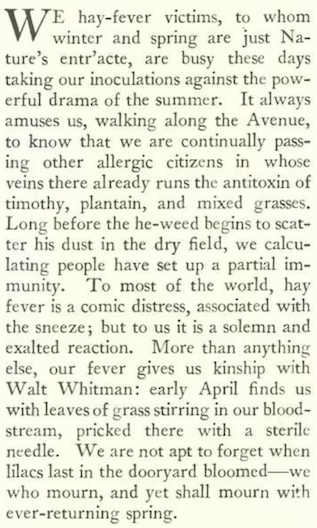
Those familiar with E.B. White’s writings are likely familiar with his lifelong struggle with hay fever, or “catarrh” as it was also referred to in those days. White notably wrote about his condition in a 1938 New Yorker essay, “Daniel Webster, the Hay Fever, and Me.” He addresses the malady in his April 25, 1936 “Notes and Comment” column:
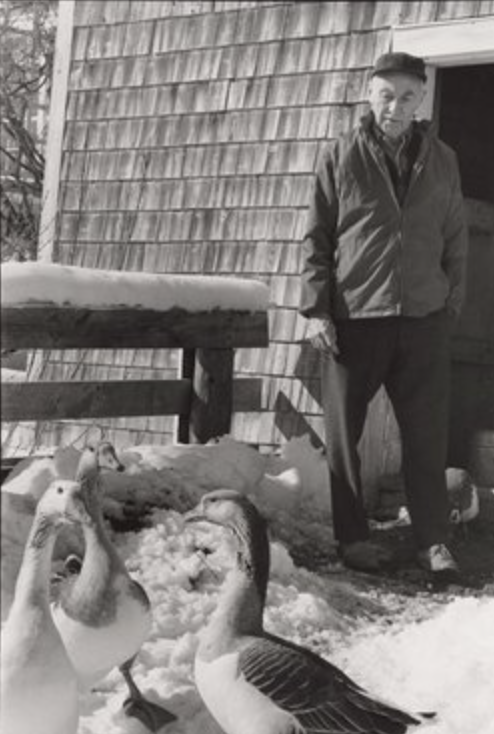
SNEEZING AND HONKING…Despite his allergies, E.B. White had a deep love for the countryside and nature. Although he grew up just outside New York City, he cultivated a love of rural life that was finally realized when he and wife Katharine bought a farm near Brooklin, Maine. Above is a 1974 photo (by Jill Krementz) of White at his Maine farm. (cornell.edu)

One of the more common and effective treatments for allergies in the Thirties was the benzedrine inhaler. The active ingredient was amphetamine. It was safe if inhaled, however some folks got the idea to crack open the inhaler and swallow the contents, which would induce a mind-altering effect (the amount of amphetamine in the inhaler was 250 milligrams, much greater than the five or ten milligrams in tablets prescribed for depression).

NOT SHIRLEY TEMPLE, however the marketers of the inhaler probably wanted consumers to make the connection. (mcgill.ca)

 * * *

Before the Internet

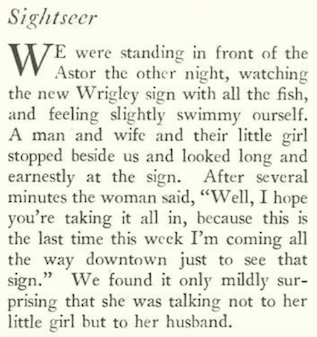
What did some folks do in the evening before modern-day distractions? According to “The Talk of the Town,” at least one man and his family loved to gawk at the new Wrigley sign in Times Square.
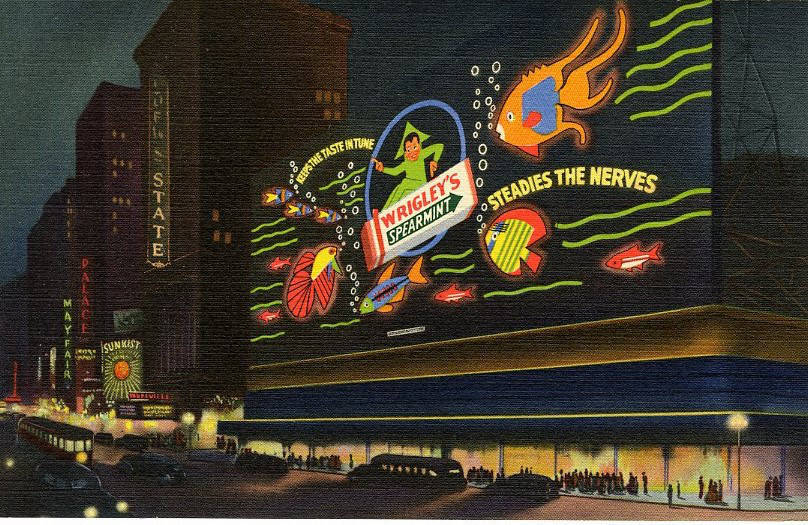
CHEW ON THIS…The Wrigley sign spanned the block on Broadway from 44th Street to 45th Street. Designed by artist Dorothy Shepard, the display featured fish blowing bubbles and was lit by 29,608 lamps and 1,084 feet of neon tubing. It was so large that its electrical power usage was estimated to be equivalent to a small city of ten thousand people. (Wikipedia)

* * *

From Our Advertisers

White Rock continued its series of brightly illustrated ads, this most likely the work of noted illustrator John Holmgren

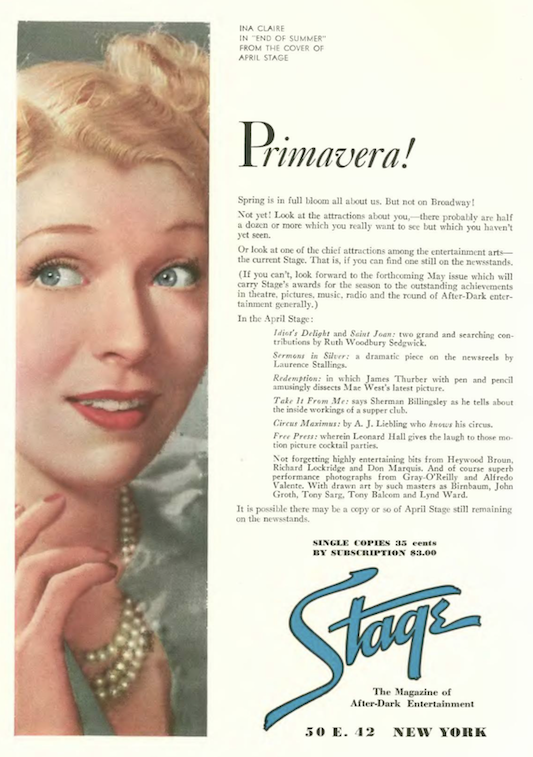
Stage magazine continued to promote its star-studded content in full-page color ads…this one featured American stage and film actress Ina Claire

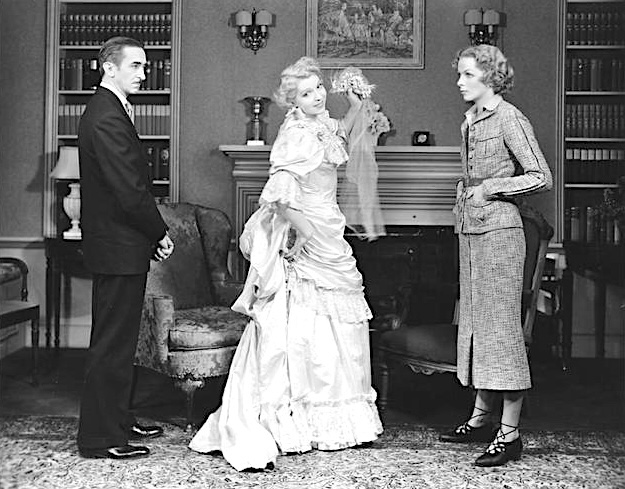
Ina Claire, center, with Osgood Perkins and Doris Dudley in End of Summer. (jacksonupperco.com)

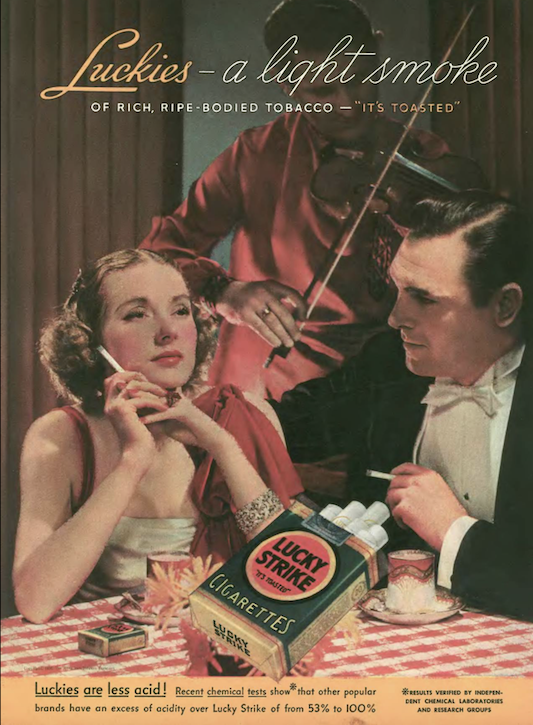
…ah, the pleasure of an after-dinner Lucky back in the day when you could still smoke indoors…
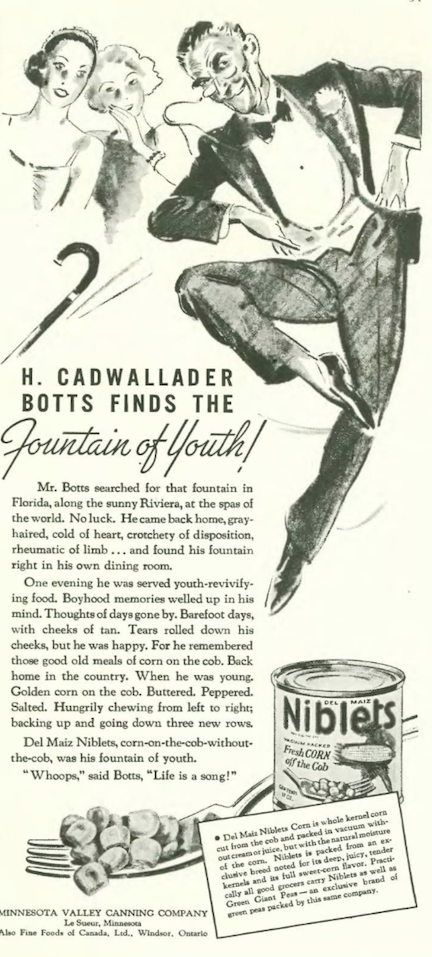
…another ad for Green Giant Niblets featuring a rich old toff who’s just over the moon about canned corn…
…these surreal Lyse Darcy ads for Guerlain really stood out in the magazine…

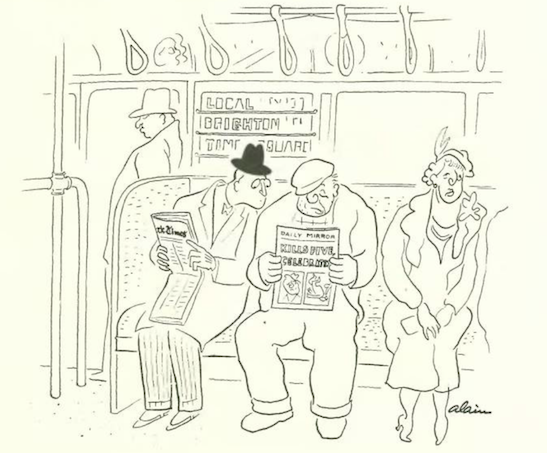
…speaking of standing out, who could resist the distraction of a tabloid, especially with the Gray Lady folded in one’s lap?…Alain illustrates…
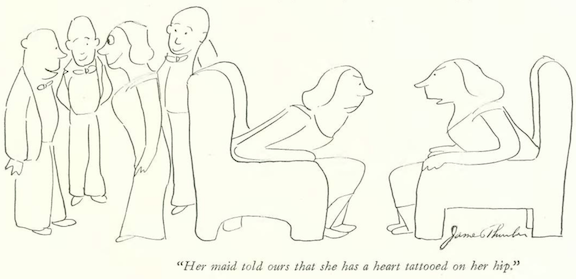
…and per James Thurber, who was immune to the charms of a woman with a heart tattooed on her hip?…
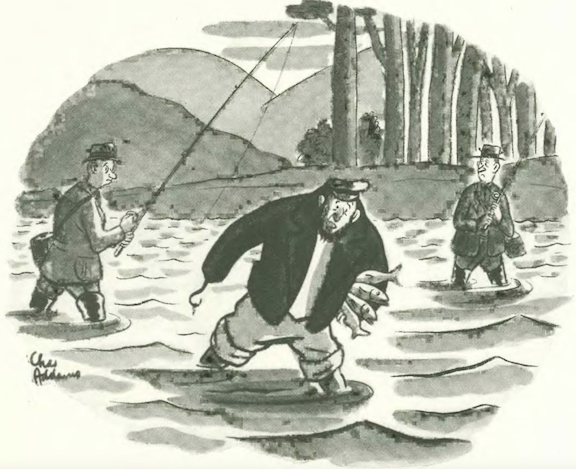
Charles Addams showed us a man with a built-in fishing advantage…
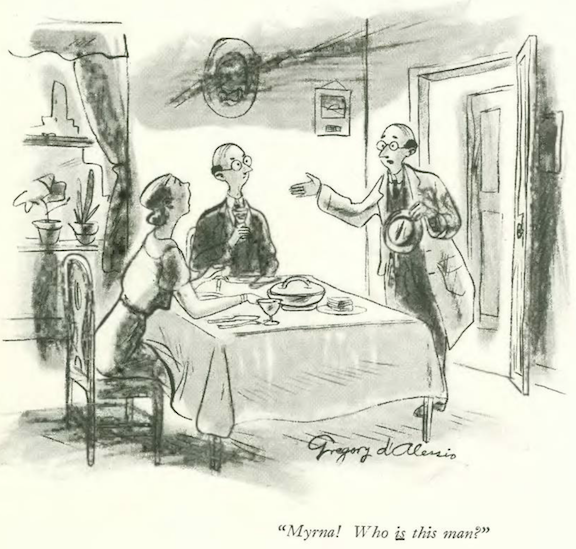
Gregory d’Alessio gave us an understandable marital mix-up…
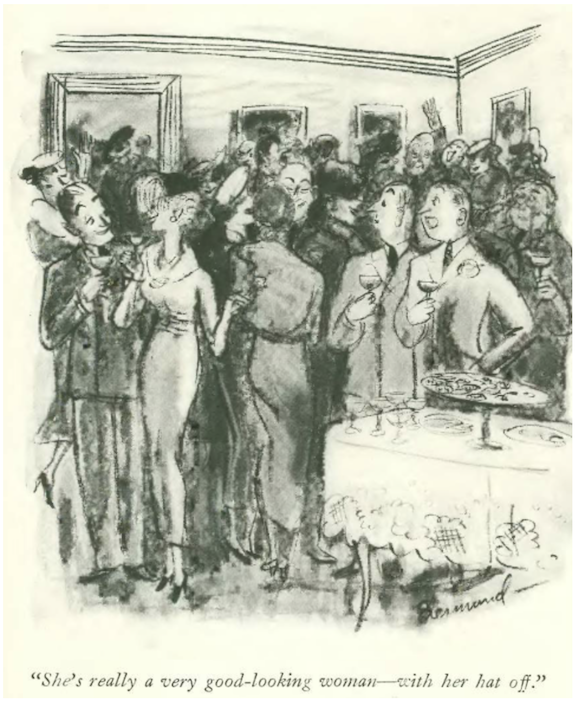
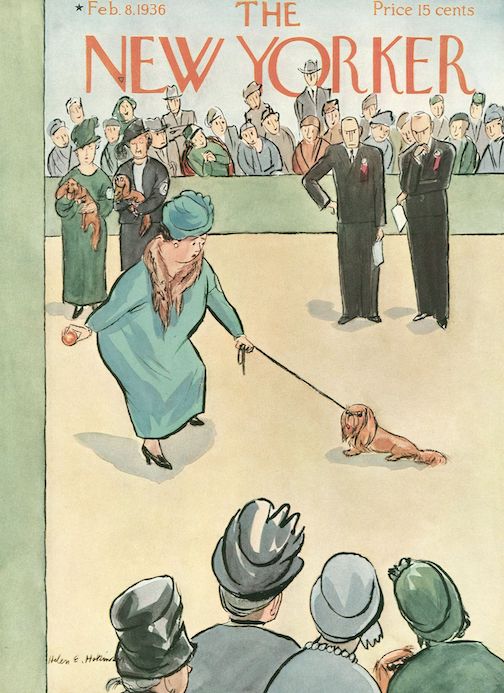
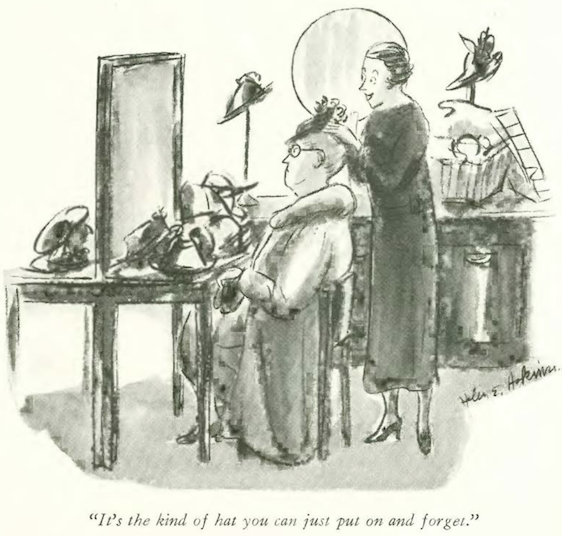
Helen Hokinson offered a dose of “meh” in the hat department…
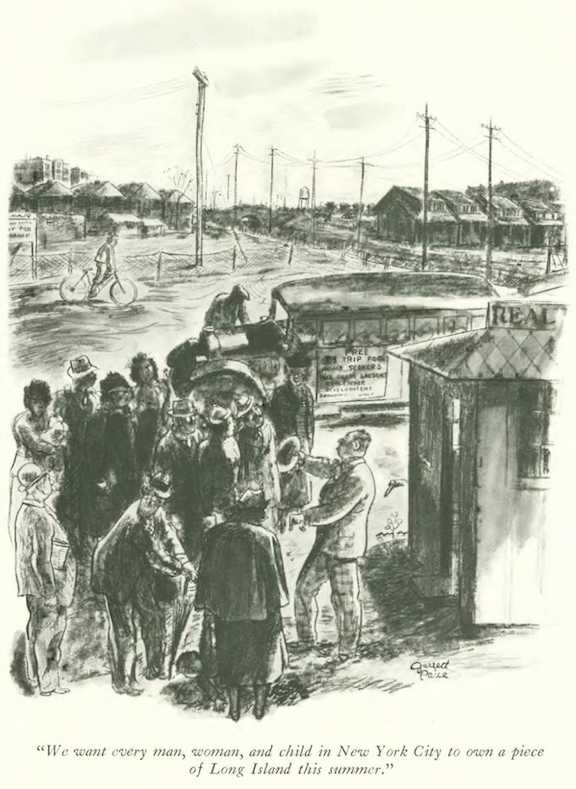
Garrett Price showed us the consequences of Robert Moses’s transformation of Long Island from a rural area for the rich into a suburban landscape for the hoi polloi…
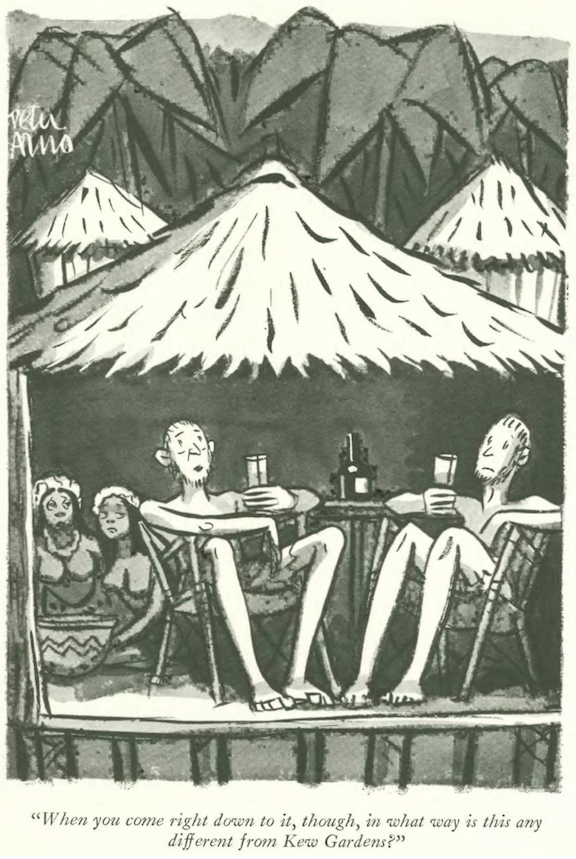
…and we close with Peter Arno, who wondered what’s the fun of drinking in the tropics when you can do the same thing in Queens…

Next Time: A Safari Under Glass…
 

Having a Ball

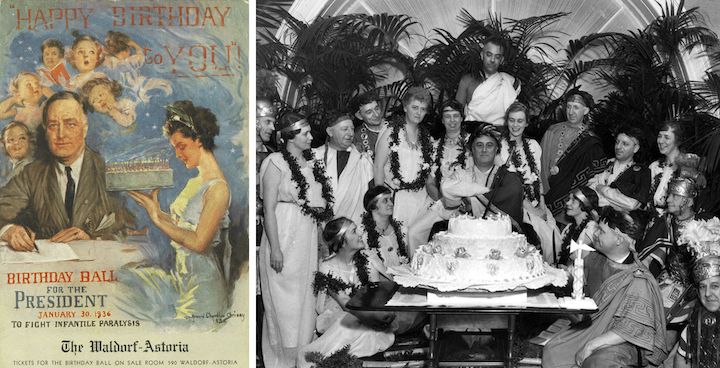
 Above: Beginning in 1934, the President’s Birthday Balls became annual fundraisers for polio research. The Waldorf-Astoria's 1936 event (left) featured dance bands, celebrities, and formal dress. At right, a 1934 "Toga Party" birthday with FDR's Cuff Link Gang, Washington D.C. (fdrlibrary.org)

President Franklin D. Roosevelt’s birthday was a cause for annual celebration throughout the country, where cities and towns both large and small used the occasion to raise money for polio research.

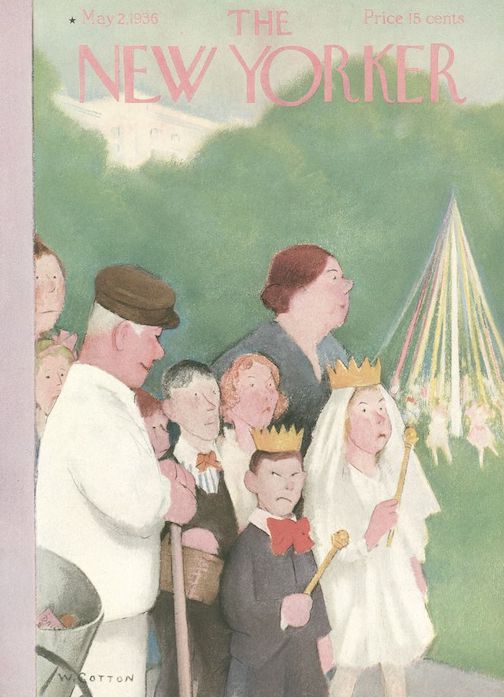
February 1, 1936 cover by Roger Duvoisin.

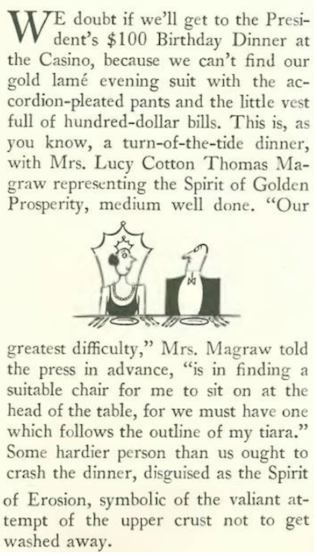
The Jan. 30, 1936 President’s Birthday Ball marked FDR’s 54th year, featuring celebrities, dances, and a national radio address. The Waldorf-Astoria hosted an event, as did the Central Park Casino, where E.B. White found the one-hundred-dollar price tag and the dress code a bit too rich for his tastes, but not too rich for Lucy Cotton Thomas Magraw, a Manhattan social climber who represented the “Spirit of Golden Prosperity” at the Casino event.

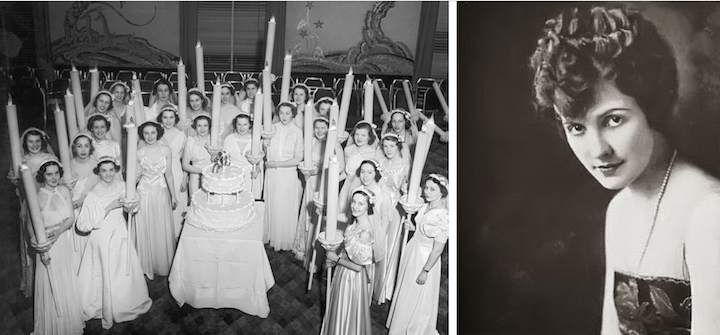
LIKE MOTHS TO FLAME…At left, debutantes mark FDR’s birthday fundraiser at the Waldorf-Astoria in the 1930s; at right, Lucy Cotton Thomas Magraw (1891–1948) was a chorus girl from Houston who appeared in several silent films, but was best known as a Manhattan social climber and for her marriages to a series of prominent men. (wwd.com/davidkfrasier.com)

FDR himself was diagnosed with polio in 1921, which left him paralyzed from the waist down. To counter the effects of the disease, Roosevelt explored the potential benefits of hydrotherapy, establishing a rehabilitation center at Warm Springs, Georgia. Proceeds from the charity balls went to Warm Springs until Roosevelt founded the National Foundation for Infantile Paralysis in 1938. Funds raised by the foundation supported the development of a vaccine by the 1950s.

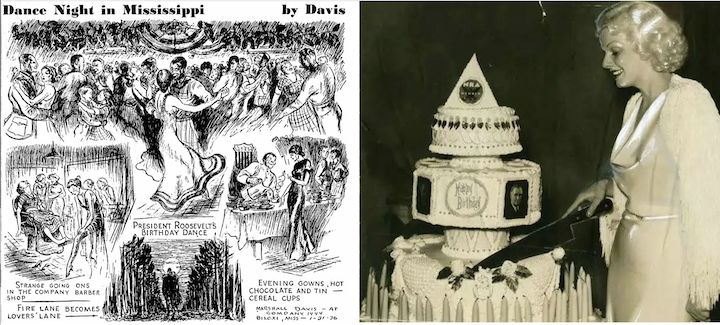
A NIGHT OF MERRIMENT…Celebrations in CCC camps in honor of FDR’s birthday became annual events, such as the one at left (illustrated by Marshall Davis) that depicted various happenings at the 1936 President’s Birthday Dance in Biloxi, Mississippi; at right, actress Jean Harlow cutting FDR’s birthday cake at the Eastbay Birthday Ball in Oakland, CA, in 1934. (newdealstories.com/facebook.com)

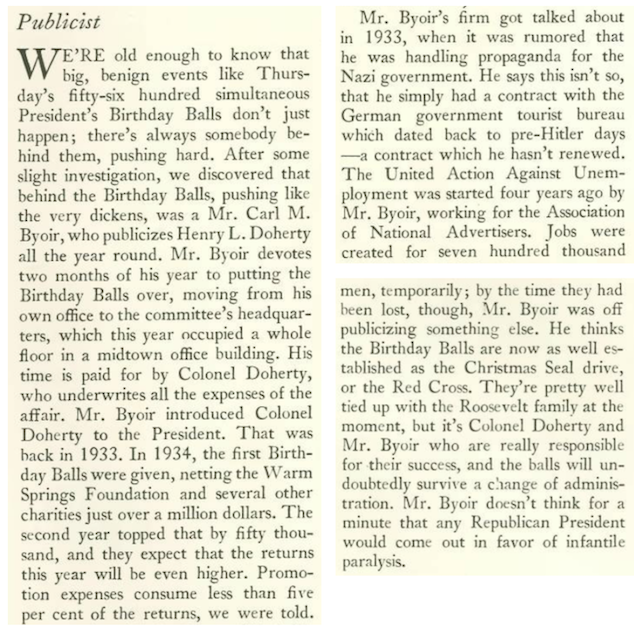
“The Talk of the Town” noted the role of Carl M. Byoir, a pioneering publicist, in creating the buzz around the yearly birthday balls.

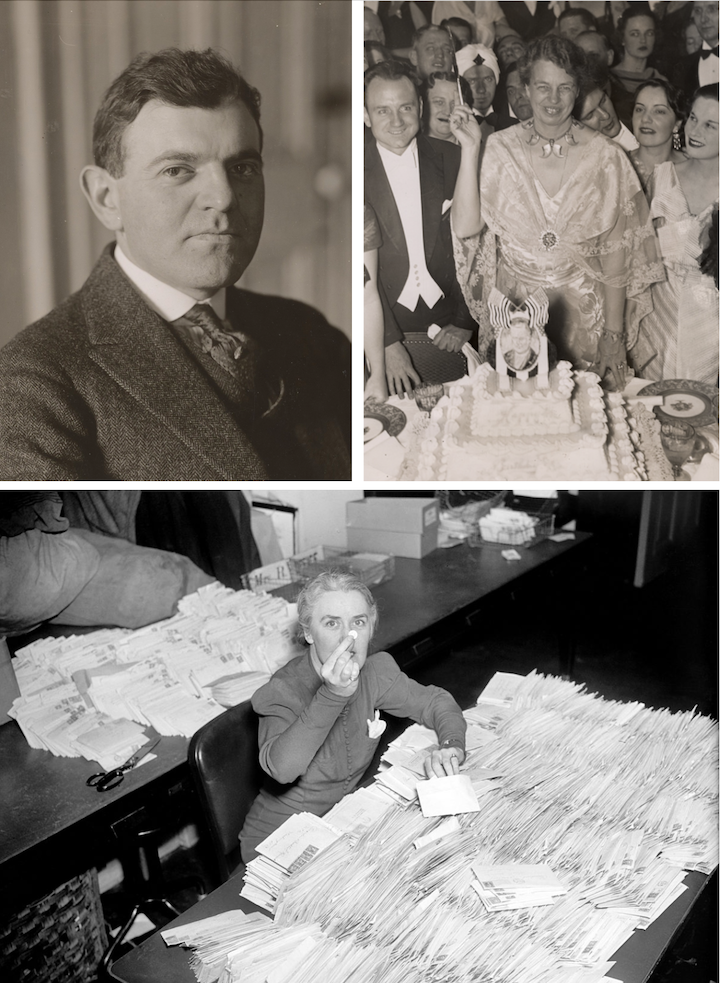
CAN YOU SPARE A DIME?…Clockwise, from top left, Carl Byoir created and organized one of the world’s largest public relations firms in 1930, and was a force behind making the FDR Birthday Balls a major national event; Eleanor Roosevelt cuts the cake at a Birthday Ball, Washington, D.C., Jan. 30, 1936; Margaret Lehand, personal secretary to President Roosevelt, holds up one of the 30,000 dimes received on the morning of Jan. 28, 1938 for FDR’s National Foundation for Infantile Paralysis, which would later become the March of Dimes. (Wikipedia)
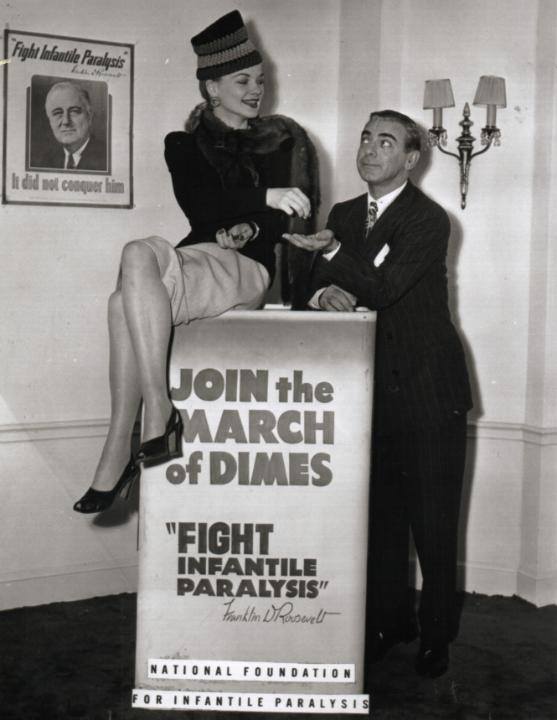
COIN FOR A CAUSE…As we saw in the previous post, it was comedian Eddie Cantor who coined the phrase “March of Dimes” for the annual fundraiser for polio research. The phrase later became the official name of the National Foundation for Infantile Paralysis. (Facebook)

The Roosevelt Dime went into circulation in 1946, commemorating FDR’s role in inspiring the March of Dimes.

 * * *

Rap on Scrap

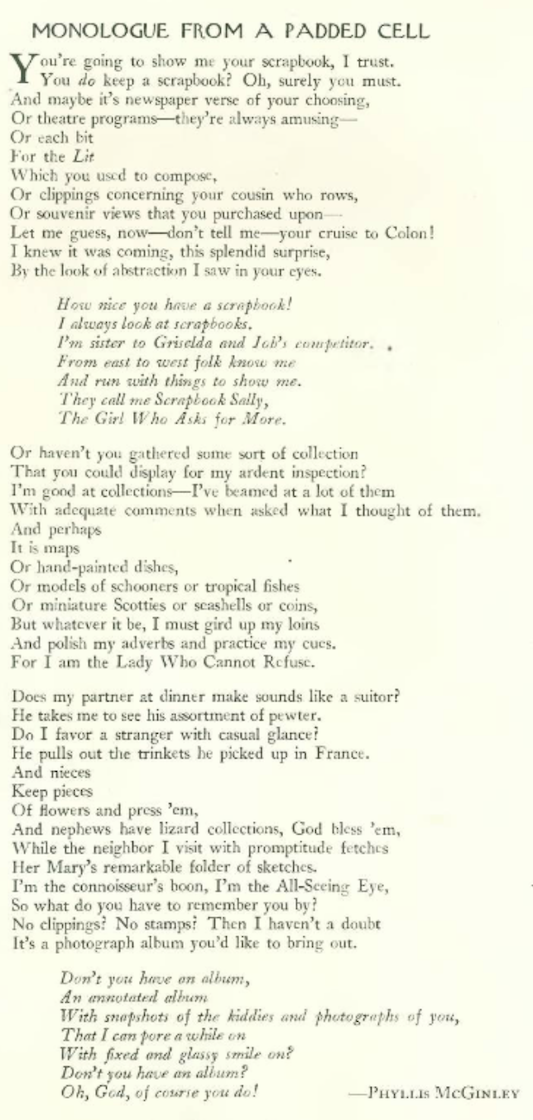
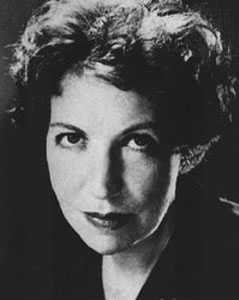
Poet and author Phyllis McGinley apparently had her fill of social occasions that included interminable, tedious viewings of the hosts’ scrapbooks, photo albums, and various tchotchkes.

SPARE ME YOUR VACATION SLIDES…Phyllis McKinley would have hated Facebook. (Wikipedia)

 * * *

Wise Guy

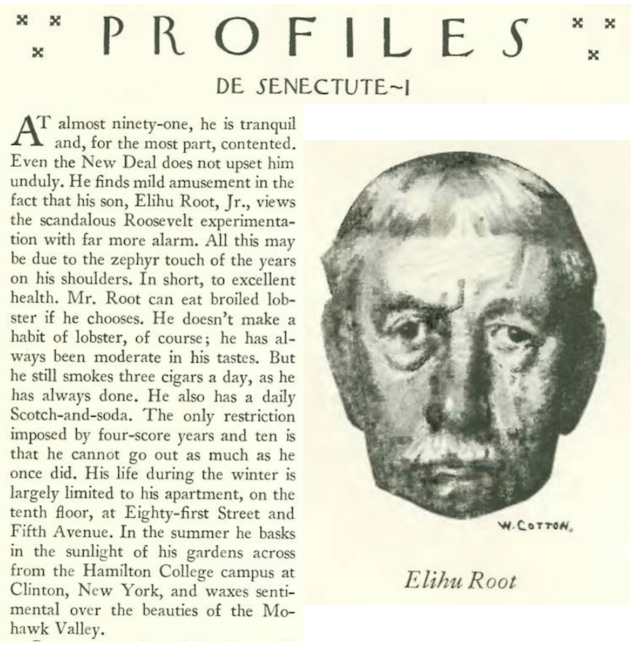
Henry F. Pringle published the first part of a three-part profile on Elihu Root, making much of the fact that Root (1845–1937) was still kicking at ninety after a lifetime of public service including two stints as Secretary of War and serving as Secretary of State under President Theodore Roosevelt. Unofficially, he advised a number of presidents and other leaders on foreign and domestic issues, giving him the imprimatur of a political “wise man.” A brief excerpt (with caricature by William Cotton):

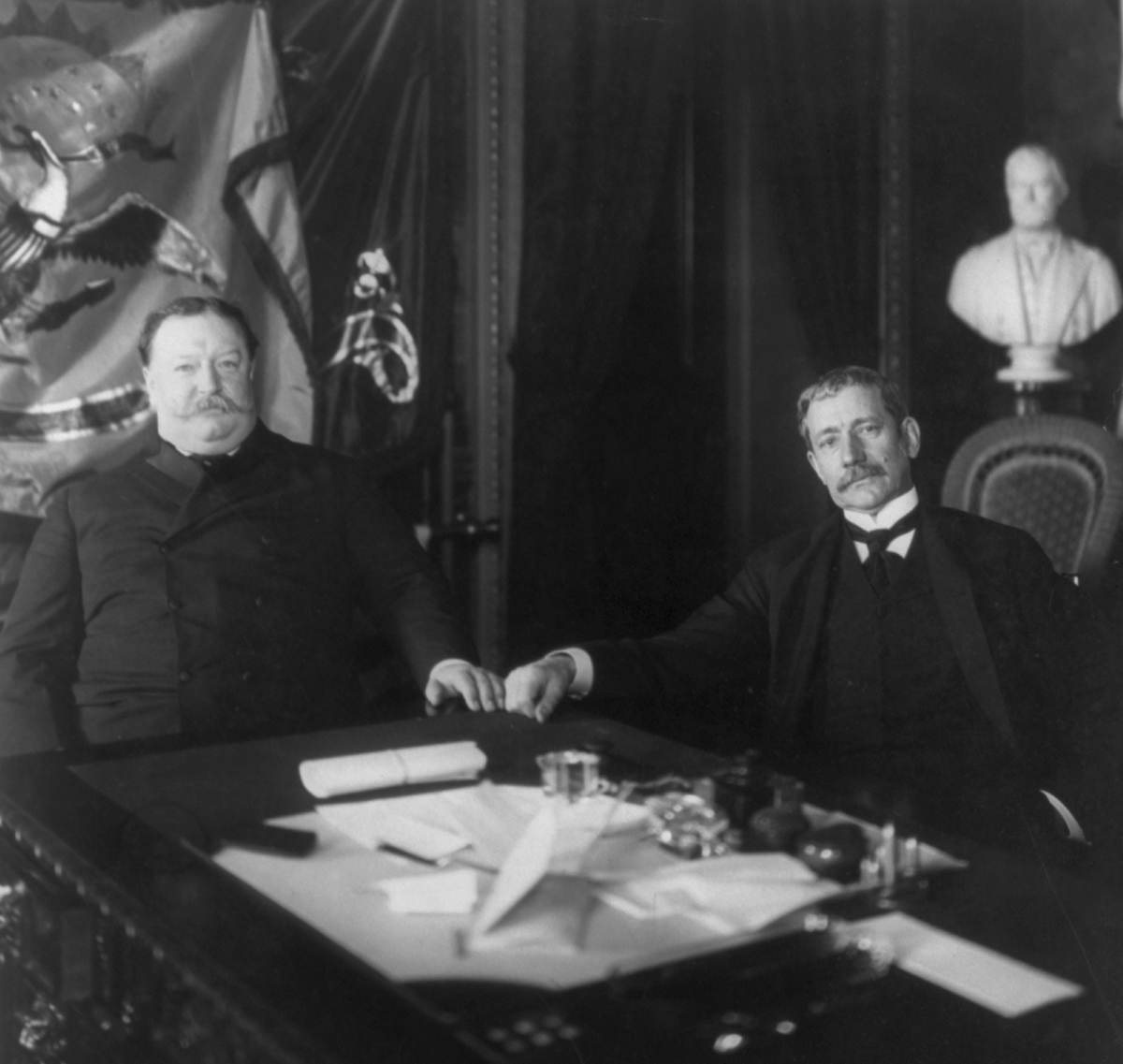
WAR BUDDIES…U.S. Secretary of War Elihu Root (right) and his successor, William Howard Taft, c. 1904. Taft was elected U.S. President in 1908, and in 1912 Root would receive the Nobel Peace Prize. (Wikipedia)

 * * *

Devastating Irony

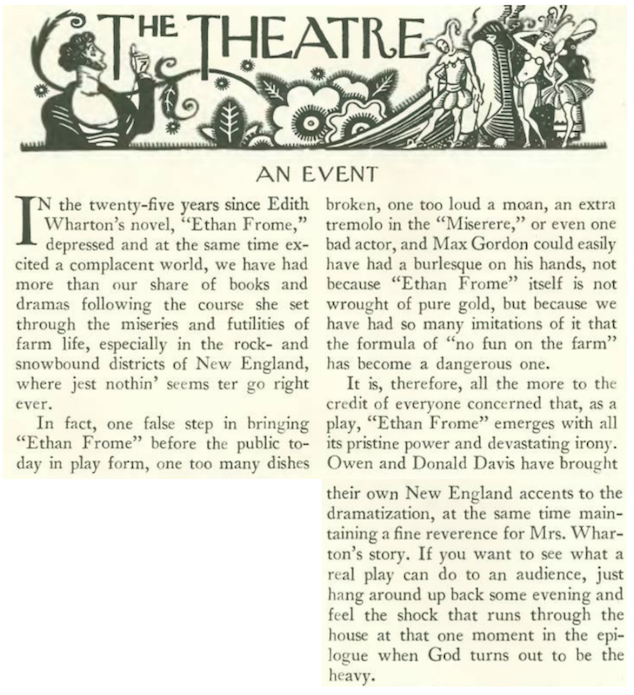
According to critic Robert Benchley, the adaptation of Edith Wharton’s novel Ethan Frome to the stage required a precise hand, and apparently director Max Gordon delivered when it opened at the National Theatre. Excerpt:

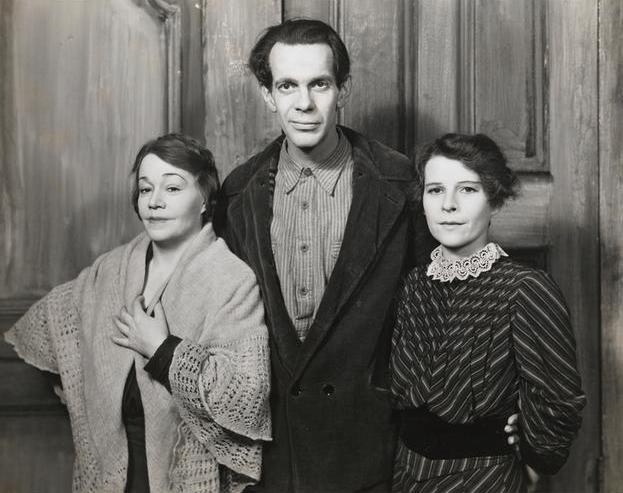
EDITH WHARTON WOULD HAVE BEEN PROUD, according to Robert Benchley, of the stage adaptation of Ethan Frome. The cast, from left, included Pauline Lord, Raymond Massey, and Ruth Gordon. Benchley would have been well acquainted with Gordon, who was a familiar face at the Algonquin Round Table. (Facebook)

Benchley praised the performances of the principal actors Pauline Lord, Raymond Massey, and Ruth Gordon.

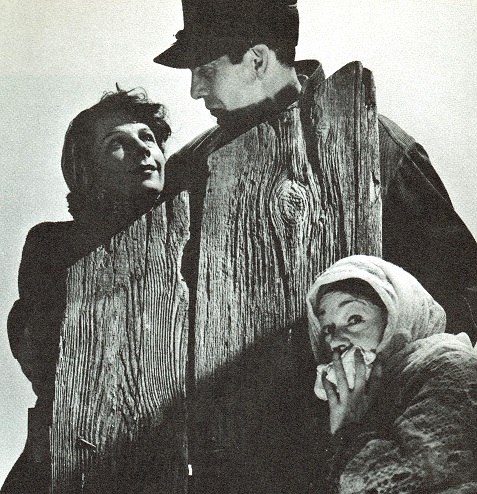
IN FINE FORM…Pauline Lord, Raymond Massey, and Ruth Gordon in a publicity still for Ethan Frome. (witness2fashion.com)

 * * *

At the Movies

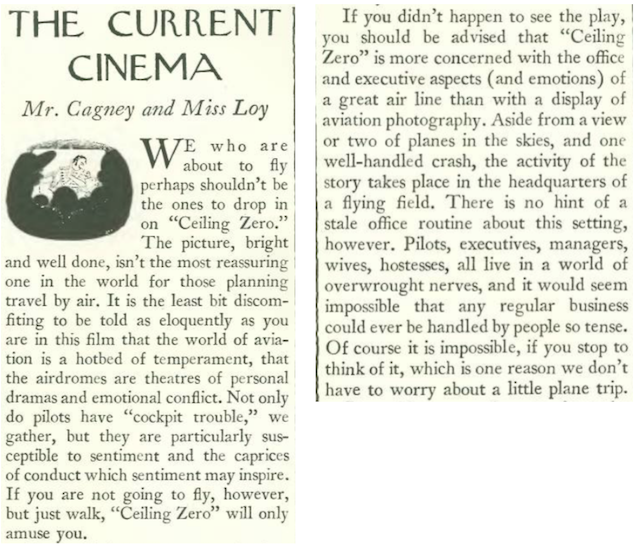
We take to the air with Howard Hawks’ Ceiling Zero, which featured an odd mix of screwball dialogue and nerve-wracking flight scenes. Critic John Mosher found the film to be well done, even though most of its action took place on the ground.

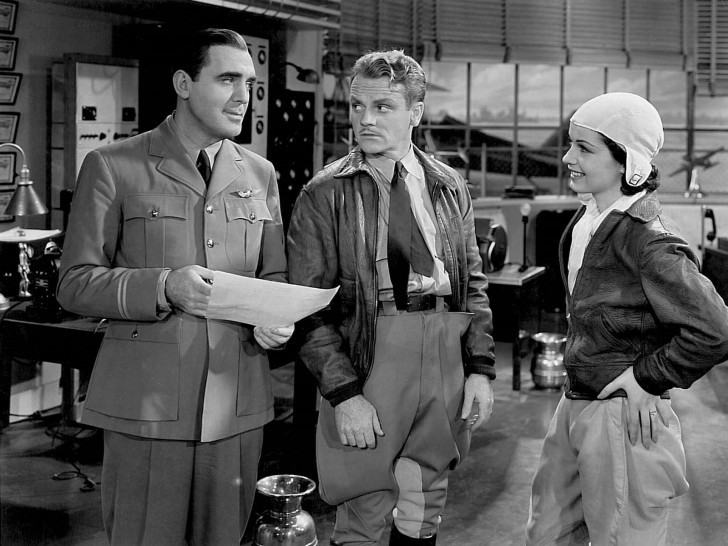
GROUNDED…Shot a shoestring budget, Warner Brothers’ Ceiling Zero, directed by Howard Hawks, staged most of the action at an airline’s headquarters rather than up in the air. From left are Pat O’Brien, James Cagney, and June Travis. (Harvard Film Archive)

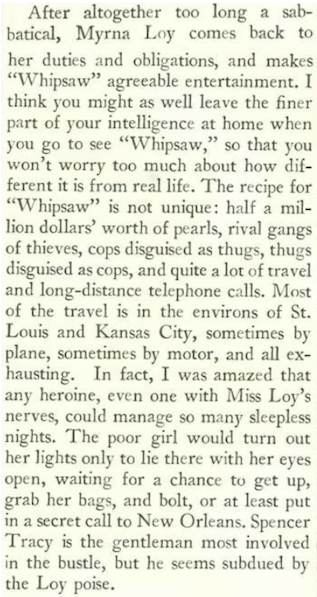
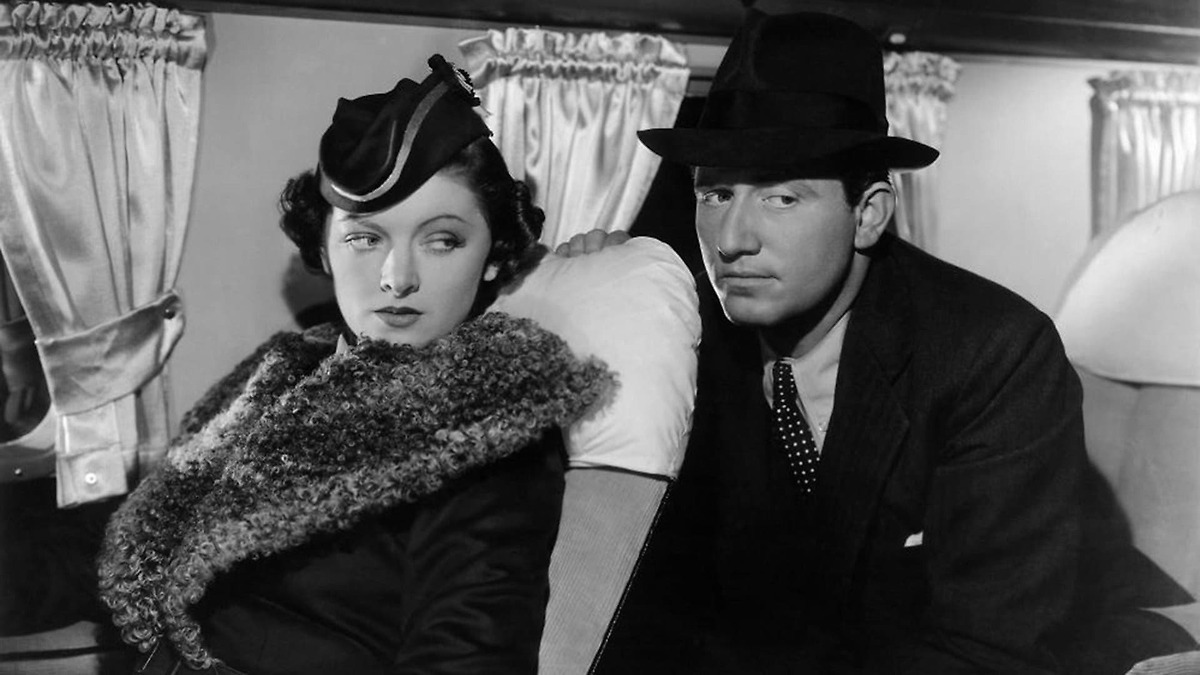
Mosher was also happy to welcome Myrna Loy back to the silver screen in the “agreeable” Whipsaw.

HUSTLE AND BUSTLE…Myrna Loy and Spencer Tracy starred in action-packed crime drama Whipsaw. (Letterboxd.com)

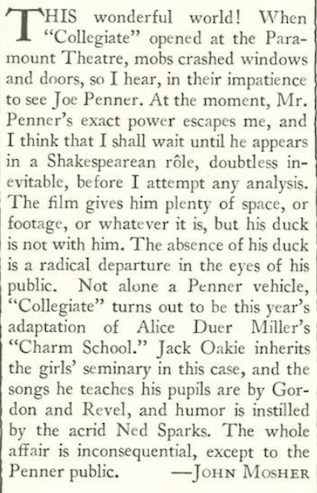
Mosher was at a loss to explain the popularity of comedian Joe Penner, whose presence in the film Collegiate inspired impatient “mobs” to crash the windows and doors of the Paramount Theatre.

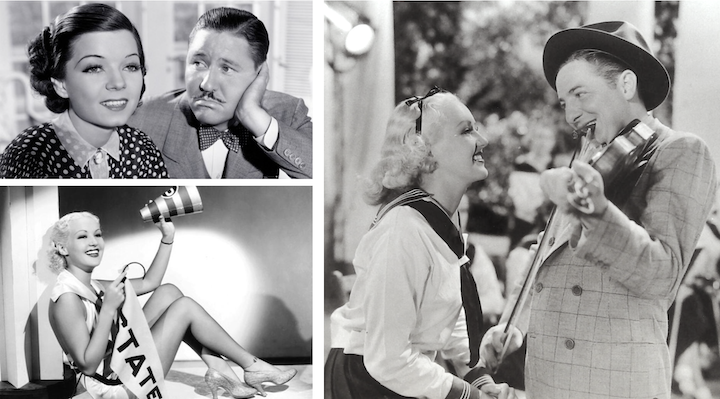
INCONSEQUENTIAL was the word John Mosher used to describe Collegiate. Clockwise, from top left, Frances Langford and Jack Oakie in a scene from Collegiate—Oakie played a man who inherits an all-girls school from his aunt; Betty Grable with Joe Penner; Grable shows off her school spirit and her famous legs in a publicity photo. (rottentomatoes.com/imdb.com)

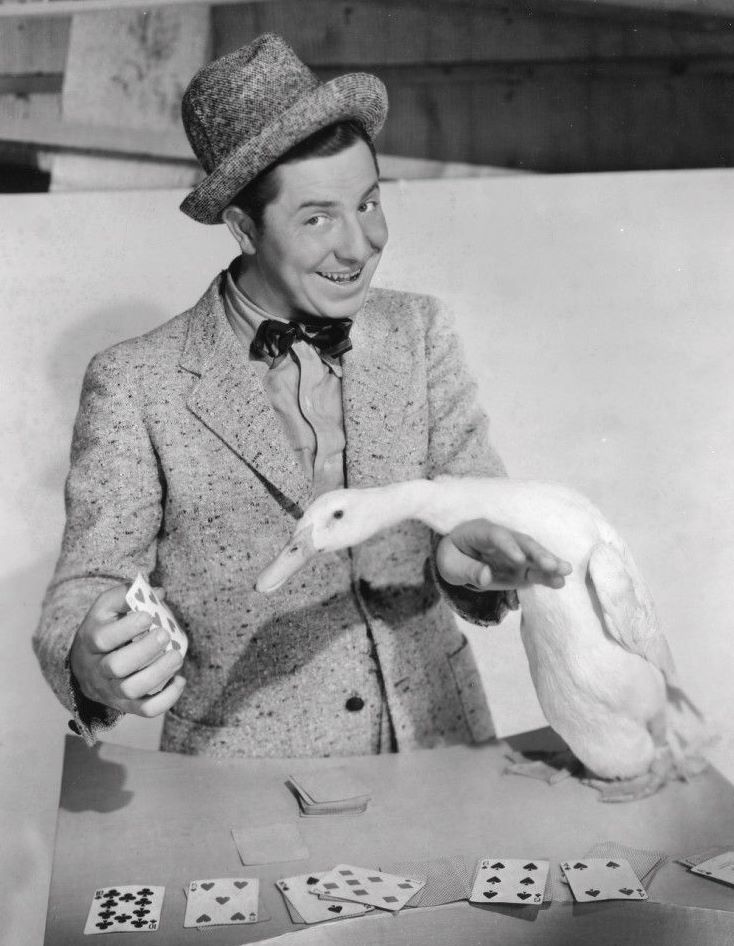
About Joe Penner (1904–1941): Broadcast historian Elizabeth McLeod sums up Penner’s popularity as “the ultimate Depression-era zany.” Mostly forgotten today, Penner was a national craze in the mid-1930s. “There is no deep social meaning in his comedy, no shades of subtlety,” writes McLeod, “just utter slapstick foolishness, delivered in an endearingly simpering style that’s the closest thing the 1930s had to Pee-wee Herman.”

WANNA BUY A DUCK? was Joe Penner’s catchphrase. Born József Pintér in what is now Serbia, he is shown here with his ubiquitous duck, Goo Goo. According to historian Elizabeth McLeod, Penner was doomed to an early decline by the sheer repetitiveness of his format. He died in his sleep, of a heart attack, at age 36. (imdb.com)

 * * *

Something Completely Different

We go from Joe Penner to George Santayana, who finished the six-hundred-page The Last Puritan after laboring on the novel for fifteen years. A brief excerpt from a Clifton Fadiman review:

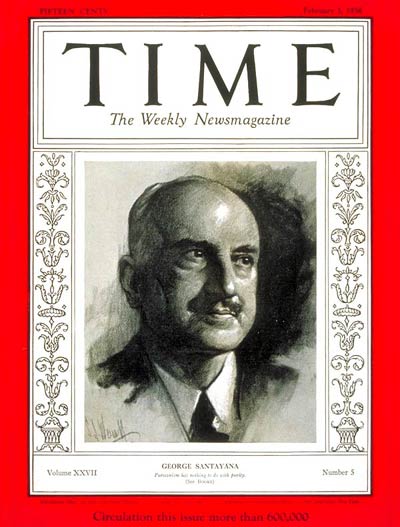
WHEN WRITERS MADE THE COVER…George Santayana on the cover of Time, Feb. 3, 1936. (Time.com)

* * *

From Our Advertisers

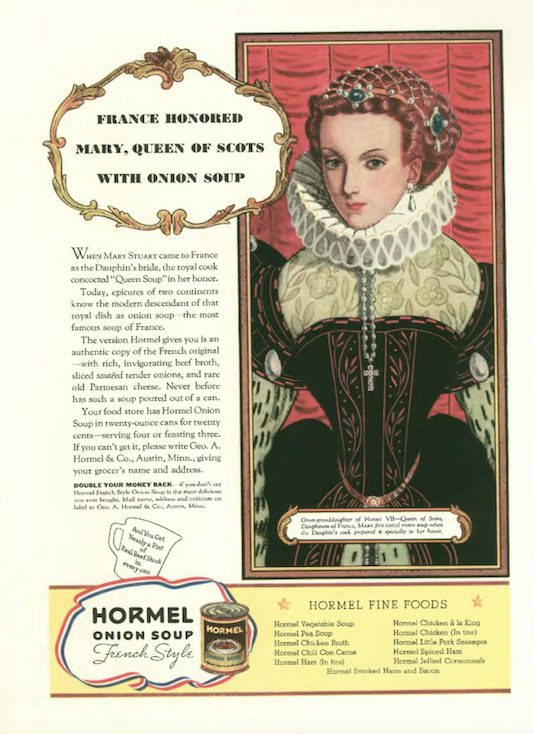
The folks at Hormel continued their ad series pairing Hormel French Style onion soup with notable historic figures…apparently Mary, Queen of Scots was honored with some onion soup when she married the Dauphin in 1558…nearly three decades later she would lose her head under the reign of Elizabeth I

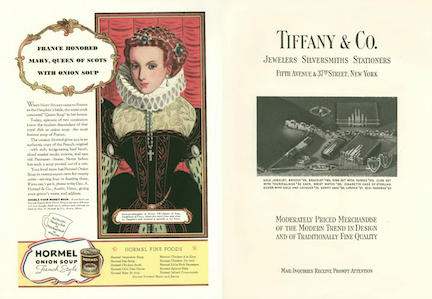
…the opening spread of the magazine sometimes offered odd juxtapositions…
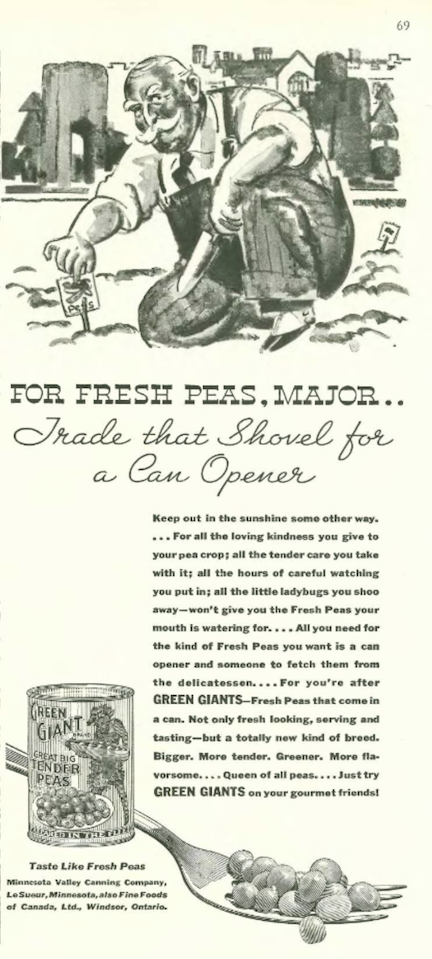
…and what was this obsession with peas?…last week (and previous weeks) the makers of Green Giant canned foods featured a “Major” obsessed with fresh peas…
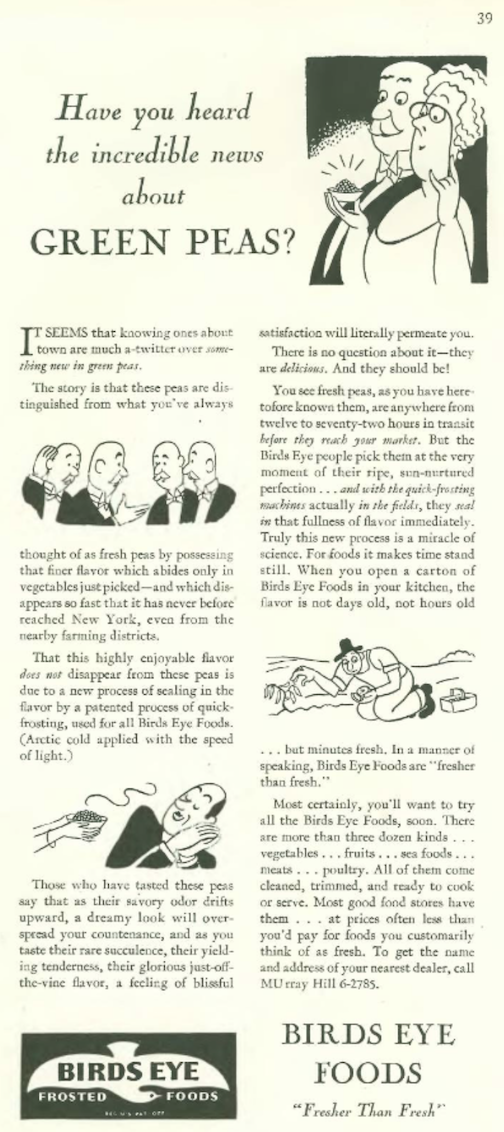
…in this issue, the folks at Birds Eye presented frozen peas as a fresher alternative to canned…the ad featured their own version of a “Major,” here sharing the wonderful news about frozen peas with his cronies…

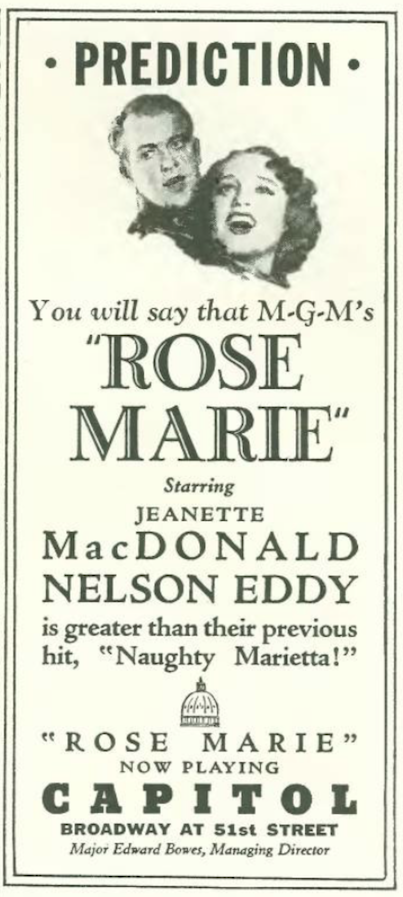
…Capitol Theatre predicted that their latest feature, Rose Marie, would be even better than Naughty Marietta

…and apparently it was…

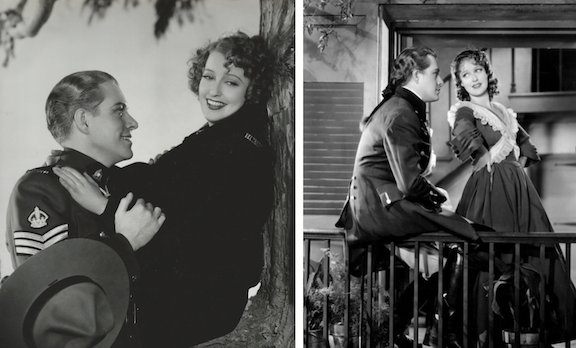
WHEN I’M CALLING YOOOOUUUU…The Capitol Theatre’s prediction came true—Rose Marie was a big hit, as was the duet “Indian Love Call” (it remained a signature song for both actors); at left, Nelson Eddy and Jeanette MacDonald in Rose Marie; at right, Eddy and MacDonald in 1935’s Naughty Marietta. “America’s Singing Sweethearts” made eight films together. (MGM)

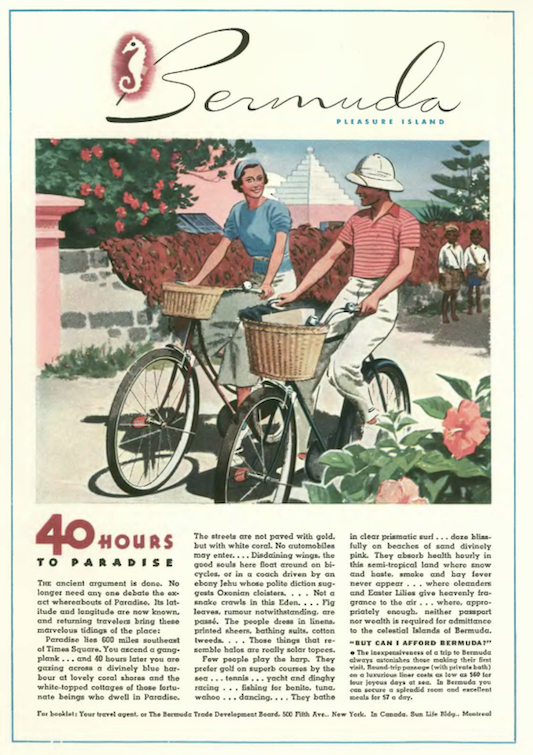
…only forty hours to paradise, claimed this ad on the inside back cover…

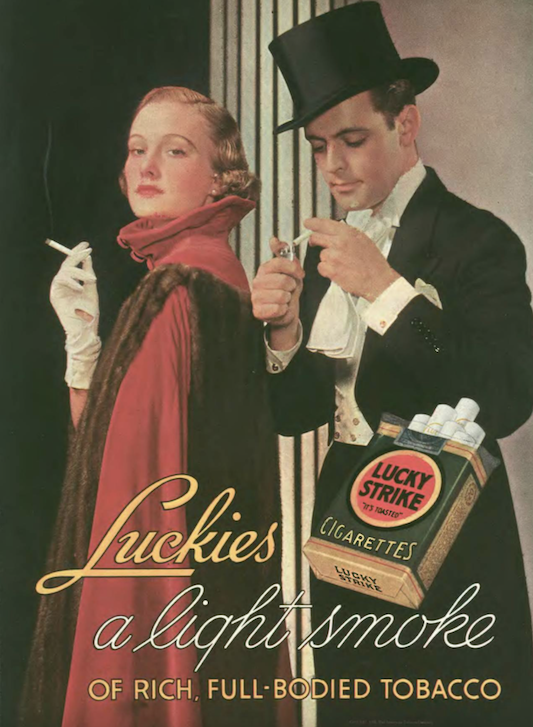
…and on the back cover, readers were greeted by a smug, almost withering look—a fashionable woman striking a pose, one that was doubtless imitated by many in the smart set who would soon realize they were hopelessly addicted to nicotine…

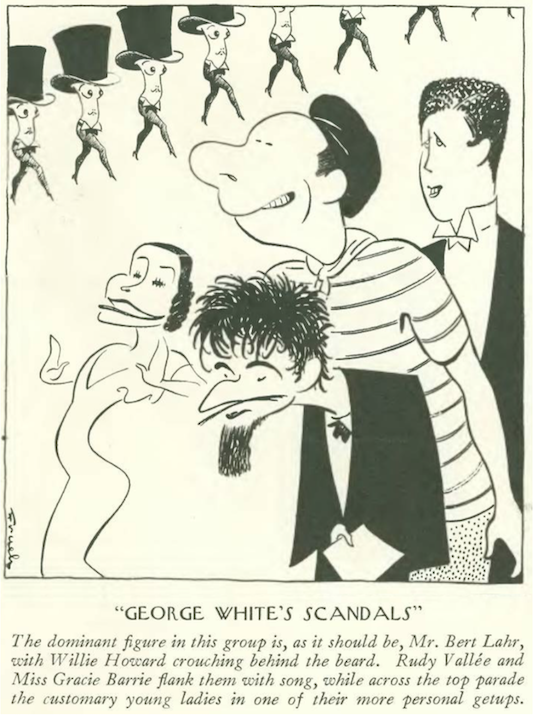
…on to our cartoonists, we begin with Al Frueh and his topless tribute to George White’s Scandals

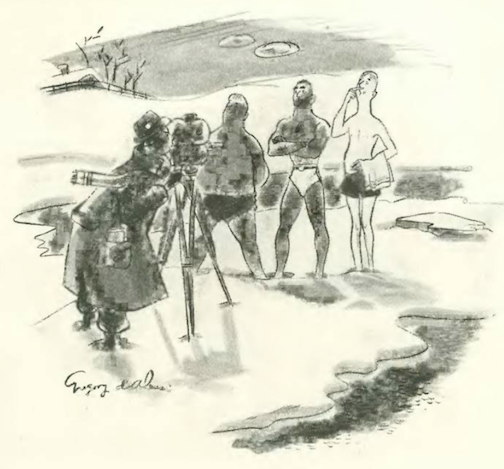
Gregory d’Alessio drew up this trio—endomorph, mesomorph, ectomorph—for the opening pages…

…here’s a spot by Robert Day, dreaming of warmer climes…

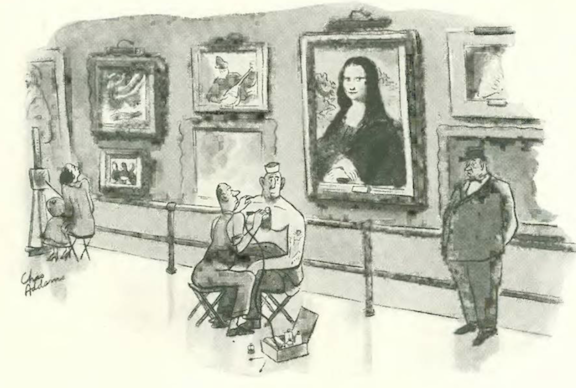
…we join Charles Addams at the Louvre…

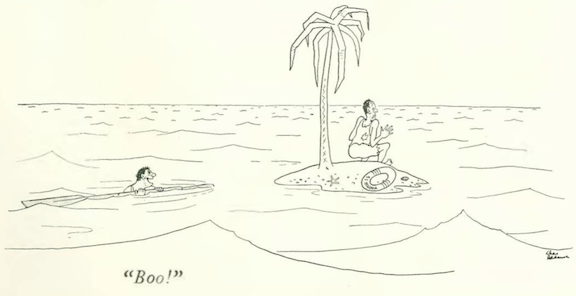
…and on a desert island…

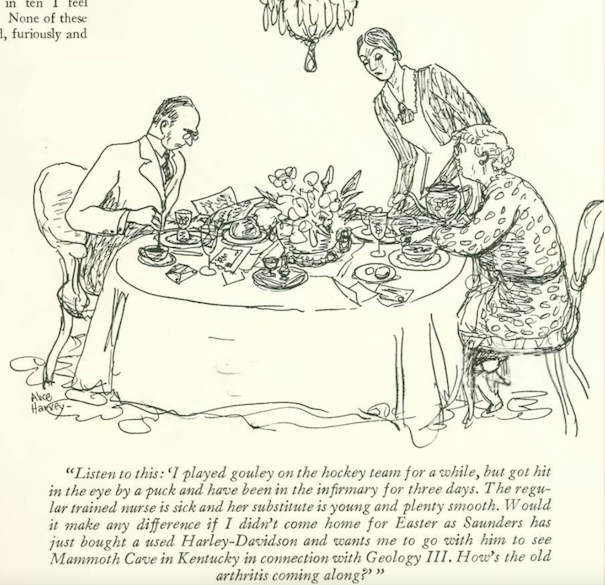
…a rather strange entry by Alice Harvey, with the longest caption I’ve come across so far…

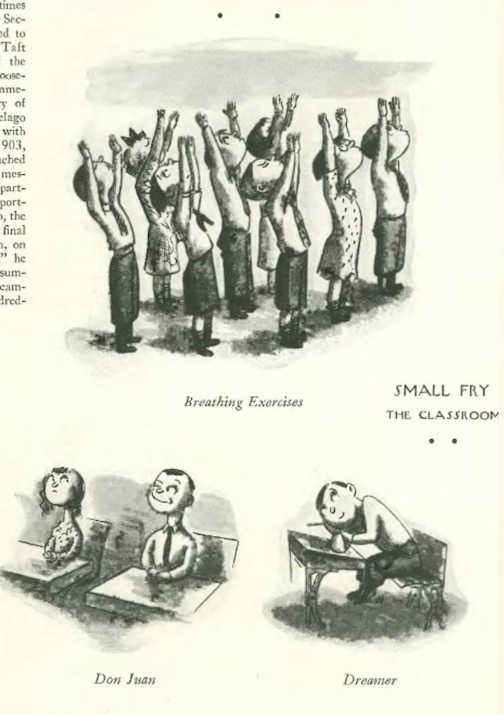
…we join William Steig’s “Small Fry” during a school day, beginning on page 24…

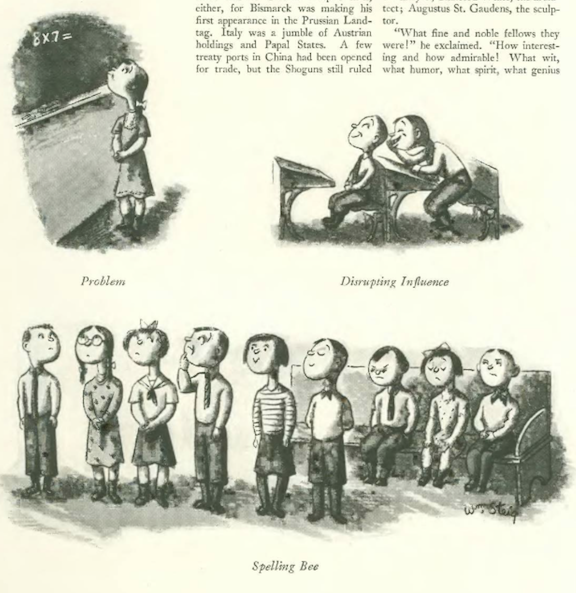
…and continuing onto page 25…

…here is how it originally appeared…

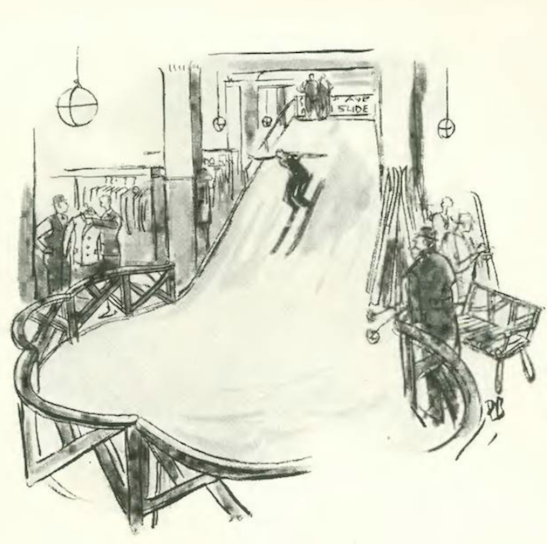
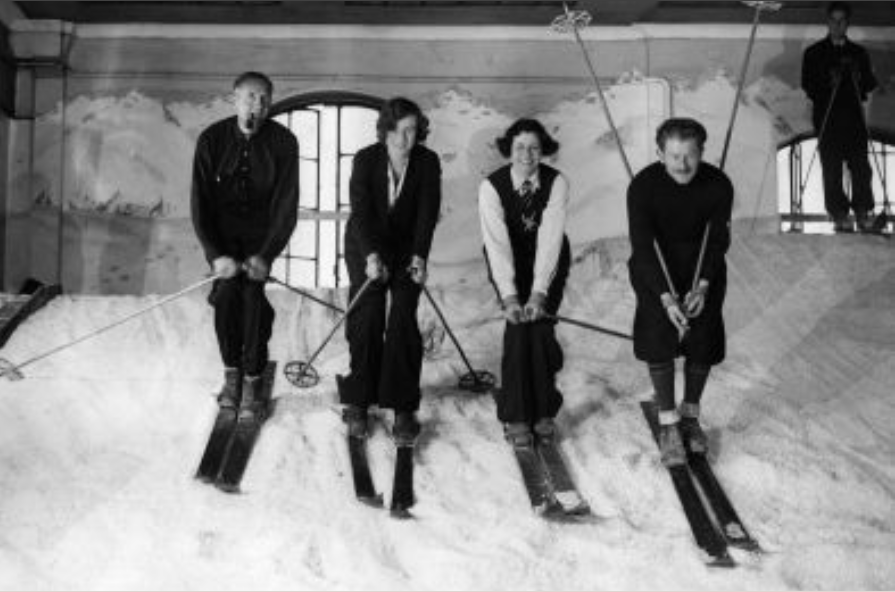
…In 1935, Saks Fifth Avenue installed an indoor ski slope on the men’s floor of its New York City flagship store, here illustrated by Perry Barlow

IT WAS A THING…Ski slope inside Saks Fifth Avenue, New York, 1935. (CNN.com)

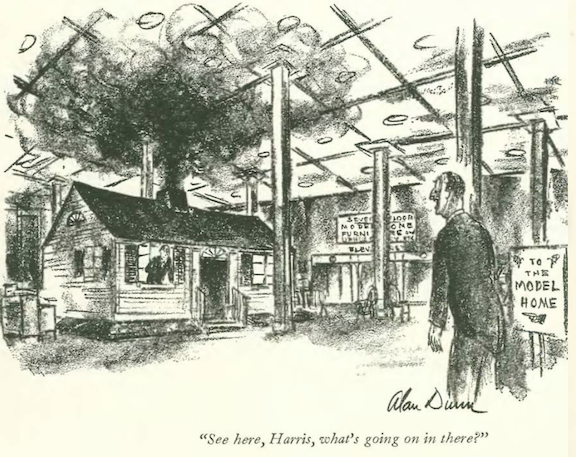
…department stores such as Macy’s often featured model homes in their household departments…Alan Dunn added a bit of color, or rather, soot, to this one…

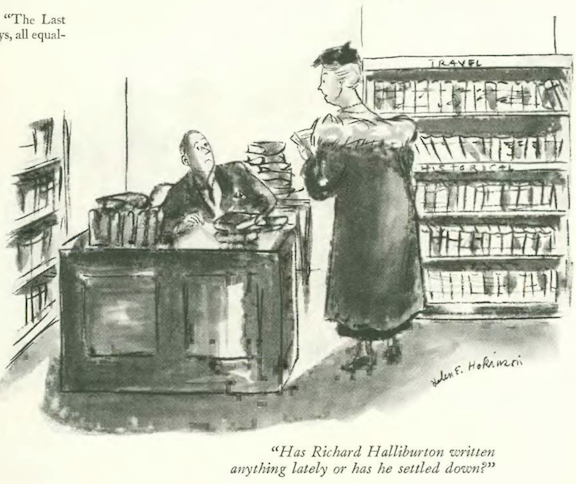
Helen Hokinson looked for answers at a book shop…

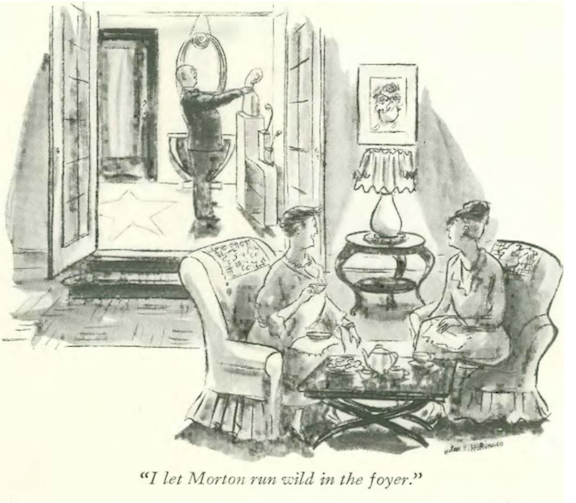
and Hokinson again, doing a bit of home decorating…

…it appears Morton was displaying a copy of Constantin Brancusi’s Princess X…

(sheldonartmuseum.org)

Barbara Shermund engaged in some light banter at a cocktail party…

…and we close with a surprise visit from William Crawford Galbraith

Next Time: The New Ziegfeld…


The Shape of Things to Come

Above: Maurice Passworthy (Kenneth Villiers) and Catherine Cabel (Pearl Argyle) prepare for a trip to the moon in Things to Come. (IMDB)

In his 1933 science fiction novel The Shape of Things to Come, H.G. Wells foresaw how an international economic depression could eventually lead to world war.

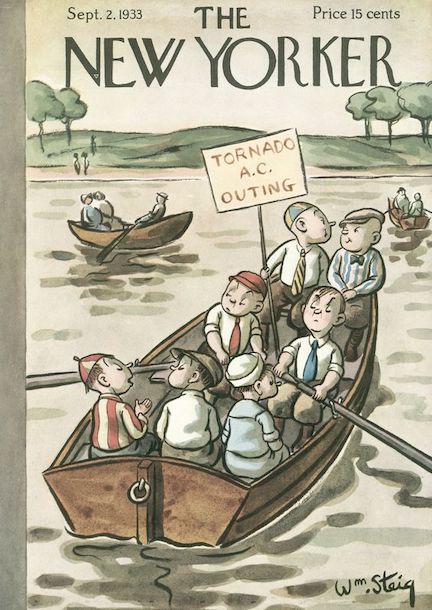
Sept. 2, 1933 cover by William Steig.

The book also predicted that such a war would feature whole cities destroyed by aerial bombing and the eventual development of weapons of mass destruction. However, New Yorker book critic Clifton Fadiman found Wells’ other predictions to be fanciful, “scientific-romantic” notions, such as a post-war Utopia (headquartered in Basra, Iraq, of all places) ruled by super-talents that would advance scientific learning in a world without nation-states or religion. And naturally everyone would speak English.

YOU MAY SAY I’M A DREAMER…H.G. Wells envisioned a world of war, pestilence and economic collapse that would eventually give way to an English-speaking Utopia free of nation-states and religion. (Wikipedia)

Three years later Wells would adapt his book to the screen in 1936’s Things to Come, produced by Alexander Korda and starring Raymond Massey as a heroic RAF pilot John Cabal and Ralph Richardson as “The Boss,” a man who stands in the way of Cabal’s utopian dreams.

FUTURE TENSE…Clockwise, from top left, H.G. Wells visits with actors Pearl Argyle and Raymond Massey on the set of Things to Come—Swiss designer René Hubert created the futuristic costumes; in the year 1970 RAF pilot John Cabal (Massey) lands his sleek monoplane in Everytown, England, proclaiming a new civilization run by a band of enlightened mechanics and engineers; city of the future as depicted in Things to Come; poster for the film’s release. (IMDB)

An afternote: A 1979 Canadian science fiction film titled The Shape of Things to Come was supposedly based on Wells’ novel but bore little resemblance to the book. The film is a considered a turkey, lovingly mocked by the same audiences that gave Plan 9 from Outer Space a second life.

WE MEAN YOU NO HARM…Actor Jack Palance—wearing what appears to be the top from a water cooler— headed a cast that included Barry Morse and Carol Lynley in 1979’s The Shape of Things to Come. 

 * * *

Fine Dining

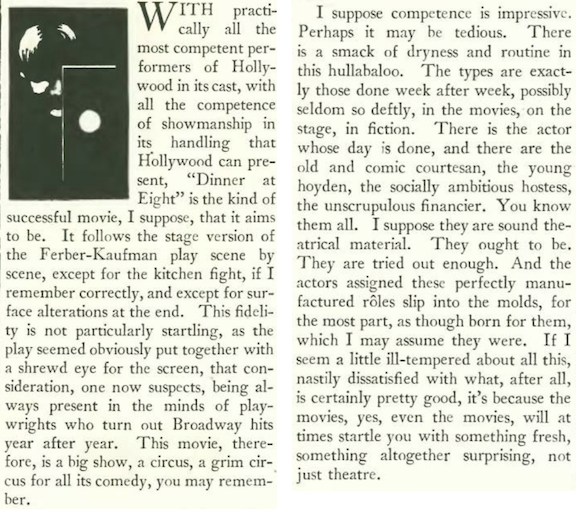
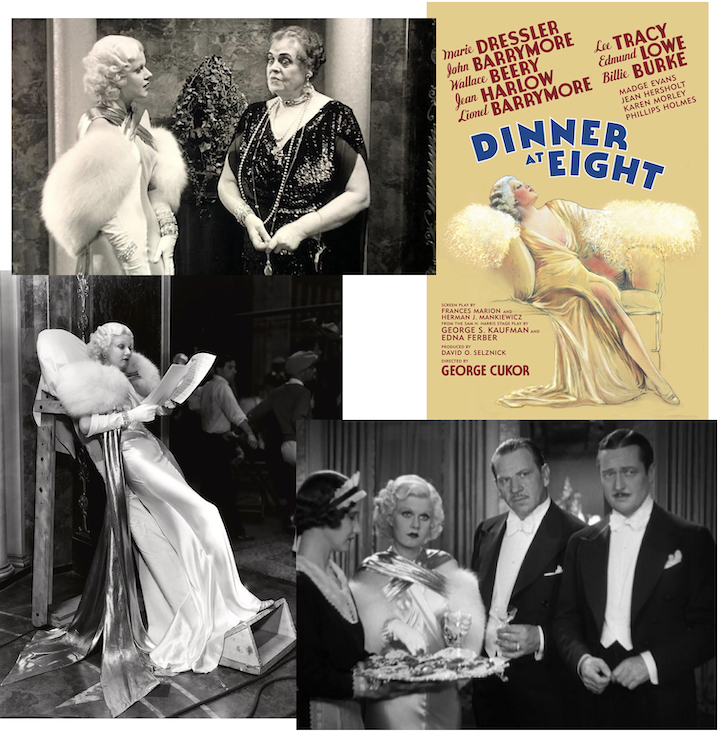
Director George Cukor turned a hit Ferber-Kaufman Broadway play into a hit movie by the same title when Dinner at Eight premiered in September 1933. While the film received high marks from leading critics, New Yorker film reviewer John Mosher found it a bit routine, if well-crafted:

BLONDE ON BLONDE…Judith Wood (left) portrayed the character Kitty Packard in the 1932 stage production of Dinner at Eight; Jean Harlow took on the role for the 1933 film version. (IMDB)

Mosher, however, continued to admire the acting chops of veteran Marie Dressler

FUNNY LADIES…Clockwise, from top left: Jean Harlow and Marie Dressler square off in Dinner at Eight; movie poster highlights the “Blonde Bombshell” Harlow along with a star-studded cast; a scene with Harlow, Wallace Beery and Edmund Lowe; to avoid wrinkling her gown between takes, Harlow reviewed her lines in a special stand-up chair. (IMDB/pre-code.com)

 * * *

Madame Secretary

Secretary of Labor Frances Perkins was the first woman in the U.S. to serve as a cabinet secretary, but she was a lot more that—she was the driving force behind FDR’s New Deal. Here are excerpts from a two-part profile written by Russell Lord, with illustration by Hugo Gellert.

TRIAL BY FIRE…Frances Perkins watched in horror as young women leapt to their deaths in the 1911 Triangle Shirtwaist Factory fire—146 perished on that day Perkins recalled as the moment the New Deal was born her mind. In the wake of the fire Perkins, an established expert on worker health and safety, was named executive secretary of the NYC Committee on Safety. (trianglememorial.org/francesperkinscenter.org)

Even if some men couldn’t come around to a woman moving through the circles of power, Perkins had many admirers including prominent Tammany Hall leader “Big Tim” Sullivan.

Perkins’ appointment to FDR’s cabinet made the Aug. 14, 1933 cover of TIME magazine. (TIME/thoughtco.com)

 * * *

From Our Advertisers

Even the staid executives at Packard were getting into the modern advertising game, where sometimes the product itself was not even pictured…

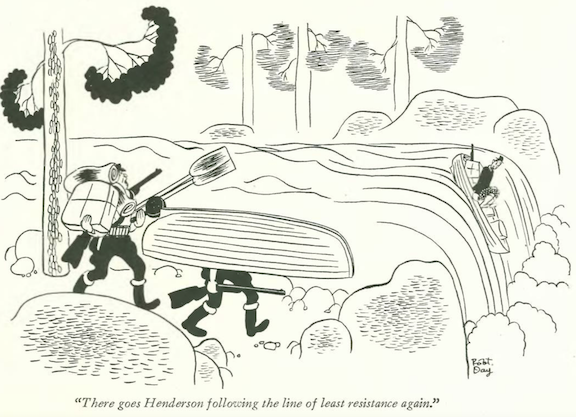
…our cartoonists include Robert Day

George Price

…and baring it all, Peter Arno

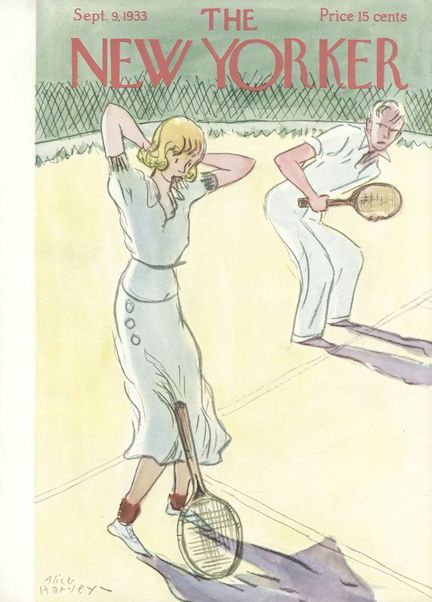
…on to Sept. 9, and what I believe is Alice Harvey’s first New Yorker cover…

Sept. 9, 1933 cover by Alice Harvey.

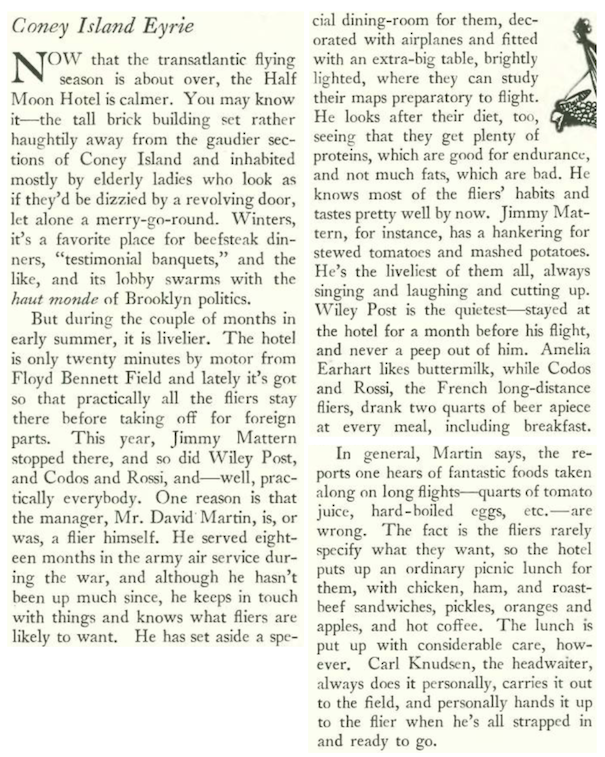
…and where “The Talk of the Town” paid a visit to the Half Moon Hotel on Coney Island, a favorite haunt of those magnificent men and women and their flying machines:

SHIFTING SANDS…Opened in 1927 to attract upscale crowds to Coney Island away from the rabble of the Midway, the elegant Half Moon Hotel started strong but teetered on the doorstep of bankruptcy during the Depression; it gained notoriety in 1941 when mob turncoat Abe Reles fell to his death from a sixth floor window while under police protection. The hotel was demolished in 1996. (Pinterest)

* * *

Huey In The News

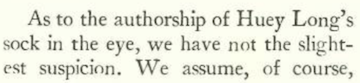
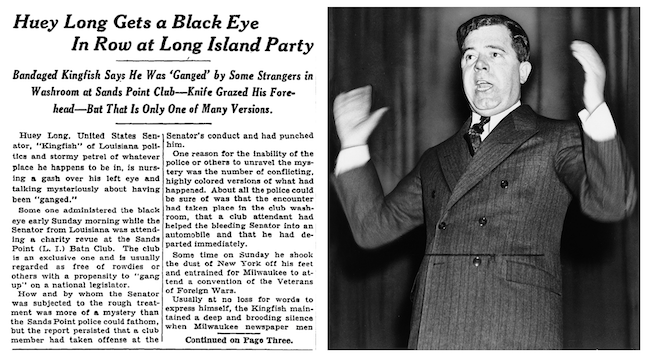
In his column “Of All Things,” Howard Brubaker offered this brief take on Huey Long’s visit to a Long Island party, where one guest apparently socked the controversial “Kingfish,” giving the former Louisiana governor (and then senator) a shiner.

A CHIP ON HIS SHOULDER?…Controversy followed Huey Long wherever he went. At left is a New York Times account of Long’s alleged black eye incident on Long Island. He would be assassinated two years later at the Louisiana State Capitol; Long circa 1933. (NYT/Wikipedia)

 * * *

More From Our Advertisers

As a follow-up from the previous issue’s Packard ad, this two-page spread showed us what those 1200 men were gawking at…check out that 12-cylinder model on the left, which appears to be better than 20 feet long…

…according to this ad, you could thank Camel cigarettes for getting the mail through the gloom of night…

…if you needed a cigarette to steady your nerves, you also needed fresh coffee to avoid being ostracized by your friends…

…summer-stock barn theatres were popular across America in the 1930s…this ad (illustrated by Wallace Morgan) hailed the end of the summer season and the return of “Winter Broadway”…

…on to our cartoons, out in the countryside we also find William Crawford Galbraith, here continuing to ply one of his favorite themes, namely pairing shapely seductresses and showgirls with clueless suitors…

Helen Hokinson gave us one woman who believed “what happens in the Riviera, stays in the Riviera”…

…and we close with Gardner Rea, and a scout troop on a mission…

Next Time: Rumors of War…