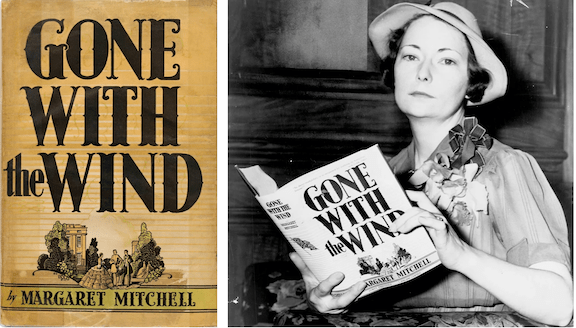
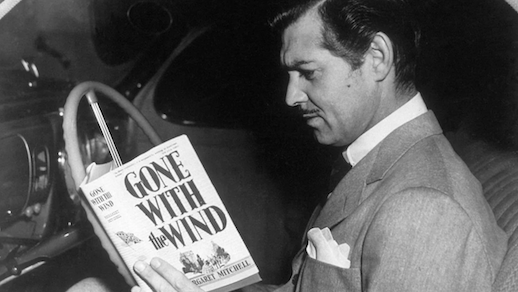
Above: Margaret Mitchell poses with her award-winning novel, c. 1938. Mitchell won the National Book Award for Fiction for Most Distinguished Novel of 1936 and the Pulitzer Prize for Fiction in 1937. Gone With the Wind was the only novel she published in her lifetime. (britannica.com)
Margaret Mitchell’s 1936 novel Gone With the Wind and the 1939 film it inspired have both served as controversial reference points for cultural critics and scholars, particularly for the stereotypical and derogatory portrayals of African Americans in the 19th century South.
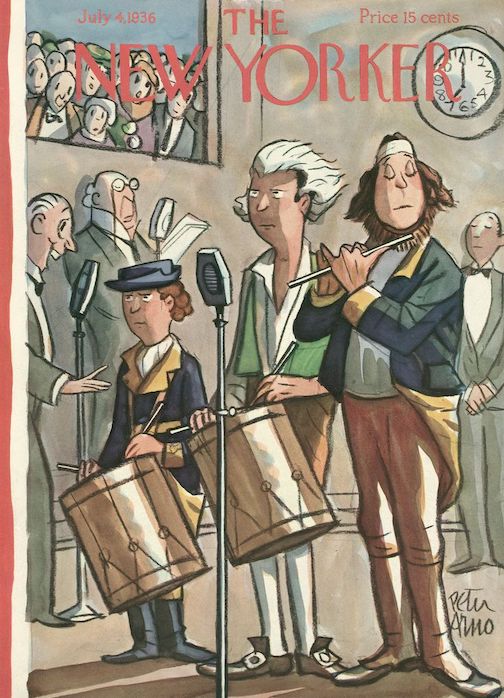
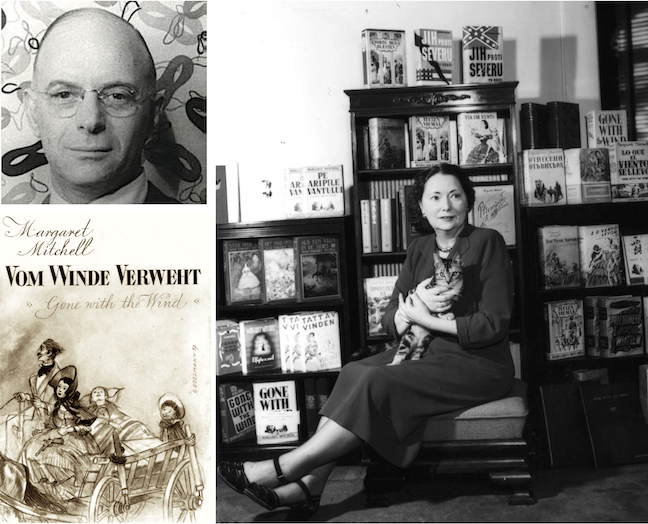
Ninety years later the novel still proves divisive; it also remains one of America’s most-loved books. Worldwide, more than 30 million copies have been printed in the U.S. and abroad.
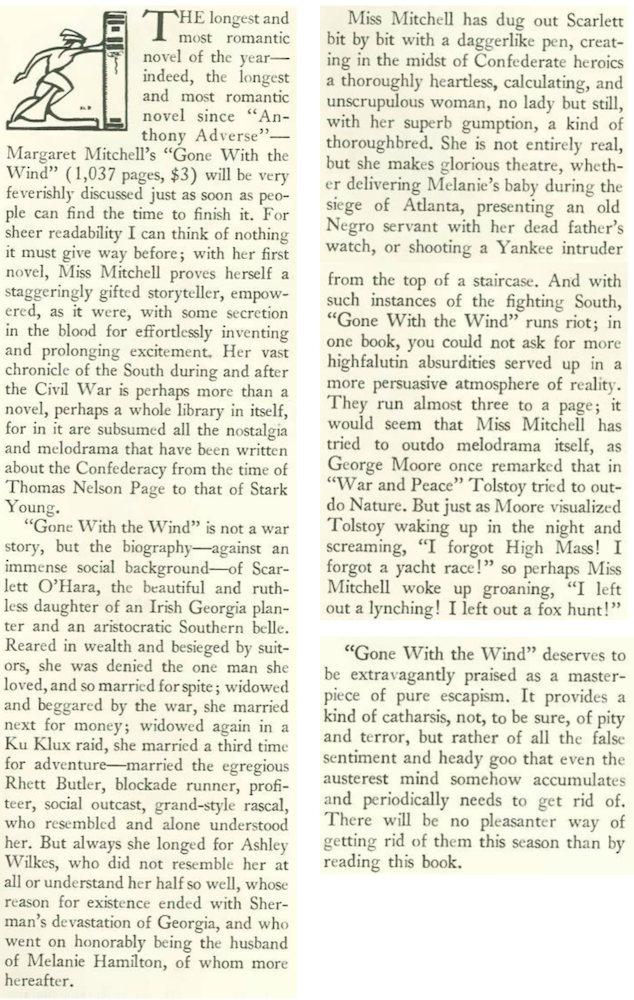
In 1936 the novel quickly rose to the top of fiction bestseller lists, and was generally well received by critics. Novelist and literary critic Louis Kronenberger (1904–1980), who sat in for Clifton Fadiman in The New Yorker’s book section, praised the novel for its “highfalutin absurdities,” calling it a “masterpiece of pure escapism.” Kronenberger wrote that Gone with the Wind provided “a kind of catharsis…of all the false sentiment and heady goo that even the austerest mind somehow accumulates and periodically needs to get rid of.” He correctly predicted that the novel would be “very feverishly discussed” once people found the time to read its thousand-plus pages. Excerpts:
* * *
Tweet From Tinseltown
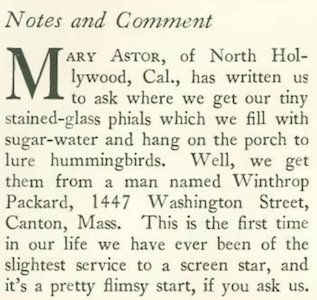
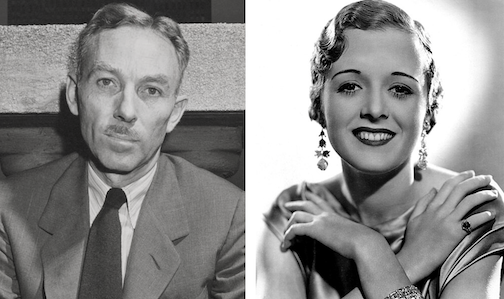
Apparently actress Mary Astor was a New Yorker reader, having read an E.B. White “Notes” column that mentioned his stained-glass hummingbird feeders.
* * *
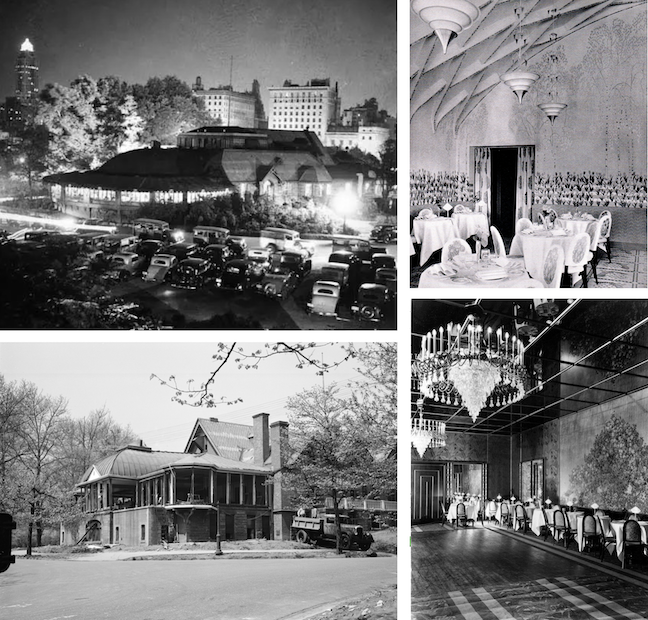
Going, Going, Gone
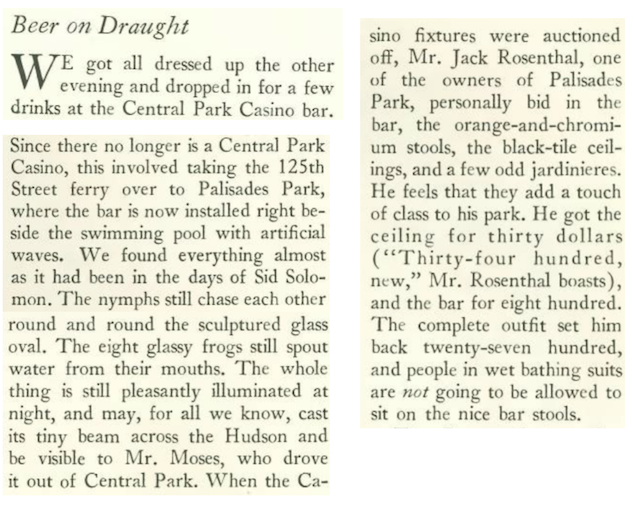
A “Talk of the Town” piece co-written by A. J. Liebling and Russell Maloney tracked down what remained of the Central Park Casino, which had been demolished under the orders of Parks Commissioner Robert Moses.
* * *
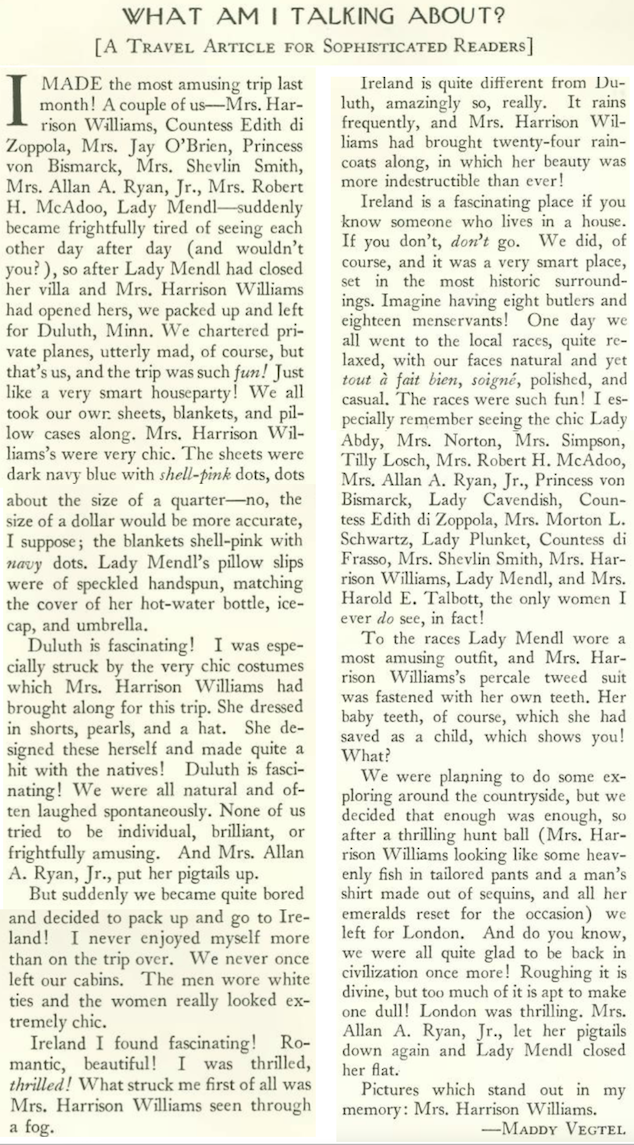
Maddy Returns
* * *
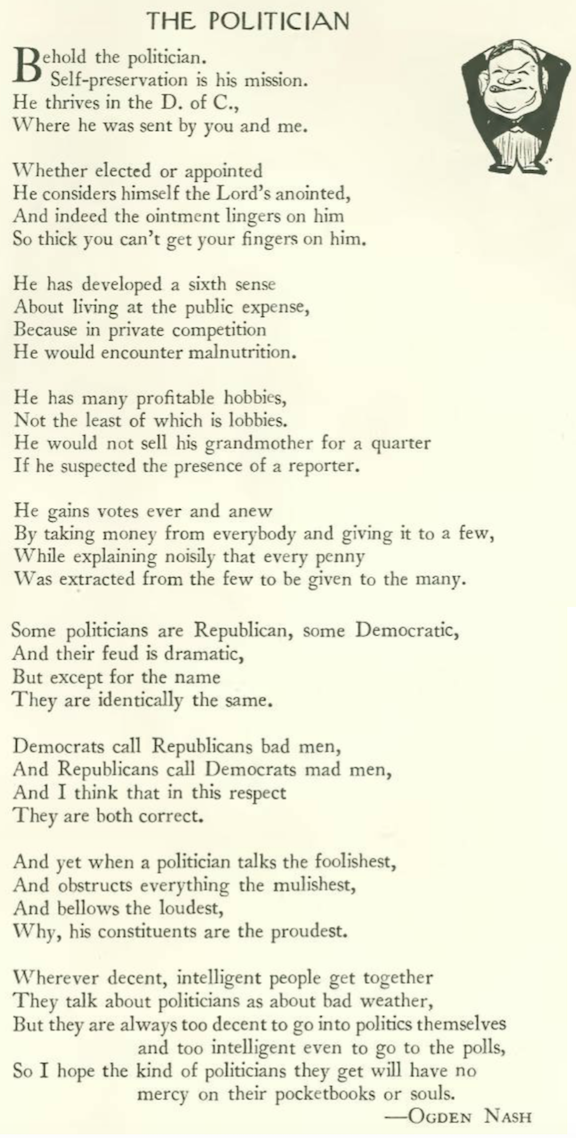
Bad Men and Mad Men
The poet Ogden Nash shared his thoughts on the summer political convention season:
* * *
At the Movies
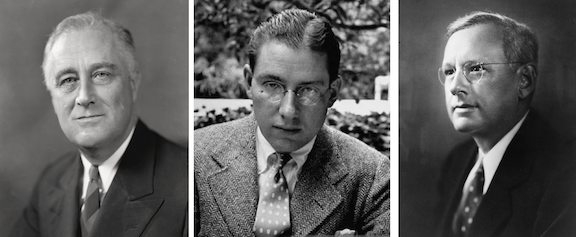
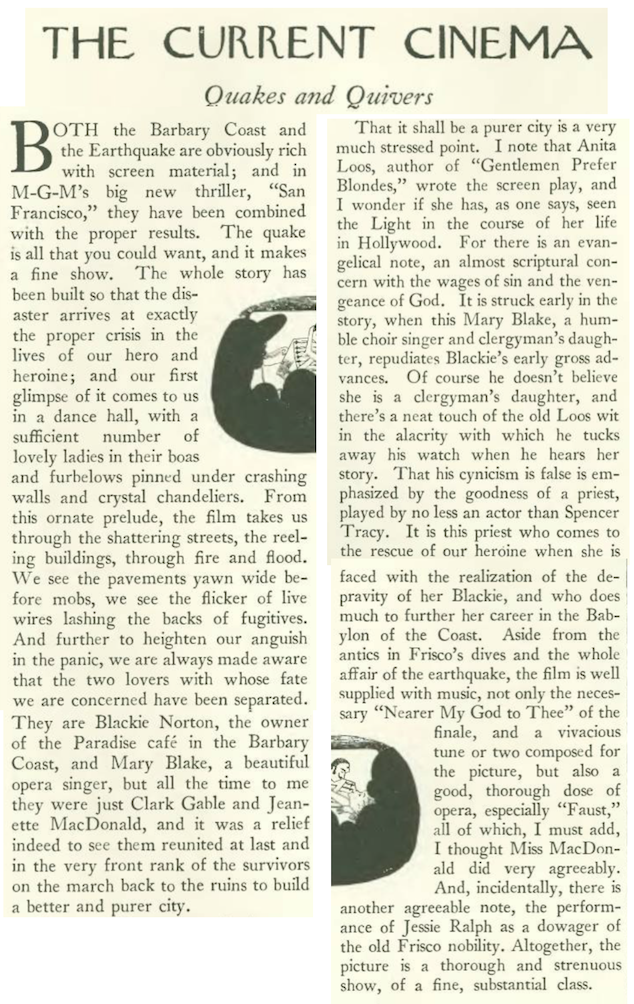
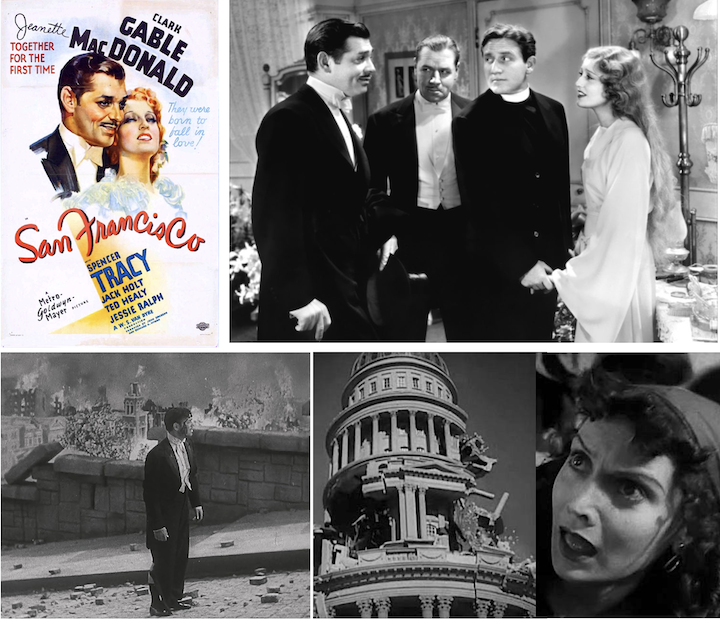
Critic John Mosher was on board for MGM’s musical-drama disaster film San Francisco, which told the story of a saloon keeper, a singer, and a priest caught up in 1906 San Francisco earthquake.
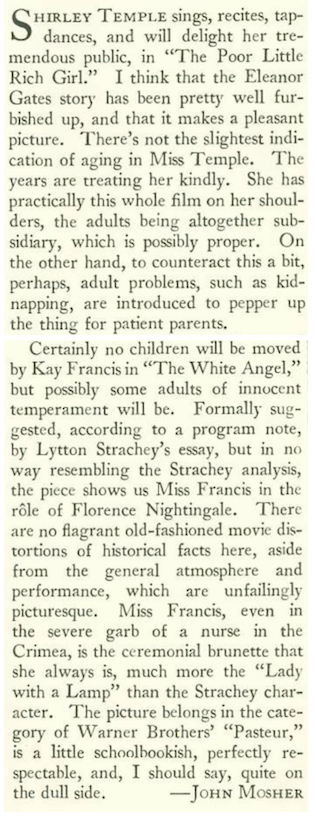
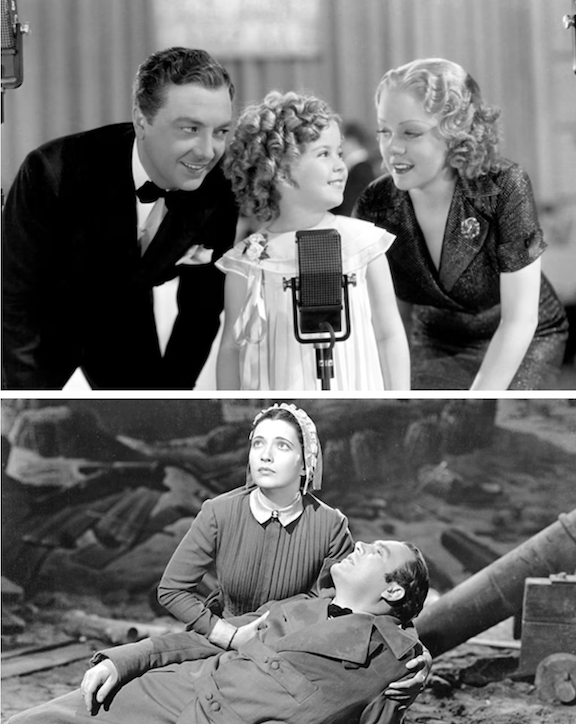
Mosher offered a tongue-cheek assessment of Shirley Temple’s appearance in her latest film, The Poor Little Rich Girl, noting that “There’s not the slightest indication of aging in Miss Temple.” The child star was just shy of eight years old when she filmed the picture. As for the The White Angel, Mosher found the Florence Nightingale biopic—with Kay Francis in the title role—”a little schoolbookish [and] quite on the dull side.”
* * *
From Our Advertisers
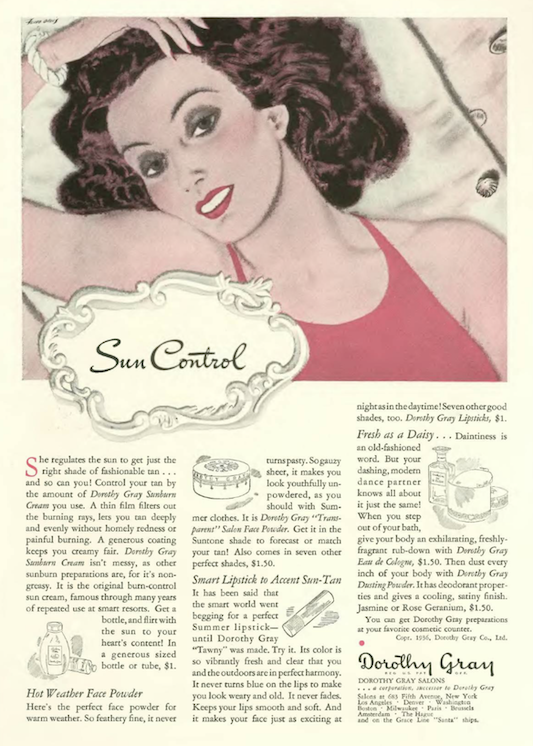
Sunscreen as we understand it today wasn’t available to New Yorkers in 1936, so they relied on zinc oxide and other mineral applications to avoid sunburns…however, Eugene Schueler, founder of L’Oréal, developed the first tanning oil with UV radiation-filtering properties in Europe in 1935 (active ingredient was benzyl salicylate), and later marketed it to the U.S. as Ambre Solaire…the brand is still sold today…
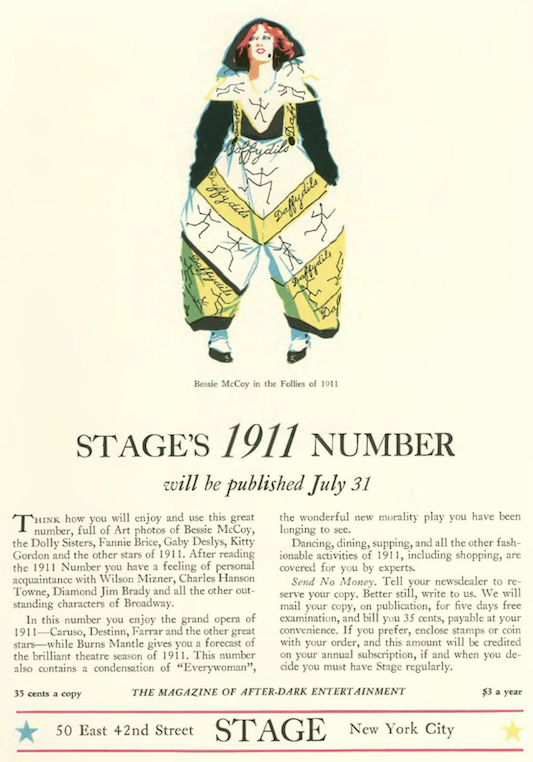
…Stage magazine continued to promote their 1911 throwback issue…
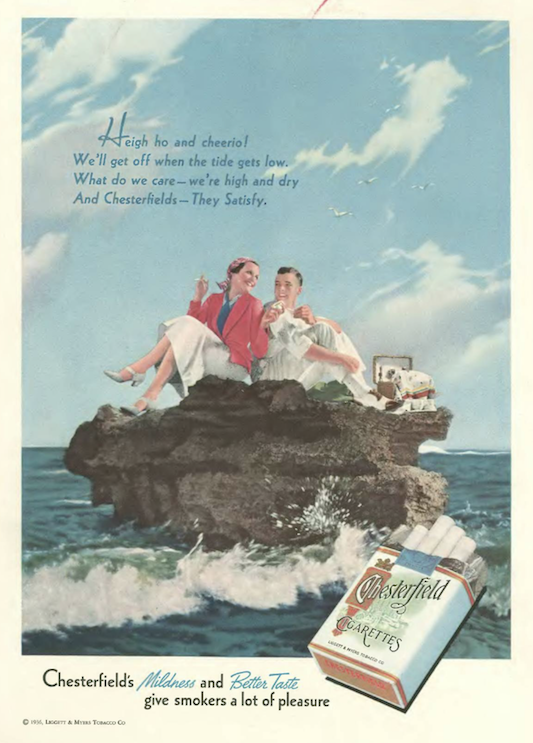
…the back cover belonged to Liggett & Myers, offering another romantic couple enjoying their Chesterfields…
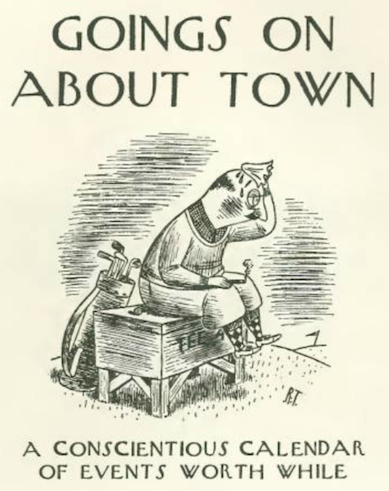
…we open the cartoons with Richard Taylor, who felt the heat as summer took hold in the city…on July 4, 1936, the official high temperature in Central Park reached an unseasonably warm 93 degrees F (34 c), hitting 106 F (41C) five days later on July 9…that mark remains the city’s all-time absolute highest temperature…
…Otto Soglow’s spot art showed us how one well-heeled family escaped the hot city…

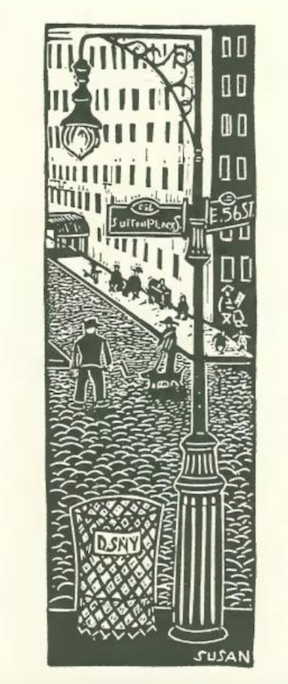
…while Susan Willard Flint offered a woodcut if a quiet cobbled street…
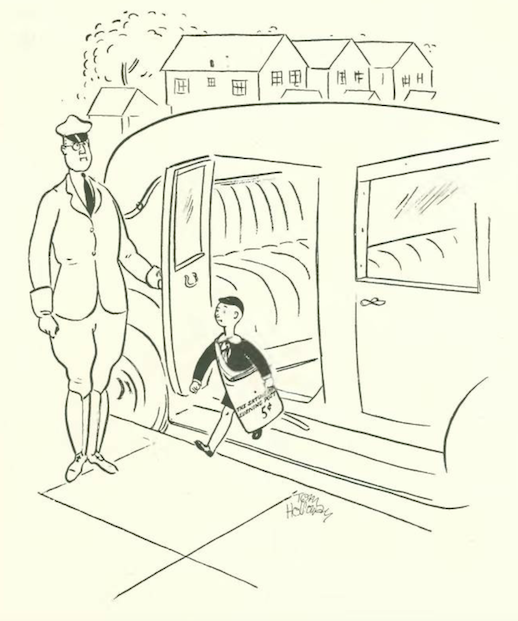
…Tom Holloway showed us how one posh kid delivered the Saturday Evening Post (Holloway was a cartoonist for the Post, contributing just two drawings to The New Yorker, both in 1936)…
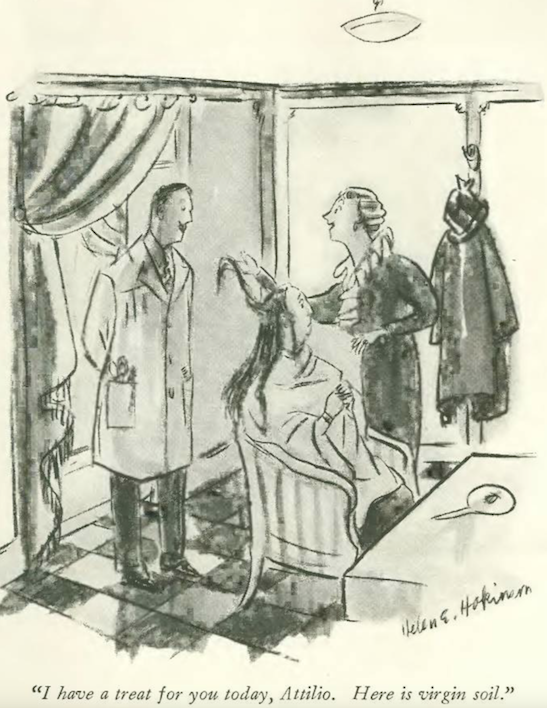
…the woman’s expression says it all in this Helen Hokinson cartoon…
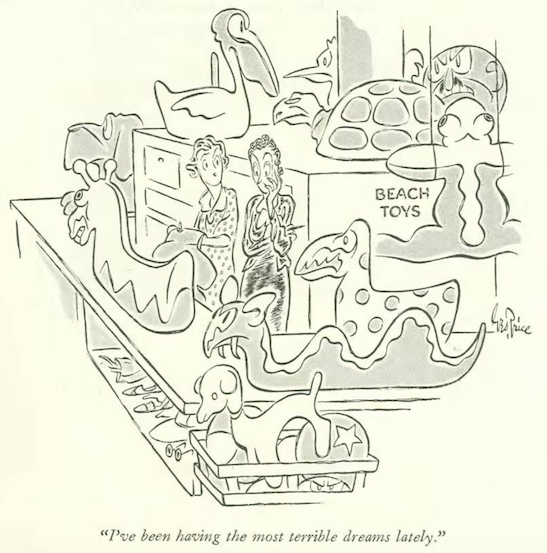
…George Price gave us a saleswoman who saw one two many pool floats…
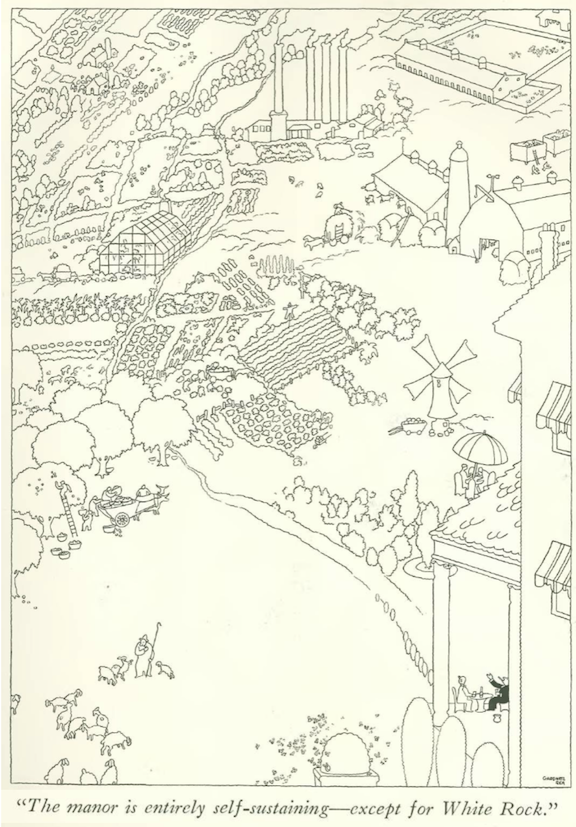
…Gardner Rea drew up a vast estate for a man who (almost) had it all…
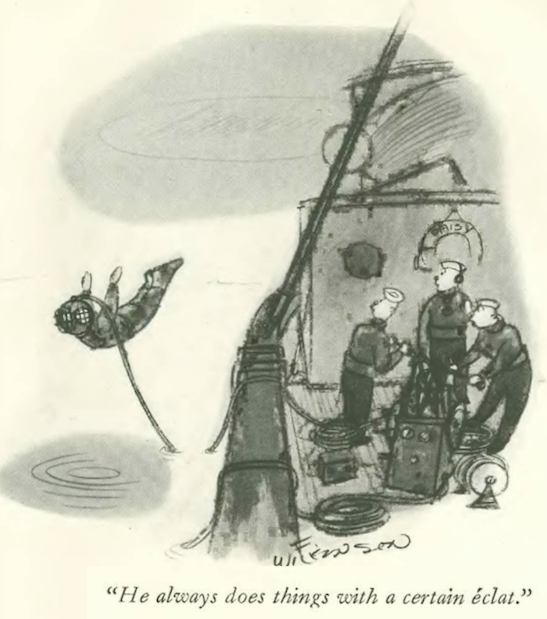
…Fritz Wilkinson did some deep sea swan diving…
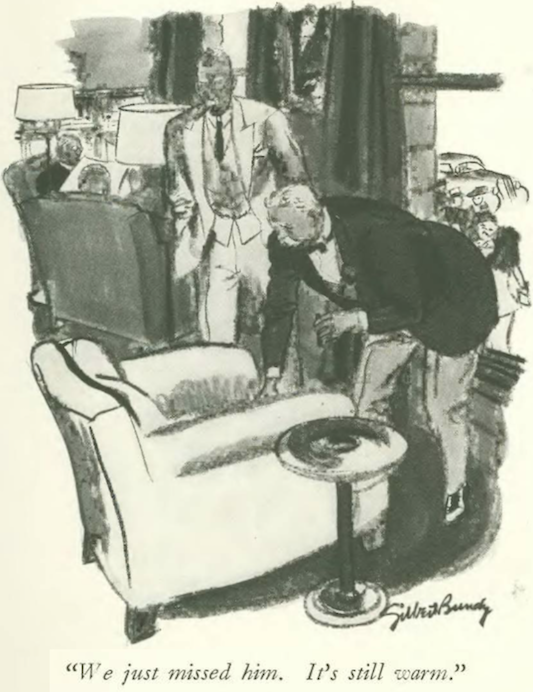
…Gilbert Bundy found a clue at the gentleman’s club…
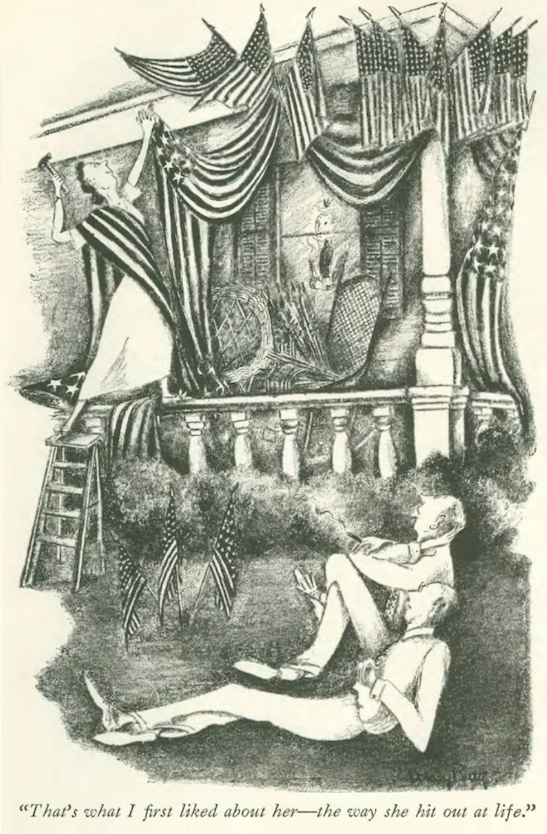
…Mary Petty went all out for the Fourth of July…
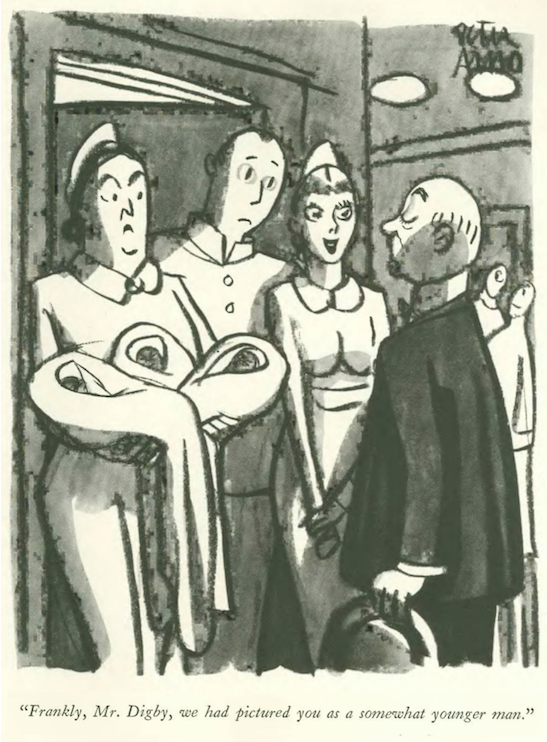
…and we close with Peter Arno, and the miracle of birth…
Next Time: Better Living Through Fiction…


One thought on “Highfalutin Absurdities”