Queen of the Seas

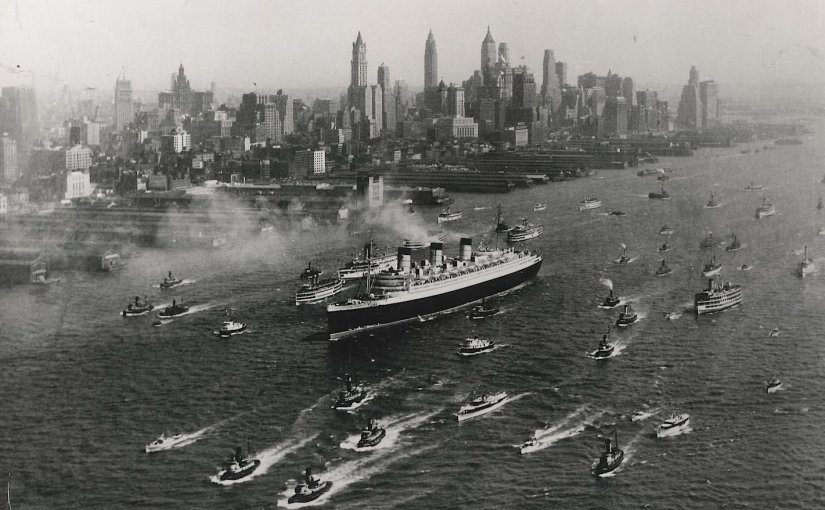
Above: The RMS Queen Mary arriving at New York harbor accompanied by a flotilla of escorts on June 1, 1936. (liverpool.ac.uk)

The RMS Queen Mary was launched in the age of superliners that included the SS Bremen, the SS Île de France and the SS Normandie. These and other liners competed for the Blue Riband, an unofficial honor bestowed on Atlantic Ocean liners achieving the highest average speed. These ships also vied for the distinction of being the most luxurious.

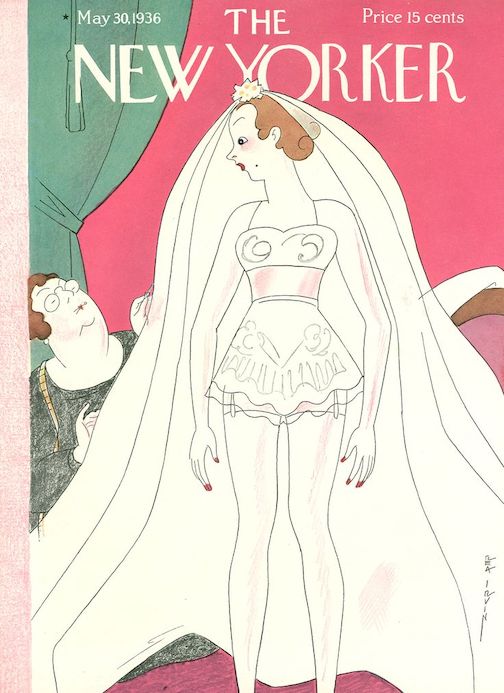
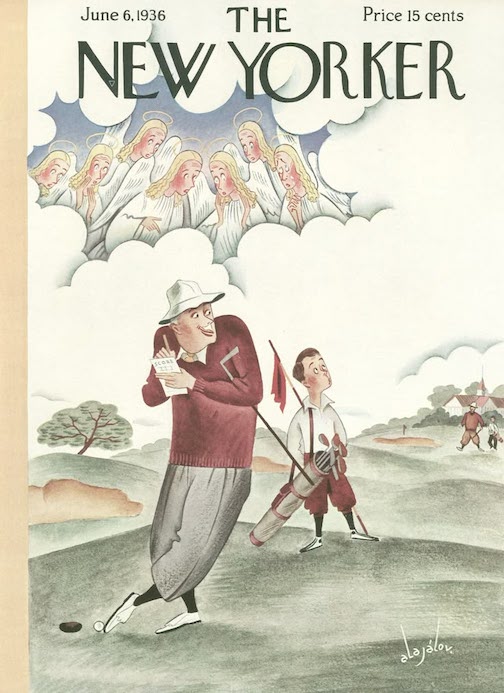
May 30, 1936 cover by Rea Irvin, celebrating the arrival of the June bride.

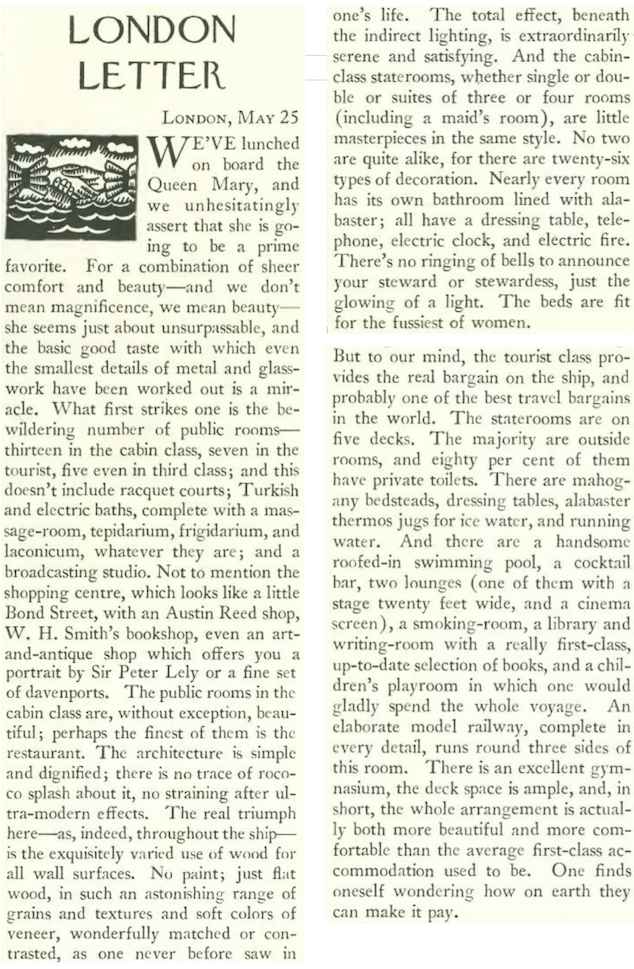
The Queen Mary was a top contender for both honors when she departed on her maiden voyage from Southampton on May 27, 1936. London correspondent Samuel Jeake, Jr (aka American poet and novelist Conrad Aiken) paid a visit to the liner just days before her first Atlantic crossing. Excerpts:

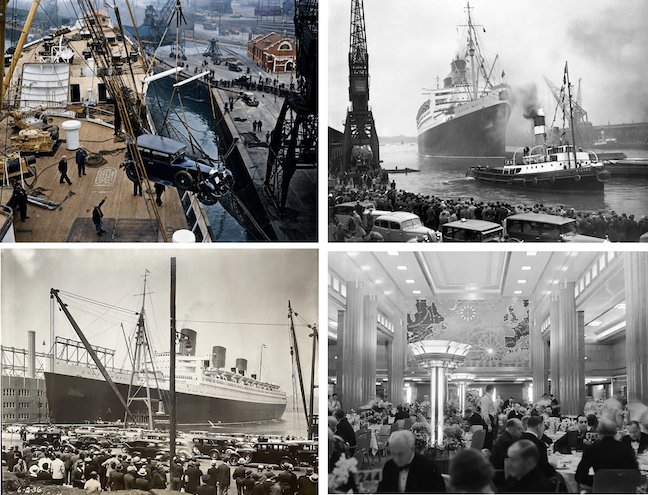
BOAT AFLOAT…Clockwise, from top left, a Bentley automobile is brought aboard the Queen Mary before her maiden voyage; the liner departs from Southampton, May 27, 1936; first-class passengers dining during that first crossing; the Queen Mary arriving at the newly built Pier 90 in New York Harbor, June 1, 1936. The Queen Mary and the SS Normandie were speedy competitors for the Blue Riband in the 1930s. (RMS Queen Mary via Facebook/NYC Municipal Archives)
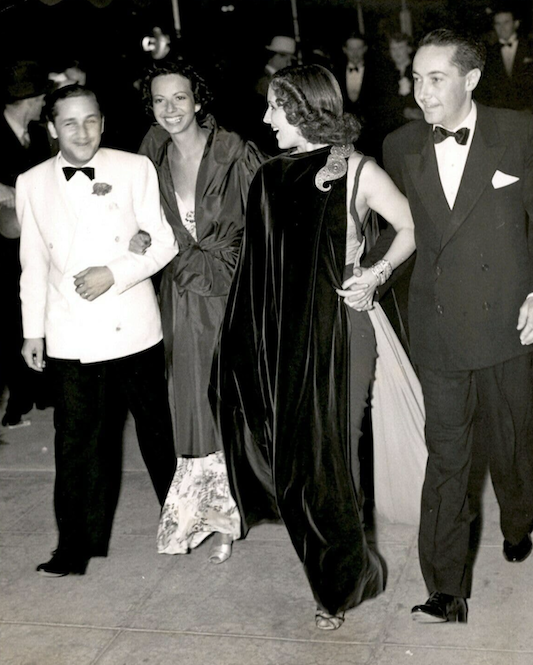
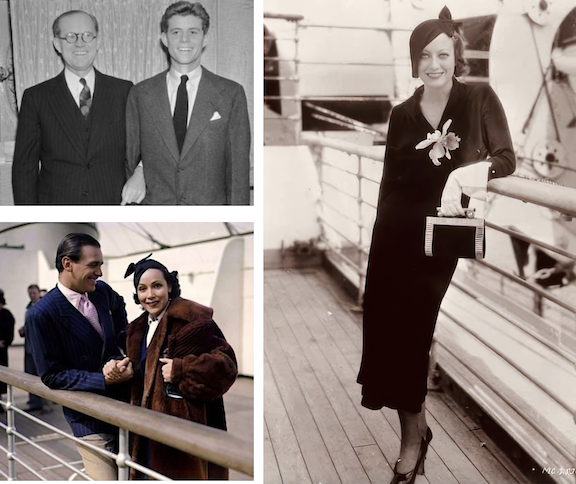
SEEING STARS…Celebrities on the maiden voyage included John F. Kennedy and his father, Joseph P. Kennedy (top left), as well as actress Joan Crawford (right). Bob Hope, Mae West, and Noël Coward were also spotted aboard the maiden voyage. Douglas Fairbanks Jr. and Dolores Del Rio (bottom left) were photographed on the liner’s second departure from Southhampton. (cruiselinehistory.com/RMS Queen Mary via Facebook)
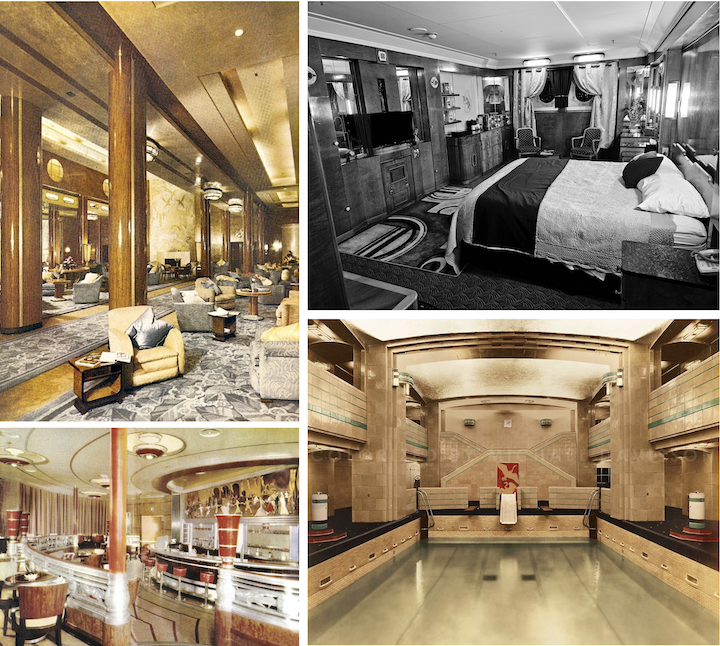
HOME AWAY FROM HOME…First-class accommodations on the Queen Mary included, clockwise from top left, the Main Lounge; the Queen Mary Suite; swimming pool; and Observation Bar. (RMS Queen Mary via Facebook)
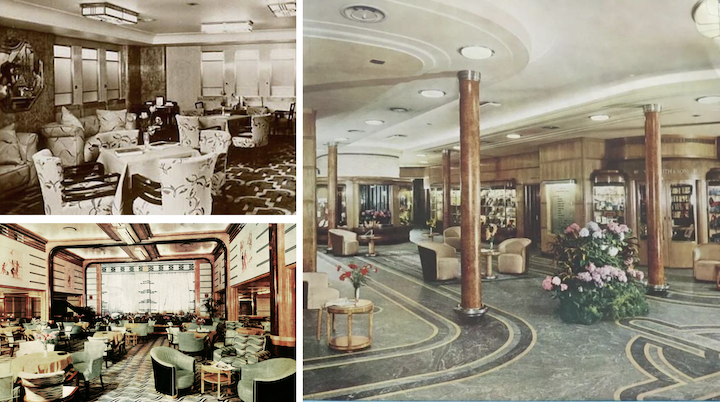
NOT BAD…Conrad Aiken called the liner’s second-class (Tourist class) sections “one of the best travel bargains in the world.” Photos at left show lounge areas, while at right is the ship’s Shopping Centre, open to all passengers. (RMS Queen Mary via Facebook)
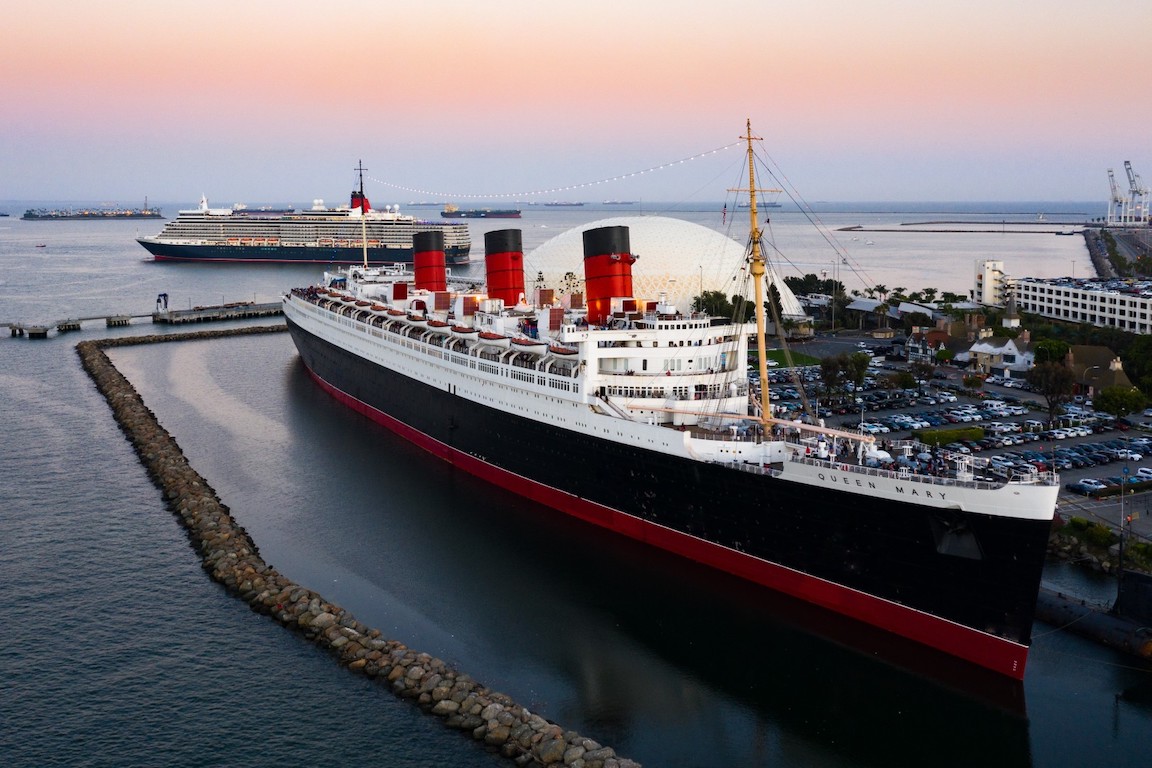
OUT TO PASTURE…The majority of the great superliners were either destroyed during World War II or scrapped after their service. However the RMS Queen Mary, after her retirement in 1967, was permanently moored at Long Beach, California as a hotel, museum, and convention space. During her years of service she crossed the Atlantic 1,001 times, carrying more than two million passengers. From 1939 to 1946 the liner also served the war effort, transporting more than 800,000 troops. (visitlongbeach.com)

* * *

Green Acres

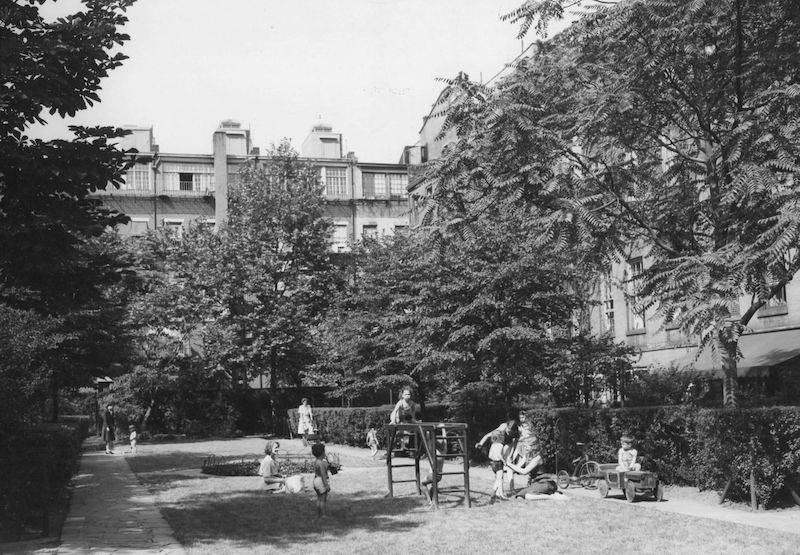
It’s hard to believe that at one time Greenwich Village was home to trash-filled back yards and deteriorating tenements. Beginning in the 1920s, residents transformed these back yards into communal green oases. “The Talk of the Town” visited three that had “more or less grown together.” Spot art by Christina Malman. Excerpts:

URBAN OASIS…Undated photo shows the interior courtyard garden shared by twenty-one row houses of the Macdougal-Sullivan Gardens Historic District in Greenwich Village. (nytimes.com)

 * * *

Art for the People

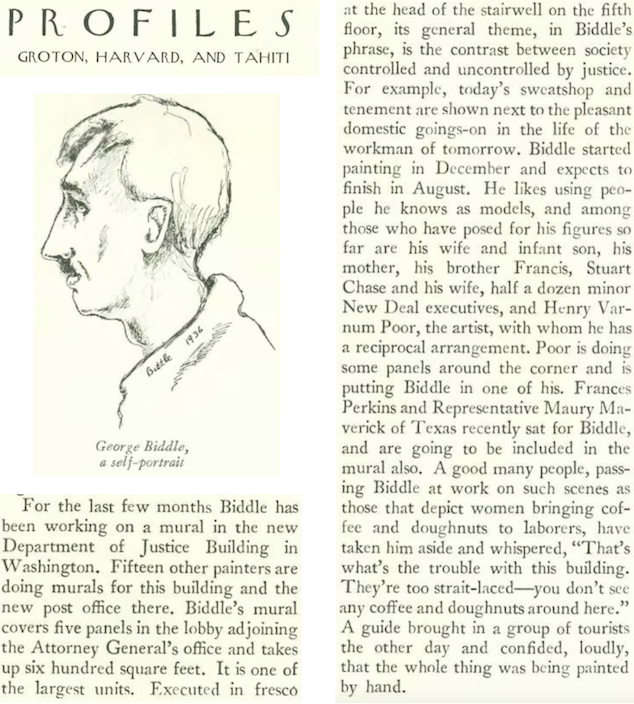
Geoffrey Hellman penned a profile of social realist artist George Biddle (1885– 1973), who played a major role in establishing the WPA’s Federal Art Project and who created murals for government buildings in the U.S., Brazil, and Mexico. Excerpt:

SERVING THE PUBLIC GOOD…George Biddle at work on a fresco titled Society Freed through Justice, located in the fifth floor lobby of the Attorney General’s office in the Department of Justice Building, Washington, D.C. (Wikipedia)
AMERICAN IDEAL…Detail from Biddle’s fresco painting Society Freed Through Justice. (Library of Congress)

 * * *

The Shoe Fits

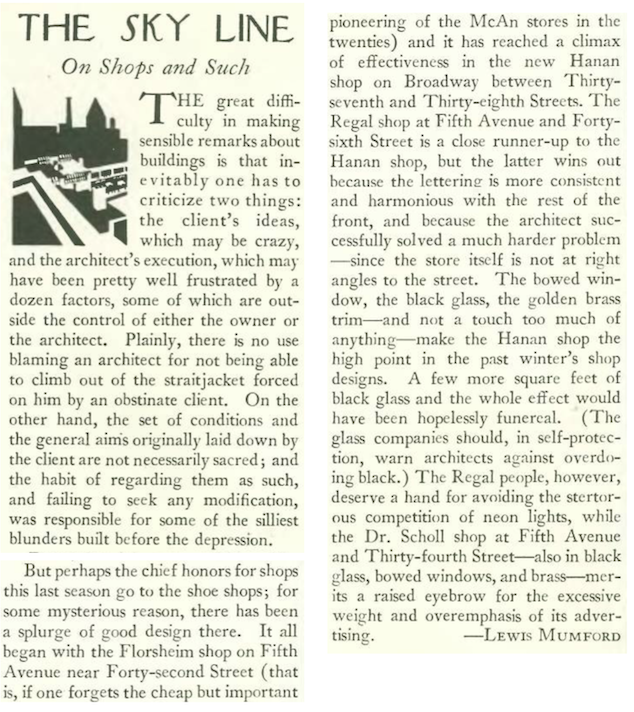
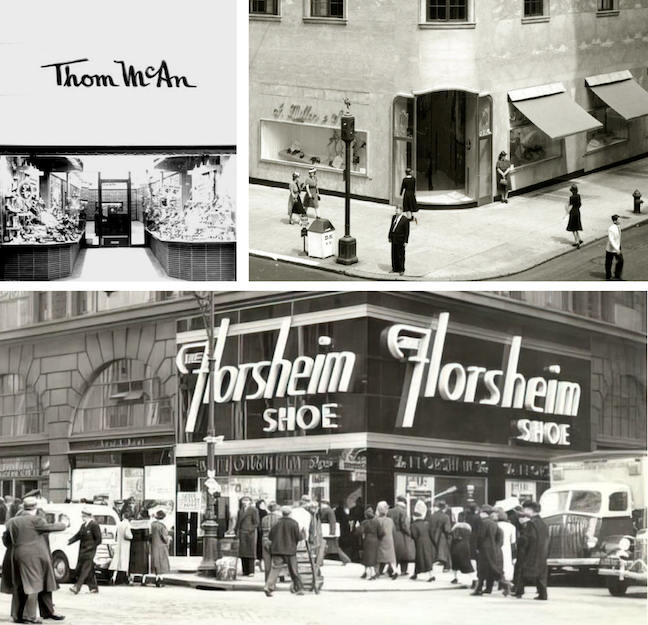
Architecture critic Lewis Mumford was unimpressed with latest designs in commercial shops, however for “some mysterious reason” he was quite taken with various shoe stores in Midtown. Excerpts:

BRIGHT SPOTS…Lewis Mumford lauded the shoe company Thom McAn (top left) for its pioneering designs. Other notables included I. Miller & Sons (top right) on Fifth Avenue, and below, Florsheim Shoe on West 37th. (clickamericana.com)

 * * *

A Pirate Sets Sail

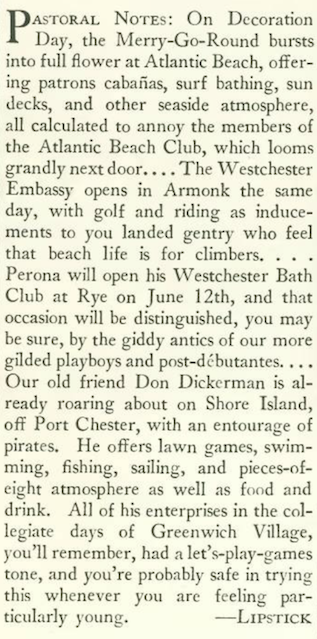
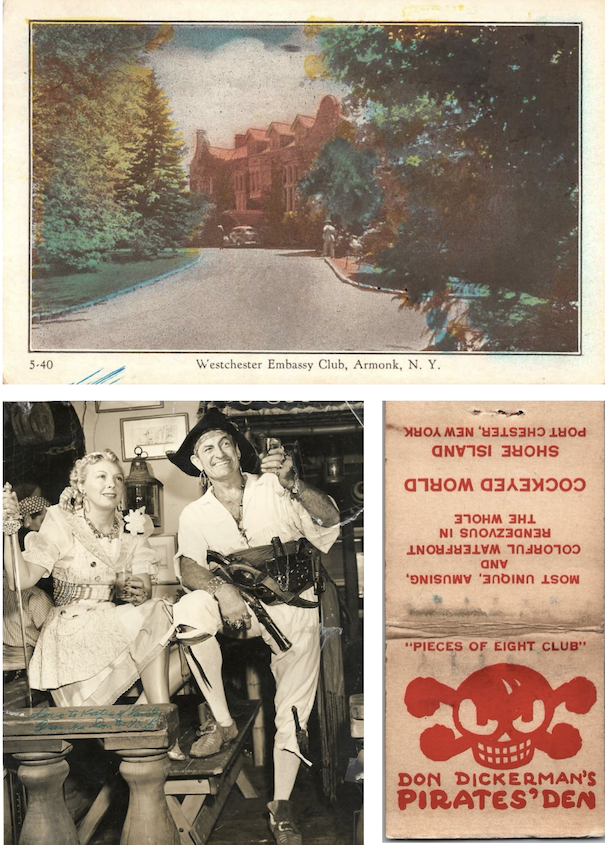
In her “Tables for Two” column, Lois Long noted a few of the summertime getaways near the city including the Westchester Embassy Club. She also mentioned the re-emergence of Don Dickerman, famed for his series of gaudy themed restaurants in the West Village from the late 1910s to 1930. Among those was his famed Pirate’s Den, which was destroyed in a 1929 fire. With the stock market crash Dickerman (1893-1981) was forced to sell the location, and he declared bankruptcy in 1932. However by 1936 he was on his way back, opening a pirate-themed enterprise near Port Chester:

SUMMER DIVERSIONS…At top is a postcard image of the Westchester Embassy Club; below, Don Dickerman at his Los Angeles Pirates’ Den with his fifth wife, Thelma Mills Wunder (he had at least seven known wives). Originally a fixture of Greenwich Village, Dickerman emerged from his 1932 bankruptcy to open themed restaurants in Miami, Miami Beach, Port Chester, NY , Washington DC, and Hollywood. Bottom right, a matchbook cover from Dickerman’s revived Pirate’s Den at Port Chester, which was mentioned by Lois Long. (facebook.com/restaurant-ingthroughhistory.com/ebay.com)

 * * *

At the Movies

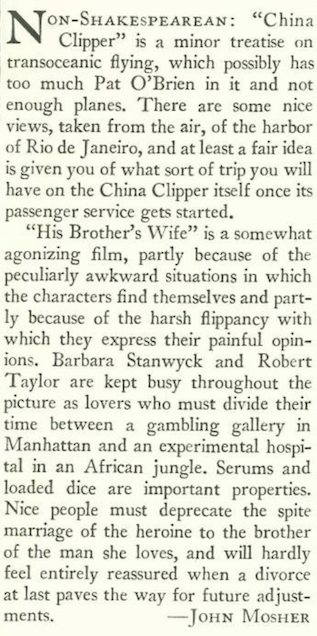
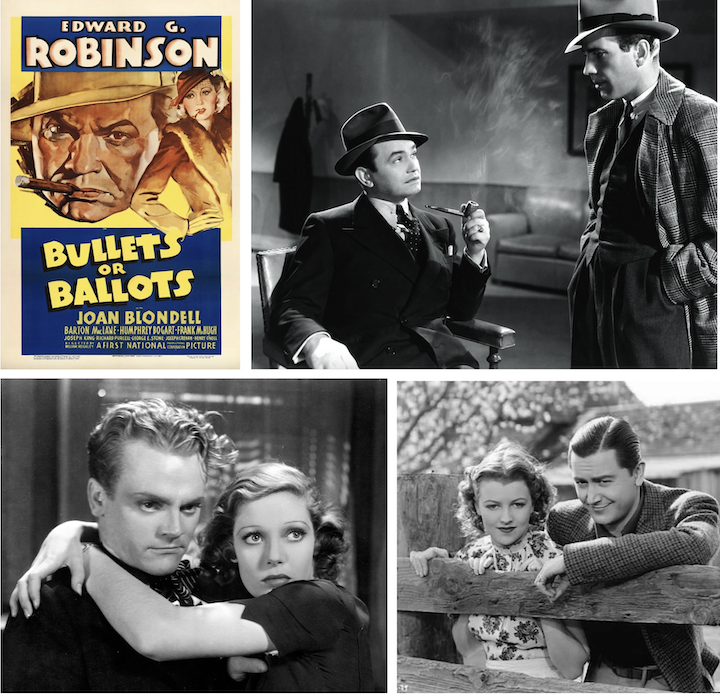
Under the strict moral guidelines of the Hays Code, gangster films of the Pre-Code era gave way to milder fare, much to the chagrin of film critic John Mosher. 

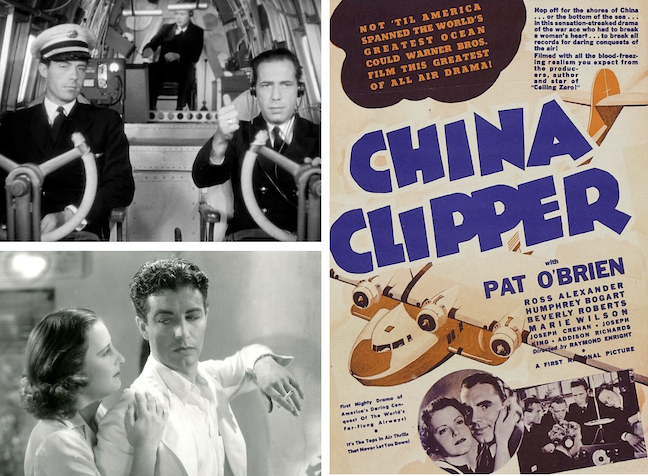
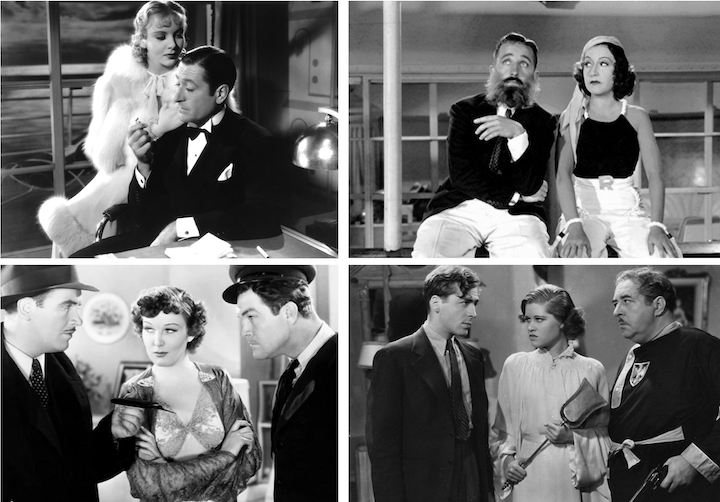
KINDER, GENTLER GANGSTERS…Clockwise from top left, poster for Bullets or Ballots gave Edward G. Robinson top billing with Joan Blondell also prominently featured—Humphrey Bogart was a relative newcomer in the movies, seen here in a scene with Robinson in Bullets or Ballots; Robert Young and Betty Furness in The 3 Wise Guys;  James Cagney and Loretta Young in the pre-Code film Taxi, which was released in 1932 but reissued in 1936 (SEE BELOW) to capitalize on Cagney’s new superstar status. The film also featured the famously misquoted line: “Come out and take it, you dirty yellow-bellied rat.” (imdb.com/tcm.com)

In the following week’s issue (June 6), Mosher noted that he’d forgotten about his previous review of the Cagney film Taxi in 1932:

* * *

From Our Advertisers

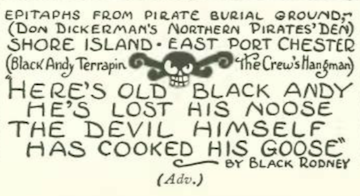
Appropriately buried in the back pages of The New Yorker was this tiny ad promoting Don Dickerman’s new Pirates’ Den at Port Chester, referenced above in Lois Long’s “Tables for Two” column…

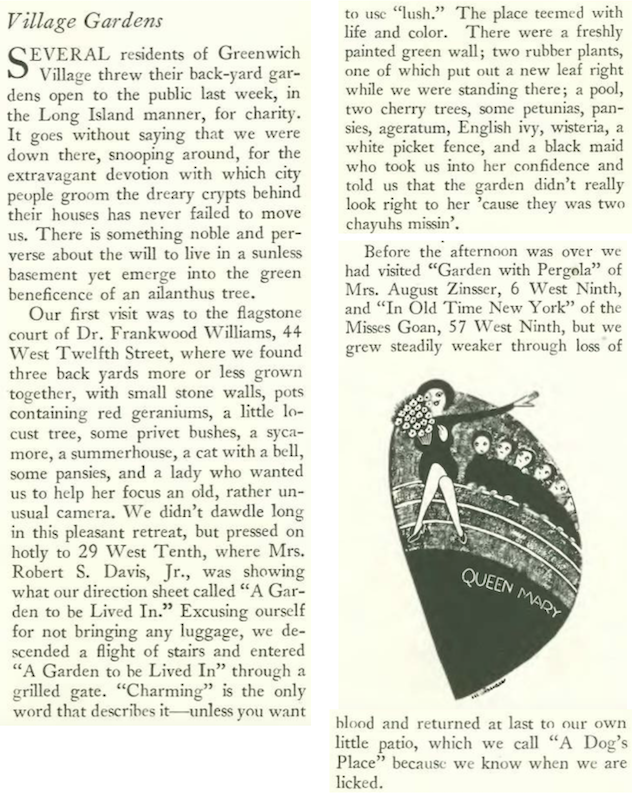
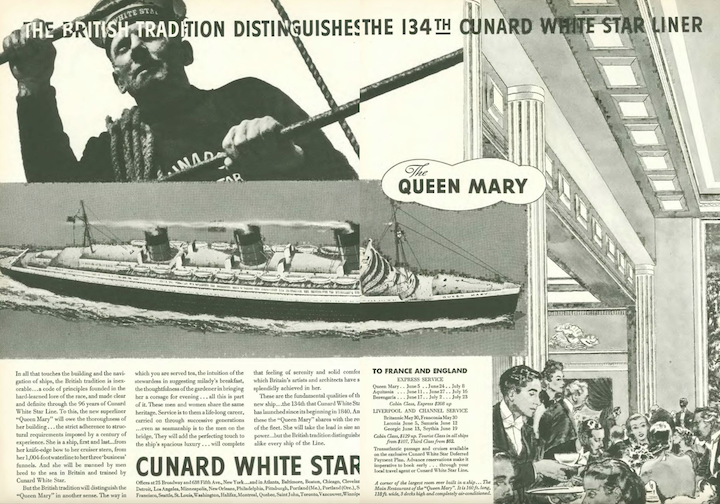
…the Cunard White Star Line took out this two-page spread to announce the launch of the Queen Mary

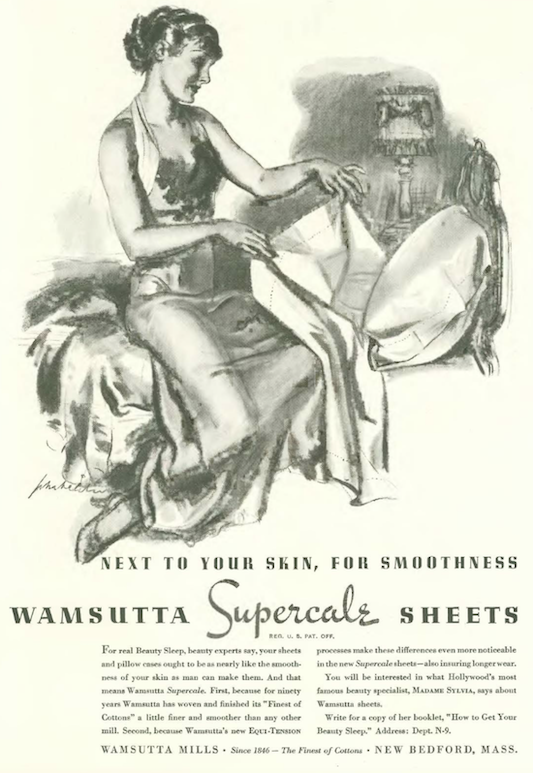
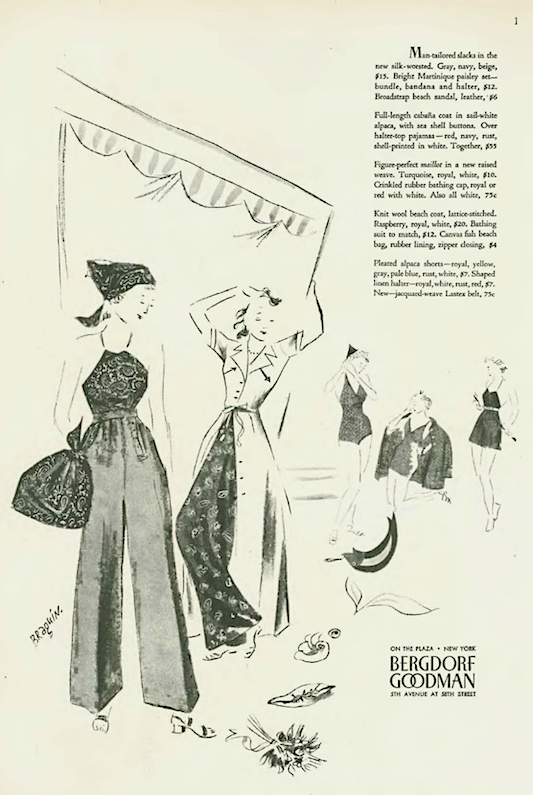
…illustrators with European roots brought modern touches to fashion advertisements…the Ukrainian-born Simeon Braguin (1907–1997), who created the ad below for Bergdorf Goodman, emerged in the 1930s as a prominent fashion illustrator, ultimately becoming the Creative Director for Vogue…during that time (1940s) he supported the work of an unknown artist, Andy Warhol

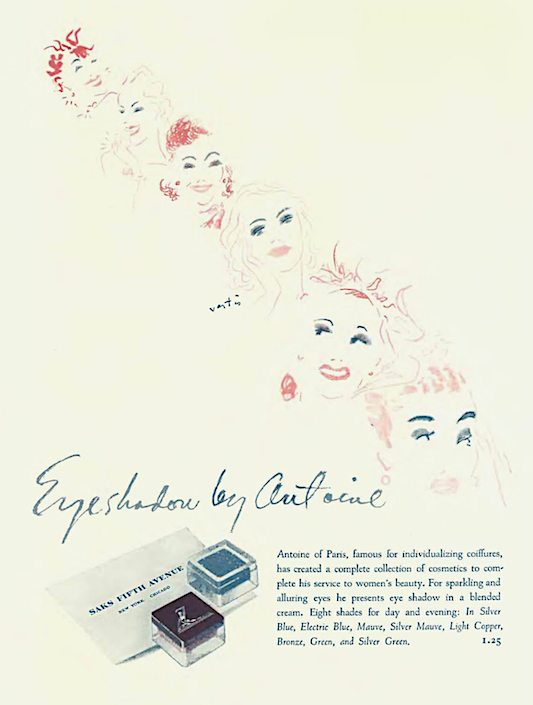
…the artist behind this next fashion illustration was the prominent French-Hungarian costume designer and illustrator Marcel Vertès (1895–1961)…

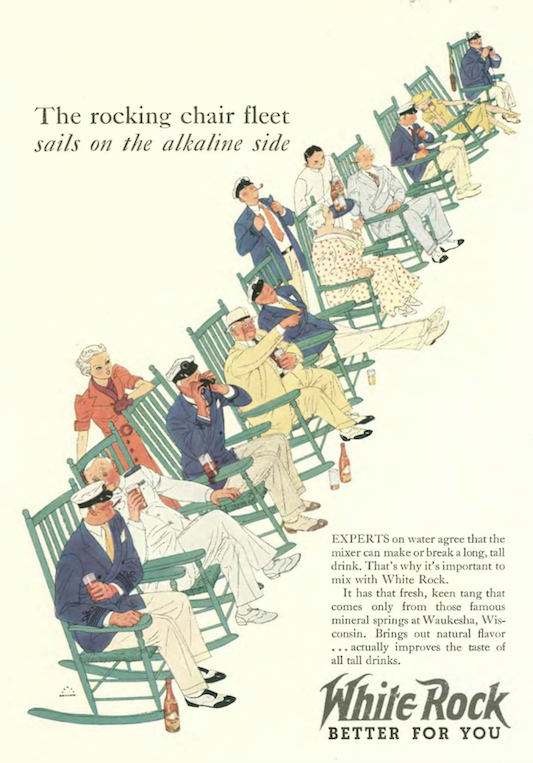
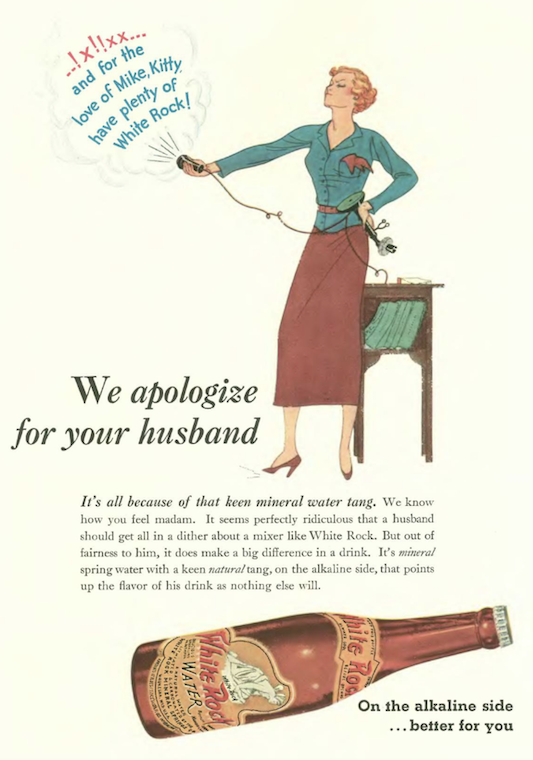
…the prolific illustrator R. John Holmgren (1897- 1963) worked for dozens of publications, and was well known for his White Rock ads in the 1930s and 40s…

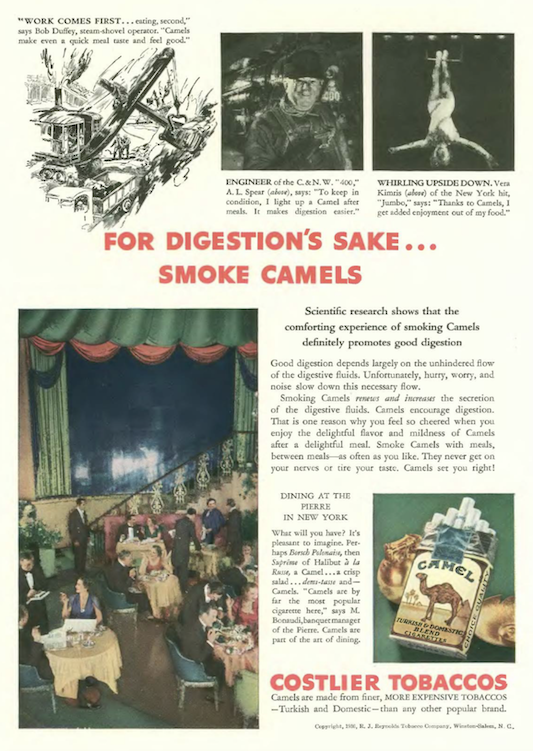
…the folks at R.J. Reynolds were still pushing their digestion claims along with their cigarettes…here they demonstrated the appeal of Camels to both the working class and the classy…

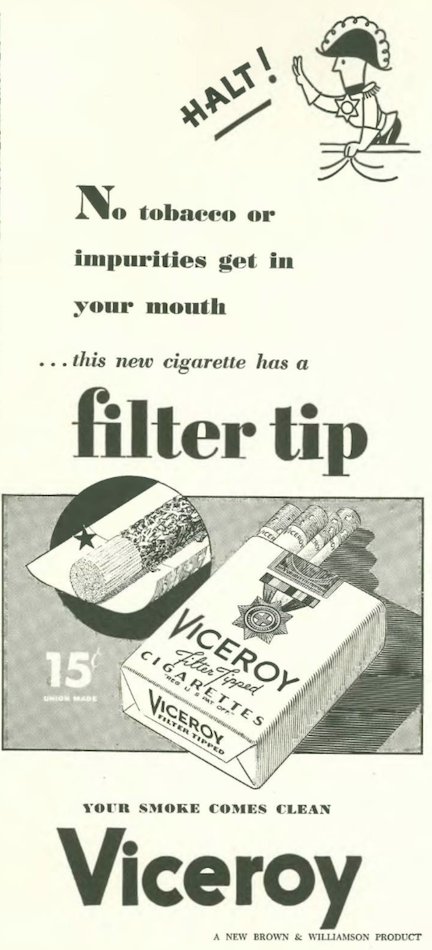
…Brown & Williamson introduced a new cigarette to the market…Viceroy was the first brand to feature a cork-tipped filter…

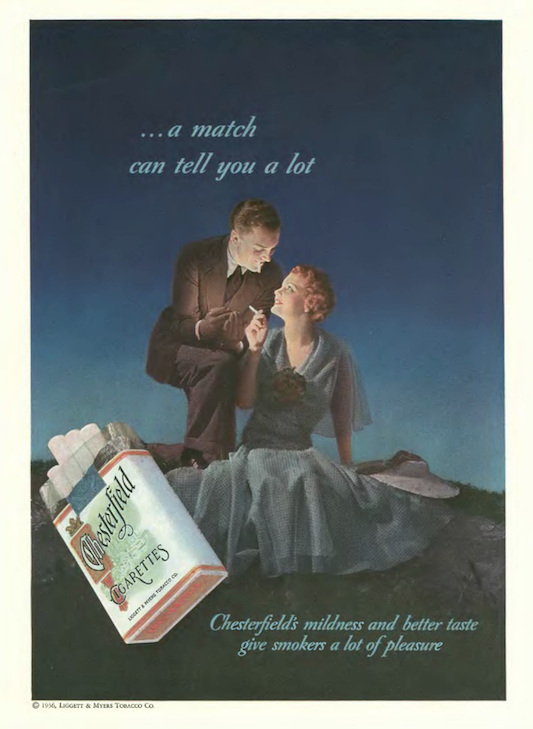
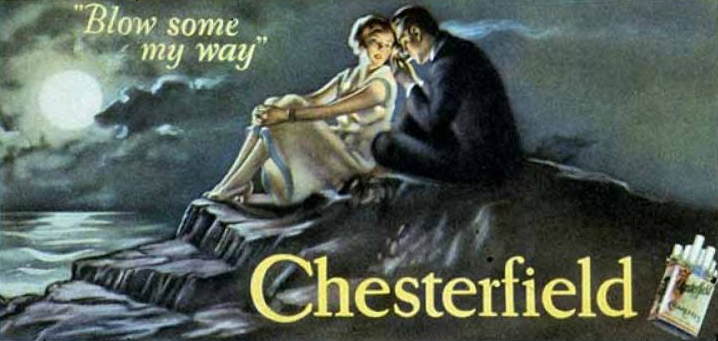
…Liggett & Myers continued to run their somewhat old-fashioned ads with softly lit, romantic settings…illustrator McClelland Barclay (1891–1943) created this look to promote the company’s Chesterfield brand…

…Barclay’s work recalled similar imagery used in a controversial 1926 ad for Chesterfield that sought to break the taboo placed on women smokers…

…not so controversial was Susan Willard Flint, who opened the magazine along with…

Otto Soglow

…and Richard Taylor

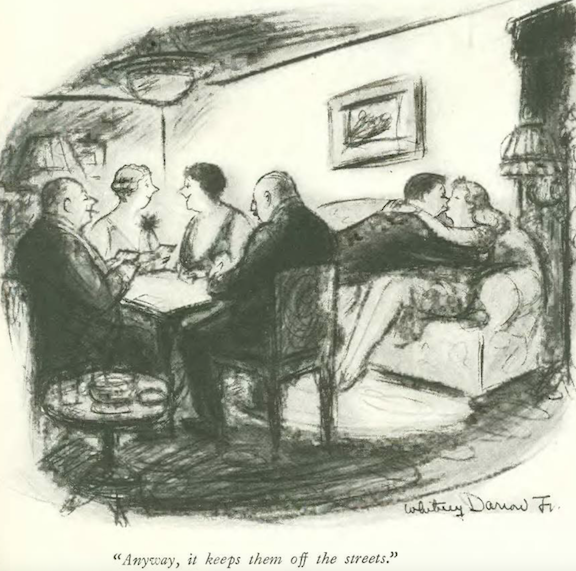
…we turn to the cartoons starting with Whitney Darrow Jr and a canoodling couple…

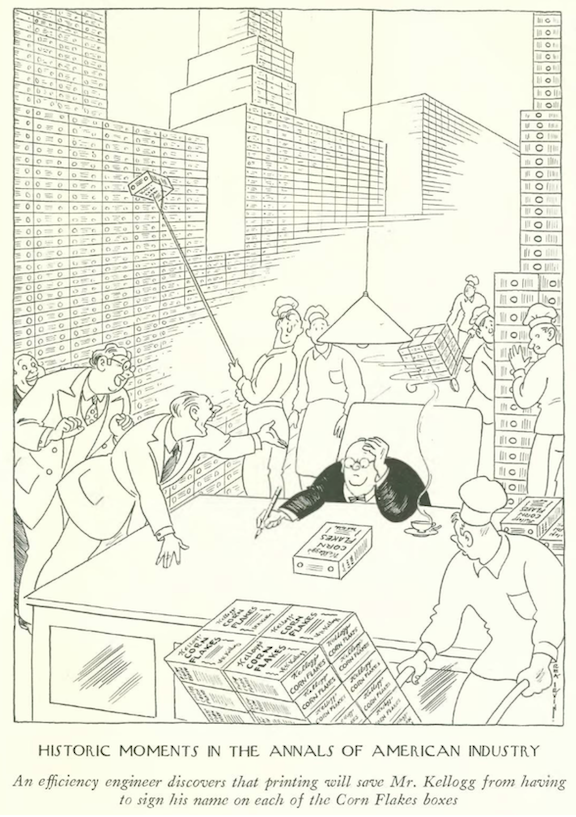
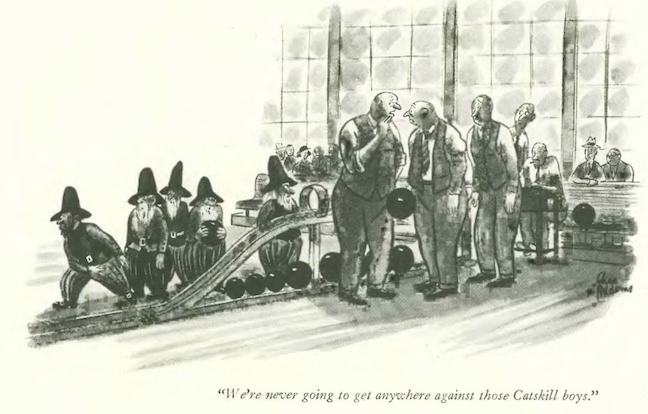
Charles Addams found some formidable bowling opponents…

…and Addams again at the races…

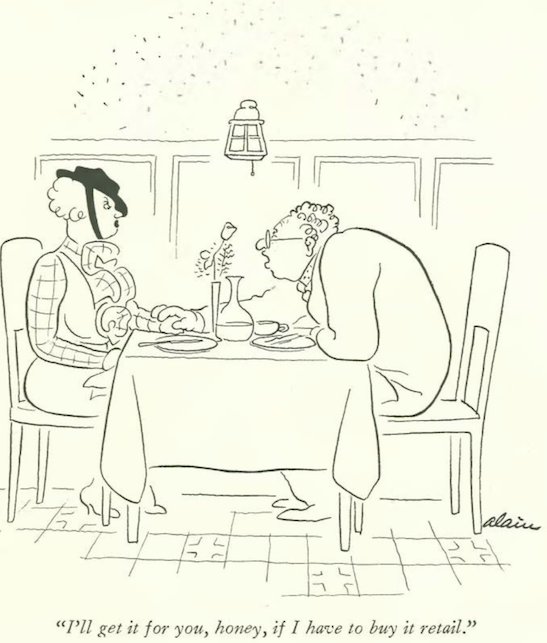
Alain showed us the harder edges of marital bliss…

…while William Steig was all sweetness and light…

Peter Arno showed us some political intrigue…

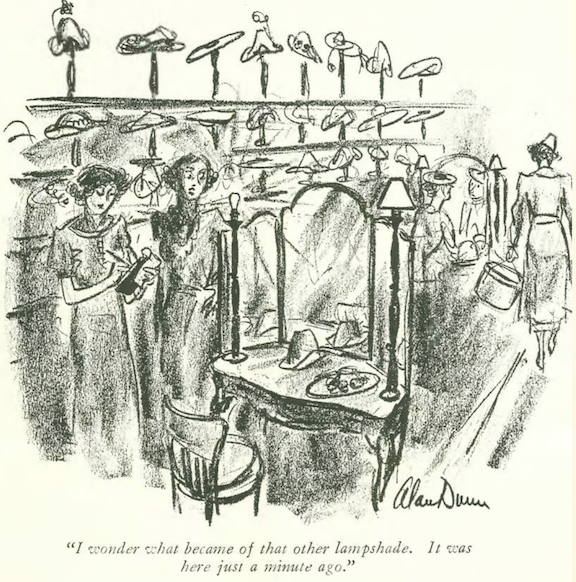
Alan Dunn offered a new twist in hat fashions…

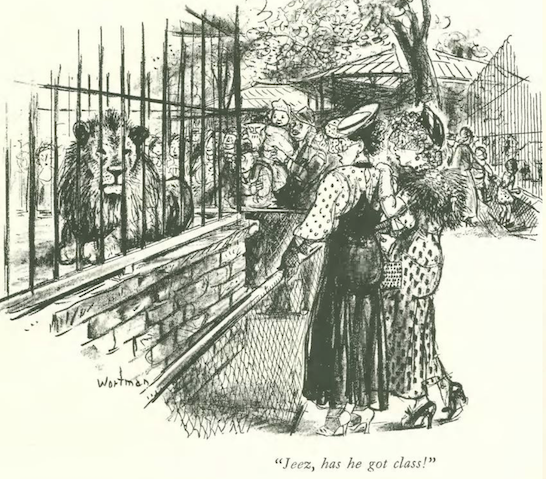
…and we close with Denys Wortman, and a very posh lion…

Next Time: Meet Izzy & Moe…

Modern Times

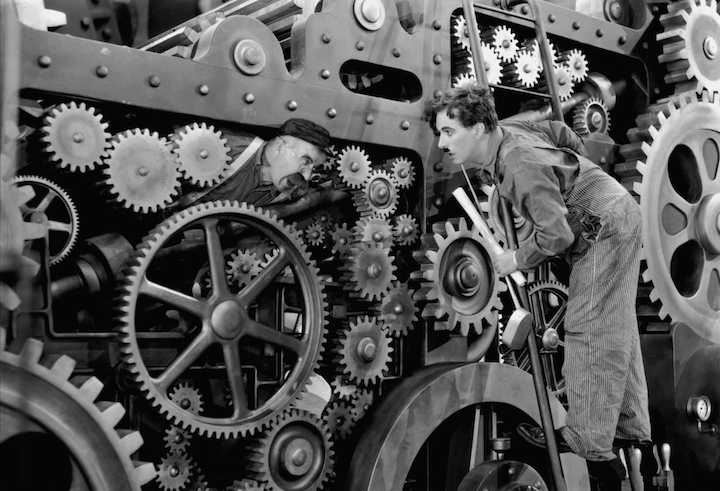
Above: A mechanic (Chester Conklin) gets caught up in his work with the help of the Tramp (Charlie Chaplin) in Modern Times. (festival-entrevues.com)

The film Modern Times was Charlie Chaplin’s last performance as “The Tramp” (or, “The Little Tramp”), a character he created more than twenty years earlier to represent a simple person’s struggle to survive in the modern world. That struggle was no more apparent than in Modern Times, a film in which the Tramp faced the dehumanizing industrial age in all its kooky complexity.

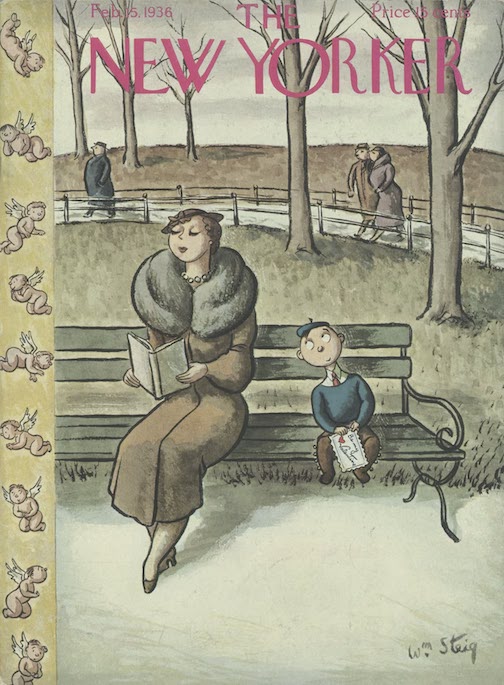
A sweet Valentine’s Day-themed cover by William Steig, February 15, 1936.

The film is notable for being Chaplin’s first picture to feature sound, and the first in which Chaplin’s voice is heard—singing Léo Daniderff’s comical song “Je cherche après Titine” (although Chaplin replaced the lyrics with gibberish). Modern Times was nevertheless filmed as a silent, with synchronized sound effects and a small amount of dialogue. Critic John Mosher appreciated the movie as being “of the old era,” not anticipating that it would become one of cinema’s most iconic and beloved films.

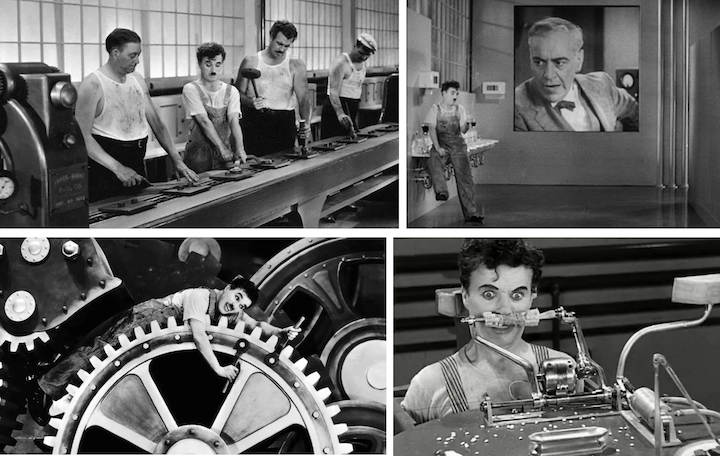
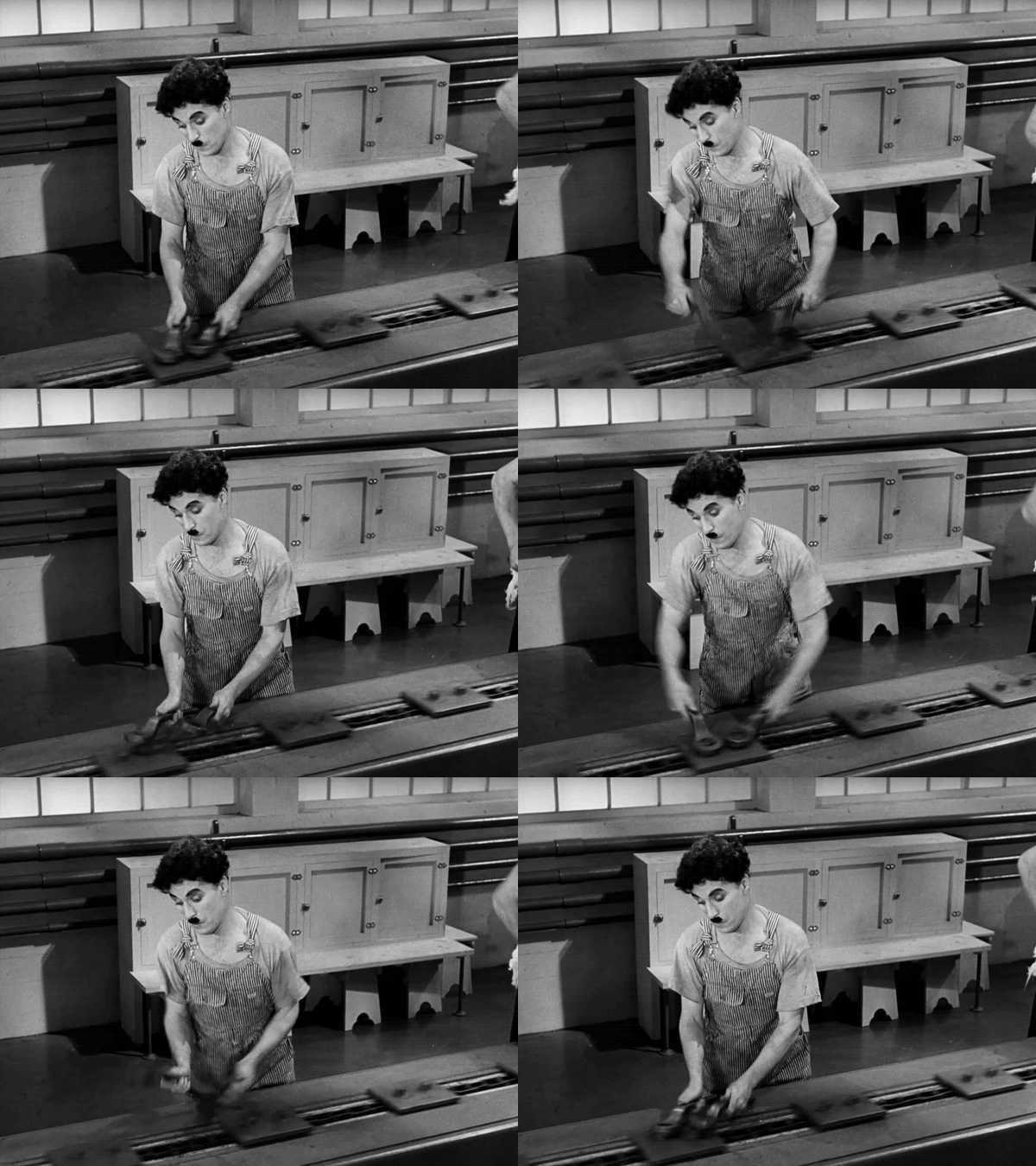
JUST A COG IN THE MACHINE…Clockwise, from top left: Repetitive assembly line work drives the Tramp (Charlie Chaplin) to a nervous breakdown; the steel factory is an Orwellian world where the president (Allan Ernest Garcia) constantly monitors his workers—even in the bathroom where the Tramp is caught taking a break; the company tries out a new lunch efficiency machine on the Tramp, with mixed results; iconic image of the Tramp at work. (medium.com/YouTube.com)
(thetwingeeks.com)

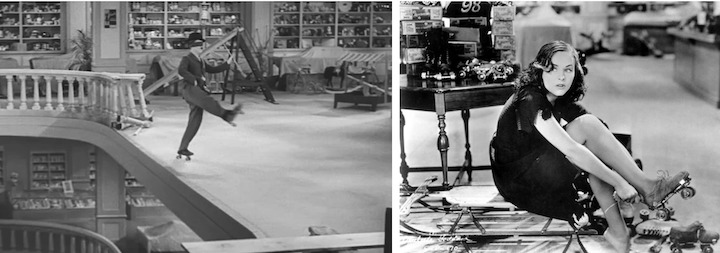
One of the film’s best stunts involved the blindfolded Tramp rollerskating on the fourth floor of an under-construction department store; Chaplin employed a matte painting, perfectly applied on a glass pane in front of a camera, to create the illusion of a sheer drop-off. Even as an illusion, Chaplin’s skating skills were remarkable.

HIGH ANXIETY…The blindfolded Tramp (Charlie Chaplin) skates precariously close to a sheer drop-off on the fourth floor of a department store while his companion, an orphan girl known as “The Gamin” (Paulette Goddard) puts on her skates, unaware of his peril. (YouTube.com)

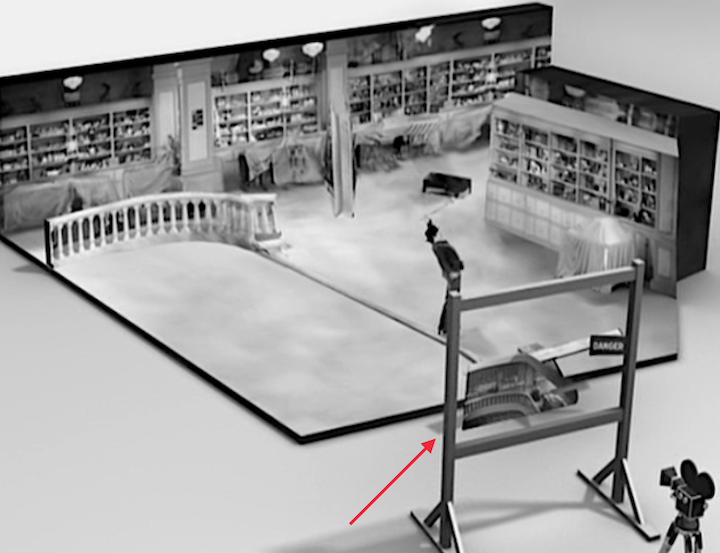
The model below shows how the effect was achieved, filming next to a glass-mounted matte painting to create the illusion of a sheer drop off…

(reddit.com)

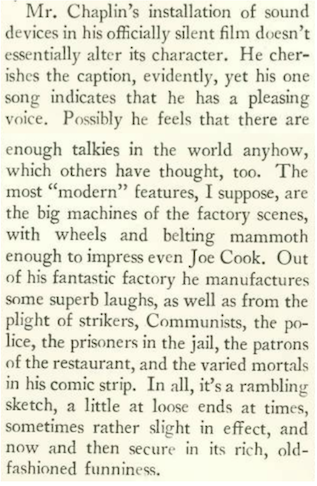
In his conclusion, Mosher found the film to be “secure in its rich, old-fashioned funniness.”

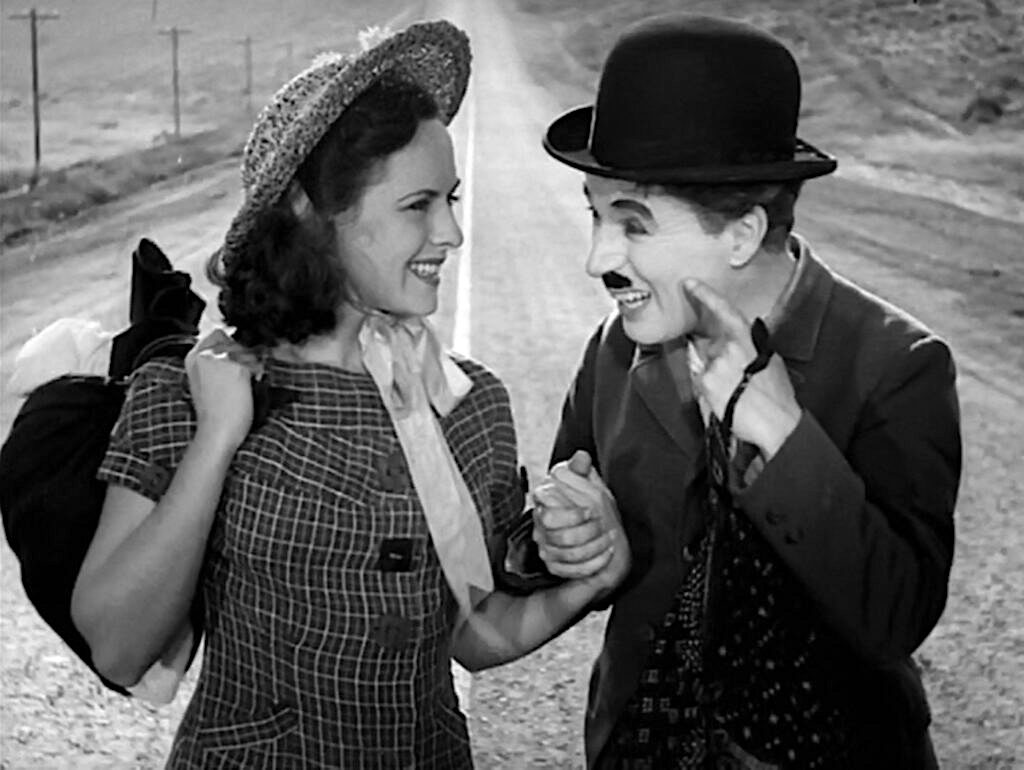
Chaplin gave a happy send-off to the Tramp, who at the end of earlier films walked down the road alone. Modern Times closed with the Tramp and the Gamin walking hand in hand, dreaming of a life together.

FOND FAREWALL…Paulette Goddard joined Charlie Chaplin on the road at the end of Modern Times. Goddard became Chaplin’s third wife in 1936. (the-cinematograph.com)
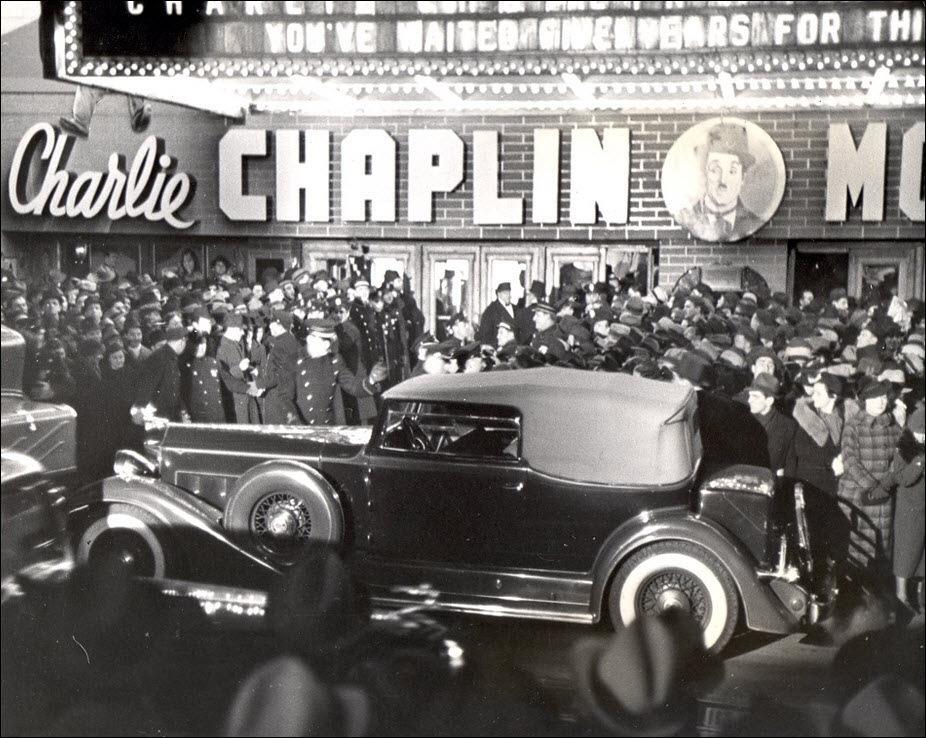
THE TRAMP RETURNS…World premiere of Modern Times, Feb. 5, 1936, at the Rivoli Theatre in New York City. The film was one of the top-grossing films of 1936. (Wikipedia)

A final note: The website The Twin Geeks offers an excellent synopsis and analysis of Modern Times.

 * * *

Bachelor King

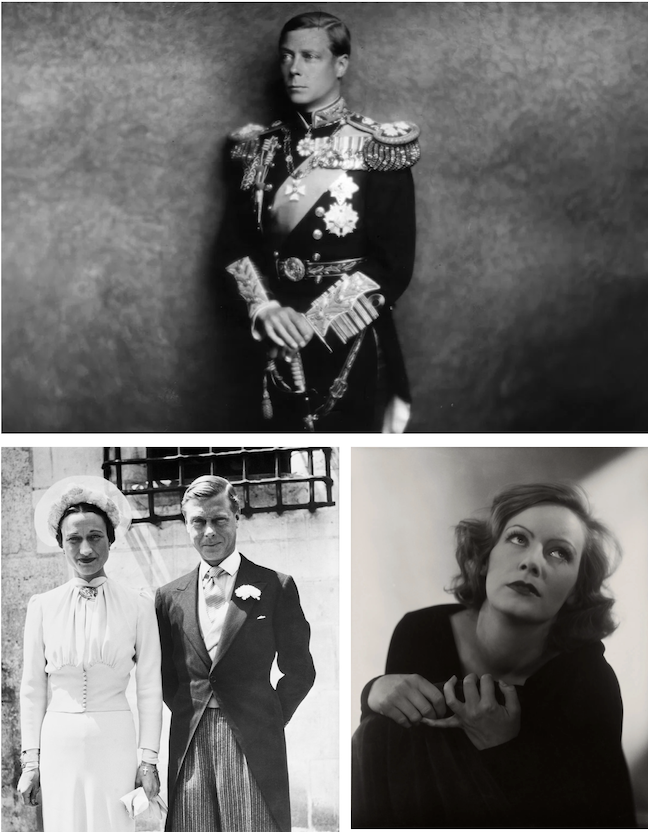
In his “Notes and Comment,” E.B. White wrote about the ascension to the British throne by Edward VIII following the death of his father, George V. In this excerpt, White considered a question raised by the Daily News regarding the king’s plans to marry (a question answered a few months later when Edward announced his plan to wed American divorcee Wallis Simpson, which led to a constitutional crisis and Edward’s subsequent abdication).

BUT I DON’T WANNA BE KING…The reluctant king Edward VIII would choose love over the crown when he abdicated the throne in December 1936 to marry Wallis Simpson (bottom left); E.B. White noted one woman’s suggestion that the king should marry actress Greta Garbo, since “Both have had a rough time at love.” (highland titles.com/George Eastman Museum)

* * *

By Any Other Name

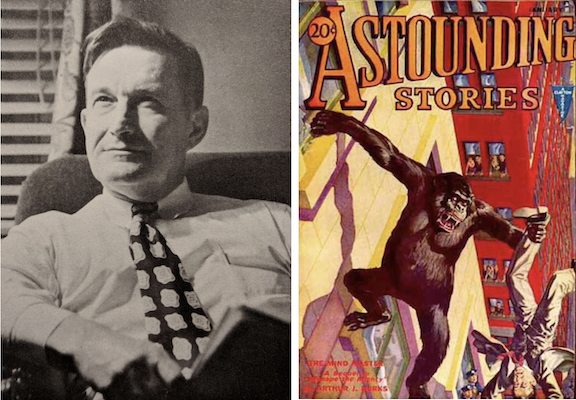
“The Talk of Town” featured a profile of Arthur J. Burks, a prolific writer of pulp fiction who published everything from detective stories to science fiction under a half-dozen pseudonyms. A brief excerpt:

A CURIOUS MIND…Arthur J. Burks (1898–1974) and the cover of Astounding Stories,  January 1932, which featured the first part of his two-part tale, “The Mind Master.” Burks produced around eight hundred stories for the pulps, twenty-nine of which appeared in the magazine Weird Tales. (findagrave.com/gutenberg.org)

* * *

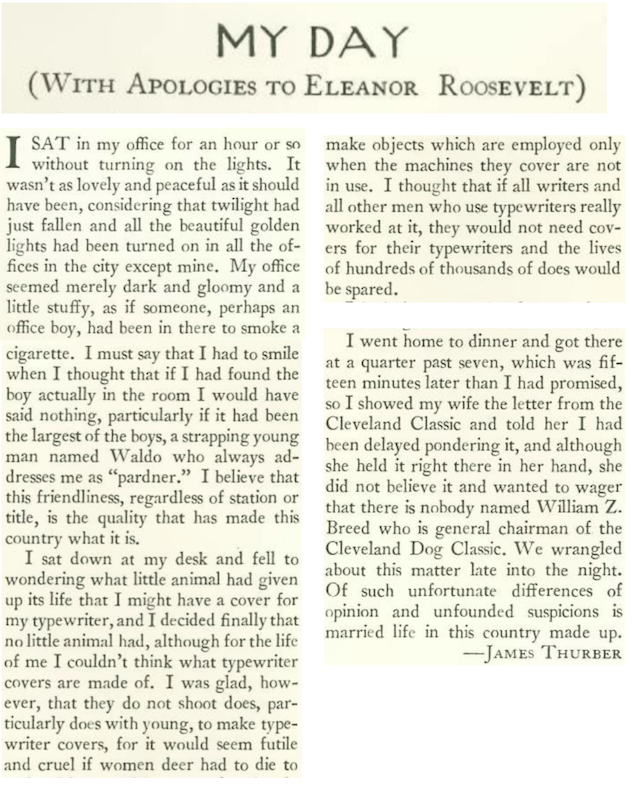
A Day in the Life

From 1935 to 1962 Eleanor Roosevelt published a daily syndicated newspaper column titled “My Day”—through the column millions of Americans learned her views on politics, society, and events of the day as well as details about her private and public life. James Thurber couldn’t resist writing a parody—here’s an excerpt:

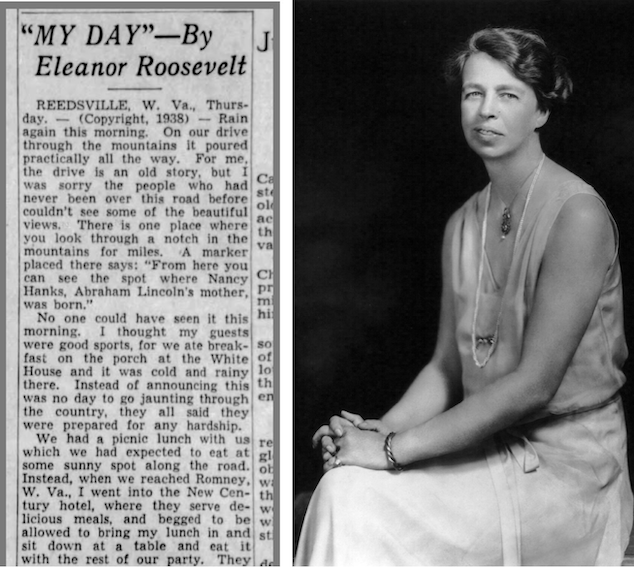
THE REAL DEAL…At left, sample of one of Eleanor Roosevelt’s syndicated “My Day” columns from 1938; photo of the First Lady from 1932. (arthurdaleheritage.org/Library of Congress)

 * * *

At the Movies

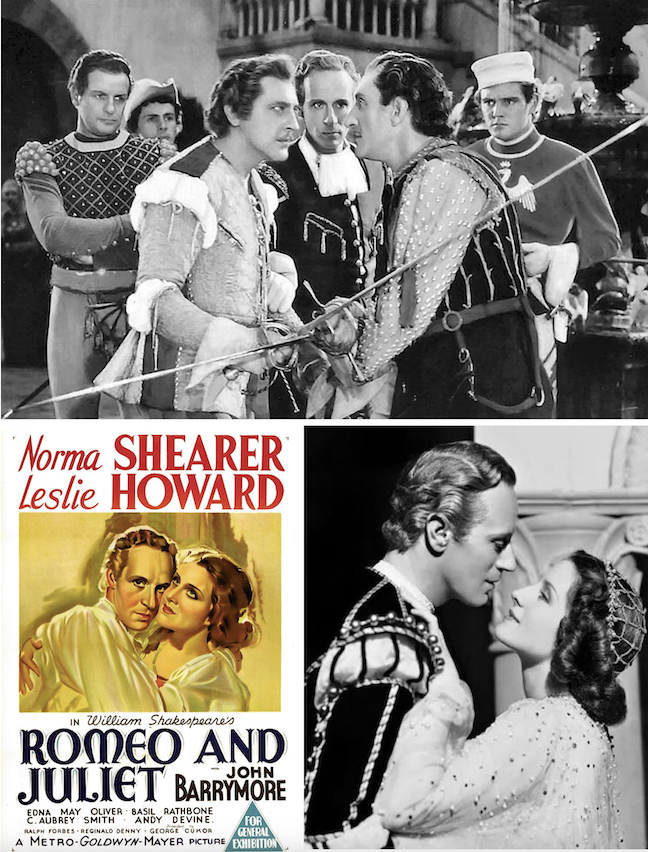
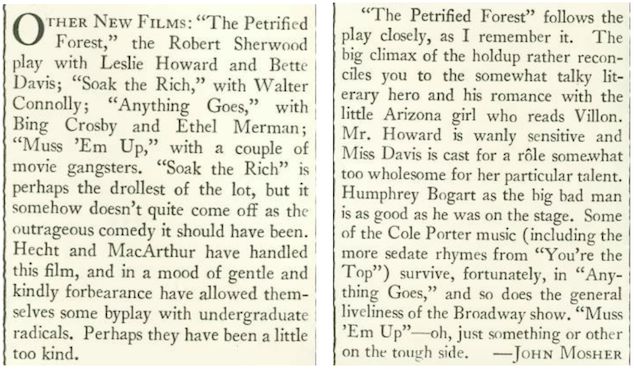
Besides Modern Times, there were other movies of note that were given rather scant attention in Mosher’s column, including the film adaptation of The Petrified Forest starring Humphrey Bogart, Bette Davis and Leslie Howard.

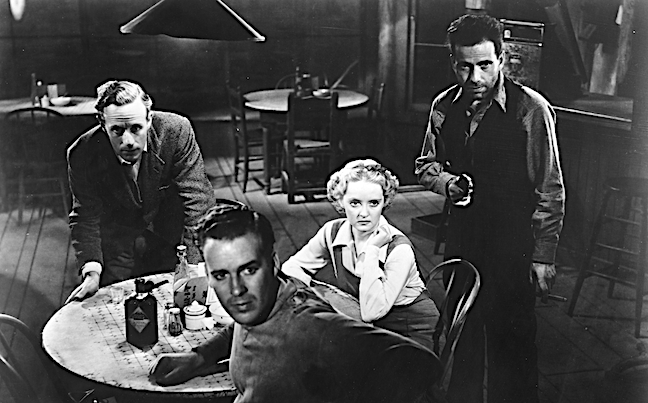
Robert E. Sherwood wrote the 1934 Broadway play of the same name, which was co-produced by Howard and featured both Howard and Bogart. When it was adapted to film, Howard insisted that Bogart appear in the movie, and it made Bogart a star (he remained grateful to Howard for the rest of his life).

DANGEROUS DINER…An odd mix of patrons at a gas station cafe are taken hostage by desparate criminals in The Petrified Forest. From left are Leslie Howard, Dick Foran, Bette Davis and Humphrey Bogart. Playwright Robert Sherwood based Bogart’s character, Duke Mantee, on the the real-life criminal John Dillinger, the FBI’s first “Public Enemy #1.” (moma.org)

Other cinema diversions included the musical Anything Goes, which included songs by Cole Porter; the comedy Soak the Rich, which featured a radical who falls in love with a rich man’s daughter; and a detective film, Muss ‘Em Up, with the usual movie gangsters.

TAKE YOUR PICK…Clockwise, from top left: Ida Lupino and Arthur Treacher in the musical Anything Goes; Bing Crosby (in disguise) and Ethel Merman in Anything Goes; John Howard, Mary Taylor and Walter Connolly in the comedy Soak the Rich; Preston Foster, Maxine Jennings and Guinn “Big Boy” Williams in the detective film Muss ‘Em Up. (imdb.com/torontofilmsociety.com/zeusdvds.com)

 * * *

The Amazing Race

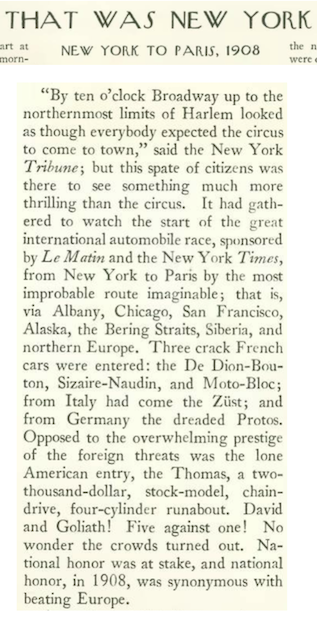
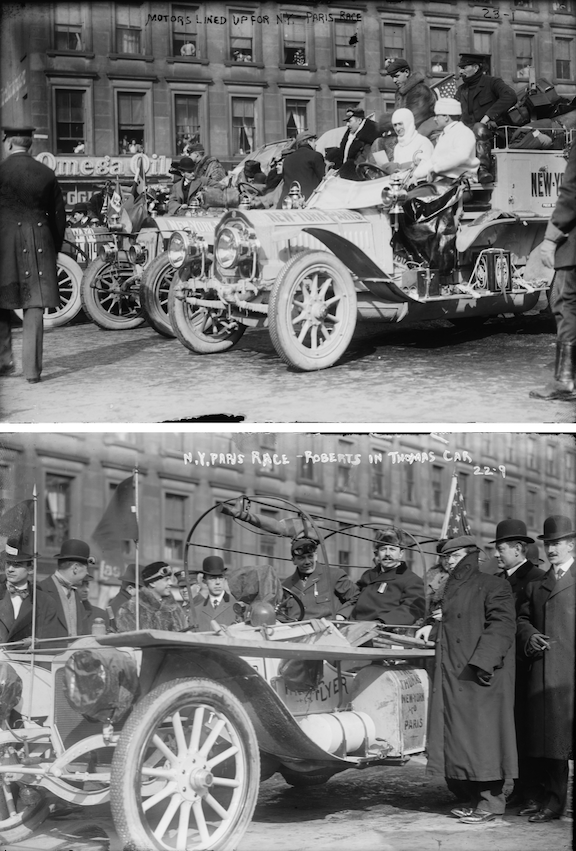
The New Yorker periodically featured “That Was New York,” which took a detailed look at significant events in the city’s history. In this installment, Donald Moffat recalled the 1908 New York to Paris automobile race, which commenced in Times Square on February 12 with six cars representing the U.S., France, Germany and Italy. It was an extraordinary event given that motorcars were a recent invention, and roads were nonexistent in many parts of the world. A brief excerpt:

ON YOUR MARK…Cars lined up in Times Square on Feb 12, 1908 for the start of what would become a 169-day race. American George Schuster was declared the winner when he arrived in Paris on July 30, 1908, after covering approximately 10,377 miles (16,700 km). (Library of Congress)

 * * *

Miscellany

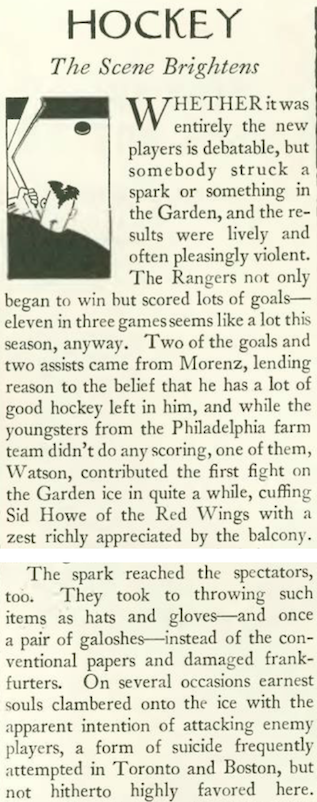
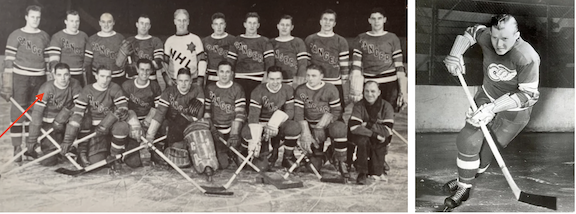
Another regular feature in the early New Yorker was coverage of the New York Rangers, a team founded in 1926 by Tex Rickard after he completed construction of the third incarnation of Madison Square Garden. The Rangers were one of the Original Six NHL teams before the 1967 expansion, the others being the Boston Bruins, Chicago Blackhawks, Detroit Red Wings, Montreal Canadiens and Toronto Maple Leafs.

In this excerpt, the writer “K.B.” described the rough play against rival Detroit, which would win back-to-back Stanley Cups in 1936 and 1937.

ZESTY…The excerpt above noted that the Rangers’ Phil Watson cuffed the Red Wings’ Syd Howe “with a zest richly appreciated by the balcony.” At left, team photo of the 1935-36 New York Rangers, with star and fight instigator Phil Watson identified with arrow; at right, Syd Howe won three Stanley Cups with Detroit, winning back-to-back in 1936 and 1937, and then again in 1943. (hockeygods.com)

 * * *

From Our Advertisers

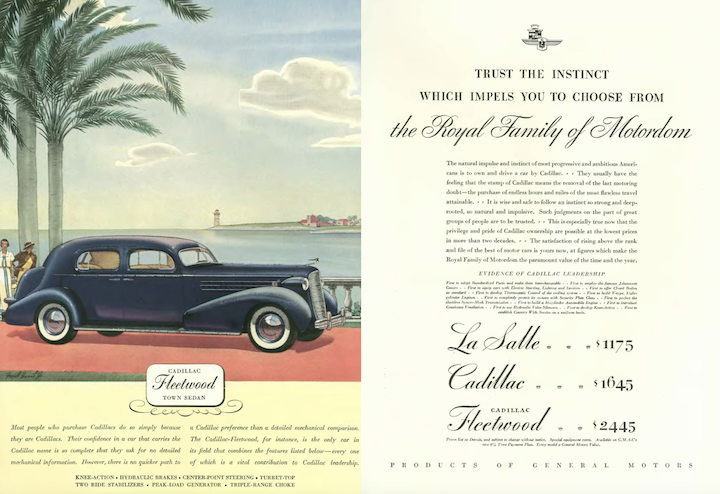
General Motors’ luxury car line offered three price points (and this lovely image) to weather the Depression years, ranging from the relatively affordable La Salle to the Cadillac Fleetwood…

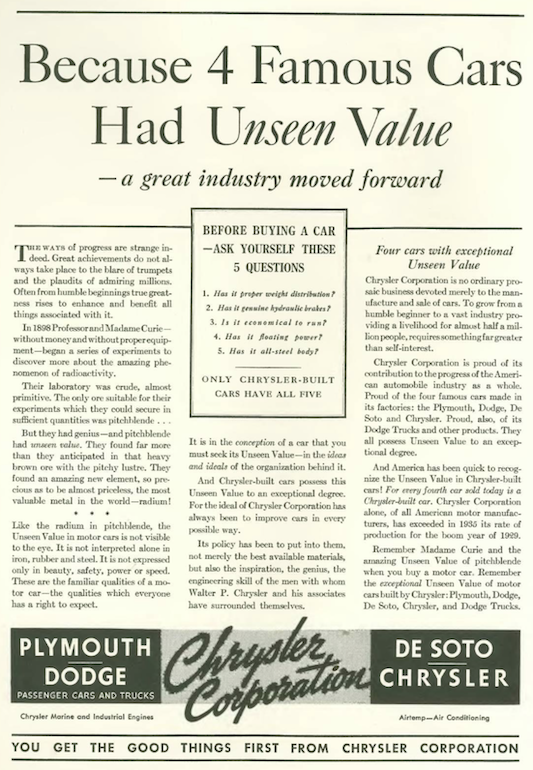
…the Chrysler corporation took a different approach, deploying a very wordy full-page ad that referenced history (a Madame Curie analogy) and something called “Unseen Value” to move its line of autos…

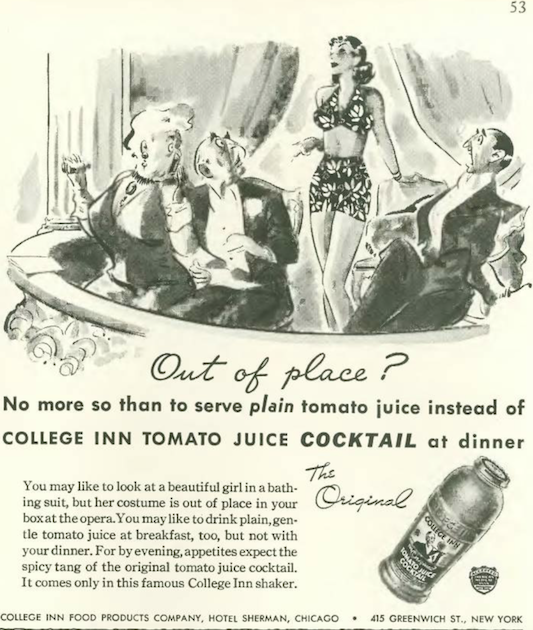
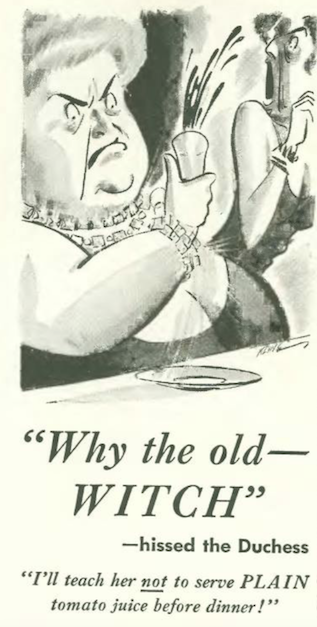
…the makers of College Inn Tomato Juice Cocktail brought back the “Duchess” with this shocking scene at the opera…

…recall last summer when College Inn featured the Duchess in a series of ads that illustrated her increasing fury over plain tomato juice…one wonders what sort of sadistic torment she had in mind for her hostess, “the old WITCH”…

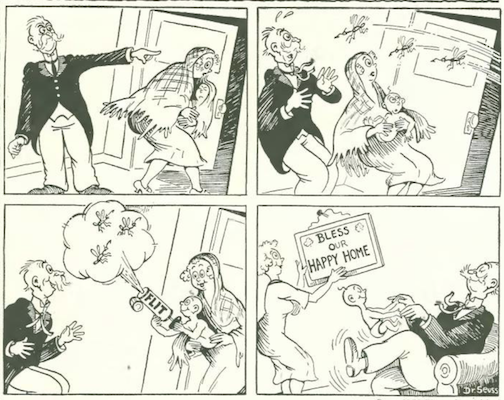
…on to our cartoonists, beginning with this spot by James Thurber

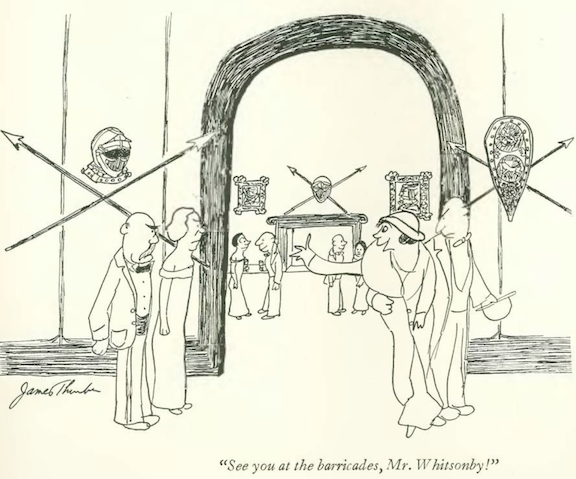
…and Thurber again, with an unwanted call to solidarity…
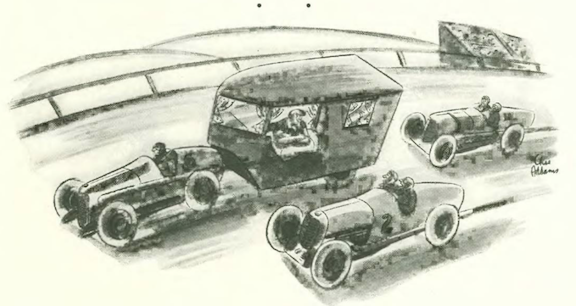
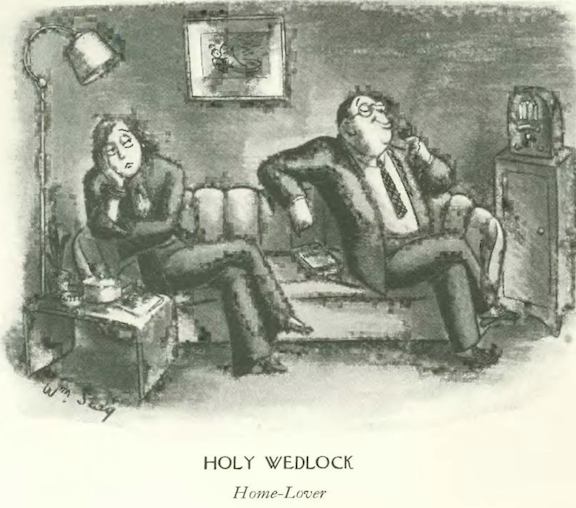
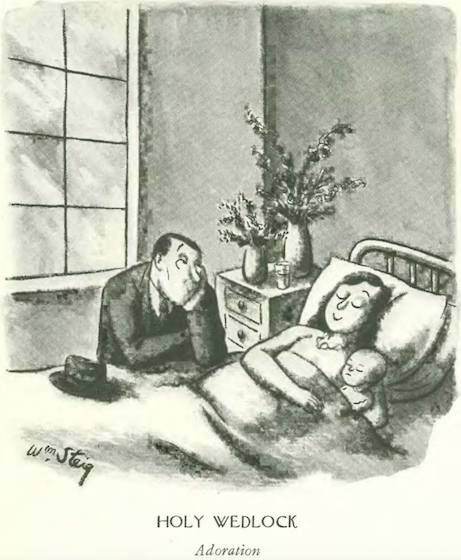
William Steig explored marital bliss…

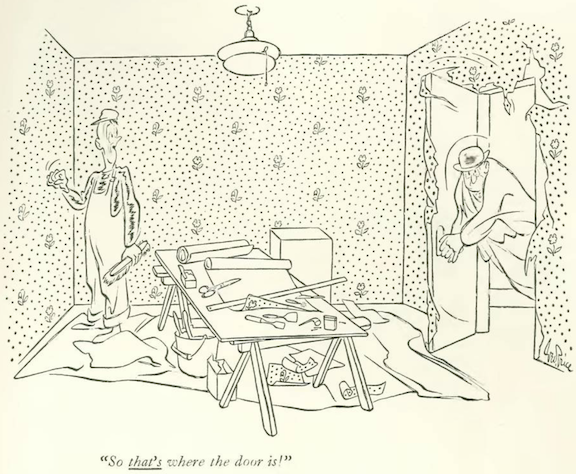
George Price gave us a Three Stooges moment…

…I do not have the identity of this cartoonist…I will keep looking, but would love suggestions in the meantime…*update*…thanks to Frank Wilhoit for identifying the cartoonist below as John Kreuttner, also confirmed through Michael Maslin’s Ink Spill

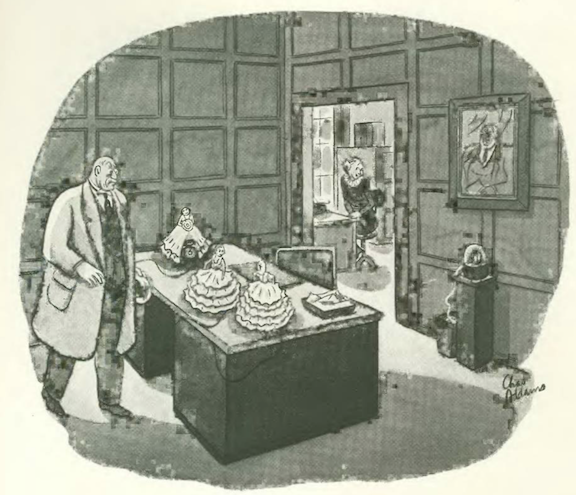
Charles Addams added some frills to an executive suite…

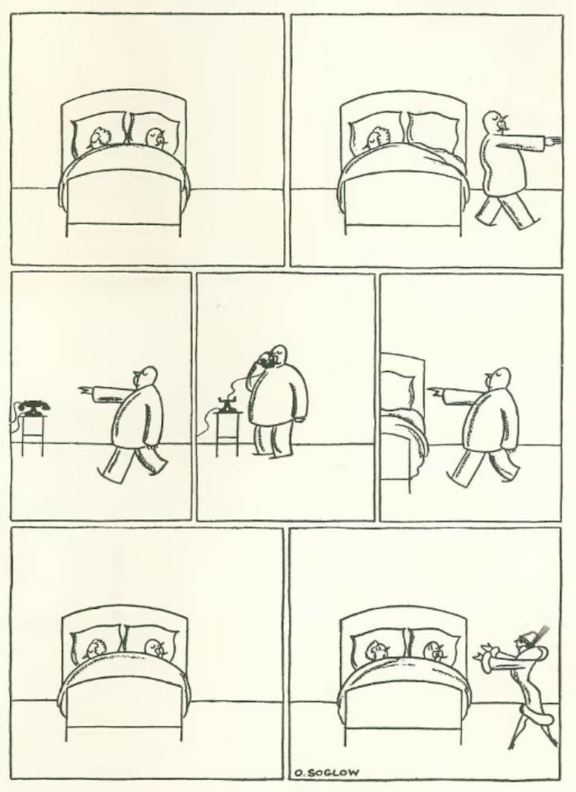
Otto Soglow illustrated the hazards of sleepwalking…

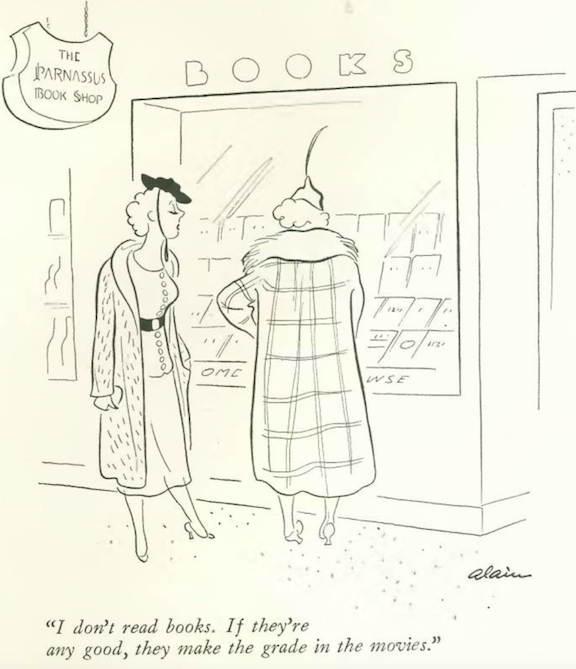
Alain revealed a challenge to the publishing industry…
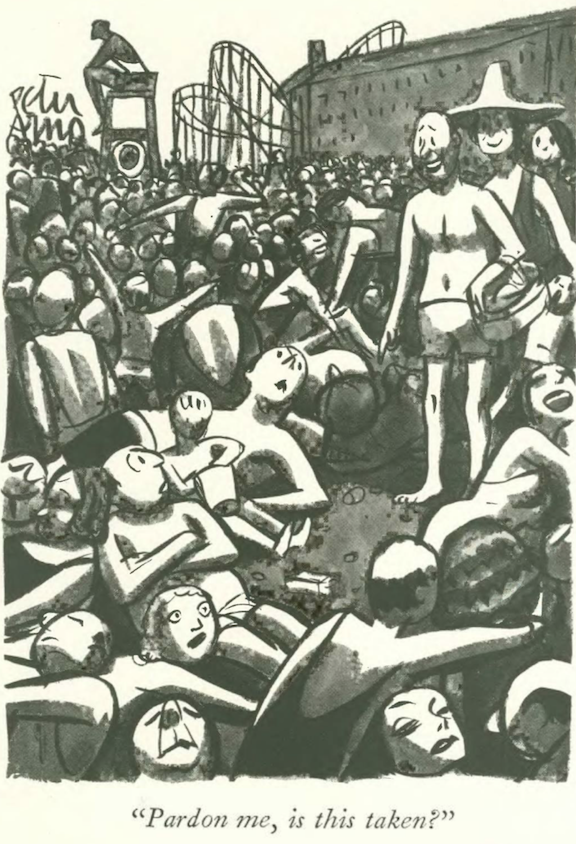
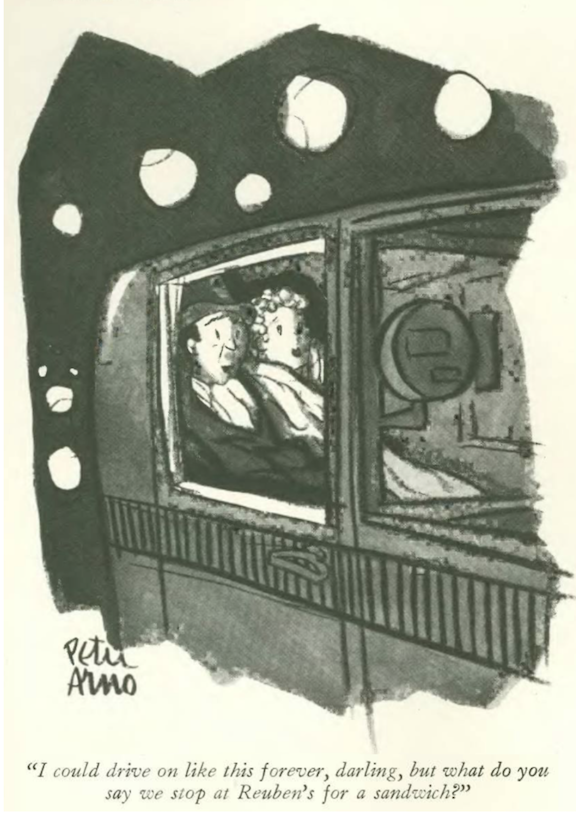
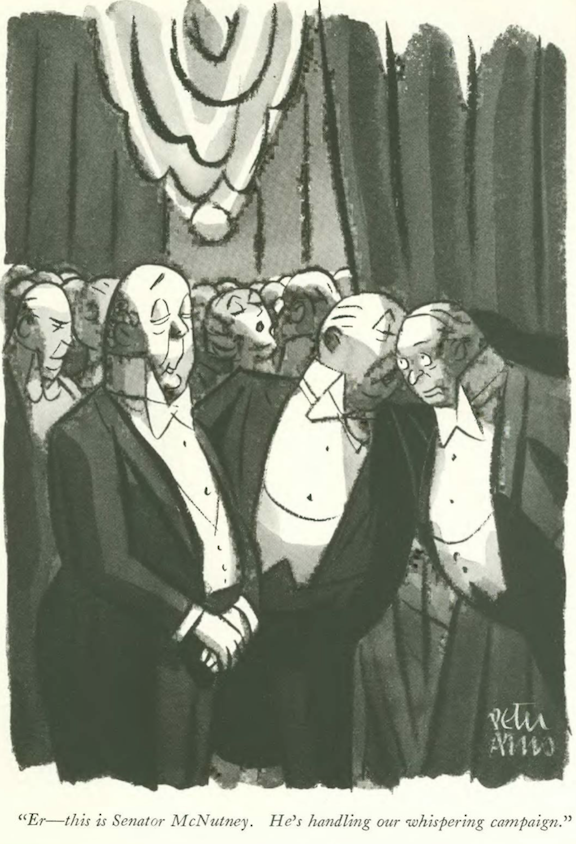
Peter Arno possibly craved some sauerkraut and corned beef…
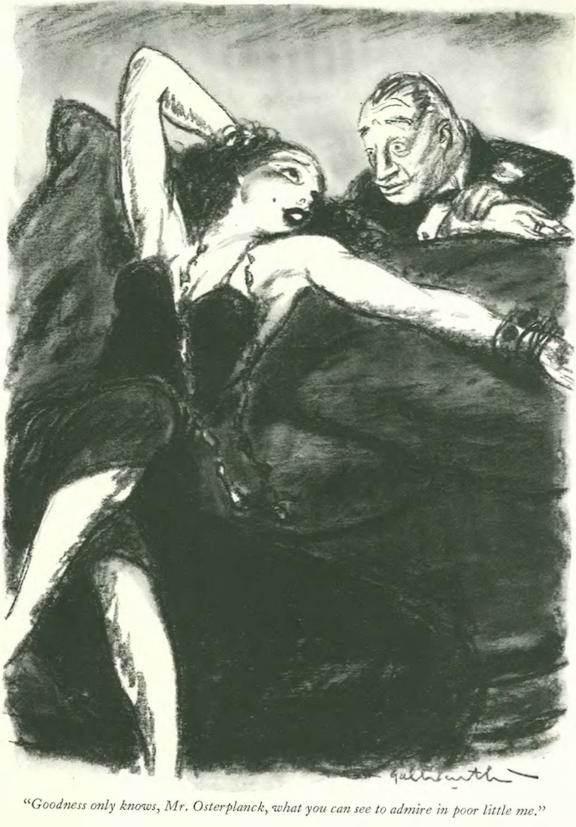
William Crawford Galbraith was in familiar sugar daddy territory…
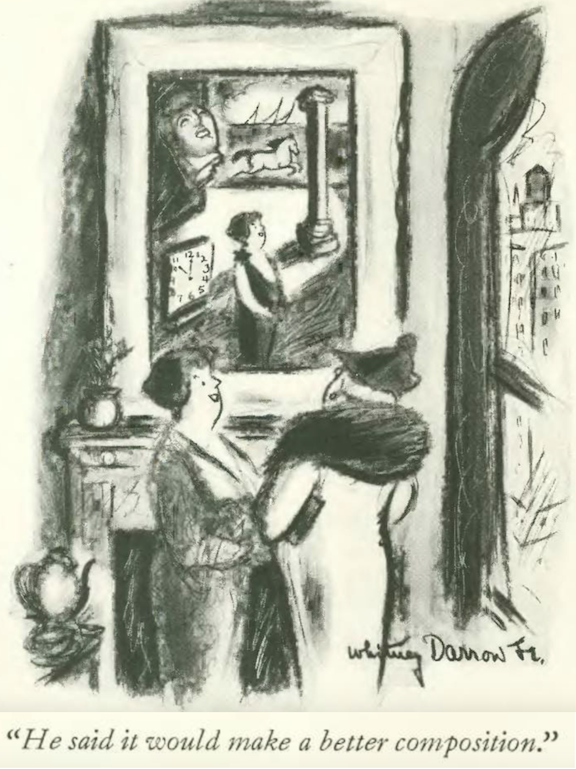
Whitney Darrow Jr gave a nod to some homey surrealism…

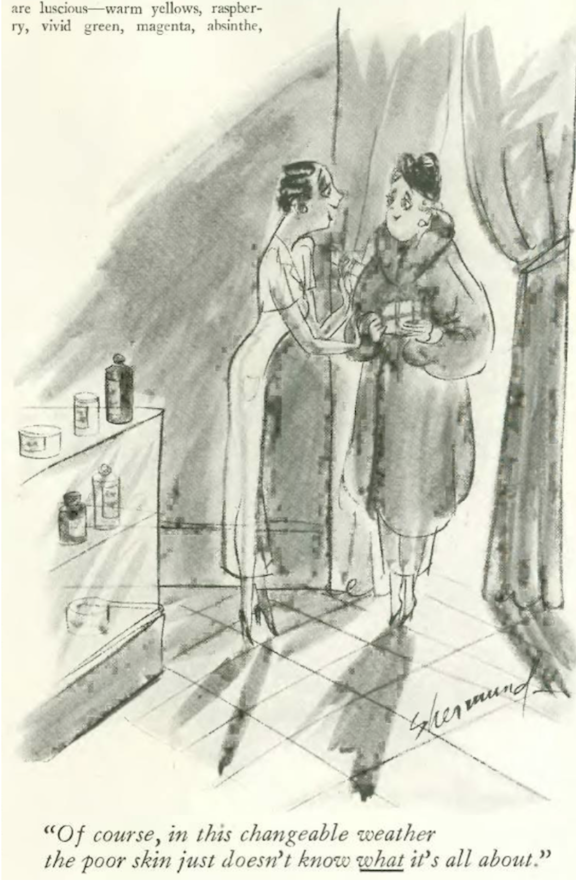
Barbara Shermund offered some well-weathered advice…

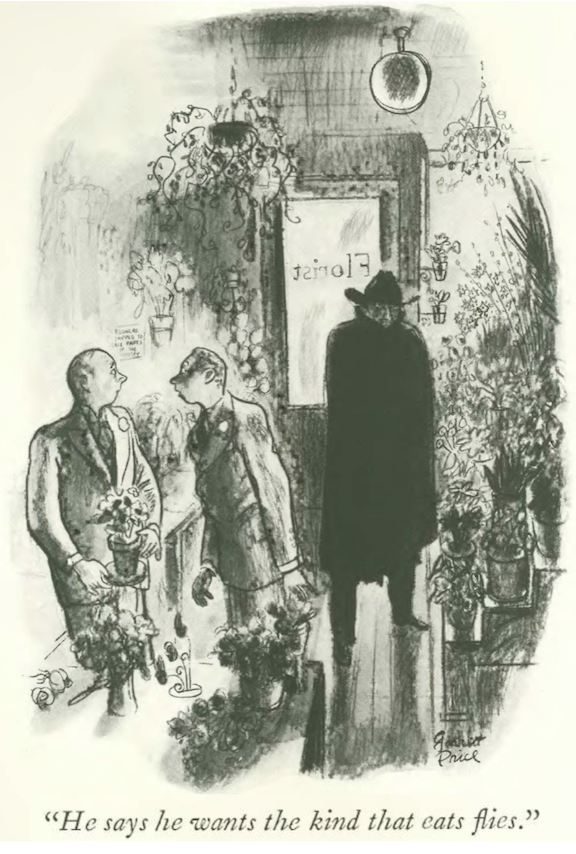
…and we close with Garrett Price, and a visitor more suited to Charles Addams…

Next Time: Comfort Food…

Gas Tanks & Towers

Lewis Mumford (1895–1990) is best known as a critic of art, architecture and urban design, but he was unique—especially for his time—in how he approached these subjects, going far beyond aesthetics to consider how things aligned, or mis-aligned, with necessary human qualities ranging from comfort and scale to the quality of our air, water and even diet.

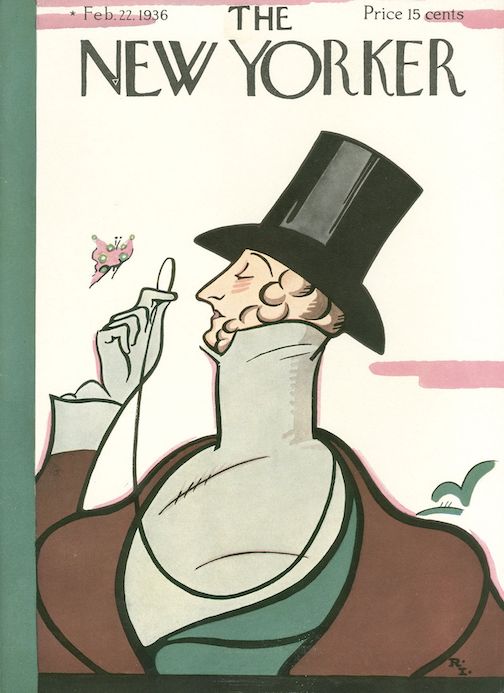
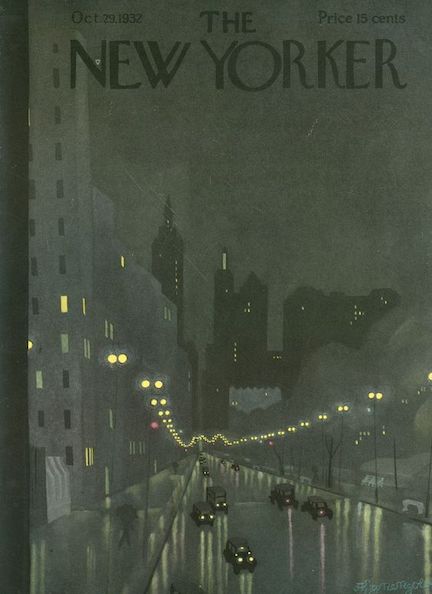
Oct. 22, 1932 cover by Peter Arno.

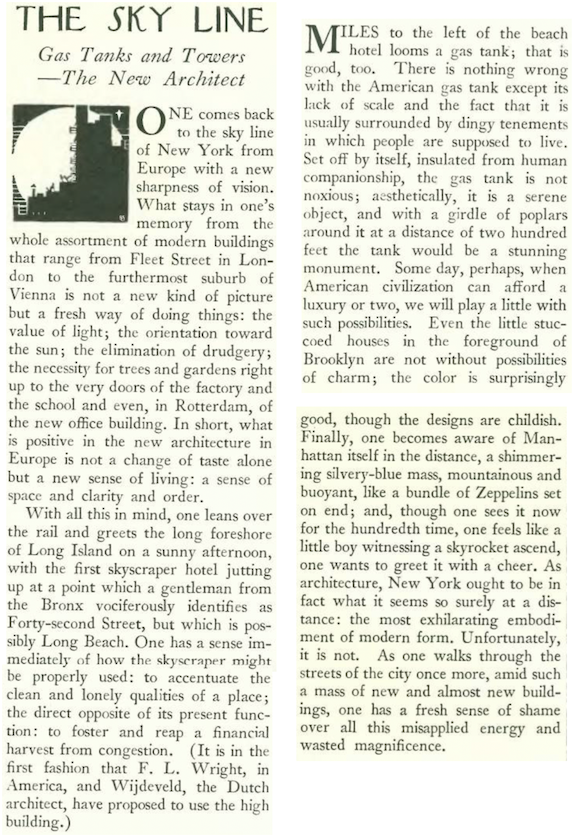
Returning home from a trip to Europe, Mumford pondered the New York skyline as his ship approached the harbor, contrasting his city’s approach to architecture with what he had seen abroad. He was not pleased:

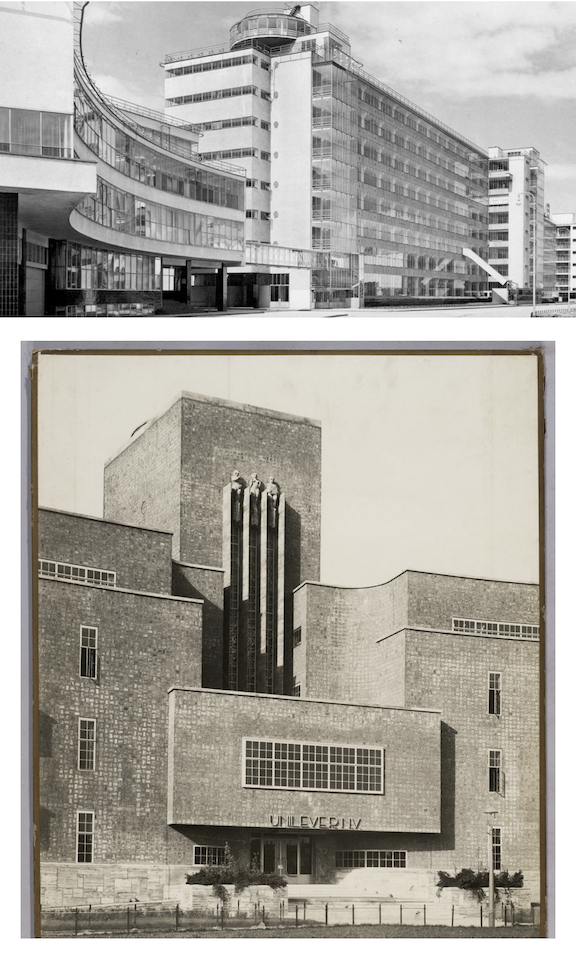
NOT JUST ANOTHER PRETTY FACE…Lewis Mumford praised the sense of “space, clarity and order” he found in the buildings of Rotterdam—perhaps he was referring in part to Leendert van der Vlugt’s 1931 Van Nelle Factory (top) and H.F. Mertens’ 1931 Unilever office building. (metalocus.es/Wikimedia)
WELCOME BACK, LEWIS…Manhattan skyline with gas tank, 1932. (nycurbanism.com)

Mumford was among the few in 1931 who saw a bright side to the Depression, since a pause in building would afford American architects an opportunity to reflect on their past transgressions…

Mumford, among others, was regarded as a visionary in urban planning, anticipating the “New Urbanism” of the late 20th century which was proposed as an antidote to the dehumanizing free-market development Mumford rightly feared would degrade the quality of urban life, not to mention its deleterious effects on the natural environment.

Inspired by the Garden City movement in the U.K., Robert D. Kohn (mentioned above) founded the Regional Planning Association of America, which led to the development of some of the first modern zoning standards in the U.S.

MAVERICKS…Robert D. Kohn (seated in light-colored suit) was president of AIA when the association held their convention in San Antonio in 1931. Seated at left is Dr. Aureliano Urrutia, a prominent San Antonio physician who established the famed Miraflores gardens (mostly gone, sadly) in that city. (sanantonioreport.org)
Along with Mumford and Kohn, Henry Wright (left) and Frederick Ackerman were strong advocates for zoning laws unsullied by free market forces. Wright (1878–1936) was the brainchild behind the Hillside Group Housing model (described by Mumford below) and he also co-designed Radburn (pictured below) among other projects. Ackerman (1878–1950) became the first Technical Director of New York City Housing in 1934.(sunnysidegardens.us)

Mumford praised the work of architect and planner Henry Wright (1878–1936), who had co-created a “Garden City” plan for Radburn, N.J. (with Clarence Stein) and had recently produced a proposal for “Hillside Group Housing”…

NICE PLACE, THIS…Apartments around a courtyard in Radburn, a community designed by Henry Wright and Clarence Stein. Stein was an early supporter of bicycle paths. (thepolisblog.org)

 *  *  *

Shining Some Light

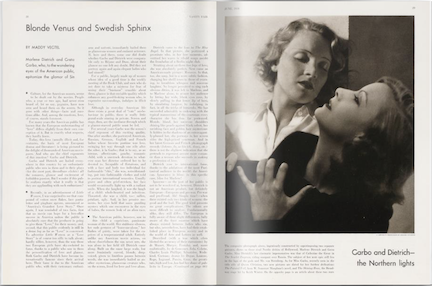
Now I’d like to offer a tribute of sorts to the almost-forgotten Maddy Vegtel, a writer known in 1920s and 30s for her Vanity Fair profiles (she penned “Blonde Venus and Swedish Sphinx” — about Marlene Dietrich and Greta Garbo in the June 1934 issue of VF) and articles about her European roots (Holland) in The New Yorker from 1926 to 1956. She particularly enjoyed skewering smug upper middle-class types. Here is her short piece, “Paris.”

…and for the record, the opening spread of Vegtel’s 1934 Vanity Fair piece on Garbo and Dietrich…

(Vanity Fair)

 *  *  *

Play It Again

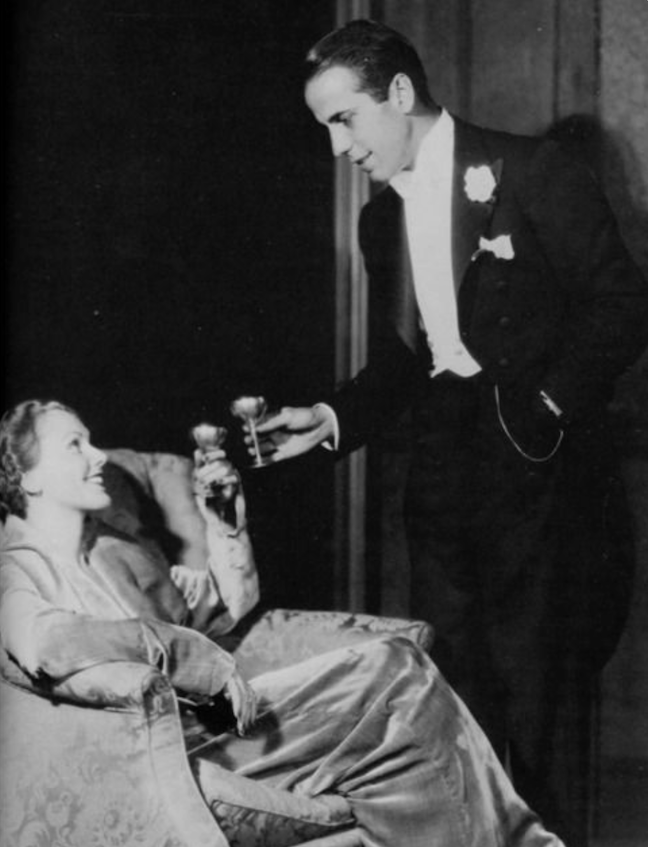
Robert Benchley was back to writing stage reviews, this time taking in the drama I Loved You Wednesday (at the Sam Harris Theatre) featuring Frances Fuller and Humphrey Bogart — Bogie appeared in a number of stage productions before becoming the familiar hardboiled antihero of Hollywood’s golden age.

Bogart began his stage career in 1921, delivering one line (as a Japanese butler!) in the play Drifting. He would go on to appear in 17 Broadway productions between 1922 and 1935, and would make his screen debut in 1930 in A Devil With Women.

HERE’S LOOKING AT YOU, KID…Francis Fuller and Humphrey Bogart in a 1932 stage production of I Loved You Wednesday. It ran for 63 performances at the Sam Harris Theatre. (Pinterest)

 *  *  *

Off-white Christmas

In the midst of wading through poetry submissions to The New Yorker, E.B. White allowed his thoughts to drift toward the coming winter…

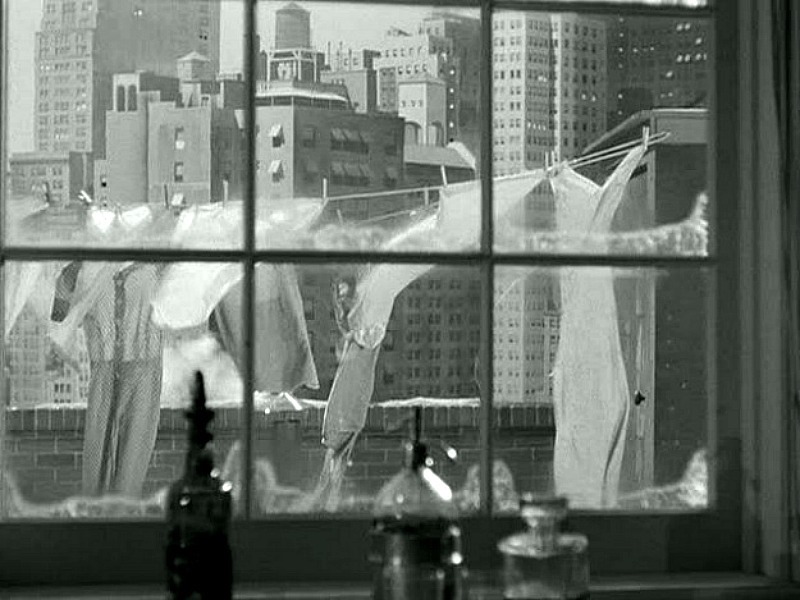
…and what would likely be his winter scene in Manhattan…actually this is a screenshot from the 1945 comedy Christmas in Connecticut, and this was the view through writer Elizabeth Lane’s (Barbara Stanwyck) window, which was actually part of a Hollywood sound stage…

(hookedonhouses.net)

 *  *  *

Seeing Red

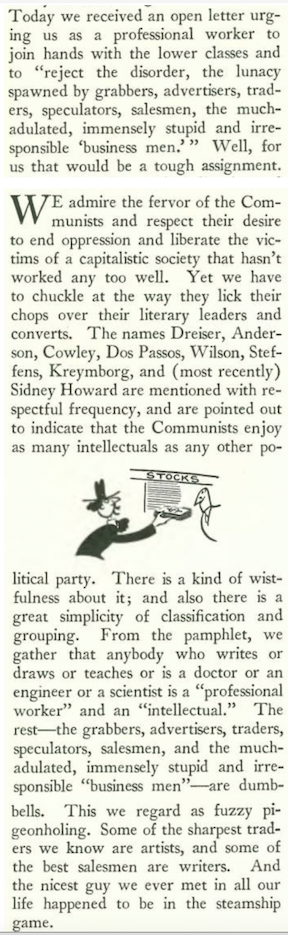
Along with the poetry submissions, E.B. White also received a letter from the local Communists urging The New Yorker to join hands with the oppressed classes. White, however, found that class divisions weren’t always what they seemed…

FREEDOM AND SOME FREE STUFF, PLEASE…About 10,000 Communists and unemployed march on New York’s City Hall in 1932. (NY Daily News)

 *  *  *

From Our Advertisers

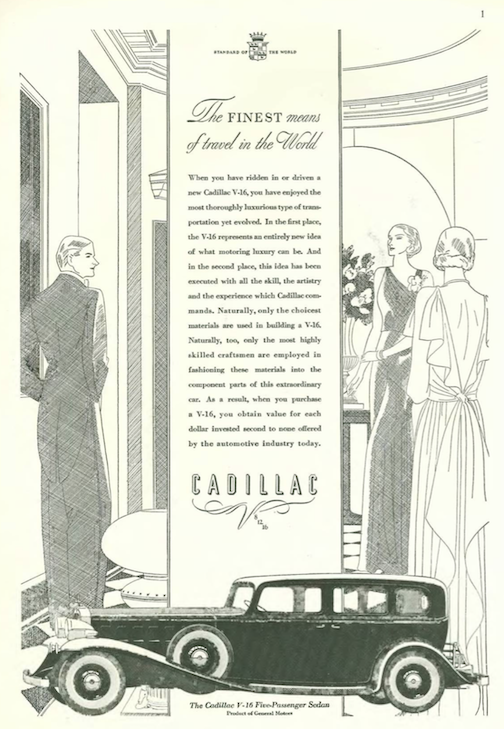
While the Communists marched for jobs and free milk, another class of New Yorkers pondered this ad for a V-16 Cadillac…

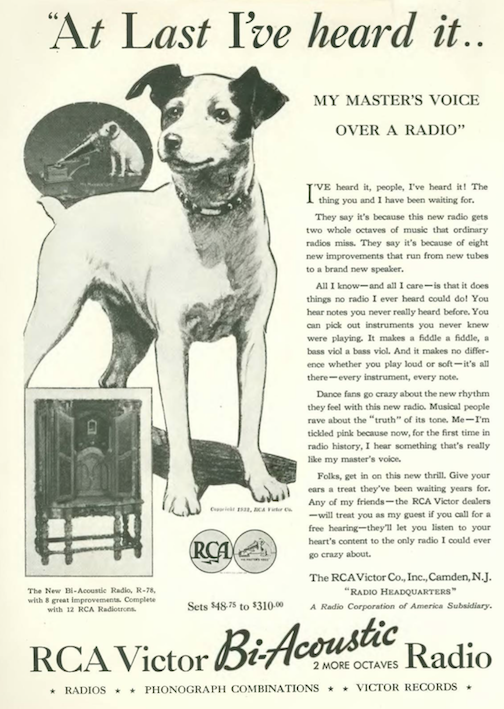
…in my last post we saw how RCA’s mascot “Nipper” enjoyed the newfangled “bi-acoustic” radio…

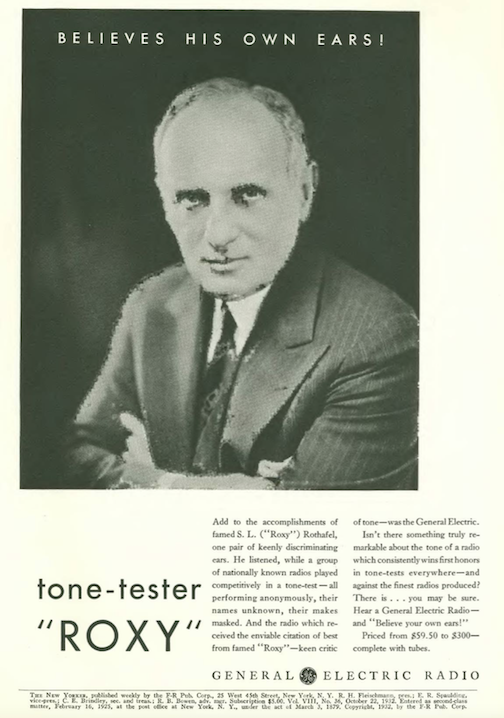
…and so General Electric answered in the Oct. 22 issue with a two-legged expert, who perhaps didn’t have the same range of hearing as a terrier mix, but was nevertheless blessed with “keenly discriminating ears”…

Samuel Lionel “Roxy” Rothafel’s greatest achievement was the Roxy Theatre, which opened March 11, 1927. He was also behind the opening of Radio City Music Hall, home of the Roxyettes (later renamed The Rockettes). Rothafel (1882–1936) is also the great-grandfather of actress Amanda Peet

S.L. “Roxy” Rothafel greets wife Rosa Freedman (right) and daughter Beta Rothafel after their return from abroad aboard the S.S. Paris, Sept. 19, 1932. (Associated Press)

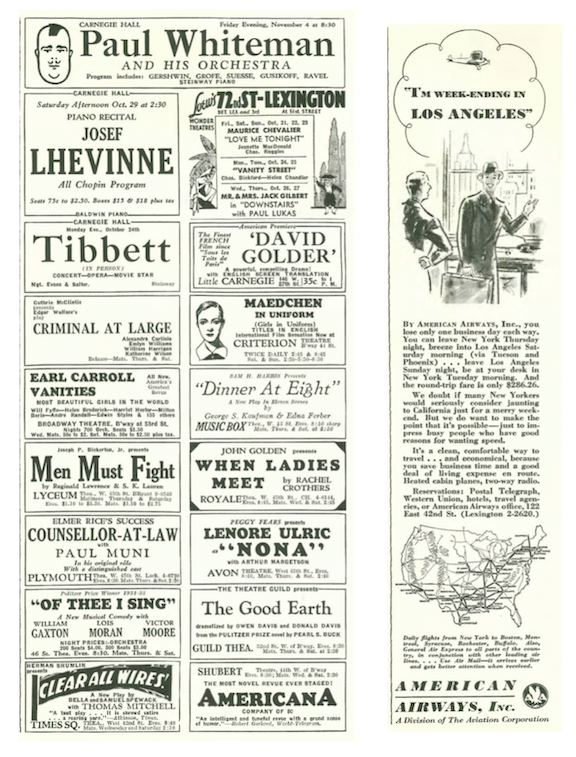
…and we continue in the back pages, which included signature ads for various entertainments and an ad for American Airways, which depicted a jaunty young man announcing his plans for “week-ending in Los Angeles”…now read the fine print…in order to “breeze into Los Angeles on Saturday morning,” this fellow would need to depart on Thursday evening, and no doubt experience some bumps along the way…

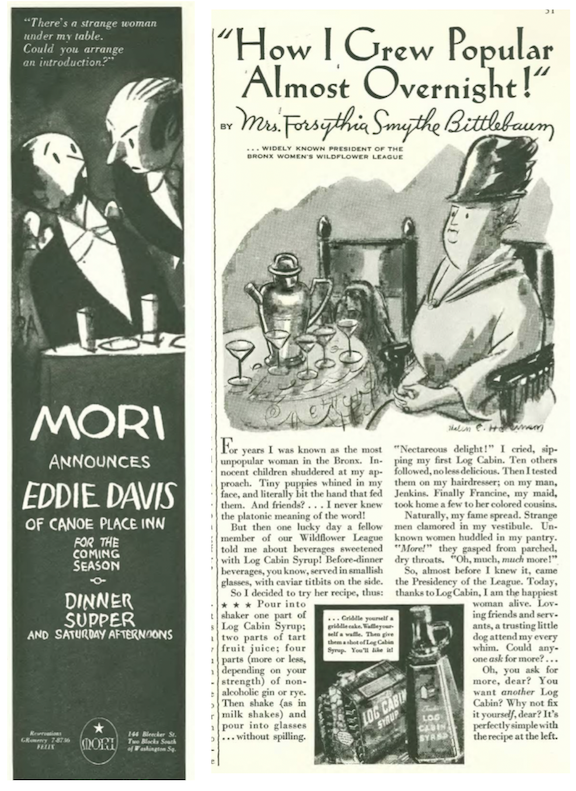
…here’s a couple of ads featuring New Yorker talent, cartoonists Peter Arno and Helen Hokinson

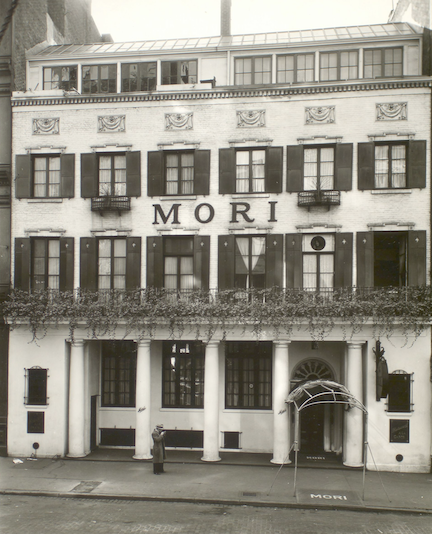
…Mori was an Italian restaurant in Greenwich Village (144 Bleecker Street) that managed to survive Prohibition and most of the Depression before closing in 1937…the building is still there, sans the charm…

A photograph of Mori’s Restaurant taken by Berenice Abbott for the Federal Art Project in 1935. (New York Public Library)

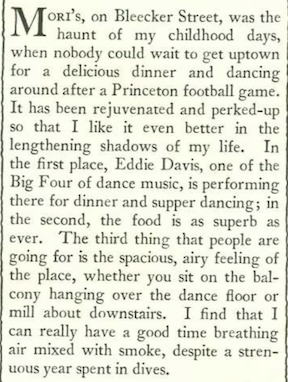
Lois Long had this to say about Mori in her Oct. 29, 1932 “Tables for Two” column:

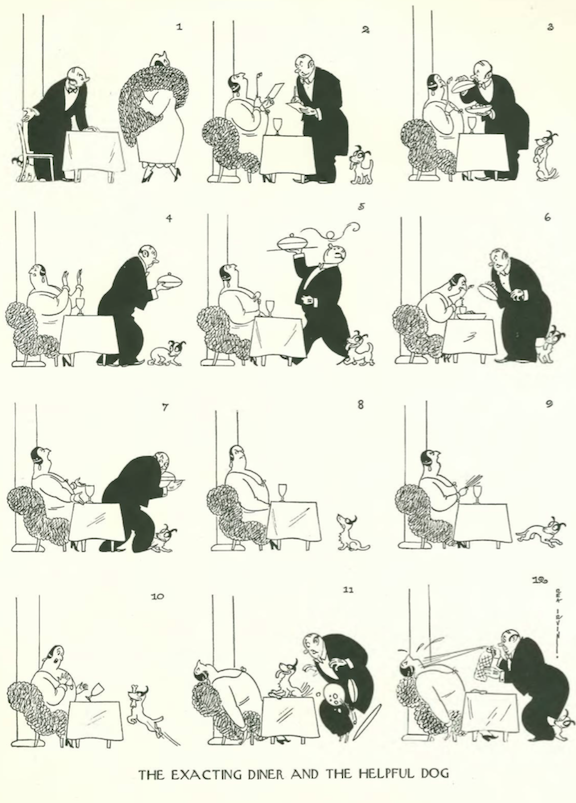
…on to our cartoonists, beginning with Rea Irvin

…this relatively straightforward cartoon feels like a departure from James Thurber’s usual work…

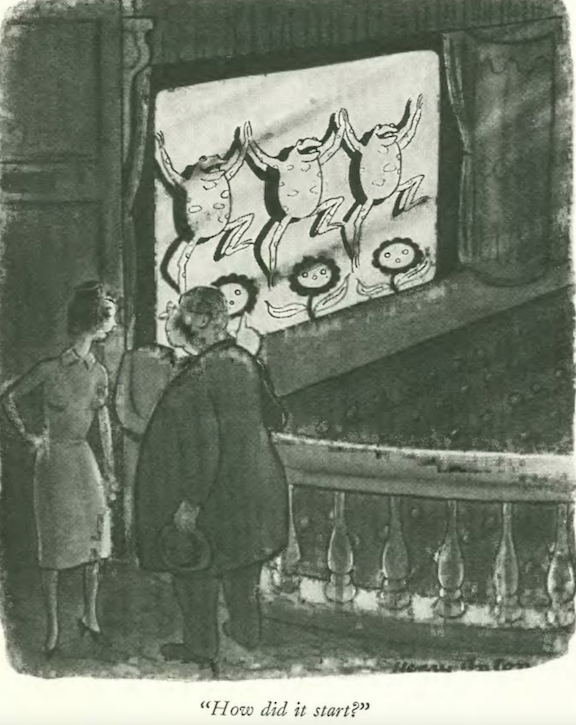
…and here we have Henry Anton’s first-ever cartoon in The New Yorker (Anton was William Steig’s brother)…

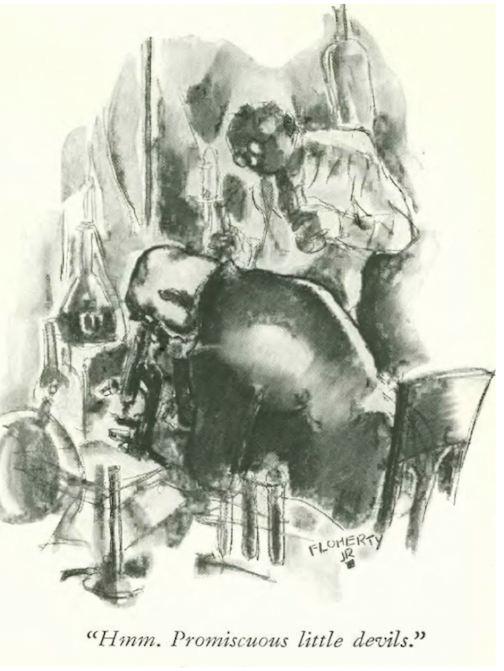
John Floherty Jr. found some racy action among the amoeba…

…while William Crawford Galbraith dialed up the familiar sugar daddy trope…

…and we close with Peter Arno, on firm ground with a bit of his own naughtiness…

Next Time: The Faux Prince…