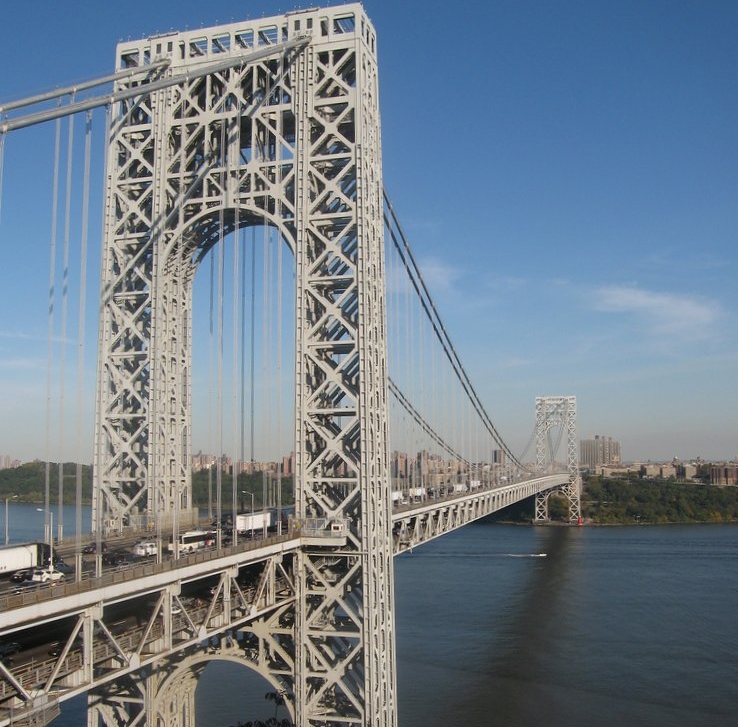
Tens of thousands of commuters daily cross the George Washington Bridge, but in the din of modern commuting few give nary a thought to a span that was once considered a modern marvel.
May 3, 1930 cover by Rose Silver.
Twice as long as any previous suspension bridge when it opened in 1931, the George Washington Bridge’s main span of 3,500 feet (1,100 m) would be the world’s longest until it was surpassed by San Francisco’s Golden Gate Bridge in 1937. The New Yorker’s “Talk of the Town” (entry most likely by E.B. White) checked on the bridge’s progress for the May 3 issue:
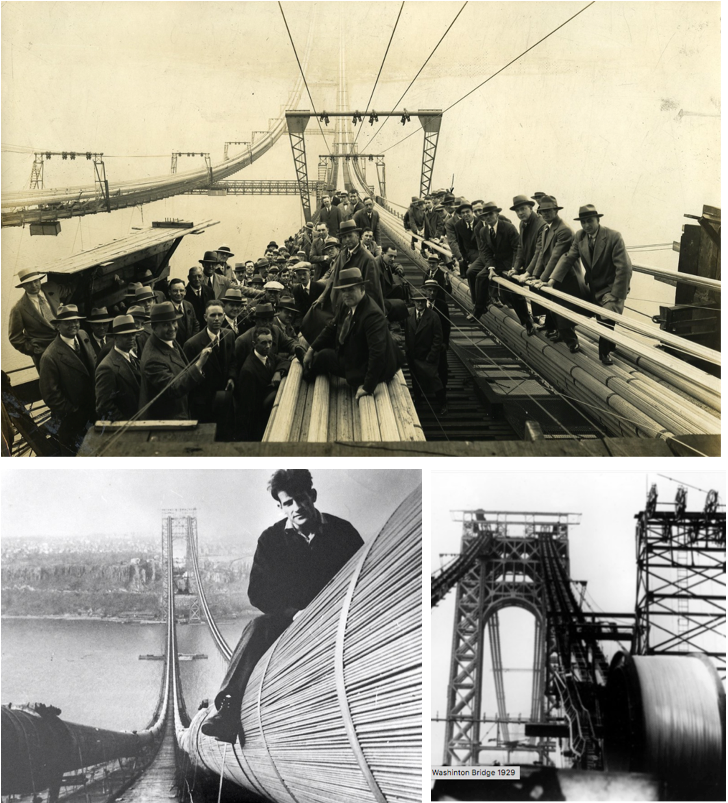
MEN OF STEEL…Some 107,000 miles of wire were used in cables made by John A. Roebling’s Sons Company for the George Washington Bridge — the same firm also supplied wire for the Brooklyn Bridge 60 years earlier (John Roebling and his son, Washington, also designed and built the Brooklyn Bridge). Clockwise, from top, employees of John A. Roebling’s Sons pose atop cable bundles; bottom right, the bridge’s four main cables were each composed of a single strand carried back and forth across the river 61 times. Each strand itself is a bundle of 434 individual wires; bottom left, worker poses atop completed cable. (Flickr/Pinterest)BY ANY OTHER NAME…Known as the Hudson River Bridge during its construction, the George Washington Bridge opened to traffic in 1931. During the first full year of operation in 1932 more than 5.5 million vehicles used the original six-lane roadway — today it is the world’s busiest motor vehicle bridge, carrying more than 100 million vehicles per year. Although the steel towers are iconic today, the original plan called for them to be clad in stone. (Wikipedia)
* * *
A Cabin in the Sky
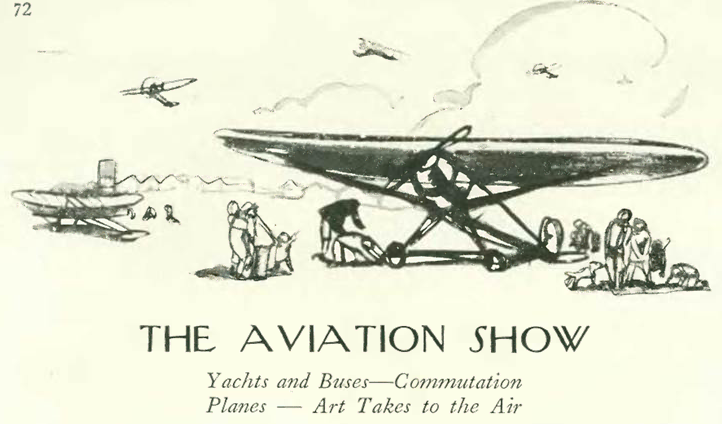
Other signs of modern life were being seen in Midtown, where an “Aircraft Salon” hosted by the Aeronautical Chamber of Commerce was taking place at Madison Square Garden.
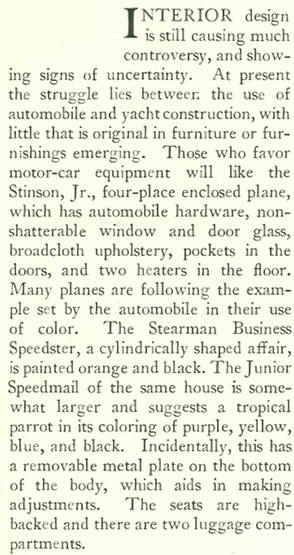
Nicholas Trott was on hand to take in the exhibits, noting that advances in aviation included the use of metal bodies (instead of fortified cloth) and greater attention to interior decoration:
SIGNED, SEALED, DELIVERED…An attendee of the New York Aircraft Salon received a special postal stamp, and an autograph from aviator Cy Caldwell, at the Madison Square Garden show. (Joe Krantz)
Trott noted that designs of passenger compartments, still in their infancy, suggested something between automobile and nautical motifs:
SORRY, NO HEADPHONES…Clockwise, from top left, a Curtiss Condor 18 and its interior appointments; a Fokker Trimotor featured dining in its cabin. As peaceful as the scene appears, the noise from the motors must have been unbearable. (Wikipedia/dutch-aviation.nl)
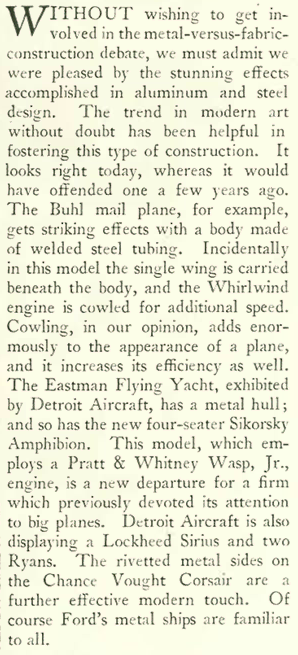
Trott also commented on the debate surrounding metal vs. fabric in the construction of airplanes. Before 1930 most planes were constructed of wood covered with fabric (which were much lighter than metal craft). Although as early as 1920 the National Advisory Committee for Aeronautics declared metal to be superior to wood, only five percent of aircraft in 1930 were of all-metal construction.
DON’T CALL ME WOODY…This eight-passenger Consolidated Fleetster was a rare example of metal construction in early 1930. The wings, however, were still fashioned from wood. (Aeronautical Chamber of Commerce 1931 Aircraft Yearbook)
* * *
Road to Nowhere
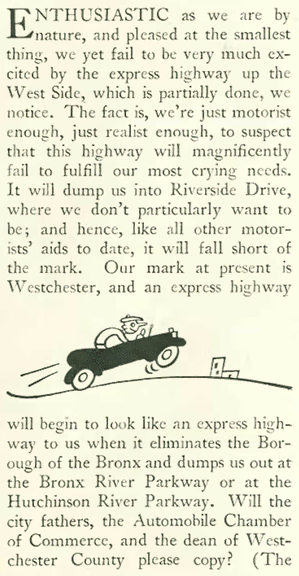
The New Yorker’s enthusiasm for modern marvels did not extend to the West Side Highway, a project that would extend from the late 1920s to the early 1950s. Here is E.B. White’s take on the opening of the highway’s first section:
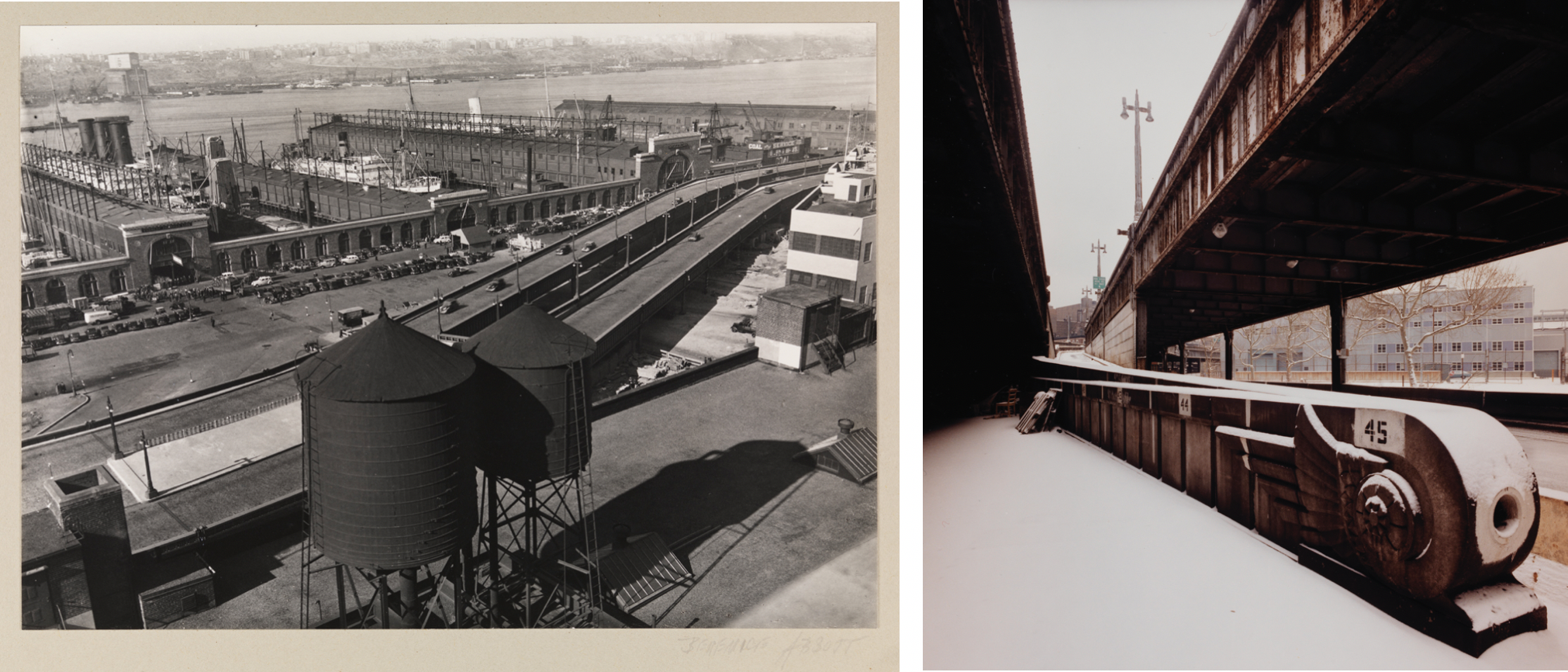
White’s observations were somewhat prescient — constructed in tight confines, the road’s on-ramps proved too narrow and the turns too tight for use by large trucks. The roadway also lacked proper maintenance, and just two decades after it was completed a section of the highway collapsed under the weight of an asphalt-laden truck. The roadway was demolished between 1977 and 1989. Read more here about the West Side Highway’s surprising history at the Museum of the City of New York.
THE ROAD NOT TAKEN, TAKEN…Left, West Side Express Highway and Piers 95-98, photographed by Berenice Abbott from 619 West 54th Street on Nov. 10, 1977; West Side Highway Ramp at 23rd Street reveals Art Deco ornamentation. Detail of photo by Jan Staller, 1978. (Museum of the City of New York)
* * *
For Pet Lovers
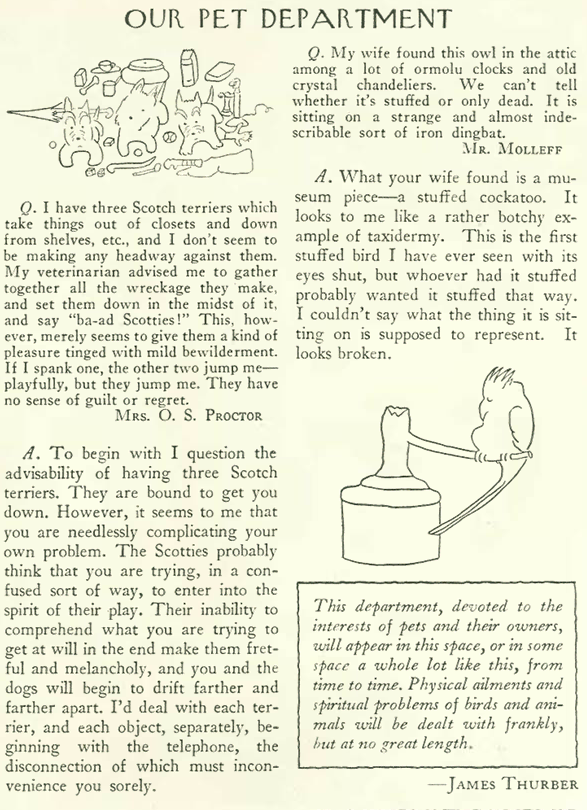
Our latest installment of James Thurber’s “Our Pet Department” column…
* * *
Hate Couture
The New Yorker’s Paris correspondent, Janet Flanner, using the pen name “Hippolyta,” contributed this profile of François Coty (1874-1934), a French perfumer and businessman. Flanner’s profile (the introduction included below) described Coty’s rags-to-riches rise in the perfume industry, and touched on his life as a sometime journalist and politician.
What doesn’t come across in the profile is Coty’s extreme right-wing stance on politics and his virulent anti-Semitism, which was often expressed in his newspaper, Figaro. Three years after Flanner’s profile Coty would co-found Solidarité Française, a fascist, paramilitary organization, and a year after that he would be dead of an aneurysm.
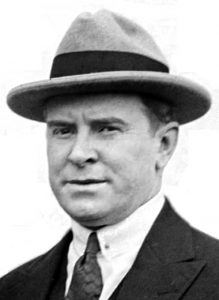
François Coty circa 1930. (aperfumeblog.com)
* * *
From Our Advertisers
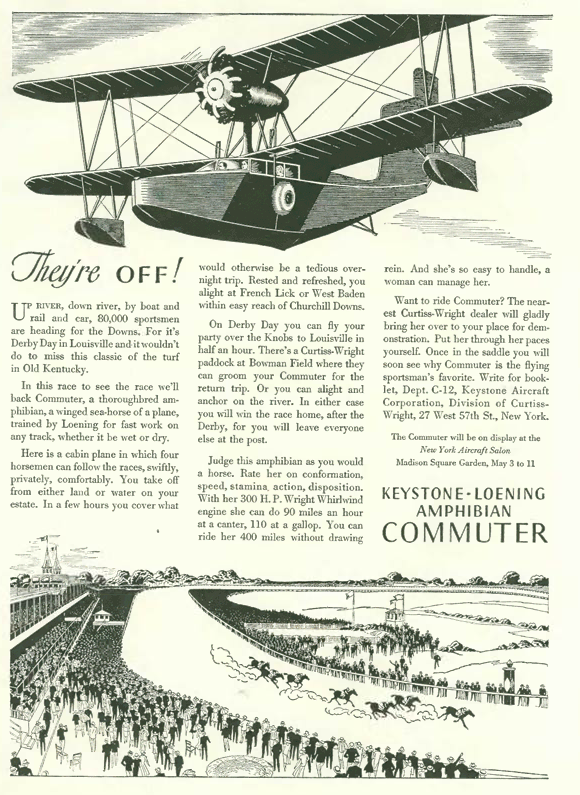
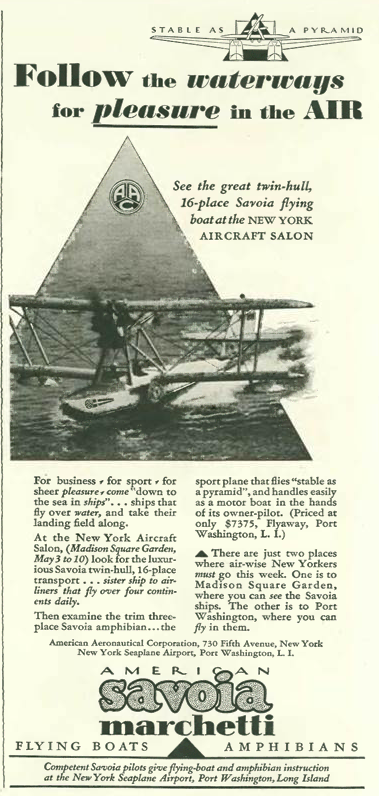
The New Yorker’s bottom line reaped benefits from the big aviation show at Madison Square Garden…
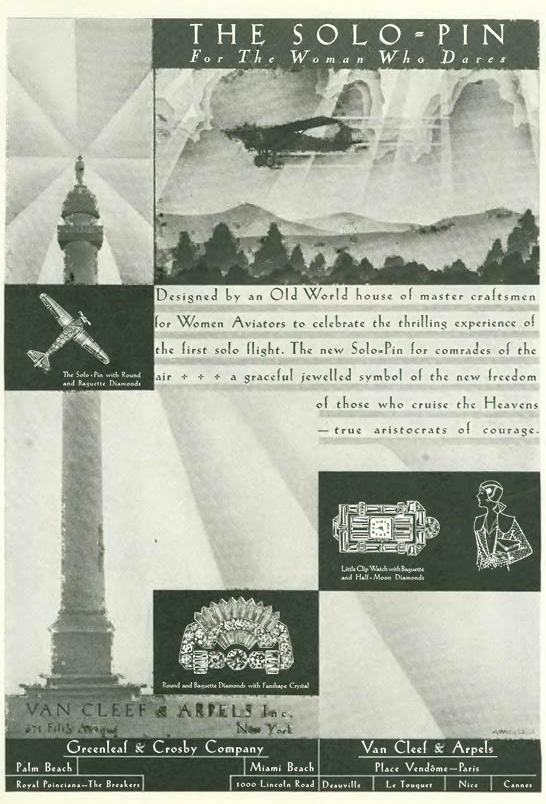
…and even if you weren’t selling airplanes or flying lessons, you could still get in on the action…
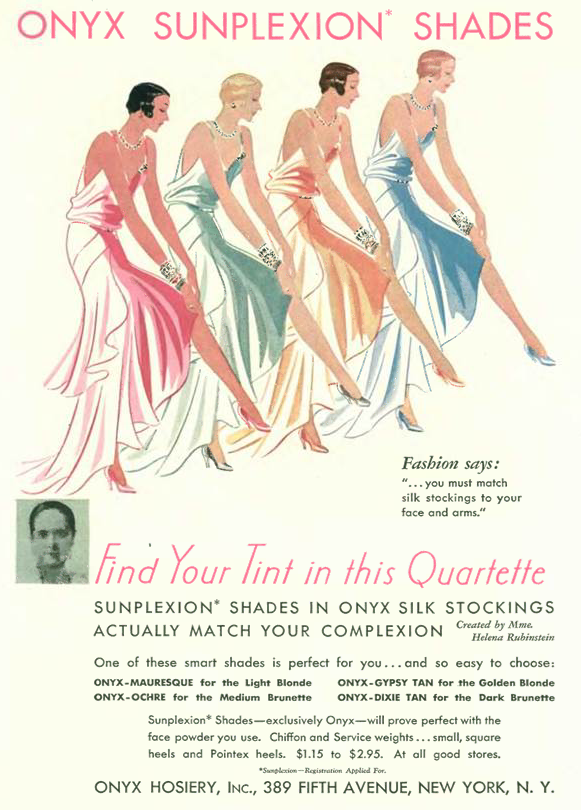
…also from the fashion world, this colorful entry from Onyx Hosiery…
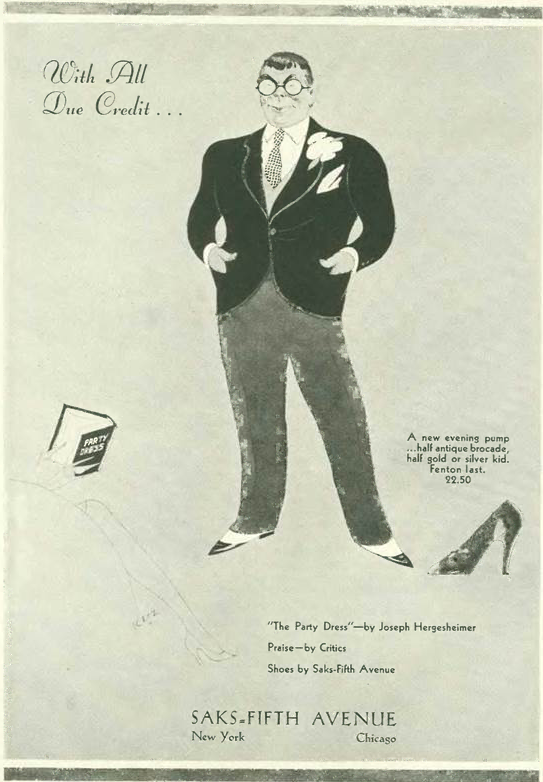
…and this weird ad from Saks, advertising shoes and a party dress but dominated by a caricature of designer Joseph Hergesheimer…
…on to our cartoons…Helen Hokinson paid a visit to the aviation show…
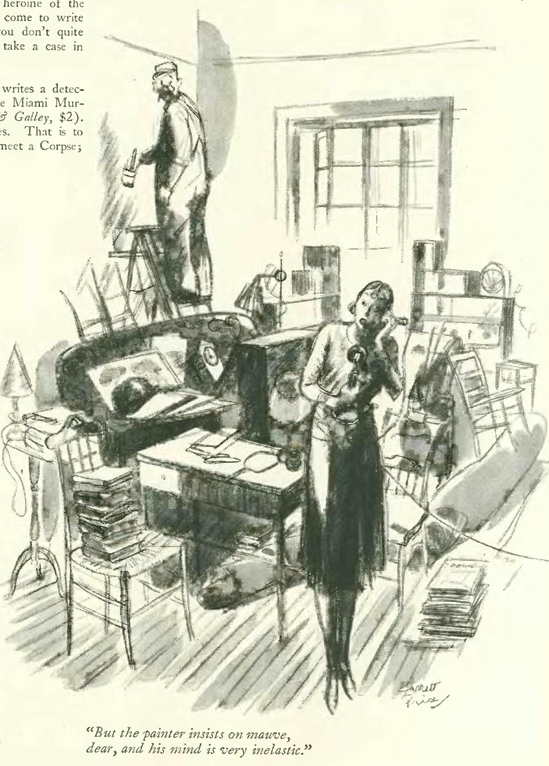
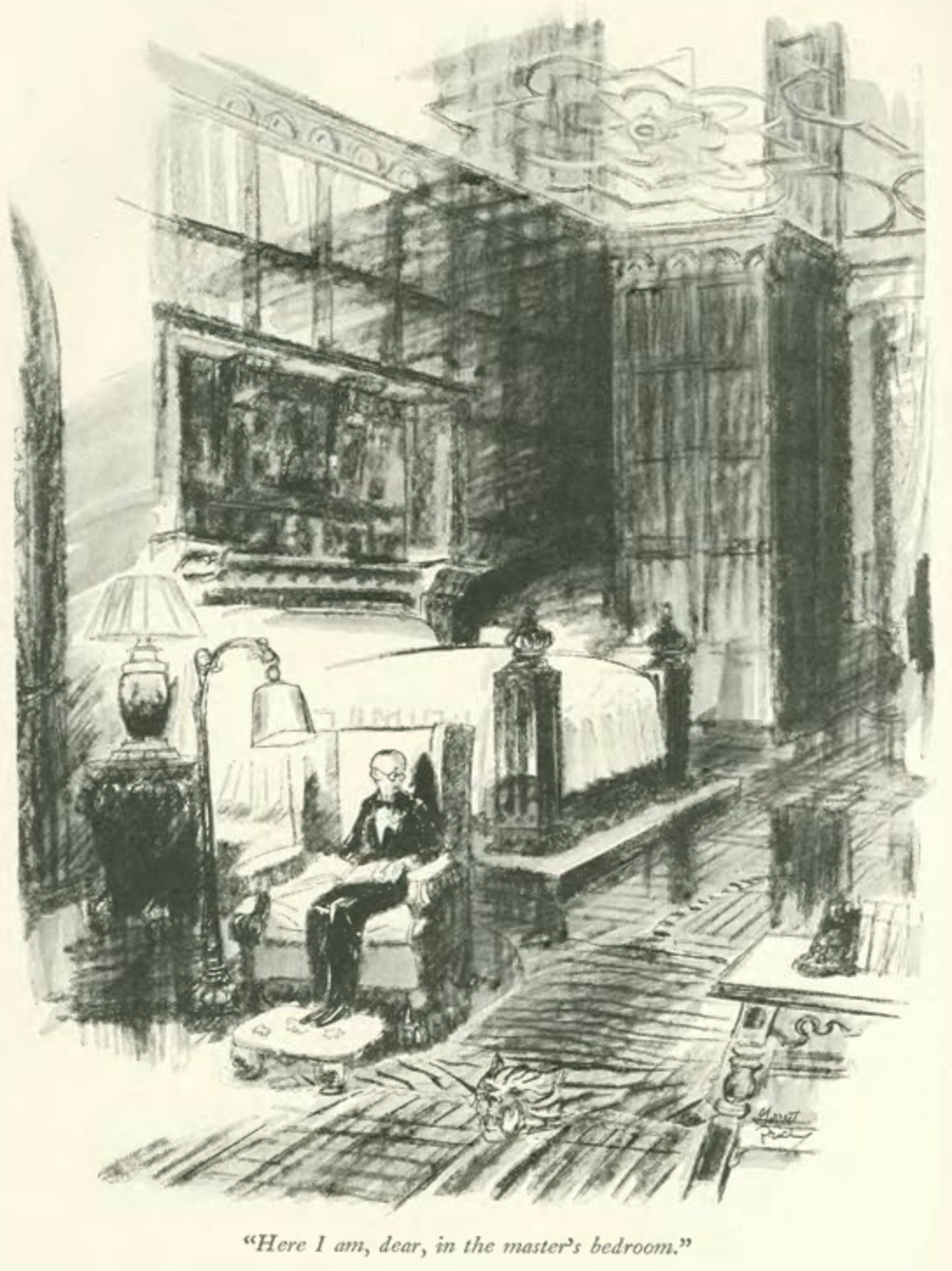
…on the domestic front, Garrett Price examined the challenges of home decor…
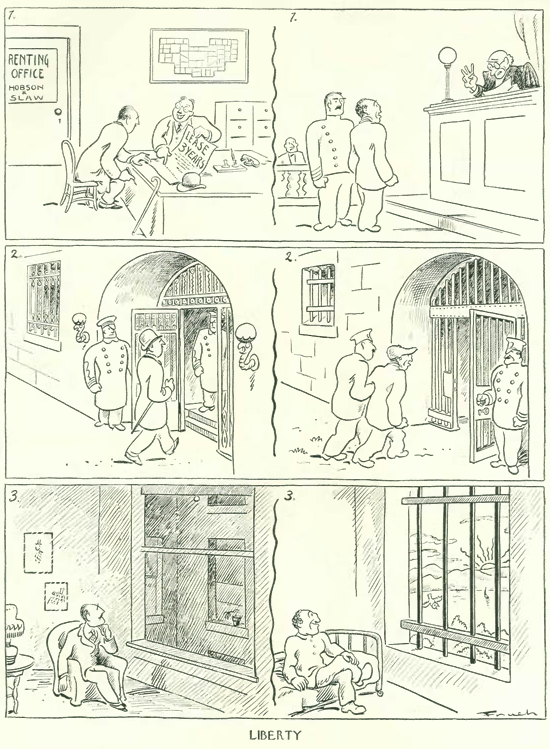
…Al Frueh offered an ironic twist on a room with a view…
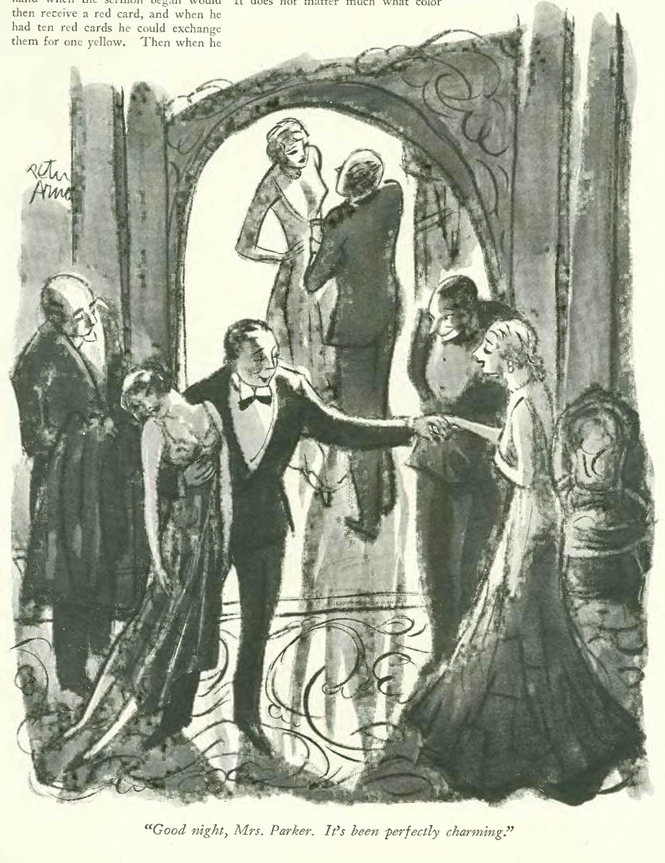
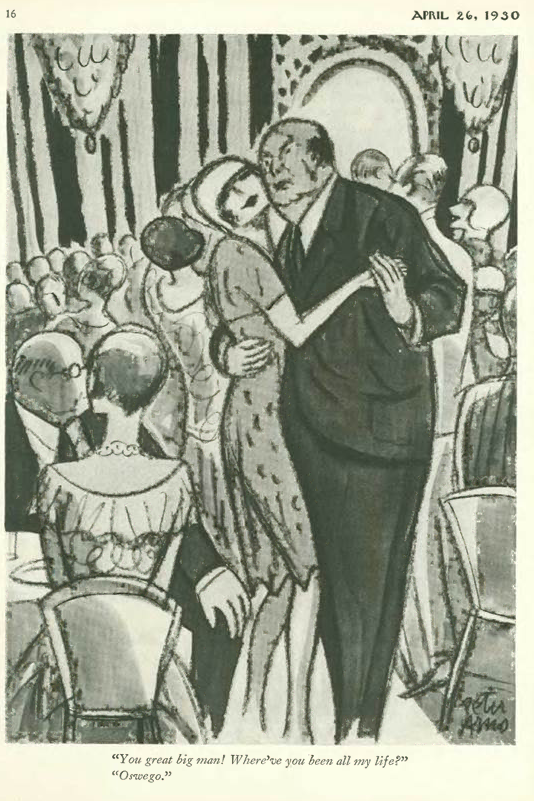
…Peter Arno once again found humor in the partying life…
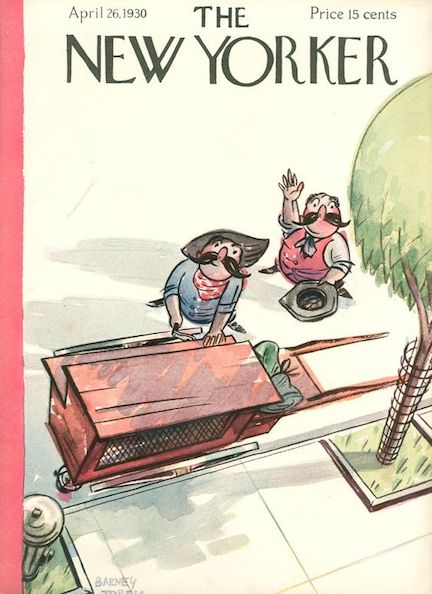
Before we launch into the latest offering from Tinseltown, a note about the cover artist for the April 26, 1930 issue.
April 26, 1930 cover by Barney Tobey.
Barney Tobey (1906-1989) was known for gently humorous cartoons that appeared in The New Yorker for more than fifty years. He also contributed four covers, the first of which appears above. In the Sept. 21, 1998 issue, illustrator Richard Merkin offered this remembrance:
* * *
Star-spangled Banter
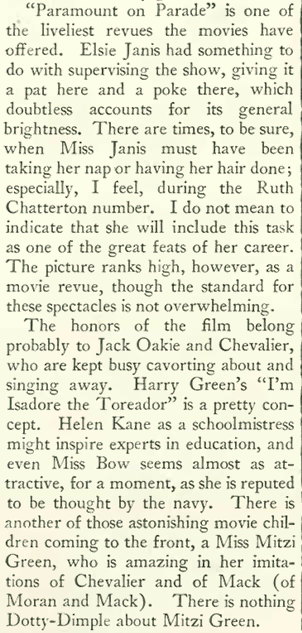
All-star musicals were all the rage in the early sound era, as they gave studios the opportunity to showcase contract players (who were virtually owned by the studios) doing things they usually didn’t do on screen. Following the success of MGM’s Hollywood Revue of 1929, Paramount Studios released Paramount on Parade in April 1930, much to the liking of New Yorker critic John Mosher, who also praised the film’s accompanying cartoon, 1929’s The Prisoner’s Song:
You can watch Max Fleischer’s The Prisoner’s Song here (and ponder how far animation has advanced)…
Mosher also praised a number of Paramount’s contract players, and especially actors Jack Oakie and Maurice Chevalier…
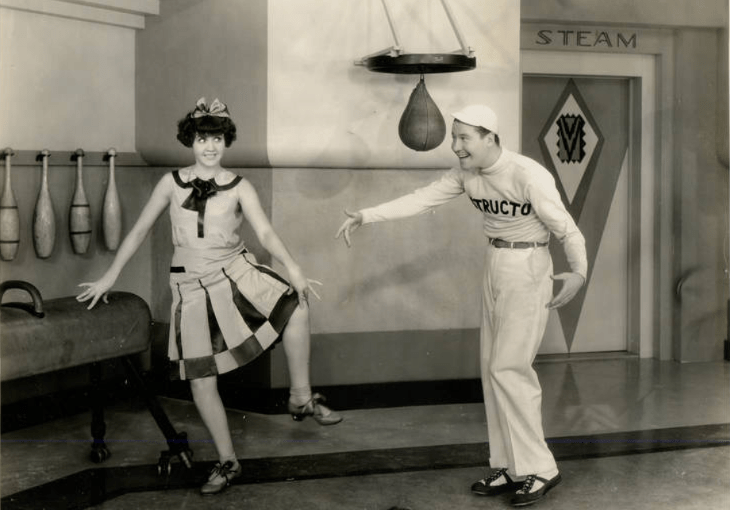
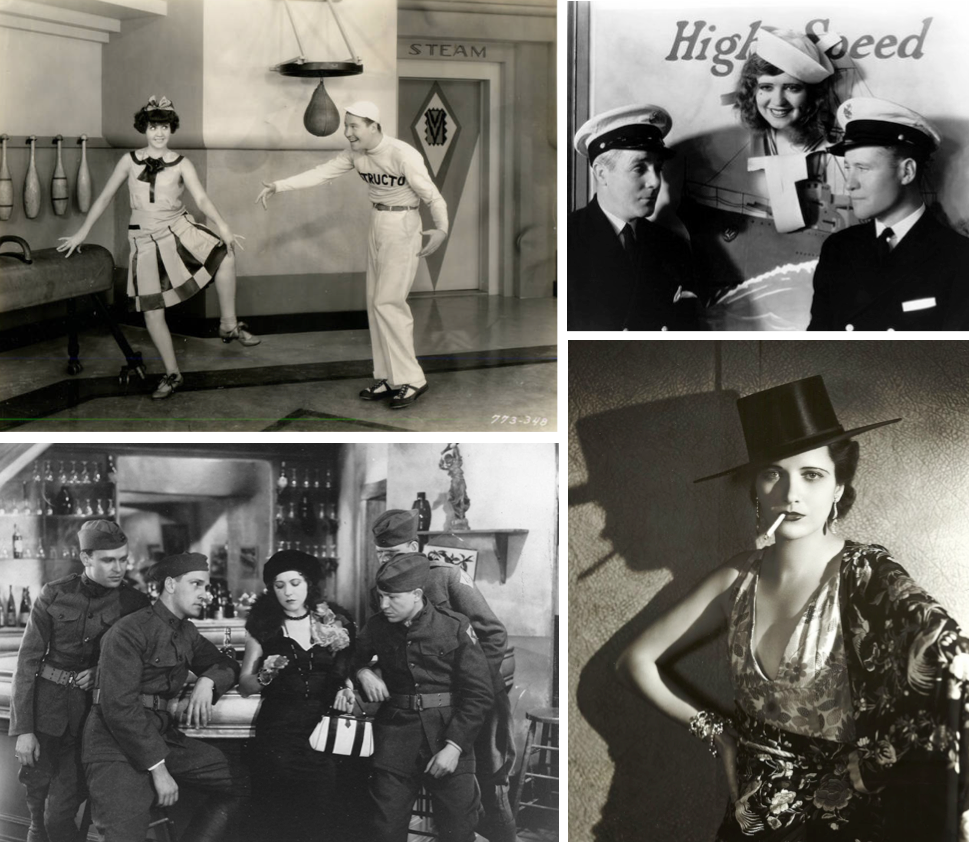
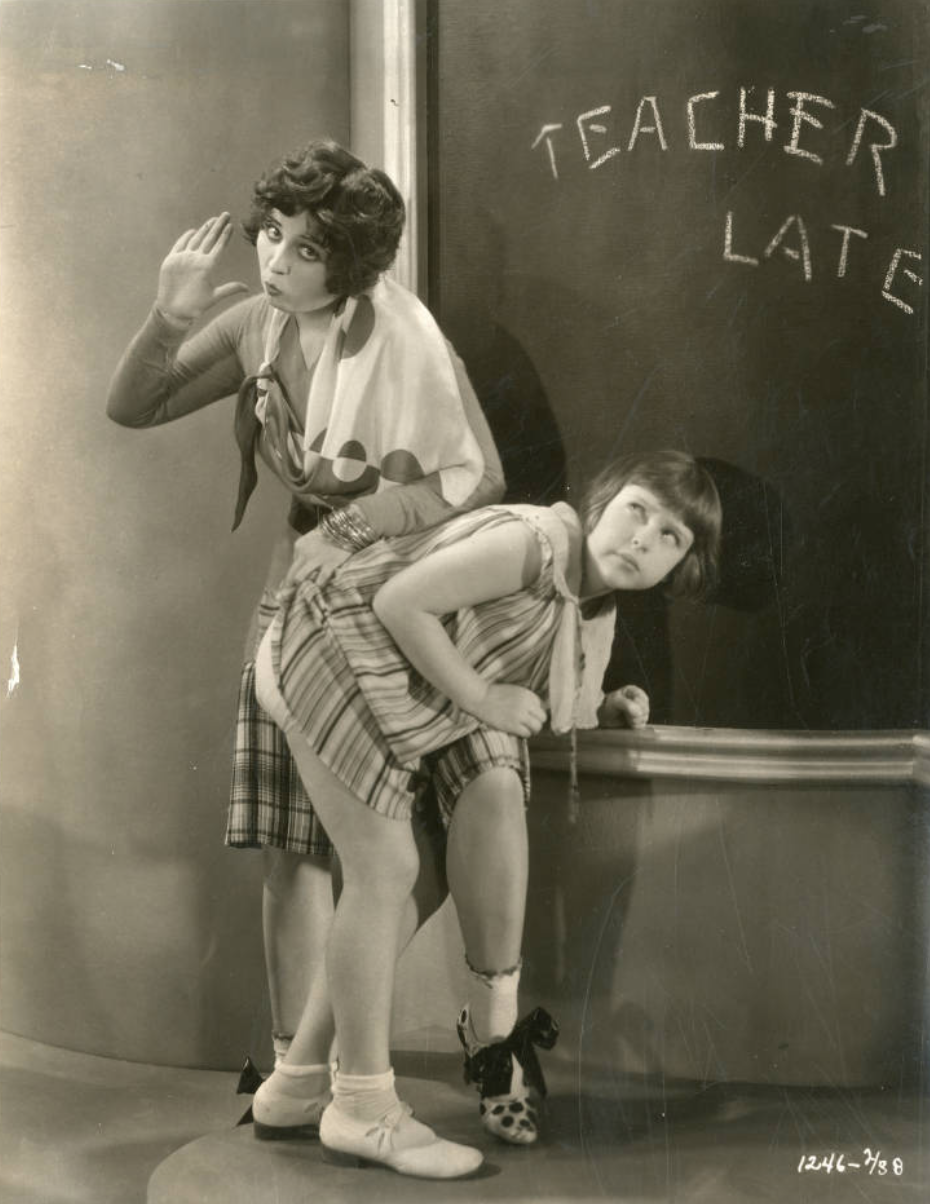
MUCH ADO…A great crowd gathers for the premiere of “Paramount on Parade” at the New York’s Rialto Theatre in April 1930. (cinematreasures.org)SEEING STARS…Clockwise, from top left, Helen Kane (possibly the inspiration for the cartoon character “Betty Boop”) and Jack Oakie do a little footwork; Clara Bow, Hollywood’s “It Girl,” pops through a Navy recruitment poster at the beginning of her song and dance number (with Stuart Erwin and Richard ‘Skeets’ Gallagher); one of Hollywood’s top actresses in 1930, Kay Francis, portrays “Carmen” in the revue; Ruth Chatterton entertains doughboys Stuart Erwin, Fredric March, Jack Oakie, and Stanley Smith in Paramount on Parade. (IMDB)BOOP GIVES A BOP…Helen Kane (left) and child star Mitzi Green in a sketch from Paramount on Parade. (IMDB)
* * *
Lost In the Crowd
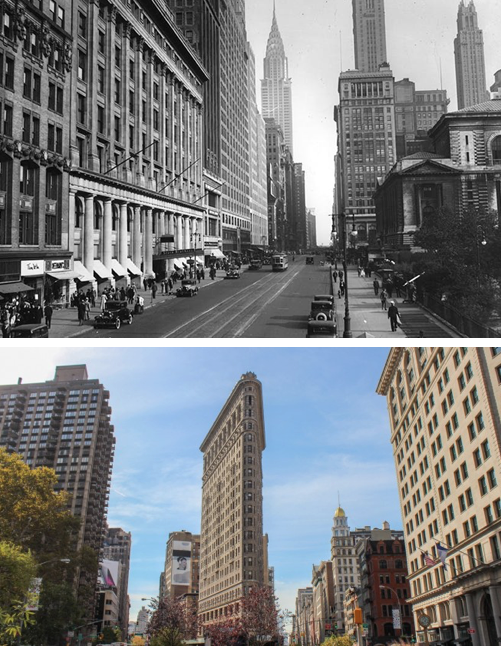
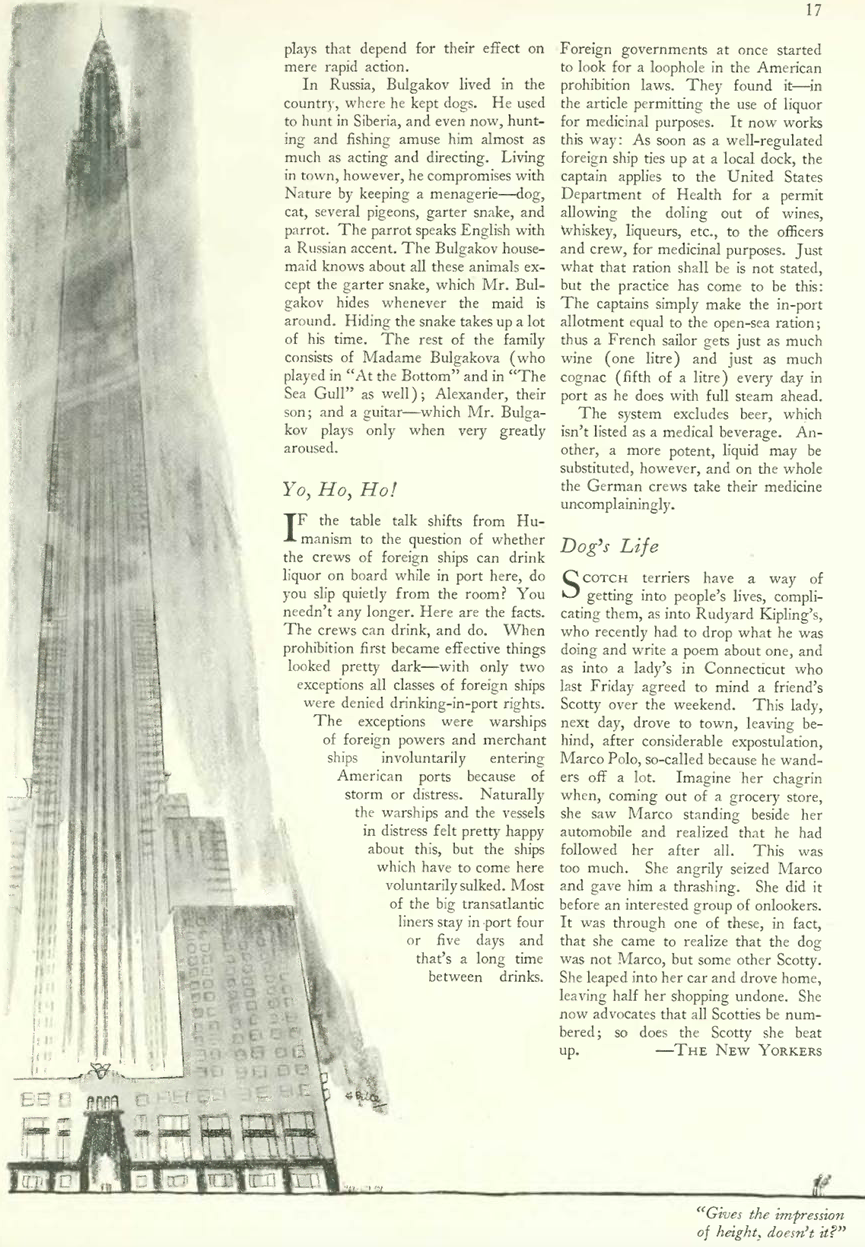
In his “Notes and Comment,” E.B. White lamented the fact that the world’s tallest building appeared less than lofty, since neighboring skyscrapers were nullifying its grandeur:
DOWN IN FRONT…E.B. White found the streetview of the world’s tallest building wanting after it was completed in 1930; the iconic Flatiron Building, however, enjoys some elbow room even today. (spectator.co.uk/walksofnewyork.com)
* * *
Full of Hot Air
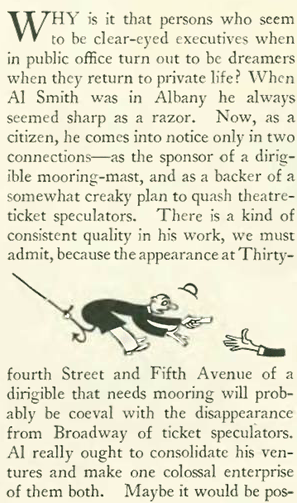
That was another opinion shared by E.B. White, this time regarding the Empire State Building’s top promotor, former New York Governor Al Smith, who spoke of plans to attach a mooring mast to the top of his skyscraper (which would eclipse the Chrysler as the world’s tallest in 1931):
* * *
View From the Top
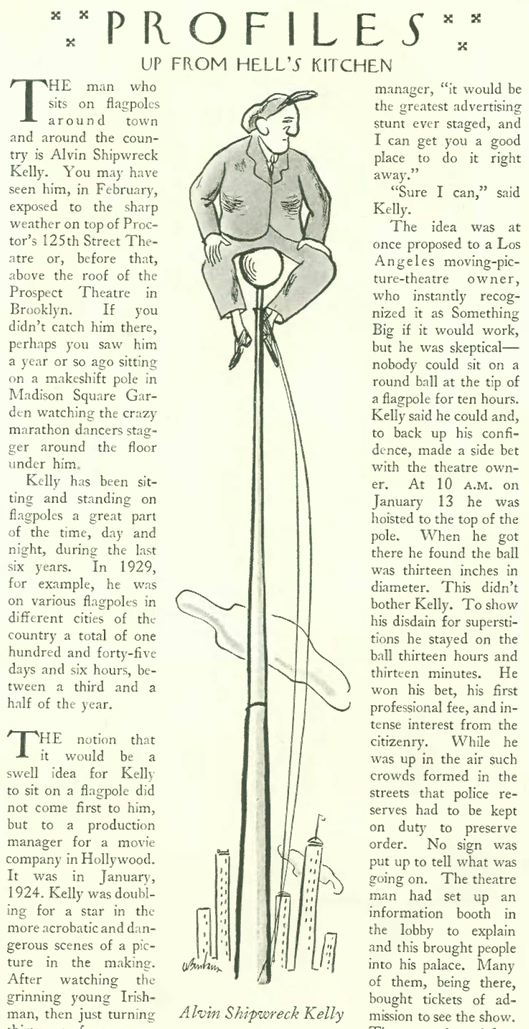
The New Yorker featured a profile of Aloysius Anthony Kelly (1893?-1952), better known as the Roaring Twenties most famous pole-sitter, “Shipwreck” Kelly. He achieved his greatest fame in the 1920s and 1930s, sitting for days at a time on elevated perches — often atop buildings — throughout the U.S.
Kelly’s fame was already on the wane when this profile appeared, and by 1934 he was reportedly working as a dance hall gigolo. Kelly’s last flagpole stunt was at a 1952 event sponsored by a Lion’s Club in Orange, Texas — he suffered two heart attacks while sitting atop their 65-foot flagpole. After climbing down he announced, “This is it. I’m through.” He died one week later after he was struck by car on West 51st Street in Manhattan.
LOFTY AMBITIONS…Alvin ‘Shipwreck’ Kelly atop a flagpole near College Park, Maryland, in October 1942. At right, undated photo circa 1940s. (CSU Archives/Digital Commonwealth)
* * *
Brand X
Folks were still abuzz about the discovery of a ninth planet in the solar system, soon to be dubbed “Pluto” by an English schoolgirl. Howard Brubaker, in “Of All Things,” observed…
…and Carl Kindl illustrated the problem a new planet posed for astrologers…
* * *
I Beg Your Pardon
Will Rogers was a beloved comedian with a few rope tricks up his sleeve, but I’ve never known him for working blue. However, one critic for The New Yorker (“A.S.”– not sure who this is) found Rogers’ new radio show both humorless and gauche…
CAN YOU TAKE A JOKE?…In photo above, Will Rogers debuts his new radio show in April 1930. It would become the most popular Sunday evening radio show, and Rogers would prove to be the second biggest motion picture box office draw in the U.S. before his death in 1935. (Will Rogers Memorial Museum)
* * *
Before He Got Axed
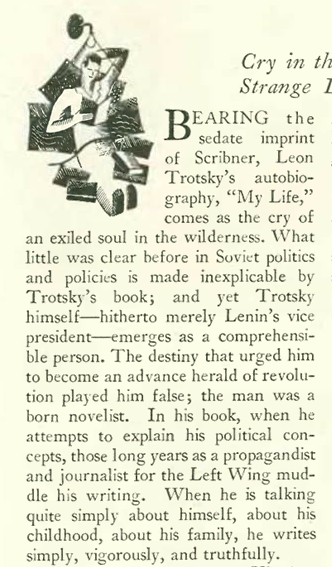
Ten years before he was murdered by one of Stalin’s NKVD agents, Leon Trotsky published an autobiography that was written in his first year of exile in Turkey. The review is signed “G.H.” so I am assuming the author is Geoffrey Hellman, who contributed for decades to The New Yorker’s “Talk of the Town.” Excerpts from the review:
RED ALERT…Leon Trotsky wrote his autobiography, My Life, while exiled in Turkey. (Wikimedia)
* * *
From Our Advertisers
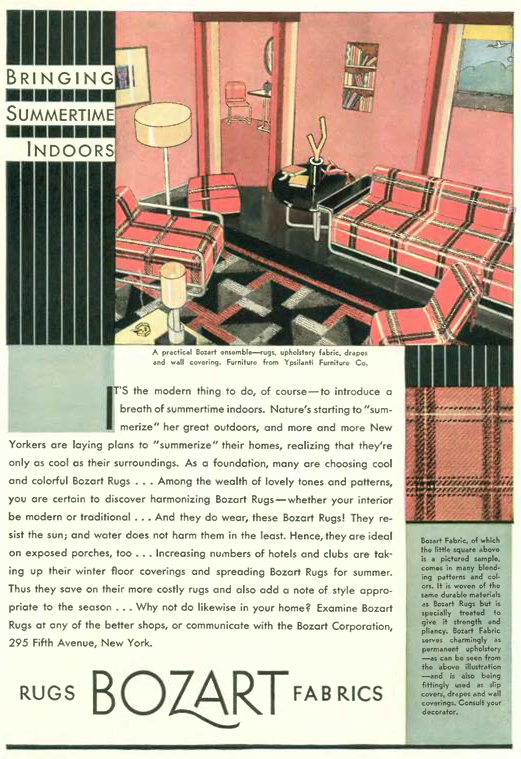
The makers of Bozart rugs and fabrics invited New Yorker readers to “introduce a breath of summertime indoors”…
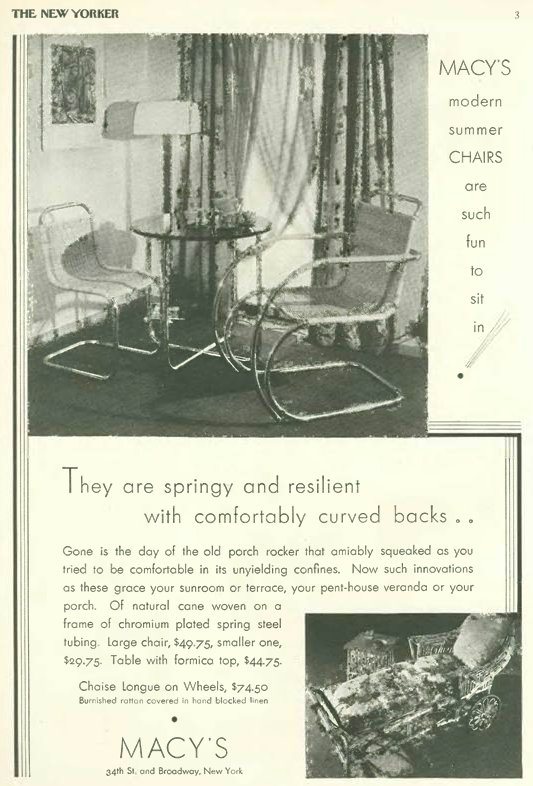
…while Macy’s urged the same by gracing a sunroom or terrace with one of their Marcel Breuer-inspired chairs…
…Colonial Airways touted an early form of radar — an “invisible pilot” — as the latest safety feature in its airplanes…
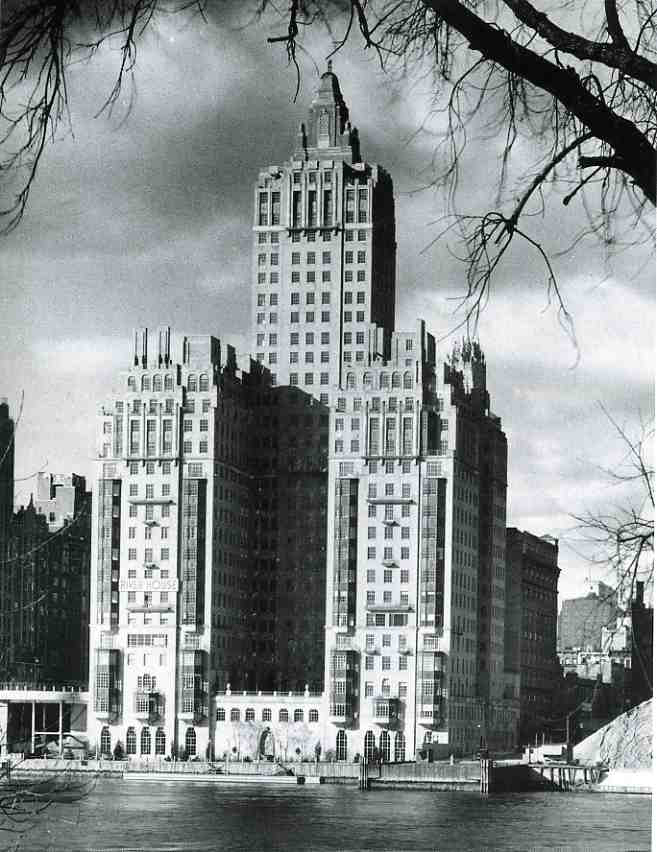
…the Douglas L. Elliman company promoted its yet unbuilt River House, which would feature a pier where residents could dock their yachts…
The 26-story River House in the 1930s. Originally, the Art Deco building featured a pier where residents could dock their yachts, but that feature was lost with the construction of FDR Drive in the early 1950s, effectively sealing the building off from the water. The building has been home to author Barbara Taylor Bradford, US Secretary of State Henry Kissinger, and actress Uma Thurman. (observer.com)
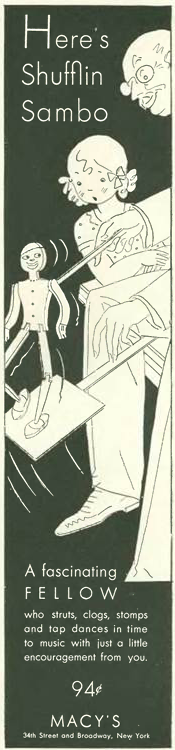
…and then we have our more unfortunate ads, such as this one from Macy’s that shows grandpa passing along his racist tendencies to a grandchild…
…and this sad appeal from the makers of Lucky Strike to keep puffing and avoid that hideous double chin…
…our cartoons include Garrett Price and thoughts of spring…
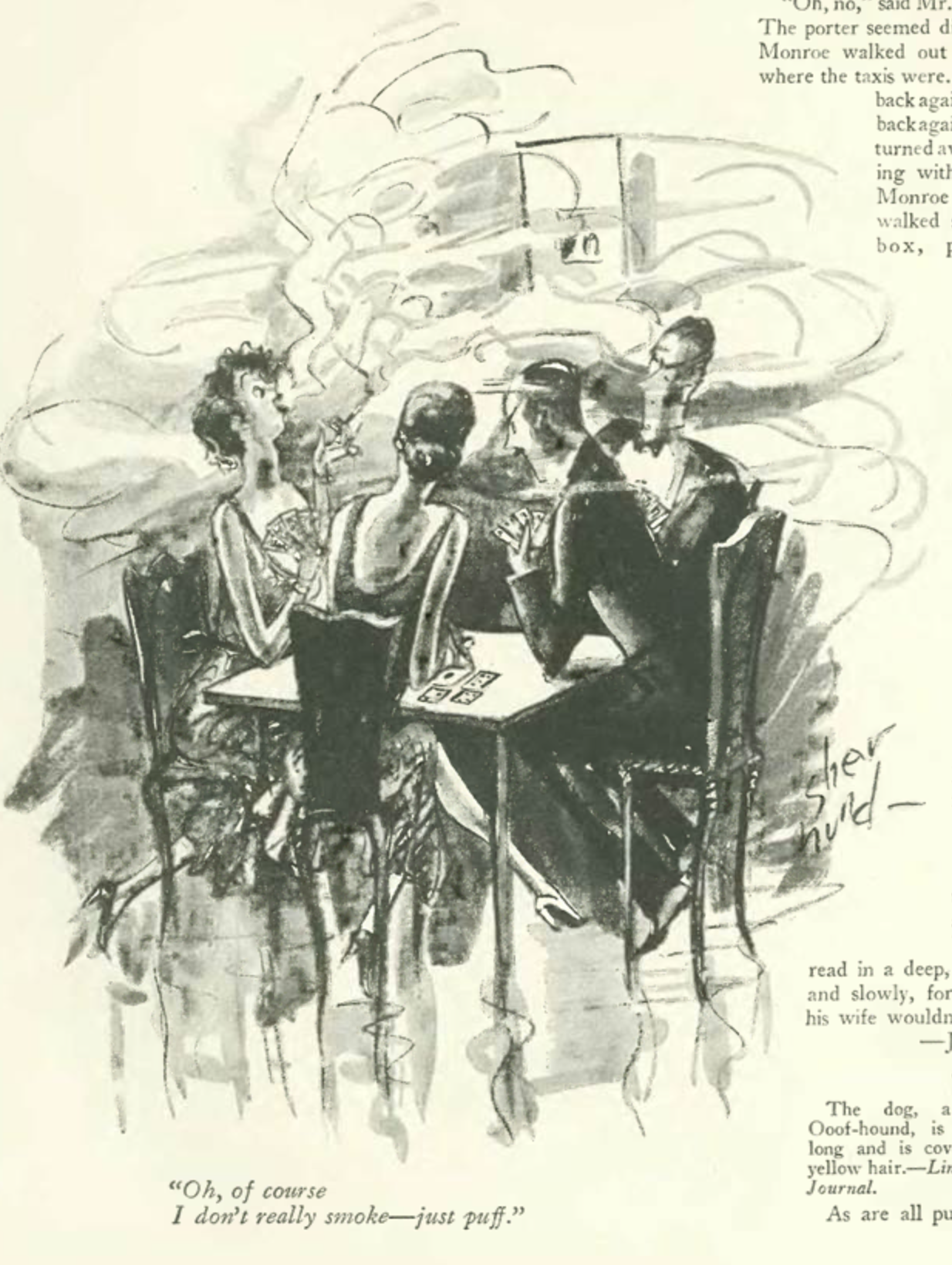
…Barbara Shermund eavesdropped on tea time…
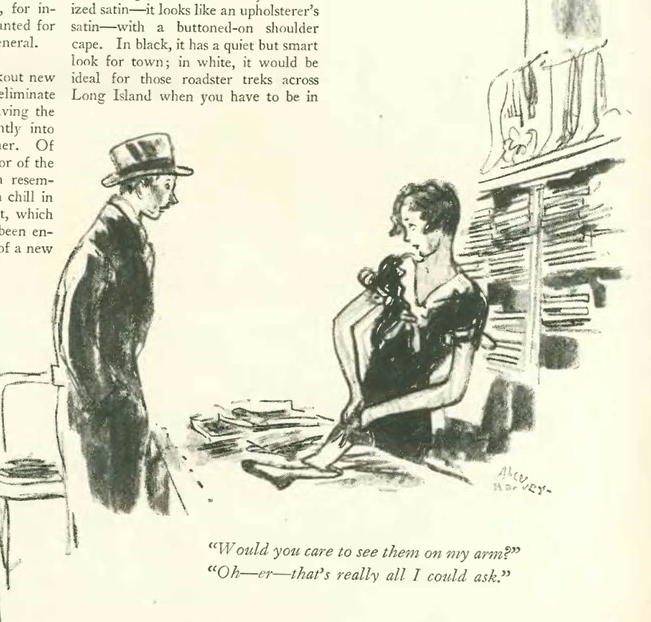
…Alice Harvey found an awkward moment in a hosiery department…
…Peter Arno revisits a familiar theme — chorus girls and sugar daddies…
…and Otto Soglow looked in on a fat cat’s moment of pride…
With the Chrysler Building nearing completion and the Empire State Building beginning to rise from the old Waldorf-Astoria site, the New York City skyline was taking on the iconic form most of us now associate with the city.
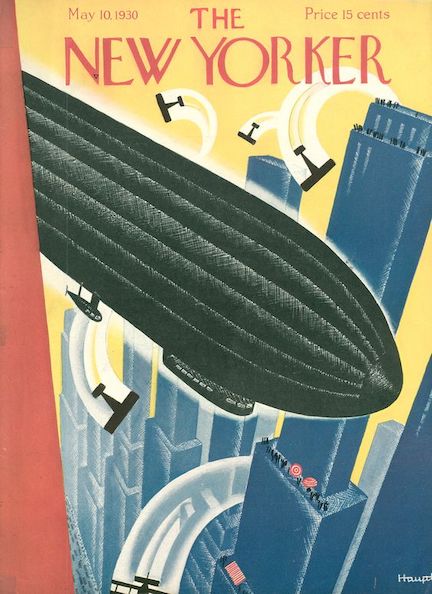
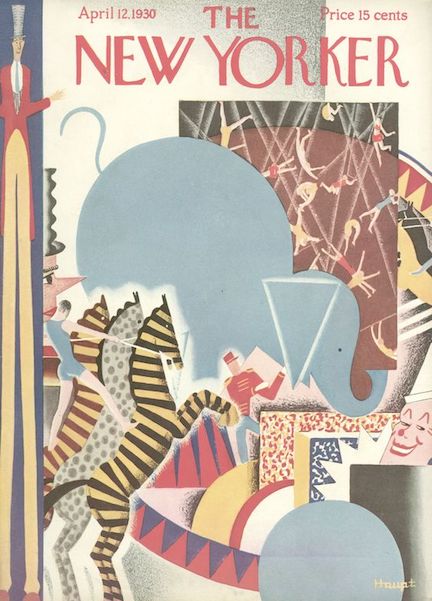
April 12, 1930 cover by Theodore Haupt.
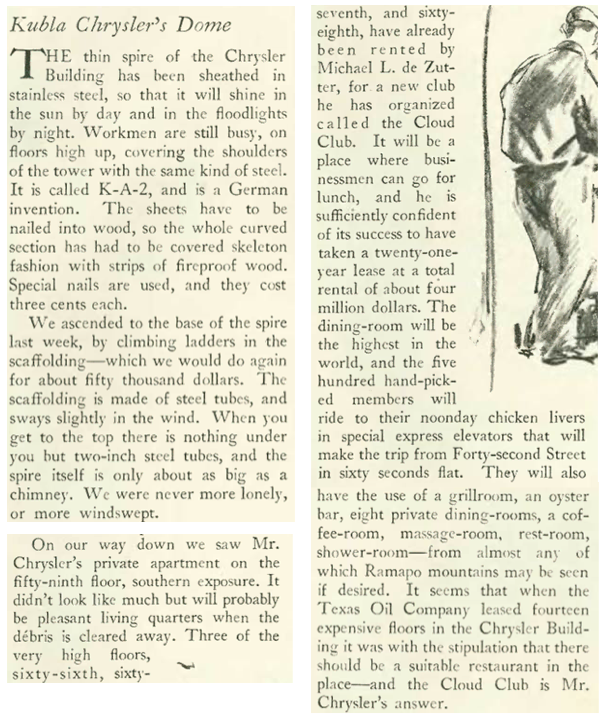
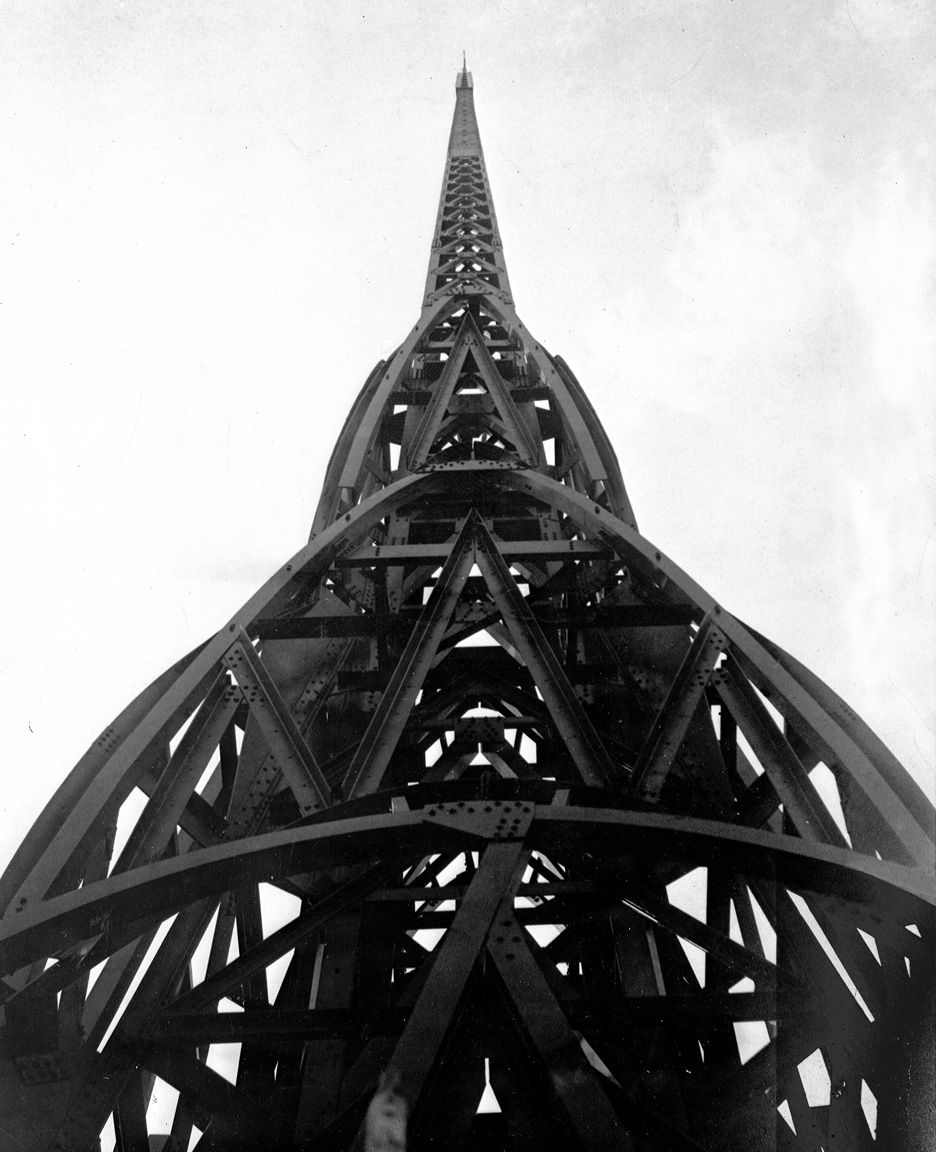
Dubbed “hot jazz in stone and steel” by modernist architect Le Corbusier, the Chrysler Building’s gleaming spire beckoned The New Yorker’s E.B. White and real estate journalist David G. Bareuther (New York Sun) to its summit for a closer look…
BARE BONES…The spire in place atop the Chrysler building, the dome awaiting its metal skin. (skyscraper.org)WHAT LIES BENEATH…The stainless steel spire still gleams atop the Chrysler Building; beneath the spire, a maze of scaffolding — navigated by E.B. White and David G. Bareuther for their “Talk of the Town” piece, supports the upper portions of the building’s dome. (yahoo.com/nygeschichte.blogspot.com)THE HIGH LIFE…The Chrysler Building’s exclusive Cloud Club was located on the 66th, 67th, and 68th floors. At one time it was the highest lunch club in the world. It closed in 1979. (decopix.com)
If you want to get a sense of what E.B. White and David Bareuther experienced during their climb through the Chrysler’s dome, take a look at this video featuring American radio personality “Opie” (Gregg Hughes) and Hidden Cities author Moses Gates…
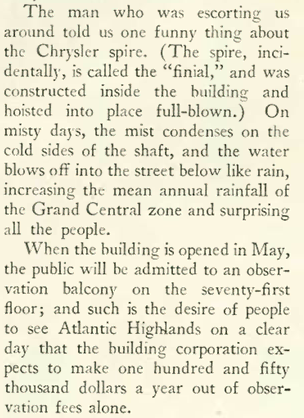
The article also noted that an “observation balcony” would be available for visitors to the 71st floor (actually an enclosed room inside the dome), but I’m sure the expectations for revenue fell quite short, given the competition it would soon receive from the much larger, higher, open air observation deck of the Empire State Building…
REACHING FOR THE STARS…When the Chrysler Building officially opened in 1931, visitors could go up to the 71st-floor observatory (in the dome) and view the city through its triangular windows. The observatory closed in 1945. (nygeschichte.blogspot.com)
…a bit of a digression, but I couldn’t help but notice the observatory’s resemblance to this set from the 1920 silent film The Cabinet of Dr. Caligari…
(silent-volume.blogspot.com)
…and here is a terrific graphic from Popular Science (August 1930) demonstrating how the spire, which was assembled inside the dome, was raised into its final position…
…and finally, some great archival footage documenting the achievement…
* * *
Tragic Theater
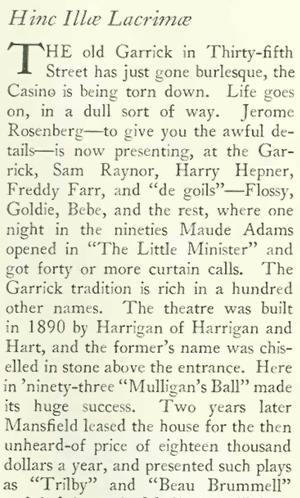
We continue our forays into the built environment of 1930 New York by looking at what was lost, including two beloved Broadway theaters. “The Talk of the Town” lamented the decline of the Garrick…
FINAL CURTAIN…Built in 1890 and originally named Harrigan’s Theatre, The Garrick closed as a playhouse in 1929. After a short run of burlesque, the building was demolished in 1932.
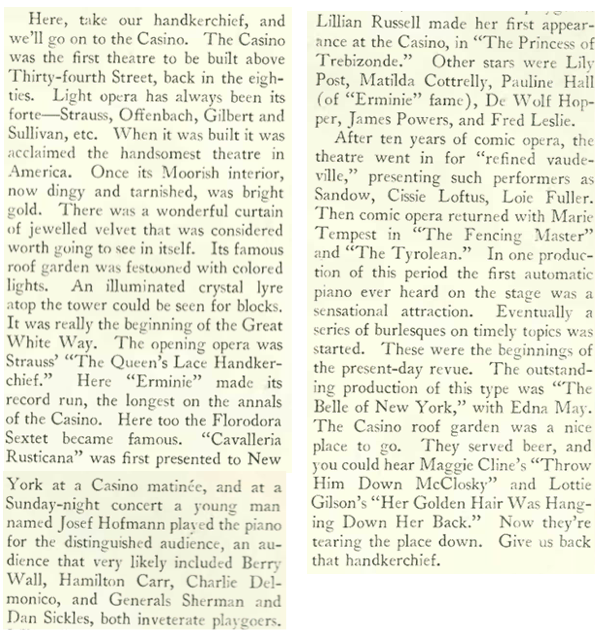
HEYDAY…Clockwise, from top left, circa 1910 postcard image of The Casino Theatre at Broadway & 39th; an audience on the Casino’s roof garden glimpses the performance below; interior of the Casino; the British musical comedy Floradora would become one of Broadway’s greatest hits — the New York production opened in 1900 and ran for 552 performances. (Museum of the City of New York )
* * *
From Jazz to Gothic
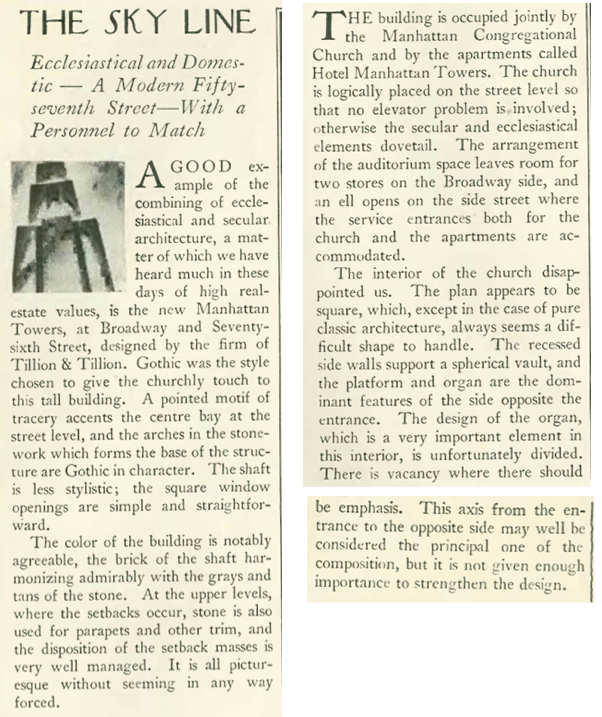
We return our gaze to the skies with three more new buildings reviewed by architecture critic George S. Chappell in his “Sky Line” column. He began with the Manhattan Towers Hotel, which thanks to the Depression would soon fall on hard times, going into foreclosure by October of 1931 and becoming a favorite gangster hideout (read more about the hotel at Daytonian in Manhattan)…
GOD AND MAMMON…Clockwise, from top left, the Manhattan Congregational Church in 1927. The church was torn down in 1928 and replaced by the Manhattan Towers Hotel at Broadway and 76th; the completed hotel, designed to wrap around the three-story Jones Speedometer Building, seen in the lower right of the photo; the first five floors of the building were dedicated to church use; after falling into disrepair, in 1980-83 the 626-room hotel was converted into 113 cooperative apartments. Note that the Speedometer Building still stands, sadly shorn of its ornamentation. (New York Public Library/Daytonian in Manhattan)
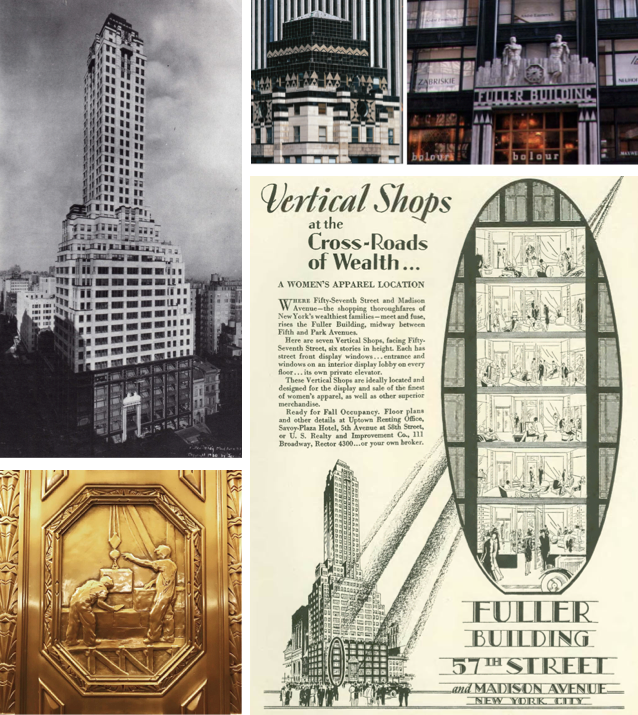
…Chappell also found much to admire in the new Fuller and Squibb buildings…
FULLER HOUSE…Clockwise, from top left, the 1929 Fuller Building was the third home of the George A. Fuller Company (its second home was the 1903 Flatiron Building); detailed views of the building’s tiled pinnacle and unique glass display windows that distinguish the building’s first six stories; an advertisement from the March 2, 1929 New Yorker that touted these gallery spaces for “superior merchandise”; detail of a coffered panel on an elevator door. (deskgram.net/nyc-architecture.com)Clockwise, from top left, entrance to the Squibb Building, now known as 745 Fifth Avenue; the cool white marble of the building’s base so admired by critic George Chappell; today, the building at dusk, the slender profile of 432 Park Avenue rising in the background. (OzBibliophile/paramount-group.com/landmarkbranding.com)
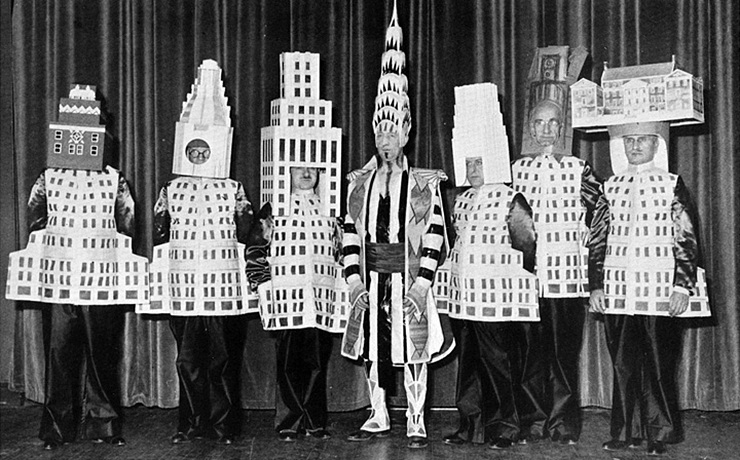
…From the Chrysler Building to the Fuller and Squibb, these new buildings, their architects, and the city’s ever-changing skyline were famously celebrated at the January 1931 Beaux Arts Ball…
HEADS IN THE CLOUDS…the Chrysler Building’s architect, William Van Alen (center), flanked by, from left to right, Stewart Walker (The Fuller Building), Leonard Schultze (The Waldorf-Astoria), Ely Jacques Kahn (The Squibb Building), Ralph Walker (1 Wall Street), D.E. Ward (The Metropolitan Tower), and Joseph H. Freelander (Museum of the City of New York). The New York Times referred to the group as “a tableau vivant of the New York Skyline.” (Van Alen Institute)
* * *
Quiet on the Set
The early days of sound movies created numerous challenges for directors who not only had to adjust the action to accommodate cumbersome microphones, but also to keep out unwanted noises or bad enunciation. “The Talk of the Town” explained…
CLOSETED…In the early days of the talkies, cameras had to be soundproofed in cabinets so their noisy motors would not be picked up by primitive sound equipment. (coloradocollege.edu/Library of Congress)
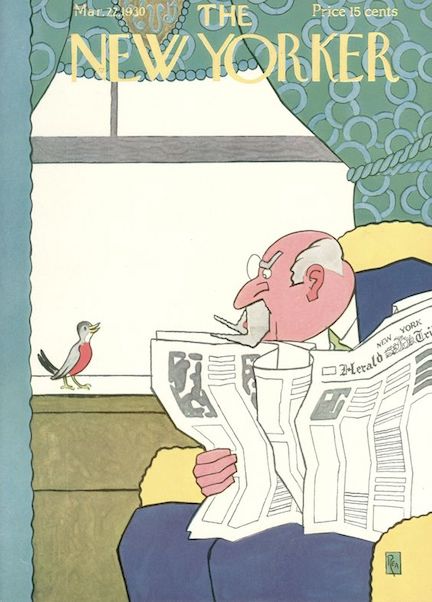
…Peter Arno illustrated the predicament of filming in nature in this cartoon from the April 5, 1930 issue…(caption: “Well, we can’t start till we get that robin out of there.”)…
* * *
One of Ours
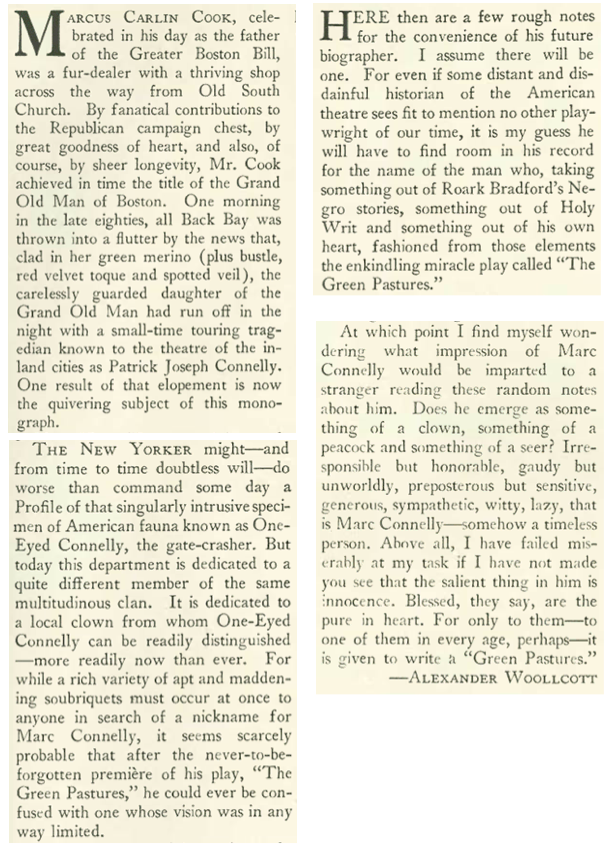
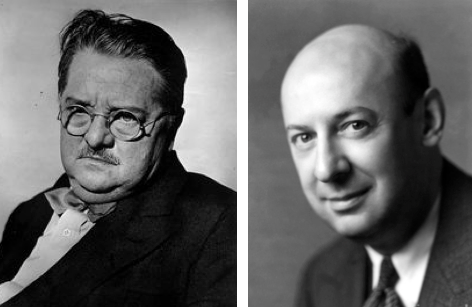
In the story of The New Yorker, Alexander Woollcott and Marc Connelly were there at the beginning as founding members of the Algonquin Round Table and advisory editors to the first issues of the magazine. Basking in the success of his latest play, The Green Pastures (for which he would receive a 1930 Pulitzer Prize for Drama), Connelly was the subject of a April 12, 1930 profile titled “Two-Eyed Connelly,” which was written by Woollcott. Some excerpts, and a caricature by Al Frueh…
FAMILIAR WITH THE SUBJECT…Alexander Woollcott, left, explored the life of his old friend Marc Connelly in the April 12 profile. (goodreads.com/Fine Art America)
* * *
The Party is Really Over
Lois Long’s column “Tables for Two,” which in the 1920s was a must-read for those interested in Jazz Age night life, appeared intermittently in its last year, and its April 12 installment was not even written by Long, but by a writer who signed the column “F.D.” — I assume this is Fairfax Downey, who tried his best to capture Long’s style…
* * *
From Our Advertisers
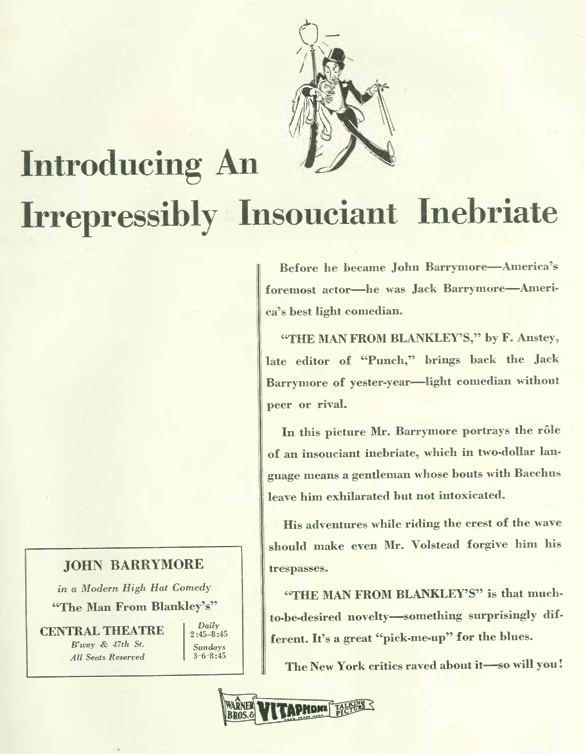
Warner Brothers opened their pocketbooks to publicize John Barrymore’s latest film, The Man From Blankey’s, which the studio described as a “Modern High Hat Comedy”…
WHEN ALCOHOLISM WAS FUNNY…Loretta Young, John Barrymore and Angella Mawby in The Man from Blankley’s. (IMDB)
…Thanks to William Randolph Hearst and his King Features Syndicate, Robert Ripley, the P.T. Barnum of the funny pages, soared to fame in the 1930s with his “Believe It or Not” panel…here he begins his 14-year run on the radio…
HELLO SUCKERS…Robert Ripley in 1930 with a drawing of “the Horned Man of South Africa.” (RIPLEY ENTERTAINMENT INC.)
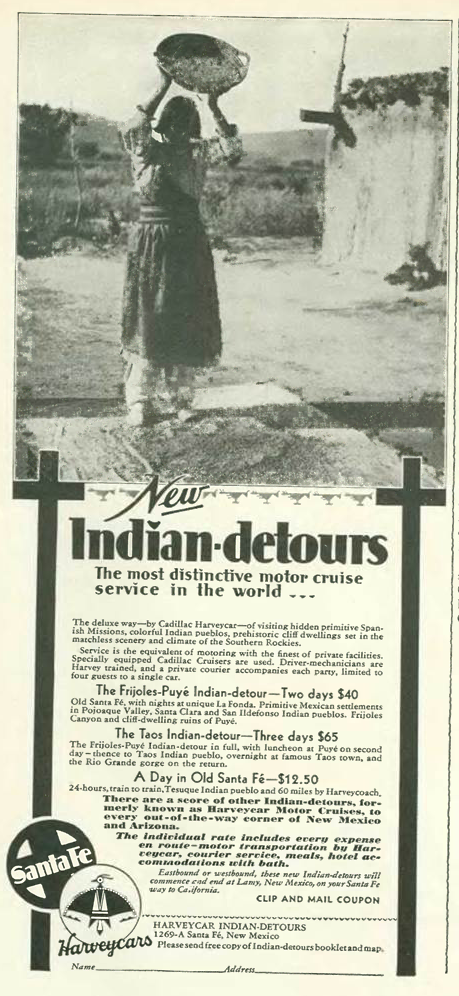
…and here’s an ad for another questionable but very American diversion — Fred Harvey’s “Indian Detours”…
WE’RE NOT IN KANSAS ANYMORE…The Fred Harvey Company was renowned for its chain of eating houses hosted by the famed “Harvey Girls” along the Atchison, Topeka & Santa Fe Railroad between 1876 and 1968. To encourage train travel (and Harvey business) in the Southwest, the Harvey company developed “Indian Detours.” The photo at left is of an “Indian Building” in Albuquerque, which featured displays of art and “live exhibits” that included Native Americans from many tribes around New Mexico. (santafeselection.com)EASY RIDER…1929 Cadillac Harvey Indian Detour Car outside La Fonda, Santa Fe. (Palace of the Governors photo archive)
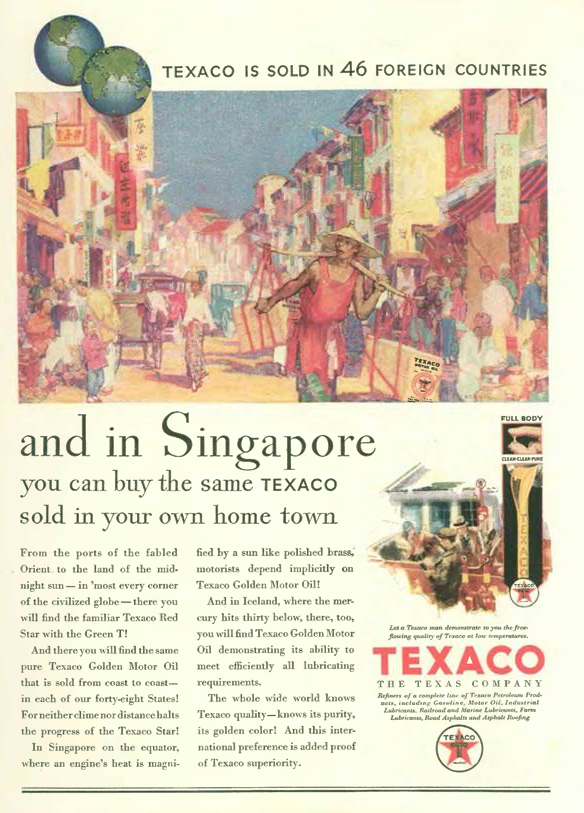
…if you preferred to travel abroad, Texaco wanted you to know that you could still gas up with their product, even in distant Singapore…
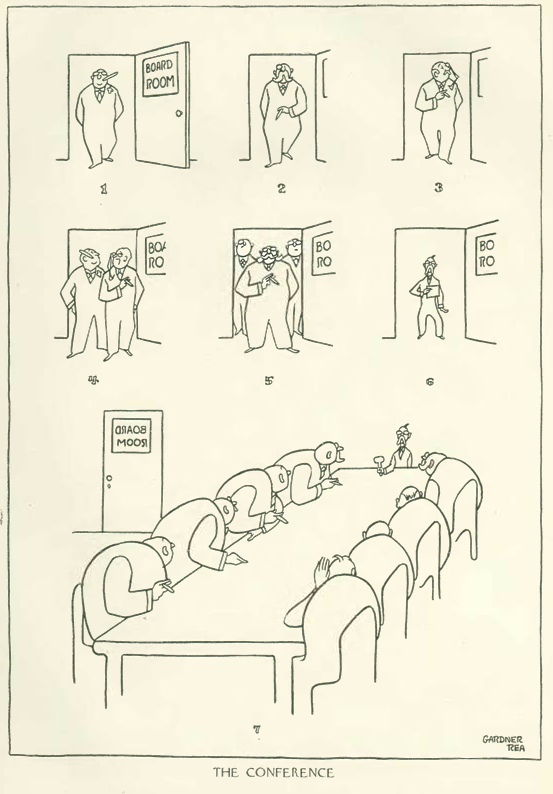
…we begin our cartoons with the spare stylings of Gardner Rea…
…and Otto Soglow…
…we find one of Helen Hokinson’s ladies on her way to fitness…
…William Crawford Galbraith showed us an enterprising young man…
…Art Young illustrated the challenges of the lecture circuit…
…and one of my all-time favorite Peter Arno cartoons…
Imagine your favorite Hollywood actress, maybe someone like Julia Roberts,Meryl Streep or Judi Dench. You’ve followed their careers and watched most of their movies, but you’ve never heard their voices.
March 22, 1930 cover by Gardner Rea.
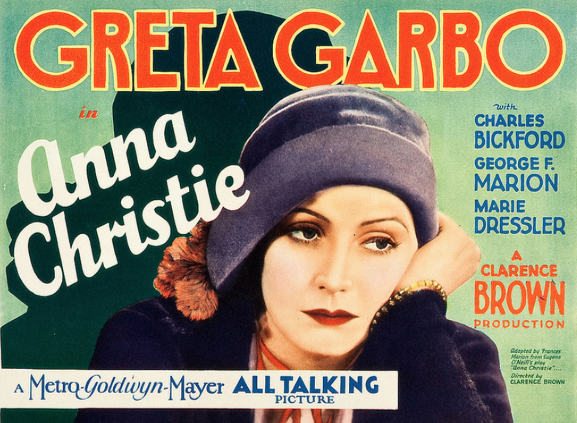
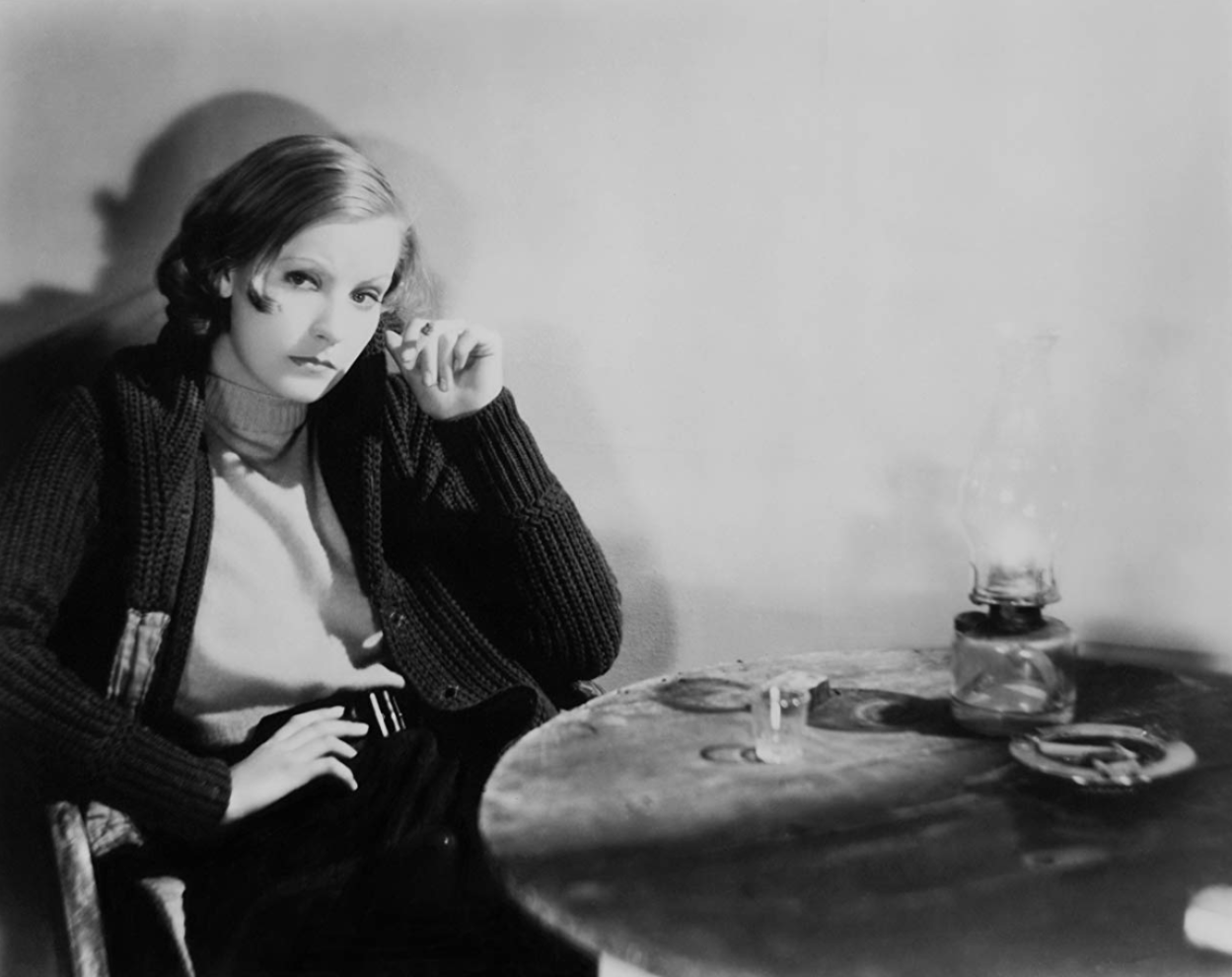
That’s what it was like for Greta Garbo fans before March 1930, when she spoke her first onscreen words in the 1930 MGM drama Anna Christie, which was adapted from a 1922 play by Eugene O’Neill.
SWEDISH SPHINX…Greta Garbo’s mask-like qualities on display in this publicity still for Anna Christie. (IMDB)
The New Yorker’s film critic John Mosher, not always a fan of Garbo’s silent work, found a “special kind of glamour” in her first talking picture, even tossing out the word “legend” to describe this Swede who avoided publicity like a bad cold…
No doubt a few moviegoers saw the movie just to finally hear that voice, which Mosher described as “a surprise…a deep, low voice, a boy’s voice really, rather flat, rather toneless, yet growing more attractive as the picture advances”…
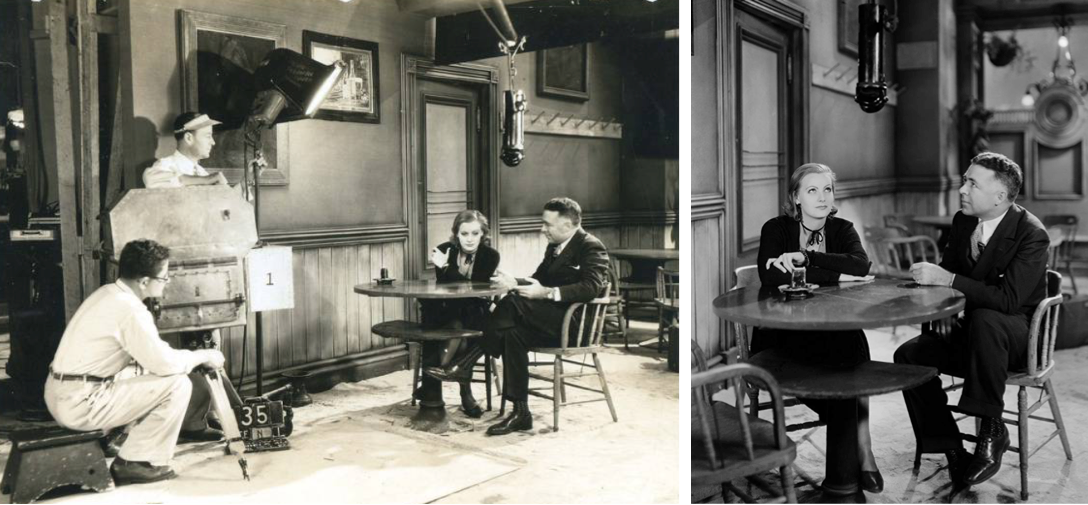
Director William H. Daniels (seated, left) with unidentified cameraman filming a scene from Anna Christie with actors Greta Garbo and Clarence Brown; at right, the actors contemplate the microphone hovering above them. Note how the camera in the first photo is contained in a soundproof case. (IMDB)
Publicized with the tag line “Garbo talks!,” Anna Christie premiered in New York City on Feb. 21 and would become the highest-grossing film of 1930. Later that year a German language version would be filmed featuring Garbo but with a different director and supporting cast.
SOUND DEBUT…Clockwise, from top left, Greta Garbo and Marie Dressler in Anna Christie; an MGM ad touting the film as one of the best pictures of the year (it would be the year’s highest-grossing, and Garbo would receive an Academy Award nomination); studio portraits of Garbo used in the film’s promotion. (IMDB)
* * *
Chicken and Cocktails
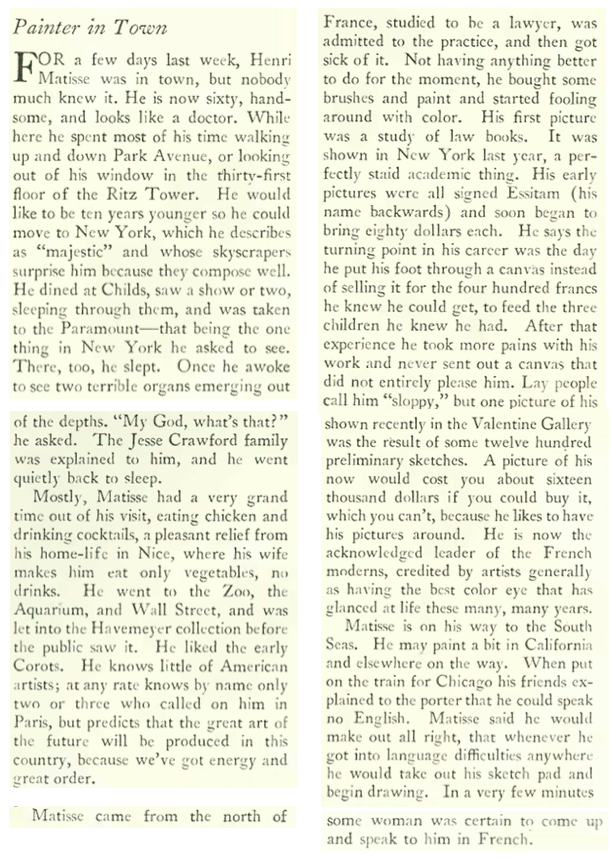
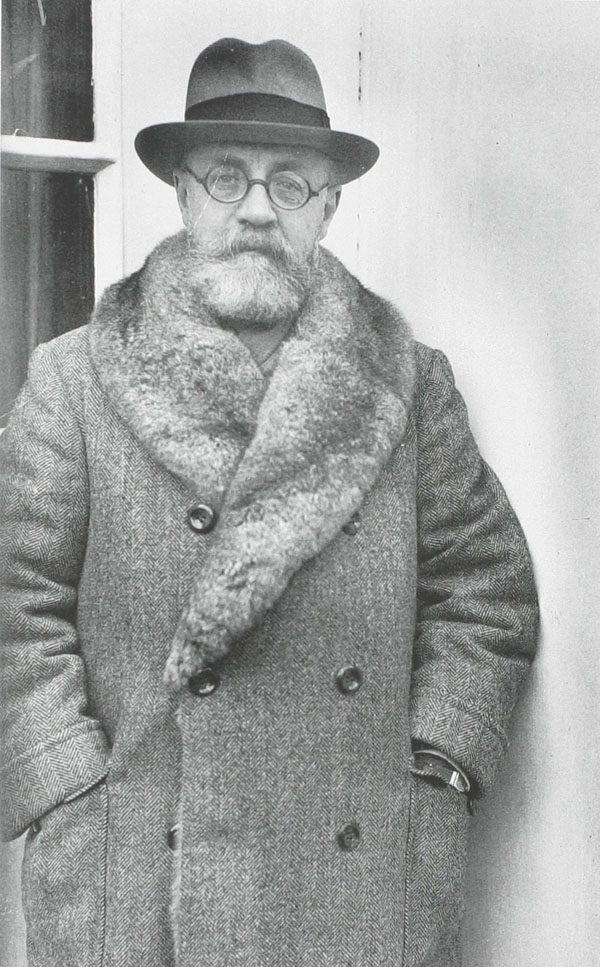
En route to the South Seas, the French artist Henri Matisse (1869-1954) paid a visit to New York City, and by all accounts had a good time there. His visit was described by Murdock Pemberton in “The Talk of the Town”…
I ♥ NEW YORK…Henri Matisse arriving in New York City on the RMS Mauretania December 15, 1930. He described the city as “majestic.” (artistandstudio.tumblr.com)NICE PLACE, THIS…Henri Matisse sitting on the brick roof terrace of 10 Mitchell Place (formerly Stewart Hall), the Queensboro Bridge glimpsed in the background. The photo was taken in 1930 by his son, Pierre Matisse, who was living in New York. At right, 10 Mitchell Place today. A framed photograph of Matisse sitting on the rooftop hangs on the wall of the building’s lobby. (Henri-matisse.net/Ephemeral New York)
* * *
The Last Page
The death of author D.H. Lawrence (1885-1930) was reported to New Yorker readers by Janet Flanner, the magazine’s Paris correspondent, who briefly detailed the writer’s rather sad decline…
FLEETING DAYS…D. H. Lawrence (right) with fellow writer Aldous Huxley at Bandol, in the South of France, 1929. (Topham Picturepoint)
* * *
What Depression?
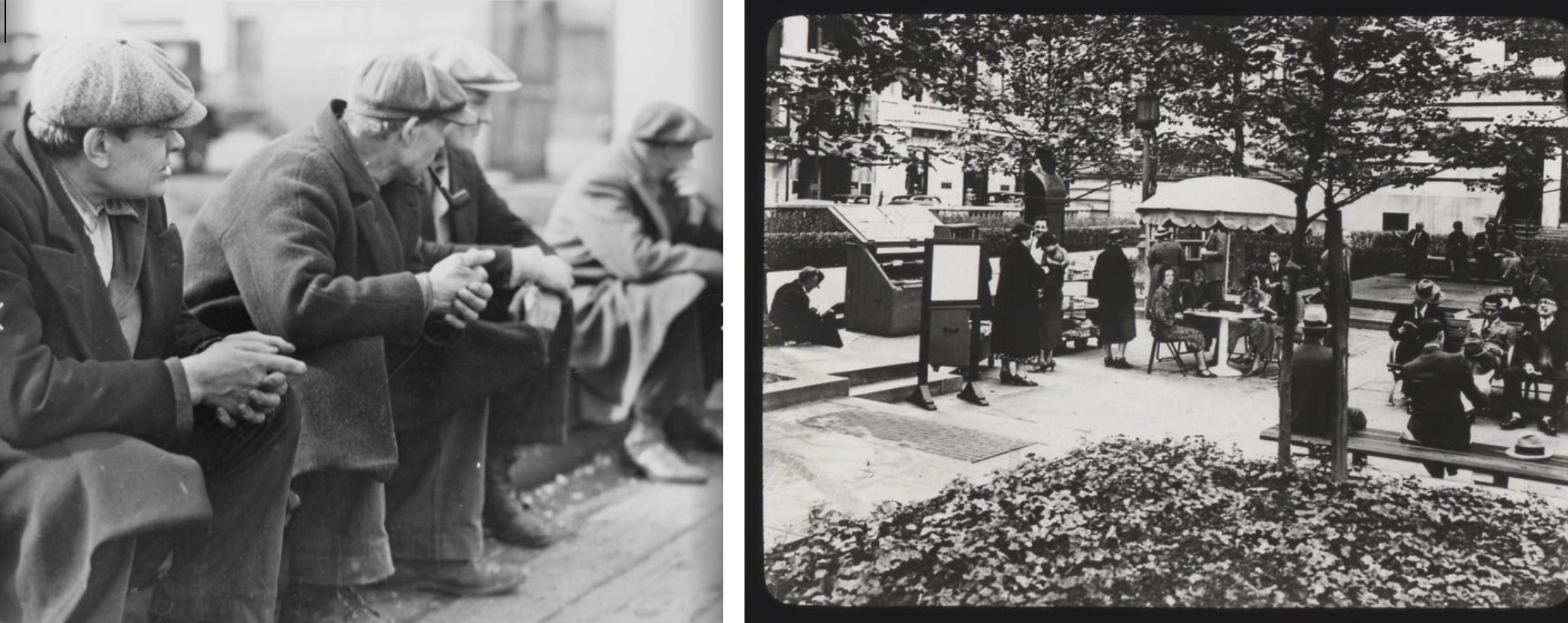
We are nearly five months into the Great Depression, yet there is little evidence in The New Yorker of the catastrophe that was unfolding across the land. And true to form, the approach to the topic was made with humor, via E.B. White in “Notes and Comment”…
KNOW ANY GOOD JOKES?…At left, unemployed New York dockworkers; at right, folks enjoying the New York Public Library’s outdoor reading room in Bryant Park, 1930s. (Lewis Hine/National Archives and Records Administration/New York Public Library)
* * *
Cathedrals of Commerce
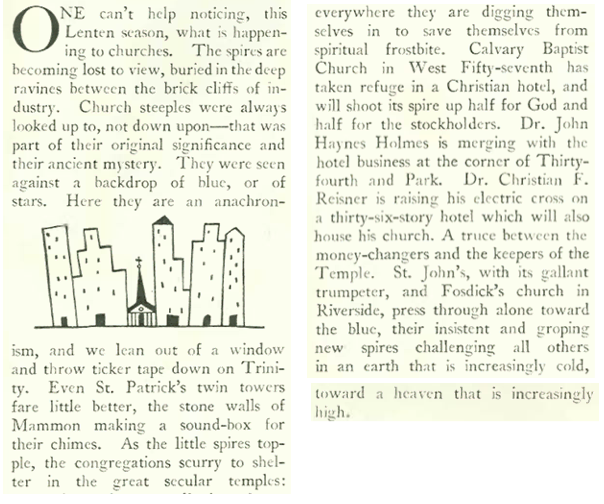
E.B. White also observed the changing skyline, and how the towering skyscrapers were quickly overshadowing the once prominent steeples of the city’s churches…
REACHING TO THE HEAVENS…Clockwise, from top left, Trinity Church Wall Street and St. Patrick’s have been eclipsed by the towers of Mammon, but St. John’s and Riverside still dominate their surroundings. (Wikipedia/St. John’s/Riverside)
* * *
The Other House of Worship
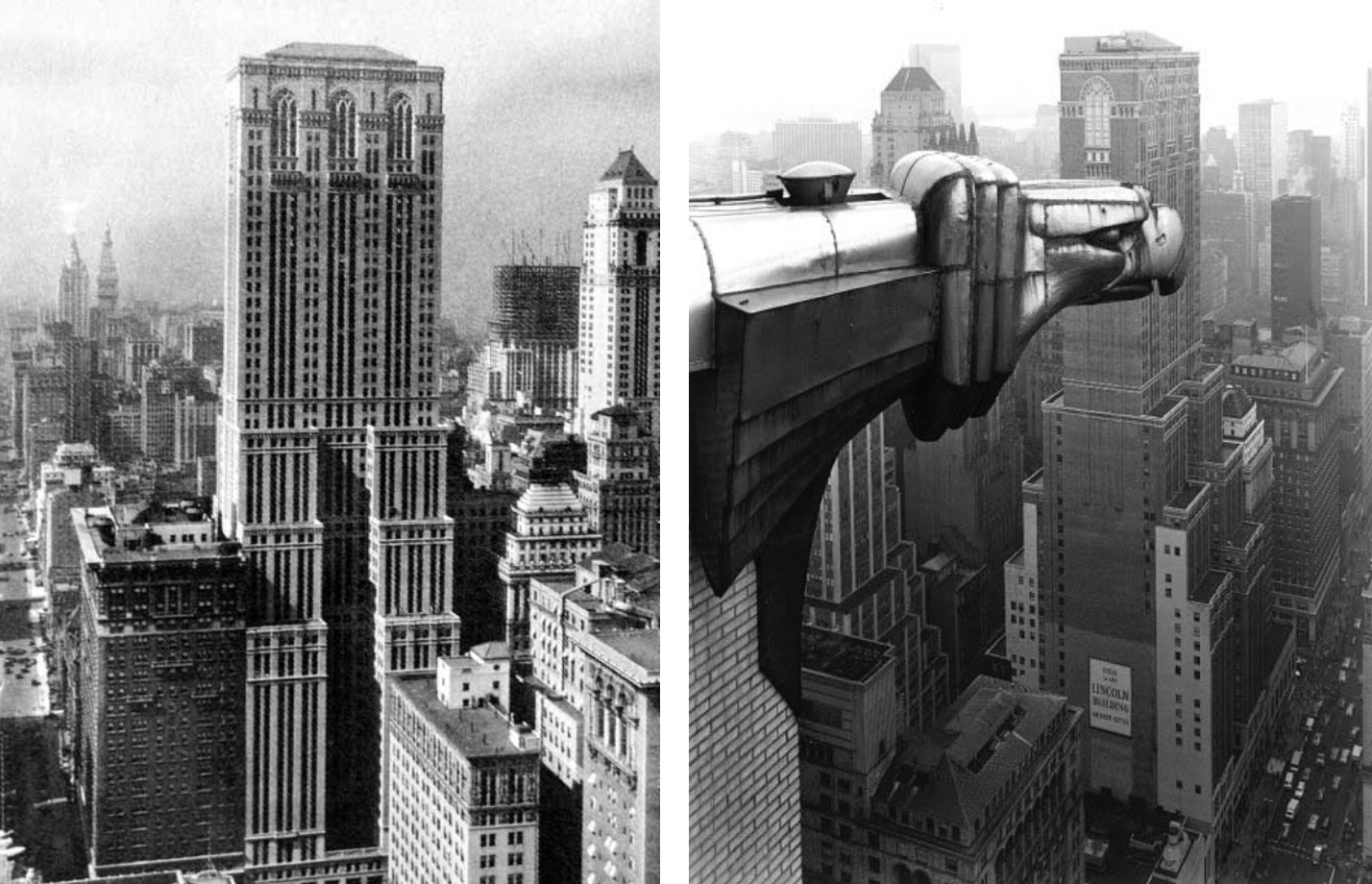
Perhaps a certain skyscraper ennui settled in, as architecture critic George S. Chappell was not all that impressed by the “huge” Lincoln Building (which today still seems huge)…
SIZE DOESN’T MATTER…Although the new Lincoln Building proved to be a massive addition to the New York skyline, its style seemed outdated in contrast to its flashy new neighbor, the Chrysler Building — one of its gargoyles, at right, seems poised to devour the Lincoln Building. (nyc-architecture.com)
* * *
From Our Advertisers
We have a bit more evidence of the Depression in the ads, including this one from Abercrombie & Fitch, with two sporting gents opting to go fishing to take their minds off the markets…
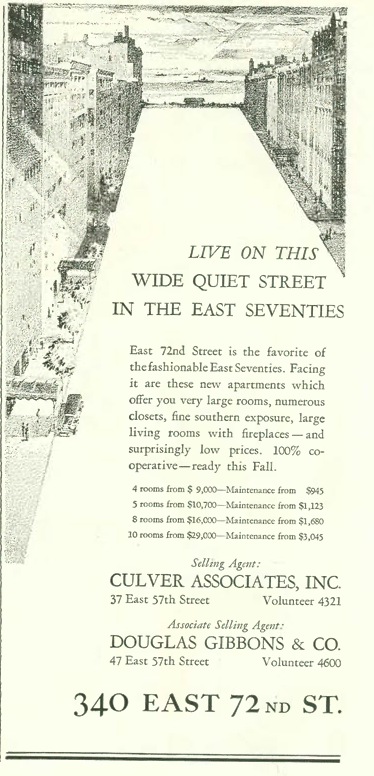
…if fishing wasn’t your thing, perhaps you just wanted to escape into the “quiet” of the wide streets in the East Seventies…
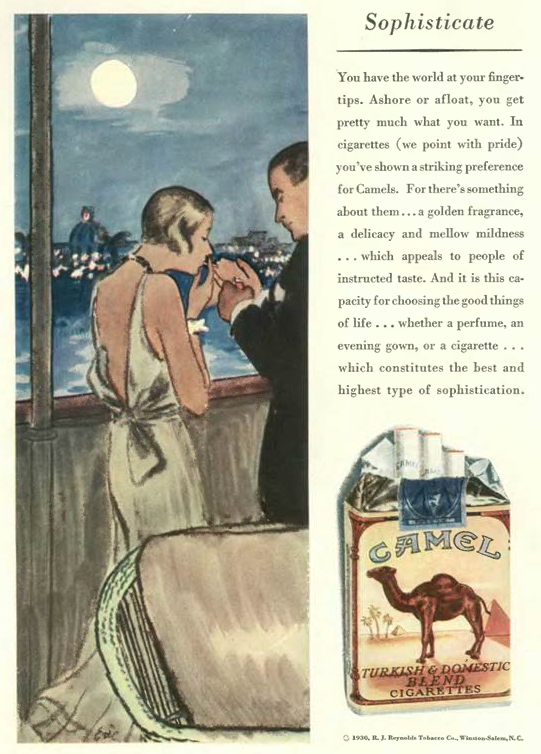
…or relax with a smoke, which artist Carl Erickson made so appealing with his Camel ad illustrations…
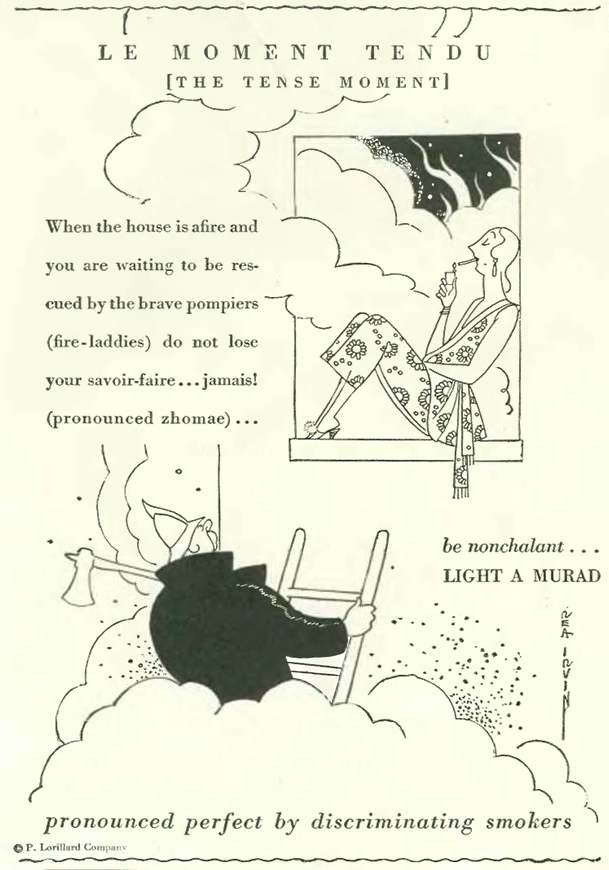
…or take the humorous route to a relaxing smoke, with this ad for Murad as illustrated by Rea Irvin…
…on to our cartoonists, Garrett Price captured the mood of the times…
…while Alfred Krakusin captured an altogether different mood…
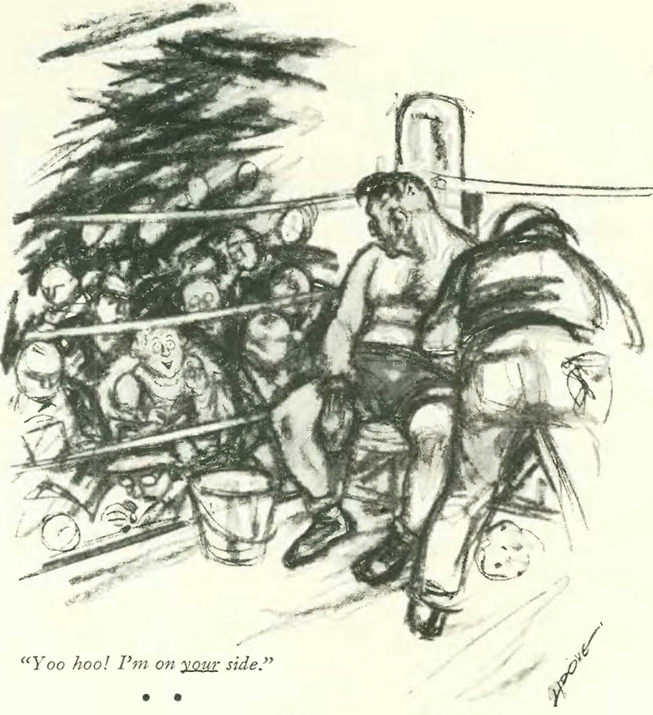
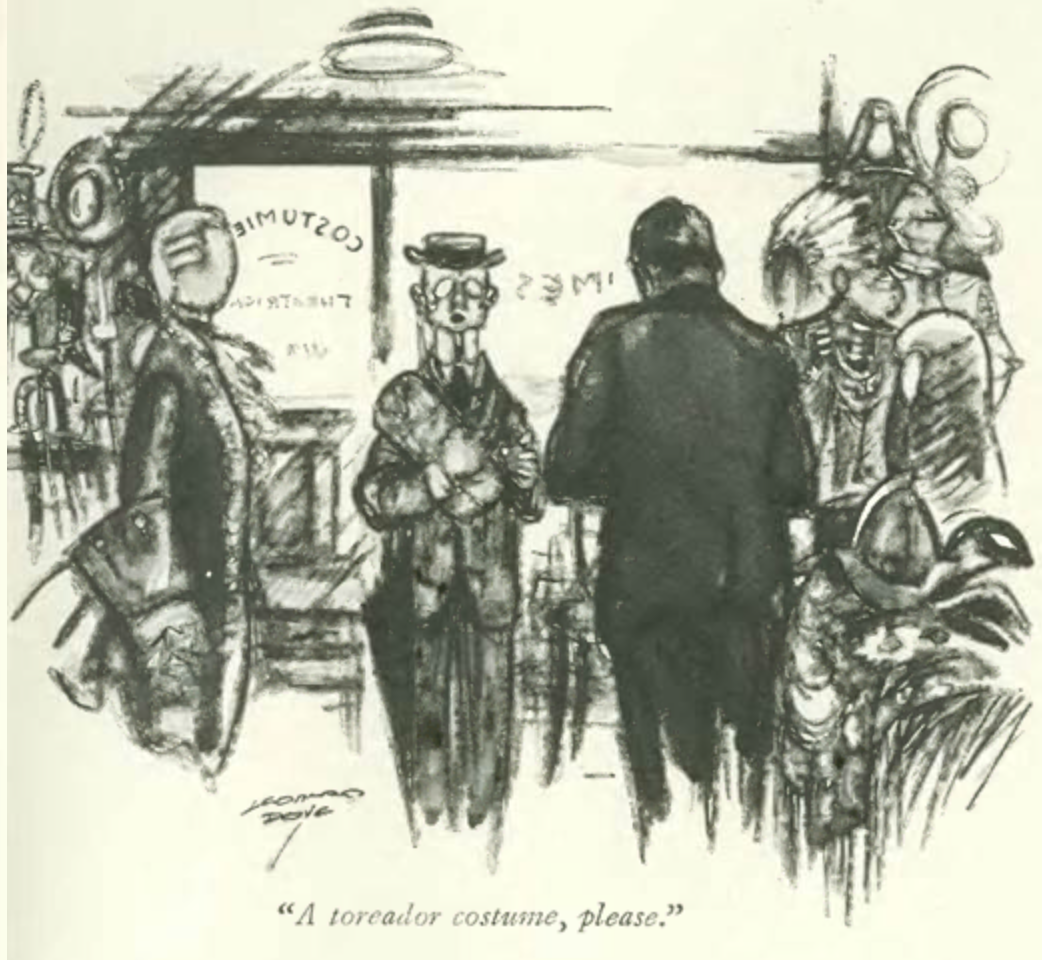
...Leonard Dove examined the path to stardom…
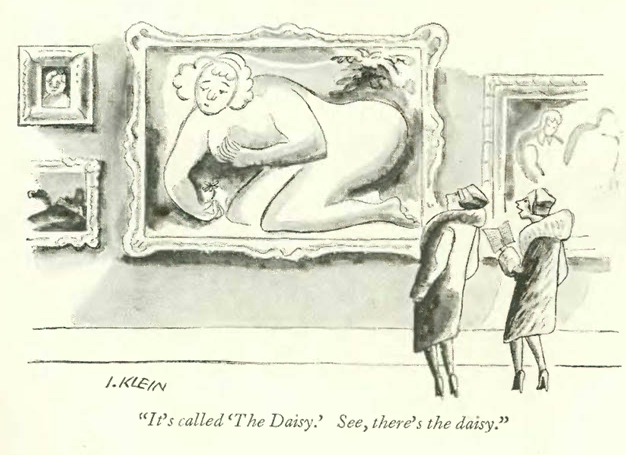
…Isadore Klein pondered modern art…
…William Crawford Galbraith found an unlikely victim of religious zeal…
…Mary Petty gave us a glimpse of a doctor’s office…
As Ernest Hemingway and F. Scott Fitzgerald spoke to the “Lost Generation” of writers and artists in the 1920s, John Dos Passos (1896-1970) drew upon the ethos of that period to usher in a new style of writing for the 1930s — modern, experimental, and deeply pessimistic.
March 8, 1930 cover by Ilonka Karasz.
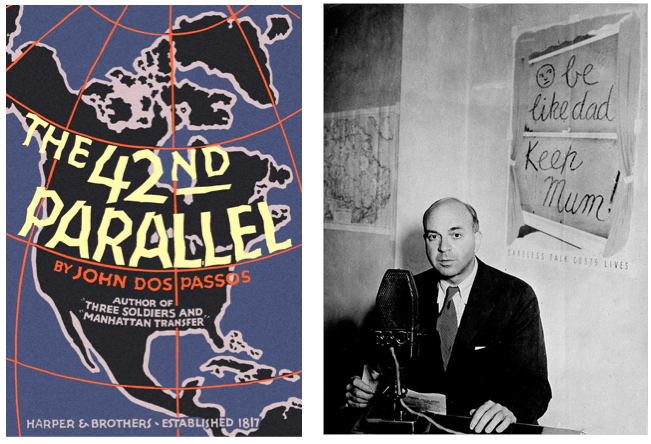
Dos Passos’ book The 42nd Parallel would be the first of three books from 1930 to 1936 that would comprise his landmark U.S.A. Trilogy. The book critic for the New Yorker (identified as “A.W.S.”) sensed that this work of avant-garde historical fiction represented a significant marker in the modernist movement, likening it to the work of the great 20th century composer Igor Stravinsky:
A WRITER FOR DEPRESSING TIMES…The 42nd Parallel was the first book in a trilogy published by John Dos Passos between 1930 and 1936. At right, Dos Passos in the early 1940s. (22.hc.com/hilobrow.com)
Dos Passos also painted throughout his life, nearly 600 canvases including this early work from his days in Spain in the 1920s…
John Dos Passos’ watercolor painting of the the Spanish countryside, circa 1922. A modernist writer, Dos Passos also painted in the style of the avant-garde. His nearly 600 paintings throughout his lifetime show influences of Impressionism, Expressionism and Cubism. (johndospassos.com)
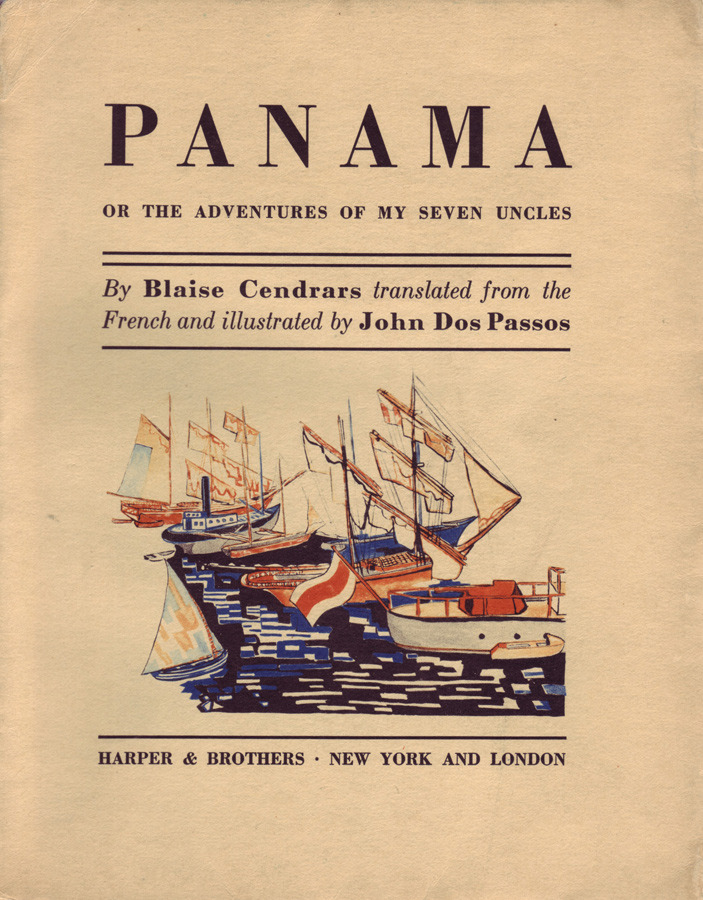
…and he joined his literary and artistic talents in 1931 when he translated and illustrated Blaise Cendrars’ long poem Le Panama et Mes Sept Oncles. Dos Passos became good friends with Cendrars, and in the book’s foreword acknowledged his debt as a writer to the French poet…
(johndospassos.com)
* * *
Don Could Also Write And Draw
Like Dos Passos, Don Herold (1889-1966) could express himself through both words and pictures, albeit in a much less serious vein. In the March 8 issue Herold wrote about the indignity of having to disrobe for a medical examination. An excerpt:
Also an illustrator and cartoonist, Herold made his debut in The New Yorker with this cartoon in the June 1, 1929 issue:
Herold began working as an illustrator around 1910, and enjoyed a long career with a number of publications, including the humor magazine Judge:
* * *
Measuring Up
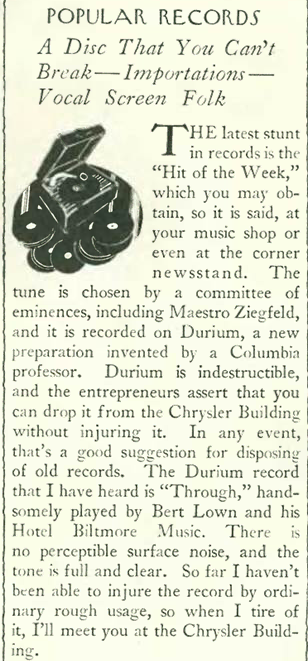
When the Chrysler Building was completed in May 1930, it officially became the world’s tallest building (a record it ceded 11 months later to the Empire State Building). Being the tallest gave the building the distinction of being something to be measured against, including the durability of a musical recording pressed into a material called “Durium”…
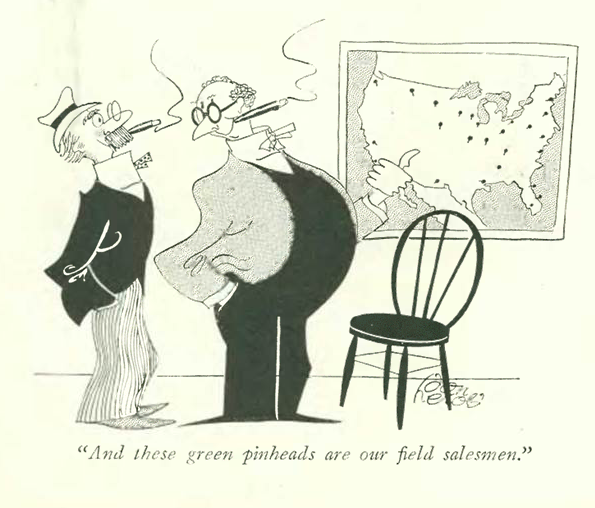
…and when advertisers were in need of something large for comparison, they also turned to the new skyscraper to drive home their selling point…
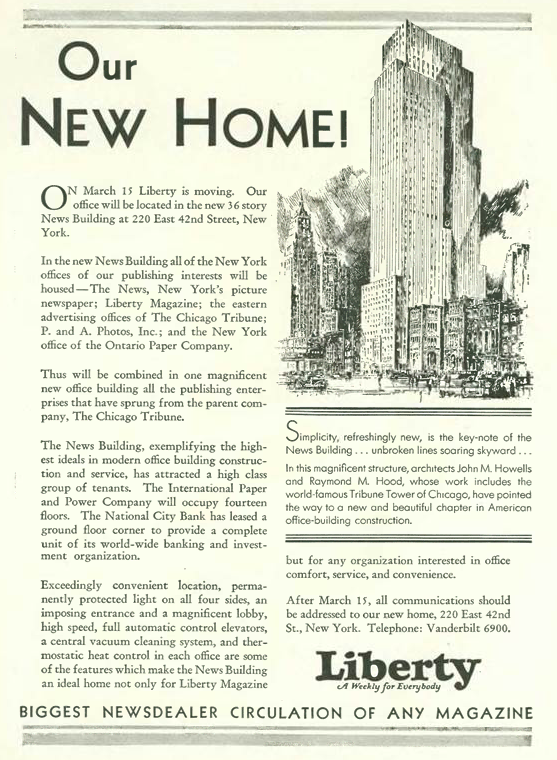
…new skyscrapers also were used to lend distinction to their tenants, such as Liberty Magazine in the new Daily News Building…
…below a 1940 postcard image of the Daily News Building, then known simply as “The News Building,” and a view of the lobby’s famous globe in 1941…
(Wikipedia)
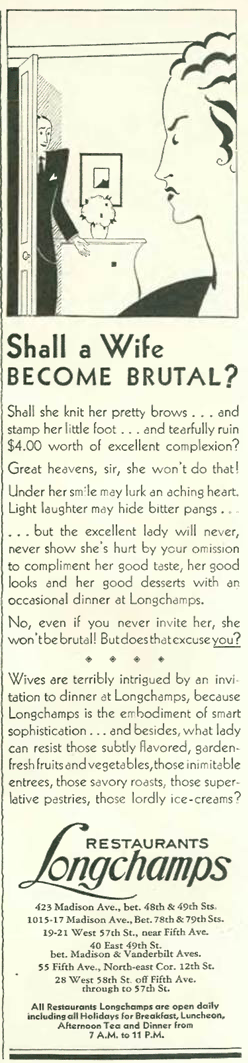
…on to the rest of our ads, here’s a baldly misogynistic one from Longchamps restaurants…
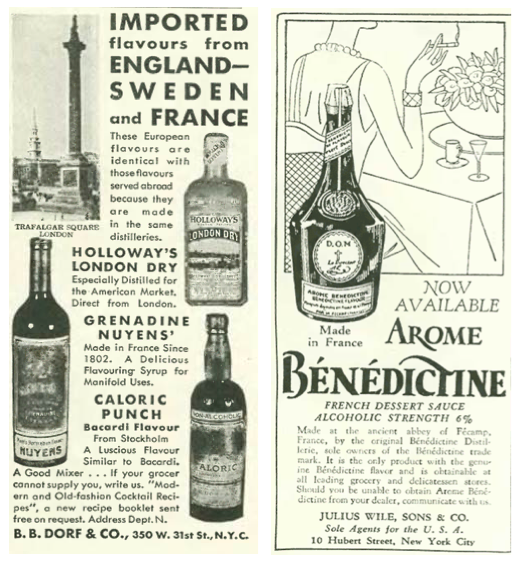
…and as Prohibition wore on into the Thirties, we have sad little back page ads for cocktail “flavours” and Benedictine “Dessert Sauce”…
…on to our cartoons, Gardner Rea explored the subject of family planning…
…Art Young illustrated the perils of modern art…
…Otto Soglow took a stroll with a somnambulist…
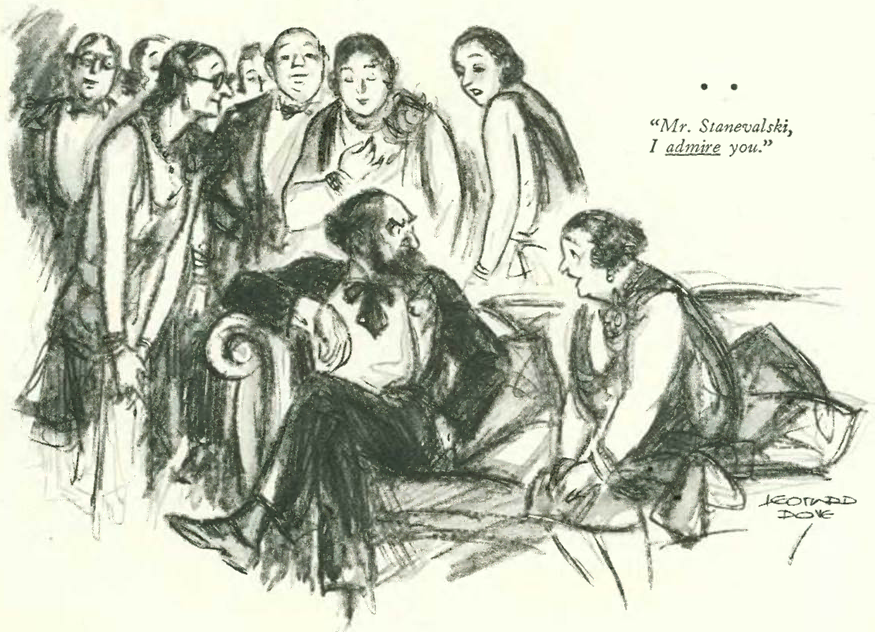
…Leonard Dove inked this awkward moment between the Old and New Worlds…
On March 1, 1930, the Empire State Building was still just a bunch of sketches and blueprints, as was much of the yet-to-be-built modern cityscape of Manhattan. But as the Depression slowly worked its gnarled fingers into the American landscape, some still dreamed of the sleek, streamlined world to come.
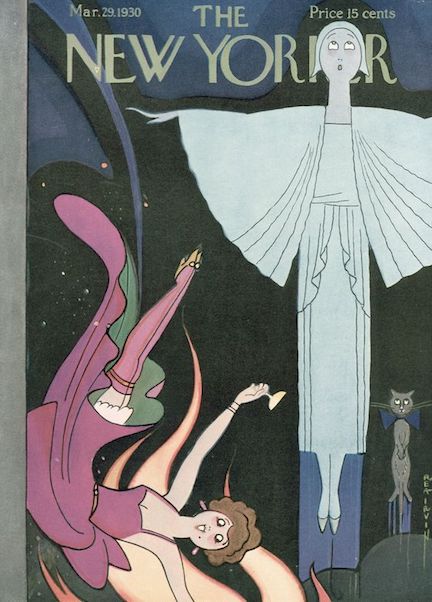
March 1, 1930 cover by Rea Irvin.
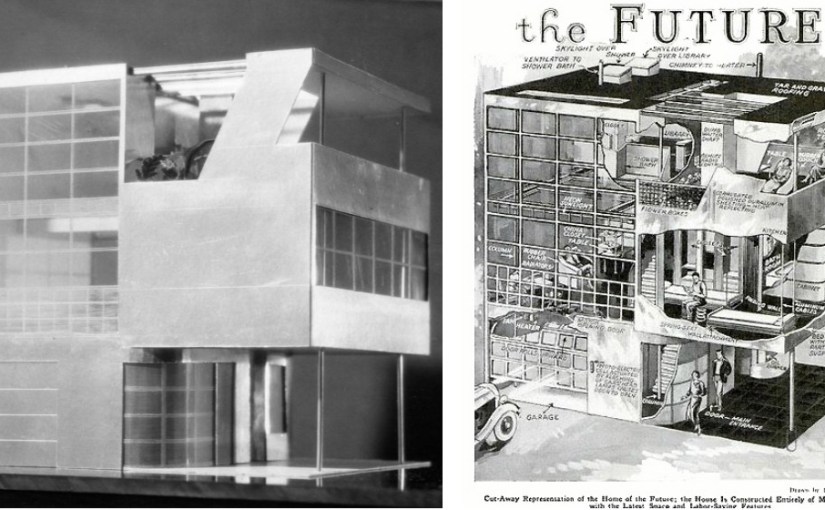
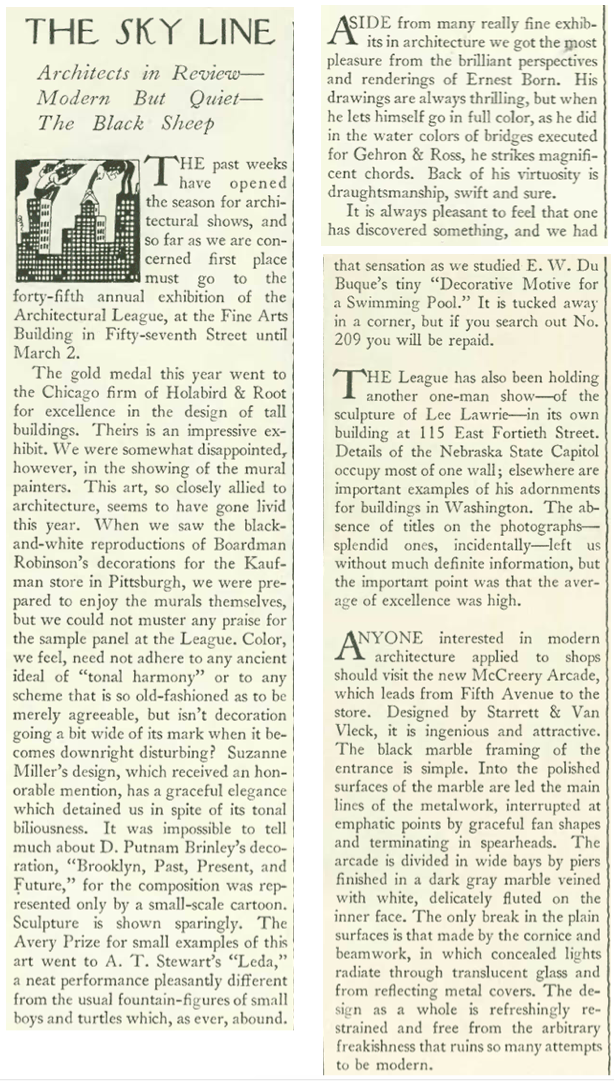
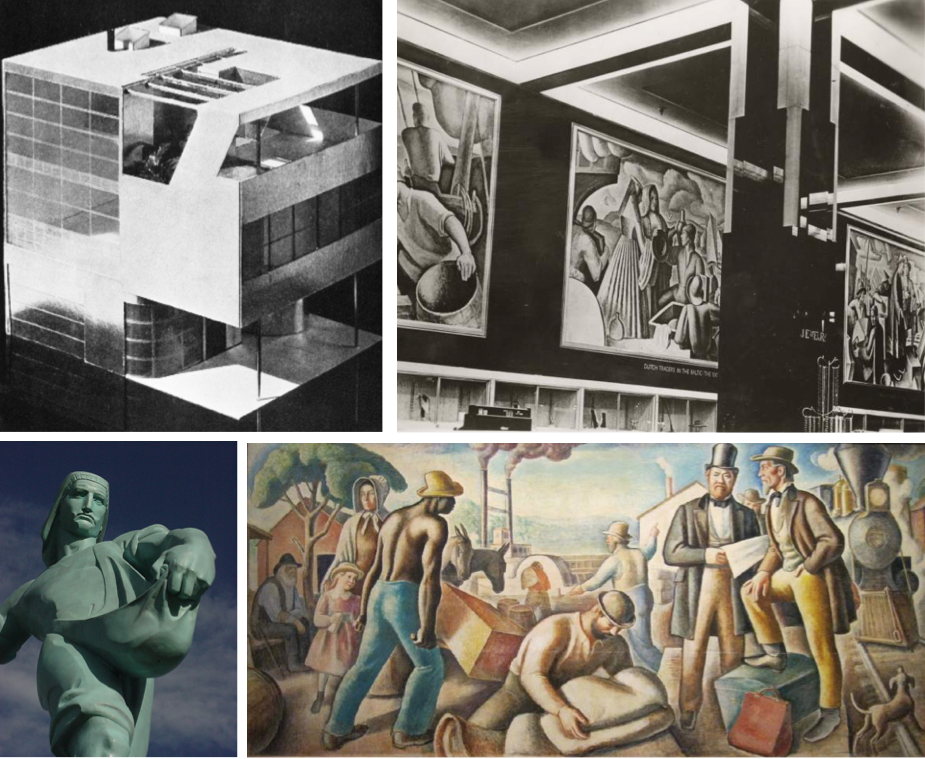
The New Yorker’s architecture critic, George S. Chappell, kept readers apprised of changes on the city’s skyline, as well as of the trends in modern design that were being displayed at various exhibitions including one held annually by the city’s Architectural League. Chappell observed:
A GLIMPSE INTO THE FUTURE…Opening pages of the Architectural League’s 45th Annual Exhibition, featuring an image of the Empire State Building. Construction had just begun on the iconic building at the site of the old Waldorf-Astoria Hotel. (mullenbooks.com)
The exhibition featured a variety of projects, from the Aluminaire House in Long Island to Boardman Robinson’s murals in Pittsburgh to Bertram Goodhue’s Nebraska State Capitol featuring Lee Lawrie’s sculptures and friezes…
ECLECTIC…Model of the Aluminaire House erected in full scale for the 45th Annual Exhibition of the Architectural League of New York; Boardman Robinson’sThe History of Trade murals in Kaufmann’s Department Store, Pittsburgh; detail of one of Boardman’s 10 murals displayed at Kaufmann’s; Lee Lawrie’s “The Sower,” a 19-foot-tall bronze statue mounted on top of Bertram Goodhue’s Nebraska State Capitol in Lincoln. In 1937 Lawrie would install his “Atlas” sculpture in front of Rockefeller Center. (archleague.org/archive.triblive.com/capitol.nebraska.gov)
* * *
And Now For Something Old
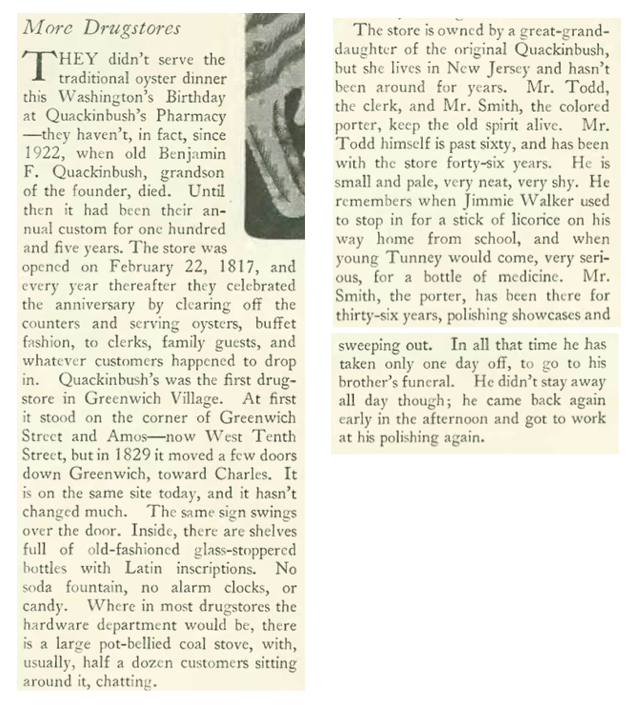
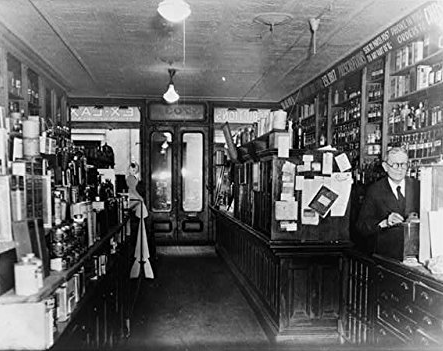
While George Chappell contemplated the world to come, “The Talk of Town” looked back in time to Greenwich Village’s oldest drugstore…
FORM FOLLOWED FUNCTION…Quackenbush Pharmacy in 1930. Manager James Todd at right. (Library of Congress)
* * *
Pet Project
The March 1 issue featured James Thurber’s second installment of “Our Pet Department”…
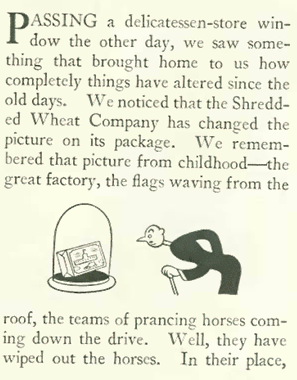
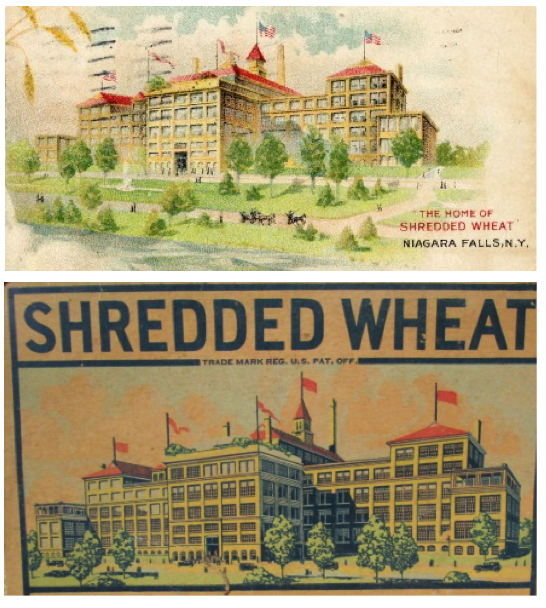
And while Thurber was doling out pet advice, his pal E.B. White was worrying over changes to the design of the Shredded Wheat box…
HORSELESS CARRIAGES replaced animal power on the packages of Shredded Wheat, much to the dismay of E.B. White. (oldshopstuff.com)
* * *
A Prince of a Guy
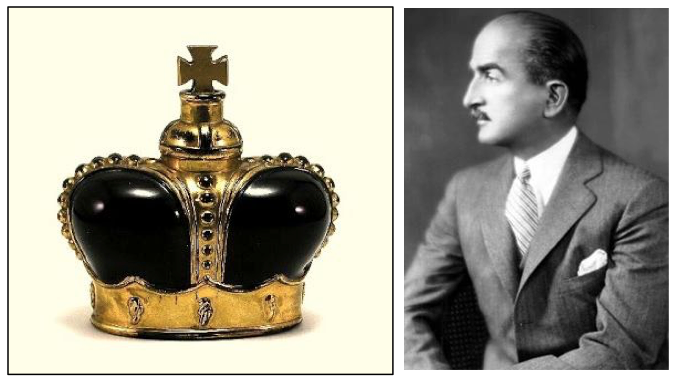
A refugee from the Bolshevik Revolution, the Georgian Prince Matchabelli (Guéorgui Vassilievitch Matchabelli) was penniless when he landed on American shores in 1924. Two years later he launched a perfume business with three scents — Ave Maria, Princess Norina, and Queen of Georgia — sold in bottles that were said to be small replicas of the Prince’s lost Georgian crown. “The Talk of the Town” paid the royal perfumer a visit for the March 1 issue:
HIS CROWNING ACHIEVEMENT…A bottle of Princess Norina perfume from 1926, and its creator, Prince Matchabelli. (Pinterest/Wikipedia)
Those who were around the late 1970s and 1980s no doubt recall the Prince Matchabelli Windsong Perfume commercials and the catchy tune that kind of stuck in your head (for better or worse)…
* * *
Low Life Revue
Ben Hecht continued his exploration of the hardboiled world of journalists, bootleggers, nightclub singers and other lowlifes in his screenplay for Roadhouse Nights, a film that was apparently enjoyed by New Yorker film critic John Mosher. As for Hecht, an erstwhile member of the Algonquin Round Table and occasional contributor to The New Yorker in the 1920s, the film was just one of many to follow in a Hollywood career that the former Chicago journalist held in some disdain (see recent New Yorker article by David Denby)…
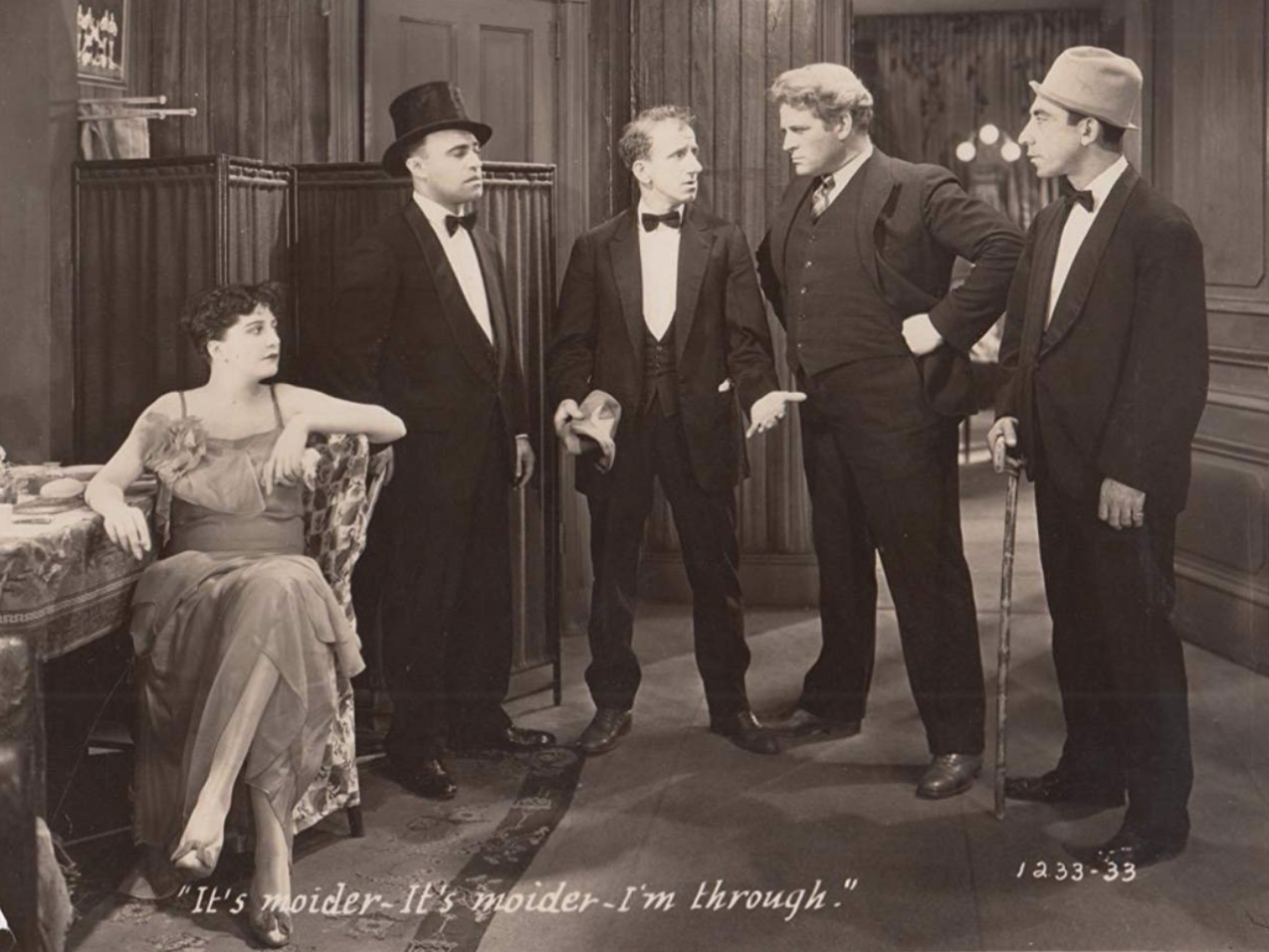
IT’S MOIDER, I SAY…Helen Morgan, Eddie Jackson Jimmy Durante, Fred Kohler, and Lou Clayton in 1930’s Roadhouse Nights. (IMDB)
* * *
The Winds of Wynn
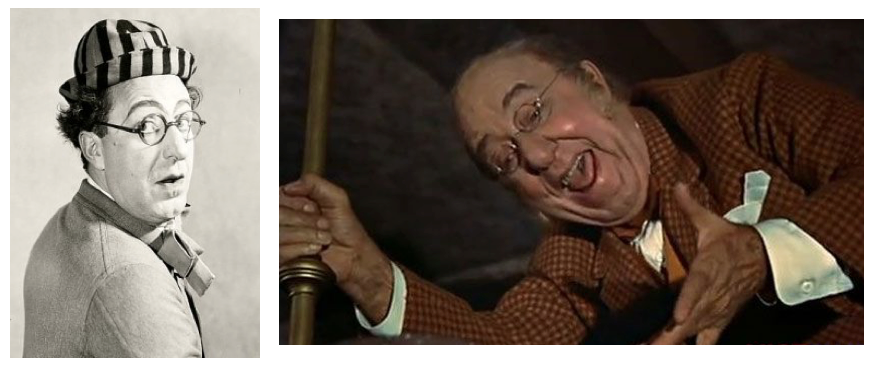
Ed Wynn wowed theater critic Robert Benchley in his portrayal of “Simple Simon” at the Ziegfeld Theatre. Wynn was one of the most popular comedians of his time, but is best known today for his portrayal of “Uncle Albert” in the 1964 Disney film Mary Poppins…
AGELESS…Ed Wynn in Simple Simon, 1930; at right as Uncle Albert in 1964’s Mary Poppins. (secondhandsongs.com/Pinterest)
* * *
He Was No Palooka
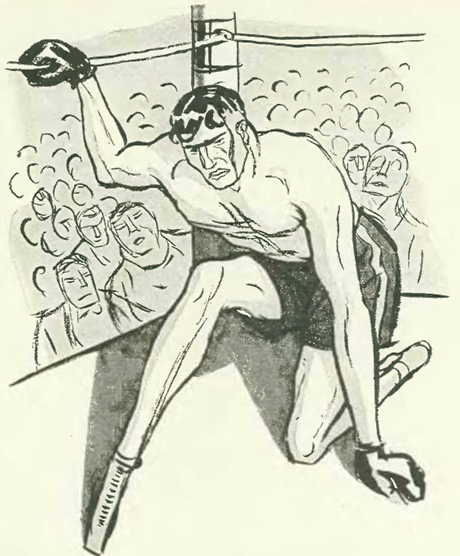
The March 1 and 9 issues of The New Yorker gave considerable ink to Niven Busch Jr’s success story of a middleweight prizefighter. Titled “K.O. Middleweight,” the two-part article was about Stanislas Kalnins, who went by the name K.O. Keenen because it would go over better with the large majority of Irishmen at the fights. Peter Arno provided the art for the piece:
From Our Advertisers
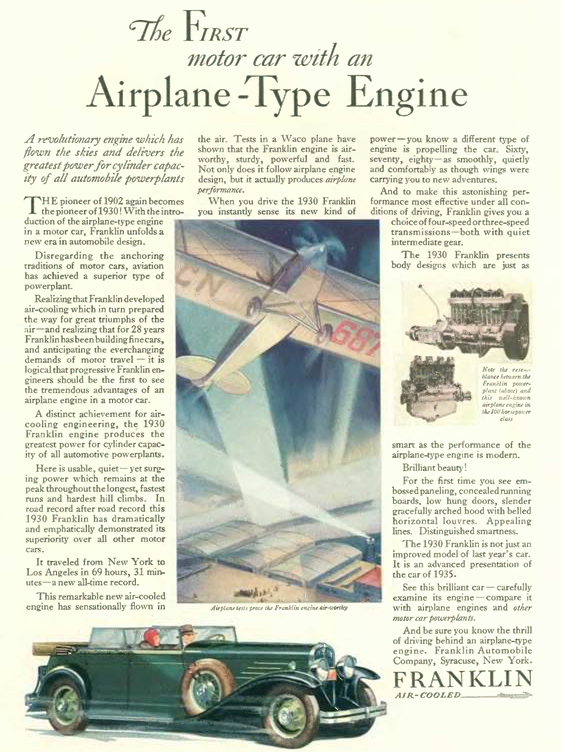
We have another ad from the Franklin motorcar company touting its air-cooled engines, which thanks to the Depression were not long for the world…
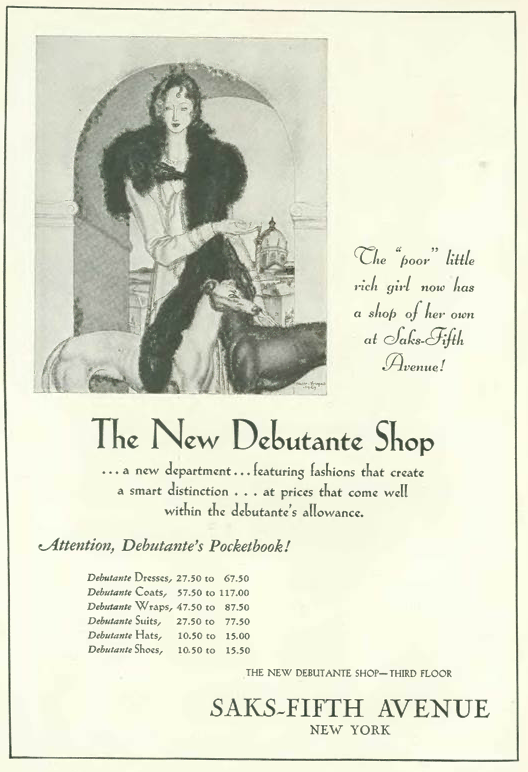
…Saks shamelessly appealed to the “poor” little rich girl in this ad aimed at aspiring debutantes…
…Lenthric perfumes offered this all-French ad to those seeking Continental refinement…
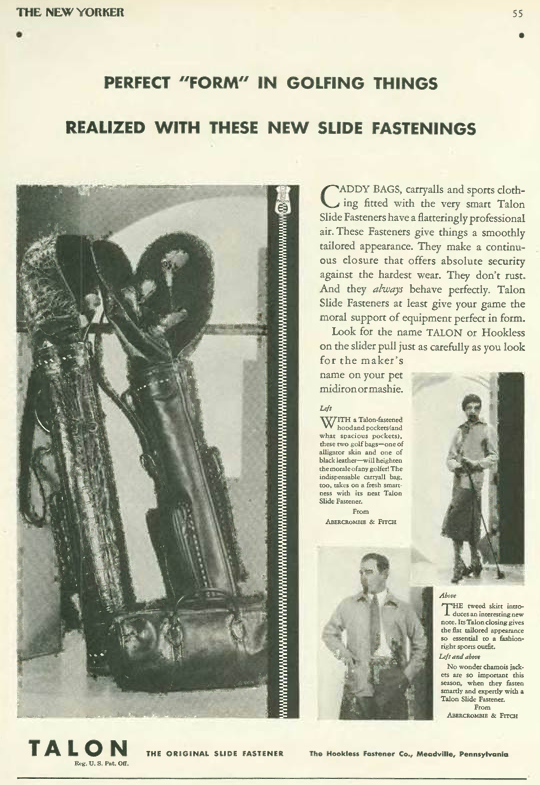
…and this ad from Talon, advertising “Slide Fasteners” before the word “zipper” came into common use…
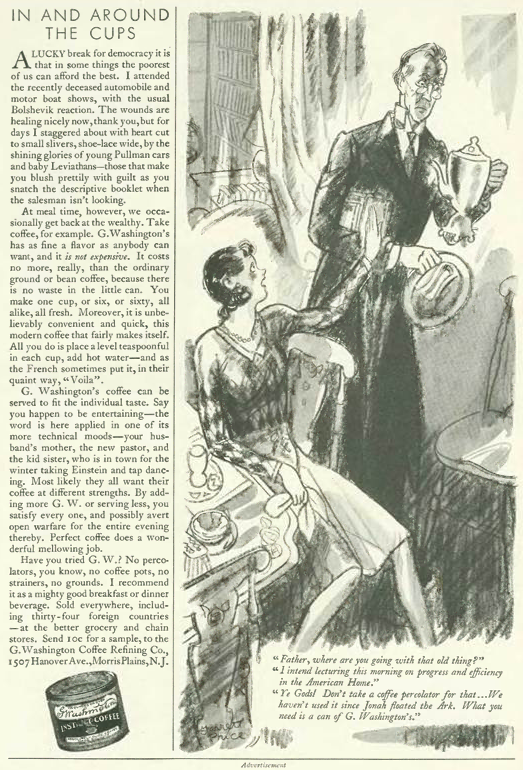
…Garrett Price was the latest New Yorker cartoonist to pick up some extra cash from G. Washington instant coffee…
…while John Held Jr. even lent his image (along with some drawings) to promote Chase and Sanborn’s coffee…
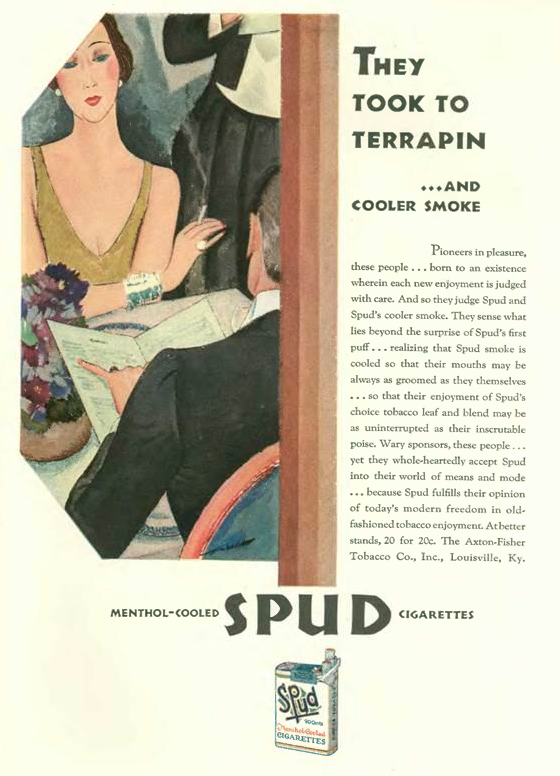
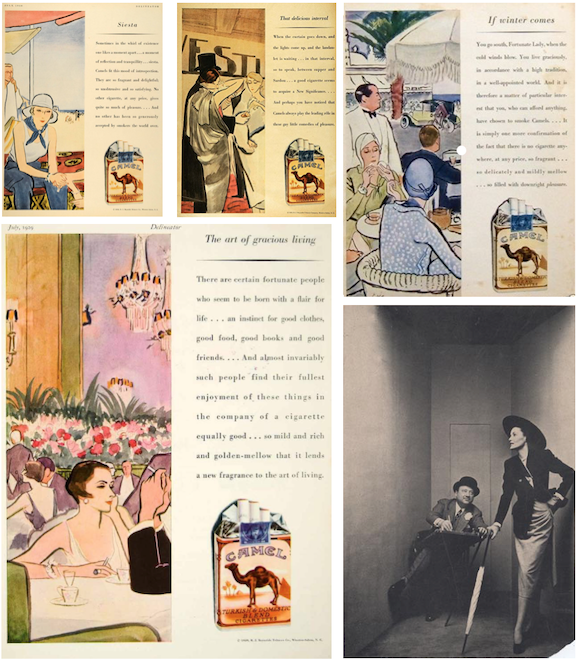
…this artist for Spud cigarettes borrowed Carl Erickson’s style from his famed Camel ads (see examples below)…
…examples of Carl “Eric” Erickson’s Camel ads from the late 1920s…
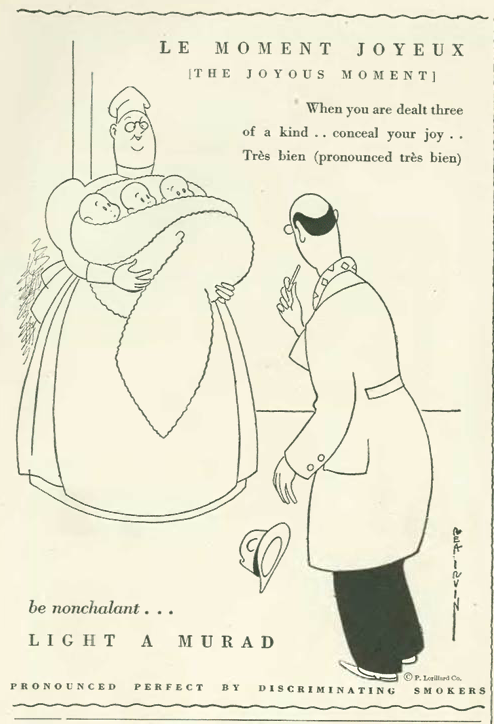
…and here we have another New Yorker cartoonist, Rea Irvin, helping the makers of Murad cigarettes move their product…
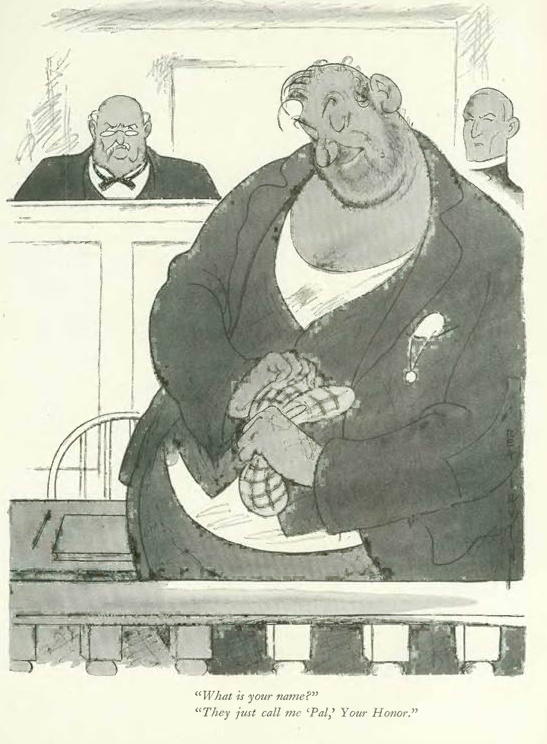
…Irvin also illustrated this cartoon for the March 1 issue…
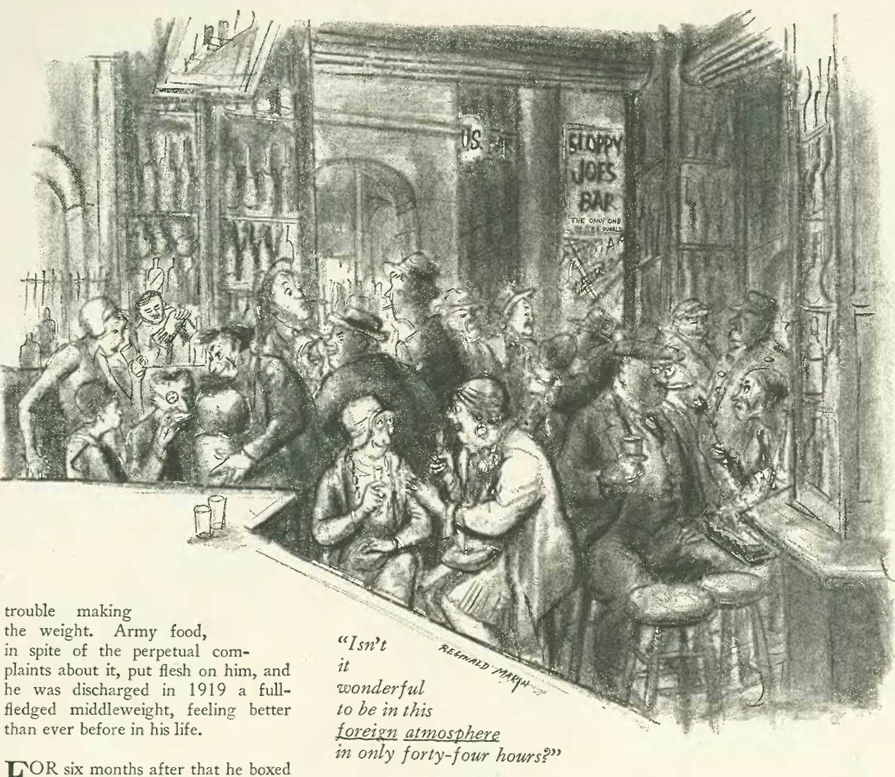
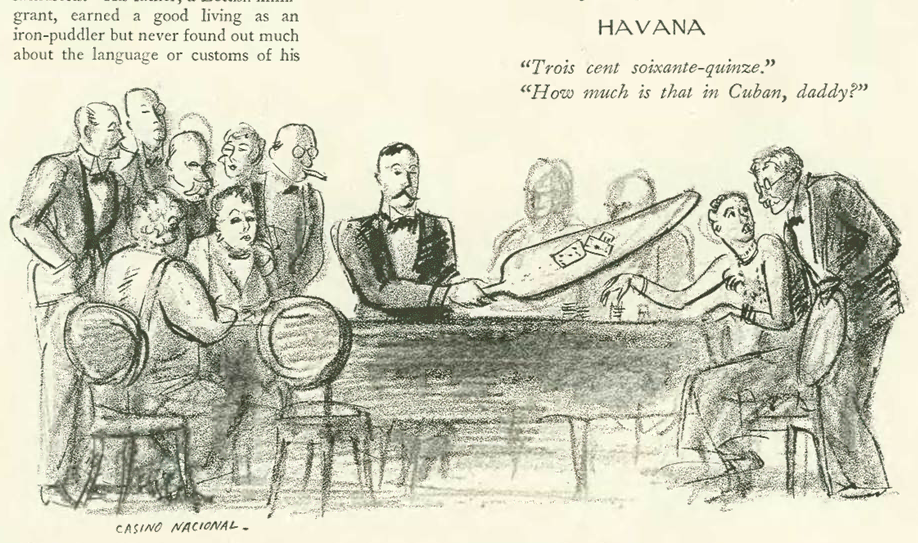
…Reginald Marsh contributed these cartoons, no doubt based on a recent winter stay in sunny Havana (I’ve been to Sloppy Joe’s, and still looks pretty much like this)…
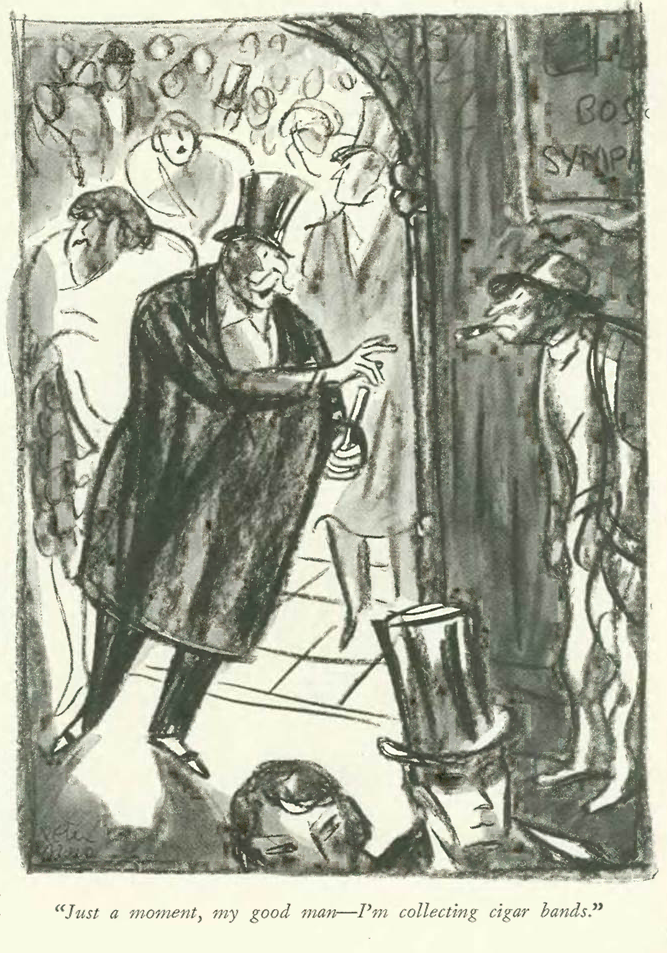
…back stateside, Peter Arno looked in on a cultural exchange…
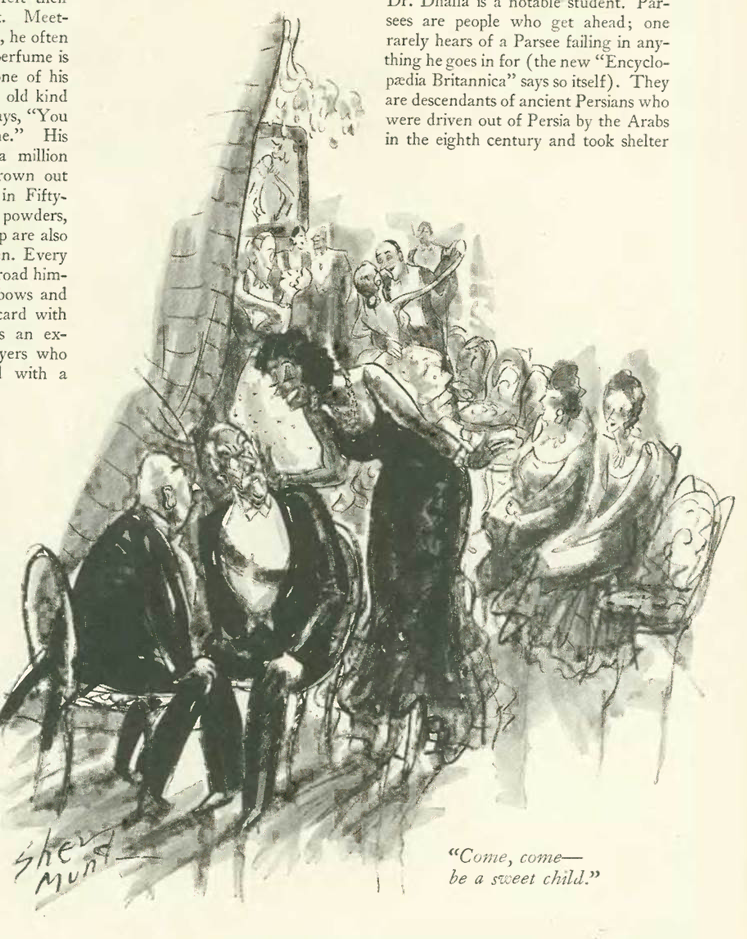
…and we close with two from the issue by Barbara Shermund…
Before we launch into the Jan. 25 issue, the rendering of the old New York Aquarium in this Sue Williams cover bears some consideration.
Jan. 25, 1930 cover by Sue Williams.
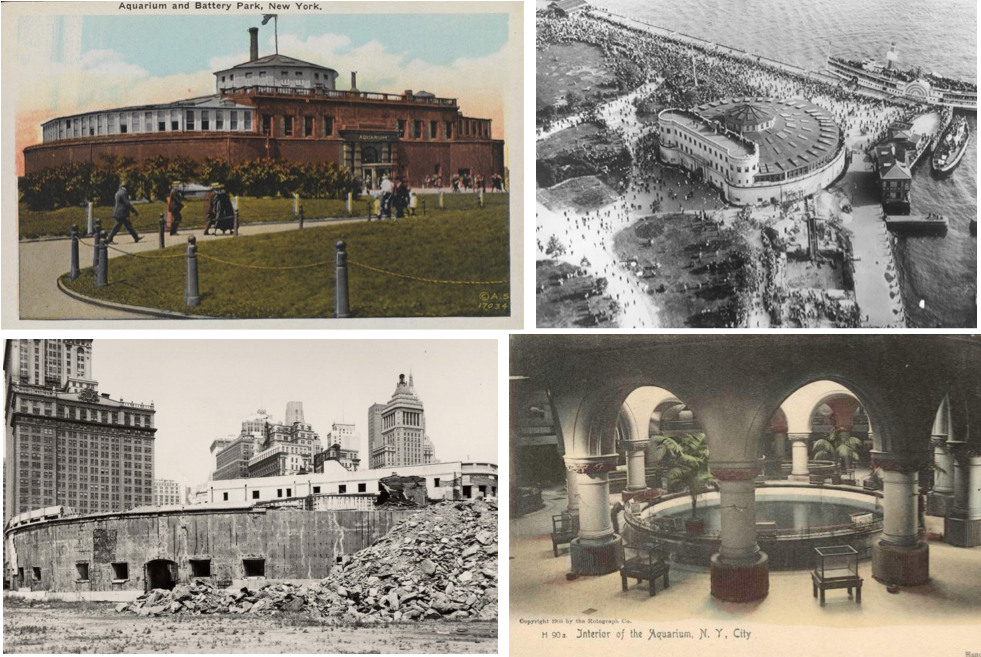
The aquarium was housed within the historic walls the South West Battery, constructed off the tip of Manhattan between 1808 and 1811 as a defense against the British. Renamed Castle Clinton in 1817 (in honor of former Mayor/Governor Dewitt Clinton), it was deeded to the city in 1823 to be used as an entertainment center. From 1855 to 1890 it served as an immigrant landing depot, then remodeled in 1896 (by the architectural firm McKim, Mead, and White) to become the popular New York City Aquarium.
FISH OUT OF WATER…Postcard image of the New York City Aquarium from the early 1900s; aerial view of the aquarium circa 1934; postcard image of aquarium interior; demolition of the aquarium in 1941, on orders from city planner Robert Moses. (thebattery.org/nycgovparks.org)
Although the aquarium proved to be a cultural and educational magnet, it stood in the way of master planner Robert Moses’s designs to build a bridge from The Battery to Brooklyn. After residents, preservationists and even Eleanor and President Franklin Roosevelt protested, the city opted instead to construct a tunnel under the East River. Nevertheless, Moses managed to get the aquarium knocked down before demolition was halted by the outbreak of World War II. After the war, Congress passed a bill declaring the site a National Monument, and preserved the walls of Castle Clinton.
HIGH AND DRY…Until it was demolished in 1941, the New York City Aquarium occupied the space in the center of Castle Clinton, which was added to National Register of Historic Places in 1966. (nps.gov)
* * *
Now, About That Band…
A play that satirized America’s enthusiasm for war—Strike Up the Band—was loved by critics but spurned by audiences when it opened in Philadelphia in 1927. Written by George S. Kaufman, with music and lyrics by George and Ira Gershwin, the play had the pedigree for success, but audiences weren’t quite ready for a show that poked fun at the U.S. military just nine years after the end of World War I (in the original play, America is goaded into declaring war on Switzerland by an American cheese tycoon).
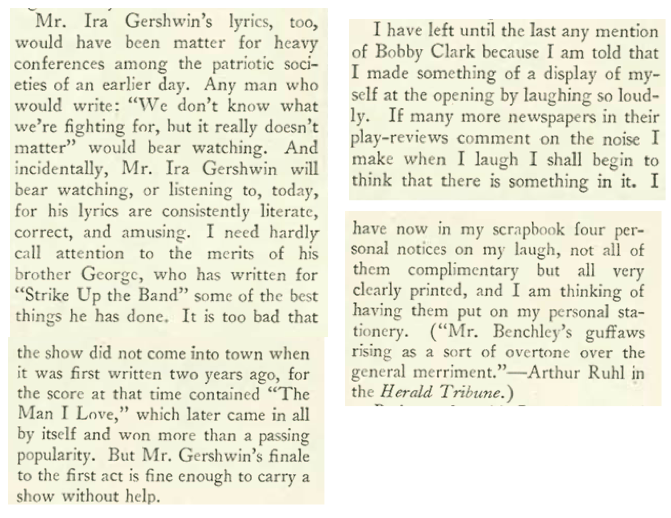
Enter lyricist Morrie Ryskind, who reworked the script, softening its political message and remaking the war plot into a dream sequence. The revised play proved to a be hit, running for 191 performances at the Times Square Theatre. It also introduced a number of popular songs, including “The Man I Love” and “Strike Up the Band.” Robert Benchley was on hand for opening night:
TEAMWORK…Clockwise, from top, Ira (left) and George Gershwin at work circa 1930; lyricist Morrie Ryskind, who softened the tone of George S. Kaufman’s original script. (U of Michigan/Wikipedia)
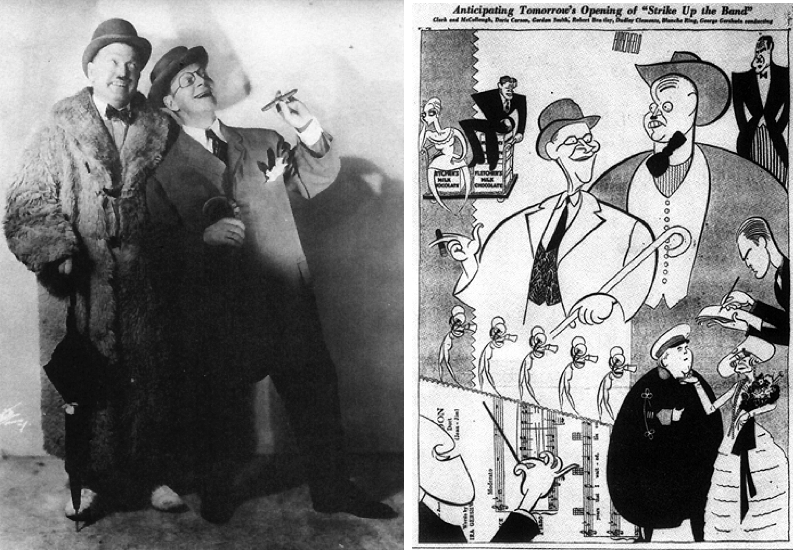
Benchley noted that the antics of comedian Bobby Clark caused him to laugh so loud that his guffaws were even noted in the Herald Tribune’s review:
MAKE ‘EM LAUGH…The comedy team of Paul McCullough (left) and Bobby Clark were one of the play’s big draws. At right, Herald-Tribune illustration by Al Hirschfeld announcing the Broadway opening of Strike Up the Band. (aaronneathery.org)
* * *
Duncan Yo-Yos
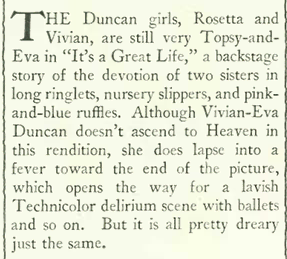
We’ve seen the Duncan Sisters (Rosetta and Vivian) before in this blog, the sister vaudeville act that became famous with the 1923 hit musical Topsy and Eva, which inspired a silent 1927 film starring the duo. They were back on the screen in late 1929 with It’s a Great Life, which TheNew Yorker’sJohn Mosher found to be “pretty dreary”…
NOT SO GREAT, THIS…Clockwise from top, promotional poster for It’s a Great Life; a scene from a dance number in the film; Rosetta (in blackface) and Vivian Duncan as Topsy and Eva (characters derived from the novel Uncle Tom’s Cabin). It’s a Great Life flopped at the box office, along with the Duncan’s brief movie careers. In the years to follow the duo would became popular nightclub entertainers and would continue to perform their Topsy and Eva routine even though appearing in blackface was increasingly considered offensive. (Wikipedia/freewebs.com)
* * *
Miracle Worker
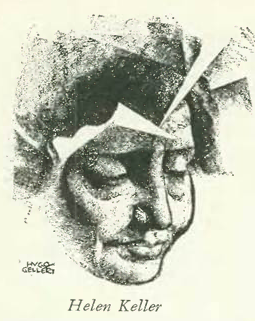
TheNew Yorker profile, written by Robert Coates, featured Helen Keller (with illustration by Hugo Gellert). A brief excerpt:
* * *
From Our Advertisers
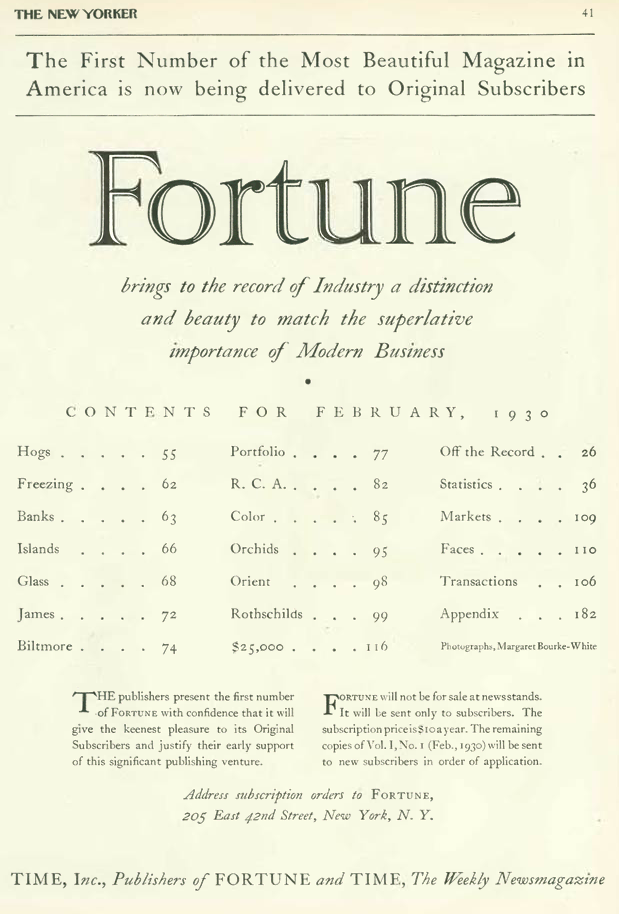
Advertisers in the Jan. 25 issue included the new Fortune magazine, which announced its first issue with this full-page ad:
…the table of contents is fascinating, spare in descriptions of everything from “Hogs” to “Orchids”…
From left, issue No. 1, February 1930; table contents for the issue; a prototype of the magazine, September 1929. (Fortune)
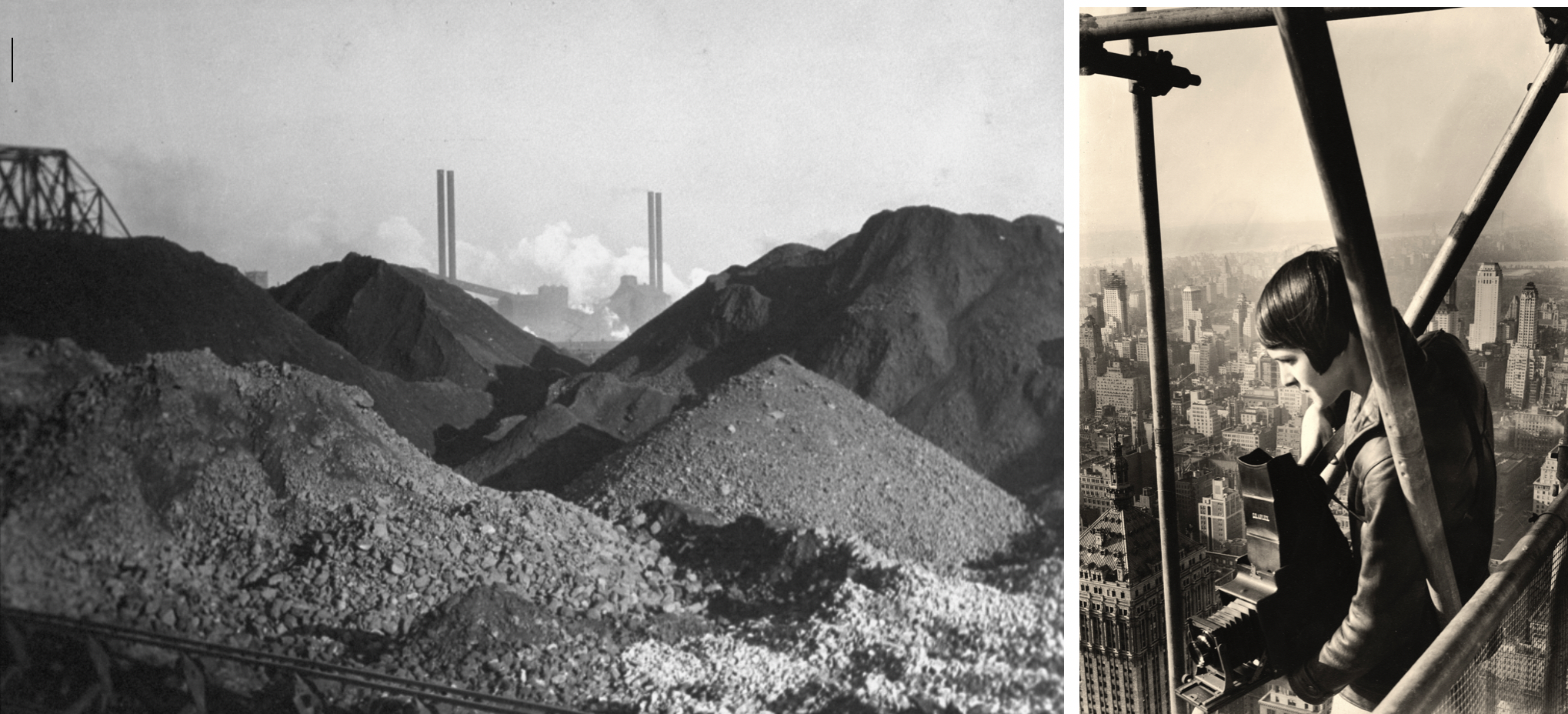
…also listed in the new magazine’s table of contents was the name of a 24-year-old photographer, Margaret Bourke-White…
A photo of coal piles by Margaret Bourke-White in the first issue of Fortune magazine. At right, Bourke-White photographing atop a skyscraper circa 1930. (Fortune)
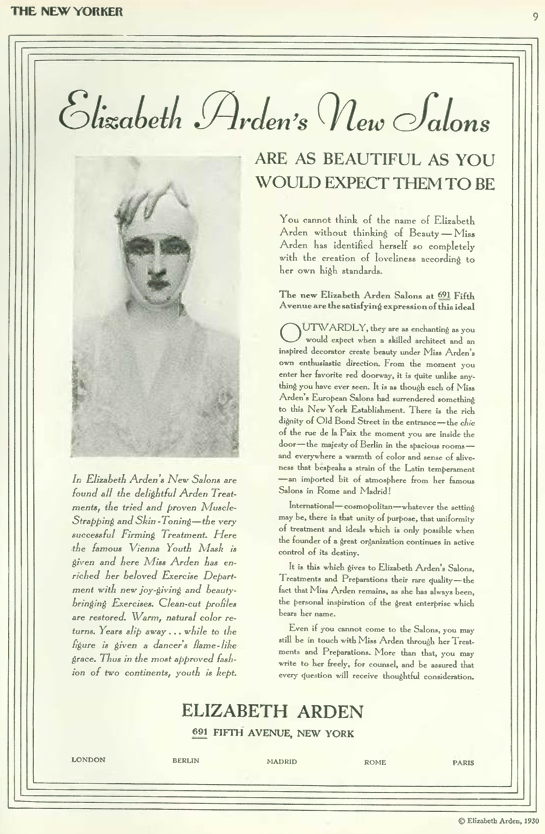
…on to our other advertisements, we have this entry from Elizabeth Arden…ads from this salon chain in the 1920s and 30s featured this ubiquitous image of a woman with a distant stare, her head tightly bound — mummy-like — as part of a firming treatment called “muscle-strapping”…
…in contrast to the rather cold, clinical look of the Elizabeth Arden ad, the Primrose House appealed more to social climbing than skin toning…
…while the makers of Pond’s cold cream continued to draw from their stable of debutantes and society ladies to move their product…
…long before there was Joe Camel, R.J. Reynolds also appealed to social climbers with a series of ads beautifully illustrated by fashion artist Carl Erickson…
…society’s smokers were advised to pack a tube of Bost toothpaste, or have their French maid do it for them…
…and once again we have an ad by Dr. Seuss for Flit insecticide that is very much of its time…
…as is this cartoon by Isadore Klein, perhaps the first in The New Yorker that depicted African Americans as something other than minstrel show stereotypes. Nevertheless, the rendering is still a bit crude — especially the boy’s face — as is the idea behind the “joke” — that a black boy could actually aspire to be a great violinist like Jascha Heifetz…
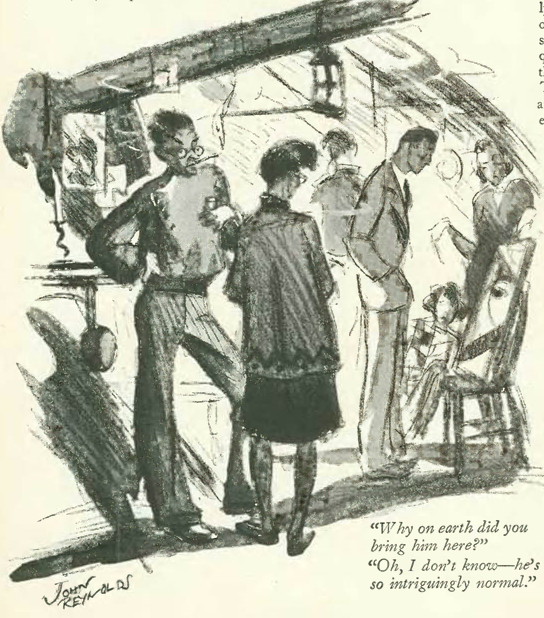
…John Reynolds explored a less troubling juxtaposition among the bohemian set…
…and we end with this peek into society life courtesy Barbara Shermund…
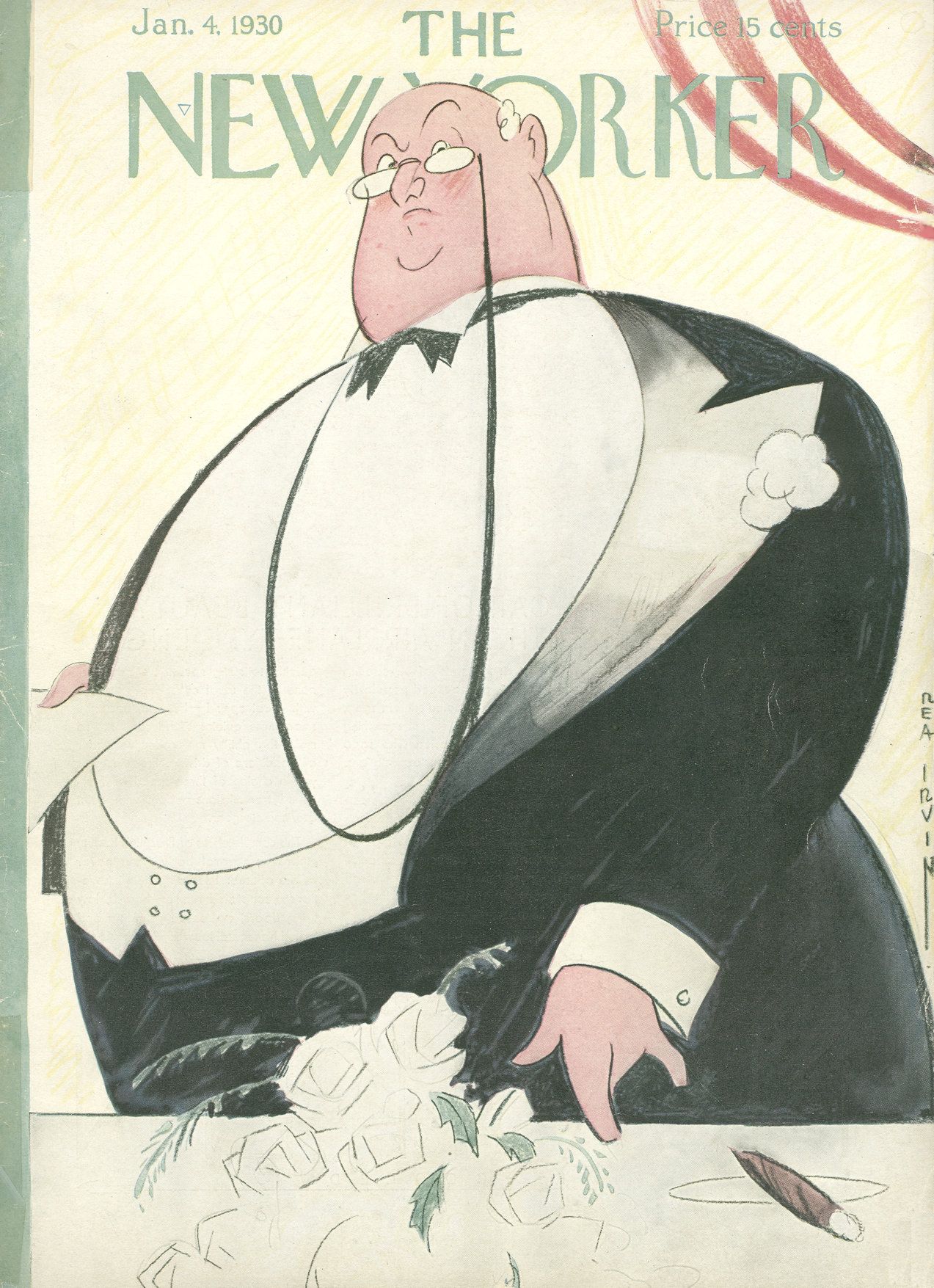
The imposing of image of a fat, fearsome banker greeted readers of the Jan. 4, 1930 issue of TheNew Yorker, an apt symbol for the dawn of a new decade in a country whose fate seemed wholly in the hands of the old moneymen.
Jan. 4, 1930 cover by Rea Irvin.
However bleak the outlook, the show still had to go on, and automakers did their best to entice crowds to the National Automobile Show at the Grand Central Palace. TheNew Yorker’sNicholas Trott wrote of a “tentative modernism” on display at the show as automobile styles continued to transition from “horseless carriages” to something that looked decidedly modern. Trott’s column, illustrated by Peter Arno…
…made note of the modern angles of Art Deco that were creeping into the designs…
DAZZLING DASHES…Clockwise, from top left, the 1930 Essex sported an Art Deco instrument panel, as did the 1930 Hudson Great Eight Sedan. (hemmings.com/Free Library of Philadelphia)
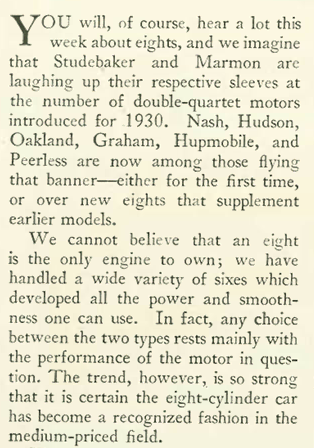
…Trott also noted the increasing popularity of eight-cylinder cars (as evidenced in ads featured later in this blog post)…
TEMPLE OF TRANSPORTATION…Top left, postcard image of the Grand Central Palace exhibition building, circa 1916. At right and below, new automobiles on display at the Palace in the early 1930s. (Wikipedia/NY Daily News)
* * *
Flappers Get Flappy
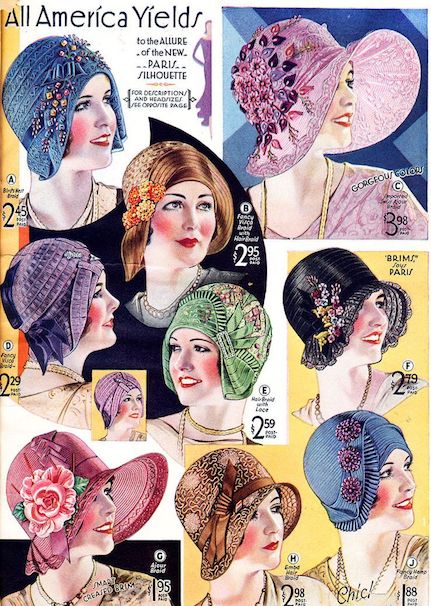
Automobile designs weren’t the only changes seen on the streets of New York. In “Notes and Comment,” E.B. White lamented the introduction of “ear flaps” on women’s hats…
THEY FLOP, JUST LIKE THE STOCK MARKET…A selection of women’s hats from a 1930 Chicago Mail Order Company catalog. (elfsacks.com)
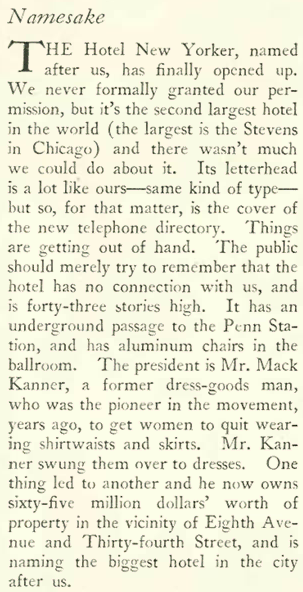
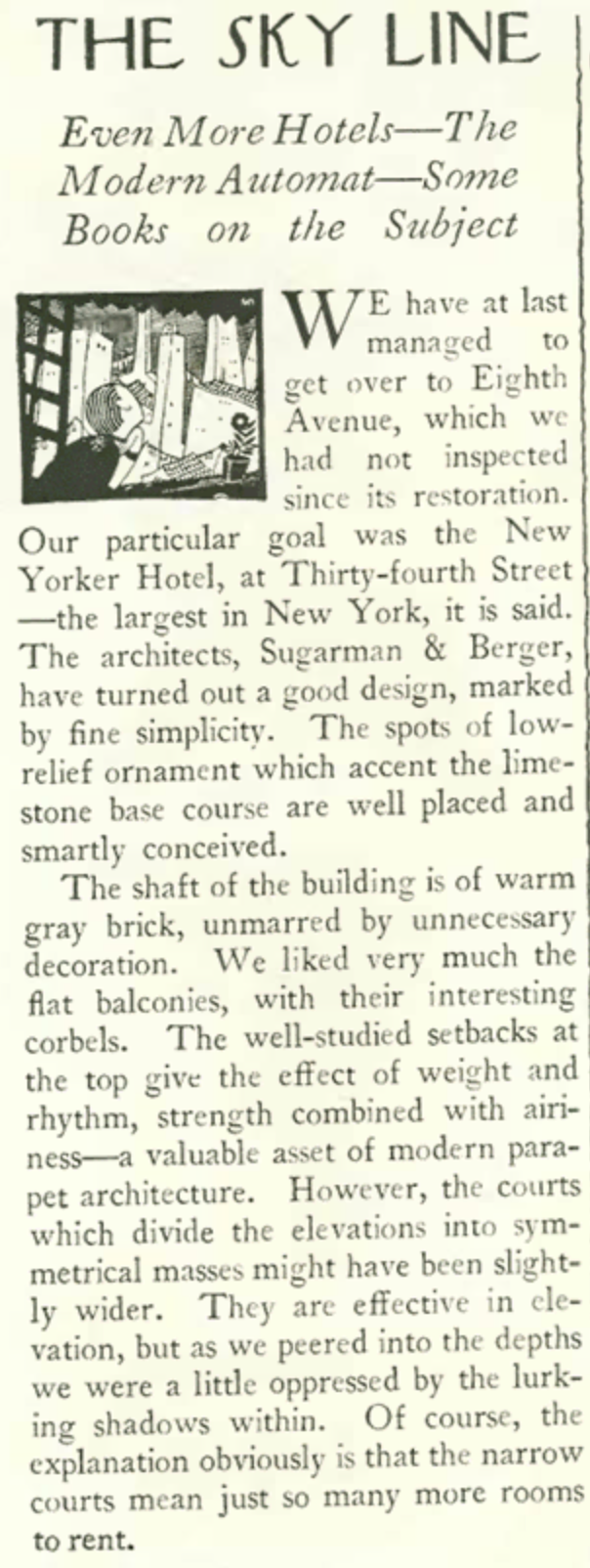
…while on the other hand, in “The Talk of the Town” White welcomed the addition of a namesake hotel to the New York skyline…
NAMESAKE…The 43-story Hotel New Yorker at 481 Eighth Avenue, by architects Sugarman and Berger, opened on January 2, 1930, with more than 2,500 rooms starting at $3.50 a night. At left, the hotel following its completion; top right, construction on the hotel began just 22 months earlier; bottom right, the Terrace Room nightclub was a popular spot for dancing in the 1930s and 40s. (The New Yorker Hotel/americanfoodroots.com)
…White noted that the “New Yorker” name seemed to be popping up everywhere…
A NEW LEASE ON LIFE…The hotel as it appears today. With the decline of train travel (the hotel was near Penn Station), the Hotel New Yorker closed in 1972 and was purchased by the Unification Church in 1975. Subsequently much of the original Art Deco detailing was lost, and the hotel’s famed Louis Jambor murals were painted over. Beginning in the mid-1990s the New Yorker Hotel Management Company launched a $100 million capital improvement project (top right). Fortunately, the Art Deco doors of the Manufacturers Trust Company offices (below) were preserved, as was company’s lobby. (Wikipedia/Daytonian in Manhattan)
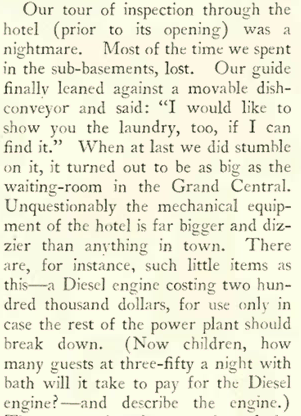
…and White marveled at the building’s massive scale…
WHAT LIES BENEATH…Popular Science (April 1930) offered a view into the bowels of Hotel New Yorker, 78 feet below street level. (tparents.org)
According to Tom Miller’s excellent blog Daytonian in Manhattan, the New Yorker was the largest hotel in city: “it boasted 2,500 rooms, murals by renowned artist Louis Jambor, the largest barber shop in the world (42 chairs and 20 manicurists), 155 chefs and cooks for the five restaurants. Employing 92 telephone operators, the hotel had one of the largest switchboards in the country…Its basement power plant was the largest private plant in the United States. The Great Depression apparently never heard of the New Yorker Hotel as satin-gowned movie stars and top-hatted politicians crossed its marble-floored lobby.” (Inventor Nikola Tesla spent the last ten years of his life in near-seclusion in Suite 3327).
The Unification Church purchased the building in 1975, removing Art Deco details and painting over the Jambor murals. In 1994 the New Yorker Hotel Management Company launched what would be a $100 million capital improvement project. Miller writes that during the renovation “the original marble floors were exposed from under yards of threadbare carpeting.” And happily, “when the doors to the old Manufacturer’s Trust Company were opened, the old 1929 lobby was intact…the Jambor murals (in the Trust’s lobby) survived. The Art Deco terrazzo floors remained. And the tiled corridor to Penn Station still stretches diagonally beneath 8th Avenue, now used as storage for security reasons.”
EPHEMERAL ART…Murals by renowned artist Louis Jambor, seen in this photo of the ballroom in the 1940s. The murals were painted over in the 1970s after the hotel was acquired by the Unification Church. (The New Yorker Hotel)
* * *
Ways of Seeing
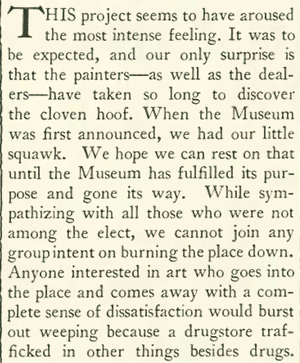
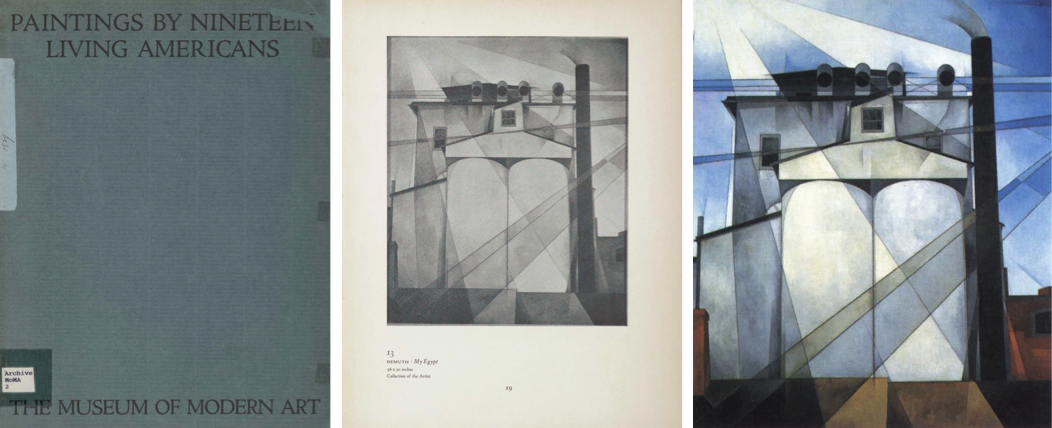
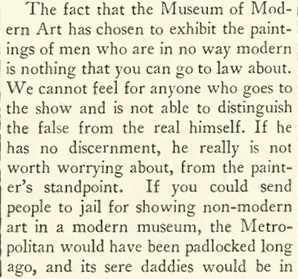
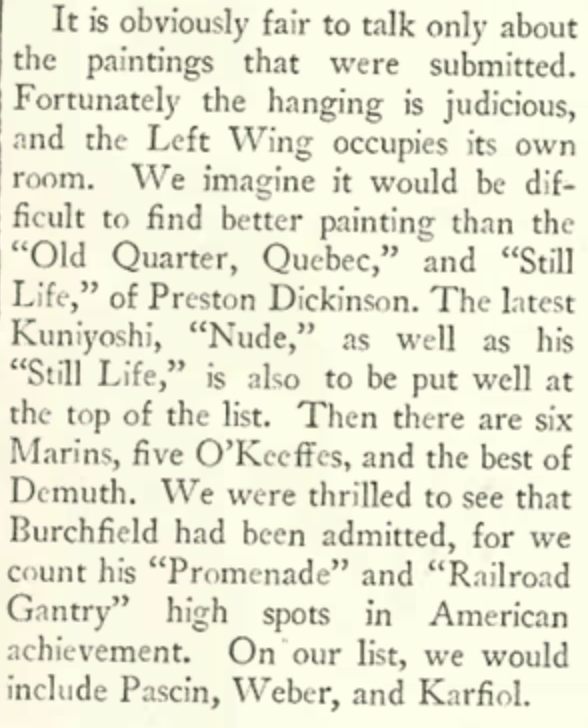
Art critic Murdock Pemberton (1888-1982) continued to ponder the meaning of the new Museum of Modern Art, which was staging its second-ever exhibition in its galleries on the 12th floor of the Heckscher Building on Fifth Avenue:
ARE WE NOT MODERN? Charles Demuth’s My Egypt, (oil on composition board, 1927) was among works featured in the Museum of Modern Art’s second exhibition, Paintings by Nineteen Living Americans. From left, cover of the exhibition catalog, a page from the catalog featuring Demuth’s painting, and as the work appears in color. (MoMA/WikiArt)
No doubt Pemberton, who came from humble Kansas roots, found it difficult to warm up to a gallery founded in November 1929 by three society women — Mary Sullivan, Lillie Bliss and Abby Rockefeller…
…and wryly suggested that perhaps another museum could be founded, “The Modernest Modern Museum,” for those who lacked clout or patronage with MoMA’s well-heeled board of directors…
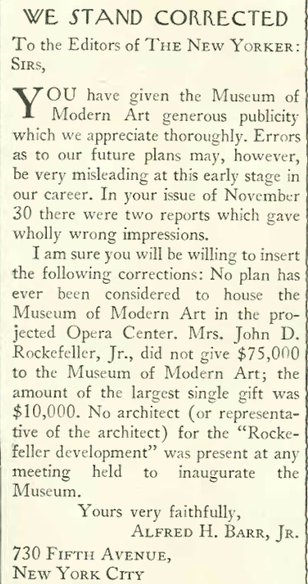
Pemberton’s grumblings caught the attention of Alfred Barr Jr., the first director of the Museum of Modern Art, who sought a correction (printed in the back pages of the Jan. 4 issue) regarding some of Pemberton’s earlier observations of the museum. No doubt Barr was feeling some Rockefeller heat as well:
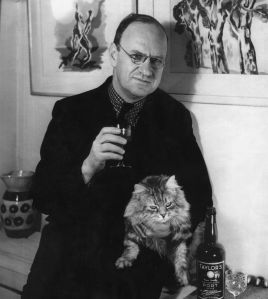
HERE’S MUD IN YOUR EYE…Murdock Pemberton, apparently endorsing Taylor’s Port in 1937. (observer.com)
For some insight into Pemberton’s populist views (the old meaning of the word, not the new one), the critic’s granddaughter, Sally Pemberton, had this to say in a 2012 New Yorkerinterview:
“Being from humble roots in Kansas and having worked to help support his family since he was a young boy, Murdock had a love-hate relationship with the upper echelon of society. He visited “plush hung galleries” and saw how museums treated art and artists in the nineteen-twenties and thirties, and he wanted art to be more accessible. He asked that the Met set aside a room for the work of living artists. He called for art to be displayed in libraries and universities, and in some cases to be sold in department stores. He wrote about what a wonderful thing it was when the W.P.A. put murals in post offices around the country and how that changed the American public’s perception of art.”
Ms. Pemberton is the author of Portrait of Murdock Pemberton: The New Yorker’s First Art Critic.
* * *
From Our Advertisers
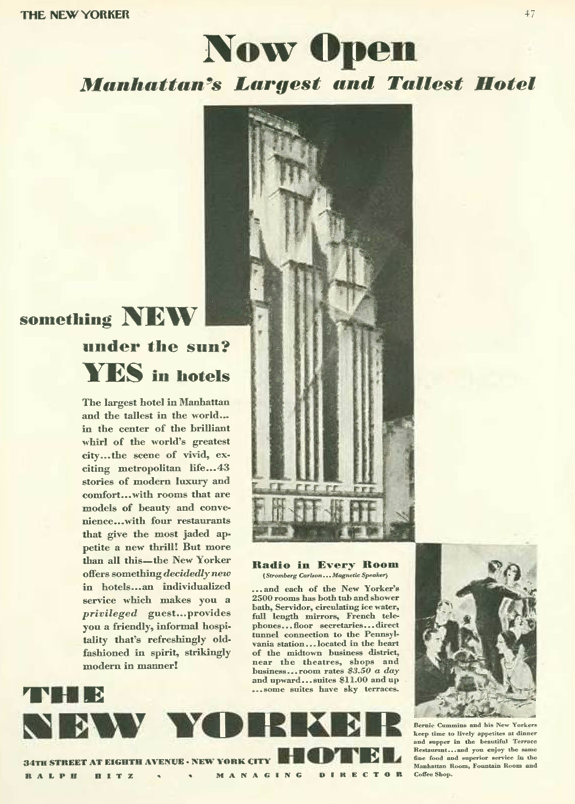
More ink for the newly opened Hotel New Yorker in this advertisement on page 47…
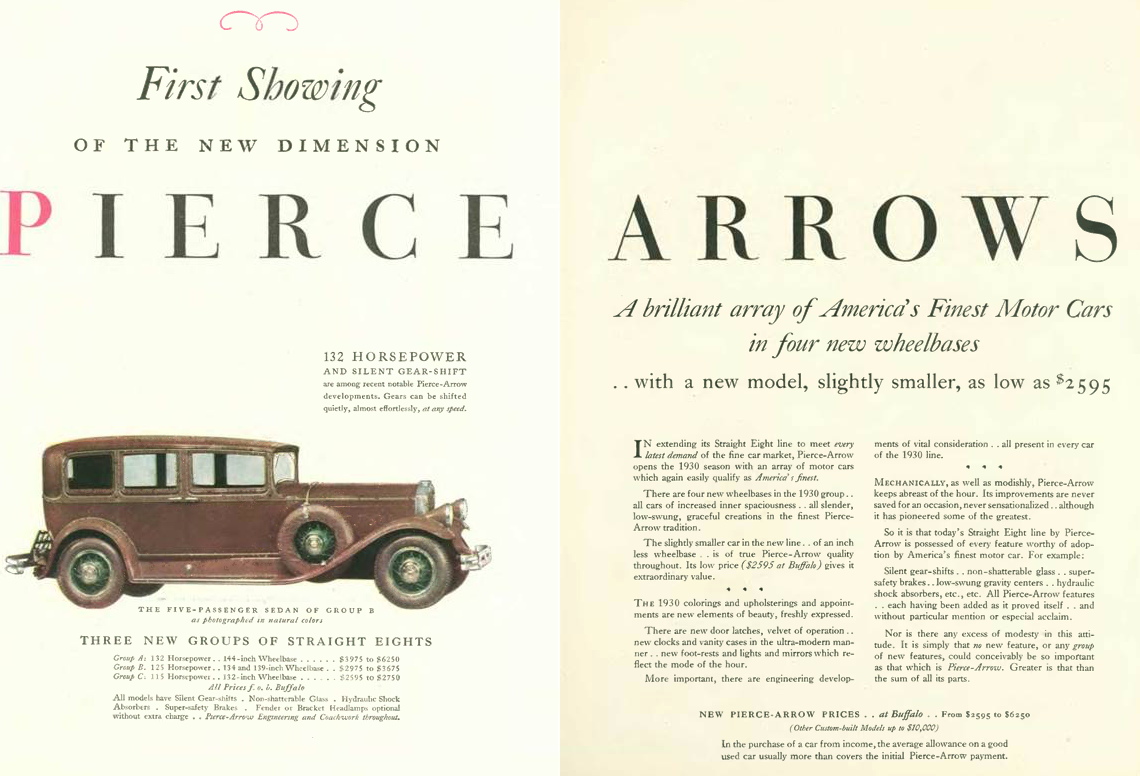
…and with the automobile show in town, the magazine was filled with numerous splashy car ads…Franklin with its air-cooled engine, Hupmobile with its powerful eight, and Pierce-Arrow—America’s answer to Rolls Royce—would all fall victim in the 1930s to the Great Depression…
…the magazine also featured numerous ads beckoning the well-heeled to warmer southern climes, including society snowbirds seeking respite at Palm Beach…
…this ad from Flit (drawn by Dr. Seuss) seemed to recall the old filler joke from the first issues of The New Yorker, a riddle told backwards:
POP: A man who thinks he can make it in par. JOHNNY: What is an optimist, pop?
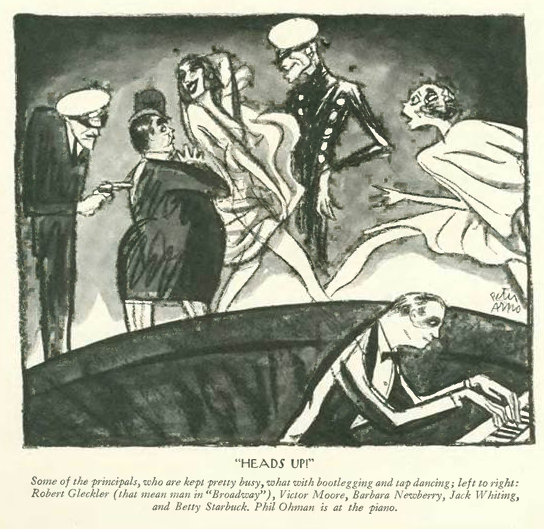
…Peter Arno offered his talents in this illustration for the theater review section…
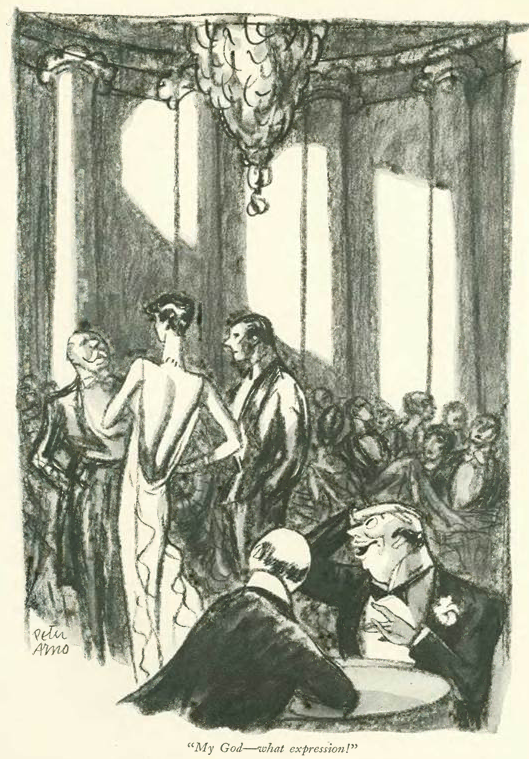
…and this cartoon peek into society night life…
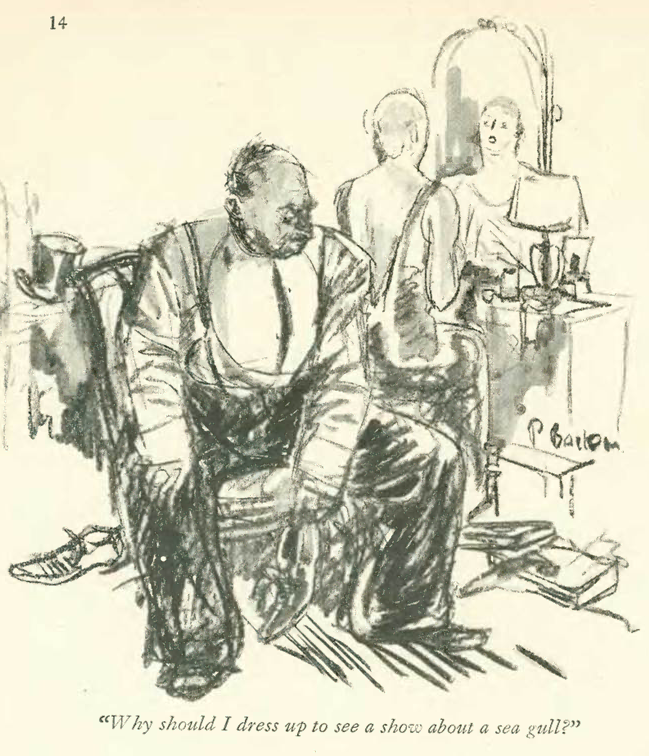
…glimpses of domestic life were provided by Perry Barlow…
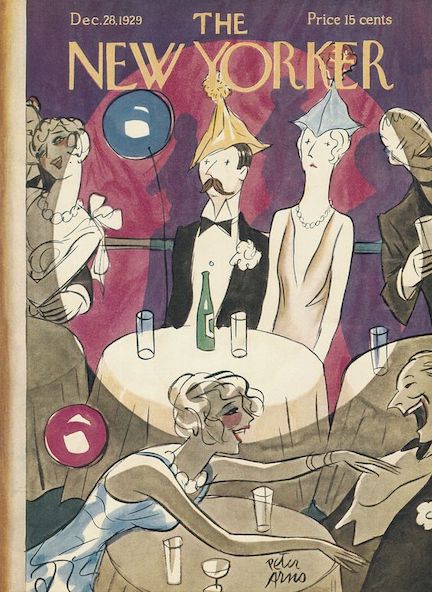
PeterArno’s cover illustration for The NewYorker’s final issue of 1929 aptly captured the mood of that decade’s last days.
Dec. 28, 1929 cover by Peter Arno.
As we’ve seen in the pages of the magazine in 1928 and 1929, people were growing weary of Jazz Age frivolity even before the great crash. For example, LoisLong’s weekly “Tables for Two” column, which deftly captured the nightlife scene of speakeasies and flappers, appeared infrequently in the decade’s last years, and would disappear altogether in 1930. Once herself the epitome of the carefree flapper, Long was now a mother with a one-year-old toddler.
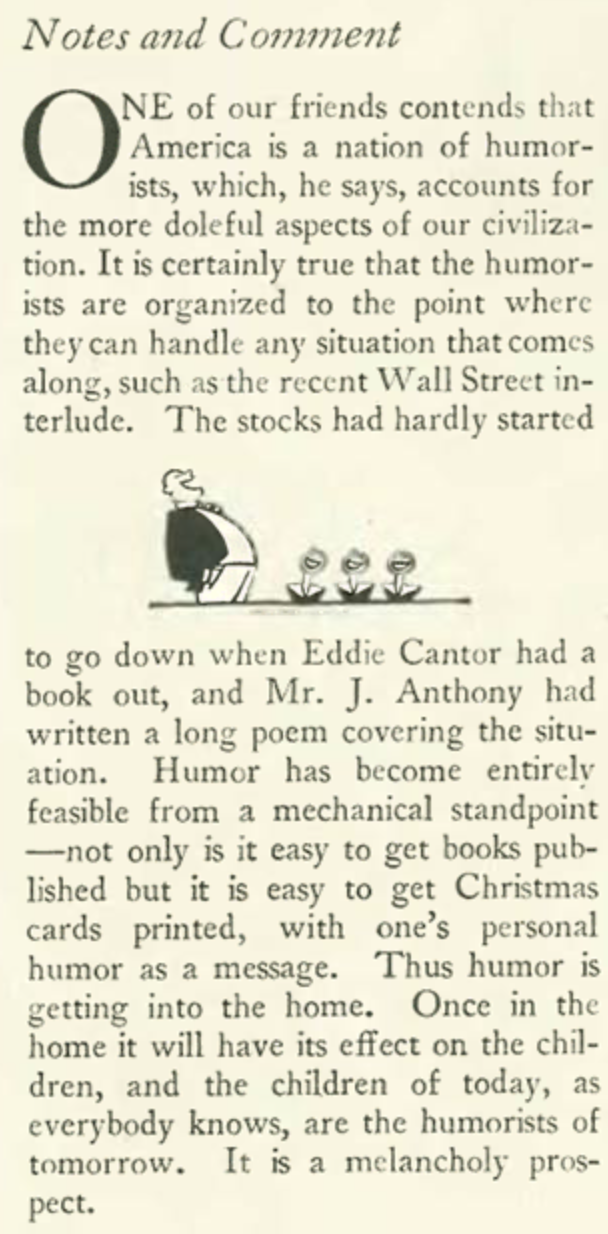
In his “Notes and Comment” column, E.B. White ended the decade on a humorous, if somewhat doleful note:
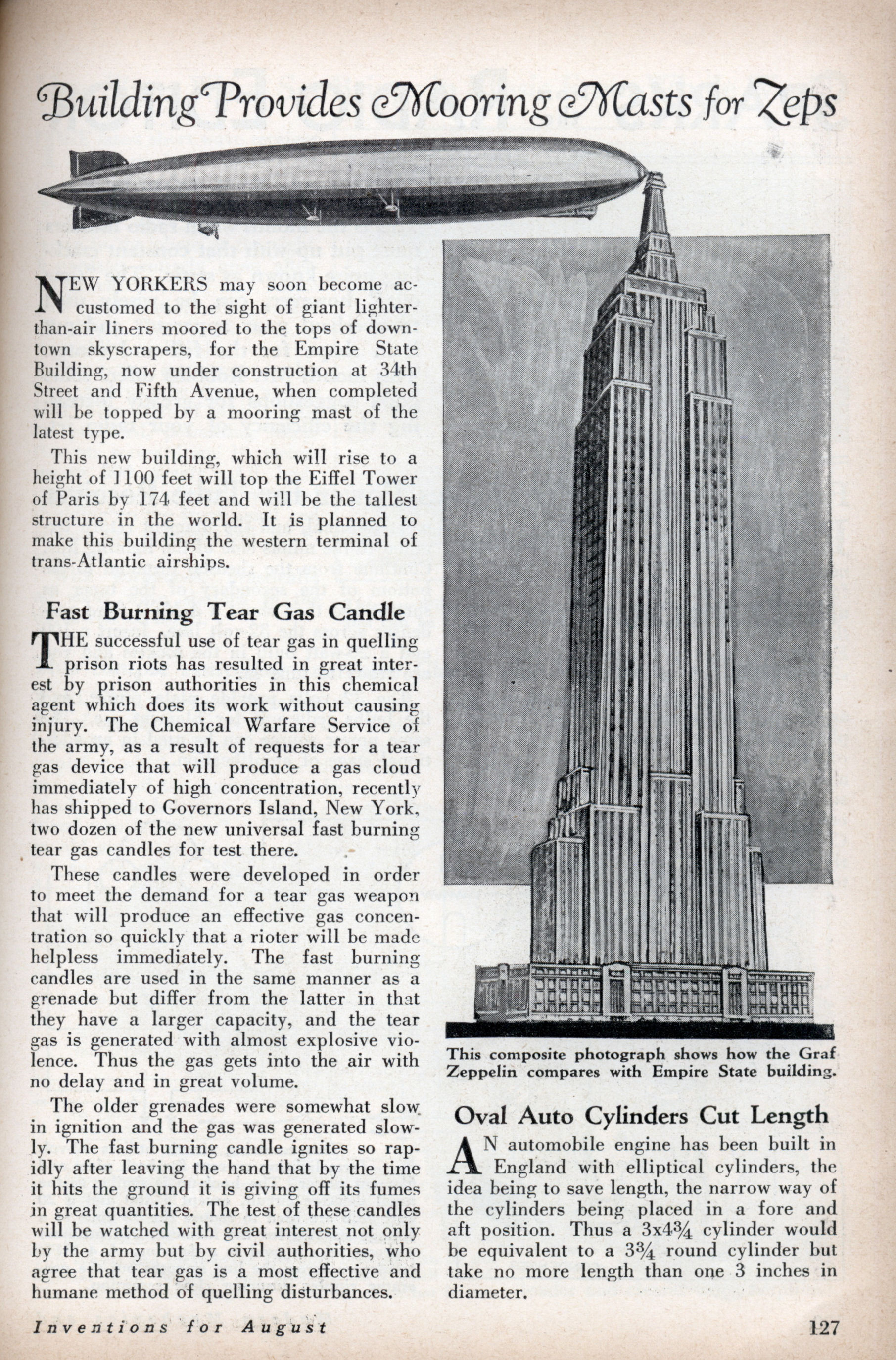
In “The Talk of the Town,” White also looked to the new year, which would see AlSmith’s Empire State Building rise into the air and forevermore define the city’s skyline, even if his dirigible mooring mast proved to be more of a marketing stunt than a working feature of the new skyscraper:
A LOT OF HOT AIR…Image from the August 1930 issue of ModernMechanix. The idea of transatlantic dirigibles ferrying passengers to skyscrapers seemed plausible in 1930, but in reality giant bags of flammable hydrogen, attached to wind-whipped masts above densely populated areas, proved impractical, if not downright insane. (Modern Mechanix)
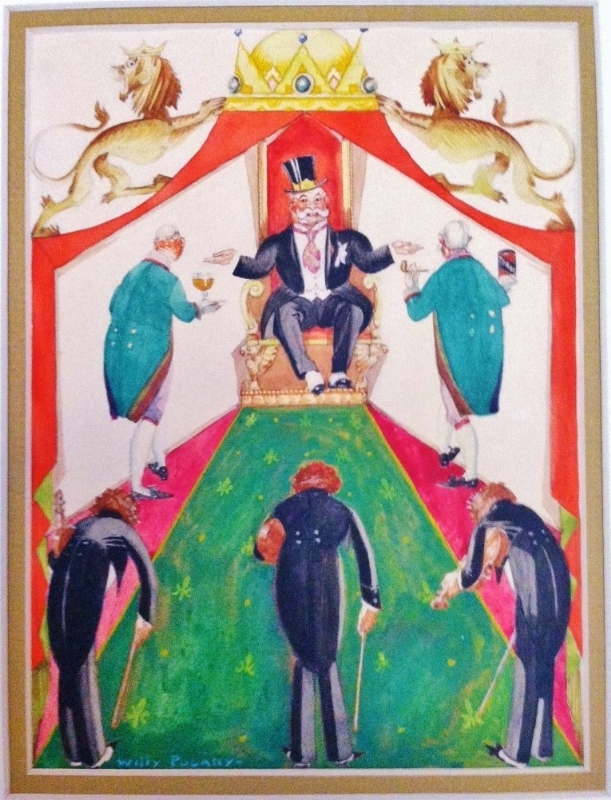
“Talk” (via E.B. White) took another shot at illustrator WillyPogany, who had recently updated the drawings in AliceinWonderland, transforming little Alice into a tween flapper. This time Pogany was “taking liberties” with dear old Mother Goose:
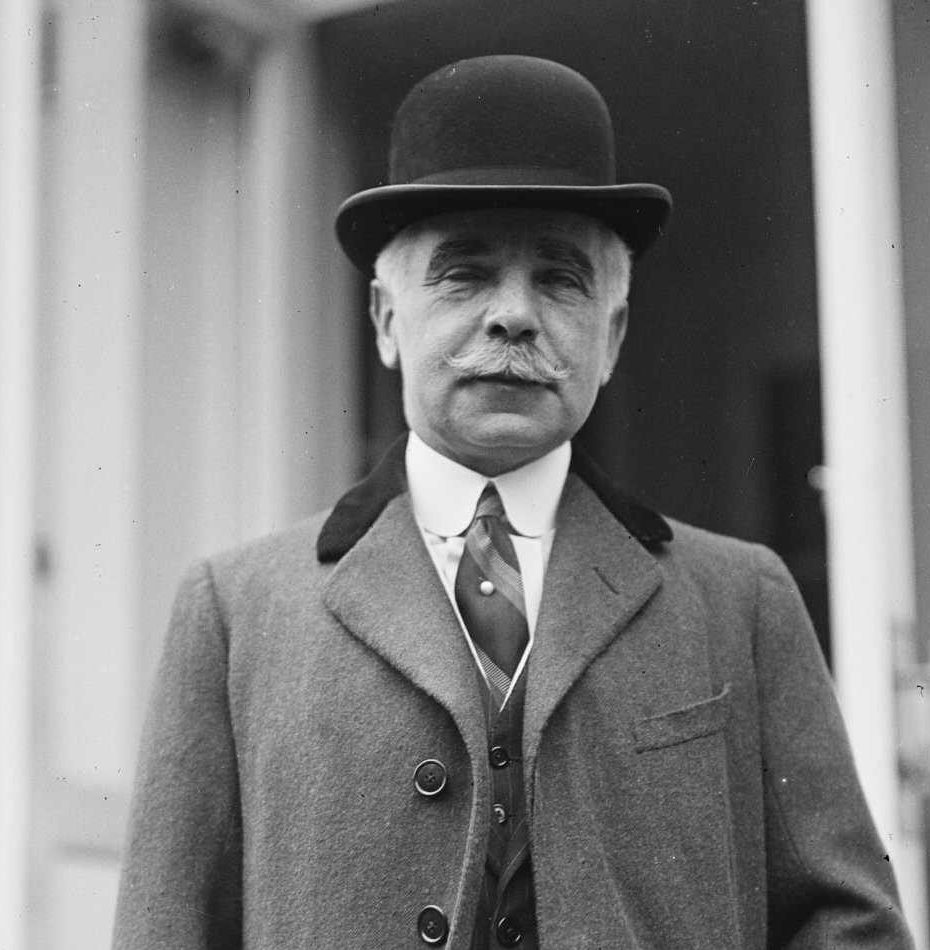
BIG DADDY…WillyPogany’s rendering of Old King Cole left something to be desired, according to E.B. White, who found the resemblance to investment banker OttoKahn (below) rather unsettling.(comic art fans.com/thoughtco.com)
* * *
Historian FrederickLewisAllen, who would go on to write the definitive history of the 1920s in his bestselling Only Yesterday (1931), offered some tongue-in-cheek advice on how the average American could contribute to renewed economic prosperity. An excerpt:
HowardBrubaker also finished the decade on a wry note, his “Of All Things” column ending thusly:
The Dec. 28 profile (titled “The Wizard”) featured ThomasEdison, the first in a three-part series written by AlvaJohnston (with illustration by HugoGellert):
* * *
The New Hollywood
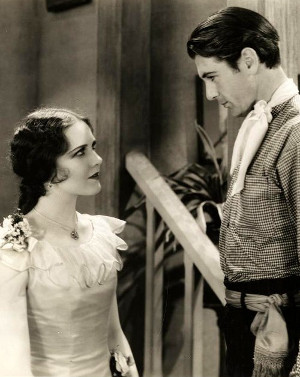
The decade would begin with a new crop of “talkie” stars that would signal a new era for Hollywood. Among the emerging stars was the young GaryCooper…
SHE LIKES THE SILENT TYPE…MaryBrian as Molly Wood and GaryCooper as the Virginian in the Victor Fleming-directed film TheVirginian. (1929) (onceuponatimeinawestern.com)
FromOurAdvertisers
The Dec. 28 issue was filled with ads that enticed readers to escape the cold of winter and head south…
…and given the new economic climate, grasping social climbers could travel to nearby Havana and still claim to have visited a foreign land…
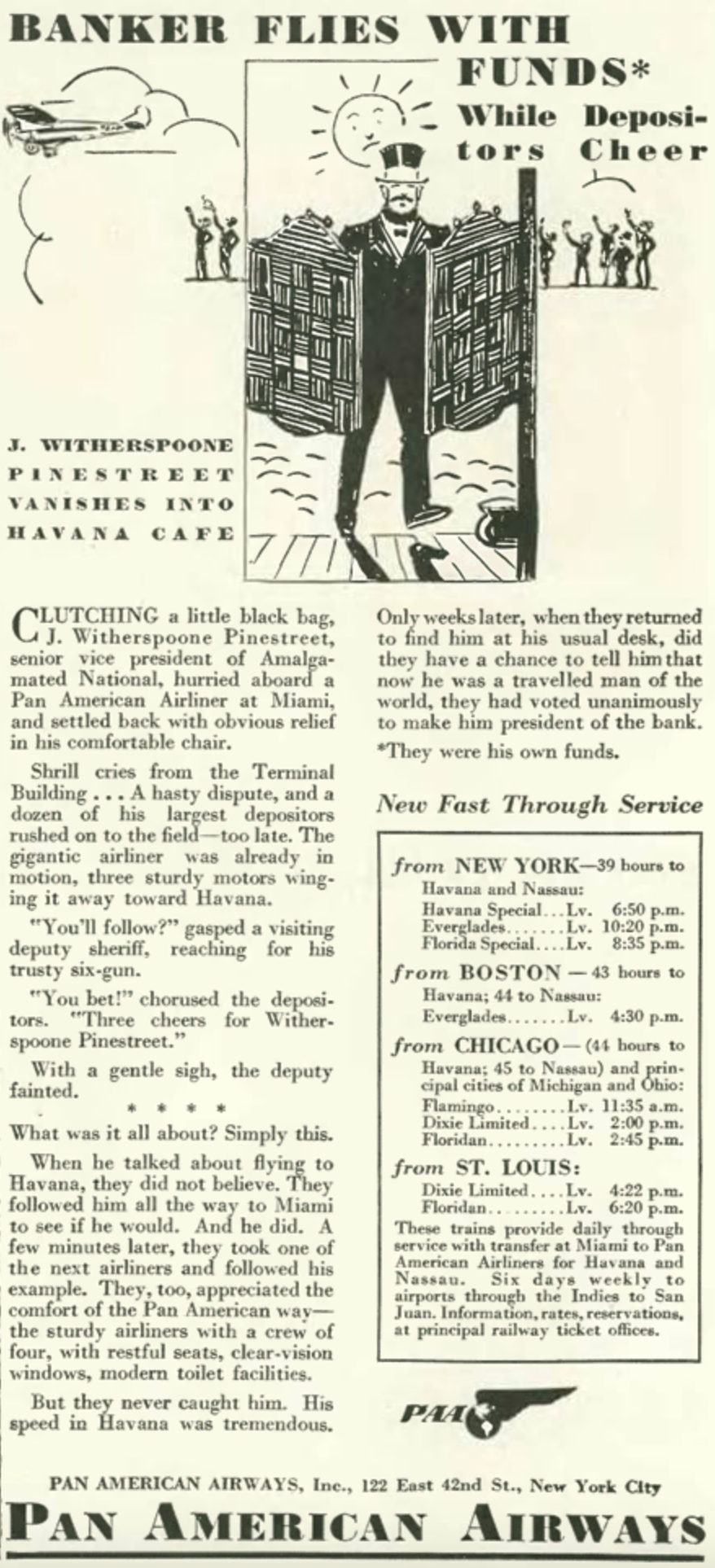
…and Pan American Airlines offered this unique take on the market crash to entice readers to sunny Havana…
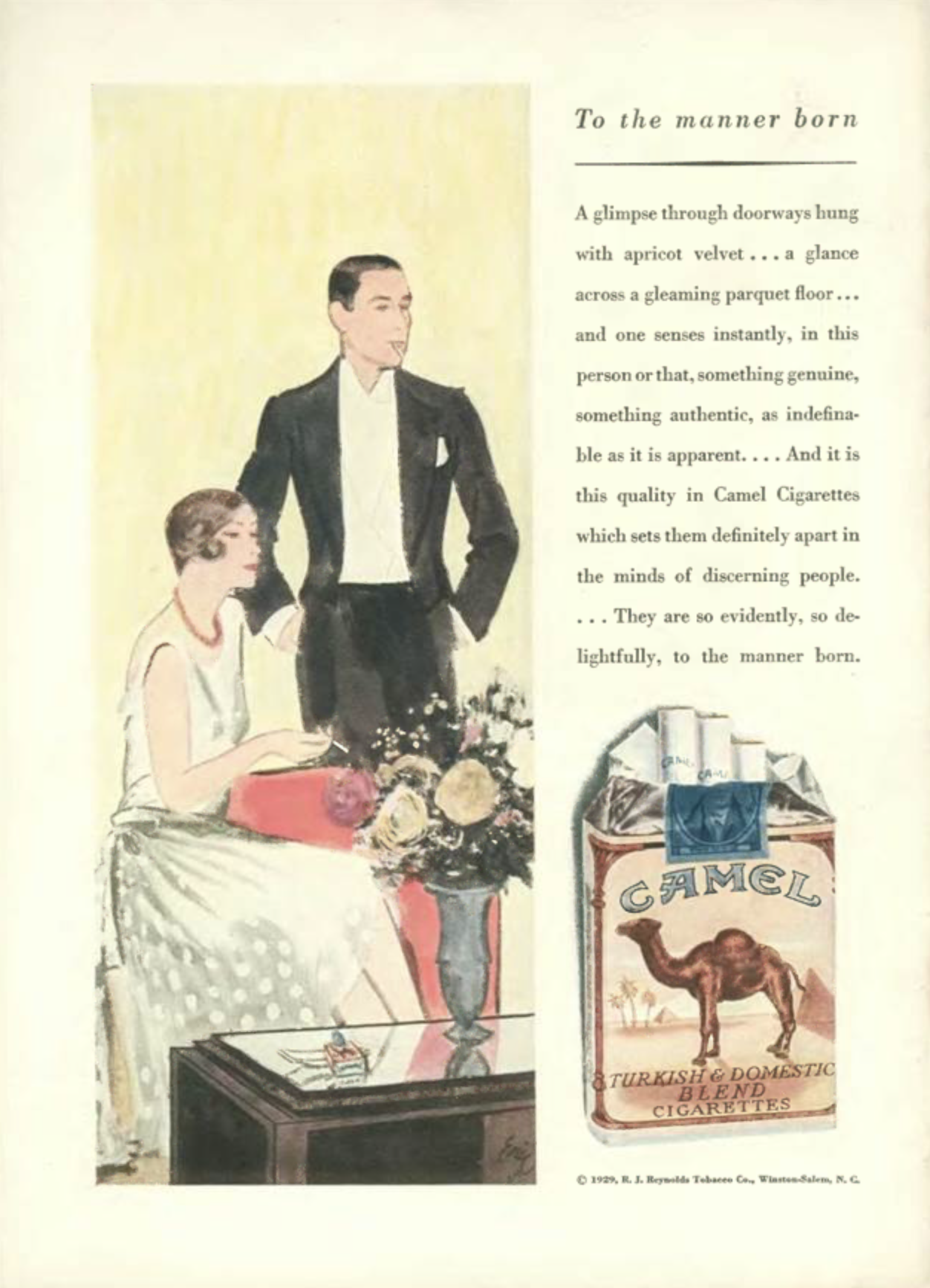
…despite the crash, the folks at R. J. Reynolds Tobacco Company still clung to the fantasy of the posh set…you might be flat broke, but you could keep a stiff upper lip while you sucked on a Camel, old sport…
…on to our illustrators, MiguelCovarrubias contributed this drawing for the theater review section…
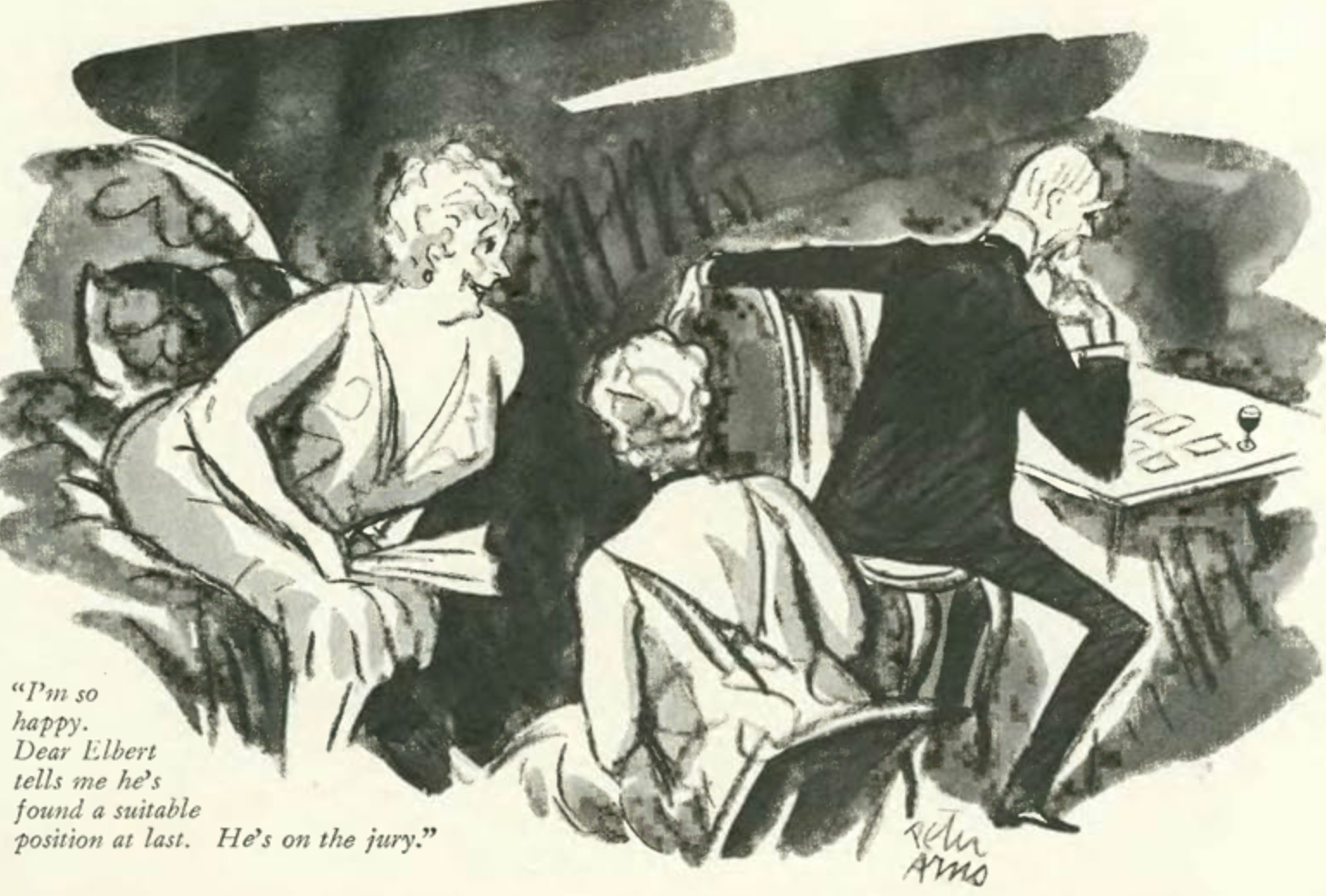
…and our cartoons are by PeterArno…
…JohnReynolds…
…and IsadoreKlein, who gave us an appropriate image for the turn of a decade…
Construction workers line up for pay beside the first Rockefeller Center Christmas tree in New York in 1931. (ASSOCIATED PRESS)
E.B. White’s “Notes and Comment” column led off The New Yorker’s “Talk of the Town,” and as such helped set the tone for what was to follow in the magazine.
Dec. 14, 1929 cover by Theodore Haupt. Opening image: Construction workers line up for pay beside the first Rockefeller Center Christmas tree in New York in 1931. (NY Daily News)
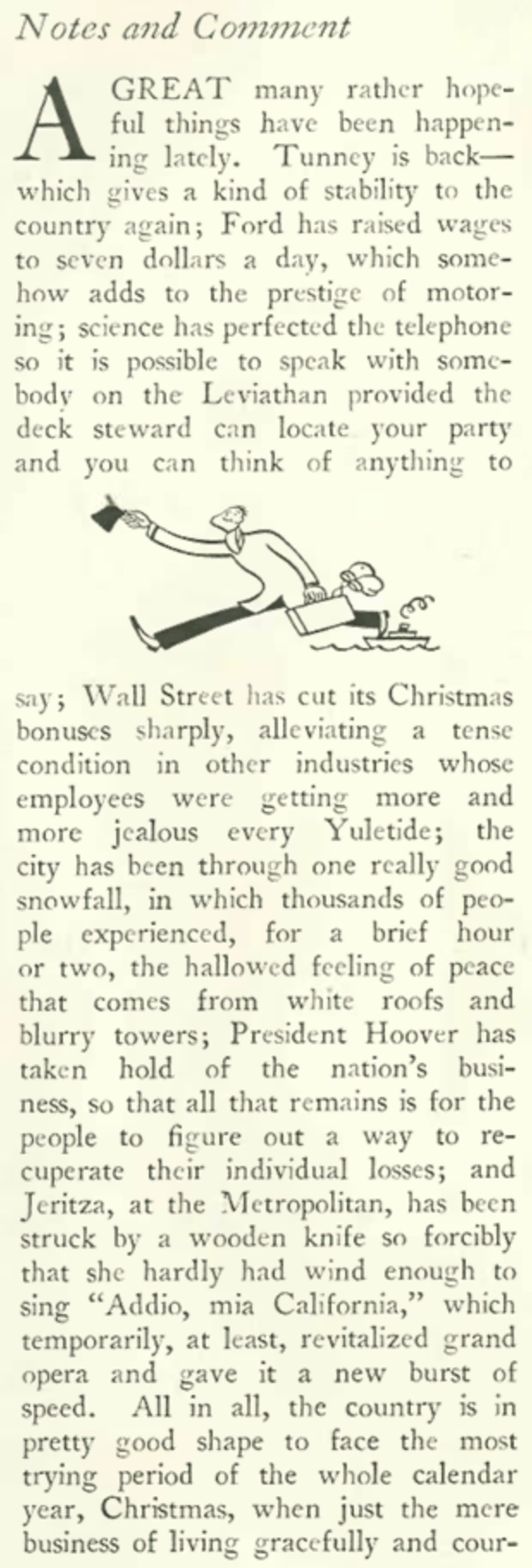
For the Dec. 14 issue White attempted to strike a positive note in the aftermath of the stock market crash, offering a few nuggets of hope for the holiday season:
HEAVYWEIGHTS…Both President Herbert Hoover and retired prizefighter Gene Tunney offered signs of stability to a nation reeling from economic collapse. At right, Gene and Mary Tunney return to New York on the ocean liner Vulcania after 14 months in Europe. (Wikipedia/AP)
Alexander Woollcott, however, described his financial woes in his “Shouts and Murmurs” column, where he parodied newspapers that listed charity cases during the Christmas season:
BOOK-END POOR…Alexander Woollcott, in a 1939 portrait by Carl Van Vechten. (Wikipedia)
Paris correspondent Janet Flanner noted how the ripples of the market crash were being felt in Paris: Americans no longer had wads of cash to lavish on booze, jewelry, antiques and real estate:
DON’T RAIN ON OUR PARADE…The Place de la Nation, Paris, 1930. (thevintagenews.com)
Flanner added that despite the past boorish behavior of American tourists, the level of schaudenfreude among the French was remarkably low…
* * *
Sinful Diversions
For yet another sign that the Roaring Twenties were decidedly over, it appeared that even “Sex” had run its course. Theater critic Robert Benchley noted that Mae West’s scandalous 1926 play inspired a spate of shows that had little new to offer, save for amping up the salacious content: A Primer for Lovers, The Amorous Antic, and Young Sinners. Audiences were unimpressed. A Primer for Lovers closed after just 24 performances, The Amorous Antic after just eight. Only Young Sinners would survive into the spring season.
JUST LOOK WHAT YOU STARTED…”Sex” was panned by critics as vulgar, but Broadway audiences in 1926 loved it. After 375 performances police arrested Mae West on obscenity charges, which landed her in a prison workhouse for ten days. (boweryboyshistory.com)Actress Phoebe Foster (left) found success on Broadway, but not so much in The Amorous Antic, which closed after just eight performances. Dorothy Appleby (right) had better success with Young Sinners, which ran for 289 performances through August 1930. (IMDB)
* * *
Final Bows
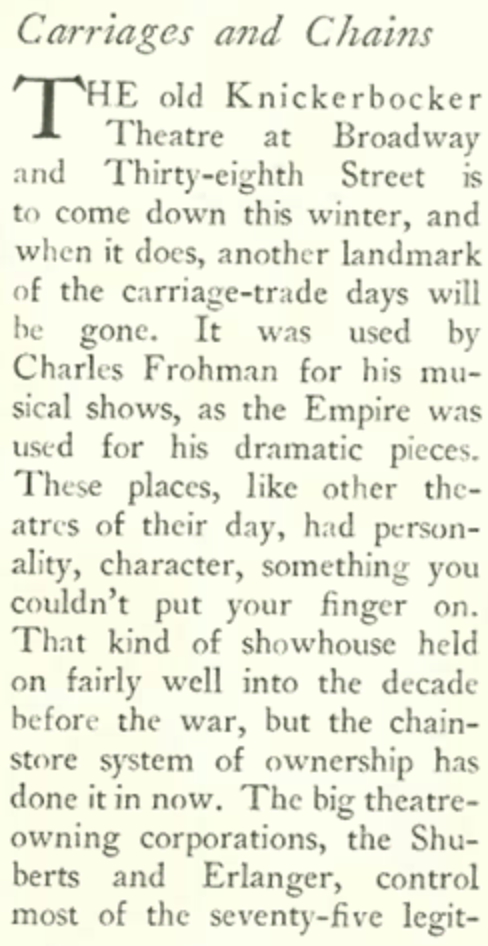
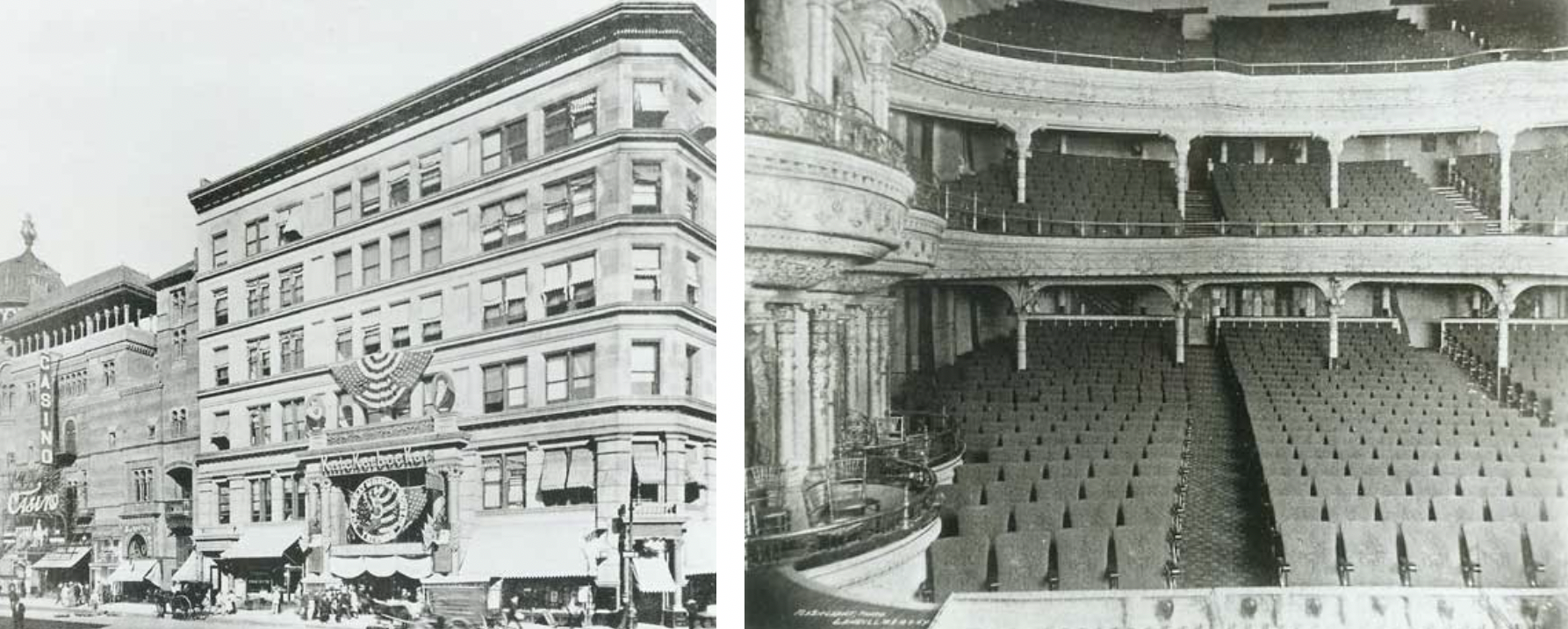
Theater was changing in other ways too. In the late 19th and early 20th century audiences patronized various playhouses based more on their reputation and tradition than on a particular play. E.B. White, in the “Talk of the Town” noted the imminent passing of one such house, the Knickerbocker Theatre, slated for demolition in 1930. The 33-year-old theater was Broadway’s first to display a moving electric sign (1906).
A HOUSE OF GOOD REPUTE…The Knickerbocker Theatre at 1396 Broadway was built in 1896 and demolished in 1930. (Internet Broadway Database)
White noted that smaller venues like the Knickerbocker, with their own distinct character and clientele, were falling victim to big theater-owning corporations that introduced more homogeneity into the play-going scene. In White’s estimation just two old-timers remained:
Both buildings still stand. The New Amsterdam, constructed in 1902–03, is now the oldest theater on Broadway. In the 1910s and 1920s it hosted the Ziegfeld Follies on its main stage and the racier Ziegfeld Midnight Frolics on the building’s rooftop. The Music Box was constructed in 1921 by composer Irving Berlin and producer Sam H. Harris to house Berlin’s Music Box Revues.
DISNEYFIED…The New Amsterdam, constructed in 1902–03, still stands today, now operated by the Disney Company, which signed a 99-year lease with the city in 1993. When it was built it was the largest theater in New York, with a seating capacity of 1,702. (Wikipedia)IRVING’S PLACE…The Music Box Theatre at 239 West 45th Street was constructed in 1921 by composer Irving Berlin and producer Sam H. Harris to house Berlin’s Music Box Revues. It was later co-owned by Berlin’s estate and the Shubert Organization until Shubert assumed full ownership in 2007. (Wikipedia)
* * *
Stocks Down, Arno Up
Peter Arno could be found all over the Dec. 14 issue: an ad promoting his new book Peter Arno’s Parade, a blurb in the book section touting the same…this ad for Peck & Peck featuring his handiwork…
…in the cartoons, a full page with the economy as a theme…
…and this submission that was doubtless inspired by Arno’s own home life and his brief, tempestuous marriage to New Yorker colleague Lois Long…
…here’s a couple of comics featuring Milquetoast characters…this one by Garrett Price…
…and another by Leonard Dove…
…and two submissions from one of my favorite cartoonists, Barbara Shermund, so ahead of her time…
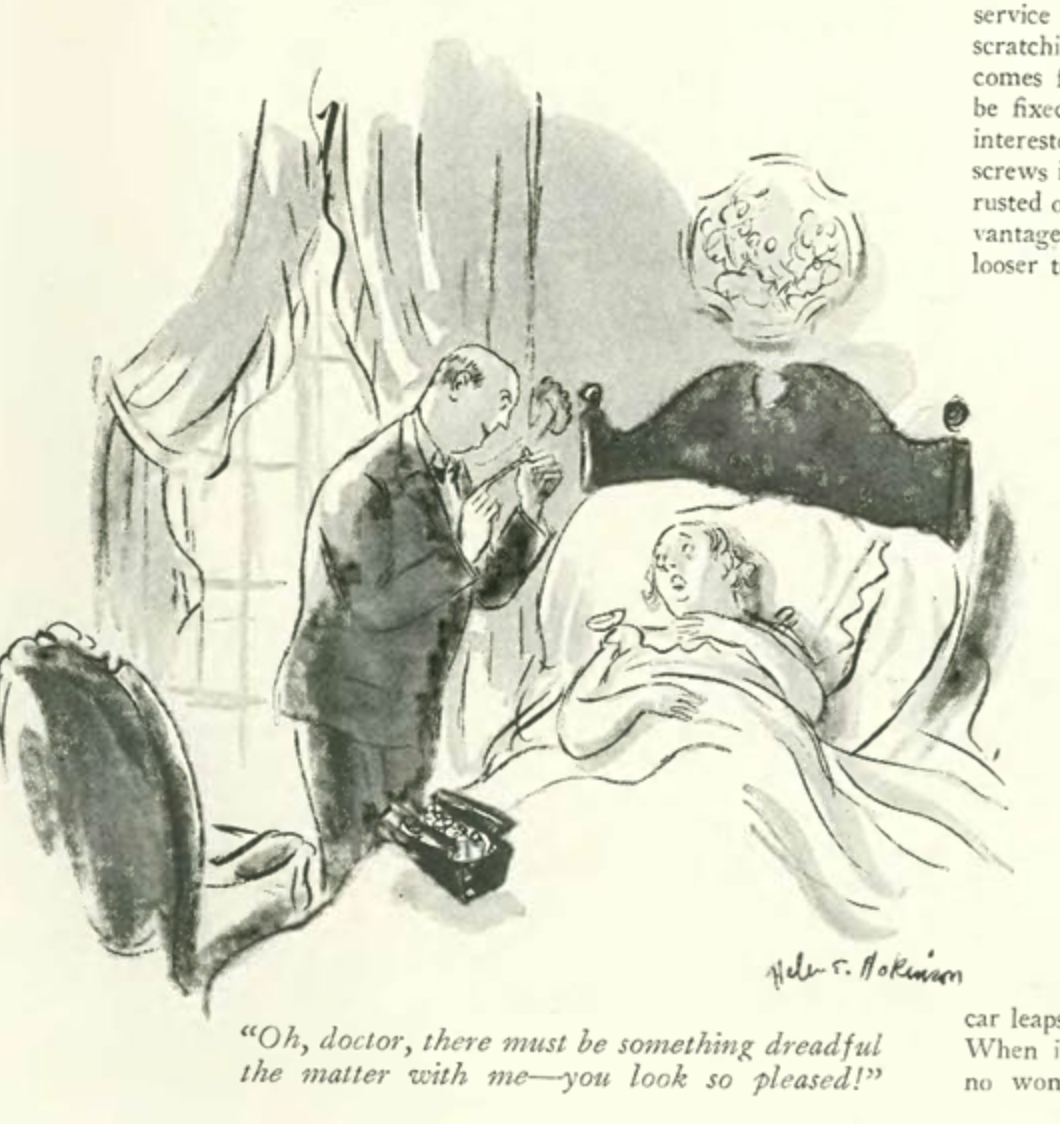
…Helen Hokinson examined a physician’s bedside manner…
…and I. Klein offered his take on the new economy…
* * *
We move right along to the Dec. 21, 1929 issue, where things seemed to turn a bit more sour…
Dec. 21, 1929 cover by Rea Irvin.
…Elmer Rice’s serialized novel, A Voyage to Purilia, finally concluded in its 11th installment in the New Yorker…and E.B. White took on a more choleric disposition in his “Notes and Comment”…
Lois Long contributed a “Tables for Two” column, a feature that had become infrequent as she turned her full attentions to her fashion column “On and Off the Avenue.” In this installment of “Tables” we get her first mention of the market calamity…
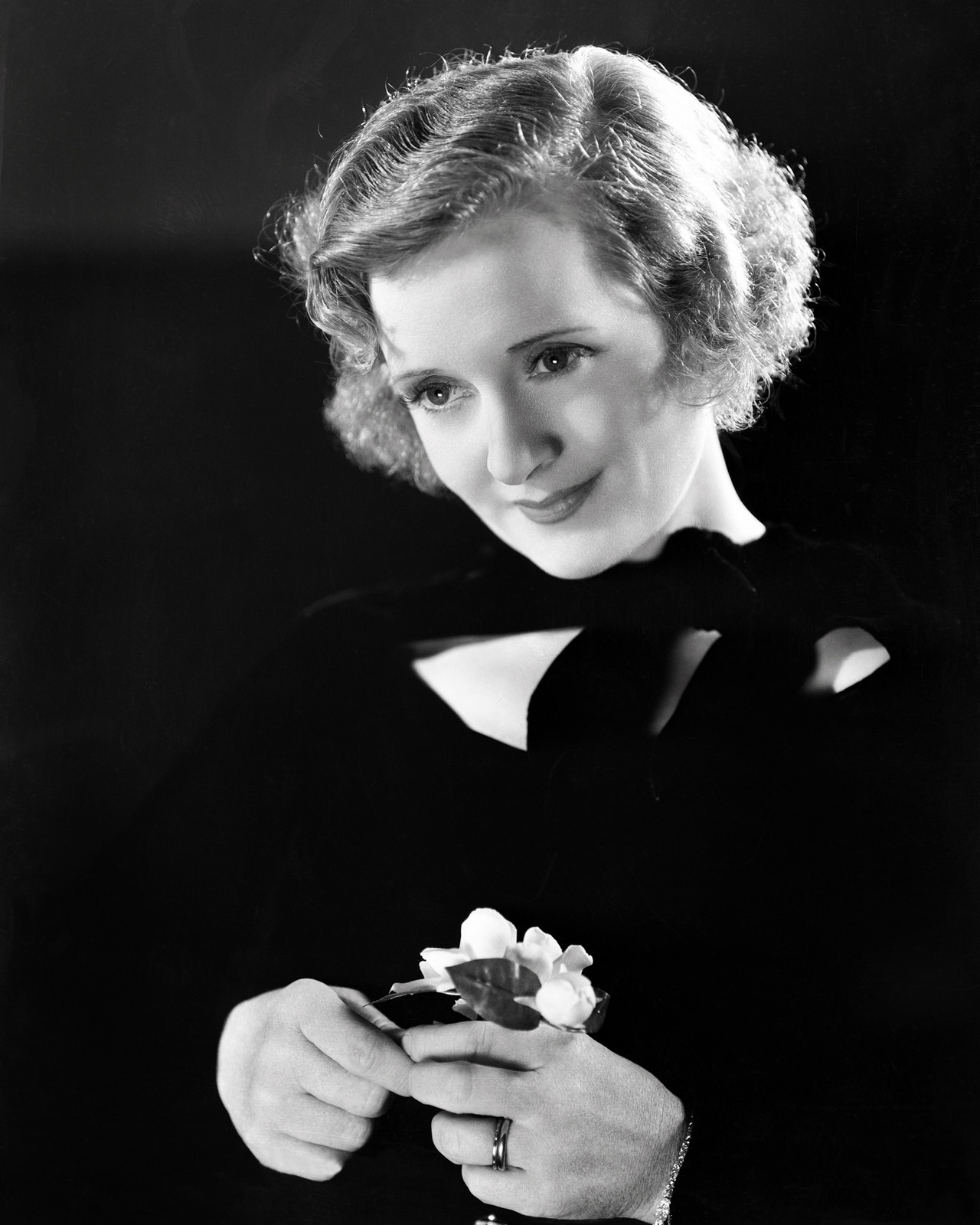
…Robert Benchley finally found something to like on Broadway, because Billie Burke was the star attraction…
SHE”S THE GOOD ONE…Billie Burke in 1933. Most of us know her today for her performance as Glinda the Good Witch of the North in the 1939 film The Wizard of Oz. (Wikipedia)
* * *
Violin Prodigy 2.0
The New Yorker raved about the twelve-year-old violinist Yehudi Menuhin when he wowed audiences at the Berlin Philharmonic earlier in the year. So when the ten-year-old Ruggiero Ricci expertly fiddled with the Manhattan Symphony, well…
YEAH, I GOT THIS…Ruggiero Ricci, about 1930, by then a touring professional. At age six Ricci began lessons with Louis Persinger, who also taught another San Francisco prodigy, Yehudi Menuhin. (Text and image, The New York Times)
* * *
Namesake
Despite the market crash, the skyline continued to change at a rapid pace, and as we enter the 1930s the city would add some of its most iconic buildings to the skyline. George Chappell, The New Yorker’s architecture critic, had this to say about the magazine’s “namesake”…
ROOMY…The New Yorker Hotel, at 481 Eighth Avenue. When the 43-story Art Deco hotel opened 1930, it contained 2,500 rooms, making it the city’s largest for many years. (Wikipedia)
* * *
Art critic Murdock Pemberton continued his quest to make sense of the upstart Museum of Modern Art…
…and the American artists showcased there…
…I would add Edward Hopper, John Sloan, Lyonel Feininger, and Rockwell Kent (also displayed at the exhibition) but then again, I have the advantage of hindsight…
* * *
From Our Advertisers
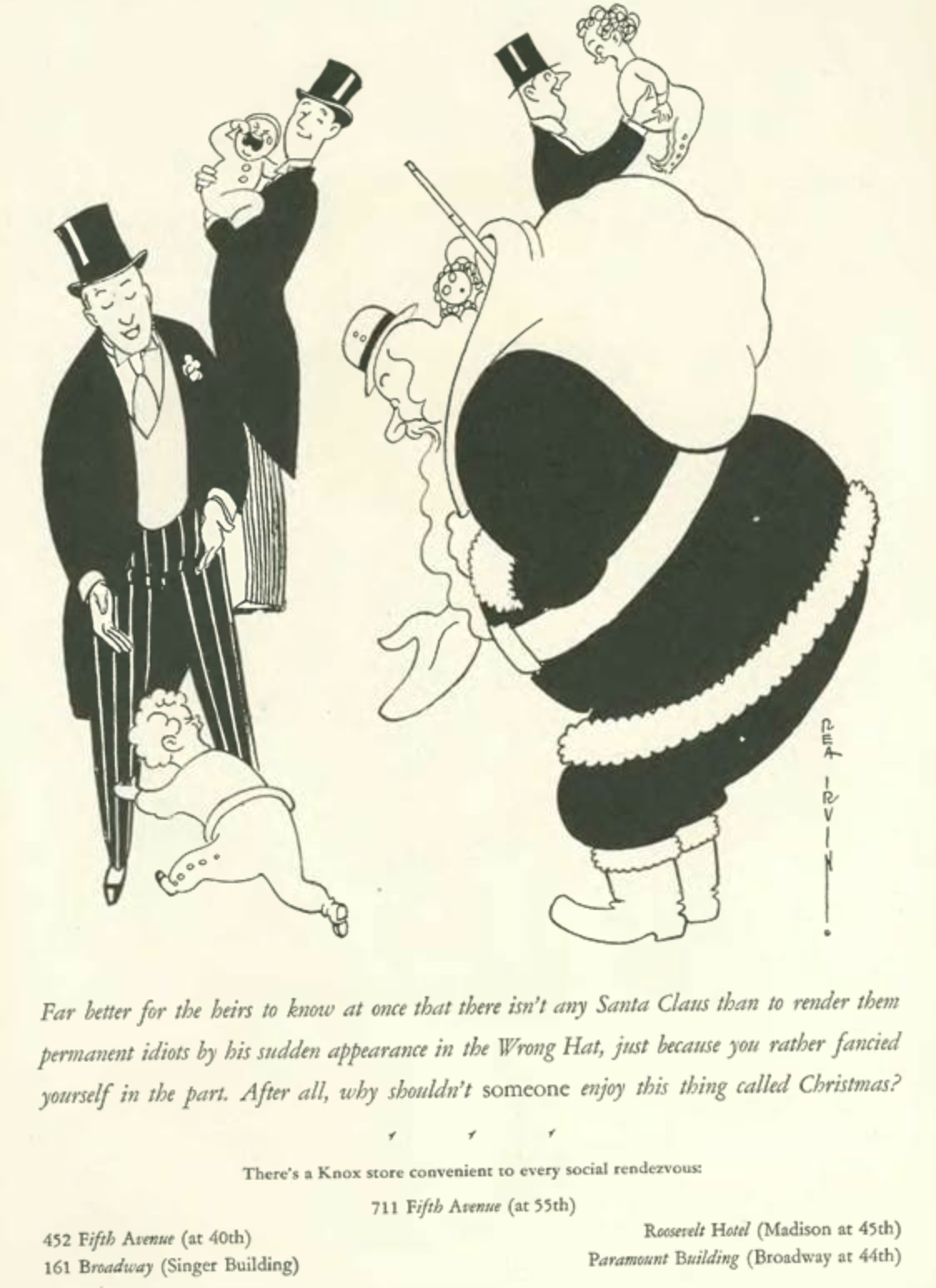
We have more New Yorker cartoonists augmenting their income through advertising, including (once again) Rea Irvin for Knox Hatters…
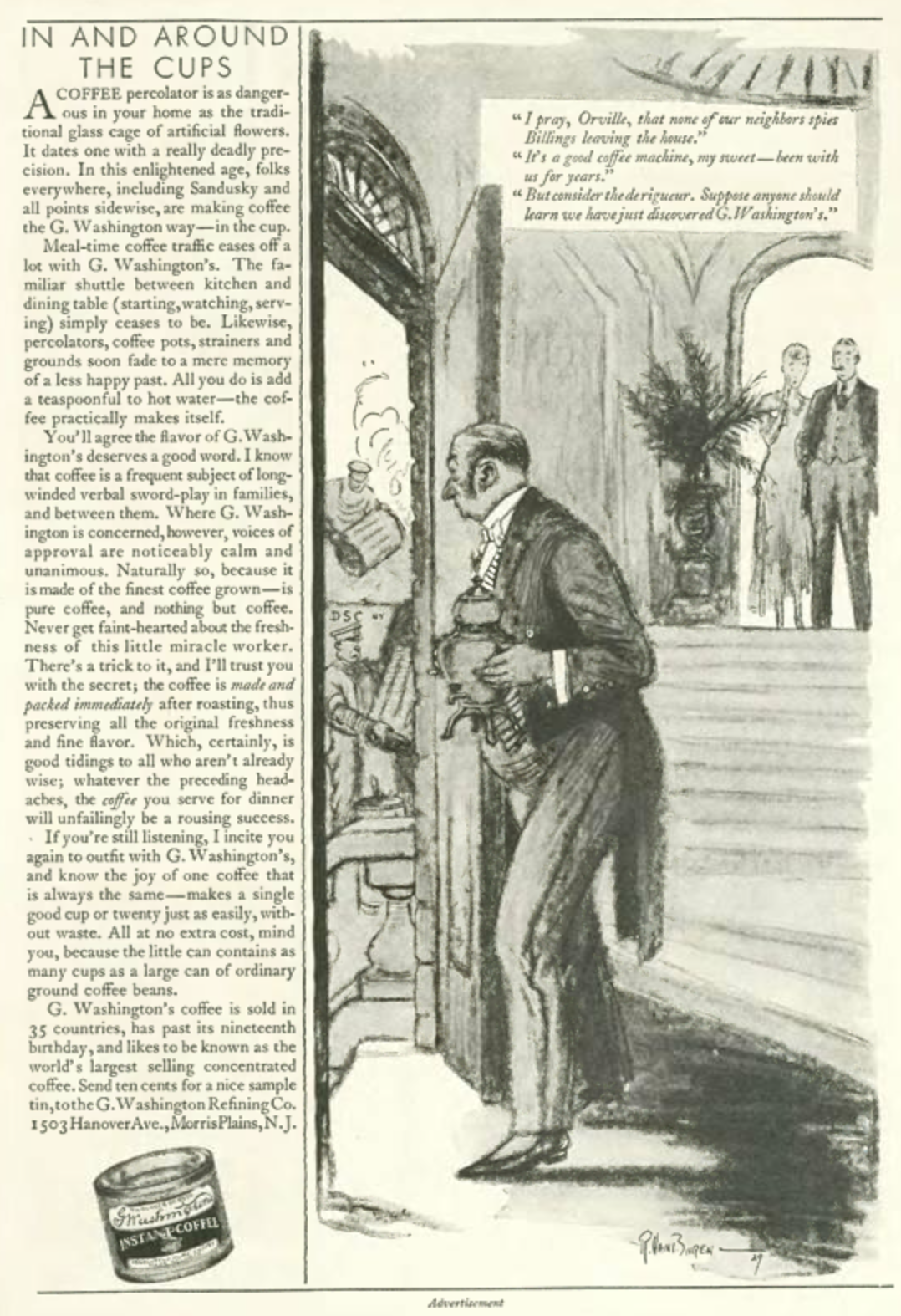
…Raeburn Van Buren for G. Washington’s instant coffee (also a client of Helen Hokinson’s)…
…and Helen Hokinson for Frigidaire…
…and on to cartoons for Dec. 21, Hokinson again…
…and we end with Peter Arno, and another peek into marital bliss…




























































































































 A New Yorker State of Mind