Lighter Than Air

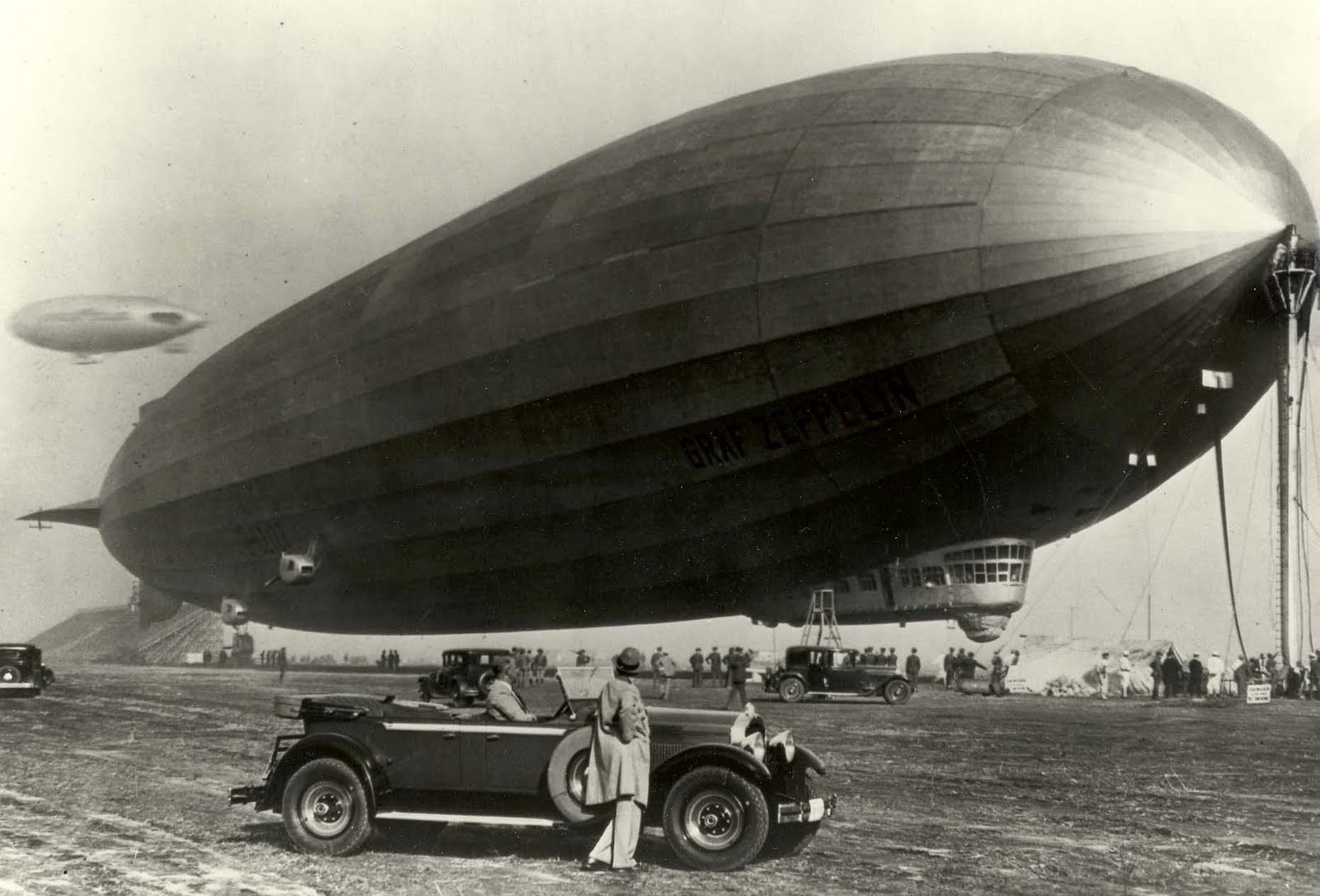
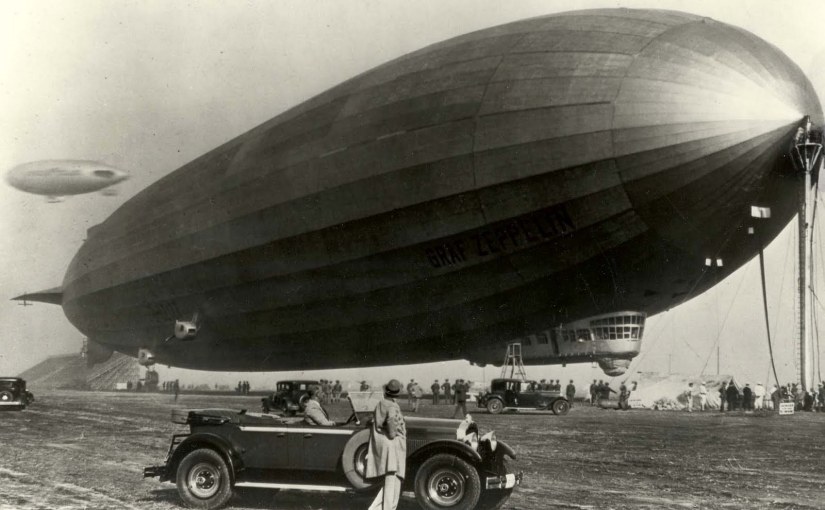
Just a decade after German Zeppelins sowed terror across the skies of Europe and Great Britain, Germany’s new Graf Zeppelin was enthusiastically welcomed by a throng gathered at Lakehurst, New Jersey, the massive airship having completed its first intercontinental trip across the Atlantic.
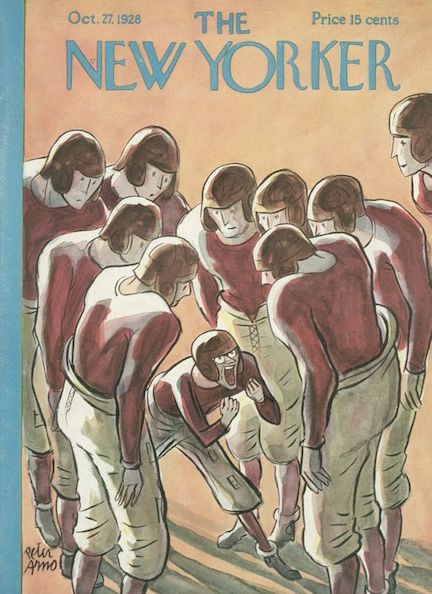
Oct. 27, 1928 cover by Peter Arno.

It had been only ten years and two months since German Zeppelins dropped their last bombs on the British, which had dubbed the airships “baby killers” for the mostly civilian casualties they inflicted. Beginning in 1915, Zeppelin raids on London killed nearly 700 and seriously injured almost 2,000 over the course of more than 50 attacks. It must have been a terrifying sight, something straight out of science fiction — flying ships more than the length of two football fields, blotting out the stars as they loomed overhead. Their size, however, was also their downfall, as Britain soon developed air defenses (searchlights, antiaircraft guns, and fighter planes) that shot many of these hydrogen gasbags out of the sky (77 of Germany’s 115 airships were either shot down or disabled).

TERROR IN THE SKIES…Image from a German postcard celebrating the bombing of Warsaw by the Zeppelin Schütte Lanz in 1914. Here’s a weird fact: There was a shortage of sausages in Germany during WWI, since cow intestines normally used for casings were instead used to create special bags to hold the hydrogen gas that kept Zeppelins aloft. It took more than 250,000 cows to make one airship. (Wikipedia)

So when the 776-foot Graf Zeppelin loomed over the New York City skyline on Oct. 15, 1928, the reaction was one of awe rather than terror. The New York Times heralded its safe arrival on the front page…
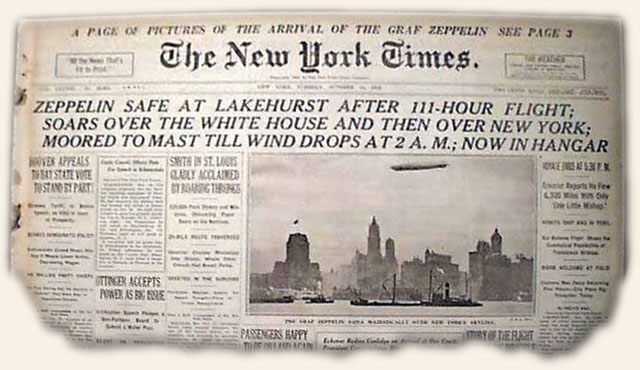
(rarenewspaper.com)
The Graf Zeppelin at Lakehurst, N.J., 1929. (rarehistoricalphotos.com)

…and The New Yorker’s James Thurber (writing in “The Talk of the Town”) was on hand to assess the welcoming crowds gathered at Lakehurst, N.J….

…who in their enthusiasm could have easily destroyed the vessel, which had already sustained damage during a storm over Bermuda…
OLD GAS BAG…The Graf Zeppelin arriving at Mines Field (now Los Angeles International Airport) on August 26, 1929. Newspaper magnate William Randolph Hearst sent the Graf Zeppelin dirigible on a 20-day flight that circumnavigated the world in 1929. (martinturnbull.com)
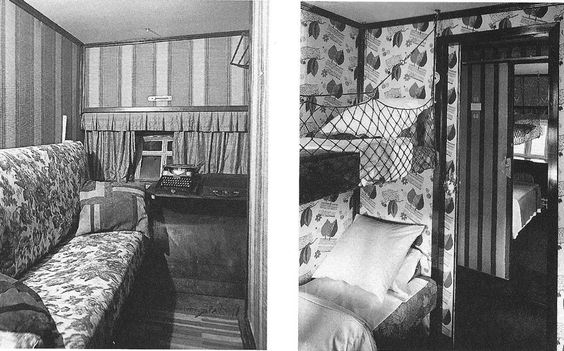
Living quarters of the Graf Zeppelin. Cozy, if you could forget that your room was contained within an envelope of highly explosive hydrogen gas. (airships.net)

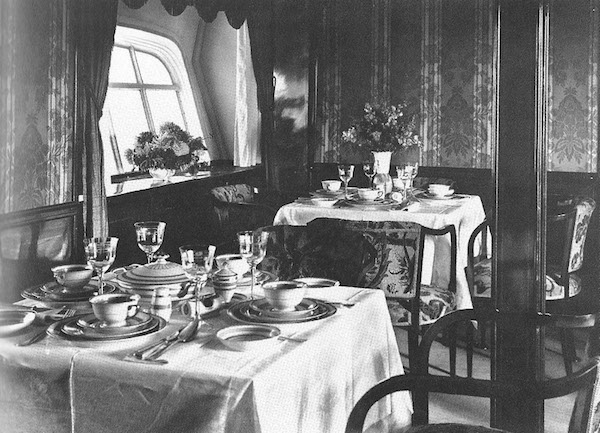
Dining aboard the Graf Zeppelin. (Top, airshipsonline.com, bottom, airships.net)

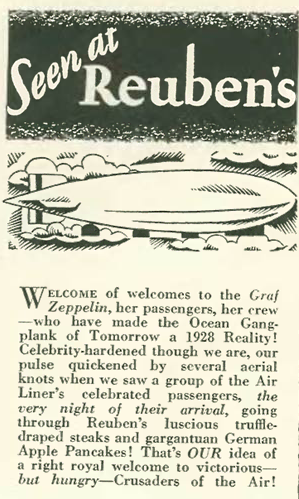
Reuben’s restaurant in New York seized the opportunity to cash in on the spectacle, boasting (in this hastily placed ad in the Oct. 27 issue) that the Graf Zeppelin’s passengers dined at their establishment on the very night of their arrival…
A final note: Considering the hazards of flying these ungainly, flammable machines (e.g. the Hindenburg in 1937) Graf Zeppelin flew more than one million miles in its career (the first aircraft in history to do so), making 590 flights (144 of them oceanic crossings, including one across the Pacific), and carrying more than 13,000 passengers — all without injury to passengers or crew.

 *  *  *

Rough Riders

Back on the ground, “The Talk of the Town” looked in on a somewhat less exotic form of long-distance travel — the recently inaugurated coast-to-coast bus service from New York to Los Angeles:
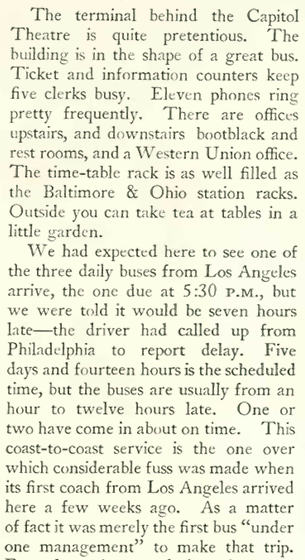
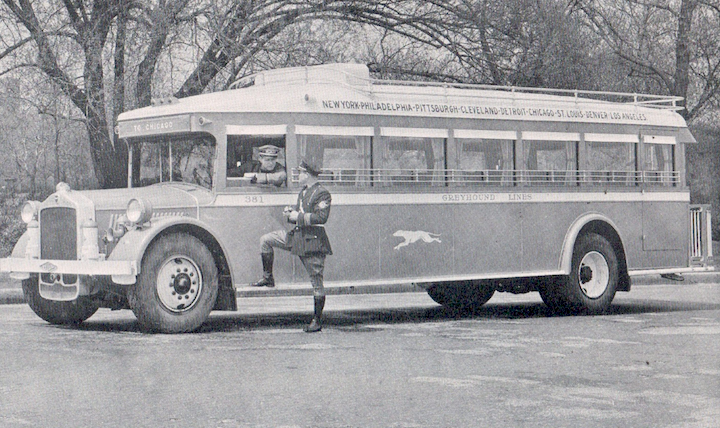
LONG HAUL…This Greyhound bus from 1929 was probably similar to those leaving the New York bus stations for points west in 1928. (flickr)

 *  *  *

From Our Advertisers

On the subject of rolling transportation, Buick trumpeted the introduction of “adjustable front seats” in its silver anniversary model. Curiously, this improvement was touted as a convenience solely for women drivers…

Our cartoon (a two-pager) for Oct. 27 comes from Gardner Rea, the latest among The New Yorker’s staff to mock the quality of sound motion pictures. The cartoon is labeled at the bottom: “The Firtht One Hundred Per Thent Thound Movie Breakth All Houth Recordth.” (click image to enlarge)

 *  *  *

If you wanted to get a glimpse of New York’s “royalty” in 1928, you could secure a seat at the Metropolitan Opera, especially one with a view of its famed “Diamond Horseshoe” seats.

November 3, 1928 cover by Julian de Miskey.

The “Diamond Horseshoe” described a ring of seats at the Metropolitan Opera House occupied by New York’s social elite. Not unlike today’s stadium skyboxes, the Met reserved these boxes for purchase by the wealthy. “The Talk of Town” for Nov. 3, 1928 noted how many of these were still held by the same families that had secured spots after the Met opened in 1883:
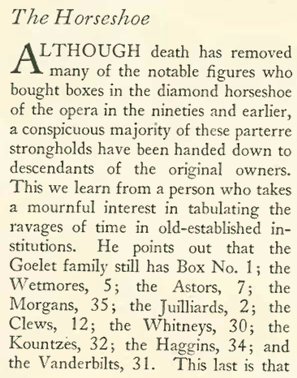
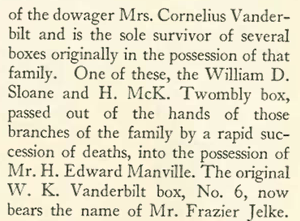
CULTURAL LANDMARK…The Metropolitan Opera House at Broadway and 39th Street circa 1905. (Wikipedia)
SEE AND BE SEEN…The Diamond Horseshoe at the Metropolitan Opera House, as seen from the rear of the stage for a concert by pianist Josef Hofmann, November 28, 1937. (newyorksocialdiary.com)

“Talk” also noted that some of the boxes in the Diamond Horseshoe were coming into new ownerships among the newly rich (E.F. Hutton) and even (gasp) immigrants such as Otto Kahn:

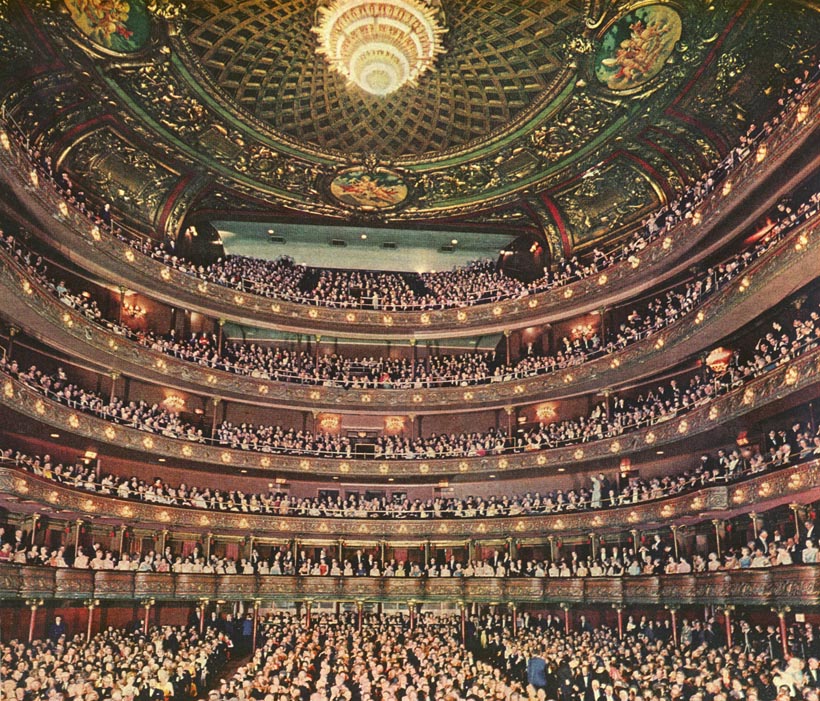
DUST TO DUST…Above, a view of the “Diamond Horseshoe” at the Metropolitan Opera’s gala farewell performance on April 16, 1966. Below, patrons say goodbye to the old house at Broadway at the farewell performance. The building was torn down in 1967 and replaced by a 40-story office tower. (Time/Life)

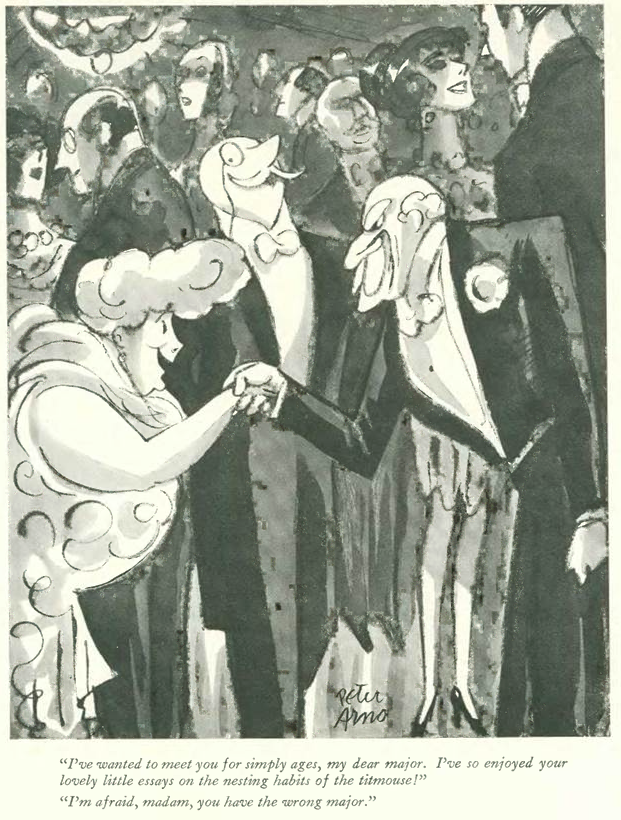
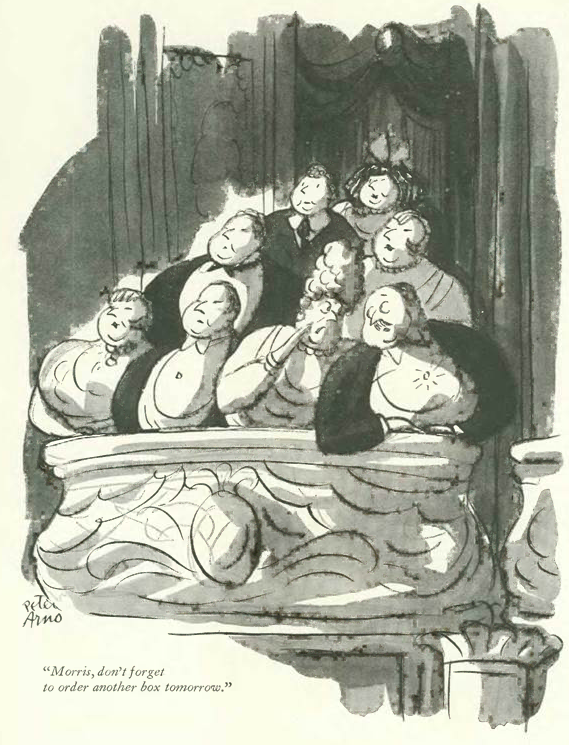
Also in the Nov. 3 issue was this cartoon by Peter Arno depicting one of the Met’s boxes stuffed with overfed toffs:
 *  *  *

Poet With a Green Thumb

The Nov. 3 “Talk” also featured a bit by James Thurber on American poet and playwright Edna St. Vincent Millay, a major figure in New York’s Greenwich Village literary scene as well as a feminist leader. A Pulitzer-Prize winner (1923), Millay was also an avid gardener who preferred the solitude of her farm, Steepletop, to the limelight usually accorded a literary star:
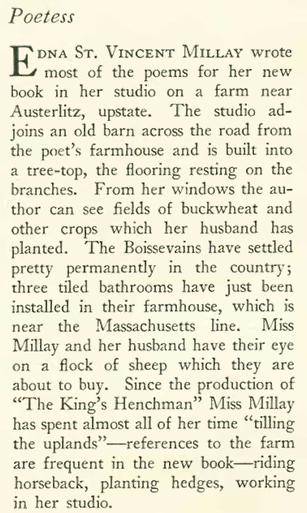
RARE PHOTOGRAPH…Edna St. Vincent Millay raised her own vegetables at Steepletop, a former blueberry farm located near Austerlitz, New York that she owned with her husband Eugen Jan Boissevain. Photo is circa 1928. (Library of Congress)

Thurber noted that even her publisher, Harper & Sons, had to use an old photo of the publicity-shy poet for a new book release:

On the topic of photography, “Profiles” (written by film historian Terry Ramsaye) looked in on the quiet life of photography pioneer George Eastman, who founded the Eastman Kodak Company and popularized the use of roll film.

A quintessential “mamma’s boy,” Eastman never married…

…and by all accounts died a celibate less than four years after this profile was written, taking his own life at age 77. Suffering from intense pain caused by a spinal disorder, Eastman shot himself in the heart on March 14, 1932, leaving a note which simply read, “To my friends: my work is done. Why wait?”

Odds and Ends

Other items of note from the Nov. 3 issue included a humorous piece by Rube Goldberg, “The Red Light District,” in which the president of the Blink Stop-Go Traffic Company summons a doctor to treat a strange malady. The doctor gets held up by traffic lights on the way to the “emergency,” and when he discovers the problem is only hives, he shoots the patient. The piece was headlined by this artwork, also by Goldberg (shades of George Herriman and R. Crumb, yes?)…

Goldberg is still known today thanks to his series of cartoons depicting deliberately complex contraptions invented to perform simple tasks, such as the “Self-Operating Napkin” below, from 1931:

1931 (Wikipedia)

Cartooning’s highest honor, The Reuben Award, was named after Goldberg, who was a longtime honorary president of the National Cartoonists Society.

 *  *  *

The Roaring 20s saw a rapid transformation of the New York skyline, with massive skyscrapers rising from the dust of old 18th and 19th century institutions. But few would signal the new age more than the Chrysler Building, an Art Deco landmark that would stand as the world’s tallest building for nearly a year (knocked from the top spot in May 1931 by the Empire State Building). Architecture critic George S. Chappell (“T-Square”) had this observation about the planned building:

EVOLUTION OF AN ICON…Stages in the design for the Chrysler building, from the July-December 1929 issue of Progressive Architecture.

*  *  *

More from our advertisers…in the Nov. 3 issue Hawaii beckoned well-heeled New Yorkers who were contemplating the coming winter…

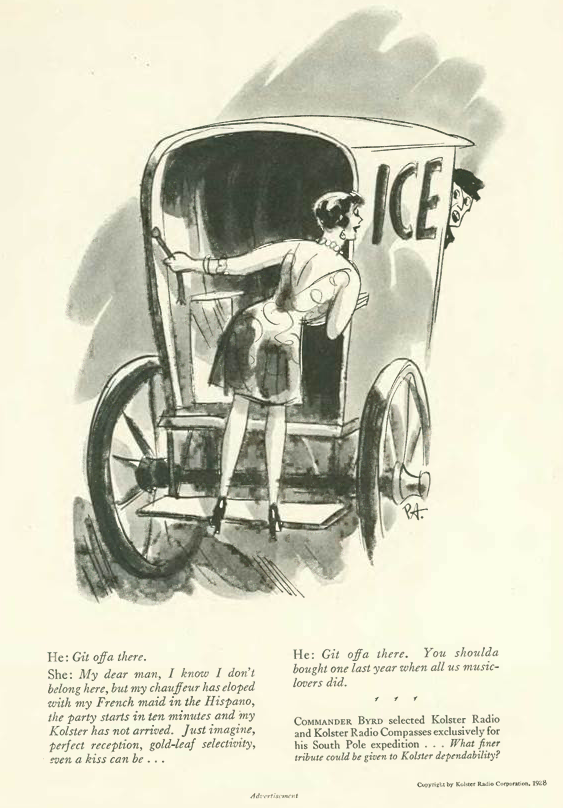
…and then there was this poorly executed ad for Kolster radios, the whole point seeming to be the drawing they commissioned from New Yorker cartoonist Peter Arno:
And finally, a cartoon by Alan Dunn, who looked in on an Ivy League football huddle:

Next Time: Diamond Lil…


The Prohibition Portia

Despite Prohibition, booze flowed freely in 1928 New York thanks to bootleggers and lax enforcement by everyone from cops to judges. One major exception was Mabel Walker Willebrandt, a U.S. Assistant Attorney General from 1921 to 1929 who among other things handled cases concerning violations of the Volstead Act.

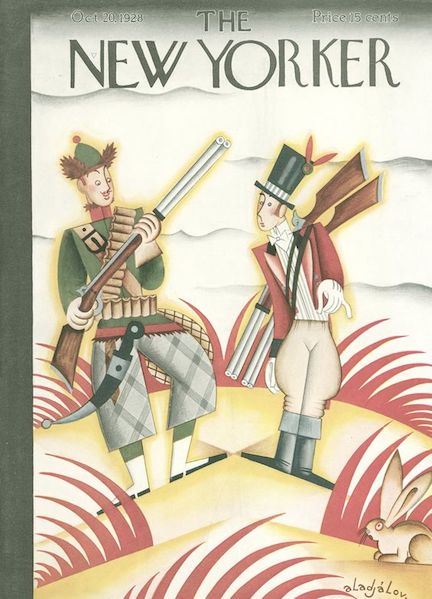
Oct. 20, 1928 cover by Constantin Alajálov.

Although Willebrandt herself enjoyed the occasional drink (she was personally opposed to prohibition), she was nevertheless serious about enforcing the law, and rather than chasing small-time bootleggers or padlocking speakeasies, she targeted the big-time operators.

How Willebrandt fits into this blog entry can be found in Lois Long’s “Table for Two” column in the Oct. 20, 1928 issue, in which Long described the current state of affairs of Manhattan’s nightlife, including the departure of boozy torch singer Helen Morgan from the speakeasy scene for Flo Ziegfeld’s late-night Broadway revue, the Ziegfeld Midnight Frolic:

WELL-KNOWN TO THE POLICE…Helen Morgan started singing in Chicago speakeasies in the early 1920s, where she defined the look of the torch singer, including the draped-over-the-piano pose, which was her signature. (amanandamouse.blogspot.com)

Morgan, who at the time was also starring in Broadway’s Show Boat, had been arrested the previous December for violation of liquor laws at her own popular nightclub, Chez Morgan. She would not return to performing in nightclubs until after the repeal of Prohibition.

Long also looked in on the popular Harlem nightclubs, where the dance music was “throbbier than ever.”

HOPPING IN HARLEM…Lois Long wrote that you couldn’t get near the popular Small’s (left) on a Saturday night, while Connie’s Inn (right) offered a new show that was “as torrid as ever.” (harlemworldmag.com, New York Public Library)

There was a sober undercurrent to all of this merry-making, namely Willebrandt’s determined efforts to go after the big bootlegging operations that were fueling all of this mirth. Long wrote:

PROHIBITION PORTIA…At left, Mabel Walker Willebrandt being sworn in as U.S. Assistant Attorney General in 1921. At right, Willebrandt on the cover of Time magazine, August 26, 1929. (legallegacy.wordpress.com/Time)

Willebrandt decried the political interference and the incompetence (or corruption) of public officials who undermined the enforcement of the Volstead Act, and even fired a number of prosecutors. As her office also oversaw the enforcement of tax laws, she developed the strategy for prosecuting major crime bosses for income tax evasion. It was an approach that would finally put the famed Chicago gangster Al Capone behind bars in 1931.

Lois Long’s mention of Willebrandt was doubtless due to the 1928 presidential campaign, during which Willebrandt openly campaigned for the “dry” candidate, Republican Herbert Hoover, over the “wet” Al Smith, who referred to Willebrandt as “The Prohibition Portia.” Smith was referencing Shakespeare’s The Merchant of Venice, in which the play’s heroine, Portia, outwits the merchant Shylock in a court case by referring to the exact language of the law.

Jim Dandy

New York Mayor Jimmy Walker was well-known for his taste in clothes (as well as for the nightlife), so E.B. White (writing in “The Talk of the Town”) decided to pay a visit to the mayor’s personal tailor to see how the “royal garments” were created. Excerpts:

JIM DANDY…New York Mayor Jimmy Walker was a well-known dandy and a familiar face at Manhattan nightclubs. Rarely seen at City Hall, Walker used the lavish Casino nightclub in Central Park as his unofficial headquarters. (Encyclopedia Britannica)

 *  *  *

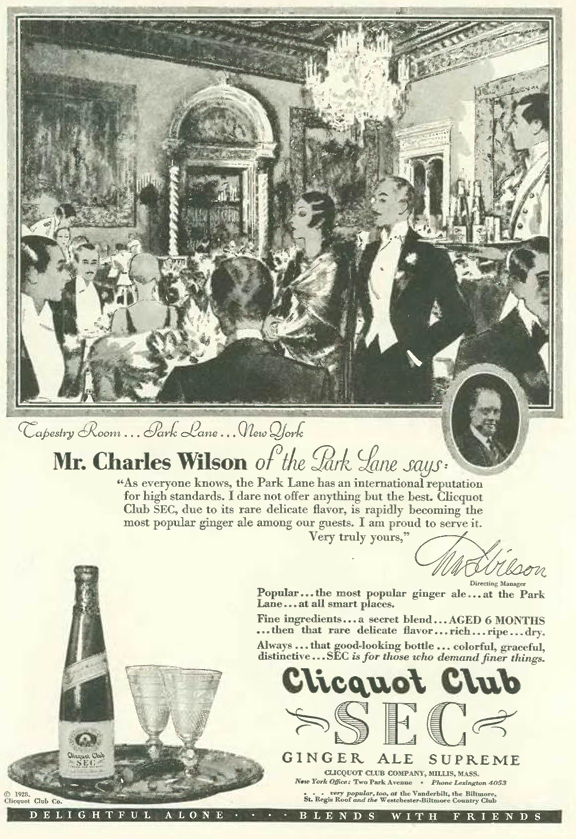
In one of my recent entries (The Tastemakers, posted Nov. 28) I noted how Prohibition had driven some advertisers to absurd lengths, including manufacturers of non-alcoholic beverages who appealed to the refined tastes (and snobbishness) usually associated with fine wines (see Clicquot Club ad below). Gag writer Arthur H. Folwell had some fun with such pretensions:

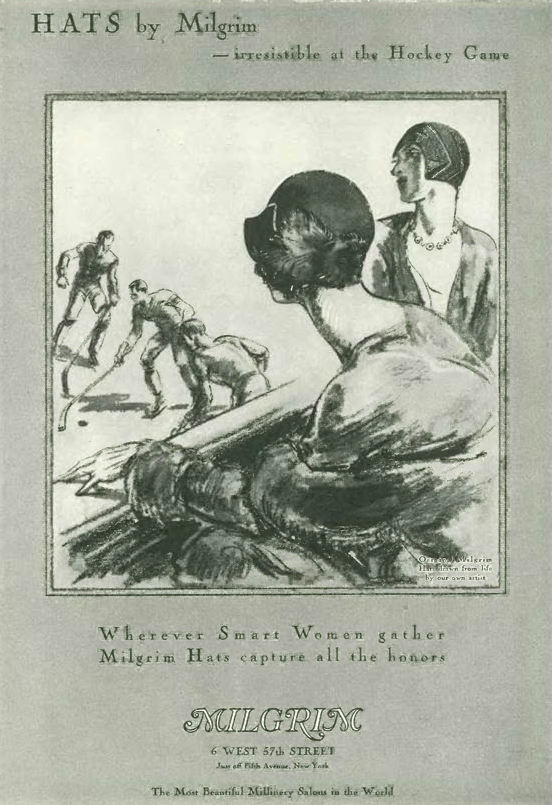
Speaking of refinement, when was the last time you saw someone dressed like this at a hockey game?

Before they graced the silver screen, the Marx Brothers were one of Broadway’s biggest draws, including their 1928 hit “Animal Crackers,” advertised in the back pages of the Oct. 20 New Yorker.

Our cartoons are courtesy Peter Arno, who looked in on a Hollywood movie set…

…and Gardner Rea, who rendered a scenario for an upper class emergency…

Next Time: Lighter Than Air…


This Thing Called Baseball

In the early years of The New Yorker, baseball as a sport was almost entirely ignored by the magazine, which otherwise gave exhaustive coverage to polo, yacht racing, tennis, and golf. There were also articles on badminton, rowing, and even auto racing, and college football received a lot of enthusiastic ink. But none for baseball. With the Sept. 22, 1928 issue I think I finally understand why.

Sept. 22, 1928 issue by Adolph K. Kronengold.

It has something to do with The New Yorker’s parochial view of the world, so aptly illustrated by Saul Steinberg on the magazine’s March 29, 1976 cover, in which anything beyond the Hudson was essentially terra incognita:

A lot of New York Yankee fans came from “out there,” according to James Thurber in a “Talk of the Town” segment titled “Peanuts and Crackerjack.” Thurber wrote of his experience at a pennant race game between the Yankees and the Philadelphia A’s. The game of baseball was described as something for the out-of-towners who were “a bit mad,” a mass spectacle in which the game itself was of minor importance. In short, it wasn’t cool to be a Yankees fan if you counted yourself among Manhattan’s smart set:

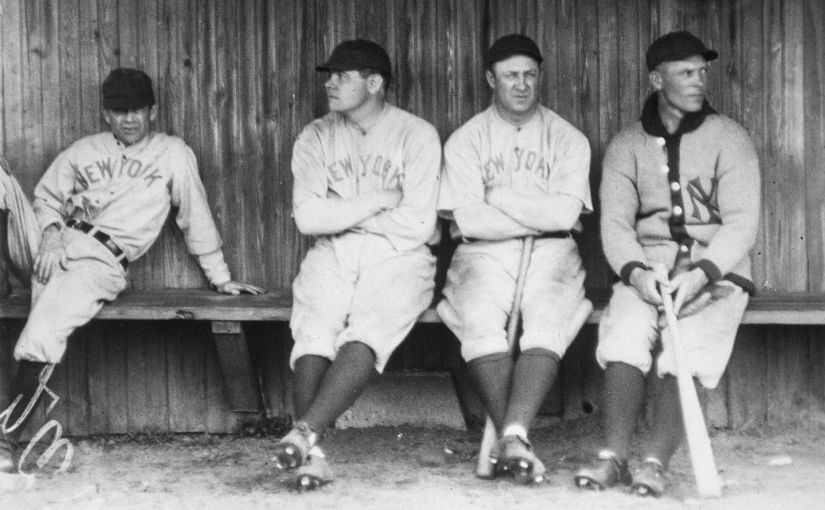
This “Talk” item was written when the Yankees were on the verge of winning their second consecutive World Series championship over the favored St. Louis Cardinals. The 1928 team featured the famed “Murderer’s Row” lineup with the likes of Babe Ruth and Lou Gehrig. In all, nine players from the ’28 team would be elected to the Hall of Fame, a major league record. But as of the Sept. 22 issue neither the 1927 or ’28 Yankees merited a line in The New Yorker’s sports pages.

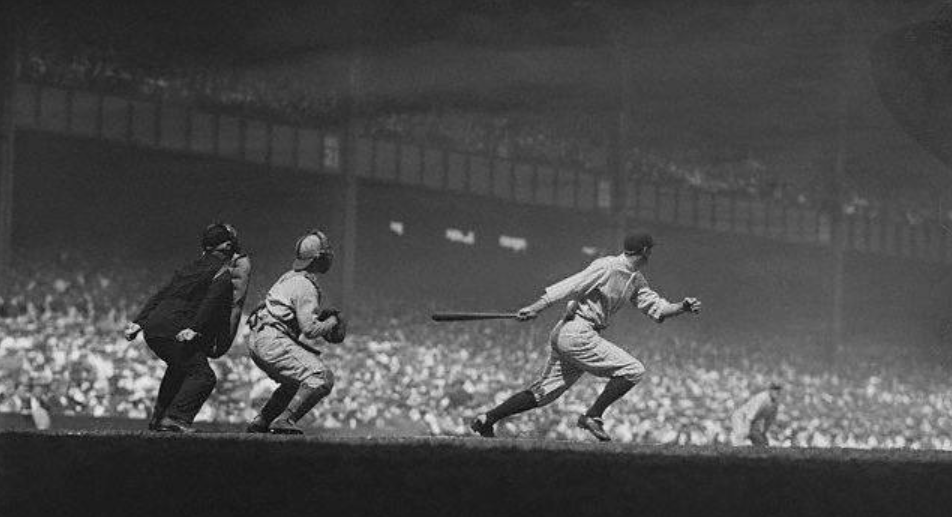
HIT ONE FOR THE OUT-OF TOWNERS…The Yankees’ Earle Combs leads off with base hit against the Philadelphia A’s in a key AL pennant race game on Sept. 9, 1928. A record crowd of 85,265 attended the game, won by the Yankees, who gained half-game lead over the A’s with the victory. (baseballhistorycomesalive.com)

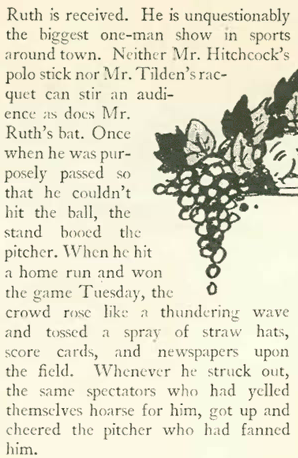
Thurber wrote that one could learn much about those in attendance at the game by the way they received Yankee star Babe Ruth:

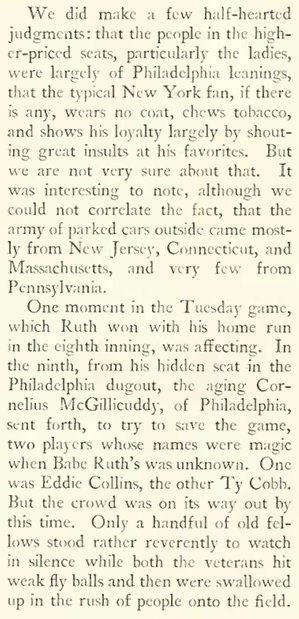
Thurber proved his point about out-of-towners by noting the origin of license plates in the “army of parked cars” outside of the stadium. He also noted the appearance in the game of an ancient Ty Cobb, who hit a weak fly ball while a few old-time fans looked on in reverence:

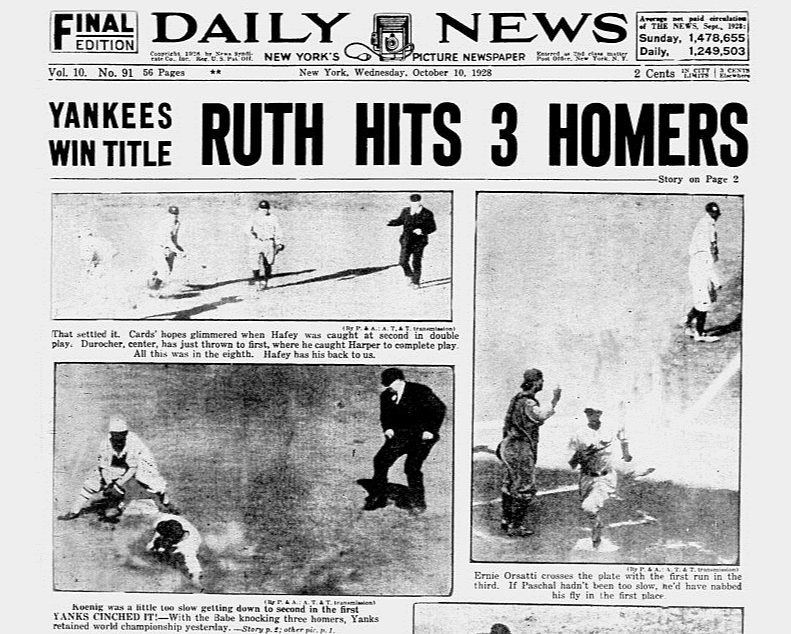
WHERE YOU COULD READ ALL ABOUT IT…The Oct. 10, 1928 edition of the Daily News splashed its front page with photographs of the Yankee’s triumphant title win. (NY Daily News)

 *  *  *

An Eye-dropping Art Collector

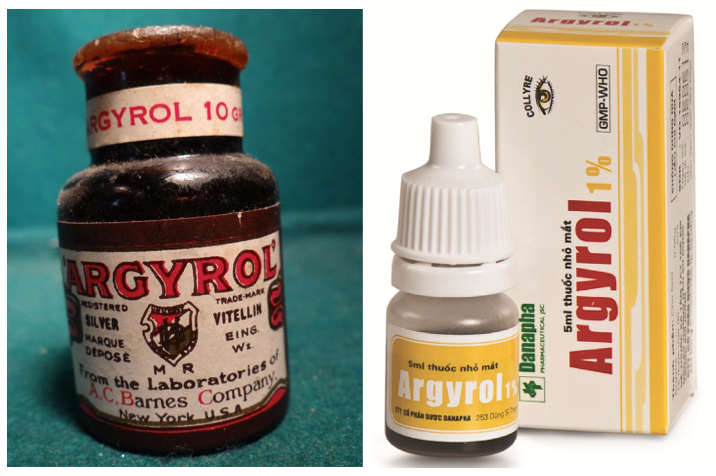
The Sept. 22 issue A.H. Shaw profiled “De Medici in Merion” Dr. Albert Barnes, who made his fortune by developing in 1901 (with German chemist Hermann Hille) a silver nitrate-based antiseptic marketed as Argyrol. In the days before antibiotics, Argyrol was used to treat eye infections and prevent newborn infant blindness caused by gonorrhea. The profile featured this rather fearsome illustration by Hugo Gellert:

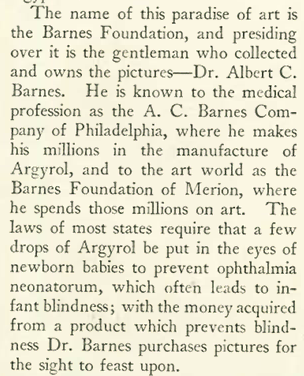
The lengthy piece detailed Barnes’ coming of age, and how his promotion of Argyrol helped bankroll his famed art collection. A brief excerpt:

IT FUELED A FORTUNE…Invented in 1901, Argyrol eye drops would finance one of the world’s greatest private art collections. Although was no longer marketed in U.S. after 1996, it is still available today, as seen at right in this Vietnamese product. (todocoleccion / ydvn.net)
HMMM, THAT LOOKS FAMILIAR…Henri Matisse views his 1917 painting The Music Lesson during a 1933 visit to the Barnes Foundation in Lower Merion Township, near Philadelphia. (The Morgan Library & Museum)
HE LIKED DOGS, TOO…Dr. Albert Barnes and his dog Fidèle with Matisse’s Red Madras Headdress, in 1942. (Barnes Foundation Archives)

  *  *  *

A One-eyed Monster Comes to Life

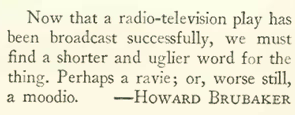
It’s always interesting to note the mentions of emerging technology in the early New Yorker, including this bit in Howard Brubaker’s column “Of All Things” about the successful broadcast of a “radio-television play.” Brubaker mused about what this new invention might called:

The first television broadcast in July 1928 was not exactly must-see TV. For two hours a day, General Electric’s experimental station W2XB broadcast the image of a 13-inch paper mache Felix the Cat, simply rotating on a turntable.

THE DAYS BEFORE VIAGRA ADS…A 13-inch Felix the Cat figure (top) was used to test an early television broadcast from General Electric’s experimental station W2XB in Schenectady, N.Y. Rotating on a record player turntable, the Felix figure was broadcast using a mechanical scanning disk, and was received as a 2-inch high image (below left) on an electronic kinescope. At bottom right, a 1928 television from General Electric that received alternating sound and picture. (NBC / Imgur / tvhistory.tv)

Then on September 11, 1928, W2XB (with WGY radio providing audio) broadcast a 40-minute one-act melodrama, The Queen’s Messenger. Northern State University’s Larry Wild writes that because TV screens were so small, only an actor’s face or hands could be shown. “The play had only two characters. A female Russian spy and a British Diplomatic Courier. Four actors were used. Two for the character’s faces, and two for their hands.”

The Queen’s Messenger was the first television drama, received by 3-inch televisions (most likely similar to the General Electric Octagon TV set pictured at left) that were set up in various places in the New York City area. At right, actors on the set of The Queen’s Messenger. The crude, flickering image marked the beginning of a revolution. (General Electric)

 *  *  *

From Our Advertisers

Advertisers were always looking for clever angles to capture the attention of The New Yorker’s upscale readers, including the use of subtle and not-so-subtle racist cues to get their points across. Two examples from the Sept. 22 issue have the makers of Oshkosh trunks helpfully pointing out that their product is not intended for African “natives”…

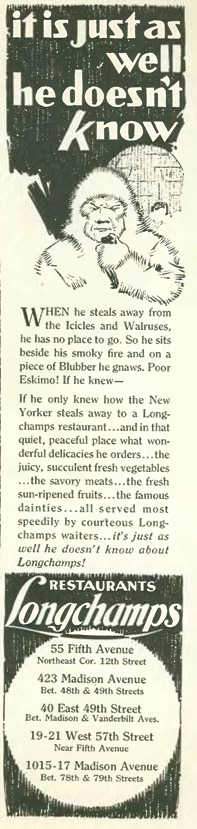
…or the folks from Longchamps restaurants, who depict the joyless life of a blubber-eating Eskimo as an appropriate juxtaposition to the succulent delicacies awaiting readers at their five New York locations:

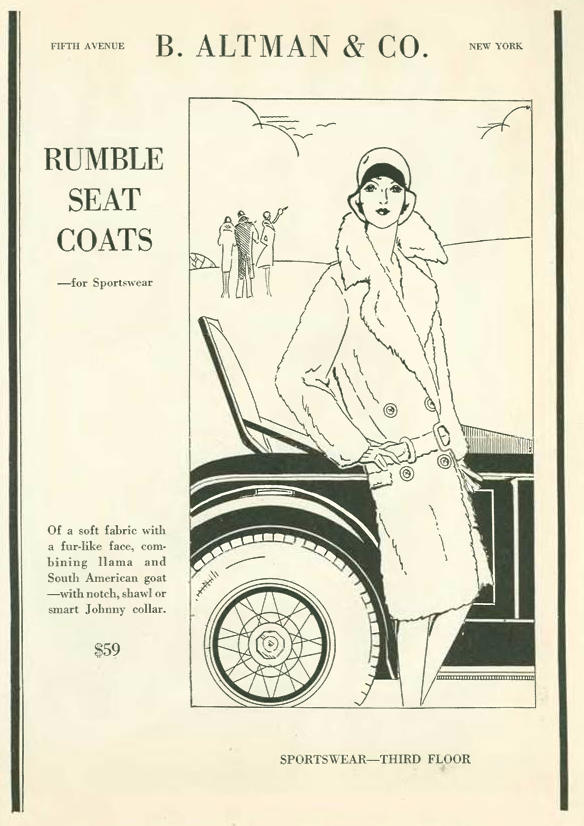
We might associate rumble seats with the carefree joys of the Roaring Twenties, but in reality passengers in these jump seats received little protection from the elements (or flying gravel), and the ride was no doubt jarring atop the rear axle. No wonder you needed a special coat:

Our cartoons for Sept. 22 include this whimsy from Gardner Rea

…and this cartoon by Al Frueh, which depicts the deserted surroundings of the Flatiron Building on Yom Kippur. Robert Mankoff, who served as The New Yorker’s cartoon editor from 1997 to 2017, observed in the Cartoon Desk (Sept. 26, 2012) that “the rapid growth of Jewish-owned businesses in New York made the cartoon relevant in a way that it’s not today. Through modern, politically correct eyes, the cartoon may seem anti-Semitic, but I don’t see it that way. It just depicts the reality of those times, exaggerated for comic effect.”

Next Time: The Tastemakers…


Good Vibrations

A decidedly new sound reverberated in the ears of New Yorkers who attended a Feb. 1928 performance of the New York Philharmonic that featured guest artist Leon Theremin, a Russian inventor who played music by moving his hands through the air, or more accurately, a magnetic field.

February 4, 1928 cover by Gardner Rea.

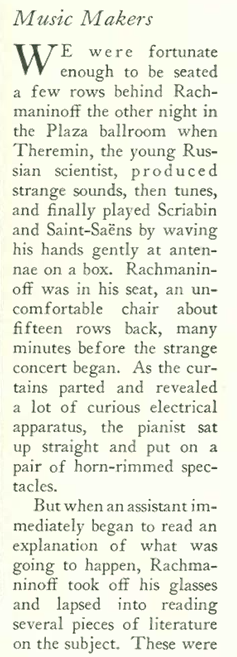
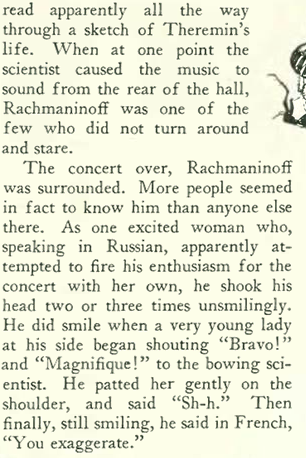
Theremin’s eponymous instrument had neither keys nor strings, but rather two metal antennas attached to an electronic oscillator. Music was produced by moving one’s hands between the antennas, which sensed the relative position of the players hands—one antenna controlled for pitch while the other adjusted the instrument’s volume. The sound produced is best described as “otherworldly.” James Thurber, writing for the “Talk of the Town” (in a piece titled “Music Makers”), found Theremin’s performance intriguing, but of even greater interest was the great Russian pianist and composer Sergei Rachmaninoff—who was in attendance—and his reaction to the strange instrument:

HMMMM…At left, Sergei Rachmaninoff in 1921, as photographed by Kubey Rembrandt. At right, Leon Theremin plays his eponymous instrument at a demonstration concert in Paris on December 8, 1927. (Wikimedia)

The New Yorker’s voyeuristic account of Rachmaninoff continued, with the great man now becoming more engaged in the performance…

The Theremin would grow in popularity, however more as a novelty than a serious instrument:

ON THE AIR…Alexandra Stepanoff playing the Theremin on NBC Radio in 1930. A Russian immigrant to the U.S., the former concert singer was Theremin’s first student in the United States. (Wikimedia)
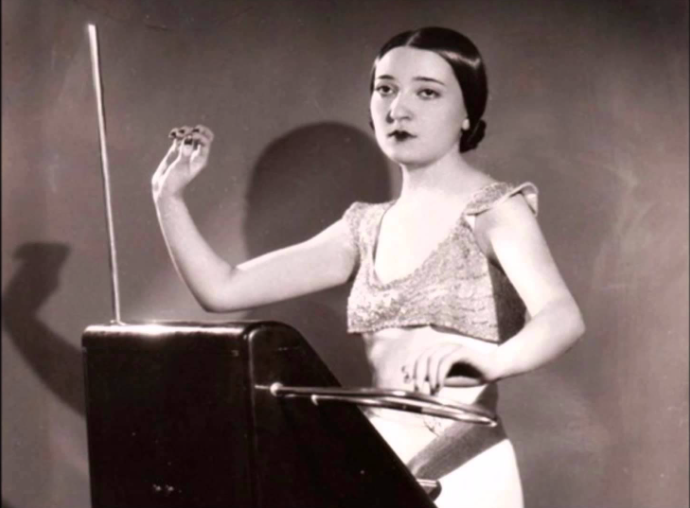
VIRTUOSO…The Russian-born Clara (Reisenberg) Rockmore holds a unique place in music history as the virtuoso performer of the Theremin. Leon Theremin built a custom version of his instrument for Rockmore, which added greater range and sensitivity. Rockmore would sometimes perform concerts with her sister, accomplished pianist Nadia Reisenberg. Photo circa 1930. (PHOTO BY RENATO TOPPO, COURTESY OF THE NADIA REISENBERG – CLARA ROCKMORE FOUNDATION)

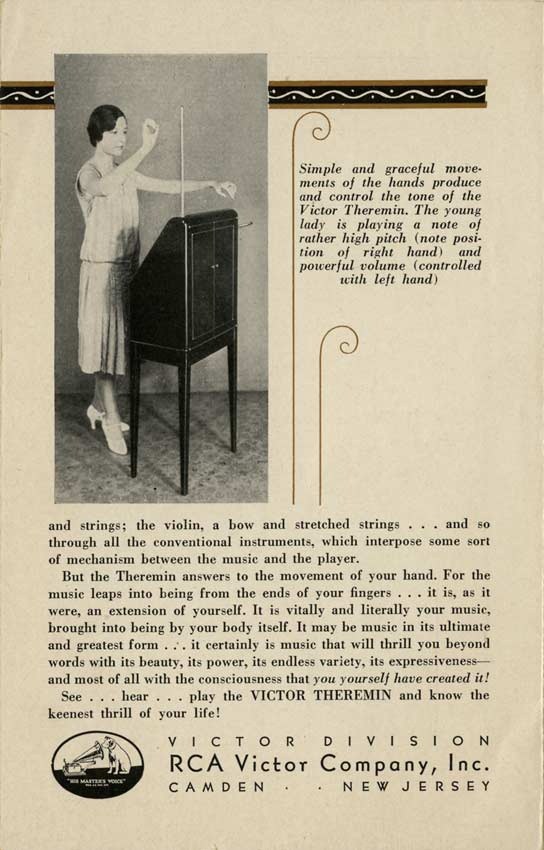
Theremin would be granted a U.S. patent for the instrument in 1928, which was marketed and distributed in the U.S. by RCA during the 1930’s in either DIY kit form or as a finished instrument:

(120years.net)

Interest in the instrument as a novelty continued into the 40’s and 50’s in the DIY market…

(120years.net)

Robert Moog, pioneer of modern electronic music and inventor of the Moog synthesizer, made and sold a transistorized version of the Theremin in the 1950s.

The Theremin would become best known to mass culture through its use in producing “eerie” sound effects in 1940s and 50s films, including Bernard Herrmann’s use of the instrument for the soundtrack to the 1951 sci-fi thriller, The Day The Earth Stood Still. And nearly everyone on the planet has heard the Theremin-inspired sound of the Beach Boy’s song Good Vibrations, created by an electro-Theremin that was developed in the late 1950s to mimic the sound of the original Theremin.

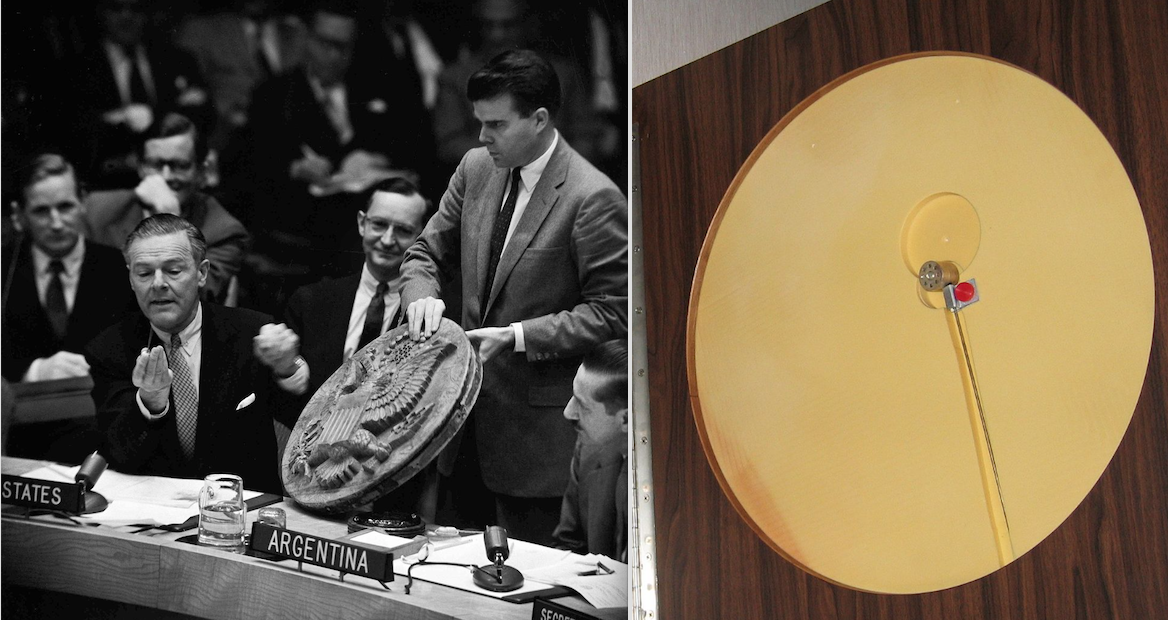
As for Leon Theremin himself, he would also gain notoriety as the inventor of The Thing, a listening device most famously used by the Soviets to bug the U.S. Embassy in Moscow. The device was hidden behind a wood carving of the U.S. Great Seal, which in 1945 was presented by Soviet schoolchildren to the U.S. ambassador, who subsequently hung it in his office.

GOTCHA…American Ambassador to the UN Henry Cabot Lodge displays The Thing before the UN Security Council in 1960. At right, the device which was hidden behind the seal. The Americans discovered the bug in 1952, but didn’t reveal its existence until 1960 in the wake of the U-2 spy plane incident. The Soviet Union had convened the meeting of the United Nations Security Council to accuse the Americans of spying with the U2; in response Cabot displayed The Thing as proof spying between the two countries was a mutual endeavor. (crytomuseum.com/Wikimedia)

The reasons why Theremin developed The Thing for the KGB are a mystery. When he suddenly disappeared from New York in 1938 it was rumored that he had been kidnapped and possibly executed by the KGB. What we do know is that Soviet spooks put him to work in a secret laboratory in the Gulag camp system, where he developed The Thing.

In 1991, filmmaker Steven Martin brought Leon Theremin back to New York to film a documentary about his life. Theremin gave one last performance in 1993, and died that year at age 97.

Wild Kingdom

The New Yorker’s review of the hit film Simba revealed a very different approach to the natural world 89 years ago, when the wilds of Africa were exploited purely for adventure and thrills rather than for any real understanding of natural systems and the animals and humans that inhabited them. Martin and Osa Johnson were celebrated for their filmed exploits in the wilds, including Simba; they touted their movie—shot in Kenya—as being made under the auspices of the American Museum of Natural History, although much of the film was staged or edited in ways to maximize the thrills.

The New Yorker found the film to be “darn good fun”…

Despite its flaws, the film does offer us a glimpse of Africa when wildlife hadn’t been hunted to near extinction, although the Johnsons didn’t hesitate to gun down animals left and right in the course of their movie-making.

According to a 2011 review from Wild Film History, “in stark contrast to the conservation-themed wildlife films of today, the Johnsons approached their subjects armed with both camera and rifle, with the production including provoked behavior, staged confrontations and animals shot to death on film. Relying heavily on cutting in kills from professional marksmen, numerous hunting scenes culminate in a heart-stopping sequence where, with the use of clever editing, the adventurous Mrs Johnson appears to bring down a charging rhinoceros with one well-aimed shot.

A FUN-LOVING NATURE…Osa Johnson saddles up a hapless zebra. (Daily Mail)

 *  *  *

From the Advertising Department

There were three automobile ads in the Feb. 4 issue, all from long-gone companies—Pierce-Arrow, Hudson-Essex, and Nash, which featured this endorsement by the brother-sister dancing duo Fred and Adele Astaire:

This ad for Dynamique showcased the art deco stylings of its furniture line…

And finally, a Peter Arno cartoon of an upper class faux pas

Next Time: Literary Rotarians…

The Perfect Gift for 1927

We close out 1927 by looking at the final December issues, which grew fat with Christmas advertising catering to the tastes of New York’s smart set.

dec-10
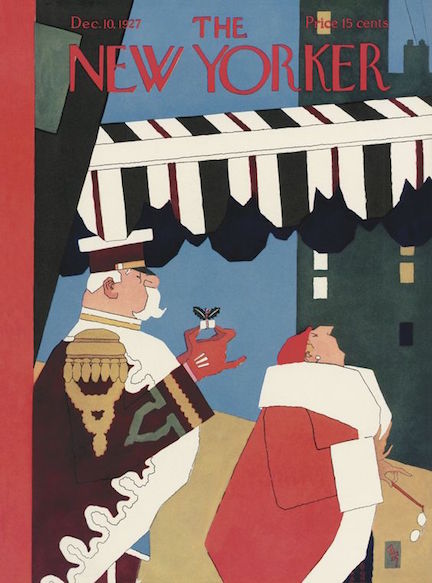
December 10, 1927 cover by Gardner Rea.

Before we jump to the ads, let’s look in on Lois Long, who in the Dec. 10 issue continued her lamentations regarding the quality of New York’s Prohibition-era night life and reminded readers that her job was far from a “soft snap”…

screen-shot-2017-02-06-at-10-03-06-am

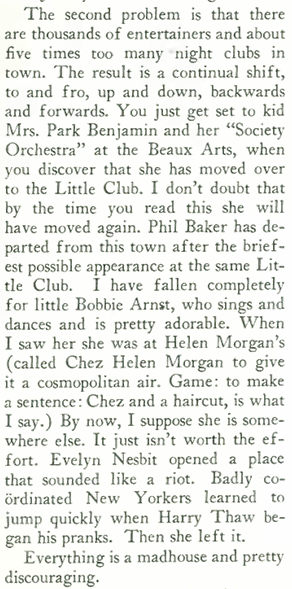
The problem, as diagnosed by Long, was that there were not enough talented entertainers to fill the needs of an overabundance of nightclubs…

screen-shot-2017-02-06-at-10-04-09-am

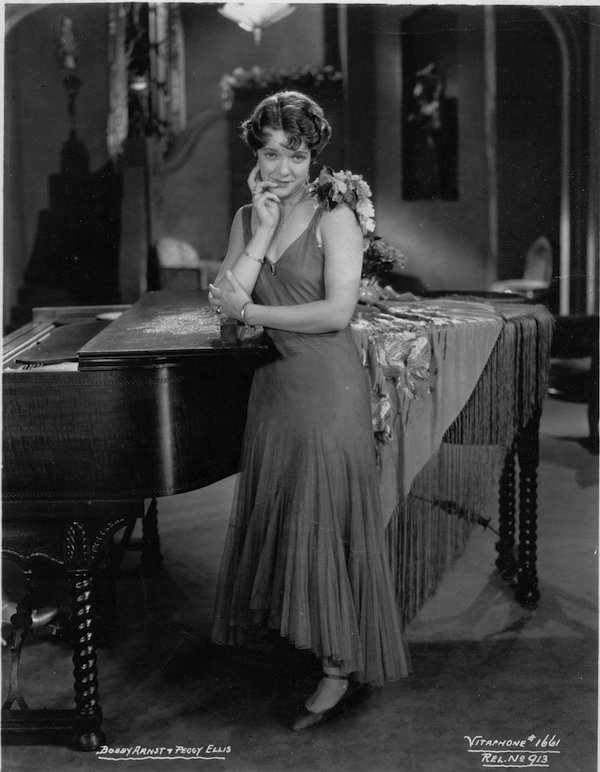
vit-94-bobbe-arnst1
LOIS THOUGHT BOBBIE ARNST WAS PRETTY SWELL when she appeared at Helen Morgan’s nightclub. A noted broadway singer and dancer, Arnst is pictured above in a publicity photo from the 1929 film Rhythms in Blue. (picking.com)
screen-shot-2017-02-07-at-12-33-26-pm
ON THE OTHER HAND…Evelyn Nesbit’s tearoom (and later speakeasy) couldn’t survive on notoriety alone. In the early 20th century Nesbit’s face was everywhere—from advertisements to calendars—but in 1906 her fame took a nasty turn when her jealous husband, Harry Thaw, shot and killed suspected lover and famed architect Stanford White at Madison Square Garden’s rooftop theatre. At left, Nesbit in 1900. At right, Nesbit in her tea room on West 52nd Street, near Broadway, circa 1922. (Library of Congress / restaurant-ingthroughhistory.com)

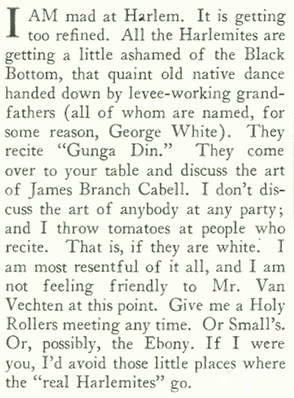
Long also railed against the white appropriation of Harlem entertainment, which she felt was draining the place of its soulfulness. In particular she called out writer and photographer Carl Van Vechten, who among white writers was the most prominent in intellectualizing the “Harlem Renaissance”…

screen-shot-2017-02-06-at-11-43-27-am

What to Buy in ’27

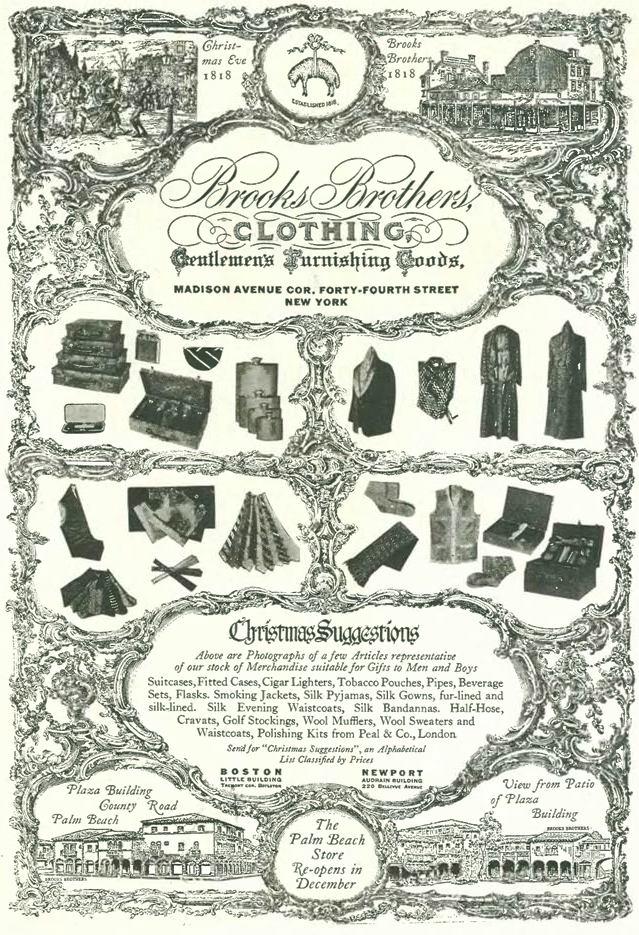
The Dec. 10 and Dec. 17 issues grew fat with holiday advertising, averaging 120+ pages as opposed to the usual 60 or so pages. The advertisements mostly appealed to upscale readers, ranging from this almost Victorian-style ad from the staid Brooks Brothers…

screen-shot-2017-02-06-at-9-46-21-am

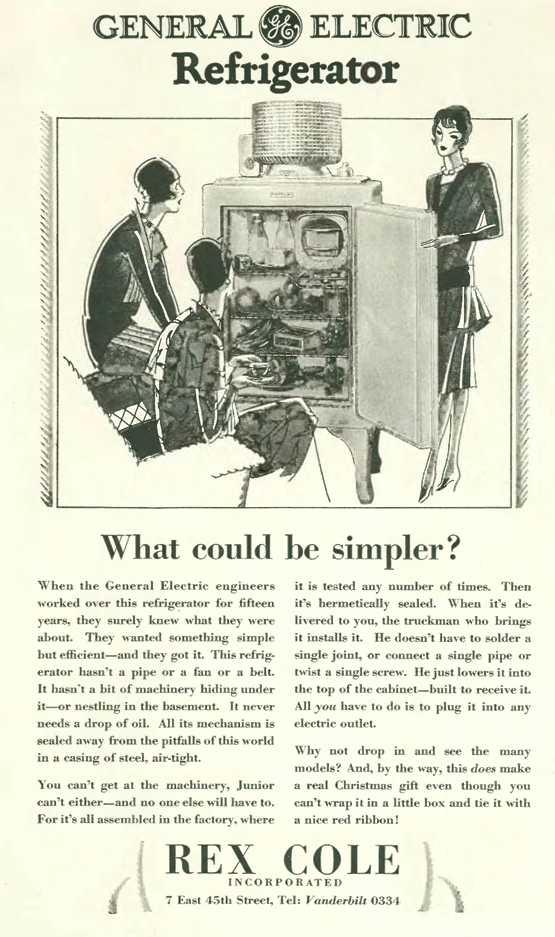
…to this ad from Rex Cole promoting the latest in modern conveniences…

screen-shot-2017-02-06-at-9-56-44-am

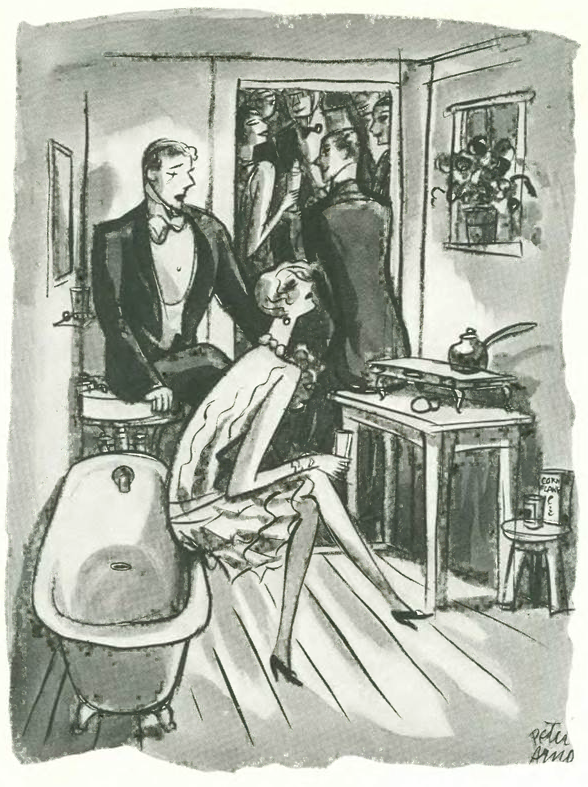
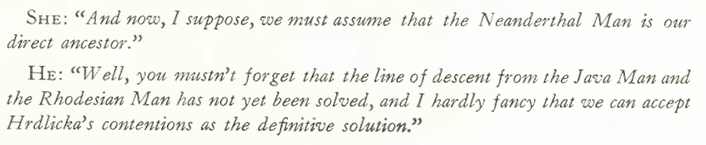
And I’ll toss in this cartoon from the Dec. 10 issue, in which Peter Arno allows us to listen in on an unlikely conversation between a couple of toffs…

screen-shot-2017-02-06-at-9-53-54-am

screen-shot-2017-02-06-at-9-54-11-am

Lois is Also Tired of the Holidays

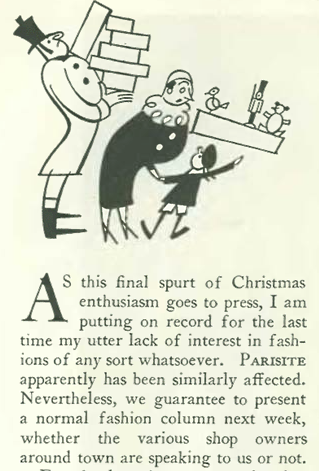
On to the Dec. 17 issue, in which Lois Long also shared with readers her weariness of Christmas shopping in her column, “On and Off the Avenue.”

dec-17
December 17, 1927 cover by Theodore G. Haupt.

The “Parisite” Long referred to in this excerpt was actually Elizabeth Hawes, who occasionally contributed to Long’s column (with cables sent from Paris) regarding the latest in French fashions. More on Hawes another time…

screen-shot-2017-02-06-at-12-11-30-pm

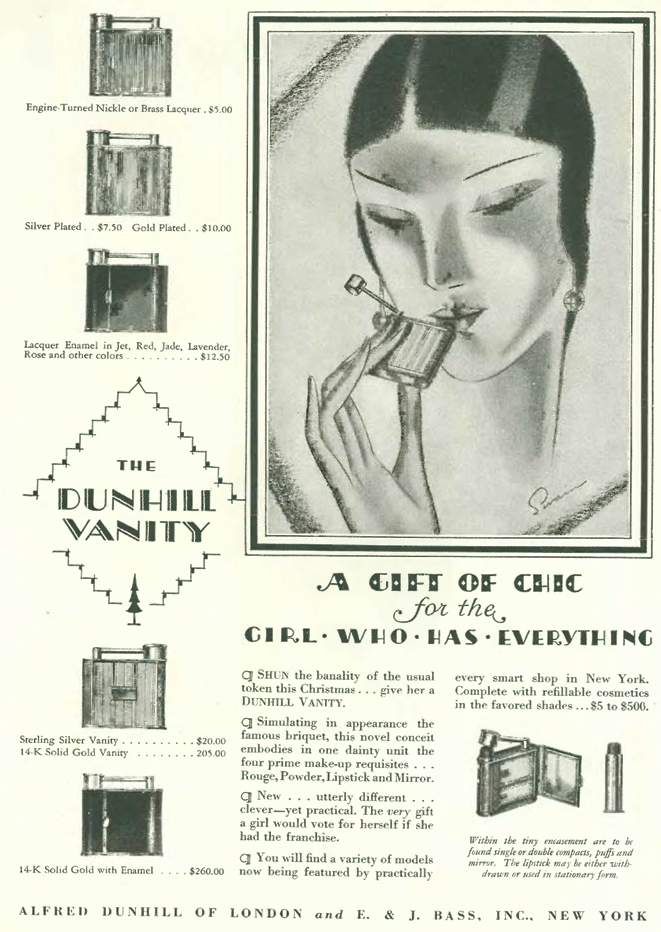
As for ads in the Dec. 17 issue, we get this one from Dunhill, maker of fine English cigarettes and accessories: a woman’s compact that resembles a lighter…

screen-shot-2017-02-06-at-12-07-21-pm

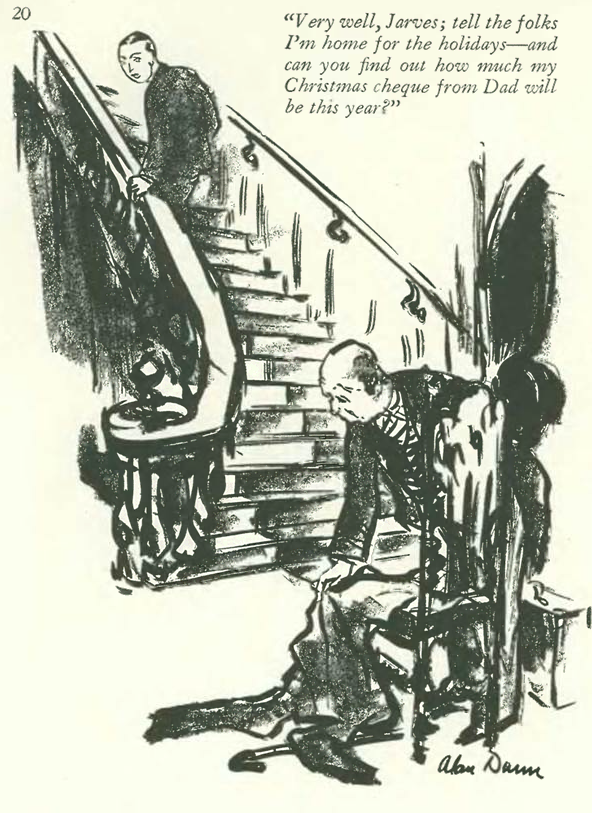
…and the same issue offers this glimpse into the life a spoiled rich kid, home from college for the holidays. The cartoon is by Alan Dunn, one of the most published New Yorker cartoonists (1,906 cartoons from 1926 to 1974)…

screen-shot-2017-02-06-at-11-52-12-am

With Christmas advertising over, the magazine’s page length dropped by half from the Dec. 17 to the Dec. 24 issue…

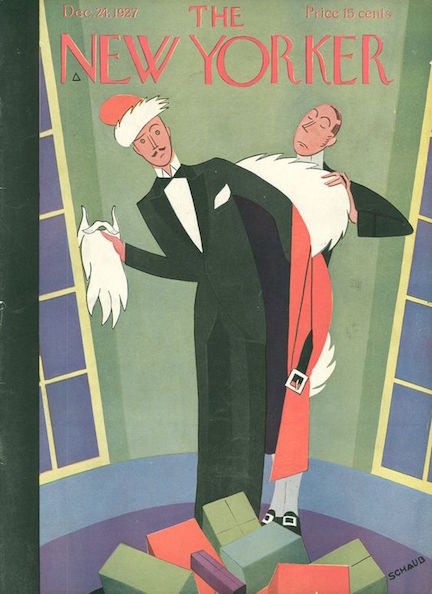
dec-24
December 24, 1927 cover by Andre De Schaub.

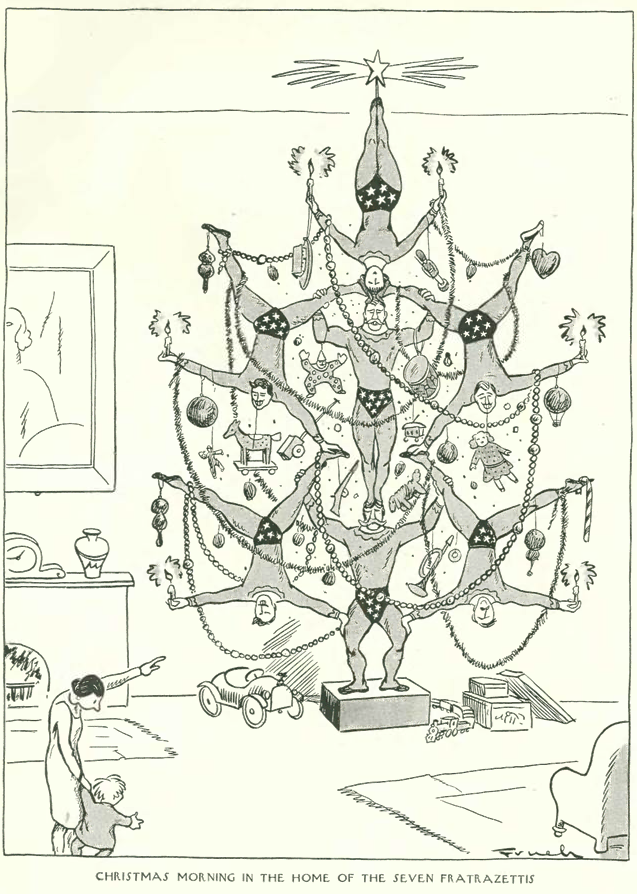
…in which we find this holiday-themed illustration by Al Frueh:

screen-shot-2017-02-06-at-12-26-56-pm

Why We Sing Auld Lang Syne

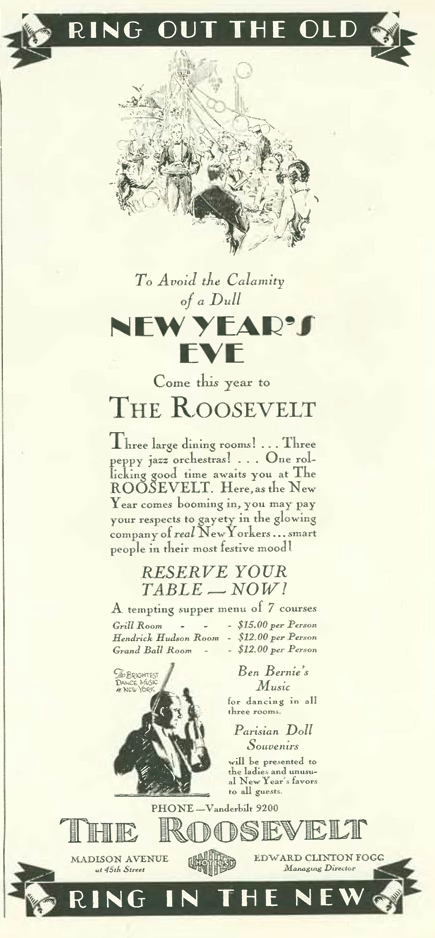
This advertisement in the Dec. 24 issue invited readers to celebrate the New Year at The Roosevelt Hotel…
screen-shot-2017-02-06-at-12-27-47-pm

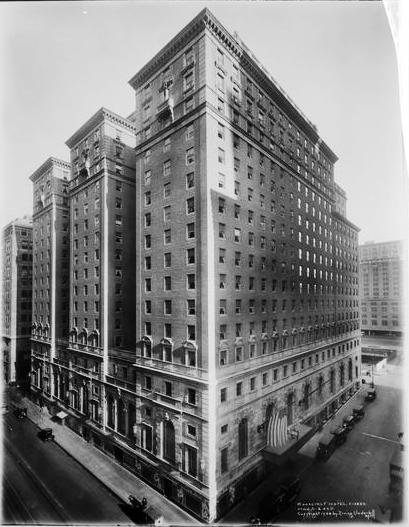
roosevelt-hotel-1924
The Roosevelt Hotel after its completion in 1924 (Museum of the City of New York)
1387211957-0
AULD ACQUAINTANCE…If you want to know why we sing “Auld Lang Syne” on New Year’s Eve, you can thank Guy Lombardo and his Royal Canadian Band, which made the song a staple at his New Year’s performances beginning in 1929 at the Roosevelt Hotel. Their performance that night was broadcast on the radio before midnight Eastern time on CBS, then after midnight on NBC radio. (neatorama.com)

 *  *  *

Now Let’s Get Out of Here

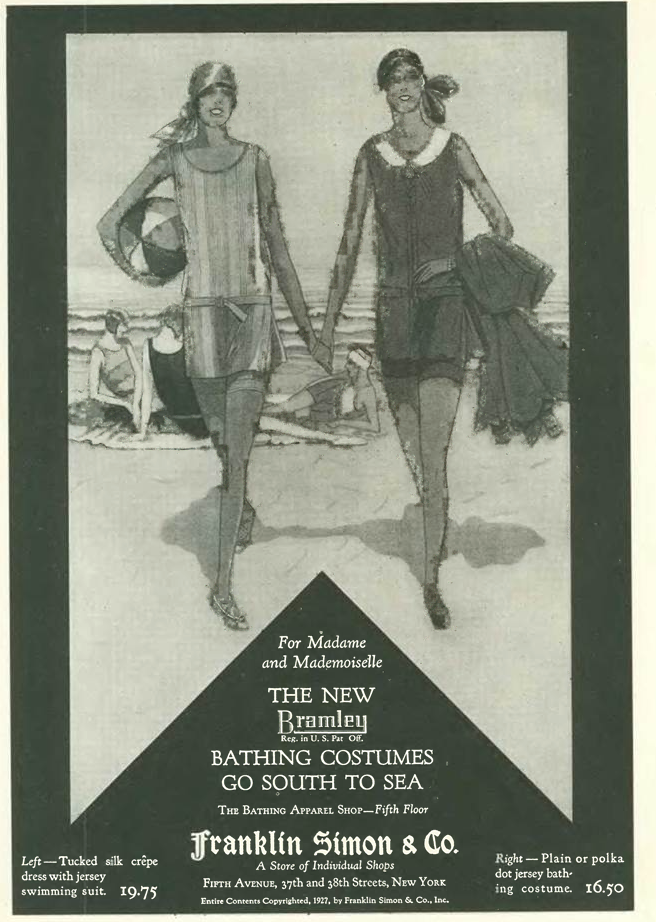
With the holidays out of the way, New Yorkers still faced a good three months of winter. That is, unless you were well-heeled enough to head south to Palm Beach. Considering the abundance of ads promoting travel to southern climes in the Dec. 24 and 31 issues, apparently many of the magazine’s readers possessed the means to do just that…
screen-shot-2017-02-06-at-12-29-05-pm

screen-shot-2017-02-06-at-12-29-15-pm

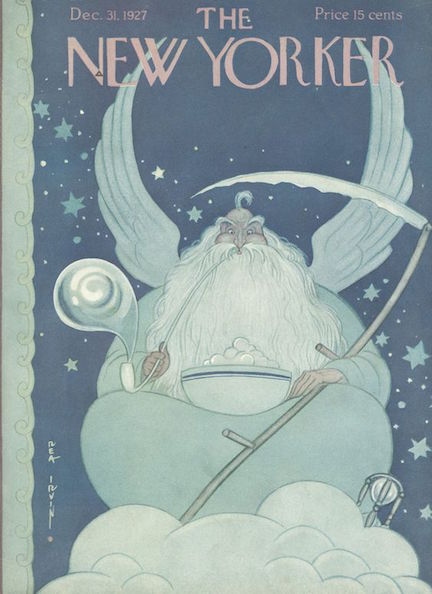
And we close this entry, and the year of 1927, with this cover…

dec-31
December 31, 1927 cover by Rea Irvin.

…and another tropical-themed advertisement, courtesy of Russeks…

screen-shot-2017-02-06-at-12-31-07-pm

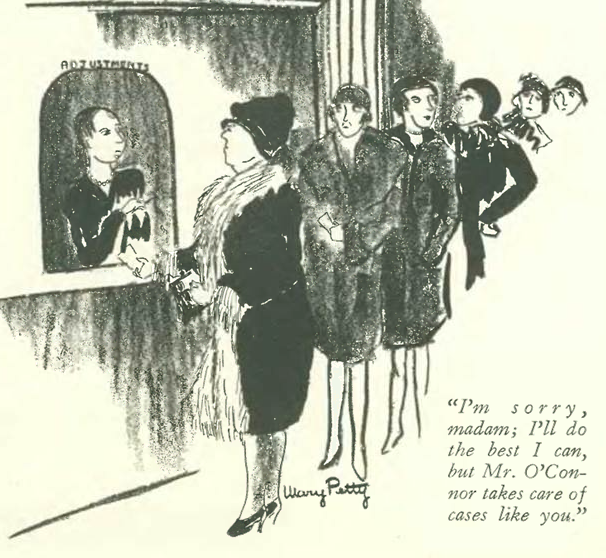
…and this cartoon by Mary Petty depicting those who were left behind, still returning their Christmas gifts…

screen-shot-2017-02-06-at-12-32-39-pm

Next Time: Odious Odes…

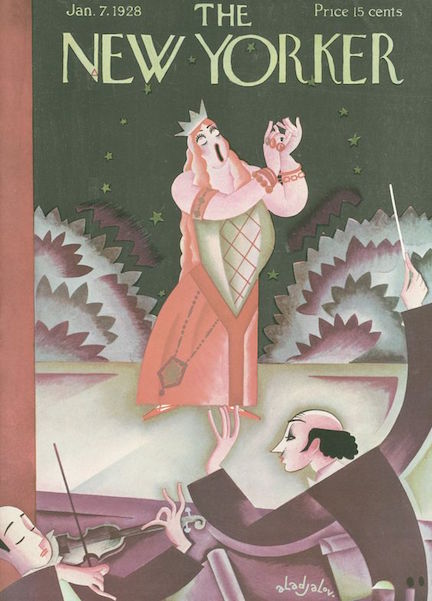
jan-7


Wits of the Round Table

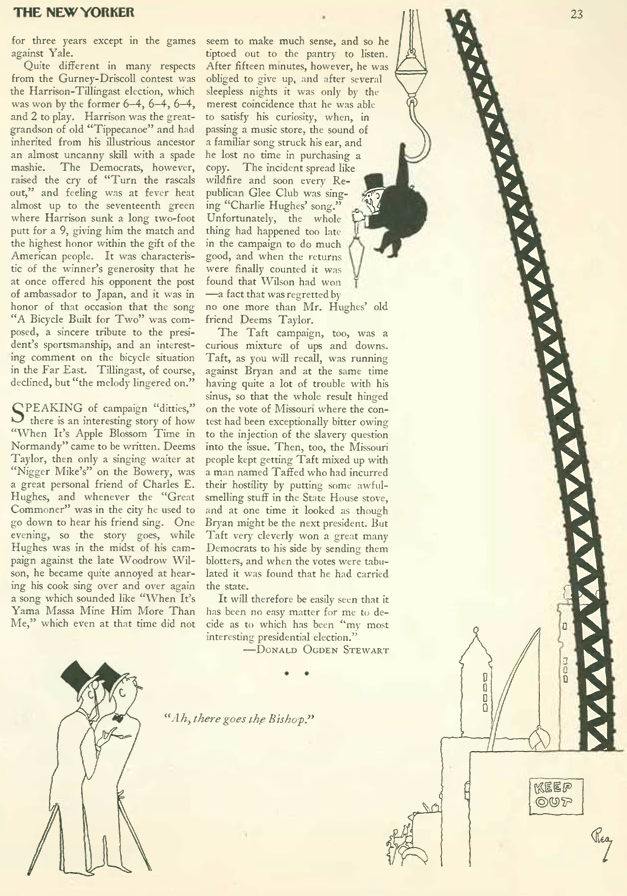
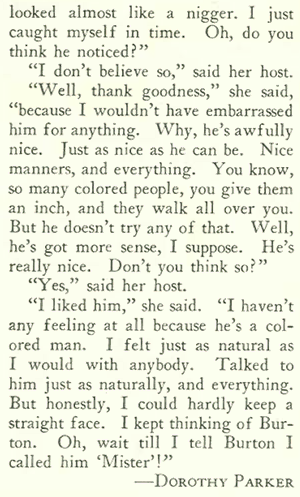
Two big voices from the famed Algonquin Round Table were prominently featured in the Oct. 1 and Oct. 8, 1927 issues of the New Yorker–journalist and champion of the underdog Heywood Broun wrote his own “Profile” under the title, “The Rabbit That Bit the Bulldog,” and Dorothy Parker served up biting satire in “Arrangement in Black and White,” a clever exposé of racism among the fashionably “open-minded” upper classes.

488a50459a792547010d30e8bfe5ddf4
October 1, 1927 cover by Gardner Rea.

The Rabbit That Bit the Bulldog

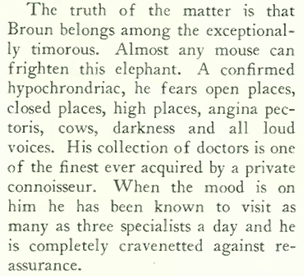
Hiding under the signature “R.A.”, Heywood Broun (1888–1939) was merciless as his own profiler, describing himself as a coward, hypochondriac, and a slob (there is truth to the latter, however, as friends often likened him to “an unmade bed”).

screen-shot-2016-12-08-at-9-06-52-am

Broun cut his teeth in journalism as a sportswriter and war correspondent. In 1921 he went to work for the New York World, where he penned his popular syndicated column “It Seems to Me.” Broun’s New Yorker “Profile” was written after he was fired from the World following a disagreement with his editor over his critical commentary on the sentencing of anarchists Sacco and Vanzetti. Broun would move on to The Nation, where he would write a regular column, “It Seems to Heywood Broun,” that would offer criticism on a number of topics including his former employer, the World.

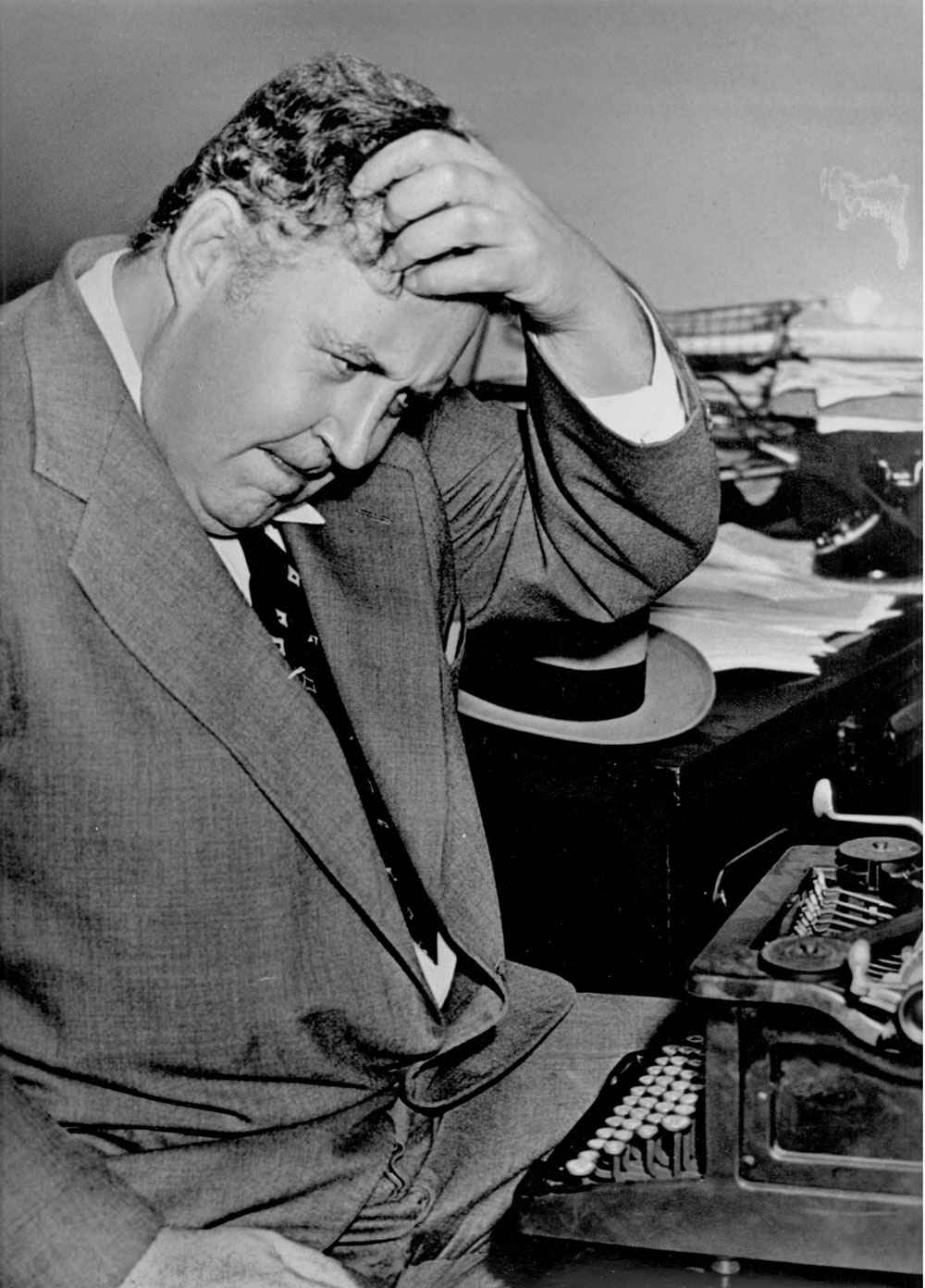
Heywood Broun. (Denver Newspaper Guild)

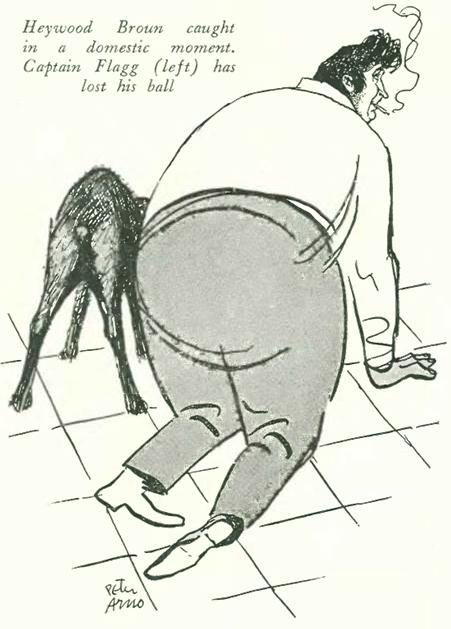
The New Yorker profile included this caricature by Peter Arno

screen-shot-2016-12-06-at-9-46-21-am

…a portrayal Broun claimed was inaccurate due to his “habitual stoop,” among other faults…

screen-shot-2016-12-06-at-9-52-23-am

screen-shot-2016-12-06-at-9-52-34-am

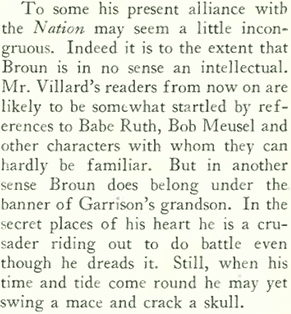
…and he mused about his future with the Nation, and how that august publication would square with his various foibles…

screen-shot-2016-12-06-at-9-52-45-am

…and as for his personal appearance and habits, Broun weighed in thusly…

screen-shot-2016-12-06-at-9-55-18-am

Broun married social activist Ruth Hale in 1917. A son born the following year, Heywood Hale Broun, would have a long and successful career as an author, sportswriter, commentator and actor.

*  *  *  *  *

The Long Count

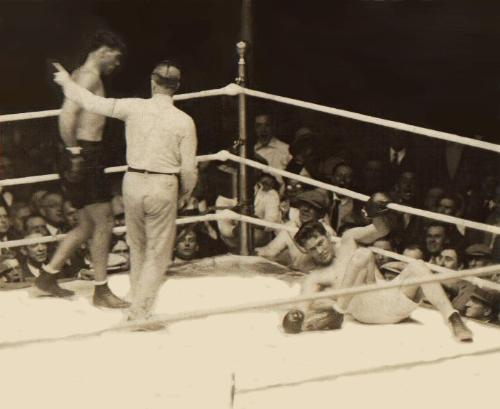
Oddly, The New Yorker had little to say about the famous Chicago rematch between heavyweight boxers Gene Tunney and Jack Dempsey, which Tunney won after the controversial “long count.” The fight took place under new rules that gave a fallen fighter ten seconds to rise to his feet, but the count would not begin until his opponent moved to a neutral corner.

tumblr_mti3g257h11rnxl9do1_500
DAZED AND CONFUSED…Referee Dave Barry motions Jack Dempsey to a neutral corner before he begins his count. Gene Tunney got back up and went on to win the fight. (Chicago Tribune archive photo)

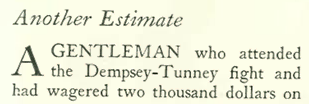
Although Tunney dominated the fight, Dempsey unleashed a flurry in the seventh round that knocked Tunney to the canvas–it was the first time in Tunney’s career that he’d been knocked down. Instead of going immediately to a neutral corner, Dempsey just stood and observed his opponent for several seconds until finally retreating. Those extra seconds proved just enough time to allow Tunney to return to his feet and eventually win the bout. To one observer quoted in “The Talk of Town,” those extra seconds really dragged…

screen-shot-2016-12-06-at-9-44-49-am

screen-shot-2016-12-06-at-9-44-55-am

From the Ad Department

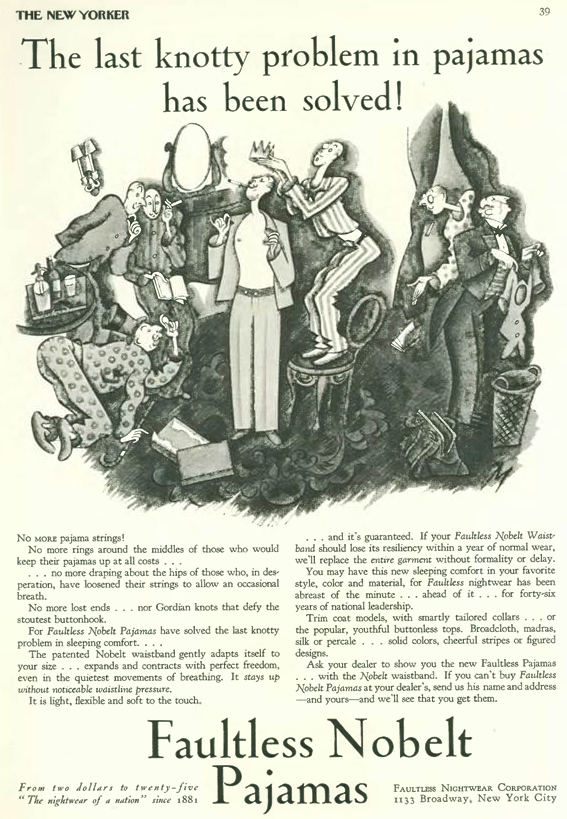
We feature this Julian de Miskey-illustrated advertisement for Faultless Nobelt Pajamas. Apparently these special PJs had some sort of newfangled rubber elastic band…

screen-shot-2016-12-06-at-9-57-42-am

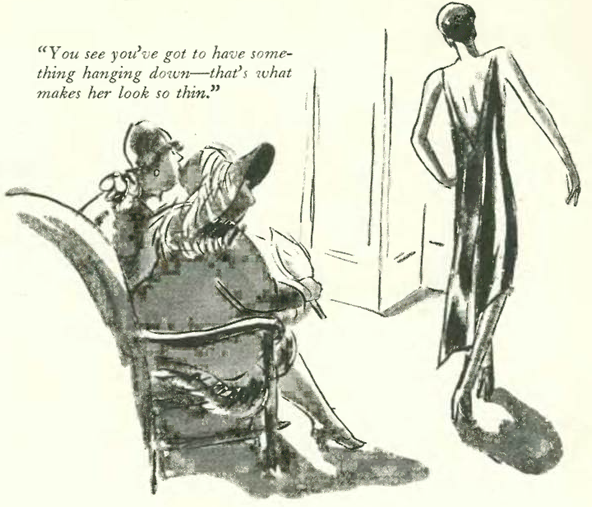
…and this cartoon from the Oct. 1 issue featured Helen Hokinson’s ditsy society women at New York’s Fashion Week…

screen-shot-2016-12-06-at-9-43-37-am

 *  *  *  *  *

Dorothy Takes On the Snobs

In the Oct. 8 issue, our other Round Table wit, Dorothy Parker, took aim at the less savory aspects of society women in her short fiction piece, “Arrangement in Black and White.”

f19964a9d1e1b6179fe2715bb3b1aa72
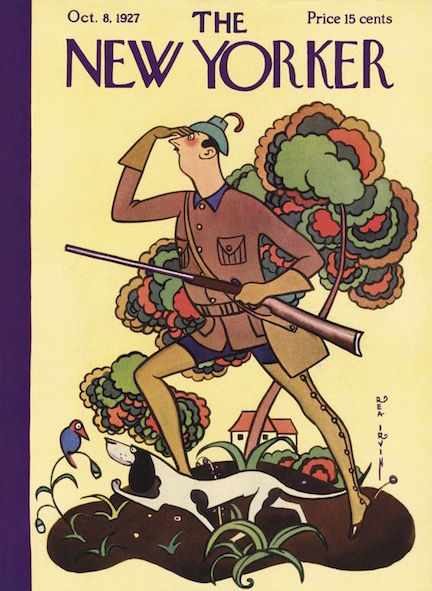
October 8, 1927 cover by Rea Irvin.

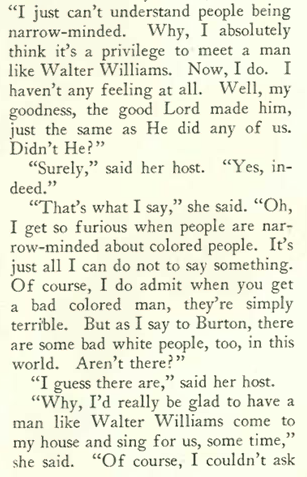
Parker began her piece by introducing us to a woman who enters a party wearing a wreath of “pink velvet poppies” in her golden hair. In short order she asks the party’s host to “pretty please” introduce her to the party’s guest of honor, an African American singer named Walter Williams.

The woman with the pink velvet poppies goes on to tell her host that she came to the party alone because her husband, Burton, preferred not to socialize with “colored people”–but she however was “simply crazy” about some of them. “They’re just like children–just as easy-going, and always singing and laughing and everything.” Before she met the singer she observed to the host:

screen-shot-2016-12-06-at-1-18-25-pm

screen-shot-2016-12-06-at-1-19-09-pm

screen-shot-2016-12-06-at-1-16-57-pm
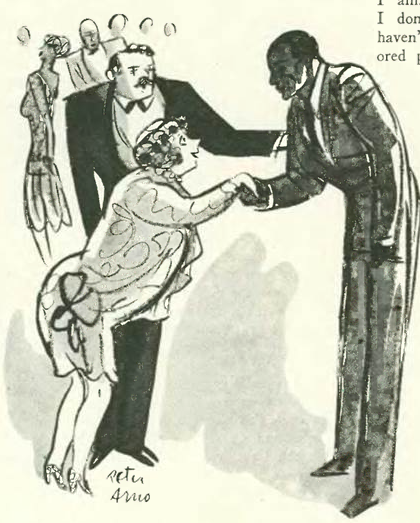
The woman with the pink velvet poppies meets the singer Walter Williams, as illustrated by Peter Arno.

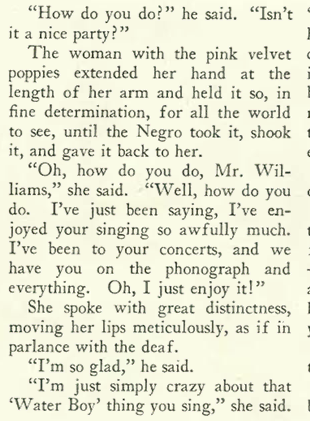
Then the woman with the pink velvet poppies meets Walter Williams:

screen-shot-2016-12-06-at-1-19-42-pm

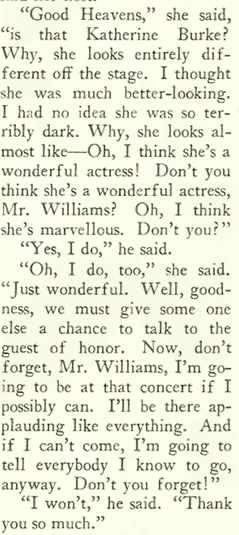
She continues to patronize the guest of honor, then notices a stage actress at the party:

screen-shot-2016-12-08-at-12-32-44-pm

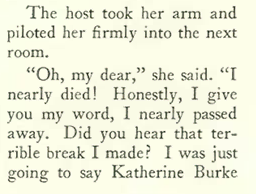
Finally, the host guides the woman with the pink velvet poppies away from Walter Williams…

screen-shot-2016-12-06-at-1-21-59-pm

screen-shot-2016-12-06-at-1-22-30-pm

05325779fdf286303013d76dc9e89388
BITING WIT…Dorothy Parker in the 1920s.

We will see more of Dorothy Parker in issues to come as she continues to take aim at the pretentious, hypocritical, self-absorbed snobs of the Jazz Age and beyond.

Baseball’s Lament

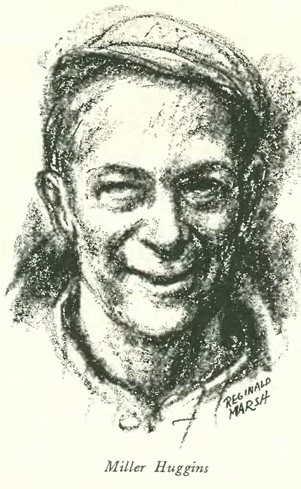
The Oct. 1 and 8 issues covered yacht racing, polo, tennis, golf and college football, but still no baseball. The 1927 New York Yankees would be one of the greatest teams of all time, but as the World Series commenced all we got from The New Yorker was a personality profile of Yankees manager Miller Huggins in the Oct. 8 issue (with a drawing by Reginald Marsh)…screen-shot-2016-12-06-at-1-24-05-pm

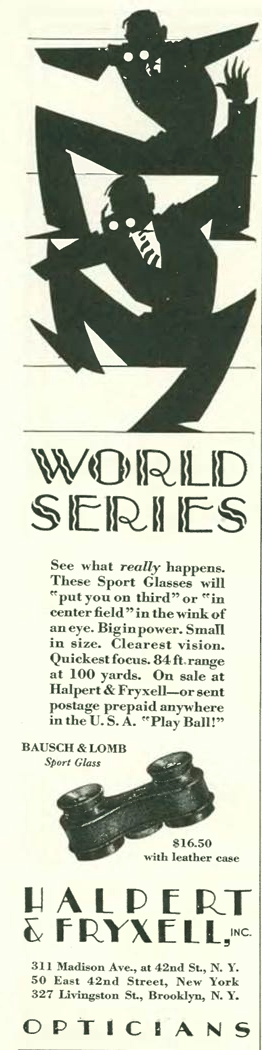
…and this advertisement for “Sport Glasses” for those attending the World Series…

screen-shot-2016-12-06-at-4-34-19-pm

Perhaps The New Yorker had no one on staff who could competently write about baseball. The strangest reference to the game was this article about polo, but for some reason it was illustrated with baseball images. Perhaps the editors felt sheepish about their lack of baseball coverage, and offered these illustrations by Howard Baer as a token acknowledgement…

screen-shot-2016-12-06-at-1-28-18-pm

At any rate, we end with this cartoon by Julien de Miskey, who like his colleagues explored the comic richness of wealthy old men paired with their young mistresses…

screen-shot-2016-12-06-at-1-16-04-pm

Next Time: The Ephemeral City…

f19964a9d1e1b6179fe2715bb3b1aa72


They Call It Burlesque

Screenshot 2015-06-09 14.01.58
August 22, 1925 cover by A.E. Wilson.

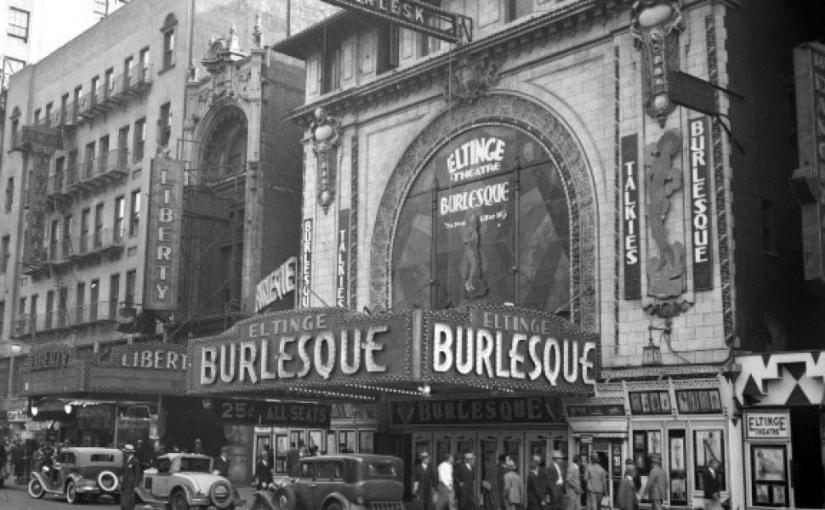
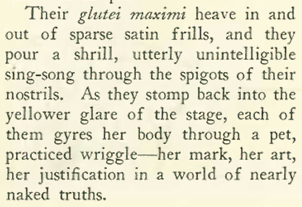
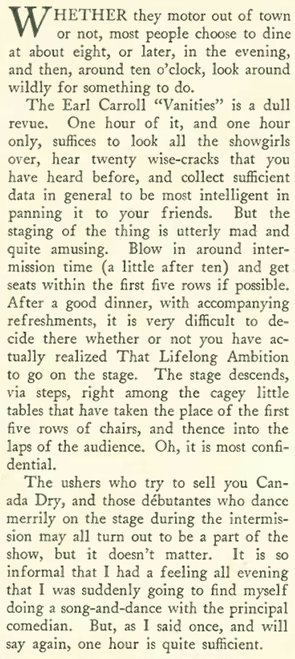
The critic Gilbert W. Gabriel was more than a bit appalled by the spectacle at the old Olympic Theatre, where a tired and “degenerated” cast of burlesque performers took turns shaking their ancient haunches in the direction of the former Julliard student.

Gilbert’s article in the August 22, 1925 New Yorker, “They Call It Burlesque,” described the performance at the Olympic on East Fourteenth Street as “on its last legs.” The once “honest animalistic, gorgeously orgiastic burlesque show of ten or twenty years ago” had “degenerated in decency,” he wrote.

Screenshot 2015-06-12 11.13.55
Illustration in The New Yorker of the Olympic Burlesque by Reginald Marsh.

As the performers wiggled up and down the runways, Gilbert noted:

Screenshot 2015-06-12 11.06.57

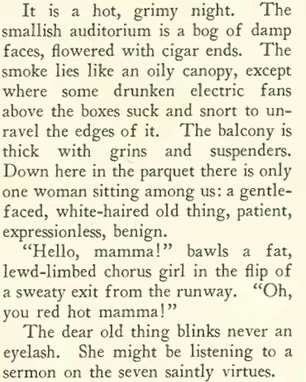
The audience was an equally sad lot:

Screenshot 2015-06-12 11.08.02

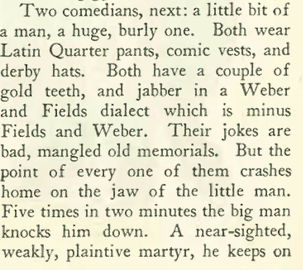
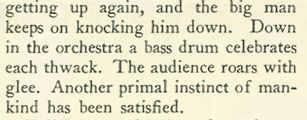
There is some relief expressed when two comedians appeared, but they offer an unimaginative routine:

Screenshot 2015-06-12 11.10.25

Screenshot 2015-06-12 11.10.33

And then back to the dancers:

Screenshot 2015-06-12 11.11.03

Screenshot 2015-06-12 11.11.26

And still more…

Screenshot 2015-06-12 11.11.56

Happier news over in “The Talk of the Town,” where jazz was getting some respect: “Jazz, successor to the outcast ragtime, each day is becoming acceptable. It is the young brother of the musical family, irresponsible and at time highly irritating, but, nevertheless, acknowledged.”

It was reported that even famed violinist Jascha Heifetz “dabbled” in jazz as an amusement, and writers of jazz were “no longer those products of East Side dives,” but rather included the likes of Buddy de Sylva, lyrist to Al Jolson, and George Gershwin, “high priest of jazz,” who was besieged by symphony conductors for his “Symphony in Blue” (better known today as Rhapsody In Blue).

“Talk” continued its lament of the changing face of Fifth Avenue:

Screenshot 2015-06-12 14.20.34

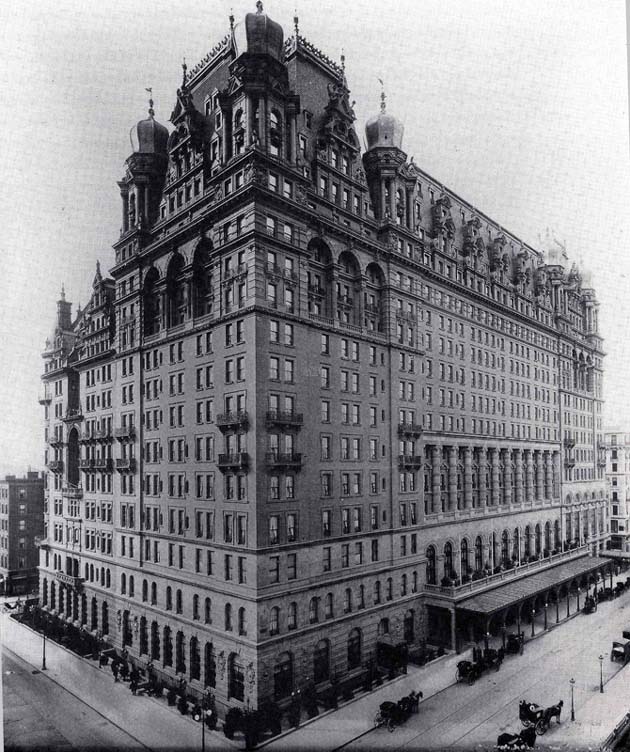
And the Waldorf Astoria was being remodeled in order to add shops on the ground floor along with “125 bathrooms,” giving the famed hotel “a bath for almost every room.” In just four years the old Waldorf would be torn down and replaced by the Empire State Building.

017- Waldorf Astoria
The old Waldorf Astoria was getting an upgrade, but it would fall to a wrecking ball in only four years. (nycago.org)

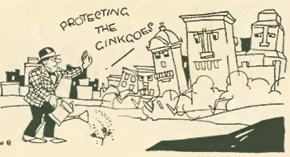
“Talk” also noted the planting of Ginkgo trees in the city:

Johan BullScreenshot 2015-06-10 16.20.44

Screenshot 2015-06-10 16.20.33

Although prized today for their beauty and hardiness, not all New Yorkers are in love with the strong odor of its fruit. In the June 30, 2008 issue of The New Yorker, Lauren Collins examined the activities of the “Anti-Ginkgo Tolerance Group” in her article “Smelly Trees.”

“Talk” also offered a brief glimpse into the latest adventures of Pola Negri, noting in its “This Week” section that the actress had paid “$57,000 customs dues in seized jewels…”

honey-kennedy-pola-negri-by-edward-steichen-vanity-fair-june-1925-02
Pola Negri liked nice things (Edward Steichen for Vanity Fair, 1925)

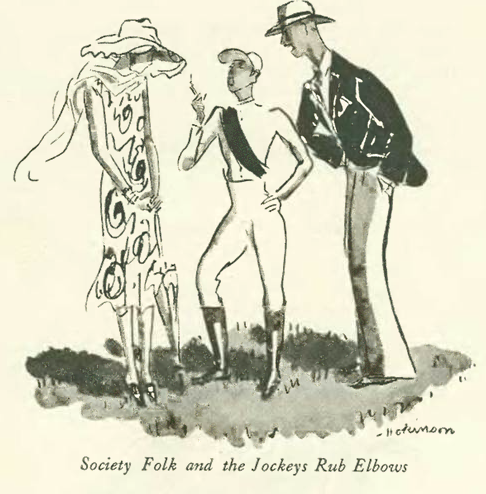
In other items, Helen Hokinson provided illustrations for an article on the horse races at Saratoga…

Screenshot 2015-06-12 14.24.41

John Tunis examined the life of tennis star Elizabeth “Bunny” Ryan in “Profiles” … and E.B. White and Alice Duer Miller offered their thoughts on why they liked New York:

Screenshot 2015-06-12 14.27.59

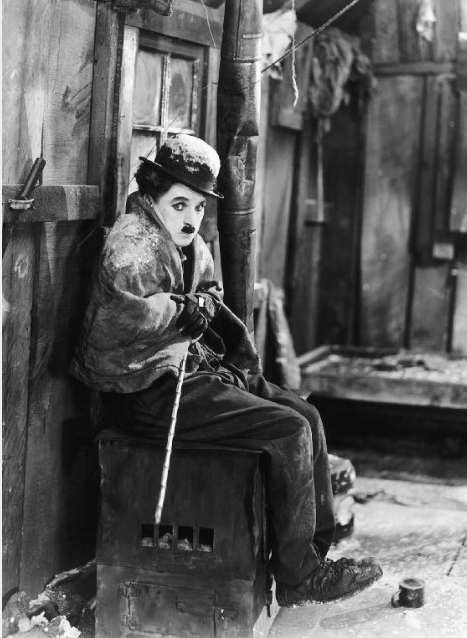
“Moving Pictures” featured a lengthy review of Charlie Chaplin’s The Gold Rush. Theodore Shane (“T.S.”) wrote that the film’s opening night at the Strand attracted such celebrities as Will Rogers and Constance Bennett.

Screenshot 2015-06-12 16.21.41
Cheer Up Charlie…Chaplin in The Gold Rush (1925) (United Artists)

Shane observed that this “dramatic comedy” was a “serviceable picture,” but perhaps Chaplin was getting “too metaphysical about his pathos” and could have used some old-fashioned pie-in-the-face slapstick.

As an example, in a scene in a typical Klondike town, Shane wrote that “one might be given to expect wonders of Gold Rush burlesque with the old Chaplin at the receiving end of the Klondike equivalent of a custard. But one is doomed to disappointment, for Chaplin has seen fit to turn on his onion juices in a Pierrot’s endeavor to draw your tears…We cannot help but recall with a tinge of sadness, the old days when custard was young.”

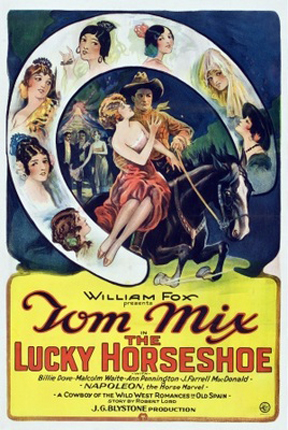
The_Lucky_Horseshoe_1925_Poster
(Wikipedia)

Shane went on to give short but favorable reviews to Rex Reach’s Winds of Chance (at the Piccadilly Theatre), the film’s chief props consisting of “string ties, wooden saloons, ½ dozen cold-blooded murders and the tenderfoot who conquers everything…Shane also noted that the “spiritual features” of Tom Mix in The Lucky Horseshoe (at the Rialto) lent themselves delightfully to “a lovely and sensitive drama of moyen age and modern machinations in the Fairbanks style.”

In “Books,” Harry Este Dounce (“Touchstone”) suggested readers take a look at Carl Van Vechten’s Firecrackers as a good introduction to the writer’s unique style, while J.D. Bereford’s The Monkey Puzzle was deemed only “partly good” but worth reading.

Screenshot 2015-06-12 16.35.08
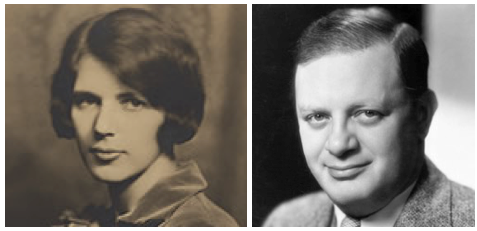
Lois “Lipstick” Long and Herman J. Mankiewicz. (PBS/Wikipedia)

In her regular nightlife review (“When Nights Are Young”), Lois Long (“Lipstick”) playfully sparred with her New Yorker colleague, theater critic Herman J. Mankiewicz:

Screenshot 2015-06-12 14.58.10

Long was referencing this Mankiewicz review in a previous issue (Aug. 8):

Screenshot 2015-06-12 15.05.24

And it all started when Long offered this observation in her July 25 “When Nights Bold” column:

Screenshot 2015-06-12 15.11.51

I hope you are fully sated. As a palate cleanser, I offer yet another droll observation of the world of old money by Gardner Rea:

Screenshot 2015-06-12 14.30.06

Next time: The waning summer season…

Screenshot 2015-06-10 16.51.20

The Vicious Circle

Screenshot 2015-05-08 15.49.29
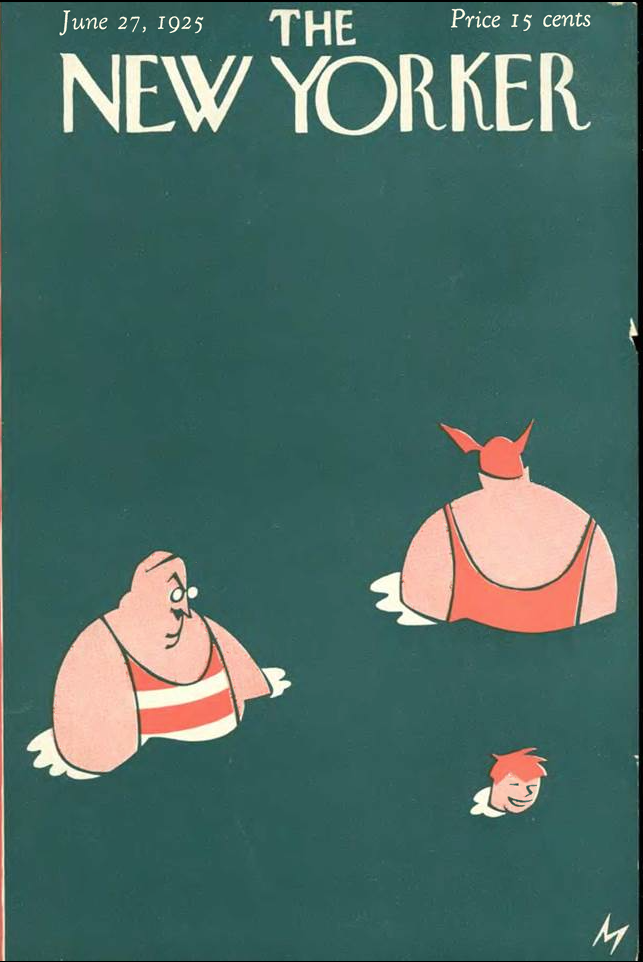
June 27, 1925, cover by Julian de Miskey (New Yorker digital archive)

With a lull in the news from the Scopes Trial, the June 27, 1925 is another hodgepodge of seemingly random bits. Perhaps this is a good time to look at  some of the magazine’s early artists, editors and writers.

The masthead of the very first issue listed these founding (ceremonial) Advisory Editors: Ralph Barton, Marc Connelly, Rea Irvin, George S. Kaufman, Alice Doerr Miller, Dorothy Parker and Alexander Woollcott. Not listed was founding editor Harold Ross.

The list remained the same for the June 27 issue, minus Ralph Barton. His story is rather sad.

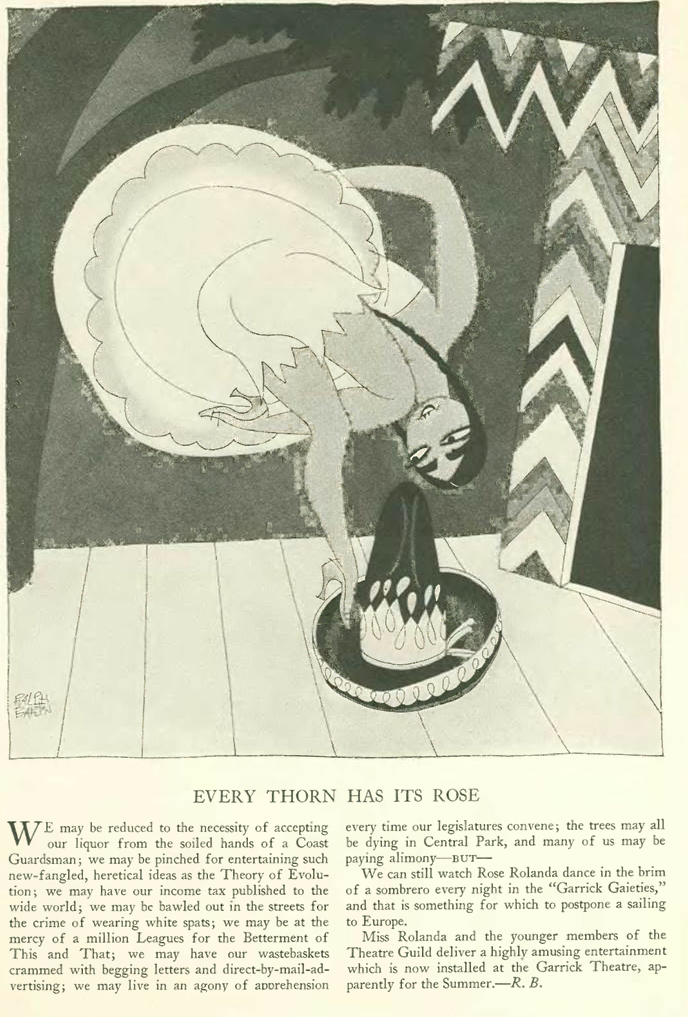
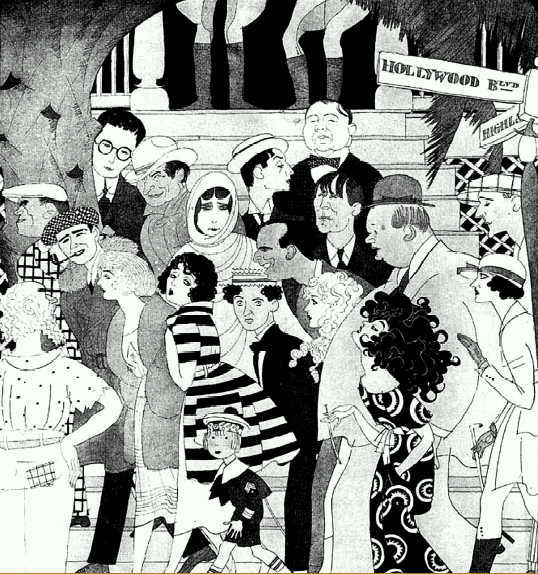
In his day, Barton was well known for his celebrity caricatures, the most famous being his group drawings. He was also a regular early contributor to The New Yorker of brief theater reviews that were accompanied by a large illustration:

Screenshot 2015-05-11 10.47.29
(New Yorker digital archive)

Despite his short stint as a ceremonial advisory editor, the Kansas City native contributed often to the magazine during its first years. Barton also contributed drawings to such publications as Collier’s, Vanity Fair and Harper’s Bazaar.

180px-Ralph_Barton_1926
Ralph Barton in 1926 (Wikipedia)

Although his work earned him an impressive income, Barton was a manic-depressive with four failed marriages. In May 1931 he shot himself through the right temple in his East Midtown penthouse. He was only 39.

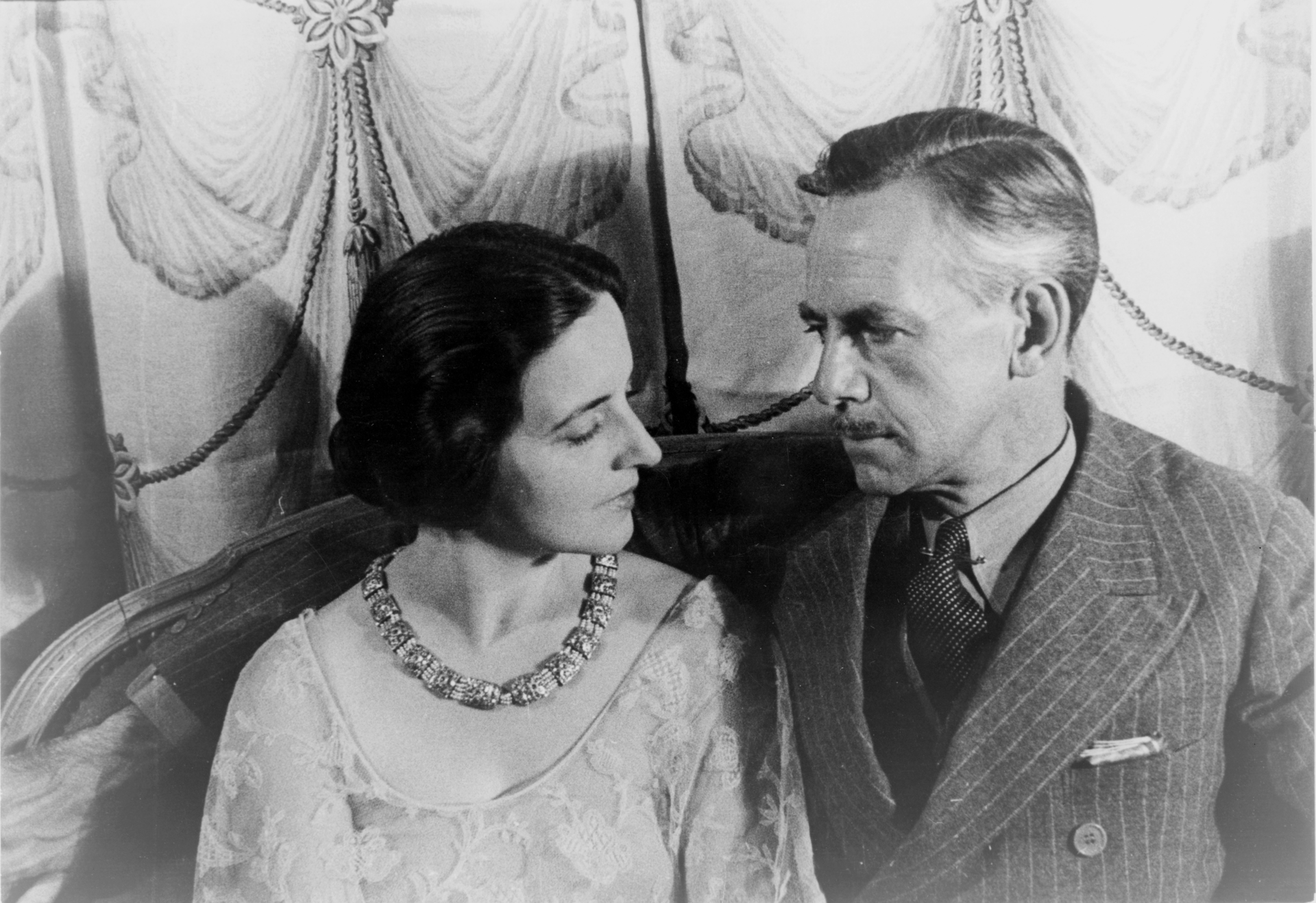
According to Wikipedia, Barton wrote in a suicide note that he had irrevocably “lost the only woman I ever loved” (the actress Carlotta Monterey, who divorced Barton in 1926 and married playwright Eugene O’Neill in 1929), and that he feared his worsening manic-depression was approaching insanity.

Portrait_of_Eugene_O'Neill_and_Carlotta_Monterey_O'Neill
Carl Van Vechten photograph of Carlotta Monterey and Eugene O’Neill, 1933 (Library of Congress)

Following his death, Barton’s artistic reputation quickly dropped from sight, due not only to his demise but also to the waning of the Jazz Age subjects he drew with such verve:

RalphBartonExtract
A 1921 Vanity Fair Hollywood caricature by Ralph Barton. (Wikipedia)

A 1928 letter from Harold Ross to Barton (posted on The American Reader website) seems to be an attempt by Ross to cheer up the artist:

Wednesday 27 June 1928

Dear Ralph,

I was on the brink of writing you when your letter came—this morning—telling me about your latest predicament. I knew, of course, that you had reached some conclusion as this. You are a creative soul and therefore a restless soul; therefore, a damn fool. I would leave this to any fair-minded banker. I wish I were a banker. I also wish I were Henry Ford or anybody who can accept the church, the government, conventions, and all those things.

I also had house trouble. I am thinking of burning the damn thing down. The insurance would net a tidy bit of cash and would enable me to get a room somewhere and fit up what I really ought to have. I am not competent to manage more space than this. I would be if I were a fairy. Fairies are the happiest people there are. All editors ought to be fairies. I fuss around with commas, semi-colons, dictionaries, and wordings, and it drives me crazy. I am too virile. I ought to be building subways. I was thinking of going to the North Pole with the Byrd expedition but that would take a year or two and I can spare, at most, only two months. It probably would be a bore anyhow. All life is a bore if you think at all…

As ever,

Ross

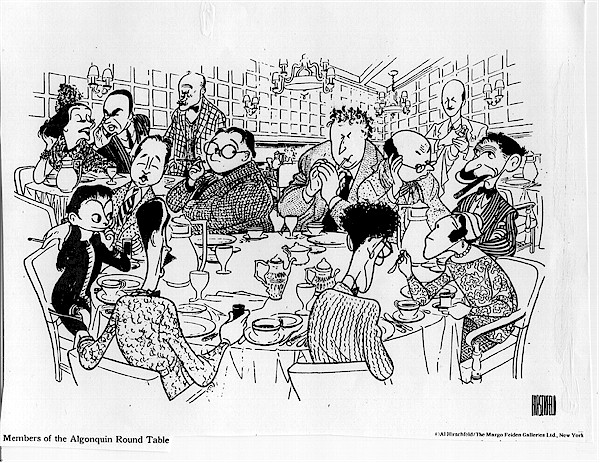
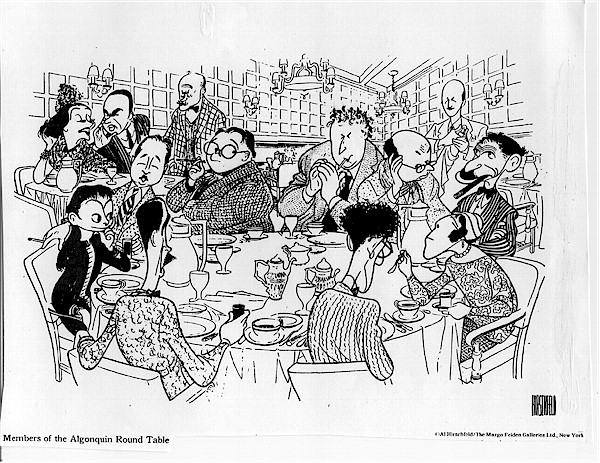
Others listed on The New Yorker masthead were associated with legendary Algonquin Round Table, including the playwrights Marc Connelly and George S. Kaufman and writers Dorothy Parker and Alexander Woollcott—all charter members. The writer Alice Duer Miller was also an occasional guest of this “Vicious Circle,” as they called themselves. From roughly 1919 to 1929, they met every day for lunch at the Algonquin Hotel.

Other regular Round Table members included Harold Ross, Franklin Pierce Adams, (best known for his newspaper column, “The Conning Tower”), New Yorker humorist Robert Benchley, husband-wife writers Heywood Broun and Ruth Hale, broadway producer Brock Pemberton, playwright Robert Sherwood and broadway publicist John Peter Toohey.

Those who moved in and out of the circle included feminist writer Jane Grant (who with her first husband Harold Ross co-founded The New Yorker), vaudeville comedian and later film star Harpo Marx, actresses Peggy Wood, Tallulah Bankhead, Lynn Fontanne and Margolo Gillmore, actor and director Alfred Lunt, playwrights Edna Ferber and David Ogden Stewart, humorist Frank Sullivan, writers Margaret Leech and Frank Crowninshield, illustrator Neysa McMein, playwright Beatrice Kaufman (George’s wife) and composer Deems Taylor.

It is important to make note of these various players in the “Vicious Circle,” since they figure prominently both as contributors and subjects in the early issues of The New Yorker.

table
Famed Al Hirschfeld illustration from 1962 of the Algonquin Round Table includes (counterclockwise, from far left) Dorothy Parker, Robert Sherwood, George S. Kaufman, Edna Ferber, Franklin P. Adams, Marc Connelly, Heywood Broun, Alexander Woollcott, and Robert Benchley. Rounding out the back row are, from left, Lynn Fontanne, Alfred Lunt, Frank Crowninshield and hotel manager Frank Case. (Al Hirschfeld Foundation)

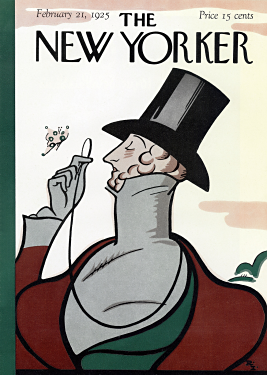
A prominent name on The New Yorker’s masthead absent from the Round Table is graphic artist Rea Irvin, creator of the magazine’s distinctive look and its mascot, Eustace Tilley.

Original_New_Yorker_cover
Rea Irvin’s Eustace Tilley on Issue #1 (New Yorker Digital Archive)

Irvin signed on as an advisory editor with the assumption that the magazine would fold after a few issues. Little did he realize that his illustrations, department headings, caricatures, and cartoons would grace the pages of The New Yorker for many years; that he would go on to illustrate 169 covers between 1925 and 1958; and that his distinctive typeface and mascot would continue to serve the magazine to this very day (Irvin died in 1972 at age 90).

Not to give the June 27 issue short shrift, “The Talk of the Town” reported Roald Amundsen had returned from his North Pole flight; “Profiles” looked at the life of theatrical producer Morris Gest; and “Books” offered a brief and somewhat mixed review of D.H. Lawrence’s new book, St. Mawr.

nazimova-nerman-caricature
In The New Yorker’s “Critique” section, a terrific caricature of Russian-American actress Alla Nazimova, by Swedish artist Einar Nerman. (New Yorker Digital Archive)

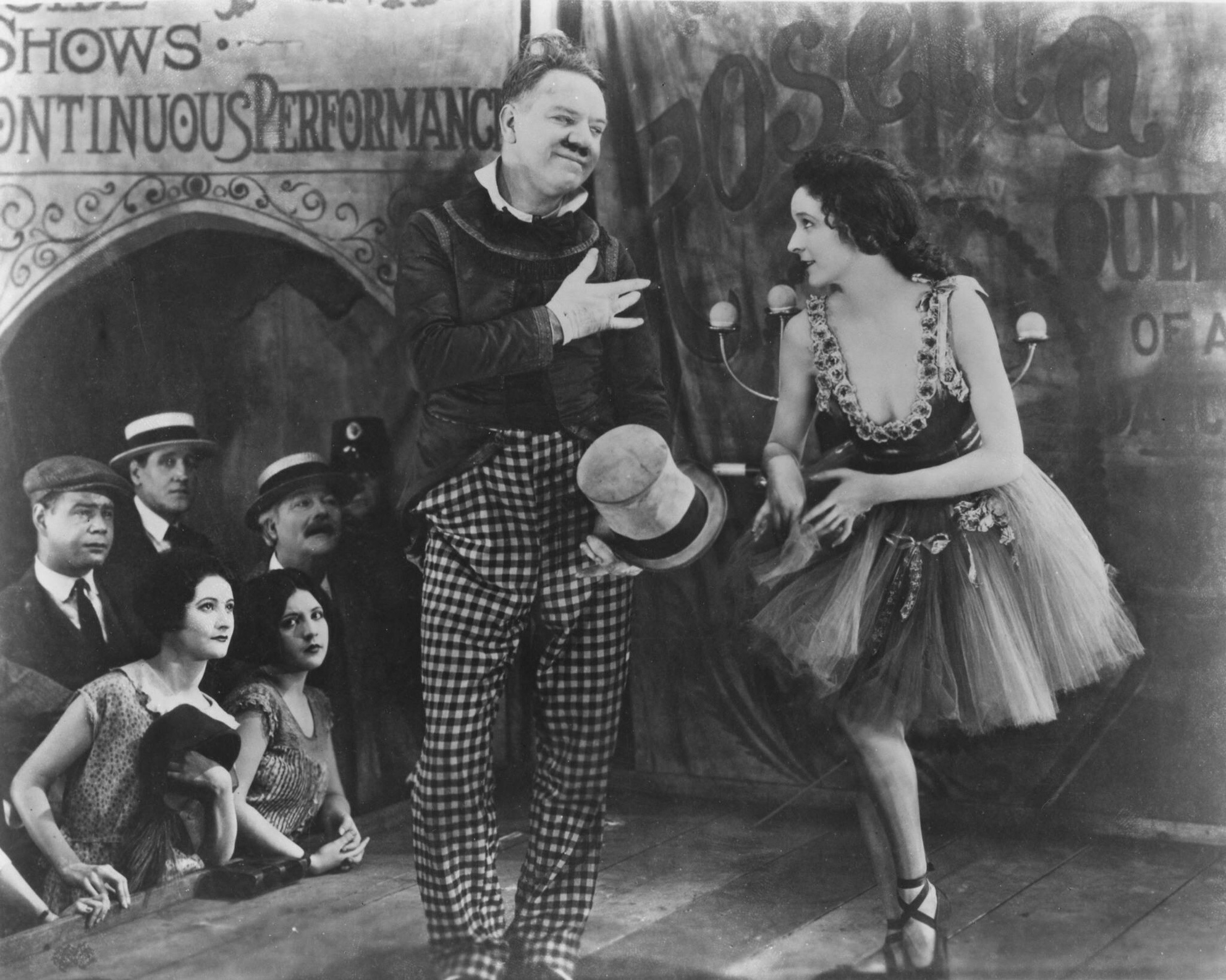
In “The Theatre,” W.C. Fields continued to impress in his performances with the Ziegfeld Follies. The New Yorker noted that Fields was becoming a “talking comedian” comparatively late in life, and that after 26 years “as a straight and comic juggler,” he has become “ever so many people’s favorite comedian.” Under “Moving Pictures” it was also observed that D. W. Griffith’s Sally of the Sawdust was going to “put W.C. Fields across as a big screen comedian. Wait and see!”

image
Sideshow “Professor” Eustace McGargle (W.C. Fields) and his ward, Sally (Carole Dempster, who was director D.W. Griffith’s real-life lover and protégée) are circus carnies in Sally of the Sawdust (1925). The movie was based on Fields’ stage hit Poppy, and featured stage legend Alfred Lunt in a rare film role. (Film Forum)

The June 27 issue offered yet another full page cartoon, this time by Gardner Rea, taking aim at the droll antics of the moneyed classes:

Screenshot 2015-05-11 10.46.19
(New Yorker Digital Archive)

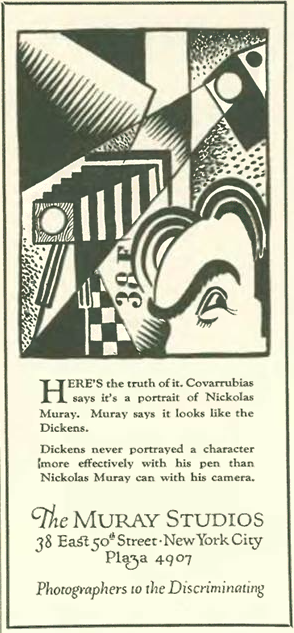
And finally, we are shown the answer to the mystery drawing by Covarrubias–ahem–an advertisement for a photography studio:

Screenshot 2015-05-11 10.58.43
(New Yorker Digital Archive)