A Letter From Berlin

Above: Nineteen-thirties dance class sponsored by Kraft durch Freude (Strength Through Joy), a sub-organization of the German Labour Front that sought to fulfill the totalitarian ambitions of the Nazi regime by "forming a genuine national and performance-based community of all Germans," in other words, keep them busy and distracted from reality. (bundesarchiv.de)

Paris correspondent Janet Flanner visited Berlin to check on that city’s preparations for the 1936 Olympic Games, an event Nazi leaders saw as a prime opportunity for some big-time propaganda.

August 1, 1936 cover by Constantin Alajalov with a wry twist on the upcoming Berlin Olympic games (note the strap along the left edge bearing some of flags of competing nations).

Flanner noted Propaganda Minister Joseph Goebbels’ charge to the German people, instructing them to show the world that the German Volk were “more charming than Parisians, more lively than the Romans, more worldly than the Londoners, and more efficient than the New Yorkers.”
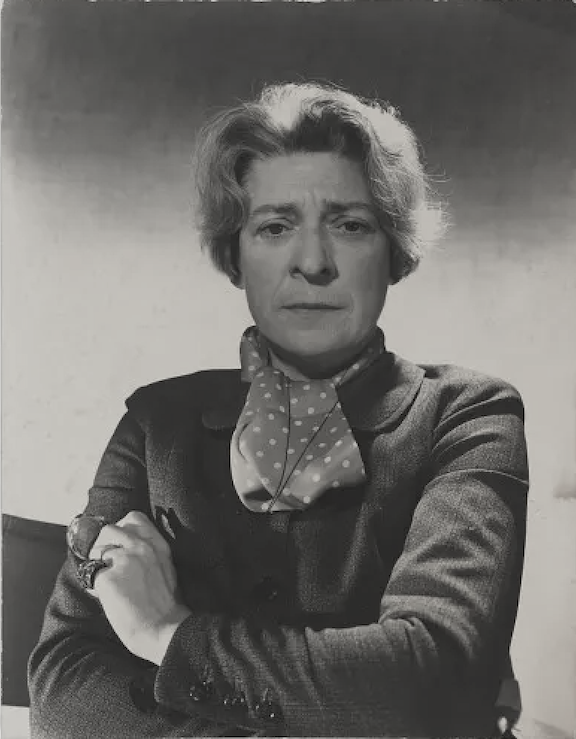
EYE ON BERLIN…Janet Flanner, who wrote under the pen name Genêt, in 1940. (National Portrait Gallery)

There was an ambiguous quality to Flanner’s early writings about Nazi Germany and Adolf Hitler in particular. As The New Yorker’s Andrew Marantz noted in “Takes” (Aug. 10, 2025) regarding Flanner’s 1936 profile of Hitler, “Instead of telling readers what they needed to know—that was what newspapers were for—she focused on what they might want to know…” Rather than taking sides, she reported in a cool and ironic tone. In her biography Genêt, Brenda Wineapple wrote that Flanner in her early writings “thought of herself as a high-class gossip columnist.”

Here are excerpts from the first part of Flanner’s “Berlin Letter.”

FASCIST FEVER DREAM…The Nazis spent large sums in preparation for the Olympic games, seeing them as the ultimate propaganda opportunity. Clockwise, from top left: Nazi officials show the extent of the Olympic village using a scale model in July 1936; a street scene with displays of the Olympic and swastika flags in Berlin, August 1936— the regime temporarily toned down public anti-Semitic displays and cleaned up the streets to impress international visitors; lively café scene on the Kurfürstendamm, known colloquially as the Ku’damm, in 1936. (Robert Hunt Library/Sueddeutscher Verlag Bilderdienst/tripadvisor.com)
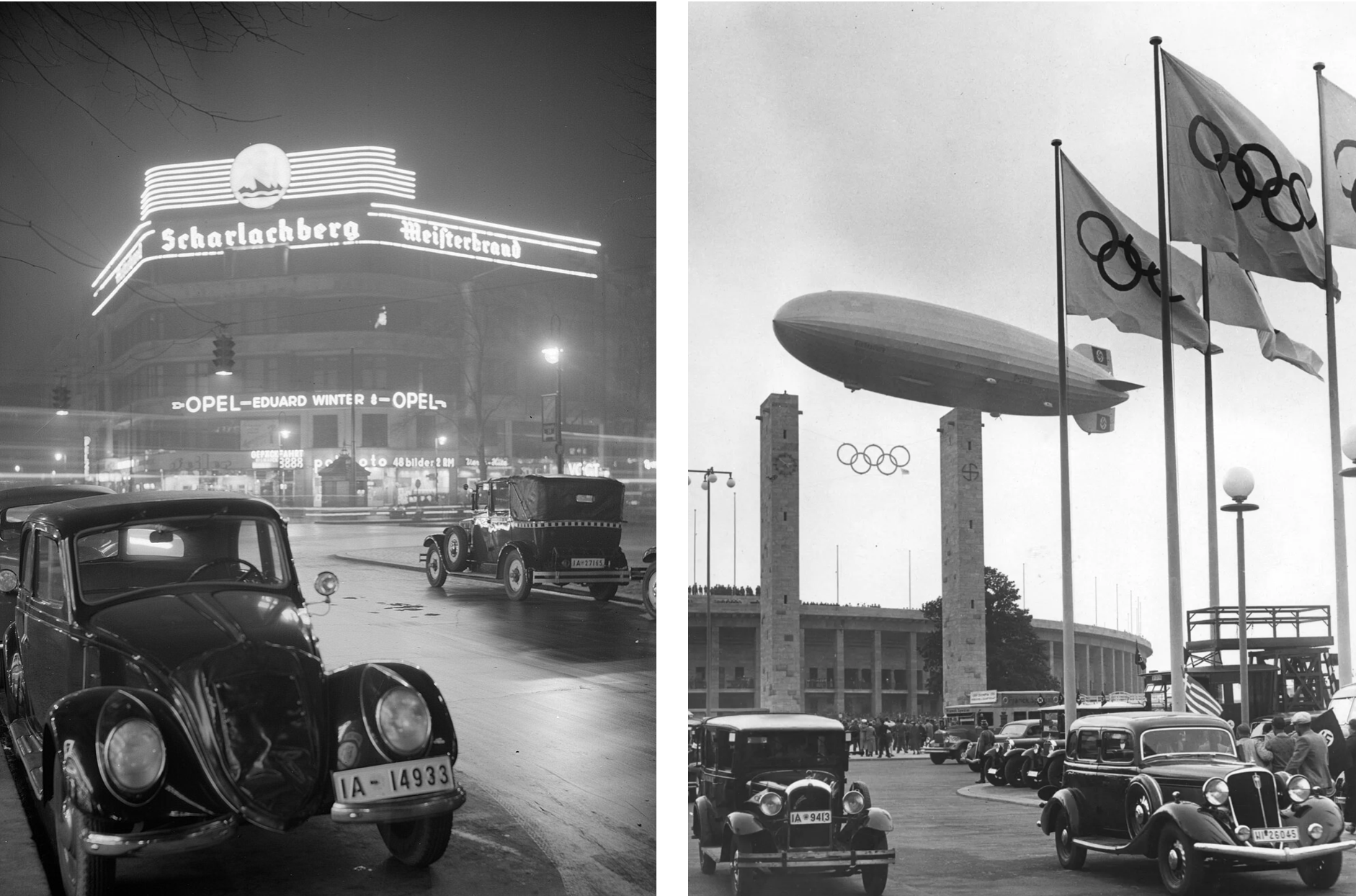
BEFORE IT ALL WENT DARK…In 1936 the Kurfürstendamm was a bustling Berlin boulevard, temporarily masking the oppressive Nazi regime with a veneer of normalcy for the 1936 Summer Olympics—shown at left is the Scharlachberg House at the corner of Kurfürstendamm/Uhlandstraße in Berlin, where the Maison de France stands today; at right, the Hindenburg flies over the Olympic Stadium in Berlin, August 1936. (Wikipedia/Encyclopædia Britannica)

In these excerpts, Flanner wrote that the arts were overseen by Joseph Goebbels and Hermann Göring (of all people). She also noted the absence from the opera (which she rated poor under Goebbels) of the world-renowned conductor Wilhelm Furtwängler, who was in seclusion “writing an opera,” but probably wanted to be out of the limelight due to his controversial decision to stay in the Reich rather than flee like other artists and musicians. Furtwängler detested Hitler, but believed his art would wither if he left his homeland.

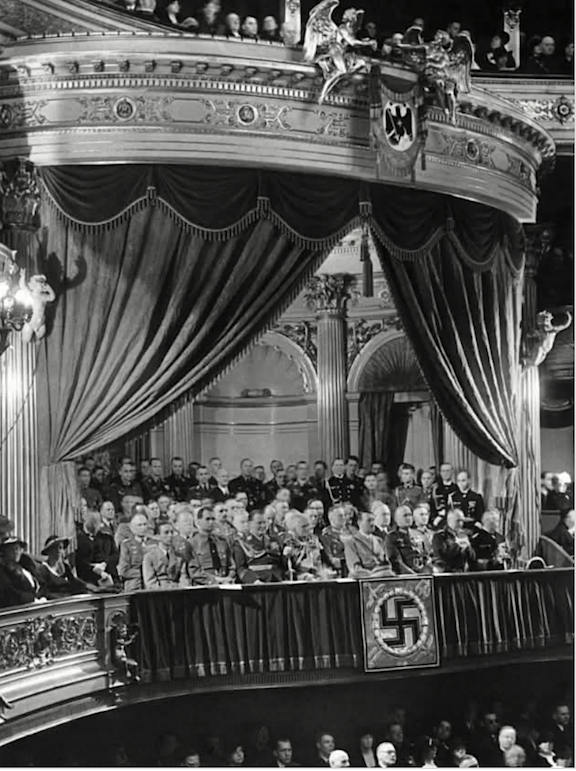
HORROR SHOW…Adolf Hitler and his Nazi thugs at the opera in Berlin in 1936. Hitler often appeared in carefully staged public settings like this one and the one in the photo below. (archaeohistories.via Facebook.com)
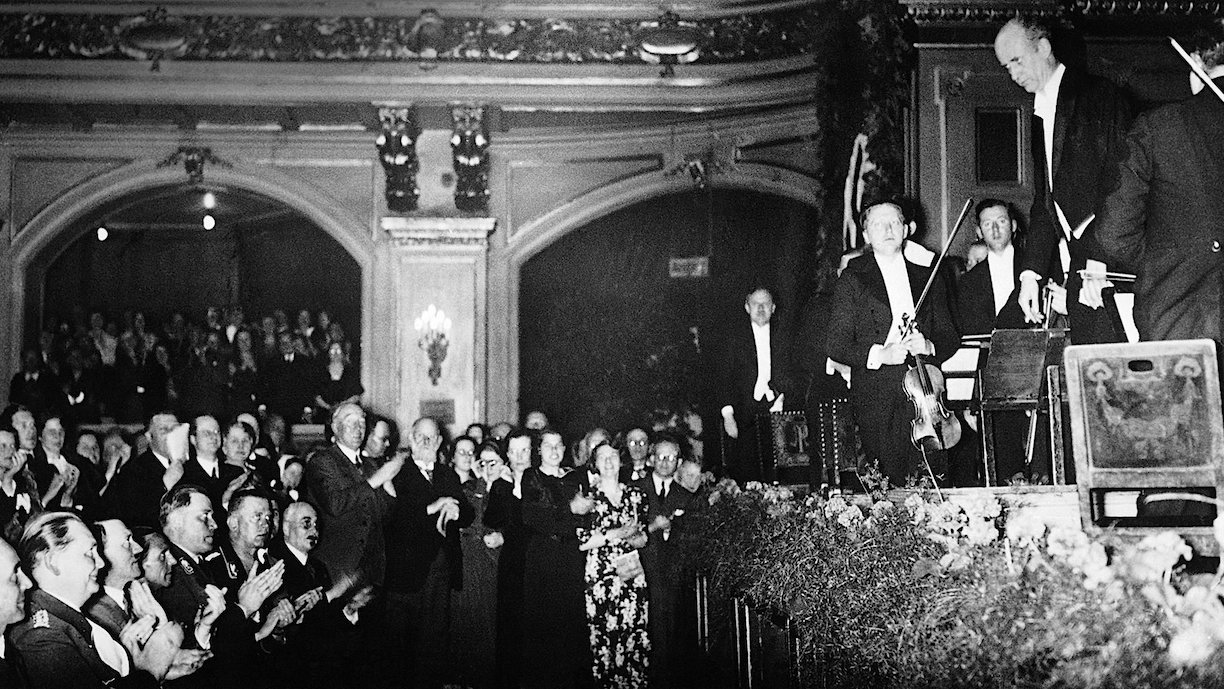
MUSICAL STRAIN…Conductor Wilhelm Furtwängler acknowledges the audience following a 1935 performance by the Berlin Philharmonic Orchestra—visible in the left corner of the photo are Hermann Göring, Adolf Hitler, and Joseph Goebbels, among other Nazi leaders. (Archiv Berliner Philharmoniker)
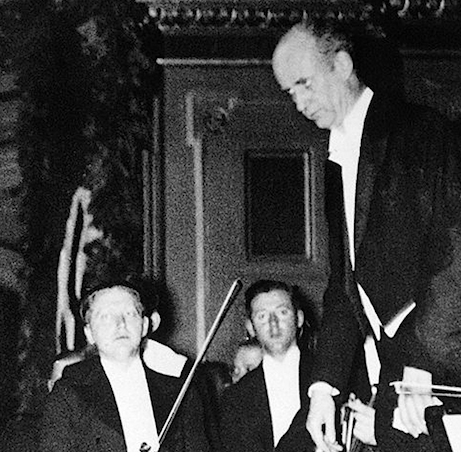
A closer look at the photo—a combination of hatred and fear in Furtwängler’s eyes? The first and second violinists don’t look too thrilled either.

In a related item, Howard Brubaker (in his “Of All Things” column), had this to say about Germany’s Olympics preparations.

 * * *

A Friendly Shakedown

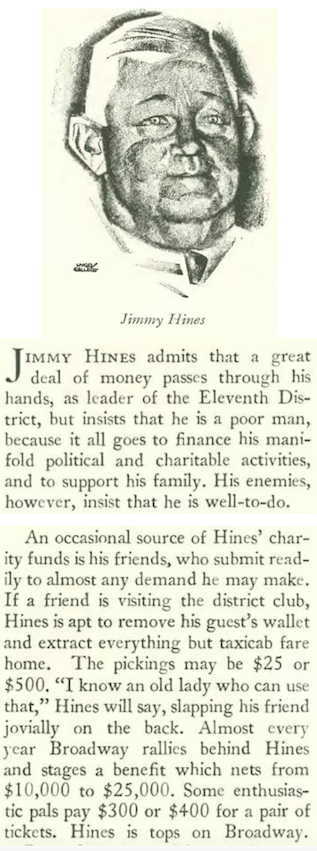
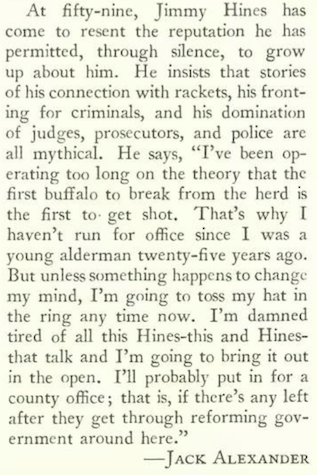
In Part Two of his profile on Tammany powerbroker Jimmy Hines, journalist Jack Alexander noted Hines’ unorthodox habit of soliciting contributions from his friends (illustration by Hugo Gellert). Excerpts:
 * * *

At the Movies

“In the dreadful summer of 1932, [The New Yorker] paid me ten dollars for an anecdote. I was ripe for seduction…,” Russell Maloney once recalled. “[Then] I sent in an account of a situation that I thought would make a good Helen Hokinson picture…and got paid for that: seven dollars.”

Maloney (1910–1948) proceeded to send more ideas to The New Yorker, and enough were accepted that in 1935 he packed his bags and moved to Manhattan for a job at The New Yorker. In his ten years at the magazine he would contribute thousands of anecdotes to “The Talk of Town” as well as casuals, profiles, and countless cartoon captions. His interest in theater as well as celebrity gossip suited him well when he substituted for John Mosher as the magazine’s film critic.

So let’s see what Maloney—who would later call 1939’s The Wizard of Oz a “stinkeroo,” had to say about the latest fare from Hollywood.

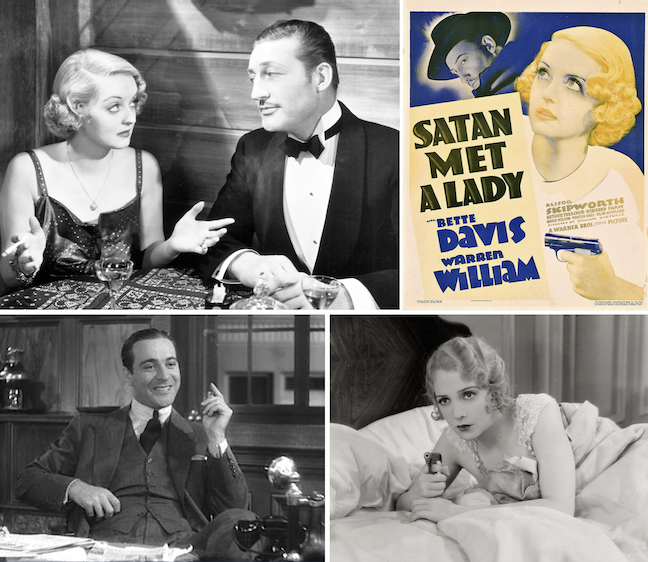
BUT THEY PAID ME THIS MUCH…Top: Russell Maloney wrote that both Bette Davis and Warren William seemed “embarrassed” to be appearing in Satan Met a Lady, which was a loose adaptation of Dashiell Hammet’s 1930 novel The Maltese Falcon—Maloney found Satan to be vastly inferior to the 1931 film The Maltese Falcon (below), which starred Ricardo Cortez and Bebe Daniels. In 1941 Humphrey Bogart and Mary Astor would appear in yet another adaptation of the Hammet novel. (imdb.com/facebook.com/jbkaufman.com)

Maloney “enjoyed” The Return of Sophie Lang, with actors “baffling one another  with the greatest suavity”…

IS THIS SUAVE ENOUGH FOR YOU?…Ray Milland and Gertrude Michael get close in The Return of Sophie Lang. (Pinterest.com)

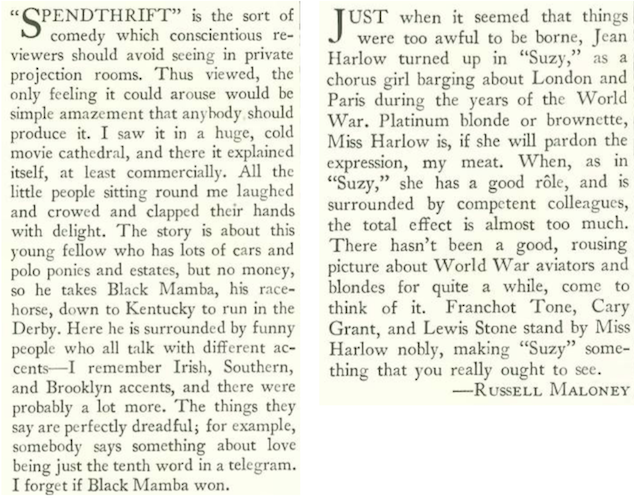
…while Spendthrift, featuring actors speaking in various accents, was “perfectly dreadful.” Fortunately Suzy managed to lift the reviewer’s spirits, especially with the appearance of Jean Harlow.
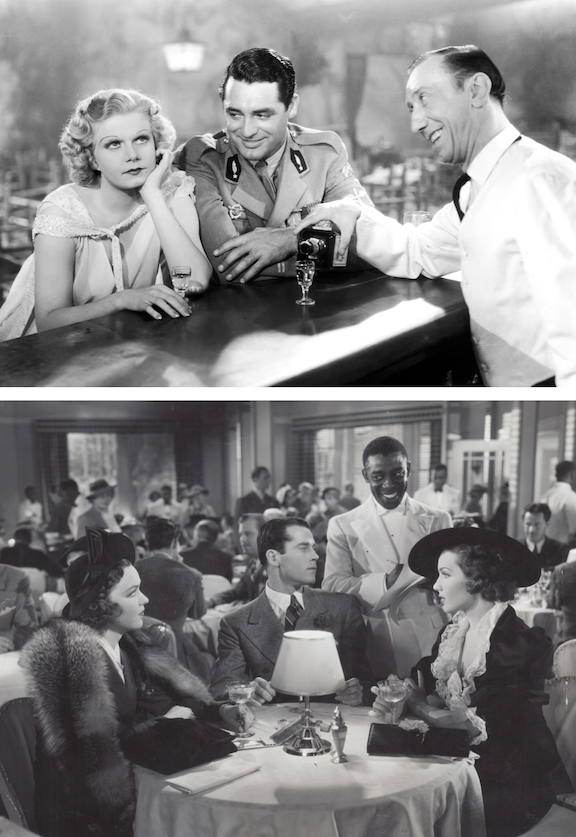
A WINNER AND A WIENER…Top, Jean Harlow, Cary Grant, and George Davis in Suzy; bottom: Henry Fonda is flanked by Pat Paterson (left) and Mary Brian in Spendthrift. (tcm.com/eBay.com)

See this post from Michael Maslin’s Inkspill about Maloney’s contributions to The New Yorker. Also, check out this photo below that includes Maloney (standing next to James Thurber):
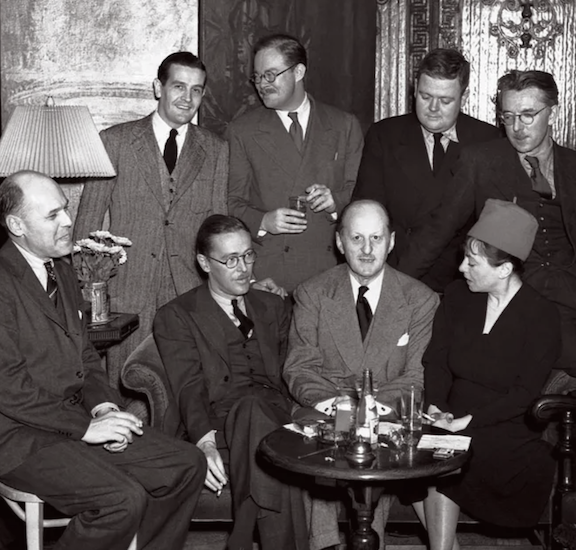
LITERARY CLUBHOUSE…Familiar New Yorker faces gathered for a cocktail party at the Hotel Algonquin to celebrate the success of Frank Case’s 1938 memoir, Tales Of a Wayward Inn. Seated, from left, are Fritz Foord, Wolcott Gibbs, Case and Dorothy Parker; standing, left to right, are Alan Campbell, St. Clair McKelway, Russell Maloney and James Thurber (untappedcities.com)

 * * *

From Our Advertisers

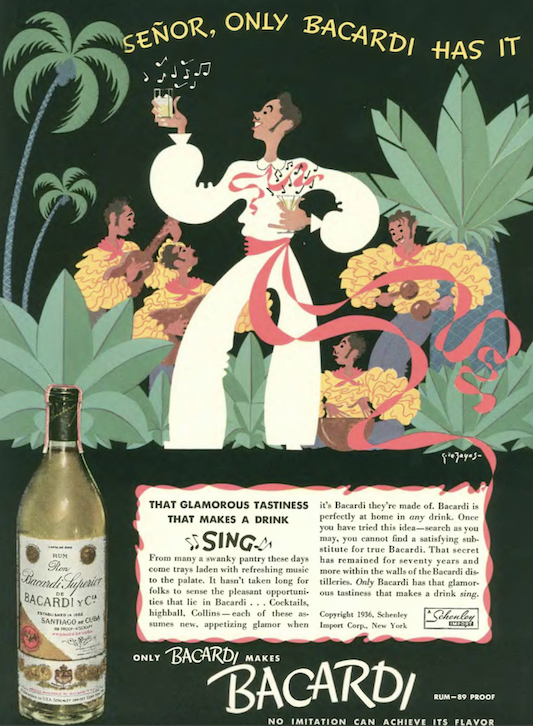
We begin with this colorful inside front cover advertisement for Bacardi rum, illustrated by George de Zayas, the younger brother of Marius de Zayas. Born in Mexico, these talented brothers took different artistic paths—Marius became a prominent avant-garde artist who collaborated with Alfred Stieglitz and others in New York, while George focused on commercial art and popular media…
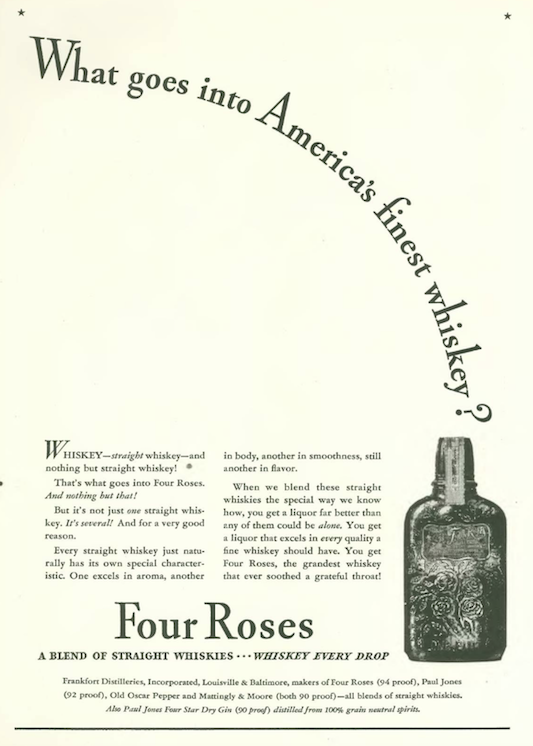
…this isn’t exactly avant-garde, but the makers of Four Roses added a modern twist to their usual traditional style…
…United Airlines offered overnight flights as well as “scenic” daylight flights from coast to coast (New York to San Francisco)…this flight typically took seventeen to nineteen hours, with refueling stops in Cleveland, Omaha, and Cheyenne/Salt Lake City…the planes were not pressurized, so they flew through the weather rather than above it…at least this plane (Boeing 247), according to the ad, had air-conditioning…

…for the more adventurous (and perhaps wealthier) traveler, you could hop aboard a Pan Am Clipper and head for Rio de Janeiro…in 1936, this flight from Miami to Rio took five days (flying in daylight only)…
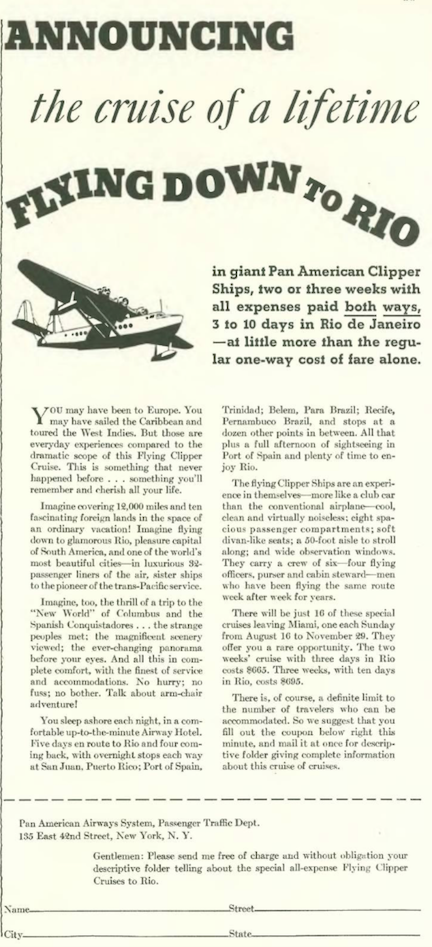
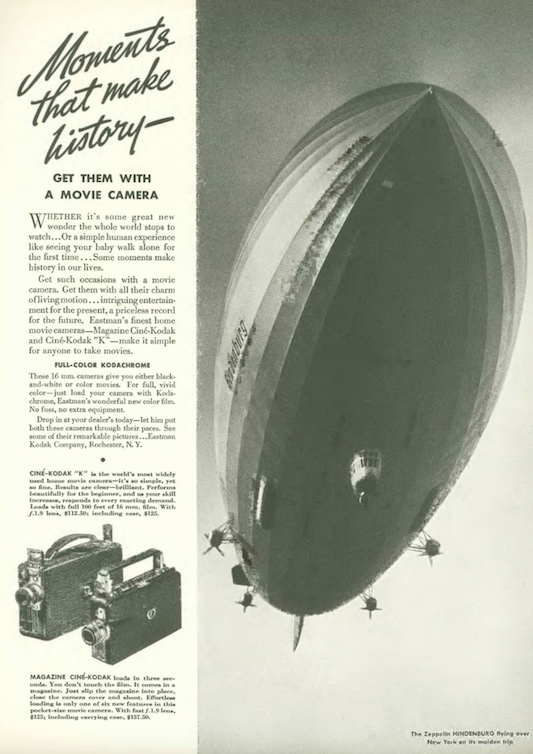
…a one-way ticket to Rio would have cost close to $11,000 in today’s dollars, while the equivalent $9,000 would get you a one-way ticket to Europe on the Hindenburg

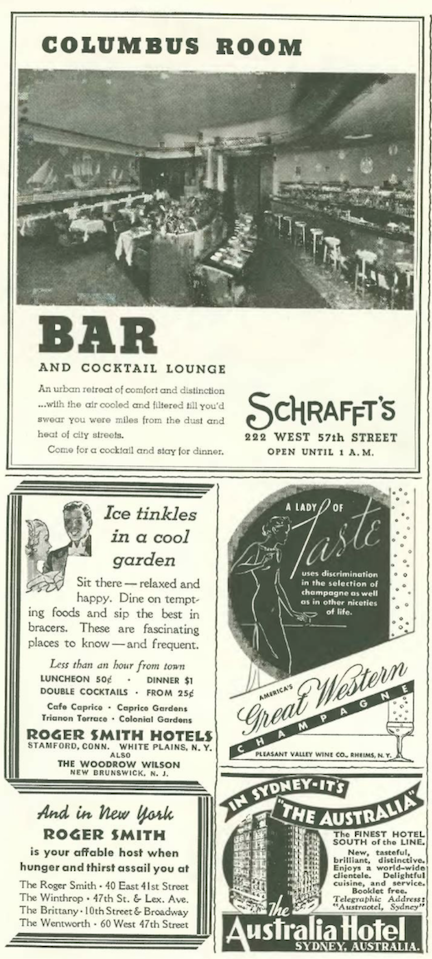
…in the back of the book we find various food and cocktail diversions…
…and some one-column tennis-themed ads…”Johnson’s Tennis Gut” referred to the material used in the Thirties to string rackets…the strings were almost exclusively made from natural animal gut—commonly called “catgut,” though they were actually made from processed and twisted sheep intestines…

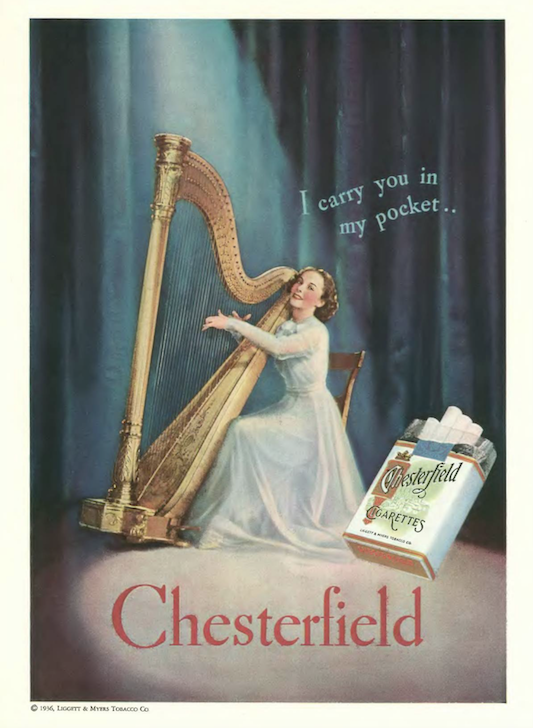
…Liggett & Myers claimed the back page to promote their Chesterfields to women smokers…one wonders if a racking cough interfered with her playing…
…on to our illustrators and cartoonists, we kick things off with spots by Adolph K. Kronengold

John Groth

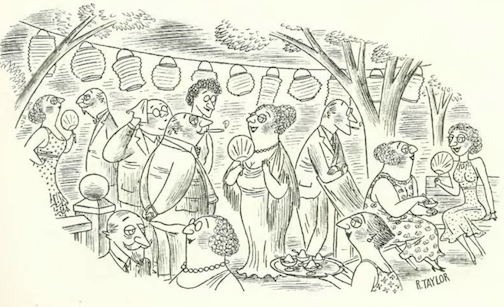
Richard Taylor

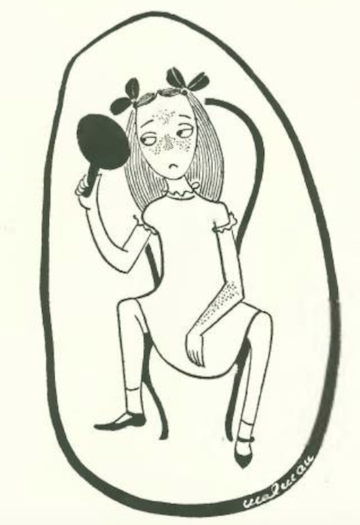
Christina Malman

…and Victor de Pauw

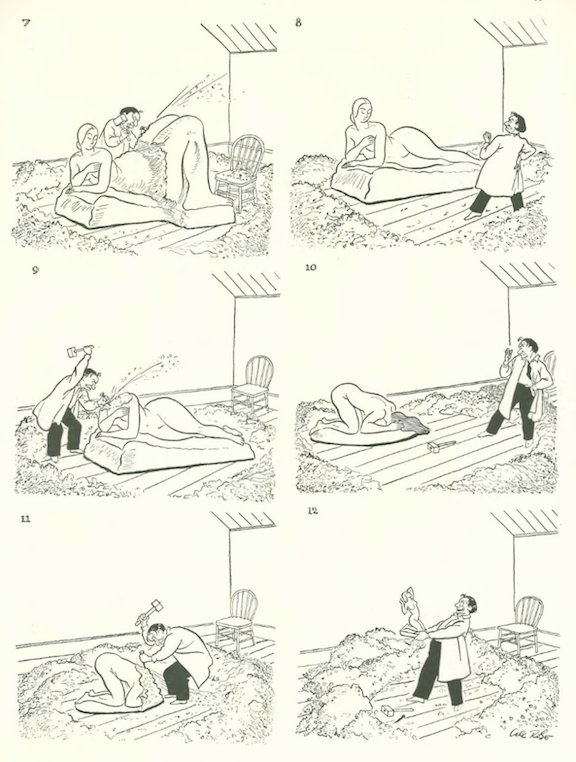
Carl Rose took us through a sculptor’s creative stages…

Helen Hokinson pondered a recipe for the day’s catch…

…and she checked out some summer reading (Warwick Deeping was a British writer of historical romances as well as books that defended the lifestyles of the bourgeoisie)…

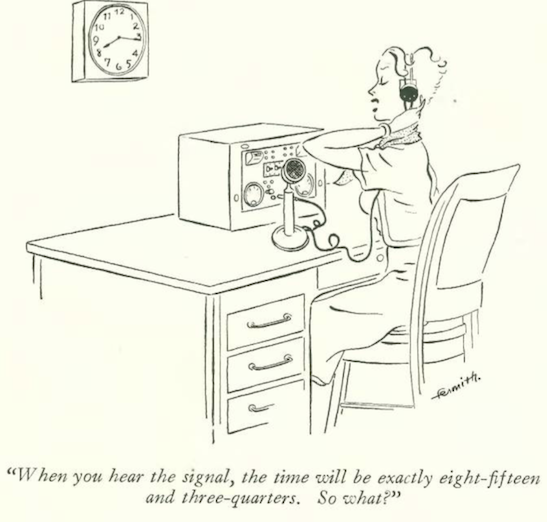
…this was F.E. Smith’s sole contribution to The New Yorker, and it’s pretty good…beyond that, I came up empty trying to find out more about the cartoonist…
…but we all know Leonard Dove (who contributed fifty-seven New Yorker covers and 717 cartoons)…here he’s keeping things quiet on the tennis court…

…and, of course, we have the great Charles Addams

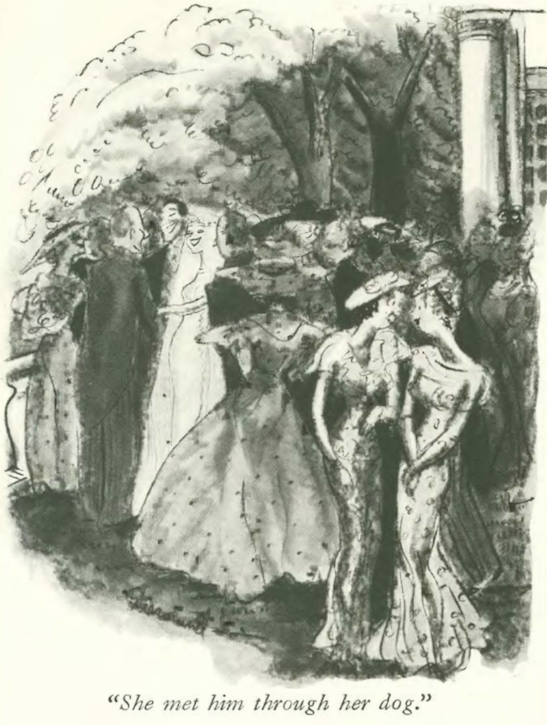
…we close with one of my favorite cartoonists, Barbara Shermund, keeping things light after the wedding…
Next Time: Men in Kilts…
Better Living Through Fiction

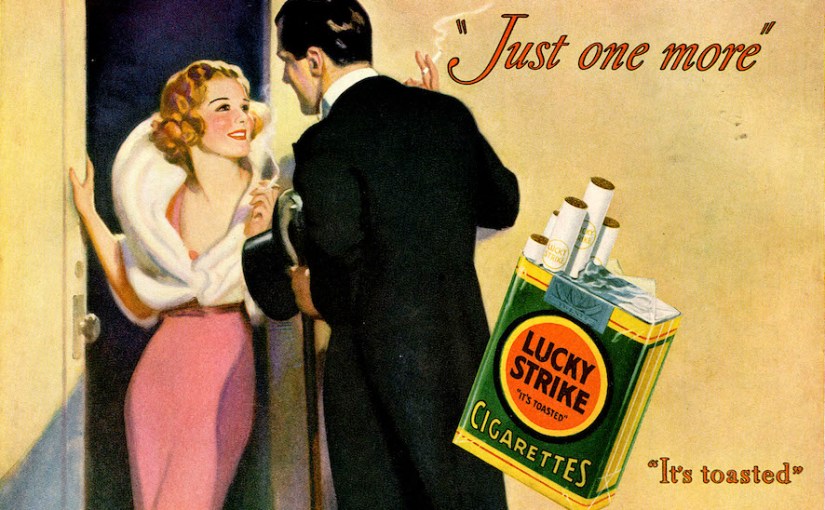
Above: Introduced by the American Tobacco Company in 1917, the iconic slogan "It's Toasted" became the cornerstone of Lucky Strike marketing in the 1930s. The company claimed their heat-curing method (as opposed to sun-drying) removed tobacco's "corrosive acids." This 1933 Lucky Strike advertisement was illustrated by Hayden Hayden. (wash.edu)

In May 1936 the Advertising Federation of America (AFA) celebrated the 25th anniversary of its “truth in advertising” movement, highlighting the work of vigilance committees that encouraged advertisers to avoid government intervention through self-regulation. As one can imagine, such voluntary efforts were largely ignored.

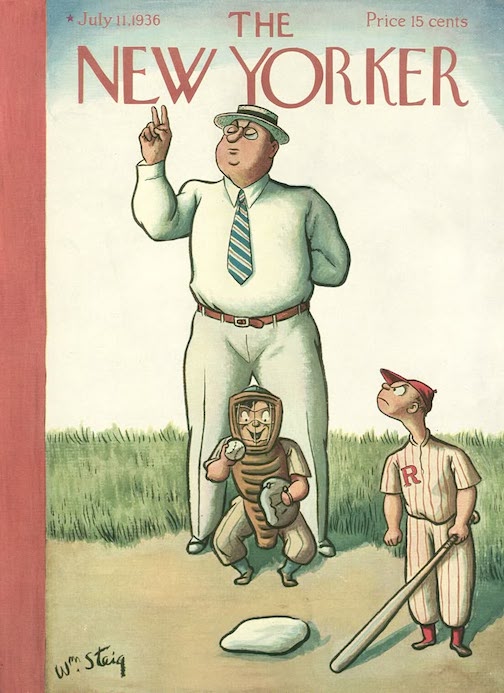
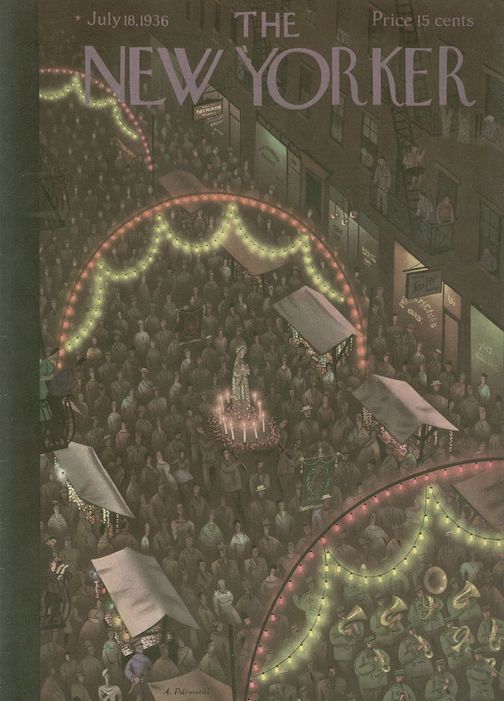
July 11, 1936 cover by William Steig.
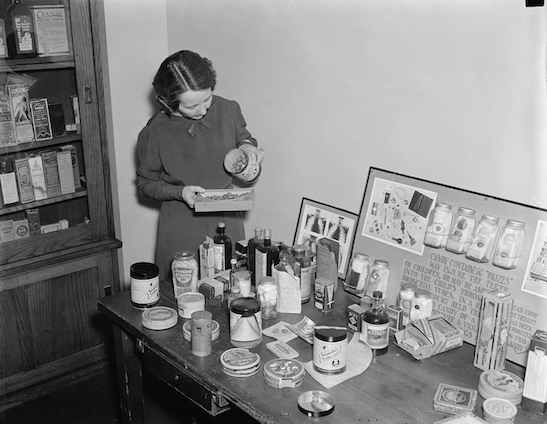
The celebration was short-lived, for later that year the Food and Drug Administration’s Ruth Lamb, published American Chamber of Horrors: The Truth About Food and Drugs. Lamb, who was head of public relations for the FDA, based her publication on a FDA traveling exhibit that exposed dangerous, poisonous, and deceptively marketed cosmetics, foods, medicine, and medical treatments. Lamb played an important role in advising Congress on new regulations that culminated in the Wheeler-Lea Act of 1938, which expanded the Federal Trade Commission’s unfair competition mandate to include consumer protections from “unfair or deceptive acts or practice.” That same year, Congress also passed the Federal Food, Drug, and Cosmetic Act, requiring pre-market safety testing and prohibiting false therapeutic claims.
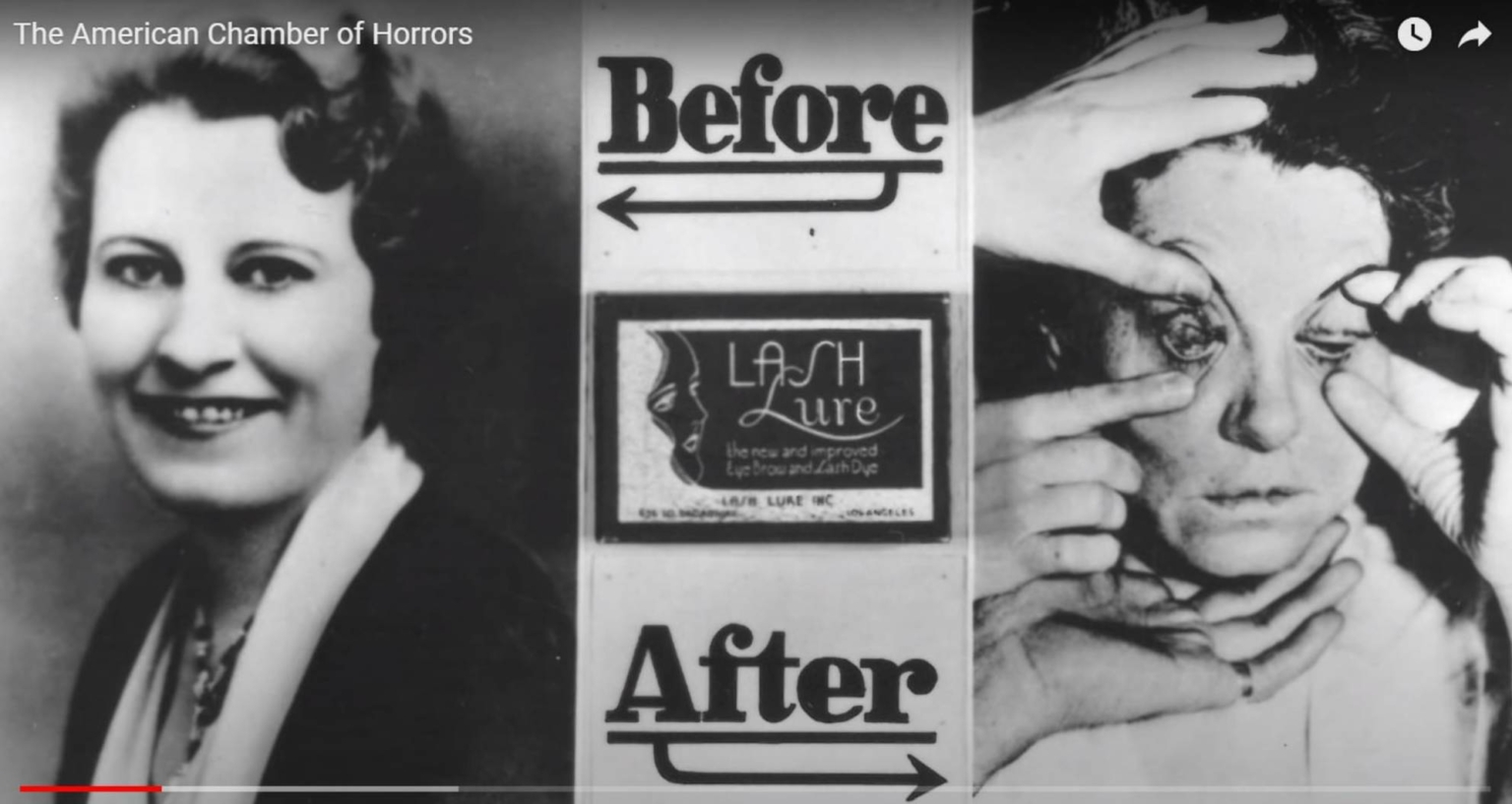
BLISTERS INSTEAD OF BEAUTY…In 1933 the makers of Lash Lure mascara promised women a permanently made-up look using aniline dye on eyelashes. Tragically, Lash Lure contained p-phenylenediamine, which caused horrific blisters, abscesses and ulcers on the face, eyelids and eyes of Lash Lure users. It even led to blindness in some women. (livingnewdeal.org)
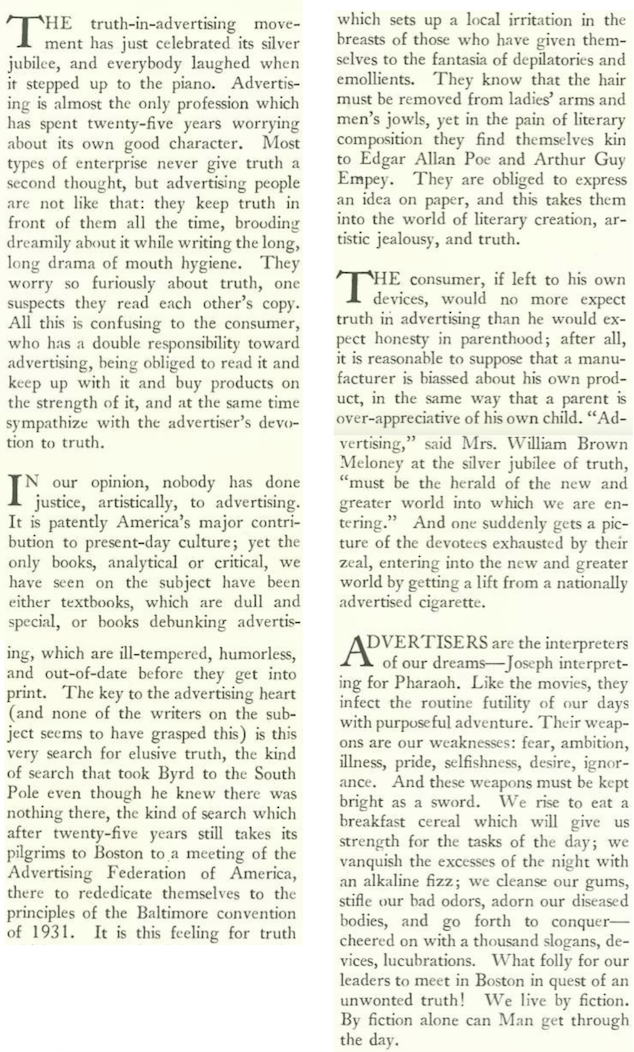
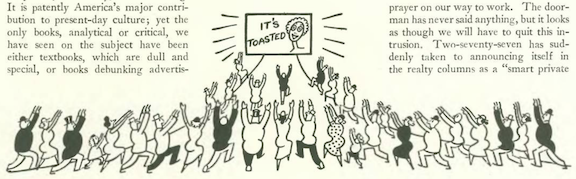
Apparently Lamb hadn’t yet published her American Chamber of Horrors when E.B. White filed his July 11 “Notes and Comment.” He did, however, pen this satirical take on the AFA’s sanctimonious commitment to the “truth.”

Otto Soglow provided this apt illustration along the bottom of White’s “Notes” column…

HORROR SHOW…The FDA’s Ruth Lamb displays some of the worthless and harmful products in her “Chamber of Horrors.” Lamb was instrumental in advising Congress on new drug and food legislation. (Wikipedia)
BUYER BEWARE…Clockwise, from top left: In the 1930s Othine promised to remove brown spots and lighten skin; the active ingredient was mercury; Bred-Spred was a line of beautifully colored “jellies” that did not contain the industry standard of 50 percent fruit/juice to qualify as jelly. Indeed, they had no fruit or juice at all—just artificial colors and flavors, and in the case of the “strawberry flavor” pictured above, a few hayseeds were added to simulate strawberry seeds; a circa 1930 ad claiming substantial weight loss simply by listening to a record. (fda.gov/brandingstrategyinsider.com)

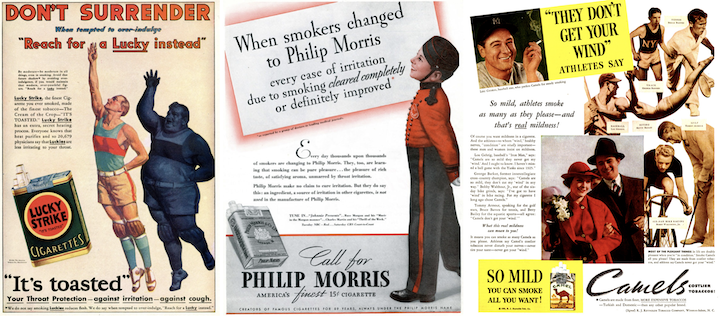
Quackery was not confined to the smaller companies. Big Tobacco made outlandish claims regarding the health benefits of smoking…

BIG MONEY from tobacco companies financed these splashy ads from the 1930s, including, from left, Lucky Strike’s weight-loss claims; Philip Morris asserted they used a different type of moistening agent that also prevented throat irritation—these ads were aimed at easing smoker anxiety about deep inhaling; R.J. Reynolds claimed their Camels did everything from aiding digestion to easing one’s nerves. Many of the ads featured famous athletes claiming they could smoke all they wanted and still perform at their peak. (Stanford.edu)

 * * *

A Quiet Place

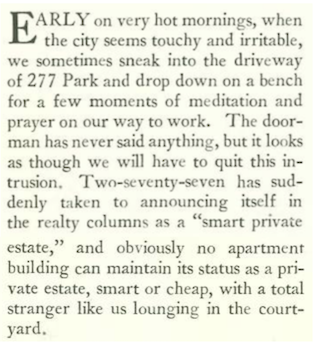
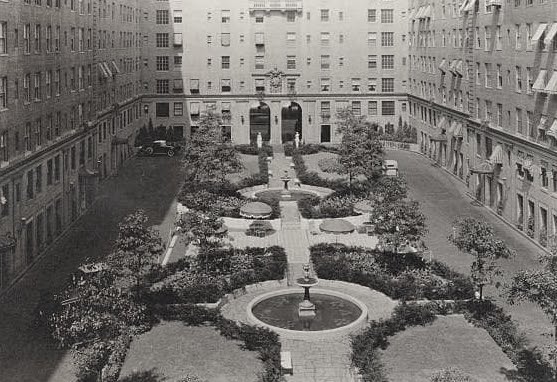
E.B. White (in “Notes and Comment”) revealed a hallowed spot in the city where he could gather his thoughts on hot summer mornings…
REFUGE FROM THE HEAT AND DIN…This apartment building’s courtyard at 277 Park Avenue offered E.B. White a place to ponder on a summer day. Built in 1905 and designed by McKim, Mead and White, the apartments were demolished in 1964 and replaced with a glass tower. (mcny.org)

 * * *

On Your Mark

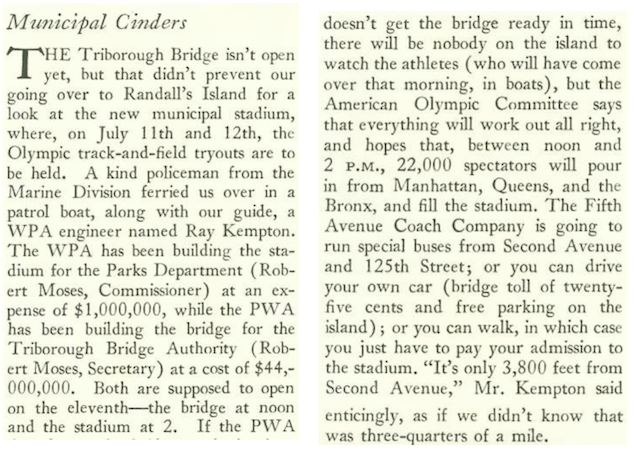
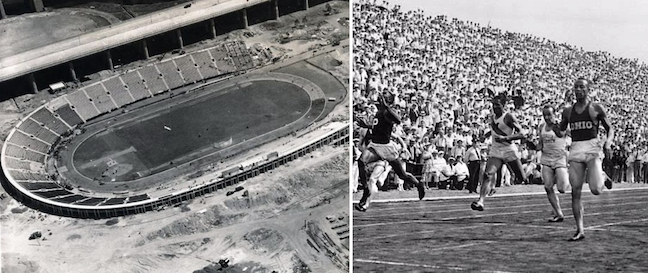
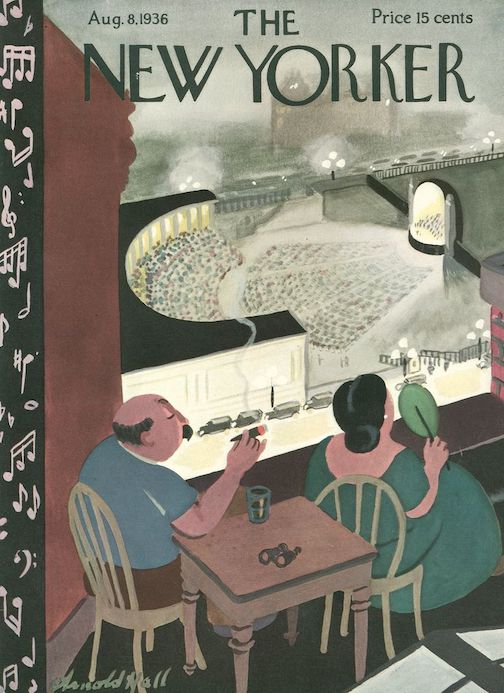
“The Talk of the Town” visited the new Randalls Island Stadium (later renamed Downing Stadium). Built with WPA funding, the stadium hosted the Men’s Olympic Track and Field Trials where Jesse Owens qualified for the Berlin Summer Games.

READY TO RUN…Aerial photo of the new Randalls Island Stadium taken on July 10, 1936, the day before the Olympic trials; at right, Jesse Owens at the stadium’s Olympic tryouts—Owens dominated the competition by winning the 100-yard dash, the 220-yard run, and the broad jump. He would go on to win four gold medals at the Berlin Games. (Associated Press/randallsisland.org)

 * * *

Ach Du Lieber

In his column “Of All Things,” Howard Brubaker offered his thoughts on the state of higher education in Nazi Germany:

 * * *

Haggard and Debonair

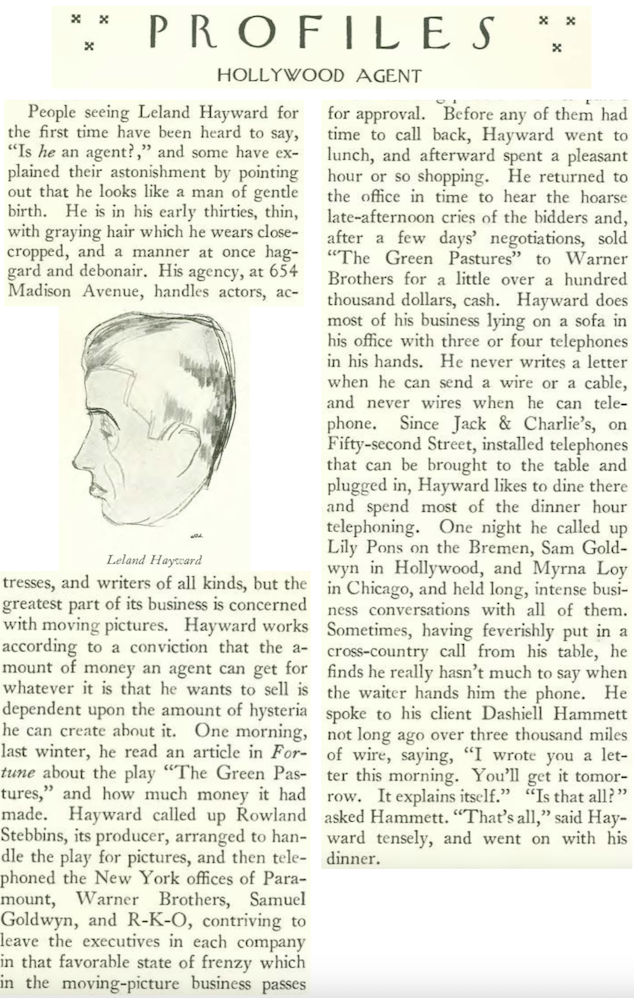
Margaret Case Harriman profiled talent agent and theatrical producer Leland Hayward (1902–1971), a kid from Nebraska City, Nebraska who would become a renowned playboy (married five times) and agent to scores of Hollywood actors. He would also produce the original Broadway stage productions of South Pacific and The Sound of Music. Excerpts:

ALL SMILES…at left, Katharine Hepburn with agent/boyfriend Leland Hayward arriving at director George Cukor’s home, circa 1936; Hayward with wife number three Margaret Sullivan⁣, circa 1940. (instagram.com/alchetron)

 * * *

Juvie Justice

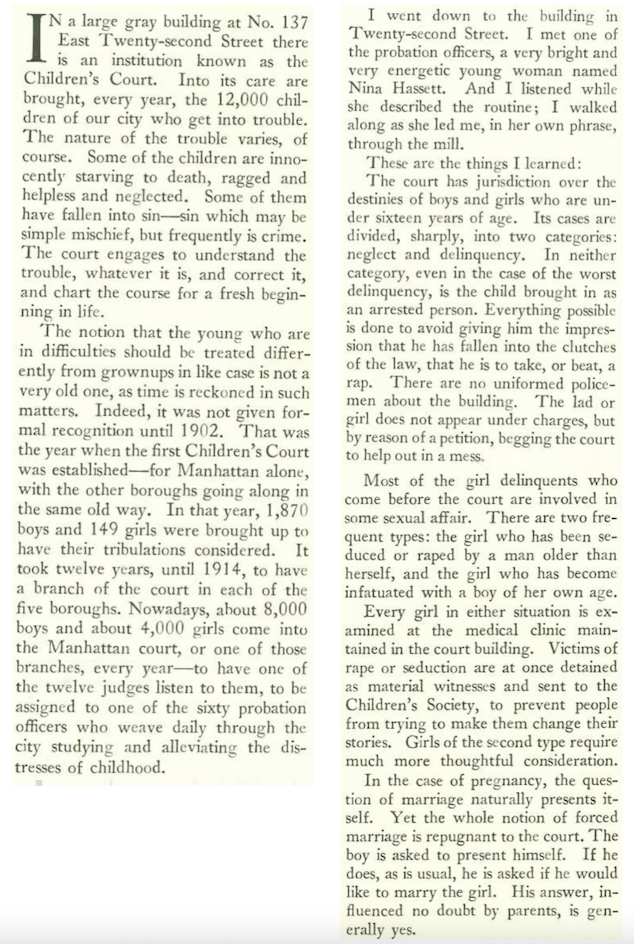
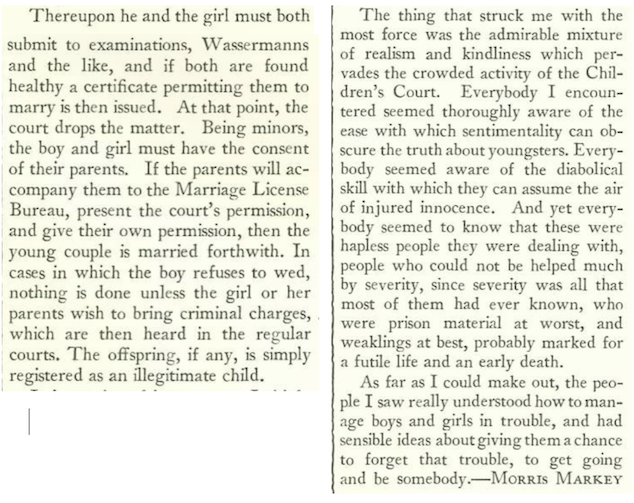
For the column⁣ “A Reporter at Large” (titled “Gamins”), Morris Markey looked in on the workings of the Children’s Court on East Twenty-second Street. Beginning with the sixth paragraph is an example of how teen pregnancies were addressed in New York ninety years ago. Excerpts:

Markey examined the possible outcomes of unwed mothers and fathers, and concluded that the Children’s Court was a realistic and kindly way to deal with these issues as well as a range of juvenile offenses. History seems to be on Markey’s side; for its time, the Children’s Court offered a progressive approach that kept minors from the horrors of the prison system.

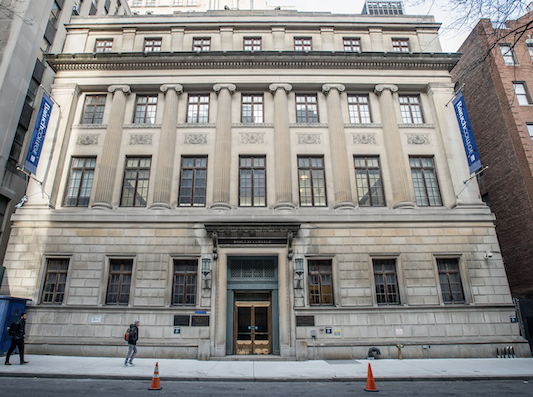
STILL STANDING…The Children’s Court building on East Twenty-second Street was visited by Morris Markey for his column. Today it serves as Newman Hall for CUNY’s Baruch College. (J.C. Rice via nypost.com)
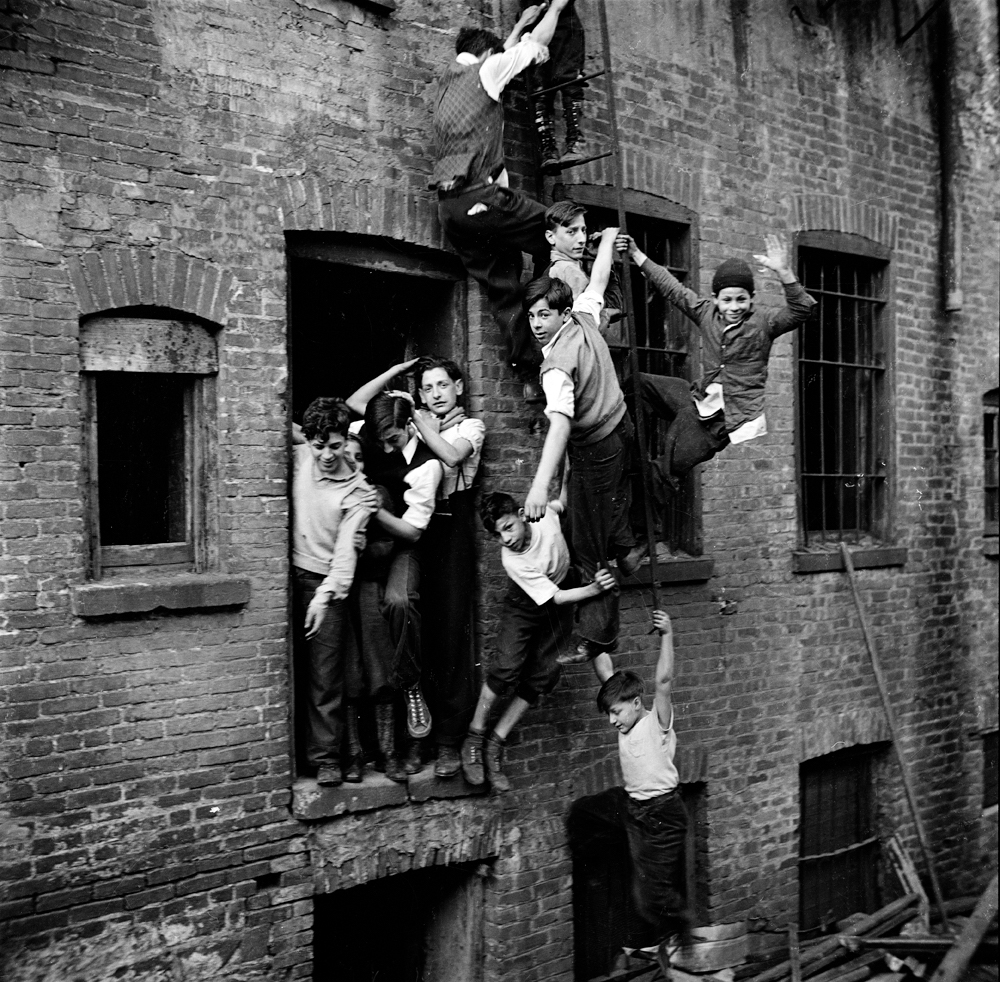
JUST SOME KIDS HANGING OUT…Arnold Eagle’s Federal Art Project photo, “Boys Climbing the Fire Escape of a Deserted Building,” 1935. (mcny.org)

 * * *

Some Lawn Tennis

American journalist and sports radio personality Cedric E. Adams (known as “Ced,” hence the initials below) occasionally provided tennis commentary for The New Yorker. Here he takes in Wimbledon, where he found the men’s matches dull and the women’s memorable.

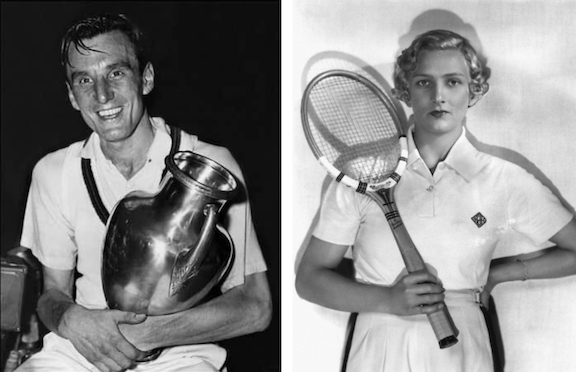
THREE’S A CHARM…In 1936 Fred Perry won the men’s singles title at Wimbledon for the third year in a row, while Helen Jacobs’ “cool tactics” helped her capture the women’s title. (facebook.com/findagrave.com)

 * * *

At the Movies

Laurence Olivier (1907–1989) was a rising star of the London stage when he moved to Hollywood in the early 1930s. Not making the breakthrough he had hoped for, he returned to London for stage and film work, including the 1935 film Moscow Nights, which was released in the U.S. in 1936 as I Stand Condemned. Critic John Mosher still wasn’t wowed by Olivier, but found the film better than average.

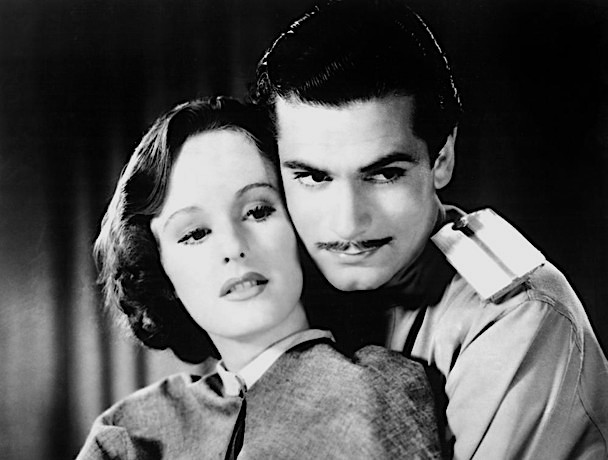
SPIES LIKE US…Laurence Olivier and Penelope Dudley-Ward in I Stand Condemned. Directed by Anthony Asquith, the film concerned a wounded officer who falls in love with his nurse. (rotten tomatoes.com)

Mosher also reviewed a “minor melodrama,” Forgotten Faces.

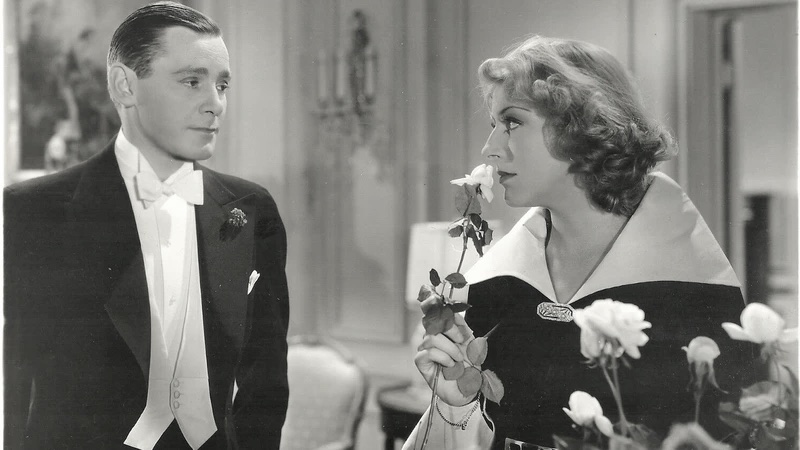
A GAMBLER AND A STRIPPER were portrayed by Herbert Marshall and Gertrude Michael in Forgotten Faces. (mubi.com)

 * * *

From Our Advertisers

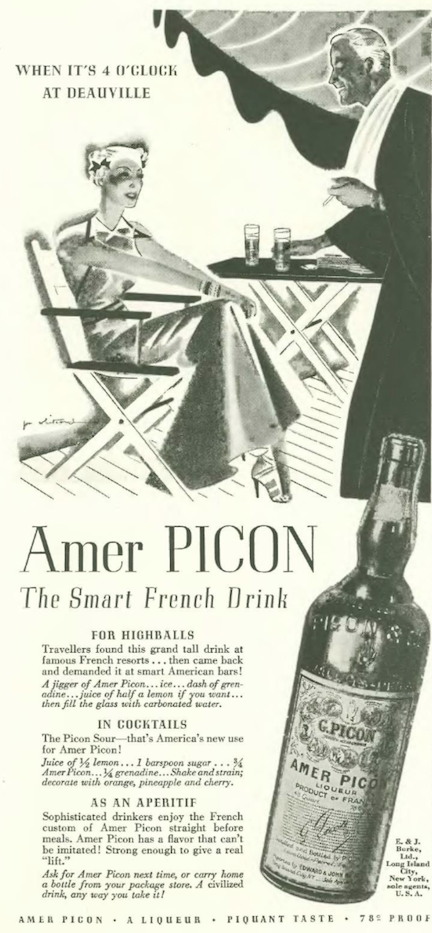
Illustrator Jon Whitcomb sketched up this happy scene to promote this “Smart French Drink”…

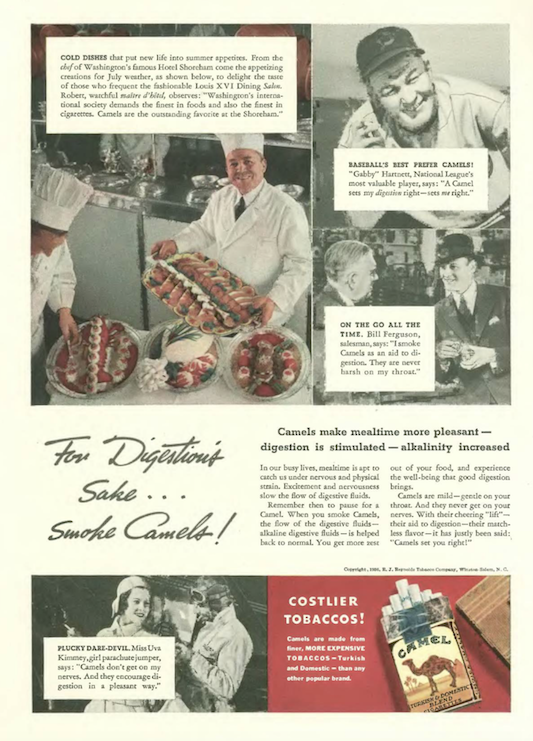
…as noted in our lead story, cigarette manufacturers made all sorts of health claims connected to heavy smoking…

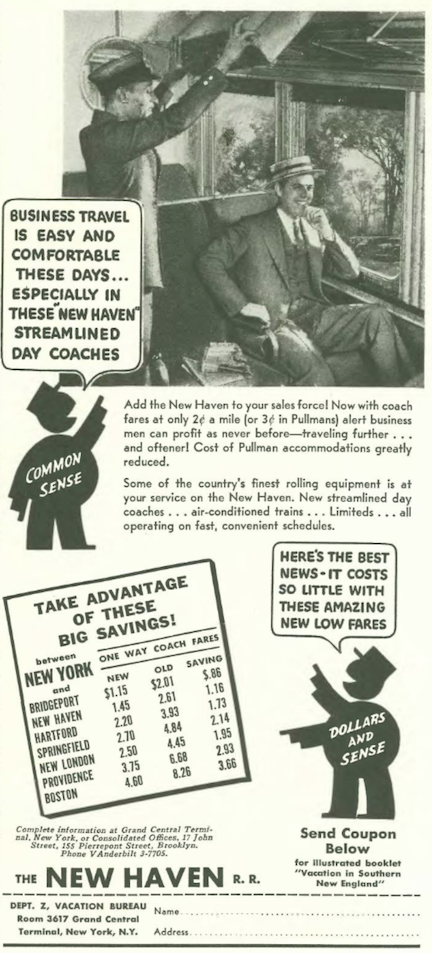
…now this was the way to travel…sadly the U.S. has largely abandoned reliable rail service…

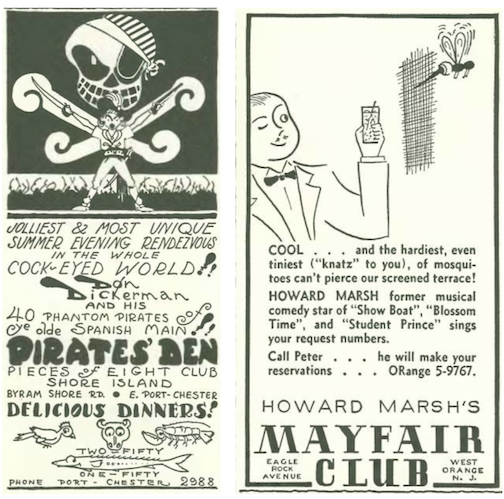
…from the back of the book, enticements to escape the city into the countryside…

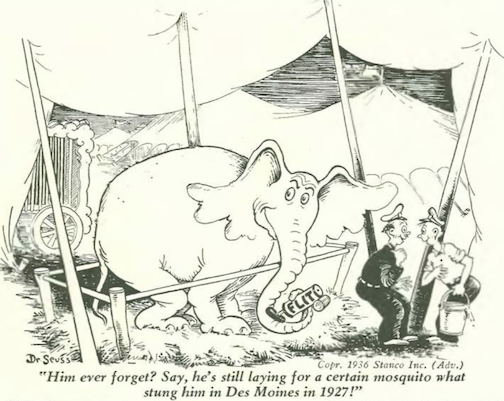
…another Dr. Seuss Flit ad, anticipating his 1954 bestseller Horton Hears a Who

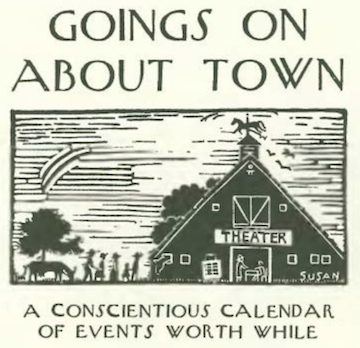
…on to our spots, we start with a summer stock-themed woodcut by Susan Willard Flint

…escaping the heat with Christina Malman

…on to our cartoonists, we begin with caption-less entries by Constantin Alajalov

Daniel ‘Alain’ Brustlein

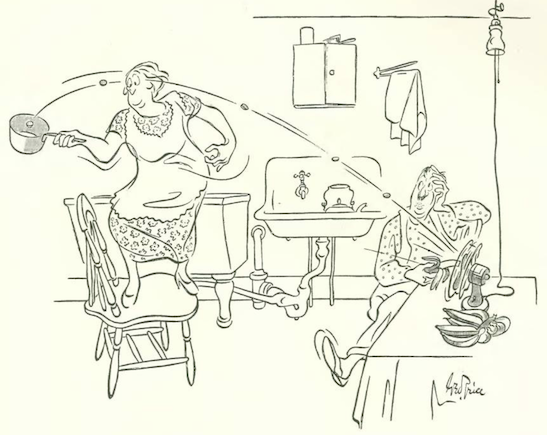
George Price

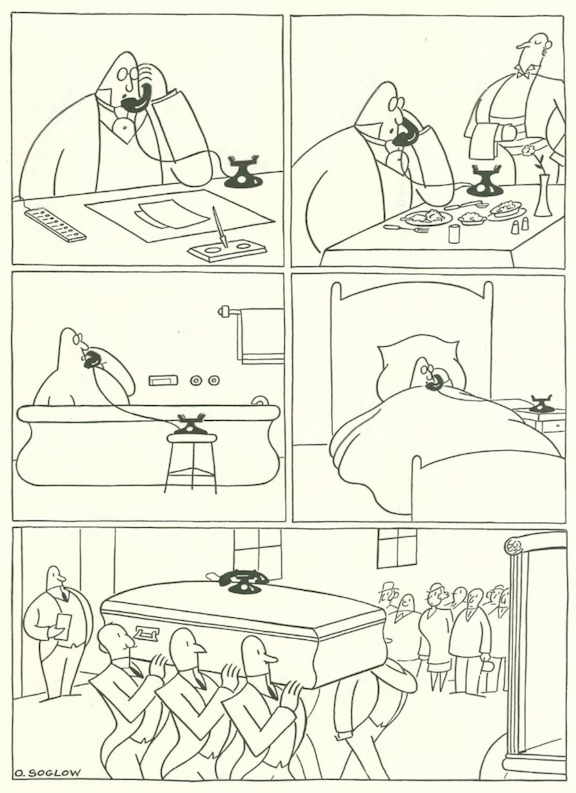
…and Otto Soglow

Alan Dunn gave us a man seeking order in chaos…

…and Helen Hokinson gave us a woman turning chaos into order…

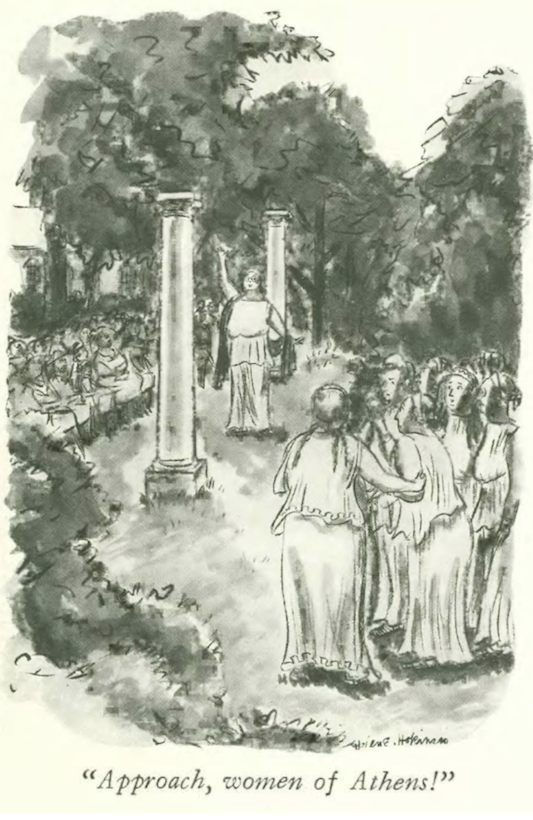
…another from Hokinson, anticipating a scene from The Music Man

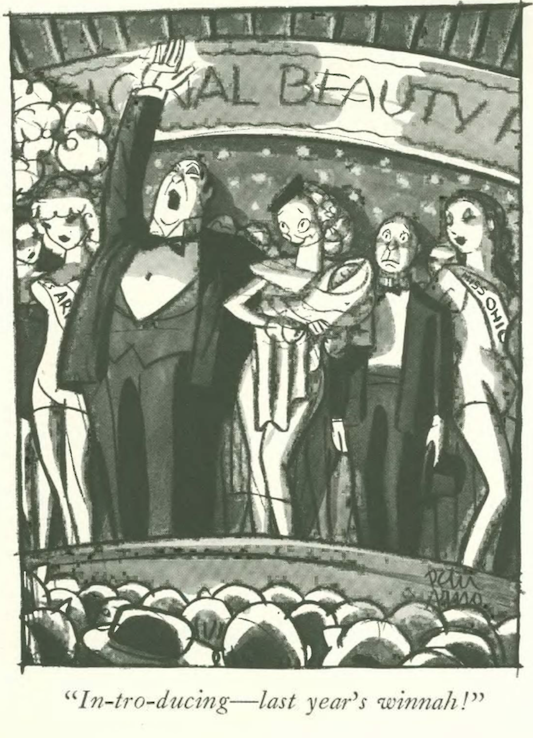
…and we close with Peter Arno, and a surprise announcement…

Next Time: Platoon Platitudes…