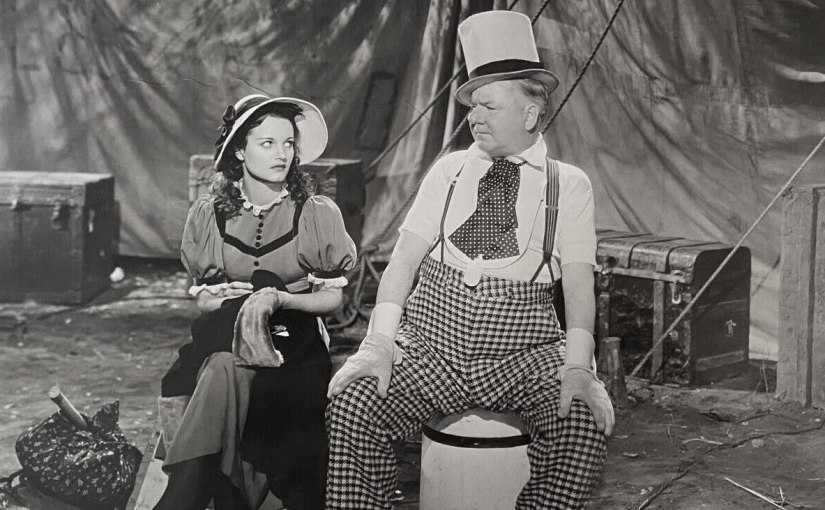
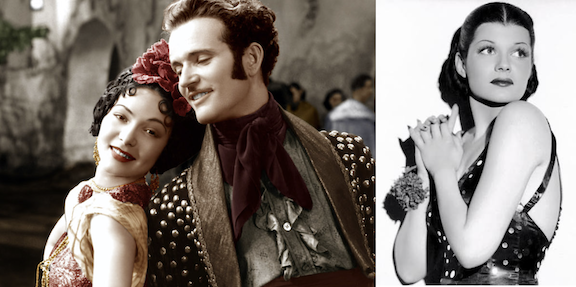
Above: Rochelle Hudson and W.C. Fields in scene from Poppy. Fields reprised his vaudeville character Professor McGargle (from the hit 1923 stage revue of the same name), who learns about a million-dollar inheritance meant for a long-lost local heiress and concocts a plan to pass off his daughter, Poppy, as the true heiress. (Facebook.com)
Eighty years after his death W.C. Fields is still recognized as one of the America’s great comic geniuses. When he made a sound film version of his hit Broadway play, Poppy, in 1936, many thought it would be his last, since he suffered from a variety of ailments including a bad back and chronic lung congestion. Doubtless two quarts of liquor a day also had a few people wondering.
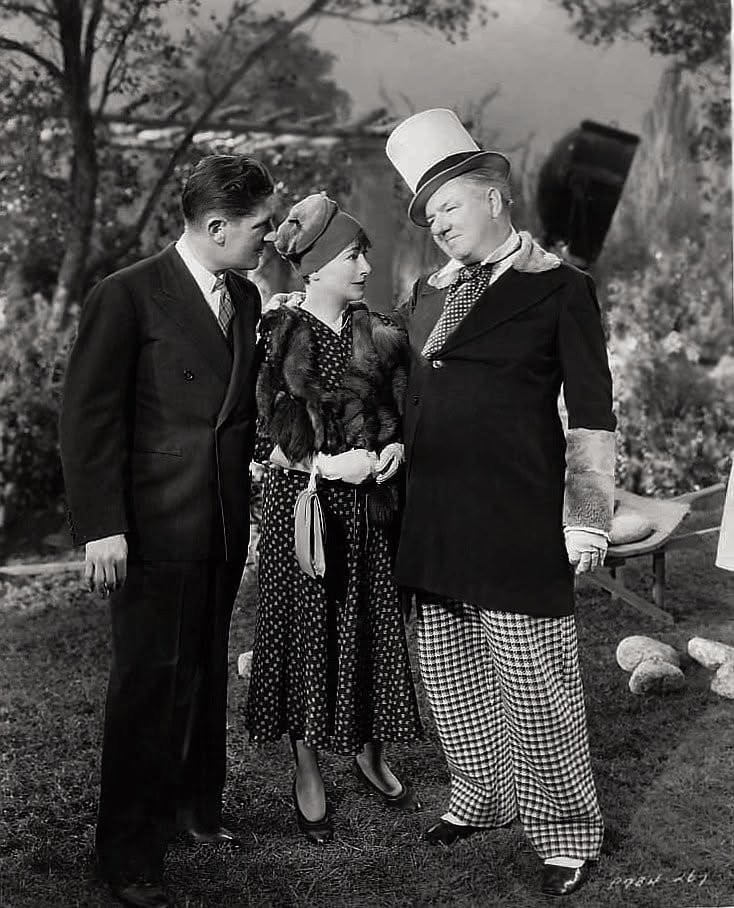
It would have been an appropriate, if premature ending to Field’s career, since it was the Poppy stage play that launched him into national stardom (along with the play’s first adaptation into film, the 1925 silent Sally of the Sawdust). The play and the silent film introduced audiences to the lovable snake oil salesman “Professor” Eustace McGargle, who returned in the 1936 film, “a slightly blurred affair” according to critic John Mosher.
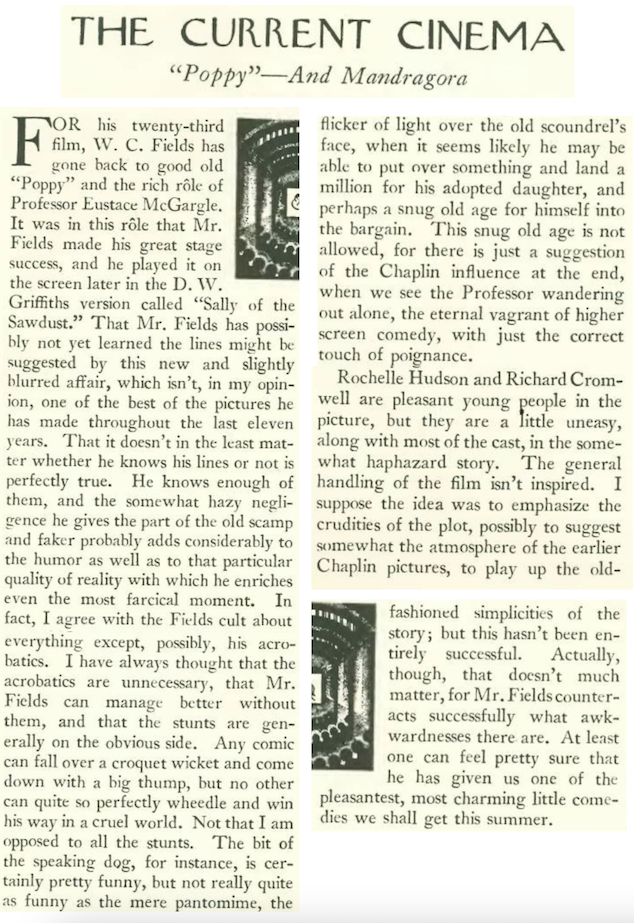
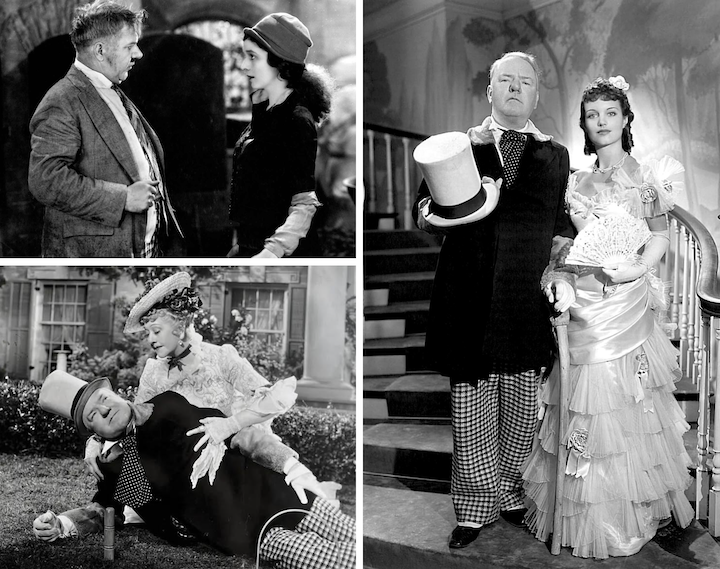
The “blurred” performance by Fields (1880–1946), the result of his various ills, didn’t seem to affect most critics—the New York Times, for example, called the film “a glorious victory.” Remarkably, Fields would live another ten years and go on to star in such classics as 1940’s My Little Chickadee, (with Mae West), 1940’s The Bank Dick, and 1941’s Never Give a Sucker an Even Break.
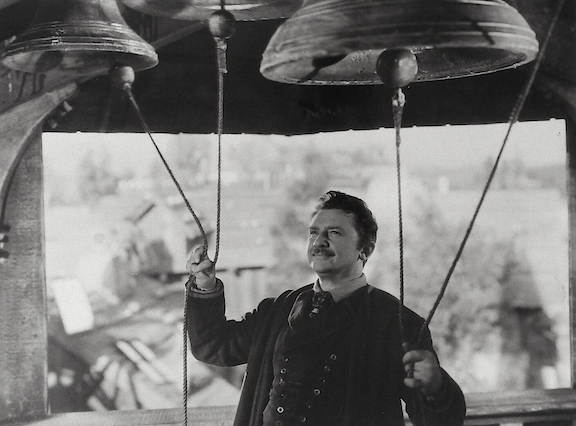
Mosher also reviewed a “sad” picture about the tragic life of a Tyrolean sexton, Sins of Man, and the musical comedy Dancing Pirate, which he deemed even sadder because it was so terrible (Mosher walked out during the middle of the picture).
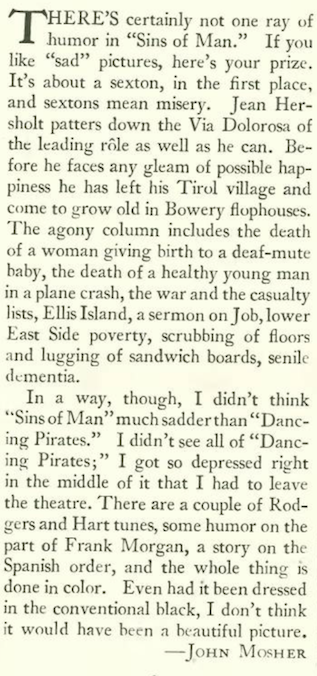
The origin of the music video? See reader comment at the end of the post.
* * *
All Aboard
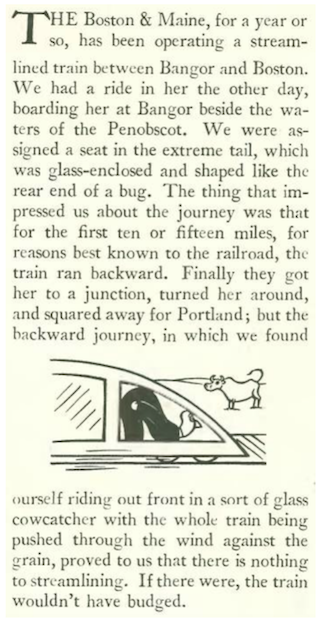
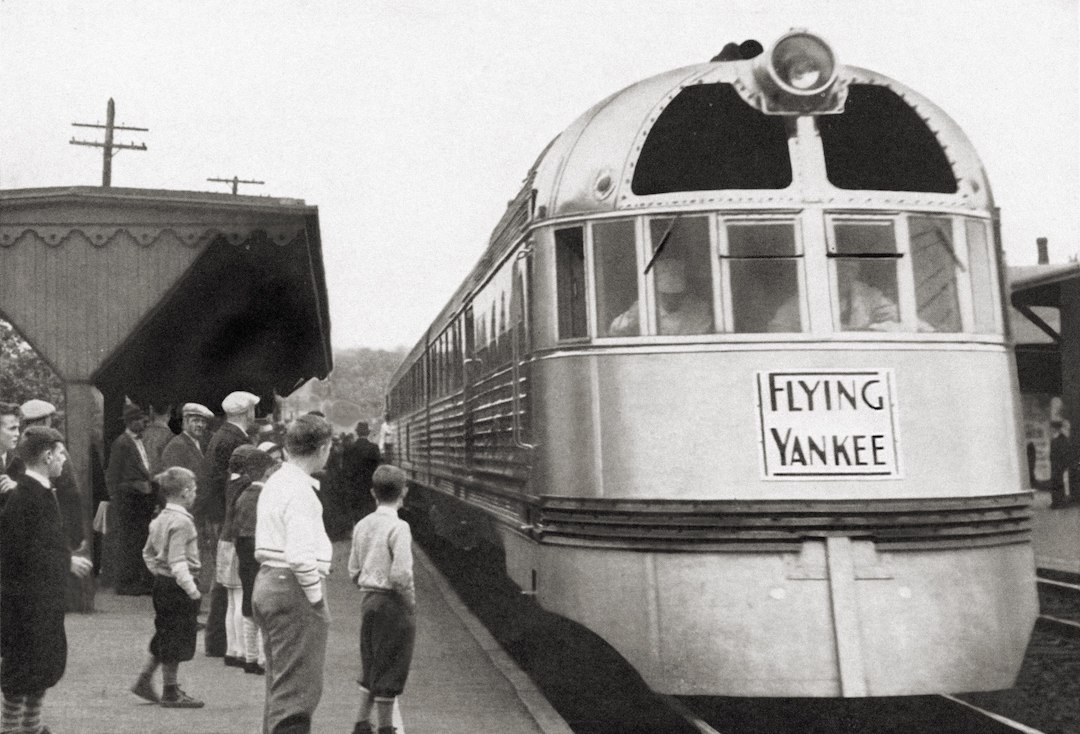
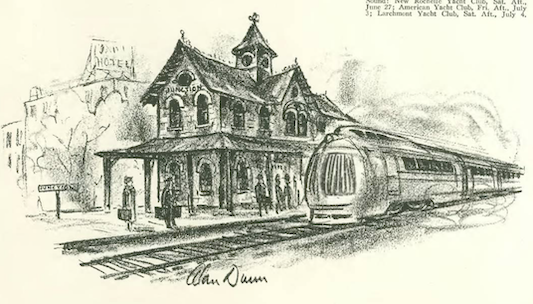
In his “Notes and Comment,” E.B. White described a trip on a Boston & Main streamliner that traveled along a branch line. Lacking a turning loop, the train had to run in reverse for half of the round trip.
* * *
Furies Al Fresco
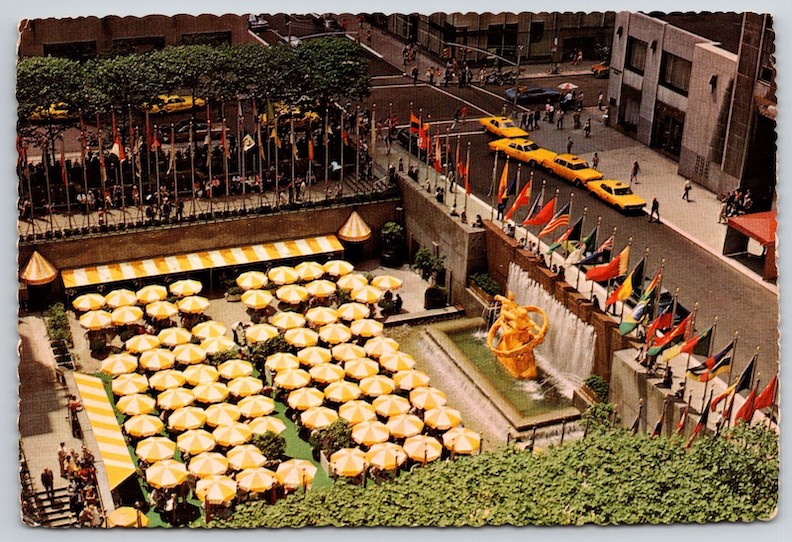
On June 17, 1936 Rockefeller Center opened the Promenade Café in the plaza surrounding the Prometheus Fountain (later that year a temporary ice skating rink took the spot, now a permanent, iconic feature of the plaza). Writing for “The Talk of the Town,” E.B. White commented on the breezy dining experience he shared with wife, Katharine Sergeant White. Excerpt:
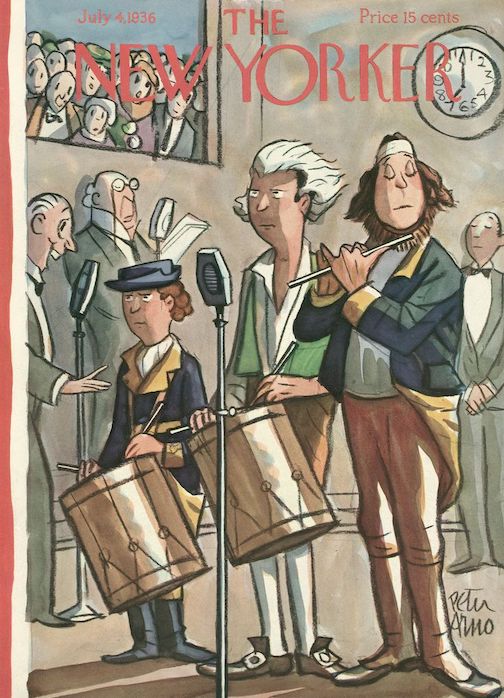
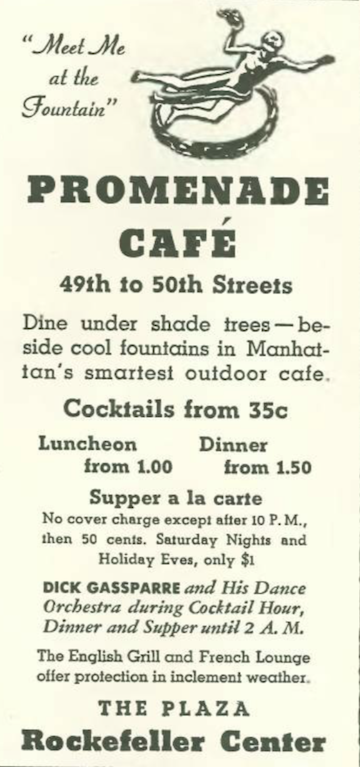
The magazine’s next issue (July 4) advertised dinner, dancing and thirty-five cent cocktails at the Promenade Café…
* * *
From Our Advertisers
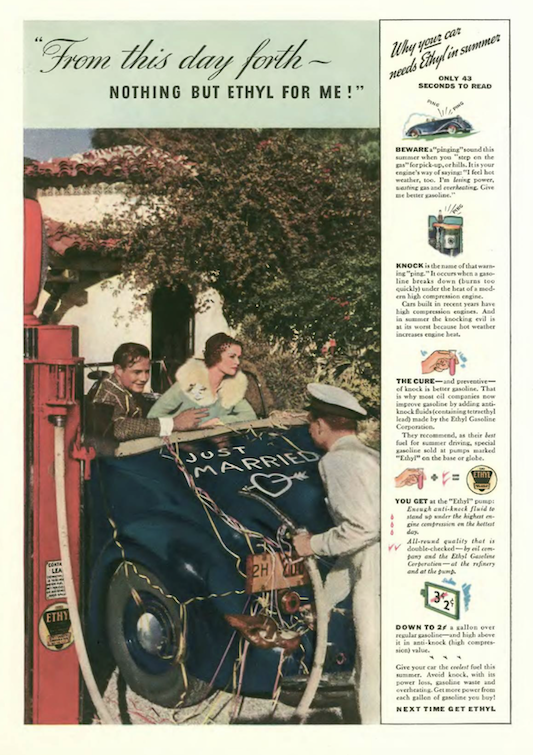
We open with a June Bride and hubby tanking up on some leaded gas before heading to Niagara Falls…
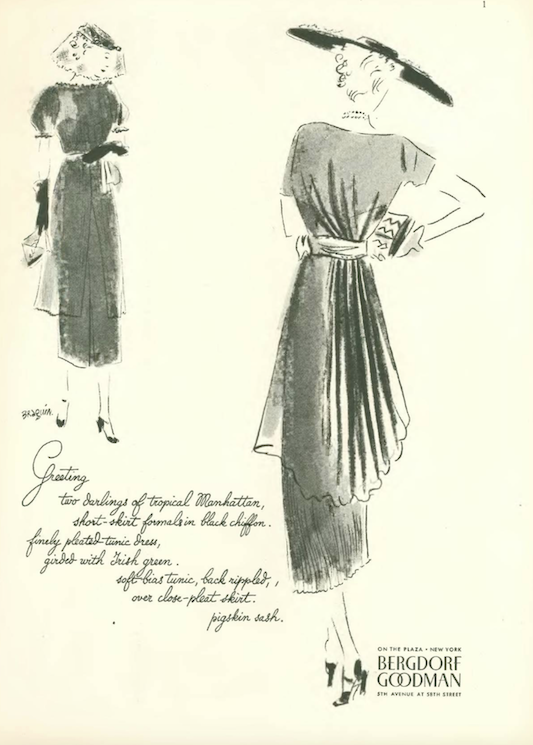
…opposite the Ethyl ad was this Simeon Braguin-illustrated spot for Bergdorf…
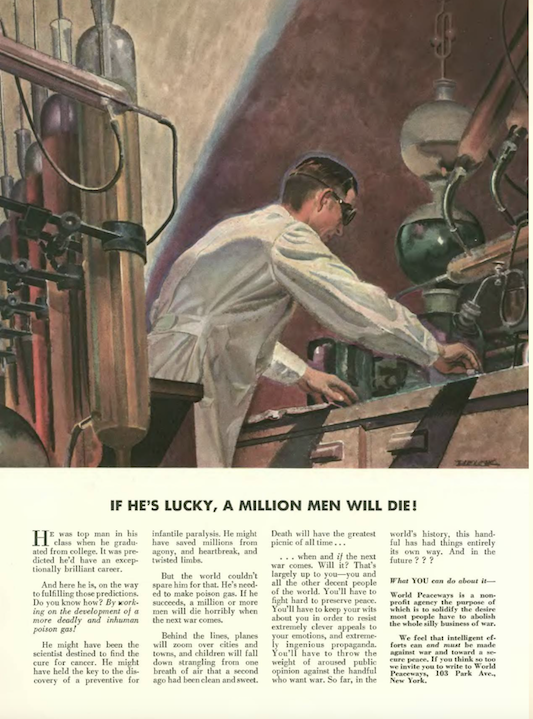
…the pacifists behind the World Peaceways ads pulled no punches when delivering their anti-war message…
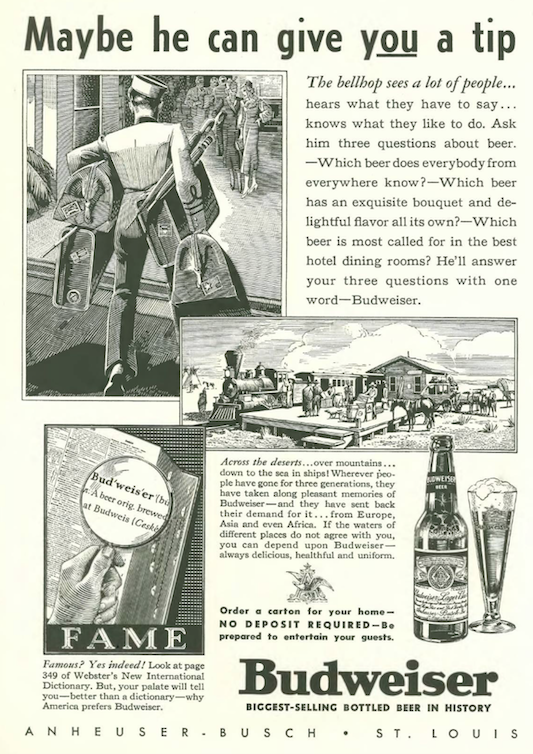
…Budweiser continued its laborious series of ads that employed analogies and metaphors to promote its best-selling suds…
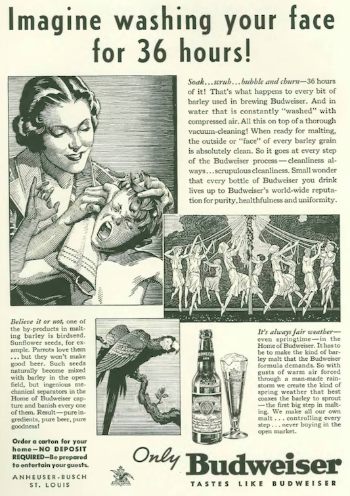
…recall the ad from the April 18 issue of The New Yorker, when the brewer used this disagreeable analogy to tout its “vacuum-cleansing” process…
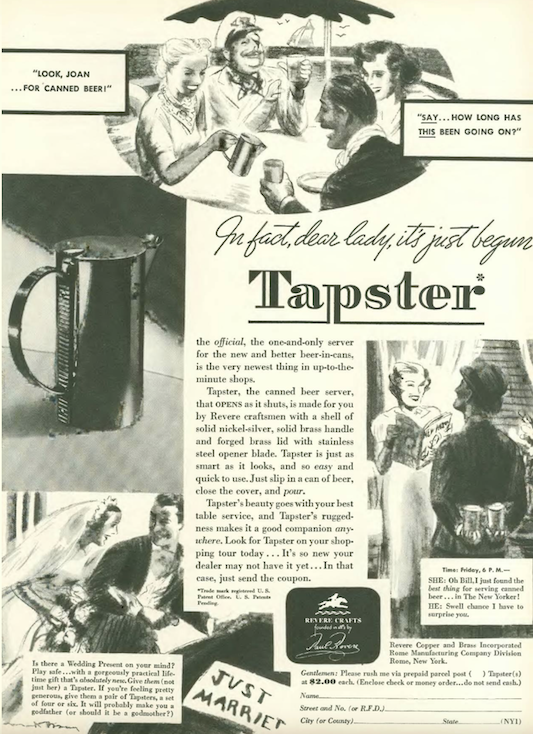
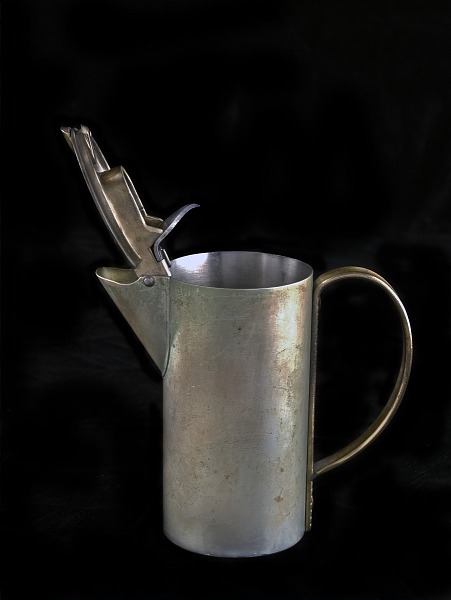
…the Revere Copper and Brass company responded to the recent invention of canned beer with an invention of its own…the Tapster, an elegant nickel and brass pitcher with a built-in punch on the underside of the lid…just insert a can, push down on the lid, and pour…great for the yacht, or as a gift to some newlyweds…
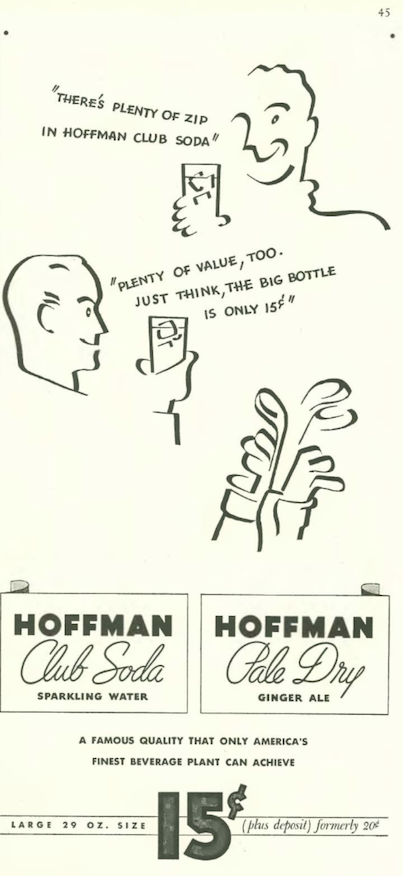
…in contrast to Budweiser’s wordy ads (or to White Rock’s colorful ones), the folks at Hoffman advertised their products with just a few lines of black ink…
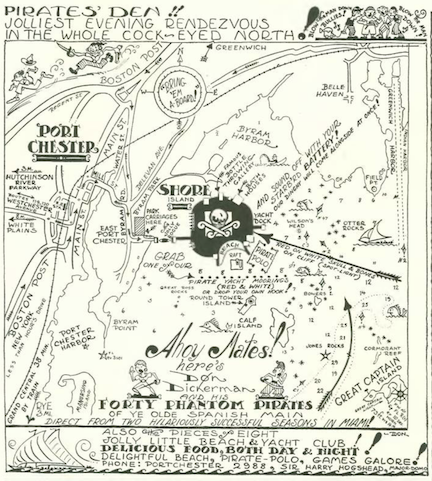
…Don Dickerman continued to promote his latest “Pirates Den” near Port Chester…note that among many other talents, Dickerman was also an artist…he illustrated the ads for all of his enterprises, including this one…
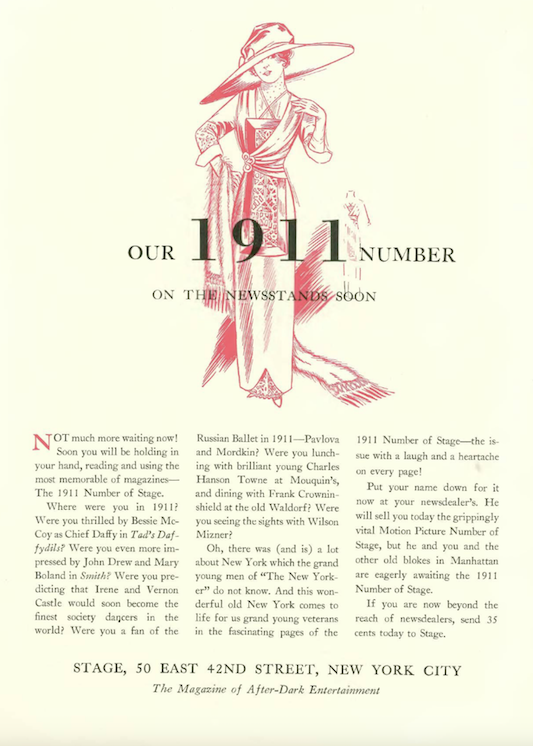
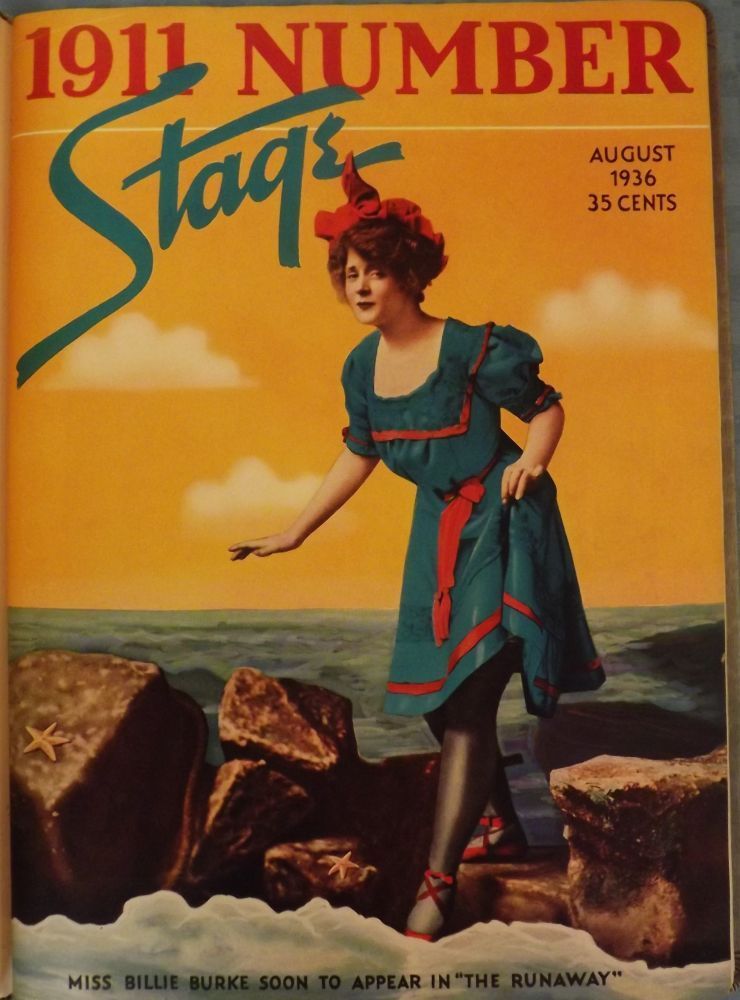
…John Hanrahan, publisher and editor of Stage theater magazine (and who also helped put The New Yorker on solid financial footing), set aside the August 1936 issue as a special edition, the “1911 Number,” a nostalgic, tongue-in-cheek look back to the founding of Stage’s predecessor, The Theatre Guild Magazine. The magazine marked its 25th anniversary by examining the striking differences between 1911 and 1936 in the world of theater as well as in fashion and cultural mores.
…here is the cover of that issue, featuring Billie Burke, a leading Broadway actress who would marry producer and impresario Florenz Ziegfeld Jr in 1914…she is still known today for her portrayal of Glinda the Good Witch of the North in 1939’s The Wizard of Oz…
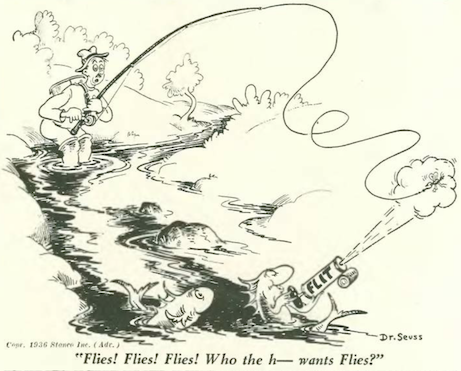
…and Dr. Seuss was still at it, finding new and clever ways to deploy the insecticide Flit…
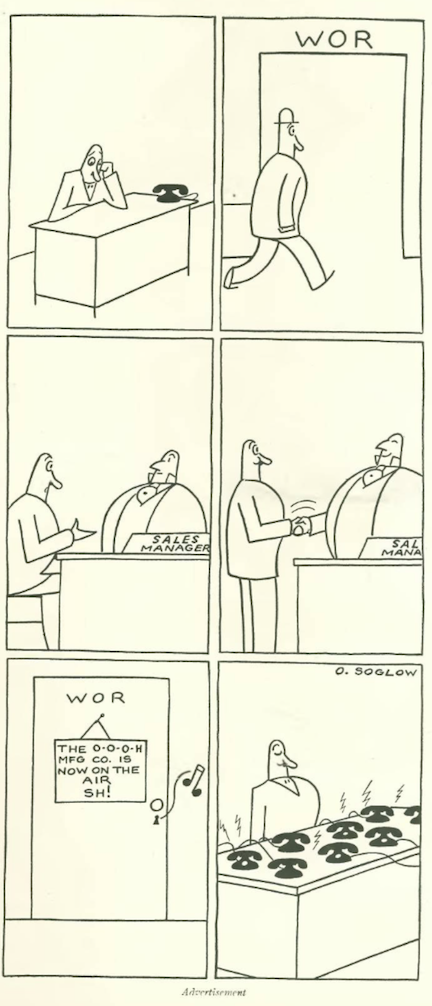
…the New York radio station WOR employed Otto Soglow to drum up some business for their ad department…WOR began broadcasting in early 1922, and is one of the oldest continuously operating radio stations in the U.S. (the three–letter call sign is characteristic of stations dating from the 1920s)…
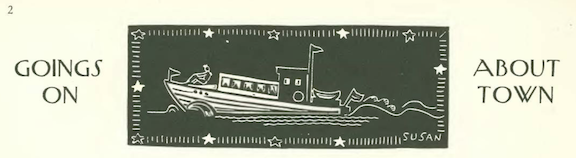
…Soglow gives us a nice segue to our cartoonists and illustrators, beginning with a Susan Willard Flint woodcut…
…Alan Dunn contributed this spot drawing…
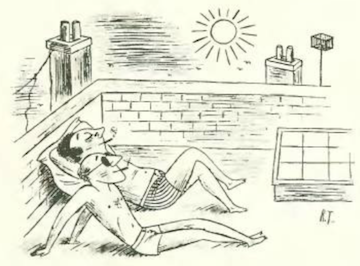
…as did Richard Taylor…
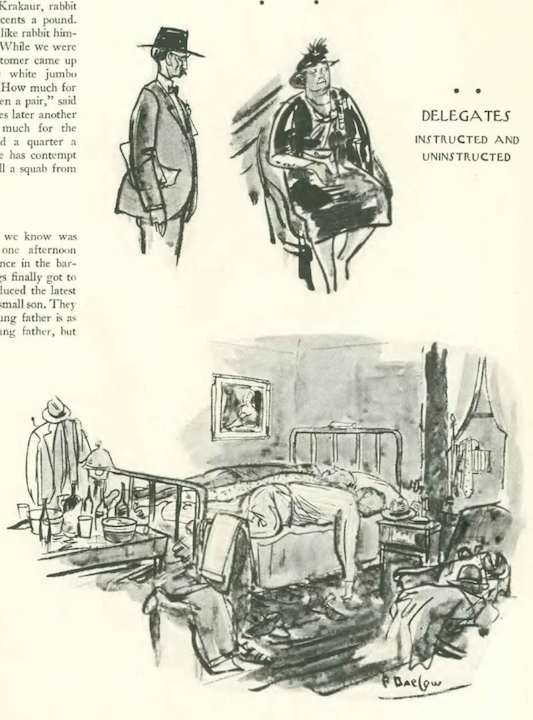
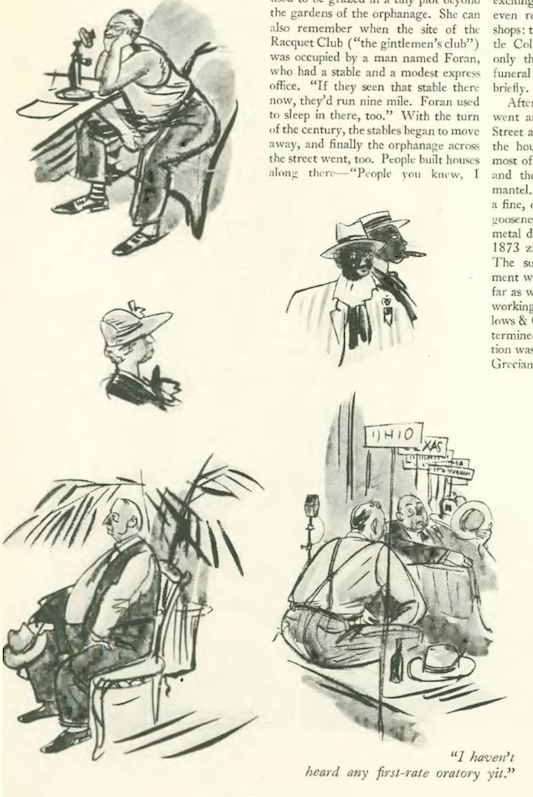
…Perry Barlow offered some sketches from the summer convention scene…
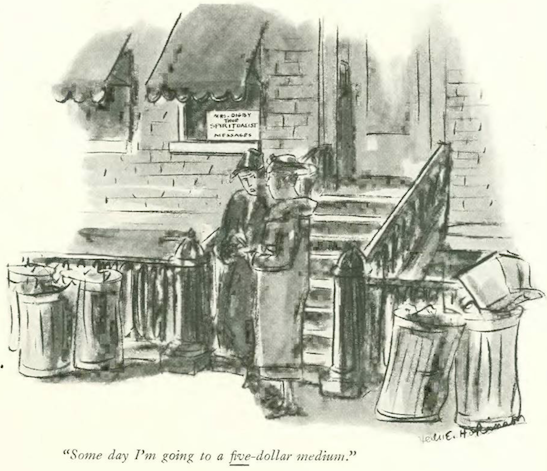
…Helen Hokinson considered the value of fortune-teller…
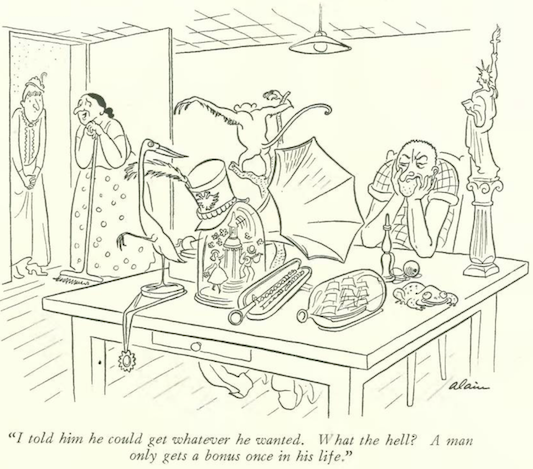
…Alain illustrated what dreams are made of, at least for one man…
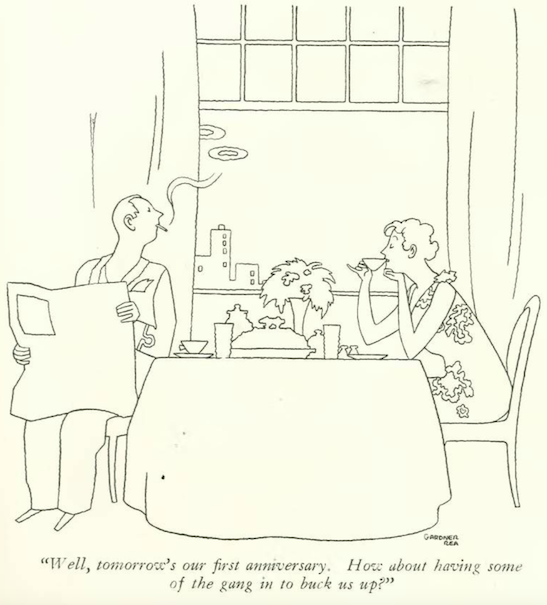
…and what are friends for? Gardner Rea had an idea…
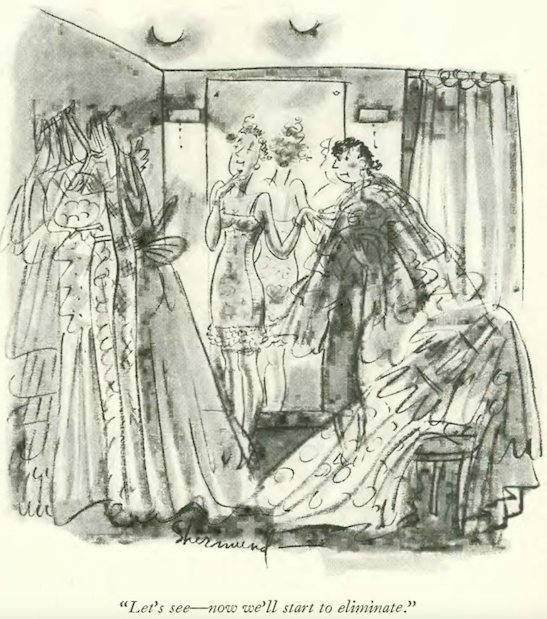
…Barbara Shermund offered a challenge at a dress shop…
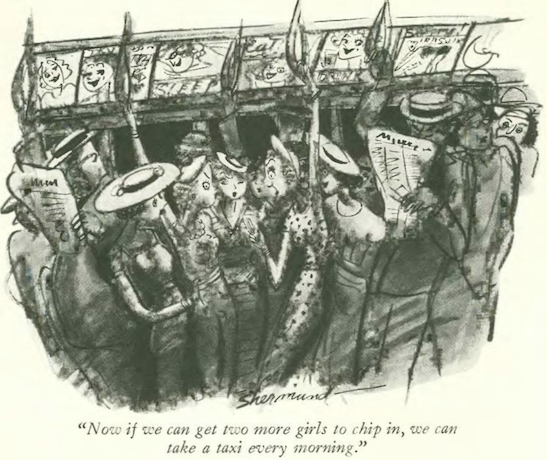
…and Shermund again, with an enterprising commuter…
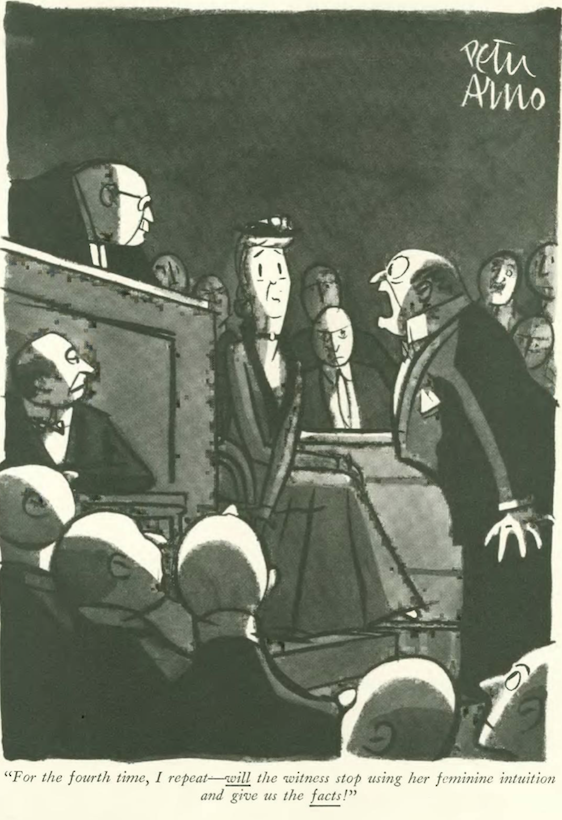
…just the facts ma’am, with Peter Arno in the court of law…
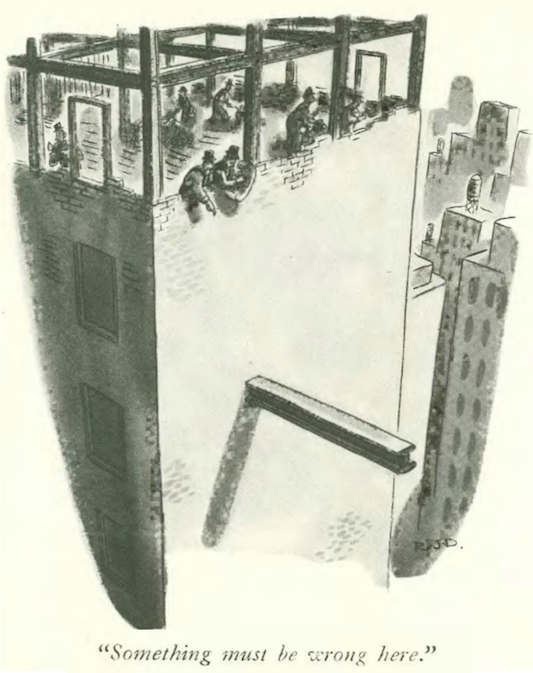
…Robert Day presented a construction conundrum…
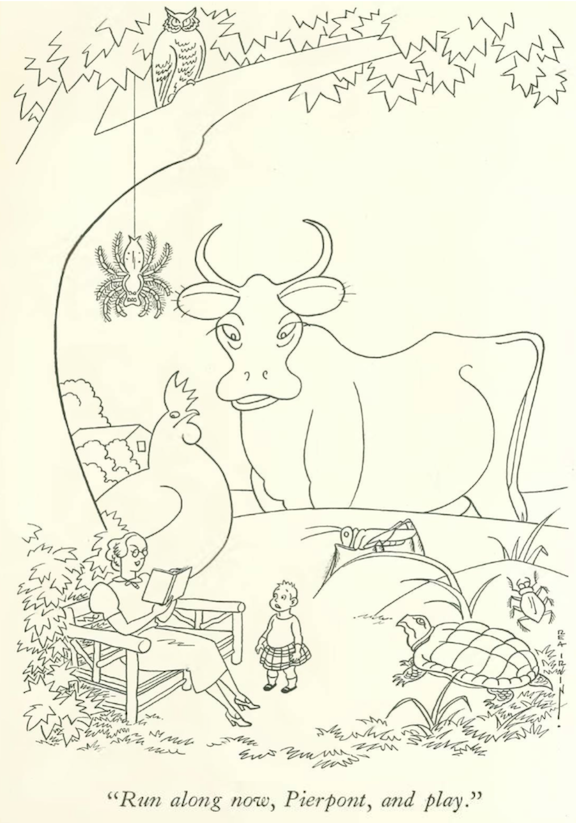
…Rea Irvin took a child’s perspective of the wild world…
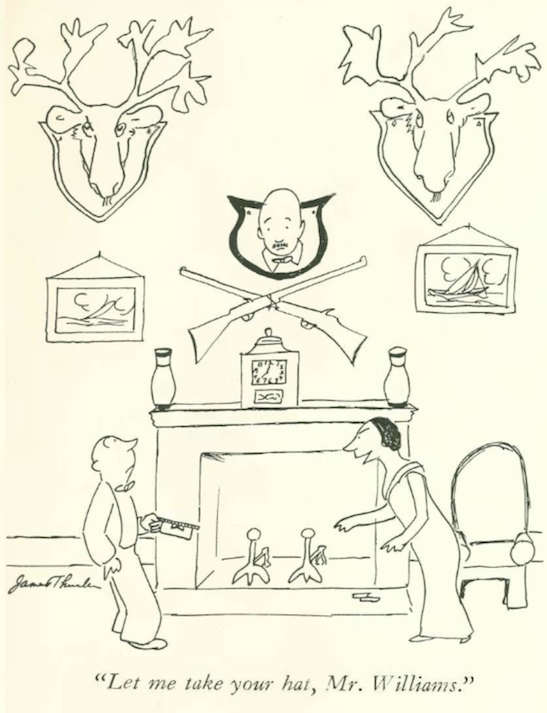
…and we close with this gem from James Thurber…
Next Time: Highfalutin Absurdities…