An Urban Spectacle

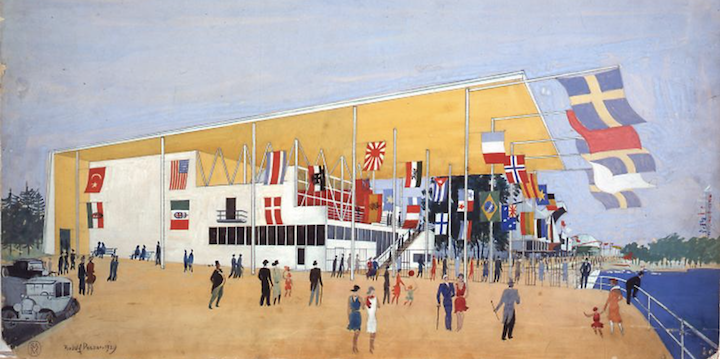
Above: Rudolf Persson's rendering of the main entrance to the Stockholm Exhibition of 1930, designed by Swedish architect Gunnar Asplund. The exhibition was a landmark event that introduced Functionalism to Swedish architecture and design.(Svensk Form)

Architecture critic Lewis Mumford turned his exacting eye on exhibitions at the Museum of Modern Art that looked to the future of building design. Of particular interest was an exhibit on those world expositions that have given us everything from the Eiffel Tower (1889 Exposition Universelle) to the car-dominated landscape that inspired millions of Depression-weary visitors at New York’s 1939 World’s Fair.
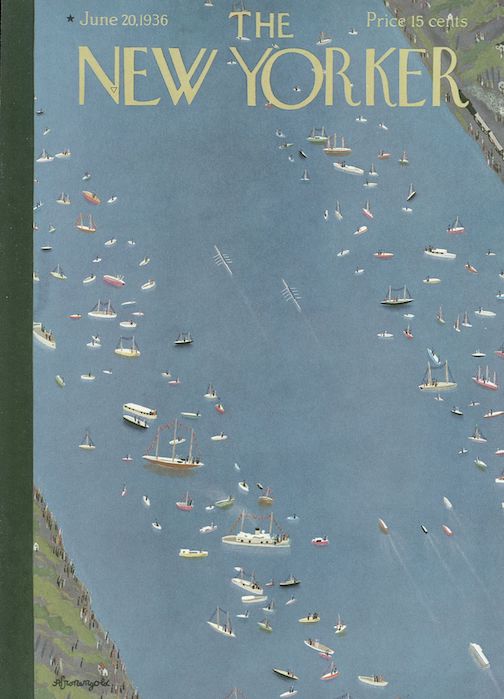
June 20, 1936 cover by Adolph K. Kronengold. Kronengold (1900–1986) created twenty-three covers for the New Yorker from 1928 to 1947. Born and raised in New Orleans, he frequently used watercolors and often painted scenes honoring his hometown. The June 20 cover was Kronengold’s seventeenth for the magazine.

Mumford made passing mention to the museum’s exhibit on government housing (he noted it was below MoMA’s standard) and then turned his attention to a review of world’s fairs, examining how they have inspired both waves of architectural achievement and “counterfeits of civic grandeur…”

BREAK FROM THE PAST…Images from the covers of MoMA’s exhibition catalogs depict the 1934-35 Carl Mackley Houses in Philadelphia (top, from the government housing exhibit) and the 1930 Stockholm Exposition. (MoMA.org)
STILL SERVING…the 1934-35 Carl Mackley Houses in Philadelphia have been on the National Register of Historic Places since 1998. (Wikipedia)
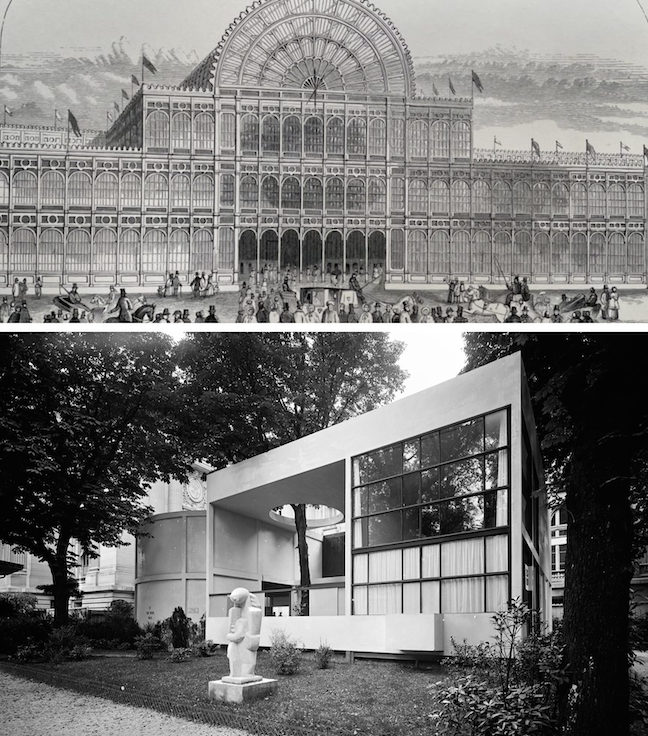
PONDERING what a modern exhibition should be, Lewis Mumford cited the granddaddy of them, the London Exhibition of 1851 (top), with its Crystal Palace, which he called “the first definitive monument of modern architecture,” as definitive and challenging as the Pavillon L’Esprit Nouveau (bottom), designed by Le Corbusier and Pierre Jeanneret for the 1925 International Exhibition of Modern Decorative and Industrial Arts in Paris. (devonandexeterinstitution.org/Wikipedia)
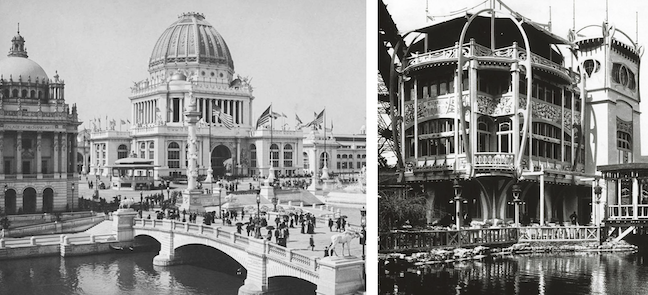
SHAM AESTHETIC…Mumford referred to buildings in the 1893 Chicago World’s Fair (left) as “laborious limestone counterfeits of civic grandeur,” while praising the 1893 and 1900 Paris expositions for design innovations including the Art Nouveau style—at right is Le Pavillon Bleu, a lavish restaurant once located at the foot of the Eiffel Tower. It was built by French architect René Dulong in collaboration with Belgian architect and designer Gustave Serrurier-Bovy, one of the founders of the Art Nouveau movement. (getzen.com/messynessychic.com)

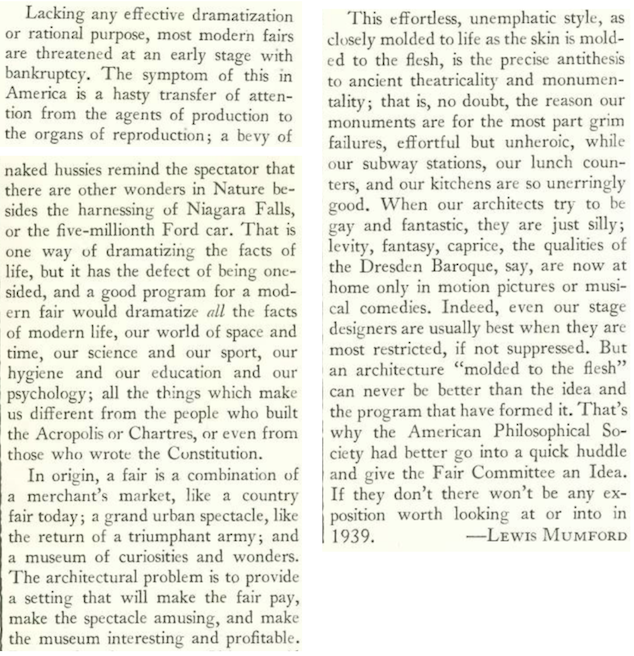
Looking ahead to the planned 1939 World’s Fair at Flushing Meadows, Mumford believed the age of grand world expositions had passed, especially those that moved the needle on design innovation. Moreover, he observed that the lack of real drama or rational purpose would threaten bankruptcy to future fairs, a symptom especially acute in America: “…a hasty transfer of attention from the agents of production to the organs of reproduction; a bevy of naked hussies remind the spectator that there are other wonders in Nature besides the harnessing of Niagara Falls, or the five-millionth Ford car.”
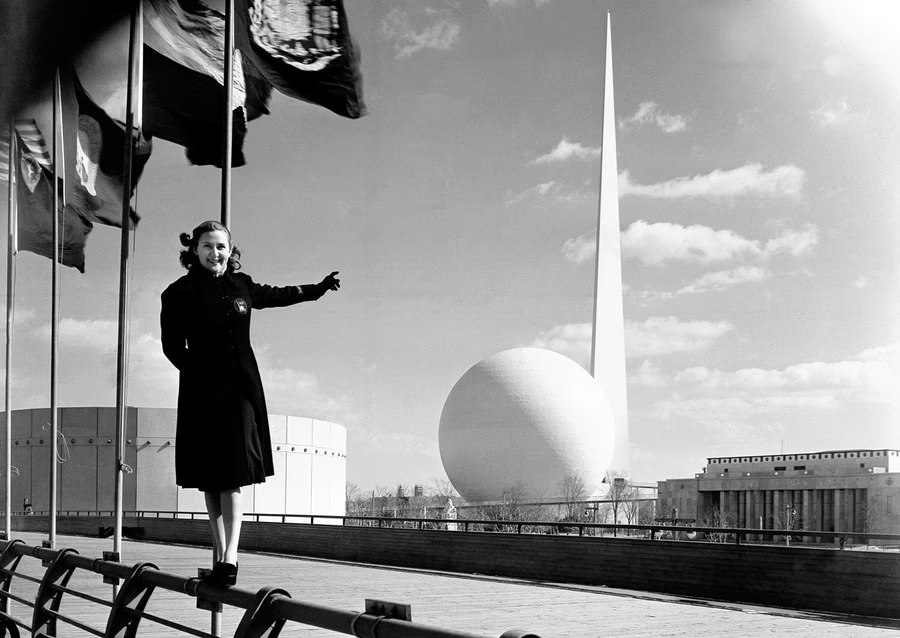
POINTING TO THE FUTURE..Rosalie Fairbanks, a guide to the 1939 New York World’s Fair, points to the theme of the exposition—the Trylon and Perisphere—after the entire sheath of scaffolding was removed for the first time on February 22, 1939. (Associated Press)

Earth-movers were already at work sculpting the fair’s site from the swampland and ash heaps along the Flushing River when Mumford assembled a self-anointed advisory group in 1936. This group— the “Fair of the Future Committee”—urged the fair’s leaders to abandon superficial commercialism and instead demonstrate how technology could serve the public good and restore ecological balance in American communities. That did not come to pass; when the fair opened in 1939, Mumford wrote in his “Sky Line” column (titled “Genuine Bootleg”) that the committee’s “hopes and proposals for a major contribution to urban design were progressively defeated. Today their wreckage is strewed about the Fair, so thoroughly smashed and disfigured that their own fathers could scarcely identify the corpses.”
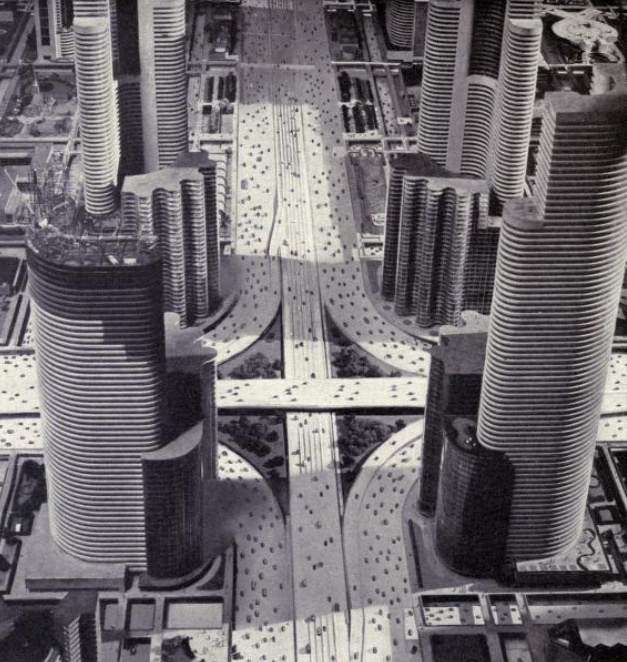
FUTURAMA was a popular exhibit and ride at the 1939 New York World’s Fair. Designed by Norman Bel Geddes for the General Motors pavilion, it proposed a sprawling car-based future that was the antitheses of Lewis Mumford’s vision of human-scaled, ecologically balanced development. (Wikipedia)

Mumford got one thing right. Although the 1939 fair attracted more than 45 million visitors, it lost a lot of money, recouping only 32 percent of its original cost.

 * * *

Only a Memory

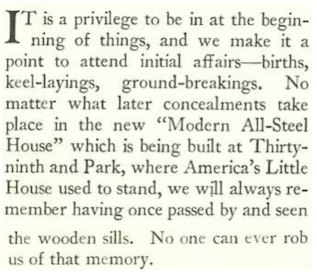
In “Notes and Comment,” E.B. White recalled the brief life of “America’s Little House” at 39th and Park in the Murray Hill neighborhood. The eight-room Georgian colonial was built in 1934 during the “Better Homes in America” campaign that promoted single-family home ownership as well as design innovations. The CBS radio network (which contributed $50,000 to the project) installed a studio in the house’s garage, from which it broadcast three national radio programs to a hundred stations across the country.

Open for about a year, the house was demolished in November 1935, its doors and interior furnishings sold to hostesses who had worked at the house. In its place William Van Alen—architect of the Chrysler Building—erected the all-steel “House of the Modern Age.”
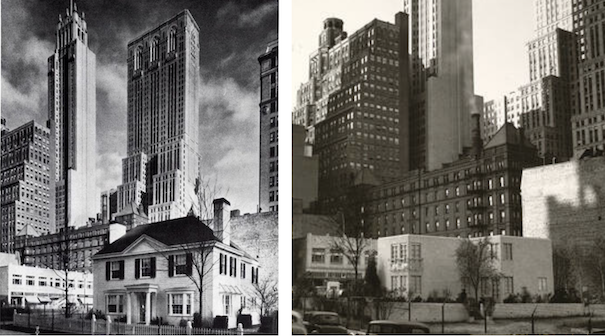
CHANGE OF SCENE…At left, America’s Little House on Park Avenue and 39th Street, replaced by William Van Alen’s prefabricated steel house (right), “The House of the Modern Age,” detail from a photo by Berenice Abbott. (Wikipedia/cornell.edu)

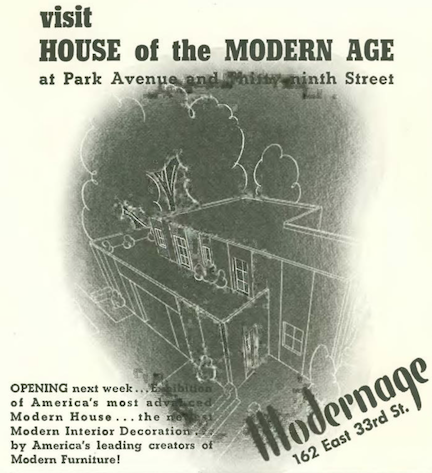
…in the following week’s issue of The New Yorker, June 27, a back of the book ad from the Modernage Furniture Corporation touted the opening of “The House of the Modern Age”…
 * * *

Fan Fans

Staying on the domestic scene, here is an excerpt from Barbara Blake’s “About the House” column, where she updated readers on the latest in electric fans (air-conditioning in private homes was still a rarity).
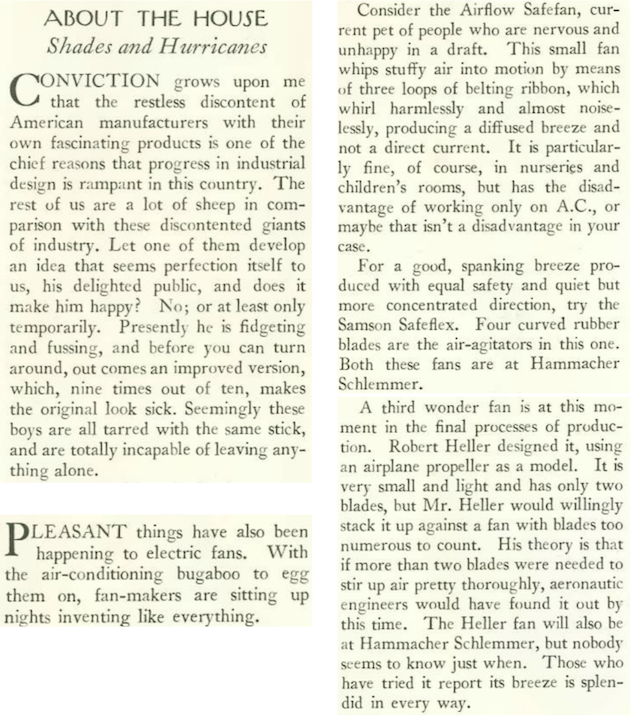
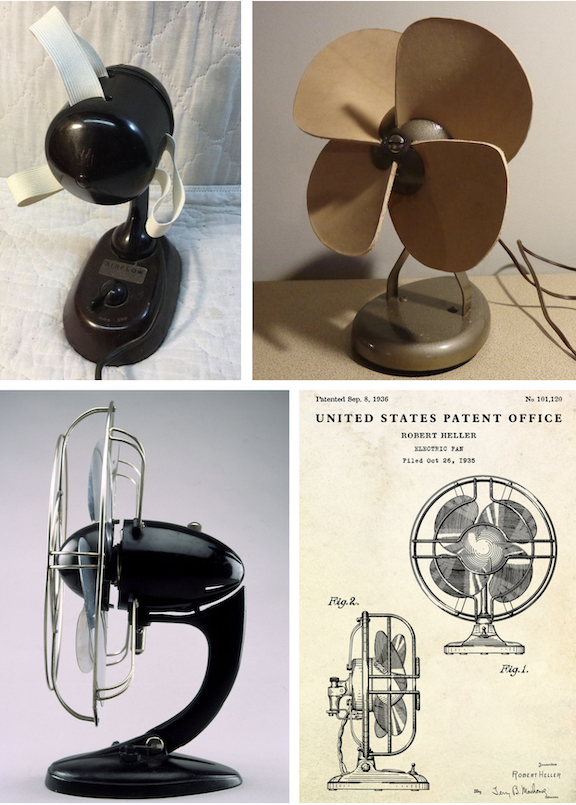
ELECTRIC WIND…Barbara Blake highlighted the latest in electric fans including, clockwise from top left, the Airflow Safefan, which moved air with looped ribbons; the Samson Safeflex employed rubber blades as a safety feature; the noted designer Robert Heller produced these fan designs (1936 and 1937) modeled on airplane propellers. (worthpoint.com/ebay.com/Montreal Museum of Fine Arts)

 * * *

Billy’s Beef

In 1899 vaudevillian Billy Watson (aka Isaac Levie) formed his Beef Trust burlesque troupe of plus-sized women. Although his shows starred women in the 200-pound range, he also relied on slight-of-hand provided by the “Tights King” Morris Kohan, who apparently could produce tights that could make a person look either heavier or slimmer. “The Talk of the Town” explains in this excerpt:
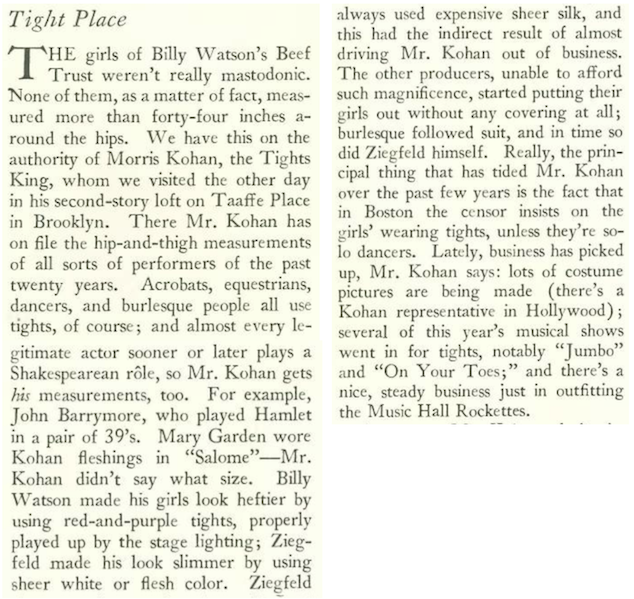
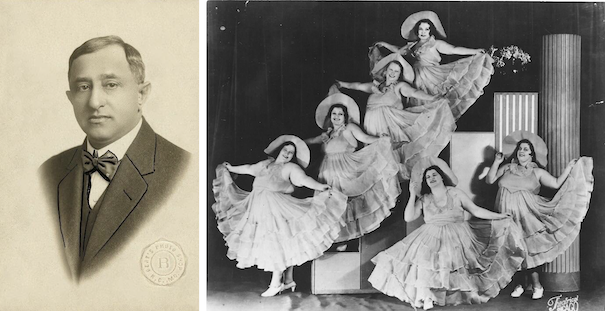
WHERE’S THE BEEF?…Billy Watson’s  burlesque troupe of plus-sized women—the Beef Trust— padded their profiles with the aid of specially designed tights. (Facebook.com)

 * * *

Divine Dilemma

In Part Two of Father Divine’s profile, St. Clair McKelway and A.J. Liebling recounted the preacher’s 1931 arrest, prompted by ongoing complaints from the citizens of Sayville, New York about the traffic jams caused by Divine’s daily feasts as well as the noise generated by the faithful who would holler hallelujahs late into the evening. During one of these late night revivals police raided Divine’s property and fined each of the seventy-eight followers a few dollars apiece. Divine, however, insisted on a jury trial, which was held seven months later. The charge: Maintaining a public nuisance.

Jurors convicted Divine, with a request for leniency, but Justice Lewis Smith sentenced the preacher to a year in prison, calling him a “menace to society.” However, four days later the judge dropped dead of a heart attack, and Divine was freed. The notion that the judge’s death was divine retribution was naturally perpetuated by the media. A brief excerpt, with illustration by Abe Birnbaum.
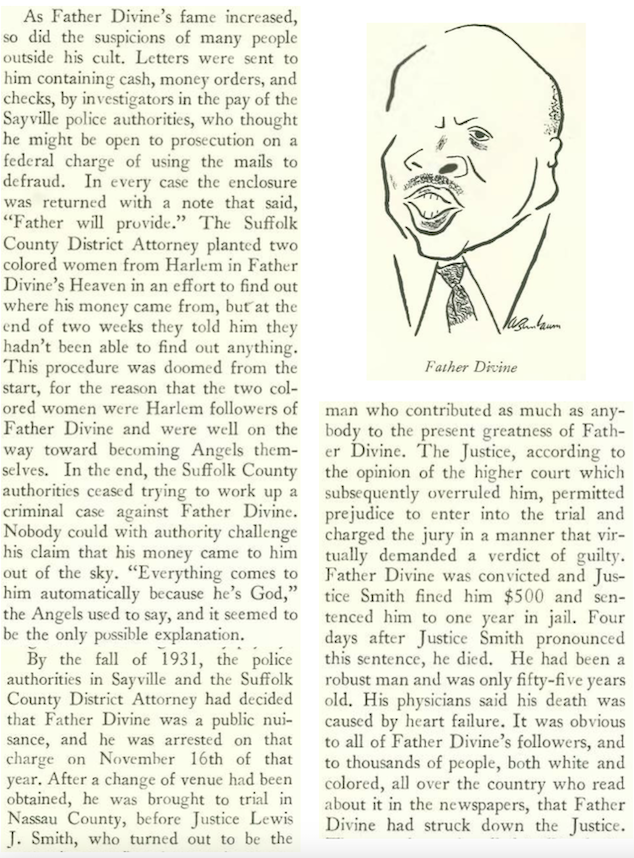
GET OUT OF JAIL CARD…In 1931 Father Divine was arrested for maintaining a public nuisance. Following a jury trial and conviction, the presiding judge dropped dead, leading the preacher’s freedom a few days later. (facebook.com/nydailynews.com)

 * * *

At the Movies

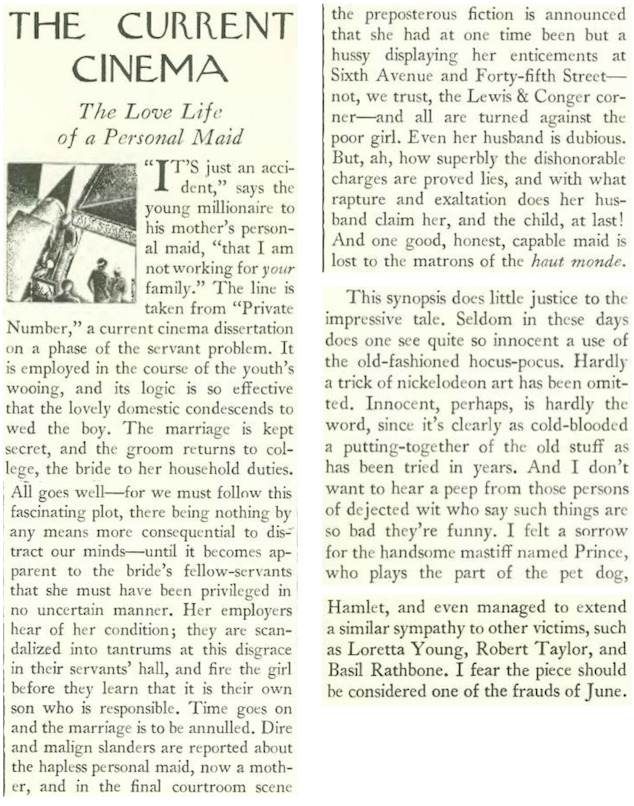
The drama film Private Number was based on the 1915 play Common Clay, which had already been made as a silent in 1919 and as a sound film in 1930. The play had a somewhat scandalous theme for the time (a young servant is fired when she becomes pregnant by her employer’s son), but thanks to the Hays Code, the more scandalous parts of the earlier films were omitted in 1936’s Private Number, leaving the viewer with little except for some “old-fashioned hocus pocus,” according to critic John Mosher.
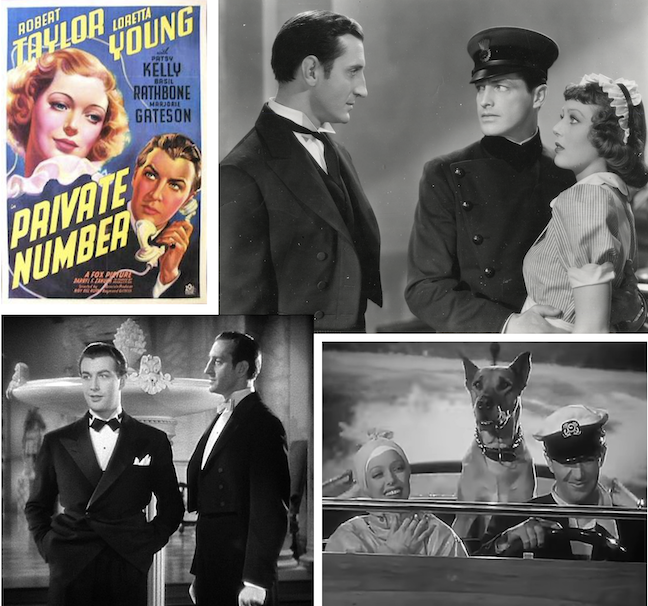
THE BUTLER DID IT…In Private Number, Basil Rathbone portrayed a tyrannical butler with a personal interest in one of his new maids (Loretta Young). She in turn secretly marries the scion of the family (Robert Taylor) and bears his child. Clockwise from top left: Poster for the film; Rathbone, Kane Richmond, and Young; Taylor, Young, and well-known canine actor Prince; rivals for a maid’s affection—Taylor and Rathbone. (Wikipedia/imdb.com/basilrathbone.net)

Thirty-nine-year-old Marion Davies appeared in one her final films, Hearts Divided, a musical based on the real-life marriage between American Elizabeth ‘Betsy’ Patterson and Jérôme Bonaparte, the brother of Napoleon Bonaparte. Although in real life Napoleon annulled the marriage, Hollywood gave the couple a happier ending.
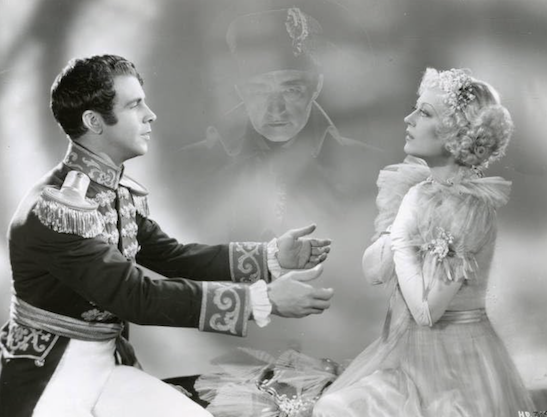
THREE’S A CROWD…Napoleon (Claude Rains) comes between lovers Marion Davies and Dick Powell in Hearts Divided. The two also shared an off-screen romance behind the back of William Randolph Hearst, with whom Davies had a long-term relationship and to whom she believed she owed her career. (imdb.com)

 * * *

From Our Advertisers

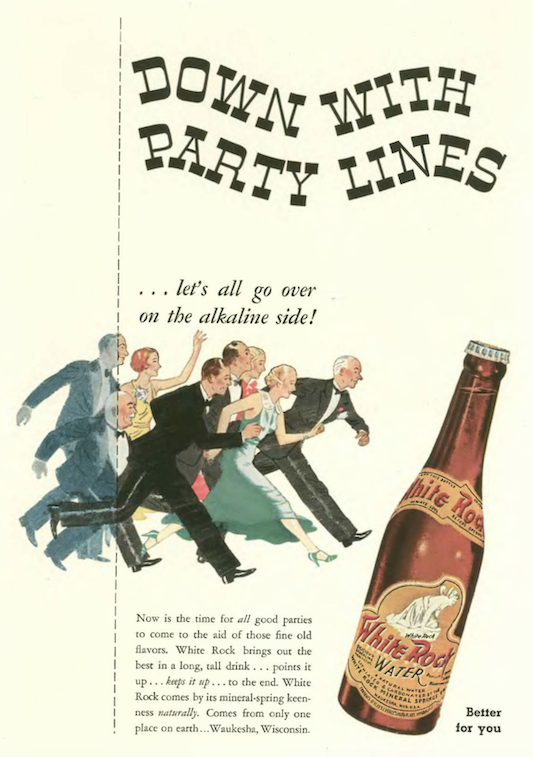
Illustrator R. John Holmgren drew up this non-partisan appeal for White Rock mineral water…
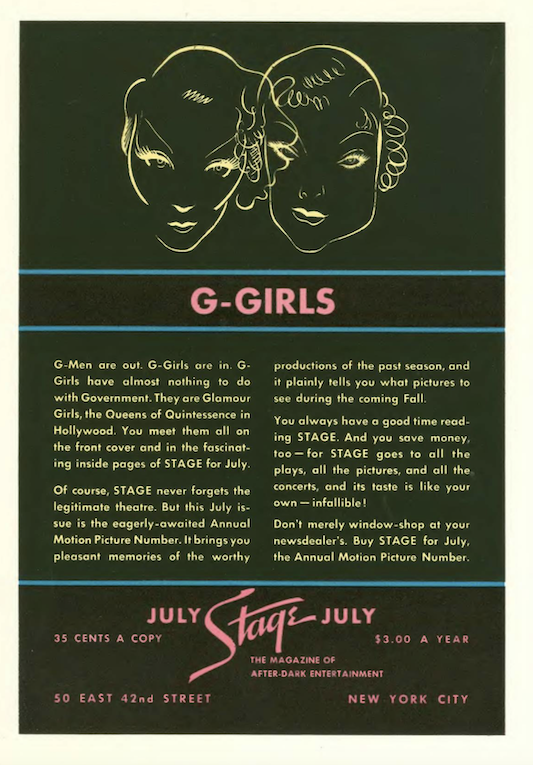
Stage magazine touted its upcoming July issue, featuring the “Glamour Girls” of Hollywood…
…here is the cover of that July 1936 issue, illustrated by Abe Birnbaum, featuring caricatures of leading ladies including Greta Garbo, Joan Crawford, Jean Harlow, Merle Oberon, Myrna Loy, Claudette Colbert, Bette Davis, Marlene Dietrich, and Katharine Hepburn…
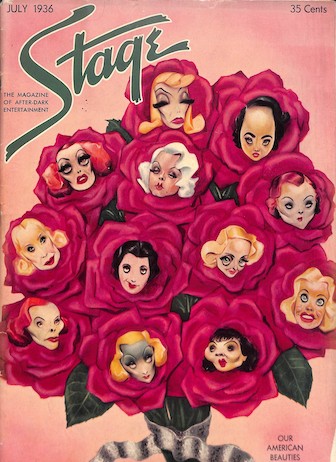
(abebooks.com)

…longtime member of the New Yorker coterie and contributor Alexander Woollcott appeared in this full-page ad endorsing the work of the American Civil Liberties Union…

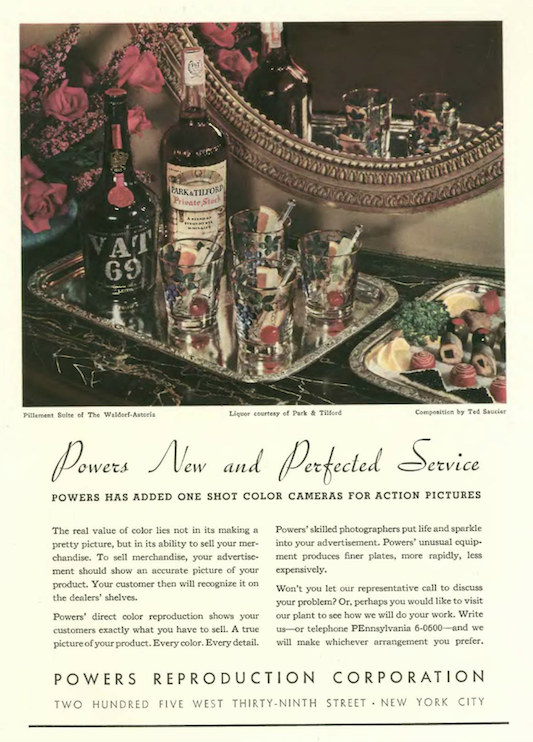
…from the 1920s to the 1940s the Powers Reproduction Corporation was a prominent, New York City photo-engraving firm that created high-quality color images for magazines and advertising agencies…
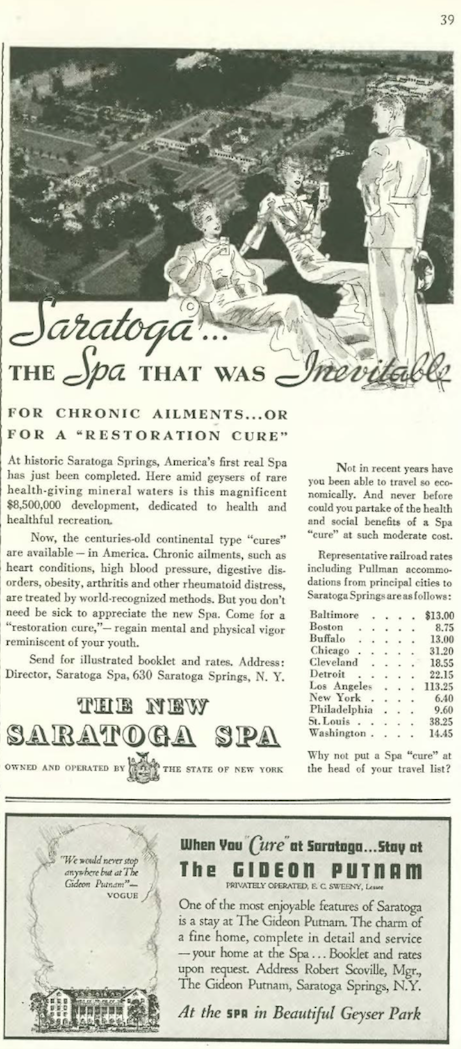
…these back of the book ads joined forces to promote the healing waters of Saratoga Springs and the Gideon Putnam hotel and spa…apparently the waters and other spa services treated everything from heart conditions to obesity…
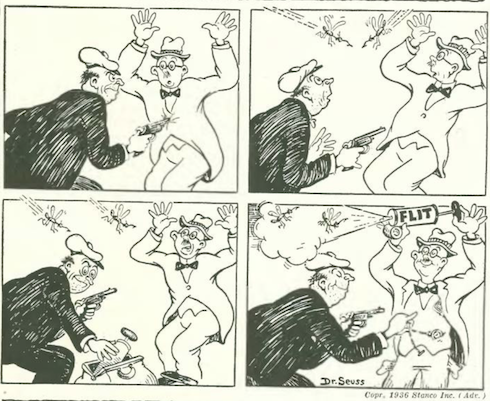
Dr. Seuss returned with another scenario for insecticide use…
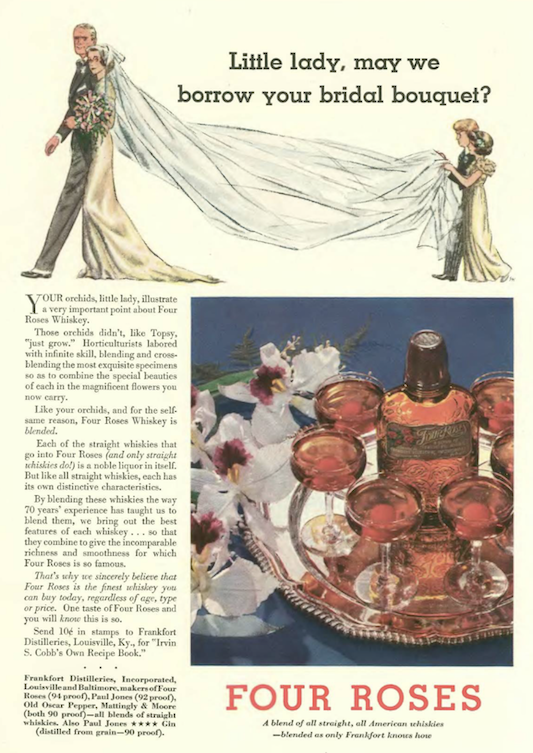
…on the inside back cover, the distillers of Four Roses Whiskey conjured up a June bride as an apt metaphor for their blending techniques…
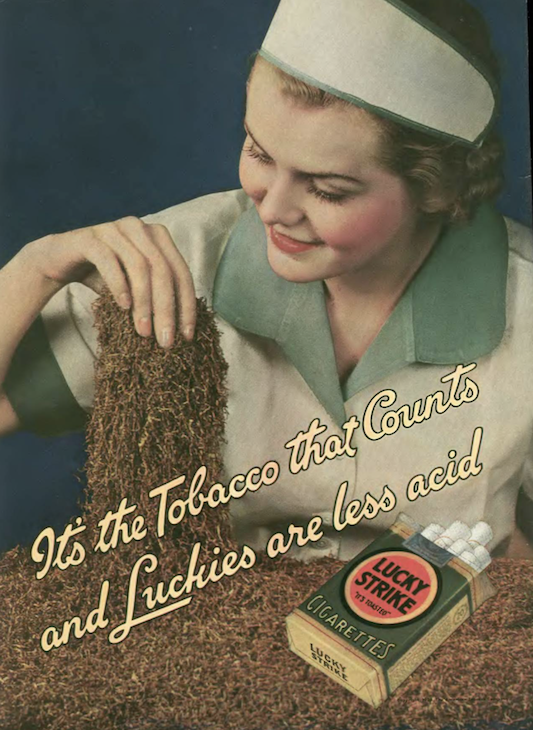
…while Lucky Strike reclaimed the back cover with an ad that promoted its low acid cigarettes, whatever that meant…
…on to our illustrators and cartoonists, we begin with Arnold Hall

…and Robert Day…

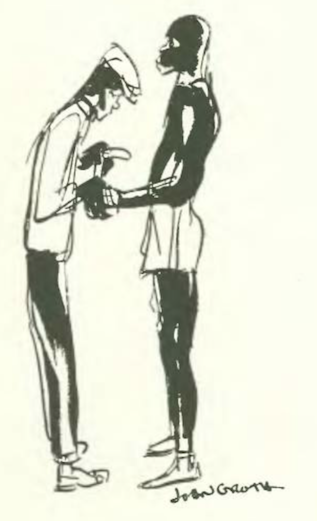
…with other featured spots from John Groth

Richard Taylor

…and Otto Soglow

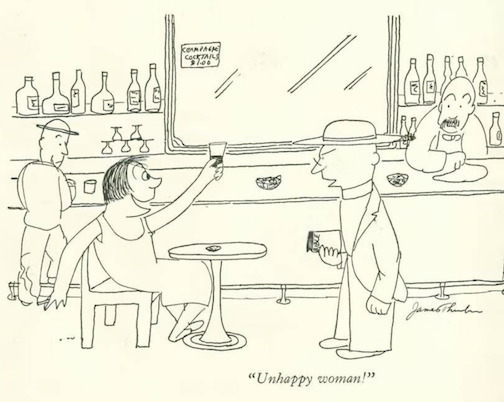
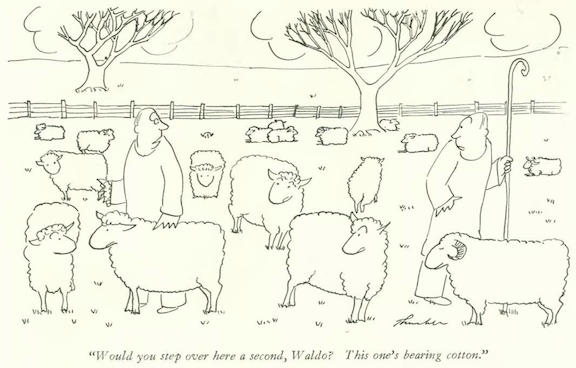
James Thurber drew up an unusual development in the sheepfold…
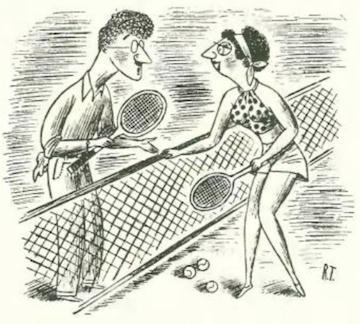
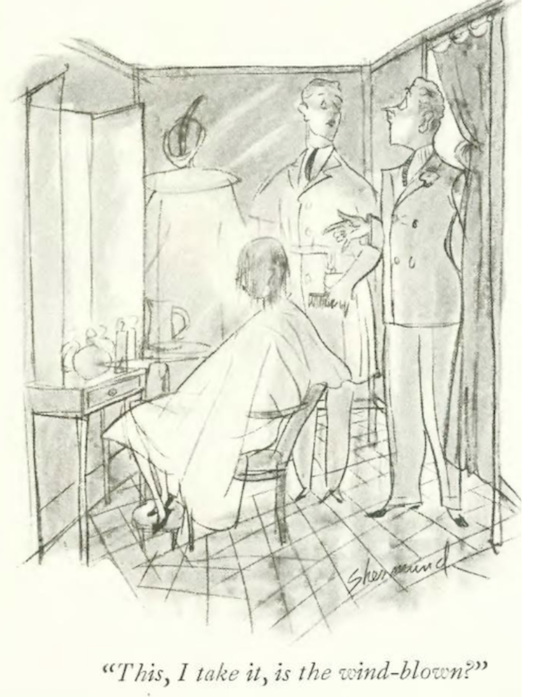
Barbara Shermund posed a challenge for a hair dresser…
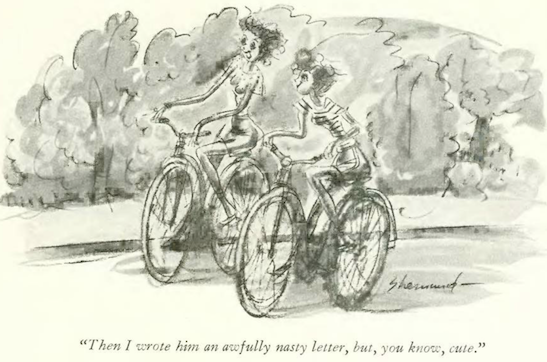
…and Shermund again, revealing a tactic of the modern woman…
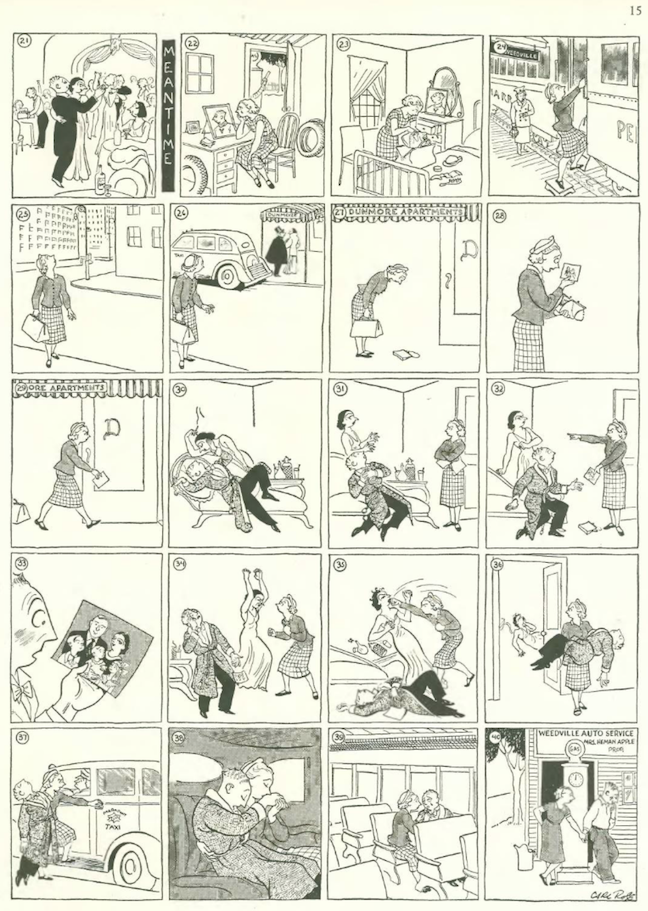
Carl Rose commanded a two-page spread to tell his tale of sin and redemption…

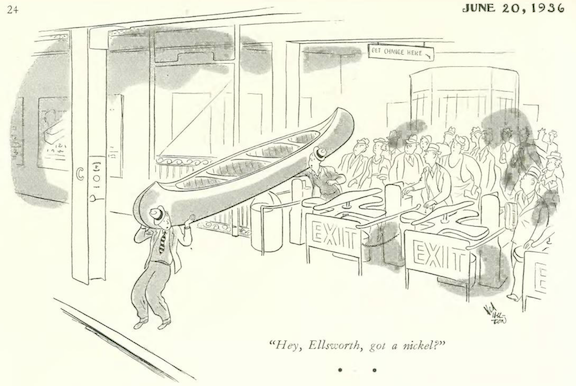
Ned Hilton needed a hand at the subway station…
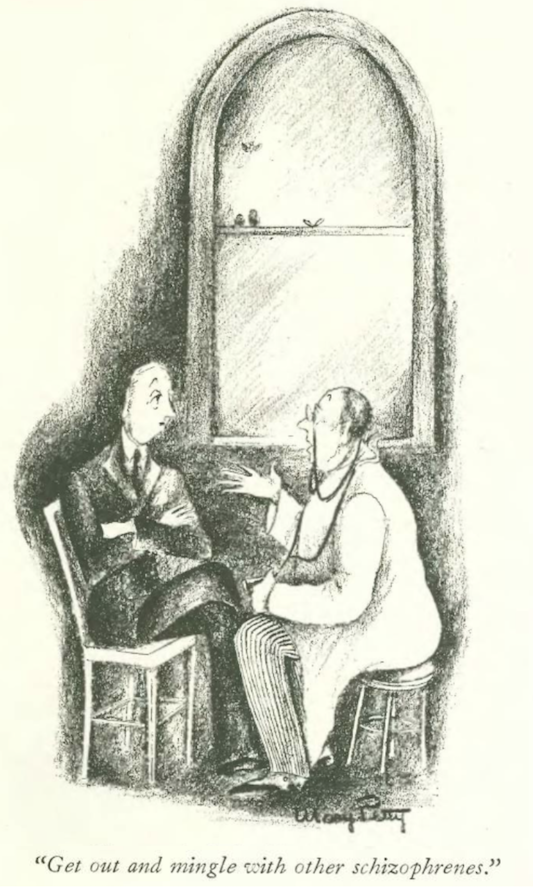
Mary Petty gave us a patient in need of a second opinion…
…while Alan Dunn weighed summer camp options…

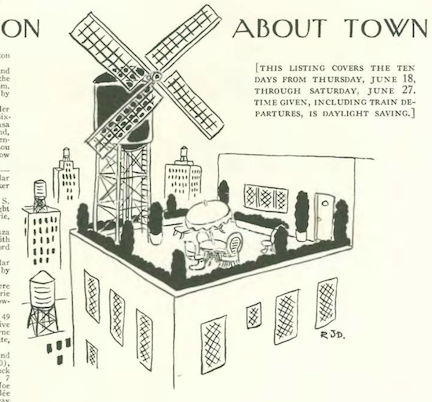
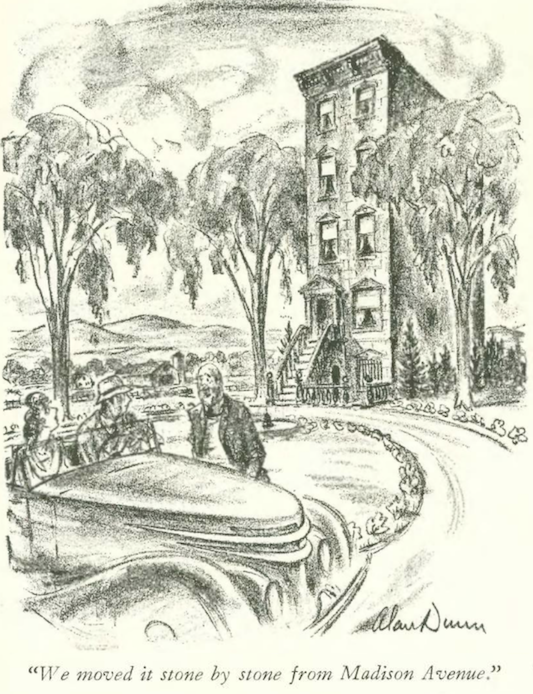
…and we close with Dunn, and a true urban escape…
Next Time: Poppy Returns…
 

Down to Earth

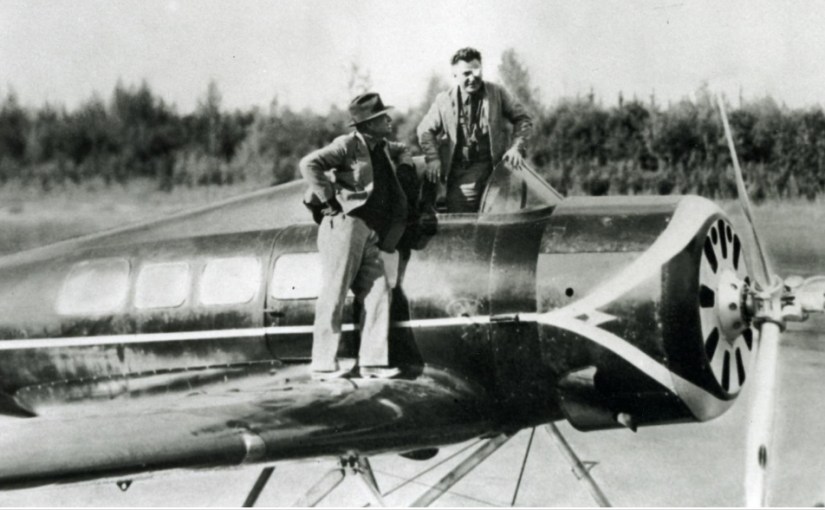
Above: Will Rogers (with hat) visits with pilot Wiley Post near Fairbanks, Alaska, hours before their fatal crash on August 15, 1935. (okhistory.org)

It would be a challenge to find a place for a multi-talented, mega-star like Will Rogers in today’s over-saturated and segmented media landscapehe was a trick roper, vaudevillian, social commentator, comedian, journalist, author, and radio and film celebrity. His early fame on the vaudeville circuit, including the Ziegfeld Follies, would spark a film career in 1918 (he would appear in 71 films), and a 1922 town hall speech would lead to a nationally syndicated newspaper column. When radio became a nationwide phenomenon his voice could heard coast-to-coast. He was seemingly everywhere.

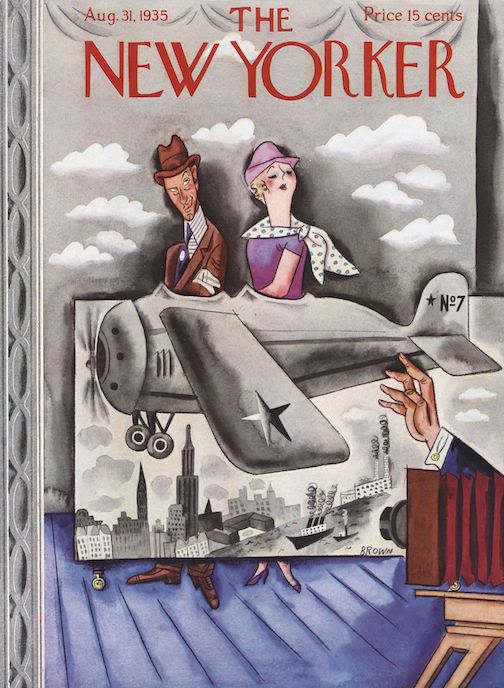
August 31, 1935 cover by Harry Brown. Brown illustrated eighteen covers for The New Yorker.

Rogers (1879-1935) was also a big promoter of aviation, and he gave his audiences many entertaining accounts of his world travels. In the summer of 1935 he announced plans to join famed aviator Wiley Post (1898-1935) on a flight to Alaska and beyond. It appeared to be routine, making the trip’s tragic ending all the more poignant.

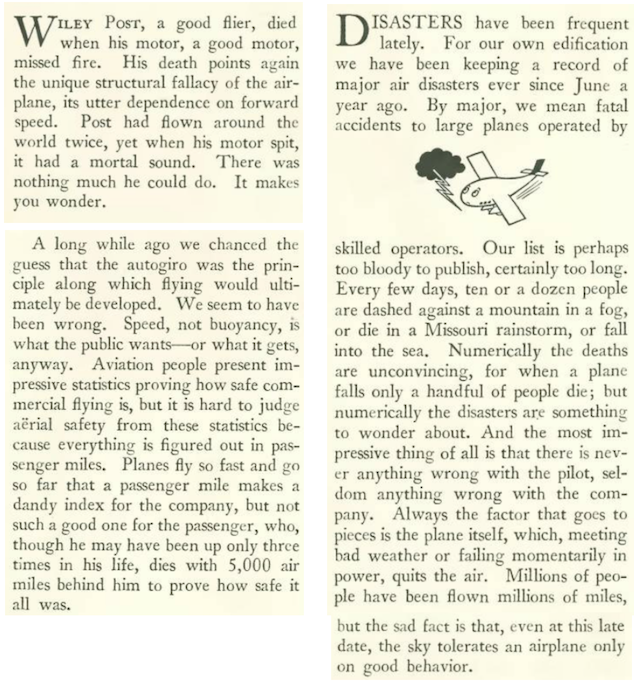
Although E.B. White often seemed stuck in the past—he preferred Model Ts and rattily omnibuses to more more modern conveyances—he was a flying enthusiast, never missing a chance to hop aboard an airplane and marvel at the scene far below. However, when tragedy struck, White would become circumspect. When Notre Dame coach Knute Rockne’s Fokker Trimotor crashed into a Kansas wheatfield, White expressed doubts about air safety and pondered “safer” alternatives such as autogiros (a kind of early helicopter that wasn’t so safe or practical). Such doubts returned in his “Notes and Comment” for August 31, 1935:

The fated aircraft, a Lockheed Orion, was heavily modified by Post into a floatplane; one wing was even salvaged from a wrecked Explorer (an older Lockheed model). The pontoon floats he attached were also designed for a larger aircraft, which made the nose-heavy Orion even more unwieldy.

BUILT FOR SPEED…A Lockheed Model 9 Orion parked at Boeing Field, Seattle, in May 1935. With 200-mph speed, the single-engine passenger aircraft (5 to 6 passengers) was faster than any American military aircraft of the time. It was Lockheed’s last aircraft to use wood construction in the frame, which was lightweight but not designed for longevity on major airlines. (James Borden Photography Collection)
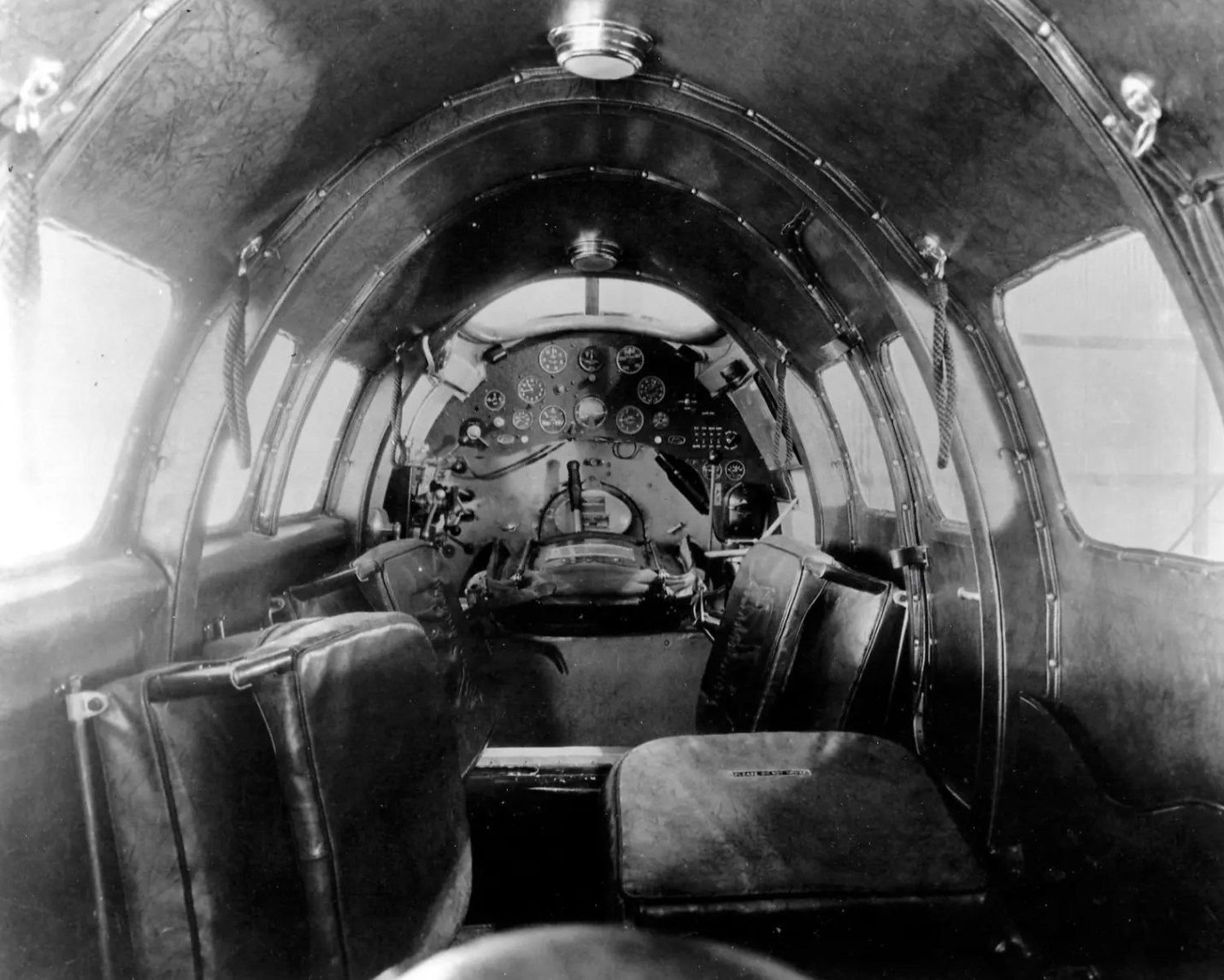
TIGHT QUARTERS….Interior view of a Lockheed Orion 9. No doubt much of the passenger space was loaded with gear for the trip to Alaska. (James Borden Photography Collection)

When Post and Rogers arrived in Juneau, local bush pilots doubtfully regarded the Orion and asked Rogers about the flight plan. “Wiley and I are like a couple of country boys in an old Ford—don’t know where we’re going and don’t care,” he said. They were actually headed to Point Barrow, and from there planned to hop over to Siberia.

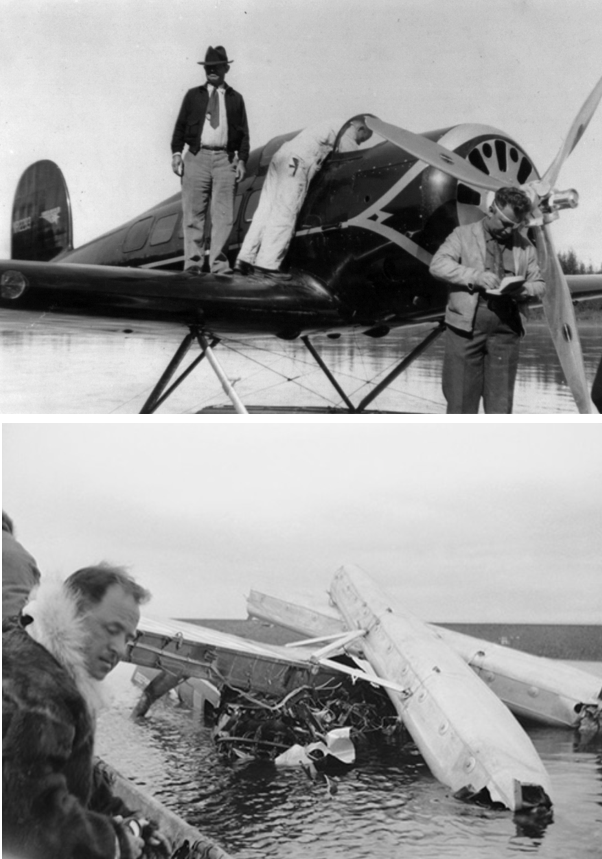
After stopping in Fairbanks they set off for Point Barrow in bad weather. Lost in the murk, they landed short of their destination in the shallow waters of Walakpa Lagoon, fifteen or so miles southwest of Point Barrow. Post and Rogers then took off—despite warnings from locals about the conditions. But the weather wasn’t the worst problem: Post had a bad habit of taking to the air in an abrupt, steep climb, which likely caused the engine to stall. Powerless, the ungainly aircraft plunged into the lagoon and landed on its top. Post and Rogers were killed instantly.

JUST A COUPLE OF COUNTRY BOYS…Top photo, Will Rogers on the wing of the Lockheed floatplane belonging to famed aviation pioneer Wiley Post, hours before their fatal crash on August 15, 1935. Below photo, inverted wreckage of the float plane in Walakpa Lagoon.  (Wikipedia/vintageaviationnews.com)

Rather than eulogize the fallen Rogers, “The Talk of Town” offered up an anecdote about his rise as a newspaper columnist, which was sparked by a backhanded endorsement speech:

A HUMAN FACE…Top left, Will Rogers backstage with the 1924 Ziegfeld Follies cast. At right, Rogers made his film debut in the now lost silent film Laughing Bill Hyde (1918) with co-star Anna Lehr. The magazine ad at right quoted producer Rex Beach, who called Rogers “the most human player who ever faced a camera.” (Will Rogers Memorial Museum/Wikipedia/IMDB)
FINAL CURTAIN…Top photo, Will Rogers with co-star Anne Shirley in Steamboat Round the Bend. Rogers wrapped filming just before heading to Alaska. The film was released posthumously on September 6,1935. Bottom image is a detail from a full-page ad in the October 1935 issue of Picture Play Magazine. Oddly, the ad makes no mention of Rogers’ death, proclaiming that “Will blazes a new path in his screen career as he scores his greatest triumph!”  (theretrorocket.blogspot.com/IMDB)

 * * *

Putting it Mildly

In “Onward & Upward With the Arts,” H.L. Mencken continued to explore the quirks of American language, this time looking at the pervasive (and evasive) use of euphemisms by “professional uplifters.” Excerpts:

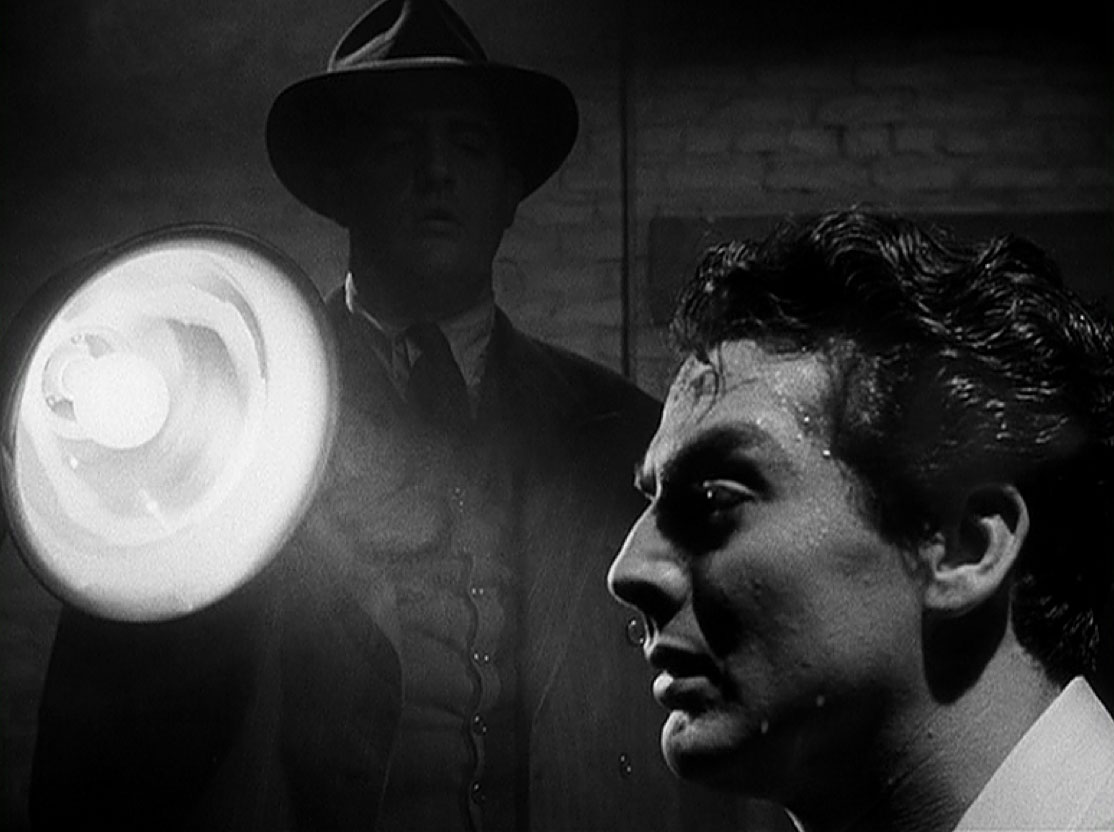
INTELLIGENCE TEST was suggested by “professional uplifters” as a polite replacement for giving someone “The Third Degree.” Image is from the 1941 noir thriller I Wake Up Screaming, starring Victor Mature, pictured here getting his “intelligence test.” (cinematography.com)

 * * *

At the Movies

We join film critic John Mosher to take a look at the latest epic from Cecil B. DeMille, The Crusades, which to Mosher’s disappointment was a rather mild epic, with little to astonish. However, our critic did find something to admire in a more recent historical drama, Diamond Jim.

ANTISEPTIC EPIC?…Clockwise, from top left, movie poster for The Crusades offered up an image one typically does not associate with religious warfare, but you had to bring ’em in somehow; Henry Wilcoxon and Ian Keith in a scene from the film; co-stars Loretta Young as Berengaria of Navarre and Wilcoxon as Richard the Lionheart; the film also featured Joseph Schildkraut as Conrad of Montferrat and Katherine DeMille as Princess Alice of France (bottom left). A talented actress, Katherine reportedly landed the role as a Christmas gift from her adoptive father, Cecil B. DeMille. (cecilbdemille.com)
HEY BIG SPENDER…At right, Edward Arnold in the title role (here with Eric Blore) in Diamond Jim. At left, Cesar Romero moves in on Diamond Jim’s love interest, portrayed by Jean Arthur. (Rotten Tomatoes/IMDB)

 * * *

From Our Advertisers

We begin with this advertisement from Lord & Taylor, featuring the latest fall fashions for young women heading to college…notable here is the inclusion of Mickey Mouse in the illustration…the animated rodent was in vogue as much the latest fashions…


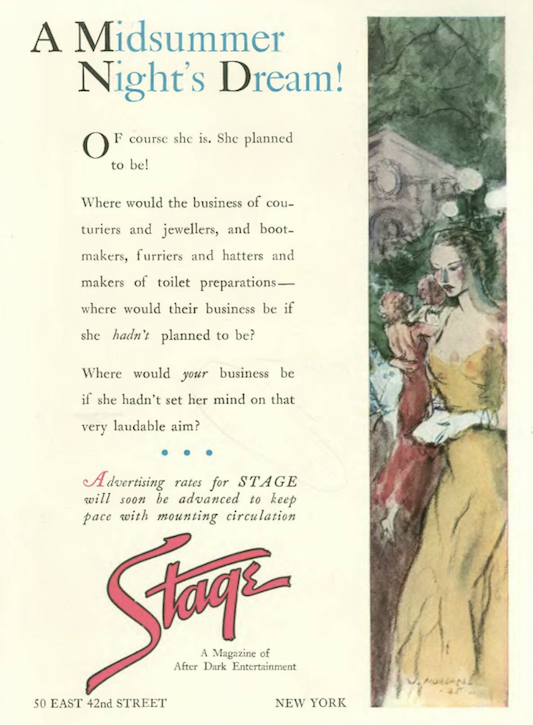
John Hanrahan, whose advertising savvy helped guide The New Yorker through its lean early years, was publisher of the richly designed Stage magazine, promoted here on the inside front cover…

…soft drink giant Coca-Cola recalled its soda fountain origins in this ad that promoted its 6.5-ounce bottled product…

…on the inside back cover Goodyear continued its series of perilous ads illustrating the dangers of tire blowouts (but not the obvious hazard of children riding untethered in a rumble seat, where they doubtless inhaled all manner of noxious fumes)…

…the majority of back covers in 1935 featured tobacco companies…here we learn that Lucky Strikes were more than cigarette; they were your “best friend”…

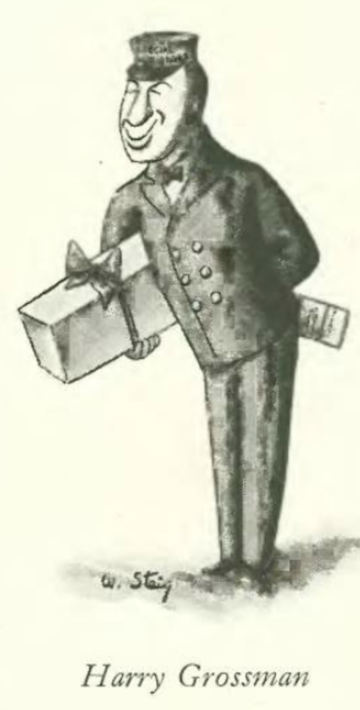
…on to our cartoonists, we start with this “Profile” illustration by William Steig…the profile was a two-parter featuring a clever summons server…

Adolph Dehn adorned the “Goings On” section with this illustration…

…unsigned, but I’m pretty sure this is H.O. Hofman

…here we get a lift from Robert Day

Al Frueh conjured up a nightmare of leaping sheep…

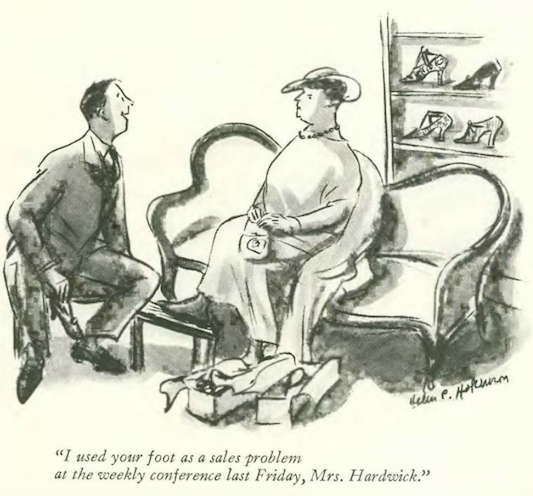
Helen Hokinson gave us some famous footwear…

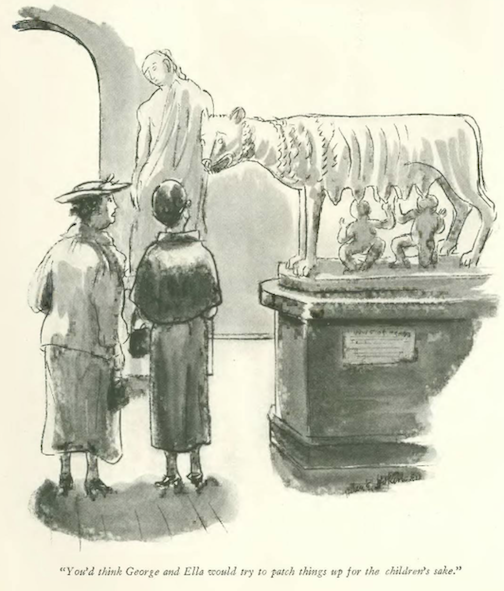
…Hokinson again, with Romulus and Remus providing a convenient metaphor…

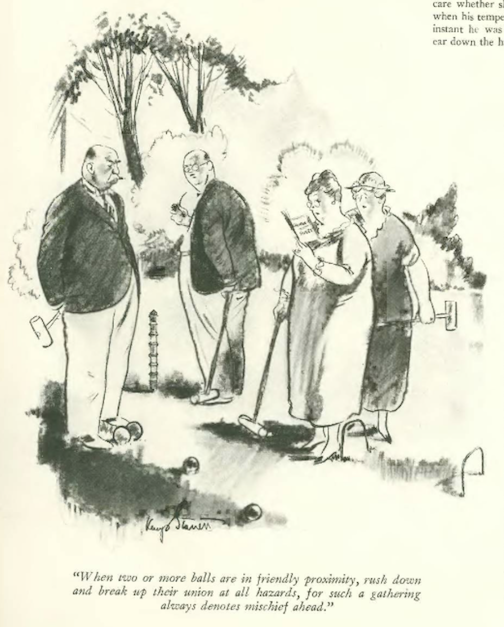
Kemp Starrett was bogged down in the rules of a game…

George Price discovered a budding talent…

Richard Decker took to the back roads…(reminds me of a scene from The Long, Long Trailer with Lucy and Desi)…

James Thurber raised a glass to a dry do-gooder…

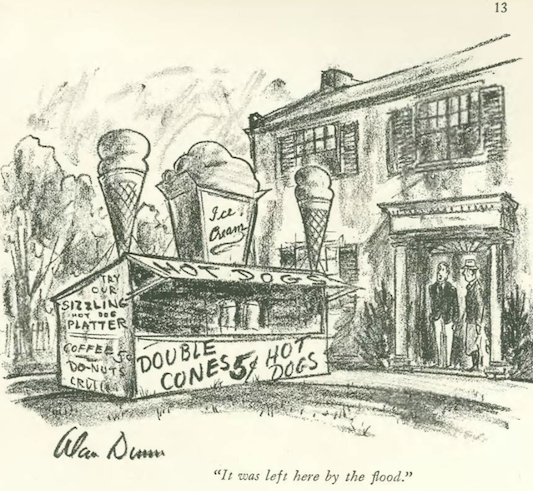
Alan Dunn brought an unexpected windfall to Westchester…

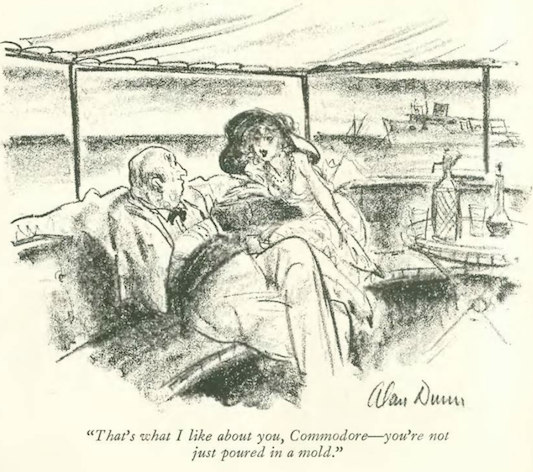
…and to close we Dunn again, and a bit of flattery…

Next Time: A Summer Night…

Bohemian Rhapsody

Part love story and part wildlife protection fable, the pre-Code romance and melodrama Zoo in Budapest was that rare film that pleased critics and audiences alike.

May 6, 1933 cover by Richard Decker. This is one of four covers Decker (1907–1988) contributed to The New Yorker; he also contributed more than 900 cartoons in his nearly 40-year run with the magazine.

Jesse L. Lasky’s first production for Fox (Lasky was the founder of Paramount Pictures), Zoo in Budapest starred relative newcomer Gene Raymond as a young man (Zani) keenly attuned to nature and particularly to the animals he cares for in the Budapest Zoo. In the course of the film he becomes an anti-fur industry activist and rescues a beautiful orphan girl, Eve (Loretta Young) from a life of servitude. Although the film is little known today, in 1933 it had quite a winning effect on critic John Mosher, who usually found little to like from Hollywood’s output:

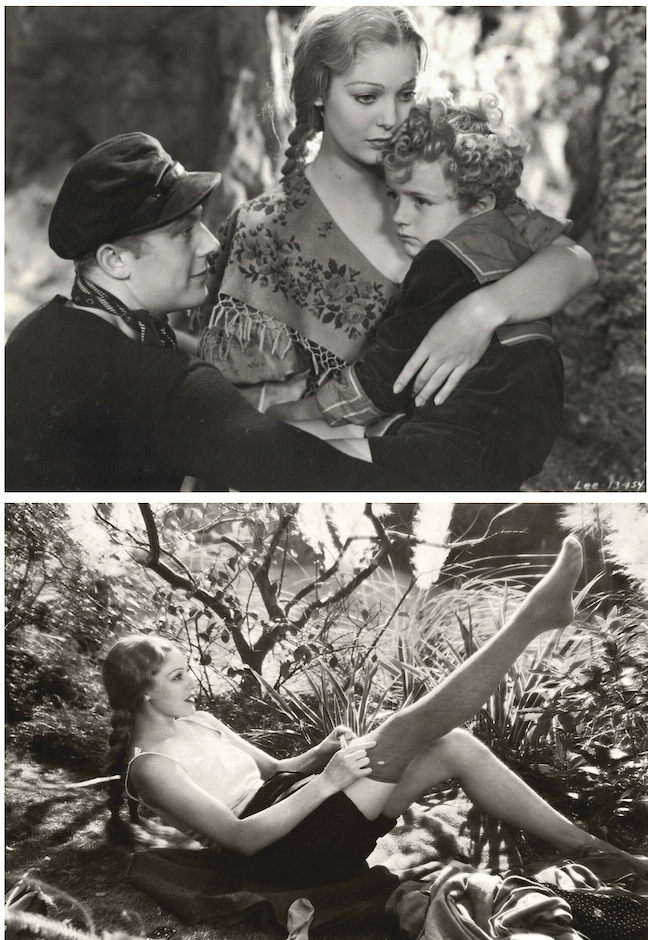
HE TALKS TO THE ANIMALS…Top, zoo worker Zani (Gene Raymond) rescues a beautiful orphan girl, Eve (Loretta Young) from a life of servitude, and both come to the aid of a little boy named Paul, played by Wally Albright, who escapes the clutches of his harsh governess. Below, hidden in the bushes, Eve changes her clothes after escaping from a group of orphans visiting the zoo. (IMDB)

The film made such an impression that even E.B. White had to mention it in the opening lines of his “Notes and Comment”…

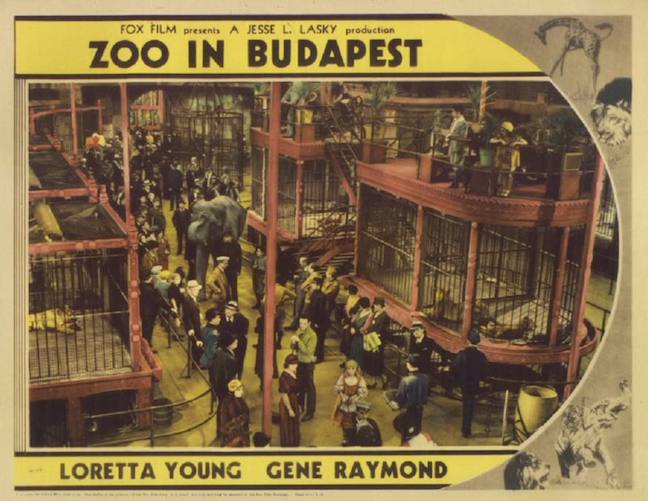
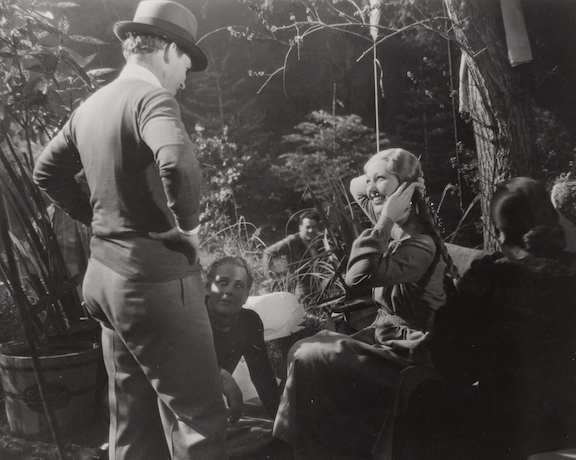
ANIMAL CRACKERS…Filmmakers went all out in creating elaborate sets for Zoo in Budapest. The film was likened to Grand Hotel because the drama took place in less than 24 hours, almost entirely in one location. Below, Loretta Young converses with director Rowland Lee on the set. (IMDB)
(IMDB)

 * * *

High Anxiety

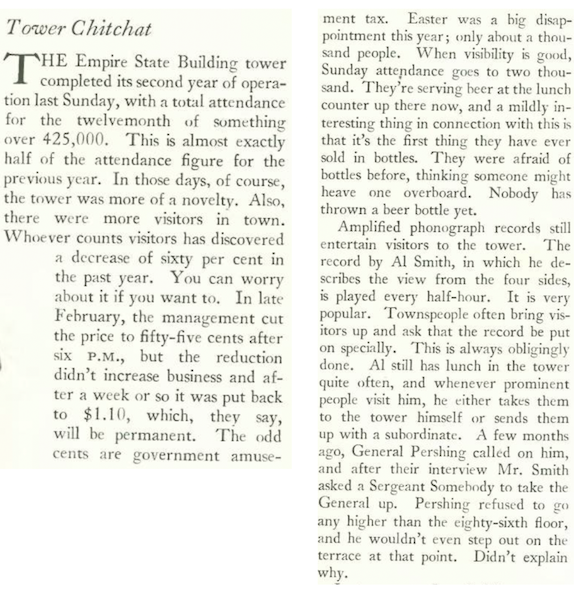
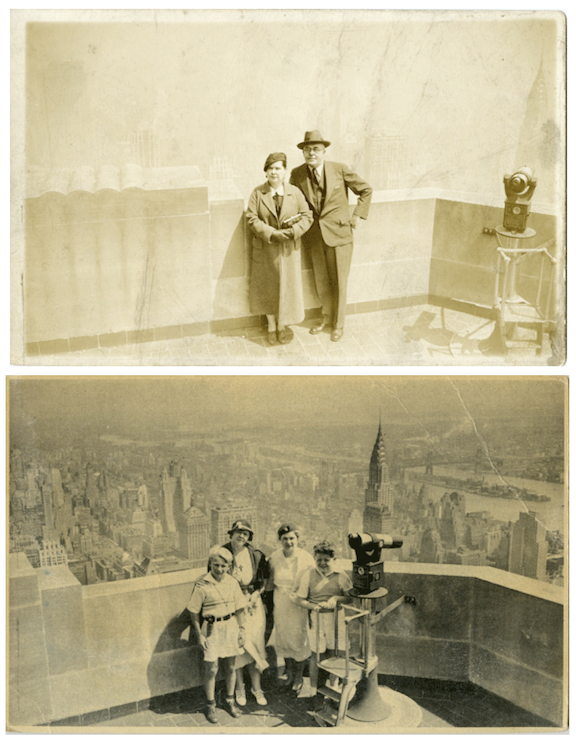
The Depression was hard on the Empire State Building, which opened its doors during some of the darkest days of the economic crisis. Visitation was down, and a lot of the office space in the world’s tallest building remained vacant. It would remain in the red into the 1940s.

BEEN THERE, DONE THAT…To this day the 86th floor observation deck has been a popular destination for tourists. In the 1930s a photographer stationed on the deck captured the moment for tourists on a souvenir postcard. The image at top is from 1934, the one below circa 1930s. Fencing to deter suicide attempts (or people chucking things over the side) wouldn’t be erected until 1947. (nyccirca.blogspot.com)

 * * *

As the World Churns

Howard Brubaker continued to comment on the deteriorating conditions of the German people in his column “Of All Things”…

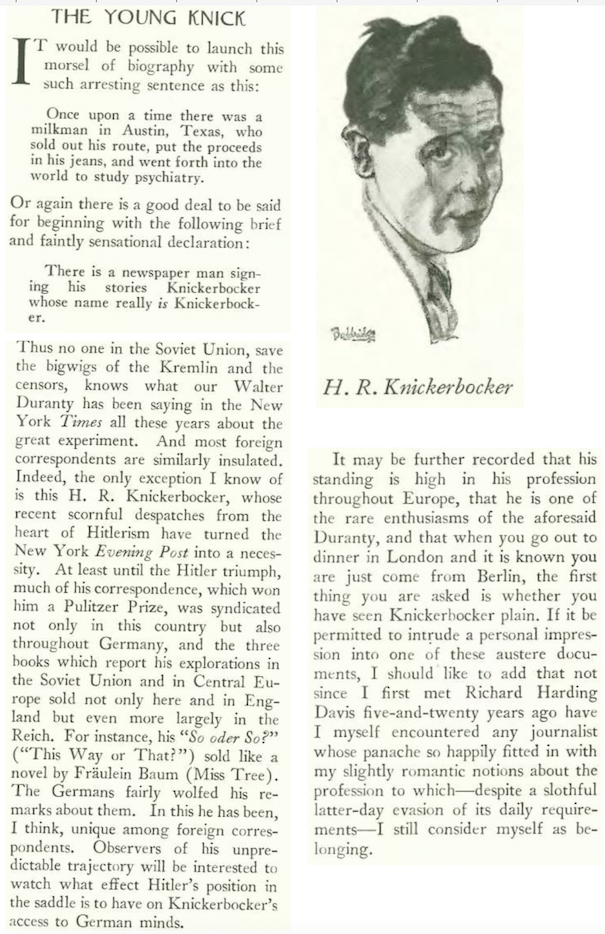
…and speaking of the Third Reich, Alexander Woollcott profiled (in his column “Shouts and Murmurs”) an enterprising young journalist Hubert R. Knickerbocker (1898–1949), who reported from Berlin from 1923 to 1933 and wrote about the threat of Nazism. In April 1933, after fleeing Germany, he reported in the New York Evening Post that “an indeterminate number of Jews [had] been killed.” A brief excerpt (with illustration by Cyrus Baldridge):

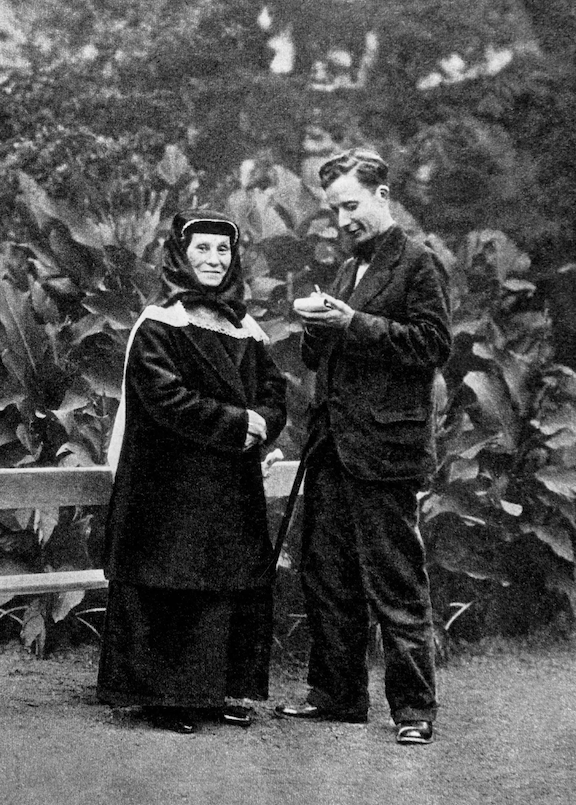
MYSTERY WRITER…In December 1930, H.R. Knickerbocker interviewed Josef Stalin’s mother, Keke Geladze, for the New York Evening Post. The resulting article was titled, “Stalin Mystery Man Even to His Mother.” (The New Yorker)

A graduate of Southwestern University in Georgetown, Texas and a 1931 Pulitzer Prize winner, Knickerbocker kept his word with Woollcott and entered Columbia University to study psychiatry.

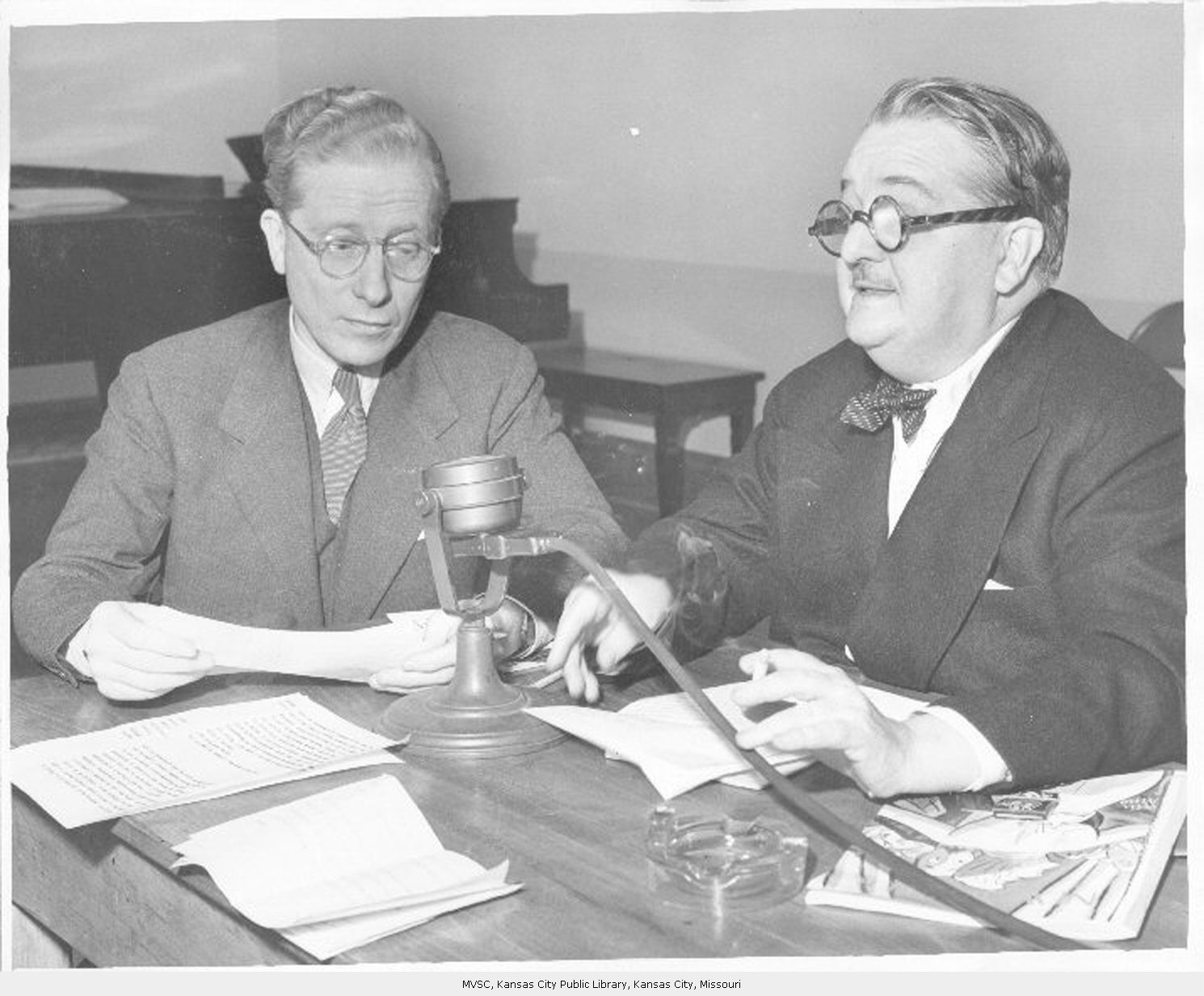
TALES TO TELL…H.L. Knickerbocker (at the microphone) with Alexander Woollcott circa 1940. (Kansas City Public Library)

 * * *

From Our Advertisers

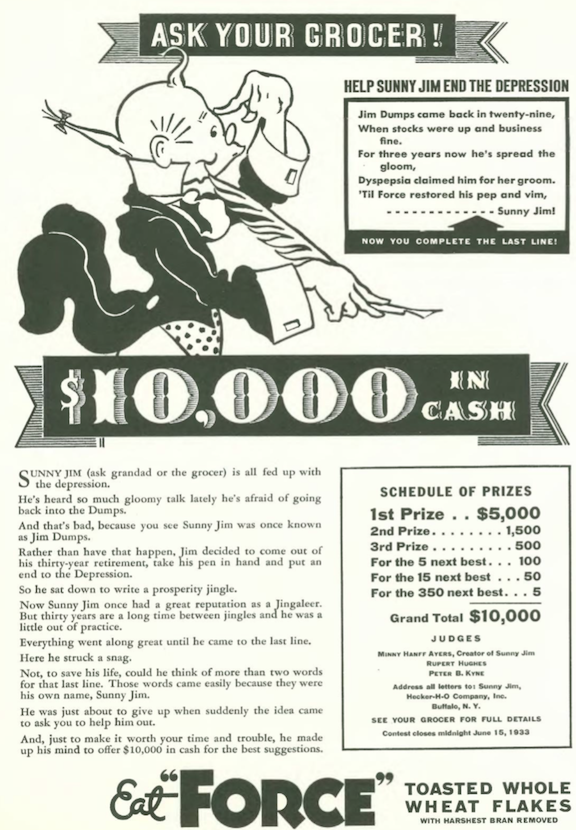
We begin with an ad from the makers of the first commercially successful wheat flake breakfast cereal…before there were Wheaties (created in 1921) there was Force, invented in 1901…almost from the beginning the Force brand was wildly successful thanks to a series of jingles featuring a morose character, Jimmy Dumps, who was transformed into Sunny Jim by consuming Force flakes…in 1933 the makers of Force were still big on jingles, sponsoring contests such as the one below…

…here is a box from that period, promoting cash prizes for winning jingles…

(worthpoint)

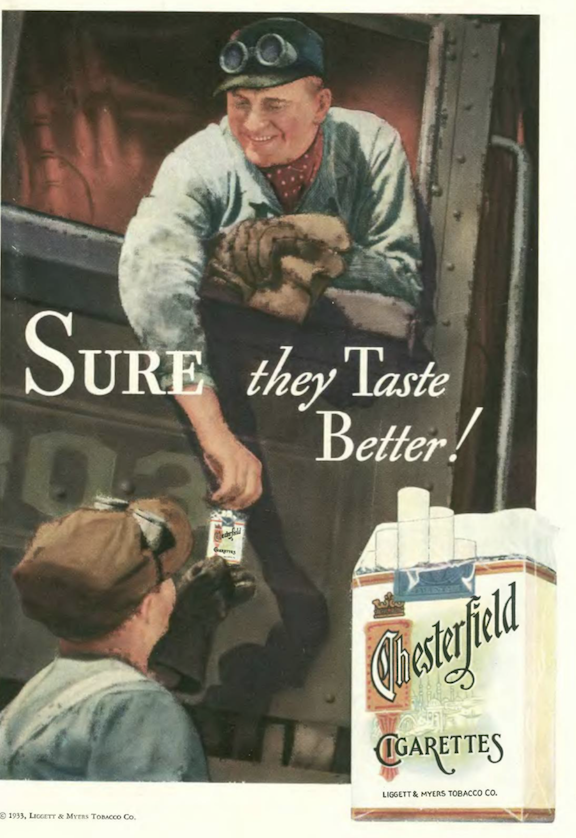
…the folks at Chesterfield began targeting the working man in their advertising…

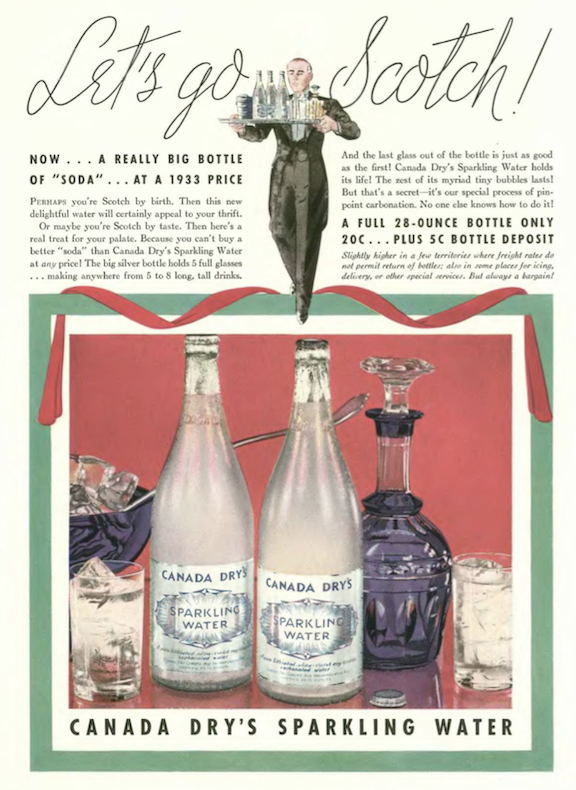
…while Canada Dry was anticipating the end of Prohibition…

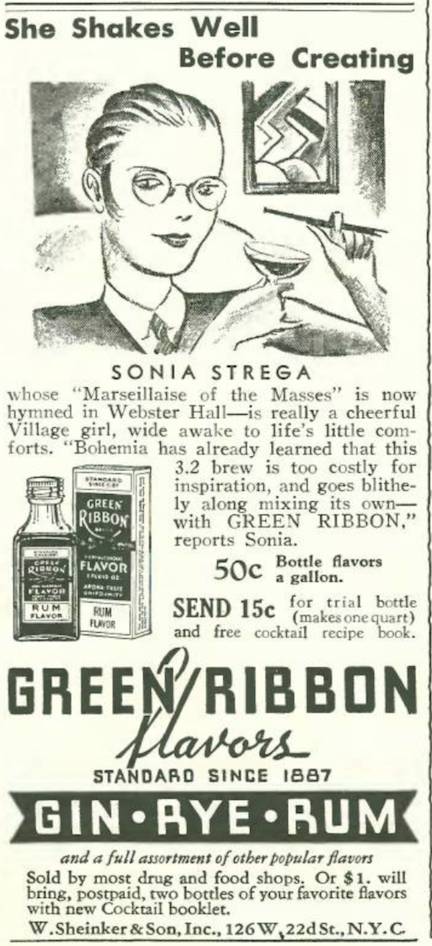
…but until that day, you could mix some Green Ribbon with your bootleg alcohol, according to Sonia Strega, who was likely an invention by the advertisers rather than an actual living endorser…

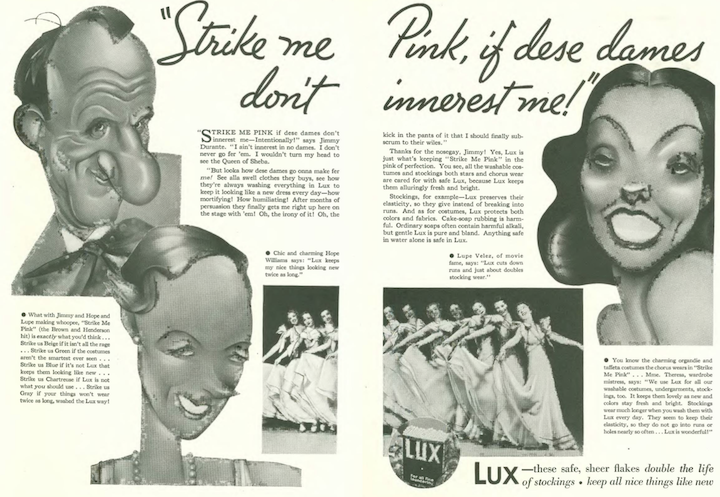
…Lux, on the other hand, had piles of money to spend on real life endorsers including Jimmy Durante, Hope Williams and Lupe Velez

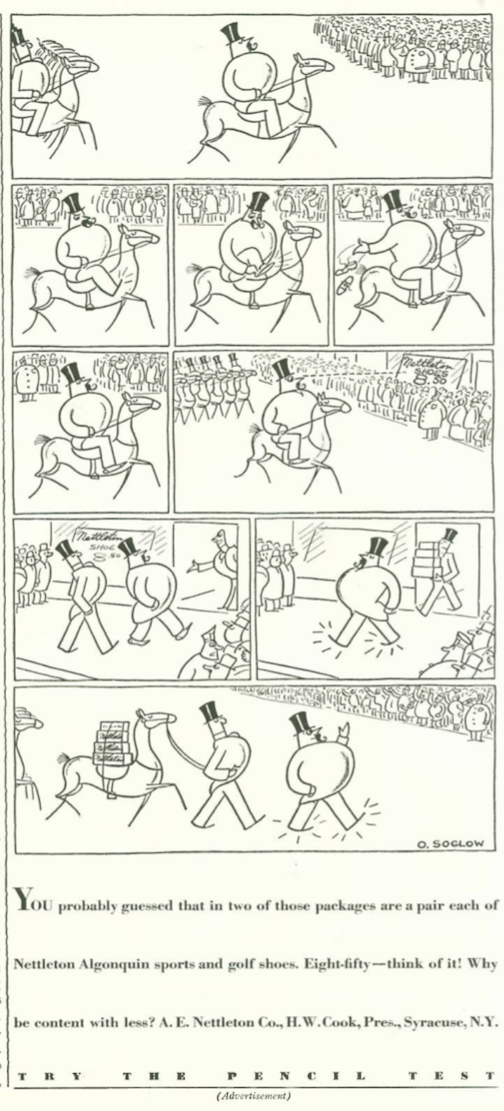
Otto Soglow drew up this strip for the makers of Nettleton shoes, creating a character similar to his famed “Little King” to promote the company’s sports and golf shoes…

James Thurber continued his work for the French Line, replete with his familiar dogs…

…and we also find Thurber in the cartoons…

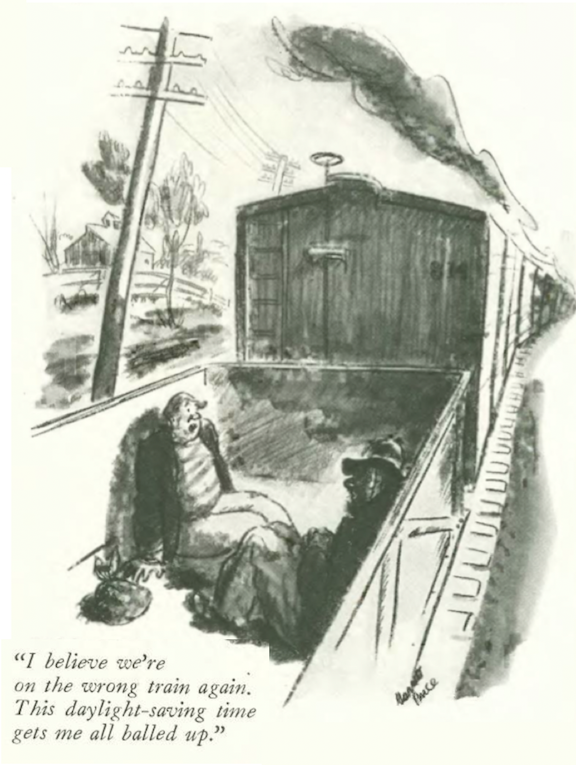
…joined  by Garrett Price

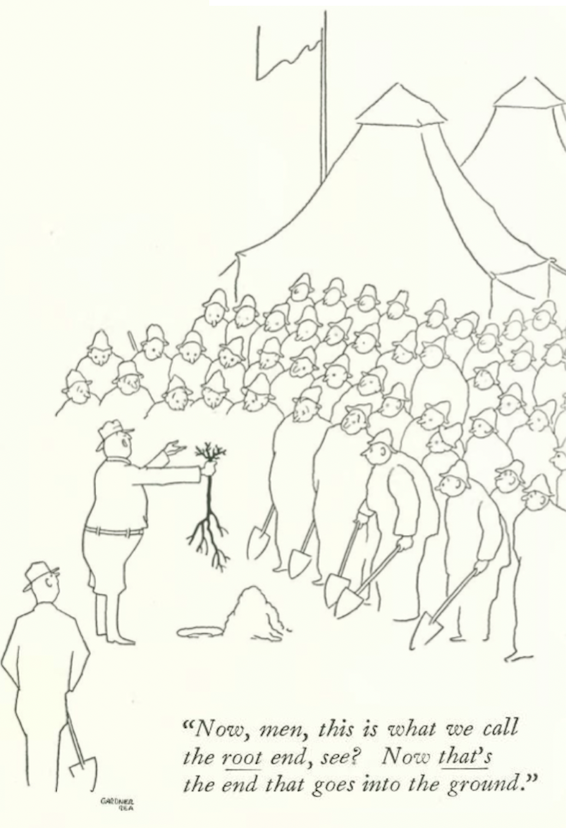
Gardner Rea

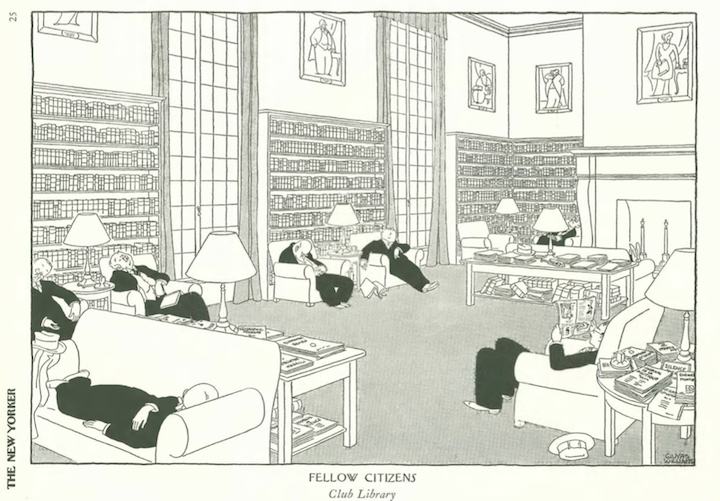
Gluyas Williams (originally this ran sideways)…

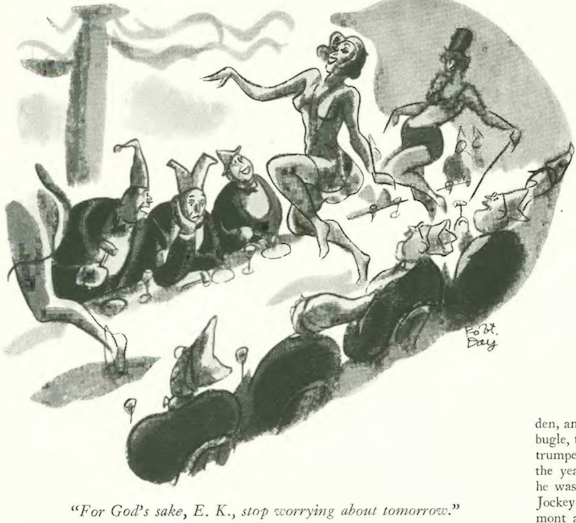
…and we close with a frolic by Robert Day

Next Time: Headline News…