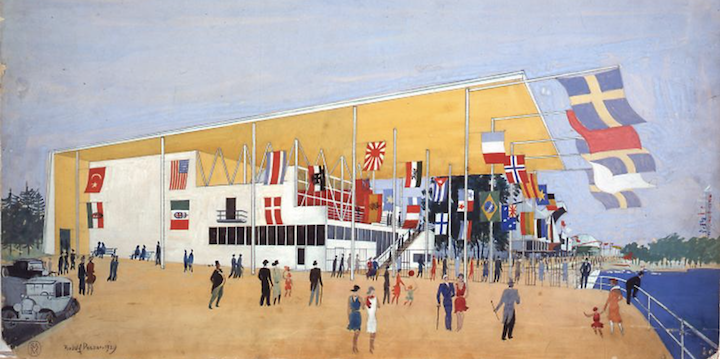
Above: Rudolf Persson's rendering of the main entrance to the Stockholm Exhibition of 1930, designed by Swedish architect Gunnar Asplund. The exhibition was a landmark event that introduced Functionalism to Swedish architecture and design.(Svensk Form)
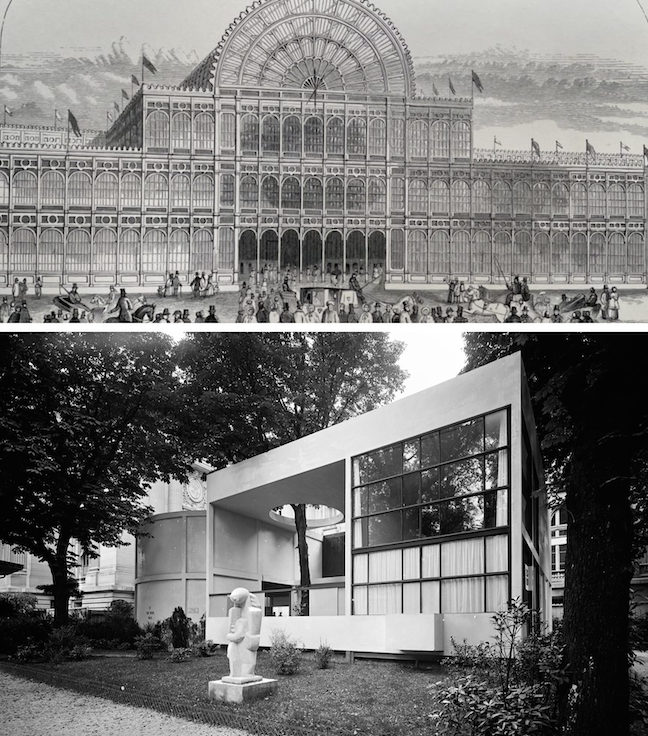
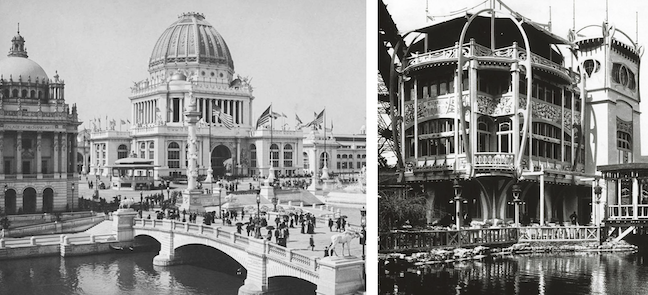
Architecture critic Lewis Mumford turned his exacting eye on exhibitions at the Museum of Modern Art that looked to the future of building design. Of particular interest was an exhibit on those world expositions that have given us everything from the Eiffel Tower (1889 Exposition Universelle) to the car-dominated landscape that inspired millions of Depression-weary visitors at New York’s 1939 World’s Fair.
Mumford made passing mention to the museum’s exhibit on government housing (he noted it was below MoMA’s standard) and then turned his attention to a review of world’s fairs, examining how they have inspired both waves of architectural achievement and “counterfeits of civic grandeur…”



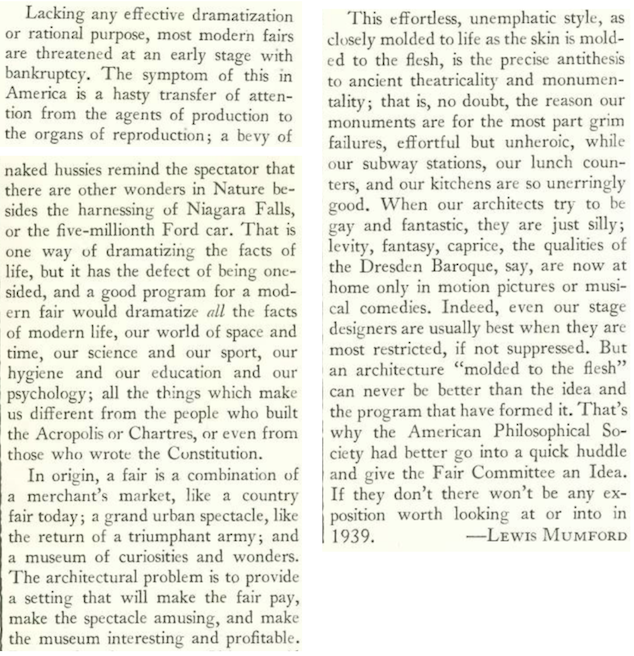
Looking ahead to the planned 1939 World’s Fair at Flushing Meadows, Mumford believed the age of grand world expositions had passed, especially those that moved the needle on design innovation. Moreover, he observed that the lack of real drama or rational purpose would threaten bankruptcy to future fairs, a symptom especially acute in America: “…a hasty transfer of attention from the agents of production to the organs of reproduction; a bevy of naked hussies remind the spectator that there are other wonders in Nature besides the harnessing of Niagara Falls, or the five-millionth Ford car.”
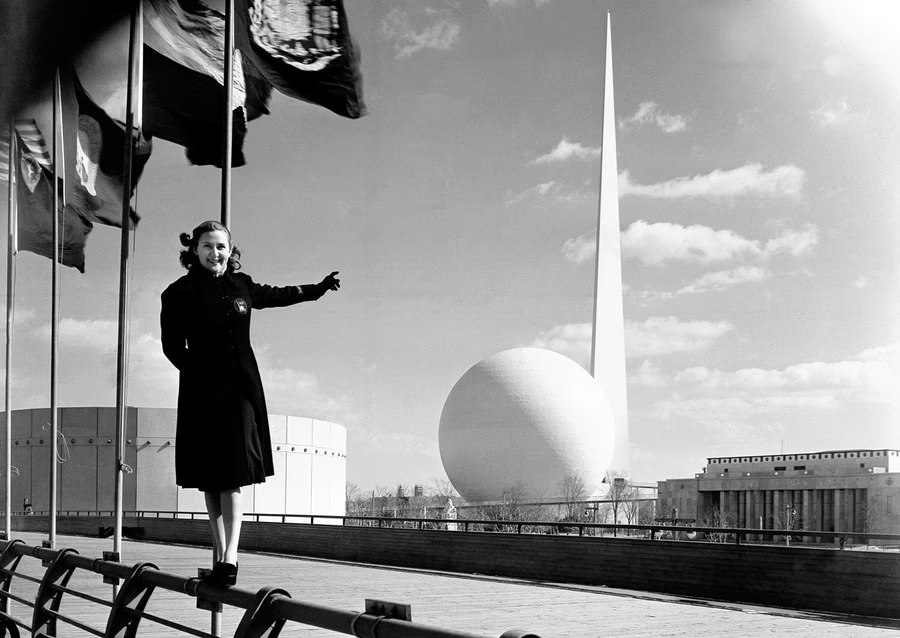
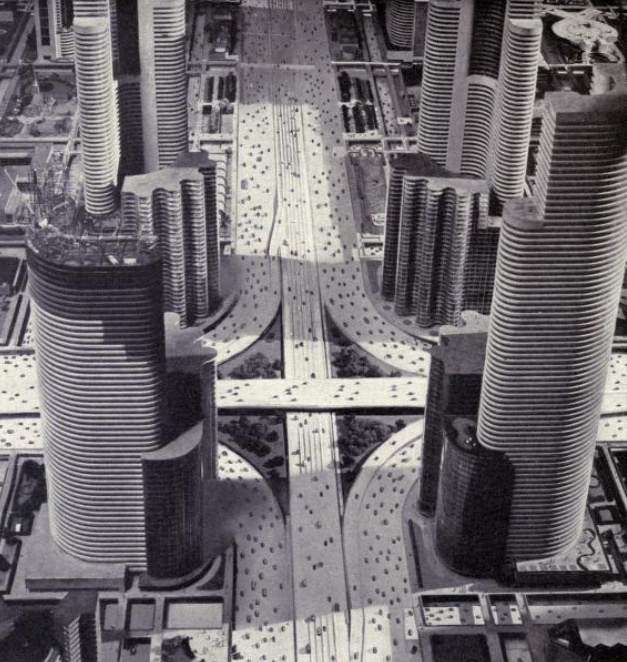
Earth-movers were already at work sculpting the fair’s site from the swampland and ash heaps along the Flushing River when Mumford assembled a self-anointed advisory group in 1936. This group— the “Fair of the Future Committee”—urged the fair’s leaders to abandon superficial commercialism and instead demonstrate how technology could serve the public good and restore ecological balance in American communities. That did not come to pass; when the fair opened in 1939, Mumford wrote in his “Sky Line” column (titled “Genuine Bootleg”) that the committee’s “hopes and proposals for a major contribution to urban design were progressively defeated. Today their wreckage is strewed about the Fair, so thoroughly smashed and disfigured that their own fathers could scarcely identify the corpses.”
Mumford got one thing right. Although the 1939 fair attracted more than 45 million visitors, it lost a lot of money, recouping only 32 percent of its original cost.
* * *
Only a Memory
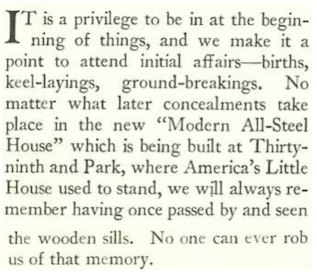
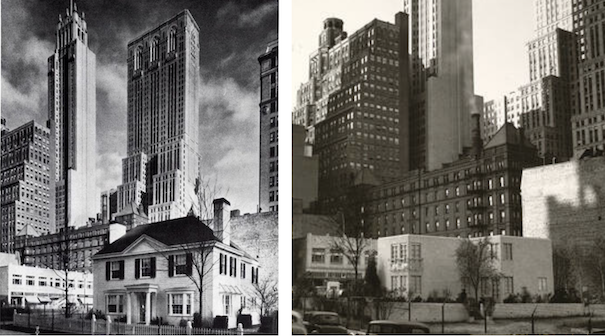
In “Notes and Comment,” E.B. White recalled the brief life of “America’s Little House” at 39th and Park in the Murray Hill neighborhood. The eight-room Georgian colonial was built in 1934 during the “Better Homes in America” campaign that promoted single-family home ownership as well as design innovations. The CBS radio network (which contributed $50,000 to the project) installed a studio in the house’s garage, from which it broadcast three national radio programs to a hundred stations across the country.
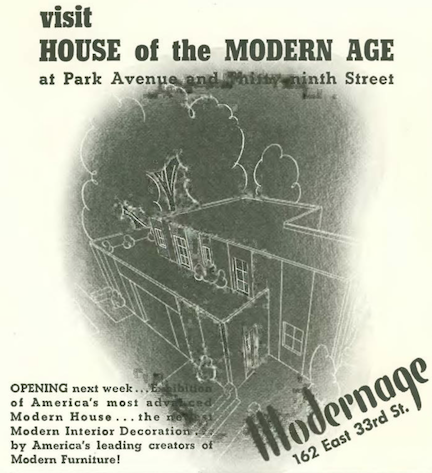
Open for about a year, the house was demolished in November 1935, its doors and interior furnishings sold to hostesses who had worked at the house. In its place William Van Alen—architect of the Chrysler Building—erected the all-steel “House of the Modern Age.”
…in the following week’s issue of The New Yorker, June 27, a back of the book ad from the Modernage Furniture Corporation touted the opening of “The House of the Modern Age”…
* * *
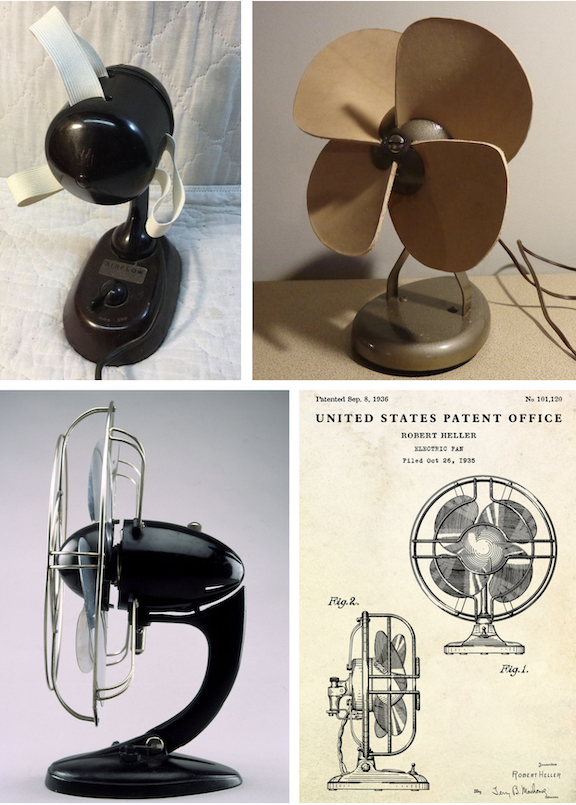
Fan Fans
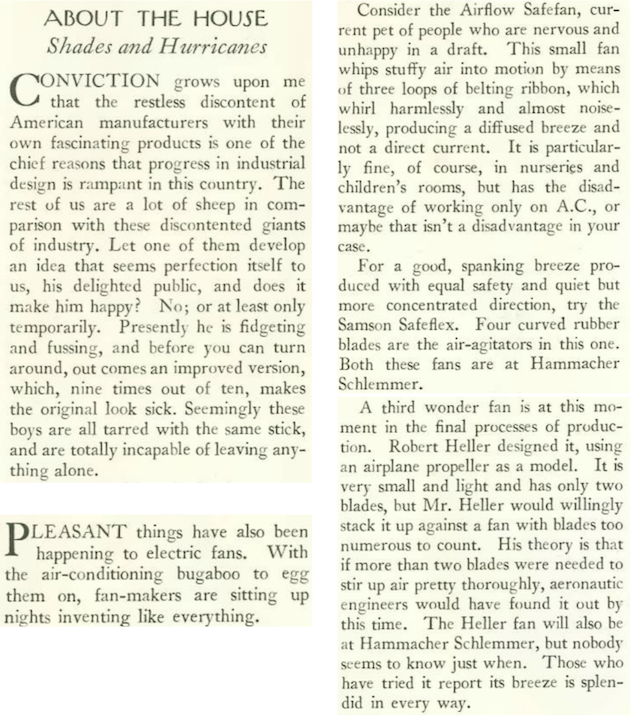
Staying on the domestic scene, here is an excerpt from Barbara Blake’s “About the House” column, where she updated readers on the latest in electric fans (air-conditioning in private homes was still a rarity).
* * *
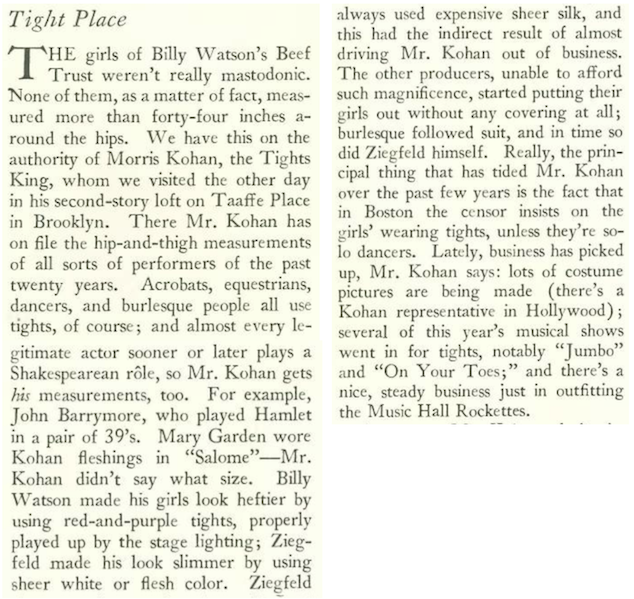
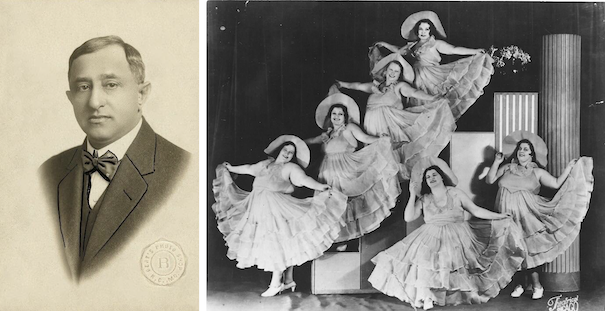
Billy’s Beef
In 1899 vaudevillian Billy Watson (aka Isaac Levie) formed his Beef Trust burlesque troupe of plus-sized women. Although his shows starred women in the 200-pound range, he also relied on slight-of-hand provided by the “Tights King” Morris Kohan, who apparently could produce tights that could make a person look either heavier or slimmer. “The Talk of the Town” explains in this excerpt:
* * *
Divine Dilemma
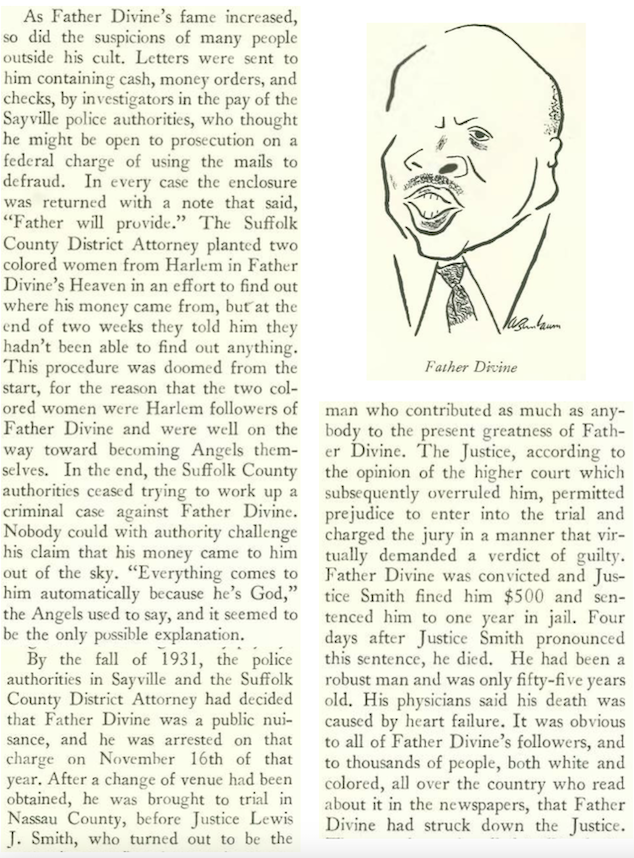
In Part Two of Father Divine’s profile, St. Clair McKelway and A.J. Liebling recounted the preacher’s 1931 arrest, prompted by ongoing complaints from the citizens of Sayville, New York about the traffic jams caused by Divine’s daily feasts as well as the noise generated by the faithful who would holler hallelujahs late into the evening. During one of these late night revivals police raided Divine’s property and fined each of the seventy-eight followers a few dollars apiece. Divine, however, insisted on a jury trial, which was held seven months later. The charge: Maintaining a public nuisance.
Jurors convicted Divine, with a request for leniency, but Justice Lewis Smith sentenced the preacher to a year in prison, calling him a “menace to society.” However, four days later the judge dropped dead of a heart attack, and Divine was freed. The notion that the judge’s death was divine retribution was naturally perpetuated by the media. A brief excerpt, with illustration by Abe Birnbaum.

* * *
At the Movies
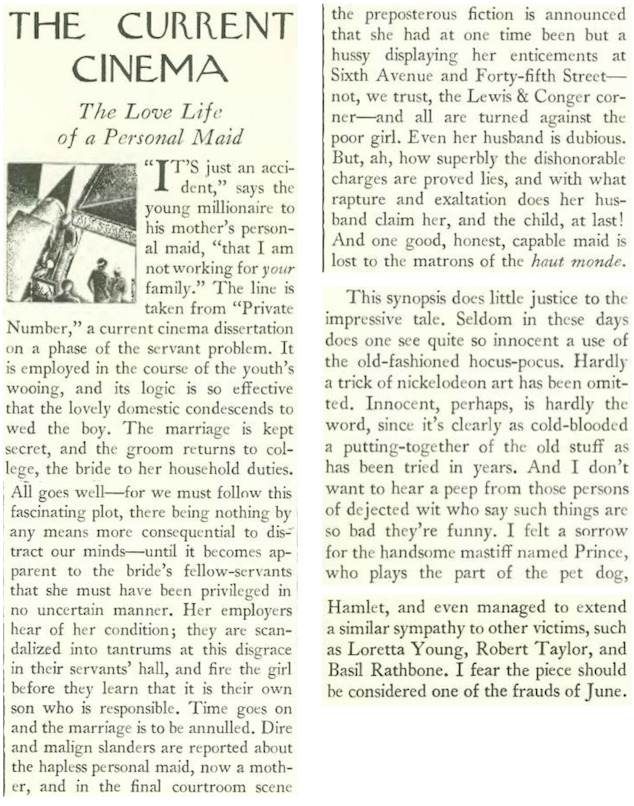
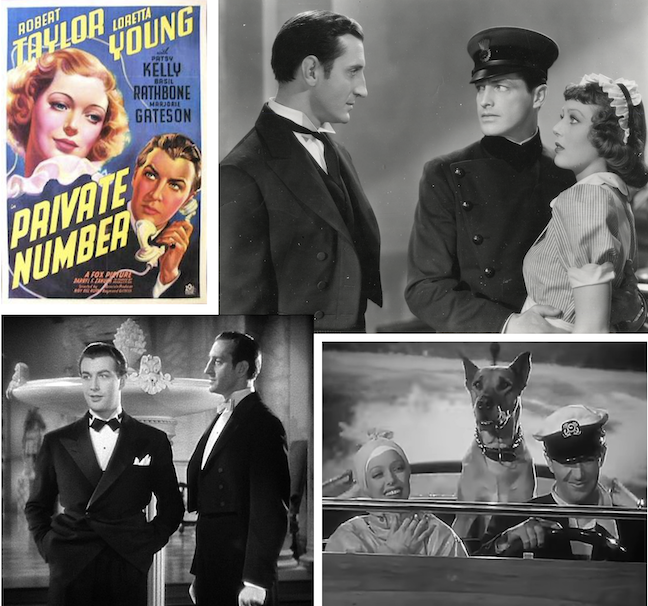
The drama film Private Number was based on the 1915 play Common Clay, which had already been made as a silent in 1919 and as a sound film in 1930. The play had a somewhat scandalous theme for the time (a young servant is fired when she becomes pregnant by her employer’s son), but thanks to the Hays Code, the more scandalous parts of the earlier films were omitted in 1936’s Private Number, leaving the viewer with little except for some “old-fashioned hocus pocus,” according to critic John Mosher.
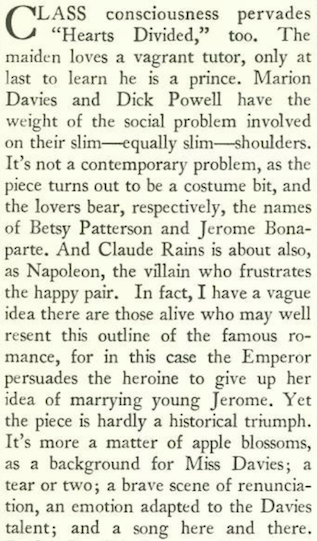
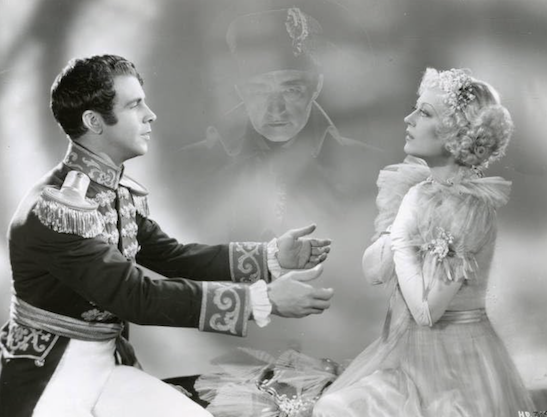
Thirty-nine-year-old Marion Davies appeared in one her final films, Hearts Divided, a musical based on the real-life marriage between American Elizabeth ‘Betsy’ Patterson and Jérôme Bonaparte, the brother of Napoleon Bonaparte. Although in real life Napoleon annulled the marriage, Hollywood gave the couple a happier ending.
* * *
From Our Advertisers
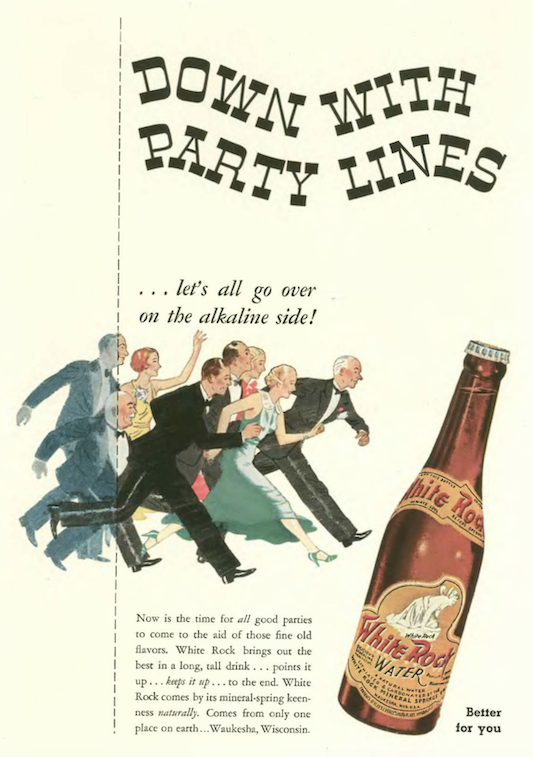
Illustrator R. John Holmgren drew up this non-partisan appeal for White Rock mineral water…
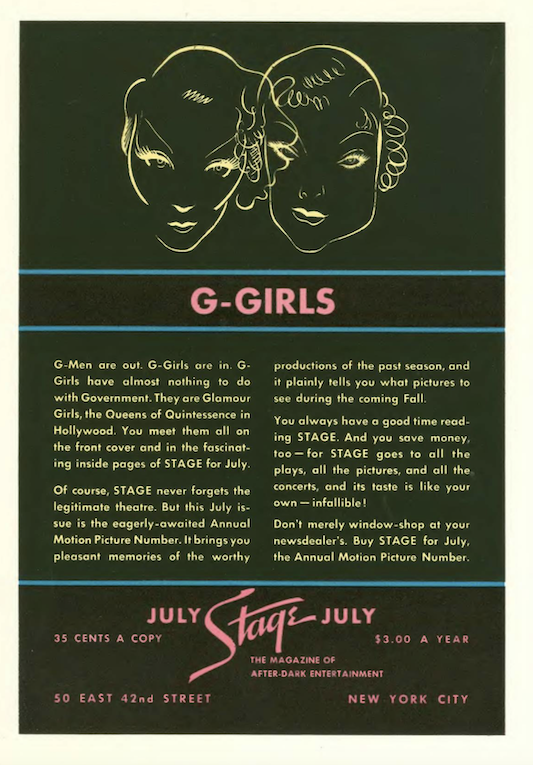
…Stage magazine touted its upcoming July issue, featuring the “Glamour Girls” of Hollywood…
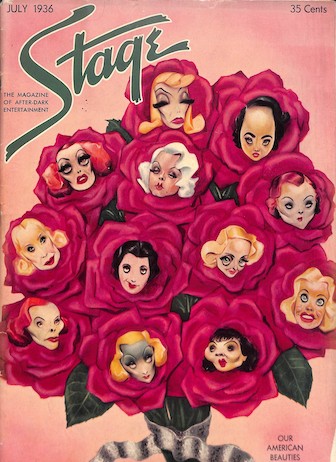
…here is the cover of that July 1936 issue, illustrated by Sam Berman featuring caricatures of leading ladies including Greta Garbo, Joan Crawford, Jean Harlow, Merle Oberon, Myrna Loy, Claudette Colbert, Bette Davis, Marlene Dietrich, and Katharine Hepburn…
…longtime member of the New Yorker coterie and contributor Alexander Woollcott appeared in this full-page ad endorsing the work of the American Civil Liberties Union…

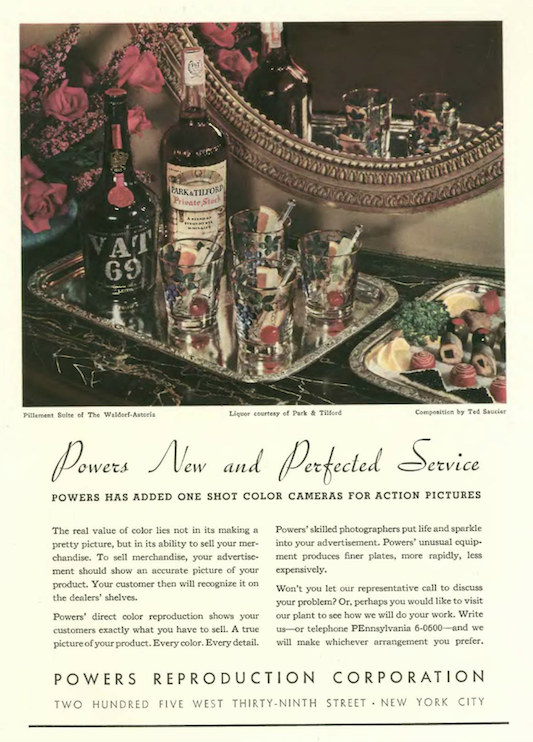
…from the 1920s to the 1940s the Powers Reproduction Corporation was a prominent, New York City photo-engraving firm that created high-quality color images for magazines and advertising agencies…
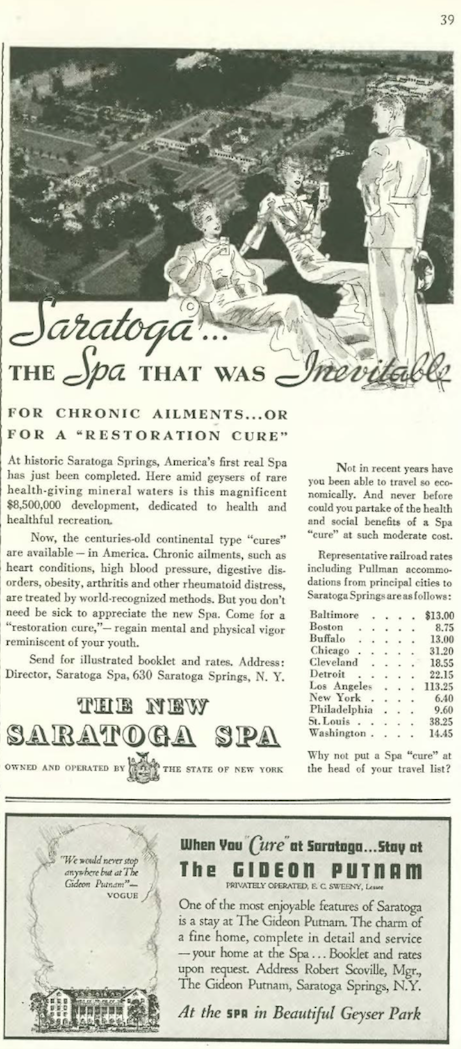
…these back of the book ads joined forces to promote the healing waters of Saratoga Springs and the Gideon Putnam hotel and spa…apparently the waters and other spa services treated everything from heart conditions to obesity…
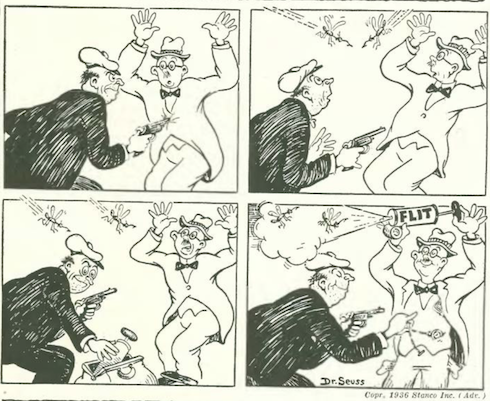
…Dr. Seuss returned with another scenario for insecticide use…
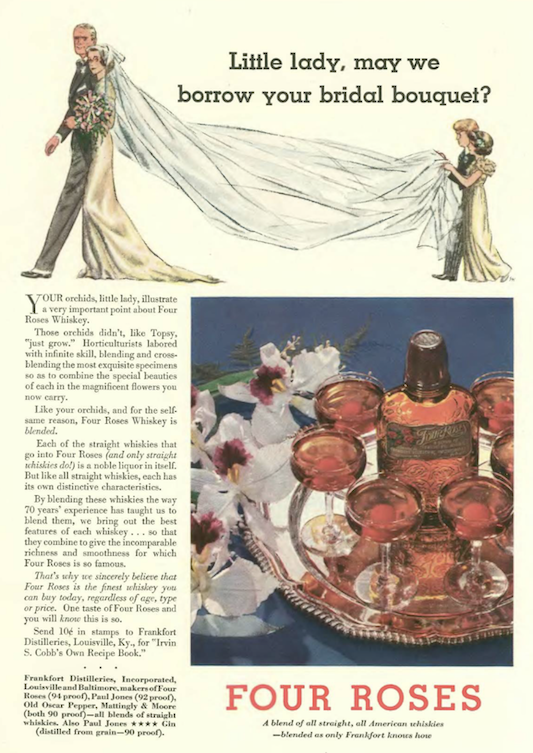
…on the inside back cover, the distillers of Four Roses Whiskey conjured up a June bride as an apt metaphor for their blending techniques…
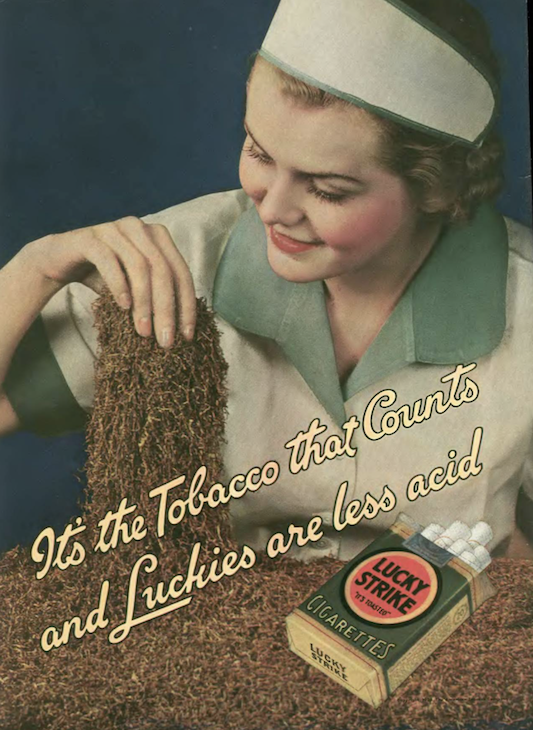
…while Lucky Strike reclaimed the back cover with an ad that promoted its low acid cigarettes, whatever that meant…
…on to our illustrators and cartoonists, we begin with Arnold Hall…

…and Robert Day…
…with other featured spots from John Groth…
…Richard Taylor…
…and Otto Soglow…

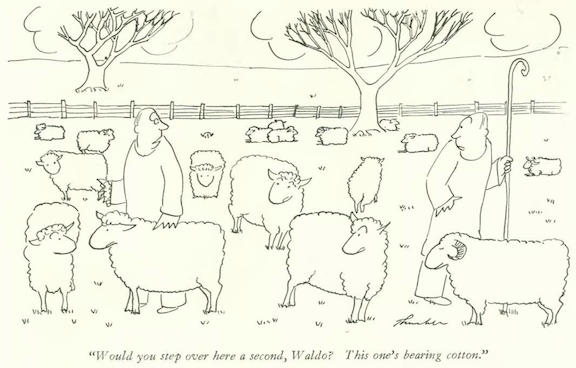
…James Thurber drew up an unusual development in the sheepfold…
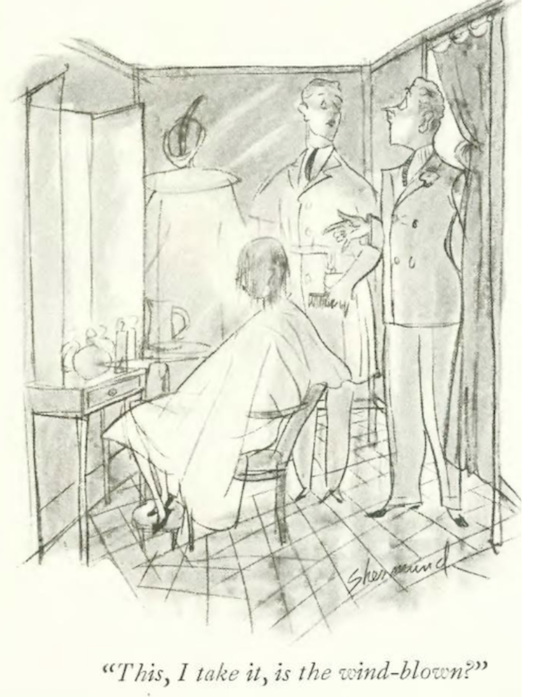
…Barbara Shermund posed a challenge for a hair dresser…
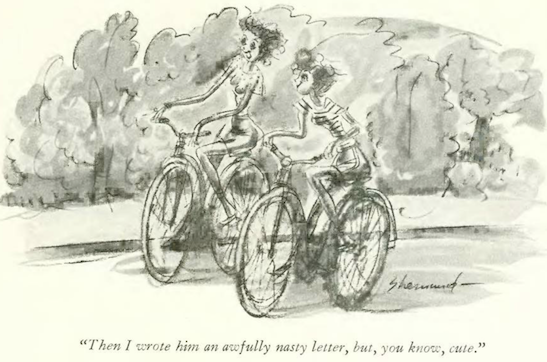
…and Shermund again, revealing a tactic of the modern woman…
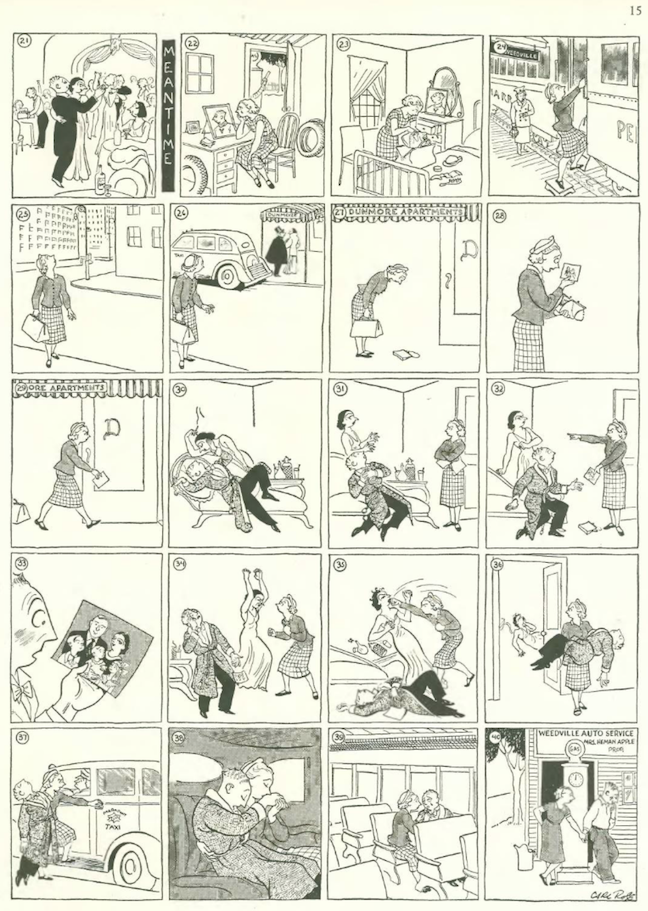
…Carl Rose commanded a two-page spread to tell his tale of sin and redemption…

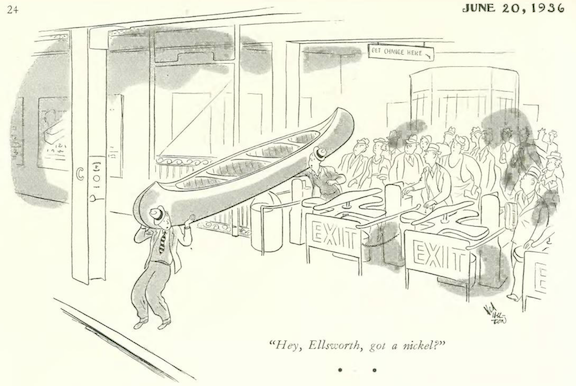
…Ned Hilton needed a hand at the subway station…
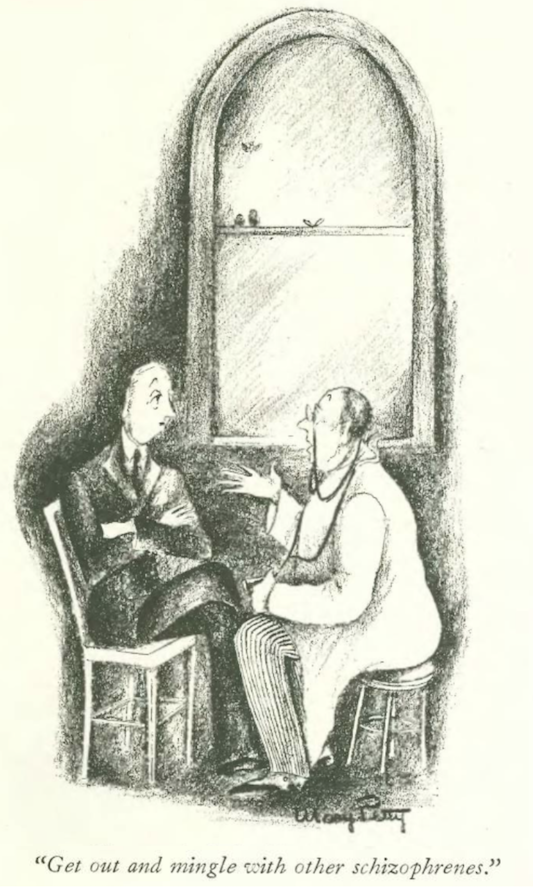
…Mary Petty gave us a patient in need of a second opinion…
…while Alan Dunn weighed summer camp options…

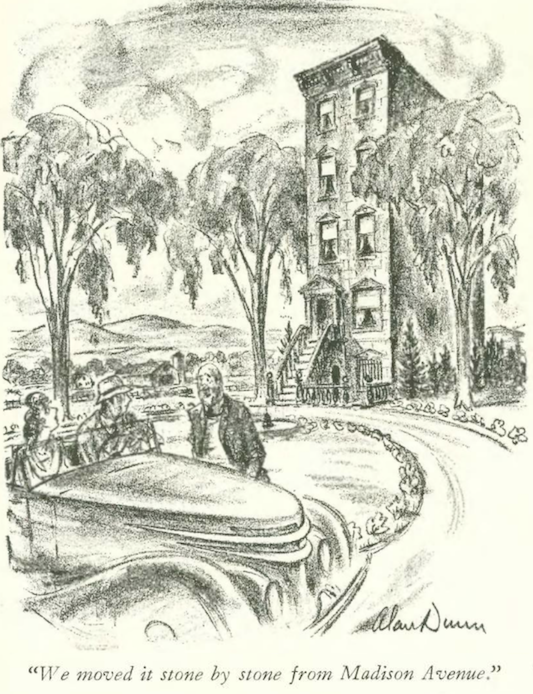
…and we close with Dunn, and a true urban escape…
Next Time: Poppy Returns…