When Apollo astronauts landed on the moon fifty years ago, many skeptics asked the question, “What good does this accomplish?”
July 12, 1930 cover by Constantin Alajálov.
New Yorker writer Morris Markey posed the same question 89 years ago about transatlantic flights, then limited to a handful of daredevils chasing various speed and distance records. Crossing the ocean in an airplane, Markey observed, was “one of the most difficult things imaginable.” He concluded that despite the heroics of a few pilots, “we are still not much nearer to transoceanic commercial service…”
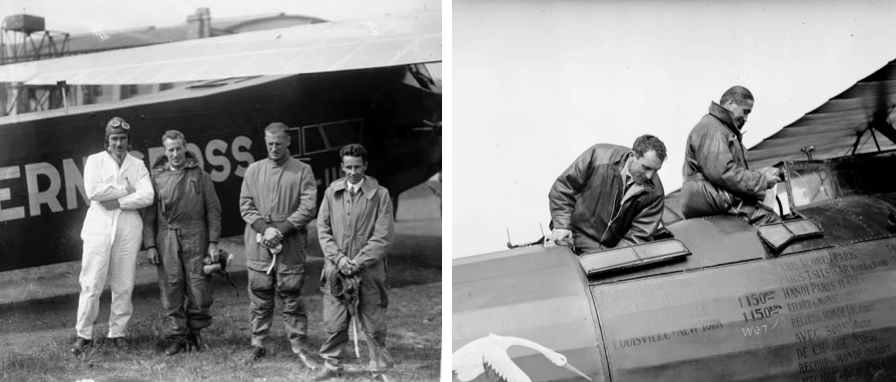
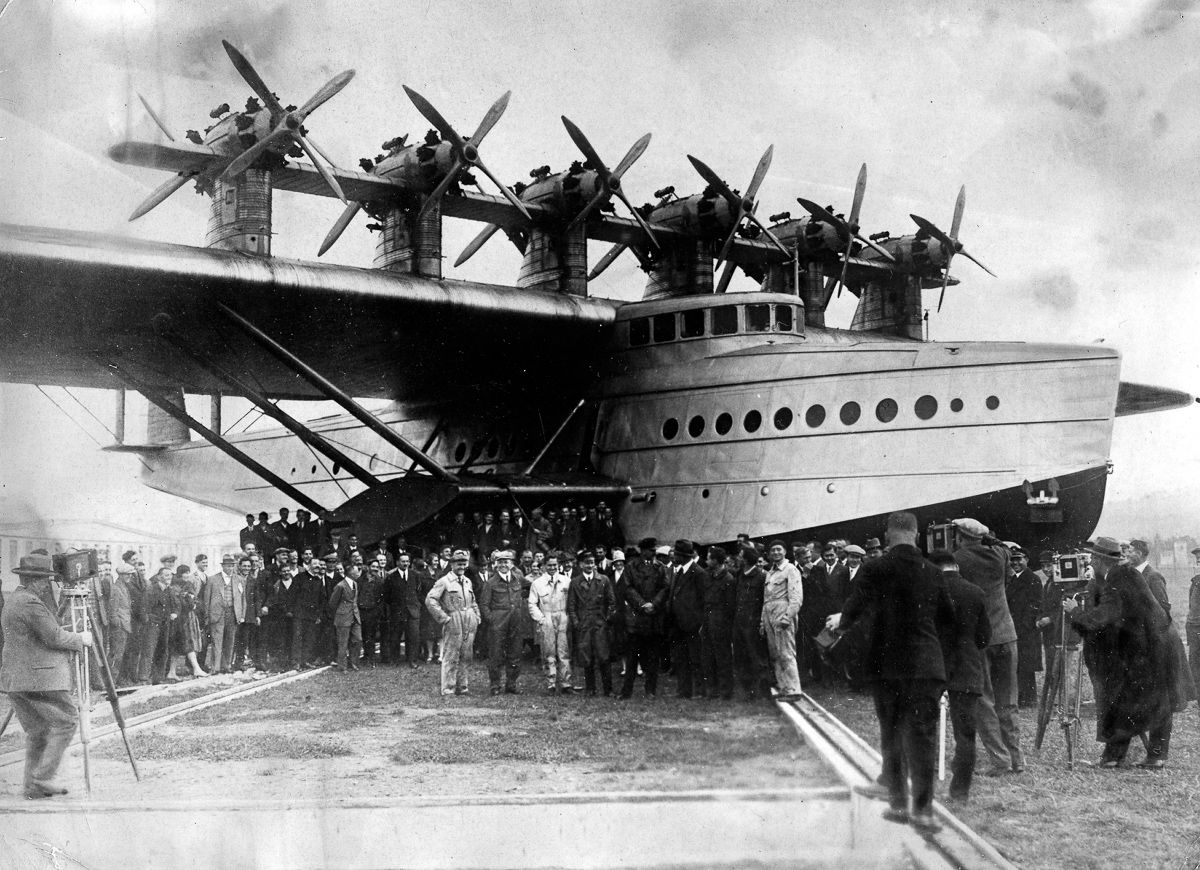
TESTING THE LIMITS…In photo at left, Charles Kingsford Smith (second from left) and the crew of his airplane, Southern Cross, pause before embarking on their east-west crossing of the Atlantic in June 1930; photo at right: Dieudonné Costes (right) with Maurice Bellonte in Boston in 1930. On September 1-2, 1930, they flew the “Point d’Interrogation” from Paris to New York, the first heavier-than-air aircraft to reach New York in the more difficult westbound direction between the North American and European mainlands. (National Library of Ireland/Wikipedia)BIG THINKERS…Germany’s massive Dornier Do-X made its first test flight on July 12, 1929. A few months later, it carried a world-record 169 passengers on a 40-minute flight, an astonishing number given that the largest planes at that time rarely carried more than 20 passengers. In 1930, the Do-X took off on an international publicity tour through Europe, down the west coast of Africa, across the Atlantic to Brazil and up to New York before returning to Berlin. (Mashable)
Markey went on to detail the various obstacles facing transatlantic fliers, including fairly good odds that a plane, laden with fuel and supplies for such a journey, would crash on takeoff. He noted that a little over half of the attempts succeeded, while the others seemed doomed from the start.
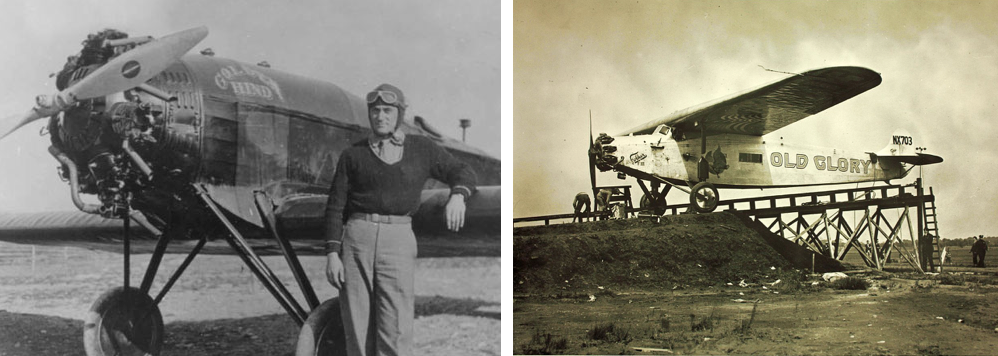
ILL-ADVISED…With only 70 hours of flying experience, Montana rancher Urban F. Diteman (left, with his airplane “Golden Hind”) took off from Harbour Grace, Newfoundland, bound for London. He was never seen again; at right, the William Randolph Hearst-sponsored “Old Glory,” a Fokker F.VIIa single-engined monoplane that was used in 1927 on an attempted transatlantic flight from Old Orchard Beach, Maine to Rome, Italy. The overloaded plane and its crew were lost approximately 700 miles east of Newfoundland, where only a section of wing was recovered. (dailymontana.com/Wikipedia)
* * *
Glare of the New
Architecture critic George Chappell enthusiastically followed the construction of the world’s tallest building, but in its completion he found the Chrysler Building’s now-iconic spire to be little more than a stunt, and suggested that a covering of masonry might be in order:
MAYBE SOME VINYL SIDING?…George Chappell wasn’t too crazy about the Chrysler’s chrome dome, and also worried about the amount of steel that would clad the exterior of the Empire State Building, right, which is composed of limestone, chrome bars and aluminum panels. (Wikipedia)
* * *
Bottoms Up
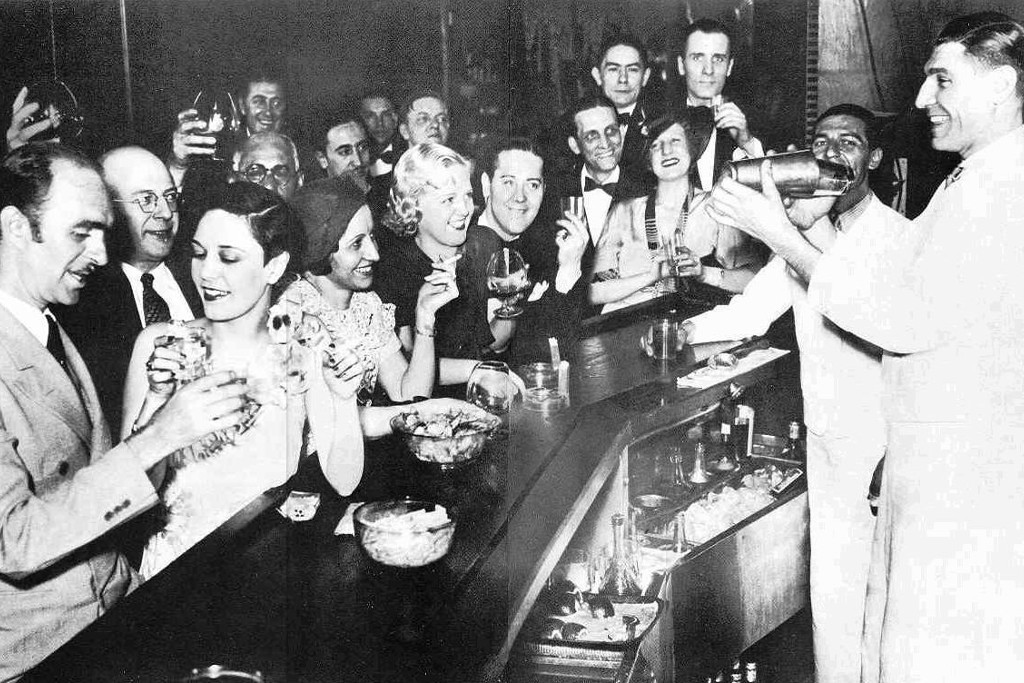
In his “Notes and Comment,” E.B. White pondered the drinking habits of his fellow citizens in the tenth year of Prohibition:
MAKE THAT A DOUBLE…Finding refreshment in the dark days of Prohibition. (junkee.com)
* * *
Good Old Summertime
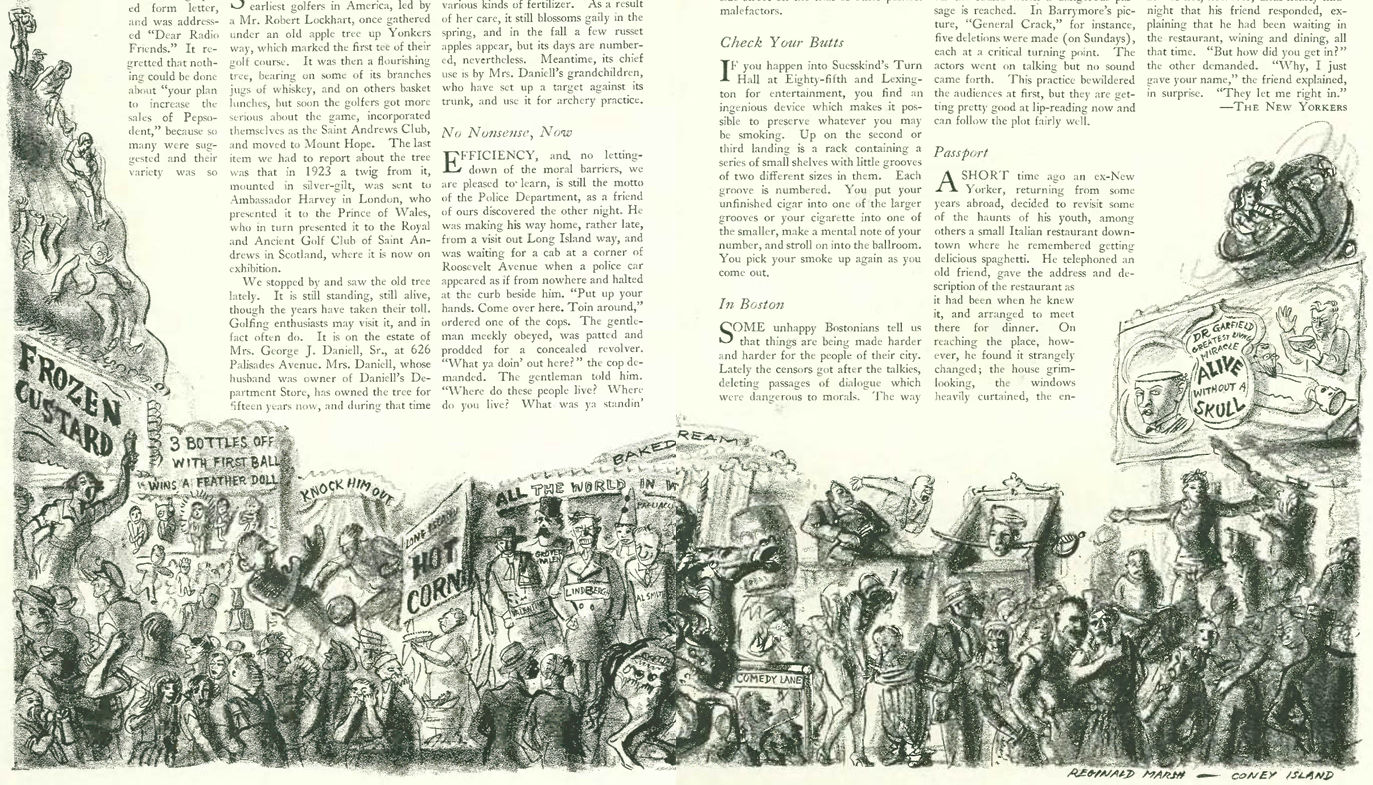
Along the bottom of “The Talk of the Town,” a Reginald Marsh interpretation of Coney Island fun and games…
* * *
Still the Same
Lois Long, who painted a picture of Jazz Age nightlife like no other in her “Tables for Two” column, teased her readers by disguising her identity, often claiming she was a frumpy old lady. With her “Tables” column now on hiatus, the fashionable and young Long maintained her pose, referring to herself as an “old war horse” in her fashion column “On and Off the Avenue.”
Problems of the Rich
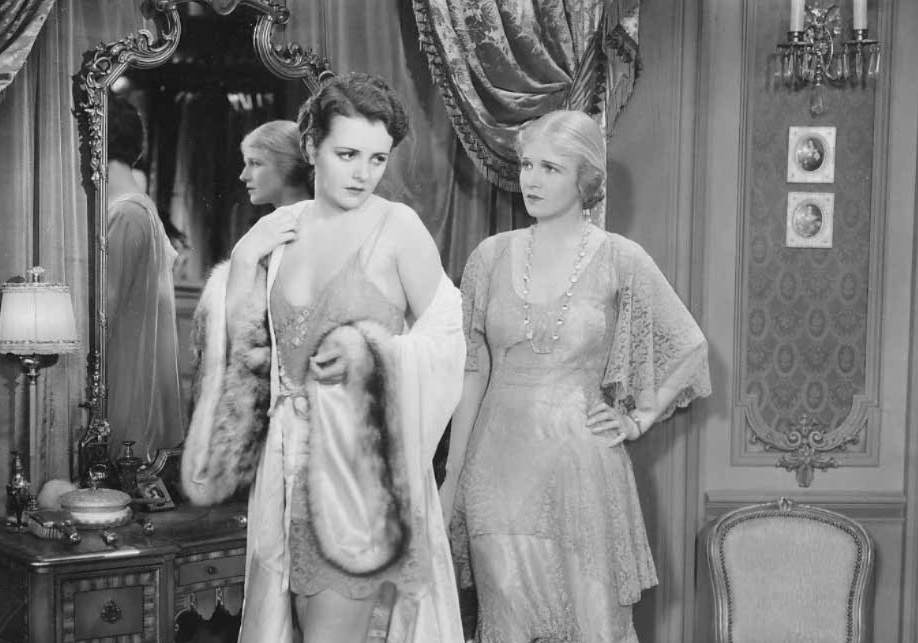
John Mosher reviewed the 1930 American Pre-Code comedy Holiday, which told the story of a young man torn between his wild lifestyle and the tradition of his wealthy fiancée’s family. Films that explored the “problems” of the rich seemed particularly popular in the Depression years…
POOR LITTLE RICH GIRLS…Mary Astor and Ann Harding in Holiday. (IMDB)
* * *
From Our Advertisers
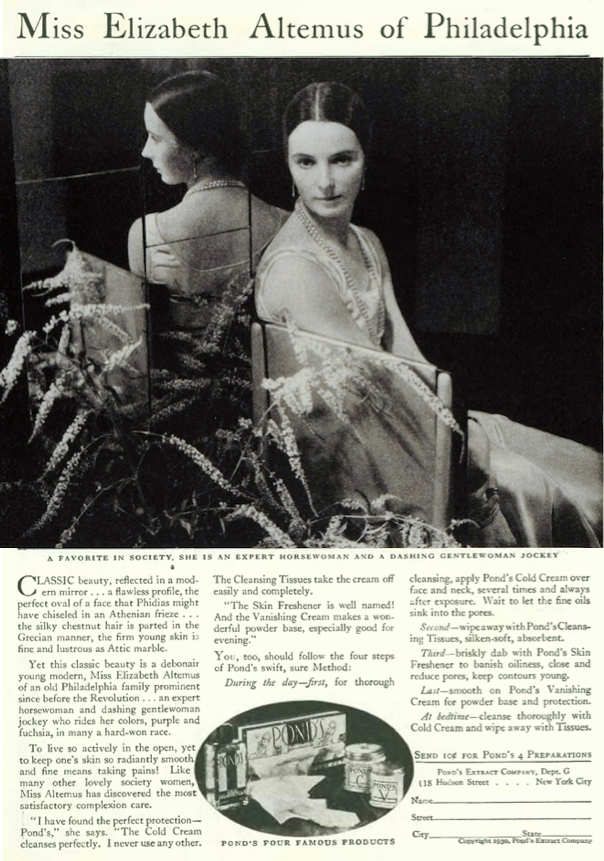
The makers of Pond’s Cold Cream continued its campaign of endorsements by society women, including Philadelphia socialite, philanthropist and champion horsewoman Elizabeth Altemus…
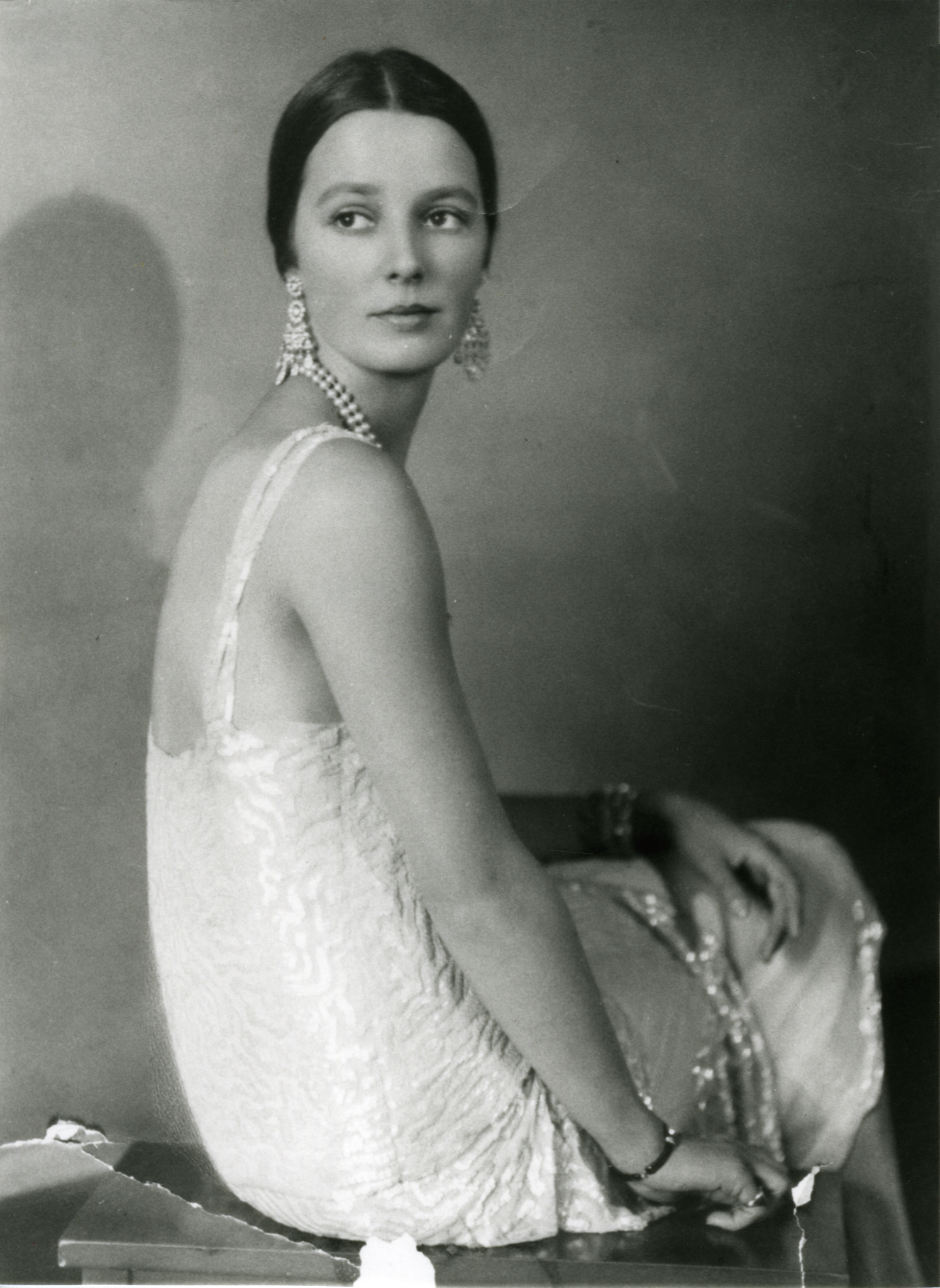
Altemus (1906-1988) was a prominent owner/breeder of Thoroughbred racehorses for more than 50 years. Her first marriage was to Jock Whitney, U.S. Ambassador to the United Kingdom, publisher of the New York Herald Tribune, and president of the Museum of Modern Art. By the looks of this 1937 portrait of Altemus, the cold cream certainly didn’t do her any harm…
Mary Elizabeth Altemus Whitney in 1937. (geni.com)
…speaking of cold cream, when Kleenex was introduced in the early 1920s, it was marketed solely as a hygienic way to remove cold cream. It wasn’t until the 1930s that the makers of Kleenex began to suggest it could also be used as a tissue in place of a handkerchief. Of course it was also a great way to dramatically expand consumption of its brand, and help usher in a new age of disposable products…
…as the Depression deepened, ads for automobiles began to change with the times, most manufacturers emphasizing the affordability of their cars over performance or prestige, as this sad little ad from Packard attested….
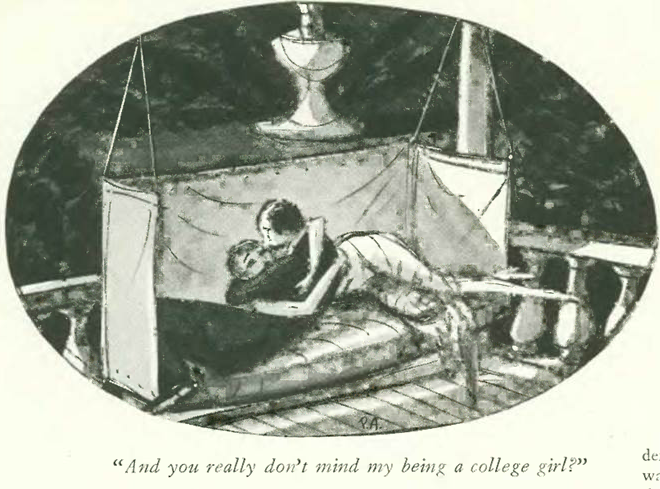
…in three consecutive issues (June 5, 12 and 19) Peter Arno featured the same drawing with a different caption that gave readers a very brief courtship story…
…Alan Dunn offered a glimpse of life among the newsboys…
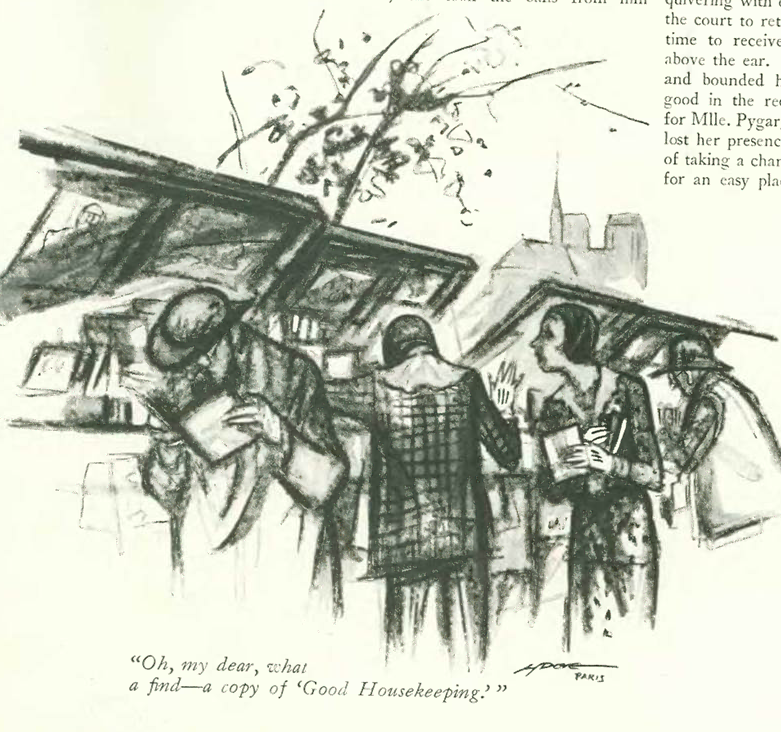
…Leonard Dove found Americans browsing newsstands along the Seine…
…Helen Hokinson looked in on an existential crisis…
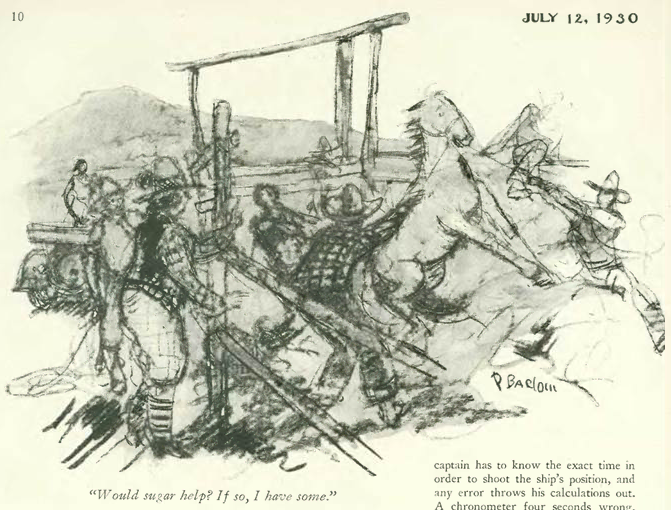
…Perry Barlow was Out West at a dude ranch…
…Barbara Shermund eavesdropped on a couple of debs…
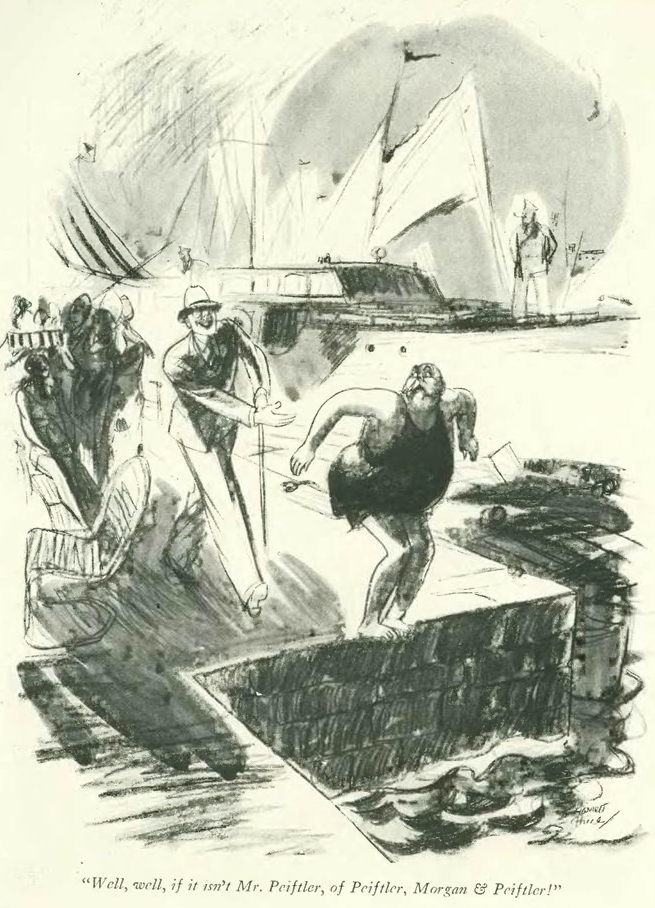
…Garrett Price gave us an awkward encounter among the yachting crowd…
…and finally William Crawford Galbraith, and a case of domesticus interruptus…
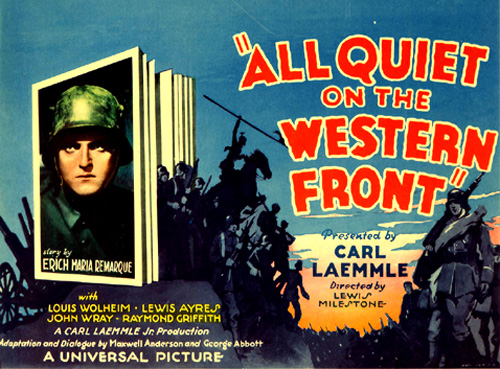
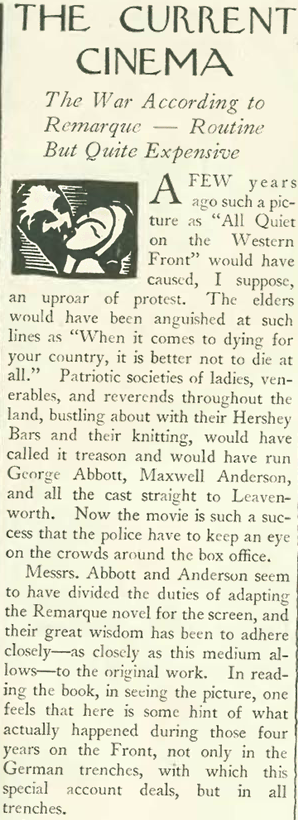
Still considered one of the greatest anti-war films ever made, All Quiet on the Western Front opened in New York on April 29, 1930 to strong reviews. Based on Erich Maria Remarque’s novel of the same name, the film’s depictions of the horrors of war were so realistic and harrowing that it was banned in a number of countries outside of the U.S.
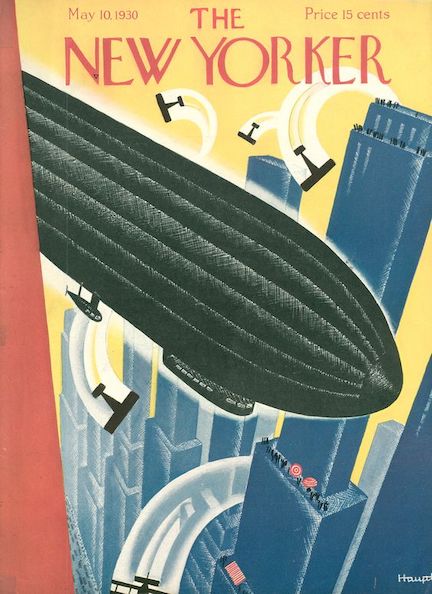
May 10, 1930 cover by Theodore Haupt.
Banned, that is, by nations gearing up for war. In Germany, Nazi brownshirts disrupted viewings during its brief run in that country, tossing smoke bombs into cinemas among other acts of mayhem. Back in the U.S., The New Yorker’sJohn Mosher attended a screening at a “packed” Central Theatre:
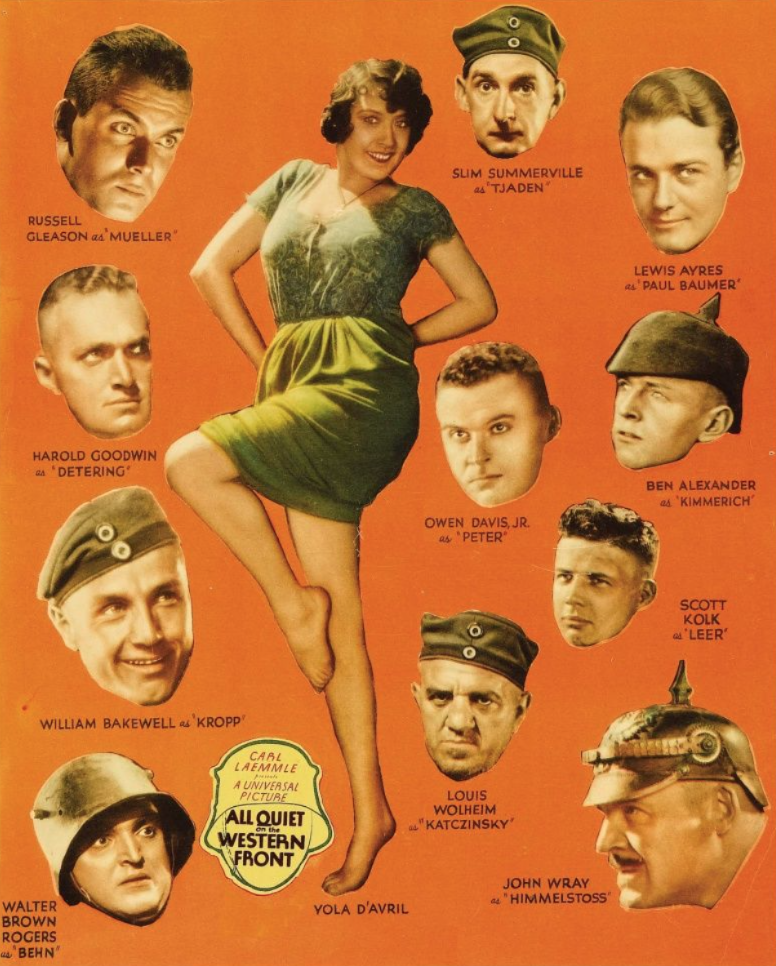
WAR IS HELL…Clockwise, from top left, movie poster for 1930’s All Quiet on the Western Front; German soldier Paul Bäumer (Lew Ayres), falls into a shell crater with a French soldier and draws his knife; in one of the most moving scenes in cinema, Bäumer is forced to spend the night in the crater, where he vainly tries to safe the life of the Frenchman he has mortally wounded; a German soldier crawls through the mud in a German training camp. (IMDB/Universal).
Mosher found the film’s adaption from the novel wanting in places, but overall praised the acting and the quality of the picture…
…and just in case some audiences were put off by the blood and guts, Universal promoted other themes on its lobby cards…
(IMDB)
* * *
More Than a Stunt
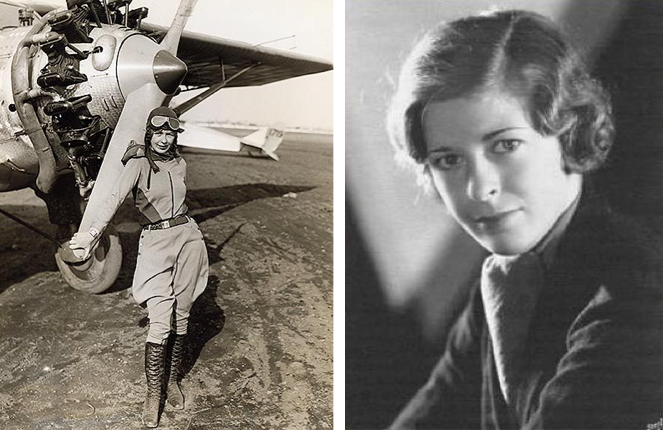
In her profile of aviator Elinor Smith (1911-2010), writer Helena Huntington Smith took great pains to distinguish Elinor from other “lady fliers” who were little more than passengers in various flying exploits. Like Amelia Earhart, Smith had the bona fides of a true aviator: in 1927 she become the youngest licensed pilot in the world at age 16, learning stunt flying at an early age. When she was 17 she smashed the women’s flying endurance record by soloing 26½ hours, and in the following month set a woman’s world speed record of 190.8 miles per hour. In March 1930 she set a women’s world altitude record of 27,419 feet (8,357 m), breaking that record in 1931 with a flight reaching 32,576 feet. Smith would continue to fly well into old age. In 2000 she flew NASA’s Space Shuttle vertical motion simulator and became the oldest pilot to succeed in a simulated shuttle landing. In 2001 (at age 89) she would pilot an experimental flight at Langley AFB. An excerpt from the profile:
HEAD IN THE CLOUDS…Elinor Smith’s flying career would extend from age 16 and into her 90s. At left, Smith poses in Long Island with the Bellanca monoplane she used to beat the solo flight record in 1929. Right, portrait of Smith circa 1930s. (findagrave.com)
* * *
I’d Rather Be in Philadelphia
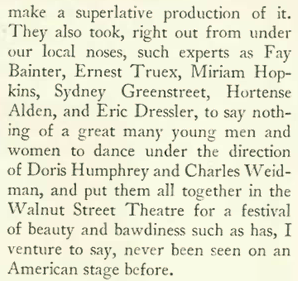
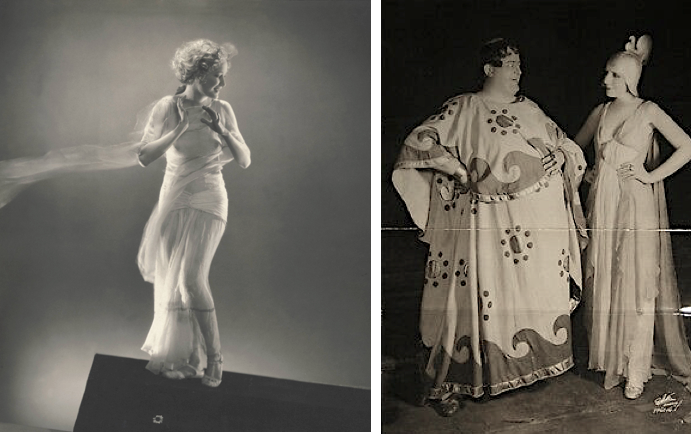
Theatre critic Robert Benchley was over the moon regarding a performance of Lysistrata staged by the Philadelphia Theatre Association. Benchley suggested the Philadelphians had “put New York to shame” in staging such a “festival of beauty and bawdiness…never seen on an American stage before.”
NO MORE HANKY PANKY…Left, actress Miriam Hopkins in Aristophanes’ Lysistrata, as photographed by Edward Steichen; at right, Sydney Greenstreet with unidentified actress from the 1930 Philadelphia production of Lysistrata. (timeline.com)
Benchley praised the seemingly advanced tastes of Philadelphia audiences as he continued to the lament the fact that the City of Brotherly Love had beaten New York to the punch with the staging of the play. He needn’t have worried much longer; the play would open on Broadway on June 5, 1930, at the 44th Street Theatre.
LOVER COME BACK…Production photograph for Norman-Bel Geddes’s staging for Lysistrata, titled “the women of Greece return to their men.” (hrc.utexas.edu)
While we are on the subject of theater, Constantin Alajálov provided this lovely illustration of Anton Chekhov’sUncle Vanya for The New Yorker’s theater review section…
* * *
Make ‘Em Dance, Boys
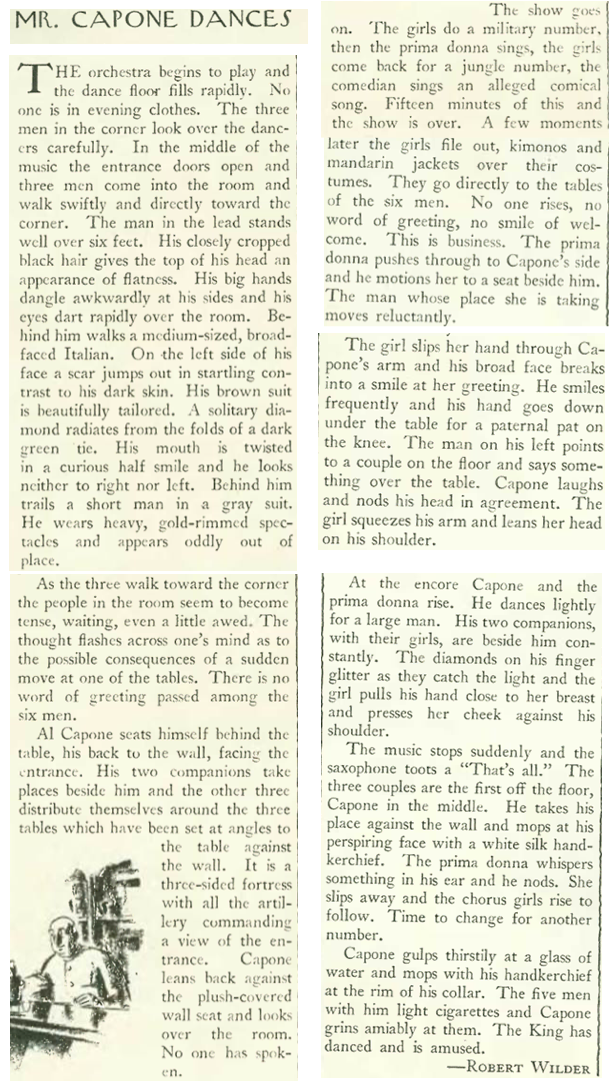
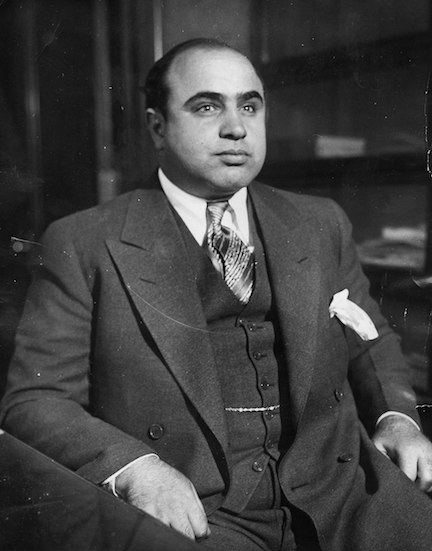
The author Robert Wilder contributed this interesting casual about the appearance of gangster Al Capone at a Chicago nightclub. Excerpts:
LIGHT ON HIS FEET…Al Capone in 1930. (Wikipedia)
* * *
You Say You Want a Revolution?
Alva Johnston offered his thoughts on how America could stage its own “Red Revolution,” given that Russia and several European countries had already experienced communist uprisings of their own, and also given that New York Police Commissioner Grover Whalen, always in search of problems that didn’t exist, had announced a new “Red Scare” in his fight against communism.
Tongue firmly in cheek, Johnston suggested how American know-how could be brought to bear in inciting a Red Terror. An excerpt:
YANKEE INGENUITY…Alva Johnston, left, offered some innovative ideas for a uniquely American “Red Revolution.” At right, soldiers stand behind a barricade during Germany’s communist Spartacist uprising of January 1919. (Wikipedia)
* * *
Speaking of Revolutionaries
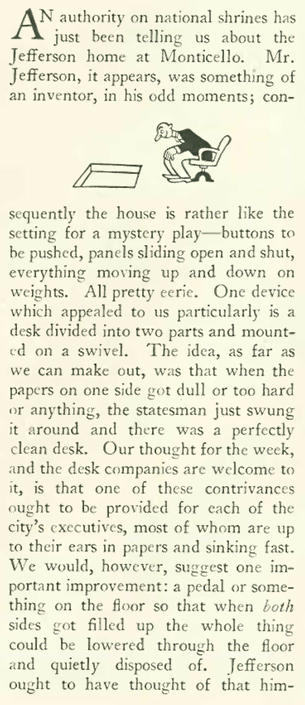
Thomas Jefferson’s home at Monticello is one of America’s most-visited historical sites, but in 1930 it was still something of a regional curiosity, having only been acquired in 1923 for the purposes of turning it into a public museum. Although Jefferson is well known today for his various inventions at Monticello, E.B. White was just learning about this side of the president in his weekly “Notes and Comment” dispatch:
THIS OLD HOUSE…Left, a combination of neglect and Civil War vandalism left Thomas Jefferson’s Monticello enmeshed in weeds and in a state of near collapse by the 1870s. At right, students of the University of Virginia pose outside Monticello in 1930. (UVA/Hulton Archive)
* * *
Play Ball?
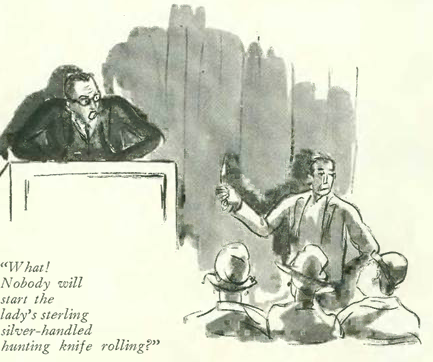
We are well into the spring of 1930, yet The New Yorker stood firm in its complete lack of baseball coverage. As I’ve noted before, the magazine covered virtually every sport from horse racing to rowing to badminton, and even lowered itself to regular features on college football and professional hockey, but not a line on baseball, save for an occasional note about the antics of Babe Ruth or the homespun goodness of Lou Gehrig. There were signs, however, that baseball was being played in a city blessed with three major league teams; we do find game times in the “Goings On About Town” section, as well as occasional baseball-themed filler art, and a comic panel in the May 10 issue by Leonard Dove:
From Our Advertisers
We begin with an endorsement for Chase & Sanborn coffee by the soprano Alma Gluck, wife of famed violinist and composer Efrem Zimbalist Sr. Originally I thought she was enjoying coffee with a sister in law named “Mrs. Zimbalist,” but as reader Frank Wilhoit astutely points out, the “Alma Gluck” (celebrity) and “Mrs. Zimbalist” (housewife) are alternate personae of the same individual. And now that I look at the ad again, the clothes and hair styles are identical. I will try to locate a clearer image of the ad…
…and from the makers of White Rock we have a group of swells and their airborne friends enjoying some bubbles that are doubtless mixed with illegal hootch…
…Dr. Seuss continued to offer his artistry on behalf of Flit insecticide…
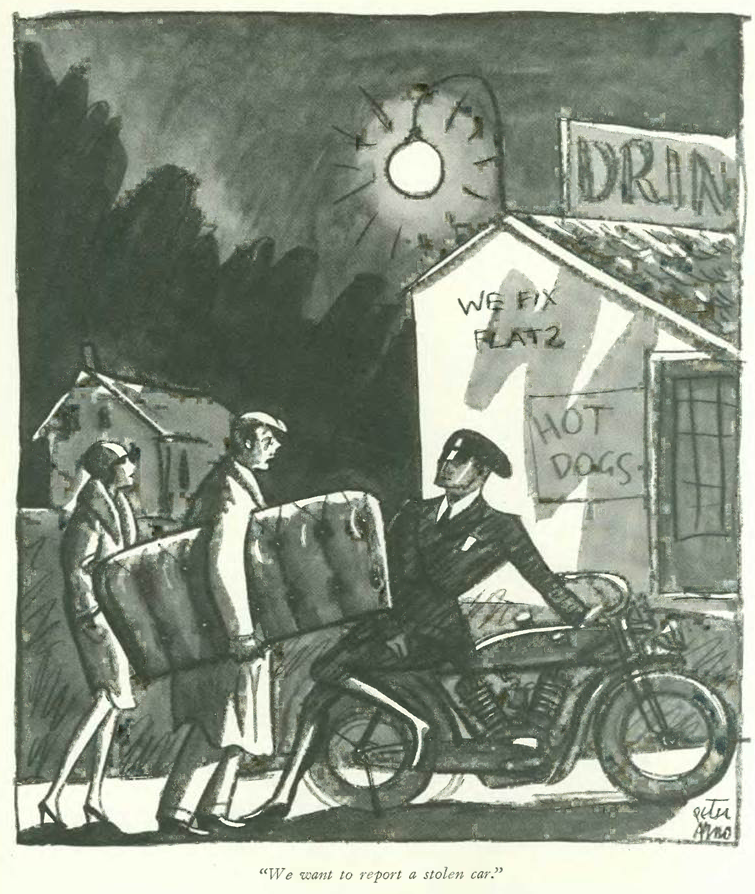
…and on to our cartoons, Peter Arno illustrated the hazards of the road…
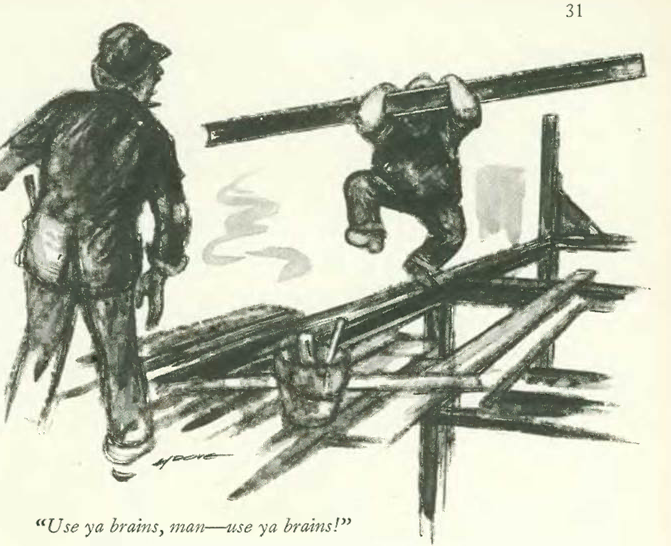
…while Leonard Dove explored the hazards high above the streets of Manhattan…
…Constantin Alajálov explored an odd encounter in a park…
…Isadore Klein mused on the tricks of mass transit…
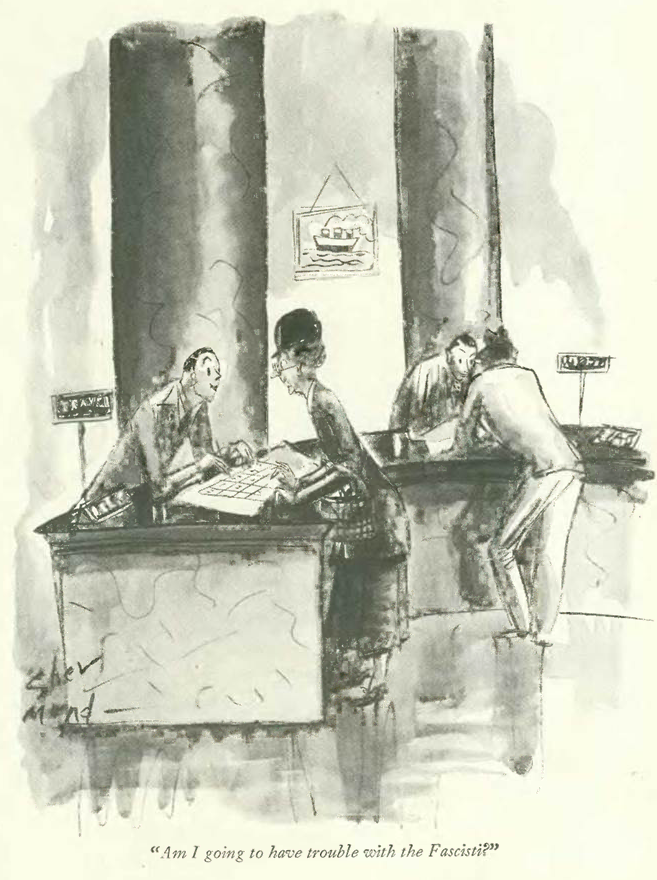
…and two from Barbara Shermund, who looked in on one tourist’s plans for a trip to Mussolini’s Italy…
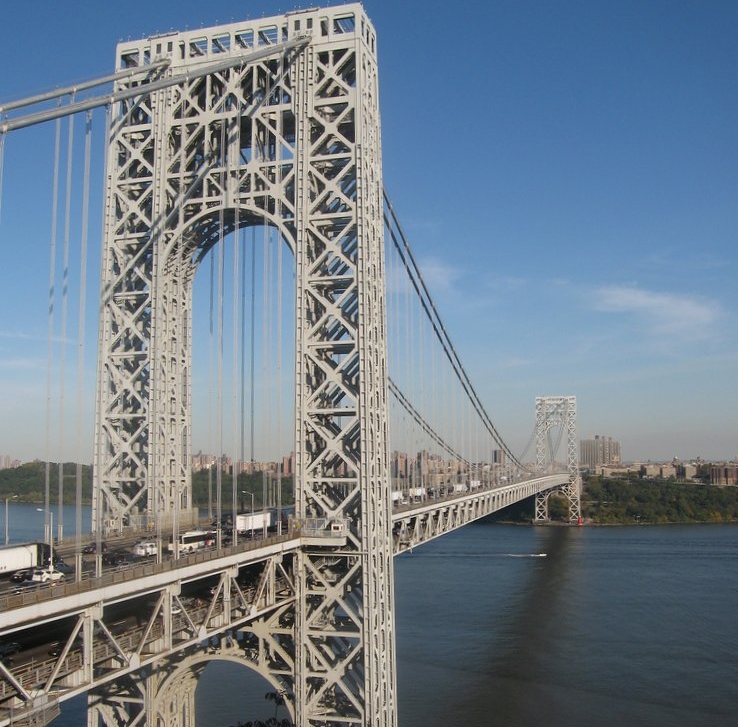
Tens of thousands of commuters daily cross the George Washington Bridge, but in the din of modern commuting few give nary a thought to a span that was once considered a modern marvel.
May 3, 1930 cover by Rose Silver.
Twice as long as any previous suspension bridge when it opened in 1931, the George Washington Bridge’s main span of 3,500 feet (1,100 m) would be the world’s longest until it was surpassed by San Francisco’s Golden Gate Bridge in 1937. The New Yorker’s “Talk of the Town” (entry most likely by E.B. White) checked on the bridge’s progress for the May 3 issue:
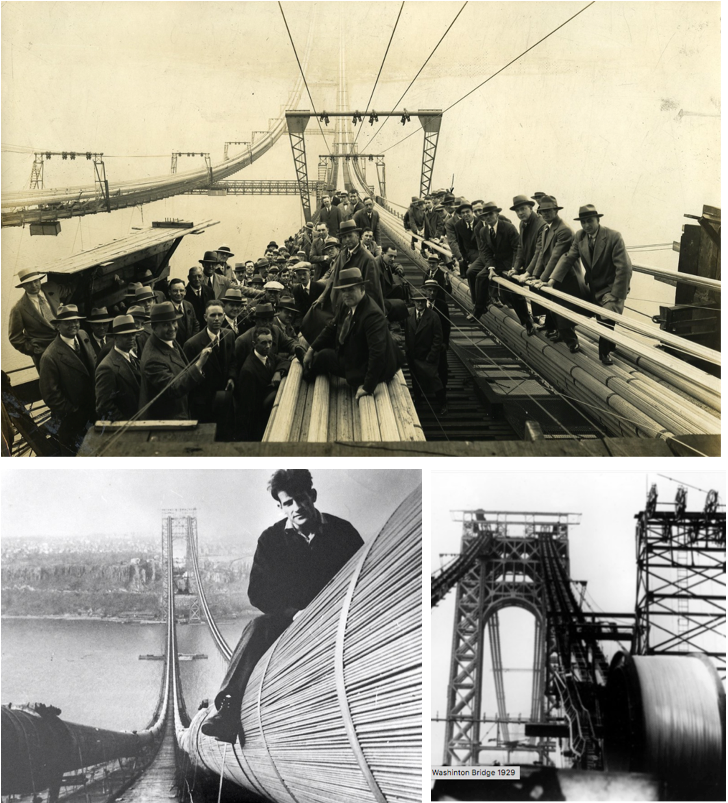
MEN OF STEEL…Some 107,000 miles of wire were used in cables made by John A. Roebling’s Sons Company for the George Washington Bridge — the same firm also supplied wire for the Brooklyn Bridge 60 years earlier (John Roebling and his son, Washington, also designed and built the Brooklyn Bridge). Clockwise, from top, employees of John A. Roebling’s Sons pose atop cable bundles; bottom right, the bridge’s four main cables were each composed of a single strand carried back and forth across the river 61 times. Each strand itself is a bundle of 434 individual wires; bottom left, worker poses atop completed cable. (Flickr/Pinterest)BY ANY OTHER NAME…Known as the Hudson River Bridge during its construction, the George Washington Bridge opened to traffic in 1931. During the first full year of operation in 1932 more than 5.5 million vehicles used the original six-lane roadway — today it is the world’s busiest motor vehicle bridge, carrying more than 100 million vehicles per year. Although the steel towers are iconic today, the original plan called for them to be clad in stone. (Wikipedia)
* * *
A Cabin in the Sky
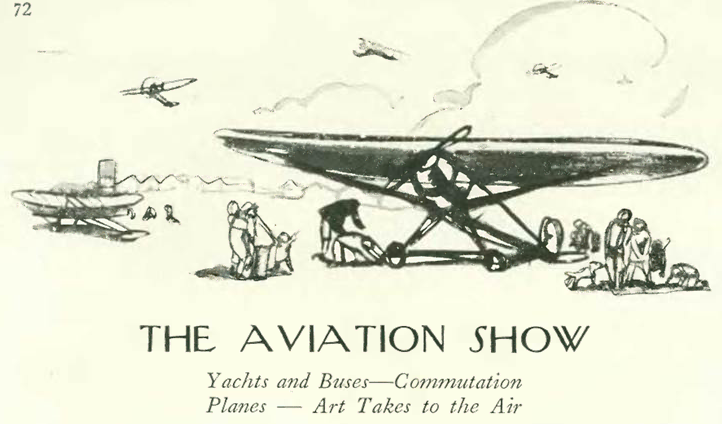
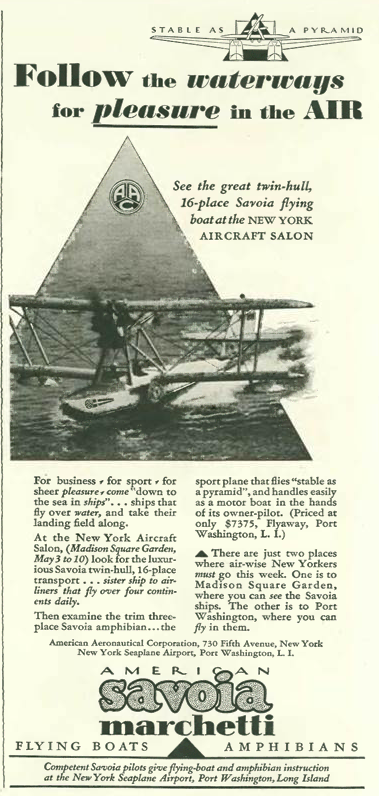
Other signs of modern life were being seen in Midtown, where an “Aircraft Salon” hosted by the Aeronautical Chamber of Commerce was taking place at Madison Square Garden.
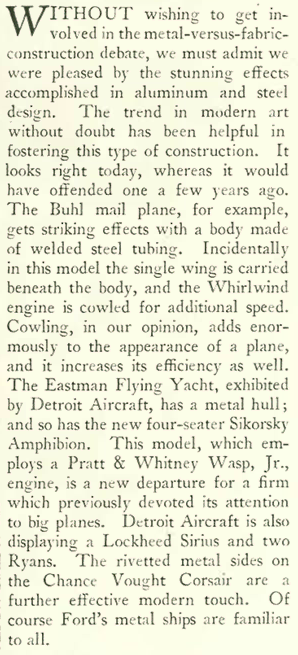
Nicholas Trott was on hand to take in the exhibits, noting that advances in aviation included the use of metal bodies (instead of fortified cloth) and greater attention to interior decoration:
SIGNED, SEALED, DELIVERED…An attendee of the New York Aircraft Salon received a special postal stamp, and an autograph from aviator Cy Caldwell, at the Madison Square Garden show. (Joe Krantz)
Trott noted that designs of passenger compartments, still in their infancy, suggested something between automobile and nautical motifs:
SORRY, NO HEADPHONES…Clockwise, from top left, a Curtiss Condor 18 and its interior appointments; a Fokker Trimotor featured dining in its cabin. As peaceful as the scene appears, the noise from the motors must have been unbearable. (Wikipedia/dutch-aviation.nl)
Trott also commented on the debate surrounding metal vs. fabric in the construction of airplanes. Before 1930 most planes were constructed of wood covered with fabric (which were much lighter than metal craft). Although as early as 1920 the National Advisory Committee for Aeronautics declared metal to be superior to wood, only five percent of aircraft in 1930 were of all-metal construction.
DON’T CALL ME WOODY…This eight-passenger Consolidated Fleetster was a rare example of metal construction in early 1930. The wings, however, were still fashioned from wood. (Aeronautical Chamber of Commerce 1931 Aircraft Yearbook)
* * *
Road to Nowhere
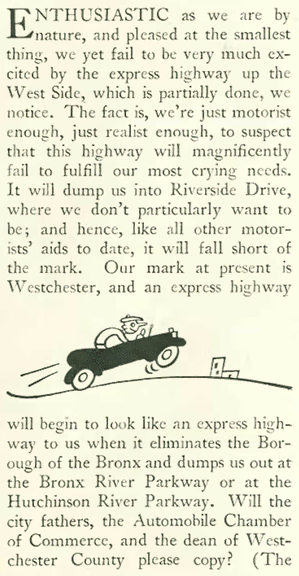
The New Yorker’s enthusiasm for modern marvels did not extend to the West Side Highway, a project that would extend from the late 1920s to the early 1950s. Here is E.B. White’s take on the opening of the highway’s first section:
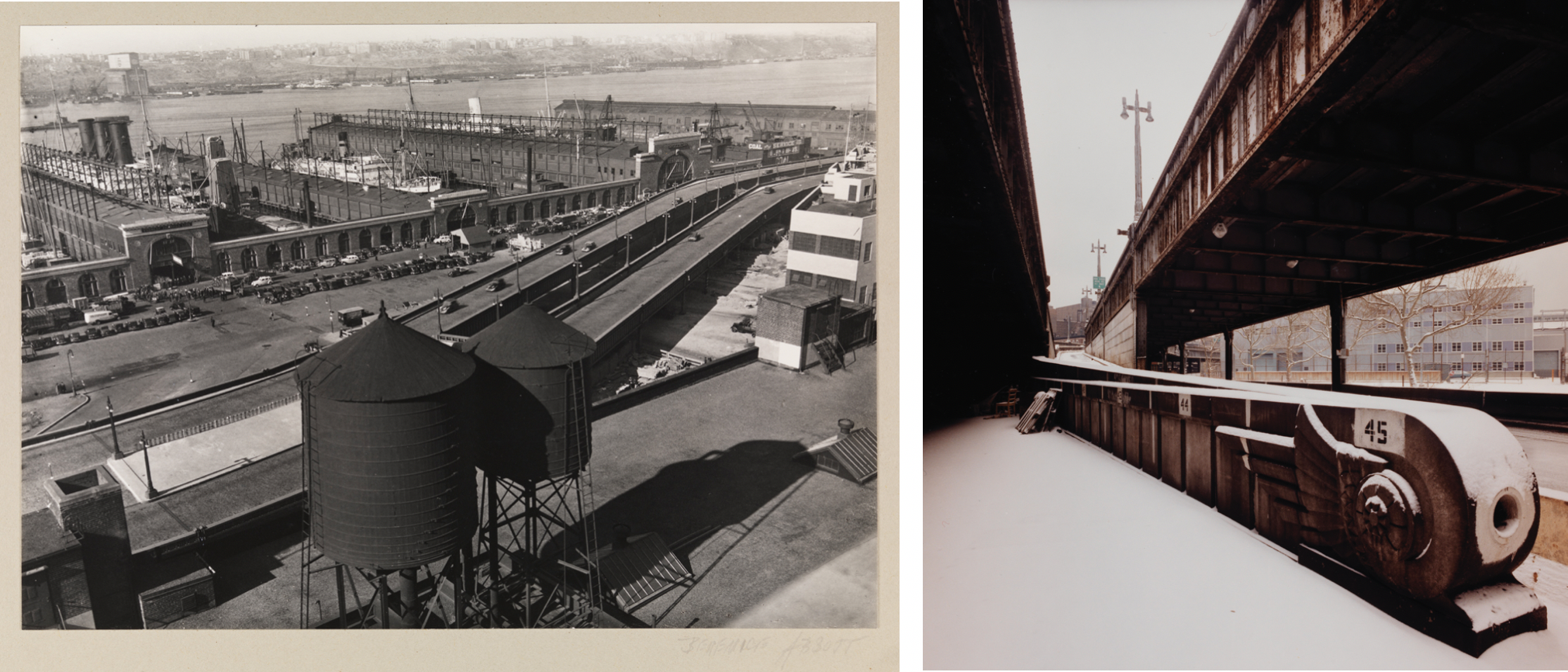
White’s observations were somewhat prescient — constructed in tight confines, the road’s on-ramps proved too narrow and the turns too tight for use by large trucks. The roadway also lacked proper maintenance, and just two decades after it was completed a section of the highway collapsed under the weight of an asphalt-laden truck. The roadway was demolished between 1977 and 1989. Read more here about the West Side Highway’s surprising history at the Museum of the City of New York.
THE ROAD NOT TAKEN, TAKEN…Left, West Side Express Highway and Piers 95-98, photographed by Berenice Abbott from 619 West 54th Street on Nov. 10, 1977; West Side Highway Ramp at 23rd Street reveals Art Deco ornamentation. Detail of photo by Jan Staller, 1978. (Museum of the City of New York)
* * *
For Pet Lovers
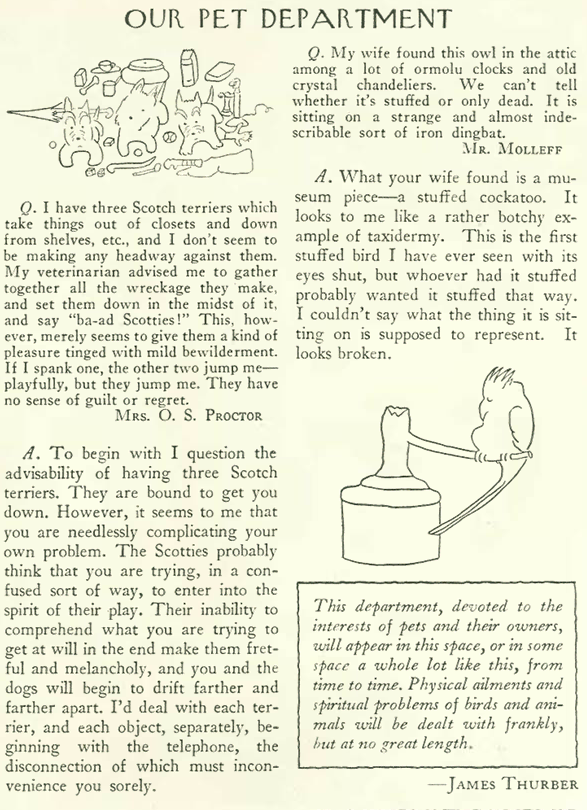
Our latest installment of James Thurber’s “Our Pet Department” column…
* * *
Hate Couture
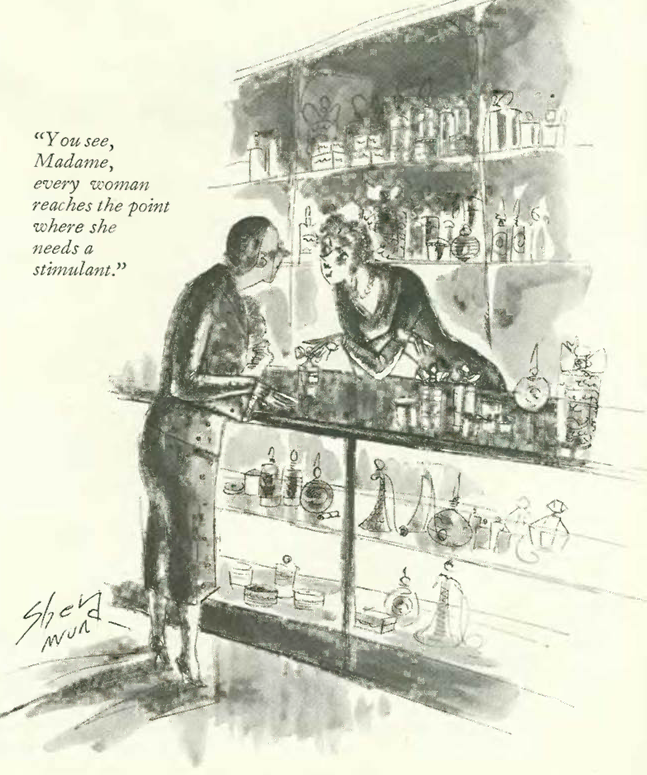
The New Yorker’s Paris correspondent, Janet Flanner, using the pen name “Hippolyta,” contributed this profile of François Coty (1874-1934), a French perfumer and businessman. Flanner’s profile (the introduction included below) described Coty’s rags-to-riches rise in the perfume industry, and touched on his life as a sometime journalist and politician.
What doesn’t come across in the profile is Coty’s extreme right-wing stance on politics and his virulent anti-Semitism, which was often expressed in his newspaper, Figaro. Three years after Flanner’s profile Coty would co-found Solidarité Française, a fascist, paramilitary organization, and a year after that he would be dead of an aneurysm.
François Coty circa 1930. (aperfumeblog.com)
* * *
From Our Advertisers
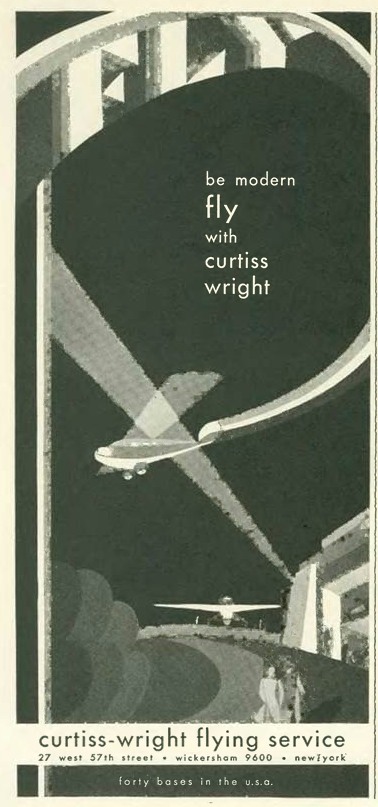
The New Yorker’s bottom line reaped benefits from the big aviation show at Madison Square Garden…
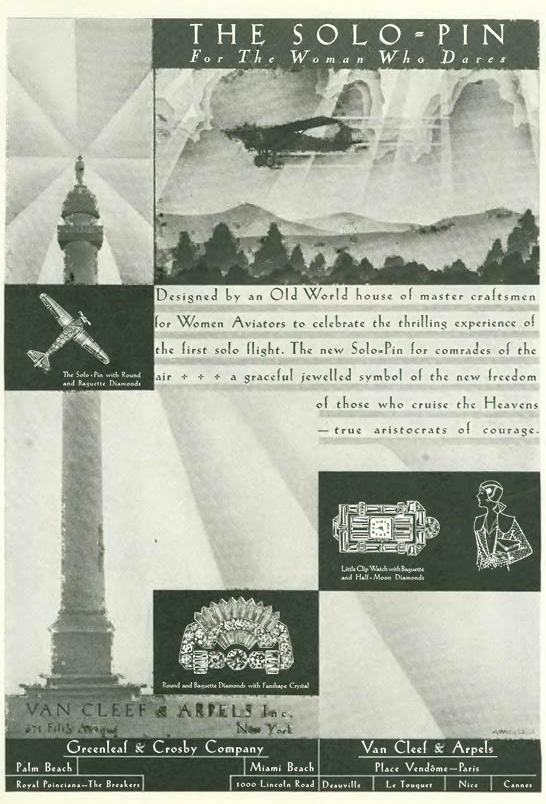
…and even if you weren’t selling airplanes or flying lessons, you could still get in on the action…
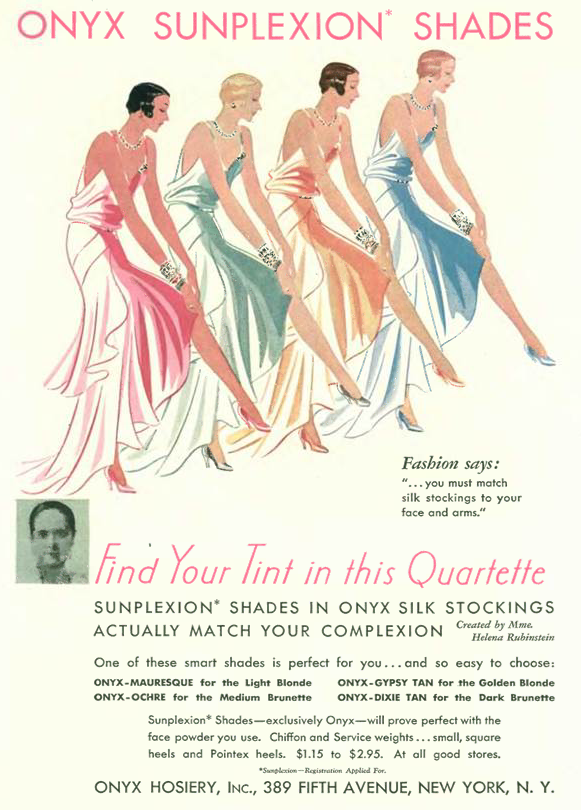
…also from the fashion world, this colorful entry from Onyx Hosiery…
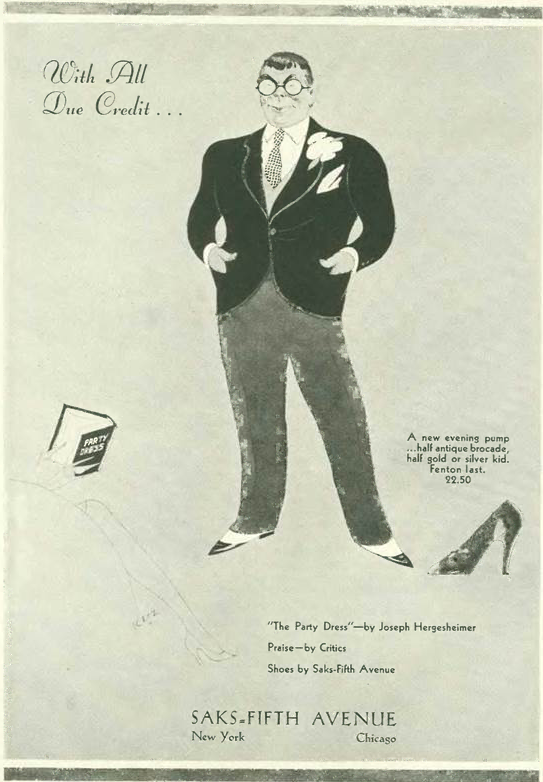
…and this weird ad from Saks, advertising shoes and a party dress but dominated by a caricature of designer Joseph Hergesheimer…
…on to our cartoons…Helen Hokinson paid a visit to the aviation show…
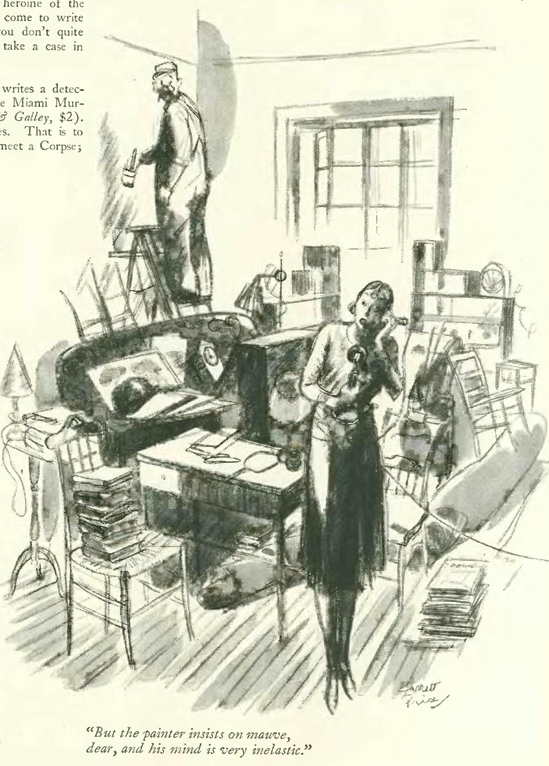
…on the domestic front, Garrett Price examined the challenges of home decor…
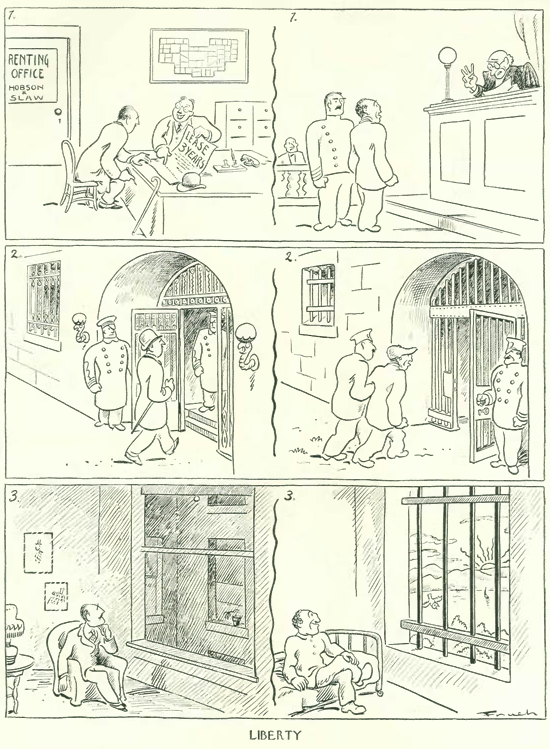
…Al Frueh offered an ironic twist on a room with a view…
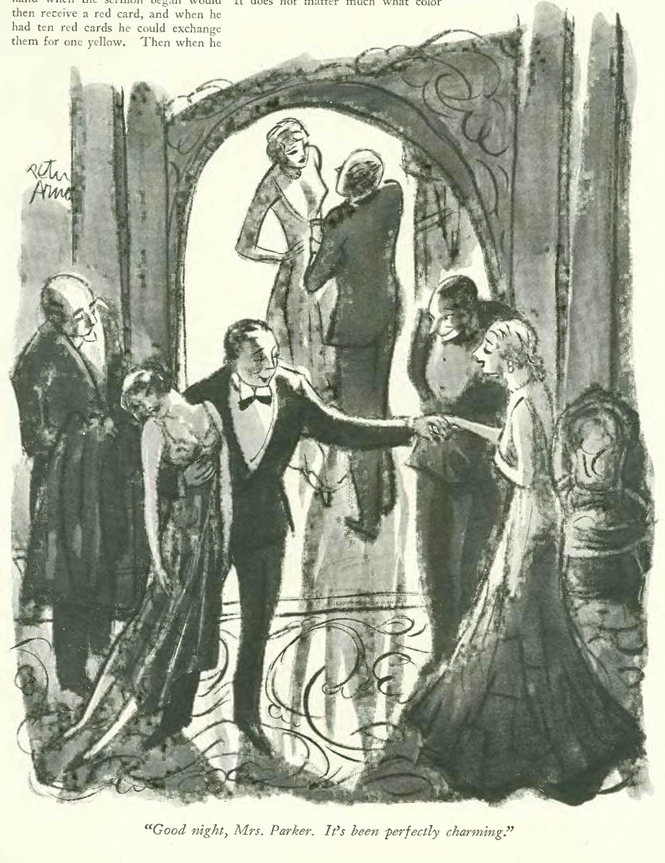
…Peter Arno once again found humor in the partying life…
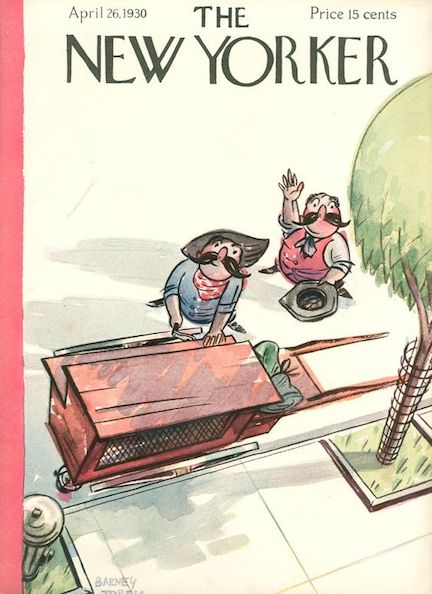
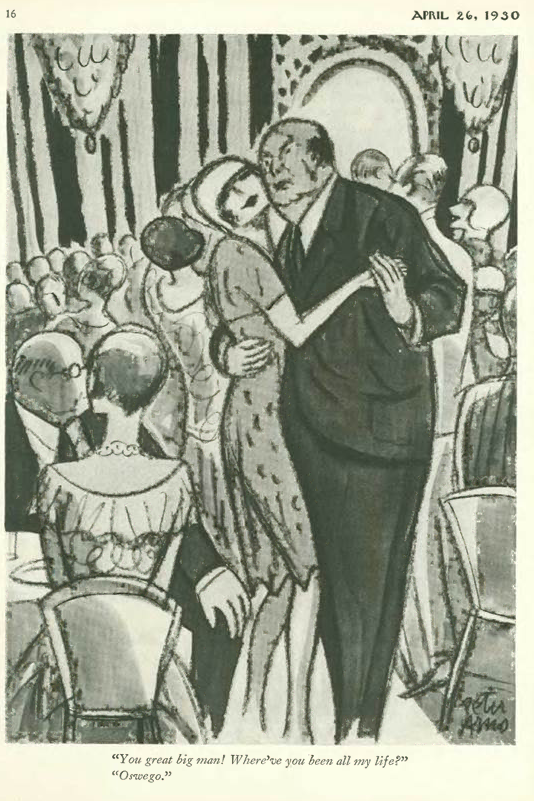
Before we launch into the latest offering from Tinseltown, a note about the cover artist for the April 26, 1930 issue.
April 26, 1930 cover by Barney Tobey.
Barney Tobey (1906-1989) was known for gently humorous cartoons that appeared in The New Yorker for more than fifty years. He also contributed four covers, the first of which appears above. In the Sept. 21, 1998 issue, illustrator Richard Merkin offered this remembrance:
* * *
Star-spangled Banter
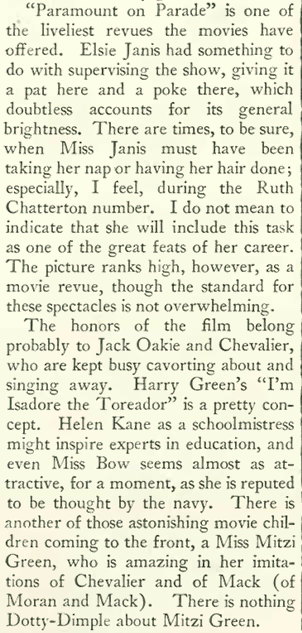
All-star musicals were all the rage in the early sound era, as they gave studios the opportunity to showcase contract players (who were virtually owned by the studios) doing things they usually didn’t do on screen. Following the success of MGM’s Hollywood Revue of 1929, Paramount Studios released Paramount on Parade in April 1930, much to the liking of New Yorker critic John Mosher, who also praised the film’s accompanying cartoon, 1929’s The Prisoner’s Song:
You can watch Max Fleischer’s The Prisoner’s Song here (and ponder how far animation has advanced)…
Mosher also praised a number of Paramount’s contract players, and especially actors Jack Oakie and Maurice Chevalier…
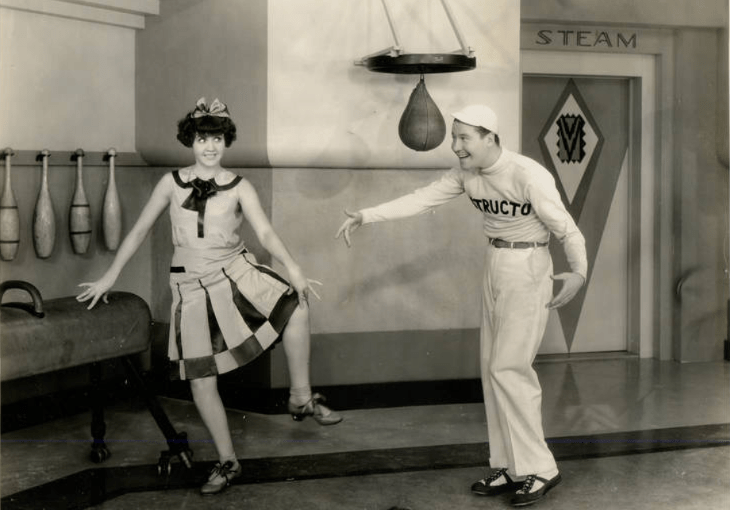
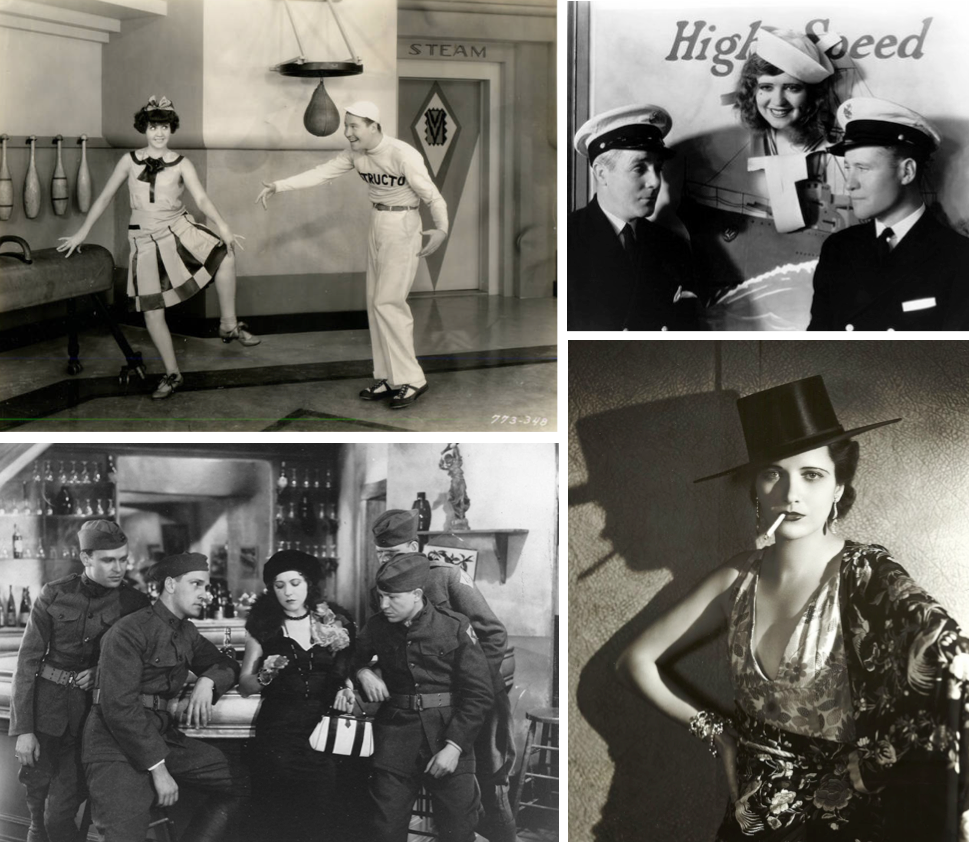
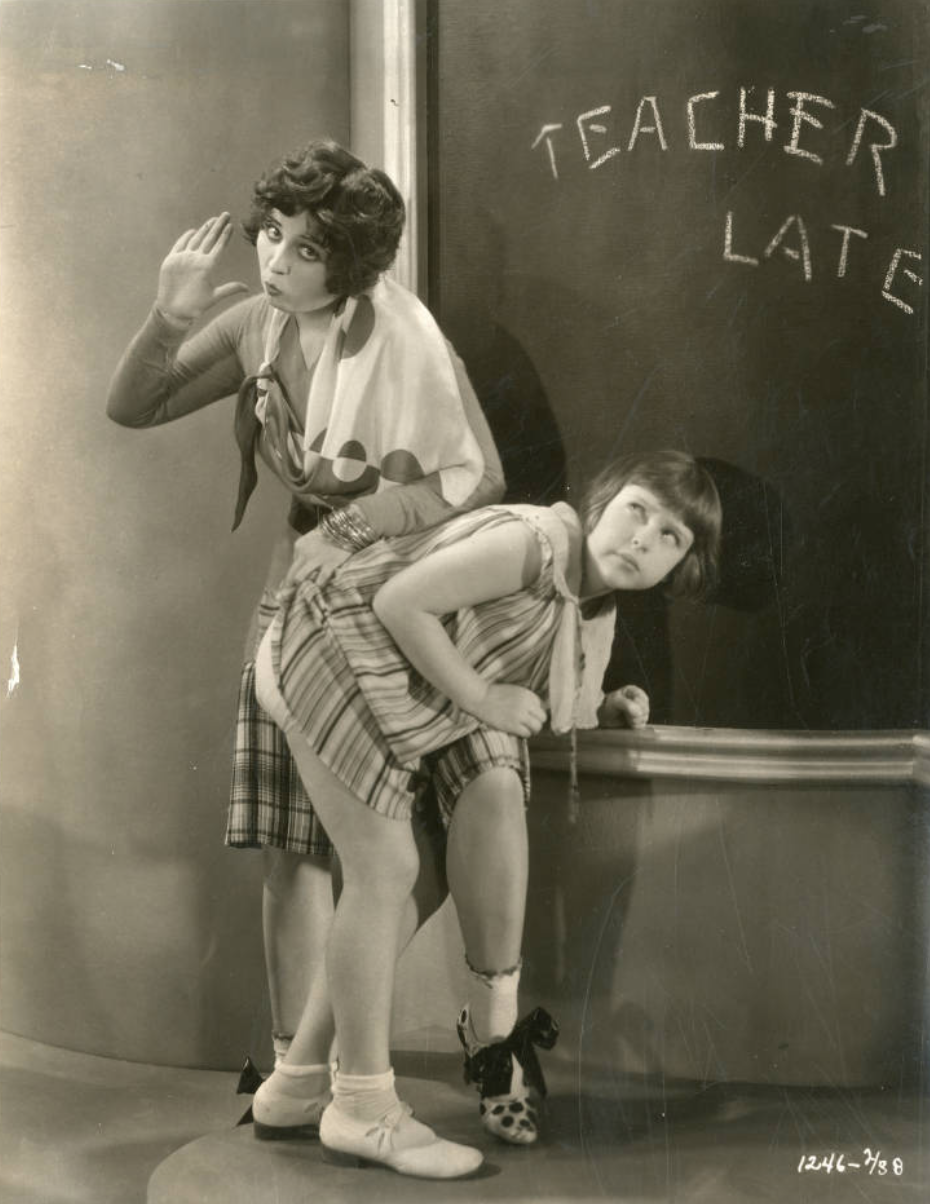
MUCH ADO…A great crowd gathers for the premiere of “Paramount on Parade” at the New York’s Rialto Theatre in April 1930. (cinematreasures.org)SEEING STARS…Clockwise, from top left, Helen Kane (possibly the inspiration for the cartoon character “Betty Boop”) and Jack Oakie do a little footwork; Clara Bow, Hollywood’s “It Girl,” pops through a Navy recruitment poster at the beginning of her song and dance number (with Stuart Erwin and Richard ‘Skeets’ Gallagher); one of Hollywood’s top actresses in 1930, Kay Francis, portrays “Carmen” in the revue; Ruth Chatterton entertains doughboys Stuart Erwin, Fredric March, Jack Oakie, and Stanley Smith in Paramount on Parade. (IMDB)BOOP GIVES A BOP…Helen Kane (left) and child star Mitzi Green in a sketch from Paramount on Parade. (IMDB)
* * *
Lost In the Crowd
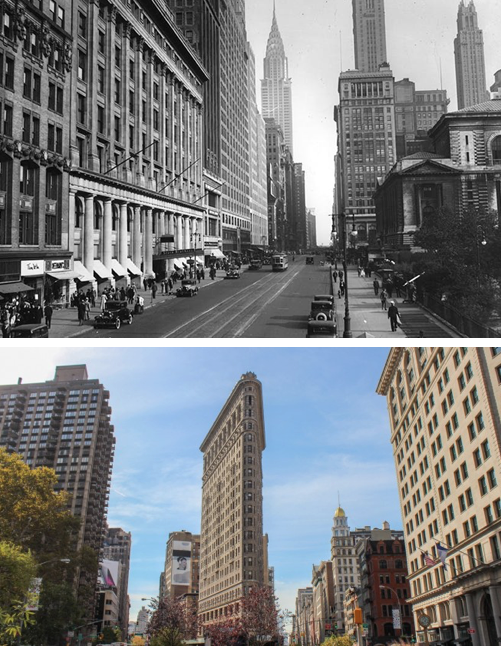
In his “Notes and Comment,” E.B. White lamented the fact that the world’s tallest building appeared less than lofty, since neighboring skyscrapers were nullifying its grandeur:
DOWN IN FRONT…E.B. White found the streetview of the world’s tallest building wanting after it was completed in 1930; the iconic Flatiron Building, however, enjoys some elbow room even today. (spectator.co.uk/walksofnewyork.com)
* * *
Full of Hot Air
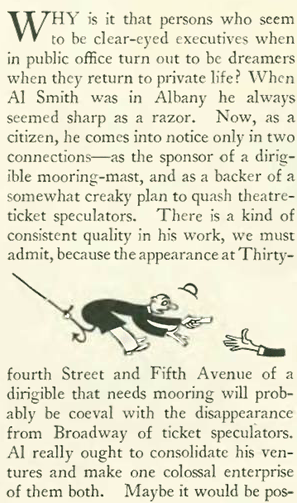
That was another opinion shared by E.B. White, this time regarding the Empire State Building’s top promotor, former New York Governor Al Smith, who spoke of plans to attach a mooring mast to the top of his skyscraper (which would eclipse the Chrysler as the world’s tallest in 1931):
* * *
View From the Top
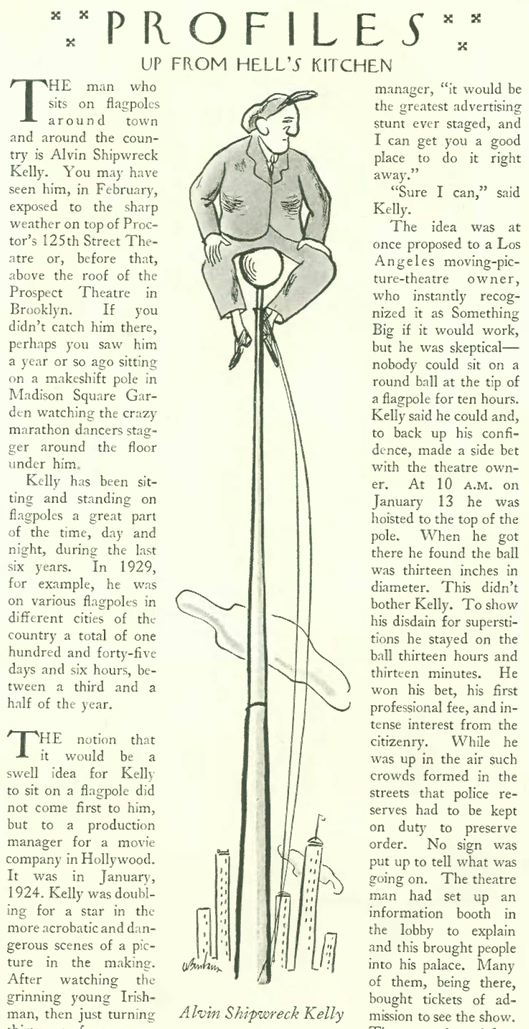
The New Yorker featured a profile of Aloysius Anthony Kelly (1893?-1952), better known as the Roaring Twenties most famous pole-sitter, “Shipwreck” Kelly. He achieved his greatest fame in the 1920s and 1930s, sitting for days at a time on elevated perches — often atop buildings — throughout the U.S.
Kelly’s fame was already on the wane when this profile appeared, and by 1934 he was reportedly working as a dance hall gigolo. Kelly’s last flagpole stunt was at a 1952 event sponsored by a Lion’s Club in Orange, Texas — he suffered two heart attacks while sitting atop their 65-foot flagpole. After climbing down he announced, “This is it. I’m through.” He died one week later after he was struck by car on West 51st Street in Manhattan.
LOFTY AMBITIONS…Alvin ‘Shipwreck’ Kelly atop a flagpole near College Park, Maryland, in October 1942. At right, undated photo circa 1940s. (CSU Archives/Digital Commonwealth)
* * *
Brand X
Folks were still abuzz about the discovery of a ninth planet in the solar system, soon to be dubbed “Pluto” by an English schoolgirl. Howard Brubaker, in “Of All Things,” observed…
…and Carl Kindl illustrated the problem a new planet posed for astrologers…
* * *
I Beg Your Pardon
Will Rogers was a beloved comedian with a few rope tricks up his sleeve, but I’ve never known him for working blue. However, one critic for The New Yorker (“A.S.”– not sure who this is) found Rogers’ new radio show both humorless and gauche…
CAN YOU TAKE A JOKE?…In photo above, Will Rogers debuts his new radio show in April 1930. It would become the most popular Sunday evening radio show, and Rogers would prove to be the second biggest motion picture box office draw in the U.S. before his death in 1935. (Will Rogers Memorial Museum)
* * *
Before He Got Axed
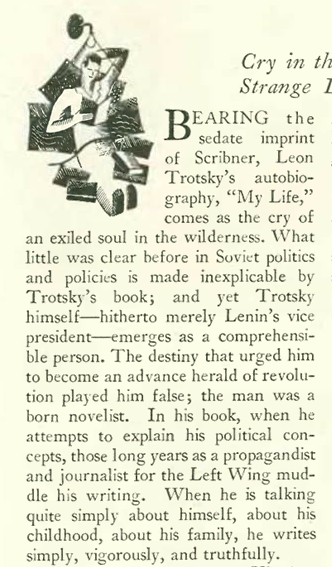
Ten years before he was murdered by one of Stalin’s NKVD agents, Leon Trotsky published an autobiography that was written in his first year of exile in Turkey. The review is signed “G.H.” so I am assuming the author is Geoffrey Hellman, who contributed for decades to The New Yorker’s “Talk of the Town.” Excerpts from the review:
RED ALERT…Leon Trotsky wrote his autobiography, My Life, while exiled in Turkey. (Wikimedia)
* * *
From Our Advertisers
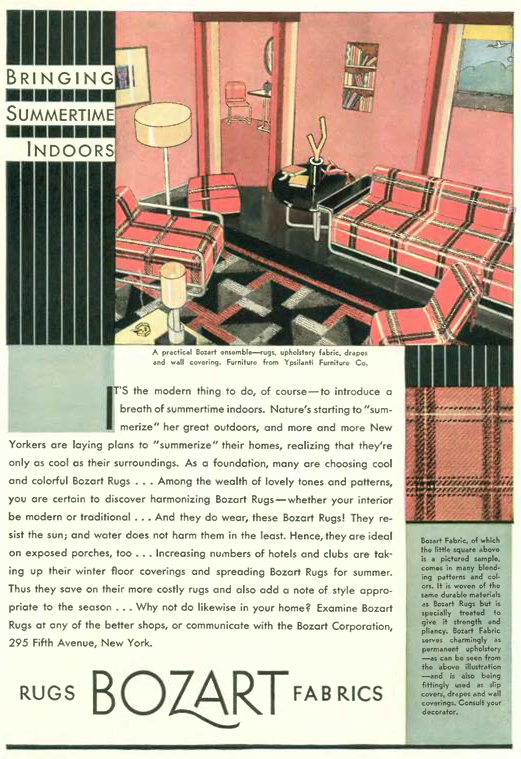
The makers of Bozart rugs and fabrics invited New Yorker readers to “introduce a breath of summertime indoors”…
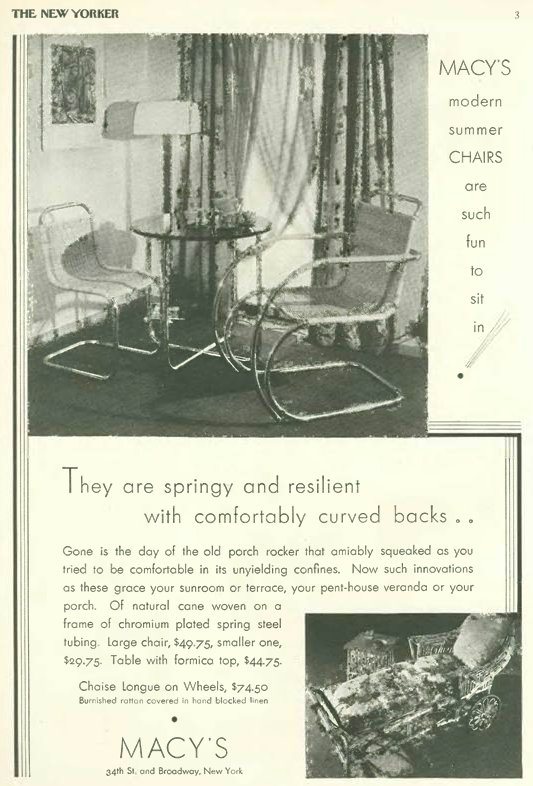
…while Macy’s urged the same by gracing a sunroom or terrace with one of their Marcel Breuer-inspired chairs…
…Colonial Airways touted an early form of radar — an “invisible pilot” — as the latest safety feature in its airplanes…
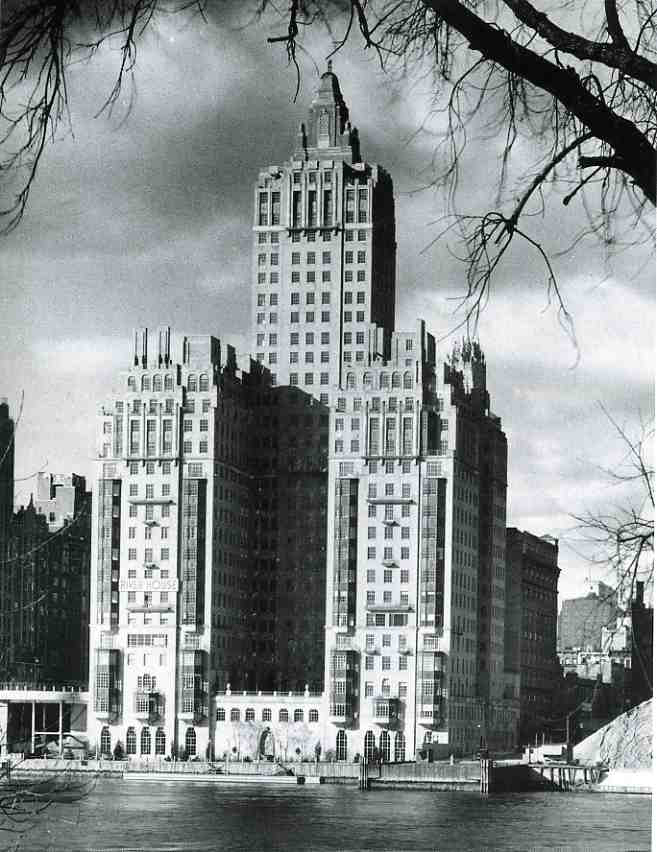
…the Douglas L. Elliman company promoted its yet unbuilt River House, which would feature a pier where residents could dock their yachts…
The 26-story River House in the 1930s. Originally, the Art Deco building featured a pier where residents could dock their yachts, but that feature was lost with the construction of FDR Drive in the early 1950s, effectively sealing the building off from the water. The building has been home to author Barbara Taylor Bradford, US Secretary of State Henry Kissinger, and actress Uma Thurman. (observer.com)
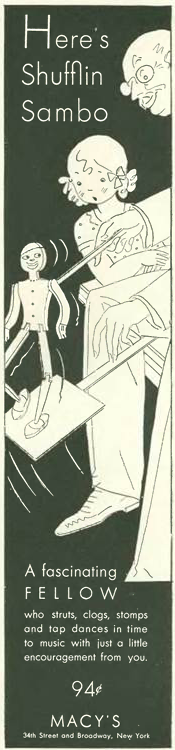
…and then we have our more unfortunate ads, such as this one from Macy’s that shows grandpa passing along his racist tendencies to a grandchild…
…and this sad appeal from the makers of Lucky Strike to keep puffing and avoid that hideous double chin…
…our cartoons include Garrett Price and thoughts of spring…
…Barbara Shermund eavesdropped on tea time…
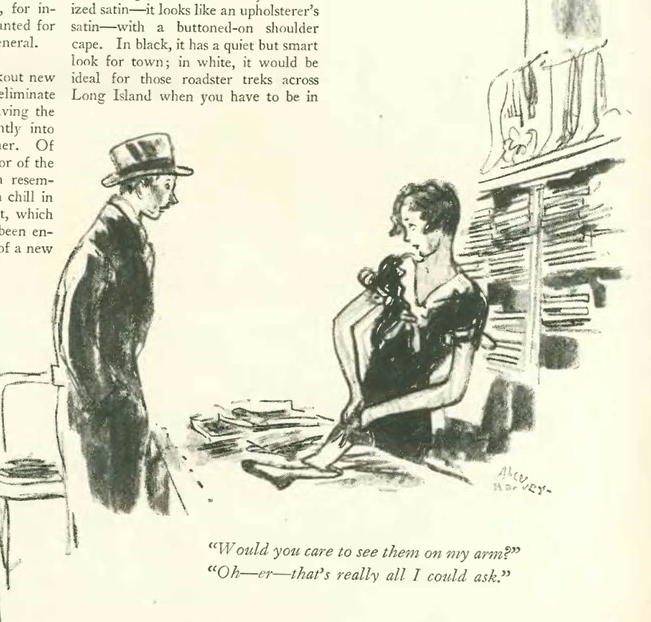
…Alice Harvey found an awkward moment in a hosiery department…
…Peter Arno revisits a familiar theme — chorus girls and sugar daddies…
…and Otto Soglow looked in on a fat cat’s moment of pride…
If you lived in small town America in the 20th century, it was a big deal when the circus came to town with its entourage of clowns, acrobats and exotic animals from distant lands.
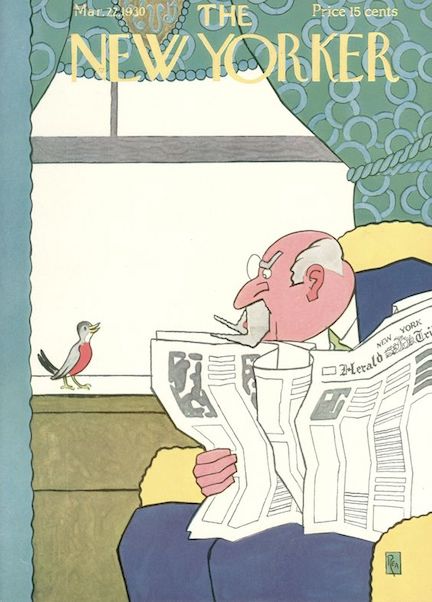
April 19, 1930 cover by Gardner Rea.
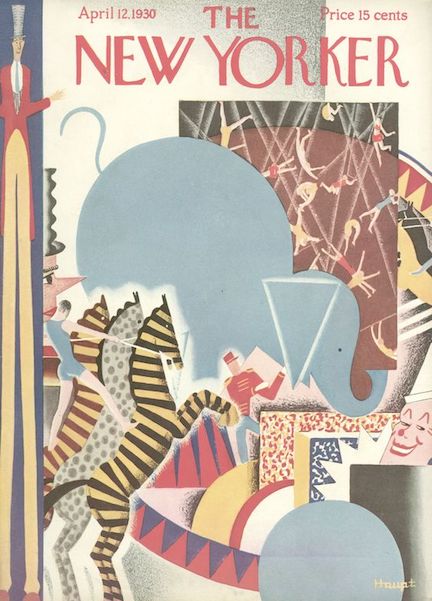
Even New Yorkers, it seems — who could be quite blasé about such things — got a thrill when the Ringling Brothers and Barnum & Bailey Circus rolled into town for its annual spectacle at Madison Square Garden. The New Yorker marked the occasion with its April 12 cover by Theodore Haupt:
For the April 19 issue, E.B. White welcomed the circus on a cautionary note, airing concerns in his “Notes and Comment” column that this old-timey entertainment might be falling under the “base influences” of broadcast radio, Broadway, and Hollywood:
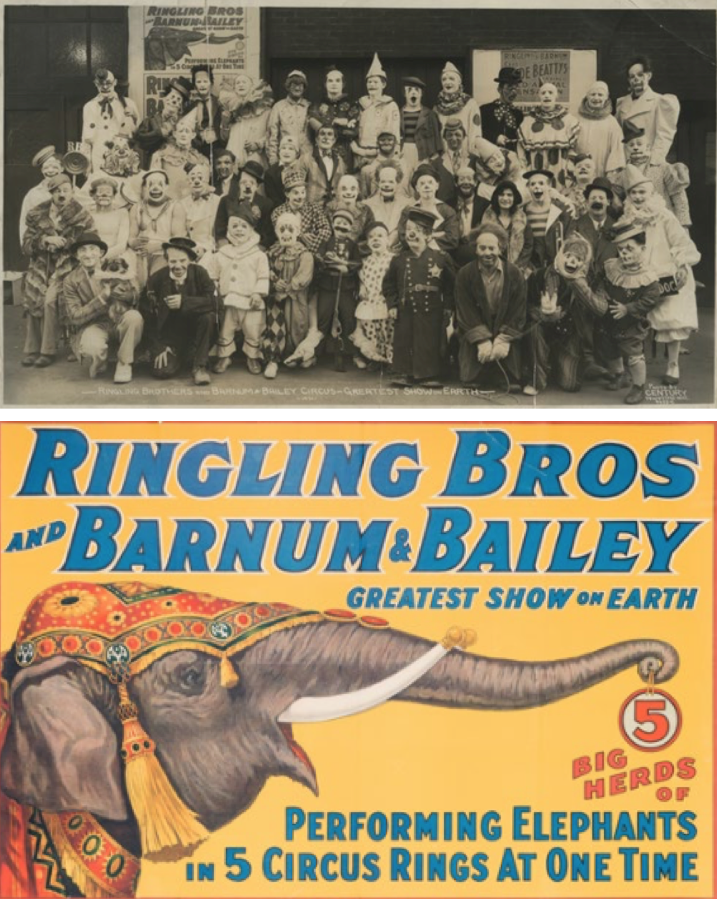
SEND IN THE…YOU KNOW…THOSE GUYS…Top, clowns in town for the 1931 Ringling Brothers and Barnum & Bailey Circus at Madison Square Garden. Below, circus poster announcing the arrival of “The Greatest Show on Earth.” (potterauctions.com)
José Schorr, who wrote a number of humorous columns in The New Yorker from 1926 to 1930 on the subject of “how to the pass the time” in various situations, offered this advice on attending the spectacle at Madison Square Garden…
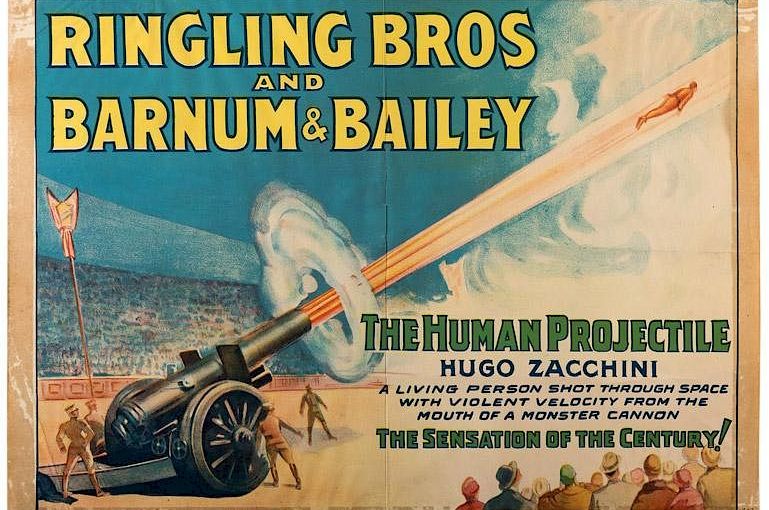
I’D RATHER BE FLYING…1930 poster advertising “The Human Projectile”; 1931 photo of the Ringling Brothers and Barnum & Bailey Circus at Madison Square Garden. (worthpoint.com/bidsquare.com)
…for example, Schorr advised circus-goers to pass the time by considering the inner lives of performers such as “The Human Projectile”…
* * *
Funny Farm
Perhaps you’ve never heard of Joe Cook (1890-1950), but in the 1920s and 30s he was a household name and one of America’s most popular comedic performers. “Talk of the Town” looked in on his antics at his Lake Hopatcong farm, “Sleepless Hollow”…
BATTER UP…Comedian Joe Cook’s residence at Lake Hopatcong, NJ, was known for its celebrity-studded parties. At left, Babe Ruth takes a swing with a giant bat on Cook’s wacky three-hole golf course; at right, Cook relaxing on the steps of his farm. (lakehopatcongnews.com)
* * *
Fun With Balloon Animals
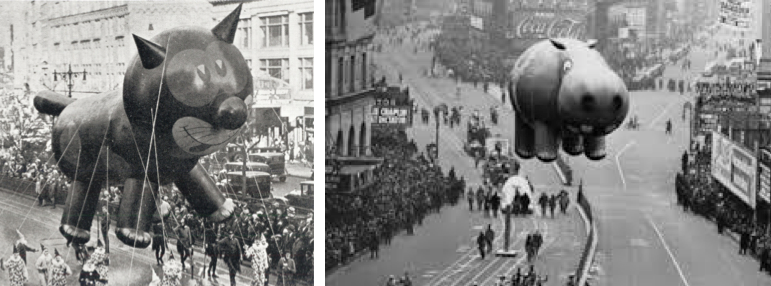
One thing that distinguishes the 1930s from today is that era’s apparent lack of safety standards, or fear of liability. A case in point was Macy’s Thanksgiving Day Parade, which began a tradition in the late 1920s of releasing its giant balloons into the sky at the conclusion of the parade — a $50 reward was offered by Macy’s for their return. “The Talk of the Town” explained:
GOING, GOING, GONE…When Felix the Cat (left, in 1927) was released after the Macy’s Thanksgiving Day Parade, it floated into a power line and caught fire; in 1931 the parade’s Big Blue Hippo (right) was apparently spotted floating over the ocean, never to be seen again. (Macy’s/hatchingcatnyc.com)
Perhaps the craziest anecdote attached to the parade’s annual balloon release belonged to Annette Gipson. While flying a biplane at 5,000 feet with her instructor, she spotted the parade’s 60-foot “Tom Cat” balloon rising high above Queens. Looking to have a bit of fun, the 22-year-old Gipson flew the plane directly into the cat. According to the book Macy’s Thanksgiving Day Parade, “Upon impact, the balloon wrapped itself around the left wing. The plane went into a deep tailspin (nearly throwing Gipson from the cockpit) and sped toward the ground out of control.” Fearing the plane would catch fire when it hit the ground, the instructor killed the ignition, and somehow managed to pull the plane out of the spin and land it safely at Roosevelt Field.
KITTY LITTER…Annette Gipson, right, nearly killed herself and her flight instructor after she deliberately crashed her biplane into a Tom Cat balloon (left) that had been released following the 1932 Macy’s Thanksgiving Day Parade. Of her near-death experience, Gipson told reporters, “It was a sensation that I never felt before—the whirling housetops, rushing up to meet me—and the thoughts of a whole lifetime flashed through my mind.” (ephemeralnewyork.wordpress.com)
A footnote: Following Gipson’s brush with death, Macy’s announced it would not give prize money to those who tried to down the balloons with their airplanes. The incident also brought an end to the company’s tradition of releasing the balloons.
* * *
Birth of the Soundtrack
Songs from popular theater productions were first made available to the masses in the mid-19th century via printed sheet music and later through early recordings. Part of this lineage is the movie soundtrack, which has its origins in the early days of sound pictures. According to TheNew Yorker’s “Popular Records” column, these new recordings would bring the talkies into your home, albeit without the picture…
FROM MAMMY TO MAMMA MIA…Left, a 1930 Brunswick 78 RPM recording of Al Jolson’s “To My Mammy”; at right, soundtrack from the 2008 film Mamma Mia! (popsike.com/amazon.com)
* * *
Cosmo Calvin
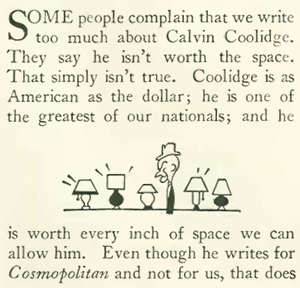
Before Helen Gurley Brown came along in the 1960s and sexed it up, Cosmopolitan was known as a somewhat bland literary magazine, and it was certainly bland enough in 1930 to welcome the scribblings of America’s blandest president to its pages. E.B. White mused in his “Notes”…
NOTHING COMES BETWEEN ME AND MY CALVIN…At left, the May 1930 issue of Cosmopolitan featuring columnist and former U.S. President Calvin Coolidge; at right, Kourtney Kardashian on the cover of the October 2016 issue. (Pinterest/Cosmopolitan)
* * *
How Dry I Am
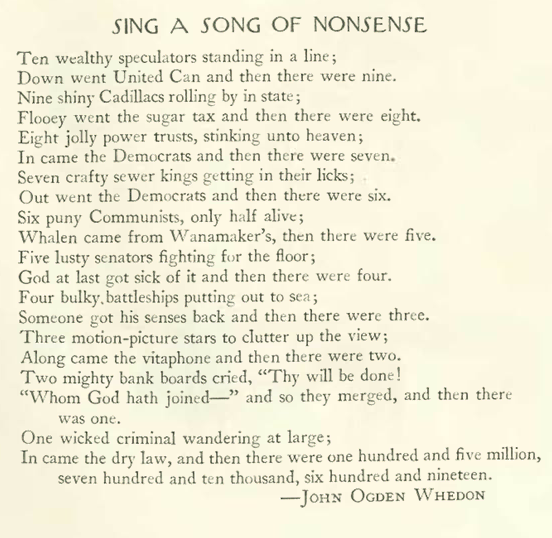
After a decade of living under Prohibition, John Ogden Whedon (1905-1991) put pen to paper and shared his sentiments in a poem for The New Yorker…
…Whedon would go on to a successful career as a screenwriter, especially finding acclaim for his television writing on The Donna Reed Show, Leave It to Beaver, The Andy Griffith Show, and The Dick Van Dyke Show, among others. He was also the grandfather of screenwriter and director Joseph “Joss” Whedon and screenwriters Jed Whedon and Zack Whedon.
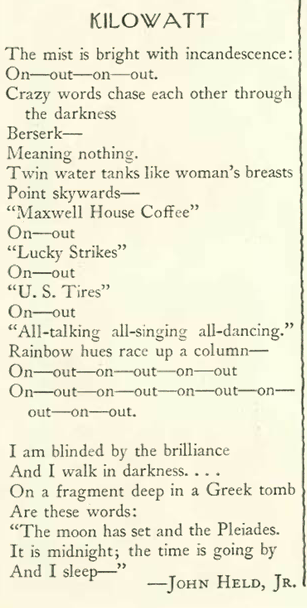
Another poem in the April 19 issue was contributed by John Held Jr., who was perhaps better known to New Yorker readers for his “woodcut” cartoons…
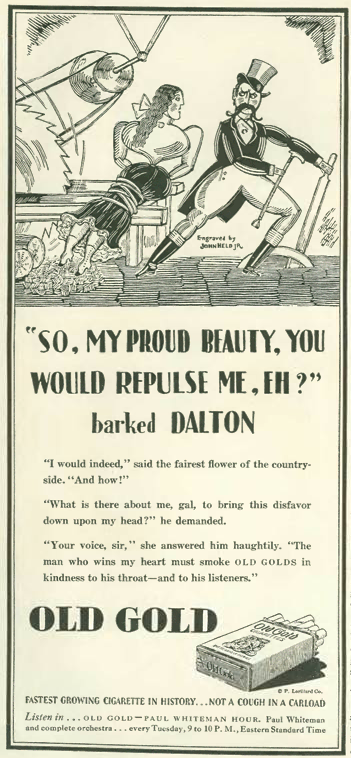
…example of Held’s work from the April 12 issue, featured in an Old Gold advertisement…
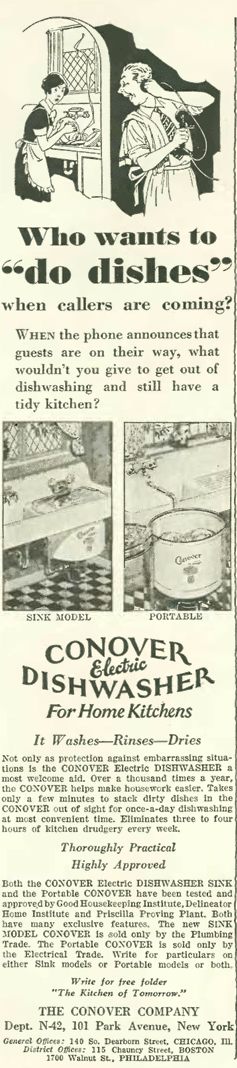
…and that provides a segue into our ads for the April 19 issue, beginning with this spot for an early electric dishwasher…
Here’s what that bad boy looks like in color. (automaticwasher.org)
…I couldn’t find a review in The New Yorker for Emily Hahn’s new book, Seductio Ad Absurdum, but her publisher did take out an ad to get the attention of readers. Many years later The New Yorker would call the journalist and author “a forgotten American literary treasure”…
Emily Hahn circa 1930; first edition of Seductio Ad Absurdum. Author of 52 books, her writings played a significant role in opening up Asia to the West. (shanghaitours.canalblog.com/swansfinebooks.com)
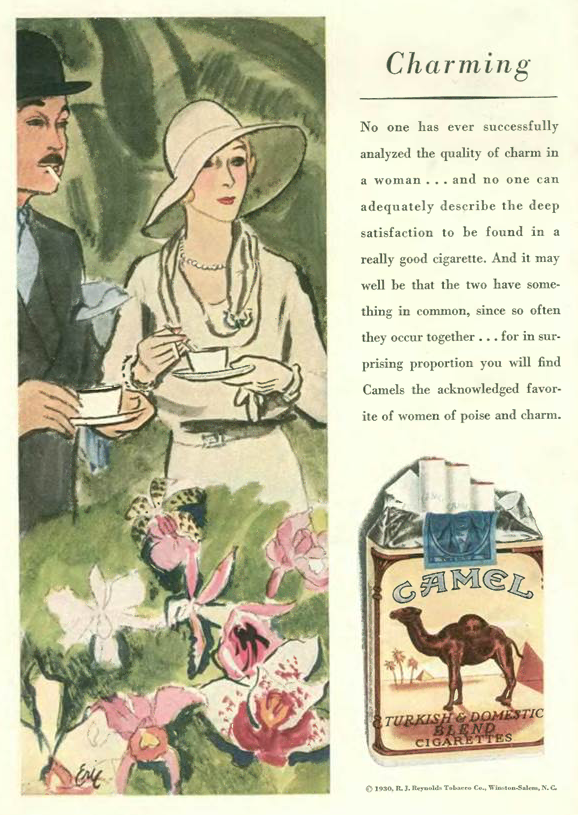
…and here we have another sumptuous ad from illustrator Carl “Eric” Erickson, a far cry from the “Joe Camel” ads that would come along decades later…
…on to our cartoons, Reginald Marsh offered a blue collar perspective on city fashions…
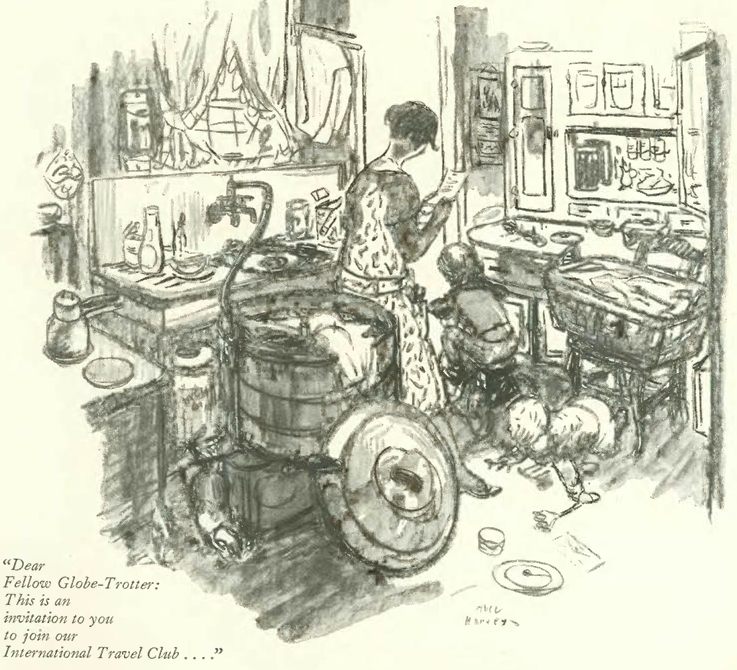
…Alice Harvey captured a moment of reflection by an overworked housewife…
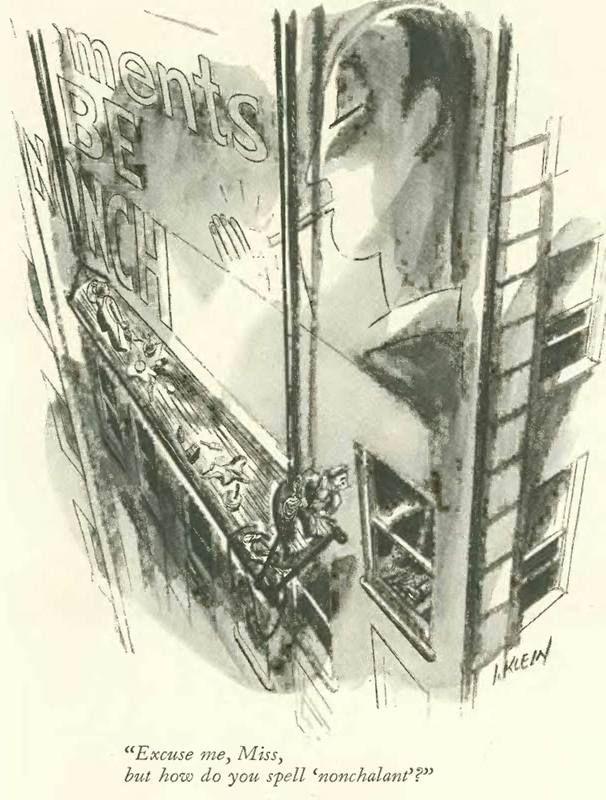
…and Isadore Klein looked in on a couple of working stiffs in need of a dictionary…
…now over to the posh set, with Barbara Shermund…
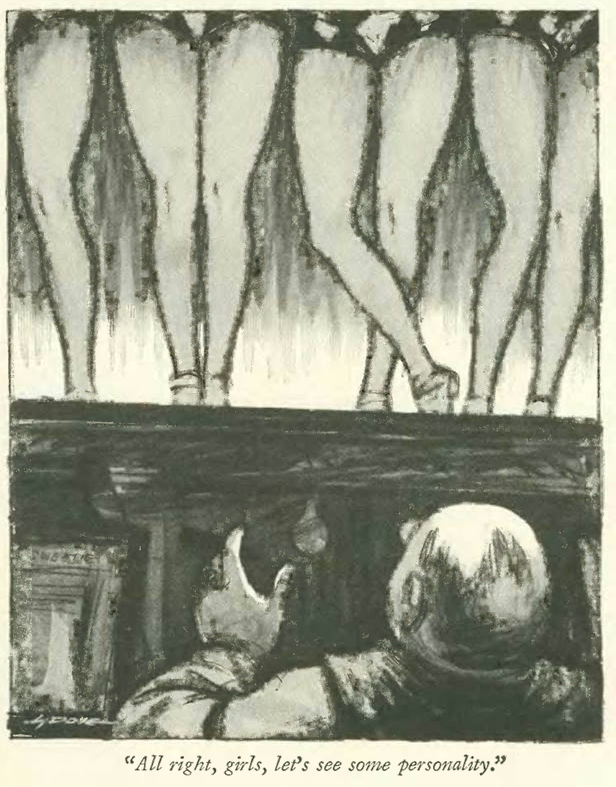
…Leonard Dove found humor on the chorus line…
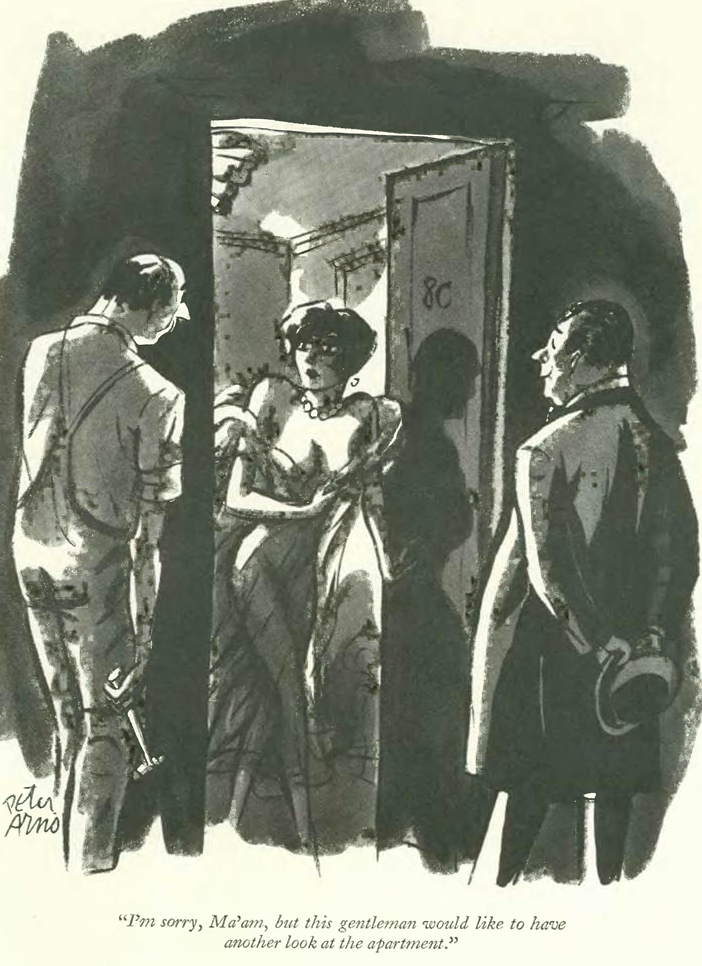
…and we end with this terrific cartoon by Peter Arno, and the perils of apartment life…
It’s easy to get into the weeds while digging through The New Yorker archives, as it is filled with a richly interconnected cast of characters whose lives and work still resonate with us today.
March 15, 1930 cover by Rose Silver. (Please see note on this artist at the end of this blog entry)
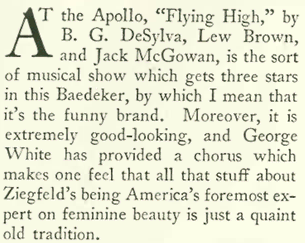
A case in point is Bert Lahr (1895-1967), who at age 15 dropped out of high school and joined the vaudeville circuit, working his way up to top billing in Broadway musical comedies including 1930’s Flying High, which received an enthusiastic welcome from New Yorker critic Charles Brackett…
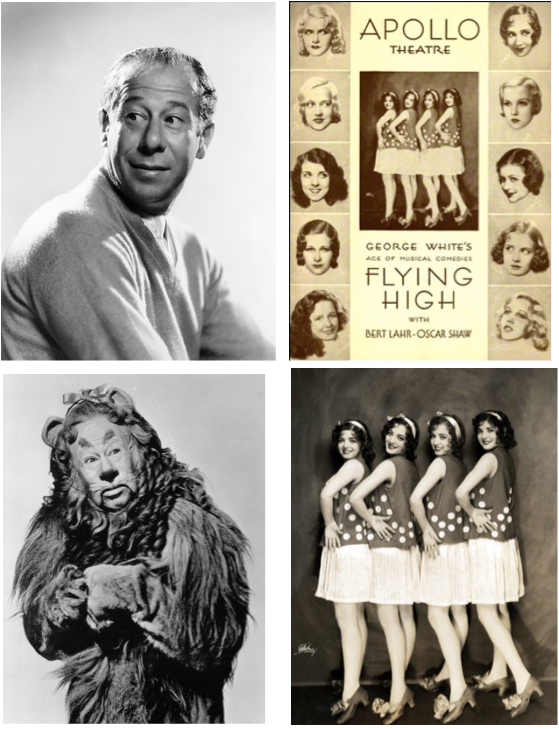
…Brackett enjoyed the “feminine beauty” offered by a George White chorus that included the “Gale Quadruplets,” described in the Playbill as “The only Quadruplets in the world appearing on the stage”…
…although in fact the Gale Quadruplets were actually two sets of twins: June and Jane, and Jean and Joan (real names were Doris, Lenore, Helen and Lorraine Gilmartin). But I digress.
What really caught Brackett’s eye were the antics of Bert Lahr:
ONLY ONE BERT…Clockwise, from top left, publicity photo of Bert Lahr from the 1931 film version of Flying High; cover of the Apollo Theatre Playbill; the Gale Quadruplets, circa 1930; Lahr as the Cowardly Lion in the 1939 film The Wizard of Oz. (Everett/Playbill/Pinterest/Wikiwand)
The Gale Quadruplets are long forgotten, but the work of Bert Lahr still lives on thanks to his role as the Cowardly Lion in The Wizard of Oz (a film, incidentally, that was panned in 1939 by New Yorker critic Russell Maloney, who called it “a stinkeroo” that showed “no trace of imagination, good taste, or ingenuity”).
Lahr also connects us to today’s New Yorker magazine, where his son, John Lahr, has been a staff writer and critic since 1992. Lahr has written a number of stage adaptions (he won a Tony award in 2002, the first drama critic to do so) as well as nearly twenty books, including a 2017 biography of his father, Notes on a Cowardly Lion: The Biography of Bert Lahr.
DRAMATIC DUO…John Lahr with his father, Bert, backstage at the Belasco Theatre in the late 1940s; John Lahr today. (NY Times/Amazon)
* * *
Greener Pastures
We remain on Broadway with another writer who was deeply connected to The New Yorker’s origins. Marc Connelly (1890-1980) was a playwright, director, producer and performer who collaborated with George S. Kaufman on five Broadway comedies in the 1920s. Connelly was also a founding member of the Algonquin Round Table, around which orbited a number of writers, critics and assorted wits who would help bring The New Yorker to life in 1925. Connelly was listed as an advisory editor on the masthead of the very first issue:
Connelly’s play, The Green Pastures (based on stories from the Old Testament), had just opened on Broadway, drawing much acclaim for both Connelly and actor Richard B. Harrison (1864-1935). “The Talk of the Town” looked in on the playwright and the actor:
DID YOU HEAR SOMETHING?...Richard B. Harrison (left) and unidentified actor in 1930’s The Green Pastures. At right, Wesley Hill as the Angel Gabriel. (blackarchives.org/ngv.vic.gov.au)FINAL BOW…Richard B. Harrison in a 1930 publicity photo for the Broadway play, The Green Pastures. At right, Harrison on the cover of the March 4, 1935, Time magazine. He died of heart failure ten days after appearing on the cover. (Henrietta Alice Metcalf Collection/Time)
Connelly would receive the 1930 Pulitzer Prize for Drama for The Green Pastures. And nearly 60 years later he would be featured in a 1987 documentary about the Algonquin Round Table (The Ten-Year Lunch) as the Table’s last survivor. It would win an Academy Award for Best Documentary Feature. During his long career Connelly would act in 21 movies, including the 1960 romantic comedy Tall Story with Jane Fonda and Anthony Perkins. He also did some TV, included a stint from 1962 to 1964 as Judge Rampell in The Defenders.
HE COULD ACT TOO…Clockwise, from top left, Marc Connelly in a 1937 photo by Carl Van Vechten; a page from the Playbill for The Green Pastures; college student June Ryder (Jane Fonda) collides on campus with Professor Charles Osmond (Marc Connelly) in the 1960 romantic comedy Tall Story. (Wikipedia/Playbill/ridesabike.com)
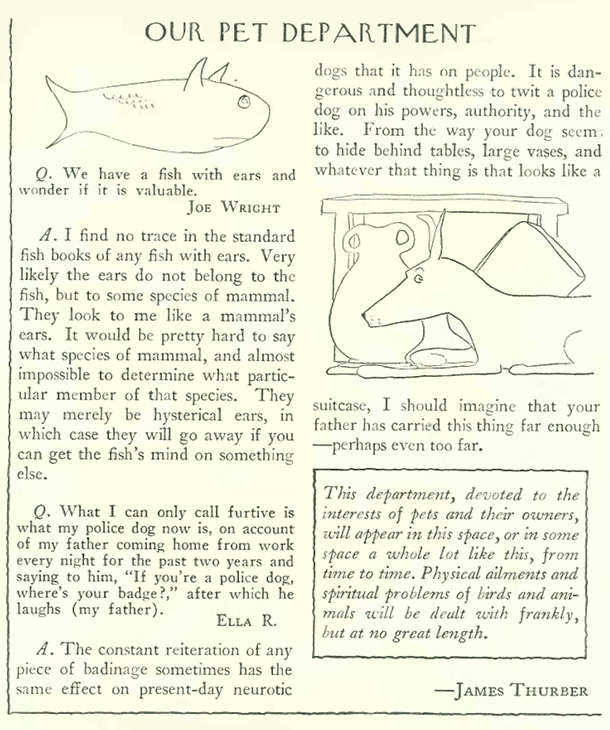
Also in the “Talk of the Town” section of the March 15 issue was James Thurber’s latest installment of pet advice:
* * *
Lipstick’s Lamentations
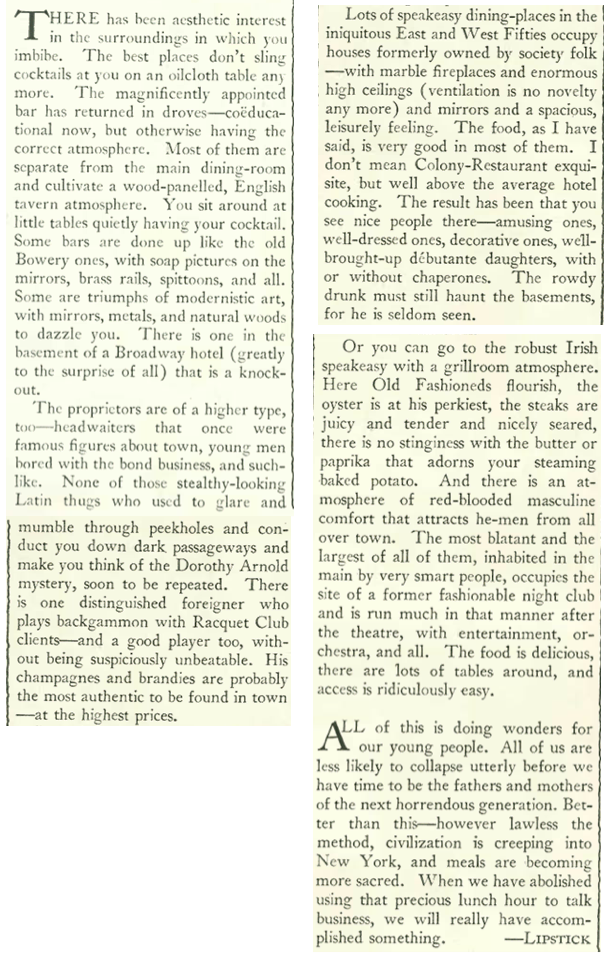
Once the place to read about wild speakeasies and other nighttime diversions of the Roaring Twenties, Lois Long’s “Tables for Two” column had quickly become anachronistic in the Depression years. Although the decade was still young, Long reminisced about her column’s “golden days” as if they had existed in some distant time, and lamented the state of the speakeasy; once a place for cheap and sordid frivolity, it had become staid and even snobbish…
THAT WAS THEN…Lois Long lamented the state of the speakeasy in 1930. Once sordid and given to frivolity, it had become a rather staid institution. (prohibition.themobmuseum.org/Time-Life)
…and Long described some of these new upscale speakeasies, where the oilcloth had been replaced with fine linen…
* * *
Ozark Oeuvre
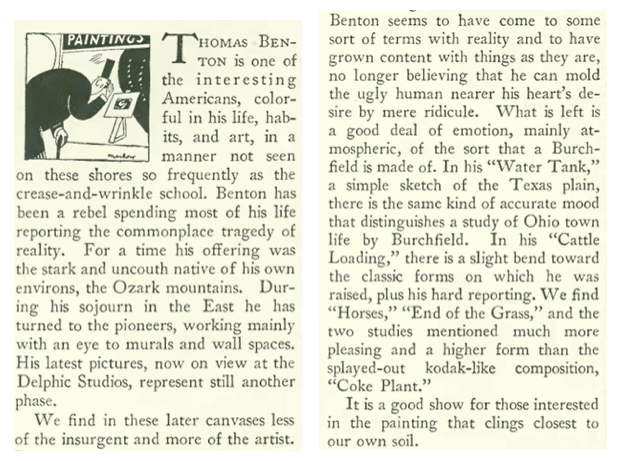
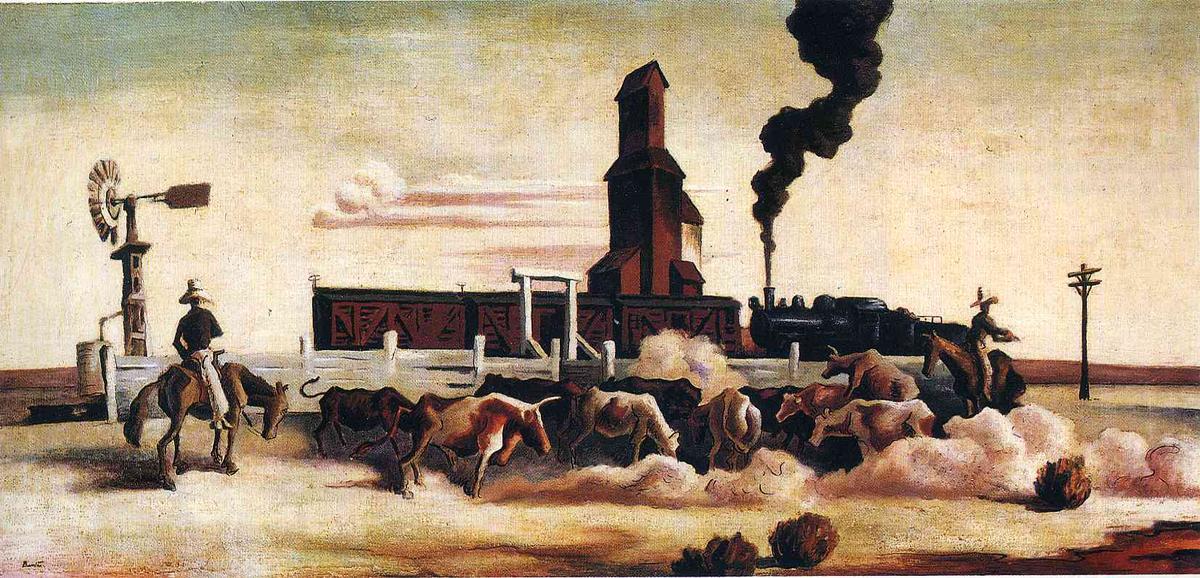
New Yorker art critic Murdock Pemberton, in his ongoing search for America’s best artists, took another look at that once “uncouth native” from the Ozarks, Thomas Hart Benton…
PAINTING FROM THE SOIL…Cattle Loading, oil on canvas, by Thomas Hart Benton, 1930. It was one of the works viewed by critic Murdock Pemberton at the Delphic Studios in New York. (wahooart.com)
* * *
From Our Advertisers
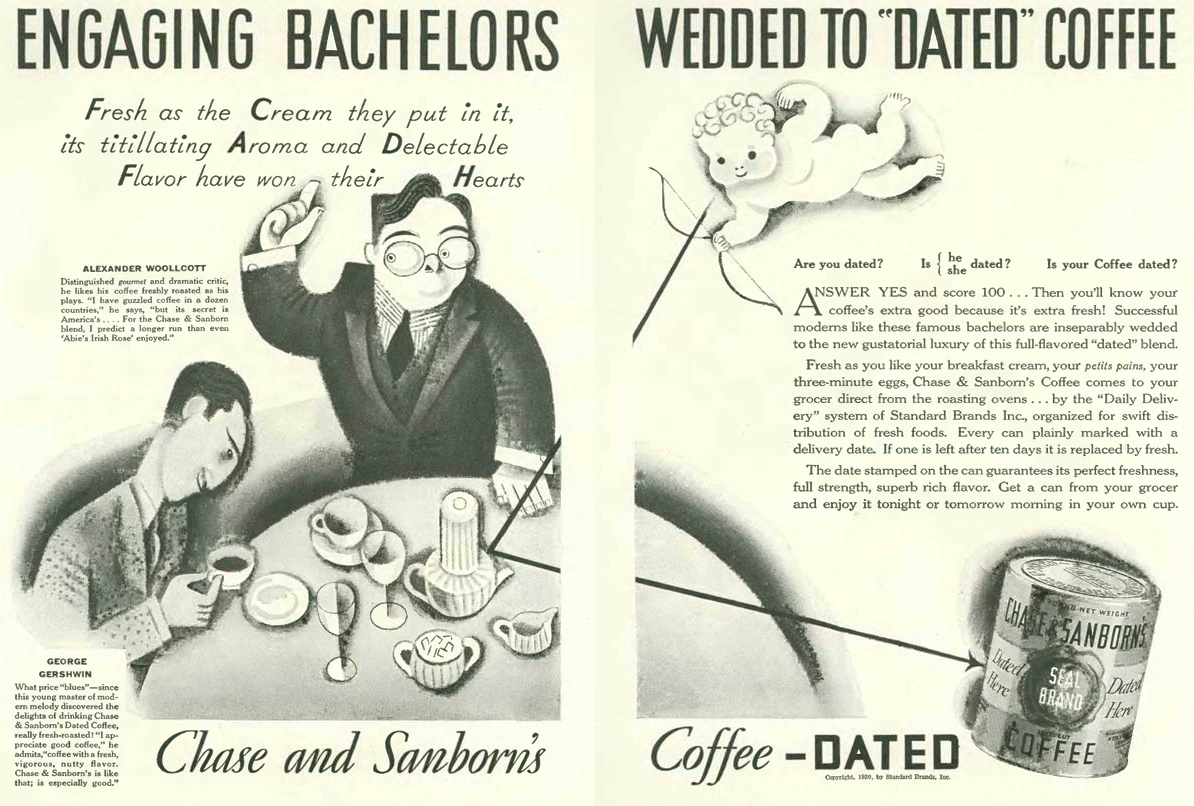
We start off with a couple of two-page ads, the first featuring caricatures of George Gershwin and Alexander Woollcott as rendered by the great Miguel Covarrubias…
click image to enlarge
…and then we have this ad from the makers of Lux Toilet Soap, who must have had a bottomless advertising budget given all the splashy ads and celebrity endorsements…
…in the ads we also find clashes between the old and new…the new being this art deco-styled appeal for the newest form of transportation…
…and the old, the makers of the luxury car Pierce-Arrow, still harking back to its patrician origins (“The Tyranny of Tradition”)…the firm would not survive the lean years of the 1930s…
…and once again a colorful ad from Church using snob appeal to sell something as pedestrian as a toilet seat…”Toilet Seats For Better Bathrooms”…
…on to our cartoons, we have a voyeur’s perspective courtesy Helen Hokinson…
…an exploration of the generation gap by Alice Harvey…
…and this terrifically quaint encounter, rendered by Perry Barlow…
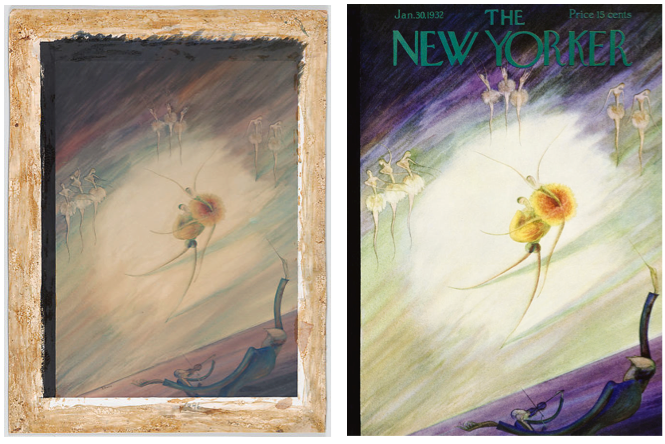
…and before we go, a note about this week’s cover artist, Lisa Rhana, a.k.a. Rose Silver (1902-1985) who illustrated several New Yorker covers in the 1920s and early 30s. Her work is included in the permanent collections at the Whitney Museum, the Museum of the City of New York, and The Metropolitan Museum of Art, which holds this watercolor (left) that graced the cover of the Jan. 30, 1932 issue:
The October 1929 stock market crash took most people by surprise, but one man, Roger Babson, knew all along it was coming…thanks to Sir Isaac Newton…
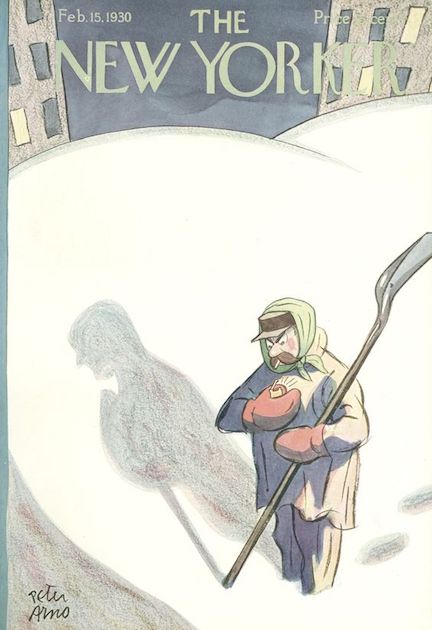
Feb. 15, 1930 cover by Peter Arno.
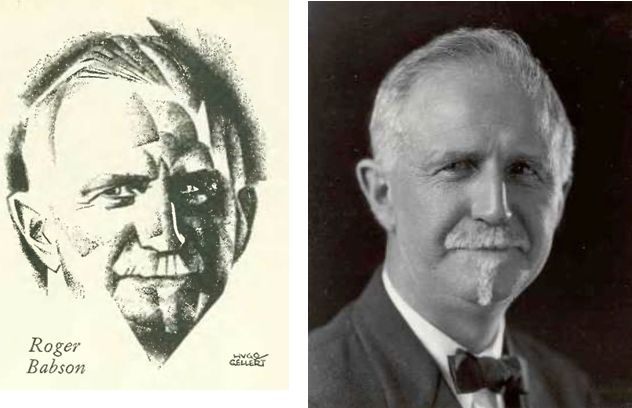
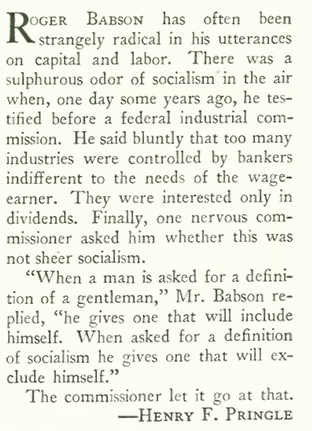
Babson (1875-1967) is perhaps best known today as the man who predicted the market crash and the Great Depression that followed. He employed an economic assessment tool called the “Babsonchart” that was based on Newton’s Third Law: For every action, there is an equal and opposite reaction. In the Feb. 15, 1929 “Profile” (titled “Prophet of Doom”) Henry Pringle tried to make sense of this eccentric businessman, who would go on to wage war against gravity itself:
TOLD YOU SO…Illustration by Hugo Gellert for the profile on Roger Babson, who famously predicted the stock market crash; at right, Babson circa 1930. (Gravity Research Foundation)BIG THINKER…Roger Babson dedicates the world’s largest spinning globe at Babson College in 1955; at right, the globe as it appears today. Founded by Babson in 1919, Babson College is often ranked as the most prestigious entrepreneurship college in the U.S. (babson.edu/Wikipedia)
Pringle concluded his profile on a confused note, wondering if his subject — a product of sober New England stock — could possibly be a socialist in disguise…
In any case, it is difficult to assign Babson to any one category. Some considered him a genius and visionary, while others thought him a crackpot, particularly in the late 1940s when, following the death of a grandson by drowning, he began to wage war against gravity itself. In 1948 essay “Gravity – Our Enemy Number One,” he wrote: “Broken hips and other broken bones as well as numerous circulatory, intestinal and other internal troubles are directly due to the people’s inability to counteract Gravity at a critical moment.”
That same year Babson founded the Gravity Research Foundation to expedite the discovery of a “gravity shield.” The foundation is still in operation, but rather than seeking to block gravity it works to better understand it. It continues to hold an annual essay prize contest — remarkably, five of its winners have gone on to win the Nobel Prize in physics. The essay contest’s 1971 winner was none other than physicist Stephen Hawking.
ROCK STAR…Clockwise, from top left: Roger Babson at home with a portrait of Sir Isaac Newton; Babson was the Prohibition Party’s candidate for President of the United States in 1940; Babson provided charitable assistance to unemployed stonecutters in Gloucester, Mass., during the Great Depression, commissioning them to carve inspirational inscriptions on more than 20 boulders near the abandoned settlement of Dogtown. (centennial.babson.edu/Wikipedia)
* * *
An Imperfect Romance
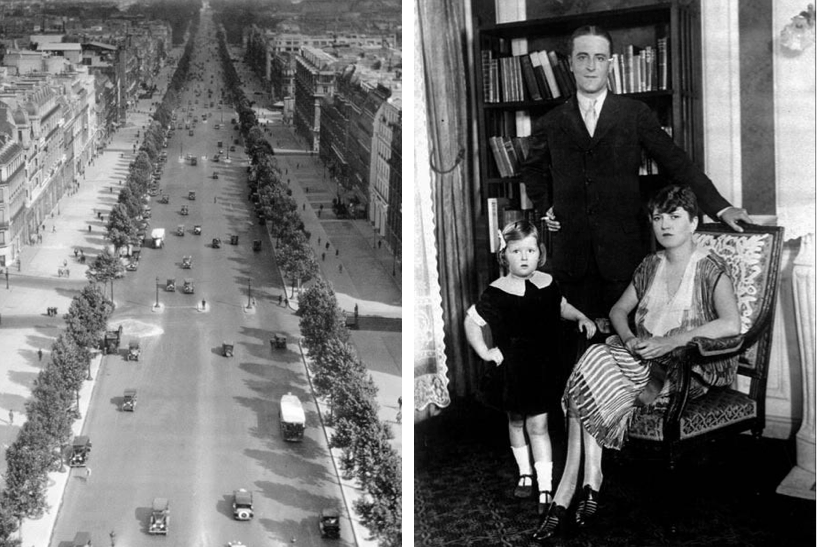
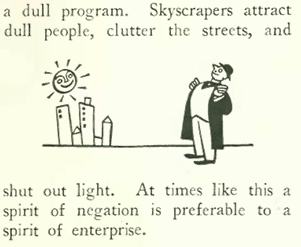
Born in the midst of the Jazz Age, it would seem that The New Yorker would have been a perfect fit for the most prominent chronicler of that era, F. Scott Fitzgerald. But it was mostly not to be: Fitzgerald would publish just two poems and three humorous shorts in The New Yorker between 1929 and 1937, including “Salesmanship in the Champs-Élysées” in Feb. 15 issue.
In all fairness, The New Yorker wasn’t exactly enamored of the young author. In its book review section for the May 23, 1925 issue, the magazine singled out three books for review, the first (and longest) review was devoted to James Boyd’s historical novel Drums. This was followed by a brief review of Fitzgerald’s The Great Gatsby, the reviewer writing that the book revived his interest in the author but “not in a Byronic promise he probably never had,” and referred to the character of Jay Gatsby as “a good deal of a nut.”
The following year Fitzgerald was the subject of a New Yorker profile titled “That Sad Young Man.” In the magazine’s March 12, 2017 issue, Erin Overbey and Joshua Rothman note that the profile (by John Mosher) would be called “snarky” in today’s lingo. They also point out that “Fitzgerald, for his part, appeared to take a rather snobbish view of Harold Ross’s new publication, referring to the short stories he published in it as “hors d’oeuvres.”
With that, here is one of F. Scott Fitzgerald’s “hors d’oeuvres” … “Salesmanship in the Champs-Élysées.”
SOUR GRAPES…The Champs-Elysées in 1929; F. Scott Fitzgerald with his daughter, Scottie, and wife Zelda in Paris in 1925. Despite being products of the Jazz Age, the author and The New Yorker were mostly at odds. In a letter to his daughter, Scottie, Fitzgerald advised that she expand her knowledge of literature “instead of skimming Life + The New Yorker.” (fr.wikibooks.org/Associated Press)
* * *
The Empire-less State
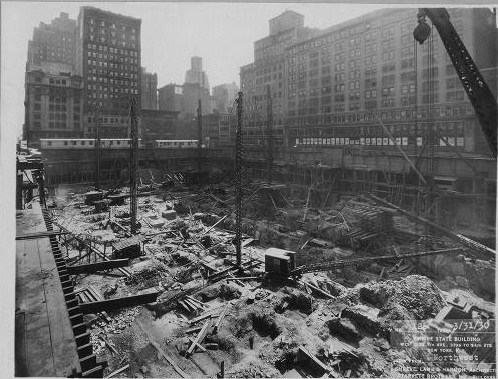
In his “Notes and Comment,” E.B. White pondered the possibilities of a large lot at the corner of Fifth Avenue and 34th Street previously occupied by the Waldorf-Astoria hotel. Although construction of the Empire State Building would soon commence at the site, White mused about other possibilities…
LIGHT THERE BE LIGHT…E.B. White found the newly excavated space at Fifth Avenue and 34th Street (former site of the Waldorf-Astoria) to be a refreshing change. It would be short-lived, as the first beams of the Empire State Building would begin to rise from the site in March 1930. (NYPL Digital Gallery)
* * *
Westminster People Show
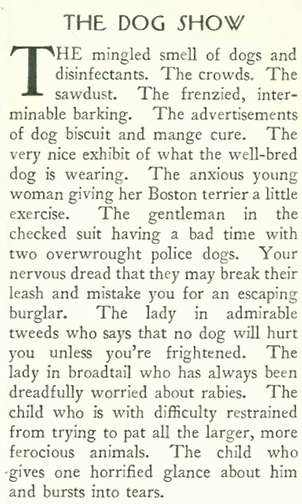
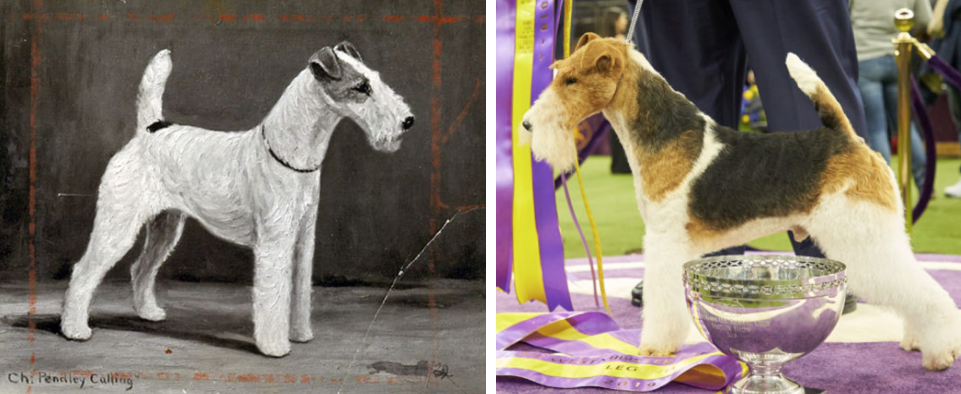
Although it’s now customary to retire Westminster Kennel Club Dog Show winners, back in 1930 a wire terrier called Pendley Calling of Blarney won Best of Show in 1930 and won the title again the following year. Alice Frankforter was on hand for the event, but found the people at the show every bit as diverting as the animals. Some excerpts…
DOGGONE FUN…The 1932 Westminster Kennel Club Dog Show at Madison Square Garden. (westminsterkennelclub.org)
REIGN OF TERRIER…Wire Fox Terrier Pendley Calling of Blarney, left, won back-to-back Westminster Kennel Club Best of Show titles in 1930-31. At right, King’s Best of Show win in February 2019 made him the 15th Wire Fox Terrier in Westminster history to earn the top prize. Terriers are by far the winningest breed at Westminster. (aka.org)
* * *
Why Can’t We Be Friends?
Robert Benchley struck a pre-emptive pose in his review of a new Broadway play titled Rebound — written by his good friend (and fellow Algonquin Round Table alumnus) Donald Ogden Stewart (1894-1980) — and responded to “a chorus of yawps” that accused him of log-rolling…
A FRIEND INDEED…Robert Benchley (right) said his friendship with playwright and screenwriter Donald Ogden Stewart (left) had no influence over his review of Stewart’s latest play, Rebound. It seems Benchley was in safe territory here, since Stewart’s output was generally high in quality. Indeed, in 1940 Stewart would win an Academy Award for Best Adapted Screenplay for the The Philadelphia Story. (IMDB/theattic.space)
* * *
Georgia On His Mind
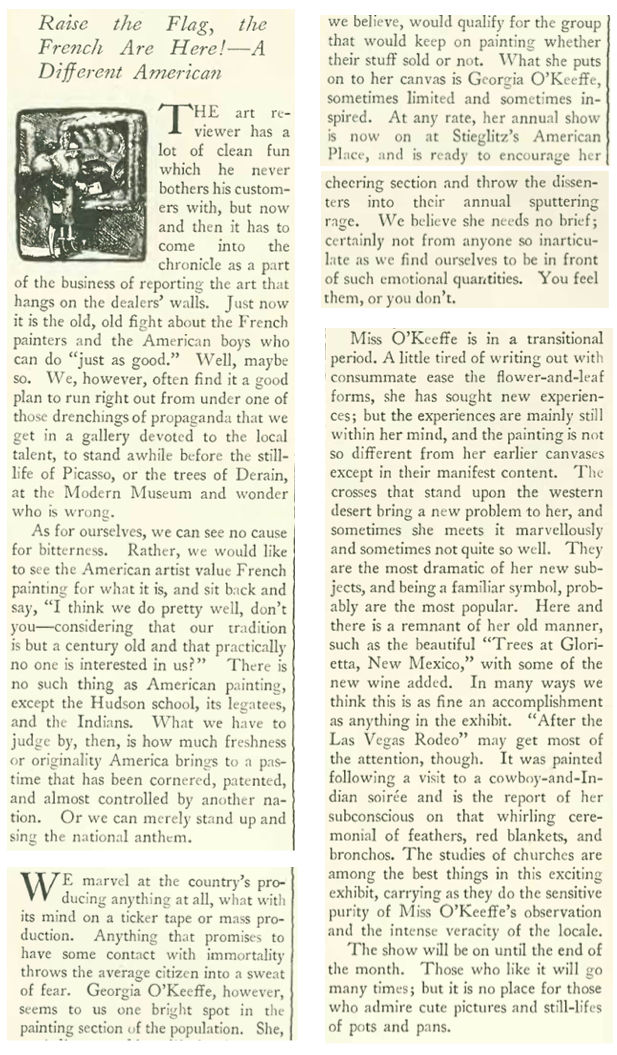
The opening of the Museum of Modern Art in late 1929 had a profound effect on The New Yorker’s art critic MurdockPemberton. In the beginning he dismissed the museum as just another place for the old money crowd to throw parties, but with the opening of its third exhibition, “Painting in Paris” — which featured an extensive display of the works of French modernists — Pemberton began to come around to the idea that this new MoMA was a place to see groundbreaking works of art. In his Feb. 15 column Pemberton looked beyond France for signs of talented modernists in the States, and found only one who stood out — GeorgiaO’Keeffe.
MOD COUPLE…Clockwise, from left, Alfred Stieglitz attached this photograph to a letter for Georgia O’Keeffe, dated July 10, 1929; Georgia O’Keeffe Exhibition of Paintings (1919-1934), at Stieglitz’s An American Place gallery, 1935; O’Keeffe’s Trees at Glorieta, New Mexico, 1929. (Beinecke Library, Yale/Georgia O’Keeffe Foundation)
* * *
From Our Advertisers
Just as hemlines were dropping after the stock market crash, so were the brims of women’s hats — the flapper caps of the 1920s now sprouted droopy ears…
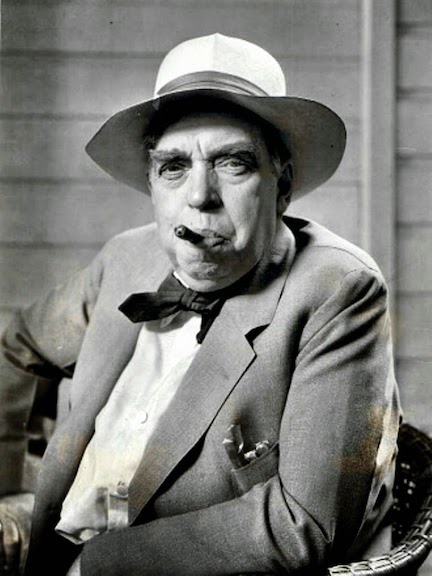
…this ad for Chase and Sanborn coffee featured a weirdly distended image of the writer and humorist Irvin Cobb…
…Cobb as he actually appeared, circa 1930…
(talesofmytery.blogspot.com)
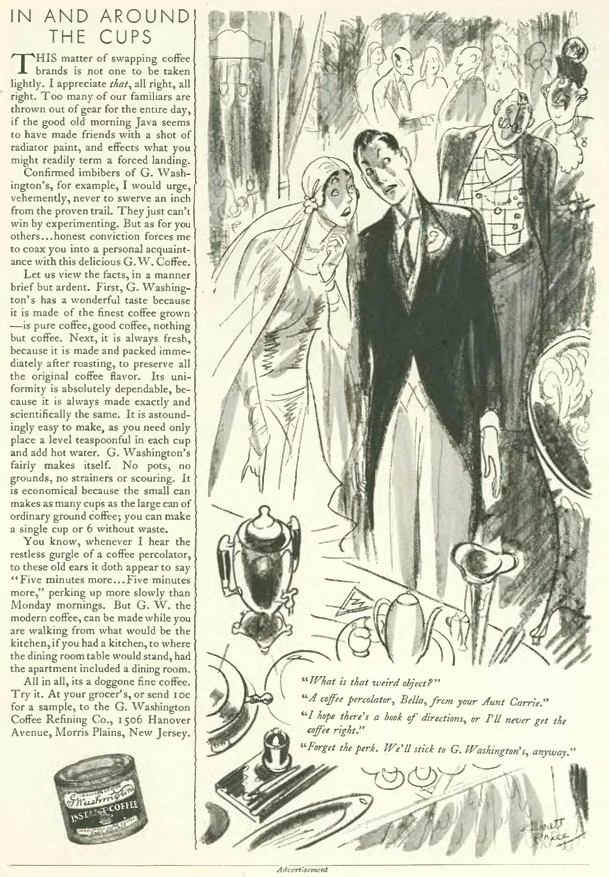
…G. Washington coffee, on the other hand, continued to draw from The New Yorker’s stable of cartoonists, including Garrett Price, for its illustrated ads…
…I was surprised to see this ad for two reasons: I wasn’t aware floss was in common use 90 years ago, or that it once came in the handle of a toothbrush…
…and then we have this sad little back page ad (just above a tiny ad for piano lessons) promoting Peggy Joyce’s ghostwritten “tell all” — Men, Marriage and Me. A former Ziegfeld girl and occasional actress who cultivated fame for fame’s sake, Joyce (1893-1957) was mostly known for her six marriages and extravagant lifestyle. By feeding the media a steady stream of scandals and other adventures (she often received reporters in her bedroom, dressed in a see-through negligee) she remained in the celebrity spotlight throughout the 1920s…
Peggy Joyce in 1923; cover of the first edition of her “tell all” — Men, Marriage and Me. Celebrated in the 1920’s as a swinging golddigger, her fame quickly evaporated into the mists of the Great Depression. (Wikipedia/Abe Books)
…speaking of celebrity, advertisers were so eager for endorsements of the famous that even “Mrs. Ring Lardner” (Ellis Abbott) got a piece of the action…
…as travel by airplane became more fashionable, automobile manufacturers increasingly paired their products with flying machines…
…for those who wished to stay on the ground, the Pickwick-Greyhound bus system featured “Nite Coaches” with 14 sleeping compartments (for 28 passengers), hot and cold water in each compartment, and hot meals served by stewards…
…on to our comics, IsadoreKlein illustrated the excitement of heavyweight boxing…
…PerryBarlow paid a visit to a writer and his dimwitted visitor…
…HelenHokinson looked in on a prep school dance…
…BarbaraShermund demonstrated the finer points of beauty…
…and we end with PeterArno, and one woman’s plan for a costume party…
With the 1920s ending with a crash, few seemed interested in looking back to that decade. Indeed, just days into the 1930s the Jazz Age seemed to belong to a distant, frivolous past.
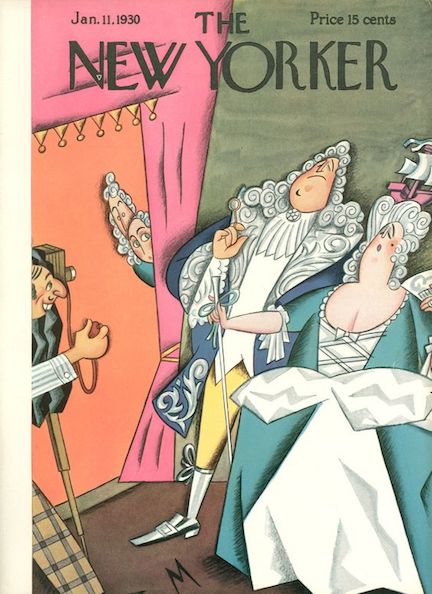
Jan. 11, 1930 cover by Julian De Miskey.
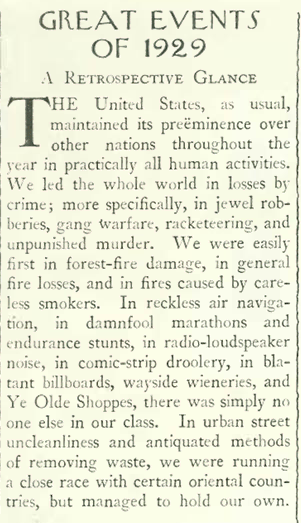
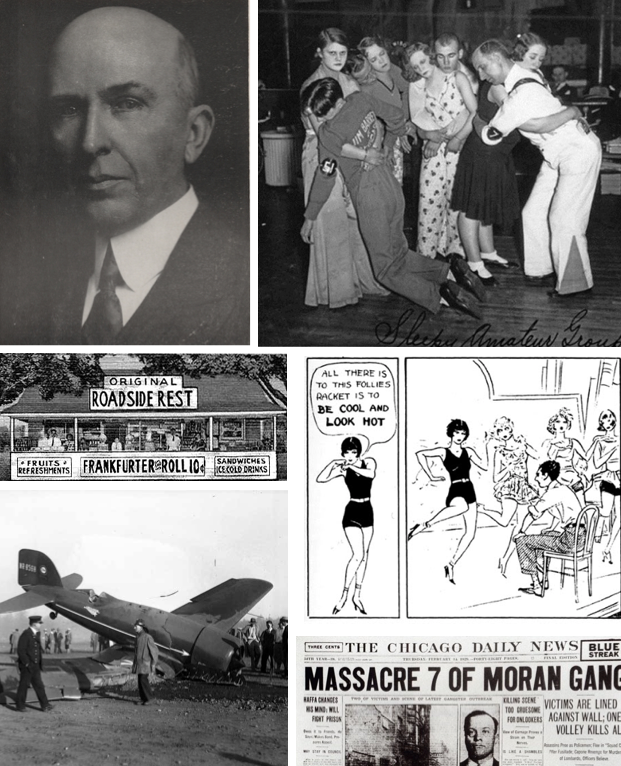
Or at least that is how popular historian Alvin F. Harlow (1875-1963) saw it, penning this somewhat cynical, tongue-in-cheek retrospective on the “great events” of the previous year…
FLASHBACK…Historian Alvin F. Harlow (top left) recalled some of the “great events” of 1929, including (clockwise, from top right) “damnfool” dance marathons; “comic strip droolery” (clip is from Dixie Dugan, 1929); gang warfare; reckless air navigation and wayside wieneries. (jstor.org/News dog Media/nitrateville.com/Chicago/U of Washington/Nathan’s)
…Harlow continued to list the various ways folks sought relief “from the monotony of existence” in 1929…
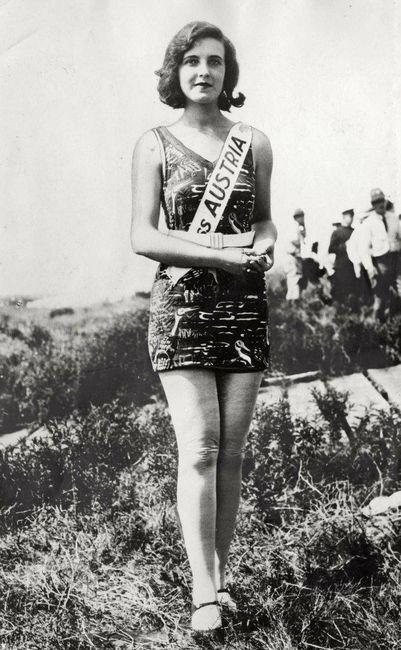
TOO THIN?…Miss Austria, Lisl Goldarbeiter, was crowned the first Miss Universe at the “International Pageant of Pulchritude” in Galveston, Texas in 1929. The pageant actually was one of year’s big events, garnering worldwide attention. (bashny.net)
…as well as the persistence of superstition and quackery…
* * *
A Byrd Takes Wing
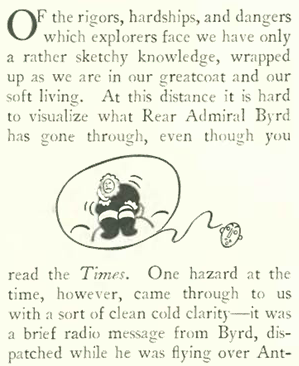
In 1928 and 1929 the name Richard Byrd popped up quite a bit in the pages of The New Yorker, and for good reason. In 1928 Byrd — already known for his exploits at the North Pole — began his first expedition to the Antarctic, a land that was as remote to explorers in the 1920s as the moon was to us in the 1960s. On Nov. 28-29, 1929, Byrd — along with pilot Bernt Balchen, co-pilot/radioman Harold June, and photographer Ashley McKinley — flew a Ford Trimotor to the South Pole and back in 18 hours, 41 minutes. It was such a feat that Byrd was promoted to the rank of rear admiral by a special act of Congress on December 21, 1929, making the 41-year-old Byrd the youngest admiral in the history of the United States Navy. In his “Notes and Comment,” E.B. White was still awaiting details of the heroic adventure:
ROUGHING IT…Once the expedition arrived by ship on the Antarctic coast, planes were assembled at the “Little America” base camp on the Ross Ice Shelf. This image shows Richard Byrd and his dog Igloo unpacking crates. The ships that brought the plane and other supplies can be seen in the background. (library.osu.edu)LIKE A MOONSHOT…Clockwise, from top left, a Ford Trimotor (named Floyd Bennett after the recently deceased pilot of a previous expedition) was one of three planes brought on the expedition. It sits assembled and ready to go before its historic flight over the Pole; flying over the pass near Liv’s Glacier enroute to the Pole; Richard Byrd in the library of Little America prior to the flight, with a stone from Floyd Bennett’s grave. Byrd dropped the stone, wrapped in a small American flag, over the South Pole in honor of the pilot of his 1926 North Pole expedition; the geological party (Byrd is second from right) upon returning to Little America, January, 1930; Little America in 1928, soon to be covered in snow. (library.osu.edu)
In his “Wayward Press” column, Robert Benchley commented on Byrd’s promotion, and took a shot at The New York Times (the Gray Lady was a favorite New Yorker target) for monopolizing the news of the South Pole expedition:
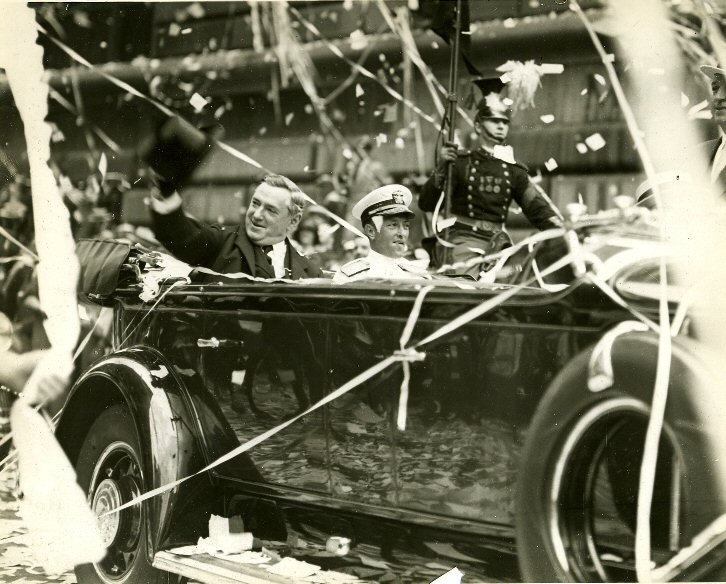
SNOWFALL OF A DIFFERENT SORT…Adm. Richard Byrd received a hero’s welcome in 1930 when he returned to the U.S. from Antarctica. Here he is shown being feted at a ticker tape parade in Boston. (library.osu.edu)
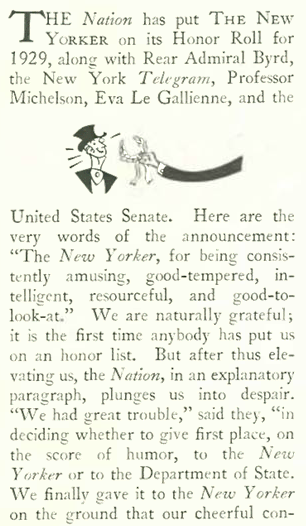
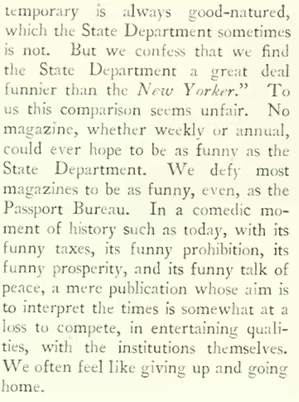
E.B. White also touted an endorsement by the venerable magazine The Nation, which included both Adm. Byrd and The New Yorker in its Honor Roll for 1929:
* * *
Bitter and Sweet
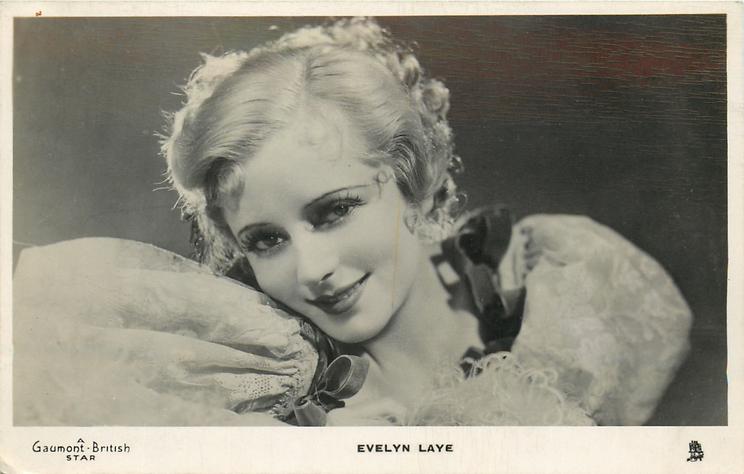
“The Talk of the Town” looked in on English light opera actress Evelyn Laye (1900-1996), who had just arrived in town to make her Broadway debut in the American première of Noël Coward’sBitter Sweet. “Talk” discovered that Laye “had her own notions” about how a stage actress should conduct herself:
MOSTLY SWEET…Postcard image of Evelyn Laye, circa 1933. (tuckdb.org)
Although Laye refused star billing in Bitter Sweet, she had no problem appearing in this two-page ad for Lux soap in The New Yorker’s Jan. 18. issue, hers the only full-page portrait in the ad:
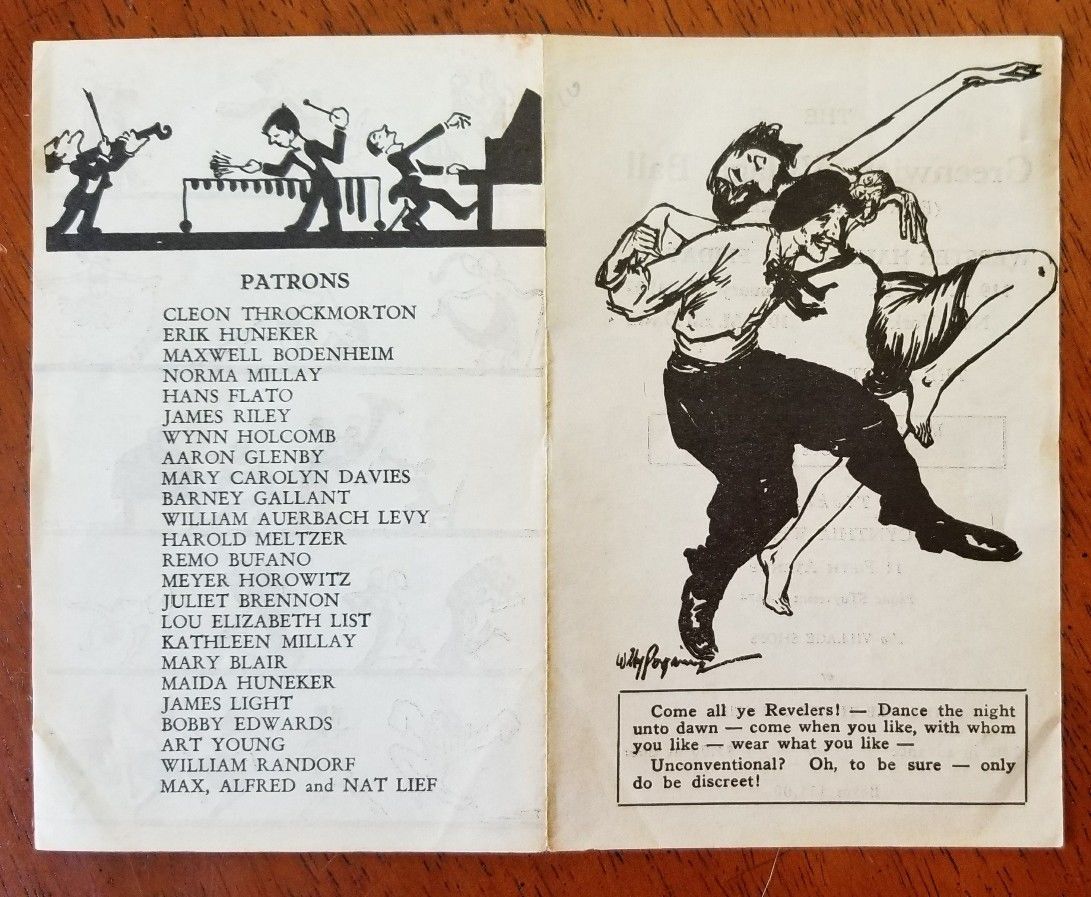
…and so we segue into the ads for Jan. 11, where we find all sorts of diversions in the back pages, including an appeal to revelers for the Greenwich Village Ball (top left corner). The ad copy reads “come when you like, with whom you like—wear what you like…” and asks the question “Unconventional? Oh, to be sure—only do be discreet!”
…for reference, here is an invitation from the 1932 Greenwich Village Ball, with a list of patrons printed on the inside cover, including the “King of Greenwich Village Bohemians,” Maxwell Bodenheim, and poet Edna St. Vincent Millay’s two sisters Norma and Kathleen…
(hobohemiadotblog.wordpress.com)
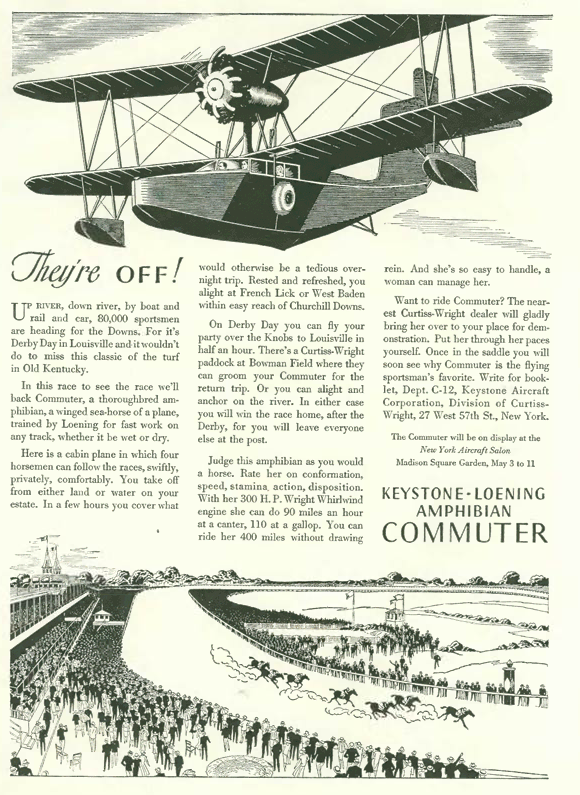
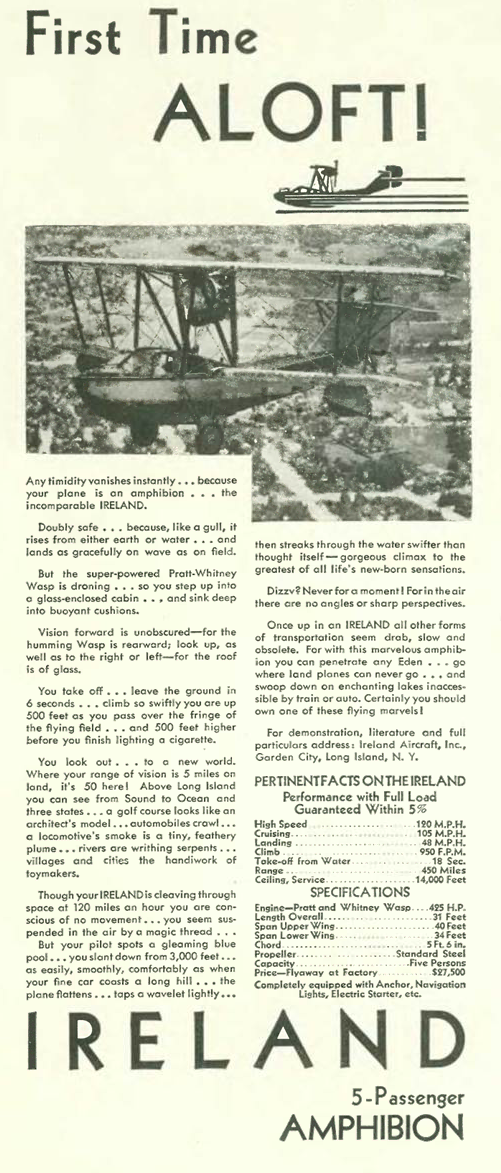
…ads for private airplanes were a regular feature in The New Yorker, aviation companies assuming that at least some readers had the means to consider such a purchase…the copy in this ad emphasized the ease of flying—here is a sample from the fifth paragraph: “You take off…leave the ground in 6 seconds…climb so swiftly you are 500 feet as you pass over the fringe of the flying field…and 500 feet higher before you finish lighting a cigarette…”
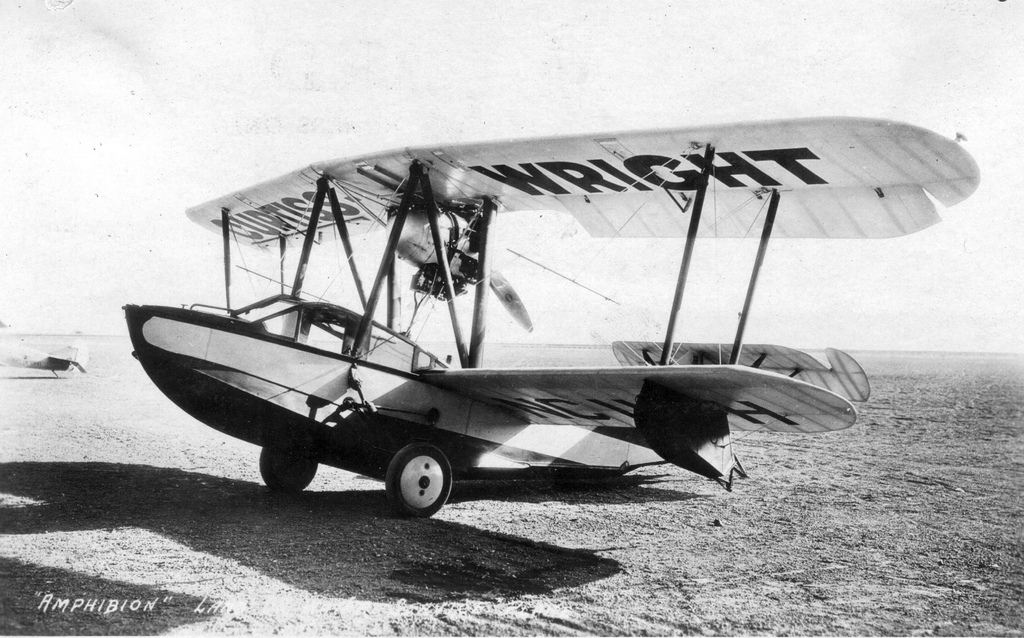
…here’s a better view of the Ireland Amphibion…
(San Diego Air and Space Museum Archive)
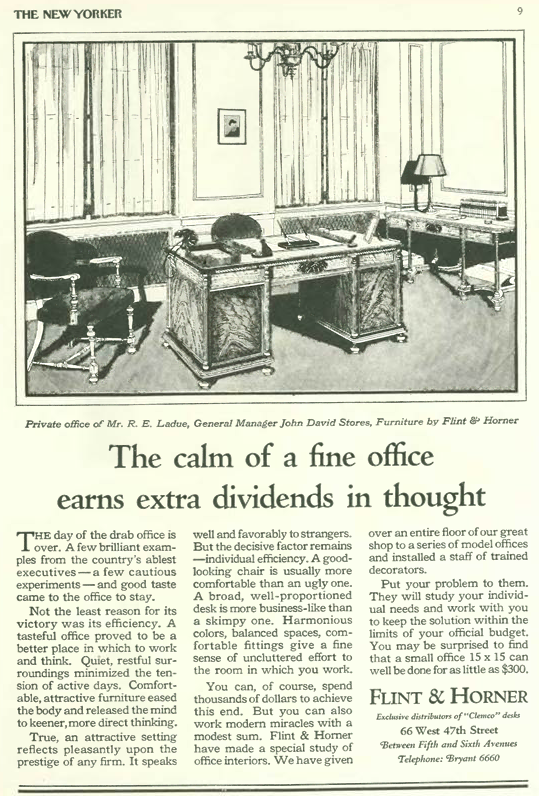
…but for those who remained firmly on the ground, respite could be found in a nice, quiet (and affordable) office, a place where one could, perhaps, start rebuilding from the ashes of the market crash…
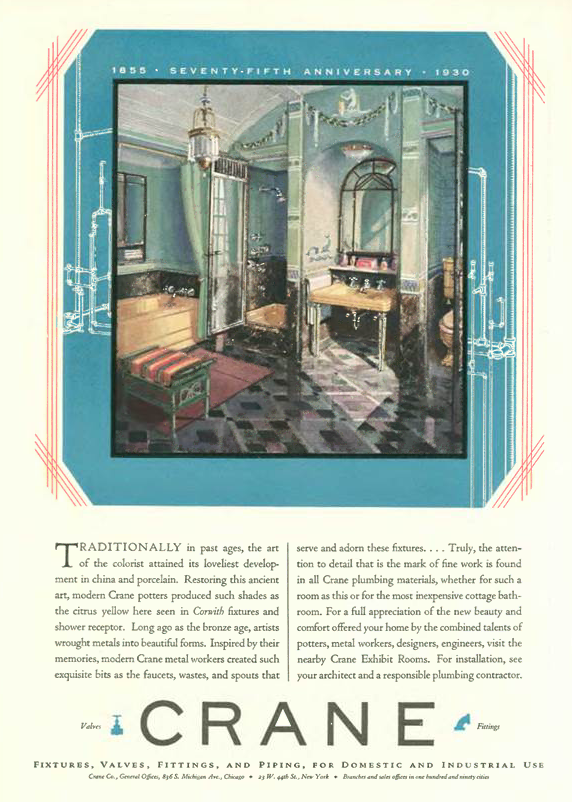
…and for those with a little extra scratch, they could treat themselves to the patrician comforts of a nice bathroom…
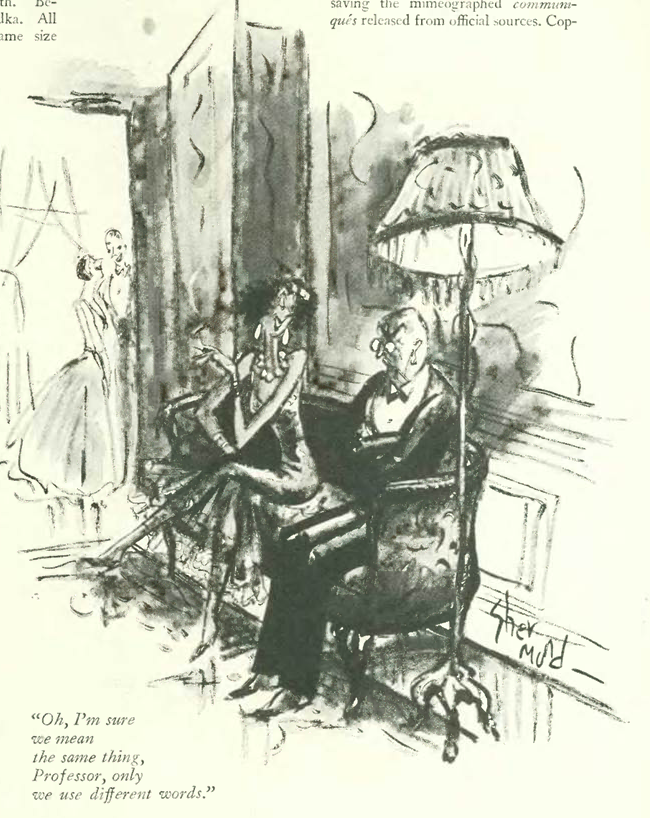
…on to our cartoons, we have a nice little culture clash courtesy of Barbara Shermund…
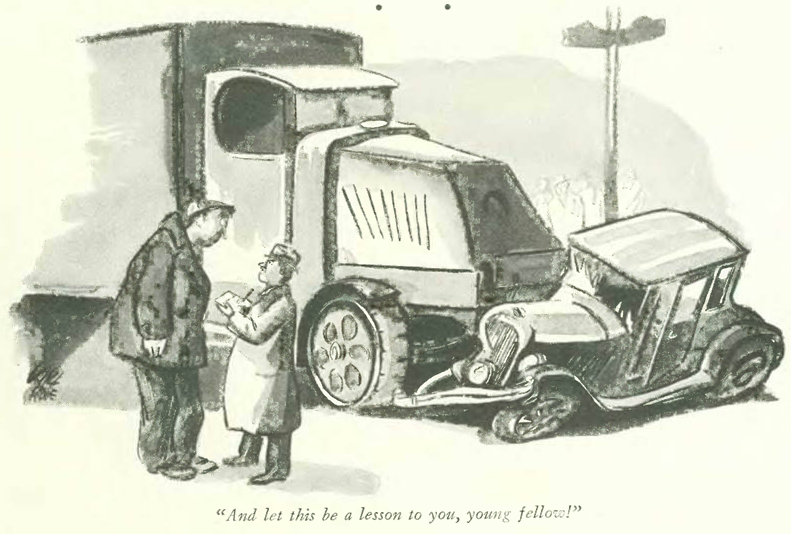
…Carl Rose illustrated a clash of a different sort…
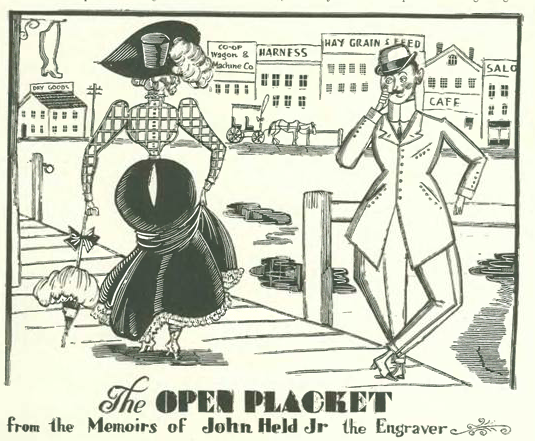
…John Held Jr. was back with one of his slightly naughty “engravings”—these were favorites of founding editor Harold Ross, with his rustic tastes…
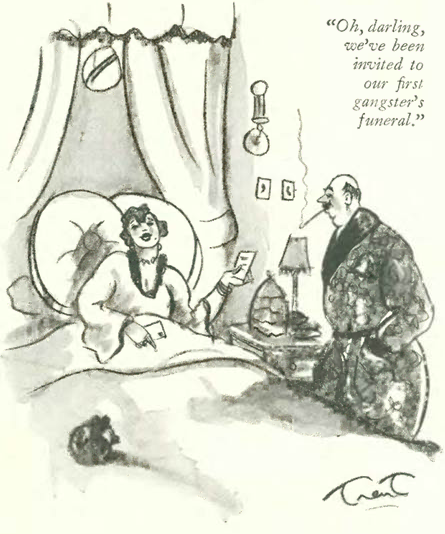
…W.P. Trent explored the strange ways of social status…
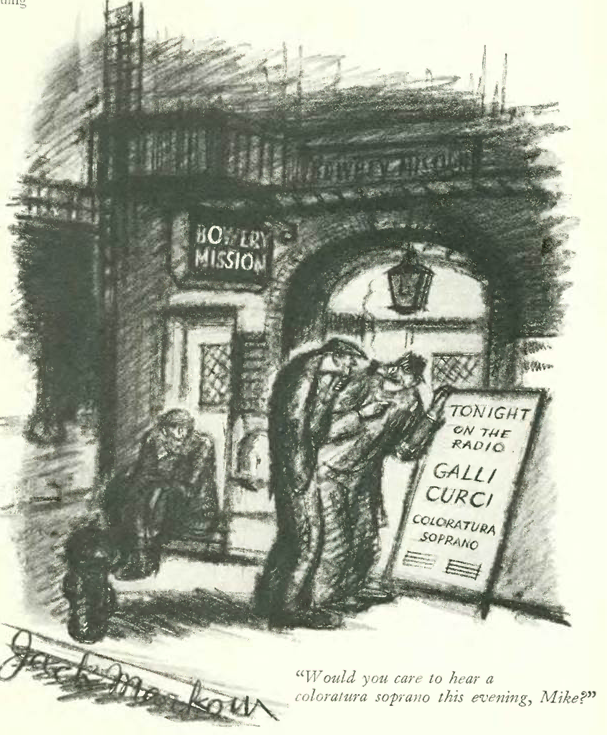
…Jack Markow looked in on life on the skids, a theme that would become more frequent as the Depression deepened…
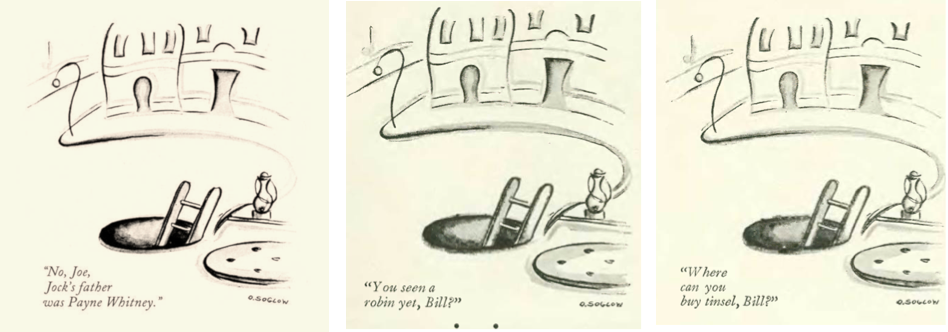
…and after thirty installments throughout 1929, Otto Soglow’s manhole series — a one-panel gag featuring dialogue from unseen workers Joe and Bill…
…came to an end when Joe and Bill finally emerged…
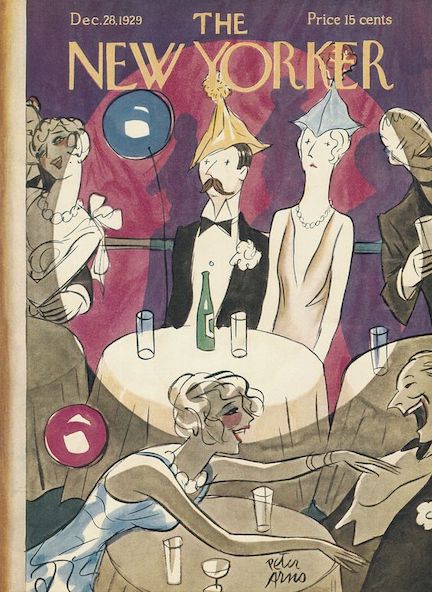
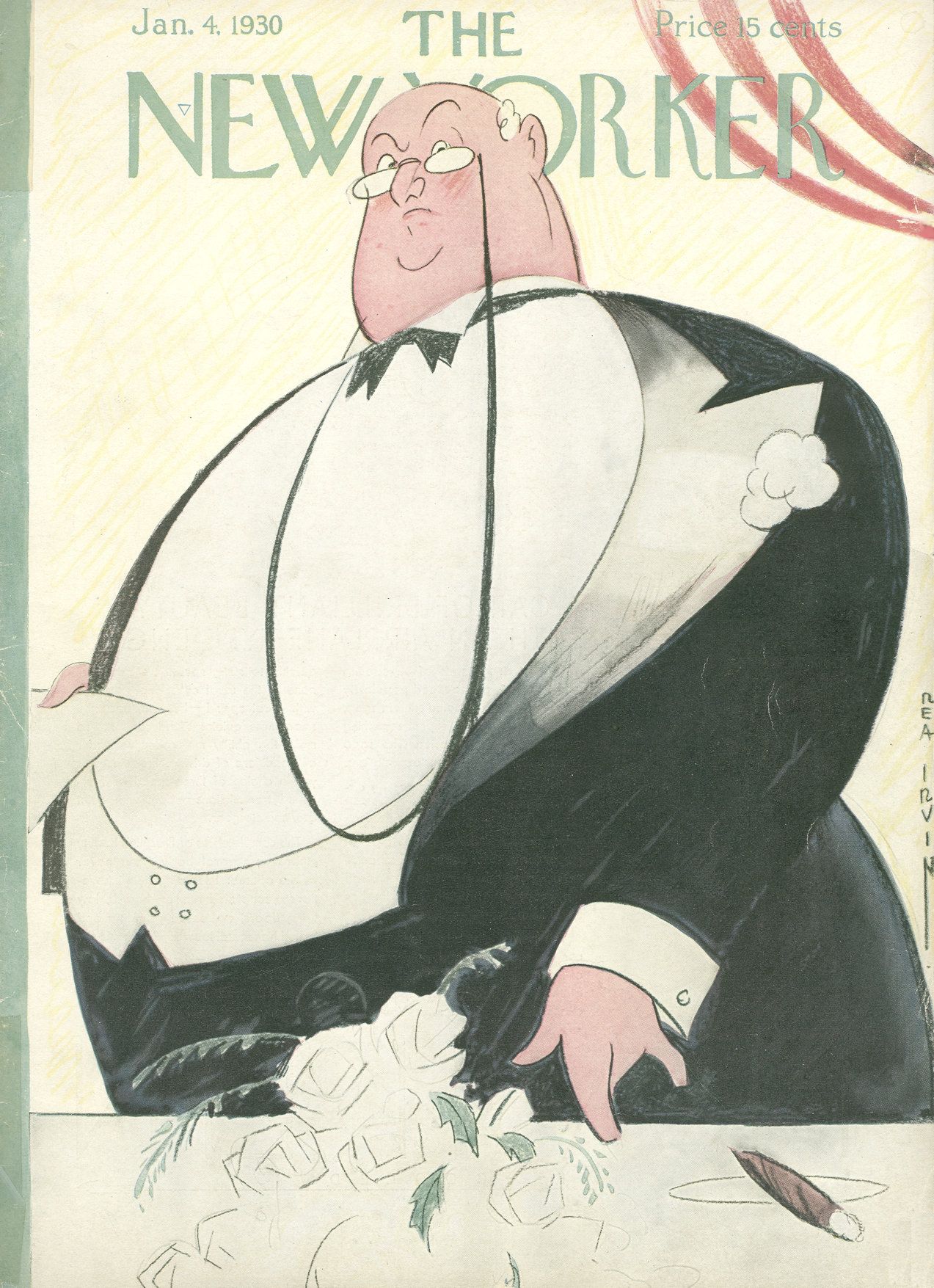
PeterArno’s cover illustration for The NewYorker’s final issue of 1929 aptly captured the mood of that decade’s last days.
Dec. 28, 1929 cover by Peter Arno.
As we’ve seen in the pages of the magazine in 1928 and 1929, people were growing weary of Jazz Age frivolity even before the great crash. For example, LoisLong’s weekly “Tables for Two” column, which deftly captured the nightlife scene of speakeasies and flappers, appeared infrequently in the decade’s last years, and would disappear altogether in 1930. Once herself the epitome of the carefree flapper, Long was now a mother with a one-year-old toddler.
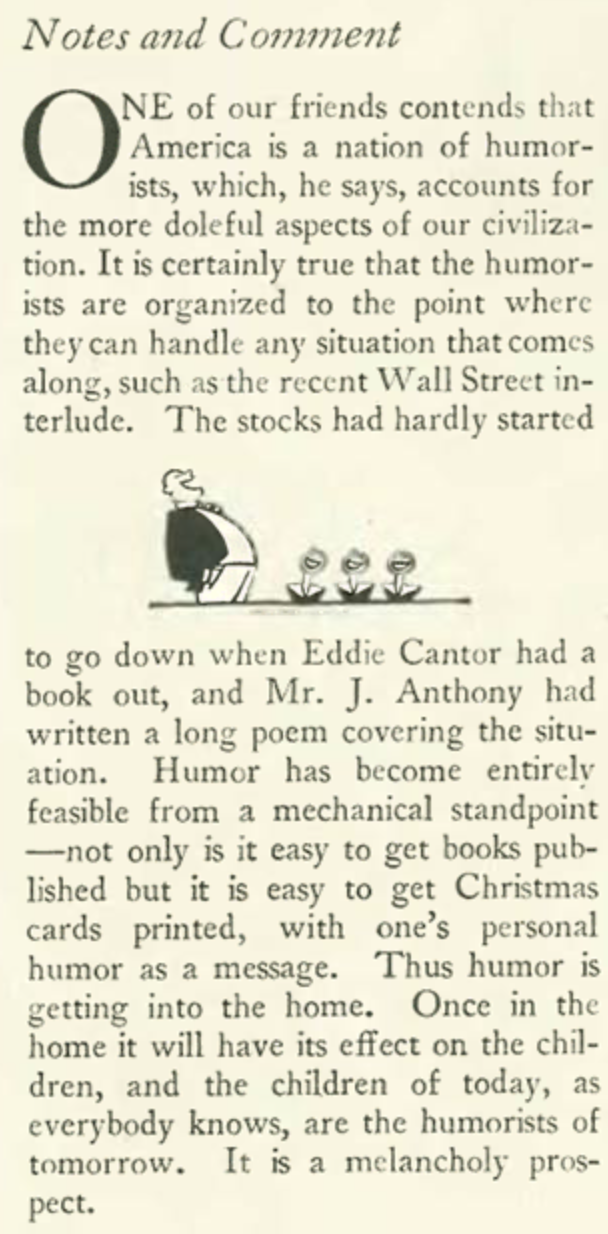
In his “Notes and Comment” column, E.B. White ended the decade on a humorous, if somewhat doleful note:
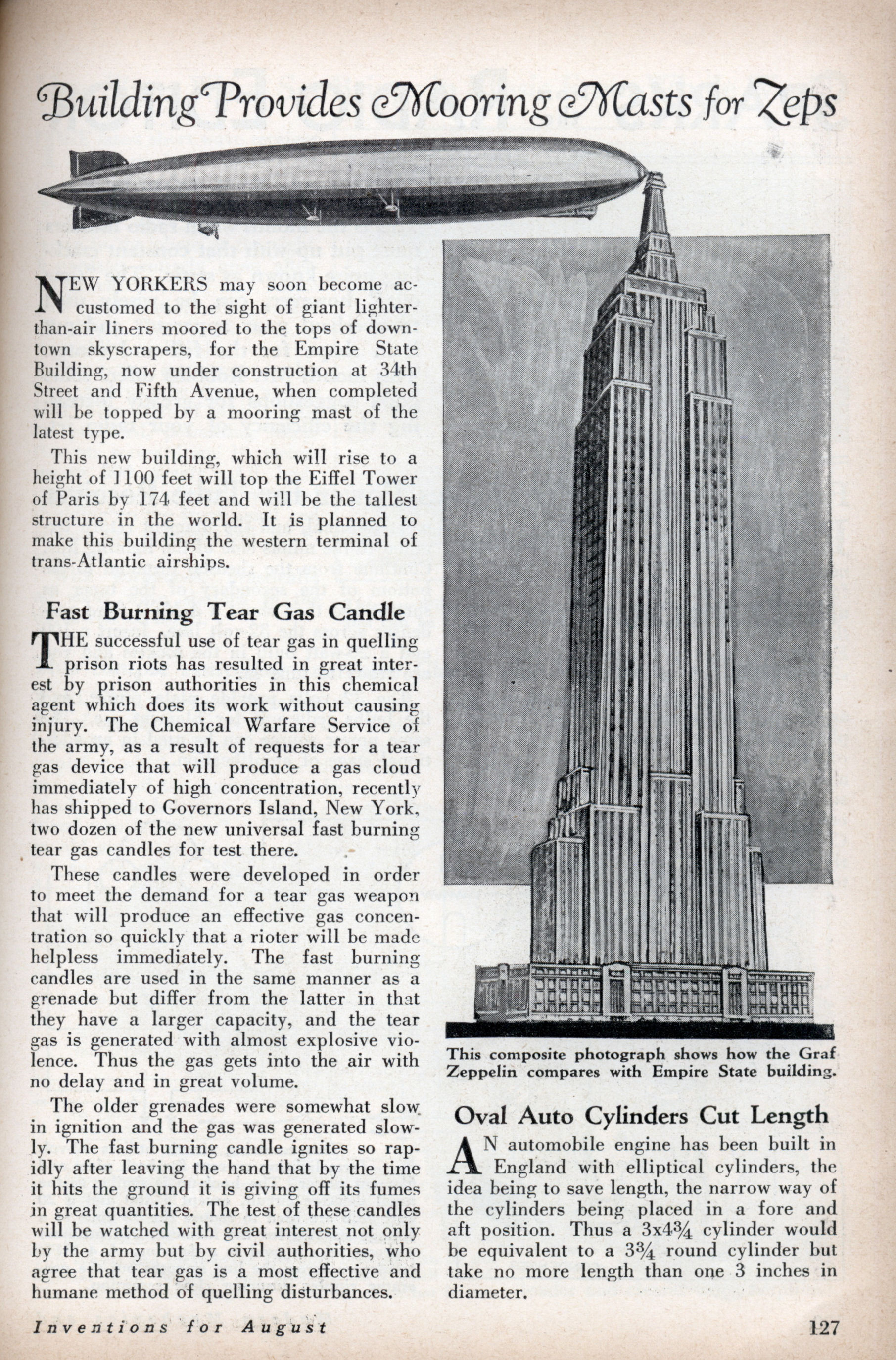
In “The Talk of the Town,” White also looked to the new year, which would see AlSmith’s Empire State Building rise into the air and forevermore define the city’s skyline, even if his dirigible mooring mast proved to be more of a marketing stunt than a working feature of the new skyscraper:
A LOT OF HOT AIR…Image from the August 1930 issue of ModernMechanix. The idea of transatlantic dirigibles ferrying passengers to skyscrapers seemed plausible in 1930, but in reality giant bags of flammable hydrogen, attached to wind-whipped masts above densely populated areas, proved impractical, if not downright insane. (Modern Mechanix)
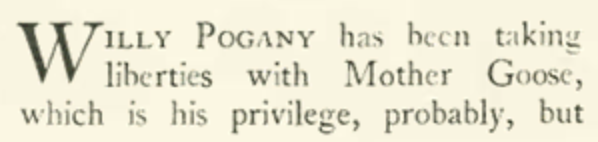
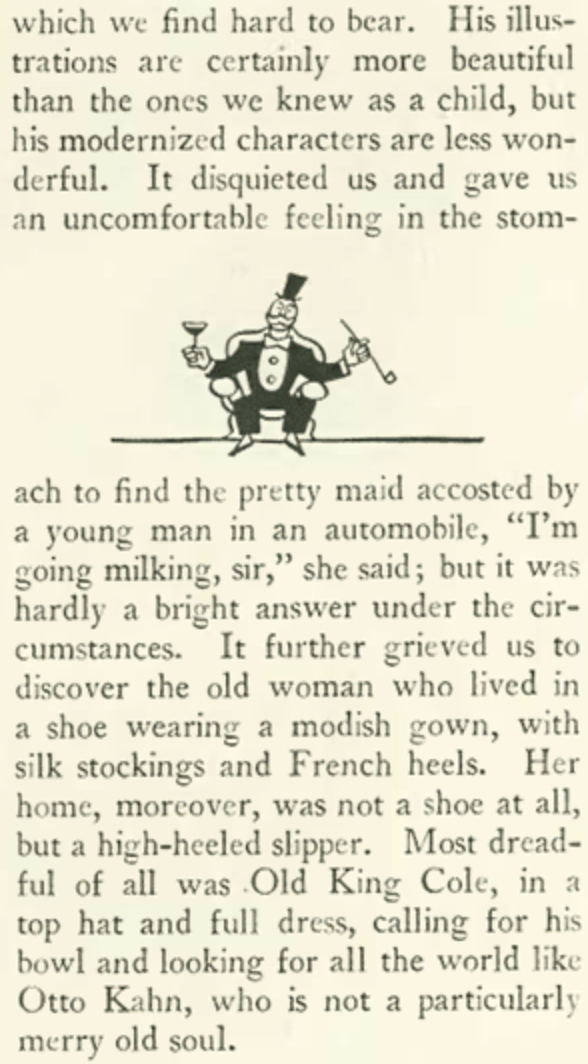
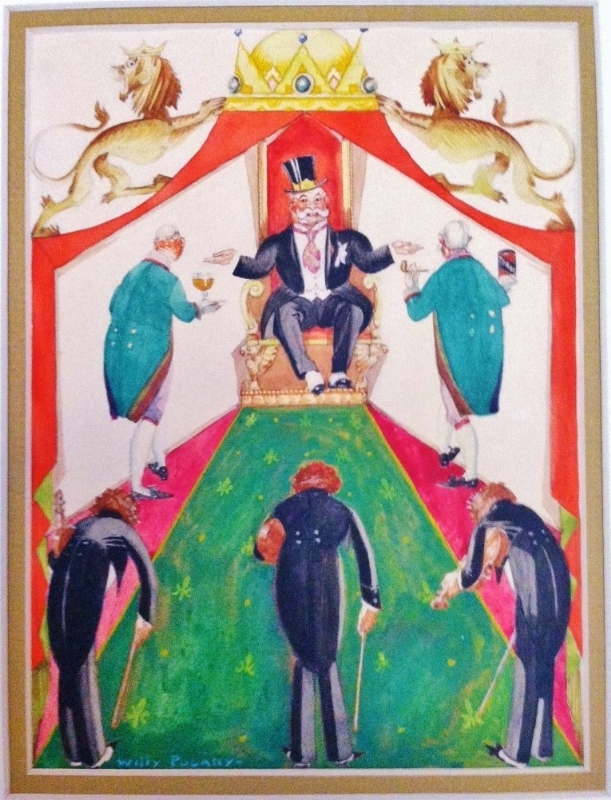
“Talk” (via E.B. White) took another shot at illustrator WillyPogany, who had recently updated the drawings in AliceinWonderland, transforming little Alice into a tween flapper. This time Pogany was “taking liberties” with dear old Mother Goose:
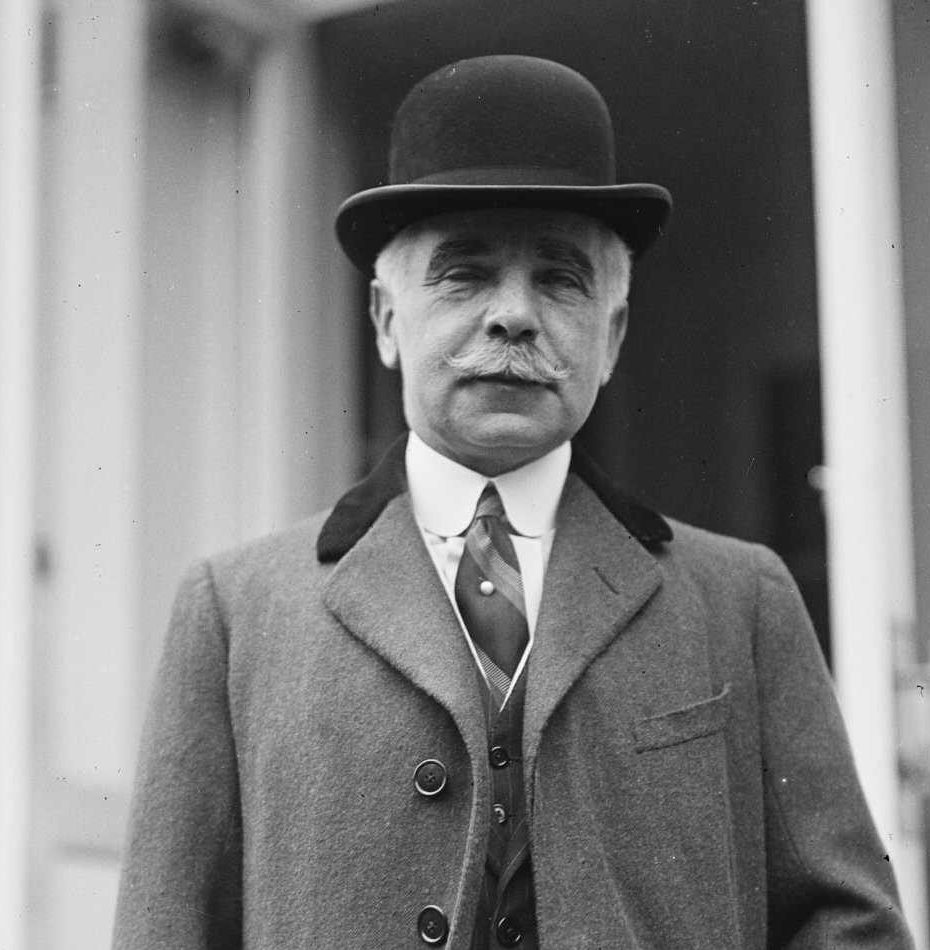
BIG DADDY…WillyPogany’s rendering of Old King Cole left something to be desired, according to E.B. White, who found the resemblance to investment banker OttoKahn (below) rather unsettling.(comic art fans.com/thoughtco.com)
* * *
Historian FrederickLewisAllen, who would go on to write the definitive history of the 1920s in his bestselling Only Yesterday (1931), offered some tongue-in-cheek advice on how the average American could contribute to renewed economic prosperity. An excerpt:
HowardBrubaker also finished the decade on a wry note, his “Of All Things” column ending thusly:
The Dec. 28 profile (titled “The Wizard”) featured ThomasEdison, the first in a three-part series written by AlvaJohnston (with illustration by HugoGellert):
* * *
The New Hollywood
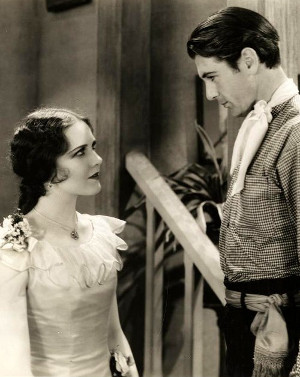
The decade would begin with a new crop of “talkie” stars that would signal a new era for Hollywood. Among the emerging stars was the young GaryCooper…
SHE LIKES THE SILENT TYPE…MaryBrian as Molly Wood and GaryCooper as the Virginian in the Victor Fleming-directed film TheVirginian. (1929) (onceuponatimeinawestern.com)
FromOurAdvertisers
The Dec. 28 issue was filled with ads that enticed readers to escape the cold of winter and head south…
…and given the new economic climate, grasping social climbers could travel to nearby Havana and still claim to have visited a foreign land…
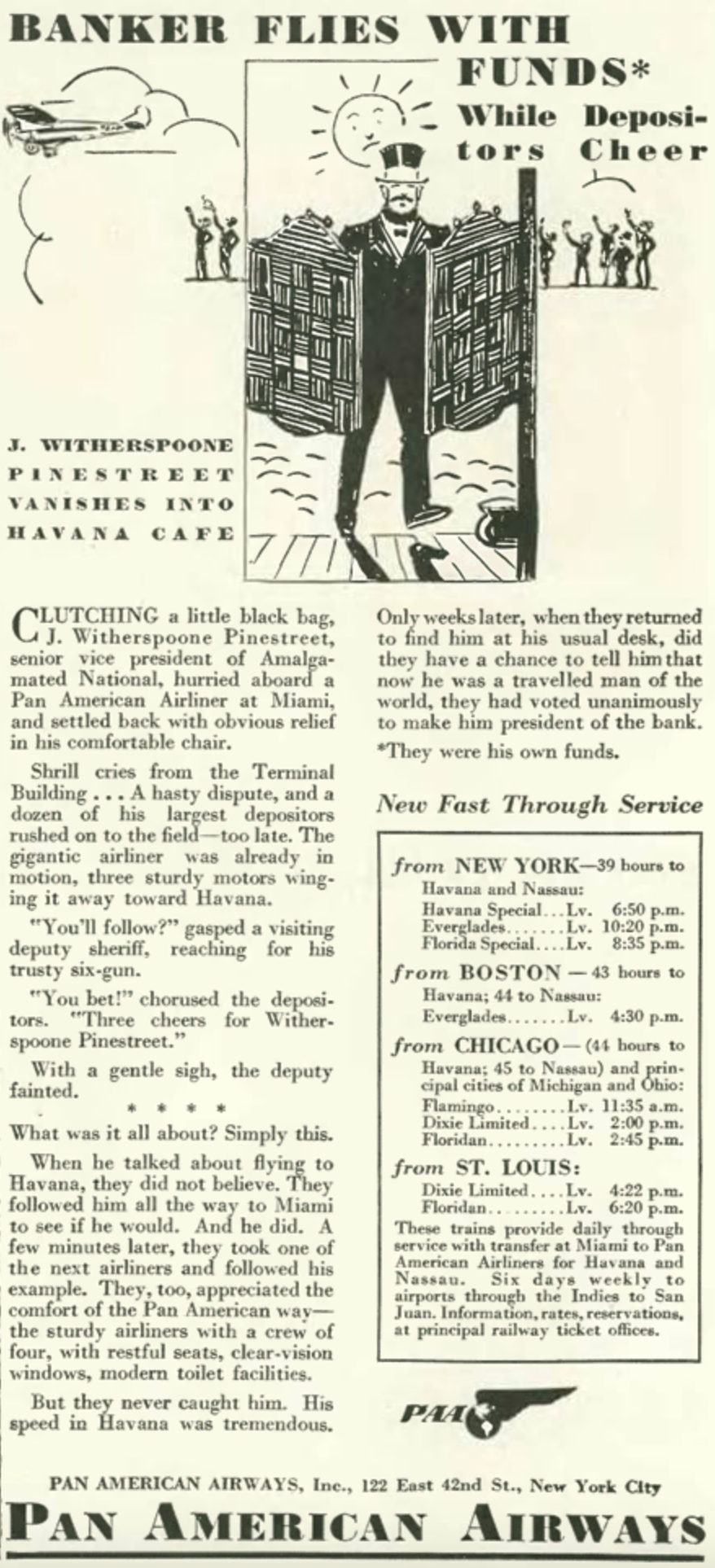
…and Pan American Airlines offered this unique take on the market crash to entice readers to sunny Havana…
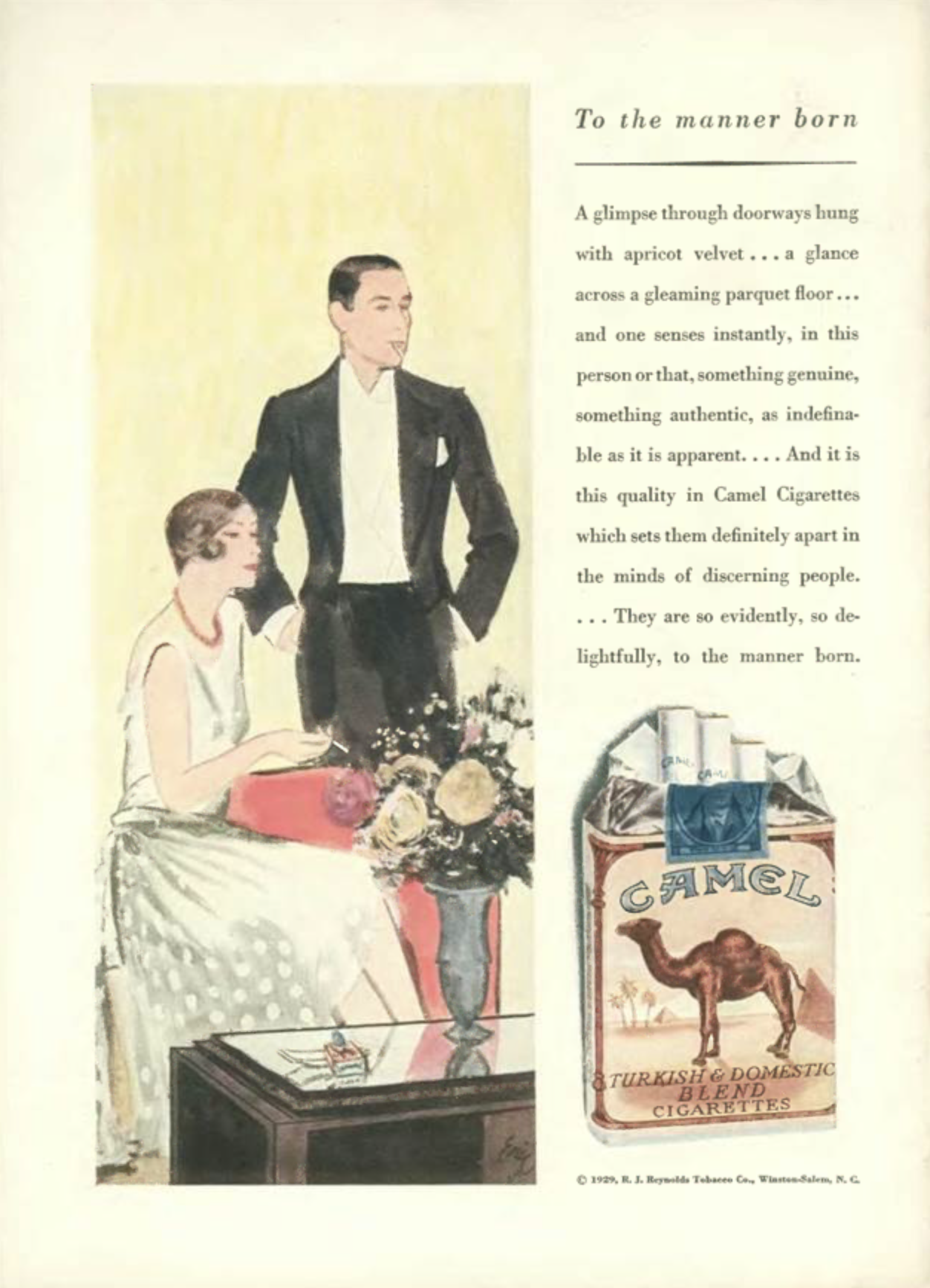
…despite the crash, the folks at R. J. Reynolds Tobacco Company still clung to the fantasy of the posh set…you might be flat broke, but you could keep a stiff upper lip while you sucked on a Camel, old sport…
…on to our illustrators, MiguelCovarrubias contributed this drawing for the theater review section…
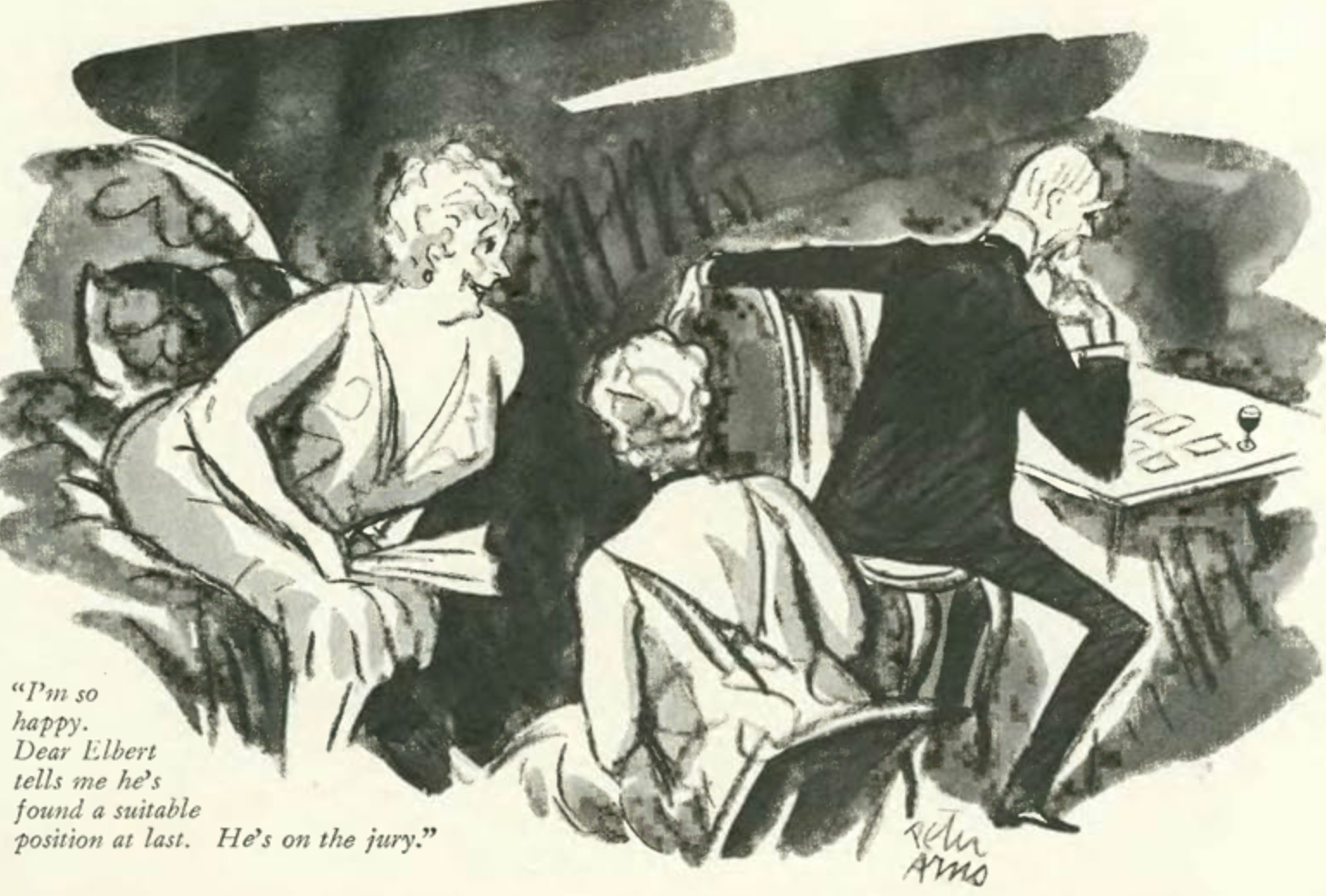
…and our cartoons are by PeterArno…
…JohnReynolds…
…and IsadoreKlein, who gave us an appropriate image for the turn of a decade…
The effects of the October stock market crash were finally beginning to show in the pages of the New Yorker in the last month of the 1920s.
Dec. 7, 1929 cover by Julien De Miskey.
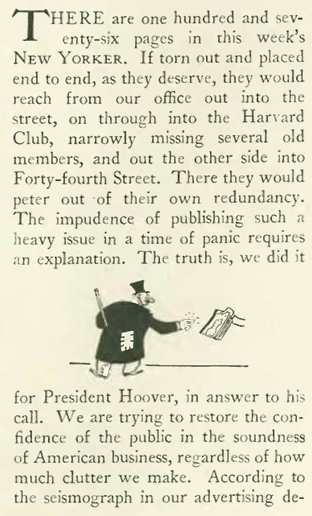
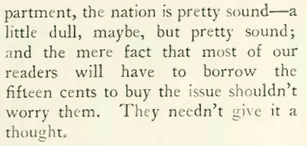
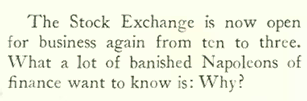
E. B. White was doing his best to keep things light, stating in his “Notes and Comment” column that despite the “time of panic,” the ad-packed Dec. 7 issue contained a whopping 176 pages…
Advertising income for The New Yorker would drop a bit in 1930 (from $1,929,000 to $1,922,000) and would continue to decline through 1932 (down to $1,448,000) before recovering slightly in 1933 and then really taking off again in 1934. And as White noted, even if they had to borrow the 15 cents, folks would still buy the magazine: circulation would top 100,000 in 1930, and except for a dip in 1932 would steadily grow past 150,000 by decade’s end.
KEEP CALM AND CARRY ON…E.B. White in 1946. (National Endowment for the Humanities)
The magazine was stuffed with ads as well as an extended “On and Off the Avenue” —which offered advice to holiday shoppers — and the continued serialization of Elmer Rice’s novel A Voyage to Purilia (installment No. 9).
But not all was sweetness and light. The biggest economic collapse in U.S. history was simply too pervasive to ignore, and even a feeling of hopelessness was creeping into magazine — here’s an observation by Howard Brubaker in his “Of All Things” column…
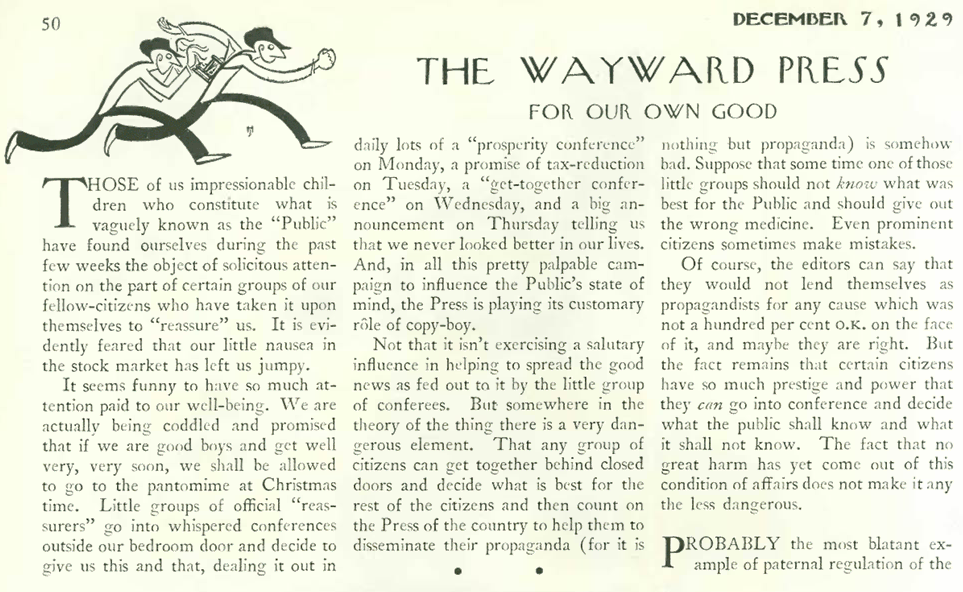
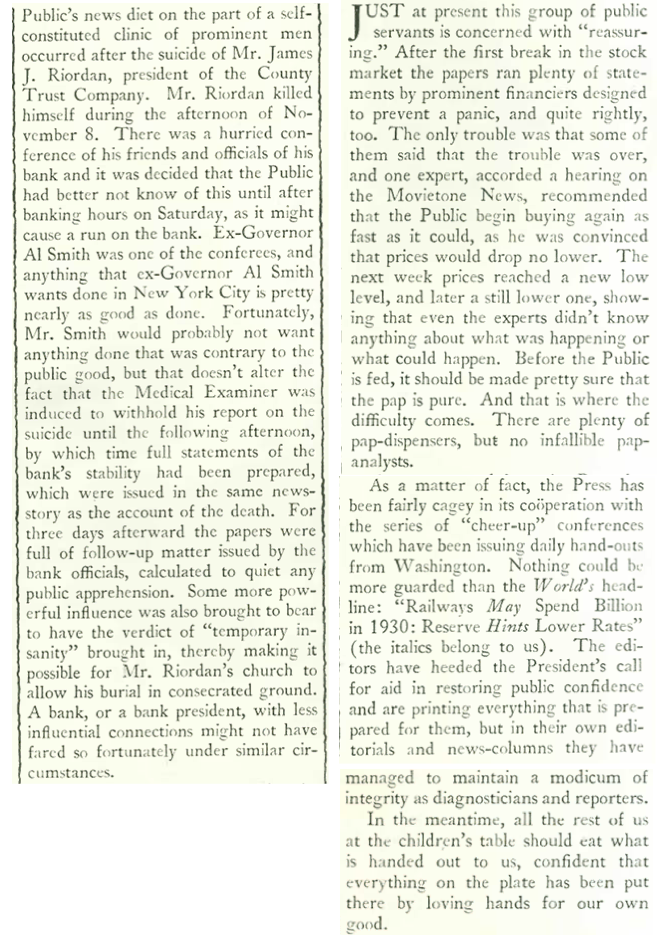
…and writing under the pseudonym “Guy Fawkes,” humorist Robert Benchley found little to laugh about in his “The Wayward Press” column. He chided the media for giving the public false hopes (which he labeled “propaganda”) regarding the state of the economy, and for concealing the suicide of prominent New York banker James J. Riordan, whosedeath announcement was postponed until Riordan’s bank closed for the weekend…
MARKET CASULTY…News of the suicide of prominent New York banker James J. Riordan (left) was suppressed to avoid a run on his County Trust Company. Robert Benchley (right) criticized the newspapers for working with power brokers to feed positive economic news to the masses. (NY Daily News/amsaw.org)
The following account excerpted from the Nov. 10, 1929 New York Times reveals how a nervous banking community responded to the market crash-related suicide of Riordan:
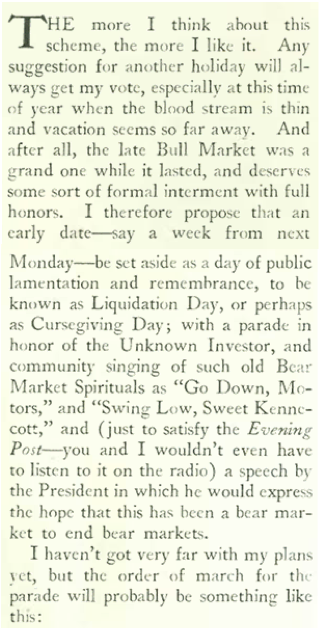
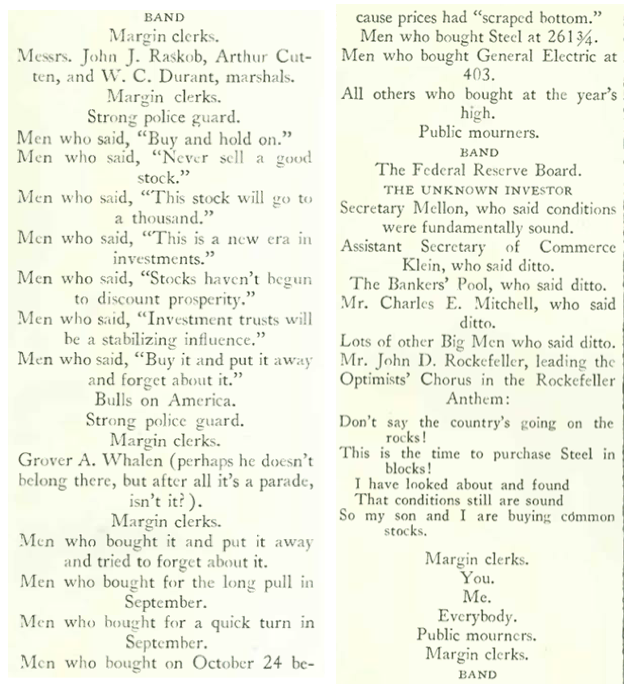
The popular historian Frederick Lewis Allen (1890 – 1954) offered a more lighthearted take on the events surrounding the market crash in his tongue-in-cheek casual, “Liquidation Day Parade,” in which he proposed a holiday to commemorate the end of the Big Bull Market.
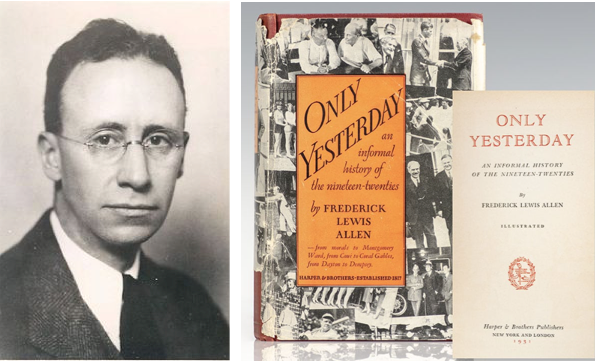
Allen, who also served as editor of Harper’s Magazine, would go on to write Only Yesterday, which chronicled American life in the Roaring Twenties. The 1931 book was a huge bestseller at the dawn of the Depression, and critically acclaimed, both then and now. Writing for the WashingtonPost (Nov. 28, 2007), book critic Jonathan Yardley observed: “It is testimony to both the popularity and the staying power of Only Yesterday that for more than three-quarters of a century it has remained steadily in print, and to this day enjoys sales that would please plenty of 21st-century writers.”
I CAN SEE CLEARLY NOW…in a little more than year after the Roaring Twenties came to a close, historian Frederick Lewis Allen would chronicle that decade in Only Yesterday, his most famous book. (Wikipedia/raptisrarebooks.com)
* * *
Clipped Wings
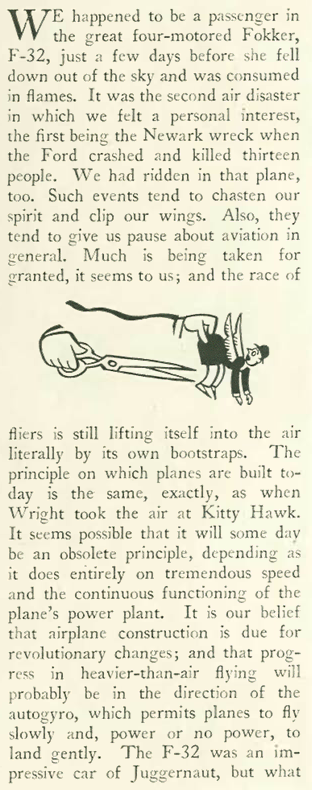
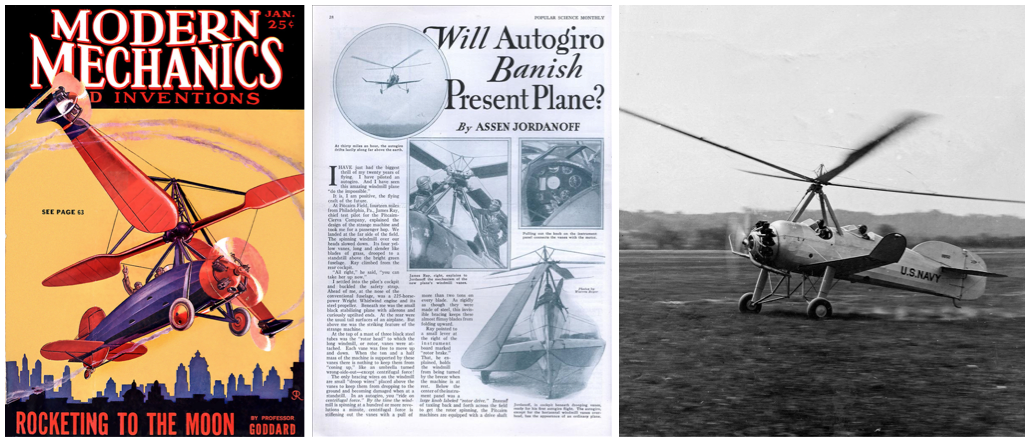
We turn back to E.B. White, The New Yorker’s most enthusiastic proponent of the aviation age. In the previous issue (Nov. 30) White had rhapsodized about a flight he took on a huge, new Fokker F-32. In the Dec. 7 “Talk of the Town” White reported that the very same plane had crashed and burned (and also noted that another plane on which he had been a passenger, a Ford Trimotor, had crashed earlier that year in Newark). White speculated that aviation would soon head in a different, safer, direction along the lines of the autogyro, a flying contraption that was widely favored by futurists of the day:
IT’S A BIRD, IT’S A PLANE…In the 1920s and 30s the autogyro — part airplane, part helicopter — was seen as the future of air transportation. From left, cover of ModernMechanics magazine from January 1930; an article on the autogyro from the March 1931 issue of Popular Science; an XOP-1 autogiro at the Naval Air Station Anacostia in Washington D.C., 1931. (modernmechanix.com/navalaviationmuseum.org) Click image to enlarge
* * *
Wonders Never Cease
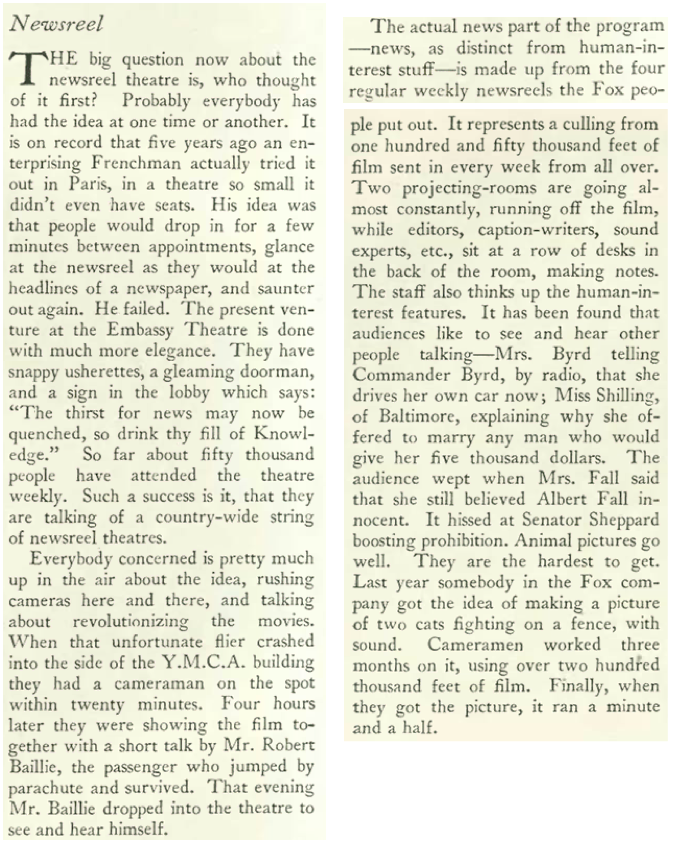
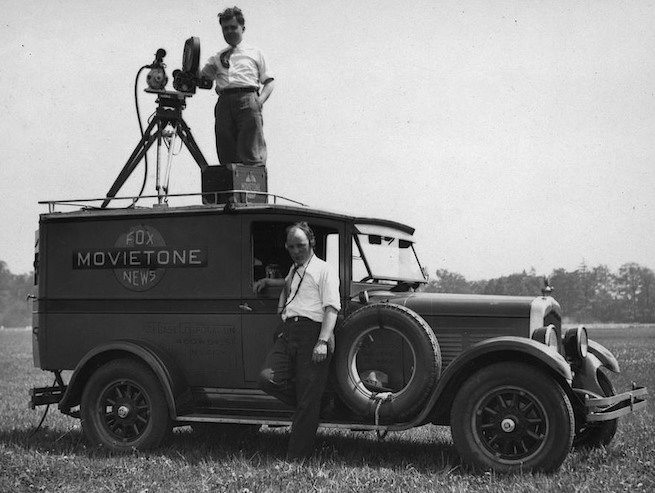
“Talk” also reported the growing popularity of newsreel theaters, and marveled at the speed with which camera crews could deliver their finished product to movie screens. An example was the crash of a small plane onto the side of a YMCA (an incident also noted by White in the previous issue); a newsreel crew was able to go from scene to screen in about four hours:
BEFORE GERALDO…Fox Movietone news crew in 1930. (City of Toronto archives)
* * *
High Wire Act
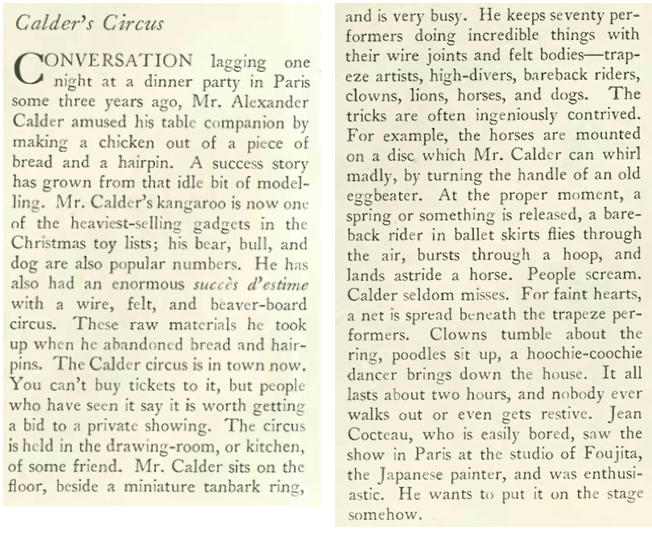
The artist Alexander Calder was already well known for his wire sculptures (his colorful mobiles would come later) when he embarked on his Cirque Calder in Paris in 1926. He brought “the show” to New York in 1929, where he used everything from eggbeaters to balloons to bring his wiry performers to life. Presumably art critic Murdock Pemberton wrote this account for “Talk of the Town”…
UNDER THE TINY TOP…Invitation to a performance of Cirque Calder (1926–31) at the Hawes-Harden apartment, August 28, 1929; AlexanderCalder with Cirque Calder (1926–31), 1929; Lion Tamer and Lion from Cirque Calder (1926–31). (calder.org)
And we also have Pemberton over at his art column, where once again he tried to make sense of the new upstart Museum of Modern Art. He seemed to be surprised by the large crowds drawn to the new museum as he pondered its next show…
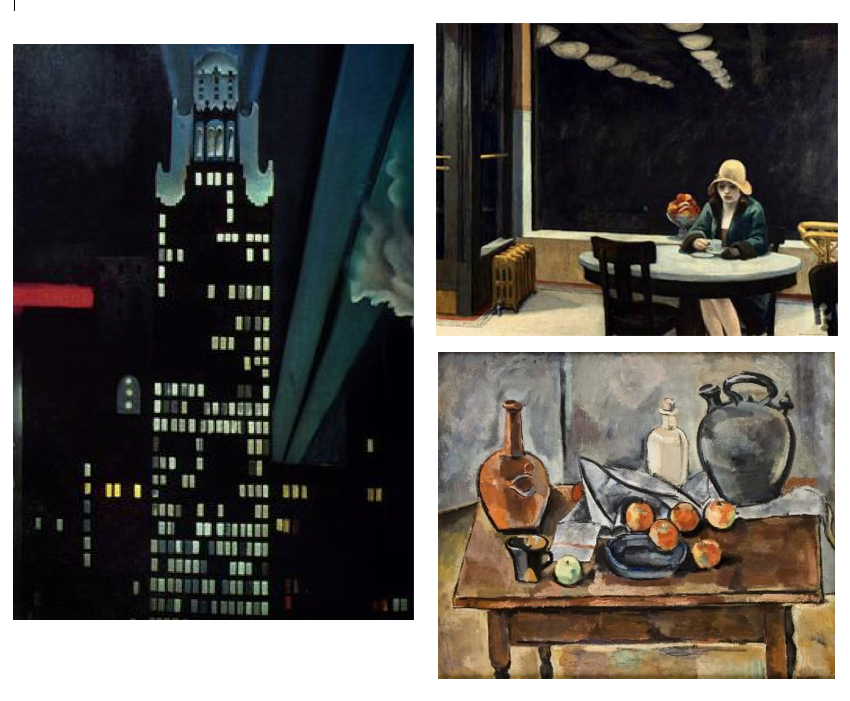
AMERICAN MODERN…Among works featured at MoMA’s second exhibition, Paintings by Nineteen Living Americans, were, at left, Georgia O’Keefe’sRadiator Building (1927); top right, Edward Hopper’sAutomat (1927); and Max Weber’sThree Jugs (1929). (Wikipedia/theartstack.com)
Pemberton had yet to see MoMA’s stunning second exhibition, Paintings by Nineteen Living Americans, but had to (grudgingly) conclude that the museum was filling a need…
* * *
The Toy Bazaar
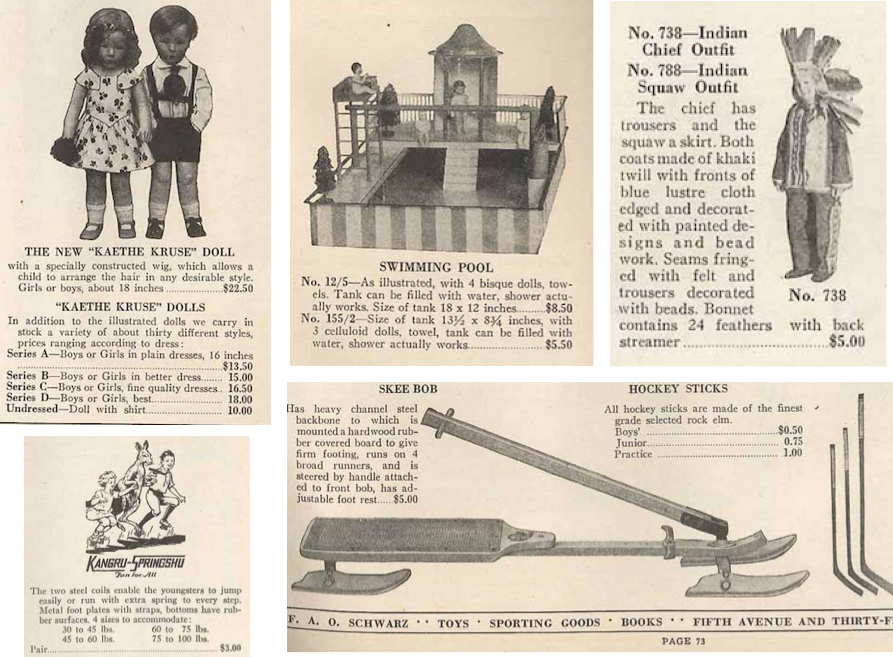
From its beginnings in 1862 until the end of the 19th century, the F.A.O. Schwarz toy store was known to New Yorkers as the “Toy Bazaar,” and by 1929 was something of an institution. As part of a lengthy column featuring ideas for Christmas shoppers, The New Yorker offered some tips on what shoppers might find at the famed toy store:
FUNLAND…Left, the cover the 1929 F.A.O. Schwarz Christmas catalog; at right, the store’s location in 1929, 303 Fifth Avenue. (oldwoodtoys.com)
Some of the toys mentioned in The New Yorker article, from the 1929 F.A.O. Schwarz Christmas catalog. There’s nothing plastic here — plastics as we know them, such as polypropylene, would be developed in the 1950s:
The 1929 F.A.O. Schwarz Christmas catalog also featured a color spread of its stock of Lionel Electric Trains:
If you want to look at the entire 1929 F.A.O. Schwarz Christmas catalog, you can find it at this terrific site.
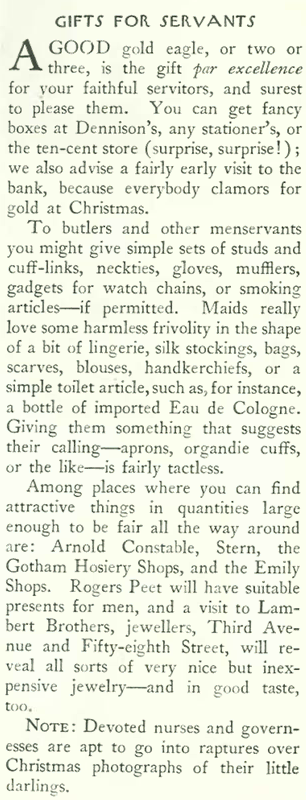
The column also offered advice on “gifts for servants,” at least for those who weren’t getting laid off due to the market crash. Note the somewhat patronizing tone, especially the final paragraph regarding nurses and governesses:
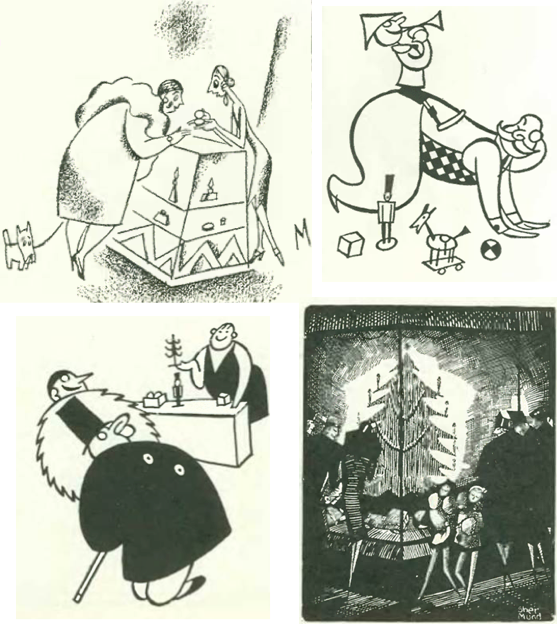
As usual, the shopping column was sprinkled with spot drawings celebrating the season: here are three from Julian De Miskey and one from Barbara Shermund:
* * *
The Bard Does the Talkies
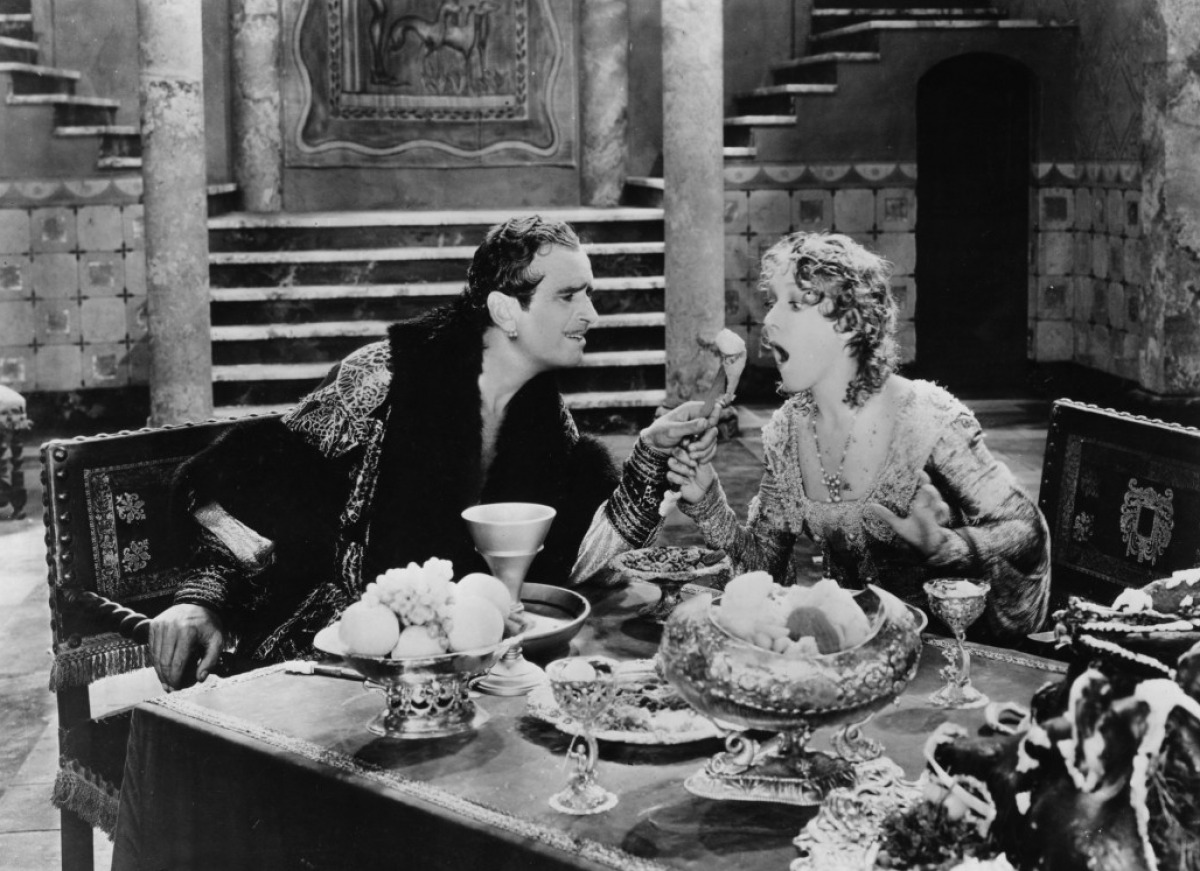
At the movies, critic John Mosher found much to like at the Rivoli, which was screening The Taming of the Shrew featuring the husband/wife team of Douglas Fairbanks and Mary Pickford:
WILD AT HEART…Douglas Fairbanks and Mary Pickford in 1929’s The Taming of the Shrew. (IMDB)
* * *
Somerset Saga
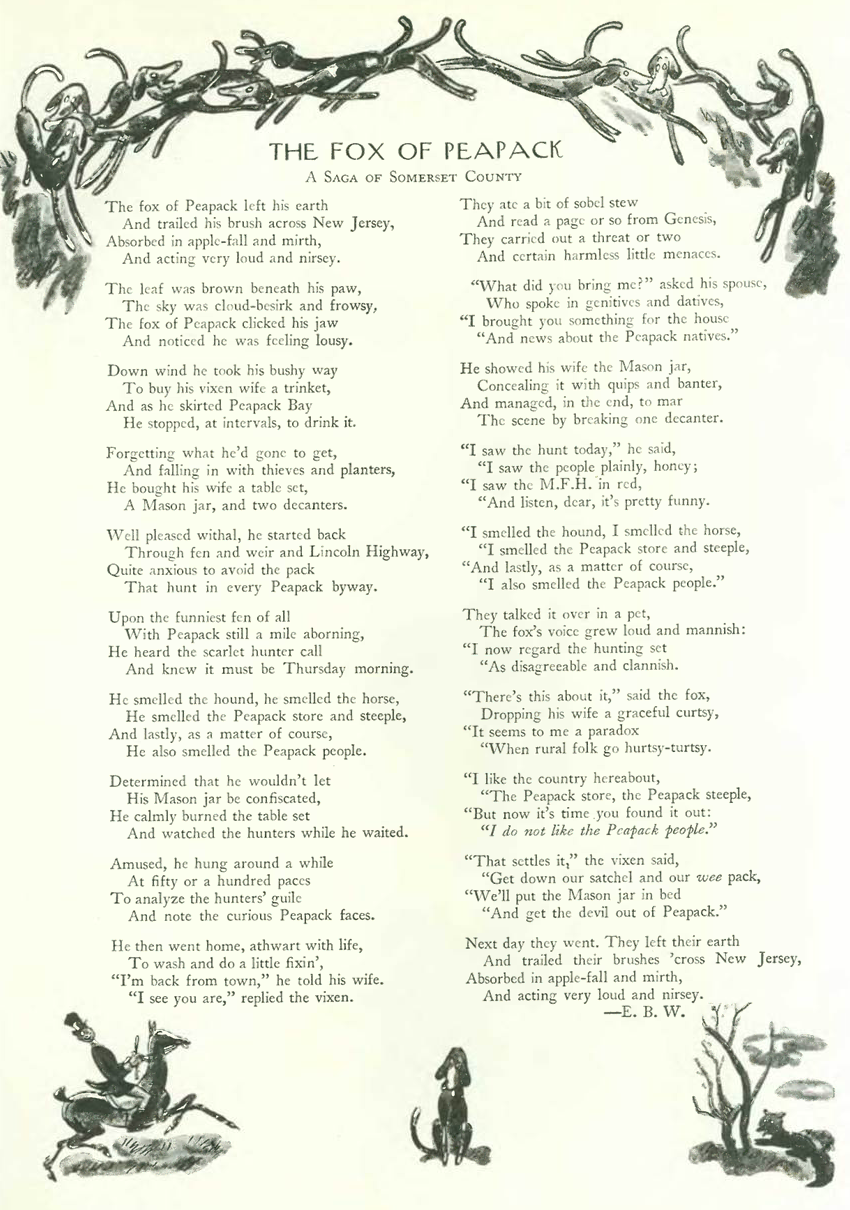
When I first spotted this I thought it was an early edition of The New Yorker’s famed Christmas poem, but those were started by Frank Sullivan in 1932. Nevertheless, here is a clever “Saga of Somerset County” from our dear E.B. White:
* * *
From Our Advertisers
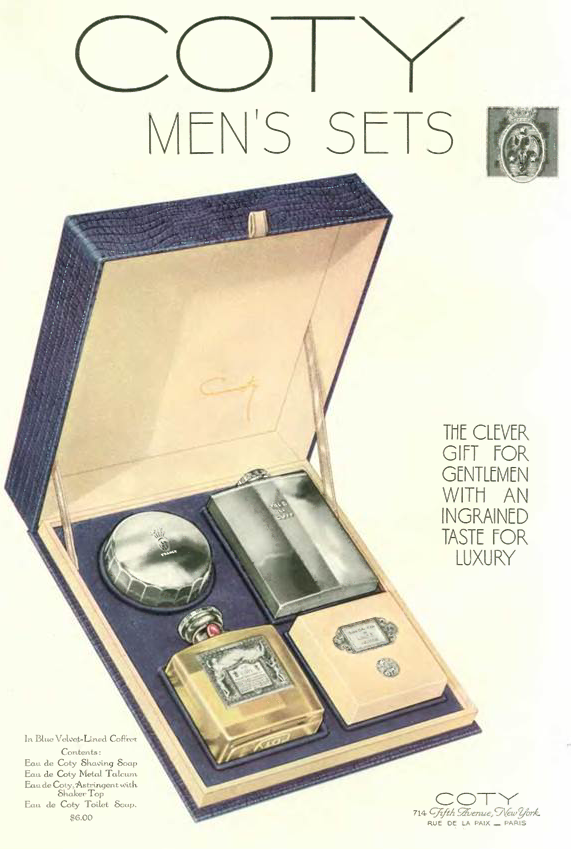
For men who hadn’t lost their shirts and had an “ingrained taste for luxury,” here was a men’s toilet set from Coty featuring a talcum shaker that would have doubled as a fine whiskey flask…
…did the folks at Bergdorf Goodman miss the news of the market crash? Read the fine print about the coming “revolution in fur fashion”…
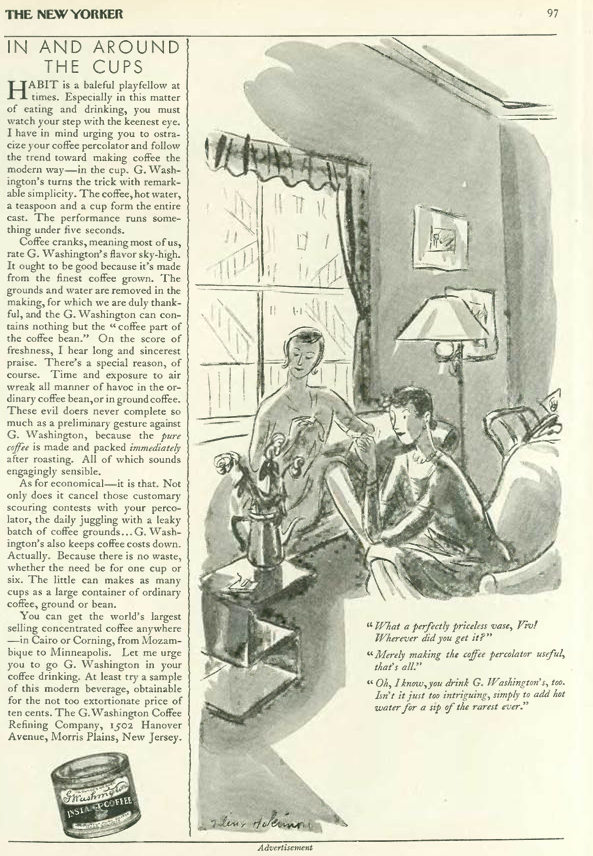
…Helen Hokinson illustrated another ad for G. Washington instant coffee…
…Atwater Kent offered up this sumptuous appeal to holiday shoppers…
…at first glance I thought this was an ad for a luxury apartment…the copy is almost identical, save for a couple of words like “death” and “crypt”…
…on to our artists, here is a spot by Constantin Alajalov that ran along the bottom of “Talk of the Town”…
…and a sight that would become more familiar as the Depression deepened, a look at an estate sale, courtesy Helen Hokinson…
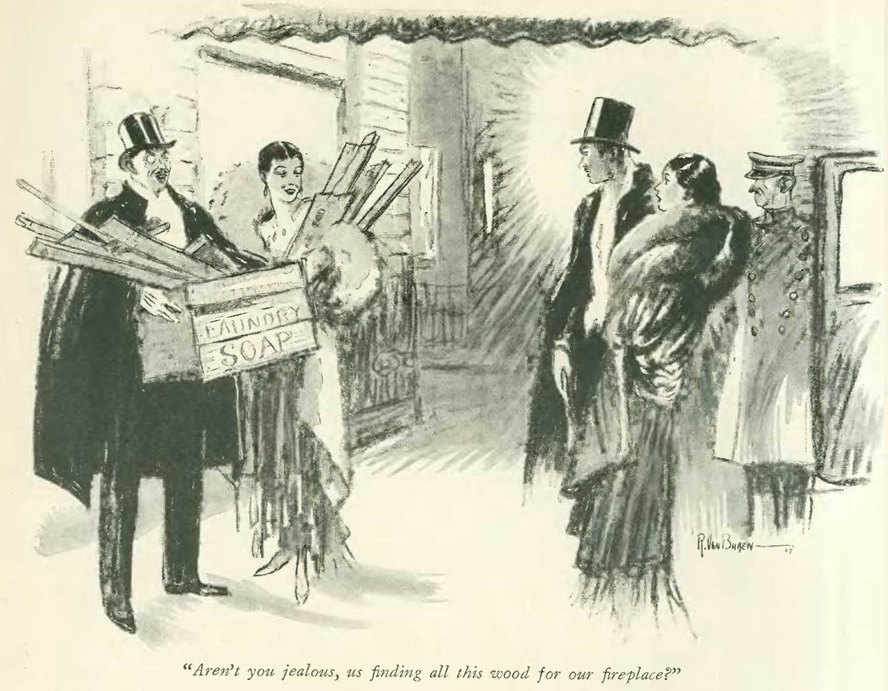
…signs of the economic collapse were starting to creep into the cartoons, including offerings by Raeburn Van Buren…
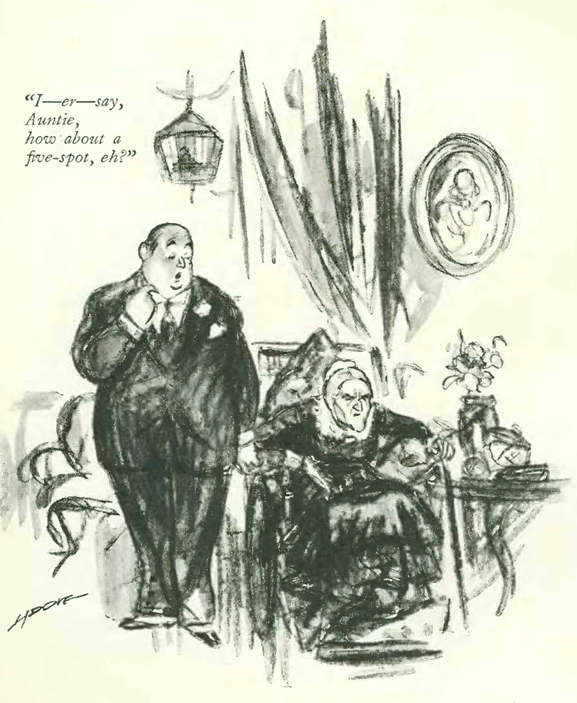
…Leonard Dove…
…and Paul Webb…
…while the economy was headed into the pits, cartoonist Peter Arno saw his fortunes soaring as he headed into a new decade. In his excellent 2016 biography, Peter Arno: The Mad Mad World of The New Yorker’s Greatest Cartoonist,Michael Maslin writes, “By the time The New Yorker’s December 7, 1929 issue hit the newsstands, its readership had, within the year, seen three Arno covers and fifty-seven of his drawings.” Maslin notes that drawing number fifty-eight, which appears below, “ended the 1920s with a bang (so to speak).” The drawing, writes Maslin, “became a lightning rod for two New Yorker camps: the (James) Thurber camp, who chose to believe Harold Ross (the magazine’s founding editor, who forbade sex as a subject) was naive in sexual matters, and the (E.B.) White camp, convinced Ross would never have let the drawing appear in the magazine if he hadn’t understood its meaning.” If you enjoy Arno’s work, or are a fan of The New Yorker, Maslin’s book is a must-read…