The Wild Kingdom

A host of nature programs from Mutual of Omaha’s Wild Kingdom to Planet Earth owe their origins to a few intrepid filmmakers who 100 years ago gave Americans some of their first glimpses of life in exotic, remote regions of the world.
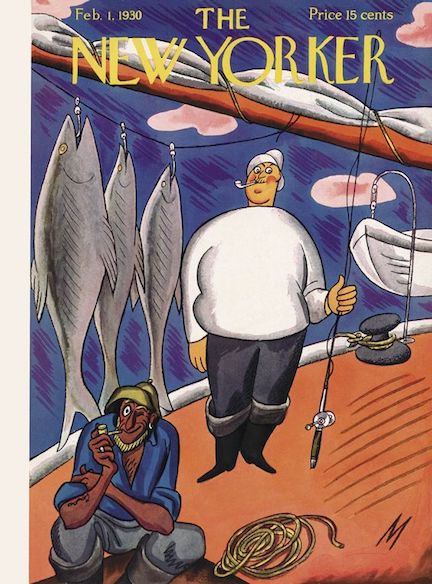
Feb. 1, 1930 cover by Julian De Miskey.

Among the first to do it were a couple from Kansas, Osa and Martin Johnson, who together explored unknown lands and brought back footage of the wildlife and peoples of the African continent, the South Pacific Islands and British North Borneo. Their first film, Among the Cannibal Isles of the South Seas (1918), was followed by several more, including Across the World with Mr. and Mrs. Johnson, which was released in early 1930.

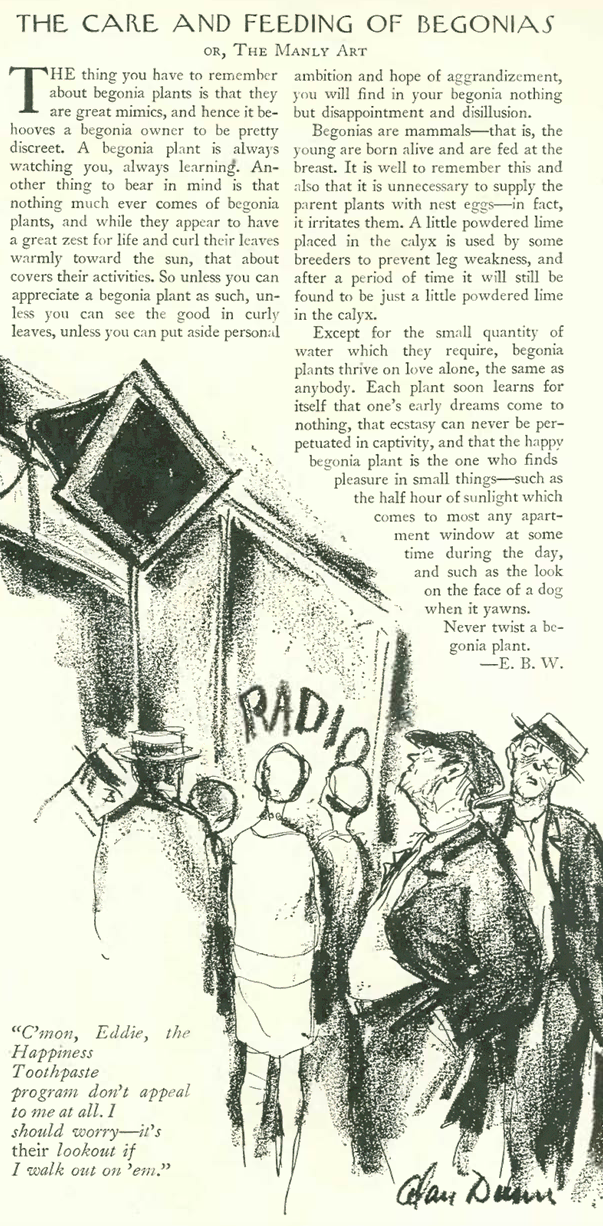
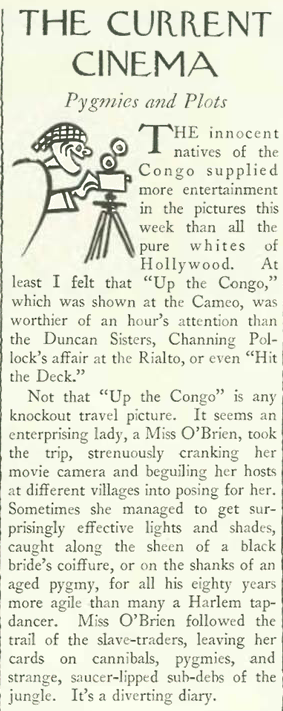
The New Yorker film critic John Mosher was as eager as any audience to take in the adventures of the Johnsons, or even of someone who was inspired by the Johnsons, in this case a “Miss O’Brien” who had just released a “diverting diary” called Up the Congo. Mosher wrote about it in the Jan. 25 issue:
CONTACT…Image of a family from an unidentified Pygmy tribe posing with a European explorer in a 1921 Collier’s New Encyclopedia entry; a group of Mbuti posing with explorer Osa Johnson in 1930. (Wikipedia)

I can find no record of the film Up the Congo, however the exploits of the Johnsons are well documented thanks to the Martin and Osa Johnson Safari Museum in Chanute, Kansas, which has a treasure trove of photos and other information on the explorers.

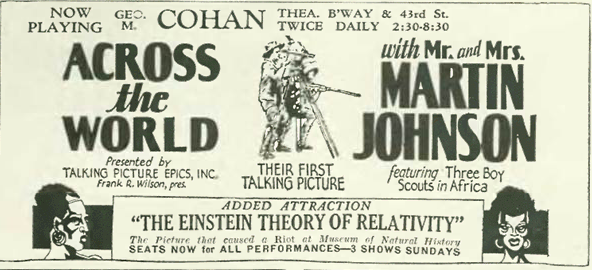
The ad in the Feb. 1, 1930 New Yorker promoting Across the World with Mr. and Mrs. Johnson included an interesting “added attraction”…a film about Einstein’s theory of relativity that had caused a Jan. 8 “riot” at the American Museum of Natural History. That particular screening was intended for members of the Amateur Astronomers Association, but word got out and three times the invited number showed up at the museum, breaking down the lobby gates. Hard to imagine a mob today clamoring to view a science film…
Although the Johnsons made their movies under the auspices of the American Museum of Natural History, much of the footage was staged or edited to maximize the thrills (Mutual of Omaha’s Wild Kingdom did this in the 1960s and 70s, as did producers of Disney’s nature films from the 50s and 60s. The practice continues to this day on cable television).

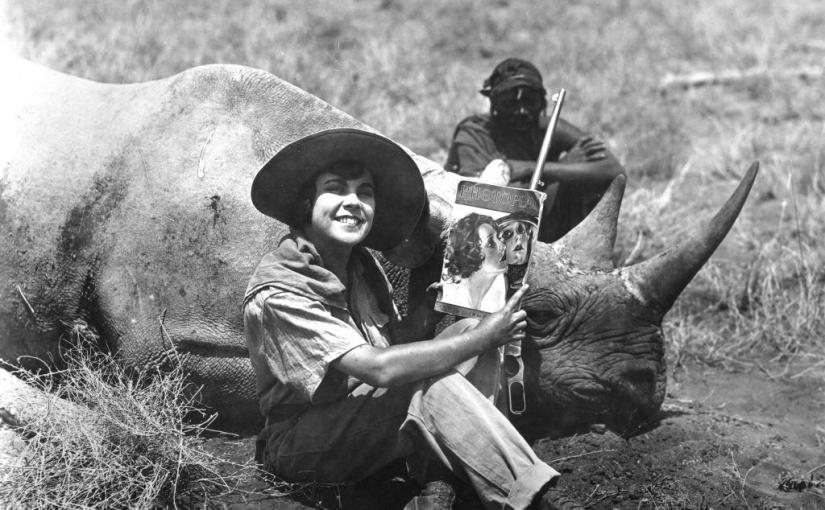
The Johnsons also didn’t hesitate to gun down animals in the course of their movie-making…
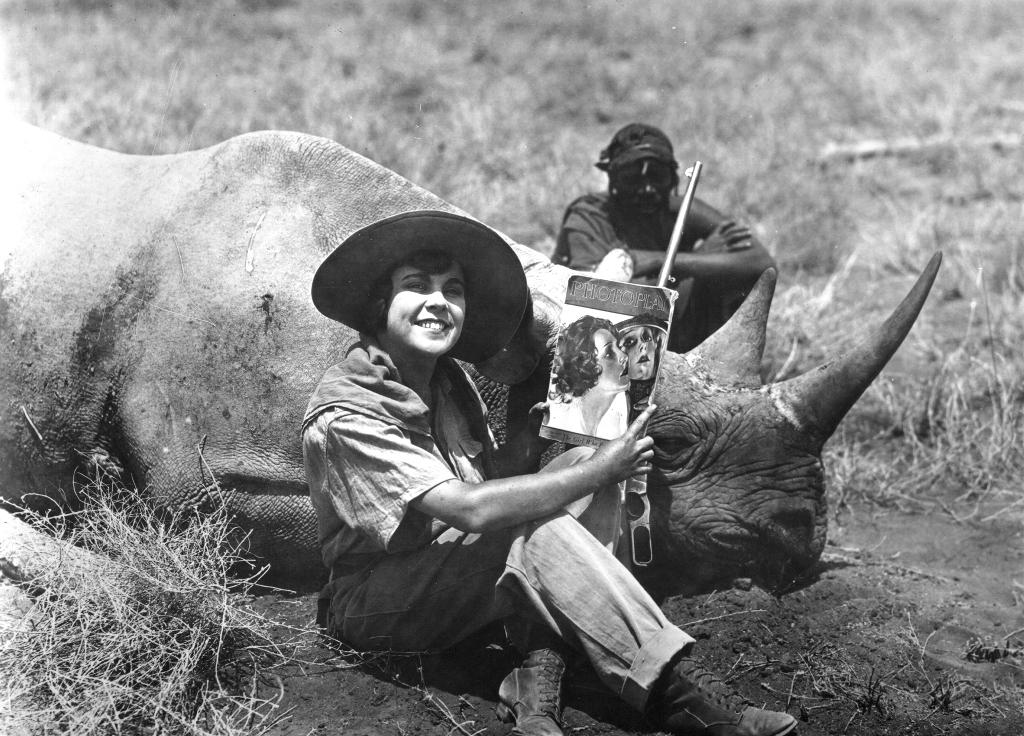
YEP, THAT’S JUXTAPOSITION…Osa Johnson poses with a Photoplay magazine, a dead rhino, and a tribesman, circa 1930. (columbia.edu)

According to a 2011 review from Wild Film History, “in stark contrast to the conservation-themed wildlife films of today, the Johnsons approached their subjects armed with both camera and rifle, with the production including provoked behaviour, staged confrontations and animals shot to death on film. Relying heavily on cutting in kills from professional marksmen, numerous hunting scenes culminate in a heart-stopping sequence where, with the use of clever editing, the adventurous Mrs Johnson appears to bring down a charging rhinoceros with one well-aimed shot.”

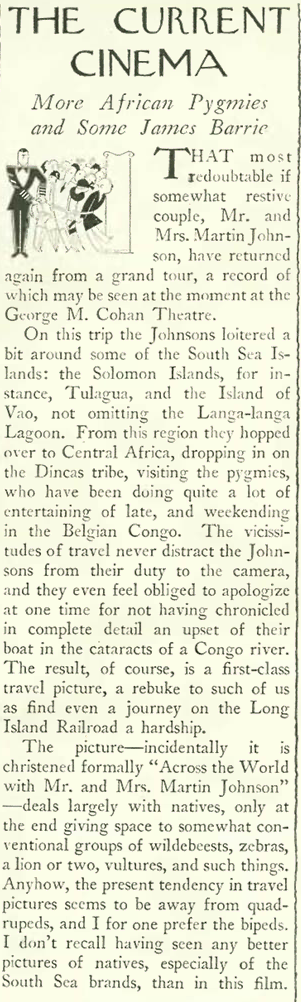
Across the World with Mr. and Mrs. Johnson is presented as if the Johnsons were showing their film to a few friends in their New York City apartment. The film is a “silent with sound,” that is, scenes in the field are silent, but the cocktail party “home movie” opening has sound, including “mood music” Osa provides by turning on the radio as the film begins. For all of their film experience, the acting between Osa and Martin is wooden, as is Martin’s narration. The critic John Mosher, however, enjoyed the ride, writing in his Feb. 1 column:
If you are curious, you can watch some of the film here, including the opening home movie scene with Osa and Martin in cocktail attire…

*  *  *

My Kinda Town

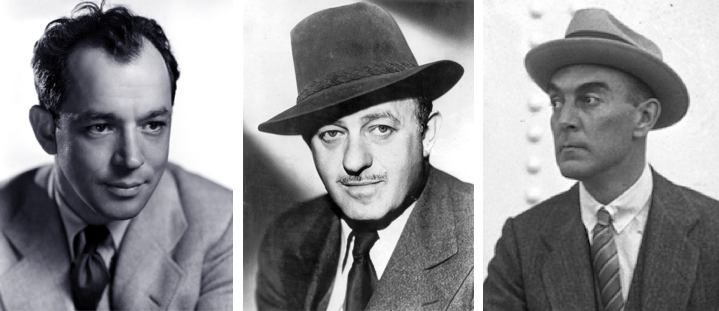
The New Yorker occasionally enjoyed taking potshots at the Second City, as well as some good-natured jabs at a few of its former residents who were also denizens of the Algonquin Round Table. Here is E.B. White in the Feb. 1 “Notes and Comment”…
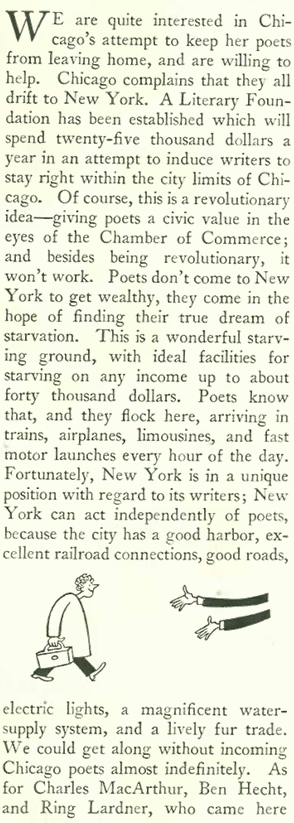
WINDY WITS…Chicagoans Charles MacArthur, Ben Hecht and Ring Lardner were well-known to The New Yorker crowd. (Wikipedia)

 *  *  *

Not In This Century

This item from the Feb. 1 “Talk of the Town” is noteworthy for placing its admiration of technical achievement over any concerns for a child’s welfare. Today the couple would be arrested for this…

 *  *  *

The Perils of Aging

Irish-American actress and writer Patricia Collinge (1892-1974) wrote a series of short stories for The New Yorker, including this piece for the Feb. 1 issue written when she was 37 years old. It is a sad story about an older actress (37) who hoped to land the part of a younger woman. Some excerpts…

…the actress in the story is led to believe the part was intended for a woman of 28, and is crushed to learn that the agent was looking for “a young twenty-two”…
OH TO BE YOUNG…At left, Gladys Cooper, Alexandra Carlisle and 20-year-old Patricia Collinge in the Drury Lane production of Everywoman (1912); at right, Collinge in 1941. Unlike the sad actress in her short story, Collinge’s career spanned more than 60 years. (Wikipedia)

 *  *  *

Coming Around

In previous issues art critic Murdock Pemberton expressed skepticism about the new Museum of Modern of Art, founded by wealthy society women in November 1929. Pemberton held egalitarian views about art, and wondered if the old money set could create a venue for true modern artists. His review of “Painting in Paris,” MoMA’s third exhibition, seemed to allay his concerns…

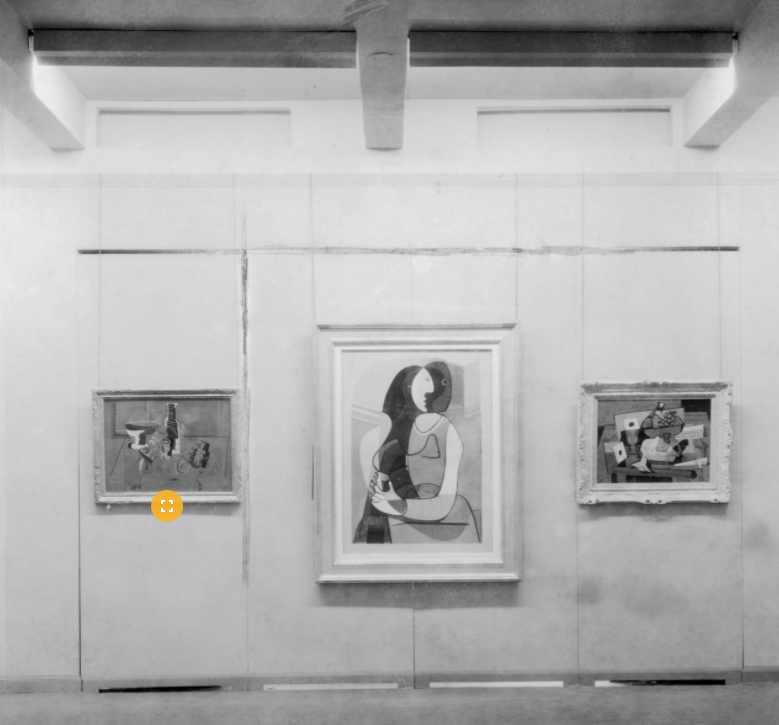
PAINTING IN PARIS was the title of the Museum of Modern Art’s third exhibition featuring works by Georges Braque, Georges Rouault, Pablo Picasso, Joan Miró, Marc Chagall, Robert Delauney, Fernand Leger, Henri Matisse and Andre Derain among others. Image above is from the original exhibition at MOMA’s first home in the Heckscher Building at 730 Fifth Avenue. (MOMA)
Images above in color, from left, Pablo Picasso’s Green Still Life Avignon (1914) and Seated Woman (1927); Georges Braque’s Still life (1927). (MOMA/WikiArt)
Pemberton expressed enthusiasm for the show’s new works that contained few traces of the familiar…

 *  *  *

The King’s Speech

King George V was not known for his public speaking, but when he addressed the third meeting of the London Naval Conference it was a big deal, even to American listeners who for the first time heard his voice over broadcast radio, still a very new medium in 1930…
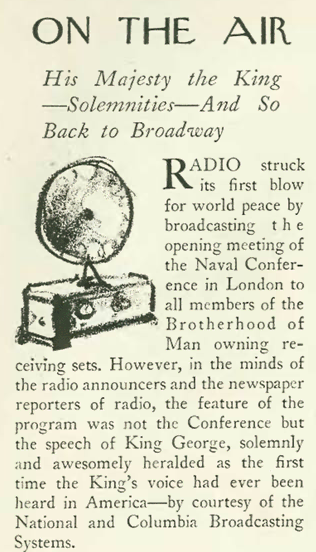
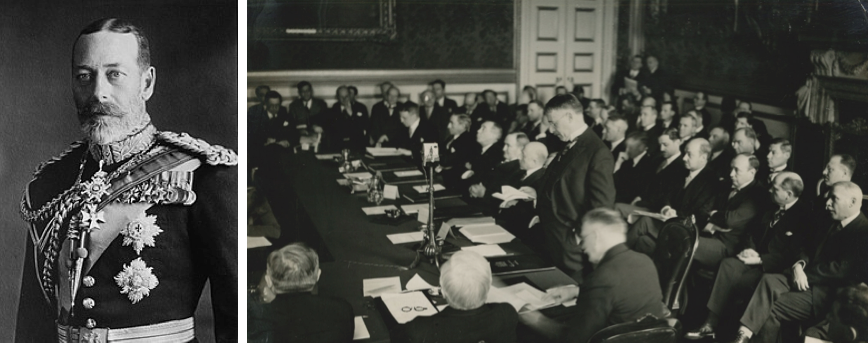
ON THE AIR…The voice of King George V (pictured here in 1923) was broadcast across the Atlantic for the opening of the London Naval Conference at St. James’s Palace in 1930. The third in a series of five meetings, the conference was formed with the purpose of placing limits on the naval capacity of the world’s largest naval powers. (Wikipedia/Churchill Archives Centre)

 *  *  *

Good Clean Fun?

In his theater review column, Robert Benchley lamented the state of burlesque shows at the National Winter Garden, where “leviathans of an earlier day” were being displaced by “agile wisps” in third-rate Broadway productions…

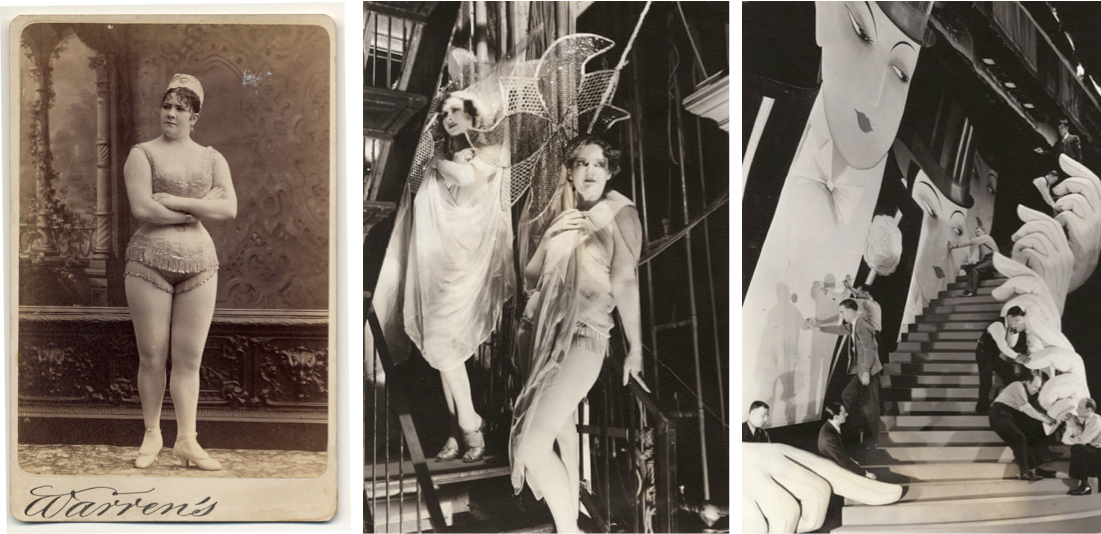
ON THE SHOULDERS OF GIANTS…from left, Viola Clifton, a fuller-figured 1890s burlesque dancer; center and right, Margaret Bourke-White photos from Minsky’s National Winter Garden, 1936. Theater critic Robert Benchley wrote that he missed the “leviathans” of an earlier age, who were replaced by girls who were nothing but “agile wisps.”(mashable.com/theguardian.com)

 *  *  *

From Our Advertisers

Just a couple of ads from the Feb. 1 issue, including this entry from the Shelton Looms offering advice on how one should appear among the Havana social set…

…and this ad from Harper’s Bazaar, also appealing to the smart set…
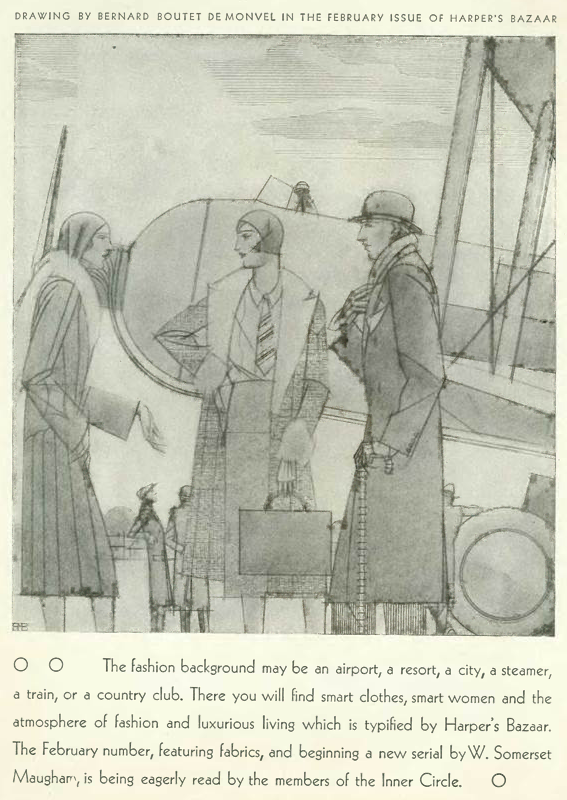
…our cartoons include this two-page illustration by Rea Irvin

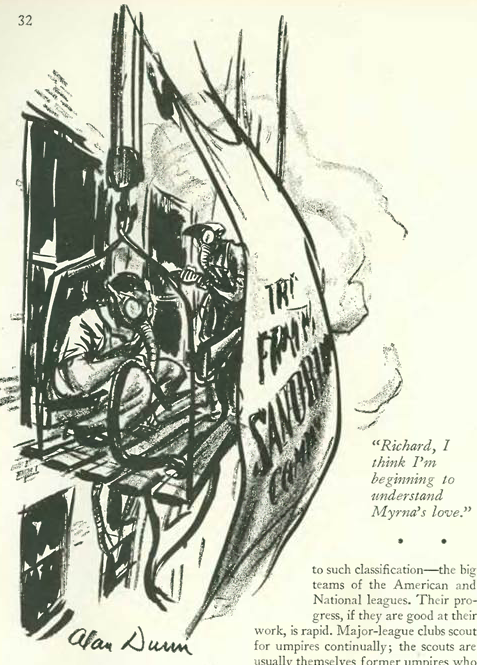
Alan Dunn’s look into the challenges of running a power plant…

…at the opera with Perry Barlow

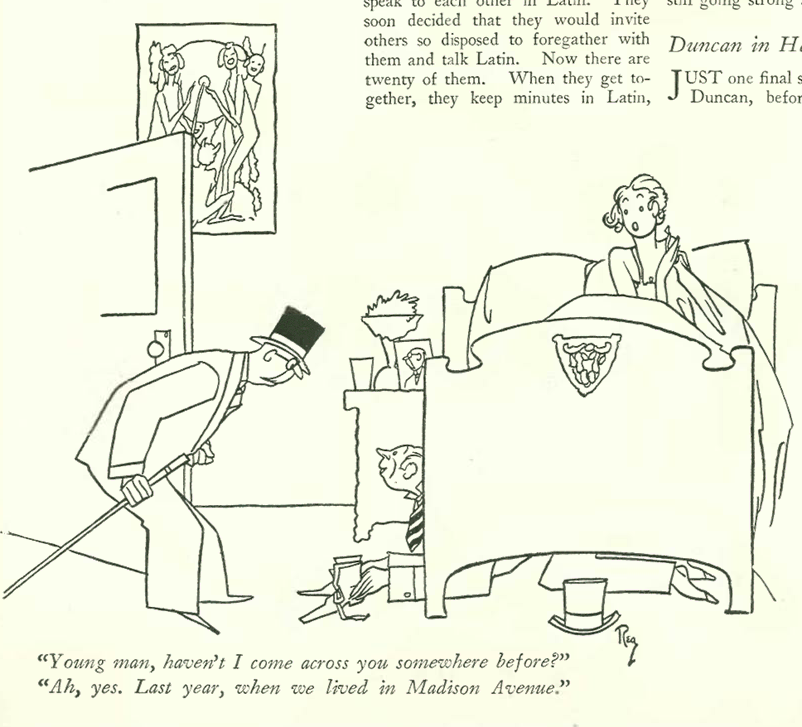
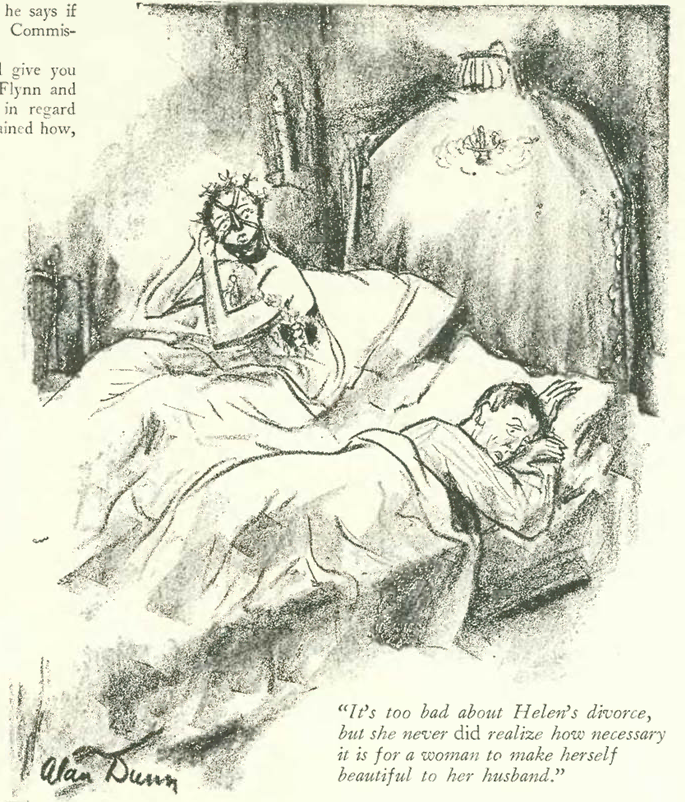
Gardner Rea and some bedroom hinjinks…

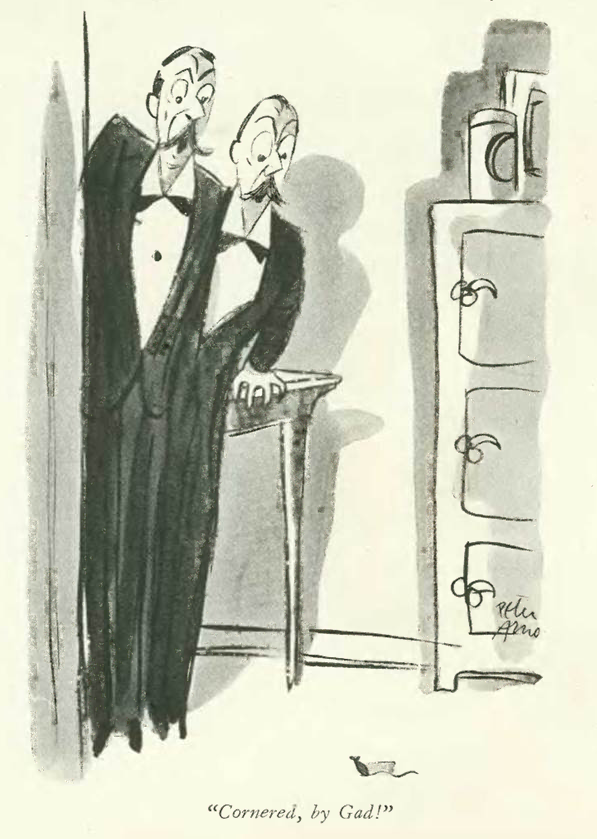
…man vs. mouse, by Peter Arno

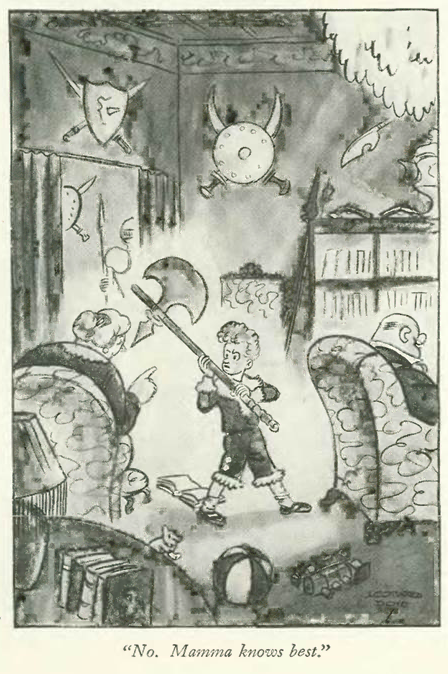
…and this by Leonard Dove, seemingly anticipating the work of Charles Addams

Next Time: We Smiled As We Danced…
 

Death Avenue Revisited

For nearly 100 years, giant steam locomotives (and later diesels) rumbled through the streets of Manhattan’s West Side, serving warehouses and industries via a route known as “Death Avenue.”

Jan. 18, 1930 cover by Constantin Alajalov (who apparently had just visited St. Moritz, home of the 1928 Winter Olympics).

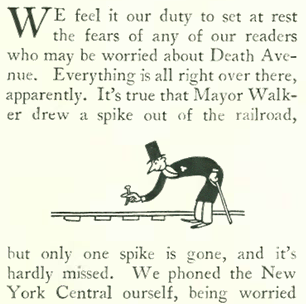
Beginning in 1846, freight trains began operating at street level along 10th, 11th and 12th avenues. When mixed with an ever-growing crush of pedestrians, wagons, cars and trucks — hundreds were killed or mutilated, many of them schoolchildren. One of these streets, 10th Avenue, earned the moniker “Death Avenue” for its large share of fatalities. Although protests over the unsafe rail lines had been going on for decades, it wasn’t until 1929 that an agreement was reached to build an elevated rail system (which is now the popular High Line elevated park). In late December 1929 Mayor Jimmy Walker pried out the first spike at 11th Avenue and 60th Street. In “Notes and Comment,” E.B. White wryly observed:

GOOD OLD DAYS…Freight trains were introduced to the west side warehouse district in 1846. Block-long trains would run through cross streets and congested traffic, maiming and killing along the way (image at left circa 1920). At some point in the late 19th century trains were required to send a man ahead on horseback waving a red warning flag (see images at right, circa 1900); nevertheless, in the decade 1890-1900 nearly 200 deaths were recorded, mostly schoolchildren from nearby tenements. 
WESTSIDE COWBOYs…Clockwise, from top left, a steam locomotive rumbles down 11th Avenue near 41st Street in the 1920s; men on horseback, known as the West Side Cowboys, rode ahead of the trains to warn pedestrians. Image at top right is of cowboy William Connolly on 11th Avenue in 1932; the last ride — George Hayde led the final ride of the West Side cowboys up 10th Avenue on March 24, 1941; aerial view of the High Line from 18th Street heading north. Opened in 1934, the elevated track lifted most freight train traffic 30 feet in the air. Today the High Line serves as a mile-and-a-half-long elevated park, and is one of New York’s biggest tourist draws. (Forgotten New York/Associated Press/New York Times/thehighline.org)

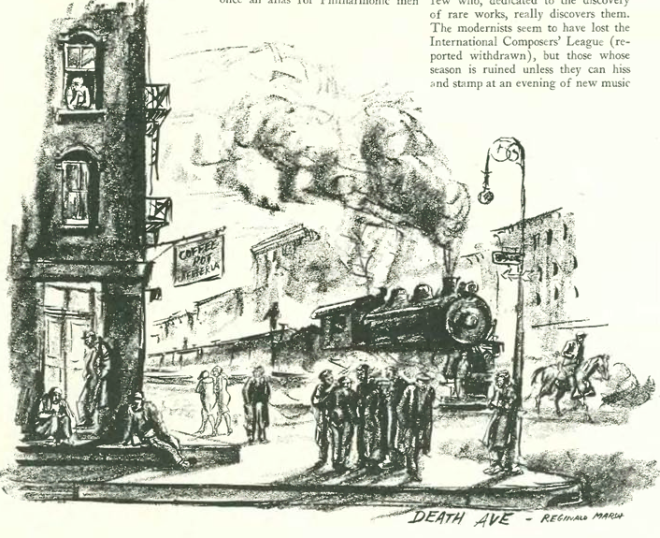
A New Yorker illustrator/cartoonist who spent a lot of time hanging around the working class neighborhoods on the West Side was Reginald Marsh. One of the first cartoonists employed by The New Yorker, Marsh was also a “Social Realist” painter who had studied with the Art Students League. The prevailing theme at the League was life among the working poor, the unemployed, and the homeless, especially after the market crash of 1929. For the Jan. 18 issue Marsh contributed this cartoon featuring a Death Avenue subject…

…more than two years earlier (the Nov. 5, 1927 issue) Marsh provided this illustration of life on Death Avenue…

 *  *  *

Birds of a Feather 

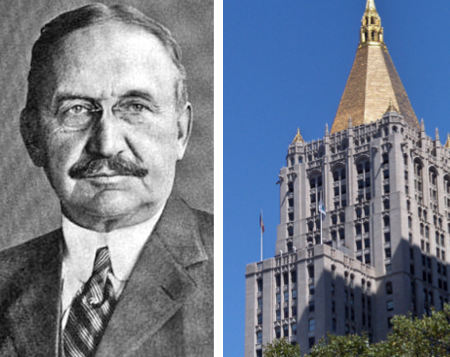
And speaking of the down and out, E.B. White commented on the thousands of panicked citizens who had flocked to the New York Life Insurance Company in search of some peace of mind under the wing of its leader Darwin P. Kingsley (1857-1932). Kingsley steered the company through the market crash relatively unscathed, thanks to its investments in government bonds and real estate, and not in common stocks.

DARWIN’S LAW…Darwin P. Kingsley saw the New York Life Insurance Company through the stock market crash. The company’s assets weathered the crash thanks to investments in government bonds and real estate, and not common stocks. At right, the New York Life Building at 51 Madison Avenue, designed by architect Cass Gilbert and opened in December 1928.(retropundit.wordpress.com)

 *  *  *

Oh Dear Me

As I’ve noted before, The New Yorker loved taking swipes at The New York Times, especially when the somewhat puritanical “Old Gray Lady” found it challenging to cover the more salacious side of life. In this case, according to E.B. White, it was the subject matter of a 1930 Broadway play Waterloo Bridge

LES BELLES IMPURES…Actress June Walker (pictured here circa 1920) portrayed chorus girl Myra Deauville in the 1930 Broadway play Waterloo Bridge. In the play Myra finds herself out of work and stuck in London during World War I. She resorts to, um, prostitution, to support herself. (IBDB)

 *  *  *

Nerd Alert

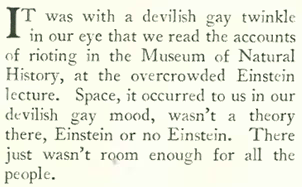
White also got a kick from reading accounts (presumably in the Times) about Albert Einstein’s “lecture” at the American Museum of Natural History. According to The New York Times’ Michael Pollak (F.Y.I., Aug. 10, 2012), “an unruly crowd of 4,500 stampeded through the (museum) to see a movie about Einstein’s work…it became known—relatively speaking—as the “Einstein riot.”

JUST CHILLIN’…Albert Einstein circa 1930. The scientist was safely elsewhere when a science-crazed mob stormed the doors of the American Museum of Natural History, which was screening a film on the theory of relativity. (AP)

 *  *  *

Not Ready For My Closeup

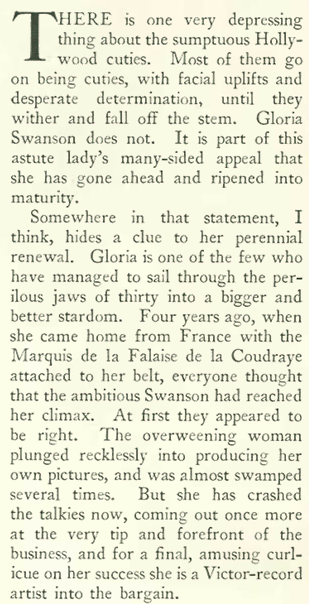
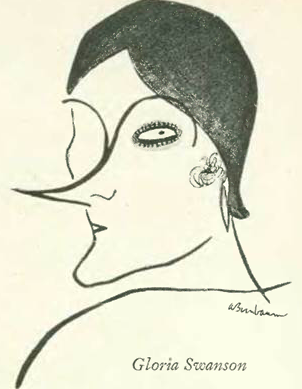
The actress Gloria Swanson (1899-1983) was a major star during the silent era who saw her career wane with the advent of the talkies, and then suddenly soar again with her unforgettable portrayal of reclusive silent film star Norma Desmond in the 1950 film Sunset Boulevard. In her profile of the actress, Helena Huntington Smith seemed to suggest that Swanson was something of an ugly duckling who managed to transcend her looks through a process of graceful maturation (Abe Birnbaum’s caricature notwithstanding). Some excerpts:

GLORIOUS FACES…Abe Birnbaum no doubt drew from images like these for his caricature of Gloria Swanson. From left, Swanson in a cloche hat in an undated photo; publicity photo for her 1928 film Sadie Thompson; publicity photo for 1929’s The Trespasser, Swanson’s first all-talking picture. (Pinterest/pixels.com)

 *  *  *

Good-Bye and Good Luck

Not too many 33-year-olds write autobiographies, but then again Robert Graves was no typical 33-year-old. Good-Bye to All That, which Graves later described as “my bitter leave-taking of England,” was reviewed in the Jan. 18 “Recent Books” column. Note in the first paragraph how the reviewer (A.W.S.) suggested that writing about World War I (which ended less than 12 years earlier) was getting better “as the shock of the actual catastrophe wears off.” This is not unlike the writings (and films) about Viet Nam that began to emerge in the 1980s and 90s. An excerpt:

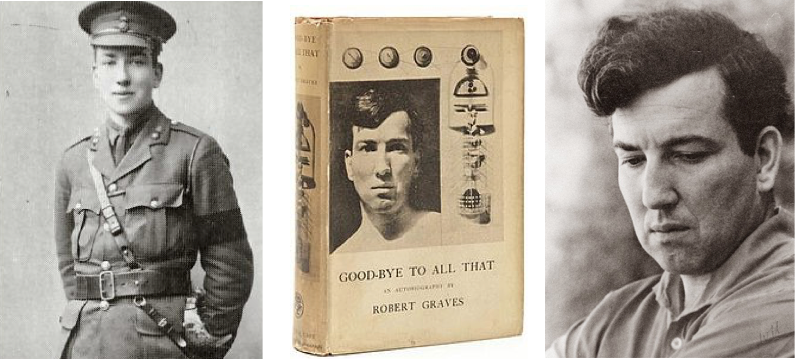
A LOT ON HIS MIND…from left, Robert Graves served in the 3rd Battalion of the Royal Welch Fusiliers in World War I (photo is probably from 1915); first edition of his autobiography Good-Bye to All That, which he published at age 33; Graves in 1935. (Oxford U/Wikipedia/fundaciorobertgraves.org)

 *  *  *

From Our Advertisers

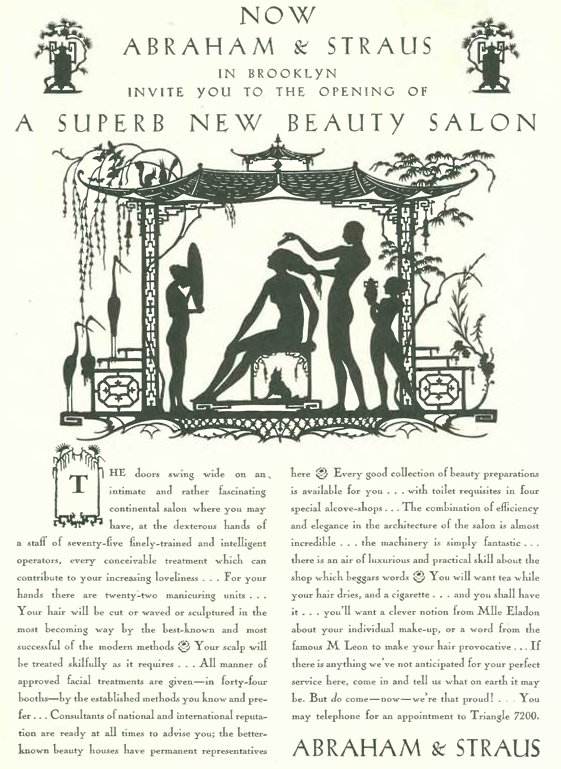
We begin with this elegant ad for a new art deco beauty salon at the Abraham & Straus department store on Fulton Street in Brooklyn…

…for reference, a photo of salon, from 1930…

…the Jan. 18 issue contained a slew of ads enticing New Yorkers to flee the winter and head south — smartly attired, of course — like the couple in the upper right hand corner who look fashionably disinterested as they head out for some “playtime” in Havana (love the man’s combo black tie and bucket hat)…

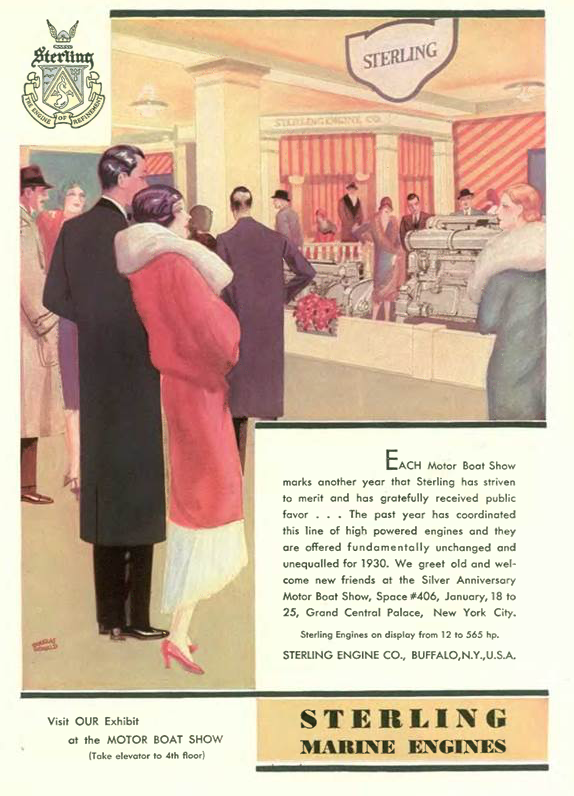
…and you have to hand it to the folks at Sterling, who put the chic into high-powered boat engines…

…this has to be one of the very few times, perhaps the only time, that a toilet seat was advertised in The New Yorker…note how the folks at the Church company played on consumers’ social anxieties, proffering the suggestion that an old toilet seat might be the one thing that lingers in the memories of your houseguests…

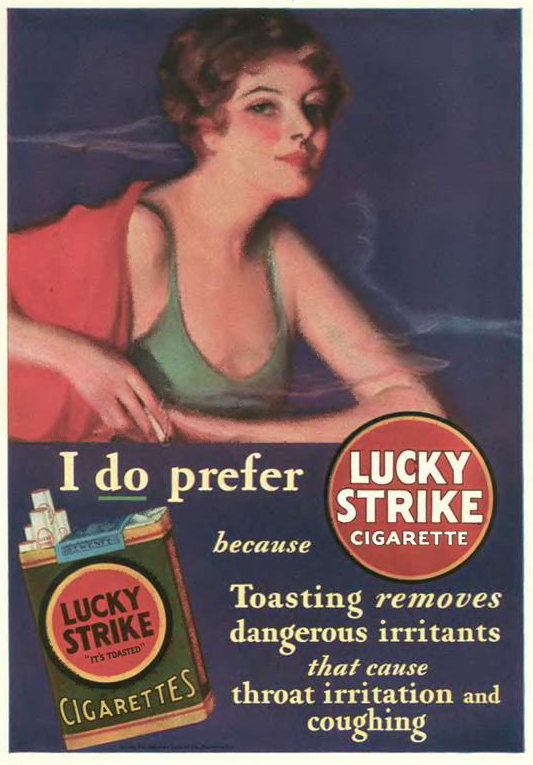
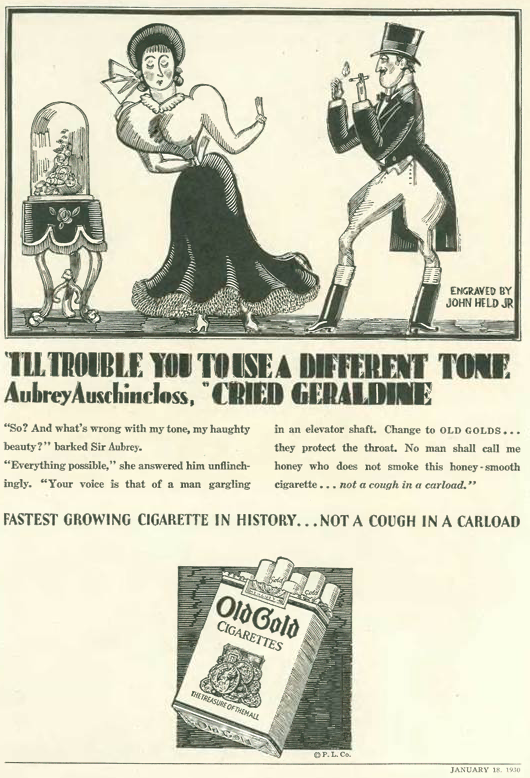
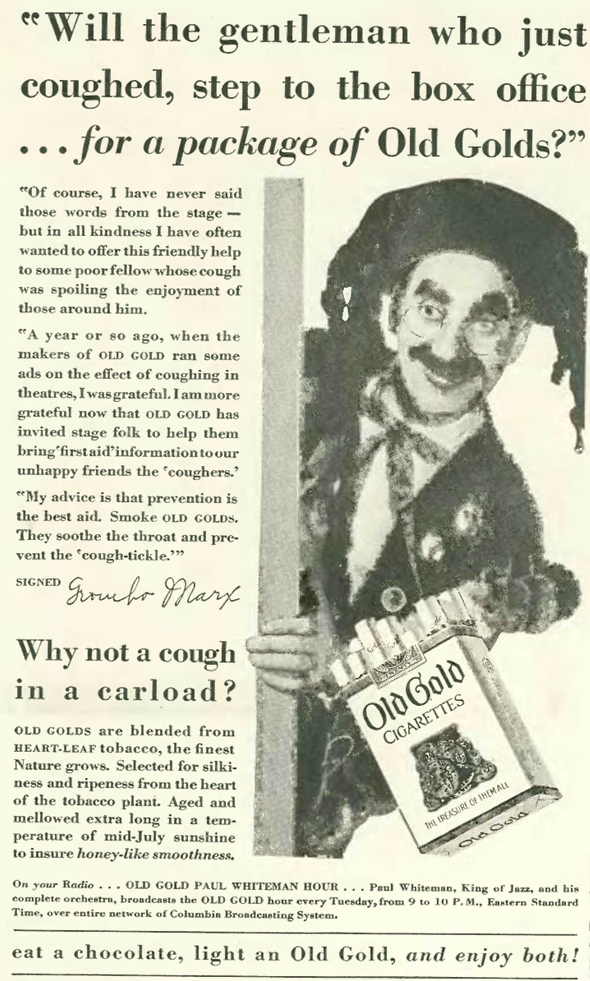
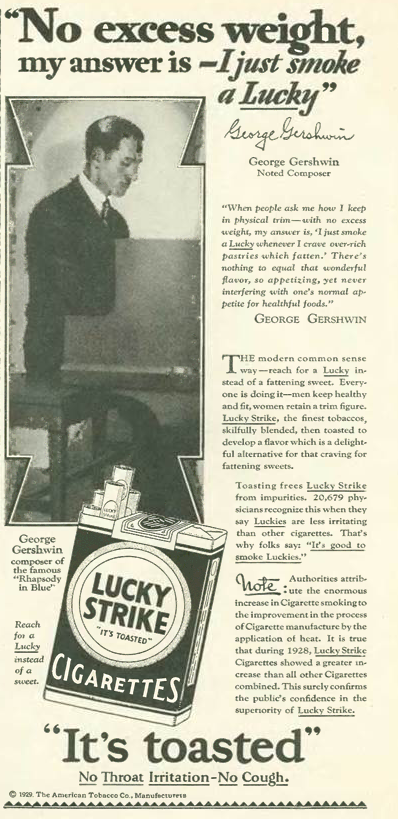
…of course a lot of people eased their anxieties by lighting up, something they didn’t have to worry about because they were told it was actually good for their health (the manufacturers of Old Golds, for example, claimed their cigarettes created a “smoke screen” that kept away colds and other “throat dangers”). Not to be left behind, the makers of Lucky Strikes claimed their “toasting” process removed “dangerous irritants”…

…speaking of Old Golds, cartoonist John Held Jr. picked up some extra pocket change with this “woodcut” illustration for the brand…

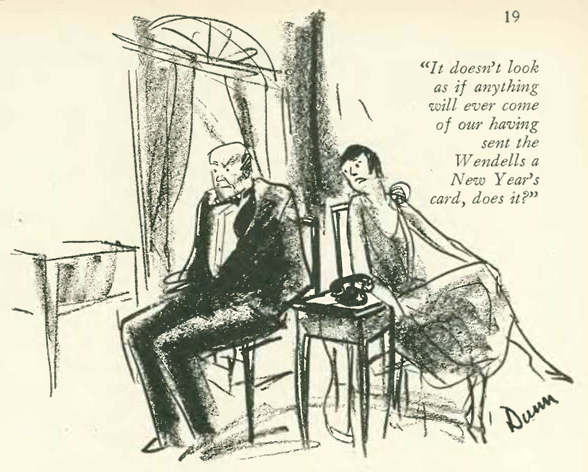
…as for Held’s fellow New Yorker cartoonists, we have some more social anxiety courtesy of Alan Dunn

…a bit of chit chat among society ladies…Barbara Shermund looked in on a pair down in Palm Springs…

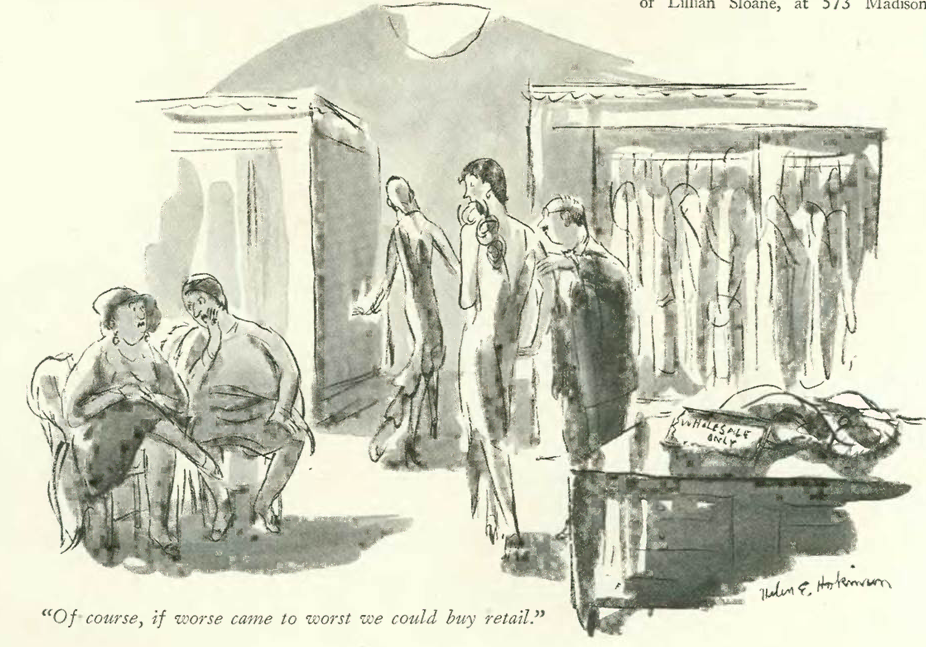
…while Helen Hokinson found her ladies contemplating new economic realities…

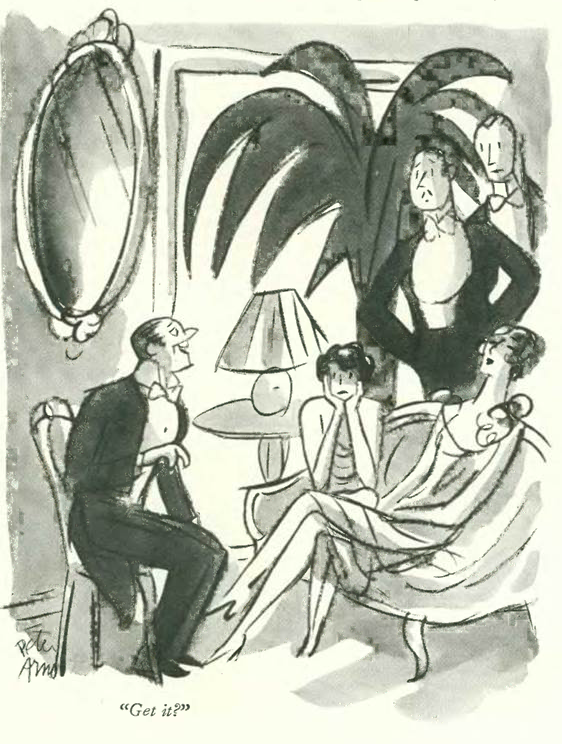
…and finally we have Peter Arno, and a punch line that failed to land…

Next Time: Strike Up The Band!

American Royalty

Although the United States declared its independence from British Empire nearly 250 years ago, the royal family and all of its requisite trappings persist in the American imagination like a phantom limb.

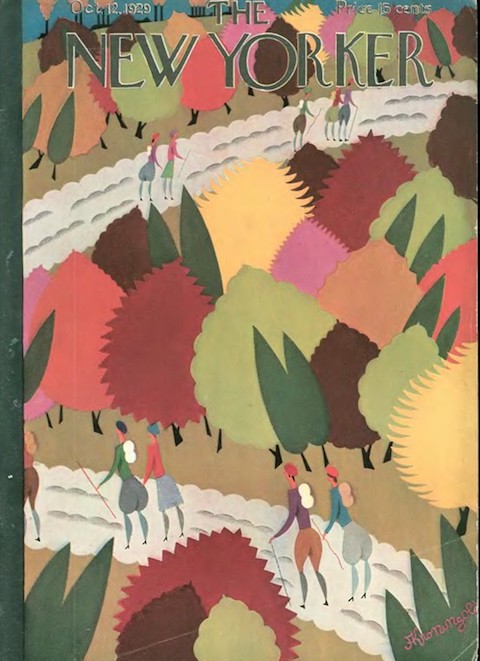
Oct. 5, 1929 cover by Theodore G. Haupt.

E.B. White observed as much in the “Notes and Comment” section of the Oct. 5 issue, in which he offered his views regarding the “pother” over the wedding of Calvin Coolidge’s son, John, to Florence Trumbull, the daughter of Connecticut Governor John Harper Trumbull

White could have looked no further than the pages of The New Yorker for further evidence to his claims. The bourgeois yearnings of its readers were reflected in countless advertisements laced with anglophilic pretensions. Here are examples from 1929 issues we have previously examined:

LIVE LIKE A BARON…Ads from The New Yorker of the 1920s often featured illustrations of regal, priggish types such as the couple above, deployed to sell everything from apartments and ginger ale…
…to no-frills automobiles and menthol cigarettes. No product was too pedestrian for the royal treatment.

Writing under the pseudonym “Guy Fawkes,” Robert Benchley commented further on the Coolidge-Trumbull nuptials in the “Wayward Press” column:

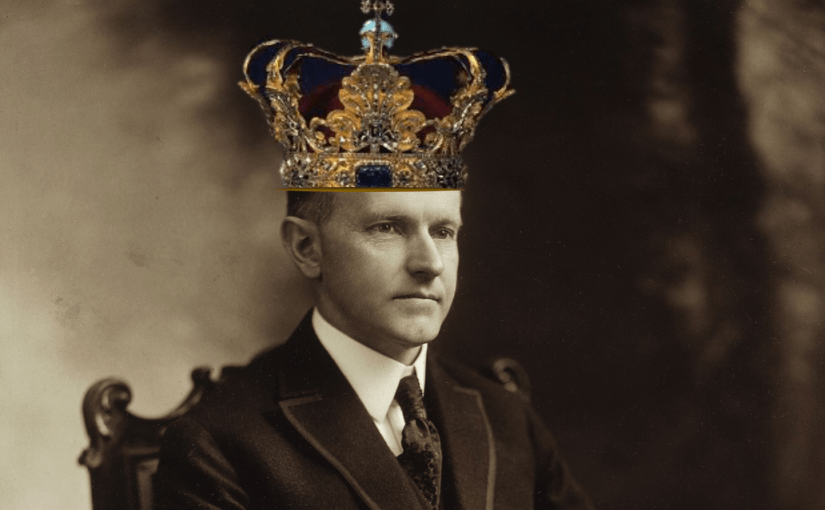
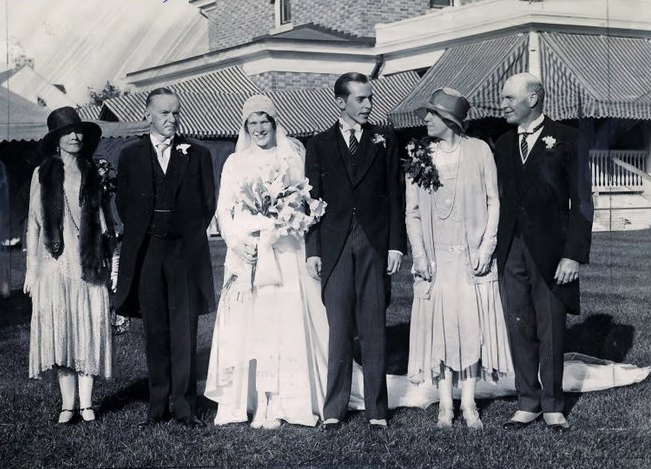
HEY CAL, IT’S A WEDDING, NOT A FUNERAL…The former U.S. President Calvin Coolidge was known as “Silent Cal” for good reason, given his reserved demeanor that rarely produced a smile (although he apparently had a dry wit). He poses here at the wedding of his son, John. Left to right are Grace Goodhue Coolidge, President Coolidge, Florence Trumbull Coolidge, John Coolidge; Maud Pierce Usher Trumbull, and Gov. John Trumbull. (patch.com)
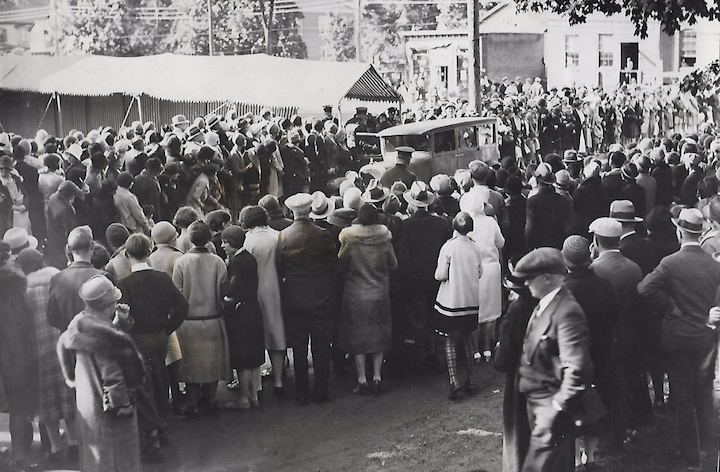
NOT EXACTLY KING’S ROAD…Onlookers line the street near the Congregational church in Plainview, Conn., hoping for a glimpse of the bride and groom, who were united in a simple ceremony. (Associated Press)
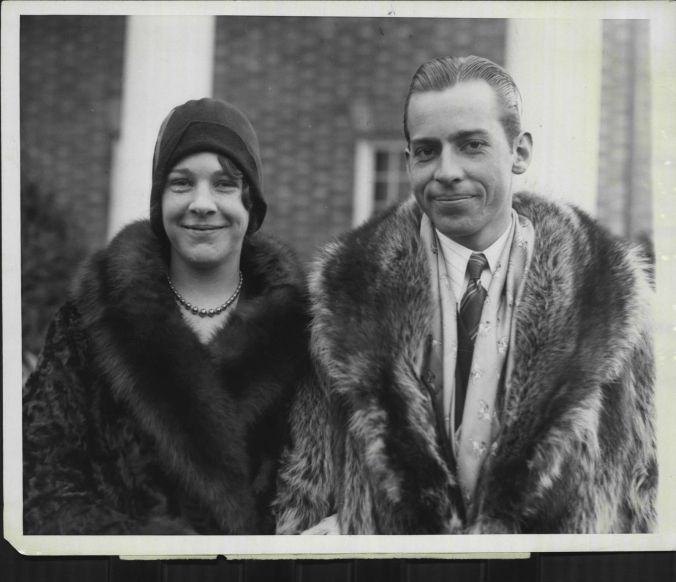
CUTE COUPLE…Florence Trumbull and John Coolidge during their engagement, 1928. (crackerpilgrim.com)

 *  *  *

Modest Mussolini

We go from famous faces to infamous ones, namely the Italian dictator Benito Mussolini, aka Il Duce, who received the adoration of his public while trying to remain inconspicuous at the cinema. “Talk” recounted…

NOW PICTURE HIM UPSIDE DOWN…A 1929 postcard image of the once-revered Italian dictator Benito Mussolini. Sixteen years later he would be shot by his own people and strung up by his feet from the roof of a Milan gas station. (worthpoint.com)

 *  *  *

Going Down

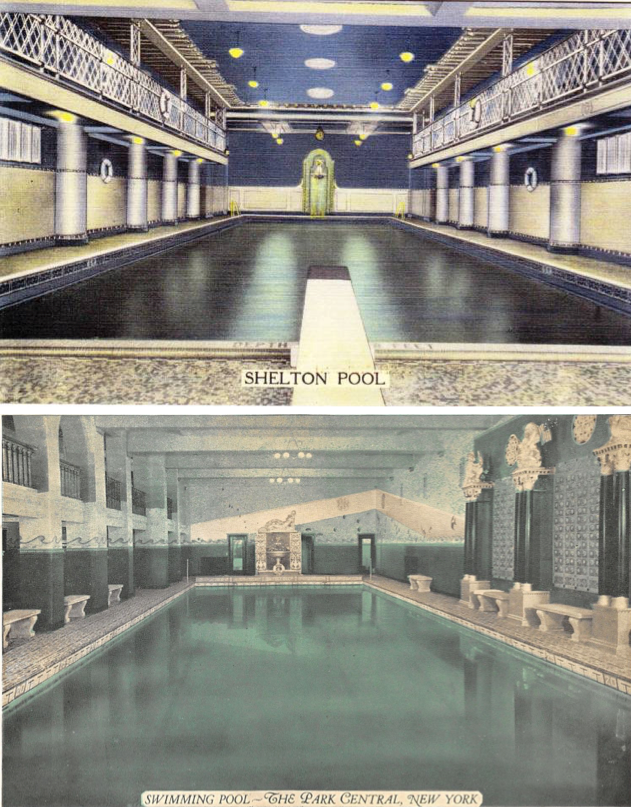
“Talk” also commented on the growing trend for high-rise apartments to provide swimming pools and other amenities below street level:

TAKING THE PLUNGE DOWN UNDER…Few indoor swimming pools were available to New Yorkers during the 1920s. Two of the nicer ones were found underground at the Shelton Hotel (above) and the Park Central. Sadly, both pools no longer exist. In 2007 the Shelton’s pool was removed and the cavernous space was divided into three levels. I’m not sure when Park Central’s disappeared, but it’s fate was doubtless similar to the Shelton’s.(daytoninmanhattan.blogspot.com/hippostcard.com)

 *  *  *

How About a Catch?

As I’ve noted on previous occasions, The New Yorker of the 1920s all but ignored major league baseball. The magazine gave regular coverage to seemingly every sport, from hockey and college football to polo and yacht racing, but regular coverage of baseball was nonexistent, even when the Yankee’s Murderers’ Row (Ruth, Gehrig among others) won back-to-back World Series titles in 1927-28.

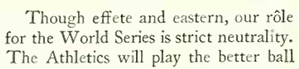
Still no coverage in the Oct. 5 issue, but the sport did get a brief mention in Howard Brubaker’s “Of All Things” column…

…and the issue was filled with baseball imagery, including the cover…

The Oct. 5 issue was filled with baseball-related items, but no actual coverage of the games. Images from the issue included, from left, the cover by Theodore Haupt; a filler sketch by Constantin Alajalov; and a Johan Bull illustration of umpire Bill Klem for the issue’s “Profile” section.

 *  *  *

In a Sentimental Mood

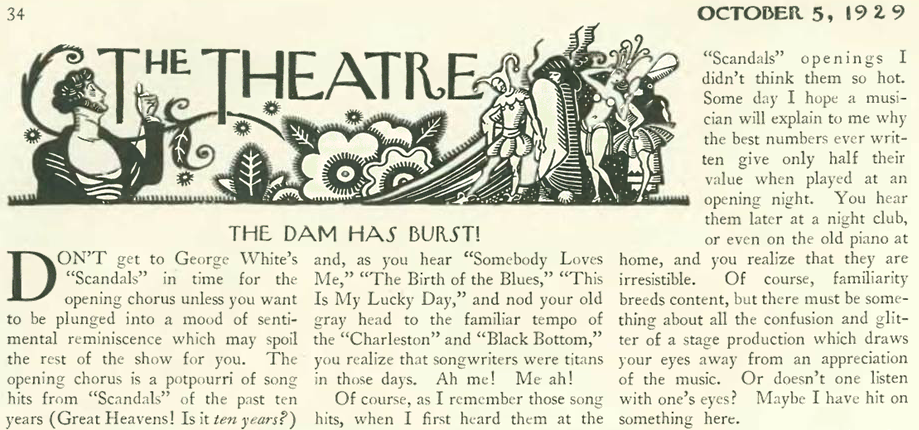
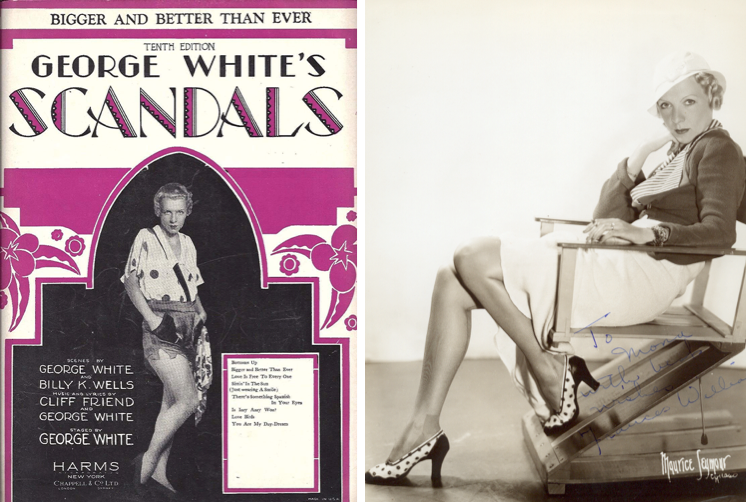
Robert Benchley checked out George White’s latest version of his Scandals revue at the Apollo Theatre, and found the sometimes risqué show to be in a sentimental mood…

BETTER SENTIMENTAL THAN DEPRESSED…The chanteuse Frances Williams (pictured on the show’s sheet music and at right) likely provided the only spark to the 1929 edition of George White’s Scandals. (amazon/psychotronicpaul.blogspot.com)

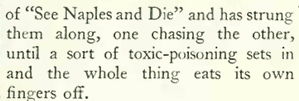
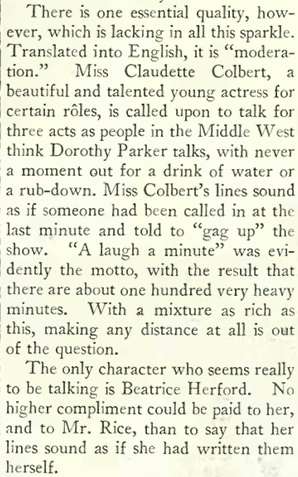
Benchley also looked in on Elmer Rice’s latest, See Naples and Die, featuring veteran English actress Beatrice Herford and the up-and-coming Claudette Colbert

VETERAN AND ROOKIE…Veteran English actress Beatrice Herford and the up-and-coming Claudette Colbert headlined Elmer Rice’s See Naples and Die. Colbert (pictured at right in a 1928 Broadway publicity photo) would go on to massive stardom in the 1930s. (Alchetron/Wikipeda)

Benchley applauded the veteran Herford’s performance, but found the otherwise reliable Colbert miscast as a wisecracking, Dorothy Parker type (Benchley, as we know, was close friends with Parker, so he knew what he was talking about)…

*  *  *

An (Ugly) American in Paris

Off to Paris, we find correspondent Janet Flanner joining with Parisians in deriding the behavior of American tourists, who were on a course to drain every last drop from the ÎledeFrance before departing for the bone-dry USA:

DRINKING IN THE SIGHTS…American tourists at a Parisian café, circa 1920s. (tavbooks.com)

*  *  *

Party Pooper

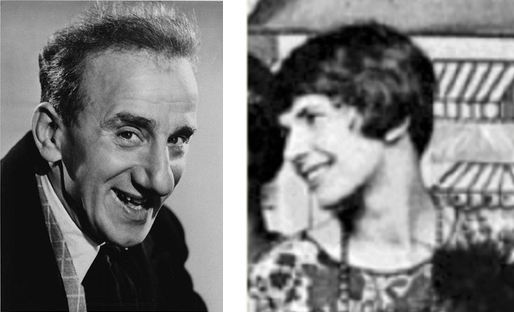
With her infant child (Patricia Arno) at home, it is doubtful Lois Long was seeing as much nightlife as she did during her first weeks at The New Yorker, when “nights were bold.” And indeed, her nightlife column “Tables for Two” would end in June 1930…for awhile anyway. Her Oct. 5 column took a cursory spin through the various nighttime offerings, ending on this note regarding a fan letter and a message from comedian Jimmy Durante:

THE GREAT SCHNOZZOLA Jimmy Durante brought a smile to the face of Lois “Lipstick” Long. 

 * * *

From Our Advertisers

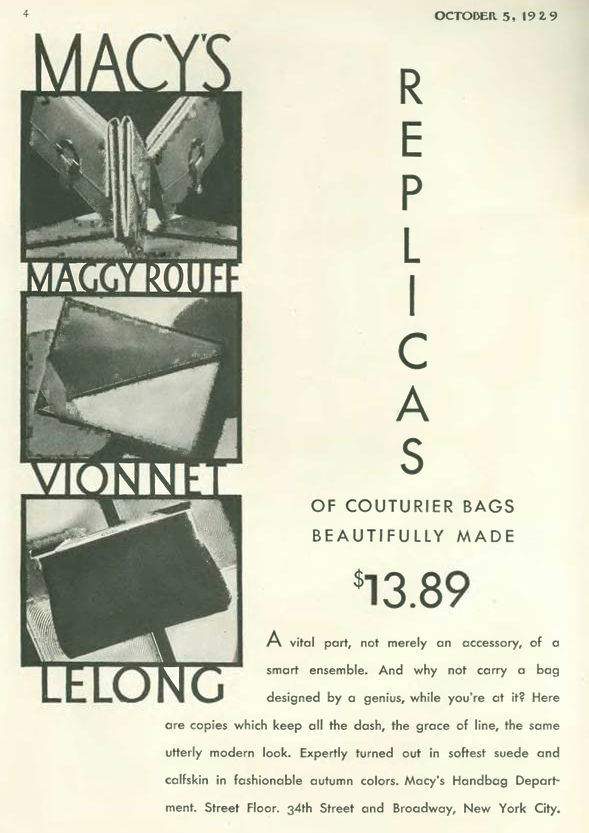
With the latest Paris fashions splattered across newstands all over Manhattan, retailers scrambled to get “replicas” to consumers…Macy’s had “couturier bags”…

…the Hollander Dressmaking Department was ready to make a perfect copy of Patou’s “Quiproquo”…

…and this Chanel frock could be had in misses’ sizes for $145 (roughly equivalent to about $2K today)…

…Philip Morris hadn’t yet discovered the “Marlboro Man,” and were still hawking their cigarettes through a “distinguished handwriting contest.” The latest winner was Edmund Froese

…who would go on to become a popular mid-century landscape painter…

Port of New York, by Edmund Froese (undated)

…another artist in the midst of our ads is Carl “Eric” Erickson, who created these lovely images for R.J. Reynolds that would induce people to take up the habit with a Camel…

…and then we have some rather unlovely ads from the back pages, including these two that would not go over well with today’s readers…

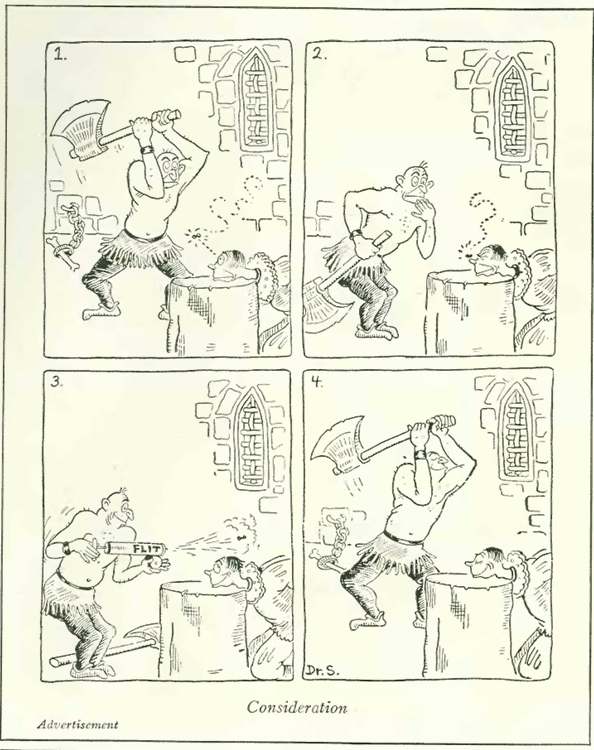
…or this from Dr. Seuss, still sharpening his skills with Flit insecticide…

…or this ad from Abercrombie & Fitch, wrong on so many levels…

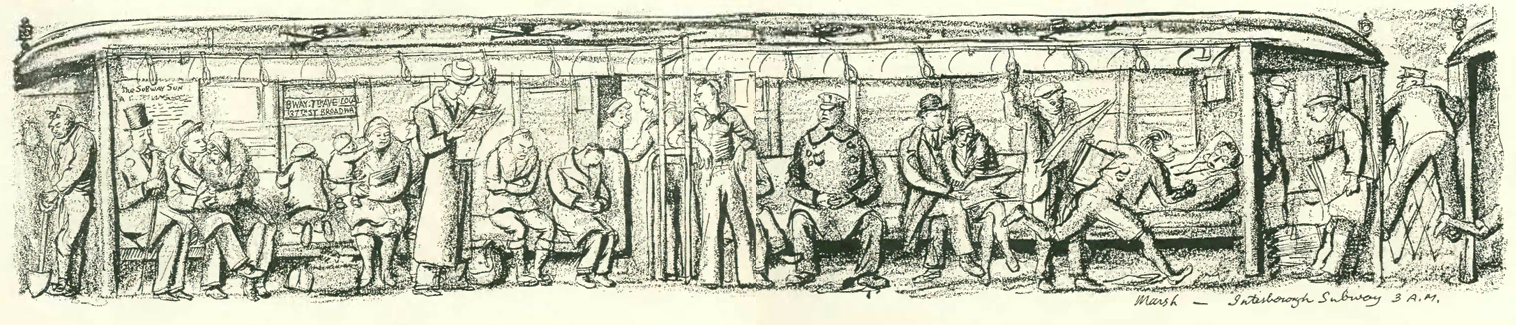
…on to happier things, here’s an illustration by Reginald Marsh that ran along the bottom of “Talk of the Town”…(click to enlarge)

Alan Dunn found love in the air above the streets of Manhattan…

…and Leonard Dove revealed the hazards of apartment rentals…

Next Time: Race to the Sky…

Prophecies of 1929

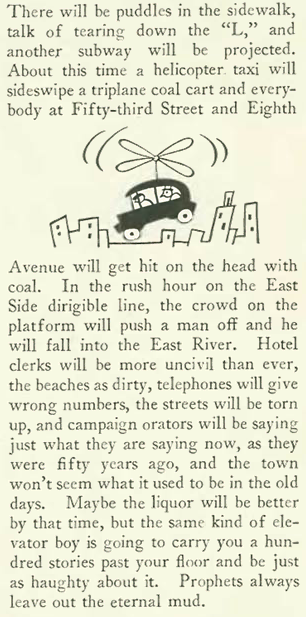
E.B. White gazed 50 years into the future in the Sept. 21, 1929 issue, predicting that New York City would be much the same if not a little worse by the time the calendar turned to 1979.

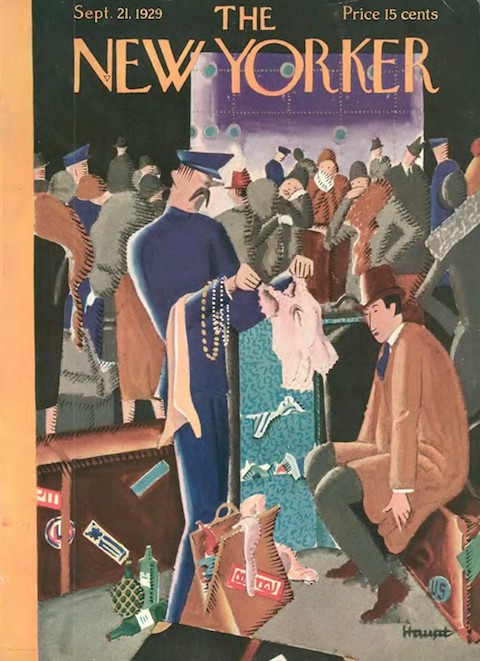
Sept. 21, 1929 cover by Theodore G. Haupt.

White dismissed the popular notion that the future would be one of push-button happiness and gleaming white cities. And as it turned out, he was mostly right on the mark with his predictions:

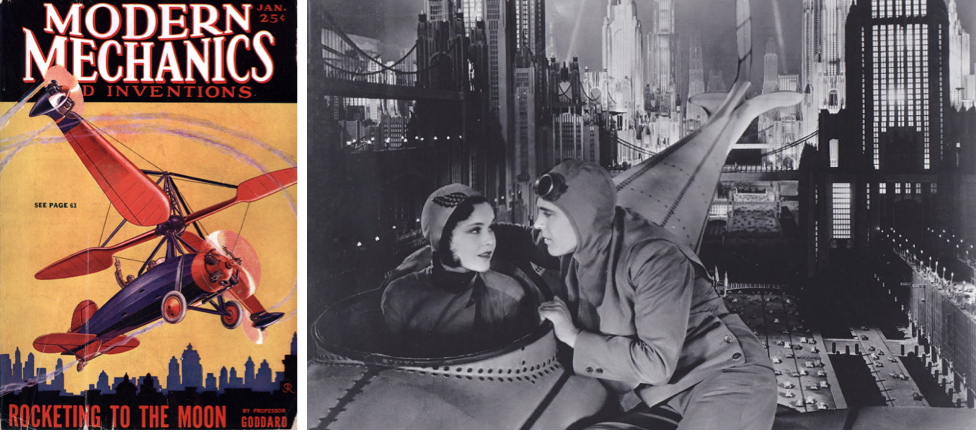
LOVE IS IN THE AIR…Autogyros (as illustrated on a 1930 cover of Modern Mechanics) were often seen as the future of transportation in the 1920s and 30s; Maureen O’Sullivan (as “LN-18”) and John Garrick (“J-21”) glide above 1980 Manhattan in 1930’s Just Imagine. (modernmechanix.com/pre-code.com)

Instead of the antiseptic fantasy world predicted in such movies as 1930’s Just Imagine (a futuristic musical set in 1980), White correctly foresaw a city that, despite technological advances, would still be a gritty rat race. And if you lived in New York City in 1979 (I was but a visitor then, as now), you would have found a city that indeed was quite dirty and crime-ridden (check out the 1979 movie The Warriors to get a sense of how Hollywood perceived the city at that time). As White observed, “Prophets always leave out the eternal mud”…

A LOT OF HOT AIR…In addition to autogyros, futurists in the 1920s and 30s also saw dirigibles as integral to future transportation. At top left is an illustration of a solar-powered aerial landing field atop a dirigible on the cover of Modern Mechanix magazine, October, 1934; top right, Manhattan in 1980 as depicted in the the 1930 film Just Imagine; bottom right, workers dismantling the Third Avenue Elevated line in 1955; bottom left, Times Square in 1979. (airships.net/IMDB/gothamist.com/viewoftheblue.com)

 *  *  *

Cradle of Civilization

Dorothy Parker took aim at ugly Americans abroad in a casual titled “The Cradle of Civilization.” In these excerpts, Parker commented on the pretensions of young New Yorkers in France, including their ridiculous costumes…

…their bad French, and their even worse manners…

WELL, THEY GOT AWAY WITH IT…Actors Leslie Howard and Ingrid Bergman don the look of French fishermen during the filming of Intermezzo: A Love Story, in 1938. Howard and Bergman were supposed to look like a couple visiting the French Riviera, but in reality it was all filmed near Hollywood. The film was Bergman’s Hollywood debut. (Pinterest)

 *   *   *

A Penny Saved

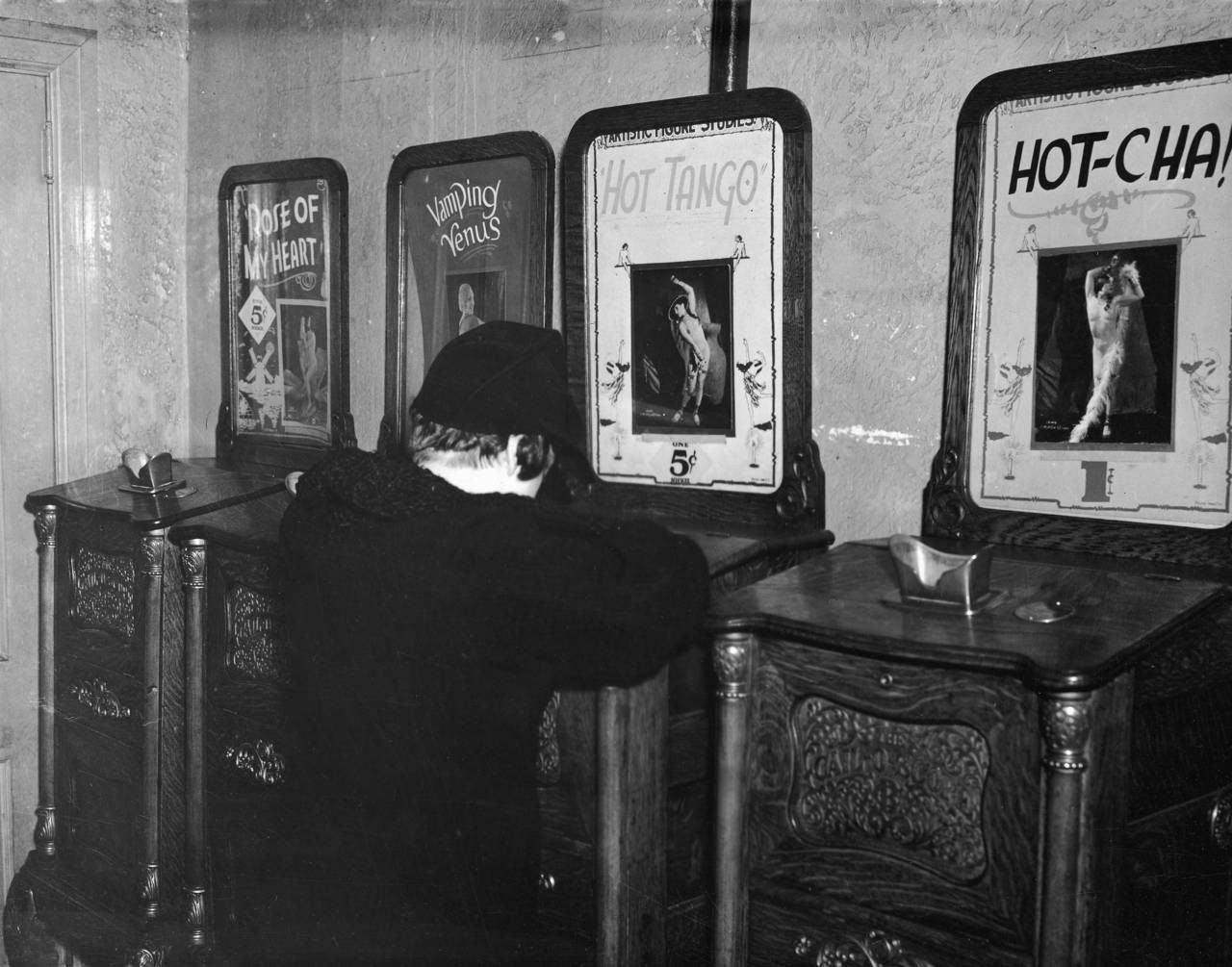
Back stateside, Wolcott Gibbs looked in on the dying art of the penny-arcade peepshow, and expressed his disappointment with the quality of that product in general…

DON’T JUDGE A PEEP BY ITS COVER…A patron checks out “Hot Tango” at a penny peepshow parlor of the 1920s. (Pinterest)

Gibbs seemed particularly miffed by a film with the misleading title “For Men Only”…

 *  *  *

Uncle Jed

Jed Harris (1900-1979) was a wunderkind of Broadway, producing and directing 31 shows between 1925 and 1956. Before he turned 28 he produced a record four consecutive Broadway hits over the course of 18 months (including the 1928 smash hit The Front Page), and so it was time for some rest. “The Talk of the Town” reported…
Although it was rumored Harris would retire at age 30, he would instead return in the spring of 1930 with a production of Anton Chekhov’s Uncle Vanya, and continue producing on Broadway through the 1950s.

WUNDERKIND…A 1928 portrait of Jed Harris that was featured on the Sept. 3, 1928 cover of Time magazine. (Wikipedia)

 *  *  *

Dueling Cassandras

About a month before the big stock market crash we find this curious little item in Howard Brubaker’s “Of All Things” column…

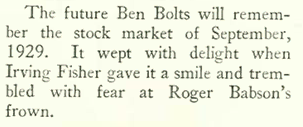
…Considered the first “celebrity economist,” Irving Fisher stated in September 1929 that the stock market had reached “a permanently high plateau,” while around the same time (Sept. 5, 1929) rival economist Roger Babson warned in a speech that “sooner or later a crash is coming, and it may be terrific.” Note: “Ben Bolts” refers to a character in a popular 1842 poem that became an oft-parodied popular song. Each stanza begins with a variation of “Oh don’t you remember…”

 *  *  *

Parental Advisory

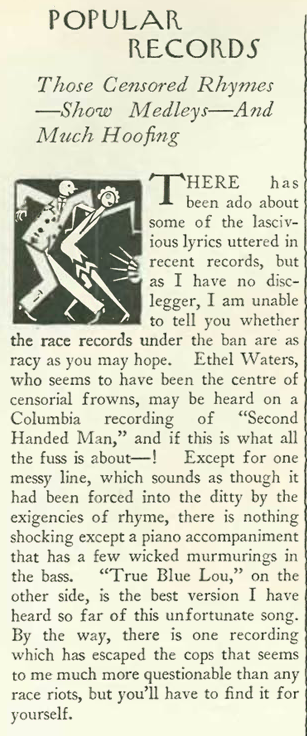
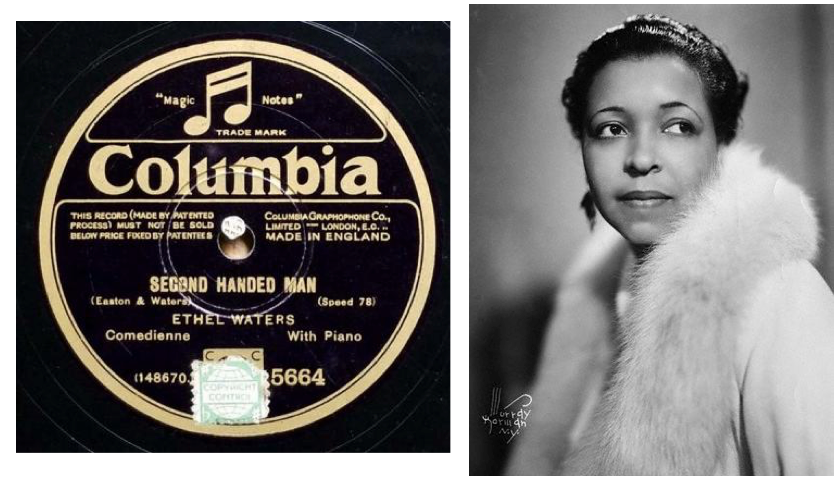
Fifty-five years before Tipper Gore and the Parents Music Resource Center pushed the music industry to place warning labels on records containing explicit lyrics, there was much ado about “lascivious lyrics” uttered on “race records” — the term referred to 78-rpm records marketed to African Americans from the 1920s and 1940s. The Sept. 21 “Popular Records” column looked at the controversy surrounding Ethel Waters’ “Second Handed Man,” and didn’t find any…

MUCH ADO…Ethel Waters (circa 1930) and her recording of “Second Handed Man.” (discogs.com/YouTube)

 *  *  *

New Kids on the Block

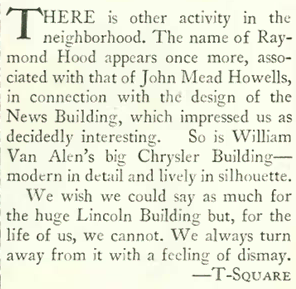
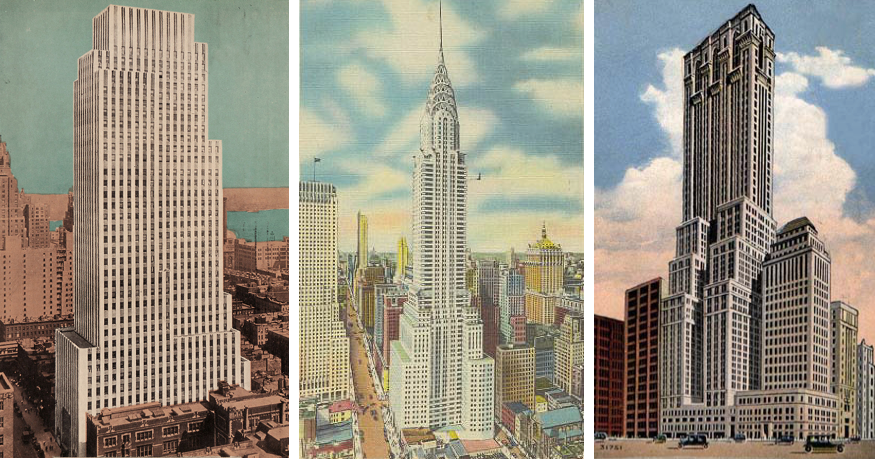
Architecture critic George S. Chappell (aka “T-Square”) concluded his Sept. 21 column with praise for the designs of the yet-to-be-built Daily News and Chrysler buildings, but expressed dismay at the recently completed Lincoln Building…

BAD COMPANY…New Yorker architecture critic George S. Chappell was excited about the designs for the Daily News Building (left) and Chrysler Building (center), but the Lincoln Building left him wanting. No doubt its gothic topper seemed dated in contrast to the sleek lines of the other buildings. (nyc-architecture.com)

 *  *  *

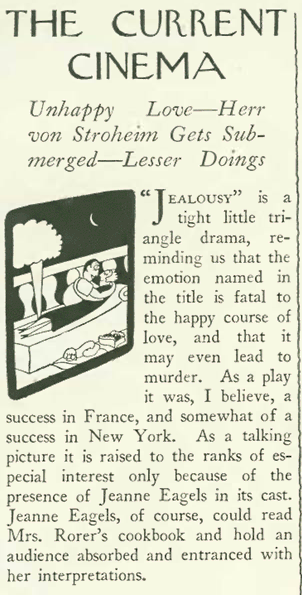
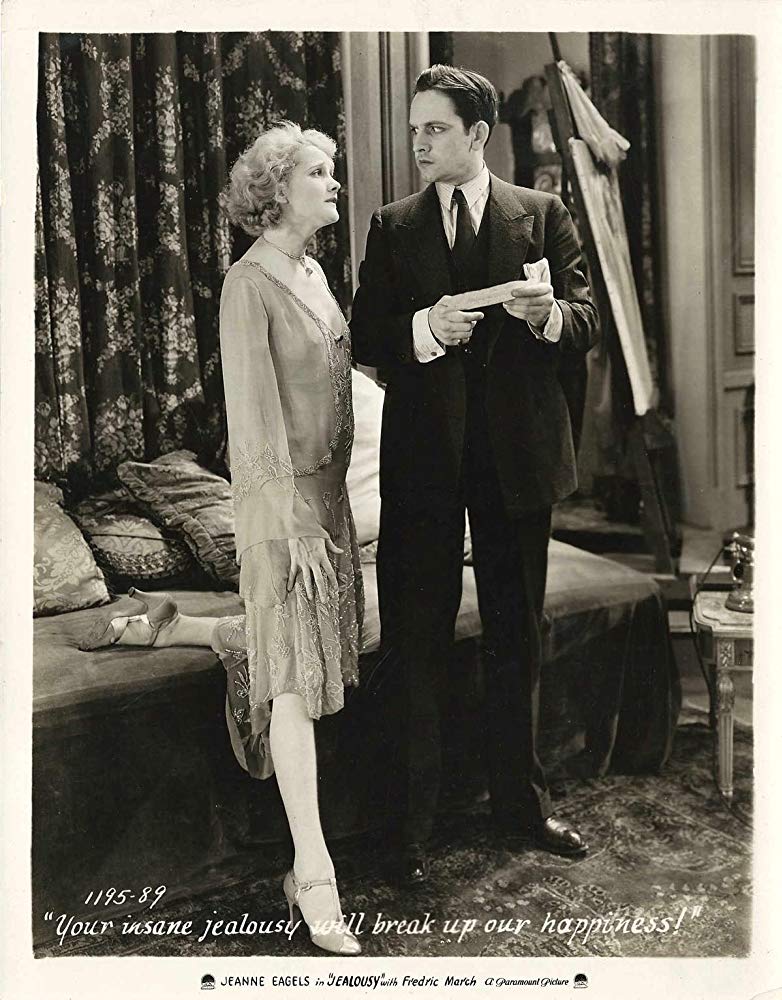
Movie critic John Mosher took in a couple of new films including Paramount’s 1929 pre-Code drama Jealousy…

FINAL CURTAIN…Jeanne Eagels and Fredric March in a publicity photo for Jealousy. Eagels died of a drug overdose on Oct. 3, 1929, just days after Mosher’s review appeared in The New Yorker. (IMDB)

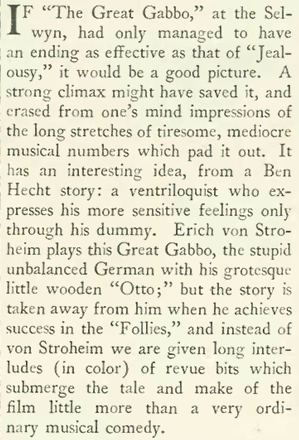
…and Mosher also reviewed the musical drama The Great Gabbo, which was derived from a story by occasional New Yorker contributor Ben Hecht

WHO ARE YOU CALLING DUMMY?…Erich von Stroheim has issues with his co-star in The Great Gabbo. (MoMA)

 *  *  *

From Our Advertisers

What appeared to be an unassuming ad from General Motors was actually a plan for world domination, at least in the area of ground transportation. GM gobbled up a number of car companies in the 1920s (see the ad’s fine print) as well as shares in power plants and home appliances. It would overtake Ford in sales in the late 1920s, and thanks to propaganda efforts including those illustrated in the ad below, it would lead a streetcar removal conspiracy that would destroy intercity train transport systems across the U.S. (and convert them to GM buses, naturally)…

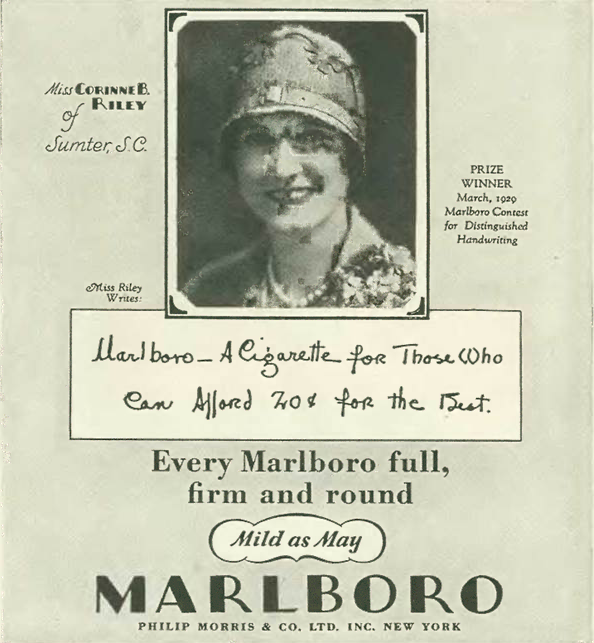
Here we have yet another “distinguished handwriting contest” ad from the makers of Marlboro, this time exploiting the efforts of Corinne B. Riley of Sumter, S.C….

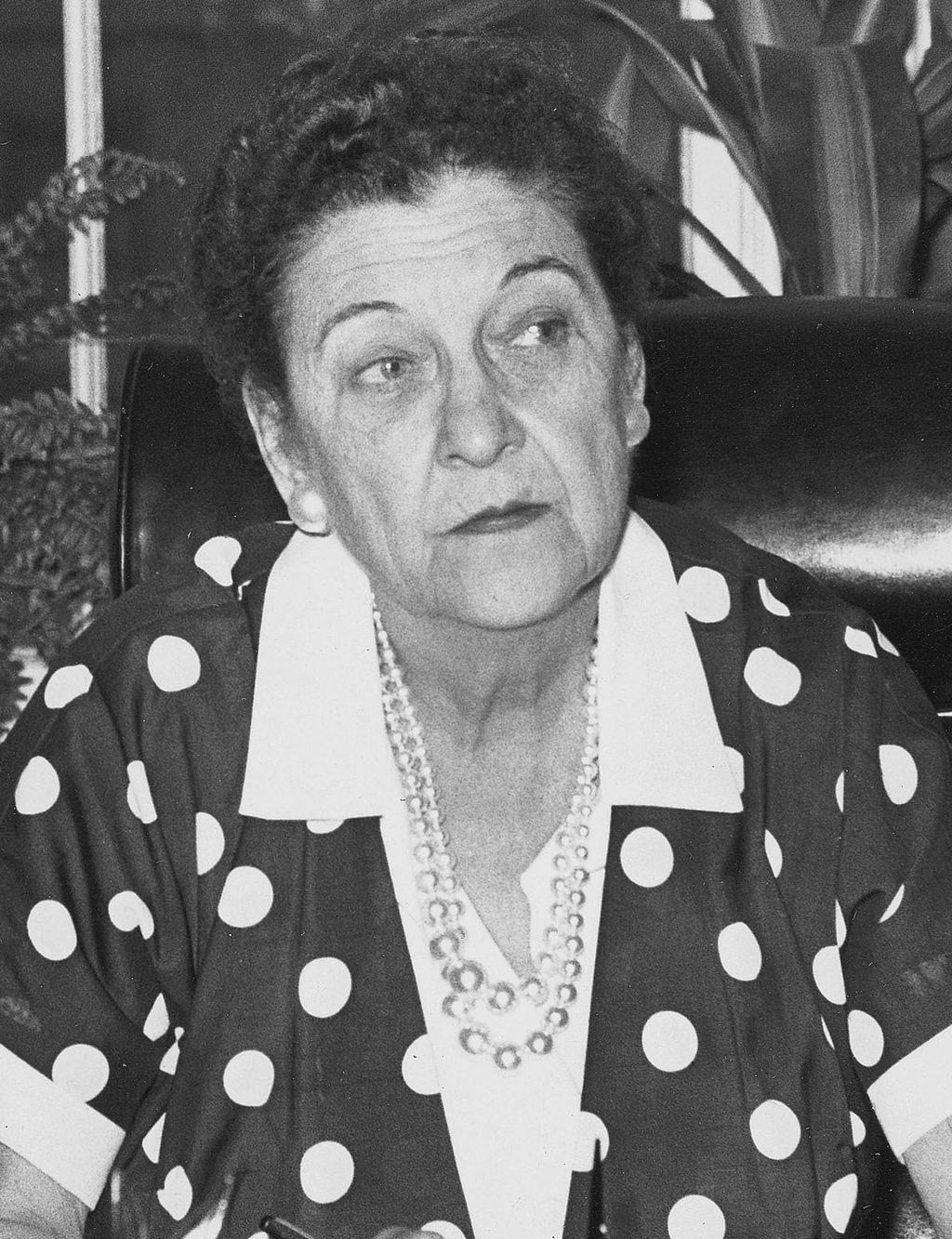
…Riley would win more than a handwriting contest, however. She would be elected as a Democrat to Congress in 1962 to fill a vacancy left by her husband, Congressman John Jacob Riley.

Corrine B. Riley in 1962. (Wikipedia)

On to our illustrators and cartoons, we begin with this two-page drawing by Reginald Marsh that appeared along the the bottom of “Talk of the Town”…

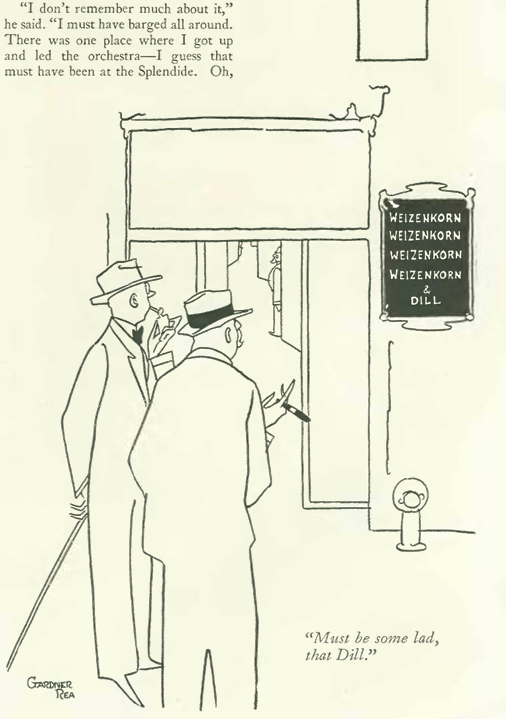
Gardner Rea lent his spare style to this peek into Wall Street…

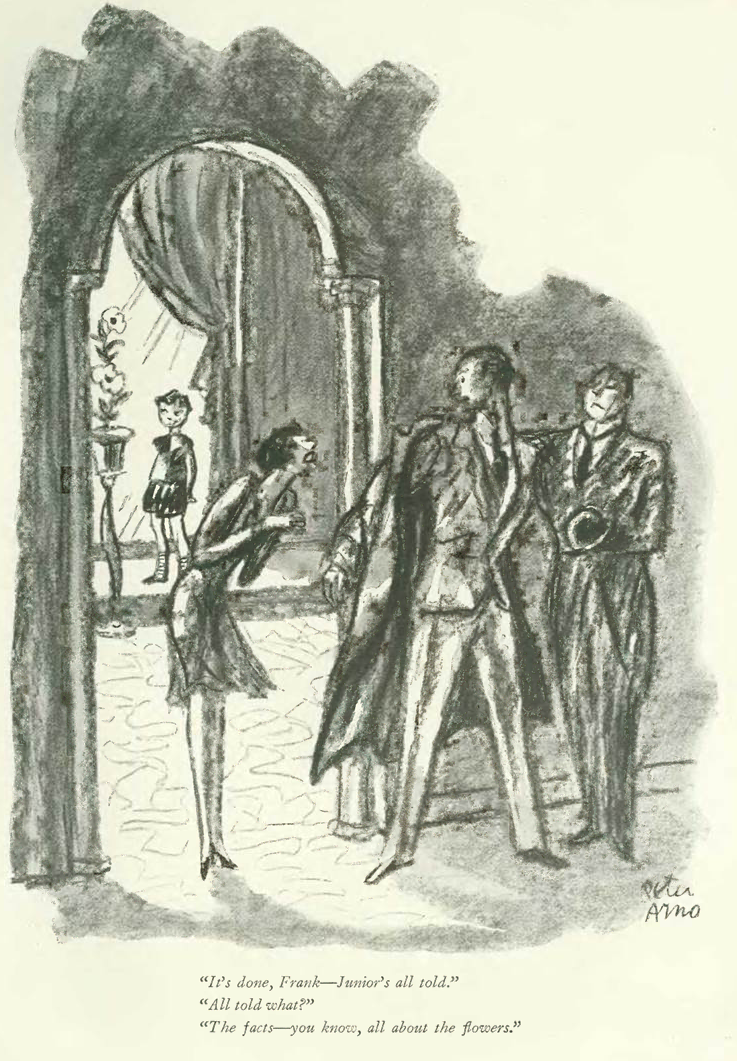
Peter Arno appeared to be experimenting with yet another style of drawing…

…that in some ways looked similar to Alan Dunn’s

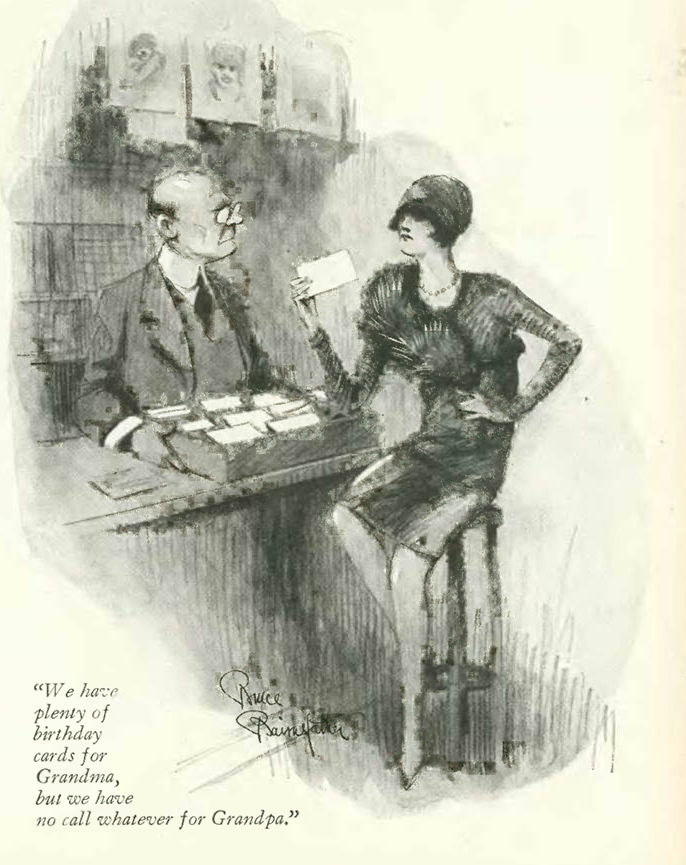
…the British cartoonist Bruce Bairnsfather provided this sumptuous drawing of an exchange at a card shop…

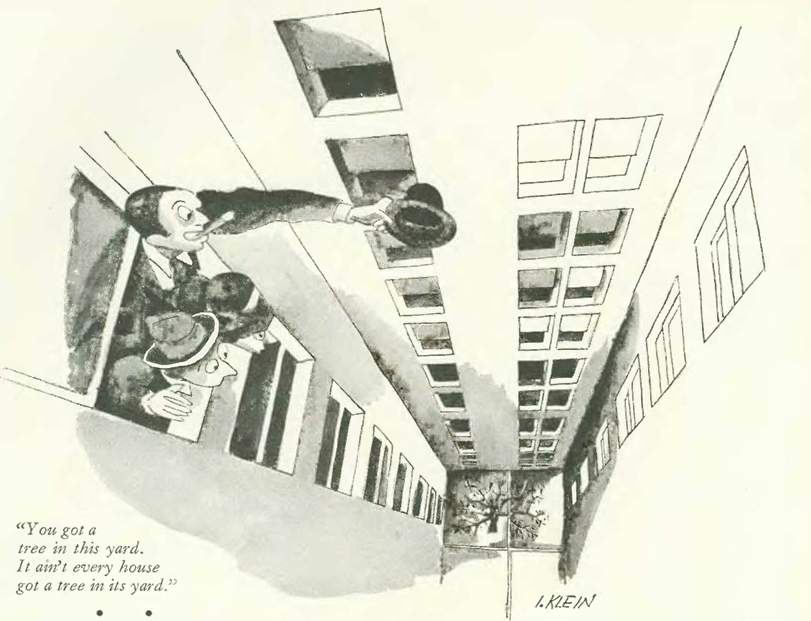
…and Isadore Klein gave a vertiginous perspective to home buying…

Next Time: Frigidity in Men…

The Last Hurrah

Avery Hopwood’s 1919 Broadway hit, The Gold Diggers, was among cultural events of the late teens that signaled the dawn of new age; namely, the Jazz Age.

Sept. 7, 1929 cover by Sue Williams.

So it seems appropriate that the play, when adapted to the screen in 1929 as a Technicolor talkie, would also signal the end of that age. As the New Yorker’s film critic John Mosher observed in his review of The Gold Diggers of Broadway, the themes that seemed new and daring a decade earlier had been played out, the “general humors” of the picture having “become very familiar”…

The film featured Nancy Welford, Winnie Lightner and Ann Pennington as three chorus girls who try to entice a wealthy backer to invest money in their struggling Broadway show. The film was a big hit, and it made a star of Winnie Lightner (1899-1971), who played the boldest “Gold Digger” of the trio.

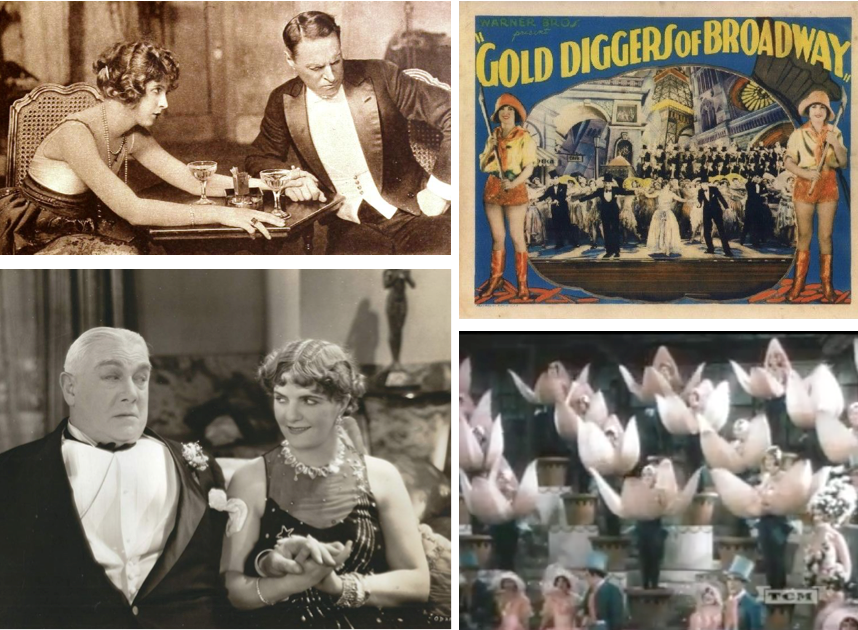
PROSPECTORS…Clockwise from top left, Ina Claire as the original “Gold Digger” with Bruce McRae in the 1919 Broadway play The Gold Diggers; lobby card for the 1929 film Gold Diggers of Broadway; image from the film’s “Tiptoe Thru the Tulips” song-and-dance number; Winnie Lightner works her charms on Albert Gran in a scene from the film. (Wikipedia/IMDB/TCM-YouTube)
IT’S FUN MAKING PICTURES…Helen Foster, Ann Pennington, Nancy Welford and William Bakewell in a publicity photo from 1929’s Gold Diggers of Broadway. (IMDB)

Lightner wasn’t the only actor to steal the show. The film also proved a winner for crooner Nick Lucas (1897-1982), who performed two hit songs written for the movie — “Painting the Clouds with Sunshine” and “Tiptoe through the Tulips.” Yes, that second song was the very same tune Tiny Tim rode to fame nearly 40 years later.

TIPTOE THROUGH HISTORY…At left, Nick Lucas sings what would be become his signature song “Tiptoe through the Tulips” to Lilyan Tashman in the Gold Diggers of Broadway. At right, forty years later, Lucas sang the song on The Tonight Show With Johnny Carson (apparently using the same guitar) on the occasion of singer Tiny Tim’s televised wedding to Victoria Mae Budinger (“Miss Vicky”). Tiny Tim (inset) also made “Tiptoe through the Tulips” his signature song, although his was a campier version, sung in a falsetto, vibrato voice accompanied by his trademark ukulele. (YouTube)

The Gold Diggers of Broadway was a “pre-code” film, that is, a film made during a brief period of the early sound era (roughly 1929 through mid-1934) when censorship codes were not enforced and many films openly depicted themes ranging from promiscuity and prostitution to amoral acts of violence.

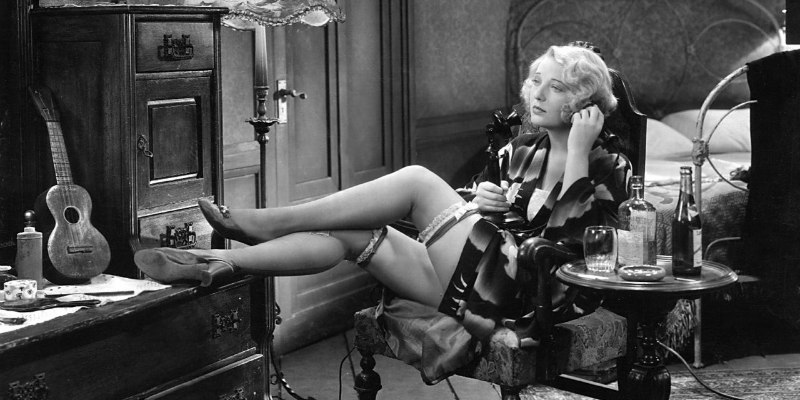
A LEG UP ON THE CENSORS…Warner Brothers publicity photo of Dorothy Mackaill, who played a secretary-turned-prostitute in 1931’s Safe in Hell. (Wikipedia)

Those unenforced codes had their origins in the early 1920s. In response to outcries from preachers and politicians alike over the immortality of Hollywood (both on- and off-screen), the president of Paramount Pictures, Adolph Zukor  — fearing that cries for censorship would cut into his profits — called a February 1921 meeting of his studio rivals at Delmonico’s restaurant on 5th Avenue. At the meeting Zukor (1873-1976) distributed a set of 14 rules that would guide every Paramount production (Zukor’s studio at that time was actually known as Famous Players-Lasky). The rules covered everything from “improper sex attraction” to “unnecessary depictions of bloodshed.”

It was also Zukor’s idea to appoint the former U.S. Postmaster General, Will Hays, as President of the Motion Picture Producers and Distributors of America. It would be Hays’ job to enforce the code and generally “clean up” Hollywood. However, until mid-1934 both Hays and the code served mostly as publicity ploys to keep the preachers and politicians off the backs of studio execs.

Zukor was profiled by Niven Busch, Jr. in the Sept. 7 issue (with portrait by George Shellhase). In his opening paragraph, Busch commented on “Pop” Zukor’s efforts to stave off the censors:

 *  *  *

Delmonico’s Redux

The famed Delmonico’s restaurant that provided the setting for Adolph Zukor’s “14 rules” meeting in 1921 closed its doors in 1923, a victim of Prohibition (more people dined at home, where they could still drink). Writing in the Sept. 7 “Talk of the Town,” Bernard A. Bergman described plans for the long-awaited opening of a new Delmonico’s in a skyscraper bearing the same name…

RICH DESSERTS…Dinner in honor of French Navy Admiral Paul Campion at the old Delmonico’s in 1906. (Wikipedia/Library of Congress)
AND SALAD DAYS…Delmonico’s wait staff pose for a photograph in 1902. (Museum of the City of New York)

A former Delmonico’s chef, Nicholas Sabatini, hoped to bring back some of old waiters and cooks from the restaurant’s glory days, but it seemed most were far too long in the tooth. It is unclear if he ever got his dream off the ground, or if the grill room was able to crank out fare comparable to that of the old Delmonico’s. Probably not…

THE KITCHEN IS CLOSED…The 1928 Hotel Delmonico, as shown in a 1937 photograph. It was purchased by Donald Trump in 2002 and converted into luxury condominiums. It would not host a great restaurant, but the Beatles would stay there in 1964. (New York Public Library)

*  *  *

Relax. You’re in Omaha

E.B. White’s “Notes and Comment” entry in the Sept. 7 “Talk of the Town” described travel on the Union Pacific’s Overland Limited, and the “mystic dividing line” that separated laid-back Westerners from buttoned-up Easterners:

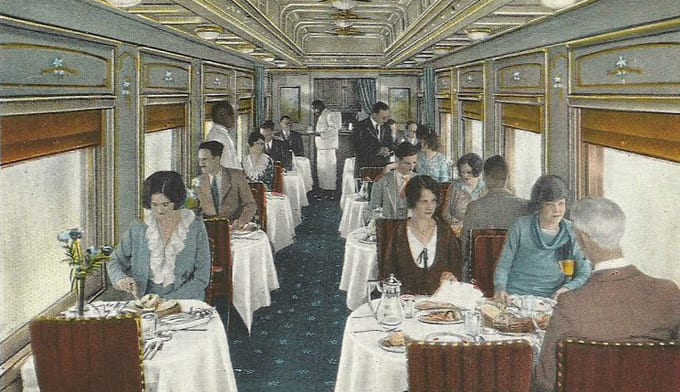
MIND YOUR MANNERS, AT LEAST UNTIL YOU LEAVE CHICAGO…Tinted photo postcard depicting the dining car on a Union Pacific train that traveled the Chicago to Denver route in the 1920s. (myutahparks.com)

 *  *  *

Write What You Know

The Wisconsin-born Marion Clinch Calkins (1895 – 1968) often wrote humorous rhymes for The New Yorker under the pen name Majollica Wattles. While many writers reveled in the party atmosphere of the Roaring Twenties, Calkins worked as a vocational counselor and social worker at Lillian Wald’s Henry Street Settlement. This experience doubtless led her to more serious writing after the 1929 market crash — her critically acclaimed book, Some Folks Won’t Work (1930), is considered a seminal document on the Great Depression.

But in September 1929, Calkins was still in a humorous vein, and published this satirical piece on the role of an ideal housewife in the Sept. 7 issue. Excerpts:

CALL ME CLINCH…Marion Clinch Calkins circa 1905 and 1945. She wrote under the name of Clinch Calkins because she wanted her authorship to be gender-neutral. (evansvillehistory.net/NEH)

 *  *  *

Information Please

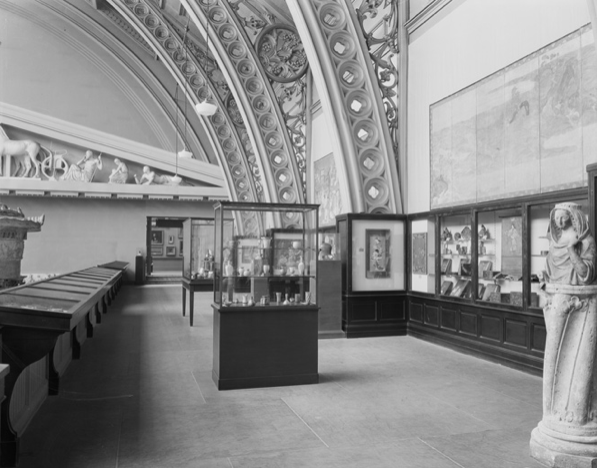
The New Yorker’s art critic Murdock Pemberton did not suffer fools gladly, and whenever the local museums seemed less than up to snuff, he was there to provide some correctional advice…

NEED AN AUDIO GUIDE? STILL WORKING ON THAT…The Metropolitan Museum of Art’s H.O. Havemeyer Collection, 1930. (The Metropolitan Museum of Art)

 *  *  *

From Our Advertisers

Despite the advances made by women in the 1920s, they still lived under a patriarchy, especially when it came to the patrician classes. And so the young bride of Gifford Pinchot II was identified only as a “Mrs.” in the headline for this Pond’s cold cream ad…
…Mrs. Gifford Pinchot II was actually Janine Voisin (1910-2010). She must have had more than a healthy complexion, as she lived 100 years…
Janine Voisin Pinchot in 1933. (history.blogberth.com)

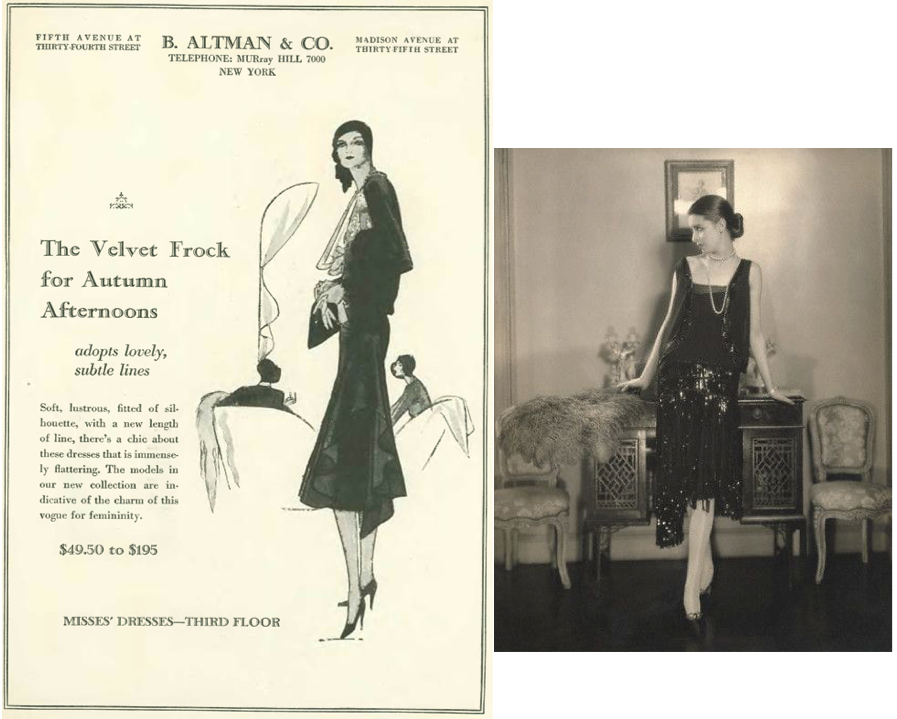
Another woman known for her beauty in the 1920s was the model Marion Morehouse (who was married to poet E.E. Cummings from 1934 until his death in 1962). Considered by some to be the first “supermodel,” I include an image of Morehouse below (right) to demonstrate how artists exaggerated the female form in fashion ads of the day…

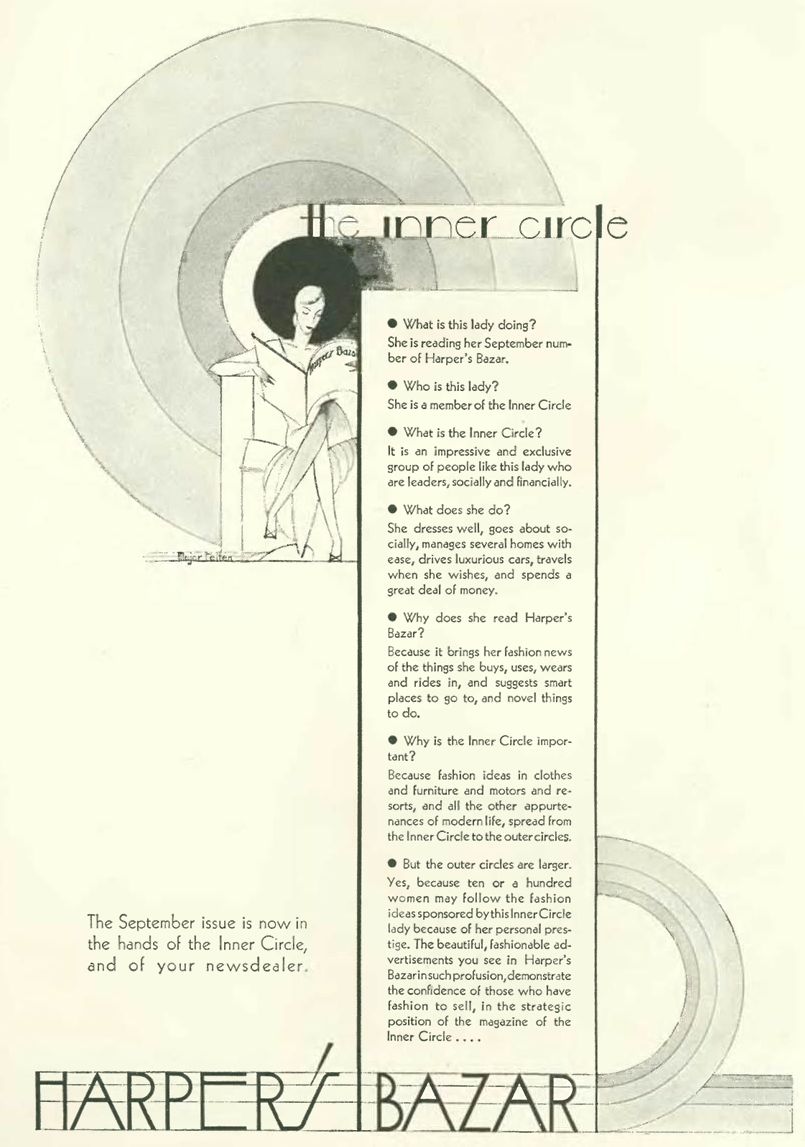
…the body wasn’t the only thing subject to exaggeration, or hyperbole, as this ad from Harper’s Bazar attested in defining the exclusivity of its readership…

…the New York Sun also appealed to social mores in an attempt to sell more newspapers…

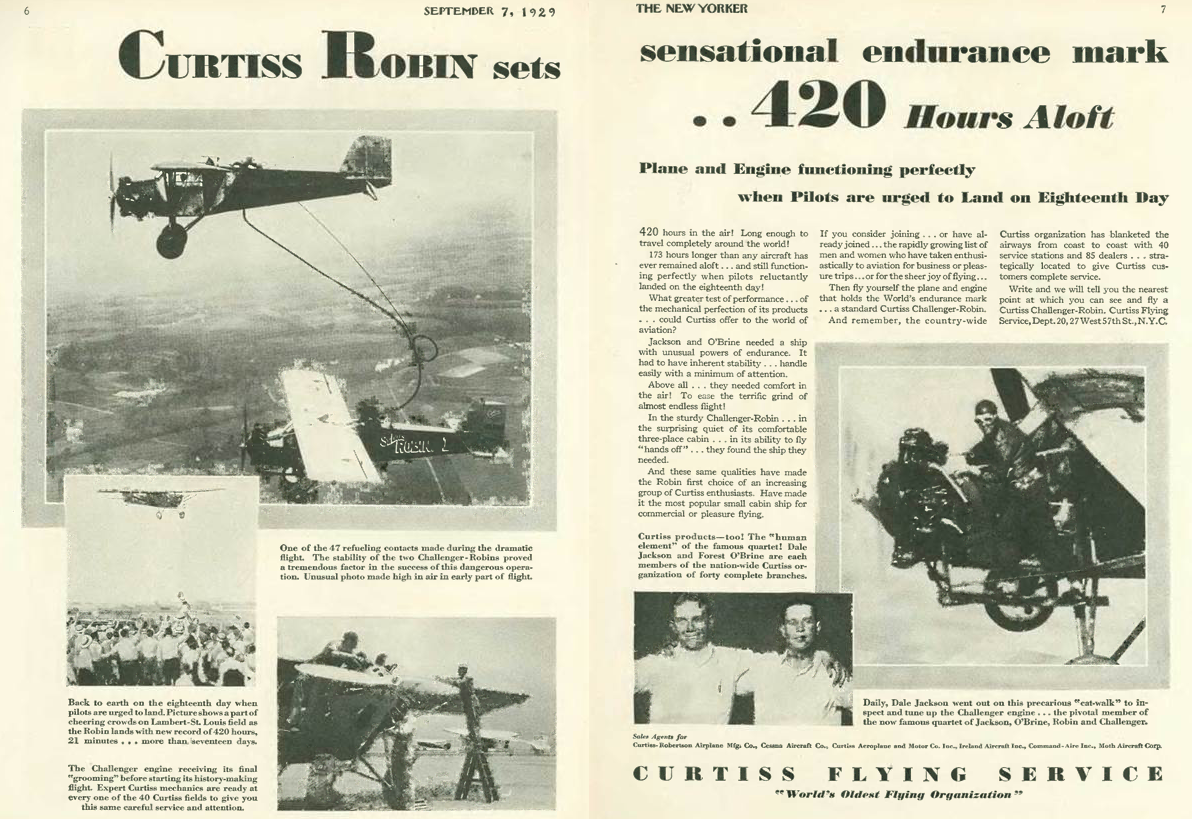
…the Curtiss Robin Flying Service touted their latest achievement — the St. Louis Robin being refueled during its flight to a new world’s endurance record of 420 hours — greatly surpassing the record of 150 hours set by the Army’s “Question Mark” airplane at the beginning of 1929…

…our cartoonists from the Sept. 7 issue include Gluyas Williams, who had some fun at the expense of Alice Foote MacDougall, who was the “Starbucks” of her day, at least in New York…

…MacDougall turned her coffee business into a restaurant empire in the 1920s. She opened several restaurants in Manhattan, all decorated in a signature style meant to evoke European cafés…

EURO AMBIENCE…Interior of Alice Foote MacDougall’s Firenze, 6 West 46th Street, New York City, 1925. (New York Historical Society)

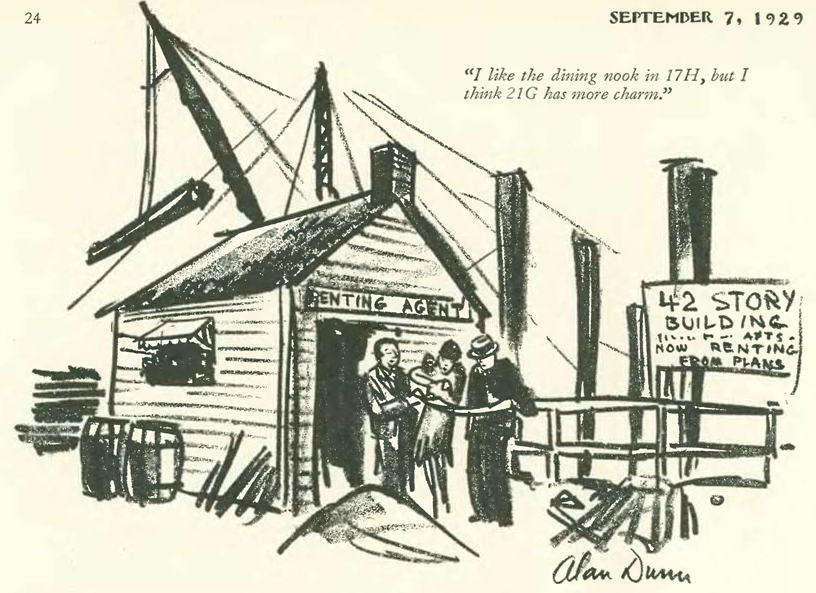
…other cartoons included this commentary on public advertising by Leonard Dove

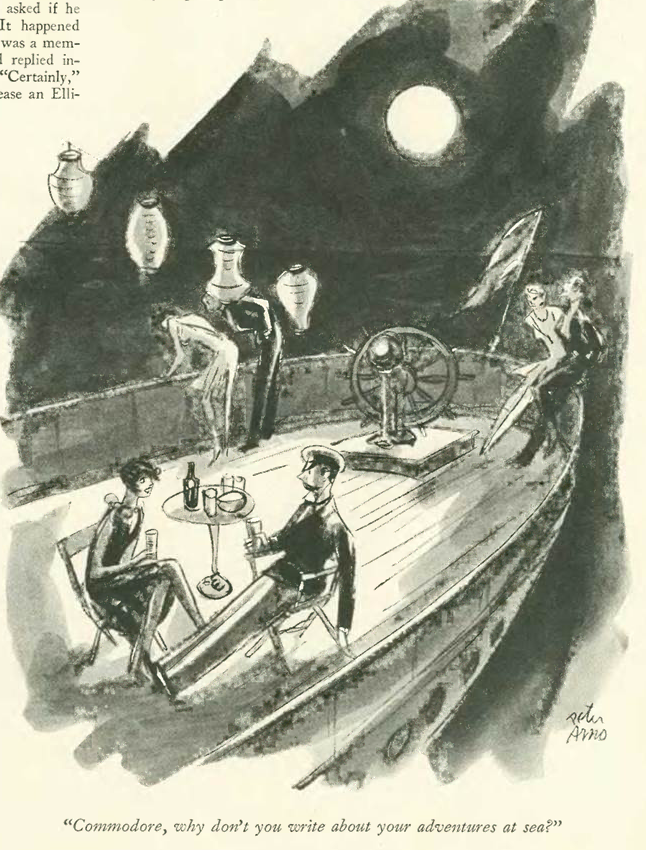
Peter Arno’s unique take on the seafaring life…

Helen Hokinson eavesdropped on some tween talk…

…and Alan Dunn gave us some perspective on the fast pace of city life…

Next Time: From Stage to Screen…


The Art of Peace

In July of 1928, war was officially banned from the earth. Or so it was hoped when the Kellogg–Briand Pact became effective on July 24, 1929.

Aug. 3, 1929 cover by Gardner Rea.

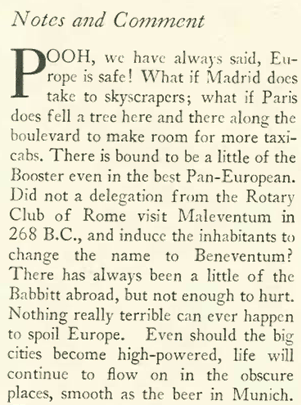
Also known as the “Pact of Paris” and more officially the “General Treaty for Renunciation of War as an Instrument of National Policy,” its authors, United States Secretary of State Frank B. Kellogg and French foreign minister Aristide Briand, gathered world powers in Paris on Aug. 28, 1928 to sign a treaty that denounced the use of war and called for the peaceful settlement of all future disputes. The New Yorker, in the opening “Notes and Comment” section of “The Talk of the Town,” took its usual “What, Me Worry?” approach to world affairs, finding the whole thing unnecessary given that (in its view) Europe was already a peaceful, even benign continent:

GIVE PEACE A CHANCE…French foreign minister Aristide Briand, Myron T. Herrick (U.S. ambassador to France), and U.S. Secretary of State Frank B. Kellogg meet in the French Foreign Office for the signing of the General Treaty for Renunciation of War as an Instrument of National Policy, August 1928; at right, Briand speaking to the assembly. (theinternationalistsbook.com//Wikipedia)

In January 1929 the U.S. Senate officially ratified the Kellogg–Briand Pact with a nearly unanimous vote, 85-1. John James Blaine, senator from Wisconsin, cast the lone dissenting vote (although four years later Blaine would author another piece of legislation that would have a much greater impact, at least at the time: the 21st Amendment, which ended Prohibition).

SURE, WHY NOT?…The U.S. Senate approved the Kellogg–Briand Pact on Jan. 15, 1929. The treaty went into effect later that year on July 24. (The New York Times)

Another item in “The Talk of the Town” made further reference to the pact…

…and Howard Brubaker, in his column “Of All Things,” made special mention of the Sino-Soviet border conflict in referencing the pact:

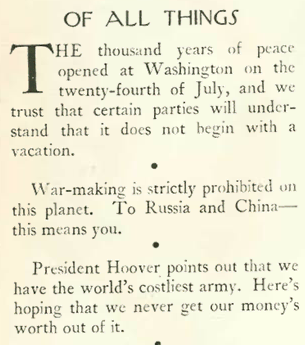
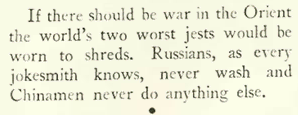
Brubaker mockingly suggested that the pact marked the beginning of a thousand years of peace, an inadvertently prescient remark considering that in less than four years Hitler would seize power in Germany and announce the beginning of his “Thousand Year Reich” — which we know was quite the opposite of peace. Brubaker was also off the mark with this crude observation:

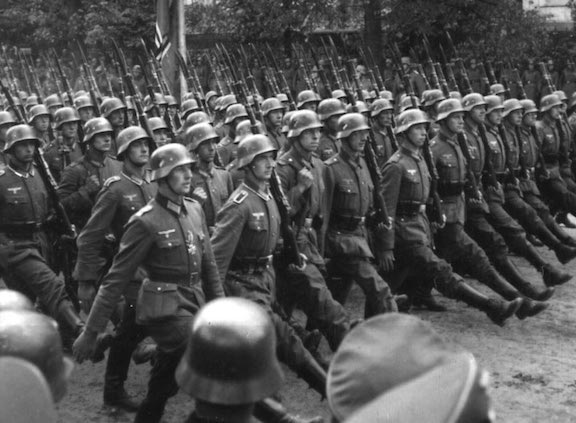
Just two years after Brubaker wrote those words, Japan would invade Manchuria. And only a decade would pass before Germany and Russia would invade Poland and ignite the biggest war of all time.

PARTY POOPERS…The New Yorker wasn’t alone in poking fun at the Kellogg–Briand Pact. At left, the pact is mocked during the Paris Carnaval in 1929; at right, British cartoonist Sidney Conrad Strube reminded readers of the outcome of America’s earlier efforts at world peace. (Wikipedia/Pinterest) click to enlarge.
WE JUST CAME TO SAY HELLO…Germany, the first signatory to the Kellogg-Briand Pact banning all war, invaded Poland just ten years after that treaty went into effect. Above, German troops parade through Warsaw after the invasion, September 28-30, 1939. (National Archives and Records Administration)

Although the pact was ridiculed for its perceived naïveté, and for the fact that it did not prevent the largest war in human history, some modern scholars see otherwise. Political scientists Oona A. Hathaway and Scott J. Shapiro observed (in 2017) that the pact “catalyzed the human rights revolution, enabled the use of economic sanctions as a tool of law enforcement, and ignited the explosion in the number of international organizations that regulate so many aspects of our daily lives.” In his recent book Enlightenment Now, Steven Pinker notes “virtually every acre of land that was conquered after 1928 has been returned to the state that lost it. Frank Kellogg and Aristide Briand may deserve the last laugh.”

*  *  *

Gallows Humor

Other items in “The Talk of Town” included this brief anecdote, which I doubt many would find humorous today:

 *  *  *

On The Bowery

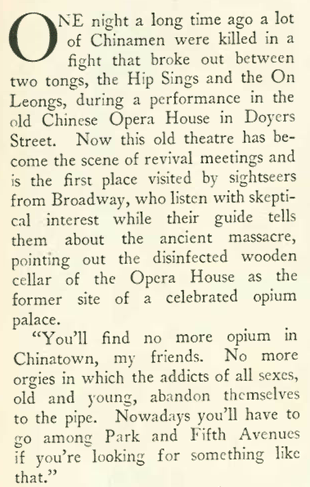
In the “Reporter at Large” column, Niven Busch Jr. paid a visit to “The Yellow Bowery,” as the piece was titled. Notable in this article (and in Brubaker’s quip above) is the use of term “Chinaman,” a term considered offensive today but in the 1920s was used indiscriminately for East Asians. Here it seems pejorative:

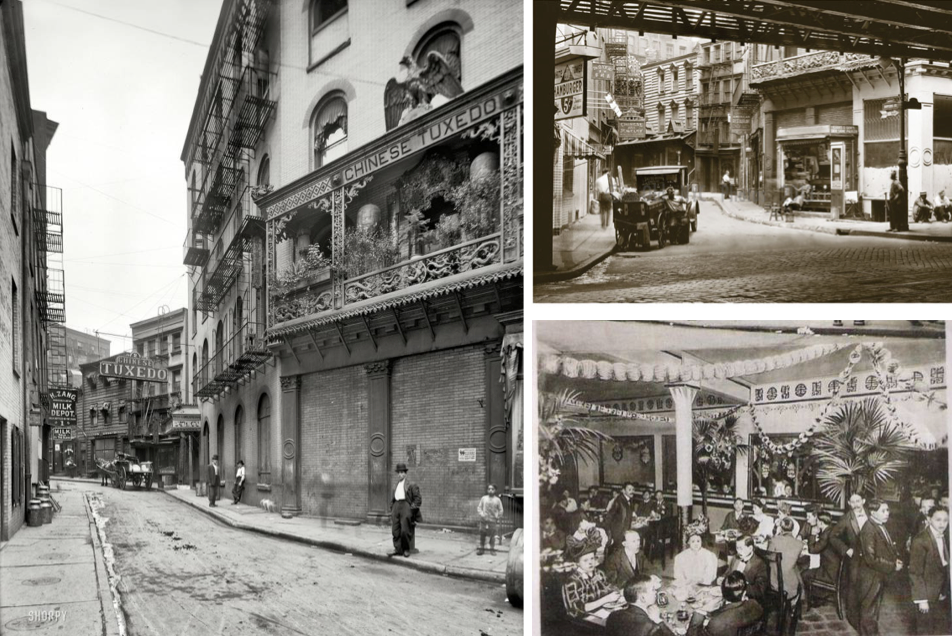
THE BLOODY ANGLE…Clockwise, from top, this bend in Chinatown’s Doyer Street was known as “The Bloody Angle” due to the numerous killings among the Tong gangs that lasted into the 1930s. Hatchets were a popular weapon of choice, leading to the creation of the expression, “hatchet man”; another perspective of Doyer Street from 1932; the street was also the site of the first Chinese language theater in New York City. (boweryboyshistory.com/Museum of the City of New York/Wikipedia)

Busch’s piece was rife with stereotypes…

…and referenced the unsolved Bowery murder of 19-year-old Elsie Sigel, a missionary in Chinatown who was found in a trunk, strangled, in 1909…

THE OTHER SIDE OF THE TRACKS…2 Doyer Street was the address of the Chinese Tuxedo Restaurant. It attracted non-Chinese patrons, particularly those who considered themselves ‘Bohemians’ as well as businessmen looking for an ‘exotic’ night on the town. And it helped that the Tuxedo was near the elevated train. (Courtesy Flickr/straatis/thelodownny.com)

*  *  *

It Grows on You

The rapid demolition of old New York was a recurring theme in The New Yorker of the 1920s, the magazine often wavering between nostalgia and the thrill of the new. No place was perhaps more sacred than the stately row houses of Washington Square. When news circulated that a section consisting of the old Rhinelander mansion would soon fall (for the sake of a new apartment building), “Talk” tried its best to process the change:

IT LOOMS, BUT WE GOT USED TO IT…The New Yorker once resented the intrusion of the One Fifth Avenue building (built in 1927), looming above the cobbles of the early 19th century Washington Mews. (newyorkitecture.com/Viola Mai, Washington Square News)
MIND THE GAP…Clockwise, from top, just east of this row of houses stood the mansion of William Rhinelander; although The New Yorker noted that its demolition was imminent in 1929, the mansion stood until 1951, when it was demolished and replaced by the 20-story 2 Fifth Avenue; next to the gap between the old row houses and the apartment stands the Roger Shattuck House, No. 19 Washington Square North. The Shattuck House was the scene of one of most sensational robberies in the city’s history—in 1922. (nyc-architecture.com/Google Maps)

 *  *  *

Old Boy

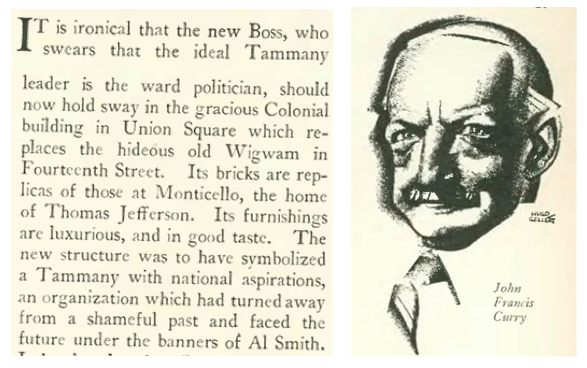
In one of my recent posts (Not Your Grandpa’s Tammany Hall) I noted a “Talk” item that described the new Tammany headquarters. In the August 3 issue the magazine introduced the patriotic society’s new leader, John Francis Curry, in a profile written by Henry F. Pringle. In the piece, titled “Local Boy Makes Good,” Pringle suggested that Curry’s old-fashioned approach to politics stood in contrast to the new image Tammany Hall was attempting to project:

Curry’s tenure would end abruptly in 1934 — the first Tammany boss to be booted out by his own followers. Curry made some bad decisions during a time when the political winds were shifting away from machine politics. It was under his leadership that Tammany backed Al Smith over the reform-minded Franklin Roosevelt for the 1932 Democratic presidential nomination. That same year, Tammany-backed New York Mayor Jimmy Walker would be forced from office amid scandal.

*  *  *

Well, She Didn’t Write the Script

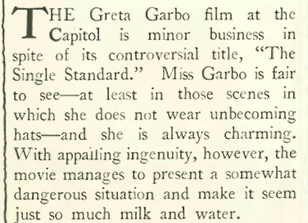
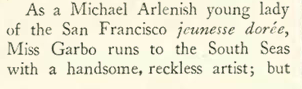
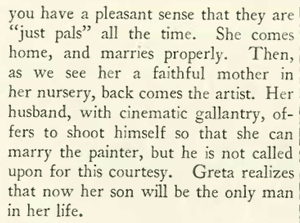
We all know Greta Garbo as one of the greatest film stars of classic Hollywood. Her mysterious aura and subtlety of expression are still lauded by film critics today. The New Yorker, however, never seemed particularly enamored of the star’s performances. Here is a review of her 1929 silent film, The Single Standard:

THE KID STAYS IN THE PICTURE…Little Wally Albright played Greta Garbo’s son in The Single Standard. We just saw four-year-old Wally in my last post, in which he also appeared as Peggy Wood’s son in Wonder of Women. Apparently when a director needed a cute, curly head kid, they went for Wally—he appeared in seven films in 1929 alone. (Rotten Tomatoes)

*  *  *

From Our Advertisers

Our first advertisement (image at right) is from the back pages of the Aug. 3 issue. It announced the opening of Long Island’s Atlantic Beach Club, which featured the entertainment of Rudy Vallée and his orchestra…

CAN YOU HEAR ME NOW? Images, top to bottom, aerial view of The Atlantic Beach Club; Rudy Vallée performing with emblematic megaphone, 1929; postcard image of the Nautilus Hotel on the Boardwalk of Atlantic Beach, Long Island. (longbeachlibrary.org/YouTube)

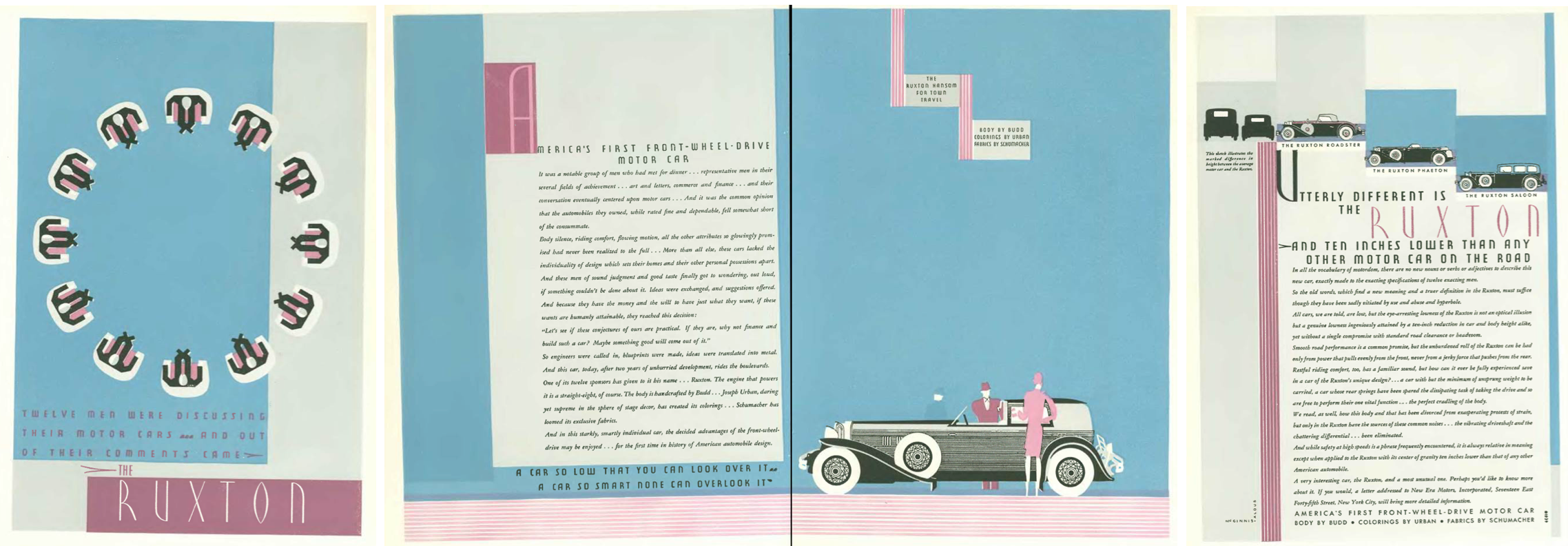
…a brand-new car—The Ruxton— was introduced to New Yorker readers in this color advertisement that spanned four pages (click image to enlarge)…

…produced in 1929-30 by the New Era Motors company of New York, the car was marketed for its innovative front-wheel drive and its distinctive low profile (a feat accomplished by eliminating the drive shaft to the rear wheels). While most cars in the late 1920s had an average height of 6 feet (1.8 meters); the Ruxton was less than 4 and half feet (1.3 meters) high. Producers of the car hoped to sell the rights of the Ruxton to an established car manufacturer. Moon Motors of St. Louis built just 96 of the cars during regular production (from June to October, 1930) before the whole deal fell apart…

SHORT RUN…Clockwise, from top left, Ruxton logo affixed to grille; dancer Rita La Roy poses with her Ruxton, 1930; some models sported Joseph Urban color schemes designed to lengthen the appearance of the car. (allcarcentral.com/Pinterest/hemmings.com)

…if you were one of the fortunate few to own a Ruxton, you might take it for a spin on the Lincoln Highway…or maybe not. Despite the appearance of this ad, a fully paved, transcontinental highway was still an incomplete dream in 1929. Although sections of the road were quite smooth from New York to Omaha, further west things could get a bit bumpy, especially on the unpaved stretches. However, as the ad claims, what really made the road viable was the availability of regularly spaced gas stations along the way…

…I liked this ad for its sheer complexity…

…and then we have this ad from Saks, which somehow conflated new shoes with an intimate encounter with Aphrodite.,,

…on to our cartoonists, we have Helen Hokinson’s observations at “Old Narragansett…

…while out to sea, Alan Dunn found humor in a sensitive swabbie…

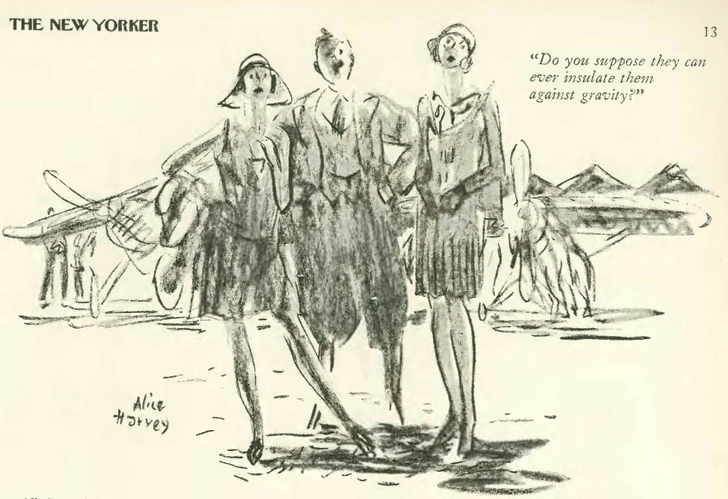
Alice Harvey observed those still skeptical of human flight…

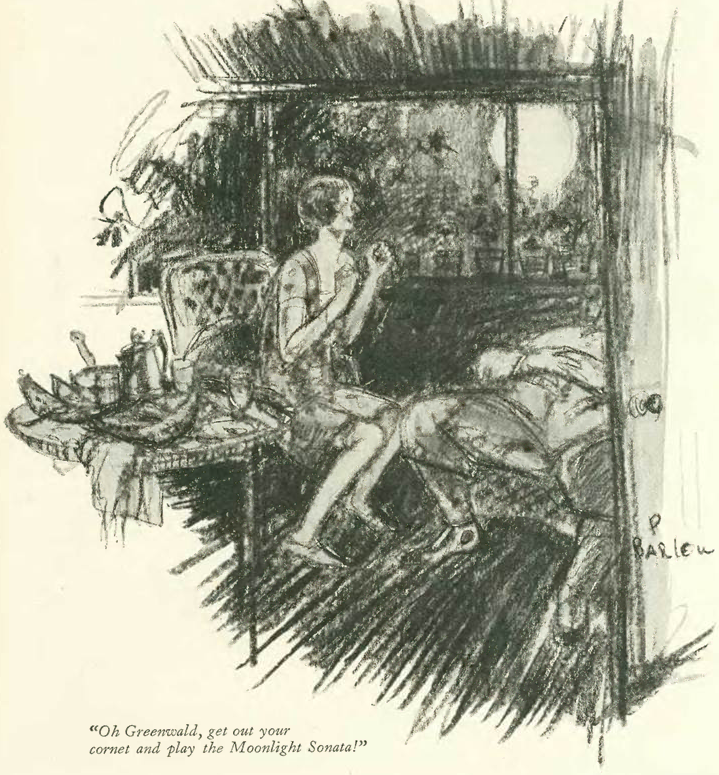
Perry Barlow peeked in on a moonstruck woman…

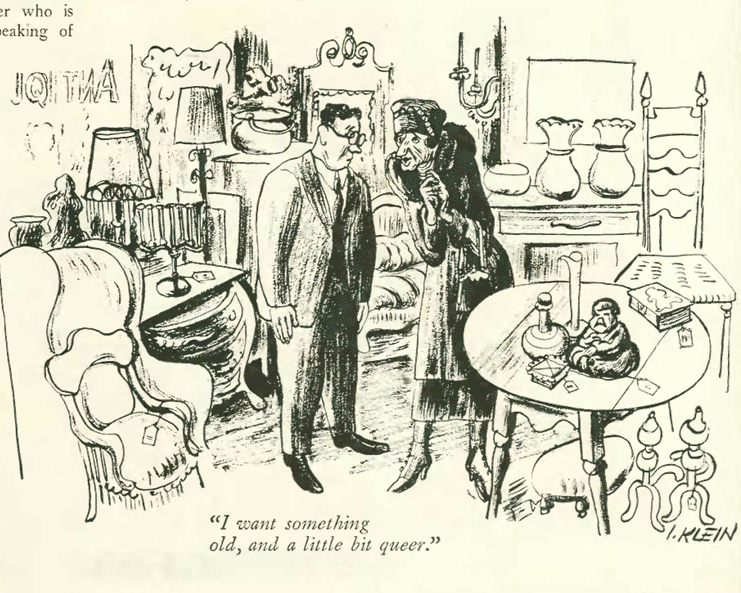
…and finally, Isadore Klein visited an antique shop…

Next Time: The Last Summer…


Waldorf’s Salad Days

While Manhattan is home to some of the world’s most iconic buildings, it is also known for knocking them down. Sometimes it was a matter of changing tastes, but more often than not it was the steamroller of economic progress that flattened any sentimental soul that stood in its path.

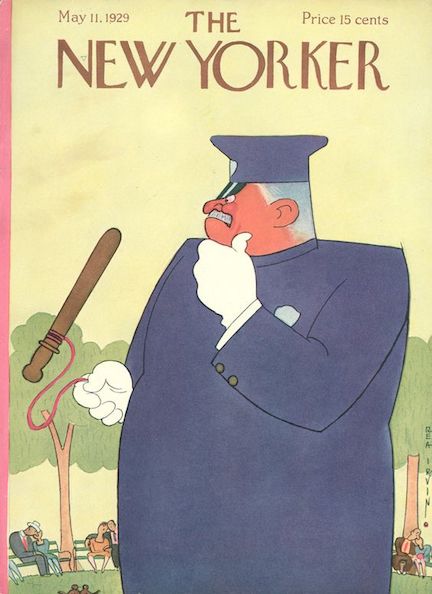
May 11, 1929 cover by Rea Irvin.

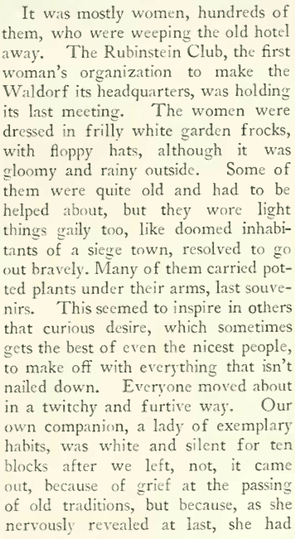
The old Waldorf-Astoria symbolized the wealth and power of the Gilded Age, but in the Roaring Twenties the storied hotel — with all its Victorian turrents, gables and other doo-dads — looked hopelessly dated despite being just a bit over 30 years old (the Waldorf opened in 1893, and the much larger Astoria rose alongside it four years later). A group of businessmen, led by former mayor Al Smith, bought the property to build the Empire State Building — an art deco edifice that would scream Jazz Age but would be completed at the start of the Great Depression. The New Yorker’s James Thurber reported on the old hotel’s last day in the May 11, 1929 “Talk of the Town”…

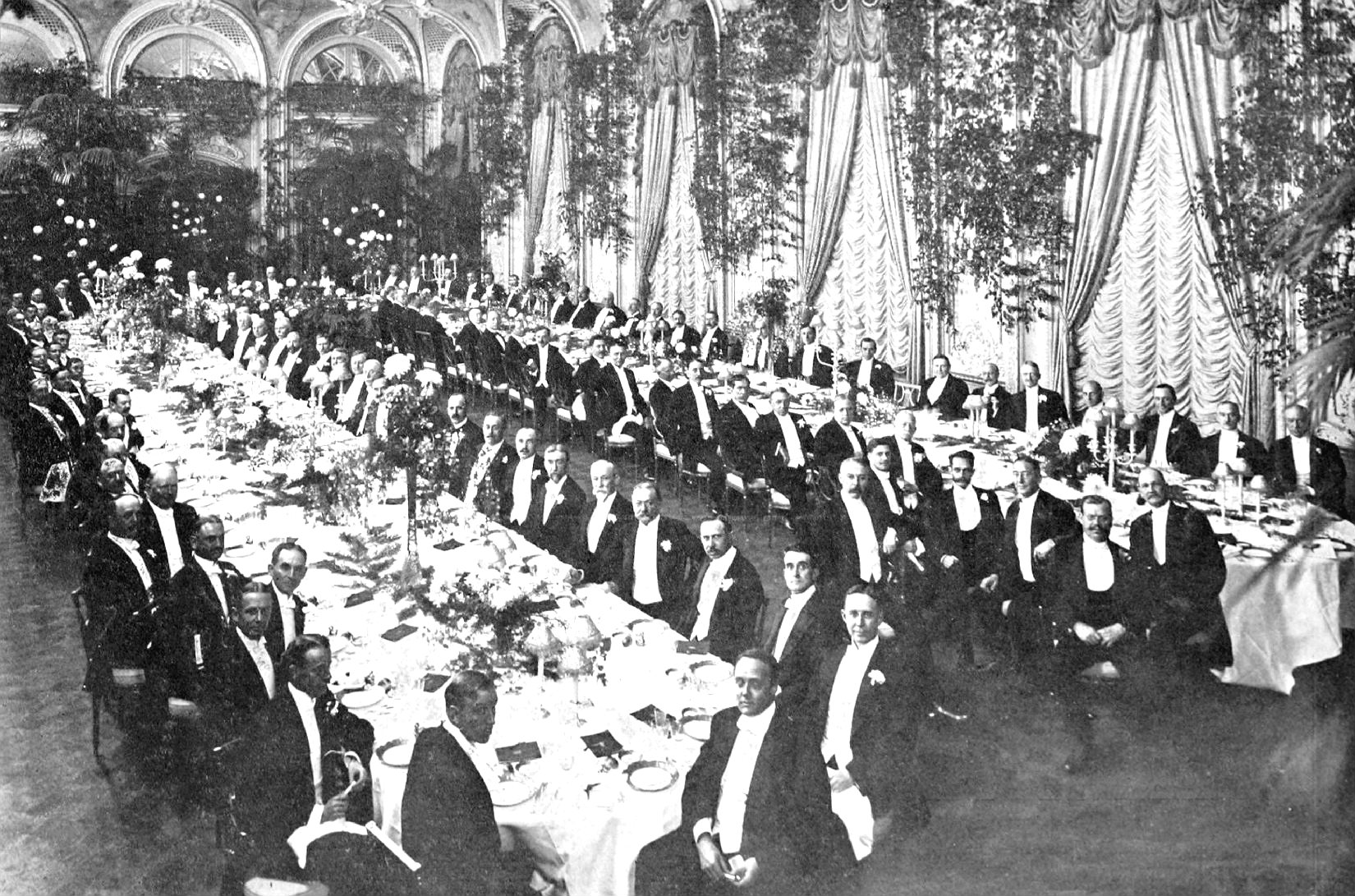
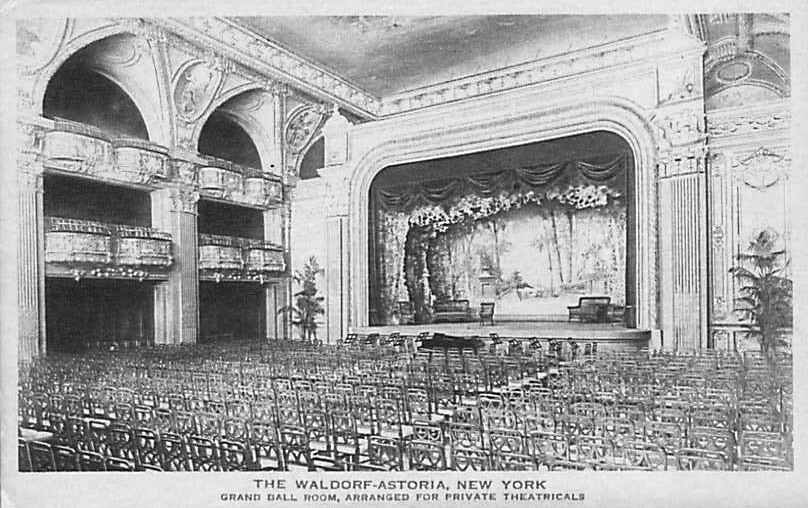
THEY LIKED RICH FOOD…1909 banquet in the Grand Ballroom at the Waldorf-Astoria honoring US Steel founder Elbert Gary. (Wikimedia Commons)

Thurber wrote of the hundreds of club women who mourned the loss of their familiar meeting rooms, and one elevator operator who would not be joining their chorus of sobs…

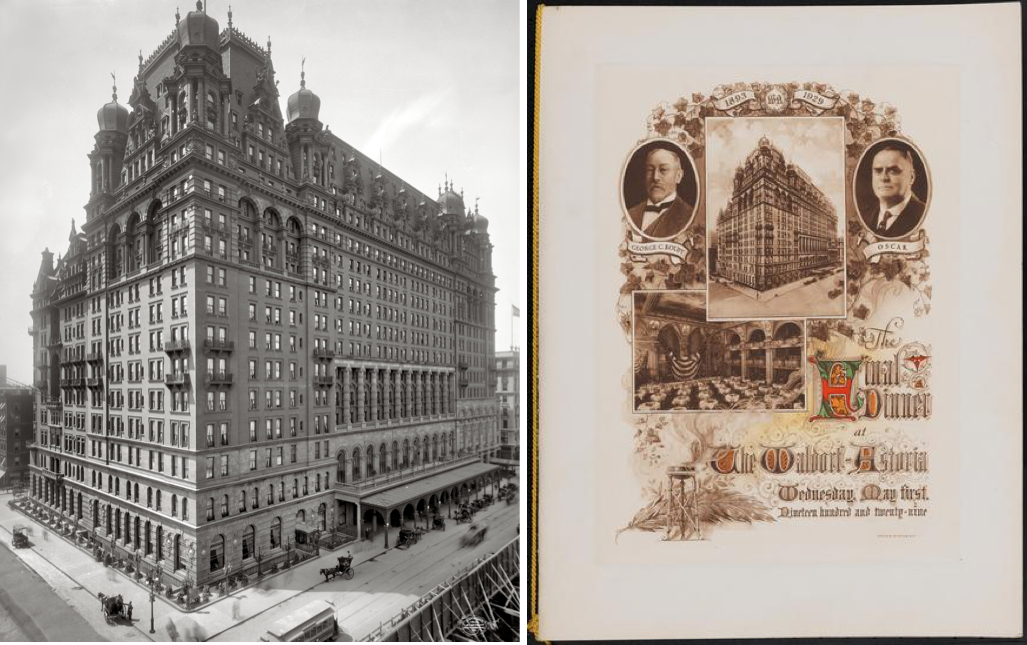
HEYDAY…the old Waldorf-Astoria hotel circa 1900, and the cover for the menu announcing “The Final Dinner.” The menu included a cherrystone clam cocktail, turtle soup, crown of bass (in lobster sauce), mignon of spring lamb (chasseur), supreme of guinea hen (tyrolienne), bombe mercedes ice cream, and coffee. (Bowery Boys/Museum of the City of New York)
THEY’RE SELLING YOU…Illustration depicting an auction of items from the hotel. (Museum of the City of New York)

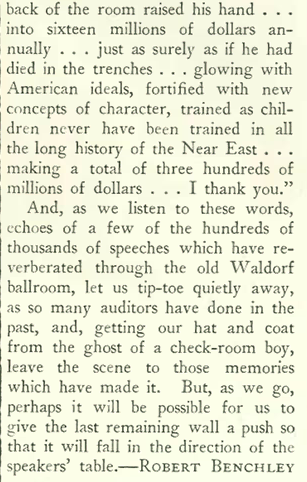
In the “Reporter at Large” column, humorist Robert Benchley supplied his own perspective on the closing of the venerable hotel, and the countless speeches that reverberated between its walls…

A 1903 image of the Grand Ball Room, “arranged for private theatricals. “(New York Public Library)

Benchley offered excerpts from dozens of hypothetical speeches, and then offered this final benediction to the old hotel:

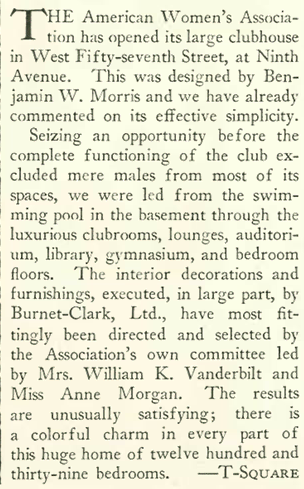
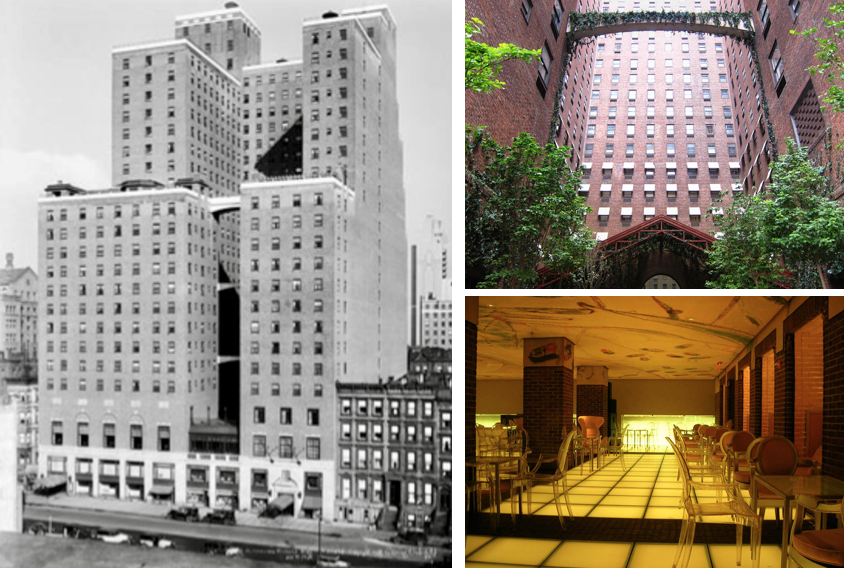
In his “The Sky Line” column, architecture critic George S. Chappell (aka T-Square) looked in on the newly completed American Woman’s Association clubhouse and residence for young women on West 58th Street. Developed by Anne Morgan, daughter of J.P. Morgan, the building contained 1,250 rooms and featured a swimming pool, restaurant, gymnasium and music rooms along with various meeting rooms.

TRAINING GROUND…At left, the American Woman’s Association clubhouse and residence in 1932. At right, view of the central atrium of the AWA residence, now the Hudson Hotel. Below, the Hudson Bar (renovated after 1997), which has been featured in a number of TV shows including Gossip Girl and Sex and the City. (Liza DeCamp/Nan Palmero top right/RoryRory bottom)

In a 1998 New York Times “Streetscapes” feature, Christoper Gray cites a 1927 Saturday Evening Post interview with Anne Morgan, who said she believed women were at a temporary disadvantage in the business world and therefore founded the American Woman’s Association as “a training school for leadership, a mental exchange” where women “can hear what other women are doing.” After the AWA went bankrupt in 1941, the building was converted into The Henry Hudson Hotel, open to both men and women. From 1982 until 1997 the building’s second through ninth floors served as the headquarters for public television station WNET. The MacNeil/Lehrer NewsHour (now the PBS NewsHour) was broadcast from the building during that time.

*  *  *

Punching for Peace

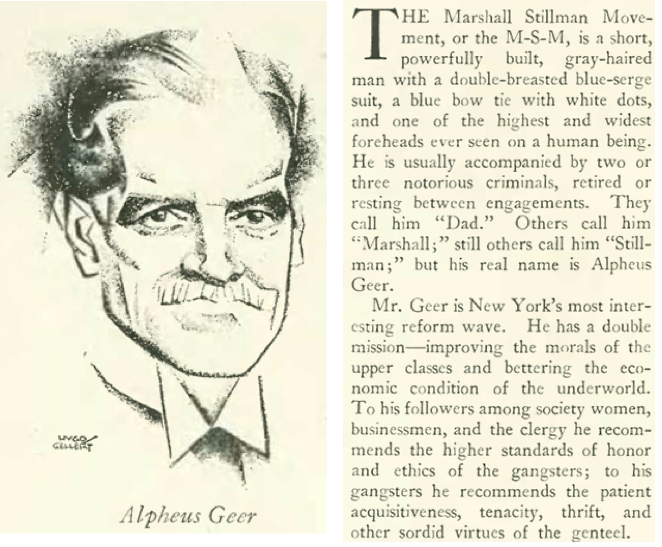
The old New Yorker was filled with personalities virtually unknown today, but who had tremendous influence in their time. Among them was Alpheus Geer (1863-1941), who founded the Marshall Stillman Movement, which promoted the sport of boxing as a way to steer young men away from a life of crime. An excerpt (with illustration by Hugo Gellert):

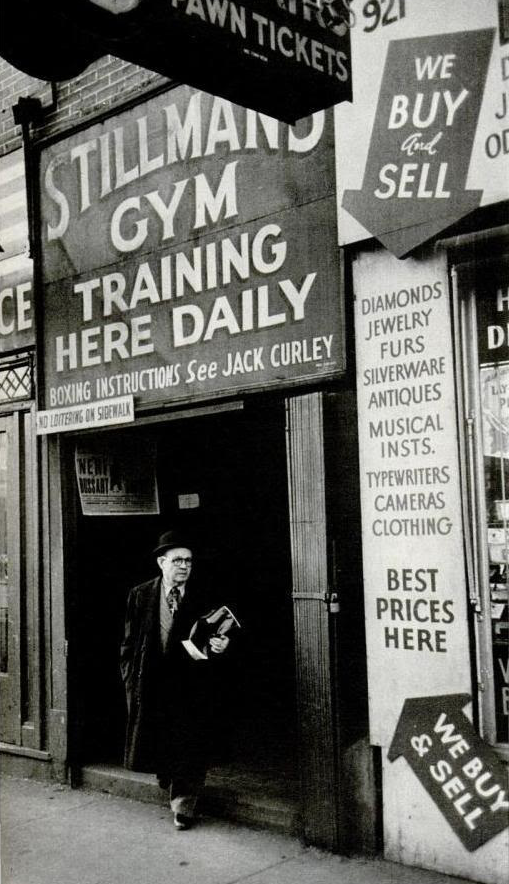
Alpheus Geer help found Stillman’s Gym in 1919 as a way to promote his Marshall Stillman Movement methods of boxing. Many famous fighters trained in the dank, smoky atmosphere of Stillman’s, including Jack Dempsey, Joe Louis and Rocky Marciano. Pictured above is famed boxing trainer Charley Goldman leaving Stillman’s Gym, circa 1940s. (easthamptonstar.com)

 *  *  *

Before we turn to the ads, this “Out of Town” column from the back pages struck an unusual tone regarding the types of tourists planning a summer in Germany…

…and from our advertisers, this ad promoting Louis Sherry’s new “informal restaurant” at Madison and 62nd Street…

WHAT’S IN A NAME…The Louis Sherry restaurant at Madison and 62nd, circa 1930. At right, the building today, now occupied by the French fashion company Hermès. (McKim, Mead & White / nycarchitecture.com)

Louis Sherry ran a famous restaurant at Fifth Avenue and 44th Street from 1898 to 1919 (like many famed restaurants, Prohibition helped put an end to it). Sherry died in 1926, so the owners of the new restaurant were merely trading on his name. In addition to a “delicacies shop” (gourmet foods were arrayed in the plate glass windows) Louis Sherry also contained a tea room, ice cream parlor and a balcony restaurant…

…like the Sherry restaurant, the new Hotel Delmonico traded on the fame of the old Delmonico’s Restaurant, which also fell victim to Prohibition by 1923. Today the hotel is best known as the place where the Beatles stayed in August 1964…

…here is another ad from Clicquot Club trying its best to sell its aged “Ginger Ale Supreme” to dry Americans. Famed avant-garde-art patron and party host Count Etienne de Beaumont (who looked like he’d had a few of something) testified how Cliquot “blends very agreeably” with the champagne most Americans cannot have…

…well, if you couldn’t have a legal drink, maybe you could entertain your friends with TICKER…”The New Wall Street Game That is Sweeping America!” My guess is this game didn’t sell so well after Black Tuesday, Oct. 29, 1929…

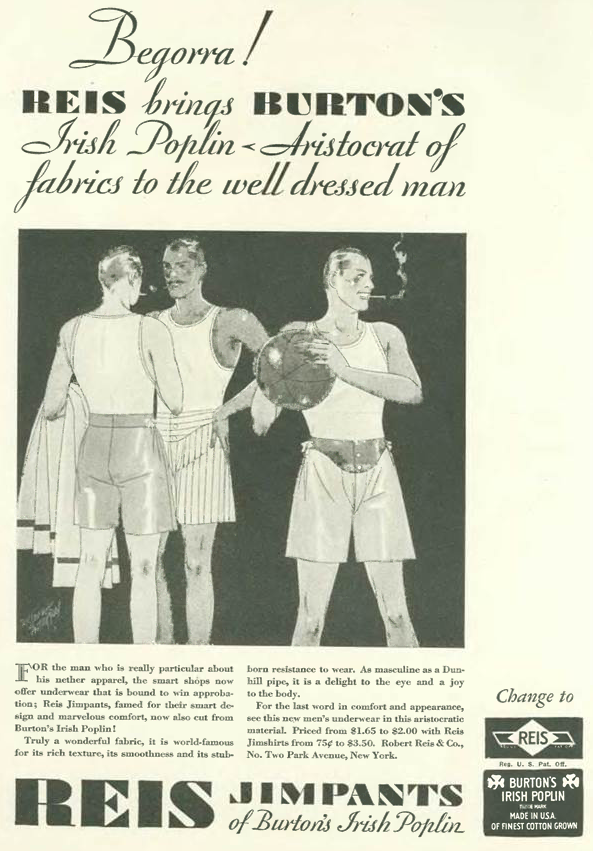
…those BVD’s aren’t good enough for you? Then try the “Aristocrat of fabrics” (and have a smoke while you toss the medicine ball around with the gents)…

…and here is more evidence that the Roaring Twenties were losing their growl even before the big crash—the straight flapper figure was out; it was now the “season of curves”…

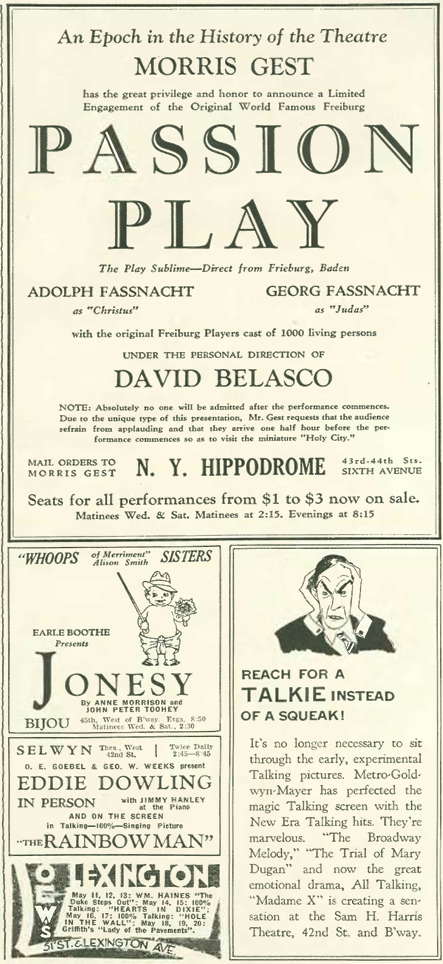
…a look at some of the cheap ads in the back of the magazine, including the one at bottom left from the Sam Harris Theater that played on the Lucky Strike cigarette slogan (“Reach for a Lucky instead of a sweet!”)…

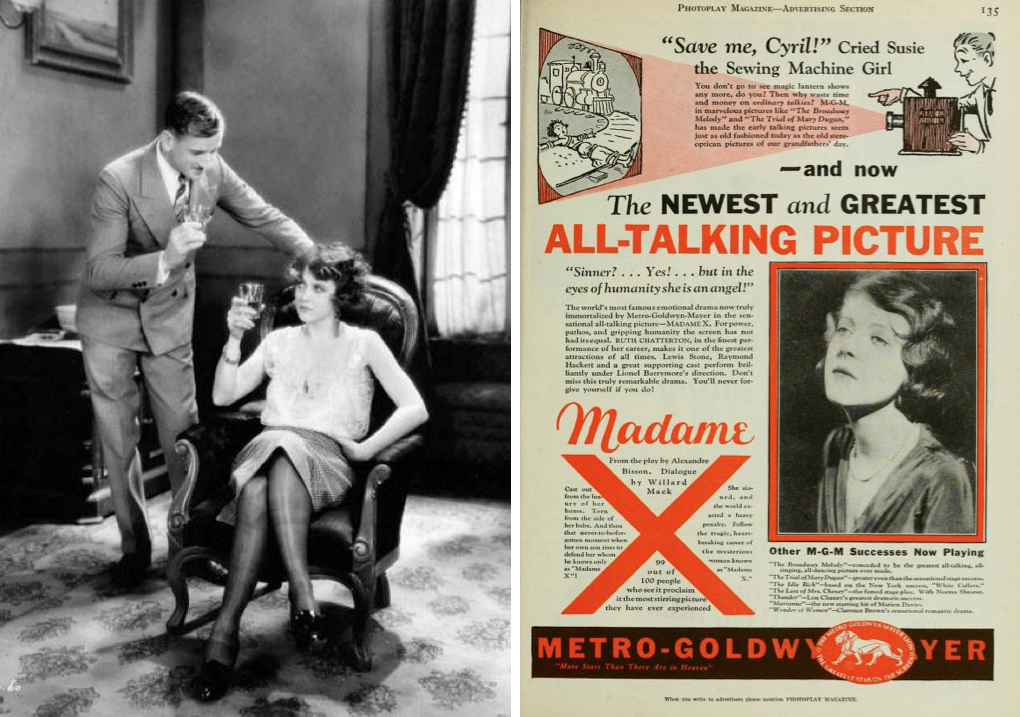
…one of the films featured at the Sam Harris Theatre was Madame X, a movie about a woman who leaves her wealthy (but cold) husband, turns to a life of crime, then tries to reclaim her son. The ad is correct in that it did create something of a sensation when it was released. It is also important to note that the film premiered at the Sam Harris for a reason: The director, Lionel Barrymore, didn’t want audiences to think his film was just another song and dance picture (like most of the first sound films) but rather a serious drama presented at a legitimate stage venue rather than a movie house…

UP TO NO GOOD…Ullrich Haupt as the cardsharp Laroque and Ruth Chatterton as Jacqueline Floriot in Madame X. At right, ad in Photoplay promoting the film. Click to enlarge. (Wikipedia/IMDB)

…back to our ads, here’s a remarkably crude one from the racist misogynists who made Muriel cigars (they being Lorillard, who also manufactured Old Golds)…

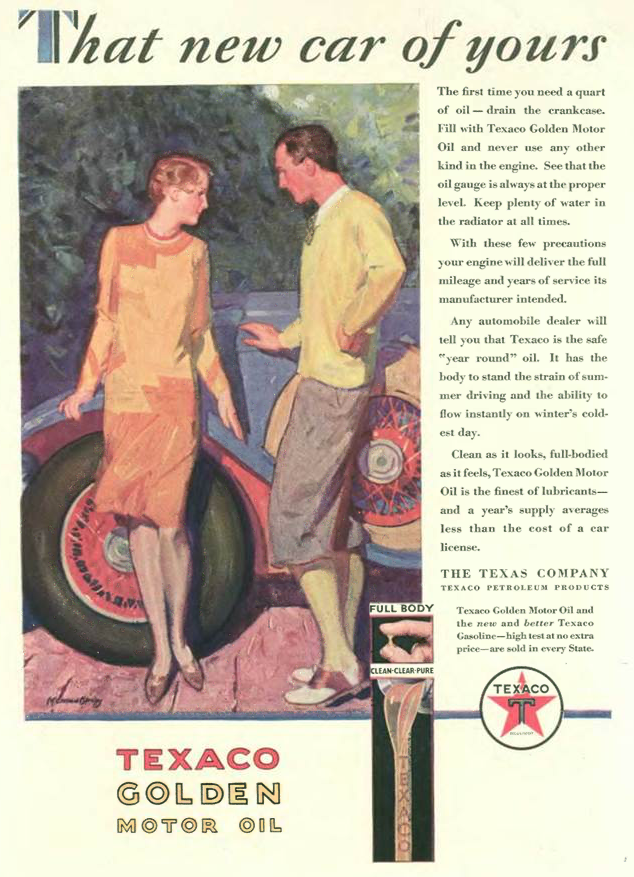
…and a softer message from The Texas Company, manufacturer of Texaco “golden” motor oil…

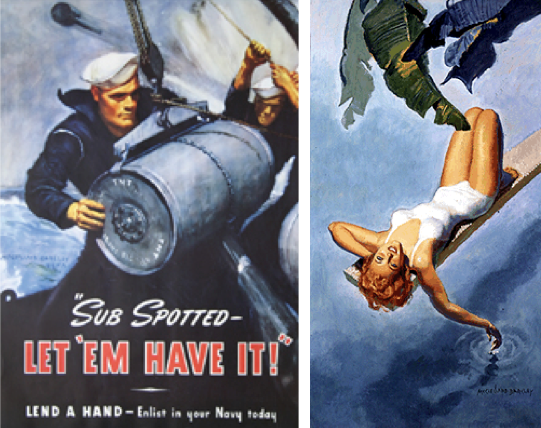
…the artist who rendered the above couple in those golden hues was American illustrator McClelland Barclay (1891-1943). Published widely in The Saturday Evening Post, Ladies’ Home Journal, and Cosmopolitan, Barclay was known for war posters as well as pin-ups:

VERSATILE…Navy recruitment poster by McClelland Barclay, and an illustration for the cover of a 1942 Saturday Home Magazine. (Wikipedia/illustrationhouse.com)

In 1940 Barclay reported for active duty in the US Navy, serving in the New York recruiting office and illustrating posters. Determined to be a front-line combat artist, he served in both the Atlantic and Pacific theatres until he was reported missing in action after his boat was torpedoed in the Solomon Islands.

 *  *  *

Our comics are supplied by Alan Dunn, who probed the vagaries of movie magazine gossip…

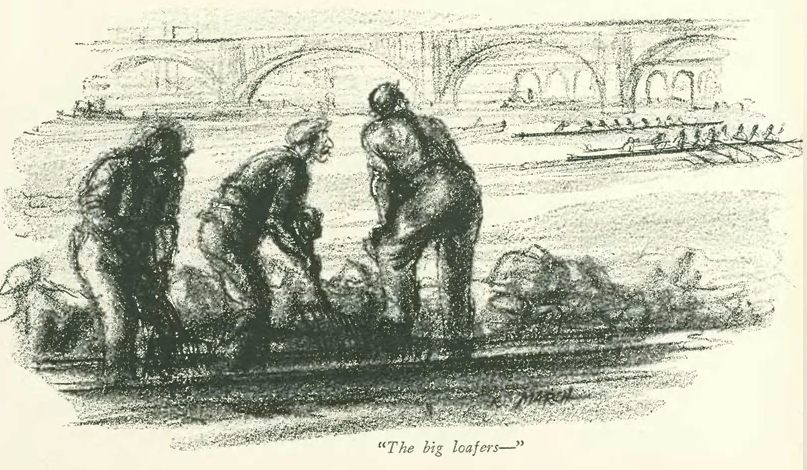
…and Reginald Marsh, known for his social realistic depictions of working life in New York, including these stevedores eyeing a regatta…

…and finally, Gardner Rea looked in on a young man displaying early signs of cynicism…

Next Time…How Charles Shaw Felt About Things…


Million Dollar Mermaid

Our sense of what is old and what it is new becomes skewed during periods of rapid change, and such was the case in 1920s New York when large swaths of the old city were swept away and replaced by massive towers that seemingly rose overnight. Places like the Hippodrome Theatre, a 1905 Beaux-Arts confection barely 24 years old, seemed positively ancient in those heady times.

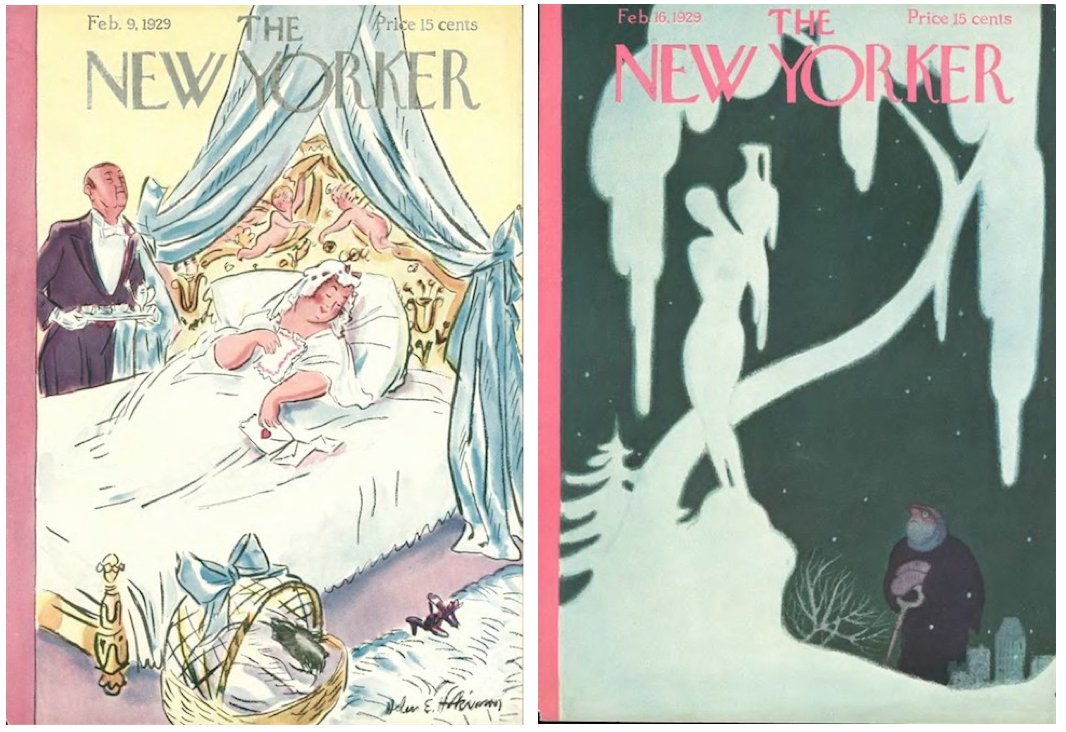
Feb. 9, 1929 cover by Helen Hokinson. Feb. 16, 1929 cover by Rea Irvin.

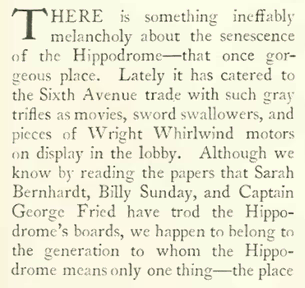
For the most part the New Yorker was enthusiastic about the changing skyline, as its namesake was claiming the crown as America’s premier city; but occasionally a melancholy note would be struck when a familiar institution appeared in decline or fated for the wrecking ball. In the Feb. 9, 1929 “Talk of the Town,” E.B. White wistfully recalled the old days of the Hippodrome, once the largest theatre in the world and the pride of turn-of-the-century New York:

FOR THE MASSES…The Hippodrome, built in 1905, provided entertainment to millions of New Yorkers who couldn’t afford a ticket to a Broadway play. The brainchild of Frederick Thompson and Elmer S. Dundy, entrepreneurs of Coney Island’s Luna Park, the Hippodrome was torn down in 1939 after more than a decade of decline. (1905 photo courtesy Library of Congress)
A REALLY BIG SHOOO…One of the first performances at the Hippodrome was a four-hour spectacle: A Yankee Circus on Mars (advertised on the theatre’s marquee in photo above). The 1905 production included 280 chorus girls, 480 soldiers, a parade of cars driven by elephants, an equestrienne ballet, acrobats, and a cavalry charge through a lake. (Image from Harper’s Weekly via daytoninmanhattan.blogspot.com)
The Hippodrome’s main theatre could accommodate 5,300 patrons in seats that were four inches wider than normal theatre seats. The dome over the “Roman style” auditorium encompassed an acre. (Broadway Magazine 1905 via daytoninmanhattan.blogspot.com)

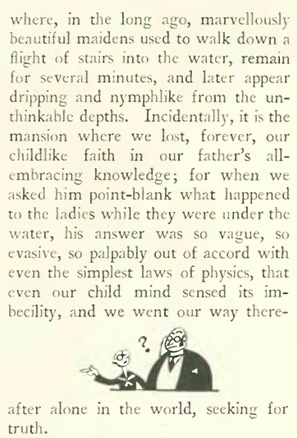
The Hippodrome held such a place in the heart of the New Yorker that the magazine offered further reminiscences in the Feb. 16 issue, this time penned by managing editor Harold Ross:

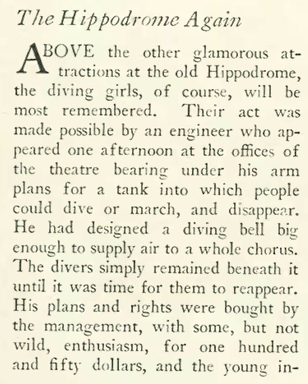
For demonstrations of diving and “mermaid spectacles,” the Hippodrome stage featured an eight-foot high steel tank in four sections, with a front of plate glass. Manned diving bells were also used to raise and lower “mermaids” during performances.

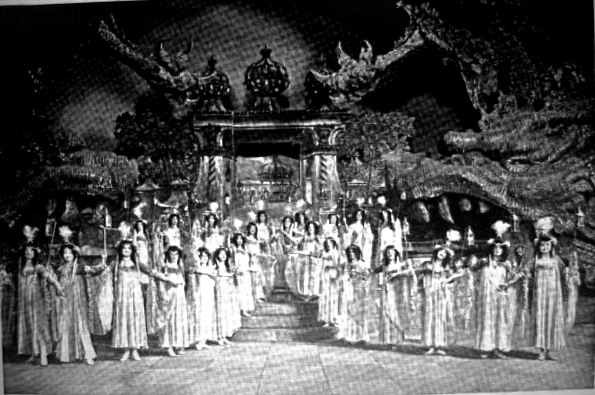
OLD TIMEY FX…Illustration from Nature magazine (left) depicts a diving bell used in the Hippodrome’s swimming and diving tank to raise and lower performers. At top, circa 1910 advertisement; at bottom, the “Court of the Golden Fountain” in the the theatre’s 1905-06 presentation of A Society Circus. (les-sources-du-nil.tumblr.com/flickr/NYC Architecture)

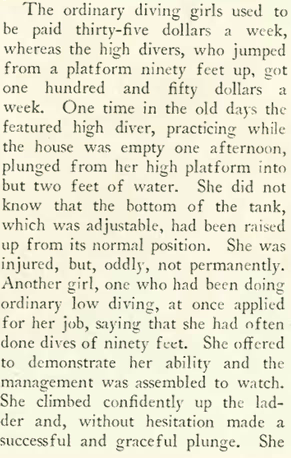
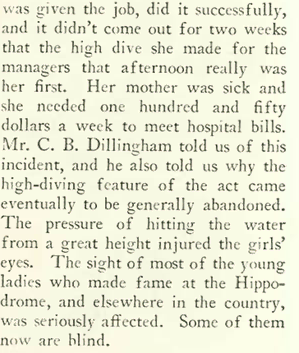
Ross wrote about the Hippodrome’s “diving girls,” who would dive into a tank of water from a height of 90 feet, sometimes at a serious cost to their health:

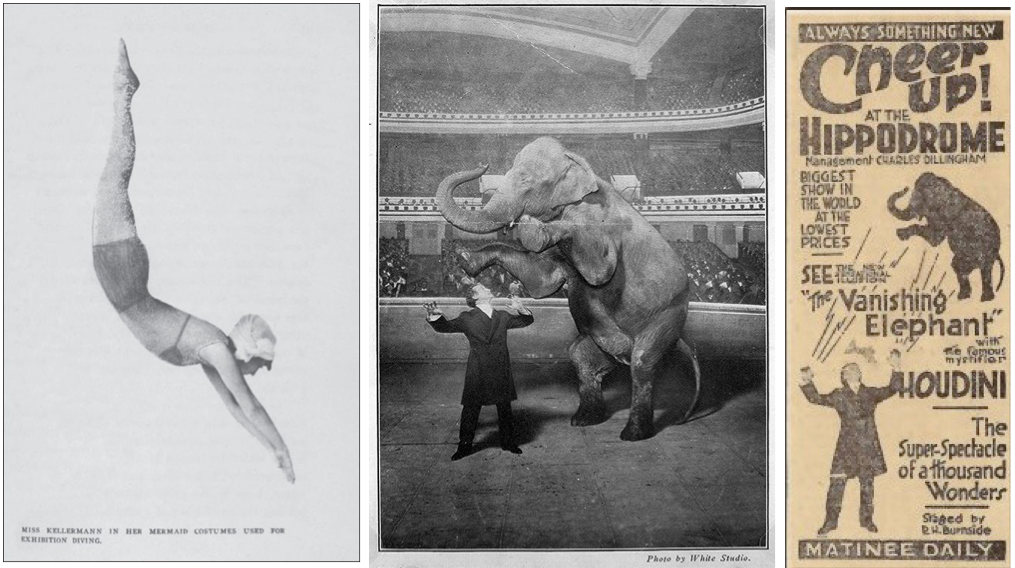
HIPPODROME’S HEYDAYS…In the early 1900s Australian swimmer and diver Annette Kellerman (left, in an image from her 1918 book, How to Swim) was a famed performer at the Hippodrome, as was illusionist and stunt performer Harry Houdini, shown here in 1918  with Jennie the Elephant in a performance of the vanishing elephant trick. (Monash University/americaslibrary.gov/wildabouthoudini.com)
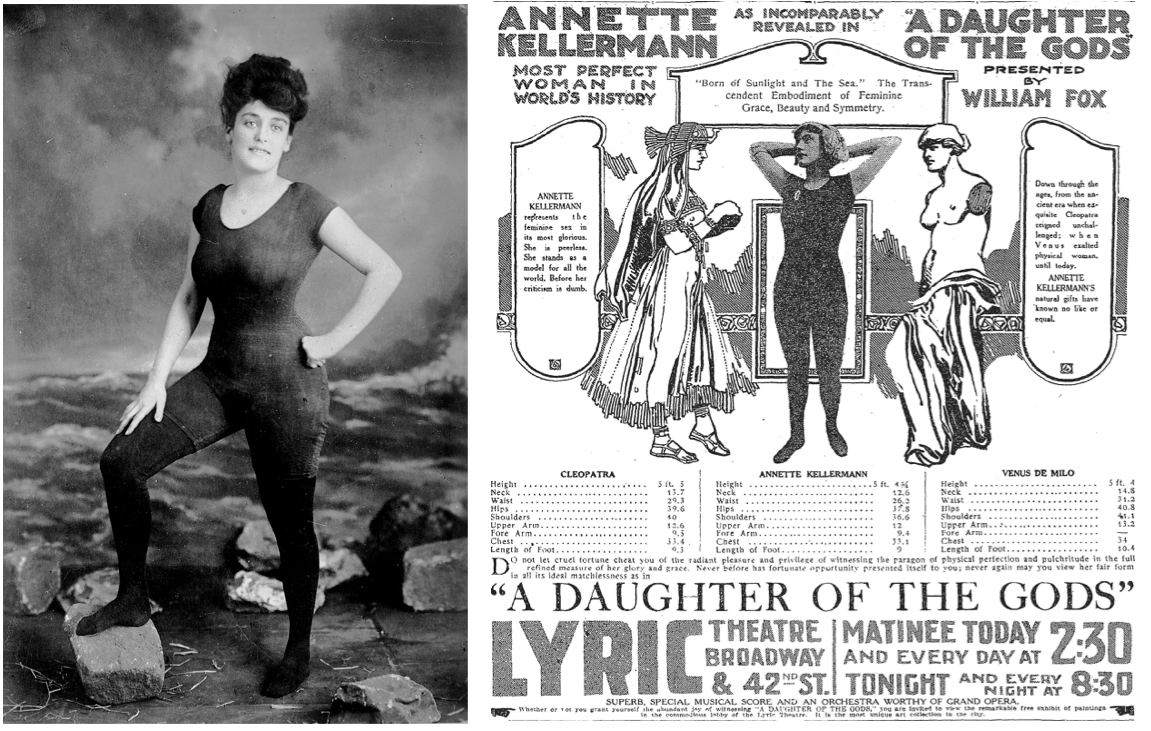
MILLION DOLLAR MERMAID…famed around the world by that moniker, swimmer and later actress Annette Kellerman is considered the originator of the one‐piece bathing suit, which she models at left in a photo taken around 1907. At right, advertisement for Kellerman’s 1916 film A Daughter of the Gods (now lost), in which Kellerman achieved another first: the first complete nude scene by a major star. The William Fox Studio made much of Kellerman’s figure, promoting her as the perfect woman by “comparing” her measurements to the likes of Cleopatra and Venus de Milo. (Wikipedia/consumingcultures.net)

Australian swimmer Annette Kellerman was a big draw at the Hippodrome, and helped popularize the sport of synchronised swimming after her 1907 performance of the first water ballet in theatre’s giant plate glass tank. In that same year she shocked Bostonians by appearing on a local beach in a “daring” one‐piece bathing suit (shown above), and was arrested for indecency. This was at a time when a woman’s standard bathing apparel consisted of a blouse, skirt, stockings and swimming shoes.

Unlike some of the unfortunate Hippodrome divers who later lost their eyesight due to cranial pressure from high dives, Kellerman went on to a long and active life (she died in 1975, at age 88). Known throughout the world as Australia’s “Million Dollar Mermaid” (and portrayed by Esther Williams in a 1952 movie by the same name), Kellerman appeared in more than a dozen films between 1909 and 1924. She also launched her own line of swimwear and wrote several books on swimming, beauty and fitness.

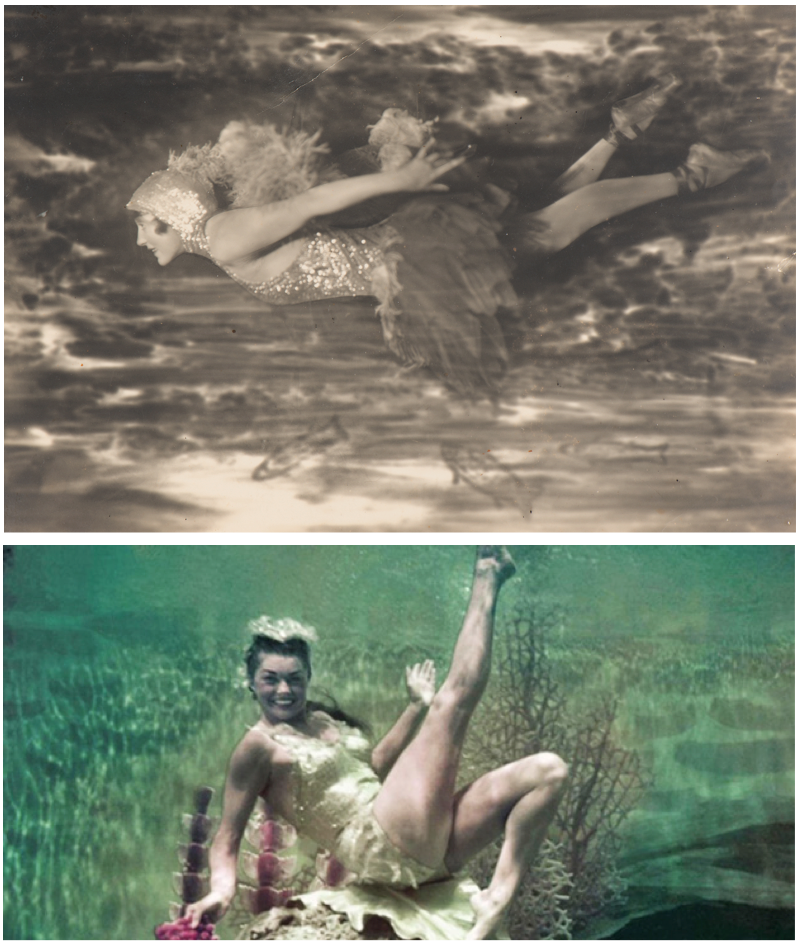
ALL WET…At top, Annette Kellerman swimming underwater in a gold sequined dress, possibly from  Queen of the Sea (1918, now lost). Thirty-four years later Esther Williams (below) would portray Kellerman in Million Dollar Mermaid. (historycouncilnsw.org.au/gsgs/movieactors.com)

*  *  *

City of Lights

While E.B. White got misty-eyed about the old Hippodrome in the Feb. 9 issue, his fellow New Yorker writer and friend James Thurber was thrilling on the new skyscrapers lighting the city’s skyline:

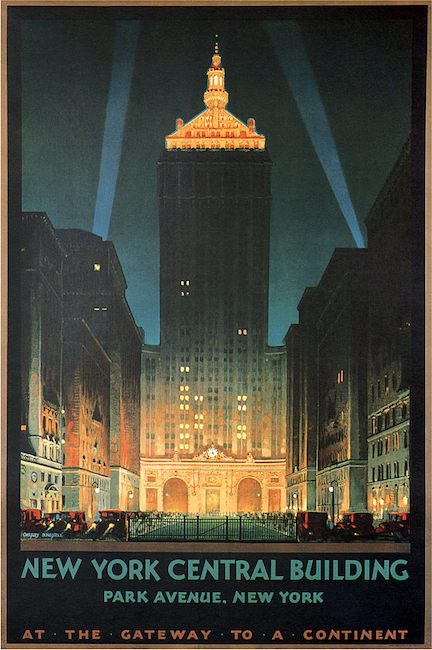
BEJEWELED CROWN…The New York Central Building depicted in a 1929 promotional painting by Chesley Bonestell. (albanyinstitute.org)

Thurber noted that “100,000 candlepower” would light the golden crown of the New York Central Building, the tallest structure in the Grand Central complex. Over at the new Chanin Building, a whopping 25 million candle-power would be trained on its art deco crown.

YOU CAN’T MISS IT…At left, the nearly 700-foot-tall Chanin Building joined the race for the sky in 1928-29. At right, a 1929 drypoint etching by Australian-born artist Martin Lewis depicted the magical glow of the Chanin Building from the viewpoint of a tenement dweller on a fire escape. (NYPL/ephemeralnewyork.wordpress.com)

Advertisers in the New Yorker reflected the mood of this new city of skyscraper canyons. From the Feb. 16 issue:

Ralph Ingersoll and Thurber also wrote in the Feb. 16 “Talk” about plans for “Rockefeller City…”

…and as we know, this was to become the famed Rockefeller Center, a complex of 19 buildings covering 22 acres between 48th and 51st streets. Led by by John D. Rockefeller Jr., the complex was conceived as an urban renewal project to revitalize Midtown (hard to imagine today). The land was originally envisioned as a site for a new Metropolitan Opera house, but when financing fell through the land’s owner, Columbia University, leased it to Rockefeller. Of the anticipated effect of the project, Ingersoll and Thurber wrote:

And for the record, the Feb. 9 issue featured another name that would shape the future of the city—J. Pierpont Morgan was the subject of a lengthy two-part profile penned by John K. Winkler.

 * * *

Shouts & Murmurs

The Feb. 16 marks a significant date on the New Yorker calendar—the first appearance of Alexander Woollcott’s famed “Shouts & Murmurs” column:

Writing in the “Double Take” section in the July 18, 2012 issue of the New Yorker, Jon Michaud notes that “Shouts & Murmurs” was Woollcott’s personal column, appearing weekly in the magazine for five years. Perhaps no person other Harold Ross himself could be more associated with the earliest origins of the magazine —  Woollcott was a colleague of Ross’s at Stars and Stripes during the First World War, and introduced Ross to his first wife, Jane Grant, who was also a considerable influence on the early magazine.

Michaud writes that Woollcott used the column “to opine on, lampoon, and attack the culture and society of the day. In his distinct and at times excessive style, he reviewed books, wrote spoofs, distributed gossip, and generally rankled as many people as he could.” Woollcott ended the column in December 1934, but it was revived in 1992 as a regular venue for many notable humorists, and continues to this day.

A REAL CHARACTER…Alexander Woollcott, in his idea of casual wear. He once informed his friend and New Yorker colleague Corey Ford: “Ford, I plan to spend three days at your house in New Hampshire next week.” Not overly pleased to be hosting such a demanding guest, Ford uttered a meek “That will be swell.” “I’ll be the judge of that,” Woolcott warned him. (From Elizabeth Olliff, “An Evening at the Algonquin.”)

* * *

Up In Smoke

Jumping back to the Feb. 9 “Talk of the Town,” we have this complaint from the magazine regarding celebrity cigarette endorsements. Although the magazine derived a lot of revenue from cigarette ads, Harold Ross insisted on a strict separation between editorial and advertising, allowing his writers free reign to bite the hands that fed them, if they so wished:

Here’s the offending ad, which was featured in the Feb. 23 issue:

In the Feb. 9 issue, Groucho Marx couldn’t resist getting in on the endorsement action…

…nor could Ross’s old friend George Gershwin, who touted the health benefits of Lucky Strikes in the Feb. 16 issue…

In other ads from the Feb. 16 issue, we find that for all of the technological advances in the 1920s, a decent car heater still eluded automakers. Hence…

…on the other hand, we also have this very up-to-date product—the forerunner of today’s rolling airplane luggage…

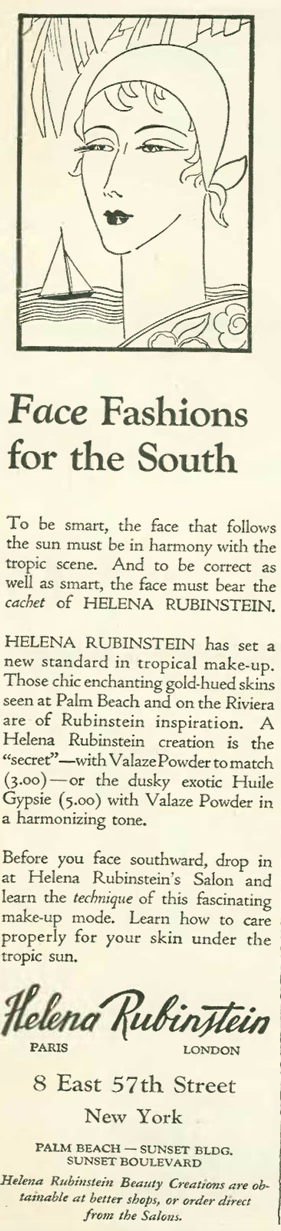
…and if you happened to be flying south, you might have first checked in with Helena Rubinstein to make sure you had the right “face fashions”…

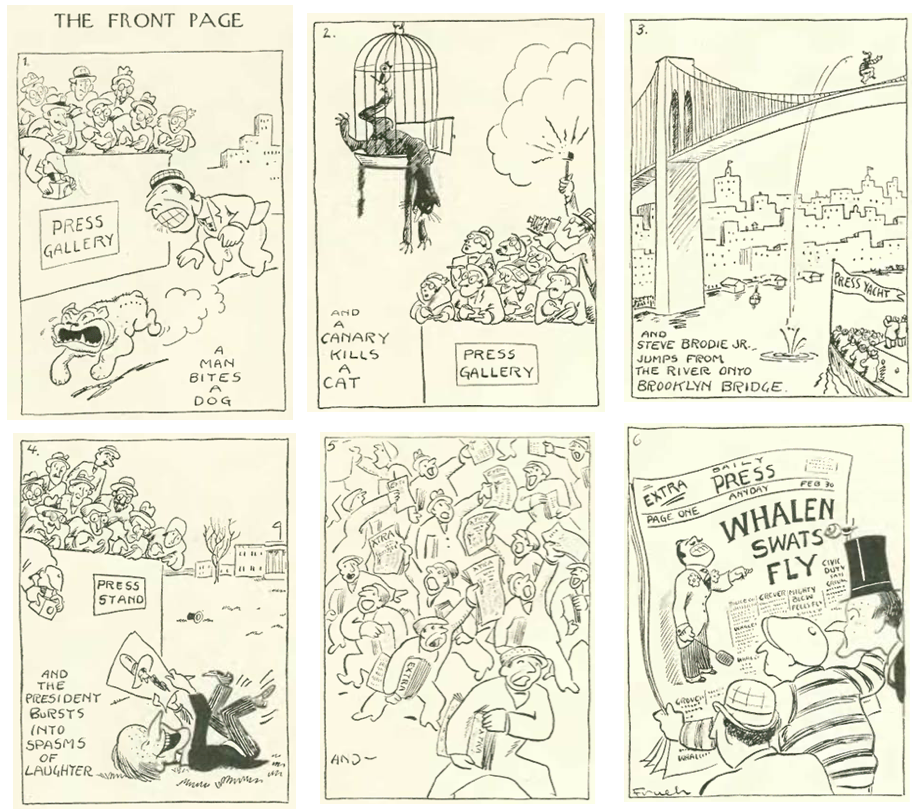
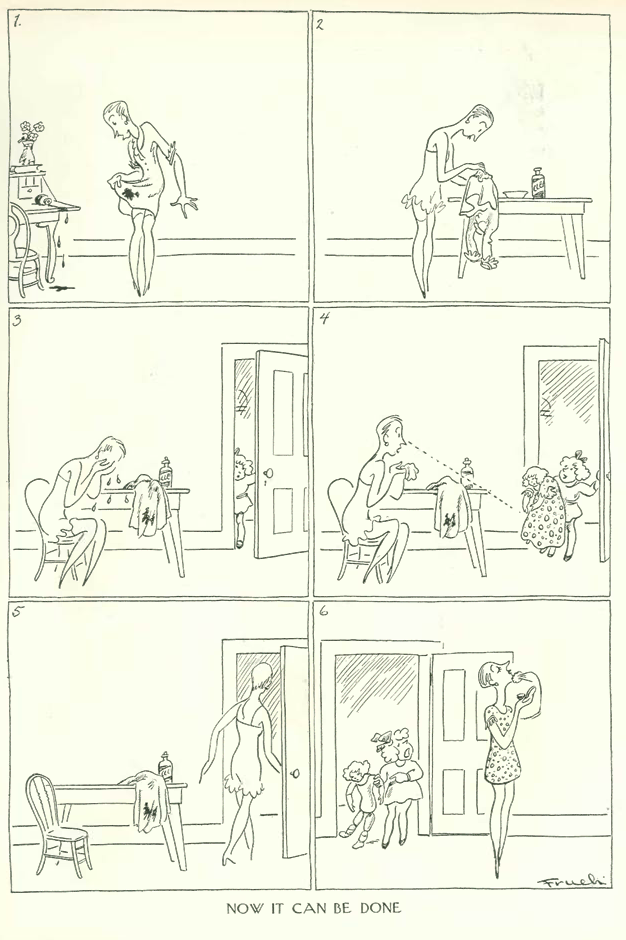
And finally our cartoons, all from the Feb. 9 issue. This first is a six-panel series by Al Frueh that originally ran diagonally, top to bottom, across a two-page spread. It took a shot at the self-promoting police commissioner, Grover Whalen, who was not a friend to the New Yorker due to his ham-fisted approach to Prohibition enforcement…

…and Leonard Dove took a shot at some posh folks outside of their urban element…

…and finally, Alan Dunn examined the wages of beauty…

Next Time: Modern English Usage…

Lighter Than Air

Just a decade after German Zeppelins sowed terror across the skies of Europe and Great Britain, Germany’s new Graf Zeppelin was enthusiastically welcomed by a throng gathered at Lakehurst, New Jersey, the massive airship having completed its first intercontinental trip across the Atlantic.

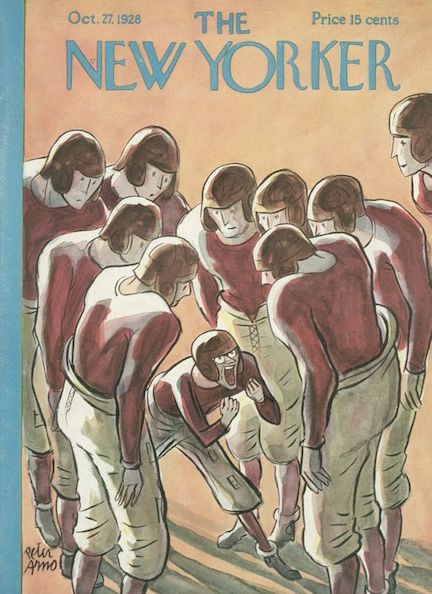
Oct. 27, 1928 cover by Peter Arno.

It had been only ten years and two months since German Zeppelins dropped their last bombs on the British, which had dubbed the airships “baby killers” for the mostly civilian casualties they inflicted. Beginning in 1915, Zeppelin raids on London killed nearly 700 and seriously injured almost 2,000 over the course of more than 50 attacks. It must have been a terrifying sight, something straight out of science fiction — flying ships more than the length of two football fields, blotting out the stars as they loomed overhead. Their size, however, was also their downfall, as Britain soon developed air defenses (searchlights, antiaircraft guns, and fighter planes) that shot many of these hydrogen gasbags out of the sky (77 of Germany’s 115 airships were either shot down or disabled).

TERROR IN THE SKIES…Image from a German postcard celebrating the bombing of Warsaw by the Zeppelin Schütte Lanz in 1914. Here’s a weird fact: There was a shortage of sausages in Germany during WWI, since cow intestines normally used for casings were instead used to create special bags to hold the hydrogen gas that kept Zeppelins aloft. It took more than 250,000 cows to make one airship. (Wikipedia)

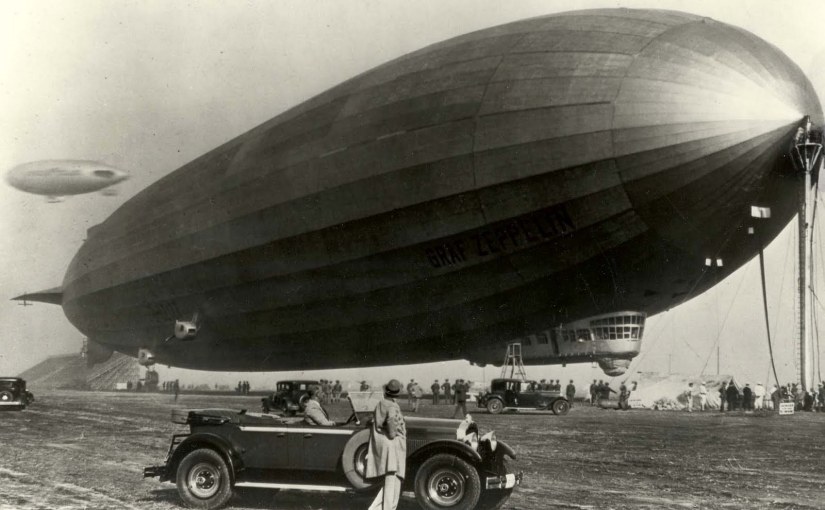
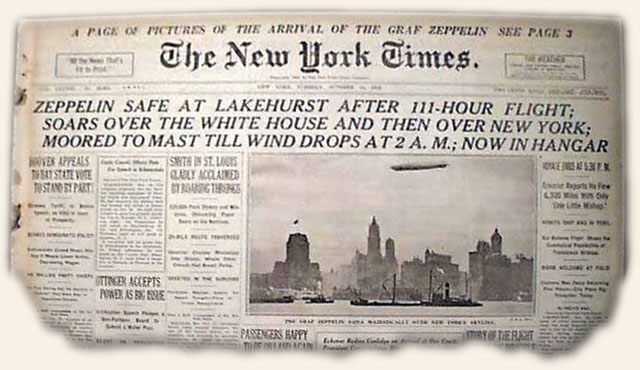
So when the 776-foot Graf Zeppelin loomed over the New York City skyline on Oct. 15, 1928, the reaction was one of awe rather than terror. The New York Times heralded its safe arrival on the front page…

(rarenewspaper.com)
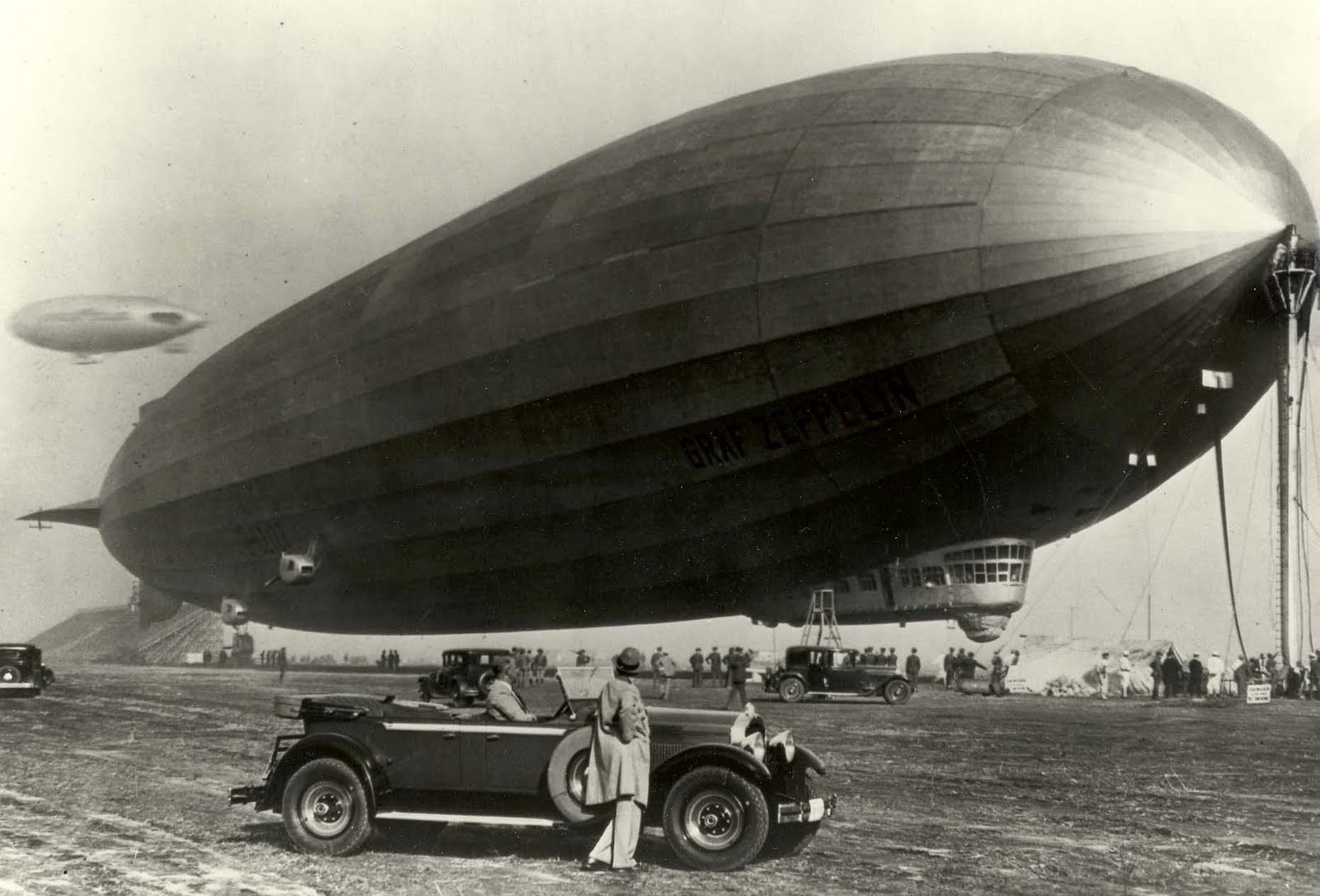
The Graf Zeppelin at Lakehurst, N.J., 1929. (rarehistoricalphotos.com)

…and The New Yorker’s James Thurber (writing in “The Talk of the Town”) was on hand to assess the welcoming crowds gathered at Lakehurst, N.J….

…who in their enthusiasm could have easily destroyed the vessel, which had already sustained damage during a storm over Bermuda…

OLD GAS BAG…The Graf Zeppelin arriving at Mines Field (now Los Angeles International Airport) on August 26, 1929. Newspaper magnate William Randolph Hearst sent the Graf Zeppelin dirigible on a 20-day flight that circumnavigated the world in 1929. (martinturnbull.com)
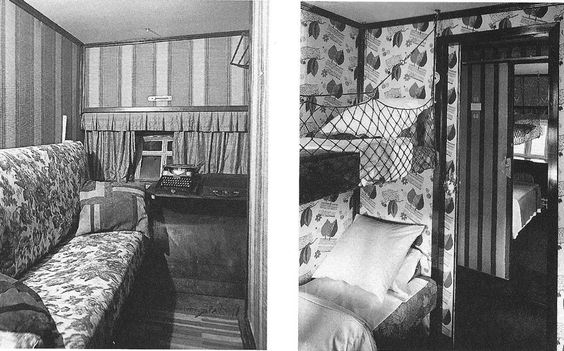
Living quarters of the Graf Zeppelin. Cozy, if you could forget that your room was contained within an envelope of highly explosive hydrogen gas. (airships.net)

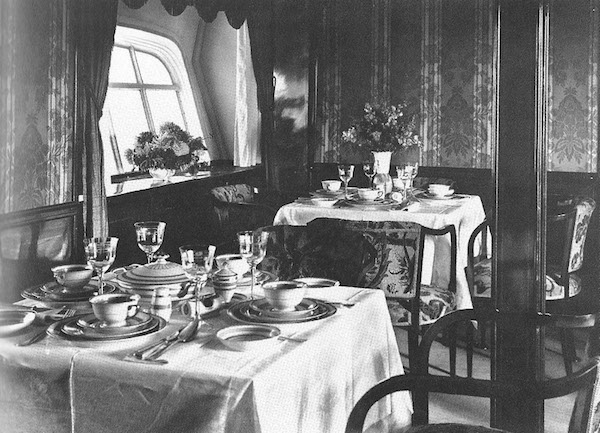
Dining aboard the Graf Zeppelin. (Top, airshipsonline.com, bottom, airships.net)

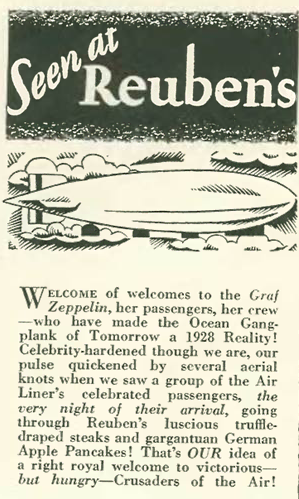
Reuben’s restaurant in New York seized the opportunity to cash in on the spectacle, boasting (in this hastily placed ad in the Oct. 27 issue) that the Graf Zeppelin’s passengers dined at their establishment on the very night of their arrival…

A final note: Considering the hazards of flying these ungainly, flammable machines (e.g. the Hindenburg in 1937) Graf Zeppelin flew more than one million miles in its career (the first aircraft in history to do so), making 590 flights (144 of them oceanic crossings, including one across the Pacific), and carrying more than 13,000 passengers — all without injury to passengers or crew.

 *  *  *

Rough Riders

Back on the ground, “The Talk of the Town” looked in on a somewhat less exotic form of long-distance travel — the recently inaugurated coast-to-coast bus service from New York to Los Angeles:

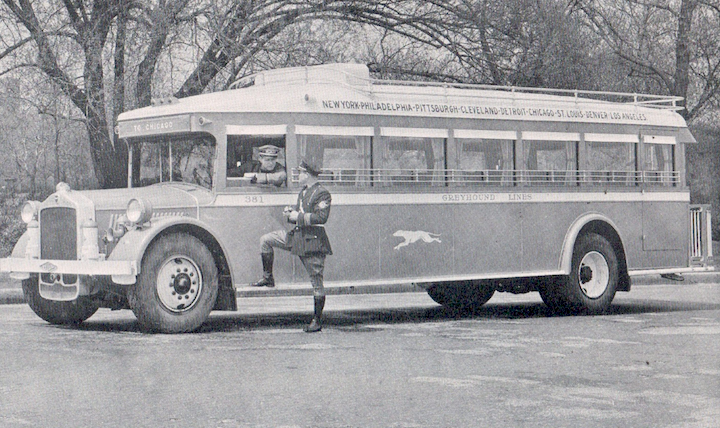
LONG HAUL…This Greyhound bus from 1929 was probably similar to those leaving the New York bus stations for points west in 1928. (flickr)

 *  *  *

From Our Advertisers

On the subject of rolling transportation, Buick trumpeted the introduction of “adjustable front seats” in its silver anniversary model. Curiously, this improvement was touted as a convenience solely for women drivers…

Our cartoon (a two-pager) for Oct. 27 comes from Gardner Rea, the latest among The New Yorker’s staff to mock the quality of sound motion pictures. The cartoon is labeled at the bottom: “The Firtht One Hundred Per Thent Thound Movie Breakth All Houth Recordth.” (click image to enlarge)

 *  *  *

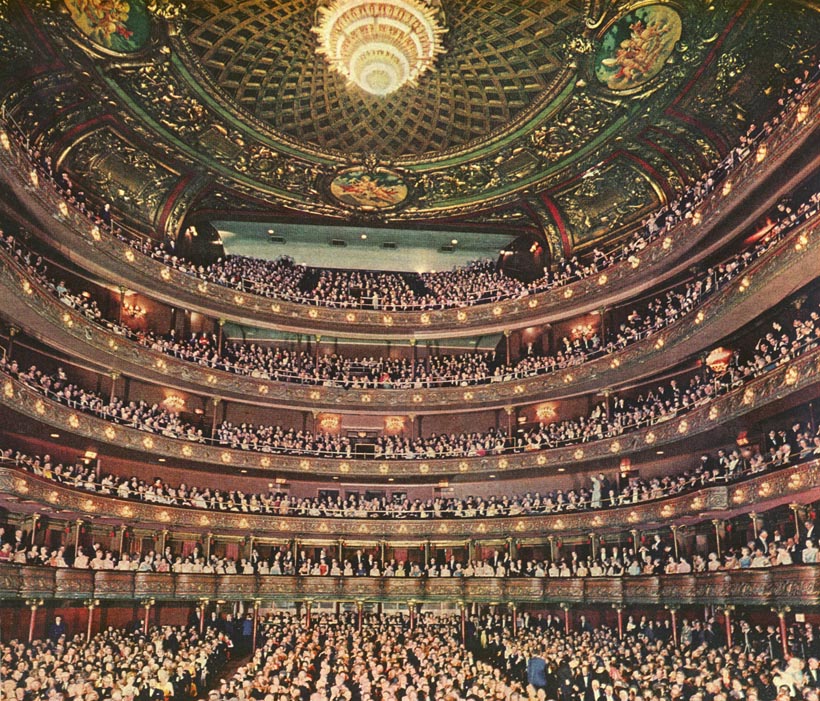
If you wanted to get a glimpse of New York’s “royalty” in 1928, you could secure a seat at the Metropolitan Opera, especially one with a view of its famed “Diamond Horseshoe” seats.

November 3, 1928 cover by Julian de Miskey.

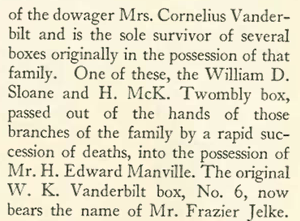
The “Diamond Horseshoe” described a ring of seats at the Metropolitan Opera House occupied by New York’s social elite. Not unlike today’s stadium skyboxes, the Met reserved these boxes for purchase by the wealthy. “The Talk of Town” for Nov. 3, 1928 noted how many of these were still held by the same families that had secured spots after the Met opened in 1883:

CULTURAL LANDMARK…The Metropolitan Opera House at Broadway and 39th Street circa 1905. (Wikipedia)
SEE AND BE SEEN…The Diamond Horseshoe at the Metropolitan Opera House, as seen from the rear of the stage for a concert by pianist Josef Hofmann, November 28, 1937. (newyorksocialdiary.com)

“Talk” also noted that some of the boxes in the Diamond Horseshoe were coming into new ownerships among the newly rich (E.F. Hutton) and even (gasp) immigrants such as Otto Kahn:

DUST TO DUST…Above, a view of the “Diamond Horseshoe” at the Metropolitan Opera’s gala farewell performance on April 16, 1966. Below, patrons say goodbye to the old house at Broadway at the farewell performance. The building was torn down in 1967 and replaced by a 40-story office tower. (Time/Life)

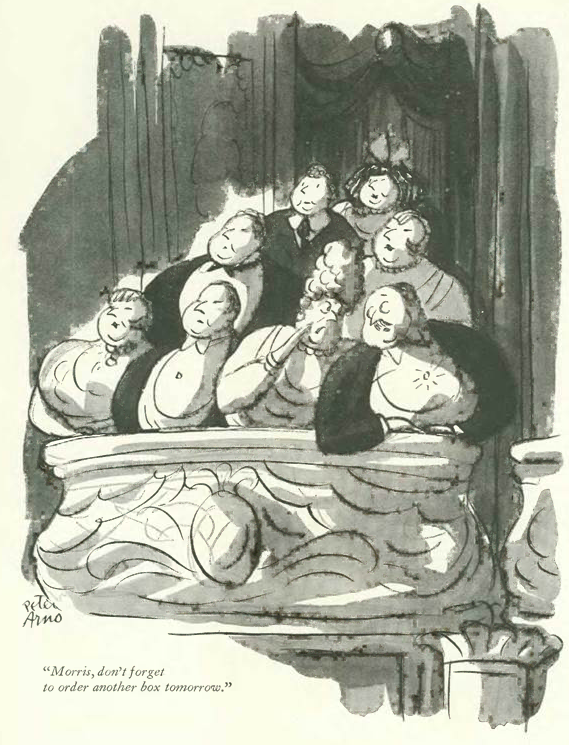
Also in the Nov. 3 issue was this cartoon by Peter Arno depicting one of the Met’s boxes stuffed with overfed toffs:

 *  *  *

Poet With a Green Thumb

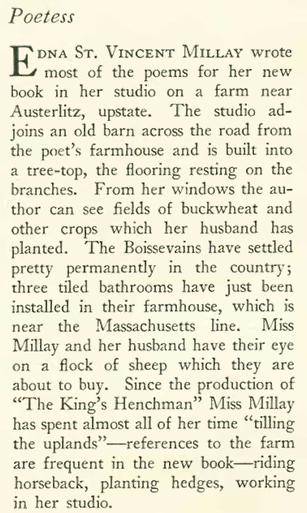
The Nov. 3 “Talk” also featured a bit by James Thurber on American poet and playwright Edna St. Vincent Millay, a major figure in New York’s Greenwich Village literary scene as well as a feminist leader. A Pulitzer-Prize winner (1923), Millay was also an avid gardener who preferred the solitude of her farm, Steepletop, to the limelight usually accorded a literary star:

RARE PHOTOGRAPH…Edna St. Vincent Millay raised her own vegetables at Steepletop, a former blueberry farm located near Austerlitz, New York that she owned with her husband Eugen Jan Boissevain. Photo is circa 1928. (Library of Congress)

Thurber noted that even her publisher, Harper & Sons, had to use an old photo of the publicity-shy poet for a new book release:

On the topic of photography, “Profiles” (written by film historian Terry Ramsaye) looked in on the quiet life of photography pioneer George Eastman, who founded the Eastman Kodak Company and popularized the use of roll film.

A quintessential “mamma’s boy,” Eastman never married…

…and by all accounts died a celibate less than four years after this profile was written, taking his own life at age 77. Suffering from intense pain caused by a spinal disorder, Eastman shot himself in the heart on March 14, 1932, leaving a note which simply read, “To my friends: my work is done. Why wait?”

Odds and Ends

Other items of note from the Nov. 3 issue included a humorous piece by Rube Goldberg, “The Red Light District,” in which the president of the Blink Stop-Go Traffic Company summons a doctor to treat a strange malady. The doctor gets held up by traffic lights on the way to the “emergency,” and when he discovers the problem is only hives, he shoots the patient. The piece was headlined by this artwork, also by Goldberg (shades of George Herriman and R. Crumb, yes?)…

Goldberg is still known today thanks to his series of cartoons depicting deliberately complex contraptions invented to perform simple tasks, such as the “Self-Operating Napkin” below, from 1931:

1931 (Wikipedia)

Cartooning’s highest honor, The Reuben Award, was named after Goldberg, who was a longtime honorary president of the National Cartoonists Society.

 *  *  *

The Roaring 20s saw a rapid transformation of the New York skyline, with massive skyscrapers rising from the dust of old 18th and 19th century institutions. But few would signal the new age more than the Chrysler Building, an Art Deco landmark that would stand as the world’s tallest building for nearly a year (knocked from the top spot in May 1931 by the Empire State Building). Architecture critic George S. Chappell (“T-Square”) had this observation about the planned building:

EVOLUTION OF AN ICON…Stages in the design for the Chrysler building, from the July-December 1929 issue of Progressive Architecture.

*  *  *

More from our advertisers…in the Nov. 3 issue Hawaii beckoned well-heeled New Yorkers who were contemplating the coming winter…

…and then there was this poorly executed ad for Kolster radios, the whole point seeming to be the drawing they commissioned from New Yorker cartoonist Peter Arno:

And finally, a cartoon by Alan Dunn, who looked in on an Ivy League football huddle:

Next Time: Diamond Lil…


A Familiar Ring

Ring Lardner is one of those 20th century American writers everyone has heard of but few have actually read. This is perhaps because he is often pigeonholed as a sportswriter rather than being remembered as a gifted satirist whose crisp writing style—often peppered with slang—influenced a generation of writers including Ernest Hemingway, who covered sports for his high school newspaper under the pseudonym “Ring Lardner.”

July 7, 1928 cover by Julian de Miskey.

Lardner would contribute nearly two dozen pieces to The New Yorker beginning with this ditty in the April 18, 1925 issue—

—and ending with “Odd’s Bodkins,” published posthumously in the Oct. 7, 1933 issue (Lardner died at age 48 of a heart ailment on Sept. 25, 1933). In his satirical “Profiles” piece for the July 7, 1928 issue, Lardner had some fun with editor and playwright Beatrice Kaufman, who like Lardner existed within the orbit of the famed Algonquin Round Table but was not a regular member (however Beatrice’s husband, playwright and director George S. Kaufman, was a charter member).

The entire piece, including an illustration by Peter Arno, is below (click image to enlarge the text):

Ring Lardner in undated photo, possibly mid 1920s (Encyclopaedia Britannica)
KAUFMAN CHUMS…Comedian Julius Tannen (left) frolics with Beatrice Kaufman and George S. Kaufman in Atlantic City in the 1920s; writer/critic Alexander Woollcott (left), artist Neysa McMein, actor Alfred Lunt, Beatrice Kaufman and comedian Harpo Marx hanging out in the 1920s. (spartacus-educational.com)

 *  *  *

One New Yorker writer who does stand the test of time is E.B. White, known to earlier generations for his many humorous contributions to The New Yorker and to later generations for his co-authorship of the English language reference The Elements of Style, and for his beloved children’s books including Stuart Little and Charlotte’s Web (Charlotte’s Web was often voted as the top children’s novel in a survey of School Library Journal readers, and most recently in 2012—the 60th anniversary of its publication). In the July 7, 1928 issue the nature-loving White offered these tongue-in-cheek plant care instructions, arranged atop a cartoon by Alan Dunn:

Another cartoon in the July 7 issue by Garrett Price offered another perspective on an advertising come-on:

No doubt Price was referencing ads such as this one below by the American Tobacco Company in which actress and dancer Gilda Gray—who in the 1920s popularized a dance called the “shimmy”—announced her preference for pipe smokers:

And we close with this cartoon by Al Frueh, who demonstrated how fashion had freed the woman of the Roaring Twenties:

Interested in the history of New Yorker cartoons and cartoonists? Then I recommend you check out cartoonist Michael Maslin’s Inkspill website for news on cartoonists and events. Another great site is Stephen Nadler’s Attempted Bloggery, which explores original art, auctions, obscurities and other angles of New Yorker cartoons and cartoonists.

A couple of my favorite Maslin cartoons (among many):

Next Time: 100 Percent Talker…