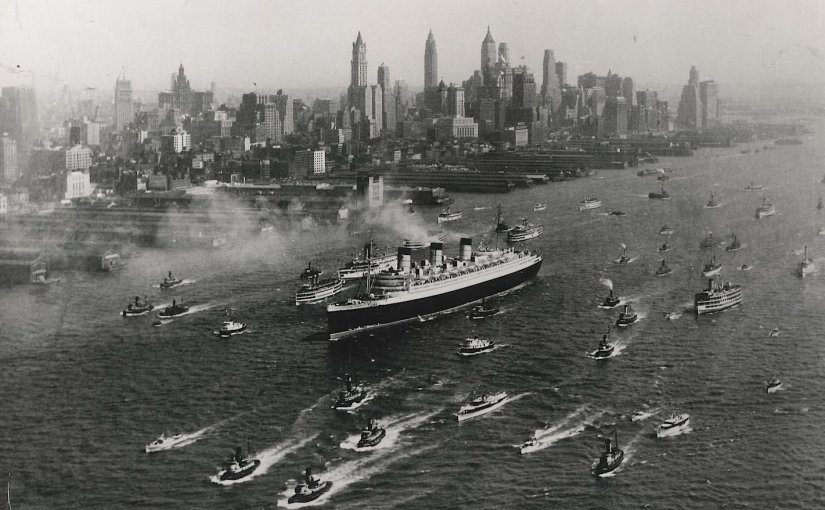
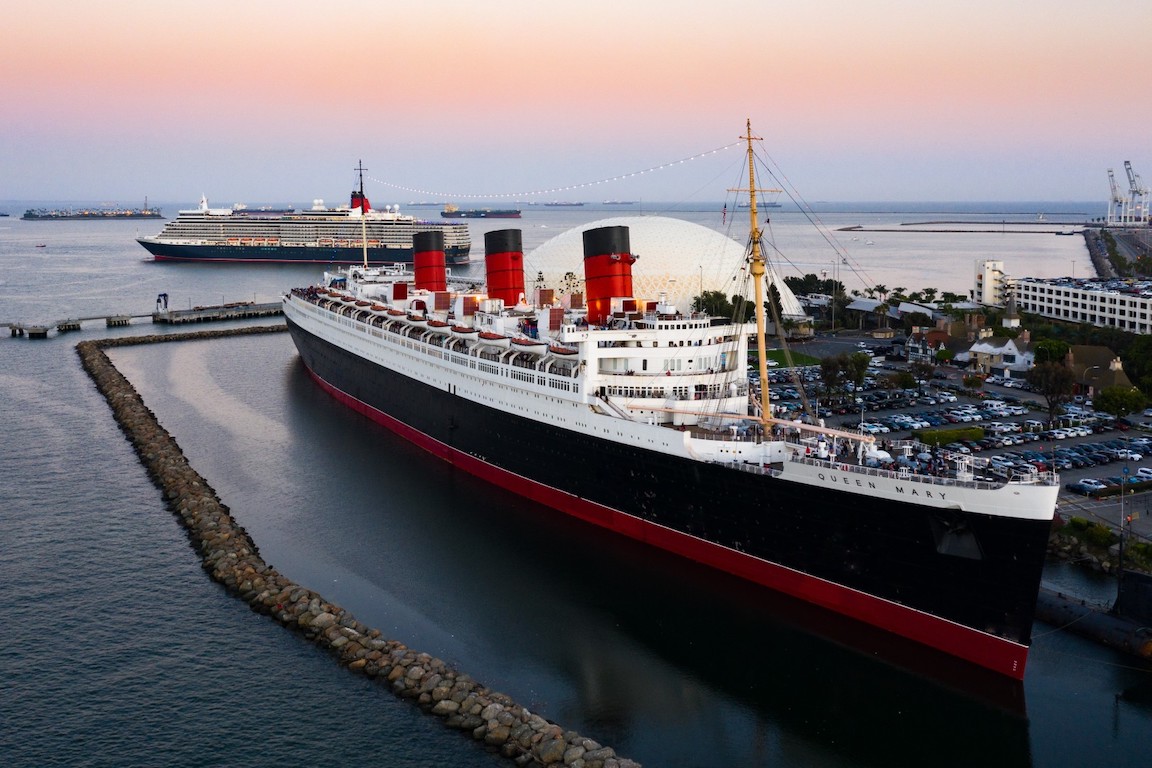
Above: The RMS Queen Mary arriving at New York harbor accompanied by a flotilla of escorts on June 1, 1936. (liverpool.ac.uk)
The RMS Queen Mary was launched in the age of superliners that included the SS Bremen, the SS Île de France and the SS Normandie. These and other liners competed for the Blue Riband, an unofficial honor bestowed on Atlantic Ocean liners achieving the highest average speed. These ships also vied for the distinction of being the most luxurious.
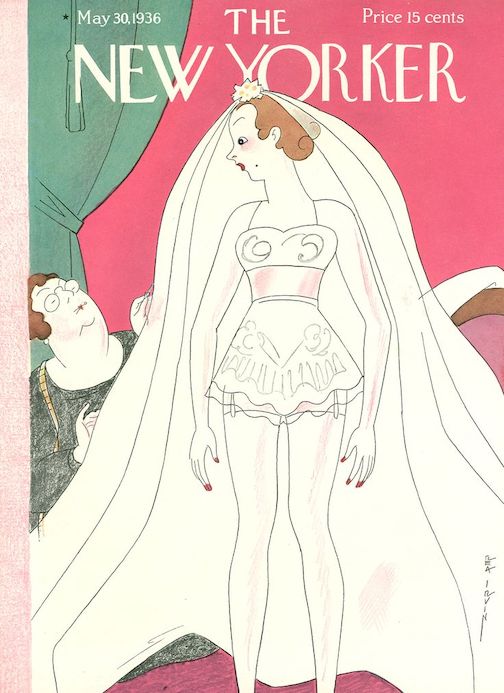
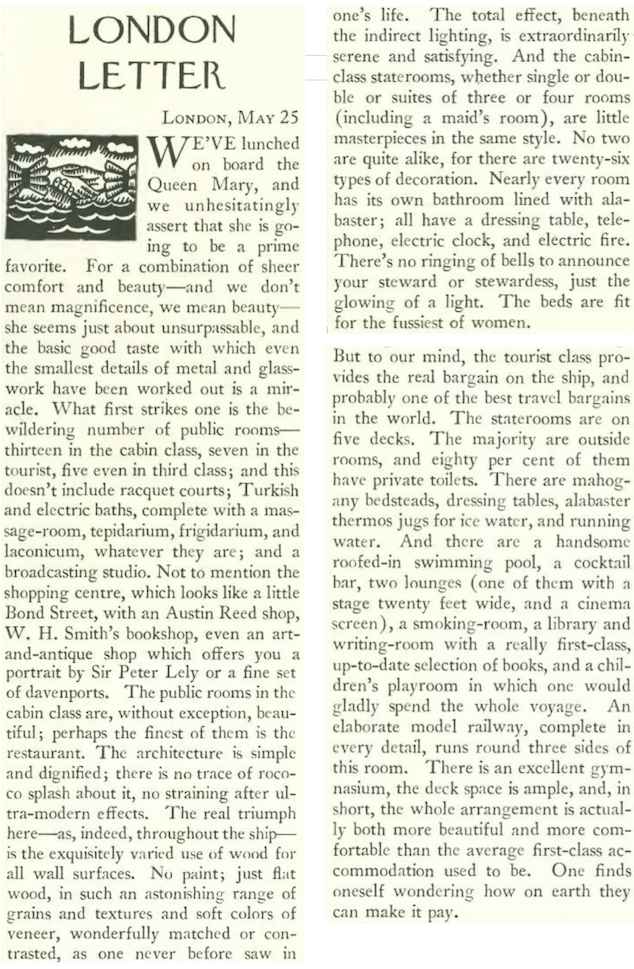
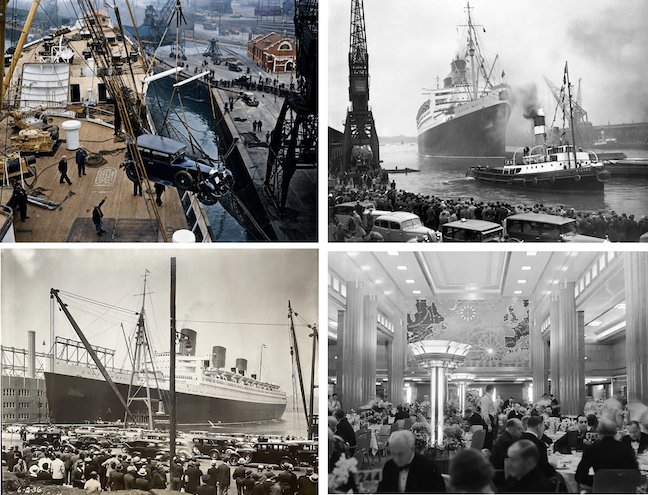
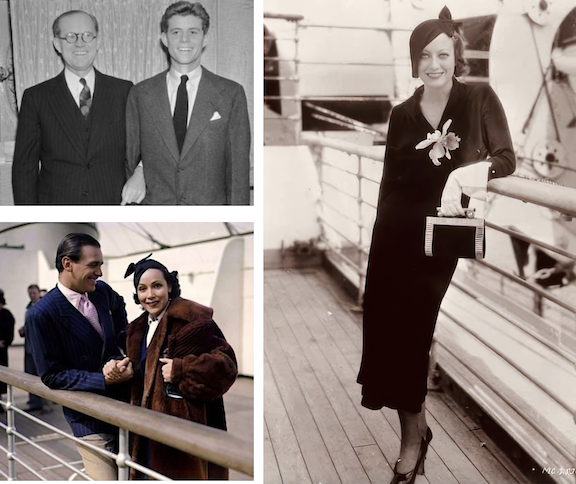
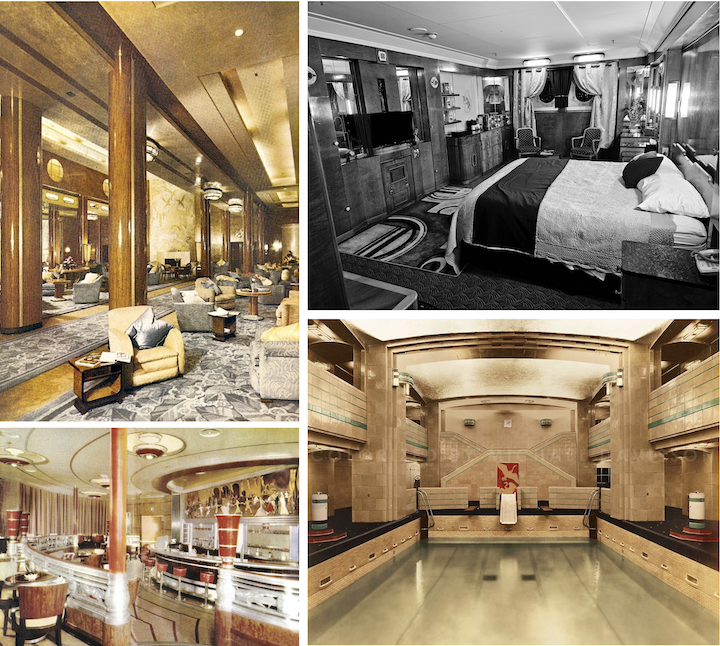
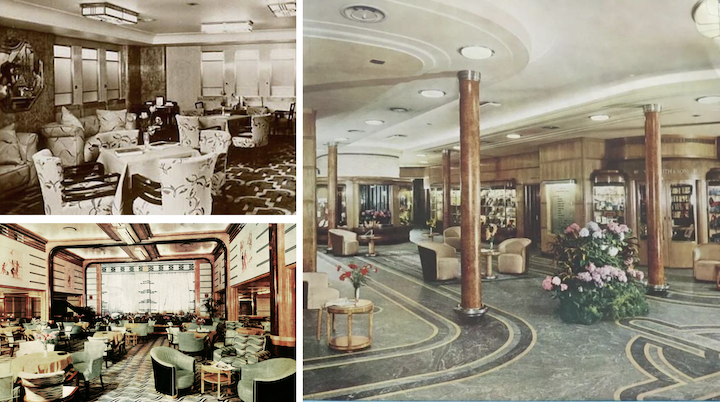
The Queen Mary was a top contender for both honors when she departed on her maiden voyage from Southampton on May 27, 1936. London correspondent Samuel Jeake, Jr (aka American poet and novelist Conrad Aiken) paid a visit to the liner just days before her first Atlantic crossing. Excerpts:
* * *
Green Acres
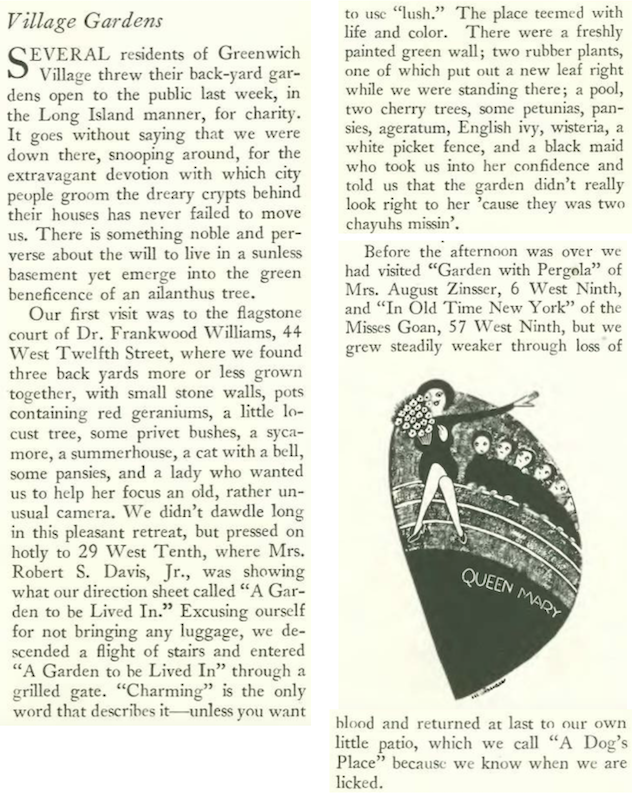
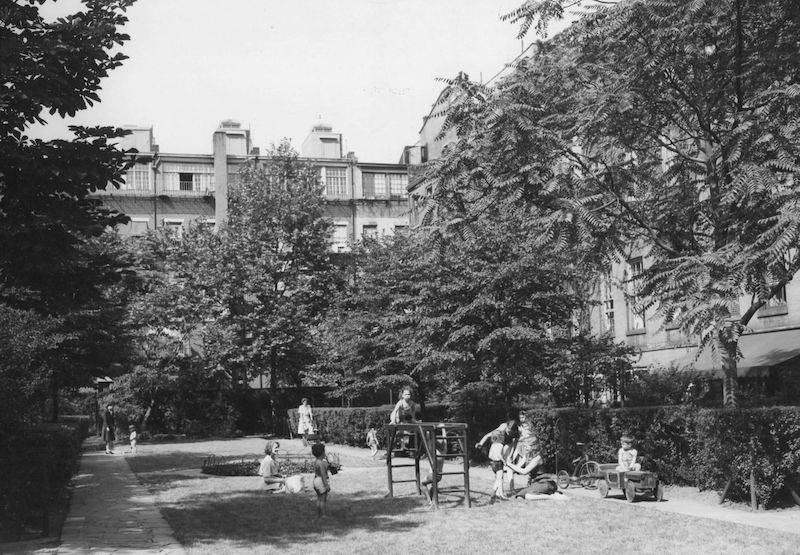
It’s hard to believe that at one time Greenwich Village was home to trash-filled back yards and deteriorating tenements. Beginning in the 1920s, residents transformed these back yards into communal green oases. “The Talk of the Town” visited three that had “more or less grown together.” Spot art by Christina Malman. Excerpts:
* * *
Art for the People
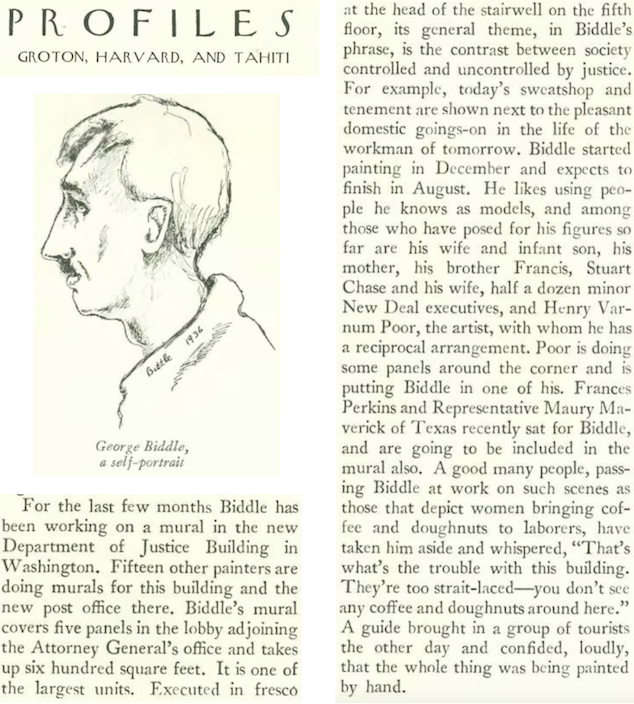
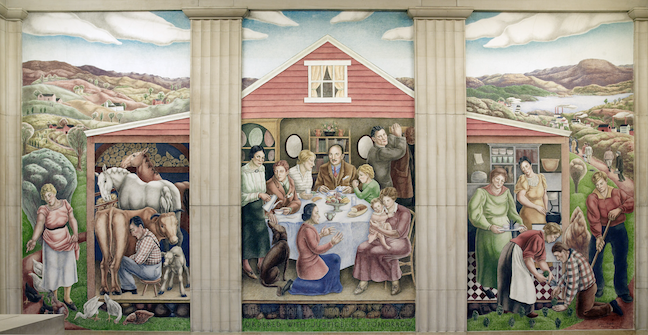
Geoffrey Hellman penned a profile of social realist artist George Biddle (1885– 1973), who played a major role in establishing the WPA’s Federal Art Project and who created murals for government buildings in the U.S., Brazil, and Mexico. Excerpt:

* * *
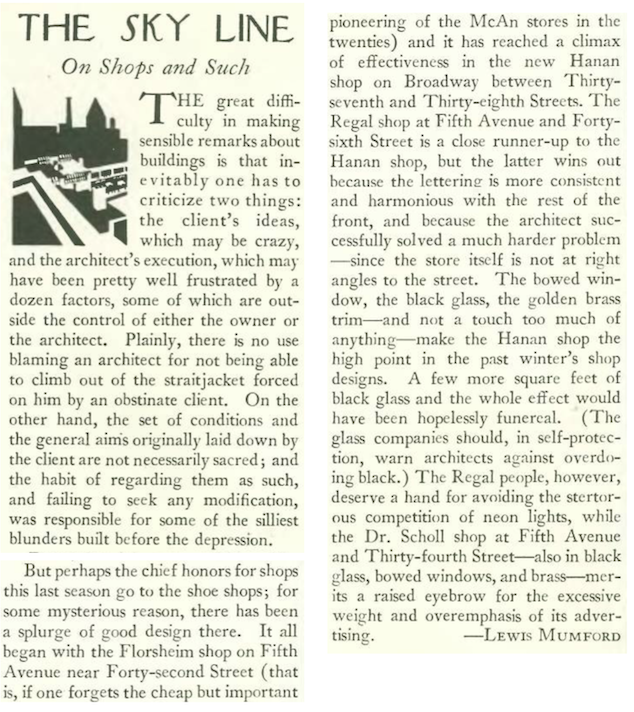
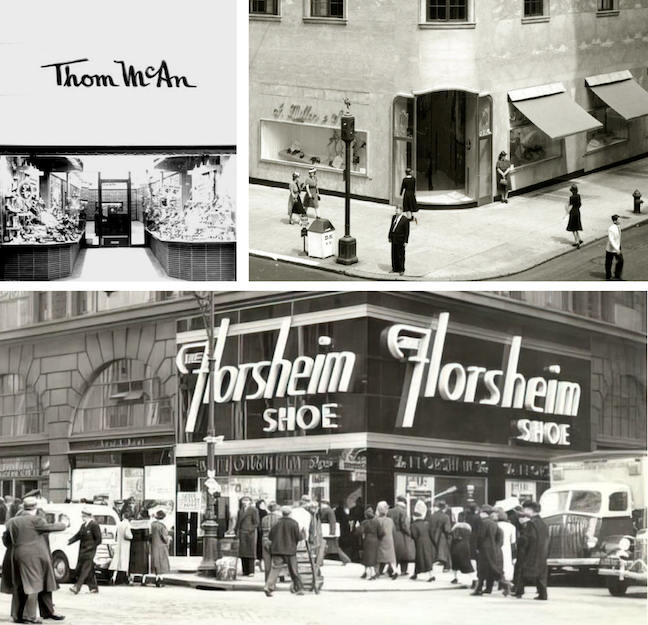
The Shoe Fits
Architecture critic Lewis Mumford was unimpressed with latest designs in commercial shops, however for “some mysterious reason” he was quite taken with various shoe stores in Midtown. Excerpts:
* * *
A Pirate Sets Sail
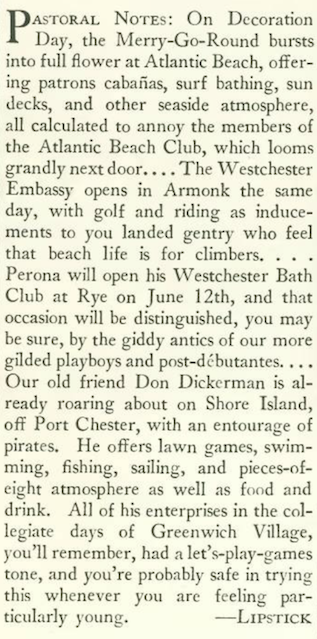
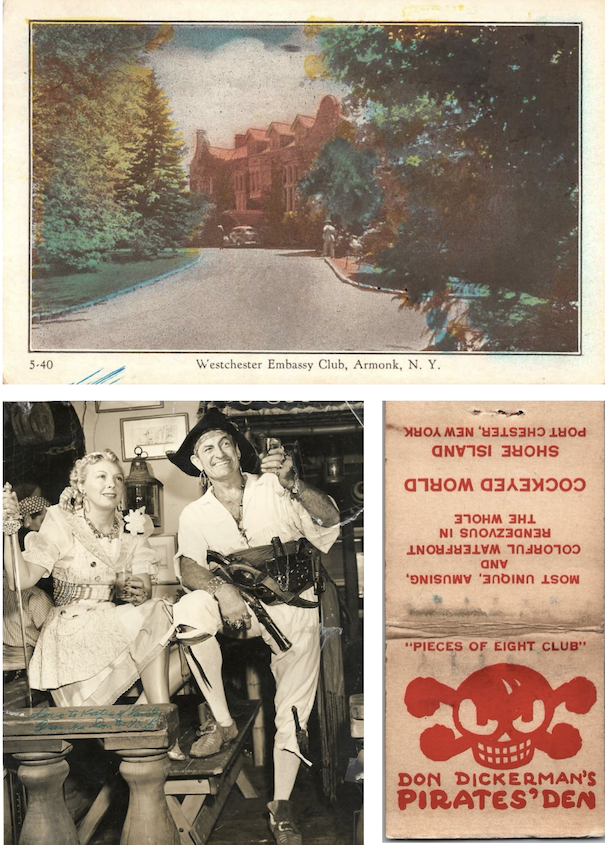
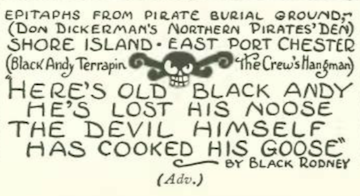
In her “Tables for Two” column, Lois Long noted a few of the summertime getaways near the city including the Westchester Embassy Club. She also mentioned the re-emergence of Don Dickerman, famed for his series of gaudy themed restaurants in the West Village from the late 1910s to 1930. Among those was his famed Pirate’s Den, which was destroyed in a 1929 fire. With the stock market crash Dickerman (1893-1981) was forced to sell the location, and he declared bankruptcy in 1932. However by 1936 he was on his way back, opening a pirate-themed enterprise near Port Chester:
* * *
At the Movies
Under the strict moral guidelines of the Hays Code, gangster films of the Pre-Code era gave way to milder fare, much to the chagrin of film critic John Mosher.
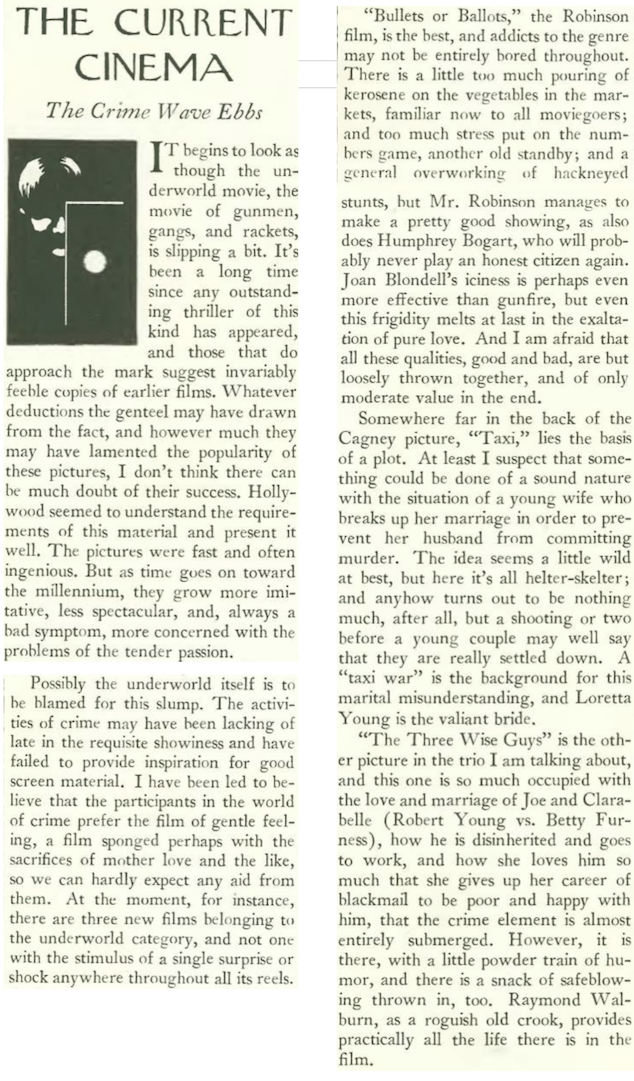
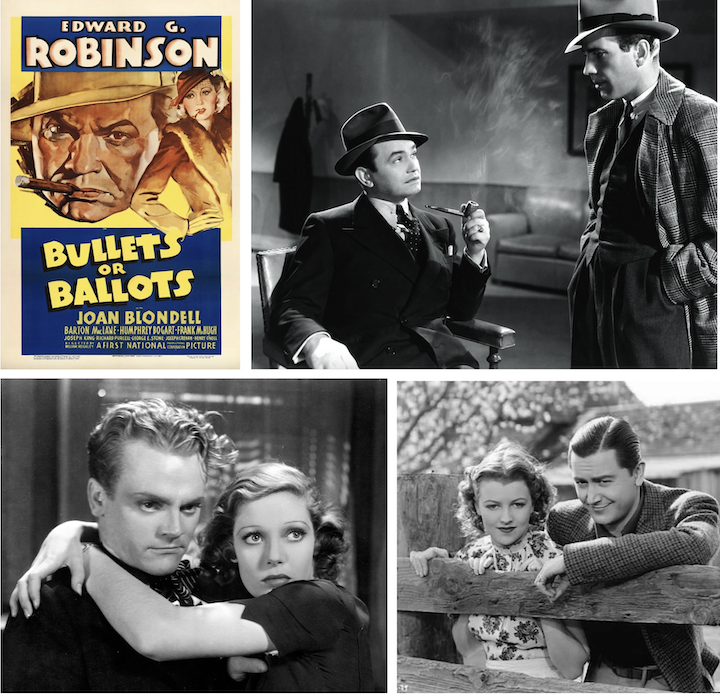
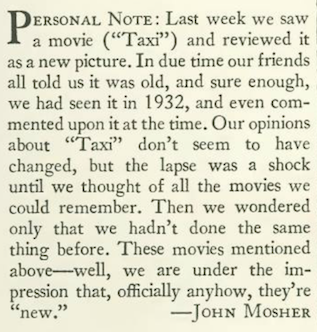
In the following week’s issue (June 6), Mosher noted that he’d forgotten about his previous review of the Cagney film Taxi in 1932:
* * *
From Our Advertisers
Appropriately buried in the back pages of The New Yorker was this tiny ad promoting Don Dickerman’s new Pirates’ Den at Port Chester, referenced above in Lois Long’s “Tables for Two” column…
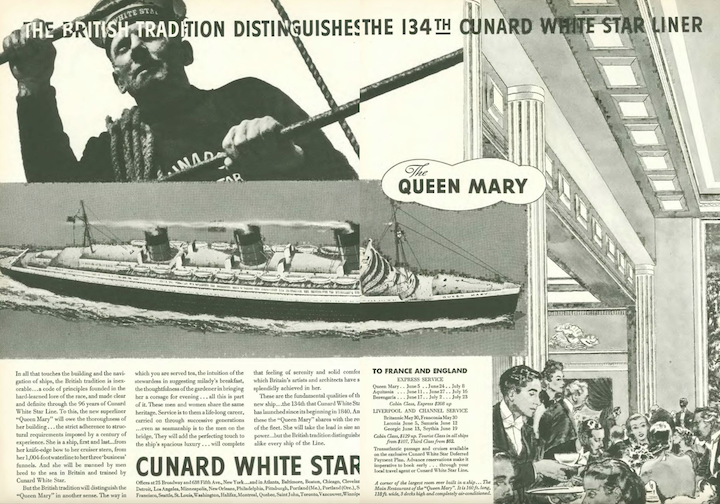
…the Cunard White Star Line took out this two-page spread to announce the launch of the Queen Mary…
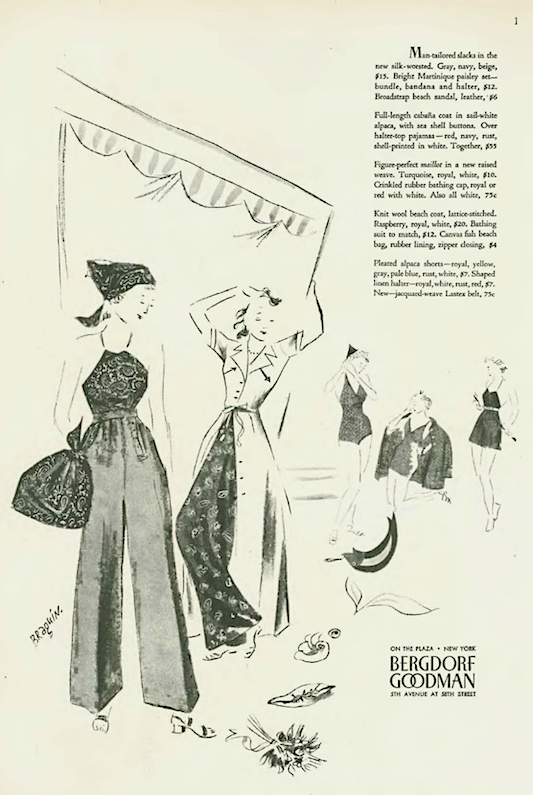
…illustrators with European roots brought modern touches to fashion advertisements…the Ukrainian-born Simeon Braguin (1907–1997), who created the ad below for Bergdorf Goodman, emerged in the 1930s as a prominent fashion illustrator, ultimately becoming the Creative Director for Vogue…during that time (1940s) he supported the work of an unknown artist, Andy Warhol…
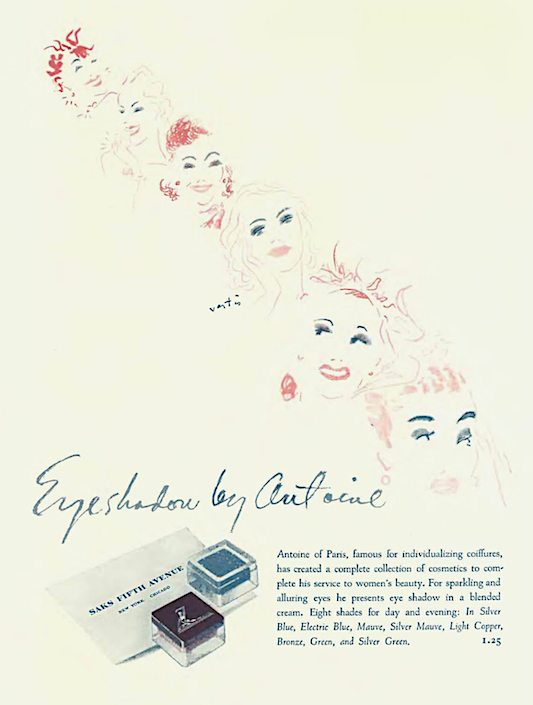
…the artist behind this next fashion illustration was the prominent French-Hungarian costume designer and illustrator Marcel Vertès (1895–1961)…
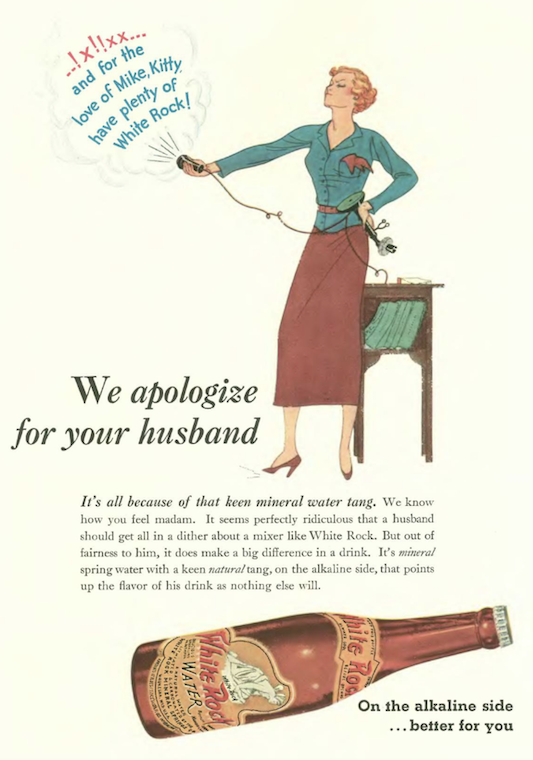
…the prolific illustrator R. John Holmgren (1897- 1963) worked for dozens of publications, and was well known for his White Rock ads in the 1930s and 40s…
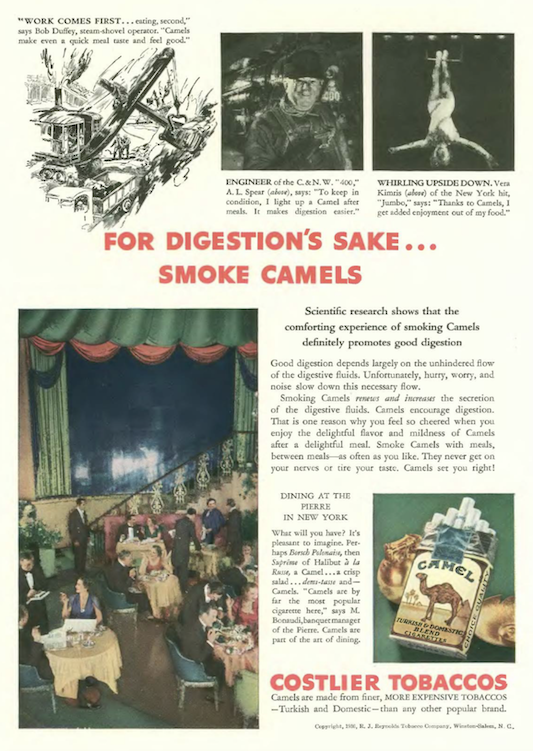
…the folks at R.J. Reynolds were still pushing their digestion claims along with their cigarettes…here they demonstrated the appeal of Camels to both the working class and the classy…
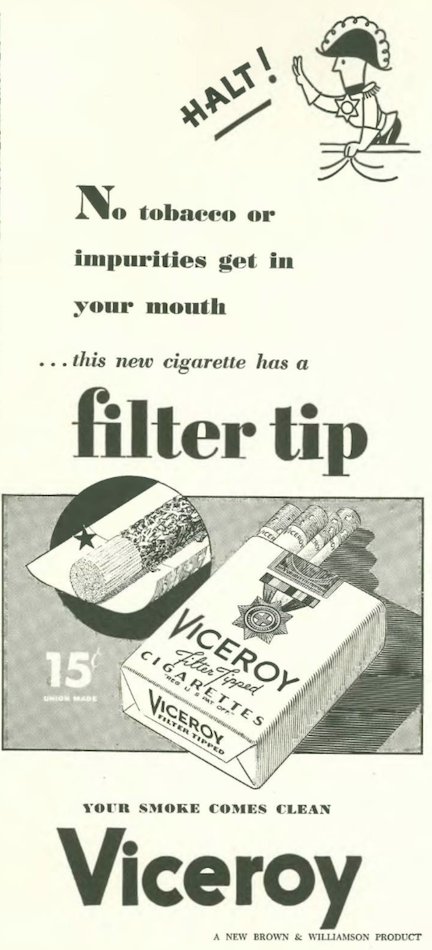
…Brown & Williamson introduced a new cigarette to the market…Viceroy was the first brand to feature a cork-tipped filter…
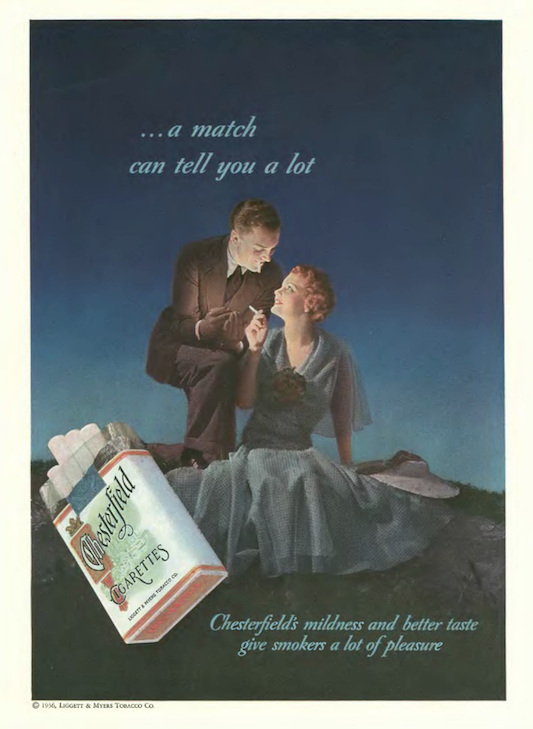
…Liggett & Myers continued to run their somewhat old-fashioned ads with softly lit, romantic settings…illustrator McClelland Barclay (1891–1943) created this look to promote the company’s Chesterfield brand…
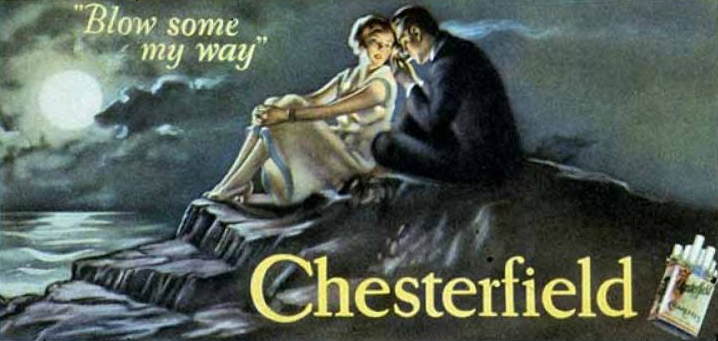
…Barclay’s work recalled similar imagery used in a controversial 1926 ad for Chesterfield that sought to break the taboo placed on women smokers…
…not so controversial was Susan Willard Flint, who opened the magazine along with…

…Otto Soglow…
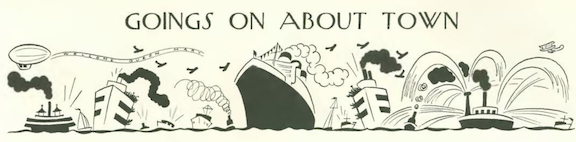
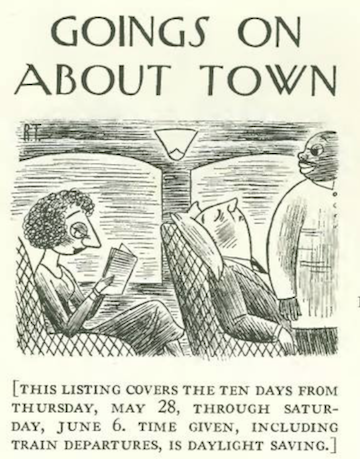
…and Richard Taylor…
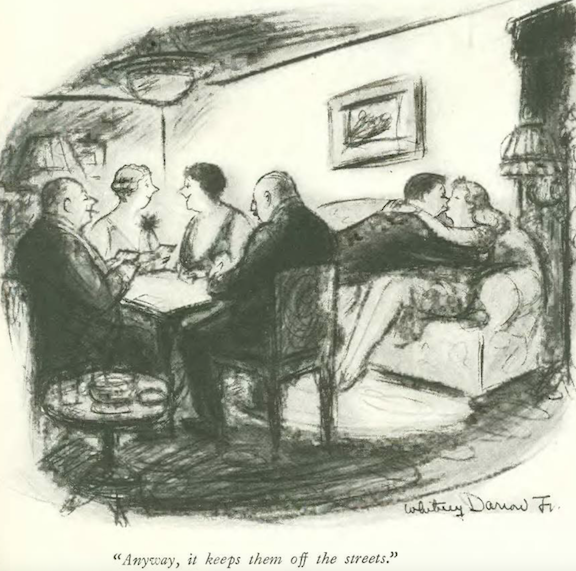
…we turn to the cartoons starting with Whitney Darrow Jr and a canoodling couple…
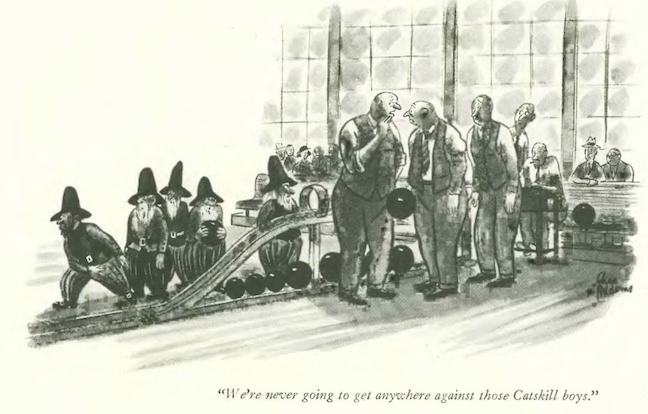
…Charles Addams found some formidable bowling opponents…
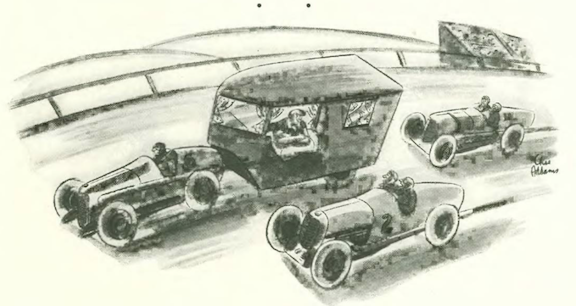
…and Addams again at the races…
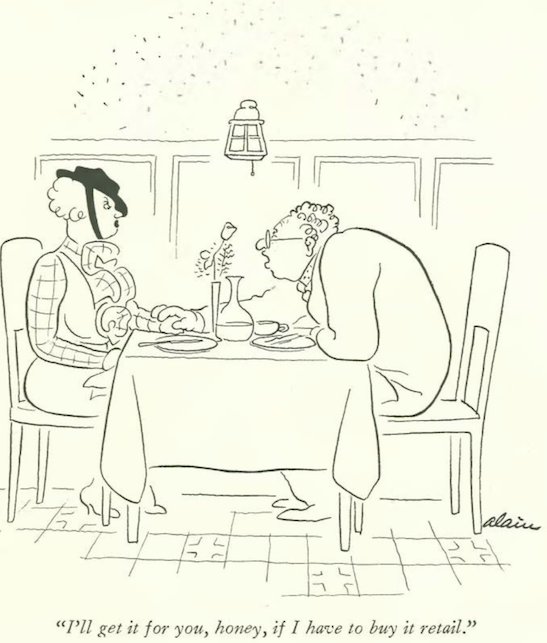
…Alain showed us the harder edges of marital bliss…
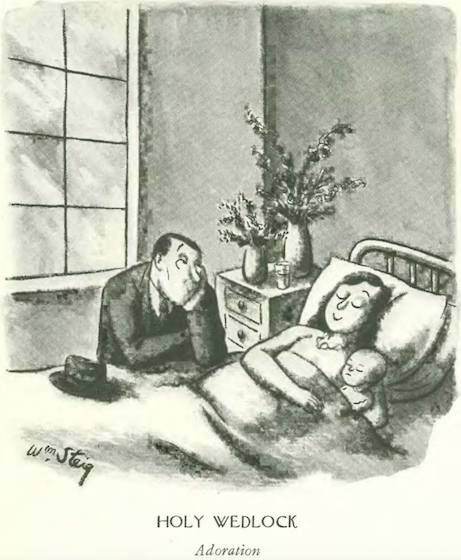
…while William Steig was all sweetness and light…
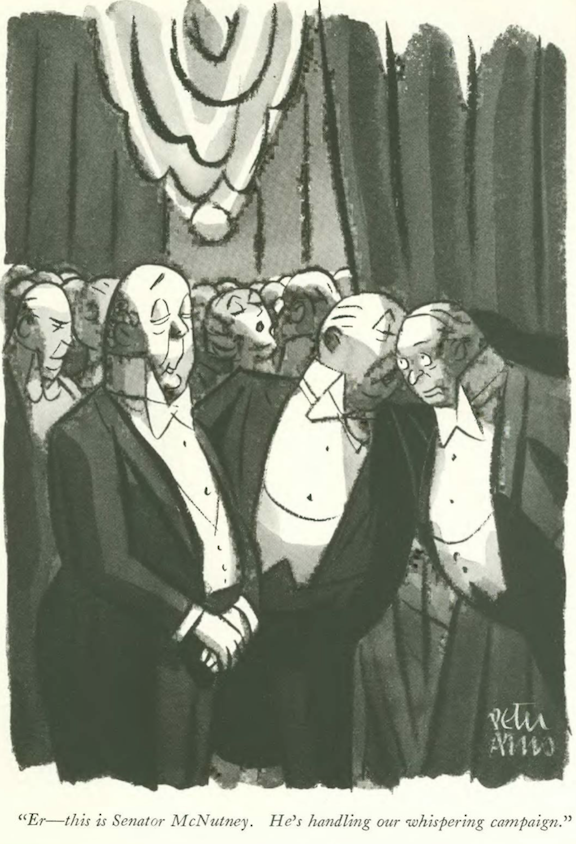
…Peter Arno showed us some political intrigue…
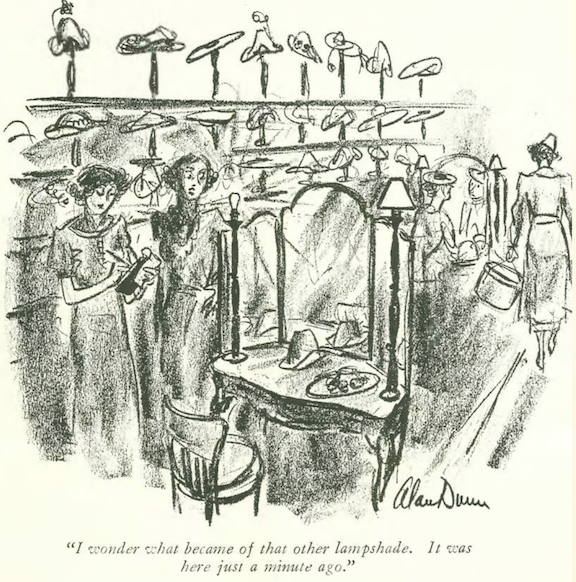
…Alan Dunn offered a new twist in hat fashions…
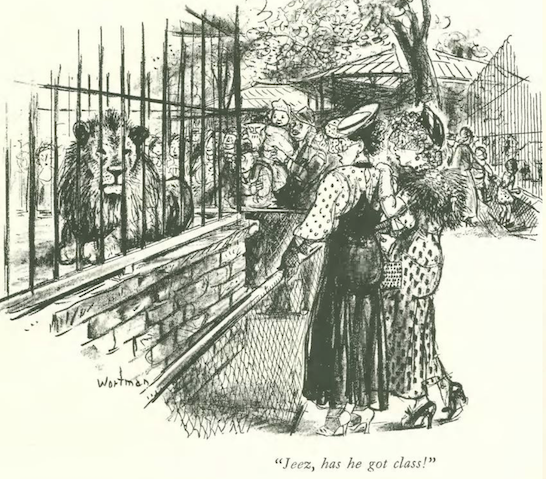
…and we close with Denys Wortman, and a very posh lion…
Next Time: Meet Izzy & Moe…
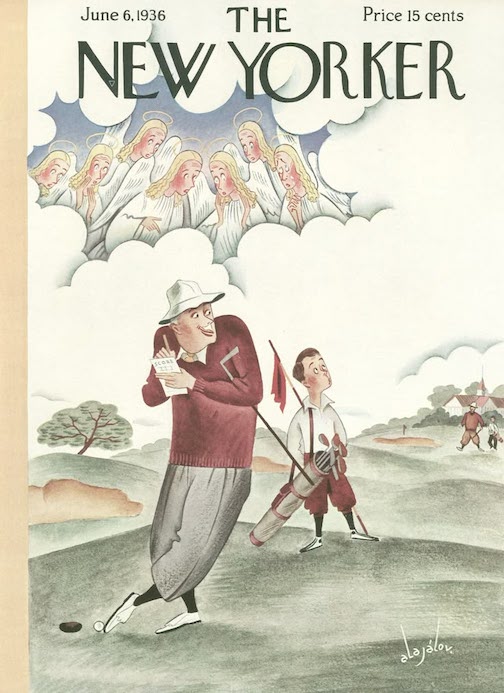

 A New Yorker State of Mind
One thought on “Queen of the Seas”