An Instant Star

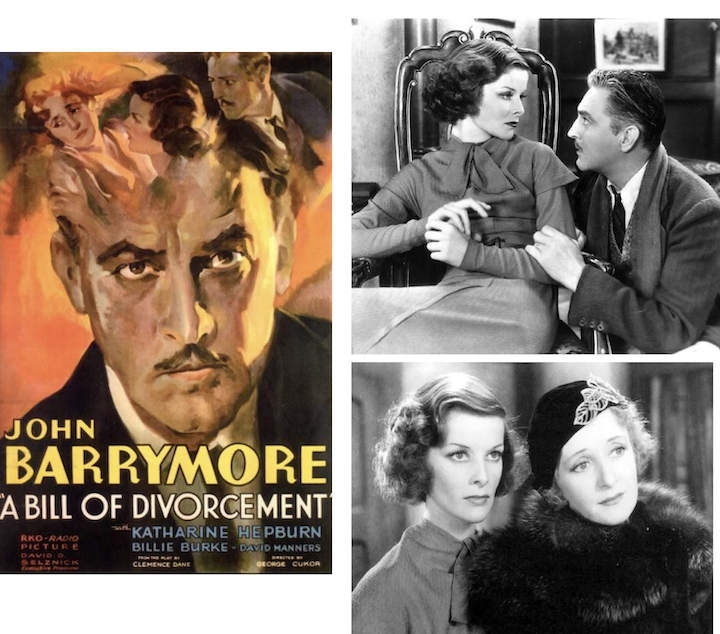
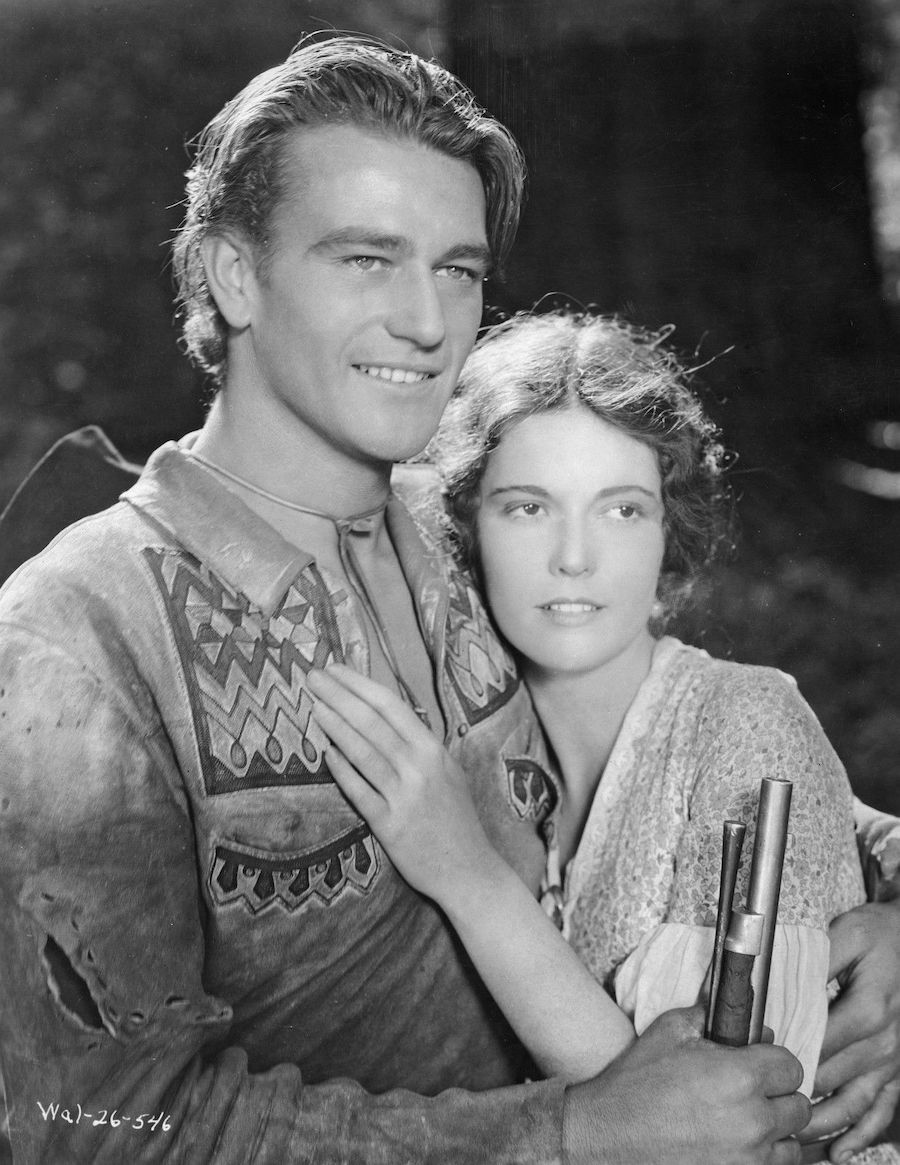
George Cukor’s 1932 pre-Code film A Bill of Divorcement would make Katharine Hepburn an instant star in her screen debut…
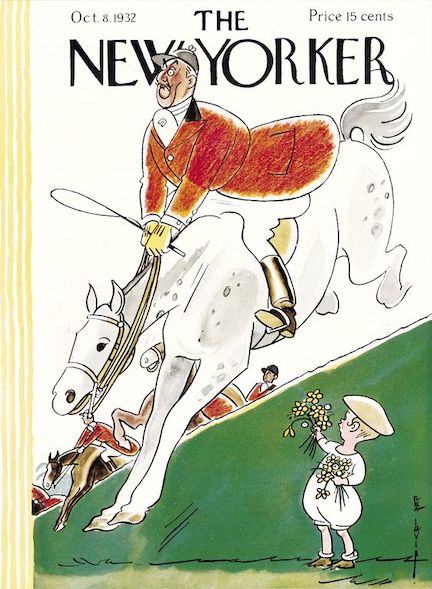
Oct. 8, 1932 cover by Rea Irvin.

… but New Yorker critic John Mosher seems to have missed the boat in spotting this new talent, who would go on to be—at least according to the American Film Institute, “the greatest female star of classic Hollywood cinema.” In A Bill of Divorcement, Hepburn portrays a young woman who fears she has inherited the same psychiatric problems that plague her father (John Barrymore). Mosher wrote:

A LOT ON HIS MIND…In A Bill of Divorcement, John Barrymore portrays a man who escapes from a mental hospital after 15 years of confinement, seeking to return to wife and family; his daughter, Sydney (Katharine Hepburn), fears she has inherited his psychiatric problems, while Sydney’s mother, Meg (Billie Burke) wants to start a new life with another man. (IMDB)

Although Mosher offered a rather tepid response to Hepburn’s debut role, critic Mordaunt Hall of The New York Times called the film “intelligent, restrained and often stirring.” Of Hepburn he wrote: “Miss Hepburn’s characterization is one of the finest seen on the screen and the producers have been wise in not minimizing the importance of her part because Mr. Barrymore is the star of the film.”

 *  *  *

On Shaky Ground

E.B. White noted the sad state of the Pulitzer Fountain, which had stood at the Plaza since 1916. Although Joseph Pulitzer’s sons had put up funds to restore the landmark, the city had yet to act on a plan.
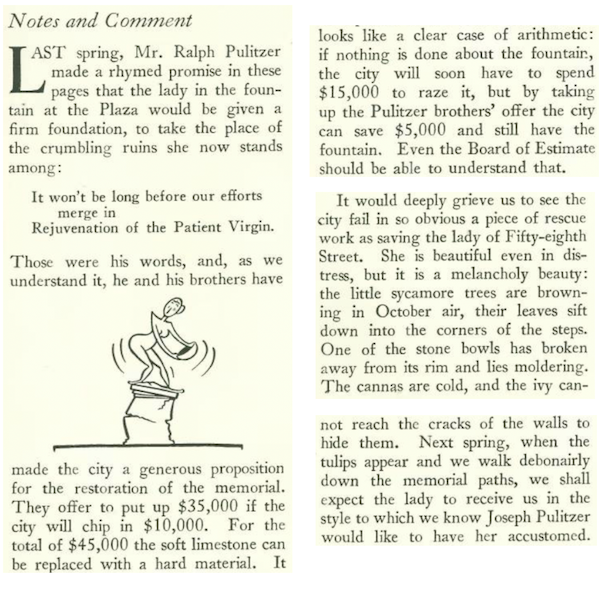
Fortunately the fountain still stands, thanks to restorations in 1933-35, 1971 and 1985-90. As to White’s concerns, the city finally accepted the Pulitzers’ offer, and after delays due to labor disputes it was completed in June 1935. The original limestone basin was rebuilt in Italian marble, and a limestone balustrade and columns that surrounded the fountain were demolished.
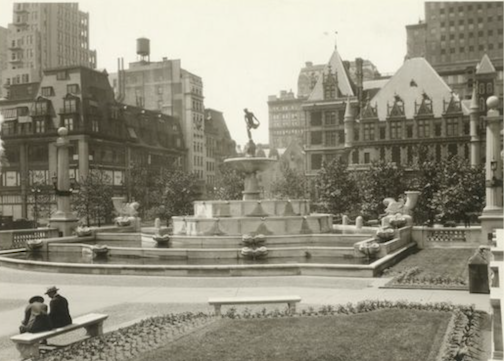
WHEN WE WERE YOUNG…The Pulitzer Fountain after it was completed in 1916. (New York Public Library)

White also mused about the nature of Long Island, soon to be transformed under Robert Moses’ system of parkways that would stretch across the island’s vast expanses.

EAT ME…Hundreds of truck farms dotted Long Island in the early 20th century, especially known for their potatoes. (Newsday)

…and we have more from White, also serving as the magazine’s theater critic and taking in the latest installment of Earl Carroll’s Vanities…I include this mainly to note the young vaudevillian Milton Berle’s first appearance on a big stage…
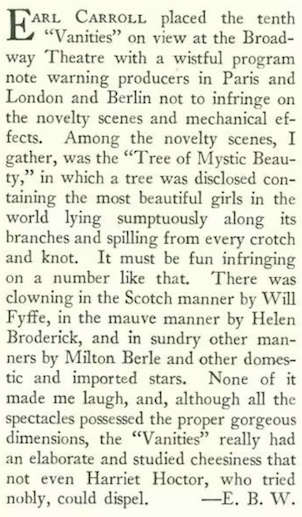
BEFORE UNCLE MILTIE…Milton Berle (1908–2002) made his first appearance on a big stage with Earl Carroll’s 1932 Vanities. It is also noteworthy that in that same year Chicago native Vincente Minnelli (see program cover) was getting his first breaks on Broadway as a stage and costume designer. (tralfaz.blogspot.com/Playbill)

 *  *  *

Delirious Nights

Although Lois Long was primarily focused on her fashion column, she continued to file an occasional “Tables for Two” that gave readers a glimpse into New York nightlife, including the star-studded (Walter Chrysler, Howard Hughes, among others) opening of the Pierrette Club in the Waldorf-Astoria’s Sert Room…

DANCING WITH THE STARS…Lois Long reported on the star-studded opening of the Pierrette Club in the Waldorf-Astoria’s Sert Room, which featured a series of Saturday night supper dances; images of the Sert Room left and right; at center, The New York Times’ account of the club’s opening, Oct. 2, 1932. (geographicguide.com/The New York Times/jstor.org)

 *  *  *

From Our Advertisers

Simon & Schuster promoted George Gershwin’s Song Book, illustrated by New Yorker regular Constantin Alajalov

…signed first editions go for up to $8000 these days…

(raptisrarebooks.com)

…meanwhile, Farrar & Rinehart trumpeted the release of Evelyn Waugh’s latest novel (his third)…Black Mischief satirized the ways Europeans attempted to impose their customs and beliefs on other cultures…

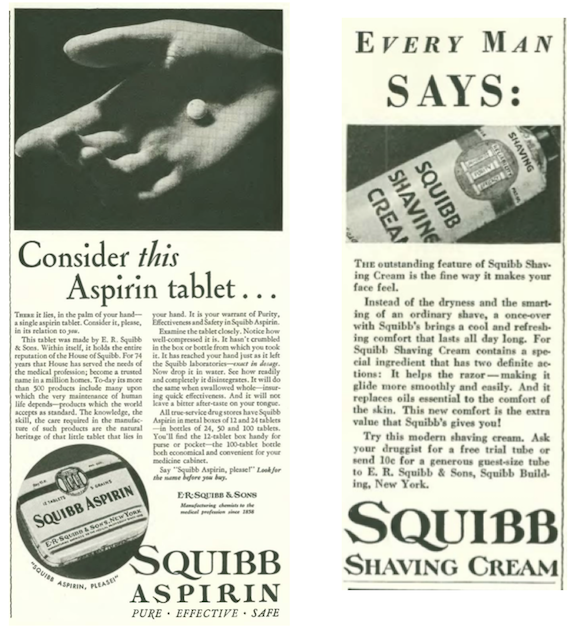
…Squibb helped The New Yorker’s bottom line with three separate ads scattered throughout the magazine…back in the day the Squibb brand was associated with everything from toothpaste…
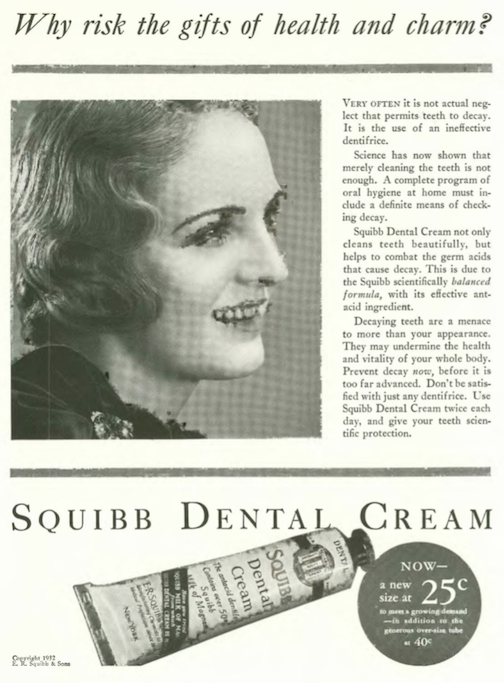
…to aspirin and shaving cream…founded in 1858, it merged with Bristol Meyers in 1989 to form one of the world’s largest pharmaceutical companies, Bristol Myers Squibb, which today is mostly known for manufacturing dozens of prescription pharmaceuticals and biologics…
…Squibb & Sons were the primary tenant (the top 12 floors) of New York’s landmark Squibb Building when it opened its doors in 1930…
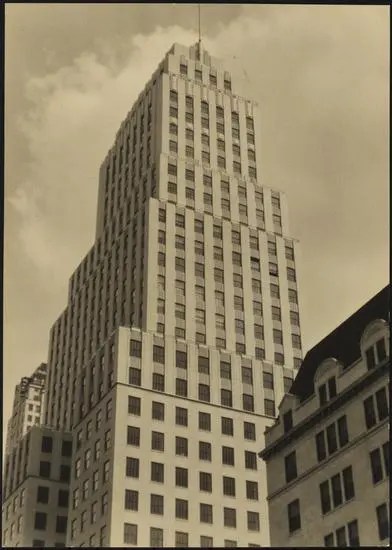
(Museum of the City of New York)

…moving on, here are a couple of ads that show us one thing that has definitely changed in the past 89 years…when was the last time you wore a fur coat to a football game?…

…cigarette manufacturers had plenty of money to advertise during the depths of the Depression, but apparently so did the folks at Wamsutta Mills…Wamsutta sheets are no longer made in New Bedford—part of the circa 1847 mill complex is now loft-style housing…however, the Wamsutta brand still exists in the U.S. through Bed, Bath & Beyond and internationally as part of a Brazilian textile conglomerate…

…Micarta was a substance developed by Westinghouse in the early 20th century for use with electrical equipment…produced from a combination of linen, canvas, paper, fiberglass and other materials processed under heat and pressure, Westinghouse found a new use for this laminate — serving trays designed by George Switzer…you can read more about Micarta trays at Driving for Deco…reader Chris notes that Micarta is “still available in a wide range of grades and designer colors and is popular with hobbyists and craftsmen the world over”…
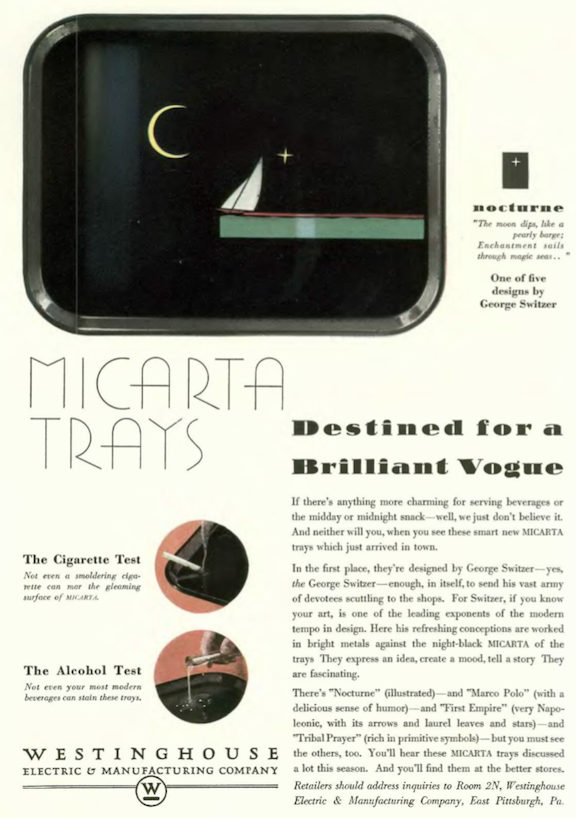
…in the Oct. 29 issue, E.B. White made this observation about Micarta trays…

…on to our cartoons, William Steig’s “Small Fry” learned about the birds and the bees…

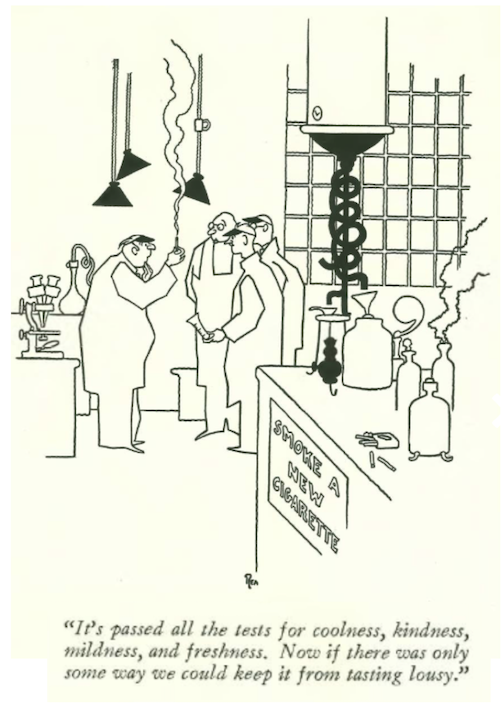
Gardner Rea visited some tobacco researchers challenged to keep pace with advertising claims…
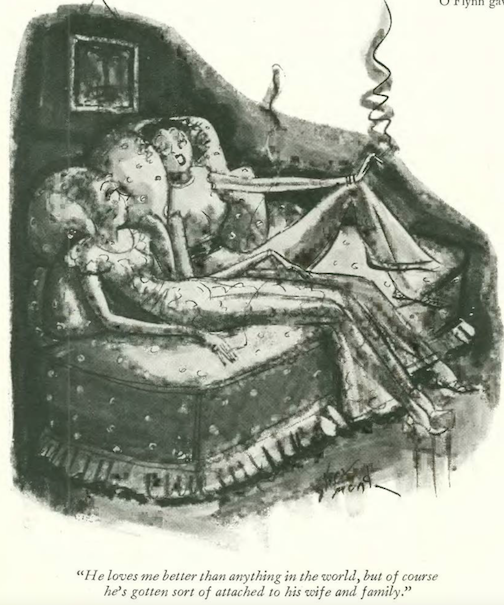
Barbara Shermund looked into the love lives of the modern woman…
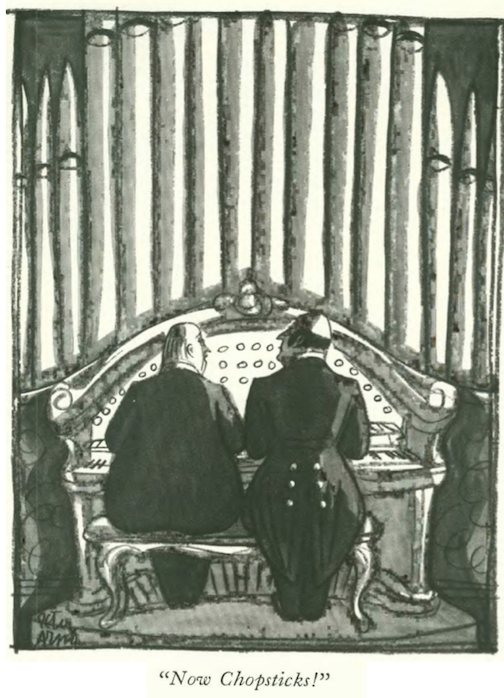
…and Peter Arno got playful at the pipe organ…
…on to our Oct. 15, 1932 issue…
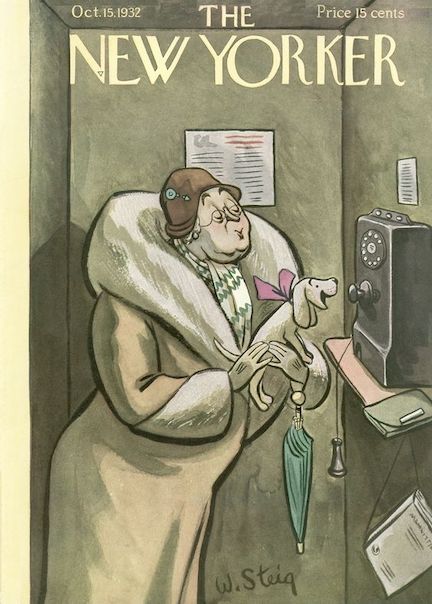
Oct. 15, 1932 cover by William Steig.

…where we check in on John O’Hara (1905–1970), who defined the short story at The New Yorker (and contributed more shorts to the magazine than any other writer). For the Oct. 15 issue O’Hara submitted a profile titled “Of Thee I Sing, Baby.” The profile is unusual because it is told as a story rather than as a biography, and the subject, a chorus girl, is not identified by her real name. A brief excerpt:

WRITING MACHINE…John O’Hara (pictured here in 1945) contributed more short stories to The New Yorker than any other writer. (Library of Congress)

 *  *  *

William Steig (1907–2003) was both a writer and illustrator, and every bit as prolific as O’Hara, publishing more than 50 books during his long life and career, including his very first, which received this mention at the end of the Oct. 15 book review section:

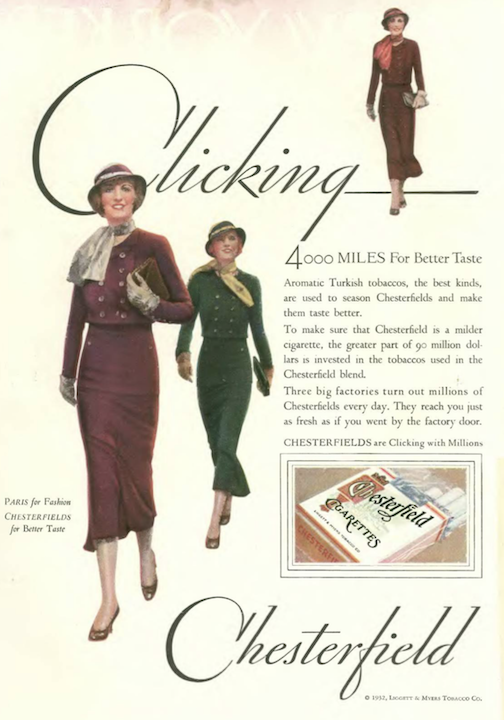
…on to our Oct. 15 advertisers, we have the makers of Chesterfields pairing their product with the sophistication of Paris fashions…
Carl “Eric” Erickson illustrated a number of ads for R.J. Reynolds’ Camel cigarettes in the late 1920s and early 1930s…here he employed his signature sophisticated style for the French Line…

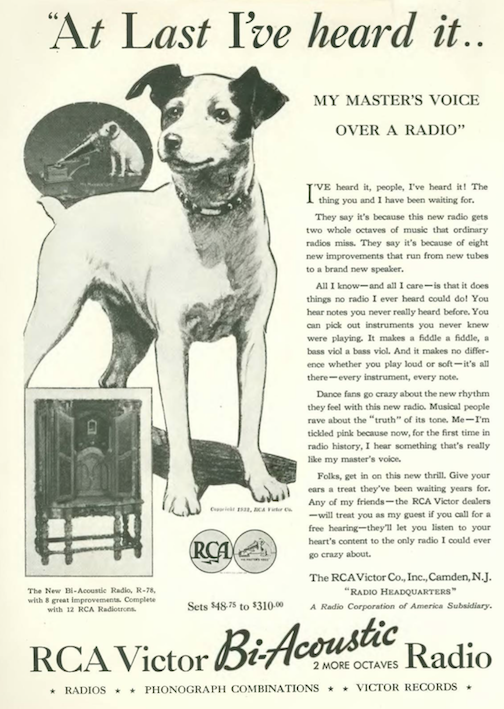
…RCA promoted the next great advance in radio technology—”bi-acoustic” sound that added “two more octaves” to radio broadcasts…it would take thirty more years to roll out something we take for granted today—stereo…
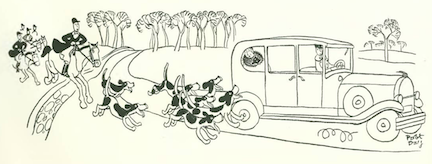
…on to our cartoons, Robert Day joined a misdirected fox hunt…
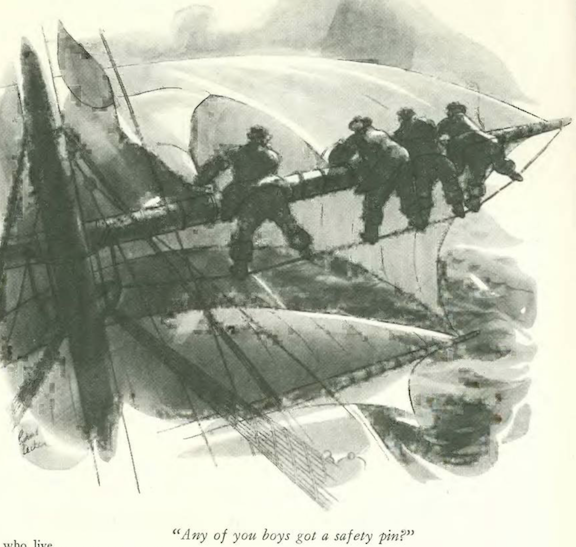
Richard Decker gave us one man’s simple solution to a perilous situation…
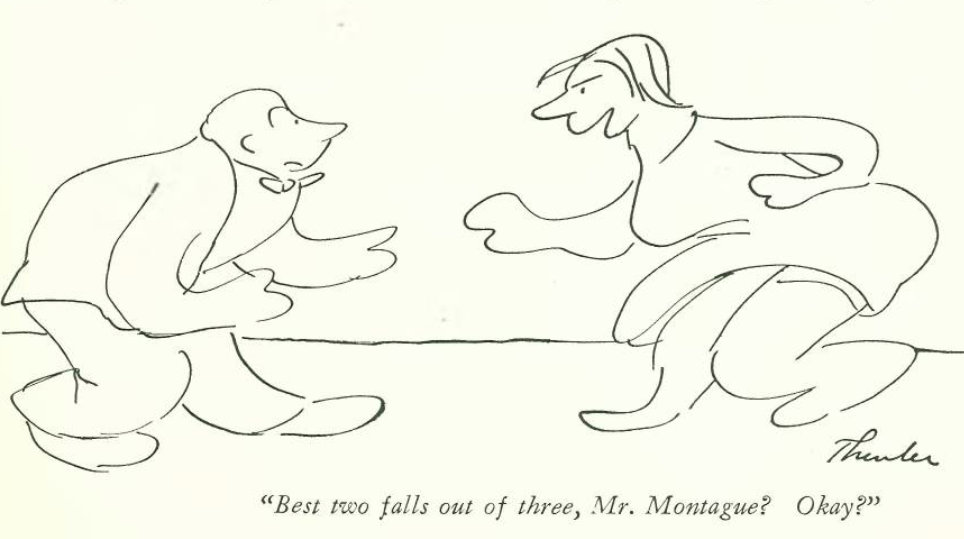
…and we close with a classic from James Thurber

Next Time: City On a Hill…

A Picture’s Worth

James Thurber made a rare appearance in the “Reporter at Large” column—usually the purview of the departing Morris Markey—to offer a glimpse into the life of Albert Davis and his extensive collection of theatrical and sports photographs.

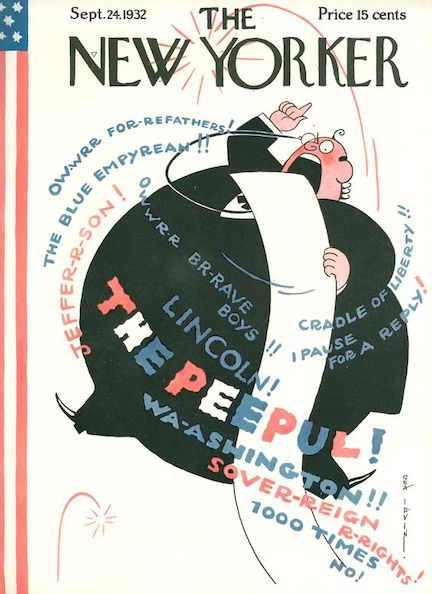
Sept. 24, 1932 cover by Rea Irvin.

A publicist by trade, Davis (1865-1942) collected thousands of photographs, clippings, programs, scripts and playbills from hundreds of productions mainly from the 1890s to the 1920s. In this excerpt, Thurber took a look into Davis’s rarefied world:

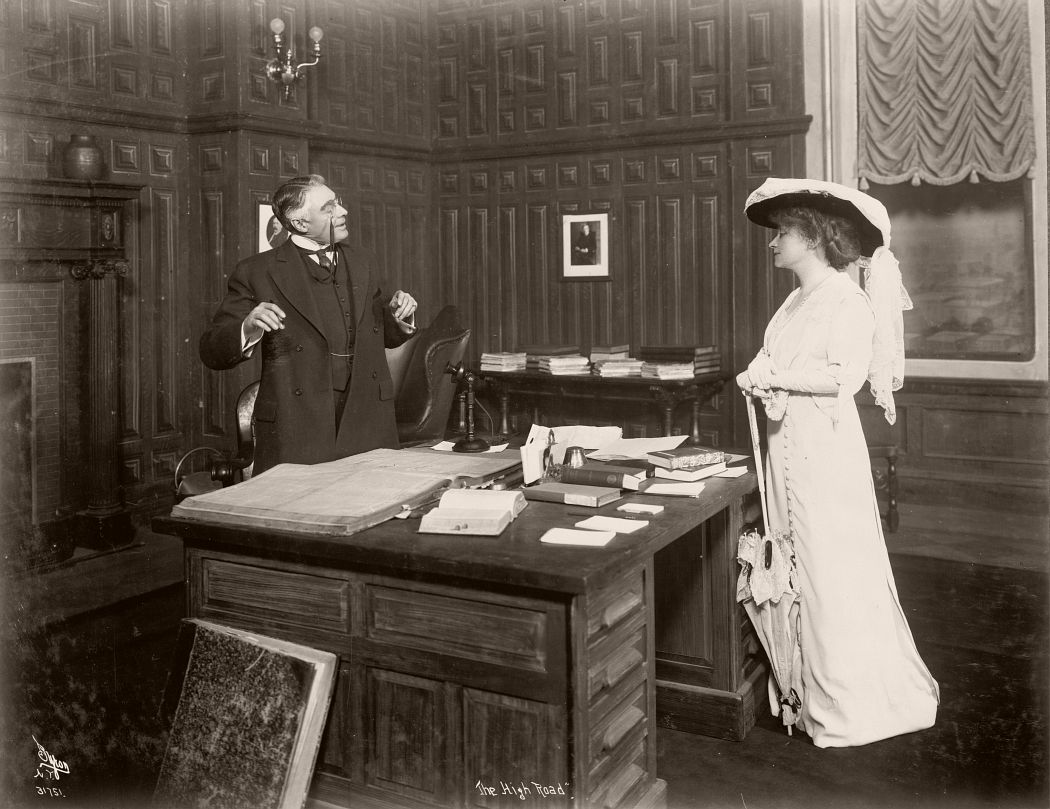
PLAYING MAKE-BELIEVE…Among the photographers collected by Davis was Joseph Byron, who captured this scene from the 1912 play The High Road by American playwright Edward Sheldon. Pictured are actors Frederick Perry and Minnie Maddern Fiske. (monovisions.com)
OSCAR THE FIRST…Theatre impresario Oscar Hammerstein (left) at Manhattan Opera House, which opened December 3, 1906. Hammerstein was the first person with whom Davis traded photographs. He was also the father of famed lyricist and musical comedy author Oscar Hammerstein II. (monovisions.com)
WHEN ALL PERFORMANCES WERE LIVE…Images of performers from the Davis collection included actor Bert Williams (ca. 1895); sharpshooter Annie Oakley (ca.1886); and actor Theodore Drury as Escamillo in Carmen (ca. 1905). (Harry Ransom Center, UT Austin)

Thurber pointed out that the collection was quite valuable, and its sale could reap a considerable sum for Davis. It seems Davis intended to present the collection to his university’s library, a wish more or less fulfilled.

Davis’s collection also contained hundreds of sports figures, mostly from the world of boxing.

TOUGH GUYS…Omaha-born Max Baer (left) defeated German champion Max Schmeling at Yankee Stadium in 1933 and took the heavyweight title in 1934; Paul Berlenbach (right) was a light-heavyweight champ from 1923 to 1926. An interesting footnote: Baer acted in 20 films, and one of his three children, Max Baer Jr., portrayed Jethro Bodine on The Beverly Hillbillies. (Stark Center for Physical Culture and Sports, UT Austin)
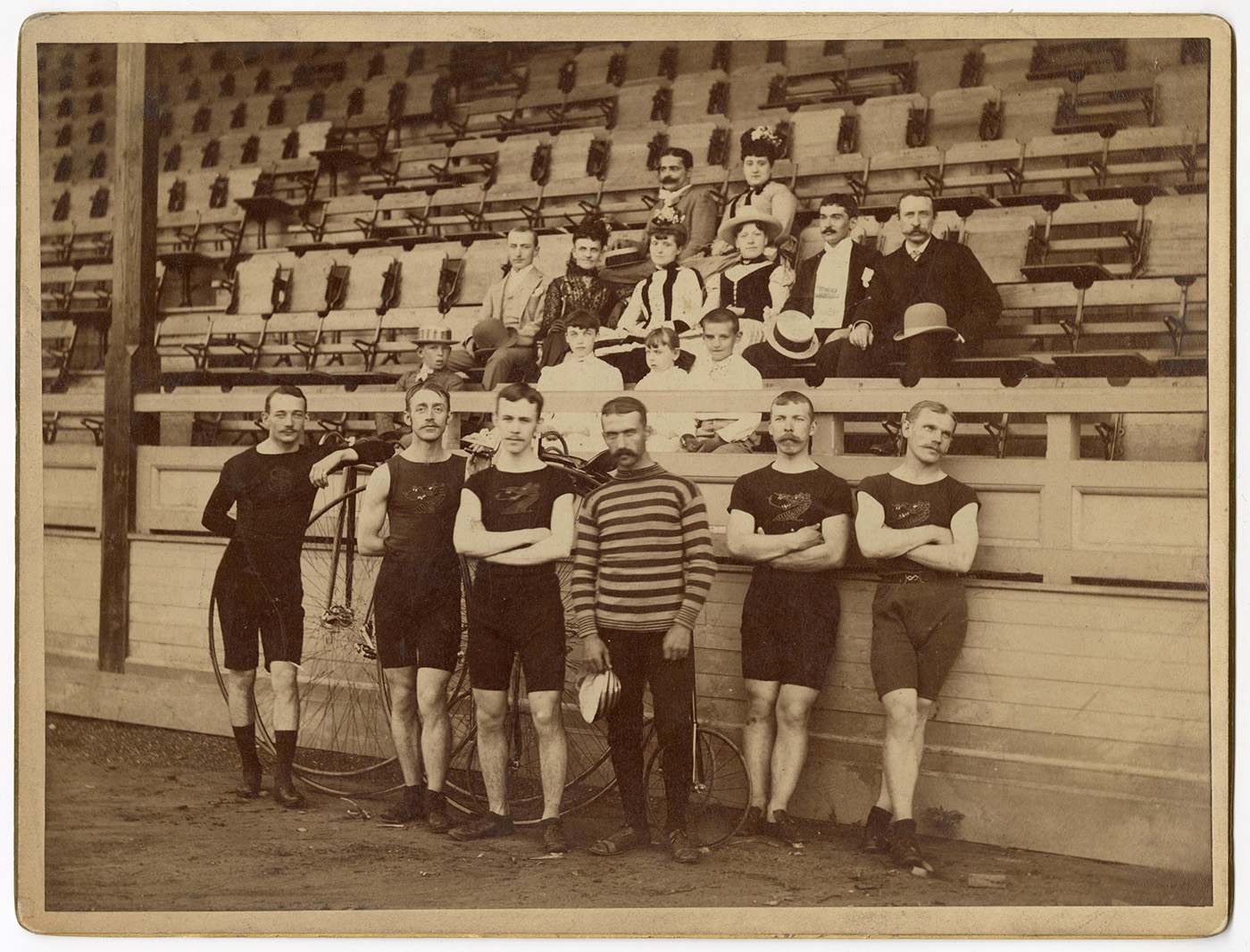
PEDDLERS…Bicycle racers at the Hartford Wheel Club’s bicycle tournament pose for an 1889 photograph in Stamford, Connecticut. (Stark Center)

Endnote: Davis wanted his collection to go to a university library, and so it finally did: it resides at the University of Texas at Austin; the theatrical photos and memorabilia are at the Harry Ransom Center, and the sports-related items are housed at the Stark Center for Physical Culture and Sports.

 *  *  *

Is It Beer-Thirty Yet?

Brewer, politician and owner of the New York Yankees baseball franchise  Jacob Ruppert Jr. (1867–1939) inherited the Jacob Ruppert Brewing Company and the Yankees upon his father’s death in 1915. It was Ruppert who purchased the contract of Babe Ruth (from the Red Sox in 1919) and built famed Yankee Stadium (1923), moves that helped propel a middling franchise to the top of the major leagues. Alva Johnston profiled Ruppert in the Sept. 24 issue; here is the opening paragraph:

LOOK WHAT I JUST BOUGHT…Jacob Ruppert purchased the contract of Babe Ruth from the Red Sox in 1919; Ruppert also inherited the Knickerbocker brewery at 92nd Street and 3rd Avenue (demolished in 1969). (historywithkev.com/brookstonbeerbulletin.com)

 *  *  *

Pol Mole

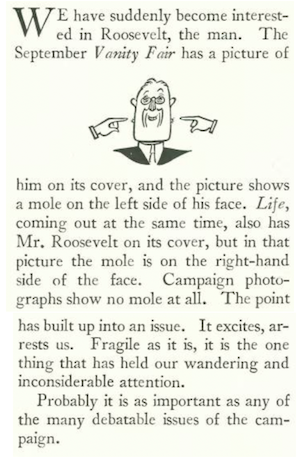
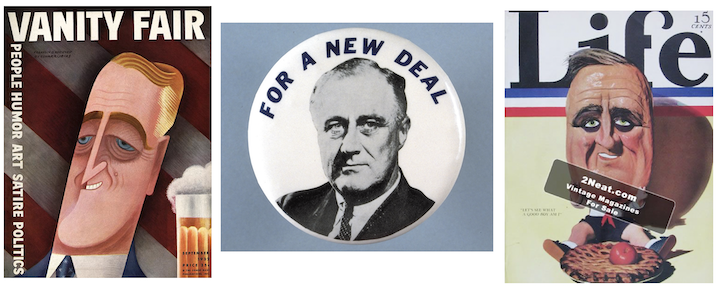
With the 1932 presidential election just weeks away, E.B. White’s focus was on an apparently elusive mole that decorated the left side of Franklin D. Roosevelt’s face, or possibly the right, or perhaps not at all…
REPRESENTING THE LEFT AND THE RIGHT…E.B. White mused on FDR’s apparently shifting mole, which appeared on the right cheek on the cover of Vanity Fair, on the left on the cover of Life, and not at all on the campaign button. (picclick.com/Britannica/2Neat.com)

This wouldn’t be the last time someone discussed FDR’s dermatology. Health experts today still debate whether a pigmented lesion above FDR’s left eyebrow was a melanoma—some even speculate that it led to his death at age 63, although the official cause of FDR’s death on April 12, 1945 was cerebral hemorrhage associated with high blood pressure. Incidentally, most photographs show the cheek mole on the right side.

 *  *  *

Words Were Their Bond

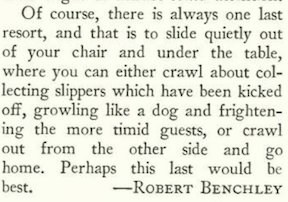
What a treat it must have been for a New Yorker reader to turn to pages 15-16 and find Dorothy Parker’s “A Young Woman in Green Lace,” followed by Parker’s dear friend and confidant Robert Benchley’s “Filling That Hiatus” on pages 17-18.

GETTING TO KNOW YOU…Dorothy Parker and Robert Benchley (far right) with their employers in 1919: Vanity Fair editor Frank Crowninshield, Vogue editor Edna Chase, and publisher Condé Nast. (publicdomainreview.org)

Benchley and Parker’s friendship began when he was hired as Vanity Fair’s managing editor in the winter of 1919 (and would become Parker’s office mate the following May). That same year they were among the founders of the famed Algonquin Round Table.

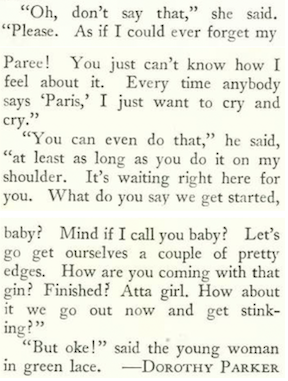
“A Young Woman in Green Lace” reveals how Parker regarded some of the modern women of those times, this next-generation flapper, a bit childish and snobbish, wishing she were back in “Paree.” In the story a man presses his charms as the woman descends into drunkenness and drops her Continental facade:

Where disillusion creates a darkly comic mood in Parker’s piece, in Benchley’s world disillusion provided a nice opening for some silliness. In ”Filling That Hiatus” Benchley addressed a seldom-discussed dinner-party etiquette situation in which both your right- and left-hand partners become engaged in conversation with someone else. He concluded:

 *  *  *

His Country, Too

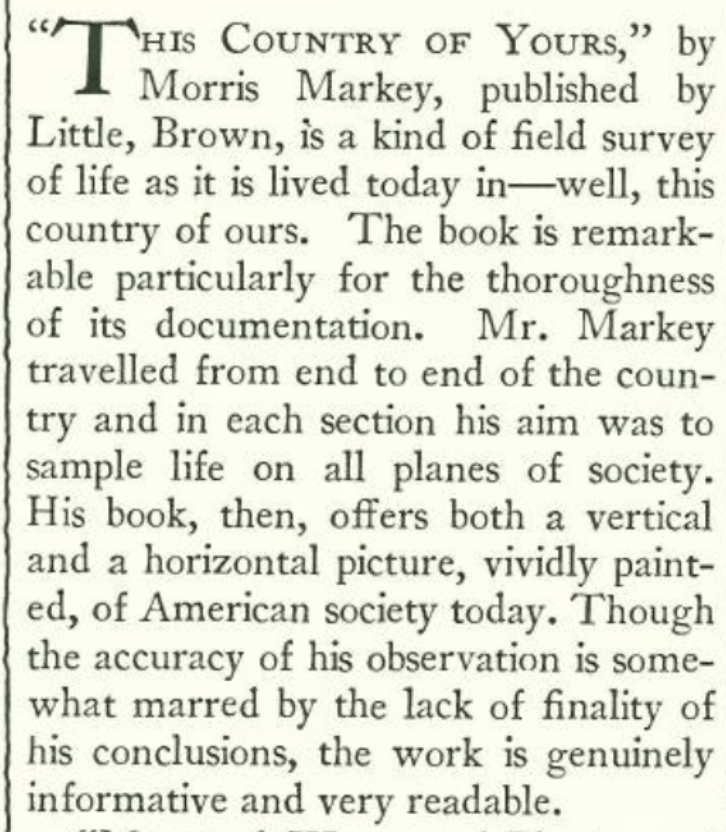
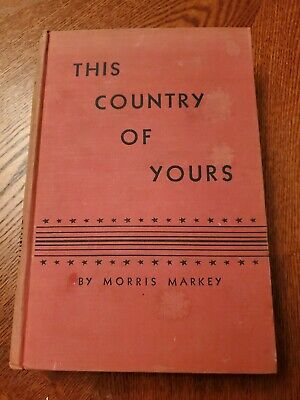
It is always with a tinge of sadness that I write about Morris Markey, who from the start wrote for virtually every department at The New Yorker and was best known for his “A Reporter at Large” feature. According to his obituary in The New York Times, Markey won his greatest recognition for the book This Country of Yours, published after he left The New Yorker. That magazine’s review was brief, and read thusly:

The book is mostly forgotten today, as is Markey, who was found shot to death on July 12, 1950 at his home in Halifax, Virginia. He was just 51 years old. There was insufficient evidence as to whether the wound behind his right ear was the result of accident, homicide, or suicide.

Here is what the Times (Sept. 10, 1932) had to say about Markey’s book:

 *  *  *

From Our Advertisers

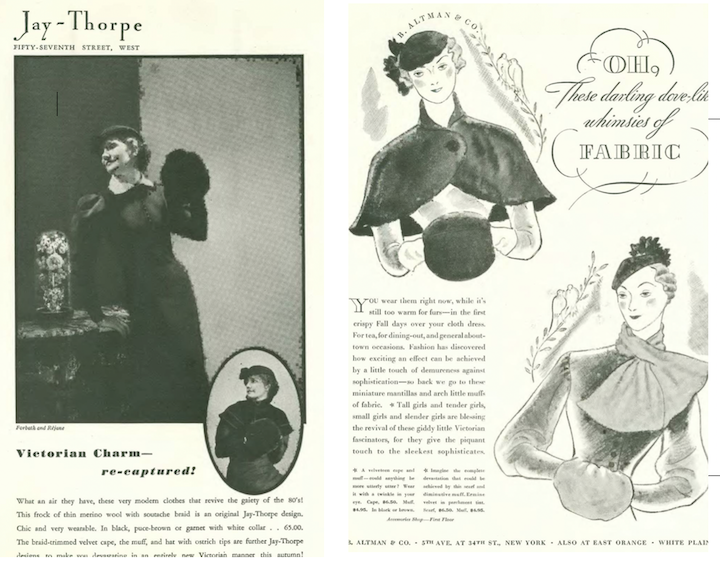
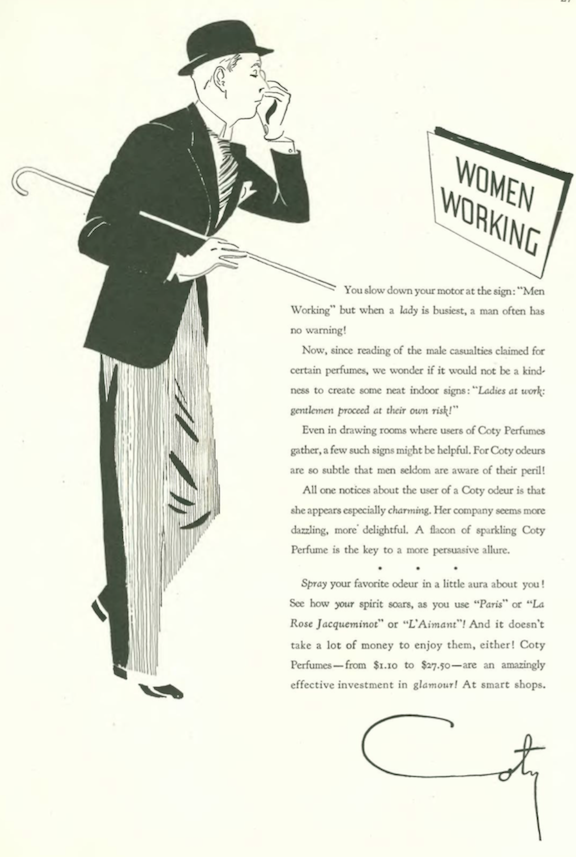
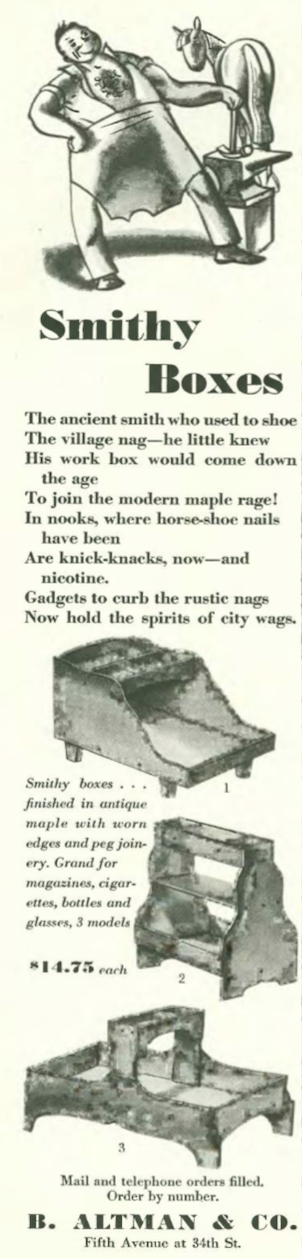
With cold weather arriving during the Depression’s worst year, fashions continued to borrow from the past for a more conservative look (these are two ads from Jay-Thorpe and B. Altman)…

…as for the gentleman, fashion continued to emphasize a genteel look (although there is a bit of the Little Tramp about this fellow)…

…then as now, folks turned toward the rustic to find a bit of comfort in uncertain times…

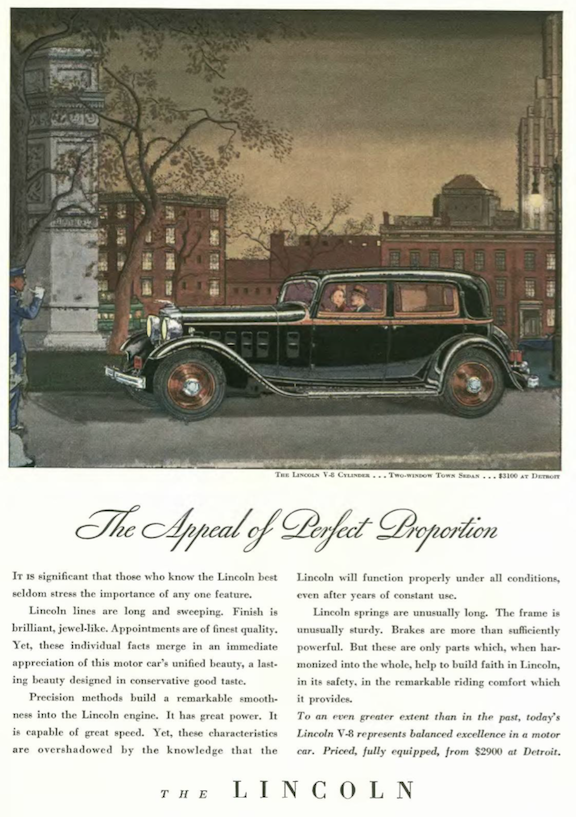
…and if they could afford it, the comforts of the stolid, solid Lincoln motorcar…

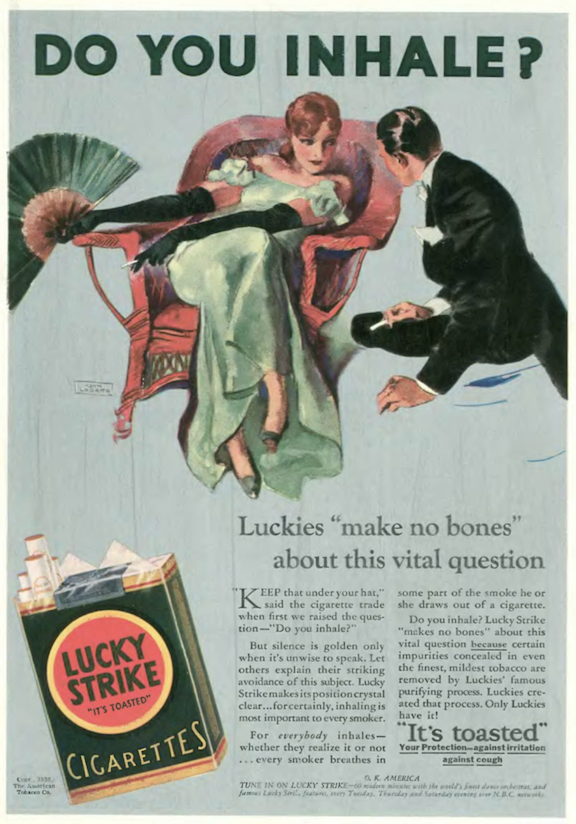
…the folks at Lucky Strike continued to ask this question…

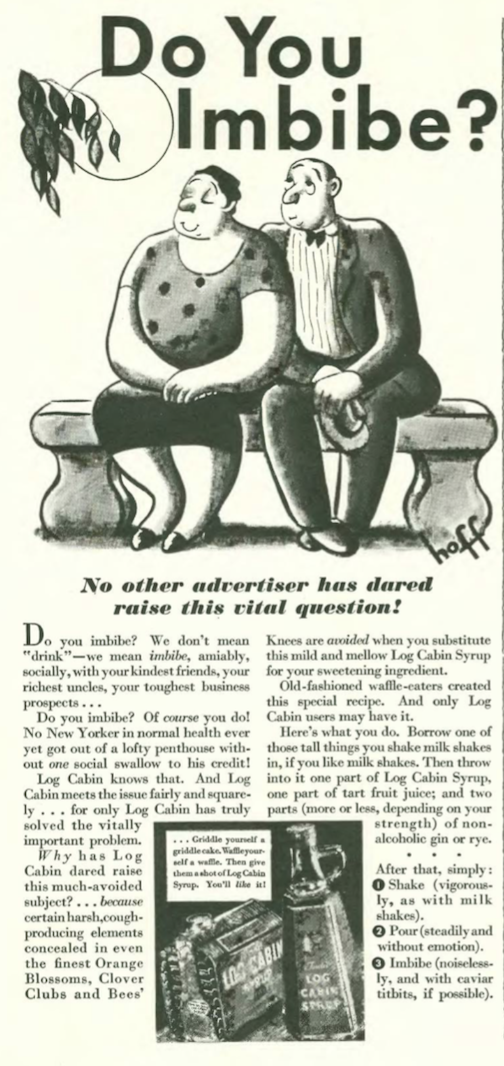
…and with the help of Syd Hoff, the makers of Log Cabin syrup ran this parody ad (in the Oct. 1 issue) of the Lucky Strike campaign…Hoff was among the newest members of The New Yorker cartooning cast…

…as was William Steig, who featured one of his “Small Fry” to tout the benefits of decaf coffee…

…our cartoon from the Sept. 24 issue is by Richard Decker

…on to Oct. 1, 1932…

Oct. 1, 1932 cover by Peter Arno.

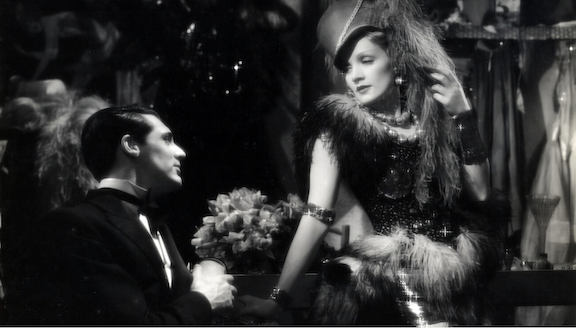
…where film critic John Mosher took in the latest from Marlene Dietrich and came away less than dazzled by Blonde Venus

Now something of a cult film, reviews were mixed when Blonde Venus was released in 1932. The New York Times’ critic Mordaunt Hall went even further than Mosher, calling the film a “muddled, unimaginative and generally hapless piece of work, relieved somewhat by the talent and charm of the German actress…”

WELL HELLO THERE…Cary Grant made his film debut in 1932 in This Is the Night—he went on to appear in eight films that year, including Blonde Venus with Marlene Dietrich. (MoMA)

 *  *  *

Unlucky in Luck

In its early years The New Yorker paid little attention to baseball, but “The Talk of the Town” did appreciate a human interest story from the field every now and then, and Yankee batboy Eddie Bennett filled that bill—this was the second time Bennett was featured in the column…

LUCKY EDDIE…Top, Eddie Bennett in 1921, the year he became the Yankees’ batboy; below, with slugger Babe Ruth in 1927; at right, newspaper profile the year after the 1927 World Series. As an infant Bennett twisted his spine in a carriage accident that stunted his growth and gave him a misshapen back.(Library of Congress/The New York Times/Brooklyn Citizen)

Throughout the 1920s Bennett was a famed good luck charm for the Yankees, but when a taxicab struck him in 1932 his batboy career ended. According to The New York Times (April 2, 2021) “Three years later, Mr. Bennett was found dead in a furnished room on West 84th Street. Autographed photos from Herb Pennock and Waite Hoyt, both pitchers for the Yankees, hung on the walls…Balls and bats signed by Ruth and Lou Gehrig decorated the room. An autopsy found that Mr. Bennett had died of alcoholism. He was 31.”

For 85 years, Bennett rested in an unmarked grave at St. John’s Cemetery in Queens, but last November he was remembered with a new marker and a simple ceremony. You can read more about it in this Times article.

 *  *  *

Original Verse

Ogden Nash was working as an editor at Doubleday when he submitted some rhymes to The New Yorker. Harold Ross (New Yorker founder/editor) saw the submissions and asked for more, apparently stating “they are about the most original stuff we have had lately.” Here is one of the later submissions:

 *  *  *

From Our Advertisers

If you were of the male persuasion and a member of the smart set you probably dressed down in something like this for a day with your dressage buddies…

…the modern woman of the 1930s could also be a successful business woman in this “successful” frock (how that translated into reality was another thing)…what is also interesting about this ad is how it features both an illustration and a photograph of the same outfit—it’s as though they’ve acknowledged that the attenuated figure in the illustration, although eye-catching, does not resemble an actual body type…

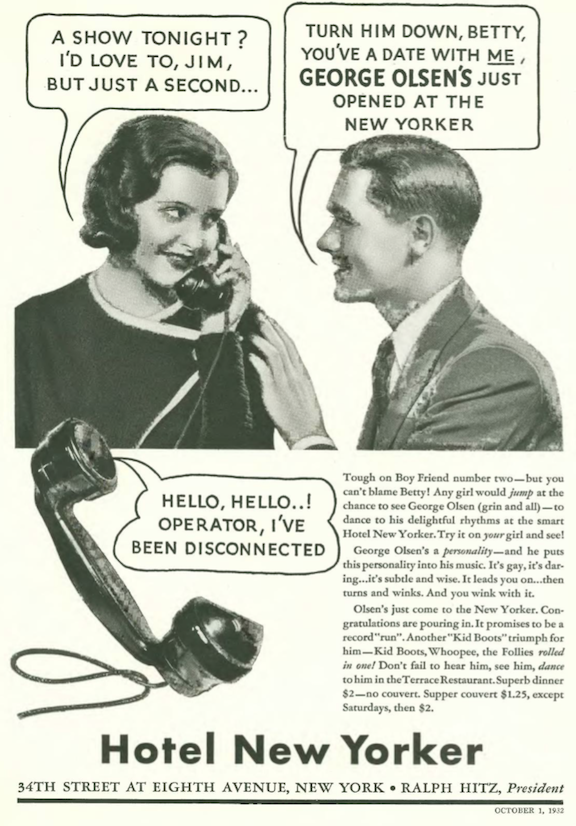
…here was see an early use of the word balloon in an advertisement featuring real people—I wonder if this was inspired by the comics, or by Bernarr Mcfadden’s “composographs” featured in his New York Evening Graphic?…

…on to our cartoonists, we begin with a strange bit of bedside manner courtesy Gardner Rea

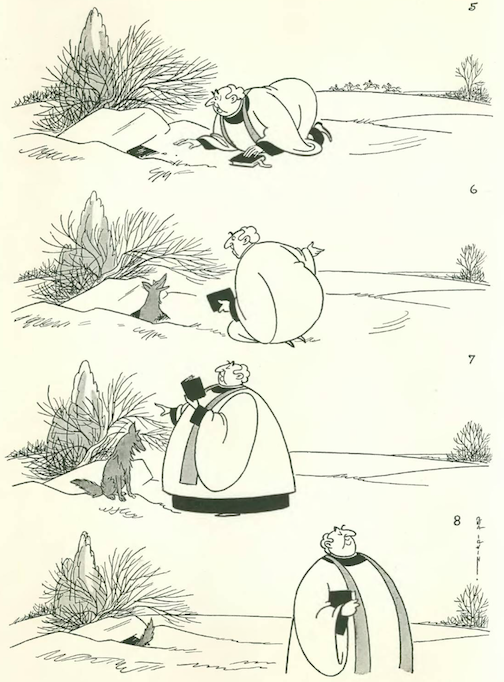
Robert Day introduced us to a modest suspect…

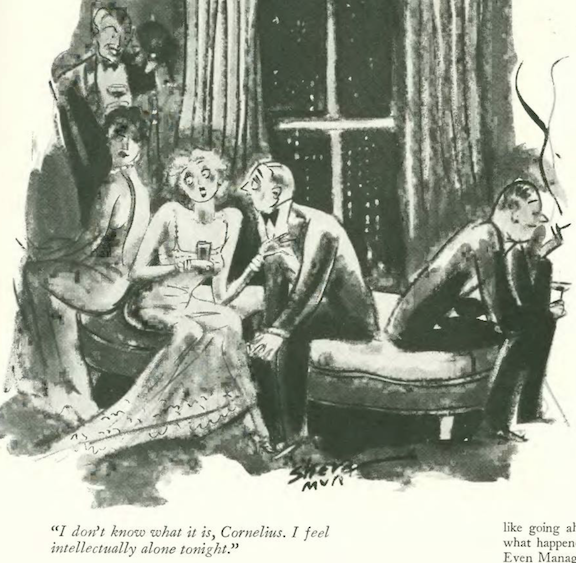
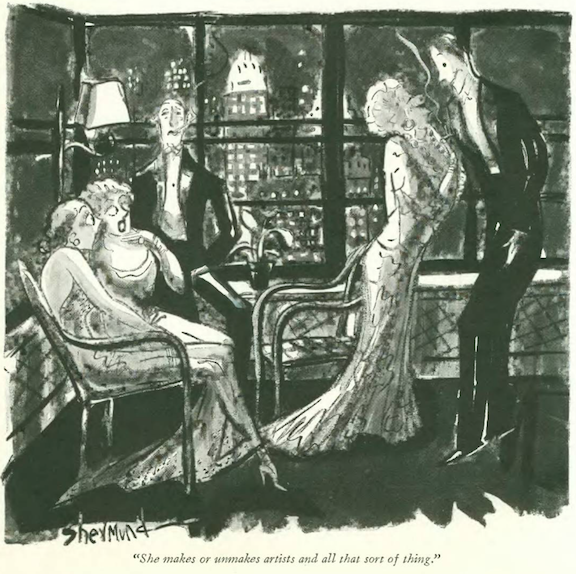
Barbara Shermund continued to explore the travails of modern women…

…while this woman (via Perry Barlow) seems quite content with her lot…

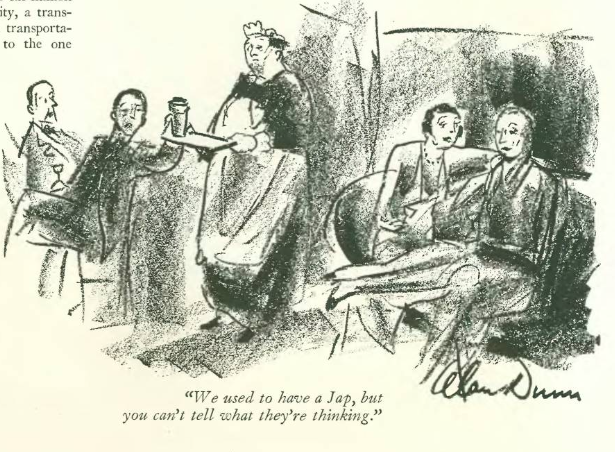
…Mayor Jimmy Walker was out, but not down, like these fellows presented by Alan Dunn

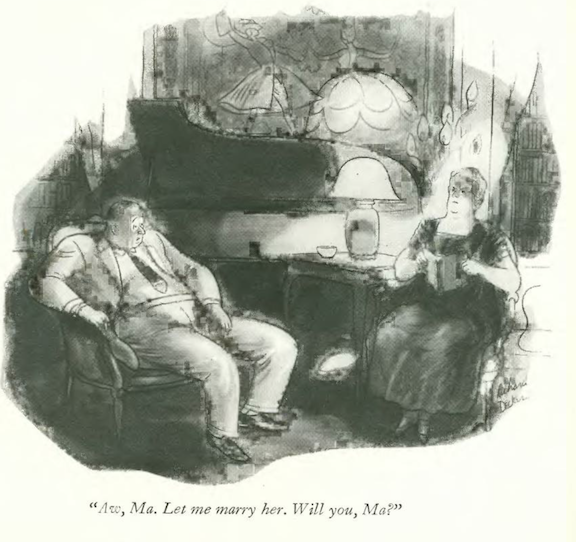
…and we close with Peter Arno, announcing some upcoming nuptials…

Next Time: An Instant Star…


Not for the Kiddies

Over the years Tod Browning’s 1932 pre-code film Freaks has been called everything from grotesque and exploitive to sympathetic and compassionate. Now a cult classic, the film’s closing scenes are regarded by some critics as among the most terrifying ever put to film.

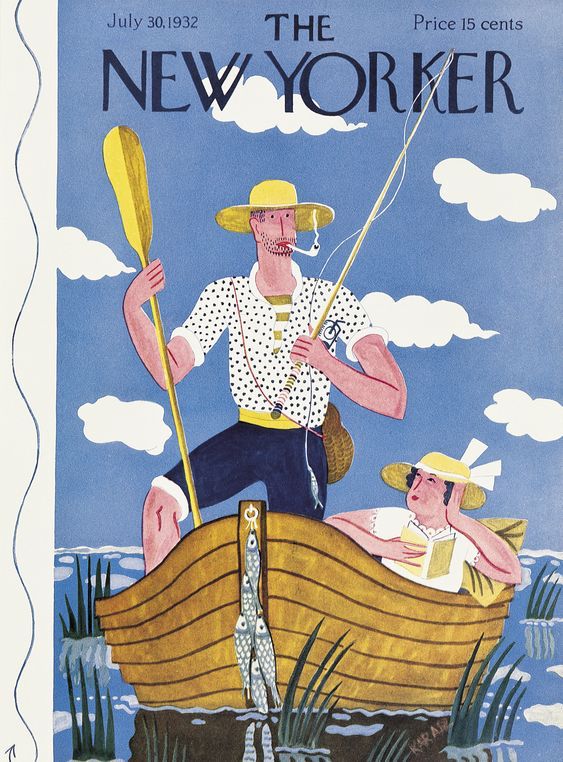
July 16, 1932 cover by Rea Irvin.

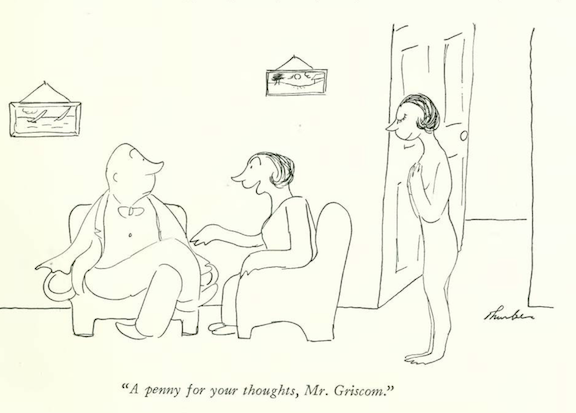
What disturbed so many about Freaks was Browning’s use of actual sideshow performers with real disabilities to tell the story of a conniving trapeze artist who plots to seduce and then kill a dwarf performer to gain his inheritance. The film was not well-received by audiences and many critics. The Kansas City Star’s John Moffitt wrote, “There is no excuse for this picture. It took a weak mind to produce it and it takes a strong stomach to look at it.” However, The New Yorker’s John Mosher, along several other New York critics, gave the film a rather favorable review:

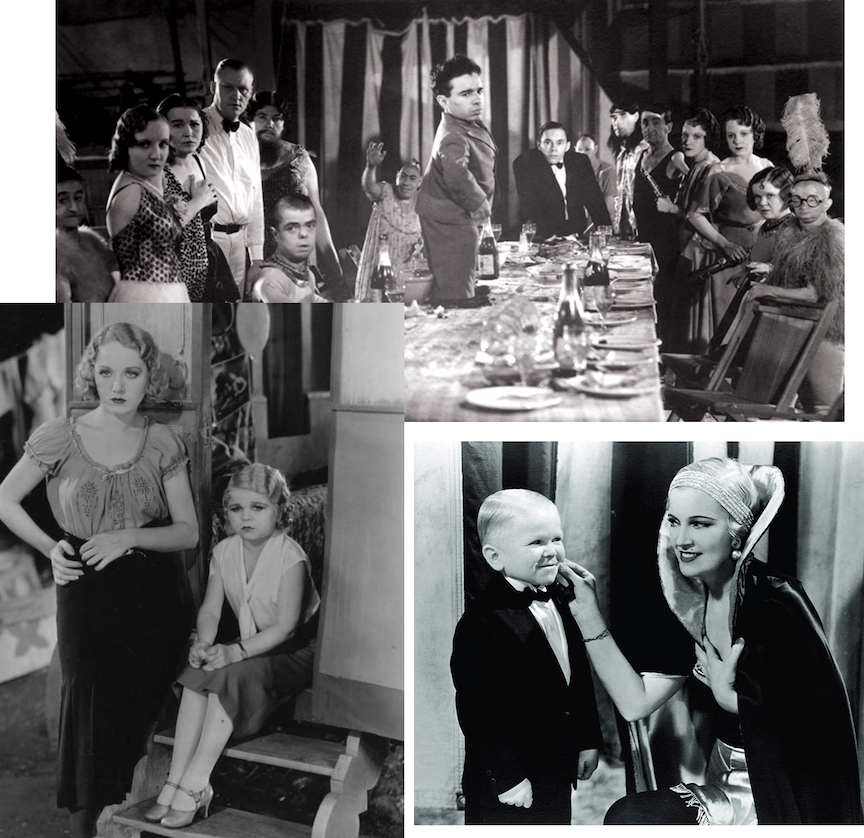
ONE OF US…Although audiences and critics found Tod Browning’s 1932 film Freaks grotesque and exploitive, today many regard the film as a rare (for its time), sympathetic portrayal of persons with disabilities. Clockwise, from top left, Browning with some of the members of his Freaks cast; French-American actress Rose Dione portrayed Madame Tetrallini, operator of the sideshow; Daisy and Violet Hilton with actor Wallace Ford in a scene from Freaks. Born fused at the pelvis, the sisters were joined at their hips and buttocks and shared blood circulation; limbless sideshow performer Prince Randian, who wore a one-piece wool garment over his body, appeared in the film as “The Living Torso.” (IMDB)
IT HAD A PLOT, ACTUALLY…Freaks told the story of a conniving trapeze artist named Cleopatra (portrayed by Russian actress Olga Baclanova, bottom right) who plots to seduce and then kill a dwarf performer, Hans (portrayed by Harry Earles) to gain his inheritance. Top photo: assembled “freaks” chant their acceptance of Cleopatra at the wedding feast of Hans and Cleopatra; bottom left, the kind-hearted seal trainer Venus (portrayed by Leila Hyams) consoles Frieda (Daisy Earles), who worries about Hans (Daisy and Harry Earles were members of a famous quartet of sibling entertainers known as The Doll Family. The quartet also appeared as members of The Munchkins in 1939’s The Wizard of Oz.)(IMDB)
SURPRISE…Leila Hyams (1905–1977) was something of a surprising presence in the controversial film Freaks, given that she was a popular leading lady in the 1920s and 30s. Known for both her comedic and dramatic talents, she retired from films in 1936; another unlikely cast member was Henry Victor (1892–1945) whose physique didn’t necessarily support his role as circus strongman. (dangerousminds.net)
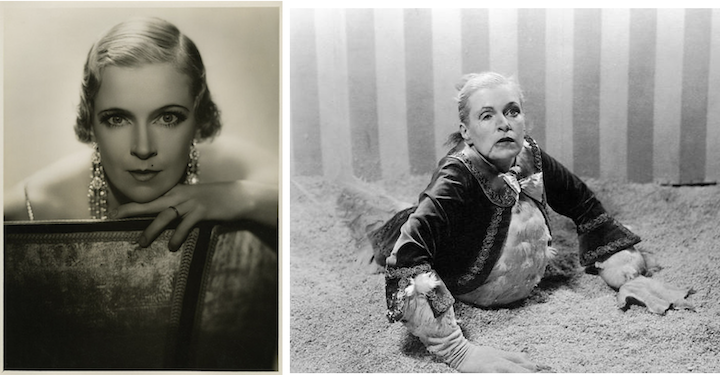
TRUE GRIT…Perhaps only a Russian actress in 1932 had the grit to transform herself from an exotic blonde temptress to a grotesque “human duck” for the movie Freaks. In the film, Olga Baclanova (1893 – 1974) portrayed a conniving trapeze artist named Cleopatra. Near the end of film the “freaks” capture Cleopatra, gouge out her right eye, remove her legs and tongue and melt her hands to look like duck feet. For critics and audiences, the horror was just too much. As for Baclanova — who was a popular silent film actress known as the “Russian Tigress” — her heavy accent did not translate well to talking films, and she left the movie business altogether in 1943. (muni.com/IMDB)

 *  *  *

Tennis Anyone?

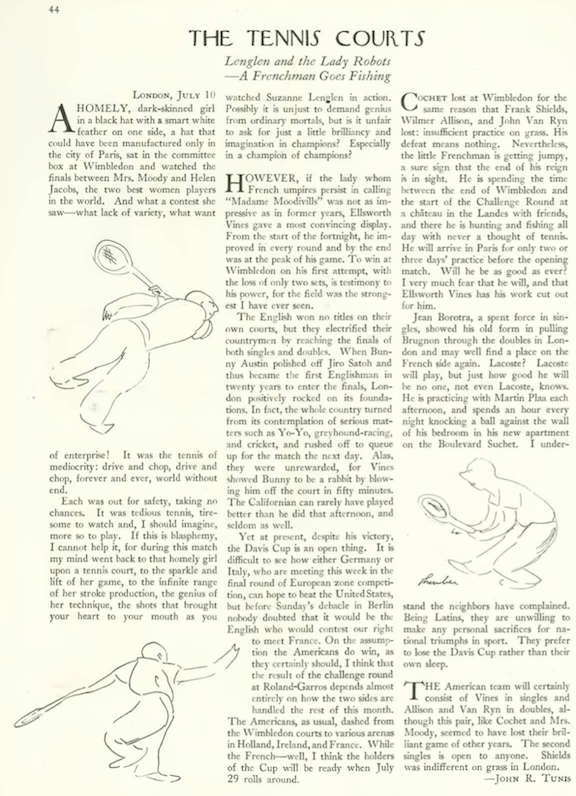
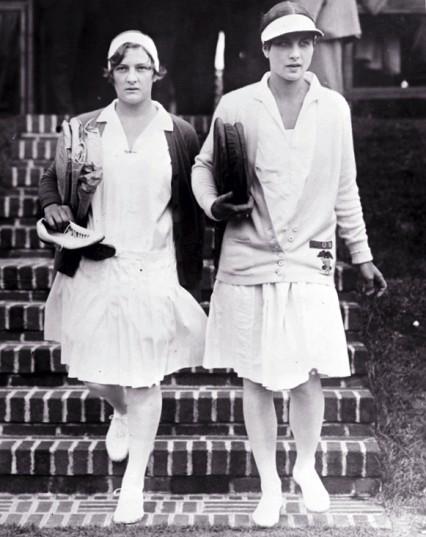
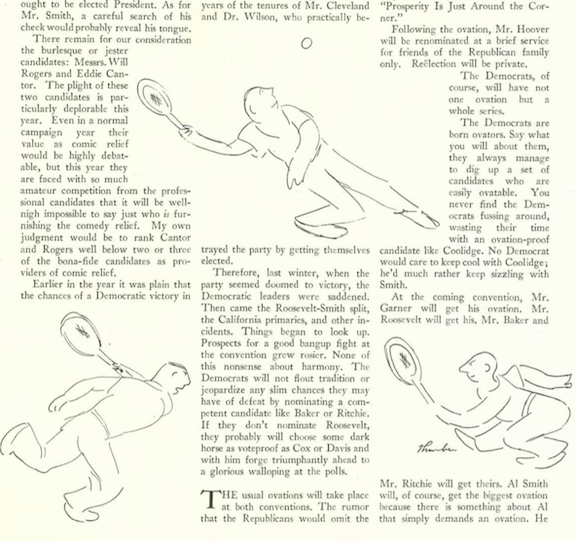
Helen Moody was the top women’s singles tennis player for nearly a decade in the 1920s and 30s, winning Wimbledon eight times, including a match in 1932 against her rival Helen Jacobs. However to sportswriter John Tunis, the women had reached such a level in their play that it had become robotic and tedious to watch. At least James Thurber livened things up with some keen illustrations.

RACKETEERS…Helen Jacobs (left) and Helen Moody (right, in a 1929 photo) were tennis rivals known for their explosive matches. Except, apparently, for the one attended at Wimbeldon in 1932 by John Tunis. (nickelinthemachine.com)

 *  *  *

From Our Advertisers

Sensing that the end of Prohibition was near, the makers of Budweiser reminded readers of the good ol’ days of beer drinking and such…

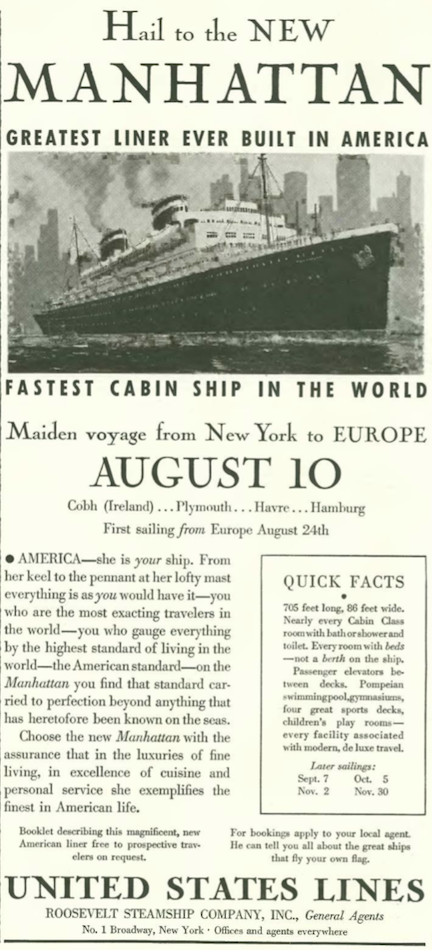
…if you could afford something better than beer, then you might have contemplated a trip on the SS Manhattan, which along with her sister ship SS Washington were the largest liners ever built in the US…

TO AND FRO…Beginning in August 1932 the SS Manhattan operated the New York – Hamburg route until 1939, when instead of taking passengers to Germany the ship began taking Jewish refugees and others away from Nazi-occupied Europe. It was turned into a troopship in 1941 and never returned to commercial service. The SS Manhattan was sold for scrap in 1965. (cruiselinehistory.com)

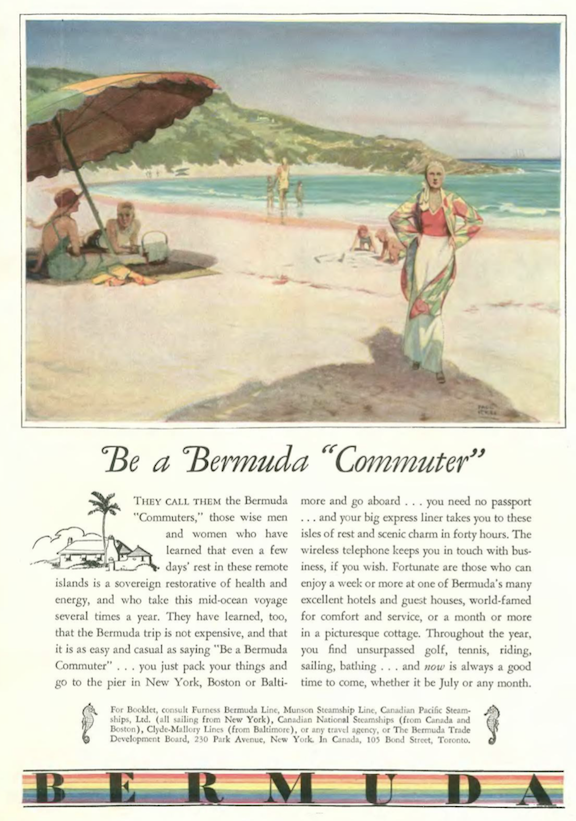
…if your thing wasn’t traveling to Germany to see that country being transformed into the Third Reich, you could instead become a Bermuda “Commuter”…

…back home, William Steig joined other New Yorker cartoonists who earned extra money off of the big tobacco companies…

…which segues into our cartoonists, beginning with Victor Bobritsky’s illustration for “Goings On About Town”…

Otto Soglow offered more Little King adventures…

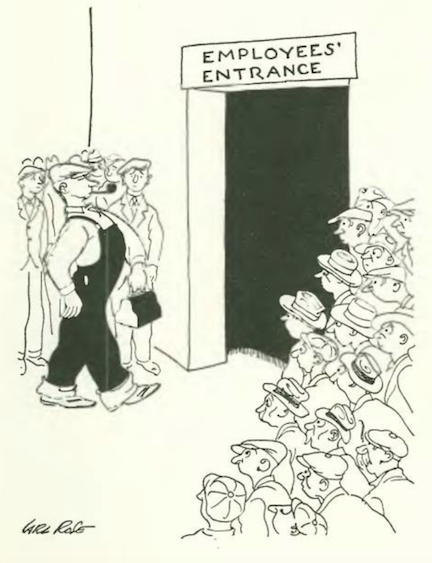
…and Carl Rose gave us a man striding into a factory, apparently a rare sight in 1932…

…on to July 23…

July 23, 1932 cover by Antonio Petruccelli (1907 – 1994). This is the first of six covers Petruccelli created for the New Yorker from 1932 to 1938. He also did numerous covers and illustrations for Fortune, Colliers and other publications.

…and we have another John Mosher film review, in which he refers to Freaks as a “dainty prelude” to another film about the lives of entertainers, in this case George Cukor’s What Price Hollywood, a pre-Code drama starring Constance Bennett and Lowell Sherman with a storyline that anticipated 1937’s A Star Is Born—namely, a famous but fading male star who helps an ingénue rise to stardom while he descends into a pit of alcoholic despair.

FUN WHILE IT LASTED…Top image: Waitress and aspiring actress Mary Evans (Constance Bennett) has the good fortune to meet film director Maximillan Carey (Lowell Sherman) when she serves him one night at the Brown Derby. Bottom: Mary and her polo player boyfriend Lonny Borden (Neil Hamilton) look down with pity at the down-on-his-luck Maximillan in What Price Hollywood? (Wikipedia/IMDB)

 *  *  *

From Our Advertisers

Originally published by Adam Budge, Inc. in 1910 and later by Joseph Judd Publishing and others, Arts & Decoration magazine hoped to stay alive in the Depression with a promise that its August 1932 issue would be “compellingly readable”…

…and here is the cover of that issue…Arts & Decoration would hang on for another ten years before folding in 1942…

…one of the stars of Ziegfeld Follies of 1931 was actress and dancer Patricia Boots Mallory (1913 – 1958), who posed for this portrait to demonstrate the wonders of color reproduction…

…and here’s Boots Mallory in a scene from the 1932 film Handle With Care with comedian Elmer “El” Brendel (standing) and actor James Dunn

…not everyone could be a movie star, but you could pretend to be one in this swell new (and low-priced) DeSoto…Walter Chrysler must have laid out some big bucks for this two-page color spread…

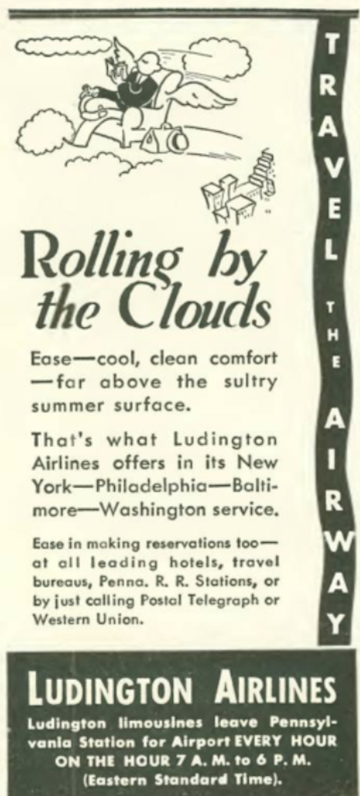
…for those with greater means you could skip the roads altogether and fly the friendly skies of Ludington Airlines…the airline was founded by wealthy New York socialite Charles Townsend Ludington and his brother Nicholas…

…founded in 1929, Ludington Airlines was the first airline with flights every hour on the hour and the first to carry passengers only (others carried mail, an important source of revenue). The airline offered service between Washington, D.C. and New York City—with stops in Philadelphia, Baltimore, Norfolk, Virginia, Nashville and Knoxville, Tennessee—using seven Stinson tri-motor 6000 aircraft in its fleet, each carrying up to ten passengers…the airline went bankrupt in 1933 (mostly due to the lack of mail revenue) but left behind an astonishing record—in its first two years it flew more than 3.4 million miles and carried 133,000 passengers, a record at the time…

A Stinson SM-6000 airliner similar to the type flown by Ludington Airlines from 1929 to 1933.

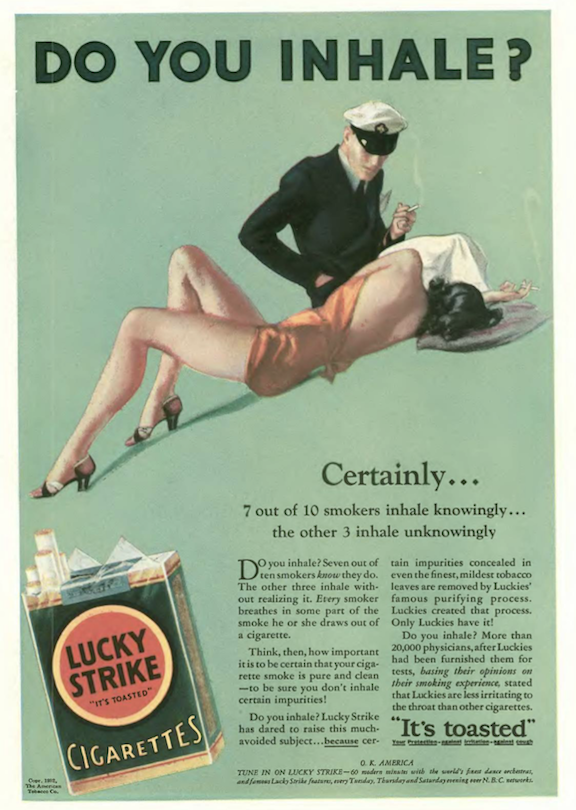
…back to earth, sort of, we have this Lucky Strike ad with the famed “Do You Inhale?” campaign that oozed innuendo and no doubt prompted a few young men to take up the habit posthaste…

…on to cartoons, beginning with this spot art by James Thurber

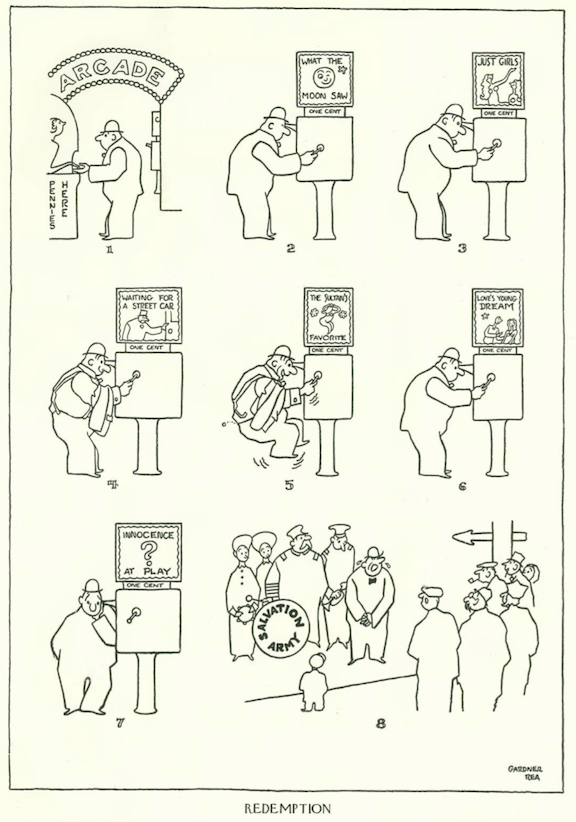
Gardner Rea showed us a man getting his nickel’s worth of sin and repentence…

…and we end with the delightfully unrepentant Peter Arno

Next Time: Rebecca and the Zombies…

On Detention

Twentieth century New York saw a lot of paradise paved (see Moses, Robert), but there is one spot in New York that saw paradise reclaimed—not from a parking lot but from an eleven-story prison that once stood at 10 Greenwich Avenue.

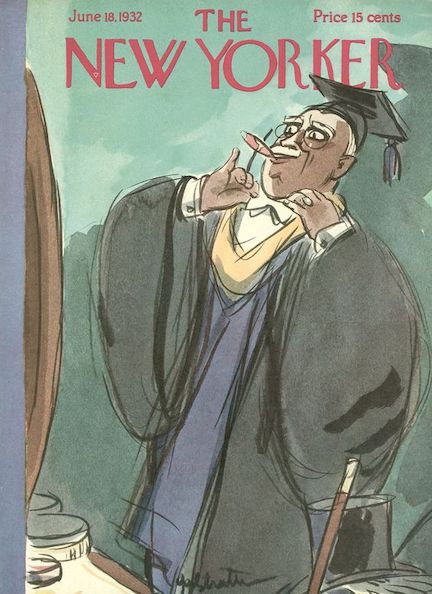
June 18, 1932 cover by William Crawford Galbraith.

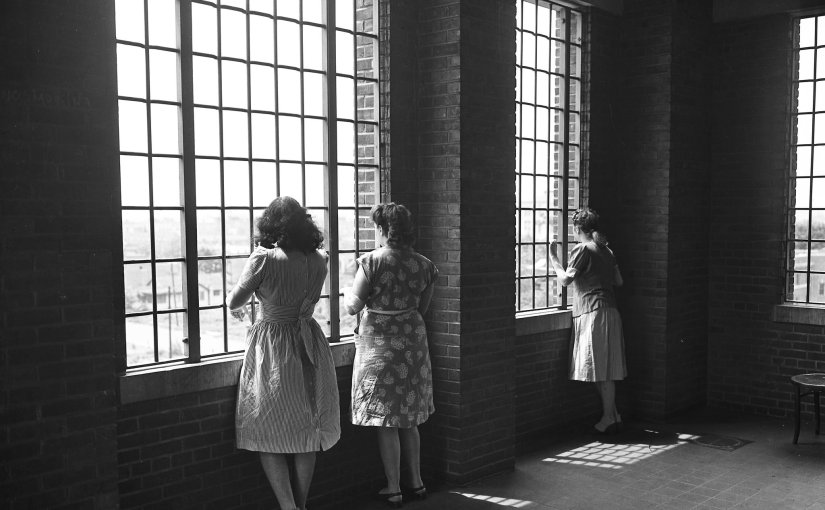
The Jefferson Market Garden in Greenwich Village was once the site of a women’s prison designed to be a more humane corrections facility, but between its opening in 1932 and its closing in 1971 the Women’s House of Detention went from noteworthy to notorious.

It was designed by a firm known for its Art Deco buildings—Sloan and Robertson—and although it still looked rather stark and institutional on the inside, attempts were made to gussy it up with artworks commissioned by the WPA. The New Yorker’s E.B. White found a certain “sanitary elegance” to the place.

WELCOME INMATES!…When the Women’s House of Detention opened in 1932 it focused on more humane practices, including vocational training and other reform measures. Clockwise from top right, a 1938 photo shows how the prison once loomed over the Sixth Avenue El;

by the late 1960s the jail had become squalid, overcrowded and violent. He wrote: “I can still hear the desperate pleas of inmates shouting through the windows as I walked home from school every day.”

BIG, BAD HOUSE…Clockwise from top, left, protestor outside the New York Women’s House of Detention at the Prisoners’ Rights and “Free the Panther 21” demonstration in 1970; illustrious inmates at the prison included Ethel Rosenberg (pictured Aug. 8, 1950), Angela Davis, and Valerie Solanas (who shot Andy Warhol in 1968); demonstrators outside the prison in 1970; 1956 publicity still taken by the Department of Corrections. (Diana Davies via Smith College/

In the late 1960s Village residents began holding town hall meetings to discuss the removal of the overcrowded prison, many complaining of the friends and families of inmates who lingered outside day and night, yelling up to their loved ones behind bars. The protests were successful; the prison closed in 1971 and was demolished three years later.

A BIT OF EARTH…Top photo is an overhead view of the Jefferson Market Garden, planted on the site of the former Women’s House of Detention. Below, a verdant pathway takes a turn through Jefferson Market Garden. Photos courtesy of amny.com and Jefferson Market Garden.

 *  *  *

How Dry I Ain’t

Franklin D. Roosevelt was a canny politician, seemingly able at times to please both sides of a divisive issue. This was the case in 1932, when teetotaling New Yorkers touted FDR’s long record of supporting such causes as the Anti-Saloon League, while city dwellers such as E.B. White knew better…

LIBERAL LIBATION…Franklin D. Roosevelt was an enthusiastic drinker, especially of his famed martinis. (thrillist.com)

*  *  *

From Our Advertisers

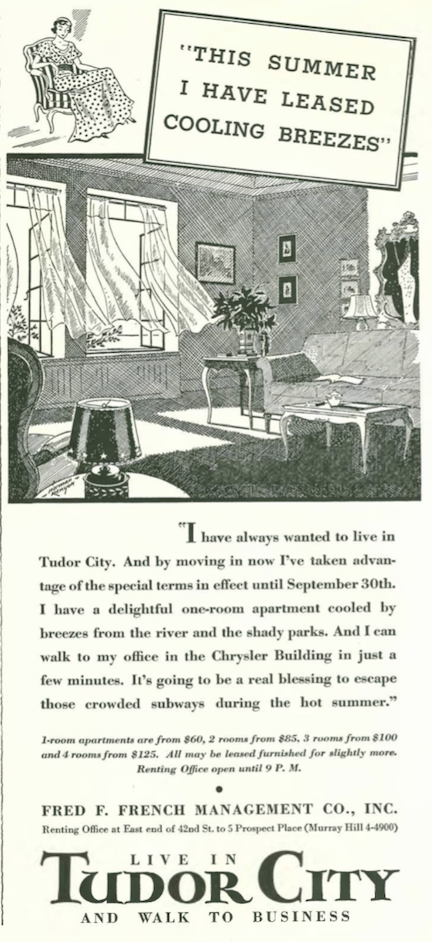
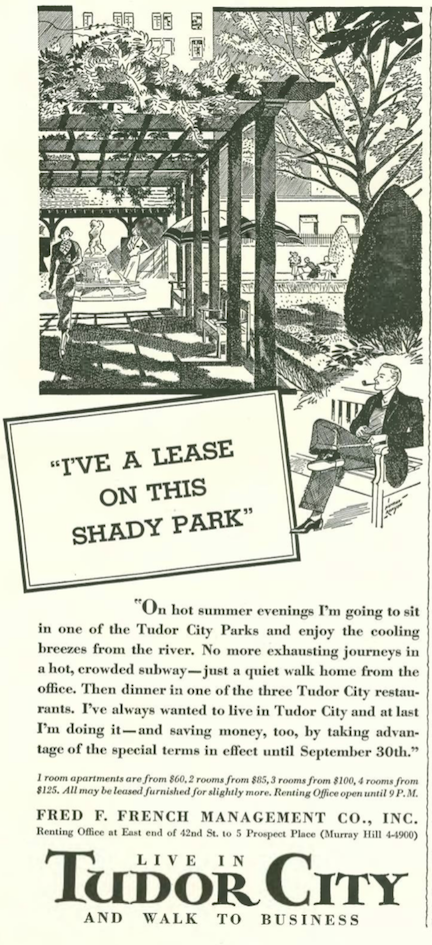
In the days before air conditioning, most folks had to rely upon whatever cooling breezes they could channel into their homes, and apparently in Tudor City they could find some relief from the East River, at least when the wind was blowing from that direction…

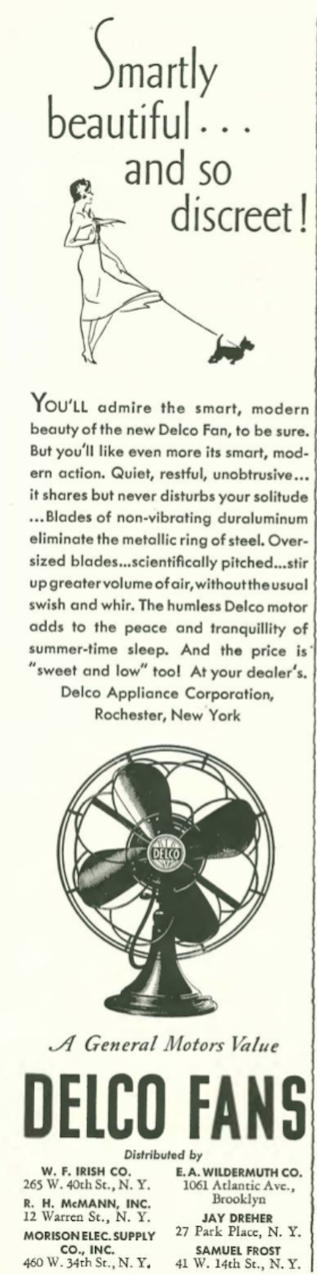
…if the wind wasn’t in your favor, you could switch on an electric fan, an appliance that didn’t come into common use until the 1920s…this ad also demonstrated the power of the dictum “sex sells,” even if applied subtly…

…it would be awhile before air-conditioning became common, but in 1932 you could at least keep your goodies cool with a GE refrigerator, its radiating coils offering a novel way to disperse this smoker’s emissions…

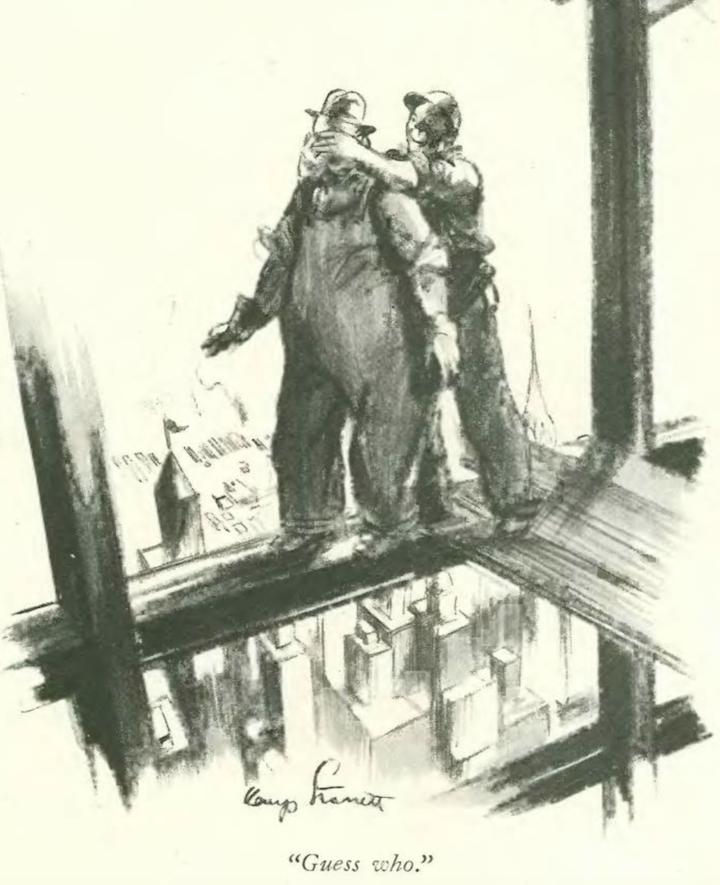
…we jump to our cartoons, with Kemp Starrett in some mixed company…

Garrett Price illustrated the peril one faced when driving through Chelsea, where one could encounter freight trains at street level…

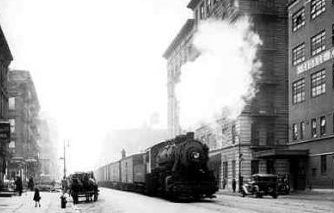
…for almost one hundred years this street-level freight line on 11th Avenue—known as “Death Avenue”—claimed the lives and limbs of hundreds of (mostly poor) New Yorkers…

HEADS UP!…the Hudson River Railroad at 11th Avenue and West 41st Street. (forgotten-ny.com)

…happily, we move on to June 25, 1932…

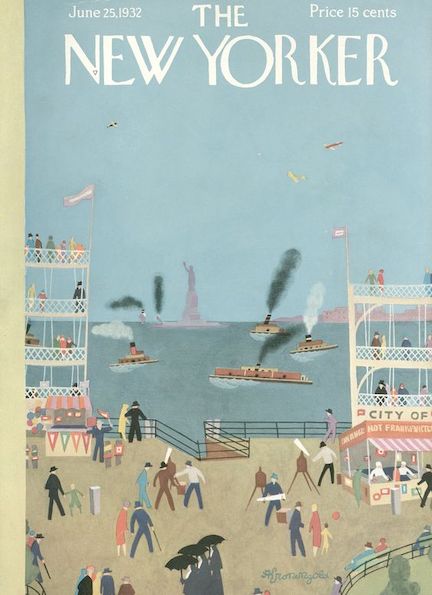
June 25, 1932 cover by Adolph K. Kronengold.

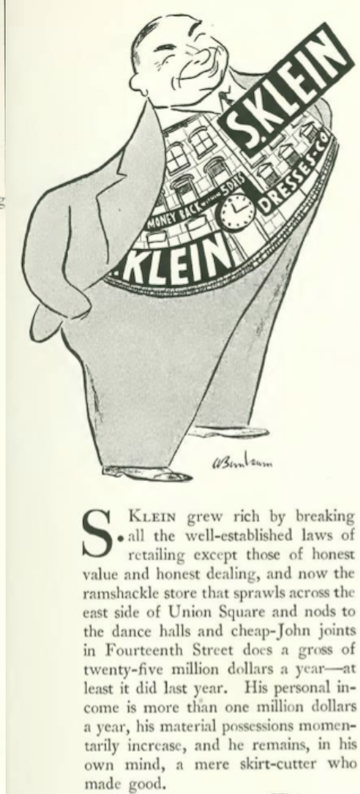
…which featured a profile of Samuel Klein (1886-1942), founder of Union Square’s discount department store S. Klein, famous for its “bargain bins.” The profile included this column-busting caricature of Klein as rendered by Abe Birnbaum

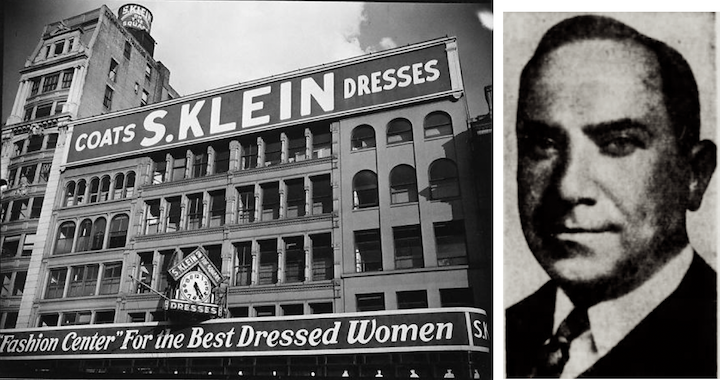
YOU COULDN’T MISS IT…The S. Klein Department Store was a Union Square fixture from 1910 to its closing in 1975. At right, undated photo of founder Samuel Klein. The building is long gone, the Zeckendorf Towers now occupying the site. (theclio.com/bklyn.newspapers.com)

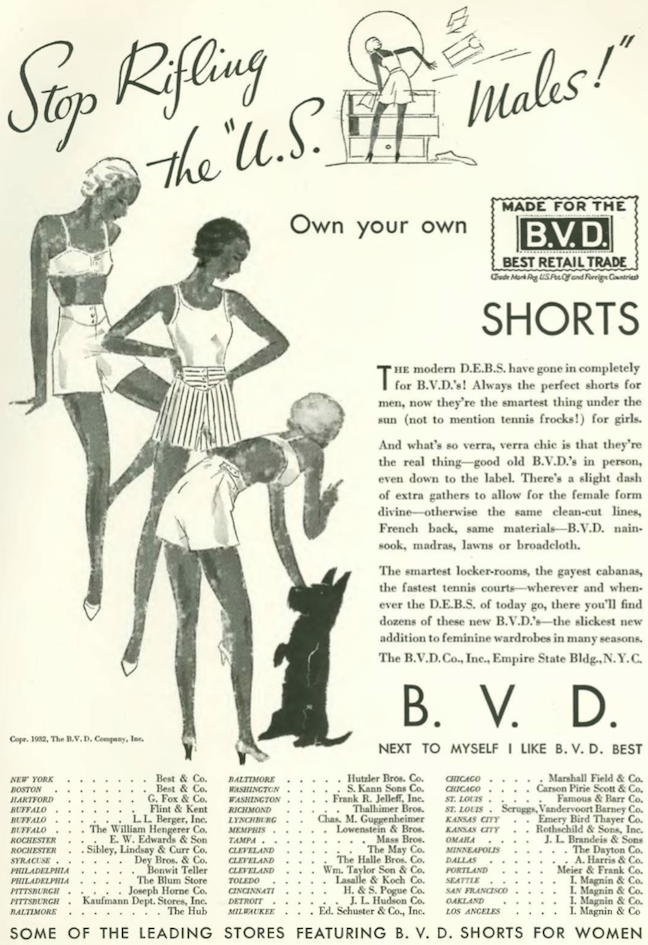
…and we roll right into our advertisements, and this spot from the makers of B.V.D.s, who found a new market for men’s shorts and continued the 1920s trend toward a more casual, androgynous look among “modern debs”…

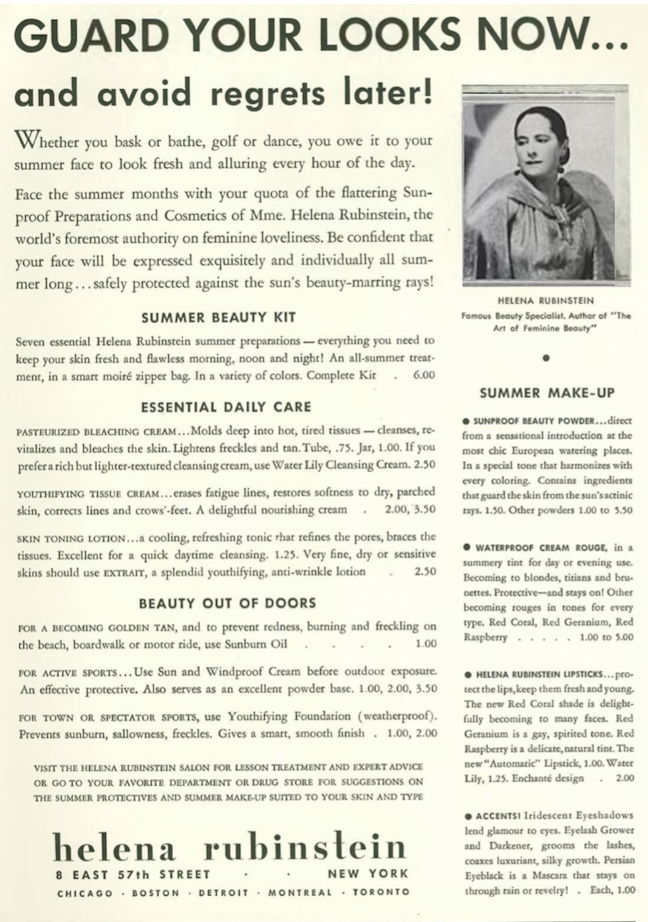
…you likely wouldn’t catch Helena Rubinstein wearing B.V.D.s., busy here shaming women into using her line of beauty products…

…on to our cartoons, we have this spot illustration by James Thurber

…and another travelogue image from Rea Irvin

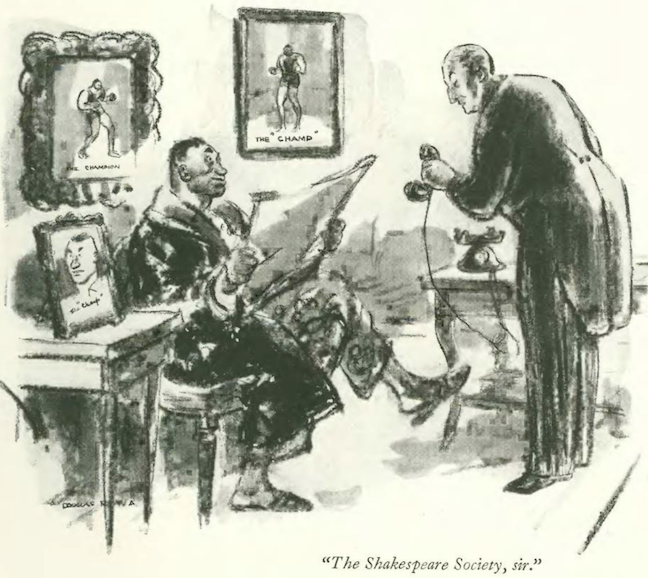
Douglas Ryan gave us an unlikely Shakespeare lover (unless the boxer was Gene Tunney)…

…and we end with a bit of Prohibition humor from Gardner Rea

Next Time: Help Wanted

Jimmy’s Jam

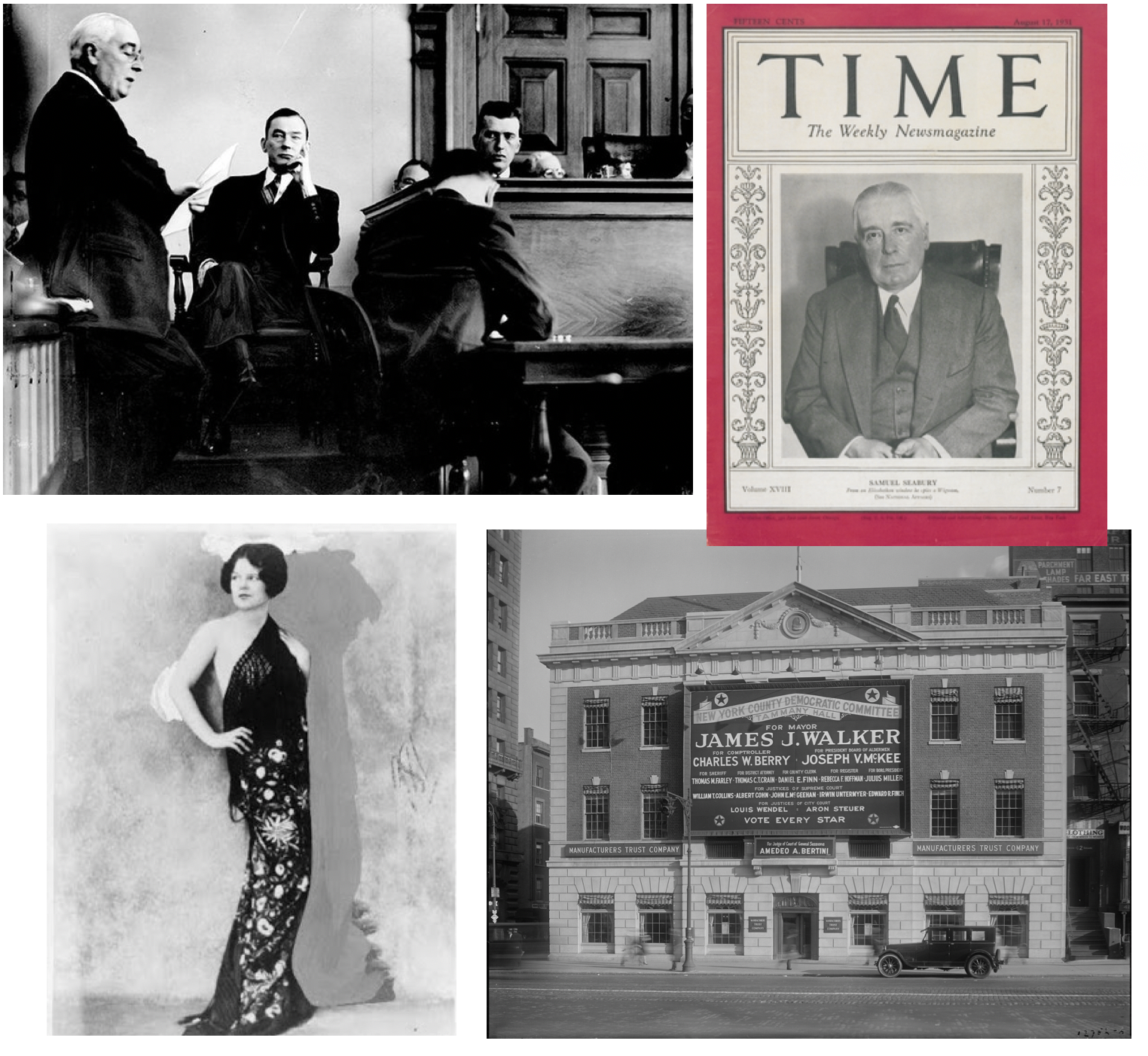
New York City Mayor Jimmy Walker (1881-1946) was commonly referred to as “Beau James” for his flamboyant lifestyle and his taste for fine clothes and Broadway showgirls.

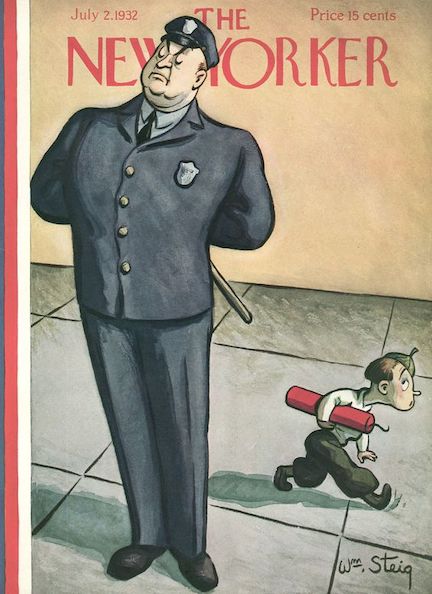
June 4, 1932 cover by Theodore Haupt.

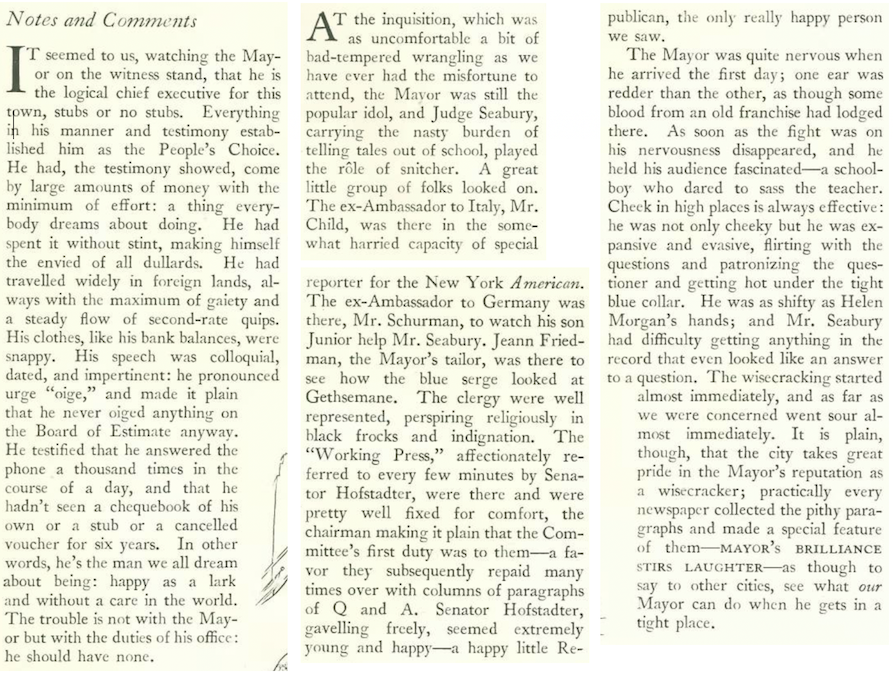
Mayor Walker was also a product of the powerful Tammany Hall machine that traded in political favors and outright bribery. When he took office in 1926, the economy was riding high, and few seemed to care that hizzoner was aloof, partying into the night (while openly flouting Prohibition laws), and taking numerous pleasure trips to Europe. He easily won reelection in 1929, but when the stock market crashed later that year his hijinks began to wear a bit thin, and reform-minded politicians like State Senator Samuel H. Hofstadter began looking into corruption in New York City. The actual investigation was led by another reformer, Samuel SeaburyThe New Yorker’s E.B. White looked in on the proceedings and its star witness, Mayor Walker.

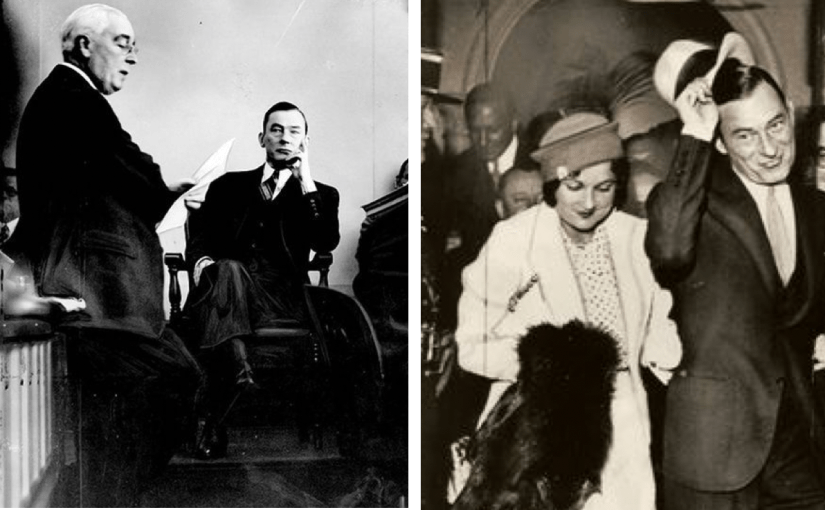
I DO NOT LIKE THIS, SAM I AM…Clockwise, from top left, Mayor Jimmy Walker was full of wisecracks during his testimony before Samuel Seabury, far left; Seabury’s role in the high-profile commission landed him on the cover of Time (Aug. 17, 1931); Tammany Hall’s support was writ large for Walker in the 1920s; Vivian Gordon was a surprise witness in the Seabury investigation, telling investigators police received bonuses for falsely arresting women on prostitution charges. After her testimony Gordon was found strangled in Van Cortland Park, leading many to believe Walker’s corruption played a role in her death. (Daily News/Time/archives.nyc/Pinterest)

Public opinion really started to turn on Walker with the death of star witness Vivian Gordon (see caption above). The final blow came from New York Governor Franklin D. Roosevelt, who like Walker was a Democrat but unlike Walker was not a Tammany product. Roosevelt was also running for president, and rightly seeing Walker as a liability, asked the mayor to resign, which he did on Sept. 1, 1932. That event was still three months away when E.B. White wrote these concluding lines:

SO LONG, SUCKERS…Eight days after he resigned from office, New York Mayor Jimmy Walker headed for Paris, where his mistress, Ziegfeld star and film actress Betty Compton, awaited with open arms. Clockwise, from top left, Compton and Walker on their wedding day in Cannes, France, April 19, 1933; and a 1920s photo portrait of Compton; Walker’s first wife, Janet Allen Walker, had sued for divorce a month earlier (March 10, 1933) claiming Jimmy had deserted her in 1928 and they had not lived together since; Walker and Compton on the deck of SS Normandie, June 17, 1936. (legacy.isle-of-wight-fhs.co.uk/IMDB/Pinterest/NYC Municipal Archives)

Eight days after Walker resigned from office he caught a boat for Paris, where his mistress, Ziegfeld star and film actor Betty Compton (1904-1944), awaited him. They married the following year in Cannes.

 *  *  *

Out of the Shadows

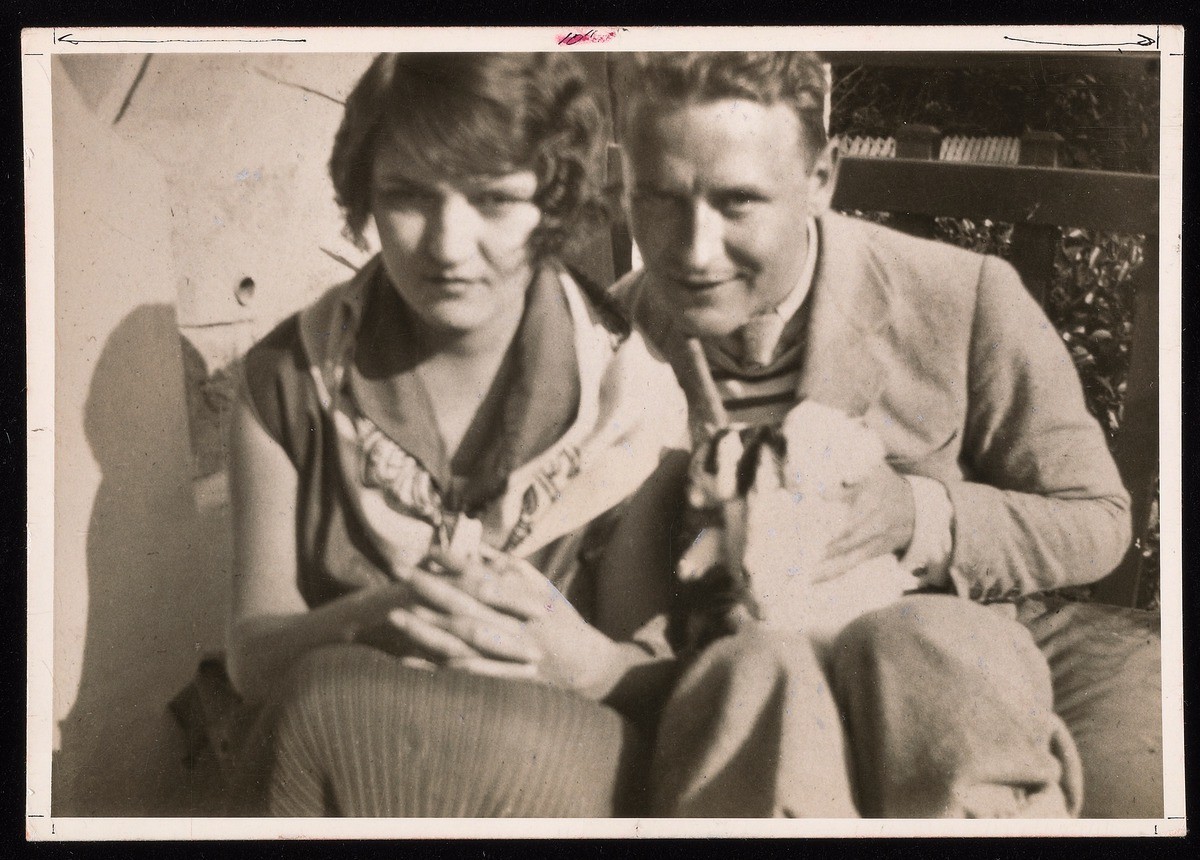
F. Scott and Zelda Fitzgerald were Jazz Age fixtures, cutting wide swaths through literary and society worlds filled with wild drinking and various infidelities. Francis Scott (1896-1940) was a chronicler of that age, most notably with The Great Gatsby, but Zelda (1900-1948) also took pen in hand, contributing short pieces to various magazines in the 1920s. By 1930 their self-destructive ways caught up with them both, and Zelda was admitted to a sanatorium in France that spring; it was the beginning of a long road of treatments that would end in her death nearly two decades later.

ALL THAT JAZZ…Zelda and F. Scott Fitzgerald (pictured here in 1926) embodied the riotous days of the Roaring Twenties. (beinecke.library.yale.edu)

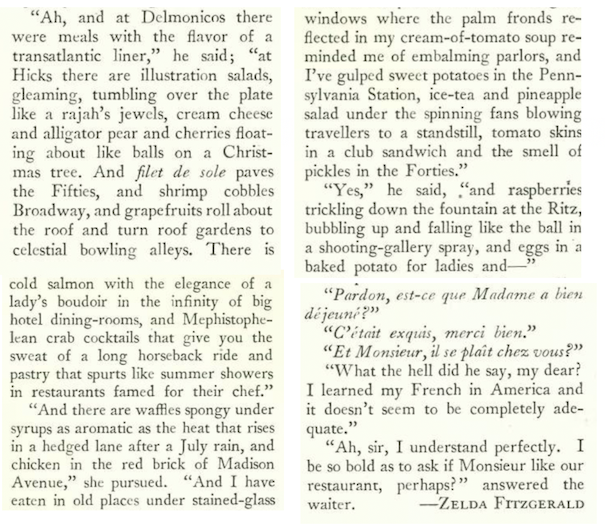
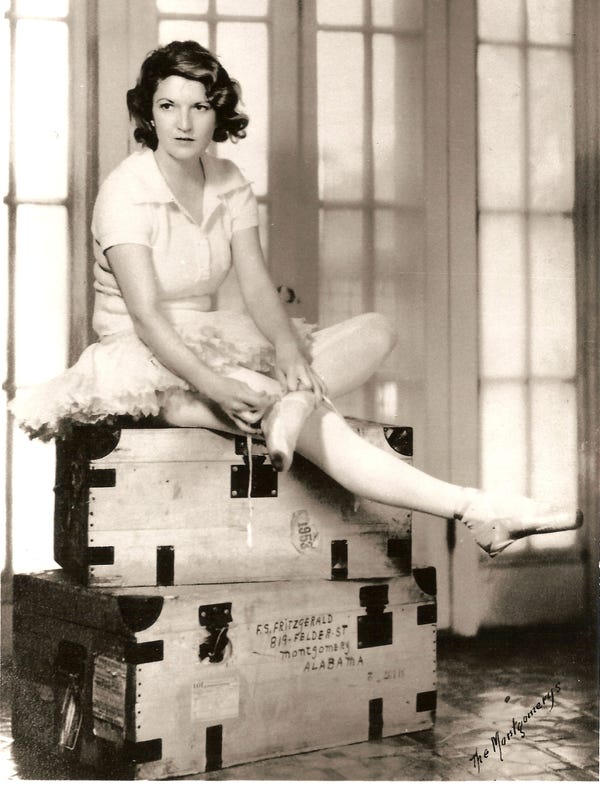
In 1932, during her stay at the Phipps Clinic (Johns Hopkins), Zelda experienced a burst of creativity, writing an entire autobiographical novel — Save Me the Waltz — in just six weeks. Sadly, it was not well-received (by critics or by her husband), and fewer than 1,400 copies of the novel were sold — a crushing blow to Zelda. However, during that same time she published a short story in The New Yorker titled “The Continental Angle.” Here it is:

TALENTED AND TROUBLED…Zelda Fitzgerald in 1931, a year before she entered the Phipps Clinic and had a burst of creativity. (citizen-times.com)


 *  *  *

From Our Advertisers

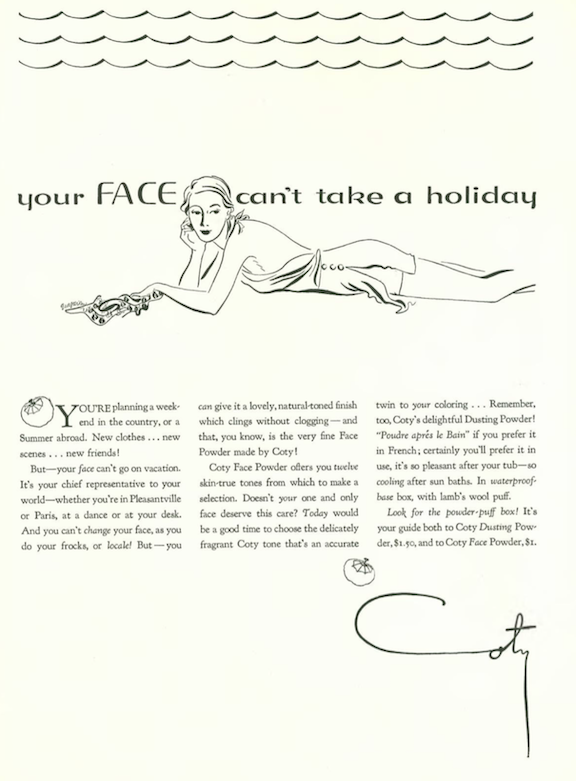
Yet another stylish and very modern-looking ad from Cody, thanks to the artistry of American fashion illustrator Ruth Sigrid Grafstrom…

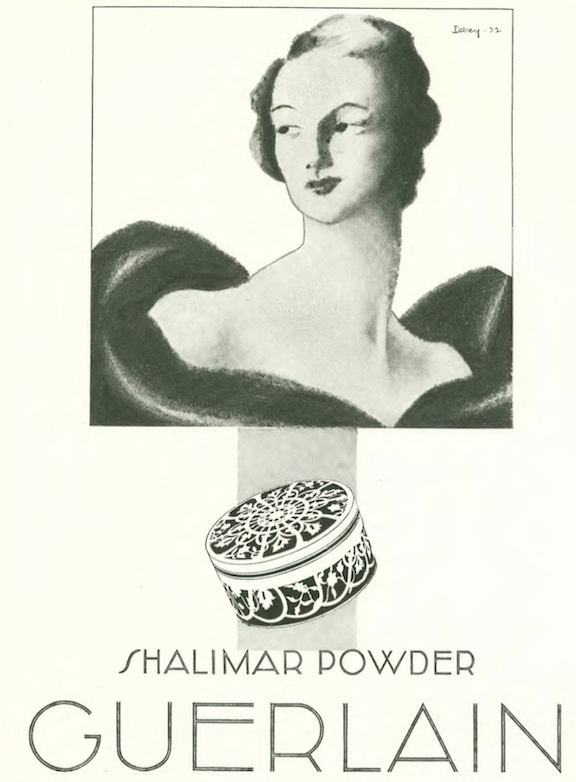
…while later on in the issue French illustrator Lyse Darcy gave his subject an Art Deco look to promote Guerlain’s face powder…

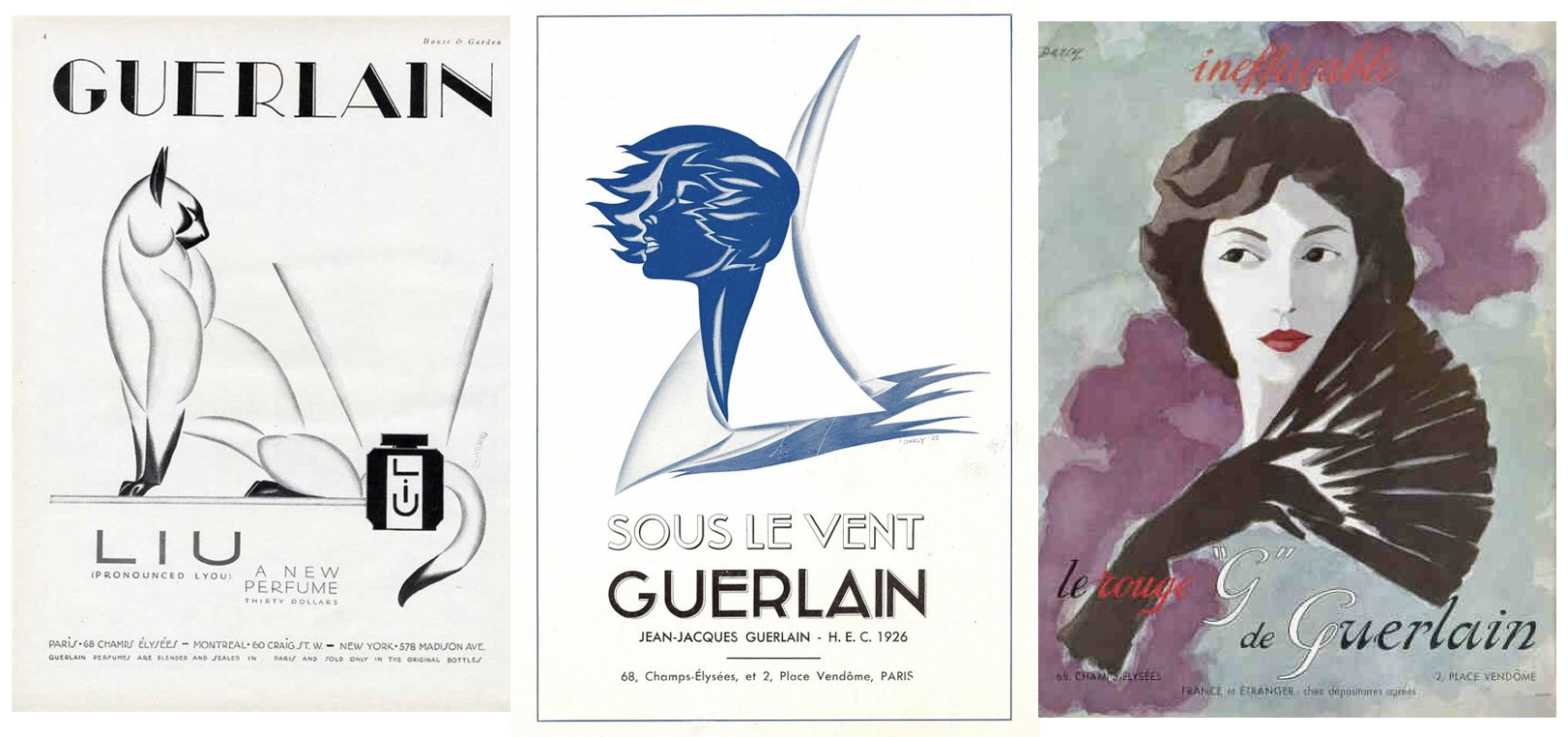
…Darcy was famed for his Guerlain ads from the 1920s to the 1950s…

From left to right, Darcy ads from 1929, 1938, 1957…

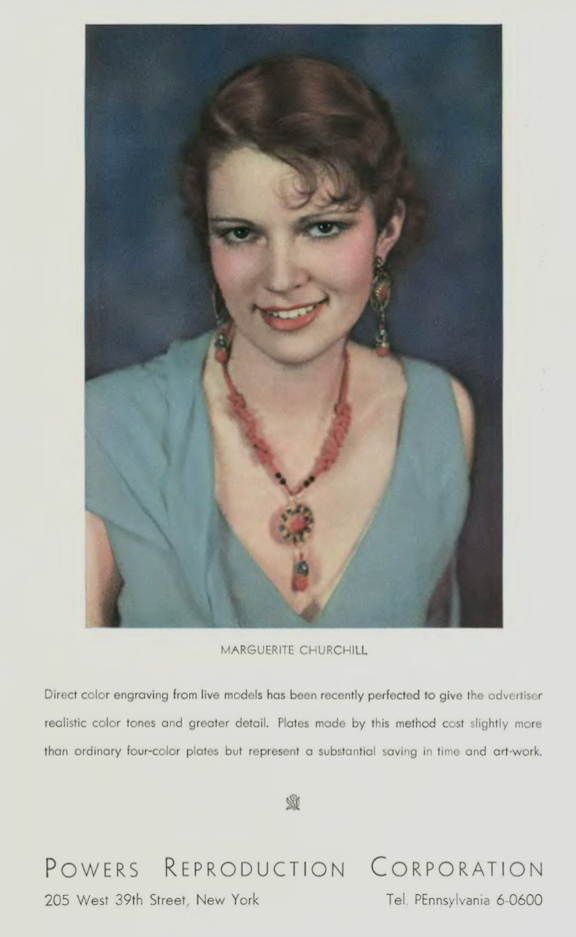
…Powers Reproduction turned to star power to promote their latest color engraving techniques…

…the actor Marguerite Churchill (1910-2000) had a film career spanning 1929 to 1952, and was John Wayne’s first leading lady in 1930’s The Big Trail

…and we head back to the city, Tudor City, to be precise, where apparently it was common in the 1930s to spot a gent in formalwear relaxing with his pipe…

…on to our cartoons, we have James Thurber contributing some spots…

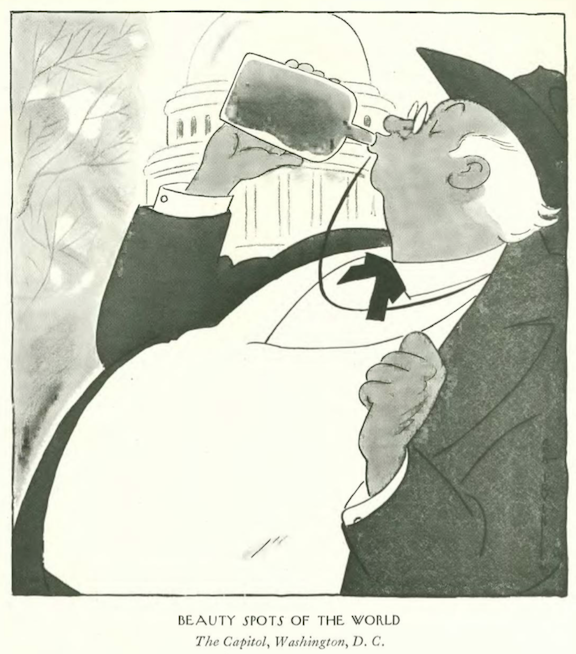
Rea Irvin continued to visit the world’s “Beauty Spots”…

Garrett Price showed us a couple looking for the “We Want Beer” parade…

…which happened three weeks earlier, on May 14, 1932…the parade was organized by none other than Mayor Jimmy Walker, who believed prohibition was making life difficult for New Yorkers…

(brookstonbeerbulletin.com)

Barbara Shermund introduced two men with bigger issues than beer on their minds…

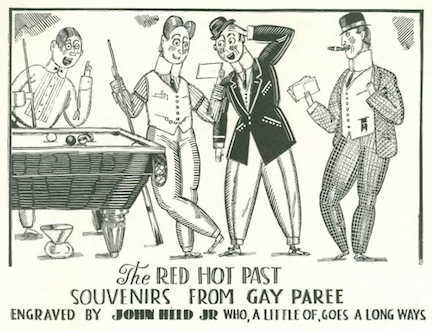
John Held Jr. continued to plumb the depths of the naughty Nineties…

…and some more naughtiness, courtesy Gardner Rea

Next Time: Summer Indulgences…


A Visit to Minskyville

During the 1930s few people could afford the luxury of a Broadway show, but a trip to “Minskyville” was in reach of nearly anyone looking to escape the gloom of the Depression, at least for a few hours.

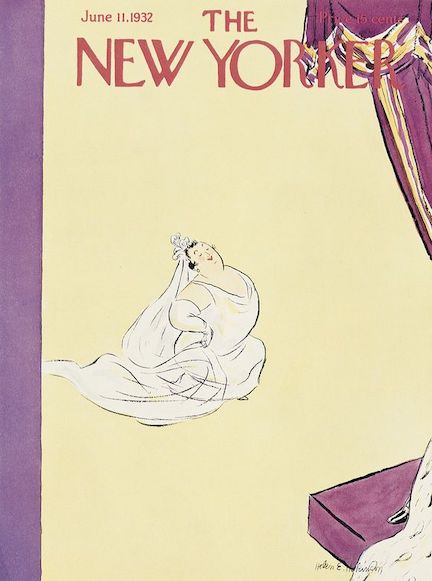
May 28, 1930 cover by Constantin Alajalov.

The Minsky family—brothers Billy, Herbert, Morton and Abe—built the beginnings of a New York burlesque empire, writes actress, author and documentarian Leslie Zemeckis: “Abe, the eldest, started showing racy films in a nickelodeon theater on the Lower East Side. His father—believing that if his son was gonna be a perv, he might as well make real money at it—bought the National Winter Garden theater on Houston Street near Second Avenue (where a Whole Foods stands today), and gave Abe the sixth floor to run his burlesque shows.” Alva Johnson paid a visit to Houston Street and environs for the “A Reporter at Large” column:

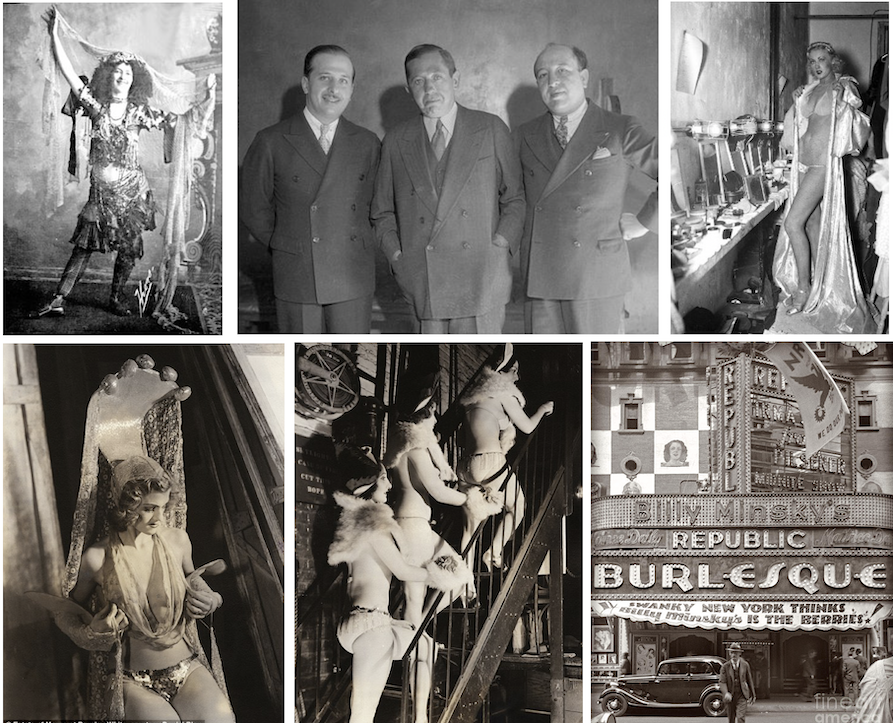
LITTLE EGYPT, aka Farida Mazar Spyropoulos, top left, both titillated and scandalized crowds at the 1893 Chicago World’s Fair (really?); clockwise, from center top, three of Minsky Brothers – Billy, Morton and Herbert; the Minsky Brothers owned several burlesque theaters in New York, including Minsky’s Oriental on 51st Street and Broadway, where stripper Julie Bryan was a top draw in 1936; Billy Minsky brought the Minsky brand to Broadway when he leased the Republic Theatre on 42nd Street in 1931; the last two images are by Margaret Bourke-White, backstage at the Republic in 1936. (Wikipedia/Daily News/Estate of Margaret Bourke-White)
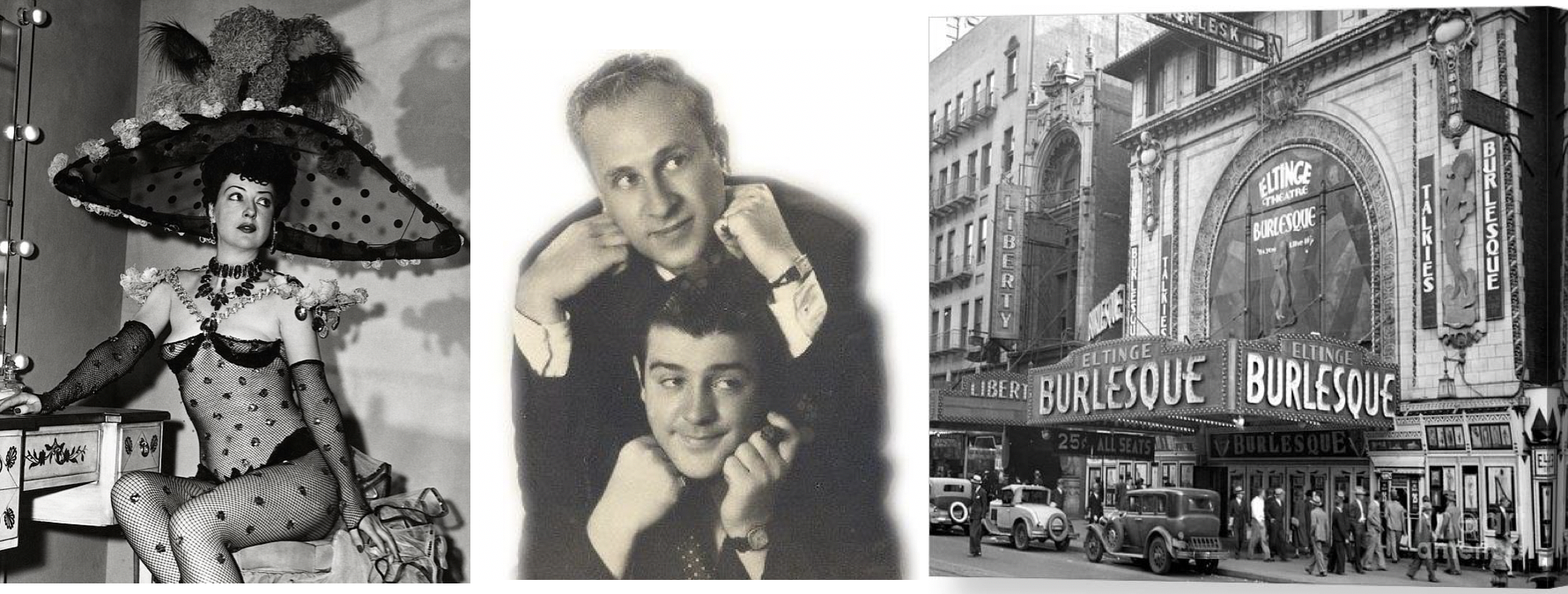
NEED A CAREER?…Well, in the 1930s an aspiring dancer or comedian could earn some chops on the burlesque stage. Gypsy Rose Lee (aka Rose Louise Hovick), left, who became the world’s most famous stripper (as well as an actress, author and playwright), was one of the biggest stars of Minsky’s Burlesque; breaks between burlesque performances were commonly filled by comedians, including Abbott and Costello (pictured above in their 1930s burlesque days), who first worked together in 1935 at the Eltinge Burlesque Theater on 42nd Street, at right.

According to Zemeckis, “burlesque caught on among the recent immigrants of the Lower East Side. The shows were cheap, the humor broad, and the allure of beautiful, barely-clothed women transcended language barriers.” But if striptease wasn’t your thing, Minskyville offered plenty of other diversions:

ONE LUMP OR TWO?…Minskyville’s entrepreneurs (top images) added a modern twist to the study of head bumps and cranium size — called Phrenology — with the electronic “Psycograph” (sic); at bottom, Prof. William Heckler’s Trained Flea Circus at Hubert’s Museum on West 42nd Street attracted some gents itching to see Heckler’s fleas in action; according to Alva Johnston, Minskyville’s penny arcade peepshows (such as the one at bottom right) would take your penny or nickel in exchange for photos of a woman old enough to give your grandpa the glad eye. (Museum of Questionable Medical Devices/sideshowworld.com)
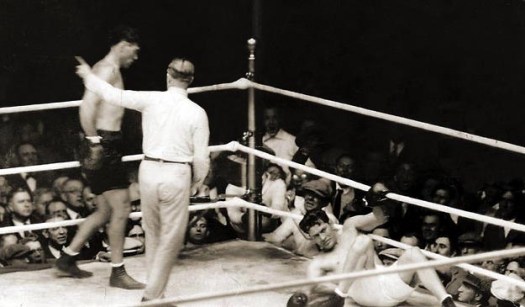
LET’S SEE THAT AGAIN…Folks who didn’t want to look at forty-year-old photos of bathing beauties could check out the most popular attraction at Minskyville’s penny arcades — a clip from the famed Long Count Fight, a 1927 rematch between world heavyweight champion Gene Tunney and former champ Jack Dempsey, which Tunney won in a unanimous decision despite being knocked down in the seventh round. It was, and is, the subject of endless debate. (www.wbaboxing.com )

*  *  *

Not a Gearhead

“The Talk of the Town” noted that young Walter P. Chrysler, Jr. preferred arts and literature over things that went zoom:

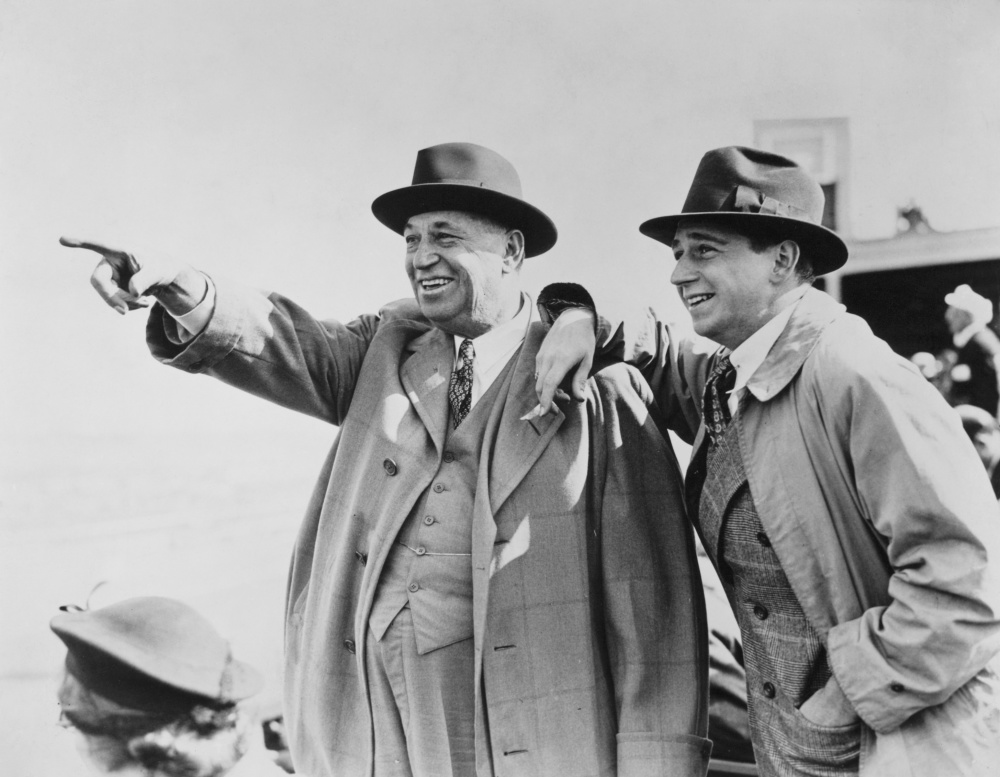
SOMEDAY THIS WILL ALL BE YOURS, RIGHT?…Walter P. Chrysler Sr. and Walter P. Chrysler Jr. share a father-son moment in 1930. Junior Chrysler devoted much of his life to building a multimillion-dollar collection of paintings (some of which were later found to be forgeries) and made substantial forays into collecting stamps, rare books and glassworks. He also produced a movie, The Joe Louis Story, released in 1953. (chrysler.org)

 *  *  *

Rat-a-tat

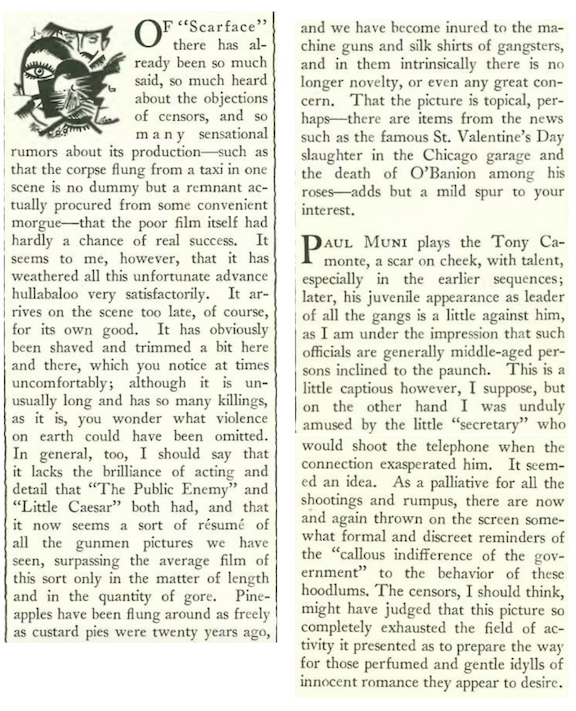
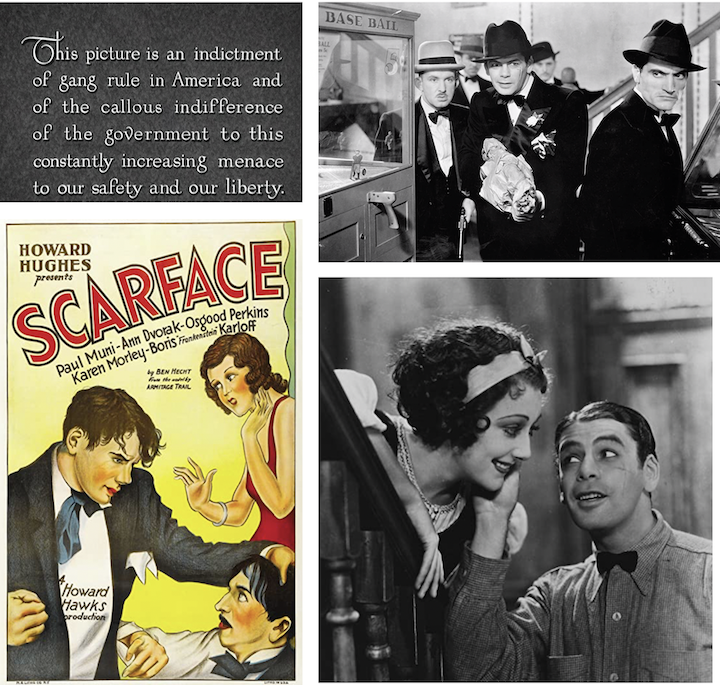
Today most movie lovers associate Scarface with the 1983 Brian DePalma film (starring Al Pacino), but the original Scarface in 1932 was far more influential in that it helped define the American gangster film genre. Directed by Howard Hawks and produced by Hawks and Howard Hughes, the screenplay was penned by early New Yorker contributor Ben Hecht. Mild by today’s standards, the film’s violent scenes caused it to be banned by many theaters around the country. Along with 1931’s Little Caesar and The Public Enemy, Scarface is regarded as among the most significant gangster films. Here is what critic John Mosher thought of it:

JUST IN CASE YOU GET THE WRONG IDEA…Also known as Scarface: The Shame of the Nation, this 1932 gangster film opened with some cautionary words (top left). Clockwise, from top right, gangster “Tony” Camonte (Paul Muni) is flanked by his cronies during a hit on a rival; Tony (Muni) shows his softer side with his dear sister Francesca (Ann Dvorak). United Artists promotional poster (note how Boris Karloff was billed with a reference to his 1931 Frankenstein role). (IMDB)

 *  *  *

From Our Advertisers

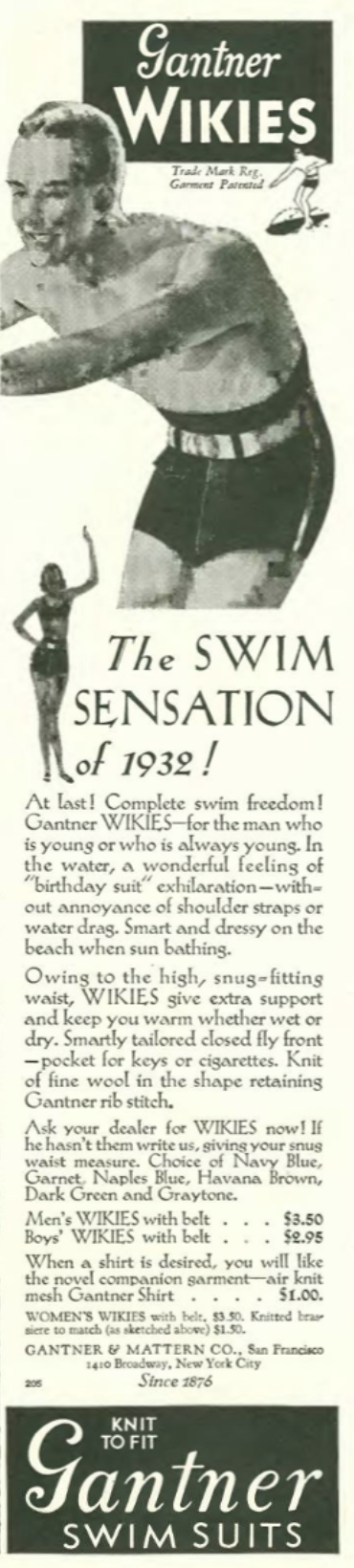
Just when I thought it was safe to go back into the water, out comes another line of wool swimsuits. I honestly can’t imagine how they must have felt, especially when wet and clinging to your skin after you left the water…

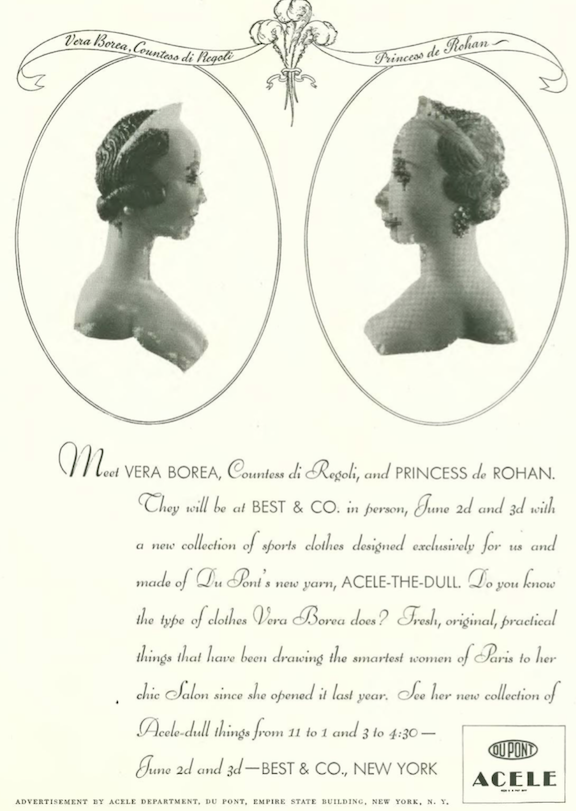
…the ad below from DuPont was just the sort of thing that drove New Yorker fashion critic Lois Long nuts…a couple of downscale royals shilling their fashion lines to an unsuspecting public…the paychecks from DuPont must have been substantial enough for these bluebloods to publicly embrace synthetics…

TWO HEADS ARE BETTER THAN ONE…Here is the real Countess Borea de Buzzaccarini Regoli, left, and the Princess de Rohan, who played to America’s insatiable thirst for nobility while shilling for a chemical company. (Wikimedia)

…if you had the money and the steady nerves, you could have hopped aboard an almost 32-hour flight to the West Coast assured that a “coordinated mechanism” of men and machine would get you there in one piece…

…perhaps you could have steadied your nerves by dragging on a Tally-Ho — for some weird reason the Lorillard Tobacco Company (who also made Old Gold) thought some folks might prefer an oval-shaped cigarette (I include the remainder of the back-page ads for context)…

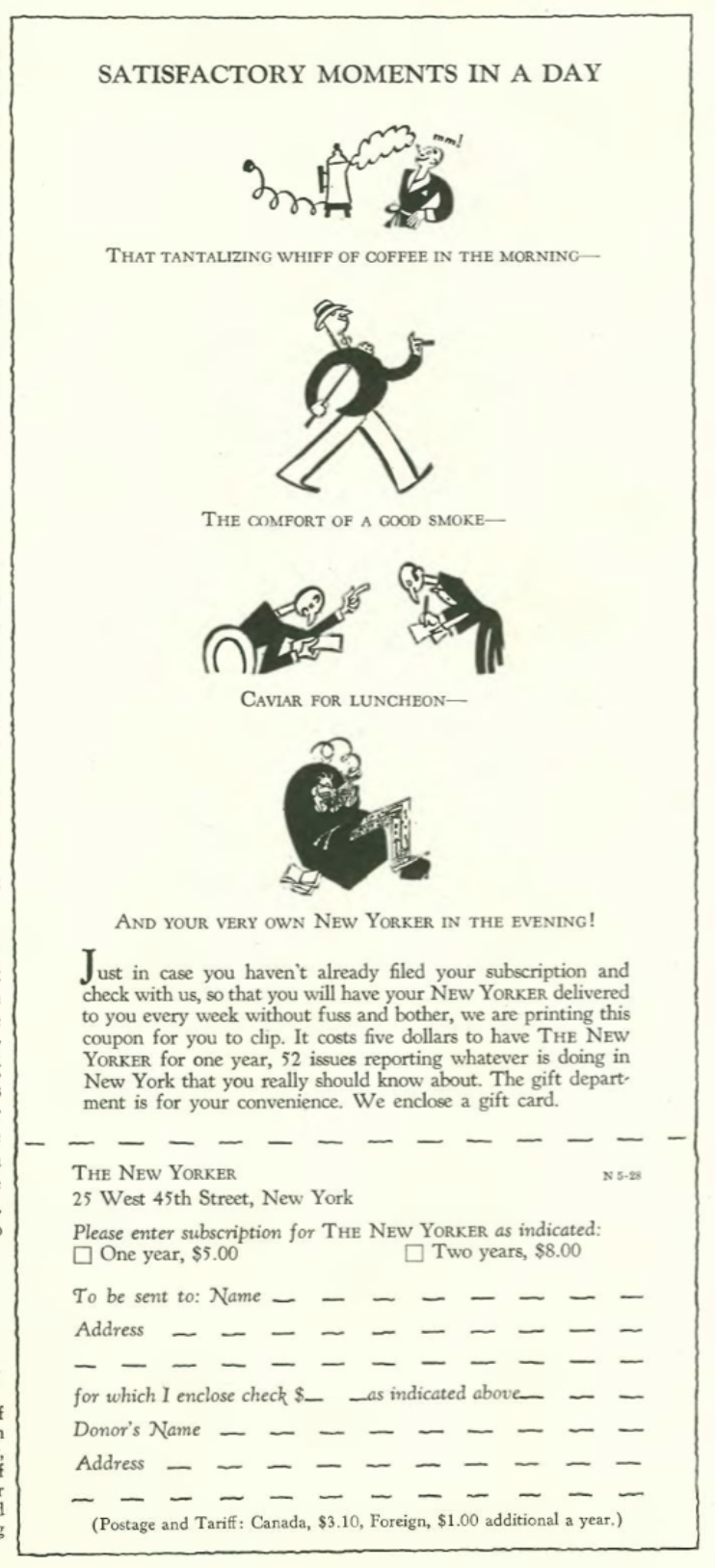
…despite the Depression, The New Yorker was holding its own in sales and subscriptions, but it never hurt to place a house ad every now and then to convince a few who might be holding out…

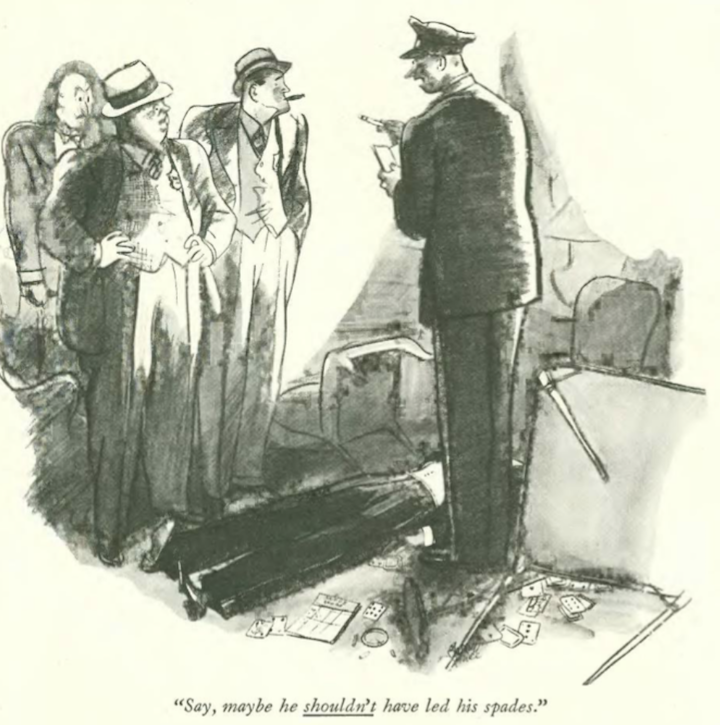
…on to our cartoons, Garrett Price showed us the result of a bad hand…

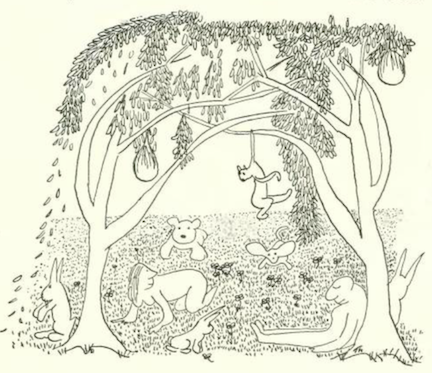
James Thurber offered up this spot illustration in the opening pages…

…and this terrific cartoon…

Gardner Rea demonstrated the perils of summoning the dead…

…the departed soul mentioned in Rea’s cartoon was prolific British crime writer, journalist and playwright Edgar Wallace (1875-1932), who wrote 175 novels, 24 plays, and countless articles in newspapers and journals in his relatively short life. He is most famous today as the co-creator of the film King Kong…

PRODUCTIVE SCRIBBLER…Edgar Wallace. (Wikipedia)

…and we end with this gem from Kemp Starrett, and some high-jinks…

Next Time: Jimmy’s Jam…


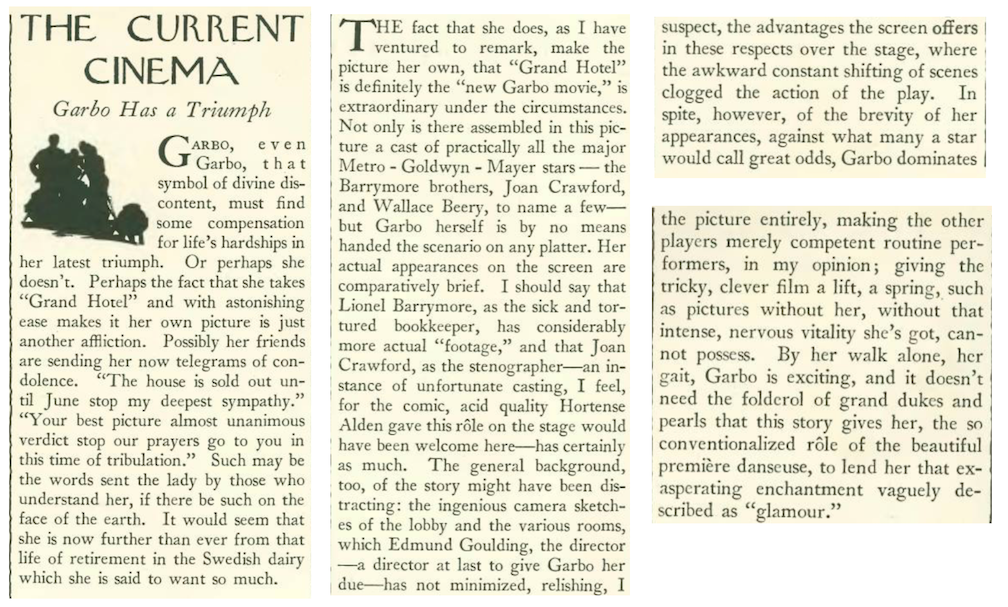
The Grand Garbo

Joan Crawford was an MGM star by the 1930s, and according to many critics, an absolute scene-stealer in 1932’s Grand Hotel. However, The New Yorker’s film critic John Mosher saw Garbo, and only Garbo, in this Academy Award-winning pre-code drama.

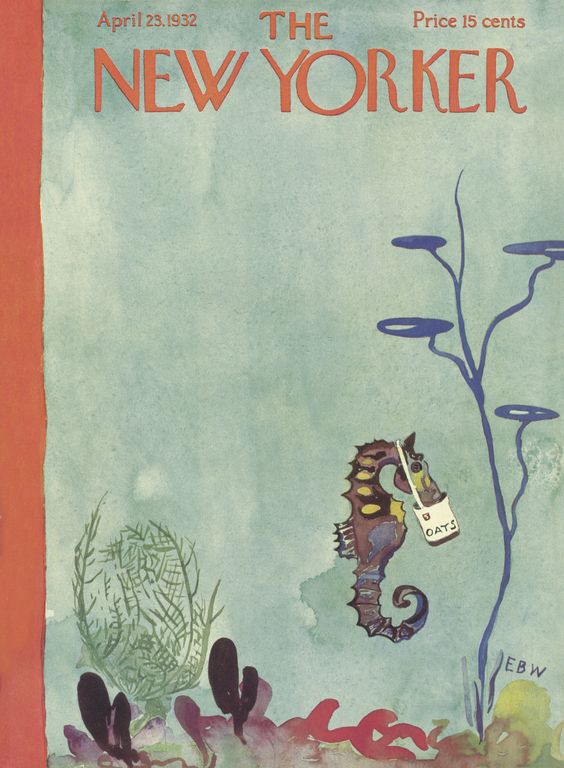
April 23, 1932 cover by E.B. White. Although White’s friend and early office mate James Thurber had been contributing drawings for more than a year, it was White who would land the first cover—his only one (Thurber’s first cover would come in 1936). Maria Popova (brainpickings.org) shares this excerpt from a 1969 Paris Review interview, during which White explained to George Plimpton: “I’m not an artist and never did any drawings for The New Yorker. I did turn in a cover and it was published. I can’t draw or paint, but I was sick in bed with tonsillitis or something, and I had nothing to occupy me, but I had a cover idea—of a sea horse wearing a nose bag. I borrowed my son’s watercolor set, copied a sea horse from a picture in Webster’s dictionary, and managed to produce a cover that was bought. It wasn’t much of a thing. I even loused up the whole business finally by printing the word ‘oats’ on the nose bag, lest somebody fail to get the point.”

Greta Garbo’s previous films hadn’t exactly wowed Mosher, but the gossip he was hearing even before he screened Grand Hotel suggested it was not to be missed. Mosher touted the unseen film (in the April 16 issue), expressing his hope that the rumors would prove true—he feared Garbo would quit the business altogether and leave the country if she didn’t land a hit. His fears were laid to rest:

Adapted from the 1929 German novel Menschen im Hotel by Vicki BaumGrand Hotel is considered the first all-star epic. The brainchild of MGM’s production head Irving Thalberg, the film proved a triumph for director Edmund Goulding, who somehow managed to direct five leading roles into one film classic.

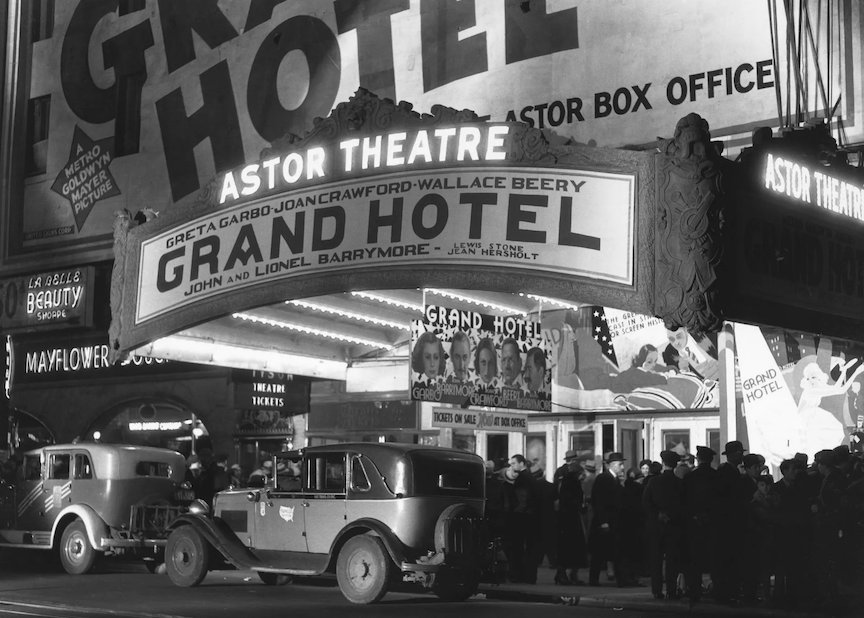
GRAND OPENING…The April 12, 1932 opening of Grand Hotel at Broadway’s famed Astor Theatre was much anticipated by critic John Mosher and pretty much everyone else. (ny.curbed.com)
STELLAR CAST…Set at a luxurious Berlin hotel, Grand Hotel brought together the stories of five seemingly unrelated lives. Clockwise, from top left, crooked industrialist Preysing (Wallace Beery), trades innuendos with an ambitious stenographer, Flaemmchen (Joan Crawford); Baron Felix von Gaigern (John Barrymore), a once wealthy man fallen on hard times, supports himself by stealing from vulnerable marks like the depressed ballerina Grusinskaya (Greta Garbo), and also teams up with a gravely ill accountant (Lionel Barrymore, John’s real brother, not pictured here); hotel entrance from the film; MGM movie poster deftly juggled the film’s five big stars; advertisement from the April 16, 1932 New Yorker made much of the film’s star power. (Wikipedia/IMDB)
THE OTHER BIG STAR in Grand Hotel was the luxurious Art Deco set created by Cedric Gibbons. Centered on the hotel’s reception desk, the set allowed filming in 360 degrees. (IMDB)

And let’s not forget that it was in this film Garbo famously uttered “I want to be alone” — it ranks number 30 in AFI’s 100 Years…100 Movie Quotes. In 2007 Grand Hotel was selected for preservation in the United States National Film Registry by the Library of Congress.

* * *

She’s Back

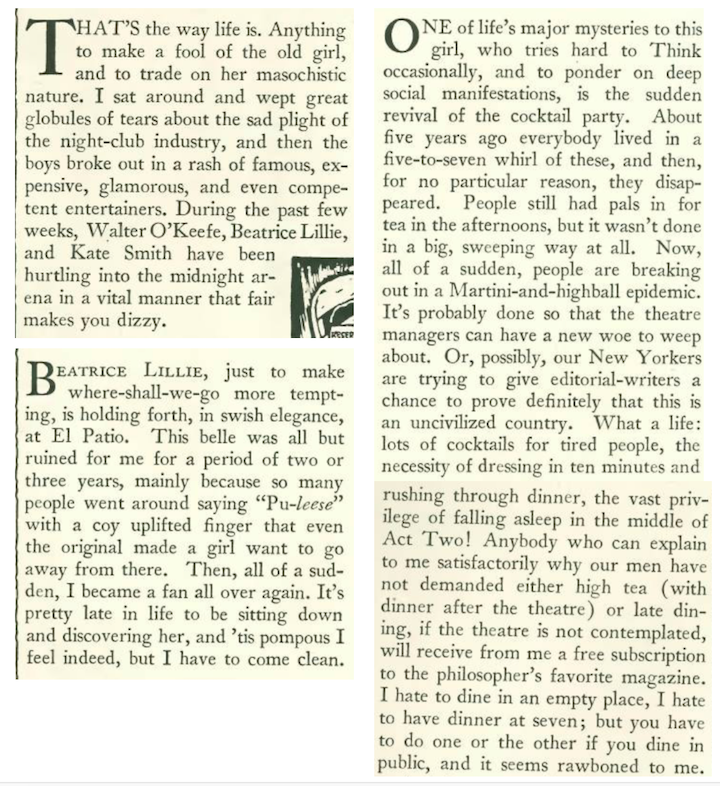
Lois Long aka “Lipstick” turned in yet another “Tables for Two,” even though she had abandoned that column as a regular feature two years earlier. Unlike those earlier columns, Long seemed to have had her fill of the night life, but occasionally she found a diversion or two worth mentioning. She also offered her thoughts about the decline of civilization, indicated by such behaviors as dining at the early hour of 7 p.m.—”rawboned” she called it…

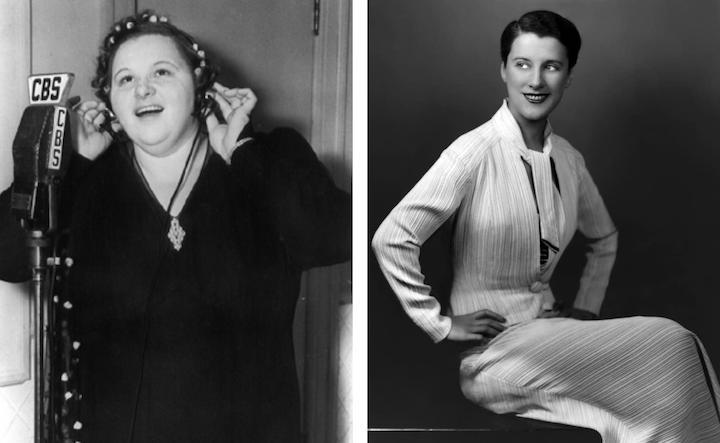
NIGHT LIGHTS…Singer Kate Smith and comedic performer Beatrice Lillie managed to keep Lois Long awake in the wee hours of nightclub entertainments. (katesmith.org/The Poster Corp)

*  *  *

Notes, and More Notes

Despite his cover contribution, and his continued presence in the “Notes and Comment” section, the year 1932 is regarded as one of E.B. White’s leanest as a full-time writer for The New Yorker. According to Scott Elledge in E.B. White: A Biography, White published only a few “Talk” pieces or signed contributions. With a toddler about the house (Joel White had just turned 1 the previous December), White and wife Katharine enjoyed what Elledge describes as perhaps “the happiest of their years together, “able to enjoy fully their professional and private lives in the city they both loved.” So perhaps that explains this particular “Notes” entry for the April 23 issue. Still, it’s good stuff:

(Note Otto Soglow’s Tammany-themed spot cartoon — the political machine was still chugging along, but its days were numbered)

 *  *  *

From Our Advertisers

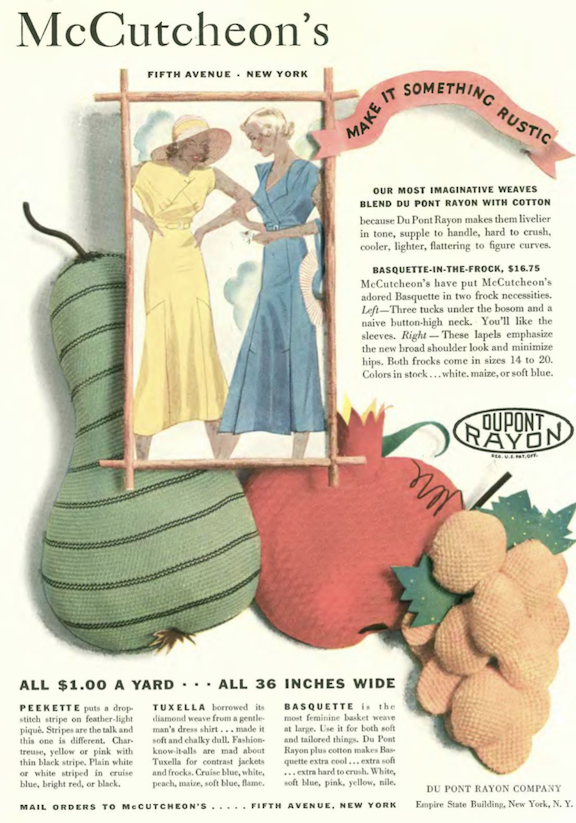
We begin with this colorful ad from McCutcheon’s to brighten our day…

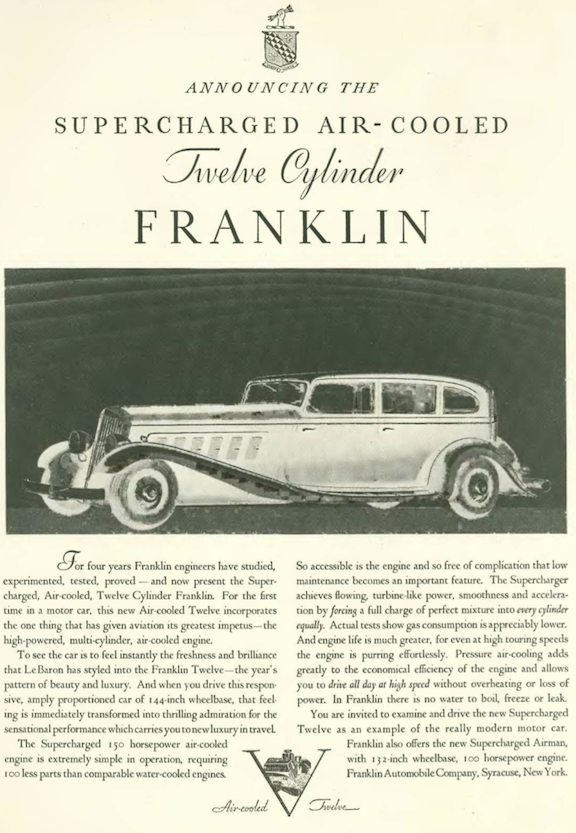
…the Franklin Automobile Company responded to competition from other luxury car makers by introducing its own 12-cylinder model, the only American car to be powered by a 12-cylinder air-cooled engine (according to the H.H. Franklin Club)…

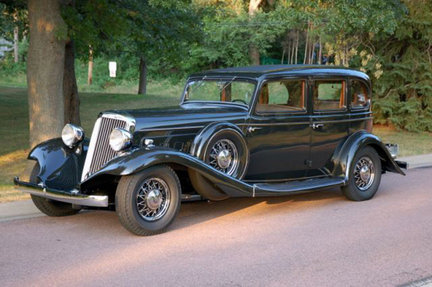
…introducing a 12-cylinder luxury car was not a good move in 1932—one of the worst years of the Depression—and the company folded by 1934…but what a swell-looking car…

(Courtesy H.H. Franklin Club)

…one innovation that would stick around, however, was the lighted refrigerator, something to brighten those dim days of 1932, that is if you could even afford an electric fridge…

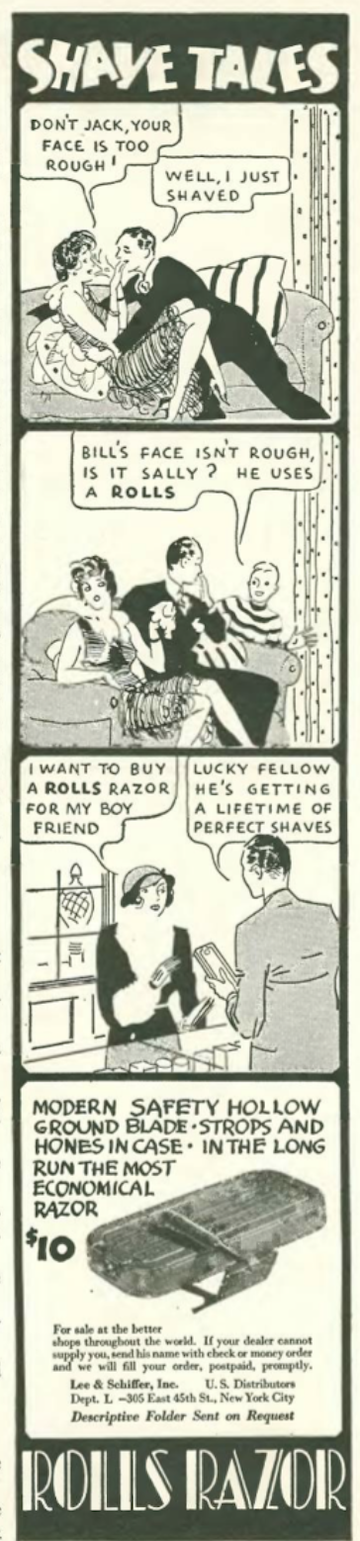
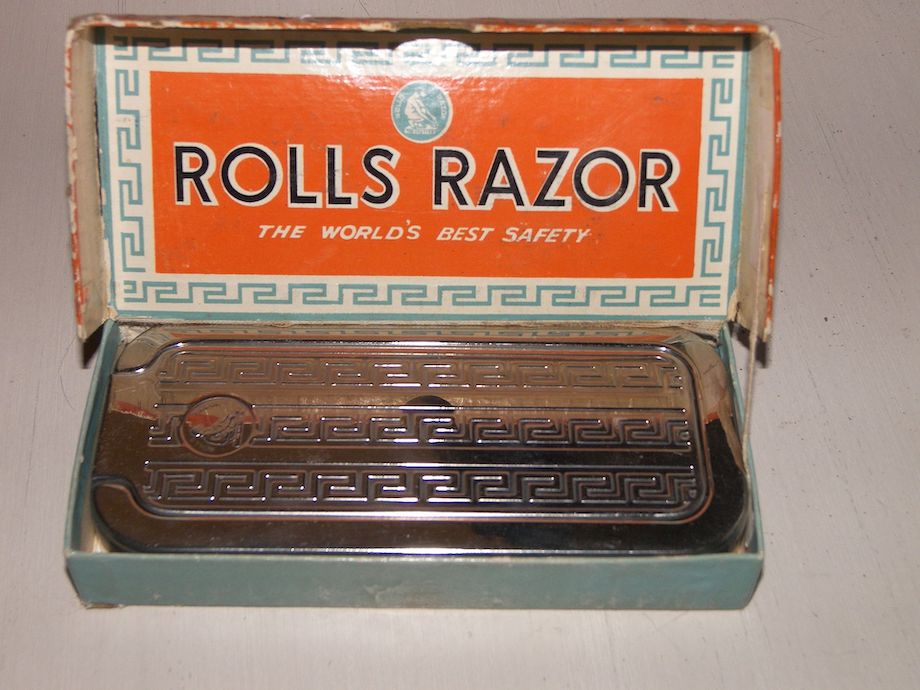
…named to evoke the luxury automobile, the British-made Rolls Razor made its debut in the back pages of The New Yorker with this panel cartoon ad featuring a hapless suitor and his girlfriend’s nosy kid brother…

…the razor came in a rigid case enclosed by two detachable lids; one carried a sharpening stone and the other a leather strop. When a lid was removed, the razor’s oscillating a handle drove a shaft along the frame, pushing the solid, hollow ground blade forward against the stone or dragging it against the strop…

…and here’s an ad you don’t see often in The New Yorker…one featuring children…

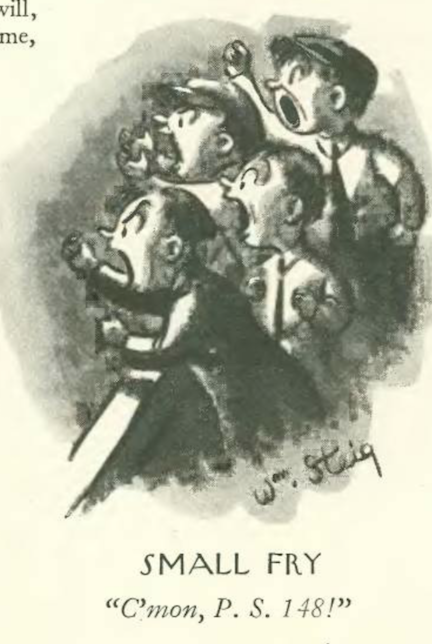
…on to our cartoonists, we have more kids via William Steig’s Small Fry…

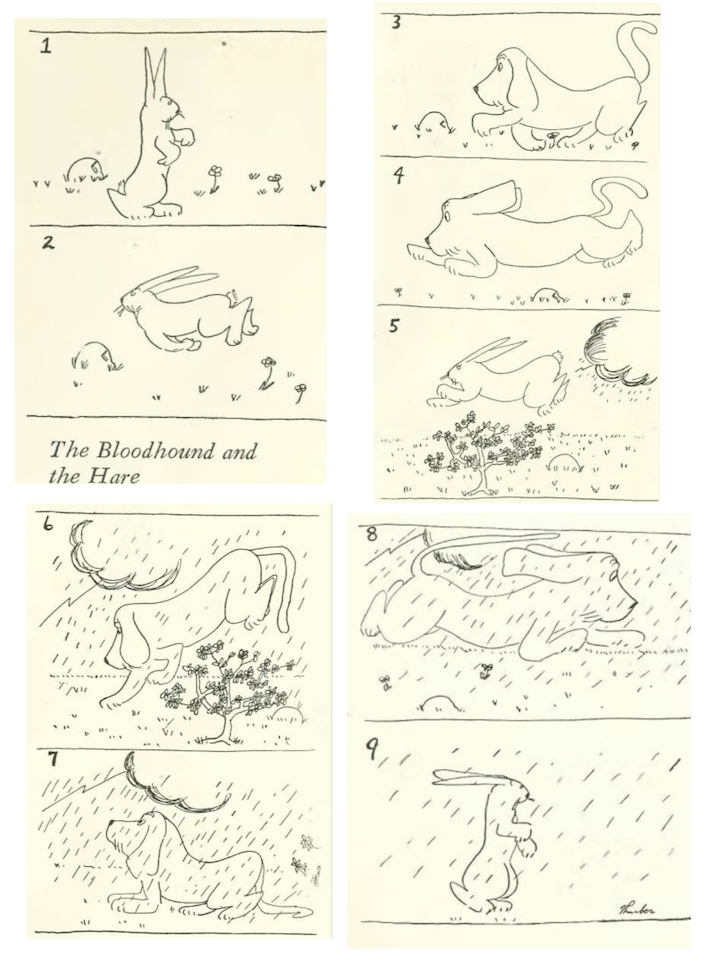
James Thurber continued to ply his cartooning craft with one of his favorite subjects:

…here is a more detailed look at the above…

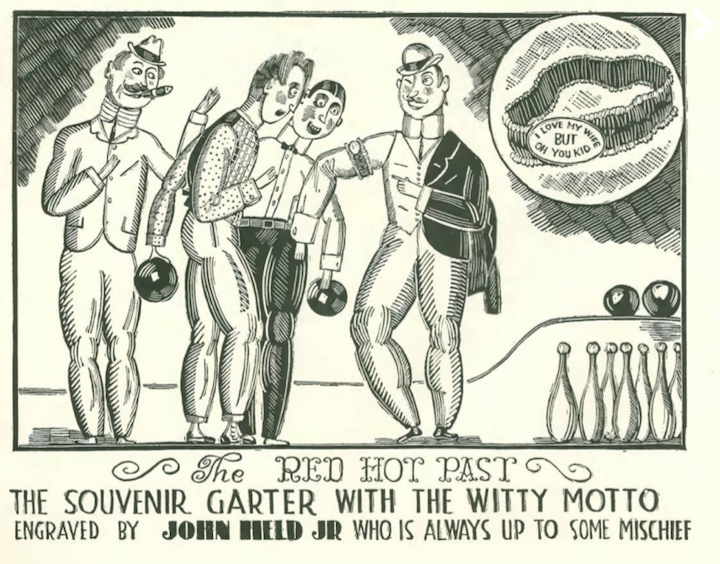
John Held Jr. continued to take us back to those saucy days of yore…

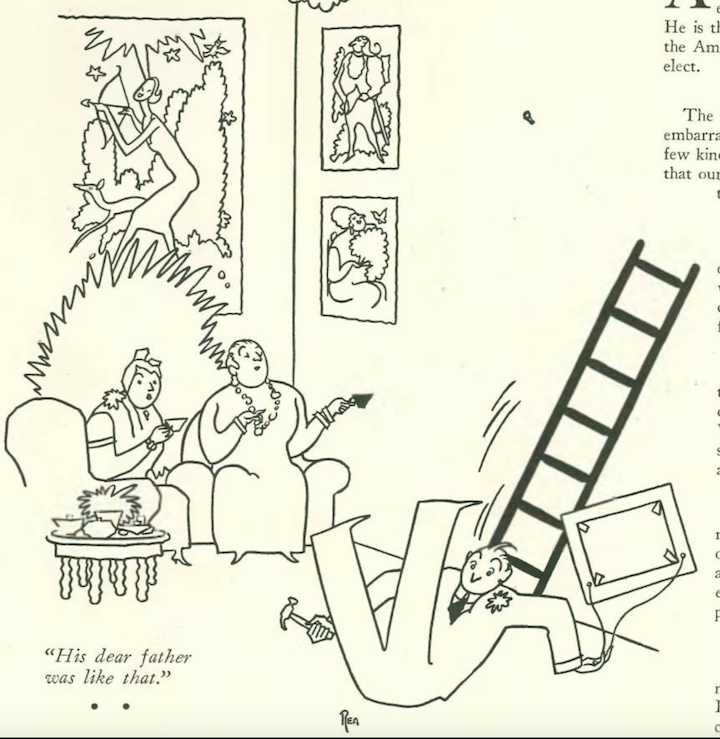
Gardner Rea sketched this hereditary pratfall…

E. McNerney gave us a woman whose beau was in alliance with architecture critic Lewis Mumford

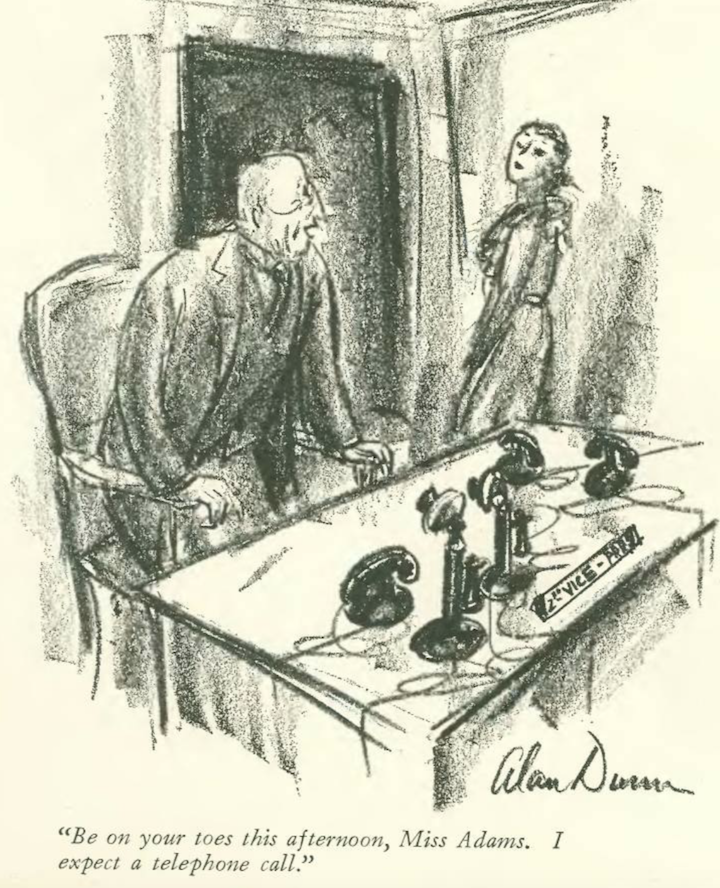
Alan Dunn looked in on the fast-paced world of business…

…and Leonard Dove takes us out on a droll note…

Next Time: The Quiet Man…


Thurber’s Dogs

James Thurber became acquainted with all sorts of dogs throughout his life, and in each he found something to admire. Unlike the men and women who were bound up by silly customs or norms, the dog stood steadfast as a “sound creature in a crazy world.”

Jan. 2, 1932 cover by Rea Irvin.

In the Jan. 2, 1932 issue, Thurber began what would become a decades-long paean to the noble canine—an embodiment of the freedoms conventional man would never attain. An excerpt from “A Preface to Dogs”…

“So why dogs?” Adam Gopnik asked the question under the title, “A Note on Thurber’s Dogs,” in Nov. 1, 2012 issue of The New Yorker. Gopnik explains that for Thurber, the dog represented “the American man in his natural state—a state that, as Thurber saw it, was largely scared out of him by the American woman. When Thurber was writing about dogs, he was writing about men. The virtues that seemed inherent in dogs—peacefulness, courage, and stoical indifference to circumstance—were ones that he felt had been lost by their owners.”

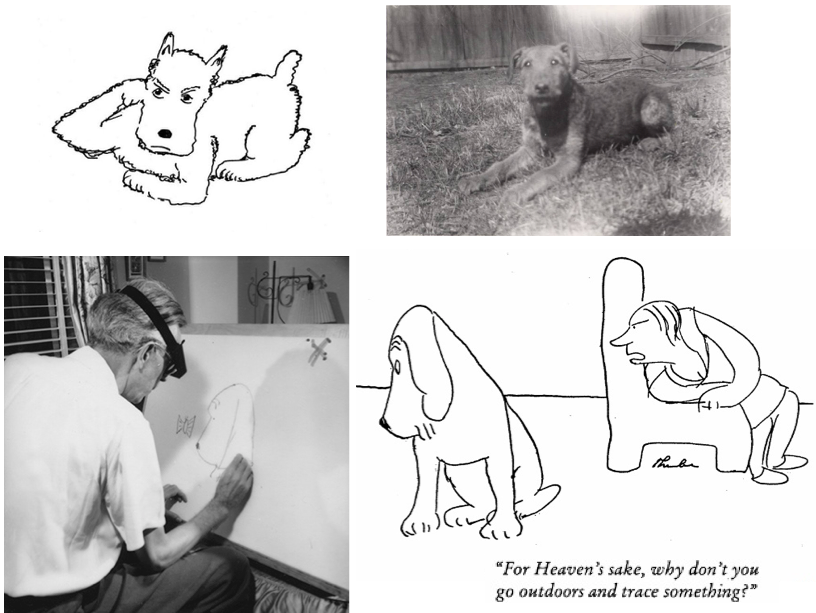
STOICAL INDIFFERENCE…Clockwise, from top left, James Thurber’s illustration of a childhood pet, a terrier named “Muggs” from the story “The Dog That Bit People” (1933); photograph of the real Muggs; dogs appear in many of Thurber’s cartoons as a stoic presence among maladjusted humans; Thurber at work on one of his dogs in an undated photo. (ohiomemory.org/jamesthurber.org)

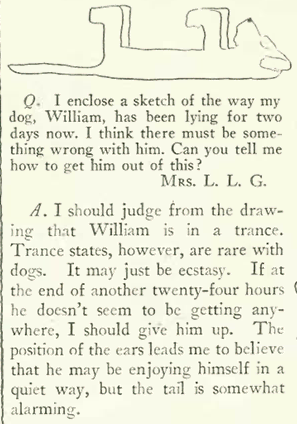
Here’s one more excerpt that gives us glimpse into a dog’s day, as related by Thurber…

We’ve seen Thurber writing about dogs before, most notably in his spoof on newspaper pet columns titled “Our Pet Department.” Here is an excerpt from his first installment in the series, which appeared in fifth anniversary issue of The New Yorker, Feb. 22, 1930:

A final note: For more on Thurber, check out New Yorker cartoonist Michael Maslin’s Thurber Thursday entries at his terrific Ink Spill website.

 *  *  *

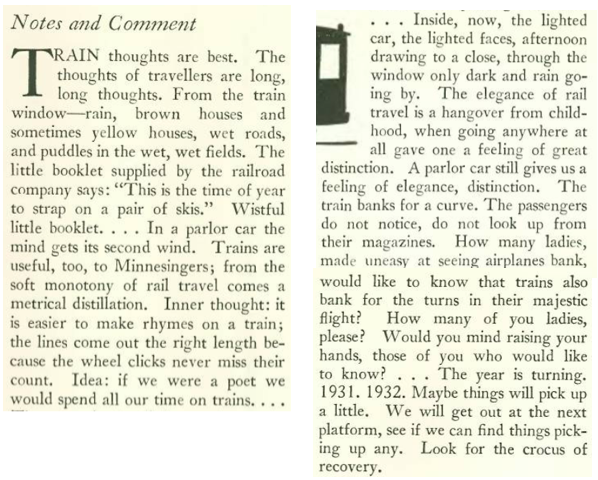
Choo Choo

While Thurber’s mind was on dogs, his buddy E.B. White was musing about the joys of train travel, and the hope that awaited journey’s end. Excerpts:

THIS DOES NOT SUCK…Riding on the Great Northern Railroad in 1926. (Pinterest)

 *  *  *

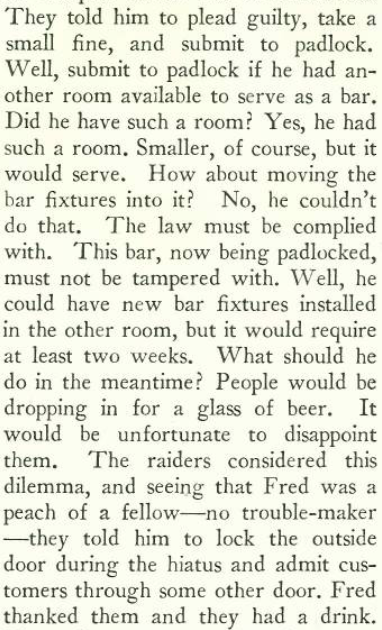
Party Poopers

Journalist Chester T. Crowell contributed the Jan. 2 “A Reporter at Large” column by looking through the thin facade of Prohibition enforcement in New York. He tells of Prohibition agents who visit a roadside tavern for several weeks (and enjoy the beer) before finally raiding the place. Beer kegs are broken up and the door to the bar is padlocked. But all was not lost for the proprietor, who got some business advice from the raiding agents…

KEG PARTY…The New York Daily News featured this photo on June 18, 1931 with this caption: “Tears mingled with strong beer in Newark, N.J. as prohibition agents destroyed the unlawful liquor, some of which was seized in Hoboken raid.” (NY Daily News/Mashable)

*  *  *

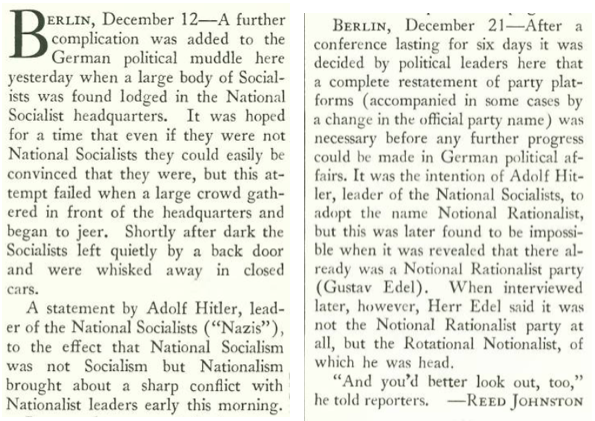
No Laughing Matter

As we move through the 1930s we’ll see more signs of the world (war) to come. Reed Johnston had some fun with the messy politics of Weimar Germany, making a parenthetical reference to the “Nazis” of the National Socialist party who would soon take control of the country…

 *  *  *

Upstaged

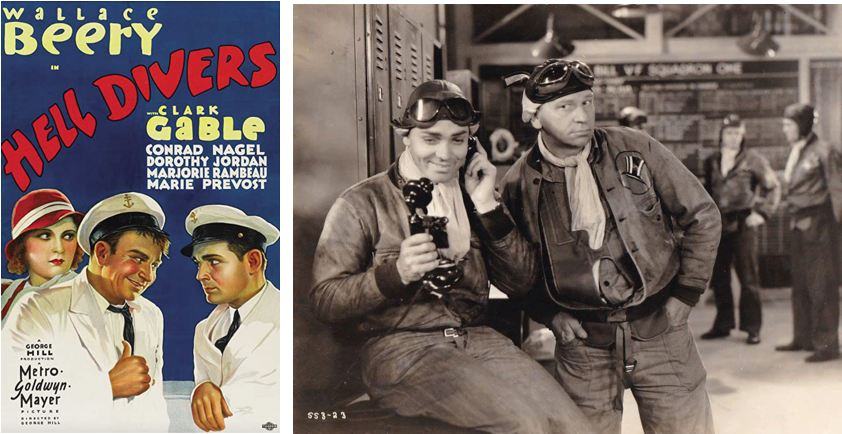
A box office and critical success, Hell Divers is considered Clark Gable’s breakout role, but the real stars were the Curtiss F8C-4 “Helldivers” that were used in filming aerial battle scenes. Critic John Mosher takes it from there…

ART IMITATES LIFE…Wallace Beery and Clark Gable played rivals onscreen and offscreen in Hell Divers. The upstart Gable disliked the veteran actor Beery, a well-known misanthrope whom many actors found difficult to work with. (IMDB)

 *  *  *

Yet More Diego

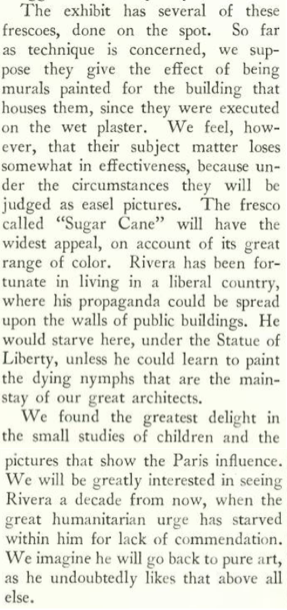
Art critic Murdock Pemberton had more to say about Diego Rivera’s appearance at the Museum of Modern Art, noting that Rivera “has been fortunate to be living in a liberal country (Mexico), where his propaganda could be spread upon the walls of public buildings.” Pemberton correctly surmised that Rivera would “starve” if he tried to paint similar themes in the U.S. (Indeed, in 1933 Rivera would refuse to remove an image of Lenin from a Rockefeller Center mural, and would be asked to leave the country).

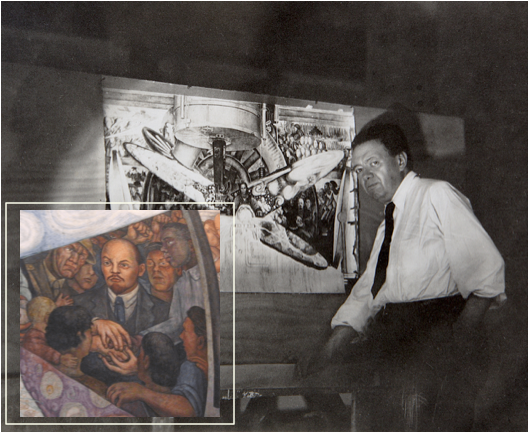
I SHALL RETURN…Diego Rivera returned to New York in 1933 on a commission to paint a mural for the new Rockefeller Center. The inclusion of Soviet leader Vladimir Lenin (inset) in the work was not well-received in the Capital of Capitalism. (npr.org/Wikipedia)

 *  *  *

From Our Advertisers

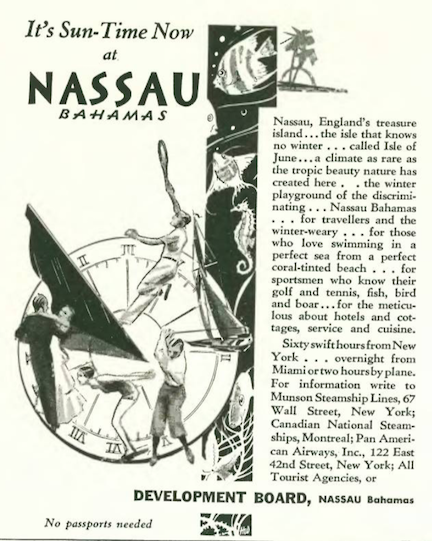
It’s snowing in Manhattan, and you’re tired of slogging though the snow and slush—well, if you didn’t lose your shirt in the stock market, and if you didn’t need to work a steady job, then you could get away from it all and head to the “sunlit paradise” of the West Indies…

…or grab some sun time in Nassau…

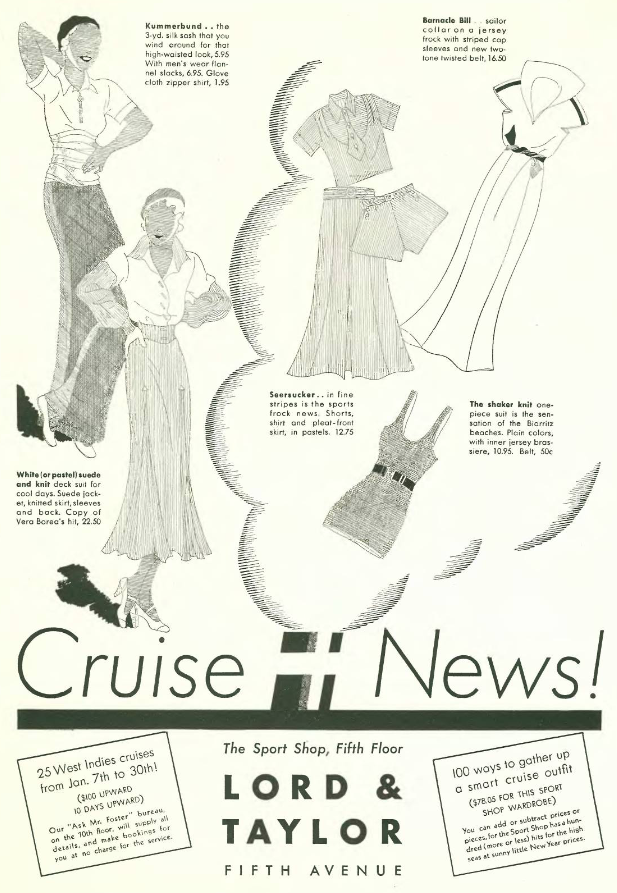
…but before you go, you might want to pick up some warm-weather duds at Lord & Taylor…

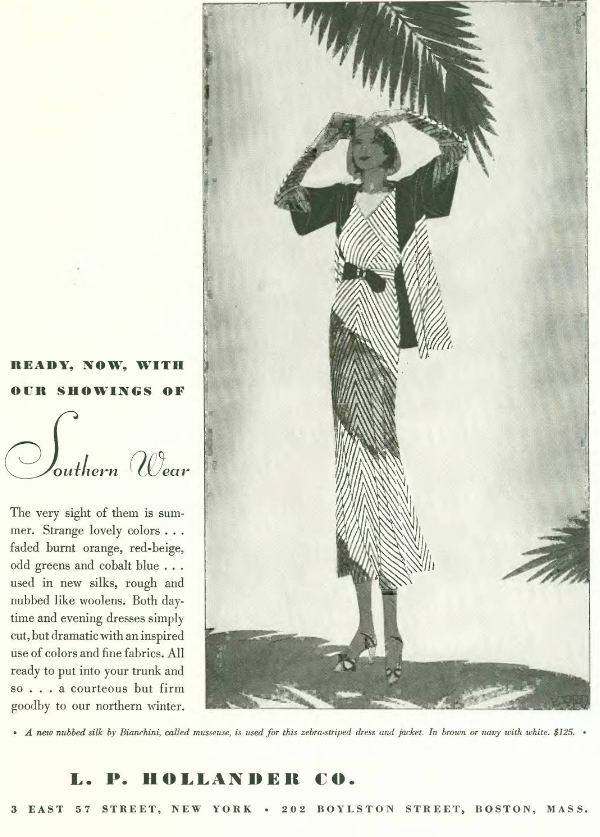
…or at L.P. Hollander on East 57th…

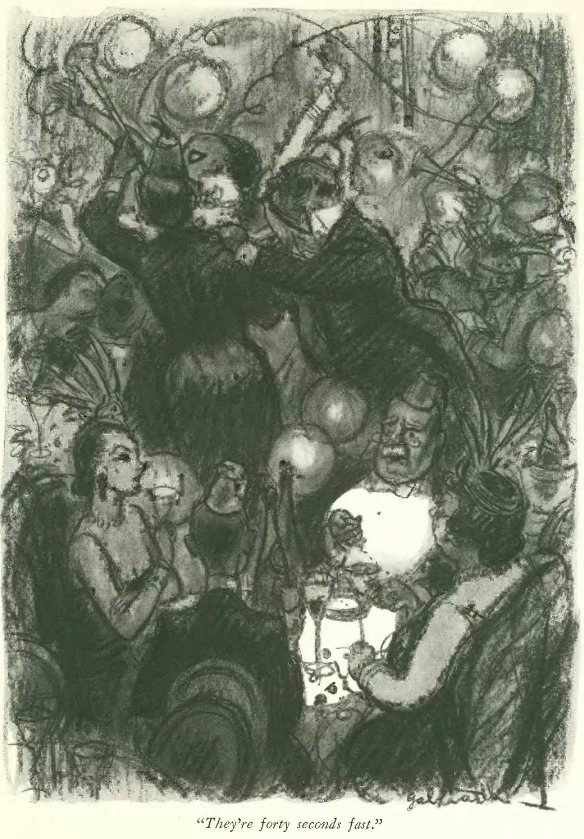
…to ring in the New Year we kick off the cartoons with William Crawford Galbraith

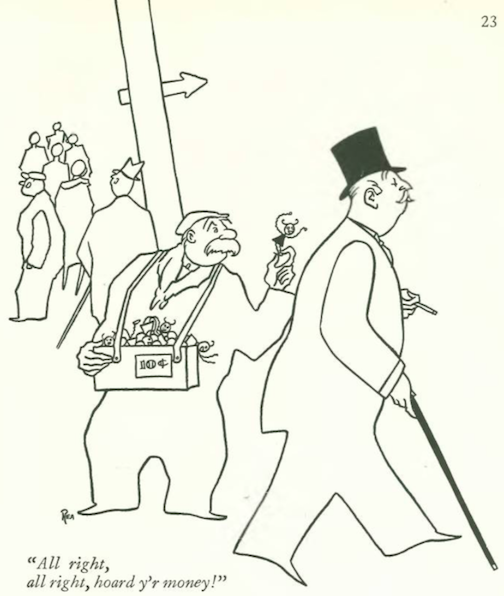
Gardner Rea showed us how old money and no money don’t mix…

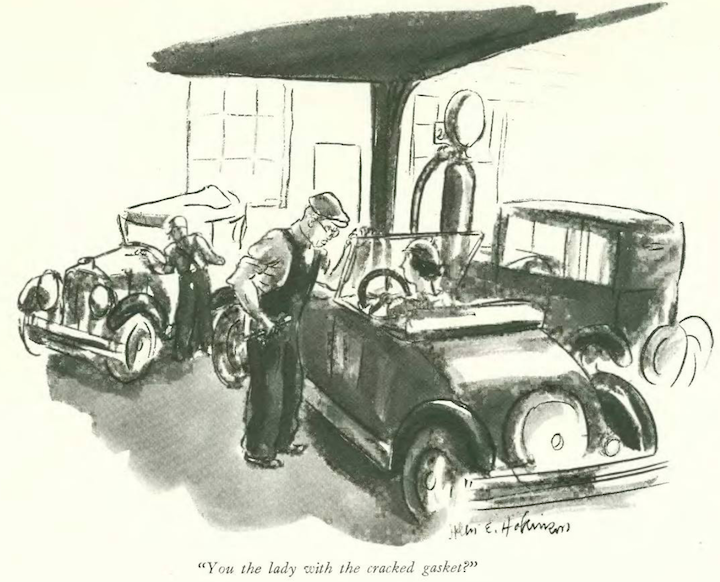
Helen Hokinson gave us a double entendre to go along with car trouble at a service station…

…communication also seemed to be a challenge for this chap in a William Steig cartoon…

…and we end where we began, with the great James Thurber and the looming battle between the sexes…

Next Time: Babylon Berlin…

Mosher’s Monster

James Whale’s 1931 Frankenstein remains one of the most iconic horror films of all time, not only setting a standard for monster movies to come, but creating one of popular culture’s most enduring characters.

Dec. 12, 1931 cover by Theodore Haupt.

The New York Times film critic Mordaunt Hall called the film “far and away the most effective thing of its kind,” and the public agreed, making it a box office success. The New Yorker’s John Mosher, on the other hand, was among the crowd with a more literary bent, preferring Mary Shelley’s 1818 novel by the same name to the film adaptation. He dismissed Whale’s Frankenstein with this brief review:

THIS WON’T HURT A BIT…Dr. Waldman (Edward Van Sloan) prepares to destroy Henry Frankenstein’s monster (Boris Karloff), but he is stopped short of his goal when the monster awakens and strangles him to death. (IMDB)
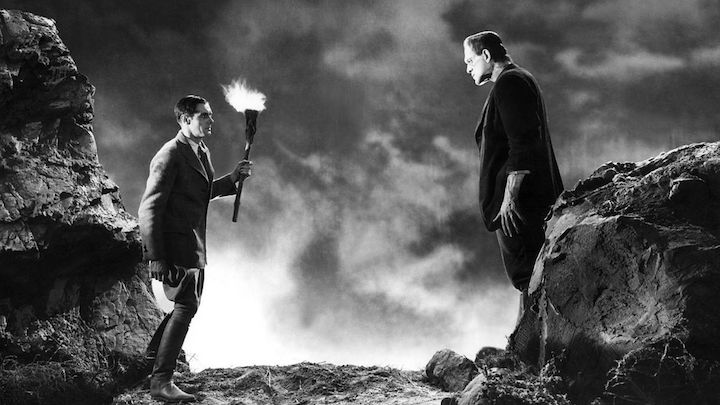
SOME ASSEMBLY REQUIRED…Henry Frankenstein (Colin Clive) meets up with his creation in 1931’s Frankenstein. (IMDB)
I WISH HENRY WOULD FIND A NEW HOBBY…Henry Frankenstein’s fiancée Elizabeth Lavenza (Mae Clarke) is confronted by the monster (Boris Karloff) in 1931’s Frankenstein. (IMDB)
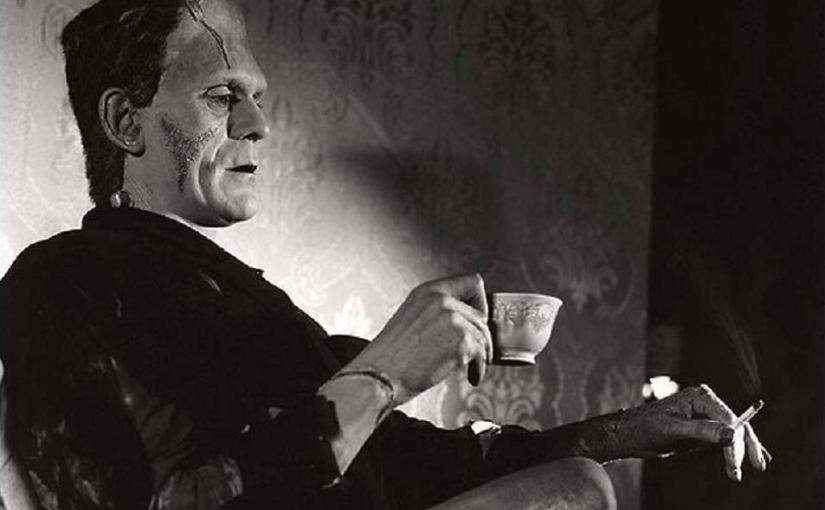
ALL IN A DAY’S WORK…Boris Karloff takes a break between scenes. (mashable.com)

One thing Mosher did like about the film was the makeup applied to Karloff, and it would be a look that endures to this day in popular culture. Less than two years after the 1931 film’s release, Walt Disney featured the monster in 1933’s Mickey’s Gala Premier, and since then in countless cartoons, dozens of films, and a television series. From what I can gather, comic portrayals of the monster are far more common than ones involving horror themes…

THE BAT PACK…Clockwise, from top left, 1933’s Mickey’s Gala Premier featured Frankenstein’s monster with pals Dracula and the Werewolf; Daffy Duck conducts an interview in 1988’s The Night of the Living Duck; the monster makes an expected appearance in the first season of Scooby-Doo (A Gaggle of Galloping Ghosts 1969); and the monster has appeared as a regular in four Hotel Transylvania films. (Wikipedia/Pinterest)
A FAMILIAR FACE…Frankenstein’s monster has also appeared in dozens of films, a TV sitcom, and even on a box of cereal. Clockwise, from top left, Fred Gwynne as Herman Munster in NBC TV’s The Munsters (1964-66); Boris Karloff’s original monster makes an appearance on a FrankenBerry cereal box (1987); Peter Boyle as the monster with a different look (but retaining those electrodes) in Mel Brooks’ Young Frankenstein (1974); and Abbott & Costello team up with the monster (Glenn Strange) in 1948’s Abbott & Costello Meet Frankenstein. (Wikipedia/Pinterest/filmforum.org)

It seems I’ve gone down a rabbit hole with this subject, but here’s one more for the holidays: the late Phil Hartman portrayed Frankenstein’s monster in several SNL sketches during the 1988-89 season…

*  *  *

No Fantasy Island, This

New York’s Blackwell’s Island is probably best known for the asylum where reporter Nellie Bly went undercover in 1887 to expose its horrid conditions. The asylum closed in 1894, but a penitentiary established there in 1832 remained in operation for more than a century. When journalist Robert Littell (1896-1963) visited the island in 1931 for “A Reporter at Large” column, he found it was still occupied by workhouses and a penitentiary—a place where the city still sent it “undesirables.” Littell, a former associate editor of the New Republic and a drama critic for various New York newspapers, described the island’s gray, grim appearance and the “ugly old buildings, model 1858” that contained its sorry residents. An excerpt:

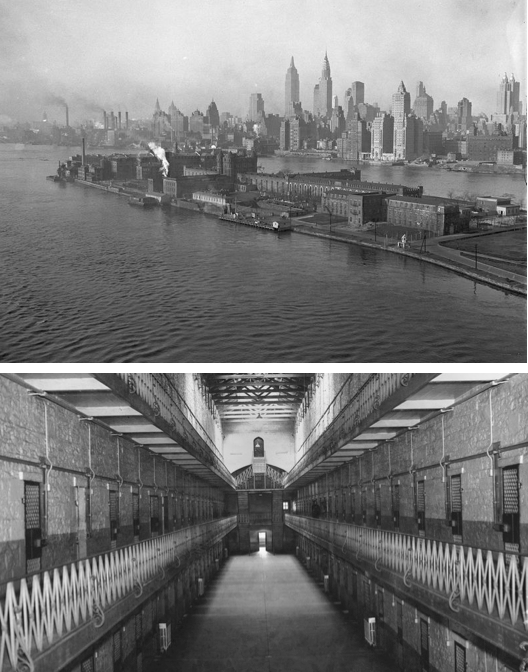
BY ANY OTHER NAME…Called “Minnehanonck” by the Lenape Tribe and “Varkens Eylandt” (Hog Island) by New Netherlanders, this East River island was dubbed Blackwell’s Island during colonial times, and that was the dreaded name referred to by reformers who decried the horrifying conditions of its “Lunatic Asylum,” workhouses and penitentiary in the 19th and early 20th centuries. Renamed Welfare Island in 1922, its prison can be seen in a 1931 photo (top) and in an interior shot from the 1920s. In 1973 the island was renamed Roosevelt Island in honor of Franklin D. Roosevelt and redeveloped with housing for more than 20,000 residents. (Associated Press)

  *  *  *

Outshining the Sordid

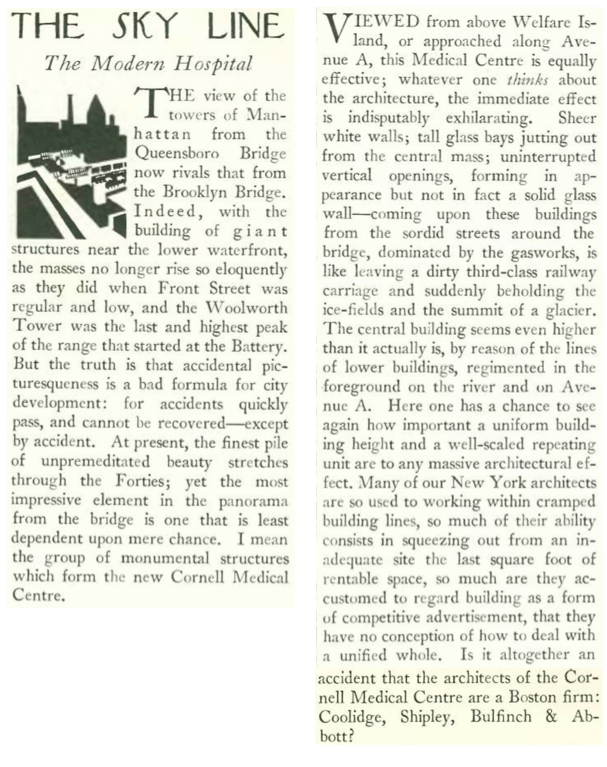
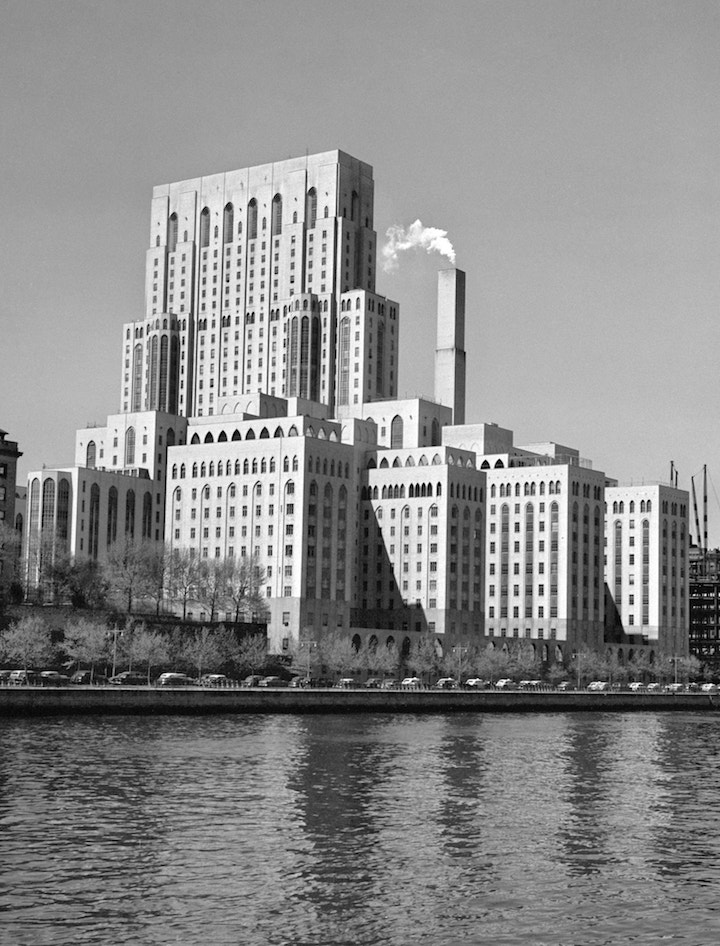
Architecture critic Lewis Mumford also mentioned Welfare Island in the Dec. 12 issue, but only as a reference point to view the new Cornell Medical Centre, which he found “indisputedly exhilarating.” Note the final lines of this excerpt, and how Mumford took a not-so-subtle swipe at New York architecture firms.

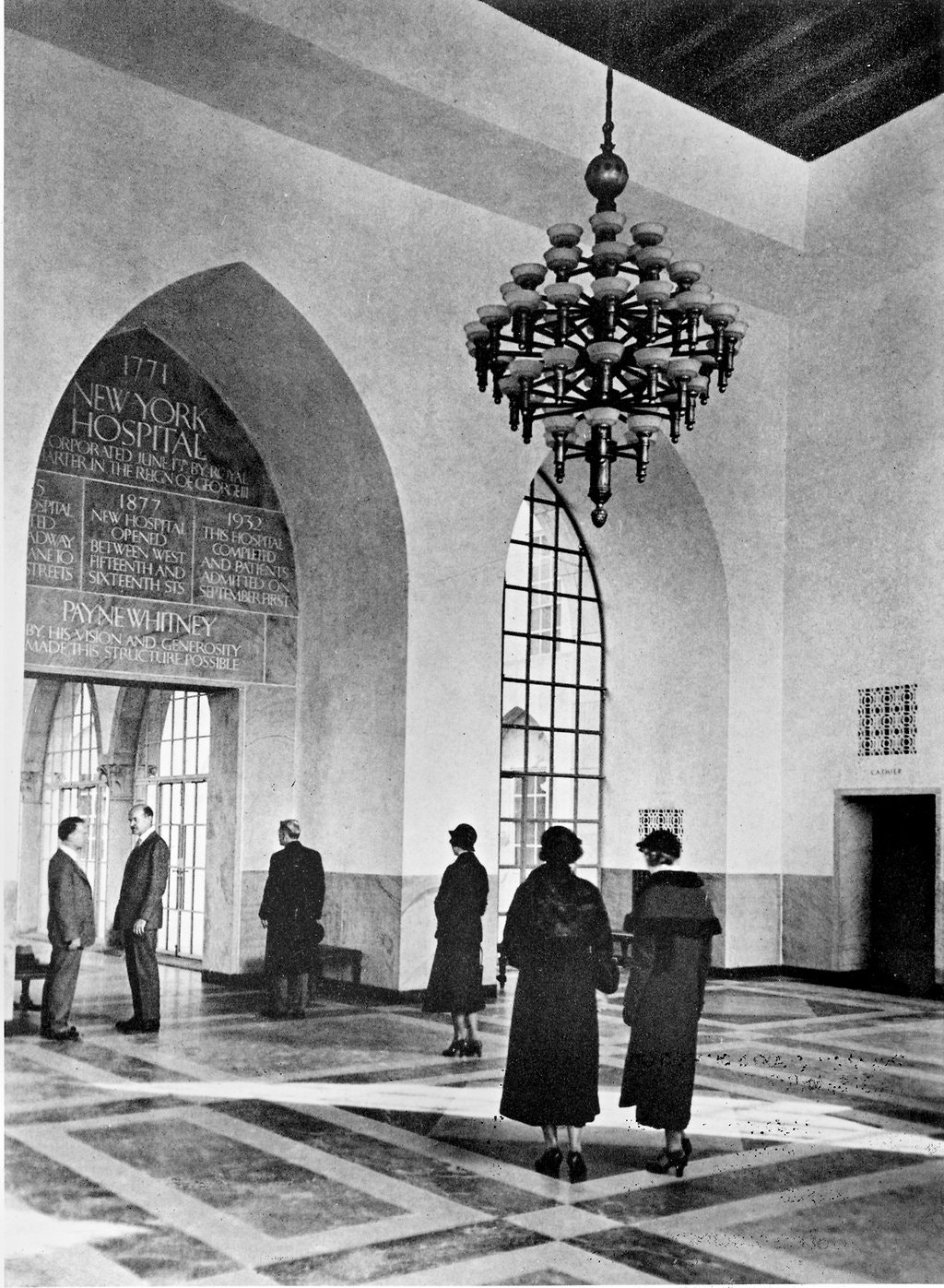
Mumford wasn’t alone in his praise. According to a 1933 Architectural Forum article, hospital director Dr. G. Canby Robinson made this observation about the lobby: “the average person should walk through it without noticing it, but the cultured person should be arrested by its beauty.”

HIGH MASS…The hospital in 1954. (Sam Falk/The New York Times)
ABOVE AVERAGE…The main entrance in 1933. (Avery Architectural Library)

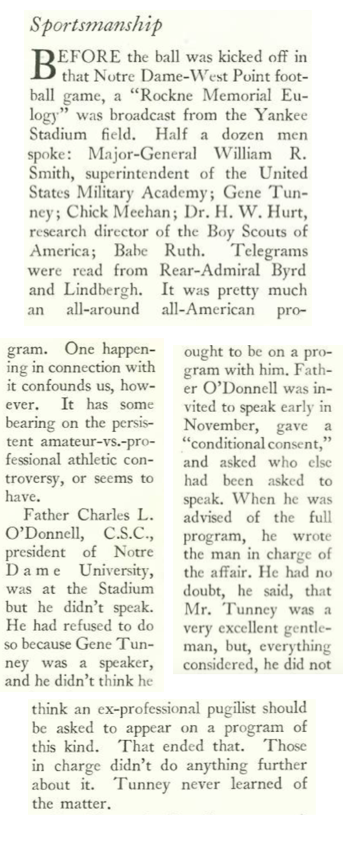
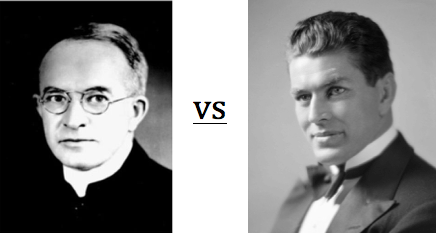
NO SHOW…Fr. Charles O’Donnell (left) refused to share the stage at a Knute Rockne Memorial with retired boxer Gene Tunney. (findagrave.com/Wikipedia)

 *  *  *

Silver Bells

A precursor to The New Yorker’s annual holiday poem, “Greetings Friends!” was this entry in the Dec. 12, 1931 issue, written by short-story writer and novelist James Reid Parker

New Yorker cartoonist Michael Maslin has noted an interesting relationship Parker had with cartoonist Helen Hokinson. You can read about it at his lively Ink Spill site.

 *  *  *

From Our Advertisers

We kick off our ads with another entry from Condossis cigarettes…these will continue to the end of the year and beyond, but I won’t run them all…
…I liked this Rex Cole ad because it placed its very architectural refrigerator in the midst of the city…

…as the company did in the physical realm…this Rex Cole showroom was in Queens…

…with the holidays in full swing, we see ads for the kiddies…

…and for the grown-ups, again exchanging Champagne bottles filled with scarves and socks rather than bubbly, thanks to Prohibition (which still had two years to go)…

…maybe a game could distract you from your forced sobriety, such as table-top bowling…note the drawing of J.P. Morgan, which looked very similar to Peter Arno’s Major…

…here’s an advertising ploy no longer used today (at least not overtly)…

…and on to our cartoons, beginning with Gardner Rea

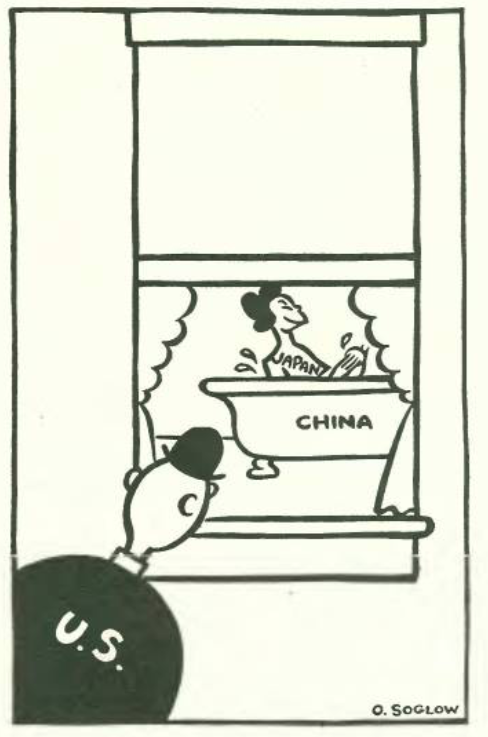
…this odd little political cartoon was contributed by Otto Soglow, who vaguely anticipated trouble ahead in the international sphere…

…I remember seeing this familiar trope in old movies and 60s sitcoms…John Reehill gave us his rendition here…

…and we close with William Steig, and an after-hours close encounter…

Next Time: The Mouse That Roared…


Yankee Doodles

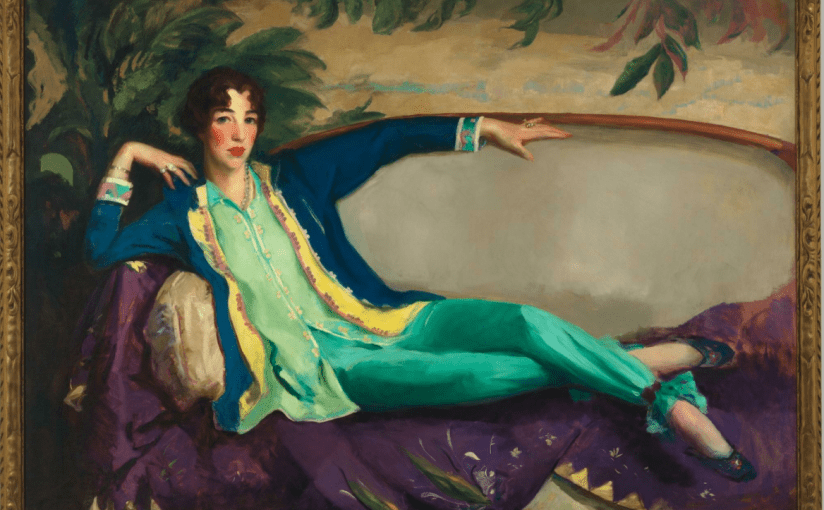
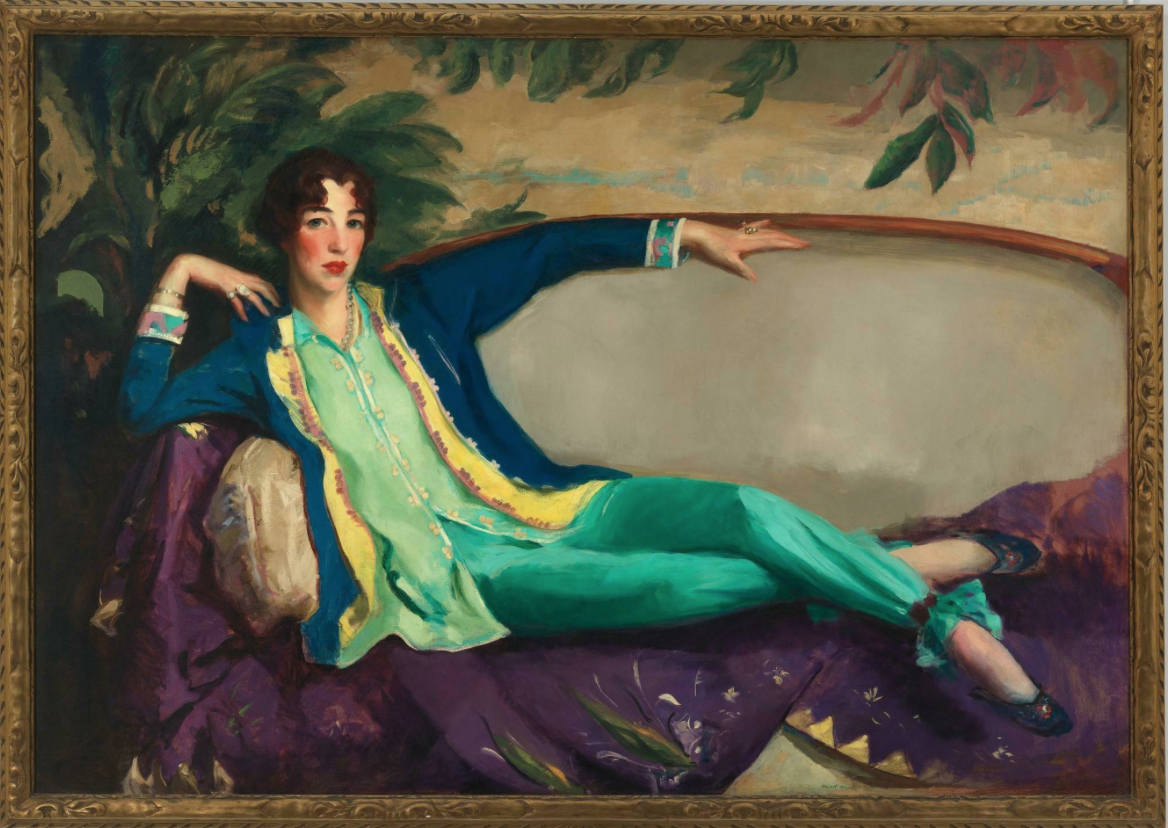
In 1931 Gertrude Vanderbilt Whitney (image above) opened a new art museum in Greenwich Village that would be unlike any other in Manhattan, one that would focus exclusively on American art and artists.

Nov. 28, 1931 cover by Harry Brown.

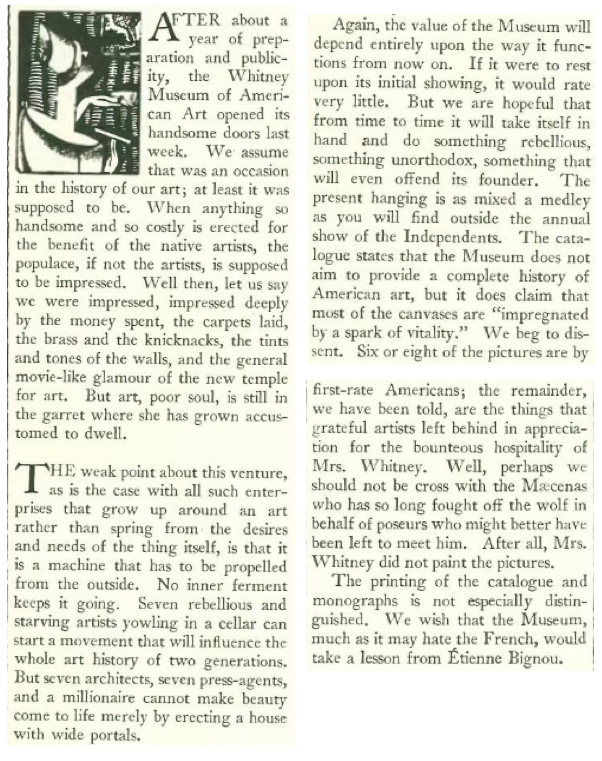
Ninety years ago American painters and sculptors were mostly considered second-rate by critics who had cut their teeth on the Old World’s “Great Masters.” An exception was The New Yorker’s first art critic, Murdock Pemberton, who accused such institutions as the Metropolitan Museum of discouraging American art. It is a bit surprising, however, that Pemberton initially gave a cool reception to the opening of the Whitney Museum of American Art, perceiving that its founders were putting the cart before the horse:

AMERICAN ORIGINAL…The original Whitney Museum of American Art was located at 8–12 West Eighth Street in Greenwich Village. Above, images from a 1937 museum catalog, and (bottom right) a view of the building’s West Eighth Street facade, circa 1940-50. (Whitney Museum/Life magazine)
SHE WORE THE PANTS…Robert Henri’s 1916 portrait of Gertrude Vanderbilt Whitney, sculptor and founder of the Whitney Museum. Gertrude’s husband, Harry Payne Whitney, would not allow his wife to hang the portrait in their Fifth Avenue town house because he didn’t want visitors to see his wife “in pants.” Instead, the portrait hung in Gertrude’s West 8th Street studio, which became the first Whitney Museum in 1931. (whitney.org)

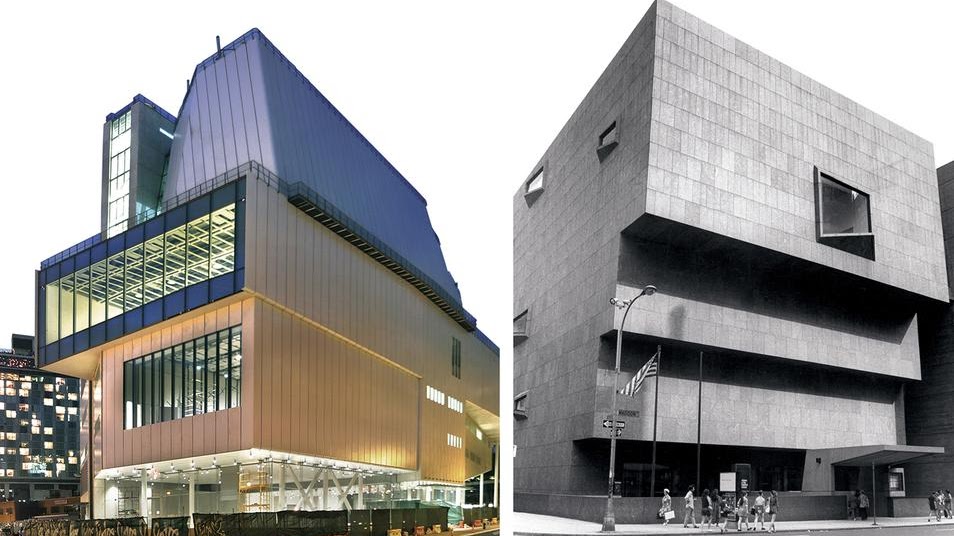
Despite Pemberton’s initial concerns, the Whitney became a beloved New York institution, moving in 1954 from the West Eighth location to a larger space on West 54th, and then to its iconic Marcel Breuer-designed building at Madison and 75th, which opened in 1966. The museum would move again in 2015 to its current location at 99 Gansevoort Street in a building designed by Renzo Piano.

IMPERMANENT COLLECTION…The Whitney would move three times after its 1931 opening, first to West 54th in 1954, then to its iconic Marcel Breuer-designed home at Madison and 75th (opened in 1966), and finally to its current location at 99 Gansevoort Street. (museuminforme.blogspot.com)

 *  *  *

Party Pooper

William Faulkner attracted much attention among literary circles during his extended visit to New York in 1931, however (as reported in “The Talk of the Town”) the author was able to dodge most of it by staying put in his Tudor City apartment.

HOME ALONE…William Faulkner spent most of his time in New York holed up in his Tudor City apartment, where he worked on the manuscript for Light in August. (LA Times/Wikipedia)

 *  *  *

This or That

While we are on the subject of literary giants, here is a poem submitted by E.B. White to the Nov. 28 issue that explored some universal half-truths:

*  *  *

From Our Advertisers

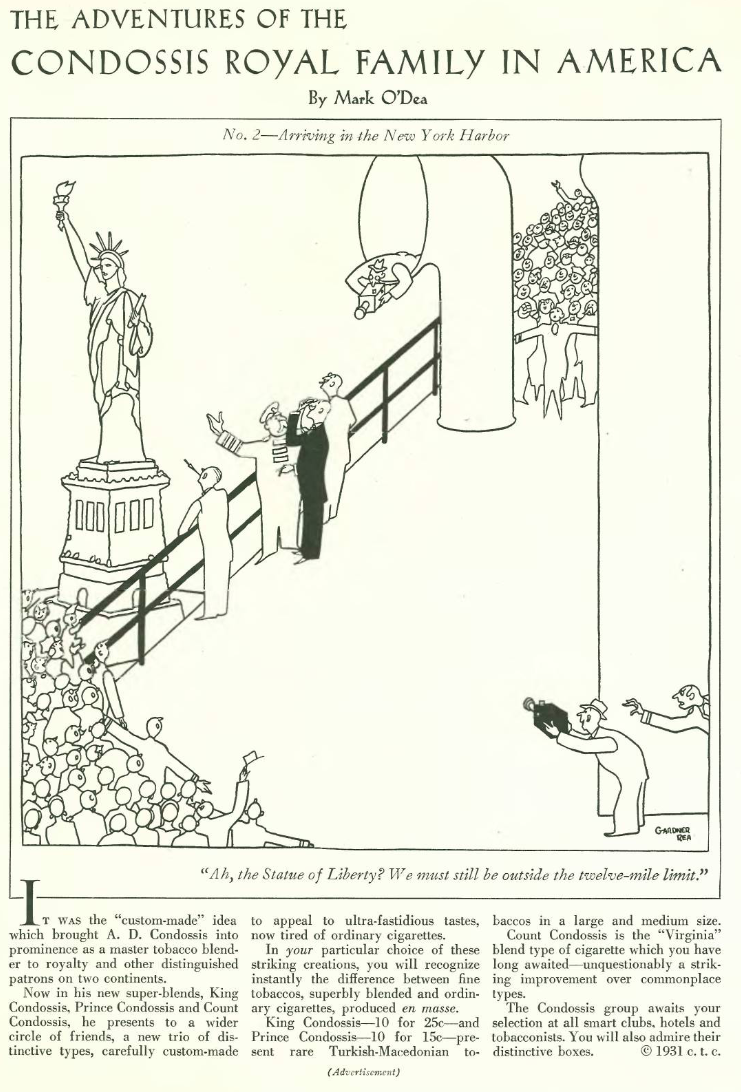
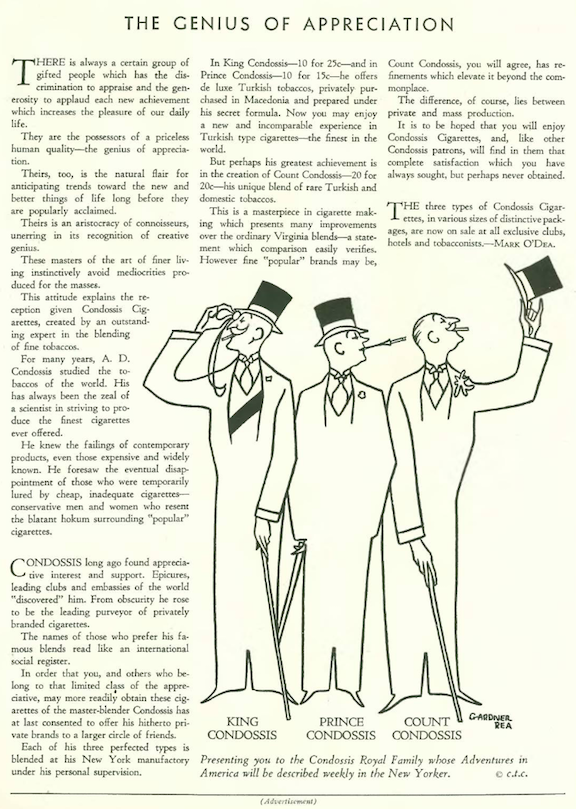
As the market for cigarettes continued to increase, so did the number of new brands launched to take advantage of all those eager young puffers. The makers of Condossis Cigarettes hoped to create some buzz for their new product through a series of ads written by Mark O’Dea and illustrated by The New Yorker’s Gardner Rea. Apparently the makers of Condossis believed that a posh backstory would lend a certain élan to their smokes. This seems all for naught—I haven’t found a record of the brand beyond 1938…

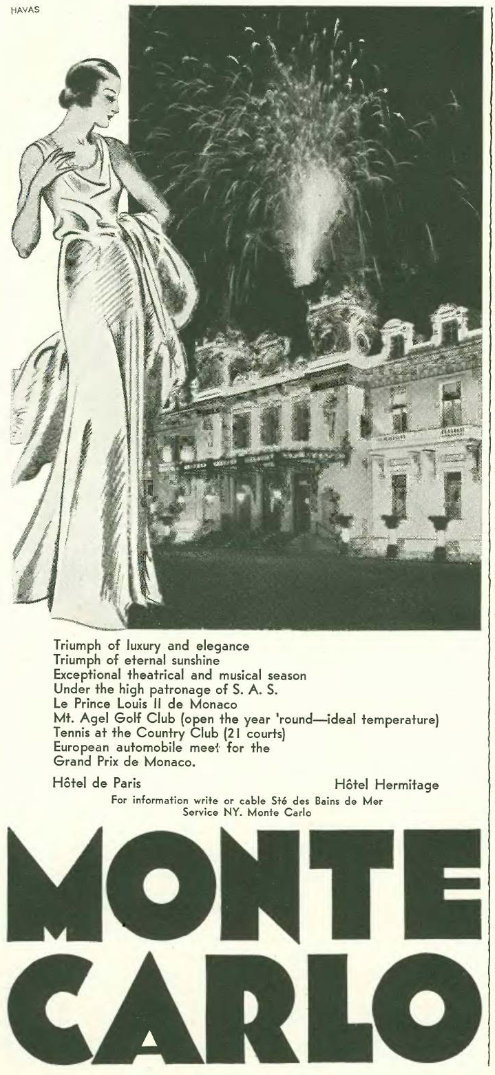
…a few of those posh smokers might have considered heading to Monte Carlo for the holidays, where they could also legally drink and gamble and forget about the jobless masses back home…

…but you needn’t go to Monte Carlo to signal your taste for the finer things, at least that is what B. Altman claimed with their lower-priced French knock-offs (although $95 was still a lot of dough in 1931)…

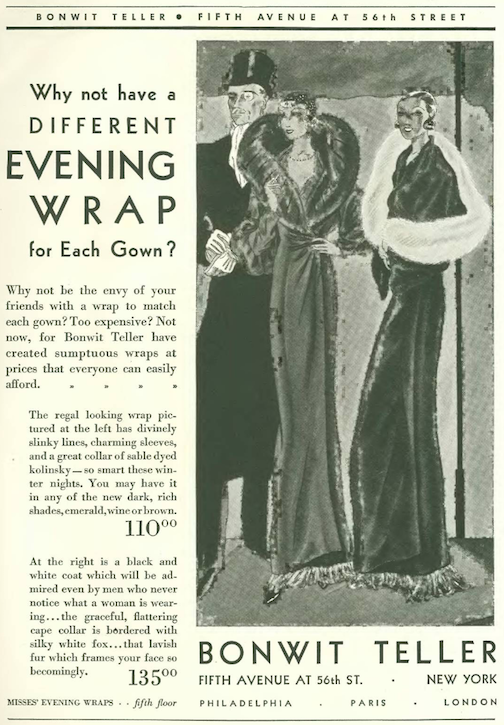
…Bonwit Teller also boasted of its low-priced evening wraps, so affordable that one could consider having a different wrap to complement every gown in one’s wardrobe ($135 in 1931 is roughly equivalent to $2,300 today)…

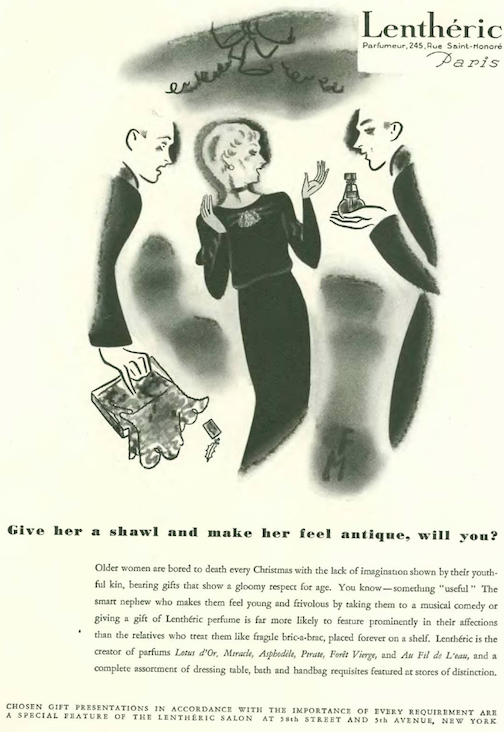
…the makers of Lenthéric perfumes offered the potential for shame and embarrassment if one didn’t choose their product for that special holiday gift…(illustration by Frank McIntosh, who contributes a cartoon in the next issue)…

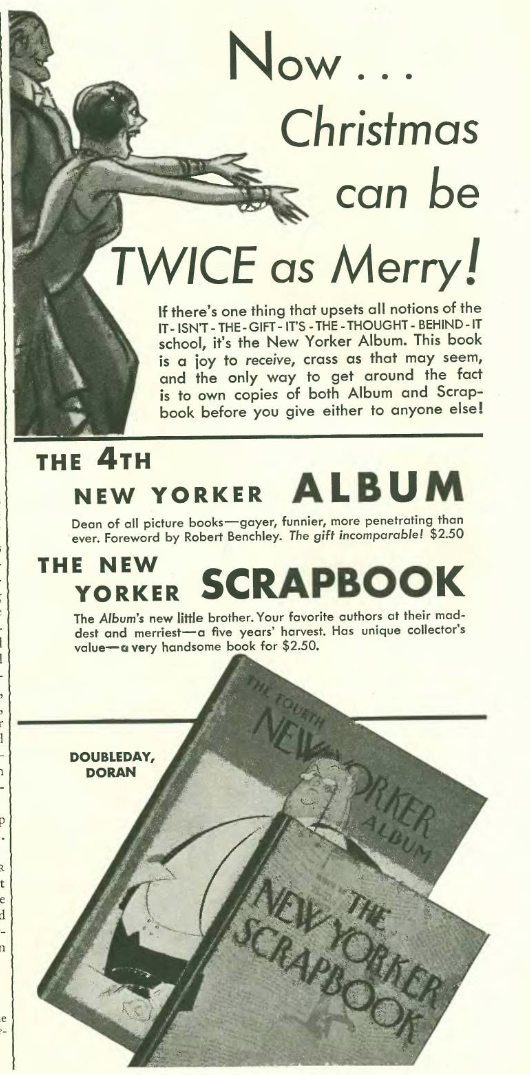
…but perhaps the happiest shopper of all could shell out a mere $2.50 for the latest editions of The Fourth New Yorker Album or The New Yorker Scrapbook (drawings of a delighted couple courtesy Peter Arno)

…on to our cartoons, we begin with Mary Petty and a tête-à-tête over tea…

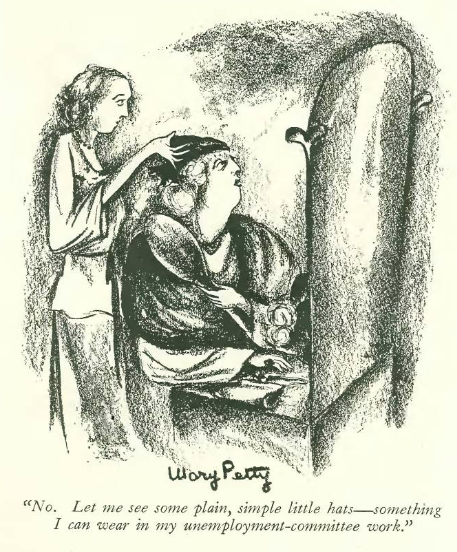
…and Petty again with one woman’s attempt at noblesse oblige…

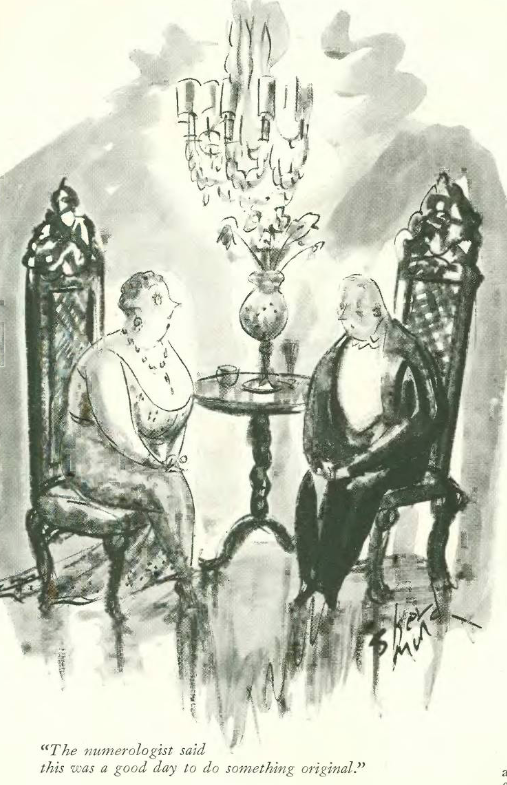
Barbara Shermund looked in on the very idle rich…

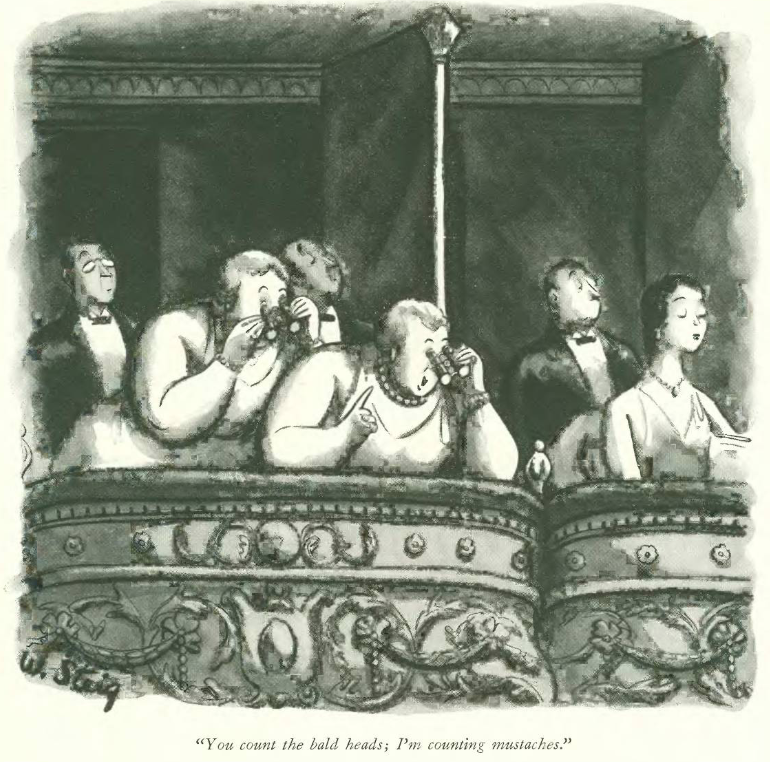
William Steig spotted a bald-watcher…

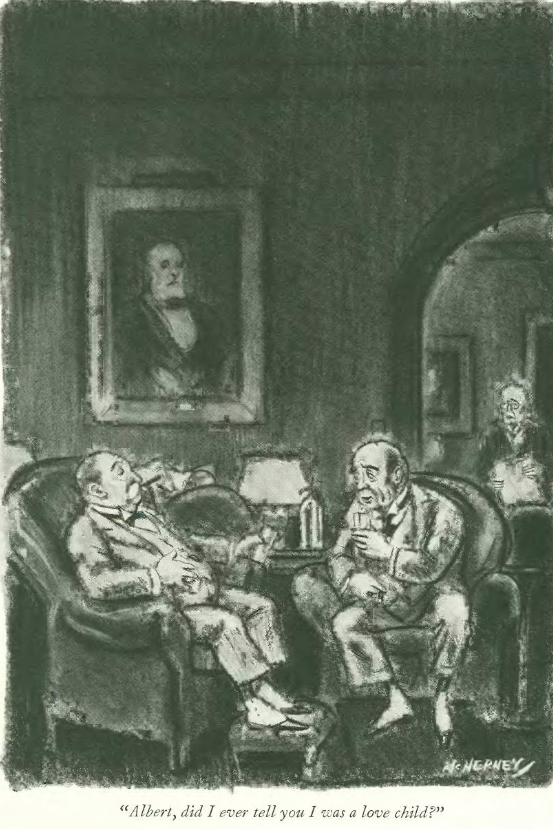
E. McNerney revealed a secret among siblings…

…and William Crawford Galbraith gave us a backstage glimpse of a Broadway revue…

 *  *  *

On to the Dec. 5 issue…

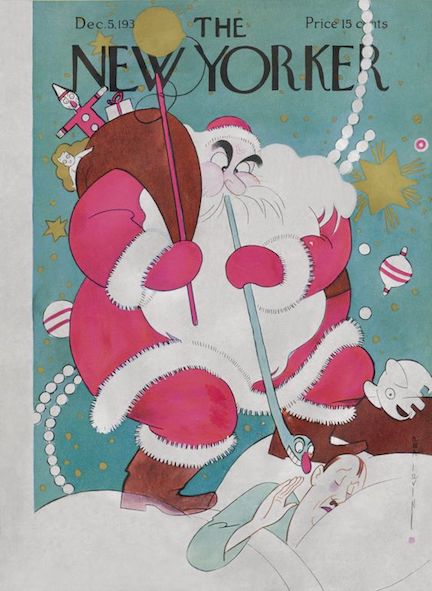
Dec. 5, 1931 cover by Rea Irvin.

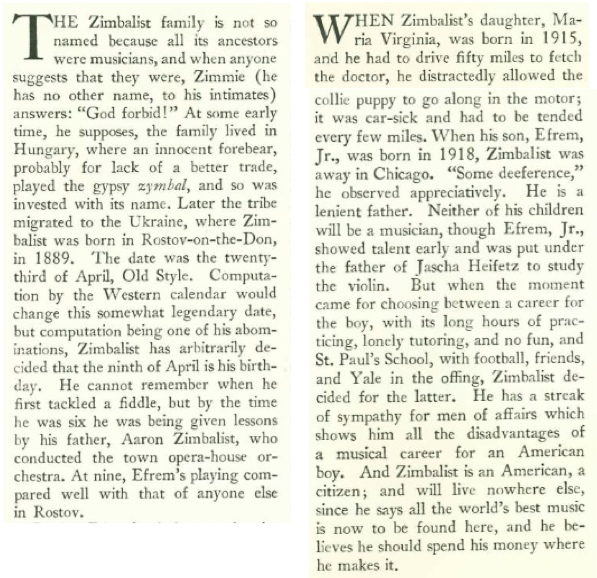
…which featured a profile of renowned violinist and composer Efrem Zimbalist (1889-1985). The son of a Russian conductor, Zimbalist was married to the famous American soprano Alma Gluck

…and the entertainment gene continued on through the family line, as Zimbalist and Gluck’s son, Efrem Zimbalist Jr., would become a star in Hollywood, as would their granddaughter, Stephanie Zimbalist.

ALL IN THE FAMILY…Famed violinist Efrem Zimbalist and American soprano Alma Gluck (top, left) would pass on their entertainment genes to son Efrem Zimbalist Jr. (known for his starring roles in 77 Sunset Strip and The F.B.I.) and granddaughter Stephanie Zimbalist, who portrayed sleuth Laura Holt in the NBC series Remington Steele. Top right, a “Profile” caricature of Zimbalist by Al Frueh. (Wikipedia/Pinterest)

 *  *  *

From Our Advertisers

Much to the delight of The New Yorker advertising department, the makers of Condossis Cigarettes were back with their second installment of the adventures of the “Condossis Family”…

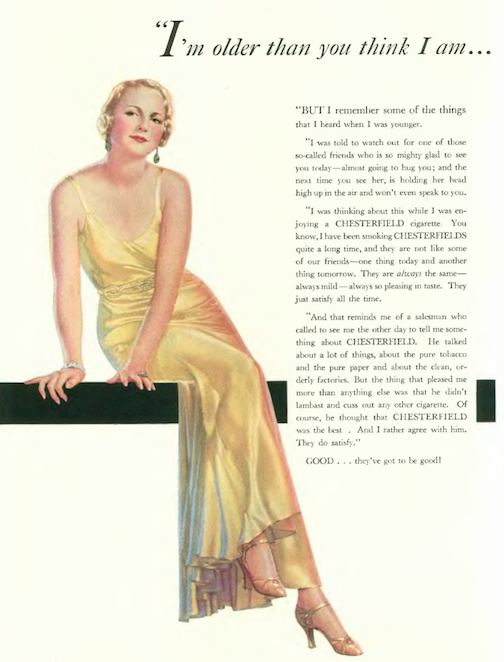
…on the other hand, the well-established Chesterfield brand didn’t have to try quite as hard — offering an attractive woman and some supporting copy that subtly suggested that a woman could credit her fine demeanor to a mere cigarette…

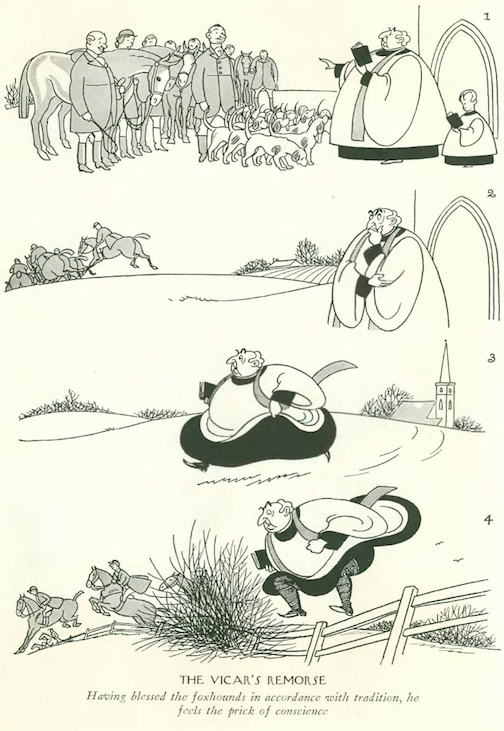
…on to our comics, we have this two-page entry by Rea Irvin

…a bit of offensive driving, Helen Hokinson-style…

Carl Rose gave us an unlikely candidate for a chaste role…

Alan Dunn’s entry played to the stereotypes of his day…

Frank McIntosh plied the Sugar Daddy waters to come up with this gem…

Garrett Price gave us a gift designed to light a man’s fire…

Barbara Shermund lit a flame of a different sort between a dowager and her latest escort…

…and we end with James Thurber, and one of my all-time favorites…

Next Time: Mosher’s Monster