Frozen at 30 Rock

To call Lewis Mumford an architecture critic would do him a disservice. He was indeed an outspoken voice on New York’s changing skyline, informed by a keen understanding of history and aesthetics, but his criticisms were also those of a philosopher, a political commentator, a city planner, and an authority on matters concerning art, literature, society and culture.

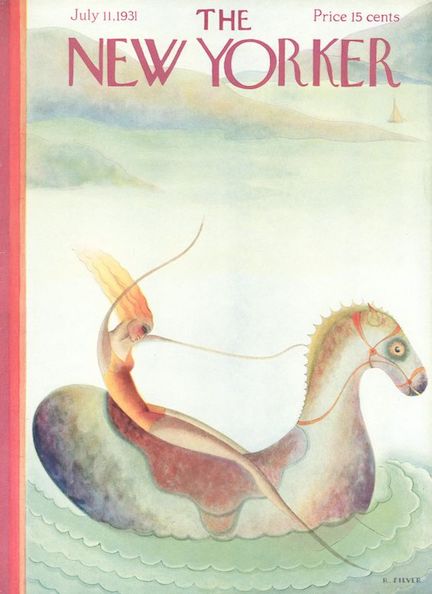
June 20, 1931 cover by S. Liam Dunne.

The June 20, 1931 issue marks the entrance of Mumford (1895-1990) to our New Yorker story, and just in time to offer his perspectives on the Rockefeller Center project, which was about to commence.

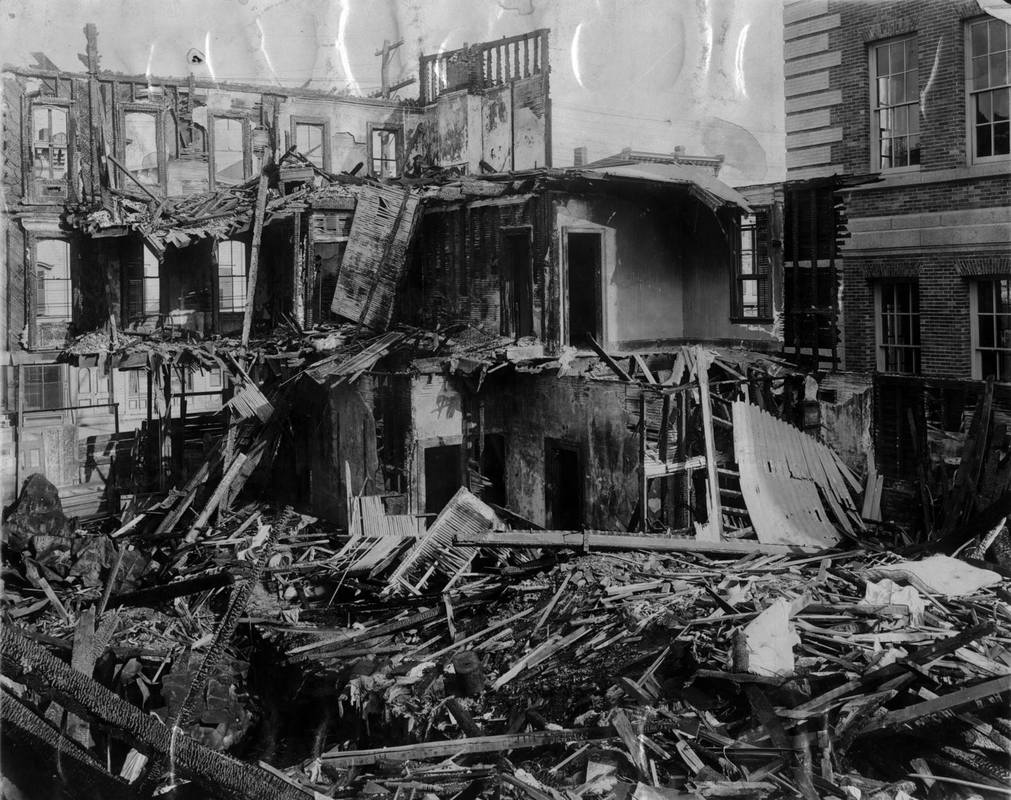
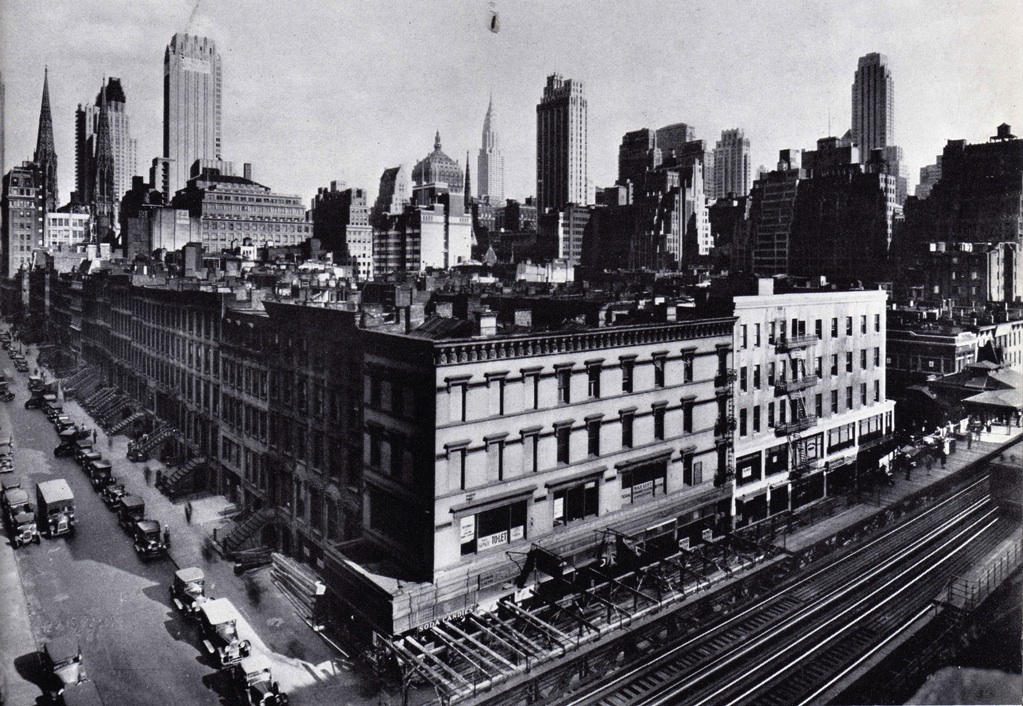
THERE GOES THE NEIGHBORHOOD…This Midtown neighborhood was torn down shortly after the photo was taken to make room for the massive Rockefeller Center project. The view is from the corner of 6th Avenue and 51st Street looking to the southeast. One of the spires of St. Patrick’s is visible at far left, and the Chrysler Building can be glimpsed in the distant center. Lewis Mumford was no fan of giant skyscrapers or other “mega” building projects, and would have preferred something more on this smaller scale for Rockefeller Center. (Museum of the City of New York)

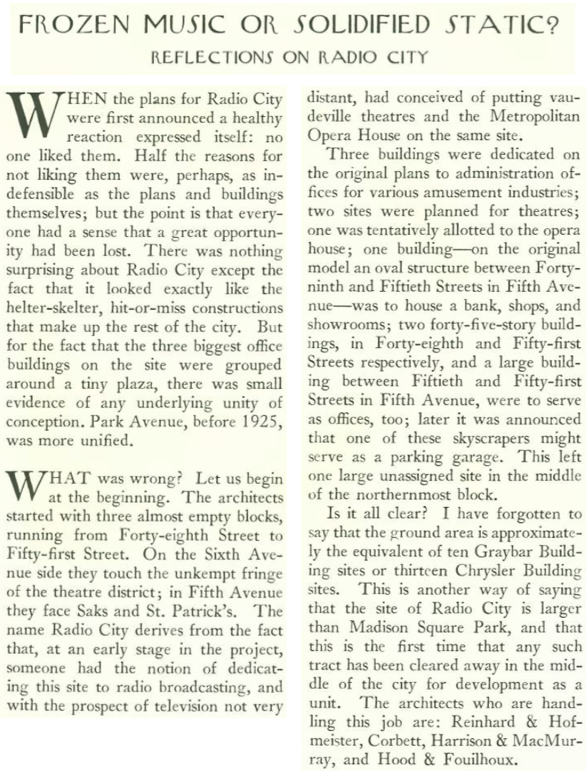
The proposed project — then referred to as “Radio City” — received negative reviews from a number of critics, although the most pointed came from Mumford, who disliked “mega” building projects such as Rockefeller’s, labeling it as “weakly conceived, reckless, romantic chaos.”

RECKLESS, ROMANTIC CHAOS is how Lewis Mumford, left, described plans for Rockefeller Center. At right, the May 1931 issue of Popular Science featured the project’s plans. (Pinterest/Google Books)

Mumford’s Emersonian temperament favored simplicity, self-sufficiency and community; he believed skyscrapers and other “megamachines” were dehumanizing and even dishonest. In this next excerpt he poses a question about the so-called pragmatic “money men” behind the project: “Are the practical men practical?” We read on…
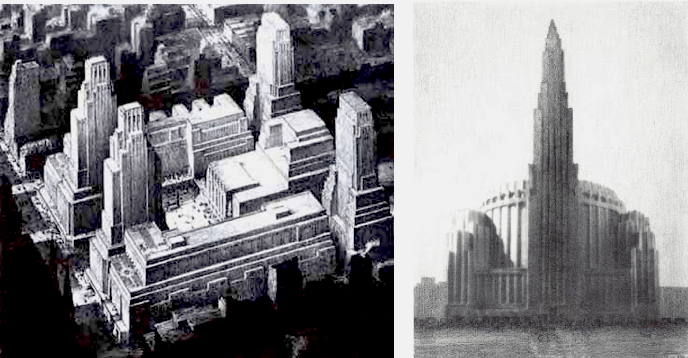
WELCOME TO CLOUDCUCKOOLAND…That was Mumford’s own term to describe plans for Rockefeller’s “Radio City.” An early rendering from 1928 (left) referred to the project as “Metropolitan Square,” and for a time it was slated to include a new Metropolitan Opera house.  Joseph Urban proposed this Fifth Avenue-facing design (right) in 1927, but plans were waylaid by the Great Depression. (ephemeralnewyork)
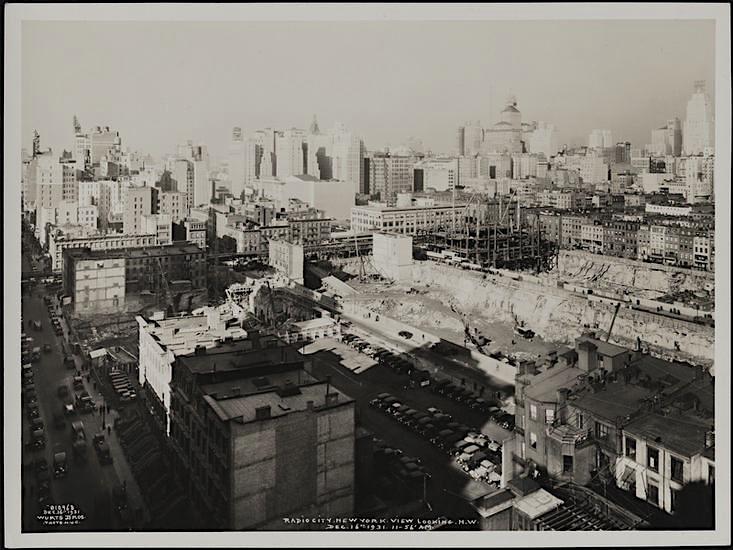
BLANK SLATE…With the site mostly cleared, construction commenced in the fall of 1931. This image is from December 16, 1931. (Museum of the City of New York)

Mumford concluded that the opportunity to create a restful respite from the clamor of the city had been lost on the project, which just promised more “razzle-dazzle” and “incongruous jangle,” an interesting observation given that other New Yorker writers were generally dazzled by the skyscrapers and other gigantic projects that were rapidly erasing the old city.

True to his beliefs, Mumford lived a simple life in an old country house in Amenia, New York, a small town in the northern reaches of the Hudson Valley region.

FAR FROM THE RAZZLE-DAZZLE…Mumford house in Amenia, NY. (Wikipedia)

Historian Daniel Okrent, author of Great Fortune, The Epic of Rockefeller Center, notes that Mumford was eventually won over by Rockefeller Center in the end, calling it “a serene eyeful” and “the most exciting mass of buildings in the city.” I have to agree.

SERENE EYEFUL…Images of Rockefeller Center from 1939 (left) and 1935. (flickr.com/(Museum of the City of New York)

 *  *  *

Summertime Reads

A quick glance at the new books listed at the end of the New Yorker’s book review column shows us a nice variety of summertime diversions, including a book about Josef Stalin written before his Great Purge that murdered a million of his own citizens…then there was the memoir Blood on the Moon written by Jim Tully, “America’s most famous hobo author”…the book Life Among the Lowbrows by Eleanor Rowland Wembridge also caught my eye…I believe I’m almost set for the summer…

A STUDY IN CONTRASTS…Misfits and lowlifes peppered the books of both “hobo writer” Jim Tully (left) and psychologist Eleanor Rowland Wembridge, although from very different perspectives. While Wembridge took a more clinical approach to the underclasses, Tully used them for material in his hardscrabble stories. Guess which one ended up in Hollywood. (scpr.org/apadivisions.org)

 *  *  *

From Our Advertisers

The makers of Jantzen swimwear took a slightly risqué approach in advertising their latest women’s line…

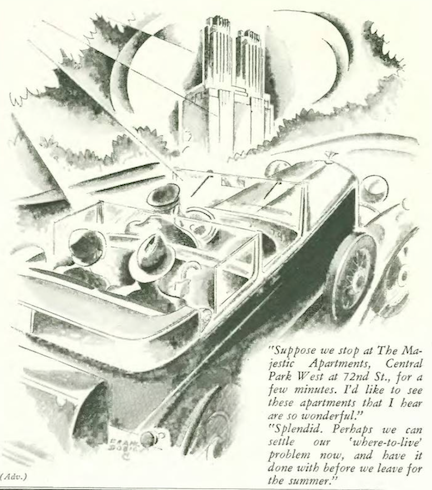
…the owners of the Majestic, on the other hand, used snob appeal and a sense of heightened grandeur to promote their Central Park West apartments…

…advertisers of non-alcoholic drinks tried their best to capture the allure of cocktails, and I imagine much of their product was mixed with something a bit more interesting…

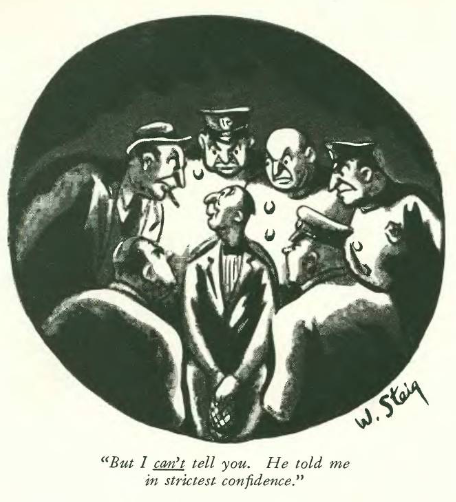
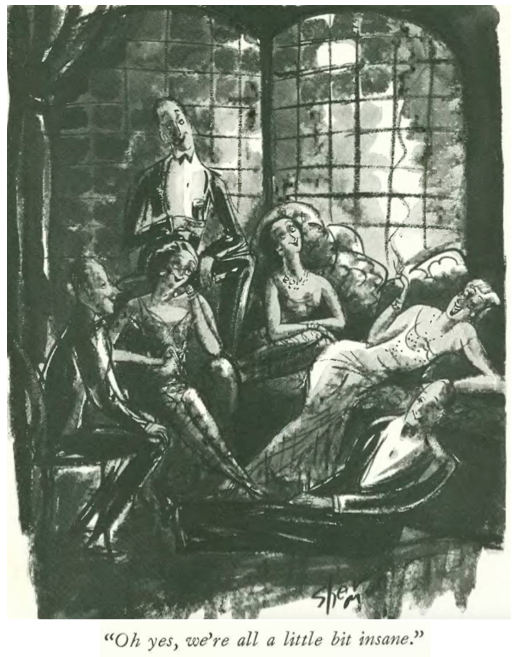
William Steig was hitting his stride as one of the newer cartoon contributors to The New Yorker

…with two of his entries featured in the June 20 issue…Steig would live 95 years and be productive throughout his life…nearly 60 years after these cartoons appeared in The New Yorker he would publish the children’s book Shrek!, the basis for the popular movie series…

…earlier in his career, Steig would also find fame for his series of Small Fry cartoons featuring children in adult situations, anticipating Charles Schulz’s Peanuts…this next cartoon, however, is not by Steig but by Alan Dunn, perhaps anticipating Steig…

Gardner Rea continued to explore the foibles of the well-heeled…

John Held Jr amused us with another of his rustic “woodcuts”…

Garrett Price shot the rapids with a hapless suitor…

…here is one the six cartoons Crawford Young contributed to The New Yorker in 1931-32, capturing a moment in which the chicken-egg question is largely moot…

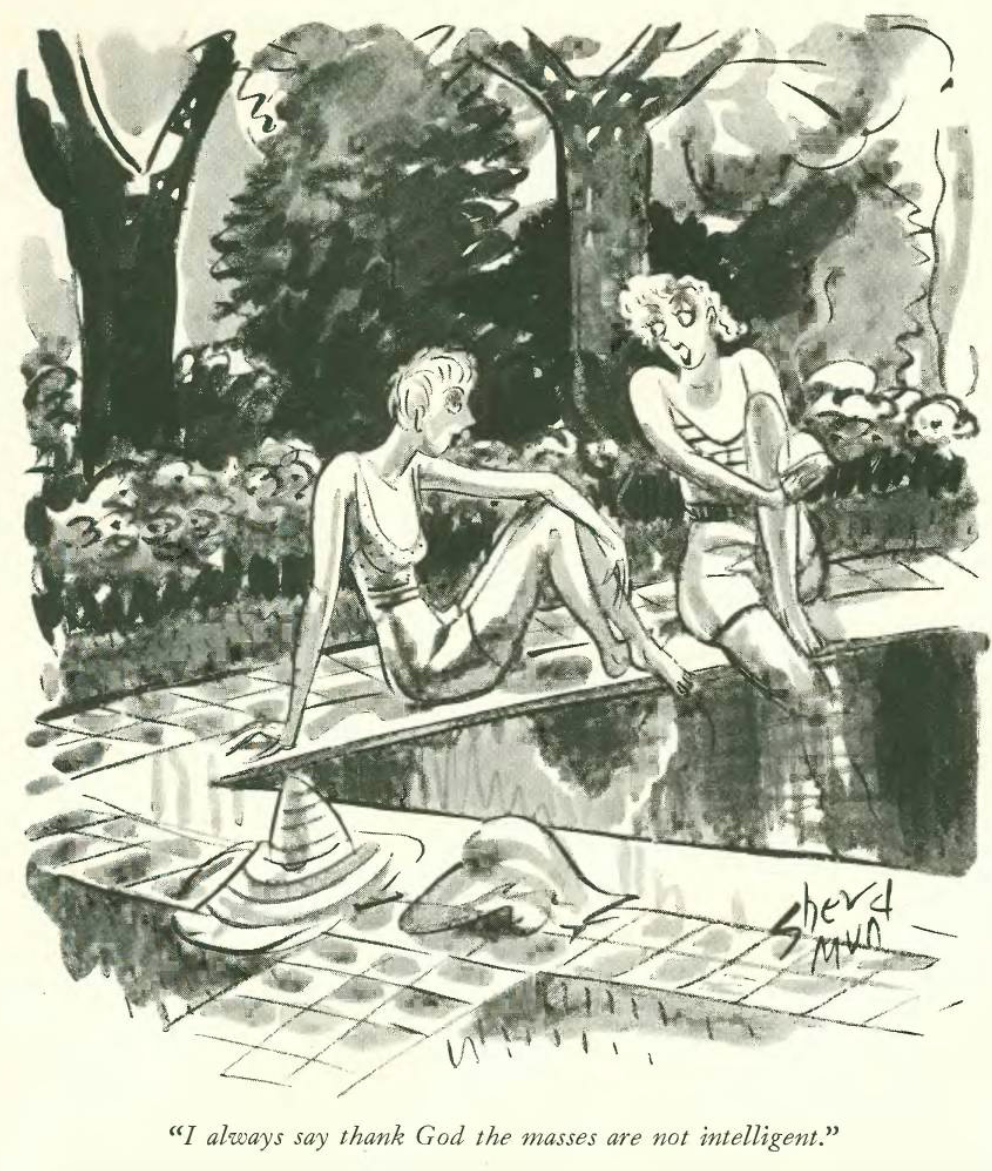
…and another look into the leisure classes courtesy Barbara Shermund

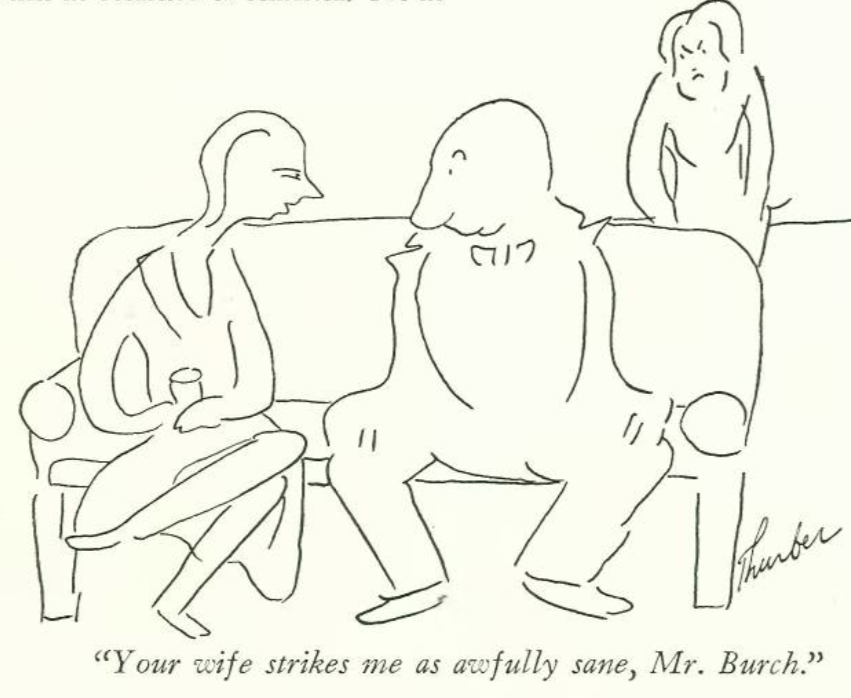
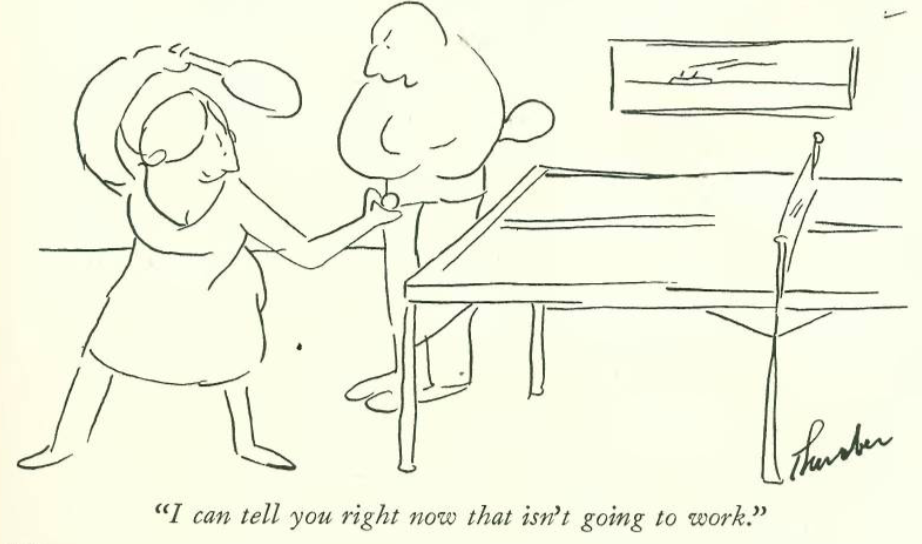
…and we close the June 20 issue with James Thurber, who showed us a fellow who probably regretted his evening out…

…Thurber also brings into the next issue, June 27…

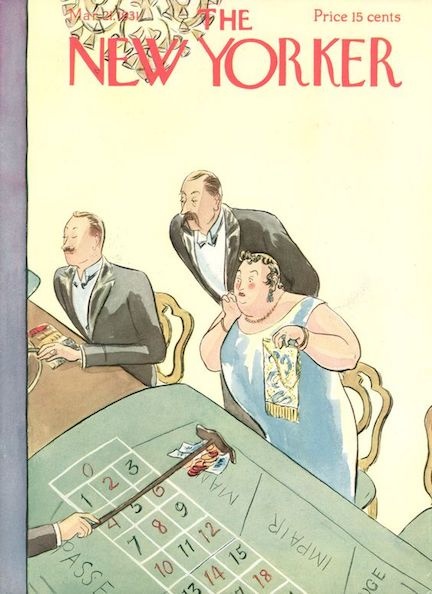
June 27, 1931 cover by Gardner Rea

…in which he recounted his adventures in bird-watching and the mating habits of crows…

 *  *  *

A Falling (Lone) Star

In her “Letter From Paris,” Janet Flanner reported that the allure of the “Queen of the Nightclubs,” Texas Guinan, did not extend to French shores, where among other things she ran afoul of labor laws that dissuaded non-citizens from working in France.

BEGINNING OF THE END…Associated with risqué entertainments in various speakeasies during the Roaring Twenties, the Great Depression prompted Texas Guinan to take to the road with her show. After attempting (and failing) to make a tour of Europe, she returned to the States for one final road trip. Above left, Guinan in the 1933 film Broadway Through a Keyhole, which would open just three days before her death. At right, headline from the Rochester Democrat and Chronicle trumpeting Guinan’s French debacle. (pre-code.com/

Upon her return to the States, Guinan took advantage of her well-publicized dismissal from France and launched the satirical revue Too Hot for Paris. This traveling show would also mark the beginning of the end for Guinan, who would contract amoebic dysentery during a run of the show at the Chicago World’s Fair. It would claim her life on Nov. 5, 1933, at age 49.

 *  *  *

They Put the Ping Into Pong

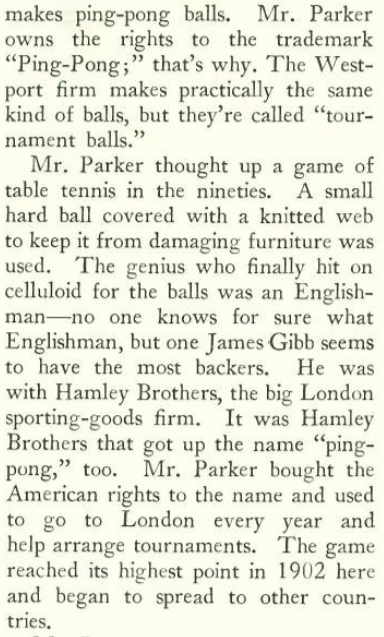
“They” being the Parker Brothers, who took umbrage at anyone who questioned their sole right to market genuine “Ping-Pong” balls. “The Talk of the Town” explained:

The “Talk” item ended with a little surprise about Mr. George Parker himself:

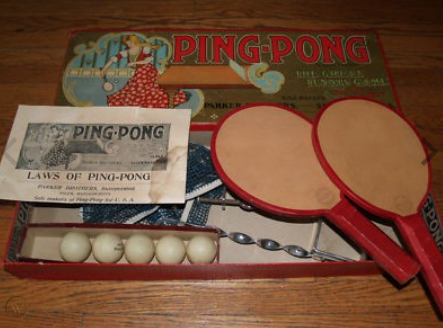
VINTAGE…A 1902 ping-pong set from Parker Brothers. (Worthpoint)

 *  *  *

From Our Advertisers

Some lovely color ads, including this message that paired playful porpoises with leaded gasoline…

…this ad was about color itself, and how Powers Reproduction Corporation could make your images pop…

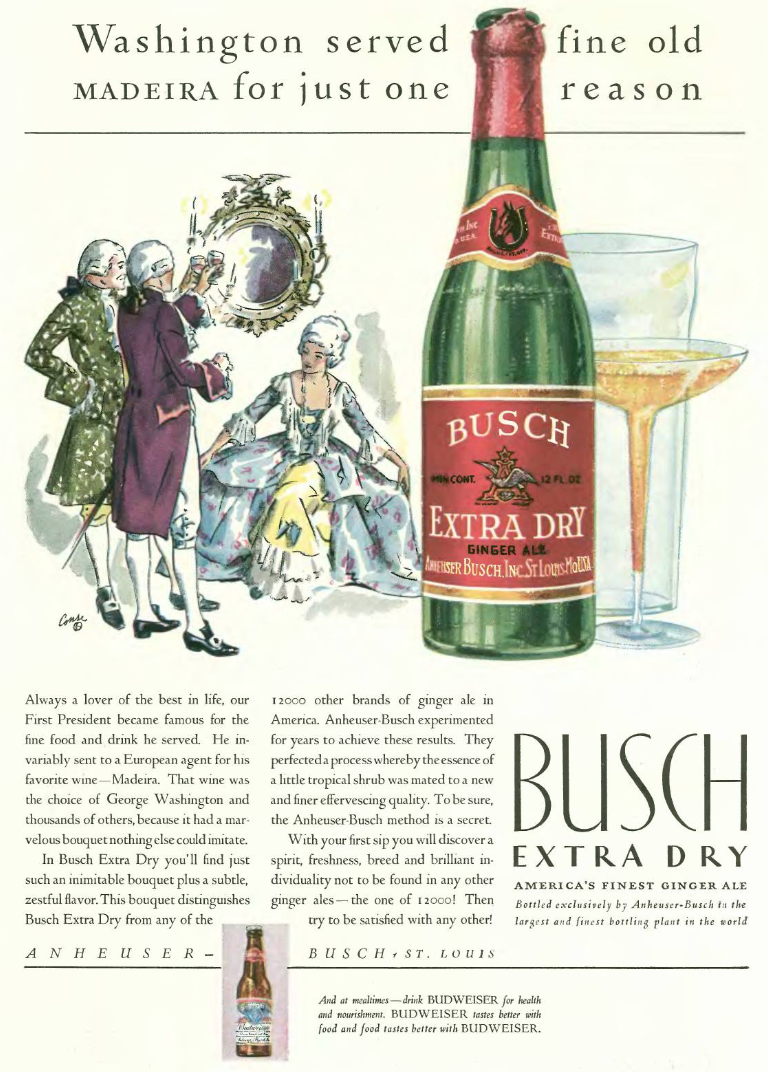
…and another sad Prohibition-era ad from the makers of Budweiser, in this case, a non-alcoholic version that looks like the real thing…of course what is even sadder about this ad is the suggestion that plantation life was something one should fondly hearken back to…

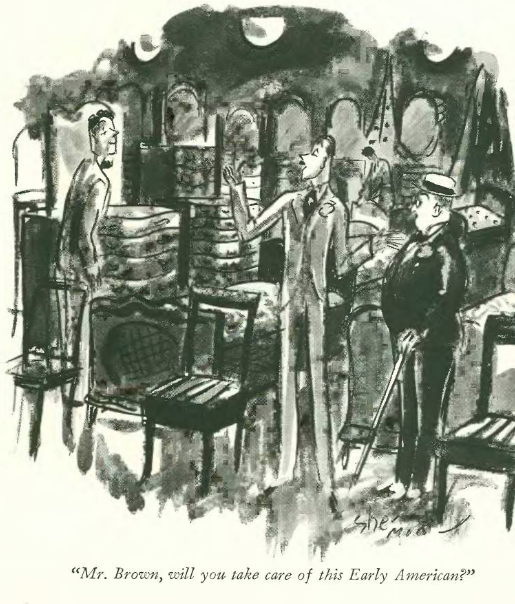
…on to our cartoons, and another terrific illustration from Barbara Shermund

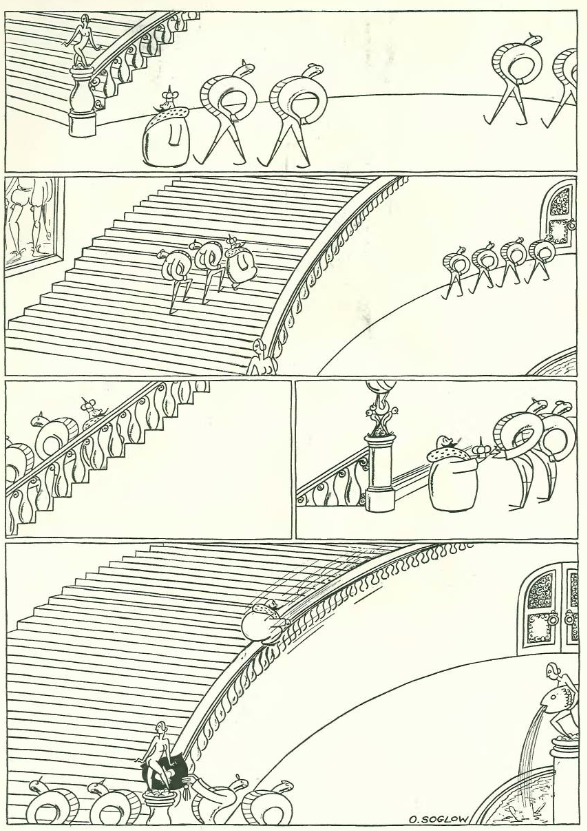
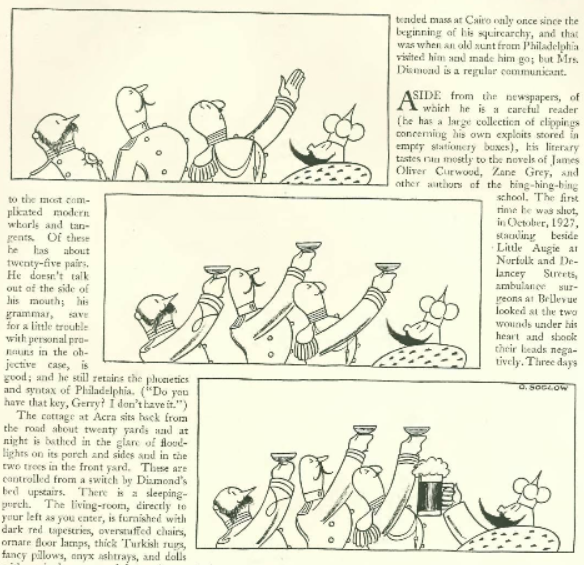
…and we have Otto Soglow’s Little King, who temporarily lost his crown…

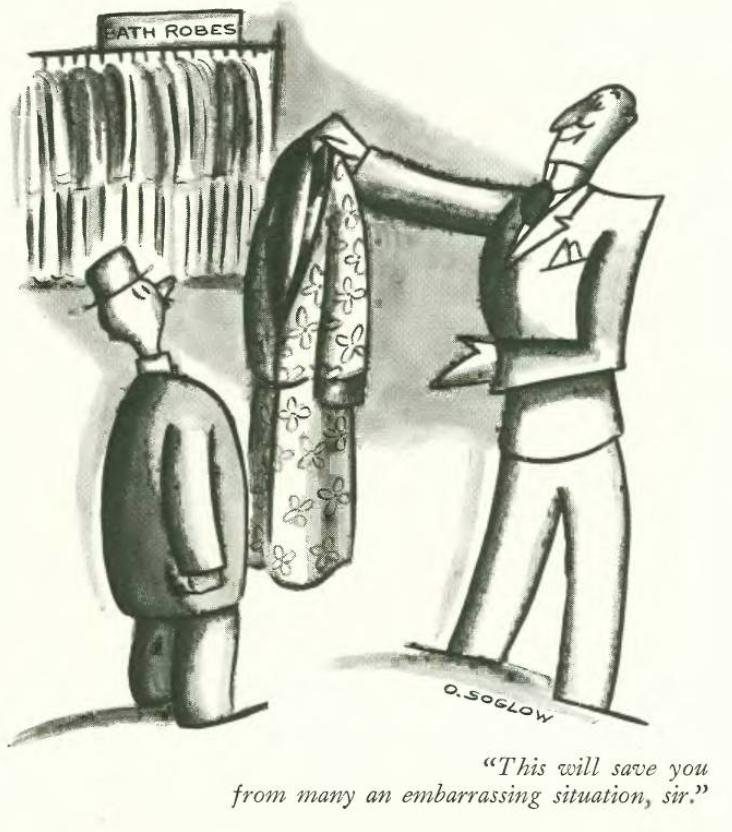
…and another from Soglow, at the men’s store…

Carl Rose gave us a chap contemplating the burdens of a Guggenheim “genius” grant…

Peter Arno revealed that his Major had two left feet…

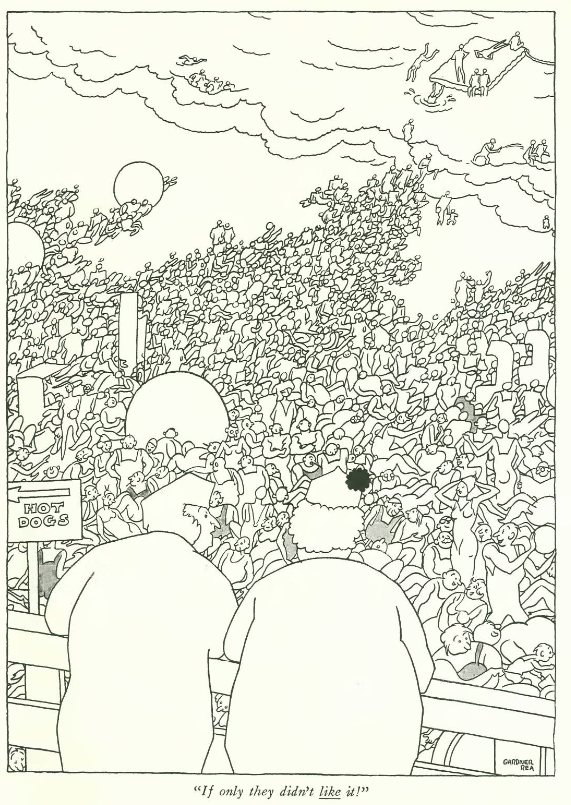
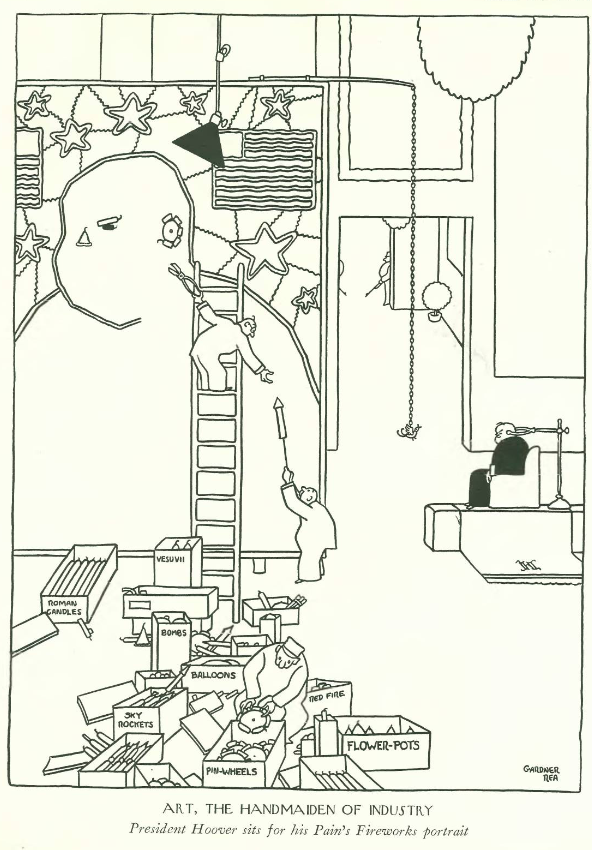
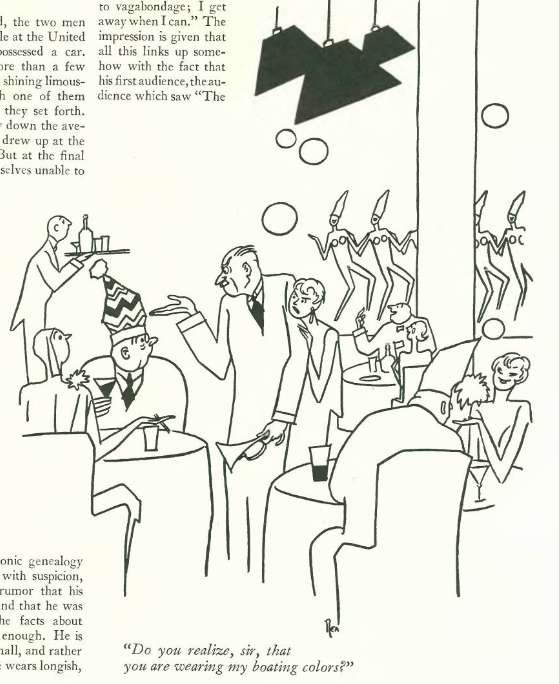
…and in anticipation of the Fourth of July, we end as we began, with Gardner Rea

Next Time: Firecracker Lane…


A Star is Born

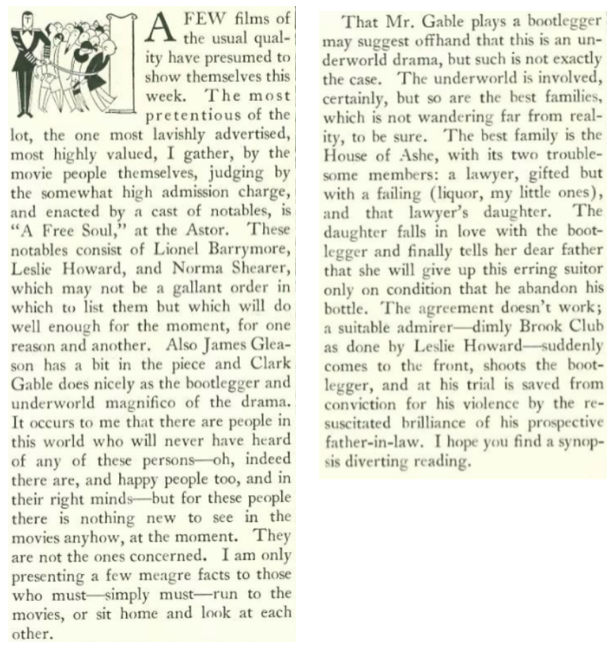
Clark Gable made such an impression as a charming rogue in 1931’s A Free Soul that it transformed him almost overnight from a bit actor to into one of Hollywood’s biggest stars of the 1930s.

June 13, 1931 cover by Helen Hokinson.

When the film was released it was Norma Shearer who was the biggest name, supported by Lionel Barrymore and Leslie Howard. As this was “Pre-Code” Hollywood, MGM played up the film’s risqué themes of gangsters, drunks and infidelity. After all, according to this ad, Norma was “born in an age of FREEDOM!”

Although critic John Mosher—already weary of the fledgling gangster film genre—found the film pretentious, the public voted it one of the best films of 1931, and Barrymore took home an Oscar for his performance as a successful but conflicted (and alcoholic) attorney…

TRUST ME, HE WON’T BITE…Defense lawyer Stephen Ashe (Lionel Barrymore) introduces Ace Wilfong (Clark Gable), a bootlegger he successfully defends from a murder charge. Unfortunately, Ashe’s daughter Jan (Norma Shearer), who was betrothed to another (the squeaky-clean Dwight Winthrop, played by Leslie Howard), ends up falling for his shady client. (IMDB)
DECISIONS, DECISIONS…Jan Ashe (Norma Shearer) must decide between bad boy and goody two-shoes in 1931’s A Free Soul. Clark Gable and Leslie Howard would again play rivals for a woman’s affections eight years later in 1939’s Gone With The Wind. (IMDB)

 *  *  *

Speaking of Gangsters

A real one was profiled in The New Yorker by novelist and screenwriter Joel Sayre — Jack “Legs” Diamond — a thug who seemed to have nine lives but would be dead before the year was out (spoiler: he would not die from natural causes). An excerpt:

IN TROUBLE AGAIN?…Jack Diamond, aka “Legs Diamond” being escorted to the courthouse in Troy, New York in July 1931. (Everett)

 *  *  *

Some Real Guts

“The Talk of the Town” (via E.B. White) looked in on the work of famed aerial photographer Albert Stevens, who back in the day employed the common practice of chucking “flashlight bombs” out of airplanes to illuminate subjects below, including buildings along Riverside Drive that had their windows blown out during one of his aerial photo sessions…

Captains Albert Stevens (left, with the devil-may-care smile) and St. Clair Streett prepare for a high-altitude airplane flight in 1935. At right, Stevens readies his camera for an aerial photo session. (National Air and Space Museum).

Below is something similar to what Stevens dropped from the plane to get the effect he needed during nighttime shots…

Nighttime aerial photography owes its origins to pioneers like George Goddard, who stunned residents of Rochester, NY, in 1925 when he ignited an 80-pound flash bomb to illuminate the city (image at left). It is considered the first aerial night photograph. At right, Manhattan at night, 1931.

(16thphototech.wordpress.com)

 *  *  *

Poetic Pugilist

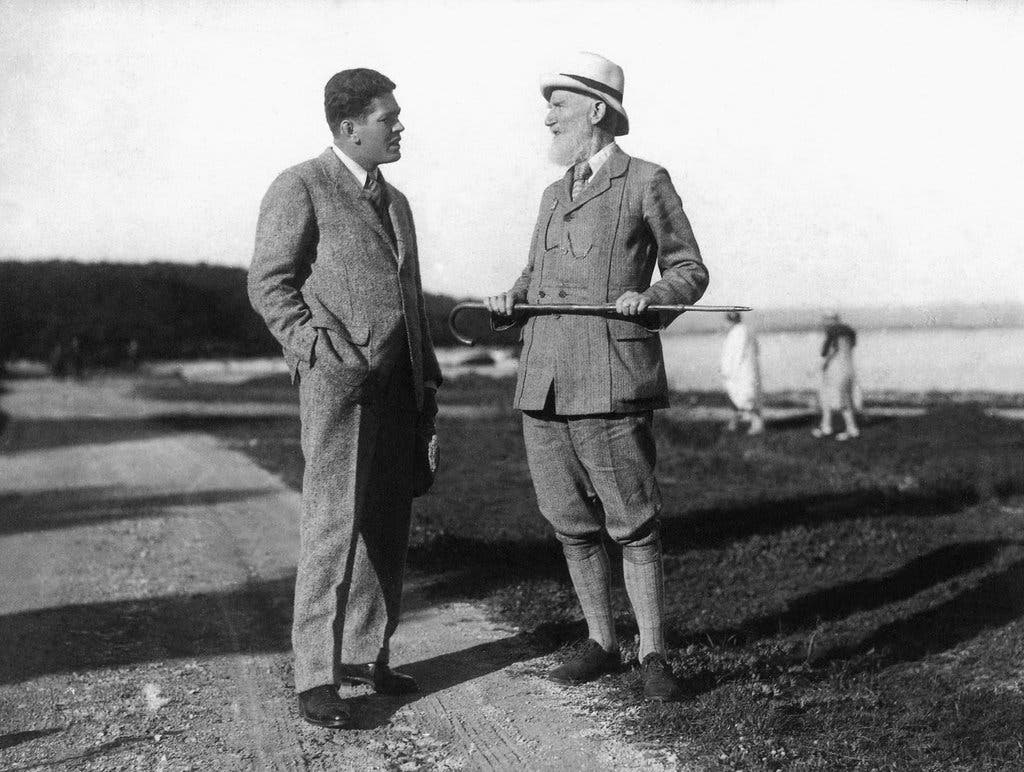
Throughout his career and into his retirement, heavyweight boxing champion Gene Tunney took great pains to distinguish himself from the other brutes who practiced his violent trade, and was known for his love of the higher and gentler arts. In his “Notes and Comment” E. B. White further explored this phenomenon upon the boxer’s return to the States:

I’M NO PALOOKA…Gene Tunney chewing the fat with playwright George Bernard Shaw during a holiday in Brioni, 1929. (Associated Press)

 *  *  *

Not So Brief

I include this entire page to feature both Garrett Price’s cartoon (Judge Benjamin Barr Lindsey, a leader in abolishing child labor, supported the idea of unmarried couples living together, hence the caption), and Wolcott Gibbs’ thoughts on applying for an advertising position…

 *  *  *

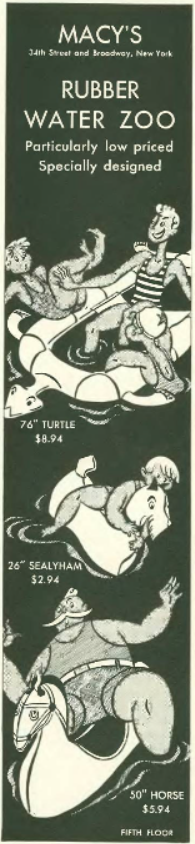
And speaking of advertising, we have this summer-themed ad from Macy’s (yes, they had inflatables back then, too)…

…for reference, here’s a 1930s photo of actress Una Merkel astride an inflatable horse like the one featured in the ad…

Publicity photo of Una Merkel for the 1933 film “Her First Mate.”

…R.J. Reynolds continued to market Camel cigarettes to women, but the ads moved away from illustrations of Continental leisure and instead emphasized the freshness of the product, thanks to the cellophane-wrapped “Humidor pack”…

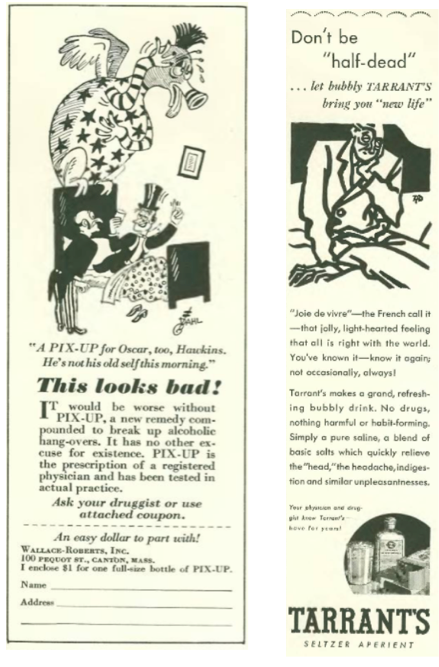
…while cigarette smoking continued to increase in America, the sale of alcohol remained illegal — it didn’t stop people from drinking, and if you got a bad batch of bootleg, or just had too much, there were remedies available…

…perhaps a fortunate few were able to just sleep it off on a lovely bed fitted with Wamsutta sheets…

…on to our cartoons, Rea Irvin continued to explore his alter ego, “Du Maurier Irvin”…

Alan Dunn showed us why some “can’t make it there” in New York, New York…

Otto Soglow revealed that his Little King preferred beer to bubbly…

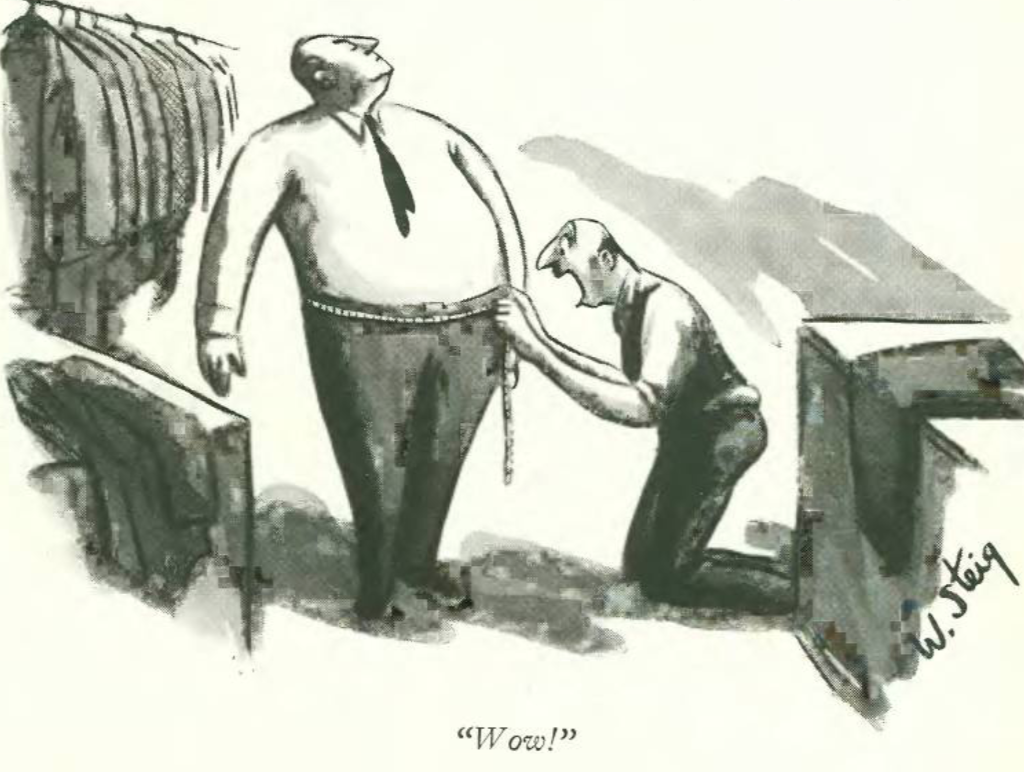
William Steig found an unlikely customer for a photo button…

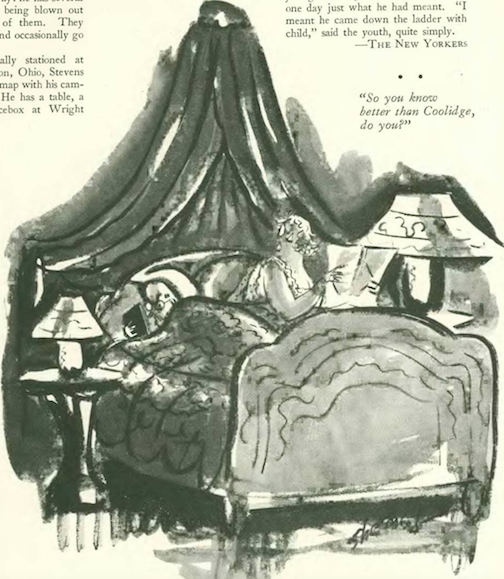
Barbara Shermund explored politics between the sheets…

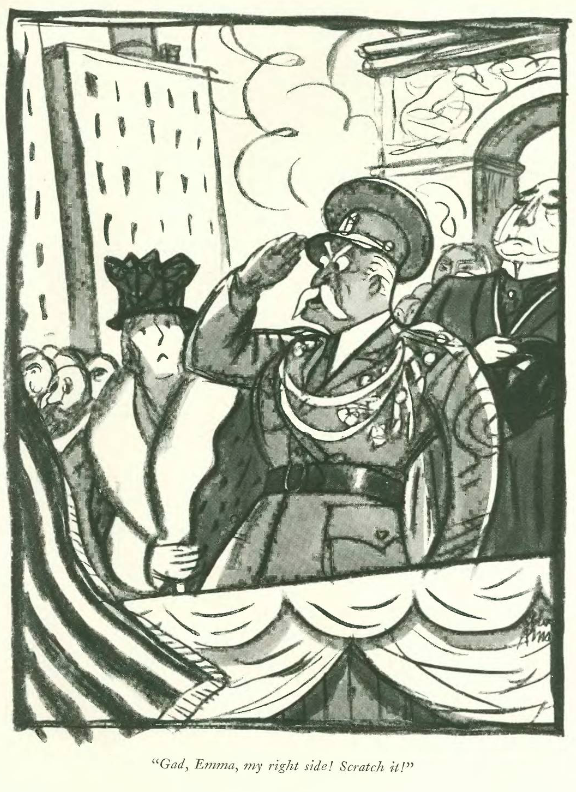
…and Peter Arno gave us his Major with a major itch to scratch…

Next Time: Frozen at 30 Rock…


Flying the Friendly Skies

A few posts ago (the April 11 issue) I wrote about E.B. White’s love of flying, and how his (and the nation’s) exuberance for aviation suddenly came crashing down along with Knute Rockne’s plane in a Kansas wheat field.

May 23, 1931 cover by Garrett Price.

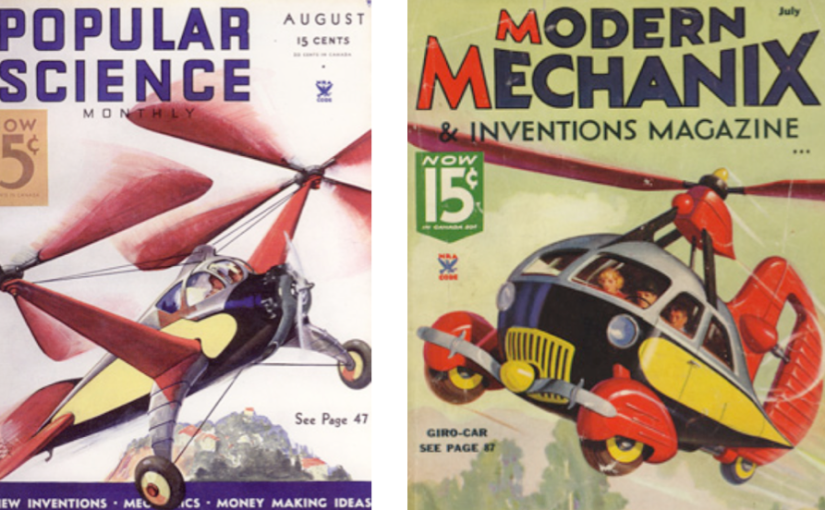
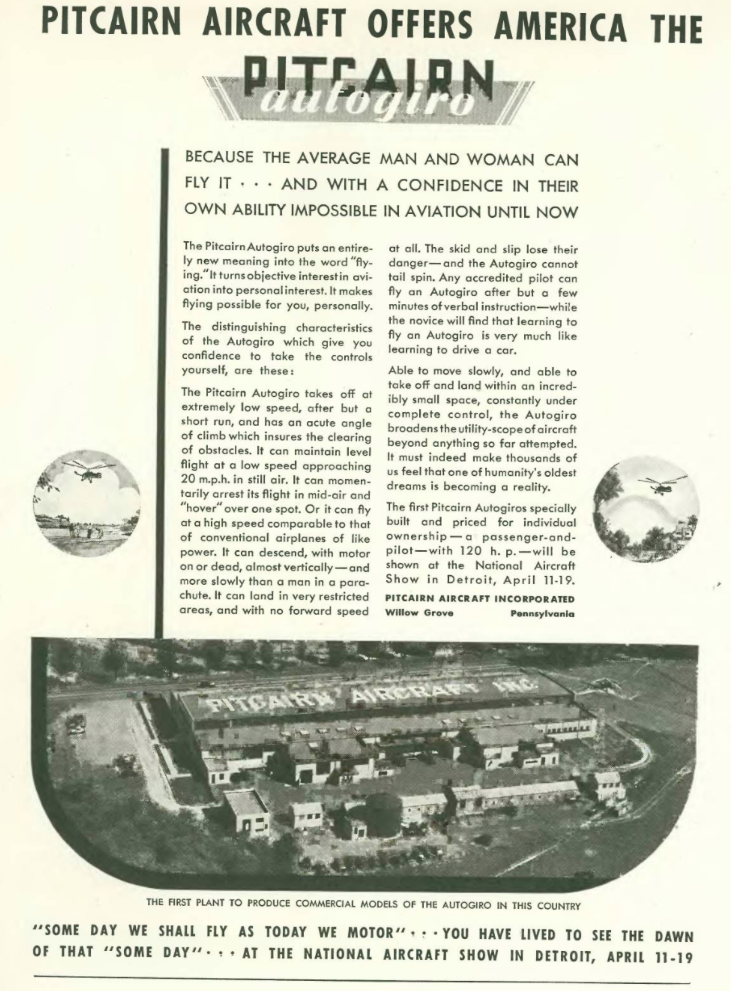
The death of the famed Notre Dame football coach had White pondering a new, safer path for aviation that seemed to be embodied in a contraption called the autogiro. White had previously written about the potential of the autogiro back in 1929 (Dec. 7 issue). Half-helicopter and half-airplane, it was considered not only safer, but easier to fly, possibly opening up the sky to everyday commuters.

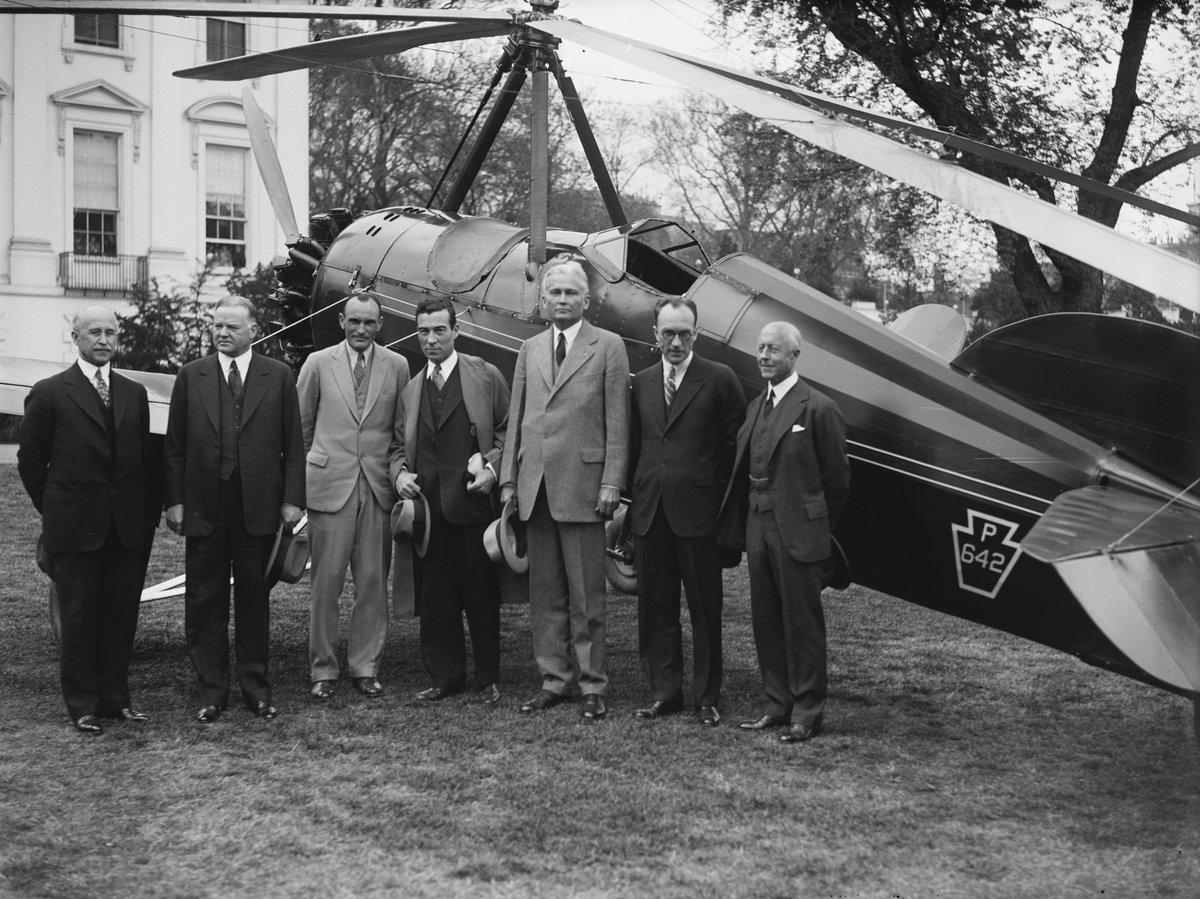
PHOTO OP…A Pitcairn PCA-2 Autogiro paid a visit to the White House on April 22, 1931. President Herbert Hoover is second from left. (Library of Congress)

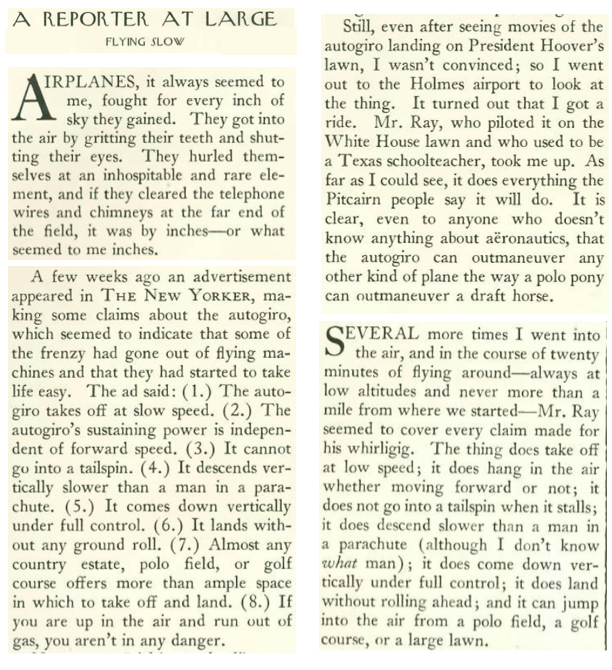
On a windy day White boarded the autogiro at an airport “in awful Queens” — most likely the current site of La Guardia — and filed this report for the “A Reporter at Large” column:

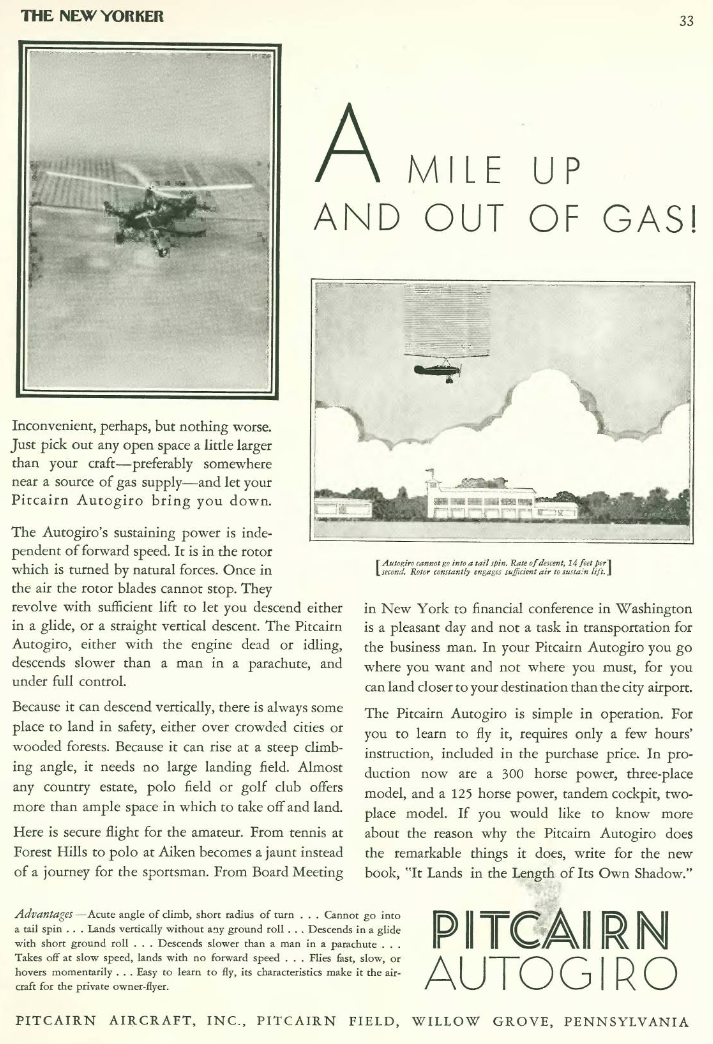
In the article, White referenced this Pitcairn Autogiro ad from the April 25, 1931 issue. No doubt the folks at Pitcairn had the Rockne accident in mind when they touted the safety of their craft, which seemed impossible to crash.

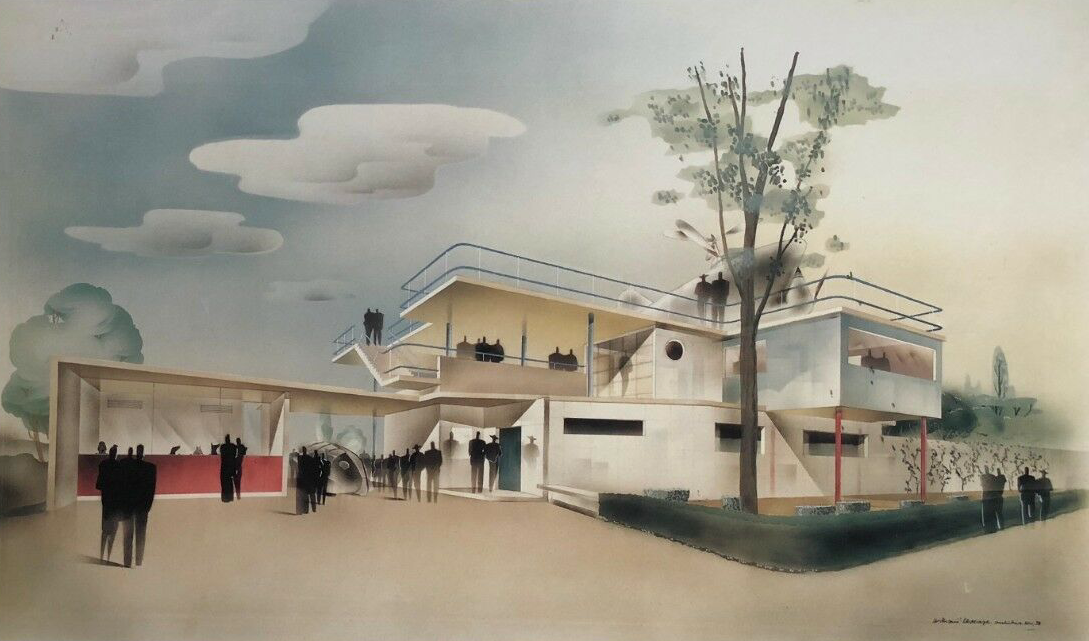
White wasn’t the only one enthused about the autogiro. It was the darling of modernist architects and futurists of 1920s and 30s, who saw the flying machine taking its place alongside the automobile in the house of the future.

SWEET…The Swiss-born architect and designer William Lescaze rendered this “House of the Future” in the late 1920s with a bullet-shaped motorcar in the carport and an autogiro perched on the roof. (From my print collection)
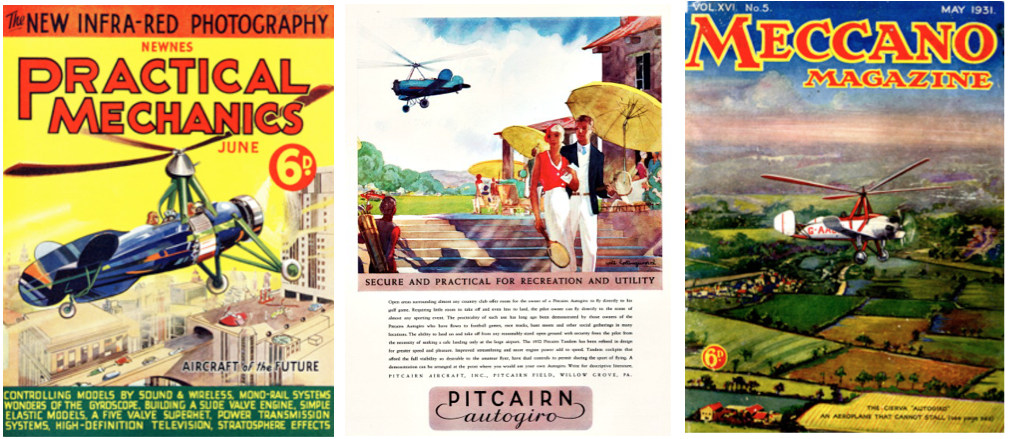
COMMONPLACE, AT LEAST IN THE IMAGINATION…The autogiro appealed to the average Joe or Jill as well, featured in magazines such as the U.K.’s Practical Mechanics (June 1934) and Meccano Magazine (May 1931). At center, a Pitcairn ad from 1930. (vtol.org)
WELL, IT WORKED…This two-seat AC-35 Autogiro (left) was developed for a Department of Commerce competition to create an “Aerial Model T.” James G. Ray, vice president and chief pilot of the Autogiro Company of America, landed the AC-35 in a small downtown park in Washington. D.C. on Oct. 2, 1936; at right, a still image from a 1936 film, Things to Come, which showed people of the year 2036 getting around in autogiros while wearing groovy futuristic togas. (Smithsonian/gutenberg.net.au)

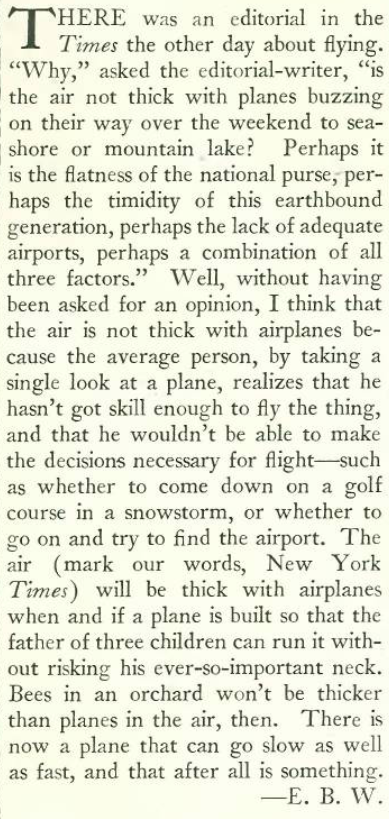
Prompted by a New York Times editorial, White pondered the day when the air would be thick with personal aircraft:

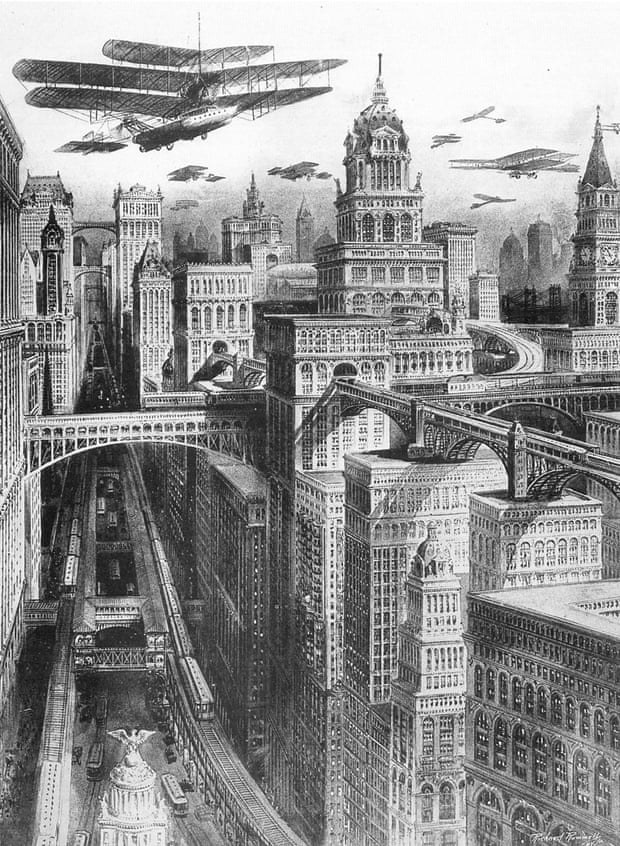
AND THEY LAND WHERE?…The idea of city skies filled with flying commuters is nothing new, as this 1911 illustration by Richard Rummell from King’s Views of New York attests. (The Guardian)

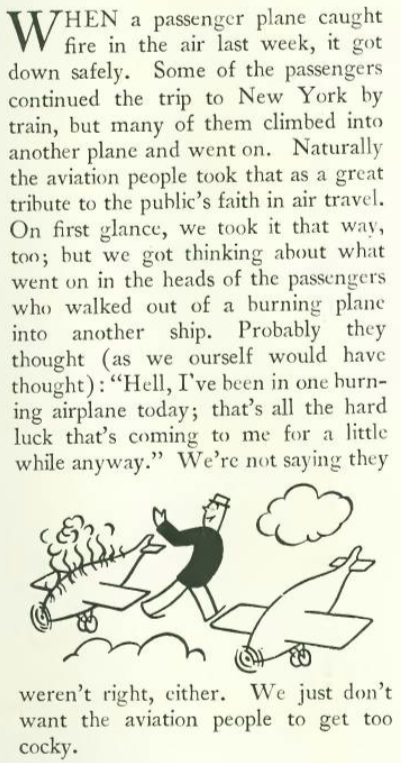
White offered still more observations on aviation safety in his “Notes and Comment” column…

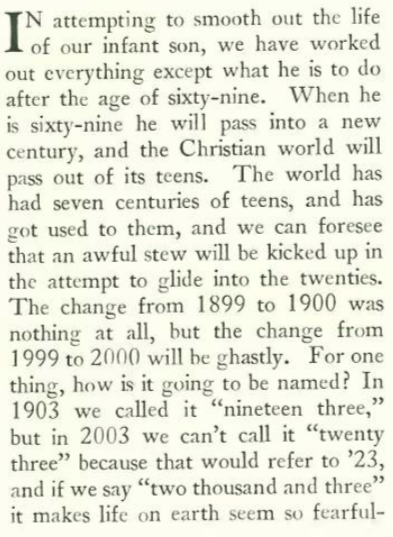
…and in the same column he also pondered the future in terms of his infant son, Joel White:

Sadly, Joel didn’t quite make it to the turn of the century — he died in 1997. He did, however, have a successful life as a noted naval architect and founder of the Brooklin Boat Yard in Brooklin, Maine.

ON GOLDEN POND…Joel White took to the water at a very young age, seen at left rowing a boat in an image from a home movie by E.B. and Katharine White; at right, Joel in his design office at the Brooklin Boat Yard, which he founded in 1960. (E.B. White Collection, Northeast Historic Film/Billy Black)

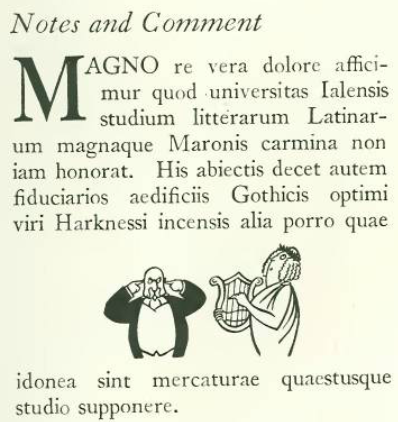
One more from E.B. White, this the lead item for his column which made jest of a debate at Yale over dropping the requirement for Latin. It says something to the effect that “Yale’s lead on the issue frees the rest of us to follow our fiduciary duty, toss tradition into the fire, and focus on practical matters such as traffic studies.”

 *  *  *

From Our Advertisers

The makers of Dawn “Ring-Lit” cigarettes seemed to have a winner on their hands with a smoke you could light like a match, but I can’t find any record of the company. Most likely this was a local brand sold at nightclubs, restaurants and hotels, and not through retail…

…Murad, on the other hand, was widely available, but the brand faded as tastes moved away from Turkish-style cigarettes…Rea Irvin illustrated a long series of ads for the brand, presenting various “embarrassing moments,” including this familiar trope involving office hijinx…

…summer was on the way, and the makers of Jantzen swimwear were establishing their brand as both the choice for athletes as well as the fashion-conscious…

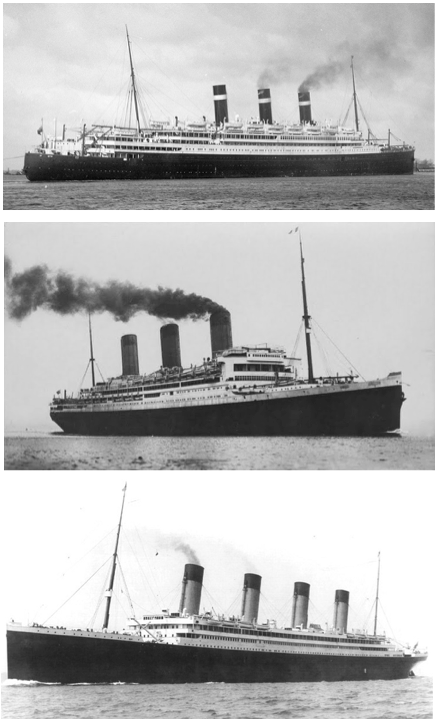
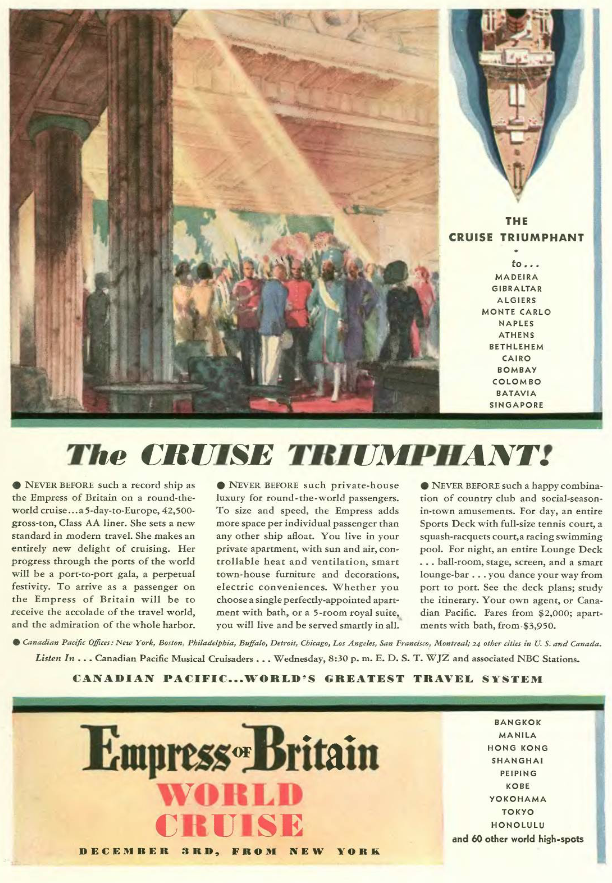
…and you might have packed a Jantzen or two for this around-the-world cruise on the Empress of Britain, arranged through Canadian Pacific. Your fare, if you wanted an “apartment with a bath,” would set you back $3,950, or a cool $63,000 in today’s currency…

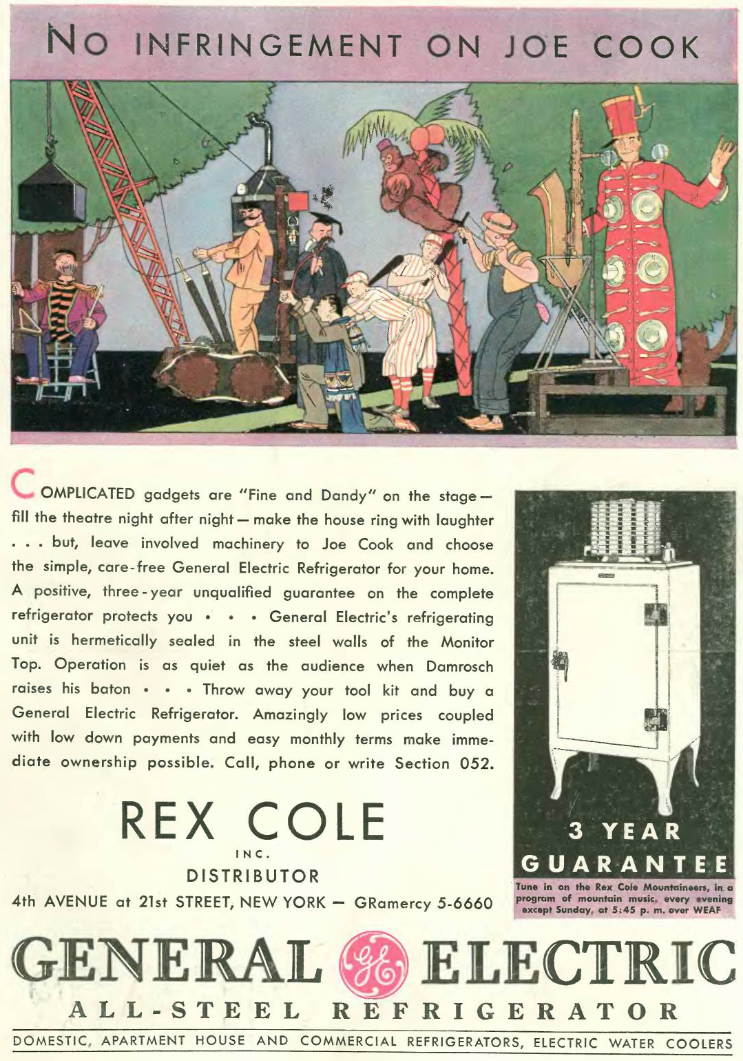
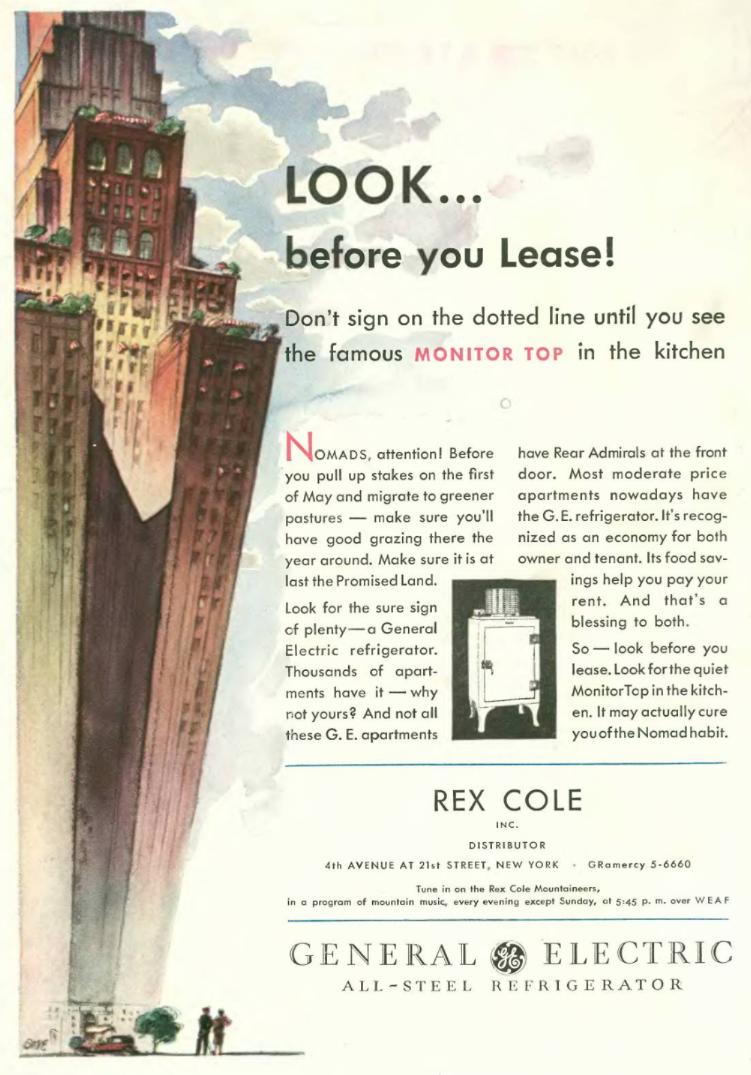
…if the cruise was too rich for your budget, perhaps you could put your money toward a durable good like a GE all-steel refrigerator. Note how GE contrasted its product with the overly complicated gadgets demonstrated on stage by popular vaudeville comedian Joe Cook

…on to the cartoons, William Steig gave us a glimpse of the important work taking place behind an exec’s closed doors…

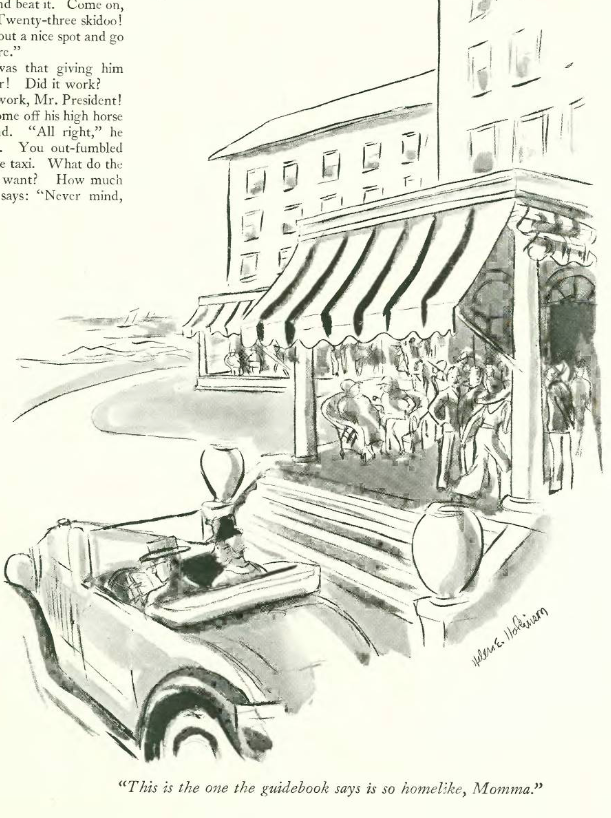
Helen Hokinson eavesdropped on a couple’s travel plans…

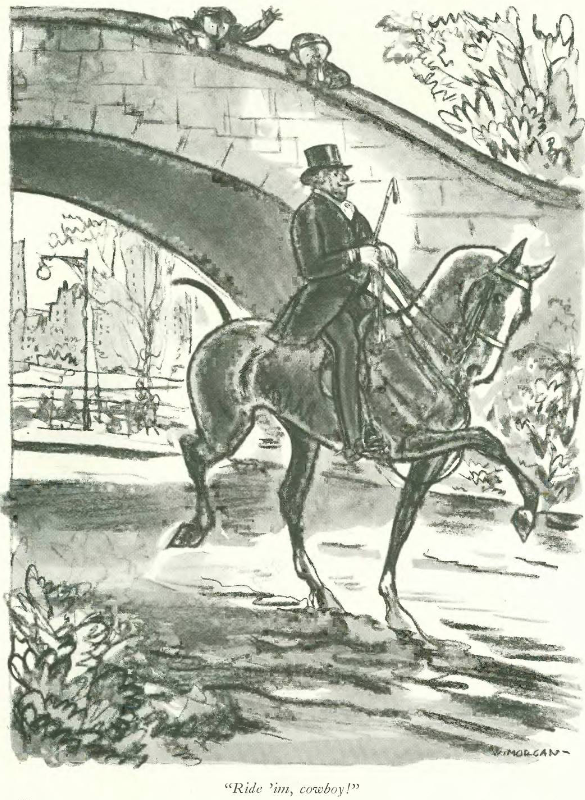
Wallace Morgan took us on a trot through Central Park…

Perry Barlow probed labor relations in an estate garden (and a caption with The New Yorker’s signature diaeresis on the word “coöperation”)

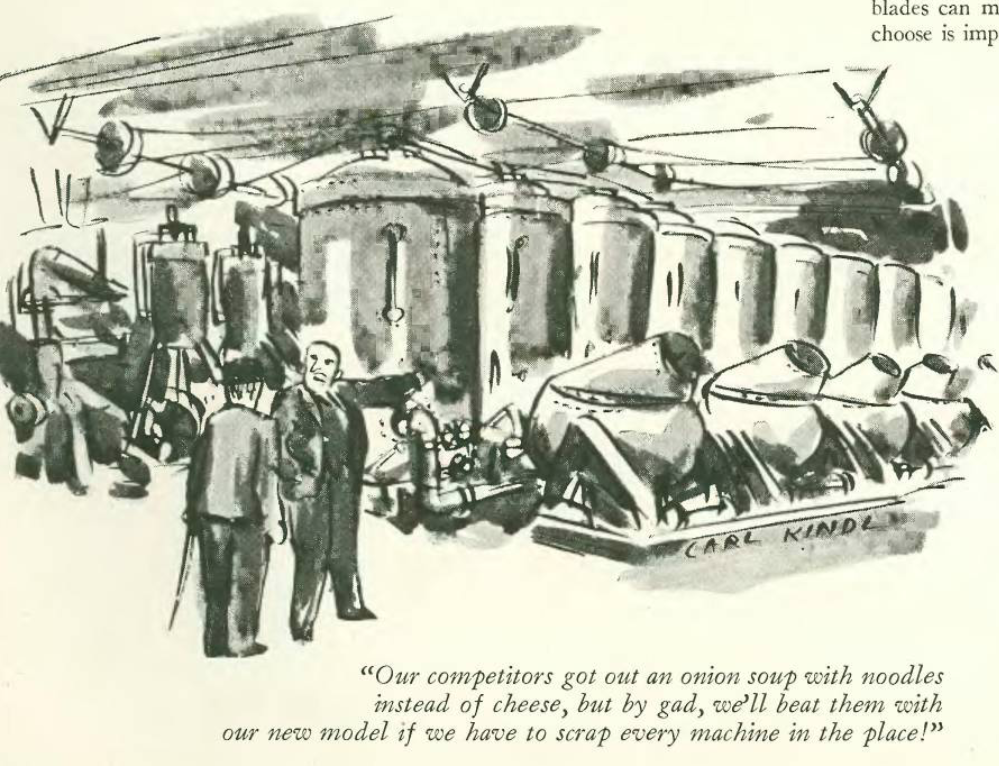
…and Carl Kindl gave a look into the latest maneuvers in the canned soup wars…

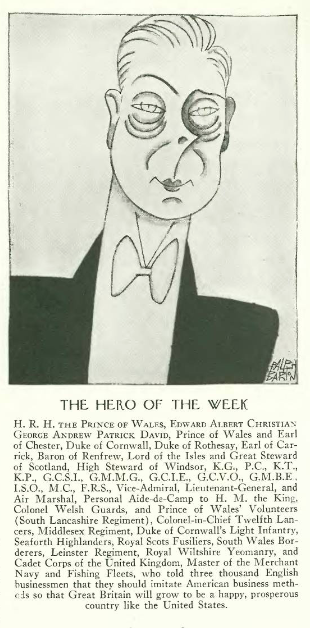
…and we end our May 23 cartoons on a sad note, with Ralph Barton’s final contribution to The New Yorker, a “Hero of the Week” illustration featuring the Prince of Wales:

On May 19, 1931, Ralph Waldo Emerson Barton, who suffered from severe manic-depression, shot himself through the right temple in his East Midtown penthouse. He was 39 years old.

From the outside one would have thought Barton had a wonderful life as a successful artist who lived in style, spent long vacations relaxing in France, and who hobnobbed with celebrities such as his close friend Charlie Chaplin.

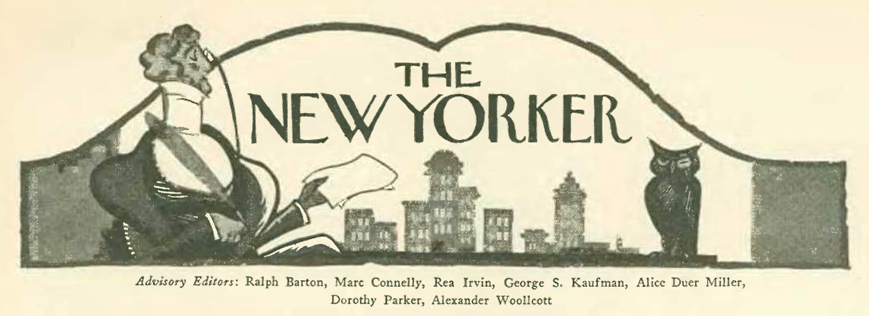
To lose a longtime contributor and friend must have been a real blow to the staff at The New Yorker. Barton had been there from the beginning, his name appearing on the magazine’s first masthead as an honorary advisory editor:

He was a prominent contributor to the magazine, from recurring features like his weekly take on the news—”The Graphic Section”—to theatrical caricatures that included clever caption-length reviews. He was married four times in his short life, most notably to actress Carlotta Monterey, his third (he was also her third marriage). She divorced Barton in 1926 and married playwright Eugene O’Neill in 1929.

In his suicide note, Barton wrote that he had irrevocably lost the only woman he ever loved, referring to Carlotta. But some speculate this claim was a final dramatic flourish, and that the end came because he feared he was on the verge of total insanity. He also wrote in the note: “I have had few difficulties, many friends, great successes; I have gone from wife to wife and house to house, visited great countries of the world—but I am fed up with inventing devices to fill up twenty-four hours of the day.”

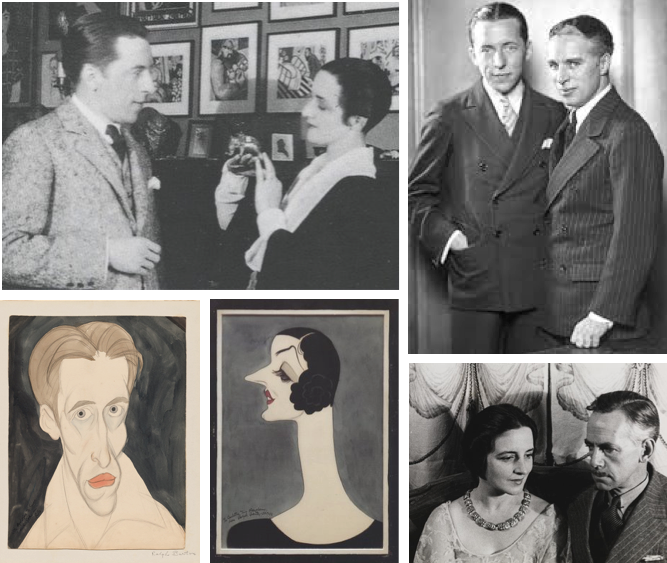
A CHARMED, TROUBLED LIFE…Clockwise, from top left, Ralph Barton with the love of his life, his third wife, actress Carlotta Monterey; Barton with best friend Charlie Chaplin, photographed by Nickolas Muray in 1927; after leaving Barton, Monterey would marry playwright Eugene O’Neill, who in a weird coincidence would become Chaplin’s father-in-law in 1943; a 1922 portrait of Carlotta by Barton; and a self-portrait from 1925, in the style of El Greco. “The human soul would be a hideous object if it were possible to lay it bare,” Barton wrote in 1926. (illustrationart.com/Pinterest/MCNY/curiator.com/npg.si.edu)

The following issue of The New Yorker (May 30, 1931)…

May 30, 1931 cover by Barney Tobey.

…featured this brief obituary on the bottom of page 28. I like the observation on the last line…his work had the rare and discomforting tingle of genius.

 *  *  *

The Gray & The Blue

We are reminded of the span of time and history that separate us from 1931 with this small item in “The Talk of the Town” that notes “fewer than a hundred” Civil War veterans were still alive in New York City. We just marked the 76th anniversary of D-Day, an event still 13 years into the future for this New Yorker writer:

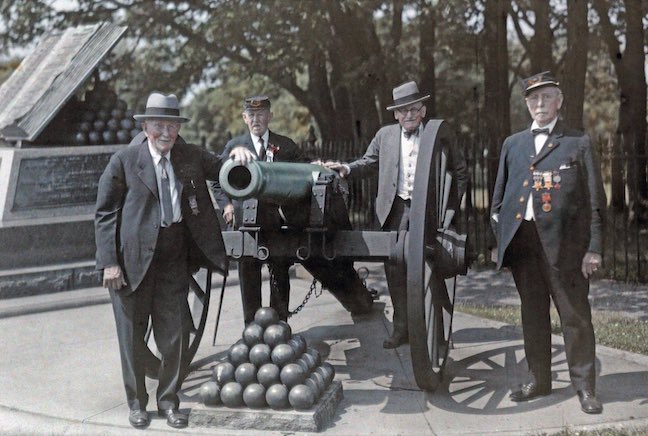
OLD WARRIORS…Union Civil War veterans stand in front a monument at Gettysburg, July 12, 1931. (National Geographic)

 *  *  *

From Our Advertisers

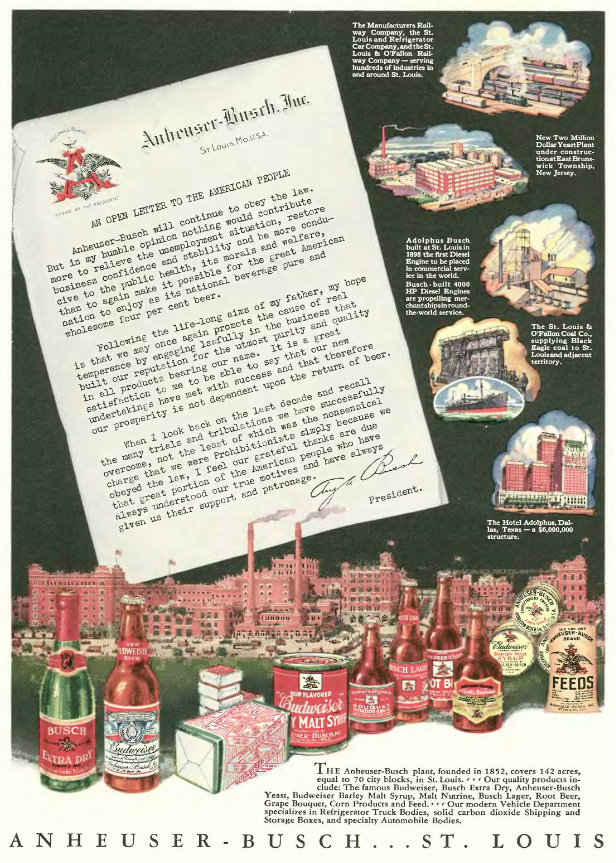
American brewers could sense the tide was turning on Prohibition laws, among them Augustus Busch, who took out a full page ad featuring “An Open Letter to the American People” that suggested a return to beer brewing would help relieve the unemployment situation caused by the Depression — note how the ad featured a variety of non-alcoholic products, but put the alcoholic beer at the head of the line…

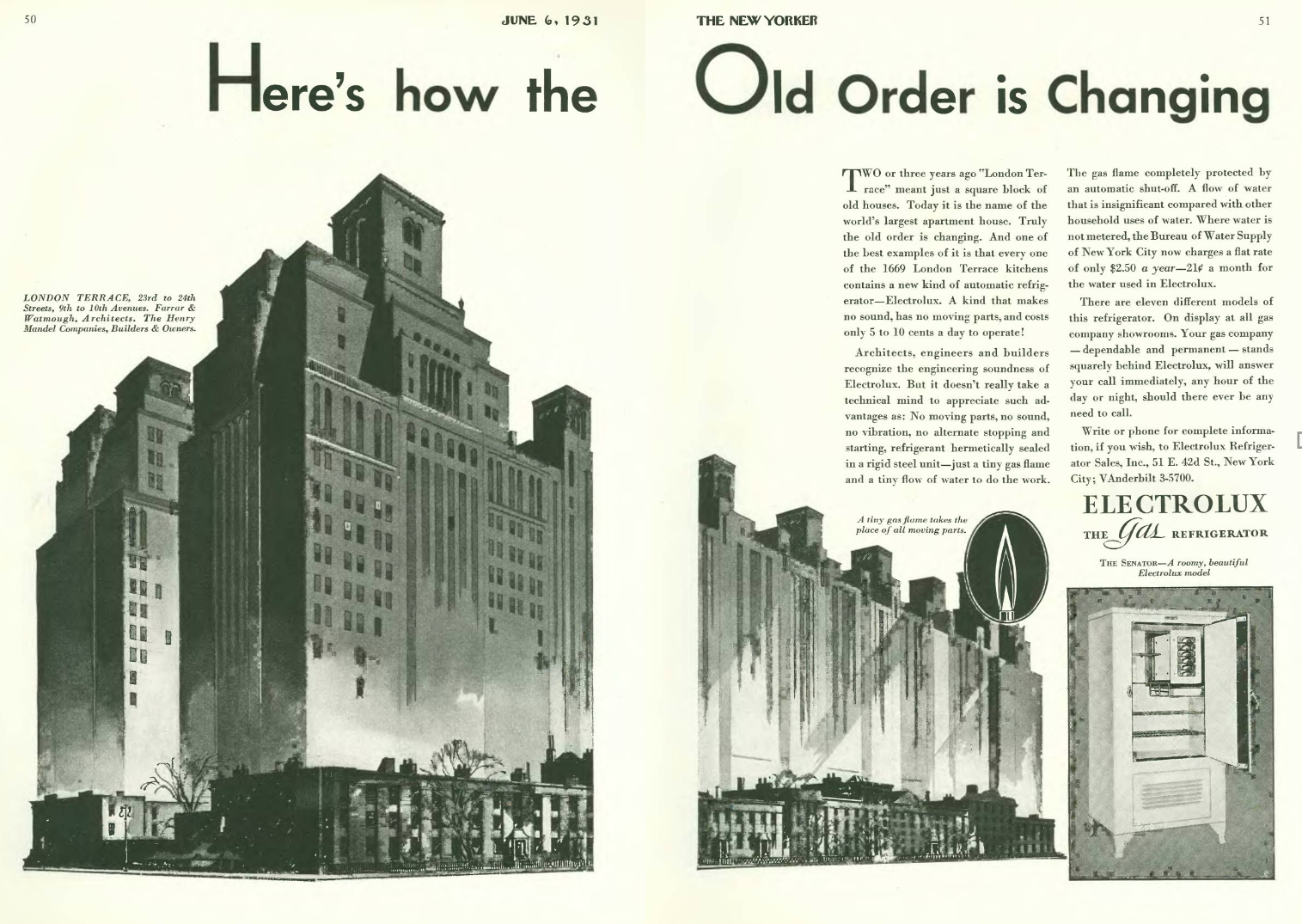
…Walking east on 24th Street past Chelsea’s London Terrace and on to Madison Square Park is one of my favorite strolls in Manhattan…there is something almost cozy about walking by this massive building, once the largest apartment house in the world…Electrolux found it impressive enough to pair it with their latest model refrigerator…

…a photo of London Terrace I took in December…

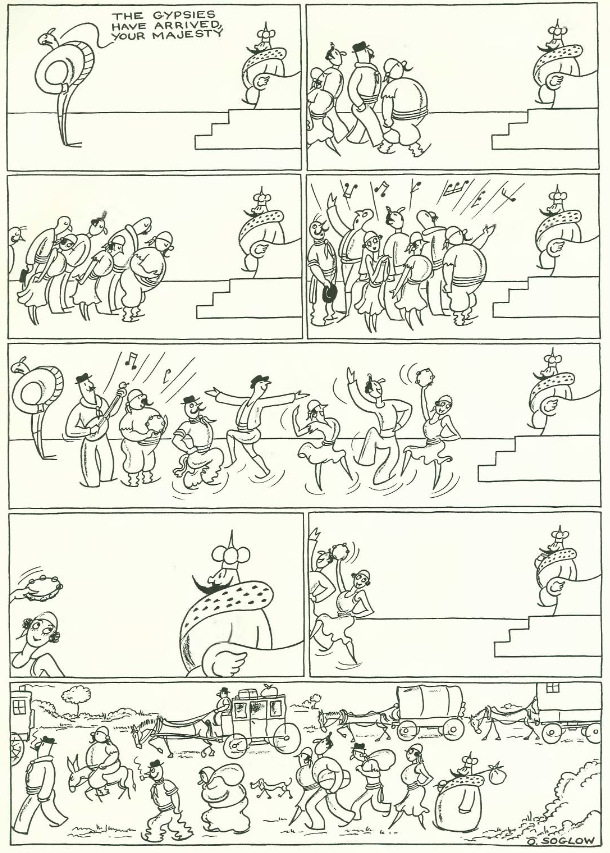
…on to our cartoons, we begin with Otto Soglow’s Little King…

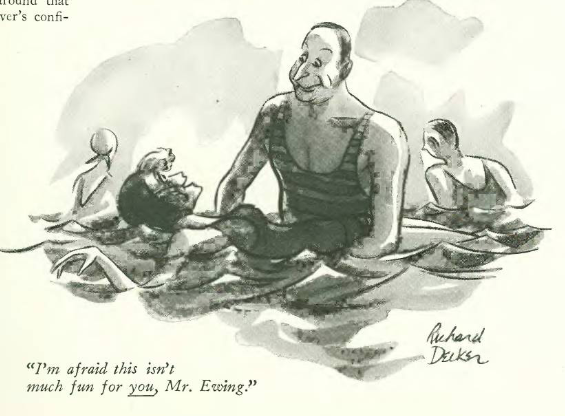
Richard Decker gave us another familiar comic trope, the postman and the housewife…

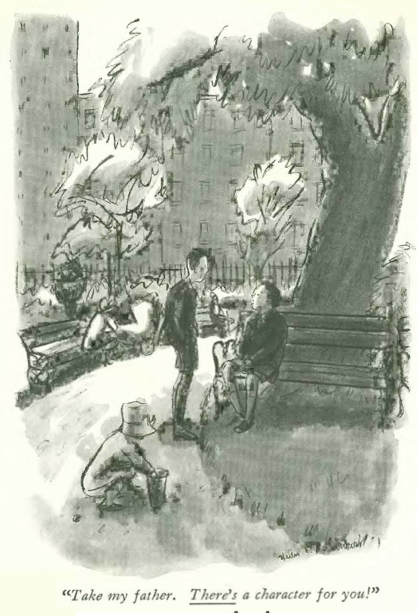
Helen Hokinson eavesdropped on some small talk…

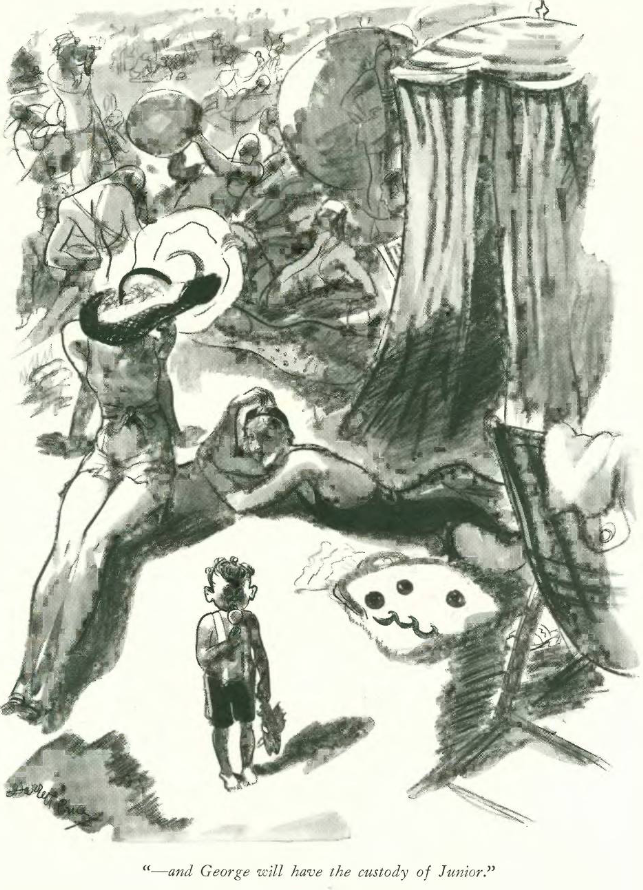
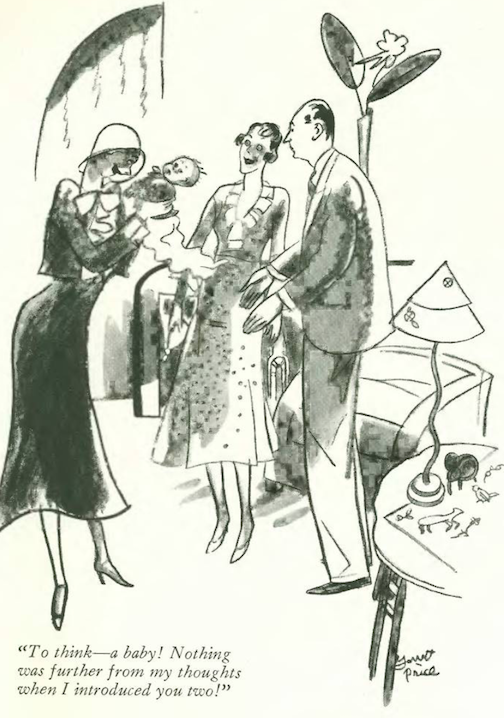
Garrett Price explored the joys of parenthood…

…and we close with Peter Arno’s unique take on family life…

Next Time: Rooftop Romance…

The Short Life of Two-Gun Crowley

Harold Ross founded The New Yorker as a sophisticated humor magazine, so when events in the city or the world took a serious turn, the writers and editors did their best to maintain its waggish tone.

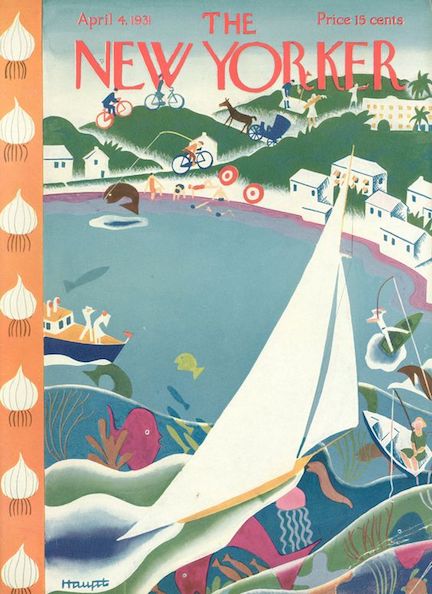
May 16, 1931 cover by Theodore Haupt.

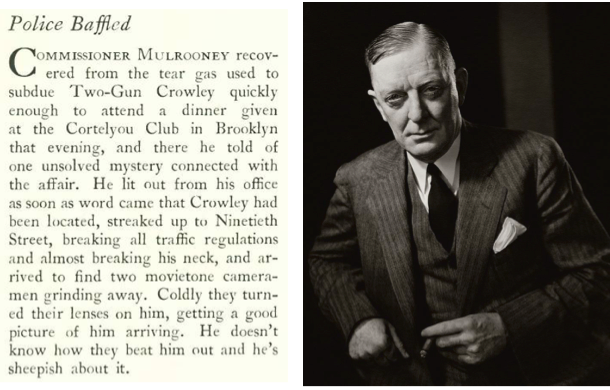
After two cold-blooded killers engaged police in a heated gun battle from a West 91st Street rooming house, the May 16, 1931 “Talk of the Town” had this to say about the incident:

At right, a 1933 portrait of Portrait Of Edward Mulrooney, Police Commissioner of New York City, by Edward Steichen. (Conde Nast)

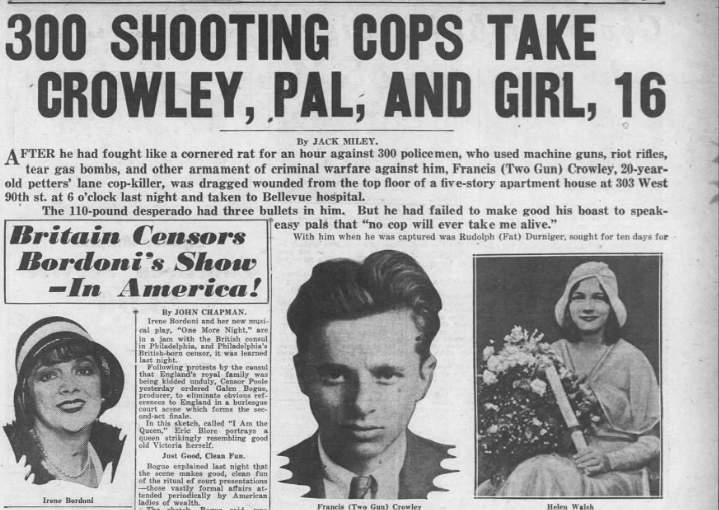
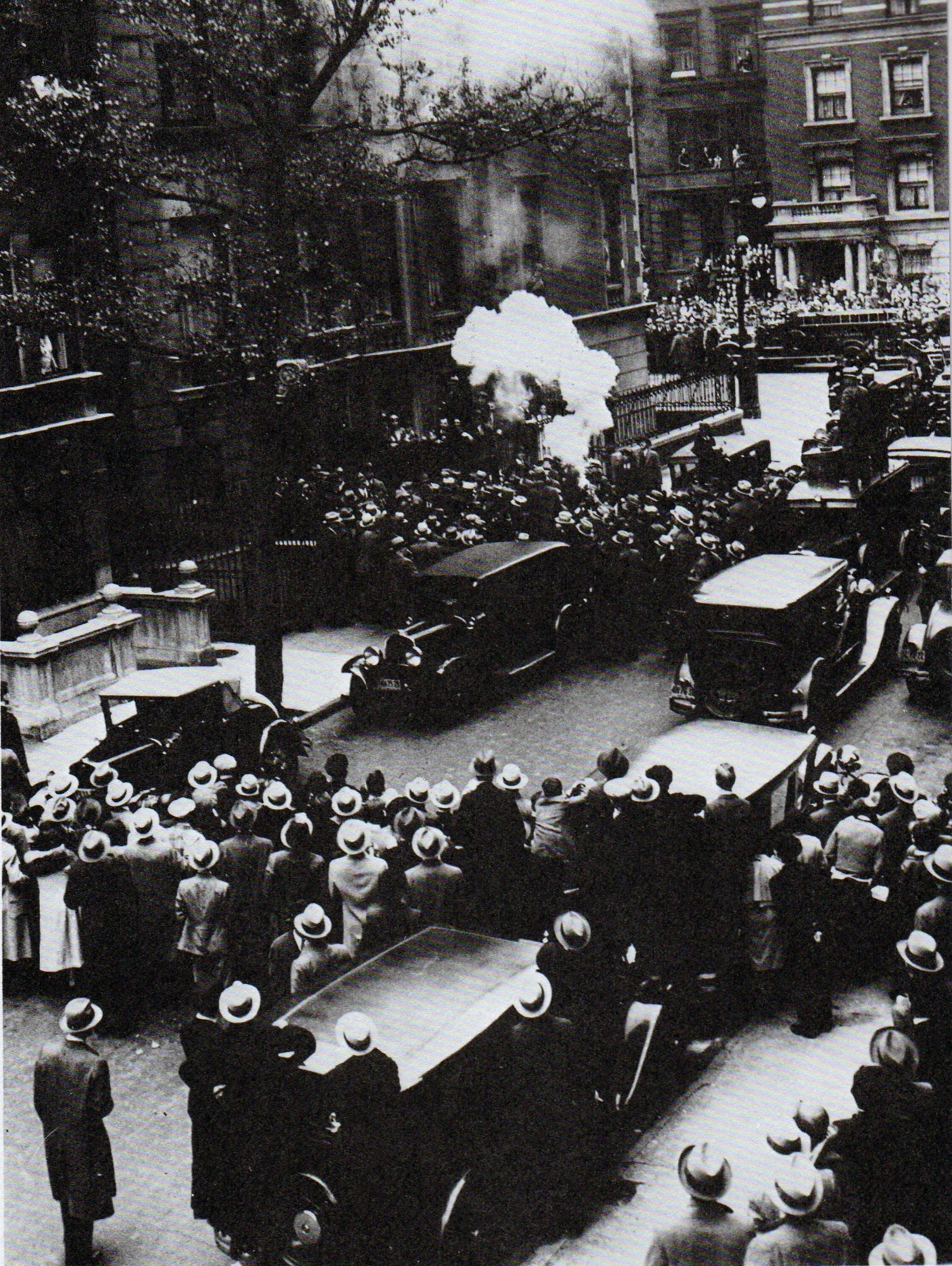
The New Yorker wasn’t alone in finding entertainment value in the gun battle. Safety standards were quite different in the 1930s, so as police exchanged heavy gunfire with 18-year-old Francis “Two Gun” Crowley, a crowd of 15,000 bystanders surrounded the scene, some just yards away from the action as the photo below attests:

THEY NEEDED SOCIAL DISTANCING…On May 7, 1931, Francis “Two Gun” Crowley exchanged gunfire with police for nearly two hours from the fifth floor of a rooming house on West 91st Street. A force of 300 police fired an estimated 700 rounds at Crowley’s apartment while a crowd of 15,000 spectators surrounded the scene. Not sure why the police stood in a huddled mass beneath the window of the shooter. Strength in numbers, perhaps. (ephemeralnewyork.wordpress.com)

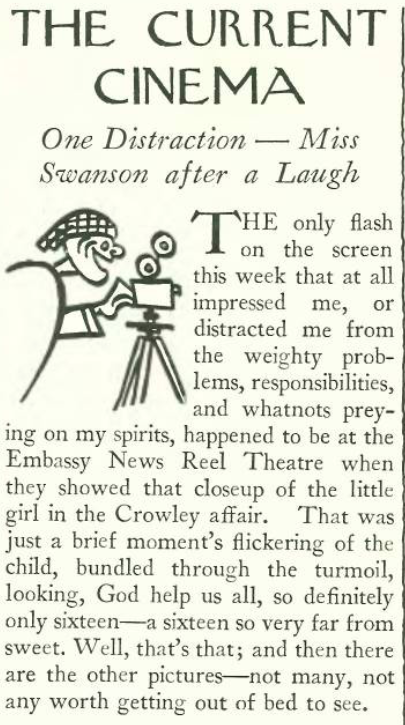
Another mention of the incident was in John Mosher’s film review column. He noted that the newsreel footage of the shoot-out was the best thing on the screen that week, and especially the moment when Crowley’s 16-year-old girlfriend Helen Walsh emerged from the building in the clutches of the police:

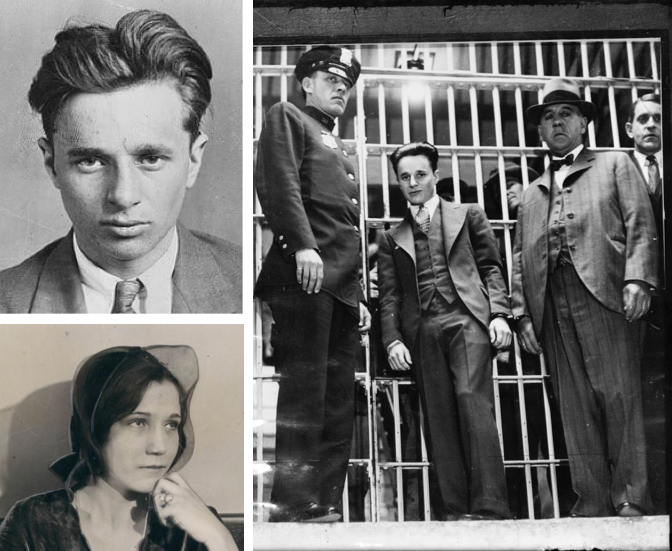
DON’T GET TOO COMFORTABLE…18-year-old Francis “Two Gun” Crowley (left) surrendered to police after suffering four gunshot wounds in the West 91st Street shootout, but would recover in time to be executed two months after his 19th birthday. At right, images from the newsreel show Crowley accomplice Fats Durringer being led away from the scene, along with Crowley’s girlfriend (bottom right), 16-year-old Helen Walsh. (Everett/YouTube)

By the end of the month Crowley was tried and convicted of the murder of a police officer, and his partner Fats Durringer was found guilty of brutally killing a dance hall hostess. Justice moved swiftly in those days, especially when the murder of a police officer was involved: On June 1, 1931—just three weeks after the shoot-out with police—Crowley and Durringer were sentenced to death. Only six months would pass before Durringer took a seat in Sing Sing’s electric chair. Crowley would follow his accomplice a few weeks later. As for Helen Walsh, she was released after testifying against Crowley and Durringer.

SHORT LIFE FOR SHORT KILLER…The diminutive Francis “Two Gun”Crowley, top, left, developed a habit of carrying more than one gun at all times, hence the nickname. At right, Crowley with officials at Sing Sing, where both he and partner Fats Durringer would meet their end in the electric chair. Below left, Crowley’s 16-year-old girlfriend Helen Walsh. Crowley was barely 19 years old when he was executed on Jan. 21, 1932. Among his last words, he asked the warden for a rag to wipe off the electric chair before he took his seat. “I want to wipe off the chair after that rat sat in it,” Crowley said, referring to Durringer, who had been executed weeks earlier, on Dec. 10, 1931. His request was denied. (www.swordandscale.com)

One final mention of the incident came from Ralph Barton, who named Police Commissioner Ed Mulrooney his “Hero of the Week”…

 *  *  *

Sub Sandwich

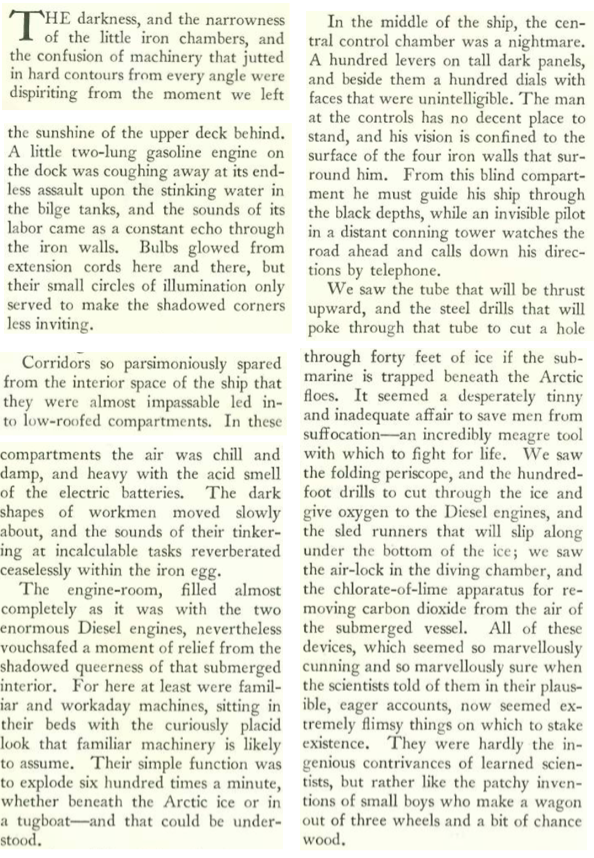
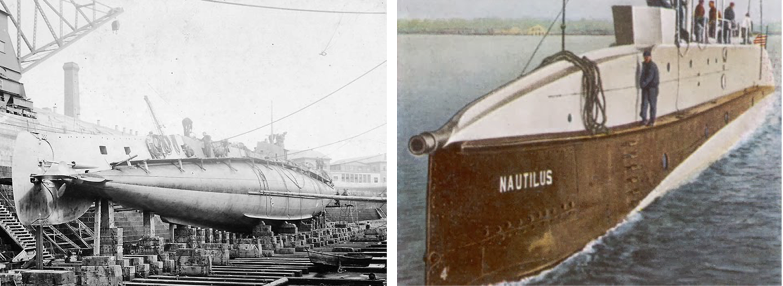
In his “Reporter at Large” column, Morris Markey paid a visit to the Brooklyn Navy Yard where Sir Hubert Wilkins and his crew were busy preparing a narrow, cramped submarine dubbed Nautilus for a trip beneath the ice of the North Pole. Markey marveled at all of the complicated devices crammed into the vessel, but at the same time wondered why anyone would stake their life on “such flimsy things”…

TIGHT QUARTERS…The Nautilus was a refurbished O-class submarine built in 1916 for the U.S. Navy. Somehow a crew of 20 crammed into the thing. (amphilsoc.org)
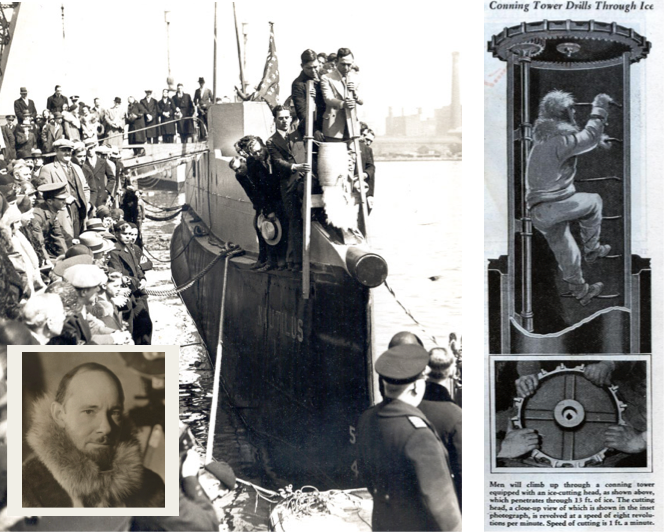
The Nautilus was fitted with ice drills that would allow access to the surface of North Pole ice, as well as provide air to the crew and the vessel’s diesel engines. All this equipment was untested and unproven, since at the time submarines were not able to snorkel and had never broken through ice to reach fresh air. Click to enlarge. (Modern Mechanix)

Markey wasn’t alone in thinking such an expedition was preposterous, and from the very beginning it was beset by problems. On the very first day of preparations, March 23, 1931, a crew member fell overboard and drowned. The next day, Lady Suzanne Bennett Wilkins (Sir Hubert’s wife) christened the submarine with a bottle of ice water rather than Champagne, which was unavailable due to Prohibition.

More on this in another post, but suffice to say Sir Hubert did not succeed in this endeavor, and perhaps should have listened to the advice of the Icelandic American explorer Vilhjalmur Stefansson:

DRY DOCK…Christened with a bottle of ice water rather than Champagne thanks to Prohibition, the Nautilus expedition, led by Sir Hubert Wilkins (inset), had to overcome many obstacles to reach the North Pole, including untested equipment such as a conning tower (right) designed to drill through ice to allow crew members to reach the surface of polar ice. (amphilsoc.org)

 *  *  *

Bright Star on Broadway

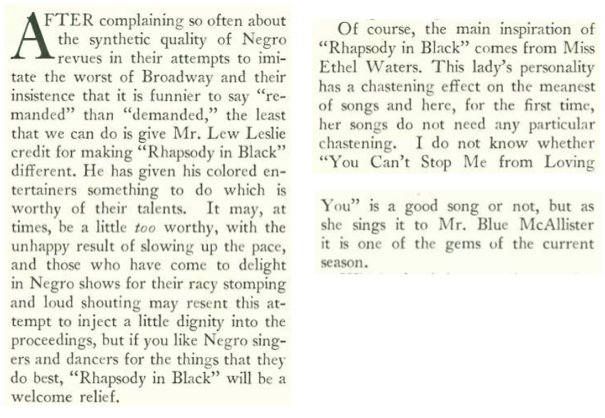
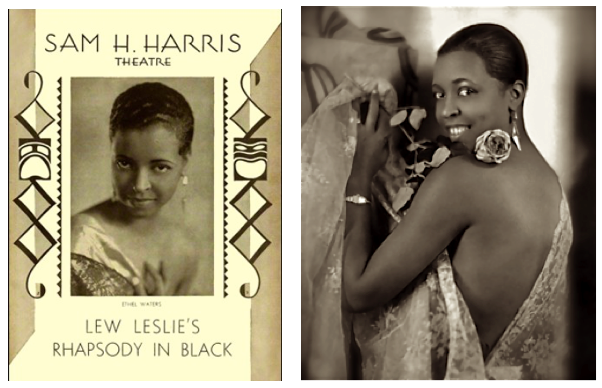
In spring 1931 Dorothy Parker subbed as theatre critic for her friend, Robert Benchley, and was greeted with a remarkably mediocre (or worse) line-up of shows. When Benchley returned to his post, things didn’t get much better until Rhapsody in Black came along with its inspiring star, Ethel Waters.

WELCOME RELIEF…Robert Benchley wrote that singer Ethel Waters had a “chastening effect” on even “the meanest of songs.” (Playbill/Carter Magazine)

 *  *  *

Six – Love

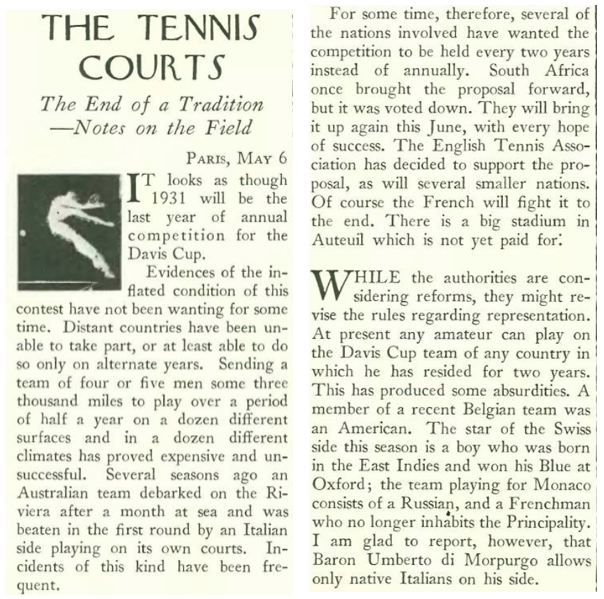
Eighty years ago sportswriter John Tunis declared that the Davis Cup international tennis competition would likely come to an end due to expense and the erosion of amateur play. Well, we know the Davis Cup is still around, and one wonders if Tunis was getting a whiff of sour grapes, since the French had won the cup five years straight, and would win again in 1932.

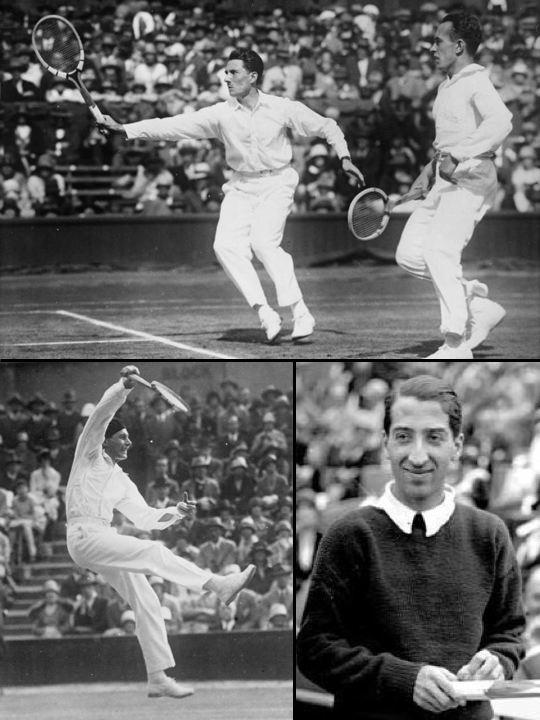
JEU, SET ET MATCH!…Dubbed Les Quatre Mousquetaires (“The Four Musketeers”), the French team of Jacques Brugnon and Henri Cochet (top), Jean Borotra (bottom left), and René Lacoste (bottom right) led France to six straight Davis Cup wins, 1927–1932. (Wikipedia)

 *  *  *

Old Gloria

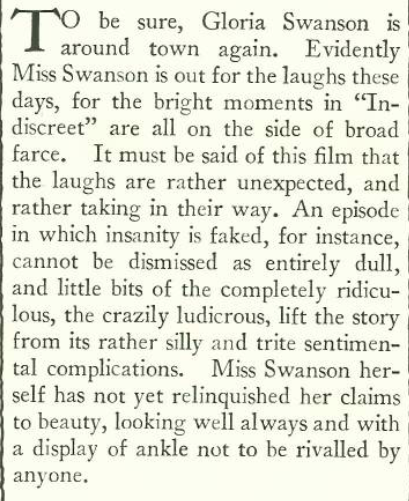
To be fair, Gloria Swanson was only 32 years old in 1931, but she was so deeply associated with the silent era that by the 1930s she seemed positively ancient (a status that she would brilliantly use to her advantage in 1950’s Sunset Boulevard). Mosher offered this “meh” review of her latest work — only her second completely-sound film — Indiscreet.

WHERE’S THE DOOR?…Ben Lyon seems perplexed by Gloria Swanson’s attentions in this theatre lobby card promoting Indiscreet. At right, Swanson delivers her trademark laser stare. (IMDB)

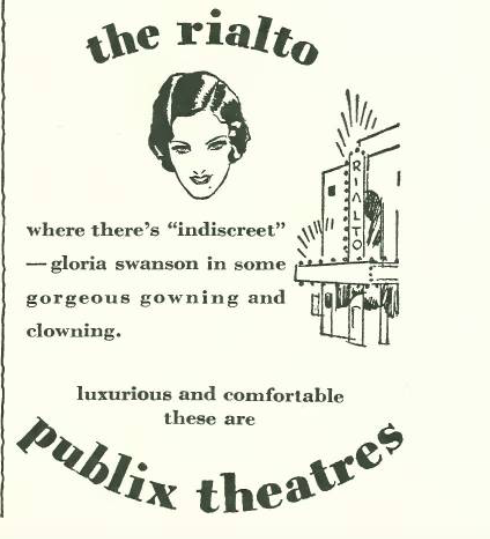
And we move on to our advertisers, with this ad from Publix Theatres (owned by Paramount) promoting Indiscreet

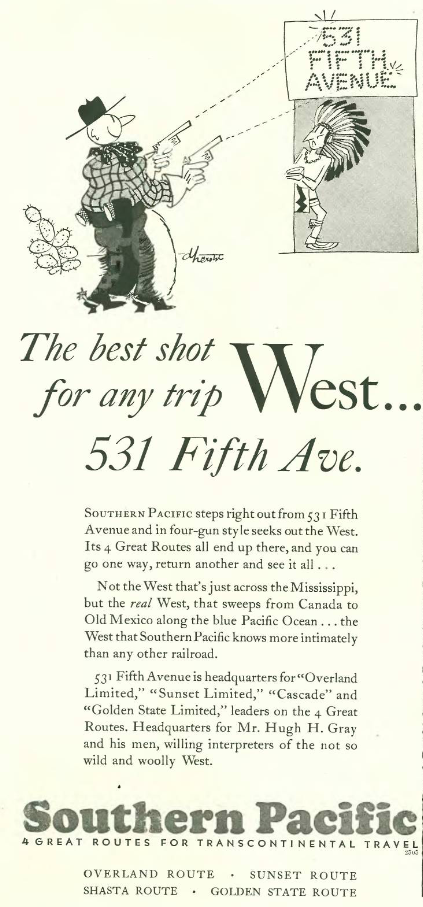
…Southern Pacific used a theme (illustrated by Don Harold) to promote travel on their trains that wouldn’t fly today…

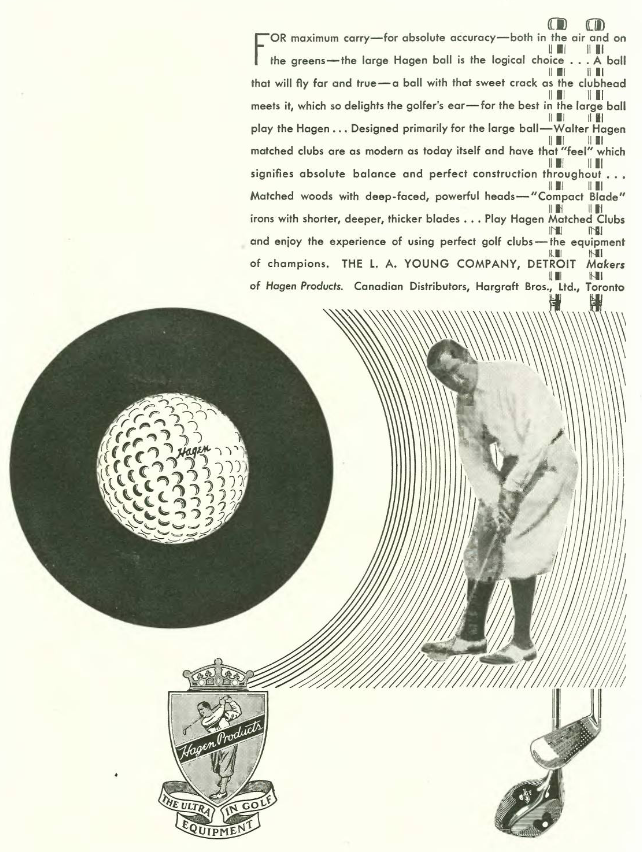
…I include this ad for the design, which seemed to have a little of everything…

…the makers of Camel cigarettes, however, reverted to a somewhat more homespun image, abandoning the stylish, euro-set illustrations of Carl “Eric” Erickson

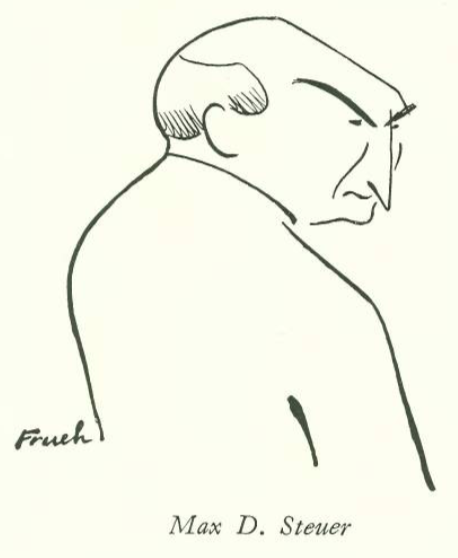
…on to our cartoonists, we have this caricature of Max Steuer by Al Frueh, rendered for a two-part profile…Steuer is perhaps best known for his successful defense of the factory owners after the 1911 Triangle Shirtwaist Factory Fire…

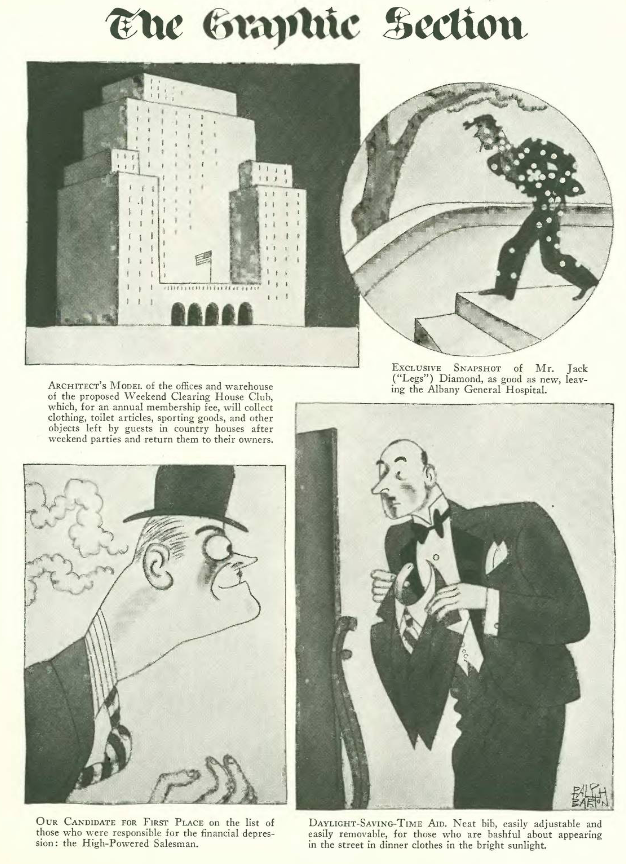
Ralph Barton again, with his “Graphic Section”…

Garrett Price weighed the durability of modern decor…

Barbara Shermund looked at gardening challenges in the ‘burbs…

Perry Barlow gave us a glimpse of something perhaps inspired by a trip to Europe…

Richard Decker conjured a boat salesman with a loaded question…

…and we end with the great James Thurber, and a cartoon that might not pass muster today…

Next Time: Flying the Friendly Skies…


Front Page News

It’s hard to beat Chicago as a source for hardboiled storytelling, and two of its best newspaper reporters, Ben Hecht and Charles MacArthur, would draw on their rough and tumble newsroom experiences to create one of Broadway’s most-beloved plays.

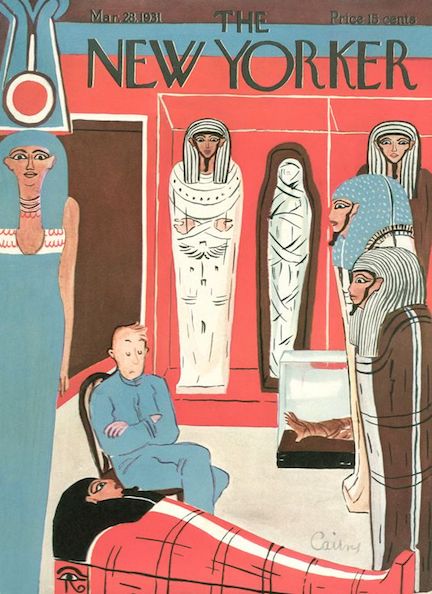
March 28, 1931 cover by Ruth Cairns.

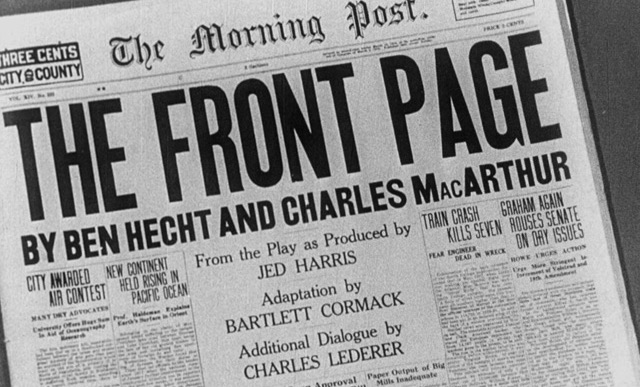
Although they were Chicago boys, The New Yorker crowd viewed Hecht and MacArthur as adopted (or perhaps naturalized) Manhattanites. So when John Mosher wrote his glowing review of the film adaption of The Front Page, he was writing about the work of a pair well known to the Algonquin Round Table set.

WE ❤ NY…Chicagoans Ben Hecht, left, and Charles MacArthur were familiar faces with the Algonquin Round Table crowd. (Chicago Tribune/Amazon)
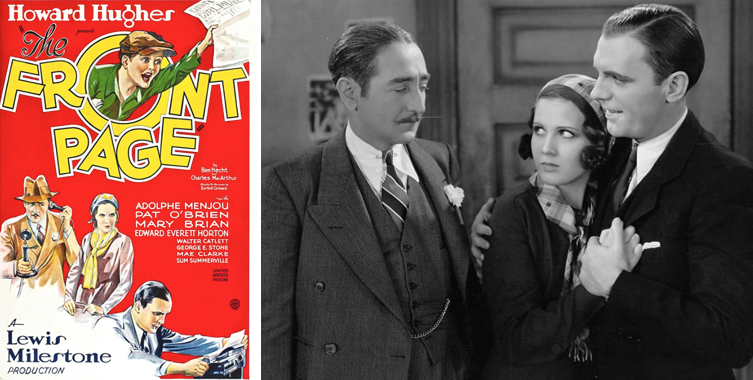
NEWSIES…Editor Walter Burns (Adolphe Menjou) sizes up his reporter Hildy Johnson (Pat O’Brien) and Hildy’s fiance Peggy Grant (Mary Brian) in The Front Page. (IMDB)

MacArthur (1895-1956) was especially close to the Algonquin group, having shared an apartment with Robert Benchley and a bed with Dorothy Parker in the early 1920s. In 1928 MacArthur would marry one of Broadway’s most beloved stars, Helen Hayes.

For his part, Hecht (1893-1964) contributed short fiction pieces to The New Yorker during its lean first years, 1925-1928. After the success of The Front Page, Hecht would go on to become one of Hollywood’s greatest screenwriters.

Here’s Mosher’s review:

Playwright and essayist James Harvey observes that The Front Page was “Hecht and MacArthur’s Chicago…(and) that counts most deeply in the imagination of Hollywood. And their play, the first of the great newspaper comedies, did more to define the tone and style, the look and the sound of Hollywood comedy than any other work of its time.”

DESK JOB…Hildy Johnson (Pat O’Brien) and Molly Malloy (Mae Clarke) hide escaped murderer Earl Williams (George E. Stone) in a rolltop desk in 1931’s The Front Page. (Everett)
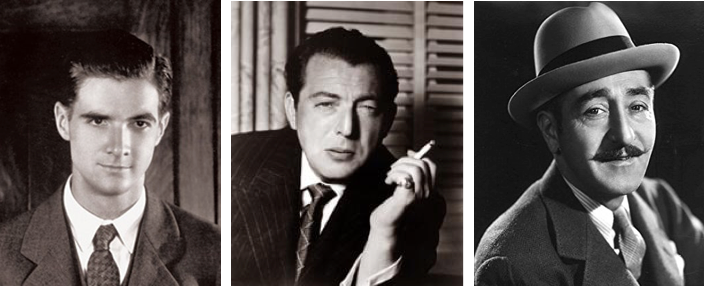
TRIUMPHANT TRIUMVIRATE… Following up on the success of his famously over-budget war film Hell’s Angels (1930), Howard Hughes (left) had another hit on his hands as co-producer of The Front Page; at the Fourth Academy Awards the film was nominated for Best Picture, Lewis Milestone (center) for Best Director, and Adolphe Menjou (right) for Best Actor. (Wikipedia/IMDB)

A footnote: Ben Hecht and Charles MacArthur were close throughout their careers, and remain so even in death: they are buried near each other on a hilltop in Oak Hills Cemetery, Nyack, NY.

 *  *  *

From Our Advertisers

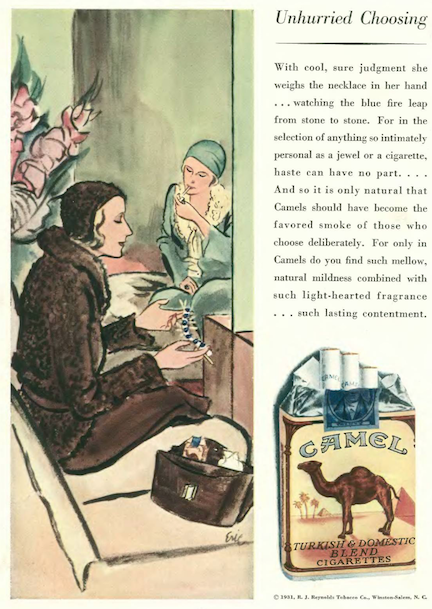
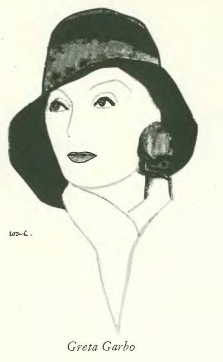
In the late 1920s and early 1930s several illustrators drew inspiration from the style Carl “Eric” Erickson made famous with his elegant series of ads for Camel cigarettes…I’m not sure if this ad (part of a series promoting “The New Chevrolet Six”) is by Erickson or an imitator, but it seems the artists were likely inspired by the actress Greta Garbo and her signature beret…

…and for comparison, an Erickson Camel ad from the March 21, 1931 issue…

…and our inspiration, Greta Garbo circa 1930…

…those Chevy buyers might have considered investing in Velmo mohair upholstery to boost the resale value of their auto…

…among other technological wonders of the age — furniture crafted from aluminum, soon to become ubiquitous in workplaces across the country…

…and then there was the electric refrigerator, still new to a lot of households in 1931 as icemen began to hang up their tongs and head for the sunset…

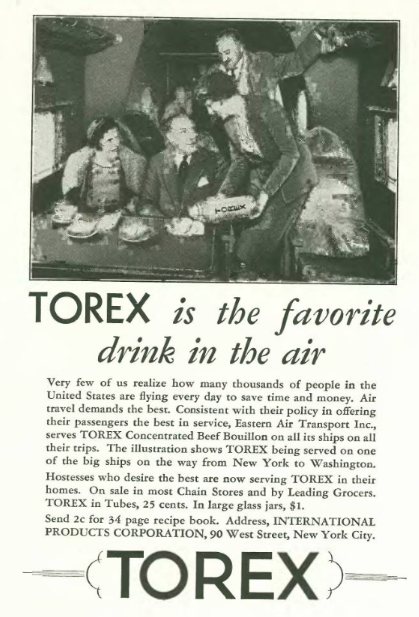
…if you were a modern man or woman of means, you could ditch the auto altogether and get yourself a Pitcairn autogiro…

…in the 1920s and 30s the autogiro was considered by many to be the transportation of the future, a flying machine as easy to operate as driving a car…

HEY DAD, CAN I HAVE THE KEYS TO THE AUTOGIRO?…Above, a Pitcairn PCA-2. In the 1920s and 30s, many future-forward designers imagined the autogiro as the flying car of tomorrow. (Wikipedia)

…for those who preferred to be passenger rather than pilot, they could relax in the comfort of an airplane cabin and enjoy some…hmmm…beef broth! From what I understand, passenger flight was not this cosy in 1931…this was long before pressurized cabins, when you had to mostly fly in the weather, and not above it, and you probably had to fight to keep from upchucking that Torex all over the lovely flight attendant…

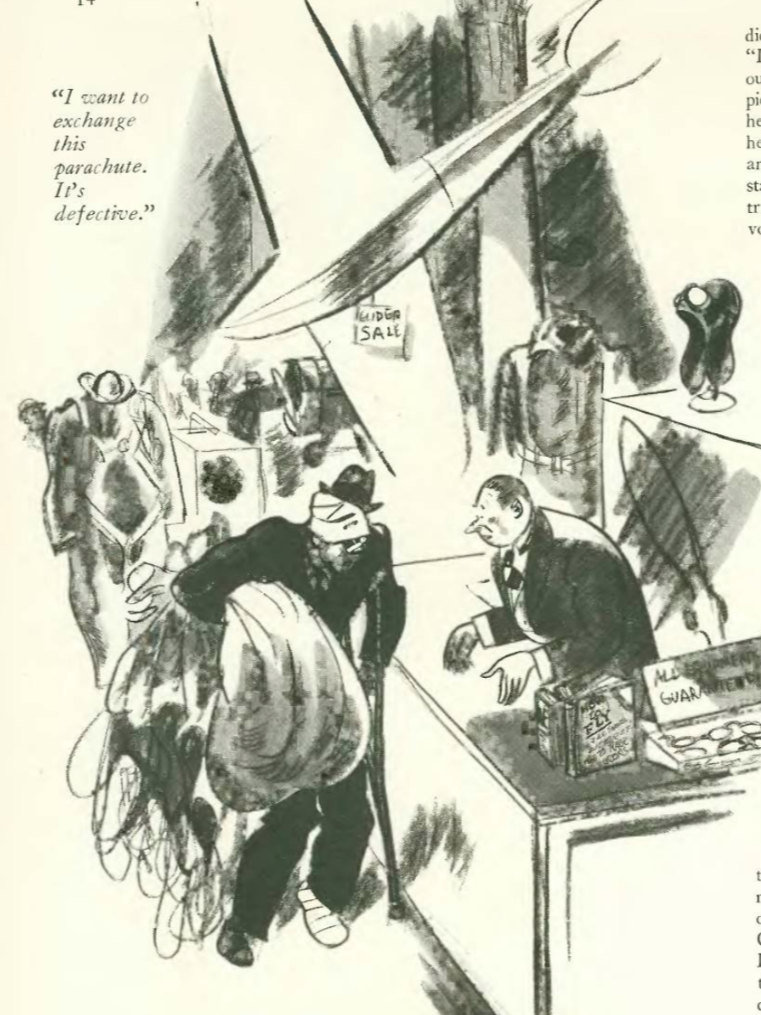
…while we are on the subject of flight, we turn to our cartoons, beginning with Garrett Price

…meanwhile, William Steig explored the trials of young love…

…a rare two-pager from Ralph Barton

Leonard Dove adopted an alias for a cartoon that seems inspired by a recent trip to Persia…

Otto Soglow illustrated one man’s dilemma at a bus stop…

Gardner Rea found offense in an unlikely setting…

Barbara Shermund defined pathetic in this sugar daddy’s boast…

…while on the other end of the spectrum, I. Klein illustrated the burdens of life as a Milquetoast…

…and we sign off with Mary Petty, and one woman’s terms of endearment…

Next Time: Last Stand for Beau James…

Age of Wonders

Despite the deepening economic depression, work continued apace on a number of large building projects that were transforming the Manhattan skyline, including the Empire State Building, which was being readied for its May grand opening.

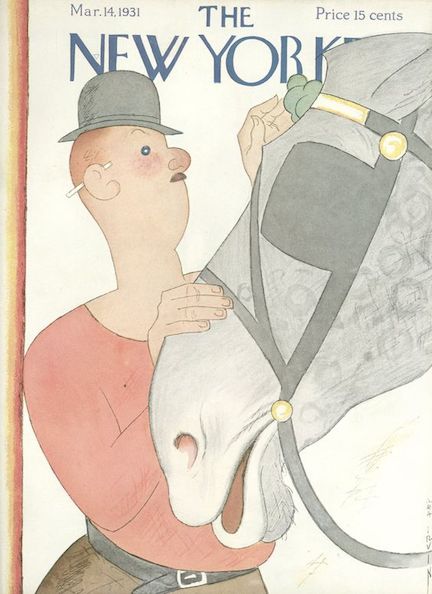
March 14, 1931 cover by Rea Irvin.

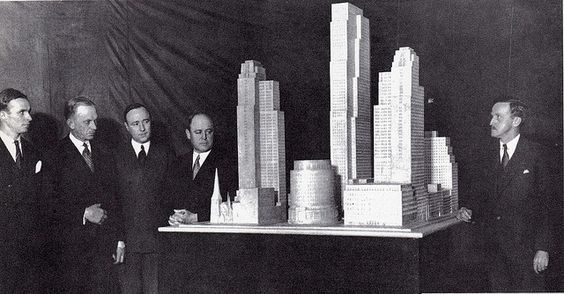
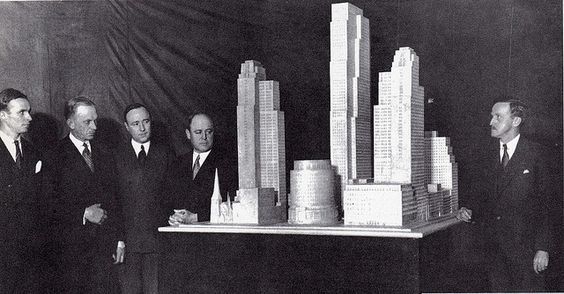
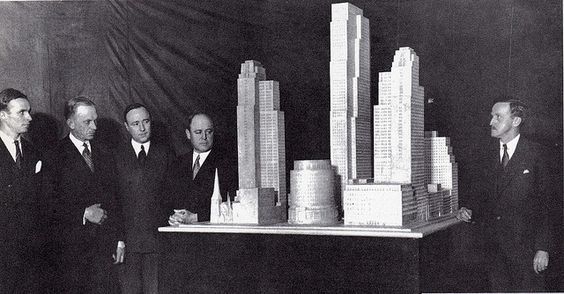
Developers also looked to the future, including the Rockefeller family, who commissioned a massive project in Midtown — 14 buildings on 22 acres — that would be one of the greatest building projects in the Depression era…

SAY ‘CHEESE’…A group of dour-looking developers unveil an early model for Rockefeller Center, March, 1931. (drivingfordeco.com)

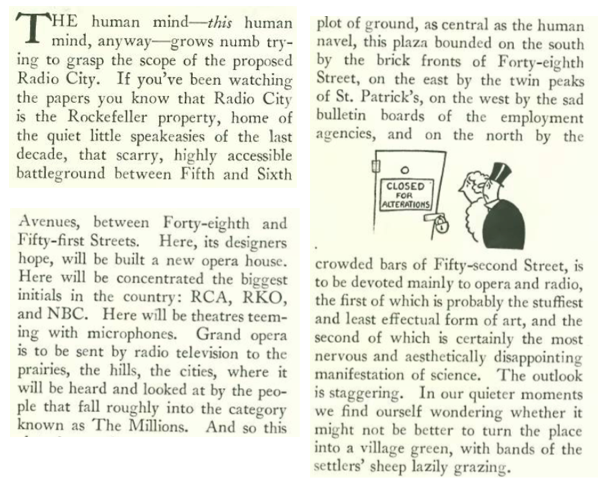
…so great that even E.B. White found the proposed Rockefeller Center difficult to fathom:

DECO DREAM…Conceptual rendering of the Rockefeller Center complex by architectural illustrator John C. Wenrich. (beyondarchitecturalillustration.blogspot.com)

 *  *  *

Star Power

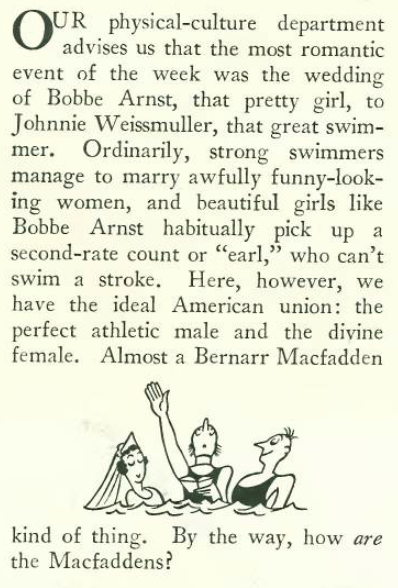
The Depression years also offered lesser diversions, and there’s nothing like celebrity culture to distract one’s mind from daily woes. For our amusement, E.B. White offered up the recent nuptials of Olympic swimmer (and future Tarzan movie star) Johnny Weissmuller and Ziegfeld singer/showgirl Bobbe Arnst…

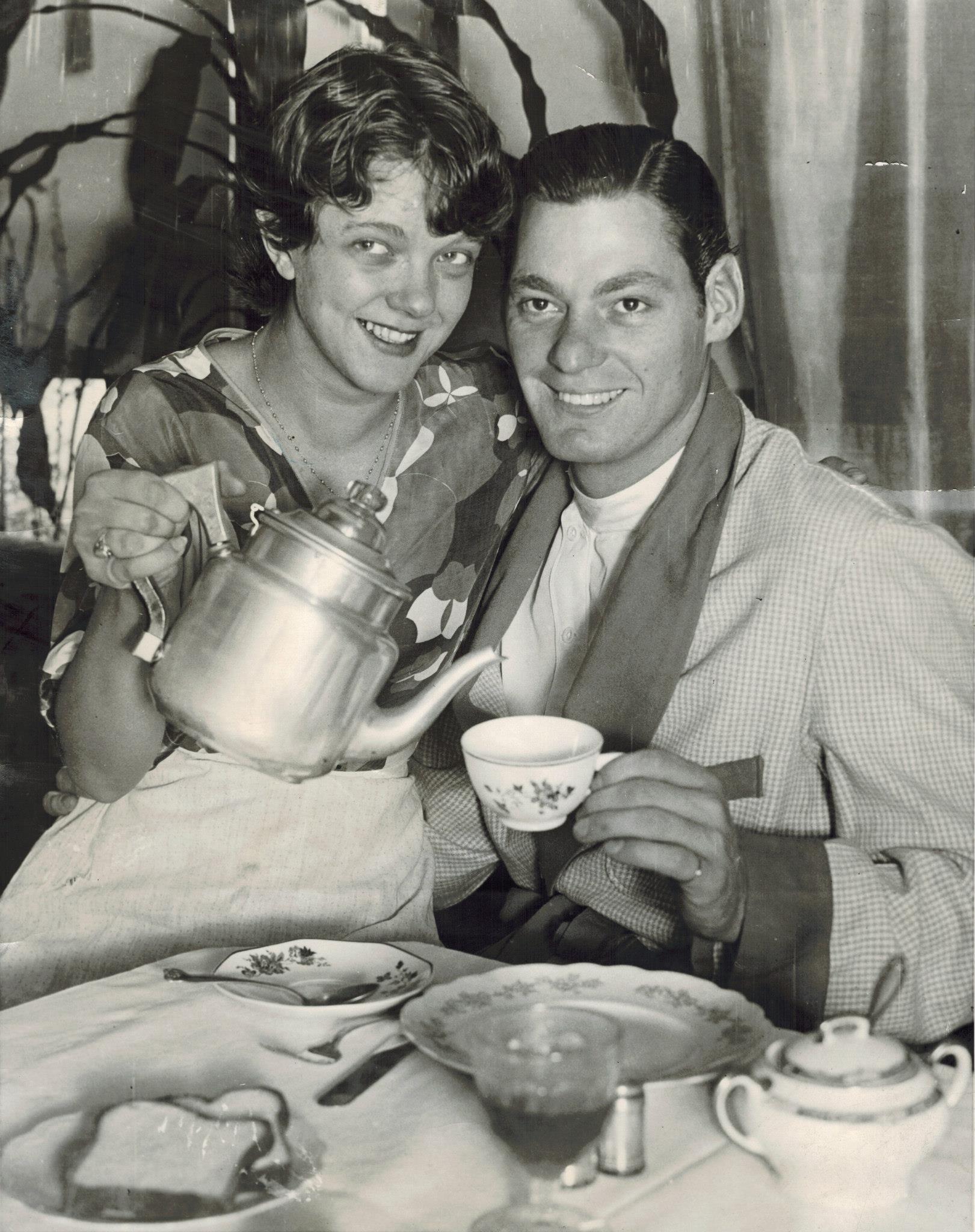
MONKEY’S UNCLE…Newlyweds Johnny Weissmuller and Bobbe Arnst pose for photographers in 1931. The marriage would last two years. In 1932 Weissmuller would appear in his first “Tarzan” movie, Tarzan the Ape Man, and after divorcing Arnst would marry four more times. (Pinterest)

…of course there’s no better place to find celebrities than Hollywood, where Marlene Dietrich was collecting good reviews for her latest film, Dishonored. Critic John Mosher was absolutely gah gah over the German actress…

COME HITHER IF YOU DARE…Marlene Dietrich portrayed Agent X-27 in Josef Von Sternberg’s 1931 spy film Dishonored. (IMDB)

…if you preferred the stage to the screen, you could check out a show on Broadway, but if you were Dorothy Parker (subbing as theater critic for her pal Robert Benchley), you’d have trouble finding anything worth watching. Her latest review was something of a double-whammy: not only was the play a stinker, but it was written by one of Parker’s least-favorite authors, A. A. Milne

…AND MY MONEY BACK, TOO…

 *  *  *

Cinéma Vérité

However, Dorothy Parker could have found consolation in the fact that someone, somewhere, had it a lot worse. For example, the eight defendants in a Soviet show trial, filmed for the edification of the masses and as a warning to opponents of the Bolshevik Revolution. In this warm-up for the Great Terror to come, five of the eight were condemned to death after making what were obviously forced confessions. John Mosher had this to say about the real-life horror film:

PRELUDE TO MADNESS…Scenes from the Treason Trial of the Industrial Party of Moscow. Above, filming the proceedings; below, one of the accused scientists confessing his “crimes” against the state. (moderntimes.review/YouTube)

 *  *  *

End of the World, Part II

In my last post we saw how E. B. White mourned the end of The New York World newspaper in a lengthy “Notes and Comment” entry. By contrast, White’s colleague Morris Markey wasn’t shedding any tears for a newspaper he believed had seen its better days. Markey shared his observations in his March 14 “Reporter at Large” column…

AFRAID OF THE DENTIST? Murder suspect Arthur Warren Waite, a dentist from Grand Rapids, Michigan, appeared at Criminal Courts in New York City on May 22, 1916, to face double murder charges (he poisoned his in-laws). He was sent to the electric chair at Sing Sing on May 24, 1917. According to Morris Markey, the World’s coverage of the story was the newspaper’s swan song. (Criminal Encyclopedia)

…Markey described the newspaper’s final day with veteran rewrite man Martin Green quietly typing his last story amid the tears and wisecracks of reporters suddenly out of work…

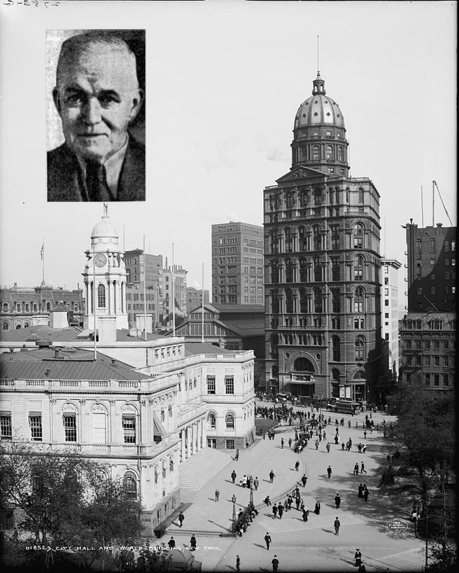
LONG GONE…Veteran rewrite man Martin Green (inset) filed his last story for The New York World on Feb. 27, 1931. Above, the New York World building was located on Manhattan’s “Newspaper Row” near City Hall. Commissioned by the newspaper’s owner, Joseph Pulitzer, the 20-story building was the world’s tallest office building when in was completed in 1890. It was demolished in 1955 to make way for an expanded car ramp entrance to the Brooklyn Bridge. (New York Times/Library of Congress)

…the end of the World was also on the mind of Gardner Rea, who contributed this cartoon to the March 21 issue: 

 *  *  *

The State of Modern Man

Lois Long continued her “Doldrums” series by looking at the condition of bachelor life in the city, and like everything else among the younger generation she found it wanting. Lois was a ripe old 29 when she wrote this, but given how radically life had changed since the Roaring Twenties, a wide gulf now separated those days from the more somber Thirties. Note how Long, who embodied flapper life in her defunct “Tables for Two” column, described herself as a “modest, retiring type” who knew nothing about men. Around this time Long was preparing to divorce husband (and New Yorker cartoonist) Peter Arno after a brief, tempestuous marriage…

 *  *  *

From Our Advertisers

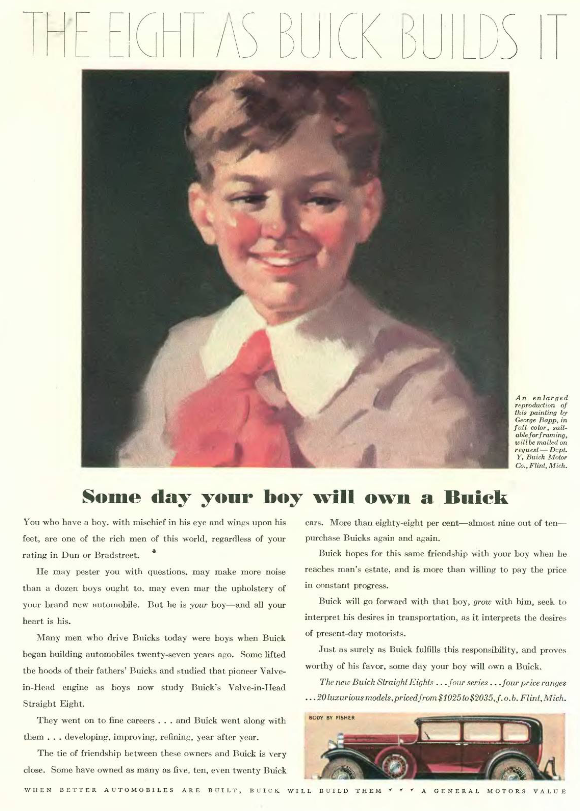
In those depressed days the makers of Buick automobiles decided to look to a brighter future, imaging how the boys of the present would be drivers of Buicks in the future…this kid probably ended up driving a tank or a Jeep rather than a Buick when 1942 rolled around…

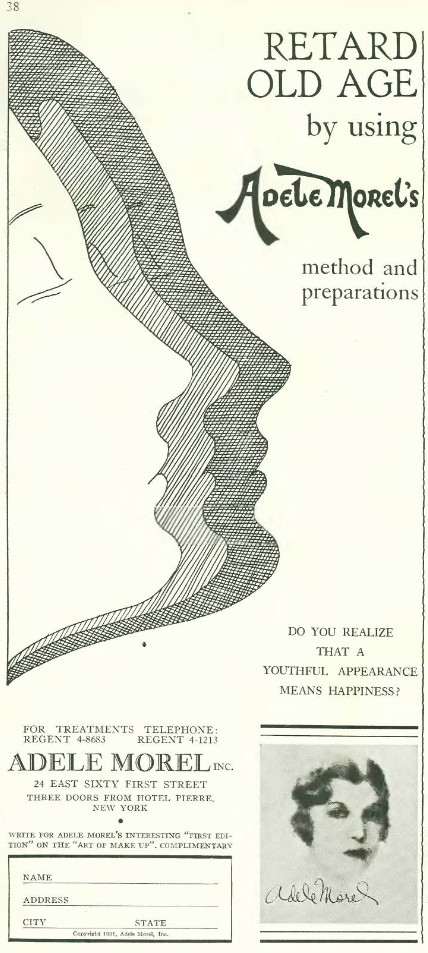
Adele Morel also wanted you to think about the future, and how to hold off those inevitable wrinkles…note the message near the bottom: “Do you realize that a youthful appearance means happiness?”…

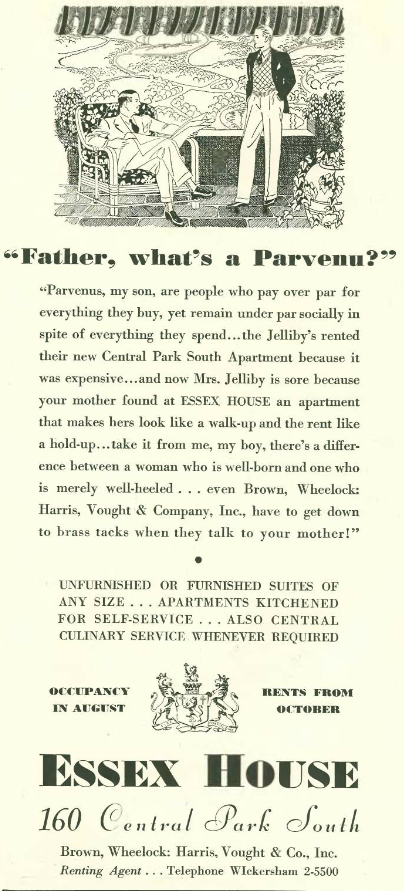
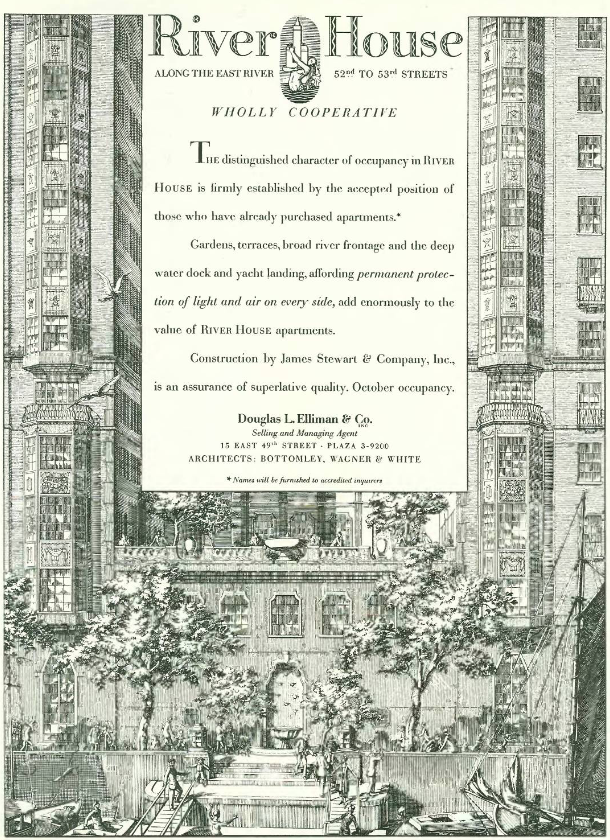
…I included this ad for River House because of its sumptuous detail…it rather resembles a 17th century European silk tapestry, and the people depicted look like they could be from that time as well…

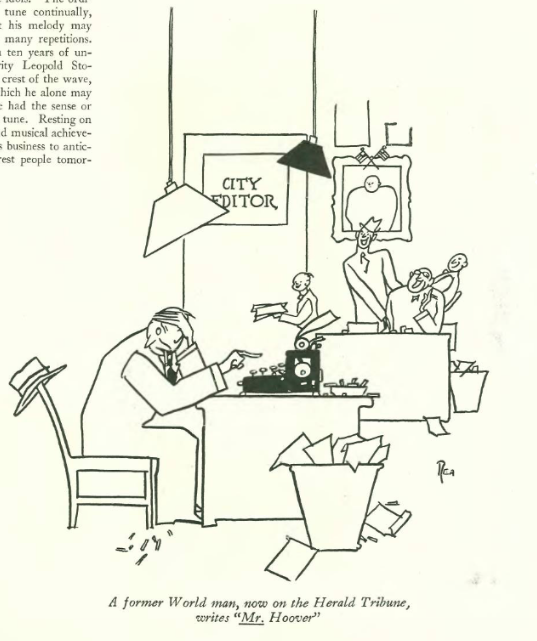
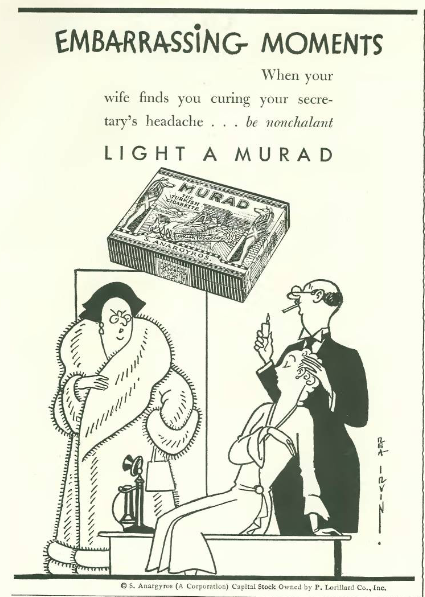
…speaking of another age, we have this Murad ad by Rea Irvin, illustrating office behavior that was quite common in the 20th century…

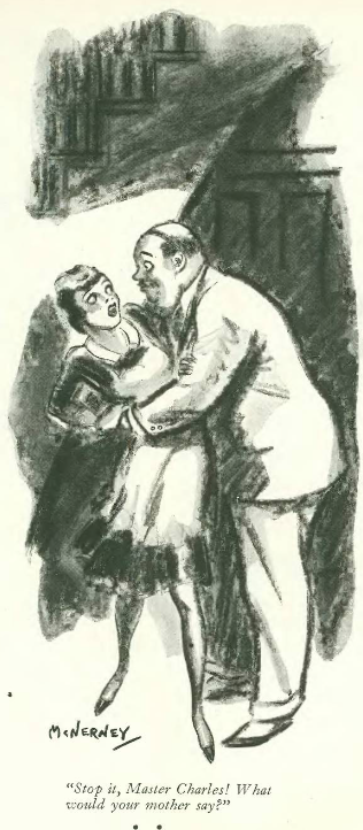
…on a related note, in the cartoons E. McNerney illustrated a “Me Too” moment…

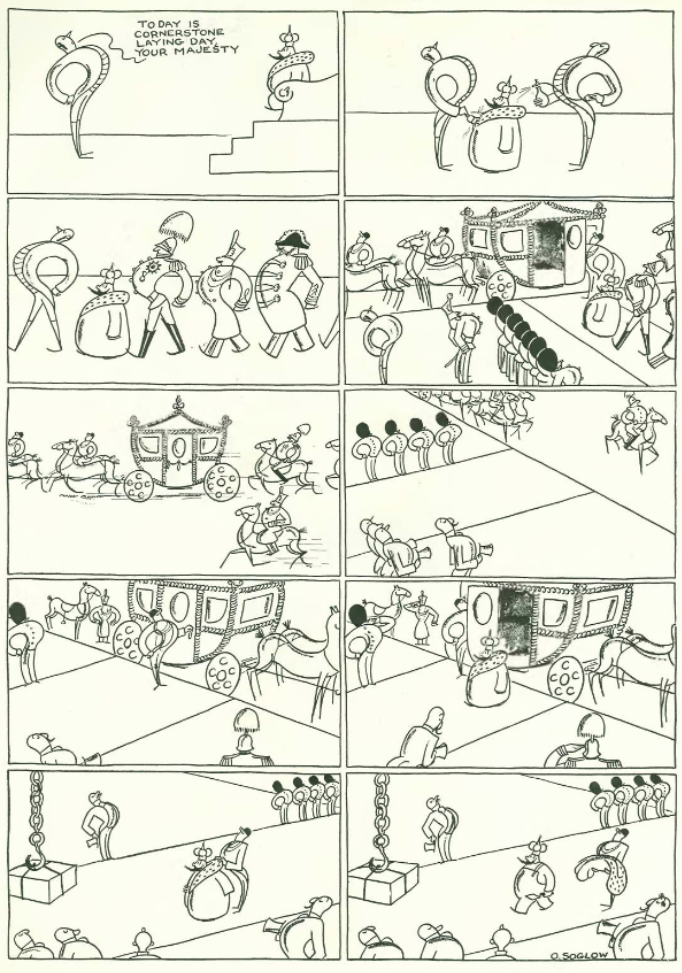
…when Otto Soglow published his first Little King strip in the June 7, 1930 issue, it caught the eye of Harold Ross (New Yorker founding editor), who asked Soglow to produce more. After building up an inventory over nearly 10 months, Ross finally published a second Little King strip, which you see below. The strip would become a hit, and would launch Soglow into cartoon stardom…

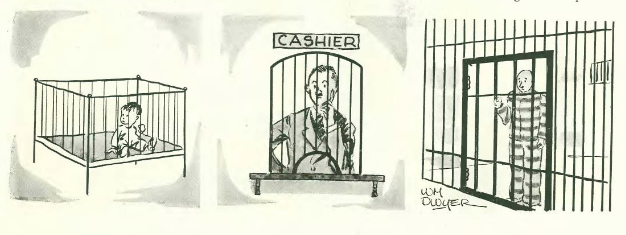
William Dwyer offered a dim view of a man’s stages of life in the first of two cartoons he contributed to The New Yorker

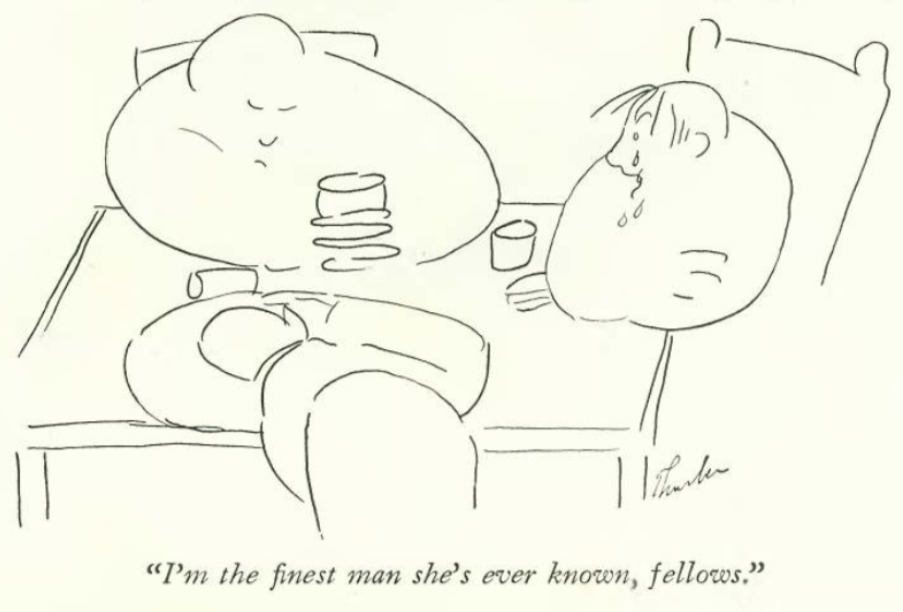
James Thurber shared tears with some sad sacks…

…in a few years Leonard Dove’s housewife would see her fears realized as another world war would loom on the horizon…

…and we end with Garrett Price, and an appreciation for fine art…

Next Time: Killer Queen…


The End of the World

In today’s world of endless media options, it is hard to fathom the influence newspapers had over daily life in the 19th and early 20th centuries. There was one news source that many New Yorkers simply could not live without: The New York World.

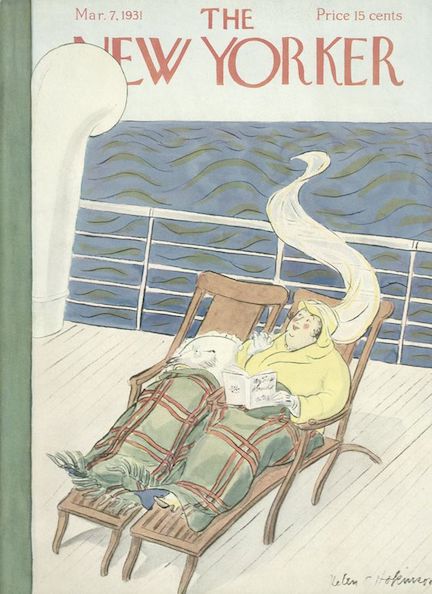
March 7, 1931 cover by Helen Hokinson.

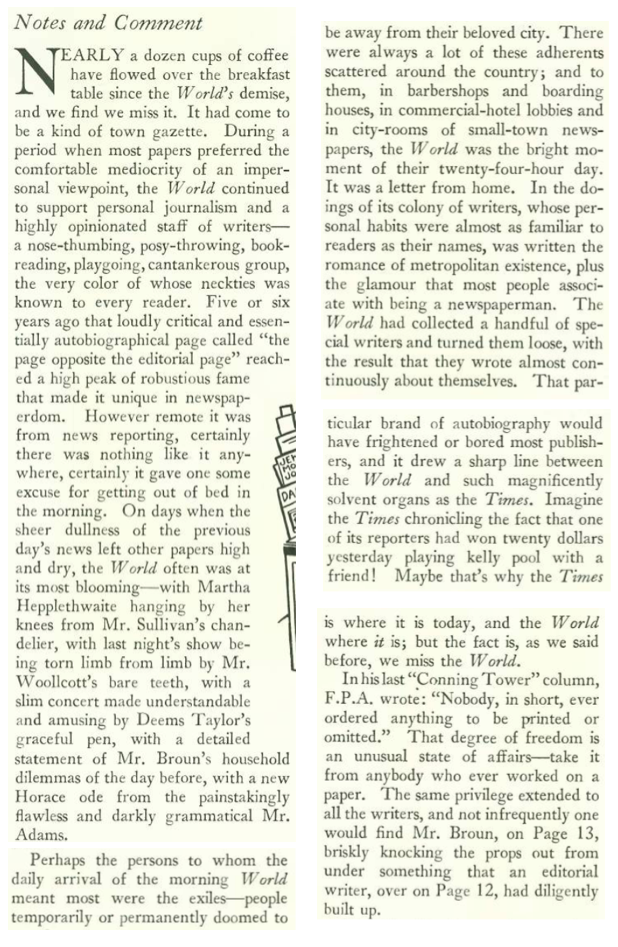
So when the World ceased publication after a 70-year run, many of its readers struggled to come to terms with the loss. Despite the World’s working class appeal and sensationalistic reporting, E.B. White nevertheless counted himself among its mourners, offering a lengthy eulogy in his “Notes and Comment” column (with Otto Soglow illustration)…

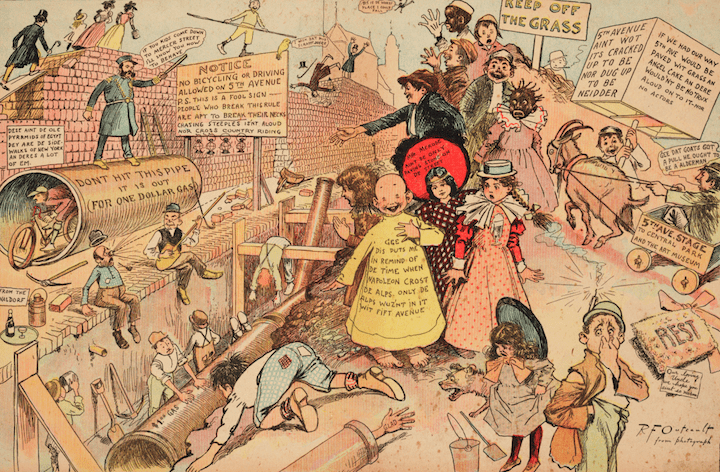
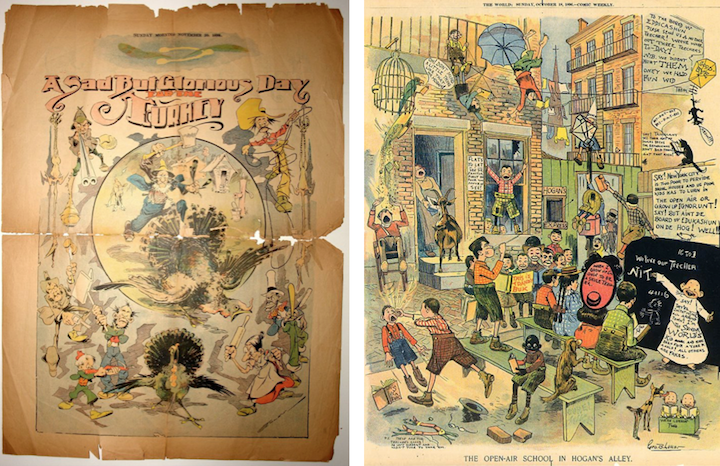
THE COLOR OF MONEY…Under the leadership of Joseph Pulitzer, who bought The World in 1883, the newspaper began an aggressive era of circulation building, and in 1896 enticed readers with pages printed by one of the world’s first four-color printing presses. The World was the first newspaper to launch a Sunday color supplement, which featured “The Yellow Kid” cartoon Hogan’s Alley (above, right). (5dguide.com)

A pioneer of yellow journalism, The World also featured sensational stories and headlines to capture the attention of readers…

…however, The World was also home to a number of prominent journalists, including the famed Elizabeth Cochran Seaman (aka Nellie Bly) and many writers from the social orbit of the Algonquin Round Table who were also early contributors to the fledgling New Yorker.

In his “Notes” essay, White suggests that he found something authentic in The World’s sensational style, and praised it for going after stories that more staid publications, like The New York Times, tended to ignore or downplay. The World’s staff of writers came from the rough and tumble, muckraking world of journalism, the same world in which The New Yorker’s founding editor, Harold Ross, first cut his teeth.

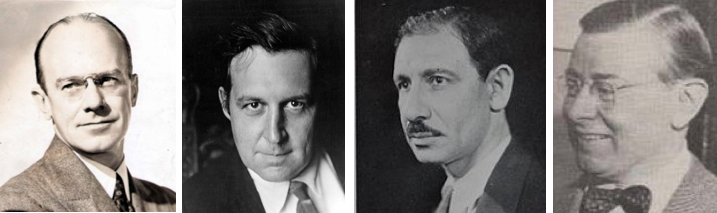
ALL-STAR LINE-UP…Many of The World’s famed writers inhabited the orbit of The New Yorker and the Algonquin Round Table, including, from left, music critic Deems Taylor, journalist and social critic Heywood Broun, “The Conning Tower” columnist Franklin P. Adams, and humorist Frank Sullivan. (deemstaylor.com/britannica.com/Wikipedia)

 *  *  *

Swedish Sphinx?

Thirty years after her death, Greta Garbo remains an iconic figure in popular culture, due to her expressive eyes and sensuality, but perhaps even more so due to her elusive air. In her profile of the star for The New Yorker, titled “American Pro Tem,” Virgilia Peterson Ross refused to buy into the mysterious aura that was partly manufactured by Garbo’s handlers at MGM. The other part, however, was genuine Garbo, who detested parties, serious talk, and other formalities.

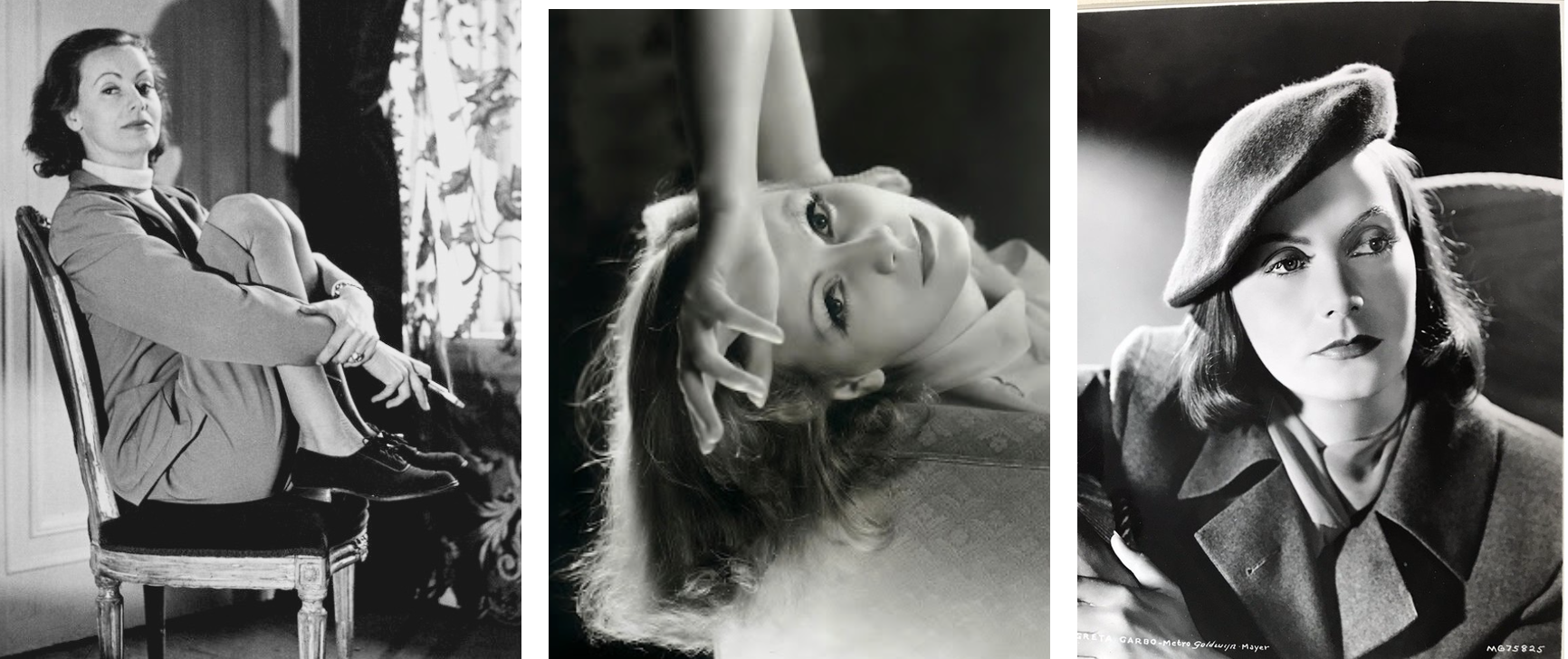
THE FACE…Like her contemporary Marlene Dietrich, Greta Garbo preferred an androgynous look. From left, Garbo wearing the flat-heeled oxfords she favored; publicity photo from 1932; wearing one of her trademark berets in the late 1930s. (garboforever.com)

Ross touched on Garbo’s love life—she never married in her 84 years, but she was close to her mentor, Finnish director Mauritz Stiller, who died in 1928, having been eclipsed by his protégé. Garbo’s co-star in the silents, John Gilbert—known as a great lover on the screen—wanted to marry Garbo, but she balked at his frequent proposals. The two lived together intermittently in 1926 and 1927, Gilbert helping Garbo not only with her acting also teaching her how to behave like a star and barter with studio bosses. Garbo later admitted that she was in love with Gilbert, but preferred to remain single because she “always wanted to be the boss.” Drink and despair would send Gilbert to an early grave in 1936. In her profile piece, Ross concluded that Garbo was “not a mystery to be solved,” but rather “a limpid child.”

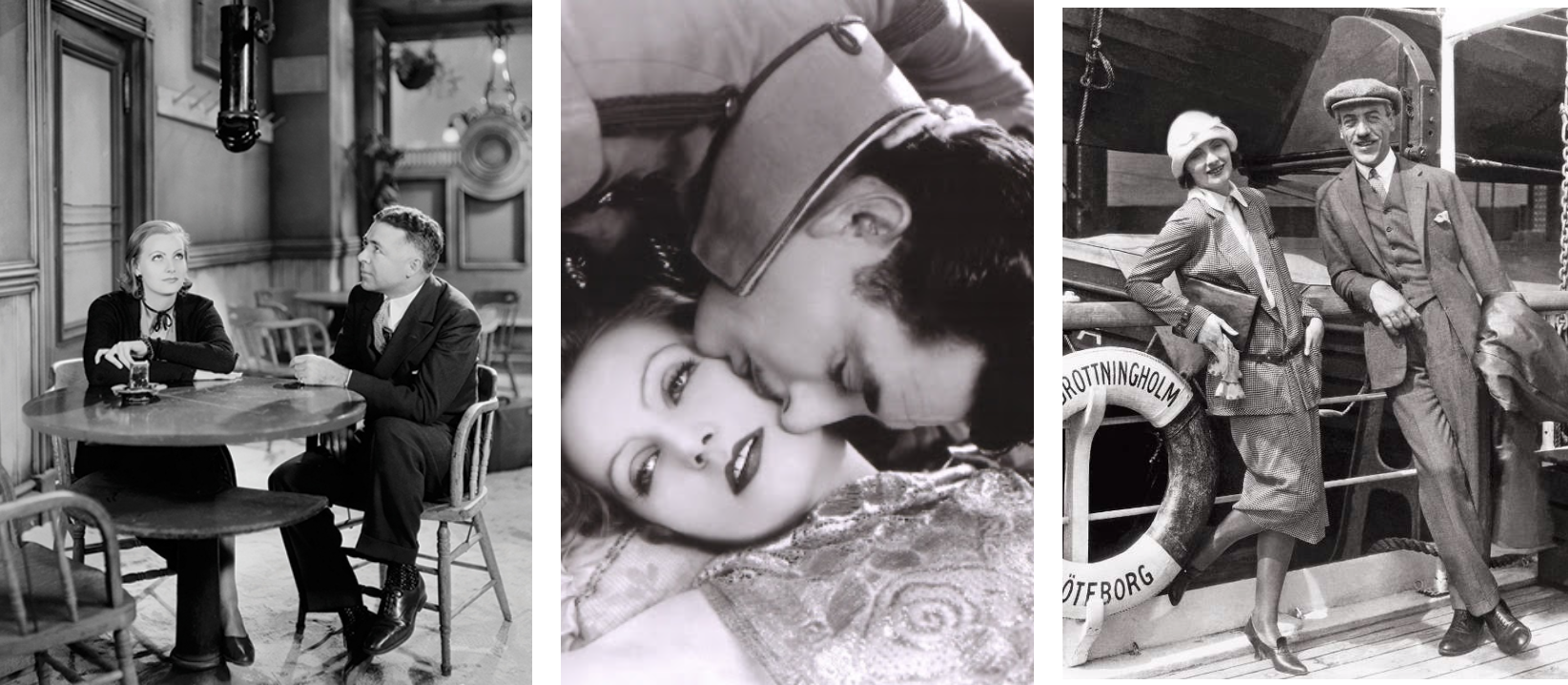
THE MEN IN HER LIFE…Greta Garbo contemplates a new-fangled microphone with film director Clarence Brown on the set of Garbo’s first talkie, Anna Christie. Brown would direct Garbo in seven different films; Garbo with sometime lover John Gilbert in Flesh and the Devil (1926). They would appear in four films together; Garbo with Finnish director and early mentor Mauritz Stiller, in 1926. (Wikipedia/IMDB/garboforever.com)

 *  *  *

Suffering Artist

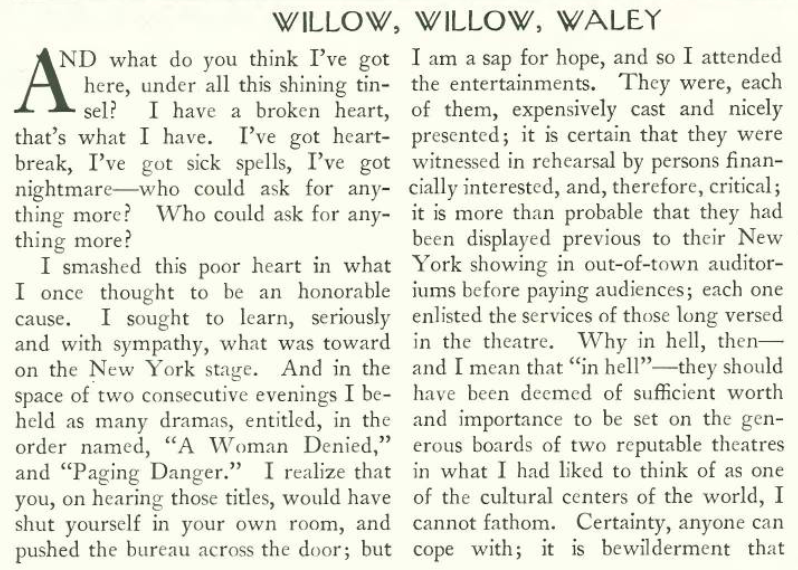
Dorothy Parker continued to sub as theater critic for her friend, Robert Benchley, who was traveling abroad. It was not a task to her liking — during her temporary stint she had yet to see a play that didn’t insult her taste or her intelligence. Her review for the March 7 issue would prove no different.

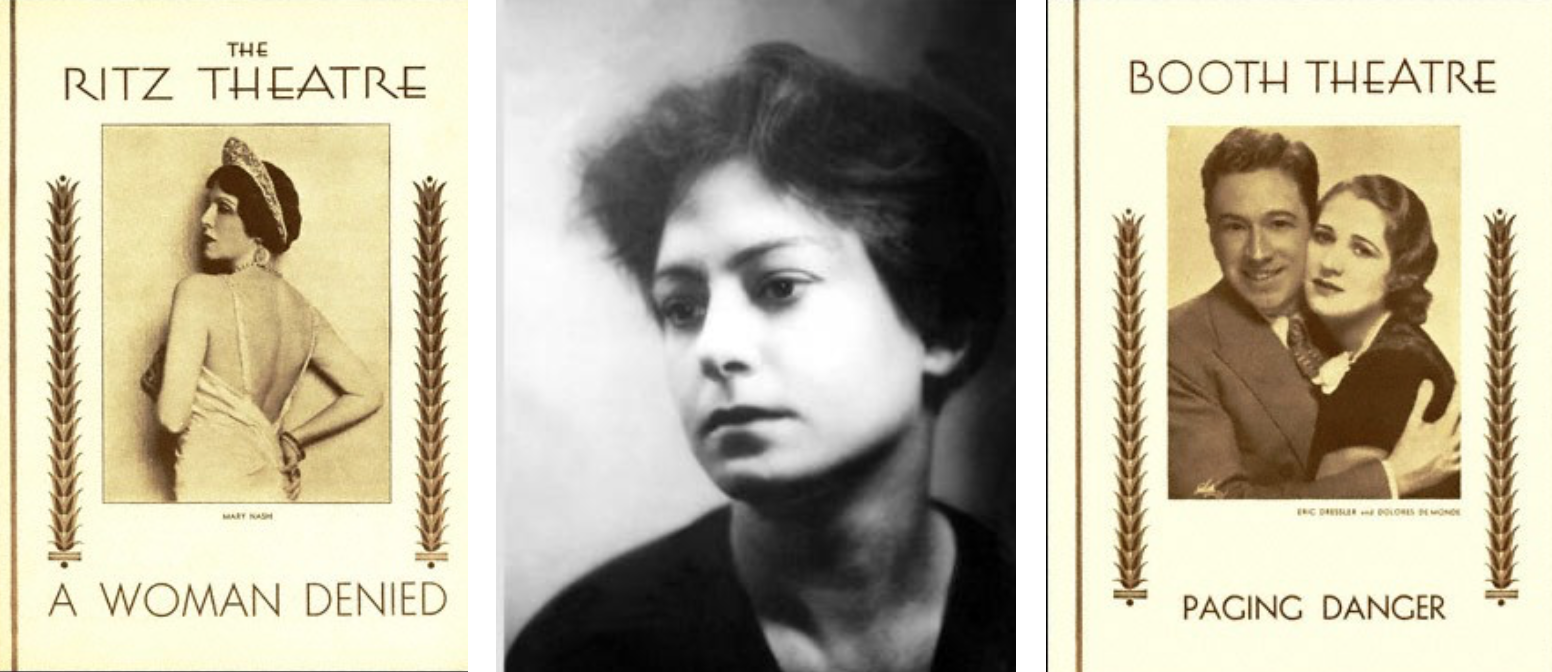
BROADWAY BLAHS…Dorothy Parker had yet to find a play to her liking in her stint as theater critic for the New Yorker. To her credit, she had to sit through a couple of stinkers: A Woman Denied lasted about a month — 37 performances — and Paging Danger closed its curtains for good after just four performances. (Playbill/BBC)

 *  *  *

The Misanthrope

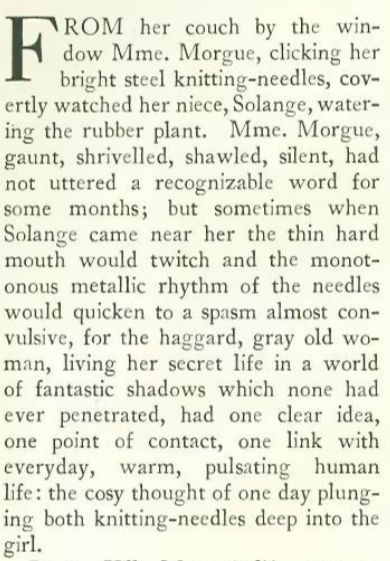
To call Wyndham Lewis a character is an understatement. The English writer, social critic and painter (he founded the cubist-inspired Vorticist movement) managed to offend just about everybody before his death in 1957. He was described by the London Review as “fiercely unsentimental,” and that is how I would describe this opening paragraph from his short story “Dark Party”…

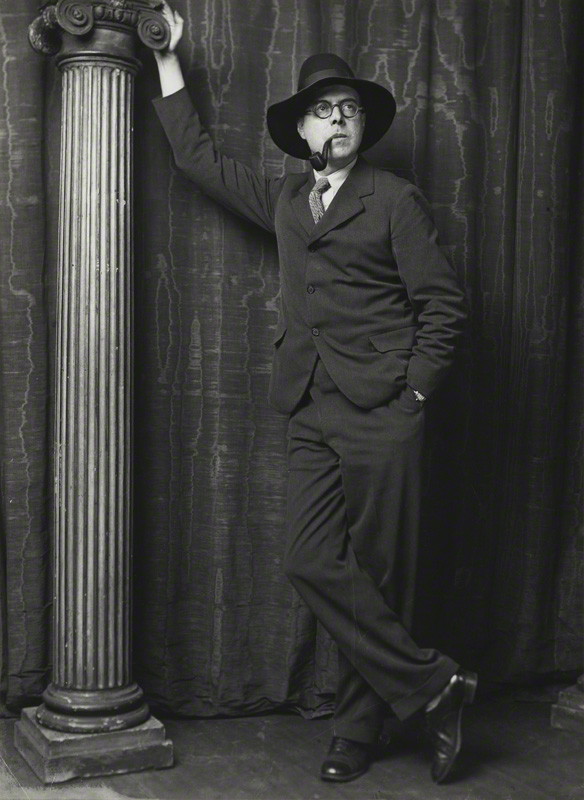
CLASSIC POSE…A 1929 portrait of Wyndham Lewis by photographer George Charles Beresford. (Wikipedia)

 *  *  *

From Our Advertisers

A couple of ads appealing to women readers of the New Yorker, including this elegant bon voyage scene advertising travel clothes…

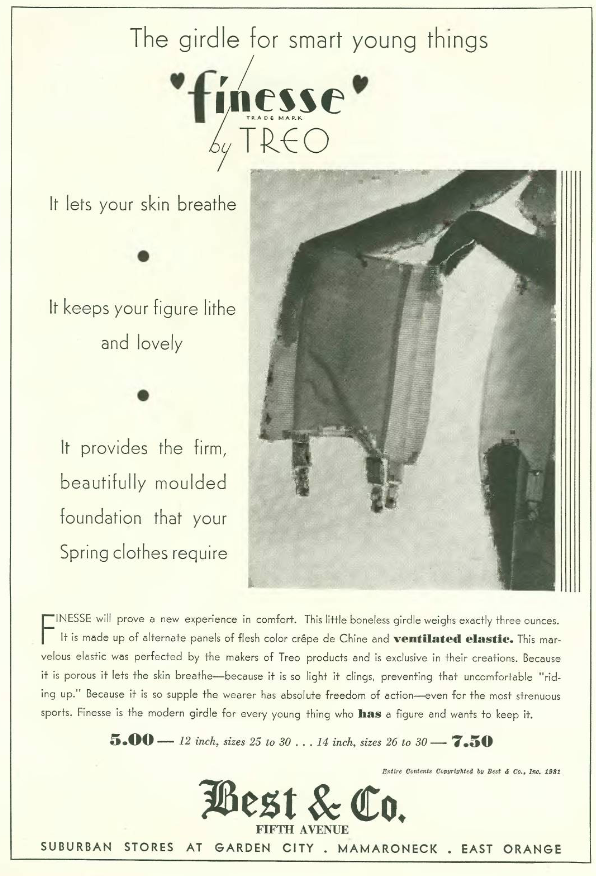
…and something you never see anymore, the “boneless” girdle…replaced today by Spanx and the like…

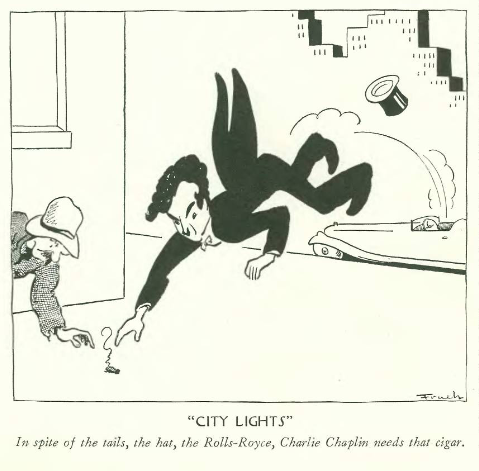
…Before we roll into our cartoons, some cinema-inspired art by Al Frueh

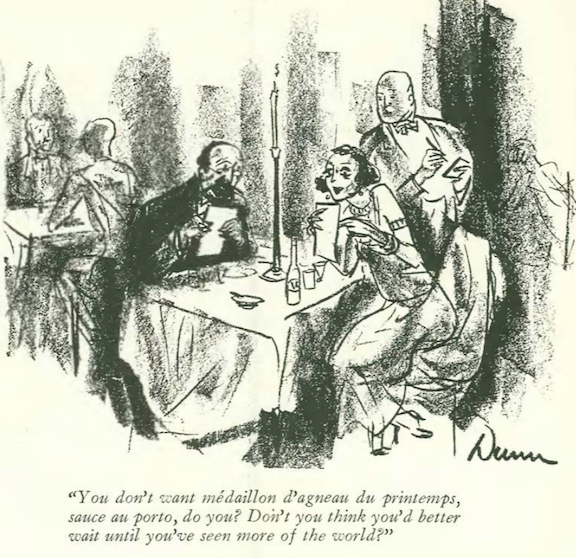
Alan Dunn went out to dinner…

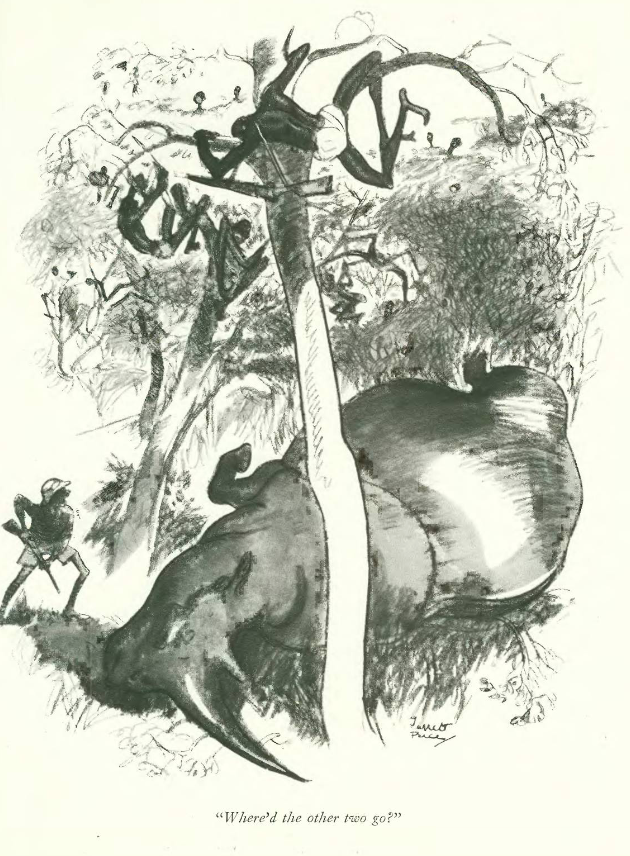
Garrett Price went on safari…

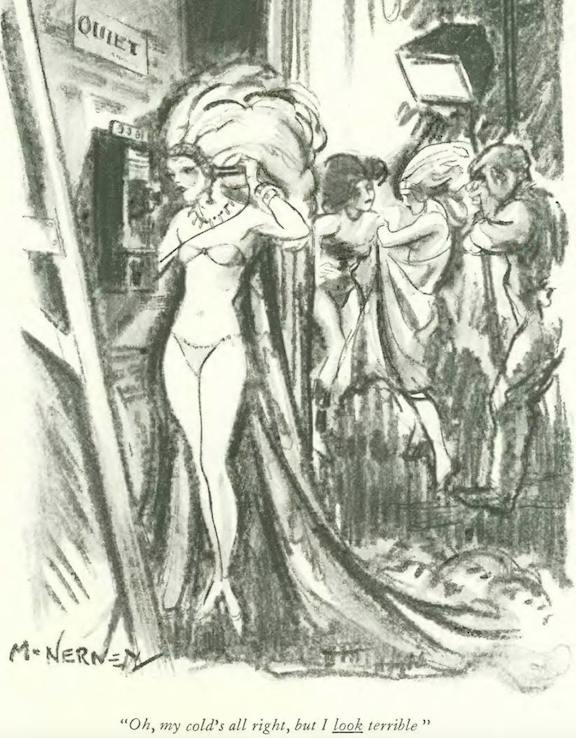
E. McNerney channelled his inner Arno for this backstage scene…

…and the real Peter Arno gave us this passing scene which recalled his old Whoops Sisters gags…

Next Time: Age of Wonders…


Chaplin of the Jungle

In the 1920s and 30s the concept of the documentary film was still in its infancy, and beginning with the silent Nanook of the North (1922), the idea that a documentary and a drama were separate things was unknown to filmmakers.

Feb. 28, 1930 cover by Theodore Haupt.

What was known, however, was the box office appeal of films that explored unknown and exotic lands, like Ernest B. Schoedsack’s 1927 blockbuster Chang, which featured a mix of staged events as well as the actual slaughter of wild animals. Audiences (and most critics) seemed little troubled that these films were a mix of fact and fiction. It was a movie, after all, and movies followed a story arc, and they had drama, and sometimes comedy. And so when Schoedsack (1893-1979) introduced audiences to an orangutan named Rango, publicists described the simian star as the “Charlie Chaplin of the Jungle.” The New Yorker’s John Mosher found the performances of the various apes “astonishingly adept”…

MONKEY BUSINESS…Clockwise, from top left, the Iowa-born Ernest B. Schoedsack cut his filmmaking teeth as a producer/director of quasi-documentaries, beginning with 1925’s Grass, which followed a caravan from Angora to Persia; a young Sumatran boy, Bin, bonds with the orangutan Rango; promotional theater card for the film. (filmaffinity.com)
NOT SO CUDDLY…Two years after Rango, Ernest B. Schoedsack would co-produce and co-direct 1933’s King Kong, with Merian C. Cooper. (Britannica)

If interpretations of tropical life weren’t accurate in 1931, it wasn’t completely due to filmmakers taking dramatic license. Attitudes toward “exotic” lands and people commonly ranged from naively paternalistic to downright racist. In a letter to The New Yorker, Patrick T.L. Putnam (1904-1953) is decidedly of the former, portraying Congo pygmies as clever, amusing children who hoodwink unsuspecting “explorers”…

To Putnam’s credit, he showed a genuine interest (and respect for) in the lives of tribal peoples, and particularly the Mbuti of the Congo’s Ituri Forest. He remained in the Congo for the rest of his life. This thumbnail is the only photo I could find of Putnam:

(geni.com)

 *  *  *

Big Bill Turns Pro

In first decades of the 20th century it was still widely believed that athletic competition should be for its own sake rather than as a means for making money, so many top stars competed as amateurs. Professional golf wasn’t established until 1916, and professional leagues in basketball and football first formed in the 1920s. Amateur status was especially prized in tennis — before the “Open Era” began in 1968, only amateurs were allowed to compete in Grand Slam tournaments.

Sports promoter C. C. Pyle established the first professional tennis tour in 1926 with American and French stars playing exhibition matches in front of paying audiences. According to The New Yorker’s John Tunis, many in the crowd were finely dressed, with men in top hats and women turned out in the latest high fashion.

America’s top draw was “Big Bill” Tilden, the world’s number one player from 1920 to 1925 and the first American to win Wimbledon. It caused quite a stir when Tilden went pro on Dec. 31, 1930. He barnstormed across the country,  playing one-night stands with a small group of professionals including the top Czech player Karel Koželuh. “The Talk of the Town” had this to say about the fledging game of professional tennis:

BARNSTORMERS…Bill Tilden (left) and Karel Koželuh toured America and Europe with a handful of other players in a series of exhibition matches in the fledgling professional tennis circuit. (Britannica/cyranos.ch)

In his sports column, John Tunis offered this description of the competitors:

NOW AND THEN…At left, you can still spot a few neckties at Wimbledon as the audience watches Roger Federer and Andy Roddick enter Centre Court in 2009; at right, Wimbledon crowd in 1925. (BBC/Vintage Every Day)

 *  *  *

Triple Tripe

Dorothy Parker continued to sub in the theater column for her friend Robert Benchley, who was traveling abroad. She found little to like on the Great White Way, including three forgettable plays she reviewed in the Feb. 28 issue:

Apparently audiences agreed with Parker’s assessment. The Gang’s All Here closed after just 23 performances, The Great Barrington, after just 16. And Heat Wave was not so hot, closing after a mere 15 performances.

NOT SO GREAT…Program for 1931’s The Great Barrington. It lasted 16 performances. (IBDB)

Parker once again closed the column with a plea to her dear friend:

 *  *  *

To Swash No More

In his “Notes and Comment,” E.B. White lamented the end of Douglas Fairbanks as the swashbuckler of the silents, and rejected the talkie version of the actor in Reaching for the Moon, a film in which Fairbanks portrayed Larry Day, a Wall Street millionaire who later loses his fortune in the 1929 stock market crash.

KEEP YOUR SHIRT ON, DOUG…From left, Douglas Fairbanks in the silent era’s The Thief of Bagdad (1924); Fairbanks on an ocean cruise with Bebe Daniels in Reaching for the Moon. The 47-year-old Fairbanks was still fit enough to pose shirtless, but E.B. White wasn’t having any of it. Despite his fit appearance, Fairbanks would die of a heart attack at the end of the decade. (IMDB)

The film today is perhaps best known for its sumptuous Art Deco sets…

(IMDB)

…and for one of Bing Crosby’s earliest film appearances. Reaching for the Moon was originally intended to be a musical featuring numbers by Irving Berlin, however Berlin found director Edmund Goulding difficult to work with, so only one of the original five songs recorded for the film was used, “When the Folks High Up Do the Mean Low Down,” sung by Crosby. It was filmed late at night after he had completed his gig at the Cocoanut Grove.

SINGING WITH BA-BA-BEBE…A young Bing Crosby sings “When the Folks High Up Do the Mean Low Down” with Bebe Daniels in Reaching for the Moon. (IMDB)

 *  *  *

Modern Living

E.B. White also commented on the modern world’s reliance on electric appliances, a habit a mere decade in the making since the gadgets he lists below did not exist before the 1920s:

ELECTRIC SURGE…Prior to the 1920s none of these electric appliances existed. By 1931 many homes were dependent upon them — although many country houses would have to wait for the Rural Electrification Administration (1935) and other New Deal programs get electrical service. (Pinterest)

*  *  *

From Our Advertisers

I’ve written before about Lux Toilet Soap’s celebrity-studded ad campaigns, but this two-page ad in the Feb. 28 issue caught my eye because it featured one of my favorite actresses, Jessie Royce Landis

…who appeared in two of my favorite films, both by Alfred Hitchcock: To Catch a Thief (1955) and North by Northwest (1959).

MATERNAL ROLES…Jessie Royce Landis usually played older than she was in real life. Clockwise, from top left, detail of Lux ad; Landis circa 1930; opposite Cary Grant in 1955’s To Catch a Thief; and again with Grant in 1959’s North by Northwest. In the latter film she played Grant’s mother, but in reality she was only seven years older than Grant. (IMDB)

…much of the Douglas Fairbanks/Bebe Daniels film Reaching for the Moon was set on a luxury ocean liner…if the stock market didn’t get you down, you could also afford to travel in style with the Empress of Britain

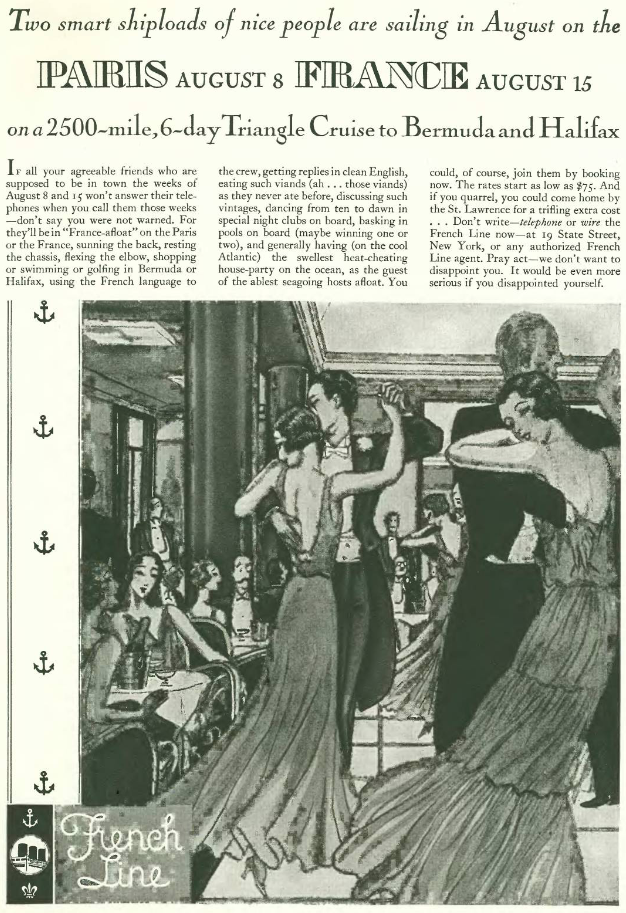
…or on one of the fine ships of the French Line fleet…

…the Imperial was one of the luxury cars that could get you to the docks…

…among the stranger ads to appear in The New Yorker was this one by the maker of clay plumbing fixtures…

…on to our cartoonists, Ralph Barton returned with this illustration for the theater section…

Rea Irvin brought us another of his two-page series cartoons…

Gardner Rea commented on the state of the art world…

Peter Arno peered in on an unfortunate infant…

Helen Hokinson gave us this exchange along a city street…

Garrett Price illustrated a tall order for a blues musician…

Carl Kindl found clashing styles in the shoe department…

…and James Thurber returned with a prelude to his battle of the sexes…

Next Time: The End of the World…

Super Tramp

The late film critic Roger Ebert once observed that “if only one of Charles Chaplin’s films could be preserved, City Lights would come the closest to representing all the different notes of his genius.”

Feb. 21, 1931 cover by Rea Irvin, marking the New Yorker’s sixth anniversary.

The New Yorker’s film critic in 1931, John Mosher, would have agreed. Before he previewed the picture, however, Mosher feared (along with others) that the great actor and director had seen his best days…

…instead, the film proved a hit with both audiences and critics, and today is regarded as one of the greatest films ever made. It was no doubt a relief to Ebert when the film was selected by the Library of Congress for preservation in the National Film Registry.

HE DOES IT ALL…United Artists issued several different types of posters to promote the film, including these two. (IMDB)
A TENDER FELLOW…The Tramp (Charlie Chaplin) encounters a blind flower girl (Virginia Cherrill) on a street corner and is instantly smitten; later that evening the Tramp saves a drunken millionaire (Harry Myers) from suicide. (IMDB)

The film has its tender moments, but being a Chaplin production it also had plenty of slapstick, including this famous scene in which the Tramp and his millionaire friend go out on the town and dig into plates of spaghetti…and in the Tramp’s case, some confetti…

Mosher (and many other critics since) believe the opening scene of the film—in which a statue is unveiled to reveal a sleeping Tramp—was Chaplin’s attack on sound movies:

CAUGHT NAPPING…The Tramp is unveiled along with a statue in the opening scene of City Lights. (IMDB)

Although the film had a full musical score and sound effects, there was no spoken dialogue. Rather, Chaplin poked fun of the tinny-sounding talkies of the day by putting not words, but the sounds of a kazoo, into the mouths of speechifying politicians gathered at the statue’s unveiling…

For all its humor, City Lights was a serious work by a serious actor and director who sought something close to perfection. The scene in which the Tramp encounters a blind flower girl on a street corner required three hundred and forty-two takes with actress Virginia Cherrill, who was a newcomer to film.

Writing in The New Yorker, critic Richard Brody (“Chaplin’s Three Hundred and Forty-Two Takes,” Nov. 19, 2013) noted that “Chaplin didn’t have a mental template that he wanted Cherrill to match; he approaches the scene not quite knowing what he wanted.” Brody observed that the perfection Chaplin sought was one of results, and not of conformity to a preconceived schema. “He sought what provoked, in him, the perfect emotion, the perfect aesthetic response — but he wouldn’t know it until he saw it. He started to shoot in the confidence that the thing — whatever it was — would happen.” Chaplin’s technique can be seen in this clip from the Criterion Collection’s 2013 DVD release of the film. Note that this footage was shot by The New Yorker’s Ralph Barton, a close friend of Chaplin’s:

 *  *  *

Chaplin, Part Two

The Chaplin buzz was not confined to the movie section of the magazine, which featured more insights on the star in “The Talk of the Town.”

GENIUS LOVES COMPANY…Photo of Albert Einstein and Charlie Chaplin at the Los Angeles premiere of City Lights. Einstein said Chaplin was the only person in Hollywood he wanted to meet. (Wikipedia)

 *  *  *

Funny In a Different Way

Like City Lights, Tod Browning’s Dracula is today considered a classic film. Indeed, Bela Lugosi’s timeless portrayal of the old bloodsucker set a standard for vampire flicks and horror films in general. The New Yorker’s John Mosher, however, would have none of it, dismissing the film in a single paragraph.

PAIN INTHE NECK…Count Dracula (Bela Lugosi) goes for a nibble on the fragile Mina (Helen Chandler) in 1931’s Dracula. (IMDB)

Mosher was also dismissive of Fritz Lang’s By Rocket to the Moon, originally released in German as Frau Im Mond (Woman in the Moon). The 1929 production is considered one of the first “serious” science fiction movies, anticipating a number of technologies that would actually be used in space travel decades later.

RETRO ROCKET…Fritz Lang’s Woman in the Moon would predict a number of technologies used decades later in actual space flight, including multi-stage rockets. Lang also anticipated the future in the much-acclaimed Metropolis (1927).

 *  *  *

Bored on Broadway

Robert Benchley was visiting friends abroad, so Dorothy Parker did what any pal would do and subbed for his theater column. As it turned out, it was not a happy task, even if she did receive complementary tickets to one of the hottest shows on Broadway:

Having dispatched Katharine Cornell’s Barretts of Wimpole Street, Parker took aim at America’s Sweetheart, based on a book by Herbert Fields with music and lyrics by Richard Rodgers and Lorenz Hart. Parker ended the savaging with a plea to her dear friend and colleague to return home soon:

THEY LAUGHED, THEY CRIED…Katharine Cornell (left) portrayed Elizabeth Barrett in Barretts of Wimpole Street. Dorothy Parker thought Cornell was a first-rate actress, but didn’t think much of her play. As for Inez Courtney (right) in America’s Sweetheart, Parker believed she did what she could, whatever that meant. (Pinterest)

*  *  *

Lest We Forget

The New Yorker turned six with this issue, and in the life of any magazine, that is something to be celebrated, and especially in hindsight as our beloved publication closes in on its centenary in 2025. Some thoughts from E.B. White:

*  *  *

From Our Advertisers

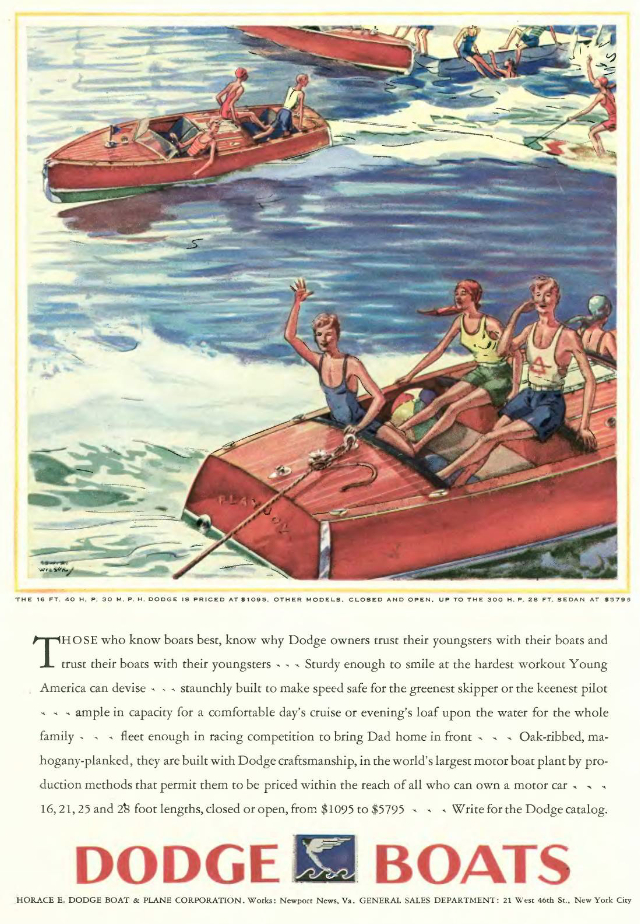
We’ve seen in past ads how Prohibition-era vintners marketed grape juice bricks that could be dissolved in water and fermented in the home. In this ad they took it a step further, sending expert cellarers direct to customers’ homes to help them create their own, perfectly legal, wine cellar…

…those with wine cellars might have preferred to live in a “highly restricted” community in Jackson Heights…

…and furnish their homes with the latest in modern furniture design…

…and here we have an early example of the “macho” smoker, anticipating the arrival of his buddy, the Marlboro Man…

…on to our cartoonists, another theater section entry by one of Charlie Chaplin’s closest friends, Ralph Barton

…and cartoons by Peter Arno, who channelled Dracula via his Sugar Daddy…

Garrett Price, and the burdens of the rich…

Denys Wortman examined the follies of youth…

…and we end with dear Helen Hokinson, and the miracle of birth…

Next Time: Chaplin of the Jungle…

And the Winner Is…

We lead off with a couple of winners from the Feb. 7, 1931 issue, beginning with a cover by Rea Irvin that takes measure of a lighter moment at the Westminster Kennel Club Dog Show.

Feb. 7, 1931 cover by Rea Irvin.

The 1930 Best of Show winner Pendley Calling of Blarney also took the top honor in 1931, giving the wire fox terrier back-to-back Westminster wins. Overall, terriers have dominated Westminster — wire fox terriers have won Best of Show fifteen times, with Scottish terriers a distant second, with eight wins.

TOP DOG…Pendley Calling of Blarney won back-to-back crowns in 1930-31 at Westminster Kennel Club Dog Show at Madison Square Garden. The dog’s owner, John Grenville Bates, mercifully retired the pooch after the ’31 win. (Westminster Kennel Club)
STANDARD? WHO ARE YOU KIDDING?…Standard poodle Siba won Best in Show at the 144th annual Westminster Kennel Club Dog Show on Feb. 11, 2020, at Madison Square Garden. (Reuters)

The other winner was Cimarron, the first film to receive more than six Academy Award nominations, winning three including Best Picture (then called Best Production). It was the first Western to win Best Picture, and it would be nearly sixty years until another Western, Dances with Wolves, would take the top honor.

HE LOST HIS SHIRT, TOO…

Despite some “sagging moments,” John Mosher mostly lavished praise on the film, which was showing at the Globe Theatre:

THAT’S NO WELCOME WAGON…Clockwise, from top left, Yancey and Sabra Cravat (Richard Dix and Irene Dunn) join the 1889 Oklahoma Land Rush with their son, Cim (Junior Johnston); a less-than-friendly greeting at a boomer town; wagons line up for the big land grab; a young prostitute, Dixie Lee (Estelle Taylor), outwits Yancey for a piece of prime property. (IMDB)
OH DEAR, THERE’S THAT LOOK AGAIN…Yancey (Richard Dix) takes it upon himself to establish order in the boomer town of Osage. On the bed are Yancey’s son, Cim (Junior Johnston) and wife Sabra (Irene Dunn). (IMDB)

 *  *  *

Handy Painter

It is hard to imagine the struggles of one-handed painter José Clemente Orozco (1883-1949), who despite his handicap was able to complete huge murals in true fresco style (paint applied quickly on fresh, wet plaster), including five socially-themed frescoes at the Joseph Urban-designed New School. The murals included controversial depictions of Lenin and Stalin, but it wasn’t until the 1950s — during the McCarthy era — that school officials felt compelled to cover the images with a curtain. More protests followed, this time from faculty and students, and the curtains fell along with Joe McCarthy. “The Talk of the Town” looked in on the artist at work:

HE LOOKS FAMILIAR…José Clemente Orozco’s “The Struggle in The Occident”, 1930-1931, one of five frescoes at the New School. (Pinterest)

 *  *  *

Prescience of Mind

News reporter and author Elmer Davis submitted this humorous piece to The New Yorker doubtless thinking how preposterous, and therefore humorous, the following notion would be (a brief excerpt):

 *  *  *

Funny Cigarettes

In the early years of broadcast radio (and later TV) tobacco companies rightly saw a huge gold mine in radio show sponsorships. So when CBS radio executives accepted a sponsorship from Lorillard (the makers of Old Gold), they realized they had a challenge on their hands. “Talk” explained:

COUGH ME A MELODY…The makers of Old Gold cigarettes had CBS in their clutches in this September 1933 ad featuring bandleader Fred Waring and singer Babsie. (period paper.com)

…The above “Talk of the Town” item referred to the famous Murad ads illustrated by The New Yorker’s own Rea Irvin

…while other advertisers were scaling back a bit due to the Depression, lovely full-color ads continued to flow from tobacco companies (and oil companies)…

…Pierce-Arrow was also known for its sumptuous ads, but they wouldn’t save the luxury car maker from going under by the mid-1930s…

…Some less expensive black and white ads, such as this hand-lettered ad from Stein & Blaine, could be quite charming…

…speaking of charm, this ad from Arthur Murray could have used a little of it…note the stern visage of the woman, described as “typical of Arthur Murray’s staff of expert teachers”…

…on to our Feb. 7 cartoons, we have one of Peter Arno’s stock characters, the Sugar Daddy, in an awkward moment at a costume party…

…Arno’s party looked a lot more lively than this affair, illustrated by William Crawford Galbraith...

…and Carl Rose gave us this pair, who seem to having the best time of all…

Mary Petty eavesdropped on a guileless young woman…

…and Gardner Rea paid a visit to the Met…

 *  *  *

On to our Feb. 14 issue, and Gardner Rea once more…

Feb. 14, 1931 cover by Gardner Rea.

The Feb. 14 issue featured a profile of actress Katharine Cornell (1893-1974), written by cultural critic Gilbert Seldes. The caricature of Cornell is by Al Frueh. Excerpts:

Promotional photograph of Katharine Cornell as Elizabeth Barrett in the original 1931 Broadway production of The Barretts of Wimpole Street. It was her most famous role(Theatre Magazine, March 1931)

Cornell is considered one of the greatest actors of American theater, known for her eloquence and romantic stage presence. Seldes concluded:

 *  *  *

Strange Bedfellows

In his column “Of All Things,” Howard Brubaker referred to an exchange between American capitalists and Soviet Russians that resulted in the rapid industrialization of the Soviet Union. That actual story behind this effort is pretty amazing.

 *  *  *

Sneak Peek

Film critic John Mosher was so excited about Charlie Chaplin’s latest film that he offered this teaser to readers…

 *  *  *

From Our Advertisers

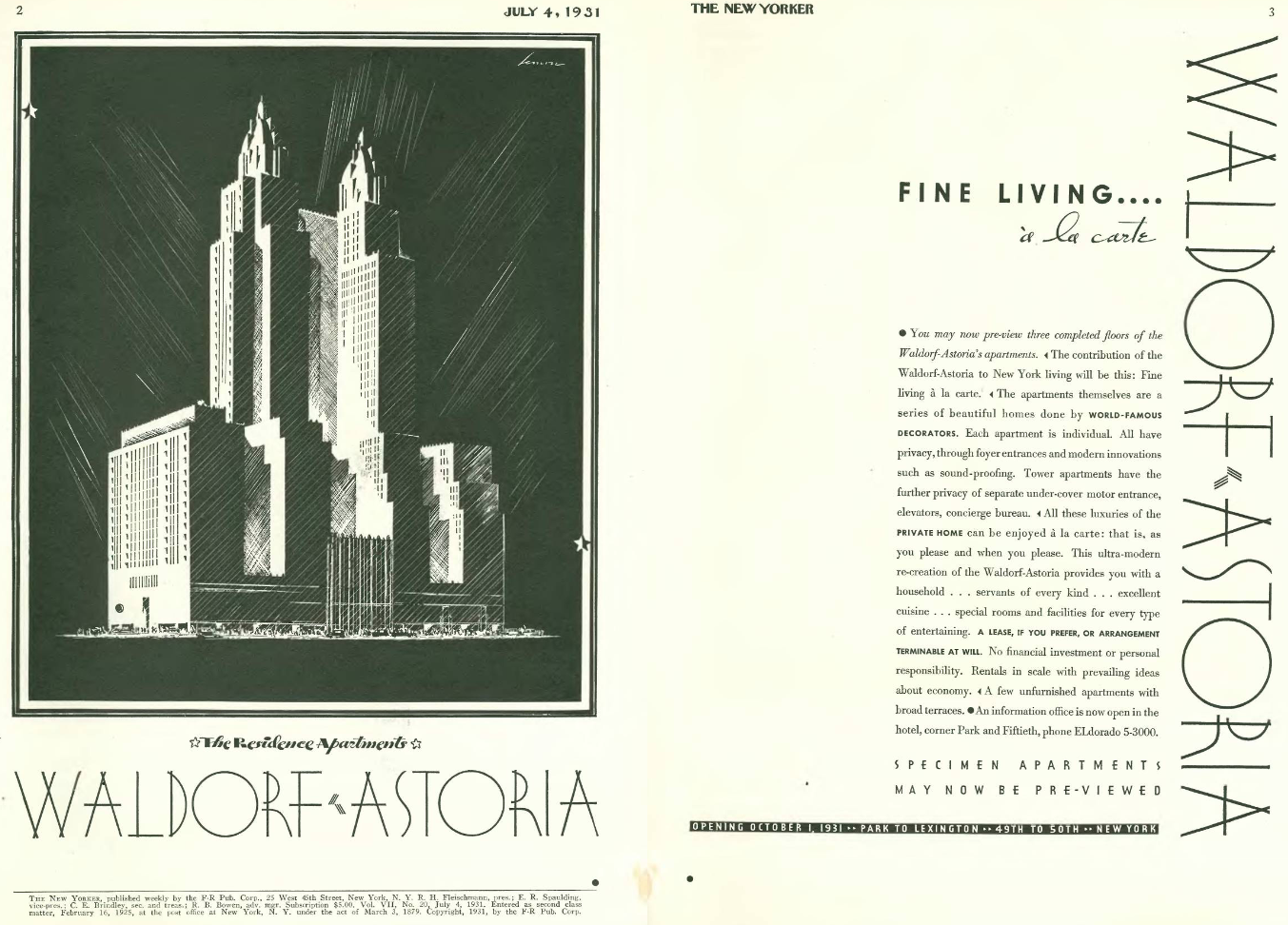
We have this ad from the developers of the Empire State Building, which was being readied for a May 1931 opening…

…the Empire State Building was erected on the site of the old Waldorf-Astoria Hotel. The new Waldorf-Astoria, also completed in 1931, was located more than 15 blocks away from its original site. Both the Empire State Building and the Waldorf Astoria would become Art Deco landmarks, and both shared the distinction of holding world records: the Empire State was the world’s tallest building (a record it would keep until 1970), and the Waldorf would claim the title of the world’s tallest hotel (until 1963)…

…on to our cartoonists, we have Ralph Barton contributing one of his last illustrations to the theater review section…

Richard Decker references a recent change in New York telephone numbers with this prison scene…

…Decker was referring to this bit of news, here interpreted by E.B. White in his Feb. 14 “Notes and Comment.”

James Thurber returned with his second-ever stand-alone cartoon for the New Yorker

Garrett Price mined a theme that would become common in New Yorker cartoons: the tycoon vs. meek employee…

Nancy Fay gave us a glimpse of the seamier side of family life…

R. Van Buren goes even darker with this entry…

…and we end on a high note, with Alan Dunn

Next Time: Super Tramp…