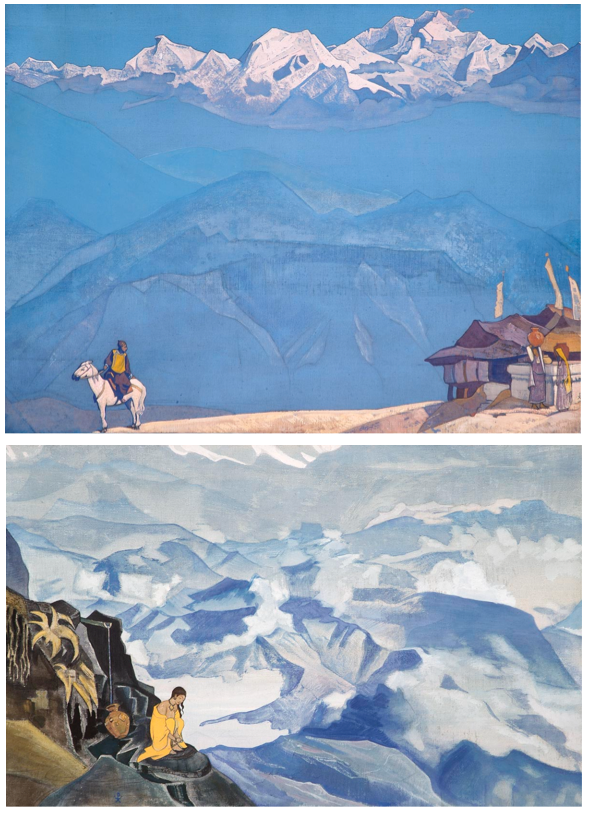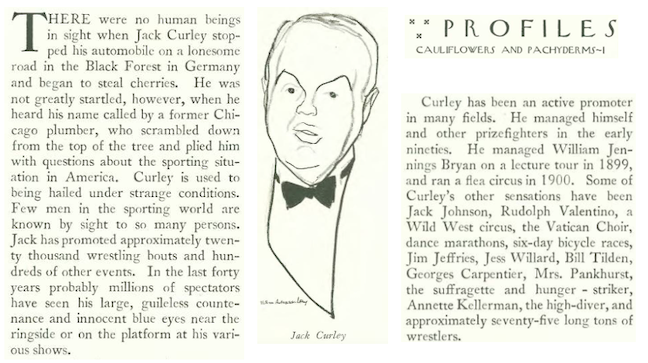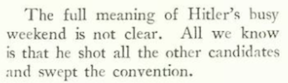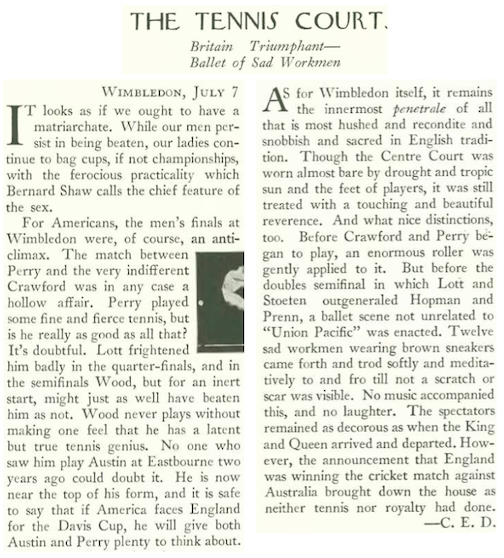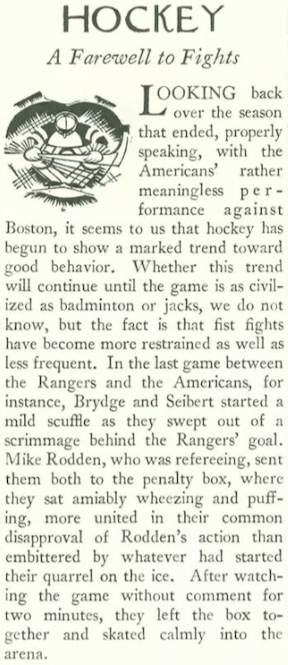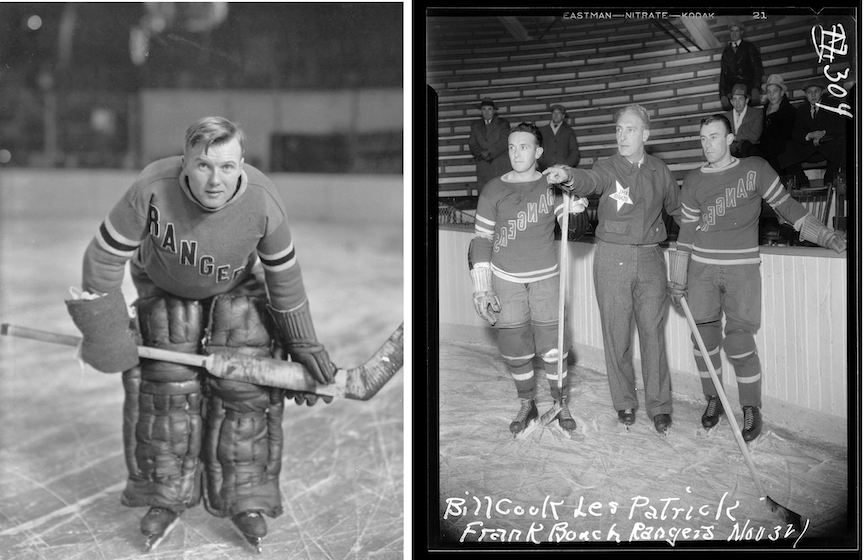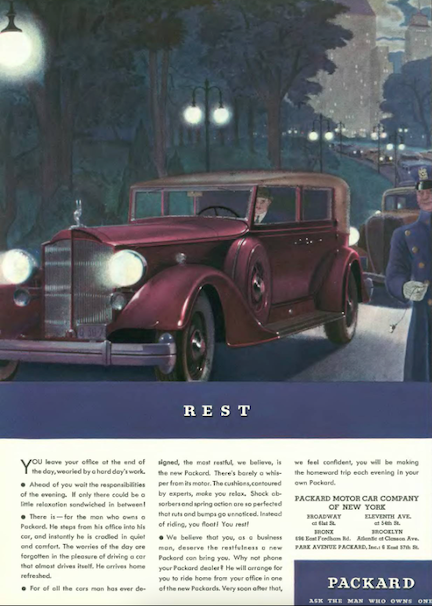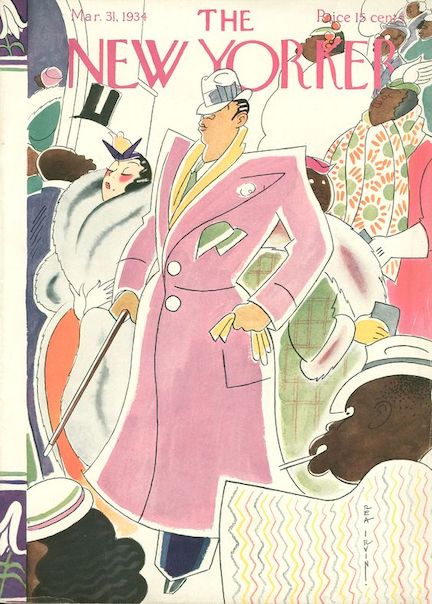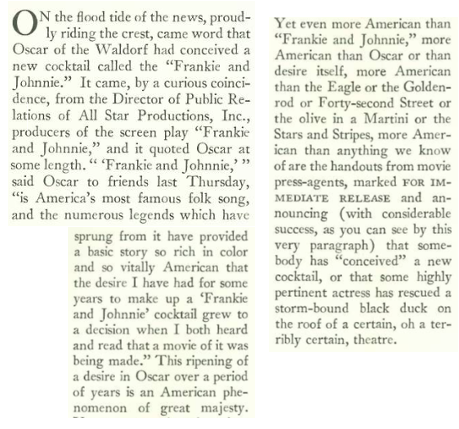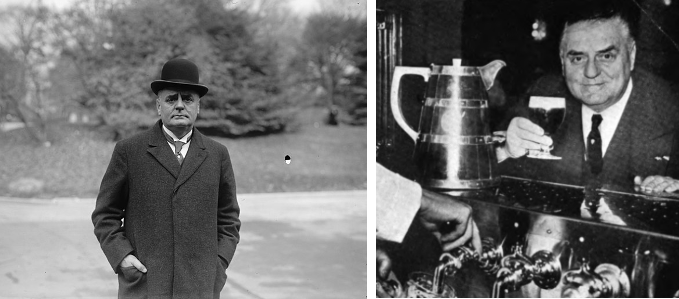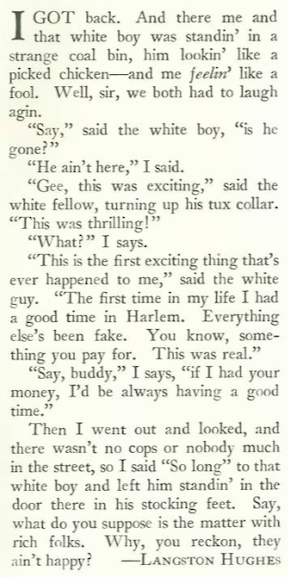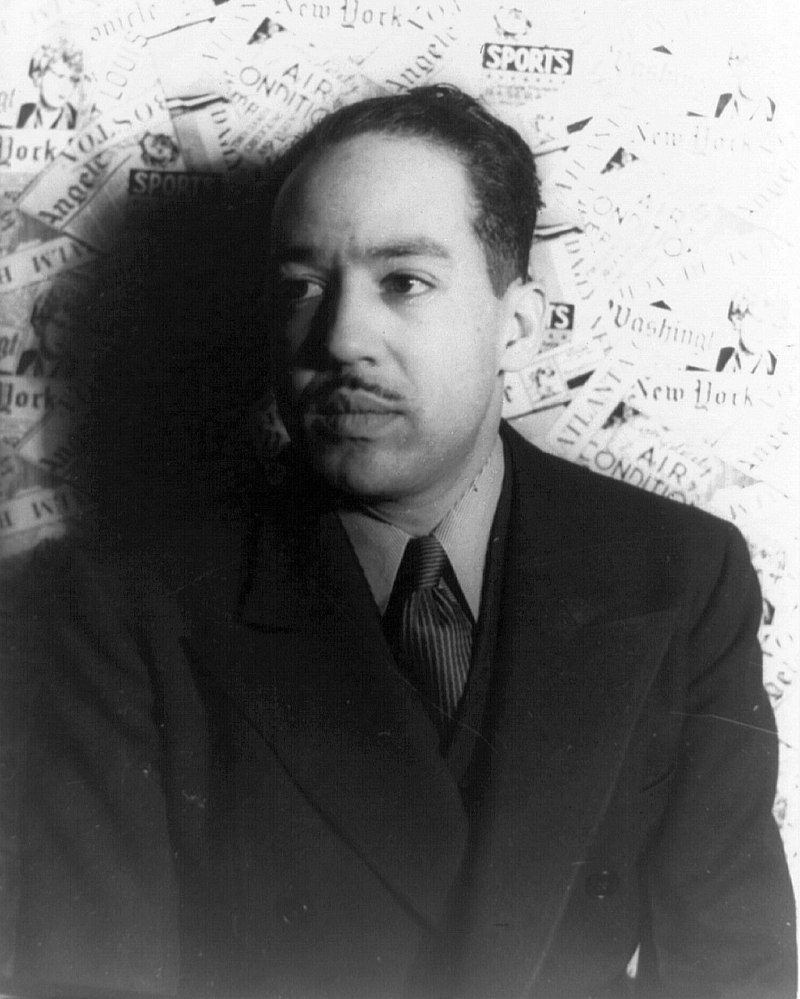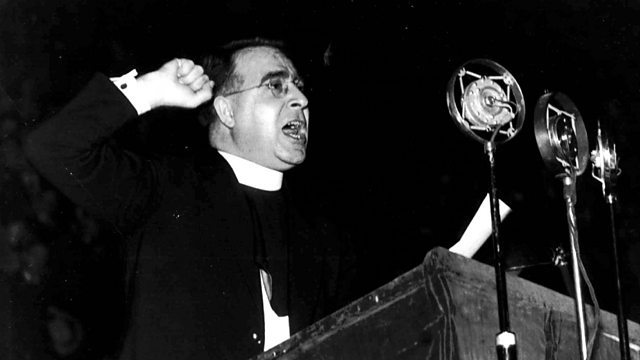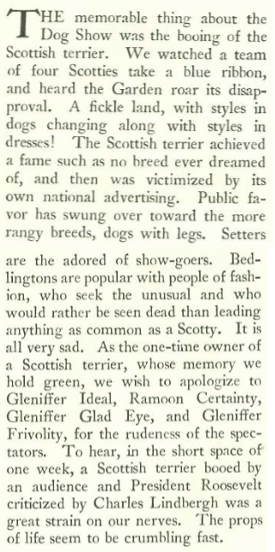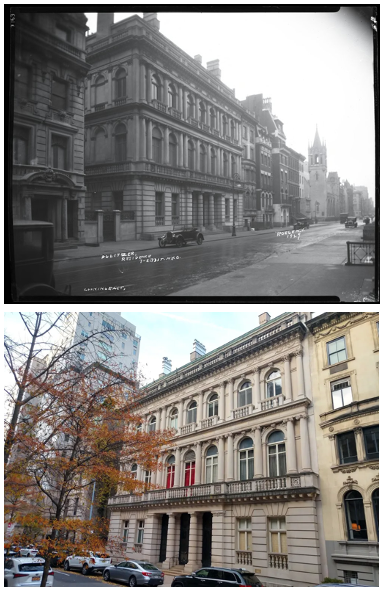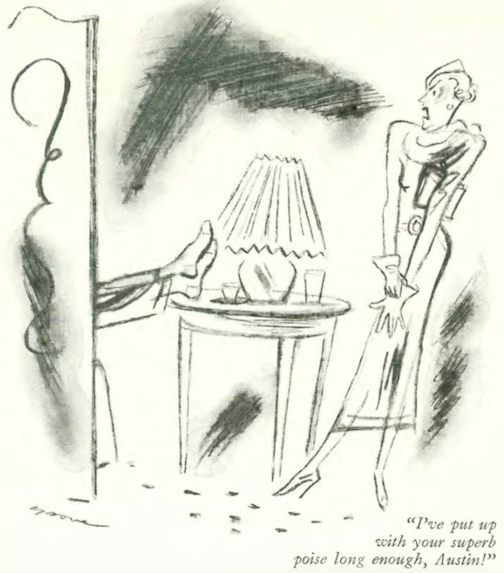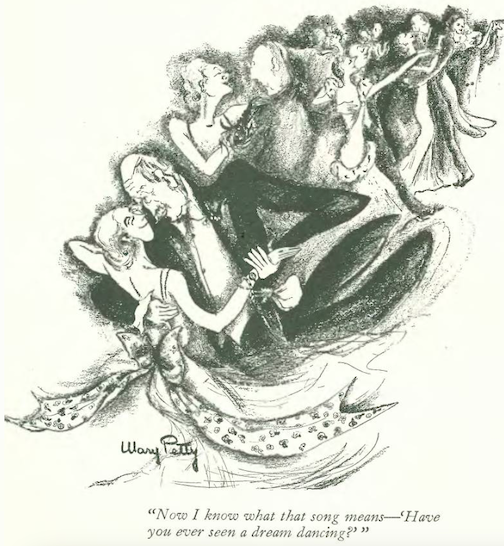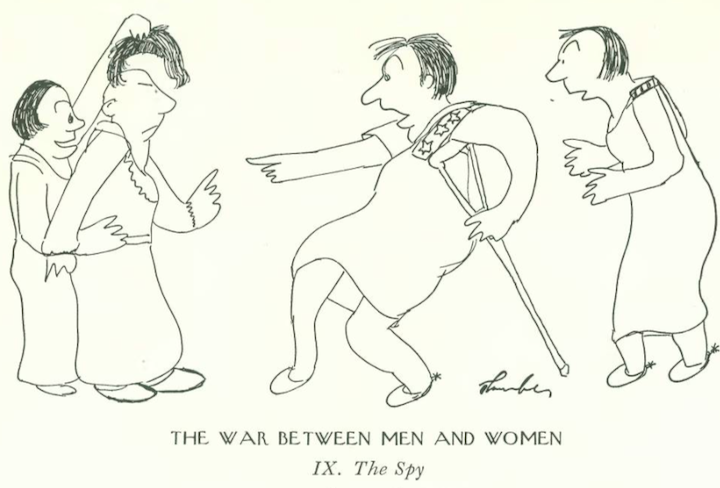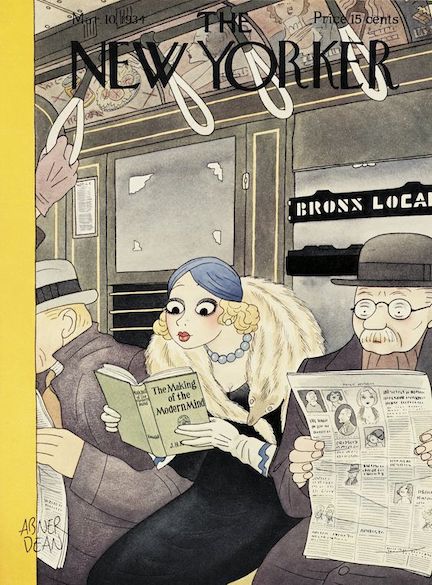
And Now We Are Nine

Above: It took a few issues for the editors to sort out regular features and their order of appearance. The opening section of Issue No. 1 featured the famous Rea Irvin masthead that would introduce “The Talk of Town” for many issues to come. In Issue No. 1, however, “Of All Things” appeared first under the masthead, followed by “The Talk of the Town." Let us hope the magazine restores the original Rea Irvin masthead for its 100th anniversary.

Despite the lingering Depression The New Yorker entered its ninth year on strong financial footing. With nearly equal numbers of subscribers and single copy sales, circulation would approach 125,000 in 1934, with more than $2.2 million in advertising income.

Feb. 17, 1934 cover by Rea Irvin (naturally).

In his “Notes and Comment,” E.B. White commented on the “more vigorous times” the magazine was enjoying, declaring “it is fine to be nine.”

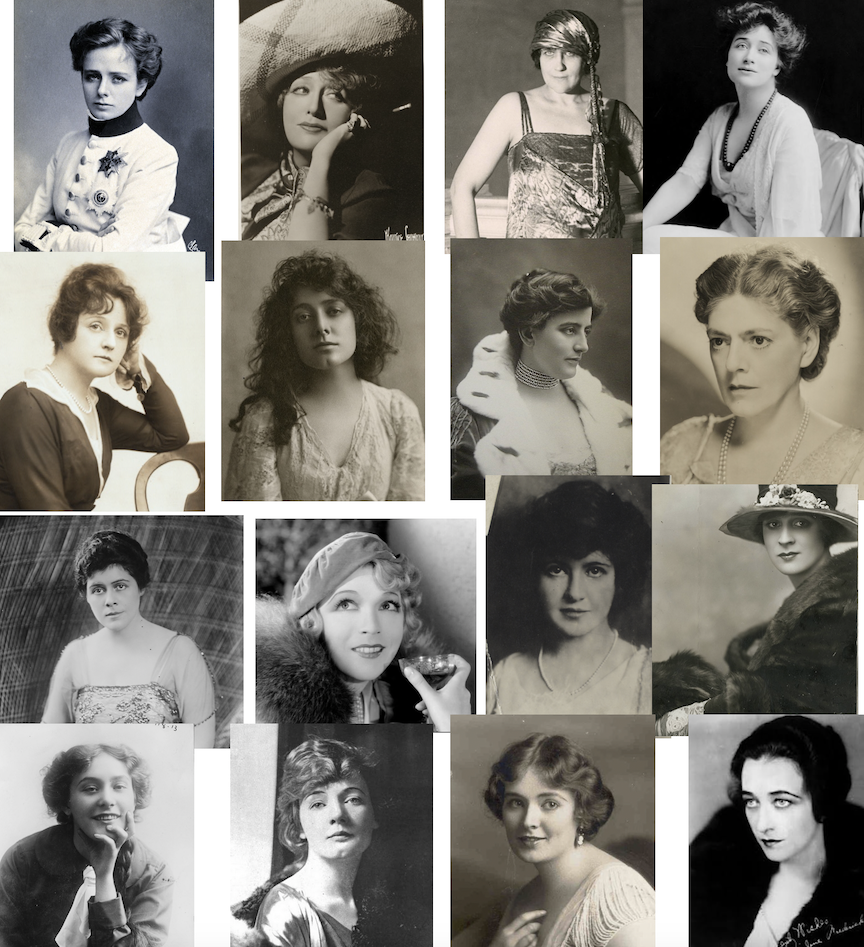
THE NEW YORKER SEVEN…In 1924, baking product heir Raoul Fleischmann put up $25,000 to help Harold Ross get his new magazine off the ground. To assuage Fleischmann’s doubts regarding his investment, Ross persuaded some of his Algonquin Round Table cronies to appear on the magazine’s purely ceremonial masthead. The seven who appeared on the first masthead were, from top left, Ralph Barton, Marc Connelly, Rea Irvin, and George S. Kaufman; bottom row, from left, are Alice Duer Miller, Dorothy Parker, and Alexander Woollcott.

 * * *

Daffy Dilettante 

Another Algonquin Round Table crony, Harpo Marx, was a skilled artist when it came to comedy, pantomime, or the harp, but when he decided to take up a brush and palette he struggled to properly paint a female nude. In this account from “The Talk of the Town,” Harpo eventually abandoned his painting and switched places with the model.

BRUSHING UP ON HIS ART…Undated photo of Harpo Marx putting finishing touches on his painting of an accordion player; Harpo was a one of the Algonquin Round Table originals: a 1919 photo features (standing, left to right) Art Samuels and Harpo Marx; (sitting) Charles MacArthur, Dorothy Parker, and Alexander Woollcott. (Twitter/Wikipedia)

 * * *

Ode to Faraway Lands

A renowned author of children’s poetry, David McCord (1897-1997), was also a frequent contributor to The New Yorker for thirty years (1926-56). For the Feb. 17 issue he penned these sonnets to the Baedeker travel guide.

 * * *

Wimpy Vernacular

Architecture, art and cultural critic Lewis Mumford paused in his criticism of everything from liquor stores to cheap restaurants to offer some surprising praise to his city’s “black-and-white hamburger palaces.”

RED MEAT RIVALS White Tower and White Castle vied for customers in 1930s New York. Above, a 1933 photo of a White Tower in the 200 block of 2nd Avenue; below, a circa 1930 photo of a White Castle in the Bronx. (gothamist.com/Cision)

 * * *

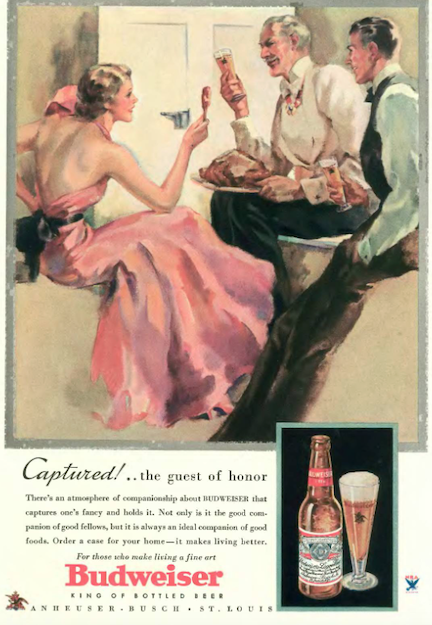
From Our Advertisers

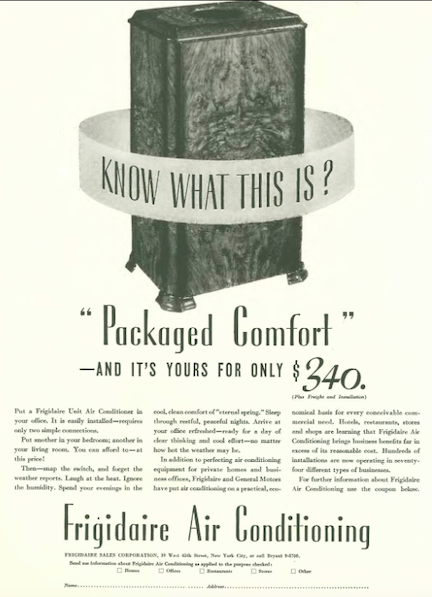
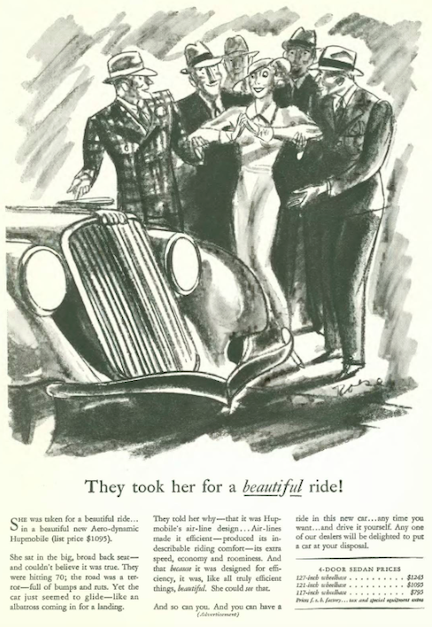
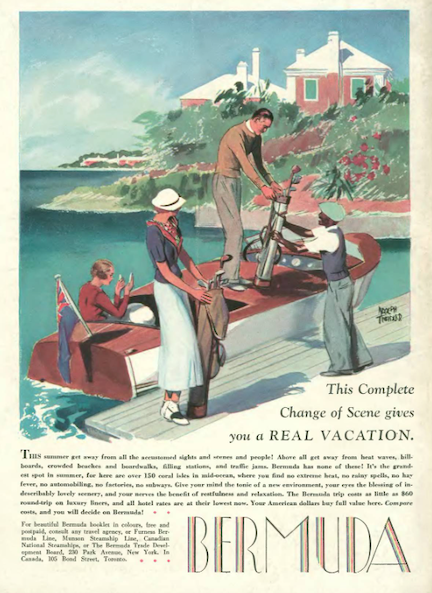
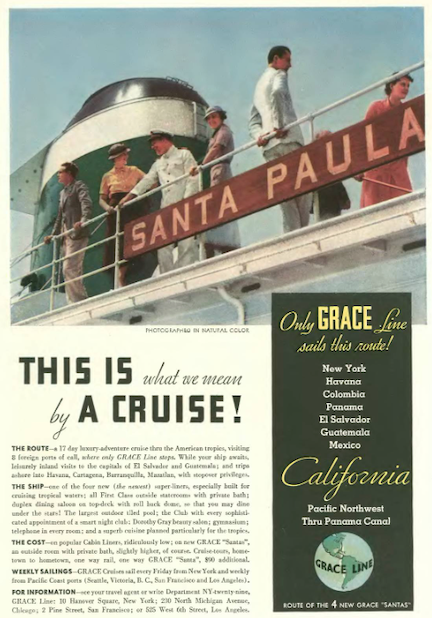
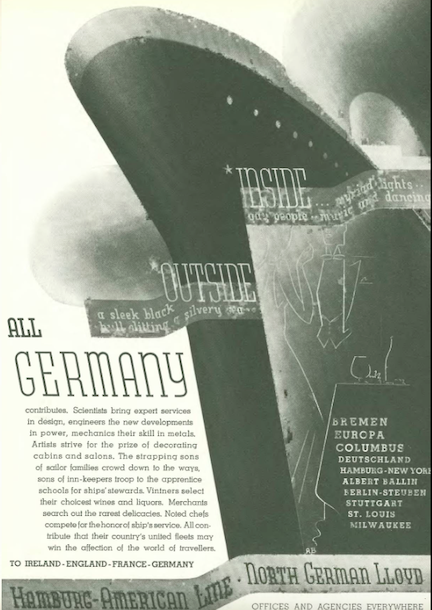
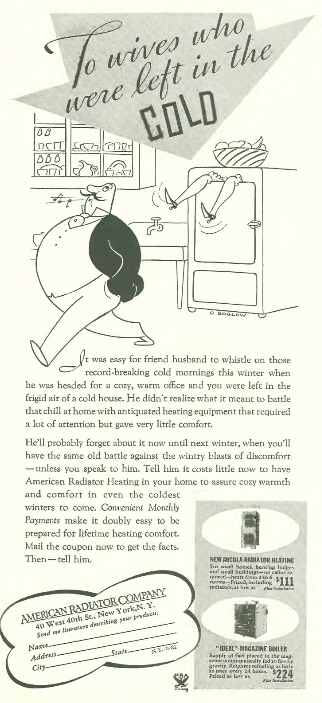
Advertising income reached an all-time high at The New Yorker in 1934, and it showed with the numerous color ads enticing travel to Bermuda…

…or to the French wine country…

…Hiram Walker presented their Canadian Club whisky on what appeared to be a cloth napkin…

…artist Hans Flato continued his unusual Ruppert’s Beer series of mannequin people (and dogs) going about their lives stuck to yellow discs…

…according to the Ruppert’s ad, for six bottle caps you could get a tin coaster like those pictured below…

(1stdibs.com)

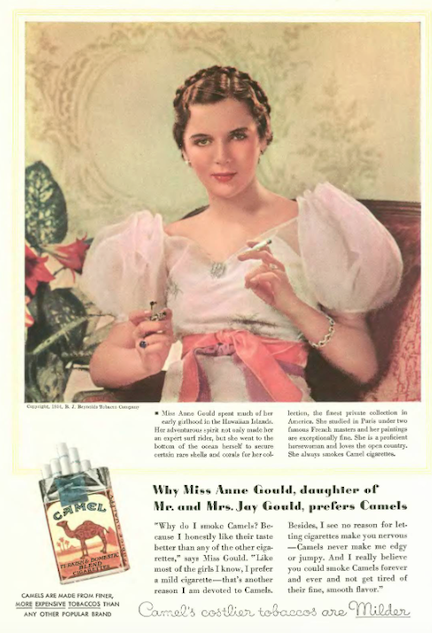
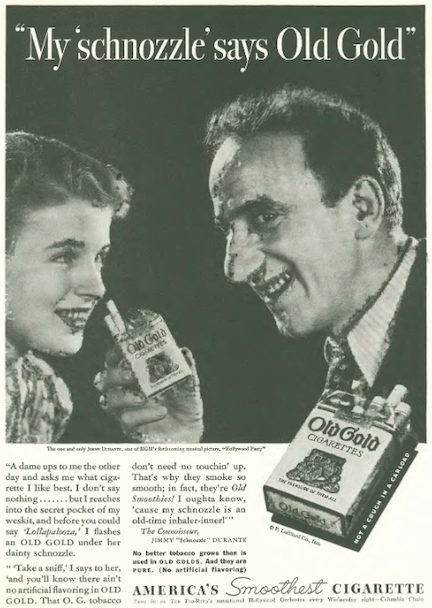
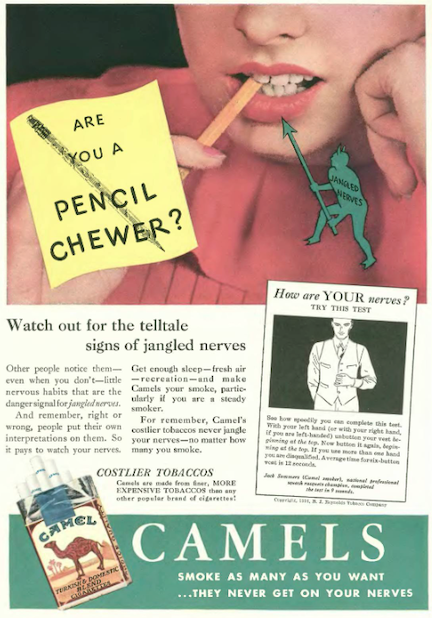
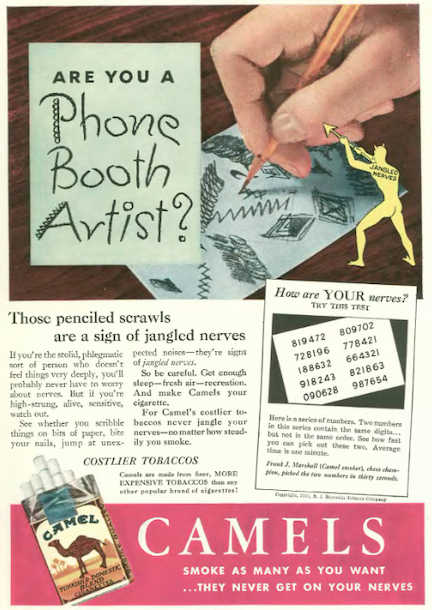
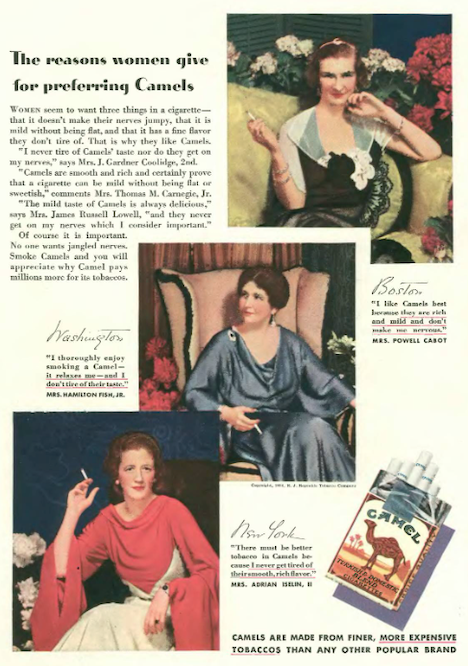
…from magicians and salesmen to sportsmen and high society, the folks pushing Camel cigarettes seemed to try every angle to get their product into the mouths of as many consumers as possible…

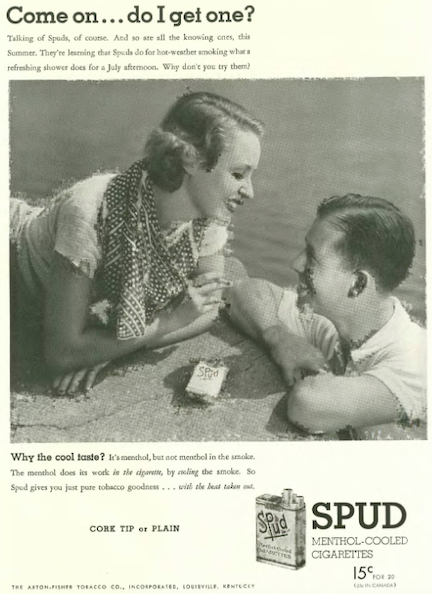
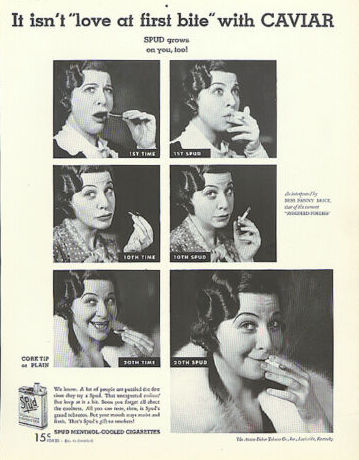
…the makers of Spud menthol cigarettes, on the other hand, tried a little humor to get smokers hooked on their “mouth happiness”…

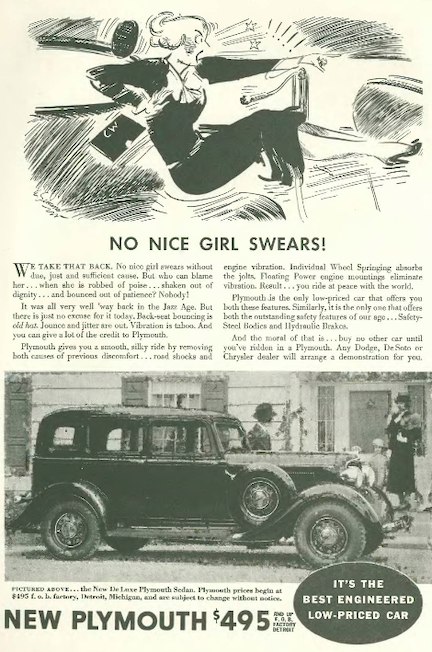
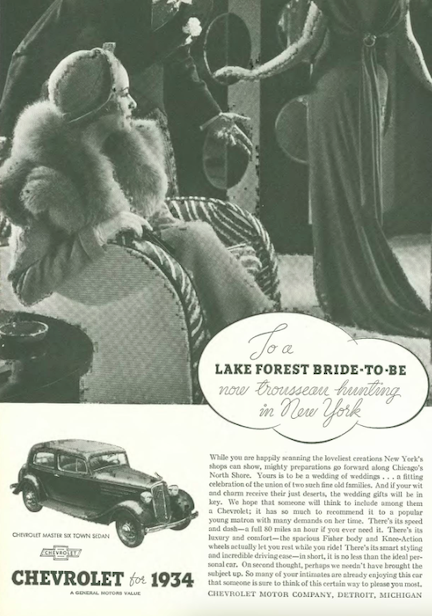
…as one of the world’s most popular car brands, Chevrolet has long been considered a car for the masses, although this ad campaign launched in 1934 suggested that the ubiquitous Chevy was just the car for a connoisseur of the finer things…

…the staid luxury auto maker Pierce Arrow broke with tradition by placing this very modern, minimalist ad…

…the folks at Steinway also adopted a modern look with this single column ad touting the durability of their grand pianos…

…The Viking Press took out this full-page ad to announce the publication of Alexander Woollcott’s While Rome Burns, a collection of some of Woollcott’s writings for The New Yorker and other magazines…

…according to the ad, for six bucks you could get one of 500 limited edition signed copies…as of this writing, the inscribed and signed edition below was available for $350…

(capitolhillbooks-dc.com)

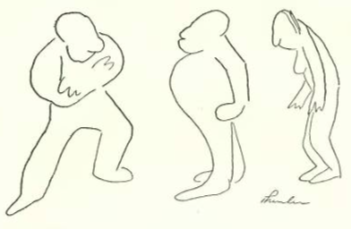
…on to our cartoonists, Al Frueh offered up this interpretation of Ziegfeld entertainers Willie Howard and Fannie Brice

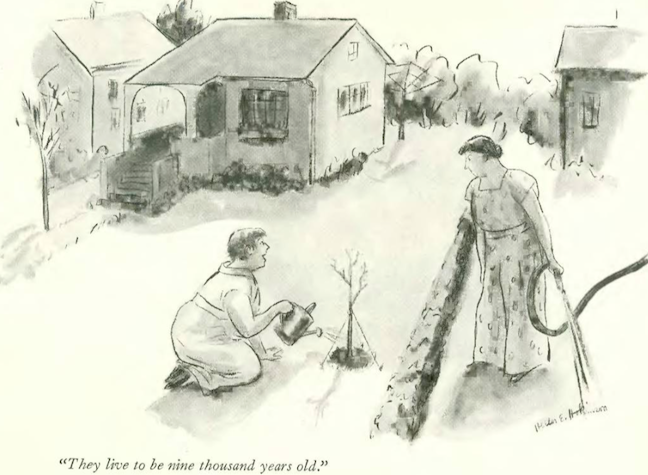
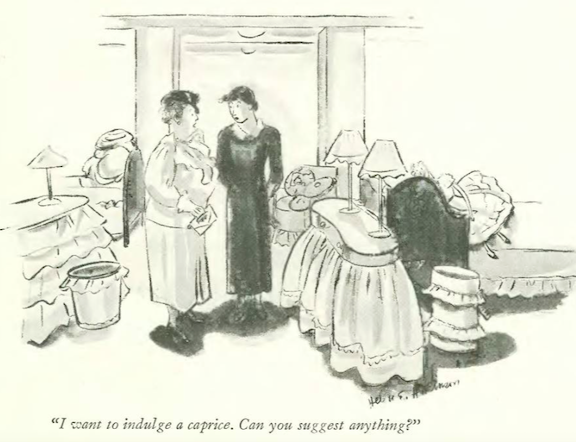
Helen Hokinson took the plunge with 1930s water aerobics…

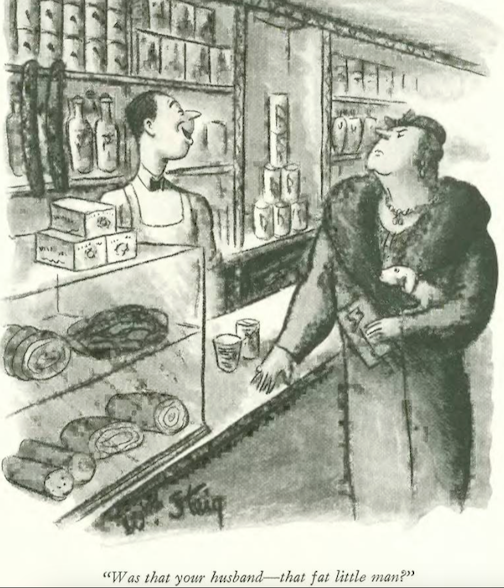
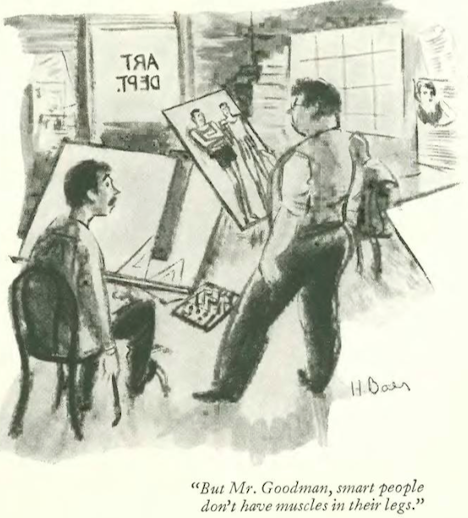
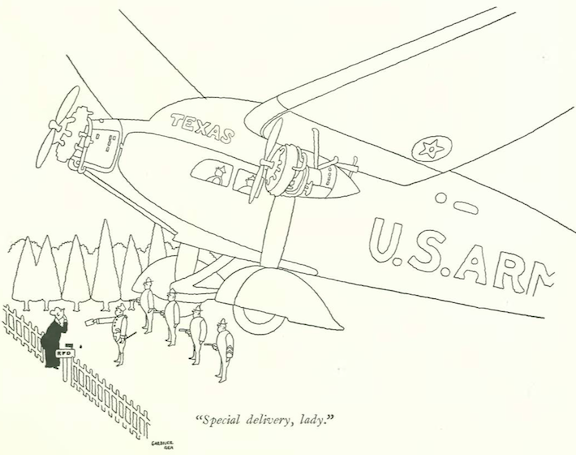
Kemp Starrett demonstrated how beauty is in the eye of the beholder…

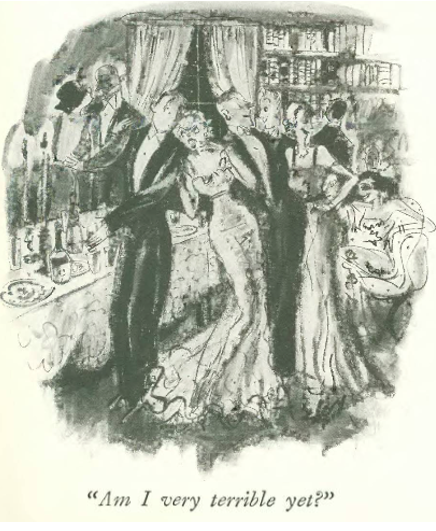
Reginald Marsh returned, taking temporary leave from life on the streets to look at life above the streets…

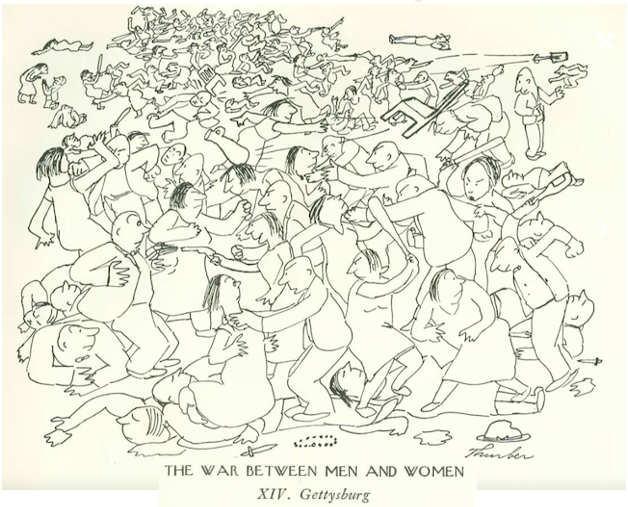
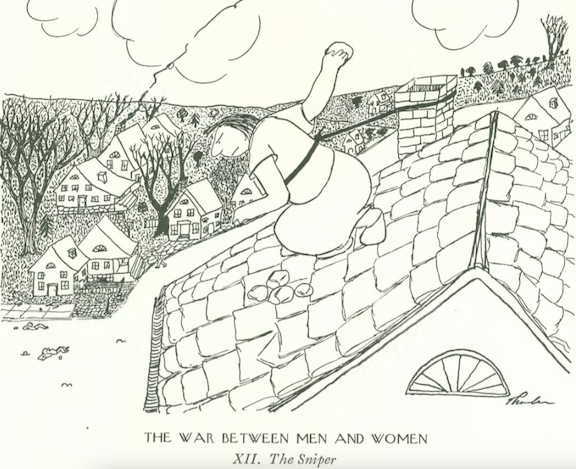
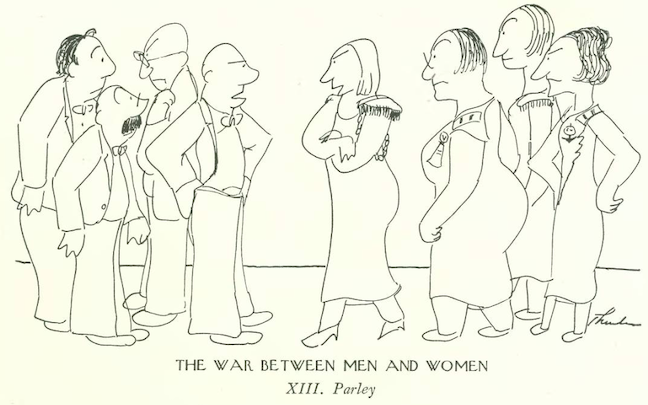
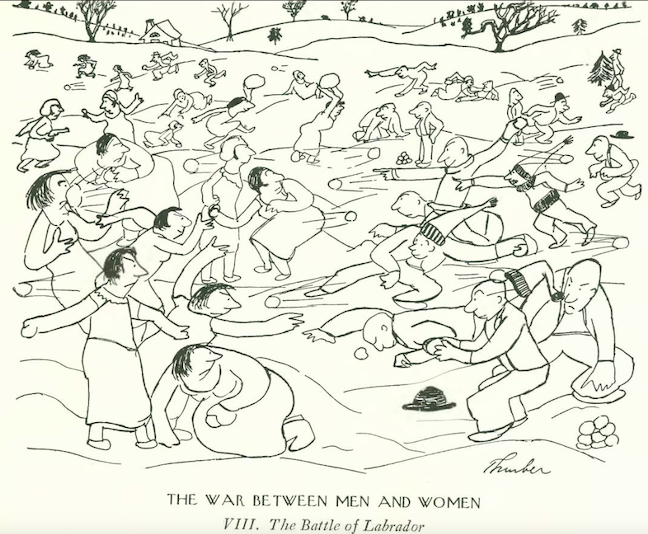
James Thurber’s “War Between Men And Women” took some new twists…

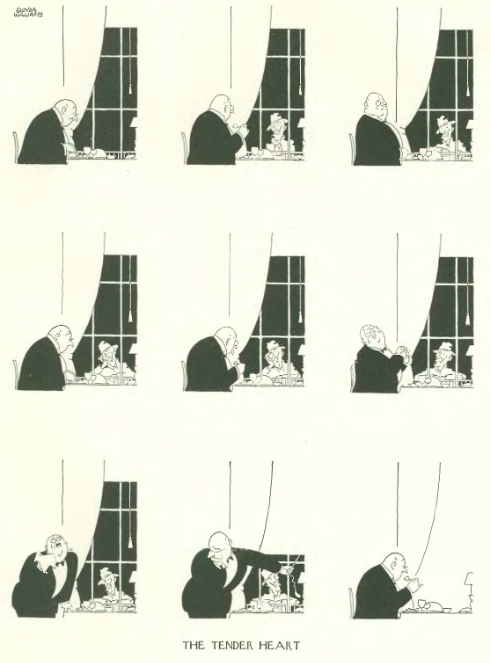
…and we end with Carl Rose, and one man’s solution to being stuck in the middle…

Next Time: Rocky’s Cover-up…

A Joycean Odyssey

Above, James Joyce and his longtime partner Nora Barnacle, in Zurich, 1930. They would marry the following year when Joyce established residency in the UK. (SUNY Buffalo)

It began 103 years ago when the American literary magazine The Little Review published its latest installment of James Joyce’s landmark novel Ulysses—a chapter that featured an account of a wanker on a beach.

Jan. 20, 1934 cover by Adolph K. Kronengold.

More specifically, the passage described the novel’s main character, Leopold Bloom, pleasuring himself while gazing at a teenage girl. It didn’t take long for the pearl-clutchers at the New York Society for the Suppression of Vice to go after the editors of The Little Review, who were ultimately fined for obscenity and banned from publishing the remainder of the novel, which, by the way, Joyce had structured along the lines of Homer’s epic poem, the Odyssey.

Scenes in the novel that frankly described sexual acts and mocked rituals of the Catholic Church kept the book off American shelves until 1934, when District Judge John M. Woolsey ruled that the book was neither pornographic nor obscene. One wonders if Judge Woolsey took a cue from the end of Prohibition.

Lovers of literature, including New Yorker book reviewer Clifton Fadiman, rejoiced at the judge’s decision. We skip ahead to the Jan. 27 issue for Fadiman’s thoughts on the matter:

DUBLINER…James Joyce in 1928, as photographed by Berenice Abbott; announcement by Shakespeare & Company (Paris) of the first publication of Ulysses, 1921; cover of the American first edition, 1934, with Ernst Reichl’s “calmly audacious” jacket design. (Wikipedia/Abe Books)

 * * *

Pleasurable Diversion

We now turn to the Jan. 20 issue, in which Robert Benchley concluded his stage reviews with a generous nod to his dear friend and colleague, Dorothy Parker, whose short stories were being performed as sketches at the Barbizon-Plaza Hotel, the first fully-equipped music and arts residential center in the U.S.

INCIDENTAL ATTRACTION…Stories from Dorothy Parker’s 1933 collection After Such Pleasures were performed as sketches at the Barbizon-Plaza Hotel; at left, Parker with her husband, actor/author Alan Campbell. (Pinterest/Biblio)

 * * *

Une Séduction Américaine

Janet Flanner began writing her weekly New Yorker column “Letter from Paris” in September 1925, keeping readers informed on a variety of subjects ranging from arts and culture to politics and crime. In the Jan. 20 issue she introduced readers to French actor Charles Boyer (1899–1978), who was preparing to try his luck in Hollywood. Actually, Boyer made his first trip to Tinseltown in 1930, but his return would mark the beginning of a successful run in American cinema, including the 1944 mystery-thriller Gaslight and the 1967 romantic-comedy Barefoot in the Park.

MAKING BEAUTIFUL MUSIC…Charles Boyer as the ” gypsy” vagabond Latzi, with Jean Parker (center) and Loretta Young in 1934’s Caravan. (MoMA)

 * * *

The Way Of All Flesh

Lois Long continued to chronicle New York nightlife in her “Tables for Two” column, exuding “rapture” over the new theatre/restaurant Casino de Paree, which featured ample nudity as well as top performers dancer Bill “Bojangles” Robinson and comedienne Sheila Barrett.

The Casino de Paree featured revues, dancing, and side shows such as fire-eaters and animal acts. It closed in 1937, and the building later became home to the trendy 80s–90’s hot spot Studio 54.

CLOTHES OPTIONAL…A 1934 brochure offered glimpses of the entertainment to be had at the new theatre/restaurant Casino de Paree.

The Casino de Paree’s menu gave patrons some idea of what could be expected on the stage…

(The Culinary Institute of America Menu Collection)

…but if food and drink was the only thing on your mind, you could enjoy lobster thermidor for a buck seventy-five…

(The Culinary Institute of America Menu Collection; Craig Claiborne Menu Collection)

* * *

From Our Advertisers

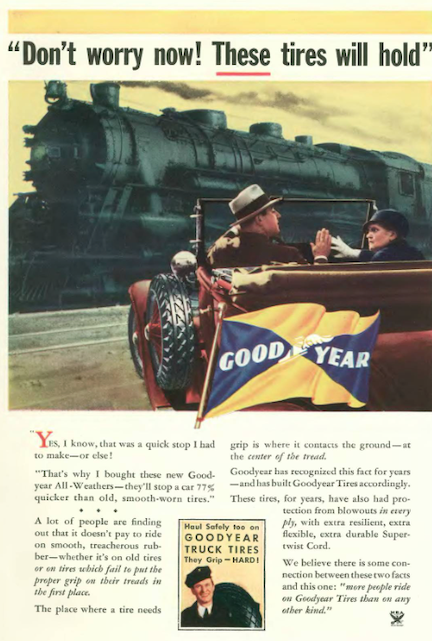
How reliable were Goodyear’s tires? Hopefully more reliable than this adage, which Abraham Lincoln apparently never uttered…

…major exhibitions at the Grand Central Palace changed like the seasons, the National Automobile Show ceding to the National Motor Boat & Engine Show…

…if you’d rather have someone else do the sailing, the Bermuda line could take you on a round-trip cruise for as little as $60…

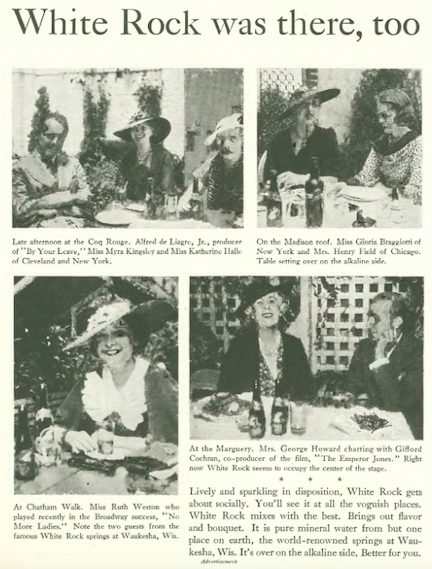
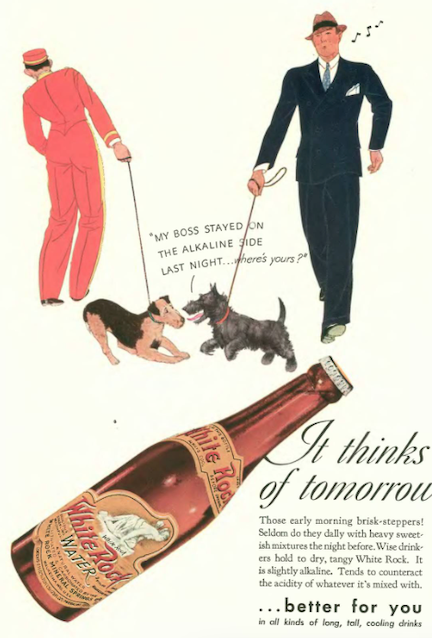
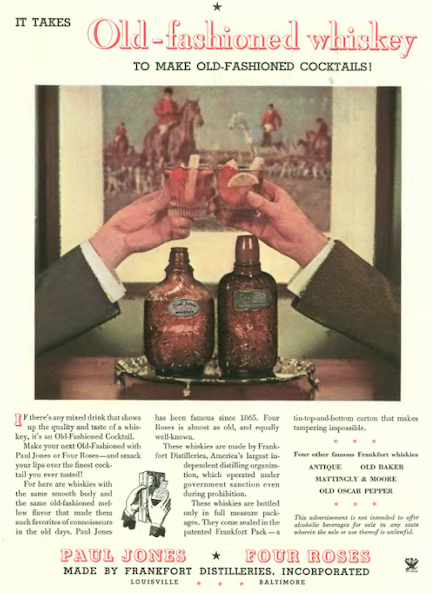
…with the end of Prohibition, the folks at White Rock were doubtless pleased to overtly advertise their product as a cocktail mixer…

…on to our cartoonists, Al Frueh contributed this rendering for the theatre review section…

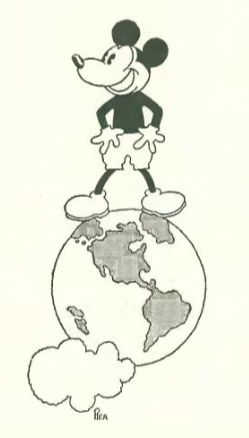
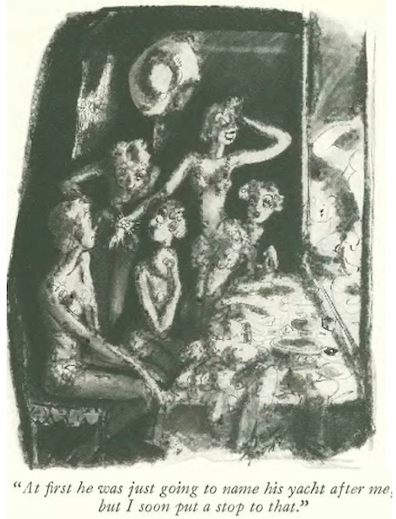
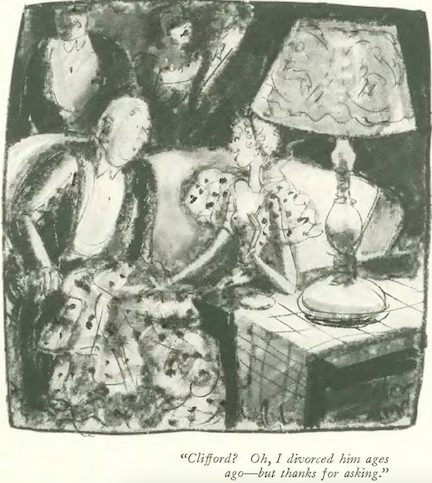
Daniel ‘Alain’ Brustlein found this salon conversation a bit Mickey Mouse…

Helen Hokinson explored the results of family planning…

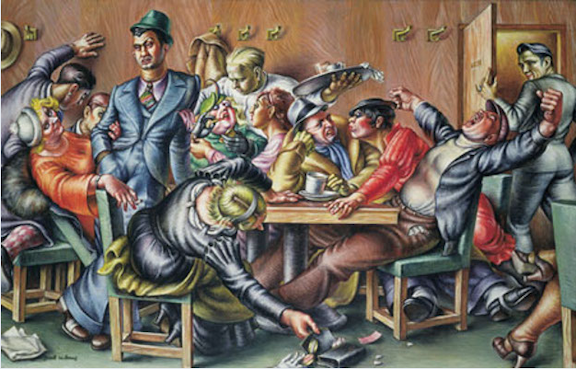
E. Simms Campbell gave us an unlikely den of thieves…

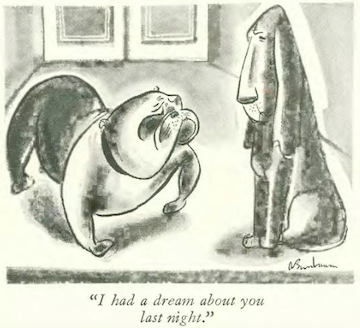
Gilbert Bundy had us wondering what ensued at this gentlemen’s club…

…and James Thurber fired the first shot in The War Between Men And Women…

…on to Jan. 27, 1934…

Jan. 27, 1934 cover by Rea Irvin.

…where writer W.E. Woodward profiled Sinclair Lewis (1885-1951), whose manner had changed noticeably after receiving the Nobel Prize. An excerpt (with caricature by Al Frueh):

I’M SOMEBODY NOW…Sinclair Lewis (far right) with his 1930 Nobel Prize for literature. Other 1930 prize winners were, from left, Venkata Raman (physics), Hans Fischer (chemistry), and Karl Landsteiner (medicine).

 * * *

More From Our Advertisers

We begin with this lovely color illustration by Helen Hokinson, which also graced the cover of the January 1934 issue of The Stage

…the vintners at Moët & Chandon let New Yorkers know that their fine Champagne could be had from sole distributors Labourdette and Company…

…cultural critic Gilbert Seldes advised drinkers to abandon their degraded ways and return to the civilized consumption of an old favorite…

…while the folks at Guinness reminded us of their product’s deep history as well as its health benefits…

…and for the teetotalers the purveyors of Joyz Maté encouraged Yankees to take up this “strange” South American drink…the ad claimed it “fortifies the body against fatigue” (thanks to the generous amount of caffeine) and acts as a “corrective and a balancer” (it helped stimulate bowel movements)…

…on to our cartoons, we begin with Gardner Rea, borrowing from a running gag in the Marx Brothers’ 1930 film Animal Crackers, which featured Harpo chasing a sexy blonde around a mansion (apologies for the poor reproduction quality—the archival image was quite faint)…

Gilbert Bundy gave us a couple confronting the subtleties of Times Square…

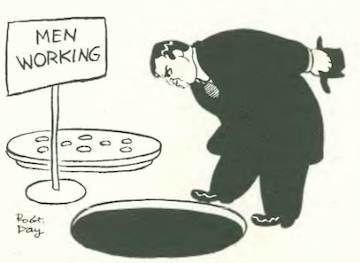
Robert Day commented on the latest trend in taxicab conveniences: coin-operated radios for passengers…

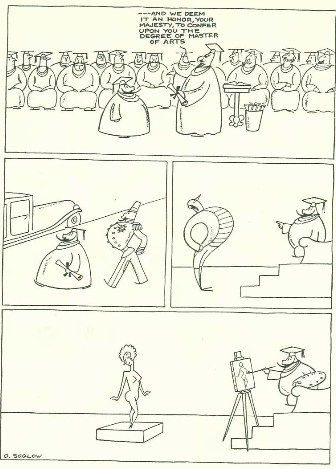
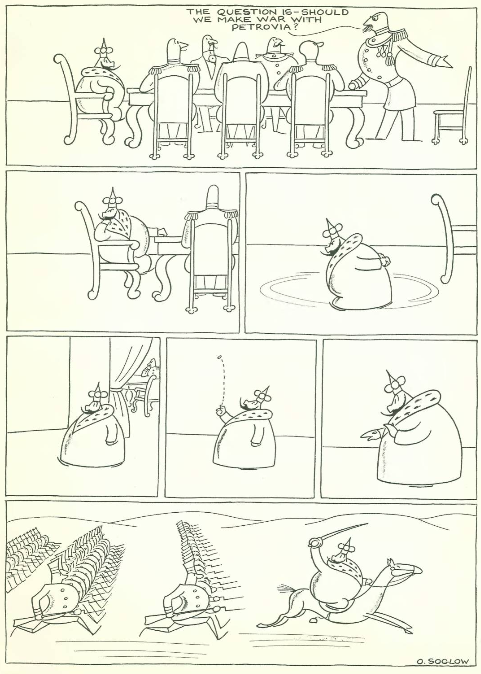
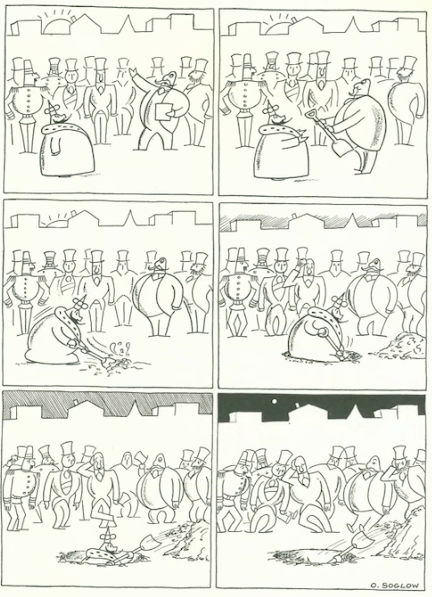
…this two-page Little King cartoon by Otto Soglow revealed another side to our diminutive potentate…

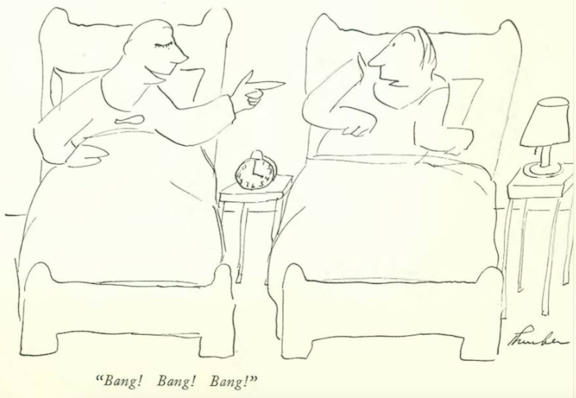
…and the war between the sexes raged on, with James Thurber

Next Time: Under the Knife…


A Poke At Punch

In 1925 New Yorker founding editor Harold Ross wrote that he wanted his new magazine to be “humorous from a sophisticated viewpoint” and “record the situations of everyday life among intelligent and substantial people as do the English magazines, notably Punch, except that our bent is more satirical, sharper.”

Jan. 13, 1934 cover by Constantin Alajalov.

Sharper indeed, as was demonstrated in the Jan. 13, 1934 issue, when Ross’s young magazine took aim at Punch, which was founded in 1841 and had grown long in the tooth under the guidance of Sir Owen Seaman, whose Victorian sensibilities (he joined Punch in 1897) were ripe for parody by a magazine founded during the Jazz Age.

Writer and cartoonist V. Cullum Rogers (MagazineParody.com) notes that the eight pages devoted to “Paunch” was The New Yorker’s longest and most elaborate parody of another publication.

RIPE FOR THE PICKING…The covers of Punch for August 30, 1933, and The New Yorker’s 1934 parody.

E.B. White and Franklin P. Adams contributed parodies (“The Mall” by White and “The Intent Caterpillar” by Franklin) of what Rogers cites as “two of Punch’s favorite forms of bad verse: the sticky-sentimental and the mechanically clever.”

The New Yorker’s theatre critic Wolcott Gibbs joined the fun by penning “Mr. Paunch’s Cinema Review” (excerpt)…

…Rea Irvin and James Thurber offered up their cartooning skills…

Rea Irvin’s parody of a Punch cartoon. (Caption enlarged below).

…and Robert Benchley contributed this gem, “Hyacinths for Pamela.”

Rogers writes that although “Paunch” wasn’t promoted on the cover, “the issue it ran in became the first in The New Yorker’s nine-year history to sell out on newsstands. (The second sellout contained Wolcott Gibbs’s Time parody, which suggests a demand for such things).”

The parody issue concluded with this page of advertisements:

 * * *

The Show Must Go On

The death of Florenz Ziegfeld Jr. in 1932 did not put an end to his Follies; indeed, under the direction of his widow, Billie Burke, the show seemed to have new legs, at least according to Robert Benchley:

HOOFIN’ IT…Clockwise, from top left: Program for the 1934 Ziegfeld Follies; performers in the show included popular brother–sister dancing act Buddy and Vilma Ebsen, pictured here with Eleanor Powell in Broadway Melody of 1936 (most of us know Buddy Ebsen as Uncle Jed from The Beverly Hillbillies); Al Hirschfeld drawing of the show’s stars; Willie Howard, Fanny Brice and Eugene Howard in Ziegfeld Follies of 1934. (YouTube/NYPL)

* * *

Keen on the Airflow

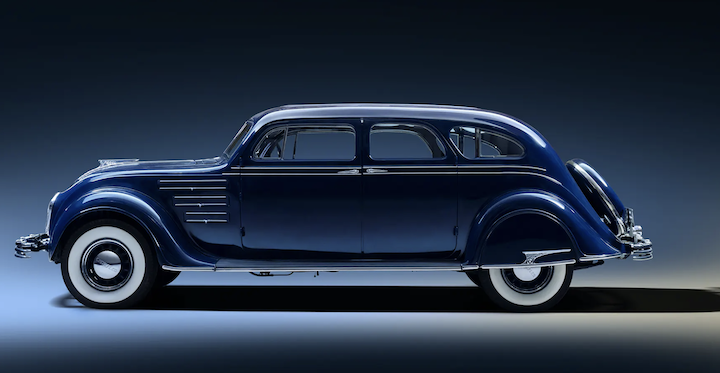
The streamlining trend in autos was not to E.B. White’s liking (see below), but the reviewer of the National Auto Show (pseud. “Speed”) was eager to take the Chrysler Airflow for a spin.

 * * *

From Our Advertisers

The Chrysler Corporation ran this two-page ad that took issue with E.B. White’s criticisms of the streamlining trend in automobiles, led by Chrysler’s “Airflow” model…here Chrysler responded with a note pinned to a tear sheet from the Dec. 16, 1933 “Talk of the Town”…You wrote this before you saw the new Chryslers, Mr. New Yorker

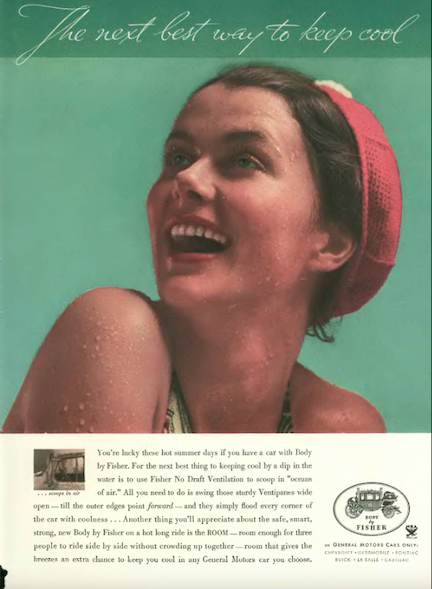
…with the National Auto Show still in town the splashy car ads continued, including this one from the makers of Fisher car bodies…

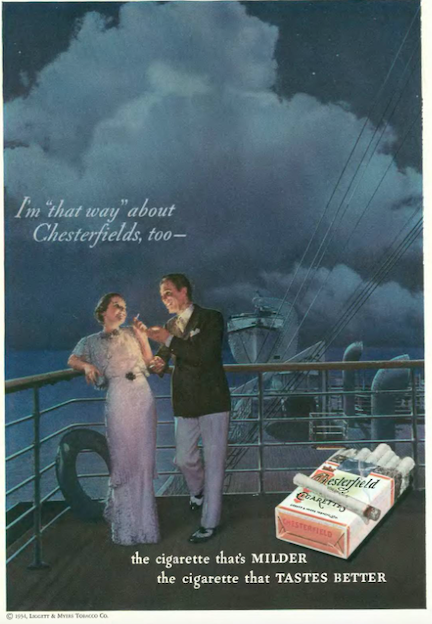
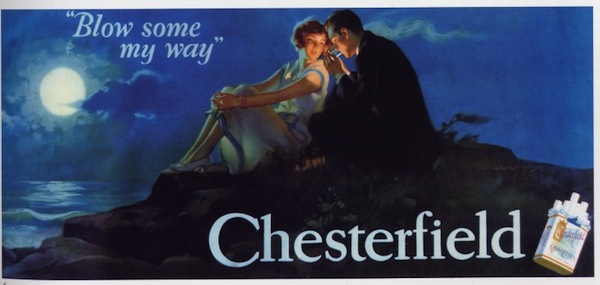
…another advertising stalwart, the Liggett & Myers Tobacco Company, gave us a young woman who enjoyed their Chesterfields “a lot”…

…Guinness was back for those who missed that taste of Dublin…

…and the folks behind “The Beer That Made Milwaukee Famous” placed their first ad in The New Yorker

…if you wanted to have your drink outside of the home, what better place than the Madison Room at The Biltmore…

…on to our cartoons, with begin with Perry Barlow and a tot losing sleep over the new year…

Kemp Starrett also explored the world of sleep deprivation…

…and we end with James Thurber, and a woman with a low tolerance for “cute” news…

…in case you are wondering, Anna Eleanor Sistie” Dall was the daughter of Franklin and Eleanor Roosevelt’s eldest child Anna Dall. When Dall separated from her husband in 1933, she moved into the White House with her children, Sistie and Buzzie.

TOO CUTE…Franklin Roosevelt with his grandchildren Anna Eleanor Sistie” Dall and Curtis “Buzzie” Dall in 1932. According to Buzzie, he and his sister lived in the White House from September 1933 to November 1935. (AP)

Next Time: A Joycean Odyssey…


America’s Love Affair

New York’s first big event of the new year was the annual National Auto Show centered at the Grand Central Palace.

Jan. 6, 1934 cover by Perry Barlow.

The year 1934 was all about aerodynamic design, with Chrysler leading the way with its ill-fated Airflow, a bit too ahead of its time. Other companies followed suit in more subtle ways, especially smaller manufacturers looking for novel ways to grab a cut of market share.

The trend in streamlining was inspired by such designers as Norman Bel Geddes, R. Buckminster Fuller and John Tjaarda

SLIPPERY SEDANS…Top left, a 1933 Briggs concept car, designed by John Tjaarda, on display at the Ford Exposition of Progress in Detroit; right, a 1932 concept model of Motorcar No. 9 by Norman Bel Geddes; below, a reproduction of R. Buckminster Fuller’s 1933 Dymaxion car. (detroitpubliclibrary.org/Harry Ransom Center/Wikipedia)

Chrysler pulled out all stops to promote its radical new design at the National Auto Show, even producing a special seven-page newspaper, Chrysler News, to promote the car’s many wonders…

…the inside pages featured The New Yorker’s Alexander Woollcott marveling over the Airflow’s design (at the time Woollcott was a Chrysler pitchman).

Although other manufacturers didn’t go as far as Chrysler, the streamlining trend was seen in slanting radiators and sweeping fenders.

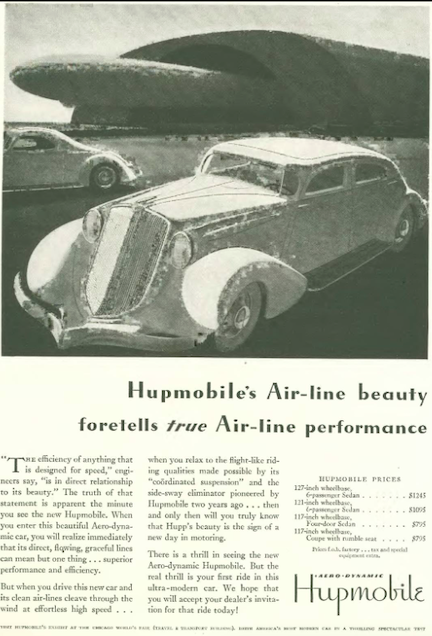
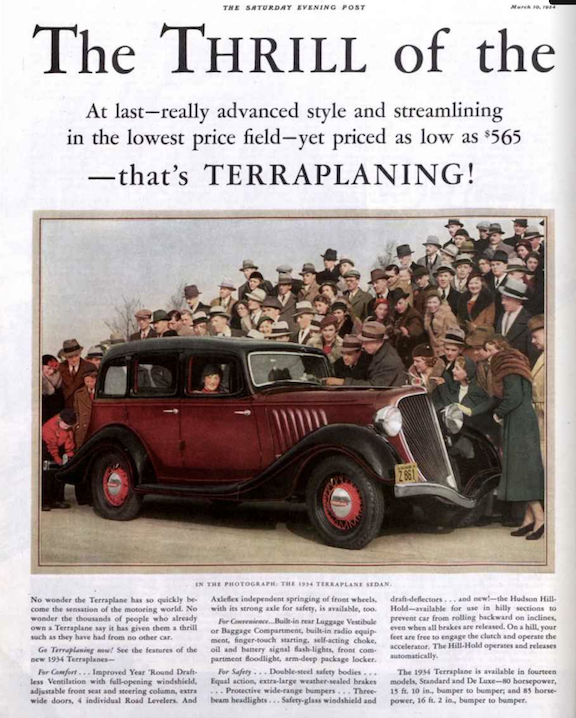
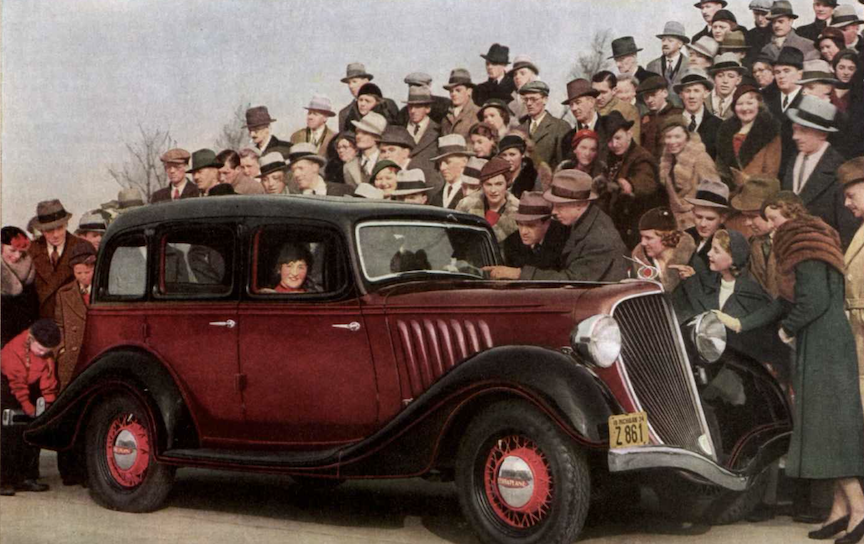
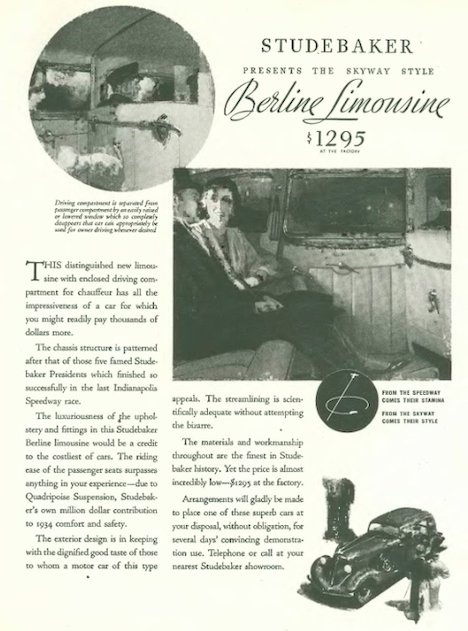
LAIDBACK DESIGN…Clockwise, from top left, 1934 Hudson Terraplane K-coupe; 1934 Studebaker President Land Cruiser; 1934 Graham-Paige; 1934 Hupmobile. (hemmings.com/auto.howstuffworks.com/YouTube)

The review also noted the novel way Pierce-Arrow sound-insulated their motorcars:

IT’S STUFFY IN HERE…For sound insulation, luxury carmaker Pierce Arrow used kapok, a fine, fibrous, cotton-like substance that grows around the seeds of the tropical ceiba tree. (Pinterest)

 * * *

Wearing the Pants

In 1934 it was still something of a scandal for a woman to wear trousers. Like Marlene Dietrich, Greta Garbo was an actress who could and would defy gender boundaries, and in Queen Christina she effortlessly portrayed the Swedish queen, who in real life was given an education and responsibilities expected of a male heir and often dressed as a man. The film was a critical success, although John Mosher felt Garbo overwhelmed the movie.

READY FOR HER CLOSEUP…Clockwise, from top left, in one of cinema’s most iconic scenes, Queen Christina (Greta Garbo) stands as a silent figurehead at the bow of a ship as the camera moves in for a tight close-up; Garbo with co-star and real-life romantic partner John Gilbert—it was the last of the four films the two would make together; Christina kisses her handmaiden Ebba (Elizabeth Young)—some have suggested Garbo was portraying the queen as bisexual, however the kisses with Ebba were quite chaste; MGM film poster. (moviemaker.com/pre-code.com/IMDB)

 * * *

She Also Wore Pants

Katharine Hepburn quickly took Hollywood by storm, earning her first Oscar at age 26 for her performance in 1933’s Morning Glory. However, New Yorker drama critic Robert Benchley didn’t see that talent necessarily translating to the Broadway stage, at least not in The Lake:

A RARE FLOP…Robert Benchley thought it was “almost cruel” to foist Katharine Hepburn’s stardom onto the stage in a flop like The Lake. At left, cover of the Playbill; at right, Hepburn in one of the costumes for the production. (Playbill/Facebook)

Benchley correctly surmised that the play’s producer, Jed Harris, was trading on the young star’s “meteoric” film success, but Hepburn’s beauty and intelligence were not enough to save this critical flop, which closed after 55 performances.

 * * *

On the Town

The chronicler of New York fashion and nightlife, Lois Long, detested Prohibition but after repeal also missed the intimacy of speakeasy life. In her latest “Tables for Two” column Long seemed to be settling into a routine and finding new favorites, like the Waldorf’s Sert Room and Peppy de Albrew’s Chapeau Rouge.

THIS WILL DO NICELY…Lois Long sipped Casanova ’21 champagne while enjoying the music of Catalonian violinist Enric R. Madriguera (bottom left) amid the murals of Madriguera’s countryman Josep Maria Sert (right images) in the Waldorf-Astoria’s Sert Room. (waldorfnewyorkcity.com/Wikipedia)
FAMILIAR FACES…No doubt Lois Long knew Argentine dancer Abraham “Peppy” de Albrew (left) from his days at Texas Guinan’s notorious 300 Club; Long found de Albrew’s new club, Chapeau Rouge, to be a welcoming slice of Paris, enlivened by the dancing of Antonio and Renee de Marco, pictured at right with their dogs in front of San Francisco’s Fairmont Hotel, circa 1937. (Wikipedia/digicoll.lib.berkeley.edu)

 * * *

From Our Advertisers

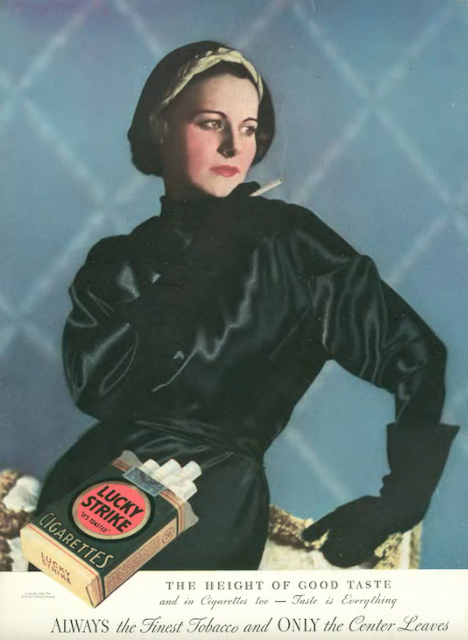
Thanks to the auto show The New Yorker was raking in a lot of advertising dollars on top of the steady income from tobacco companies and the new infusion of revenue from purveyors of adult beverages…Lucky Strike grabbed the back cover for this striking ad…

…and contrary to the wisdom of the ages, American speed skater Irving Jaffee (who won two gold medals at the 1932 Winter Olympics) credited his athletic prowess in part to smoking unfiltered cigarettes…

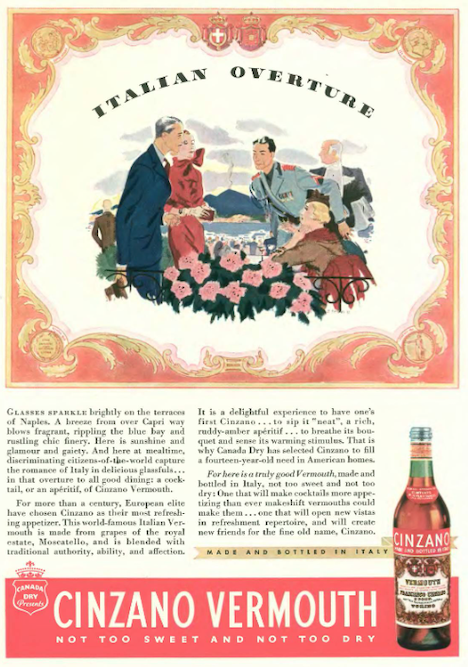
…finally, real French Champagne was arriving on American shores…

…as was authentic Scotch whisky…

John Hanrahan was The New Yorker’s policy counsel from 1925 to 1938 and is credited with putting the magazine on firm financial footing during its infancy…in 1931 Hanrahan rebranded the Theatre Guild’s magazine, renaming it The Stage and filling it with the same splashy ads he was also able to bring to The New Yorker…the Depression was a tough time to launch a magazine, and even though Hanrahan added articles on motion pictures and other forms of entertainment in 1935, the magazine folded in 1939…

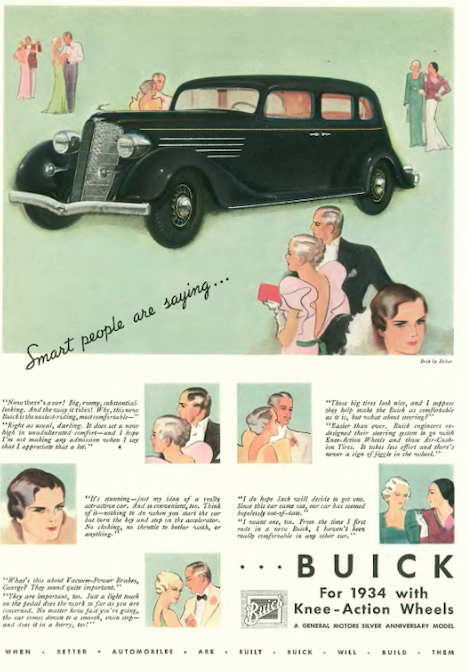
…and with the National Auto Show in town, car manufacturers filled The New Yorker’s pages with expensive ads…we’ll start with Walter Chrysler’s long-winded appeal on behalf of the Airflow…

…the folks at the usually staid Packard tossed in some unexpected color…

…Pierce-Arrow, at the time America’s top luxury car, offered this sneak peak of its 1934 Silver Arrow…

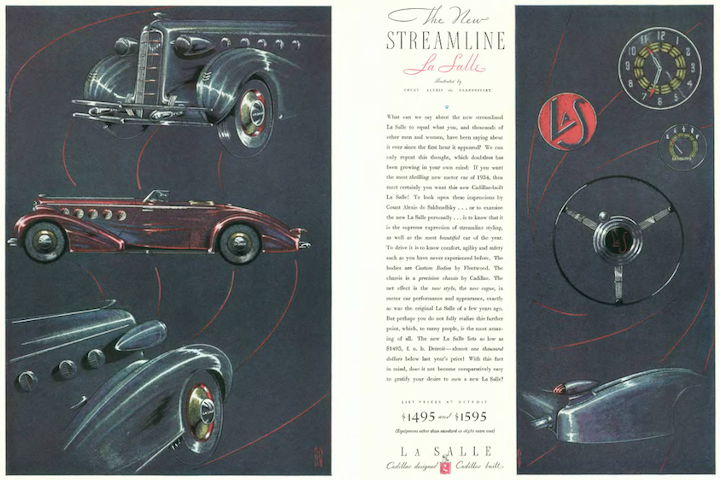
…Cadillac bought this spread to announce both its luxury and down-market brands…

…Hudson Motor Car Company invested in three color pages to announce the rollout of their 1934 Hudson 8…

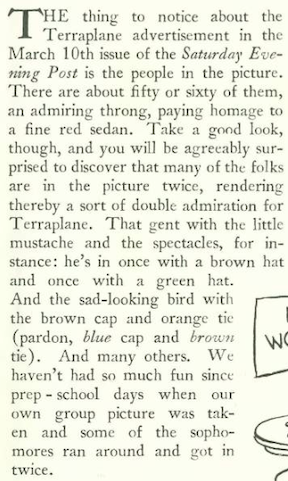
…and their low-priced yet powerful Terraplane…

…Fisher, which made car bodies for General Motors, offered up this color photo of a pretty aviatrix to suggest their interiors were as fresh and clean as the clear skies above…

…Studebaker also paired flying with their latest models…

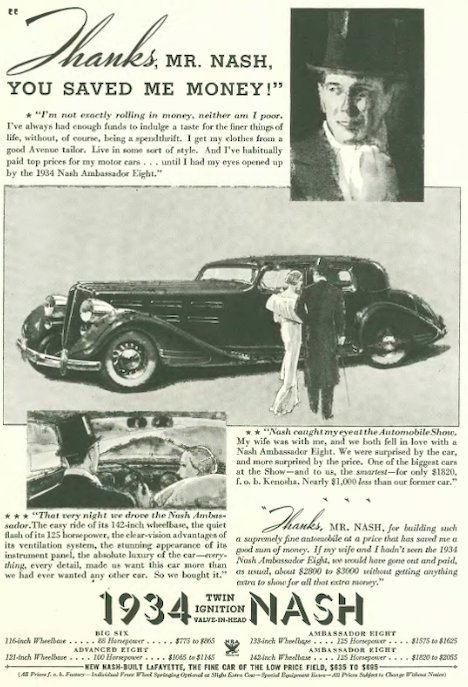
…Nash employed cartoonist Wayne Colvin for a series of six ads sprinkled across the back pages…here are two examples…

…on to our cartoonists, Perry Barlow used the auto show as inspiration for this cartoon, which appeared along with the review…

Al Frueh drew up these images for the theatre section…I believe this is the first appearance of Bob Hope in the magazine…

…some housekeeping…I accidentally included this James Thurber cartoon and…

…this Rea Irvin cartoon in my post for the Dec. 30, 1933 issue…they belong with the Jan. 6 issue…

Robert Day offered up a roving reporter…

Carl Rose looked in on a wine connoisseur…

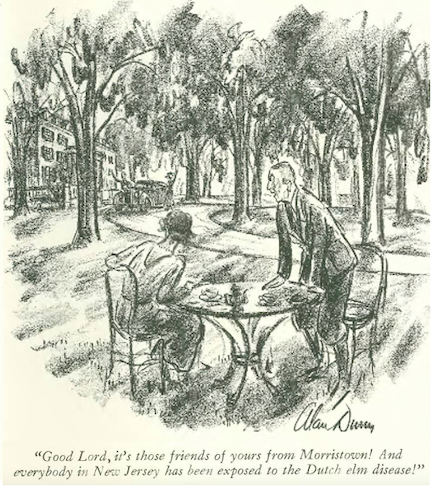
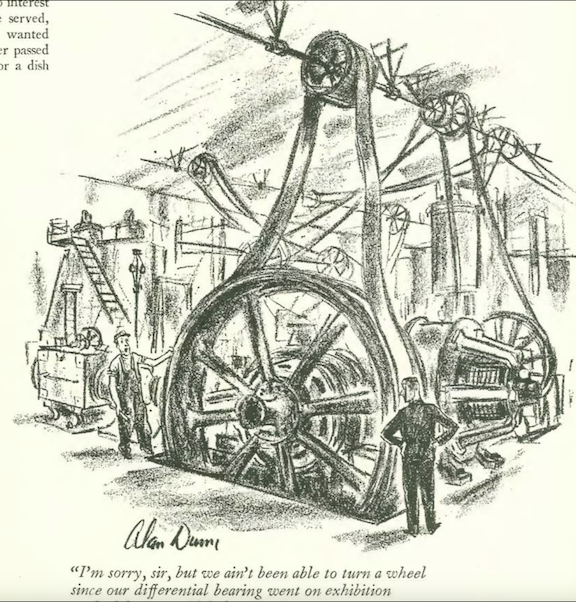
…and we close with a steamy image, courtesy Alan Dunn

Next Time: A Poke at Punch…

An Immemorial Year

Perhaps it was the end of Prohibition, or the implementation of the New Deal, but throughout the pages of the final New Yorker of 1933 you could sense a lightening of spirit.

Dec. 30, 1933 cover by Rea Irvin.

By most accounts 1933 was one of the Depression’s worst years, and that is likely why E.B. White chose to remember “only a few scattered moments,” mixing the silly with the salient.

Of the silly, there was the time when the Barnum & Bailey circus dwarf Lya Graf sat on J.P. Morgan’s lap while he was waiting to testify before the Senate Banking Committee…

HE DIDN’T BANK ON THIS…J.P. Morgan was paid a visit by Barnum & Bailey circus dwarf Lya Graf, prior to his testimony before the Senate Banking Committee on June 1, 1933. (New York Magazine)

White also noted the passing of Texas Guinan. Known as “Queen of the Nightclubs,” she was a fixture on the Manhattan speakeasy scene throughout the Roaring Twenties and a reliable source of nightlife headlines. White also recalled George Bernard Shaw’s controversial speech at the crowded Metropolitan Opera House, during which he referred to American financiers as “lunatics” and called the U.S. Constitution a “charter of anarchism.”

YEAR IN A NUTSHELL…Clockwise, from top left: The year 1933 saw the passing of the “Queen of the Nightclubs” Texas Guinan—more than 10,000 showed up for her funeral in November; also that month Thomas G.W. Settle and C.L Fordney ascended to the stratosphere in the Century of Progress balloon; The New York Times (April 12, 1933) published the full text of George Bernard Shaw’s Met speech; Esquire published its first issue in the fall, featuring Ernest Hemingway and John Dos Passos as well as New Yorker cartoonists Constantin Alajalov, William Steig and E. Simms Campbell; according to Vogue, 1933’s breasts were “high and pointed.” (bounddv.medium.com/history.navy.mil/The New York Times/Pinterest)

White also had more to say about the streamlining trend in automobiles, led by Chrysler’s new “Airflow.” White preferred the older, boxier models, with plenty of head and hat room.

In 1922 White set off across America in the car of his dreams, a Model T, which had plenty of headroom and, as he later wrote, transformed his view of the land, a vision “shaped, more than by any other instrument, by a Model T Ford…a slow-motion roadster of miraculous design—strong, tremulous, and tireless”…

MERRILY WE ROLL ALONG…Clockwise, from top left: E.B. White and wife Katharine Sergeant take a spin in a Model T in the mid 1930s; despite White’s remonstrations regarding headroom, the makers of the Chrysler Airflow advertised their streamlined car’s interior as practically cavernous. (Goodreads/Pinterest)

 * * *

Crying in His Beer

A couple of issues back we saw Lois Long bid a sad farewell to the cosy and secluded atmosphere of the speakeasy…Ogden Nash turned to verse to offer his own lament, feeling naked and exposed in dining rooms “full of 500 assorted debutantes and dowagers”…

FEELING EXPOSED…Ogden Nash (1902–1971) missed the sacrilegious rite of the speakeasy and lamented the “humdrumness” of legal drinking. (vpoeticous.com)

 * * *

Wondering About Alice

Combine horrific character designs with a young adult playing a child and you have the recipe for 1933’s star-studded Alice in Wonderland, a film the Nerdist’s Kyle Anderson calls “a fascinating, unintentionally disturbing take on a classic.” Almost ninety years earlier the New Yorker’s John Mosher found it disturbing in other ways, save for W.C. Field’s portrayal of Humpty Dumpty.

Writing for The Roarbots, Jamie Green notes that Charlotte Henry was 19 when she played Alice: “This version of Alice doesn’t feel like a sweet look at the twists and turns of adolescence; it feels more like a commentary on repressed desire and self-identity.” The film was a flop at the box office.

CHANNELLING HER YOUTH…Clockwise, from top left: 19-year-old Charlotte Henry as Alice in 1933’s Alice in Wonderland; W.C. Fields as Humpty Dumpty; Roscoe Karns as Tweedledee and Jack Oakie as Tweedledum; Alice has a chat with Gryphon (William Austin) and Mock Turtle (Cary Grant). Except for Henry, most of the cast was unrecognizable in their macabre makeup and costumes. (IMDB)

 * * *

From Our Advertisers

We start with a selection of three one-column ads, featuring, from left, the latest back-to-school look for the collegiate male (apparently attending Columbia); the dustless, noiseless, smokeless, AIR-CONDITIONED railway wonder called the Orange Blossom Special; the automobile arm of the REO Motor Car Company trying to pack everything it could into this narrow little ad (REO would stop producing cars in 1936 in order to focus solely on trucks)…

…the distillers of Holloway’s London Dry Gin warned newly liberated American drinkers about the consequences of imbibing cheap gin…

…the folks at R.J. Reynolds found another member of the gentry to push their Camels onto aspiring young women…

…on to our cartoons, the Dec. 30 issue featured a James Thurber double-header, beginning with this “Talk of the Town” spot illustration…

…a rare one-panel Little King from Otto Soglow

…ringing in the New Year with Syd Hoff

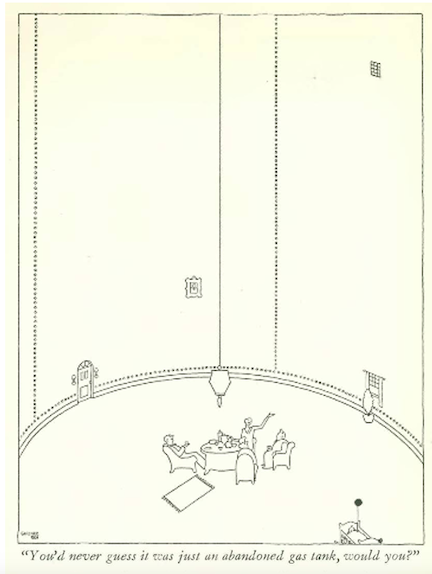
…and George Price

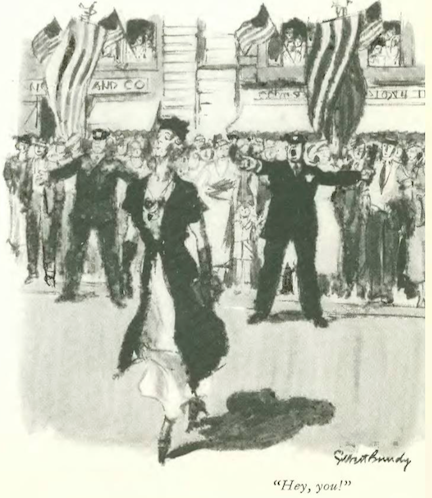
…and we close with Gilbert Bundy, seeking from fresh air…

Next Time: American Love Affair…

Going With the Flow

“We had the horse and buggy. We had the automobile. Now we have the first real motor car in history.” — Walter P. Chrysler. (Image: Blair Bunting via hagerty.com)

Classic motorcar collector and aficionado Jay Leno has more than 180 vehicles in his collection, but a pride and joy is a 1934 Chrysler Airflow Imperial CX—one of the only three surviving CXs today.

Dec. 16, 1933 cover by Rea Irvin.

The 1934 Chrysler Airflow was a car of the future that came too early. The Airflow’s advances in engineering—including invention of the modern unibody—still inform car design today. But the streamlined look of the car was probably too advanced for those depressed times, and despite lots of media attention it flopped with consumers. E.B. White was among those who weren’t ready to jump on the Airflow bandwagon, and even poked fun at colleague Alexander Woollcott for posing in the backseat of an Airflow for a Chrysler advertisement:

The Woollcott ad in question, which appeared in the previous issue (Dec. 9):

Of the major car companies in the 1930s, Chrysler was perhaps the most revolutionary in terms of technological and design advances. The first car to be wind tunnel-tested, the Airflow’s lightweight, unibody design moved the engine over the front axle and positioned the passengers between the front and rear wheels for a much roomier, smoother ride. Chrysler claimed the unibody also made the car stronger and safer, as this newsreel attests:

Air truly flowed through the car; even the windshield could be cranked open for greater air circulation.

AND THEN THERE WERE THREE…Jay Leno’s Chrysler Airflow Imperial CX, one of only three CX’s known to exist today. Other versions of the Airflow included a model sold under the DeSoto brand name. You can see this car in action on Jay Leno’s Garage. (Blair Bunting)
AIR SUPPLY…Clockwise, from top left: The Chrysler Airflow featured a windshield that could be cranked open; advertising card for the Airflow; Indy veteran Harry Hartz set seventy-two speed and distance records at the Bonneville Salt Flats in an Airflow, driving 97.5 mph over the flying mile; the roomy interior featured a nearly horizontal steering column, which freed up space in the driver’s footwell. Although normal today, it was revolutionary in 1934, when most cars had steering columns sprouting from the floor. (Blair Bunting/macsmotorcitygarage.com)

 * * *

No Fair, Doug

Few Hollywood marriages could ever match the legendary status accorded to that of Mary Pickford and Douglas Fairbanks, darlings of the silent screen who who exchanged vows in 1918. When the couple separated in 1933, even E.B. White couldn’t resist a bit of Tinseltown gossip.

FAIRY TALE FIZZLE…The very public nature of the Mary PickfordDouglas Fairbanks marriage put a big strain on their matrimonial bonds. When both saw their careers fade at the end of the silent era, Fairbanks found escape in overseas travel, and in a romance with Sylvia, Lady Ashley (pictured above, center). Pickford and Fairbanks would divorce in 1936, and that same year Fairbanks and Lady Ashley would marry—just three years later Fairbanks would die from a heart attack, at age 56. Pickford would marry actor-musician Charles “Buddy” Rogers in 1937—they would remain married until her death in 1979. (Huffington Post/npg.org.uk)

  * * *

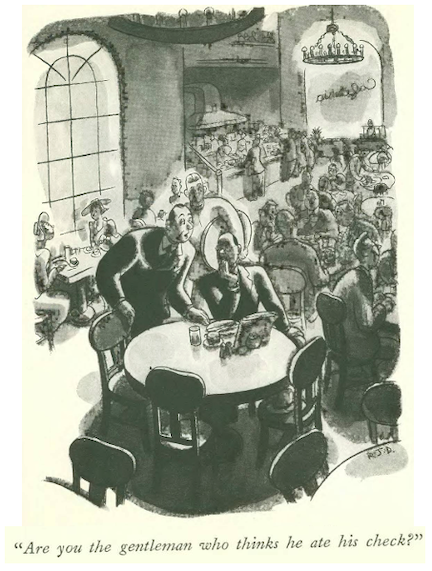
Drinking Problem

“The Talk of the Town” reported on the challenges facing both restaurants and patrons who were becoming reacquainted with legal drinking:

 * * *

Before Mr. Rogers

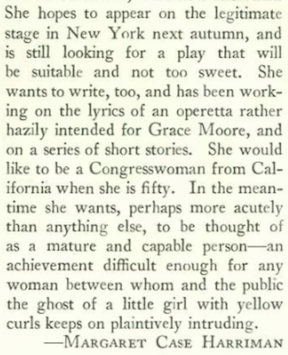
The “Profile” took a childish turn with this account of Don Carney (1896–1954) penned by Margaret Case Harriman. Carney is best remembered as the host of Uncle Don, a hugely popular WOR children’s radio program produced between 1928 and 1947. Excerpts:

MERCH…Don Carney’s popularity in the 1930s is evidenced in the output of merchandise including sheet music (1935), a 1940 activity book, and a 1936 “Strange Adventures” story book. (phantom.fan/ebay)

 * * *

From Our Advertisers

Speaking of fine cars, the folks at Packard pointed out one similarity between their automobile and the product manufactured by Rolls-Royce…owning a Packard in the 1930s was indeed considered prestigious, and like Rolls-Royce it competed in the international luxury car market…

…Bergdorf Goodman placed this helpful ad listing various gift ideas in descending order of price…and extravagance…

…and it wouldn’t be Christmas without the perennial Whitman’s Santa Claus touting his sweet wares…

…and New Yorkers were getting ready to celebrate a New Year without Prohibition, and pop some “good news” with Cook’s American “champagne”… 

…an “old friend,” Johnnie Walker, strode into the advertising pages of the New Yorker for the very first time…

…while another purveyor of Scotch whiskey, Teacher’s, raised a glass to the return of legal liquor in the colonies…

…the makers of Hennessy brandy celebrated the fact that “we can be ourselves once more”…

…the end of Prohibition saw the rapid expansion of the chain of Longchamps restaurants in New York City…in the 1930s the company hired top modernist decorators and architects (Winold Reiss and Ely Jacques Kahn, among others) to create some of New York’s most glamorous interiors…

LONGCHAMPS LONG GONE…Winold Reiss’s Louis XV mural behind the Chanin Building’s Longchamps bar, 1935. Hugely popular in mid-century New York, Longchamps all but vanished by 1970. Read more about one of New York’s most stylish restaurants at two wonderful sites, Driving For Deco and Restaurant-ing Through History. (winoldreiss.org)

…Schenley was a giant in the spirits industry…headquartered in the Empire State Building, it also had a giant impact in the United States…to assure consumers that quality hadn’t suffered over the thirteen long years of Prohibition, Schenley ran this two-page ad stating: on through the years—famous names, famous brands, secrets, formulae, warehouses, yes—and stocks of precious old liquor have been accumulated and guarded by Schenley for you when the day arrives

…here are some of the brands listed by Schenley in the side column:

Old Quaker was one of Schenley’s popular whiskey brands in the 1930s.

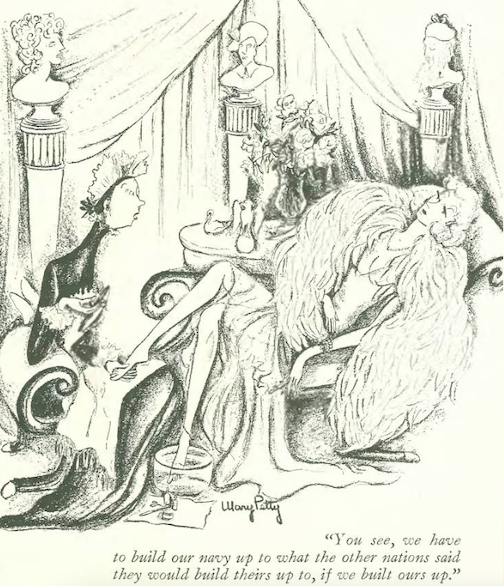
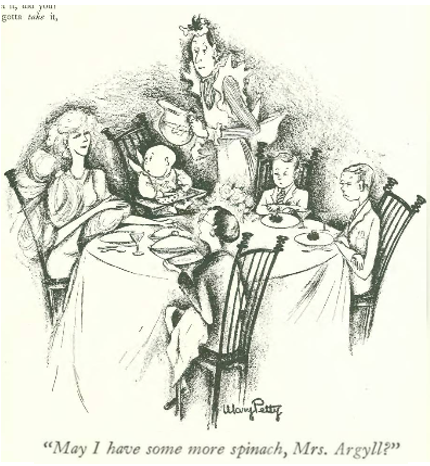
…and we sober up for our cartoonists, beginning with Mary Petty

…mixed company was always a recipe for trouble in James Thurber’s world…

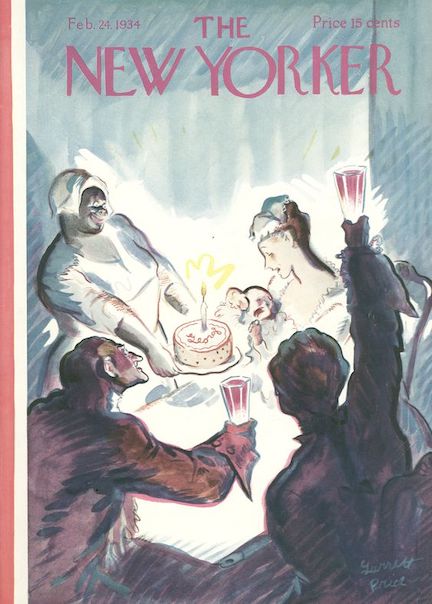
…and we close with George Price, and an unexpected visitor…

Next Time: The Cold Light of Day…


The Bombshell

Much like Marilyn Monroe in the 1950s, Jean Harlow occupied a brief period in Hollywood history, but her star shone long after her untimely death.

Oct. 28, 1933 cover by Rea Irvin.

Adam Victor’s The Marilyn Encyclopedia draws all sorts of weird parallels between the actresses: both raised by strict Christian Scientists, both married three times, both left school at sixteen to marry their first husbands, both acted opposite Clark Gable in the last film each ever made. Most importantly, Monroe idolized Harlow, so it was no coincidence that she sported her own version of “platinum blonde” hair.

ART IMITATES LIFE…In 1958 Marilyn Monroe posed as Jean Harlow for photographer Richard Avedon in a Life magazine feature. (Flickr)

The term “Bombshell” was affixed to the 22-year-old Harlow after the 1933 film’s release, and was later used to describe Monroe and other sex symbols of the 1950s and early 60s.

Harlow’s character in Bombshell, Lola Burns, satirized the stardom years of the silent era sex symbol Clara Bow, who was director Victor Fleming’s fiancée in 1926. Although critical reviews were mostly positive, New Yorker critic John Mosher found the film “mossy with verbiage.”

TAKE A BOW, CLARA…Bombshell satirized the stardom years of silent era sex symbol Clara Bow, who was director Victor Fleming’s fiancée in 1926 (photo at left is of the couple on the set of 1926’s Mantrap); in Bombshell Jean Harlow portrayed a sex symbol who, like Bow, wanted to live a normal life. In real life, Bow made her last film in 1933 and retired to a ranch at age 28. (IMDB)

A STAR IS BORED…In Bombshell, movie star Lola Burns (Jean Harlow) dislikes her sexy vamp image and wants to live a normal life, but her studio publicist E. J. “Space” Hanlon (Lee Tracy) insists on feeding the press endless provocative stories about her. Clockwise, from top left: Lee Tracy and Louise Beavers in a scene with Harlow; Harlow and Una Merkel, who portrayed Lola’s assistant, Mac; Harlow in a scene with Mary Forbes, C. Aubrey Smith, and Franchot Tone; Harlow in a scene with Ruth Warren and Frank Morgan—the latter portrayed Lola’s pretentious, drunken father. (IMDB)

Harlow would die at age 26 on June 7, 1937. Her heavy drinking didn’t help, but neither did the misdiagnosis she received as her kidneys were rapidly failing. While filming Saratoga with Clark Gable, Harlow was stricken with what she believed was the flu, and her persistent stomach pain was misdiagnosed as a swollen gallbladder. Just two days before her death another doctor finally diagnosed her kidney disease, but in 1937 nothing could be done—kidney dialysis would not be available for another decade, and transplants would not be an option until the mid-1950s.

 * * *

Second City Sanctimony

The New Yorker rarely missed an opportunity to take a dig at the square-toed ways of the Second City and its flagship newspaper, the Tribune. In his “Notes and Comment,” E.B. White (who enjoyed gin martinis) found the newspaper’s sanctimonious stance tedious:

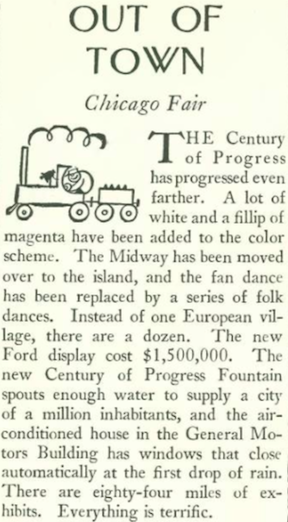
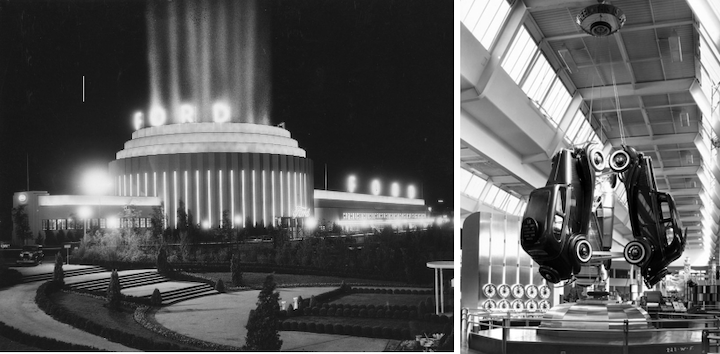
The 1933 Chicago World’s Fair, aka “A Century of Progress,” received scant attention from The New Yorker, unless it provided opportunities for parody. Musicologist Sigmund Spaeth (1885-1965), well-known in the 1930s and 40s for his NBC radio programs, offered this take on the Windy City’s exposition:

WONDERS NEVER CEASE…In addition to its more high-minded attractions, the Chicago World’s Fair also featured such sideshow attractions as Ripley’s Odditorium, which featured “The Fireproof Man” among other novelties. (pdxhistory.com)

 * * *

Big, Bad Earworm

It seems quaint that nearly 90 years ago one of the most popular songs in America was “Who’s Afraid of the Big Bad Wolf?” To Frank Sullivan, there was no escaping “that lilting tune”…

SIMPLER TIMES…”Who’s Afraid of the Big Bad Wolf?” was a huge hit during the second half of 1933. One of the most well-known Disney songs, it was covered by numerous artists and musical groups.

Sullivan concluded that a trip to Vladivostok might be the only way to escape the catchy melody…

Briefly jumping to the Nov. 4 issue, “The Talk of Town” took a closer look at the song and the 1933 Disney Silly Symphonies cartoon in which it was featured—Three Little Pigs. Written by Frank Churchill and Ann Ronell, the song launched a market for future Disney tunes, with Irving Berlin securing the sheet music rights over Mickey Mouse and the Silly Symphonies. 

WE’RE IN THE MONEY…The 1933 Disney Silly Symphonies cartoon Three Little Pigs helped to launch the Disney juggernaut nearly 90 years ago.

 * * *

Polymath

Le Corbusier, aka Charles-Édouard Jeanneret (1887–1965), was known as a pioneer of modern architecture and design in the early and mid-20th century, but as this review by Lewis Mumford suggested, he was also a talented modernist painter.

WAYS OF SEEING…Le Corbusier’s early paintings followed the ideas of something he called “purism”—at left is an example from 1920, Still Life. Later on his work become more abstract, including Menace, at right, from 1938. The horse head in the painting seems to reference Pablo Picasso’s 1937 painting, Guernica. (Wikipedia/Art Basel)

 * * *

Dear Papa

Following the high praise Ernest Hemingway received in 1926 for The Sun Also Rises, Dorothy Parker feared for the novelist’s next book: “You know how it is—as soon as they all start acclaiming a writer, that writer is just about to slip downward.” Seven years later Parker’s colleague Clifton Fadiman detected some slippage, finding Hemingway’s latest output a bit stale. Rather than pen a negative review, Fadiman shared his concerns by way of an open letter:

PHONING IT IN…Clifton Fadiman (right) found Ernest Hemingway’s Winner Take Nothing to be “stuck fast in yesterday.” (AP/Wikipedia/Pinterest)

 * * *

From Our Advertisers

Until the 1920s all car bodies were framed in wood, preferably ash, but by the end of the 1930s all-steel car bodies became the standard…Packard made the switch beginning around 1938…

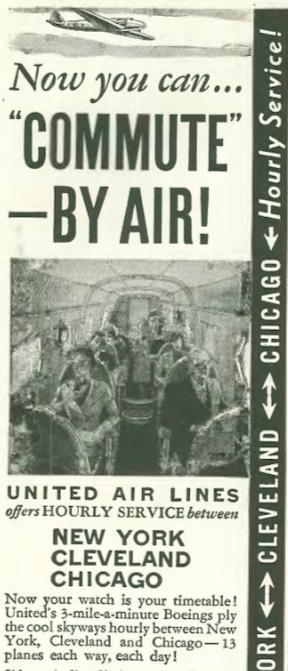
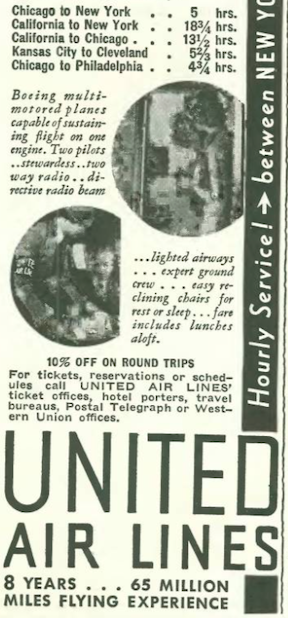
…ah, the good old days when you could smoke in the “rarefied atmosphere” of an airplane, the pilot so close by you could tap him on the shoulder…

…Brooklyn’s Hittleman-Goldenrod Brewery opened in late 1933 promising beer in the finest English tradition…sadly, it closed in 1937…

…the Waldorf-Astoria announced the re-opening of its Empire Room with entertainment by Xavier Cugat and his tango orchestra, featuring the dancer Margo…this was just the sort of “juvenile” entertainment Lois Long detested (see my previous post)…

…according to this ad, “His Lordship” drank a pot of decaf Sanka at midnight “and never winked an eye all night”…it doesn’t mention that he probably also wet the bed…

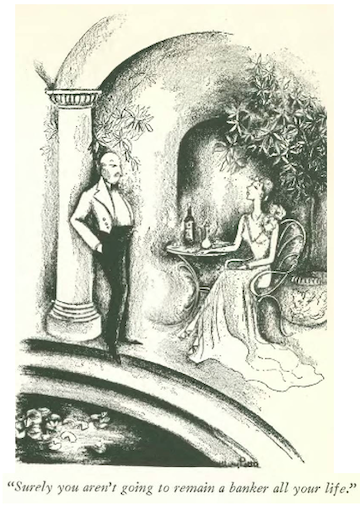
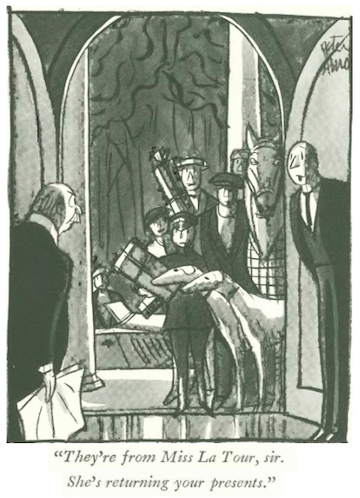
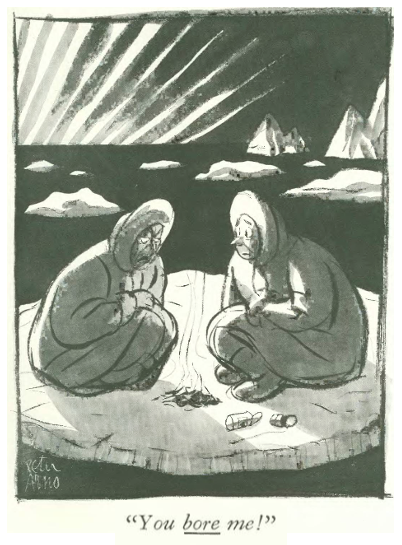
…on to our cartoons, we begin with Peter Arno and the woes of the monied classes…

…on to Helen Hokinson, and the charms of the precocious…

Gardner Rea gave us a toff absorbed in historical fiction…

Alain (aka Daniel Brustlein) offered up a flautist who found beauty in his routine life…

…and we close with Perry Barlow, and motherhood among the smart set…

Next Time: Radio City…


The Wild West

Kino Lorber)

We first encountered Mae West back in 1926 when The New Yorker commented on her risqué Broadway play, Sex. Although the play was the biggest ticket in town, it eventually attracted a police raid that landed West in jail on morals charges. Sentenced to ten days for “corrupting the morals of youth,” she could have paid a fine, but for West a short stint on Welfare Island was worth its weight in publicity gold.

Oct. 14, 1933 cover by Rea Irvin.

Fast forward seven years, and West is one of the nation’s biggest box office attractions and starring in her third film, I’m No Angel. Depression-era audiences responded enthusiastically to West’s portrayals of a woman from the wrong side of the tracks who in the end gains both fortune and social acceptance. Although puritanical forces continued to be outraged by West’s antics, New Yorker film critic John Mosher found her act to be “a safe parody on indecency.”

SHIMMY TO SUCCESS…Clockwise, from top left: At the beginning of I’m No Angel, Tira (Mae West) shimmies and sings in a circus sideshow; studio poster for the film— In the early 1930s, West’s films were key in saving Paramount Pictures from bankruptcy; a wealthy sideshow customer (William B. Davidson) arranges a private rendezvous; Tira has her day in court despite attempts by her ex-boyfriend, Slick Wiley (Ralf Harolde), to discredit her. (IMDB)

SHE GETS HER MAN…Cary Grant starred opposite Mae West for the second and final time in I’m No Angel. Eleven years junior to West, Grant portrayed Tira’s fiancé, Jack Clayton. (TCM)

And finally, a much-talked about scene from the movie featured West putting her head (rather sensually) into the mouth of a lion. In reality it appears to be a camera trick: West was actually placing her head to the side of the lion’s mouth. Still, a gutsy move by West. As for the lion, it was no picnic either.

 * * *

Comic Relief

Eugene O’Neill surprised critics and audiences alike when he premiered Ah, Wilderness! at Broadway’s Guild Theatre on October 2, 1933. Among the critics was Wolcott Gibbs, who concluded that O’Neill should stick to his usual themes of disillusion and despair. An excerpt:

PASS THE CORN, PLEASE…Around the table in the original 1933 Broadway production of Ah, Wilderness! are (from left) George M. Cohan (Nat Miller), Eda Heinemann (Lily), Elisha Cook, Jr. (Richard), Gene Lockhart (Sid), Marjorie Marquis (Mrs. Nat Miller), Walter Vonnegut, Jr. (Tommy) and Adelaide Bean (Mildred). (Photograph by Vandamm for Stage magazine, November 1933)

ERRORS OF COMEDY…Wolcott Gibbs (left) found Eugene O’Neill’s attempt at comedy to be nothing more than a recycling of corny old saws. However, Ah, Wilderness! proved successful in its first Broadway production and in the touring company that followed. It remains to this day a staple of community repertory. (The New Yorker/Playbill/Encyclopedia Britannica)

 * * *

Hell in a Handbasket

If Eugene O’Neill couldn’t offer up some woe, then leave it to E.B. White of all people to supply reason for despair. In his 1982 review of a collection of White’s poems and sketches,

For the Oct. 14 issue White bemoaned the loss of the American elm (of the 77 million elms in North America in 1930, more than 75 percent were lost to Dutch elm disease by 1989), the dangers of pesticide use, and other maladies. Excerpts:

APPLE OF HIS EYE…E.B. White had reason to be concerned about the widespread practice of spraying lead arsenic on fruit trees. This 1930 photograph shows an Oregon orchardist and his child spraying apple trees with the stuff. (oregonhistoryproject.org)

White’s New Yorker colleague John O’Hara raised some concerns of his own, namely the likelihood of another world war in this prescient piece titled “Dynamite is Like a Mill Pond.” Excerpts:

FROM RUSSIA WITH LOVE…John O’Hara pondered the likelihood of another world war and an unlikely bedfellow: Soviet Russia. Photo circa 1938. (AP via loa.org)

 * * *

Pooh-Poohing Mr. Milne

In his review of A.A. Milne’s latest novel, The Red House Mystery, Clifton Fadiman seemed to recall Dorothy Parker’s own revulsion to Milne’s juvenile style (“Tonstant Weader Fwowed Up” Parker once wrote of The House at Pooh Corner). Excerpts:

 * * *

From Our Advertisers

The makers of Camels took to the water to prove how their cigarettes supported “healthy nerves,” whether in the deep sea or on the high dive…

…with a name like “Spud” you really had to stretch to prove you were a choice of the smart set…here they claimed their product was “quite at home among royalty”…

…here’s another great example of class appropriation, a white-tie dinner featuring a couple of toffs eating canned soup…

…and we give our eyes a break with a bit of elegance from Lord & Taylor, featuring the art of modern living…

…on to our cartoons, we begin with James Thurber

…curious to know Thurber’s favorite songs?—then check out this Thurber Thursday post from Michael Maslin’s Inkspill...

…we continue with William Steig’s look at a “Lady With Mirror”…

…and discover the calm after a storm in this domestic scene by Kemp Starrett

…visit the Century of Progress World’s Fair in Chicago, with George Price

…for reference, Price’s cartoon depicted the Federal Building at the Century of Progress…

…and is often the case with this blog, we give Peter Arno the last word…

Next Time: As Millions Cheer…

As Thousands Cheer

ABOVE: Broadway's As Thousands Cheer (1933) featured evangelist Aimee Semple McPherson (Helen Broderick) trying to persuade Mahatma Gandhi (Clifton Webb) to end his hunger strike and join her act. (NYPL)

Broadway gave Depression audiences a lift with As Thousands Cheer, a revue featuring satirical sketches that skewered the lives and affairs of the rich and famous and served as a precursor to sketch shows like Saturday Night Live.

Oct. 7, 1933 cover by Peter Arno.

With a book by Moss Hart and music and lyrics by Irving Berlin, the revue was a big hit, playing for nearly a year on Broadway in its initial run.

TOON TIME…Marilyn Miller led a chorus of cartoon characters in a sketch titled “The Funnies” in As Thousands Cheer; leading the revue were Miller, Clifton Webb and Helen Broderick, here featured on the cover of the Playbill. The production would be Marilyn Miller’s last—one of Broadway’s biggest stars known for playing sunny characters, her personal life was filled with illness and tragedy, and she would go to an early death in 1936. (playbill.com)

Wolcott Gibbs took his turn as Broadway reviewer, and pronounced As Thousands Cheer “the funniest thing in town.”

Not everything was roses in As Thousands Cheer: In a poignant star turn, Ethel Waters sang—at Irving Berlin’s request—his famous tune “Supper Time,” a Black woman’s lament for her lynched husband. The revue was the first Broadway show to give an African-American star (Waters) equal billing with whites, however she was segregated from her co-stars and did not appear in any sketches with them. Her co-stars even refused to bow with her at the curtain call until Berlin intervened. According to the James Kaplan biography Irving Berlin, “The show had a successful tryout at Philadelphia’s Forrest Theatre in early September, although opening night was marred by an ugly incident all too in tune with the times: the stars Clifton Webb, Marilyn Miller, and Helen Broderick refused to take a bow with Ethel Waters. To his everlasting credit, Berlin told the three that of course he would respect their feelings—only in that case there needn’t be any bows at all.

“They took their bows with Waters at the next show.”

NEWSMAKERS…Each sketch in As Thousands Cheer was preceded with a newspaper headline. Clockwise, from top left, in the sketch headlined JOAN CRAWFORD TO DIVORCE DOUGLAS FAIRBANKS, JR, Marilyn Miller and Clifton Webb portrayed the stars arguing over publicity rights to their divorce; Webb as 94-year-old John D. Rockefeller; the headline FRANKLIN D. ROOSEVELT INAUGURATED TOMORROW featured Mr. and Mrs. Herbert Hoover on their last day in the White House, portrayed by Leslie Adams and Helen Broderick; Ethel Waters singing Irving Berlin’s “Supper Time.” (New York Public Library)

 * * *

A Final Byline

E.B. White opened his column with a tribute to Ring Lardner, who died at age 48 of a heart attack and other complications. In the months before his death Lardner had contributed a number of comical “Over the Waves” radio reviews.

JOURNALIST AT HEART…Ring Lardner (1885-1933) worked for several newspapers before settling at the Chicago Tribune in 1913—it became the home newspaper for his syndicated column, In the Wake of the News. (Chicago Tribune)

Lardner’s first contribution to The New Yorker came shortly after the magazine’s founding. “The Constant Jay” was published in the April 18, 1925 issue: Readers appreciated his subtle wit, including this oft-quoted gem:

“The race is not always to the swift nor the battle to the strong—but that’s the way to bet.”

Lardner also liked to poke fun at himself and his aw-shucks view of things. Here are the opening and closing paragraphs of his final New Yorker contribution, “Odd’s Bodkins:”

 * * *

Macy Modernism

As Lewis Mumford observed in his “Skyline” column, Macy’s was the first department store to embrace a modern approach to interior design, but as Marilyn Friedman notes in her book, Making America Modern: Interior Design in the 1930s, Macy’s modernism was a bit toned down to blend into more traditional settings. A case in point was Macy’s 1933 Forward House exhibition, which Mumford described as “a brilliant piece of modern showmanship.”

EASY ON THE EYES…”Living room in the Suburban House of Forward House” at R.H. Macy & Co., New York, 1933, from The Upholsterer and Interior Decorator, October 15, 1933. ​(artdeco.org)

 * * *

Fishing for Commies

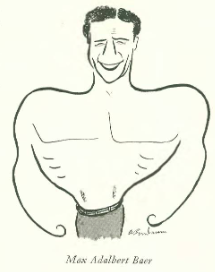
Geoffrey Hellman profiled New York House Rep. Hamilton Fish Jr (1888–1991), a staunch anti-communist perhaps best known for establishing the Tomb of the Unknown Soldier at Arlington National Cemetery. I feature this brief excerpt mainly for the great caricature by Abe Birnbaum.

MINDING THE HOME FRONT…Hamilton Fish, Jr making a speech in Los Angeles, 1935. Fish served in the U.S. House of Representatives from 1920 to 1945 and during that time was a prominent opponent of intervention into foreign affairs. (UCLA Special Collections)

 * * *

All Wet

Eleven years before Esther Williams made her first aqua-musical, Ruby Keeler took the dive under Busby Berkeley’s direction in Footlight Parade. E.B. White served as film critic for the Oct. 7 issue, and found Footlight to be a feast for the male gaze, as well as mindless entertainment.

TAKING THE PLUNGE…Clockwise, from top left: According to E.B. White, there was no gainsaying “the general aahhhhh” of the semi-nude waterfall scene in Footlight Parade; promotional poster left no doubt as to what audiences might expect from the film; Busby Berkeley displayed his craft in water-based choreography; Ruby Keeler portrayed a dancer turned secretary who is transformed back into a dancer—just add water. (IMDB)

 * * *

A Dog’s Life

Doubtless drained from writing The Waves, Virginia Woolf followed up with some historical fiction, namely Flush: A Biography, a book about Elizabeth Barrett Browning’s cocker spaniel. Clifton Fadiman had this to say about the unusual biography:

VIRGINIA WOOF…Frontispiece for Flush: A Biography. Virginia Woolf used the tale of a dog to explore social themes ranging from feminism to class conflict. (Heritage Auctions)

 * * *

From Our Advertisers

When you market a car for only $445 you aren’t going after the luxury market, but hey, drop a ten-truck truck on this baby and you can live to tell about it…

…with legal beer flooding the market brewers were particularly keen to attract female drinkers of all ages…and apparently social classes…

…a couple of ads from the back pages, the first touting the smart-set writing of columnist and foreign correspondent Alice Hughes for the New York American, and the second an advertisement for Chase & Sanborn coffee, which relayed the story of a marriage on the brink due to stale coffee…

…I include this ad for the heroic scale of the ocean liner, particularly as depicted by the people in the background…

…we bounce on to our cartoons with Otto Soglow’s Little King…

James Thurber continued to explore the unrest among our domestic youth…

…speaking of America’s youth, this gathering (courtesy Gardner Rea) appeared to have trouble finding some…

Helen Hokinson found fun with flounder…

Rea Irvin turned the tables on a life-drawing class…

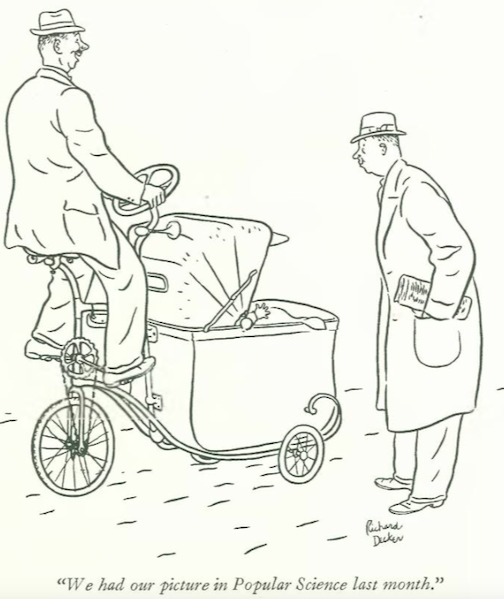
…and we close with Richard Decker, over the moon with a stranded chorine…

…and in a nod to the approaching holiday, imagery from a 1933 Fleischer Studios animated short film, Betty Boop’s Hallowe’en Party

Next Time: The Wild West…

Keeping Their Cool

The heat came early to New York in June 1933, so folks flocked to air-conditioned cinemas or sought the cooling breezes of rooftop cafes and dance floors. And thanks to FDR, there was legal beer to be quaffed at various beer gardens popping up all over town.

June 24, 1933 cover by Rea Irvin. Providing a bookend to Constantin Alajalov’s June bride cover (May 27), Irvin gave us the newlyweds now contemplating a fixer-upper.

Lois Long kept her cool on the beach or at home with a cold Planters’ Punch, but one gets restless, and Ethel Waters was at the Cotton Club, so Long headed out into the night; an excerpt from her column “Tables for Two”…

STORMY WEATHER AHEAD…Ethel Waters was “tops” during a June 1933 performance at the Cotton Club, according to nightlife correspondent Lois Long. Left, Waters circa 1930. At right, the Cotton Club in the early 1930s. (IMDB/Britannica)

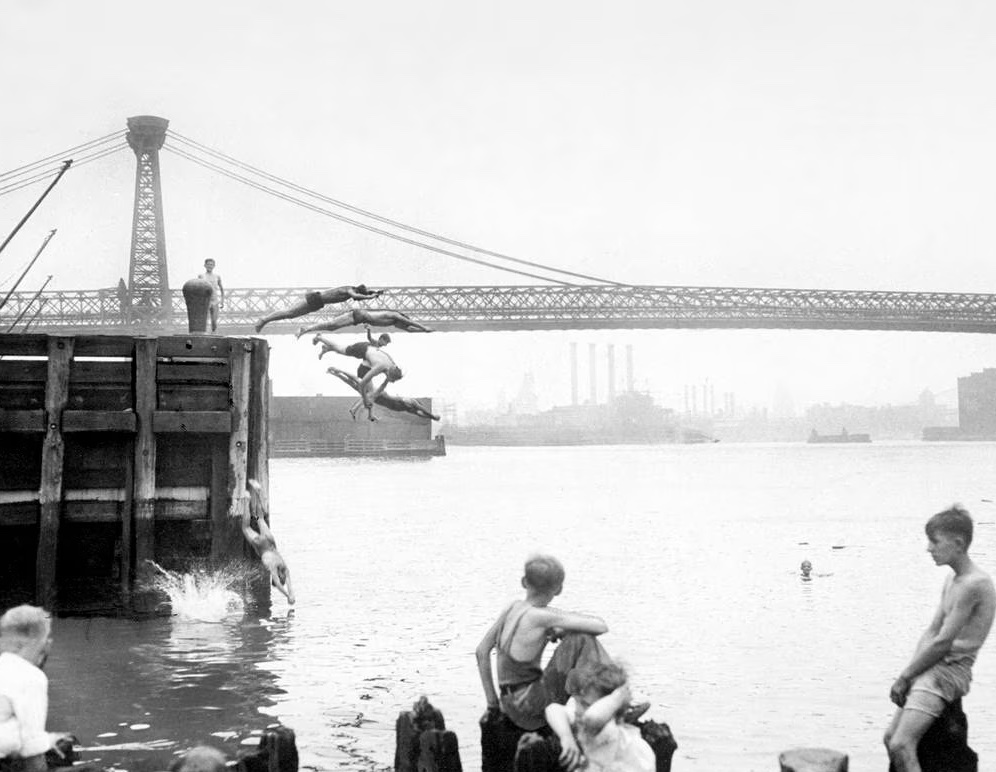
SHOWER THE PEOPLE…Children gather around a center stand sprinkler (connected to a fire hydrant) on a Harlem street in 1933. (stuffnobodycaresabout.com)

POP-UP PLAYGROUND…Play street and street shower alongside the Queensboro Bridge, June 22, 1934. (NYC Municipal Archives)

 * * *

From Our Advertisers

Legal beer and hot summer days combined to bring some much-needed advertising revenue to The New Yorker

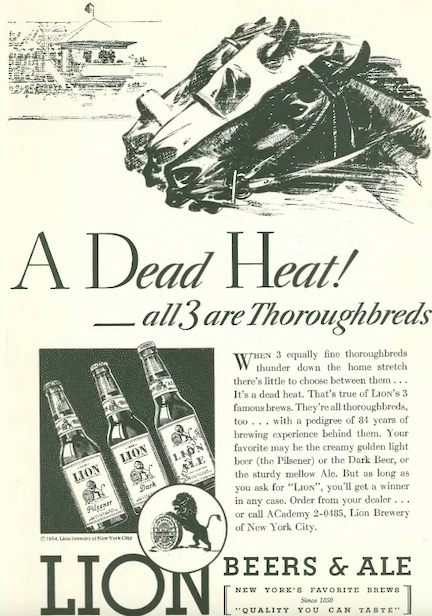
…here we have dear old dad telling the young ‘uns (all in formal wear, mind you) about the good old days before Prohibition took away his favorite tipple…

…notable about the magazine’s first beer ads was the target market…this is akin to the cigarette manufacturers, who were also targeting women as a new growth market for their products…curious how this PBR ad is illustrated…is she getting ready to drink the beer, or serve it?…

…also joining the party were the folks who made mixers like White Rock mineral water…note the reference at bottom right to the anticipated repeal of the 18th Amendment…

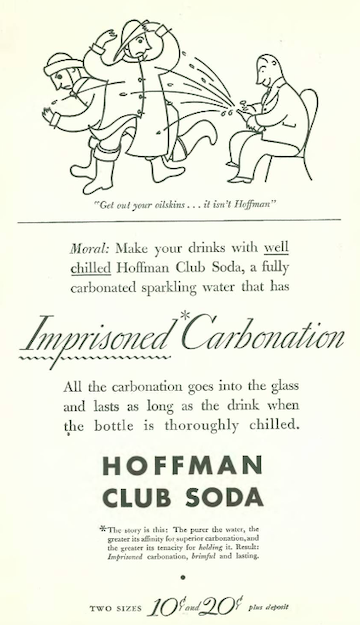
…the purveyors of Hoffman’s ginger ale were less subtle, encouraging drinkers to mix those highballs right now

…you could enjoy that cool one while sitting in front of a Klenzair electric fan, which was probably nothing like riding a dolphin—a strange visual metaphor, but then again perhaps something else is being suggested here besides electric fans…

…no doubt Lois Long took in one of these breezy performances on the rooftop of the Hotel Pennsylvania…

…an evening with Rudy Vallée would have been a lot cheaper than one of these “compact” air conditioners, available to only the very wealthy…

…but you didn’t need to be J.P. Morgan to own a Lektrolite lighter, which was kind of clever…this flameless lighter contained a platinum filament that would glow hot after being lowered into reactive chemicals in the lighter’s base…

…another ad from the Architects’ Emergency Committee, which looked like something an architect would design…

…our final June 24 ad told readers about the miracle of Sanforizing, which was basically a pre-shrinking technique, like pre-washed jeans…

…we kick off our cartoons with George Price at the ball game…

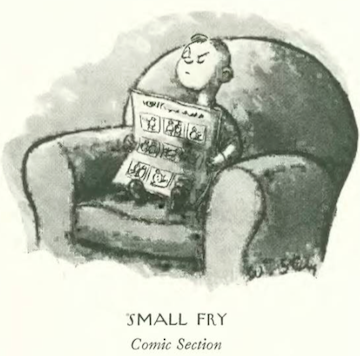
Alan Dunn was in William Steig’s “Small Fry” territory with this precocious pair…

James Thurber brought us back to his delightfully strange world…

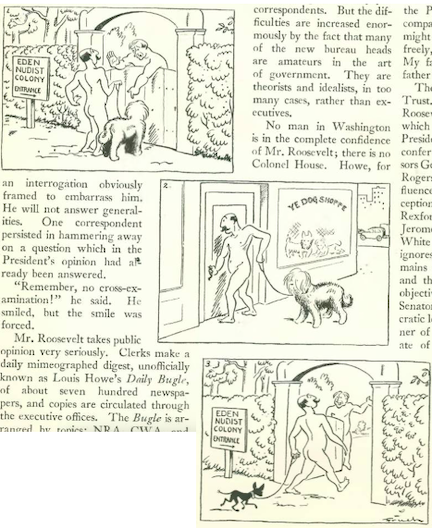
…and Whitney Darrow Jr gave us a trio at a nudist colony dressing a man with their eyes…

…we move along to July 1, 1933…

July 1, 1933 cover by Helen Hokinson.

Where in this issue we find the Nazis not keeping their cool. In an article titled “Unter Dem Hakenkreuz” (“Under the Swastika”) American journalist and activist Mary Heaton Vorse commented on the changes taking place in Berlin, where the vice, decadence and other freedoms of the Weimar years had been swept away, including women’s rights…an excerpt:

SIT UP STRAIGHT AND PROCREATE…Swastika flags hang from a Berlin building in the 1930s. In Hitler’s Germany, women of child-bearing age were expected to produce lots of babies and not much else. (collections.ushmm.org)

 * * *

Some Strings Attached

Back in the states, Alvin Johnston published the first installment of a two-part profile on John P. O’Brien (1873–1951) who served as mayor of New York from January to December 1933, the second of two short-term mayors to serve between the disgraced and deposed Jimmy Walker and the reformer Fiorello LaGuardia. Considered the last of the mayoral puppets of Tammany Hall, he was known for his brief, heartless, and clueless reign during one of the worst years of the Depression; while unemployment was at 25 percent, O’Brien was doling out relief funds to Tammany cronies. A brief excerpt (with Abe Birnbaum illustration):

A PIOUS, LABORIOUS DULLARD and “a hack given to malapropisms” is how writer George Lankevich describes John P. O’Brien. According to Lankevich, to a crowd in Harlem O’Brien proudly proclaimed, “I may be white but my heart is as black as yours.” (TIME)

 * * *

That Pepsodent Smile

The author James Norman Hall (1887–1951), known for the trilogy of novels that included Mutiny on the Bounty, offered these sobering thoughts about a famed actor he spotted on a South Pacific holiday:

IT ISN’T EASY BEING ME…Fifty-year-old Douglas Fairbanks Sr, teeth and all, was apparently looking worse for the wear when he was spotted by writer James Norman Hall in Tahiti. His glory days of the Silent Era behind him, Fairbanks would die in 1939 at age 56. (fineartamerica.com)

 * * *

More From Our Advertisers

More cool ones for those hot summer days courtesy of Schaefer…

…and Rheingold, here served by a sheepish-looking woman who doubtless wished that the tray supported champagne or cocktail glasses…and leave it to the Dutch to be one of the first countries to get their foot into the import market…when I was in college this was as good as it got, beer-wise…

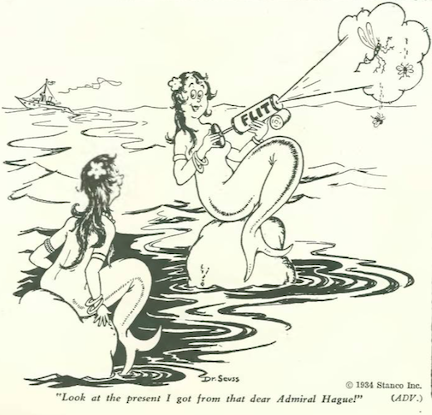
Dr. Seuss again for Flit, and even though this is a cartoon, it demonstrates how in those days no one really cared if you sprayed pesticides near your breakfast, or pets, or kids…

…here’s one of just four cartoons contributed to The New Yorker in the early 1930s by Walter Schmidt

Otto Soglow’s Little King found an opportunity to stop and smell the flowers…

Mary Petty gave us two examples of fashion-conscious women…

James Thurber explored the nuances of parenting…

…and we close with George Price, master of oddities…

Next Time: The Night the Bed Fell…